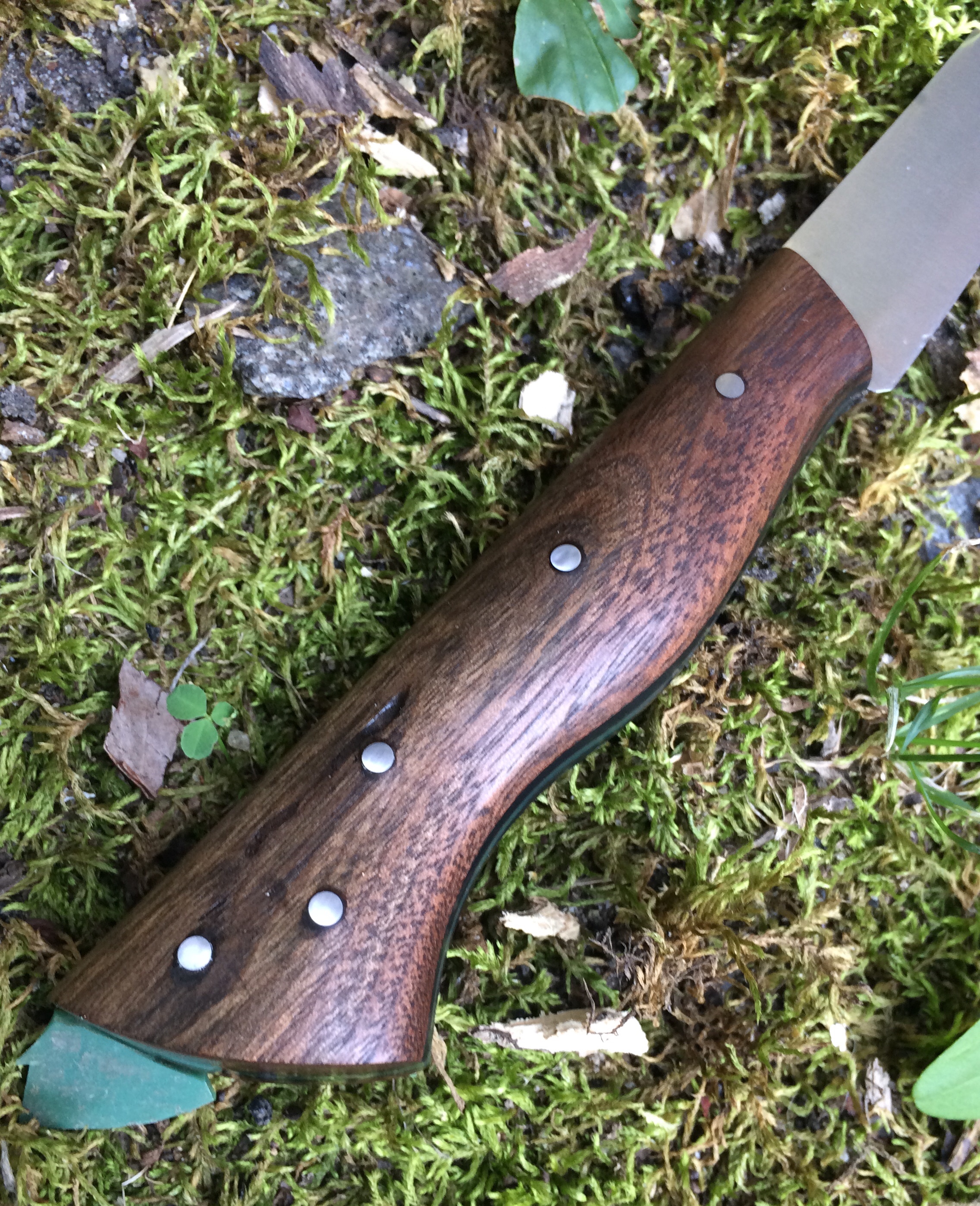
Knifemaking: on hitting your mark, and The Crack Shot

“Each arrow leaves a memory in your heart, and it is the sum of those memories that will make you shoot better and better.”

Paulo Coelho- The Archer

A few years ago I went to go see a modern dance piece with my girlfriend. It was called “Tensegrity” and was based on the idea of tension in cells: wherein the structure of the cell is maintained through continuous tension in some of it’s supports and continuous compression in others. When any one of those tensions or compressions are interrupted the cell falls apart, or at least that’s my understanding of it. This idea has been around since the 1960’s, and is a portmanteau of “tensile” and “integrity”. These days the idea is used a lot in contemporary architecture and to make coffee tables and other furniture. There are loads of these tensegrity tables and sculptures on Pinterest, but the first I had ever heard of this was at that performance.

The choreographer of this piece is a good friend of of ours and after the performance we went to get a drink with him. I’ve always admired how prolific he is, constantly moving from piece to piece, work to work, and the way each performance had it’s own voice and character. I was a bit stuck at the time and was curious how this man could take shot after shot and always hit his target. So I asked him.

He told me that whatever you do, you have to do a lot of it, and sometimes badly. Everything is connected, he told me, and each piece builds off what you have done before and is fed by your collective experience. Always keep going, and always be thinking of what’s next. At least I think that’s what he said; a fairly liberal number of martinis and fireball shots were consumed and things started to get a little fuzzy…

Over the years I’ve thought about that night, and how seemingly incongruous disciplines fit together to propel a skill or craft forward. You hear about football players taking ballet but I met an orthopedic surgeon who was an ace pickle maker, and one of my favorite knifemakers is an avid botanist. So when you find choreographers exploring contemporary cell biology or bowhunters dabbling in Vipisanna meditation, you will probably find that they are drawing connections that are deepening and balancing something. Whenever I talk to people who are really good at what they do, I find there is an ocean of eclectic and varied experiences just beneath the veneer of whatever it is they practice that adds something special to their work. The sum of our experiences can always help us hit our mark.

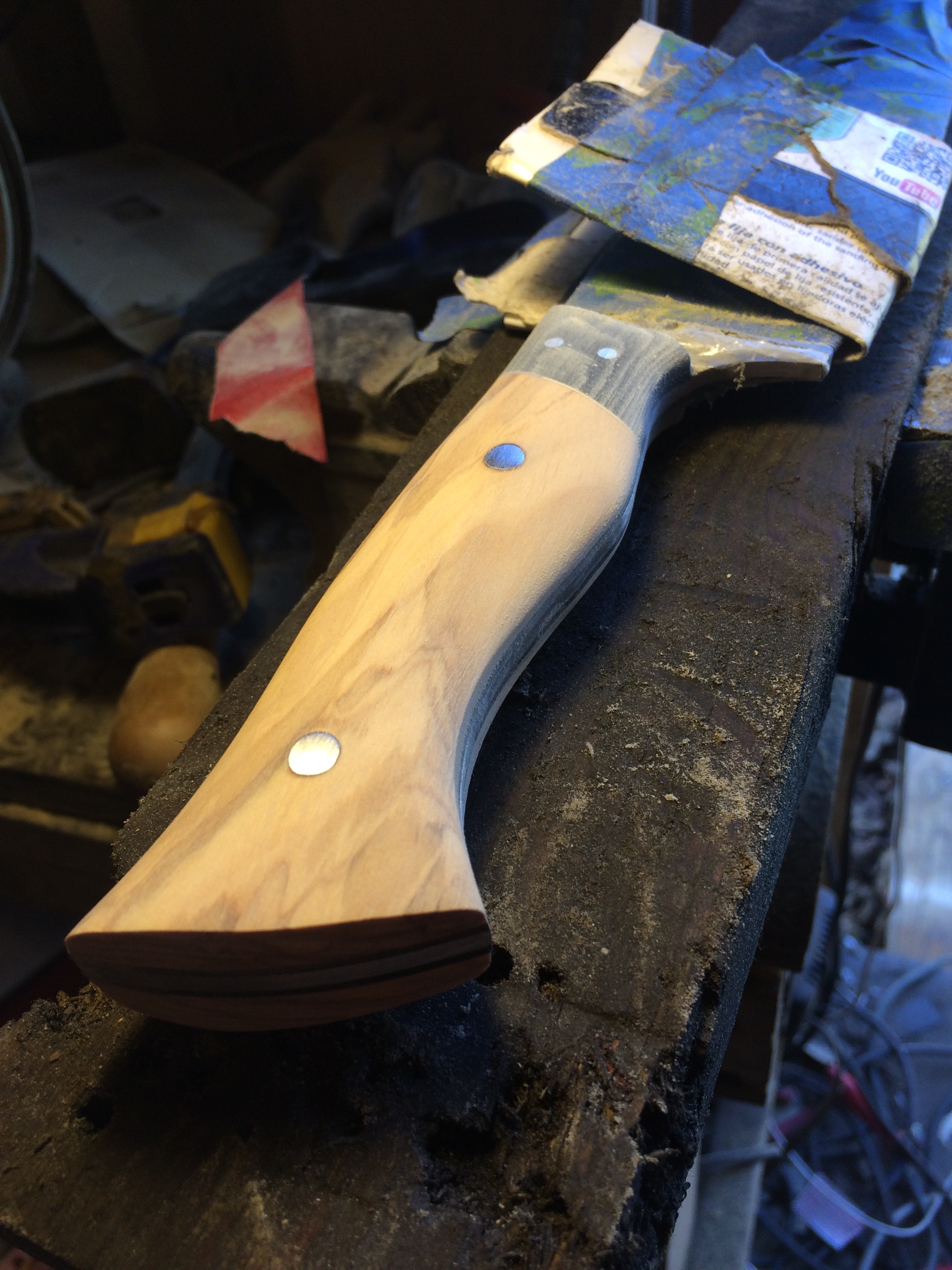
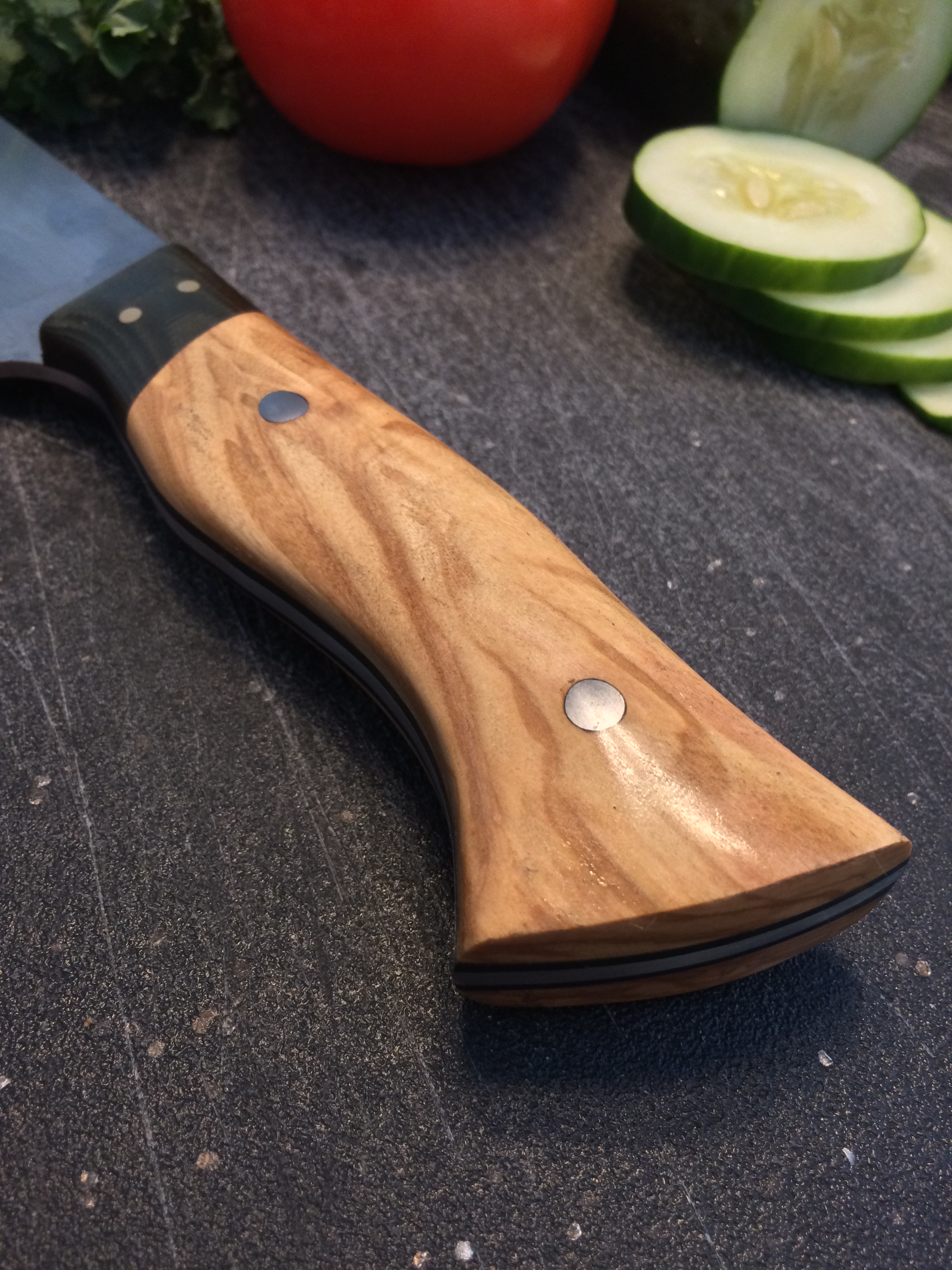
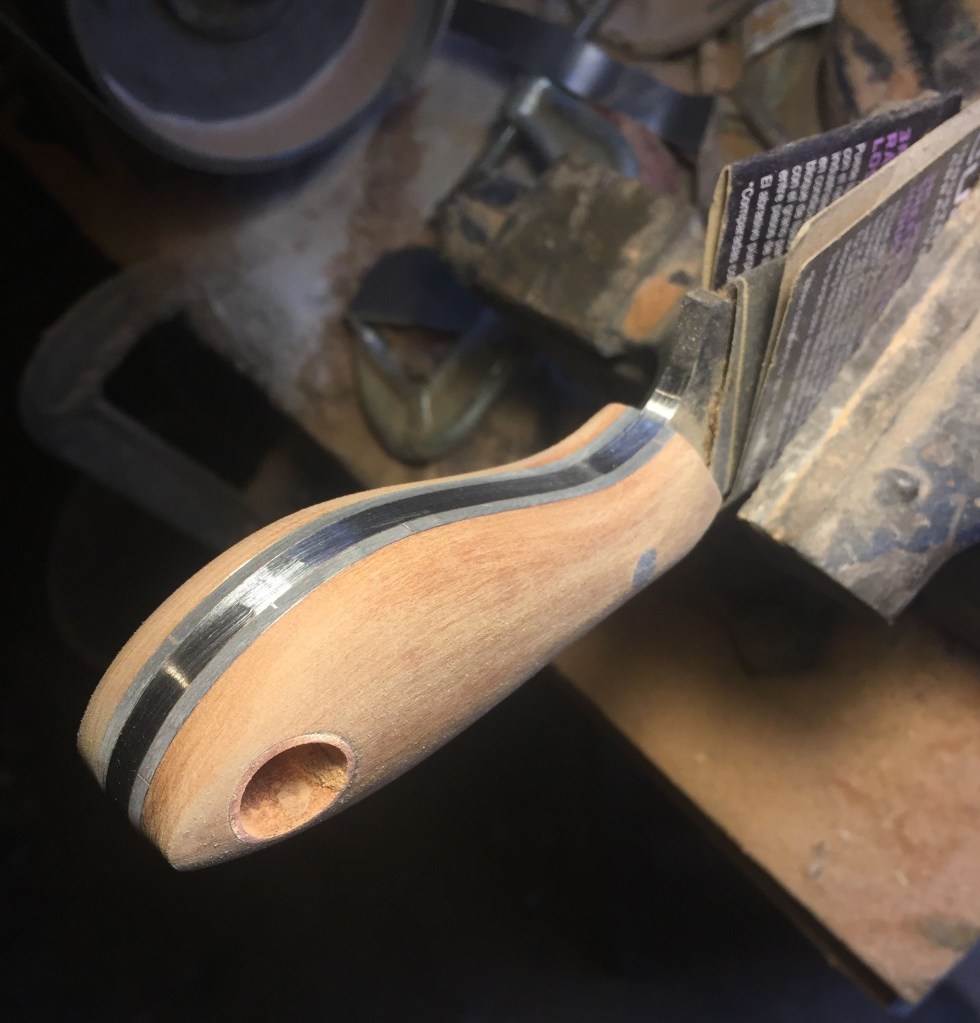
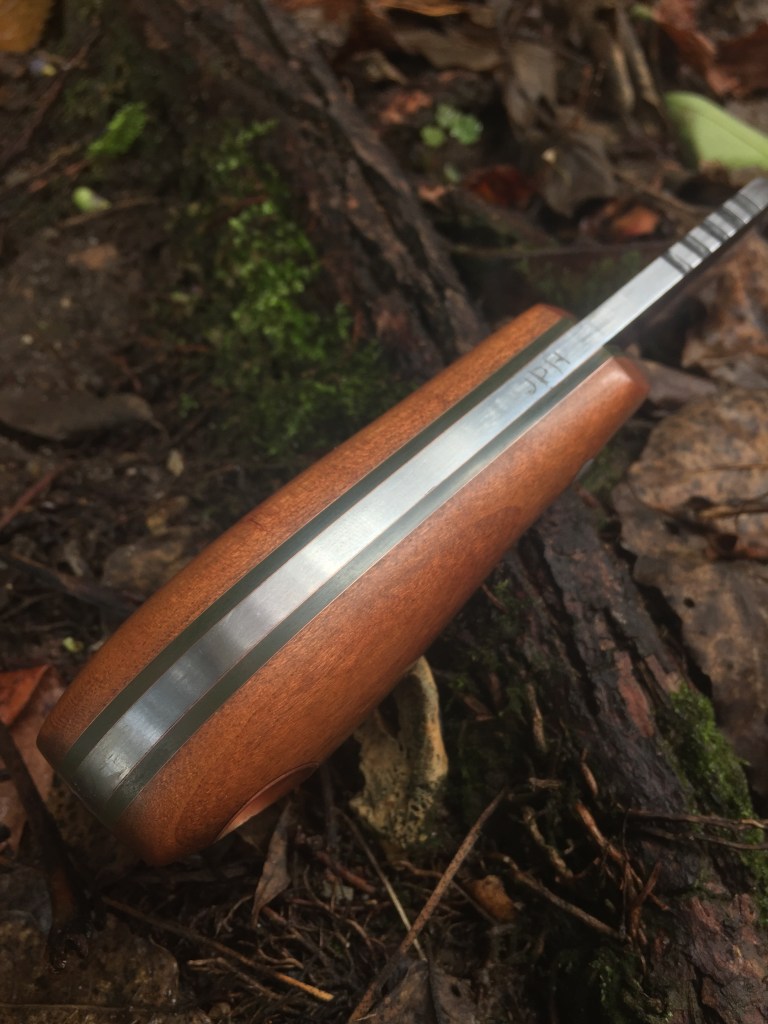
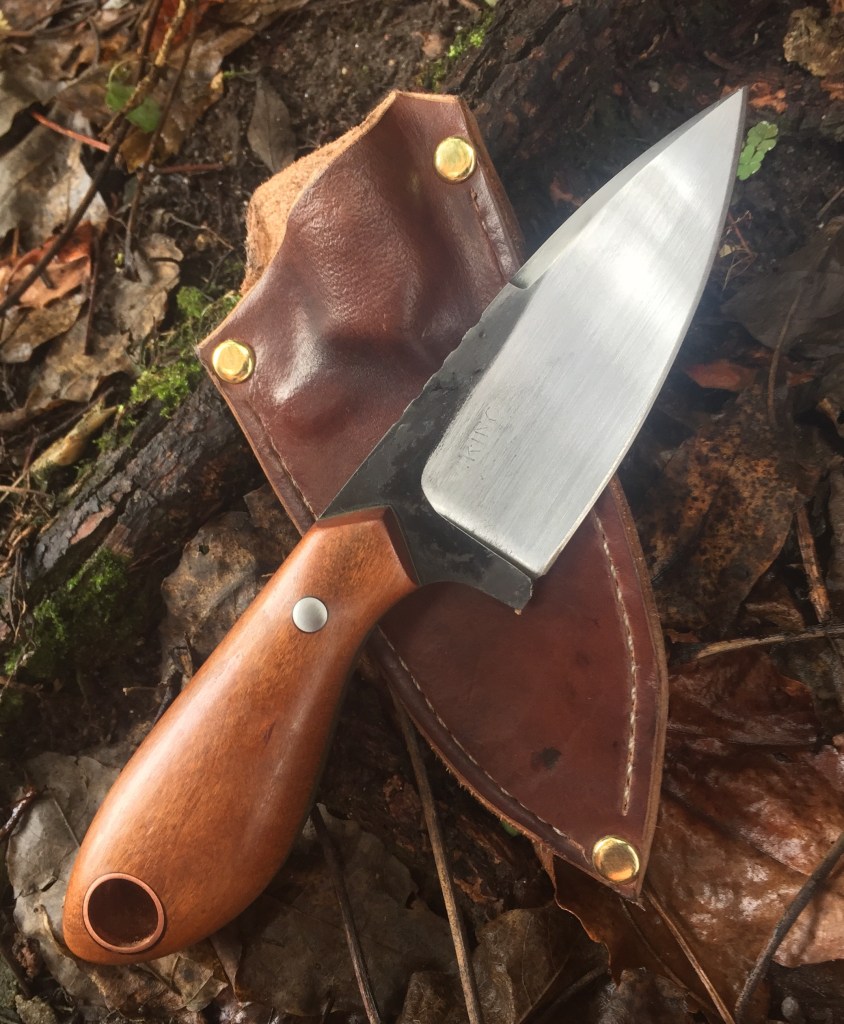
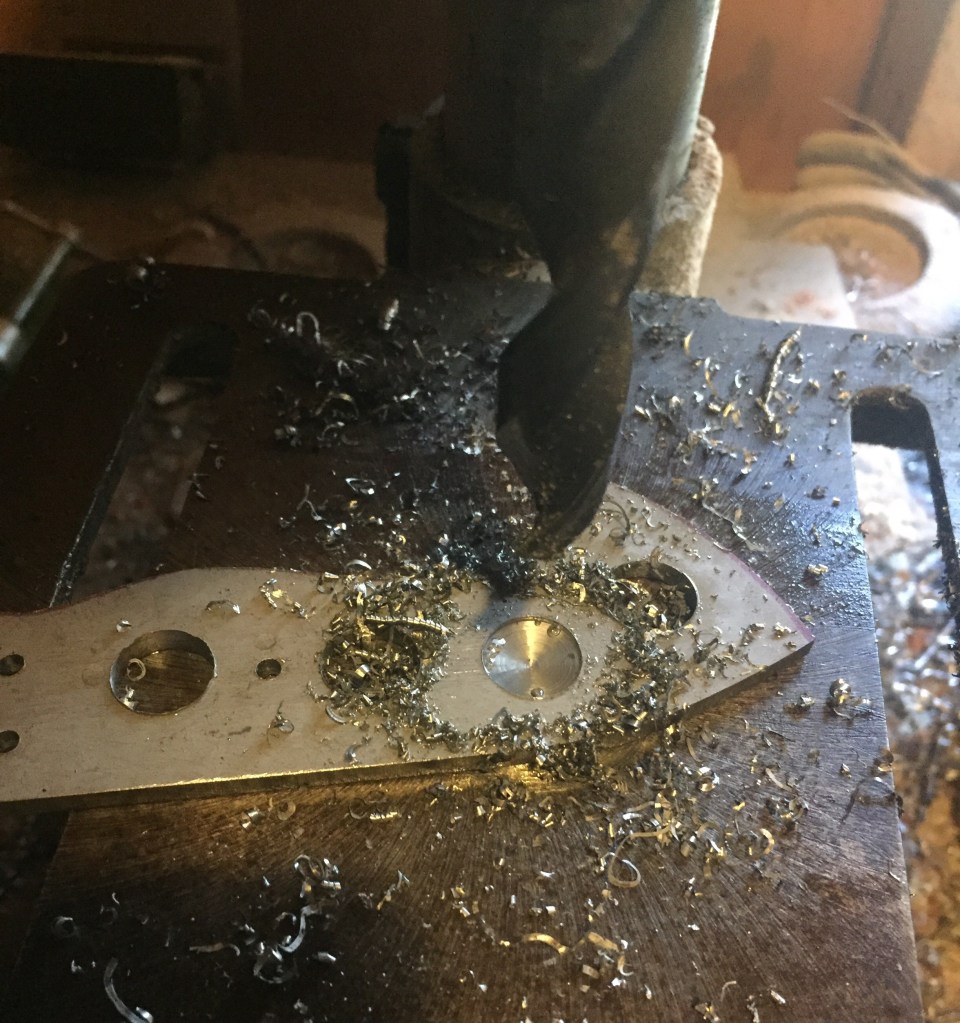
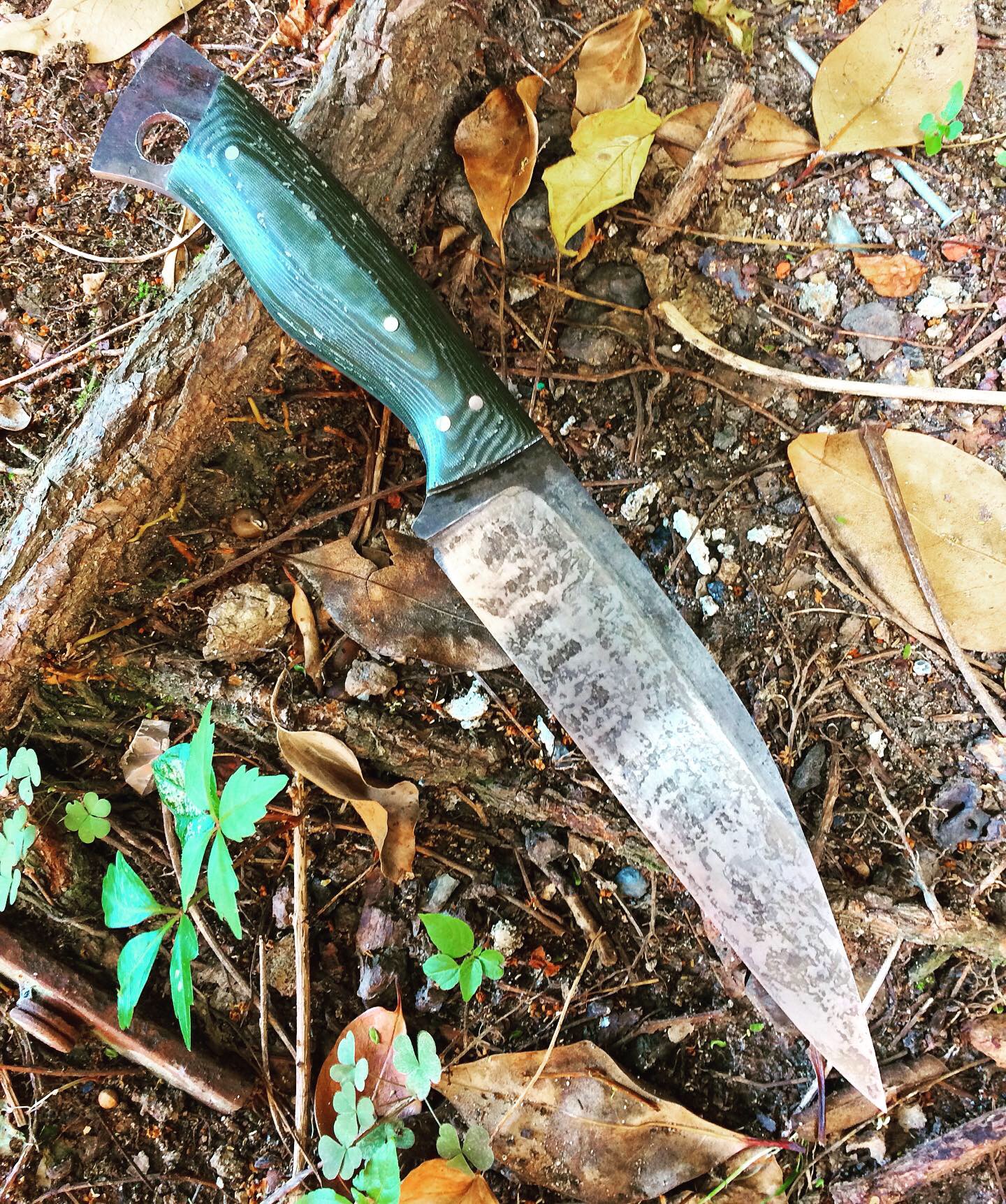
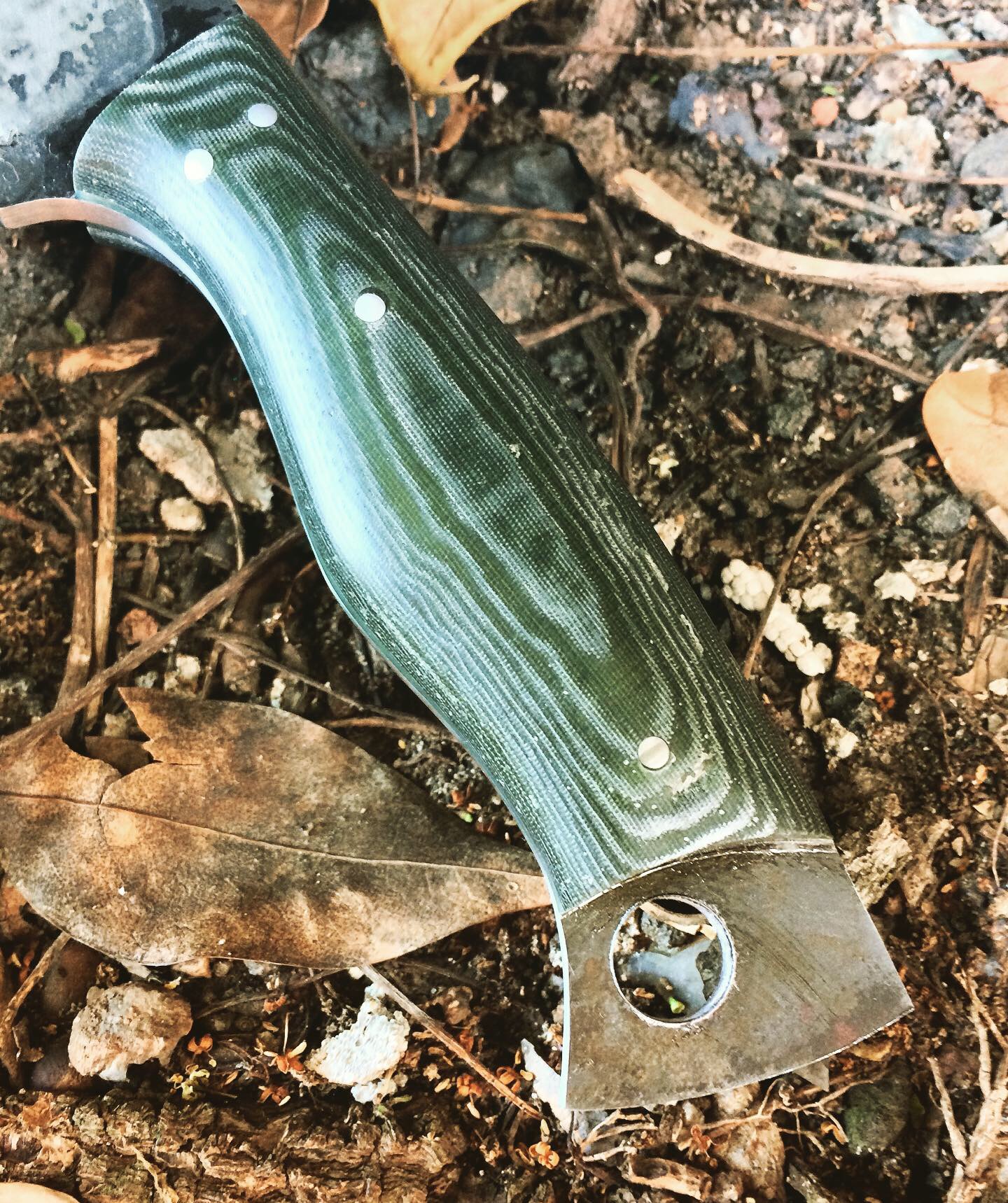
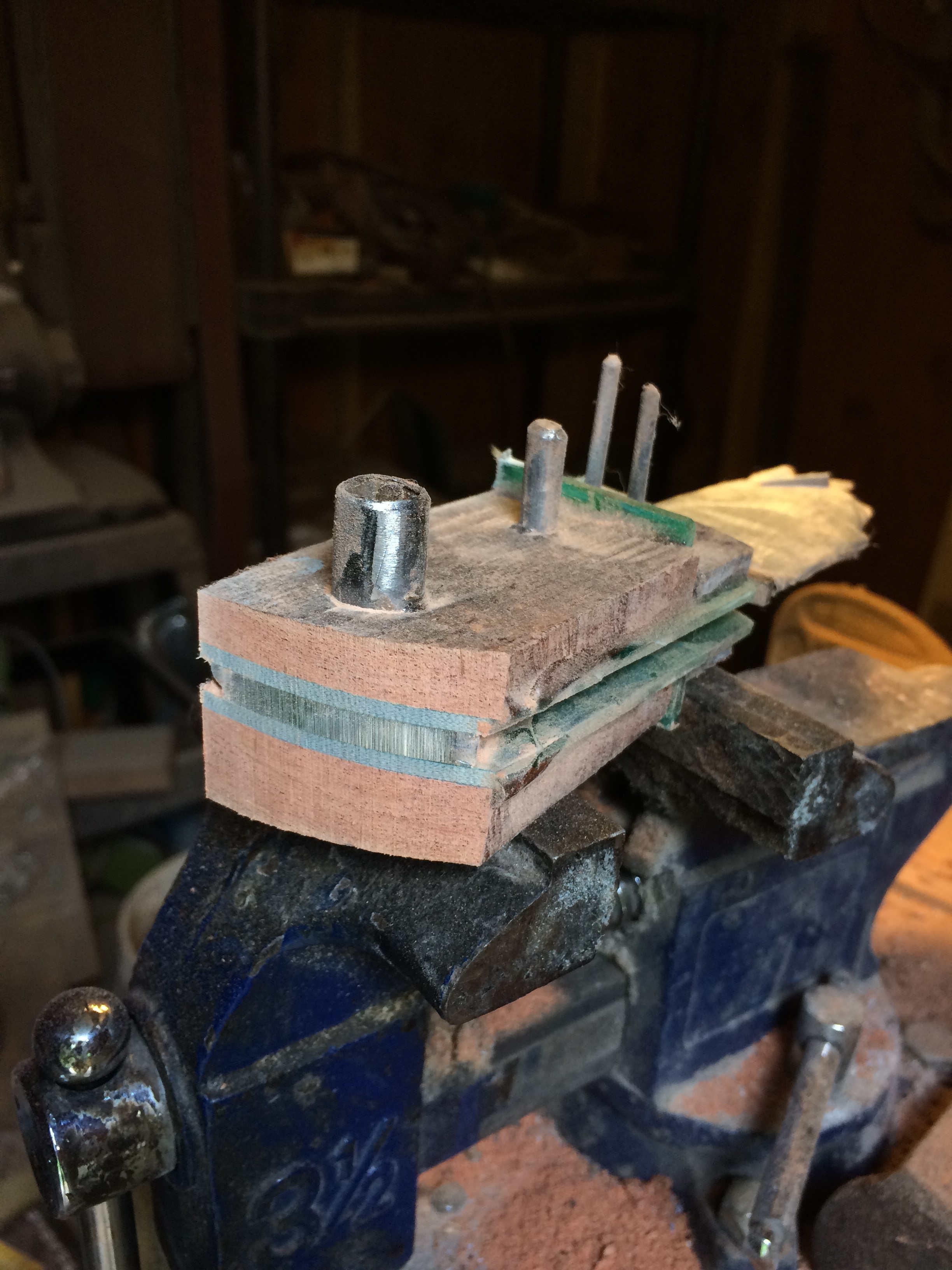
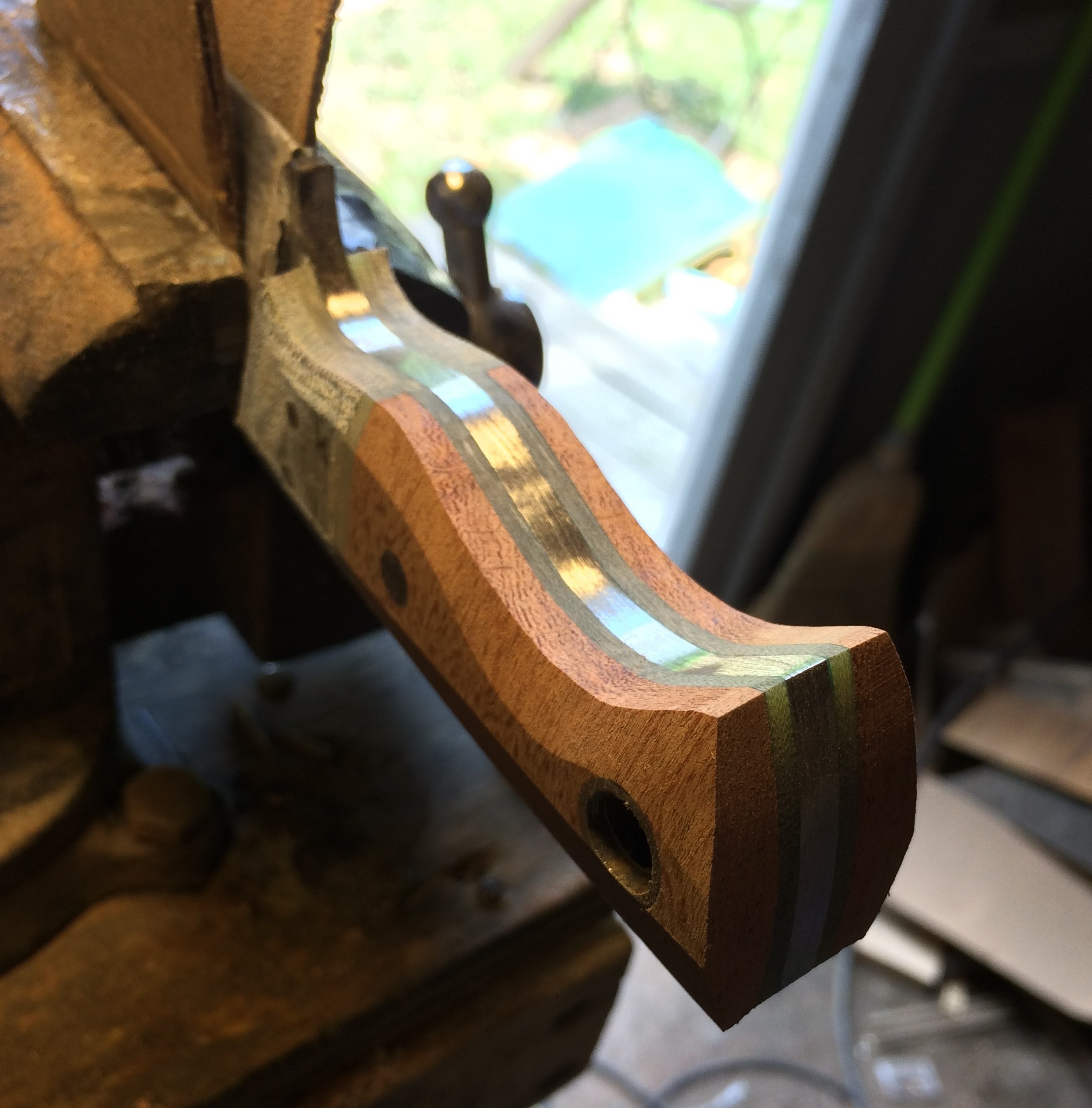
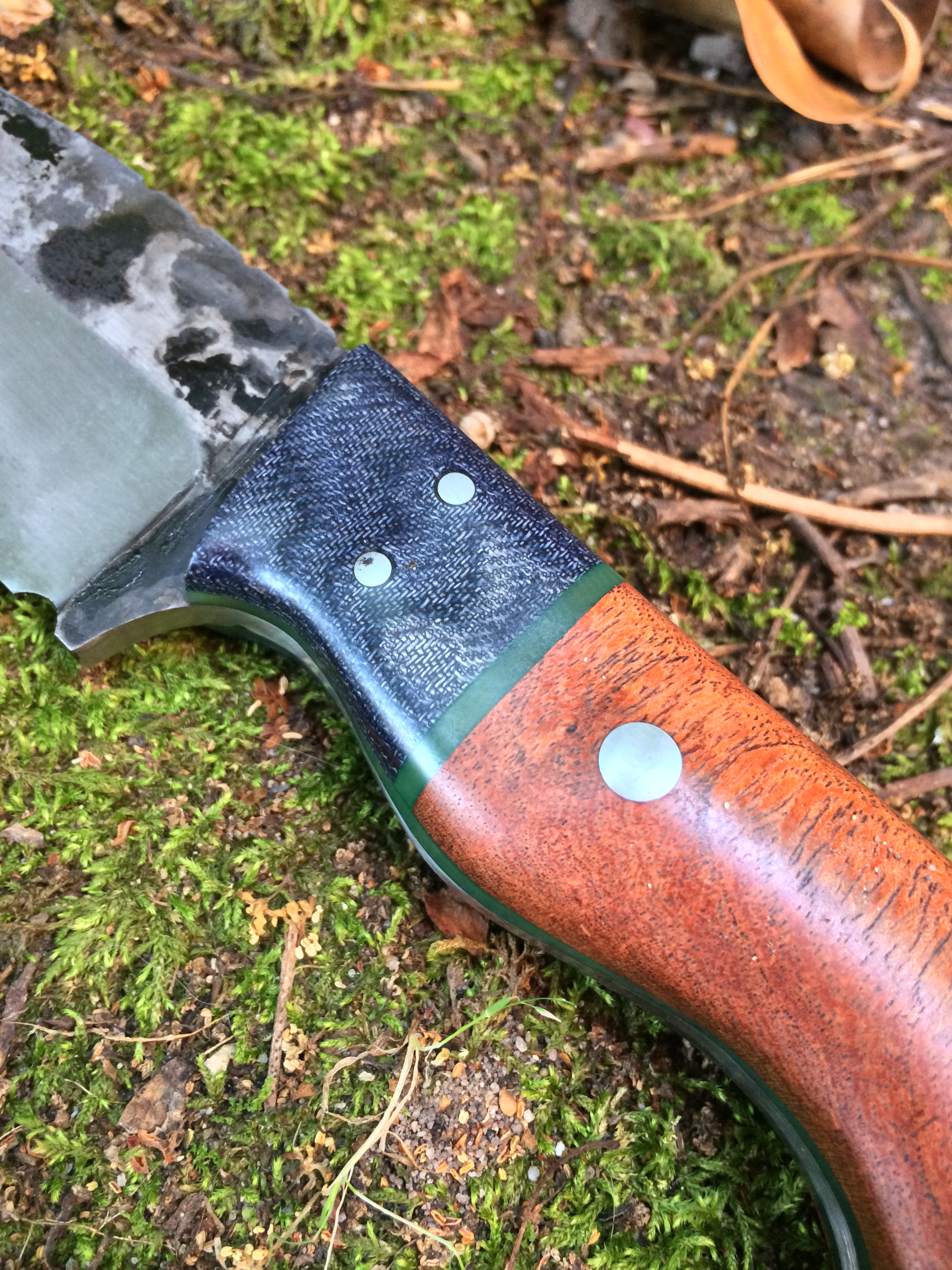
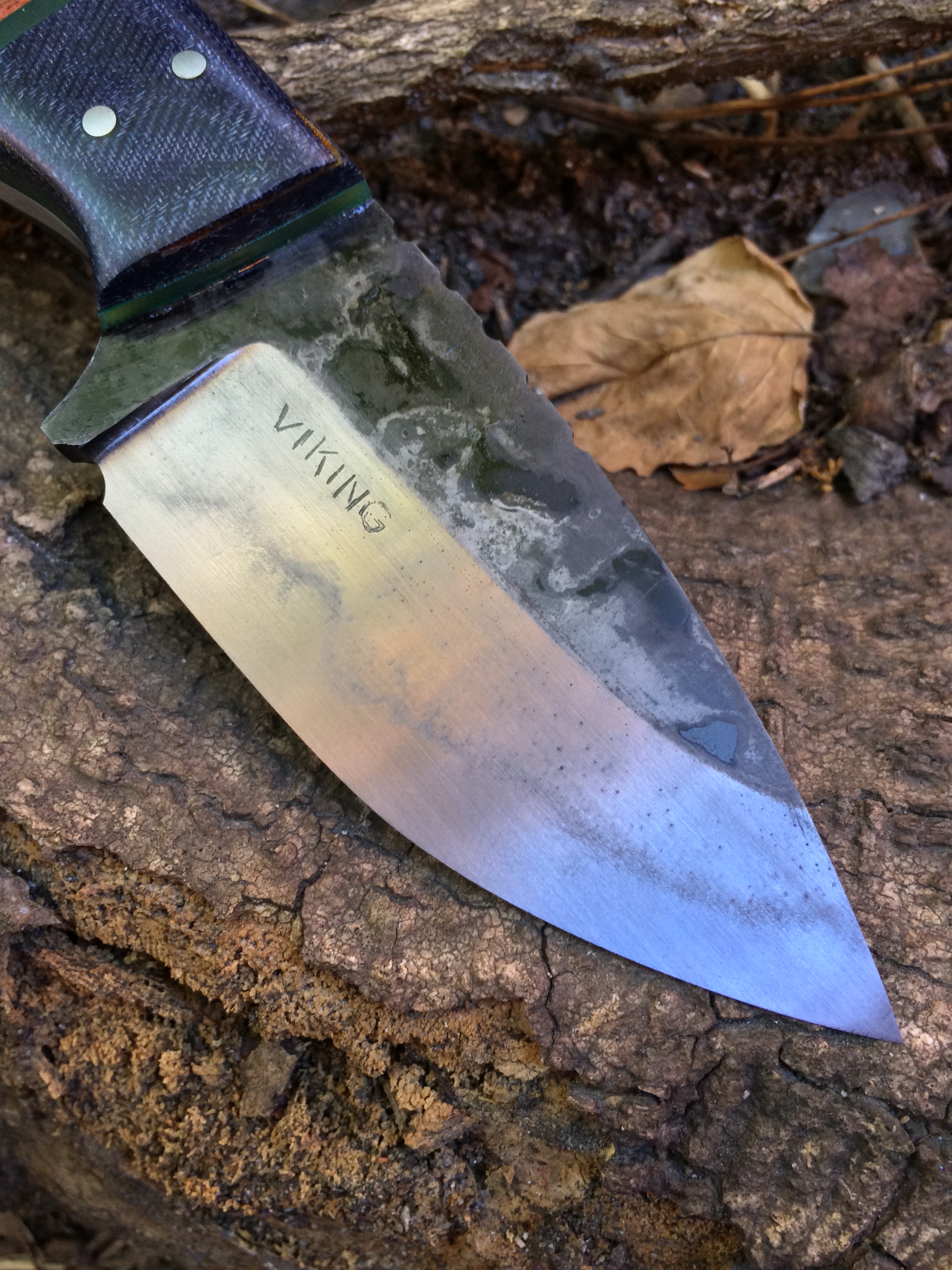
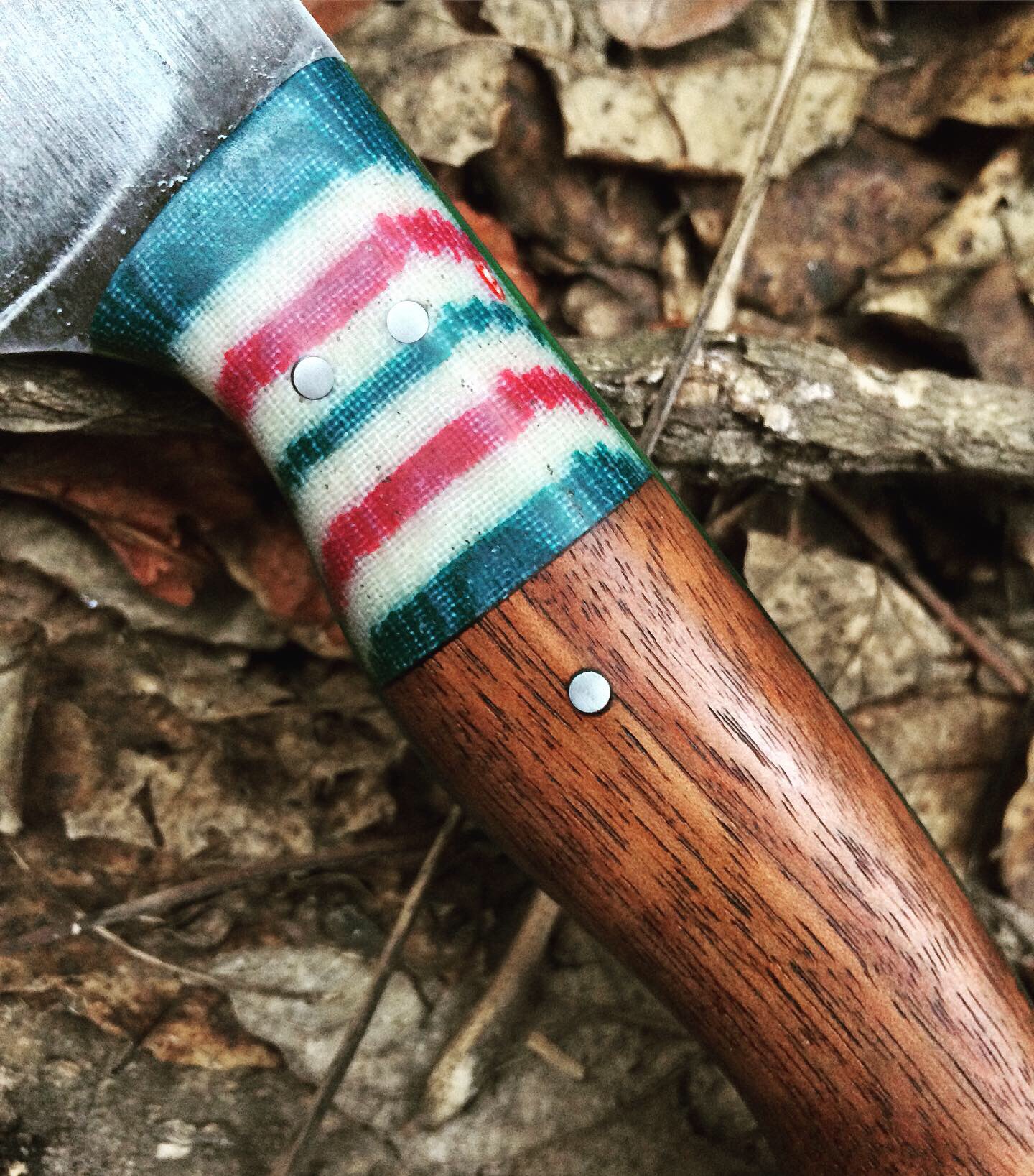
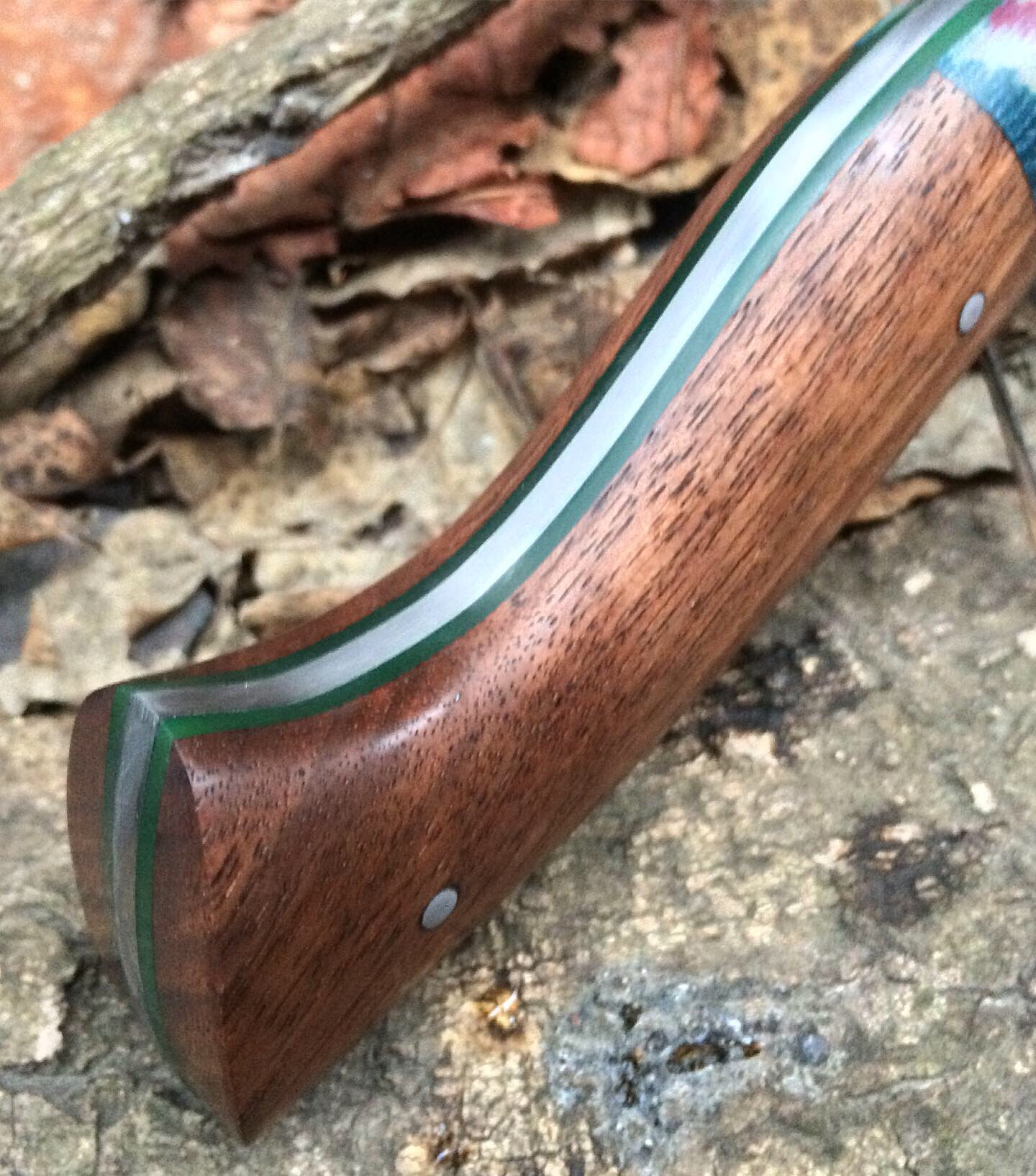
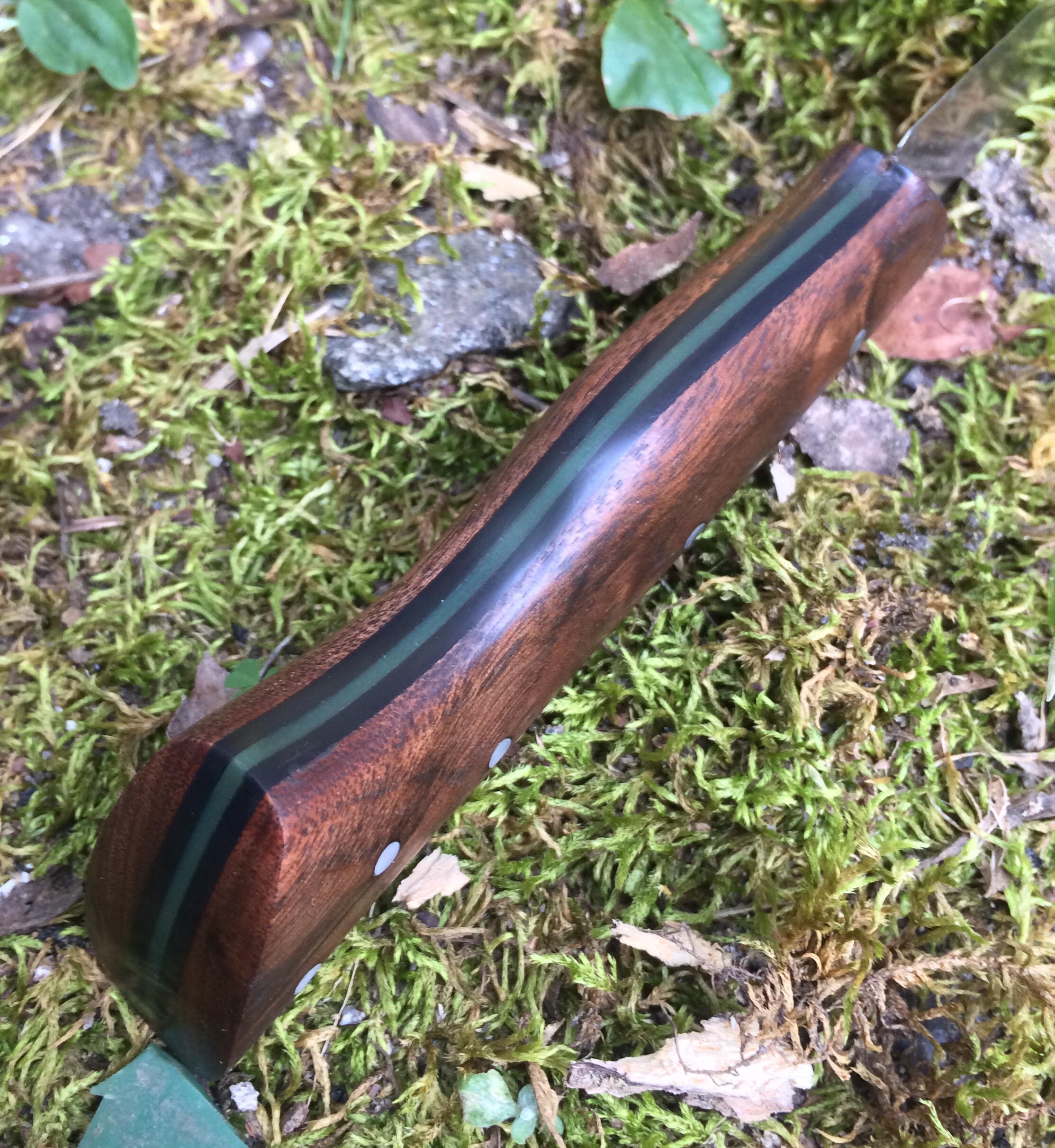
The Crack Shot is a nod to this idea that the sum of our experiences can always help us hit our mark. It was built for a hunter and a woodsman. “Crack Shot” is an homage to his grandfather, the original Crack Shot, who taught him about being with nature, shooting, and how to hit your mark. It is the intention of this knife, with it’s blend of handmade and reclaimed material, to help it’s recipient remember the man who helped him be where he is today.

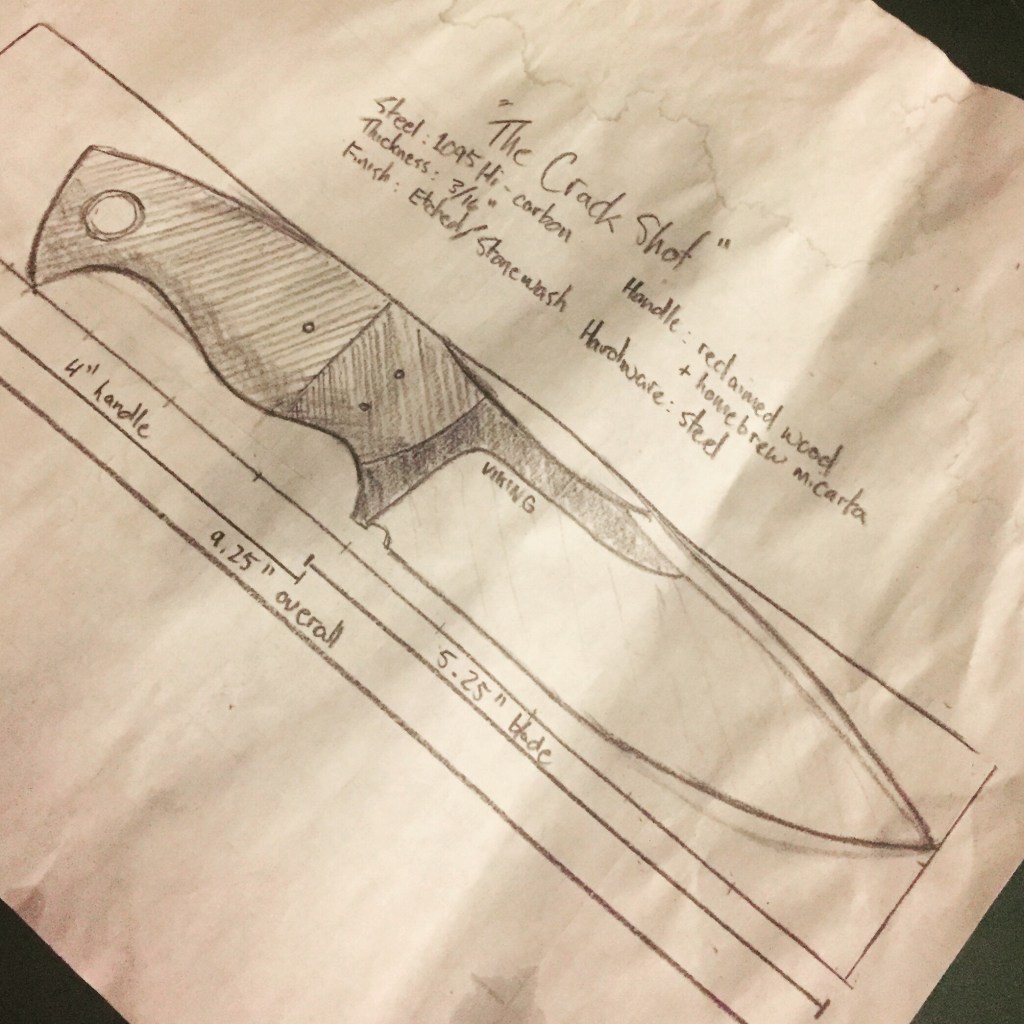
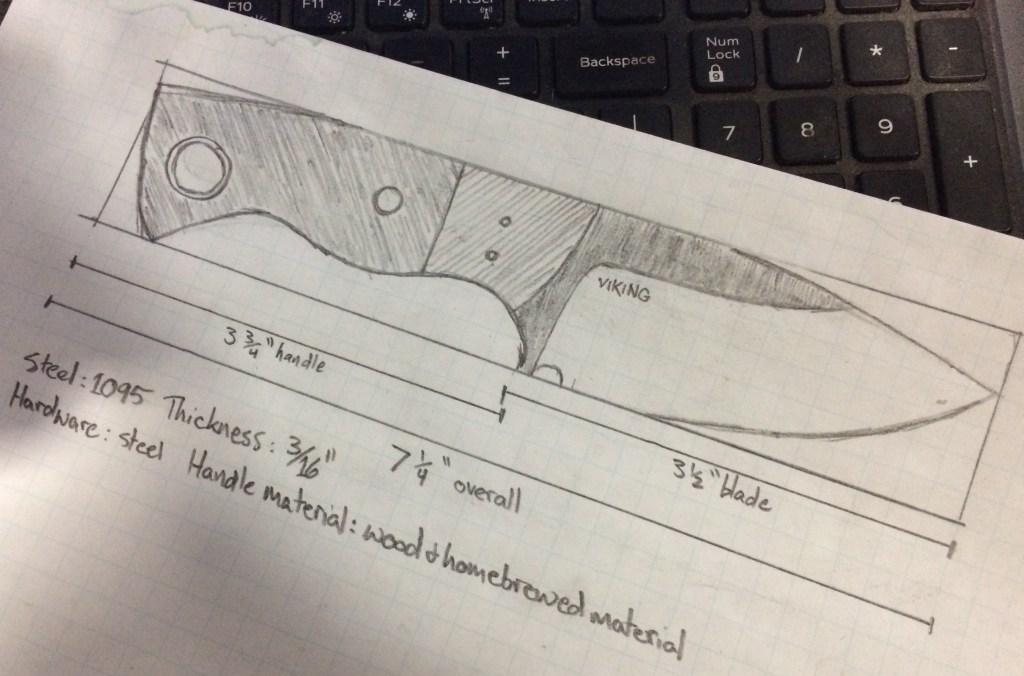
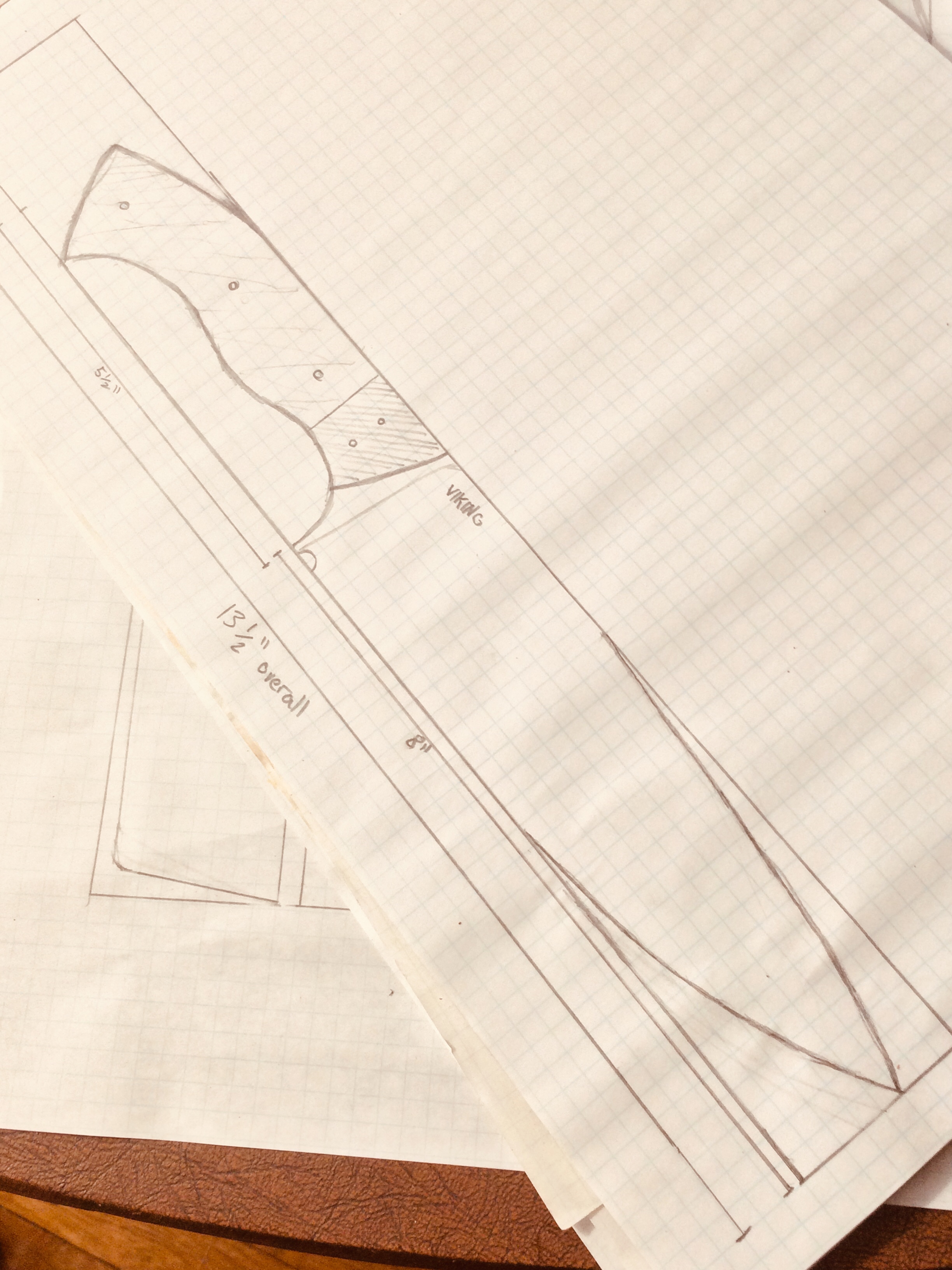
A quick sketch
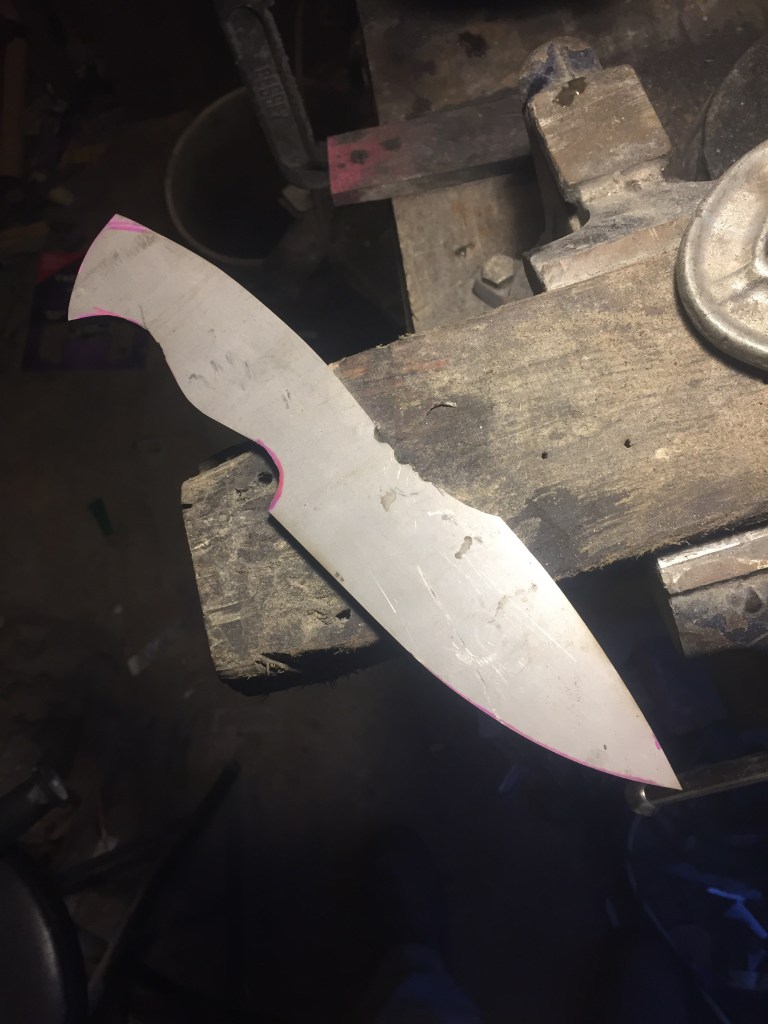
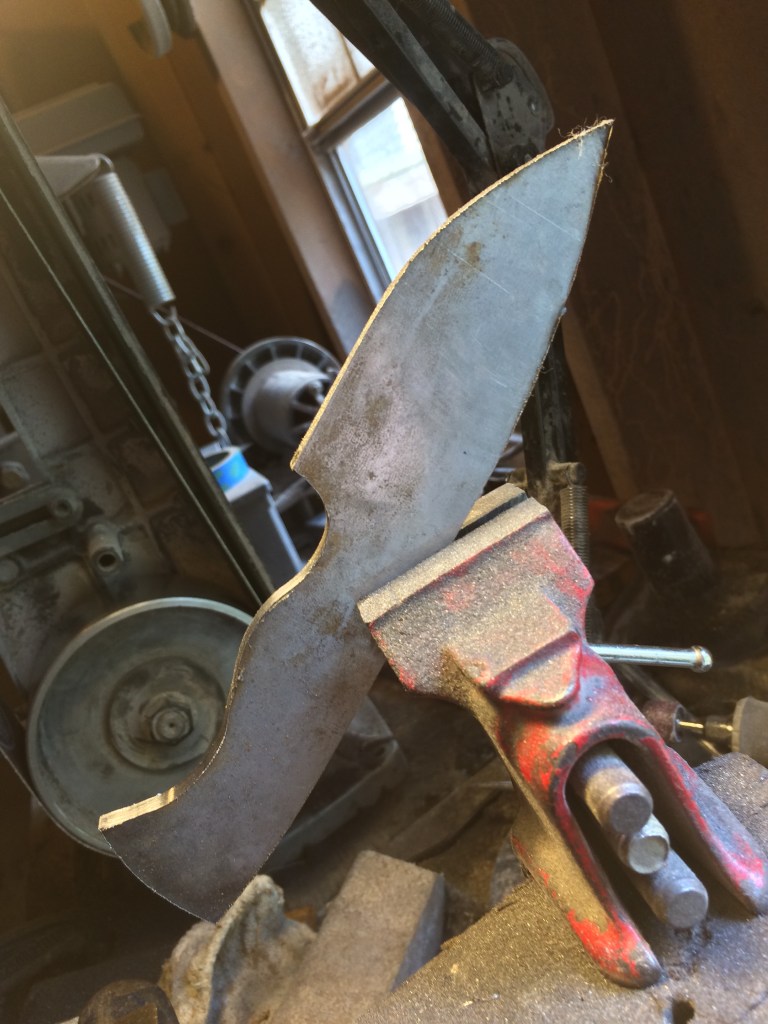
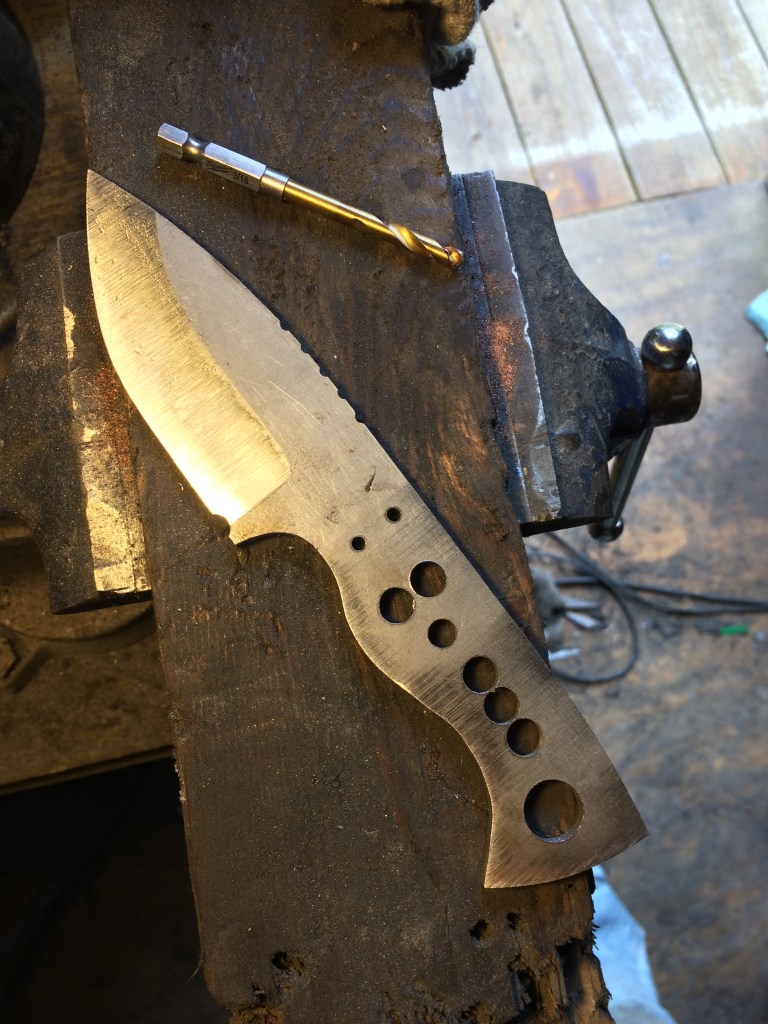
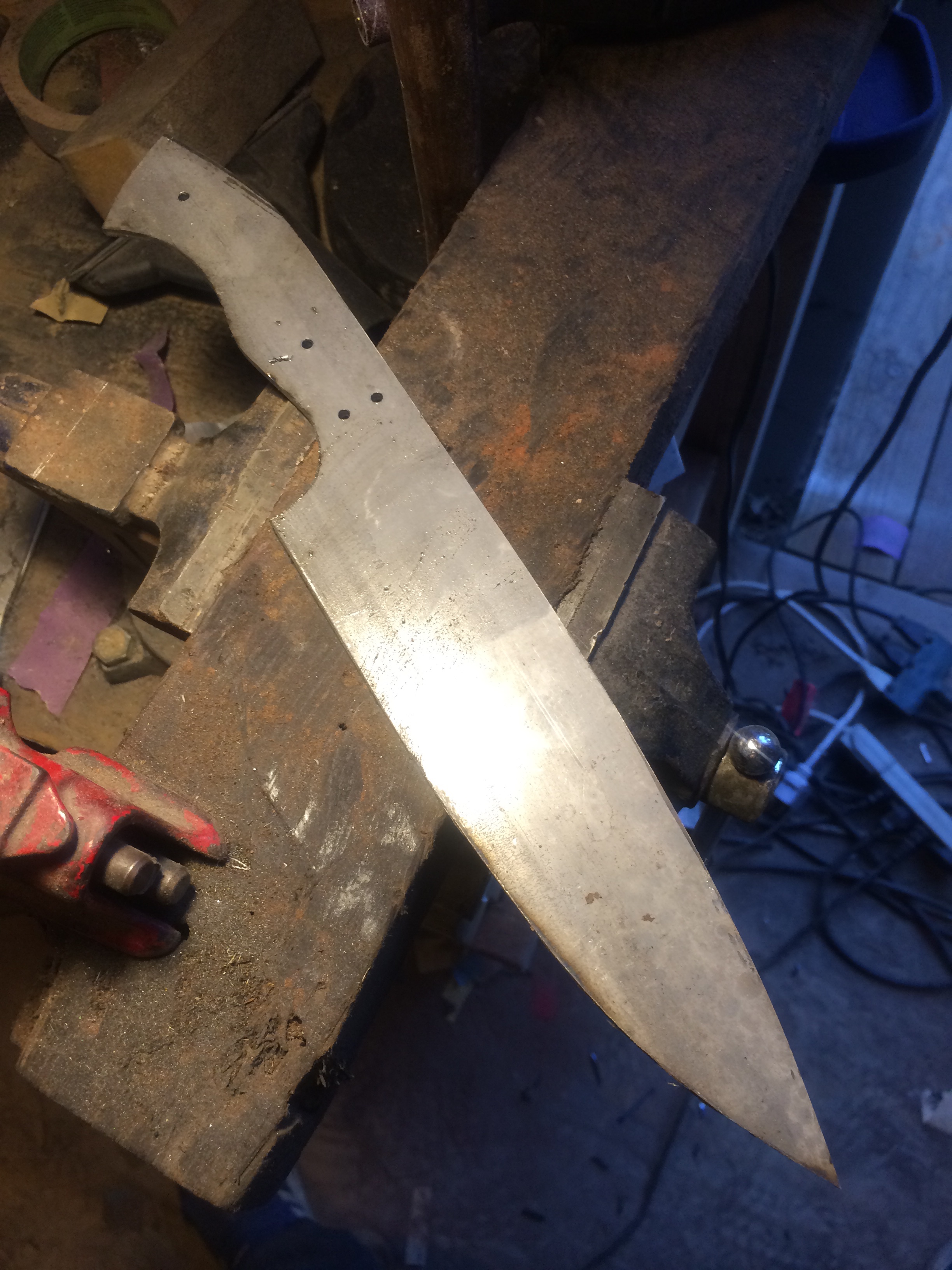
Roughing out the profile
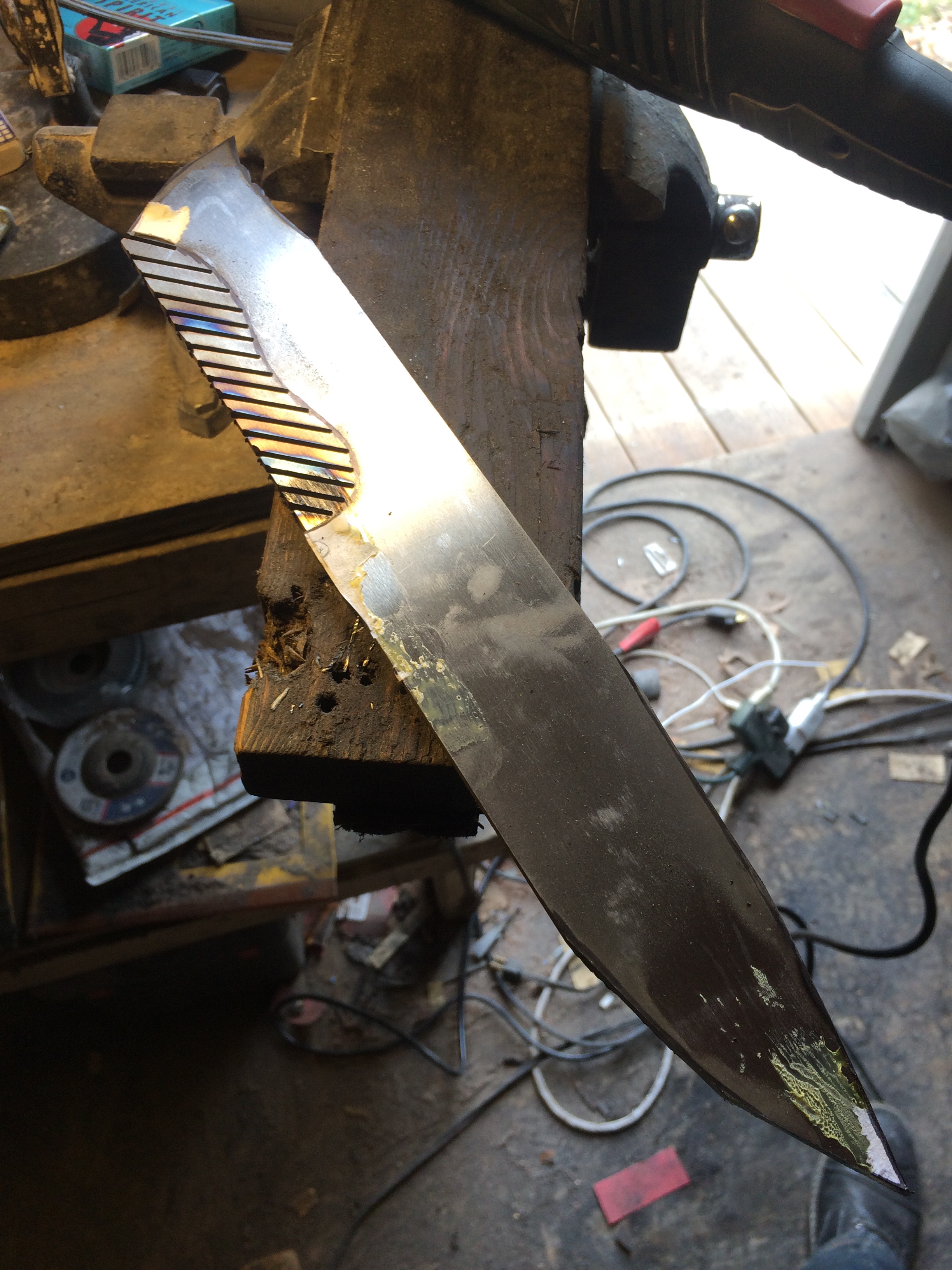
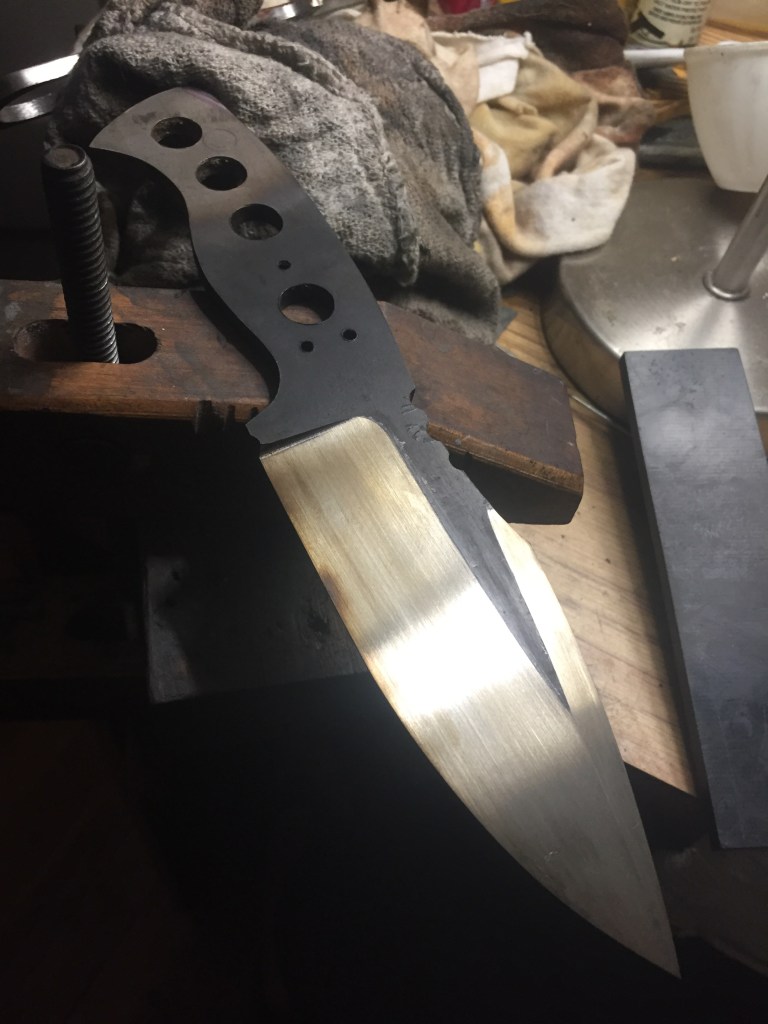
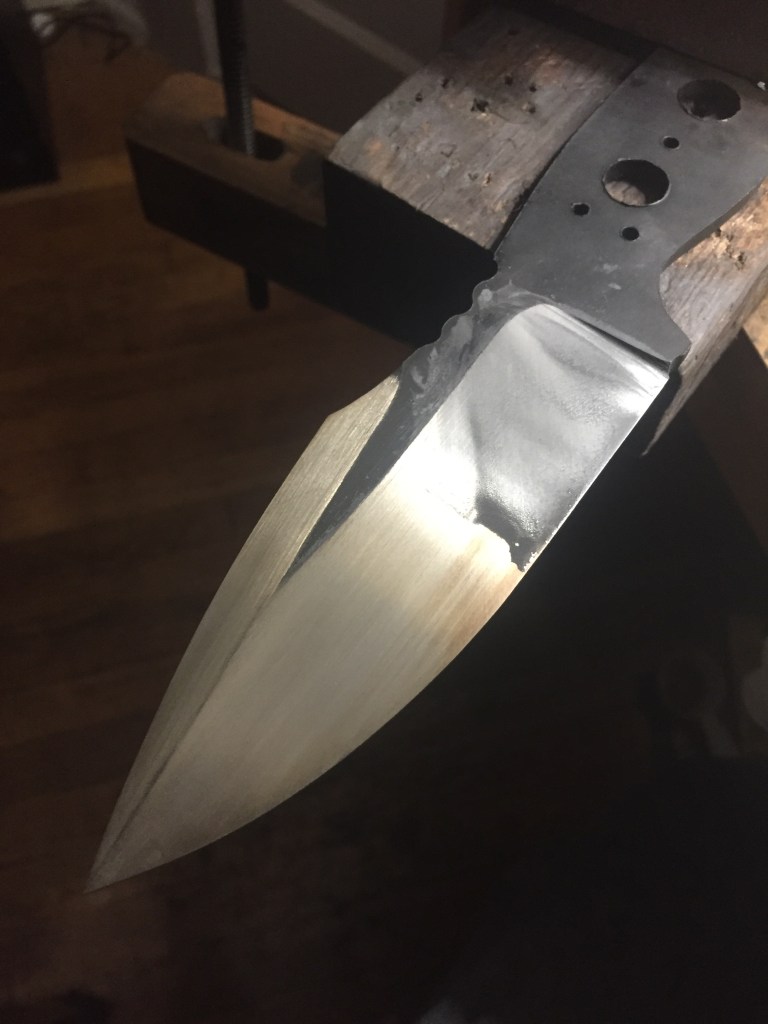
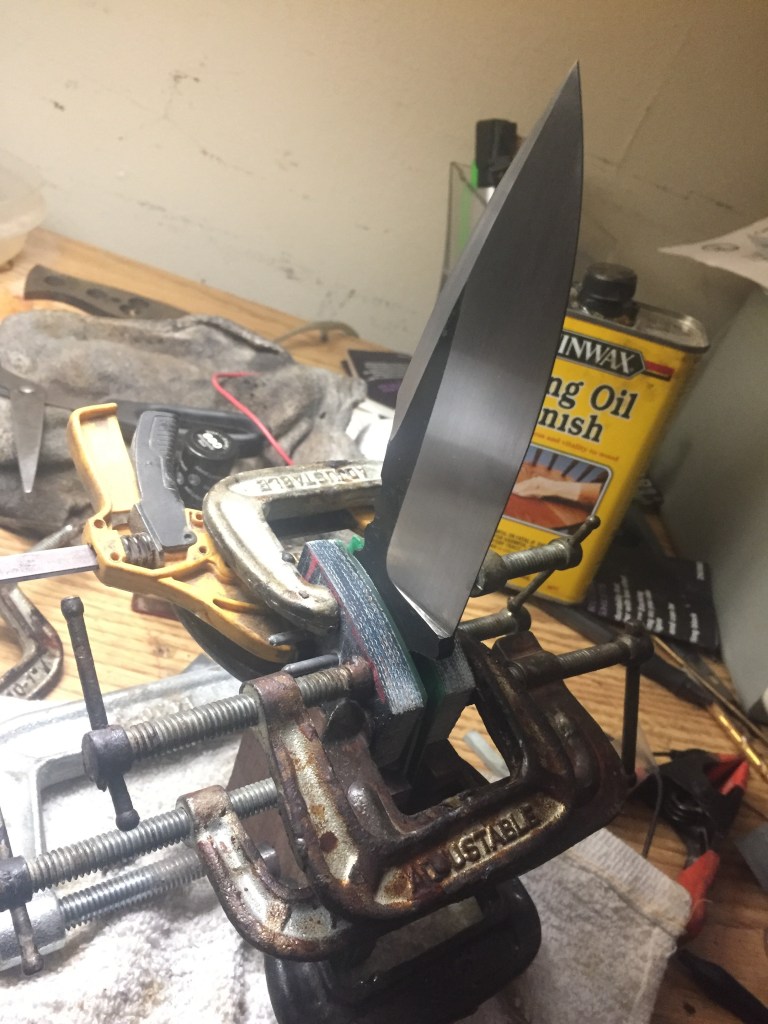
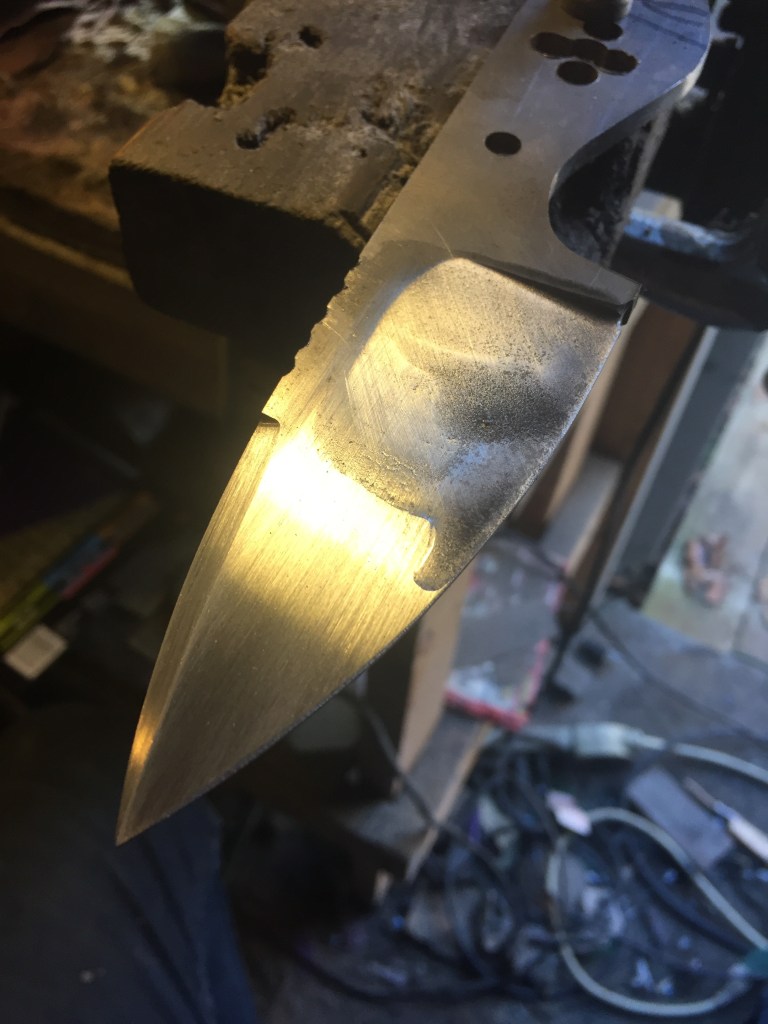
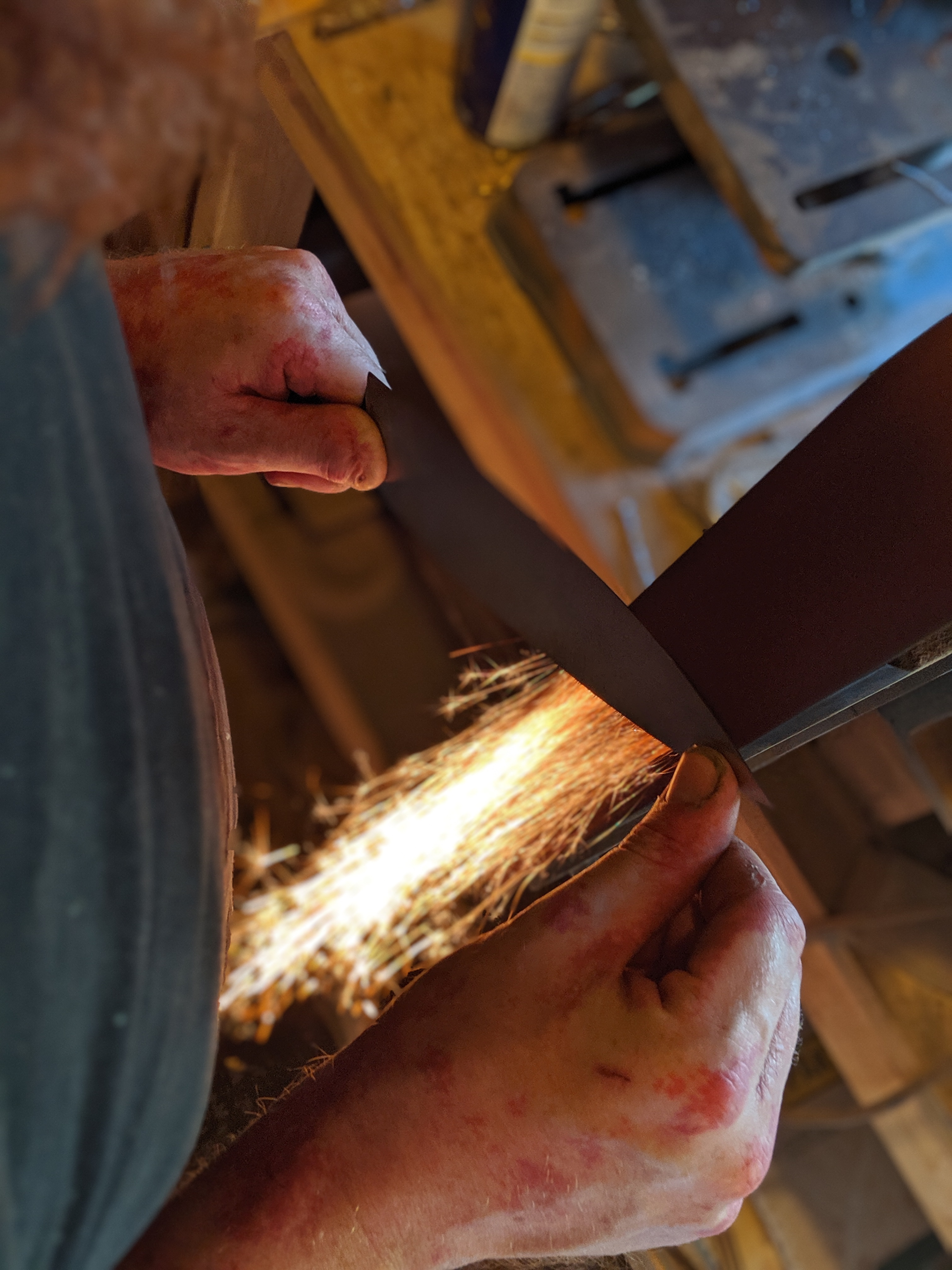
Grinding in the bevels and swedges. Since this is thick stock, the swedge will make a finer point for piercing.
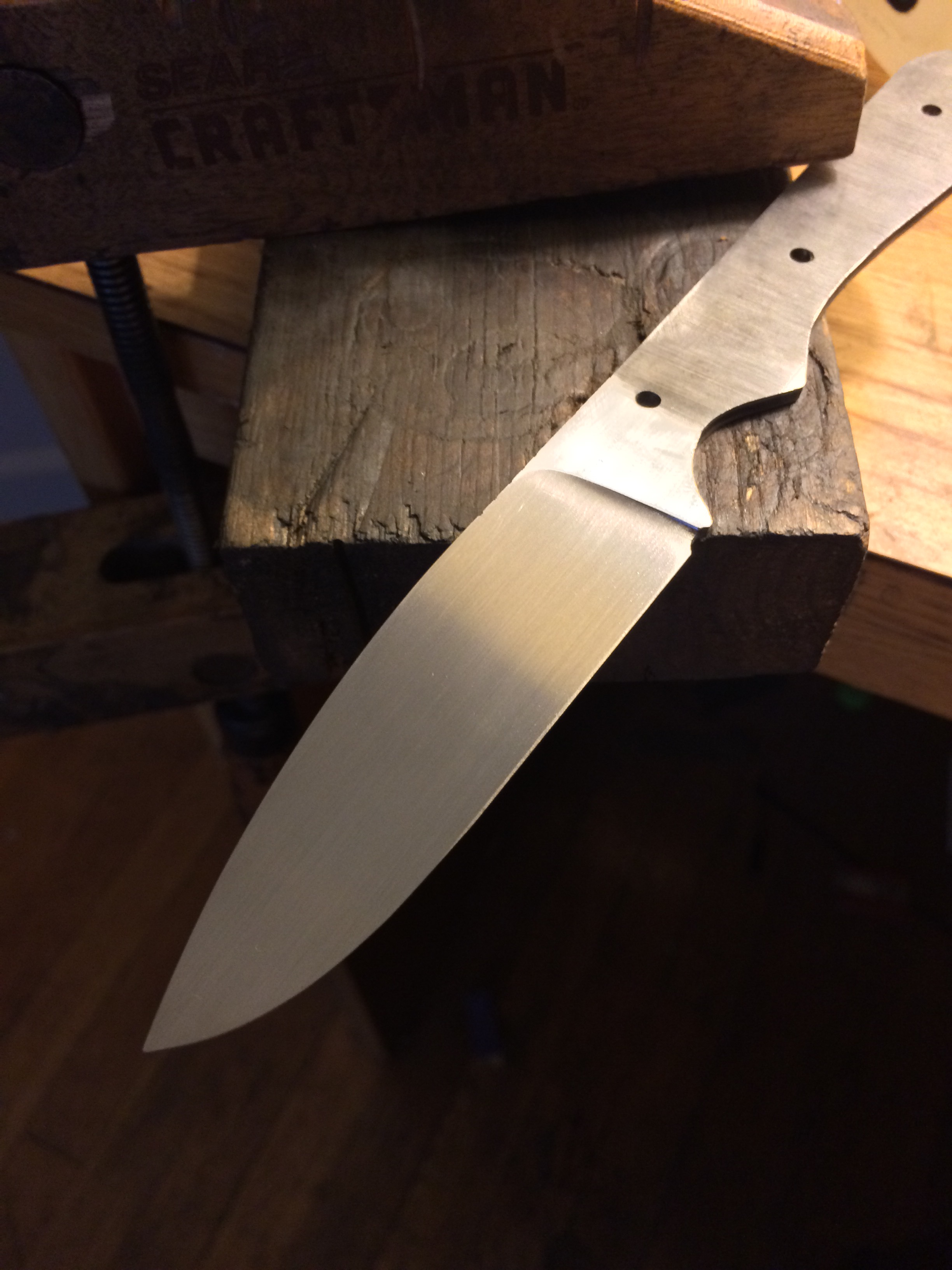
Removing the machine grinds by hand. This will make polishing easier after heat treatment.
Almost there…
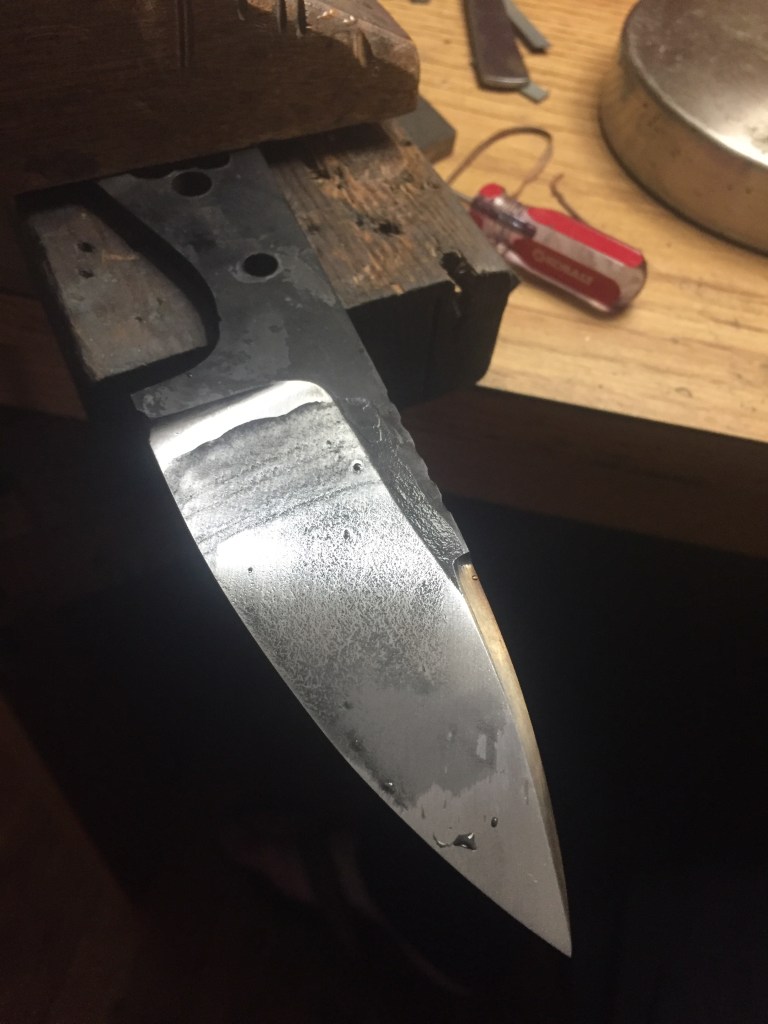
Post-quench cooling.
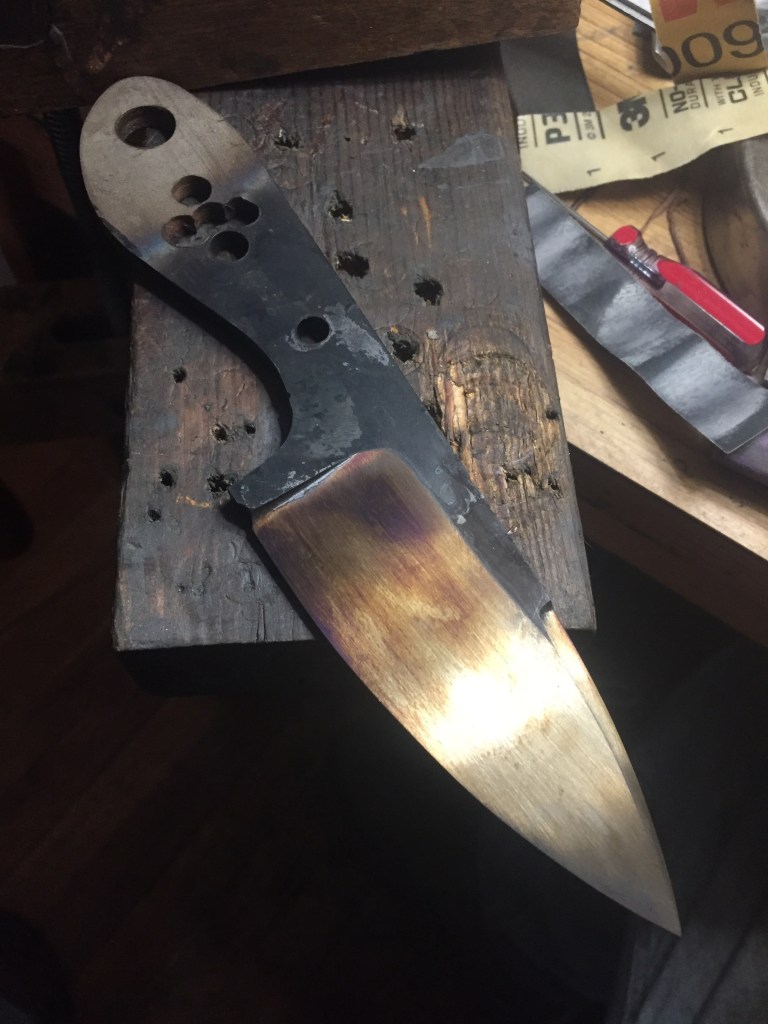
After tempering- note the faint straw colors. This has drawn much of the stress out of the blade that built up during quench, making it much more durable.
Hand sanding….
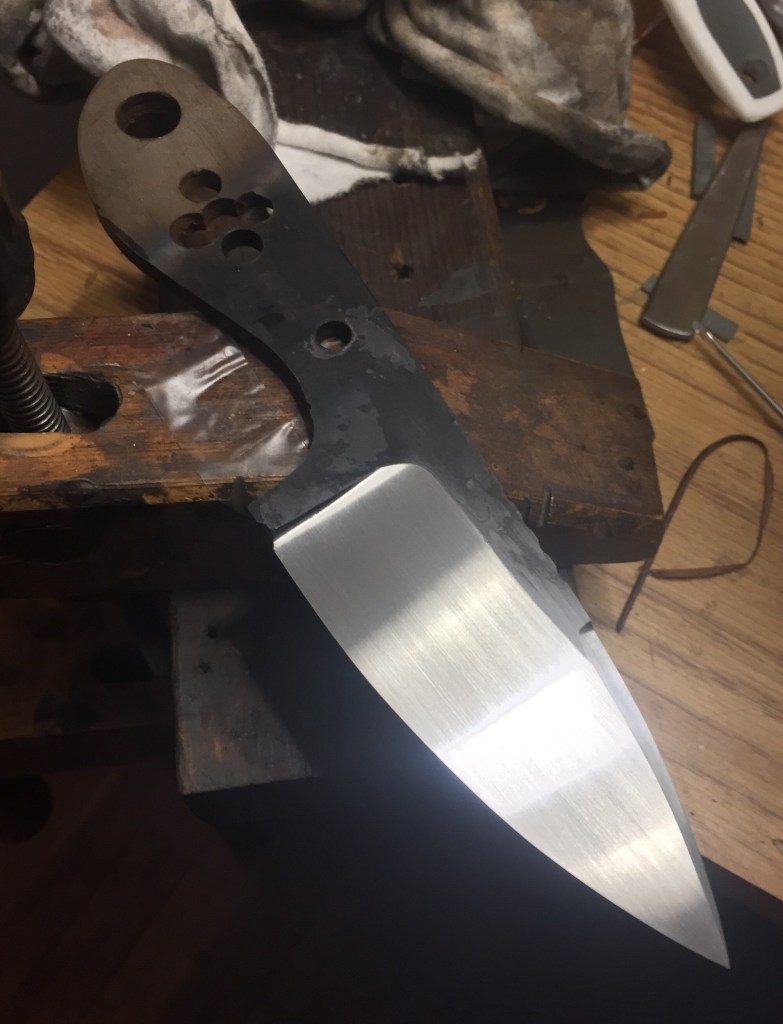
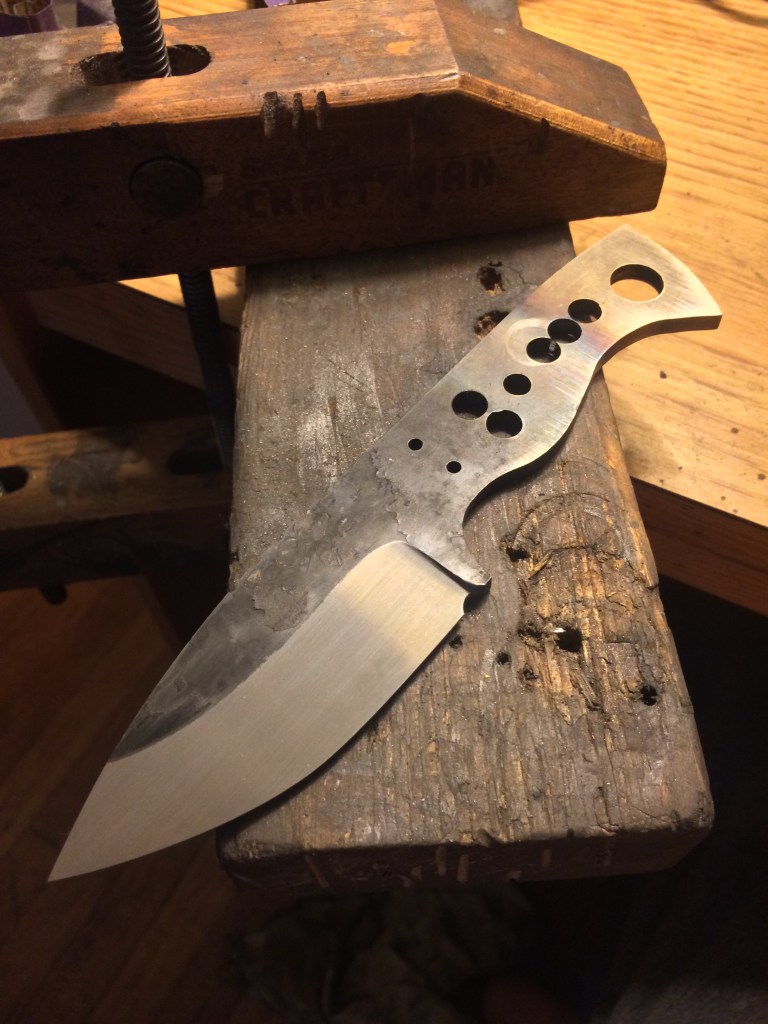
…to a nice satin.
Etching in the namesake.
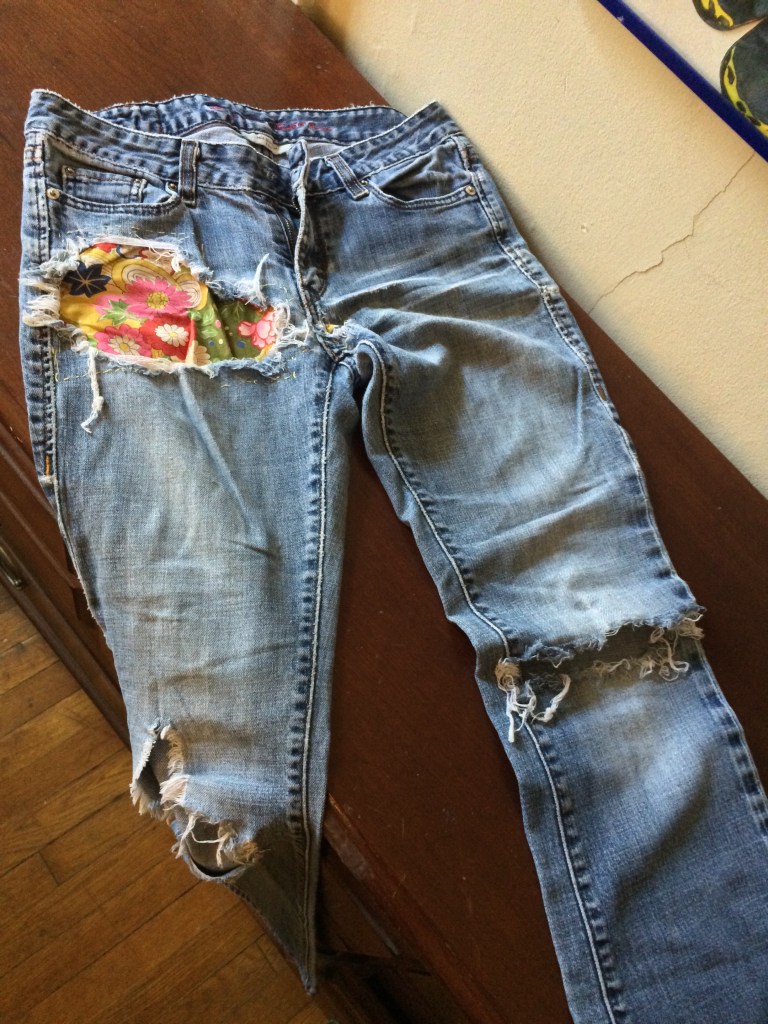
The client wanted something masculine and woodsy. I find there are few things more timeless that flannel and denim.
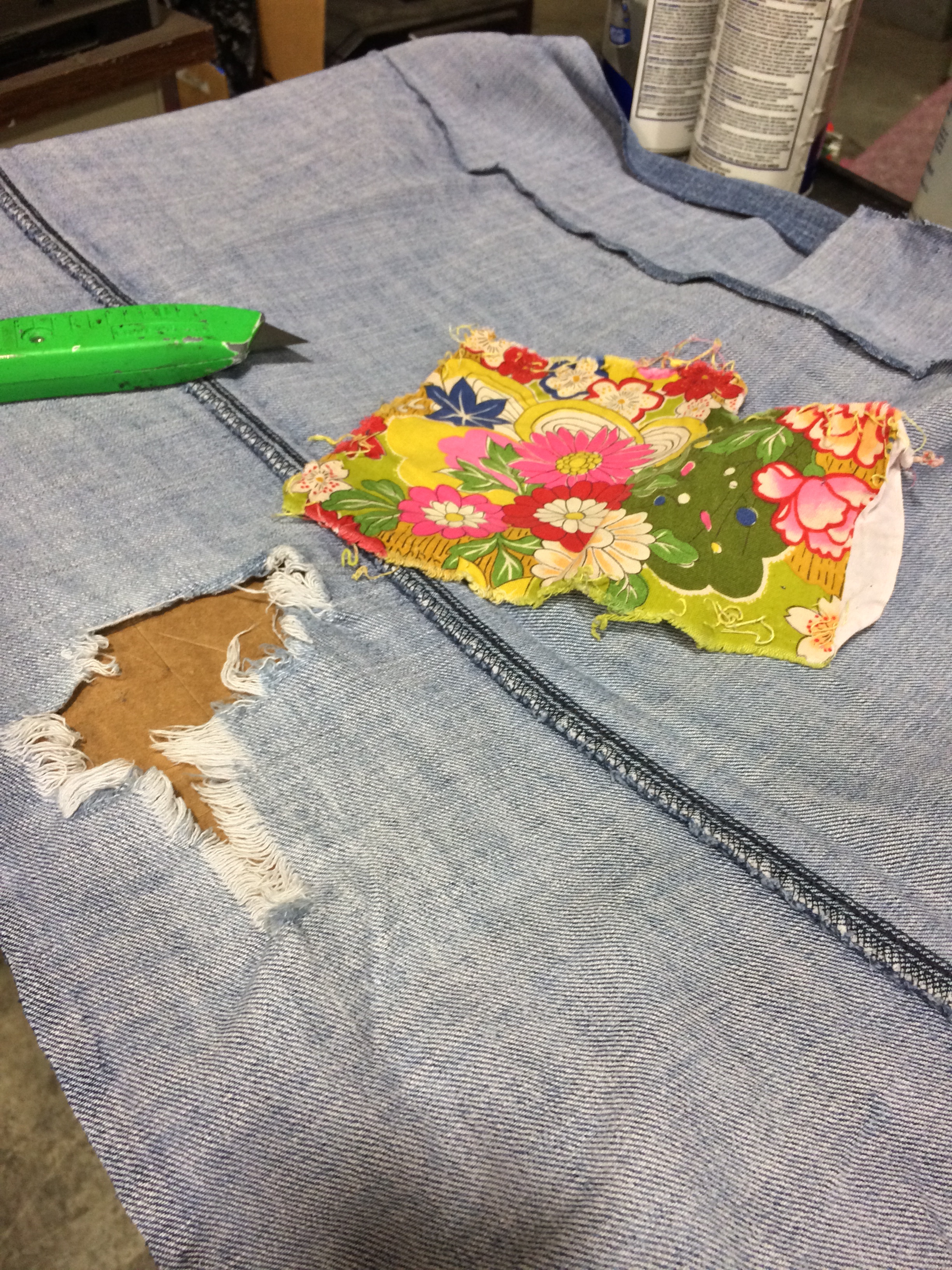
Alternating layers, so each piece should form a grain and be able to speak more articulately.
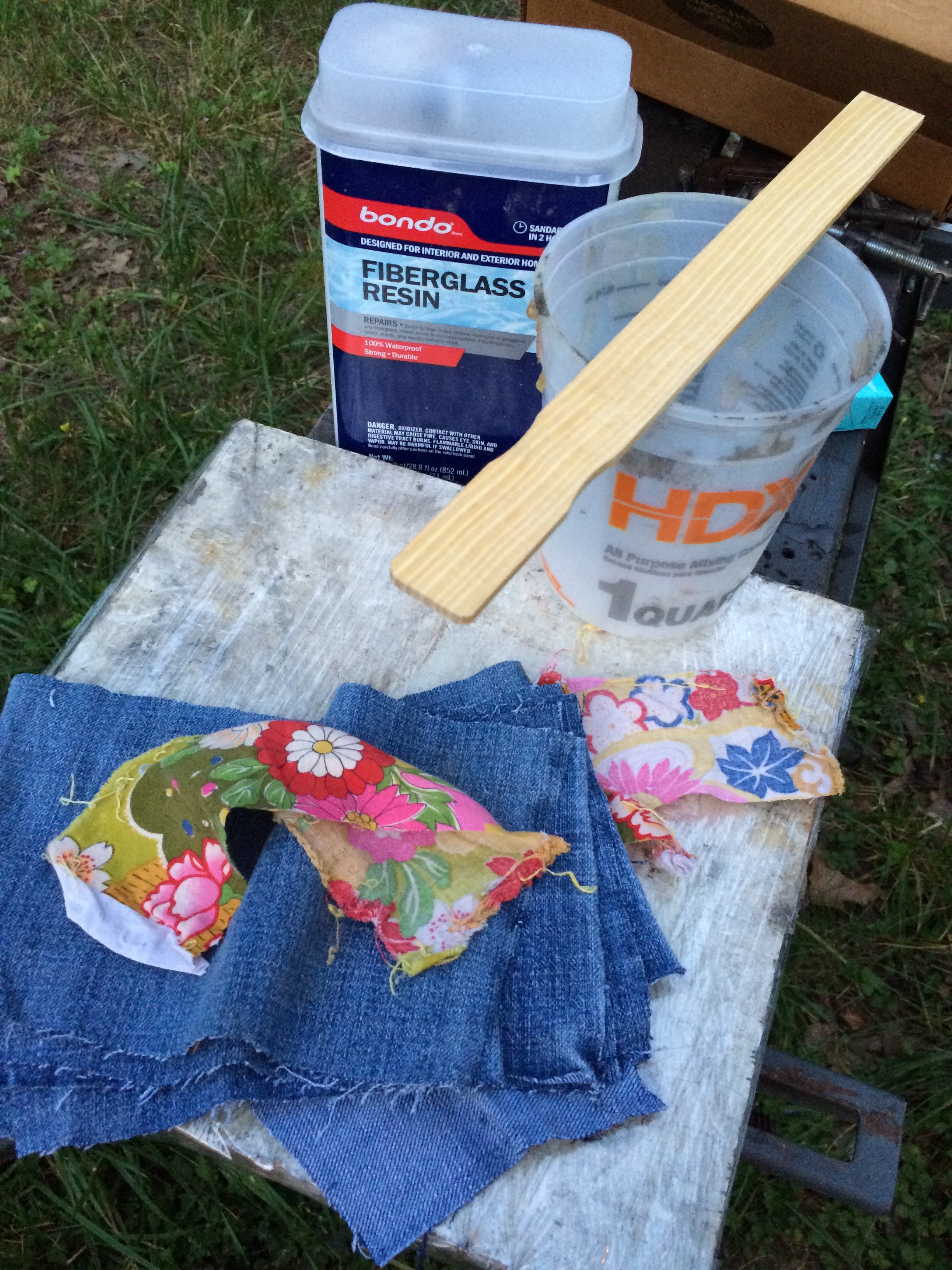
Prepped.
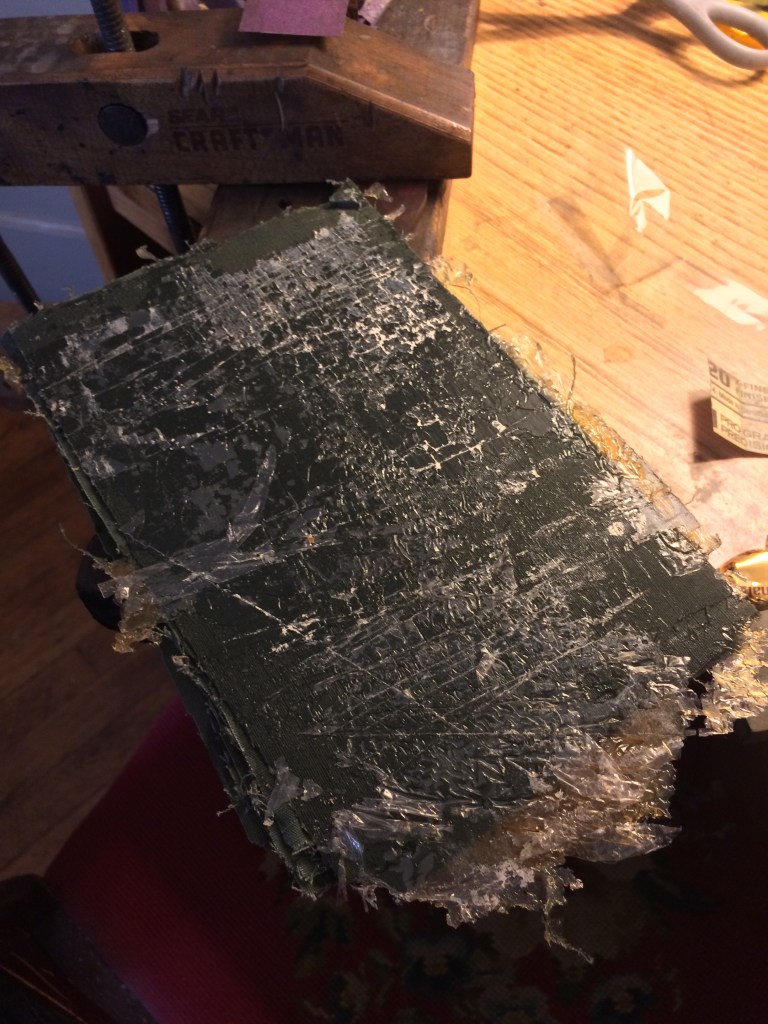
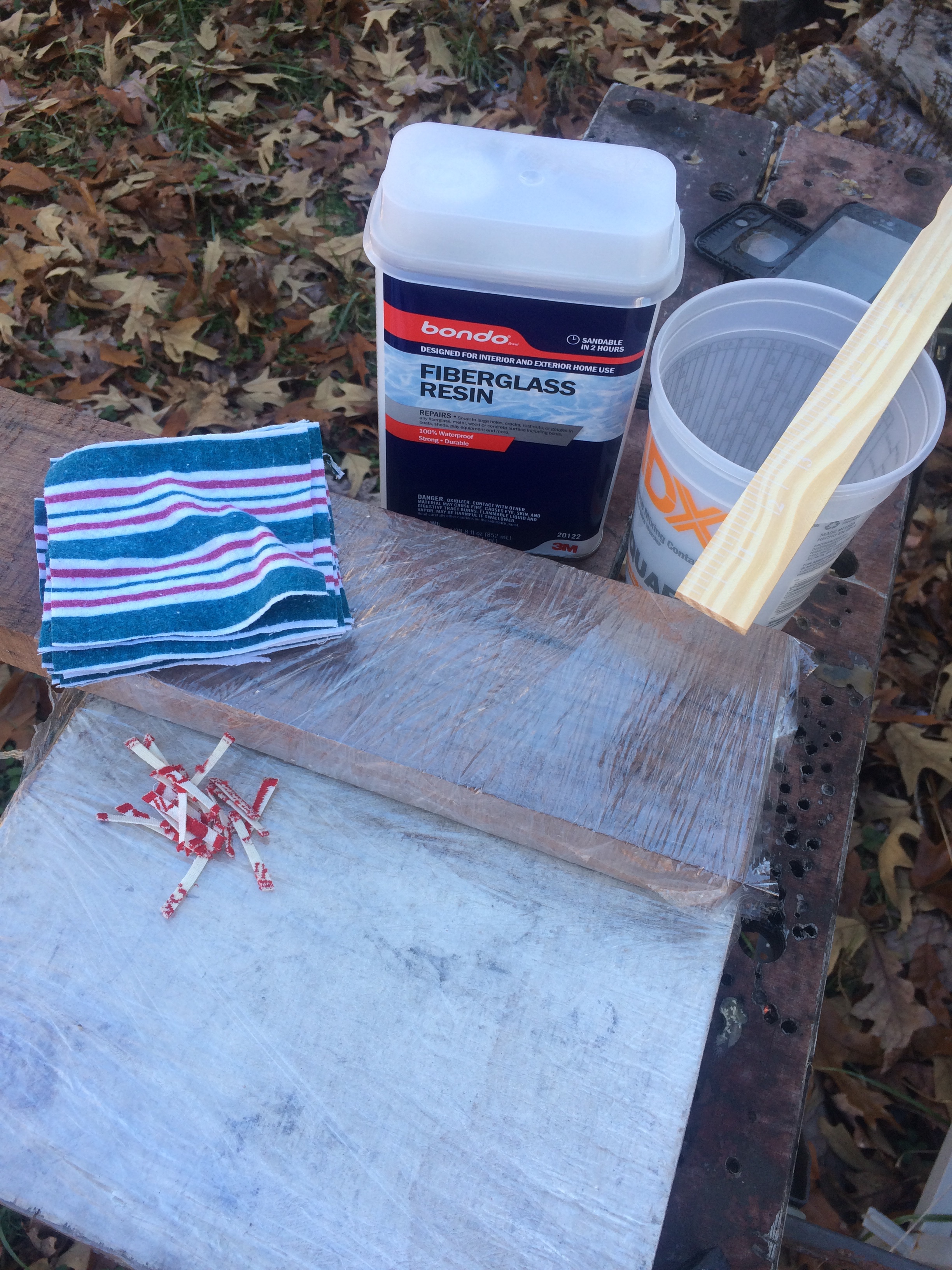
Each layer of clothes is smothered in fiberglass resin.
Now to smach everything together.
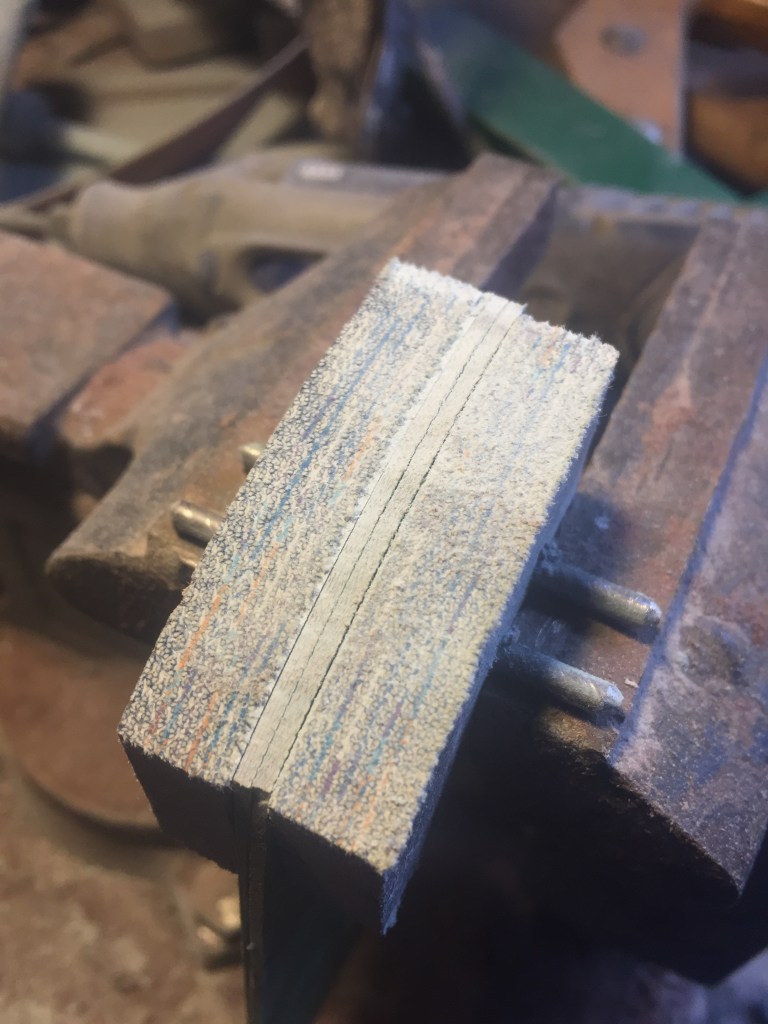
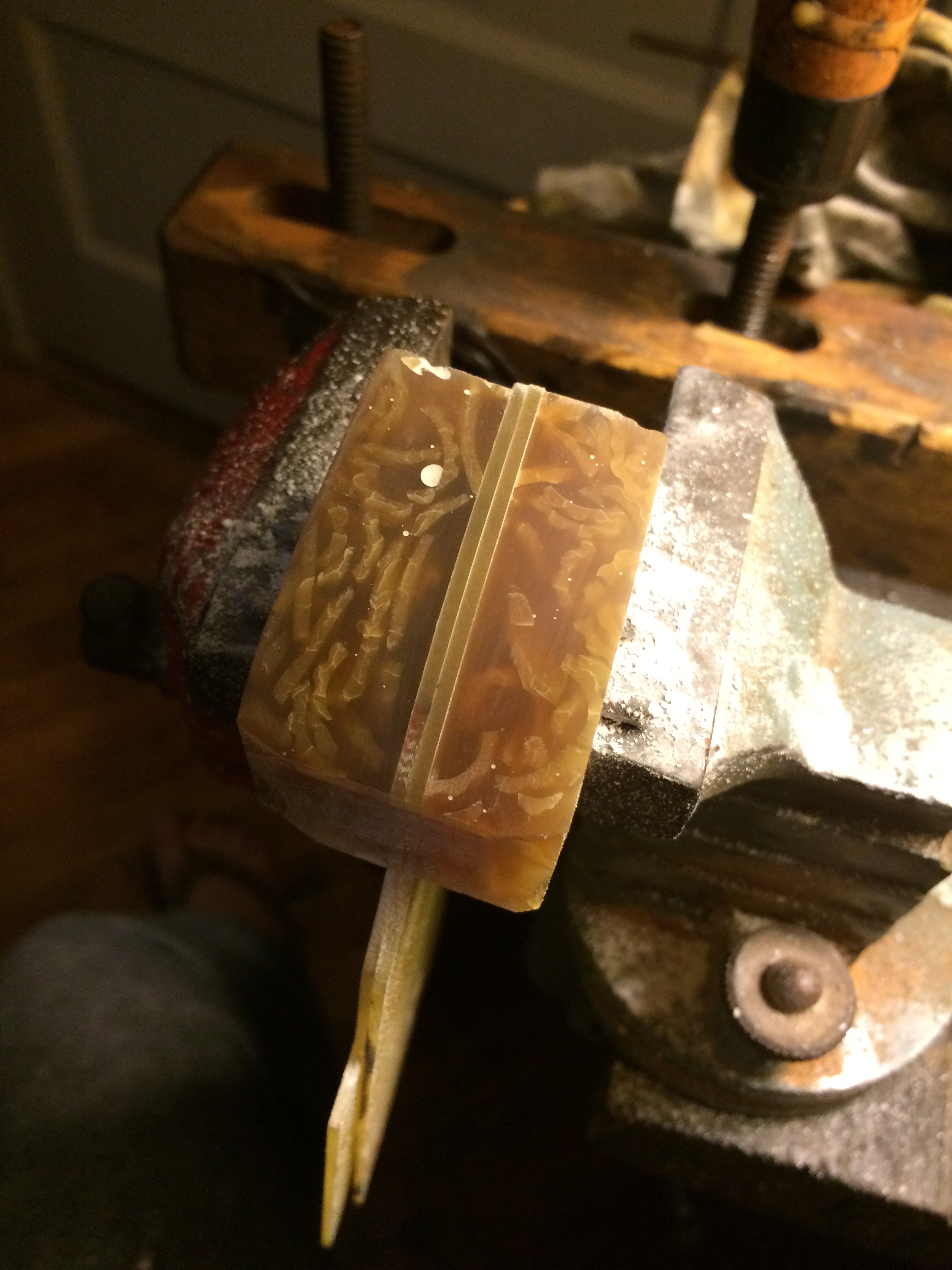
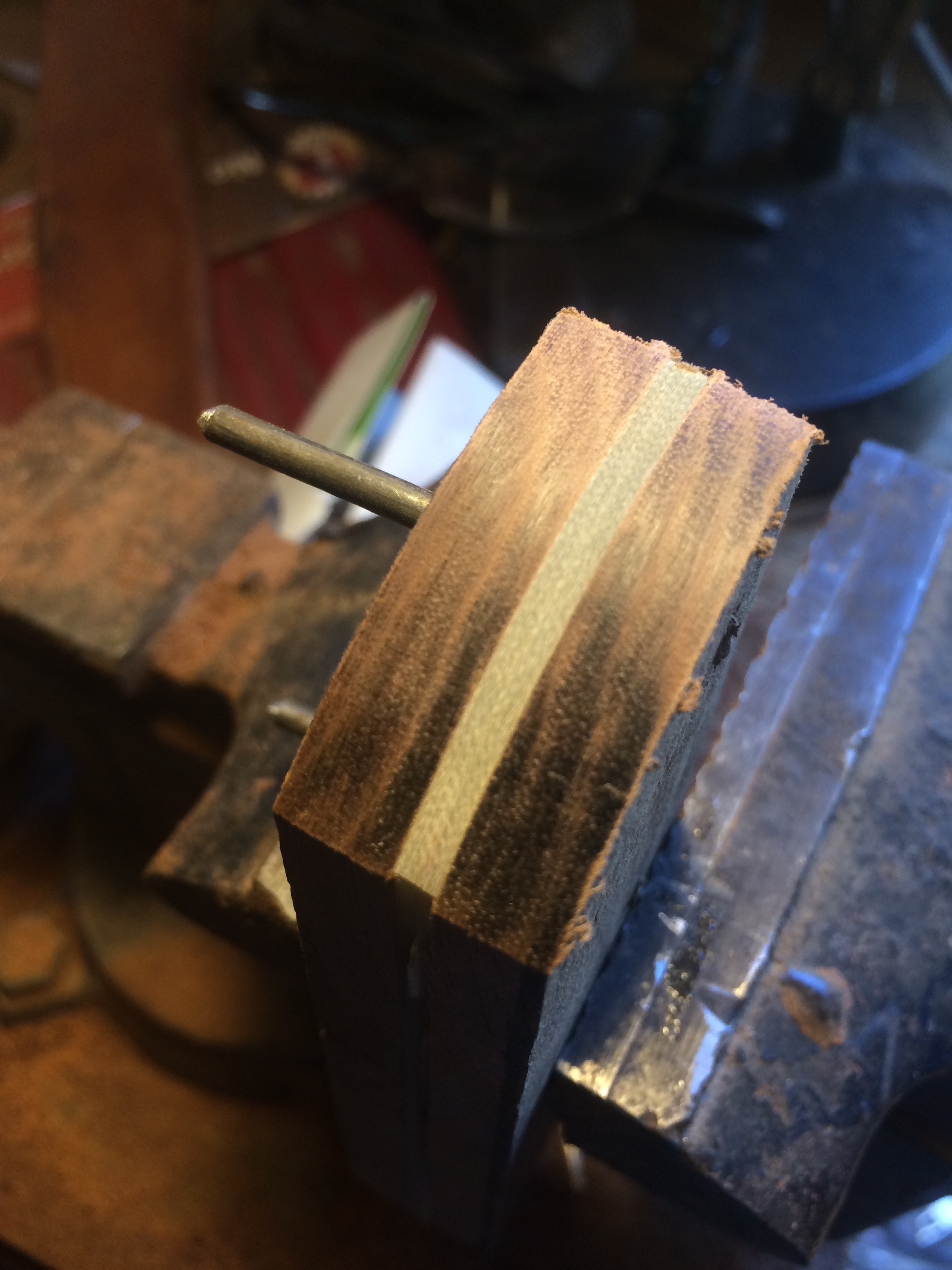
This is the raw material. All the layer have been permeated with resin, making everything a solid block.
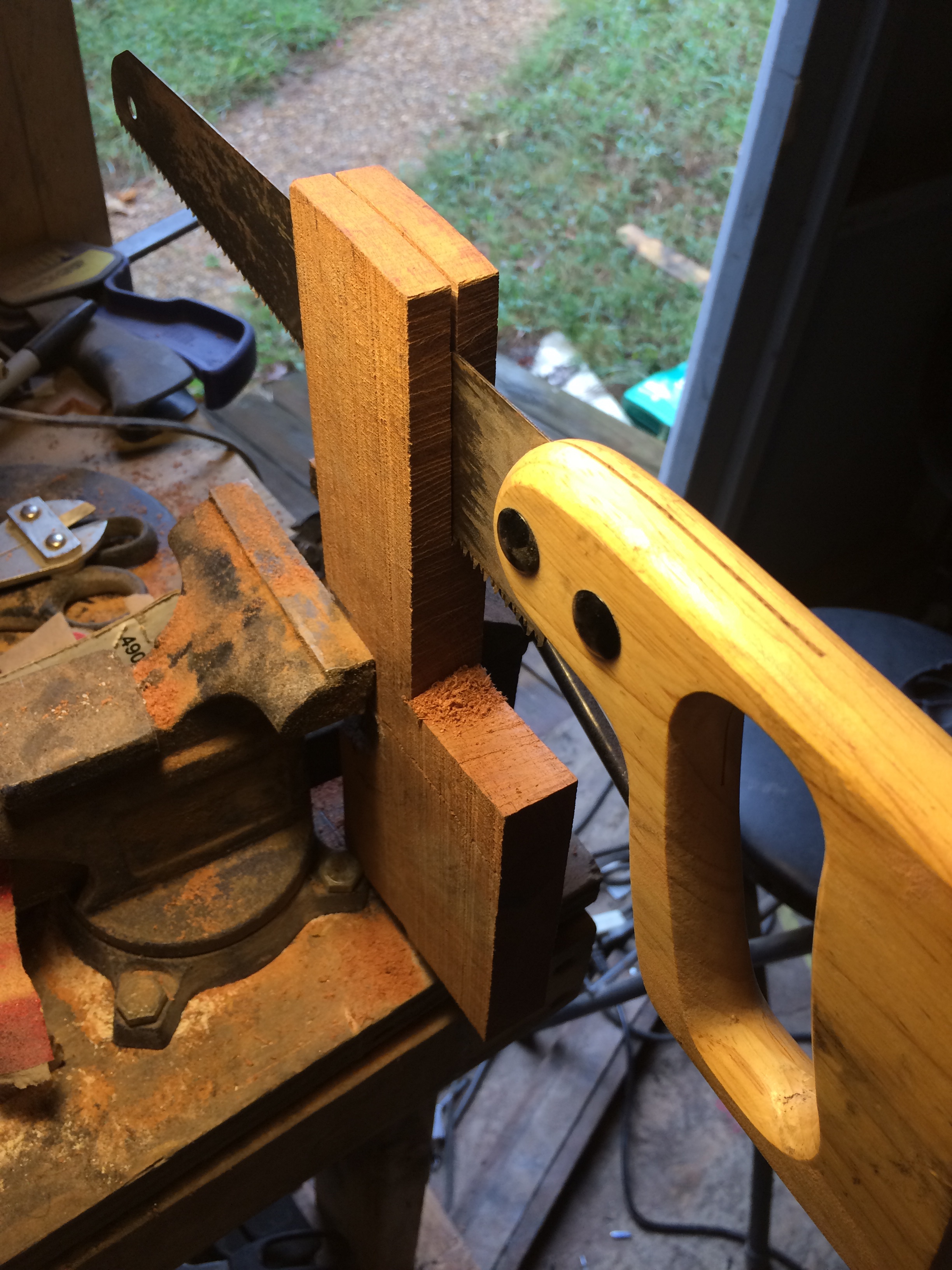
Cutting out the bolsters.
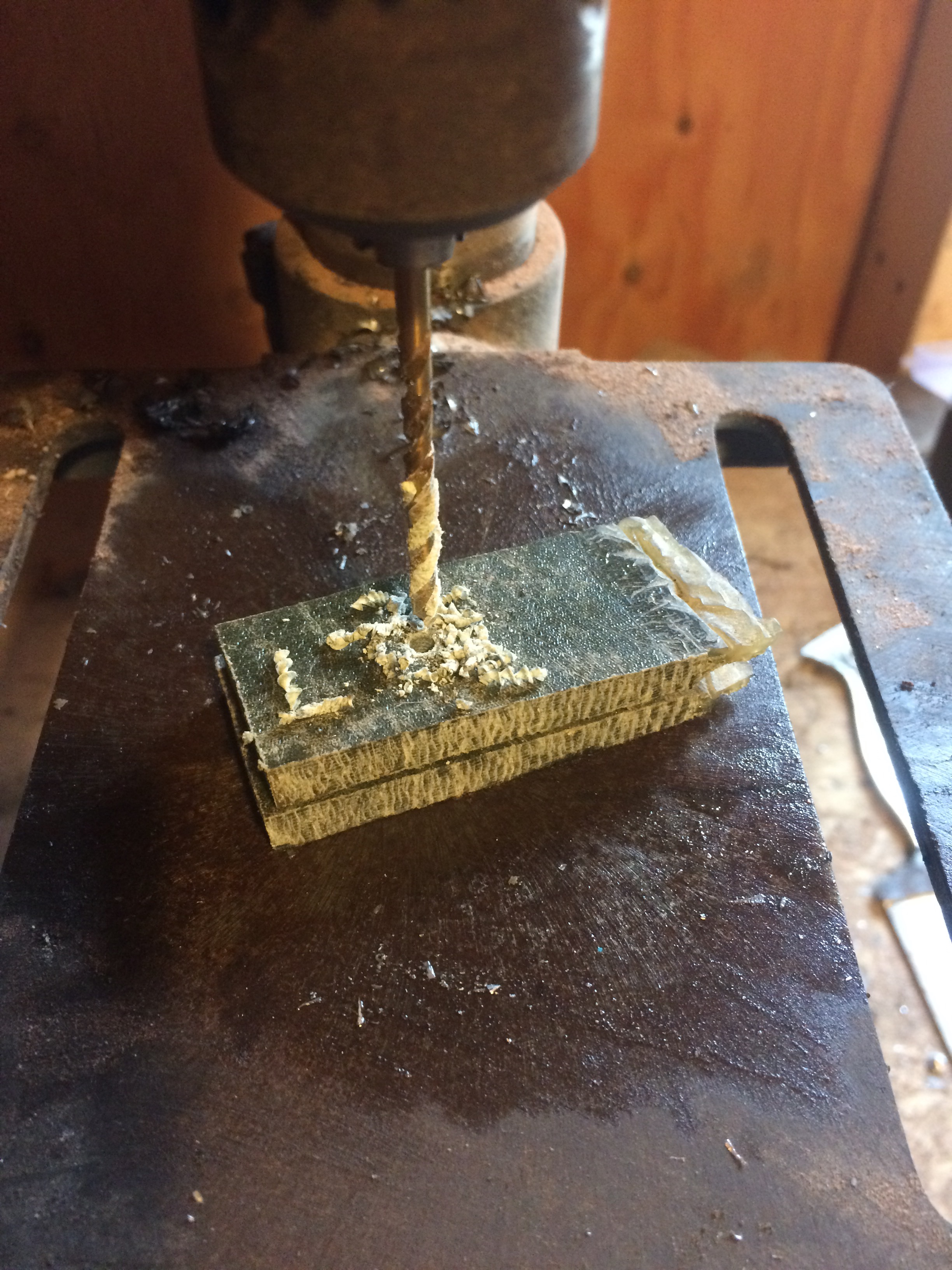
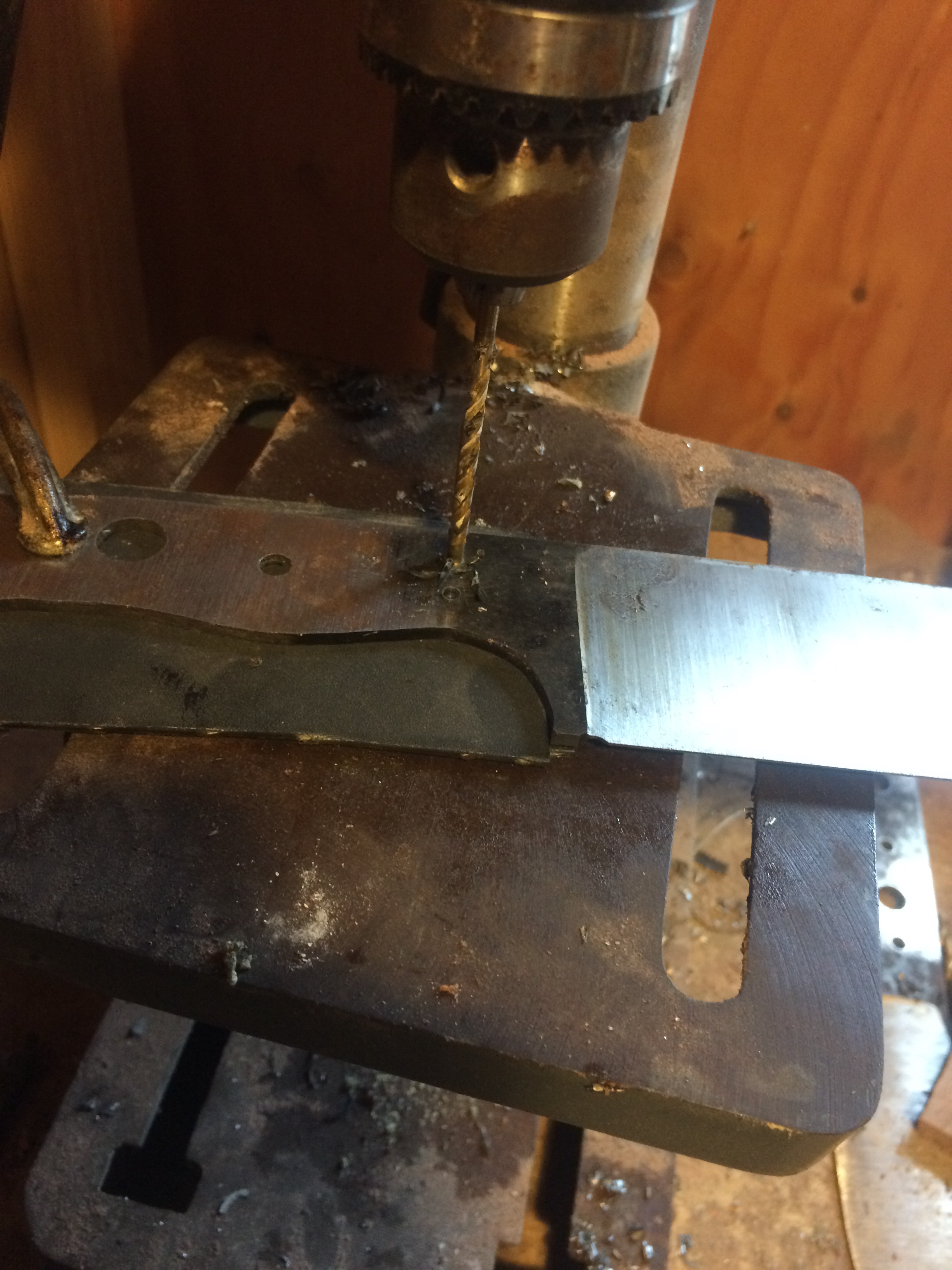
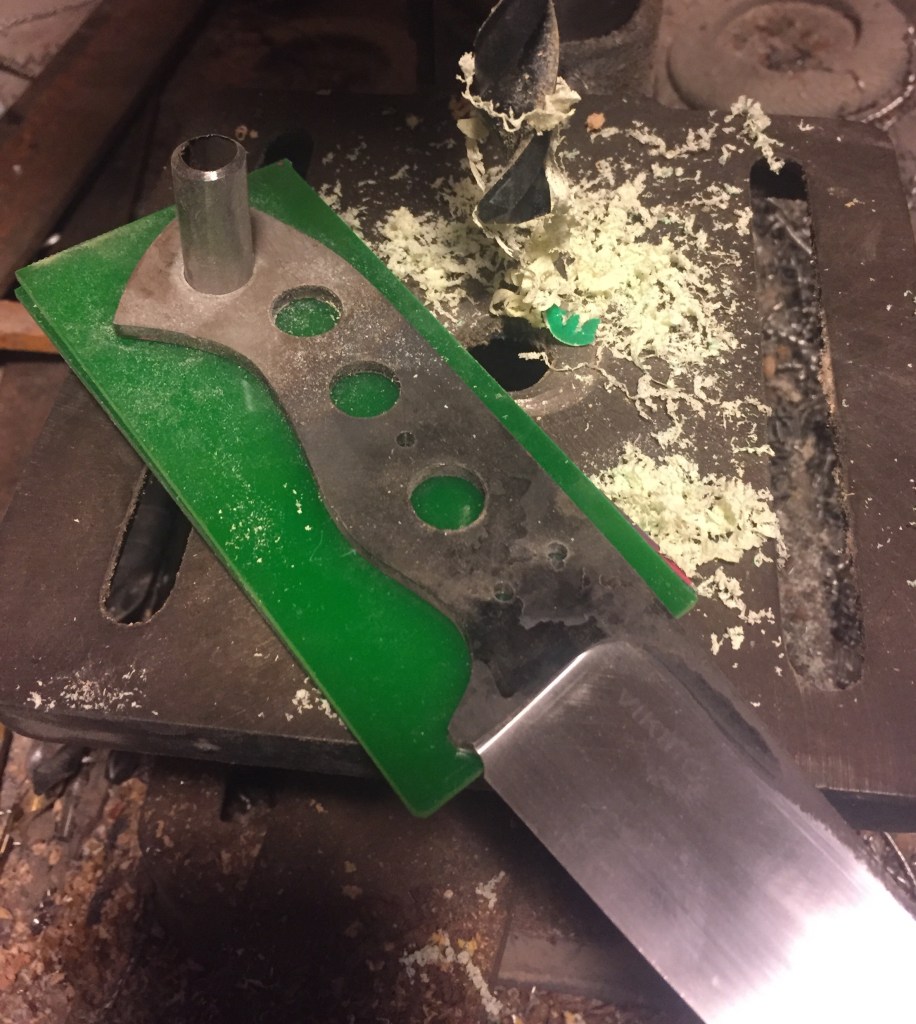
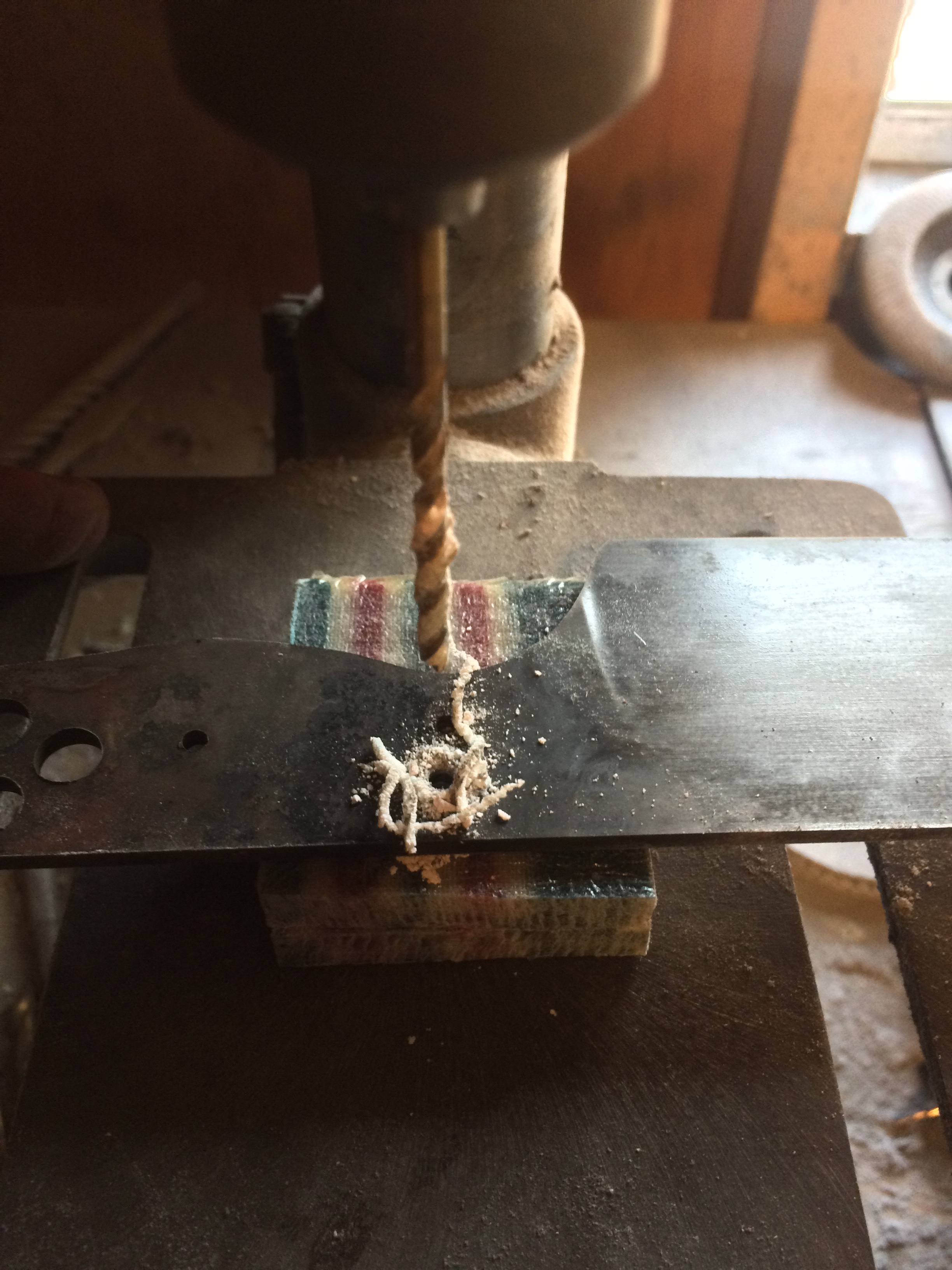
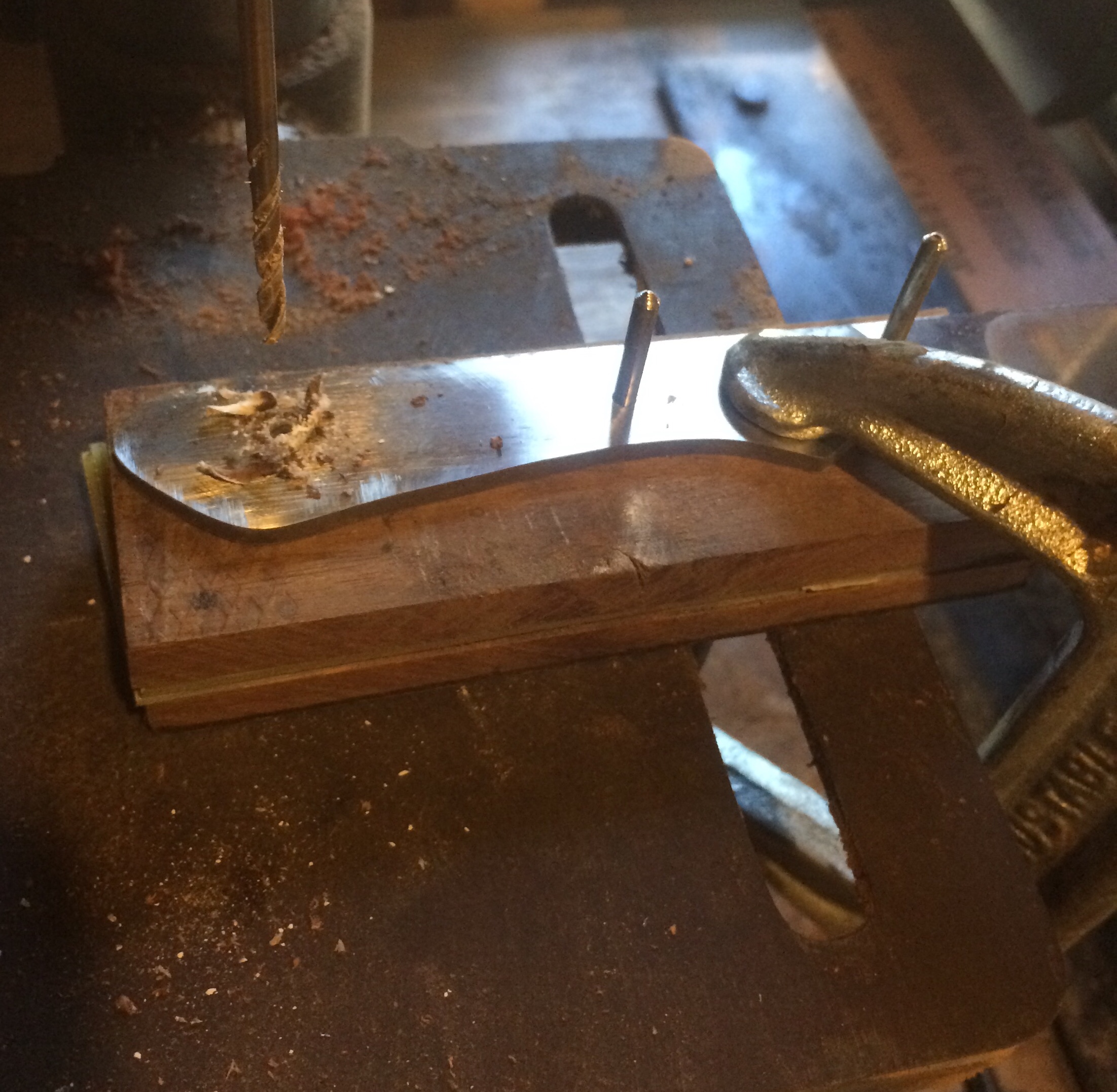
Drill rivet holes.
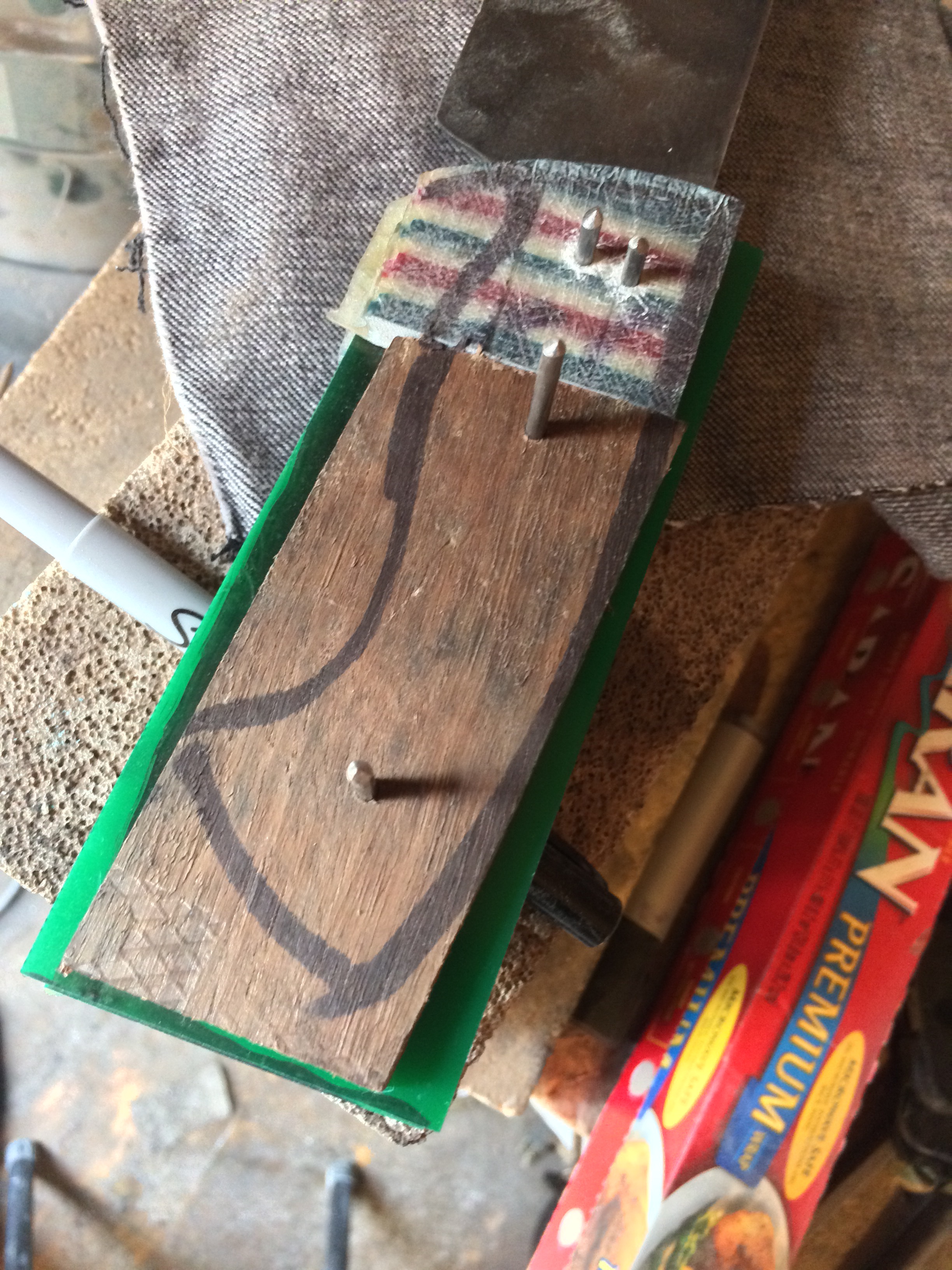
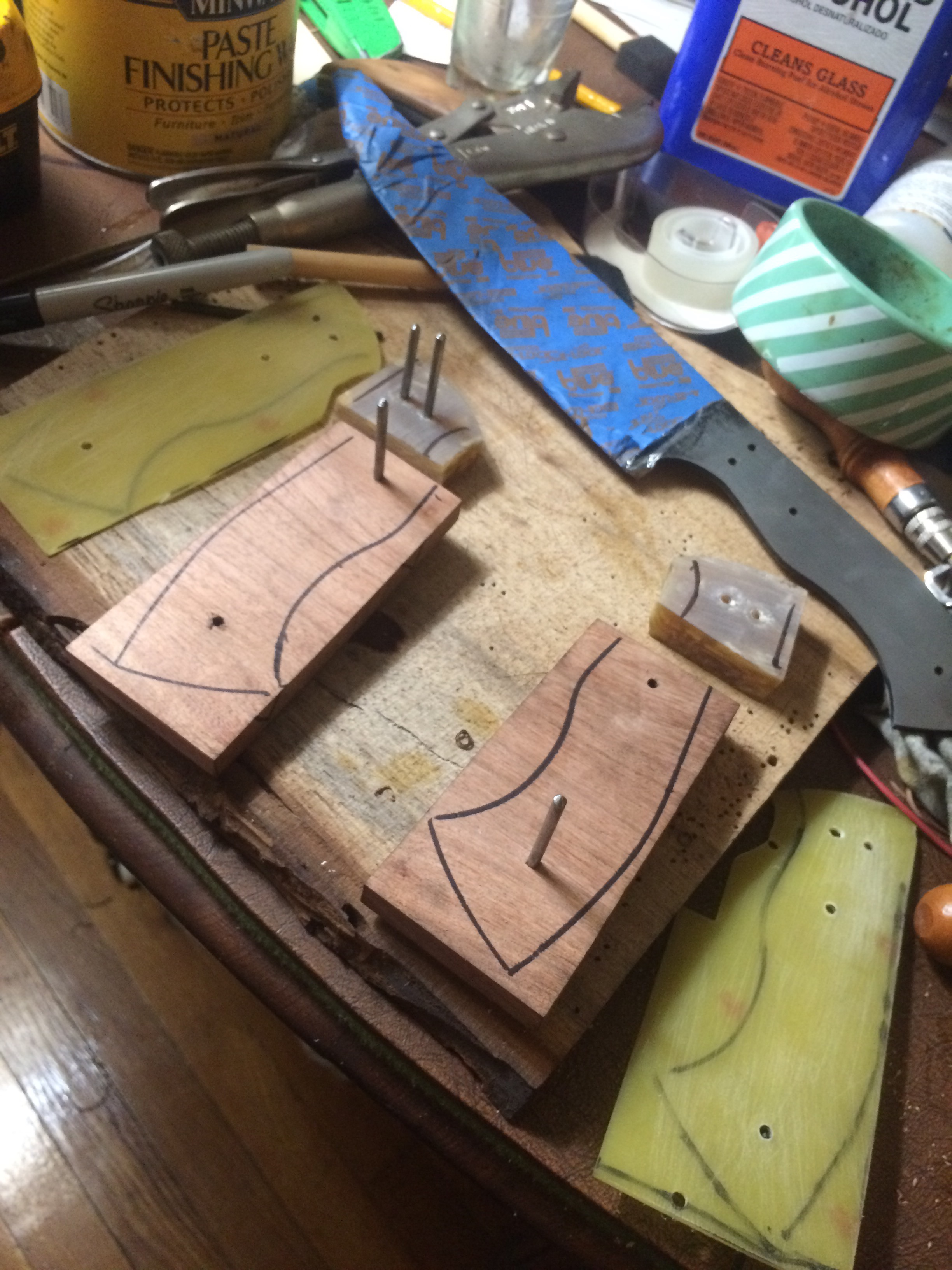
A rough mockup so I know how everything fits together.
This gets sanded before glue up. I won’t be able to get to this part after everything is glued and riveted together.
All sanded up.
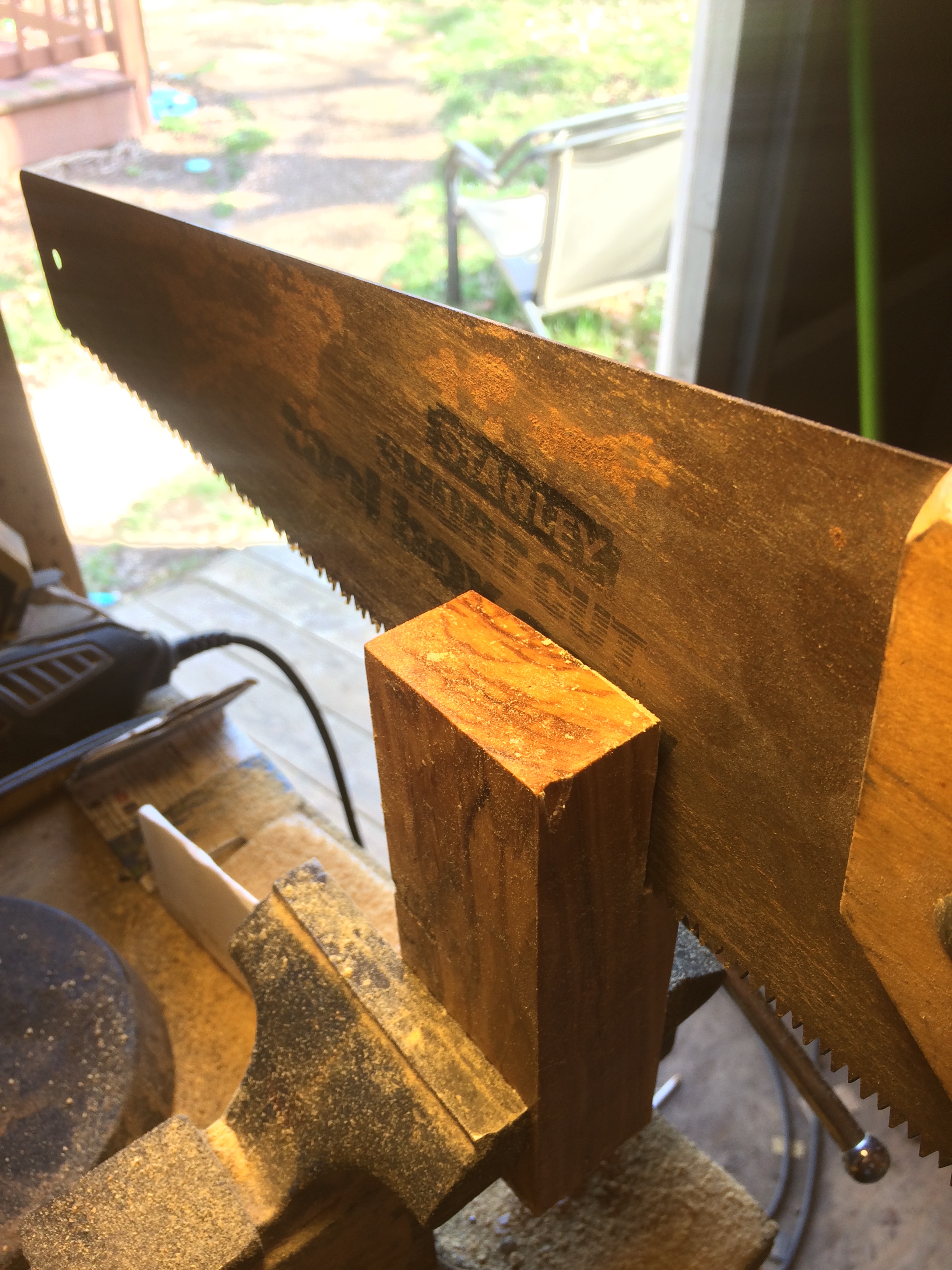
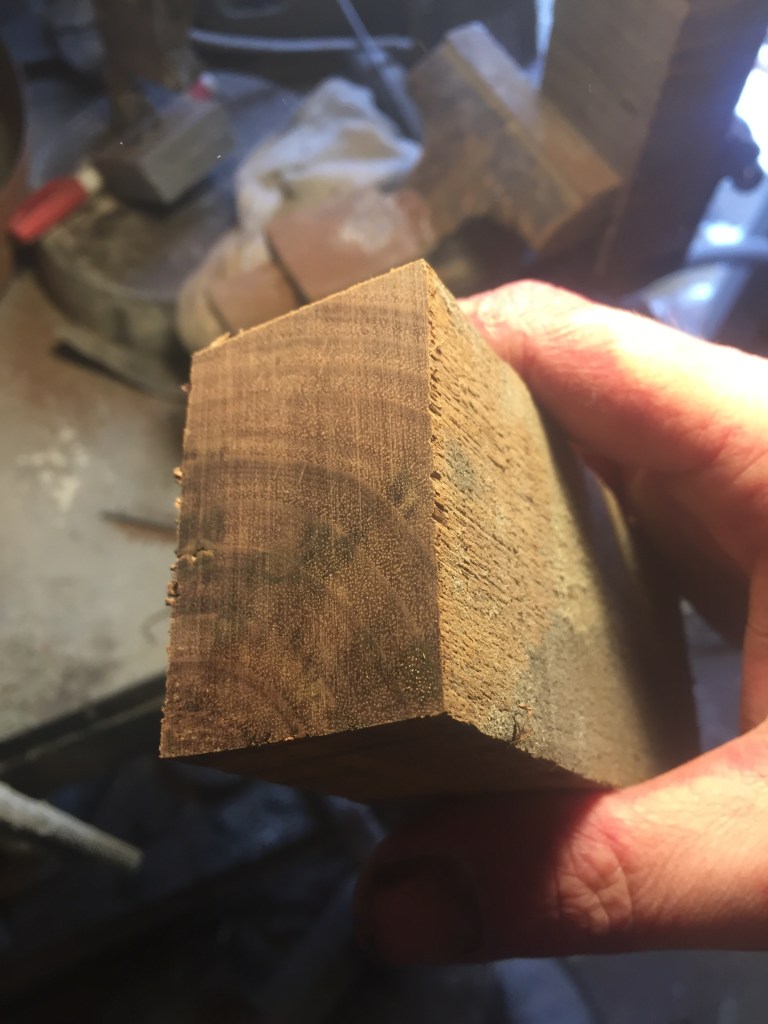
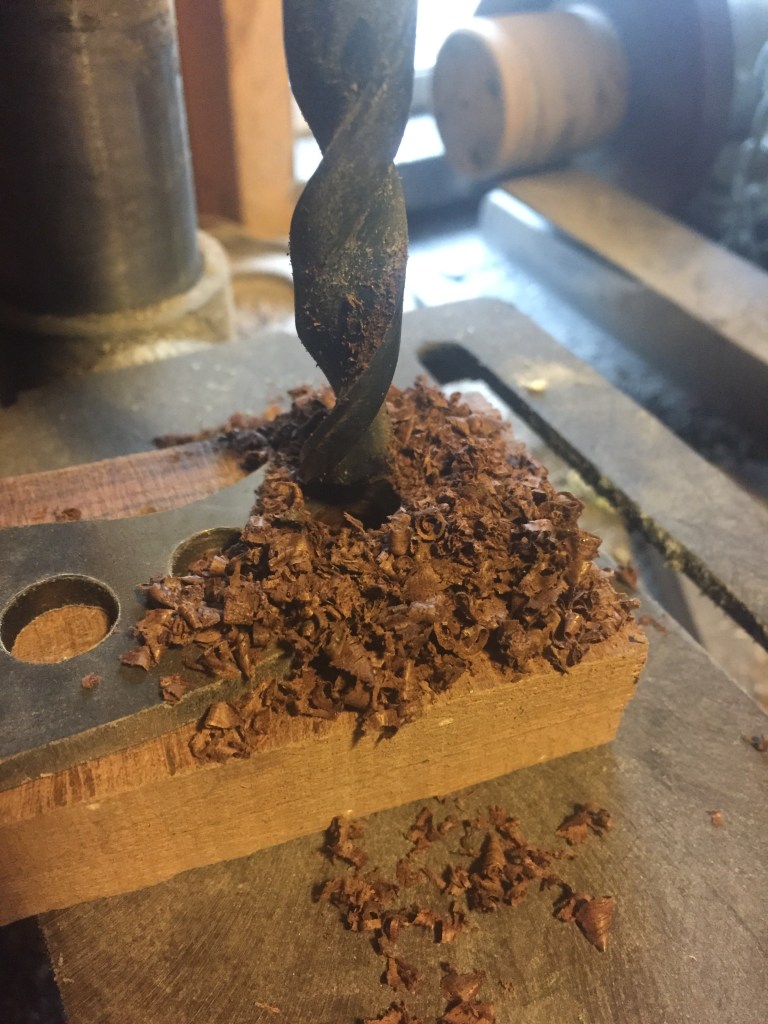
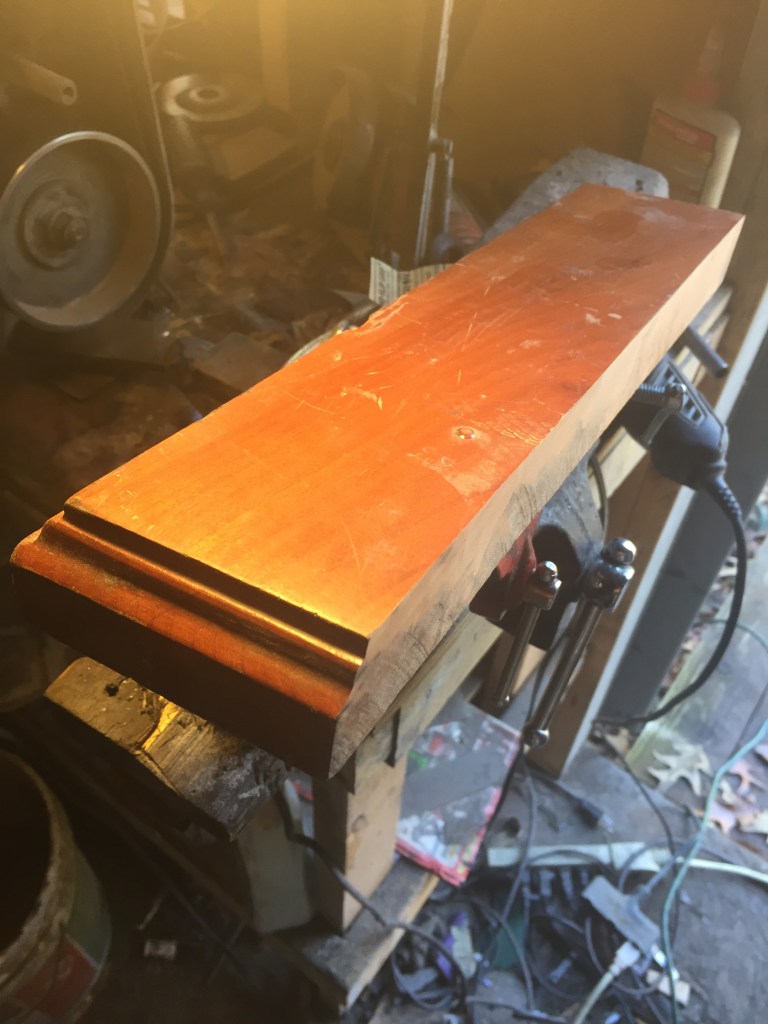
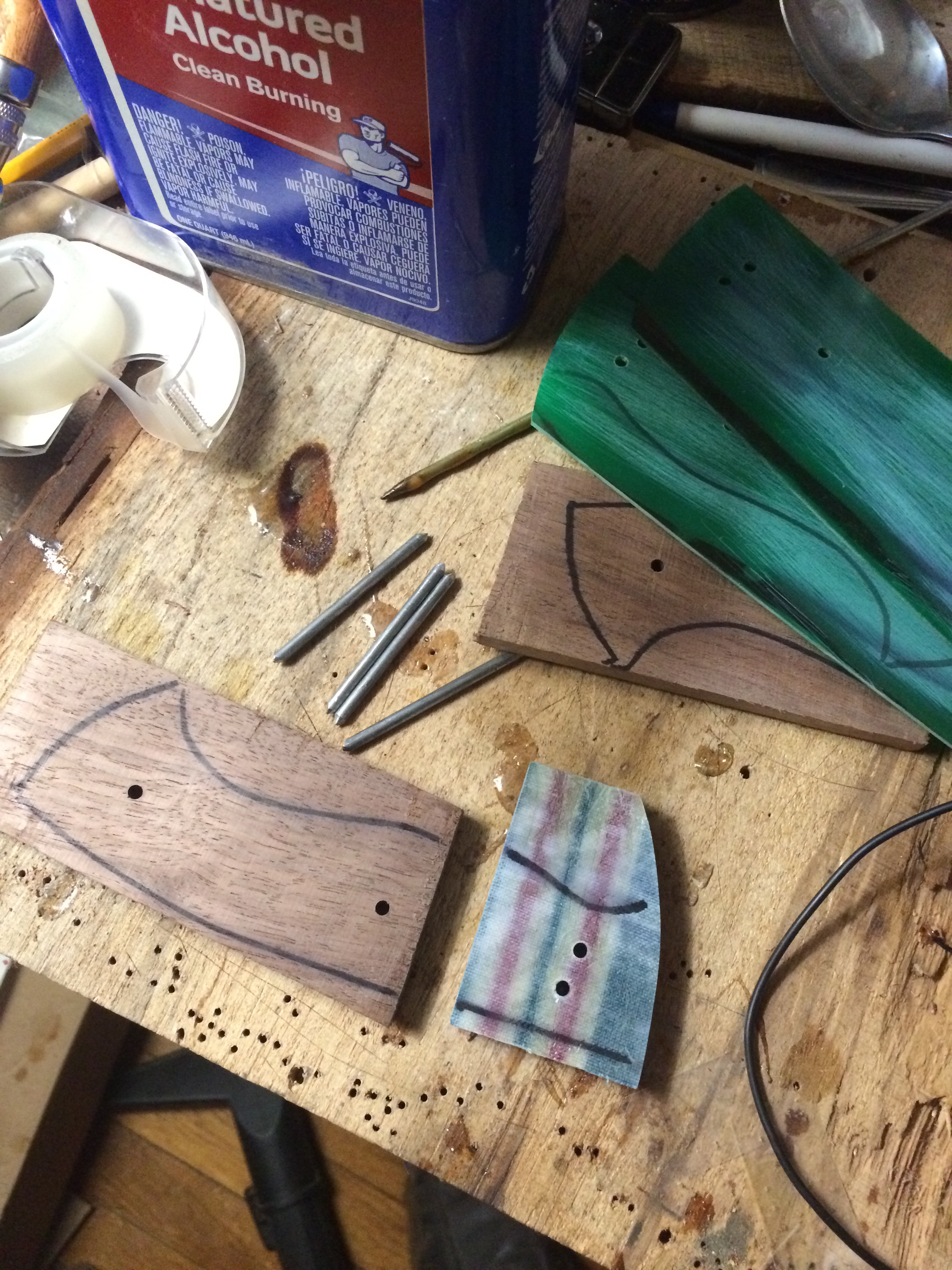
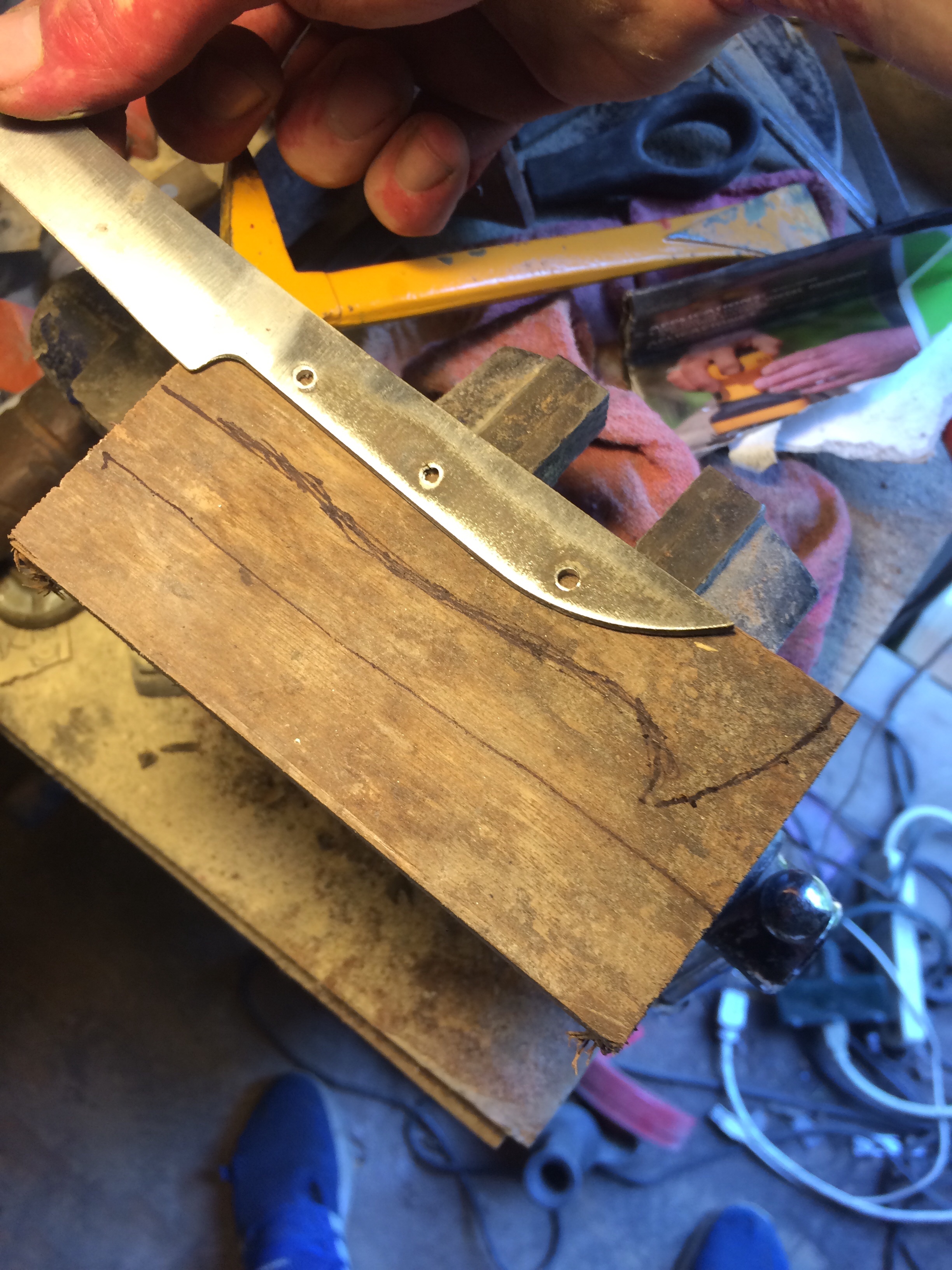
A piece of block walnut. I was doing tree work at an artist’s house in Charlotte Court House, Virginia. He had loads of this stuff. It was milled by his neighbor, a retired parishioner who started an abbey in South Korea in the late 1990’s to help North Korean defectors acclimate to a free country. It is very beautiful wood.
Bookmatched.
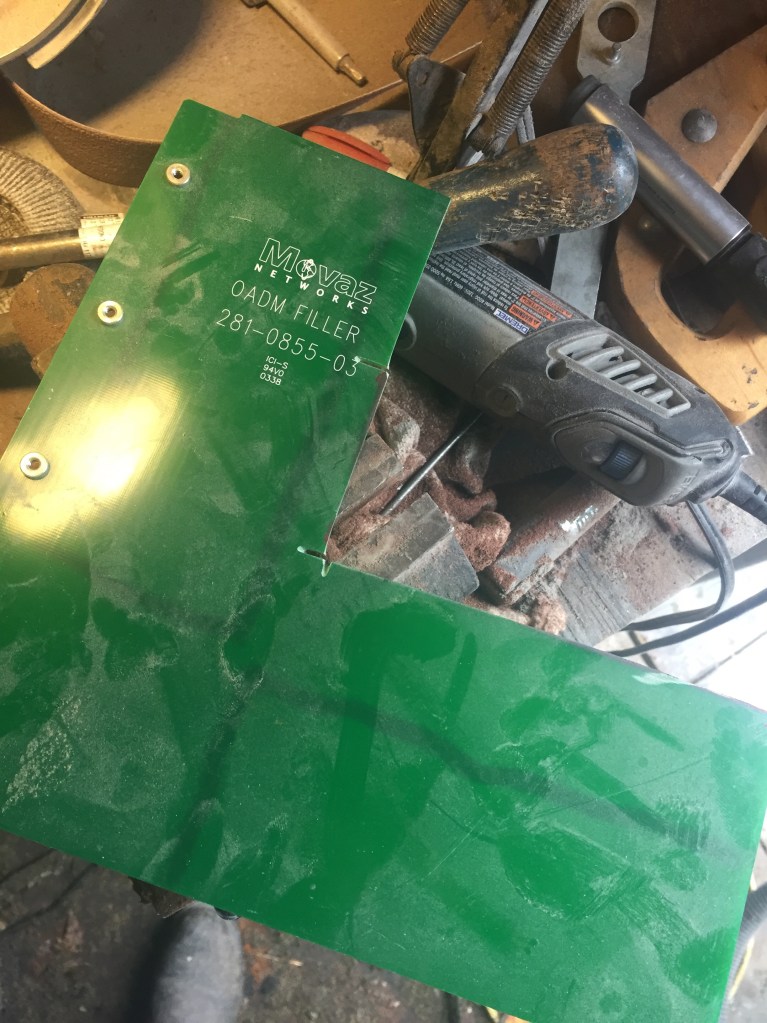
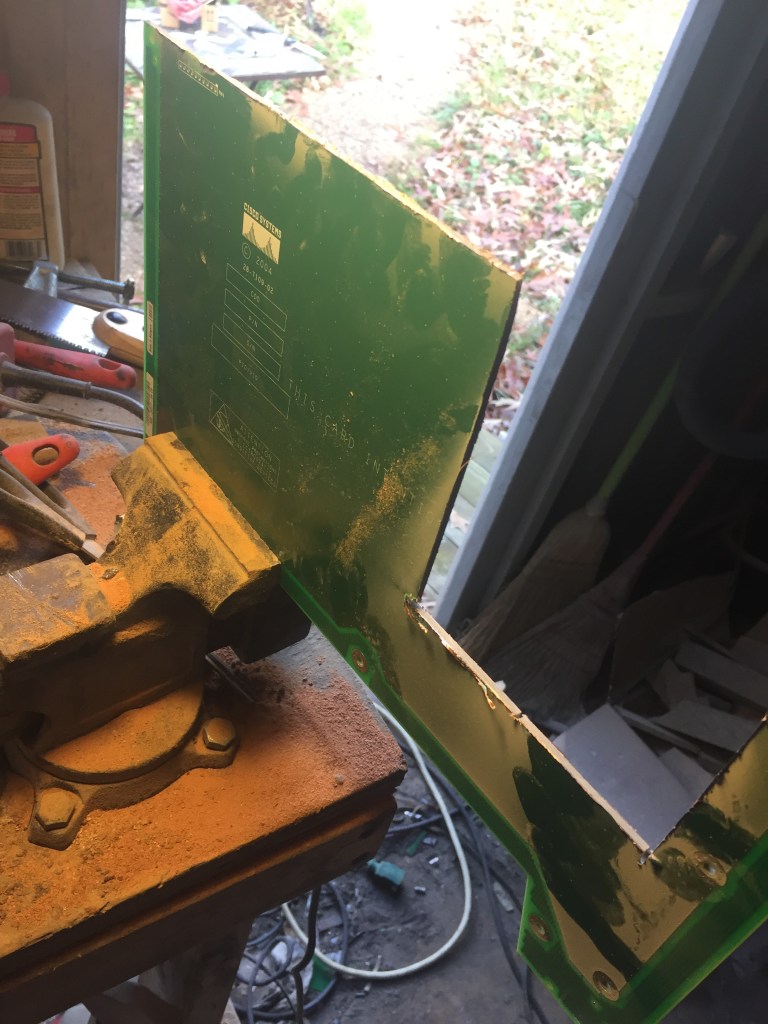
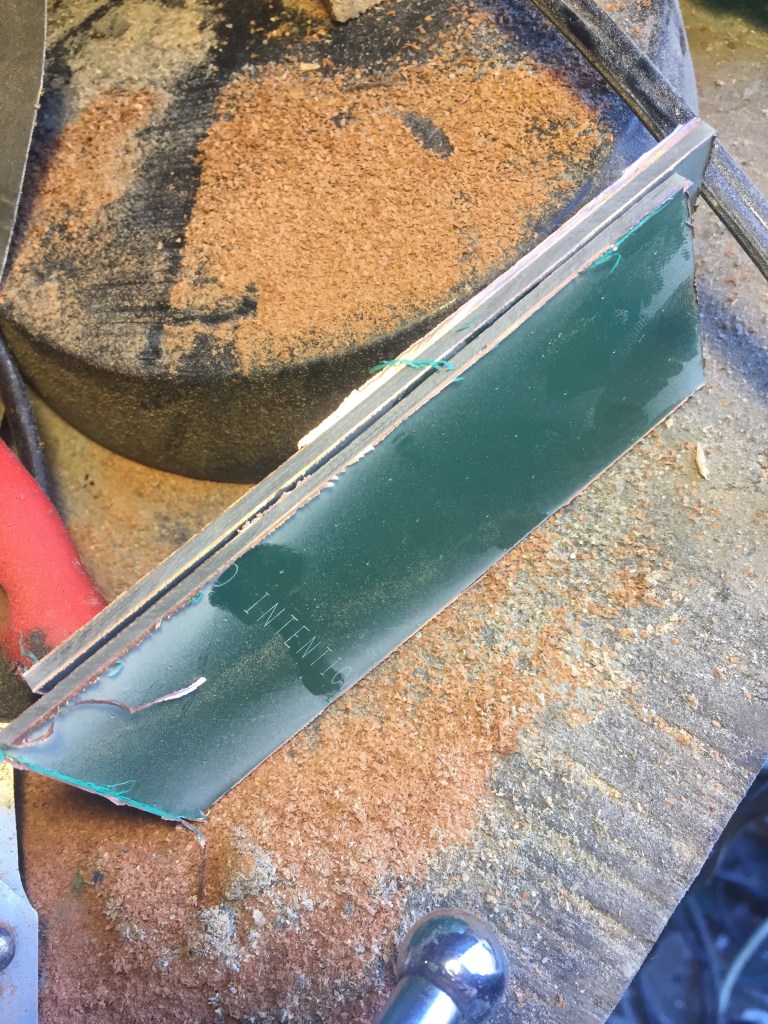
A fiberglass PCB blank for a network chassis full of hardware that runs your internet. This was rescued from a dumpster.
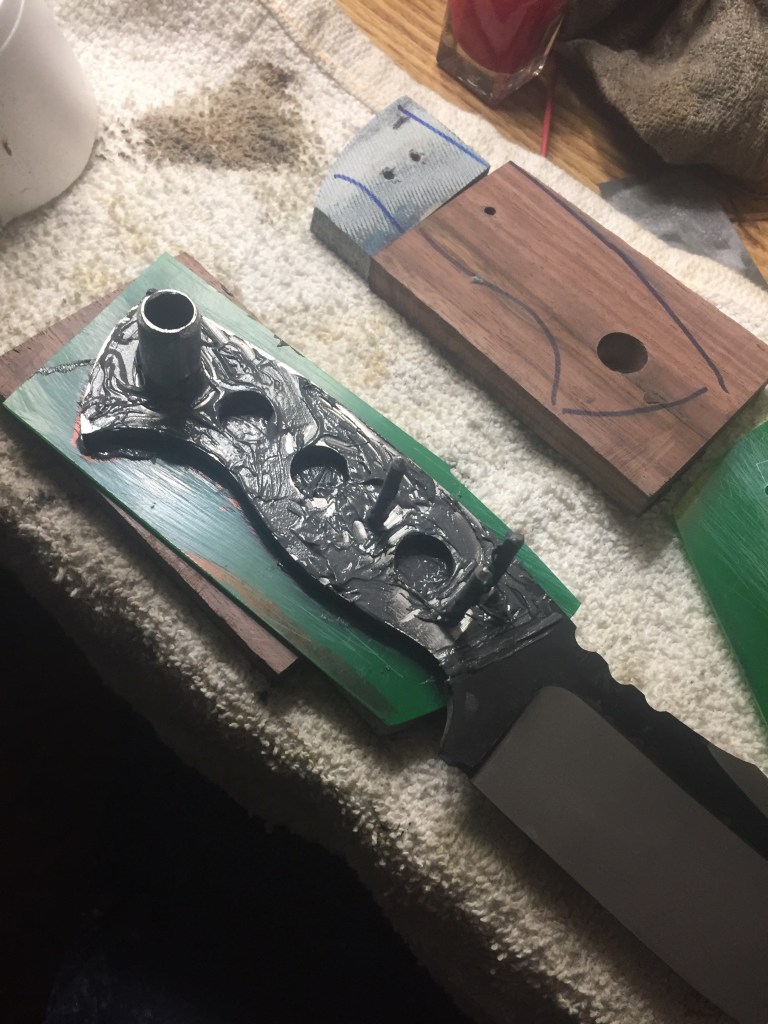
All laid out and everything fits together.
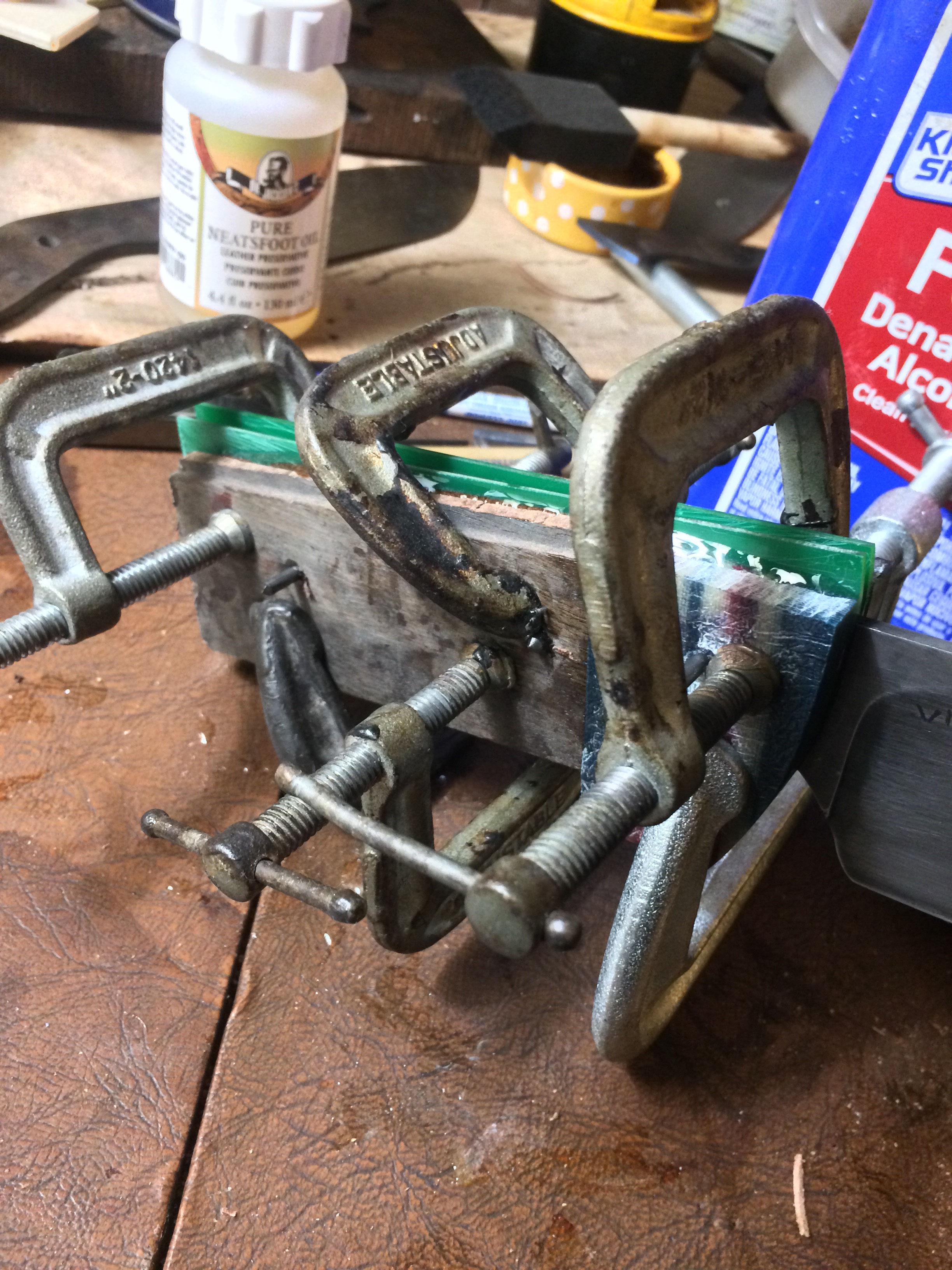
Two-ton epoxy resin.
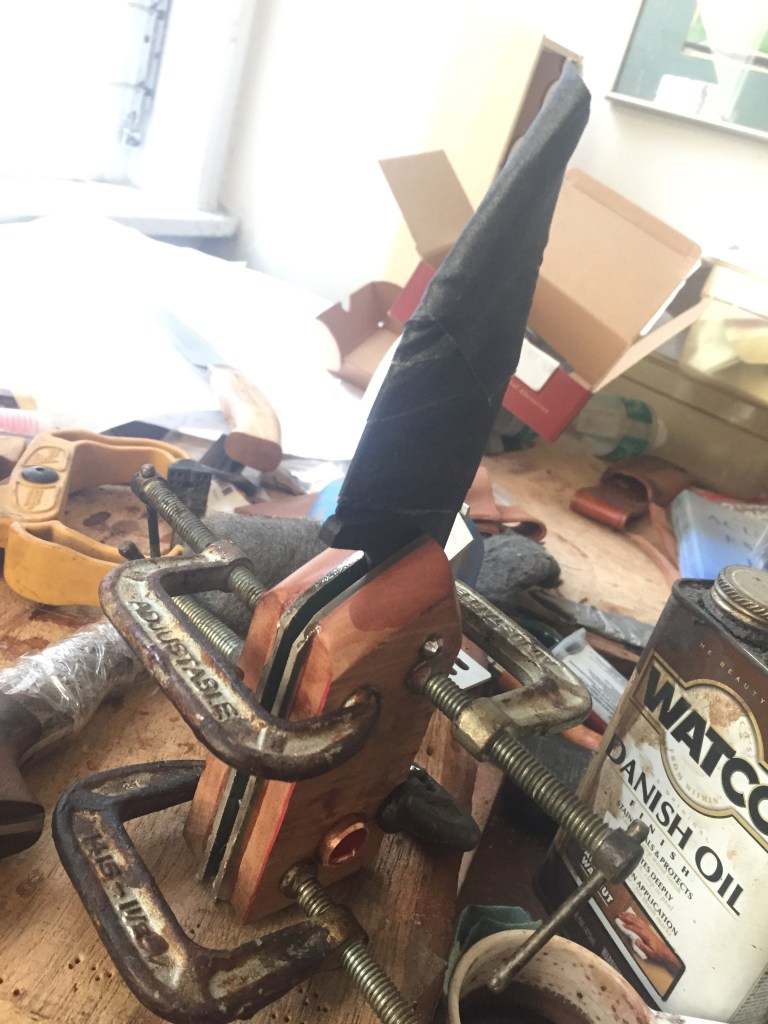
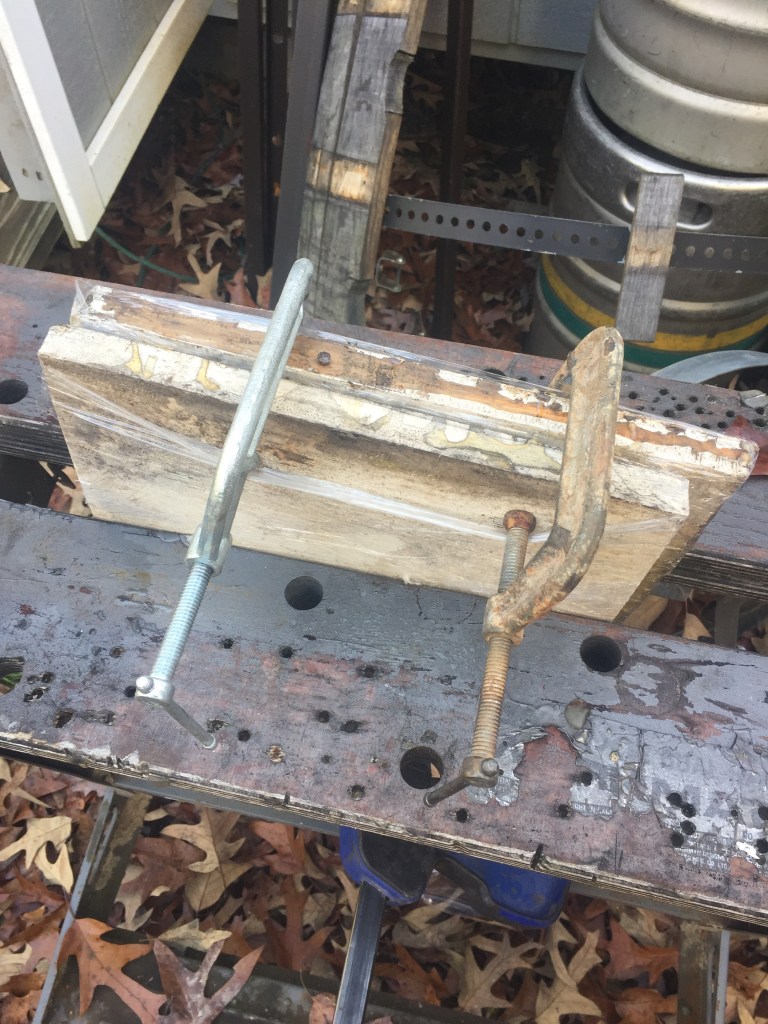
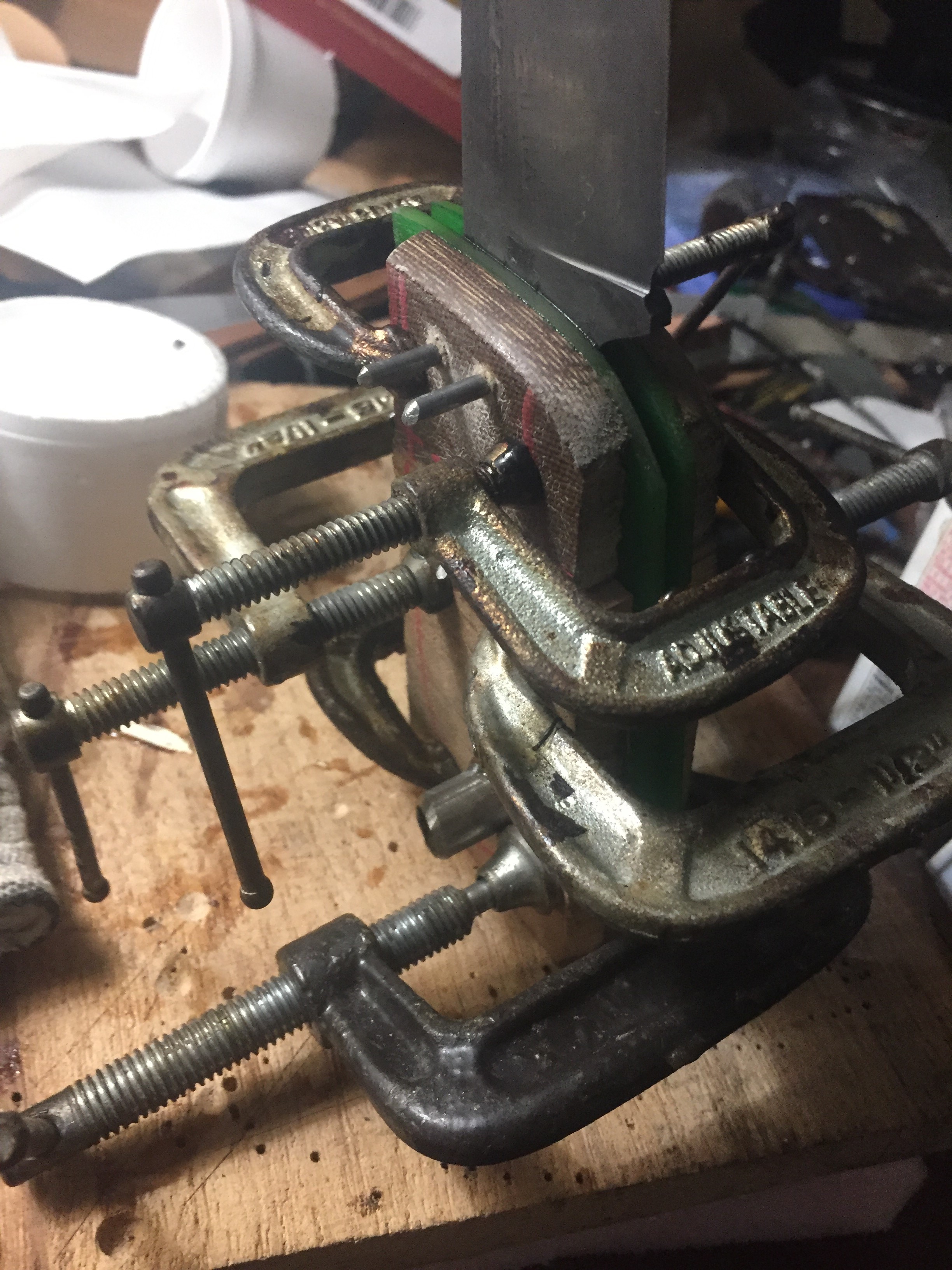
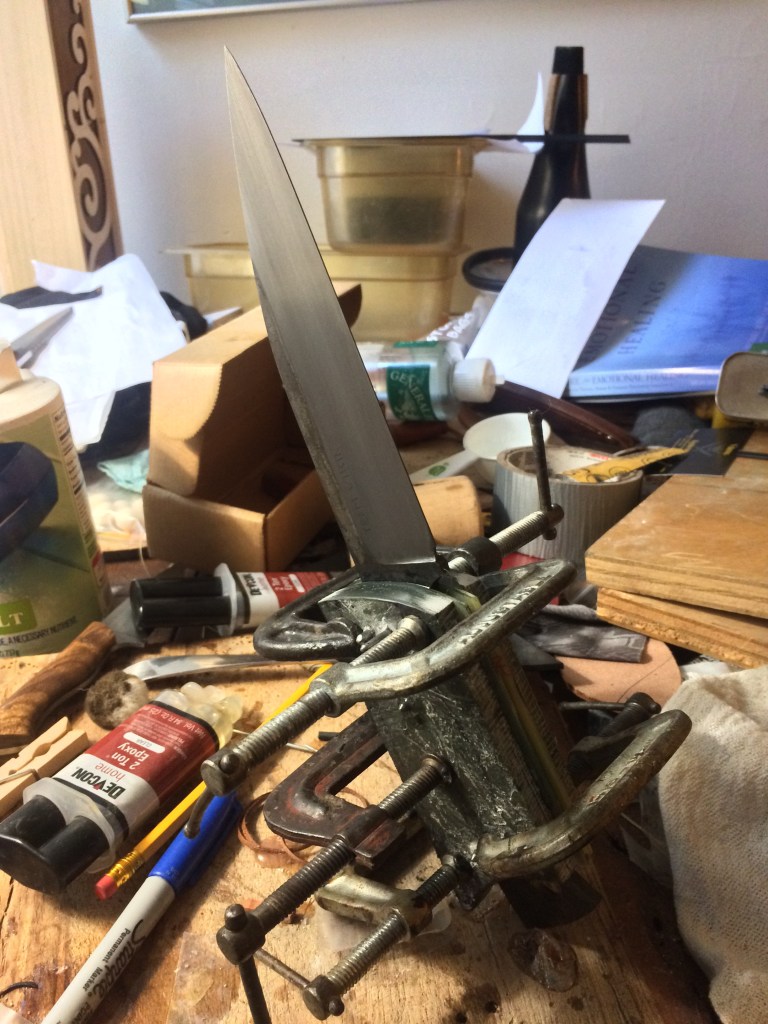
Clamped.
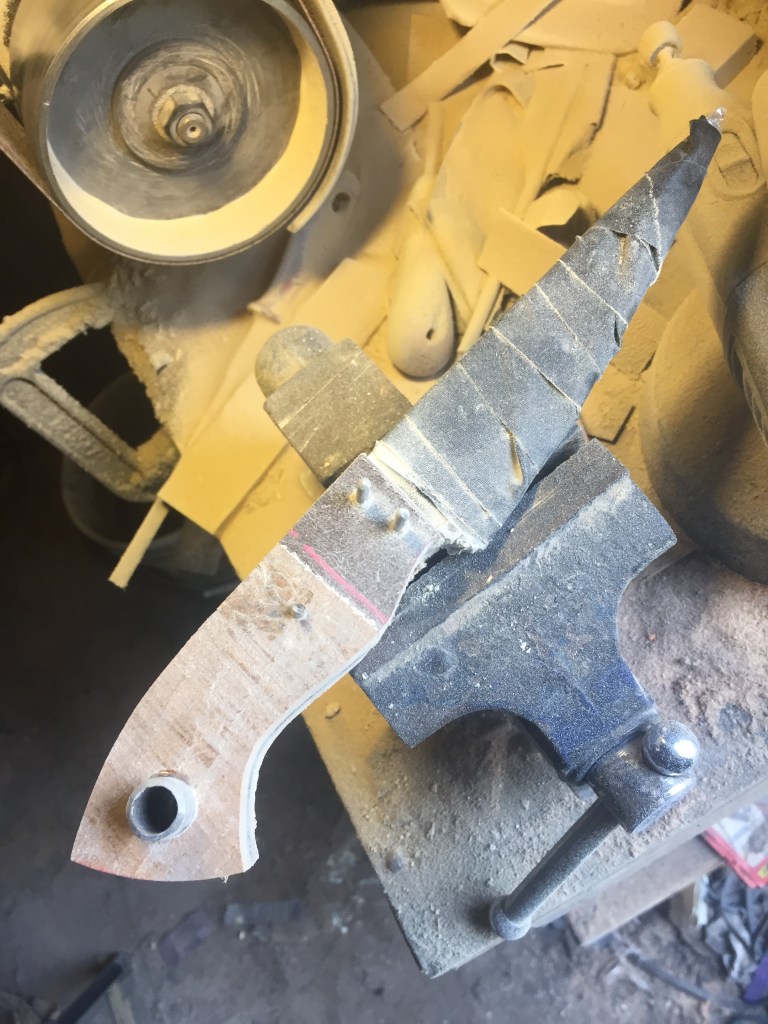
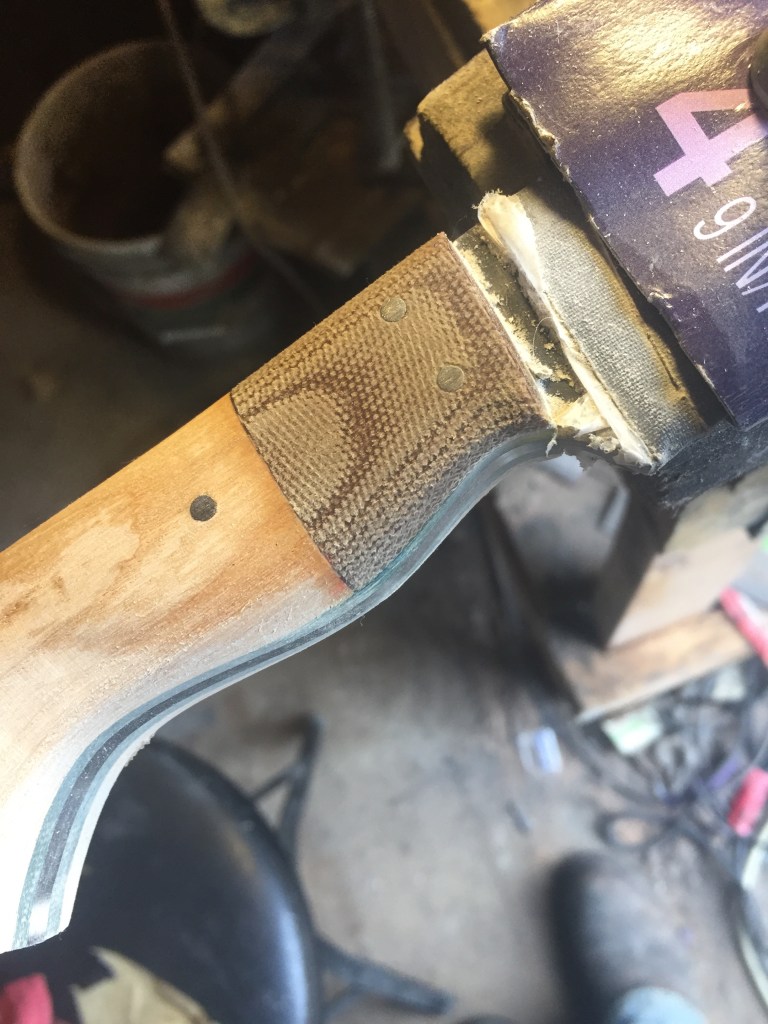
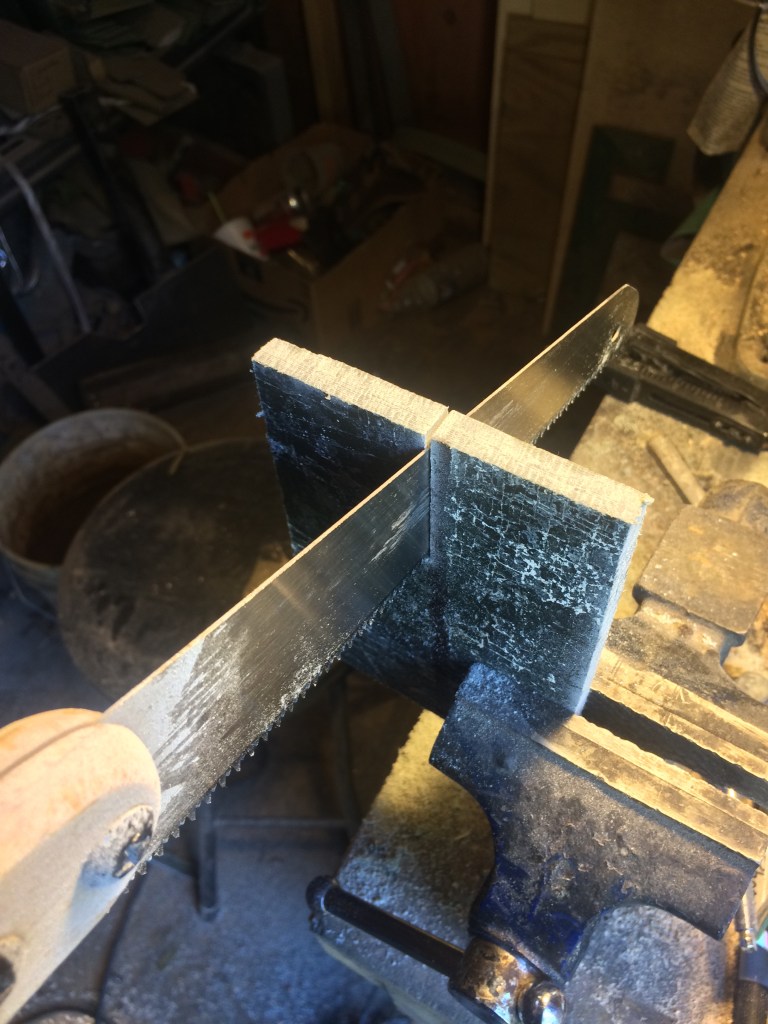
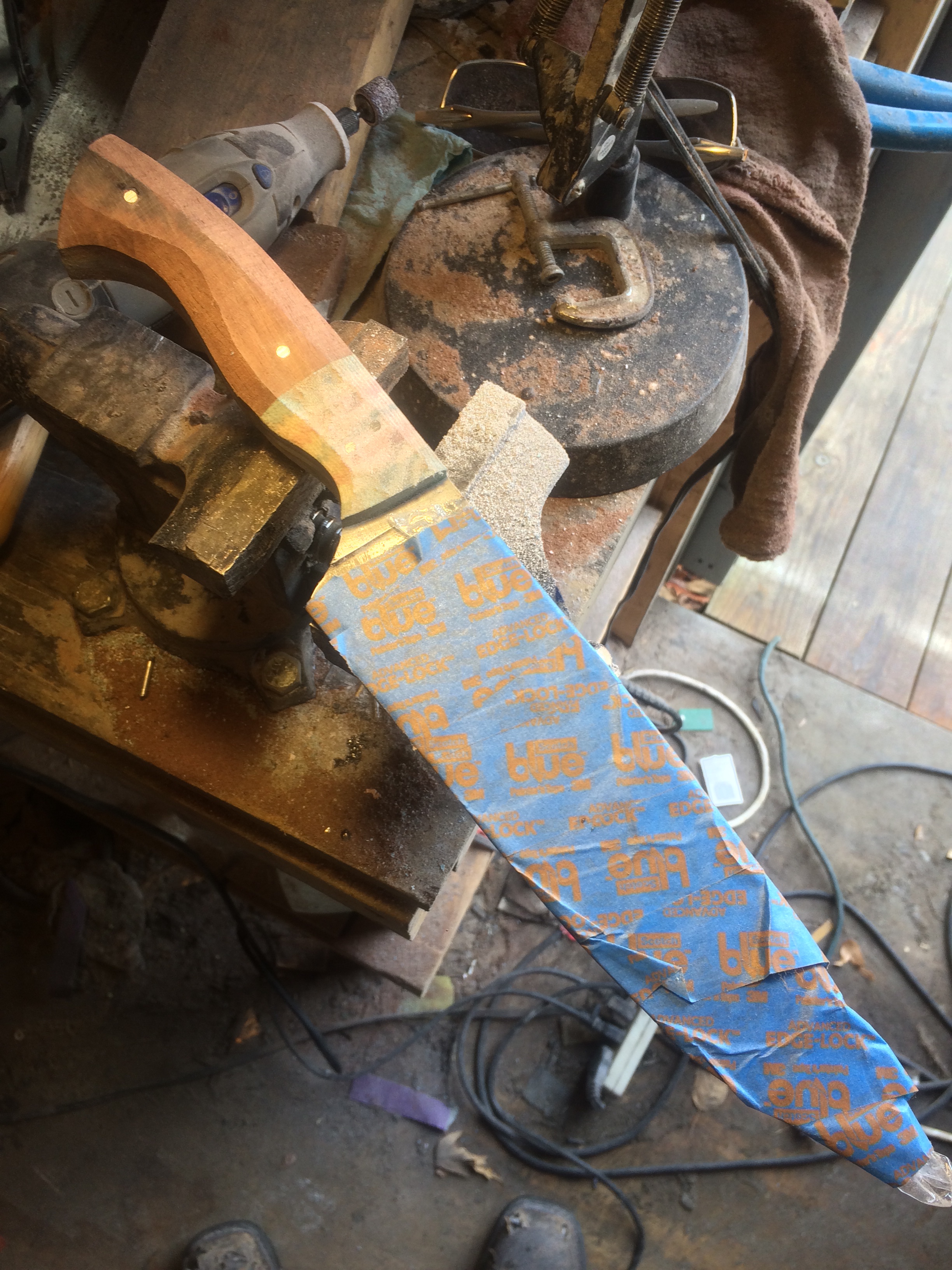
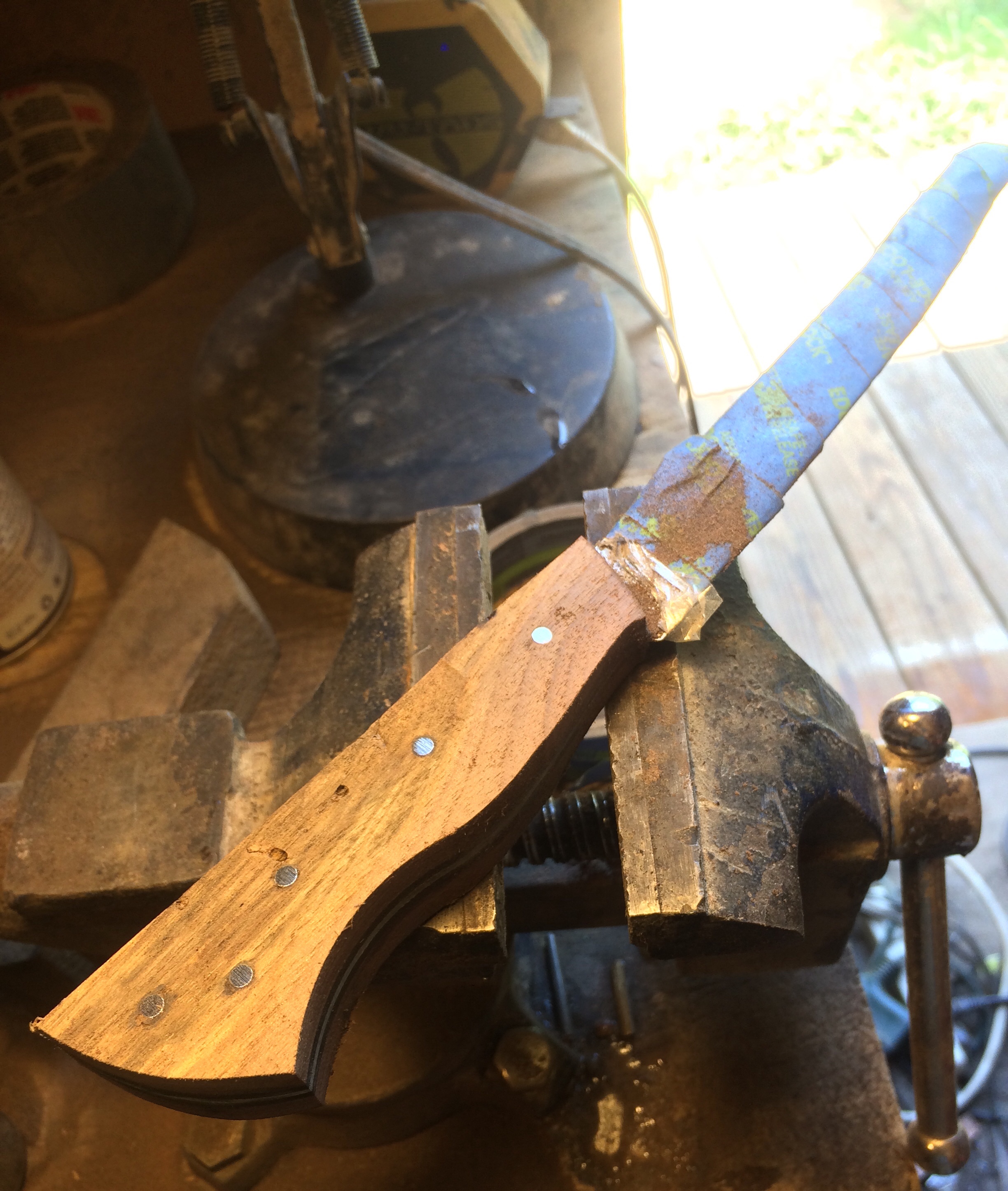
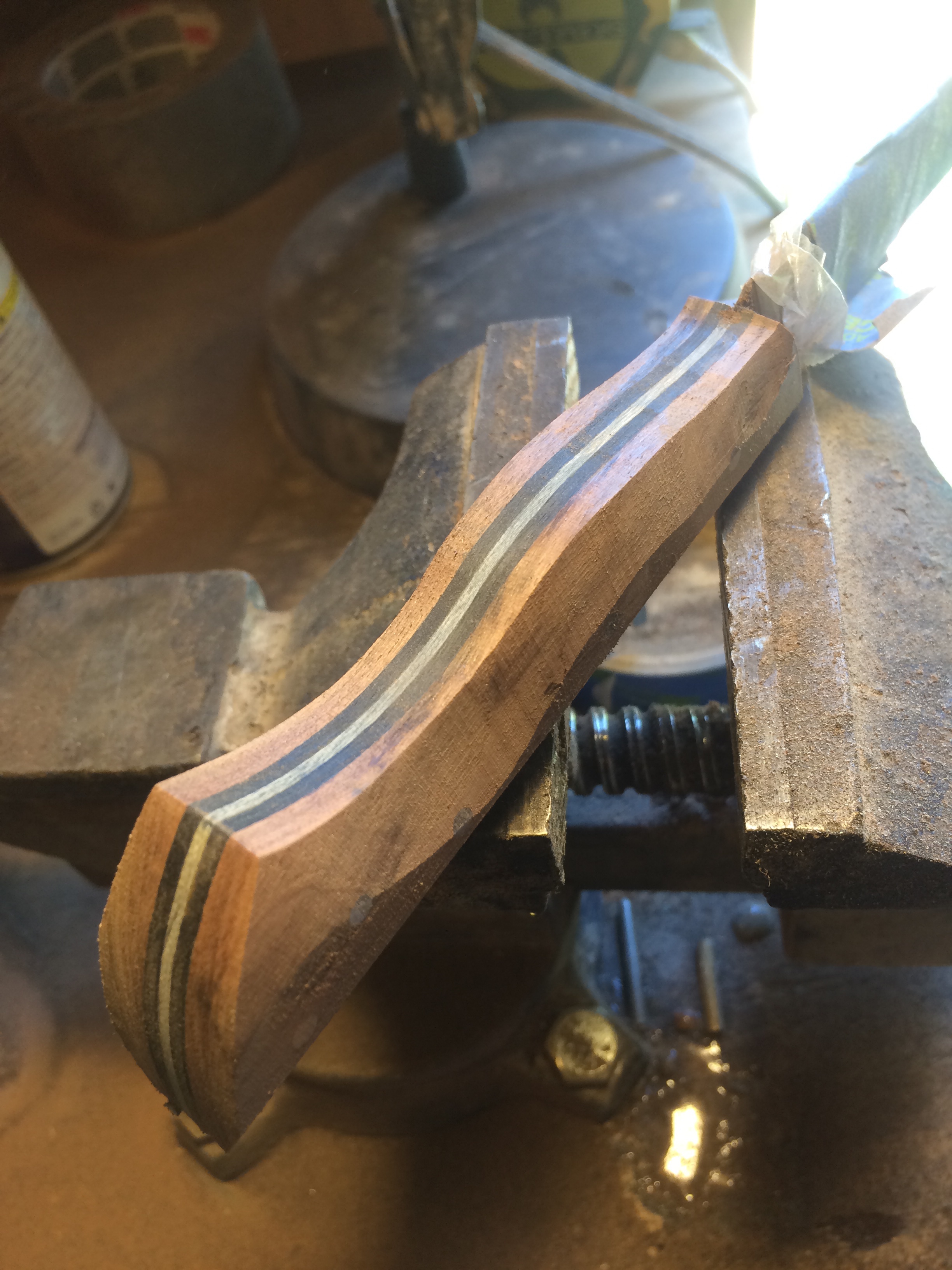
Now for shaping.
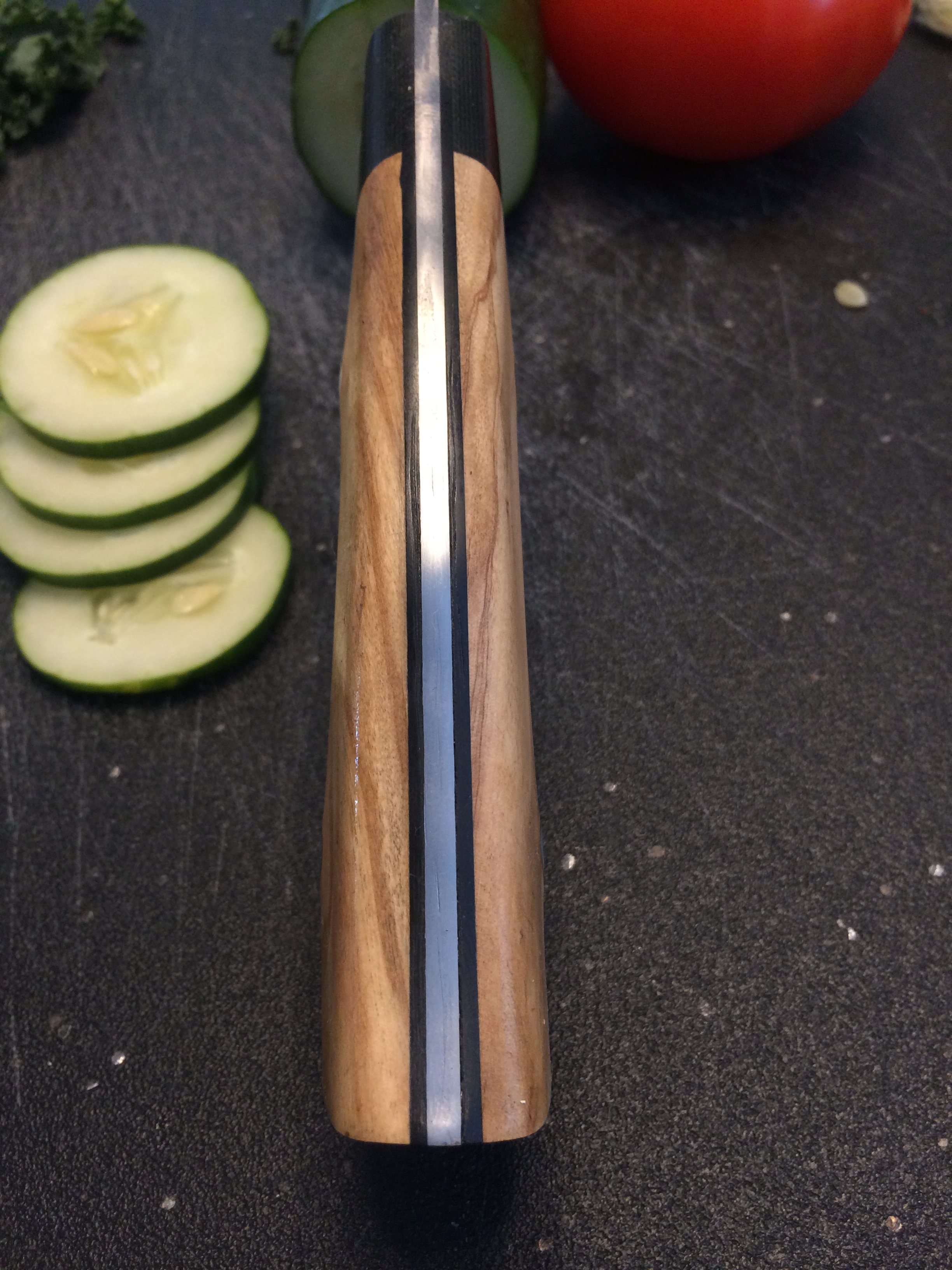
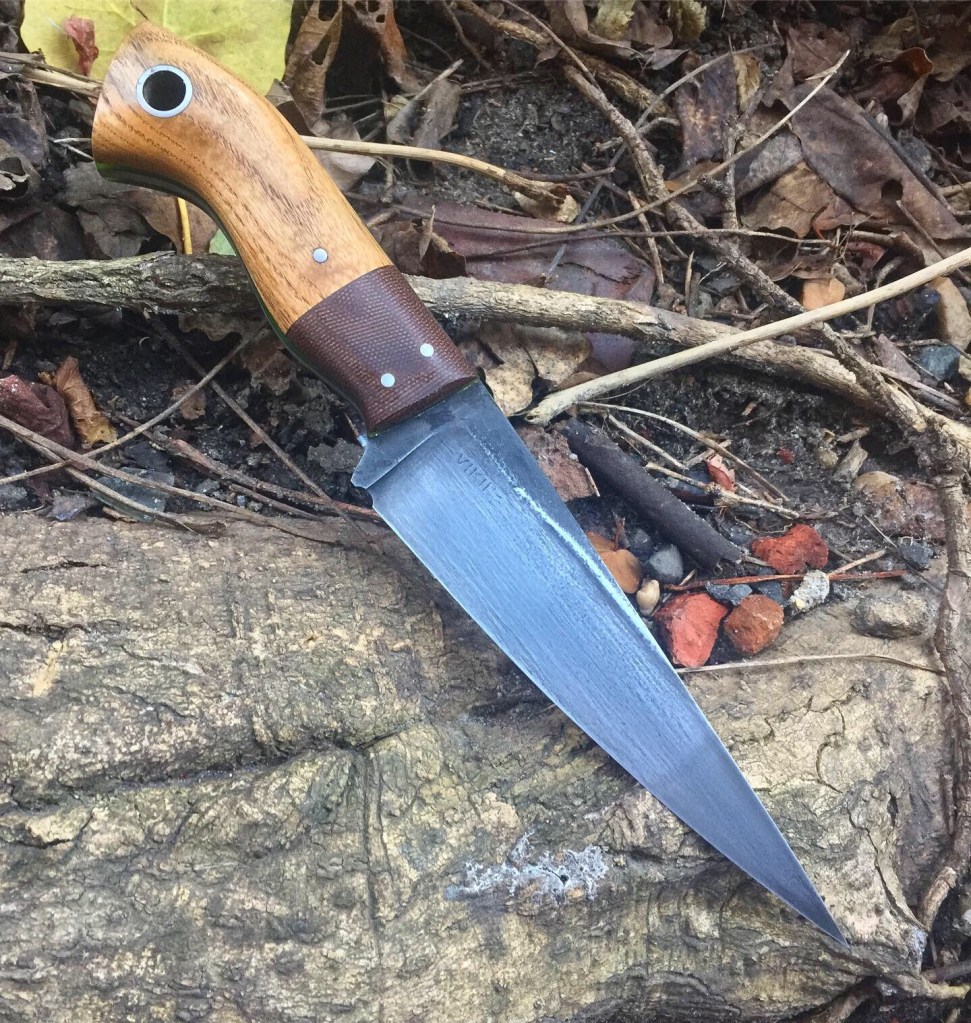
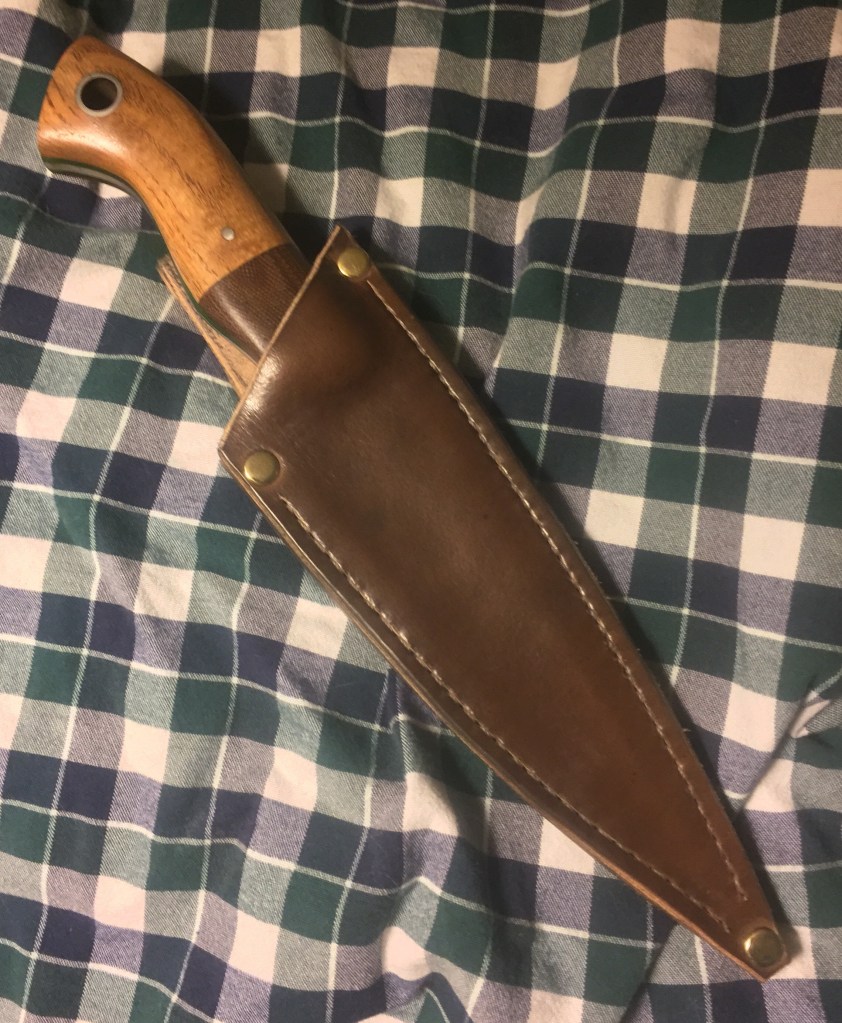
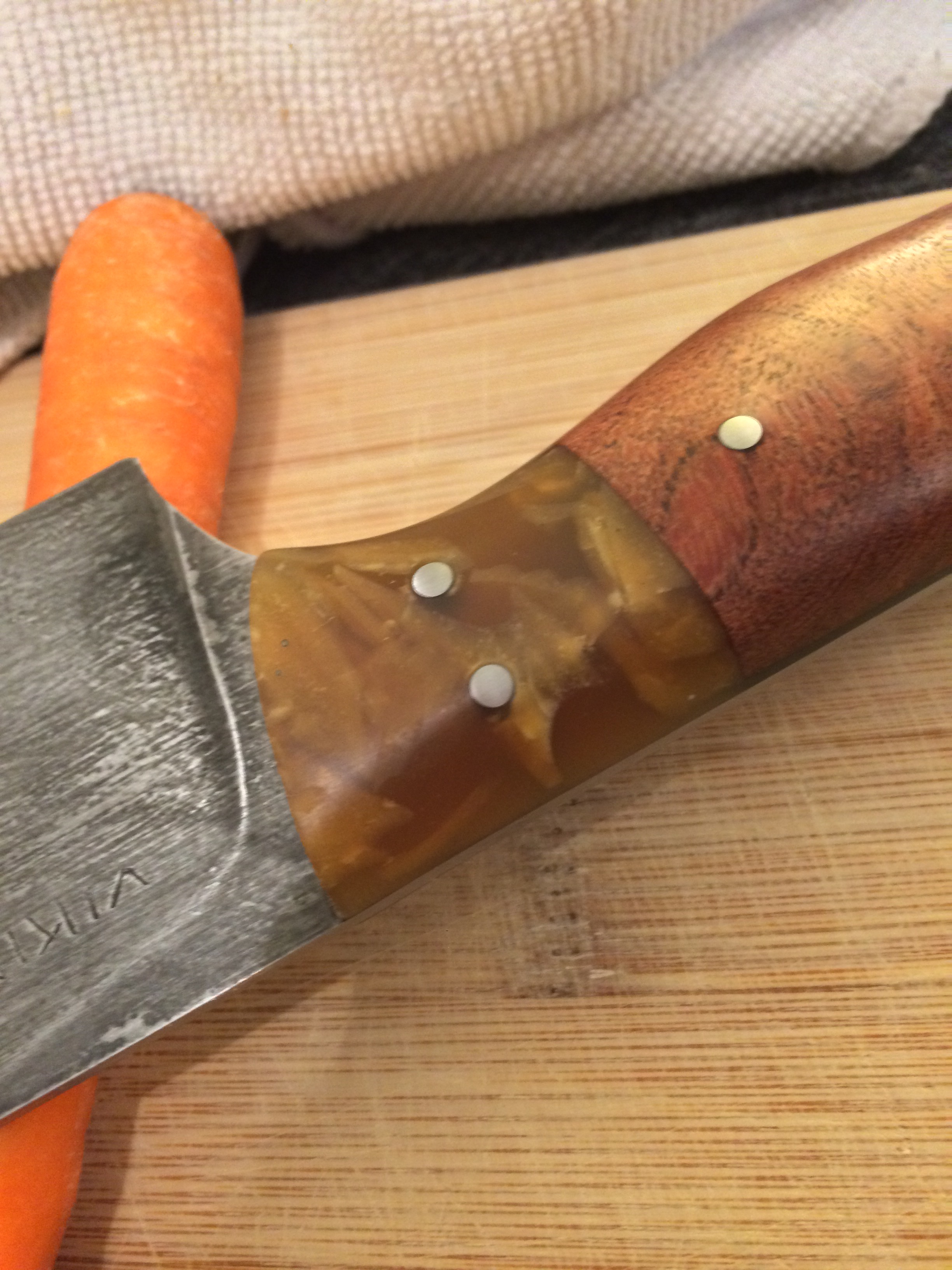
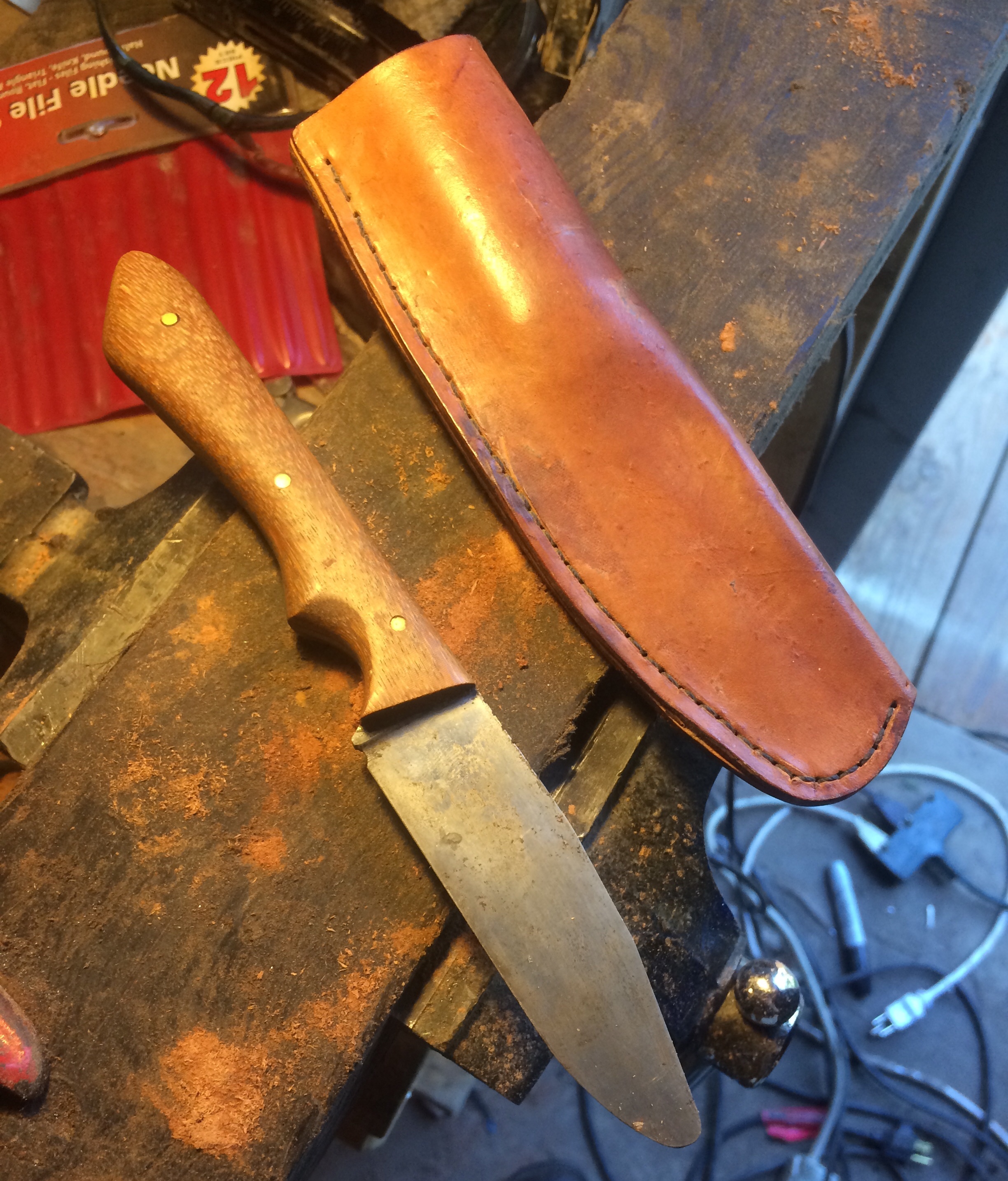
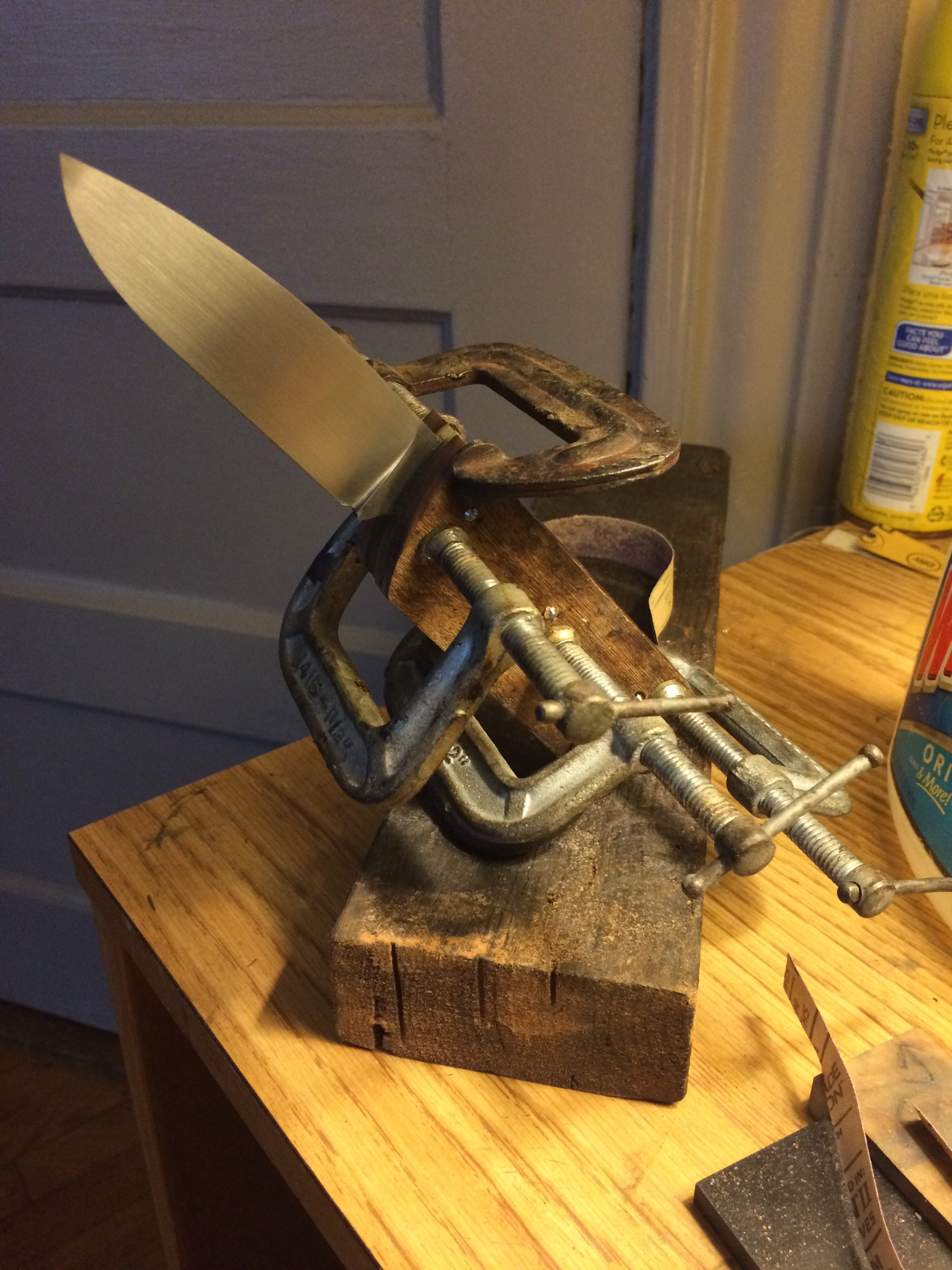
The Crack Shot.

The Crack Shot is made of high carbon steel, which means it will take a keen edge, hold it a good while, and will be easy to sharpen. It will stain and patina and tell the stories of the places you’ve been- this natural and characteristic of the steel. Your knife is made to be used so don’t be shy about getting it dirty. Be sure to keep your knife clean and oiled when not in use. Should you find any unpleasant surface oxidization you can remove it easily with a lightly oiled bit of 0000 steel wool, or a coarse rag with a bit vinegar on it.

Some further reading on cellular tensegrity referenced in the text body above:

Constructing Tensegrity Structures From One-Bar Elementary Cells

Knifemaking: what we do with the unexpected, and the Foundling

“I was once a Foundling.”

Din Djarin, from The Mandalorian

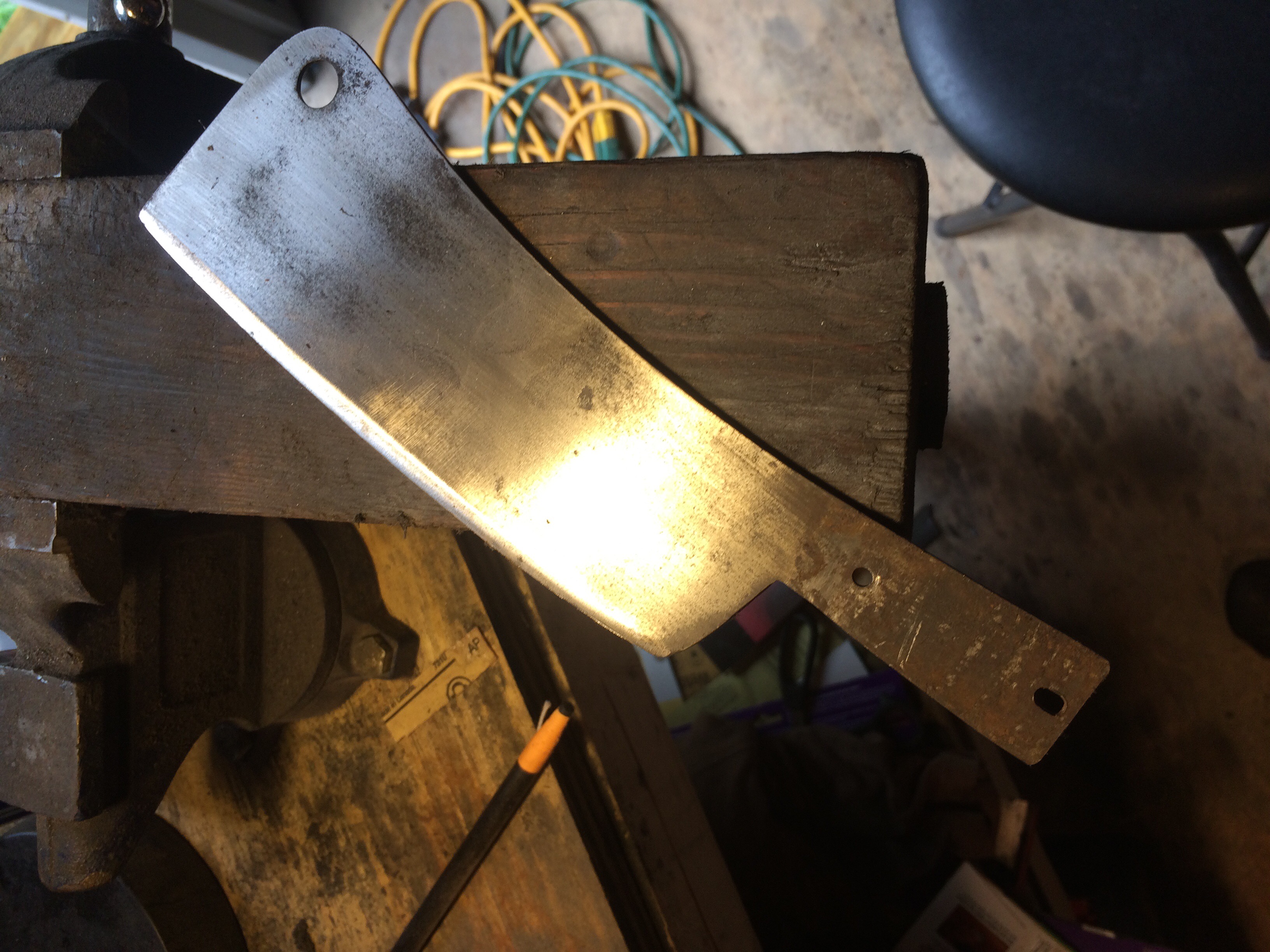
A few years ago I got a call from a gentleman about a knife that needed a new handle. He had a thick Australian accent and told me one of his friends was redoing some walls and ceilings in her house and had found an old cleaver behind the drywall. He asked if I would be able to put a new handle on it, and by the way it was also going to be a wedding present for his friend who found it.

A mysterious butcher’s tool in the walls? A wedding gift? Nuptials without knives are nuptials not worth having. Besides that, certain things in life have a habit of being found when we need them the most. This all sounded extraordinarily auspicious to me. Of course I took the job. I couldn’t have made this up if I tried.

I met my new Australian friend, who at the time was raising Alpacas (because of course he was), at a country bazaar just outside the city and picked up the cleaver. It was important to me to honor the found-nature of this deeply immodest blade of humble origins, so all the material save for the pin stock and adhesives came from refuse dumpsters or abandoned houses. I named the cleaver Wallace, and returned him to my Australian Alpaca friend. As with any other job I dropped the work off, made sure the person paying me was happy, and didn’t think much of it.

I did finally met the lady who found the cleaver at one of our shows, and she has bought a knife almost every year around Christmas time. She got in touch this year about having a knife made, and I realized that her and her husband had never seen how the cleaver was built.

I think the things that find their way into our lives are so much more interesting than the things we seek out. While it’s good to have a plan, it’s also important to acknowledge that plans fail, often spectacularly, and the best things happen to us while we’re planning something else. We stumble into to deep love, or fall into a career, and despite our best calculations, the special moments and deepest connections in our lives seem to occur solely at the whims of the universe. Very much like Wallace the Cleaver and his handle made from garbage that somehow found it’s way into our shop, it’s up to us to choose what to do with the things we find ourself with.

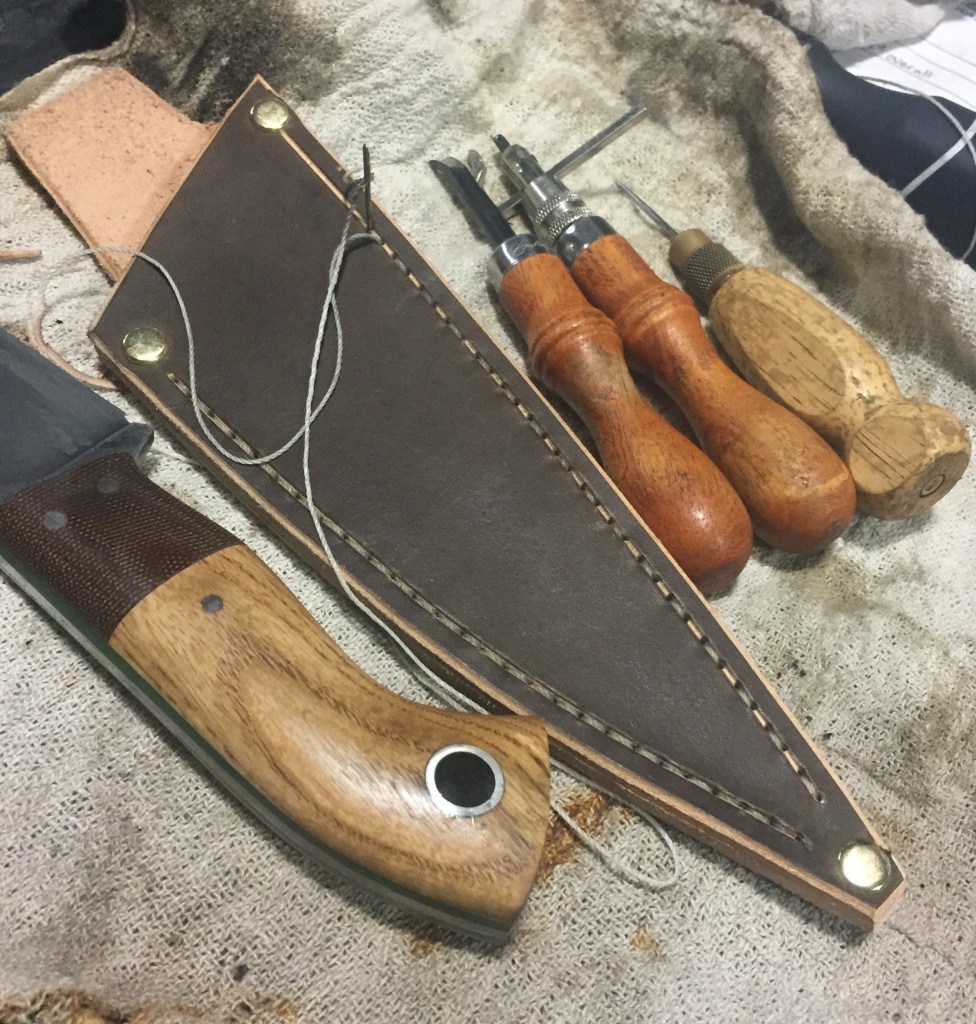
The Foundling was a commission for her husband, who was always stealing her knife, and was built using all sorts of materials that found their way to me.

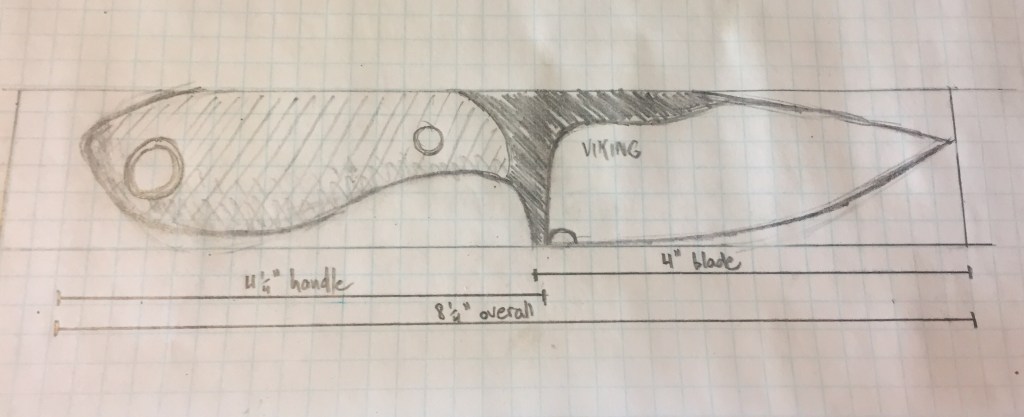
The Foundling starts with a quick sketch
The scribe lines show where the final cutting edge will be
Jimping is filed in on the spine for grip
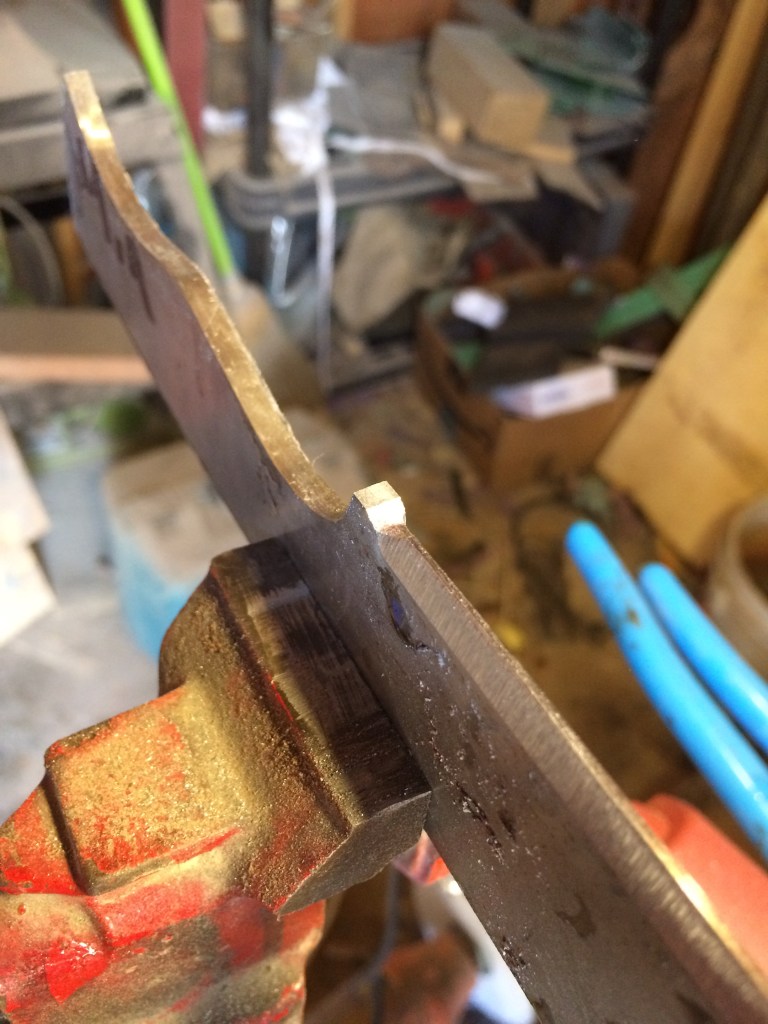
The grind at the top of the spine is called a swedge, and give the blade more of a point
Wet sanding before hardening
Into the forge
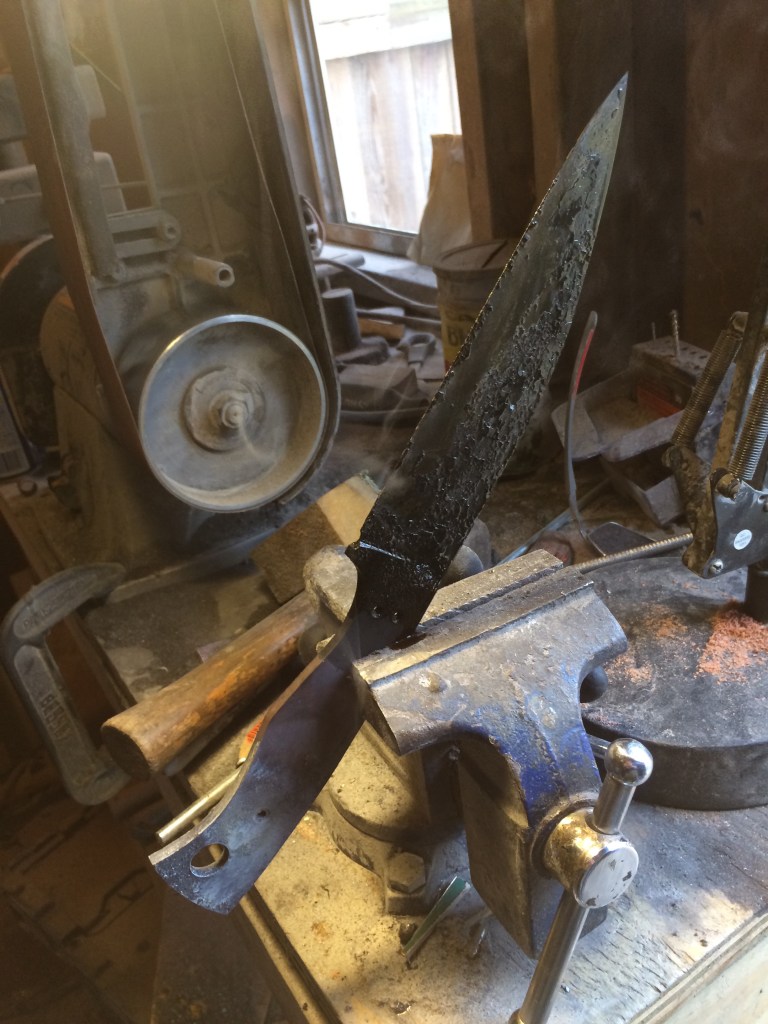
After the quench
…and after tempering
More polishing
A quick etch in acid
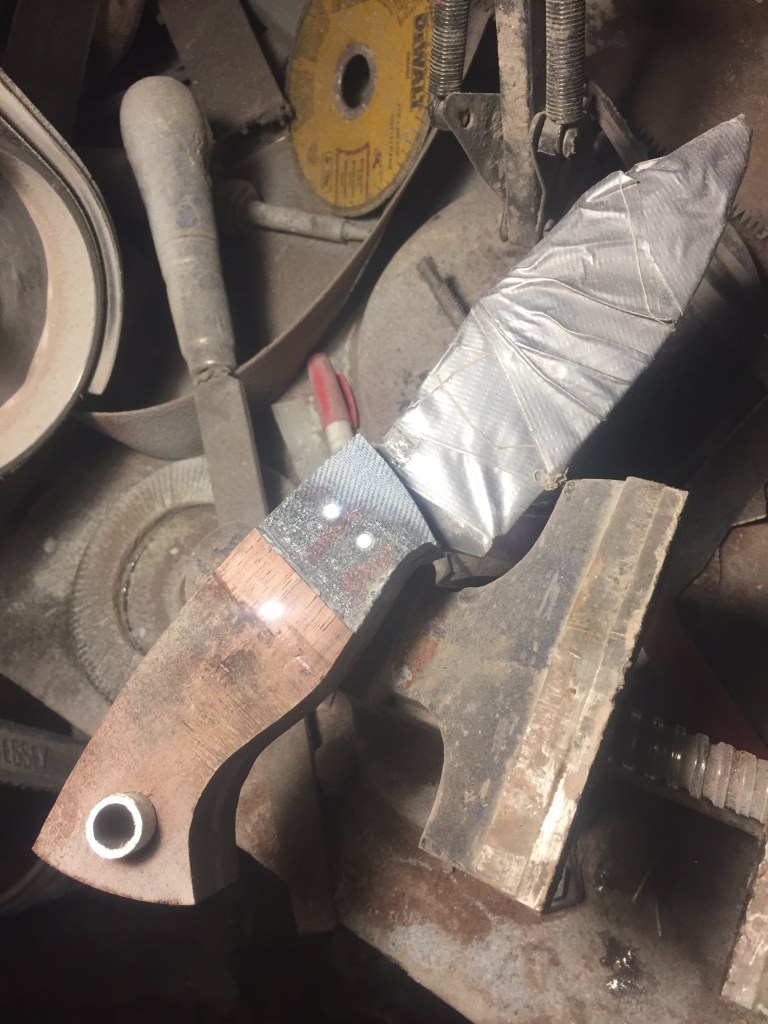
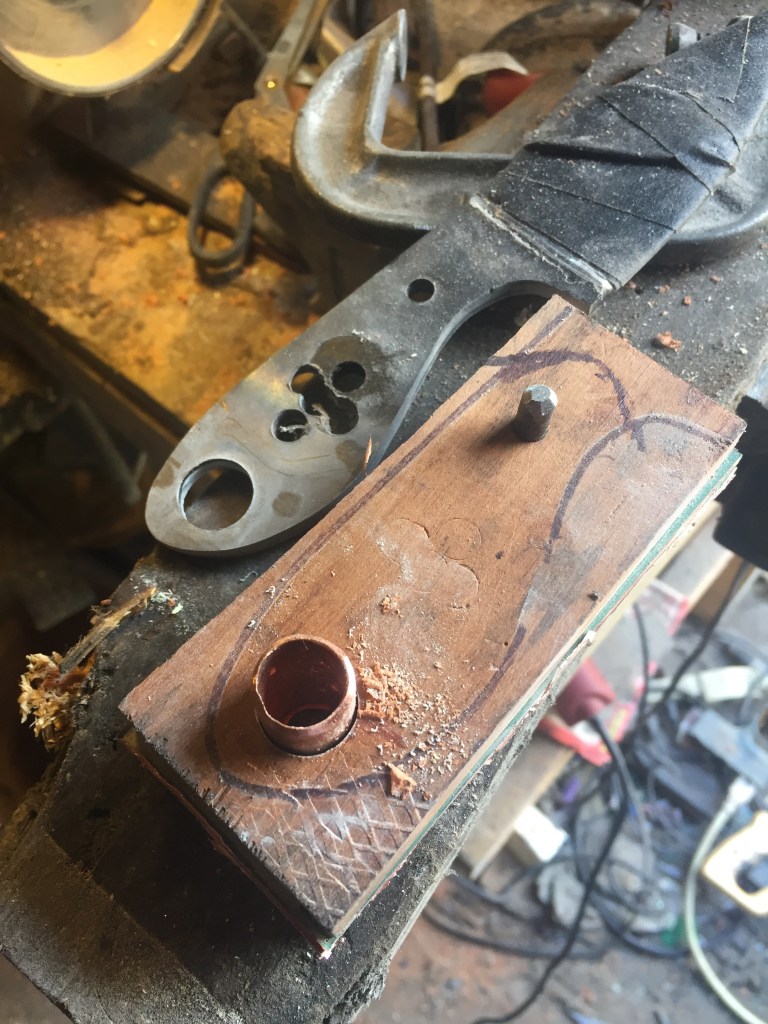
A piece of Cherry wood, which came off an old mantlepiece
A PCB blank, rescued from a dumpster
A piece of copper plumbing pipe

Knifemaking: softening and connection; and the Gun Dog

“How we fall into grace. You can’t work or earn your way into it. You just fall. It lies below, it lies beyond. It comes to you, unbidden.”
― Rick BassColter: The True Story of the Best Dog I Ever Had

I wouldn’t have ever really considered myself a dog person, not really. There is an appreciation and respect for all animals, both wild and domesticated, and whatever creature I meet I try to let them know that I see them- a deep namaste and acknowledgement of being. But as far “being a dog person”… I’m just not sure I have whatever that is.

A couple of years ago my girlfriend said she was thinking about getting a dog. I told her don’t do it. My only reasoning was that we were all very busy doing interesting and challenging work, her kids were getting older and doing more things, and everyone was tired all the time. I figured it would probably be best if we held onto every ounce of emotional energy that we could.

In spite of my reasons, which themselves came from a lovingly practical and pragmatic place, she did not listen to me. This lady is one of the most unfailingly capable people I know, a wonderful mother, with the uncanny ability to make everything around her better than it was before, even on her worst days. It was no surprise when she brought home a several-month-old rescue puppy. This dog was a lemon drop beagle mix with the biggest ears I’d ever seen. She seemed to be equal parts fruit bat, luck dragon, and polar bear.

The local animal league had told my girlfriend that this dog and her sister had been found abandoned in a barn. The puppy’s sister had some sort of severe muscular dysplasia and had found a home. My girlfriend’s puppy had a little bit of this, but much less so. She moved around fine but a closer look showed her front half didn’t quite work together with her back half.

When I met her she was still adjusting to her new home. She was terrified of doorways and dinner plates. She didn’t want to leave whatever room she was in and when she did she scuttled through like something was going to get her. If you were to put down a plate of puppy chow in front of her she would back away as if it were going to bite her. In spite of all of this she was a deeply loving and affectionate dog which was amazing considering the shit sandwich of a beginning she had been given. At that moment, shortly after meeting this dog, I felt something soften toward this wonky little barn dog that was part fruit bat, luck dragon, and polar bear; this sweet little creature that I told my girlfriend not to get.

Over the next few years I would tell this dog that I was sorry I told her mom not to get her. She had grown into a rather stunning animal, and her front half worked together much better with her back half. Doorways weren’t too much of a problem though her old nemesis the dinner plate still gave her pause. I found myself very attached to her and, though she was very much a lady dog and a product of my girlfriend’s deep nurture, I would find her to be the loving presence that I didn’t know I needed. The dog just loved everybody.

A couple of years ago I had a table saw accident that left me needing reconstructive hand surgery. It was incredibly stressful and emotionally grueling. All of my work and projects and everything I was so busy with would come grinding to a halt for the next few months. My girlfriend moved me into her house for a week and took time off work- thankfully the kids were away at summer camp. My girlfriend’s dog never really left my side. I remember the dog licking my gimpy hand every so often and then pressing in to me and going to sleep, which prompted me go to sleep. I don’t remember much of that week, except my girlfriend smiling and her really sweet dog. It sounds really silly, and perhaps it was the massive amount of post-op hyrdromorphone I was prescribed, but I figured I should probably take the example of the dog that I told my girlfriend not to get and find a way to dig in a little deeper with her and the kids.

Connection can be a struggle and there’s no manual on the right way to go about it. Sometimes it takes a sweet dog after a traumatic event to help you see what you should be doing. Part fruit bat, part luck dragon, part polar bear (everybody is good and healthy, including my hand and the dog I told my girlfriend not to get). If a responsible adult in your life tells you they want a dog, you should tell them to go right ahead.

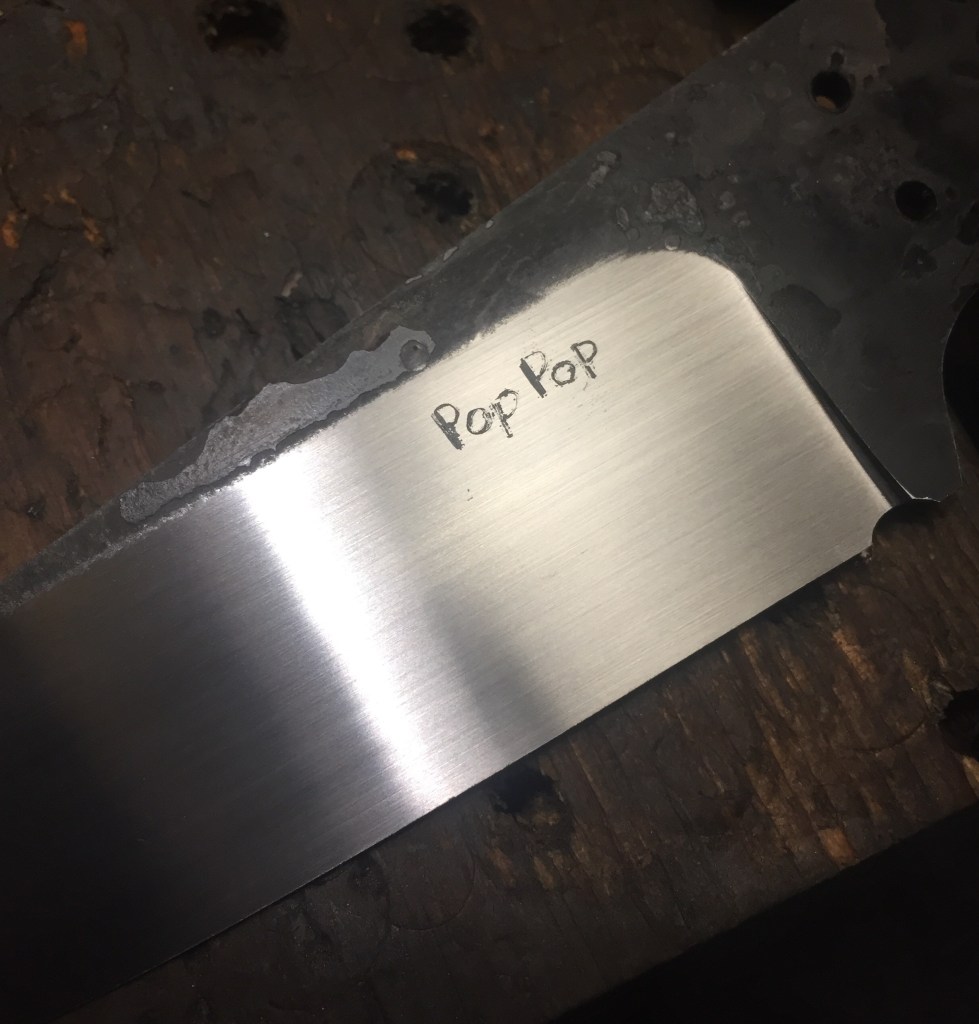
This knife was commissioned for a retired gentlemen who trains English Setters for hunting. Hunting Dogs, or Gun Dogs as they are called have been around for centuries. Particularly, the training of Setters can be traced back to Robert Dudley, the Earl of Leicester in the 1500’s. It was commissioned by a loving daughter, and has “Pop Pop” etched on the flat of the blade from his grandchildren.

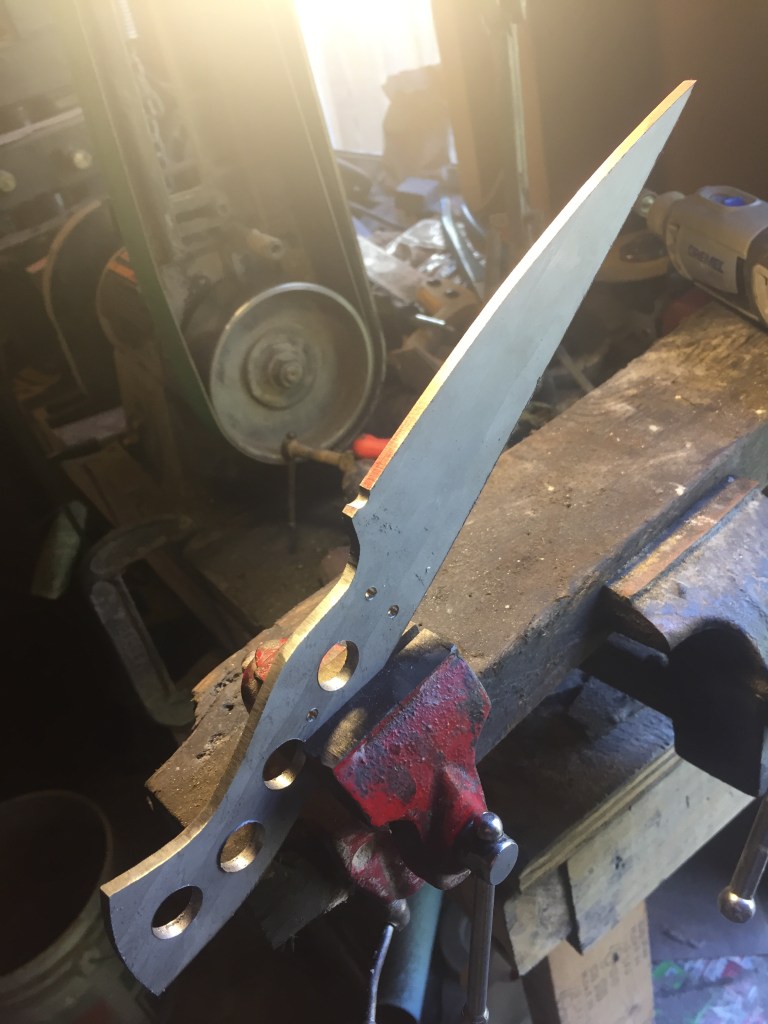
A quick sketch.
Removing material in the handle make for a more balanced blade.
Everything profiled out. Being that it is made from thinner stock, it will go in the forge as is to prevent warping during hardening.
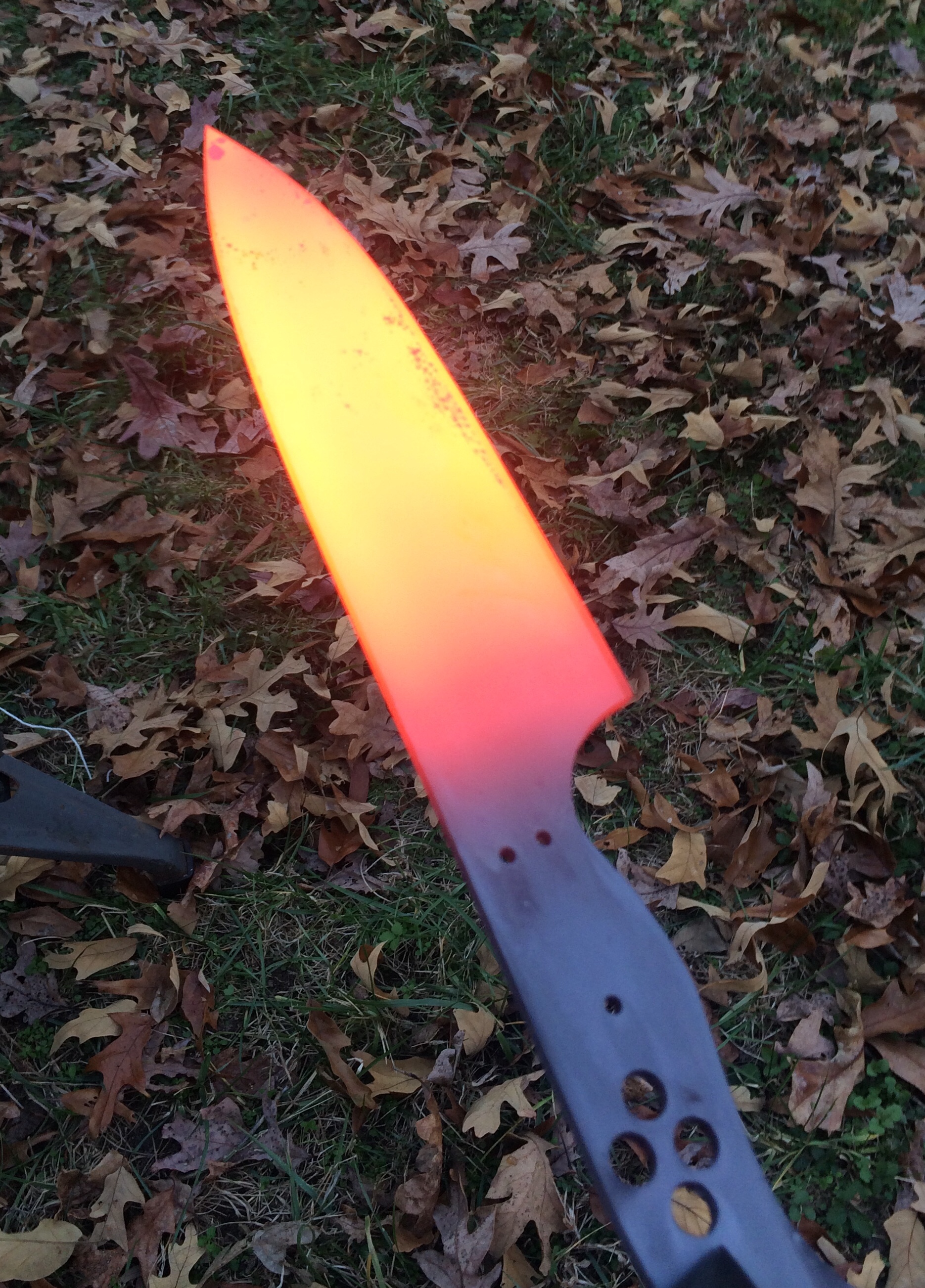
The blade needs to come to critical temperature, which is around 1500F. By the colors you can see that it is almost there.
After the quench. There wasn’t warpage but I still clamp it in the vise at the areas where it would typically bend. When it comes out of the oil it is around 300-400F, and during this time any major warps can be corrected before it cools.
The bevels have been ground in and machine finished to 120 grit.
This has been hand sanded up to 600 grit, finishing with vertical pulls. This will get etched in acid to provide a scaffold for the patina to build, and also give it a more rustic look.
Electro-chemical etching using nail polish, some salted vinegar and a nine volt battery with some alligator clips. This allows me to essentially burn text onto the steel.
A pair of Carthartt work dungarees, probably about 10 years old.

Instructions for Care:

 Your knife is made of high carbon steel, which means it will take a keen edge, hold it a good while, and will be easy to sharpen.  It has been etched in acid and shipped to you coated in food safe mineral oil. It will stain and patina and tell the stories of the places you’ve been.  Be sure to keep your knife clean and oiled when not in use.  Should you find any unpleasant surface oxidization you can remove it easily with a lightly oiled bit of 0000 steel wool, or a coarse rag with a bit vinegar on it.  She is built to be used, so don’t be shy about getting her dirty.

You can read more about Gun Dogs here, as well as find more resources on this very old tradition

Knifemaking: the Halvard

“Kinsmen to kinsmen should be true.”

~The Saga of Olaf Haraldsson, c.186

The Halvard was built for a retiring military commander and commissioned by his crew.  A battle ready knife, built to use, but equally at home on display with merits of a successful career.  

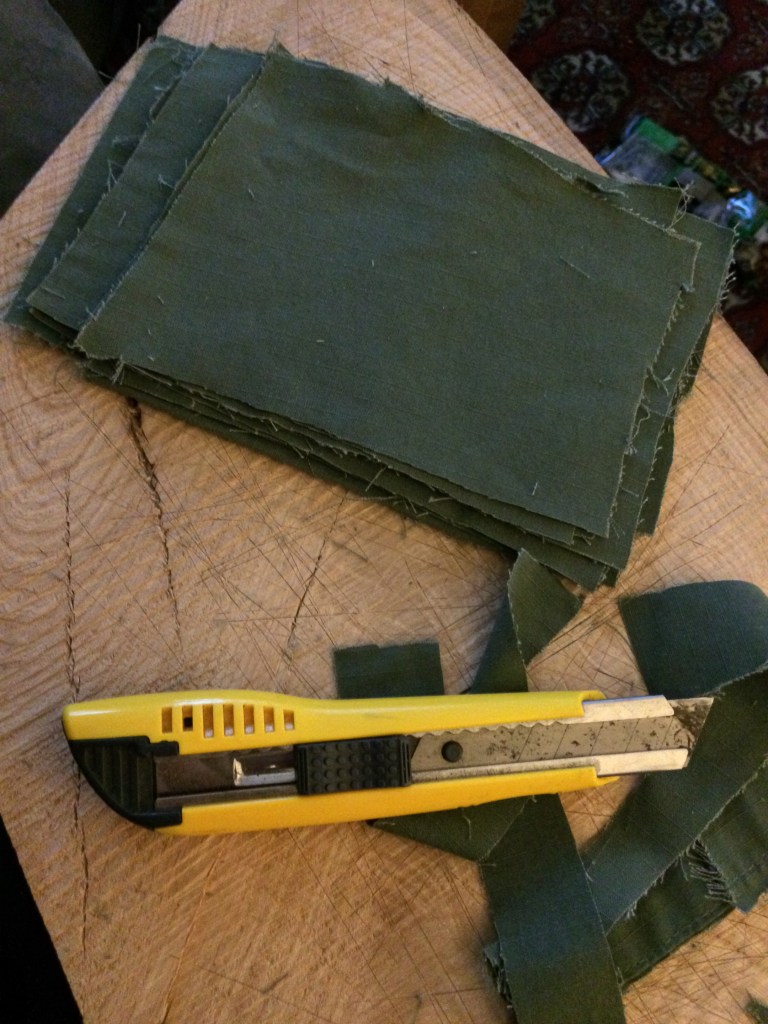
Made from 1095 hi-carbon steel with a forced patina: a rugged appearance lending itself to rugged tasks.  The handle is made from a pair of BDU trousers, a nod to service, and a reminder that, though he may no longer wear the uniform, the uniform is always with him.

This knife took a long time to build.  About midway through the build we had to shutdown our shop due to a global pandemic, and getting back into the swing of things hasn’t been easy.  Nevertheless as we build these knives, we find that the knives also build us.  Halvard is a Norse name meaning “rock guardian”: solid, unbending, and steadily dedicated to the task at hand.

It was a pleasure building this knife for a group of Vikings.

halvard1

halvard2

halvard3

halvard4

halvard5


Knifemaking: a commencement address (of sorts), and the Masilda

Dear Younger Person Whom I’ve Never Met Before:

Some very dear friends of mine asked me to make a knife for you.  These friends of mine are wonderful people that I have known for quite some time, and shared many adventures. They told me they have known your parents for a long time as well, so I can infer that your parents are wonderful people too. They have also known you since you were born and, if I may be so bold, I can only assume that you are a wonderful person as well, and that we are well met.

I was also told you have completed your secondary studies and are going out into the world- congratulations! My very dear friends asked me to make you something special, but also something that was functional and practical.  Something that would serve you well on outdoor adventures; an elegant tool and faithful companion.  Something to remind you of where you have grown up.  A security blanket that doubles as a prayer rosary and, if I may say so, a bold fashion statement.

As you may have noticed, Younger-Person-Whom-I’ve-Never-Met-Before, the situation of the world is a bit spicier than usual.  To be honest, the only thing that has gotten me out of the house most days in this great year of 2020 is knowing that I will be coming back home as soon as possible.  In spite of my trepidations of late, I’ve found that time marches on and life stops for no one, and there’s no point in staying home and being afraid while life passes you by.  The world cares not for our anxieties, worries, or fears, Younger-Person-Whom-I’ve-Never-Met-Before, and the sooner this is understood the freer we become.  Be sure to wear a mask, practice social distancing, and listen to the experts.  That is what they are here for.

I have designed and built you a bushcraft knife.  She is made from 1095 hi-carbon steel, which has been differentially hardened.  What this means is, while the whole blade is hardened, the cutting edge is the only part of the blade at full hardness and the spine is just slightly softer.  This offers durability and a slight bit of give, like a samurai sword.  There is a smoky line along the edge of the blade and a slight color change where you can see the differences in hardness.

The handle contains a piece of bookmatched Texas Mesquite.  It comes from a cousin of mine near Big Springs, milled on his property.  The bolster is made from a pair of lady jeans that belonged to my girlfriend- vintage Levi’s 501’s, something strong and deeply feminine.  Your knife is stout and sturdy; strong enough to baton firewood but lithe enough to prepare dinner. 

I named her Masilda, which is an old Romany-Traveller name that means ‘battle-ready’.  And while I am no authority on anything, your knife does contain a few truths and values in which I strongly believe.  Having a knife named battle-ready is no empty moniker and I have consolidated a trifecta of practices and that you may find useful in navigating a complicated world.  When you use your knife I hope that you think of them:

-Speak your truth.  The media says that we are in the post-truth era, an age of alternative facts, and other dressed-up horseshit designed to keep you from critically analyzing what’s going on around you.   The reality is that the truth always matters, and always will.  Make sure you know your own truths- the things you know to be right and good about yourself and how you see yourself in the world.  Clothe yourself in them.  Should you ever feel lost you’ll know exactly where they are- they will help you find your bearings.

-You can always make more money, but you can’t make more time.  Time is the currency of our terminal human experience.  While making a living is necessary, be aware of how much of your time you sell to a job that only cares about profit margins and what they can squeeze out of you.  If you ever have any doubts about what you should be doing with the time you have been given, refer to the above bullet point.  You’ll know what to do and you’ll be able to hold yourself in esteem while doing it.

Be kind.  It’s sounds cliche, like something written on a shoddy mass-market pressboard wall decoration in the Housewares Section of Target, but do your best to be kind.  It’s the connective fiber of our collective human experience during our brief time on this lovely little world.  If you can, you will find that the world opens up to you a bit easier, and is perhaps a bit richer and more vibrant.  There may be situations you need to tell someone to eat a big bag of shit.  Only do so out of kindness.

Wishing you many happy years with the Masilda.

The Masilda started with a drawing, a drop point style:

I had a bigger piece of steel than I thought, so the actual knife is a bit longer than the drawing:

Jimping- to prevent slipping when choking up on the blade:

Rough grinds:

Wet-sanding out the machine marks:

The hardening process:

After quench:

After tempering, a satin finish:

A pair of vintage lady jeans from my partner, deeply-loved and well-worn:

img_9238masildablog2

Fiberglass resin will be layered between pieces of denim, like a lasagna.  The pathc will go in as well:

blog1

Now smash the whole thing together:

blog2

The raw material:

blog3

Cut and drilled in, with the blade profile traced in so that i know where everything is:

blog4

Texas Mesquite:

img_7566

It smells really good:

blog5

Computer board blank rescued from a dumpster.  It’s just a thin piece of fiberglass board:

img_8132

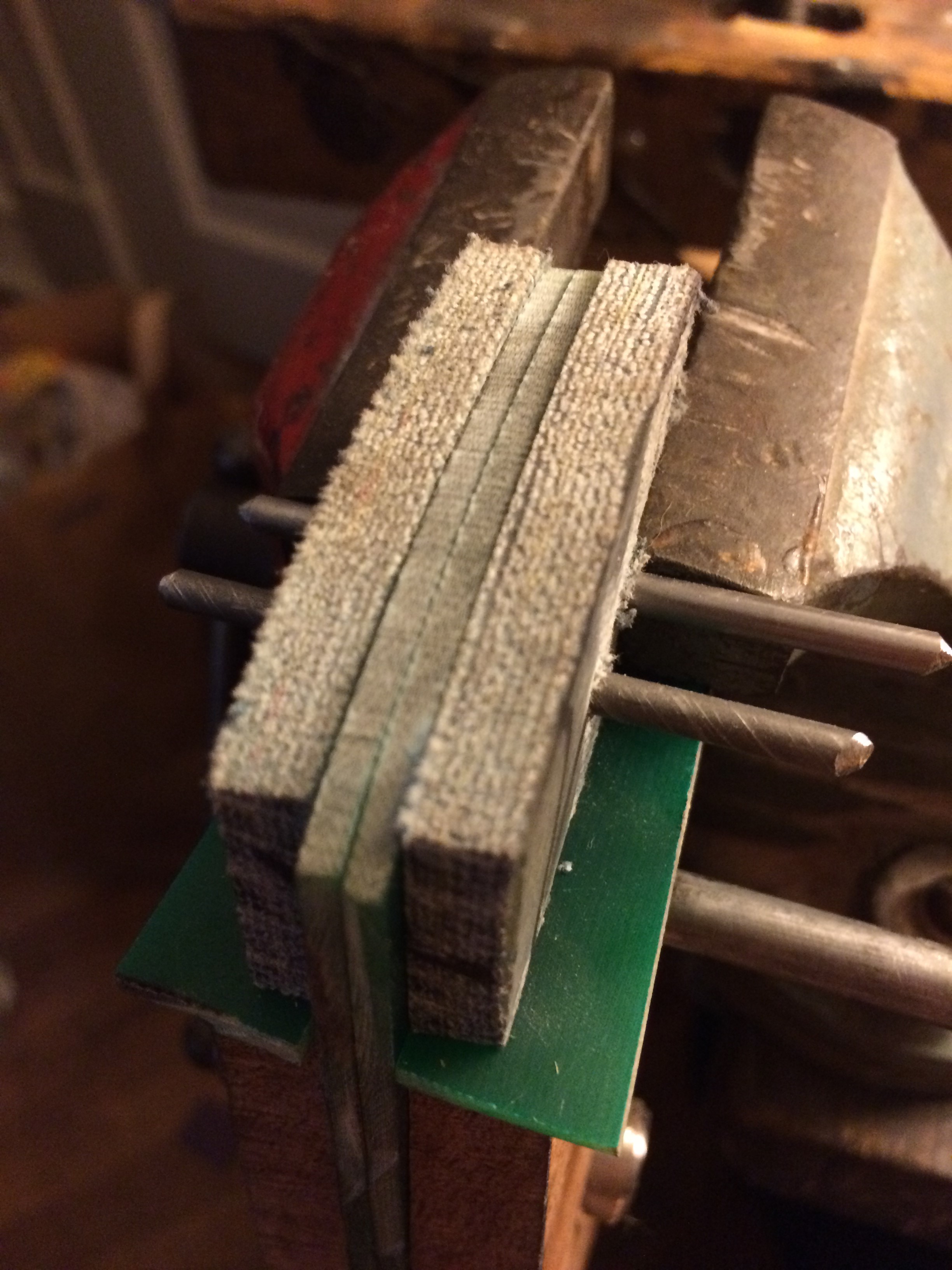
Denim and computer board at 60 grit:

blog6

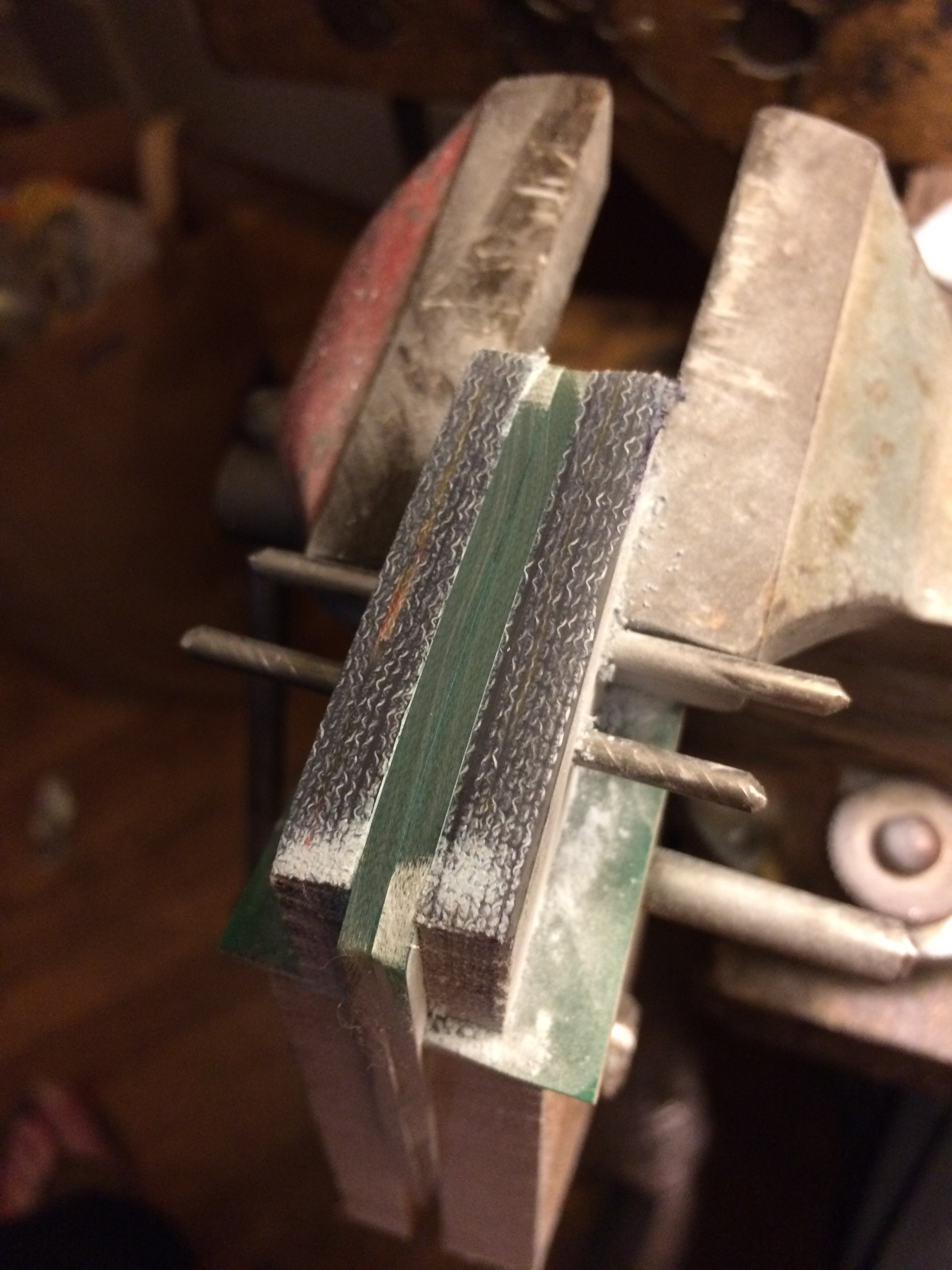
At 800:

blog7

All ready for glue up:

blog8

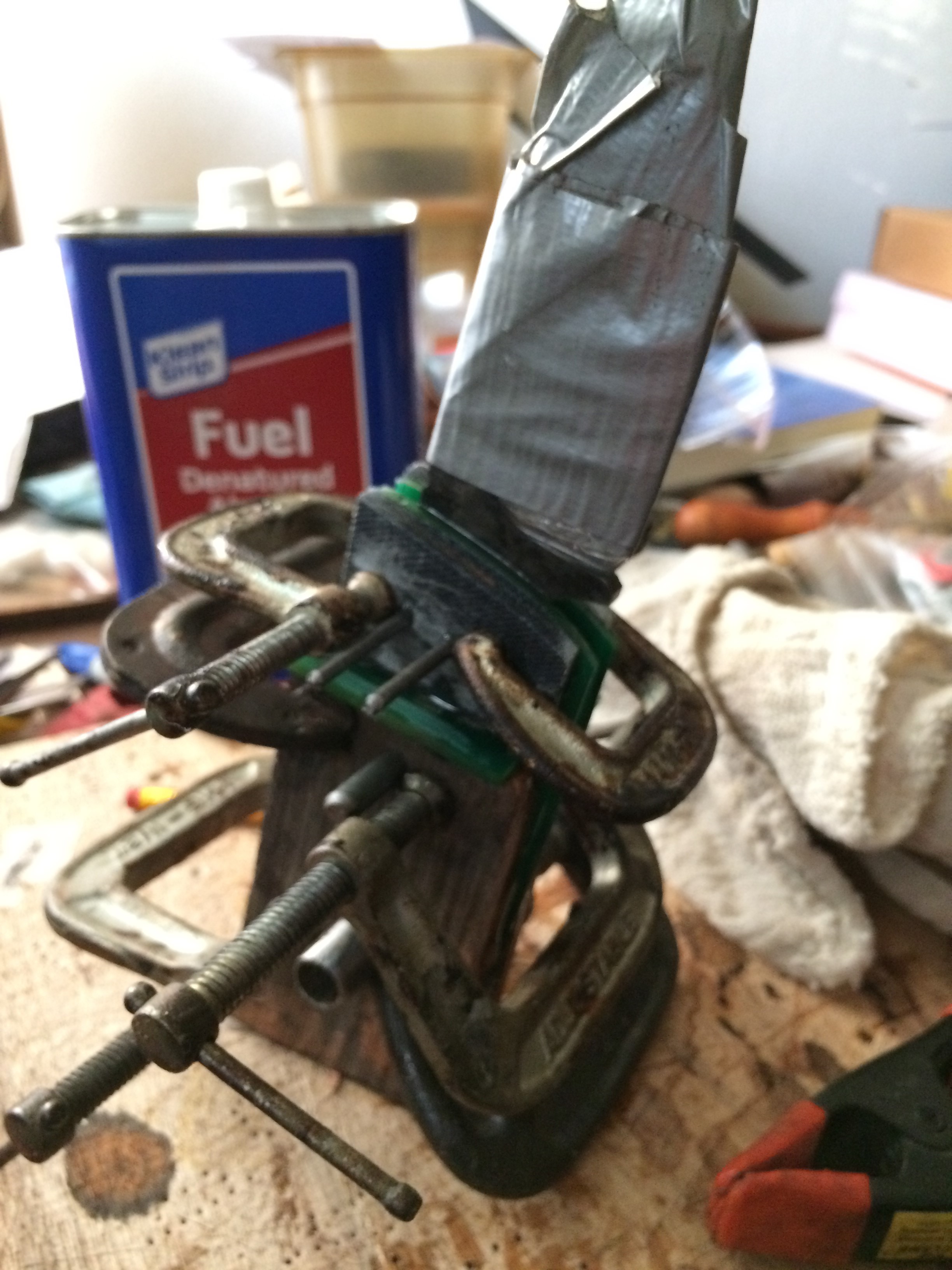
Glued and clamped

blog9

Shaping up:

blog10

From here, all the sanding is done by hand:

blog11

The higher the grit you go, the more pronounced the grain and fiber:

blog12

The Masilda:

masilda1

masilda2

masilda3

masilda4

Instructions for Care:

 Your knife is made of high carbon steel, which means it will take a keen edge, hold it a good while, and will be easy to sharpen.  It will stain and patina and tell the stories of the places you’ve been.  Be sure to keep your knife clean and oiled when not in use.  Should you find any unpleasant surface oxidization you can remove it easily with a lightly oiled bit of 0000 steel wool, or a coarse rag with a bit vinegar on it.  She is built to be used, so don’t be shy about getting her dirty.

Knifemaking: on doing a good job, and the Scout

“What is success?” poses the Copt. “It is being able to go to bed each night with your soul at peace.”
Paulo Coelho, Manuscript Found in Accra


As a grown person, you are rarely ever told that you’re doing a good job.  Many times we don’t have a frame of reference for how we’re doing until we’ve screwed something up and gotten yelled at…or fired.  Or dumped.  Or sued.  Or arrested.

As a result, most of us move through life feeling like we might not be doing such a great job.  While uncomfortable, this is not entirely unhealthy because it helps to cultivate a growth mindset.  If you are cognizant enough to know that you might not be doing so well at whatever it is you are doing, then you are probably aware that this means there is room to grow and get better.

Ironically, the people thinking this way are probably doing just fine.  Self-doubt in large quantities can be debilitating, but small doses can be a great tool.  In questioning what we are doing, we have a chance to grow.

After I got out of music school, I did my best to make a living as a musician.  That lingering bit of self-doubt was fuel that helped keep me sharp and at my best.  I wrote music for tiny indie films, did instrumental arrangements for church Christmas programs, played on recording sessions, and took any gig I could get.  Many of the best paying jobs were church gigs, especially around Christmas and Easter.  I am not religious, and probably an excellent candidate for bursting into flames upon crossing the threshold of any religious building. That being said, the people are always kind, the checks always clear, and there is about a thousand years of badass sacred music written by the rockstars of the classical music world.  This is partly why big churches typically end up with killer instrumental and choir directors.  They are usually competitive jobs.

One Easter I got a call for a job at a massive Baptist church about 20 miles outside of the city.  On Easter Sunday I showed up for a small rehearsal before playing two services.  I was the only hired musician- everyone else was from the congregation or community.  Immediately it was not good.  The instrument parts were in different keys and the director didn’t know the cues for the giant video projector and how our music was supposed to line up.  Easter is the Woodstock of church music and this was a mish-mash of cacophony.  As a professional, this situation feels like being on a burning ship with no way off.  Two services and four hours of this for a congregation of a thousand and no way to fix it made me want to rip my hair out.

Nobody else seemed to notice or care- and ultimately that was ok.  Because in the end, voices were raised, offerings were offered, tithes were tithed, and the faithful answered the call.  I got paid and went home.  The takeaway, besides being able to pay my health insurance, was that, while it’s important to do the best you can, sometimes the best thing you can do is let things be what they are and sleep well at night.

This knife was commissioned by a lady I went to college with for her husband, a former Cavalier Scout in the Army and a new father.   I don’t have children but I imagine being a new father, where there are so many things out of your control, can be at odds with the capable nature of a military mindset.  The intent of this knife, the Scout, is to put some of that at ease.  I tried to capture that duality by marrying those two parts together.  The handle was made from an old piece of Black Walnut trim molding- solid, seasoned, and strong.  The bolster was made from their child’s blanket, which required a lot more care and work.  The blanket contained a bit more uncertainty because I didn’t know how it would turn out till it was finished.  Peppered in the blanket was one of the gentleman’s old Boy Scout badges to act as a guardian to that uncertainty.


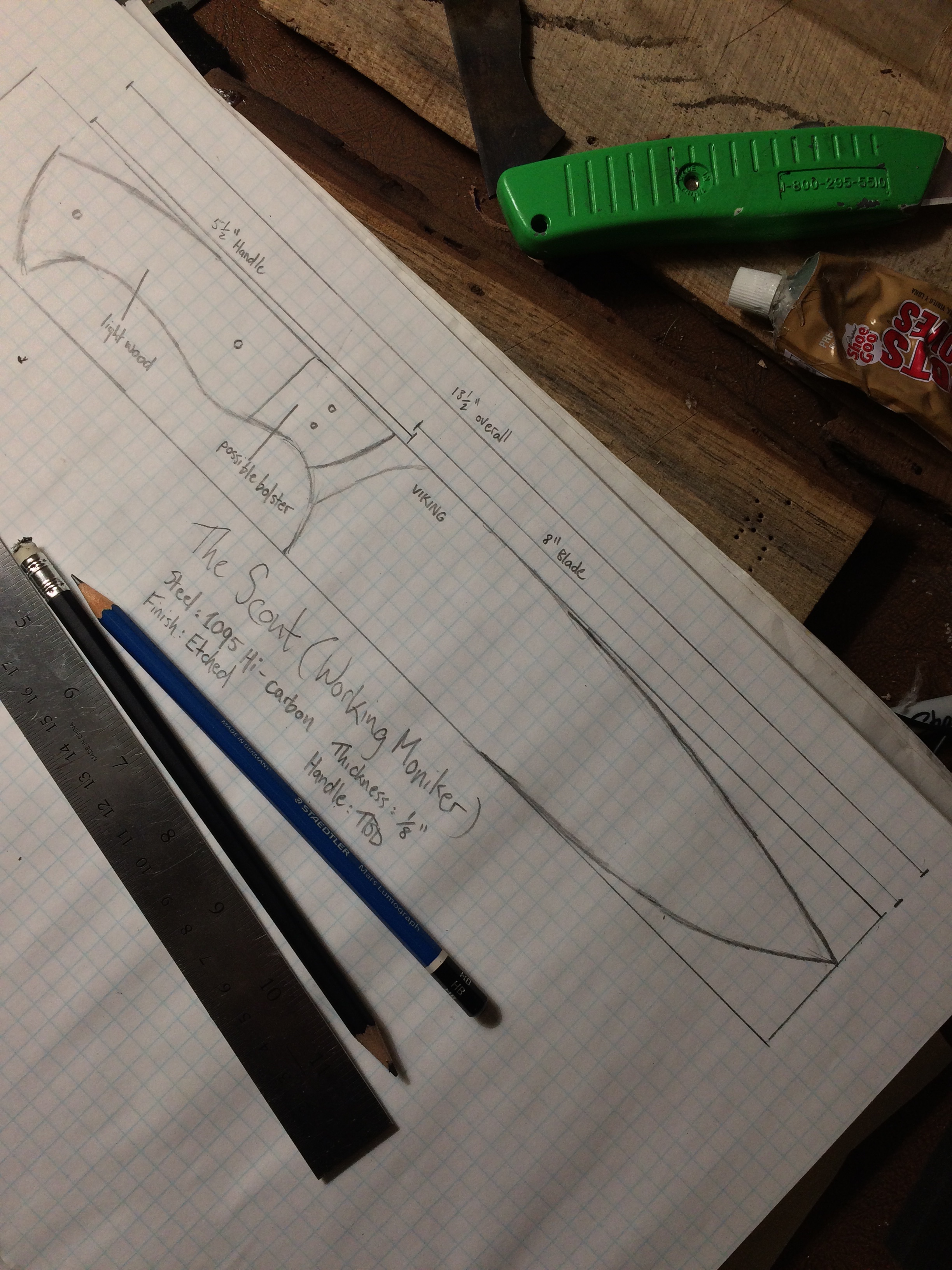
The Scout starts with a drawing:

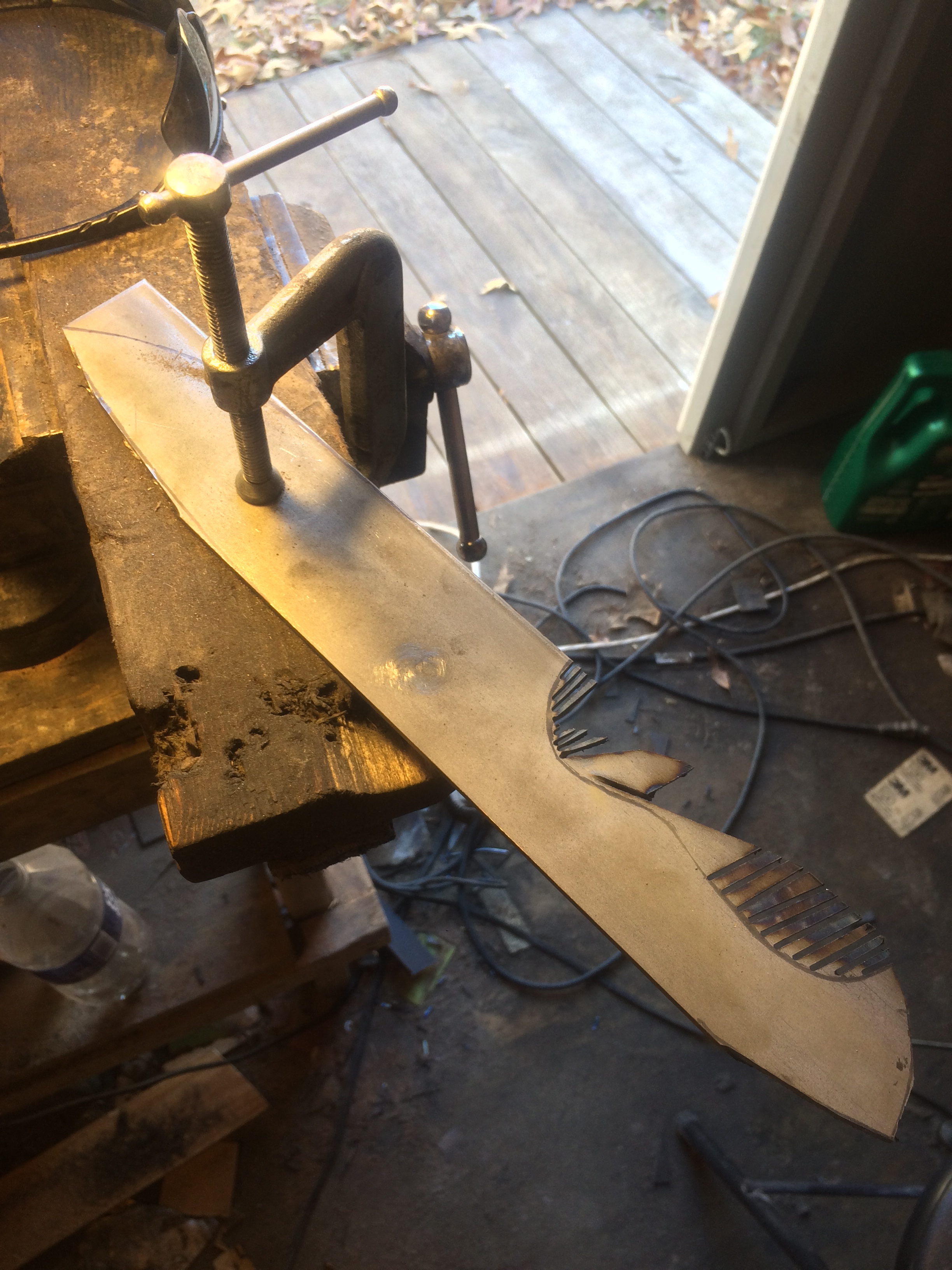
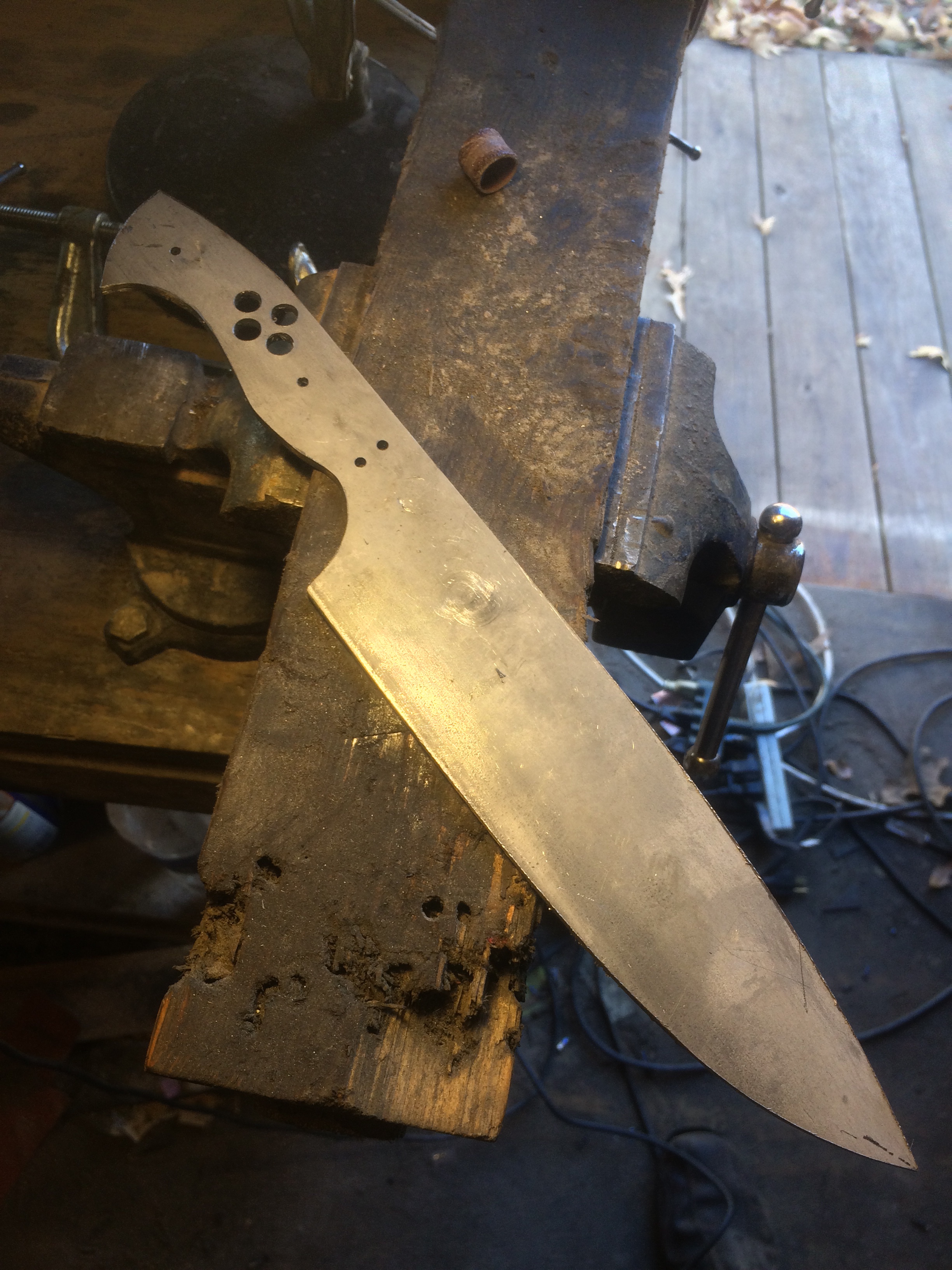
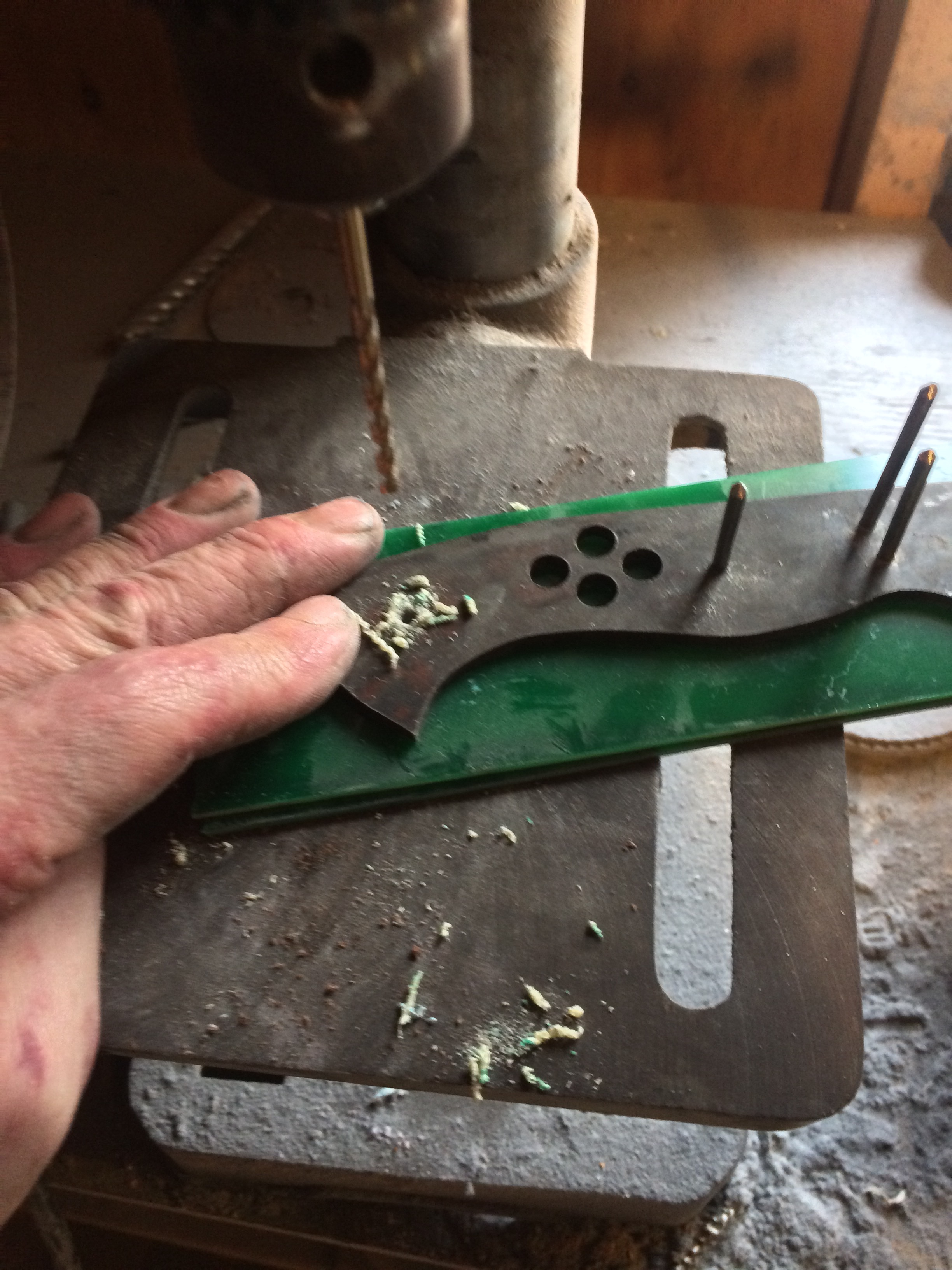
Profiled and drilled.  The four larger holes reduce weight to improve balance:

Centerline scribed on the blade.  This is where the cutting edge will be:

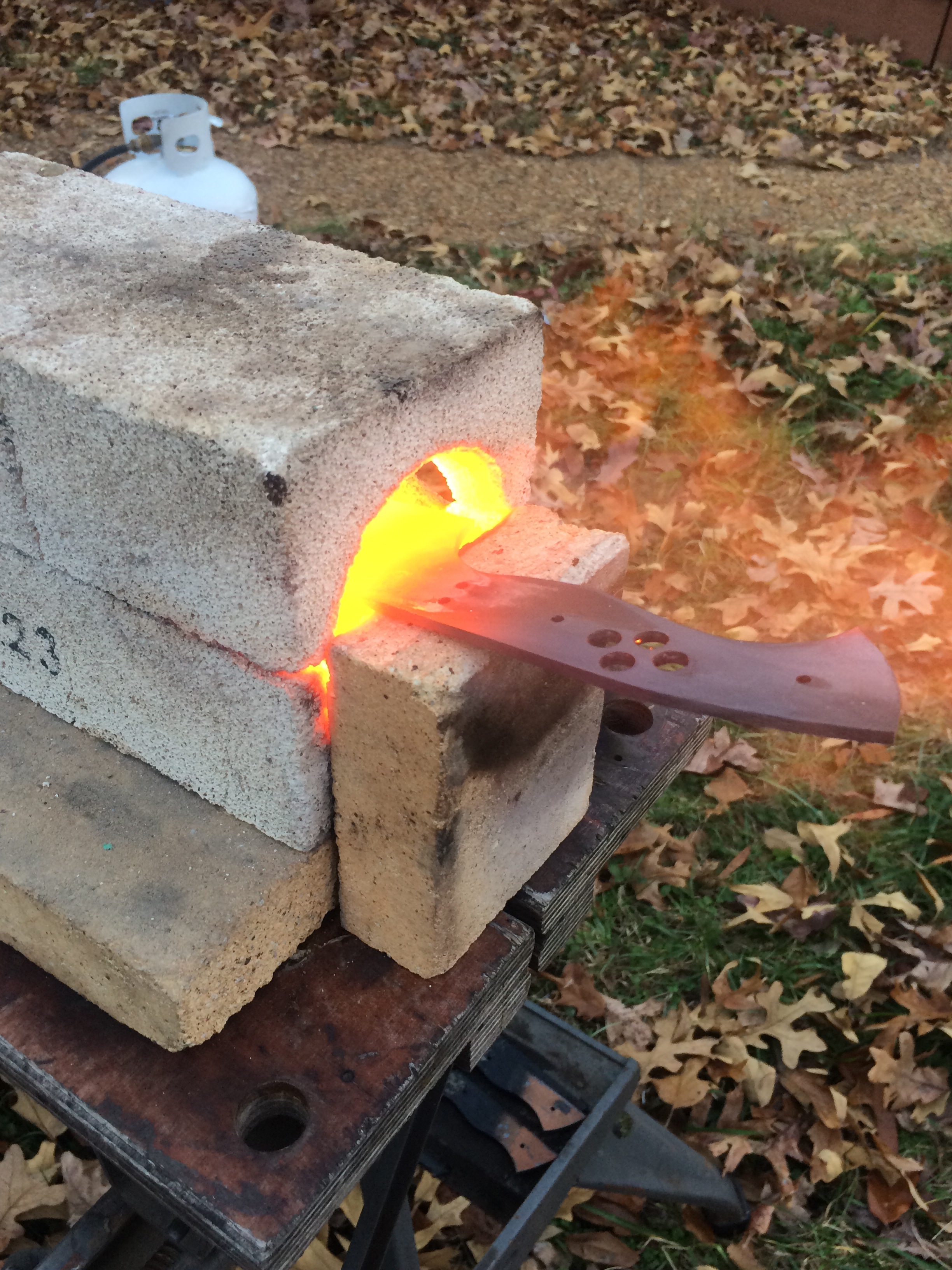
The whole thing gets hardened before grinding.  This helps prevent warping:

….and despite our best efforts, warping does occur.  Since the blade is still hot from the oil quench we have some time to correct it:

Tempering- this gives the blade flex and bend, while also relieving stress incurred during the quench:

Grinding the bevels:

A full flat grind at 36 grit:

Removing the machine marks:

Satin at 320 grit.  This took about three hours of handwork.  Now on to the other side…

Electrochemical etching of the makers mark:

A baby blanket.  I like the stripes.  This will become the bolster.

It wouldn’t be a scout without a Boy Scout Badge.  This particular badge shows that the younger scout has demonstrated proficiency with and is allowed to carry a knife:

The blanket is cut into equi-sized pieces and the badge into slivers.  Everything will be layered with fiberglass resin and smashed together:

After the resin has cured:

A cross-section of the material and you can see the scout badge slivers.  This has become one piece of material:

Drilling rivet holes after the bolsters are cut:

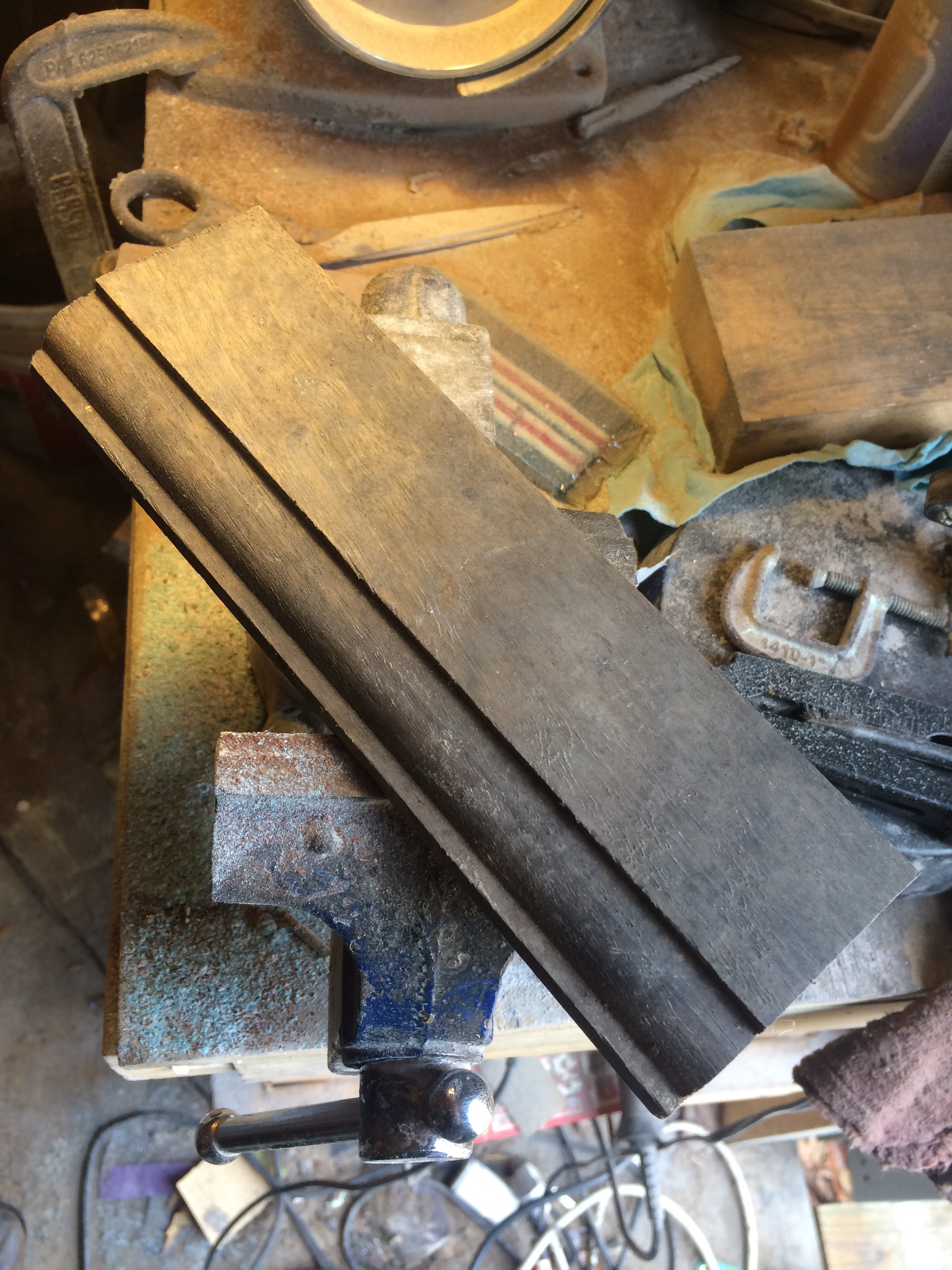
This piece of trim molding came from an abandoned house and is made of Black Walnut.  It doesn’t look like much right now:

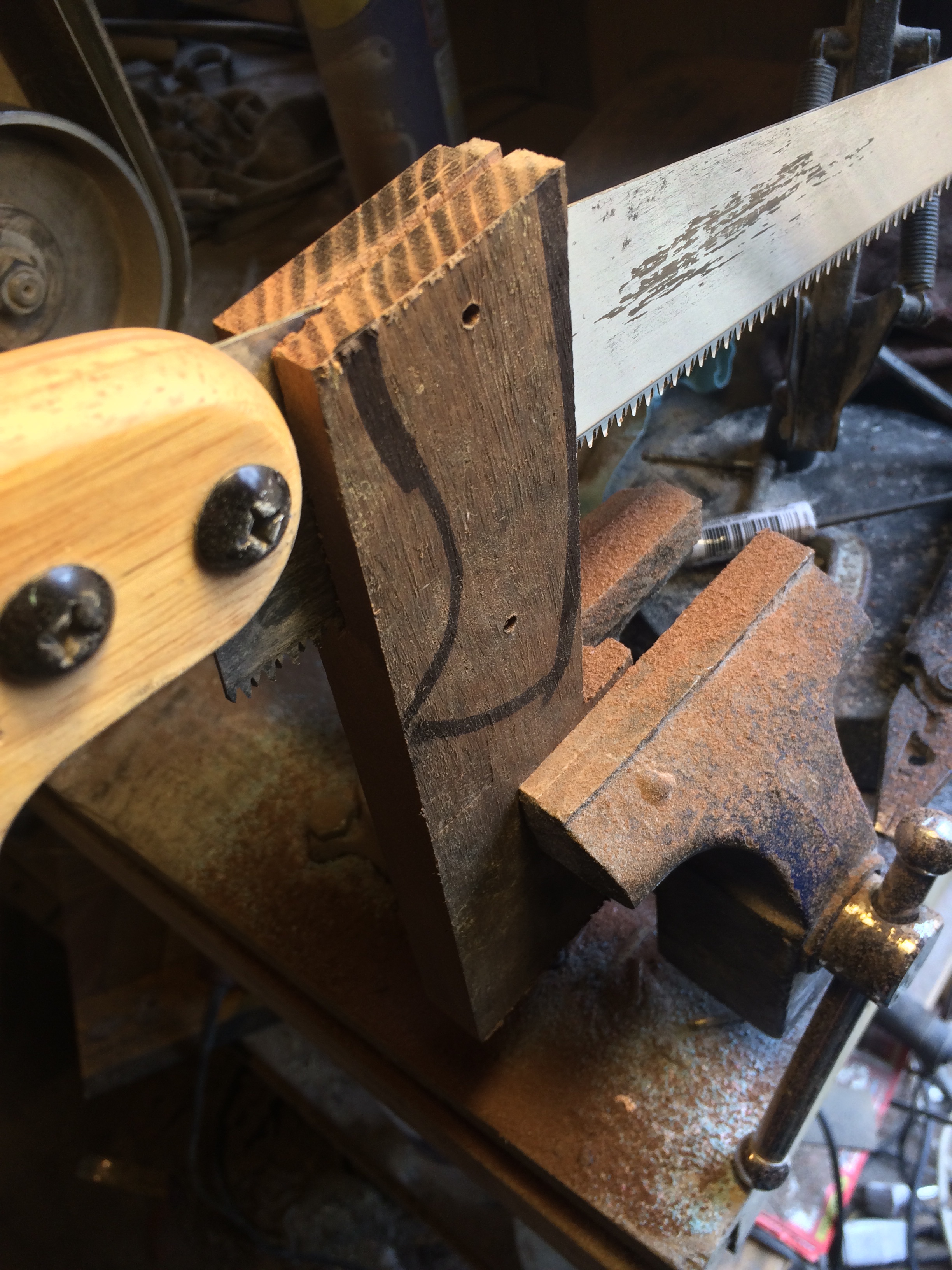
It makes for a better fit if the holes are drilled now before the scales are cut:

Circuit board blank for spacers:

Finally everything fits:

Prepping for glue-up:

Glued and clamped:

Profiling the handle:

Contouring for a comfortable fit.  All sanding after this is done by hand:

The Scout:


Knifemaking: the things that are ours and the Notre L’affaire

“But then I have always been somewhat of a square peg in a round hole.”

Cressida Cowell- How to Speak Dragonese


When I was five years old I had my first lesson in finding out that the world might not be built for me.  I was not in kindergarten yet because I had told my mother that numbers and letters had looked too hard for me.  Perhaps I really wasn’t ready, or perhaps I was just stubborn, but this would leave me a year older than all my classmates through my entire academic career.  So at five years old I was sitting with all the other five year old preschool kids who, for whatever reason, weren’t quite ready for kindergarten either.  It was around Thanksgiving time and we were making hand turkeys out of construction paper.  You are probably familiar with the process, where you trace your hand and your fingers become the tail feathers and your thumb becomes the head and then you cut the entire thing out and add all the plumage.   I was having an incredibly difficult time with it.  I couldn’t get my scissors to work and I had no idea why.

As it turns out I was, and still am, left-handed.  They had no left-handed scissors, and the poor ladies couldn’t explain why I was the only one who cut with my left hand.  The silver lining was that when I looked at the wall of hand turkeys for the next two weeks before we took them home I knew exactly which one was mine- the sort of mangled looking, Mattisse-inspired one with it’s shredded, soft edges and pastel color themes.  It might not have quite fit in, but that turkey belonged to me.

I think a major source of anxiety today comes from a pressure to fit in.  We are pack animals after all, social creatures, and there is a large degree of comfort and safety that comes with fitting in.  For whatever reason some of us just don’t fit.  Maybe our personal values don’t align with the metrics of what society calls success.  Maybe the things in the world that move us have been wrought and tempered in such a way that makes the mainstream feel incredibly dull and boring.  Maybe we were brought up in a fashion that causes us to question the rules and the people who make them.  Or perhaps our idiosyncrasies and the way we see the world simply makes others in the pack feel uncomfortable. 

Because the reality is that life is uncomfortable and existence is messy, and no amount of corporate team building exercises or ‘life is beautiful’ bumper stickers will change that fact.  The square pegs of the world know this, because things have probably always been uncomfortable.  The beauty of being a square peg that doesn’t fit into the circular opening of life is that you find a way of living that is unique and meaningful to you.  Usually that means crashing through more than a few romantic relationships, getting fired from a few jobs, making a whole lot of mistakes, and generally being a mess for awhile.

When you finally pop out on the other side of all that, you may find that what you’ve become is completely and totally your own, free of mimicry and imitation.   All those things that you’ve become- those belong to you and no one else.

(I taught myself to cut right-handed in elementary school to save myself and my teachers a lot of grief.  I cut better right-handed than I do left-handed.  You have to pick your battles.)

This knife was commissioned for a chef at a local restaurant by his girlfriend.  I love making knives for restaurant people- anyone who winds up in food service is totally a square peg.  In talking to the girlfriend, who works in hospitality, she told me that they were both a little crazy, which is part of what makes everything so interesting.  ‘Notre L’affaire’ roughly means ‘our thing’ in the sense of something intimate and personal, like a slightly rough-around-the-edges turkey made of construction paper hanging on a pre-school bulletin board.  You should always recognize and honor the things that are yours.


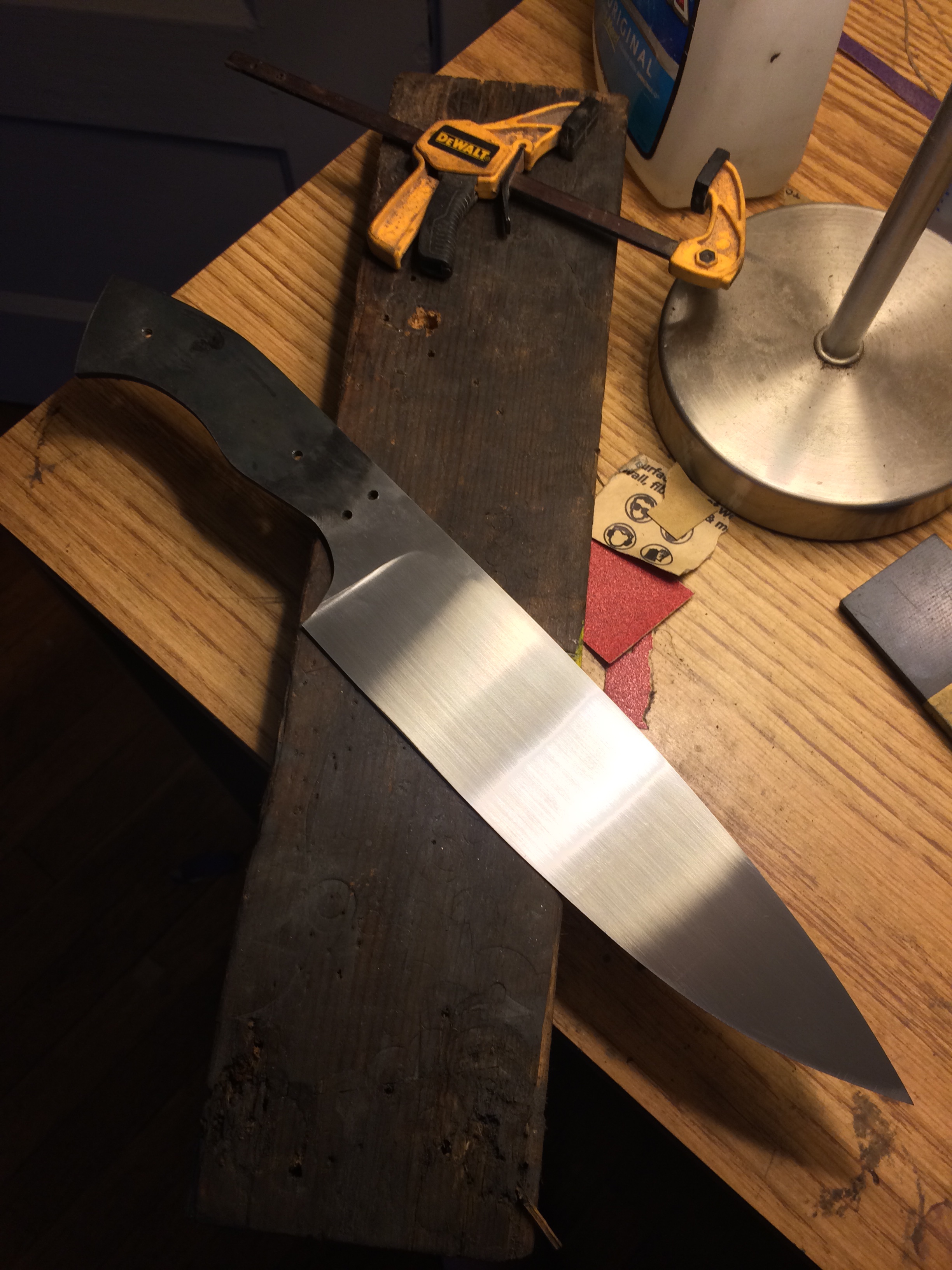
An 8″ chef in the German Style:

Hi-carbon American 1095 steel:

Profiled and drilled:

Into the forge:

Making sure everything is straight:

Grinding the bevels:

img_7555

a5882d54-3626-42c7-848a-b3b1a1c3a553

Hand sanding:

Satin finish:

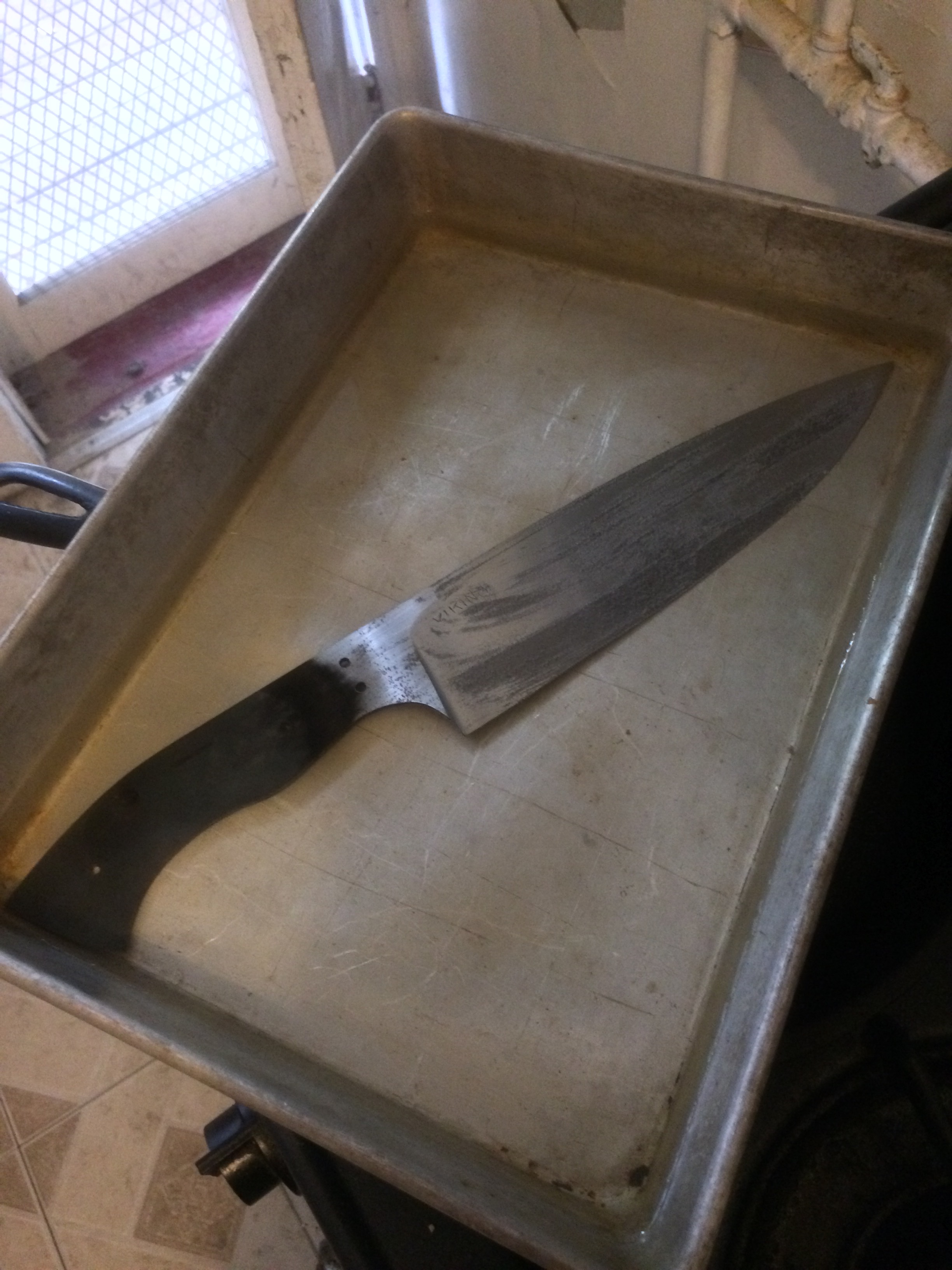
An acid etch to help with corrosion resistance:

For the bolster we’ll make a material out of bow tie pasta:

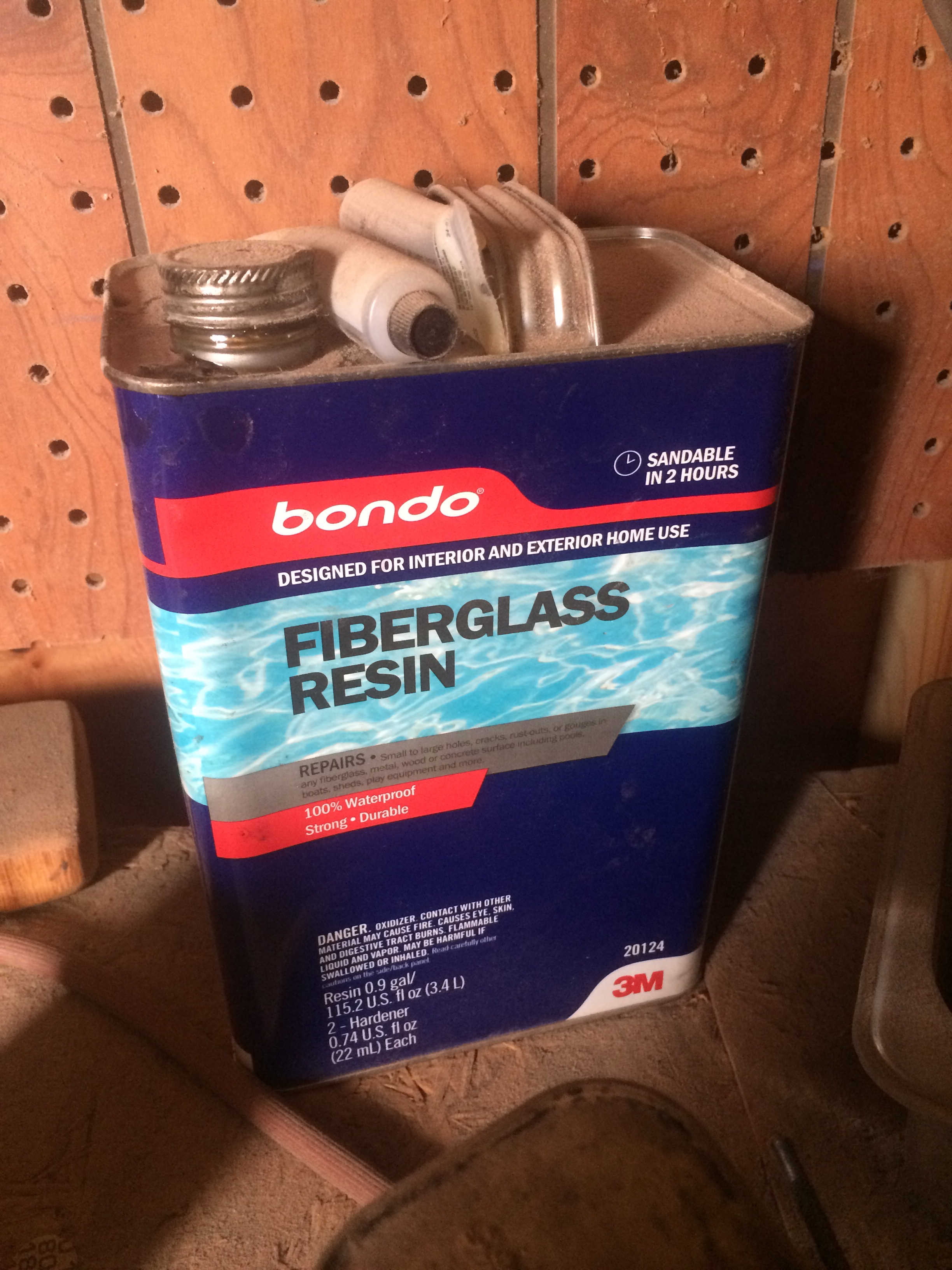
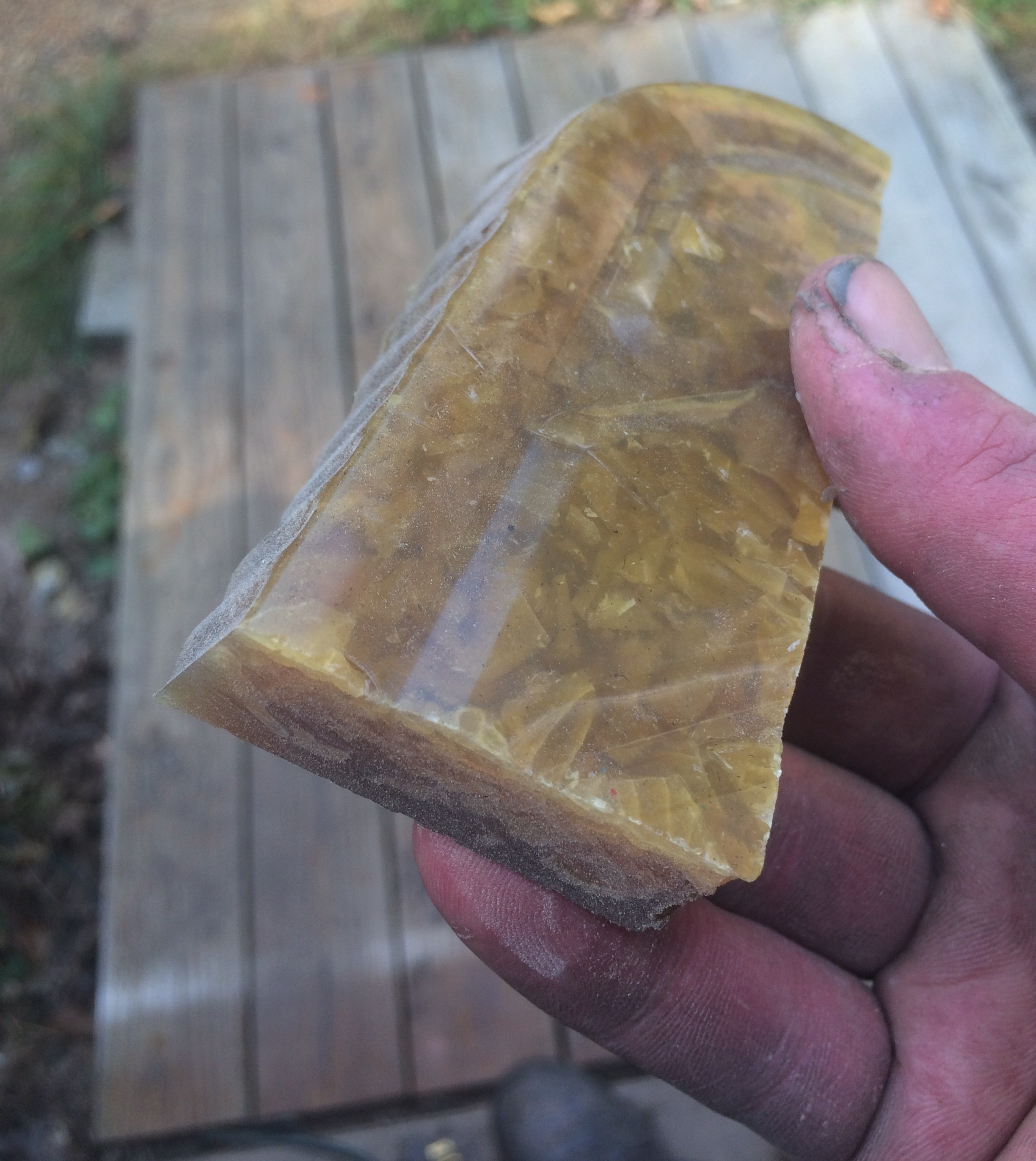
After it gets smashed up and set in fiberglass resin…

…you get something like this:

img_7586-e1568582334258.jpg

Texas Mesquite:

Glued:

The Notre L’affaire:

Knifemaking: The Ace, revisited

“When we are children we seldom think of the future. This innocence leaves us free to enjoy ourselves as few adults can. The day we fret about the future is the day we leave our childhood behind.”

Patrick Rothfuss- The Name of the Wind

(you can read about the original crafting of this knife here)

As I approach early middle-age I find myself surrounded by the children of my close friends.  They are marvelous little beings, unfettered by the troubles of the world, and always see possibilities and wonder around every corner.  In watching many of them grow up I feel like I’m let in on a beautiful little secret as they walk, talk, and become more cognizant of everything going on around them.  Boldly pursuing their curiosities, there is a pronounced presence in their endeavors and the way they move through their little worlds.

This unfettered presence of being is a subtle reminder that as an adult I am always second-guessing myself.  “I wish I had done that better,” I will think to myself, or “I wish I had been kinder.”  Rumination at the end of a bad day can trouble my sleep, and the thought of facing the day the next morning can be daunting.  I will often judge harshly my perceived tumbling through the world and wonder if I am doing any of this right.  There are moments when I find it hard to get excited about anything.  Many of the adults I confide in are often thinking the same thing.  These are merely symptoms of being grown in an extremely complicated world, and as many therapists have assured me over the years, are completely normal feelings to have.

Much of this melts away when I spend time with the children of people I’m close to.  They don’t think about any of those things.  As someone crashing through adulthood, I find that to be deeply reassuring.  I am also reminded that I am in fact an adult- no, you can’t have cookies for dinner, you can’t use your Ipad in the bathtub, and yes I do have to leave (please don’t be sad, I’ll be back).  I’m not sure how such big feelings can be contained in such tiny people.

About four years ago I made a blunted knife for the oldest child of some good friends of mine.  They have a house on some property in the country about 45 minutes out of the city.  They grow mushrooms and berries and have animals and forests.  I know the place pretty well- I helped them move out there.

There are now four children at their home.  They are farm kids in the summer.  I saw all of them the other week when I was doing a side job delivering some water containers to his dad, who uses them to run his homestead.  While he was sorting out another visitor, I went in to say hello to the kids.  They were all confused, except for the oldest, and asked me who I was and why I was in their house.

I told them who I was and that I was there to help their dad.  I was then barraged with questions and chatter- the oldest shows me their puppy, the second oldest tells me she doesn’t remember me, the third oldest asked me why I was there a second time, the youngest doesn’t talk yet but eyes me suspiciously.  Dad comes in and clears everything up.  I don’t think there are too many visitors during a weekday, and I felt that my presence was a happy little gift.  I’ve found the most sincere thing a kid can do is talk to you.

Before their dad and I unload the truck I brought in the oldest, whom I’ve known since he was three, wants to show me his treasures.  He pulls a box out of his room and starts removing things- some small folding knives, a bit of paracord, and a compass.  He is immensely proud and can’t even contain it.  I’m a bit jealous.  As a large man when I get excited it usually scares people.  So I quietly and secretly took in his excitement with him. Whoever figures out how to concentrate little boy excitement and put it in supplement form will make a mint.

His dad and I went out back to unload the truck and this little boy received instructions to make lunch for his brothers and sisters.  A few minutes he comes out with a peanut butter and jelly sandwich for me.  His dad hands me his blunted knife I made a couple years ago and asked if I could make it into a real knife.   I tell him I sure can.

Because in the end, it’s not just a knife.

This little boy isn’t thinking about the bigger picture but I am.  In seeing his reworked knife, I hope this little boy will learn to see what it is to grow and improve as he figures things out.  I hope that he will learn to look back on where he’s been and feel satisfaction in seeing how far he’s come.  I hope he will see what it means to put beautiful work out into the world and the empowerment contained within speaking his truth.  Most of all I wish him to not fret about the future and to trust in his tireless human spirit.  This is the lesson of the Ace.

This was the knife I made him four years ago.  It is a hardened and tempered butter knife that allowed him to get comfortable with carrying a bladed tool. 

The handle was coming off- we’ll put a new one on.  Off with the old:

The blade is re-profiled so it has a point and will cut:

img_7485

Giving him a good polish:

IMG_2835

Satin:

Black Walnut:

img_7486

img_7487

Computer board blank for spacing material.  Though it looks yellow, it will be green when fully polished:

img_7488

Drilling the rivet holes:

img_7489

The part of the handle that meets the ricasso is shaped and polished before glue-up:

img_7490

Glued:

img_7497

Profiled:

img_7505

Shaped.  From here on out it’s all hand work:

img_7506

The Ace, revisited:

img_7509


img_7511


Knifemaking: a restoration

“You didn’t get the quest you wanted, you got the one you could do.”
Lev Grossman, The Magician King

Every so often our shop will get calls to put a new handle on an old knife.  We always make every effort to do as many of these as we can.  

The ability to make something broken work in the way that it once did is a virtue.  This is especially true when the something that was broken is special to someone.  In most instances it’s pretty easy to replace what was broken, but the sentiment becomes lost.  Whenever possible I always try to fix what is broken, especially in the shop.

I treat these repair jobs as an exercise in incorporating as many broken or discarded things as possible into the finished product- it gives something totally unique back to the client.   Our jobs as craftsmen are to give a voice to our materials, allowing them to speak for themselves.  Many times we don’t choose what comes to us but nonetheless it is our job to turn what comes our way into something beautiful.  Making something better than it was before-this is the goal of a skilled craftsman.  For those in the know, these are the things that put the color in our world.

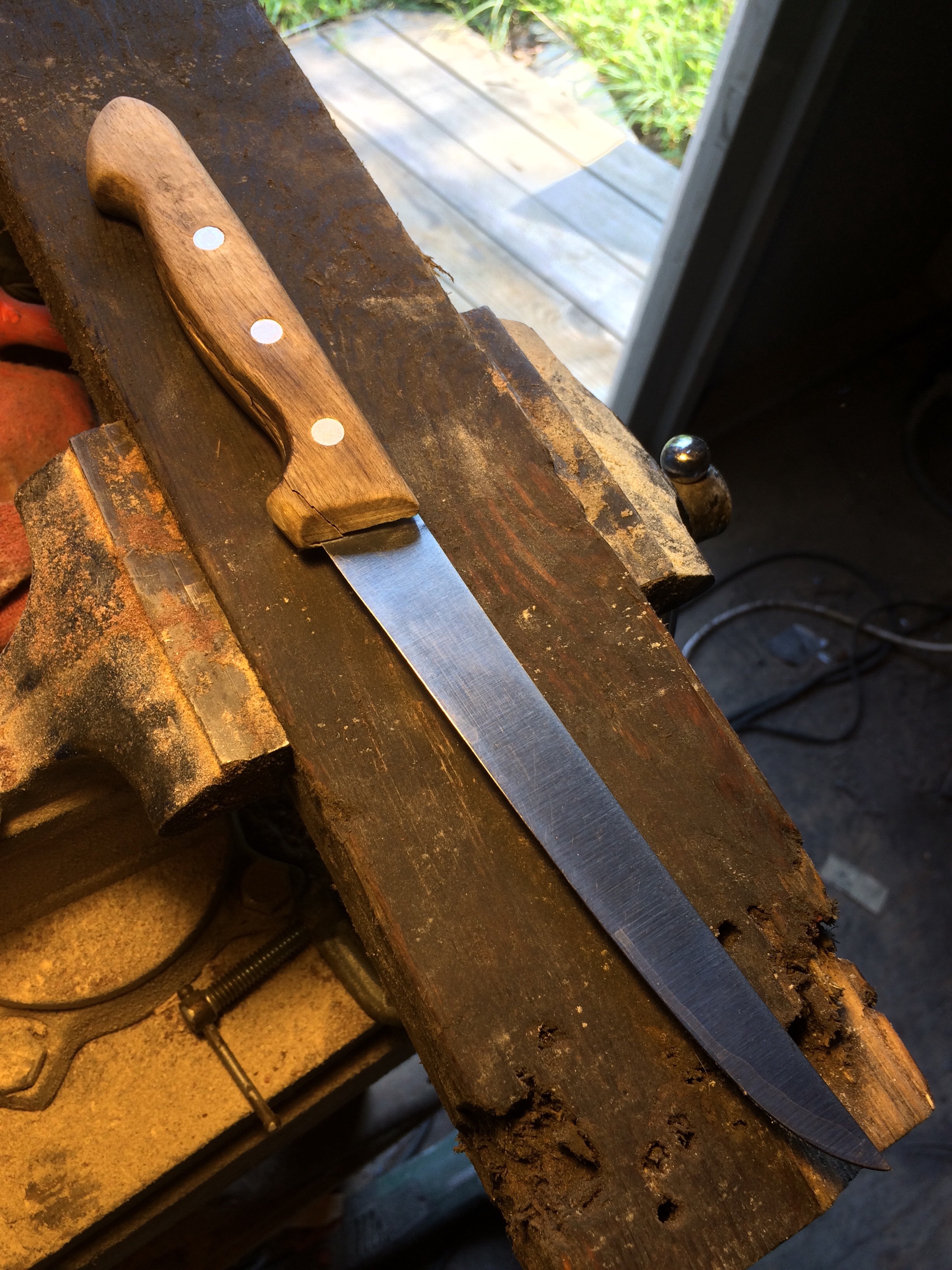
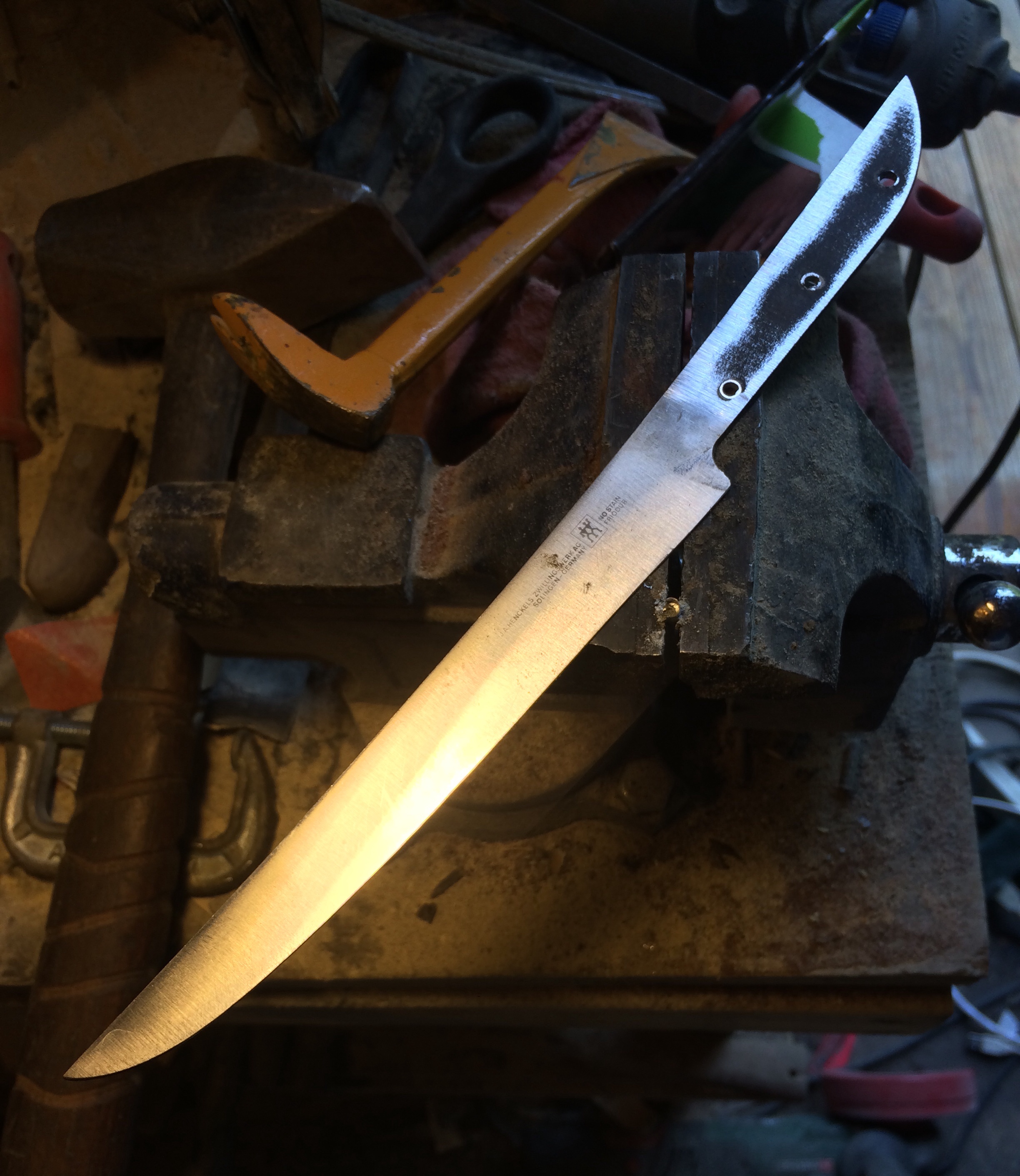
A gentlemen contacted us about re-handling an old boning knife he got in the 1970’s.  It was an old Zwilling knife, made from good Solingen steel, with Zwilling’s proprietary ‘Friodur’ subzero tempering process.  The handle had cracked, as natural materials tend to do over the years.

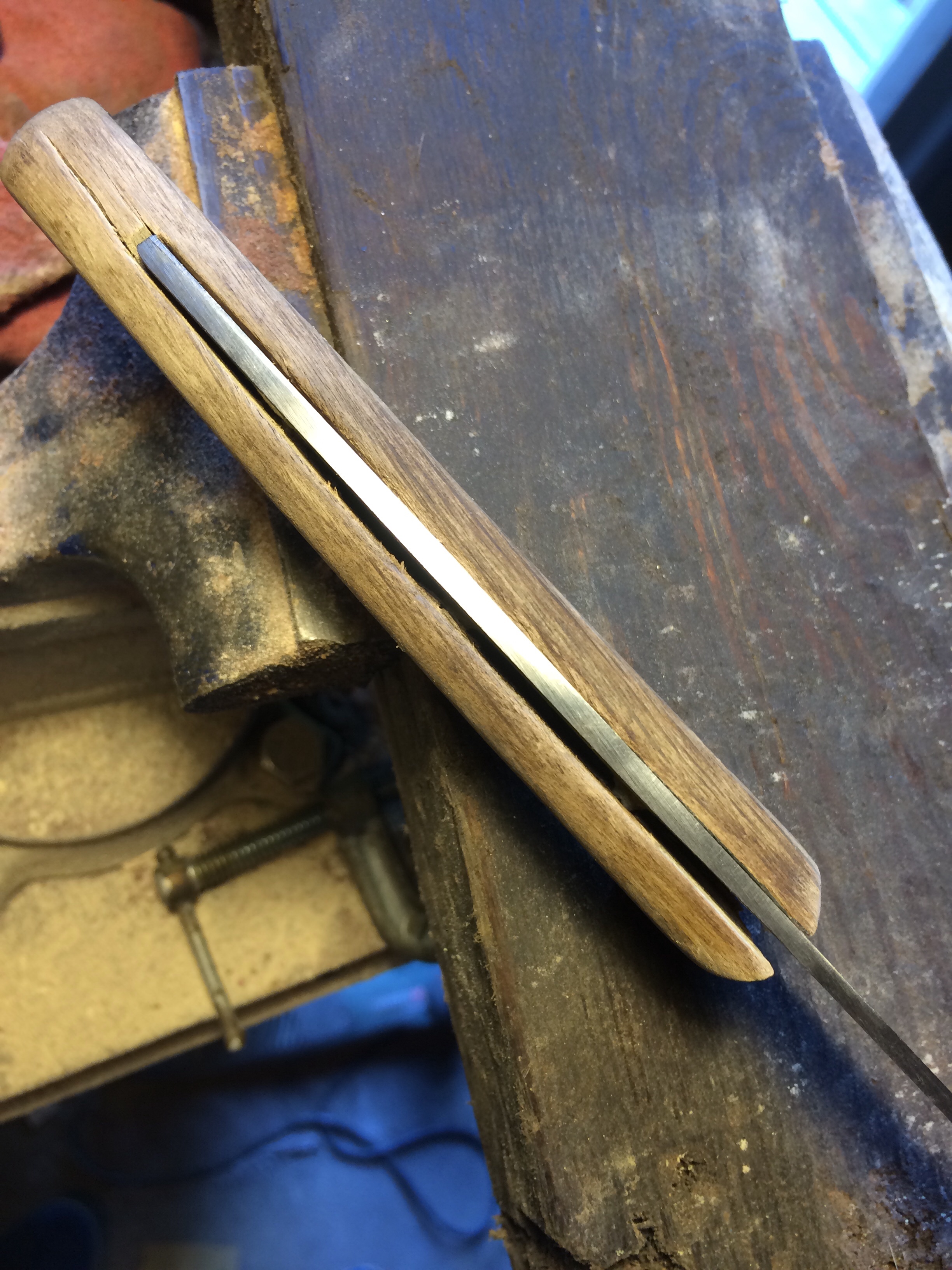
This one was partial tang, meaning the metal in the handle doesn’t run the complete length of the handle:

First, we remove the old handle and the rivets:

For the handle we’re going to use Black Walnut, which was formerly a baseboard salvaged from an abandoned house in North Carolina:

To extend the tang, we’re going to use a fiberglass computer board spacer which I dug out of a dumpster at one of my workplaces.  Though it looks yellow, it will turn green as it’s polished:

img_6337

Drilling the rivet holes.  The black spacing material is a heavy plastic that came from an office mail separator:

This is the top of the handle, closest to the ricasso of the blade, of the belt sander at 40 grit:

Sanded from 60 to 800 grit:

Ready for glue up:

Glued and clamped:

Roughly profiled:

Shaped to the desired shape.  The rest of the work will be done by hand, starting with 80 grit sandpaper and going up to 2000 grit.

Finished, sealed, and oiled:

Always take the opportunity to create something beautiful.

Knifemaking: eating your way through Europe, and the Famiglia

In 1999 I was a terribly maladjusted, acne-riddled, socially-delinquent bowl-cutted high school freshman.

As I nervously made my way through the beginning of my first year of high school, I found myself deeply attracted to a World Geography class taught by an eccentric but deeply curious and fascinating man.  Going to that class was like a much needed reprieve from reality.  His classroom was a cluttered mess with flags and maps of the world, bas reliefs, posters of exotic locations, and and army of file cabinets anchored around the room like knowing sentinels, guarding the mysteries of the world, containing God only knows what.  There were artifacts from all over the place- African masks, replicas of Mayan relics, and more knick knacks and tchotchkes than I had ever seen.

All of this encircled a giant table in the center of the room, overflowing with stacks of papers, maps, and charts.  Mr. Crippen, my teacher, was a soldier of exploration.  In his lectures he told us stories of spending time in Ghana, and of being locked down in his hotel in Nicaragua during a revolution in the late 1970’s.  He told us of Tsetse flies and African sleeping sickness, and how sudden rainfalls in deserts cause drownings.  We learned about the economics of bat guano.  There wasn’t a lot of homework, but he did like to assign massive research projects and give comprehensive exams based on his lectures.

His field trips were legendary.  He once took us to see traditional Chinese acrobats at a local University, and another time on a whirlwind weekend tour through the Amish country of Pennsylvania.  He also ran an exchange program that partnered with a high school in Altenkirchen, Germany, and had done so for 25 years.  After one such trip he asked me if I’d like to participate.  I would spend three weeks during the summer living with a German family.  This sounded amazing and my parents agreed.

Several months later, my dad and I drove up to the Baltimore-Washington Airport.  I had $300 in travelers cheques for my spending money- which doesn’t sound like a lot but this was 1999.  Debit cards weren’t prevalent but I didn’t even have a bank account.  The Euro didn’t exist and the conversion rate was two Deutsch Marks to one dollar.  Cell phones were around but not common- I certainly didn’t have one.  I took five Kodak disposable cameras with me.

I found myself staying with a deeply sweet and kind German family.  They lived in a small village called Raubach, in Rhineland-Palatinate, closer to the French border.  On the way in from the airport, I noticed it wasn’t a place that was particularly on the way to anything.  The autobahn wasn’t close by, and it wasn’t near any large cities, at least by American standards.  There were lots of farming fields and surprisingly well-maintained dirt roads.  Everything was a deep green.  Norbert, the father, was some sort of soil and water engineer (at least that’s what I gathered from his limited English).  Sibille, the mother, stayed at home and kept gorgeous gardens and an immaculate house, complete with a cranky goat in the backyard.  I would spend most of my time with their two boys, Florian and Jonathan.

The first thing I noticed about Europe was the food.  Everything was fresh and I found that I never had a mediocre meal.  The family I lived with didn’t keep any junk food, save for some chocolate here and there.  Breakfast the first day was soft boiled eggs, and laugenbrezel, a really delicious soft baked pretzel, and some type of sausage.  There were so many sausages that I lost track.  Their bread was bought in unsliced loaves from a nearby baker and they had a commercial grade slicer in their kitchen.  We sat out in a bricked patio in the midst of flowers and vines.

Their house was narrow and three stories tall.  The top floor was full of bookshelves and books, with a billiard table in the middle of the room.  The middle floor was bedrooms and the bottom floor had the kitchen and common areas, complete with an immaculately furnished parlor that I never saw anyone go into.

They spoke almost no English and I spoke no German but they fed me really good food and took me on adventures and I was happy.

……

It was summertime.  The boys were out of school and the family took me everywhere.  We went to Koblenz, where the Rhine and the Mosel river met.  We ate out at quaint little eateries in the country side. There was Doner kebab, a Turkish peasant food similar to Greek Gyros, served with a rich cucumber garlic sauce. I ate as much of this as I could.

They had more property than I was aware of.  Not far from their house was a barn where they had two small horses, Nino and Nena.  Sibille fed them large amounts of garlic- she said this helped keep flies and bugs away.  I would help shovel horse manure and brush the horses.

There were large forests nearby, and on the weekends Norbert would take me riding through them.  He would point out the elevated hunting blinds, which the locals used to hunt wild boar.  They didn’t put saddles on the horses and I was told my legs would get stronger.  From what I could tell they never did- I was sore the whole time I was there.  We rode on old dirt trails, through the greenest woods I had ever seen that seemed to breathe an ancient and enchanted air.  Sometimes Jonathan would come along riding his bike, and sometimes the family dog Taps would run along side us.

On one of our rides Norbert started telling me about an old place in the forest.  His English wasn’t strong but I made out something about an intersection of magnetic fields in this spot.  We rode out to this spot and Norbert asked me to go and stand there and close my eyes, which I did.  It felt like someone was spinning me around.  I opened my eyes, and closed them again. Still spinning.  I looked at Norbert.  He just smiled with an Old World twinkle in his eyes, and we rode back to the house.

…..

We usually had four meals a day.  Breakfast on the patio, followed by a midday dinner which was the large meal of the day.  Norbert came home from work for this.  There was an afternoon tea between three and four, but no tea was served.  Instead Sibille made a rich cake and gave us coffee.  There was a light supper in the evening usually sandwichy-type things or pizza.  Norbert and Sibille liked wine- Norbert said his favorites were actually California wines.  Florian sometimes snuck a beer.

There was also a lot of apple juice- they ordered it by the case. Soda was actually pretty expensive and it was never in the house. The apple juice was fresh and I drank a lot of it.

The funny thing was the only time anyone ever got made at me was when I brought a Coca-cola home.  Sibille got really upset and started telling me it was bad for my teeth and bad for my skin.  I didn’t come home with any more sodas.

…..

The family had a hayfield which fed the horses throughout the winter.  The hay would be cut and left in the field to dry.  There was some drying when I got there.  One day Florian told me we had to go bale the hay.  We got onto a massive tractor fit with a rake attachment.  Florian drove and I hung off the side.  The rake attachment pushed the hay into neat little rows.  Then we attached a baler to the back of the tractor and drove over the rows, which fed into the baler and spit out neat little bales of hay.  Then Florian proceeded to take the tractor at full speed through town with me holding tightly.

After an extended joyride through town were went back to the barn to help Norbert and Jonathan load the bales into the barn.

I spent three weeks running around with this family and it was one of the best times I’ve ever had. When it was time to leave, Sibille made sure I had a couple rounds of fresh goat cheese to take home (the cheese didn’t make it home- it was actually seized by customs).  I never learned much German, but I learned a lot about this family and about myself.

Sometimes best way to experience a place or people is through what they eat.  As I have found, speaking the language isn’t always important. This is the lesson of La Famiglua. This knife was built for lady who loves to cook and share that with her family.  It was commissioned by her daughter.

We went with the top design, a German style knife:

Profiled:
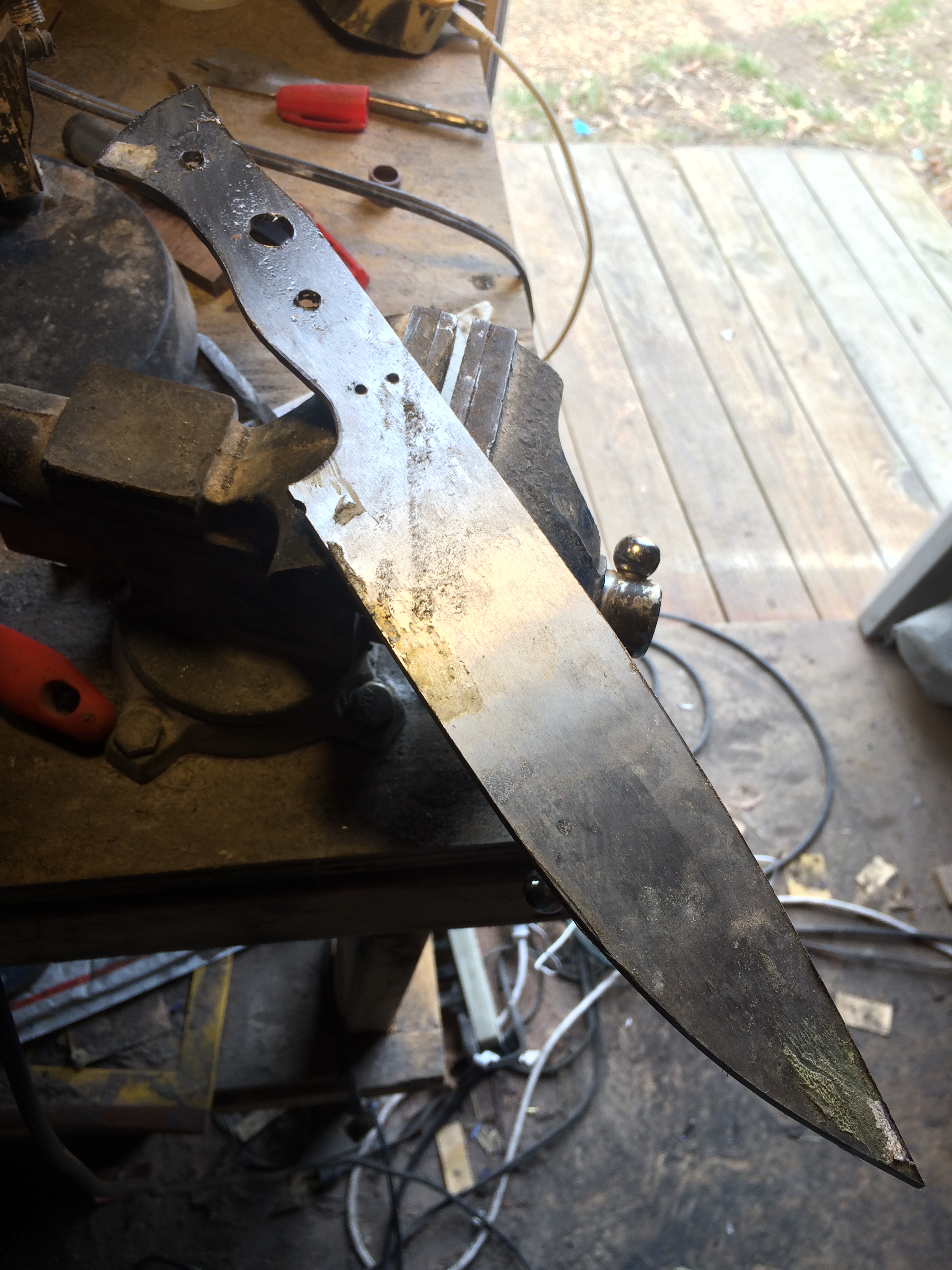
Hardening:

When metal gets very hot it likes to warp.  Here is a system for correcting that.  It has to be done while the blade is still hot:

Rough grinding:

Removing the machine marks:

Many hours later:

For the bolster, I made some material from an old corduroy shirt:

Layered and smashed together with fiberglass resin:

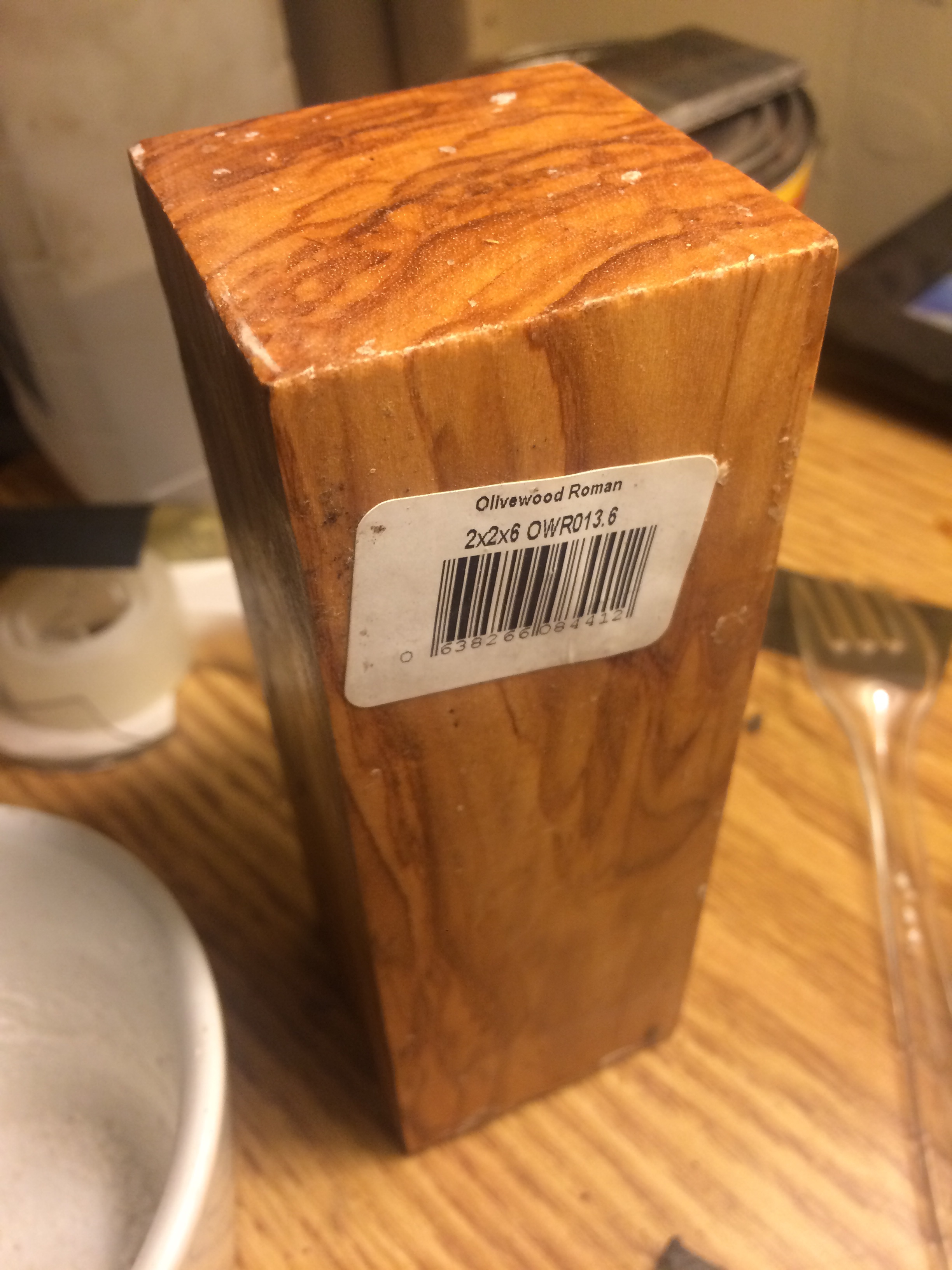
Olivewood:
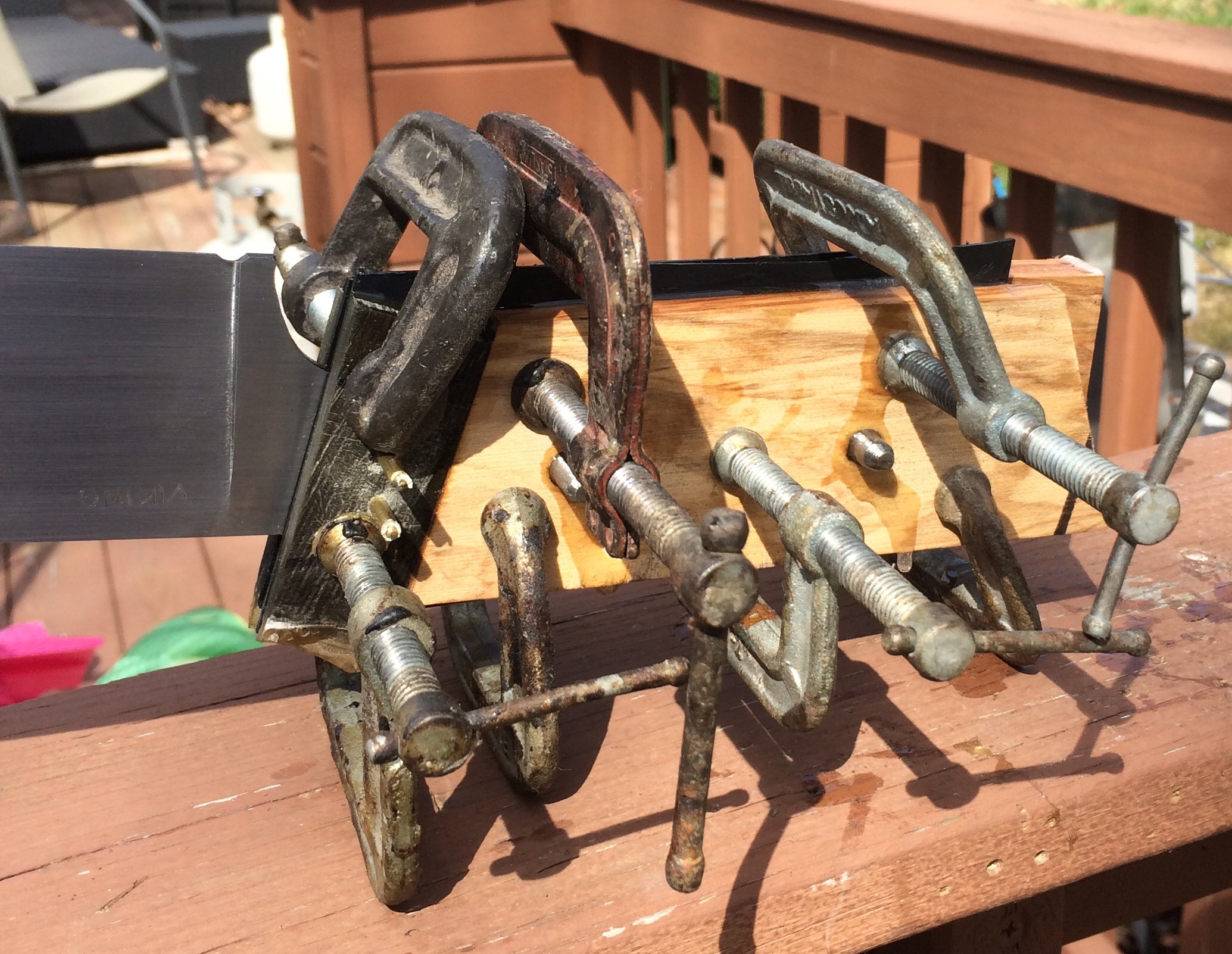
Fitting

Glued
La Famiglia:
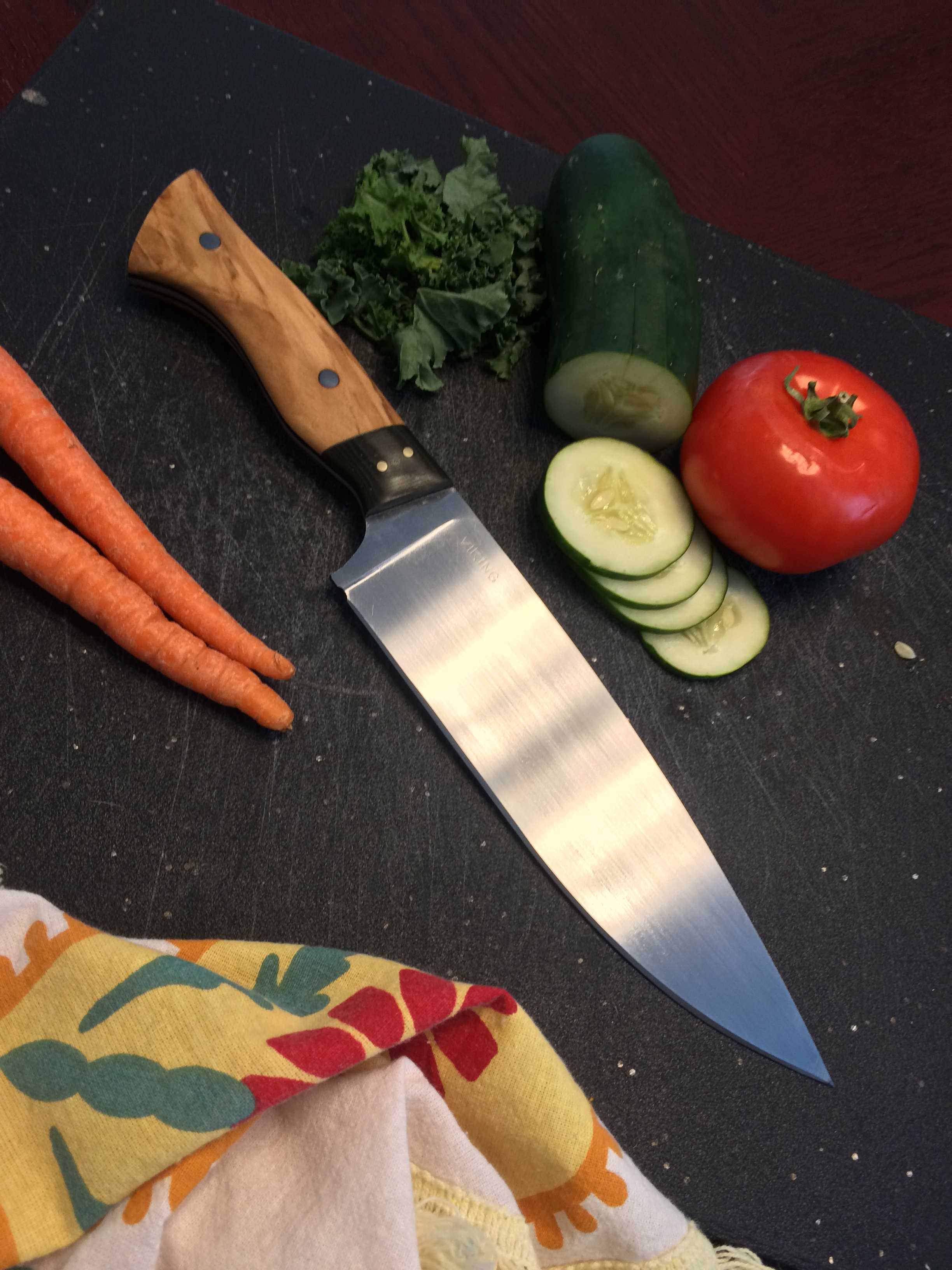
fami1

fami2

fami3

fami4