Knifemaking: the things that get in the way and the Arrow

“The way we do anything is the way we do everything.”

-Martha Beck

……..

“I guess I’ve been carrying many small things.”

-Mina Tindle- “To Carry Many Small Things”

When I was nineteen I started lifting weights.  I didn’t have a particular destination or goal.  The only real goal that was there was to lift as well or better than I had the day before.  I paid attention to form, technique, and consistency.  I got better as time went by.

Ritual was crucial.  I would allow myself to be very quiet.  I had a taken some dance classes in college and would do these really amazing spine-lengthening stretches.  After my workout I would take a shower, sit in the sauna for twenty minutes, and then leave.  I did all of this without speaking to anyone.  It was like going to church: still, prayerful, and introspective.

I never made notes or kept logs.  I made sure my routines and circuits were simple enough to remember day to day and week to week and so on.  I kept up with this for eleven, maybe twelve years.  When I felt good, I went to the gym.  When I felt bad, I went to the gym.

Then about two or three years ago I noticed I was having trouble finding those quiet and still places.  I had trouble getting to the gym and staying present with what I was doing.  Actually I had trouble staying present in nearly all the things I was trying to do.  I wasn’t sure what to do.  I went to the doctor, got blood work done.  I talked to a therapist.  I was healthy.

My girlfriend noticed this, and put me in touch with a lady she had been studying with.  She said I was probably missing a physical practice and since the gym wasn’t in the picture anymore I should at least talk to this lady, who was in the practice of Ashtanga yoga.  I had watched her take a course of study from this woman to help her heal from a hip injury.  She was calmer, glowier, and looked fantastic with a sort of shimmer about her.  Ok, I finally said, I’ll give her a shout.

I made an appointment with this lady and we talked about what it was to practice yoga.  Her name is Leigh.  She told me that in this practice, if practiced diligently, transformation would occur.  She said that I would notice unpleasant things rise to the surface.  Things would fall away, she said, and those would mostly be the things that got in the way: bad habits, patterns of self-sabotage, and bad attitudes- the fun things. Afterwards I told my girlfriend that if I turned into some sort of New Age asshole who extolled the virtues of kale and hashtagged ‘namaste’, I would prefer she shoot me, bury me in the backyard, and tell everyone I left her.

(Quite a few months later I would find myself in front of a salad bar at a hillbilly barbecue buffet in North Carolina, and I would notice that my first thought was ‘where the fuck is the baby kale?’  My second thought had something to do with being shocked that my first thought was about kale…).

I started meeting with Leigh about every month or so and she was right.  Things DID fall away.  I found myself becoming very protective of my sleep and rest.  I started eating better and found myself desiring fruits and vegetables, which is something completely new.   I stopped going out and I didn’t miss it at all.  I leaned into life a little more.

Then I noticed all the small things I had been carrying.  In Ashtanga, I found that almost everything I didn’t like about myself was held out and dangled in front of my face whenever I was on the mat and often culminated in tears.  I wasn’t aware of all the prickly bits I carry around on an almost daily basis: guilt, shame, resentment, rage, and impulsivity.  I’ve always heard from my friends about how relaxing and grounding yoga was for them.  I have not had that experience.  I sobbed uncontrollably during the first week I started.  I wasn’t nearly as patient as I thought I was, and definitely more judgmental than I ever believed.  Sometimes I find I am so present with myself that it hurts.  Unlike the gym, there is no rush of endorphins for me.  I end with everything I start with and honestly, it really sucks sometimes.

This sounds like a ringing endorsement and you’re probably asking yourself “where do I sign up?”

The truth is that this is a practice that helps you to know yourself, all of yourself, and that is usually going to be painful.  The growth and transformation happens when you find the pain isn’t going to kill you (although sometimes you wish it would).  The idea is not to make the uncomfortable things go away- they aren’t going to.  It’s to create a space to be with them and to go about your life in spite of being uncomfortable.

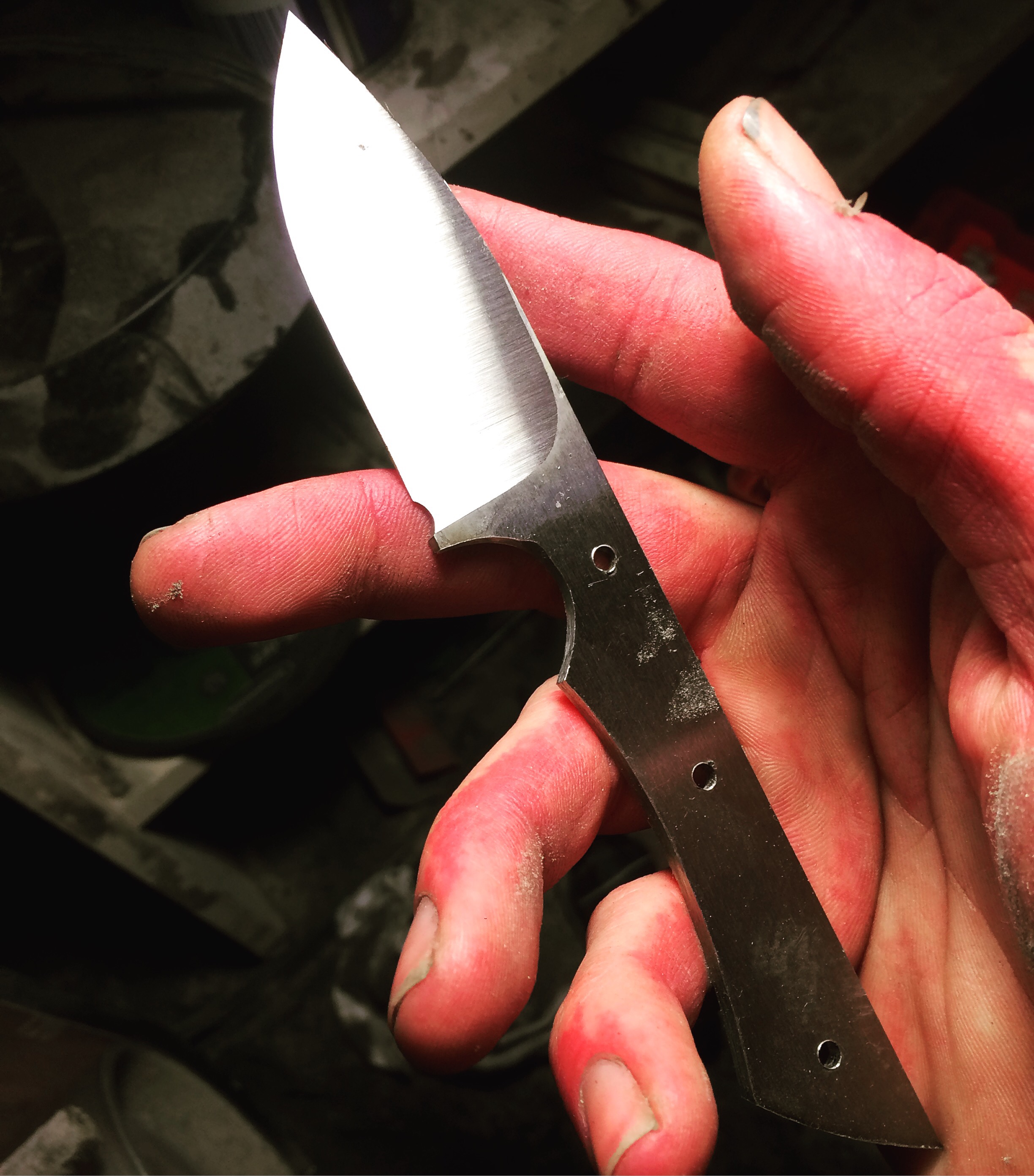
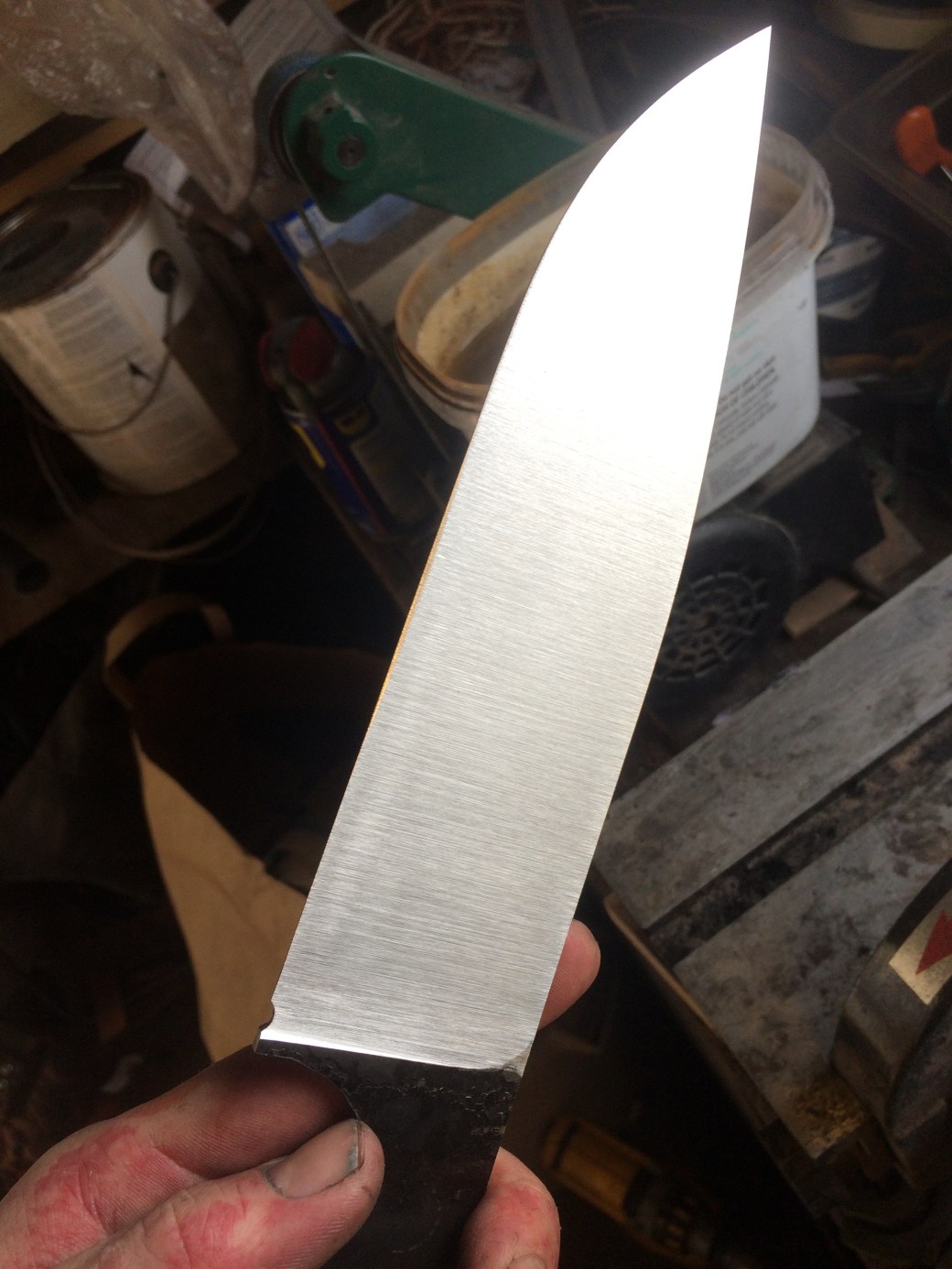
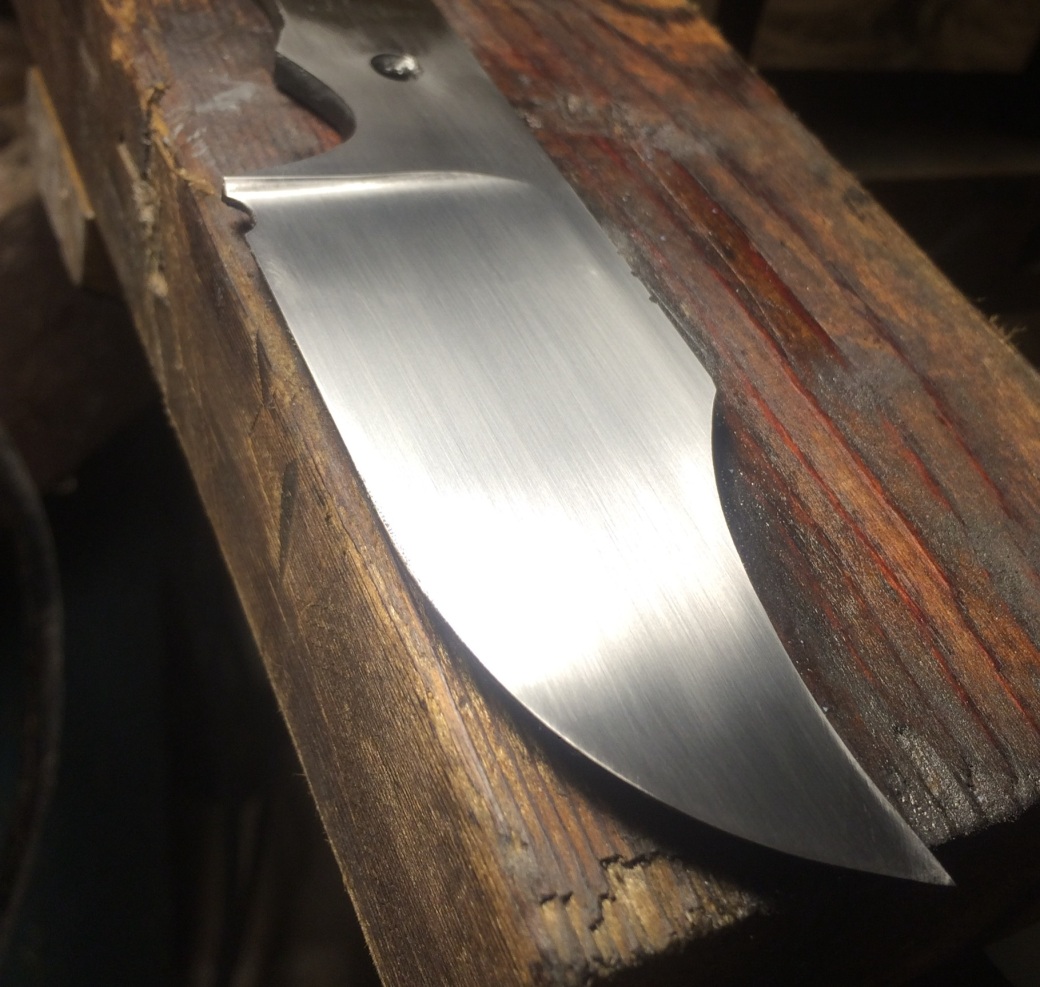
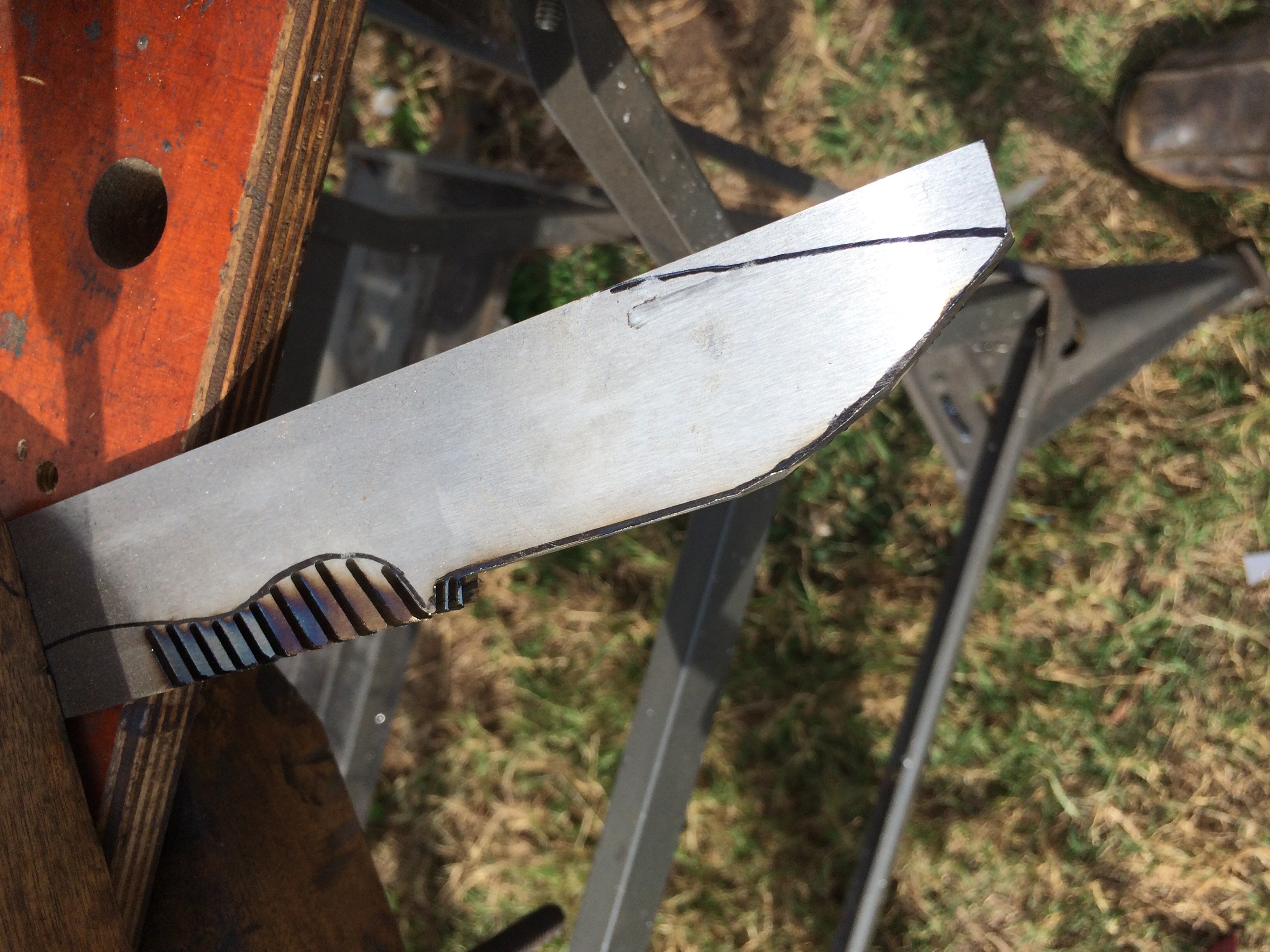
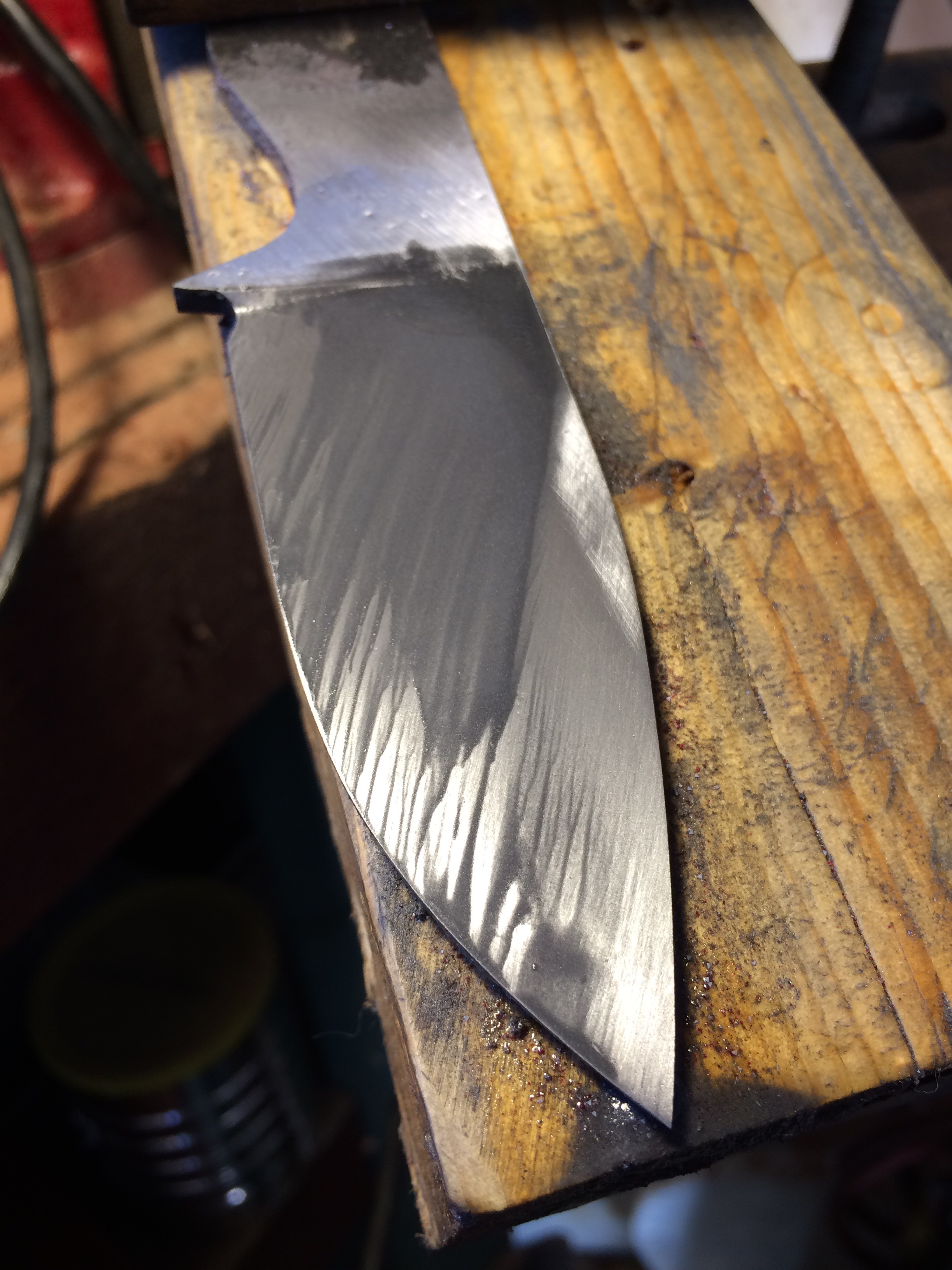
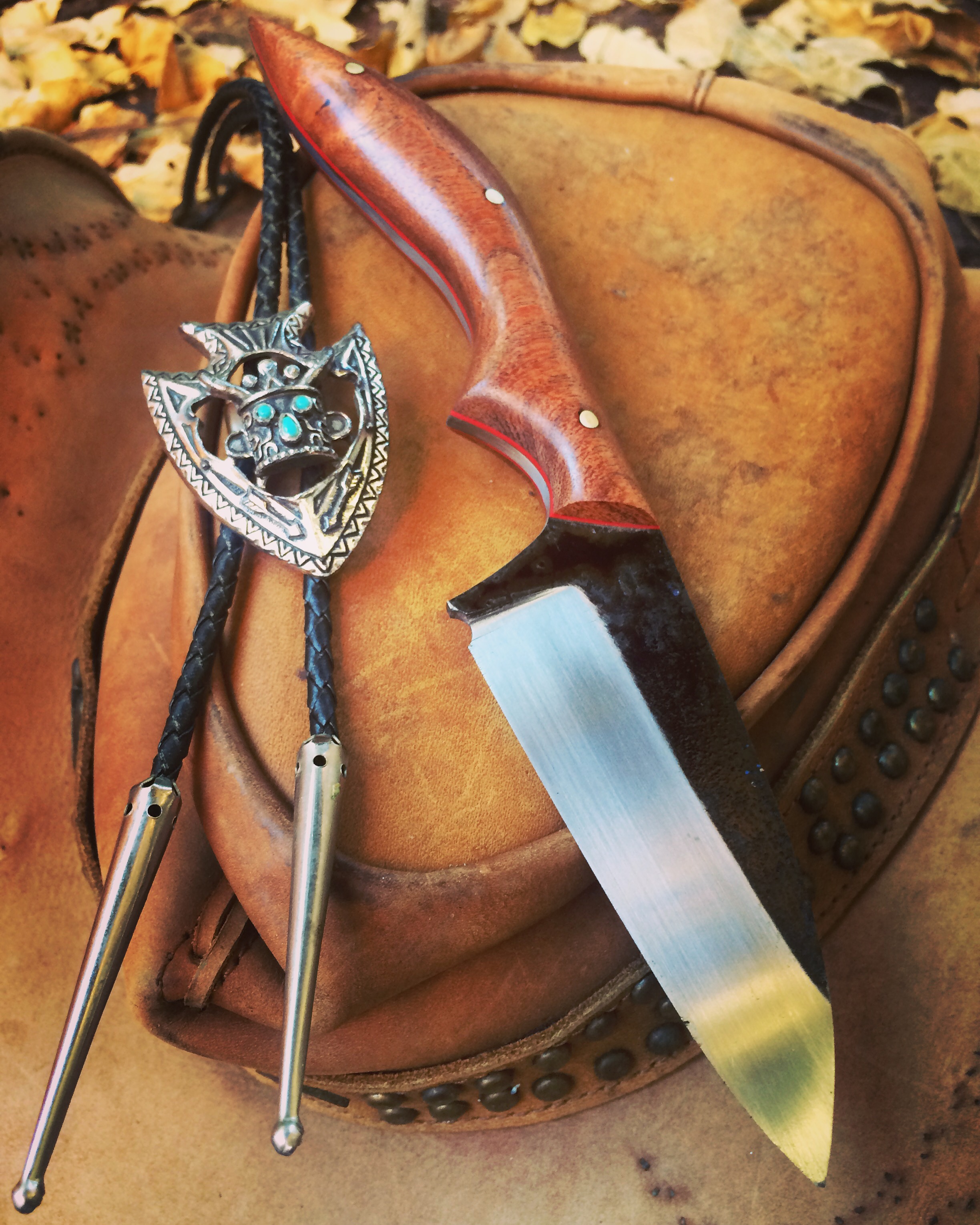
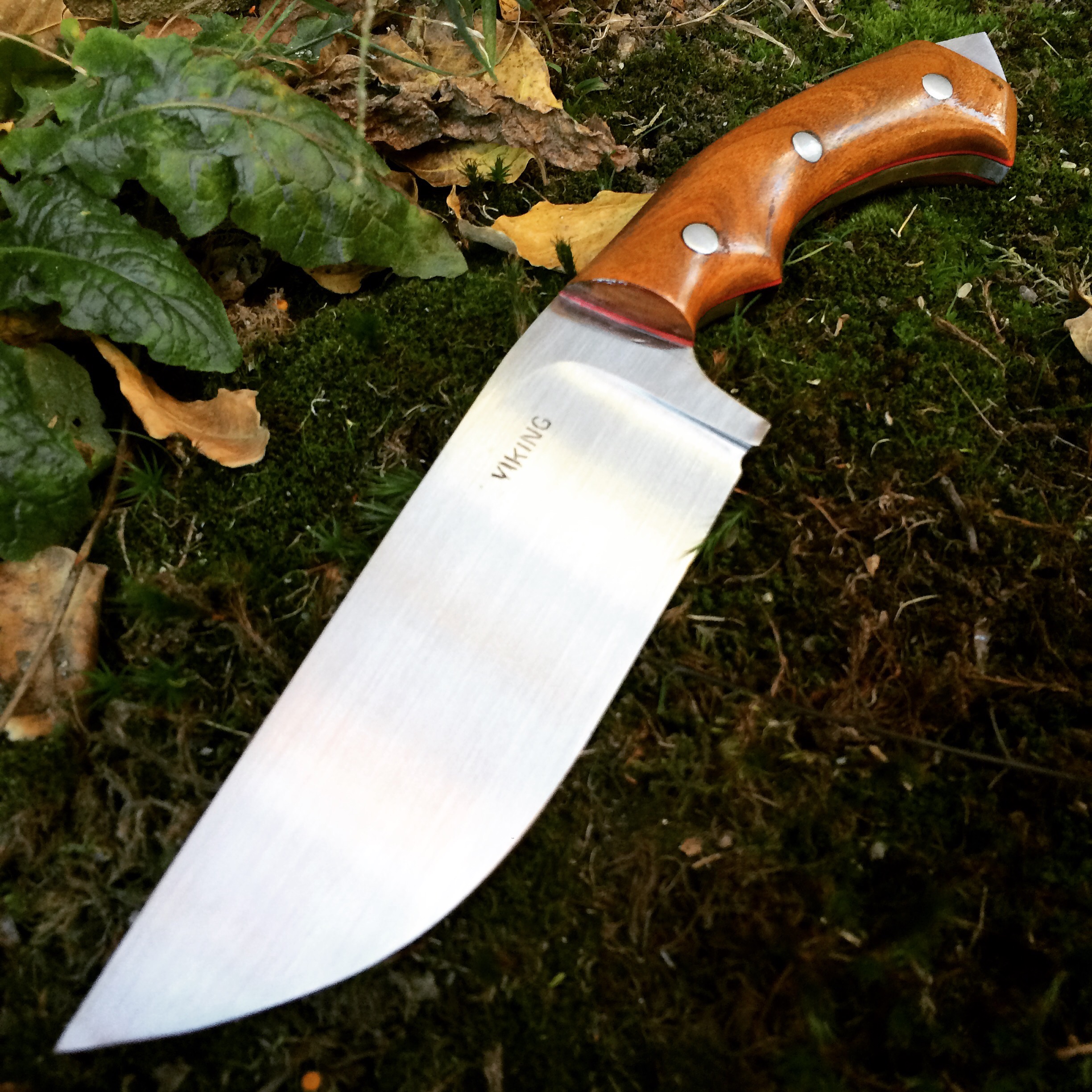
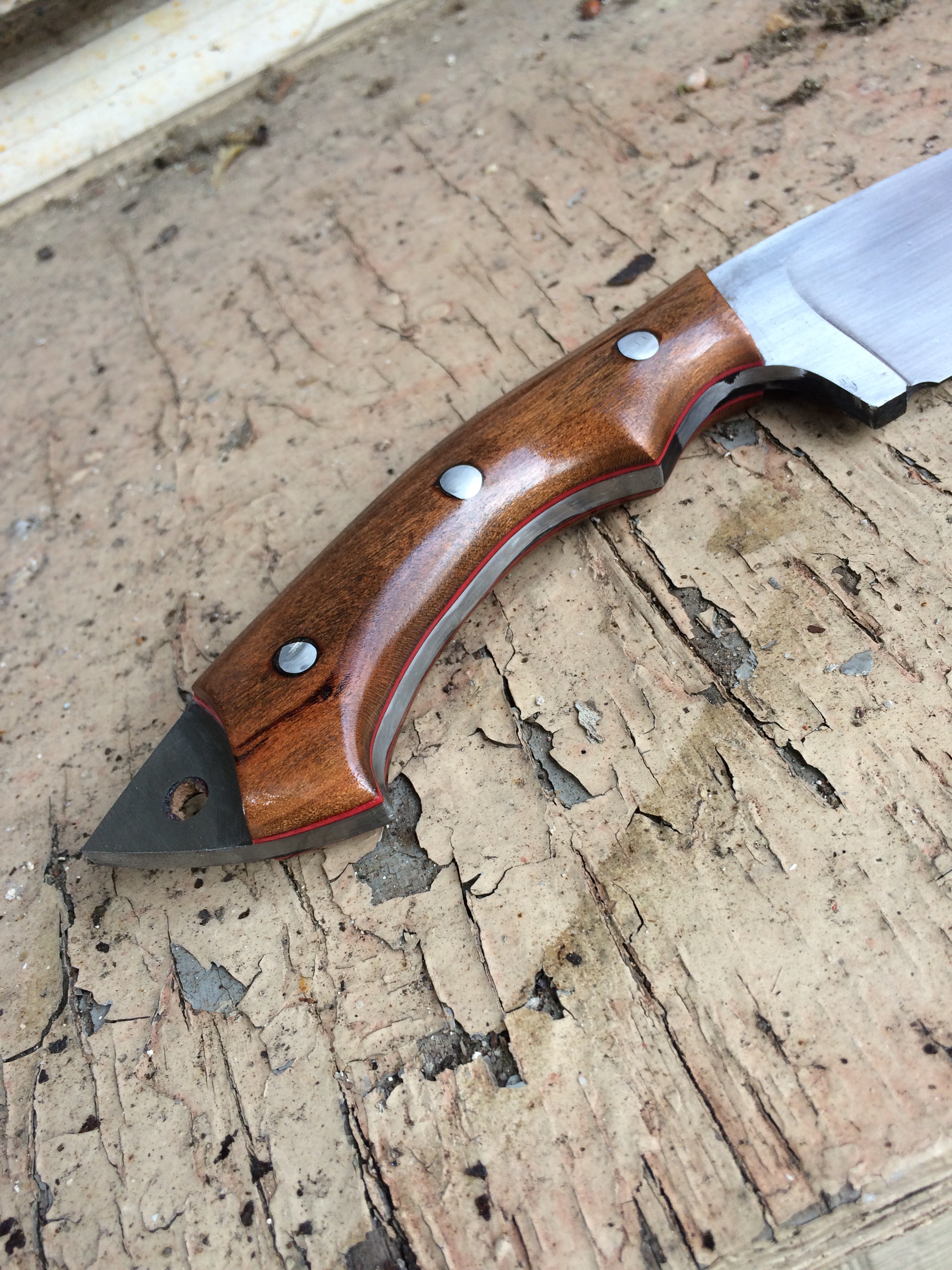
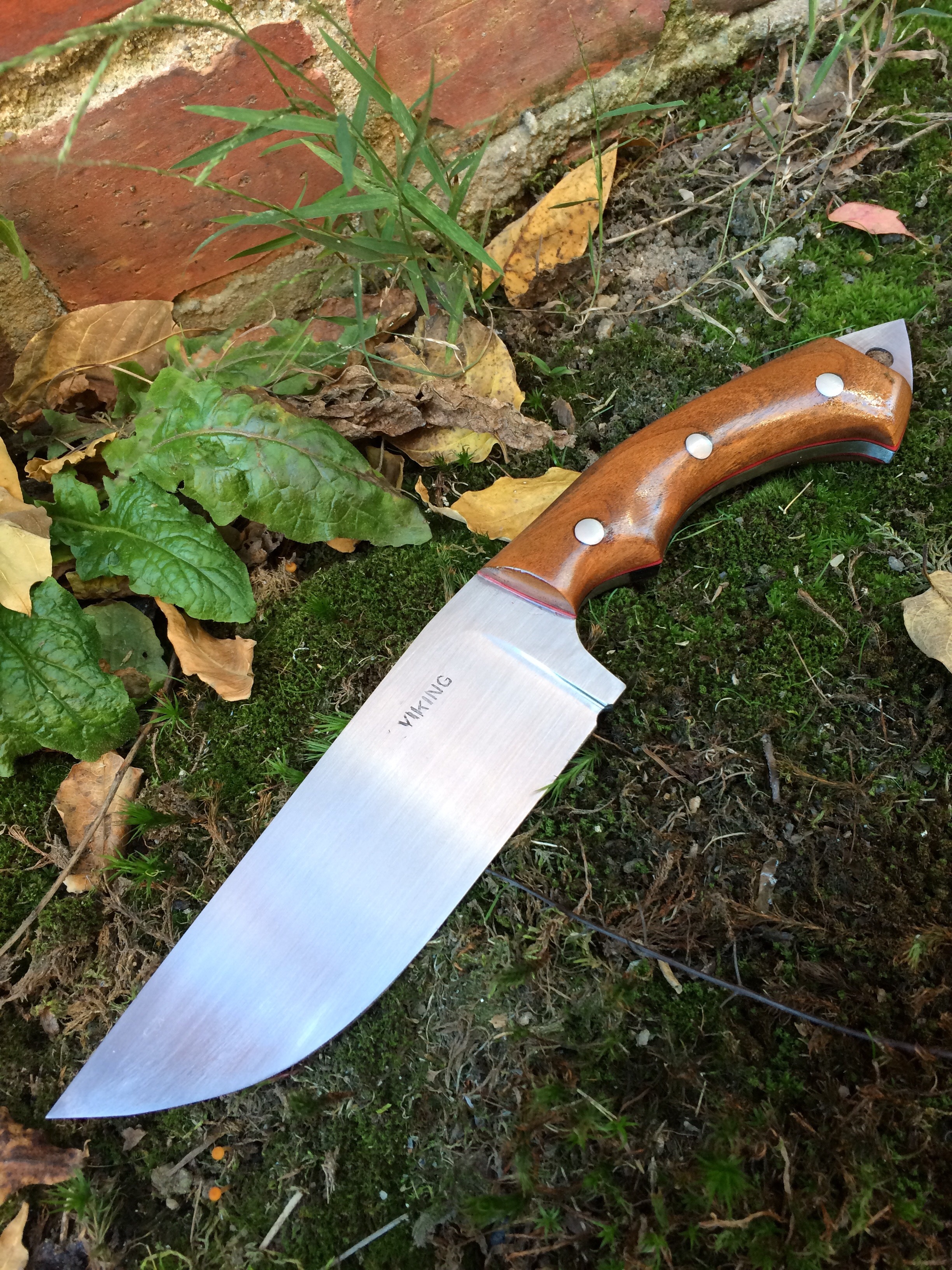
This blade was a commission for Leigh, from her husband.  Both of them are incredibly loving and kind and supportive people.  Leigh herself is an arrow, piercing those things that get in the way and always doing so with love and encouragement.  She has become a very dear friend and making this knife was a pleasure.

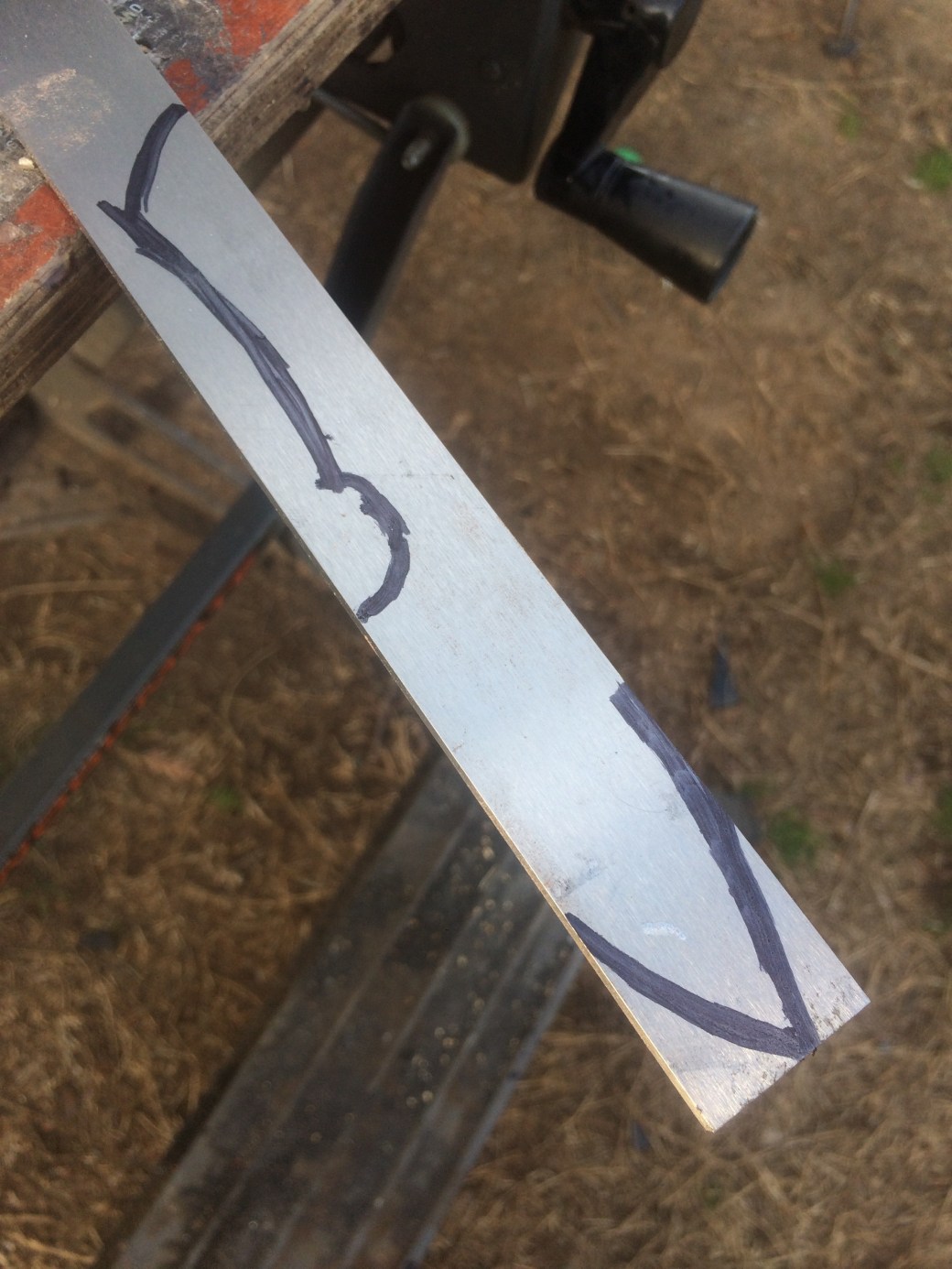
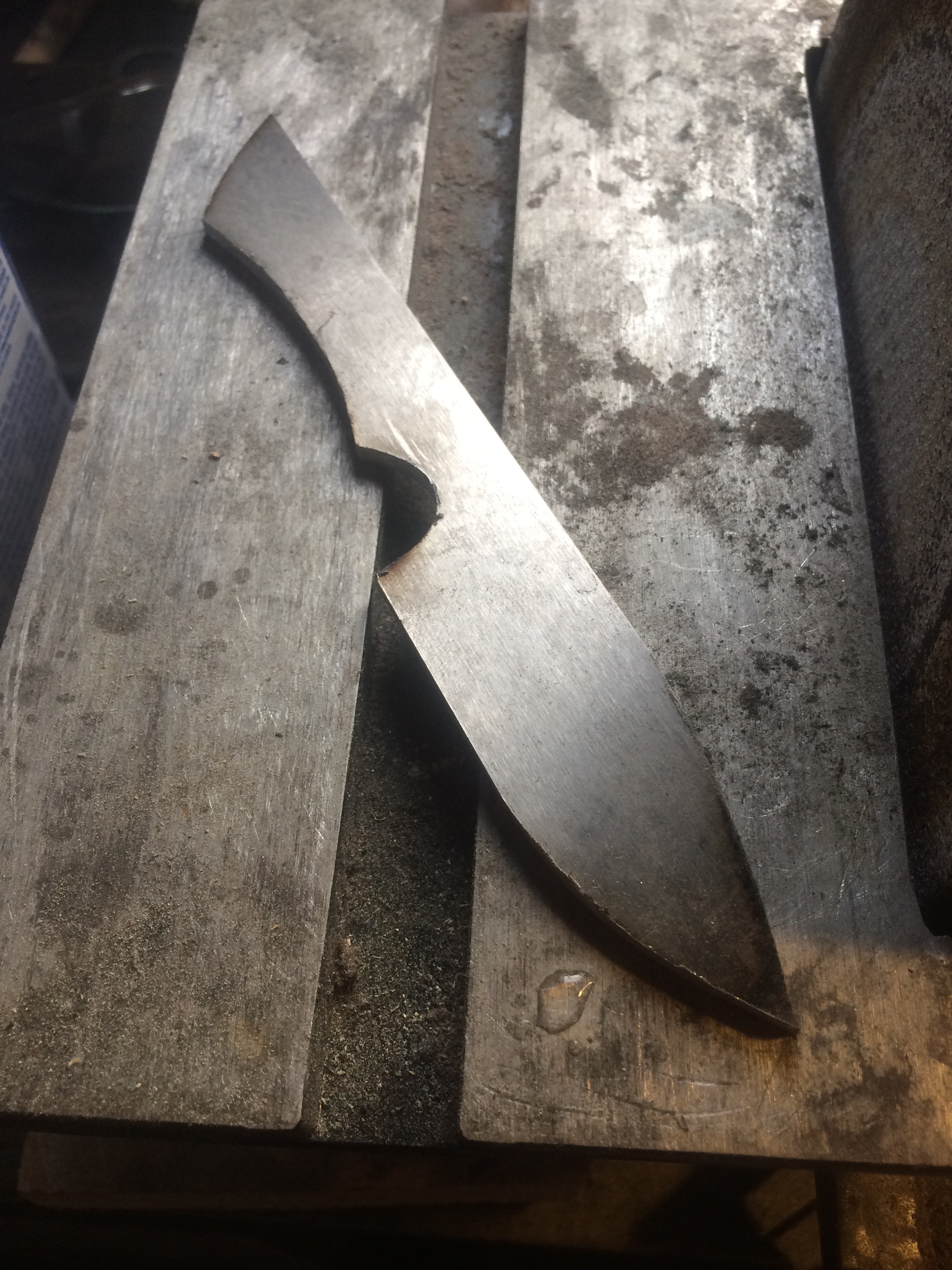
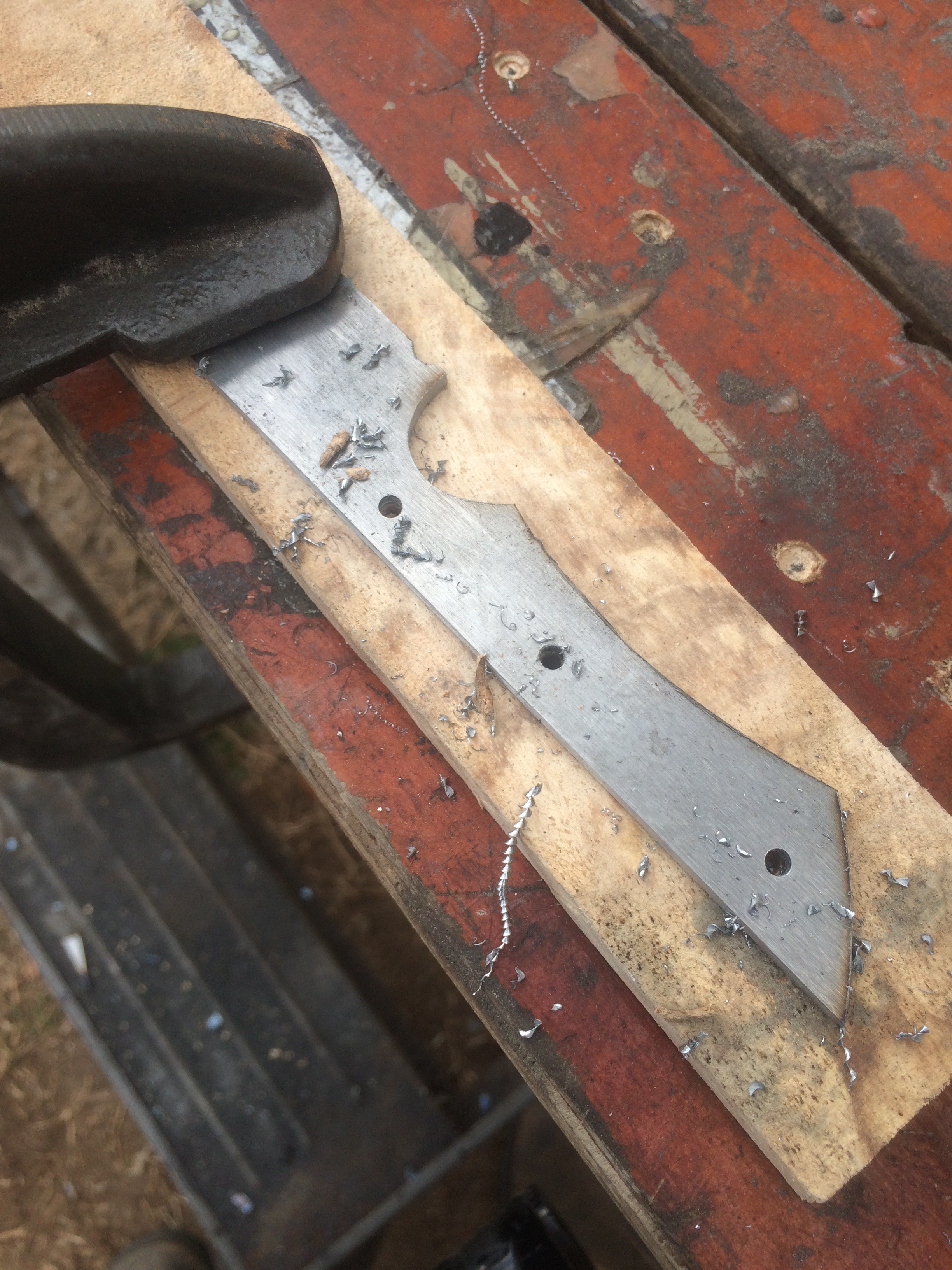
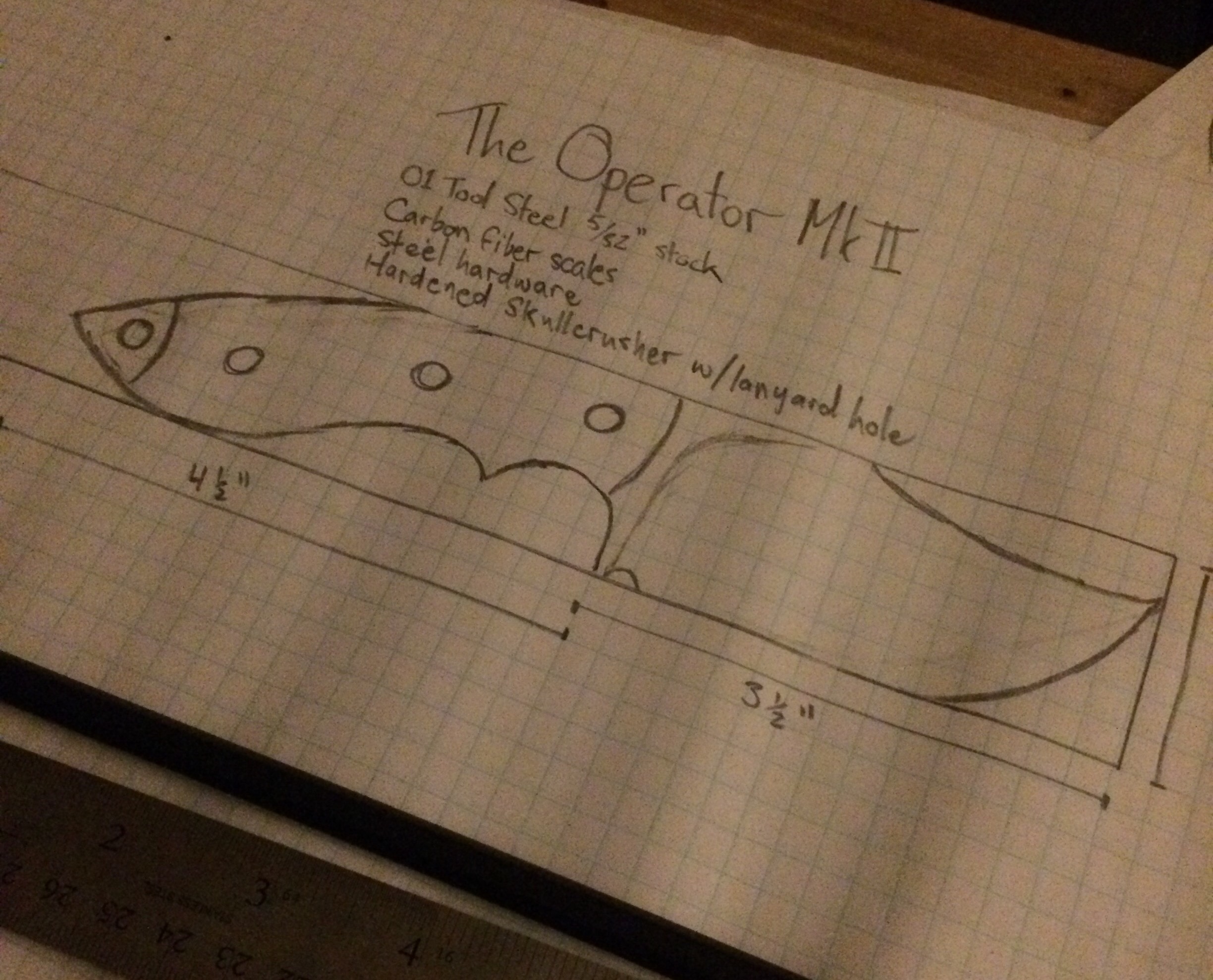
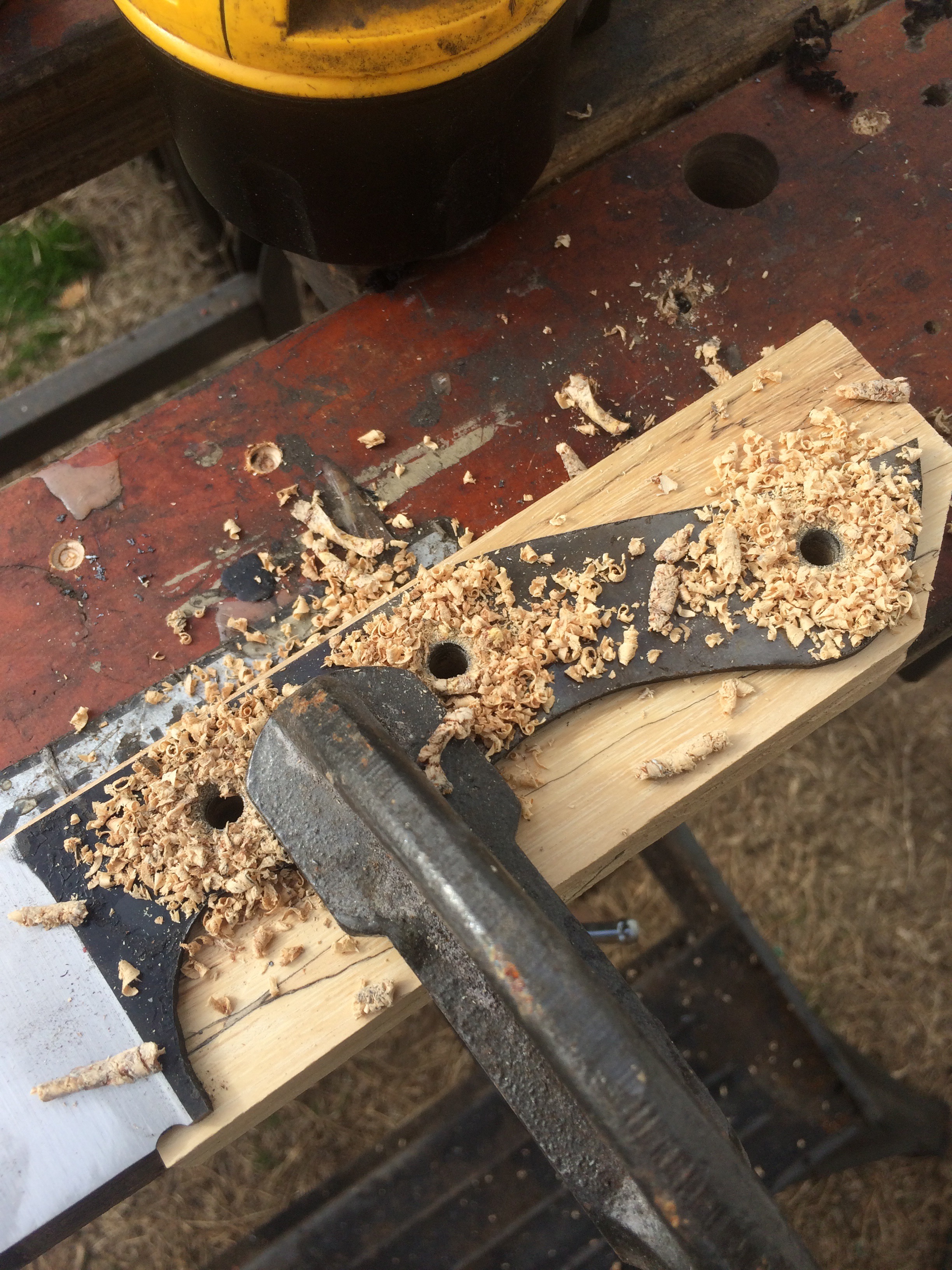
I designed this knife for whittling.  She is built for a smaller hand:

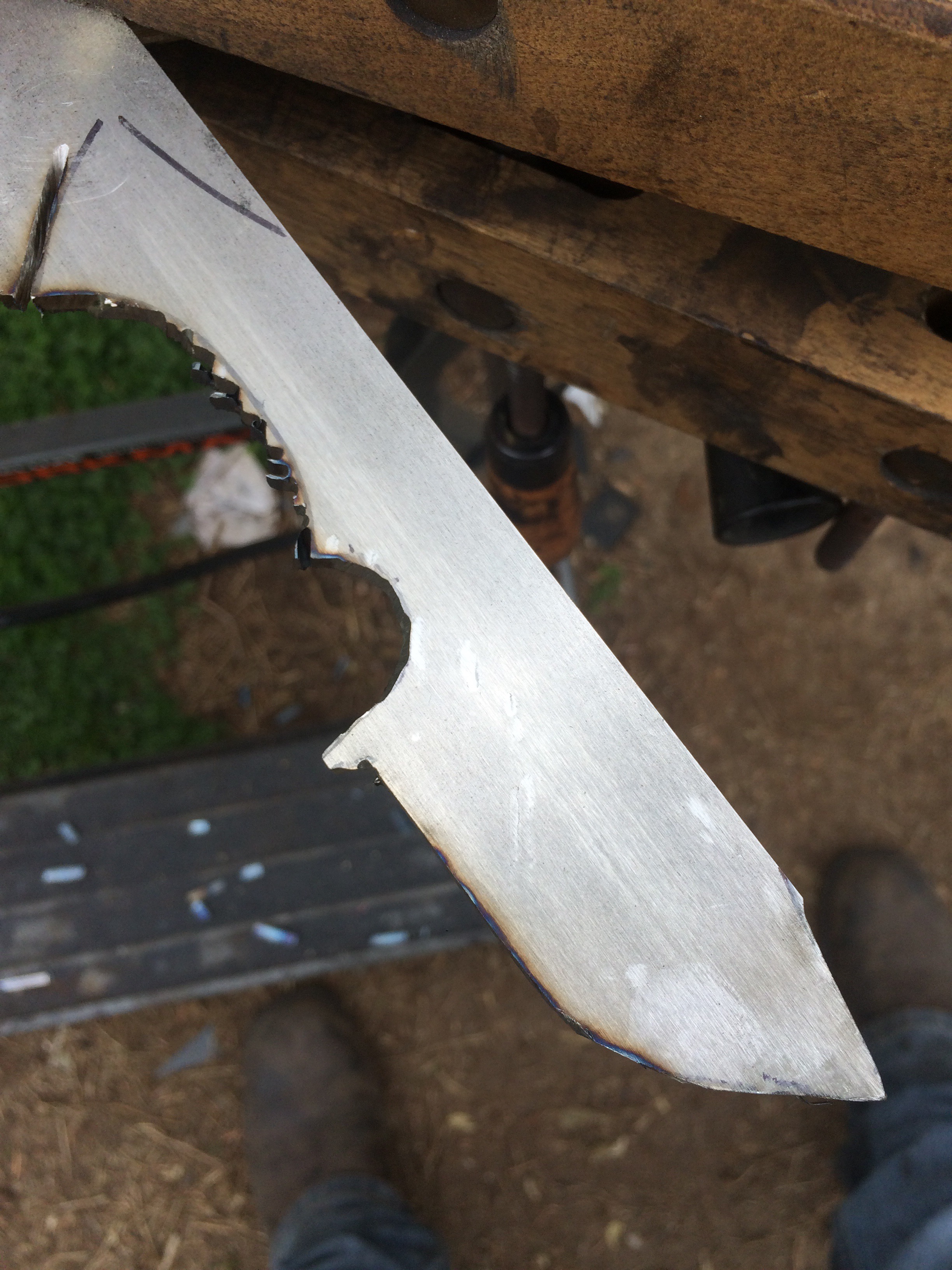
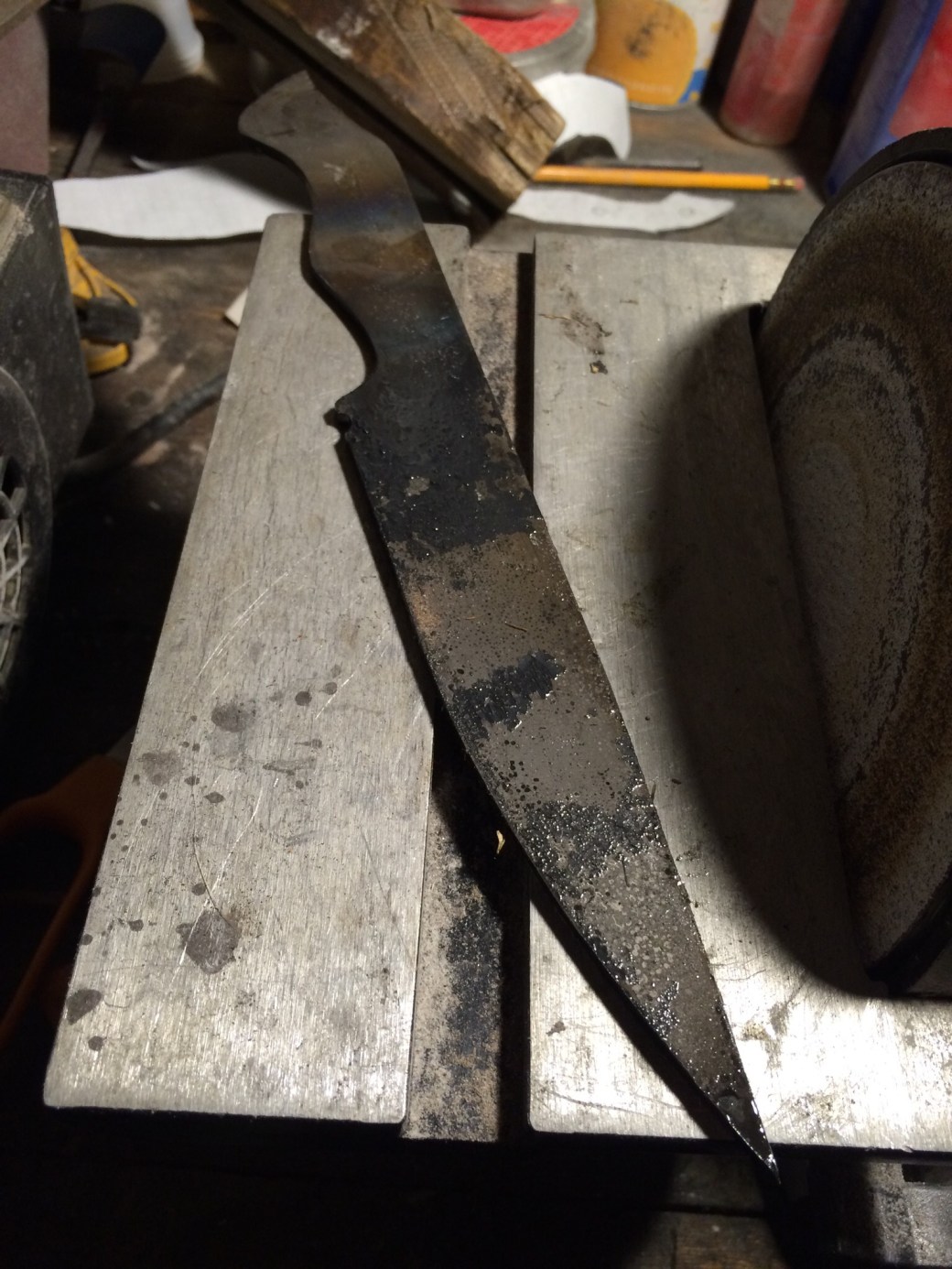
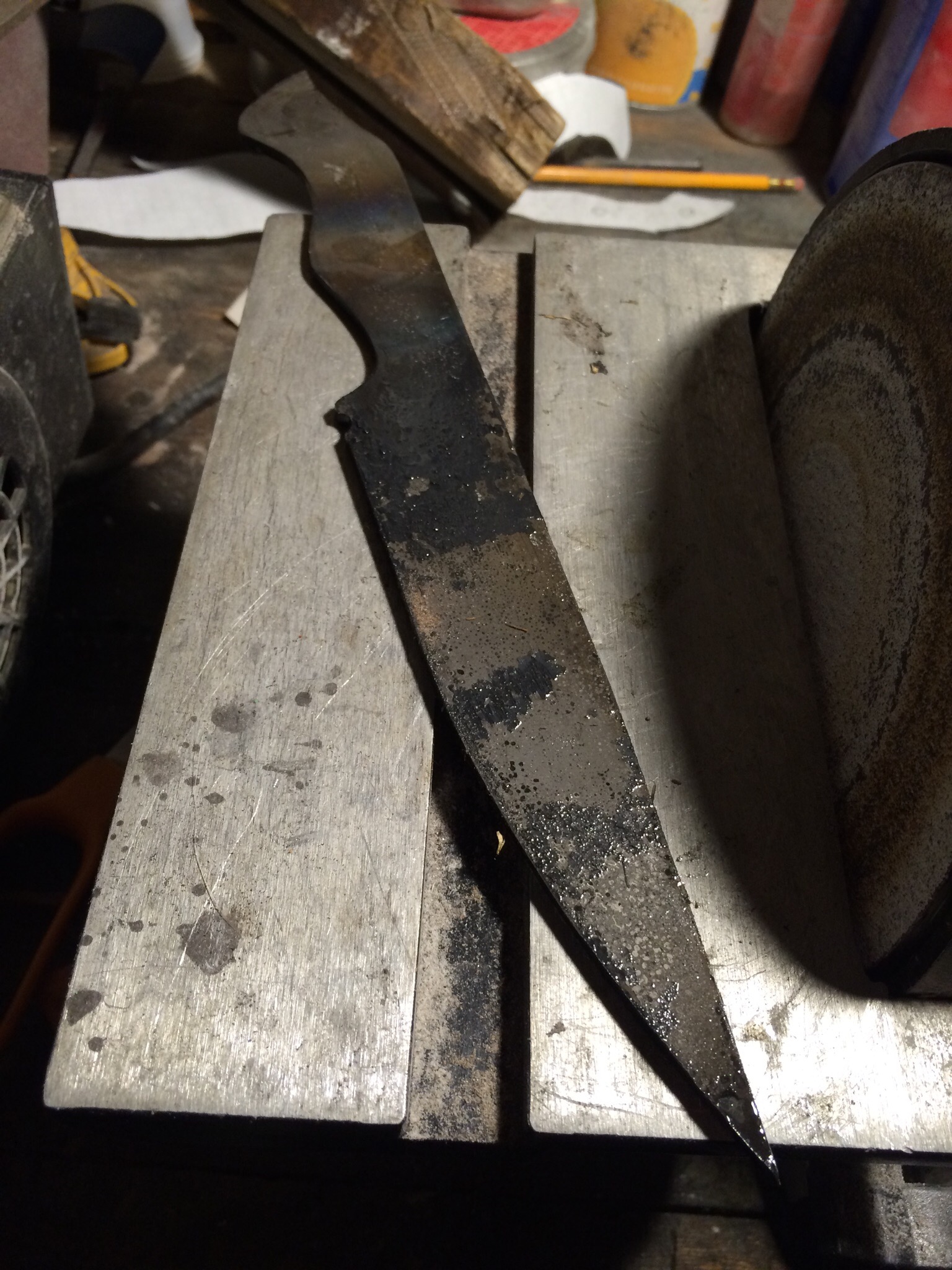
Rough cut, from O1 tool steel stock:
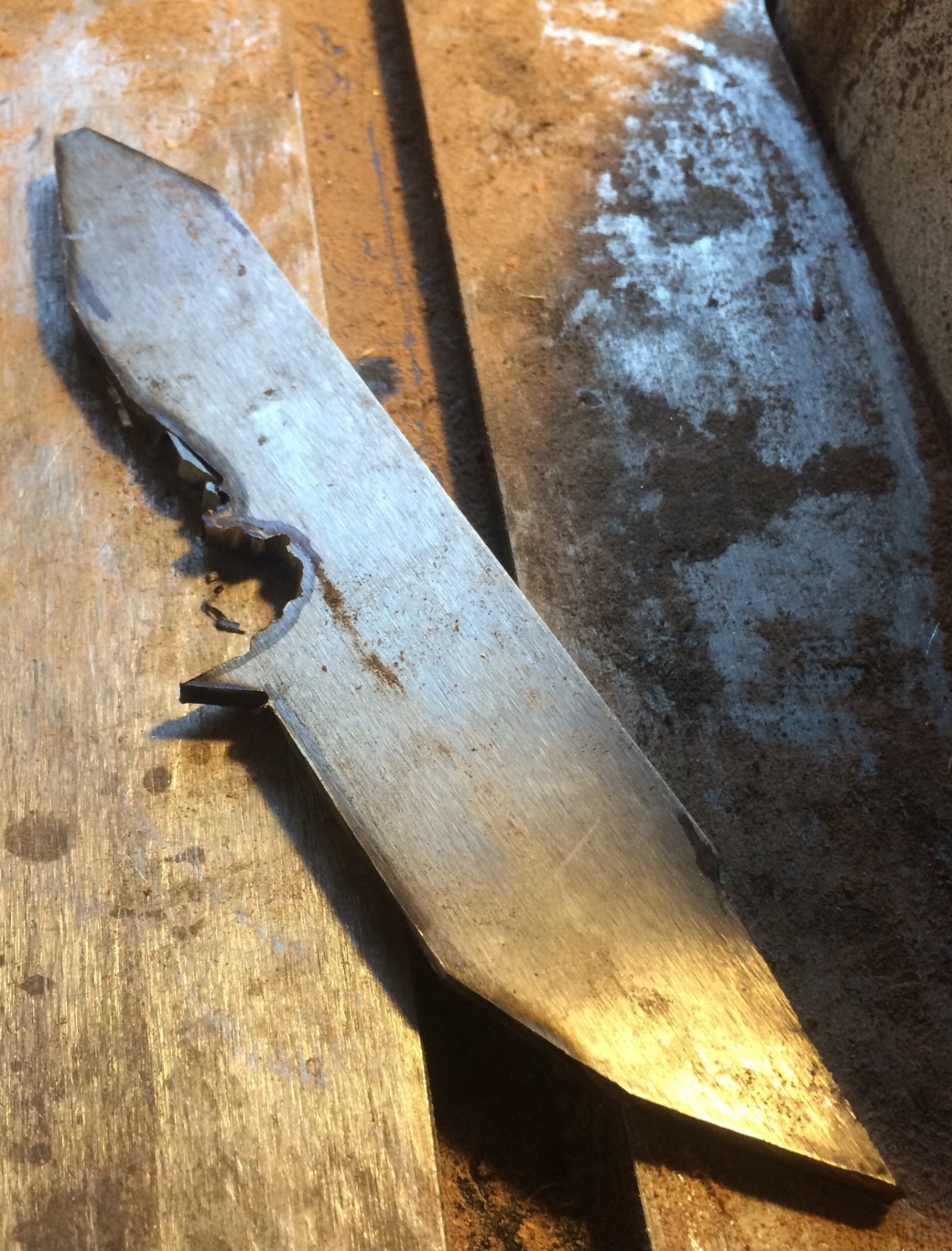
Smoothed out:

Centerline scribed:
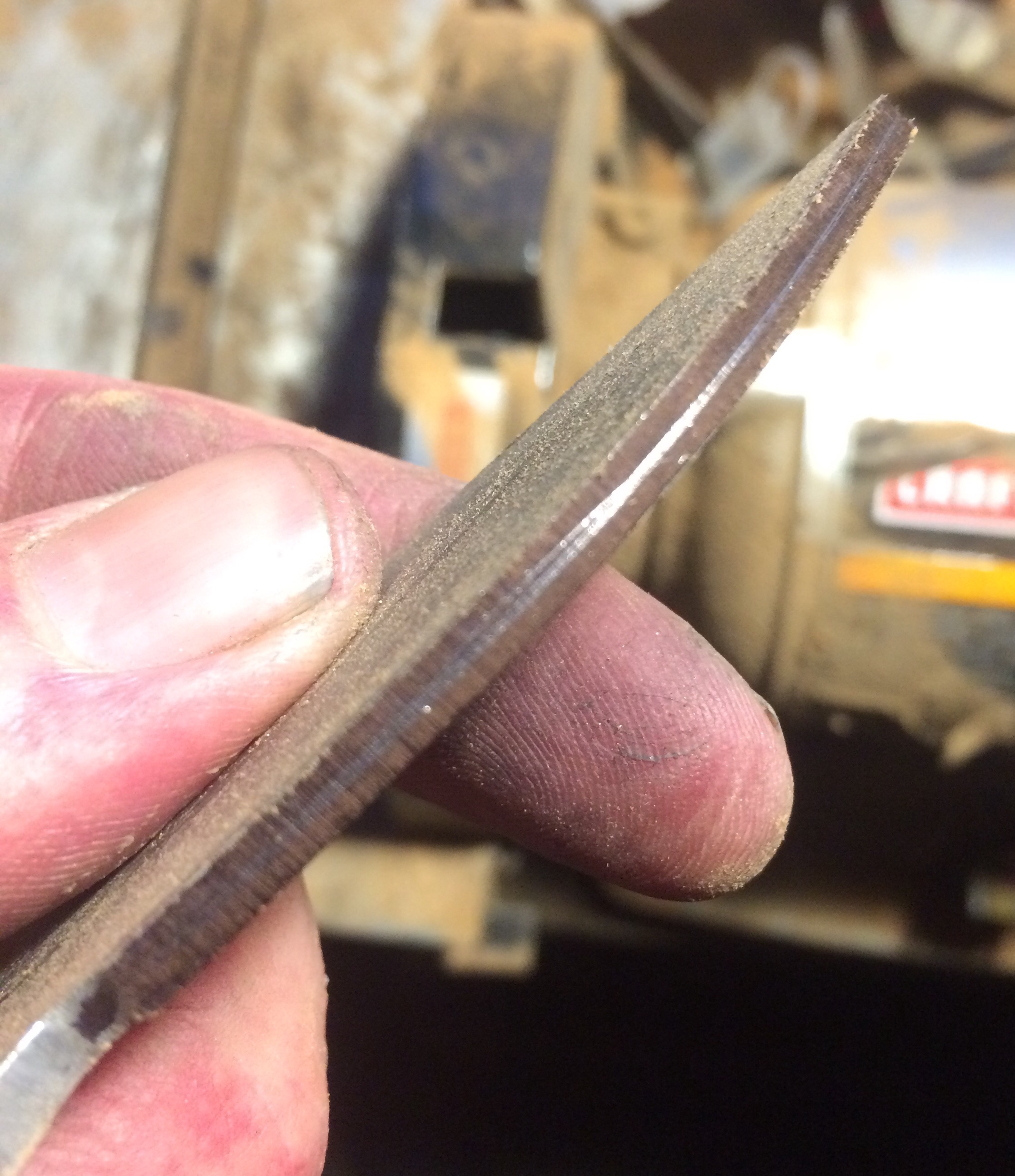
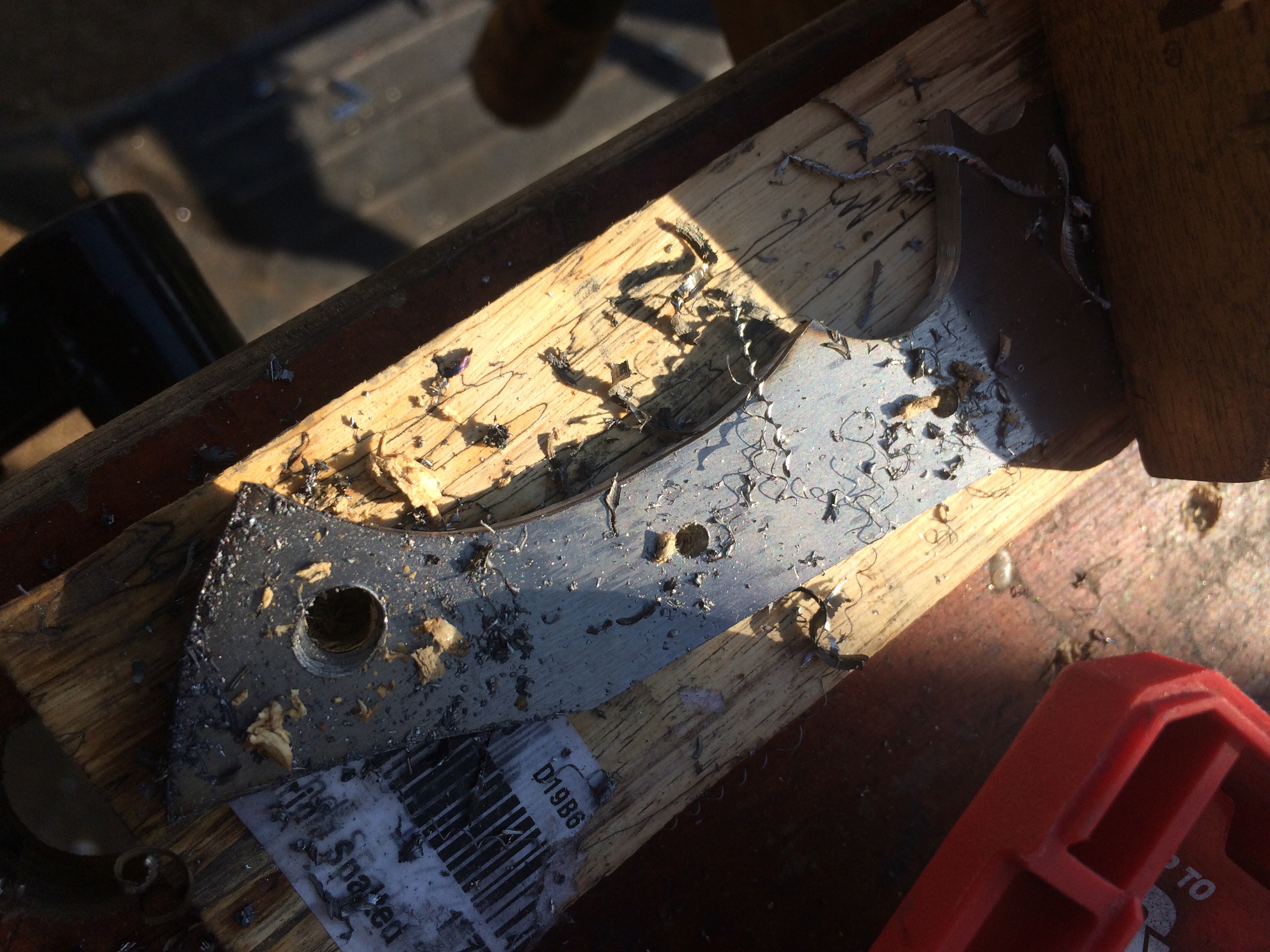
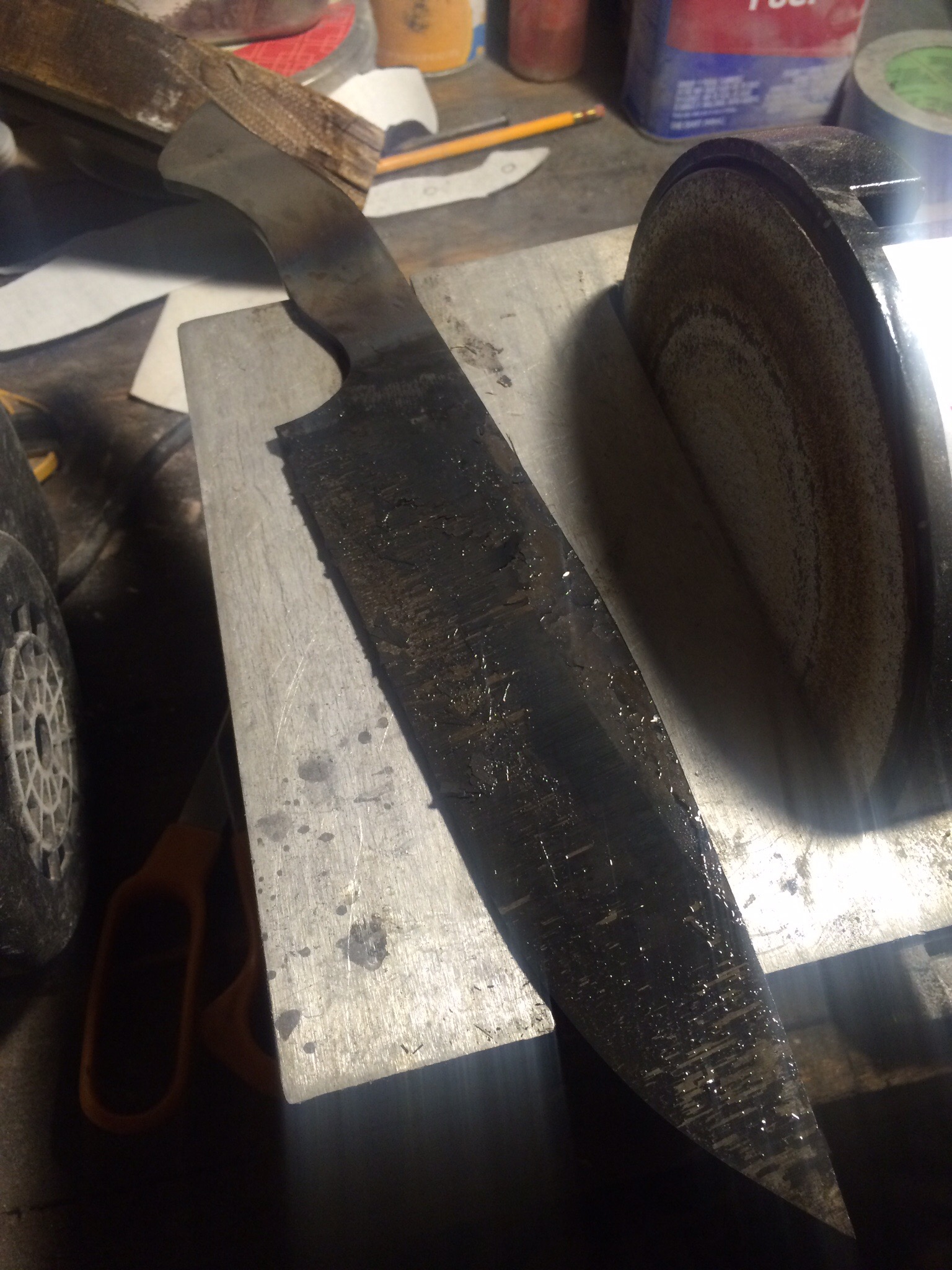
Rough grinding:

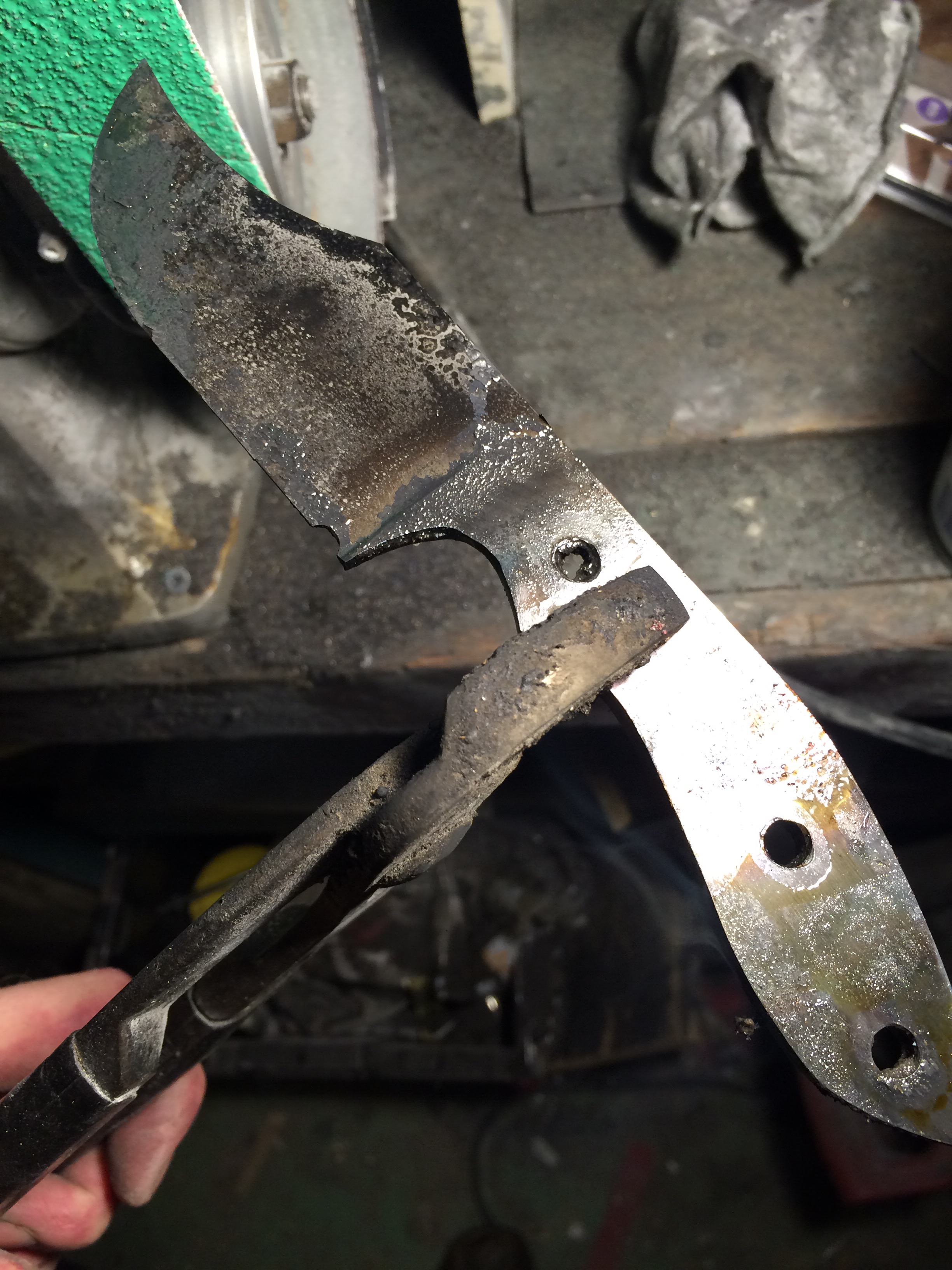
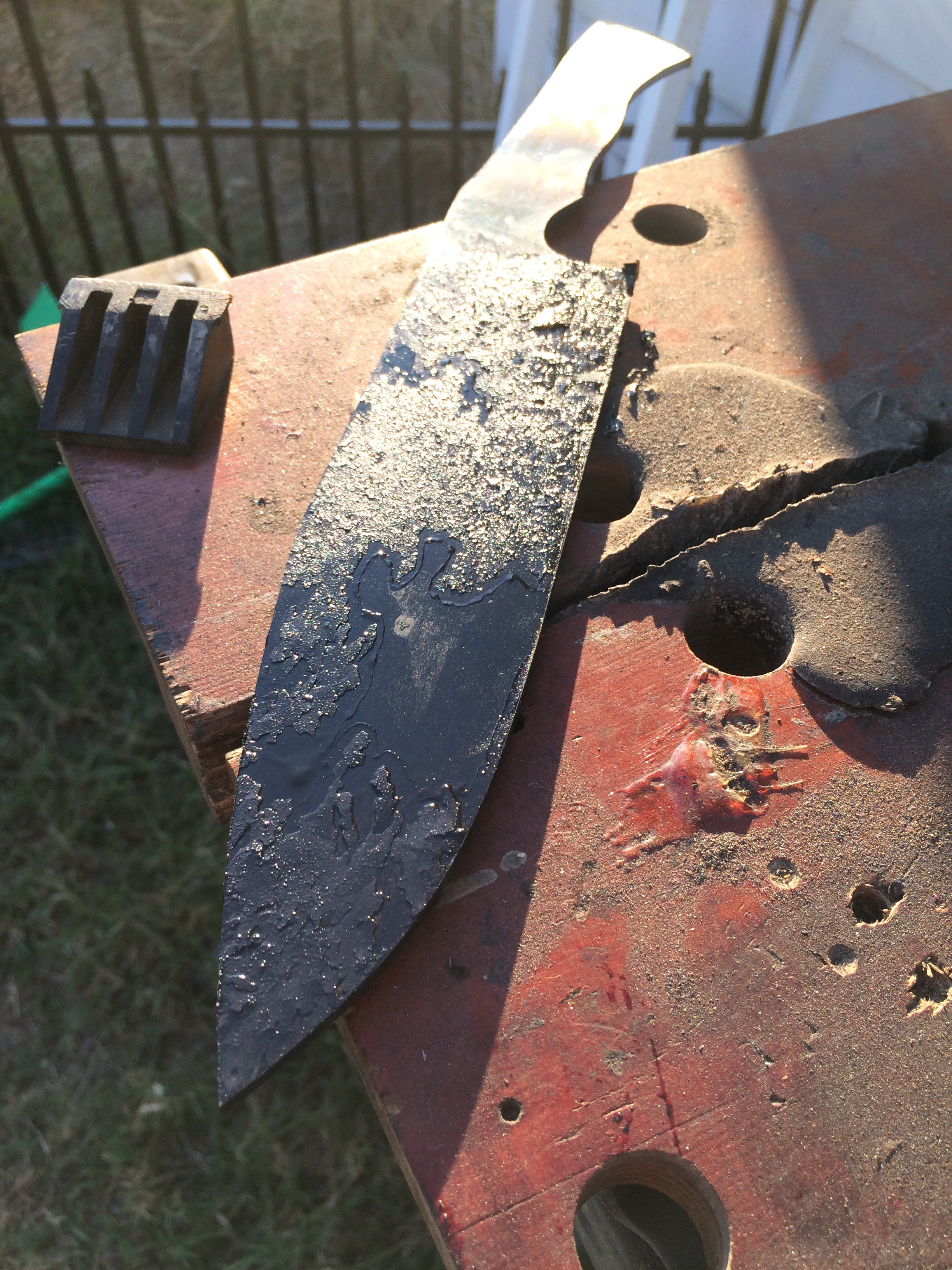
Hardening:

Tempered:

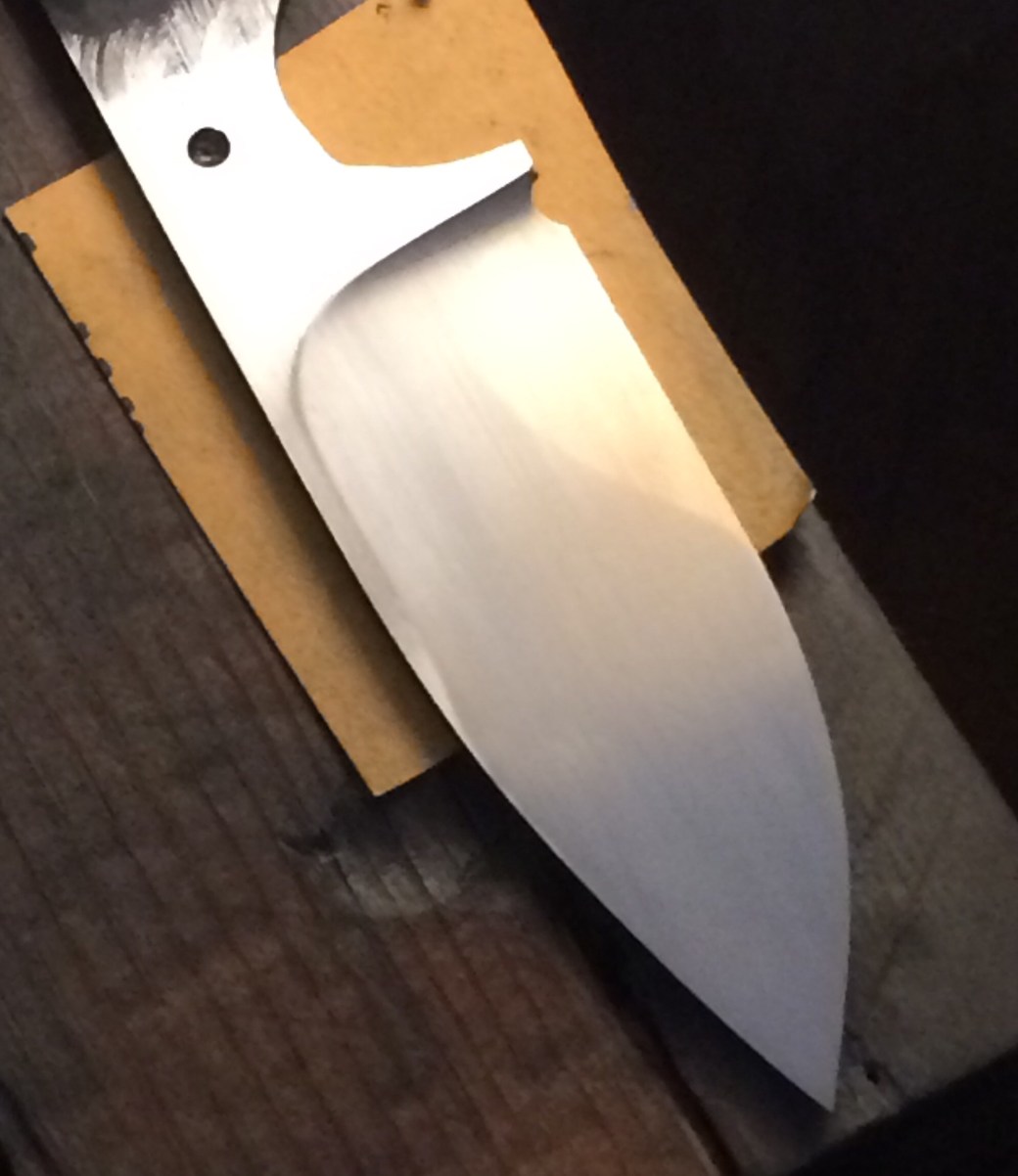
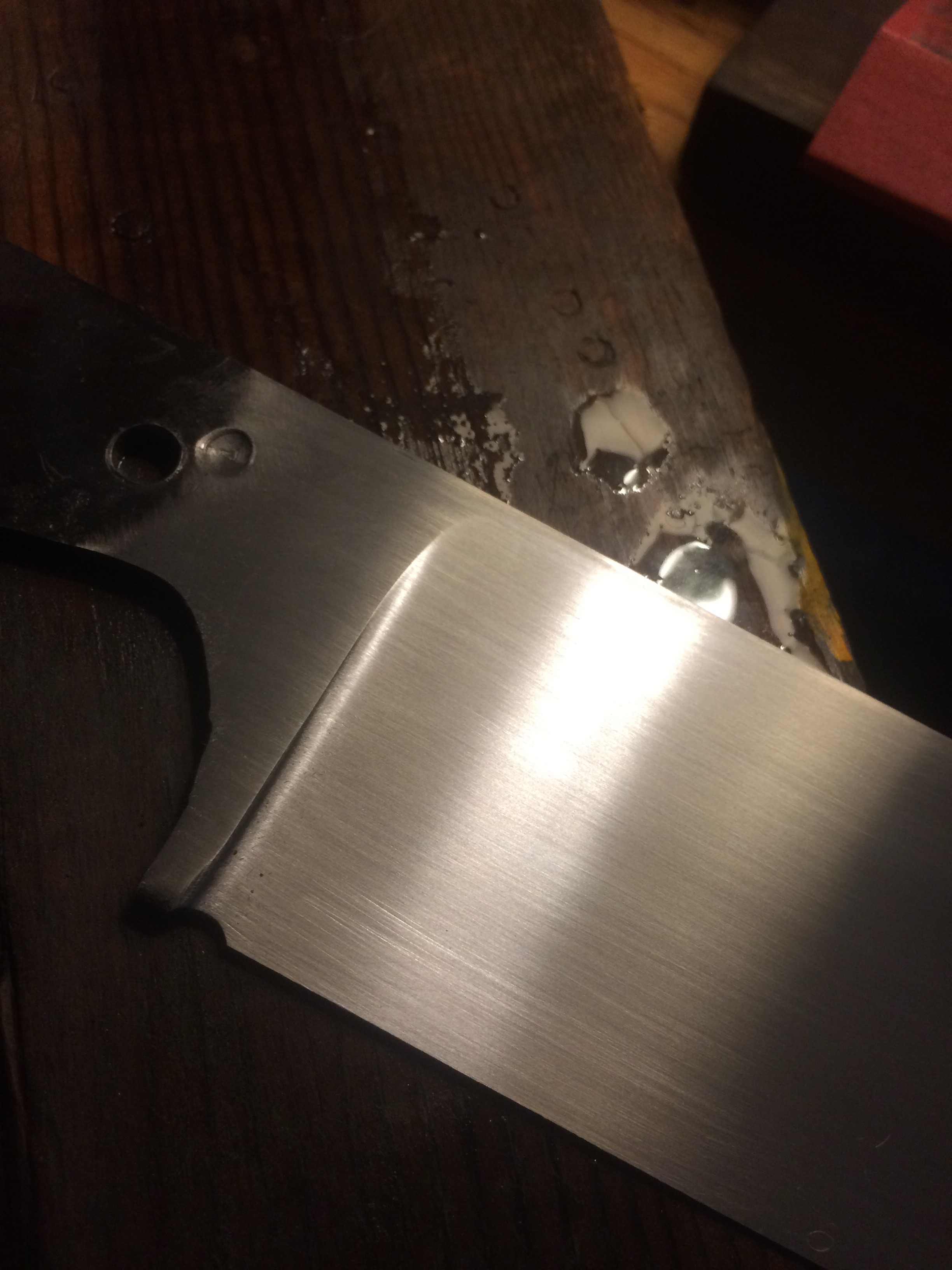
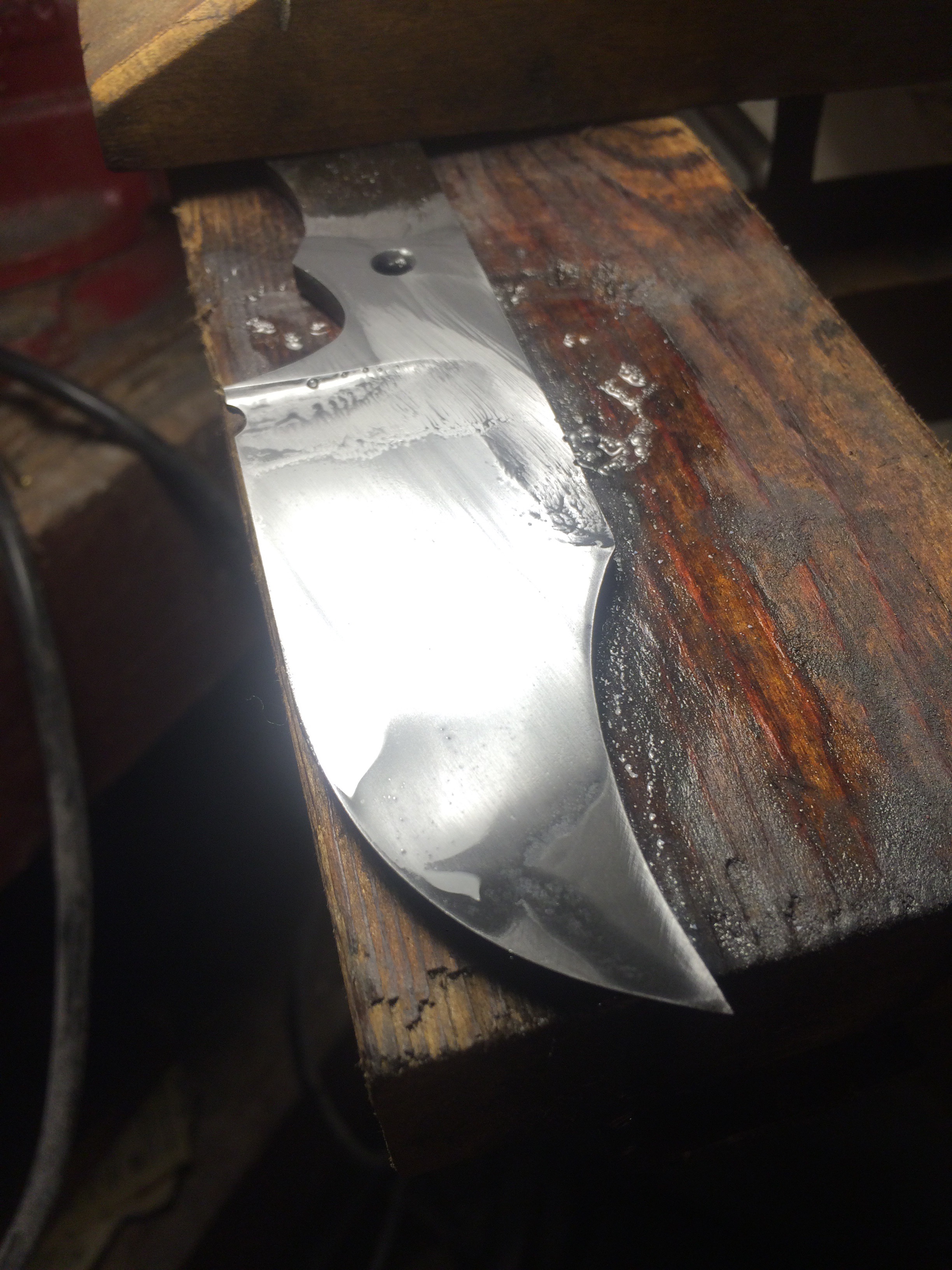
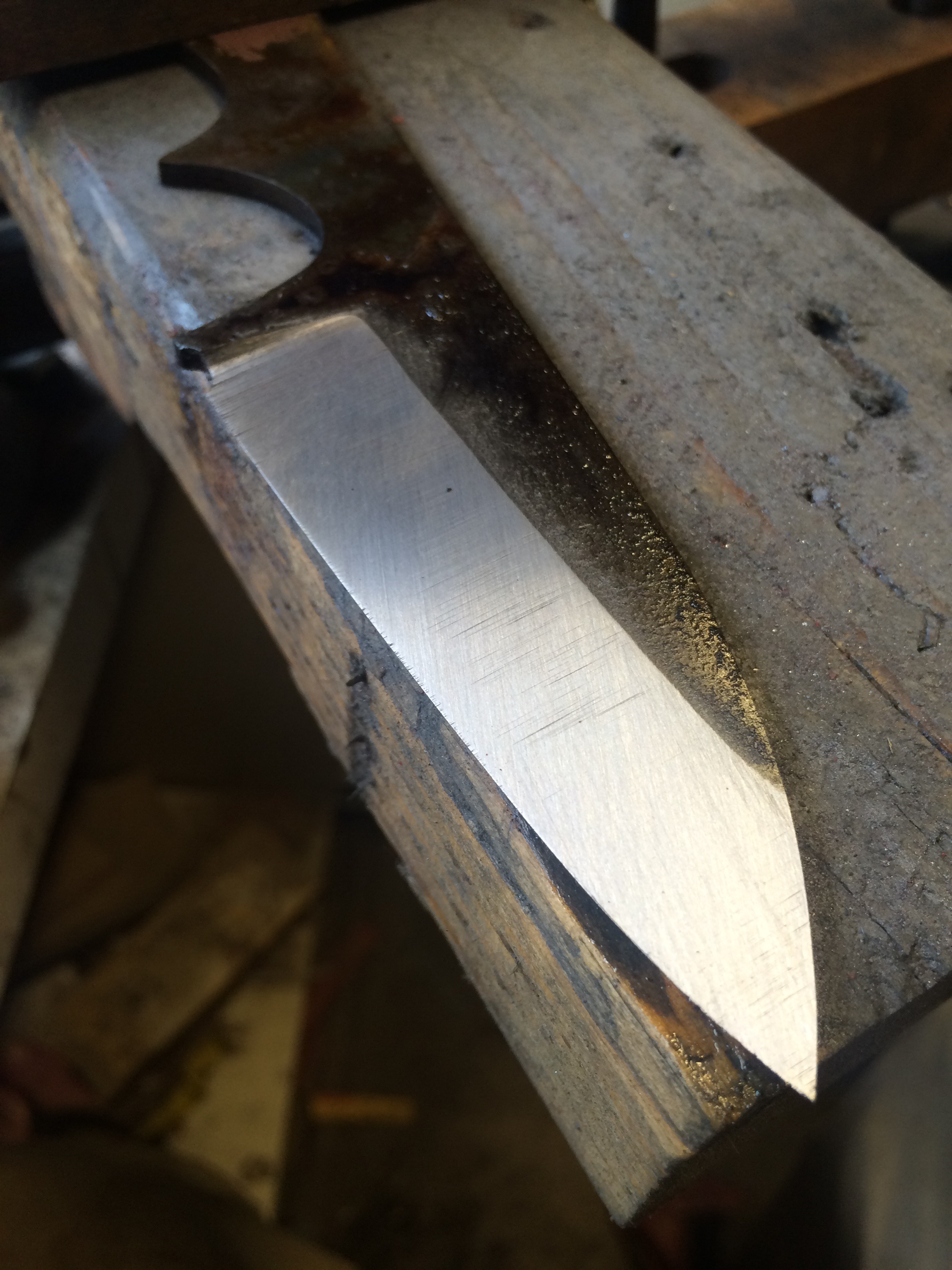
Laying down a hand finish:

Just a bit more:
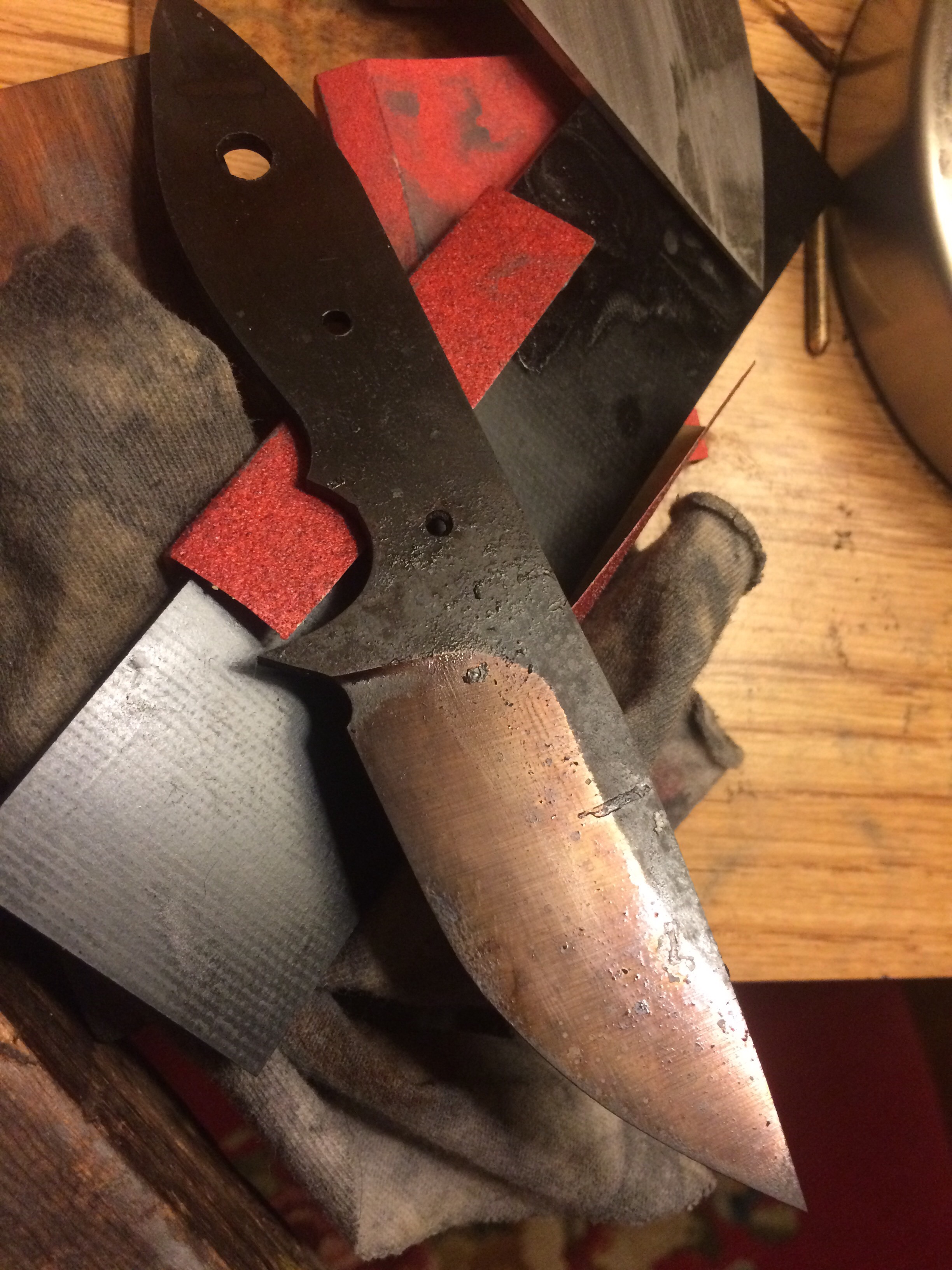
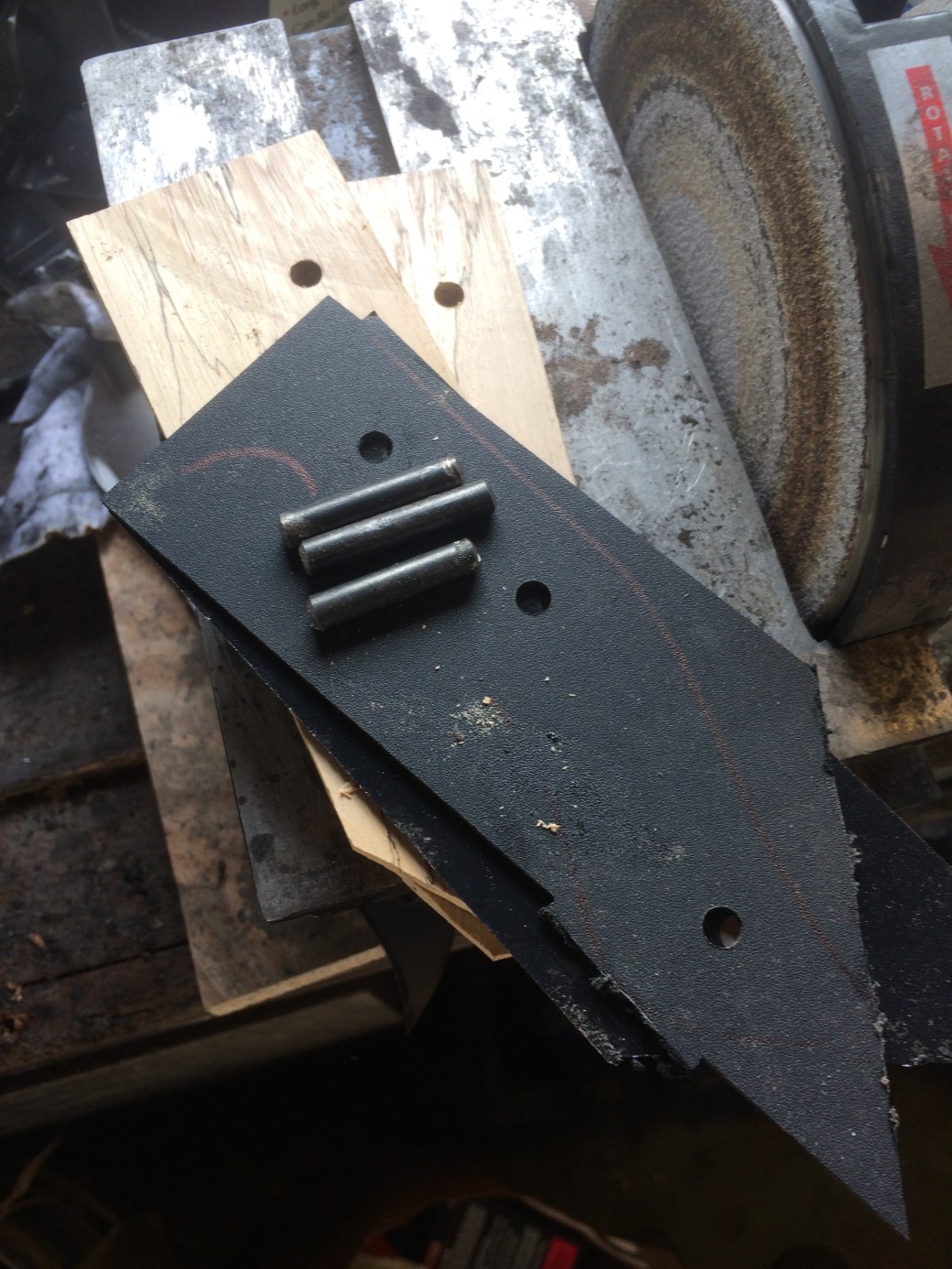
Spalted Tamarind:

Bookmatched:

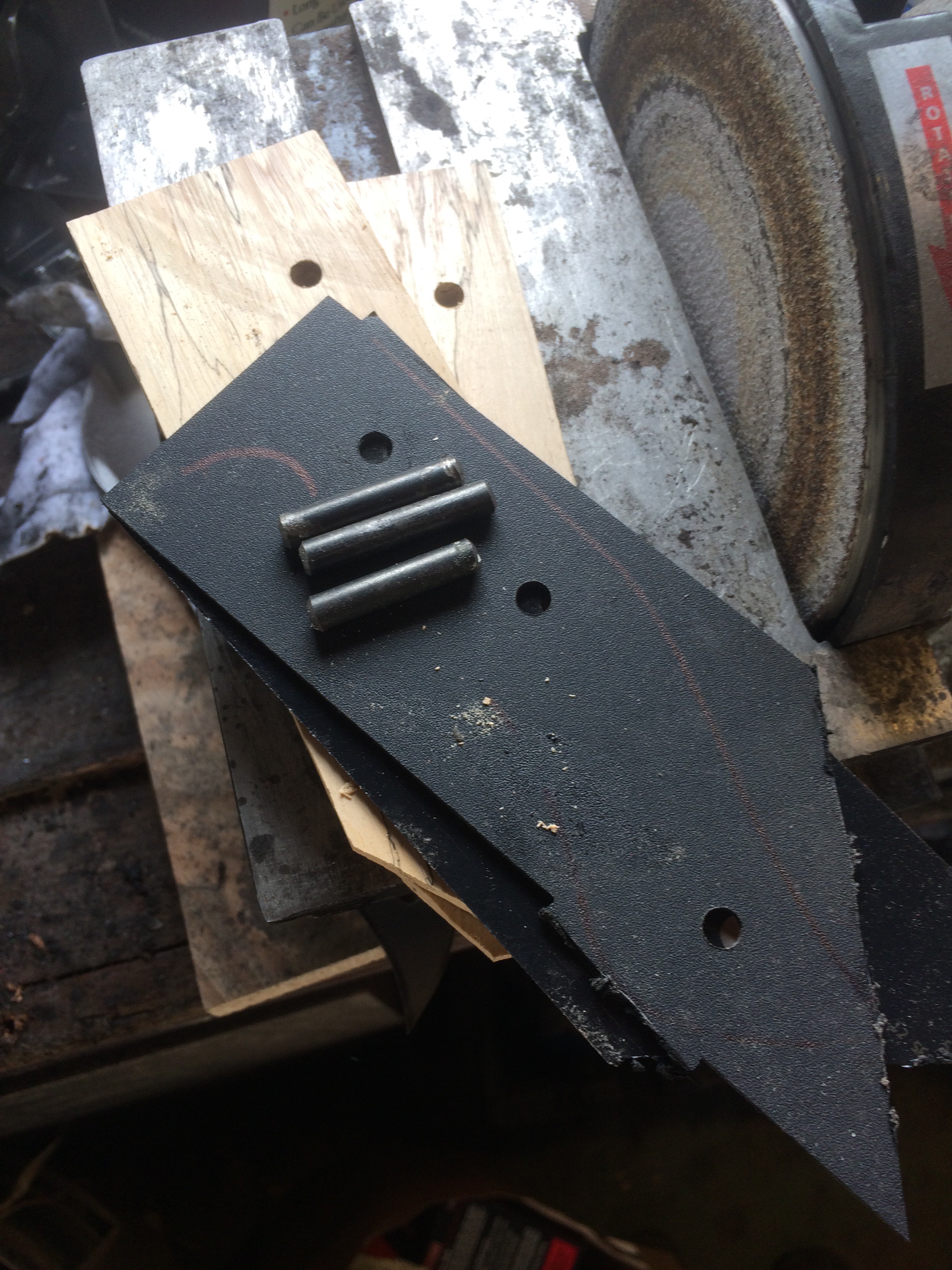
Ready for glue:
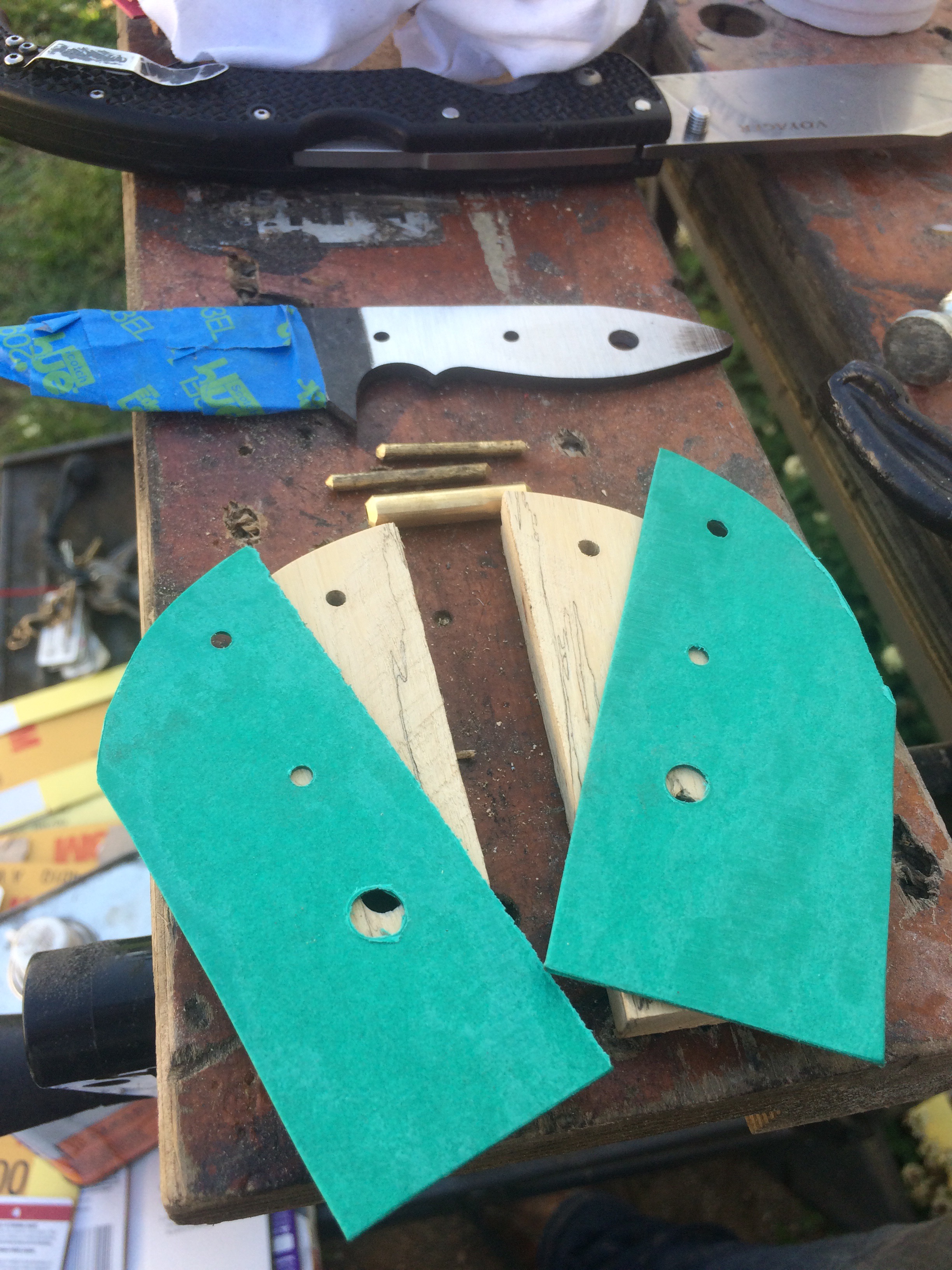
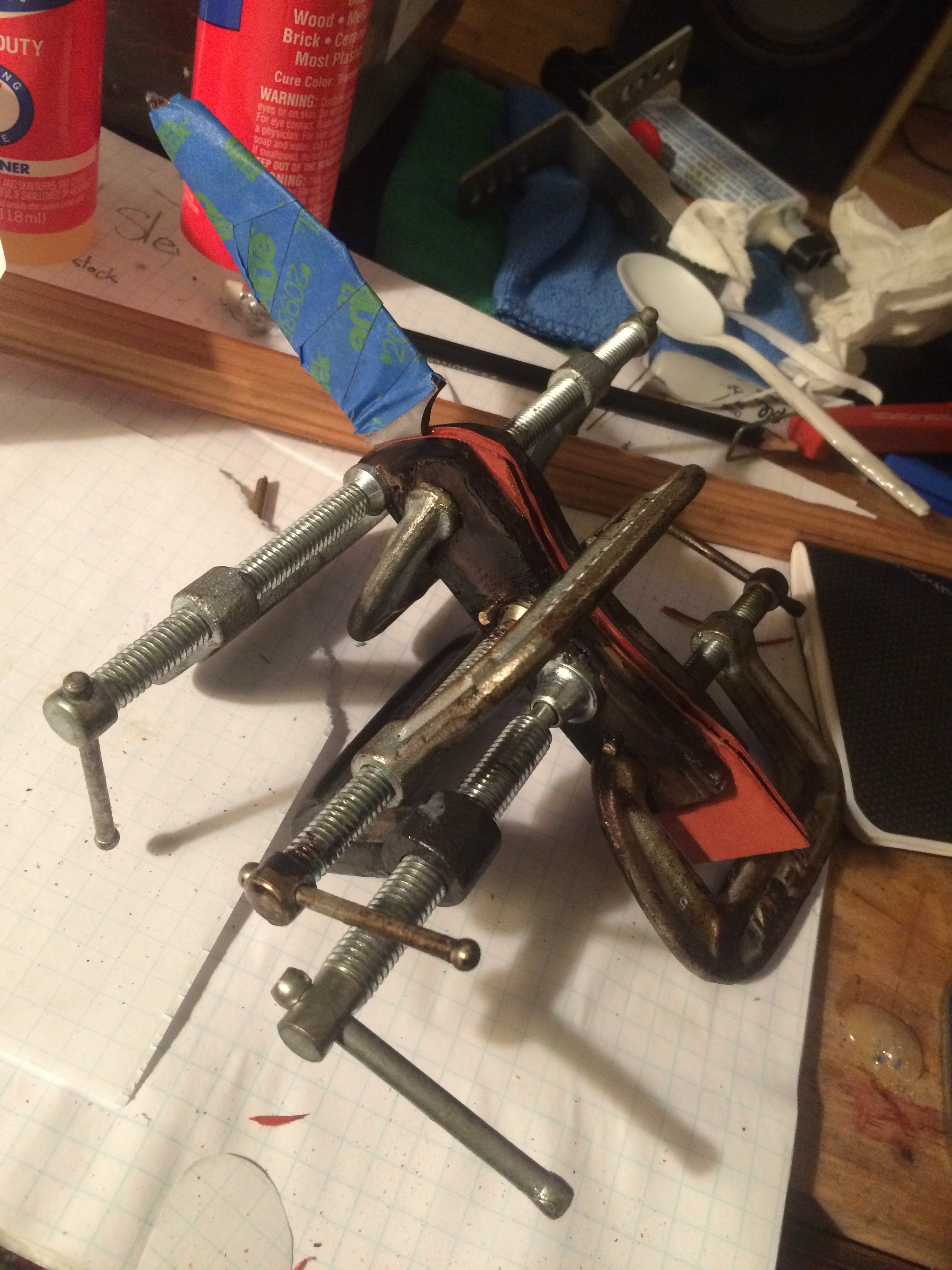
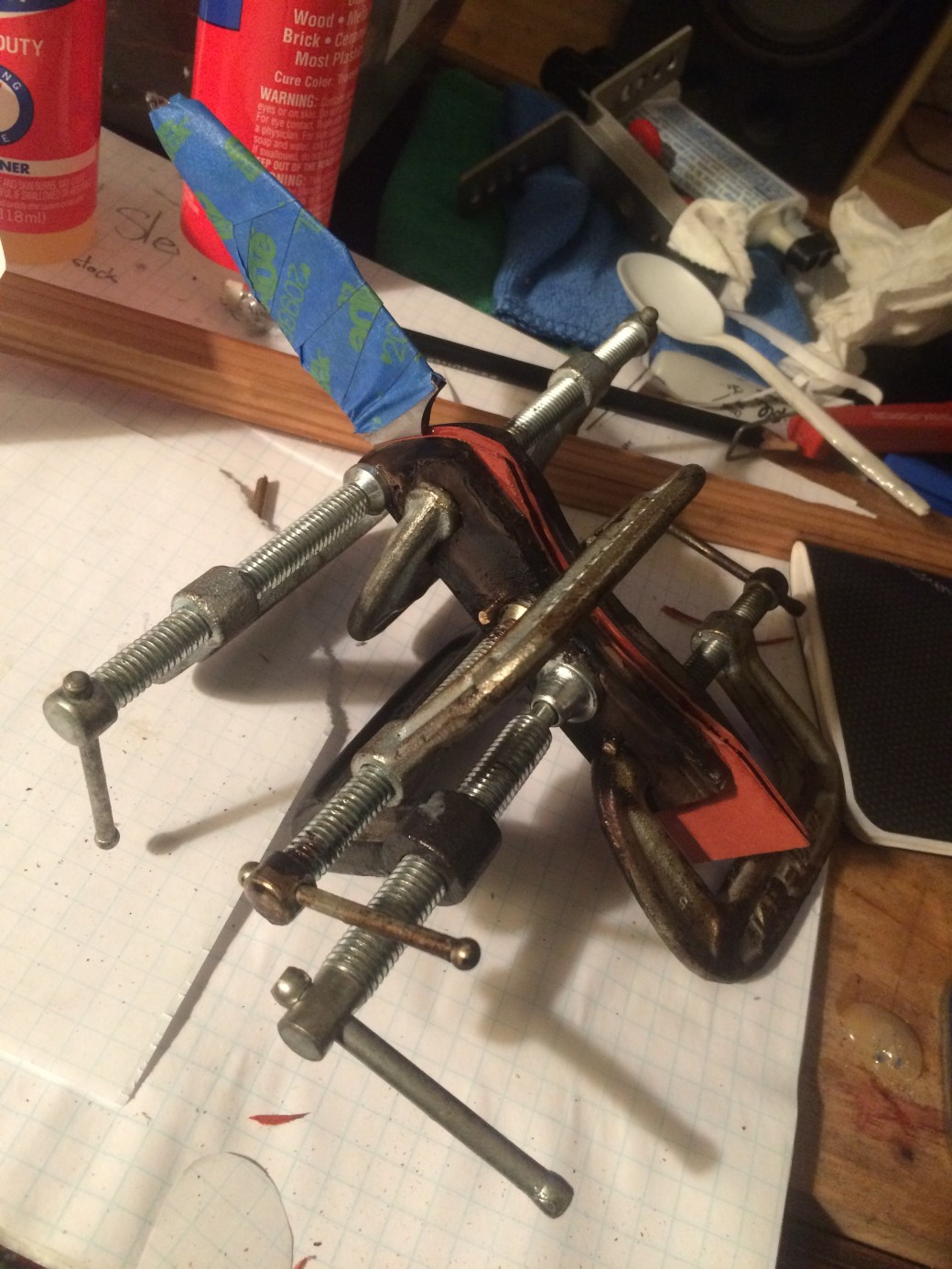
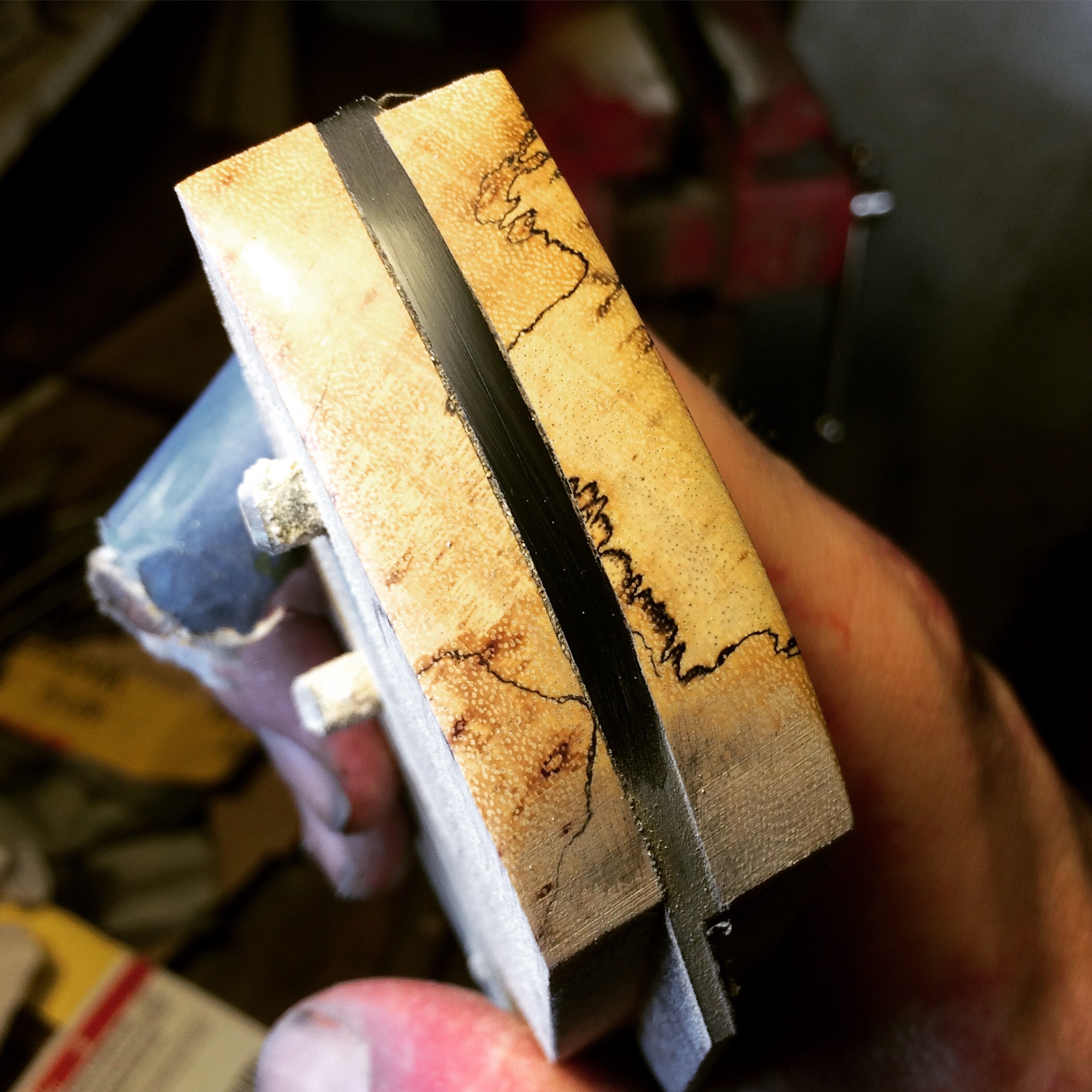
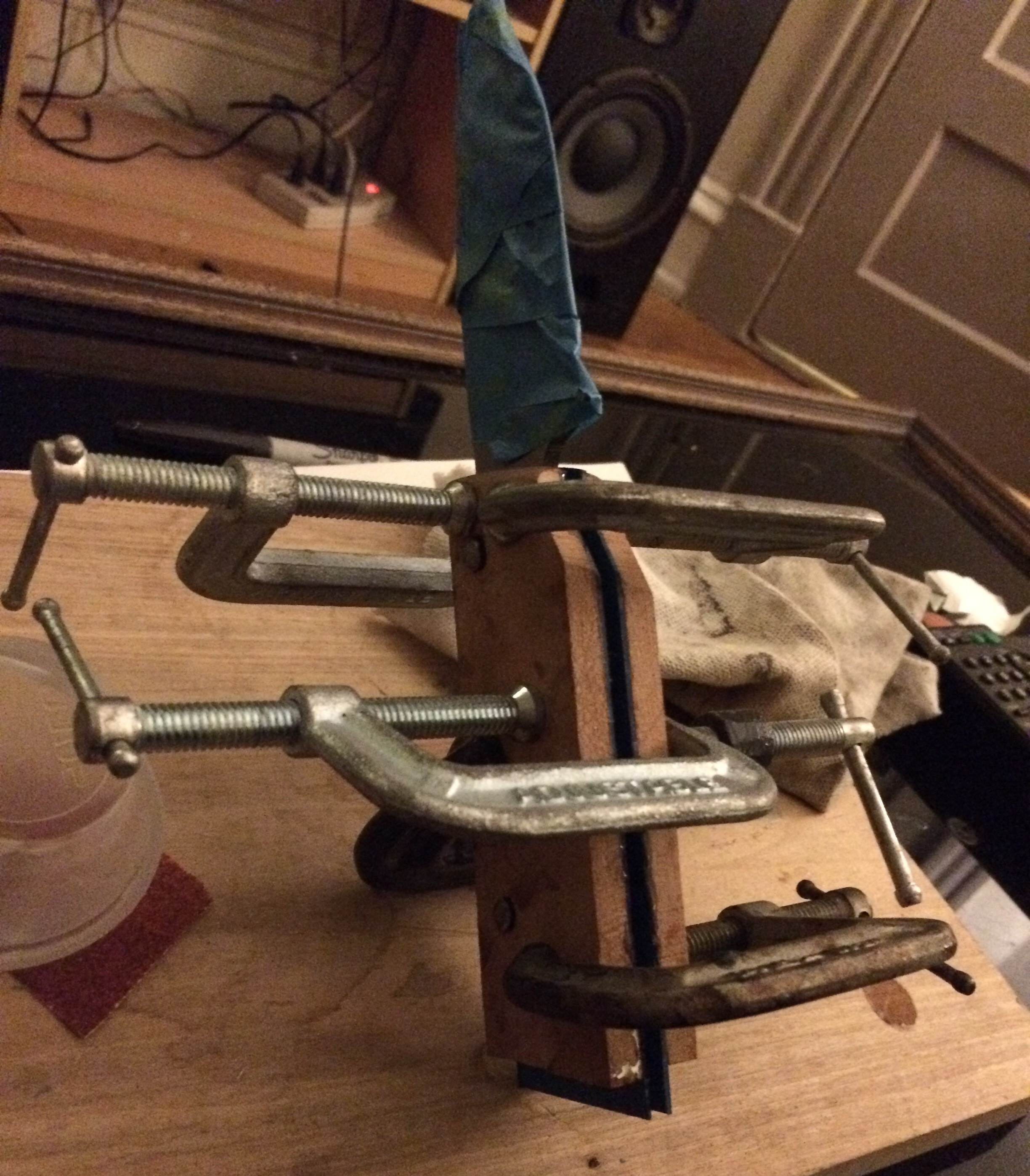
Glued and clamped:
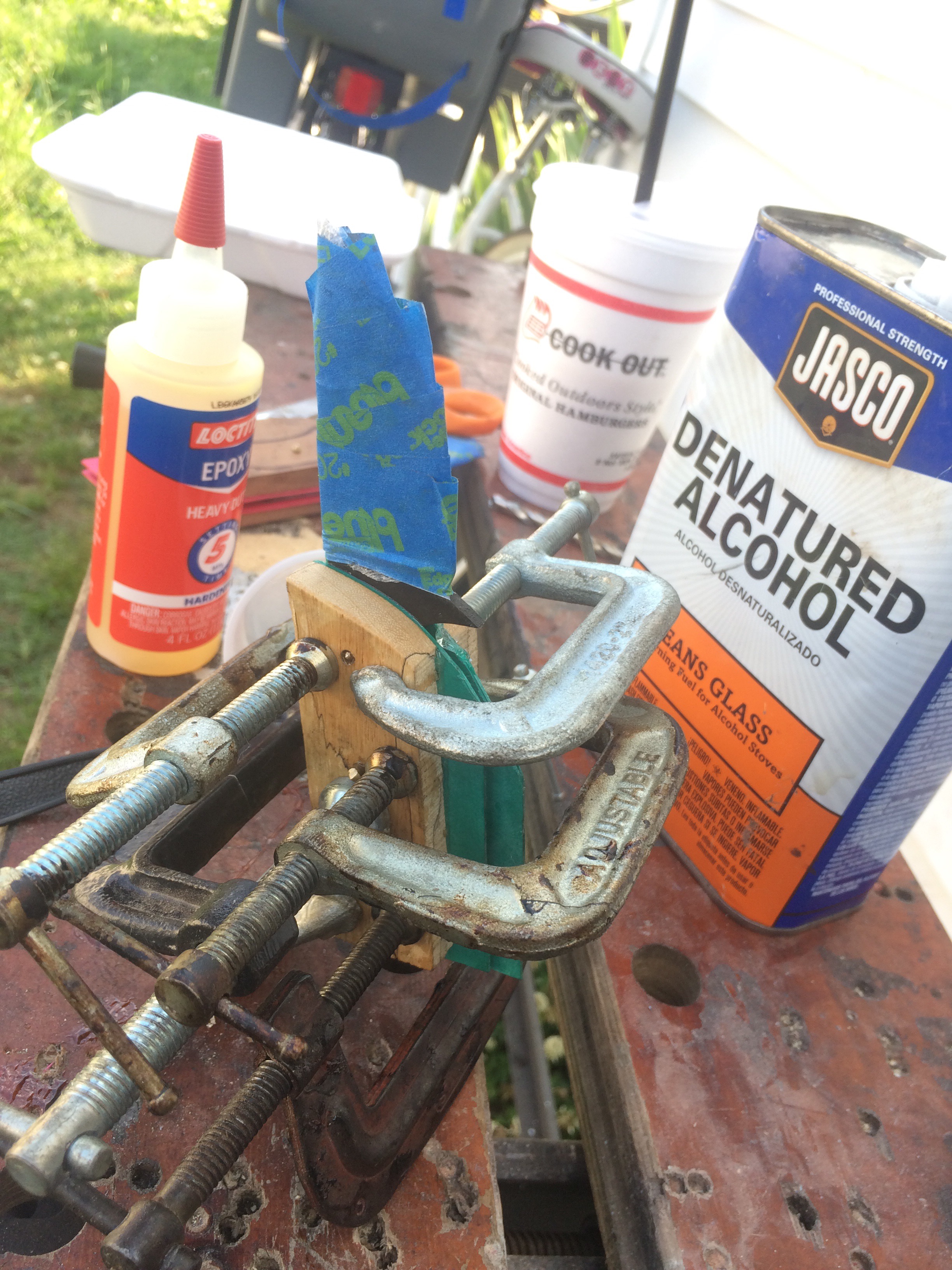

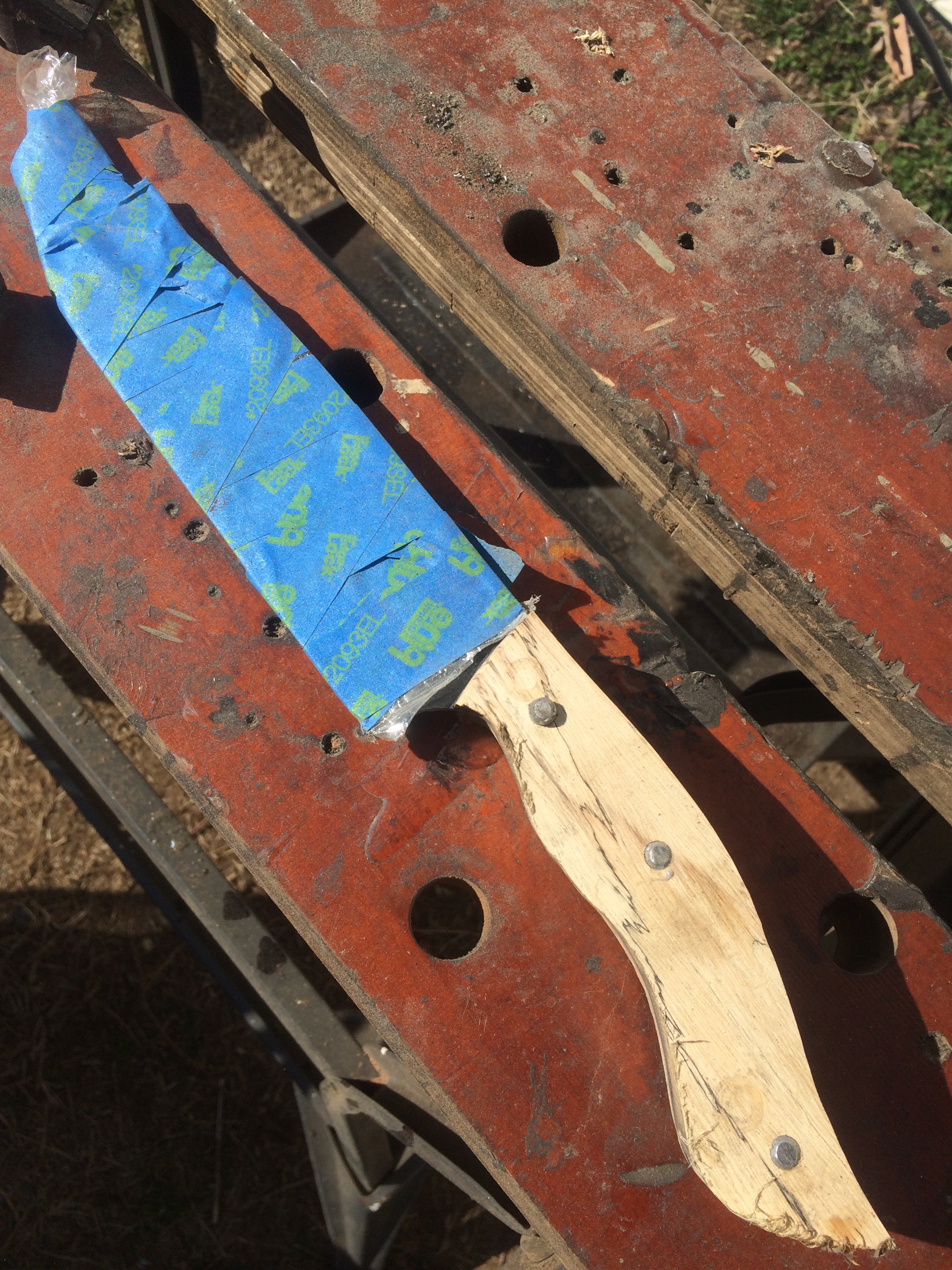
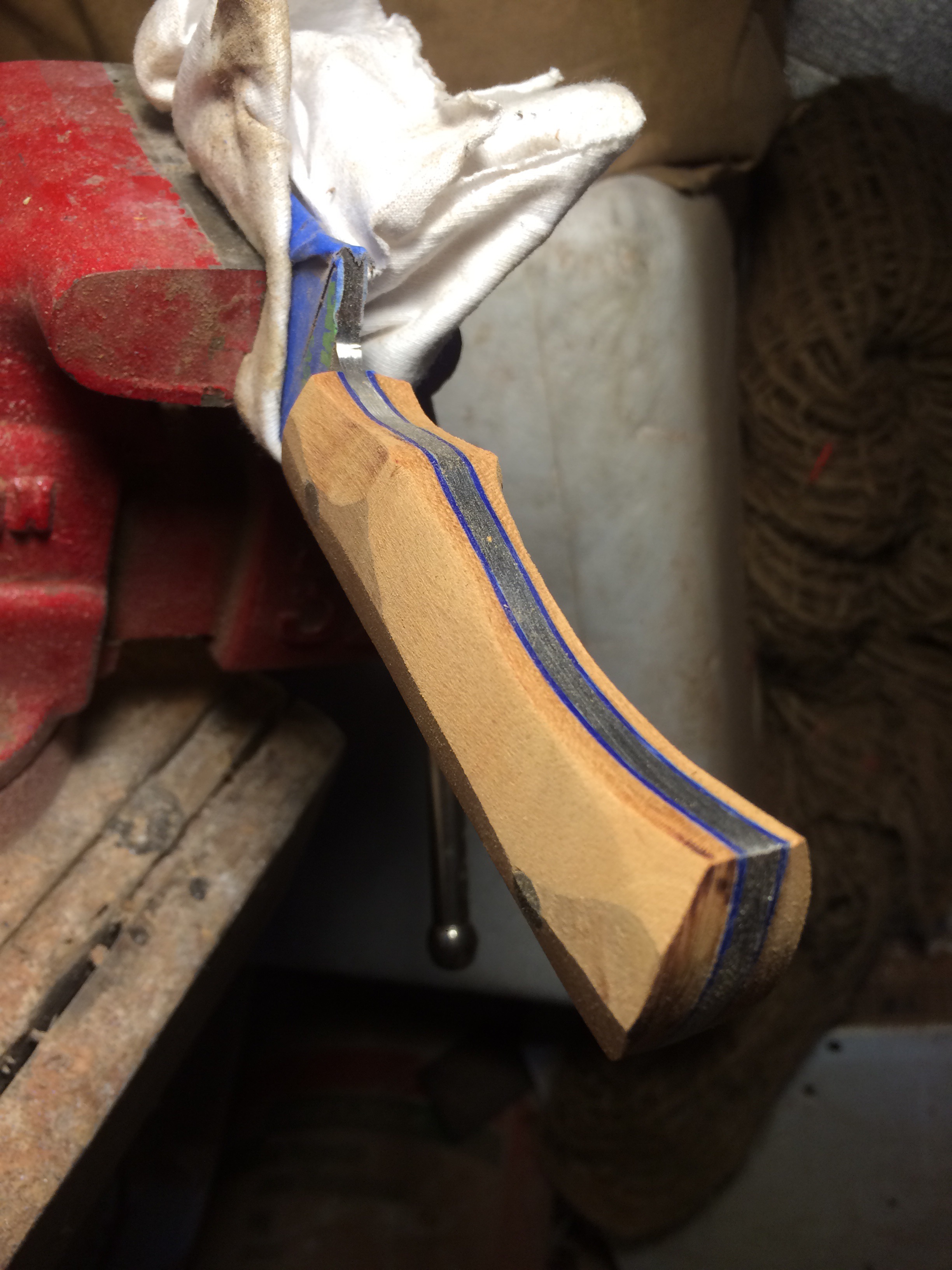
Shaped to fit the hand:
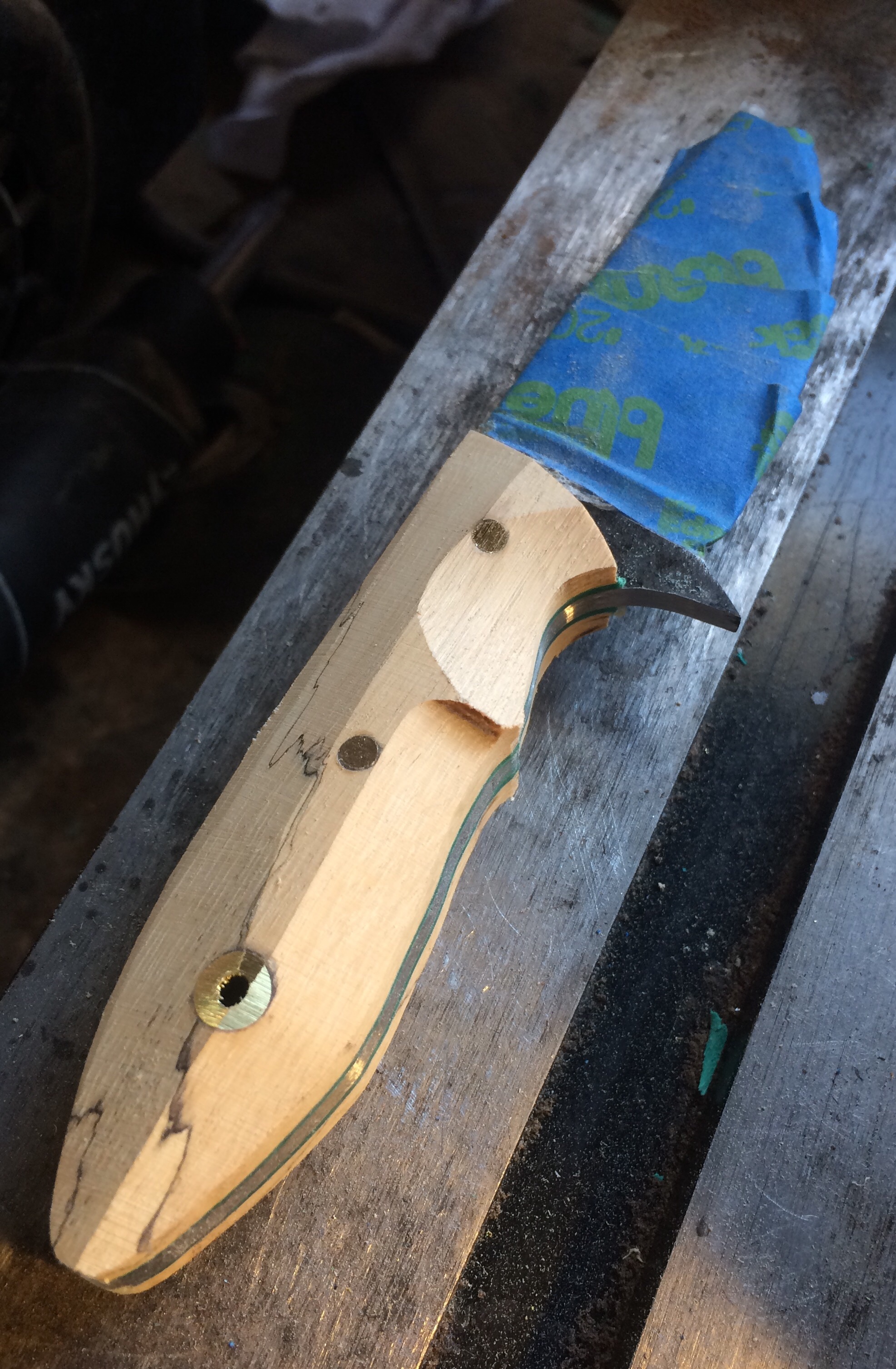
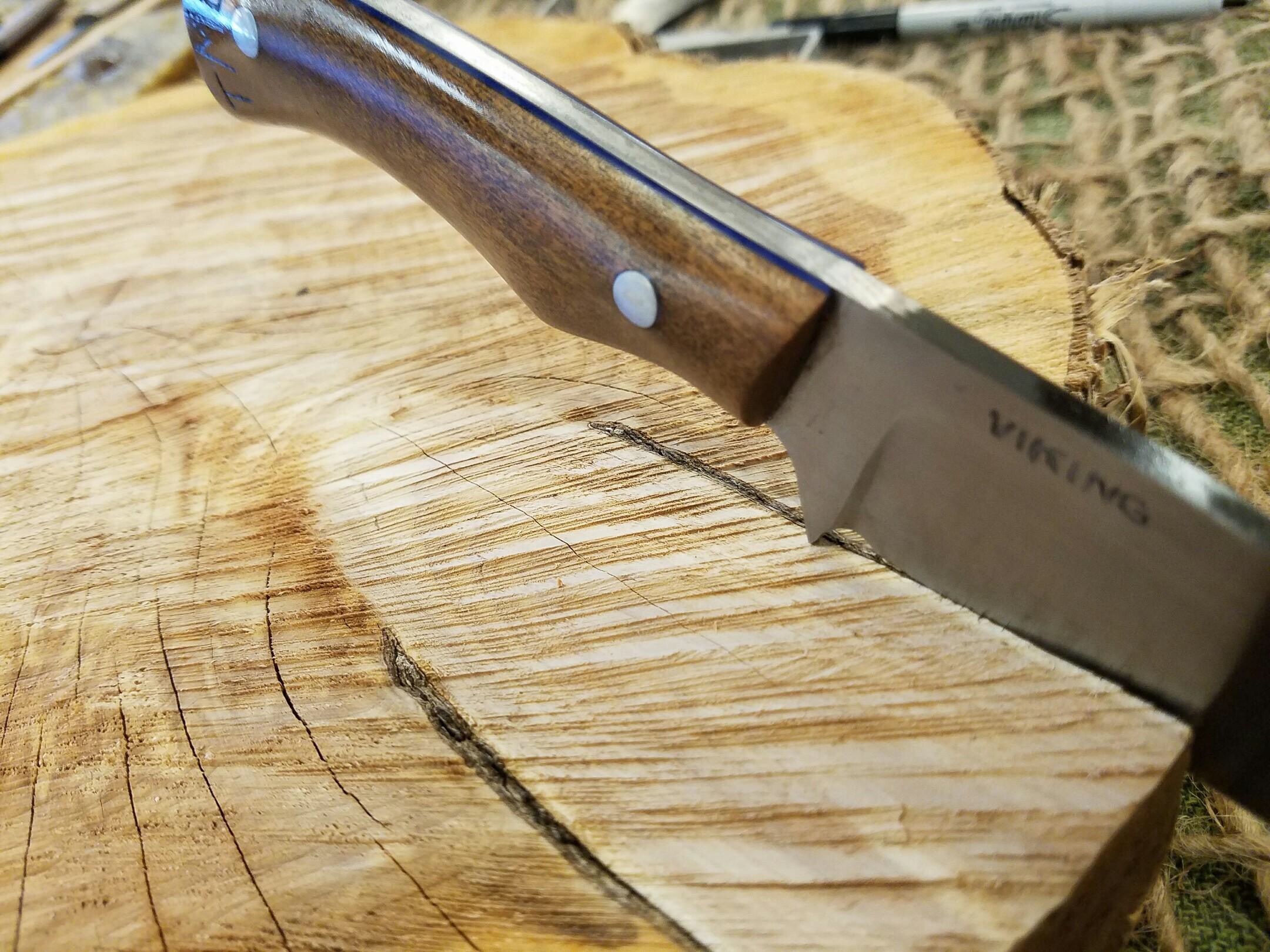
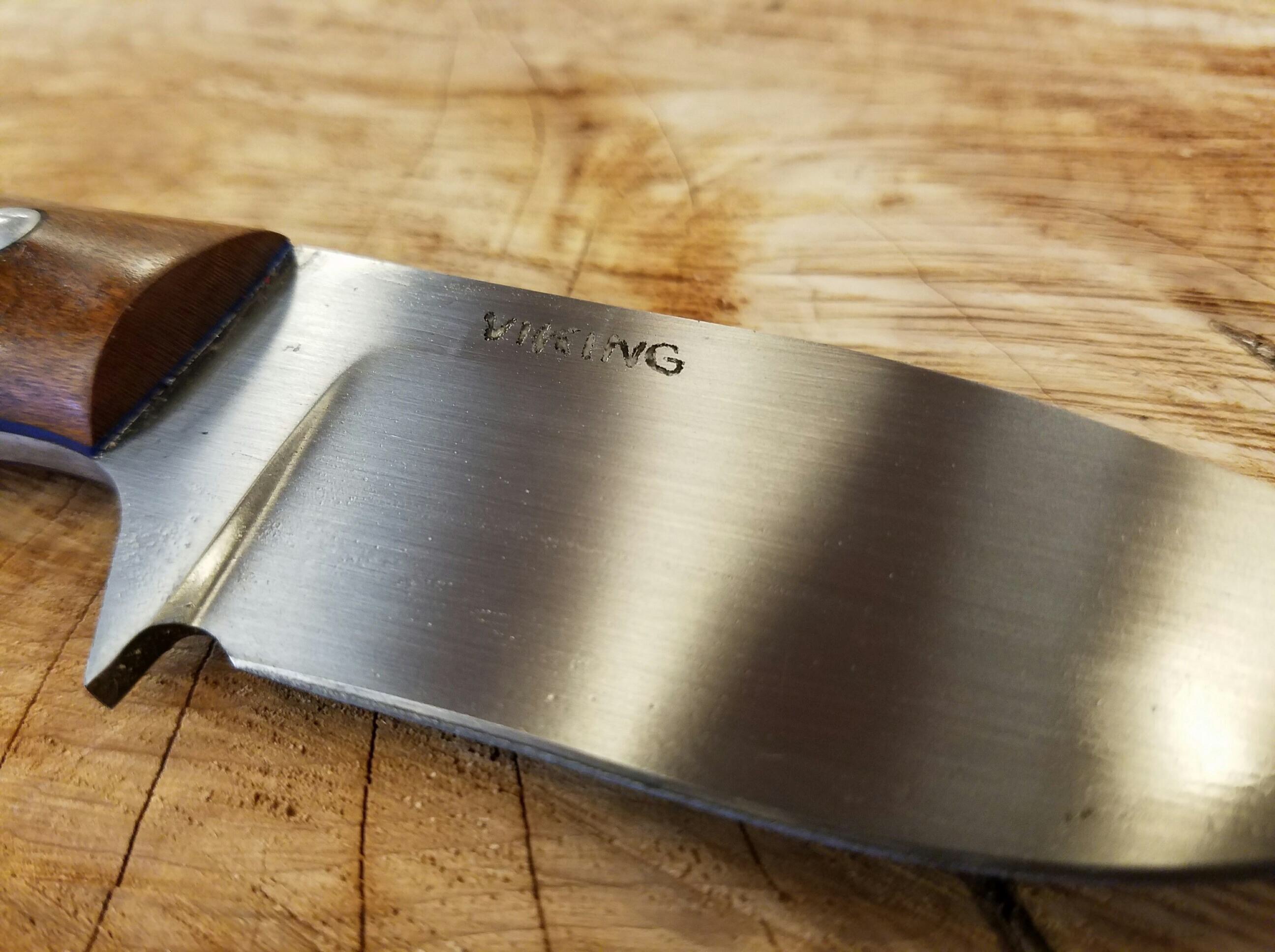
The Arrow:

This knife comes with a prayer, the Prayer of the Arrow, to help with all the things that get in the way:

May I be kind to myself
May I be gentle toward myself and others,
And may I move through my world with elegance and grace
May I find a calm mind and go about my day with peace and serenity and
May focus manifest within that calm
Help me to let go of guilt and shame, and help me to be with my anxieties, and to
Lean into my fears and not
be intimidated by them or anything else
May I know that I have enough
Help me to see things for what they are, and to
let go of appearances and of what others may think
Help me to know strong boundaries and to act on them
Help me to not think so much or give so much weight to my emotions and desires
Help me to keep moving forward and to have faith in myself and those I care for
Please keep me safe
And let me know that I am loved

Knifemaking: finding a way and the Desert Fox

“So many people live within unhappy circumstances and yet will not take the initiative to change their situation because they are conditioned to a life of security, conformity, and conservatism, all of which may appear to give one peace of mind, but in reality nothing is more dangerous to the adventurous spirit within a man than a secure future.”

John KrakauerInto the Wild


The Desert Fox, also known as the Fennec Fox is the smallest member of the species Canid.  They can be found in the Sahara Desert of North Africa.  Living in such averse conditions has allowed for some particular adaptations in order for them to find their way in their environment, most notably their prominent ears (I mean, look at those things):


The ears help them to dissipate heat, as desert temperatures can get up to 117 degrees Fahrenheit during the day. They also have a specially evolved set of kidneys allowing them to go without water nearly indefinitely and their required moisture can be obtained from their food.  Unlike other foxes or canines, they have fur on the bottoms of their feet.  This keeps them from burning their feet when traveling over hot sand.  Their cream-colored coat helps to reflect the heat of the sun.

They are omnivorous, eating insects, lizards, and birds, but are also known to eat roots, leaves and other vegetation.  The Desert Foxes are social creatures, live in groups, and mate for life.

I find this to be an incredibly encouraging little animal, finding home and company in a place where a large portion of its environment is actively trying to kill it.  On days where I’m not sure how to find my own way, I often think of the Desert Fox.  I find that I don’t have to worry about blistering heat, numerous birds of prey, even more numerous venomous snakes, or scarce food sources, and then I proceed to count my blessings and pray that I don’t become complacent in my station from lack of natural predators.

Because finding your way when there isn’t anything pushing you can be just as hard as navigating a desert full of bad things.

I was in Pittsburgh recently, taking an Uber to dinner.  I’ve never particularly cared for riding Uber; it always feels like there’s an expectation for conversation and an uncomfortable and resentful silence if that expectation is not met.  On one Uber ride in Manhattan there was a driver from the Caribbean who wouldn’t stop talking about his kid and showed my friend and I a video of him playing baseball.  All this while driving in rush hour traffic.  This most recent Uber ride was not that.

The man picked us up and the conversation was easy.  After a little while of talking about what we were doing in the ‘Burgh, I asked him what he did for a living.  He said that he had been a private investigator in Los Angeles for twenty years, from the early ’80’s to the late ’90’s.  He said he had seen it all: cheating spouses, runaway kids, you name it. He thought it was all hilarious.  He wanted to write a book.

His friends all thought his stories were great and they had been encouraging.  The only problem, he said, was when he sat down to write he couldn’t get anything on the page.  He just froze.

I know what this is.  This is the crippling self-doubt that almost every writer and creative person I know deals with.  Myself included.  I told him so.  Hell, I know a filmmaker who has a Crippling Self-Doubt Room in his house where he goes before he works on his projects.  If you don’t find a way forward, you get stuck, and your ideas aren’t heard.  Nothing happens and life goes on.  You have to live with the sting of unrealized potential.  That sting becomes more painful as the years go on and there is no more time to realize what could be.

The only thing to do, I told him, was to find a way to be with that debilitating feeling of self-doubt.  Find a way to get something, anything, on the page.  Once there is something on the page finding your way becomes much easier, and it can take you to surprising places.  There is meaning in those places, satisfaction, and everything becomes a bit deeper and beautiful.

This is the lesson of the Desert Fox, a creature that has an unforgiving place to call home yet finds a way to thrive in it, and makes an existence in the uncomfortable.  If there is something eating at you and calling to you, then you can always find a way to make it happen.


We start with flat stock O1 tool steel:

Roughing in the blade choil:

Profiled:

Rivet Holes:

Hand sanding the bevels before heat treat:

Hardened:

Tempered:

Hand-finished satin:

Texas Mesquite.  One of my most favorite materials to work with:

Shaped:

Sanded to 220 before giving the grain a burst:

The Desert Fox:

If you can find a way to exist in the uncomfortable, than you can almost always find a way forward.

fennec fox

Knifemaking: Rock and roll, privilege, and the Sir

“He who conquers himself is the mightiest warrior.”

-Confucious


Warrior, Merchant, Artisan, Farmer.  These are the four classical occupational archetypes of Feudal China.  These archetypes still ring true today.  There are variances and nuances but in the way we go through life, many of us find ourselves in all four of these occupations, even if only briefly:

-The Farmer understands the value of labor.  He is master of working within the seasons to sow his crop.

-The Artisan understands how different mediums and materials go together, and how to craft his goods within that understanding.  He is master of his tools.

-The Merchant understands business- buying low, selling high, and having a good product.  Business at it’s core level is the art of profit and the Merchant is master of this.

-The Warrior understands the above three archetypes.  He is master of himself and carries the weaponry of his choosing.  He serves society.

I have found myself, at various points in life, in all four occupations.  The Warrior intrigues me most.  Speaking as a man, I feel that most of us want to master ourselves, and the things that try to enslave us- our fears, our desires, and our insecurities.  In our occupations and work, obsessions and compulsions can develop, our fears can play out, and we can become consumed.  We can become obsessed with trying to squeeze the seasons dry, or maximizing profits, or with crafting a better and more beautiful mousetrap.  When these things become all that we see, we have failed to master ourselves and aren’t really serving anything except for what we are trying to achieve.  At this point, all the things that really matter get left in the dust.  We lose sight of the world we live in and are not present in our lives.

In order to master yourself you must know yourself.  Sometimes the best way to know yourself is to know others.  And sometimes the best way to do that is in service to others.

I was working a large arena rock and roll show, one of the largest I’ve ever worked.  The headliners had been around for decades, on the top of the charts, and darlings of video-era MTV.  They have recently been selling out arenas around the world.

I strolled into the production office to get my assignments for the day.  There was laundry, grocery shopping for the tour busses, FedEx and post office runs, prescriptions to be filled, and other bits of housekeeping errands that keep a massive touring operation on the road.  Not everything gets done.  Touring is a practice, not a science.  The most successful touring operations are predicated upon this notion.  My job is to take care of as many of these things as possible based on what the tour needs and the priorities of the show.  This doesn’t leave time for anything that may be superfluous or unnecessary.

After the day was laid out and I had my assignments, the tour manager asked if I could add another thing to my list.  There was a very large basket of toiletries- soaps, shampoos, and lotions- that had been collected from God knows how many swanky hotels.  The tour manager asked me if, time permitting, I could find a Women’s Shelter or a shelter for families in transition and drop them off there.  The band and the crew collect them from every place they stay for that explicit purpose.

I didn’t give it too much thought.  I had a lot of things to do and honestly this little task wasn’t real high on my list.  But the tour manager kept asking me about it and so I decided to make it a priority.  After all, I was in a position to take care of this.  I got on the internet and found a facility nearby.  It was a shelter for women leaving bad domestic situations- in many instances they showed up with nothing but the clothes on their back.

I called them and told them who I was and who I was with and asked if they accepted donations.  Yes we do, they said, please come by.

So I went by, even though I really didn’t have the time.  The people at this organization were really happy to get these things.  They wanted to take a picture for their social media page.  All smiles.  They thanked me for thinking of them and to remember them in the future because funding is always tight and every bit helps.

This was all really special to be a part of, even though it was a pretty small thing.  I wasn’t really expecting that and it was nice.  I don’t normally find myself in these sort of situations.  I’m usually wrapped up in my own affairs, serving the things I am trying to achieve rather than broadening my gaze.  I noticed a lightness in me and the rest of the day felt easier.

There’s a lot of talk about privilege- white privilege, gender privilege, and a myriad of others.  When all of the social justice orthodoxy is stripped away, I find privilege to be a form of power.  There’s nothing wrong with being privileged but it’s important to be aware of it.  Many of us aren’t aware that we have that power within ourselves.  It’s a noble thing to use that privilege, that power (which, honestly, many of us take for granted) to help those who may need it.  It’s a really special thing to give or share of your time and talents when it’s within you power to do so.  This type of service can help you to become more familiar and intimate with yourself, and also help to make the world around you a better place.  That is the mark of a Warrior, and the lesson of the Sir.

O1 tool steel, thin stock

Profiled:

Rough grinding:

This is how to heat up your quench oil on a cold day:

Hardened and tempered:

Handfinishing, at around 220 grit:

Hand finishing at around 320 grit:

Ebony wood:


img_4467

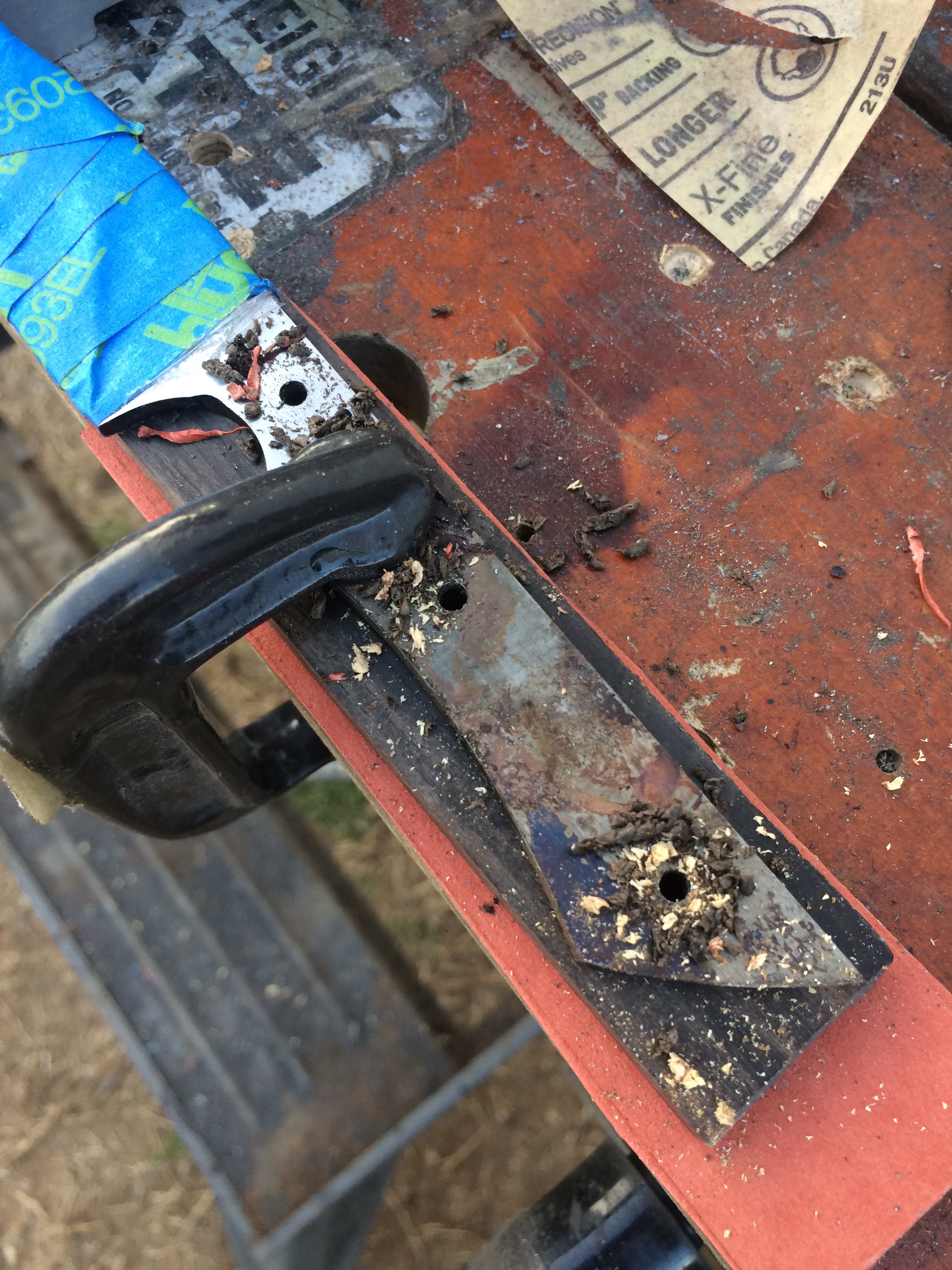
Clamped:

Shaped:

The Sir:

Don’t be afraid to look out for others every so often.  This is part of the path toward mastering oneself.

Just a Bunch of Roadies– This is an organization of Music Industry Professionals that use their time and talents to make a difference.  They facilitate larger operations, but also smaller projects, like the one written about in this story.  Be sure to check out their website if you would like to help.

Knifemaking: yes and no; and Urim and Thummim

“Take these,” said the old man, holding out a white stone and a black stone that had been embedded at the center of the breastplate. “They are called Urim and Thummim.  The black signifies ‘yes,’ and the white ‘no.’  When you are unable to read the omens, they will help you to do so.  Always ask an objective question.”

Paulo Coelho- The Alchemist

I took a philosophy class in college.  The professor was an older gentleman, and a bit mysterious.  He had us buy a very expensive textbook which we never used.  He was the one asking the questions and it was mostly us, the class, that did the talking.  We never learned much about him other that that he had had a bit of celebrity on the academic circuit several decades prior. In his younger days he practiced judo.  Later in life he discovered Tai Chi, and taught that as well.  He never elaborated on any of this.

I don’t remember much of what we talked about.  I was twenty-two and liked to go to class stoned.  I do remember there was some Kant in there, and some St. Augustine, and probably some ideas on relative morality versus universal morality.  I also remember one lesson we had, one about truth, and how all matters can be broken down into a yes or a no.

He gave an example: all cellular communication can be broken down into ‘yes’ or ‘no’.  ‘Yes I will fuse with this protein,’ or ‘No I will not fuse with this protein.’  ‘Yes I will bind to this synapse,’ or ‘No, I will not bind to this synapse.’  Matters that are gray in appearance only remain so until one goes deep enough to find a ‘yes’ or a ‘no’- and in many instances in our personal lives we never get to that point.  Sometimes the truth contains many yes’s and no’s.  Sometimes the truth is much larger than our own individual internal agreement or disagreements.  This is part of what gives life it’s mystery and beauty.

There was one particular assignment, a large one, that came up.  We had to write a 10 page paper on a topic we chose.  The professor had a list of topics to choose from.  We were to choose a topic with which we most disagreed.  I had found mine:

‘True virtue requires true religion’

He then flipped it around and told us that our paper had to argue in agreement with our chosen topic.  I didn’t know where to start.  I didn’t agree with this statement at all and was a bit stumped.  After many starts and stops I found a legal dictionary and first looked up the definition of truth, then of virtue.  I found a way to manipulate those very clean and sterile definitions to find agreement with a statement I didn’t agree with.  I don’t remember exactly what I wrote and I’m not sure how I got ten pages out of that but I was pleased with myself.

I got my paper back.  There were no corrections or suggestions.  Written at the top of the page in red ink was a little note saying that I had made my argument using a clever lawyer’s trick.  I got a C.

Over the past dozen or so years I’ve thought a lot about this.  Truth is something that just is.  It is the yes or the no.  The point is that the truth of things can’t be manipulated.  There is discordance in the world because all of us are trying to manipulate the truth to serve our needs, to pacify our fears and insecurities, to indulge our convictions, and to fit into the way we believe things should be.  In spite of these dances we do, at some point everything will break down into yes or no.  When things appear to be both yes and no at the same time it only means that the truth isn’t fully visible at that point.

This doesn’t mean things are clear or easy.   Black for one person may be white for another, and vice versa.  It won’t always fit into nice agreeable little boxes.  I was working with teenagers and there was a young girl who was acting out horribly.  After speaking with her mother, I found out that her father had left the family to go live his life as a woman.  The young girl had a very strong ‘no’ to her father’s insurmountable ‘yes’.

At some point decisions have to be made and assistance may be needed when one can’t always read the signs of which path to take.  Sometimes we can bring an external influence in to help us to get to our truth, our own personal “yes’s” and “no’s”.  This is the where Urim and Thummim come in.

This two-knife kitchen set was a commission for a good friend and former teacher. He is a man who taught me how to look at matters deeply and to think about things critically.  We were on a farm for this past Thanksgiving and I noticed that he had been reading The Alchemist by Paulo Coelho.  This is a book that is special to me, and was given to me during a time when I was having trouble reading the omens.  It was the inspiration for this set, and an exercise of gratitude for this man, a sort of alchemist himself, who has helped me to find my own truths over the years:

We start with Urim, a six-inch boning/filet knife

Because the stock is so thin, I hardened the blade before grinding the bevels:

Rough grinding at 40 grit:


Full flat grind:

Laying down a hand finished satin:

Detail work on the plunge lines:

Ebony Gaboon: the black symbolizes the ‘yes’:

The bit near the ricasso; sanded to 2000 grit:

Profiling on the handle:

Rough-shaped:

Sanded to 220 grit and then oiled.  I let this sit for a day or so and then sand the entire handle up to 2000 grit.  This process helps to burst the grain:

Urim:

To start on Thummim we need things that cut:

Once again the whole bit is hardened:

Rough grinding:

Full flat grind and finished on the grinder to 120 grit:

A lot of material was removed:

Laying down a hand finish.  A smoother finish makes for less resistance when doing knifework in the kitchen:


She goes into hot acid for an etch.  The etch helps to prevent corrosion and also makes for a more pronounced patina as the knife is used.  It will also darken the blade:

Spalted Tamarind:  the light color represents the ‘no’

With black spacers for contrast:

Once again, sanded to 2000 grit:

Clamped:

Profiled:

Shaped:

Thummim; the no to the yes:

Urim and Thummim:


The name of the professor mentioned in this story is Jonathan Shear, Ph.D., and you can find links to his publications here.

Knifemaking: doing the work and the Operator, Mark II

“The sword has to be more than a simple weapon; it has to be an answer to life’s questions.”

Miyamoto Musashi, The Book of Five Rings

(you can read about the crafting of the original Operator here)

I’ve always been drawn to people who do things.  The people who speak through their work and translate knowledge and mastery through their particular skill set without having to say much.  This is a day and age where anyone can broadcast claims of mastery and experience to a large audience and it can be difficult to discern who has done the work to back up these claims and who is just trying to get to the bank.

In today’s vernacular, ‘operator’ commonly refers to military personnel who are at the pointy-end of things.  They are the ones who are taking the orders and quietly (or not so) doing the work out of a sense of duty and service.  ‘Operator’ is a title that gets tossed around and claimed where it doesn’t always belong, very similar to ‘genius’.  The ones who actually fit the bill generally eschew such titles.  This is usually a symptom that you are doing the work.

This blade was a commission for a military serviceman doing Ops work.  I wanted to build him a tool that would serve him in the work he was doing.

There was a summer about ten years ago where I was between semesters of study.  I had decided that I wanted to learn how to fix things.  Many of my friends were working at Blockbusters or car washes but I liked the idea of being able to take care of things myself.  I took a really awful job doing apartment maintenance for three and a half months and did just that.

It was not very satisfying.  The job I took was for a rental company who owned properties in my neighborhood so I could walk to work.  It was a pretty slummish company that rented to a lot of college kids.  I ended up having keys to half the apartments of what was called ‘Hell Block’ of a street close by to me.  The summer was when a lot of leases ended so there were many people moving in and out.  As a result the streets and alleys were full of discarded furniture for most of the summer, a lot of which was set ablaze by some of the rowdier tenants.  Sometimes my days started with cleaning up the ashes of incinerated love seats.

Other days started with hauling four-burner stoves up three flights of a fire escape.  Most of the time was spent flipping apartments from where someone had moved out so that someone else could move in.  There was a lot of painting.  Flat antique white for the walls and ceilings and semi-gloss eggshell white for the trim and kitchens.  The apartments weren’t very nice to begin with and after three days of work they still didn’t look very nice.  I tried to remind myself to just make it about the work.

I would spend hours gutting bathrooms- ripping out drywall, removing tiling, and replacing subflooring before redoing everything.  The best days were when I could work by myself and keep my own company.  Bathrooms were a bit more satisfying to do because they would actually look nice when you finished them.

There was one time when a new tenant couldn’t move into her apartment because a homeless person had moved in after we had flipped it.  We went in the apartment after the police took him away and found no less than eight bicycles, some smelly furniture, and a plethora of bizarre pornography.  There were also footprints all over the wall.  We had to repaint that one.

My boss was a middle-aged anomaly with claims of ties to the trash hauling unions of New York City.  I didn’t really believe anything he said.  There were four of us handling most of the work orders:

-Mark was in art school, a bit cranky, and liked to smoke a lot of pot.  Oftentimes it was hard to tell whether he was stoned or not.  I liked him.

-Scott had gotten back from several tours of Iraq, most recently Abu Ghraib.  He was a good guy but wouldn’t get anything done unless he was told exactly what to do.

-Mario was in his late thirties and from Guatemala.  He worked 7 days a week and sent most of his money home to his family.  He didn’t say much but I think he missed home.  The man could eat faster than anyone I’d ever met.  He said that in the Guatemalan Army they only gave you three minutes for lunch.

There was also a rotating cast of derelicts who would come in and work for a week and then disappear.  I never learned their names.

One of the happiest days I had was telling my jackass boss that I quit.  I gave myself a two week vacation before I went back to school.

What I learned at this job was that in order to get through many uncomfortable situations with a modicum of success you have to make it about the work.  It helps to find something bigger than yourself in what you are doing.  The skills I was learning would serve me well much later down the line, and the money would help me buy books and live through the school year and work on my education.  Everything else was just bullshit that came with the job.

To let yourself speak through the work you do, whether you are toppling Marxist empires or replacing toilets in shitty tenements- this is the lesson of the Operator.  In these situations our work speaks through us but also teaches us our lessons.

The recipient of this blade may find himself in harms way and needed a blade that would serve in such situations:

Rough cutting:


Bevels profiled:

Hardened:

Hand sanding:

img_4169_srgb

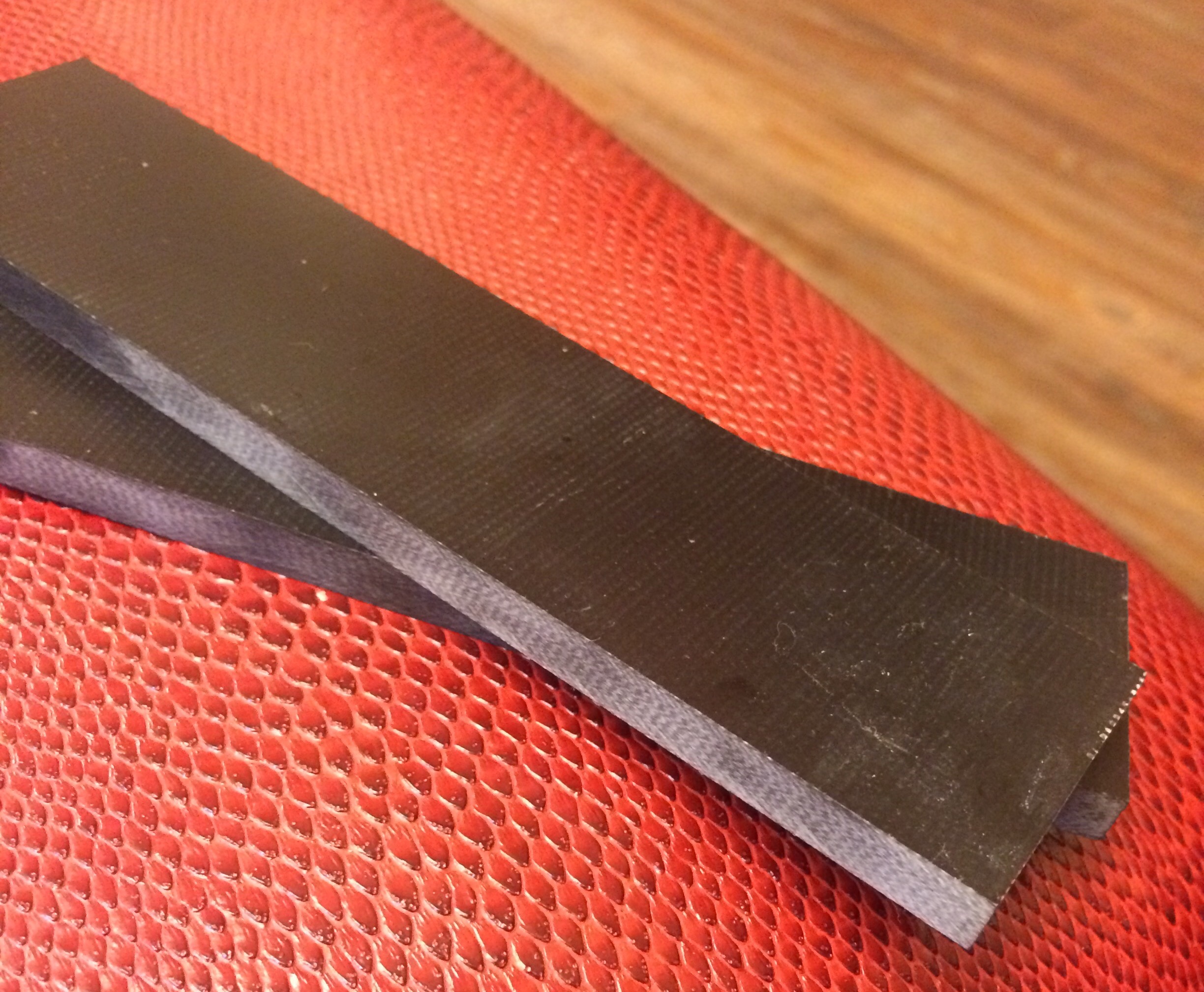
This is G10, a commercially manufactured synthetic material.  Normally I prefer to make my own handle material but in this instance I opted for something consistently fabricated that would be failsafe in a potentially tactical situation:


The Operator, MkII: O1 tool steel, G10 scales, fabric spacers, and steel hardware.

Let your work be your lessons.

Knifemaking: being your own cheerleader and the Stag

“You’ve just got to pat yourself on the back and keep moving.  Ain’t nobody else gonna do that for you.”

-Gordon Russell, chef

The other week, early in the morning, I got a knock on my door.  It was the police.  My car alarm had been going off for the past hour and the officer said there had been quite a few calls about it.

We walked over and I turned the alarm off and disconnected the battery.  As the officer was leaving he said that someone had been kind enough to leave a note for me on my windshield.  I found a piece of paper under the wiper and read it.  I’m not sure what I was expecting.  After I read through all of the expletives, I saw that it was signed by “I Hate You”.

Beautiful.  Somebody hates me.

I tried to go back to sleep but I had a hard time.  I knew I wasn’t the first person to have their car alarm go off and I probably wouldn’t be the last but I was having a hard time figuring out what “I Hate You” expected to accomplish through their eloquently worded salutation to me.  Those sorts of things written to you by a stranger don’t feel nice.

Later in the day I found it to be really funny.  I kind of wish I had kept the note.

So what do you do when you find yourself on the receiving end of toxic outrage?  Or of violent vitriols or virulent viscosities or even vicissitudes of the most vicious varieties??  This is where you have to be your own cheerleader.  Because we’re going to screw up at some point, maybe say or do something in poor taste or offend someone’s sensibilities.  People can be awful- much worse than notes on cars.  And hiding behind the veil of social media, people often write things that they wouldn’t necessarily say to someone’s face.  So when someone says or does something dumb, it can be often accompanied by a slurry of shame-dumping and rage. Before long any sense of civility or compassion goes out the window.  If you find yourself on the receiving end of these sorts of shenanigans, it’s best to pat yourself on the back and just keep rolling.  These are the hard things to master in life, but they are worth it.  It’s important to keep moving forward.

This blade was a commission for a gentleman who is a cheerleading coach.  His wife asked if the knife could have an essence of an old Buck fixed blade he had as a kid so I took that into the consideration of the design.  ‘The Stag’ is a bit of a double entendre.  In the animal world a stag can be much larger than a buck, and this knife has a bit more heft than its commercial counterpart.  But on the other side you sometimes have to go stag, by yourself, and give yourself the things that the world is not always going to give you.

The other day I was working with a lady who was late because someone parked her car into her spot.  She said she didn’t even have time to write a nasty note.  I very gently told her that not writing that note was probably for the best…

I did two designs for this knife, based on some of the Buck fixed blades.  I went with the bottom drawing:


Wet sanding:

This is after heat treat, slag all removed, at about 600 grit:

Satin:

Walnut for the handle:

The Stag:  O1 tool steel, Walnut handle scales, fiber spacers, and steel hardware:

In the words of a dear friend, just pat yourself on the back and keep moving

Much love to Kent Huffman for the beautiful leatherwork and to Taylor Huffman Bernard for the beautiful woodburning.  Finished knife photos by James Bernard and his superior camera.

Knifemaking: making your mark and the Cuchilla Pequita

“Control what you can control, maggot!  Let everything else take a flying fuck at you and if you must go down, go down with your guns blazing.”

Cort the Gunslinger, from Stephen King’s The Drawing of the Three

The Gauchos were a group of cowboys who worked on the grasslands of South America during the 18th and 19th century. They were a people without boundaries, solitary, and existing on the Pampas of Argentina, Uruguay and Southern Brazil.  The Gauchos were a pretty wild bunch and had a lifestyle that was similar to the gypsies and travelers of Europe.  Always moving from place to place, job to job, and always on the hustle.  Most were nomadic and had few possessions. 

They were a solitary people, yes, but when they did run into other gauchos there was usually high-proof alcohol involved.  Also gambling.  And prostitutes.  Those three things made for a trifecta of machismo, and that usually resulted in conflict which manifested as duels.  Guns were expensive and hard to come by so the weapons of choice were usually knives.

When Gauchos dueled the objective was not to kill (although fatalities most definitely occurred); it was to leave a mark, preferably on the face.  A gaucho with a scar on his face had lost a duel, and all the other Gauchos knew this.  He would carry this scar for the rest of his life, but looking a little deeper one can find that scars are not always a badge of shame.

There is an inherent drive to leave your mark on the world but sometimes the world leaves its mark on you.  Things aren’t always the way we think they should be and in taking a risk to make a difference we can fail spectacularly.  We all lose duels everyday and some of us carry many scars, both seen and unseen.  Some of the most powerful and profound people I know carry scars that are both large and deep, yet these people shine brightly and leave their mark on the world everyday.  They are beautiful even though life has done its damnedest to leave its mark on them.  How is this possible?

I had a teacher once tell me that no one is in control.  This is something that is a bit of a struggle for me almost daily, even though I know that in the grand scheme of things my sphere of control is very small.  It comes down to choosing how to react to the things in our lives.

So there is a choice.  You can choose to not get pissy about the holiday Starbucks cup.  You can choose to not to feel like a victim because your candidate didn’t win.  You can choose connection over isolation.  You can choose to do something about situations that don’t serve you.  You can choose to wear your scars proudly because whatever left its mark on you wasn’t strong enough to take you down.  You can choose to let the things beyond your control take a flying fuck at you and fall as they may.  Though we can’t always control the circumstances in our lives, we can choose how we respond to them.  This is where we make our mark and is also the lesson of the Cuchilla Pequita.

There are several types of knives carried by the Gauchos.  The Cuchilla Pequita is loosely based on the Cuchilla.  The Spanish word for knife is el cuchillo, a masculine noun in the vocabulary.  The Gauchos feminized cuchillo and applied it to their particular style of knives, which had a ‘pregnant’ blade belly and a slightly dropped point.  This design is based on that style and starts in 1095 spring steel:

After grinding and hardening:

Drilling rivet holes:

Texas Mesquite:

Fitting the handle:

Fiber spacers for a splash of contrast:

Clamped:

Profiled:

Sanded up to 2000 grit:

The Cuchilla Pequita:

How we choose to react in our lives affects the impact we can make.  This is the lesson of the Cuchilla Pequita

Here are some sources that were incredibly helpful:

A Short Essay About Gaucho Knives: Facón, Daga, Cuchilla and Puñal

Brittanica Online

Knifemaking: learning your craft and the Maestro

“This is Mr. Beethoven.  Do you hear that?  You don’t?  This doesn’t move you?  Well that’s ok baby, you can always go sell shoes.”

-Doug Richards

This knife was a commission for one of my former teachers and good friends, Doug Richards.  I first met Doug when I was fifteen.  I had been accepted to a summer residential arts program and went to study music and trombone.  I was there with about 50 other musicians and vocalists from across the state.  One of the classes I took was run by a jazz saxophonist, who also played every wind instrument known to man.  To help us learn about jazz he brought in a very passionate man to speak to us about Duke Ellington, one of the great American composers.  This man was Doug.

This particular class was at 8am and we had all been up late doing God knows what, as teenagers away from home living on a college campus are wont to do.  Doug noted this and suggested that if we were tired and didn’t have time for the Duke then we could leave and take a nap.

This took us all aback.  We all paid attention as Doug put on an Ellington video and proceeded to dance around the room, deigning us with the story of the music and the man…and every member of the band.  The man has an encyclopedic knowledge of music and the lore around it.

I ended up coming to university to study with him.  He taught a two year course of study on how to write big band music.  That was the course description anyway but it was so much more than that.  In this class I learned how to listen, really listen, to music.  I learned how to discern the masters from the dilettantes.  I learned what moved me and the mechanisms of the sounds that held me in those places.  Amidst all of this I learned how to compose and arrange music that sounded like me, and no one else.

What I learned most from Doug was the importance of craft.  Craft encapsulates art.  Without it, your art isn’t as articulate as it could be and your vocabulary to put what you want to say out into the world is stunted.  I started to see this all over in my world- in the people I would work with, in the music I listened to, in the food I ate, and the films I would watch.  I paid attention to the manner in which things were put together.  I spent hours working on assignments from Doug, exercises in craft, to the point where I would seriously question my life decisions.  Often times I felt that these exercises didn’t leave room for any emotion.  Over and over I heard “Do not emote” when we approached these exercises, but then I would hear something that Doug had written and it dripped with emotion.  Was this some cruel joke?

It was not.  In time we were told to write things.  I would think of what I wanted to say, write it down, and the craft I applied would make it blossom.  Almost without even thinking about it.  You just know what to do.  The way that a warrior knows to make the kill, or a seventh grade guitar player knows to hit the distortion button.  And so I started devouring the craft.  I studied classical orchestration with Doug, orchestrating Ravel piano scores for wind ensembles.  I played in a Stravinsky ensemble he ran and we worked through pieces the likes of which I’d never heard. 

As an adult I remember all the lessons from this man.  I always try to remember craft, and to practice it.  Like a good meal, or good music, or good love, craft is not something that is easily bullshitted.  In a world where quality is often compromised for time and quantity, craft stands out.  This is the lesson of the Maestro.       

The stories of this man are legendary.  Here are a few:

-Most of us had heard of Doug doing one-handed pushups before rehearsals back in the day.  Somebody mentioned it to him one day before a rehearsal and he dropped down and did 17.  None of us could do any…

-When we were rushing the tempo on a piece of music in rehearsal, Doug told us to slow down or we would get a reputation with the ladies.

-There was a limited edition of a recording re-released and Doug told me that I needed to have it.  When I told him I didn’t have the money he suggested I get a paper route…

– Before one performance, Doug made an announcement: “Ladies and Gentleman, please take your cell phones, pagers, and all of your other electronic jive out into the lobby, throw them onto the ground and step on them because I don’t want to hear any of them during this performance.  Thank you.”


Doug asked for a chef’s knife, for the kitchen.  I started with a piece of thin stock O1 tool steel:

Hardened:

Grinding:

More grinding:

That’s about right…off the grinder at 40 grit:

Hand sanding station:

handwork starts at 80 grit:

120 grit:

220 grit:

Hours later at 320 grit….

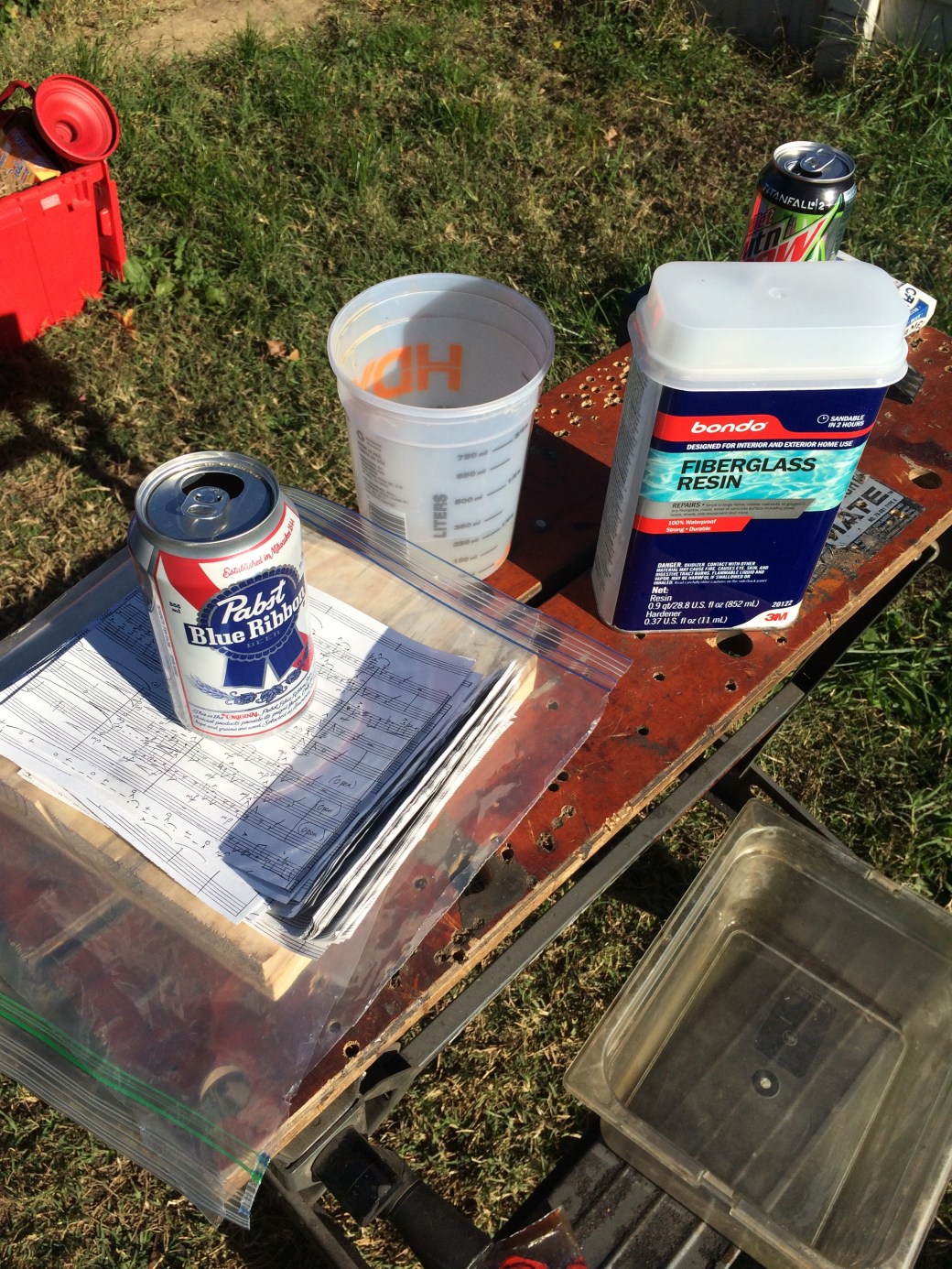
This is a score of Doug’s, meticulously handwritten and every note exactly where it should be, articulated just so…

…so of course I cut it up…

Ready to be made into a handle:

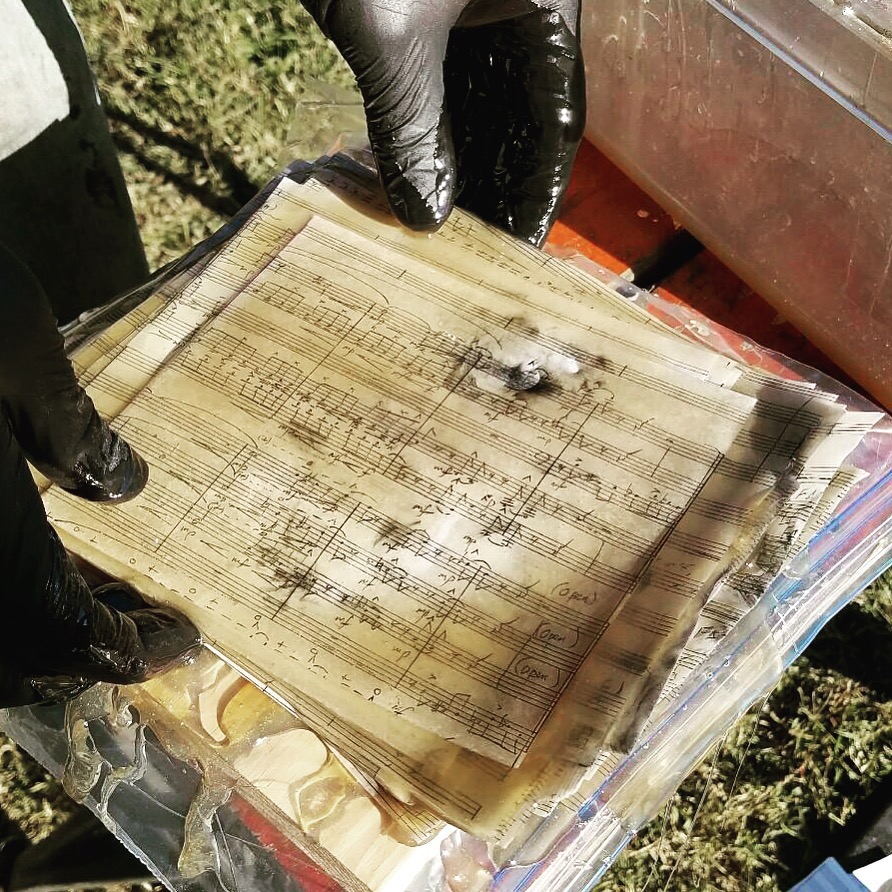
Soaked in fiberglass resin:

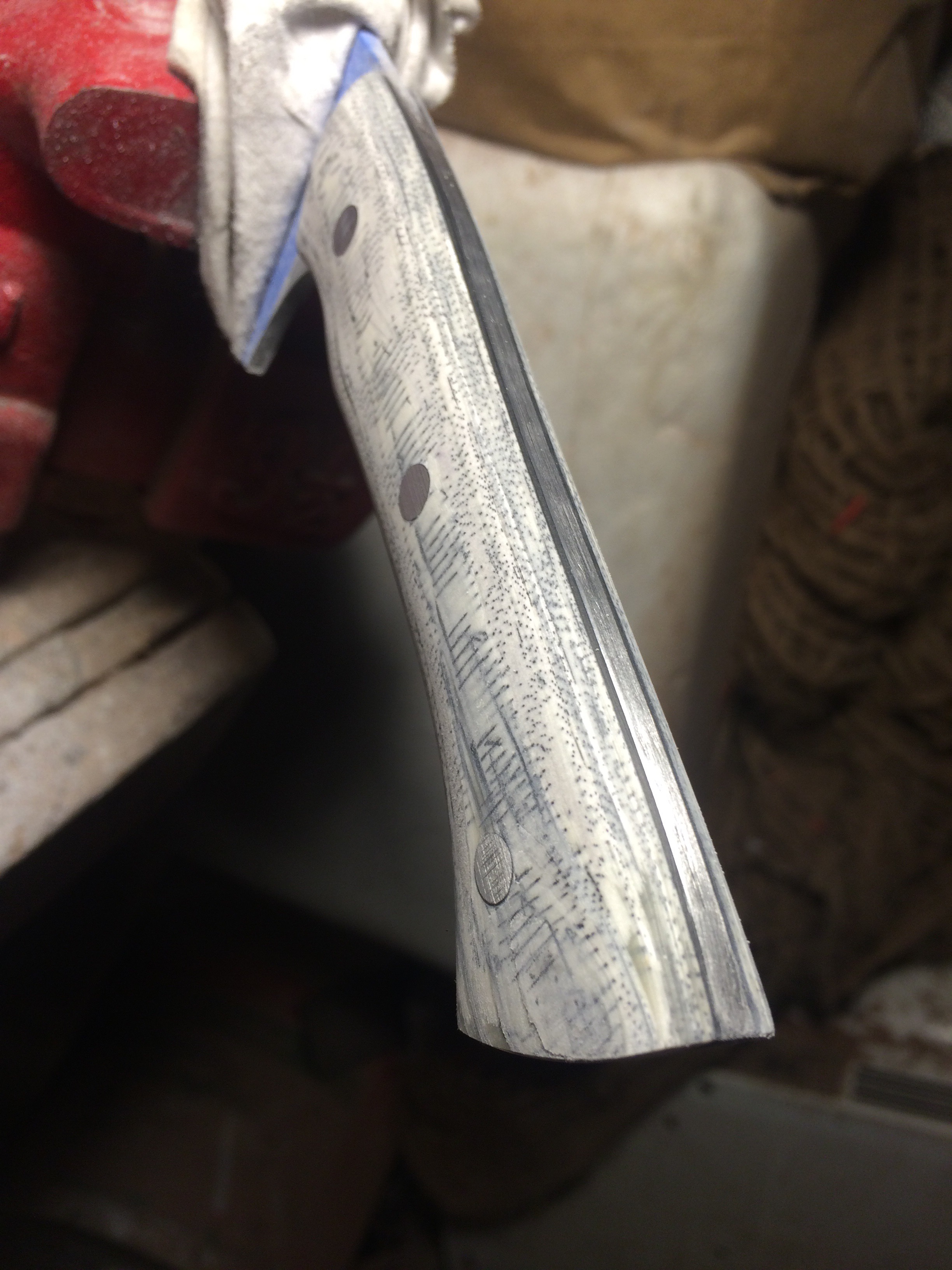
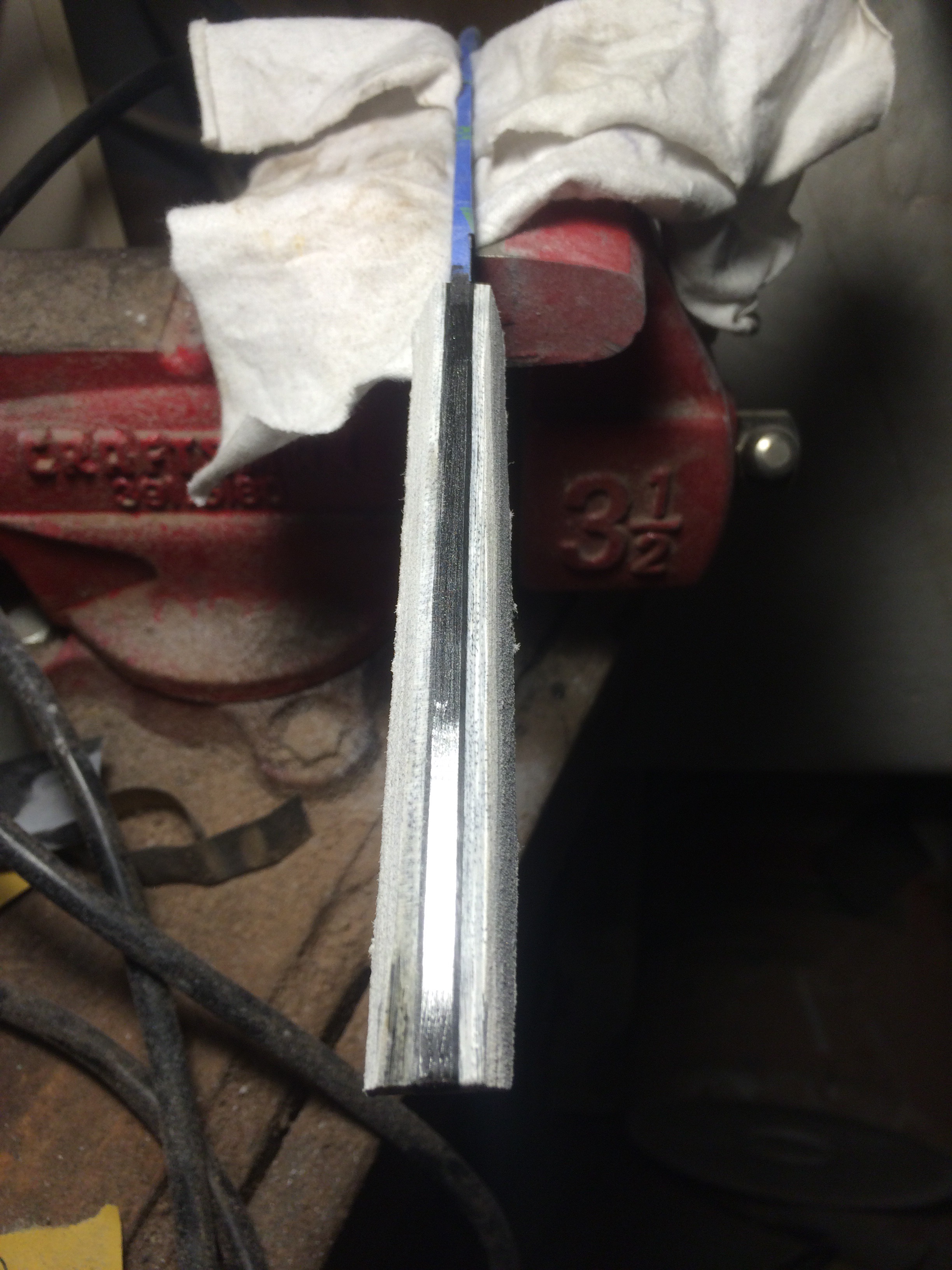
I think I can work with this…

Be sure to learn your craft.

Also be sure to check out Doug’s record– it’s really fantastic.

Knifemaking: standing on the edge and the Stuntjumper

trust your heart

if the seas catch fire

(and live by love

though the stars walk backward)

ee cummings– (dive for dreams)

This knife was a commission for a gentleman who was a professional stuntman.  He runs a screen printing company now, but his curriculum vitae shows him to be quite the daredevil.  What I really enjoy about this is how he steps right up to the edge of what most people (myself included) would deem comfortable or sane, and then leaps right off:

I started thinking about this idea of the edge we step up to and what it means.  Everything behind the edge is safe and comfortable.  Beyond the edge is the unfamiliar.  Maybe there is a job you don’t feel qualified for but want to apply anyway.  Or there is a project you want to pursue but are afraid of failing.  Maybe you are afraid of letting loved ones down, or yourself down.  Anytime we move closer to something that fulfills us, moves us, makes our life better, or helps us to grow, we get closer to that edge.  Beyond that edge is something new and different.  And that can be scary.

So you step up to the edge.  Perhaps there is a bit of reluctance there, with a splash of self-doubt, a shot of fear, and garnished with a cherry of mistrust, shaken (not stirred), making everyone’s favorite I’m-not-sure-I’m-up-for-this cocktail.  The trick is finding the thing that made you step up to the edge in the first place.  If you are truly ready to take the leap then that thing will outweigh the ingredients of the cocktail.  I think the secret of life is to find that thing.
As a kid, my family would go to the swimming pool most days in the summer.  My first favorite part of this was the snack bar.  My second favorite part was the diving board.  I would spend hours jumping off the diving board and eventually I taught myself to do somersaults and twists.  You know, the fancy dives.

I did this for many summers, well into high school.  Then during my senior year of high school an announcement was made that there was going to be a multi-school dive team.  I signed up.  I got a physical, bought a pair of speedos and went to the first practice.
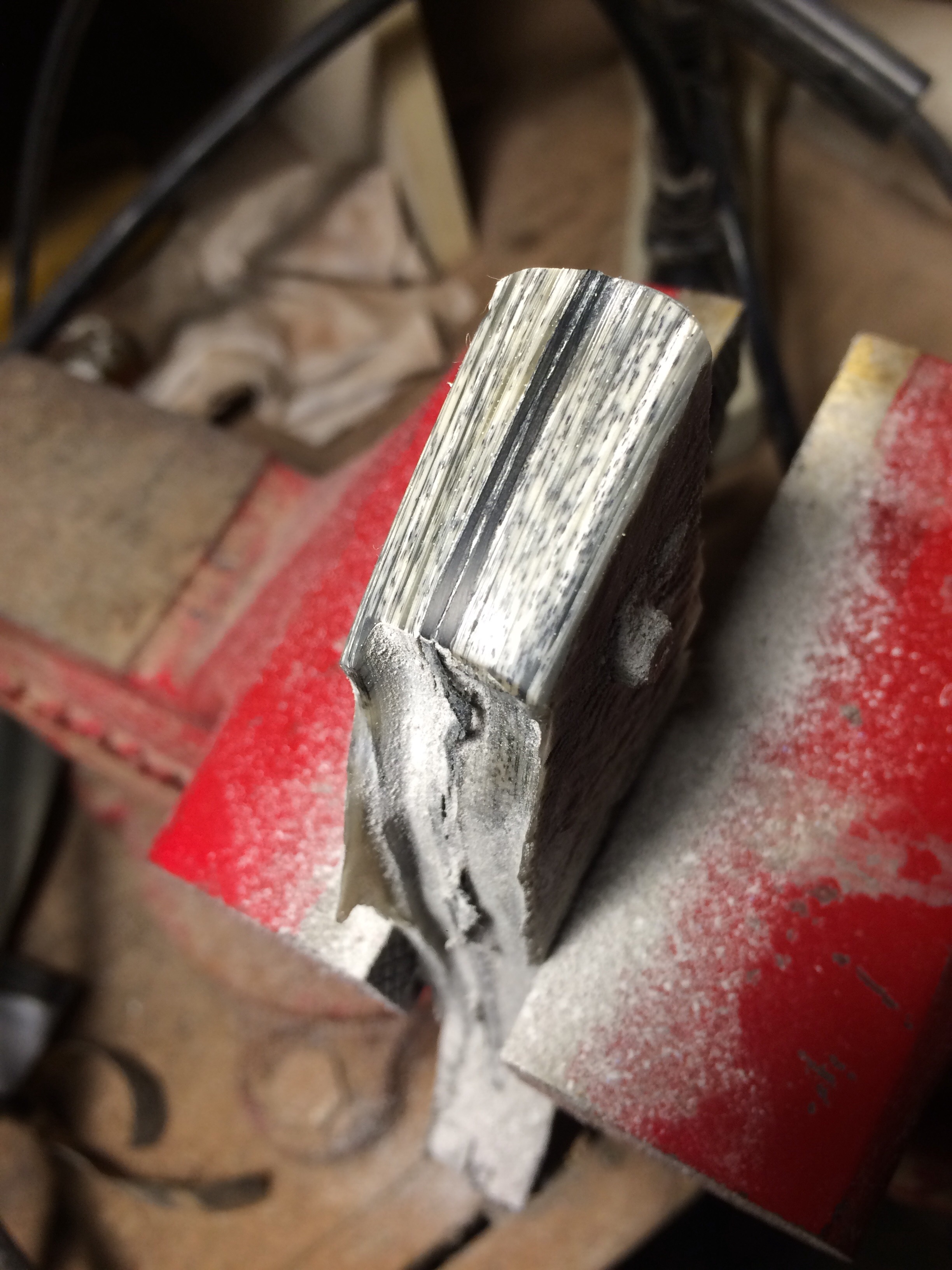
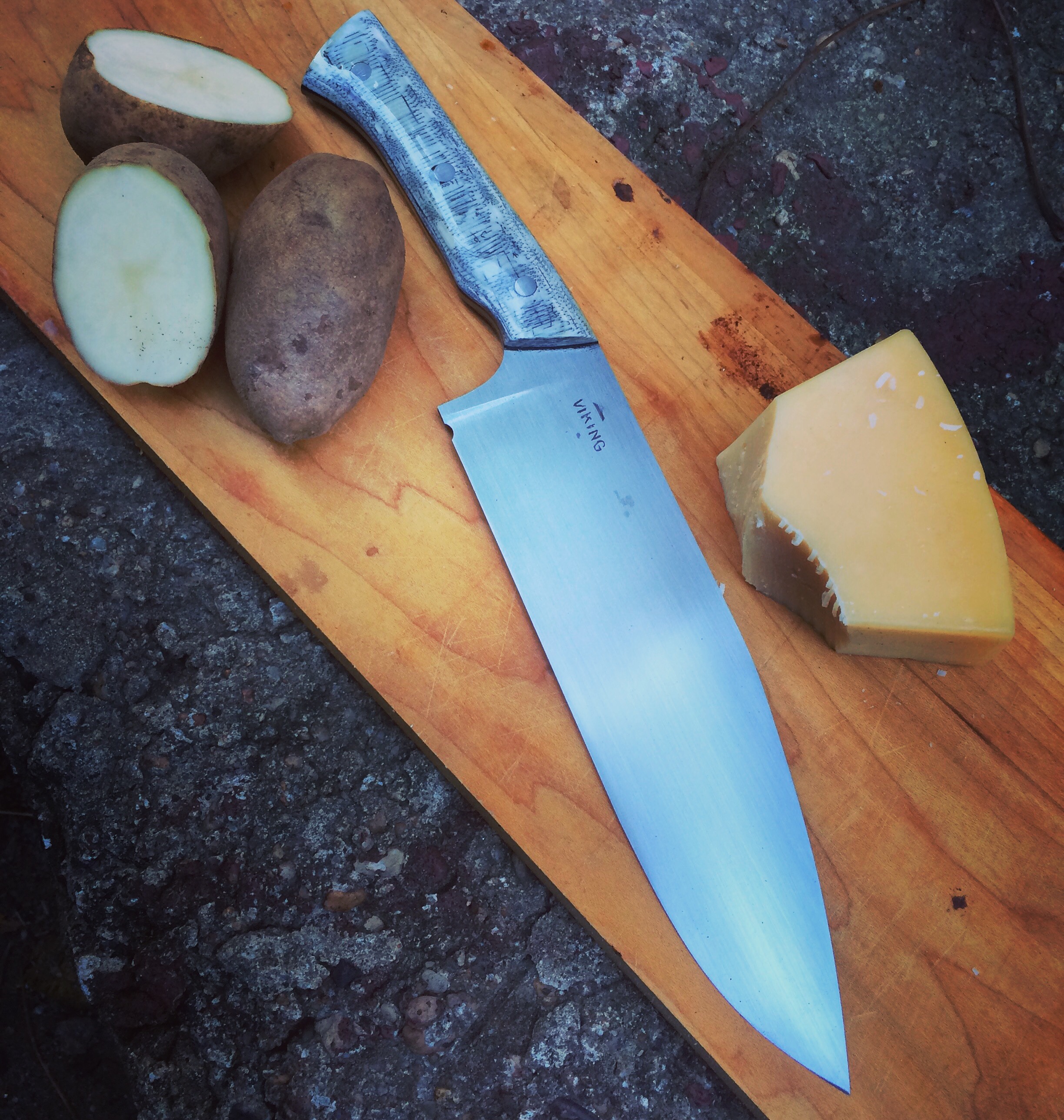
I was awful.  I found myself surrounded by gymnasts who were much shorter and more agile and able to turn somersaults more quickly than I was.  The diving boards themselves were much more springy than the ones at the seasonal summer swimming pools with the snack bars, launching me at least three times as high.  My summer pool technique did me no favors.  There were some inward and reverse dives we had to perform where our heads came pretty close to the board.  I did many back flops and belly flops.  The coach talked me into working on a double somersault, and the velocity with which your face can slam into the water if you turn too far is rather high and a bit painful.

I remember many times stepping up to the edge of the board, wondering what I was doing out there, and then making the leap anyway. I remember what the reluctance felt like and what it felt like to not trust myself.  The thing that helped me to make the leap was that I wanted to be there and I wanted to try something I hadn’t done before and might not have the chance to do again.  I was pretty far out of my comfort zone but I found standing out on the edge in nothing but my speedos to be quite liberating.  I was never as good as I wanted to be but I was better than when I started and that was enough. 

As you move through life and it’s seasons you may find that the thing (the thing that is stronger than the I’m-not-sure-I’m-up-for-this cocktail) is constantly shifting and moving and it takes real work to find that thing that gets us to the edge.  It doesn’t feel safe, it’s uncomfortable, and it leaves us vulnerable to criticism and the negative opinions of others.  Sometimes getting to the edge is held up by our own judgements and self-criticism.  The upside is that the process of getting up to the edge can give a profound sense of purpose, even if we don’t quite make it there on the first try.  This is the lesson of the Stuntjumper.

Preliminary sketch:

…and working through a large 3/16″ chunk of O1 tool steel.

Night drilling…

Blank for the Stuntjumper, with half inch holes drilled to lighten the load a bit.
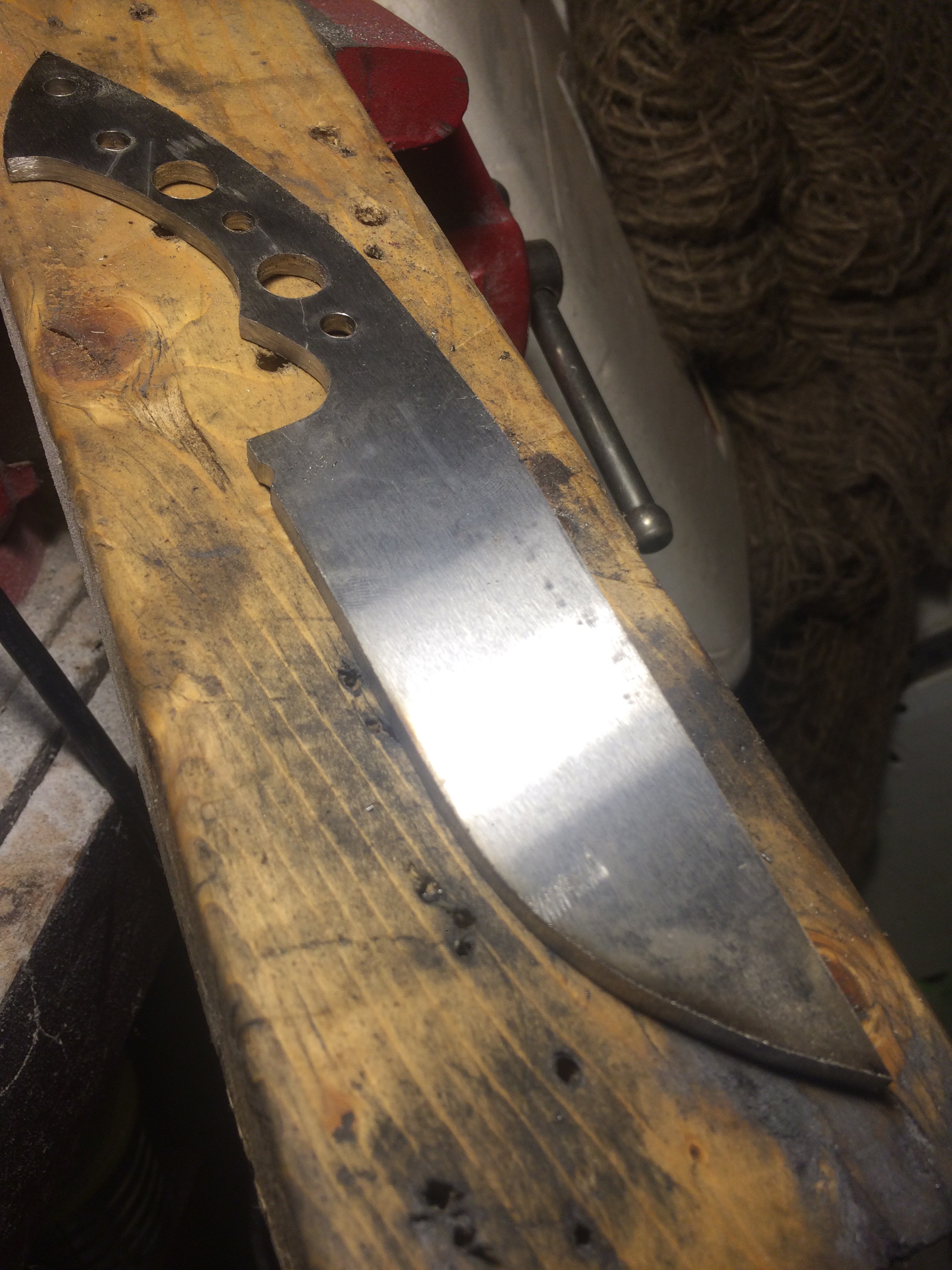
This is where the blade edge will be:

Midway through the initial grinding of the bevels:

Sanding before heat treat.  The more sanding you do on the soft steel, the easier it will be to sand when the steel is hardened.

Hardening the skullcrusher:

Ready for tempering:

Removing the slag…

…for a smooth satin finish

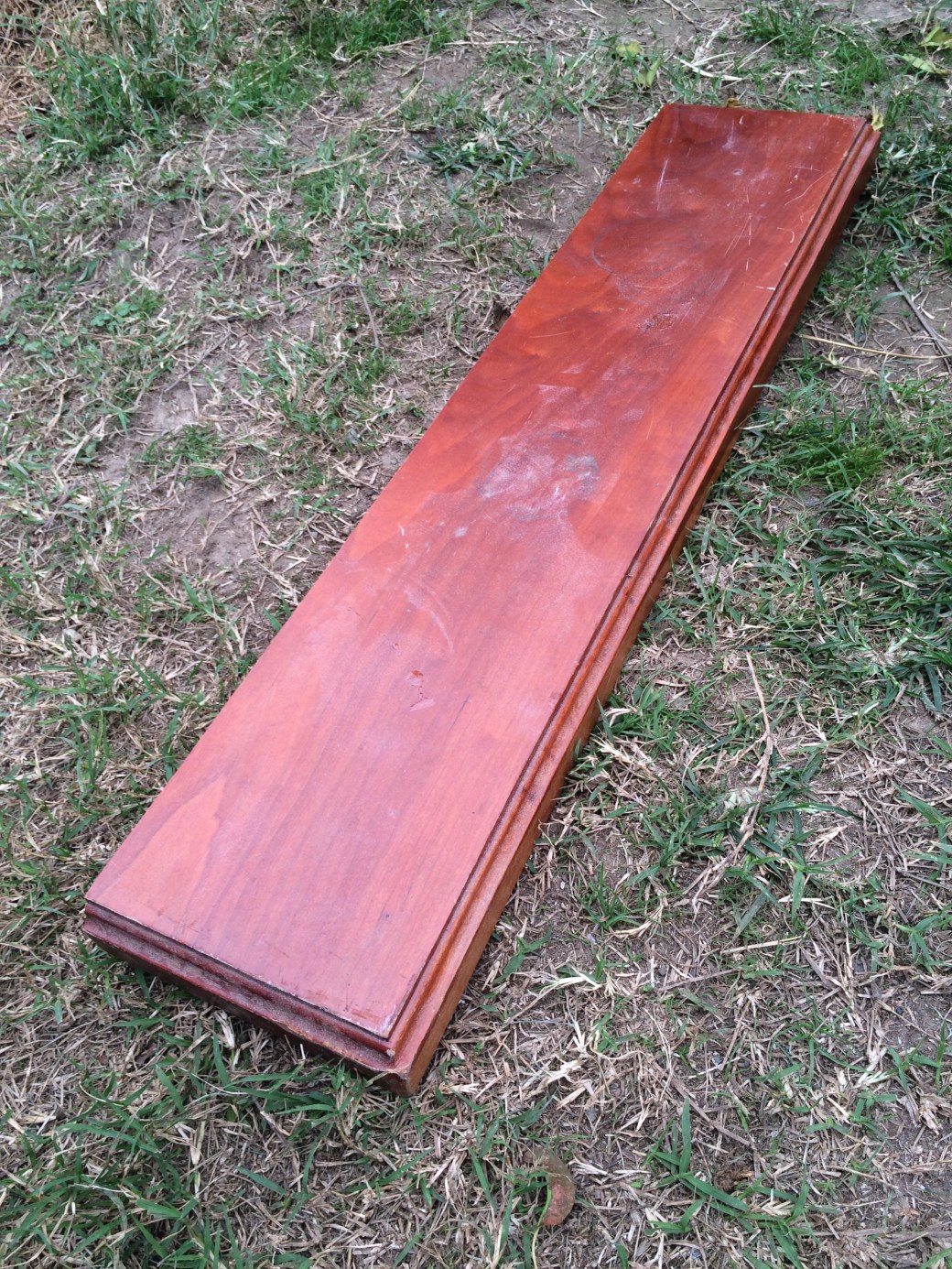
I wanted to include something that represented an edge of some sort.  This is a walnut shelf ledge that my partner got from his father-in-law.  I thought it would do nicely

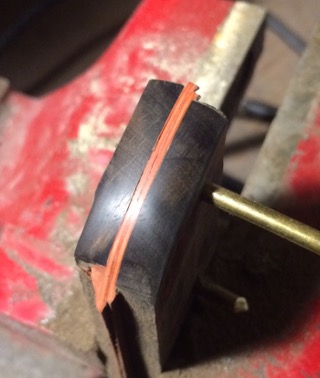
Red fiber spacers for a bit of contrast:

Shaped:

More shaping:

Make sure you are stepping up to your edge- the hardest part is getting there.  Don’t forget your Speedos…


Check out Mr. Snow’s business Mobile InkPod

Knifemaking: how to behave in the world, and the Dummy

“You big dummy!”

-Fred Sanford

It was New Year’s Eve a couple of years ago and it had been a pretty crappy year.  I was with very good friends, half drunk, and a bit reflective.  There are times in life when challenges present themselves, as they always will.  You can deal with them with grace, dignity, and elegance and use them as an opportunity to move forward….or you can let each one smack you in the head until you find yourself sitting in a pile on the ground feeling sorry for yourself.  My year could be summarized by the latter.  So in my half drunken state I came up with the last New Year’s resolution I would ever make.  I wrote it down:


Don’t be a dumbass. The next day in a brand new year I thought about this.  I proposed that whatever future situation I found myself in and there was a decision to make I would ask myself, “What would a dumbass do?”.  When I had determined what course of action a dumbass would follow, I would simply not follow that course.  

The beauty of the whole thing is the simplicity of it.  Much like kindness, it functions on a continuum.  It will meet you where you are and, if you are diligent in your practice of not being a dumbass, it will expand into your entire universe.  Before long, what started as a way to make your immediate life better turns into a lifestyle.  You set an intention to be present in your life and your relationships.  You are navigating opportunities.  You are not perfect but anyone who is not a dumbass knows that no one is.  It is quite challenging but the payoff is that you, my dear friend, are not being a dumbass.

But alas, no system is perfect.  Sometimes, despite your best efforts, you find yourself ambling down an avenue of unbridled, unbuttoned, and completely unadulterated dumbassery.

I found myself on that avenue the other week.  It was one of the most embarrassing and humbling days of my professional life.

I had a contracted production runner job working for a big televised arena show.  My job was to run around town and procure necessary items for the show.  I’m generally very good this job.  They give you a list of things they need done to make the show happen, you figure out the best way to accomplish those things, and everyone works together to make a production happen.  Many times you are part of a well-oiled machine that makes incredible things happen and it is very satisfying.

This particular show, being a massive televised touring production with many things that can potentially go wrong, required a copy of our drivers’s license for insurance purposes.  Most production runner gigs don’t do this.  No worries though and I handed over my license.

It had expired.  Then I remembered the notice I had gotten from the DMV a couple of months ago and how I said I’d get around to it and how I actually hadn’t.  This wasn’t exactly the way I wanted to be reminded.  It was hugely embarrassing and I wanted to run away and hide. 

I did not run away and hide, because that’s what a dumbass does.  The people on the production team for this organization are incredibly kind and though I couldn’t do my normal job and was working my way out of a shame funk, they let me work in catering.  I hadn’t done anything in food service since I was 19.

They sent me to the kitchen and I met with the head catering lady who just laughed at me, handed me an apron, and sent me to help unload a cargo van slam full of food to be prepared that day.  The cargo van was in the loading dock and the loading dock was a zoo.  In addition to the van there were four tractor trailers being unloaded by about forty stagehands.  There were four forklifts unstacking road cases and half a dozen men with radios directing all of this.  I joined four or five other guys at the van and start loading up carts with everything from fresh salmon to the biggest can of marinara sauce I had ever seen. 

I get one of the loaded carts to take to the kitchen and it is slam full.  I am trying to navigate the insanity of the loading dock and I hit a bump.  There is a gallon-sized tub of dijon mustard sitting on top of the cart that I watch, in slow motion, fly off the top of the cart, hit the ground, break open, and splay all over the crew chief directing the insanity.  He was not happy….

So food gets back to the kitchen and unloaded.  I would spend the next four hours peeling potatoes, cutting endives, and shredding raddichio.  It was surprisingly calm in there.  I made sandwiches for lunches, ran dirty dishes to the wash area, and cut up more vegetables.  Every time I ran into the head catering lady she would say ‘here comes trouble…’.

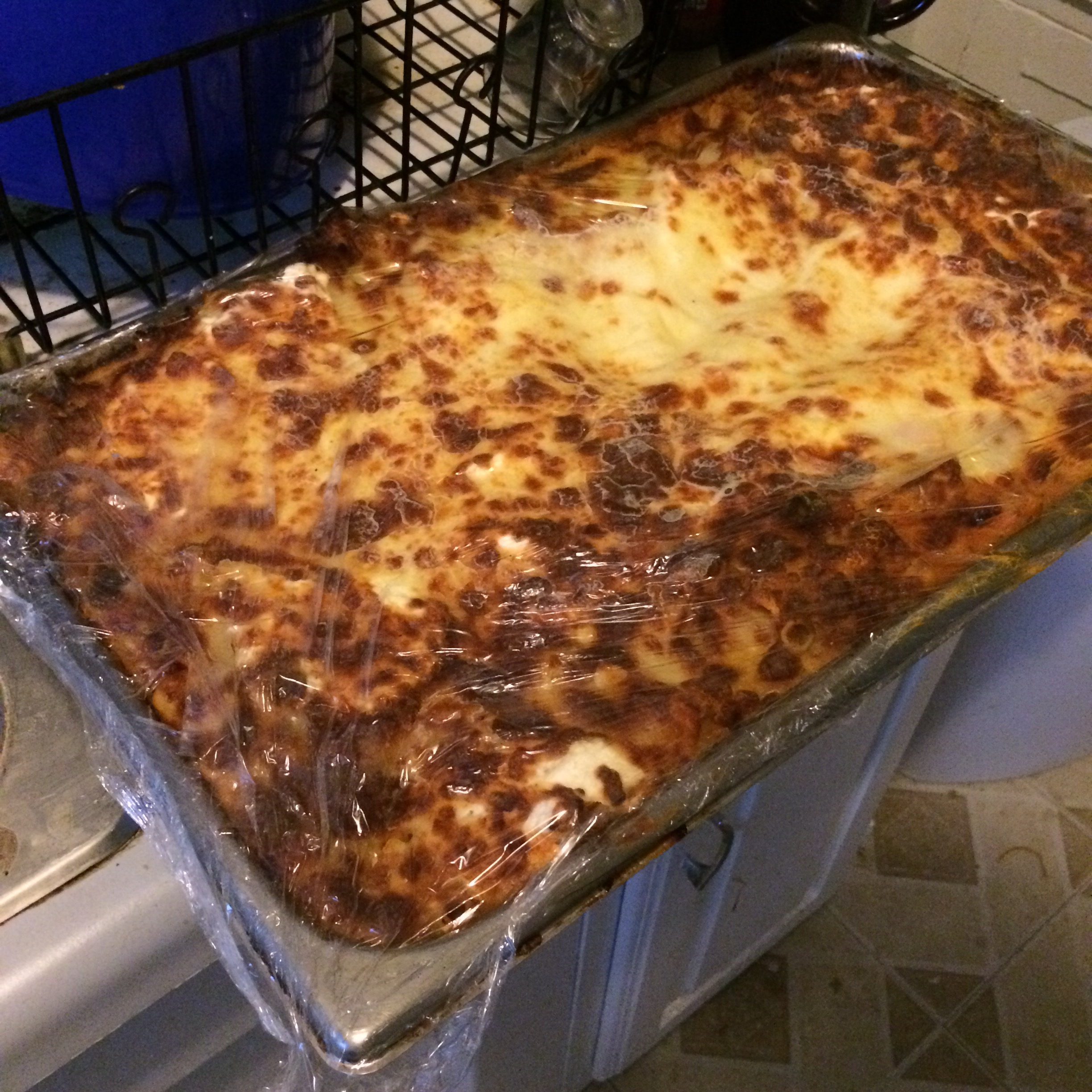
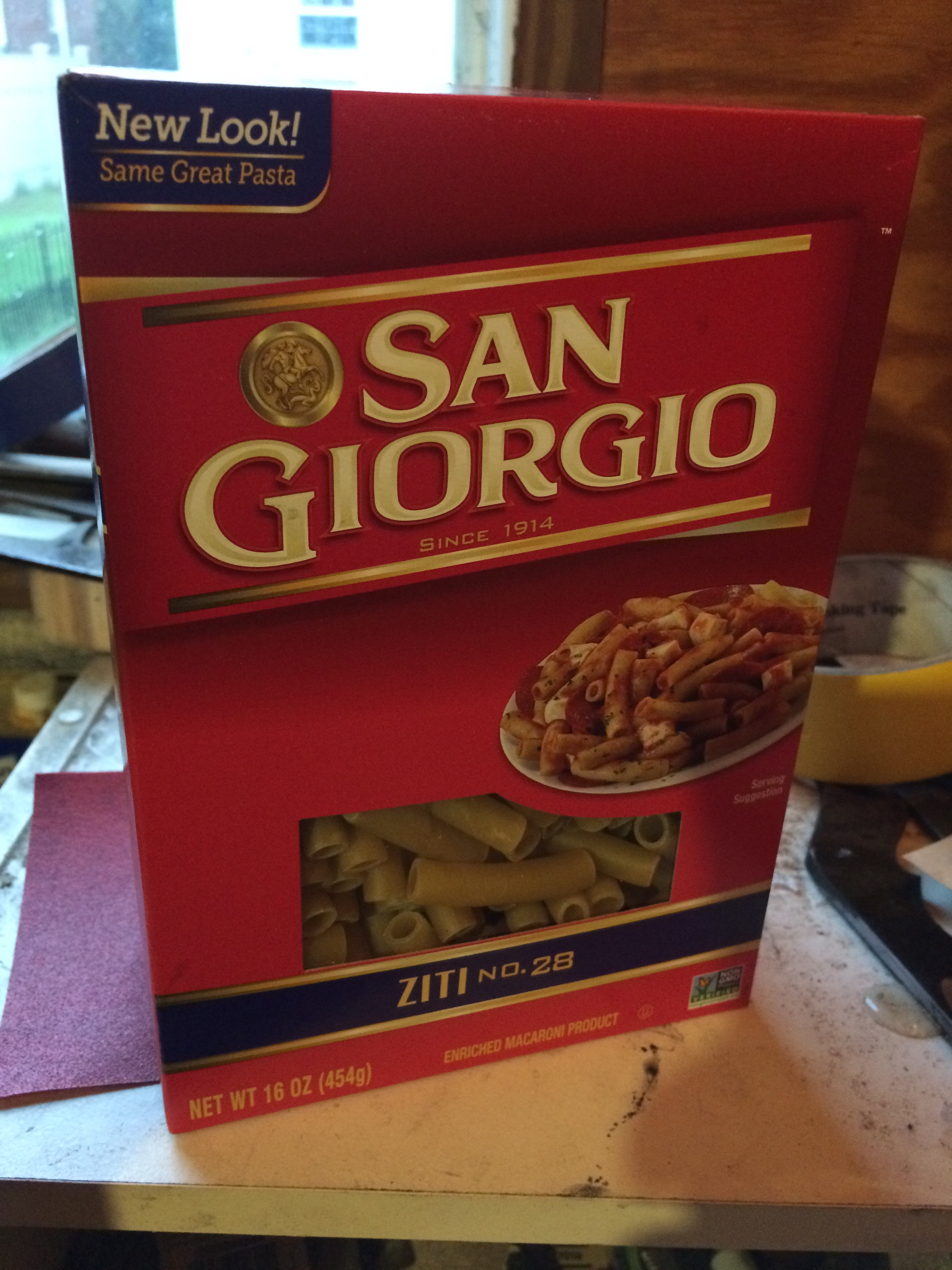
They were all very sweet and kind.  They sent me home with a hotel tray full of baked ziti which fed me for two weeks:

This is the lesson of the Dummy.  Sometimes you have to stay with your dumbassery and it will pass.  Everyone is a dumbass sometimes.  Thank you Universe for teaching me humility….

I started with 1095 spring steel.  Here it is cut, with bevels started:

Hardened:

Wet sanding:

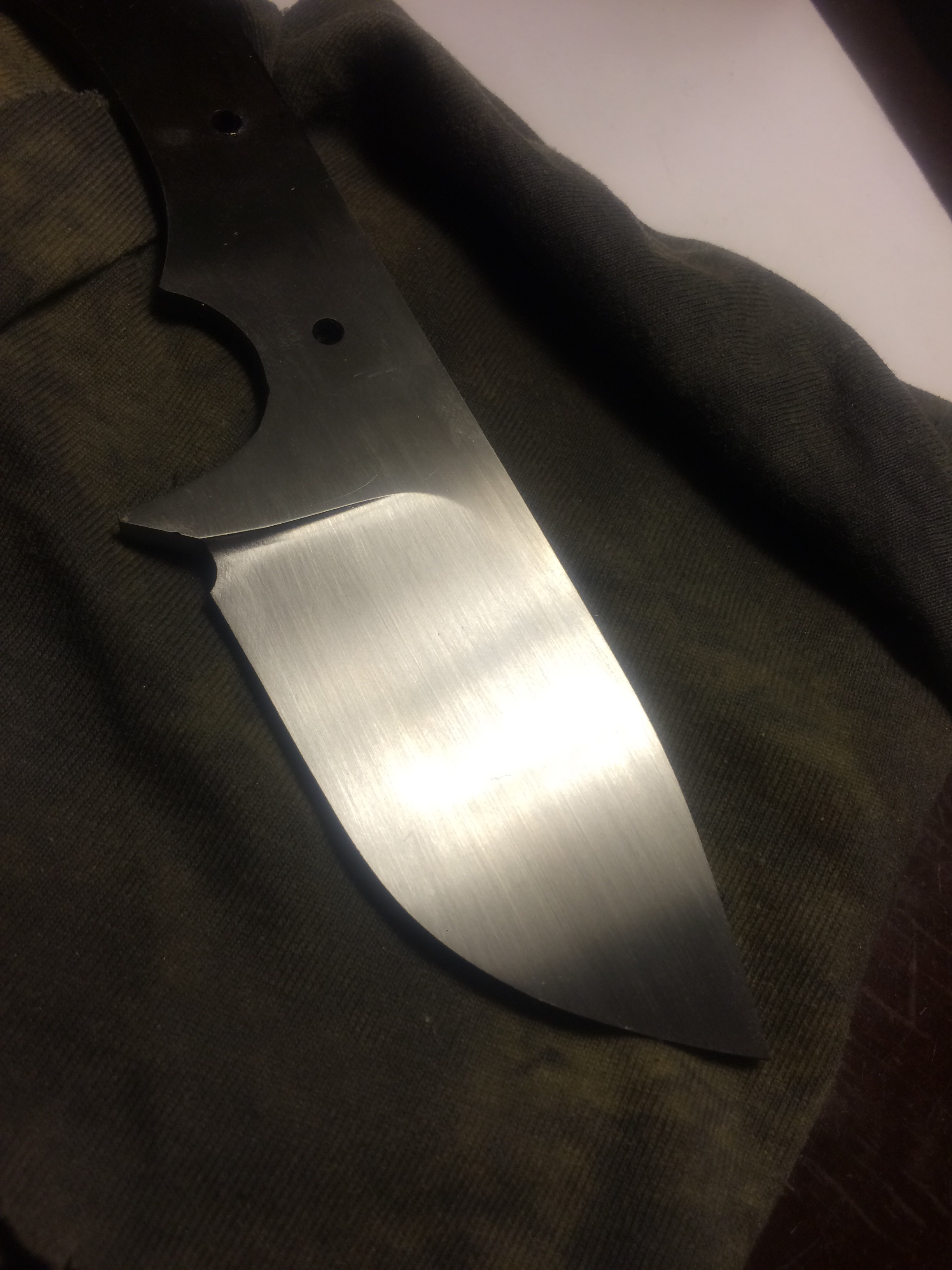
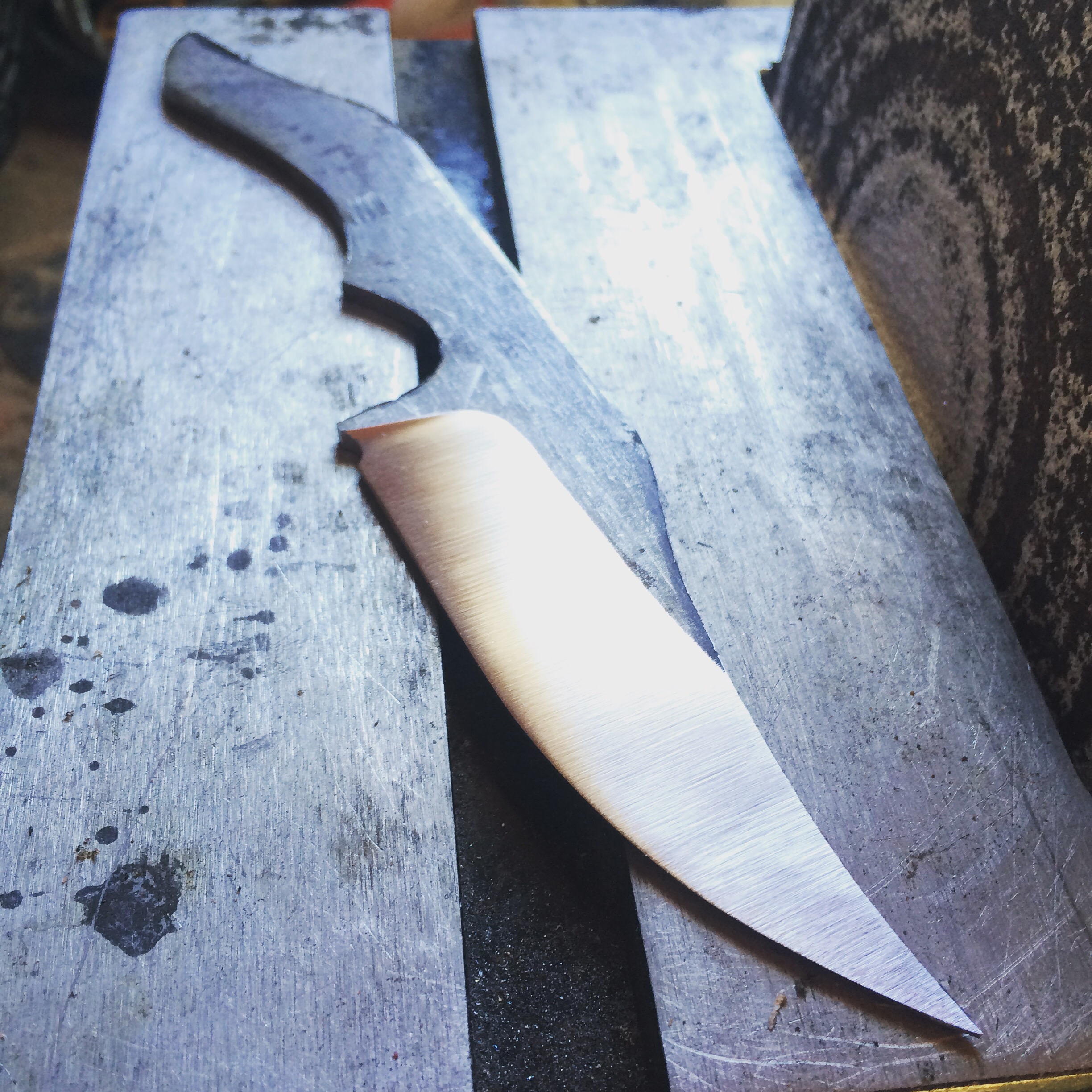
….for a satin finish

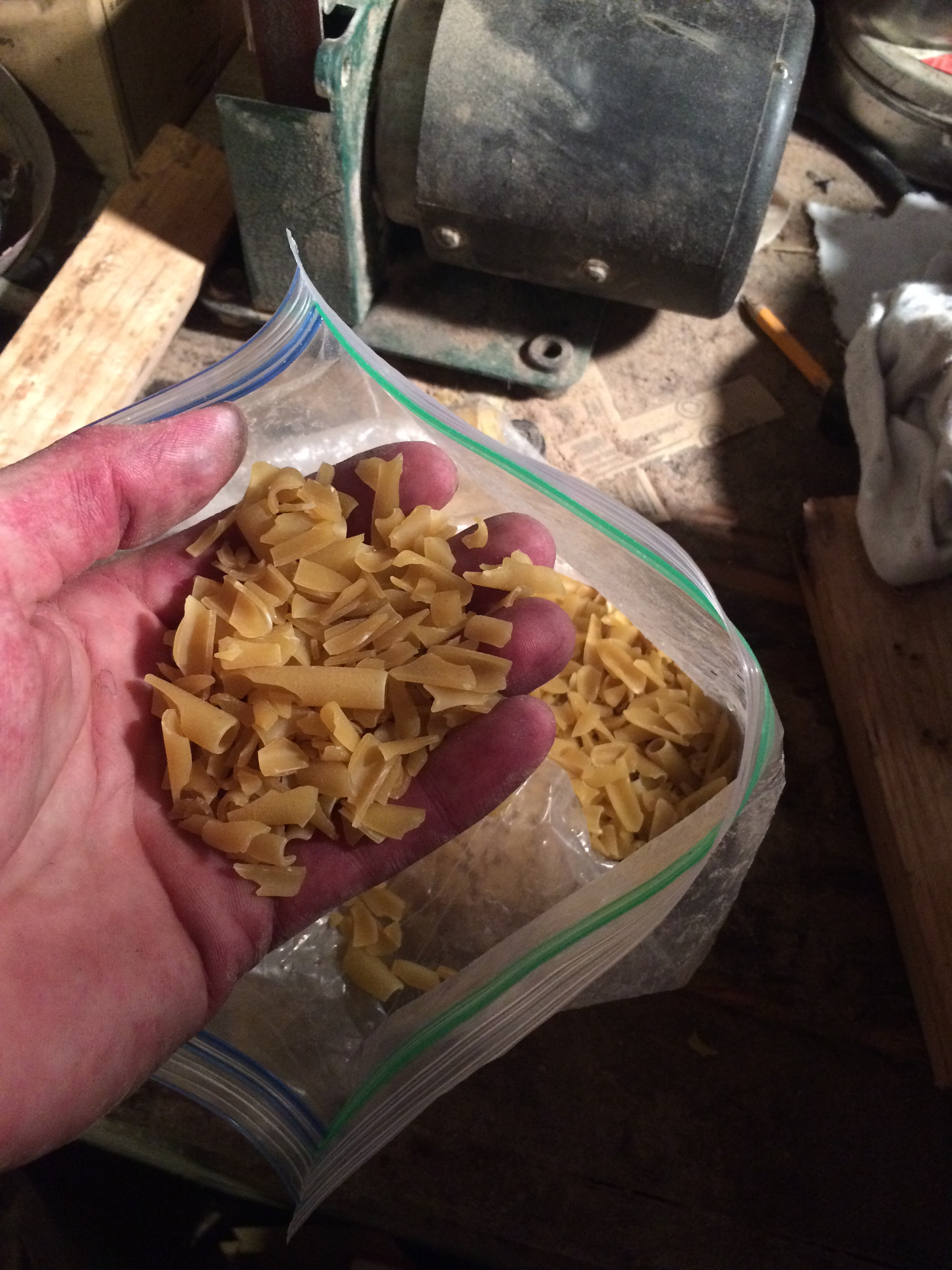
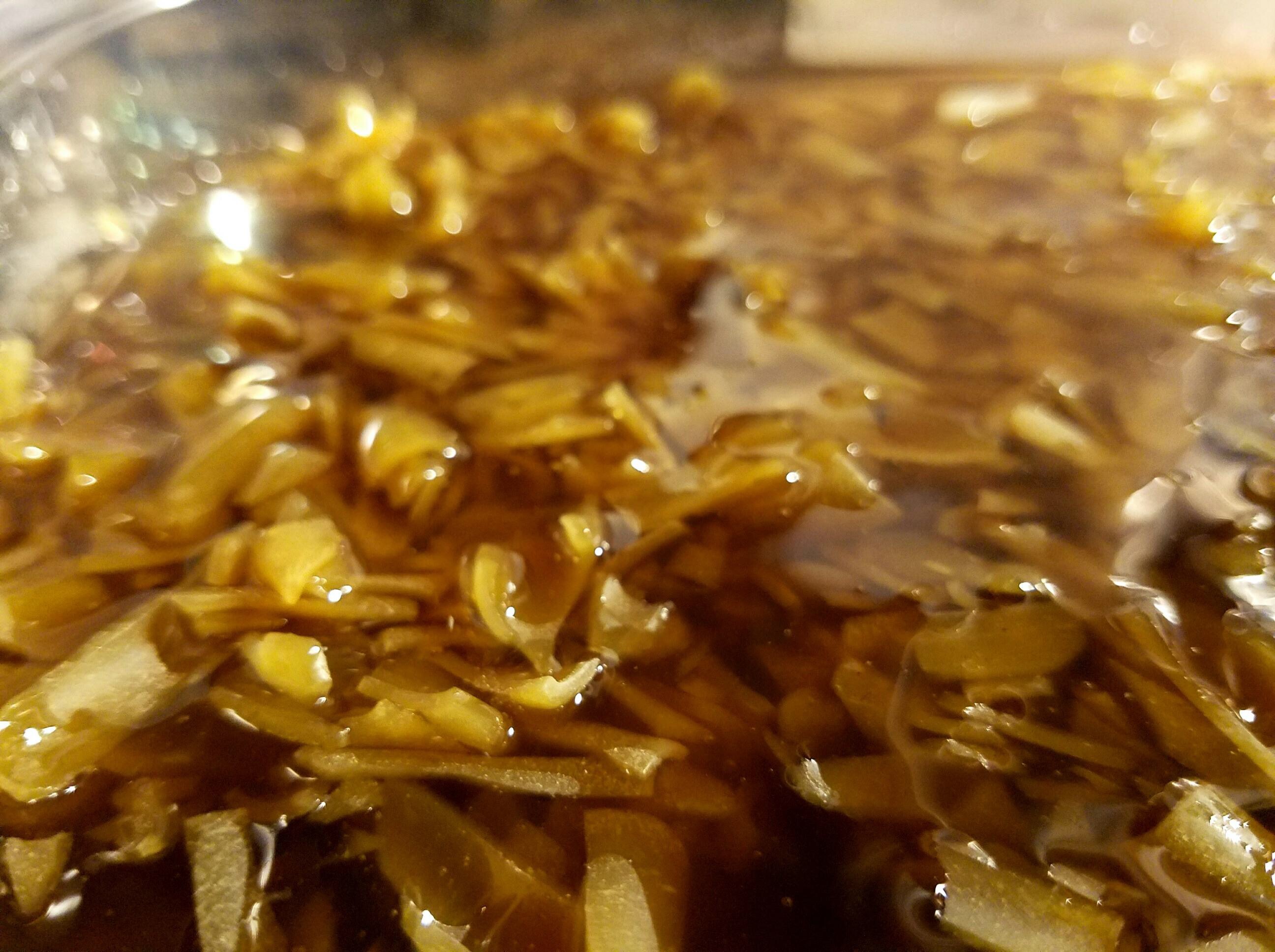
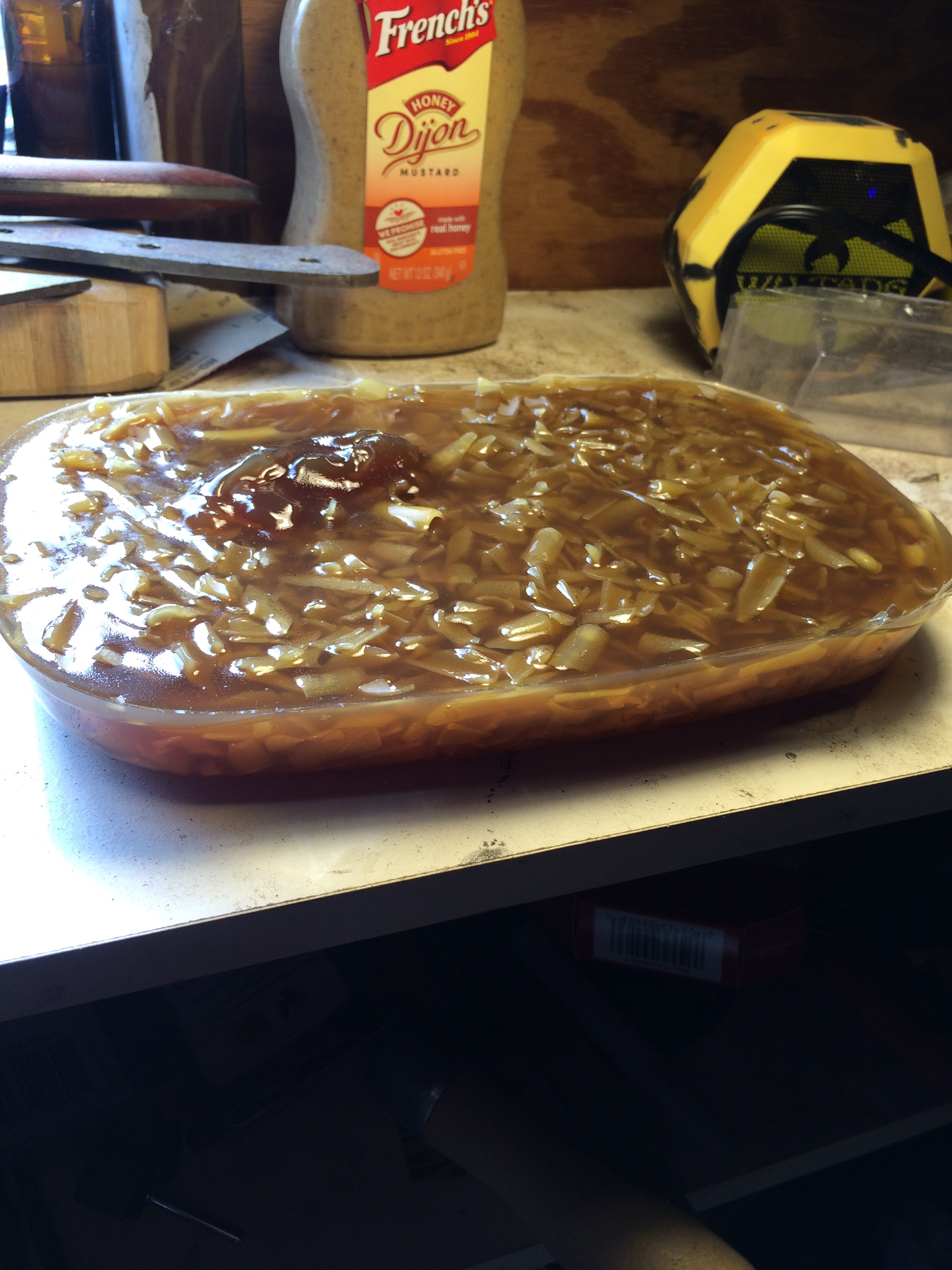
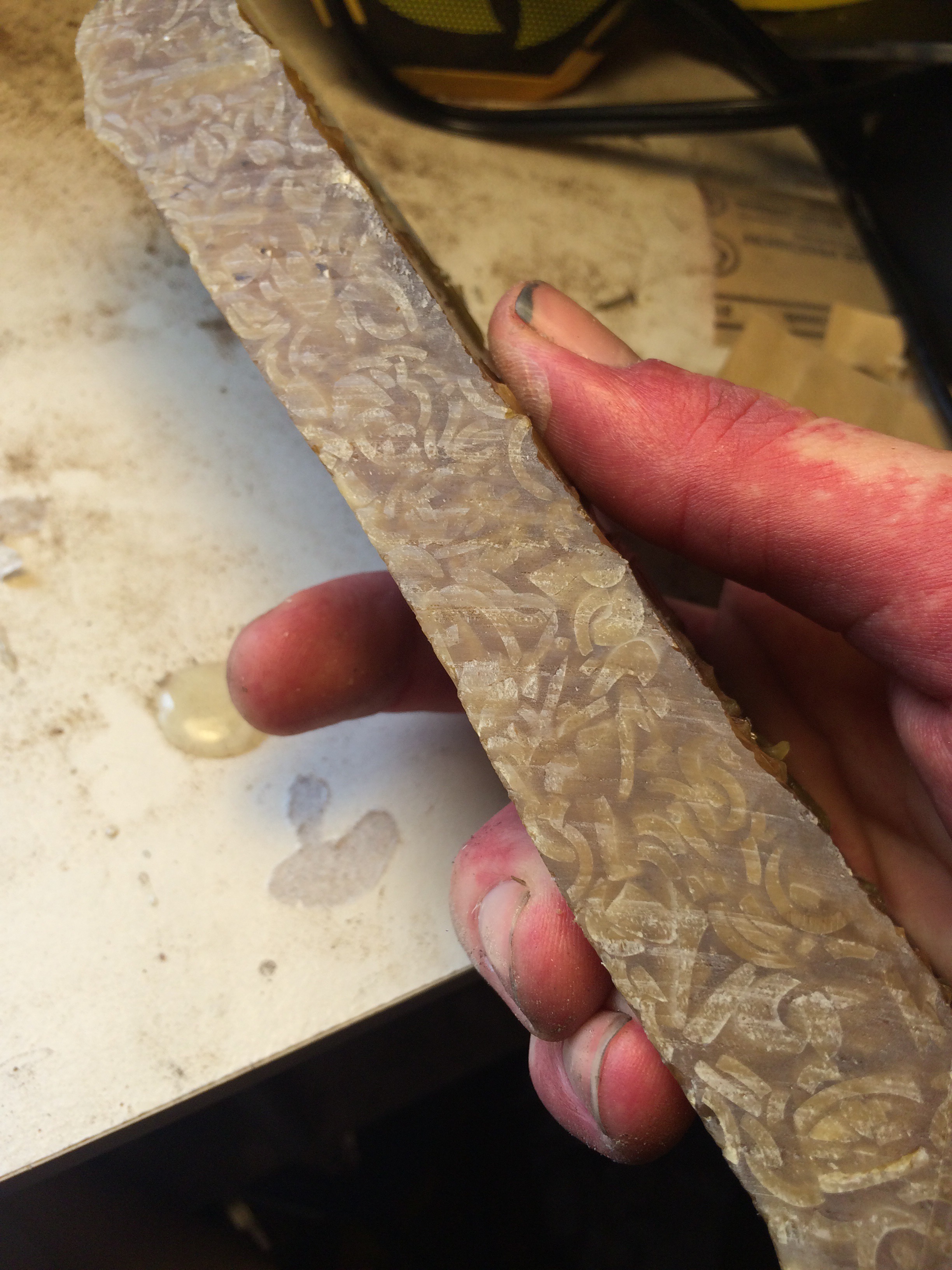
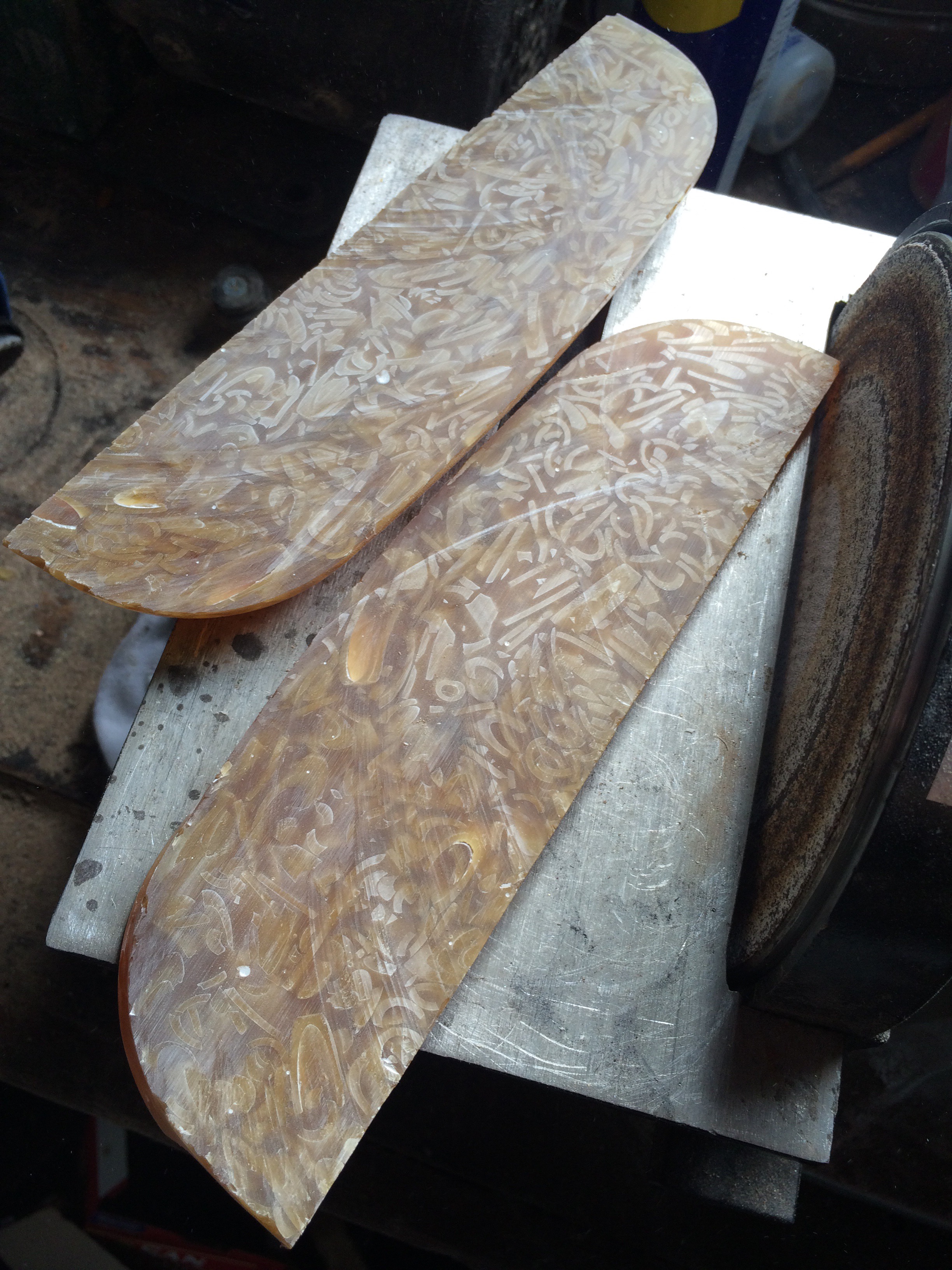
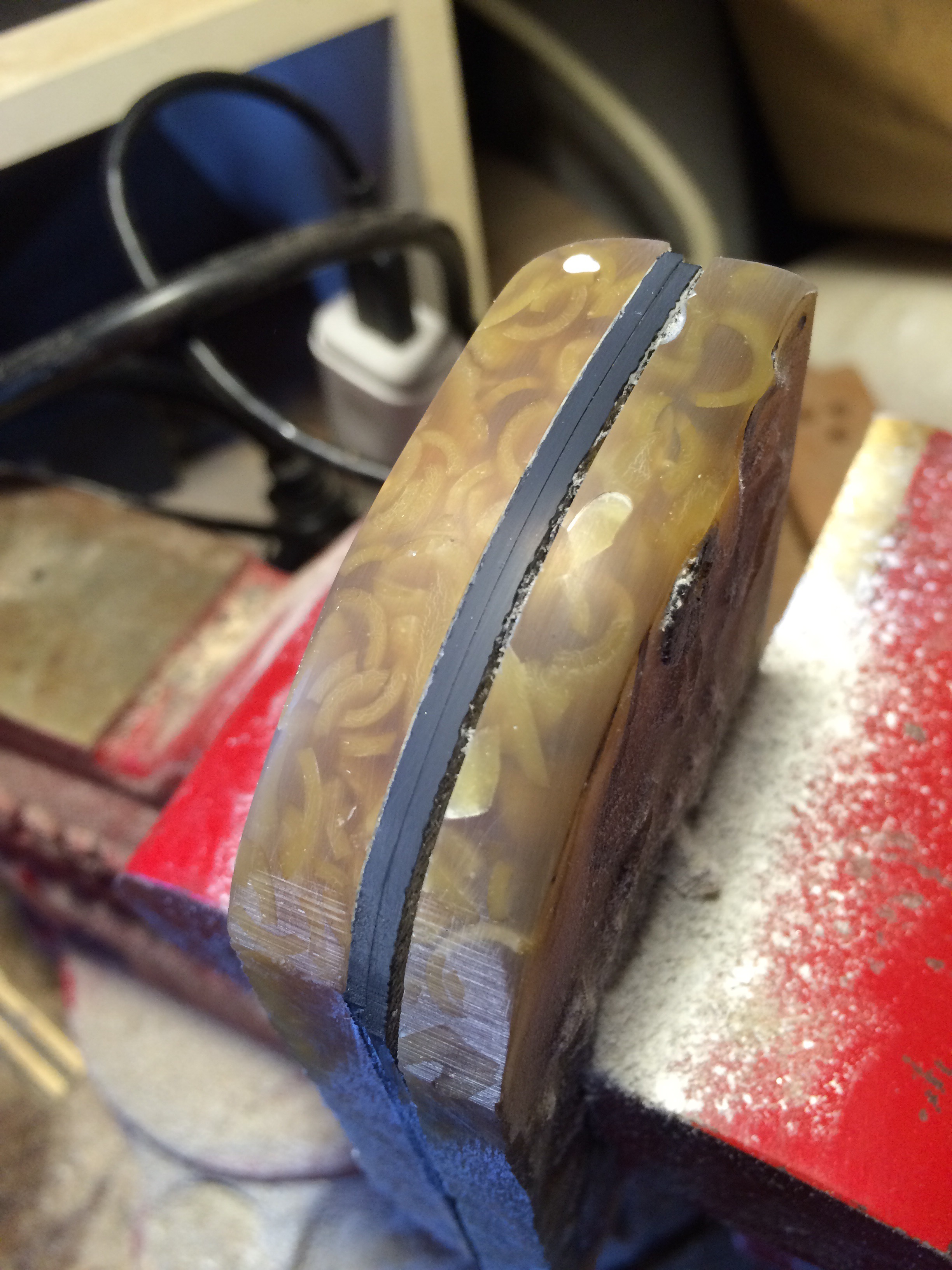
In gratitude for the many meals I was gifted, I wanted to work ziti into the handle:

Hulk smash:

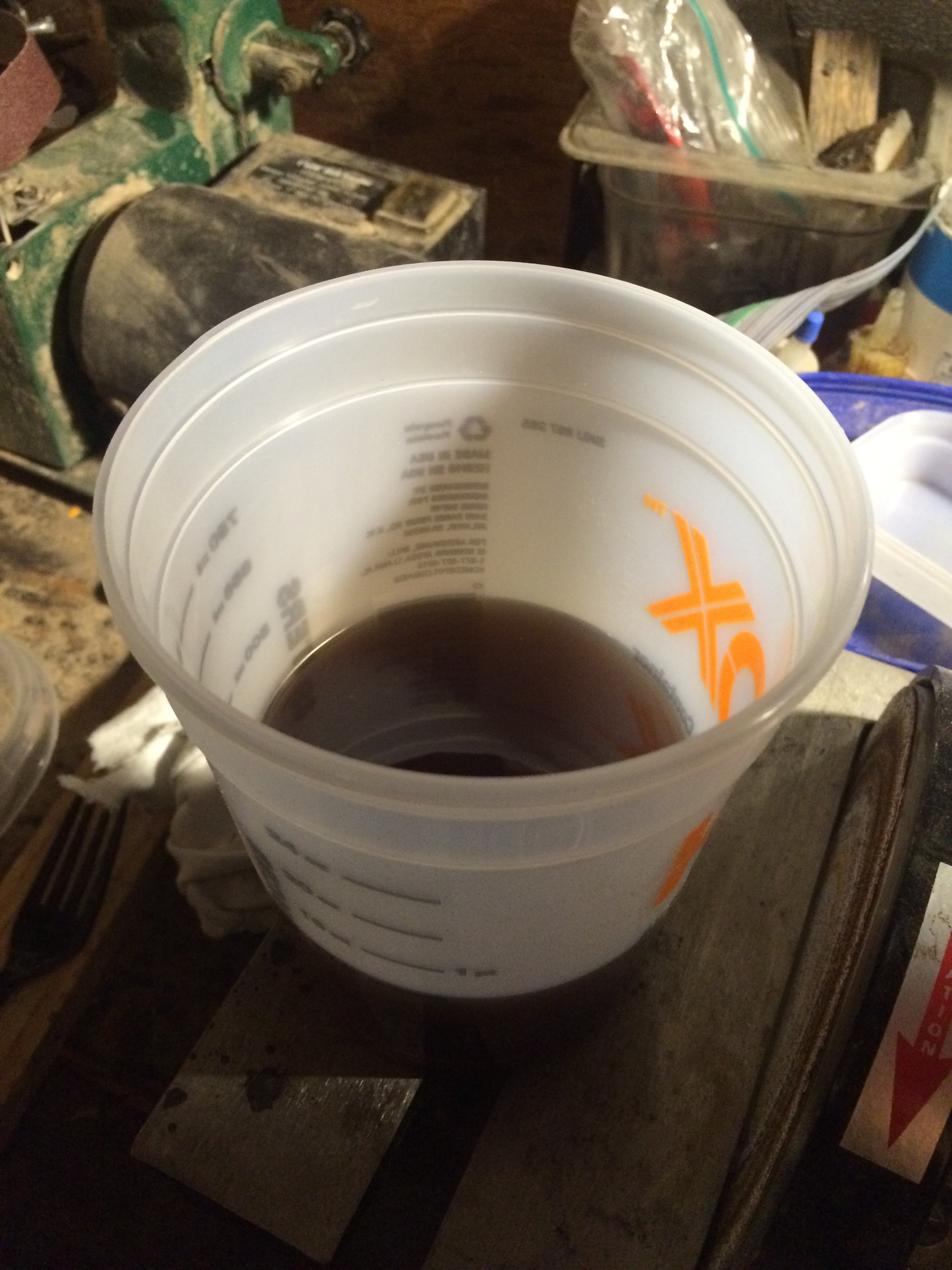
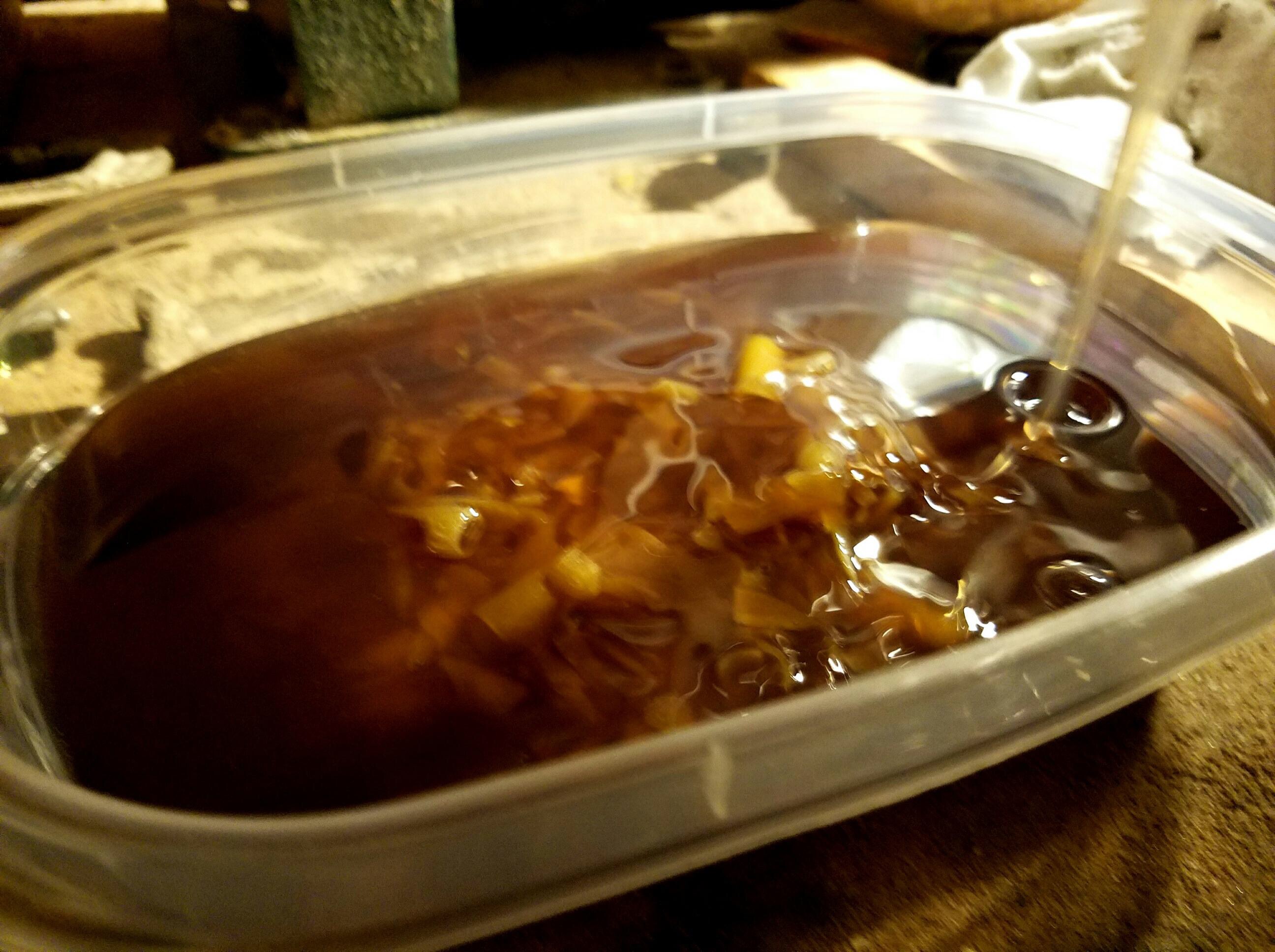
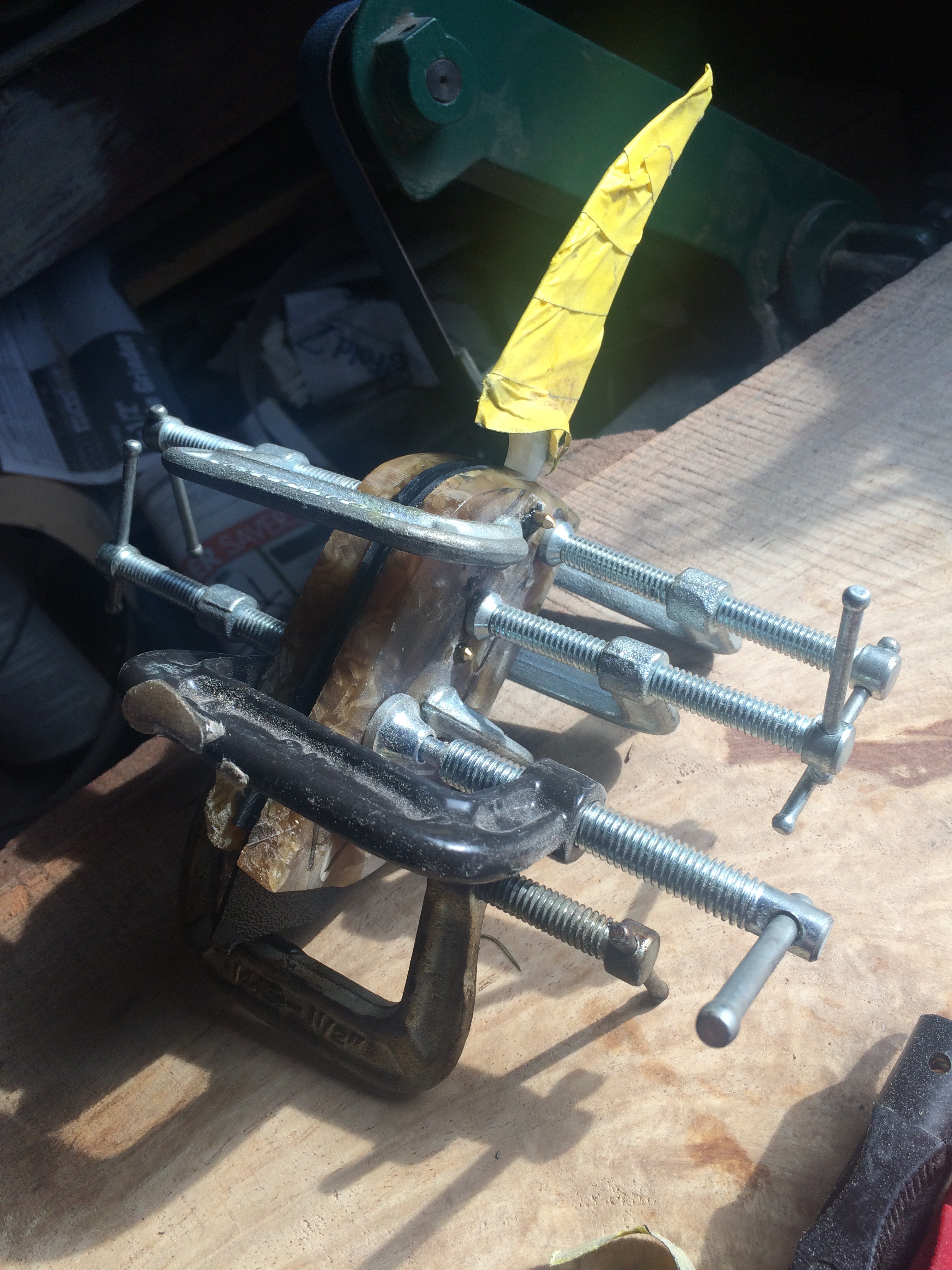
Fiberglass resin:

Dinner is served:

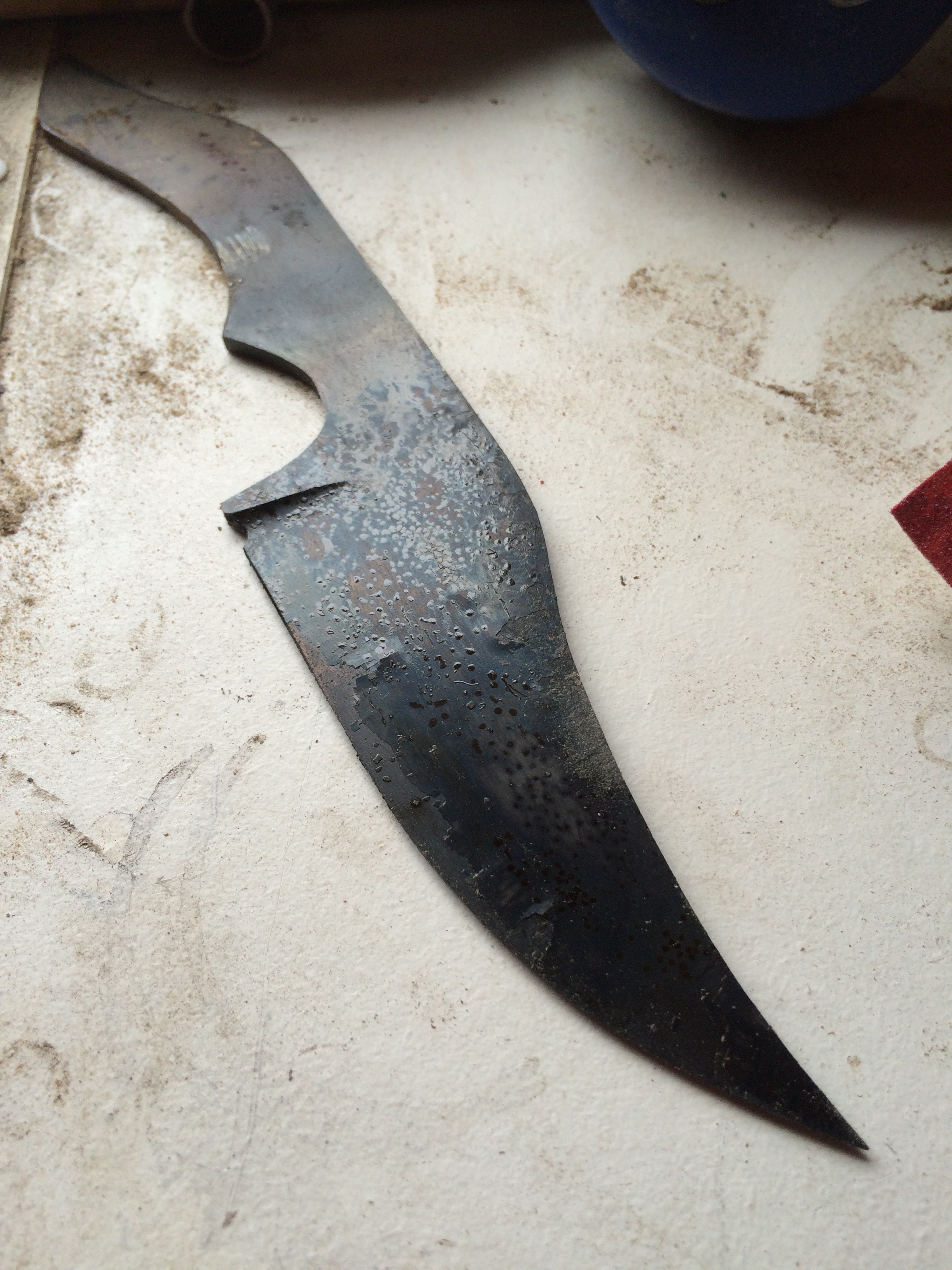
The dijon mustard, a low point of my dummy day:

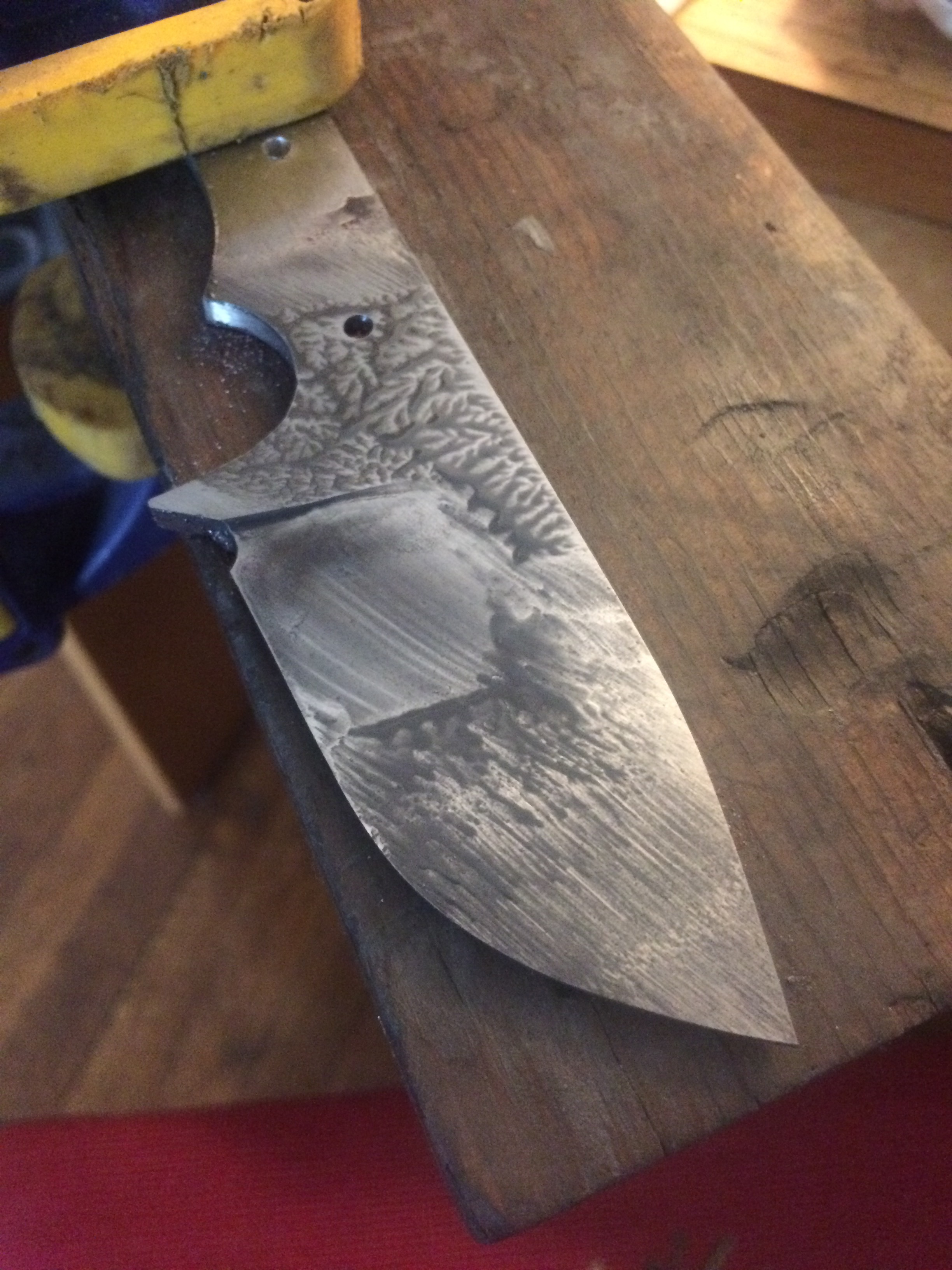
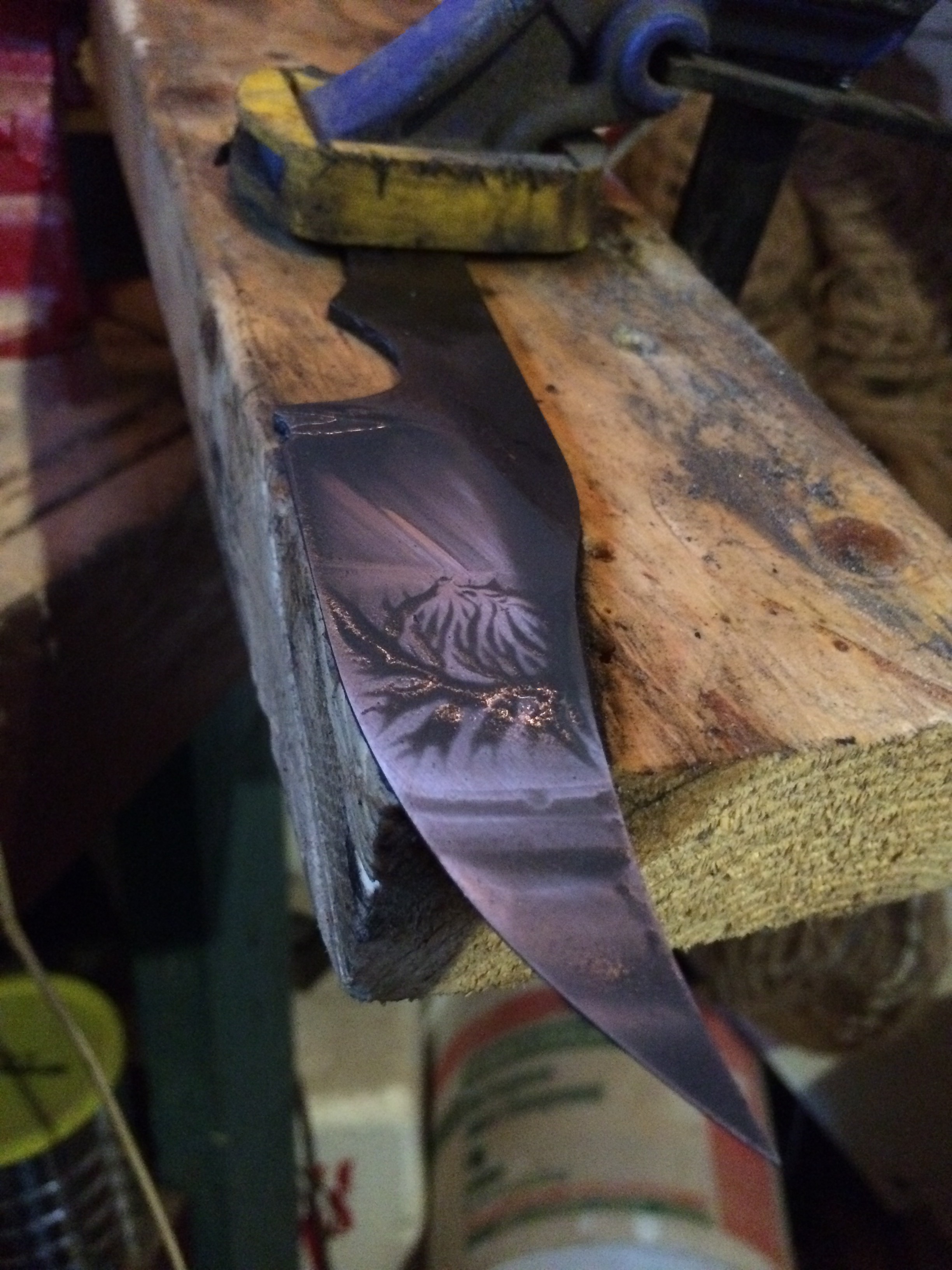
I used this to force a patina on the blade:

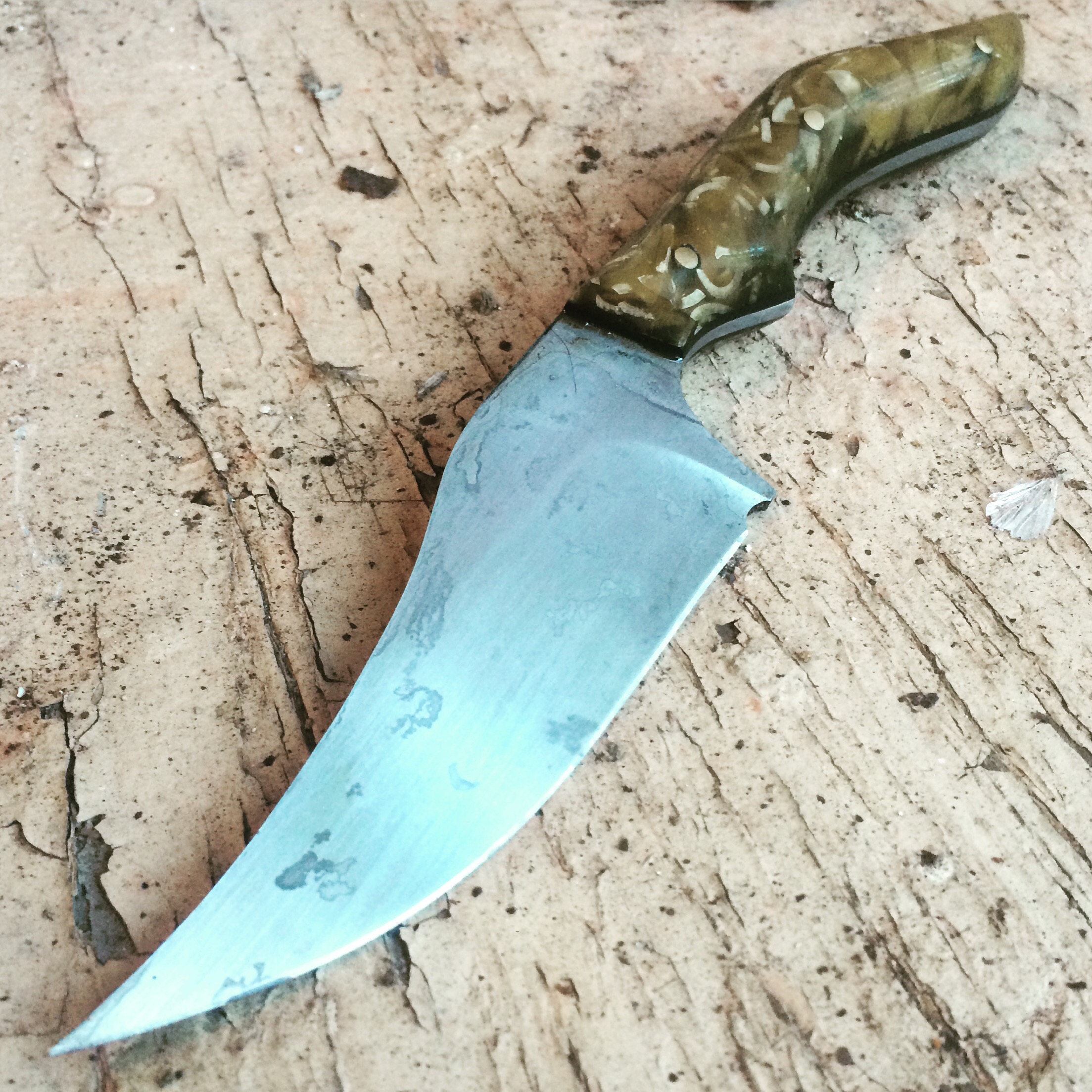
The Dummy:

With all the love in my heart, don’t be a dumbass.