Knifemaking: the things that are ours and the Notre L’affaire

“But then I have always been somewhat of a square peg in a round hole.”

Cressida Cowell- How to Speak Dragonese


When I was five years old I had my first lesson in finding out that the world might not be built for me.  I was not in kindergarten yet because I had told my mother that numbers and letters had looked too hard for me.  Perhaps I really wasn’t ready, or perhaps I was just stubborn, but this would leave me a year older than all my classmates through my entire academic career.  So at five years old I was sitting with all the other five year old preschool kids who, for whatever reason, weren’t quite ready for kindergarten either.  It was around Thanksgiving time and we were making hand turkeys out of construction paper.  You are probably familiar with the process, where you trace your hand and your fingers become the tail feathers and your thumb becomes the head and then you cut the entire thing out and add all the plumage.   I was having an incredibly difficult time with it.  I couldn’t get my scissors to work and I had no idea why.

As it turns out I was, and still am, left-handed.  They had no left-handed scissors, and the poor ladies couldn’t explain why I was the only one who cut with my left hand.  The silver lining was that when I looked at the wall of hand turkeys for the next two weeks before we took them home I knew exactly which one was mine- the sort of mangled looking, Mattisse-inspired one with it’s shredded, soft edges and pastel color themes.  It might not have quite fit in, but that turkey belonged to me.

I think a major source of anxiety today comes from a pressure to fit in.  We are pack animals after all, social creatures, and there is a large degree of comfort and safety that comes with fitting in.  For whatever reason some of us just don’t fit.  Maybe our personal values don’t align with the metrics of what society calls success.  Maybe the things in the world that move us have been wrought and tempered in such a way that makes the mainstream feel incredibly dull and boring.  Maybe we were brought up in a fashion that causes us to question the rules and the people who make them.  Or perhaps our idiosyncrasies and the way we see the world simply makes others in the pack feel uncomfortable. 

Because the reality is that life is uncomfortable and existence is messy, and no amount of corporate team building exercises or ‘life is beautiful’ bumper stickers will change that fact.  The square pegs of the world know this, because things have probably always been uncomfortable.  The beauty of being a square peg that doesn’t fit into the circular opening of life is that you find a way of living that is unique and meaningful to you.  Usually that means crashing through more than a few romantic relationships, getting fired from a few jobs, making a whole lot of mistakes, and generally being a mess for awhile.

When you finally pop out on the other side of all that, you may find that what you’ve become is completely and totally your own, free of mimicry and imitation.   All those things that you’ve become- those belong to you and no one else.

(I taught myself to cut right-handed in elementary school to save myself and my teachers a lot of grief.  I cut better right-handed than I do left-handed.  You have to pick your battles.)

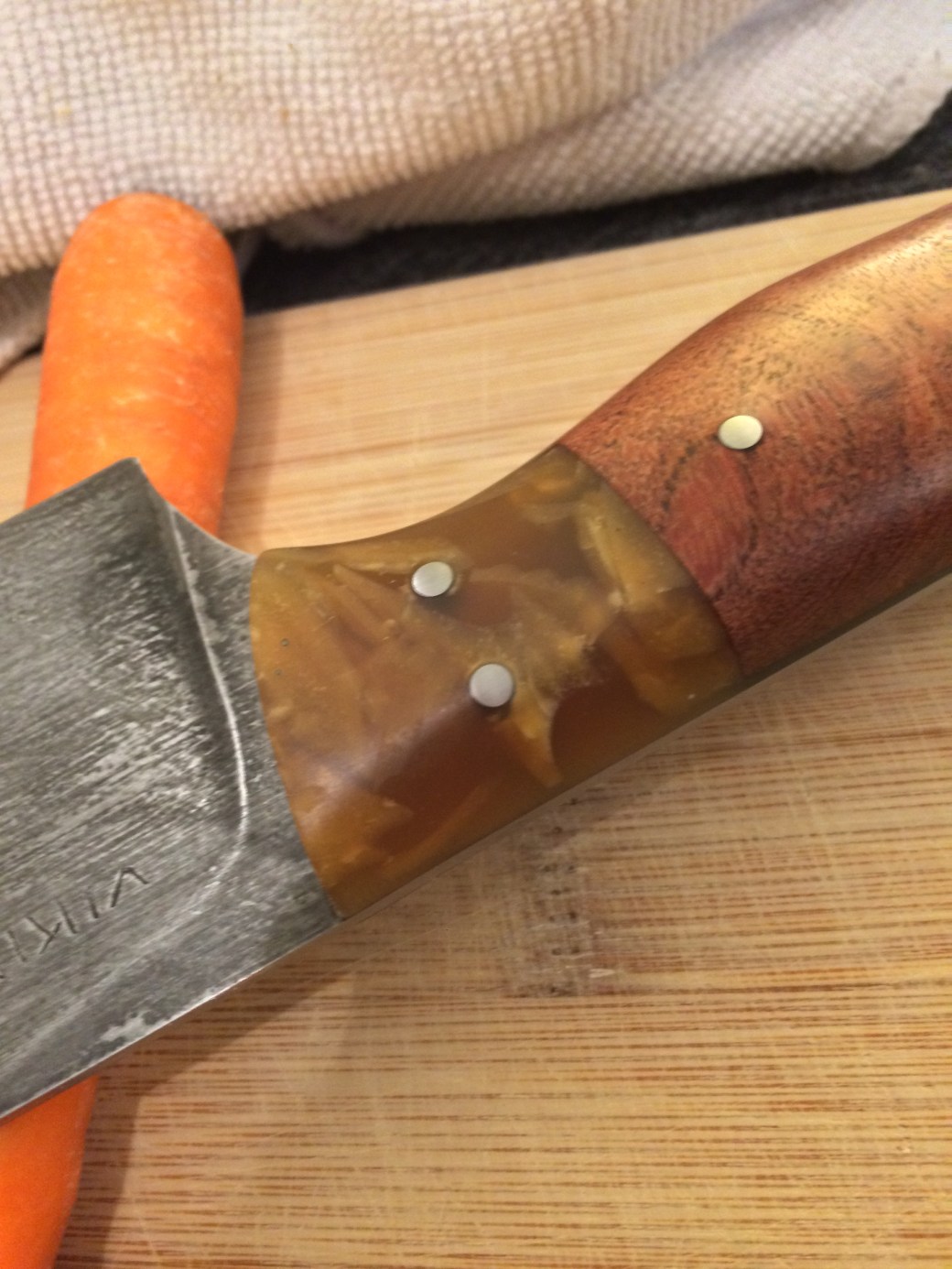
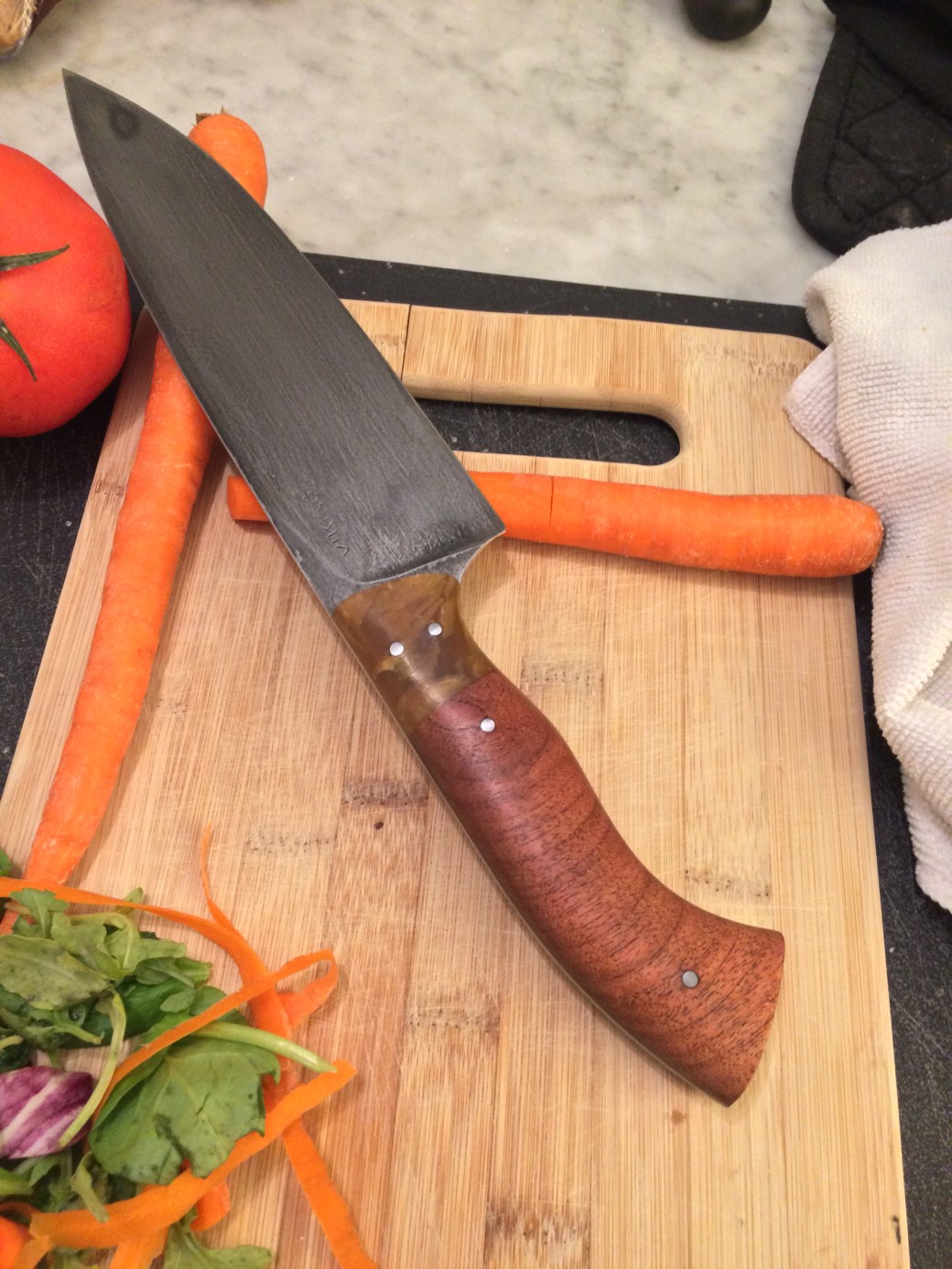
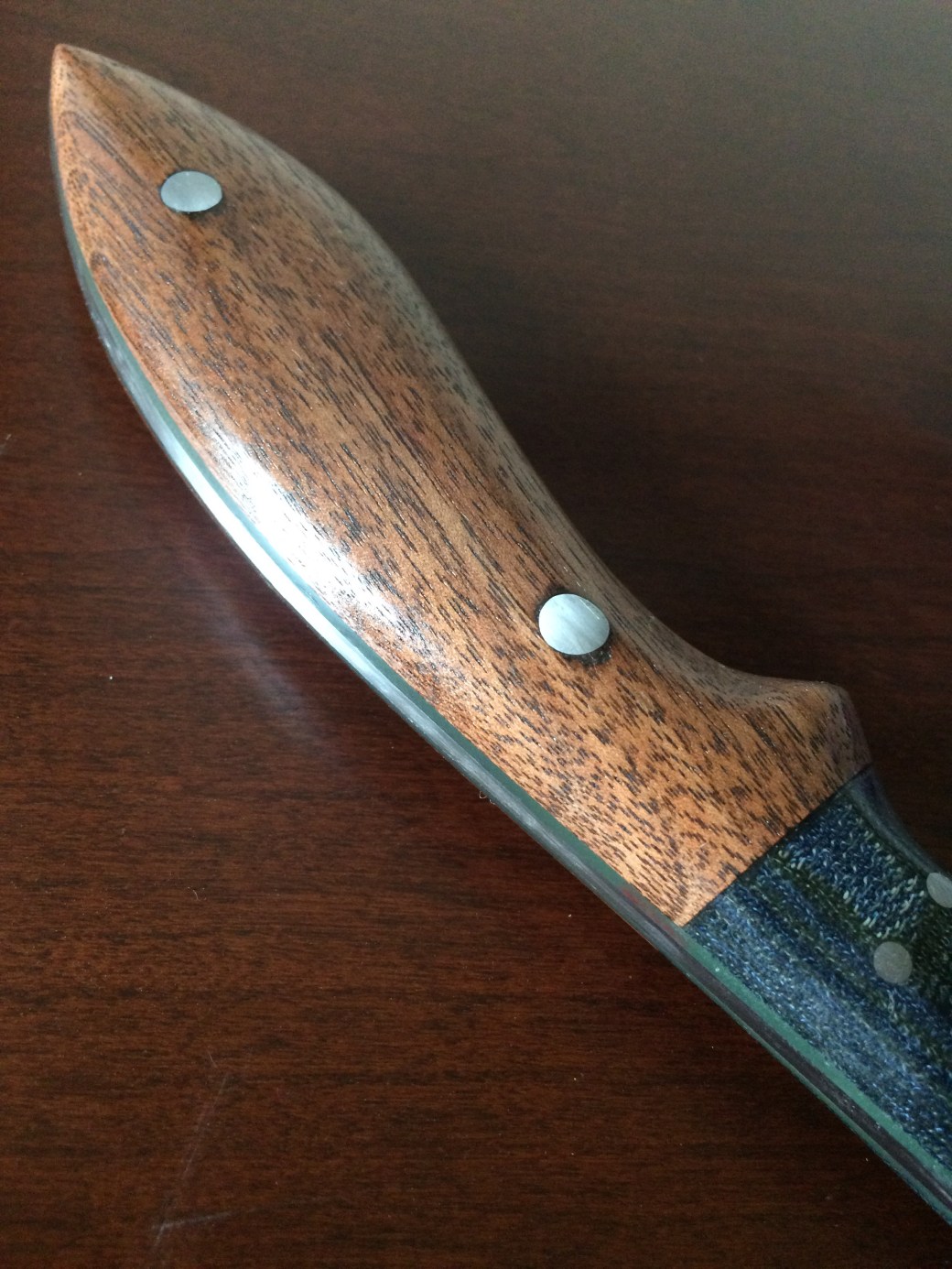
This knife was commissioned for a chef at a local restaurant by his girlfriend.  I love making knives for restaurant people- anyone who winds up in food service is totally a square peg.  In talking to the girlfriend, who works in hospitality, she told me that they were both a little crazy, which is part of what makes everything so interesting.  ‘Notre L’affaire’ roughly means ‘our thing’ in the sense of something intimate and personal, like a slightly rough-around-the-edges turkey made of construction paper hanging on a pre-school bulletin board.  You should always recognize and honor the things that are yours.


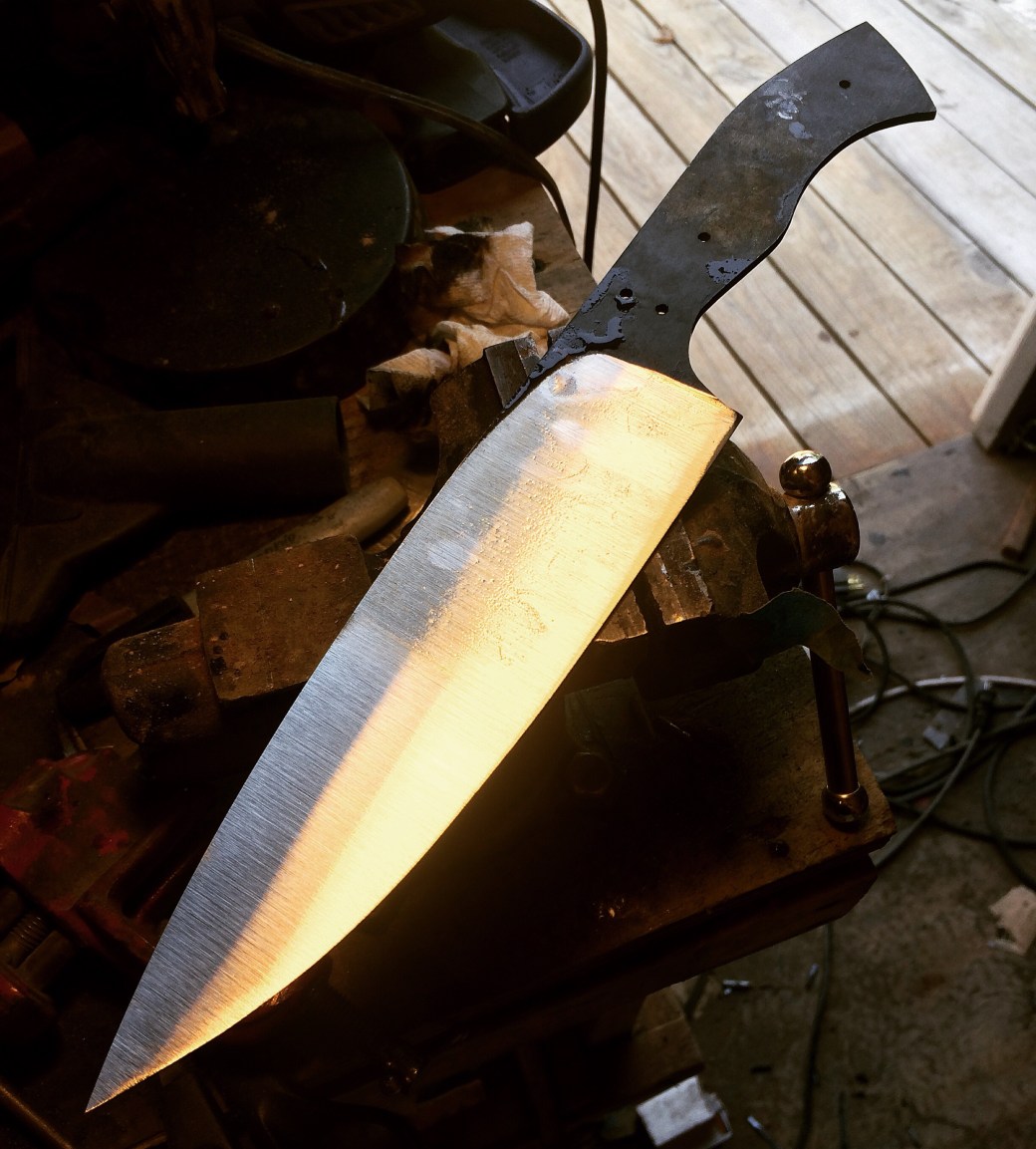
An 8″ chef in the German Style:

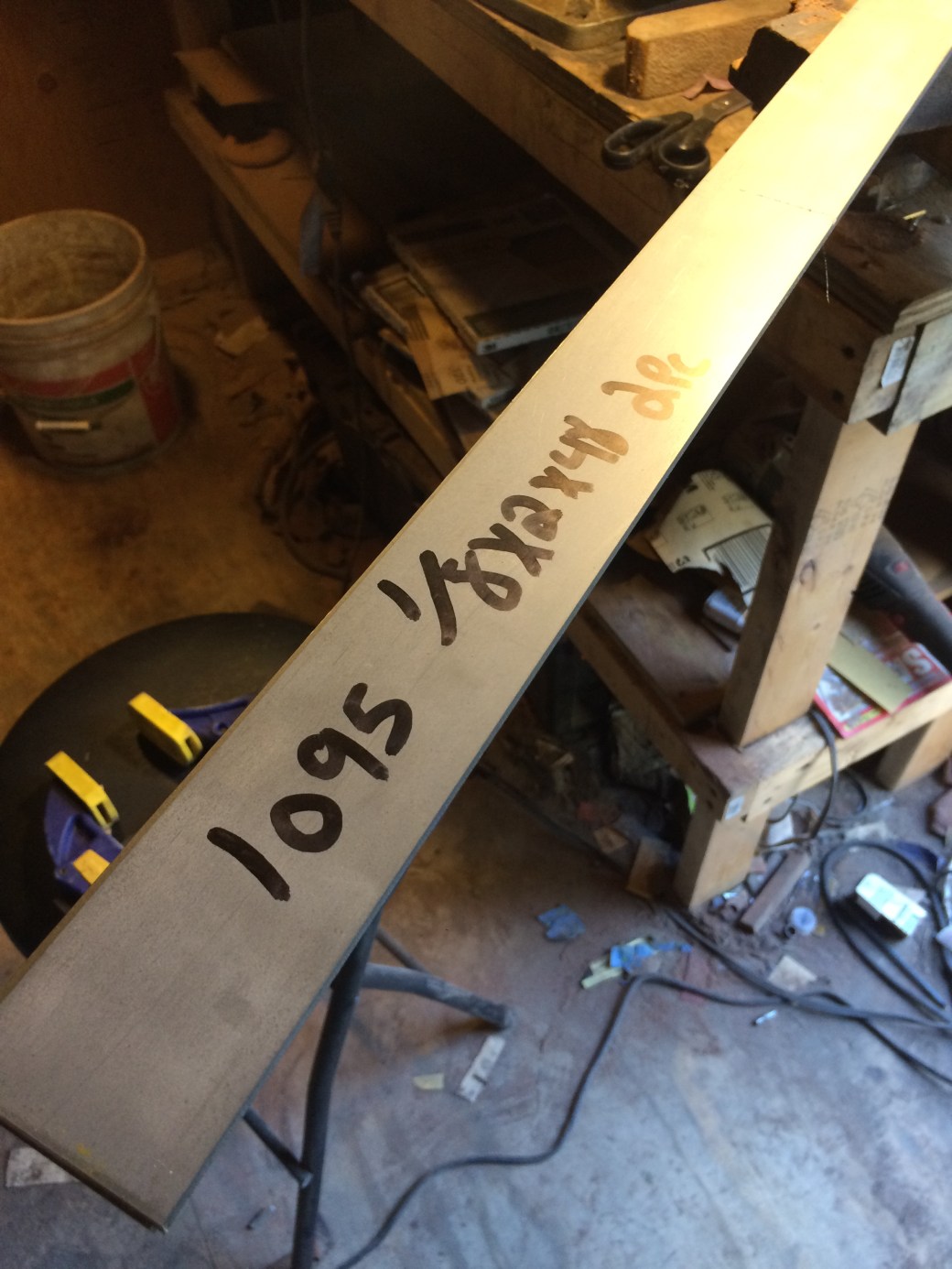
Hi-carbon American 1095 steel:

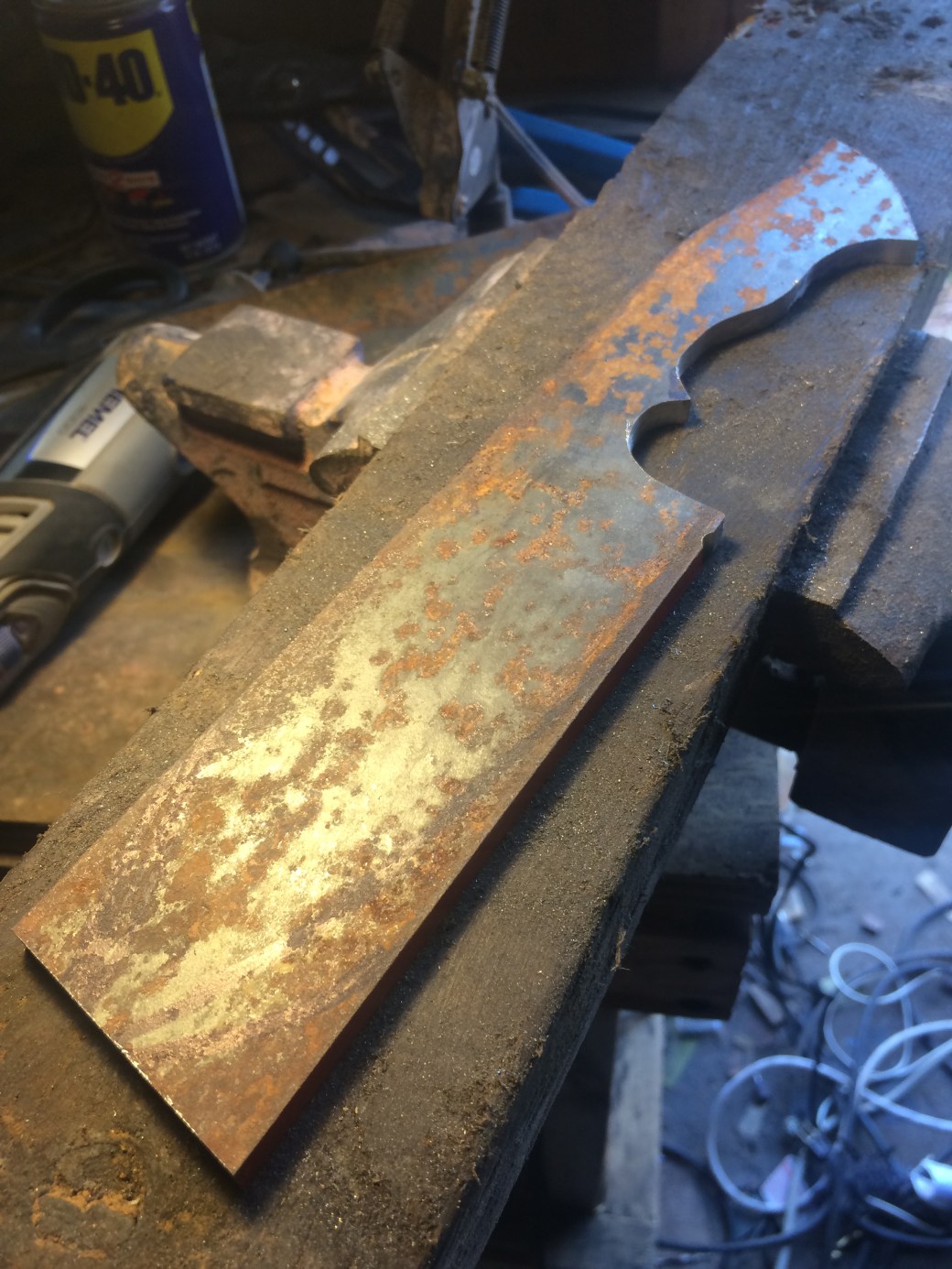
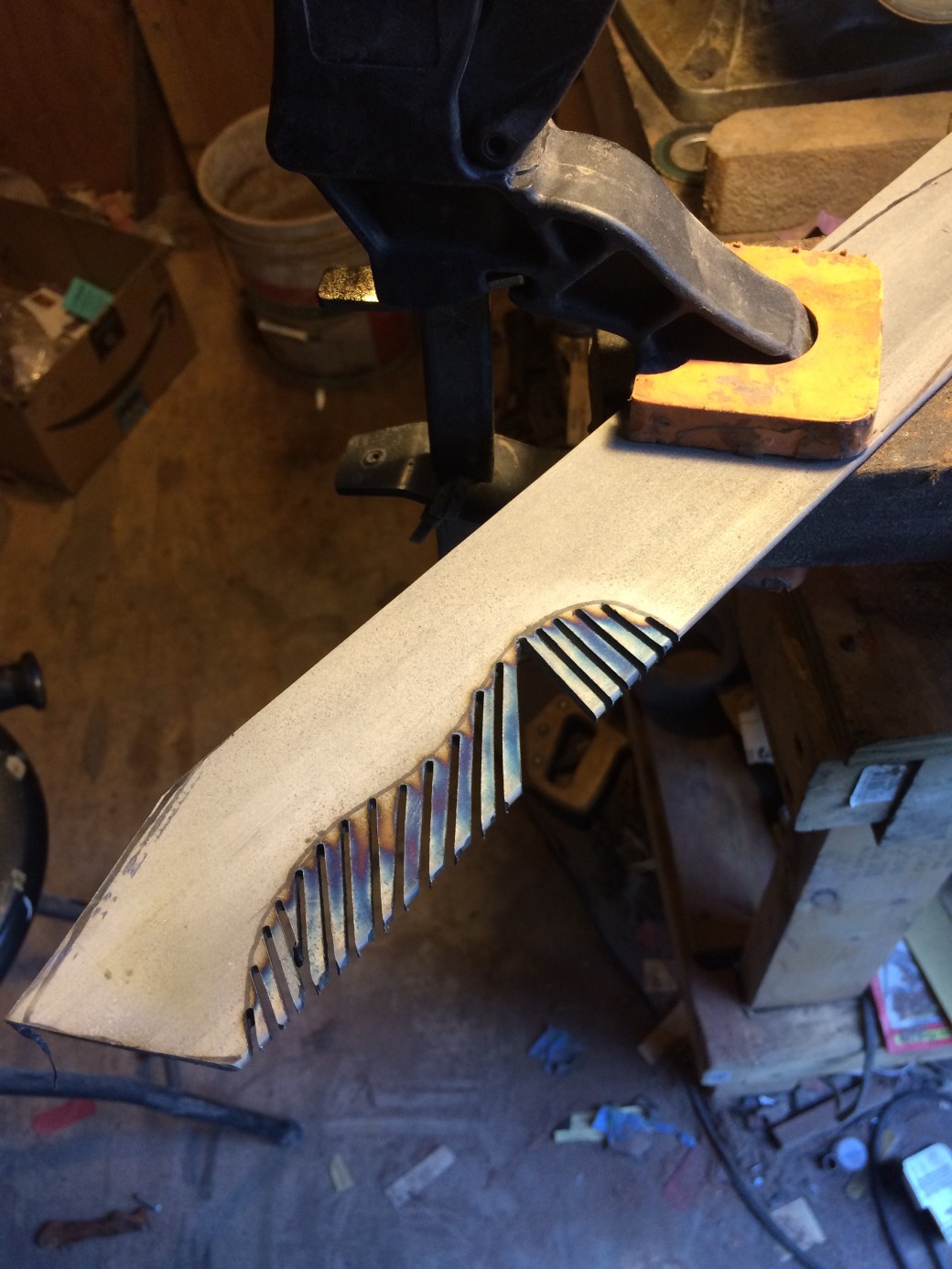
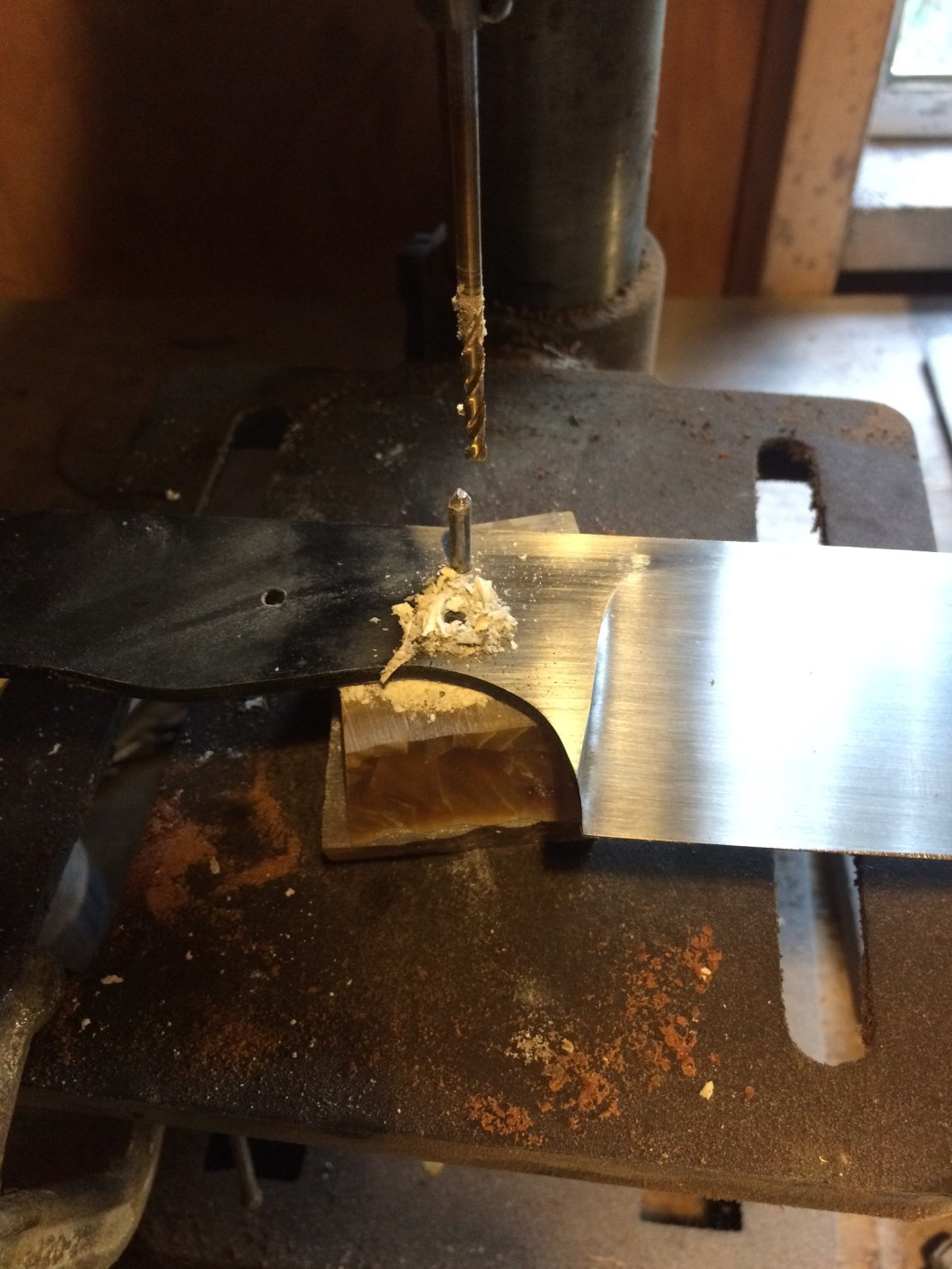
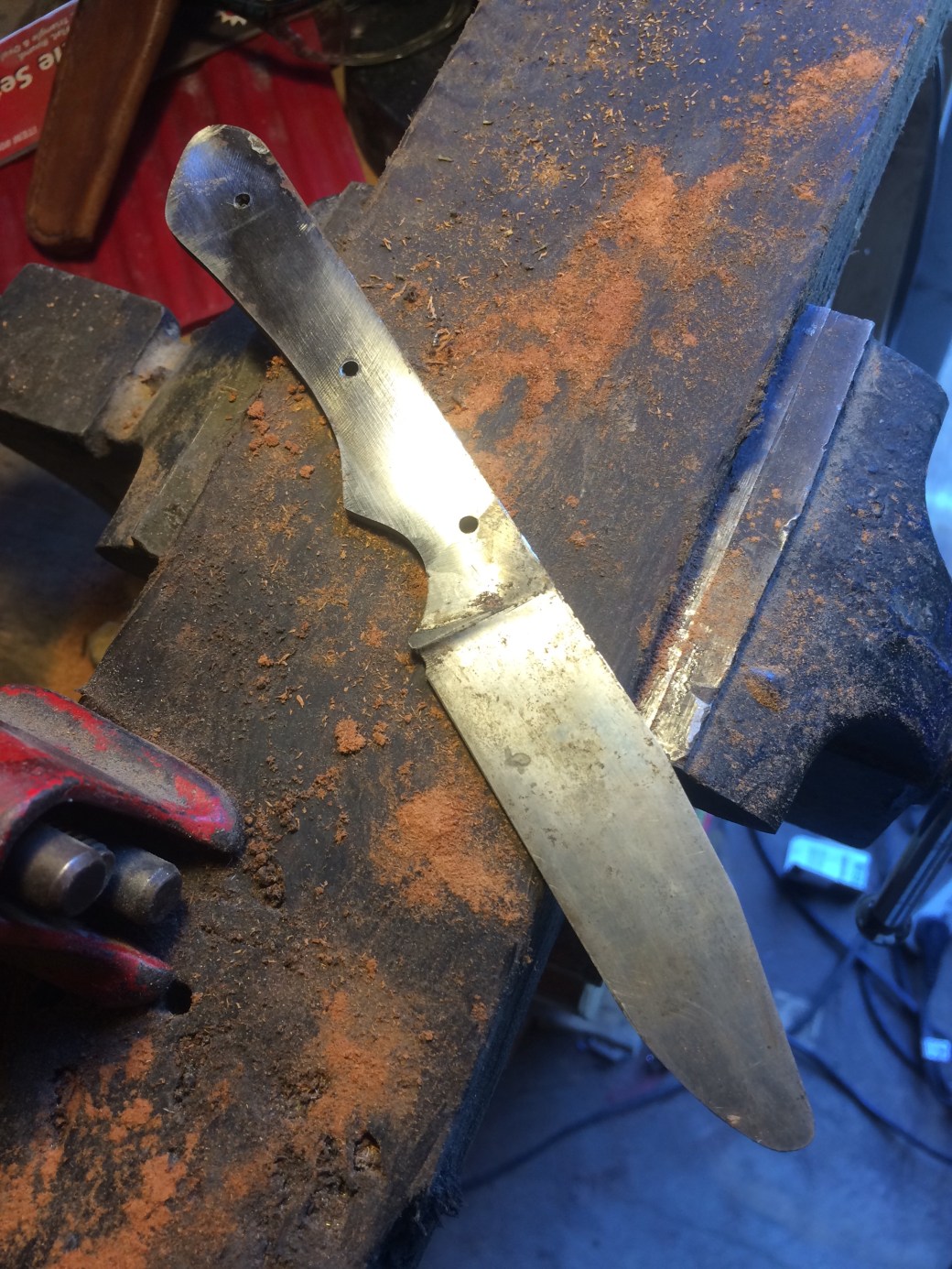
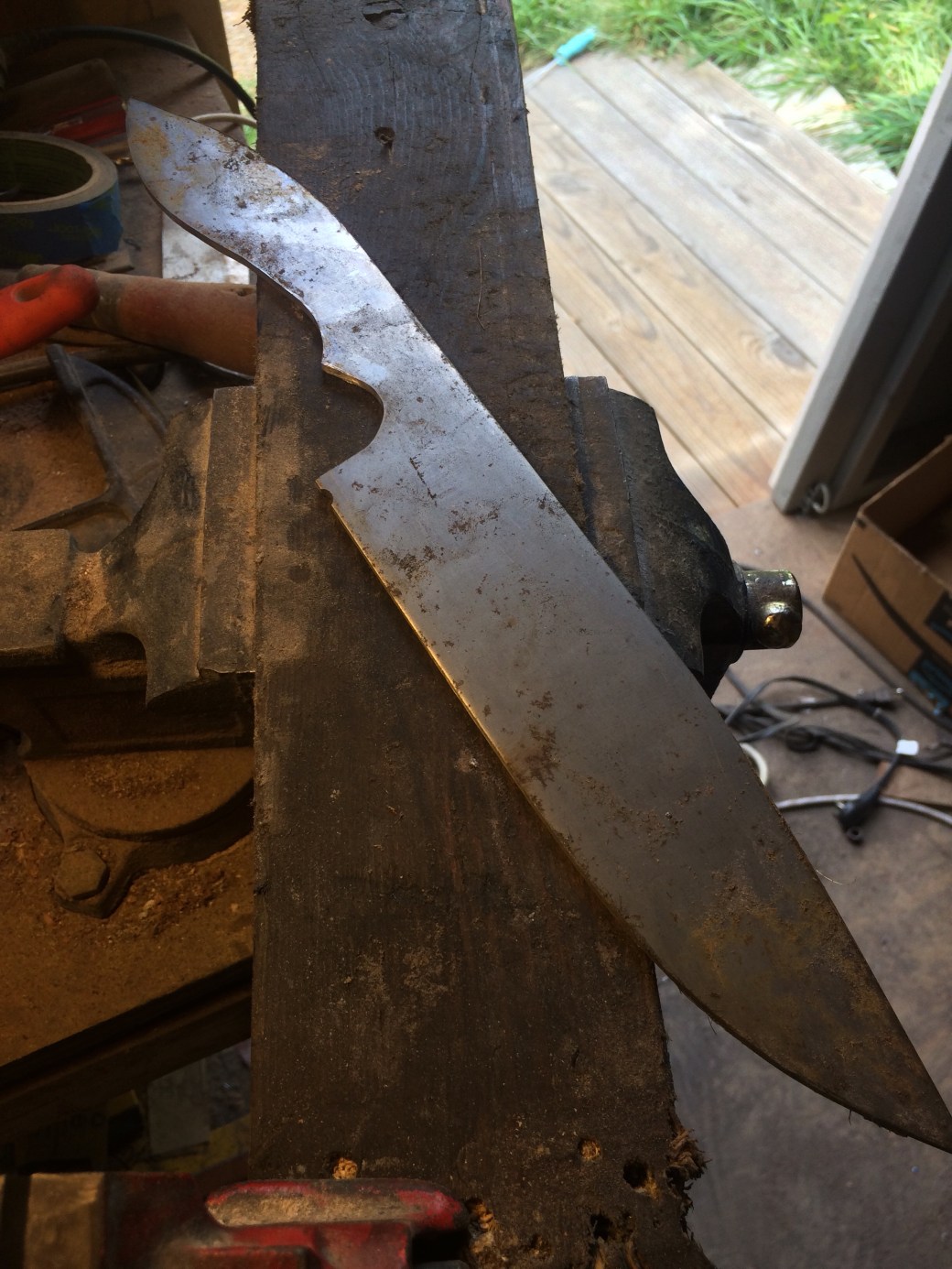
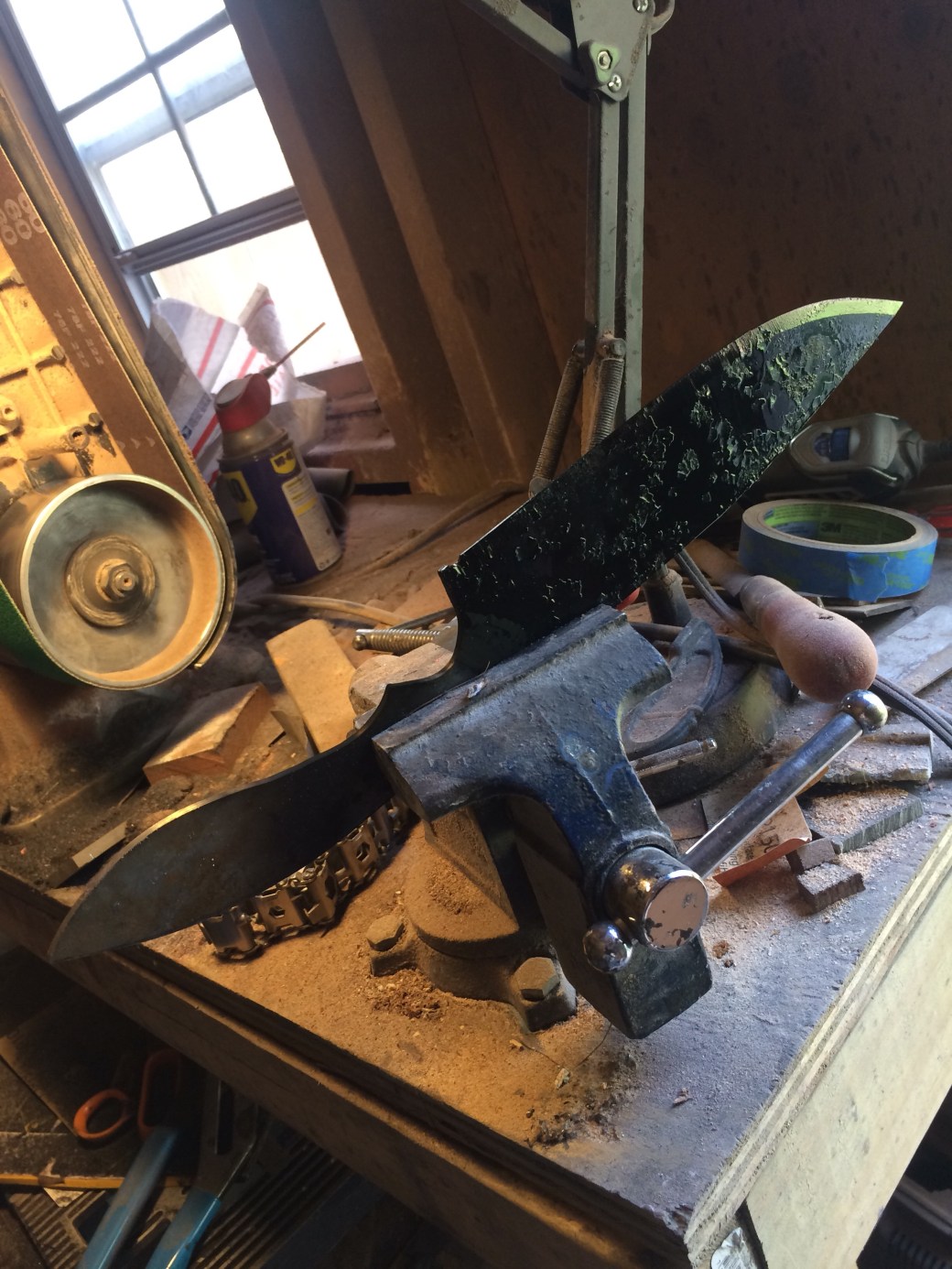
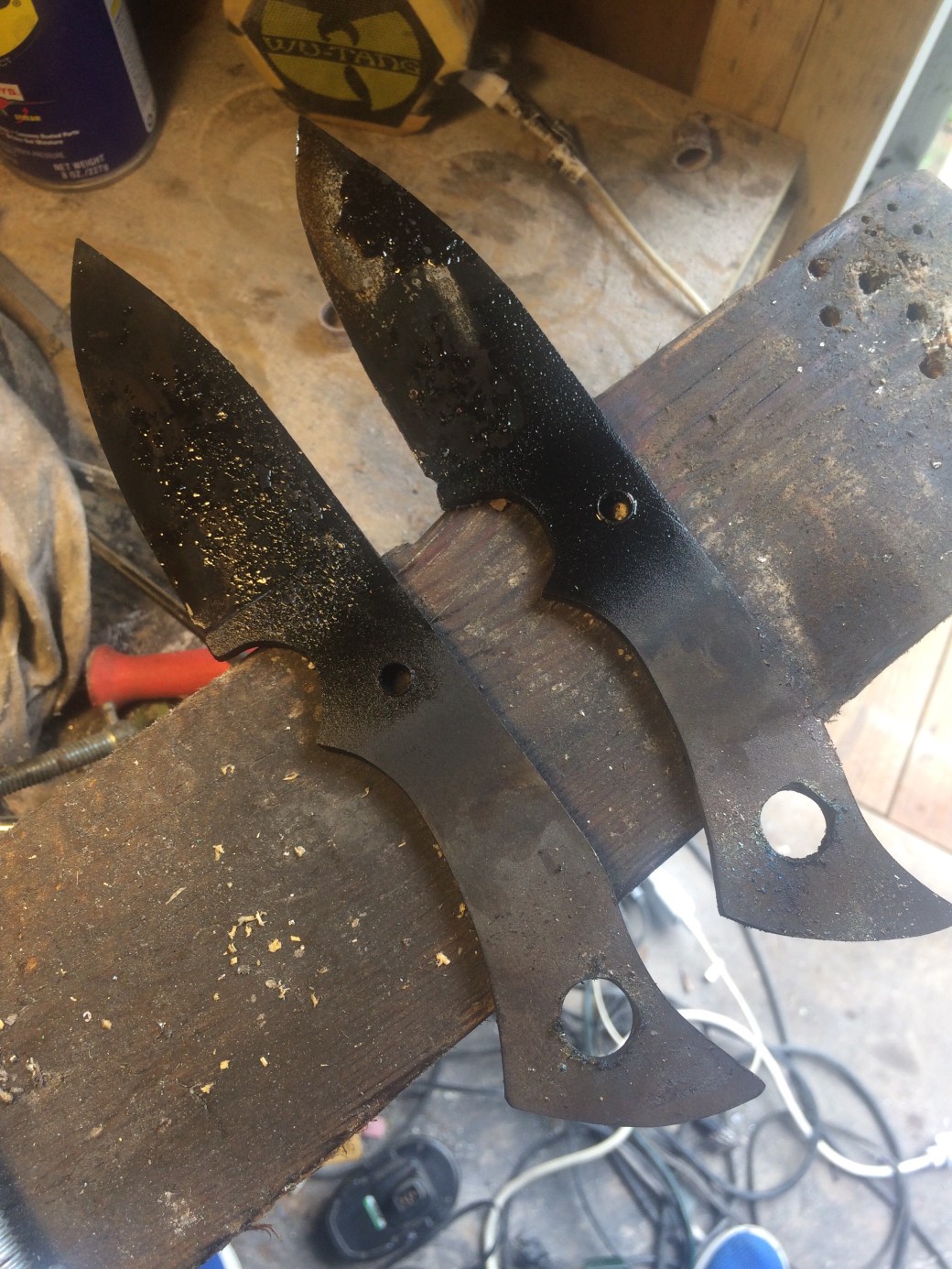
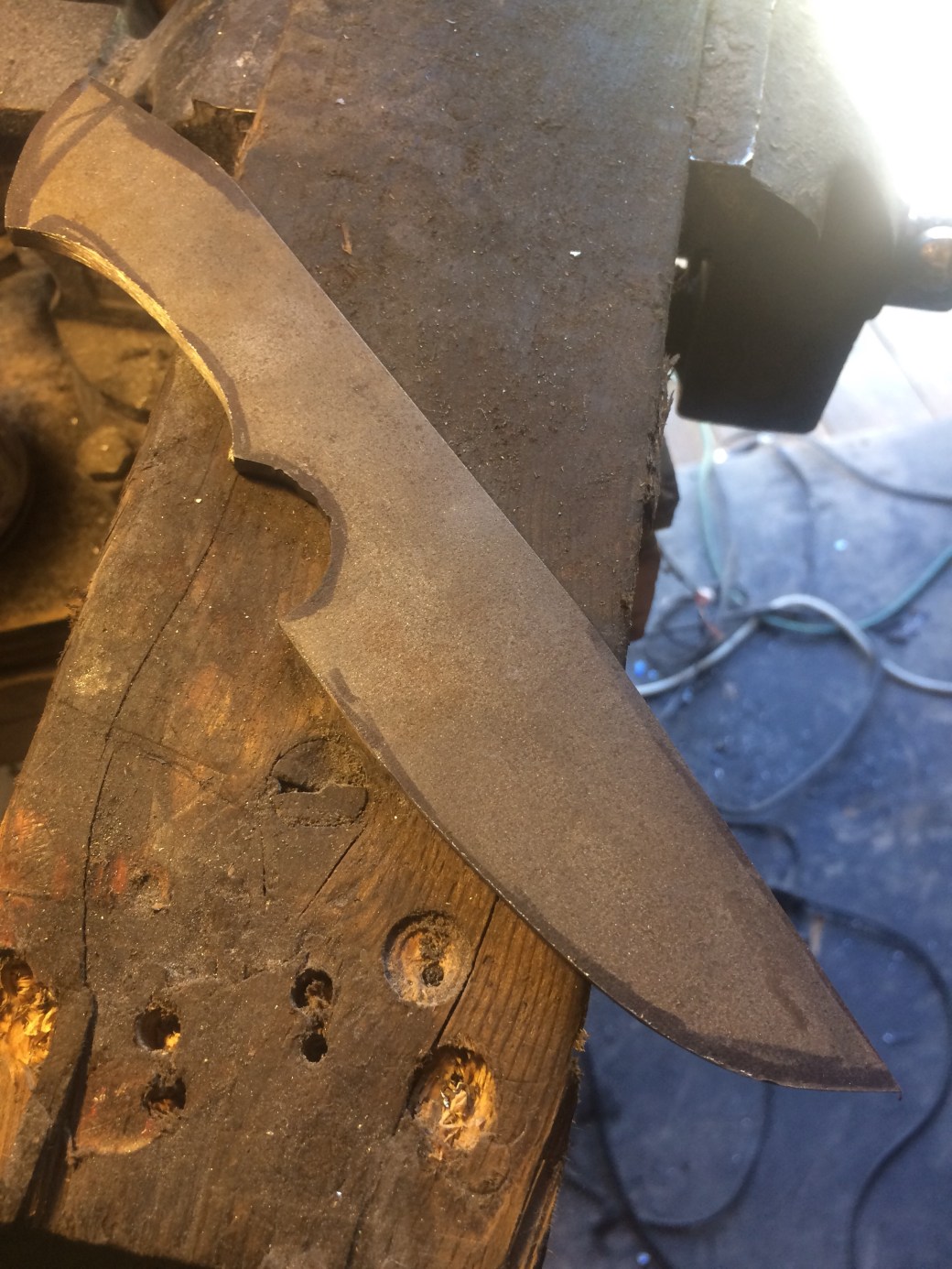
Profiled and drilled:

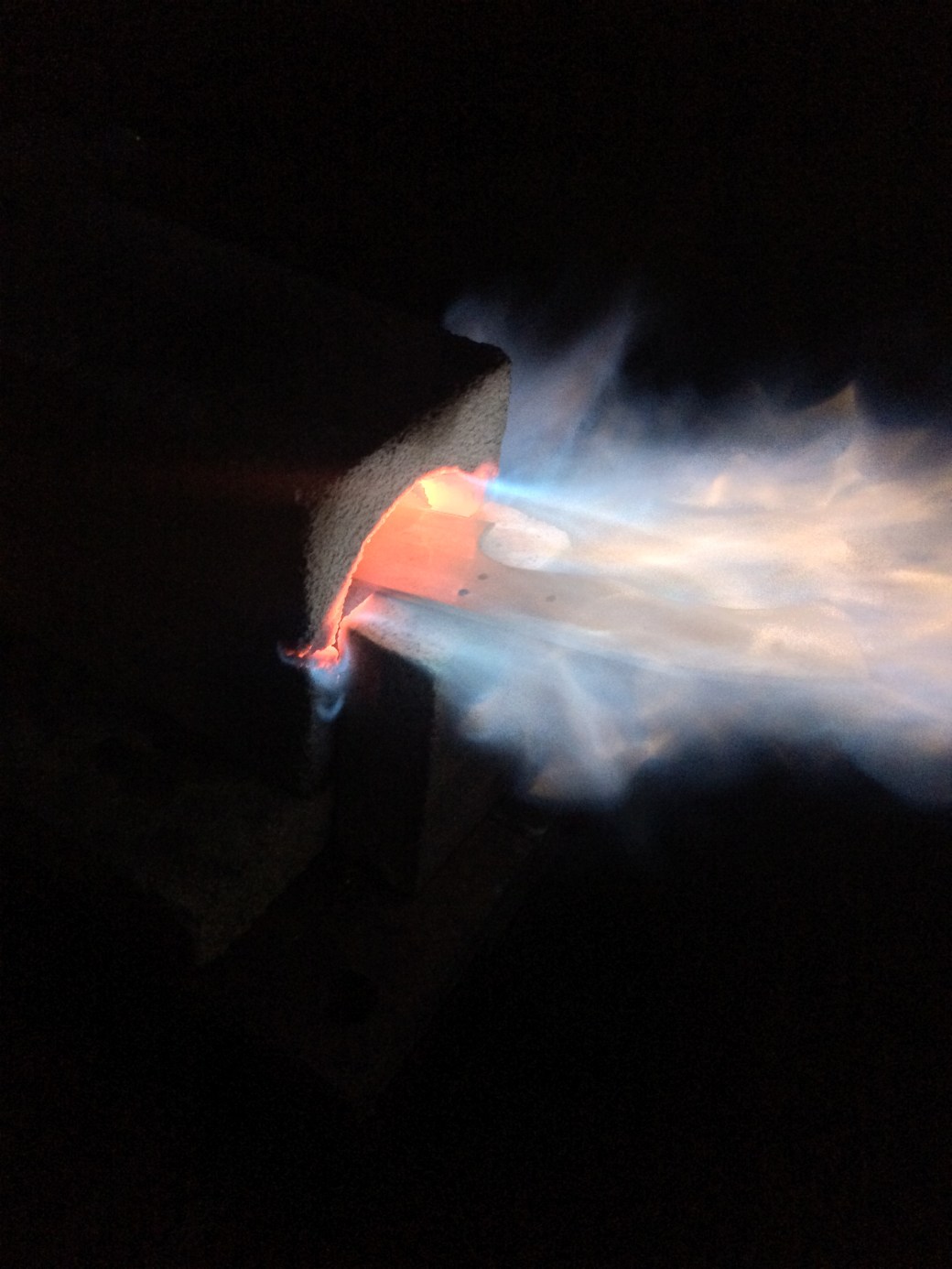
Into the forge:

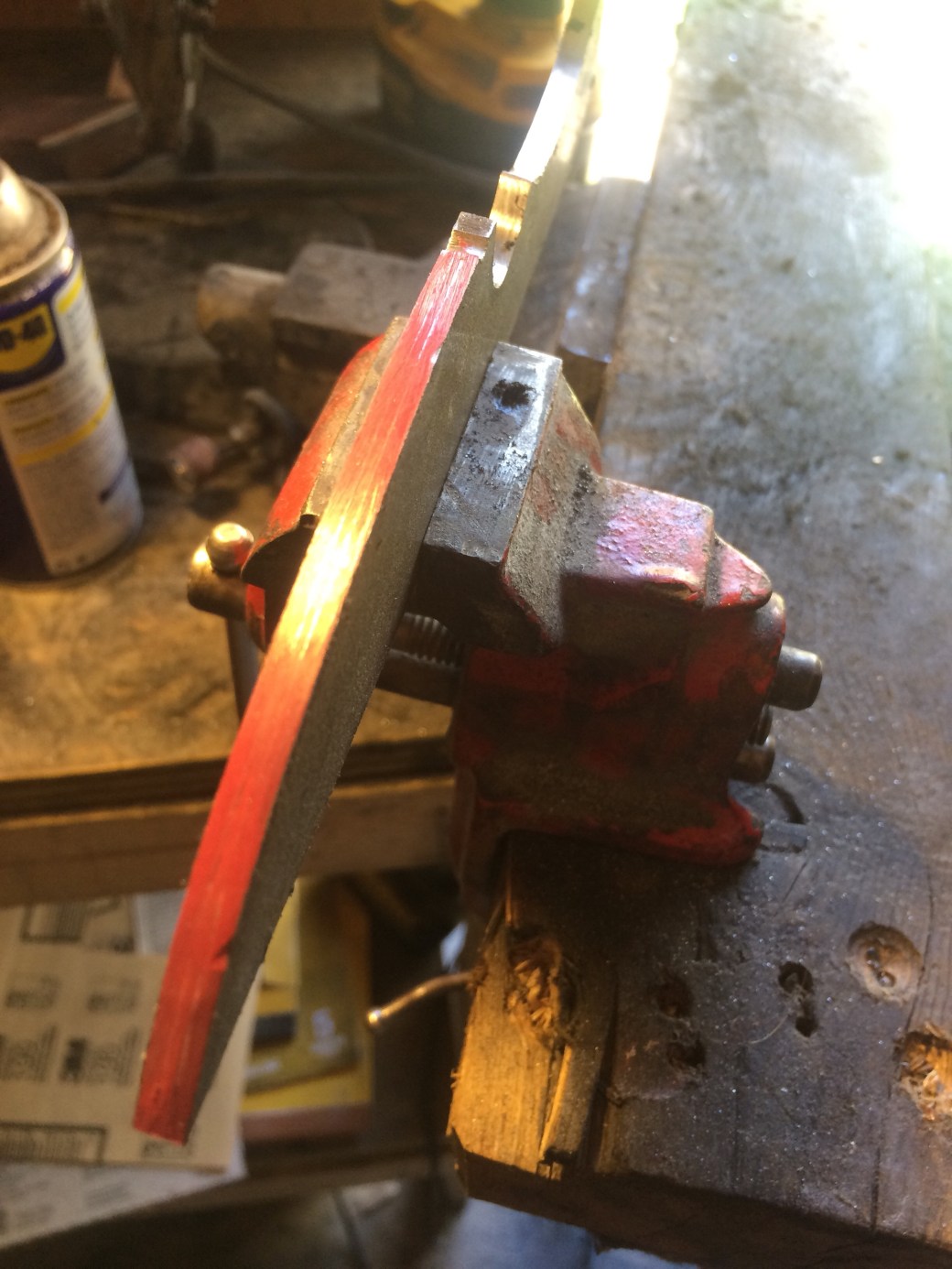
Making sure everything is straight:

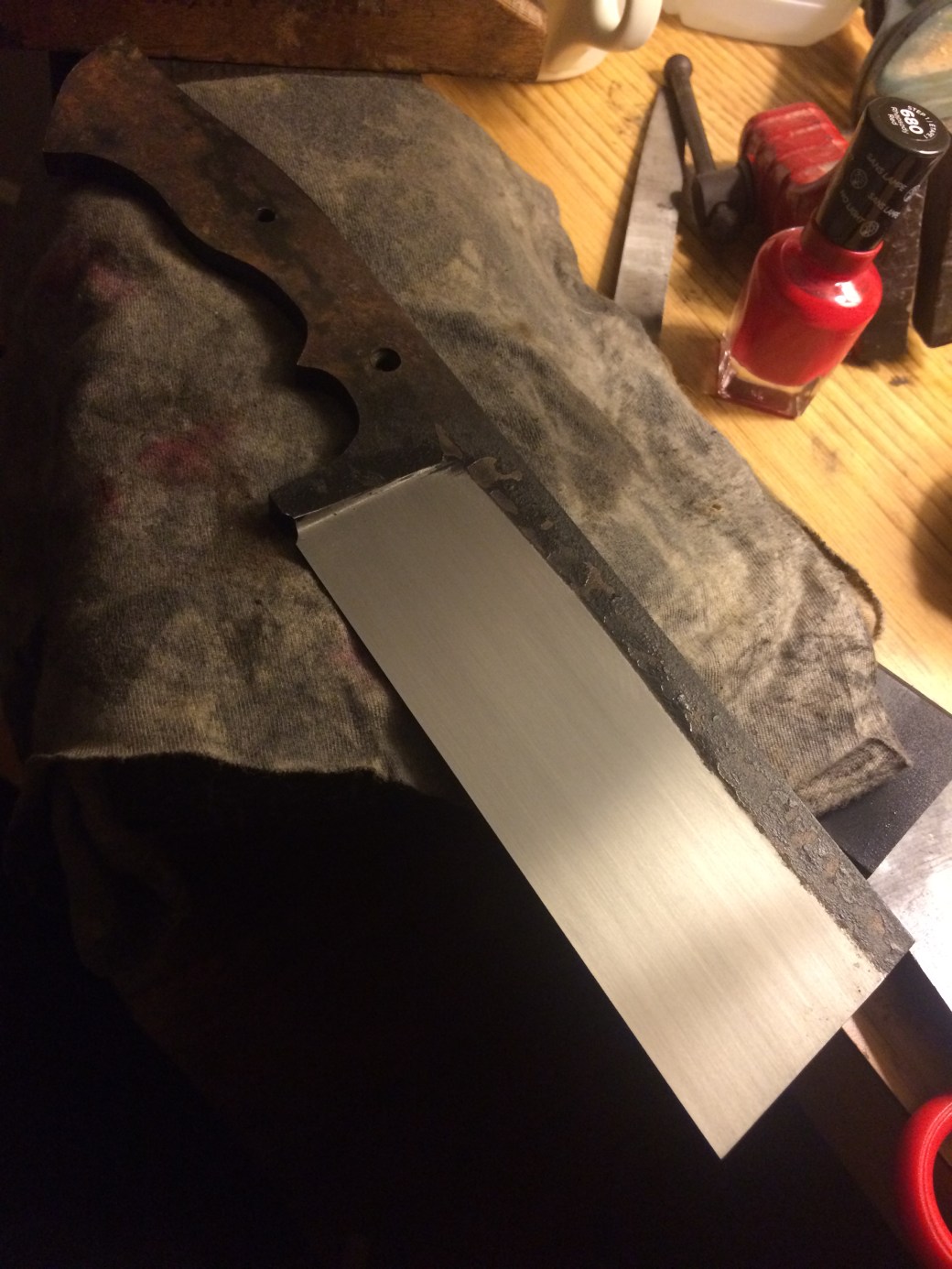
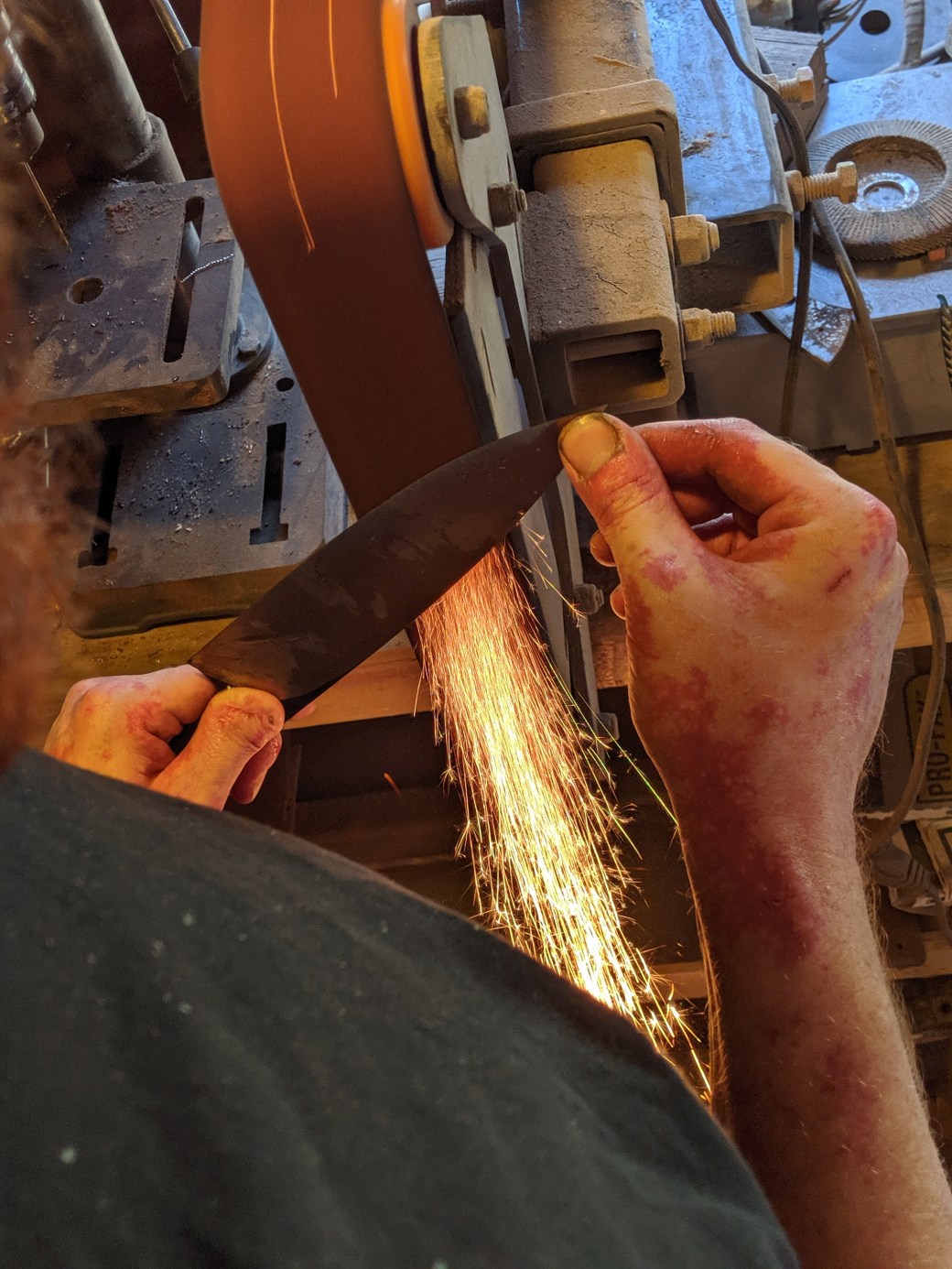
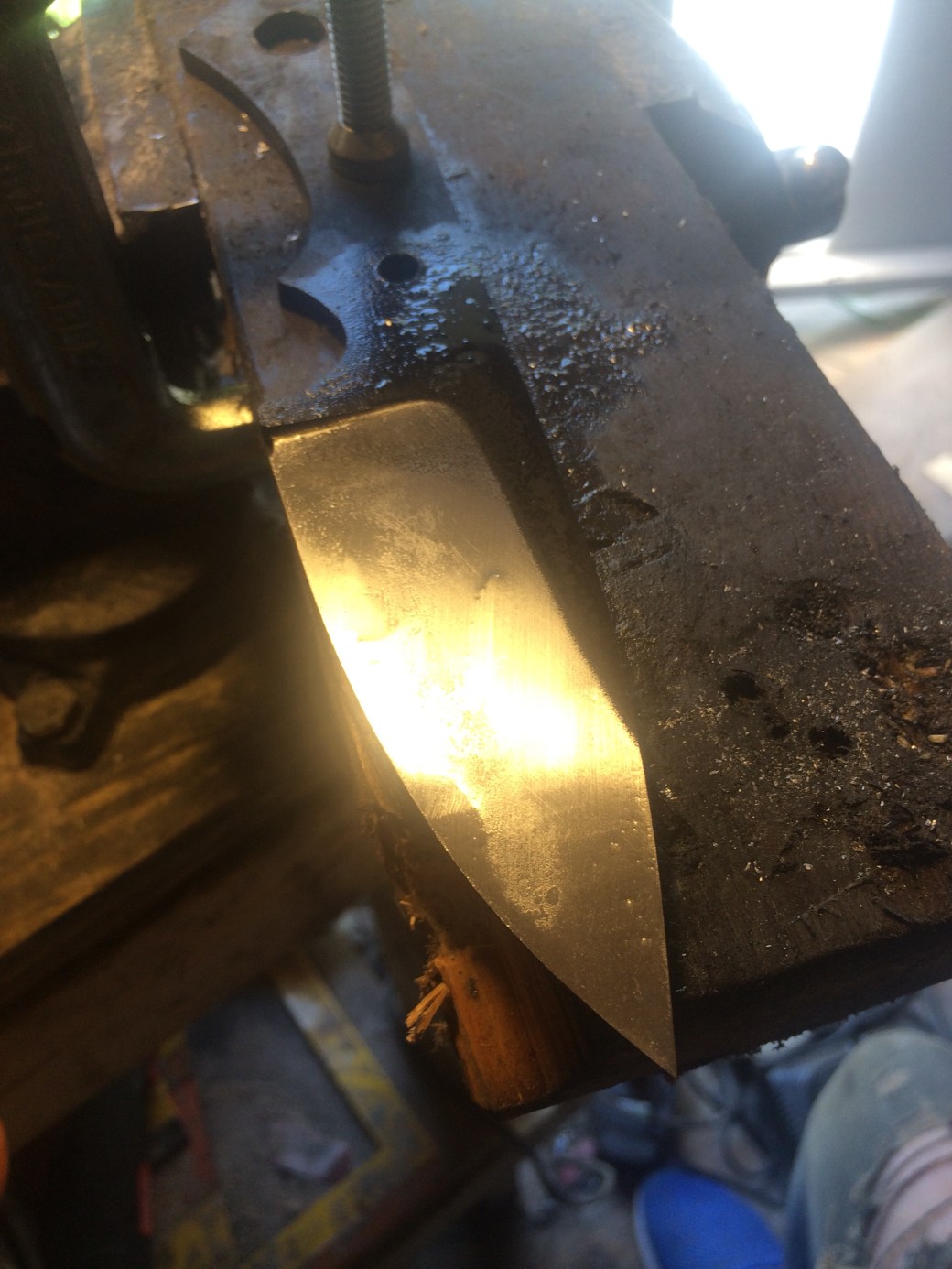
Grinding the bevels:

img_7555

a5882d54-3626-42c7-848a-b3b1a1c3a553

Hand sanding:

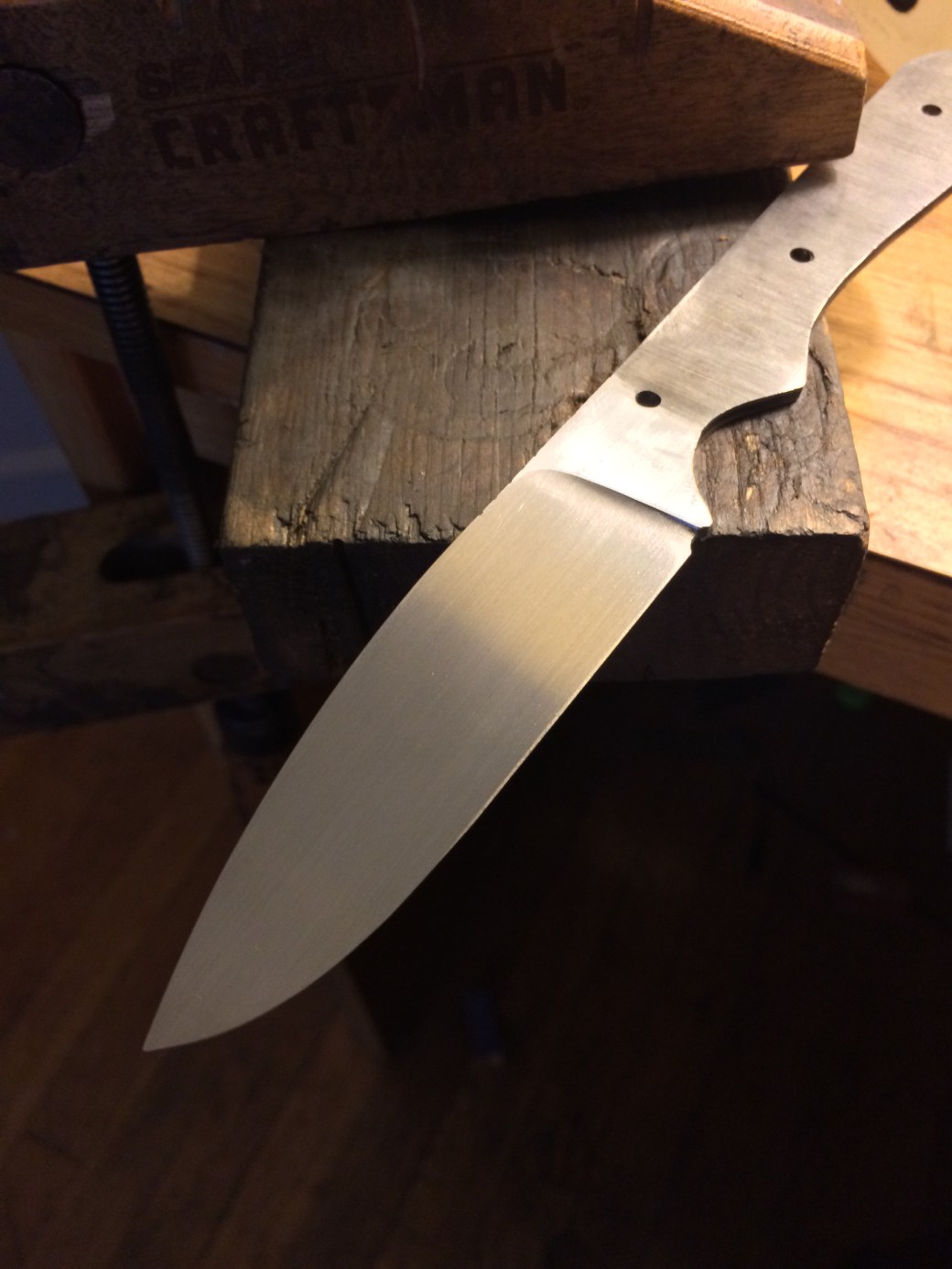
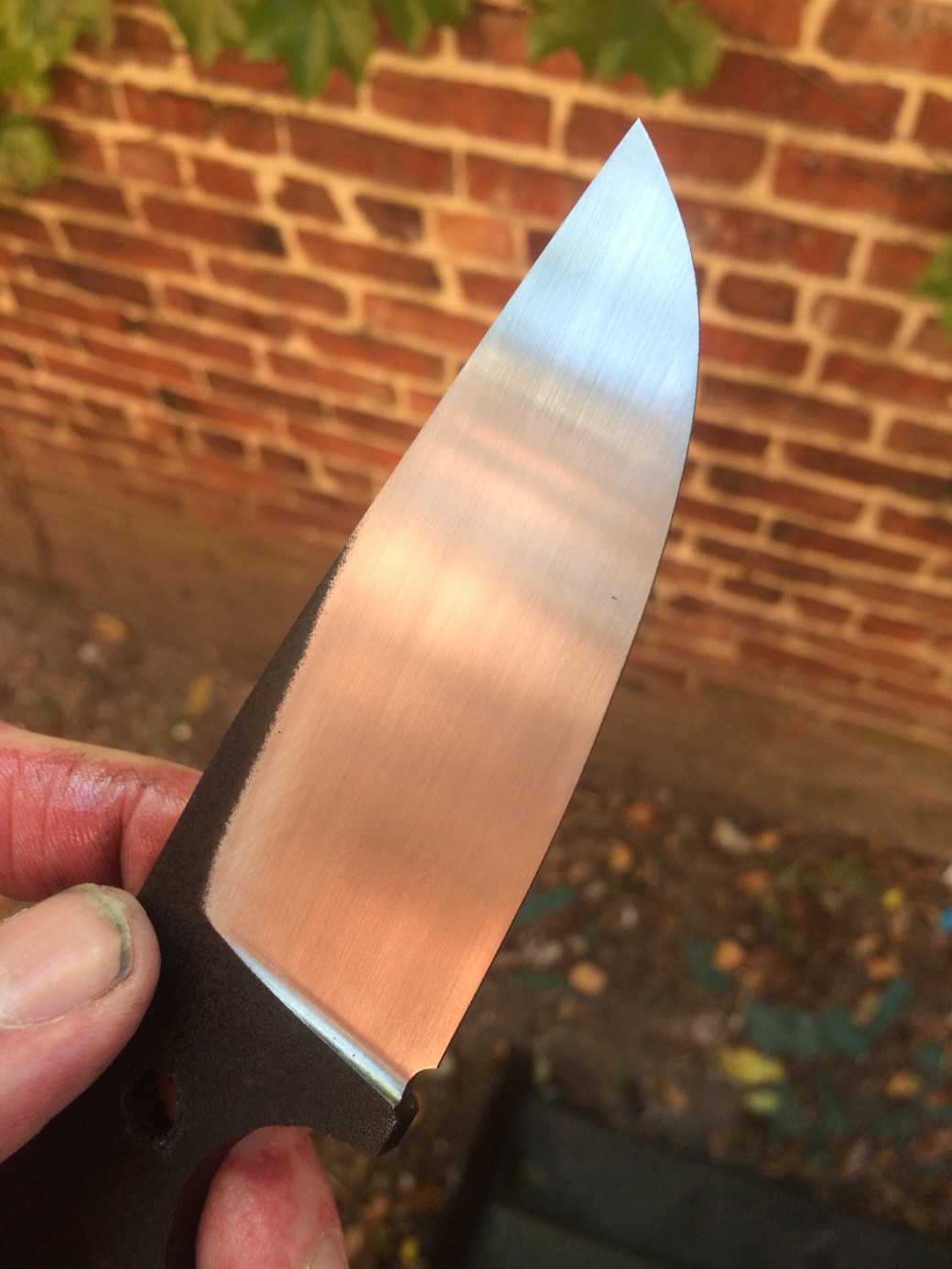
Satin finish:

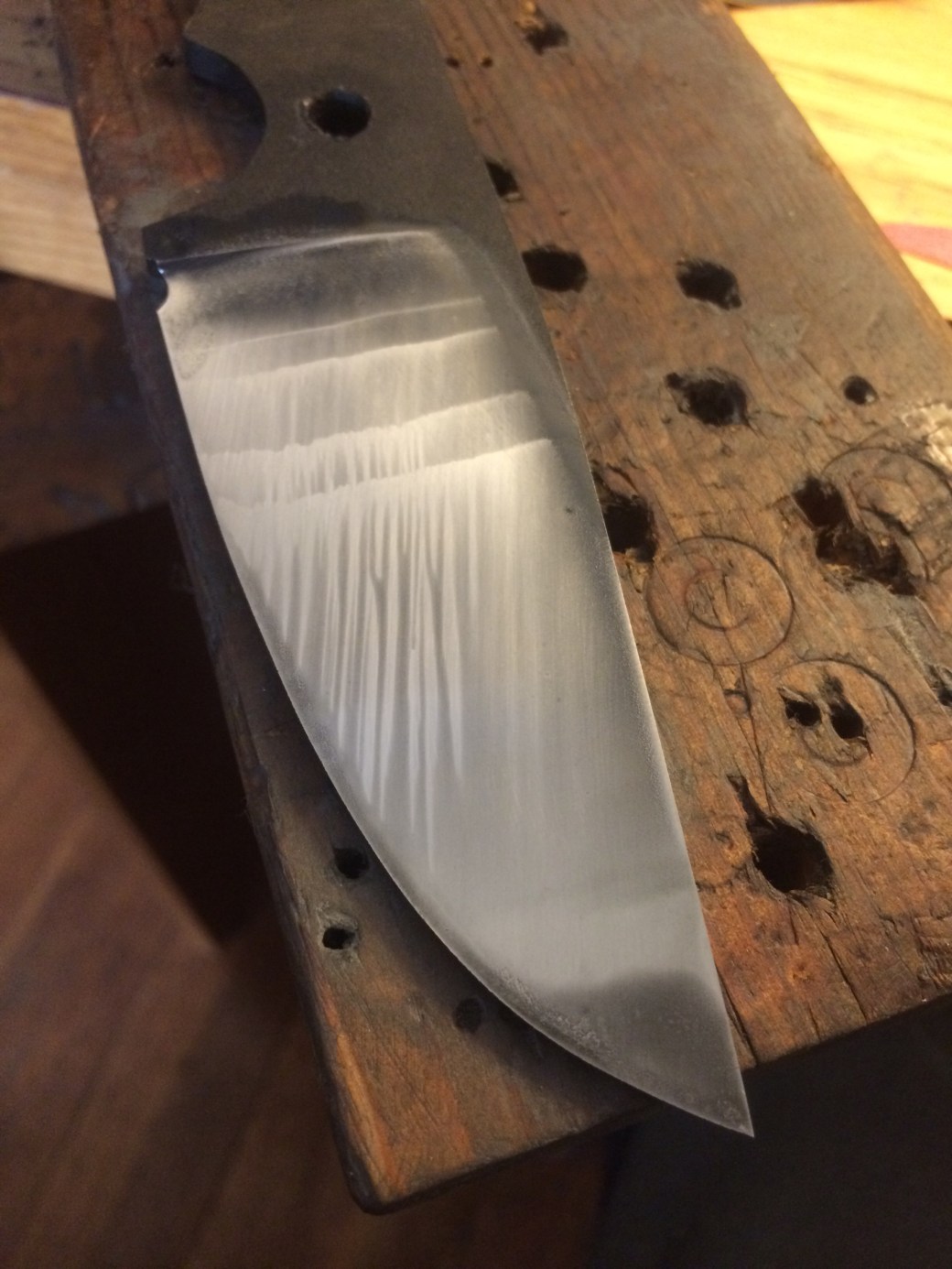
An acid etch to help with corrosion resistance:

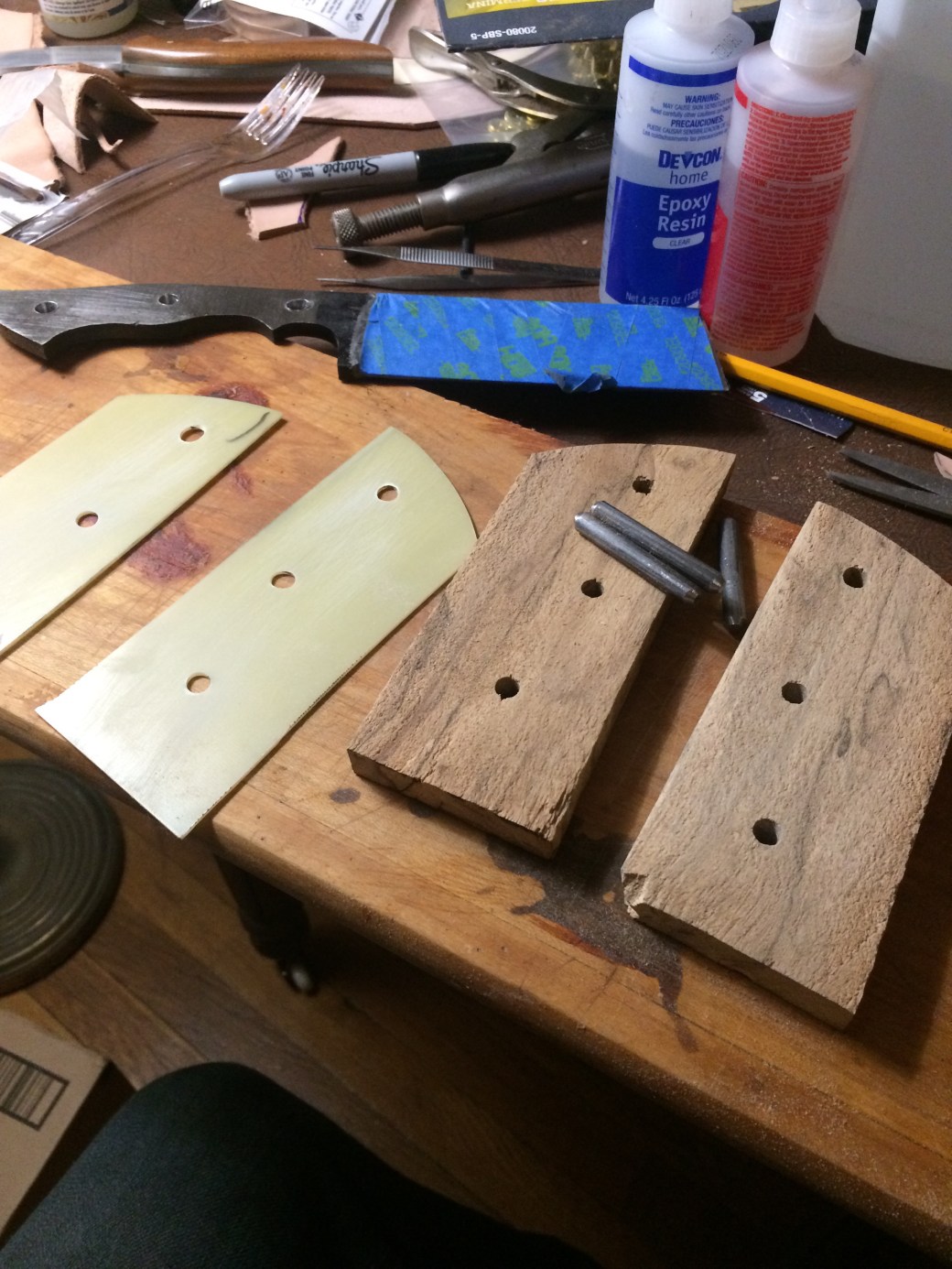
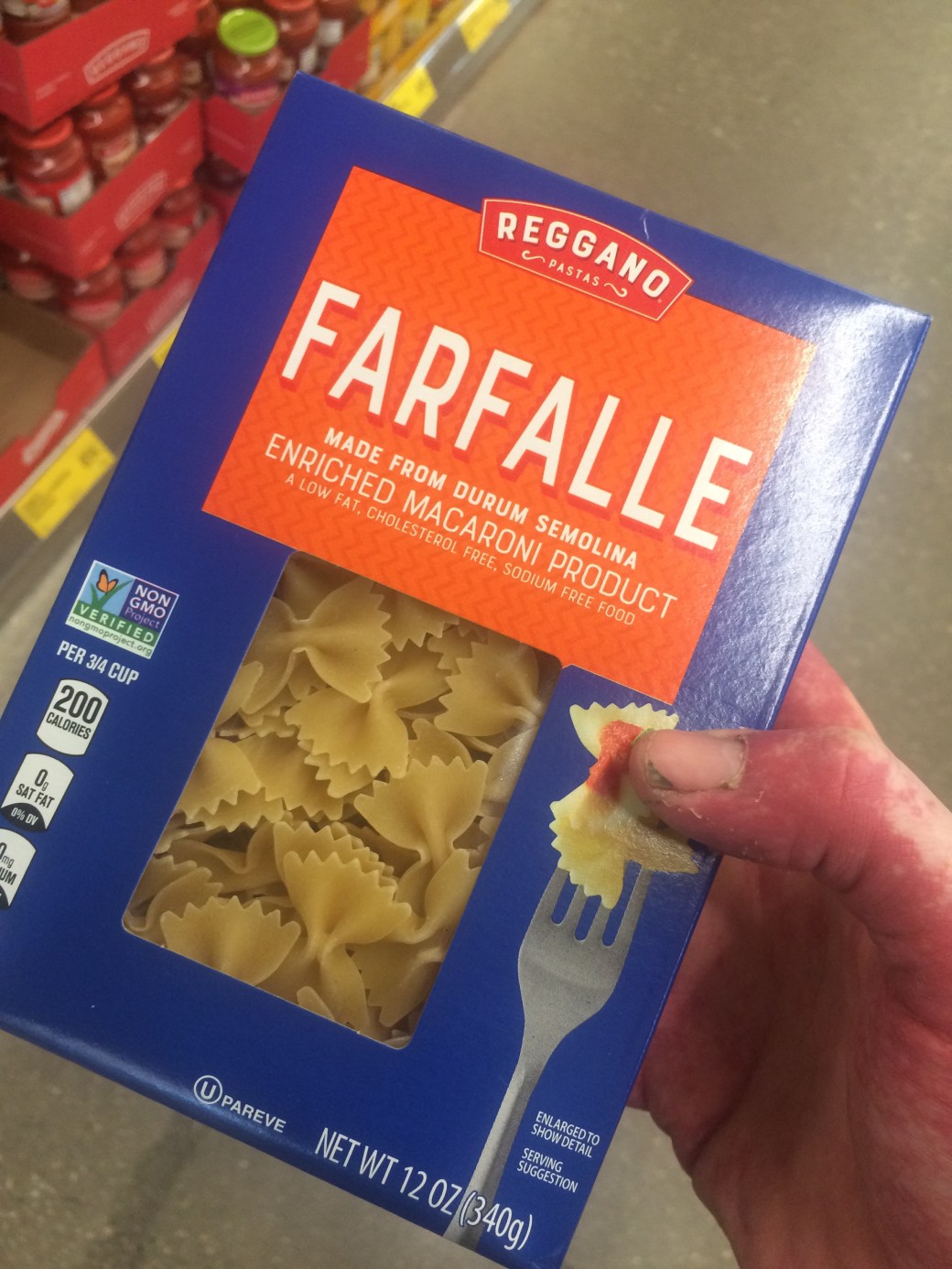
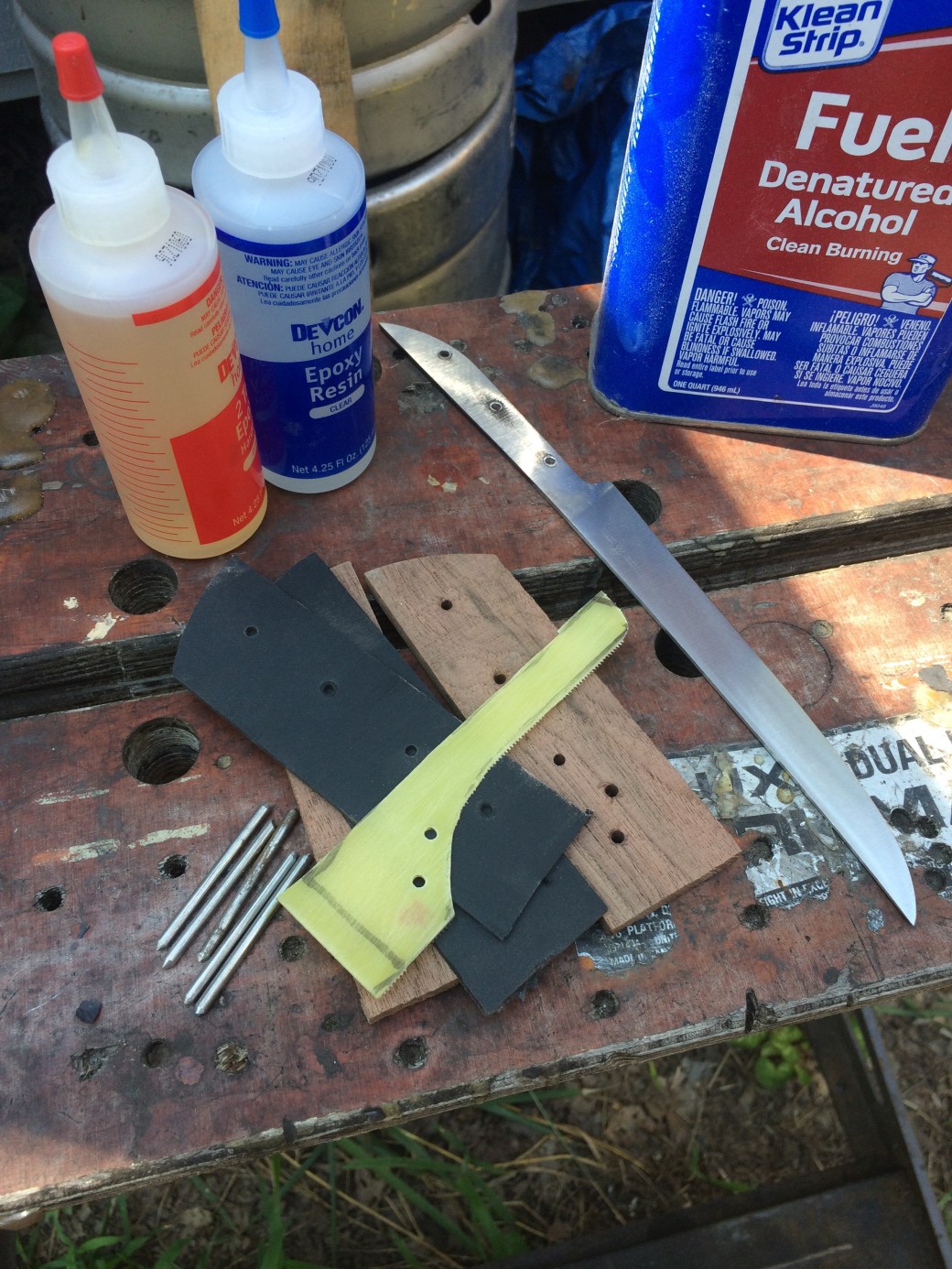
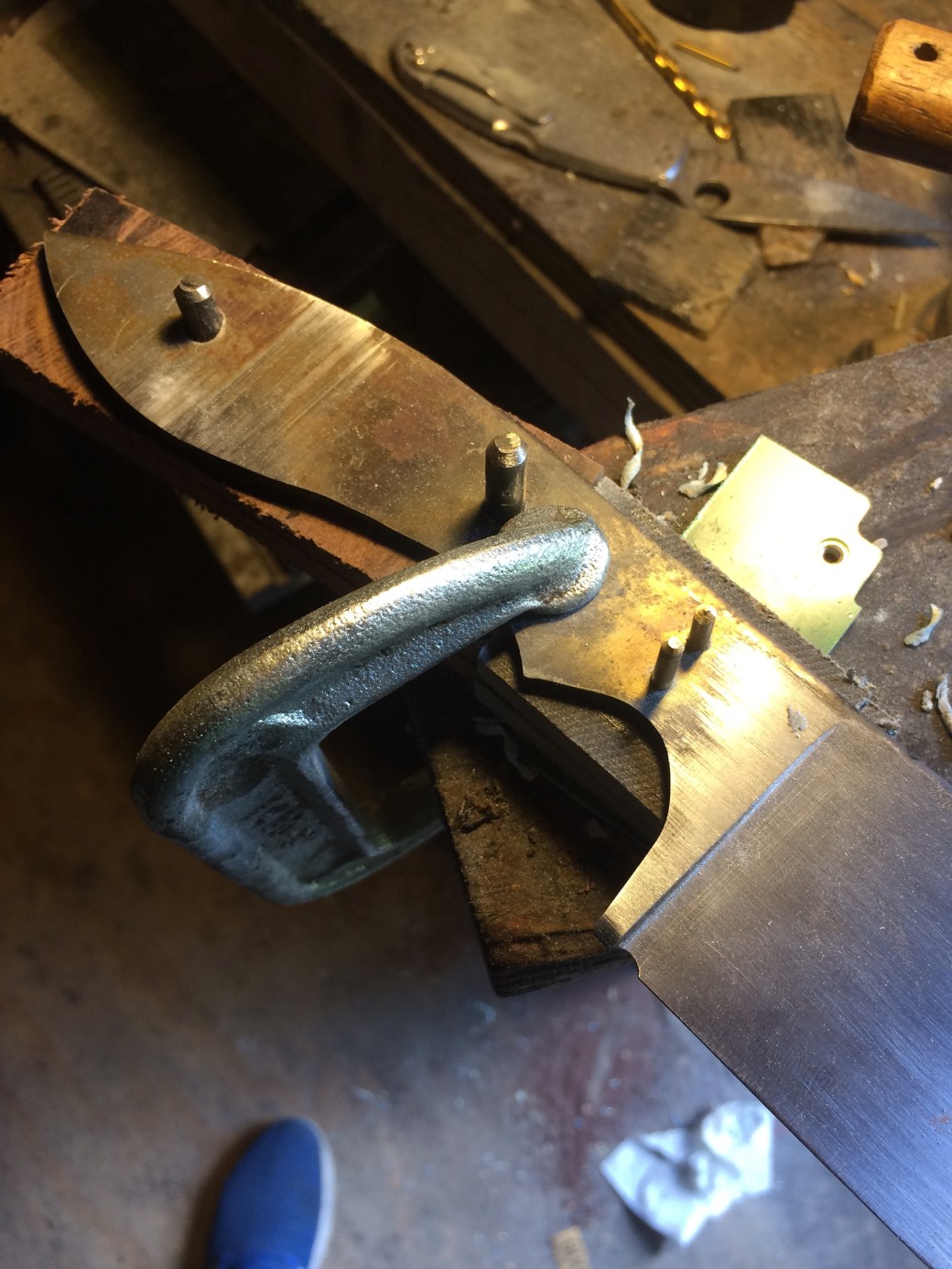
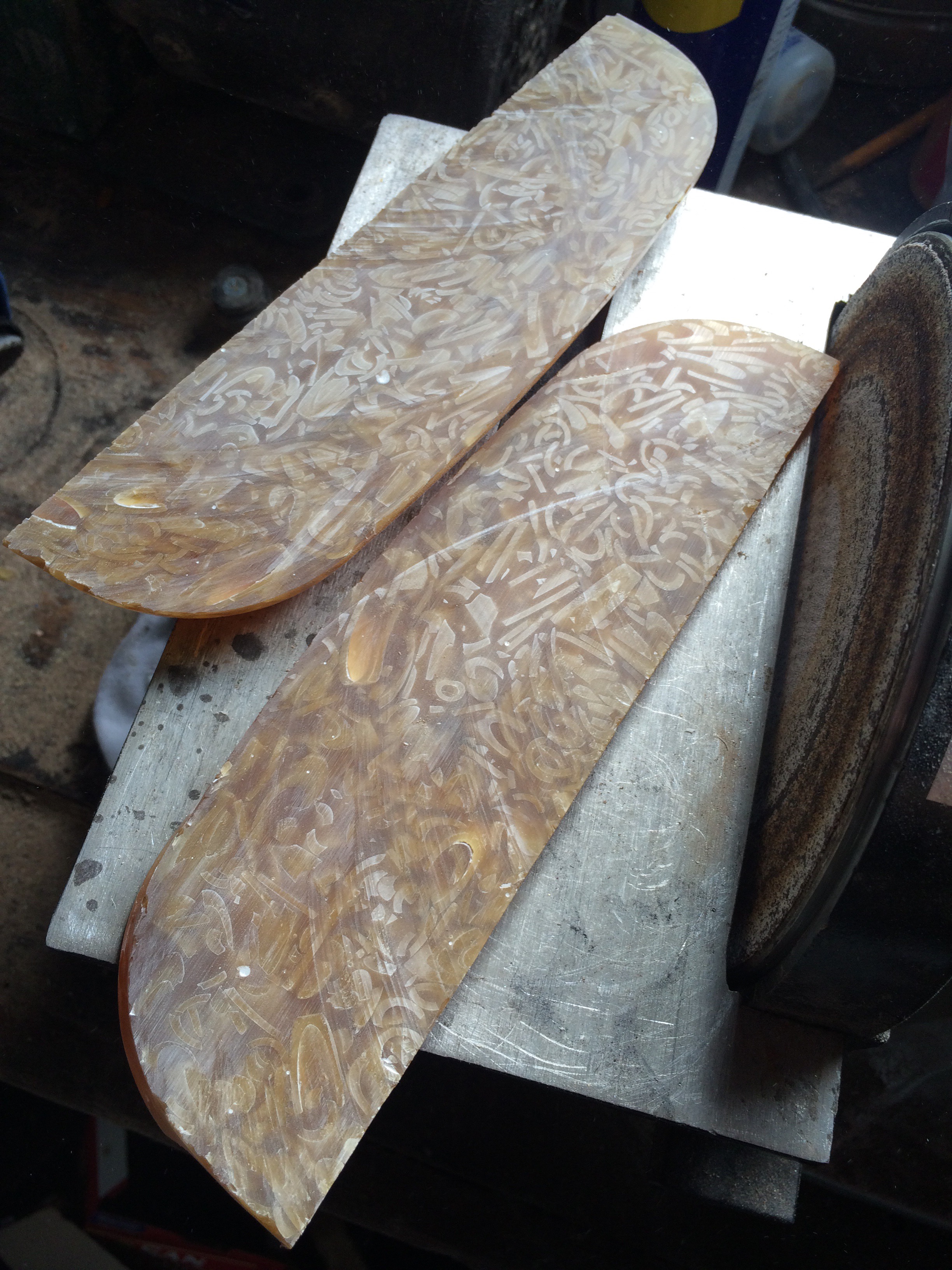
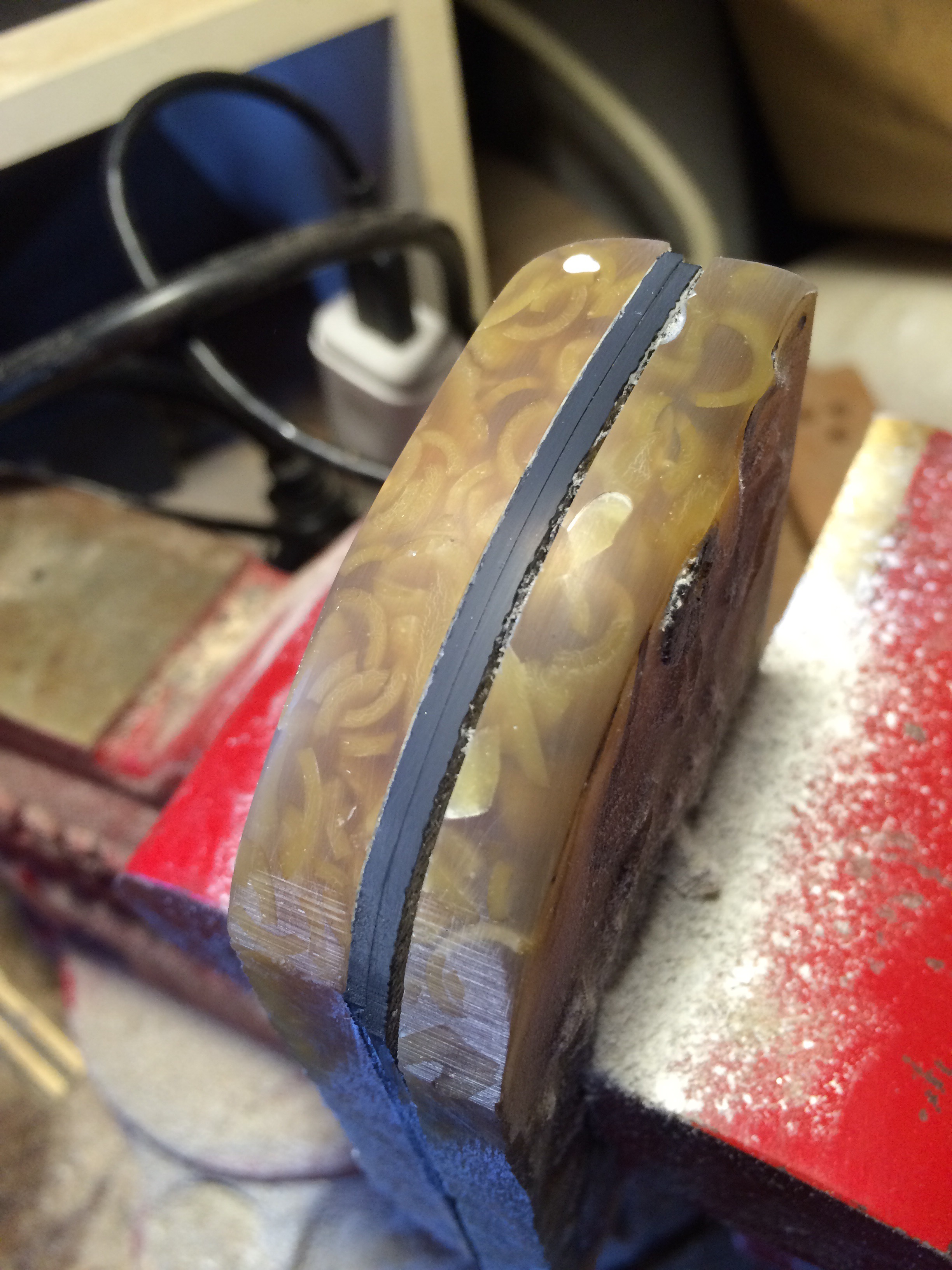
For the bolster we’ll make a material out of bow tie pasta:

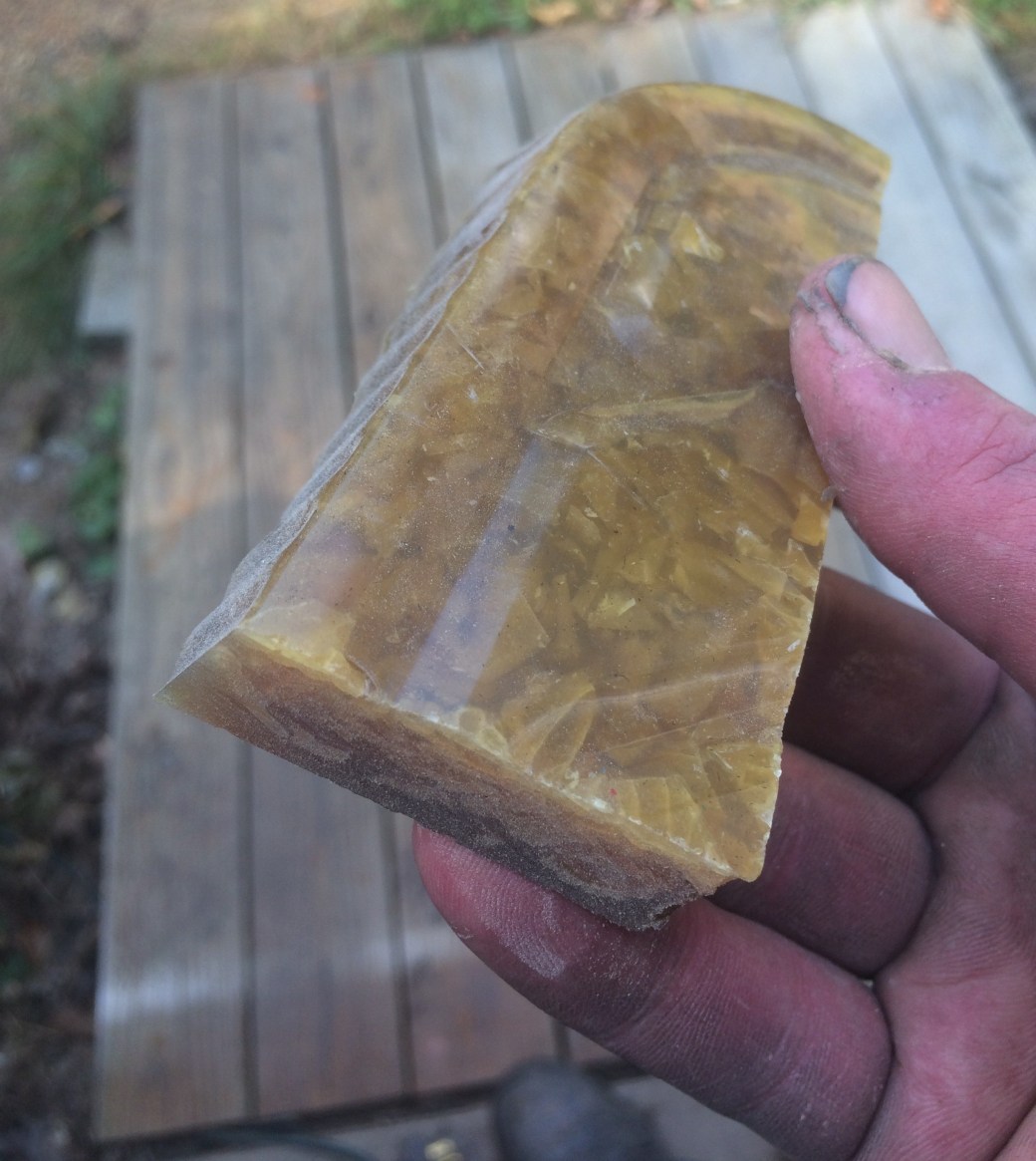
After it gets smashed up and set in fiberglass resin…

…you get something like this:

img_7586-e1568582334258.jpg

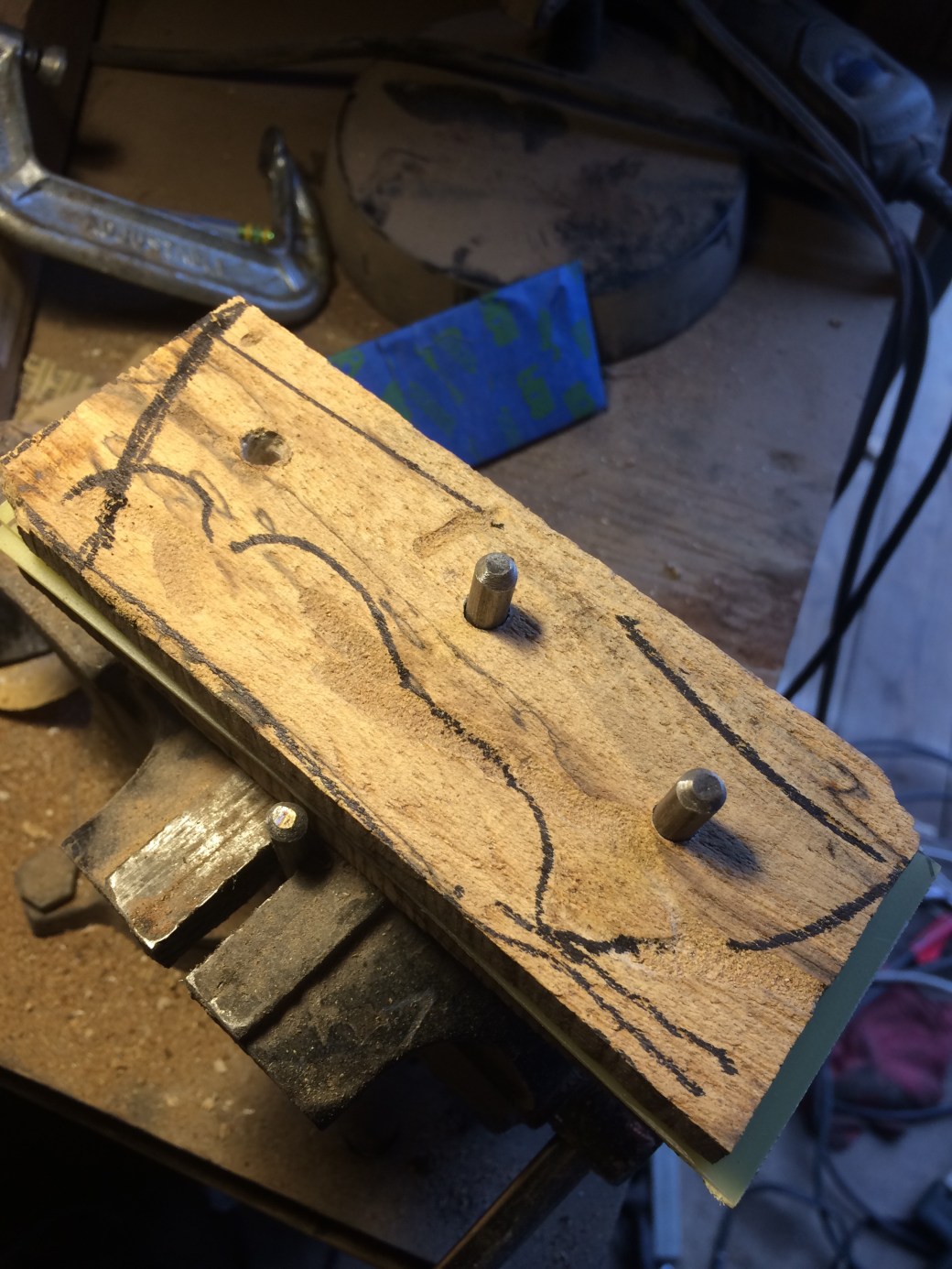
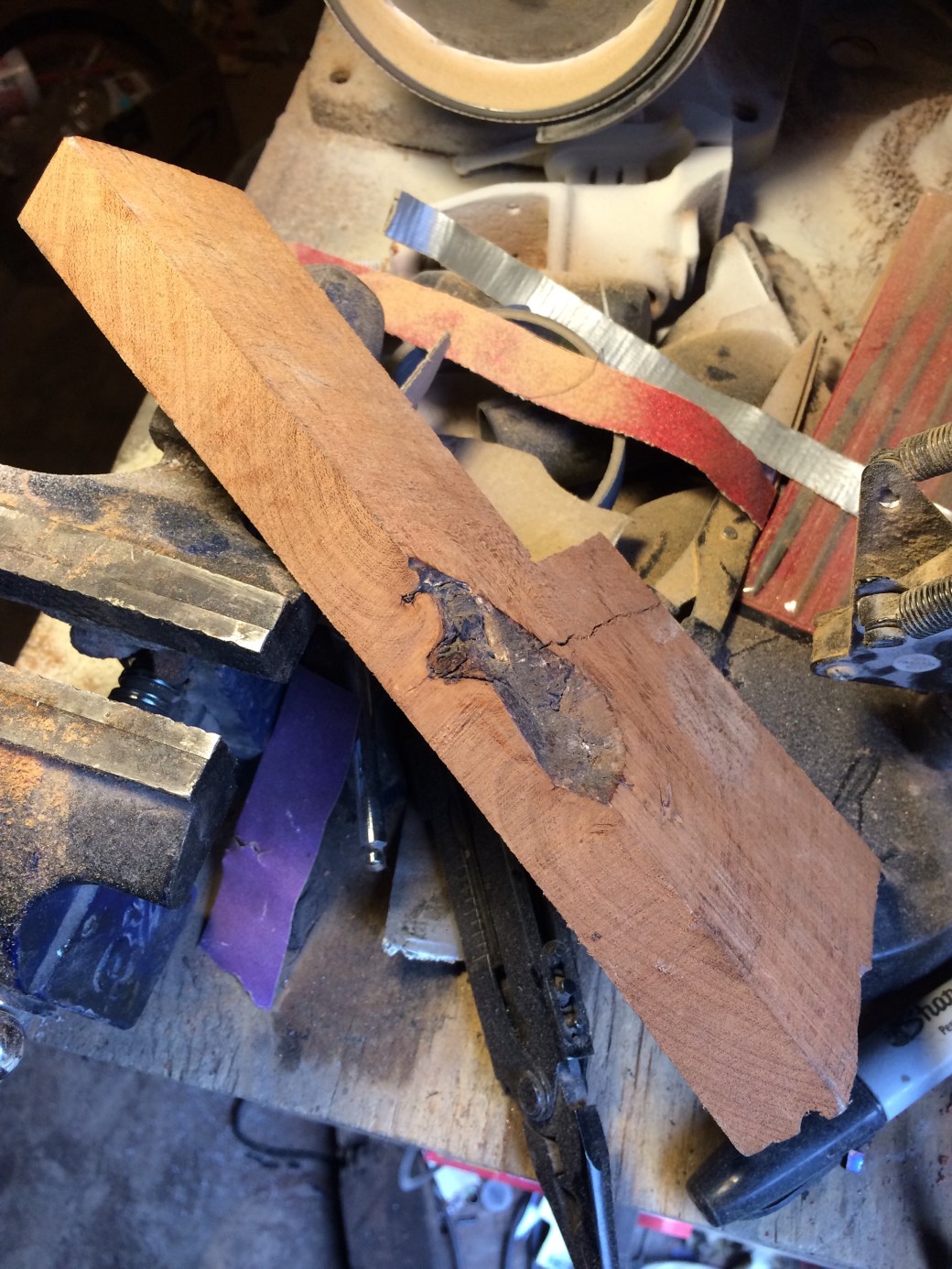
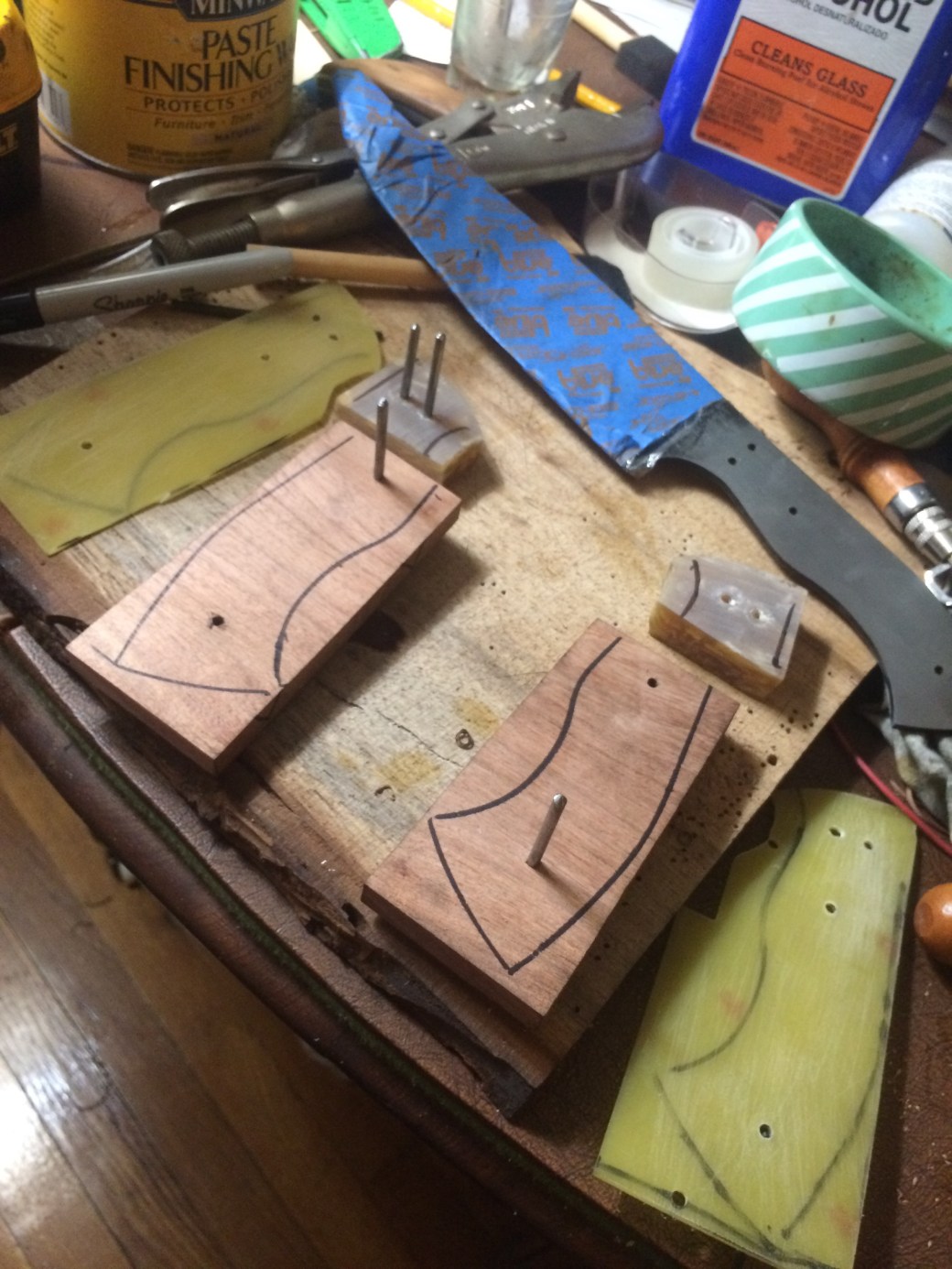
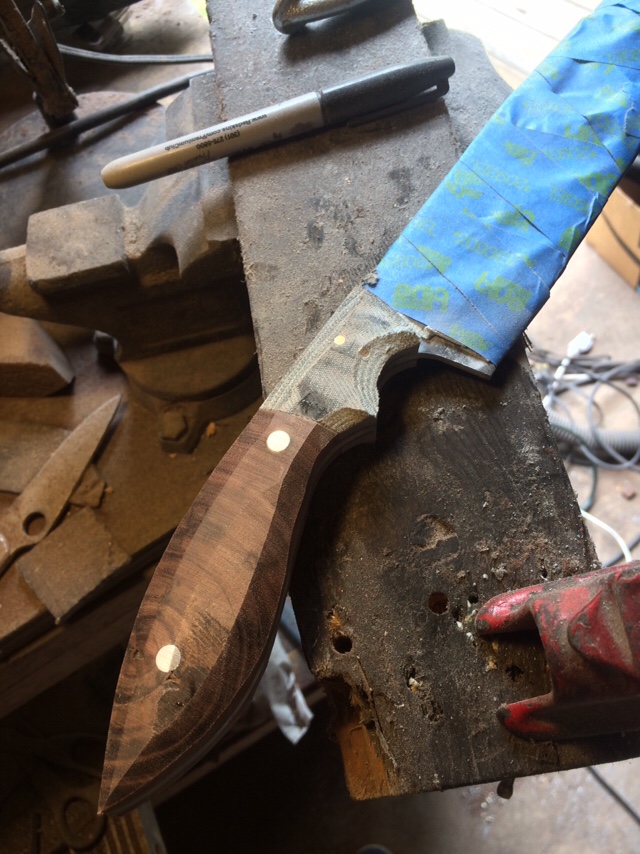
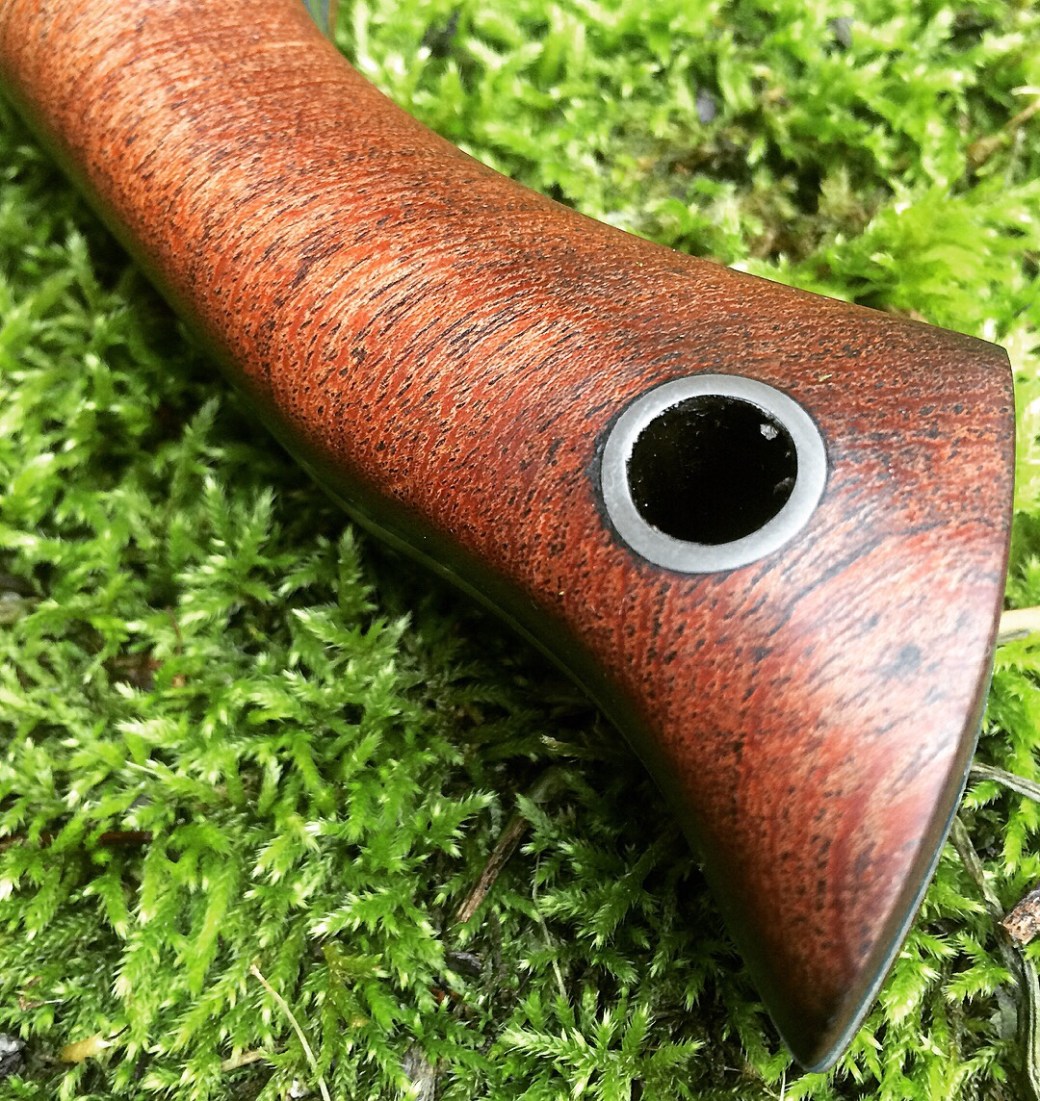
Texas Mesquite:

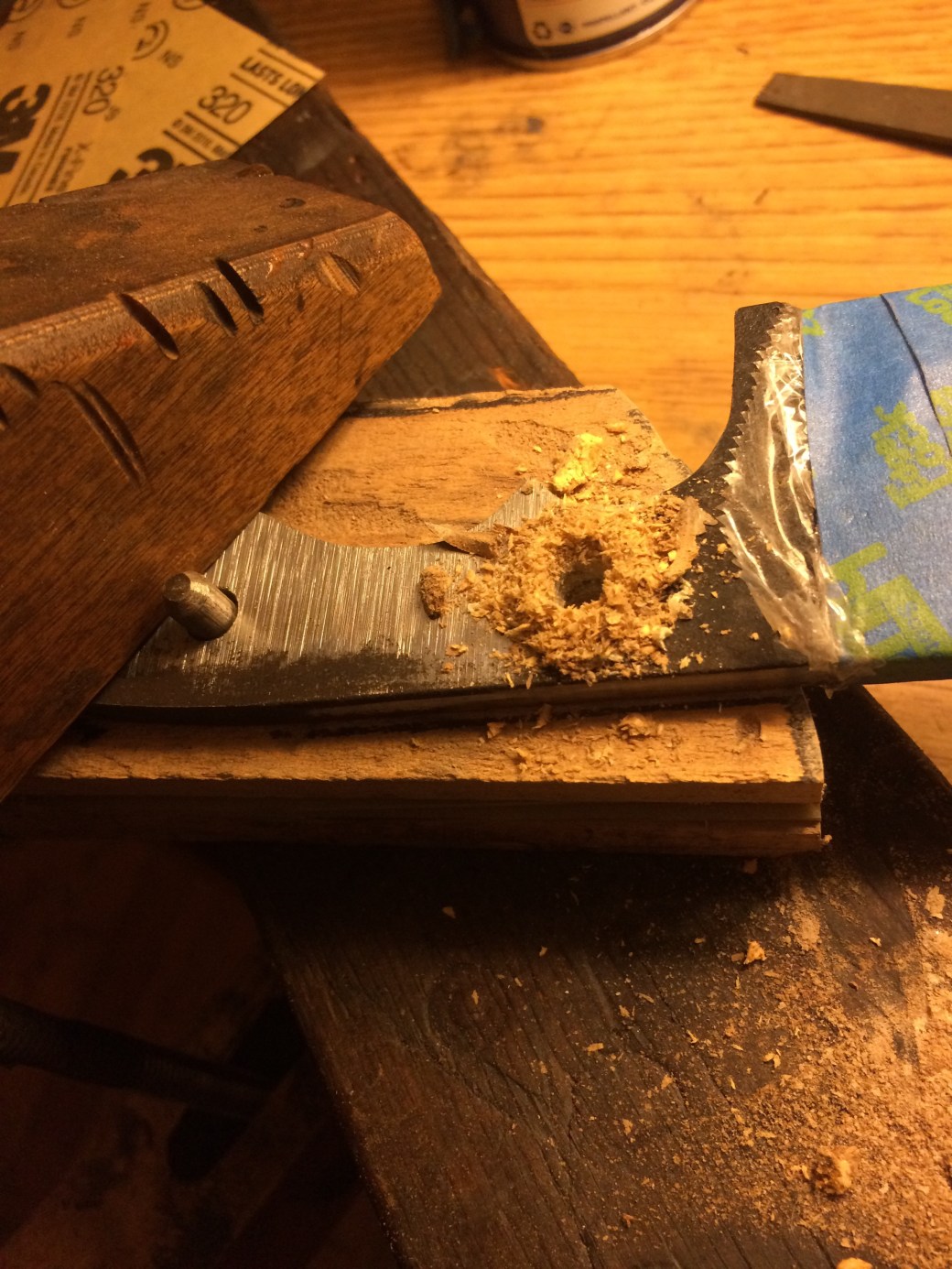
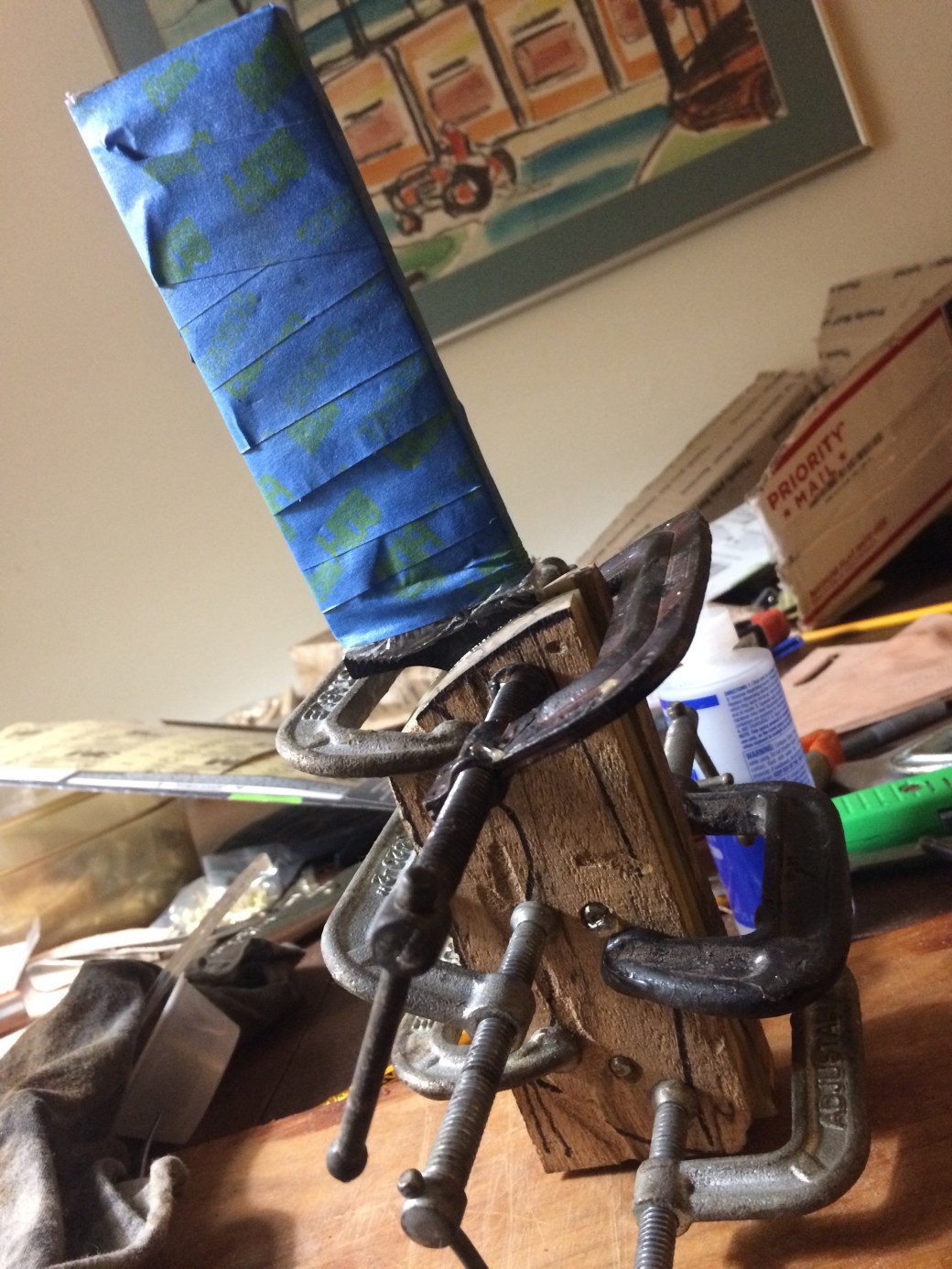
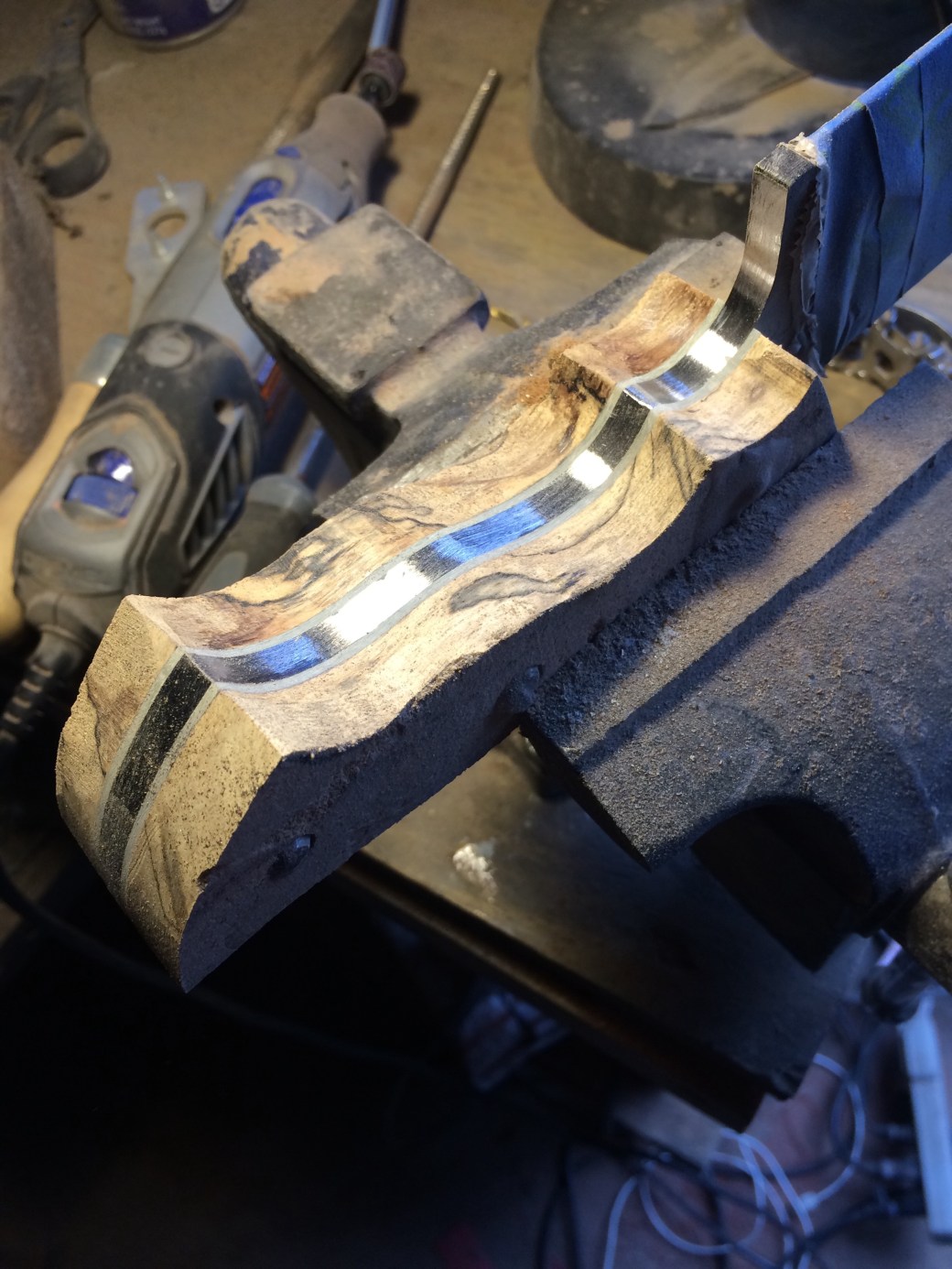
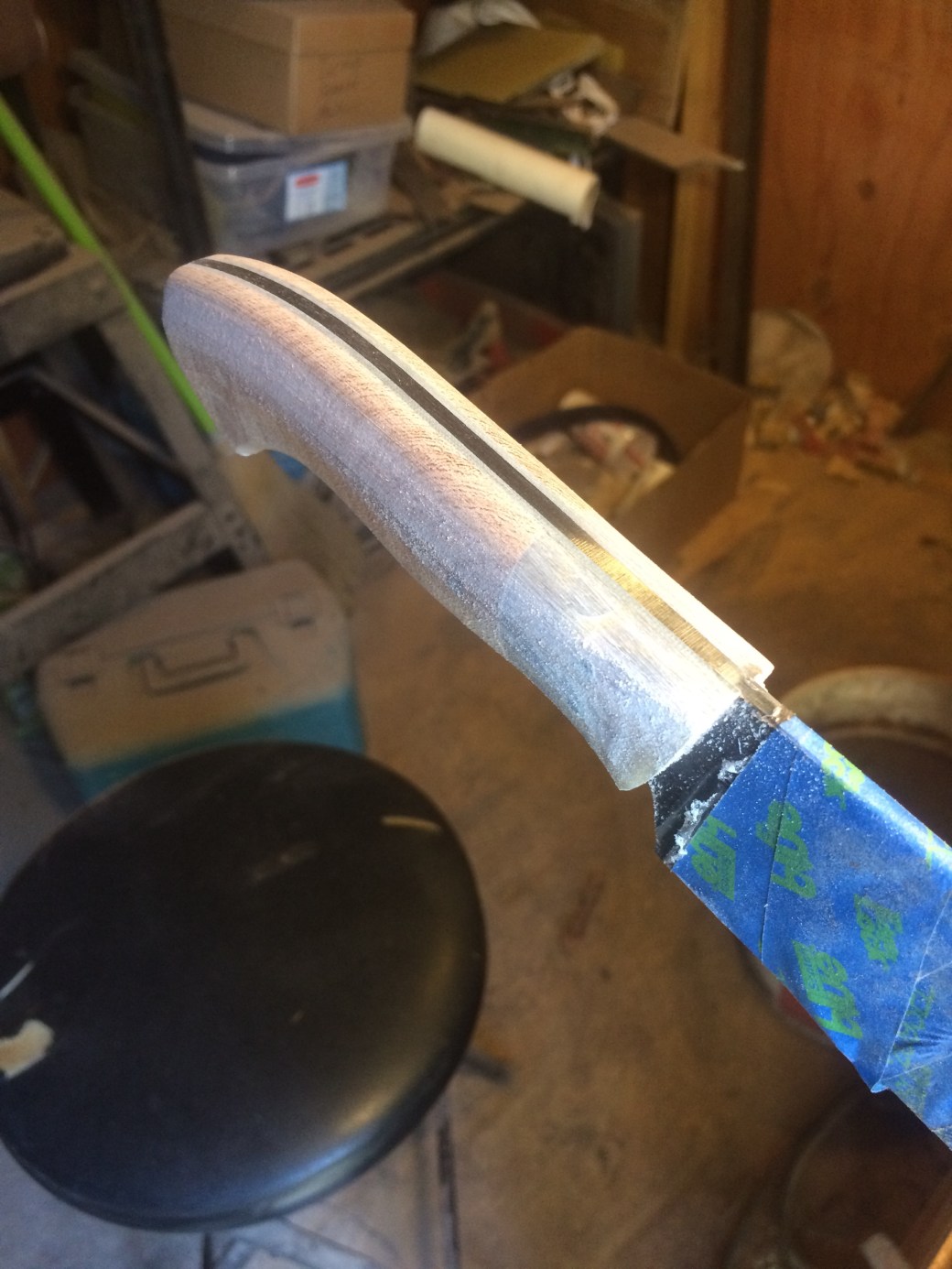
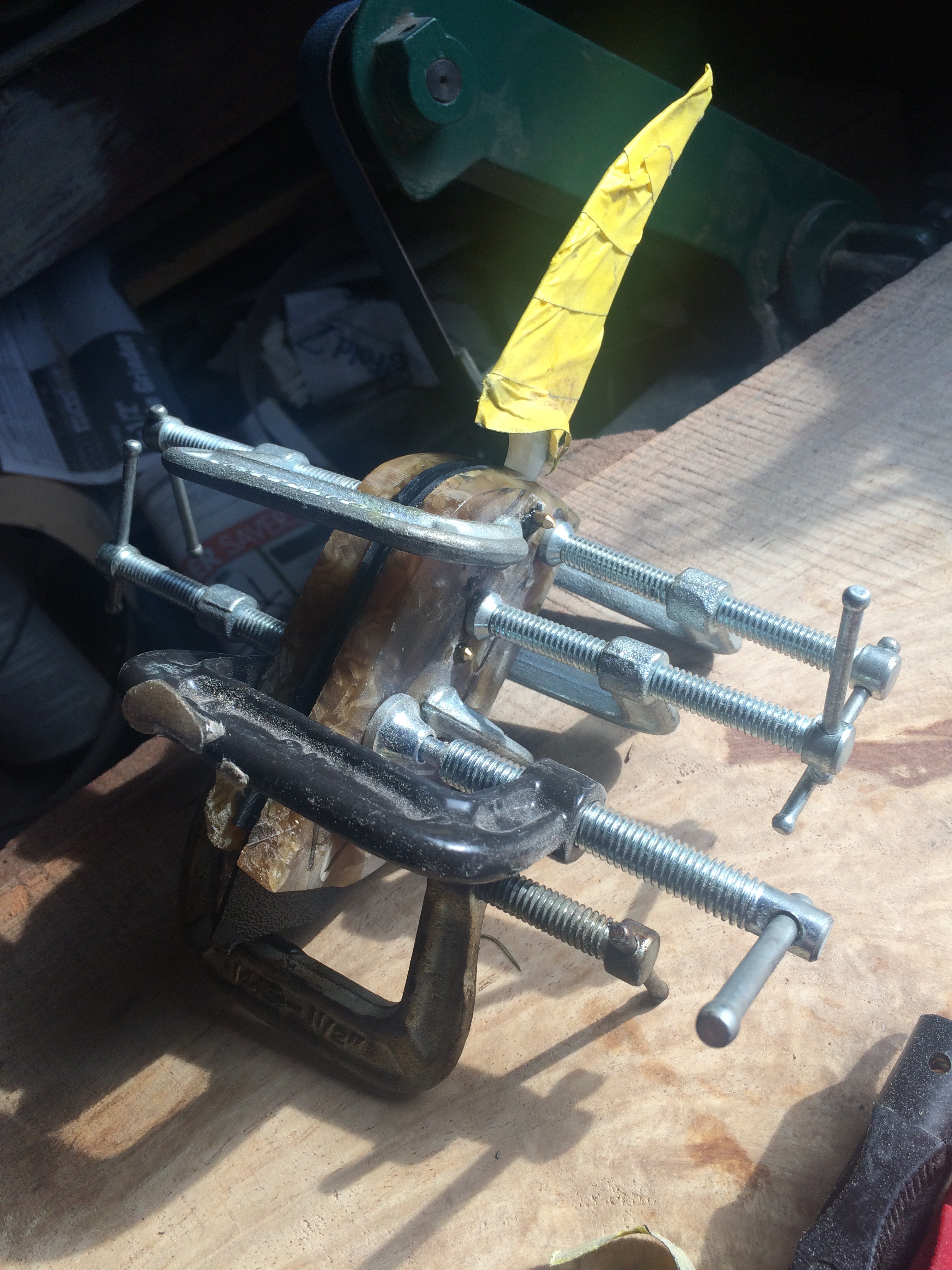
Glued:

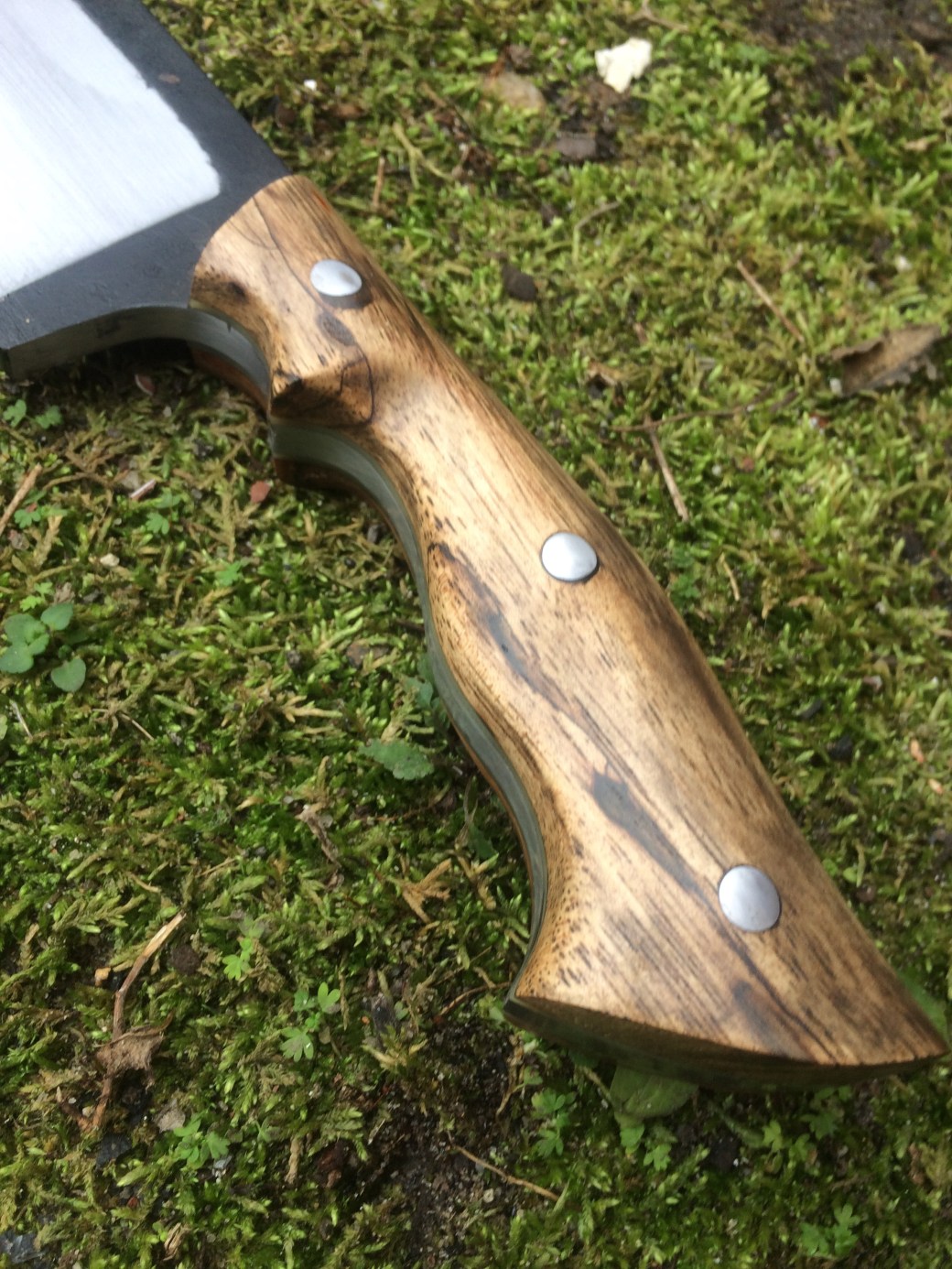
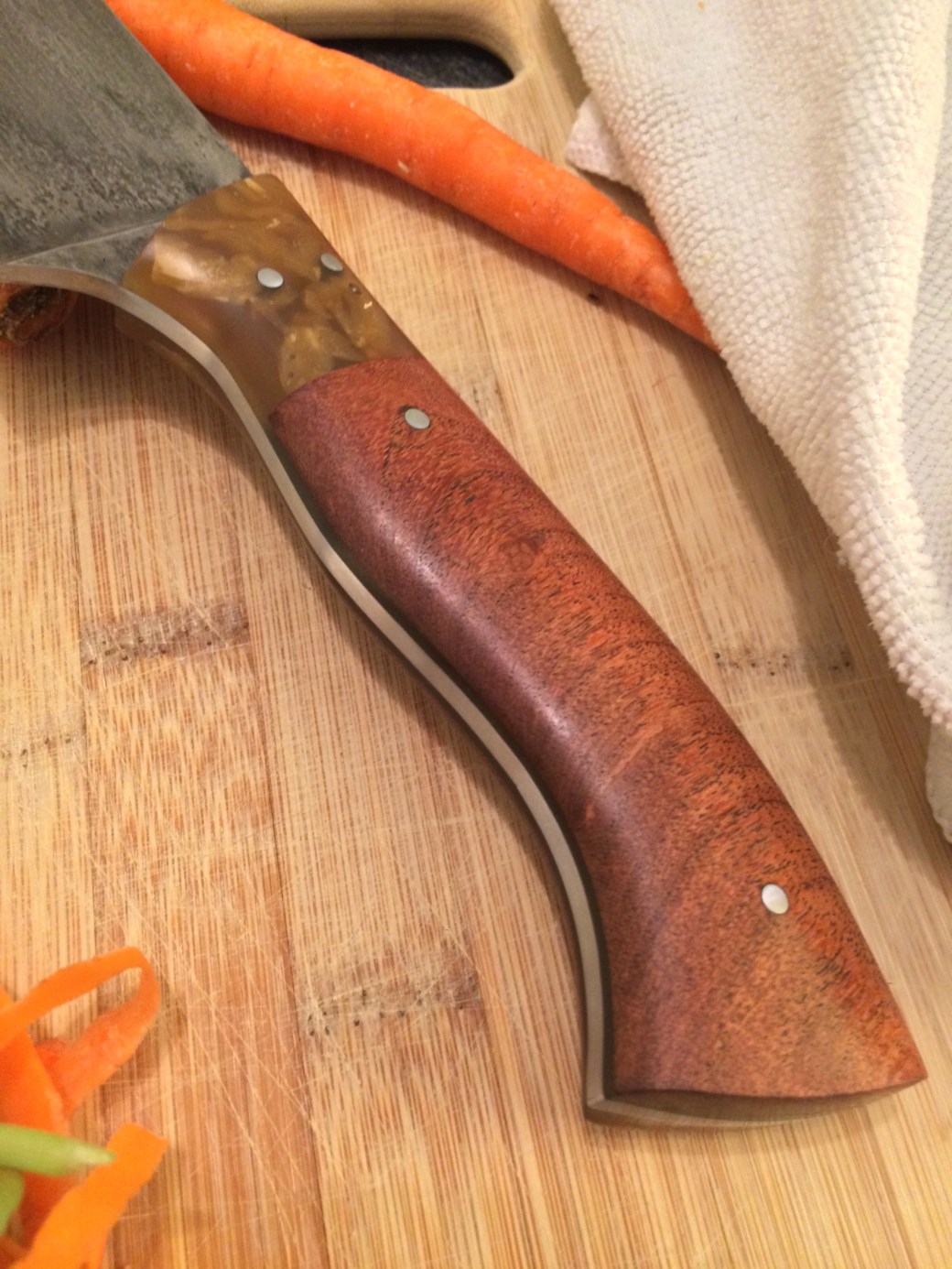
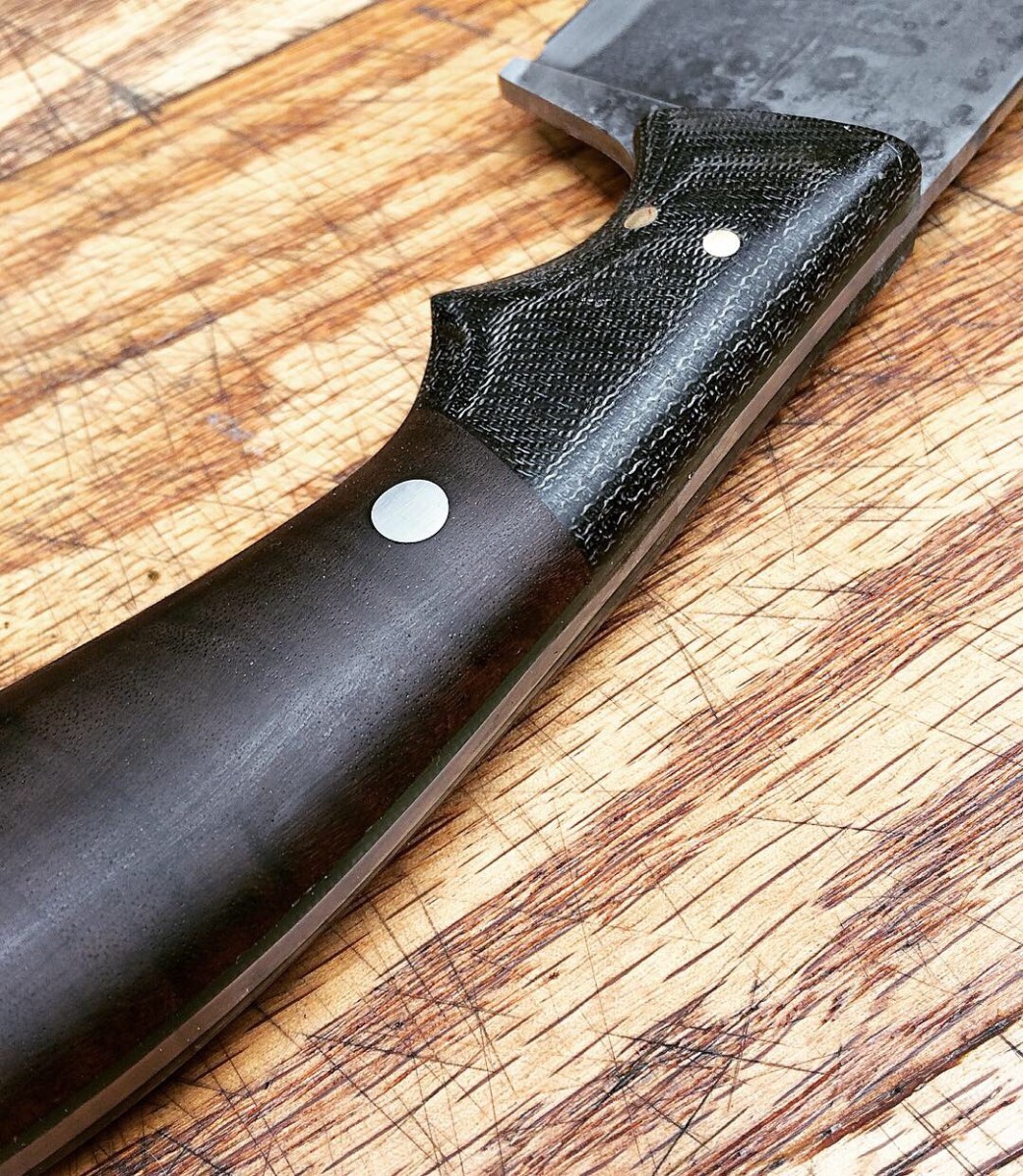
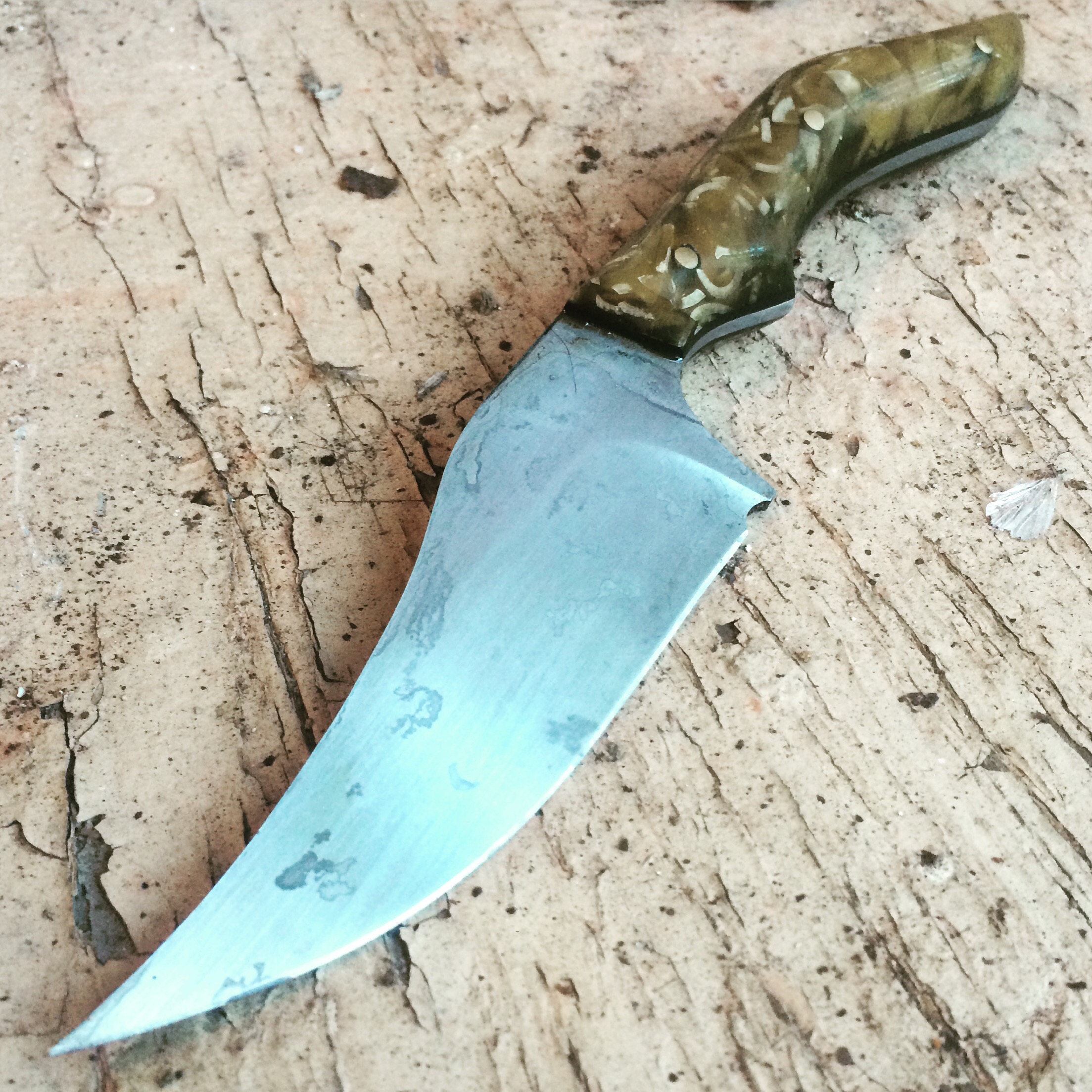
The Notre L’affaire:

Knifemaking: The Ace, revisited

“When we are children we seldom think of the future. This innocence leaves us free to enjoy ourselves as few adults can. The day we fret about the future is the day we leave our childhood behind.”

Patrick Rothfuss- The Name of the Wind

(you can read about the original crafting of this knife here)

As I approach early middle-age I find myself surrounded by the children of my close friends.  They are marvelous little beings, unfettered by the troubles of the world, and always see possibilities and wonder around every corner.  In watching many of them grow up I feel like I’m let in on a beautiful little secret as they walk, talk, and become more cognizant of everything going on around them.  Boldly pursuing their curiosities, there is a pronounced presence in their endeavors and the way they move through their little worlds.

This unfettered presence of being is a subtle reminder that as an adult I am always second-guessing myself.  “I wish I had done that better,” I will think to myself, or “I wish I had been kinder.”  Rumination at the end of a bad day can trouble my sleep, and the thought of facing the day the next morning can be daunting.  I will often judge harshly my perceived tumbling through the world and wonder if I am doing any of this right.  There are moments when I find it hard to get excited about anything.  Many of the adults I confide in are often thinking the same thing.  These are merely symptoms of being grown in an extremely complicated world, and as many therapists have assured me over the years, are completely normal feelings to have.

Much of this melts away when I spend time with the children of people I’m close to.  They don’t think about any of those things.  As someone crashing through adulthood, I find that to be deeply reassuring.  I am also reminded that I am in fact an adult- no, you can’t have cookies for dinner, you can’t use your Ipad in the bathtub, and yes I do have to leave (please don’t be sad, I’ll be back).  I’m not sure how such big feelings can be contained in such tiny people.

About four years ago I made a blunted knife for the oldest child of some good friends of mine.  They have a house on some property in the country about 45 minutes out of the city.  They grow mushrooms and berries and have animals and forests.  I know the place pretty well- I helped them move out there.

There are now four children at their home.  They are farm kids in the summer.  I saw all of them the other week when I was doing a side job delivering some water containers to his dad, who uses them to run his homestead.  While he was sorting out another visitor, I went in to say hello to the kids.  They were all confused, except for the oldest, and asked me who I was and why I was in their house.

I told them who I was and that I was there to help their dad.  I was then barraged with questions and chatter- the oldest shows me their puppy, the second oldest tells me she doesn’t remember me, the third oldest asked me why I was there a second time, the youngest doesn’t talk yet but eyes me suspiciously.  Dad comes in and clears everything up.  I don’t think there are too many visitors during a weekday, and I felt that my presence was a happy little gift.  I’ve found the most sincere thing a kid can do is talk to you.

Before their dad and I unload the truck I brought in the oldest, whom I’ve known since he was three, wants to show me his treasures.  He pulls a box out of his room and starts removing things- some small folding knives, a bit of paracord, and a compass.  He is immensely proud and can’t even contain it.  I’m a bit jealous.  As a large man when I get excited it usually scares people.  So I quietly and secretly took in his excitement with him. Whoever figures out how to concentrate little boy excitement and put it in supplement form will make a mint.

His dad and I went out back to unload the truck and this little boy received instructions to make lunch for his brothers and sisters.  A few minutes he comes out with a peanut butter and jelly sandwich for me.  His dad hands me his blunted knife I made a couple years ago and asked if I could make it into a real knife.   I tell him I sure can.

Because in the end, it’s not just a knife.

This little boy isn’t thinking about the bigger picture but I am.  In seeing his reworked knife, I hope this little boy will learn to see what it is to grow and improve as he figures things out.  I hope that he will learn to look back on where he’s been and feel satisfaction in seeing how far he’s come.  I hope he will see what it means to put beautiful work out into the world and the empowerment contained within speaking his truth.  Most of all I wish him to not fret about the future and to trust in his tireless human spirit.  This is the lesson of the Ace.

This was the knife I made him four years ago.  It is a hardened and tempered butter knife that allowed him to get comfortable with carrying a bladed tool. 

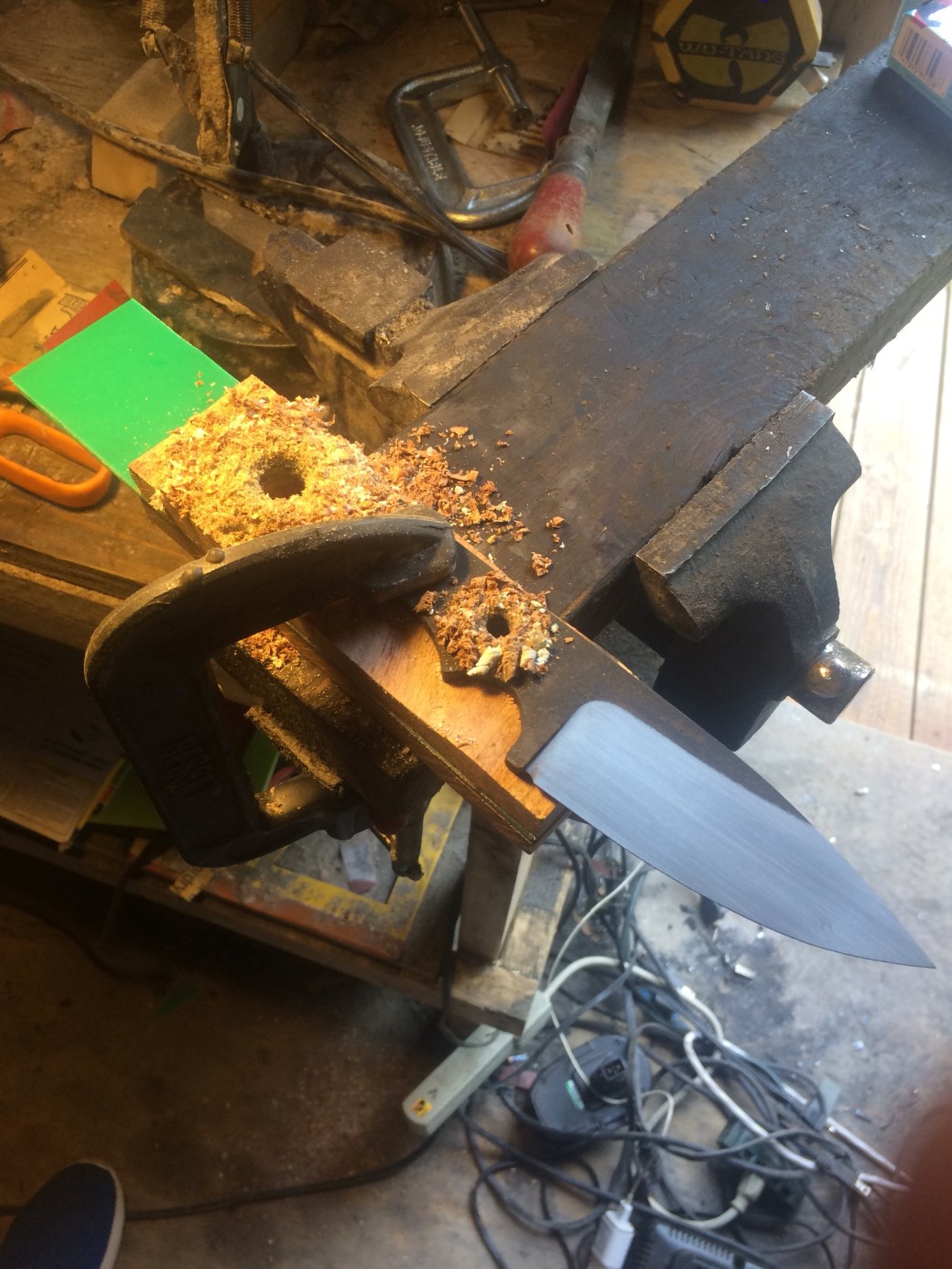
The handle was coming off- we’ll put a new one on.  Off with the old:

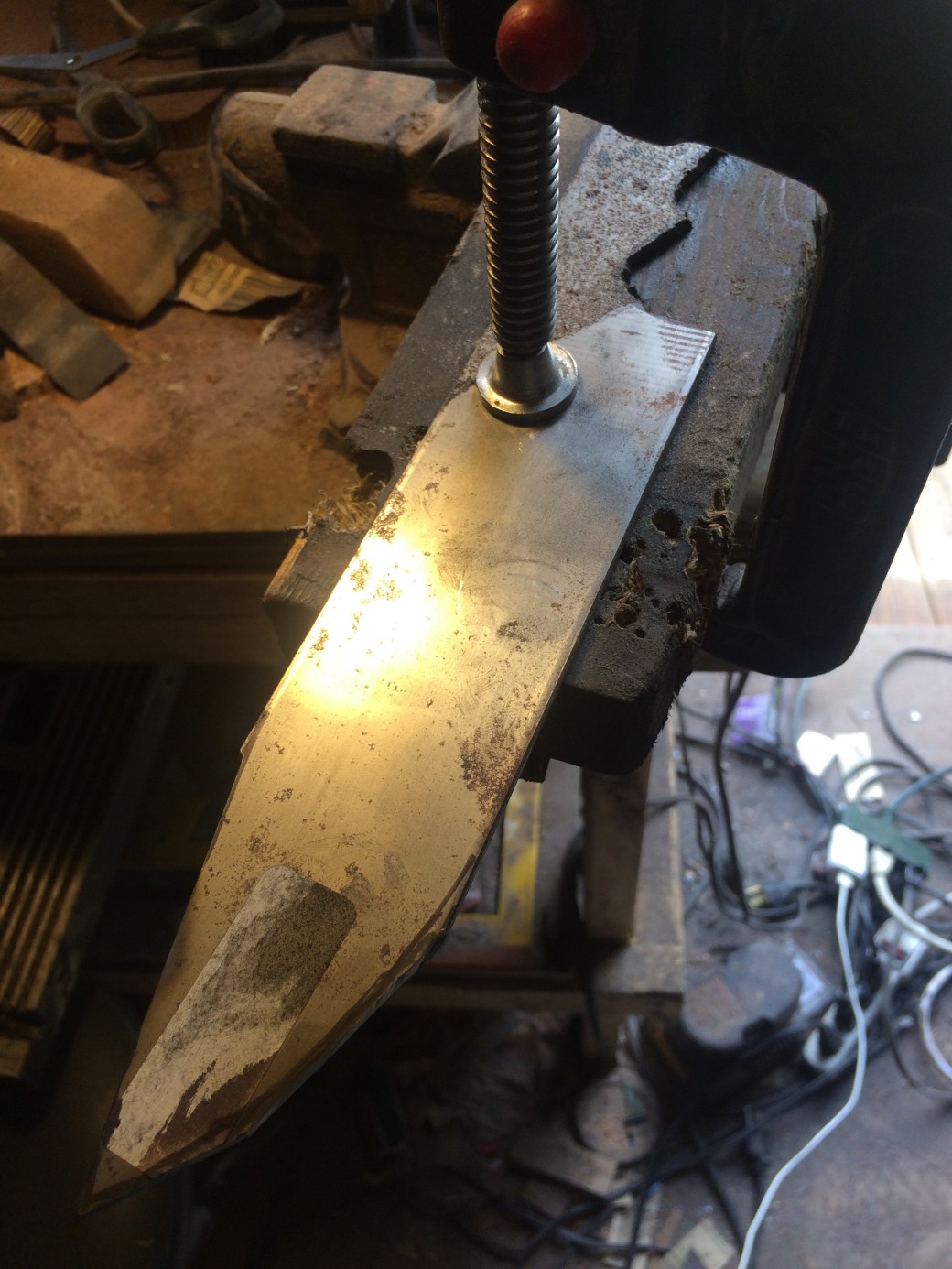
The blade is re-profiled so it has a point and will cut:

img_7485

Giving him a good polish:

IMG_2835

Satin:

Black Walnut:

img_7486

img_7487

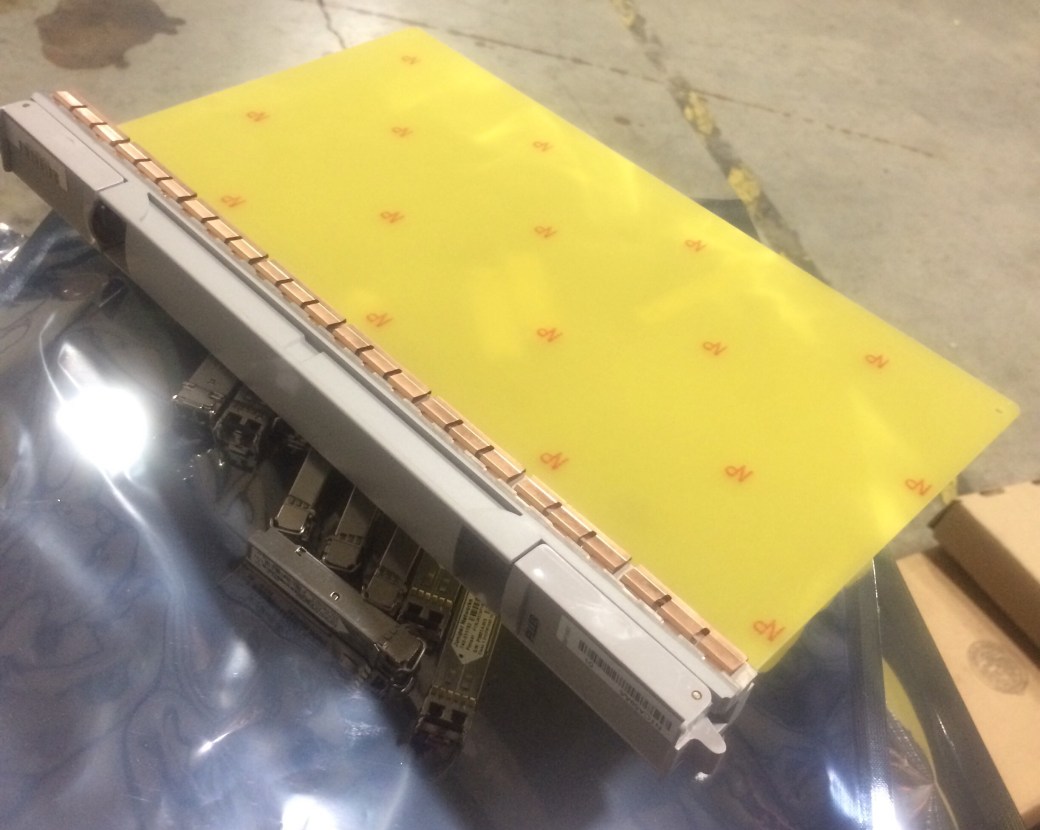
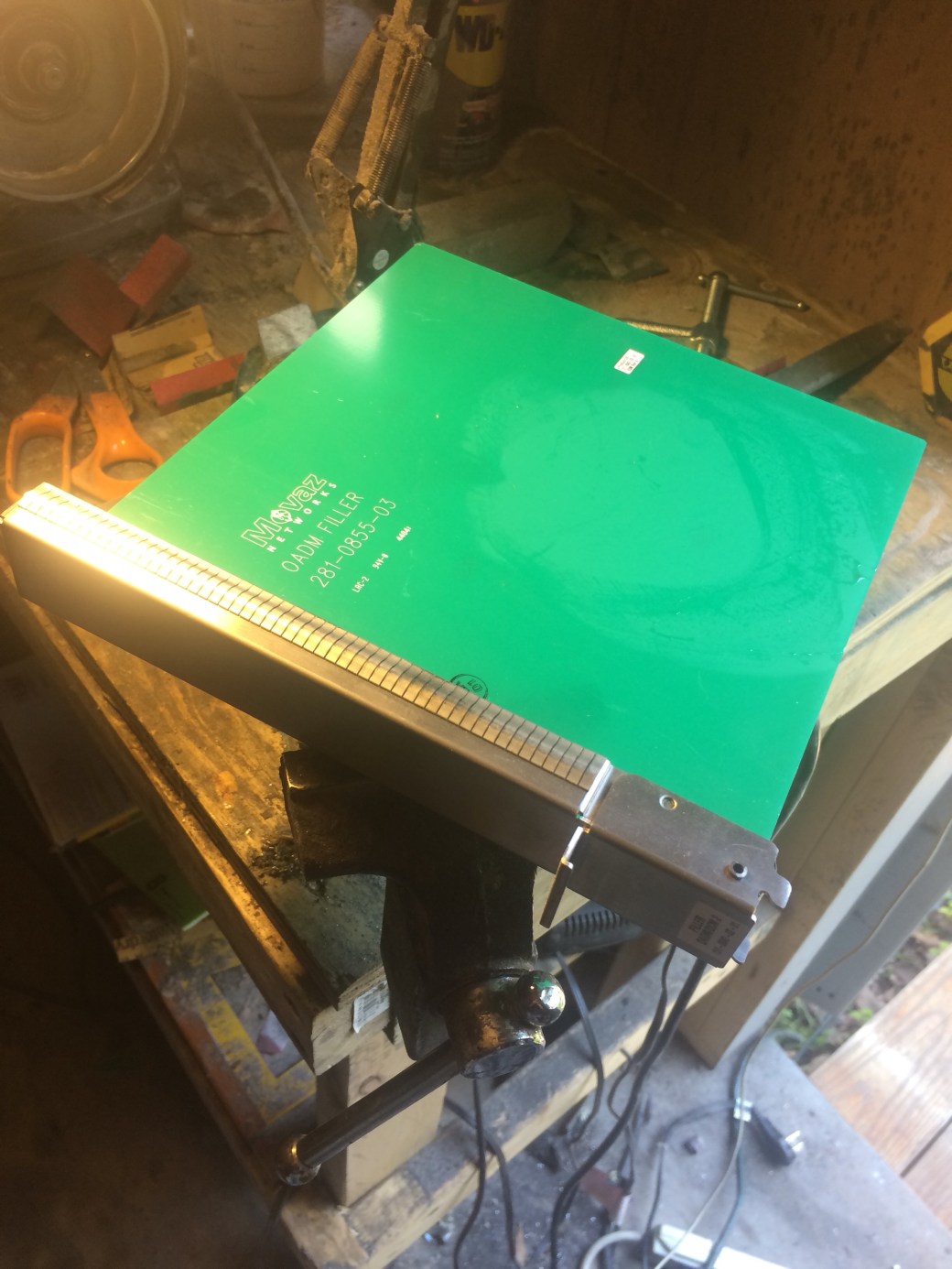
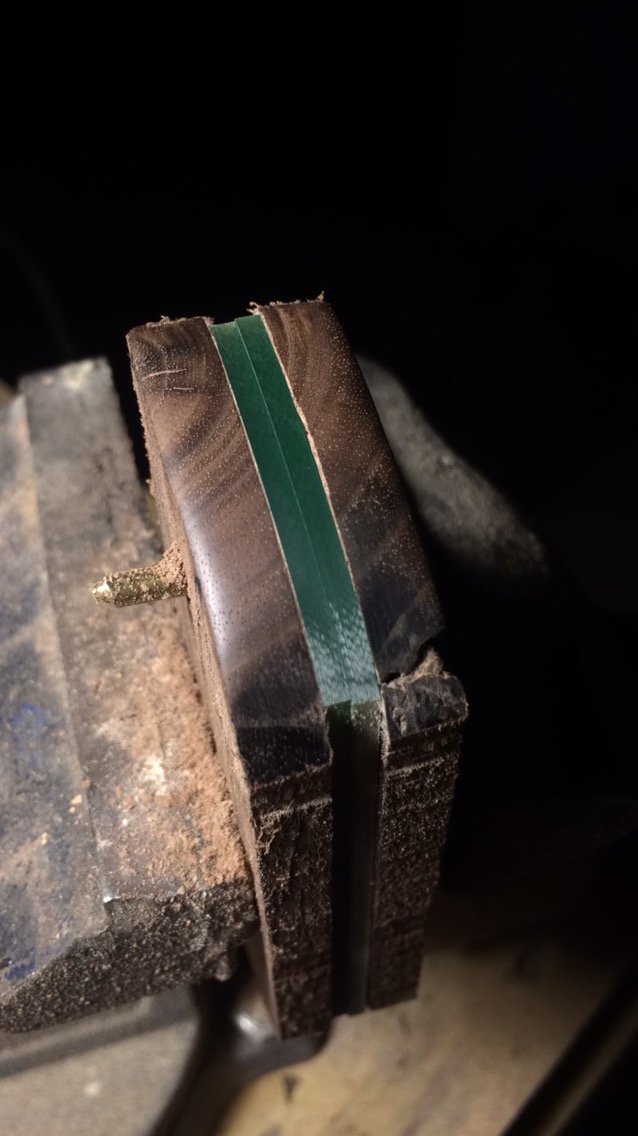
Computer board blank for spacing material.  Though it looks yellow, it will be green when fully polished:

img_7488

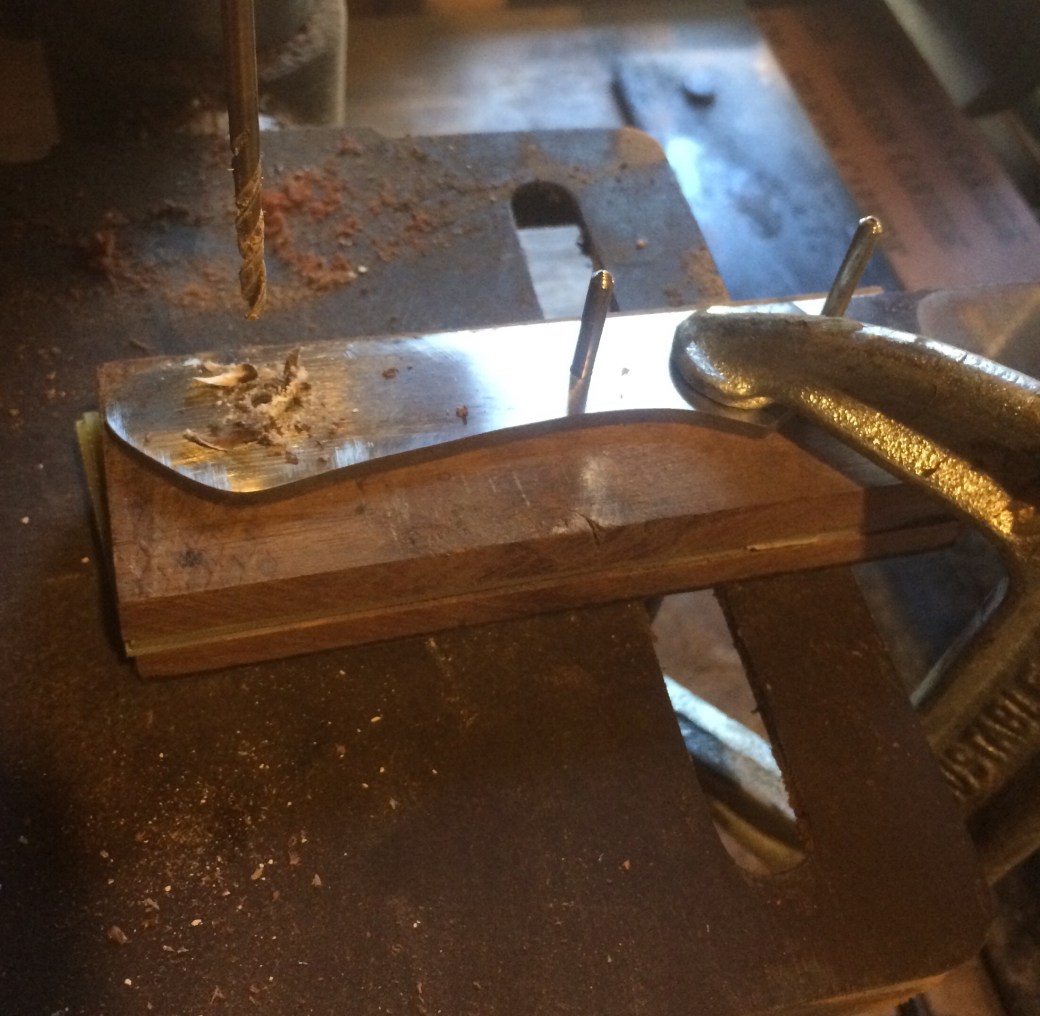
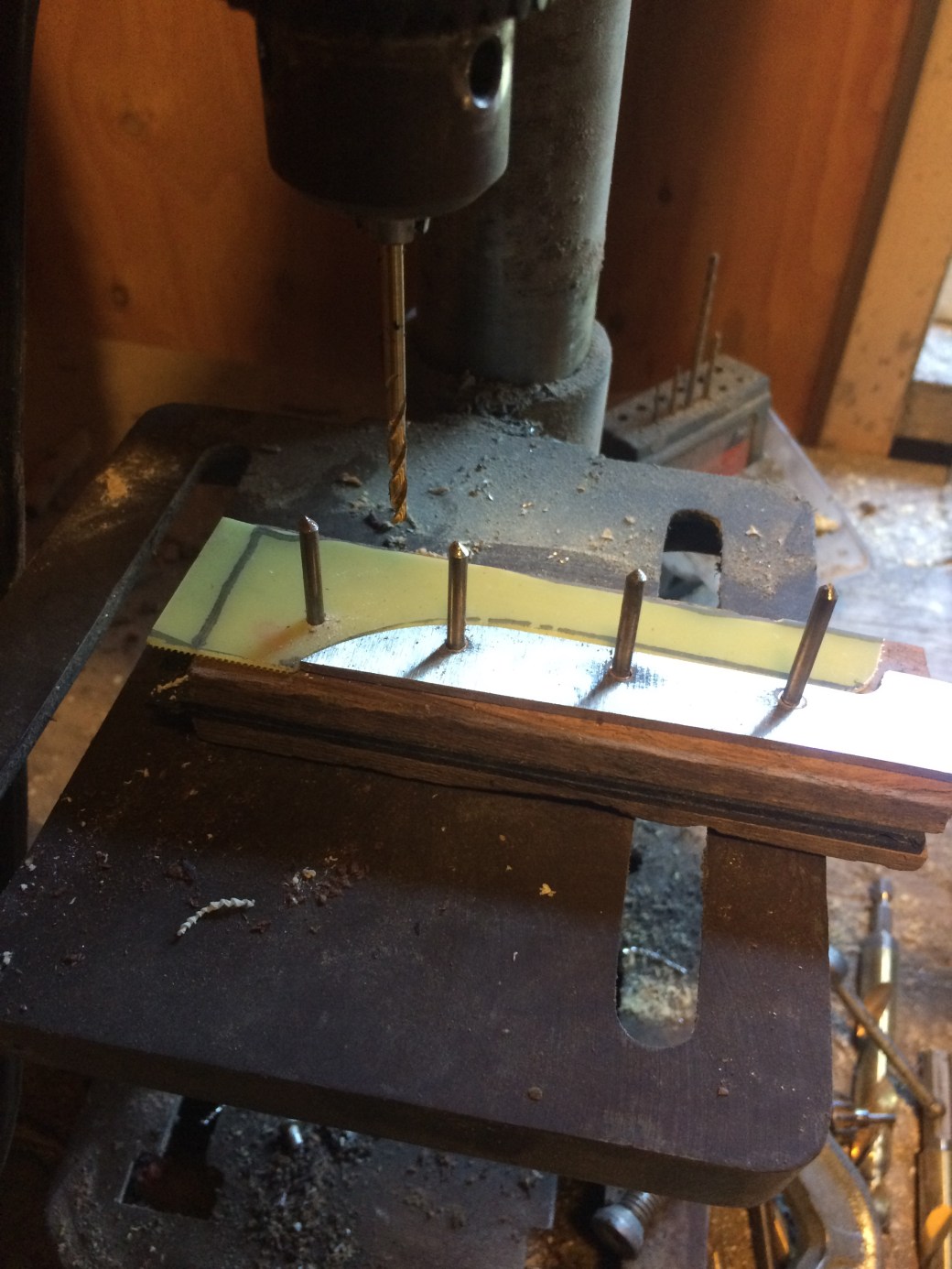
Drilling the rivet holes:

img_7489

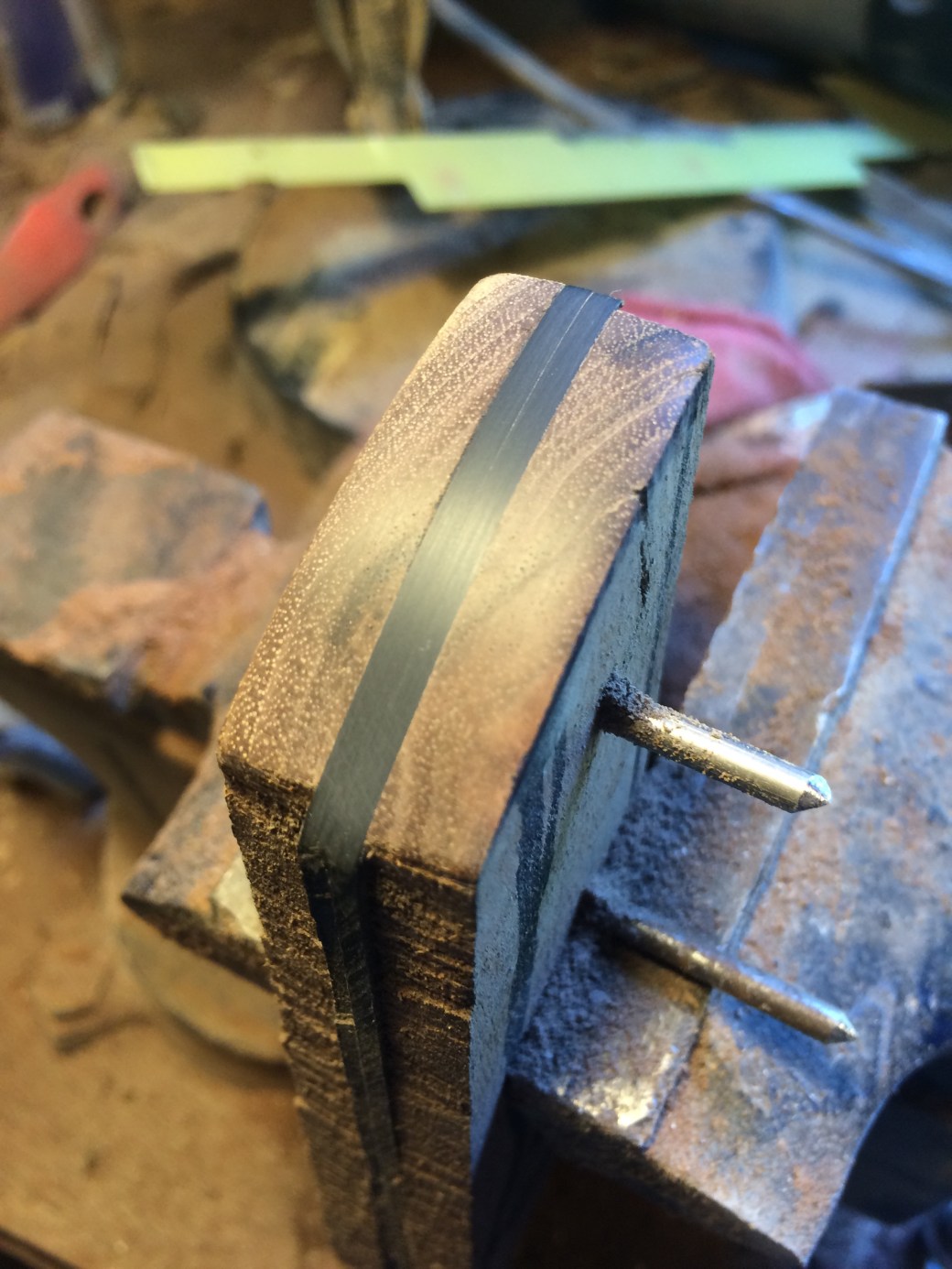
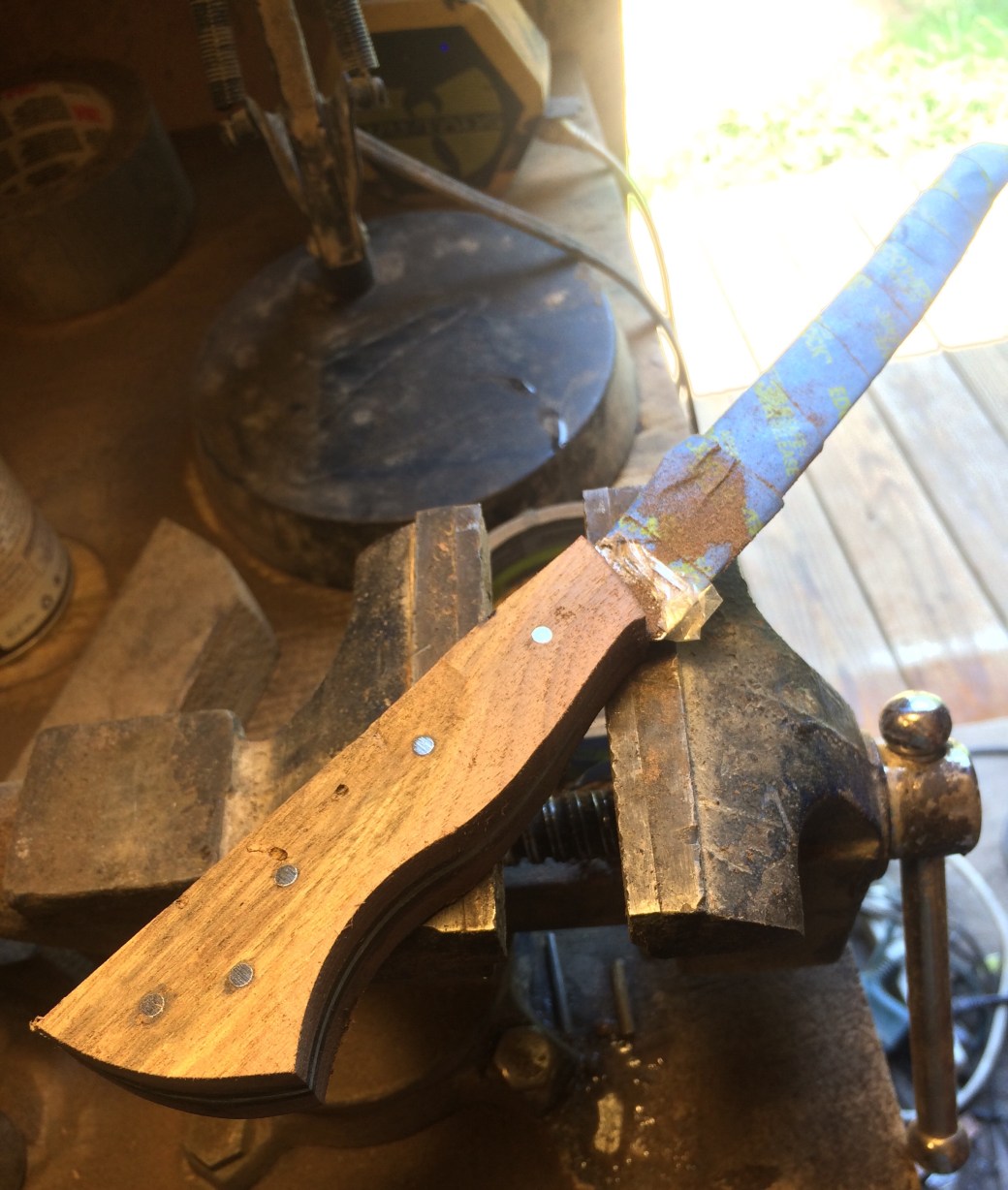
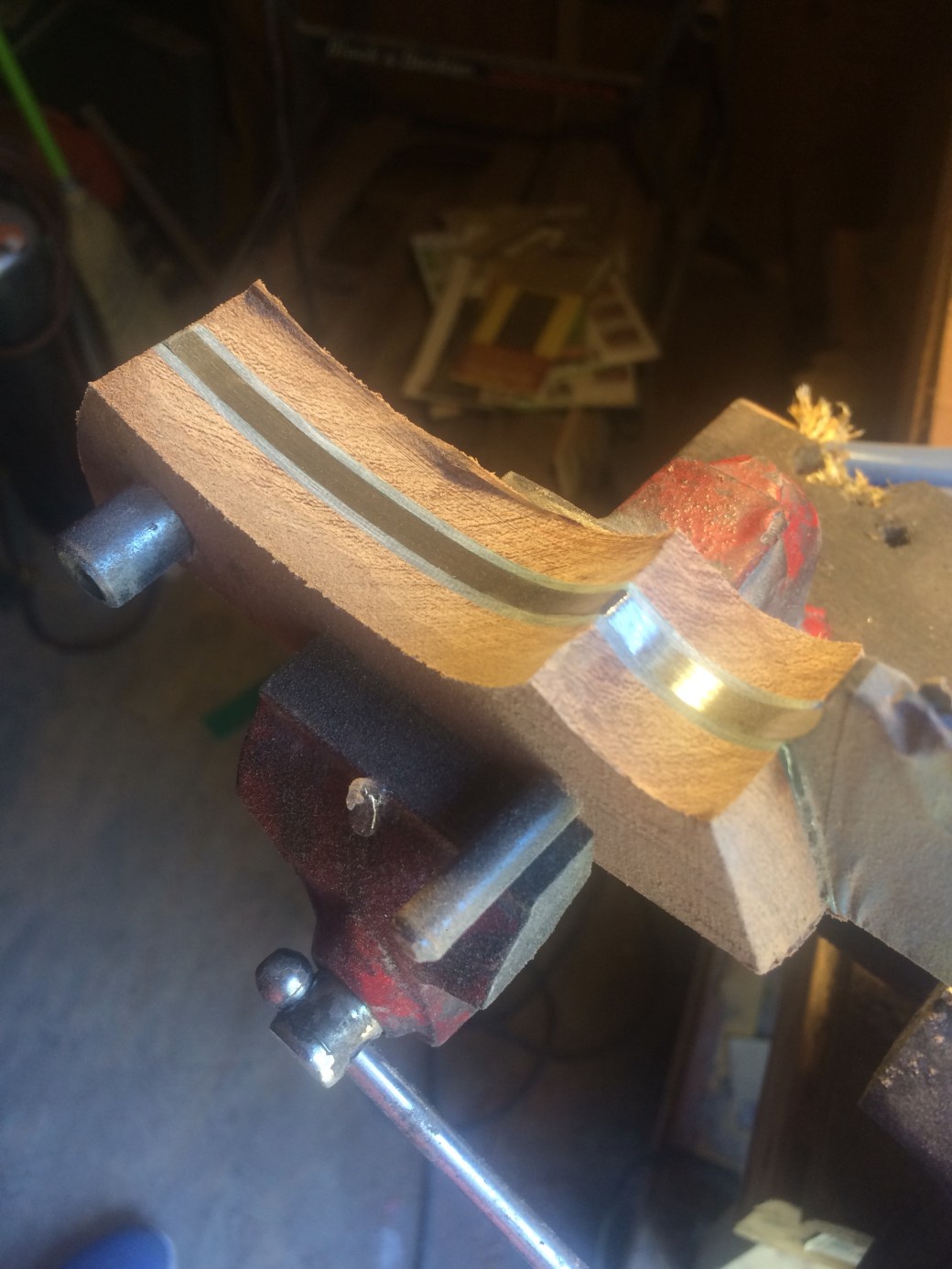
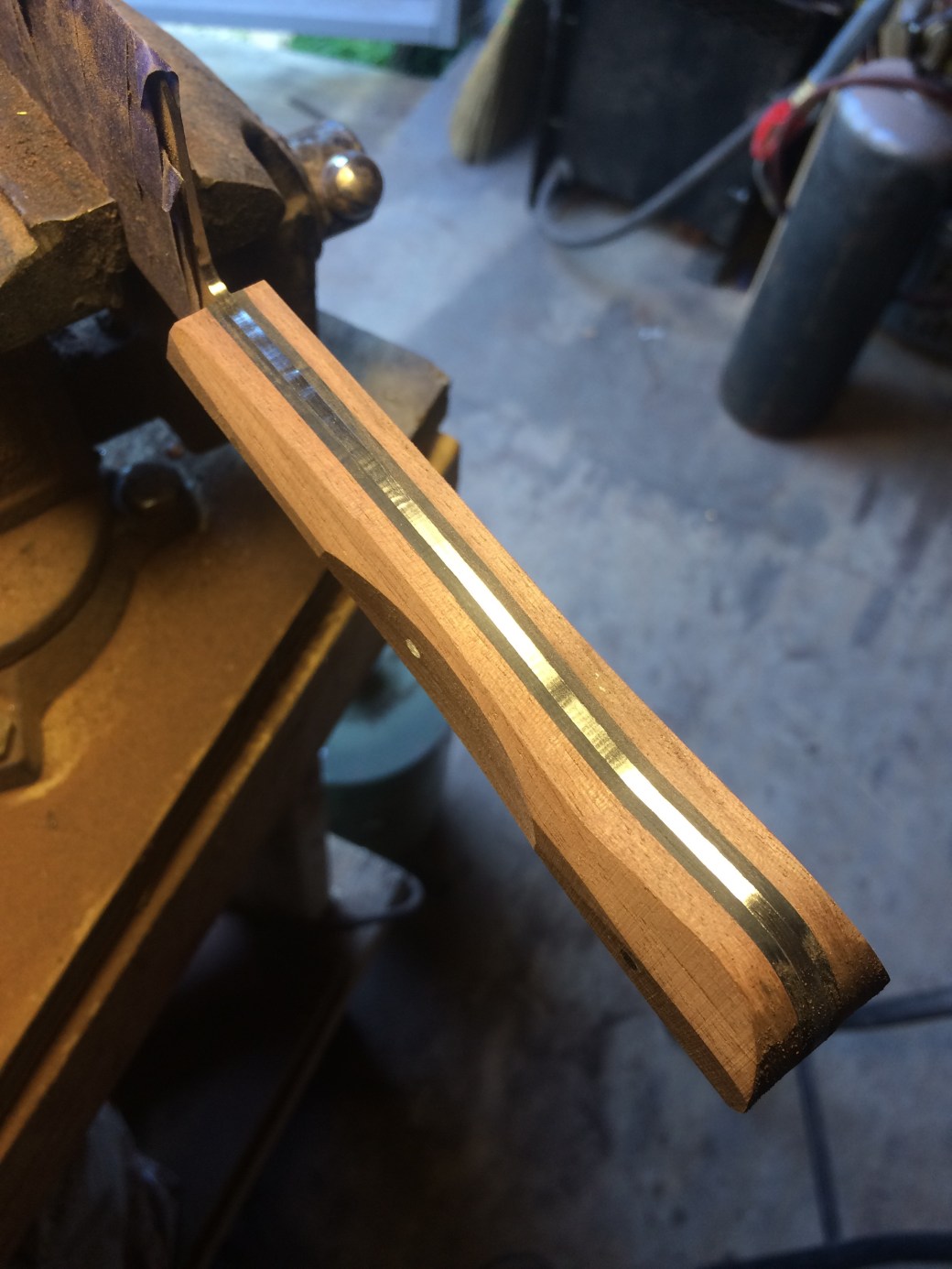
The part of the handle that meets the ricasso is shaped and polished before glue-up:

img_7490

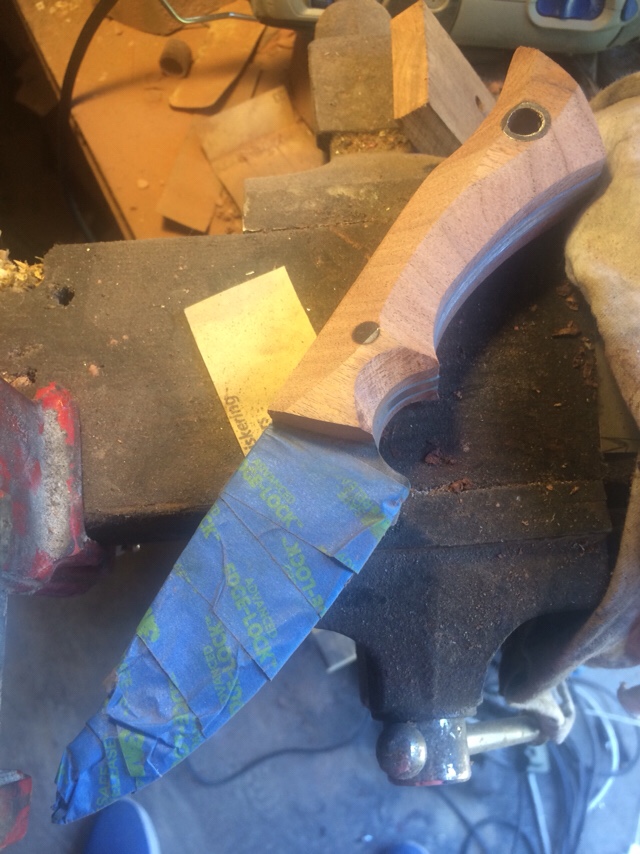
Glued:

img_7497

Profiled:

img_7505

Shaped.  From here on out it’s all hand work:

img_7506

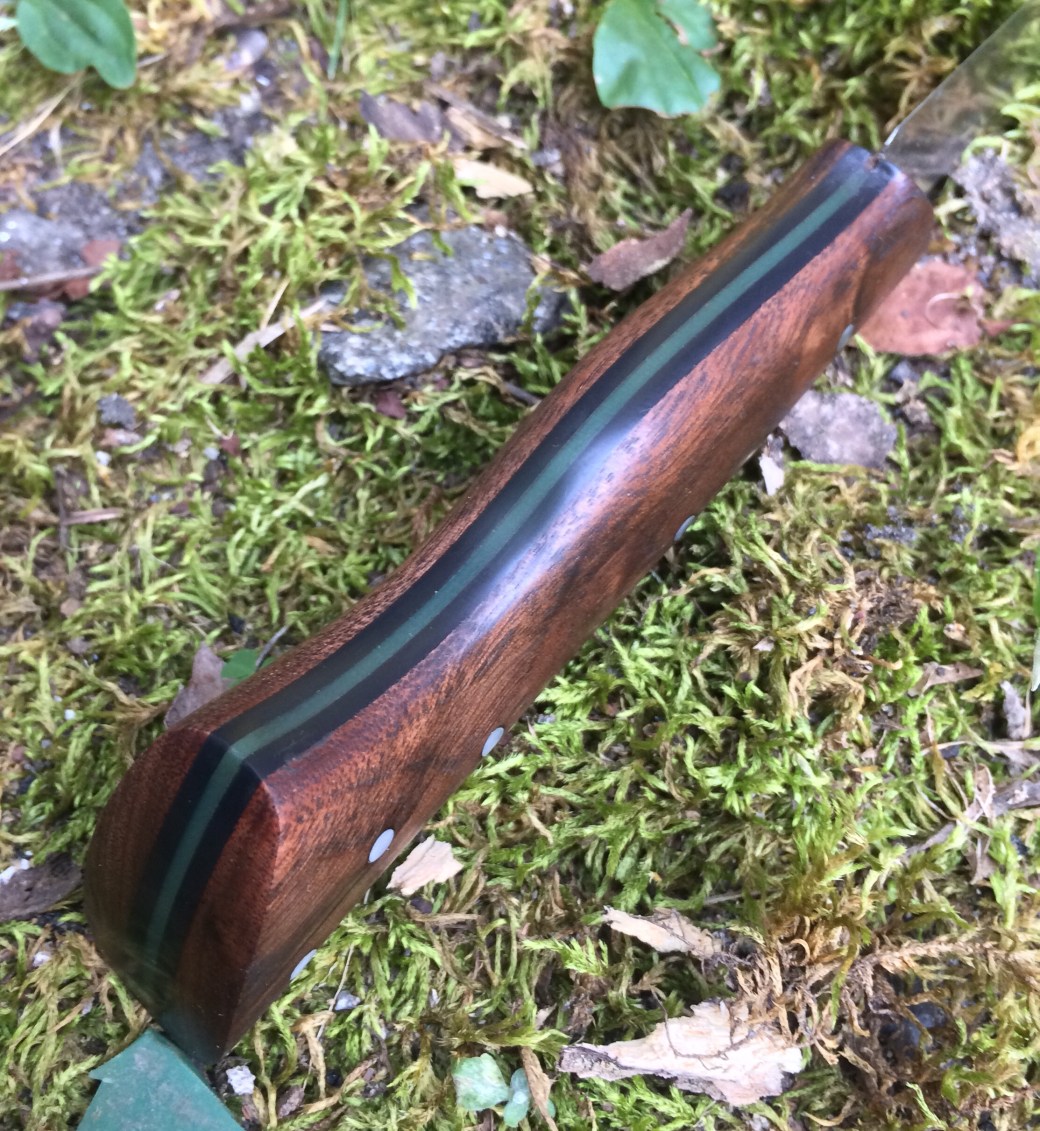
The Ace, revisited:

img_7509


img_7511


Knifemaking: a restoration

“You didn’t get the quest you wanted, you got the one you could do.”
Lev Grossman, The Magician King

Every so often our shop will get calls to put a new handle on an old knife.  We always make every effort to do as many of these as we can.  

The ability to make something broken work in the way that it once did is a virtue.  This is especially true when the something that was broken is special to someone.  In most instances it’s pretty easy to replace what was broken, but the sentiment becomes lost.  Whenever possible I always try to fix what is broken, especially in the shop.

I treat these repair jobs as an exercise in incorporating as many broken or discarded things as possible into the finished product- it gives something totally unique back to the client.   Our jobs as craftsmen are to give a voice to our materials, allowing them to speak for themselves.  Many times we don’t choose what comes to us but nonetheless it is our job to turn what comes our way into something beautiful.  Making something better than it was before-this is the goal of a skilled craftsman.  For those in the know, these are the things that put the color in our world.

A gentlemen contacted us about re-handling an old boning knife he got in the 1970’s.  It was an old Zwilling knife, made from good Solingen steel, with Zwilling’s proprietary ‘Friodur’ subzero tempering process.  The handle had cracked, as natural materials tend to do over the years.

This one was partial tang, meaning the metal in the handle doesn’t run the complete length of the handle:

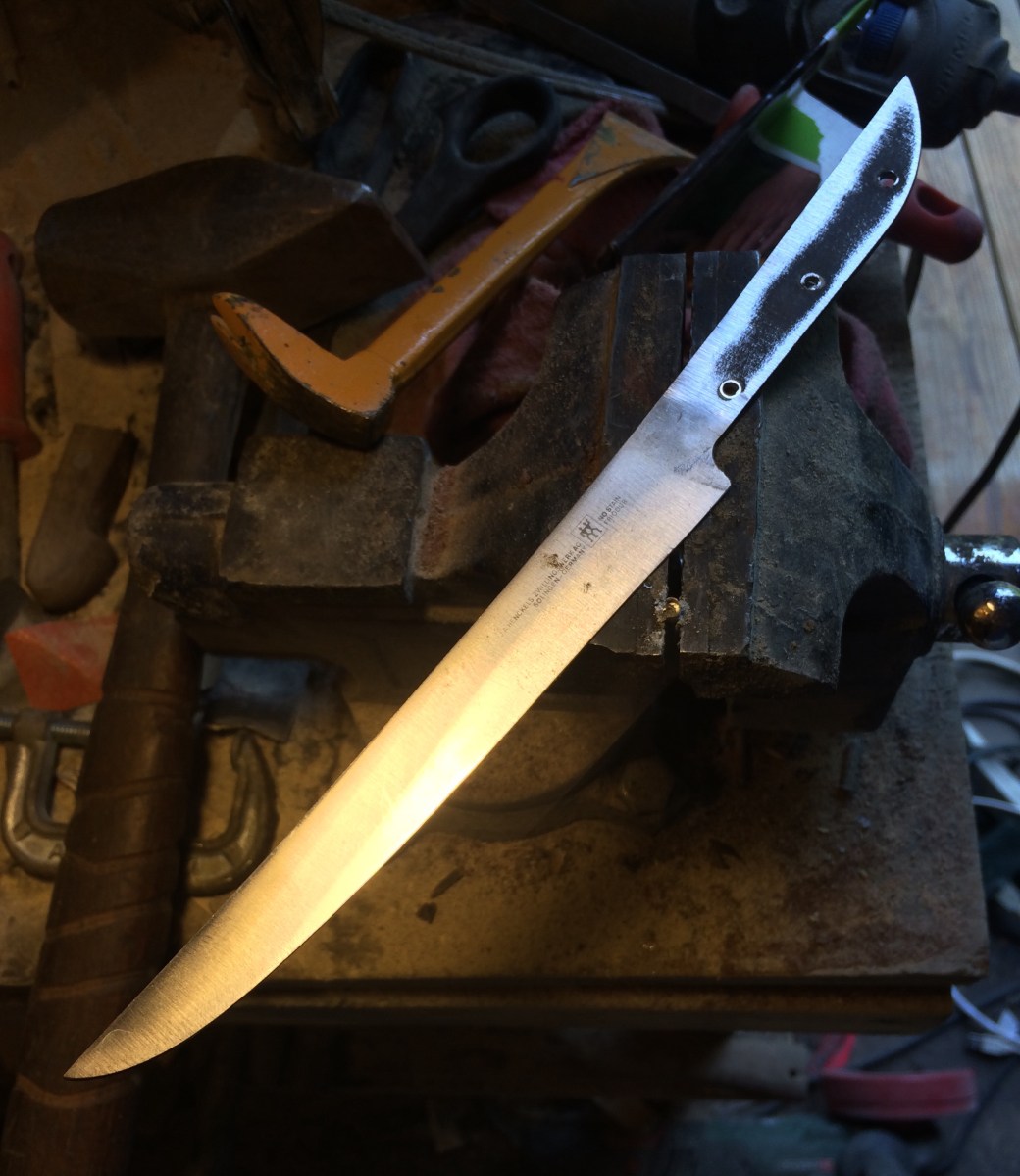
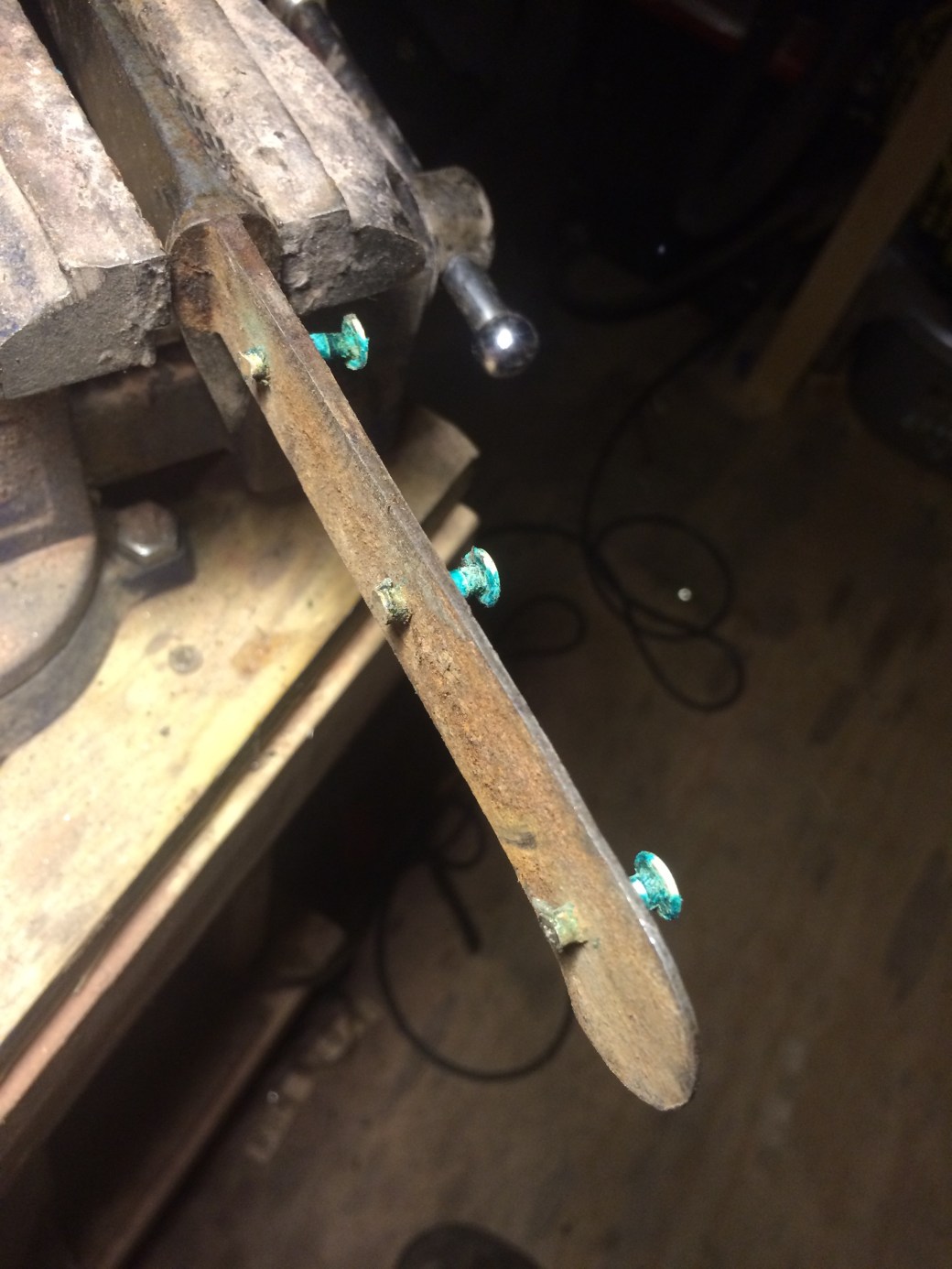
First, we remove the old handle and the rivets:

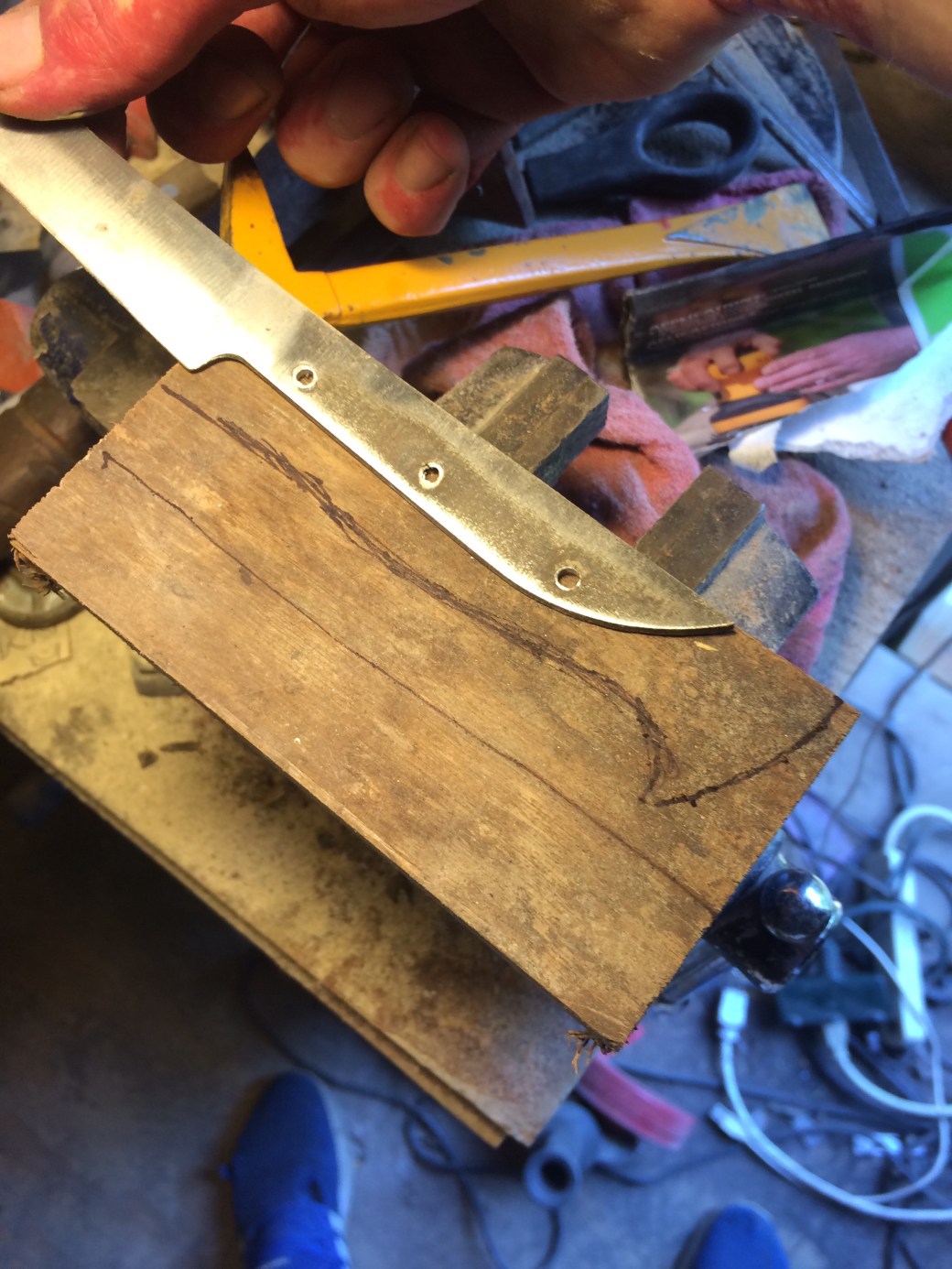
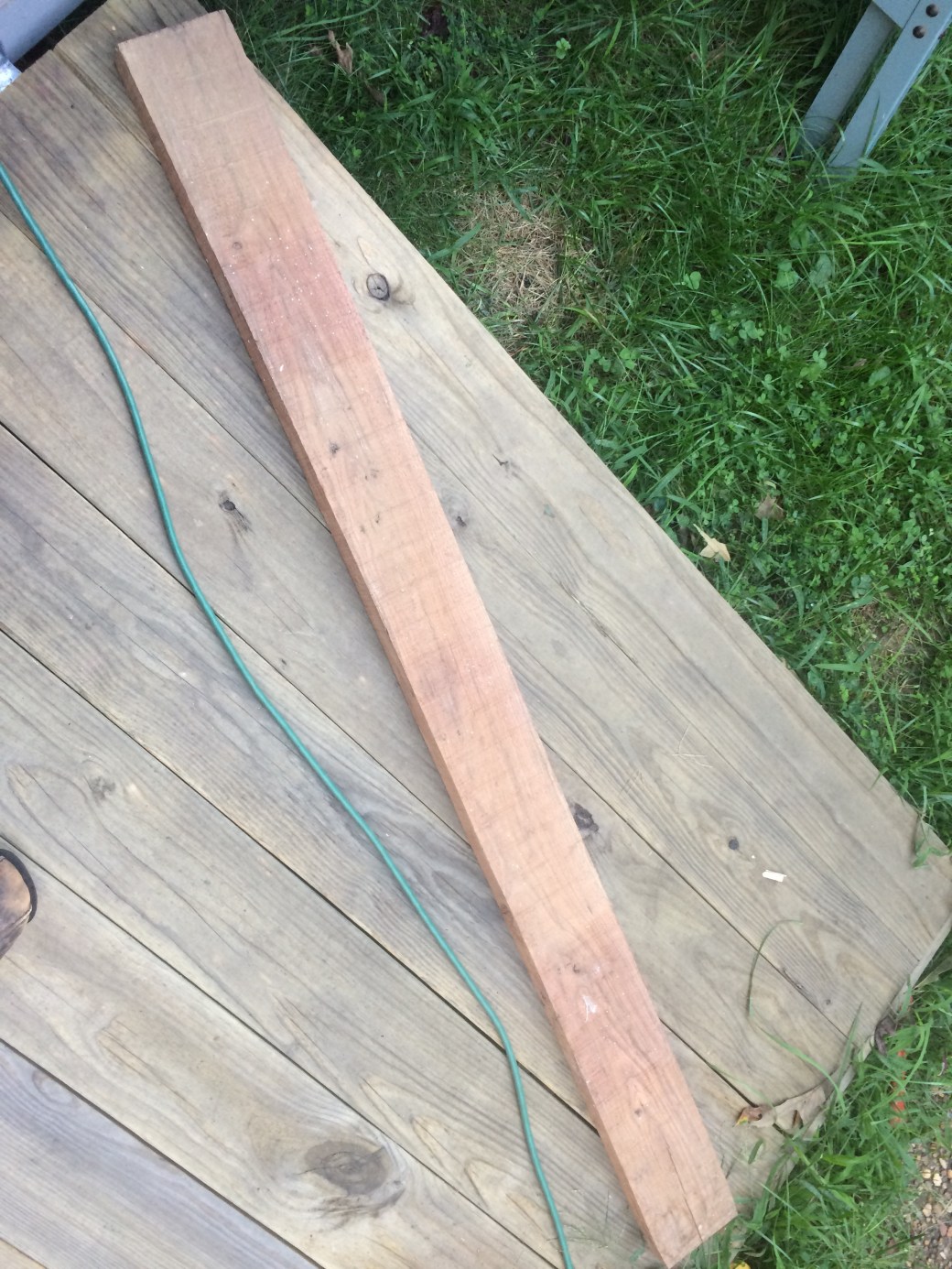
For the handle we’re going to use Black Walnut, which was formerly a baseboard salvaged from an abandoned house in North Carolina:

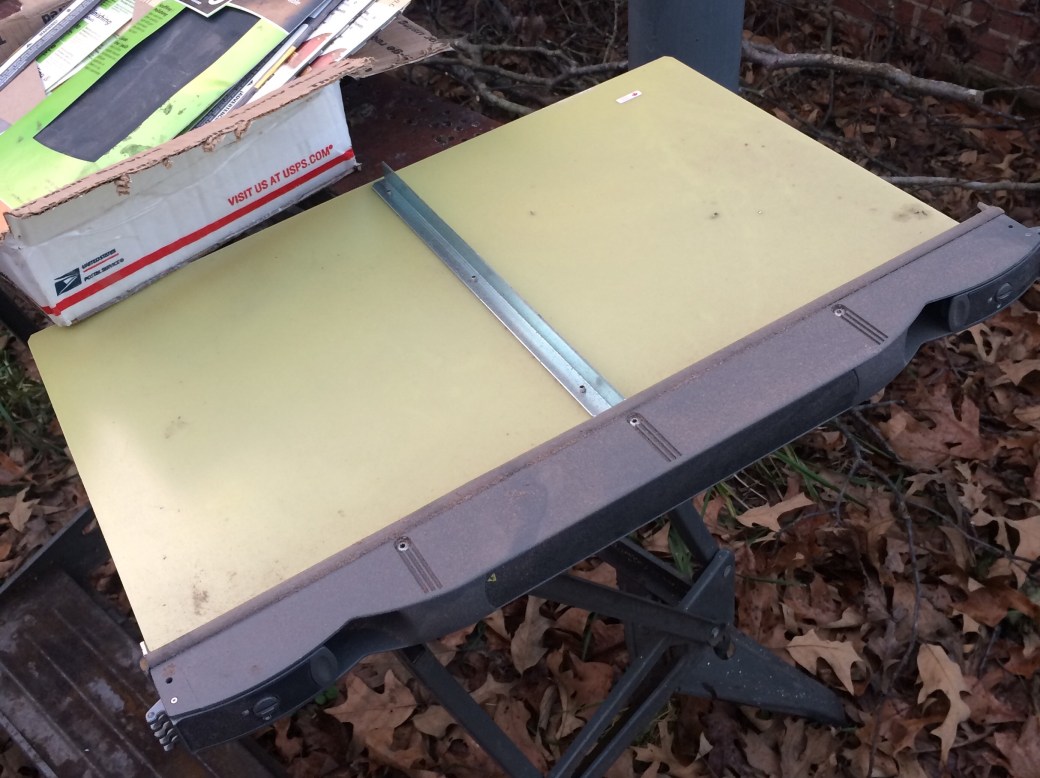
To extend the tang, we’re going to use a fiberglass computer board spacer which I dug out of a dumpster at one of my workplaces.  Though it looks yellow, it will turn green as it’s polished:

img_6337

Drilling the rivet holes.  The black spacing material is a heavy plastic that came from an office mail separator:

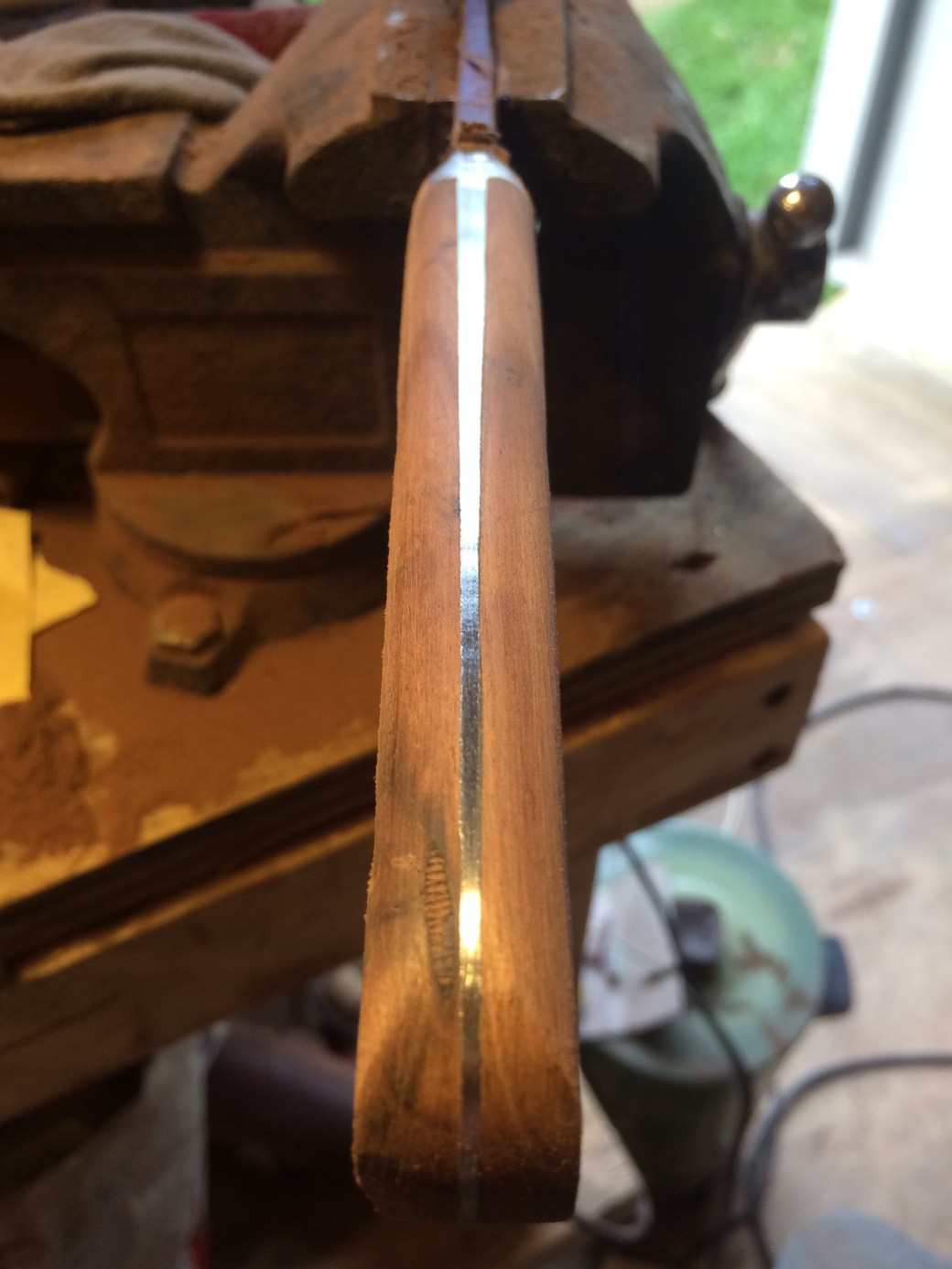
This is the top of the handle, closest to the ricasso of the blade, of the belt sander at 40 grit:

Sanded from 60 to 800 grit:

Ready for glue up:

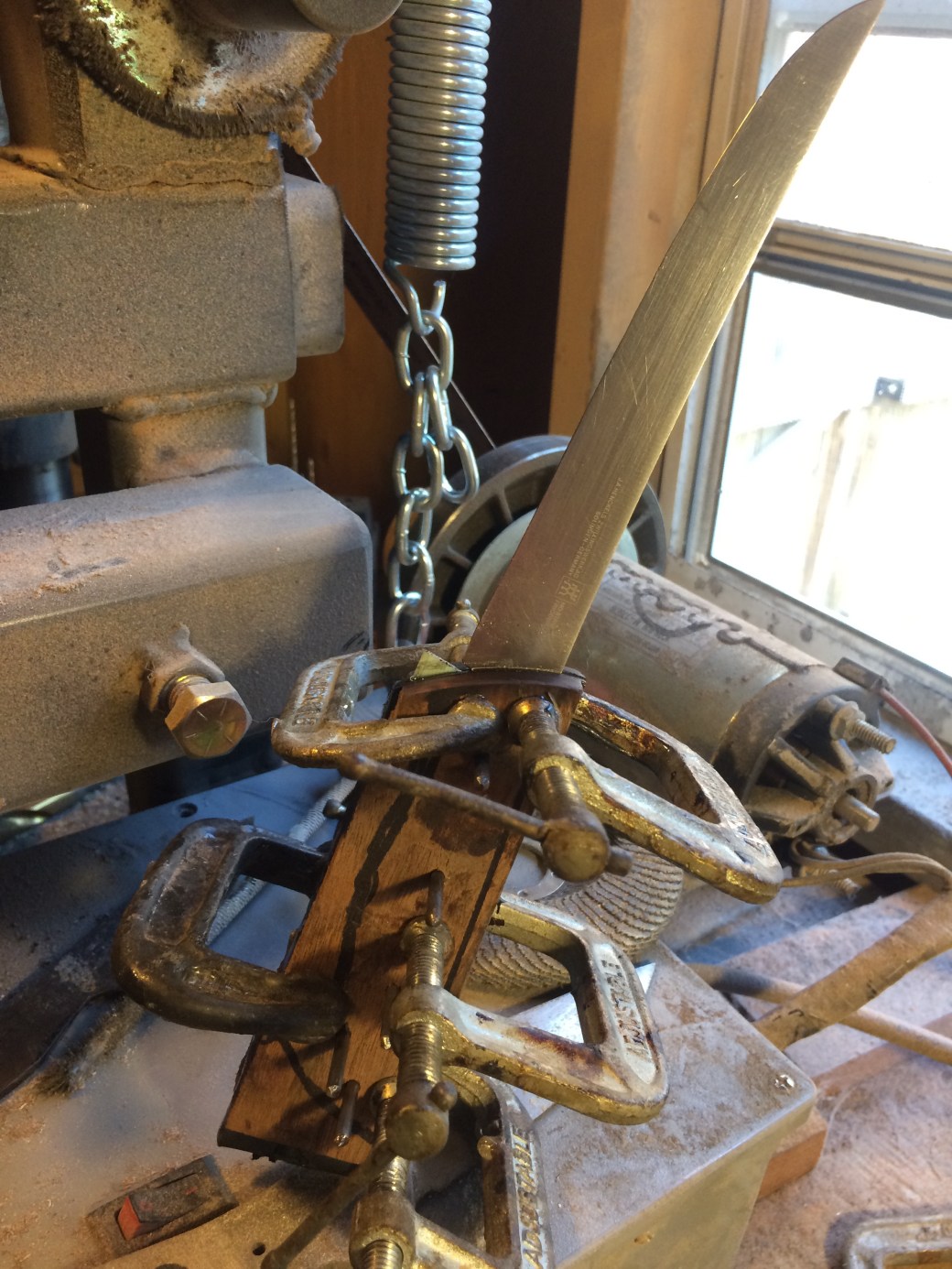
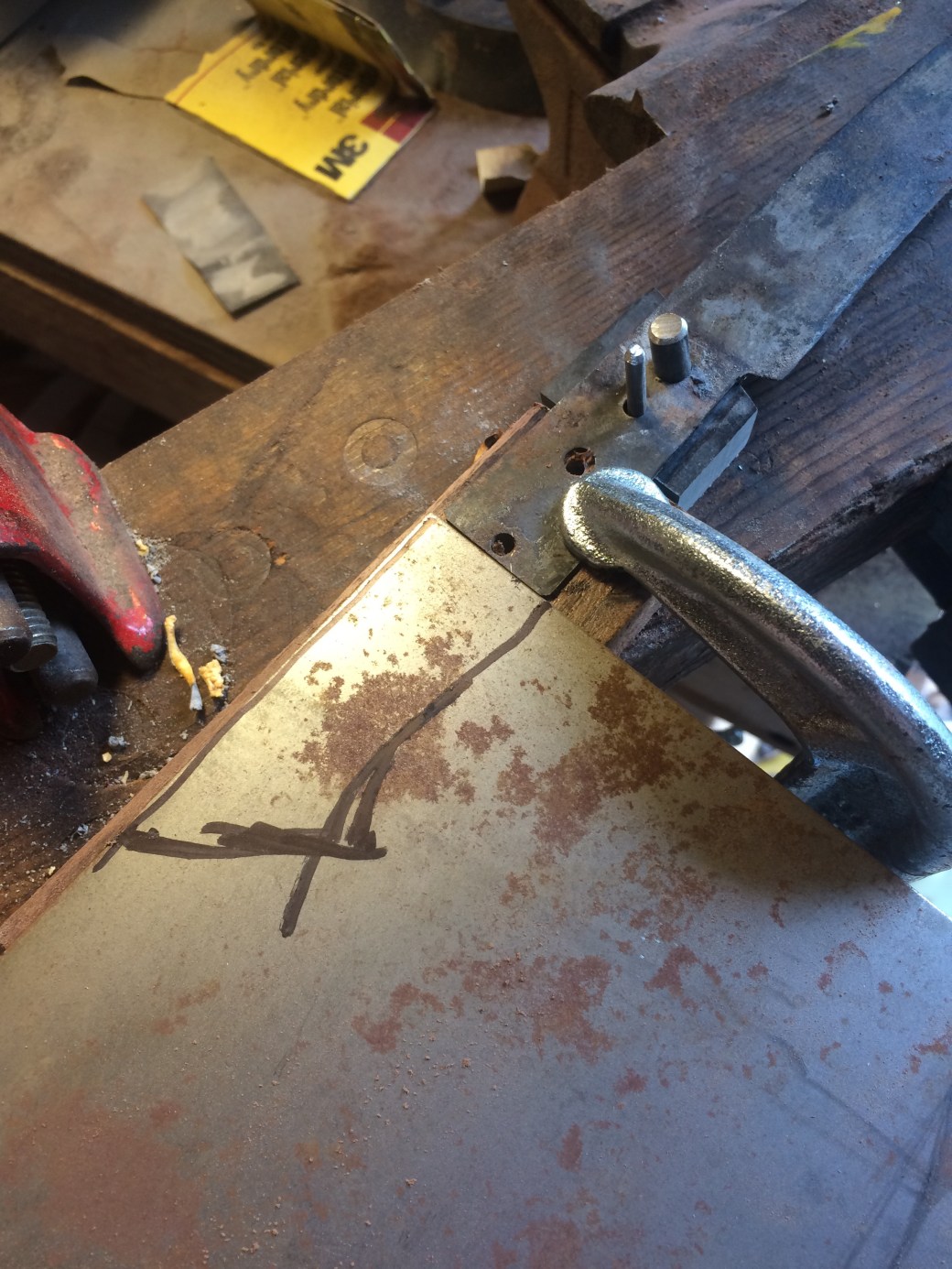
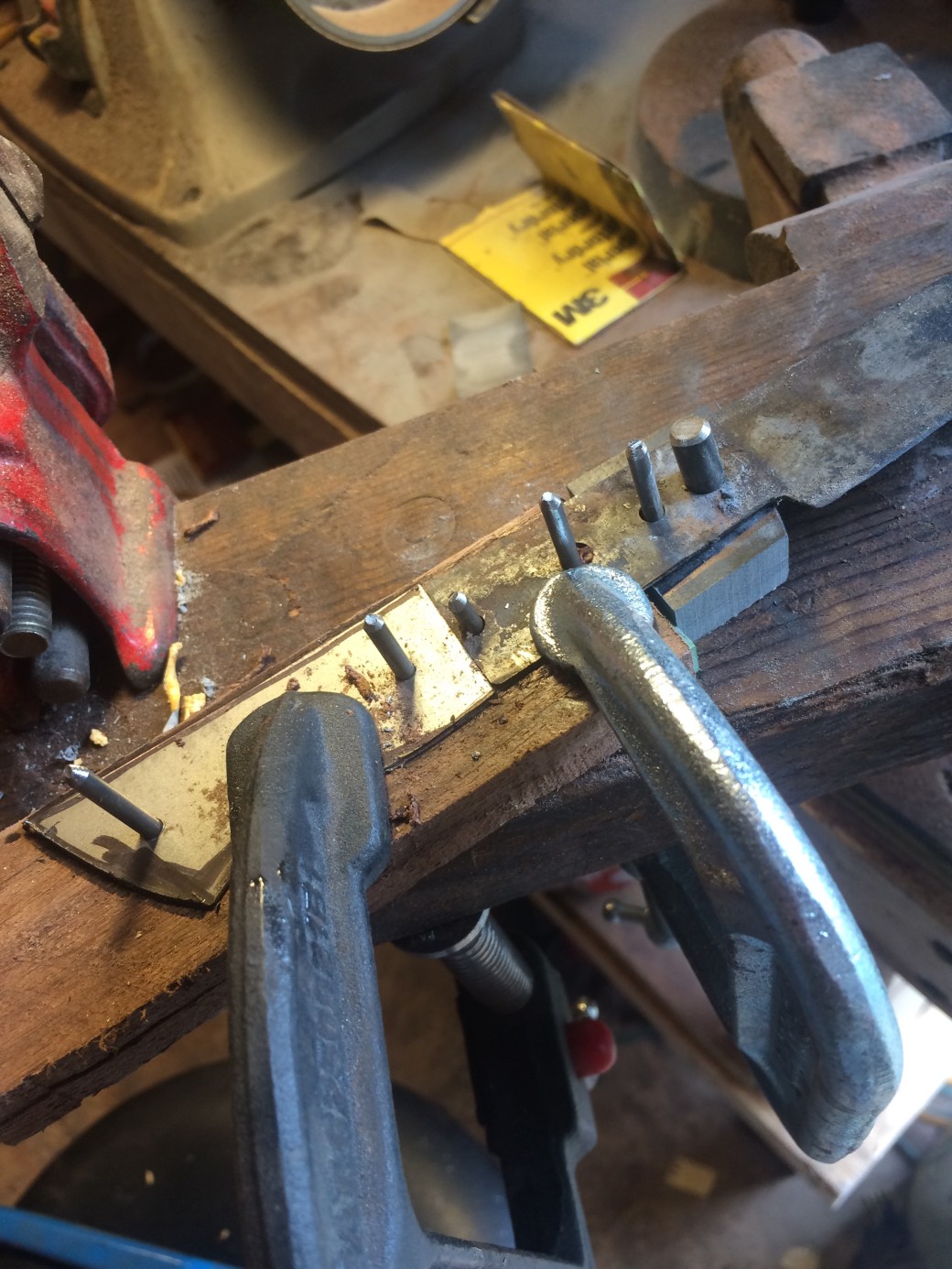
Glued and clamped:

Roughly profiled:

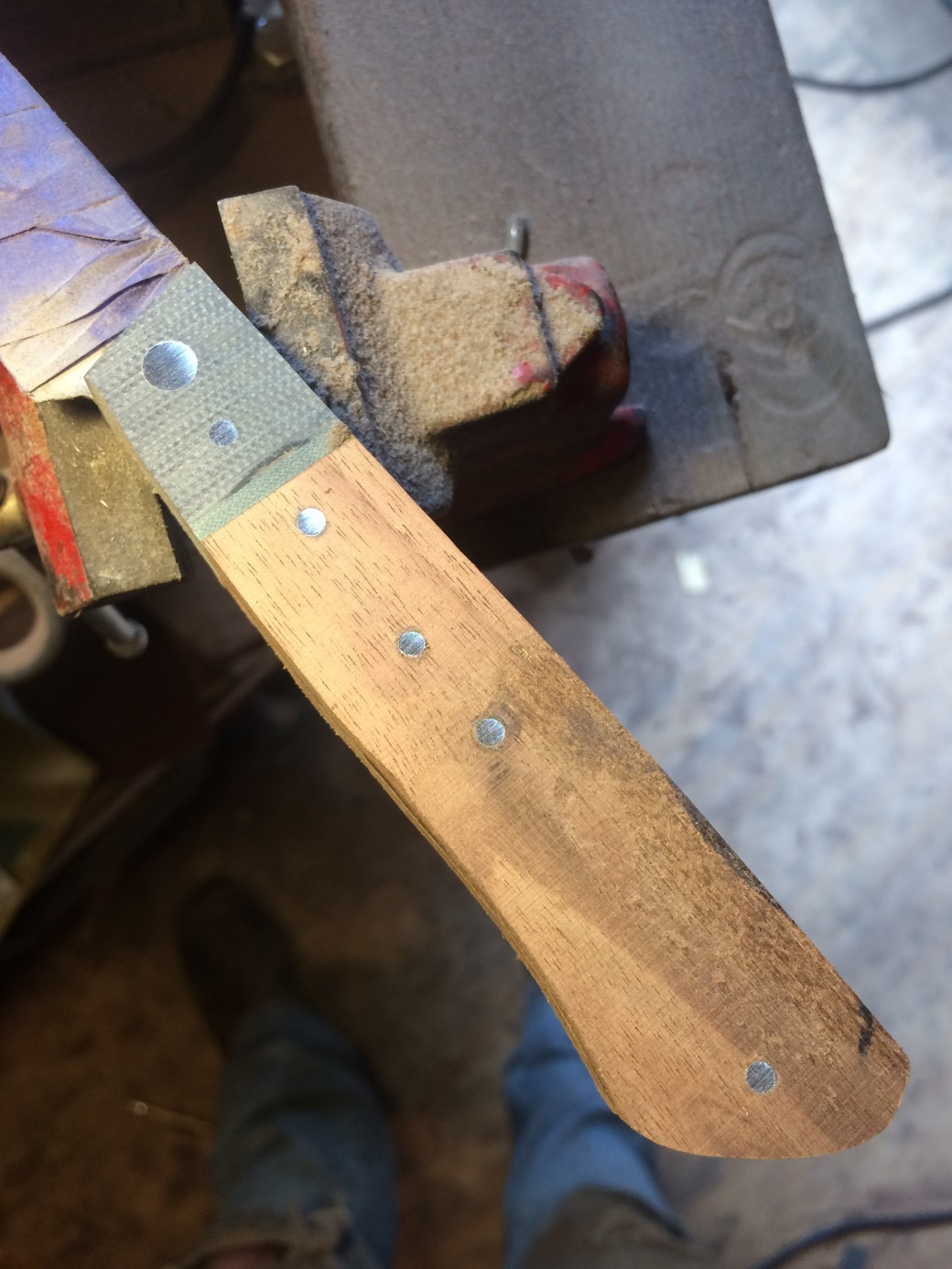
Shaped to the desired shape.  The rest of the work will be done by hand, starting with 80 grit sandpaper and going up to 2000 grit.

Finished, sealed, and oiled:

Always take the opportunity to create something beautiful.

Knifemaking: how I spent my summer vacation, and the Persuader, MkIII

“Warrior,

The bite marks soon will heal.

Warriors do not forget how it feels”

Stepdad- Warrior (Jungles Pt. 2)


(This is the second part of a story.  You can read the first part here).

On a late afternoon in mid July of 2018, three weeks after I nearly removed two of my fingers on a table saw, I found myself sitting with my girlfriend in a an empty group physical therapy room in a wing of the orthopedic center that had performed my surgery.  My hand had been repaired: a third of my thumb amputated and my index finger wired together to fuse the shattered bones and blown-out joints into one piece.

I had been ordered to physical therapy by my surgeon for two-part treatment.  The first part was wound care.  This would ensure that everything healed as it was supposed to, with no infection or complications, and to keep scar tissue to a minimum. The second part was the actual physical therapy, to regain as much use as possible in my injured hand, which which was currently completely bandaged with only my pinky and ring finger exposed.

I didn’t protest.  Nobody really talks about the aftermath of surviving something awful.  It will take the fight right out of you.  There is a truckload of emotional baggage that comes after the ‘get well’ flowers have wilted, the care cards have been boxed away, and normal life begins to resume.  Bills pile up and normal work responsibilities resume, but you are still fragile and adjusting and most likely carrying the weight of trauma.  Despair, depression, and existential crises of a behemoth magnitude are very real aftermaths of life-altering health emergencies as well as the emotional, physical, and financial burdens contained therein.  All of this greatly lowers your resistance, and I found myself more than willing to do what I was told.

This included a mountain of paperwork filled with verbiage of responsible parties, guarantors, and out-of-pocket maximums, essentially telling me that I would be paying for all of this for a very long time.  My girlfriend filled most of this out for me because I couldn’t even button my pants at that point much less sign my name.

In this room filled with all sorts of proprietary rehabilitative contraptions, I was introduced to Steve, an orthopedic hand therapist and educated hillbilly from West Virginia.  He was assisted by Justin, a former football player and mammoth of a man who was getting a Masters in Occupational Health and working in the office for the summer.  Normally this therapy room would be filled with patients but as it was late in the afternoon, it was just the four of us.

I found out, firstly, that hand therapists was a career that existed, and secondly, and paradoxically, they were the kindest sadists I had ever met.  As we sat down to remove my surgical dressings Steve told me that we would be spending a lot of time together and it was going to hurt a lot, starting immediately.   Boy he was right.  It took him half an hour to get the surgical dressing off as it had fused to my skin and surgical wounds with dried blood and other fluids and had two weeks to calcify to my skin and raw flesh.

Pain, as I would slowly learn, is an extraordinary teacher.  It reveals things about yourself that you most likely didn’t know were there, provided you lean into it a bit.  So I leaned in.  Steve was unrelenting and asked how I was doing.  I told him it hurt like a motherfucker.  “Great,” he said, “let’s keep going.”

When he finally disrobed my fingers I couldn’t look at them.  They looked like raw hamburger that had been stitched up.  I felt a little nauseous and so did my girlfriend.  Steve, however, said everything looked great and as it was supposed to look.  He bandaged my index finger and what was left of my thumb individually with inch-wide gauze dressing.  I was told to come back the next morning to get fitted for splints to protect my healing fingers and instructions for bandaging.

My girlfriend and I left and got Bojangles.  Bojangles chicken had become part of the healing process after one of my pre-operative visits several weeks before.  While the surgeon was concurrently examining my mangled hand, making a surgery plan, and giving me nerve block shots through massive syringes, my girlfriend was holding my other hand and staring away from the carnage and at a stack of magazines across the room.  There was a Southern Living magazine on a nearby table with biscuits on the cover.  “We need biscuits”, she whispered to me.  This was a welcoming distraction because I immediately stopped thinking about my hand and how much all of this was going to cost and thought about the glorious coming of biscuits and fried chicken.  From that moment on Bojangles became Orthopedic Trauma Chicken: the patron saint of reconstructive hand surgery, may her light ever shine upon us.

(Many months later one of her children broke their wrist and the other dislocated his knee.  They too learned of the virtues that Orthopedic Trauma Chicken offered.)

The next day I went back to the office early in the morning by myself.  Steve was waiting for me with some sterile wraps.  He explained to me that the bandages would serve as an infection barrier, but also to help my fingers to keep their shape as they healed, specifically my thumb.  In this early part of the healing process, he told me it was important to wrap them as he had shown me, as that was the desired shape that they would take.  I wasn’t to wash them or put any balms or ointments or disinfectants on them.  The body takes care of itself, he said, and I was to let my body do it’s thing.  Infection was a dangerous possibility and I was to call them if I showed any signs, but the 2,000 milligrams of antibiotics I took everyday kept that from happening.  I did exactly as I was told.  I left with two bright blue removable finger splints made from a thermo-setting plastic.  I could button my pants again.

I went there two or three times a week after work.  It was always in the late afternoon and usually only a couple people were in the therapy room.  Steve would unwrap my fingers and let them air out.  Justin would bring a small cup of water cut with peroxide that I would soak my fingers in for about half an hour.  Steve would then pick off the eschar with forceps to prevent scar tissue from forming.  Every few days he would remove a couple of stitches.  All of this was extremely painful and it went on for a month and a half but I was so glad for those two guys.  Steve would tell stories about the dumb things he did in the boonies of West Virginia growing up, and Justin would regale us with stories of dancing on the bar of a downtown drinking establishment.  Justin also had excellent playlists that he would have going over the speakers.  I came to really look forward to these appointments.

As I sat there soaking my fingers day in and day out I also noticed some other other patients there.  There were several gentleman with work injuries who were there on their company workman’s compensation.  There was a lady who had damaged a tendon in her hand with a kitchen knife, and a couple ladies and gentlemen with wrist injuries.  Steve and the gang tended to all of them.  There was one gentleman who stood out- a large muscular guy whose injury I couldn’t figure out.  I knew he wouldn’t be there if he hadn’t had something serious happen but I couldn’t discern what that was.  One day as I was sitting with my hand airing out waiting for Steve, I heard somebody tell me how good my fingers looked.  It was the large gentleman who came in everyday.  This surprised me because for one; I felt that despite what everyone at that office was telling me, my fingers did not look great and that I was a disaster, and for two; I wasn’t used to talking to anybody but the therapists outside of small pleasantries.

The large man then showed me his left hand and I saw that he only had four fingers.  His thumb was nothing but a nub and his index finger and the flesh immediately below was completely gone.   I had to look twice because it was so completely normal and comfortable for him that I didn’t notice at first.  Amazingly enough, that wasn’t even why he was there- he was an electrician by trade and had torn a major tendon in his bicep that had to be reattached.  His hand, he told me, had happened after an accident when he was nineteen years old.  The surgeon had saved his index finger, but he said he had it removed a month later because he was pissed off that it wouldn’t work right.   Young and dumb, he told me, and he wished he had kept the finger and learned to use it as it was.  He told me to figure out how to work through the pain and get as much use out of it as possible.

……..

While all this was happening I was going to work, and sorting out the massive stack of bills I had accumulated.  Even with insurance, this whole ordeal was phenomenally expensive.  I learned more about the financial workings of the healthcare industry than I ever cared to.  Shortly after the surgery, which was covered by my insurance, I got a $4,000 bill from the anesthesiologist, saying it was an out of network provider and not covered by my insurance.  After spending hours on the phone with the insurance company, the surgery center, and the anesthesiologist, I found out that it should have been lumped in with my surgery but wasn’t.  The reason for this was because the tax ID for the anesthesiologist’s claim was in-network, but the provider they sent wasn’t.  All three of them told me I was stuck with this bill and there wasn’t anything they could do for me.  Through some stroke of fate, I found that my neighbor worked in insurance and knew the billing manager of my surgery center and gave me her number.  I spoke with her once and I don’t know what she did but she waved her black magic healthcare wand and made it go away.  That was just one incident of many, but it was always a whiplash.  I renamed my mailbox the Mailbox of Doom because I never knew what fresh hell was going to be waiting for me.

As my hand healed, I got back into the shop a little bit.  Steve had told me that I would be able to do all the things I had done before, but I would definitely have to find different ways to do them.  Finding those different ways added up to teaching myself to make knives all over again.  I found myself thinking of a professor I had in music school.  The man was a brilliant concert pianist.   I didn’t find out till much later that he had suffered a stroke and had to teach himself to play piano all over again- I had no idea of this when I was taking class with him.  The man had since passed and I found myself wishing to be able to ask him about what the rehabilitative process looked like for him and how it felt.

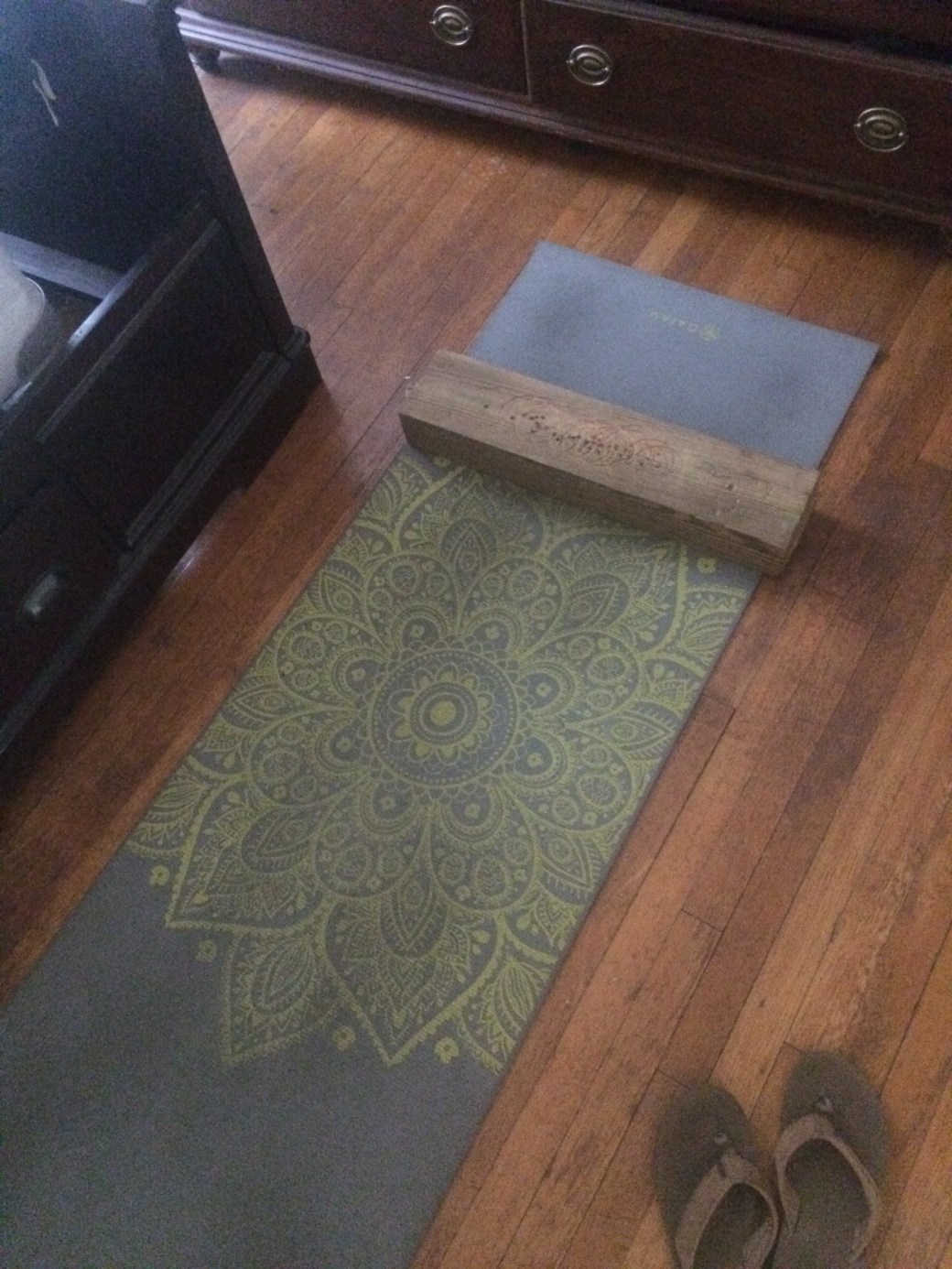
I also called my yoga teacher.  I missed being able to do yoga and asked Steve what I could and couldn’t do.  He told me I could put weight on my forearms, but not my hand.  I told this to my yoga teacher and she choreographed a modified Ashtanga series for me that I could do on my forearms.  She told me to get some yoga blocks to help facilitate this.  When I saw how much foam yoga blocks cost, I decided I would just use a piece of treated 4″x6″ lumber cutoff that I had in my truck.  I did Viking Recovery Yoga a couple times a week and it was brutally difficult.  I leaned into the pain.
……….

Slowly I eased into more physical therapy work and getting facility back into my hand.  Justin had gone back to college and I often met with another therapist, Kay, a lady from Puerto Rico.  She was fantastically kind and gentle, and always wore fiercely hip shoes.  Her husband was retired military and they went on wild adventures on the weekends.  She showed me pictures of a trip where they had taken visually impaired kids on a whitewater rafting trip- all the kids in the picture are tearing ass down river rapids and had on the giant sunglasses that you see the elderly wearing.  At first I wondered how she functioned in such a deeply masculine work environment but the reality was that she was probably the wildest of everyone.

With Steve, I always took a ‘make it suck more’ approach to physical therapy.  Make me do more, give me more things to work on at home, kick my ass a little harder, I’ve got to do better.  With him it was like being at the gym with a buddy.  While I was working through my brutal hand exercises, he would be timing me and telling me about his last bow hunting adventure.  One time he had me dig twenty marbles out of five pounds of silly putty with my two gimpy fingers while he went on a soliloquy about a regional restaurant chain in West Virginia with the best damn breakfast biscuits he had ever had.

With Kay everything was a little bit gentler.  I still pushed but the drive was more subdued.  Conversation was turned inward and bravado was dialed way back.  She asked about how things were going in the shop and I would do my best to articulate all the digital nuances I was navigating and modifying.  My type A disposition would be disarmed before I even knew it was happening and she would talk me through issues I was having.  It was a lot.  After I had spent forty-five minutes struggling with an exercise, she would always tell me I was doing really well.  I would then go sit in my car and cry before I drove home.

……..

 In December I had another smaller surgery to remove the hardware that had been in place while the bone in my index finger fused.  Compared to everything else it wasn’t that big of a deal.  In February of 2019 I had my last post-op follow-up with my surgeon.  Before he discharged me from his care and the care of the physical therapists, he told me I had healed very quickly and my results were not typical of people who sustained my severity of injury.  I told him that I didn’t have a gold plated insurance plan and zero workman’s compensation.  If I gave up I would just sink.  There was no other choice.

I also told him that there were a lot of people who had invested a tremendous amount of time and energy into a very expensive process to help me, and it would be a huge disservice to everyone, including myself, if I didn’t honor that by doing the best that I possibly could.

This was the first knife I completely finished after I was discharged.

This steel came from a friend.  The man they bought their house from made lawnmower blades and they found these in the garage when they moved in.  This is a 1/4″ oil hardening steel:

persuader1

Rough grinding:

persuader2

Hand sanding before hardening:

persuader3

persuader4

Hardened

persuader5

Tempering:

persuader6

persuader7

Satin finish:

persuader8

Spalted Pecan from my cousin in Texas:

The black lines weaving their way through the grain is actually a fungus.  This fungus that injures the tree actually makes it more beautiful:

The Persuader:

img_6427.jpg

Move on, but don’t forget how it feels.


Knifemaking: managing it and the Directeur

“…also he had learned that a person could be happy with having done the best they could under the circumstances. It didn’t always have to be bright and shiny and impressive to the outside observer.” 
― Ellen Airgood, South of Superior


When I was twenty-two I took a summer job at the the university I was attending.  The School of the Arts at the university put together a three week summer residential program for high school kids.  For three weeks in July, roughly a hundred and twenty teenagers would come to the university, live in the dorms, eat in the dining hall, and take classes in their respective art disciplines taught by real college professors.  This was a way to give kids a little taste of what art school was like, and hopefully to get them to apply to the university when they graduated.  I did this for eight summers and it was one of the best jobs I ever had.

High school kids who were interested had to submit portfolios and go through an application process.  There were disciplines for sculpture, photography, dance, theatre, fashion design and merchandising, filmmaking, digital animation, and drawing and painting.  Some of the applications were pretty hysterical.

The University hired forty other college students like me to be counselors in the program.  We were there to keep the students safe.  Students were divided up amongst us.  We would stay in the dorms with them, take them to their classes and meals, make sure they were in bed when they were supposed to be, and come up with activities for them to do.  Our presence was designed to keep bad behavior to a minimum.  We had a week of training to go over protocols and procedures.  There were university policies that handled underage alcohol in the dorms, as well as drugs, and what to do when students went missing or fell ill. There were a group of grad students who were our bosses and handled disciplinary issues.  Nearly everyone at the program was between the age of fourteen and seventeen, not legally adults, so these policies and procedures were important.

The kids moved in and for three weeks we were their caretakers.  We took them to class, ate dining hall food with them, and came up with evening activities for them to do as only art school kids can do.  We made themed dances- my personal favorite was “Merry Christmas Taylor Swift: Live from the Galapagos Islands”, and everyone dressed accordingly.  There was “Dress Your Counselor Night”, where one of the more attractive male counselors wound up shirtless and in a dress.  On the weekends we took kids to museums, and to some of the nearby restaurants.  Counselors took some of the kids on morning runs.  One time I bought my kids a bunch of Nerf guns and we went to an unoccupied floor of the dorms and had a giant battle.  Kids were always working on their art and we helped and encouraged them.  I scored the music for a film one of the kids was working on for class.  We kept everyone occupied and mostly out of trouble.  Mostly.

Every year there was pretty predictable behavior.  With a little bit a freedom the kids would start to push boundaries- they were teenagers after all.  Some kids would go vegan during the program and then get sick because all they were eating were french fries and Captain Crunch.  Other kids would dye their hair or cut it all off, and then we would have to explain to a parent why their little Jessica had a purple buzzcut.  The lactose intolerant kid would order a large cheese pizza and fart up the dorm. Some kids were figuring out their sexuality and we delicately did our best to be supportive and help them along their path.

We had a lot of kids with…peculiarities?  One kid with irritable bowel syndrome had to get his mom to overnight him his homeopathic diarrhea medicine from New York because he had left it at home.  There was a Saudi Arabian boy with Aspergers Syndrome who terrified all of the girls because they thought he was yelling at them when he tried to talk to them.  One year we had a kid from the Make-A-Wish foundation come who was on kidney dialysis- his dorm room looked like a medical lab.   Another year there was a girl acting out horribly the whole time and we couldn’t figure out why until we called her mother.  Turns out her father had left the family six months before to live as a woman, and this little girl was pissed about it.  I worked with a team of really awesome people and and no matter the situation or issue, nobody ever had to shoulder anything by themselves.

Every so often there were really awful kids that we had to send home.  We called one kid’s father at midnight on a weekday because he was smoking pot in his room.  That kid was gone by morning.  Another kid decided to throw a frozen water bottle out of his 14th floor dorm window at ten o’clock at night.  It smashed the windshield of a car driving on the street below.  The police came and woke up everyone on three of the floors to find out who did it.  That kid ended up getting sent home and having to pay for the guy’s windshield, but he did avoid a felony charge.

By the end of my tenure at this summer gig I was supervising all of the counselors and everything that went on in the dorms.   I had graduated but it looked good for the program when Alumni were involved.  The money was good and it fit into my schedule.  The only person I reported to was a tenured professor who was the program director, and she trusted everyone to do their jobs.  I was on the hiring team and doing all of the scheduling for the counselors’ shifts.  I ran a lot of the training, wrote policies for the program to help it run better, and wrote itineraries for staff meetings.  I handled disciplinary issues and procedures and when kids fucked up, they dealt with me.  I made changes as I saw fit.  For example, in the earlier years the other counselors and I would all go out and get hammered after we put the kids to bed, and then stumble back to the dorms wasted.  No longer.  Funny how things change when it’s your ass on the line.

I’ve never really considered myself a very good manager or administrator.  I’ve also never been great at following the rules or being a team player, and I’ve always struggled to fit into corporate and traditional workplace scenarios.  In the instance of this job I just tried to make sure everybody was safe and all the institutional ‘t’s and ‘i’s that kept everyone safe were crossed and dotted.  It wasn’t always cheeky and fun.  There were two separate summers where I was going through really awful breakups, and another summer where there was a death in my family.  I would still DJ dance parties and take sick kids to the Urgent Care facility and make sure everyone was ok.  The responsibility and sometimes difficult tasks were worth it.

Because in spite of all the shenanigans, and the calling of parents, and confused teenage sexualities, and homeopathic diarrhea medicine, the vast majority of these kids left our little three week program at our state university really inspired and ready to do kick ass things, and a lot of them have.  That felt really good and was what kept me there all those years.  I grew a lot.  I made lifelong friends.  I met my girlfriend, though I didn’t know it at the time.  I learned what it was to run something and to have people back you up.

I’ve worked for a lot of crummy managers, people who are ready to throw you under the bus and only care about how they look to the company they are supposed to represent.  A real manager is someone who knows how to steer their organization toward its goals while inspiring their people and navigating through all the stupid things that get in the way.  This is the lesson of the Directeur.

The Directeur was a commission for a lady who has been running restaurants and events in Washington DC for the past decade.   It’s probably similar to working at an Art School summer program but I’m sure the stories are much better, as only Washington DC can provide.

A quick design for an 8″ chef’s knife, in the German style:

Profiling the blade:

Hardening the steel…

…and oil quenched.

Grinding the bevels:

Hand Sanding:

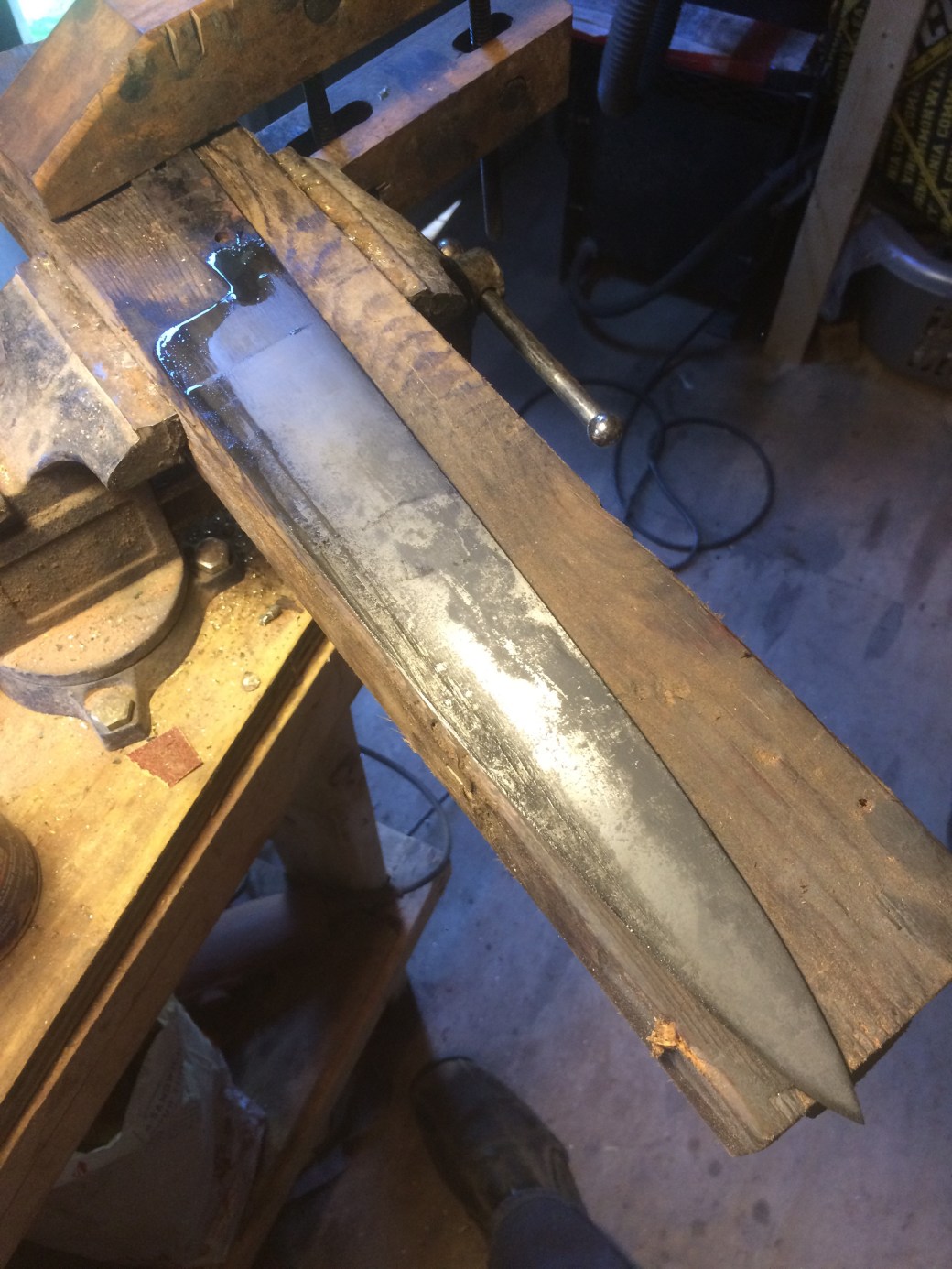
The blade is then soaked in acid to etch the steel.  This knife has a Hamon line, meaning the cutting edge is at full hardness while the spine is a touch softer.  This gives the blade durability.  You can start to see the line forming:

For the handle, I started with a computer board blank for spacing material:

img_4579-1

Cut, drilled, and pinned:

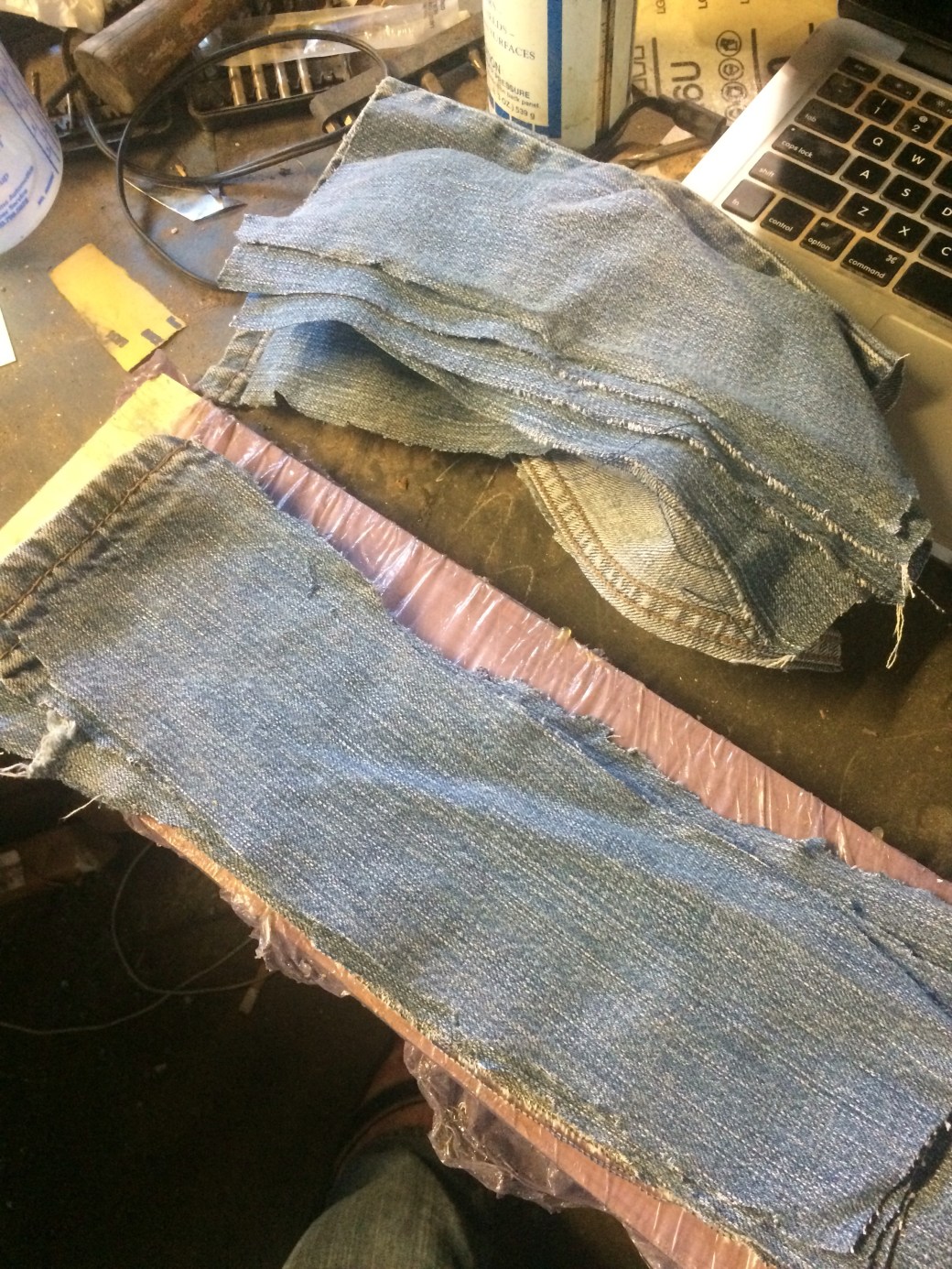
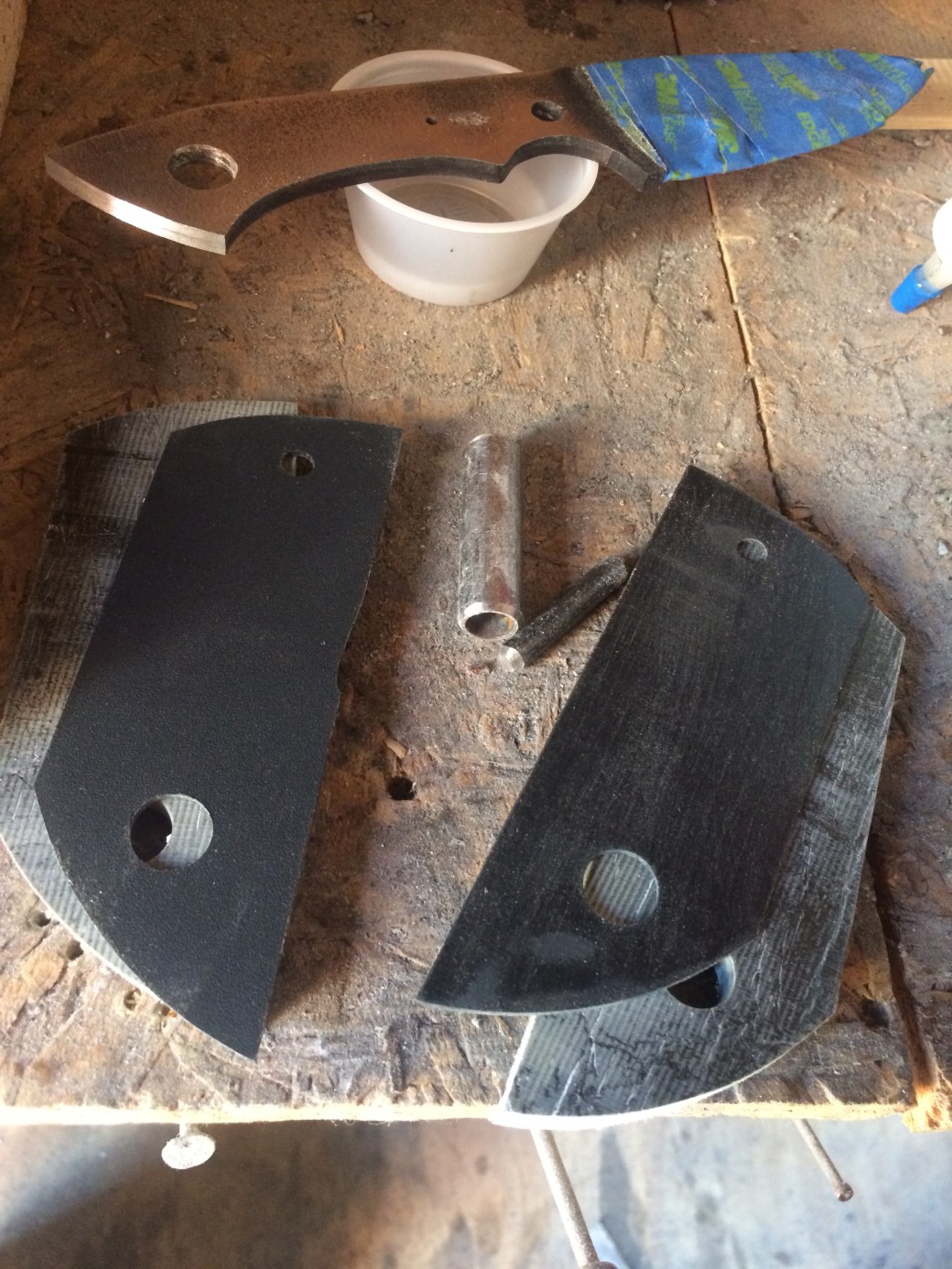
It’s important to remember to keep it casual.  Blue jeans layered in fiberglass resin should be a good reminder:

img_3242

Black Walnut, milled by a man of the cloth from rural Virginia:

img_5077

Piecing it together:

Clamped.  You can see that lovely Hamon on the blade:

All glued up:

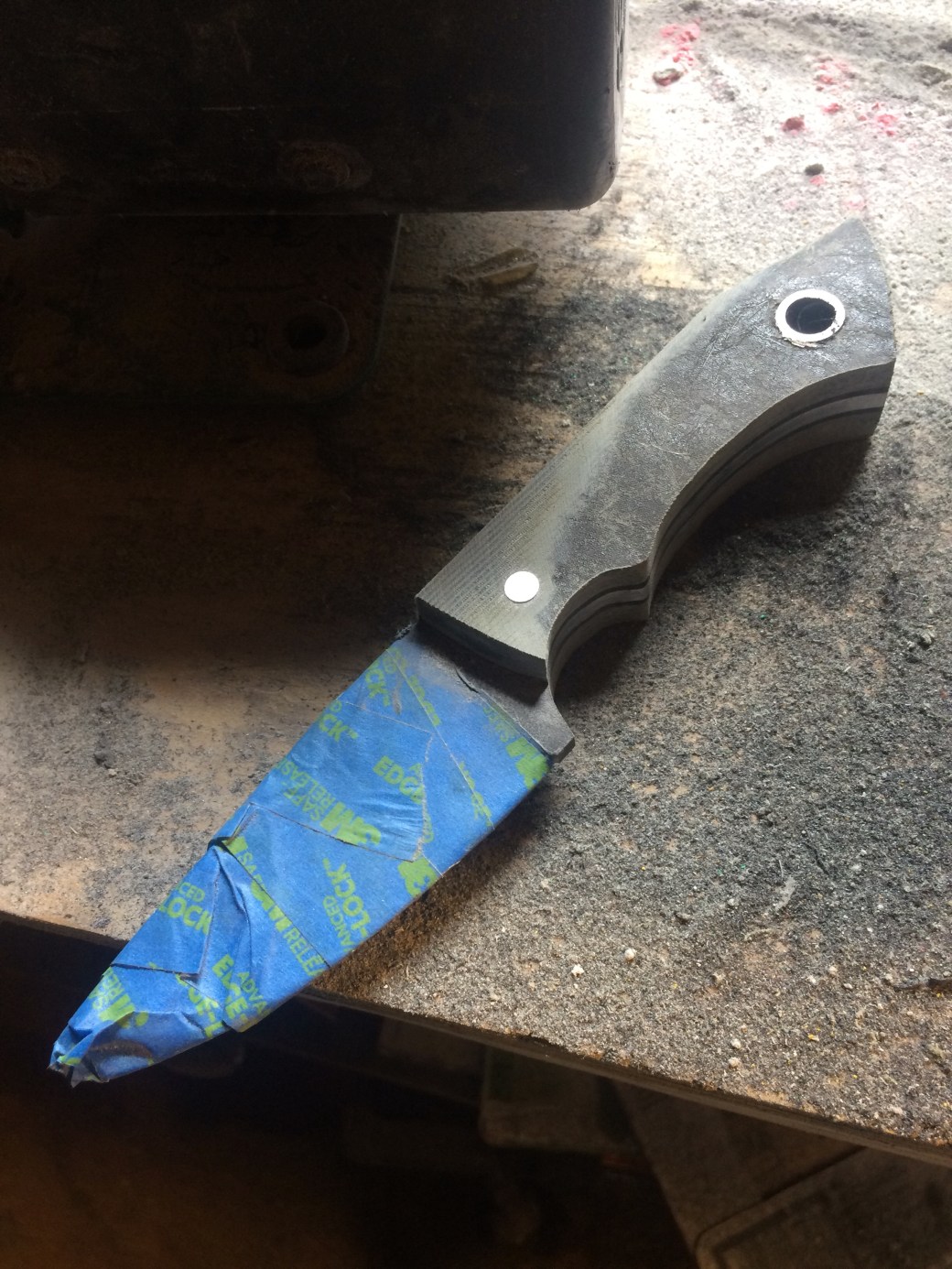
Shaped:

Helping the grain to speak:

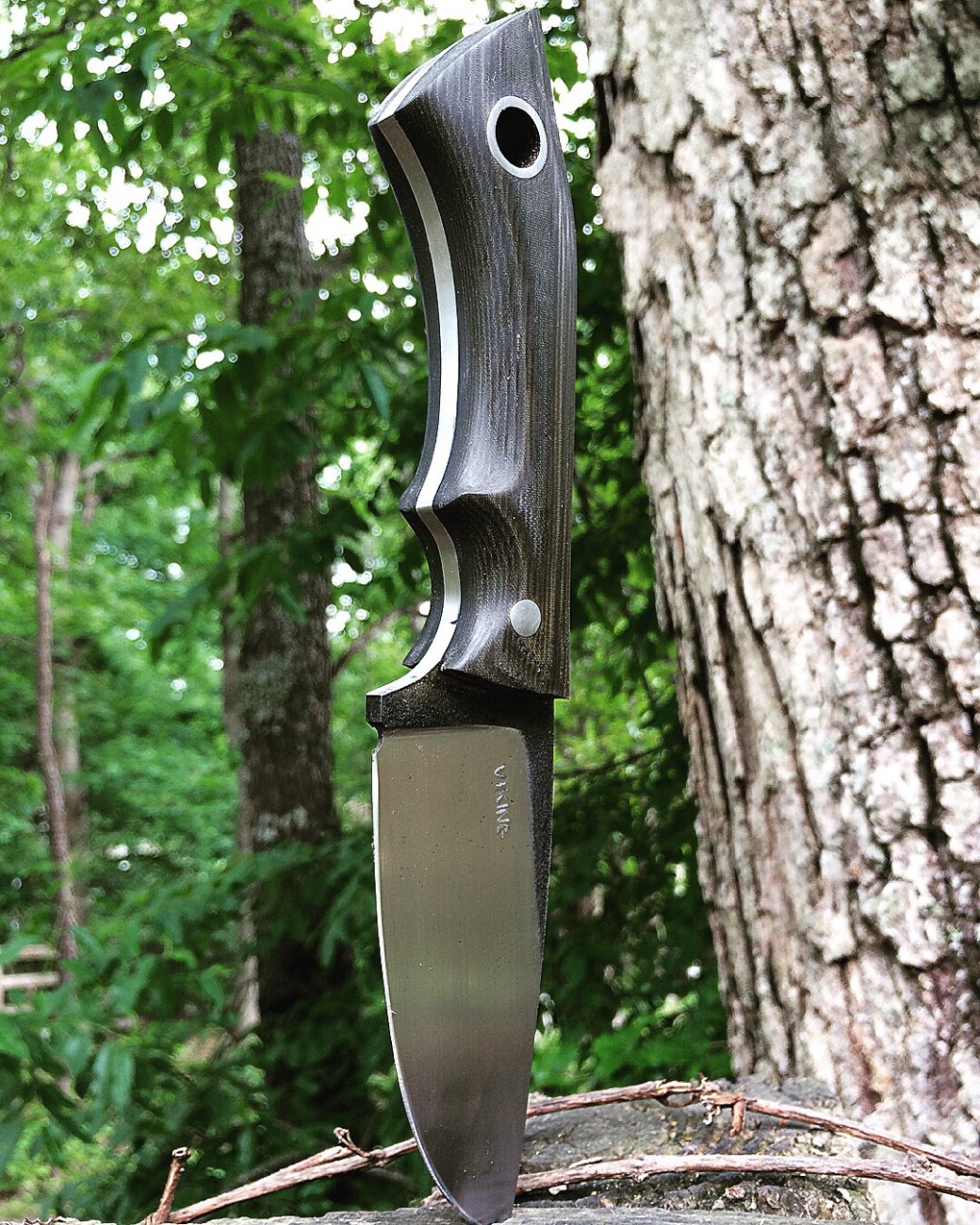
The Directeur:

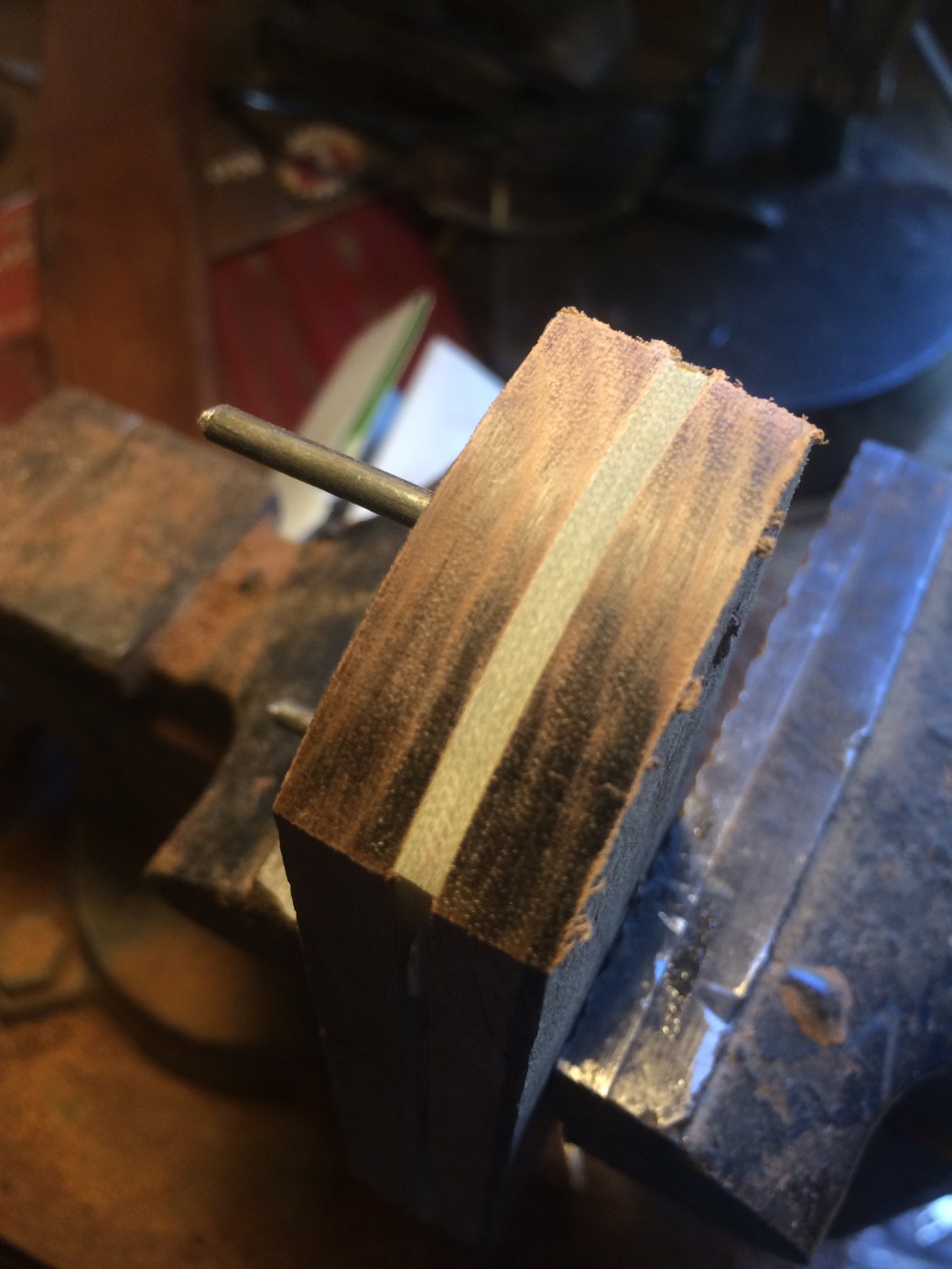
….this knife came back to me with a cracked handle, which can happen with natural materials.  I removed the old handle and put a new one on it:
May you manage your circumstances to the best of you abilities.  The outcomes and experiences are absolutely worth it.
Knifemaking: having a quiet day and the Woodsman, Mark Deux

‘In silence there is eloquence. Stop weaving and see how the pattern improves.’

-Rumi

From mid-January to mid-June of this year everything had been a blur.  I was running from job to job, gig to gig, knife to knife, trying to stay on top of everything.  Every time that I felt like I had room to breathe, something else would come up.  Car repairs, state taxes, doctors’ visits, new tools.  It was always something and I was hustling left and right, making sure everything was moving forward and getting taken care of.
Then I had an accident that pretty much stopped everything.

I injured two of my fingers pretty seriously on a table saw.  I was cutting some very thin material when the saw bound up and kicked, and I couldn’t get away fast enough.  The shop is at my partner James’ house and he happened to be home when this happened.  I quickly grabbed a dirty towel and, doing my best not to panic, politely yelled that I needed to go to the ER, right that second.  

On the ride to the ER, which was about twenty minutes away, I took stock of the situation.  James, who teaches shop and technology education, asked me to double check that my fingers were still attached and not on the floor of the shop.  Indeed they were still attached.  I would be told later that I was very lucky to keep my fingers- none of the major tendons or arteries were damaged beyond repair.  

I do my best to practice calm in my life.  Strong reactions happen from time to time, and the best way to deal with them is to feel them, let them pass, and address what caused the strong reaction in the first place.  This is an incredibly challenging thing to do and I don’t always do it well but I’ve gotten better at it over the years.  On the ride to the ER I found impossible to calm down.  I noticed that my thoughts were manic and erratic and I had trouble breathing normally.  I felt a pretty deep sense of guilt and shame, as if I had this coming because I wasn’t slowing down.  A doctor would later tell me that what I had experienced was an acute stress reaction and was normal for what I had experienced, largely in part from the sheer volume of adrenaline and other chemicals that my body had released.  
The ER was a miserable experience.  The ER doctor told me they would need to operate but they would need to transport me to another facility because there was no one covered by my insurance at that particular hospital.  Nobody even looked at my fingers and I sat on a hospital bed and bled on myself for two hours before someone gave me any pain medicine.  The paramedics finally arrived and bandaged my hand- the first time anyone had done anything. They pumped me full of IV fentanyl before loading me onto an ambulance to go to another hospital.  Those guys knew how to get shit done, and in my very stoned state I kept telling them how glad I was that they were there.

We got to the next hospital, and my girlfriend met me there.  In my state of shock I had forgotten my phone at the shop and James had called her.  I was really glad she was there because it would be another four hours before the surgeon showed up.  As it turned out he was not covered by my insurance either.  Somebody had screwed up. 

The worst part about the ER is that you are forced to make life-altering decisions when you are in a state of shock, and/or heavily medicated and not in your best of faculties.  The surgeon gave me the option of going ahead with surgery but understood if I didn’t want to- he was very kind and professional, and pretty pissed that this was the way the system was working.  I opted not to have surgery that night because it would have medically bankrupted me.  I would never have been able to pay that kind of money back.  I would have to find another surgeon on my own.   He cleaned and temporarily stitched me up enough so that I could safely leave, which involved two incredibly painful nerve block shots and a pretty shoddy cast courtesy of the ER nurse- I think it was her first.  By the time we left, my pharmacy had closed and the hospital wouldn’t send me home with any medication.  I had to make it the night without pain pills or antibiotics (I would end up taking 2000mg of Keflex a day for 20 days- I was so filthy when I went in they were afraid I was going to give myself sepsis).  We went home and tried to get some rest, because the next day would be busy.

I think this was what it looked like when the system fails you.  

……

The next morning we got on the phone.  We called my insurance company and they found a place that would take a look at me right away.  Ironically enough their office was located at the first hospital I had gone to the day before.  I met with an orthopedic surgeon and his nurse practitioner.

I found out that orthopedic surgeons do a lot of hip and knee replacements on the elderly, so when a young person comes in with an exciting injury everyone wants to see.  I had no less than six people come and look at me, all very excited. 

The doctor was really excited to work on me- he was an artist and I was his canvas.  He drew me a picture of the procedure he would do and explained the whole thing.  They were going to fuse the middle joint of my index finger which the table saw had blown out, and remove a bit of my thumb.  I got another two painful shots of nerve block while he examined everything and moved some things back into place.  There aren’t a whole lot of words to convey how painful those shots are- I nearly crushed my girlfriend’s hand with my good hand.  My surgery would be two days from then, and they told me to rest.  So that’s what I did.

I have always had trouble finding quiet places and allowing myself to rest.  Now I had no choice.  I called my work and told them what happened and that I wasn’t sure when I would be back in.  I had to cancel some contractor work and push back a lot of client work.  That was what hurt the most.  My girlfriend and I watched a lot of Netflix, something we rarely ever do together.  I don’t watch a whole lot of TV but over the next week I would watch more TV than I had in the past five years.  And honestly it was really nice to check out.  I slept a lot and took pain medication and was generally kind of dopey.  I told my girlfriend that she was beautiful and I loved her, frequently.  I couldn’t bathe myself, or put my contact lenses in, or dress myself.  I just had to surrender to everything and let myself be helped. 

…..

Two days later we went to have surgery done.  I have never had any surgical procedure done before and was really nervous.  They took me in the back and had me put on a hospital gown and fixed up an IV in me.  After a large bump of a sedative they gave me a giant nerve block shot in my shoulder, which made my entire arm go numb.  I was dopey but still semi-conscious when they wheeled me into the OR.  They had music piped in- Bryan Adams was playing.  From what I understand of these things, the anesthesiologist has you count backwards from one hundred till you knock out.  Apparently they didn’t do this with me- I knocked out on my own singing ‘Heaven’ from Canada’s most famous musical export.  I think this was an auspicious sign.

…..

After surgery everything was kind of fuzzy.  We went home and my girlfriend put me in her bed and told me not to get up while she went to pick up my prescriptions.  My entire left arm was completely numb from the nerve block and I remember being really hungry.  Apparently I got up and ate an entire box of her kids’ Pop-Tarts while she was gone and then swore to her that I didn’t.  There were Pop-Tart wrappers all over the place- I don’t remember any of this.  I slept a whole lot and my dead arm, which I was supposed to keep elevated, kept falling and hitting me in the head.  I had a whole pile of pills that I had to take and my girlfriend dutifully kept me on a tight schedule.  The best I could do was tell her that I loved her and tell her how beautiful she was.

The next four days passed like that.  She took off from her high stress-job and looked after me. She helped me bathe, made sure I was taking my medicine, and kept me fed.  I would get really weepy from time to time.  It was all a lot; the trauma from the accident, the bone-deep pain from the surgery, and the bills that would be coming (because even with insurance these procedures are very expensive), and the people I felt I had let down.  Then there was this really wonderful woman taking care of me telling me that it was ok and how well I was doing.  The pain medication peeled away all of the armor I usually wear to function in the world and so from time to time all of this would hit me and I would just sit there and cry.

A few days later we went to clean up my apartment.  I had gotten off the major pain killers to see how my hand was doing so I could get back to my day job.  In situations where there is a caregiver and a care receiver things can turn toxic and codependent— I’ve seen it happen.  The pain pills can be addictive and I didn’t want to be a patient or lean on anyone if I didn’t have to. 

I had a couple of my friends come over to help.  I couldn’t really do a whole lot.  My girlfriend spent two hours cleaning my shower- a knifemaker’s shower can get really dirty.  One of my friends washed all my dishes for me.  James had let me keep my car at his place till I could drive again, and I finally went and picked it up.  And I started going back to work.

……

My two fingers have been in special splints as they heal, so I’ve been doing everything with eight fingers instead of ten.  All the simple things I do that I never think about, like brushing my teeth or packing a backpack or making a sandwich, suddenly require a lot more thought and take twice as long.  It’s really draining and frustrating and a full day of that makes me really tired.    

One thing that continually catches me off guard is the amount of help that is available.  Whenever there is something I can’t do there is always someone right there to help.  Shortly after the surgery I was working a large concert and I had trouble getting a pack of snack crackers open.  I had to grab a union stagehand, an older gentleman with a long white ponytail, and ask him if he could open my crackers for me.  “Well sure brother,” he says.  “Everybody needs a little help now and then.”  Cue waterworks from me.

Getting back into the shop has been scary, and a slow process.  I was in the middle of this knife when I injured myself and I had to keep emailing the client to push back when I would have it finished.  I did all of the woodworking and leatherwork with eight fingers.  It’s been an exercise in leaning into fear and getting back on the horse. 

I tend to have a lot of quiet days of late.  Quiet days allow everything to settle and help one’s focus to reset and help one to cultivate a sense of gratitude.  They also allow for deep processing and healing.  This is also lesson of the Woodsman.  Any good person of the Woods knows how to find quiet and the goodness that comes from within.  The second part of this build has been an exercise in just that.

O1 tool steel, out of the forge:

img_5879

Hand sanding:

img_5880

Computer board for the spacing material:

img_5882

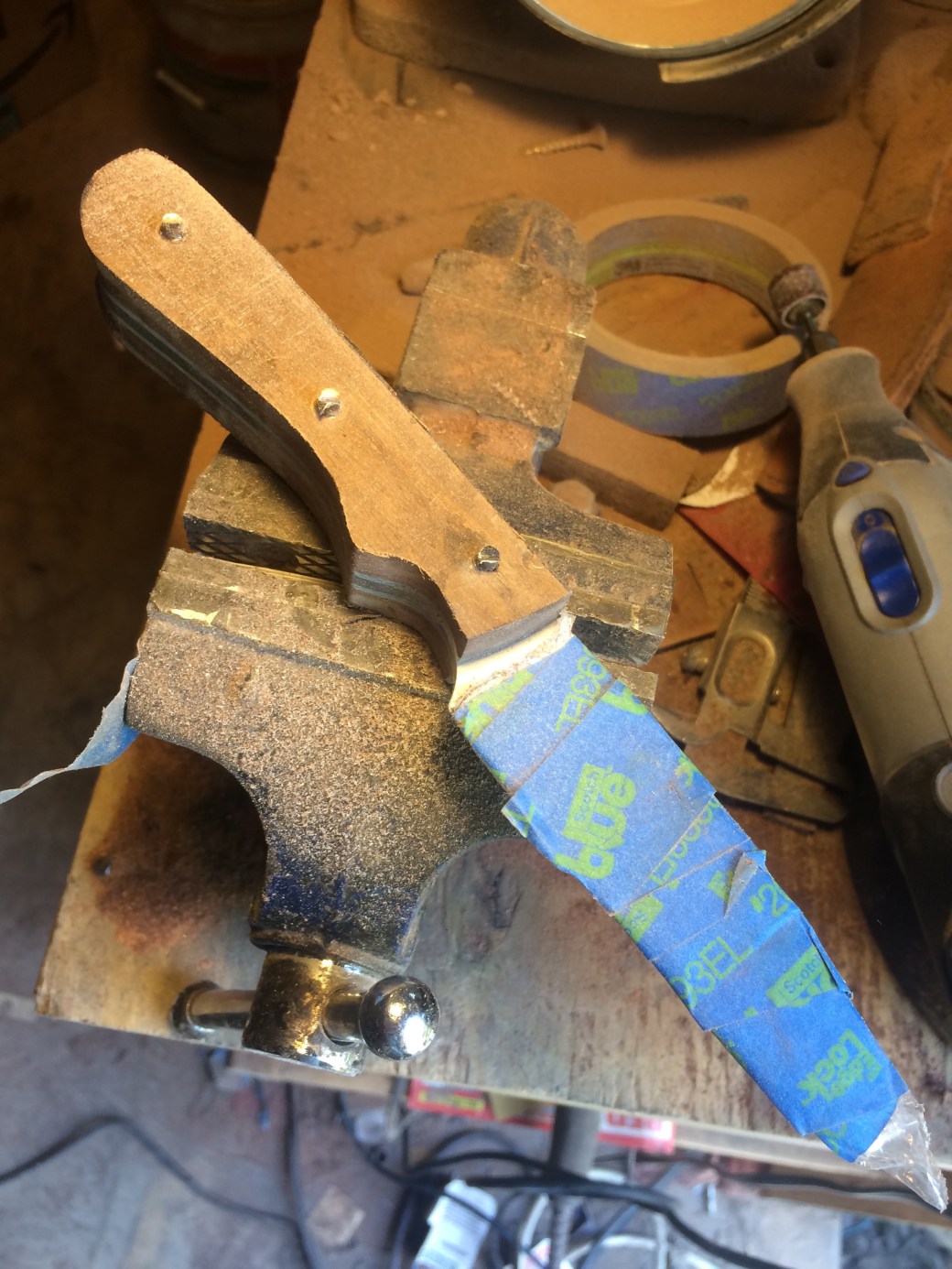
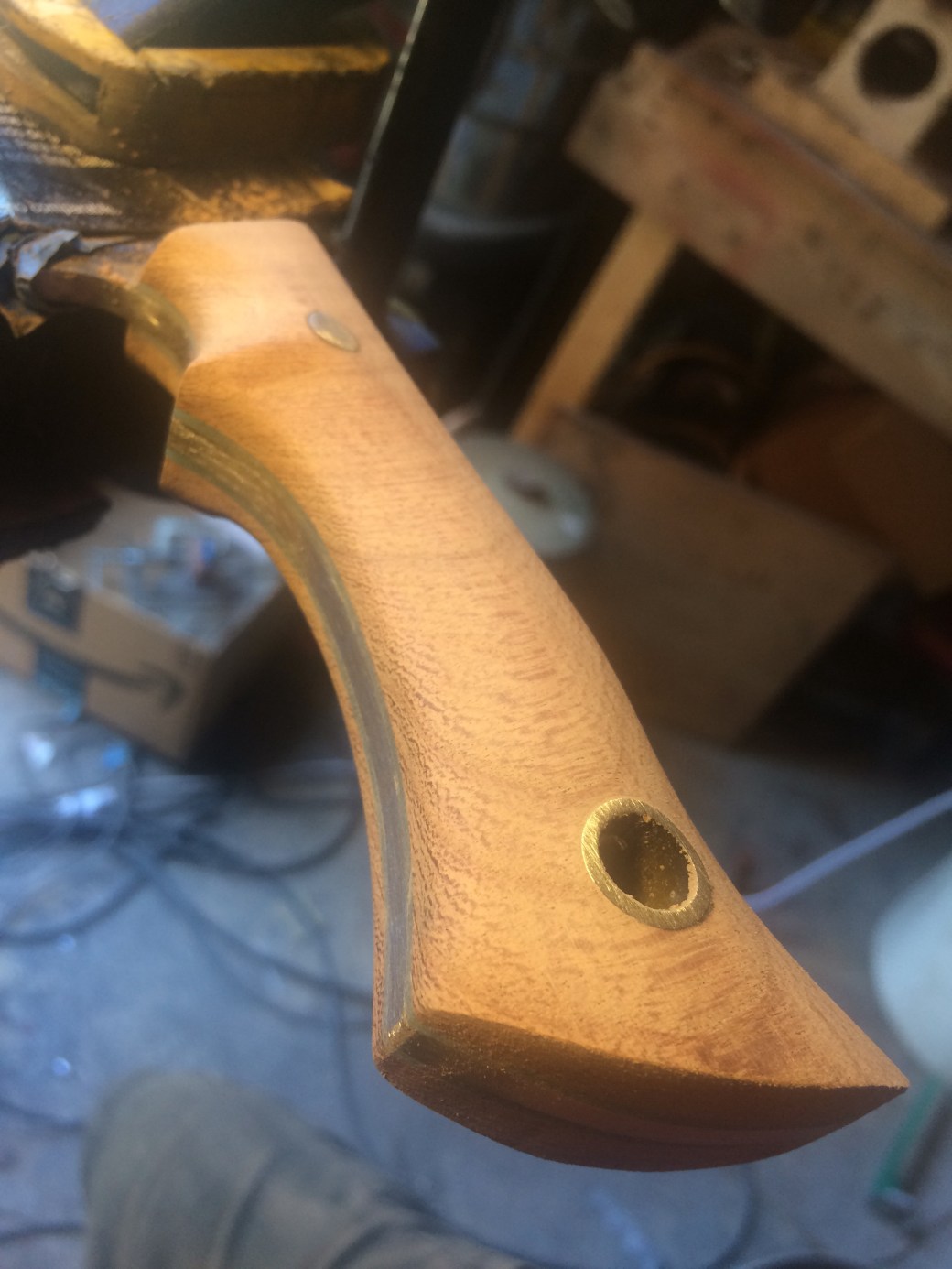
Mesquite from Texas for the handle:

img_4584-1

img_5883

All profiled:

img_5926

img_5925

Rough shaped on the grinder- from here out it’s all hand work:

img_5927

This is at 220 grit:

img_5928

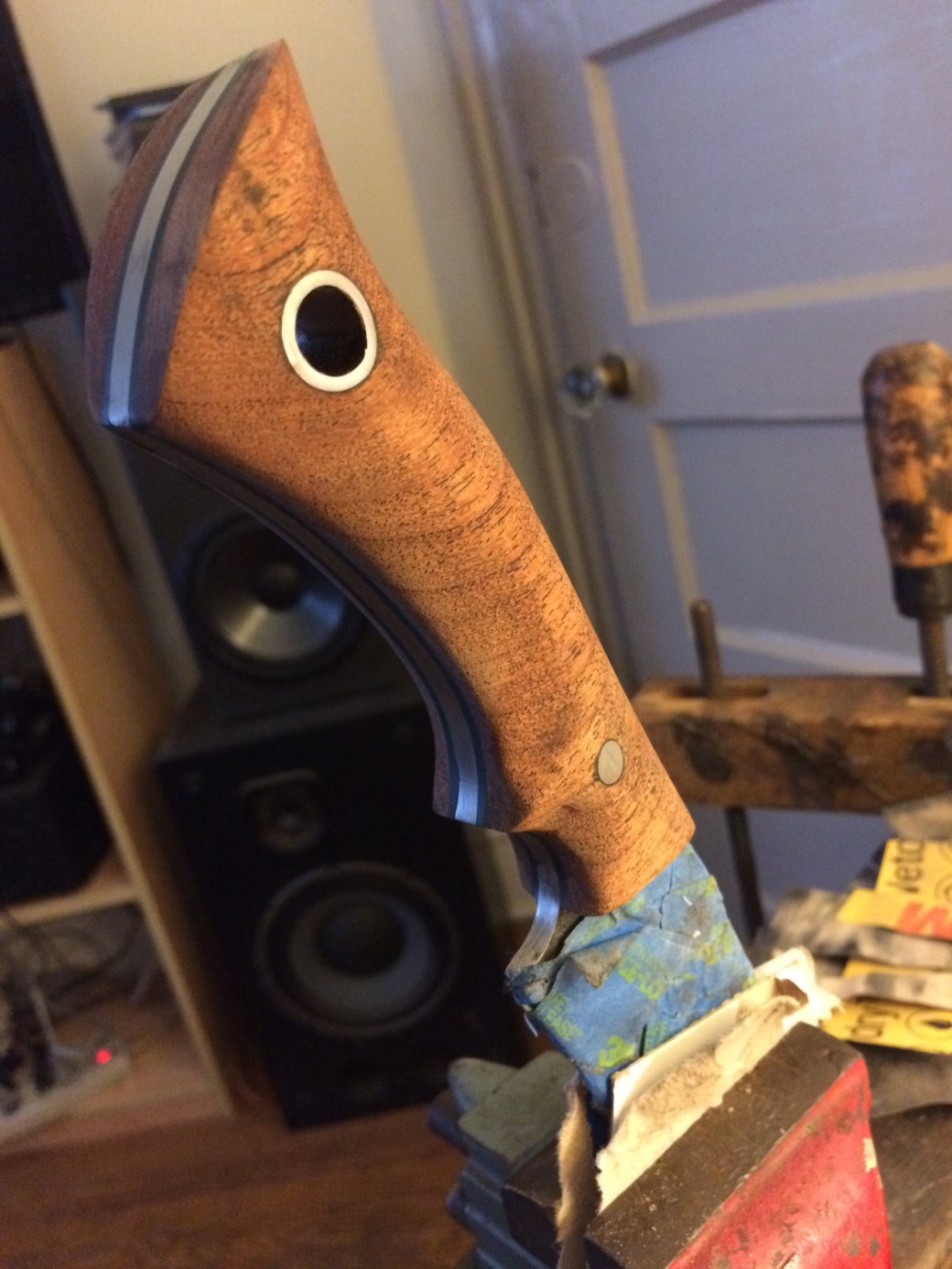
Letting a bit of oil set in to help the grain to speak:

The Woodsman, Mark II:

Knifemaking: a walk through the forest and the Woodsman

“Come closer and see,
See into the trees”

The Cure- “A Forest”

This knife was a donation to a charity auction put on by the Virginia Department of Forestry.  Many of the men and women who work for the Department of Forestry spend much of their work time and free time outdoors.  I wanted to build something that fit into that idea- stout and sturdy with no problem disappearing into the woods.  I designed a drop point hunter that was just that:

Cut out:

Centerline is scribed:

Early grinding work:

Hardened…

…and tempered

Polishing:

….to a nice satin finish:

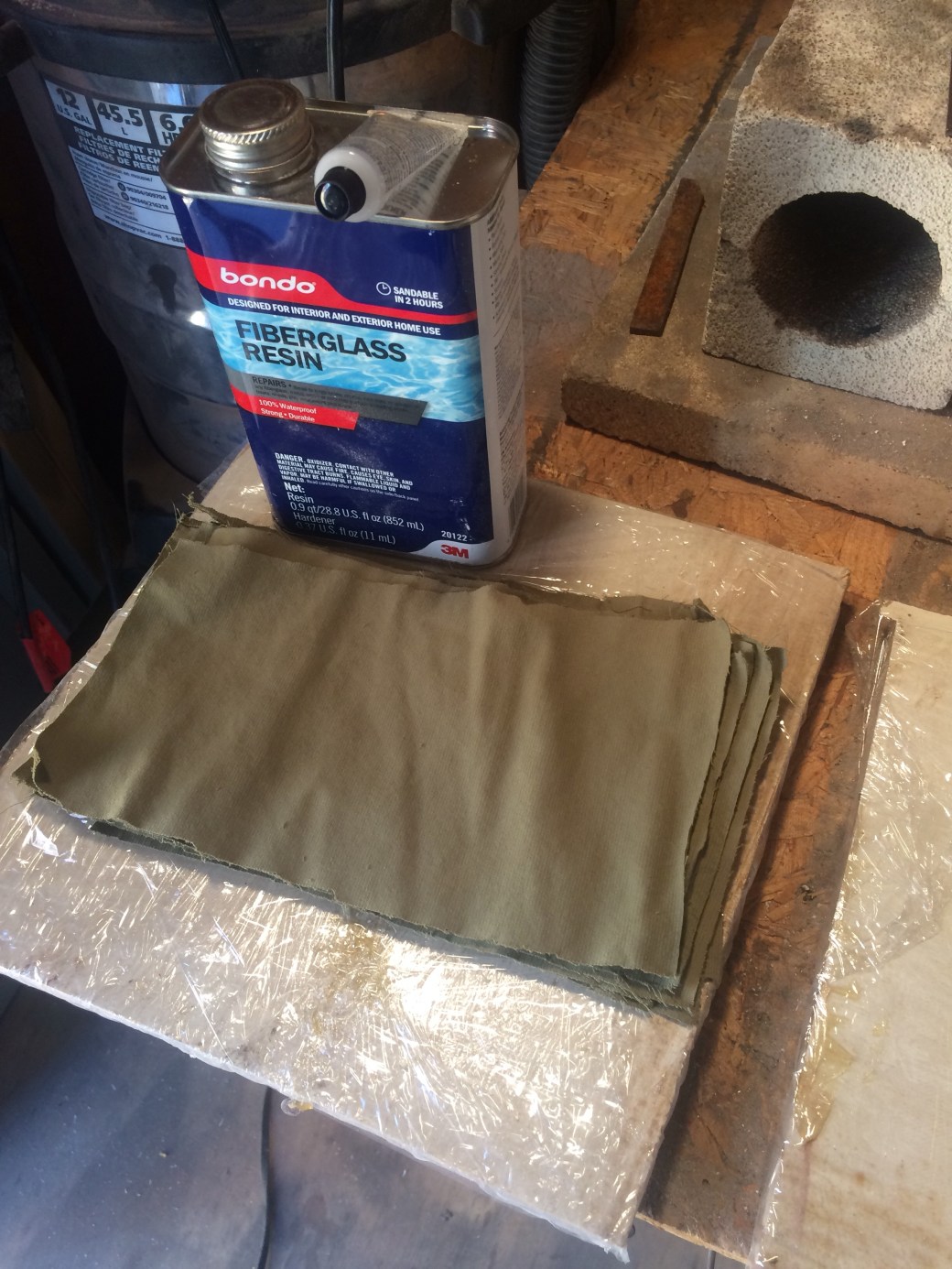
An old shirt of mine I used to camp in.  It’s beat up and full of holes, which makes it an excellent candidate for knife handle material:

Ready to be set in fiberglass resin:

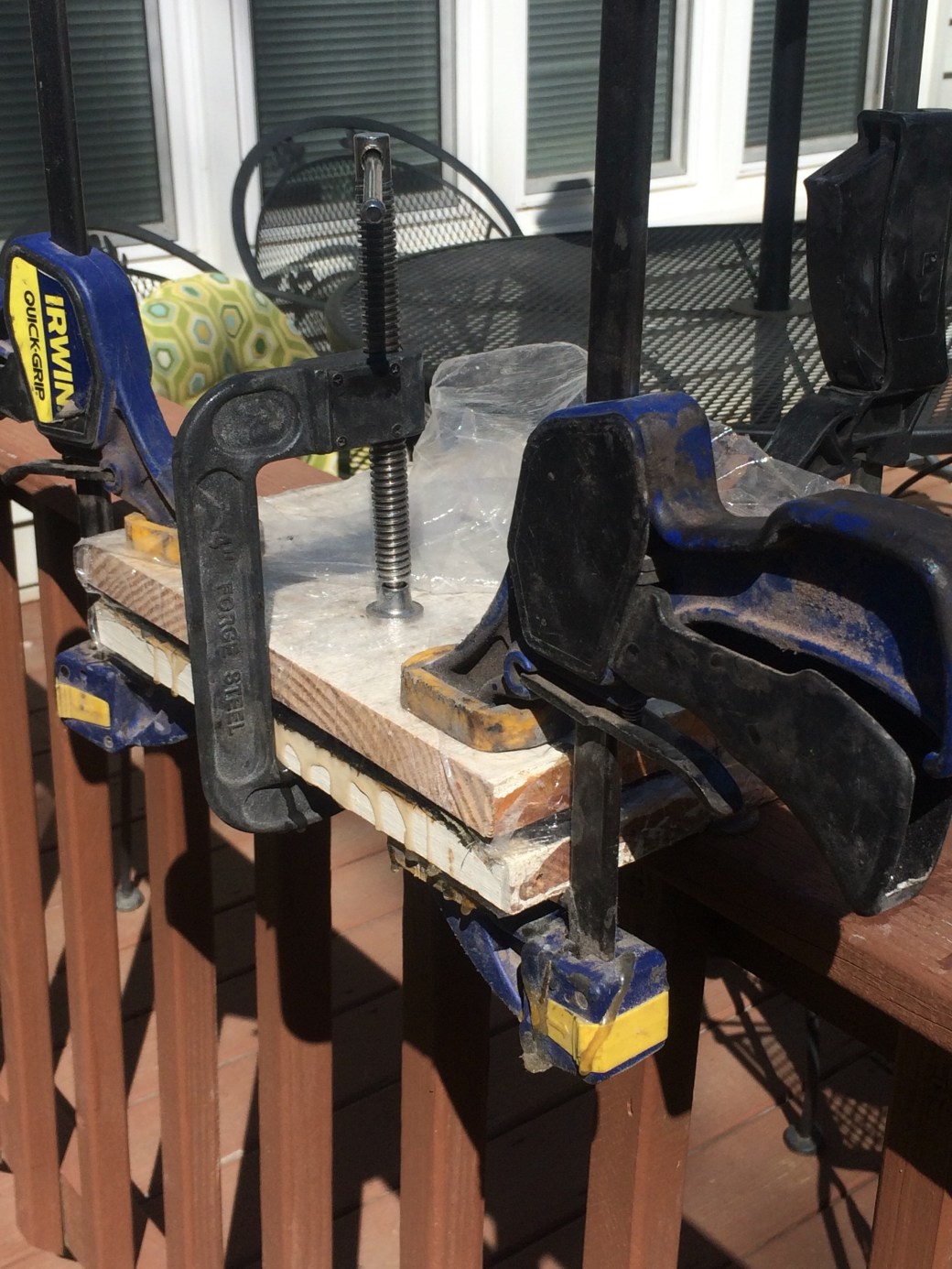
All the layers pressed together:

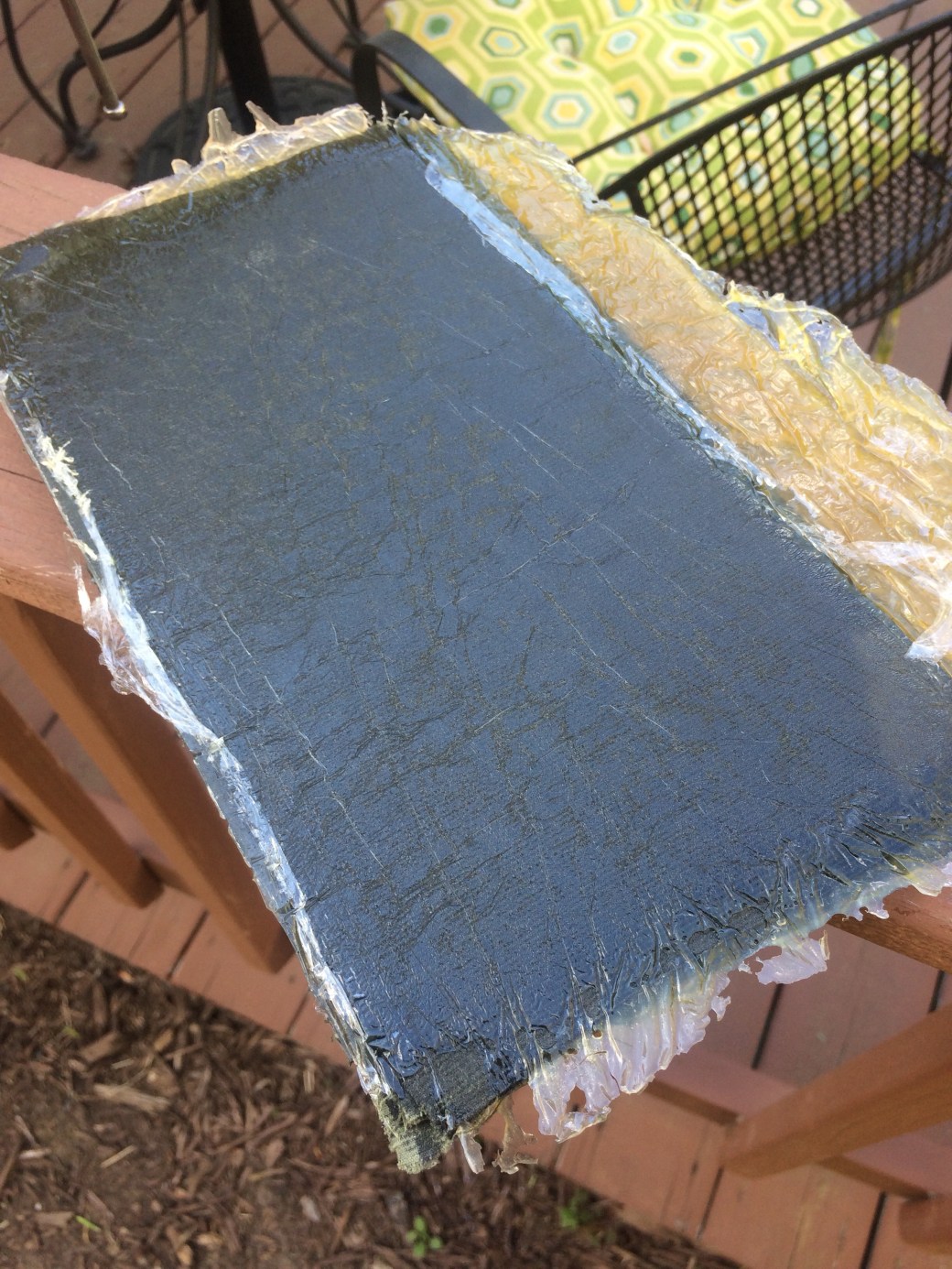
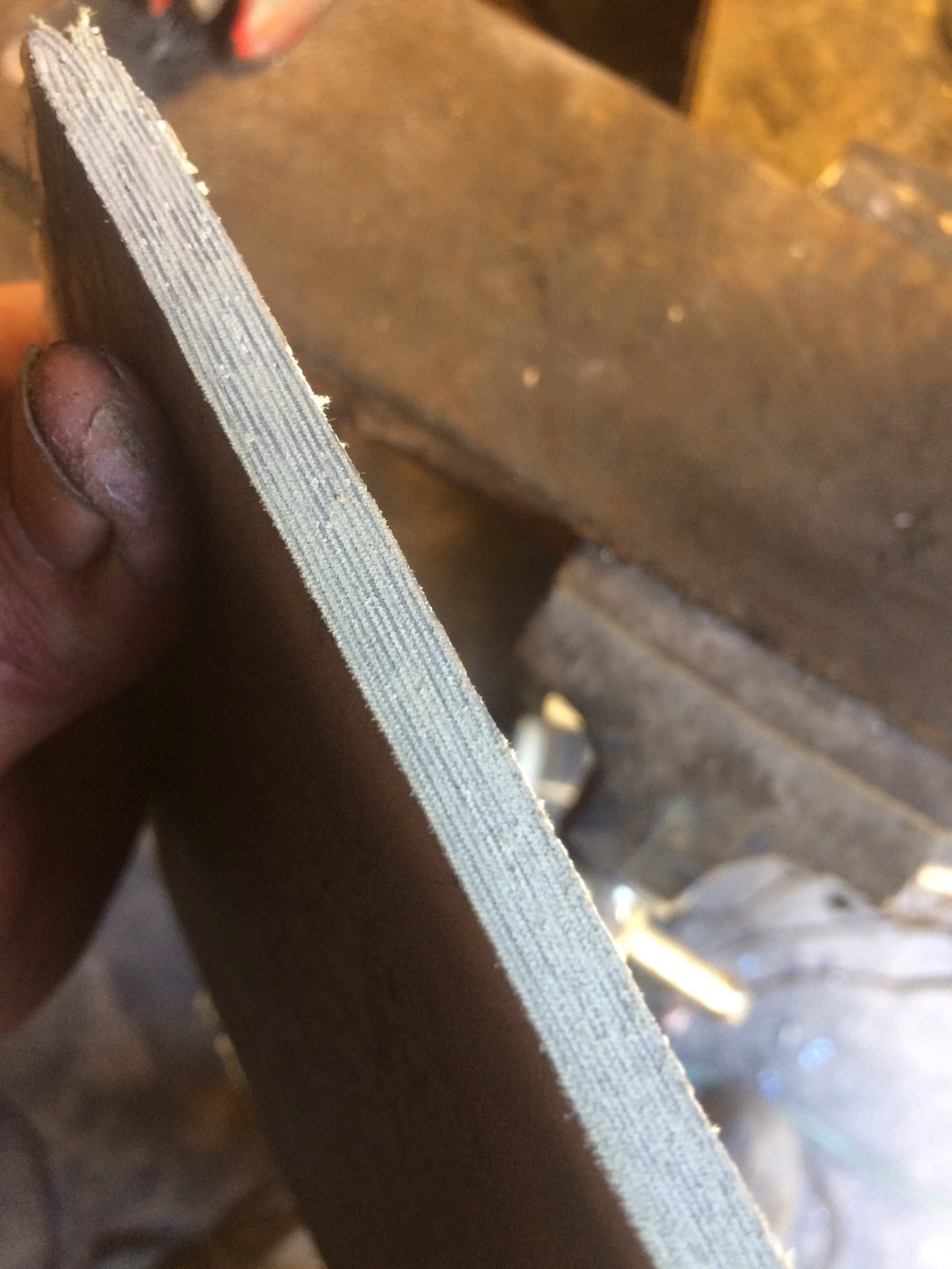
Everything is cured:

The Woodsman:


You can read more about how the department of Forestry serves you here:

http://www.southernforests.org/

…and here is one of the causes that they serve:

http://www.semperk9.org/

Knifemaking: The Things That Come to Us- A Restoration

“i imagine that yes is the only living thing.”
― e.e. cummings


There are many things that come into our own personal worlds- children, possessions, problems, blessings and a myriad of others.  It’s not so important how or why they enter our lives, but what we do with them.  It expends a great amount of energy to ponder what we may have done to deserve the painful and traumatizing events that come to us, and an equal amount of energy is wasted when we wonder if we are worthy of the good things that are brought our way.

Because when we start dwelling on the why’s and how’s, we tend to become overwhelmed and lose sight of what best needs to be done with what comes into our lives.

And within that judgement of why and how, we start to say no to things.  We become afraid we may be hurt, or that we may fail ourselves or those we care about.  Perhaps we are afraid of making ourselves unsafe.  Whatever the reason, in saying no we shut ourselves out of the blessing may be inside of a painful situation.  We say no to what may be a path forward because it is dressed as something unpleasant.  It is then that we become prisoners in our lives instead of seeing the ways we can be shaped and grow.  We should say no to things that are harmful and do not better us, but it’s always good to say yes to what life brings us.

The summers are slow for me, and sometimes I have to get creative in the ways I support myself.  I end up saying yes to many opportunities that under normal circumstances I would decline, usually due to time constraints, time away from loved ones, or a high probability of bodily endangerment (or a combination of all three).  Over the years the things I’ve reluctantly said yes to have usually been the most rewarding.

One of the times I said yes this summer was to a tree job in rural Virginia.  I was on a crew to cut down a huge dead tree.  Removing dead trees can be dangerous.  Rotting can occur in any number of unseen places of the tree, causing structural instability, and the tree may not fall where or when you desire it to fall.  This particular tree, though dead as a doornail, fell exactly as it was supposed to.

The client was an artist, and brought us French-pressed coffee.  We talked for a bit and I told him about making knives and how I got my materials.  He told me that he had some slabs of black walnut and that I was welcome to them.  They had been milled by a neighboring man who had run an abbey in South Korea, saying ‘yes’ to whatever fleeing defectors and dissidents from the North that the world brought their way.  Later he sent me an article about the man who cut the wood, you can find it here.  Black Walnut is expensive and isn’t something to normally fall into one’s path, so, in the practice of saying yes, I happily took some.

A week or so later I said yes to doing a bit of work on a good friend’s farm.  My friend is a busy lady and sometimes needs a hand with the upkeep of her property.  She and her family are good friends of mine.  I worked for her son for several years and like to get out to their property as often as I can.  It’s really beautiful:

IMG_2509

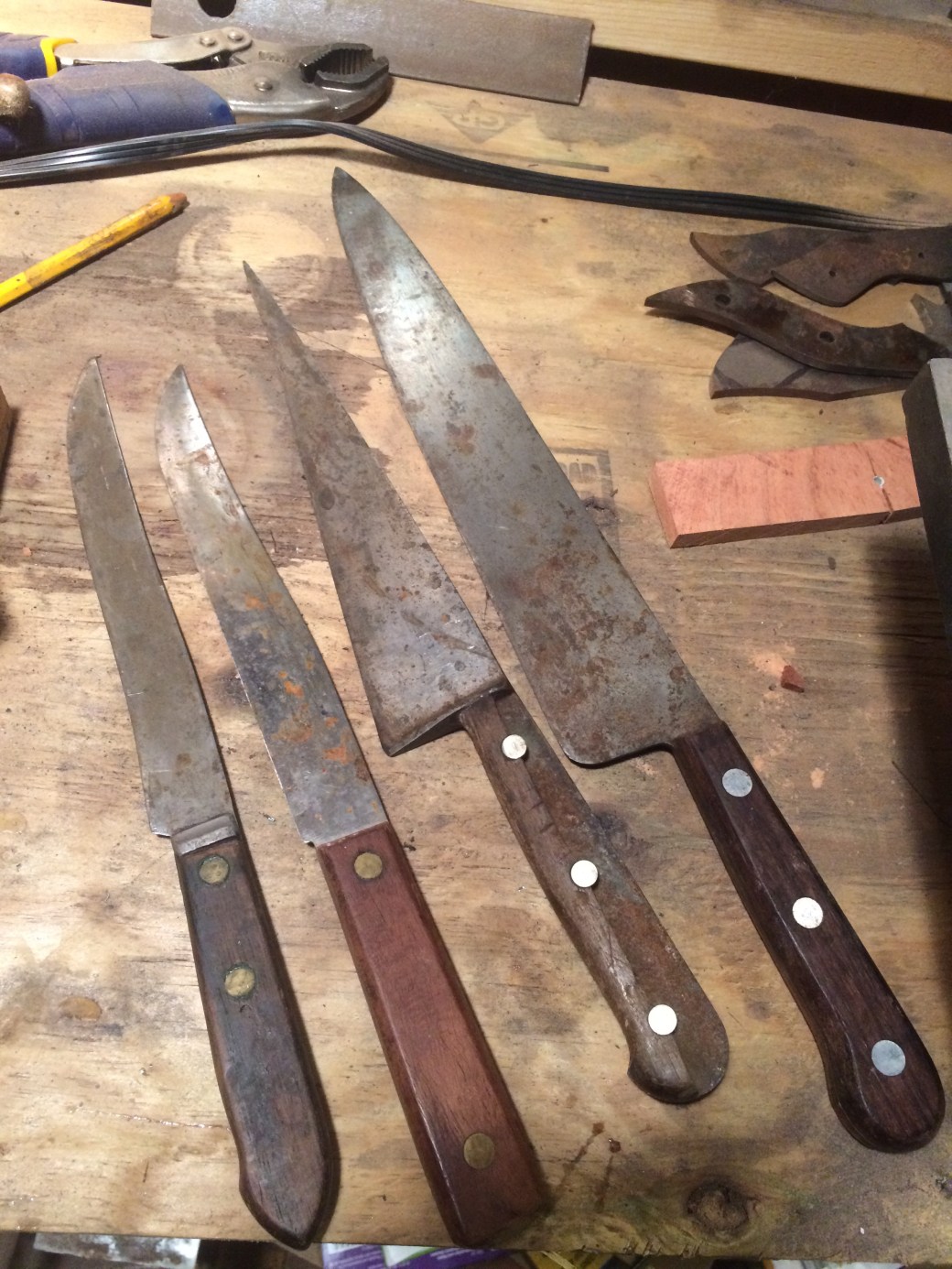
She had a set of knives she wasn’t sure what to do with.  They belonged to her late husband, and came to him from his grandfather, who was an Austrian immigrant.  He came to the United States in the early 1900’s and made his living as a chef, choosing to say yes to a new world and a new life.  She told me she’d like to have them restored so they can go to her children and stepchildren to remember their father.  I told her I would have a look at them and see what I could do.

Tools of the trade, from left to right:  A carving knife; a fish knife; a French slicing knife; and a 12″ chef’s knife

So these knives came to me, at least a hundred years old, and of deep sentimental value.   I started by removing the cracked and broken handles.

I cleaned up the corrosion and oxidization from the blades, but left much of the etched patina from their years in the kitchen.

In a continued practice of saying ‘yes’ I chose to use some of the Black Walnut I got from the tree job for the handle material.  It fit nicely into the story of these knives.  This is what it looks like sanded and polished.
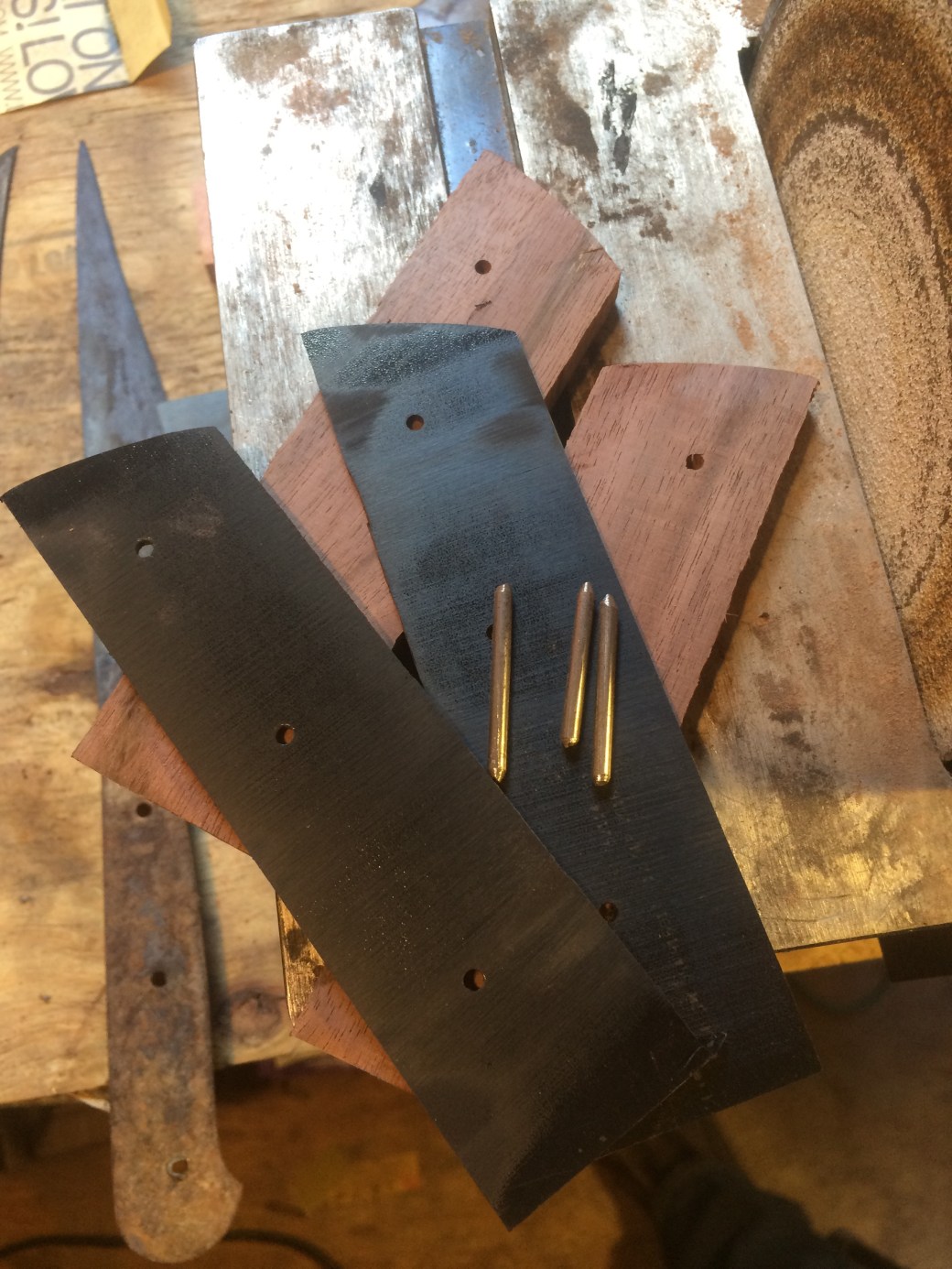
All of the handles started as thin blocks cut from the Black Walnut.

Shaping.


The filet knife was only half-tang, so I extended it with mild steel from a sheet.

I added a G10 bolster and spacer for a bit of contrast.

After glueing and sanding.

Getting the fish knife ready for glueing and shaping.

The French slicer was tricky….

…but also an elegant challenge, with its tapered tang and integral bolsters.


Finished, they came out rather beautifully:

Say yes to the things that come to you whenever possible.  It’s always worth it on the other side.

Knifemaking: how to behave in the world, and the Dummy

“You big dummy!”

-Fred Sanford

It was New Year’s Eve a couple of years ago and it had been a pretty crappy year.  I was with very good friends, half drunk, and a bit reflective.  There are times in life when challenges present themselves, as they always will.  You can deal with them with grace, dignity, and elegance and use them as an opportunity to move forward….or you can let each one smack you in the head until you find yourself sitting in a pile on the ground feeling sorry for yourself.  My year could be summarized by the latter.  So in my half drunken state I came up with the last New Year’s resolution I would ever make.  I wrote it down:


Don’t be a dumbass. The next day in a brand new year I thought about this.  I proposed that whatever future situation I found myself in and there was a decision to make I would ask myself, “What would a dumbass do?”.  When I had determined what course of action a dumbass would follow, I would simply not follow that course.  

The beauty of the whole thing is the simplicity of it.  Much like kindness, it functions on a continuum.  It will meet you where you are and, if you are diligent in your practice of not being a dumbass, it will expand into your entire universe.  Before long, what started as a way to make your immediate life better turns into a lifestyle.  You set an intention to be present in your life and your relationships.  You are navigating opportunities.  You are not perfect but anyone who is not a dumbass knows that no one is.  It is quite challenging but the payoff is that you, my dear friend, are not being a dumbass.

But alas, no system is perfect.  Sometimes, despite your best efforts, you find yourself ambling down an avenue of unbridled, unbuttoned, and completely unadulterated dumbassery.

I found myself on that avenue the other week.  It was one of the most embarrassing and humbling days of my professional life.

I had a contracted production runner job working for a big televised arena show.  My job was to run around town and procure necessary items for the show.  I’m generally very good this job.  They give you a list of things they need done to make the show happen, you figure out the best way to accomplish those things, and everyone works together to make a production happen.  Many times you are part of a well-oiled machine that makes incredible things happen and it is very satisfying.

This particular show, being a massive televised touring production with many things that can potentially go wrong, required a copy of our drivers’s license for insurance purposes.  Most production runner gigs don’t do this.  No worries though and I handed over my license.

It had expired.  Then I remembered the notice I had gotten from the DMV a couple of months ago and how I said I’d get around to it and how I actually hadn’t.  This wasn’t exactly the way I wanted to be reminded.  It was hugely embarrassing and I wanted to run away and hide. 

I did not run away and hide, because that’s what a dumbass does.  The people on the production team for this organization are incredibly kind and though I couldn’t do my normal job and was working my way out of a shame funk, they let me work in catering.  I hadn’t done anything in food service since I was 19.

They sent me to the kitchen and I met with the head catering lady who just laughed at me, handed me an apron, and sent me to help unload a cargo van slam full of food to be prepared that day.  The cargo van was in the loading dock and the loading dock was a zoo.  In addition to the van there were four tractor trailers being unloaded by about forty stagehands.  There were four forklifts unstacking road cases and half a dozen men with radios directing all of this.  I joined four or five other guys at the van and start loading up carts with everything from fresh salmon to the biggest can of marinara sauce I had ever seen. 

I get one of the loaded carts to take to the kitchen and it is slam full.  I am trying to navigate the insanity of the loading dock and I hit a bump.  There is a gallon-sized tub of dijon mustard sitting on top of the cart that I watch, in slow motion, fly off the top of the cart, hit the ground, break open, and splay all over the crew chief directing the insanity.  He was not happy….

So food gets back to the kitchen and unloaded.  I would spend the next four hours peeling potatoes, cutting endives, and shredding raddichio.  It was surprisingly calm in there.  I made sandwiches for lunches, ran dirty dishes to the wash area, and cut up more vegetables.  Every time I ran into the head catering lady she would say ‘here comes trouble…’.

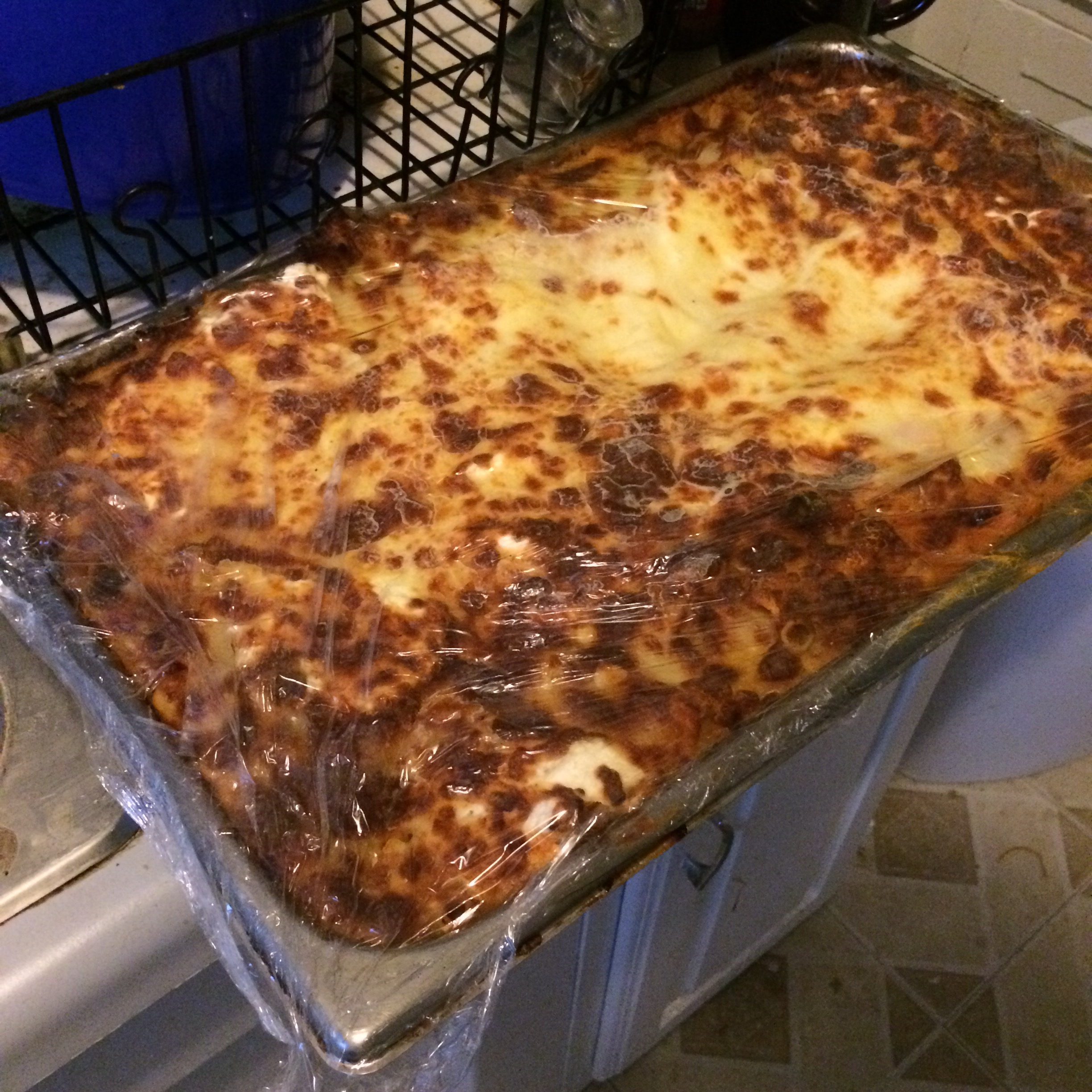
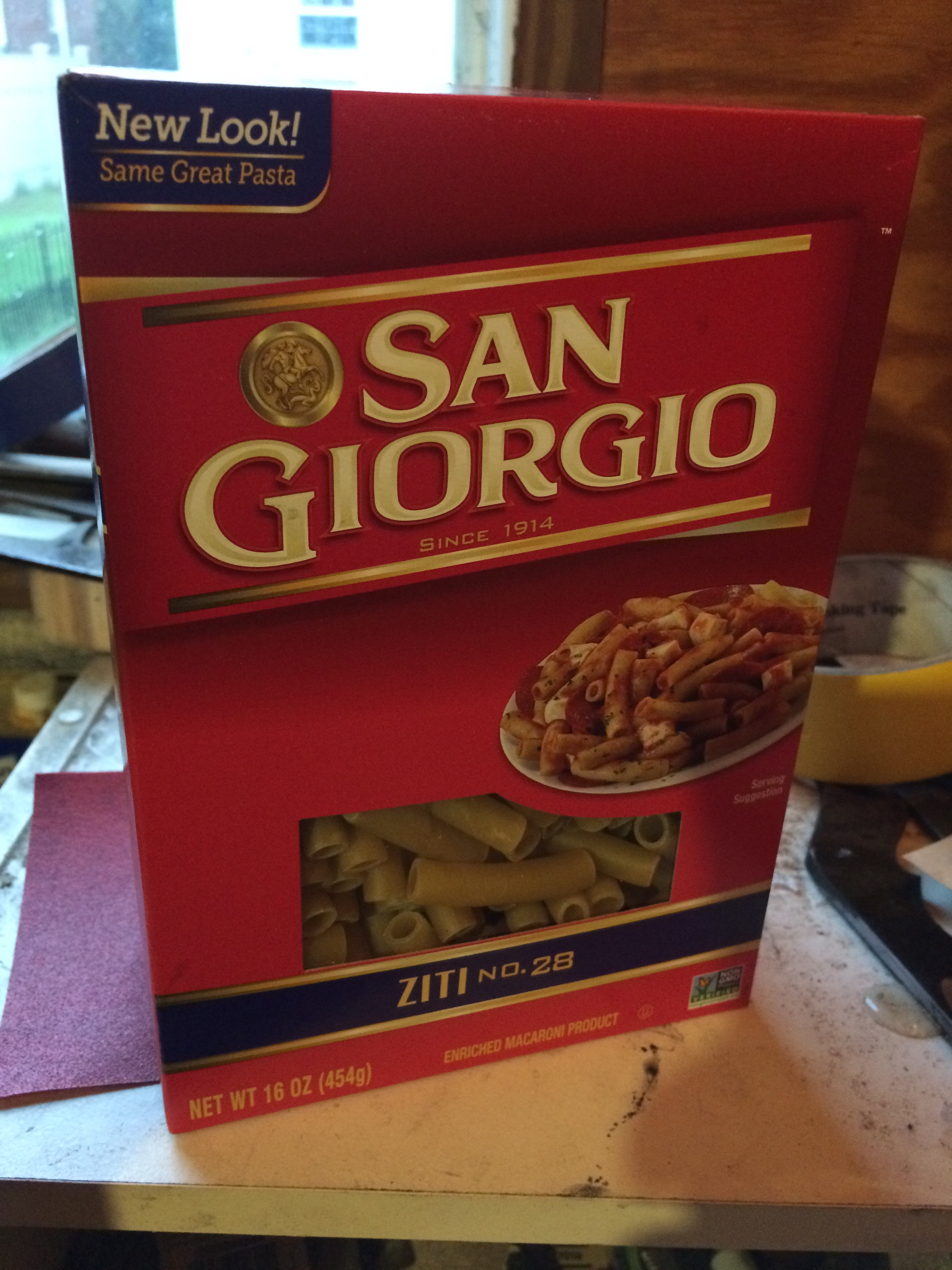
They were all very sweet and kind.  They sent me home with a hotel tray full of baked ziti which fed me for two weeks:

This is the lesson of the Dummy.  Sometimes you have to stay with your dumbassery and it will pass.  Everyone is a dumbass sometimes.  Thank you Universe for teaching me humility….

I started with 1095 spring steel.  Here it is cut, with bevels started:

Hardened:

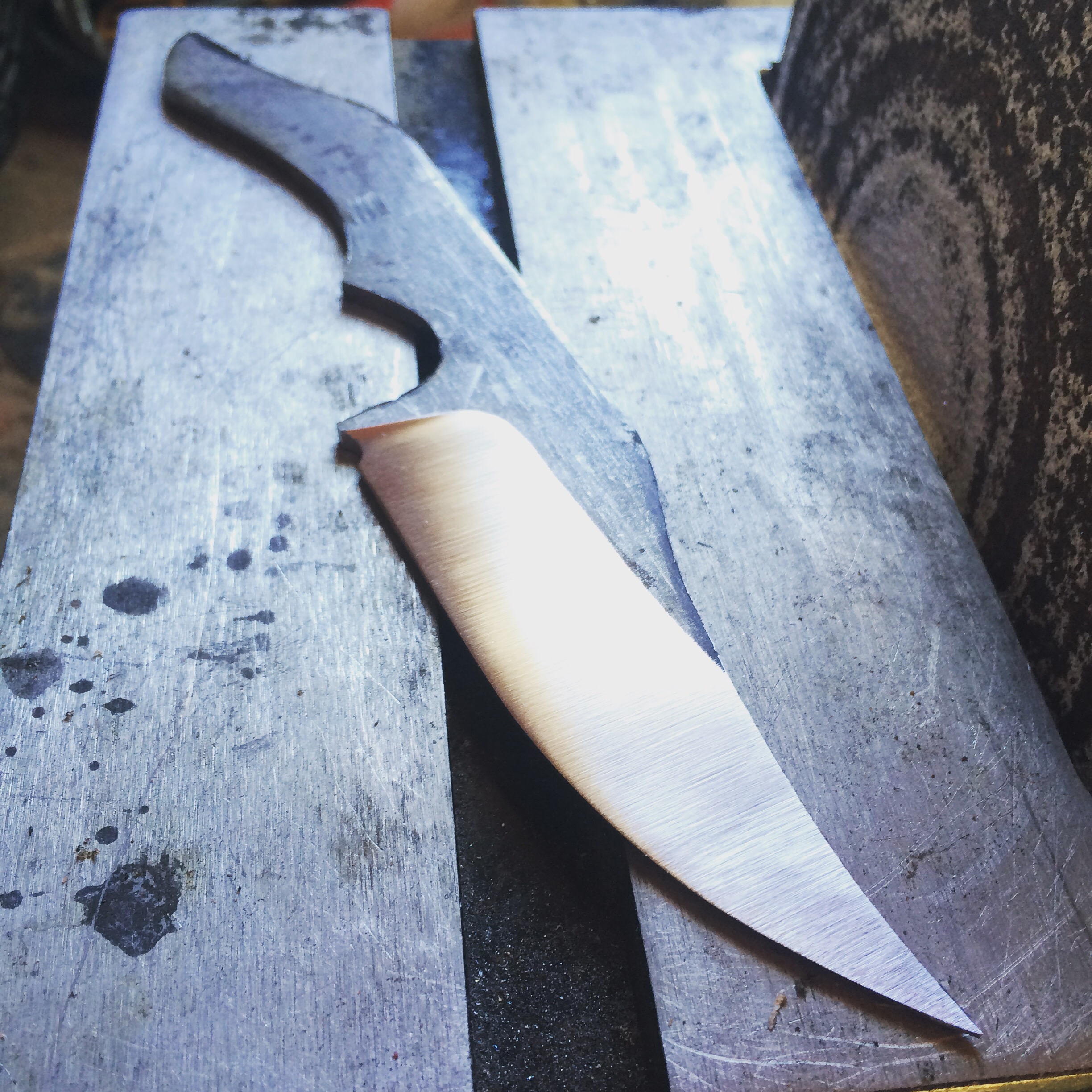
Wet sanding:

….for a satin finish

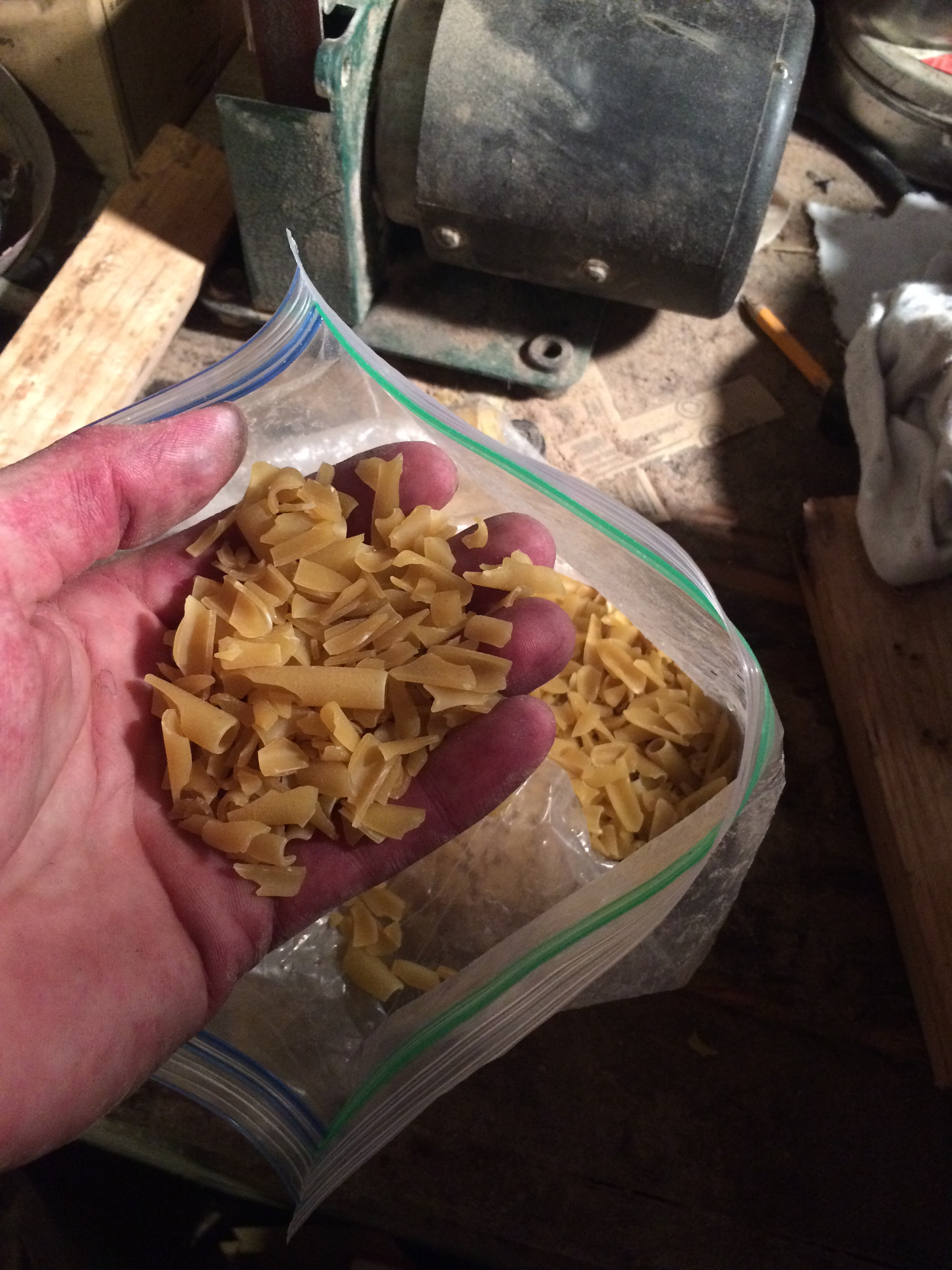
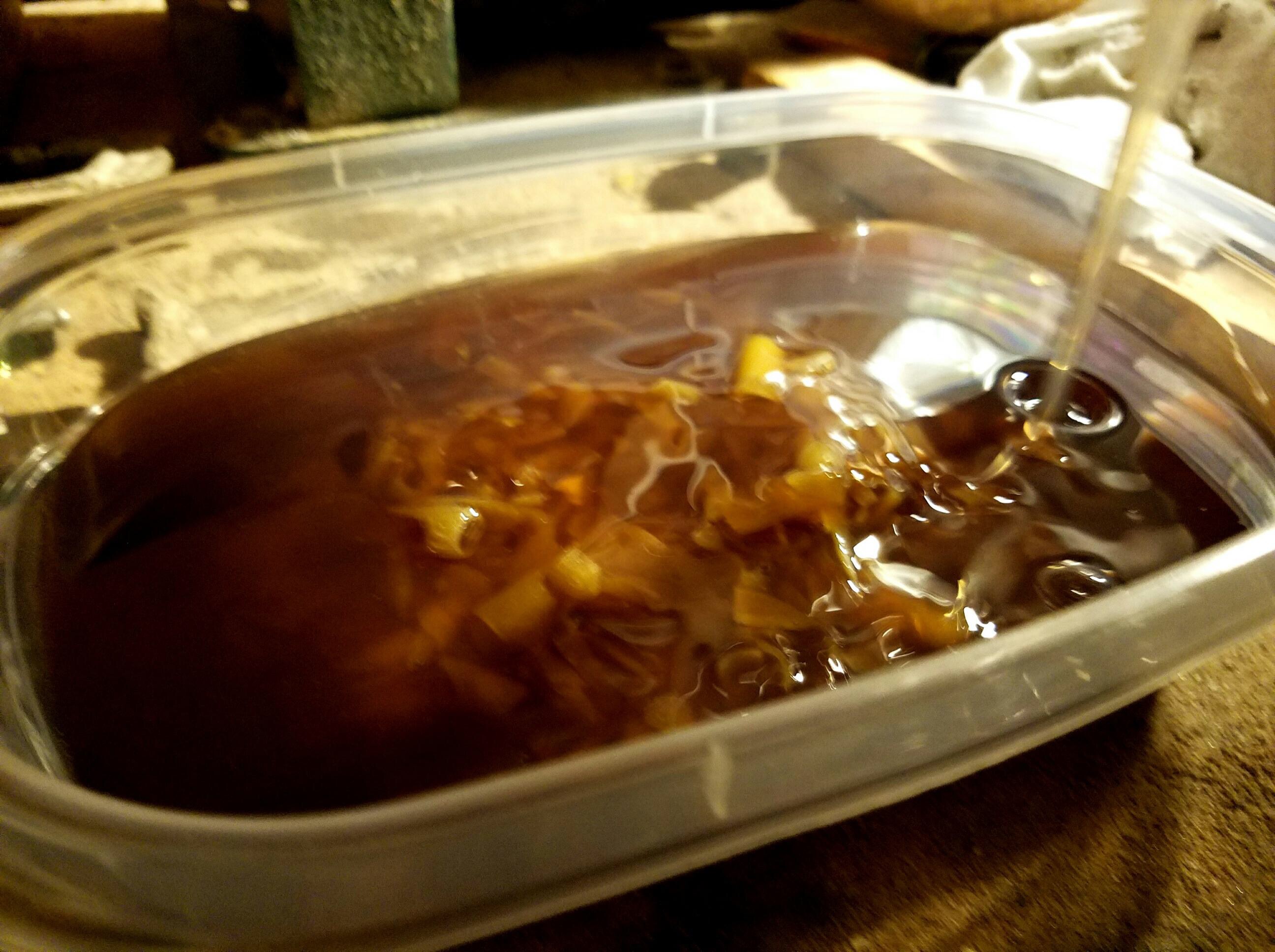
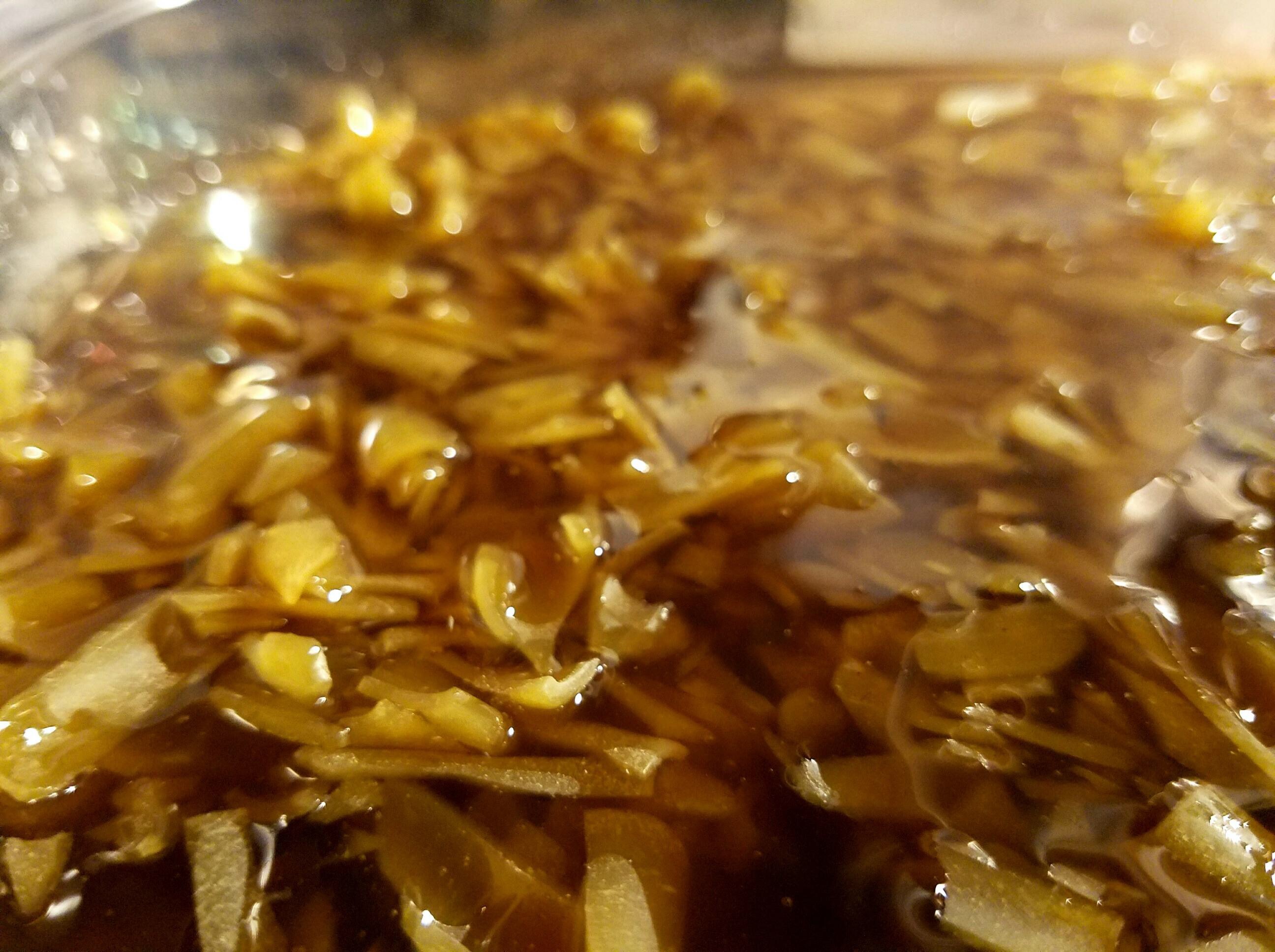
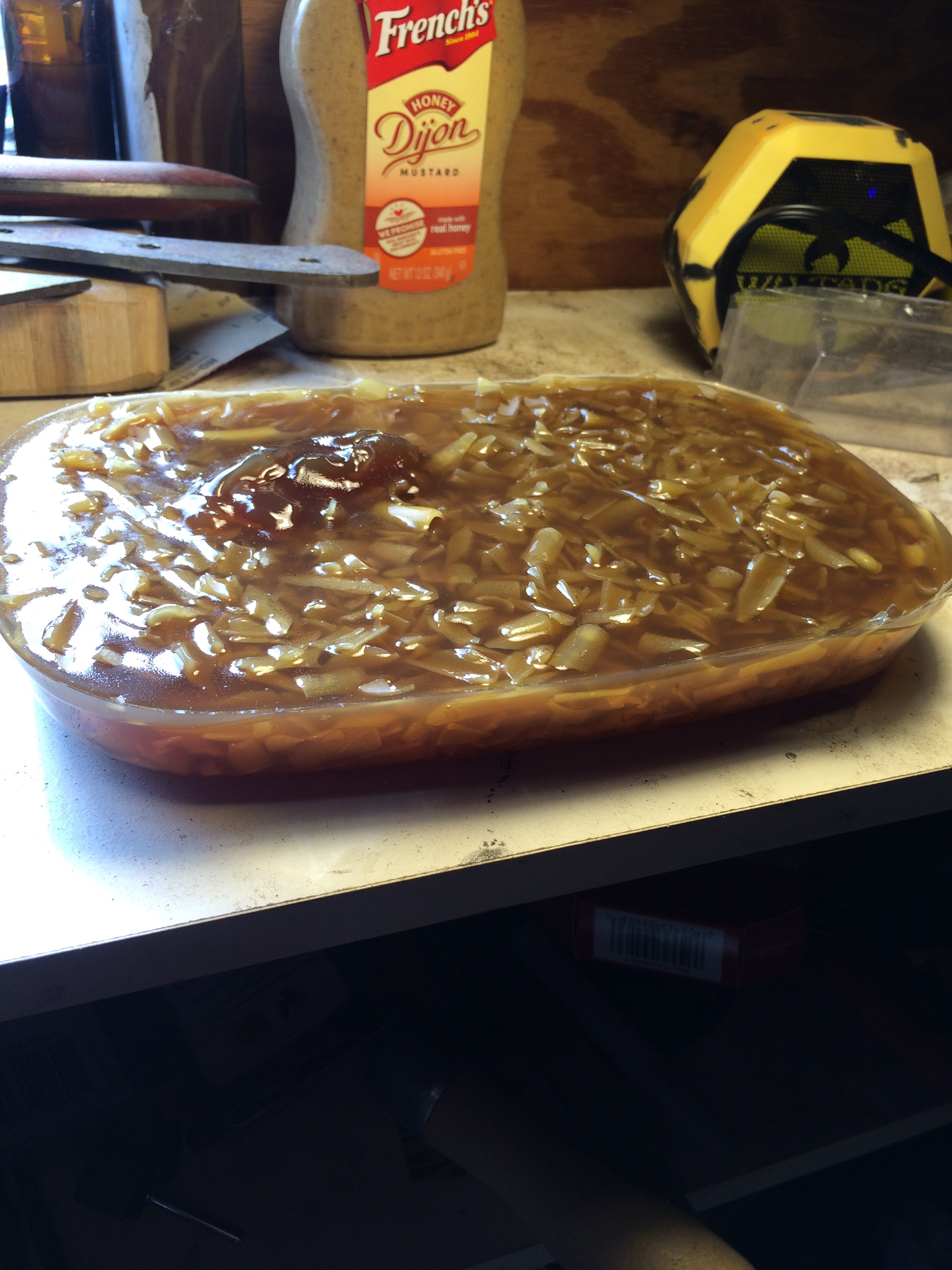
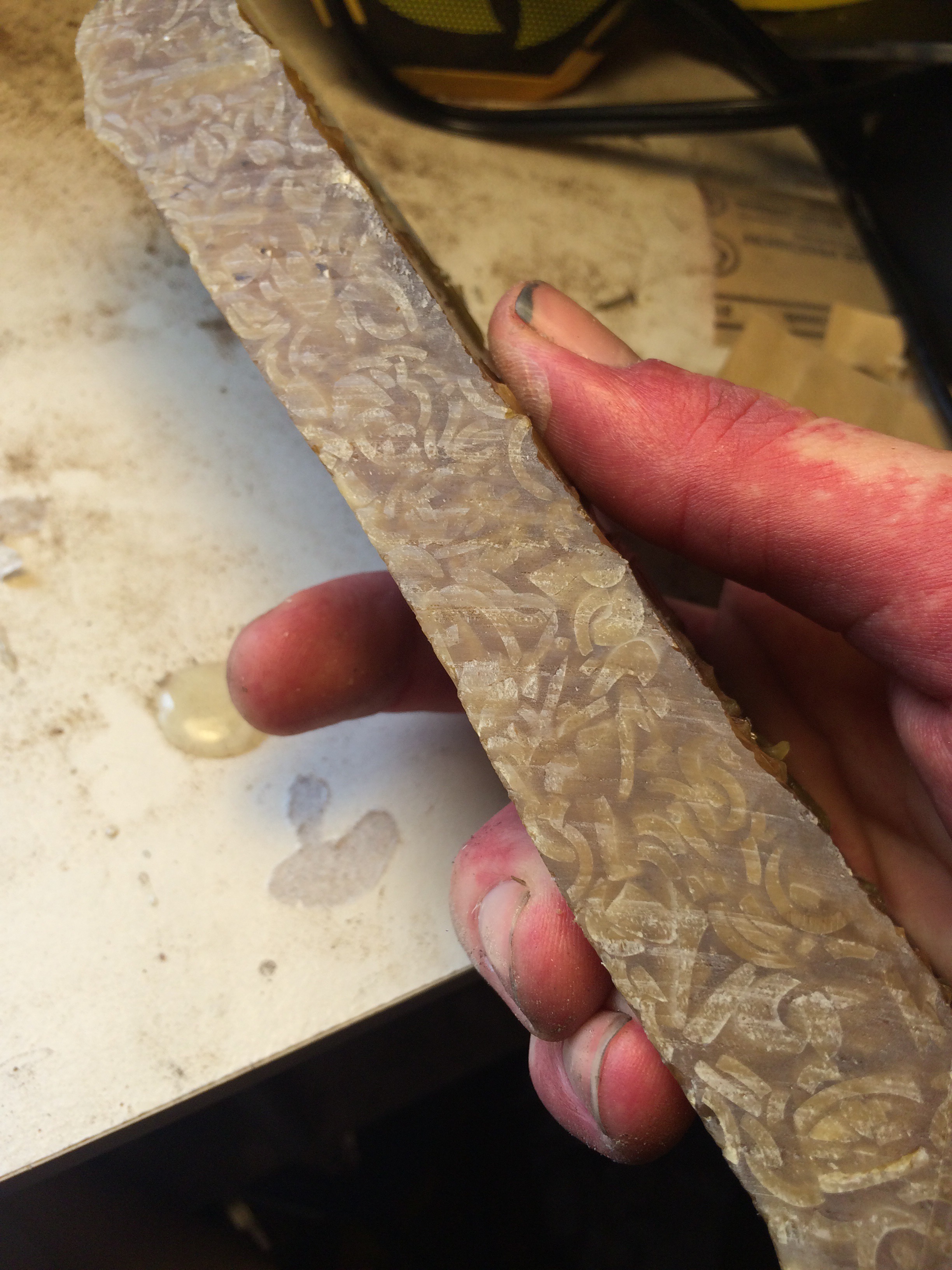
In gratitude for the many meals I was gifted, I wanted to work ziti into the handle:

Hulk smash:

Fiberglass resin:

Dinner is served:

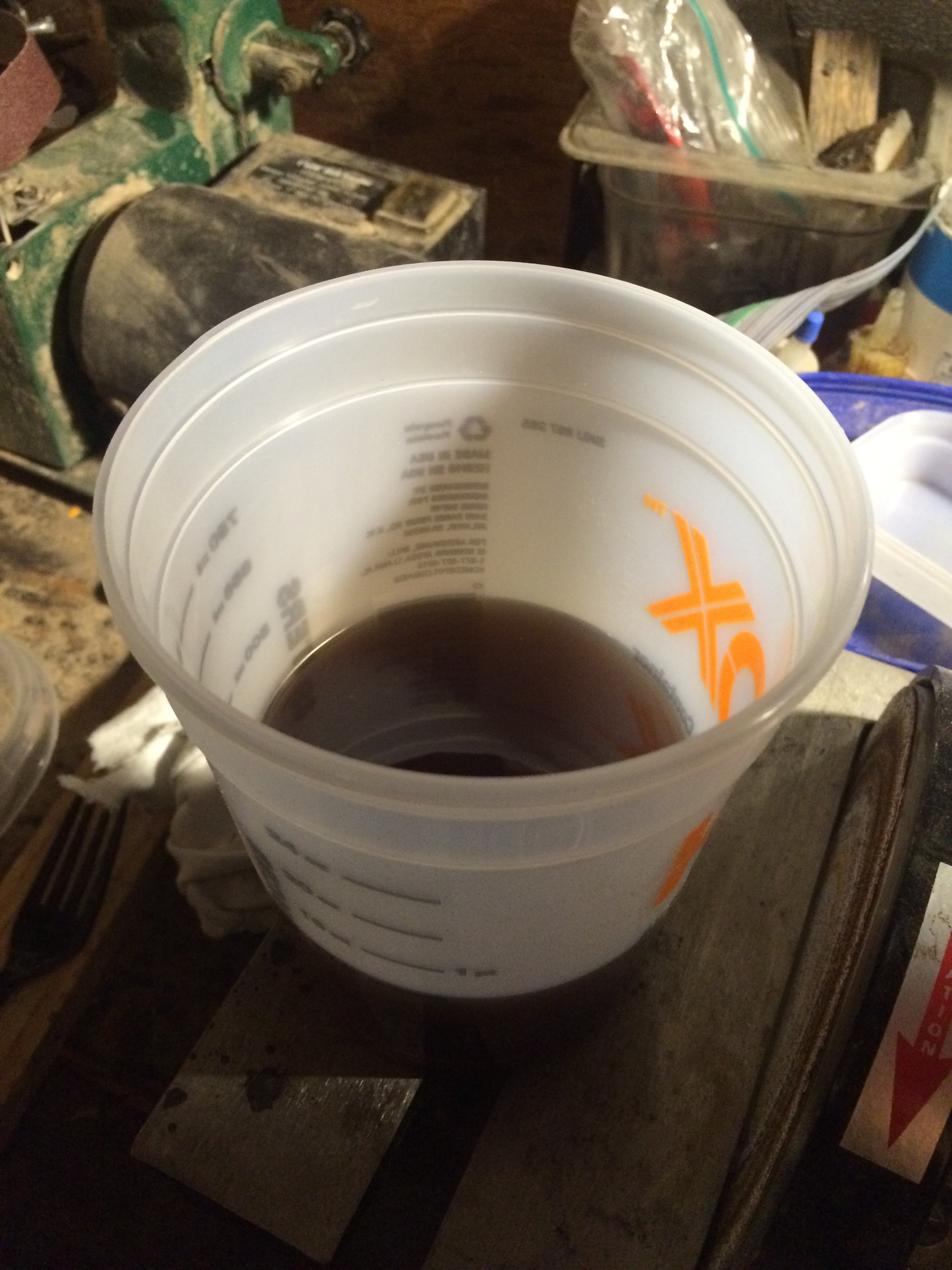
The dijon mustard, a low point of my dummy day:

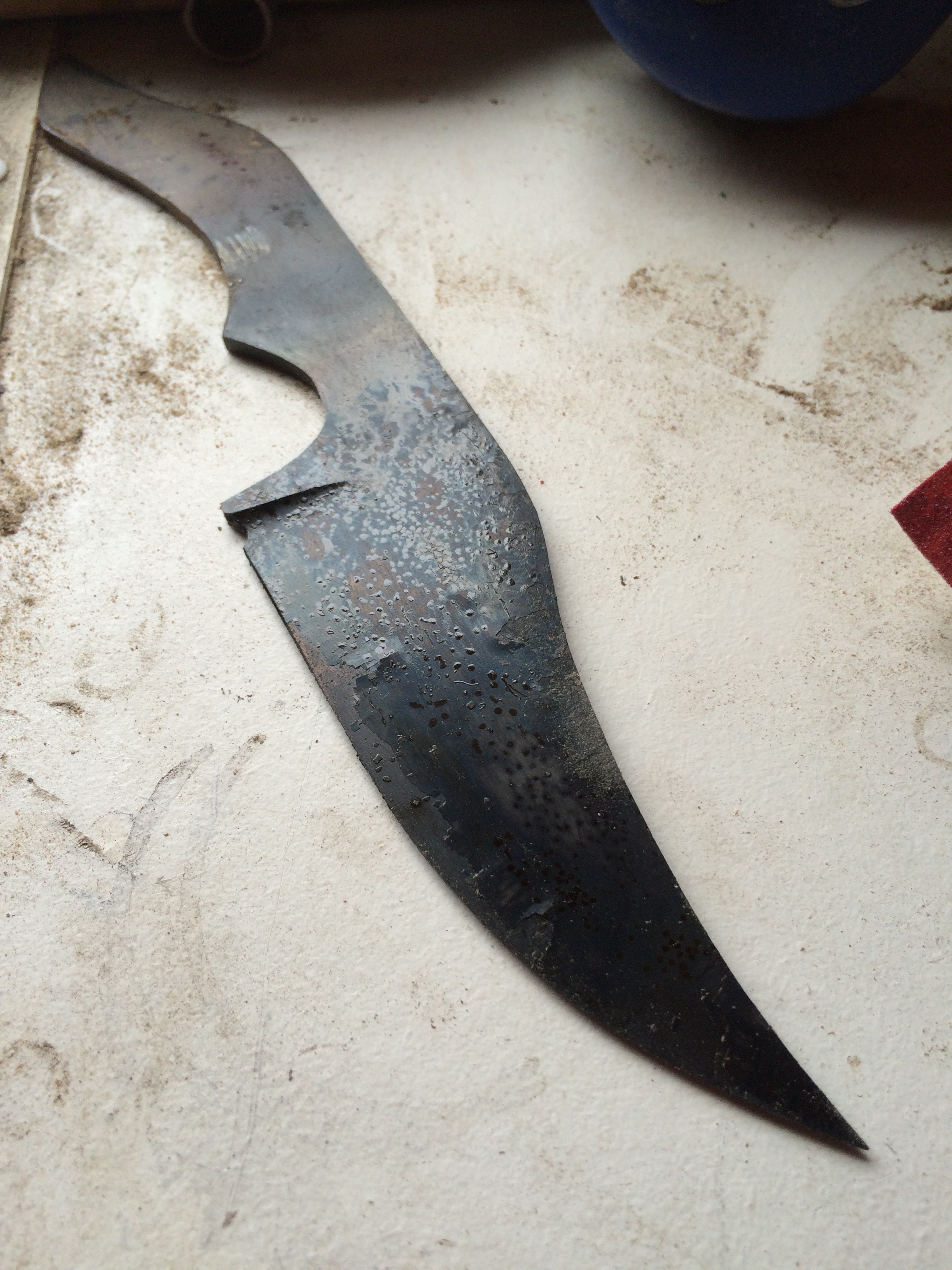
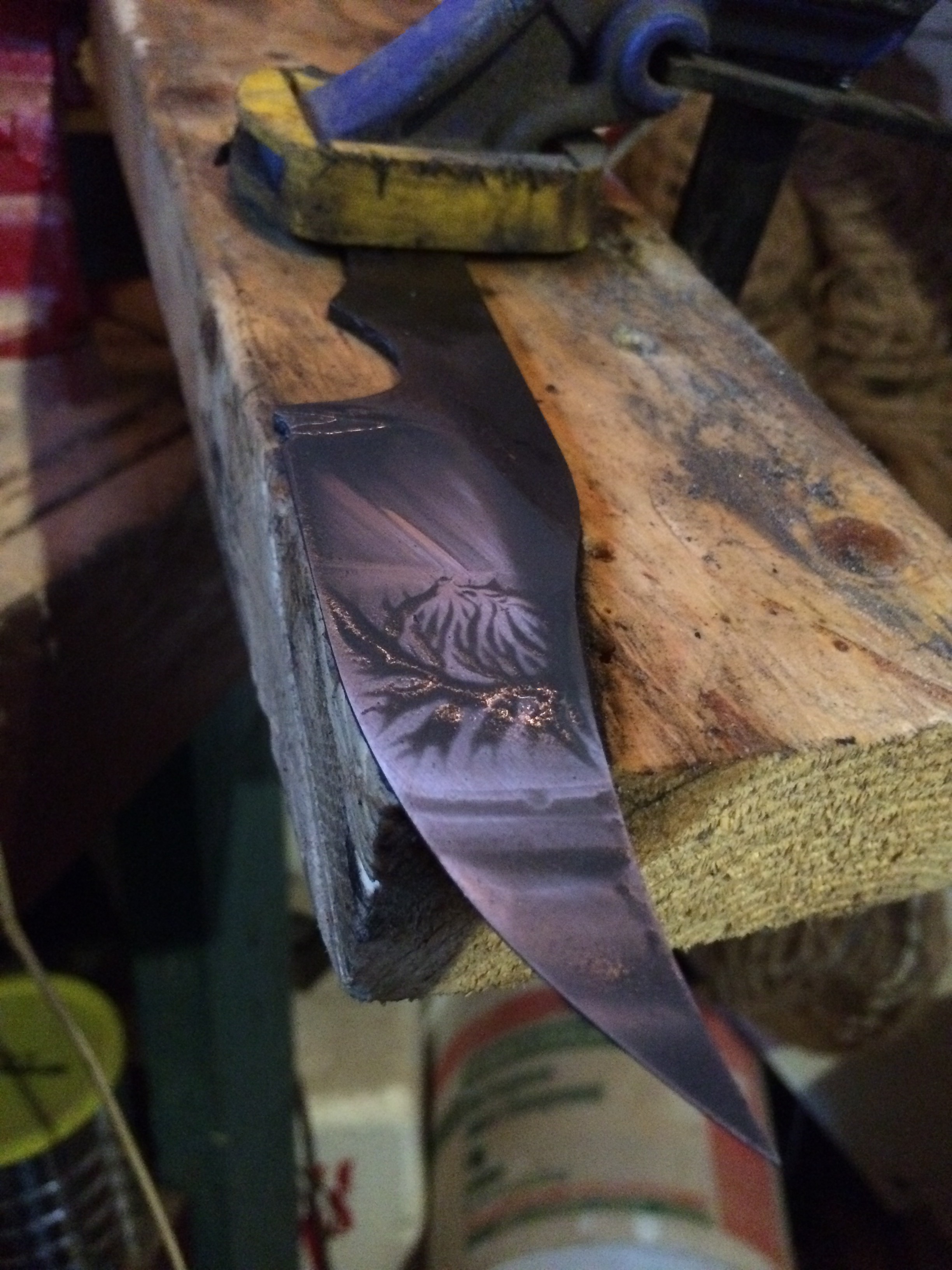
I used this to force a patina on the blade:

The Dummy:

With all the love in my heart, don’t be a dumbass.

Knifemaking: light and dark, and the Guardian

 ‘Call them up and tell them they’re all full of shit’

Lt. Col. Daniel F. Gilbert (1925-1996)

My grandfather died when I was twelve.  People come and go quickly in this world and often their stories and the good things they do are lost and forgotten.  I wanted to tell his.

He and my grandmother moved down the street from us when I was five so they could watch my brothers and I grow up.  I would ride my bike over.  He had an attic workshop .  He liked to make jewelry and often I would find him flattening out nickels that he had been soaking in sulfuric acid.  He gave me hacksaw blades and sat me in front of a bench grinder and showed me how to make small knives.  He used one of his shotguns as a template and made me a wooden one that looked so real my mother made me take it back to him to paint orange so that I wouldn’t become a police statistic.  We watched cartoons.  We could both agree on Popeye and Tom and Jerry.

I remember my grandmother getting really angry at him for things that I thought were hysterical.  One time I went over there and he had hacked the head off of a snake with a shovel and hung it from a tree.  I remember my grandmother yelling at him and all he said was, very quietly, that the only good snake is a dead snake.  I have no idea why he hung it from a tree.

Often times during the summer in his back yard he would build a smudge fire if the mosquitos were bad, which they almost always were.  We would go in for dinner and my grandmother got pissed at him for making us all smell like a campsite.  He just laughed.
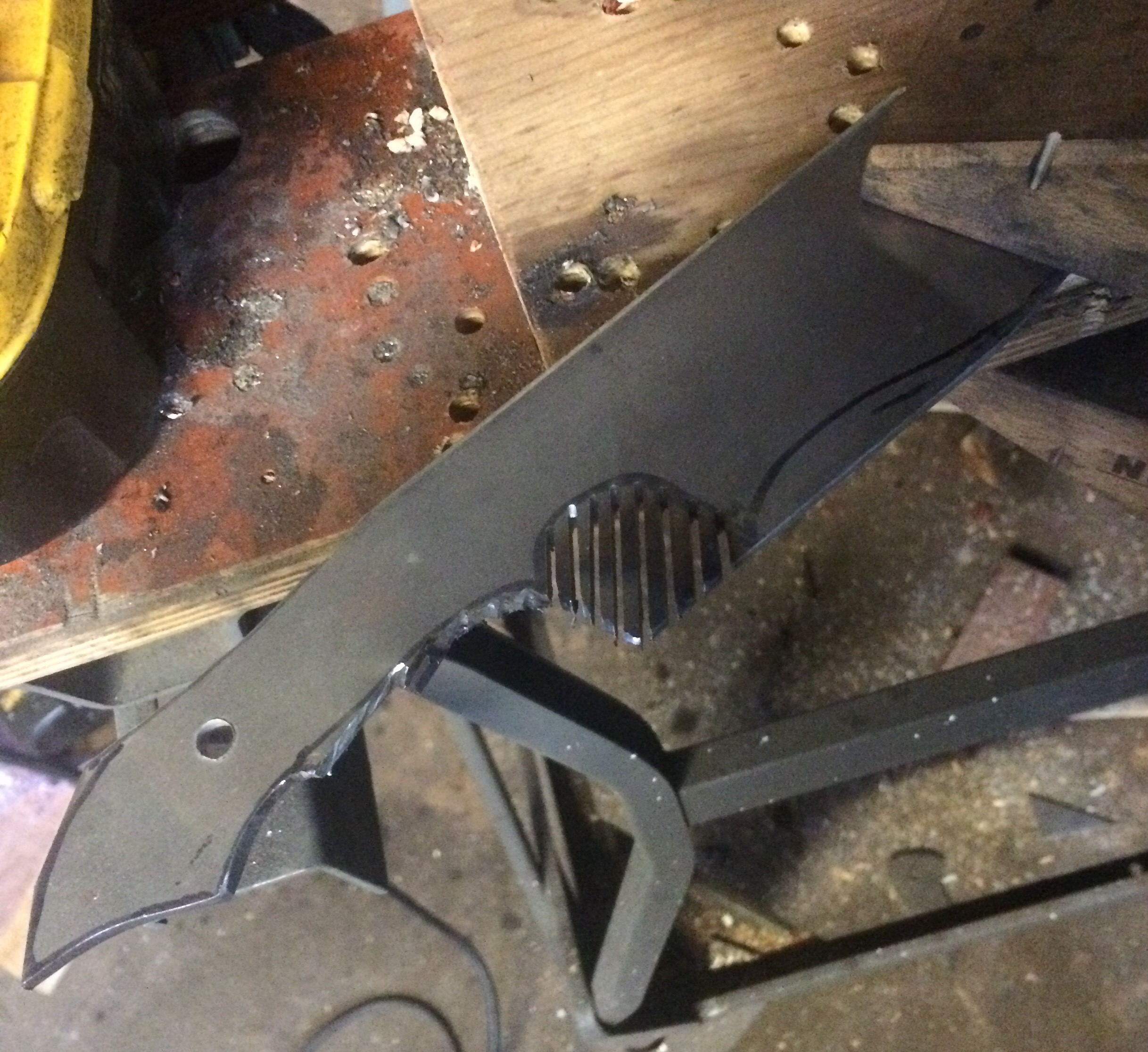
When I was seven he gave me a Swiss Army knife for my birthday.  I went back to my parents house that evening with bandaids on every finger.  When my mother called him and yelled at him for leaving a seven year-old alone with a knife he just laughed.  “Every boy should have a knife,” he would say.

He had the most elegant way with profanity- his inflection on a simple ‘goddamn’ could run the spectrum, from utter joy to total frustration.

Most of what I know of him before those times I learned from my grandmother after he passed.  He was born in Stephensville, Texas.  His father died when he was 5 years old and he immediately started helping to provide for the family.  Their family was dirt poor and then the Depression hit.  He set up a trap line that he would check everyday before school.  One time he caught a skunk and he got skunked so badly that the teachers sent him home.  Another time he slaughtered one of his chickens but didn’t clean the innards out before he put it in the oven and stunk up the entire house.
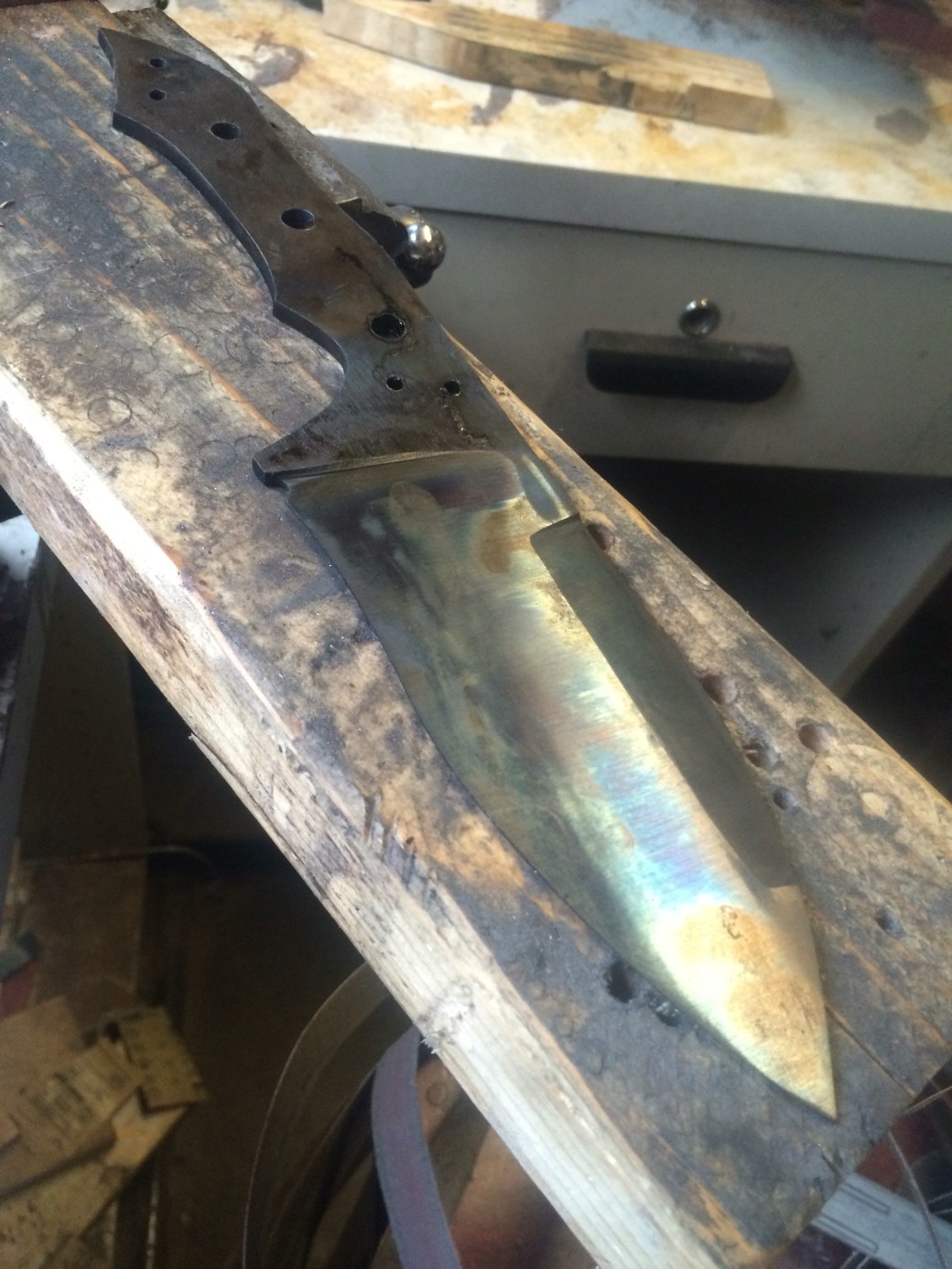
He joined the Navy at seventeen, lying about his age.  What would follow was a pretty incredible military career with so many brushes with death that he earned the name ‘Lucky Gilbert’.  While in the Navy during WWII he was a gunner on a warship, a position that carries a notoriously short lifespan.  Many of his fellow gunners didn’t make it but somehow he did.

After the war he joined the Air Force.  It was here that he met my grandmother, a young officer.  My grandmother said he was stubborn but persistent, and a terrible driver.  They got married and lived all over the world- Florence, Italy; Wiesbaden and Rammstein, Germany; and Casa Blanca, Morocco, where my mom was born.

He fought in the Korean conflict and was then stationed in Roswell, NM, where he witnessed the the UFO crash.  He told my grandmother he didn’t know what in the hell those things were but they weren’t of this Earth, and the whole thing gave him the heebie jeebies.

By the time the Cuban missile crisis came around he had a pretty high security clearance.  He was privy to information that many others weren’t.  At the height of tensions, he gave my grandmother a map marked with a safe location to go.  He said it was getting bad, and he would call her and tell her when to take the kids and go.  He handed her a pistol and told her to use it if anyone tried to stop her.

In the seventies he went to Vietnam where he should have been dead several times over.  The was an incident when a rogue Viet Cong rocket obliterated his barracks in the night.  The only reason he wasn’t there was because he had chosen to stay with his troops in the field.  Then there was another time when he was waiting on a bus to go to headquarters to do paperwork.  He waited and waited but the bus never came, so he walked.  When he got to the office four hours later, everyone looked at him as if they were seeing a dead man.  The bus had been hijacked at the stop before his, all the passengers executed and the bus blown up.  My grandmother said the man had a Guardian watching over him.

While he was in Vietnam, my grandmother went out for dinner with a friend of theirs, a general.  After dinner, and knowing that my grandfather was off at war, he tried to force himself on my grandmother while on their front porch.  Grandma had none of it.  She never told my grandfather, because he would have killed the man.  He always had a shotgun nearby.

The man was a warrior but even warriors have their faults and flaws.  My grandmother told me he was a difficult man to get close to and even more difficult to get to know.  He could be spiteful, and had a mean streak that didn’t come out too often (I never saw it), but it cost him several important promotions within the Air Force.  My grandmother told me that when she moved her dying mother into their house much later in life, my grandfather resented her for it, a resentment that she said burnt like a red hot rod of iron.

Still he loved deeply.  He liked to listen to Patsy Cline, The Beatles, and Tchaikovsky.  A quiet man, his actions generally spoke louder than words.  He brought my grandmother coffee every morning (Lady coffee he called it).  When chemotherapy for ovarian cancer left my grandmother with neuropathy in her hands and feet, he rubbed lotion on her feet most nights.  After he passed, my grandmother found an account he had never told her about and she never had access to, with $30,000 to be paid to her upon his death.  This is incredibly touching and rather impressive considering this was a man who was notoriously bad with money and grew up dirt poor during the Depression.

In his late sixties, doctors found an embolism in his heart.  The surgery was risky but the alternative was six months to live.  They performed open heart surgery and he survived but was never the same afterwards.  He had been dealing with early onset Parkinson’s symptoms and the surgery exacerbated all of that.  He couldn’t go up to his workshop, he couldn’t work with his hands, and my grandmother had to get a home health nurse.  He went downhill slowly over the next two years, never complaining about anything.  He died on Palm Sunday in a VA Hospice unit.

I remember sitting next to my grandmother at his funeral, which had full military honors.  As the officer presented her with the flag that had been draped over his casket, she told me that his Guardian was watching over me now.   I just nodded and smiled and didn’t pay much attention.  I figured it had something to do with being bereft with grief or the Xanax my mother had most likely slipped her.  Maybe a bit of both.

I have a few of his things: His Rolex, a bolo tie that he had fashioned and a belt buckle he made, set with a silver dollar:

I think on this Guardian that kept my grandfather safe and allowed him to live his life as he saw fit, even after all of the darkness of war and poverty that could have consumed him.  This blade is a nod to that Being and acts as a vessel to hold the darkness that inevitably penetrates all of our lives at some point or another.

1095 spring steel


Hardened:

Tempered:

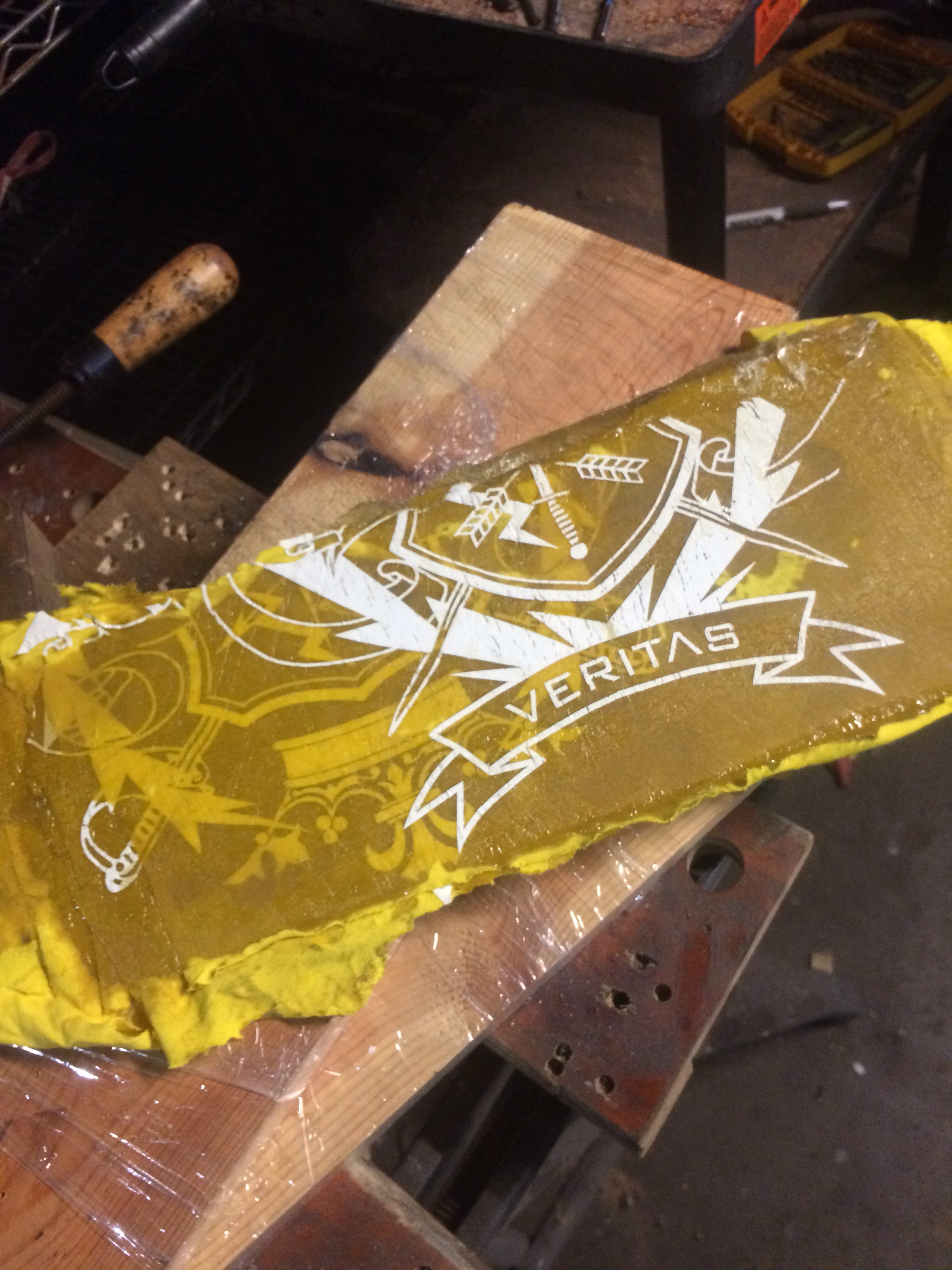
  This is the brightest article of clothing I own- and it’s too small…
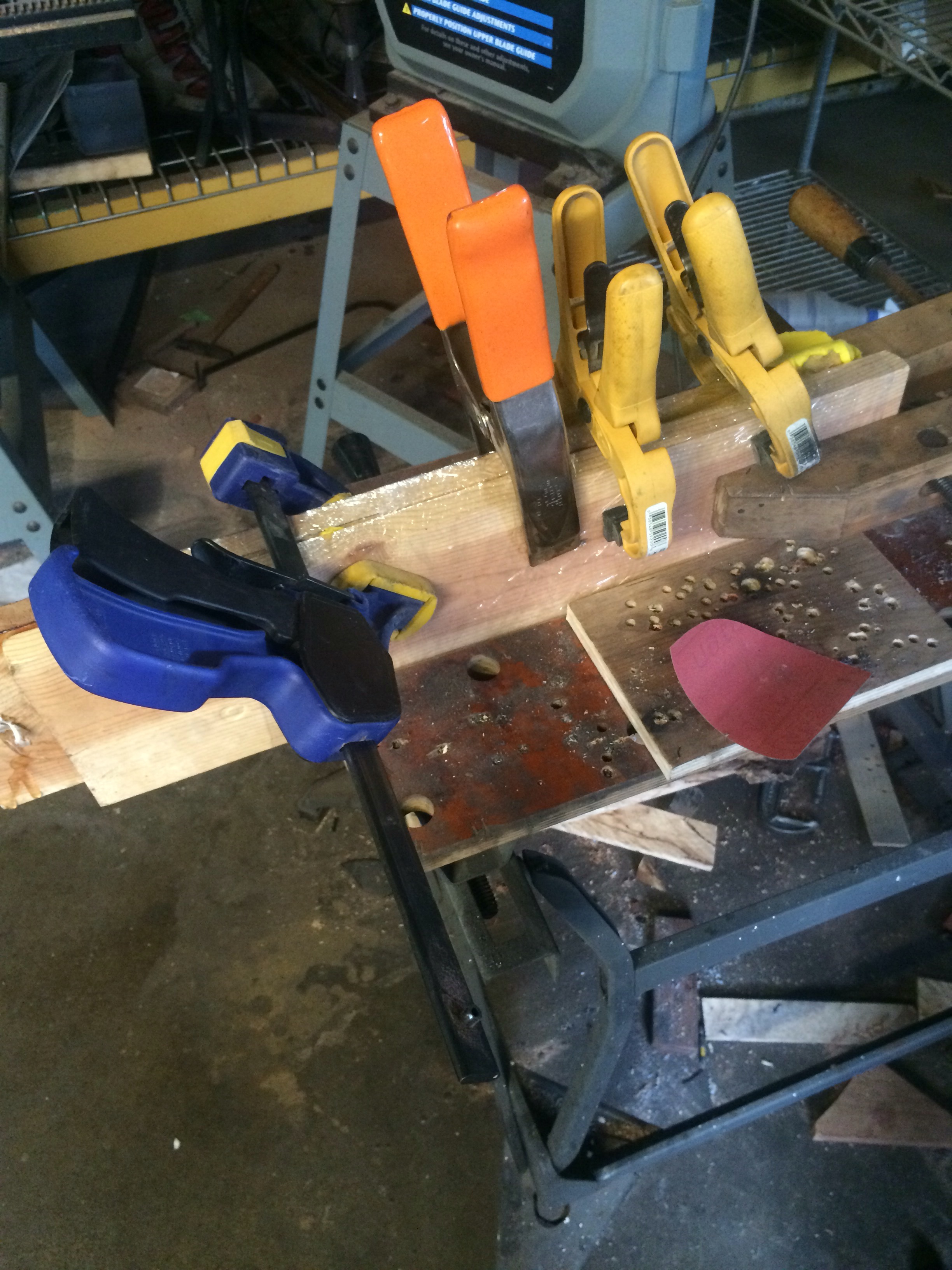
Soaked with fiberglass resin… 

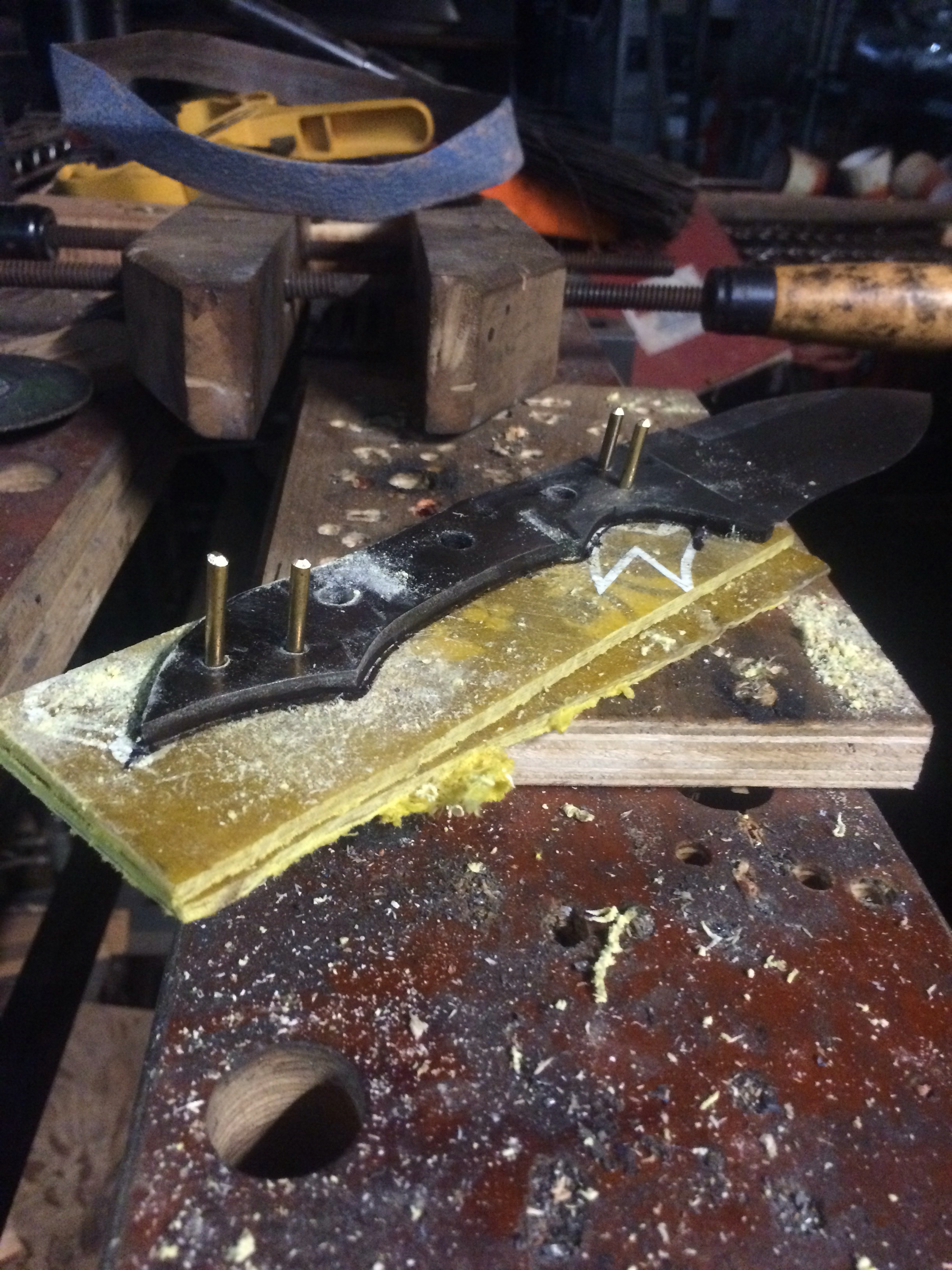
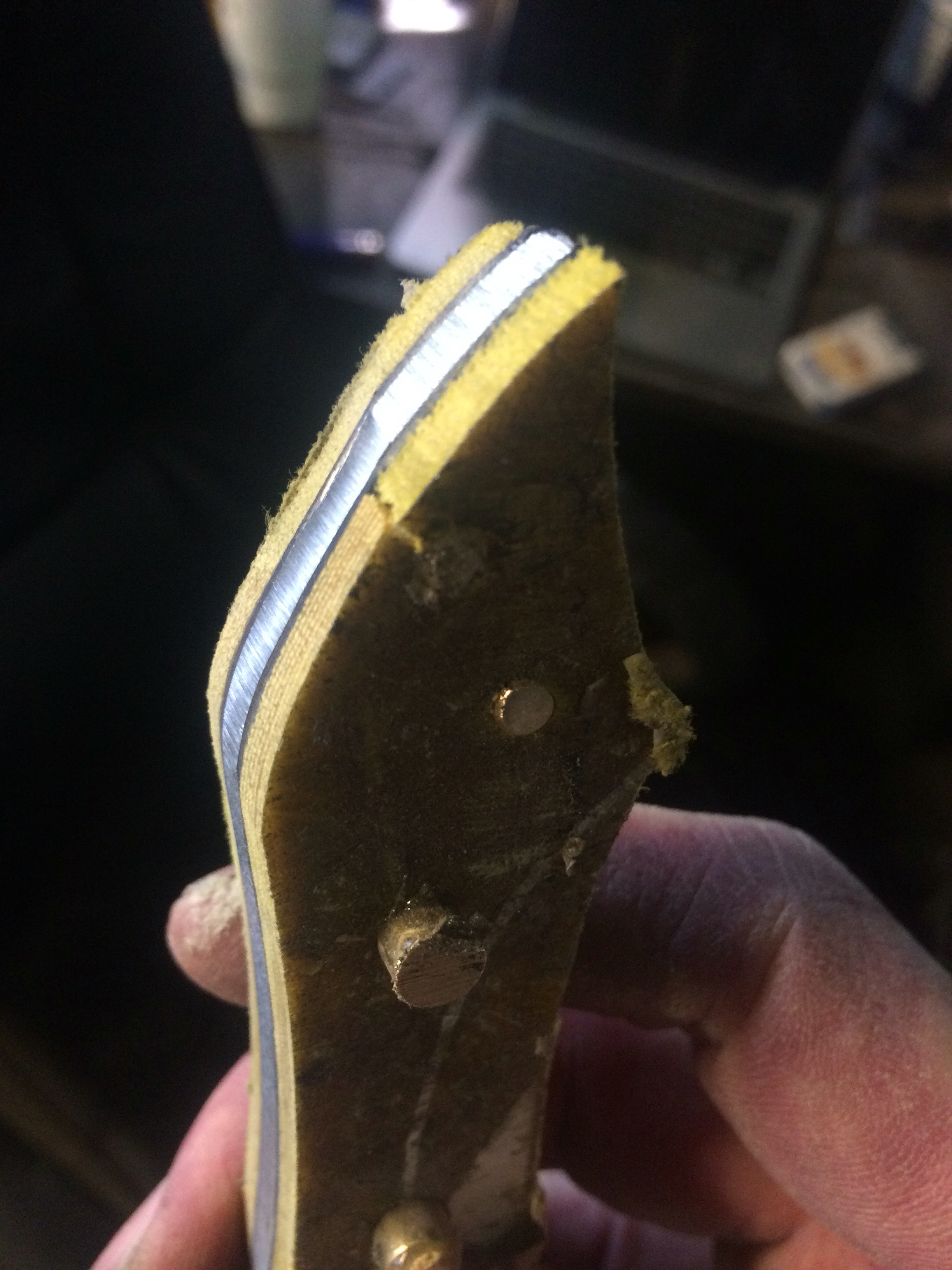
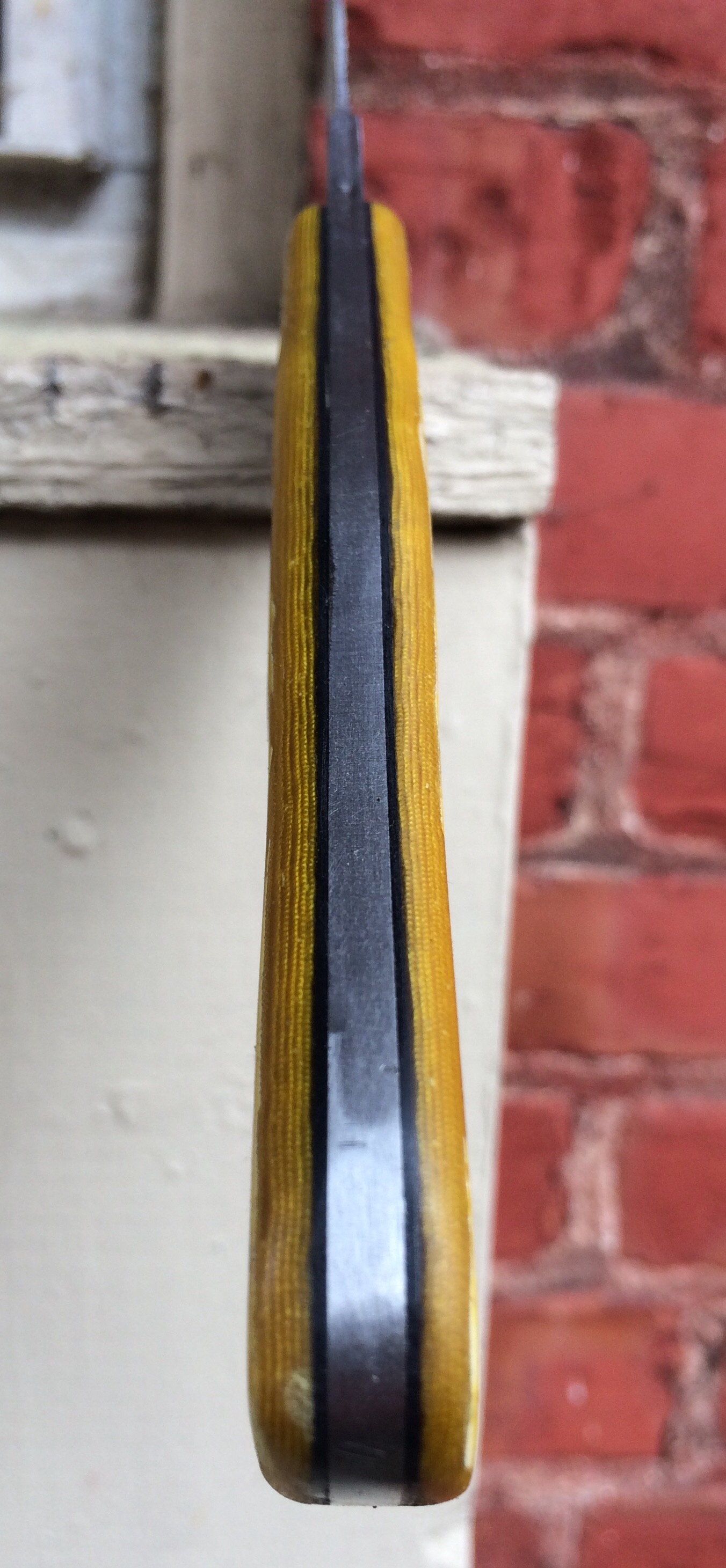
Kydex spacers.  The light contains the dark…   
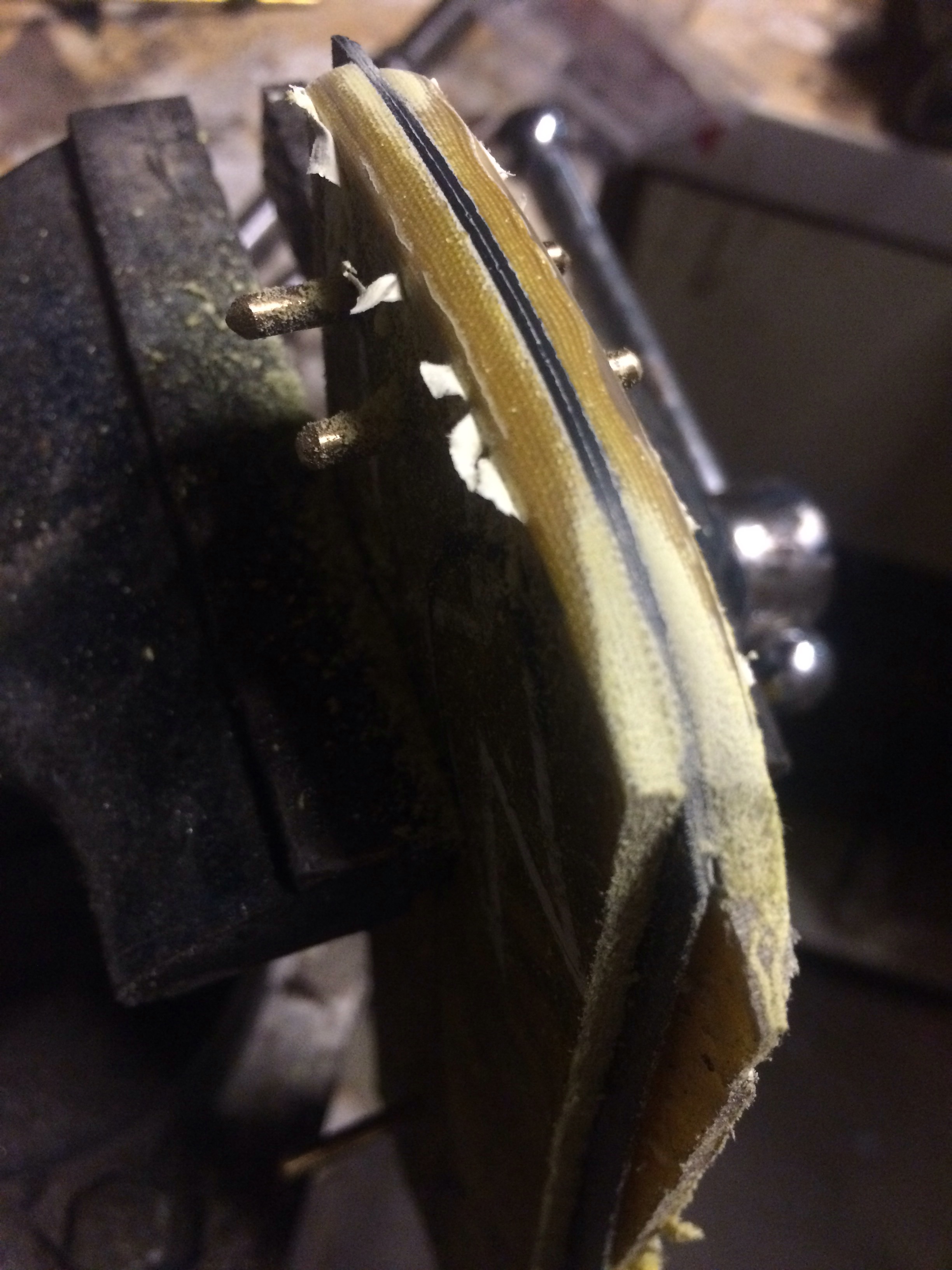
    

Well shit…let’s clean it up on the grinder…  
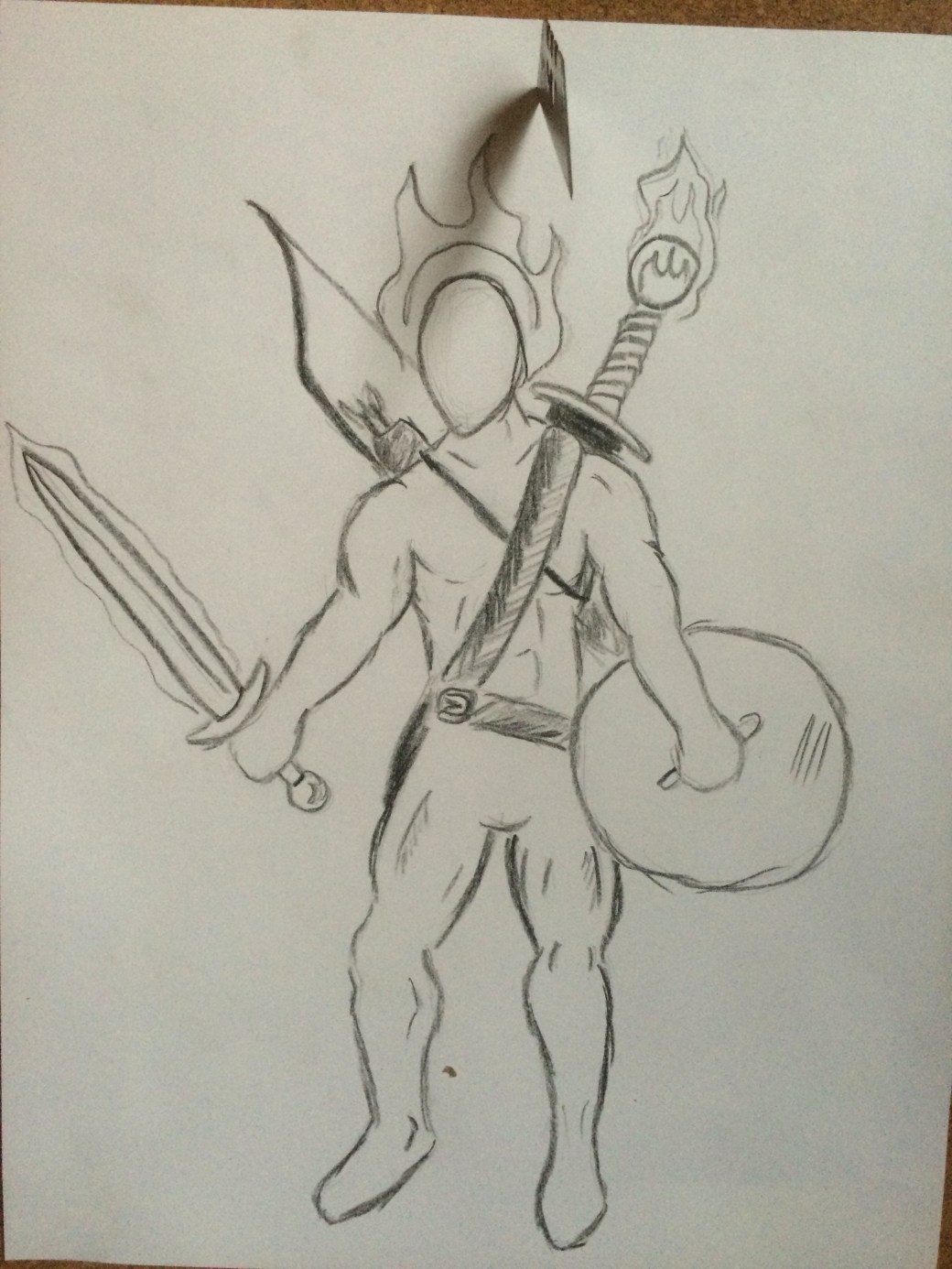
This blade is a nod to that Guardian that kept my grandfather safe and looked after.  A couple years ago, when I felt myself surrounded by darkness, I found myself thinking about this Guardian, whom I was told watches over me.  I drew a sketch of him.  It’s still hanging on my refrigerator.   Sometimes, when you find yourself in dark places, you can imagine that darkness being held by light.  Because there can’t be darkness without light.

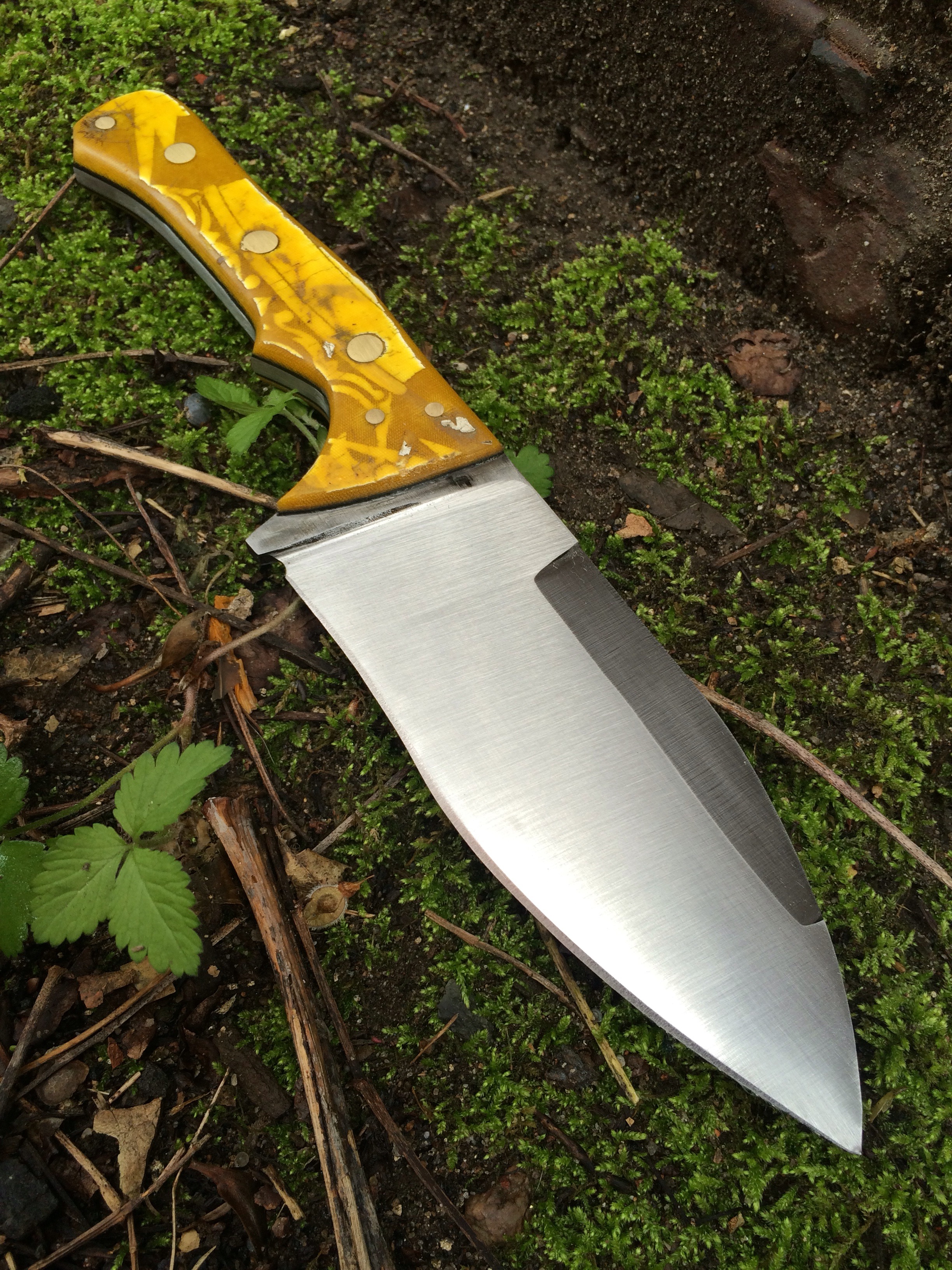
The Guardian: 1095 spring steel, homebrewed cotton Micarta scales, Kydex spacers and brass hardware.
  
At the time of this writing it has been 20 years since he died.  Time is indeed a sly magician because it hardly feels like that.  I miss the man deeply and think about him just about every day, and always with fondness.  By the time I came to know him he was in the twilight of his years and had dealt with his darkness, and wanted to give his time and love to a curious little boy.  For this I’m grateful.