Knifemaking: soldiering on and the Rio Bravo

“Tomorrow is the most important thing in life. Comes into us at midnight very clean. It’s perfect when it arrives and it puts itself in our hands. It hopes we’ve learned something from yesterday.”

― John Wayne

soldier on: phrasal verb with soldier. to continue doing something although it is difficult

  • Cambridge Advanced Learner’s Dictionary and Thesaurus

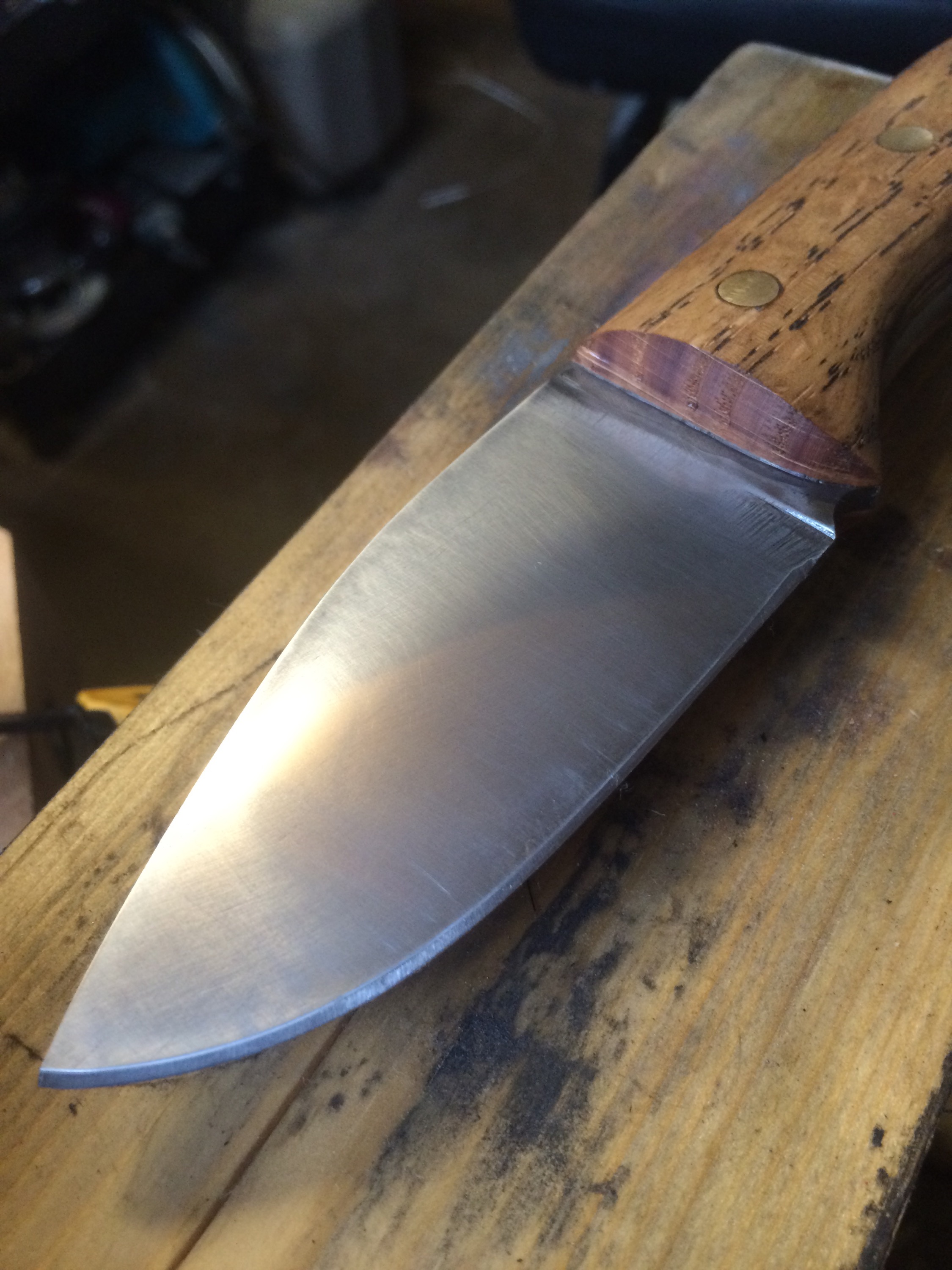
This blade was a commission for the father of a gentleman who is a professional videographer.   I came to know this gentleman after building a knife for him.  He called and asked if I could make a blade for a very special person- his father.

When I first met with the client, we talked for about an hour.  He showed me a short film he had made about his father, his father’s deep love of football, and how it brought the two of them closer as adults.  The film was quite stunning.  The NFL thought so too- it won their family tickets to the Super Bowl.

In the film, he told his father’s story of how he lost a chance to play for the Baltimore Colts, losing out to Johnny Unitas.  What followed was a strained relationship where the client really didn’t get a chance to know his father.  The film documented how football brought bonding and healing.  He asked if I could make a blade with an element of the game that his father loves.

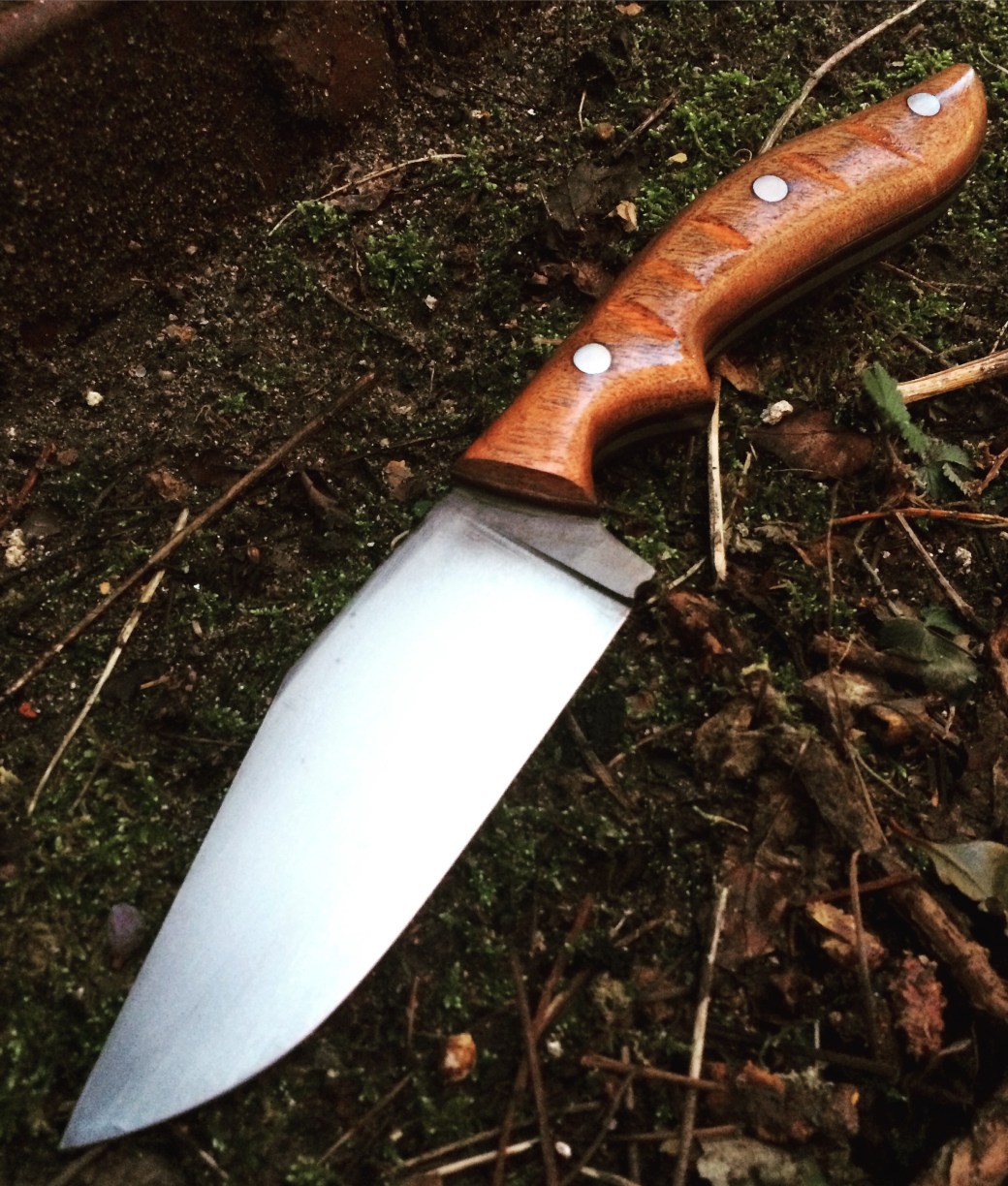
I felt quite a bit of anxiety in making this blade.  I had to design it and give it a life for somebody’s loved one whom I had never met before.  It took a very long time because I really wanted to make the right statement.  The recipient of this blade is a man’s man, stoic, and has taken his licks.  He has a bit of cowboy in him- John Wayne was mentioned during our talk.  I named it the Rio Bravo after the John Wayne film.  Wayne was 51 when he starred in the film but still kicks a lot of ass.

I write this from a man’s perspective.  As a man I have a hard time dealing with difficult emotions and I think most men would agree that it is a bitch coming to terms with them.  They don’t go away, they just sit and fester if not dealt with.  In dealing with them we often fall apart, have meltdowns, withdraw, avoid, and sometimes leave a path of destruction.  You want to succeed, to have a purpose, to leave your mark on the world, and make things right.  When that doesn’t happen you can find yourself questioning your self-worth.  I don’t have children but when there are little ones looking up to you and watching you I imagine it adds that much more pressure.

The lesson of the Rio Bravo is that no matter what you soldier on.  The only way out is through.  You show up, you do the work, you laugh, you cry, and you take the bitter with the sweet.   I crafted this blade for a man who has done all of that and serves as an inspiration of what soldiering on earns you.

The beautiful part of this commission has been seeing how inspiring the healing can be.  A son did this for a father where there was pain on both ends.  The client showed me, a stranger, this incredibly vulnerable and moving film.  It’s hard to imagine the courage it took to make that film and to put an intimate story out into the world.

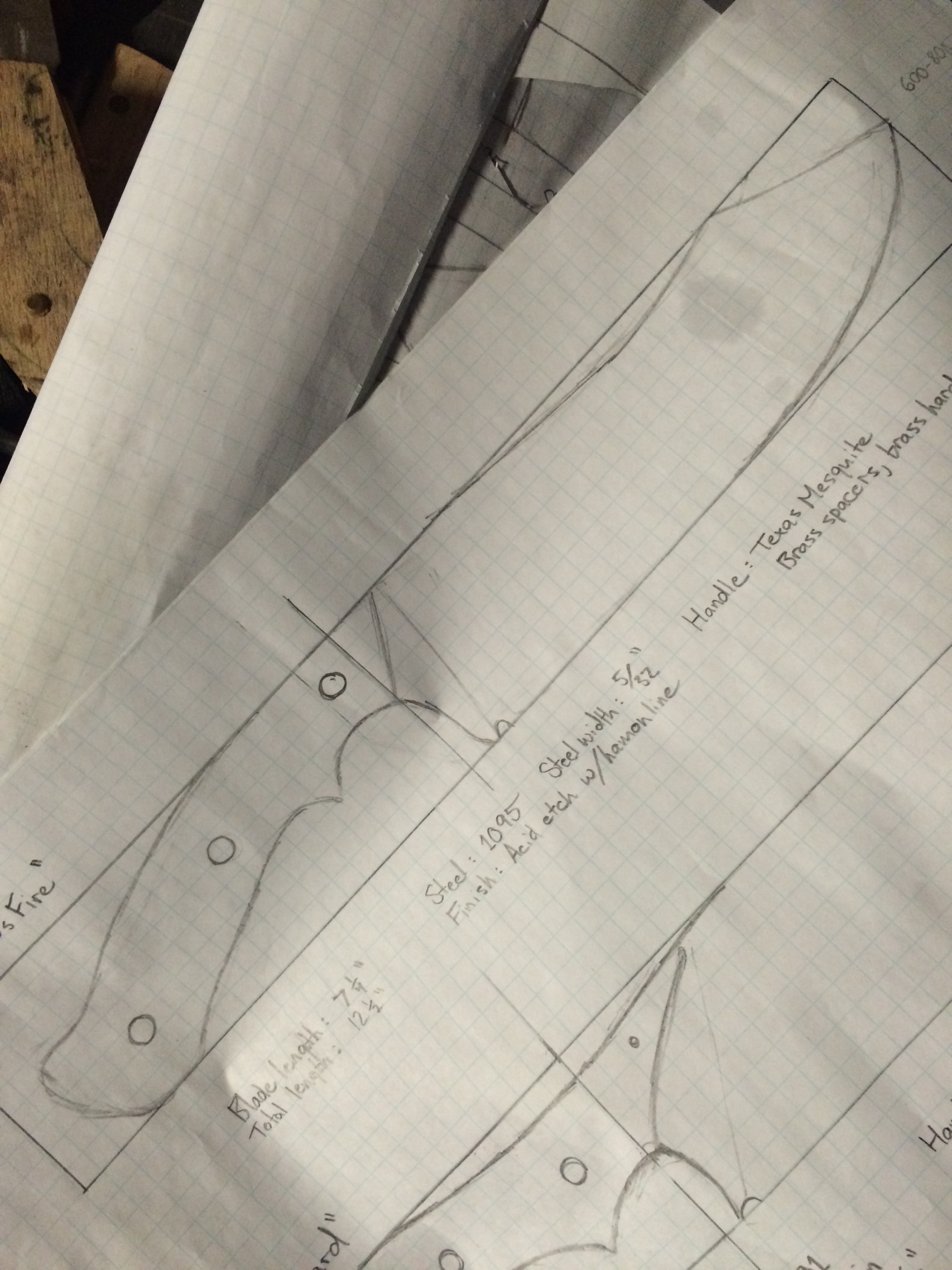
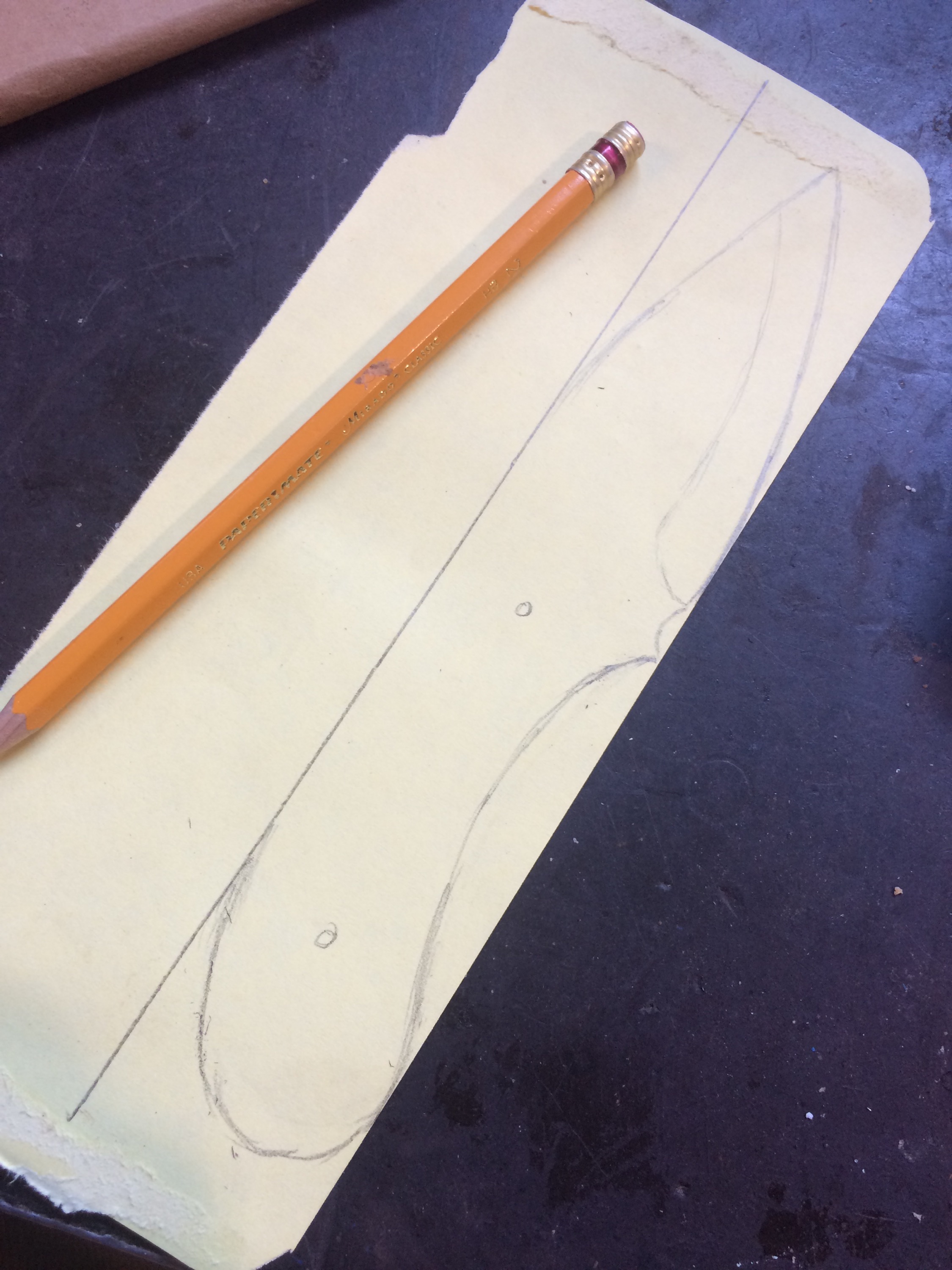
I loved working with this client.  There were multiple conversations about designs and materials.  He is an artist and we can talk about concrete things in abstract and obtuse ways.  At the end of it he always told me to do what I thought and that he trusted me.   This is where I started:


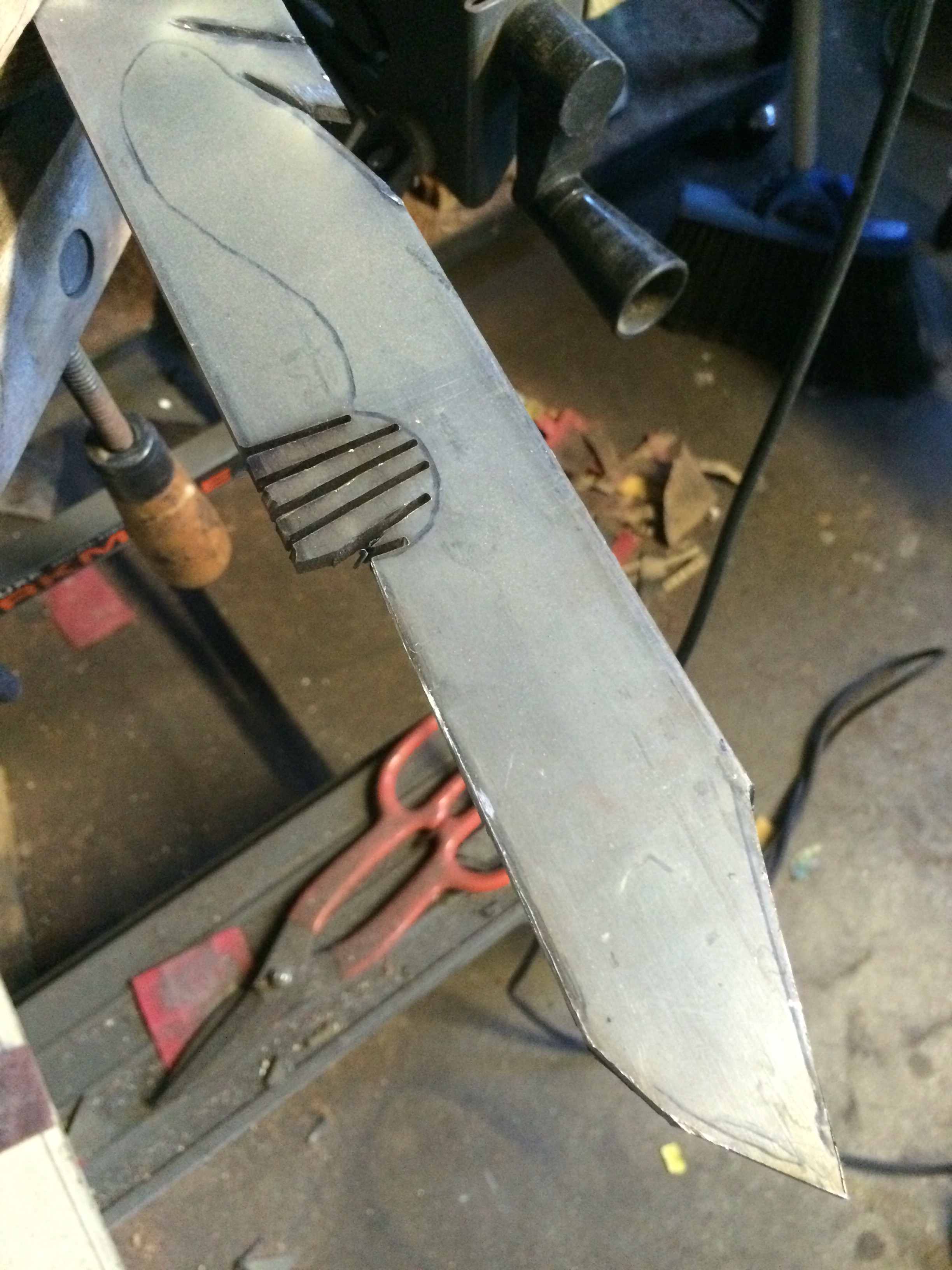
Some jimping for grip, and a nod to the laces of a football. 
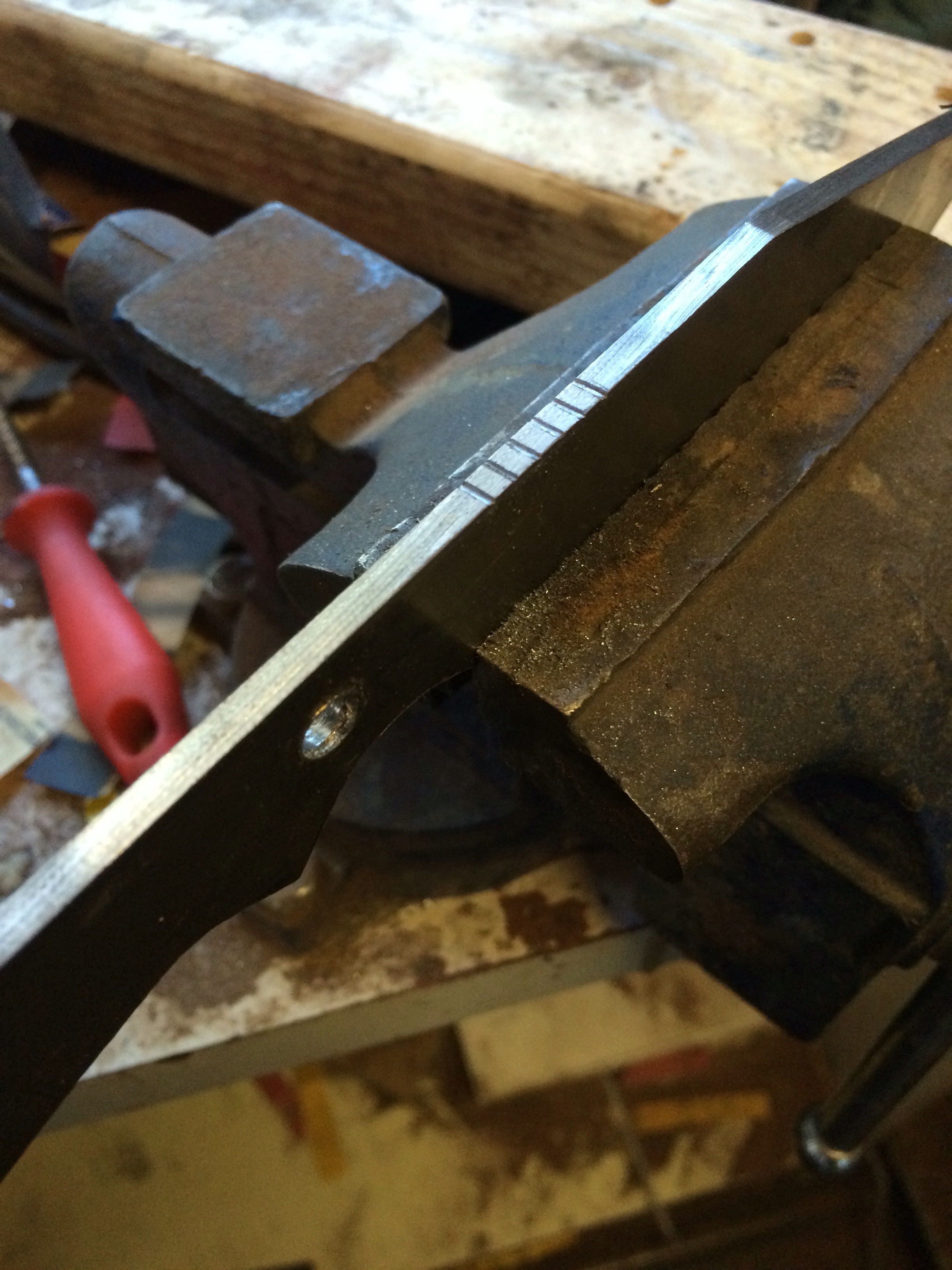
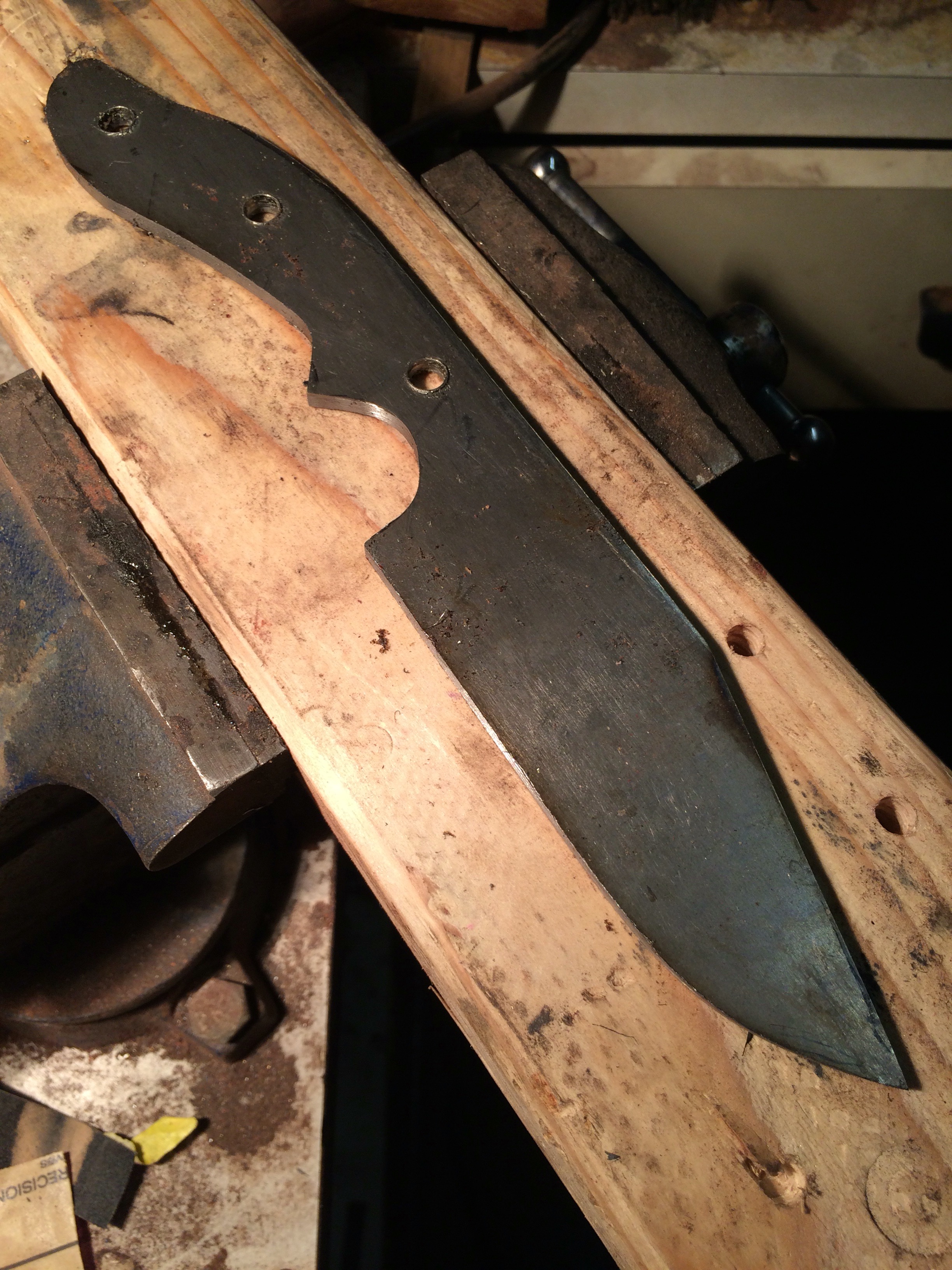
Rough Grind

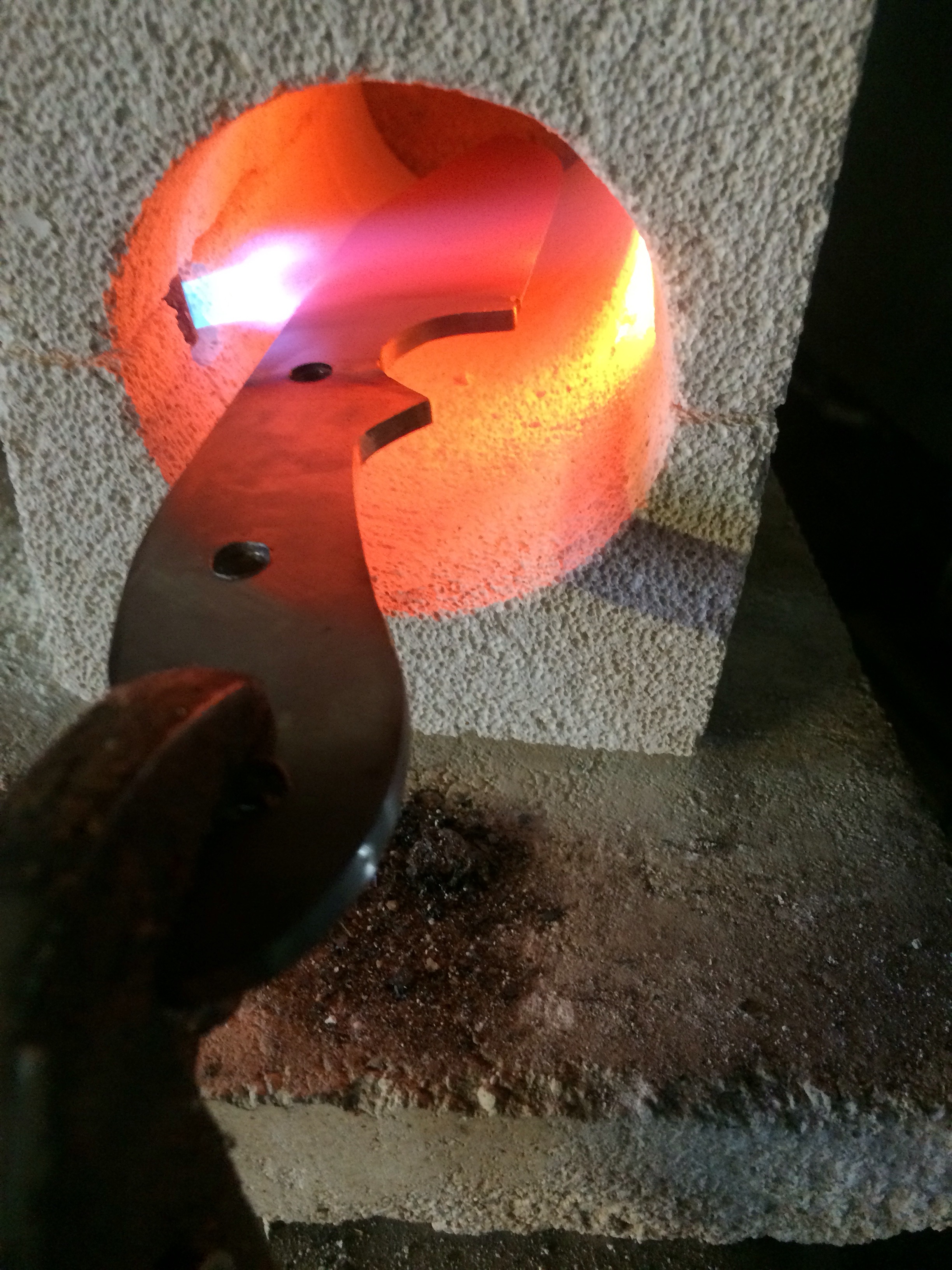
Hardened…

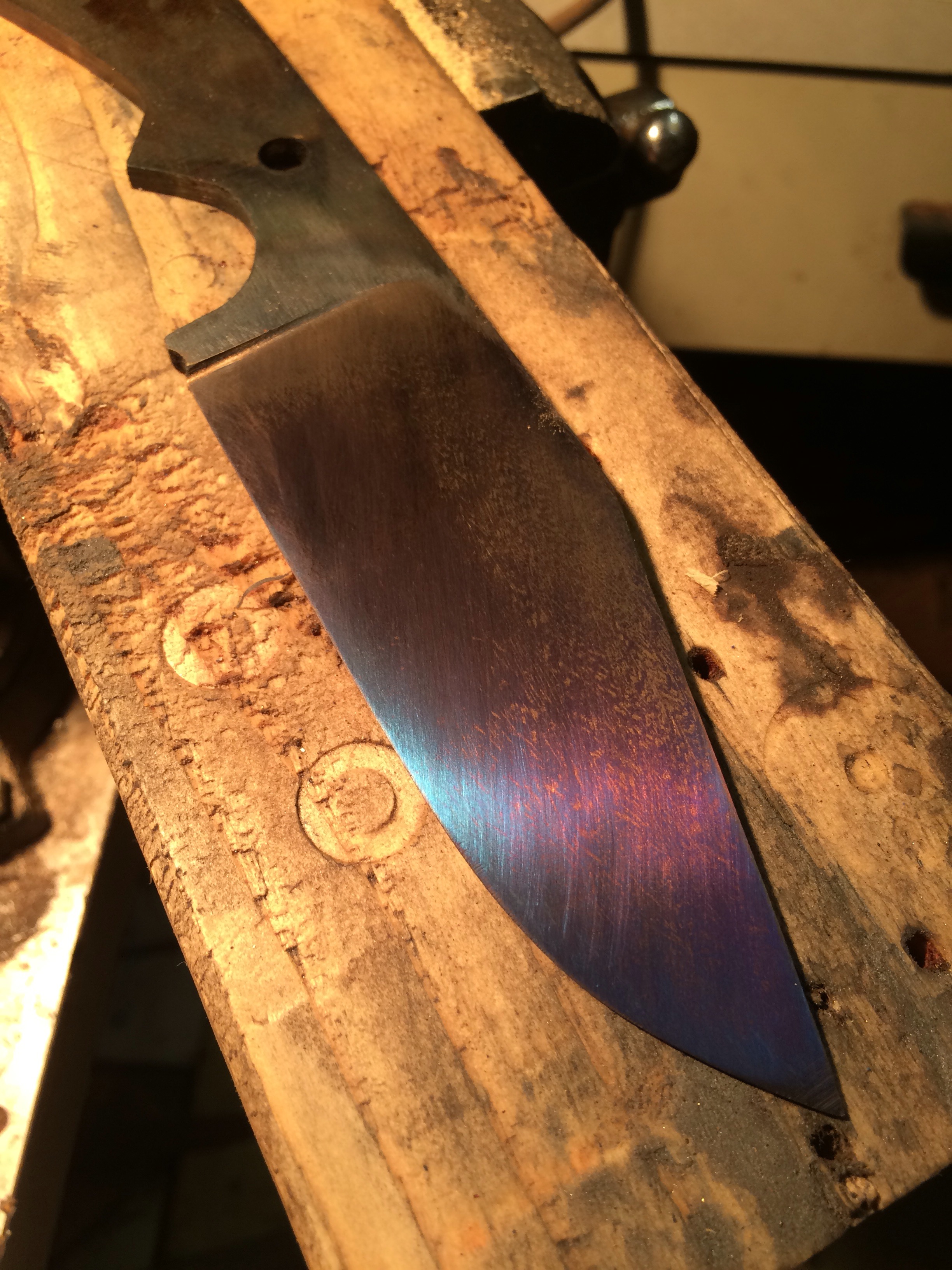
….and tempered
I wanted something with the feel of a football…
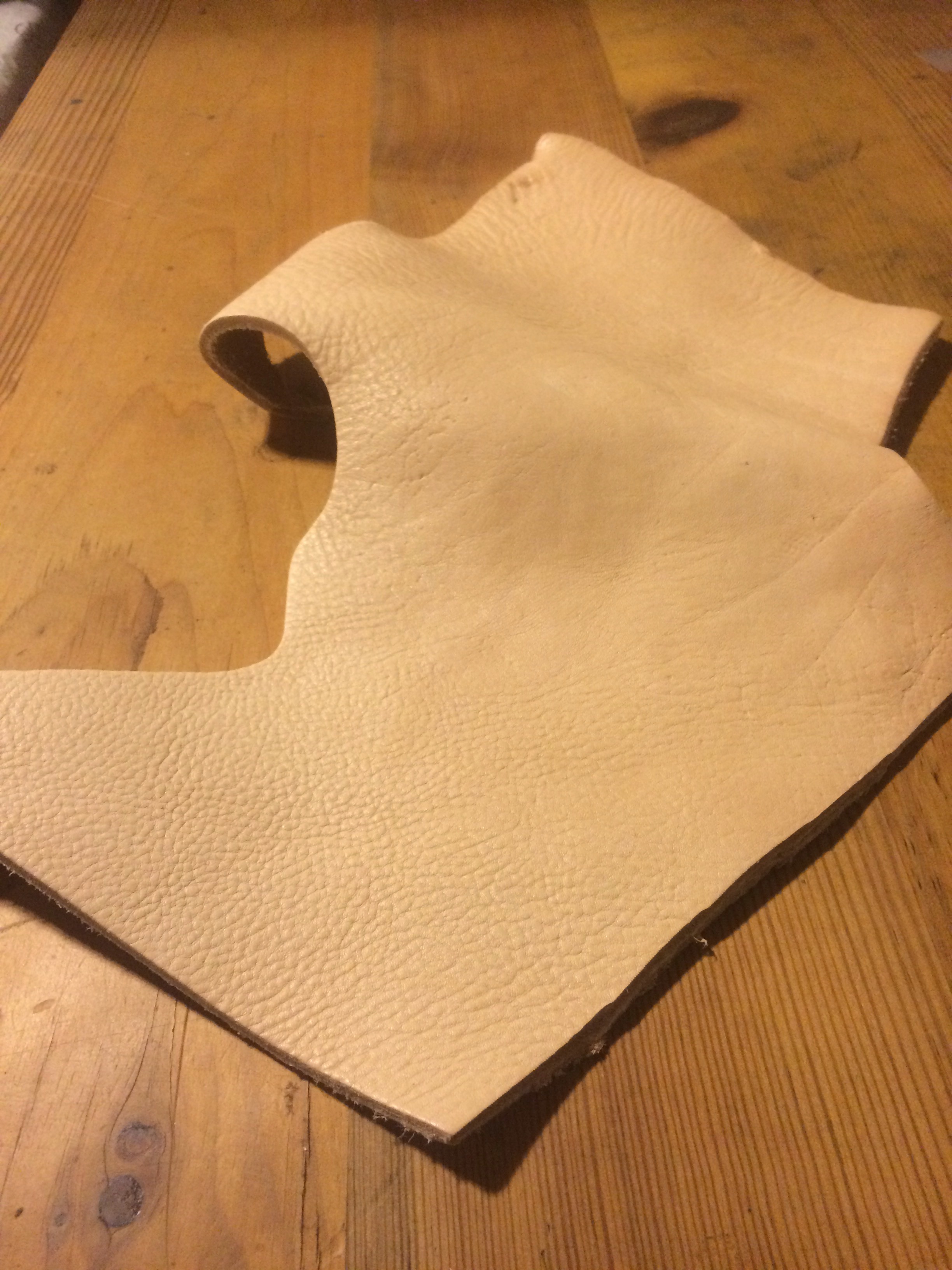
I cut it into strips and glued it together….
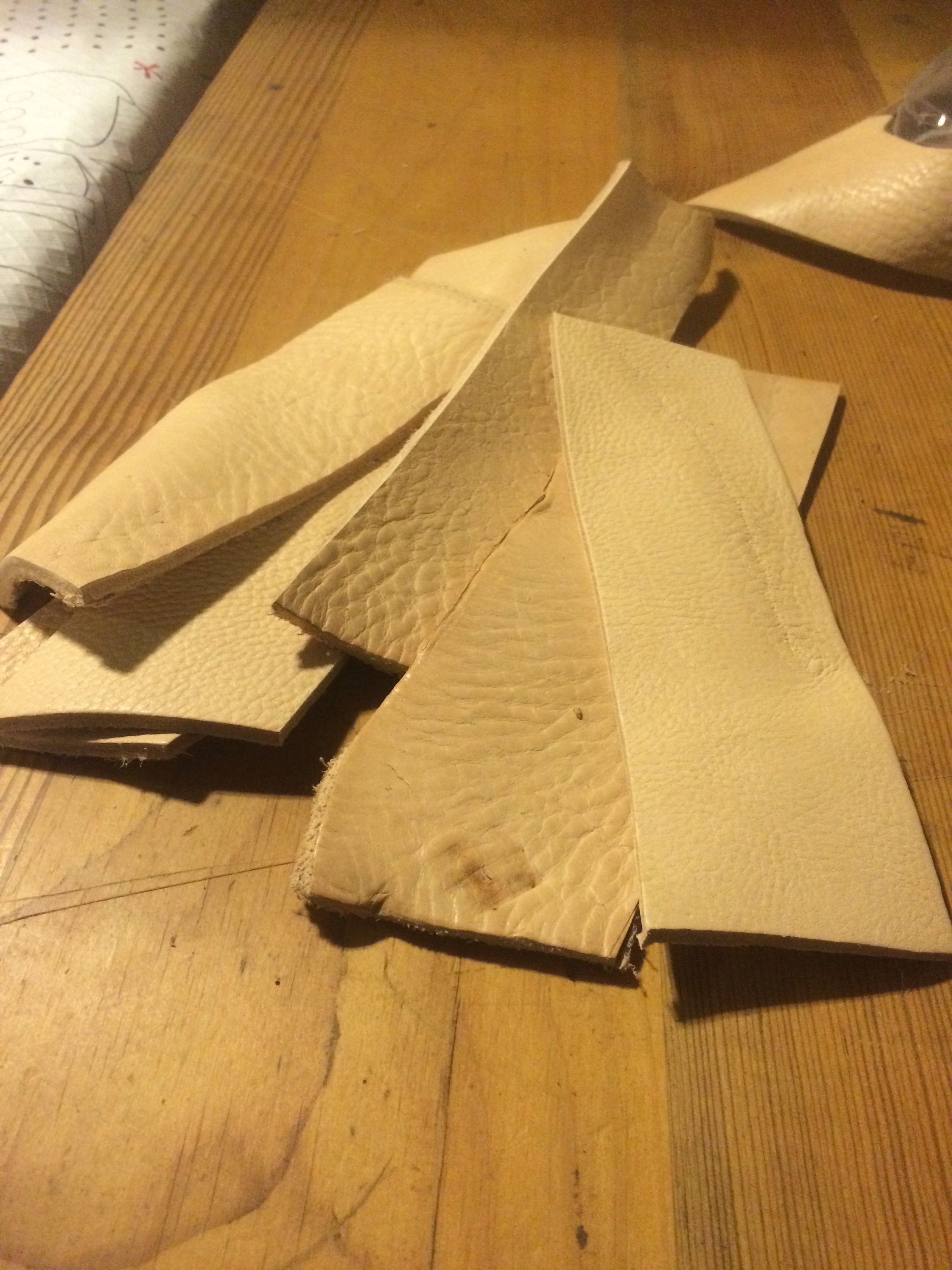
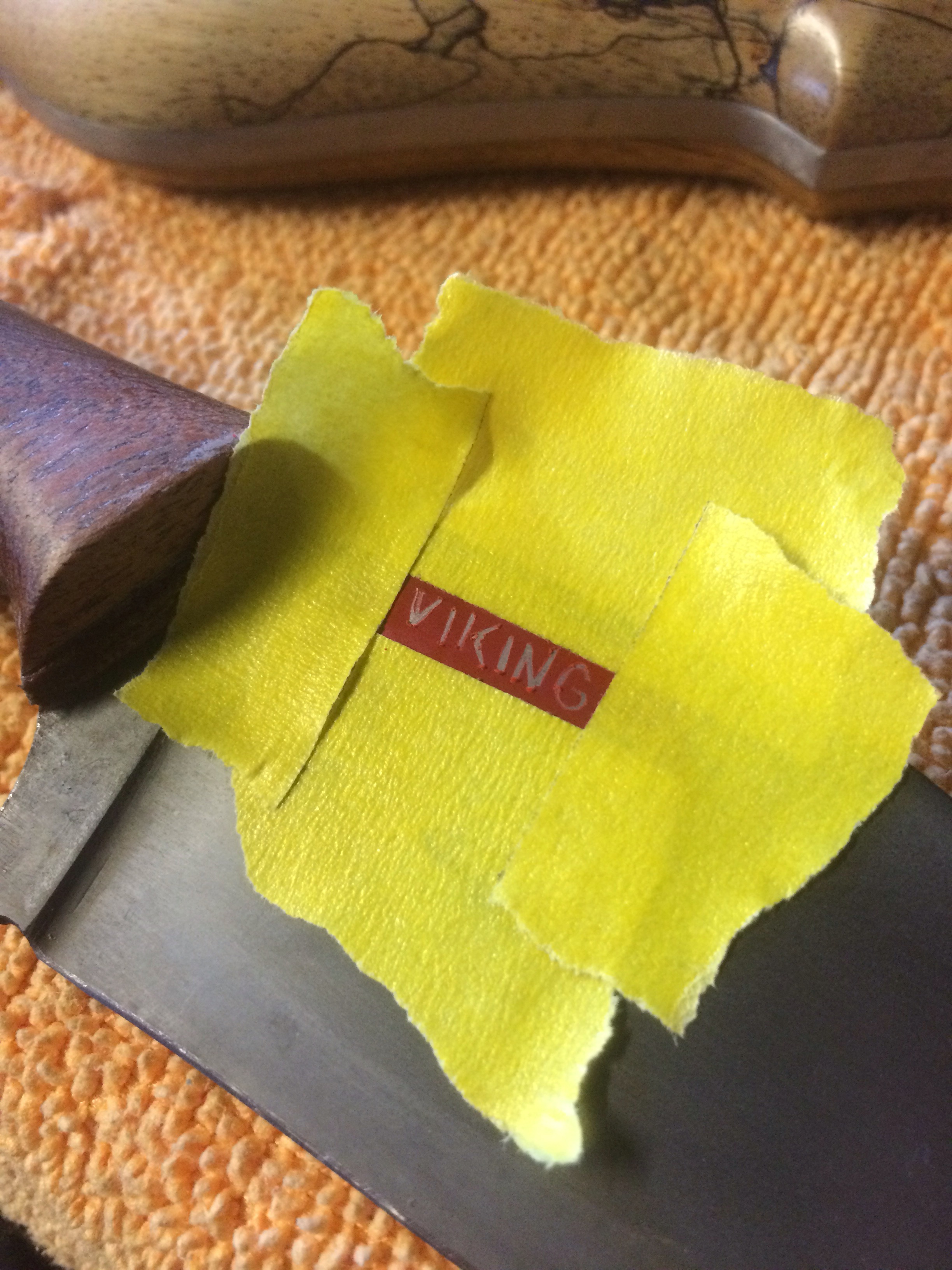
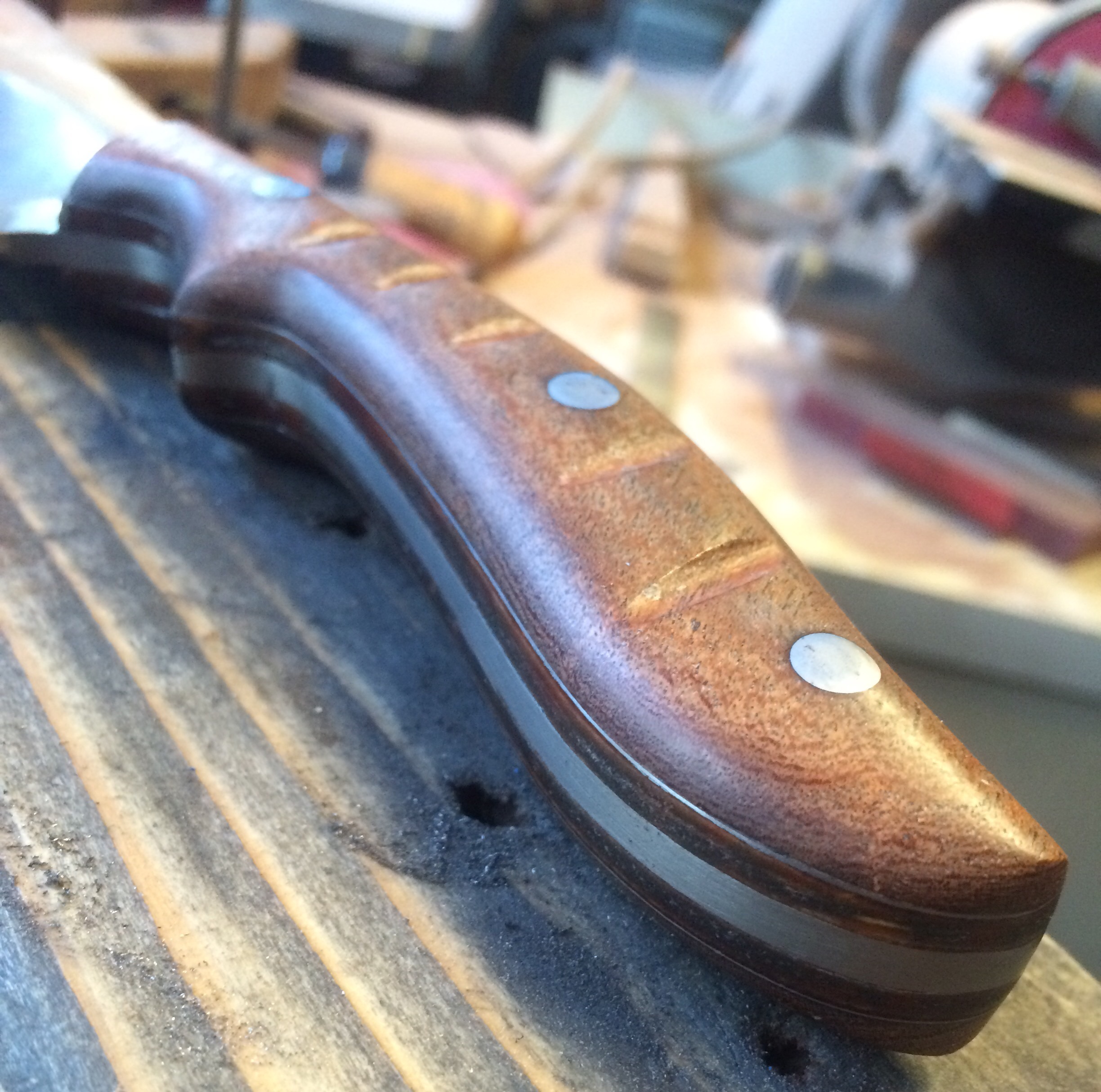
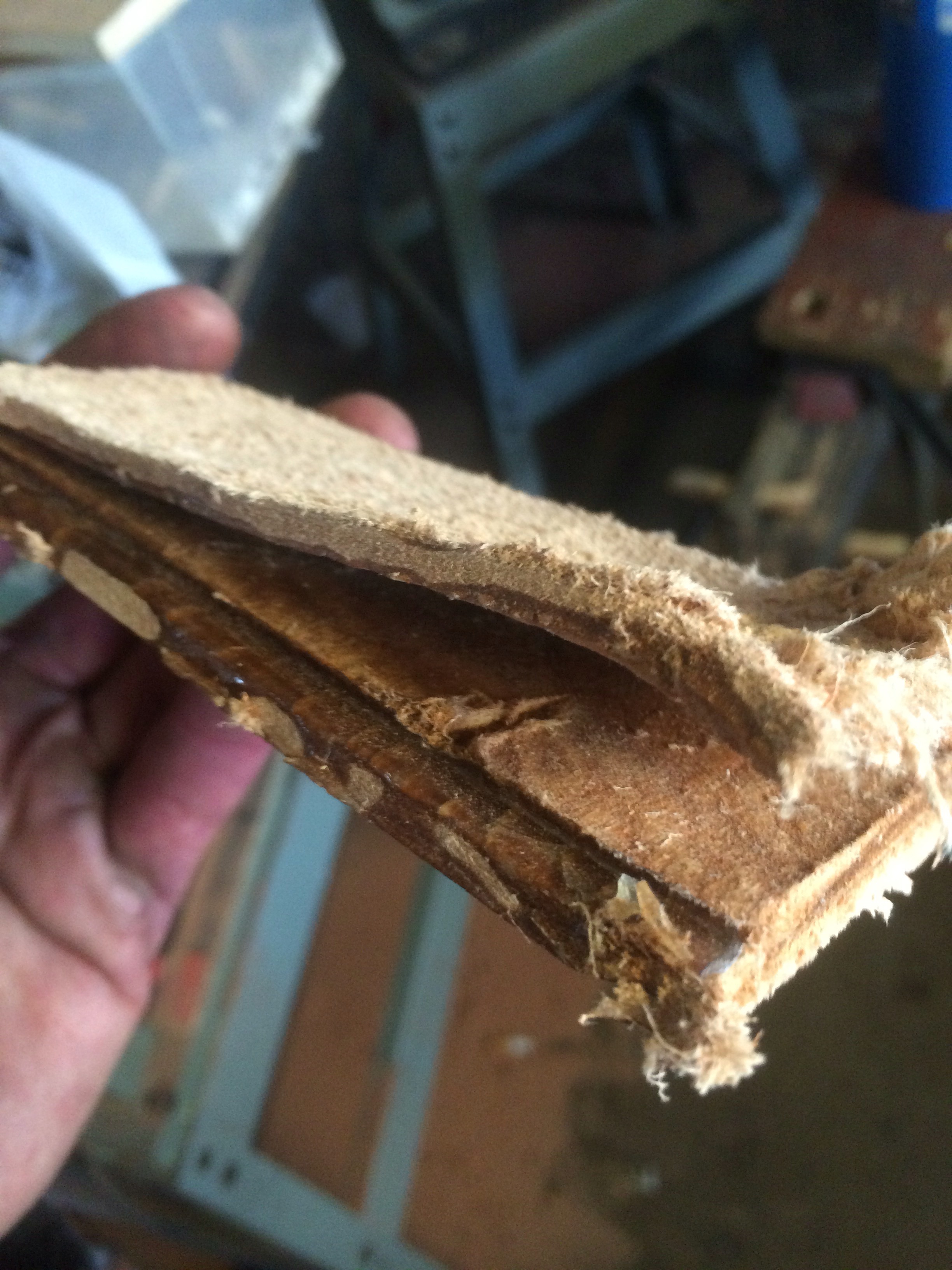
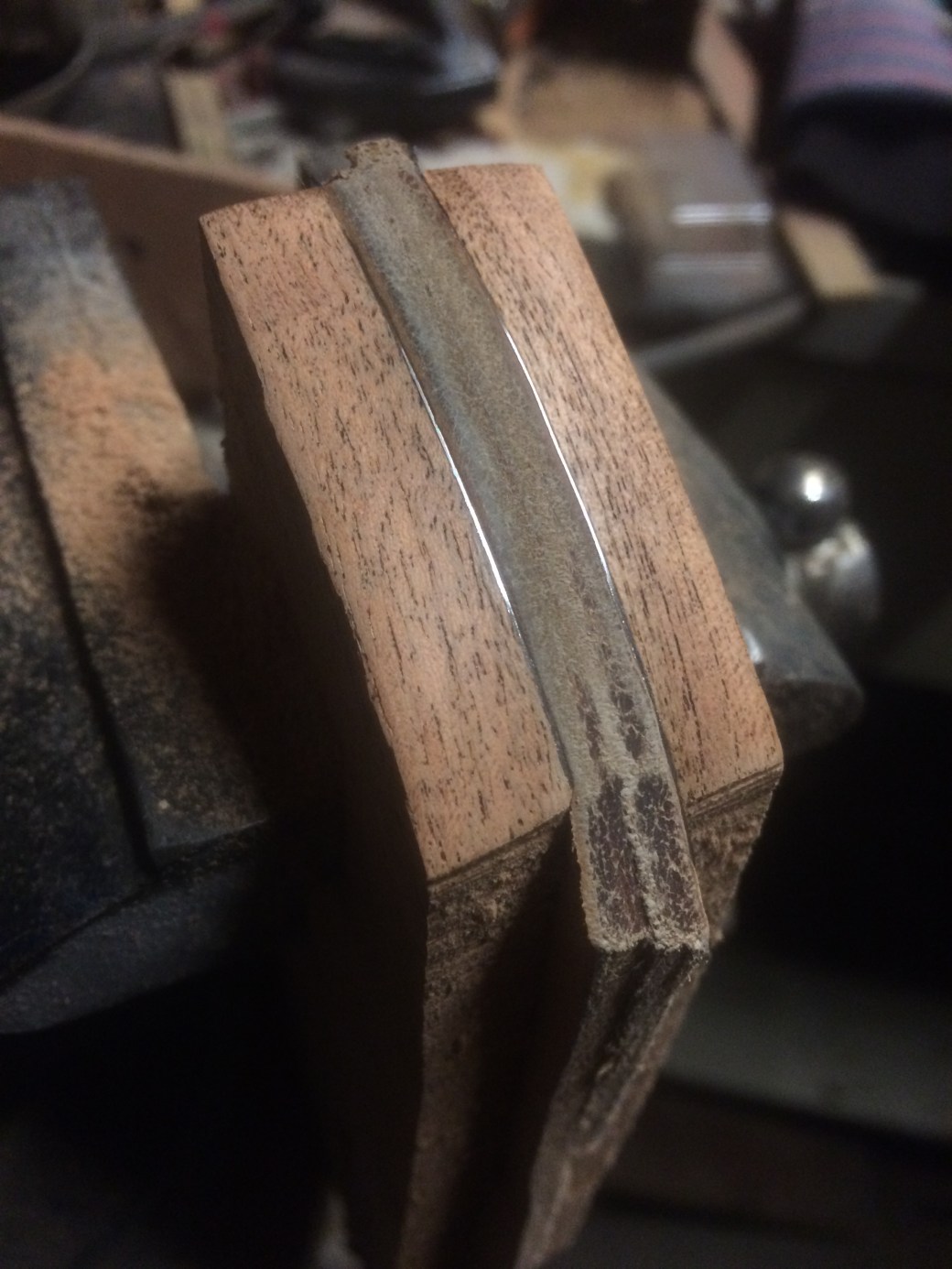
…and it failed miserably.  Still, I really wanted to work the leather in.  That’s the spirit of football even though it isn’t pigskin.  I was also really into the idea of having a part of something that once walked the earth be a part of this blade.  I wanted this to be a very masculine blade, with a southwestern theme.  For me it doesn’t get much more manly than the combination of Texas Mesquite, leather, and steel.  I put in some thin tin spacers for a bit of sparkle.
IMG_3086

I have a cousin in Texas who is a woodturner with a sawmill.  He handpicks cutoffs with the most gorgeous figures and sends them to me.  When I’m using his wood for a handle it’s like Christmas morning- think of opening your favorite Christmas present, only you get to do it for two and a half hours.  Thank you Bill Cockrell.  You are a very good man.

IMG_3091


The Rio Bravo: etched 1095 spring steel, Texas Mesquite handle, leather and tin spacers, with steel hardware.  
    I carved in some laces:
   

Soldier on, cowboy.  You never know what tomorrow may bring.

Knifemaking: braving the storm and St. Elmo’s Fire

“I have seen many storms in my life. Most storms have caught me by surprise, so I had to learn very quickly to look further and understand that I am not capable of controlling the weather, to exercise the art of patience and to respect the fury of nature.”

Paulo Coelho

St. Erasmus, or St. Elmo, is known as the patron saint of sailors.   The namesake of this blade refers to a meteorological phenomenon that results from an electrically charged atmosphere that occurs during thunderstorms.  It manifests itself as a series of blue sparks, with the mast of the ship acting as a conductor.  During storms at sea, sailors would often observe St. Elmo’s Fire.  It has always been symbolized as a sign of the Divine, and sailors knew that they were looked after when it appeared.

stelmo

I made this blade with idea of it being a seaworthy vessel- something that has braved many storms and still has its spirit intact.  Sometimes we brave so many storms that we forget how to enjoy the calm.  Instead of having a life of calm punctuated by storms, it becomes a life of storms punctuated by calm.

The important thing to realize is that beneath the churning waves and far beneath the thunder, lightning and winds is an entire body of calm.  And that there was calm before the storm and there will be calm after.

This isn’t to say that storms aren’t dangerous but they do come with their lessons.  I’ve spent a good amount of life in a state of anxiety anticipating storms.  Some of us have been conditioned to live in constant turbulence, lest we not be prepared for the foul weather.  Over time, we stop differentiating between the calm and the turbulent seas and create a maelstrom where there is none because we haven’t ever known what that calm feels like.  Shifting this type of thinking takes time and a good deal of work.  To be perpetually worried of the storms robs you from fully enjoying the moment and the beautiful things that occupy the vast majority of time between.  Ultimately you can’t control the Nature but you can control yourself.

This the lesson of St. Elmo’s Fire.  To allow the storms to pass and to have faith that you will find safe passage through the rough waters.  To feel your own calm in the midst of chaos.  Oftentimes you can find out what you are really made of within that chaos.

This blade was a commission for a very old friend who did a lovely photoshoot for me.  We’ve often talked about storms and how to get through them.

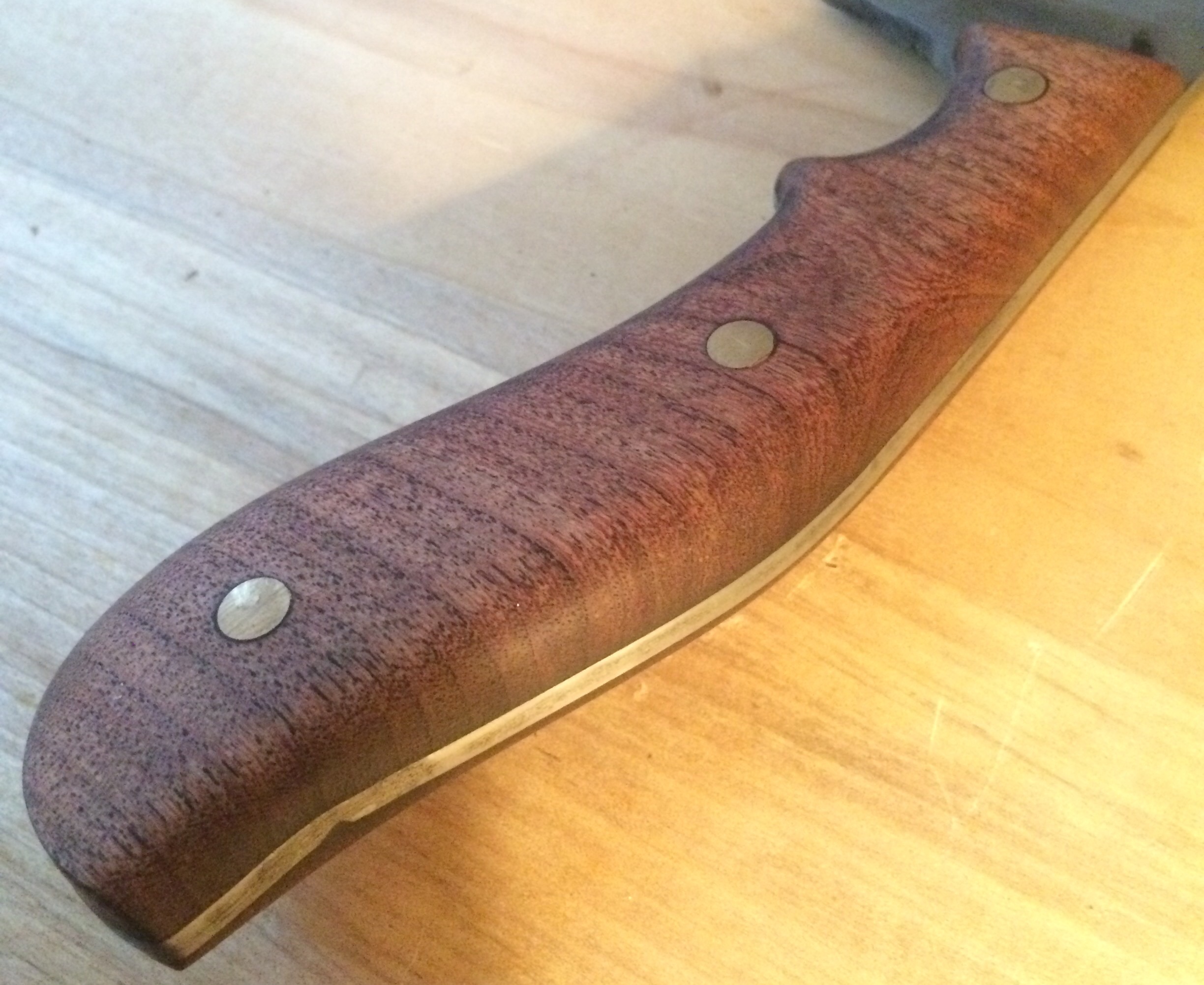
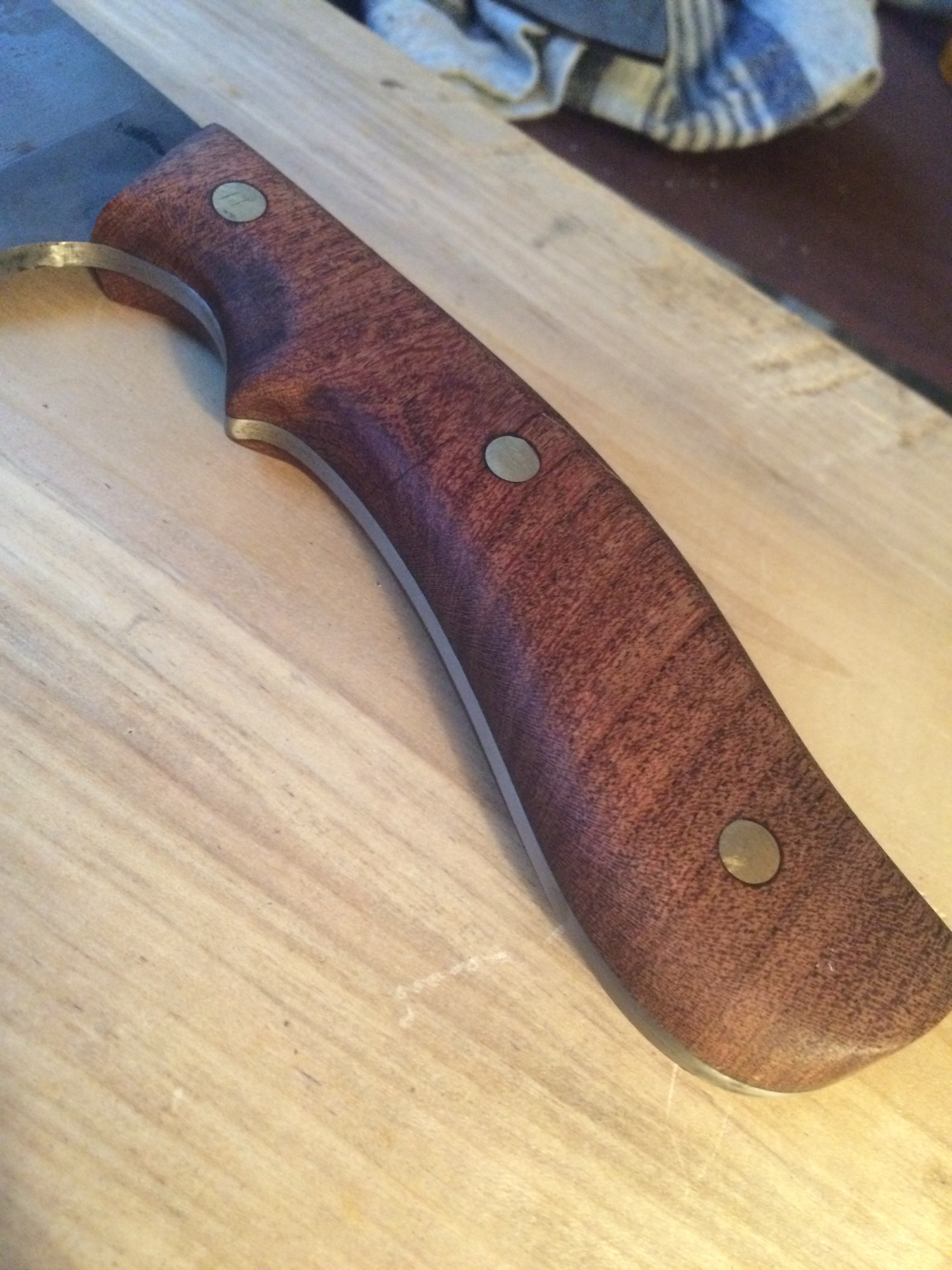
I did a series of kitchen knife designs and this one was sort of a wild card.  Functionally she is a German style chef’s knife.  The clip in the blade gives her some forward momentum.  The drop in the handle rests comfortably in the heel of the hand, and also follows the natural line of the forearm through the wrist.  The finger choil provides a comfortable resting place for the lower three fingers if a traditional chef’s grip is preferred.

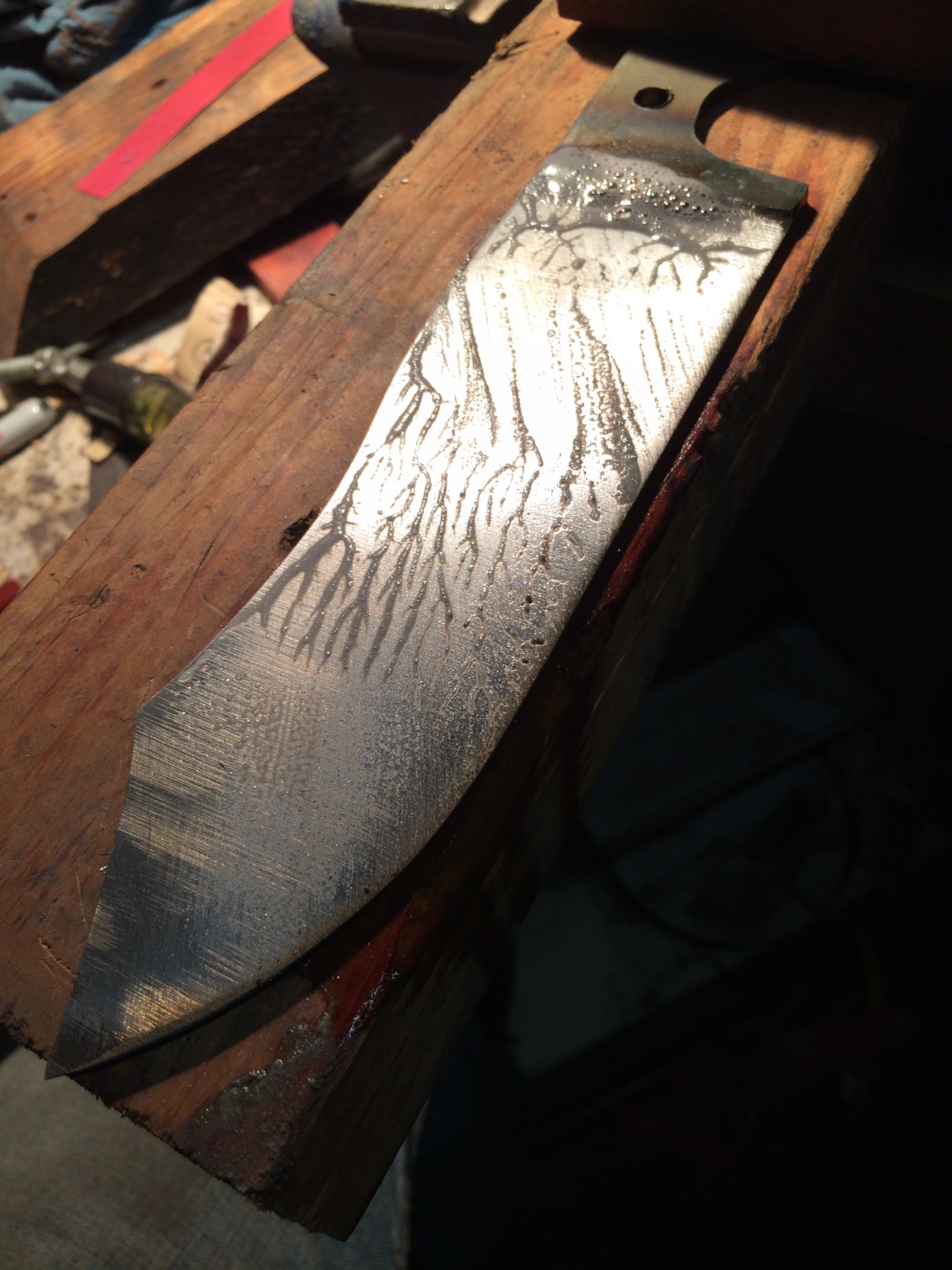
The blade is 7.25″ long.  Blades these long are a continual challenge for me to grind.  If ground too thin they will warp and possibly crack during heat treat.  On blades this large there is grinding before and after hardening and tempering.

  I love working with Mesquite.  It has a fiery bouquet.
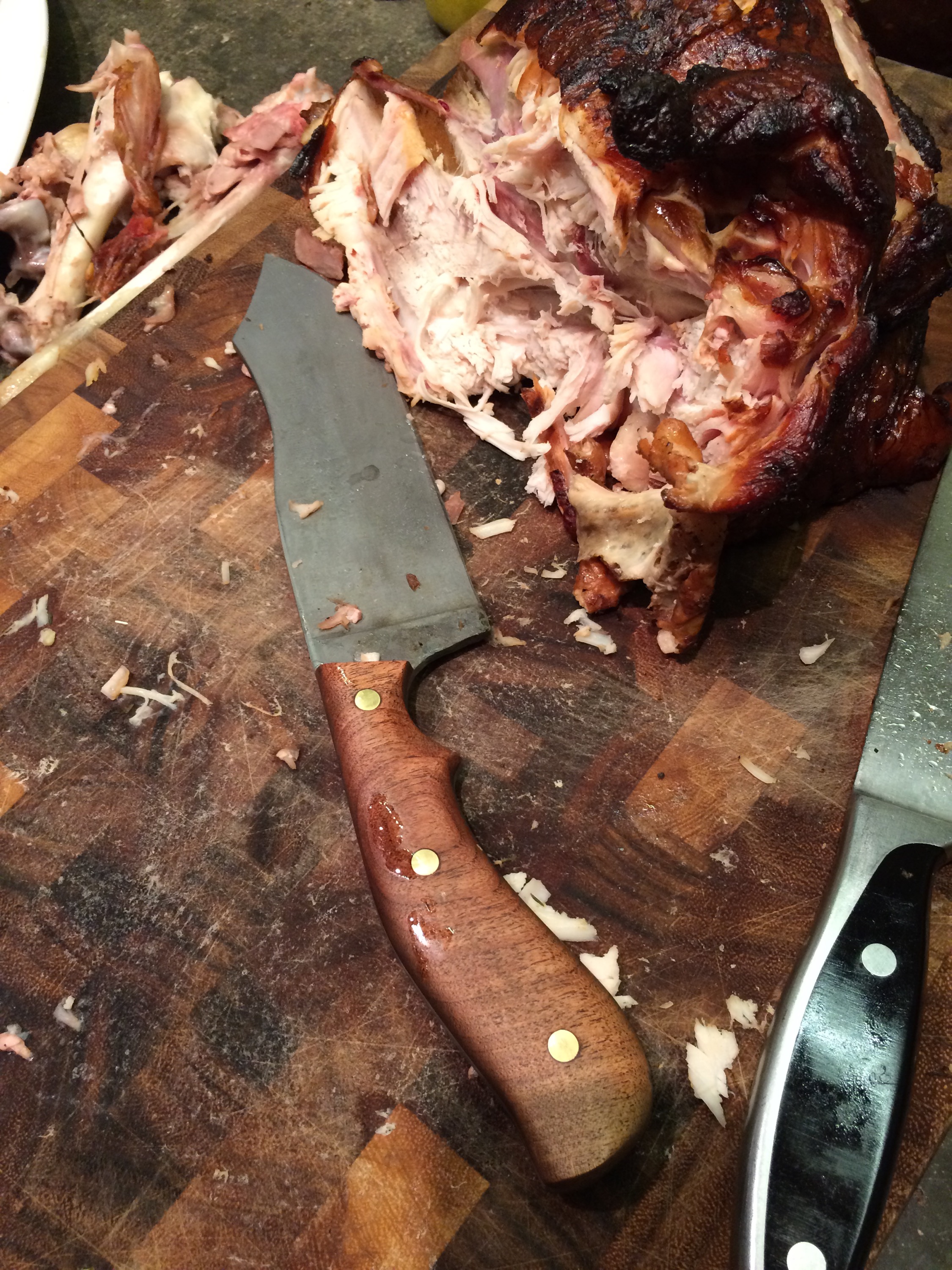
  St. Elmo’s Fire: 1095 spring steel with a phosphoric acid etch, Texas Mesquite handle and brass hardware.

  
There was some turkey involved on this past Thursday  

Trust that the storm will pass.

Be sure to check out Lauren Serpa and her beautiful work.

Knifemaking: finding your home, braving the elements, and the Northerner

“A farm of your own is better, even if small. Everyone’s someone at home.”

Hávamálst. 36

Home is what you make it.  The first thing I do when I go into anybody’s home is notice how it smells.  There are many things that can be inferred this way.  It may smell of cooking and spices, a fireplace, clean linens, pets, Murphy’s oil soap, and the people who live there.  All these things are things of love, cultivated in a place where the person who lives there can just come and be.  It’s a safe place where we can take off whatever armor we may wear during the day.  It’s a refuge that shields us from the elements in our lives.

Some brave harsher elements than others.  And in the times we live in, the elements are no longer relegated to heavy rains, freezing blizzards, or lands parched with drought.  They are deadlines for work, the threat of unemployment, passive-aggressive emails, fruitless battles with the DMV, quarterly tax estimations, health insurance premiums, our police executing citizens without arrest or trial, politicians stripping us of our civil liberties and thousands of other things we have little control over.

This can send our stress through the roof and it’s a small wonder.  From an evolutionary standpoint our reactions to stressors were designed to help keep us safe and alive.  You see a bear, you react appropriately by stressing out hard and in turn releasing enough adrenaline to haul ass out of that situation. Then you calm down, throw some logs on the fire and snuggle up with the misses.  Or the mister.  But these days unrelenting stress can lead to unhealthy anxiety and this in turn often leads to depression, ultimately leading to feelings of being stuck and health issues.  Depression and anxiety have their evolutionary purposes but I feel their effects been blown way out of proportion by the amount stimulation and unnecessary stress in today’s world.

This is why it’s important to have a home.  A place where the elements won’t creep in.  This may take some work.  An inspiration for me is John Wemmick from Dickens’ Great Expectations.  He has an unpleasant job, deals with many stressors but goes home to his castle, a safe and gentle refuge he has built for himself.

Throughout history and literature the people from the northern areas are by nature a people more hardened to the elements.  They are a people capable of great acceptance, aware that they can’t change the elements but instead find a way to thrive within them.  That is the inspiration for this blade.

I had to do a bit of research on blade shapes and functions.  I wanted to make something that would aid a modern day Northerner in his outdoor tasks.  This blade is loosely based on a composite of bushcraft designs.  It is a drop point blade with a partial saber grind.  I tried to find a balance between having a deep enough belly for slicing and having enough of a point for effective piercing.  I am rather fond of the O1 tool steel.  It is relatively easy to work with and hardens up beautifully.  it takes a keen edge and is forgiving of my mistakes.

 Cut and profiled

And the grind.  A little bit at a time… 


Ground and sanded.  The larger holes help to lighten the blade. 

Wet sanding after heat treat.  I have been using WD-40.  It won’t rust and I find it gives a smoother finish. 

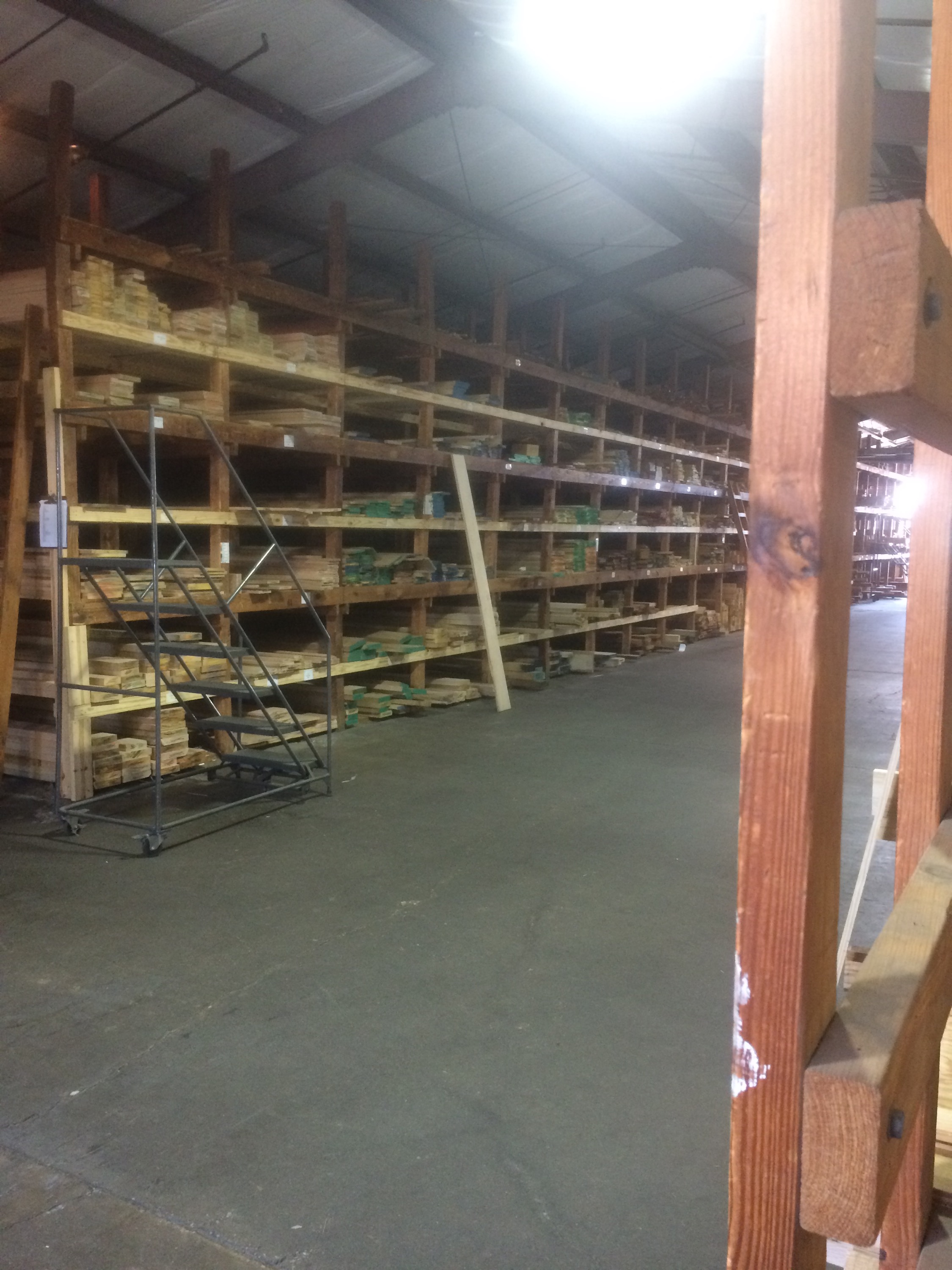
I went to a lumber mill to try to find some more exotic wood.  It was awesome. 

I found a beautiful piece of quarter sawn white oak.  It is sawn in such a way that gives it more stability and shows the grain more beautifully.  Here is a lovely video on the process and how it affects the grain.

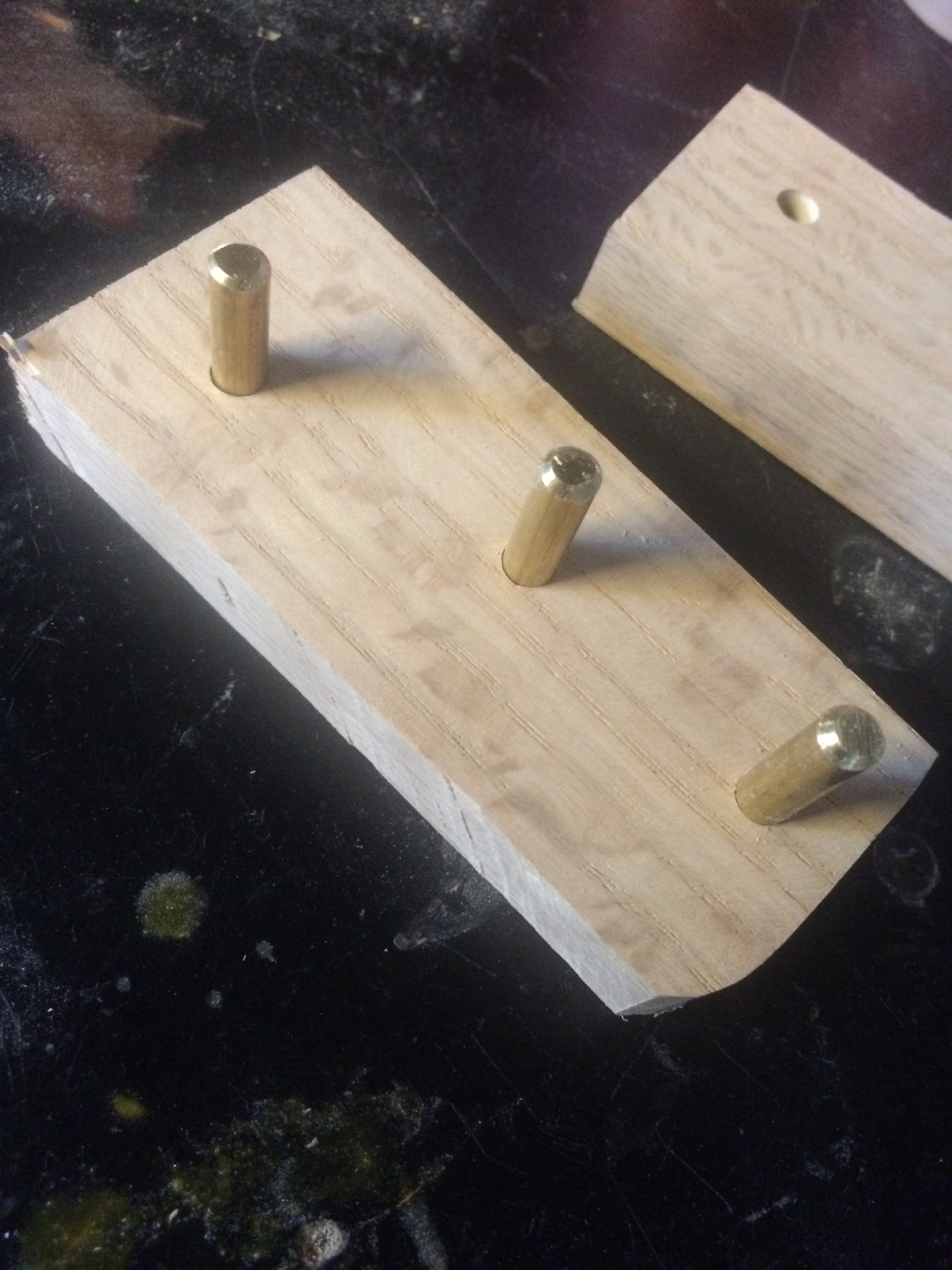
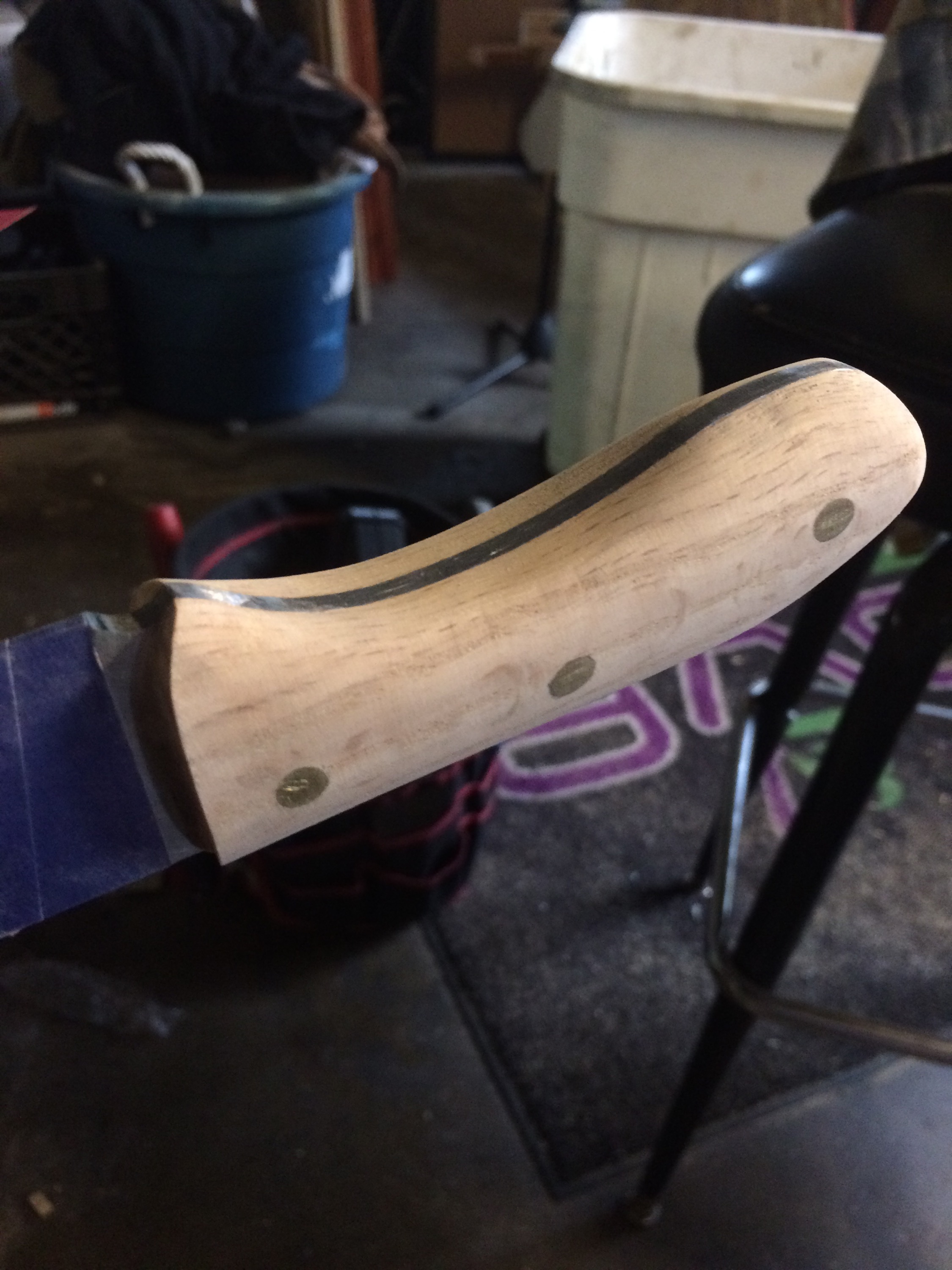
Handle work: brass rivets that I bevelled and the oak shaped and rough sanded.     After much more sanding….  A dark shade of Danish oil

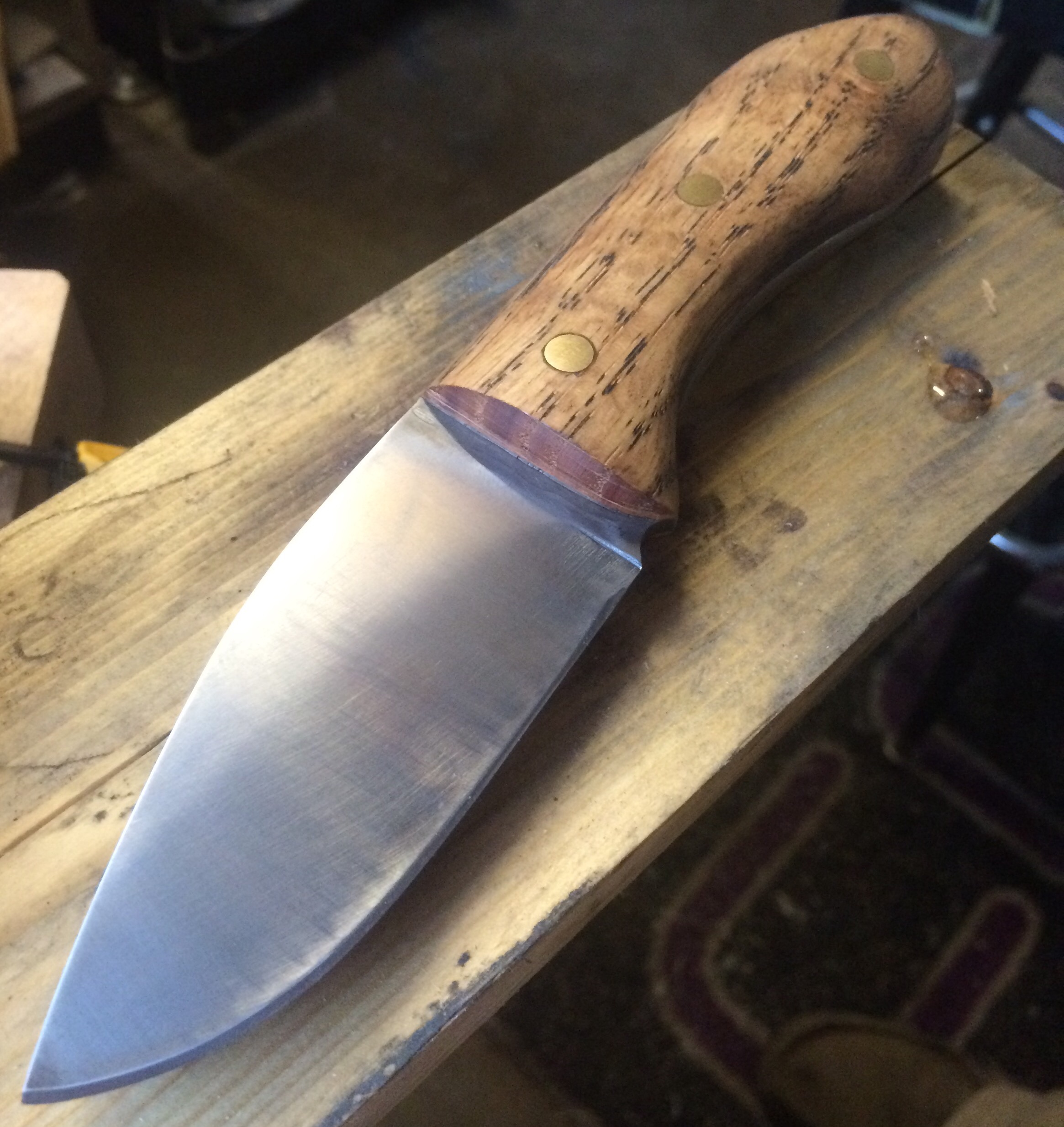
  The Northerner

The grain is stunning.
  A fabulous backside is always a bonus….

Edge detail….

There will always be things in our life that will challenge us and create stress.  As long as we have a place we can go, whether bricks or mortar or built within ourselves, we will always be able to brave the elements.  This is the lesson of the Northerner.