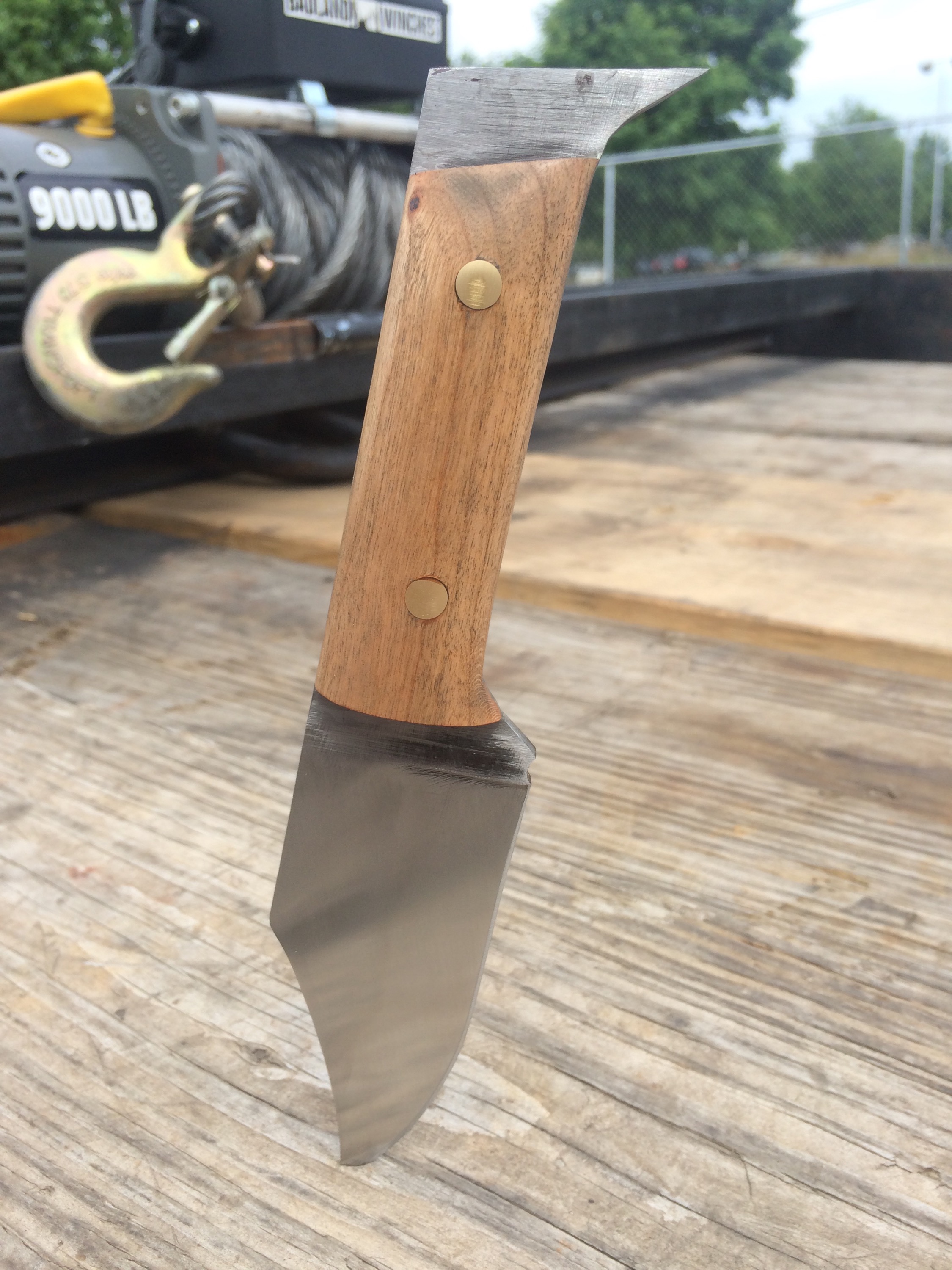
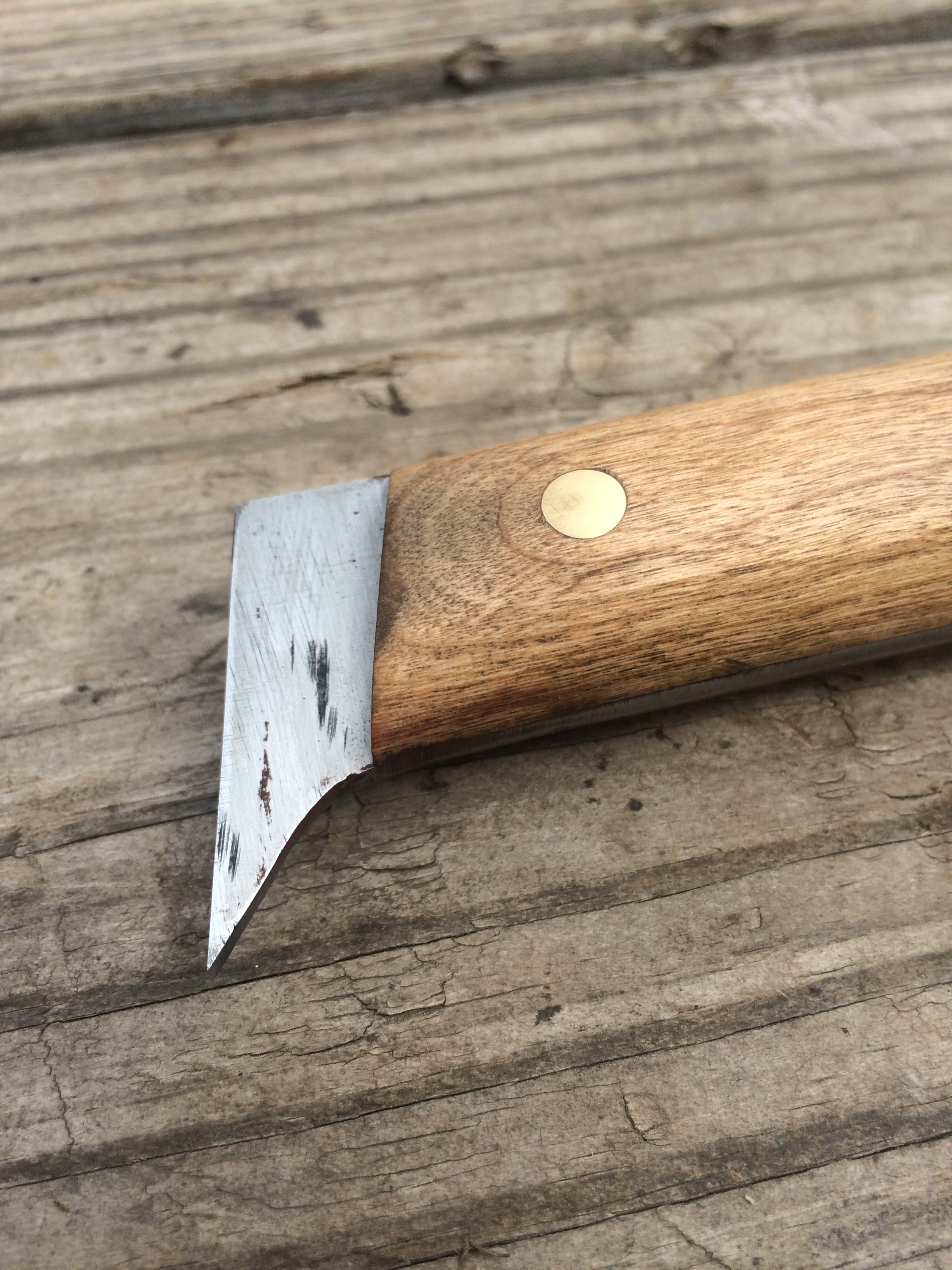
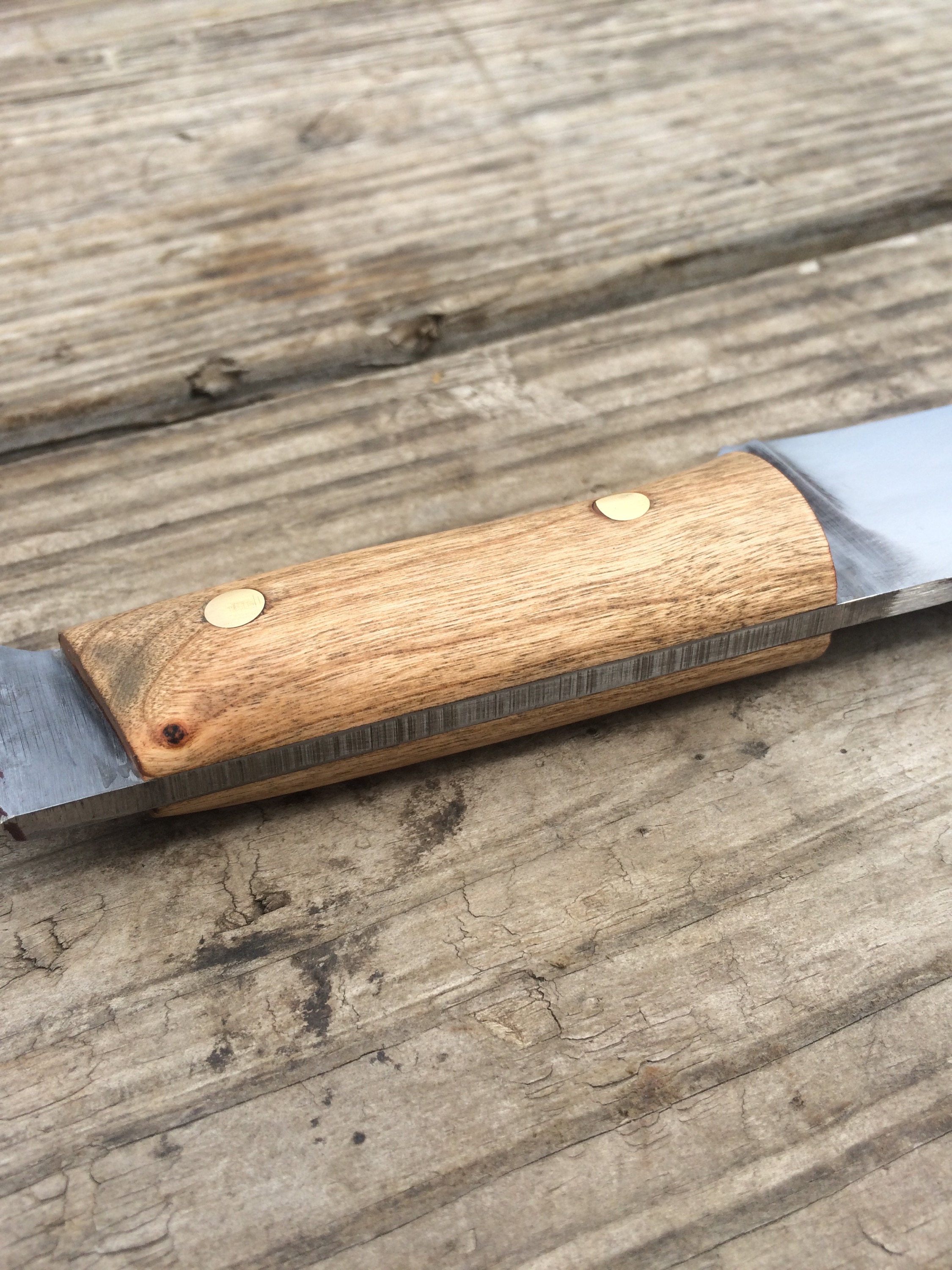
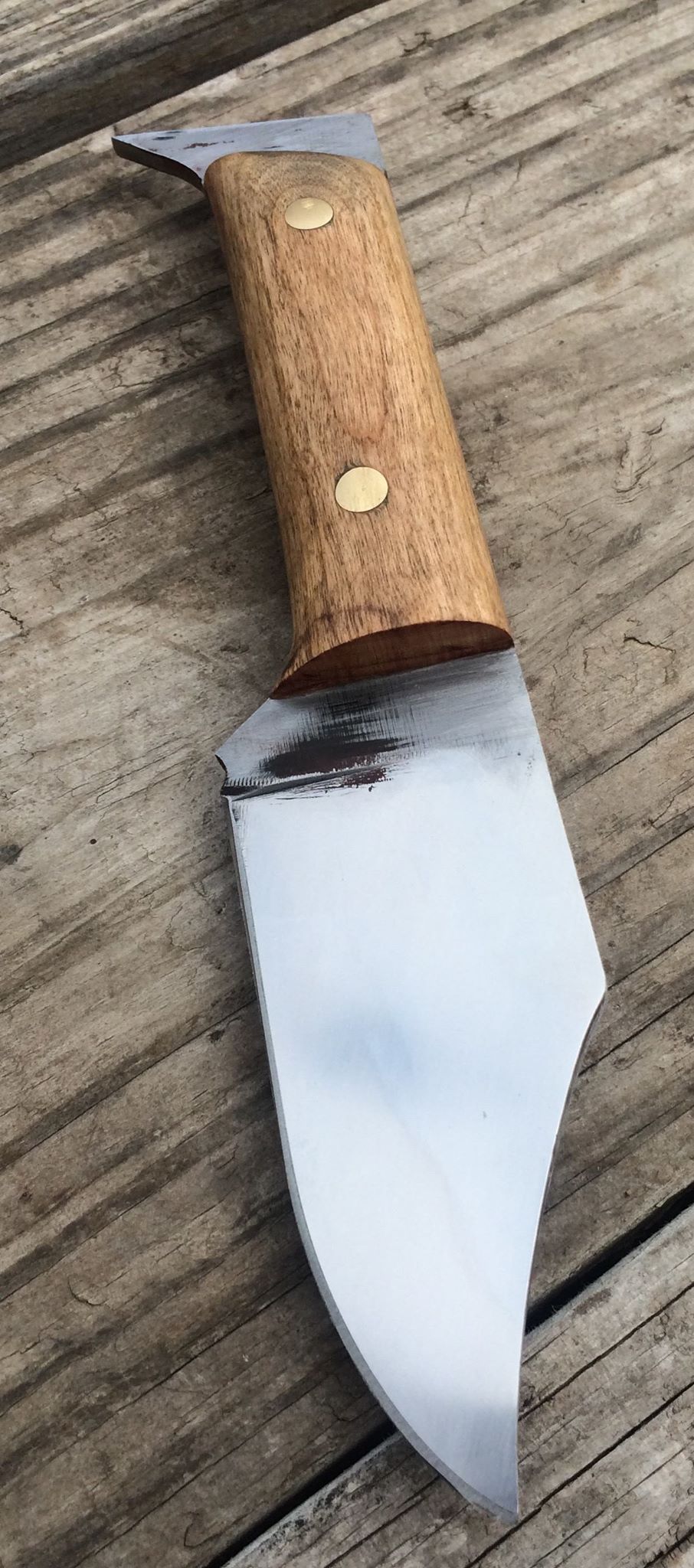
Knifemaking: expansion within limitations and the Operator

“When forced to work within a strict framework the imagination is taxed to its utmost and will produce its richest results.  Given total freedom the work is likely to sprawl.”

T.S. Eliot

I’ve found there are two types of people in the world: the Administrator and the Operator.  The Dispatcher and the Dispatched.  No person is completely one of the other.  Some people intermingle beautifully in both worlds.  Some people are better at delivering orders and others are better at executing them but no one is completely one or the other.

I find myself more in the realm of the Operator.  What needs to be done?  When does it need to be done?  Within these sorts of parameters I find that I laugh a bit easier, creativity is much more present, ideas flow better, and there is a general ease about me that might not be there if I am left totally to my own devices.  Within these sorts of parameters I am most productive.

Expansion within limitations.  We are all limited at some capacity.  Miles Davis was limited by the physical limitations of the trumpet, Mary Lou Retton by gravity, and Socrates by the political constraints of his time.  These limitations didn’t mean that they weren’t going to reach like hell for what they believed in.  No work is totally free because we are all coming from somewhere.  And it’s not about consciously limiting yourself or your potential; it’s about pushing through to find how far you can go with your craft before you hit a barrier that prevents you from going any further.  And honestly I don’t think there are many, if any, people who have hit that point.  The rub is getting through the limitations we put on ourselves.  Sometimes they sound like this:

“I’m not allowed to be this good”

“If I’m this good it might offend someone who has worked harder than I have”

“I don’t deserve to be this good”

“It’s too much work to be this good”

Those are unhealthy limitations.  Healthy limitations push us.  Money constraints, time constraints, resources, naysayers, things of that nature.  Nothing is totally free and this is a very beautiful thing: we are all coming from somewhere.  We have notions, perspectives, opinions, and options.  We all work within mediums.  Even accountants manage to be creative within what I consider to be a dry and sterile set of parameters.  Accountants might disagree and that is part of what makes the world go round.

This is how things get done and was the inspiration for the Operator.

The lesson of the Operator is to do your tasks beautifully and fully, to the best of your abilities, and within whatever parameters have been set for you or that you have set for yourself.  Whatever those tasks may be.

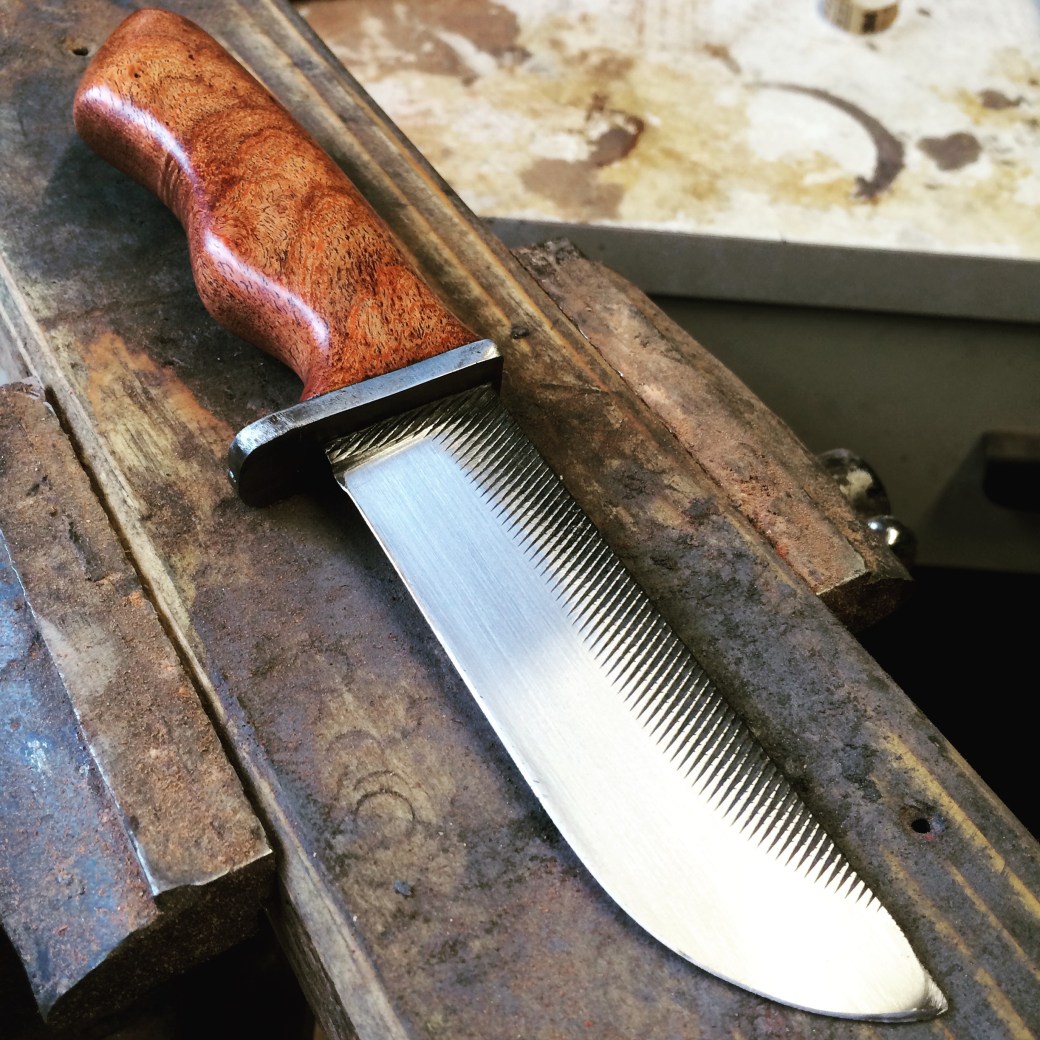
I felt I was limiting myself and wanted to use a different steel.  1095 steel is a tried and true material for knives and many other things.  Lawn mower blades, files, coil springs for suspension systems, and many other things.  It’s easy to work with, hardens up beautifully, and takes a razor’s edge.  It’s super tough.  And cheap.  I like all of these parameters…

FullSizeRender 7The Operator
IMG_2275

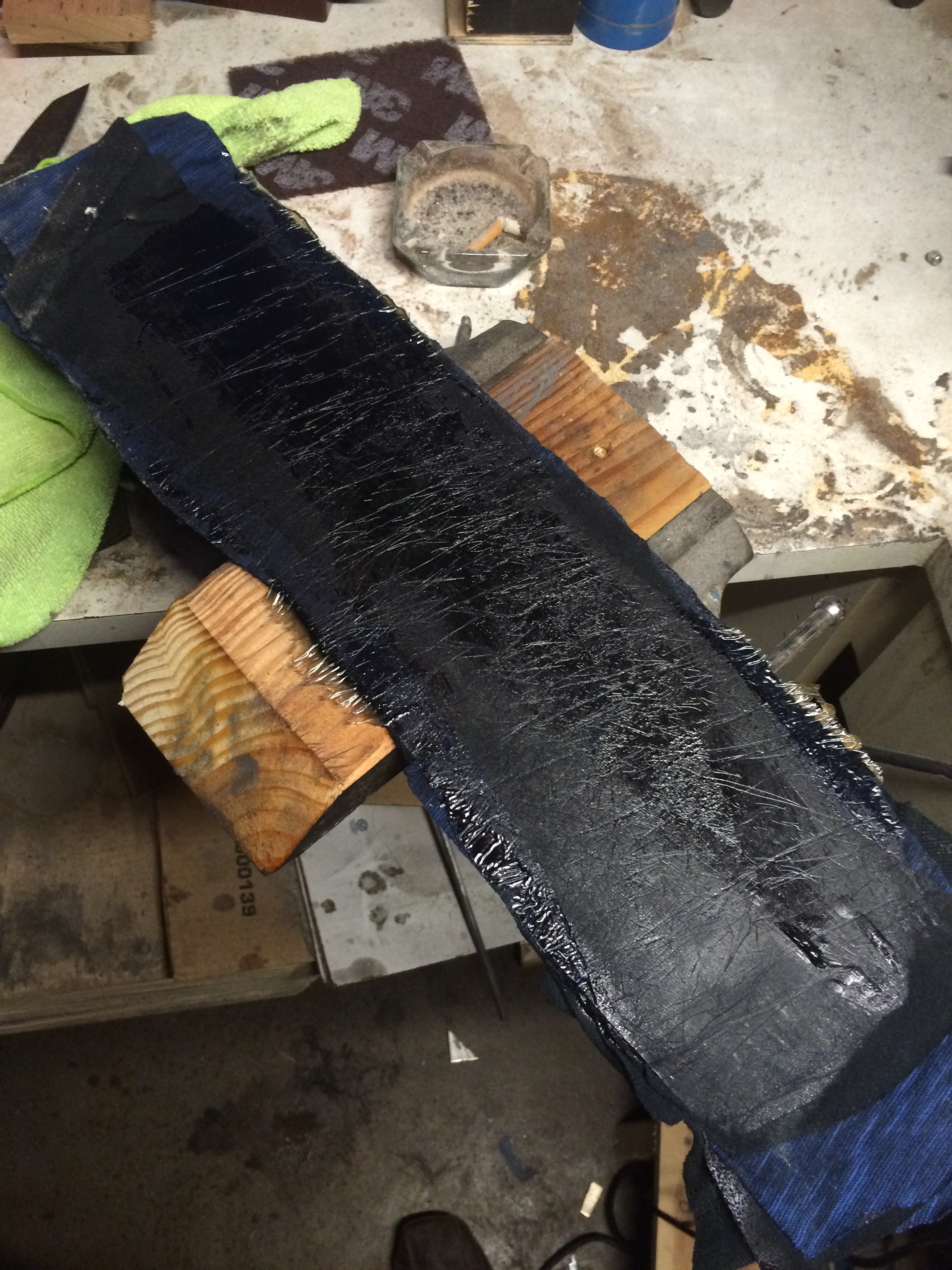
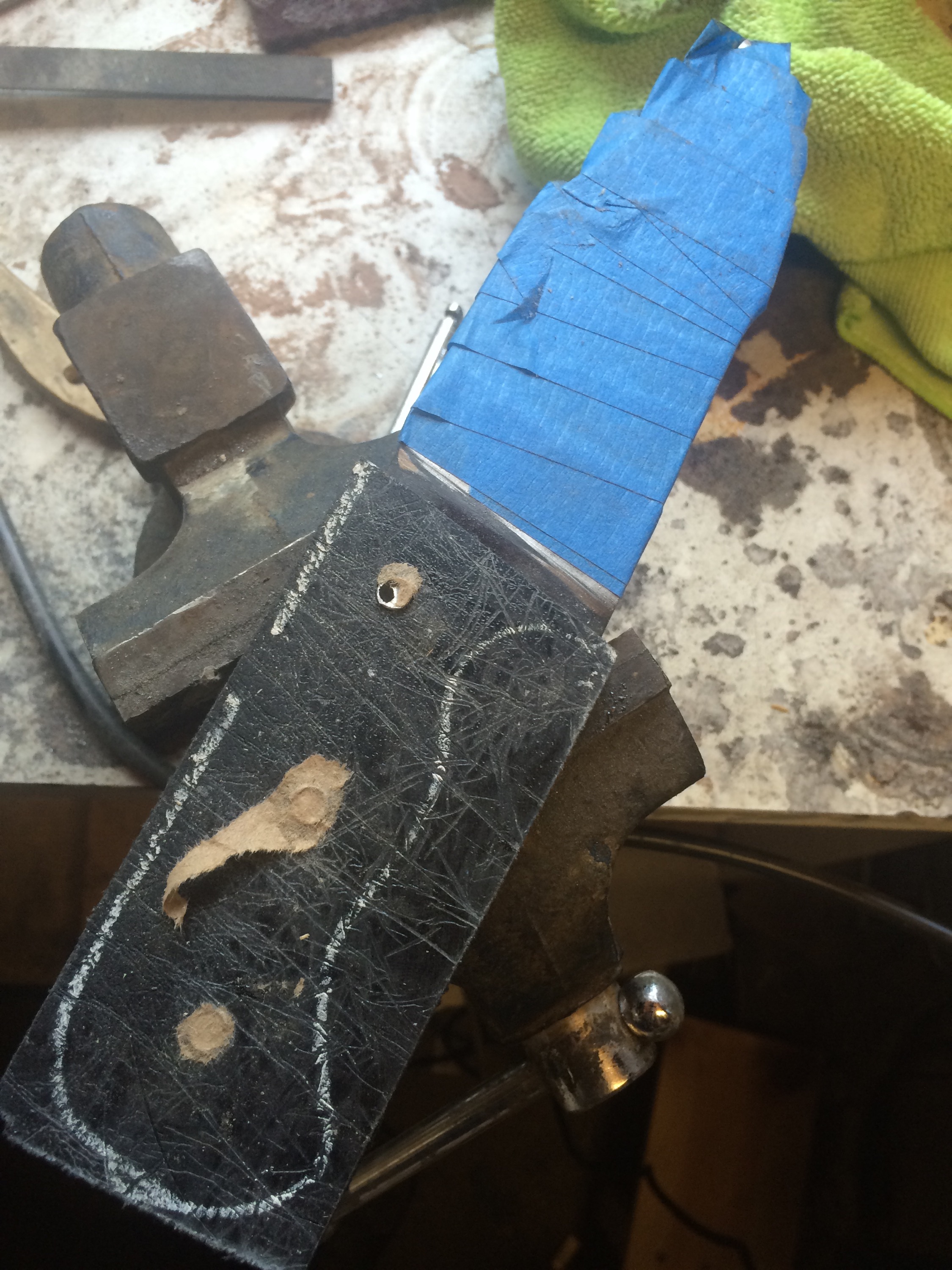
I ground this freehand on my cheap little belt grinder.  It’s a process. IMG_2289Here’s where I make the handle material.  I used fabric, fiberglass resin, pressure, time, and patience.  You can buy the stuff commercially (it’s primarily used in industrial electrical insulation practices) but it’s a lot more exciting to make your own.  I’ve done this several times and I’m never entirely sure if it will turn out as expected…This is a quick and interesting read on how this stuff works and why it’s ultimately great for knife handles. IMG_2291I used two of my favorite shirts- shirts I had worn up and down the East Coast and had adventures in.  It was time to retire them and this was a good way to honor their Operator spirit…
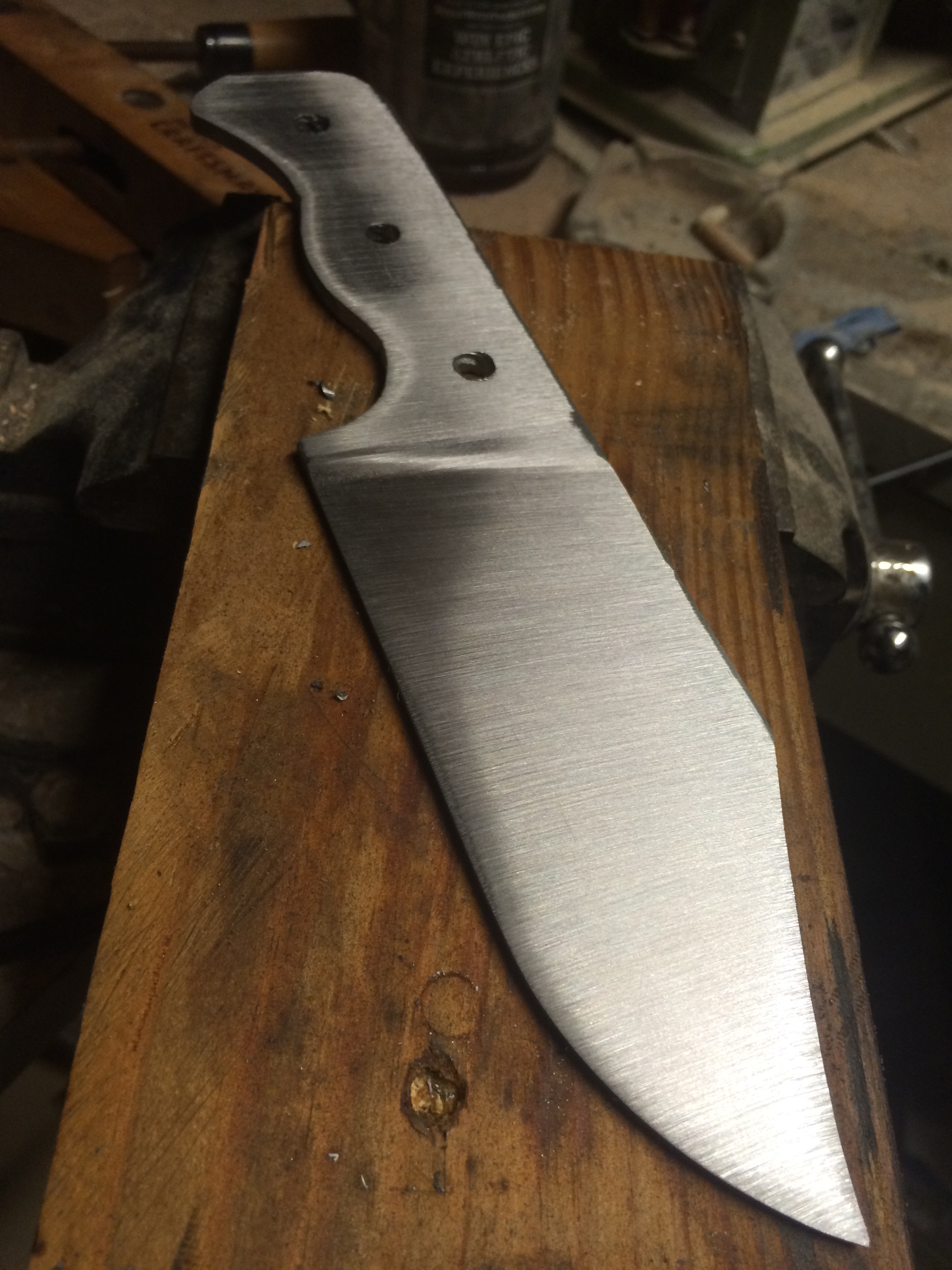
IMG_2292the raw material…IMG_2294 cut to shape…IMG_2296

 
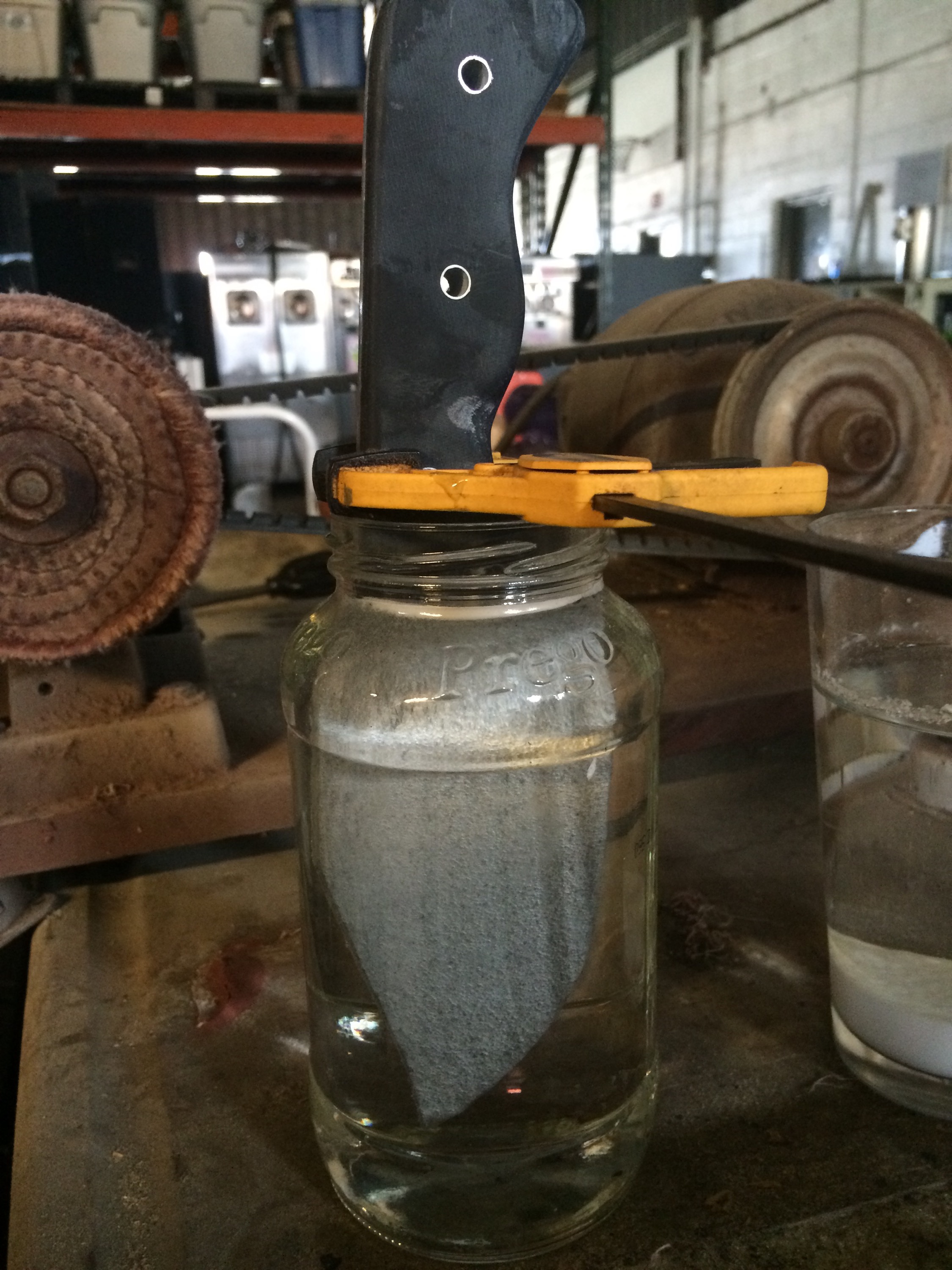
I probably spent three hours sanding the stuff…  Sanding is finished.  He goes into phosphoric acid.  This etches the surfaces of the steel and helps protect against rust.  It also makes the blade non-reflective, for those who may wish to operate clandestinely…I wish the blue material would have been more prominent but it turned out wonderfully nonetheless.  
Work within whatever parameters you may have but don’t limit yourself.  The Operator in action:
Knifemaking: softening, sturdiness, and the Finn

“”Fire will not burn you once it has
made your acquaintance,
will not abuse its kin.
When you come to fire’s dwellings,
to the bright one’s barricade,
there you will become beautiful,
rise up to be magnificent
as men’s fine swords.””

-Rune IX, The Kalevala

I based this blade loosely on the puukko, the traditional knife of Finland.  Carried for centuries by outdoorsman, this simple and unassuming knife has been the backbone of many livelihoods forged in a harsh enviroment.  It is characterized by a blade with a deeply curved edge and straight spine.  In order for the puuko to be authentic, it must be made in Scandinavia.  The handles are traditionally made of Curly Birch and the blade is made with Finnish Ovako 100Cr6 steel- although other materials are most certainly used.

 There is a fantastic Finnish knife blog called Nordiska Knivar.  They speak a lot more on the matter.  These dudes love their puukkos….

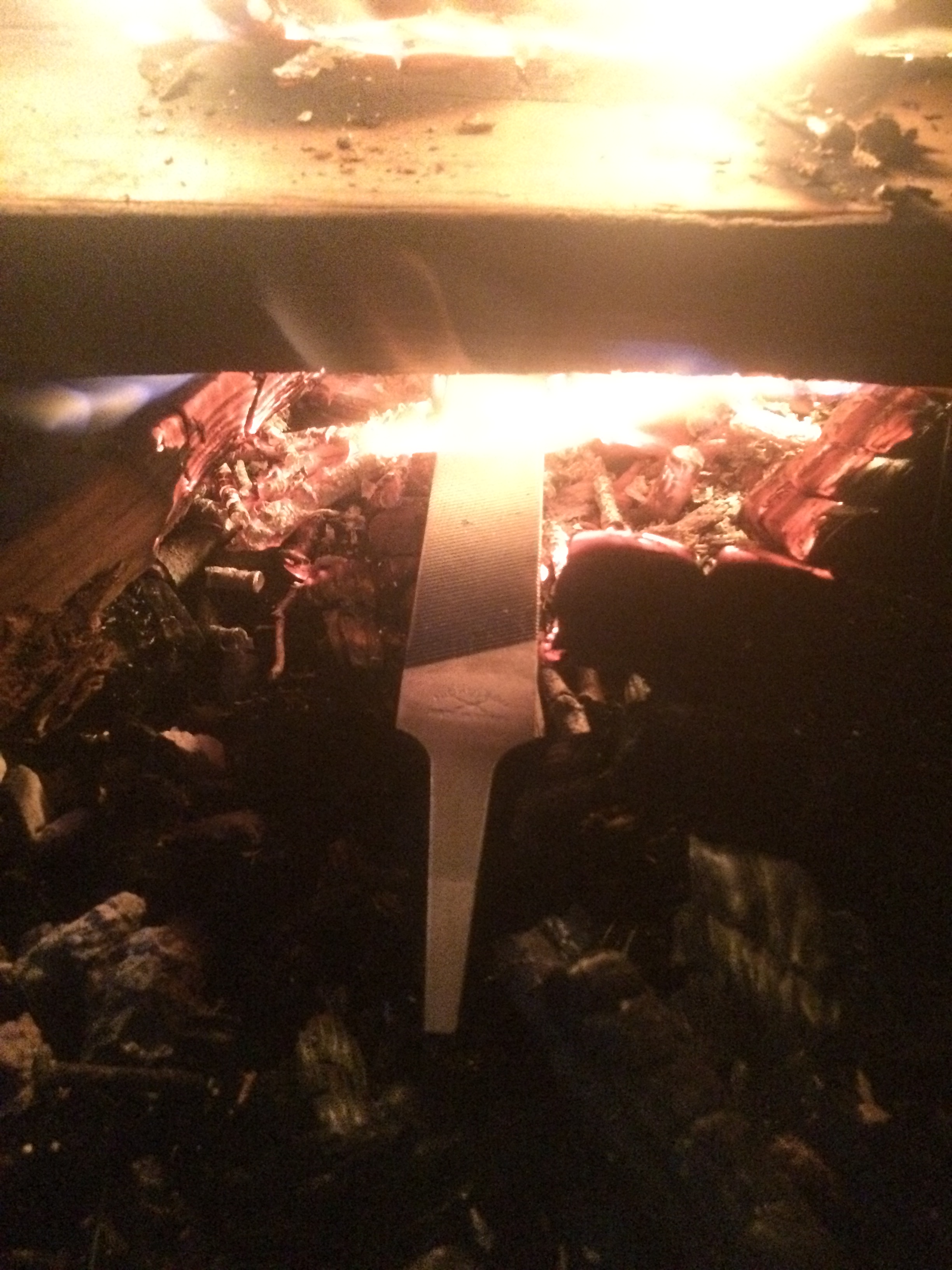
I had an old Nicholson file that I wanted to craft a blade from.  There are several sources that say they are made of either 1095 or W1 steel.  Both of these will make a good blade.  I had to soften it first- otherwise it would just eat through all my cutting discs, sanding belts, and ruin my other files.  To do that I let it sit in hot coals for several hours, letting it glow red and then cool slowly…

IMG_1960The reason we soften things is that they become easier to work with.  A set of knowing hands can work soft clay into something beautiful.  Mistakes (and there are always mistakes) are easier to fix in this way.  In this place it’s easier to be free, to let go and go for it.  Just as it’s very difficult to work with clay that has been fired in a kiln, metal that has been hardened, or paint that has cured, it can be difficult to be with ourselves in a hardened state.   Softening gives a chance to freak out at all the work we have to do, to look at things objectively, to make a plan, and to deviate from that plan as we sometimes have to do.  Softening gives us space to work, to breathe and to live.

 And then sometimes things warp in the softening process.  This is ok.  In this instance I just heated it back up and hammered it straight, as we do…. I came up with this:  a nod to Scandinavian sensibilities and a hidden tang, something I haven’t done before.
IMG_2197

There she is…
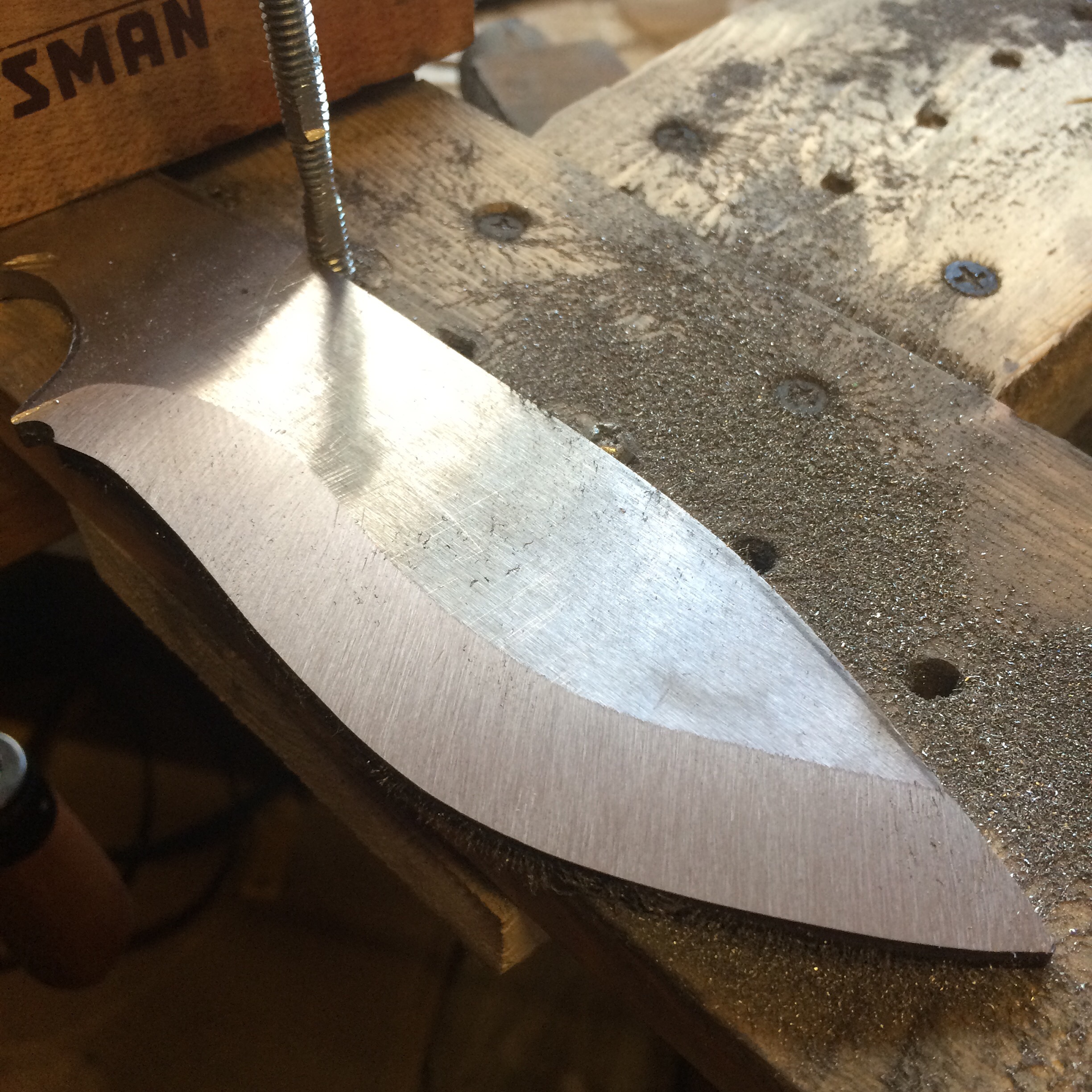
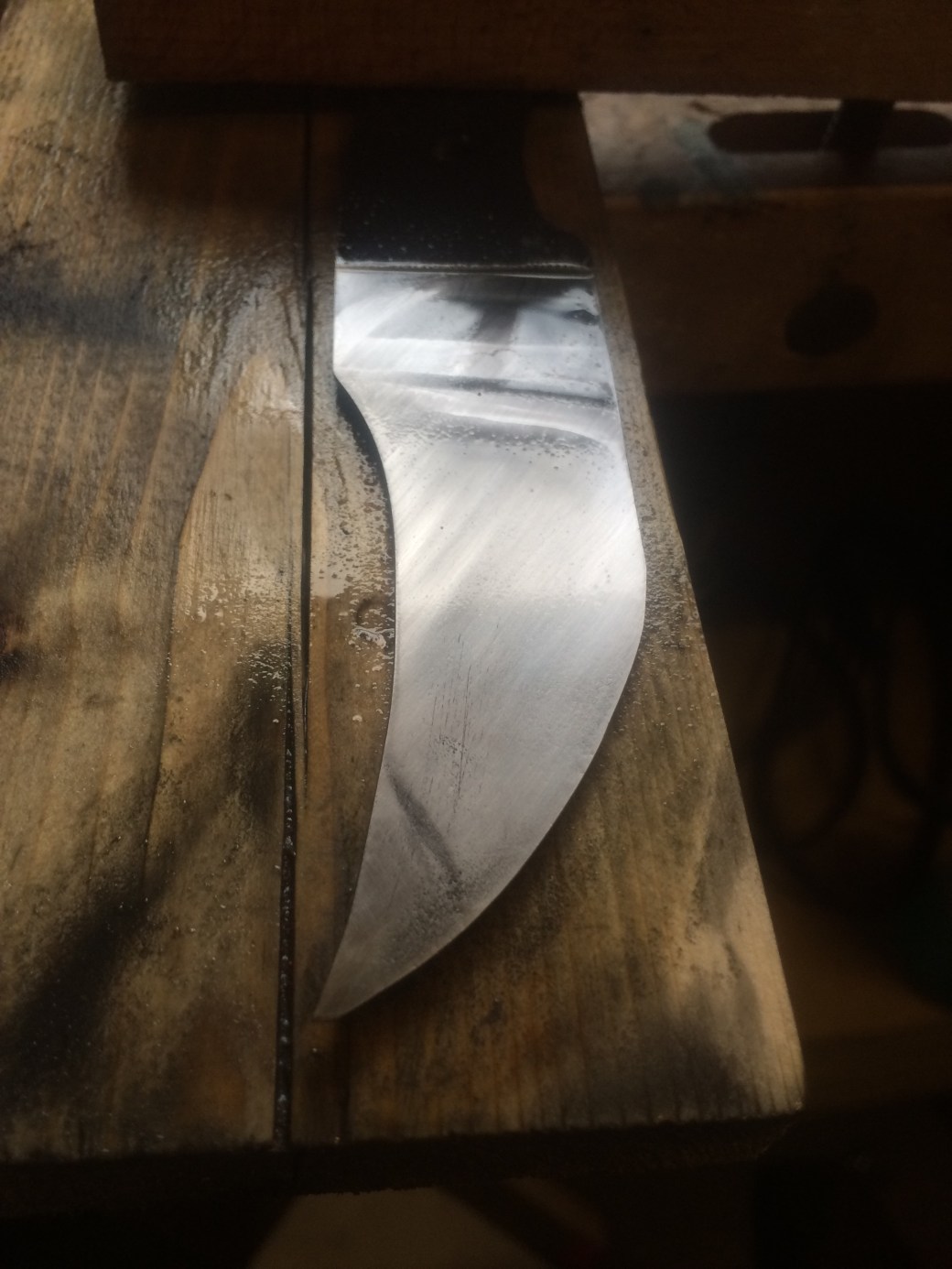
IMG_2198 I put a saber grind on this blade.  In this grind the bevel starts about midway through the width of the blade so that the spine retains full thickness.  It also left the remains of the file.  It’s important to remember where you came from.IMG_2199Ready to hardened and tempered again:
IMG_2202

Handle fittings- mesquite and steel.

IMG_2203 After sanding, filing, hammering, and swearing…he’s in.IMG_2205

IMG_2206Almost there…IMG_2210

The Finn

He is sturdy, beautiful, and capable.  It takes some time but the work we do in our softening does not go unrewarded.

ead793bd-441e-48df-b986-c240d88d484a

The lesson here is to not be afraid to soften, to not worry about how long it will all take, and to definitely not compare yourself to where others are in all of this.  There is ample time to jump in the forge and find our sturdiness.

Knifemaking: balance, fruition, and the Lioness

Dance with a girl three times, and if you like the light of her eye and the tone of voice with which she, breathless, answers your little questions about horseflesh and music about affairs masculine and feminine, then take the leap in the dark.

Anthony Trollope, Orley Farm

I had a dream where I met my feminine identity.

I was in a busy open air train station with one of my best friends.  It was busy and it must have been cold because everyone was bundled up.  From almost nowhere came a woman, small, but with hair the color of autumn and a lot of fire to her.  She wore a loose fitting white Henley t-shirt, weathered jeans that were rolled up to mid-shin, and walked barefoot.  There was a lion cub walking by her side.  She also wore a long knife on her hip.

We didn’t speak but there was something very familiar about her.  She was exquisitely beautiful but I didn’t desire her- I knew this being was a part of me.  She paused for a moment, long enough for the lion cub to nuzzle my leg.  Then they were both gone.

In the weeks leading up to this I had been reading a lot about women.  The way many of them flow with emotions, and are incredibly adaptable to a variety of things the world deals them.  I found this lady who does workshops for women, helping them to appreciate men.  Her name is Alison Armstrong and her website is here.  She has a lot of podcasts and in listening to her explain men to women (warning: she knows all of our secrets), she revealed many things about the fairer sex.  Definitely worth checking out.

I think a lot of tension that comes from men’s interactions with women is that there is an expectation for them to complete something in us.  What we don’t realize is that all those things we are looking for in women are already inside us- they just get buried.  Society and culture tells us that men have to be this thing, stoic and unfeeling, and if you’re anything other than that you are less than.  The Bible says women are to be quiet and subservient.  There are a slew of women’s magazine articles with explicit instructions on how to make him love you more.  Conversely there is a shitload of literature written for men on how to keep her by your side, how your six-pack abs will fix your love life and how to resolve your relationship woes in six painless steps.

To me this is total bullshit.  We can’t find balance with another person till we find balance in ourselves.  You are already complete, there is balance within you and you need no one to fill a place in you which you perceive to be empty.  In the same way, it is not your responsibility to fill someone else’s emptiness, regardless of what society, modern media or ancient texts try to tell you.  Balance yourself and everything else will compliment you.

Once things come into balance, fruition can occur.  Seeds need the proper balance of temperature, moisture, and soil composition to germinate.  A storm needs the proper meteorological conditions to develop into a force of nature.  From this place of stability things can blossom outward.  The possibilities are endless.

To the autumn-haired lady that lives somewhere inside of me: thank you for the lessons.  This blade honors those lessons.

She has a gentle recurve on the blade- this helps to keep the knife edge from wandering too far when slicing through large volumes of material.

So here we are- fierce curves that betray a keen edge…

After heat treat…   She is properly tempered- the blue near the spine of the blade means there is some flex and bend while the grey color near the cutting edge is hard and edgeworthy.  Too much of one or the other and the blade will be brittle and prone to shattering, or won’t be hard enough to hold an edge.  Proper balance is key…

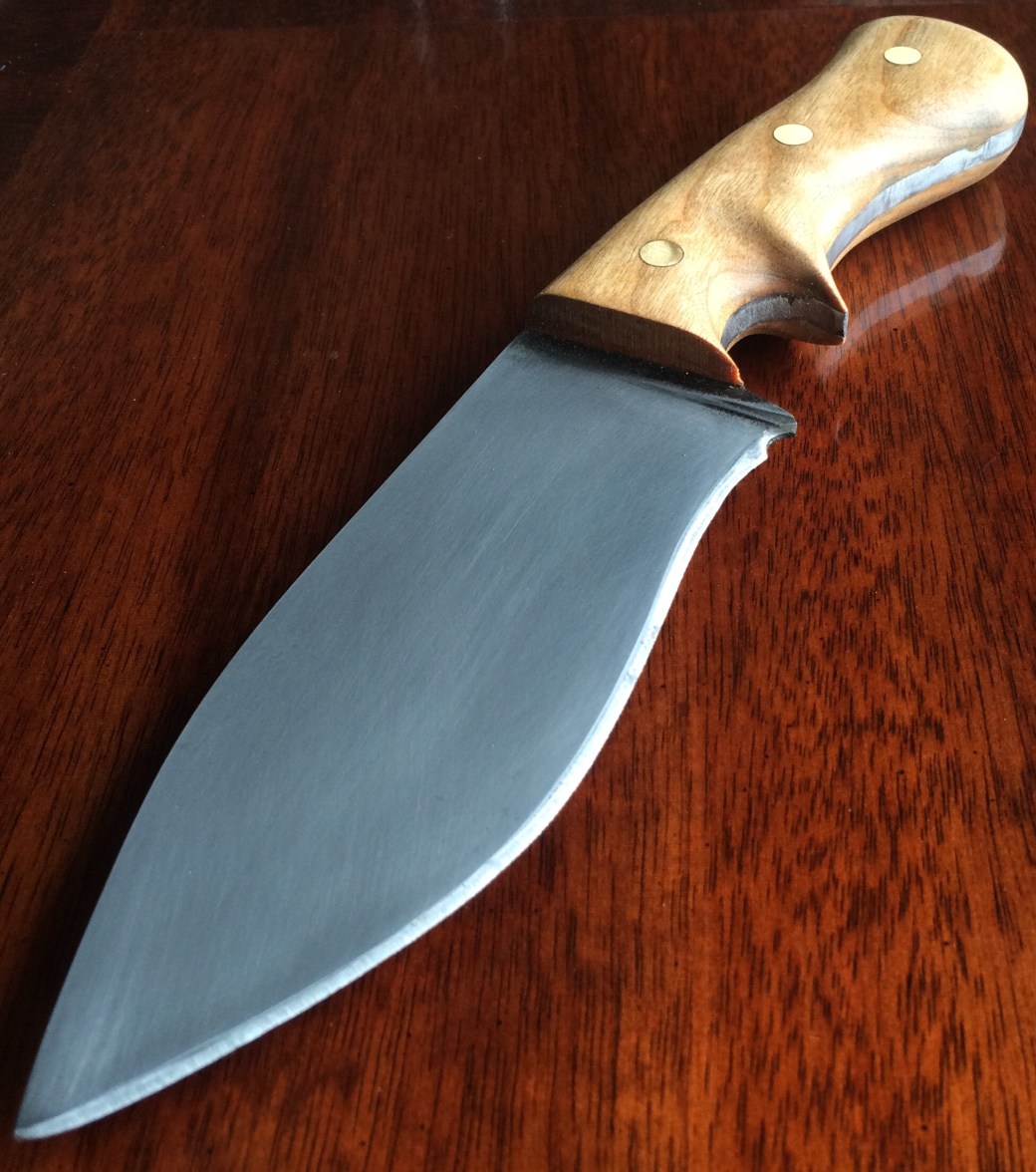
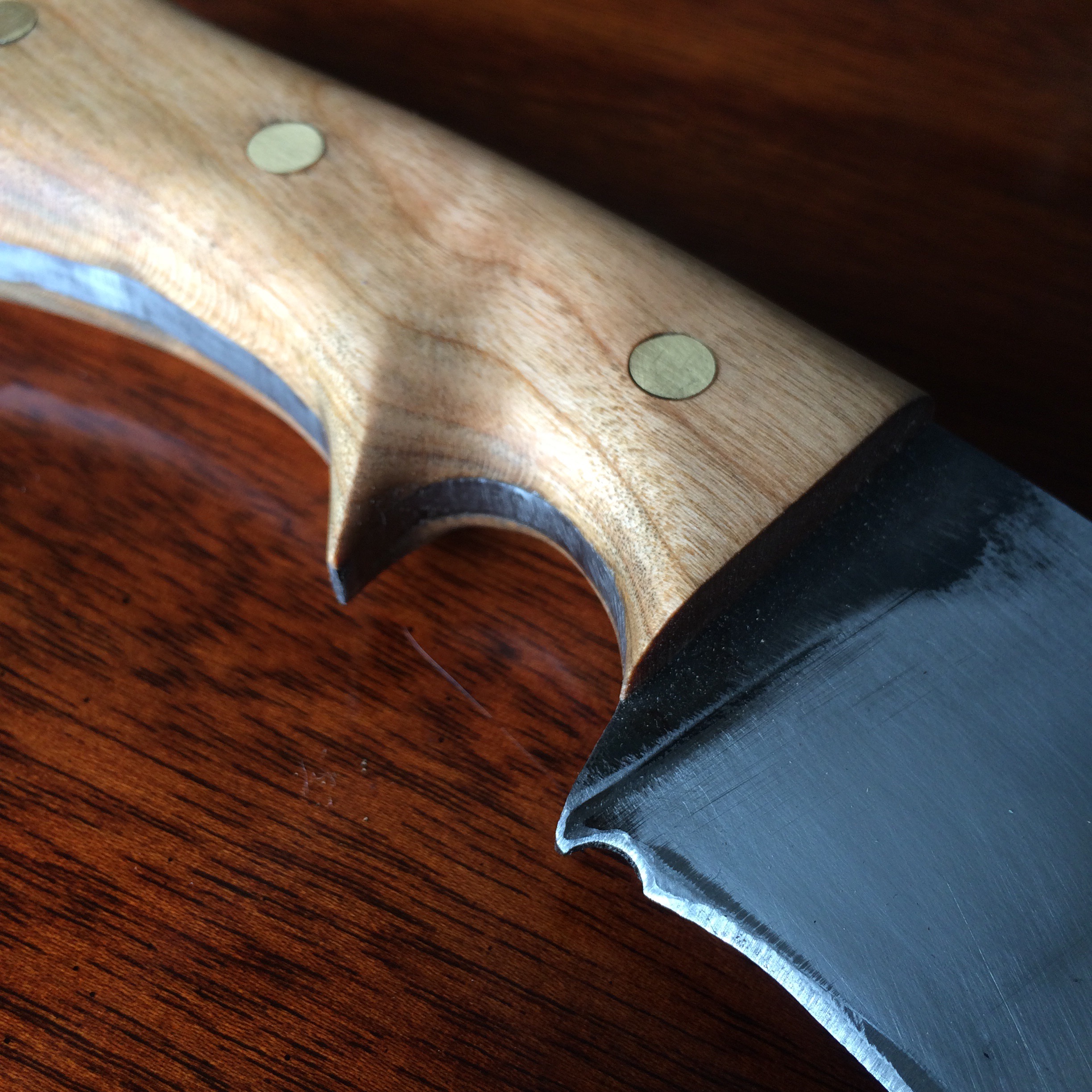
I chose Cherrywood for the handle of the Lioness.  In Celtic lore, Cherry possesses both masculine and feminine properties. 

      This is the blade that the autumn-haired woman carried.  Gentle but strong, beautiful but functional, simple but so much depth…            The way to fruition is to find a balance of the things within you.  Don’t worry, it’s all there.  Just have a peak around…this is the lesson of the Lioness

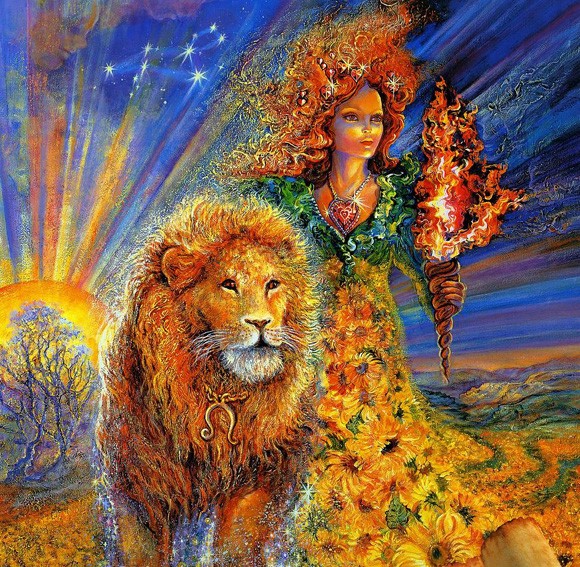
lionandlady

Knifemaking: The Precedent Epilogue

“…feelings like disappointment, embarrassment, irritation, resentment, anger, jealousy, and fear, instead of being bad news, are actually very clear moments that teach us where it is that we’re holding back. They teach us to perk up and lean in when we feel we’d rather collapse and back away. They’re like messengers that show us, with terrifying clarity, exactly where we’re stuck. This very moment is the perfect teacher, and, lucky for us, it’s with us wherever we are.”

―Pema Chödrön, When Things Fall Apart

(you can find the initial crafting and thoughts on the Precedent here)

This was the first real knife I started working on.  I put it aside for a long time.  I had a tough time heat treating it and kept avoiding finishing it.  I’ve been rolling and moving and was at first hesitant to look back on this knife because it was so raw.

I think there’s a hesitation to look back because somehow I fear that I will fall back into those things, or worse, see that I haven’t really moved forward.  I see lots of mistakes and lots of flaws.  There is the fear that things that once were can somehow bleed into what is now.  That the cycle just continues.  I’ve found the opposite is true- that knowing what pain and loss feel like help us to grow.  We remember what it’s like to feel joy and peace.  And while there is the realization that we will most definitely feel pain and loss again, there is the little light that reminds us we’ll feel joy and peace again as well.

All of this comes from the fear.  What a powerful teacher that is.

Fear is there to keep us safe, in the same way that our mind thinks many thoughts and is always requiring input and judging our surroundings to keep us from harm.  So I find that I don’t do things because of the fear of putting myself in perceived danger’s way.  Sometimes there is a fear of not dealing with my shit because I may feel that it is too much and this will somehow put me in an unsafe place.  Then come the distractions to divert the overthinking mind from dealing with perceived danger that is usually not so dangerous in the first place.  Look, something shiny….

Shiny things may manifest themselves as emotional unavailability, codependency, working way too much, not working enough, or a myriad of overindulgences that we interpret as something that can save us.  We tell ourselves there isn’t enough time, ask ourselves what good could come of it all, and other things to devalue ourselves.  All to try to protect ourselves.

Anyway…at some point it’s best to put the shiny things aside and deal with your shit.

As you look inside at past transgressions and flaws it’s sometimes easy to overlook the beauty and power imbued in those things.  The little signatures of being human and the wonderful nuanced lessons that comes with that.  Sometimes I have to take a pause to give myself enough space to see that.  This is the ultimate lesson of the Precedent.

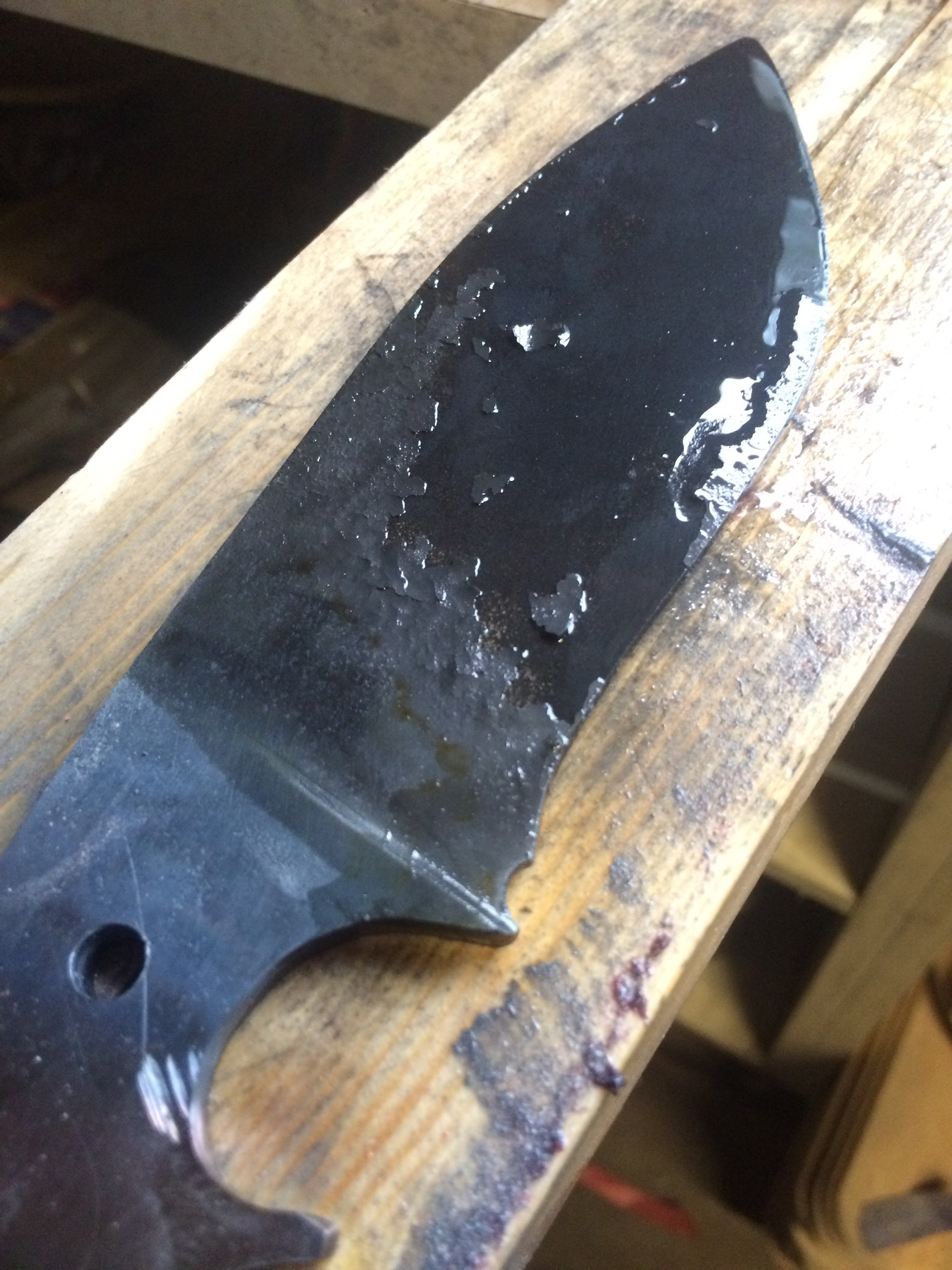
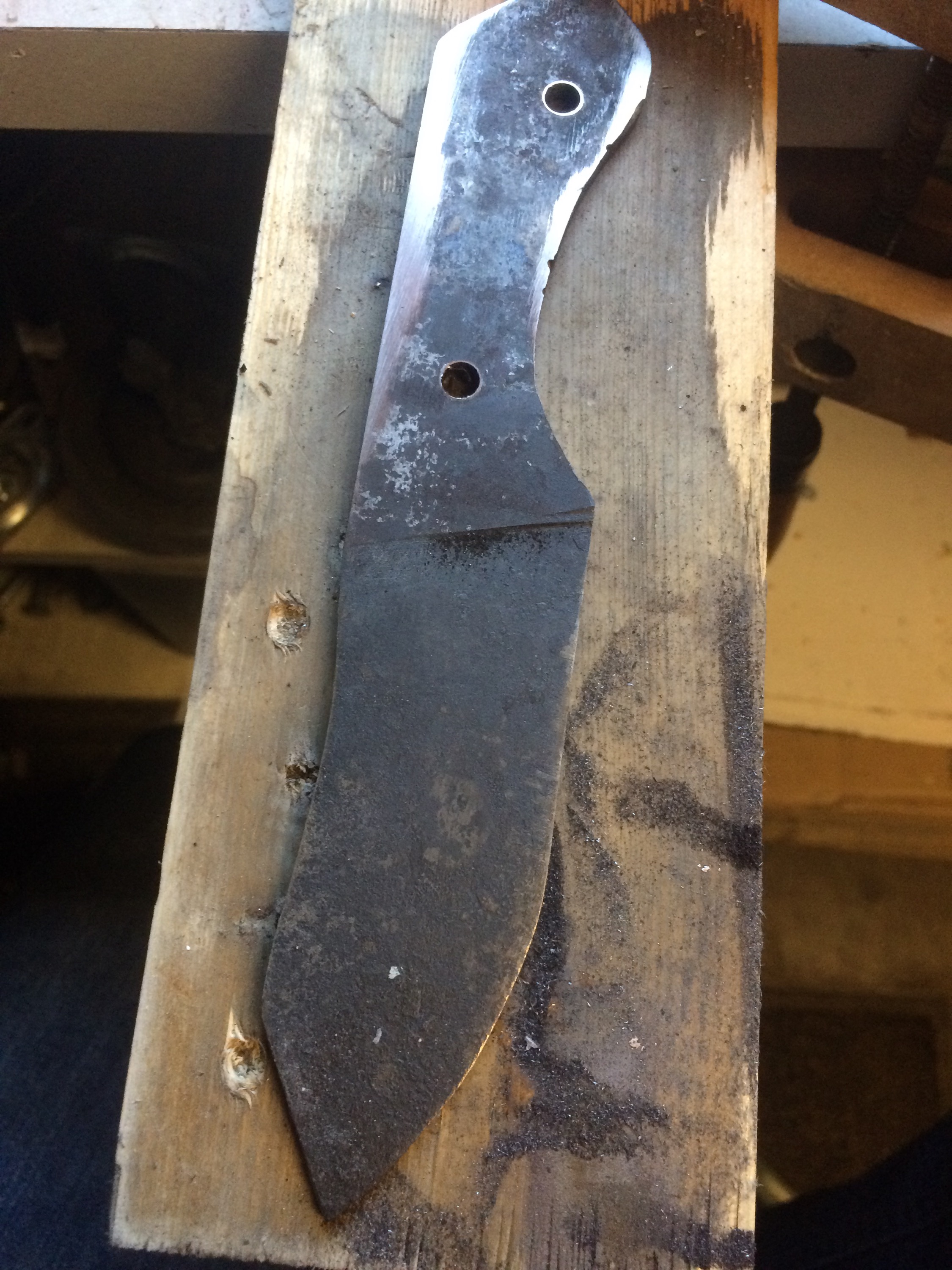
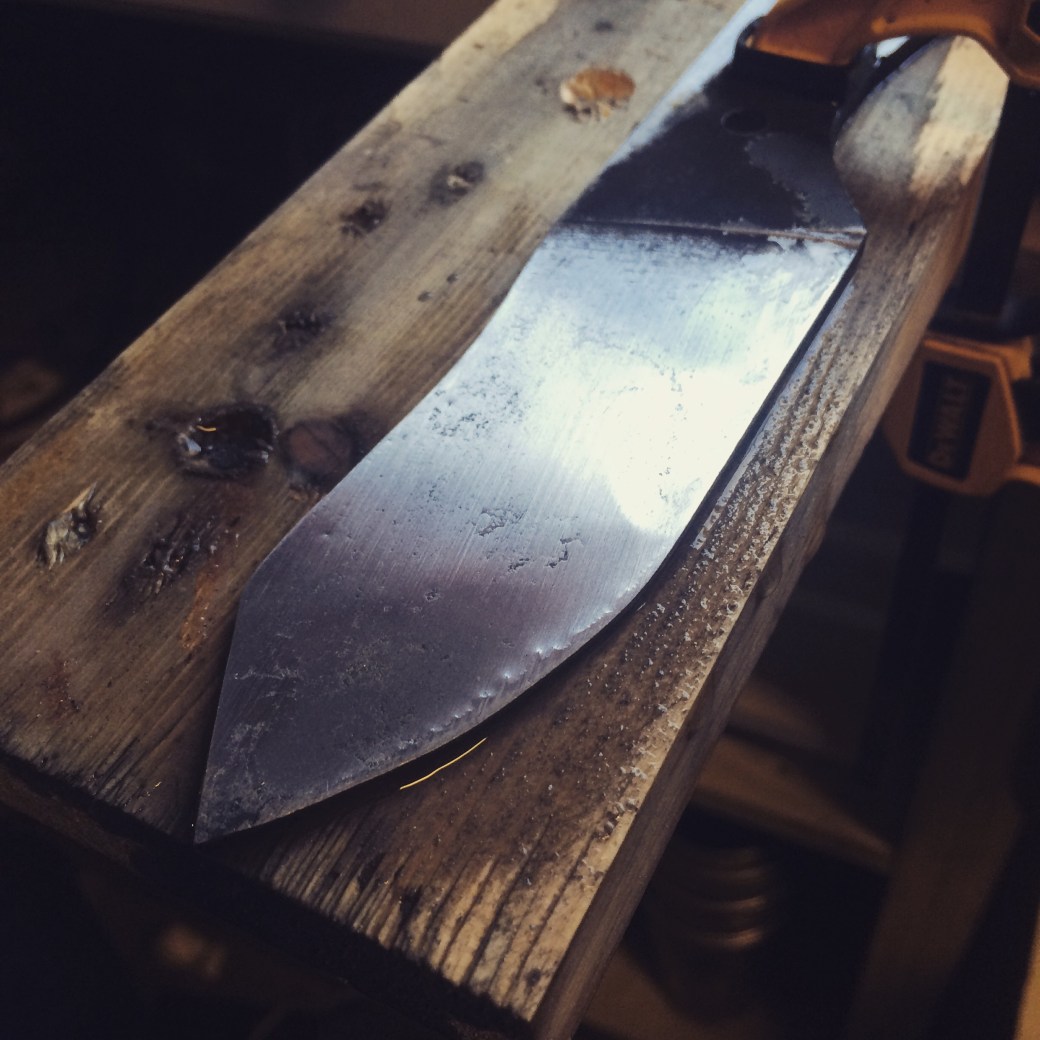
I tried maybe four or five times to harden this knife.  It was a frustrating process.  Finally I got it.  I was working with a forgiving steel.  Forgiveness is a powerful thing….  Those spots are where the blade got too hot during previous hardening attempts and caused a bit of decarburization.  It is still very much functional.  I sanded these bits off later.

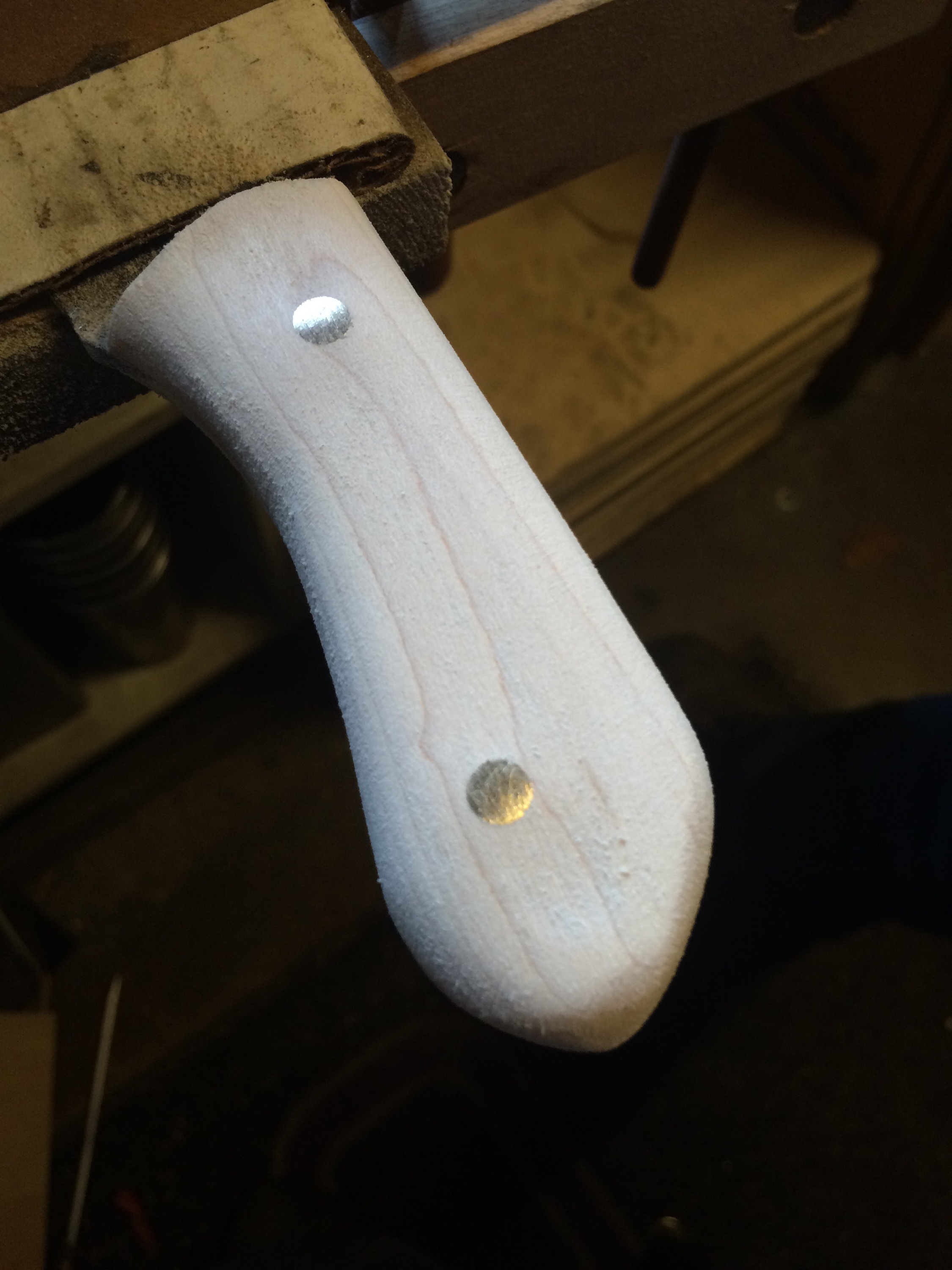
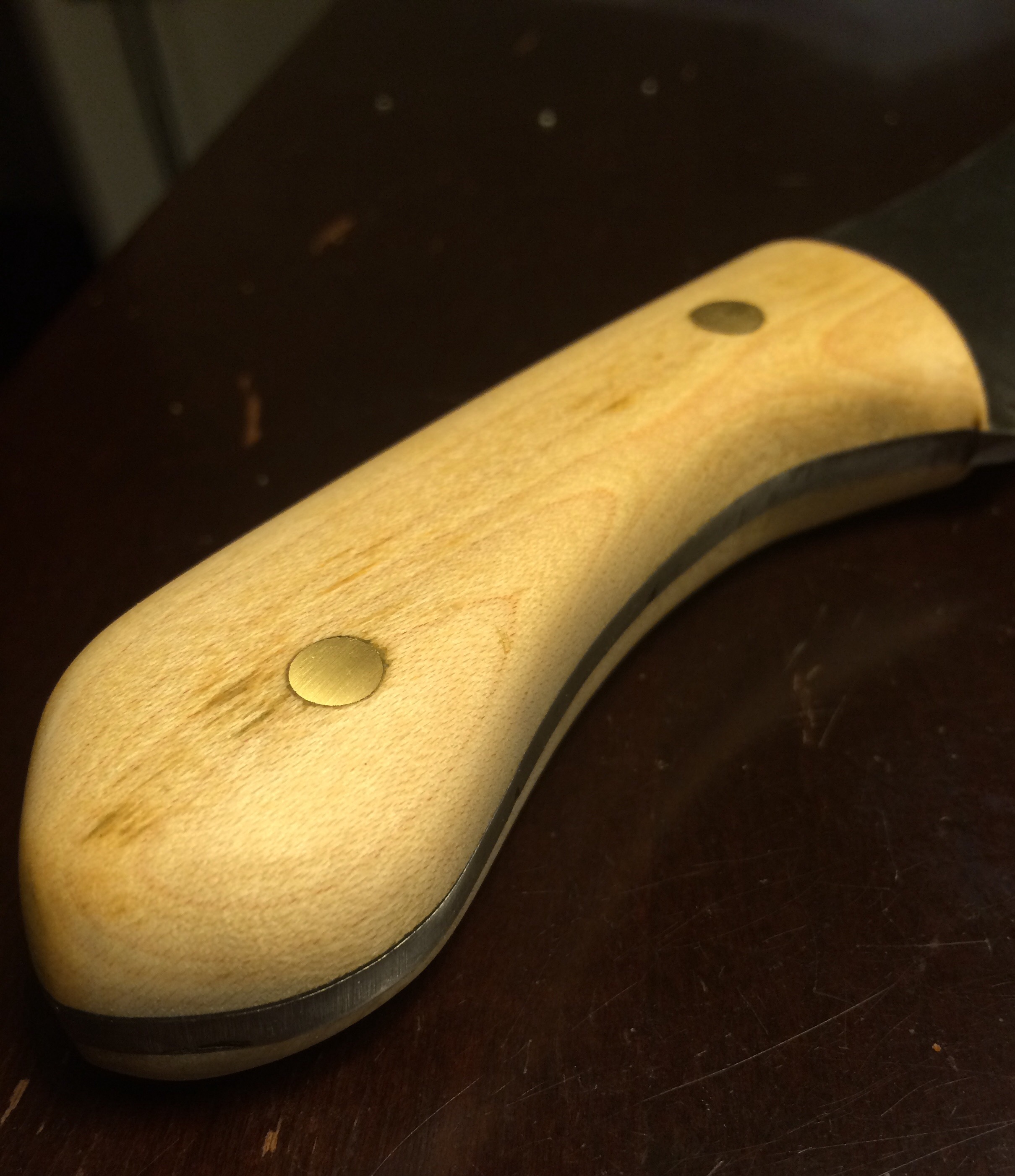
Originally when I started on this blade I wanted to craft something that would cut through fear.  For the handle I thought it fitting to use some of my grandmother’s old maple cutting board.  It had split in half when I used it at a tailgating party in the snow and ice.  I use the other half in my kitchen.  I love this board.

I usually do a satin finish on the knife (or attempt one anyway).  In keeping with the rawness that fear can often have I used a coarse finish sanding of 120 grit paper instead of the normal 600 and buffing.

I always want to make something functional as well as beautiful.  I find this to be both.

Maple is notoriously hard to stain.  I used Tung oil to bring out the grain.

Deep breaths…and lean into the fear.  It’s actually all ok.

Knifemaking: The Saj Epilogue- embracing the unexpected

“Kiss a lover
Dance a measure,
Find your name
And buried treasure…

Face your life
Its pain,
Its pleasure,
Leave no path untaken.”

Mrs. Owens, from Neil Gaiman’s The Graveyard Book

(you can find the initial crafting of the Saj here)

This is another blade that sat on my bench unfinished for months, made from the same bedframe steel as the Spellcaster.  I ignored him for a long time.  I wasn’t exactly sure what I wanted to say with him.  He’s different- a thinner blade that has a good flexibility, Eastern and exotic in function and very gentle in the hand- you hardly know he’s there.

I could see a lot of my earlier mistakes in him.  Scratches I couldn’t get out, unevenness in the bevel and a really quirky handle shape. 

Sometimes you have conversations with people where you aren’t entirely sure what to say.  Maybe it’s someone important- your boss, your future boss, a figure you admire, someone upon whom you’d like to make a good impression.  Maybe you go into it with an idea of what you want to say, points you may want to hit, things you’d like to work in.  As the conversation moves forward, the energy and flow may start to feel trite and contrived- forced, even.  Trying to put things in a place where you feel they should be, even though there is another being present who may have a different idea of where things should be…   

That is where I was with this knife for a long time.  Trying to manipulate the conversation and getting nowhere.

These are the moments to let things play out as they will.  This is easier said than done, especially if you are someone with varying degrees of control issues and anxieties…

I have a notebook full of sketches of knives that never make it to fruition.  This one was spontaneous and just sort of happened.  There’s a reason for that I think- those are some of the best things once you accept the idea that things will happen whether you plan them or not.  That relationship with someone you wouldn’t have expected, the job you didn’t plan on taking, even the recipe you may have botched but turned out more wonderful than you imagined. 

Sometimes those unexpected things don’t turn out in a way you would like.  That’s ok too even though it may not feel like it.  These are the times when it’s best to have a drink and think about what you are going to do next.  That part about leaving no path untaken applies to both the easy and the hard paths.

I went back and fixed my mistakes, knowing a little bit more than I did when I started this blade.  I let it be what it was.  When I found myself trying too hard, I stopped.  I worked on other things, sorted other things out, and felt my anxieties.  It’s important to be patient…

…then sometimes you just have to dive in

Some of the scratches were harder to remove than others.  I let those be.

     I have a cousin in Texas who’s a woodworker.  A really wonderful gentleman.  He sent me some Pecan wood that he milled himself.  I was really excited to work with it.  The state tree of Texas:

IMG_2025

As anxieties eased, I began to really feel the beauty of the process and not so worried about the outcome…

IMG_2038 IMG_2039

The figures are really quite lovely…

      I ended up being rather enamored with the wild elements and rugged bits of this blade…       The nature of life is you really don’t know what will happen.  Try to relax into that.  I’ll try to do the same.

Knifemaking: stubborness, resistance, and The Mule

You know all that shit you don’t want to do?  That’s the shit you do first.”

-my very dear friend Mr. Alan Parrot on resistance

Slim, you stubborner than a motherfucker

-my very dear friend Mr. Alan Parrot on some of my finer traits

Stubborness.  Unyielding, refusing to change.  The ability to dig one’s heels in and not budge.  I think this may be a bit negative, although those things are not necessarily untrue.  I think it lends itself more to an earthiness or stoutness of heart although it’s probably pretty frustrating at times for those close to us stubborn people.  Hell, sometimes it’s frustrating to be close to myself.

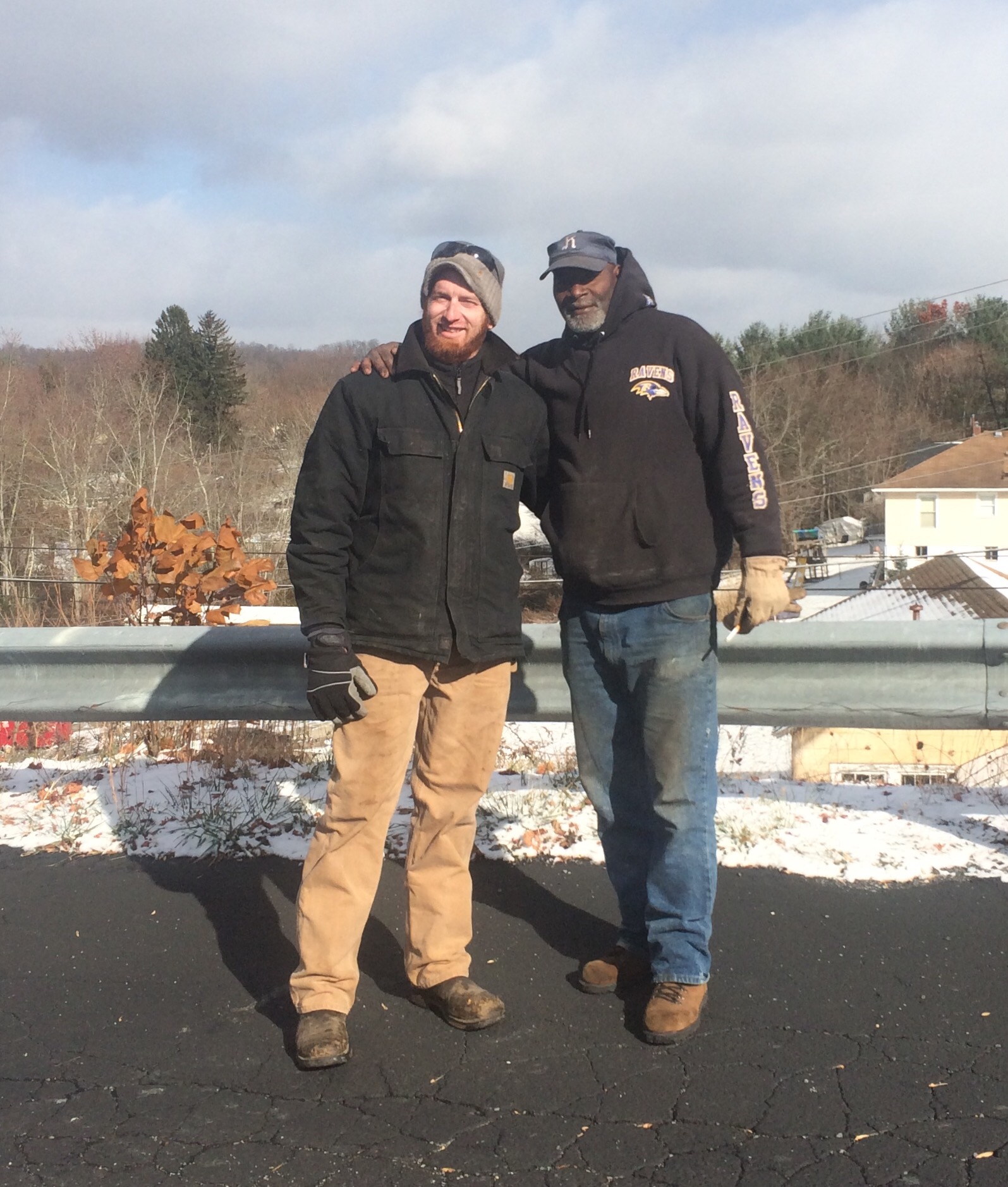
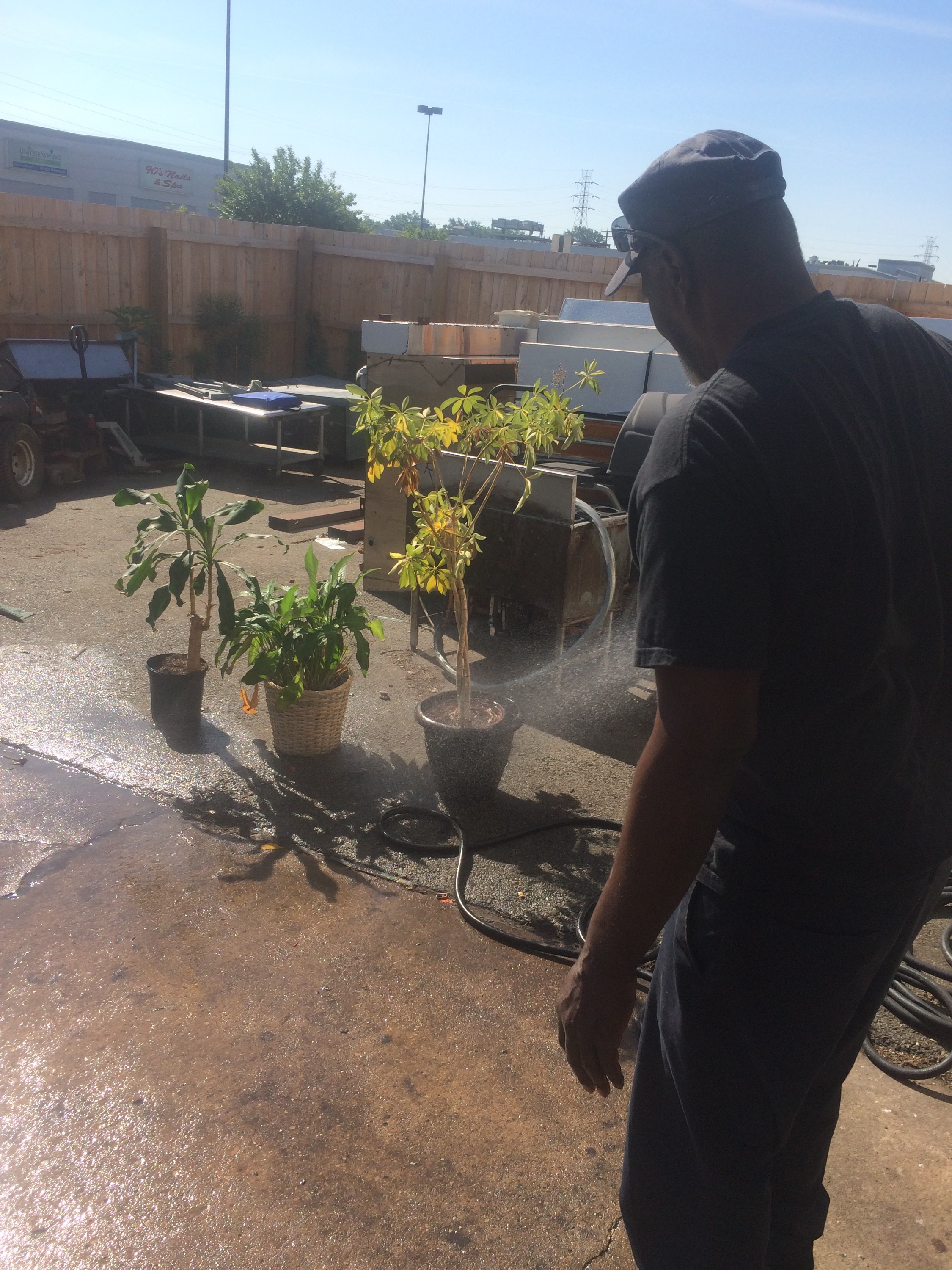
Alan is a gentleman I have worked with. I call him Mr. Al.  Here is a picture of us in West Virginia:

…it was cold…

He’s a fifty-five year-old African American man, ex-marine, and one of the most profound people I’ve met.  He’s fixed my car, dropped some serious lessons on me, and made me laugh till I cried.  He’s also stubborn as shit.  We did quite a few jobs together…and sometimes we would end up screaming at each other.  I couldn’t tell you what about.  Maybe it was my forklift driving or maybe he wasn’t moving fast enough for my liking or something else that really wasn’t all that important.

After we had screamed at each other and finished whatever nightmare job we were on, I’d usually buy him a cheeseburger.  Because I’m stubborn, even in my love for this man.

This is the lesson of the Mule.  Rooted, but in an earthy way and ultimately coming from a place of love.

I find resistance to be the negative side of things.  That thing you feel when you know what you need to do but don’t do it?  That is resistance and it can be sticky and awful.  To get through that I often need to look at what’s beneath that.  Oftentimes it may be fear of failure, feelings of not being good enough, or any number of things.  Things of the smaller self.  To get through this I usually imagine the small self being held by my larger self, usually a very large tree.  It doesn’t work all the time because life can be overwhelming.  When it does work it is quite liberating.

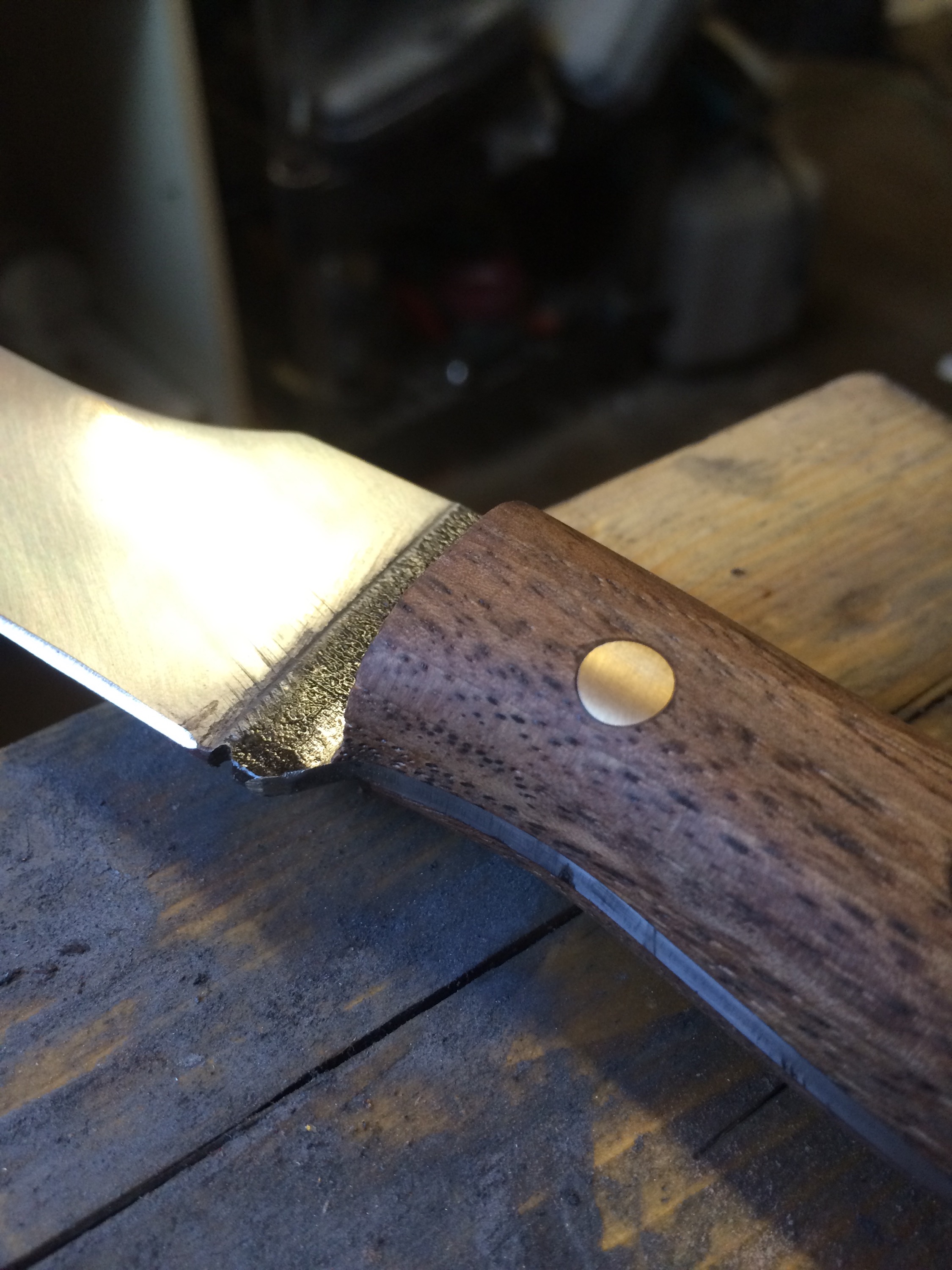
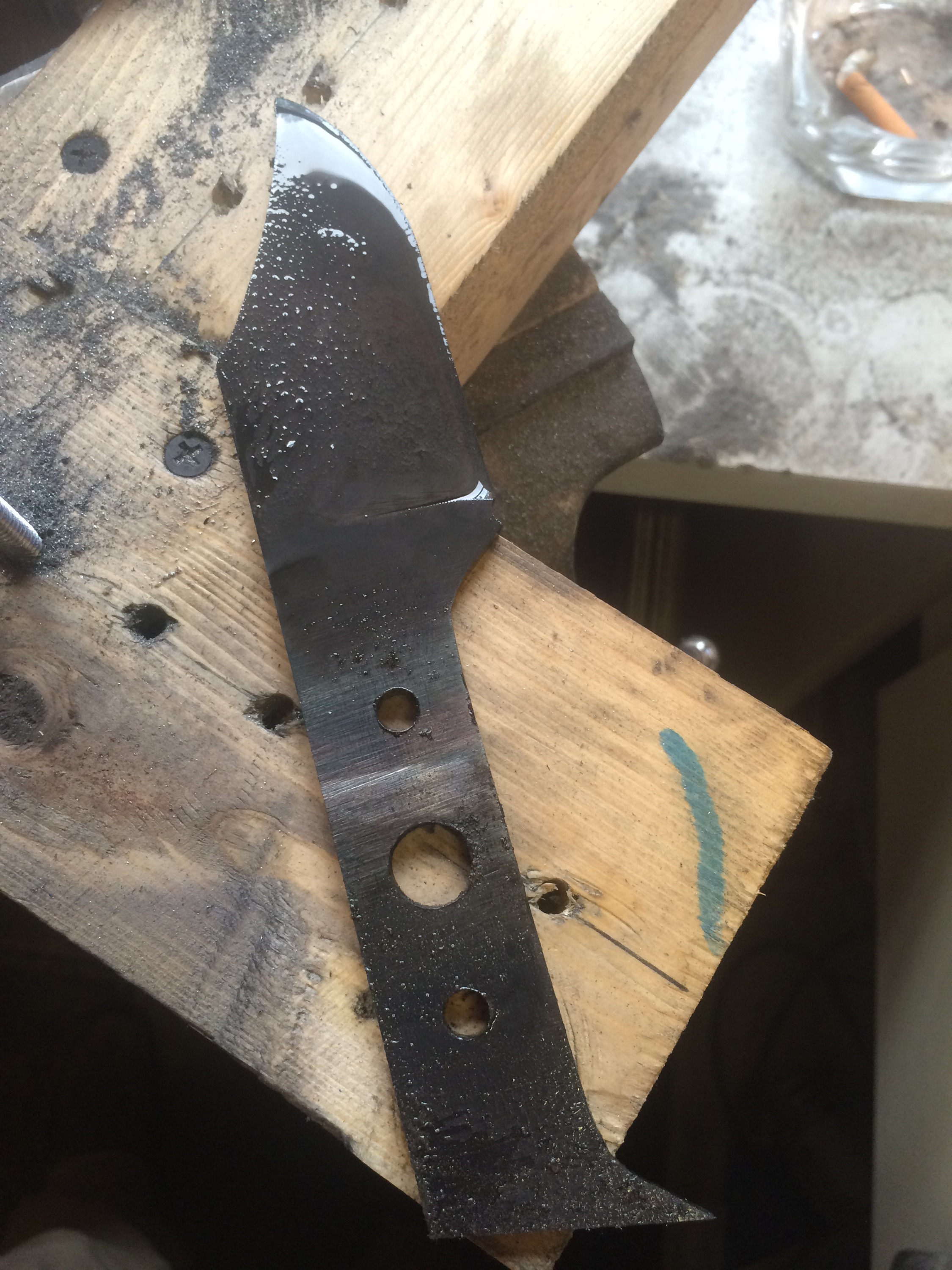
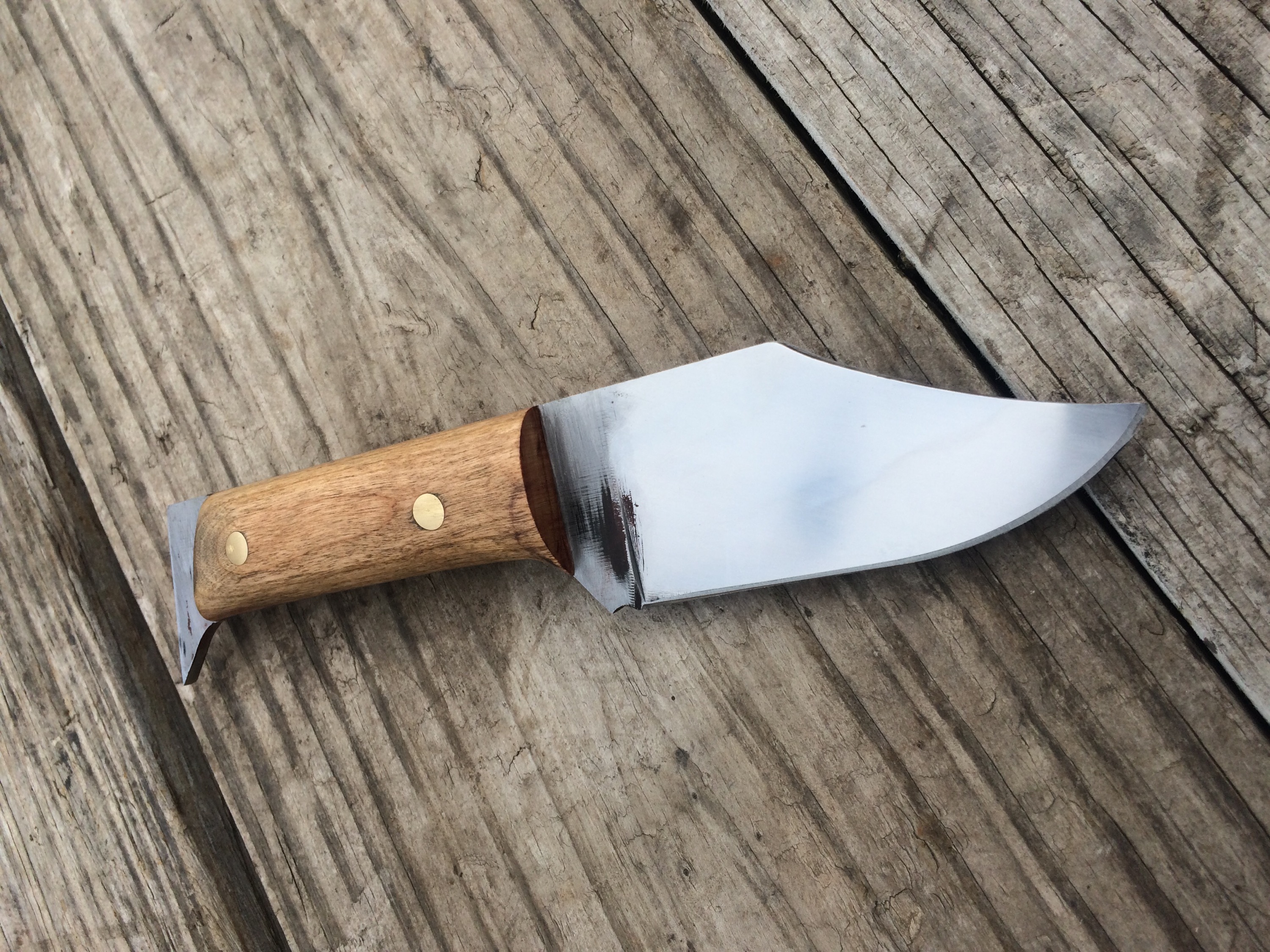
 Sometimes you need to dig into your being.  So I put a sharp foot on the profile of the Mule to do just that….Slowly to the left….    slowly to the right…  Hardening the foot as well as the blade  Hardened up nicely she did…  Wet sanding… For the handle I used Cherry wood.  In Celtic lore, Cherry is the Tree of the Heart. She sits and cures…  Brass rivets and a lovely grain…


I left some of the scuffing.  The stuff of character…  She’s been through a journey.  I fancy a bit of the singed oil smduge…  

10014928_10102577420615476_1305789096652702656_o

The lesson of the mule is to take heart in your stubbornness, and to let go of resistance.  Both of these things will always be continuing works in progress, at least for me.

Here is a picture of Mr. Al watering his plants;


Knifemaking: The Spellcaster Epilogue

“Faithless is he that says farewell when the road darkens.”

J.R.R. Tolkien, The Fellowship of the Ring

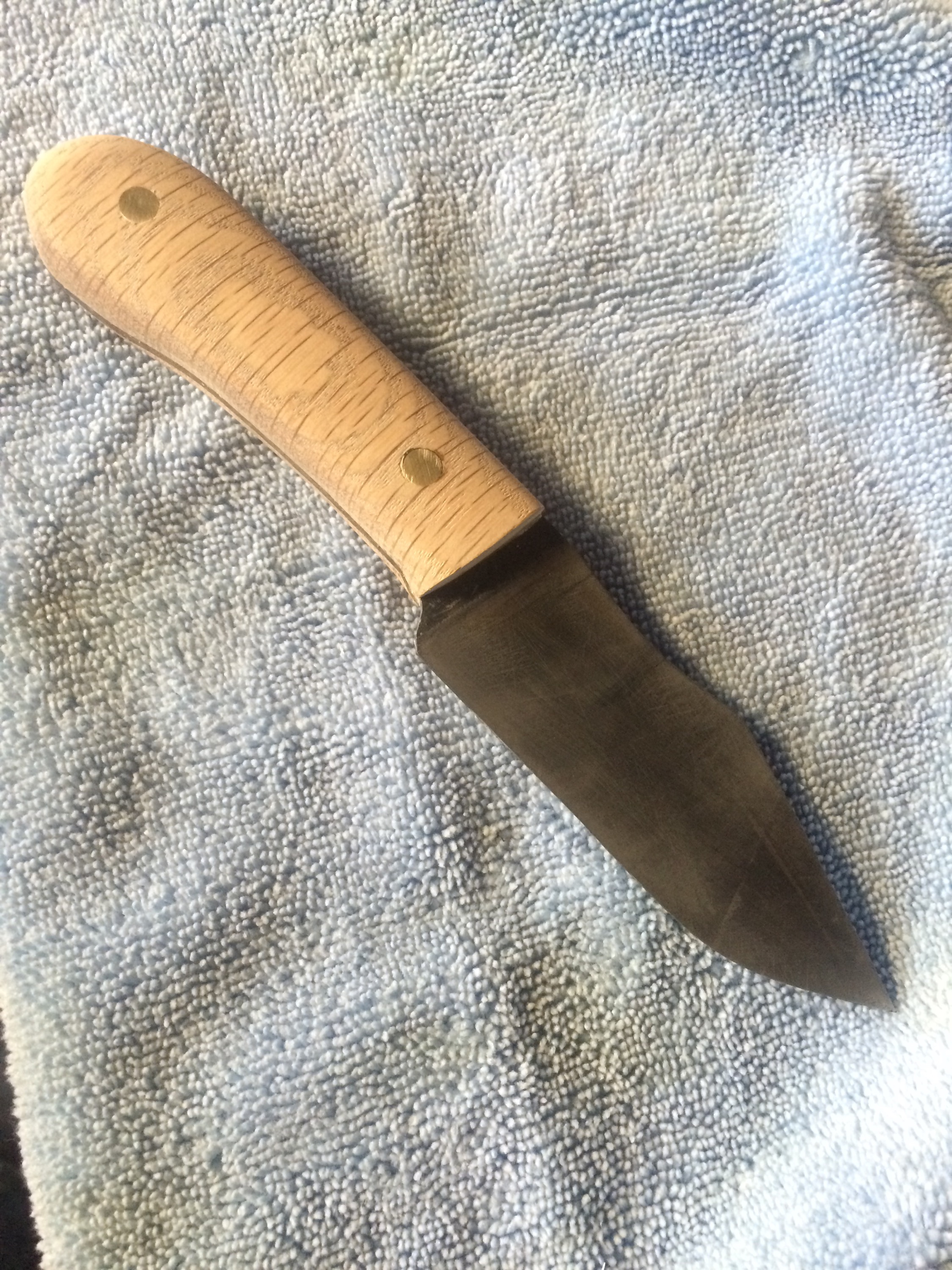
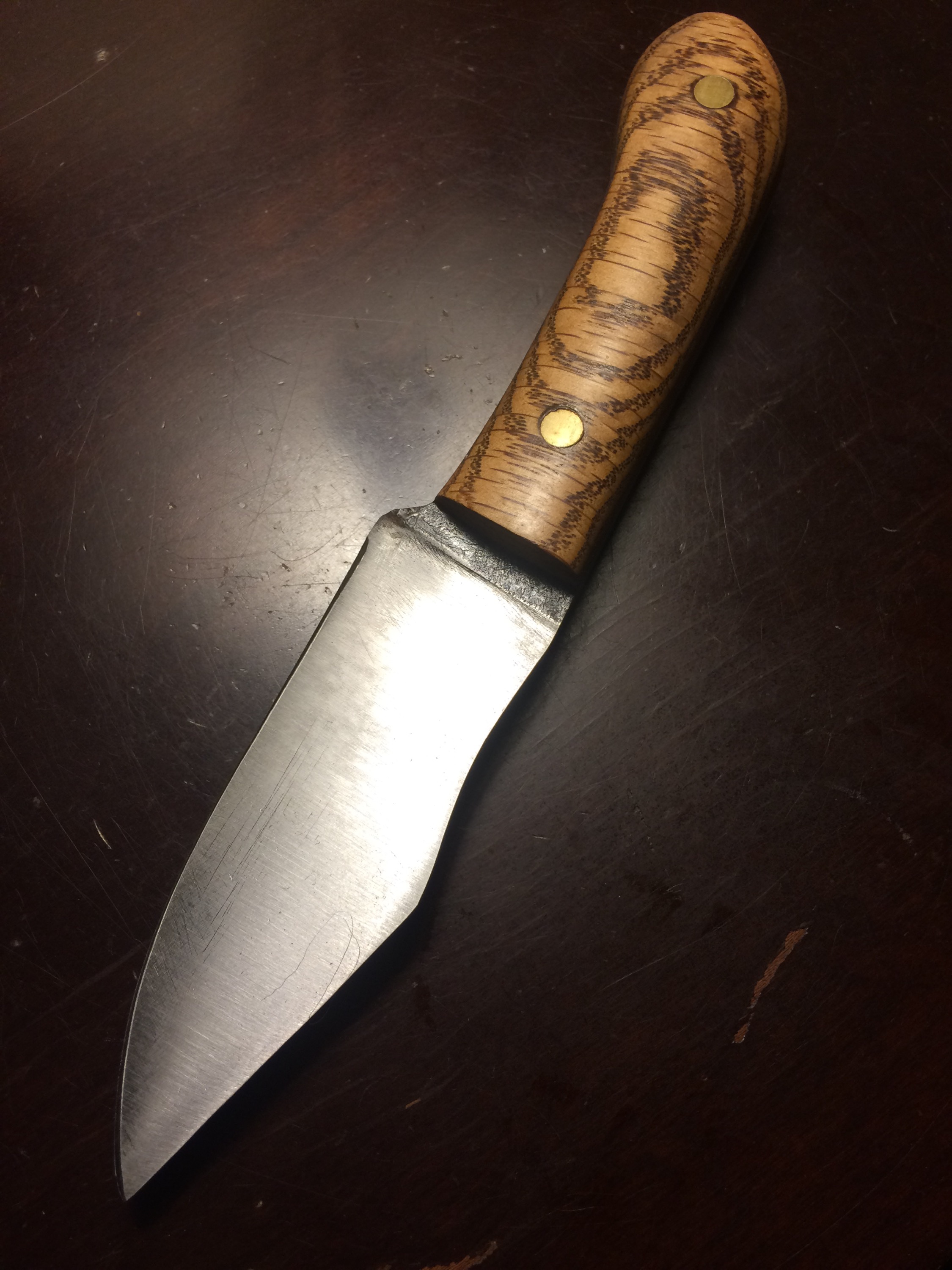
The Spellcaster was a lesson in faith- I wasn’t sure if it would even turn out.  I loved the idea that the steel came from a bedframe but I wouldn’t know if it would harden and temper properly till I had put in a lot of work on it.  It did.  I’ve been working on this blade a long time off and on and finally, like many things in life, I just had to take a leap and just go for it.  It is a thinner blade, very nimble and made for a smaller hand (well, smaller than mine….)

The lesson here is to trust that things will be ok, even if they aren’t the way you expected they would be.  Even if they aren’t the way you would like them to be.  This is something I struggle with- letting things be as they are.  In order to finish this blade I had to let it be as it was. Only then could I see how beautiful it really was.

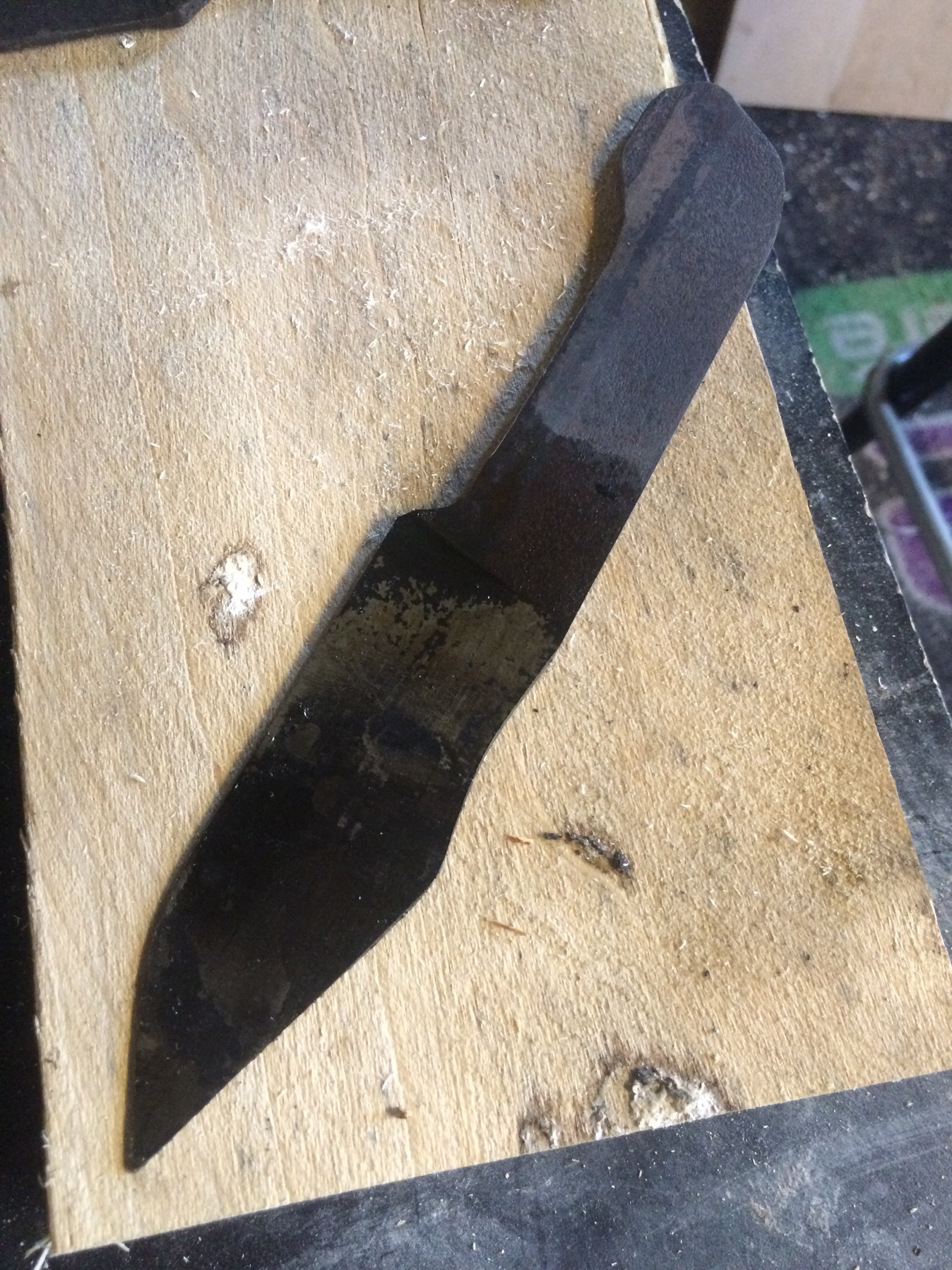
This is after heat treat.  A file couldn’t touch it.  The bedframe delivered…   

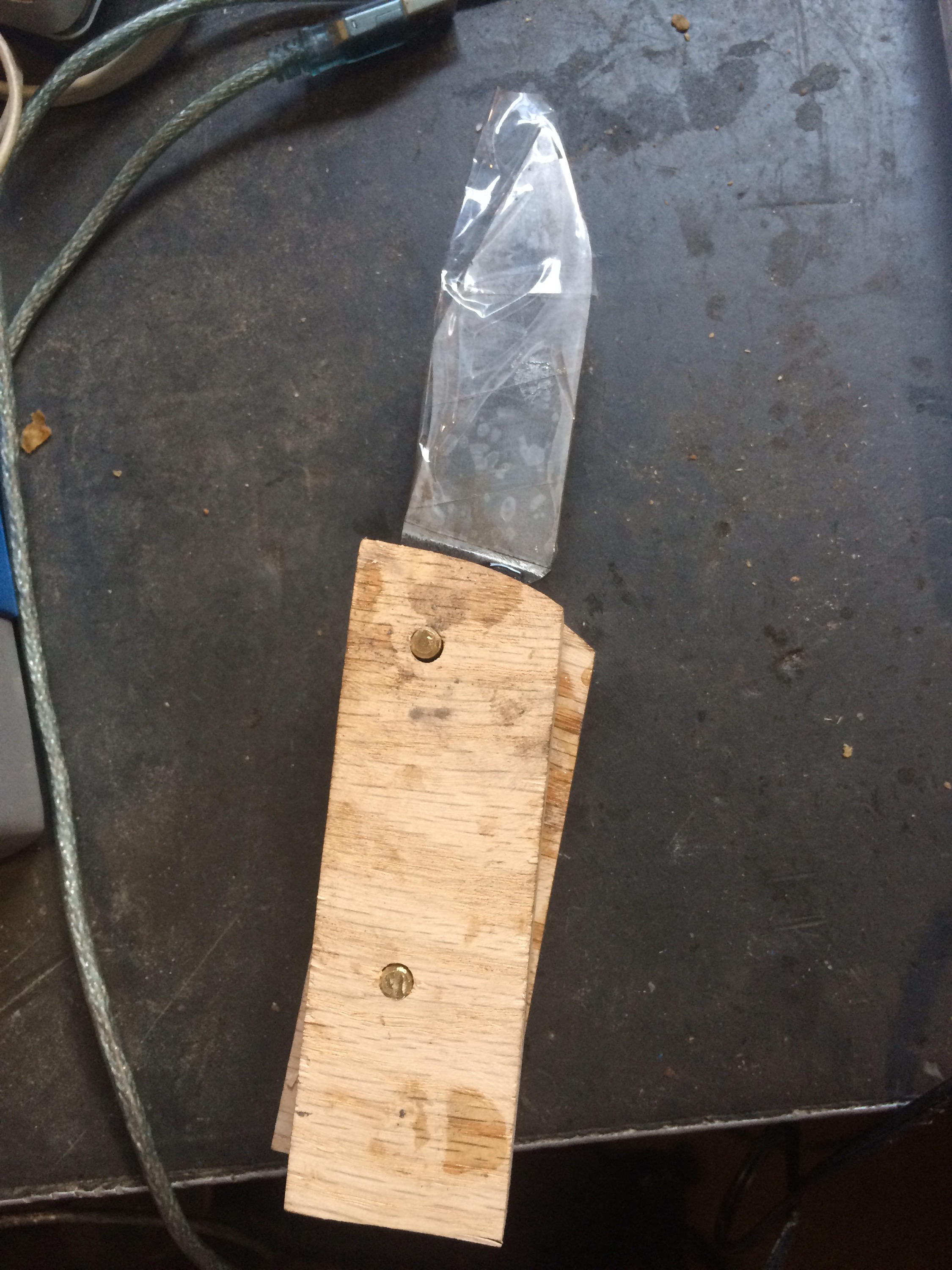
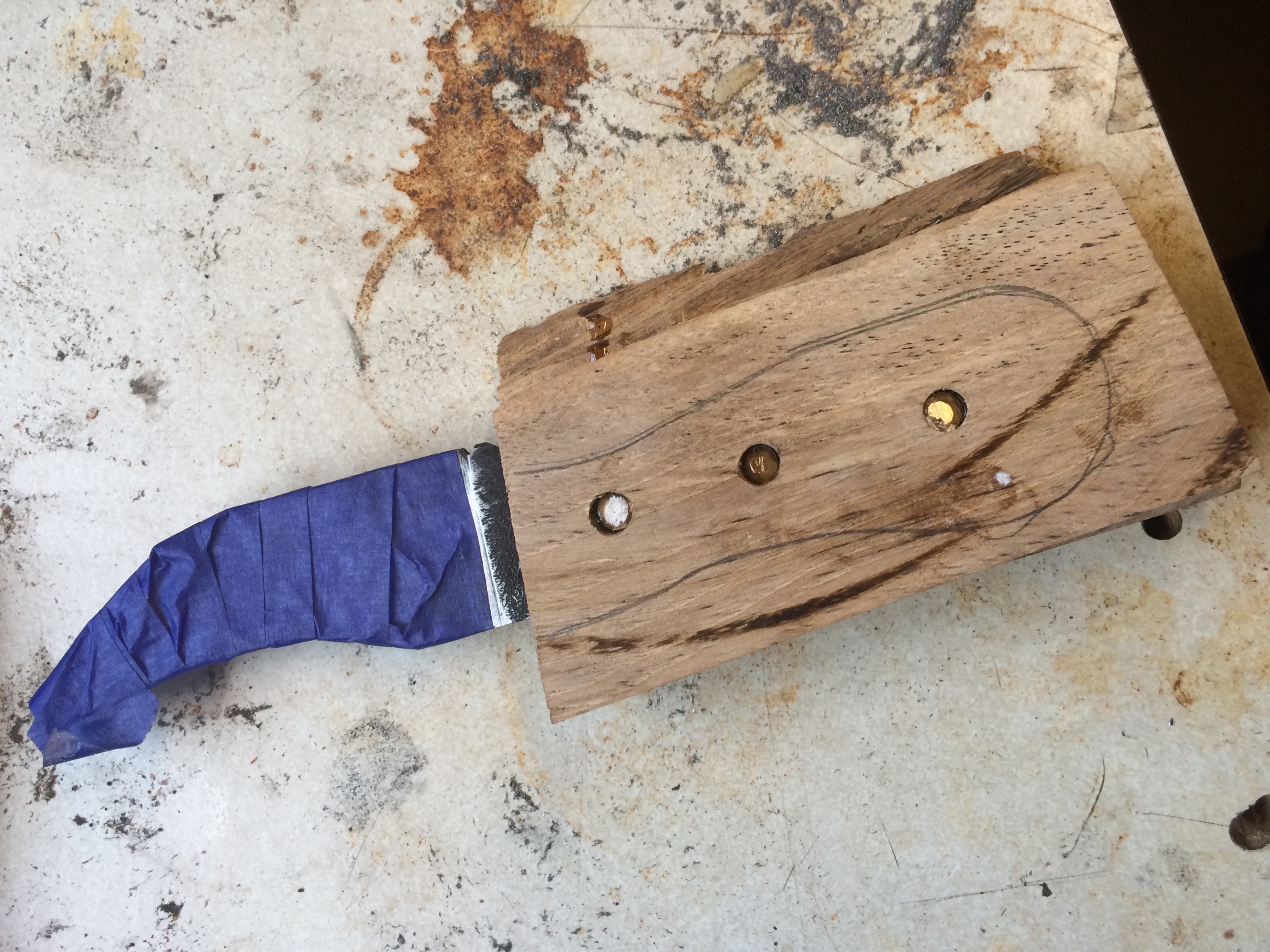
I used white oak for the handle.  I love oak.  It has mass and it’s heavy.  It takes up space and lets you know that it’s there.  In Celtic lore, oak is a protector, wise and strong and a bridge to otherworldly places.  I wanted that for this blade.

This is a beautiful process and one of my favorites: 

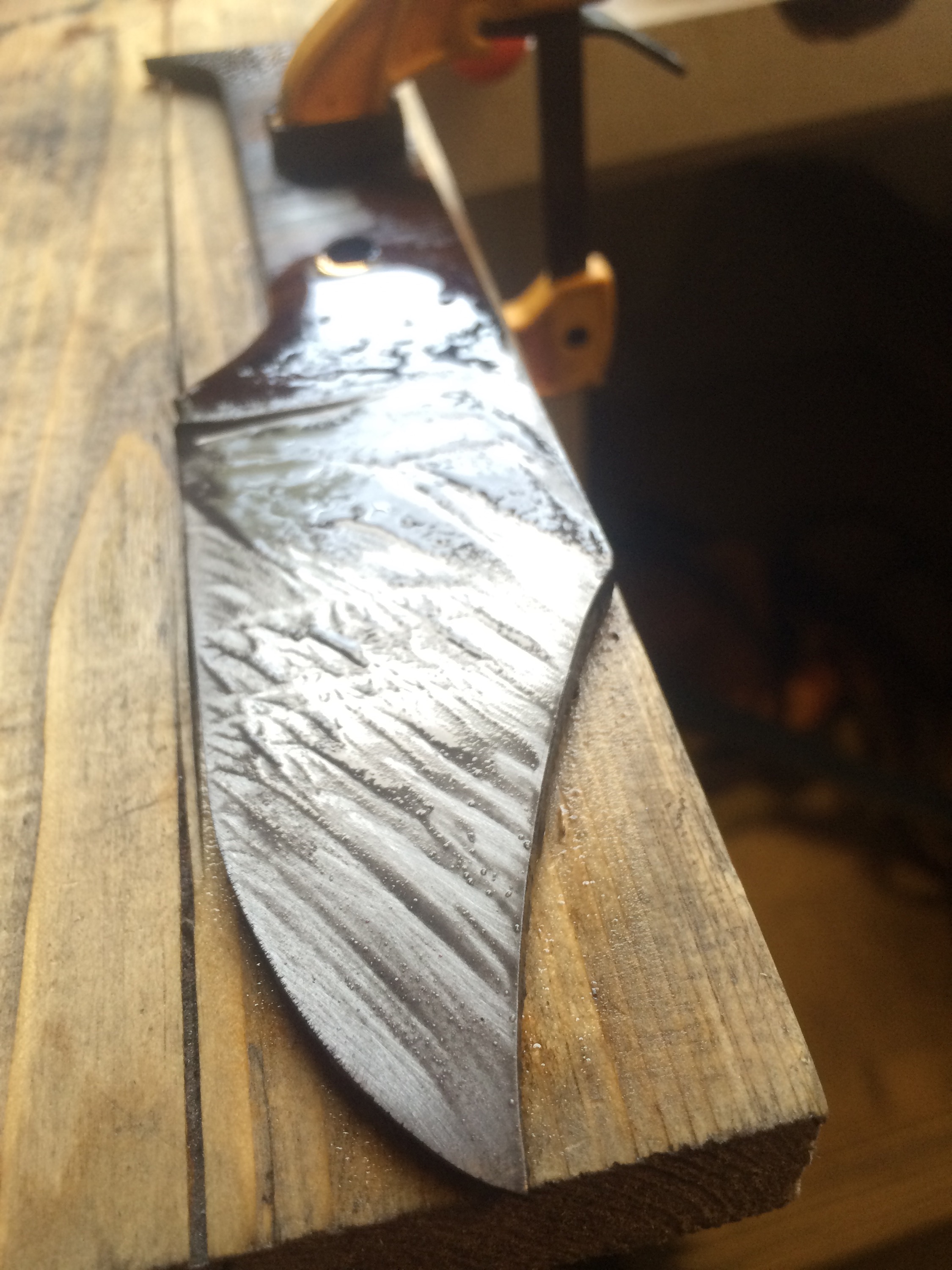
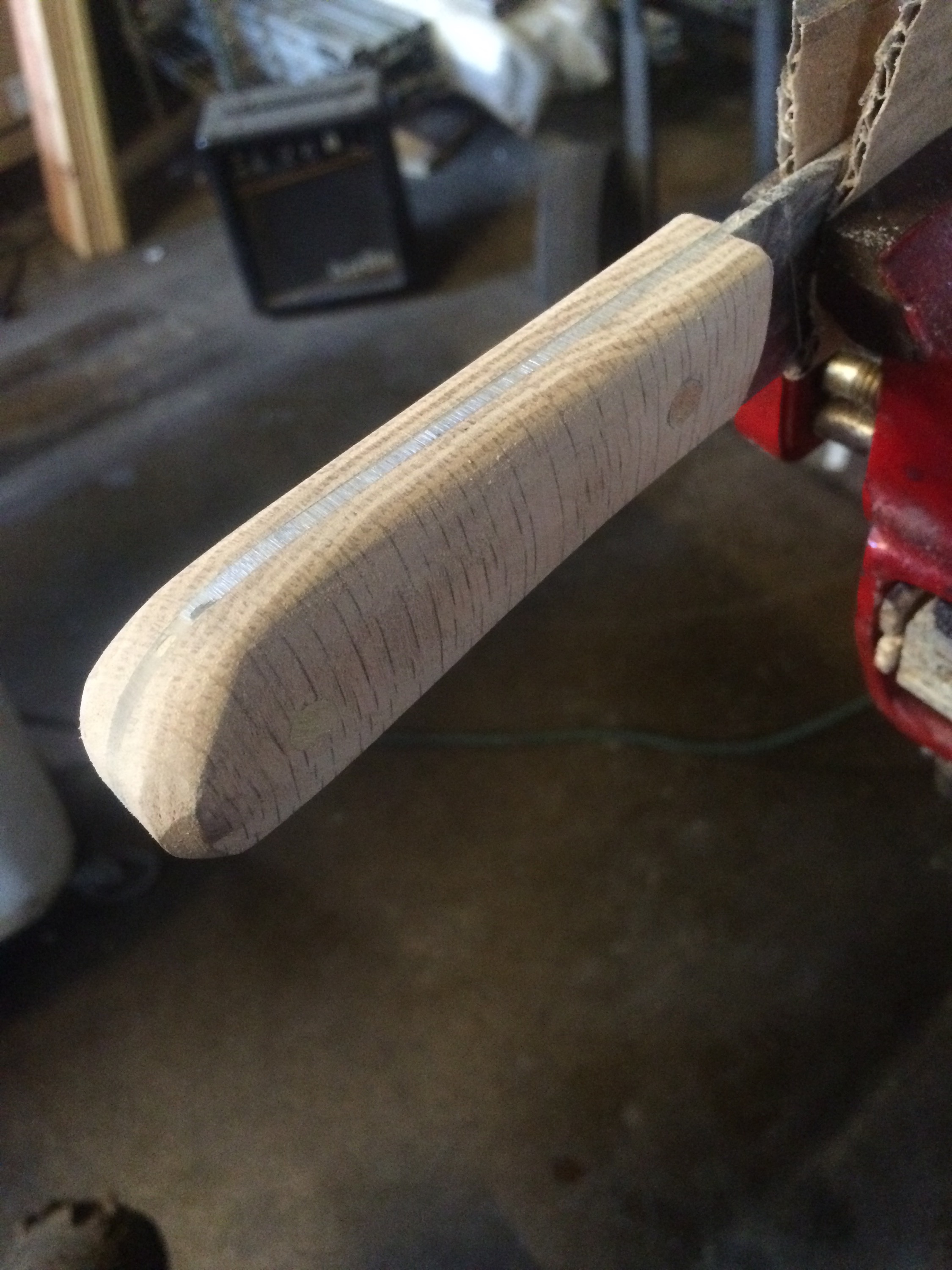
  Roughing it out…The grain is starting to come out…there is a woodworkers’ trick where the wood is rubbed down lightly with water and allowed to sit- this brings the grain to prominence.There she is….

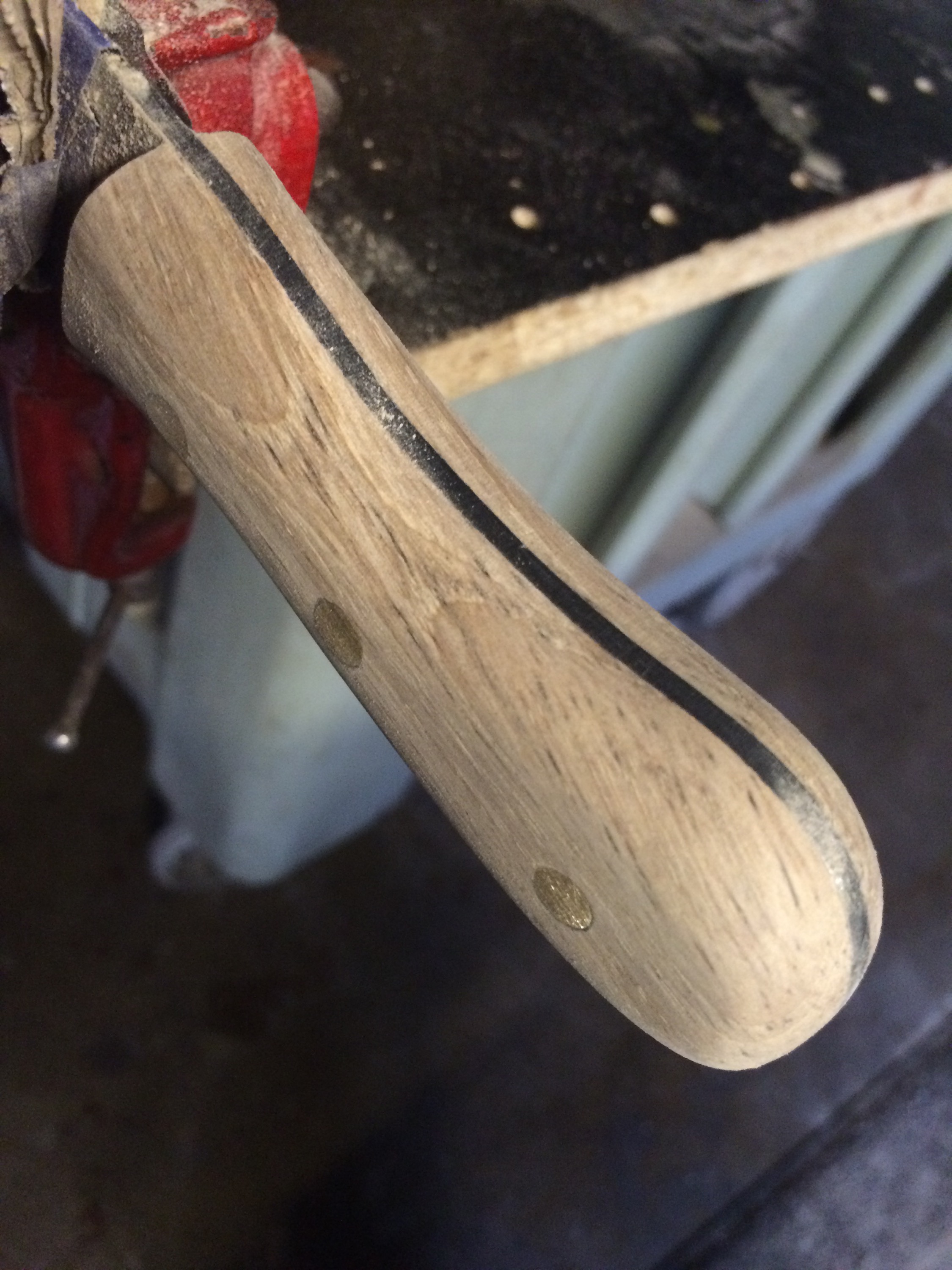
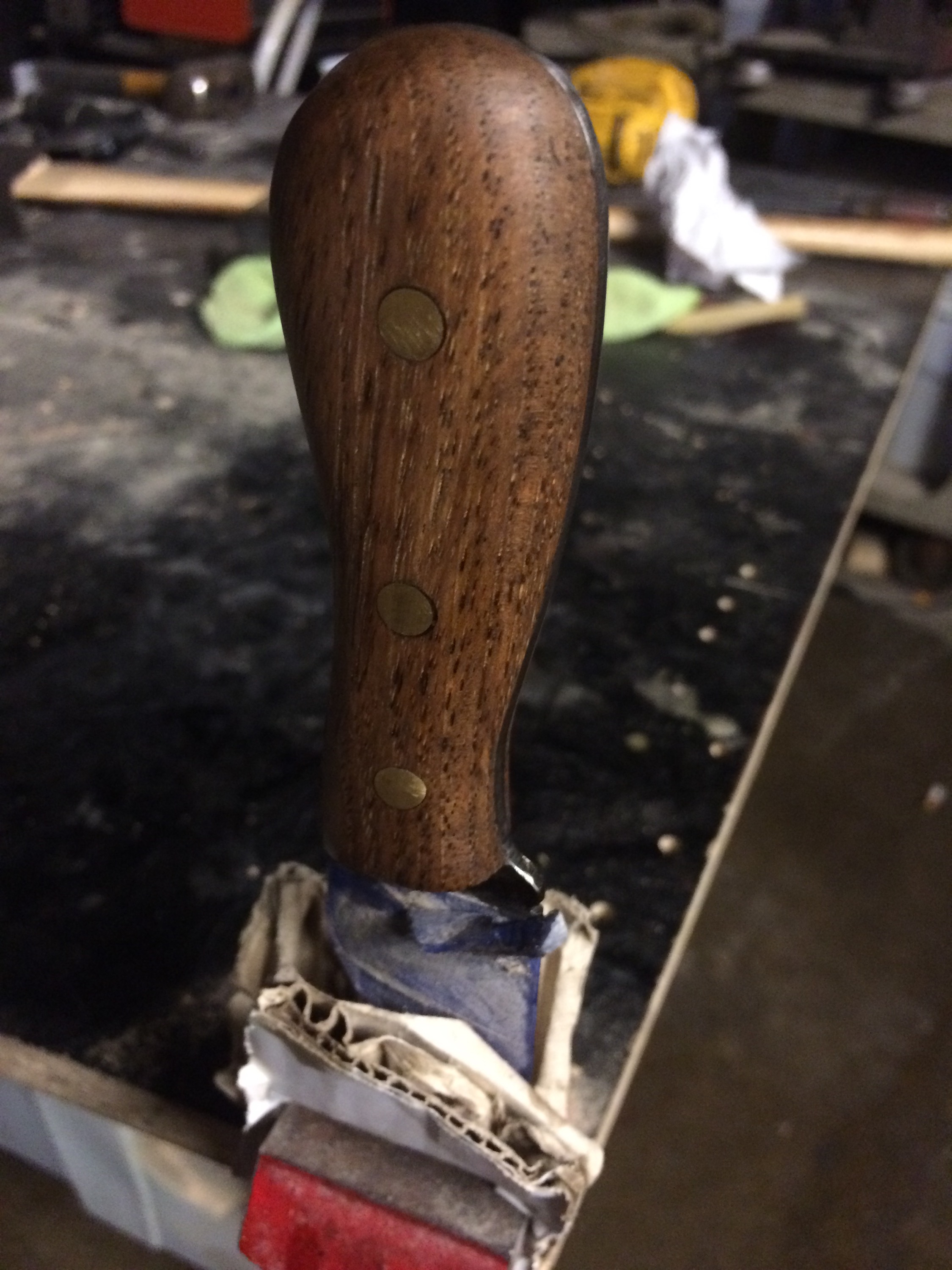
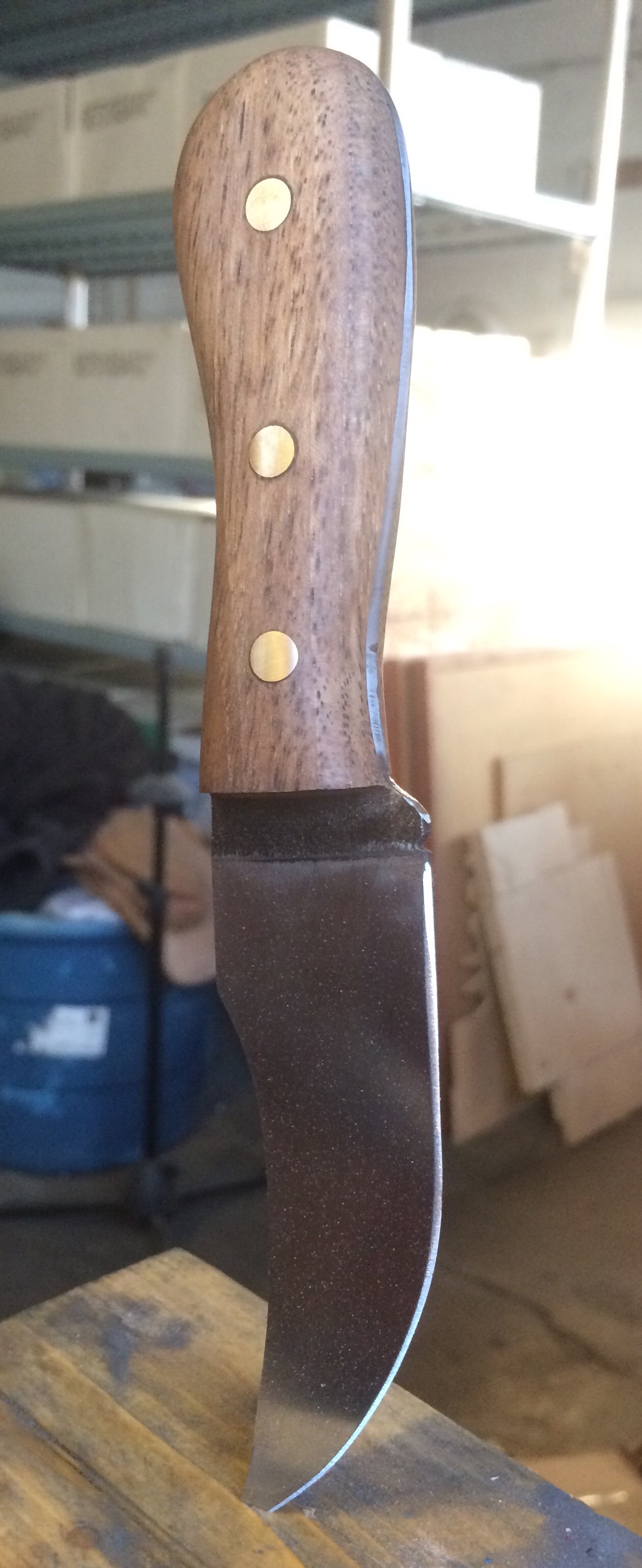
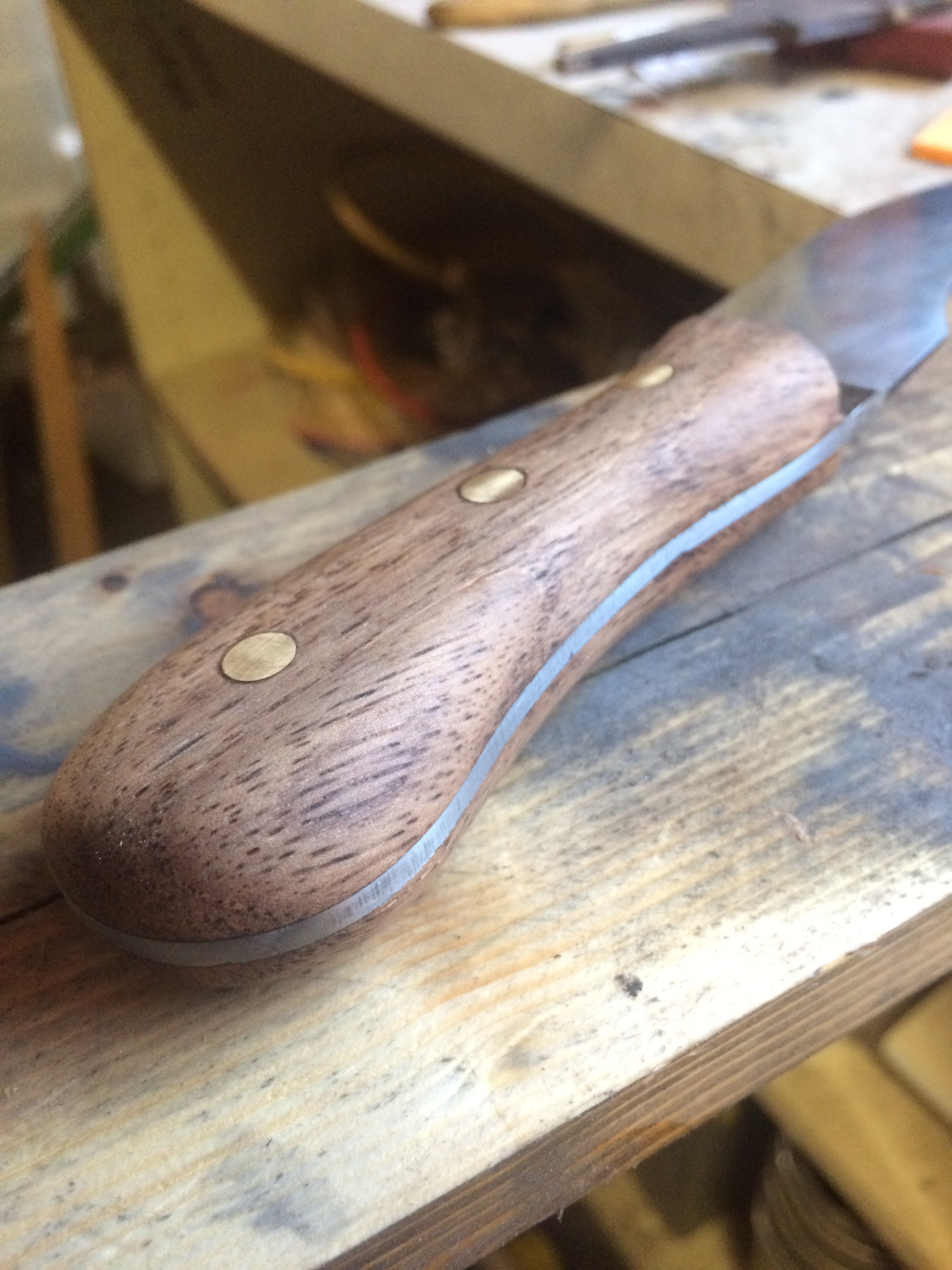
Brass rivets with a walnut danish oil, finished with tung oil.       


Always keep your faith.  This is the lesson of the Spellcaster.