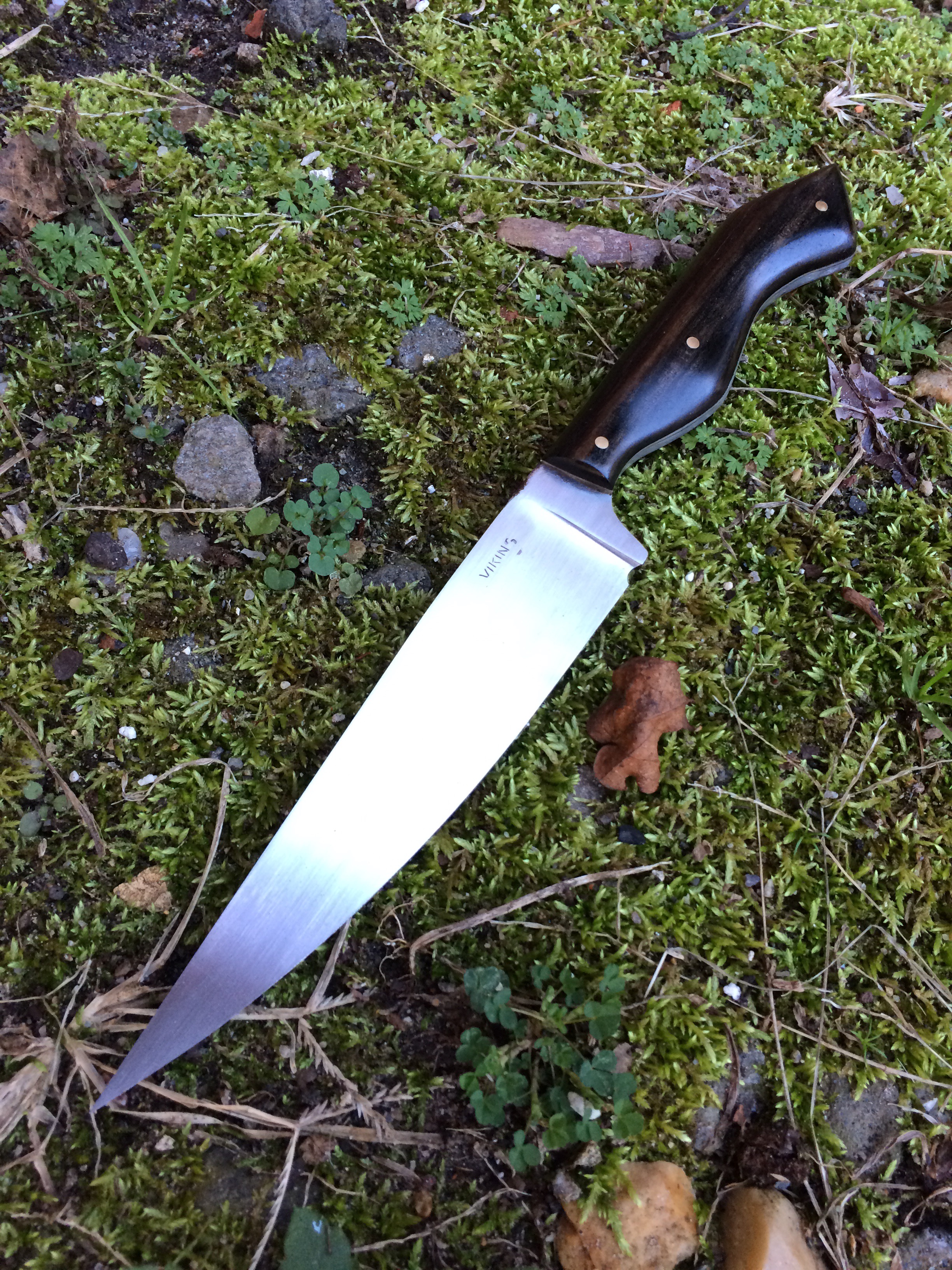
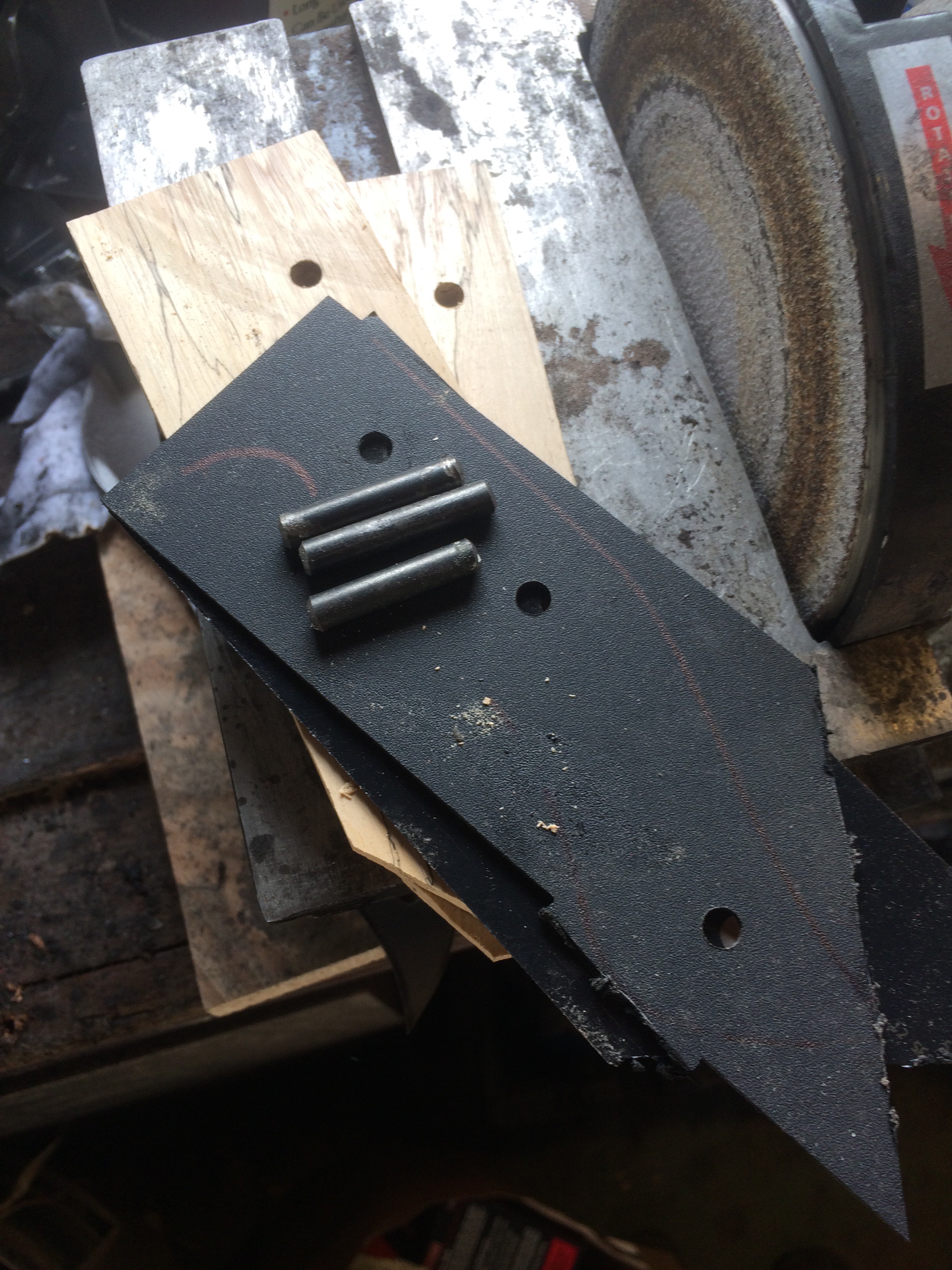
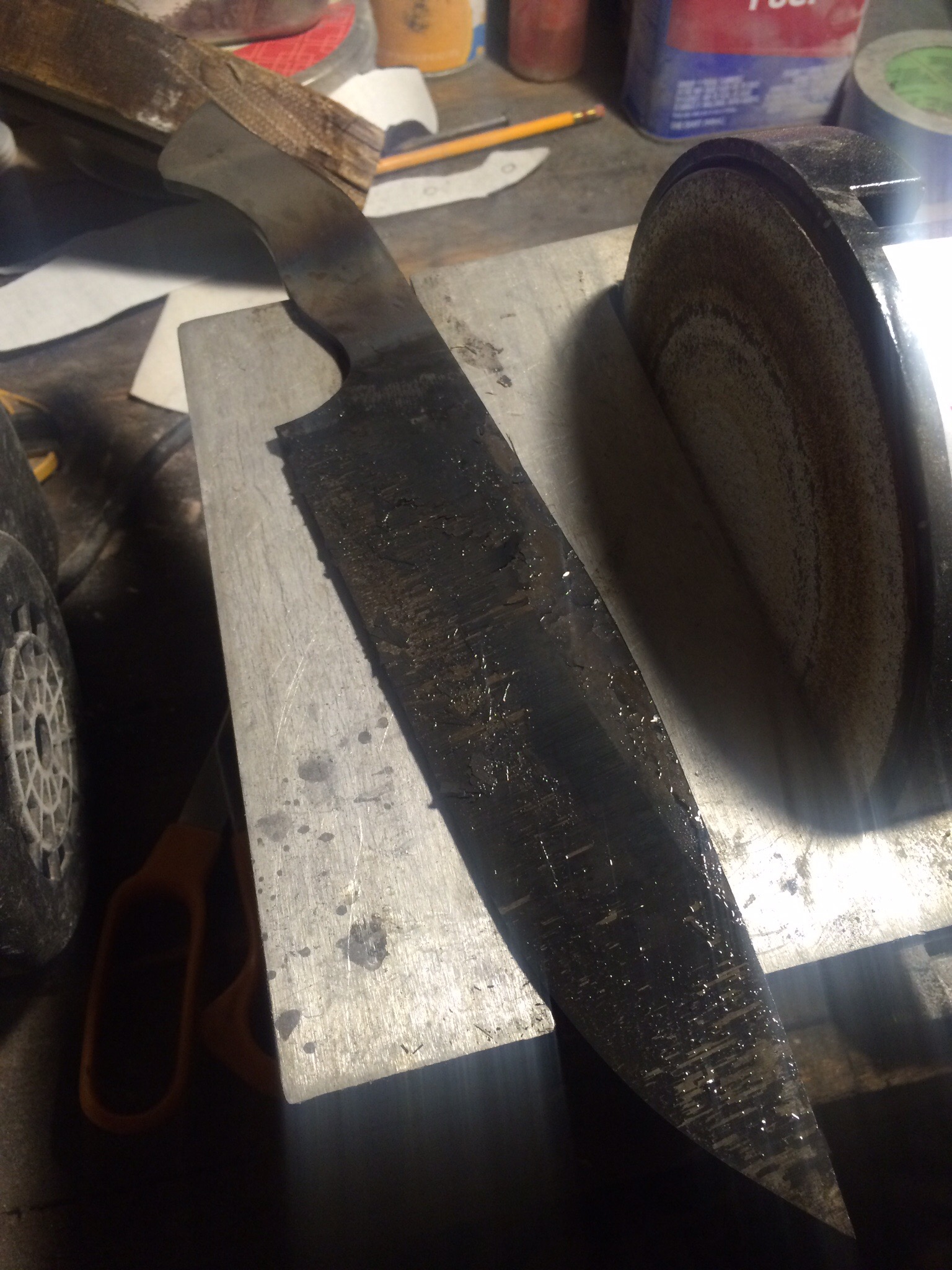
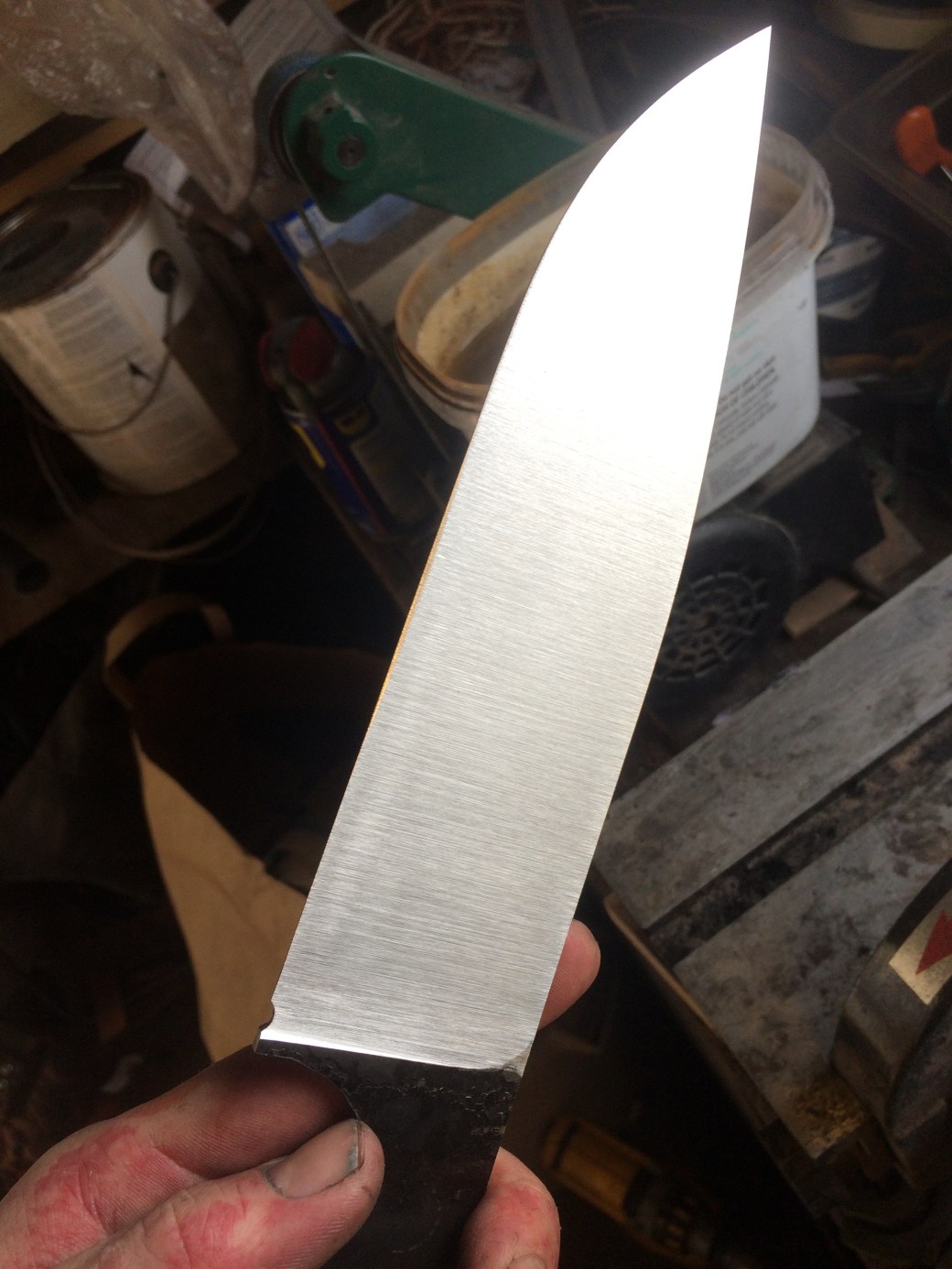
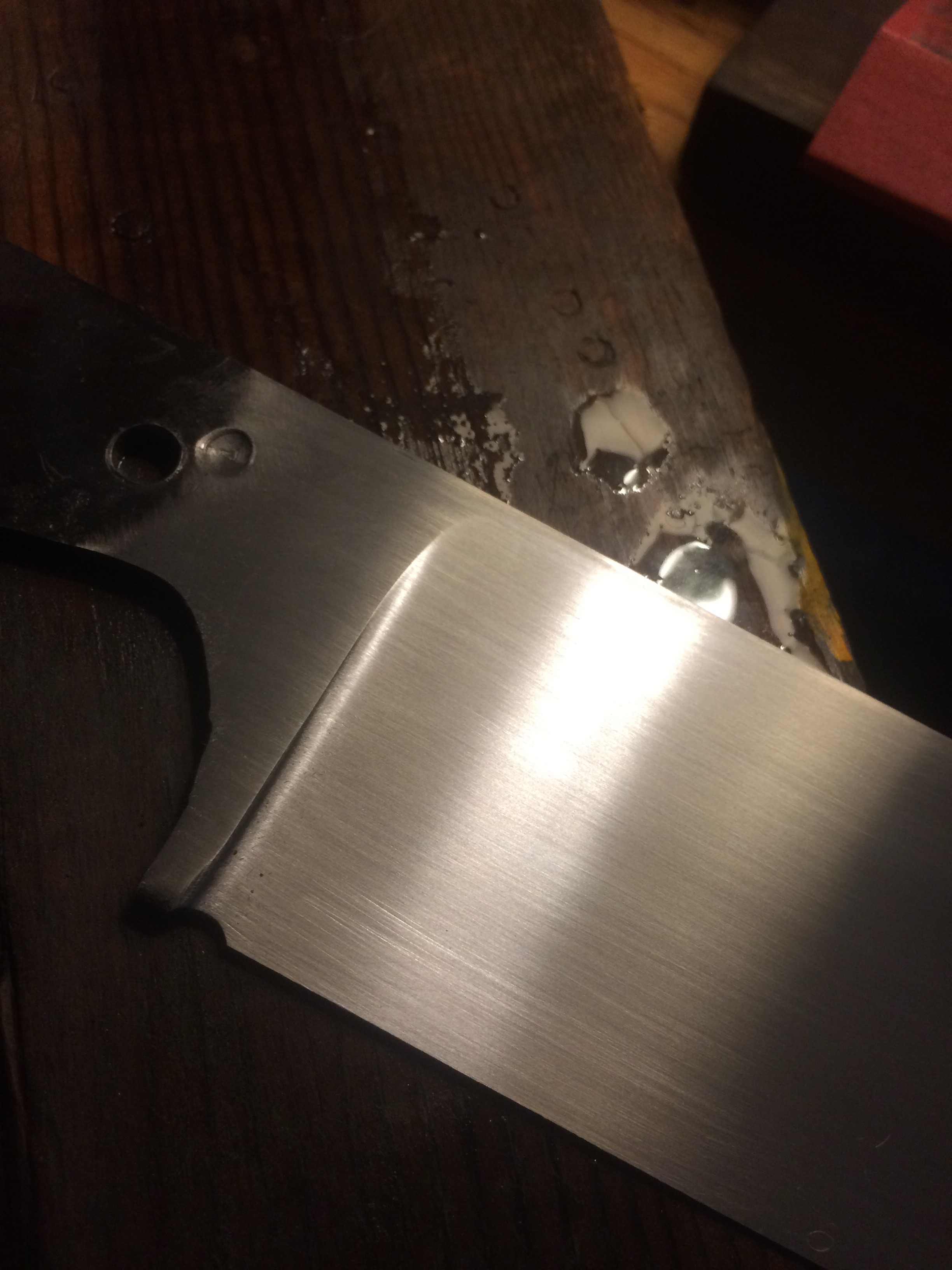
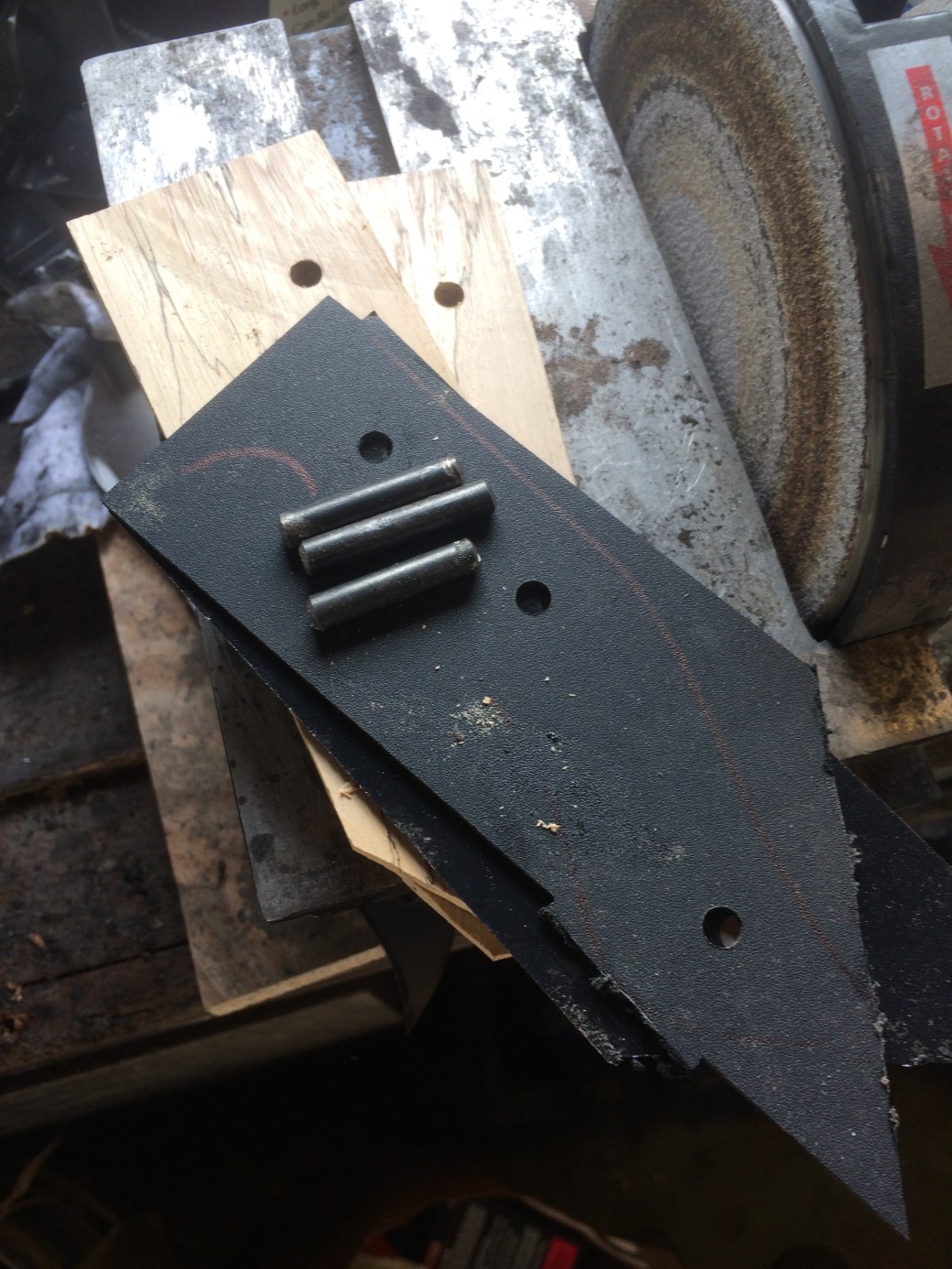
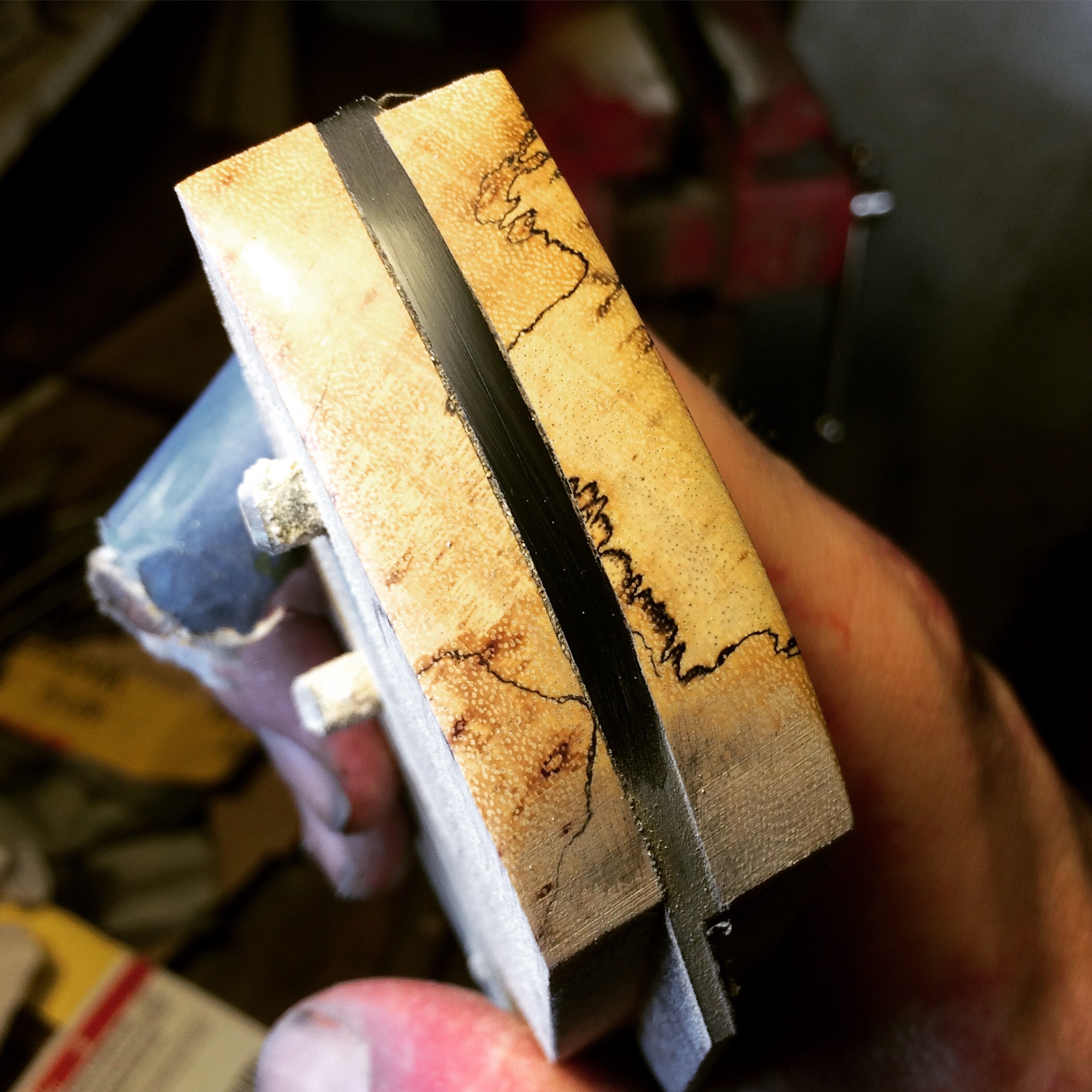
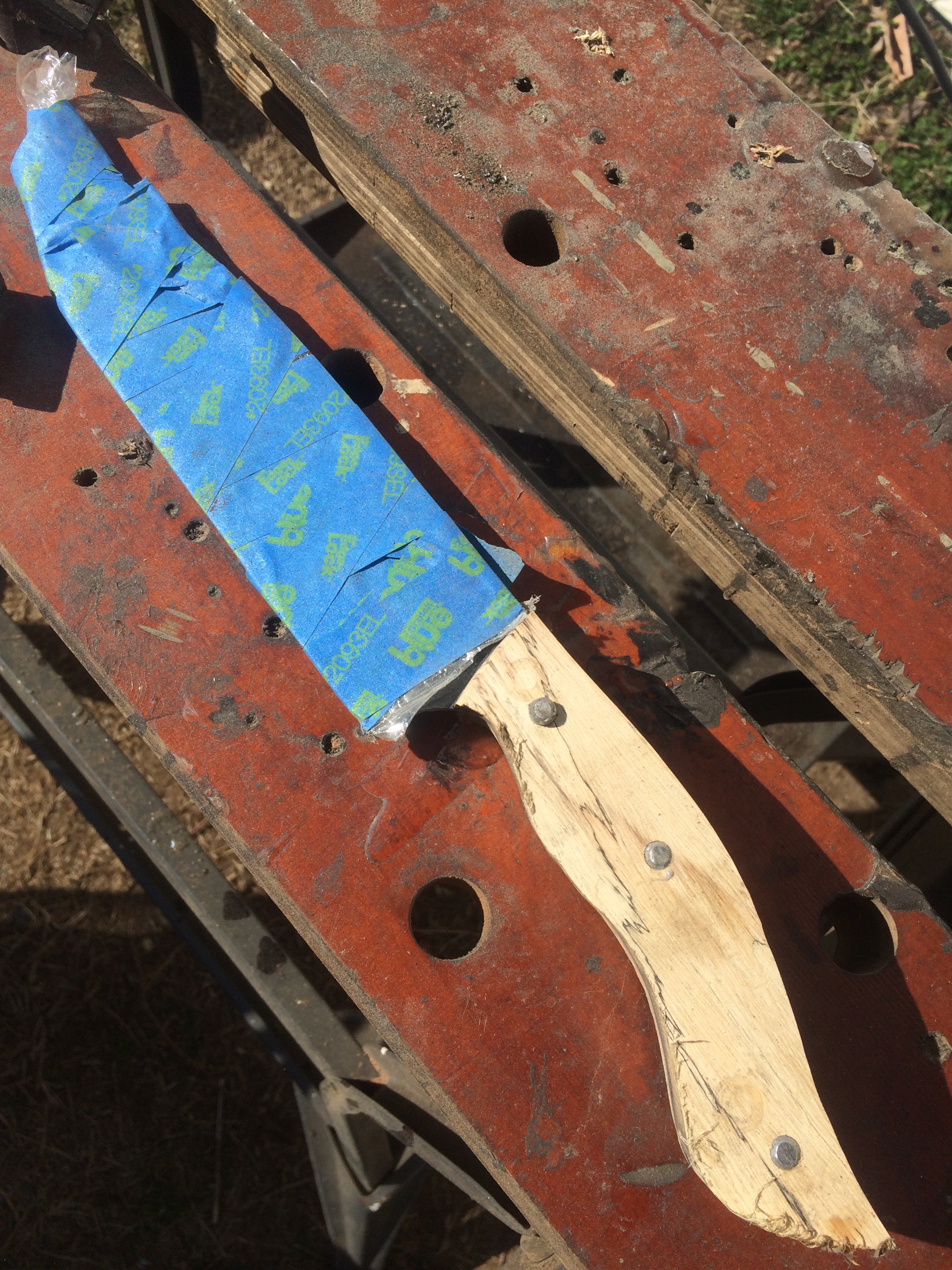
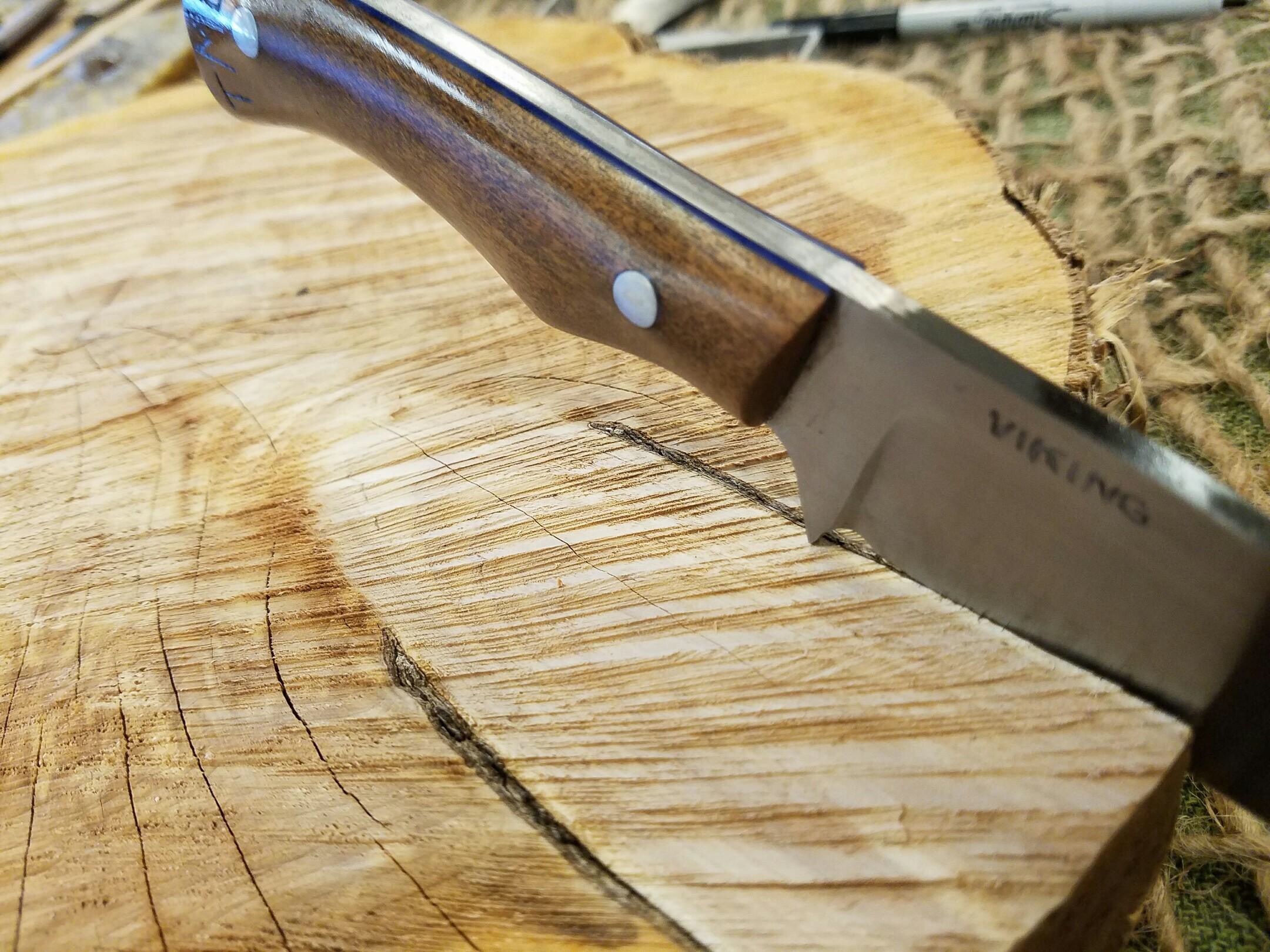
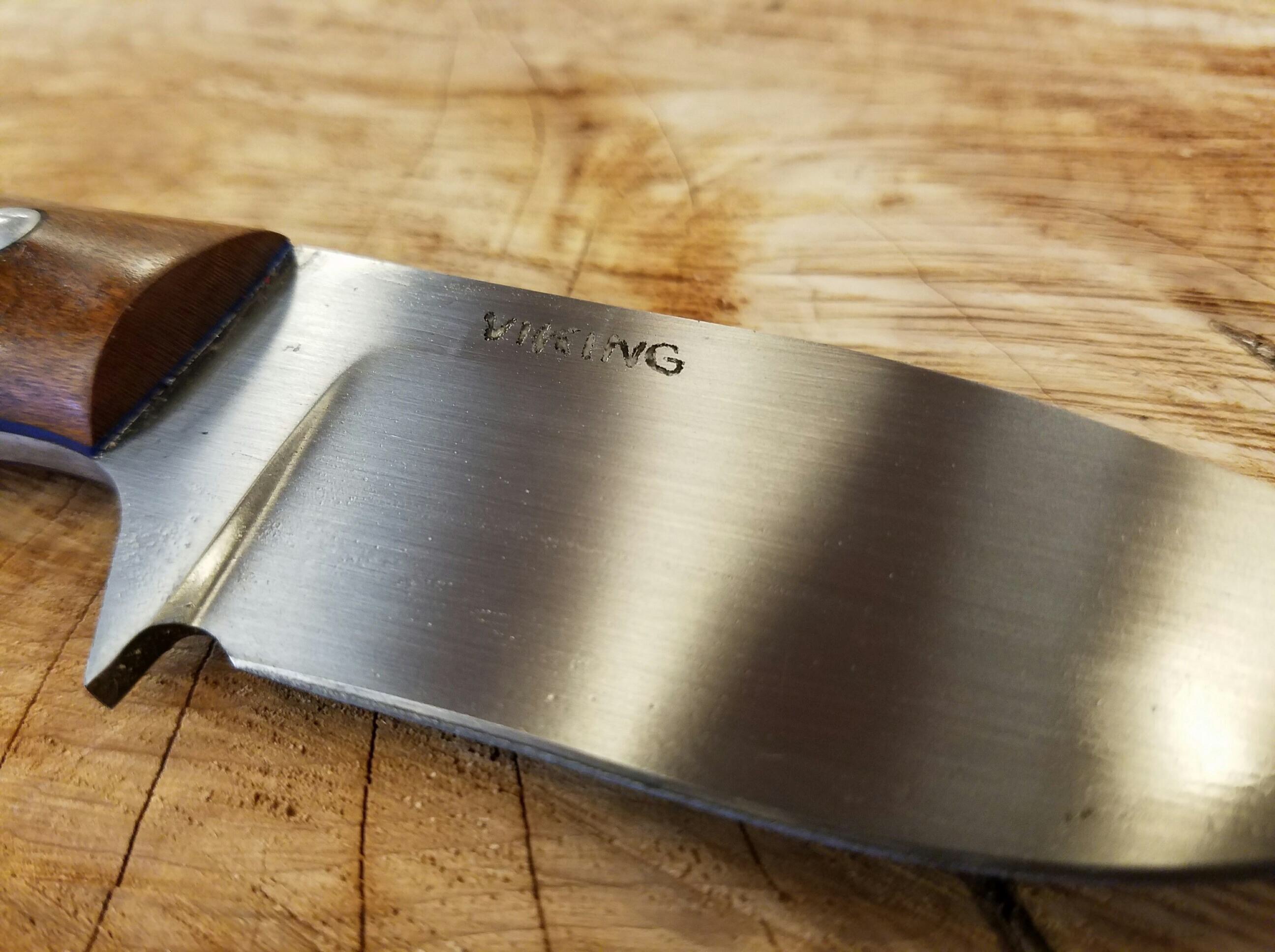
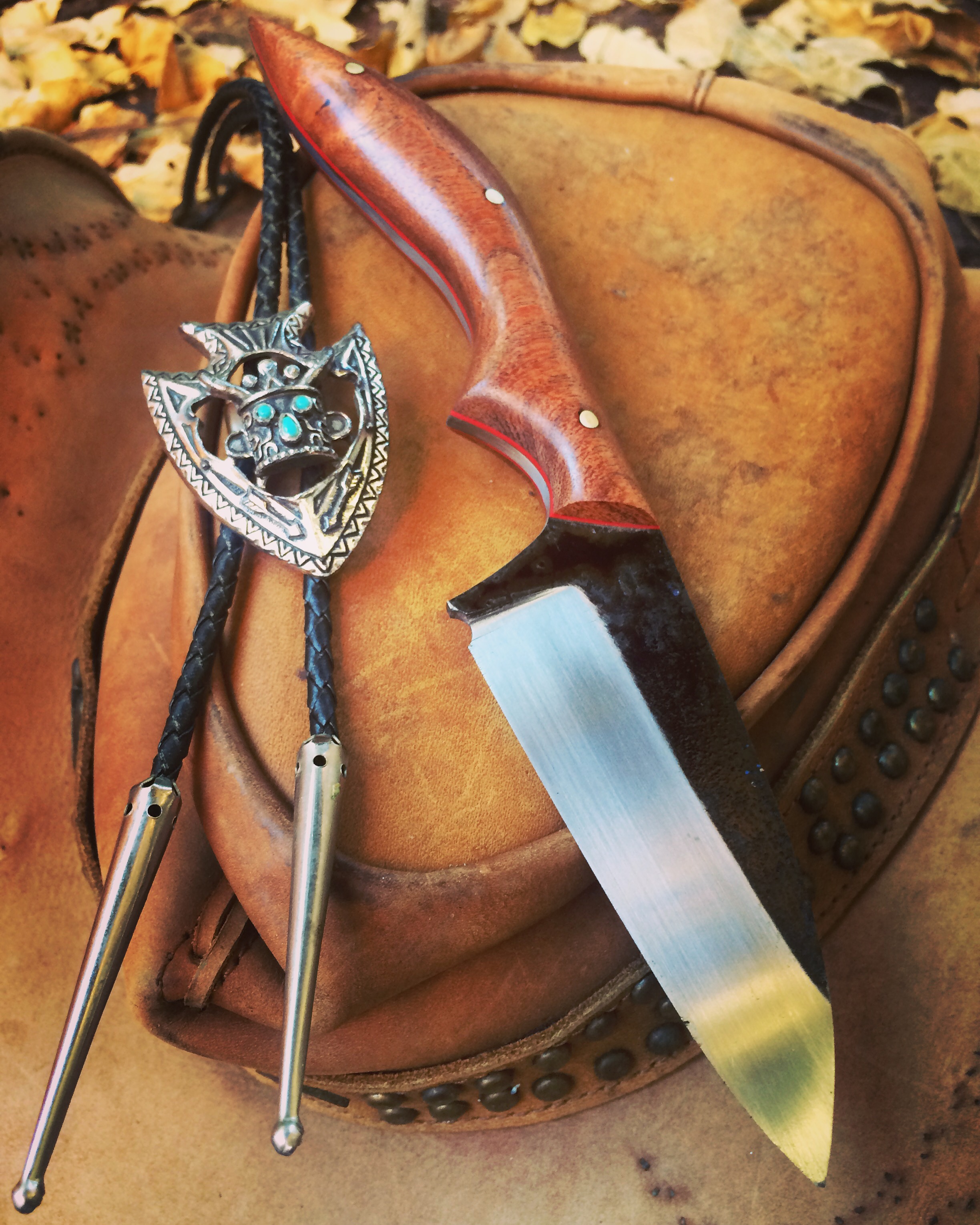
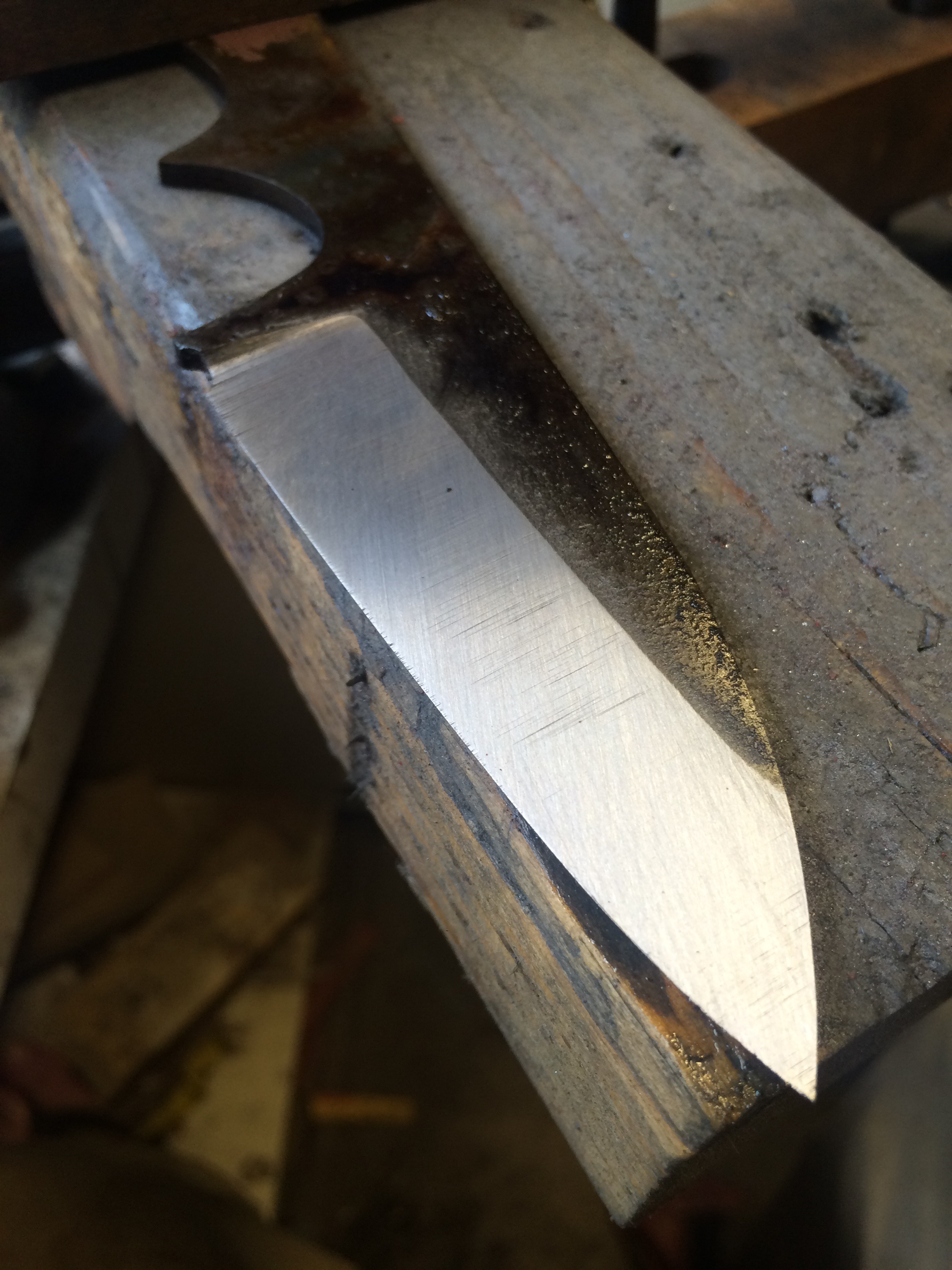
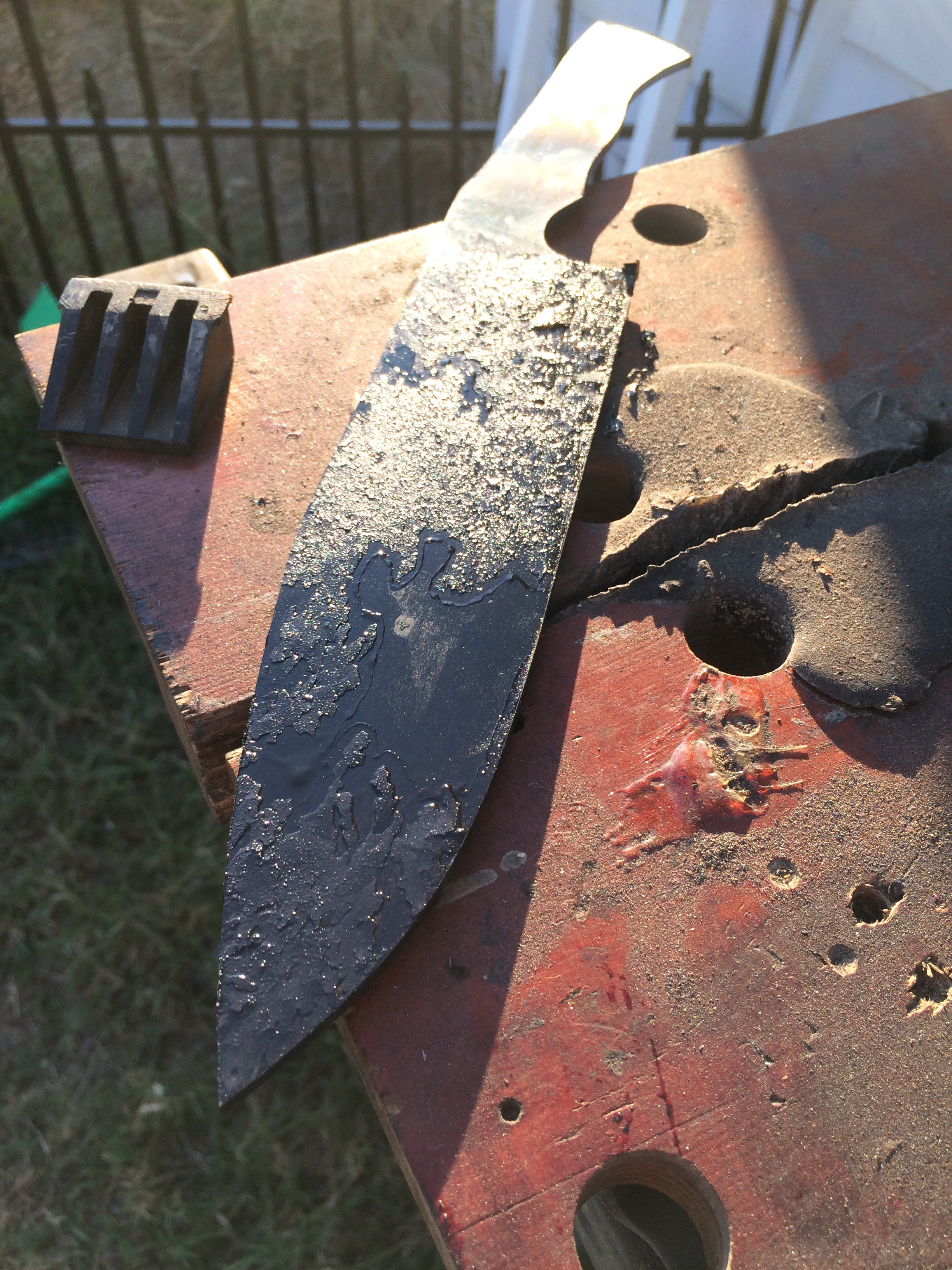
Knifemaking: having a quiet day and the Woodsman, Mark Deux

‘In silence there is eloquence. Stop weaving and see how the pattern improves.’

-Rumi

From mid-January to mid-June of this year everything had been a blur.  I was running from job to job, gig to gig, knife to knife, trying to stay on top of everything.  Every time that I felt like I had room to breathe, something else would come up.  Car repairs, state taxes, doctors’ visits, new tools.  It was always something and I was hustling left and right, making sure everything was moving forward and getting taken care of.

Then I had an accident that pretty much stopped everything.

I injured two of my fingers pretty seriously on a table saw.  I was cutting some very thin material when the saw bound up and kicked, and I couldn’t get away fast enough.  The shop is at my partner James’ house and he happened to be home when this happened.  I quickly grabbed a dirty towel and, doing my best not to panic, politely yelled that I needed to go to the ER, right that second.  

On the ride to the ER, which was about twenty minutes away, I took stock of the situation.  James, who teaches shop and technology education, asked me to double check that my fingers were still attached and not on the floor of the shop.  Indeed they were still attached.  I would be told later that I was very lucky to keep my fingers- none of the major tendons or arteries were damaged beyond repair.  

I do my best to practice calm in my life.  Strong reactions happen from time to time, and the best way to deal with them is to feel them, let them pass, and address what caused the strong reaction in the first place.  This is an incredibly challenging thing to do and I don’t always do it well but I’ve gotten better at it over the years.  On the ride to the ER I found impossible to calm down.  I noticed that my thoughts were manic and erratic and I had trouble breathing normally.  I felt a pretty deep sense of guilt and shame, as if I had this coming because I wasn’t slowing down.  A doctor would later tell me that what I had experienced was an acute stress reaction and was normal for what I had experienced, largely in part from the sheer volume of adrenaline and other chemicals that my body had released.  

The ER was a miserable experience.  The ER doctor told me they would need to operate but they would need to transport me to another facility because there was no one covered by my insurance at that particular hospital.  Nobody even looked at my fingers and I sat on a hospital bed and bled on myself for two hours before someone gave me any pain medicine.  The paramedics finally arrived and bandaged my hand- the first time anyone had done anything. They pumped me full of IV fentanyl before loading me onto an ambulance to go to another hospital.  Those guys knew how to get shit done, and in my very stoned state I kept telling them how glad I was that they were there.

We got to the next hospital, and my girlfriend met me there.  In my state of shock I had forgotten my phone at the shop and James had called her.  I was really glad she was there because it would be another four hours before the surgeon showed up.  As it turned out he was not covered by my insurance either.  Somebody had screwed up. 

The worst part about the ER is that you are forced to make life-altering decisions when you are in a state of shock, and/or heavily medicated and not in your best of faculties.  The surgeon gave me the option of going ahead with surgery but understood if I didn’t want to- he was very kind and professional, and pretty pissed that this was the way the system was working.  I opted not to have surgery that night because it would have medically bankrupted me.  I would never have been able to pay that kind of money back.  I would have to find another surgeon on my own.   He cleaned and temporarily stitched me up enough so that I could safely leave, which involved two incredibly painful nerve block shots and a pretty shoddy cast courtesy of the ER nurse- I think it was her first.  By the time we left, my pharmacy had closed and the hospital wouldn’t send me home with any medication.  I had to make it the night without pain pills or antibiotics (I would end up taking 2000mg of Keflex a day for 20 days- I was so filthy when I went in they were afraid I was going to give myself sepsis).  We went home and tried to get some rest, because the next day would be busy.

I think this was what it looked like when the system fails you.  

……

The next morning we got on the phone.  We called my insurance company and they found a place that would take a look at me right away.  Ironically enough their office was located at the first hospital I had gone to the day before.  I met with an orthopedic surgeon and his nurse practitioner.

I found out that orthopedic surgeons do a lot of hip and knee replacements on the elderly, so when a young person comes in with an exciting injury everyone wants to see.  I had no less than six people come and look at me, all very excited. 

The doctor was really excited to work on me- he was an artist and I was his canvas.  He drew me a picture of the procedure he would do and explained the whole thing.  They were going to fuse the middle joint of my index finger which the table saw had blown out, and remove a bit of my thumb.  I got another two painful shots of nerve block while he examined everything and moved some things back into place.  There aren’t a whole lot of words to convey how painful those shots are- I nearly crushed my girlfriend’s hand with my good hand.  My surgery would be two days from then, and they told me to rest.  So that’s what I did.

I have always had trouble finding quiet places and allowing myself to rest.  Now I had no choice.  I called my work and told them what happened and that I wasn’t sure when I would be back in.  I had to cancel some contractor work and push back a lot of client work.  That was what hurt the most.  My girlfriend and I watched a lot of Netflix, something we rarely ever do together.  I don’t watch a whole lot of TV but over the next week I would watch more TV than I had in the past five years.  And honestly it was really nice to check out.  I slept a lot and took pain medication and was generally kind of dopey.  I told my girlfriend that she was beautiful and I loved her, frequently.  I couldn’t bathe myself, or put my contact lenses in, or dress myself.  I just had to surrender to everything and let myself be helped. 

…..

Two days later we went to have surgery done.  I have never had any surgical procedure done before and was really nervous.  They took me in the back and had me put on a hospital gown and fixed up an IV in me.  After a large bump of a sedative they gave me a giant nerve block shot in my shoulder, which made my entire arm go numb.  I was dopey but still semi-conscious when they wheeled me into the OR.  They had music piped in- Bryan Adams was playing.  From what I understand of these things, the anesthesiologist has you count backwards from one hundred till you knock out.  Apparently they didn’t do this with me- I knocked out on my own singing ‘Heaven’ from Canada’s most famous musical export.  I think this was an auspicious sign.

…..

After surgery everything was kind of fuzzy.  We went home and my girlfriend put me in her bed and told me not to get up while she went to pick up my prescriptions.  My entire left arm was completely numb from the nerve block and I remember being really hungry.  Apparently I got up and ate an entire box of her kids’ Pop-Tarts while she was gone and then swore to her that I didn’t.  There were Pop-Tart wrappers all over the place- I don’t remember any of this.  I slept a whole lot and my dead arm, which I was supposed to keep elevated, kept falling and hitting me in the head.  I had a whole pile of pills that I had to take and my girlfriend dutifully kept me on a tight schedule.  The best I could do was tell her that I loved her and tell her how beautiful she was.

The next four days passed like that.  She took off from her high stress-job and looked after me. She helped me bathe, made sure I was taking my medicine, and kept me fed.  I would get really weepy from time to time.  It was all a lot; the trauma from the accident, the bone-deep pain from the surgery, and the bills that would be coming (because even with insurance these procedures are very expensive), and the people I felt I had let down.  Then there was this really wonderful woman taking care of me telling me that it was ok and how well I was doing.  The pain medication peeled away all of the armor I usually wear to function in the world and so from time to time all of this would hit me and I would just sit there and cry.

A few days later we went to clean up my apartment.  I had gotten off the major pain killers to see how my hand was doing so I could get back to my day job.  In situations where there is a caregiver and a care receiver things can turn toxic and codependent— I’ve seen it happen.  The pain pills can be addictive and I didn’t want to be a patient or lean on anyone if I didn’t have to. 

I had a couple of my friends come over to help.  I couldn’t really do a whole lot.  My girlfriend spent two hours cleaning my shower- a knifemaker’s shower can get really dirty.  One of my friends washed all my dishes for me.  James had let me keep my car at his place till I could drive again, and I finally went and picked it up.  And I started going back to work.

……

My two fingers have been in special splints as they heal, so I’ve been doing everything with eight fingers instead of ten.  All the simple things I do that I never think about, like brushing my teeth or packing a backpack or making a sandwich, suddenly require a lot more thought and take twice as long.  It’s really draining and frustrating and a full day of that makes me really tired.    

One thing that continually catches me off guard is the amount of help that is available.  Whenever there is something I can’t do there is always someone right there to help.  Shortly after the surgery I was working a large concert and I had trouble getting a pack of snack crackers open.  I had to grab a union stagehand, an older gentleman with a long white ponytail, and ask him if he could open my crackers for me.  “Well sure brother,” he says.  “Everybody needs a little help now and then.”  Cue waterworks from me.

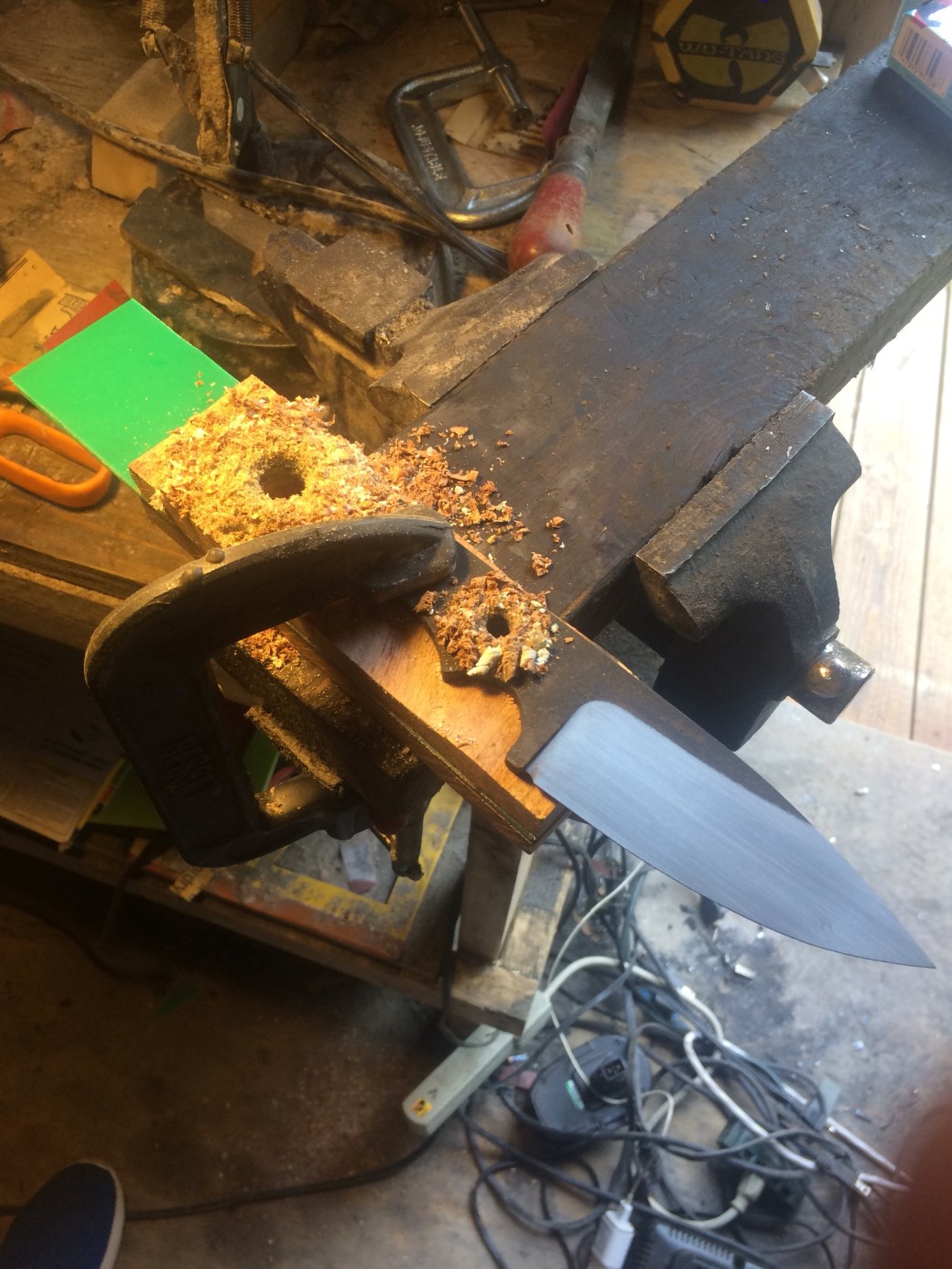
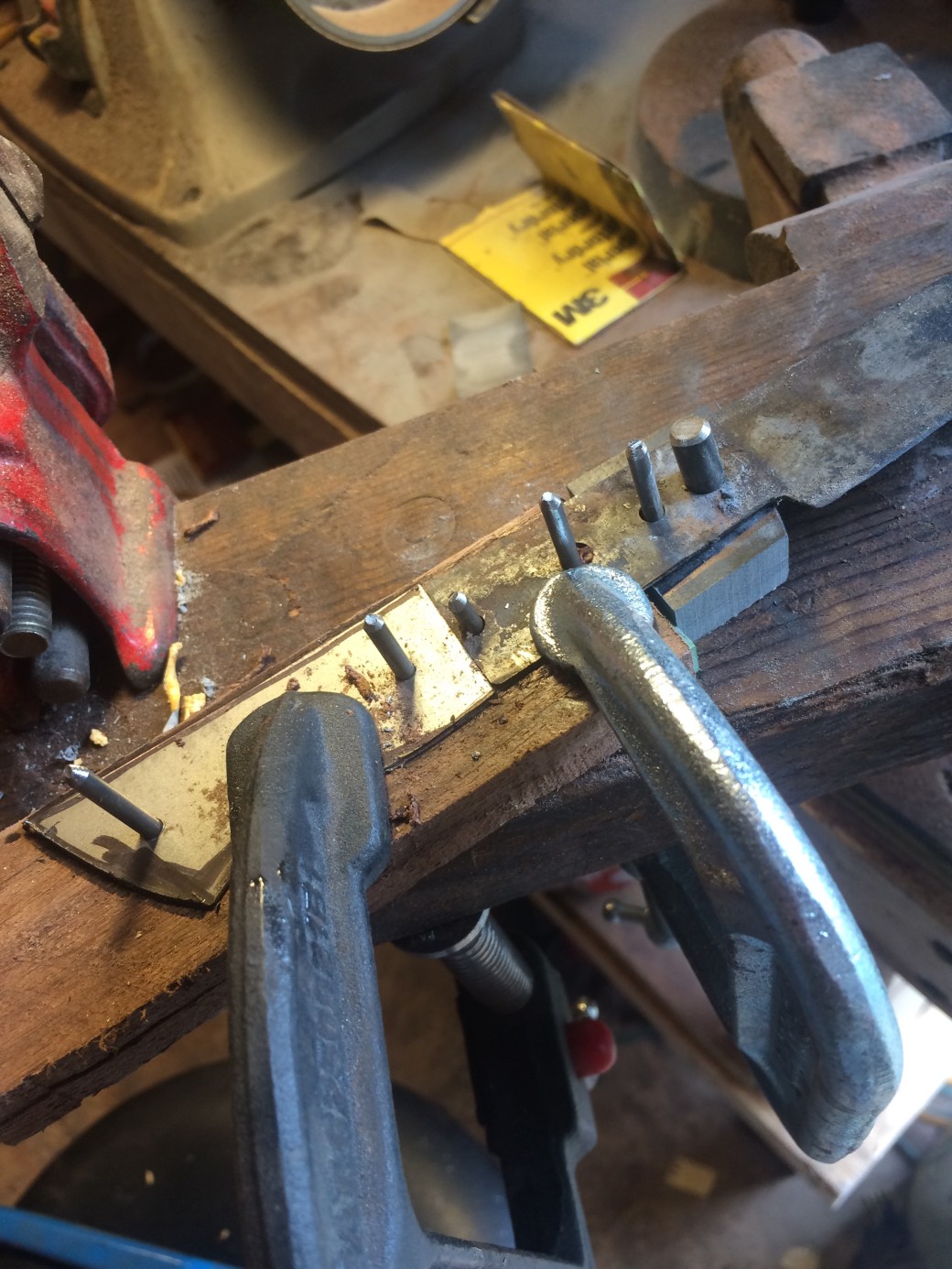
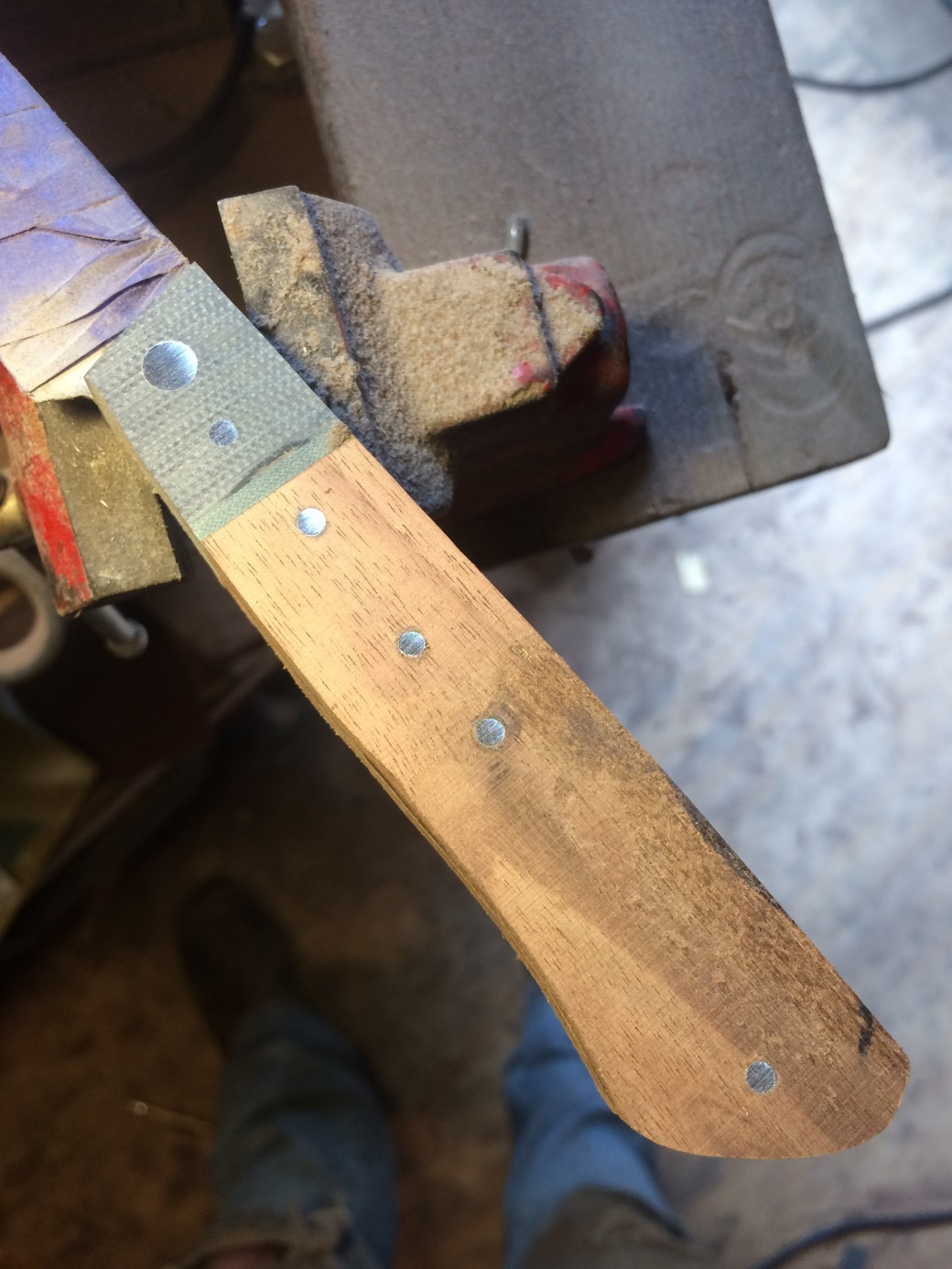
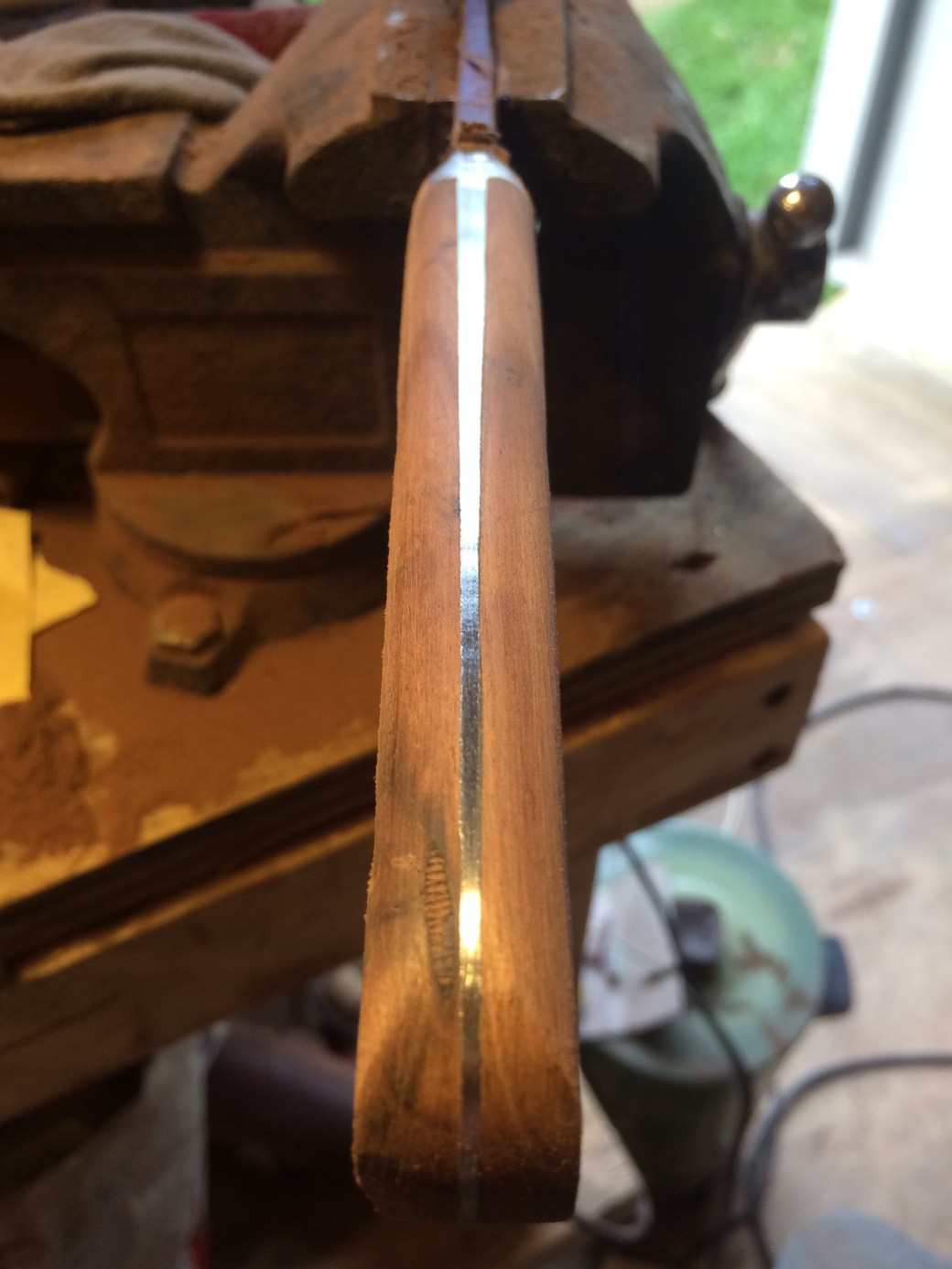
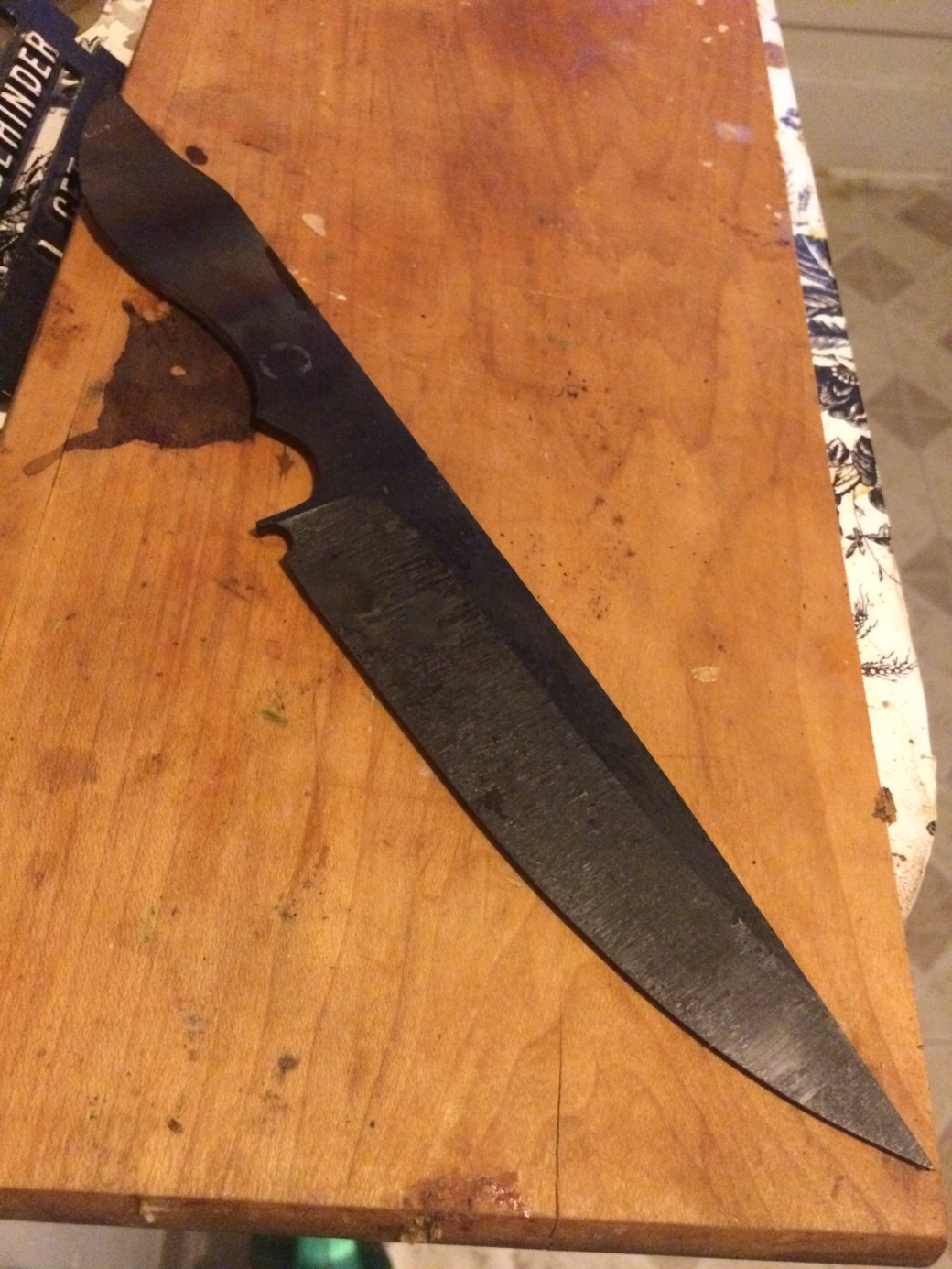
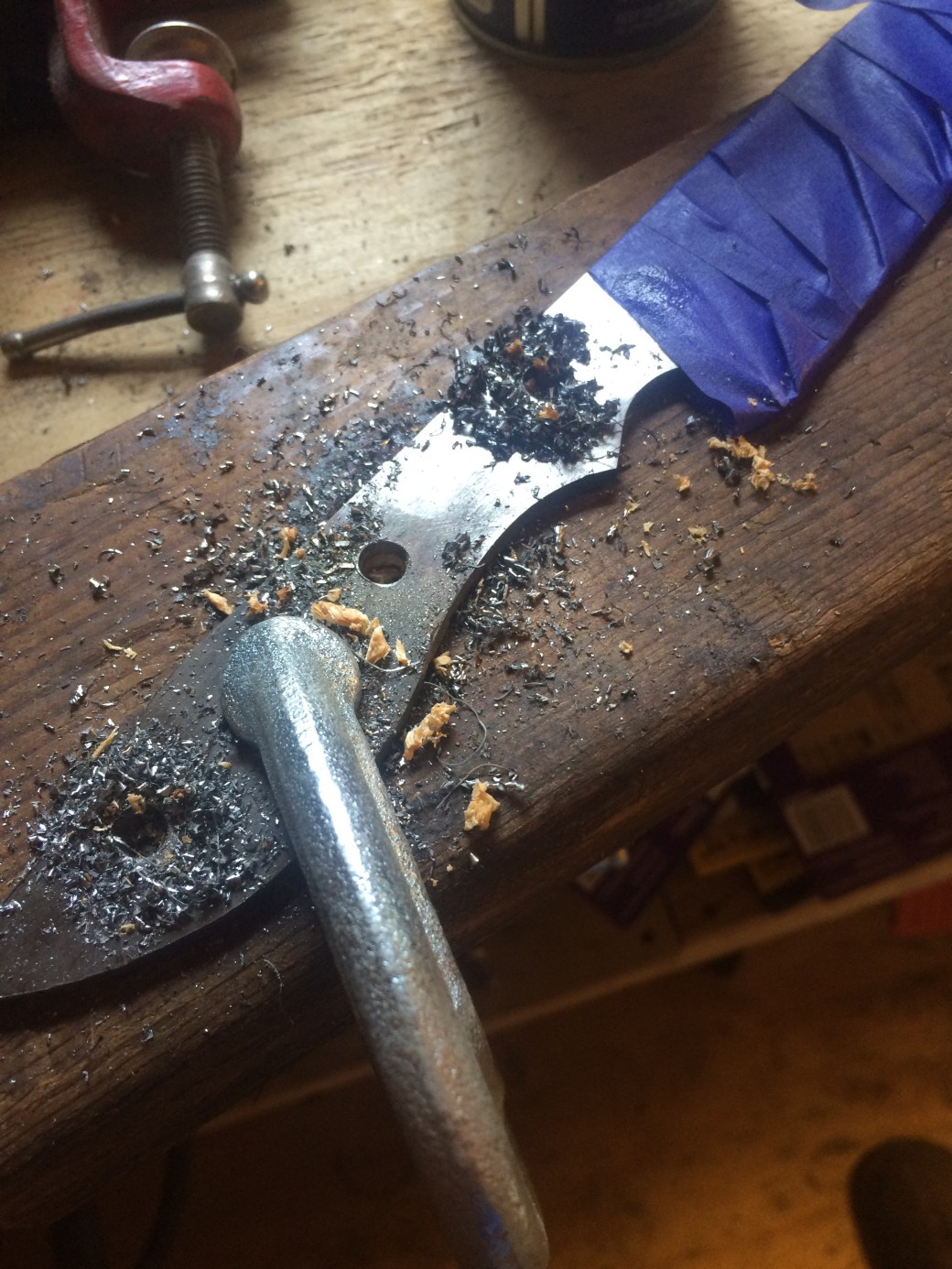
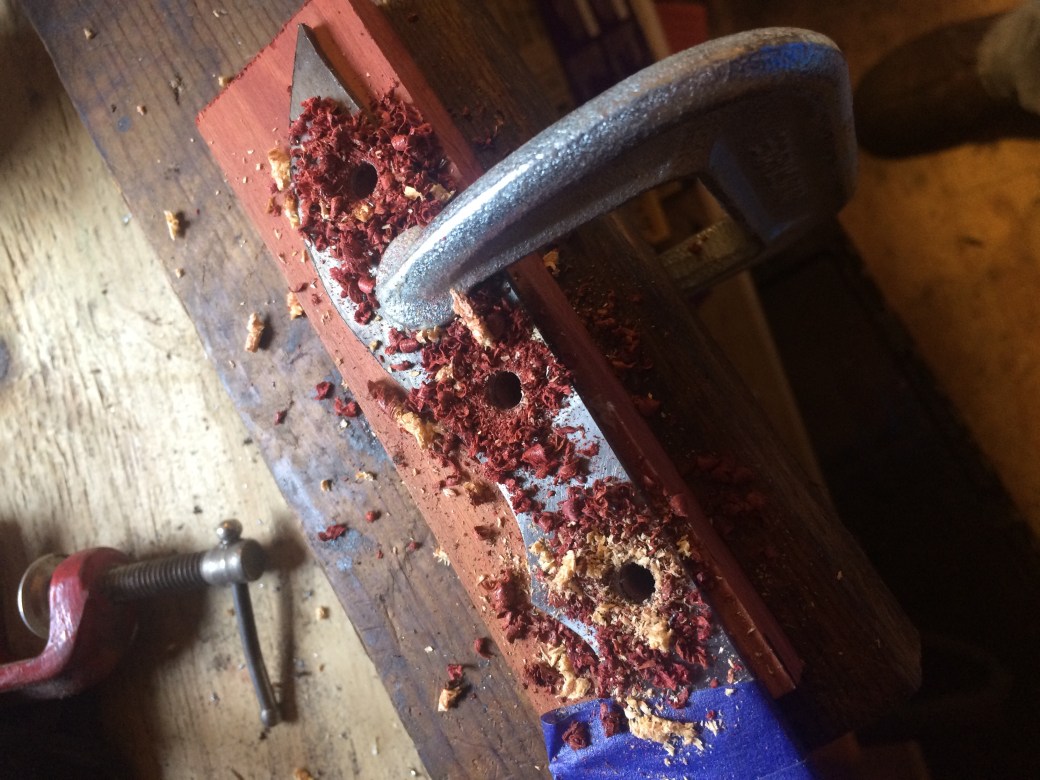
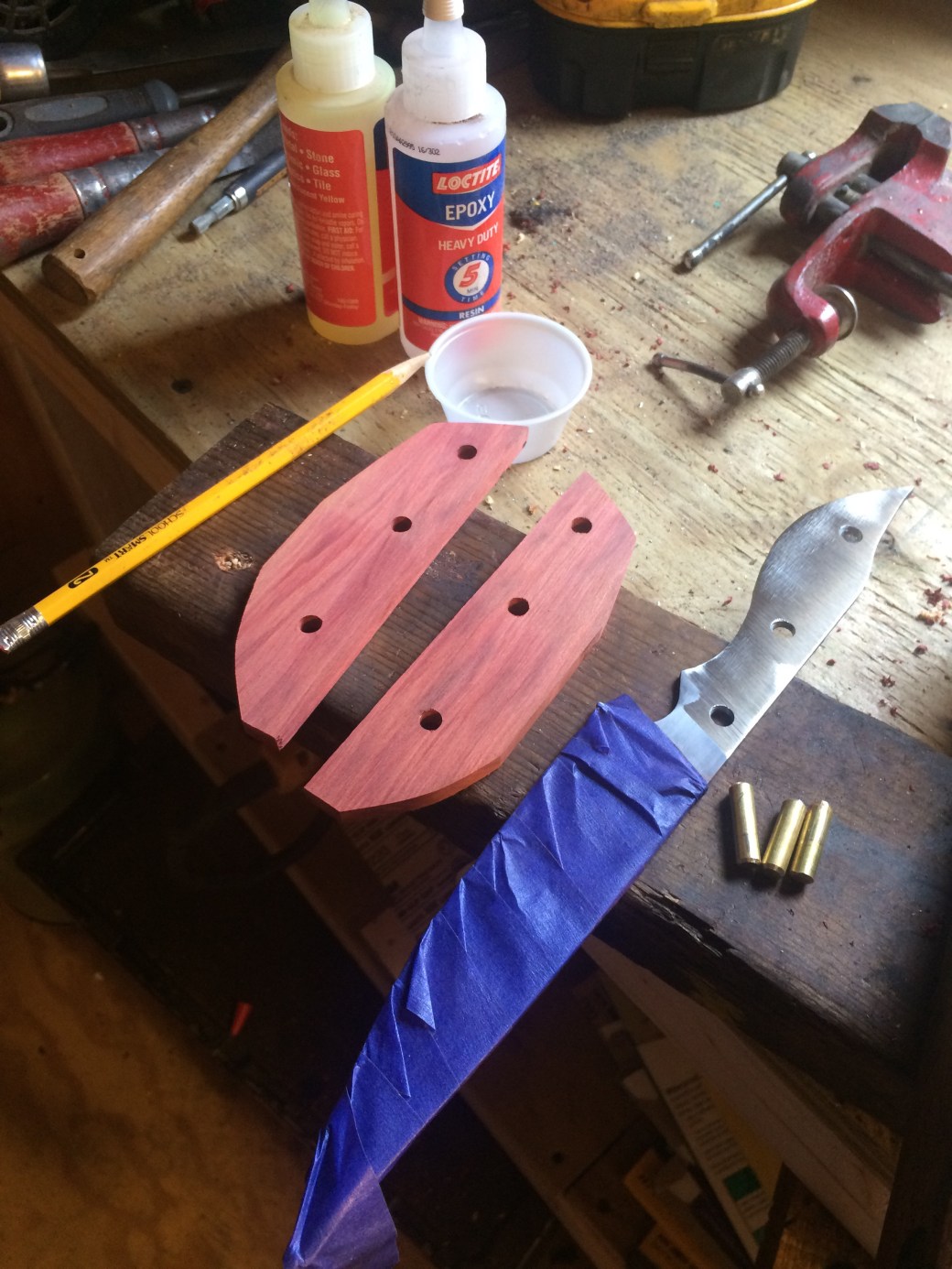
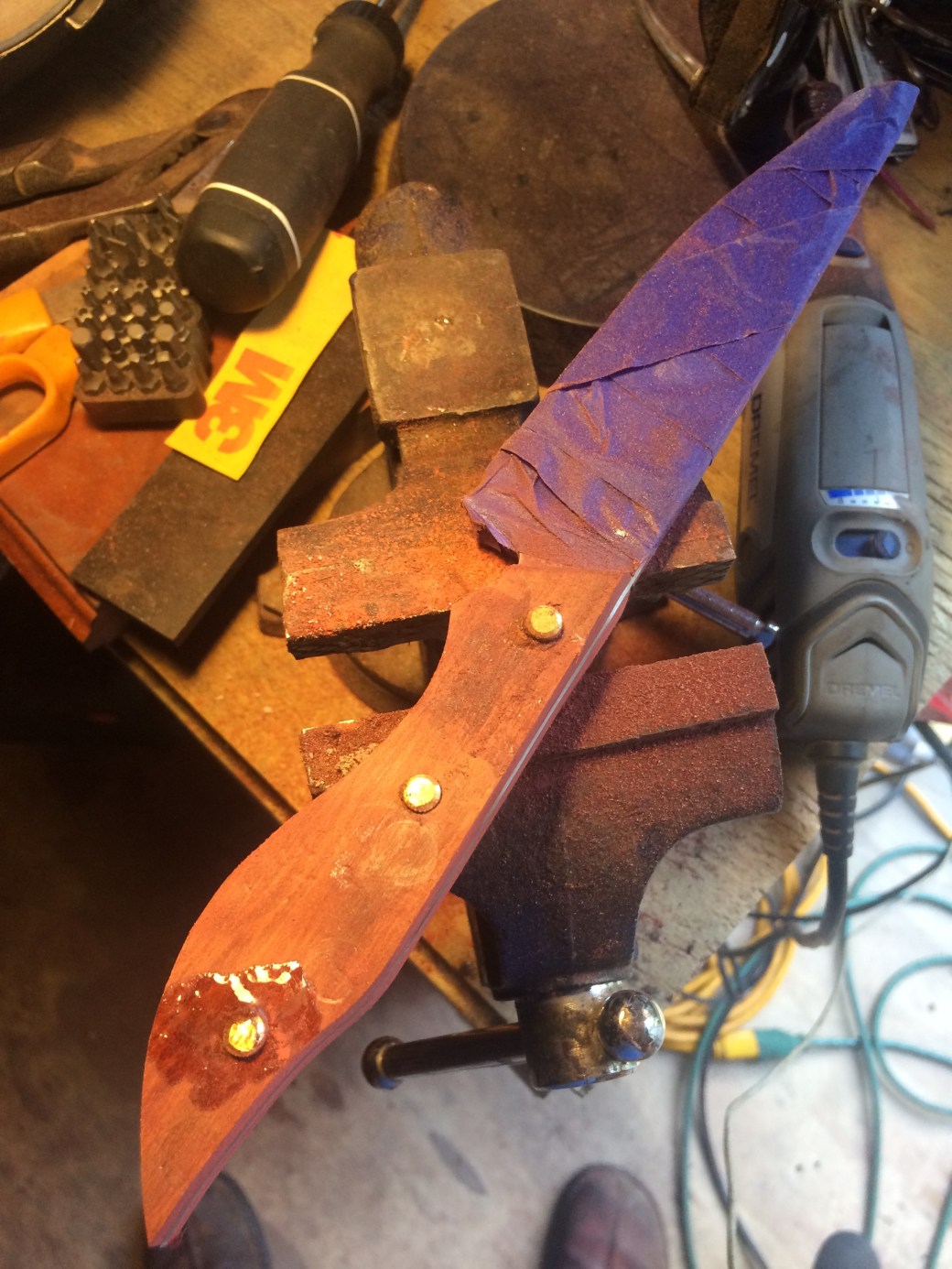
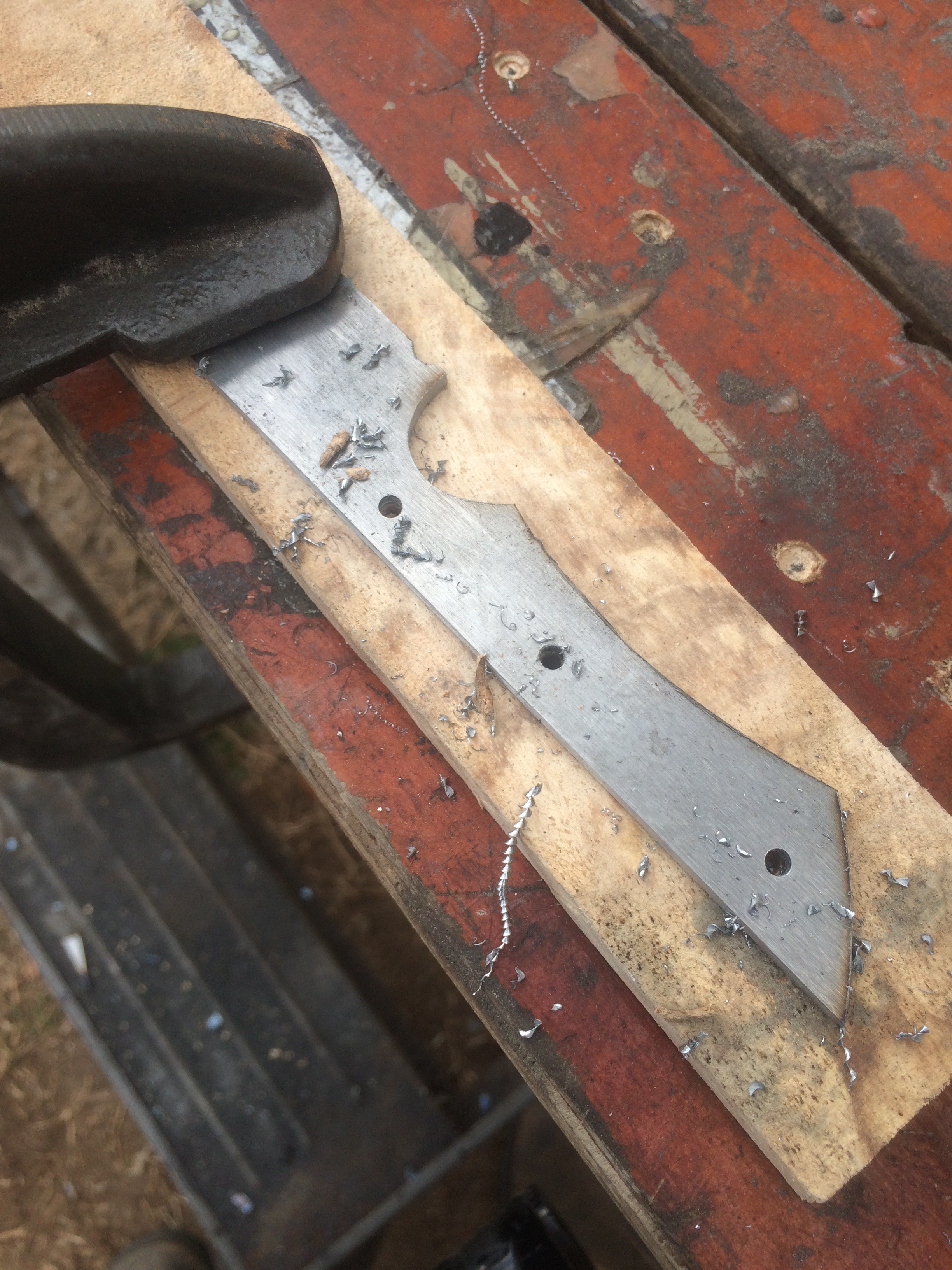
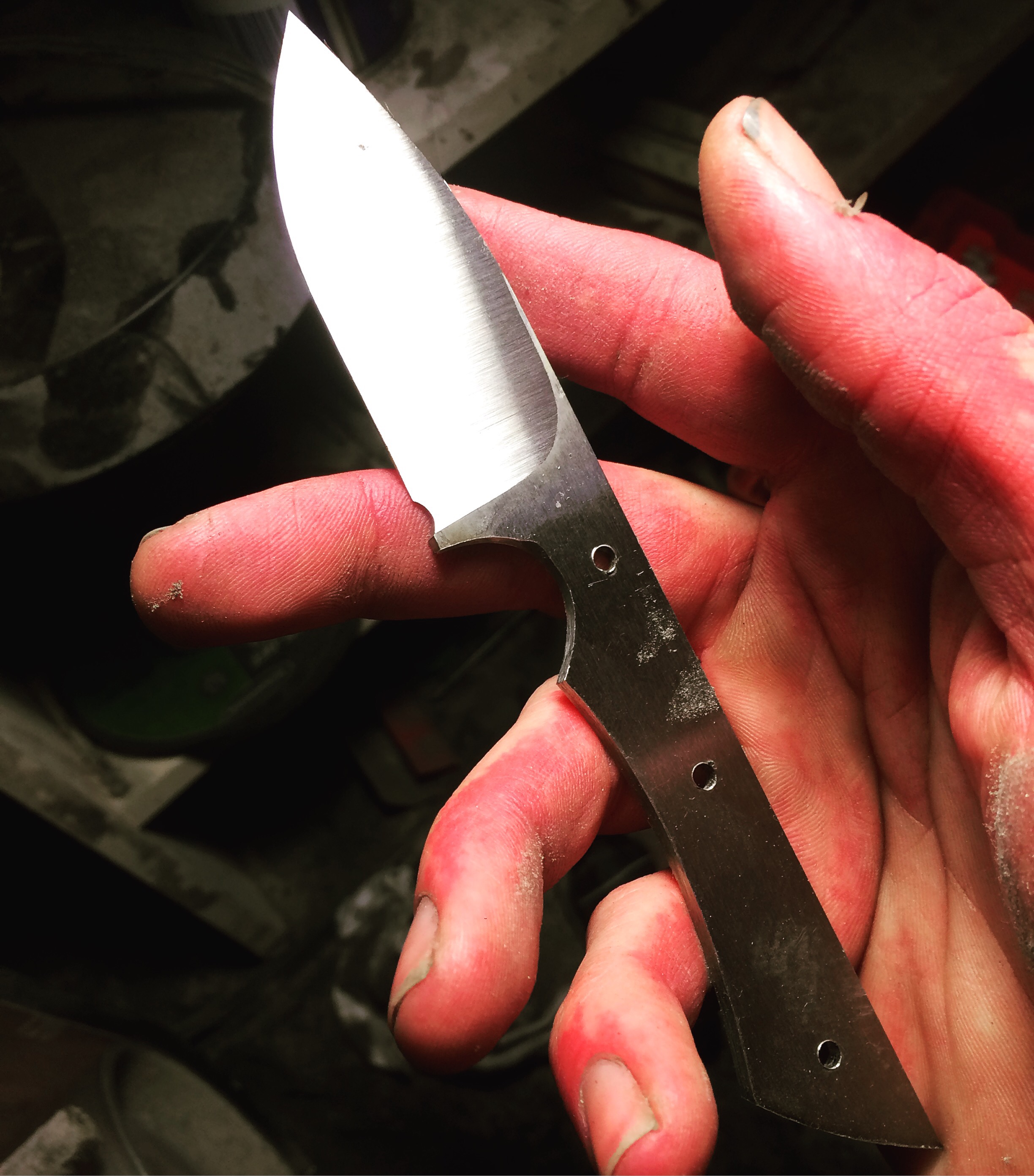
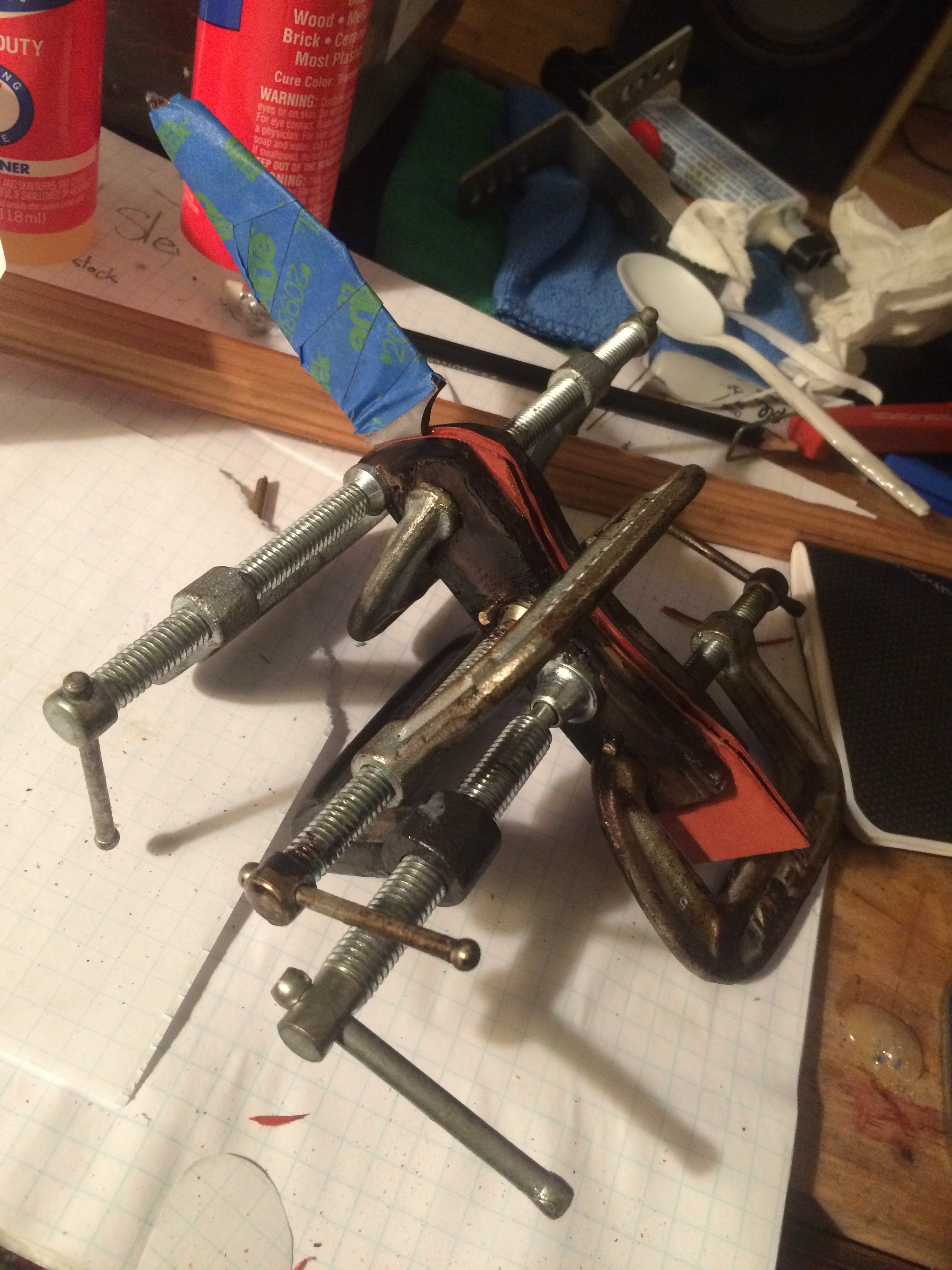
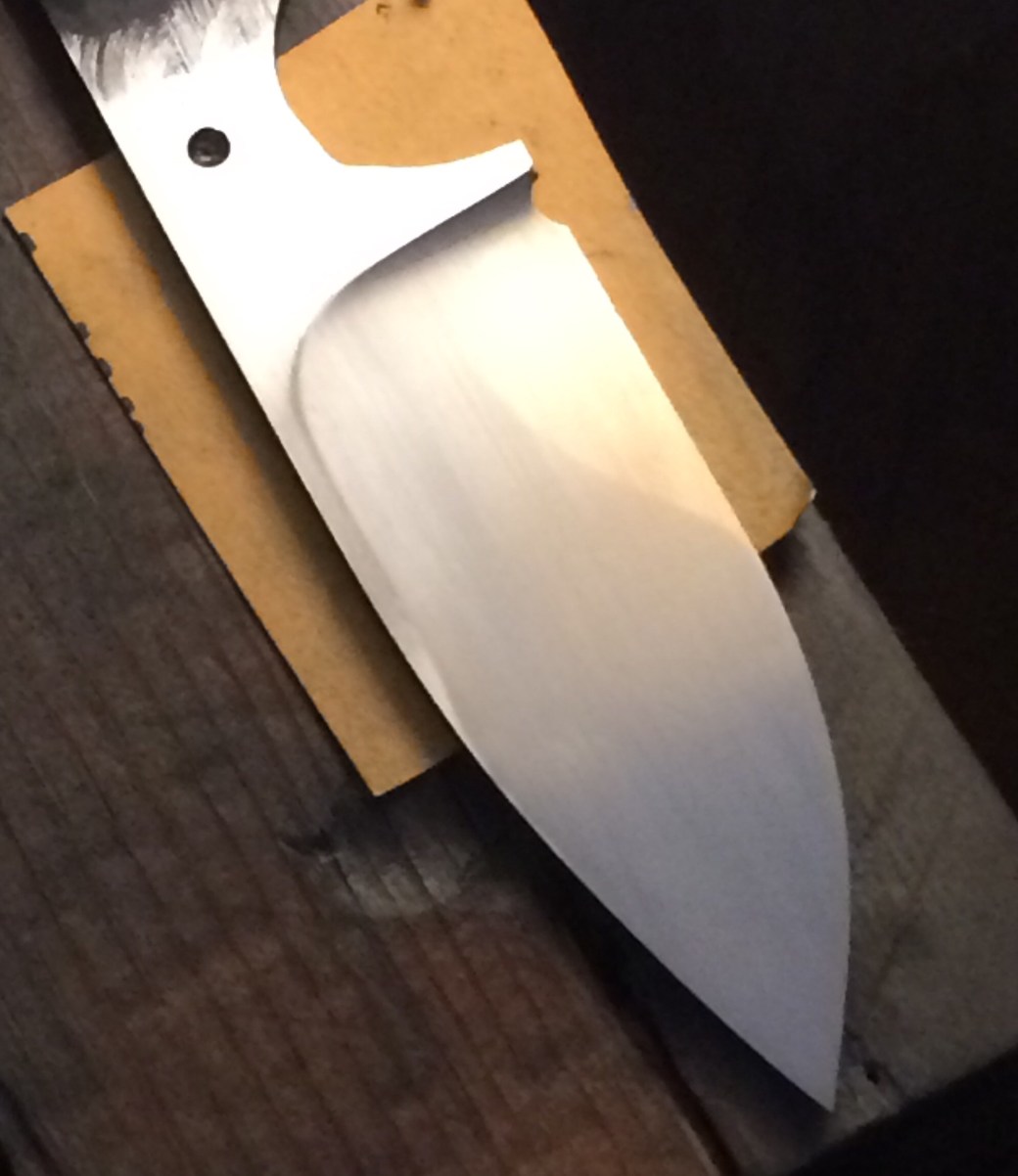
Getting back into the shop has been scary, and a slow process.  I was in the middle of this knife when I injured myself and I had to keep emailing the client to push back when I would have it finished.  I did all of the woodworking and leatherwork with eight fingers.  It’s been an exercise in leaning into fear and getting back on the horse. 

I tend to have a lot of quiet days of late.  Quiet days allow everything to settle and help one’s focus to reset and help one to cultivate a sense of gratitude.  They also allow for deep processing and healing.  This is also lesson of the Woodsman.  Any good person of the Woods knows how to find quiet and the goodness that comes from within.  The second part of this build has been an exercise in just that.

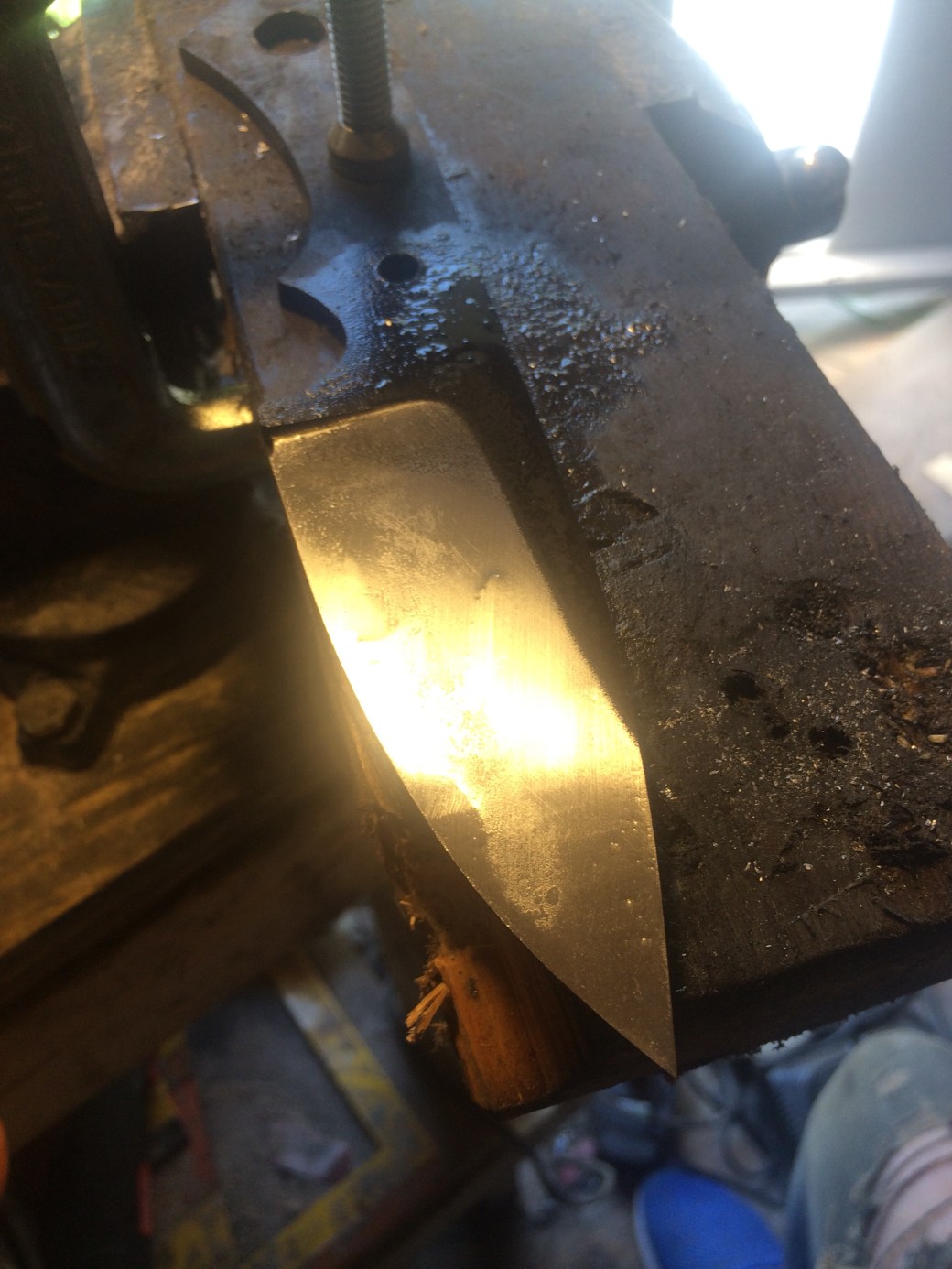
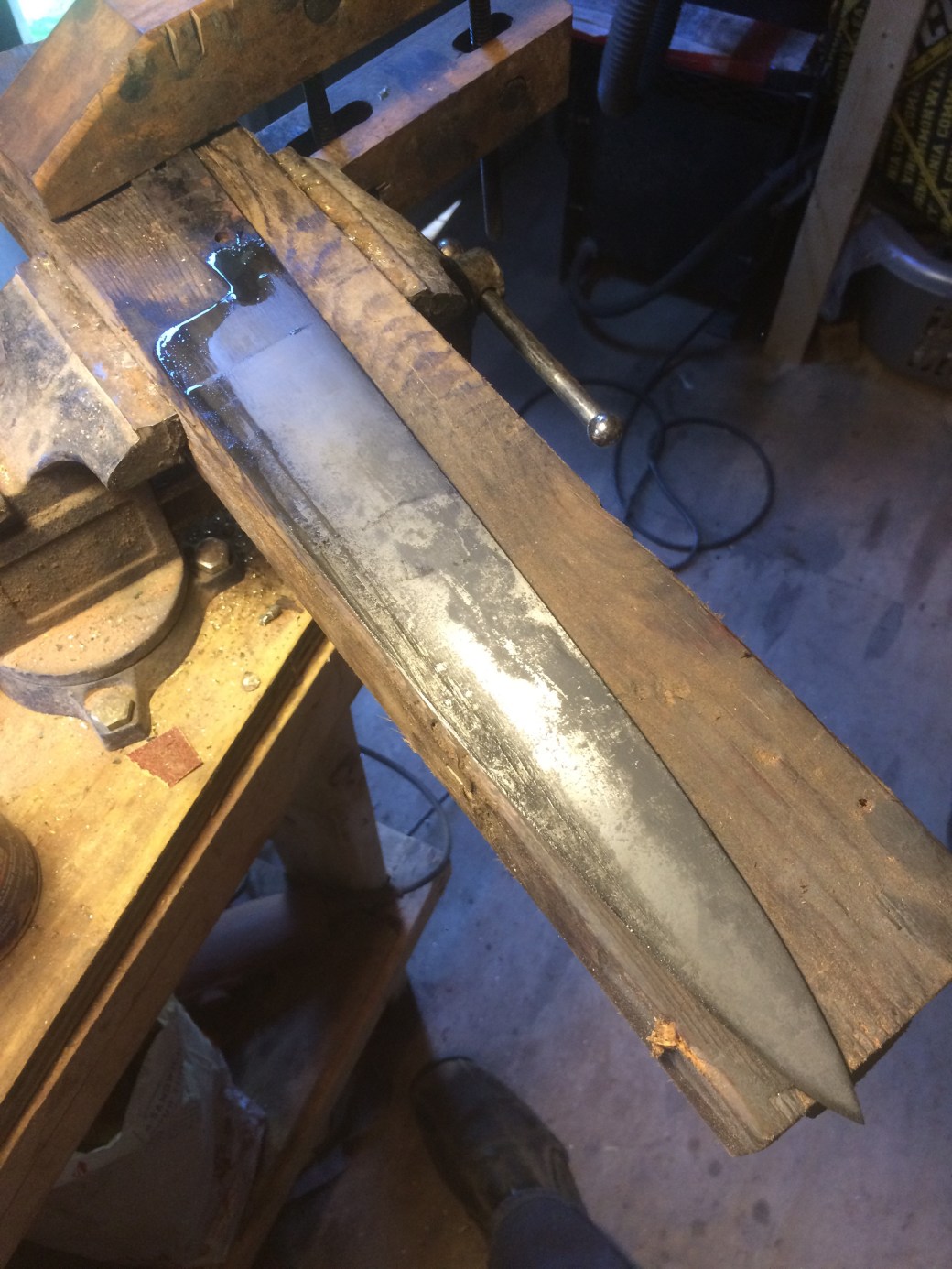
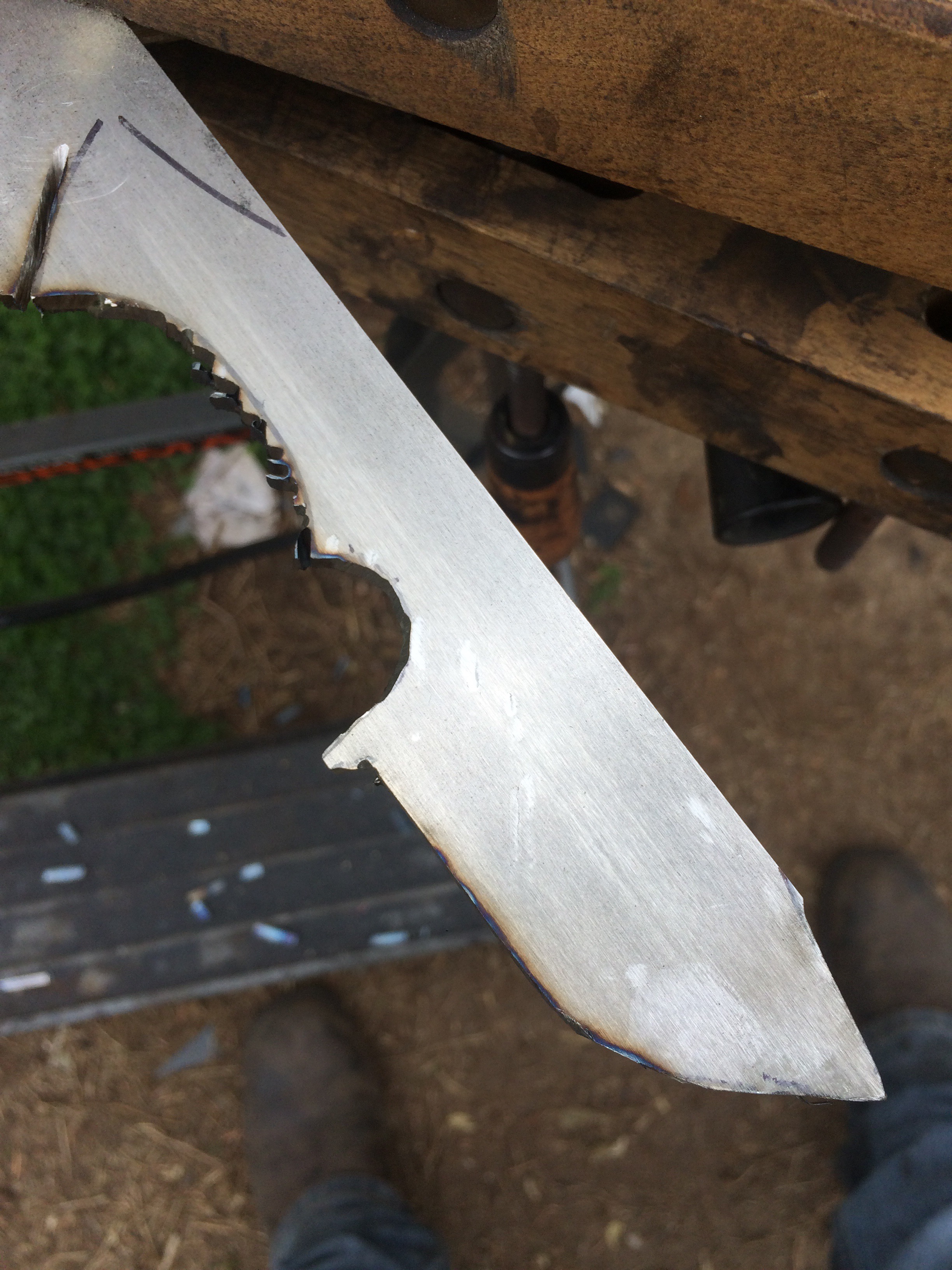
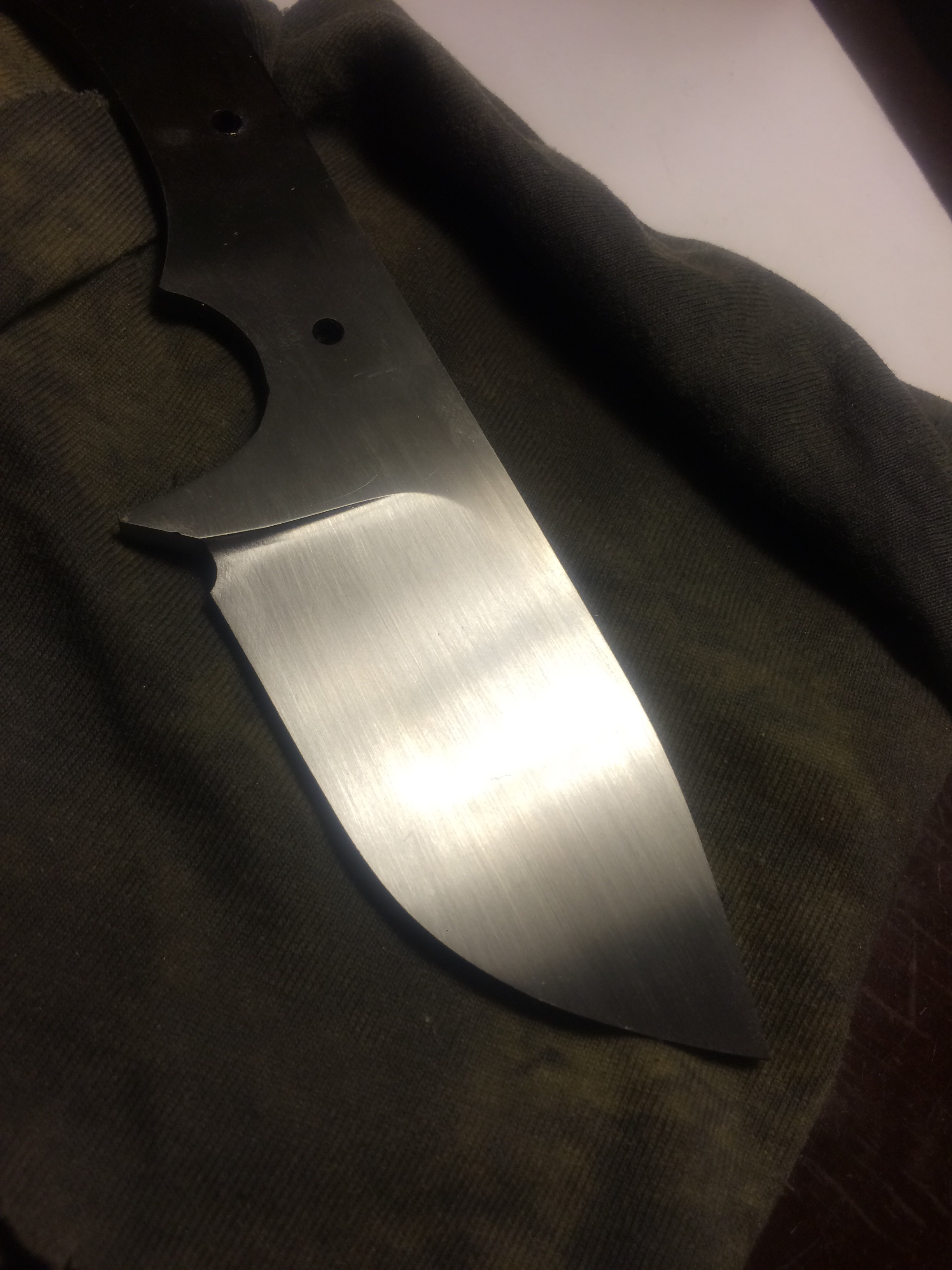
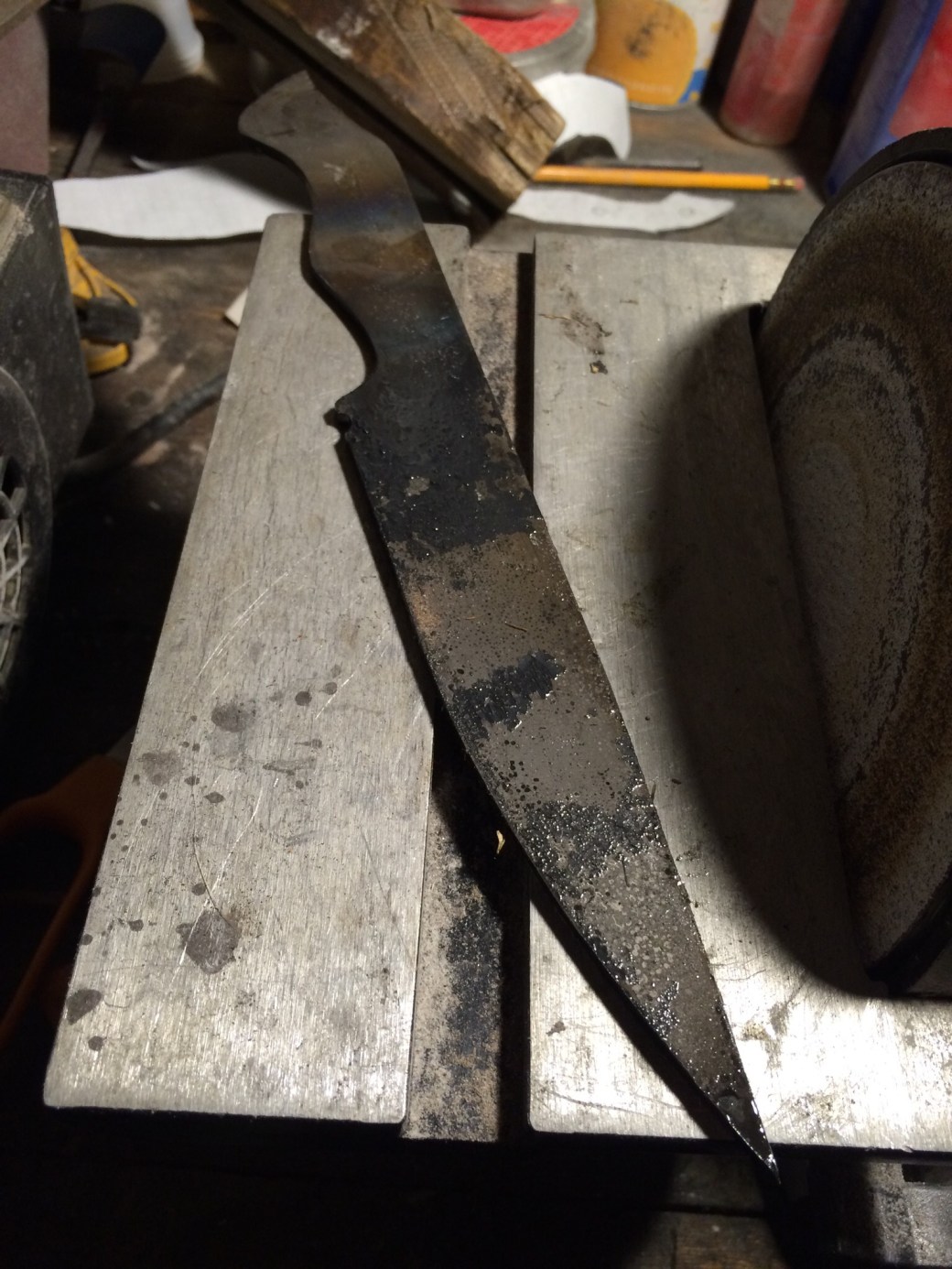
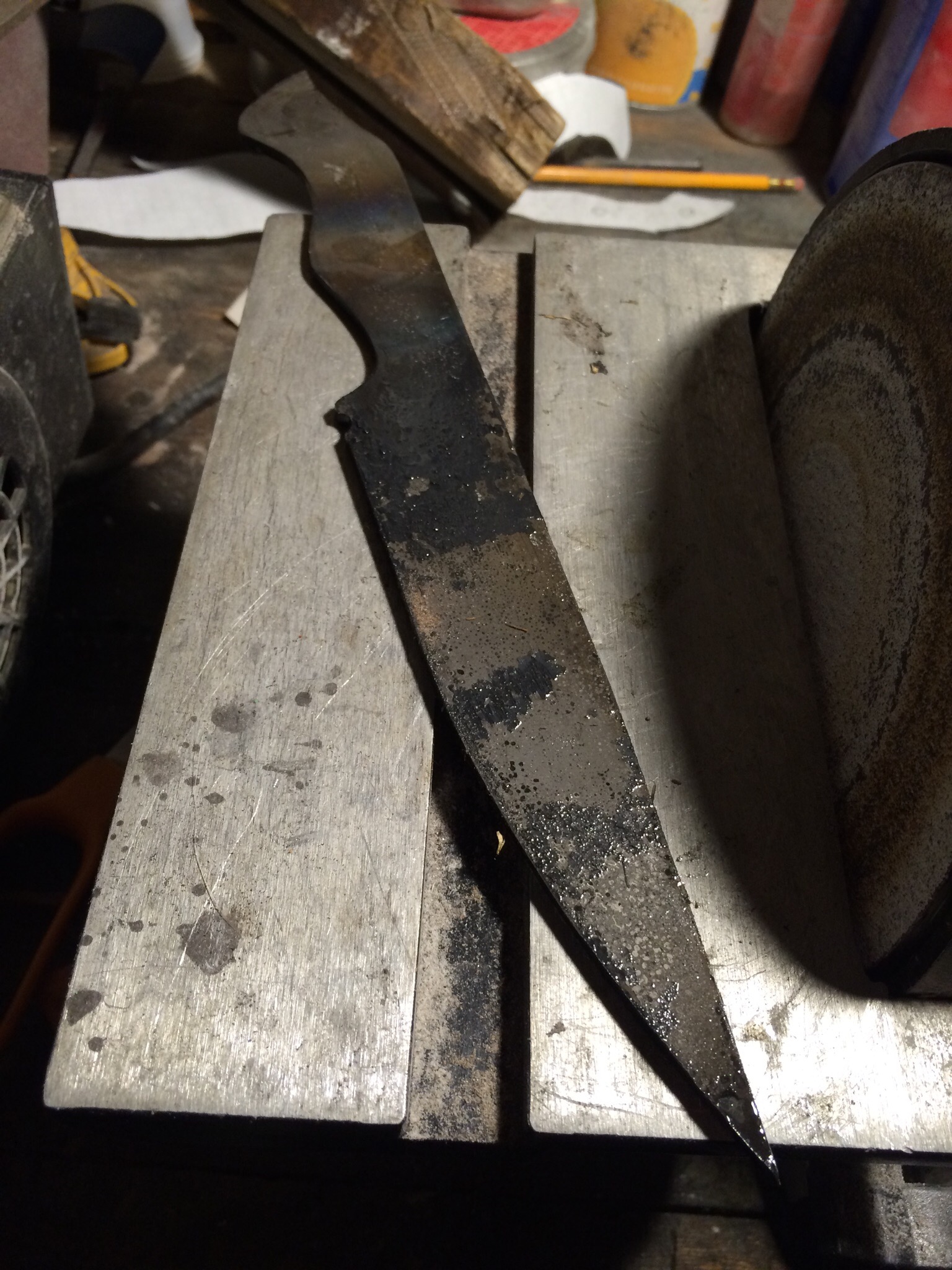
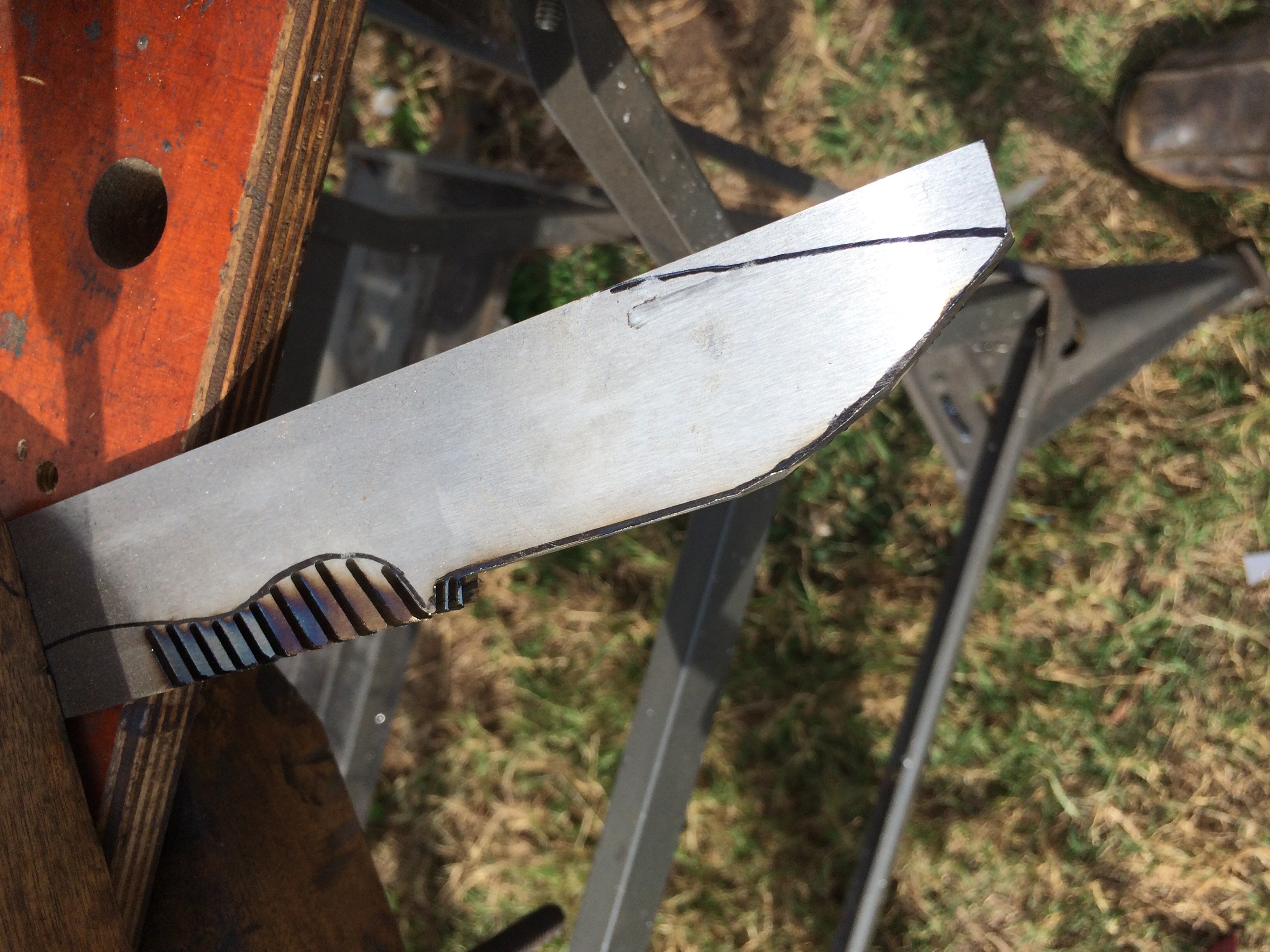
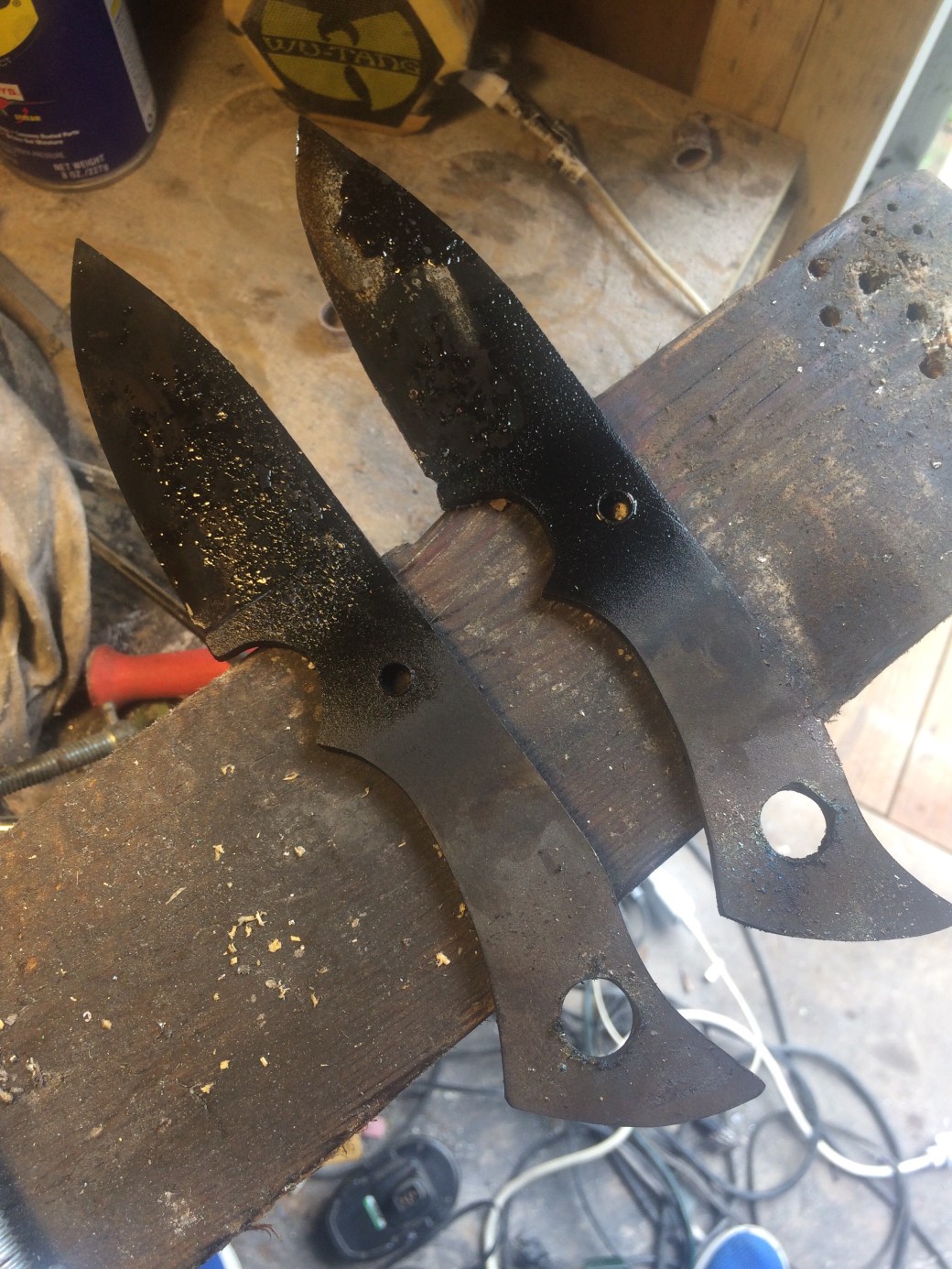
O1 tool steel, out of the forge:
img_5879

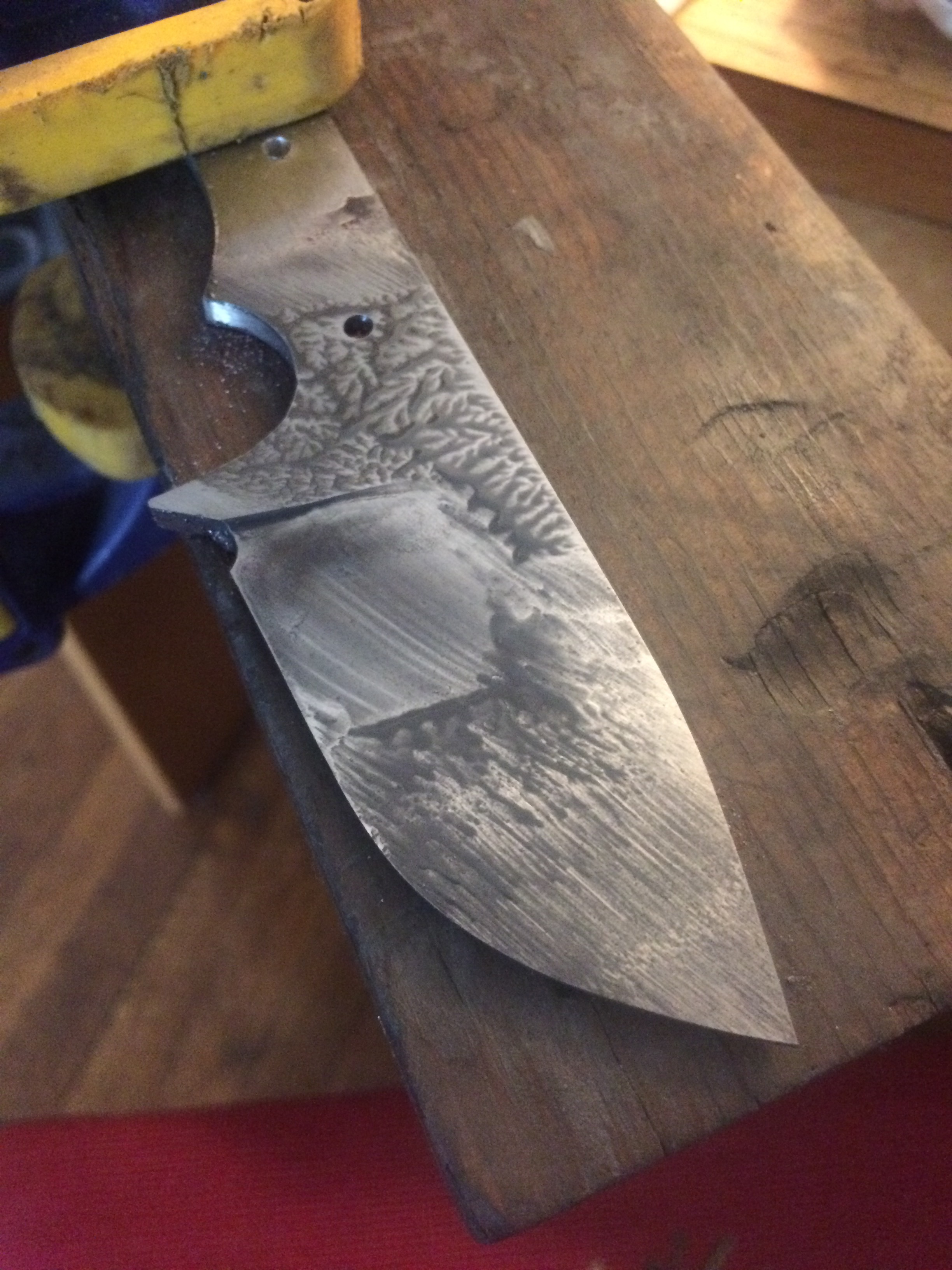
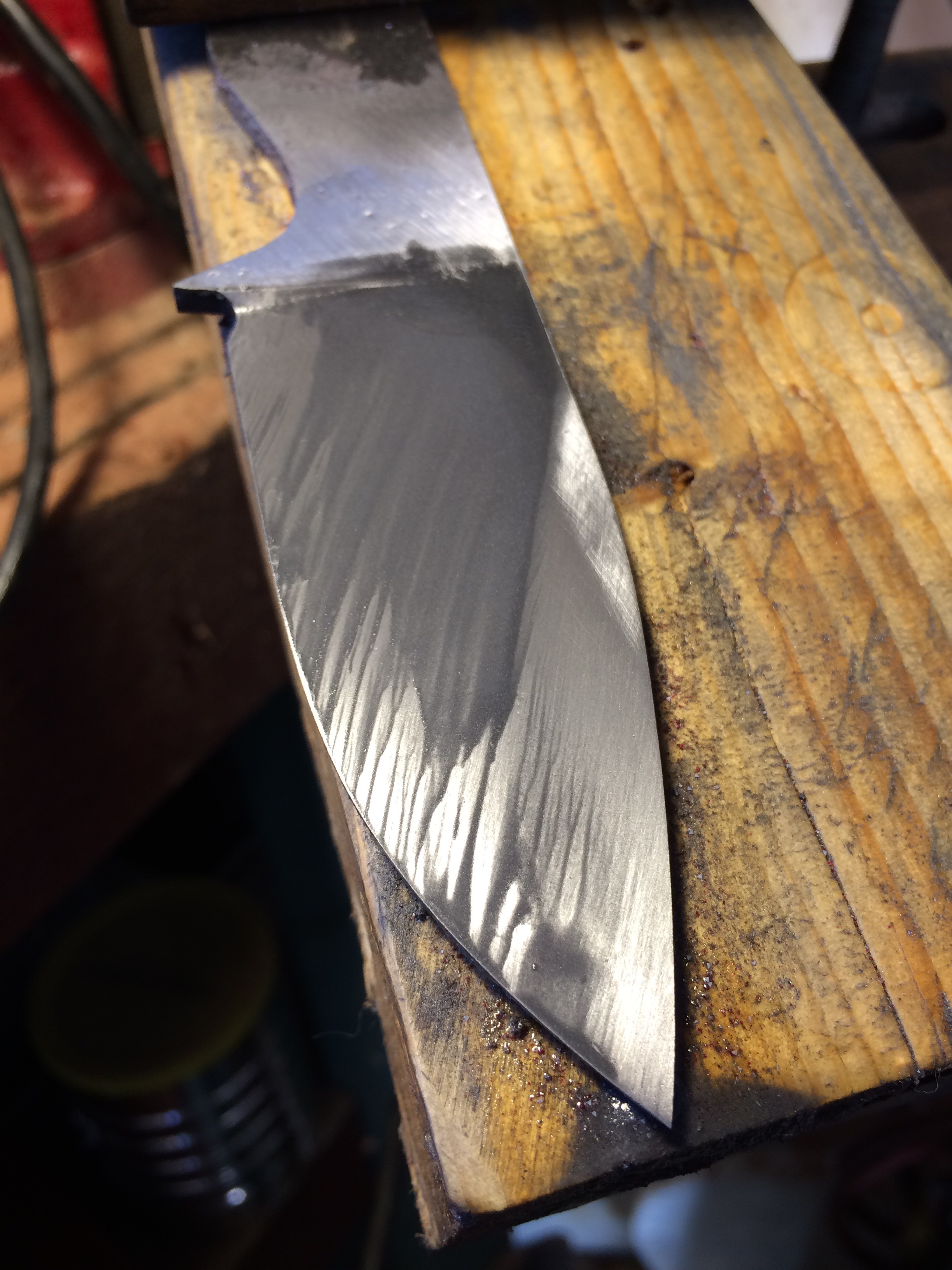
Hand sanding:

img_5880

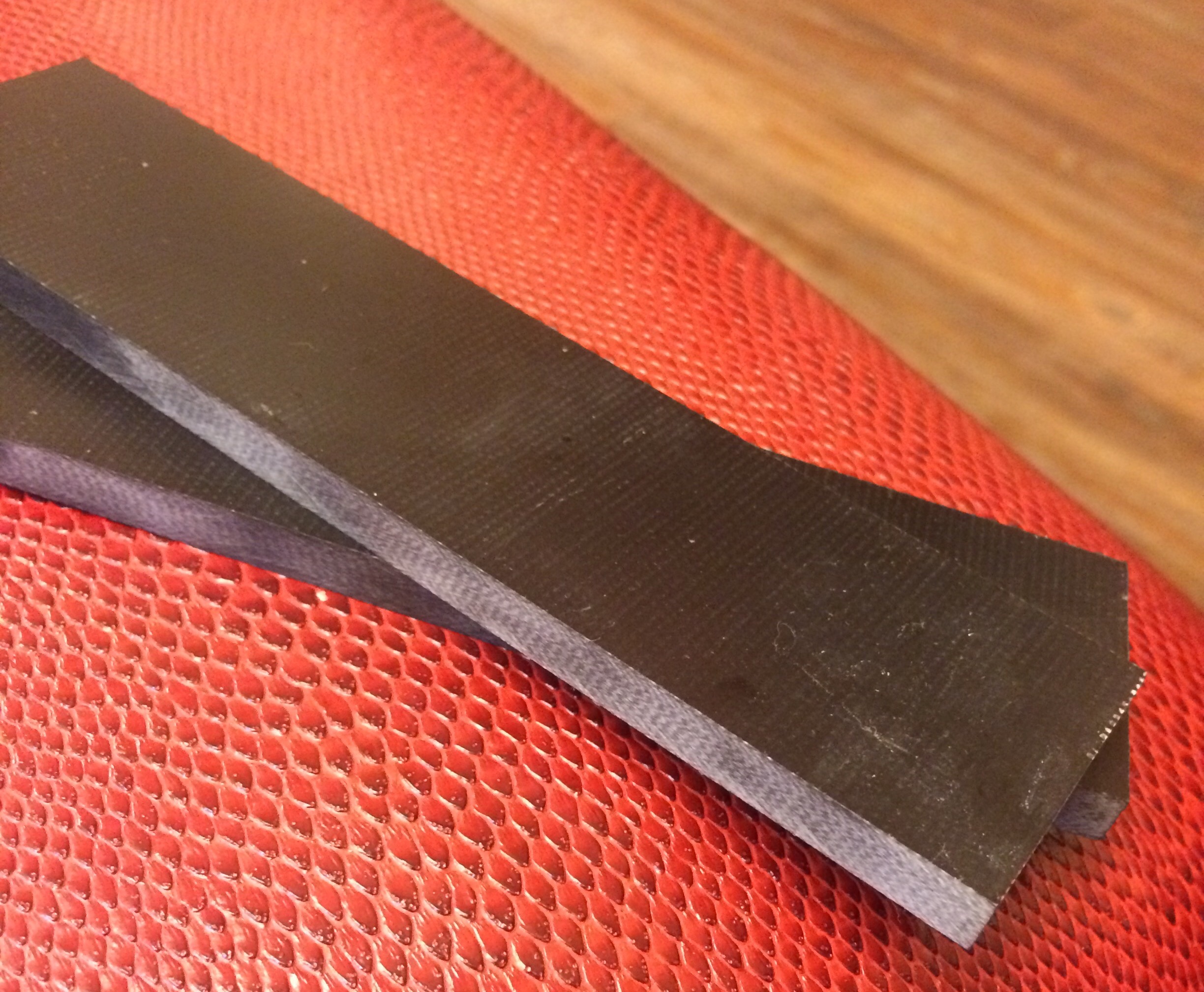
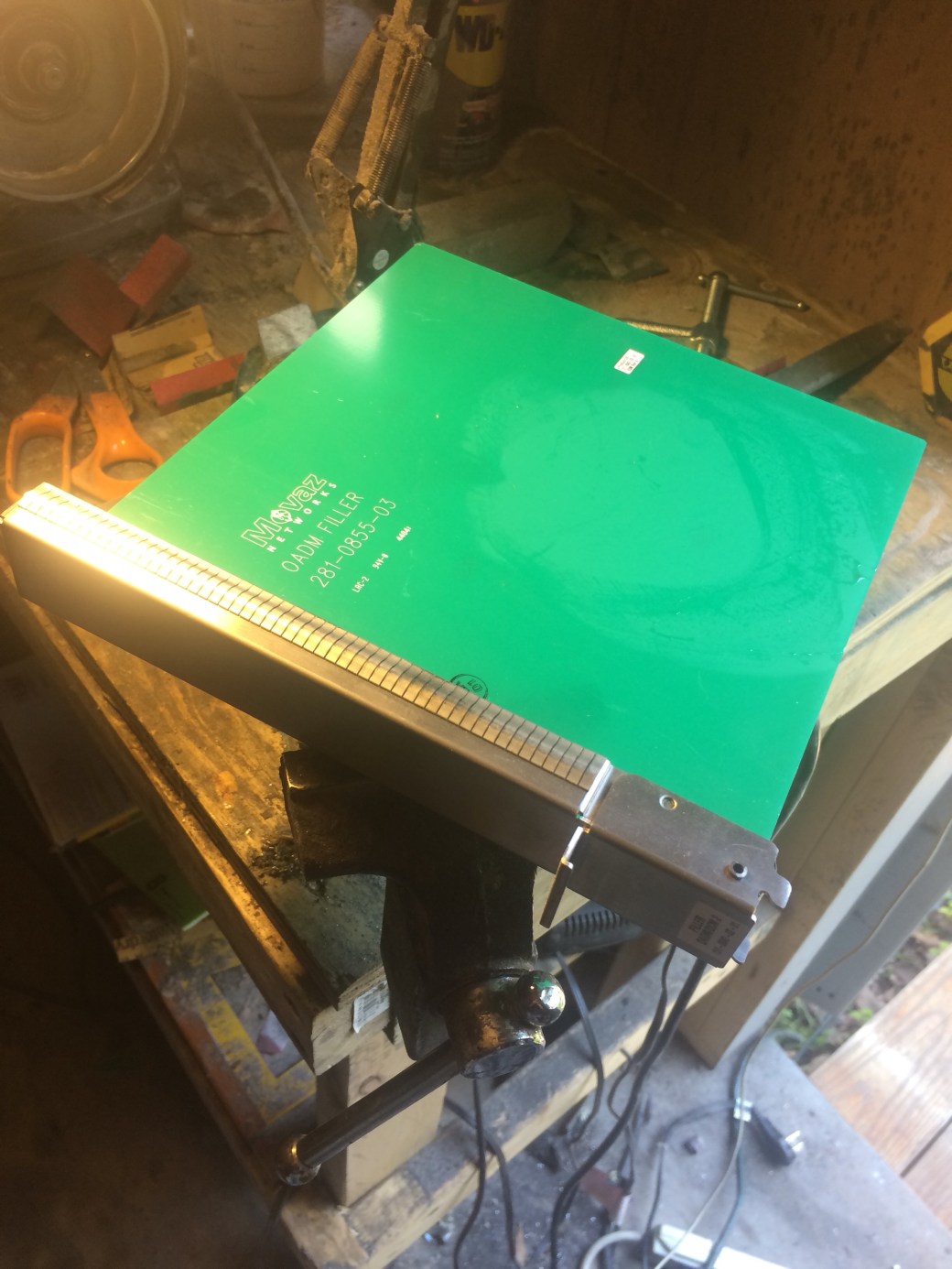
Computer board for the spacing material:
img_5882

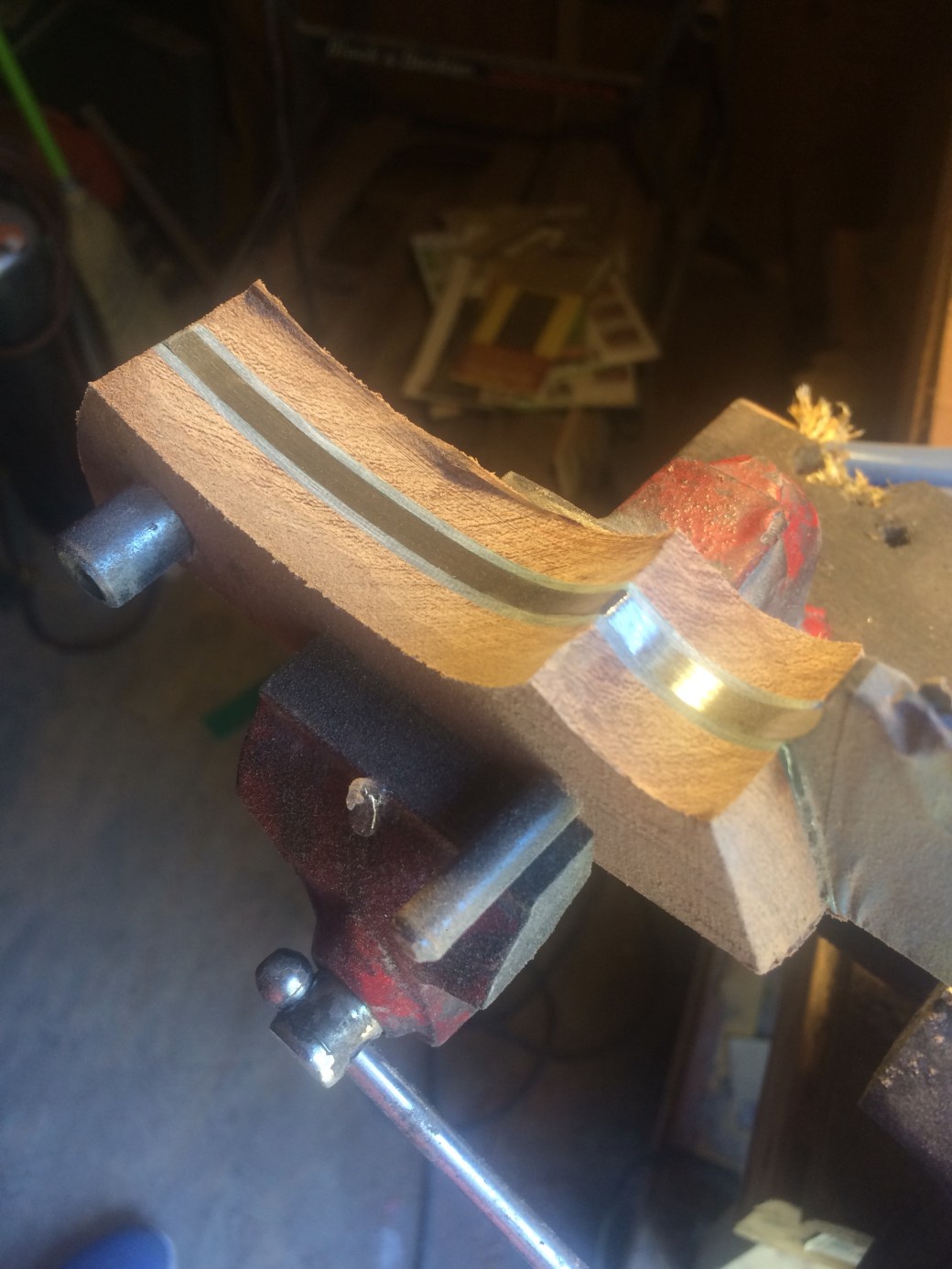
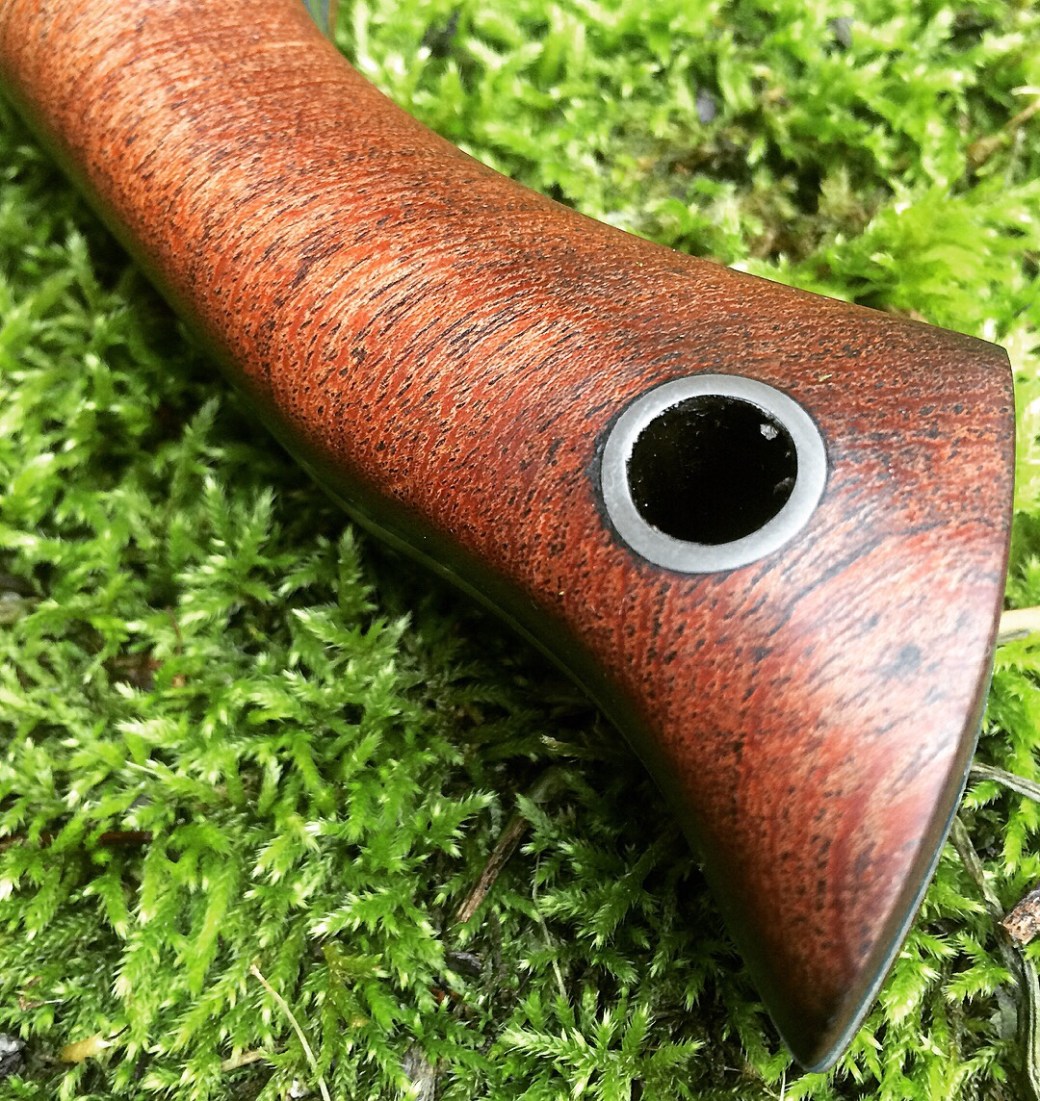
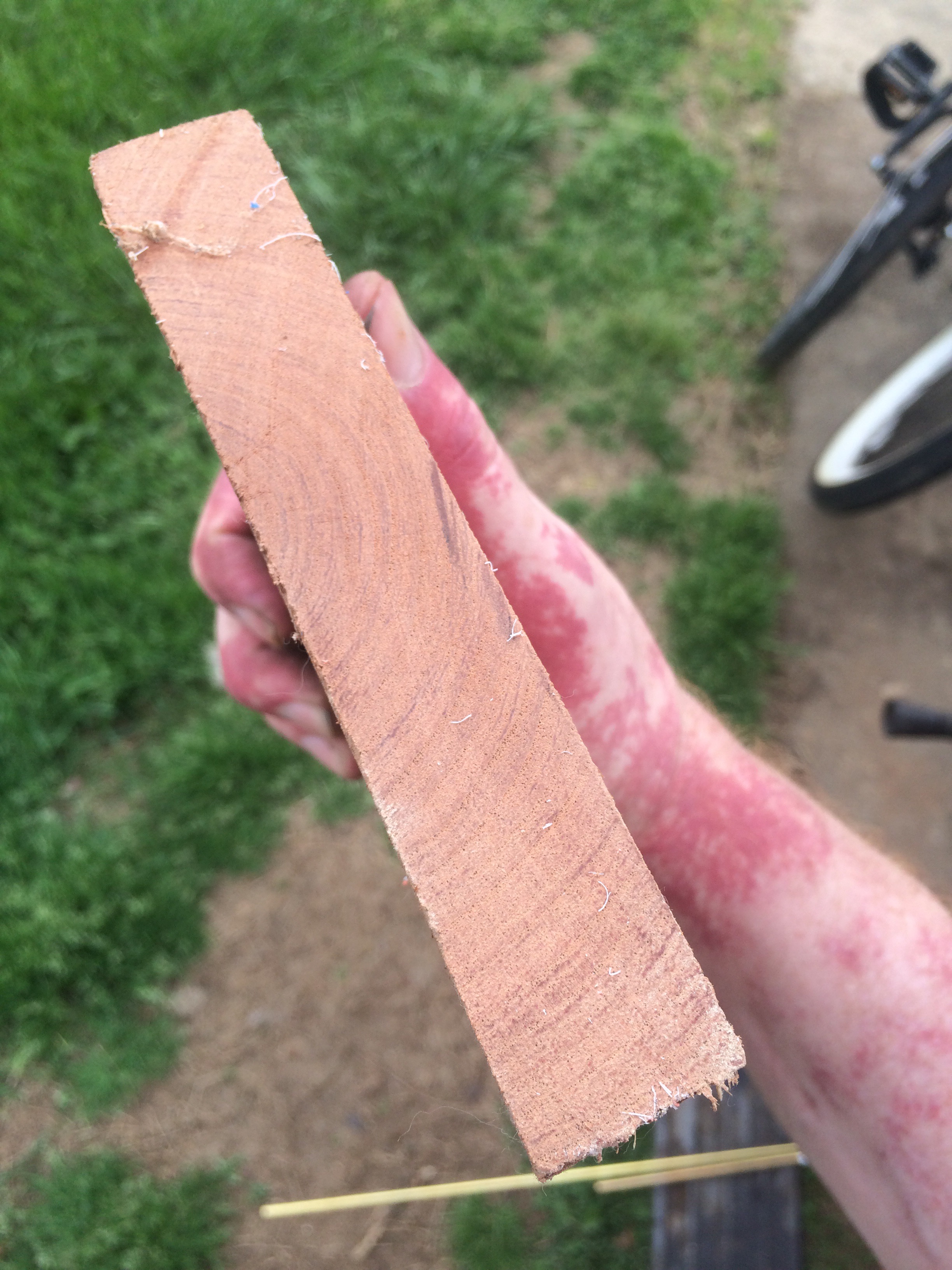
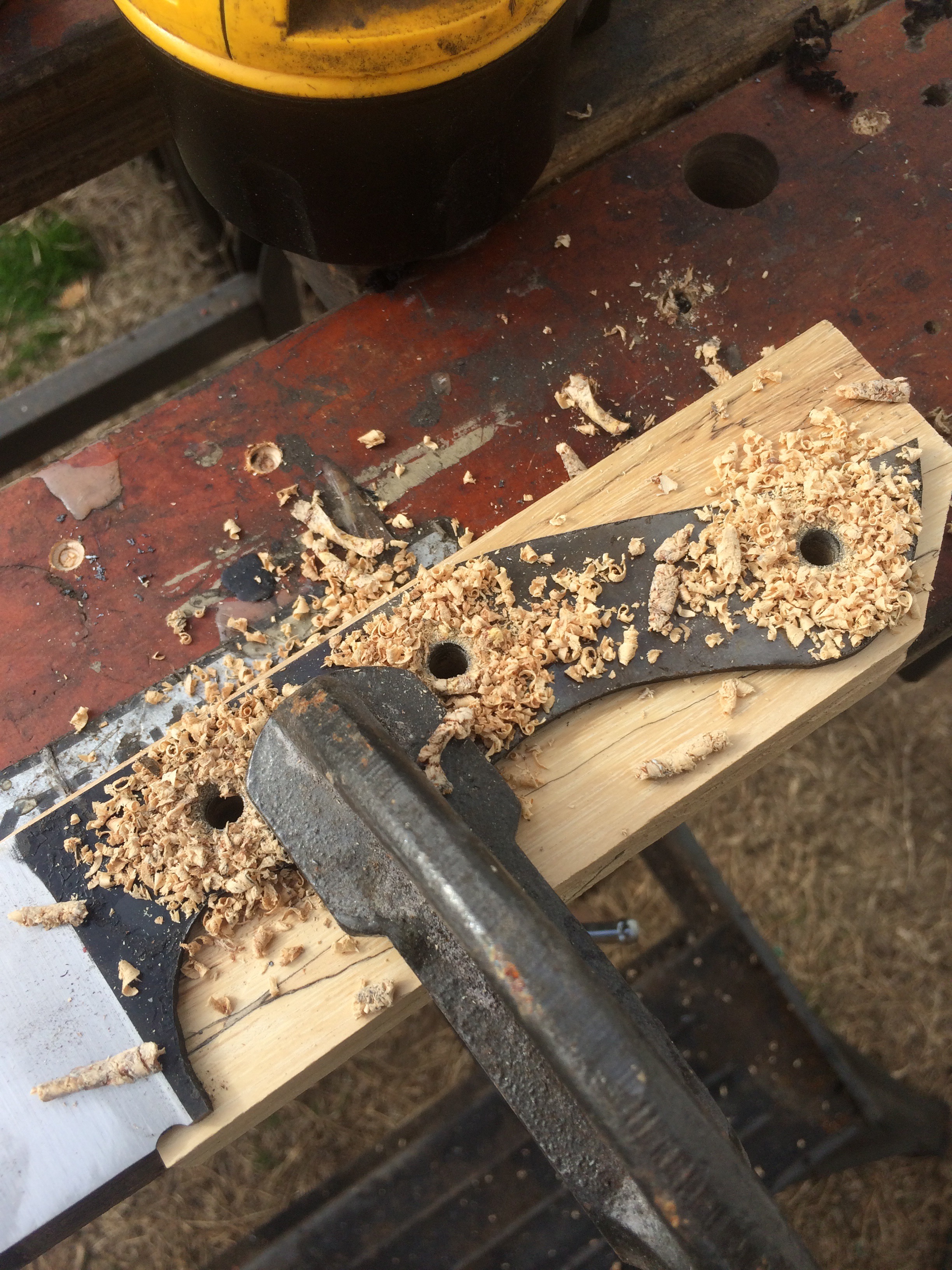
Mesquite from Texas for the handle:

img_4584-1

img_5883

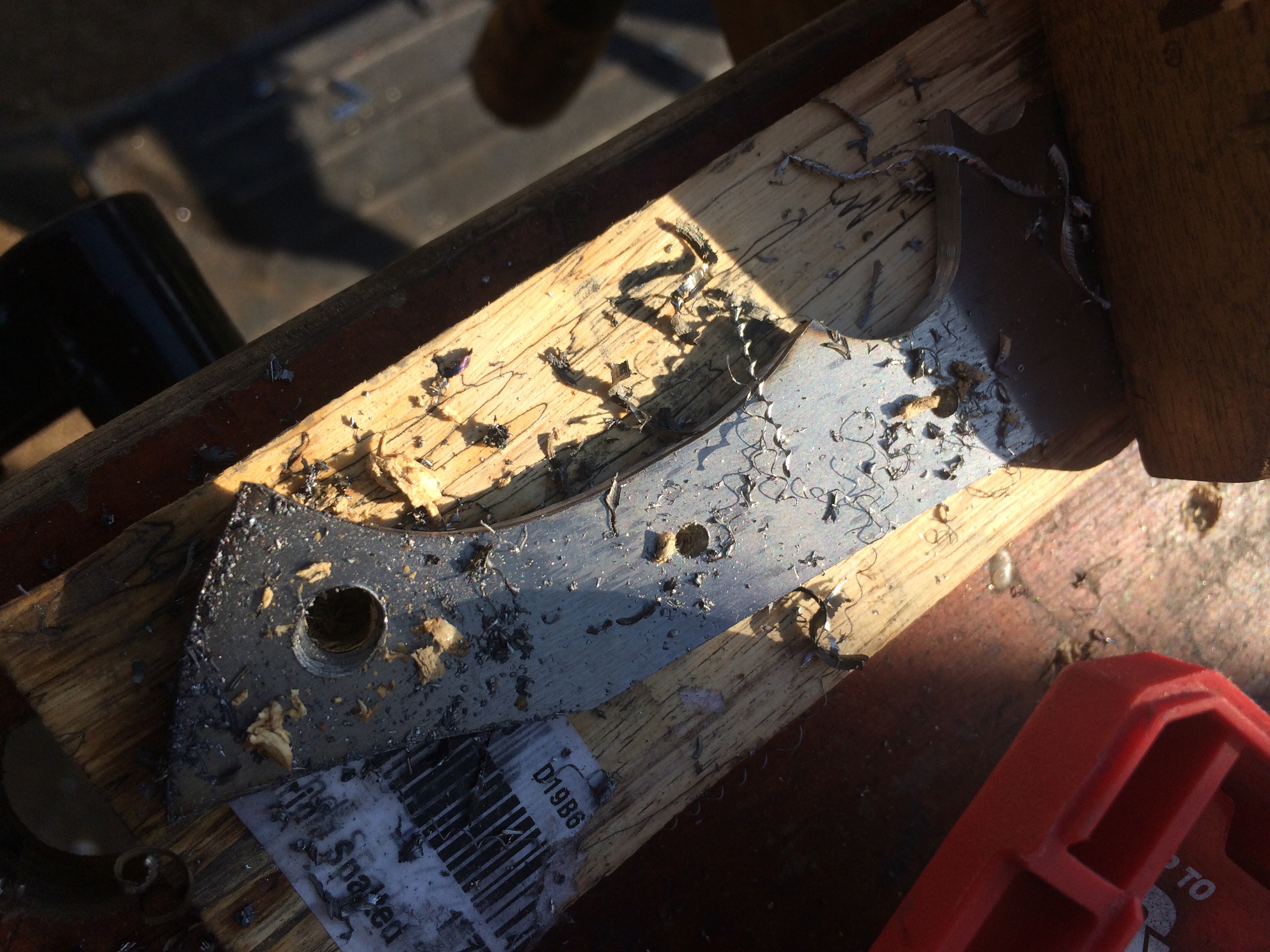
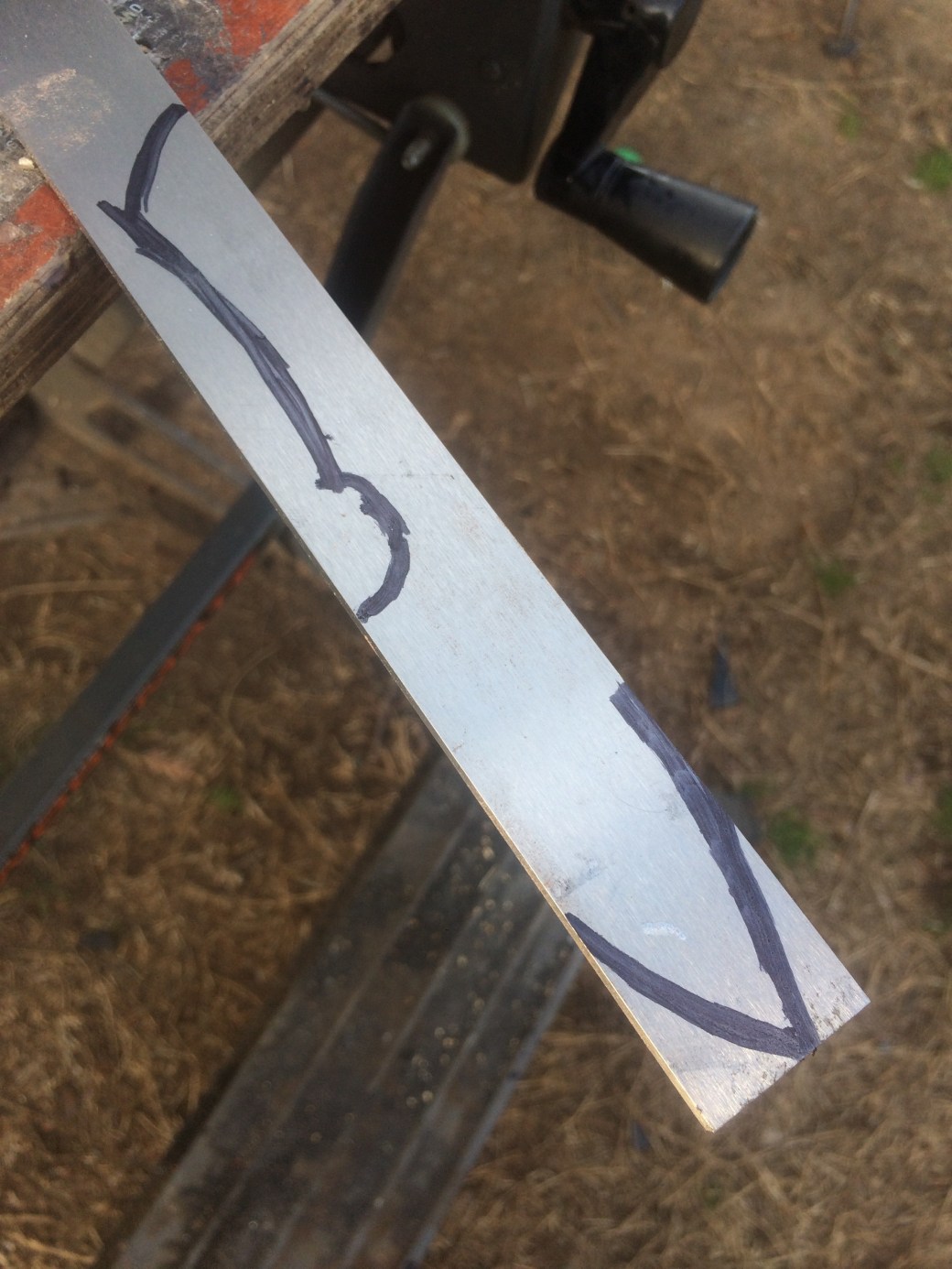
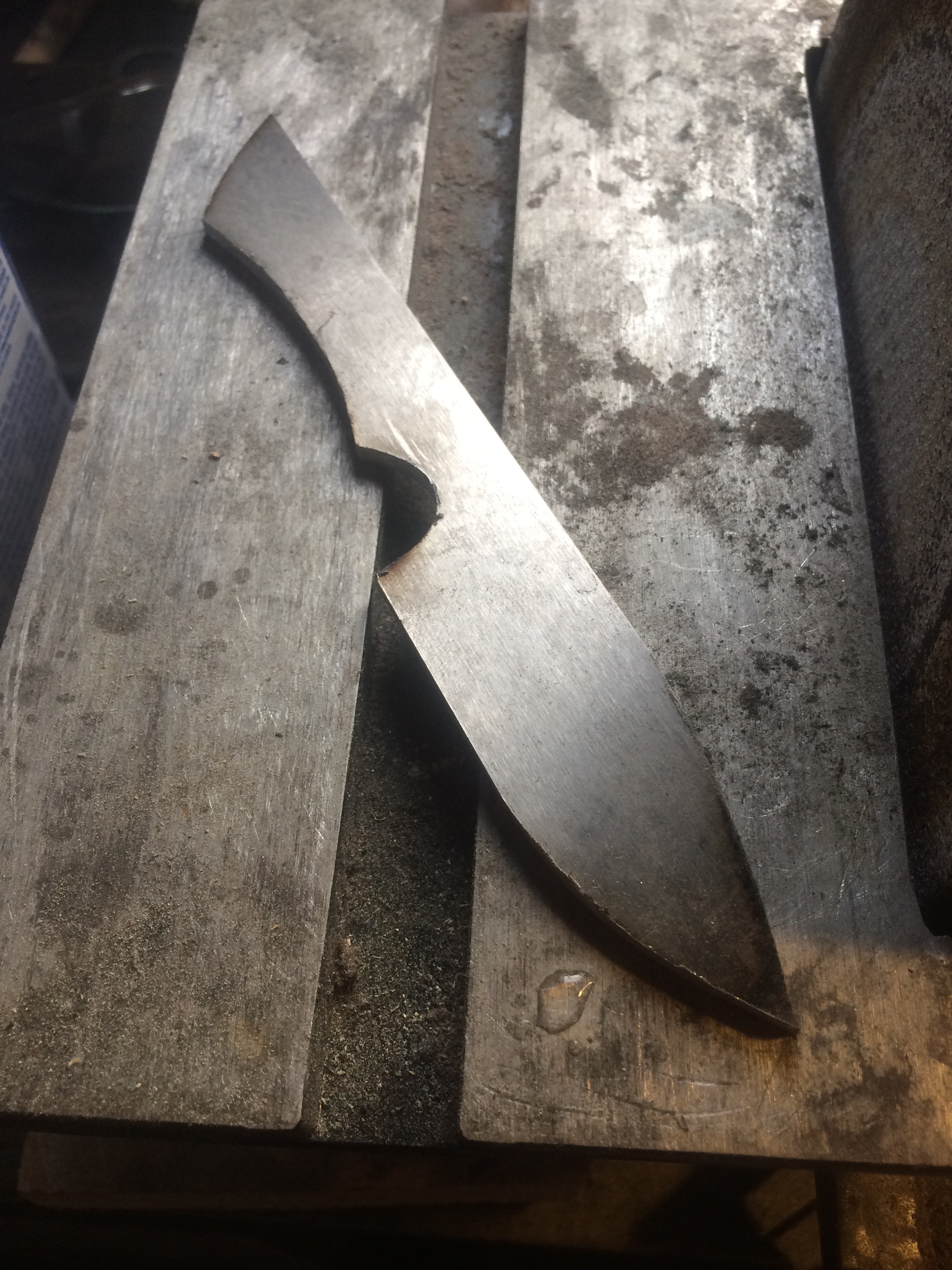
All profiled:

img_5926

img_5925

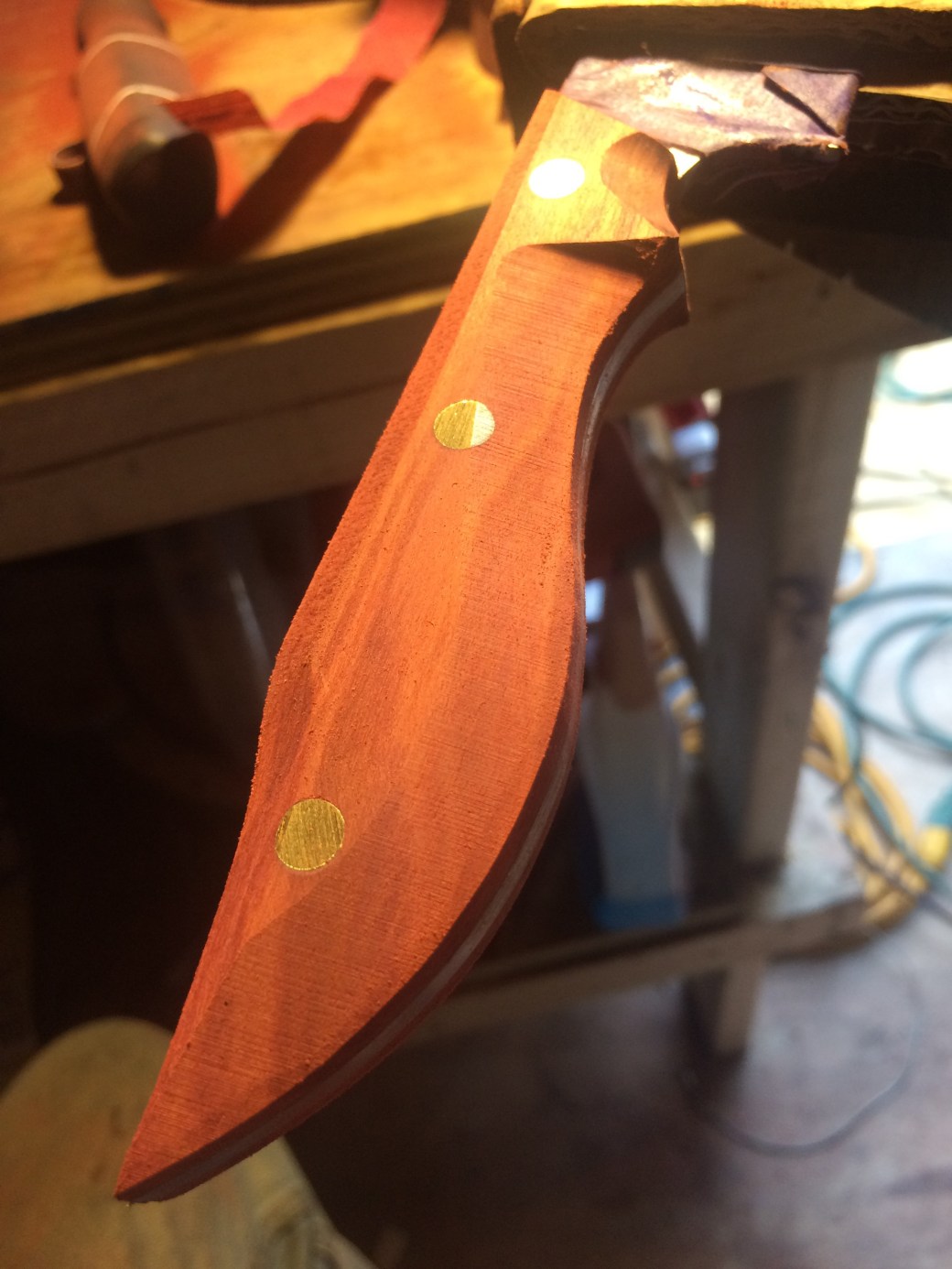
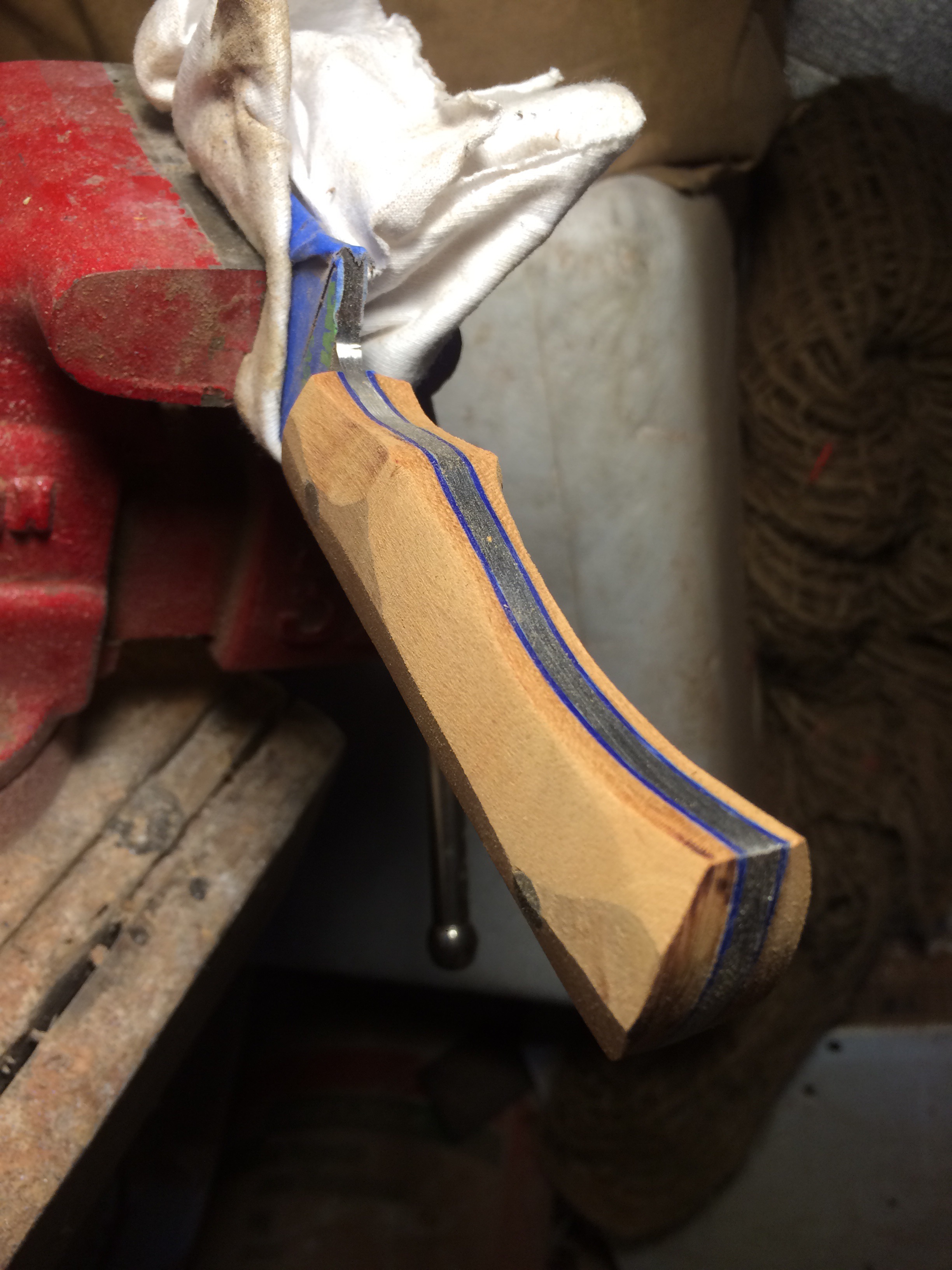
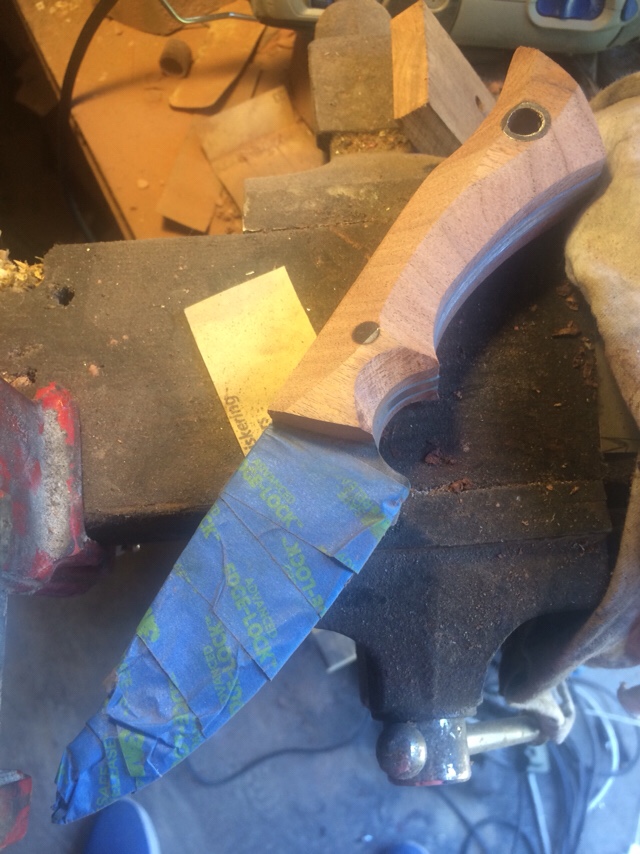
Rough shaped on the grinder- from here out it’s all hand work:
img_5927

This is at 220 grit:

img_5928

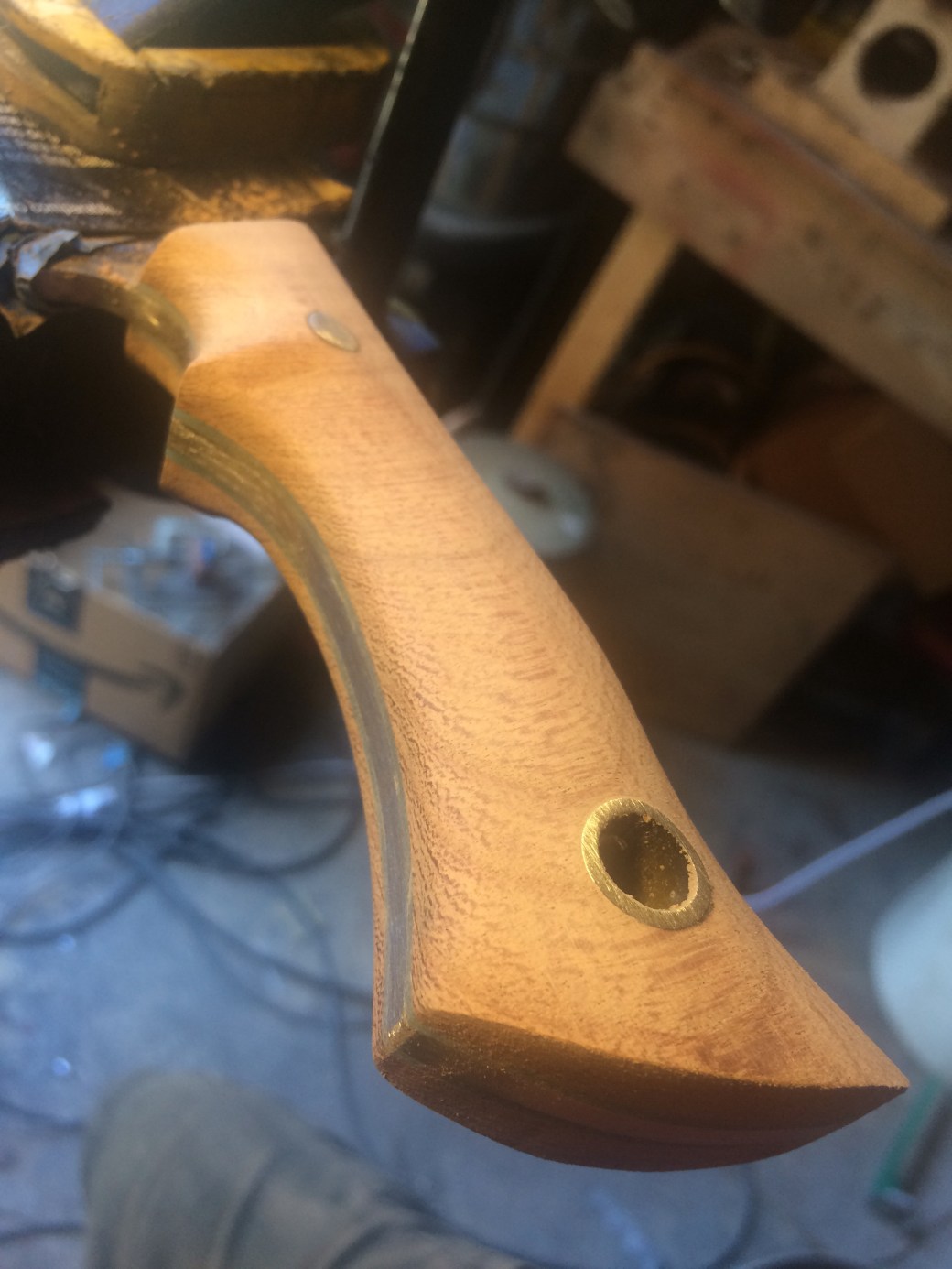
Letting a bit of oil set in to help the grain to speak:
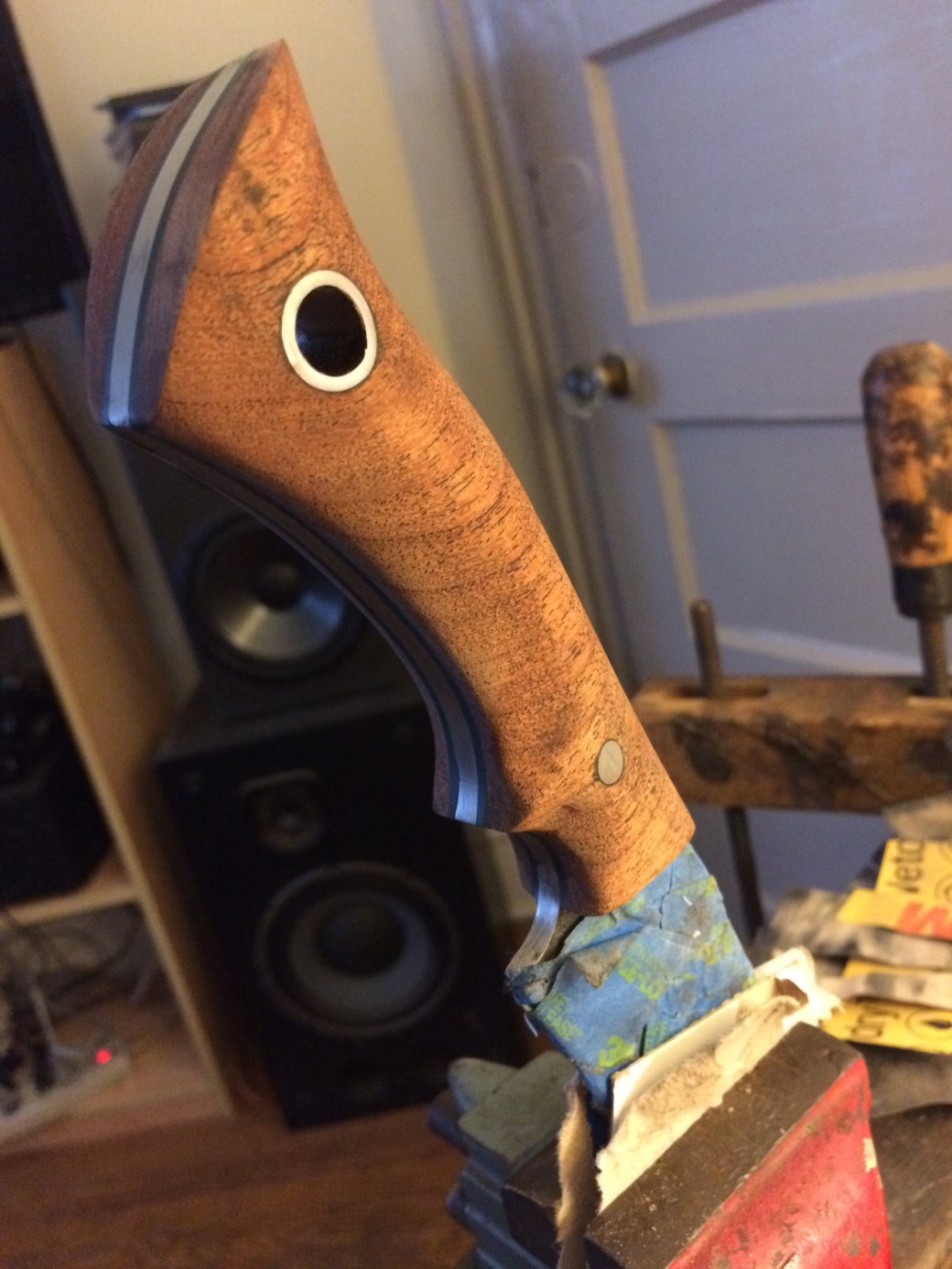
The Woodsman, Mark II:

Knifemaking: The Things That Come to Us- A Restoration

“i imagine that yes is the only living thing.”
― e.e. cummings


There are many things that come into our own personal worlds- children, possessions, problems, blessings and a myriad of others.  It’s not so important how or why they enter our lives, but what we do with them.  It expends a great amount of energy to ponder what we may have done to deserve the painful and traumatizing events that come to us, and an equal amount of energy is wasted when we wonder if we are worthy of the good things that are brought our way.

Because when we start dwelling on the why’s and how’s, we tend to become overwhelmed and lose sight of what best needs to be done with what comes into our lives.

And within that judgement of why and how, we start to say no to things.  We become afraid we may be hurt, or that we may fail ourselves or those we care about.  Perhaps we are afraid of making ourselves unsafe.  Whatever the reason, in saying no we shut ourselves out of the blessing may be inside of a painful situation.  We say no to what may be a path forward because it is dressed as something unpleasant.  It is then that we become prisoners in our lives instead of seeing the ways we can be shaped and grow.  We should say no to things that are harmful and do not better us, but it’s always good to say yes to what life brings us.

The summers are slow for me, and sometimes I have to get creative in the ways I support myself.  I end up saying yes to many opportunities that under normal circumstances I would decline, usually due to time constraints, time away from loved ones, or a high probability of bodily endangerment (or a combination of all three).  Over the years the things I’ve reluctantly said yes to have usually been the most rewarding.

One of the times I said yes this summer was to a tree job in rural Virginia.  I was on a crew to cut down a huge dead tree.  Removing dead trees can be dangerous.  Rotting can occur in any number of unseen places of the tree, causing structural instability, and the tree may not fall where or when you desire it to fall.  This particular tree, though dead as a doornail, fell exactly as it was supposed to.

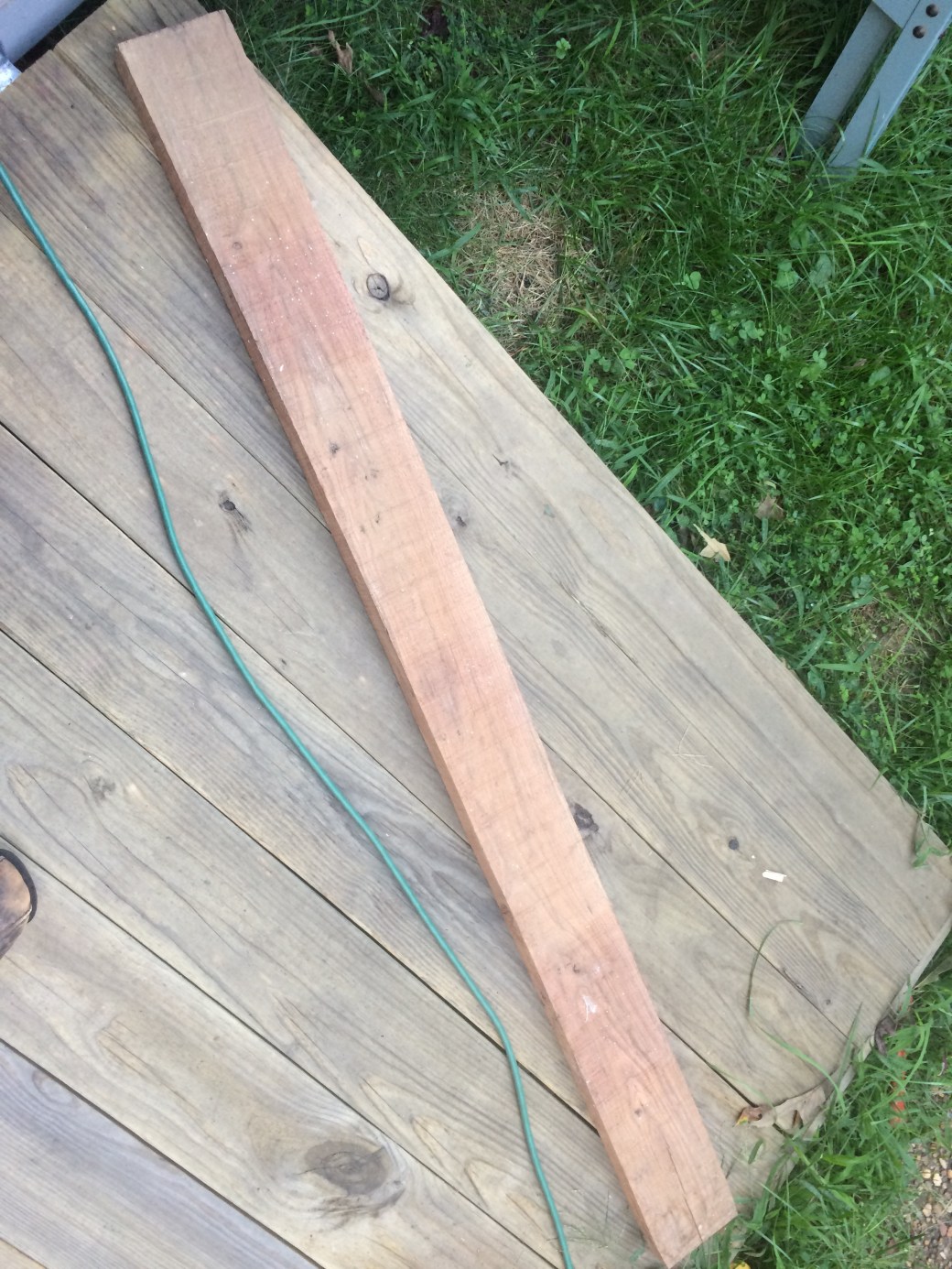
The client was an artist, and brought us French-pressed coffee.  We talked for a bit and I told him about making knives and how I got my materials.  He told me that he had some slabs of black walnut and that I was welcome to them.  They had been milled by a neighboring man who had run an abbey in South Korea, saying ‘yes’ to whatever fleeing defectors and dissidents from the North that the world brought their way.  Later he sent me an article about the man who cut the wood, you can find it here.  Black Walnut is expensive and isn’t something to normally fall into one’s path, so, in the practice of saying yes, I happily took some.

A week or so later I said yes to doing a bit of work on a good friend’s farm.  My friend is a busy lady and sometimes needs a hand with the upkeep of her property.  She and her family are good friends of mine.  I worked for her son for several years and like to get out to their property as often as I can.  It’s really beautiful:

IMG_2509

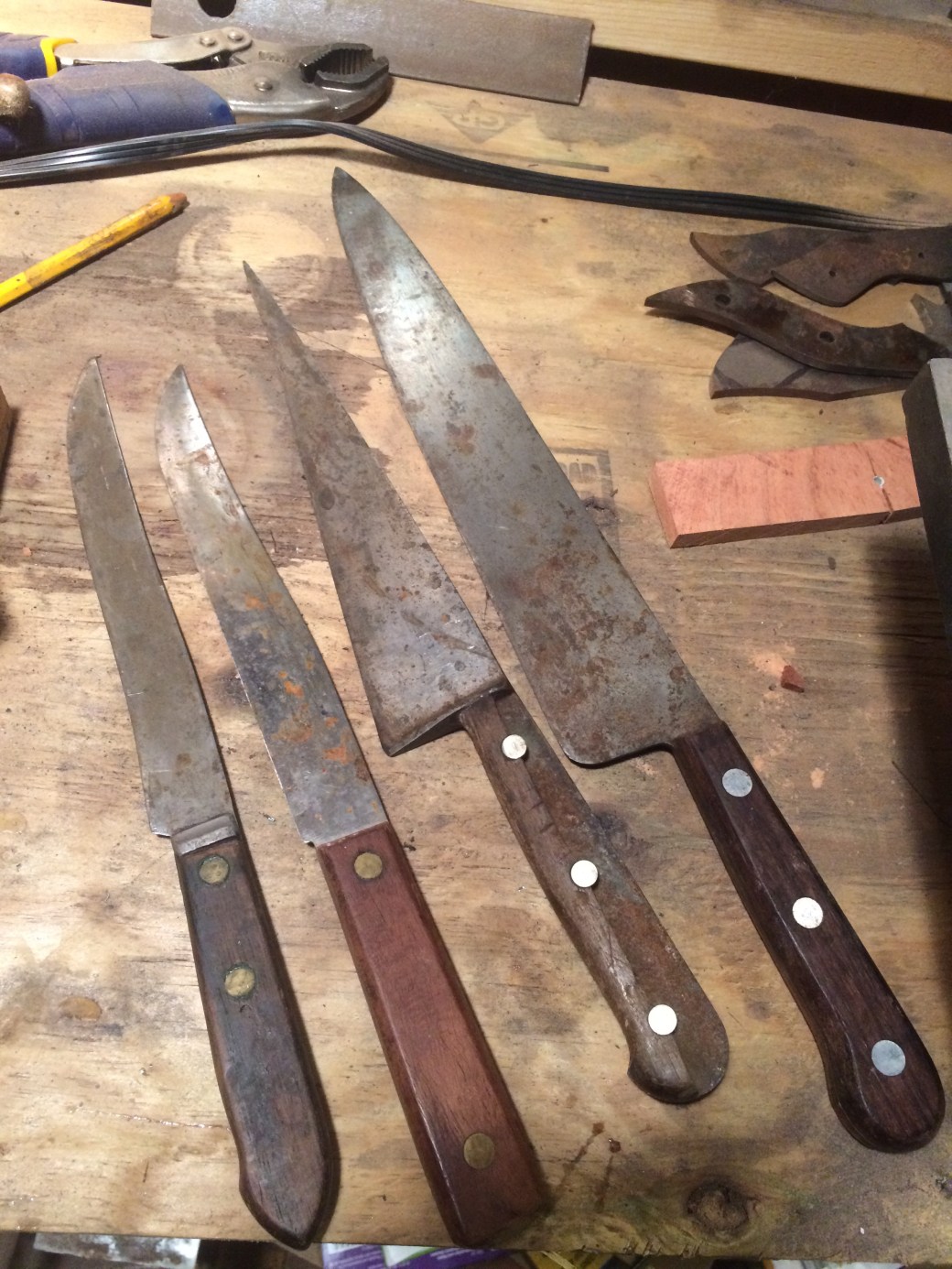
She had a set of knives she wasn’t sure what to do with.  They belonged to her late husband, and came to him from his grandfather, who was an Austrian immigrant.  He came to the United States in the early 1900’s and made his living as a chef, choosing to say yes to a new world and a new life.  She told me she’d like to have them restored so they can go to her children and stepchildren to remember their father.  I told her I would have a look at them and see what I could do.

Tools of the trade, from left to right:  A carving knife; a fish knife; a French slicing knife; and a 12″ chef’s knife

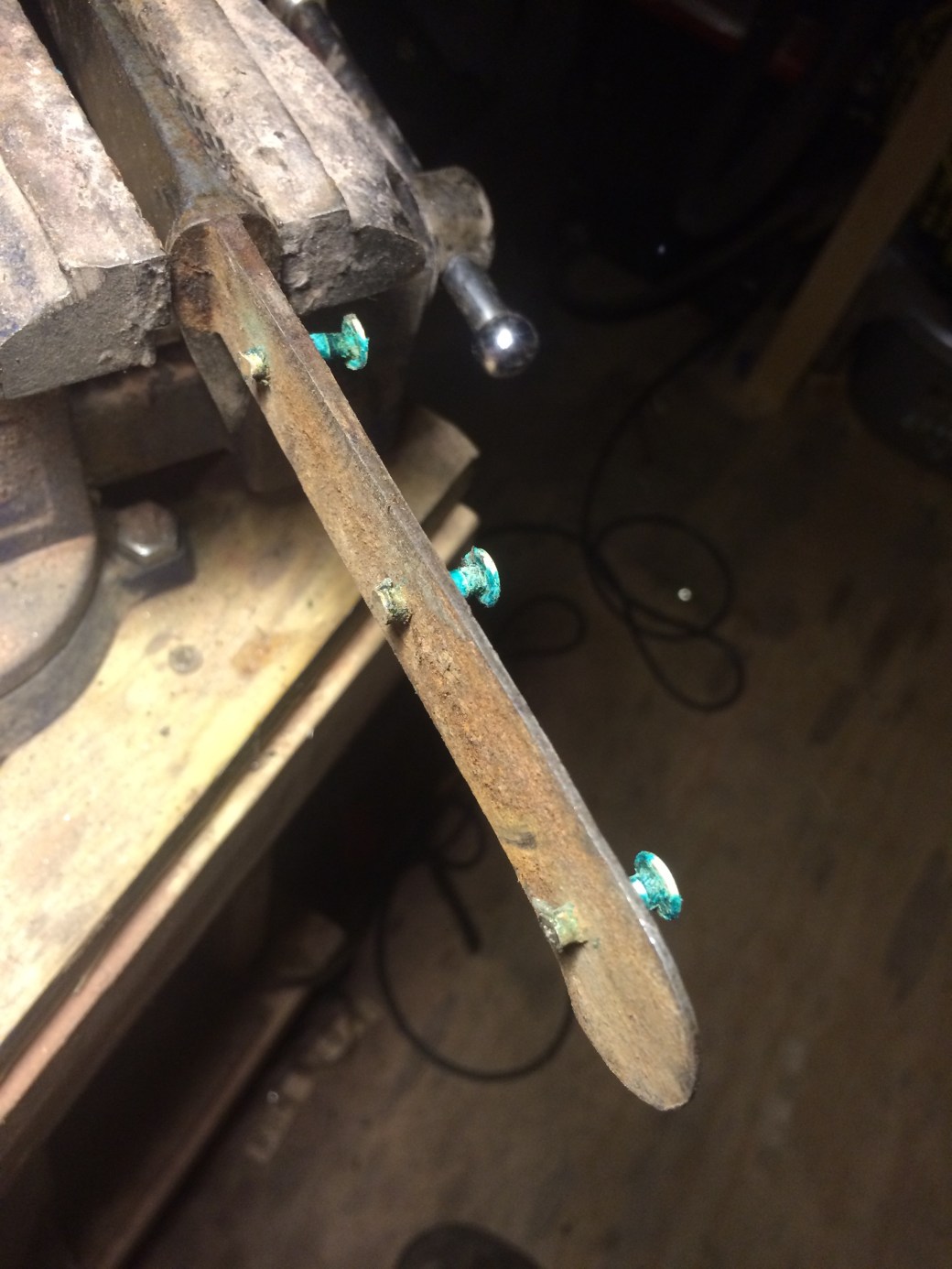
So these knives came to me, at least a hundred years old, and of deep sentimental value.   I started by removing the cracked and broken handles.

I cleaned up the corrosion and oxidization from the blades, but left much of the etched patina from their years in the kitchen.

In a continued practice of saying ‘yes’ I chose to use some of the Black Walnut I got from the tree job for the handle material.  It fit nicely into the story of these knives.  This is what it looks like sanded and polished.
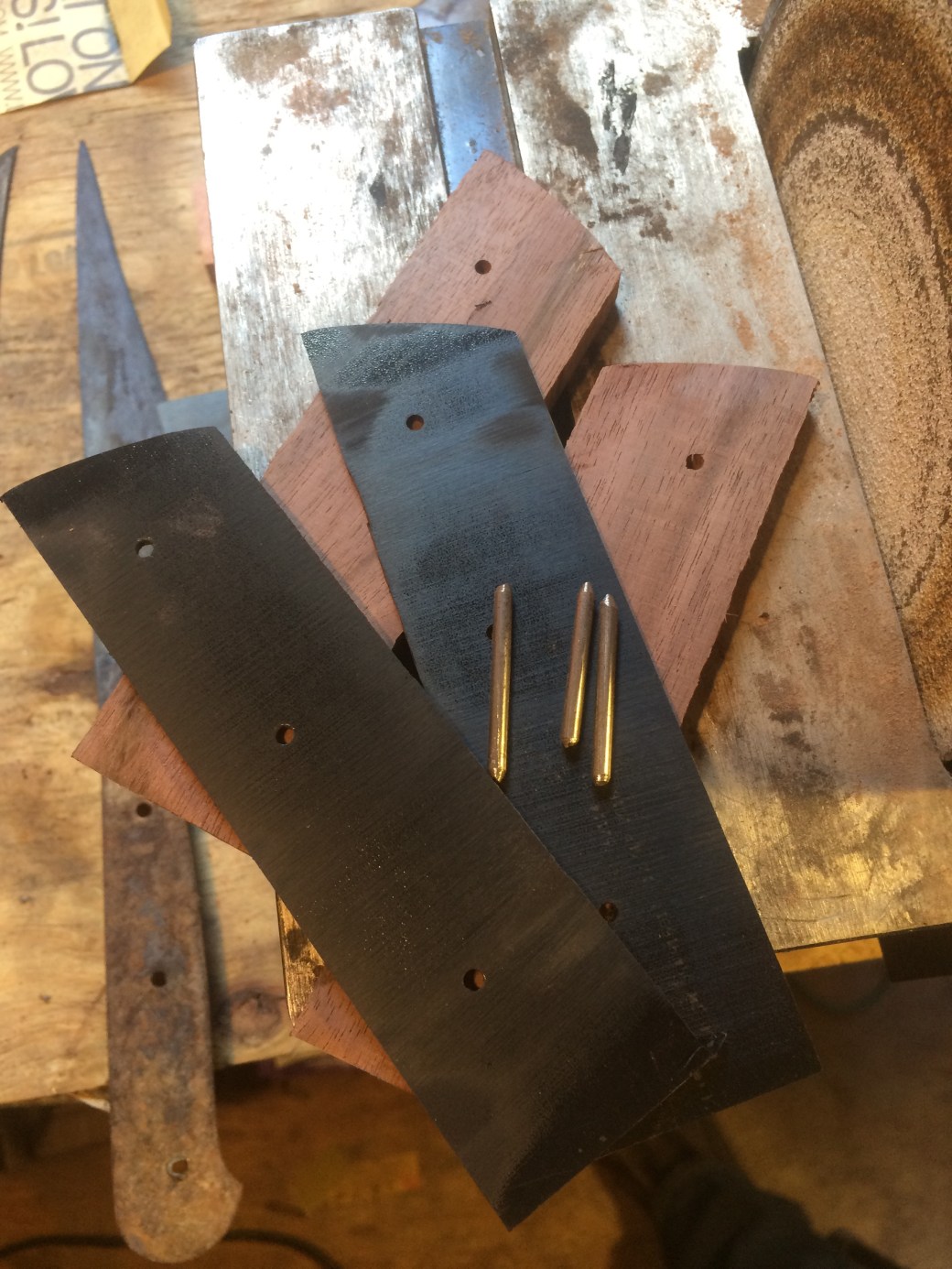
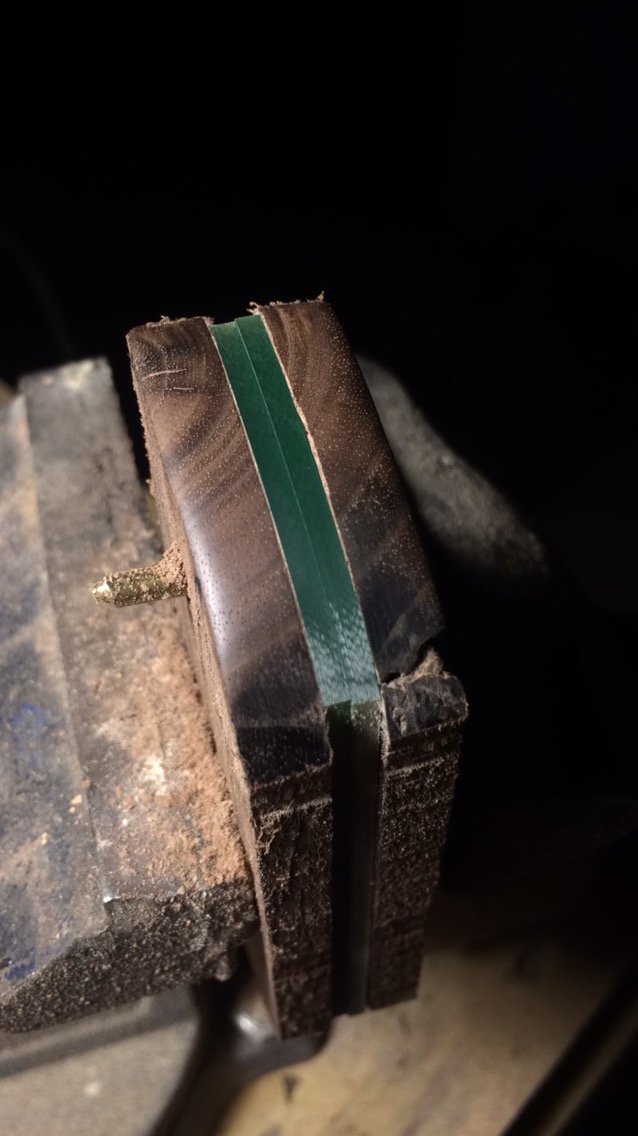
All of the handles started as thin blocks cut from the Black Walnut.

Shaping.


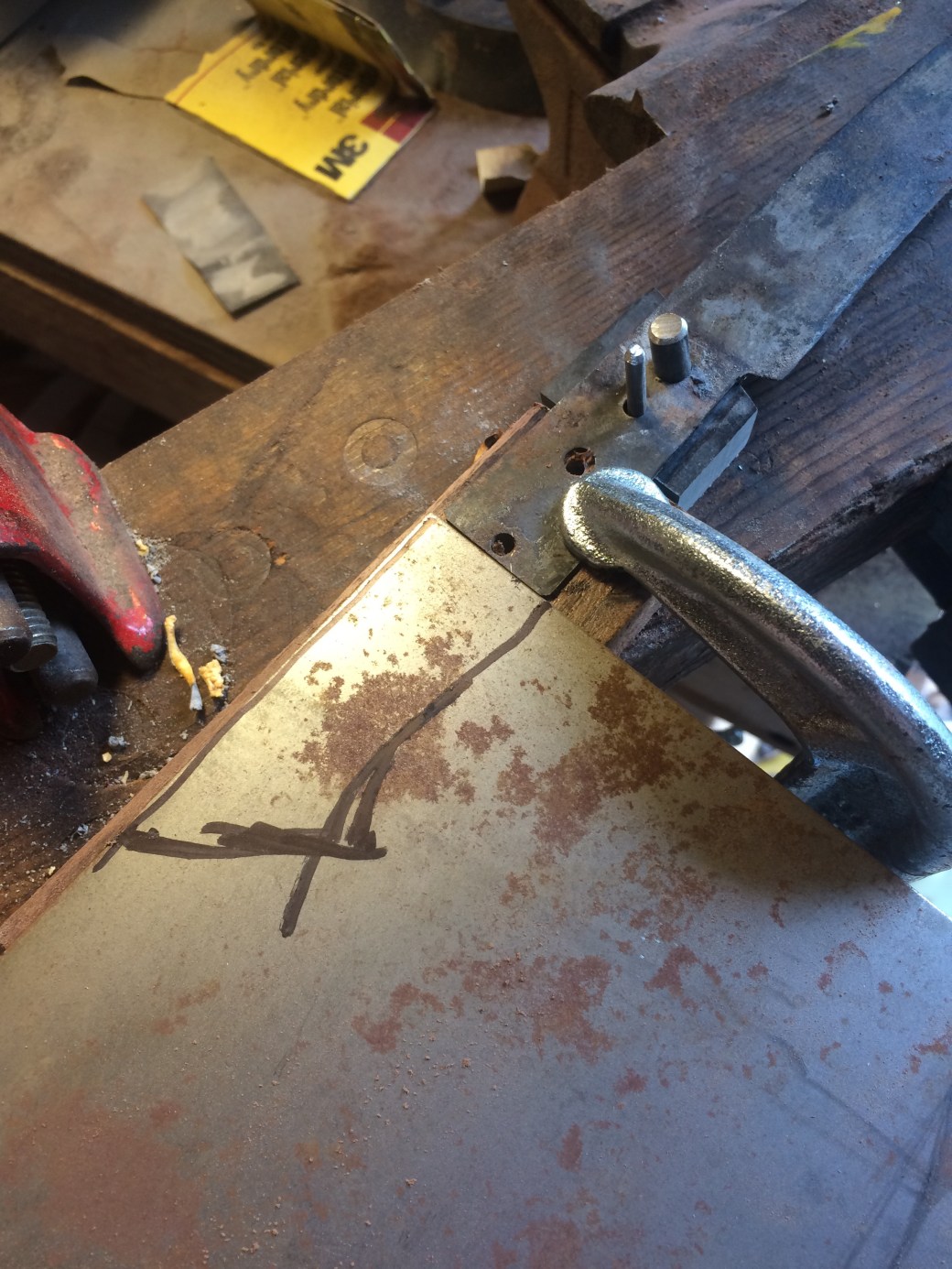
The filet knife was only half-tang, so I extended it with mild steel from a sheet.

I added a G10 bolster and spacer for a bit of contrast.

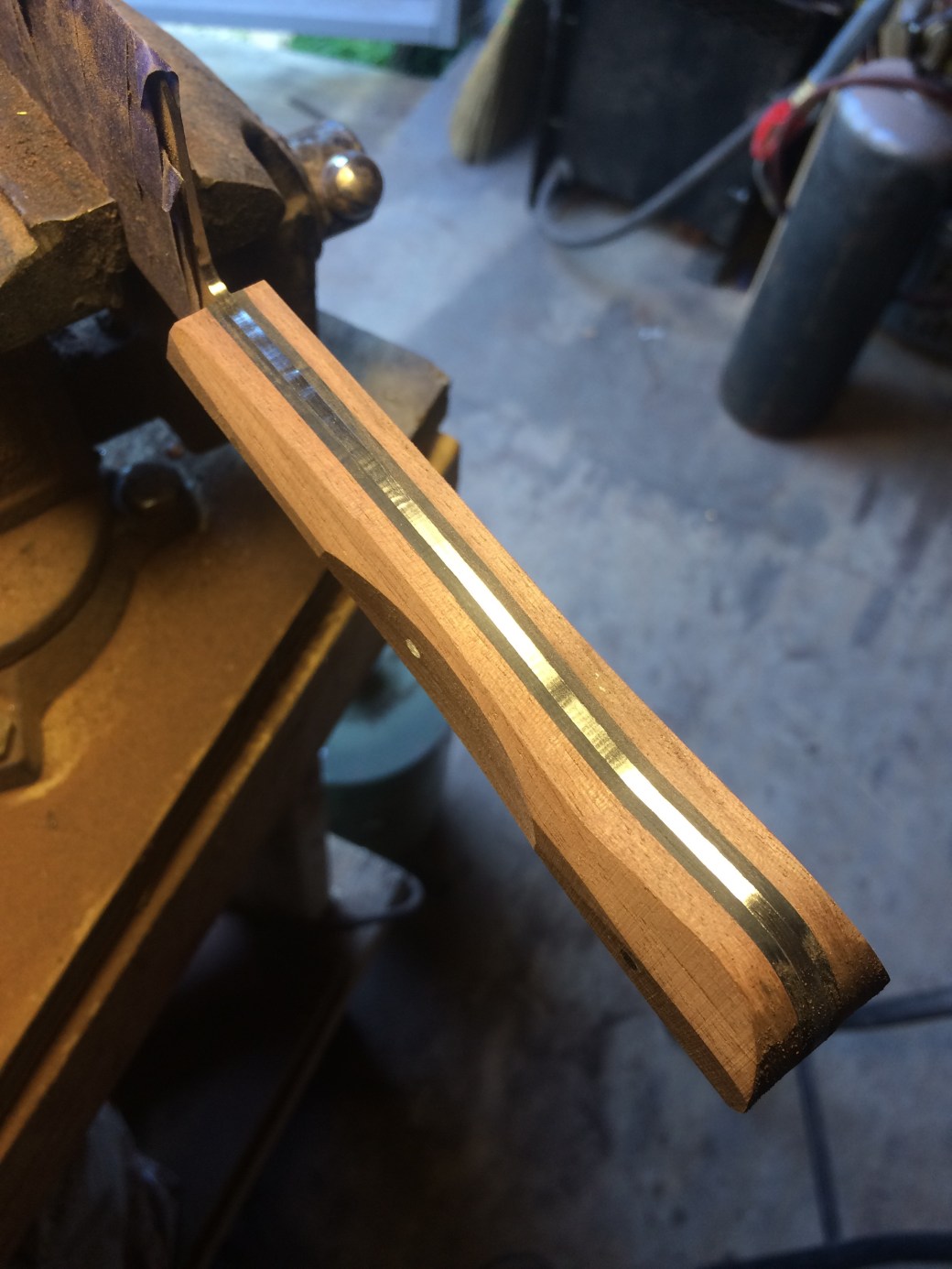
After glueing and sanding.

Getting the fish knife ready for glueing and shaping.

The French slicer was tricky….

…but also an elegant challenge, with its tapered tang and integral bolsters.


Finished, they came out rather beautifully:

Say yes to the things that come to you whenever possible.  It’s always worth it on the other side.

Knifemaking: Chainsaws, Being Gentle of Spirit, and the Lionheart

‘Only the weak are cruel. Gentleness can only be expected from the strong.’

Leo Buscaglia

A couple of years ago I was out in the country with a good friend of mine, giving him a hand in clearing some trees on his property.  There was a ramshackle house on that piece of property that hadn’t been lived in for years.  We were clearing the trees to make a path for the demolition equipment to come in and tear what was left of this house down so a new one could be built.

We hauled logs and trees that had already fallen.  This area had not been visited by anyone in quite some time and was quite overgrown.  We didn’t bother with any of the larger trees but anything under forty feet was fair game.  We were in the middle of the woods and it was just us.  My friend had two Stihl chainsaws and was cutting the trees down.  I was hauling the logs out out of the way and stacking them to be cut into firewood later.

We took a break- there were a lot of trees left to take down.  My friend had two chainsaws, one for each of us, so we decided to divide and conquer.   When we got started again I grabbed a saw and found that I could not get it running.  I yanked the pullcord.  Nothing.  To be safe I topped off the fuel and the chain oil.  I adjusted the choke.  I gave the pullcord another tug.  When it still wouldn’t start I assumed that I wasn’t pulling hard enough.  So I pulled harder.

My friend stopped me and told me to be gentle, otherwise I would rip the cord out.  I kindly let him know that I was an extremely gentle person.

He laughed.  ‘Maybe gentle of spirit,’ he said and gave the cord an easy tug.  The saw started right up.
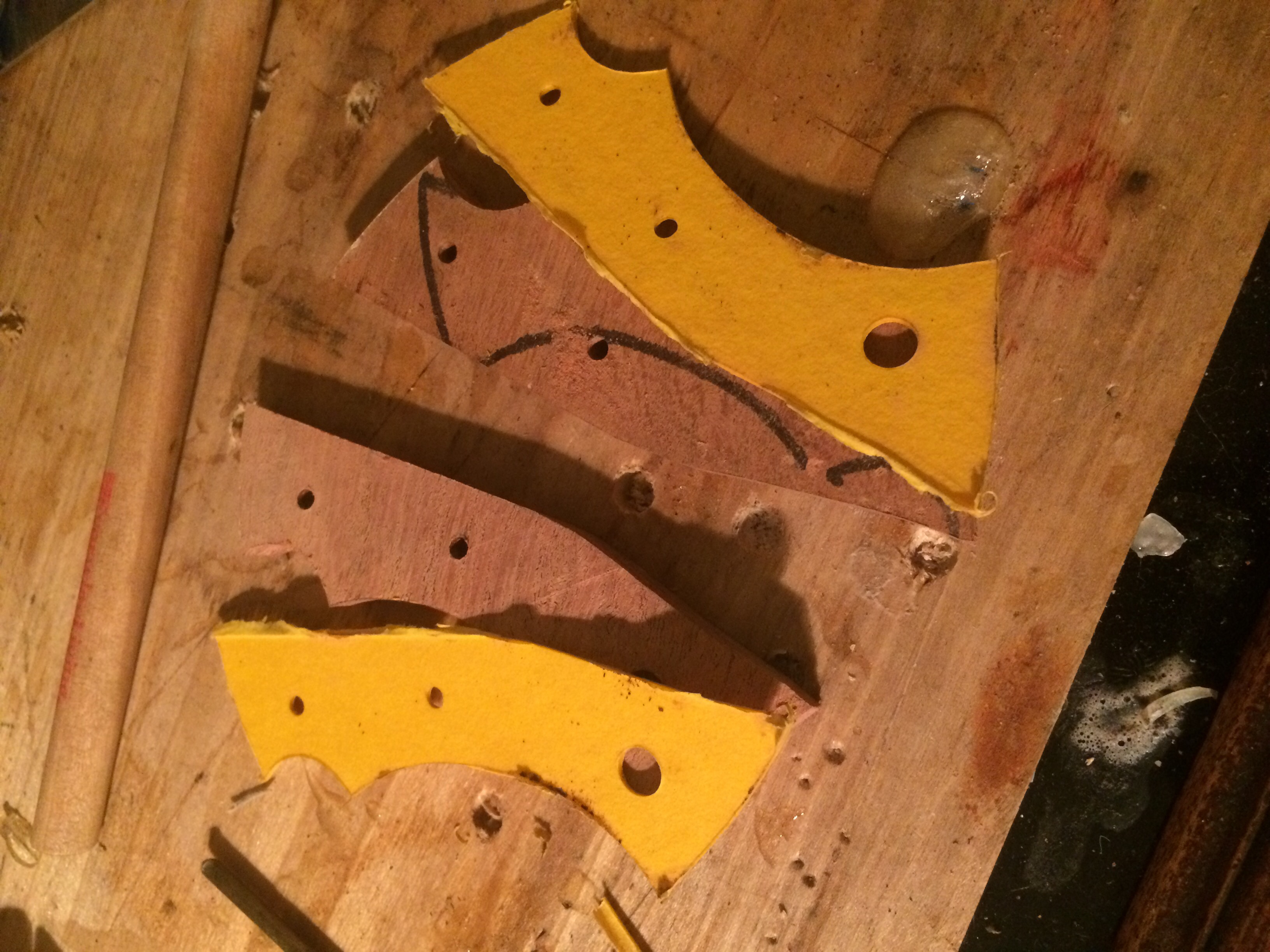
That man, always with the truth.  I thought I was being gentle….

The truth of the matter, and what became clear that day, is that behind any kind of power is gentleness.  Not everything in this world can be beaten or bullied into submission, though there have been times in my life where I liked to think so.  As with the chainsaw, gentleness sometimes IS the power.  Out in the woods that day, the one who was gentle was the one who was cutting the trees down and that person was not me.

Gentleness is often seen as a sign of being weak.  This is not true, despite what has been demonstrated to us throughout our lives.  While brute and strength and force have their place, without something gentle behind them they serve only to divide and intimidate.  Gentleness serves as a means to connect.  It acts as a vessel for strength, holding it and giving it purpose.  Behind every great leader, parent, speaker, or creator of things there is something gentle.  Without that everything dissolves into fear and chaos.

This is the lesson of the Lionheart.  To find gentle is to find power.  The road to finding those is courage and bravery manifested, which are traits of someone who is Lionhearted.  It’s not an easy road for certain but the best ones never are.
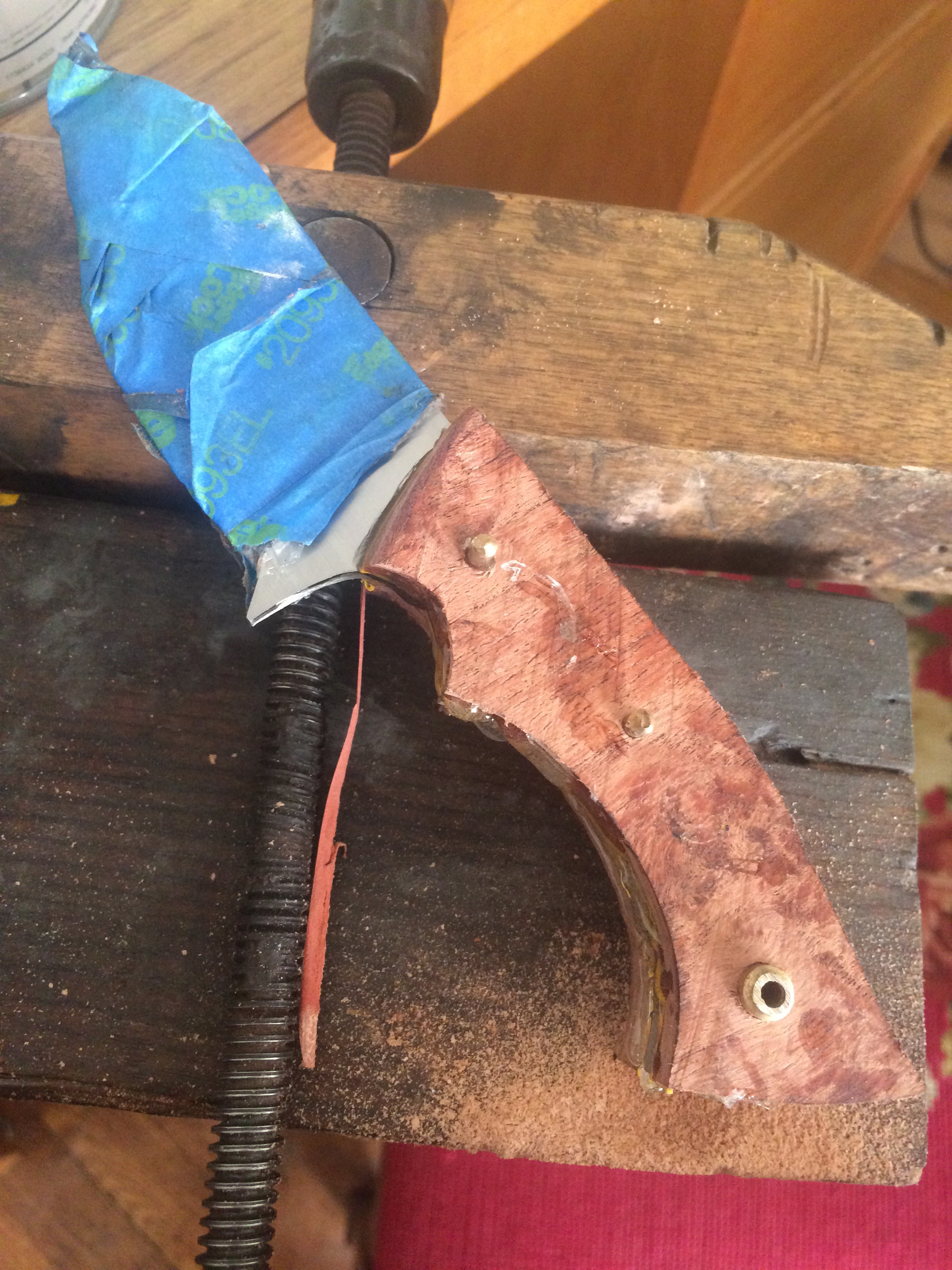
This blade is a 6in filet/boning knife, built from 1/8″ O1 tool steel stock.  It was commissioned by a man who has quite a bit of Lionheart in him, and was the inspiration for the namesake of this knife:

Rough cut:

Filework on the blade choil.  This makes it easier to sharpen and provides a visual aid in creating symmetrical plunge lines:

Profiled:

Initial work on the bevels.  Removing too much steel will cause it to warp in the forge.  Ready for heat treat:

Hardened:

Removing more material after heat treat:

Hand sanding:

Satin finish:

I should have drilled these earlier, but here we are:

Rivet holes in the scales.  The wood is Redheart:

Ready for assembly:

Profiled:

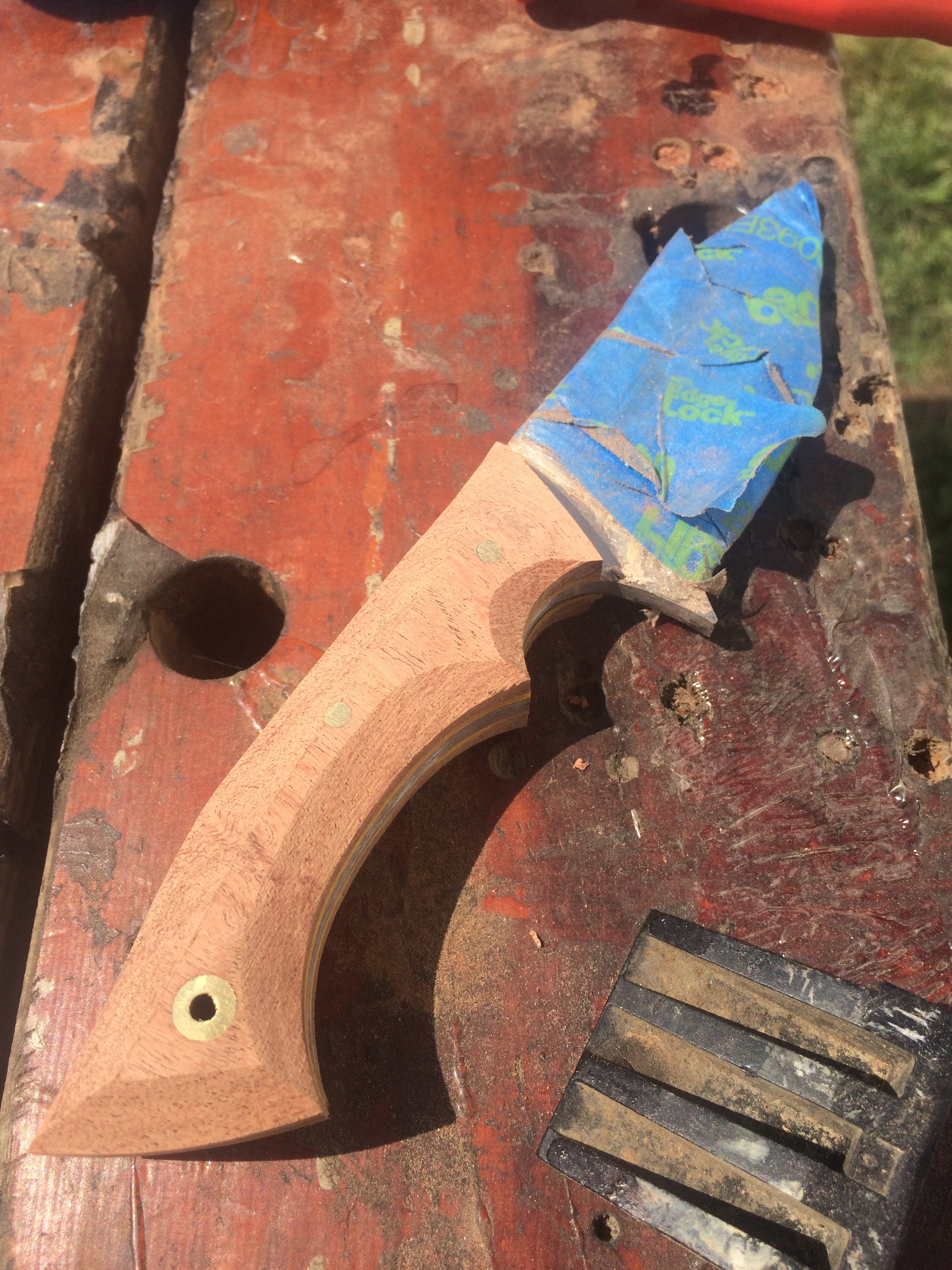
Shaped:

The Lionheart:

Be gentle with that chainsaw….

Knifemaking: finding a way and the Desert Fox

“So many people live within unhappy circumstances and yet will not take the initiative to change their situation because they are conditioned to a life of security, conformity, and conservatism, all of which may appear to give one peace of mind, but in reality nothing is more dangerous to the adventurous spirit within a man than a secure future.”

John KrakauerInto the Wild


The Desert Fox, also known as the Fennec Fox is the smallest member of the species Canid.  They can be found in the Sahara Desert of North Africa.  Living in such averse conditions has allowed for some particular adaptations in order for them to find their way in their environment, most notably their prominent ears (I mean, look at those things):

The ears help them to dissipate heat, as desert temperatures can get up to 117 degrees Fahrenheit during the day. They also have a specially evolved set of kidneys allowing them to go without water nearly indefinitely and their required moisture can be obtained from their food.  Unlike other foxes or canines, they have fur on the bottoms of their feet.  This keeps them from burning their feet when traveling over hot sand.  Their cream-colored coat helps to reflect the heat of the sun.

They are omnivorous, eating insects, lizards, and birds, but are also known to eat roots, leaves and other vegetation.  The Desert Foxes are social creatures, live in groups, and mate for life.

I find this to be an incredibly encouraging little animal, finding home and company in a place where a large portion of its environment is actively trying to kill it.  On days where I’m not sure how to find my own way, I often think of the Desert Fox.  I find that I don’t have to worry about blistering heat, numerous birds of prey, even more numerous venomous snakes, or scarce food sources, and then I proceed to count my blessings and pray that I don’t become complacent in my station from lack of natural predators.

Because finding your way when there isn’t anything pushing you can be just as hard as navigating a desert full of bad things.

I was in Pittsburgh recently, taking an Uber to dinner.  I’ve never particularly cared for riding Uber; it always feels like there’s an expectation for conversation and an uncomfortable and resentful silence if that expectation is not met.  On one Uber ride in Manhattan there was a driver from the Caribbean who wouldn’t stop talking about his kid and showed my friend and I a video of him playing baseball.  All this while driving in rush hour traffic.  This most recent Uber ride was not that.

The man picked us up and the conversation was easy.  After a little while of talking about what we were doing in the ‘Burgh, I asked him what he did for a living.  He said that he had been a private investigator in Los Angeles for twenty years, from the early ’80’s to the late ’90’s.  He said he had seen it all: cheating spouses, runaway kids, you name it. He thought it was all hilarious.  He wanted to write a book.

His friends all thought his stories were great and they had been encouraging.  The only problem, he said, was when he sat down to write he couldn’t get anything on the page.  He just froze.

I know what this is.  This is the crippling self-doubt that almost every writer and creative person I know deals with.  Myself included.  I told him so.  Hell, I know a filmmaker who has a Crippling Self-Doubt Room in his house where he goes before he works on his projects.  If you don’t find a way forward, you get stuck, and your ideas aren’t heard.  Nothing happens and life goes on.  You have to live with the sting of unrealized potential.  That sting becomes more painful as the years go on and there is no more time to realize what could be.
The only thing to do, I told him, was to find a way to be with that debilitating feeling of self-doubt.  Find a way to get something, anything, on the page.  Once there is something on the page finding your way becomes much easier, and it can take you to surprising places.  There is meaning in those places, satisfaction, and everything becomes a bit deeper and beautiful.

This is the lesson of the Desert Fox, a creature that has an unforgiving place to call home yet finds a way to thrive in it, and makes an existence in the uncomfortable.  If there is something eating at you and calling to you, then you can always find a way to make it happen.


We start with flat stock O1 tool steel:

Roughing in the blade choil:

Profiled:

Rivet Holes:

Hand sanding the bevels before heat treat:

Hardened:

Tempered:

Hand-finished satin:

Texas Mesquite.  One of my most favorite materials to work with:

Shaped:

Sanded to 220 before giving the grain a burst:

The Desert Fox:

If you can find a way to exist in the uncomfortable, than you can almost always find a way forward.

fennec fox

Knifemaking: Rock and roll, privilege, and the Sir

“He who conquers himself is the mightiest warrior.”

-Confucious


Warrior, Merchant, Artisan, Farmer.  These are the four classical occupational archetypes of Feudal China.  These archetypes still ring true today.  There are variances and nuances but in the way we go through life, many of us find ourselves in all four of these occupations, even if only briefly:

-The Farmer understands the value of labor.  He is master of working within the seasons to sow his crop.

-The Artisan understands how different mediums and materials go together, and how to craft his goods within that understanding.  He is master of his tools.

-The Merchant understands business- buying low, selling high, and having a good product.  Business at it’s core level is the art of profit and the Merchant is master of this.

-The Warrior understands the above three archetypes.  He is master of himself and carries the weaponry of his choosing.  He serves society.

I have found myself, at various points in life, in all four occupations.  The Warrior intrigues me most.  Speaking as a man, I feel that most of us want to master ourselves, and the things that try to enslave us- our fears, our desires, and our insecurities.  In our occupations and work, obsessions and compulsions can develop, our fears can play out, and we can become consumed.  We can become obsessed with trying to squeeze the seasons dry, or maximizing profits, or with crafting a better and more beautiful mousetrap.  When these things become all that we see, we have failed to master ourselves and aren’t really serving anything except for what we are trying to achieve.  At this point, all the things that really matter get left in the dust.  We lose sight of the world we live in and are not present in our lives.

In order to master yourself you must know yourself.  Sometimes the best way to know yourself is to know others.  And sometimes the best way to do that is in service to others.

I was working a large arena rock and roll show, one of the largest I’ve ever worked.  The headliners had been around for decades, on the top of the charts, and darlings of video-era MTV.  They have recently been selling out arenas around the world.

I strolled into the production office to get my assignments for the day.  There was laundry, grocery shopping for the tour busses, FedEx and post office runs, prescriptions to be filled, and other bits of housekeeping errands that keep a massive touring operation on the road.  Not everything gets done.  Touring is a practice, not a science.  The most successful touring operations are predicated upon this notion.  My job is to take care of as many of these things as possible based on what the tour needs and the priorities of the show.  This doesn’t leave time for anything that may be superfluous or unnecessary.

After the day was laid out and I had my assignments, the tour manager asked if I could add another thing to my list.  There was a very large basket of toiletries- soaps, shampoos, and lotions- that had been collected from God knows how many swanky hotels.  The tour manager asked me if, time permitting, I could find a Women’s Shelter or a shelter for families in transition and drop them off there.  The band and the crew collect them from every place they stay for that explicit purpose.

I didn’t give it too much thought.  I had a lot of things to do and honestly this little task wasn’t real high on my list.  But the tour manager kept asking me about it and so I decided to make it a priority.  After all, I was in a position to take care of this.  I got on the internet and found a facility nearby.  It was a shelter for women leaving bad domestic situations- in many instances they showed up with nothing but the clothes on their back.

I called them and told them who I was and who I was with and asked if they accepted donations.  Yes we do, they said, please come by.

So I went by, even though I really didn’t have the time.  The people at this organization were really happy to get these things.  They wanted to take a picture for their social media page.  All smiles.  They thanked me for thinking of them and to remember them in the future because funding is always tight and every bit helps.

This was all really special to be a part of, even though it was a pretty small thing.  I wasn’t really expecting that and it was nice.  I don’t normally find myself in these sort of situations.  I’m usually wrapped up in my own affairs, serving the things I am trying to achieve rather than broadening my gaze.  I noticed a lightness in me and the rest of the day felt easier.

There’s a lot of talk about privilege- white privilege, gender privilege, and a myriad of others.  When all of the social justice orthodoxy is stripped away, I find privilege to be a form of power.  There’s nothing wrong with being privileged but it’s important to be aware of it.  Many of us aren’t aware that we have that power within ourselves.  It’s a noble thing to use that privilege, that power (which, honestly, many of us take for granted) to help those who may need it.  It’s a really special thing to give or share of your time and talents when it’s within you power to do so.  This type of service can help you to become more familiar and intimate with yourself, and also help to make the world around you a better place.  That is the mark of a Warrior, and the lesson of the Sir.

O1 tool steel, thin stock

Profiled:

Rough grinding:

This is how to heat up your quench oil on a cold day:

Hardened and tempered:

Handfinishing, at around 220 grit:

Hand finishing at around 320 grit:

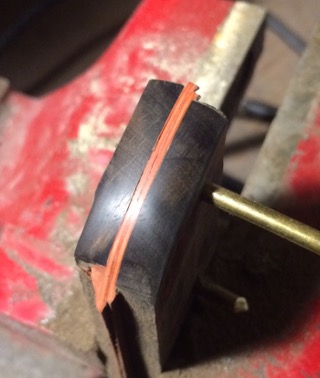
Ebony wood:


img_4467

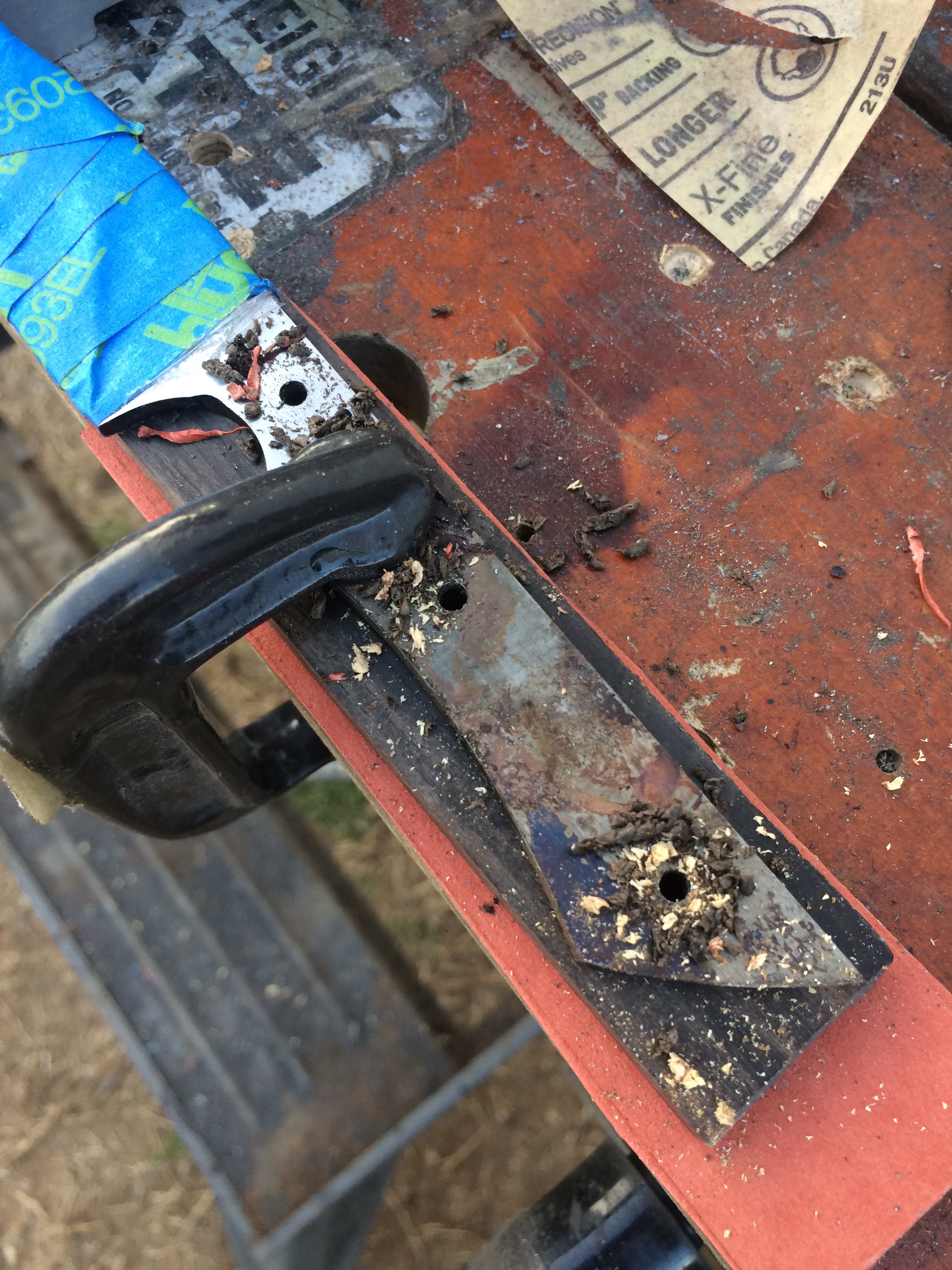
Clamped:

Shaped:

The Sir:

Don’t be afraid to look out for others every so often.  This is part of the path toward mastering oneself.

Just a Bunch of Roadies– This is an organization of Music Industry Professionals that use their time and talents to make a difference.  They facilitate larger operations, but also smaller projects, like the one written about in this story.  Be sure to check out their website if you would like to help.

Knifemaking: yes and no; and Urim and Thummim

“Take these,” said the old man, holding out a white stone and a black stone that had been embedded at the center of the breastplate. “They are called Urim and Thummim.  The black signifies ‘yes,’ and the white ‘no.’  When you are unable to read the omens, they will help you to do so.  Always ask an objective question.”

Paulo Coelho- The Alchemist

I took a philosophy class in college.  The professor was an older gentleman, and a bit mysterious.  He had us buy a very expensive textbook which we never used.  He was the one asking the questions and it was mostly us, the class, that did the talking.  We never learned much about him other that that he had had a bit of celebrity on the academic circuit several decades prior. In his younger days he practiced judo.  Later in life he discovered Tai Chi, and taught that as well.  He never elaborated on any of this.

I don’t remember much of what we talked about.  I was twenty-two and liked to go to class stoned.  I do remember there was some Kant in there, and some St. Augustine, and probably some ideas on relative morality versus universal morality.  I also remember one lesson we had, one about truth, and how all matters can be broken down into a yes or a no.

He gave an example: all cellular communication can be broken down into ‘yes’ or ‘no’.  ‘Yes I will fuse with this protein,’ or ‘No I will not fuse with this protein.’  ‘Yes I will bind to this synapse,’ or ‘No, I will not bind to this synapse.’  Matters that are gray in appearance only remain so until one goes deep enough to find a ‘yes’ or a ‘no’- and in many instances in our personal lives we never get to that point.  Sometimes the truth contains many yes’s and no’s.  Sometimes the truth is much larger than our own individual internal agreement or disagreements.  This is part of what gives life it’s mystery and beauty.

There was one particular assignment, a large one, that came up.  We had to write a 10 page paper on a topic we chose.  The professor had a list of topics to choose from.  We were to choose a topic with which we most disagreed.  I had found mine:

‘True virtue requires true religion’

He then flipped it around and told us that our paper had to argue in agreement with our chosen topic.  I didn’t know where to start.  I didn’t agree with this statement at all and was a bit stumped.  After many starts and stops I found a legal dictionary and first looked up the definition of truth, then of virtue.  I found a way to manipulate those very clean and sterile definitions to find agreement with a statement I didn’t agree with.  I don’t remember exactly what I wrote and I’m not sure how I got ten pages out of that but I was pleased with myself.

I got my paper back.  There were no corrections or suggestions.  Written at the top of the page in red ink was a little note saying that I had made my argument using a clever lawyer’s trick.  I got a C.

Over the past dozen or so years I’ve thought a lot about this.  Truth is something that just is.  It is the yes or the no.  The point is that the truth of things can’t be manipulated.  There is discordance in the world because all of us are trying to manipulate the truth to serve our needs, to pacify our fears and insecurities, to indulge our convictions, and to fit into the way we believe things should be.  In spite of these dances we do, at some point everything will break down into yes or no.  When things appear to be both yes and no at the same time it only means that the truth isn’t fully visible at that point.

This doesn’t mean things are clear or easy.   Black for one person may be white for another, and vice versa.  It won’t always fit into nice agreeable little boxes.  I was working with teenagers and there was a young girl who was acting out horribly.  After speaking with her mother, I found out that her father had left the family to go live his life as a woman.  The young girl had a very strong ‘no’ to her father’s insurmountable ‘yes’.

At some point decisions have to be made and assistance may be needed when one can’t always read the signs of which path to take.  Sometimes we can bring an external influence in to help us to get to our truth, our own personal “yes’s” and “no’s”.  This is the where Urim and Thummim come in.

This two-knife kitchen set was a commission for a good friend and former teacher. He is a man who taught me how to look at matters deeply and to think about things critically.  We were on a farm for this past Thanksgiving and I noticed that he had been reading The Alchemist by Paulo Coelho.  This is a book that is special to me, and was given to me during a time when I was having trouble reading the omens.  It was the inspiration for this set, and an exercise of gratitude for this man, a sort of alchemist himself, who has helped me to find my own truths over the years:

We start with Urim, a six-inch boning/filet knife

Because the stock is so thin, I hardened the blade before grinding the bevels:

Rough grinding at 40 grit:


Full flat grind:

Laying down a hand finished satin:

Detail work on the plunge lines:

Ebony Gaboon: the black symbolizes the ‘yes’:

The bit near the ricasso; sanded to 2000 grit:

Profiling on the handle:

Rough-shaped:

Sanded to 220 grit and then oiled.  I let this sit for a day or so and then sand the entire handle up to 2000 grit.  This process helps to burst the grain:

Urim:

To start on Thummim we need things that cut:

Once again the whole bit is hardened:

Rough grinding:

Full flat grind and finished on the grinder to 120 grit:

A lot of material was removed:

Laying down a hand finish.  A smoother finish makes for less resistance when doing knifework in the kitchen:


She goes into hot acid for an etch.  The etch helps to prevent corrosion and also makes for a more pronounced patina as the knife is used.  It will also darken the blade:

Spalted Tamarind:  the light color represents the ‘no’

With black spacers for contrast:

Once again, sanded to 2000 grit:

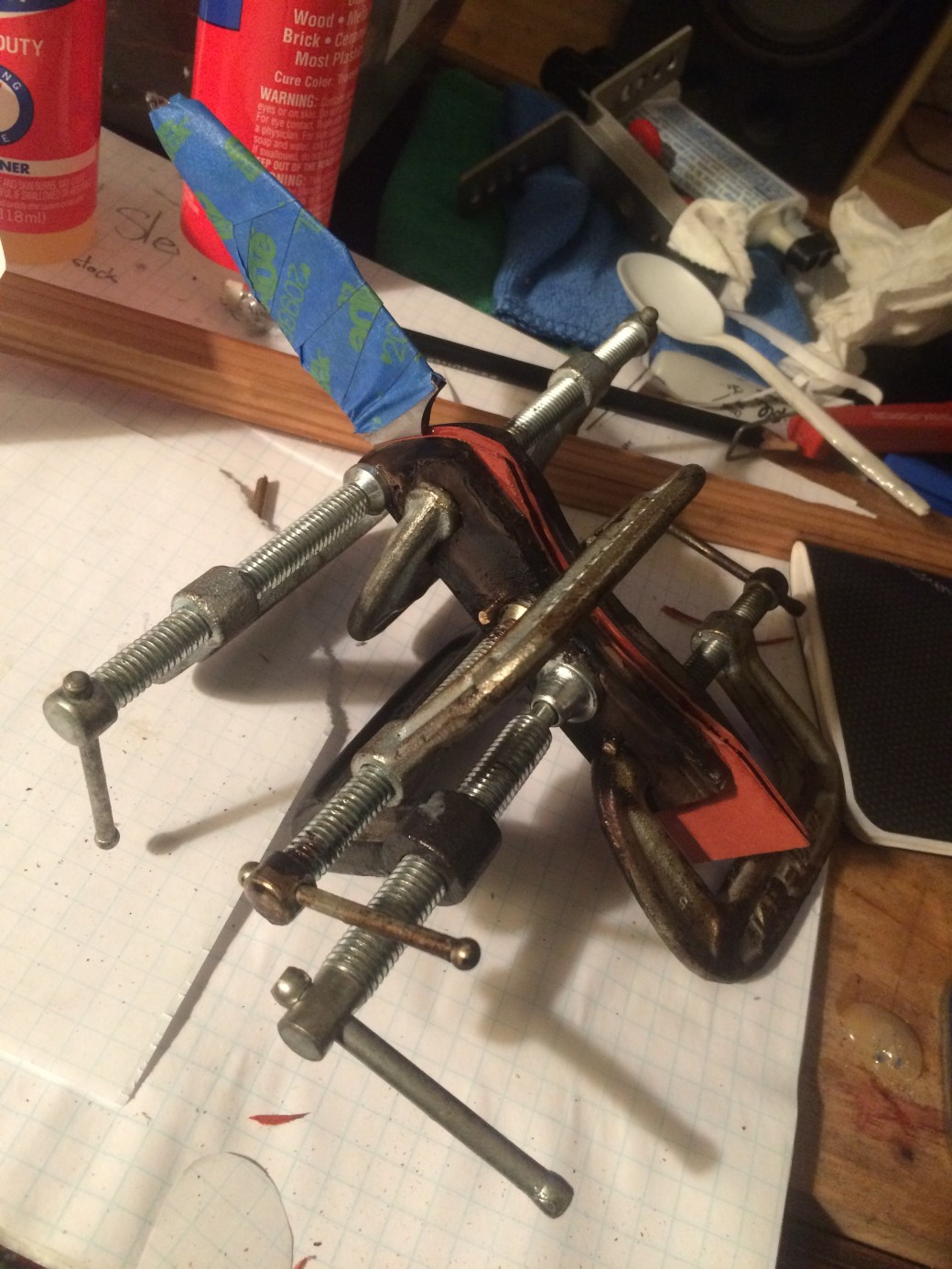
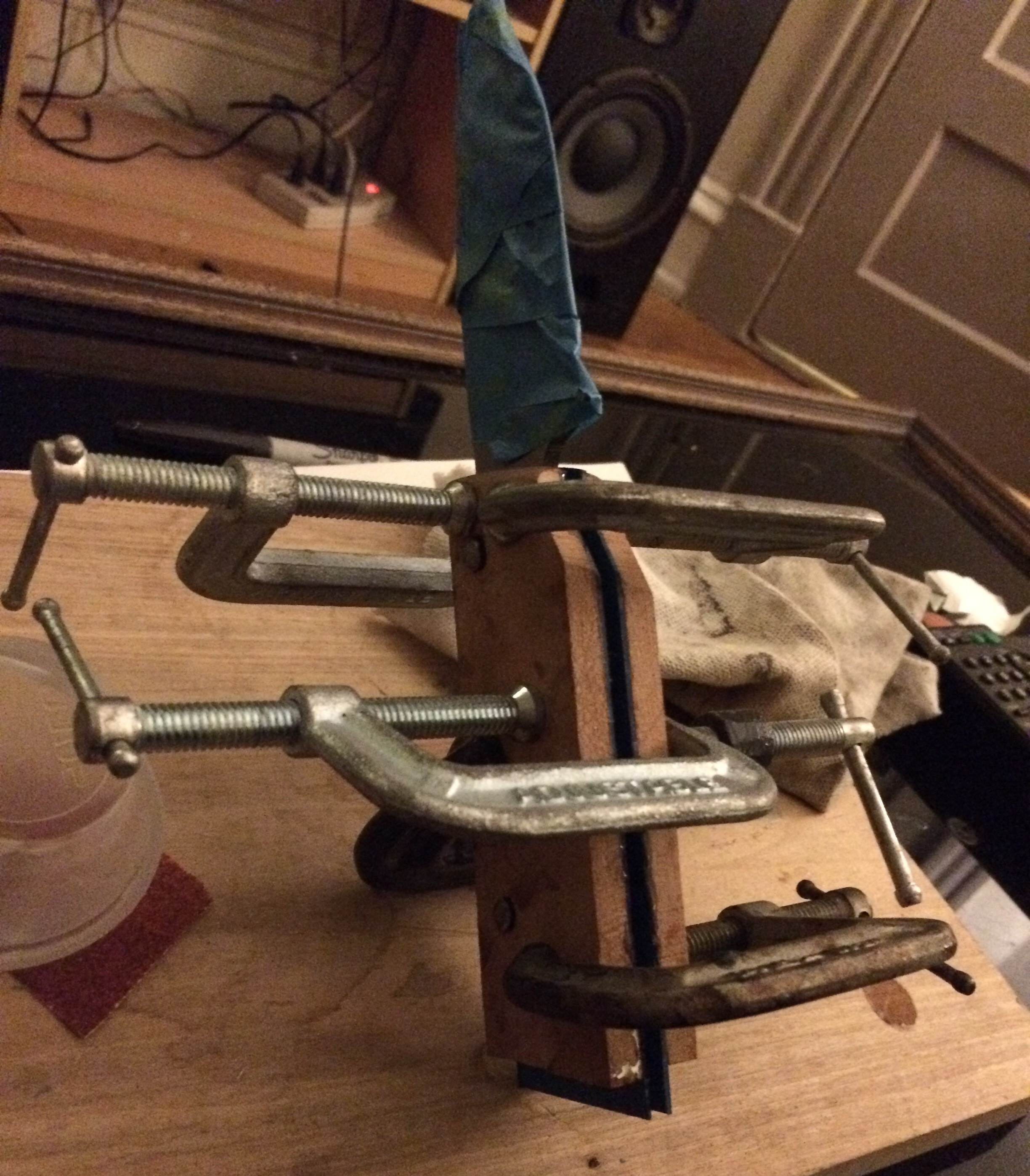
Clamped:

Profiled:

Shaped:

Thummim; the no to the yes:

Urim and Thummim:


The name of the professor mentioned in this story is Jonathan Shear, Ph.D., and you can find links to his publications here.

Knifemaking: doing the work and the Operator, Mark II

“The sword has to be more than a simple weapon; it has to be an answer to life’s questions.”

Miyamoto Musashi, The Book of Five Rings

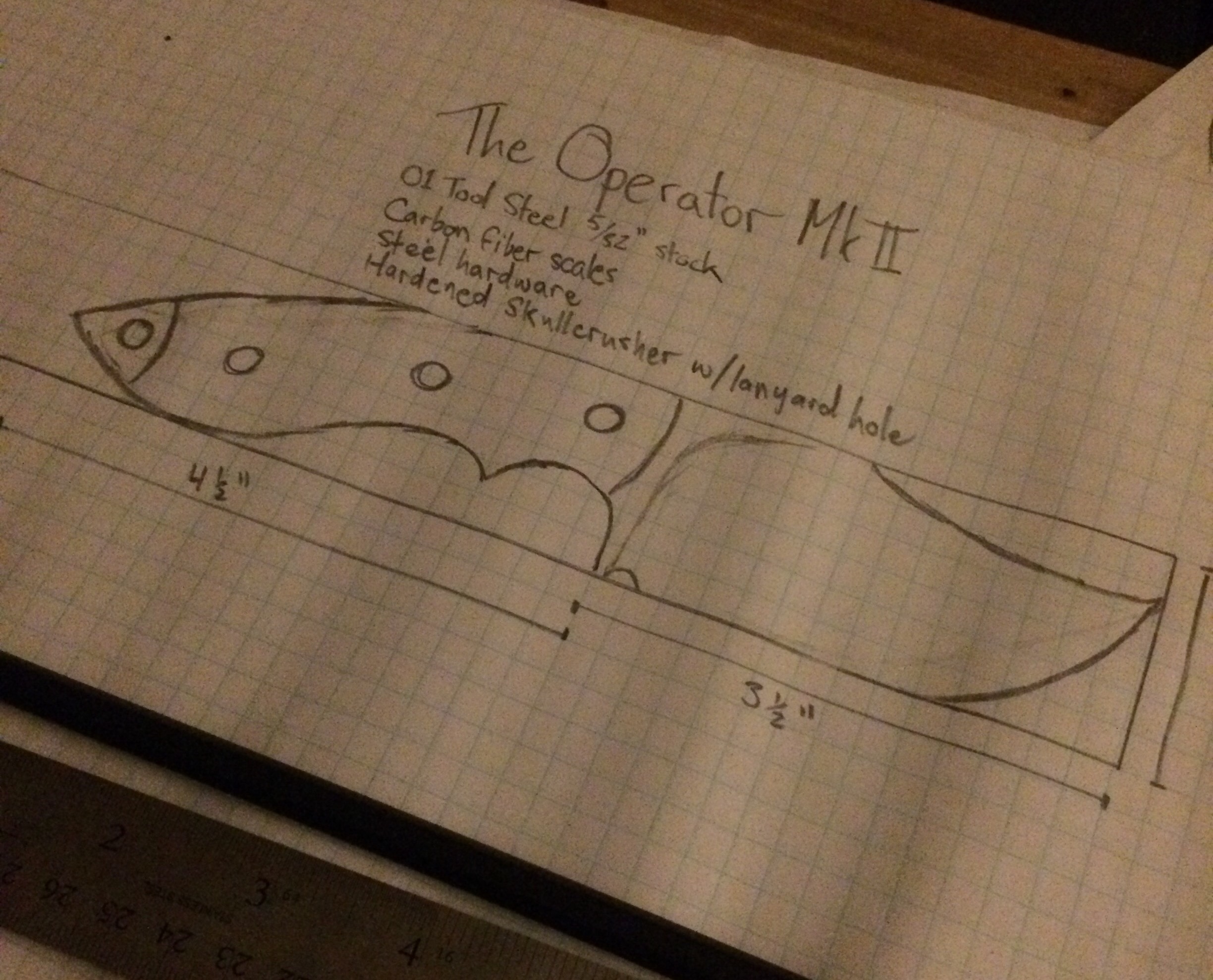
(you can read about the crafting of the original Operator here)

I’ve always been drawn to people who do things.  The people who speak through their work and translate knowledge and mastery through their particular skill set without having to say much.  This is a day and age where anyone can broadcast claims of mastery and experience to a large audience and it can be difficult to discern who has done the work to back up these claims and who is just trying to get to the bank.

In today’s vernacular, ‘operator’ commonly refers to military personnel who are at the pointy-end of things.  They are the ones who are taking the orders and quietly (or not so) doing the work out of a sense of duty and service.  ‘Operator’ is a title that gets tossed around and claimed where it doesn’t always belong, very similar to ‘genius’.  The ones who actually fit the bill generally eschew such titles.  This is usually a symptom that you are doing the work.

This blade was a commission for a military serviceman doing Ops work.  I wanted to build him a tool that would serve him in the work he was doing.

There was a summer about ten years ago where I was between semesters of study.  I had decided that I wanted to learn how to fix things.  Many of my friends were working at Blockbusters or car washes but I liked the idea of being able to take care of things myself.  I took a really awful job doing apartment maintenance for three and a half months and did just that.

It was not very satisfying.  The job I took was for a rental company who owned properties in my neighborhood so I could walk to work.  It was a pretty slummish company that rented to a lot of college kids.  I ended up having keys to half the apartments of what was called ‘Hell Block’ of a street close by to me.  The summer was when a lot of leases ended so there were many people moving in and out.  As a result the streets and alleys were full of discarded furniture for most of the summer, a lot of which was set ablaze by some of the rowdier tenants.  Sometimes my days started with cleaning up the ashes of incinerated love seats.

Other days started with hauling four-burner stoves up three flights of a fire escape.  Most of the time was spent flipping apartments from where someone had moved out so that someone else could move in.  There was a lot of painting.  Flat antique white for the walls and ceilings and semi-gloss eggshell white for the trim and kitchens.  The apartments weren’t very nice to begin with and after three days of work they still didn’t look very nice.  I tried to remind myself to just make it about the work.

I would spend hours gutting bathrooms- ripping out drywall, removing tiling, and replacing subflooring before redoing everything.  The best days were when I could work by myself and keep my own company.  Bathrooms were a bit more satisfying to do because they would actually look nice when you finished them.

There was one time when a new tenant couldn’t move into her apartment because a homeless person had moved in after we had flipped it.  We went in the apartment after the police took him away and found no less than eight bicycles, some smelly furniture, and a plethora of bizarre pornography.  There were also footprints all over the wall.  We had to repaint that one.

My boss was a middle-aged anomaly with claims of ties to the trash hauling unions of New York City.  I didn’t really believe anything he said.  There were four of us handling most of the work orders:

-Mark was in art school, a bit cranky, and liked to smoke a lot of pot.  Oftentimes it was hard to tell whether he was stoned or not.  I liked him.

-Scott had gotten back from several tours of Iraq, most recently Abu Ghraib.  He was a good guy but wouldn’t get anything done unless he was told exactly what to do.

-Mario was in his late thirties and from Guatemala.  He worked 7 days a week and sent most of his money home to his family.  He didn’t say much but I think he missed home.  The man could eat faster than anyone I’d ever met.  He said that in the Guatemalan Army they only gave you three minutes for lunch.

There was also a rotating cast of derelicts who would come in and work for a week and then disappear.  I never learned their names.

One of the happiest days I had was telling my jackass boss that I quit.  I gave myself a two week vacation before I went back to school.

What I learned at this job was that in order to get through many uncomfortable situations with a modicum of success you have to make it about the work.  It helps to find something bigger than yourself in what you are doing.  The skills I was learning would serve me well much later down the line, and the money would help me buy books and live through the school year and work on my education.  Everything else was just bullshit that came with the job.

To let yourself speak through the work you do, whether you are toppling Marxist empires or replacing toilets in shitty tenements- this is the lesson of the Operator.  In these situations our work speaks through us but also teaches us our lessons.

The recipient of this blade may find himself in harms way and needed a blade that would serve in such situations:

Rough cutting:


Bevels profiled:

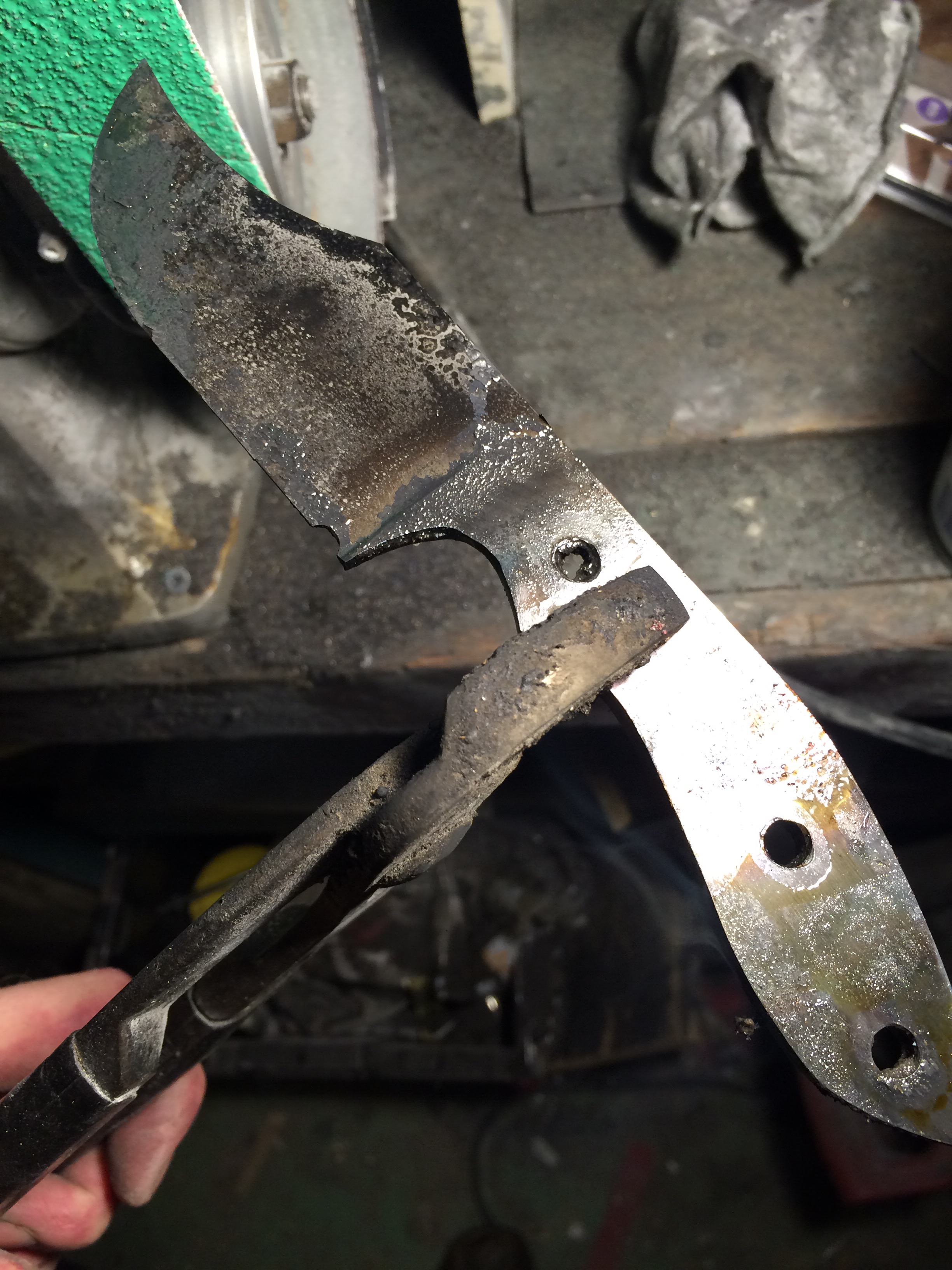
Hardened:

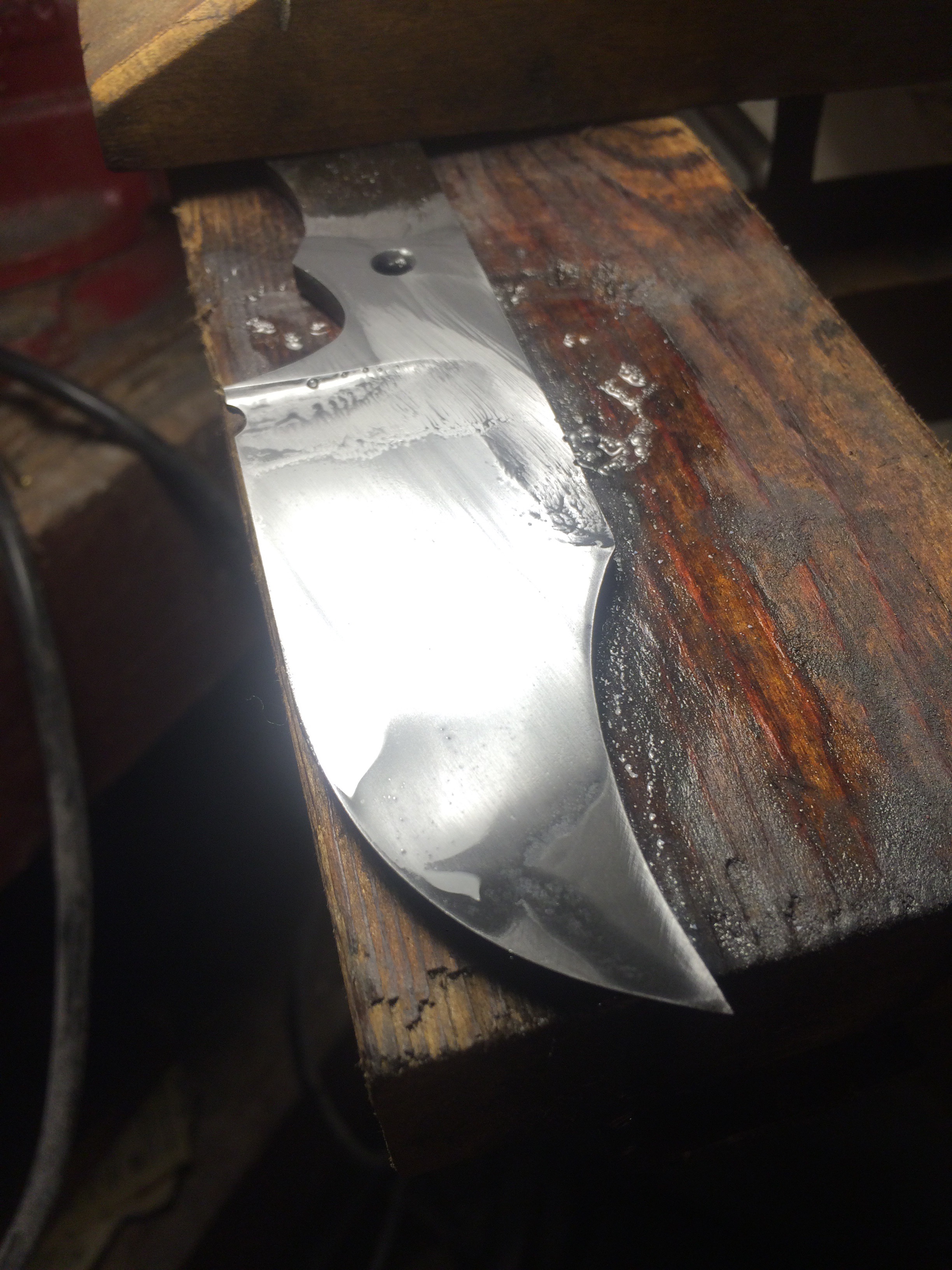
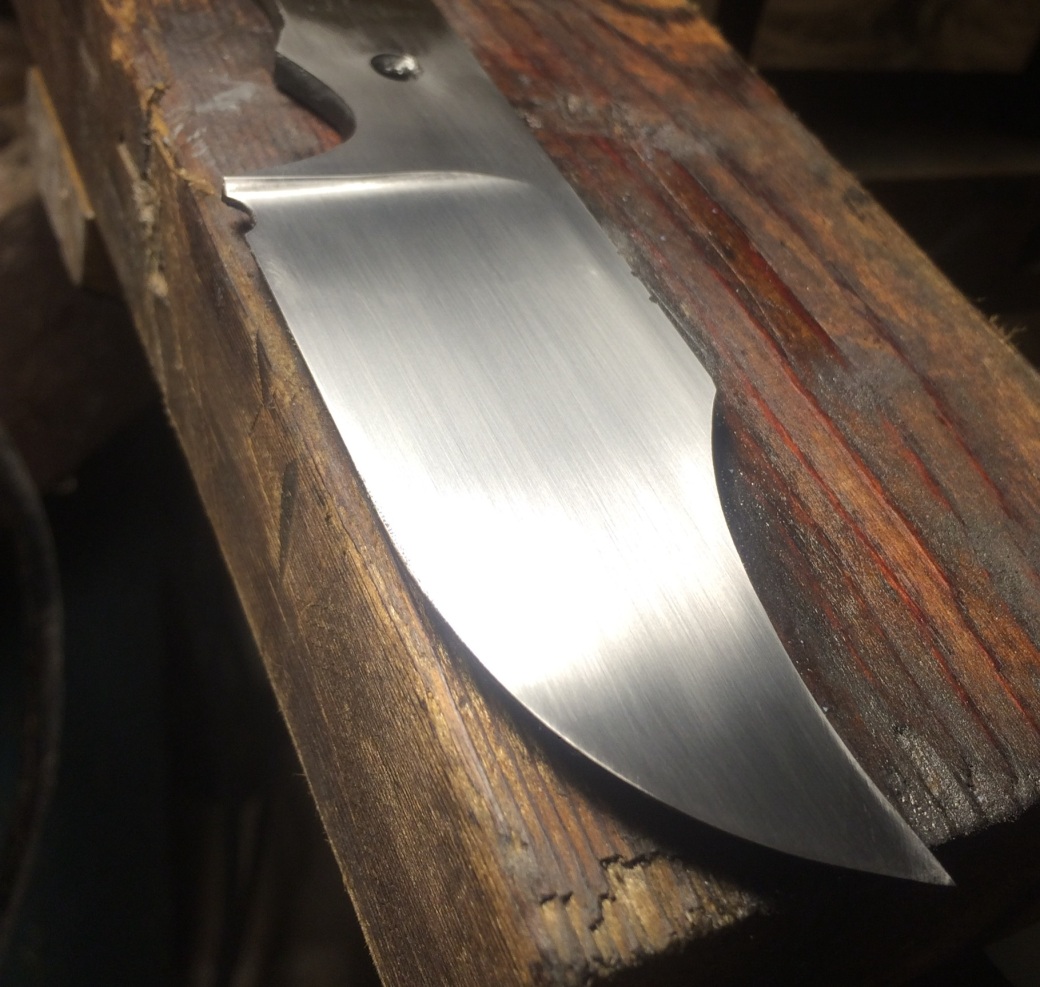
Hand sanding:

img_4169_srgb

This is G10, a commercially manufactured synthetic material.  Normally I prefer to make my own handle material but in this instance I opted for something consistently fabricated that would be failsafe in a potentially tactical situation:


The Operator, MkII: O1 tool steel, G10 scales, fabric spacers, and steel hardware.

Let your work be your lessons.

Knifemaking: being your own cheerleader and the Stag

“You’ve just got to pat yourself on the back and keep moving.  Ain’t nobody else gonna do that for you.”

-Gordon Russell, chef

The other week, early in the morning, I got a knock on my door.  It was the police.  My car alarm had been going off for the past hour and the officer said there had been quite a few calls about it.

We walked over and I turned the alarm off and disconnected the battery.  As the officer was leaving he said that someone had been kind enough to leave a note for me on my windshield.  I found a piece of paper under the wiper and read it.  I’m not sure what I was expecting.  After I read through all of the expletives, I saw that it was signed by “I Hate You”.

Beautiful.  Somebody hates me.

I tried to go back to sleep but I had a hard time.  I knew I wasn’t the first person to have their car alarm go off and I probably wouldn’t be the last but I was having a hard time figuring out what “I Hate You” expected to accomplish through their eloquently worded salutation to me.  Those sorts of things written to you by a stranger don’t feel nice.

Later in the day I found it to be really funny.  I kind of wish I had kept the note.

So what do you do when you find yourself on the receiving end of toxic outrage?  Or of violent vitriols or virulent viscosities or even vicissitudes of the most vicious varieties??  This is where you have to be your own cheerleader.  Because we’re going to screw up at some point, maybe say or do something in poor taste or offend someone’s sensibilities.  People can be awful- much worse than notes on cars.  And hiding behind the veil of social media, people often write things that they wouldn’t necessarily say to someone’s face.  So when someone says or does something dumb, it can be often accompanied by a slurry of shame-dumping and rage. Before long any sense of civility or compassion goes out the window.  If you find yourself on the receiving end of these sorts of shenanigans, it’s best to pat yourself on the back and just keep rolling.  These are the hard things to master in life, but they are worth it.  It’s important to keep moving forward.

This blade was a commission for a gentleman who is a cheerleading coach.  His wife asked if the knife could have an essence of an old Buck fixed blade he had as a kid so I took that into the consideration of the design.  ‘The Stag’ is a bit of a double entendre.  In the animal world a stag can be much larger than a buck, and this knife has a bit more heft than its commercial counterpart.  But on the other side you sometimes have to go stag, by yourself, and give yourself the things that the world is not always going to give you.

The other day I was working with a lady who was late because someone parked her car into her spot.  She said she didn’t even have time to write a nasty note.  I very gently told her that not writing that note was probably for the best…

I did two designs for this knife, based on some of the Buck fixed blades.  I went with the bottom drawing:


Wet sanding:

This is after heat treat, slag all removed, at about 600 grit:

Satin:

Walnut for the handle:

The Stag:  O1 tool steel, Walnut handle scales, fiber spacers, and steel hardware:

In the words of a dear friend, just pat yourself on the back and keep moving

Much love to Kent Huffman for the beautiful leatherwork and to Taylor Huffman Bernard for the beautiful woodburning.  Finished knife photos by James Bernard and his superior camera.

Knifemaking: making your mark and the Cuchilla Pequita

“Control what you can control, maggot!  Let everything else take a flying fuck at you and if you must go down, go down with your guns blazing.”

Cort the Gunslinger, from Stephen King’s The Drawing of the Three

The Gauchos were a group of cowboys who worked on the grasslands of South America during the 18th and 19th century. They were a people without boundaries, solitary, and existing on the Pampas of Argentina, Uruguay and Southern Brazil.  The Gauchos were a pretty wild bunch and had a lifestyle that was similar to the gypsies and travelers of Europe.  Always moving from place to place, job to job, and always on the hustle.  Most were nomadic and had few possessions. 

They were a solitary people, yes, but when they did run into other gauchos there was usually high-proof alcohol involved.  Also gambling.  And prostitutes.  Those three things made for a trifecta of machismo, and that usually resulted in conflict which manifested as duels.  Guns were expensive and hard to come by so the weapons of choice were usually knives.

When Gauchos dueled the objective was not to kill (although fatalities most definitely occurred); it was to leave a mark, preferably on the face.  A gaucho with a scar on his face had lost a duel, and all the other Gauchos knew this.  He would carry this scar for the rest of his life, but looking a little deeper one can find that scars are not always a badge of shame.

There is an inherent drive to leave your mark on the world but sometimes the world leaves its mark on you.  Things aren’t always the way we think they should be and in taking a risk to make a difference we can fail spectacularly.  We all lose duels everyday and some of us carry many scars, both seen and unseen.  Some of the most powerful and profound people I know carry scars that are both large and deep, yet these people shine brightly and leave their mark on the world everyday.  They are beautiful even though life has done its damnedest to leave its mark on them.  How is this possible?

I had a teacher once tell me that no one is in control.  This is something that is a bit of a struggle for me almost daily, even though I know that in the grand scheme of things my sphere of control is very small.  It comes down to choosing how to react to the things in our lives.

So there is a choice.  You can choose to not get pissy about the holiday Starbucks cup.  You can choose to not to feel like a victim because your candidate didn’t win.  You can choose connection over isolation.  You can choose to do something about situations that don’t serve you.  You can choose to wear your scars proudly because whatever left its mark on you wasn’t strong enough to take you down.  You can choose to let the things beyond your control take a flying fuck at you and fall as they may.  Though we can’t always control the circumstances in our lives, we can choose how we respond to them.  This is where we make our mark and is also the lesson of the Cuchilla Pequita.

There are several types of knives carried by the Gauchos.  The Cuchilla Pequita is loosely based on the Cuchilla.  The Spanish word for knife is el cuchillo, a masculine noun in the vocabulary.  The Gauchos feminized cuchillo and applied it to their particular style of knives, which had a ‘pregnant’ blade belly and a slightly dropped point.  This design is based on that style and starts in 1095 spring steel:

After grinding and hardening:

Drilling rivet holes:

Texas Mesquite:

Fitting the handle:

Fiber spacers for a splash of contrast:

Clamped:

Profiled:

Sanded up to 2000 grit:

The Cuchilla Pequita:

How we choose to react in our lives affects the impact we can make.  This is the lesson of the Cuchilla Pequita

Here are some sources that were incredibly helpful:

A Short Essay About Gaucho Knives: Facón, Daga, Cuchilla and Puñal

Brittanica Online

Knifemaking: learning your craft and the Maestro

“This is Mr. Beethoven.  Do you hear that?  You don’t?  This doesn’t move you?  Well that’s ok baby, you can always go sell shoes.”

-Doug Richards

This knife was a commission for one of my former teachers and good friends, Doug Richards.  I first met Doug when I was fifteen.  I had been accepted to a summer residential arts program and went to study music and trombone.  I was there with about 50 other musicians and vocalists from across the state.  One of the classes I took was run by a jazz saxophonist, who also played every wind instrument known to man.  To help us learn about jazz he brought in a very passionate man to speak to us about Duke Ellington, one of the great American composers.  This man was Doug.

This particular class was at 8am and we had all been up late doing God knows what, as teenagers away from home living on a college campus are wont to do.  Doug noted this and suggested that if we were tired and didn’t have time for the Duke then we could leave and take a nap.

This took us all aback.  We all paid attention as Doug put on an Ellington video and proceeded to dance around the room, deigning us with the story of the music and the man…and every member of the band.  The man has an encyclopedic knowledge of music and the lore around it.

I ended up coming to university to study with him.  He taught a two year course of study on how to write big band music.  That was the course description anyway but it was so much more than that.  In this class I learned how to listen, really listen, to music.  I learned how to discern the masters from the dilettantes.  I learned what moved me and the mechanisms of the sounds that held me in those places.  Amidst all of this I learned how to compose and arrange music that sounded like me, and no one else.

What I learned most from Doug was the importance of craft.  Craft encapsulates art.  Without it, your art isn’t as articulate as it could be and your vocabulary to put what you want to say out into the world is stunted.  I started to see this all over in my world- in the people I would work with, in the music I listened to, in the food I ate, and the films I would watch.  I paid attention to the manner in which things were put together.  I spent hours working on assignments from Doug, exercises in craft, to the point where I would seriously question my life decisions.  Often times I felt that these exercises didn’t leave room for any emotion.  Over and over I heard “Do not emote” when we approached these exercises, but then I would hear something that Doug had written and it dripped with emotion.  Was this some cruel joke?

It was not.  In time we were told to write things.  I would think of what I wanted to say, write it down, and the craft I applied would make it blossom.  Almost without even thinking about it.  You just know what to do.  The way that a warrior knows to make the kill, or a seventh grade guitar player knows to hit the distortion button.  And so I started devouring the craft.  I studied classical orchestration with Doug, orchestrating Ravel piano scores for wind ensembles.  I played in a Stravinsky ensemble he ran and we worked through pieces the likes of which I’d never heard. 

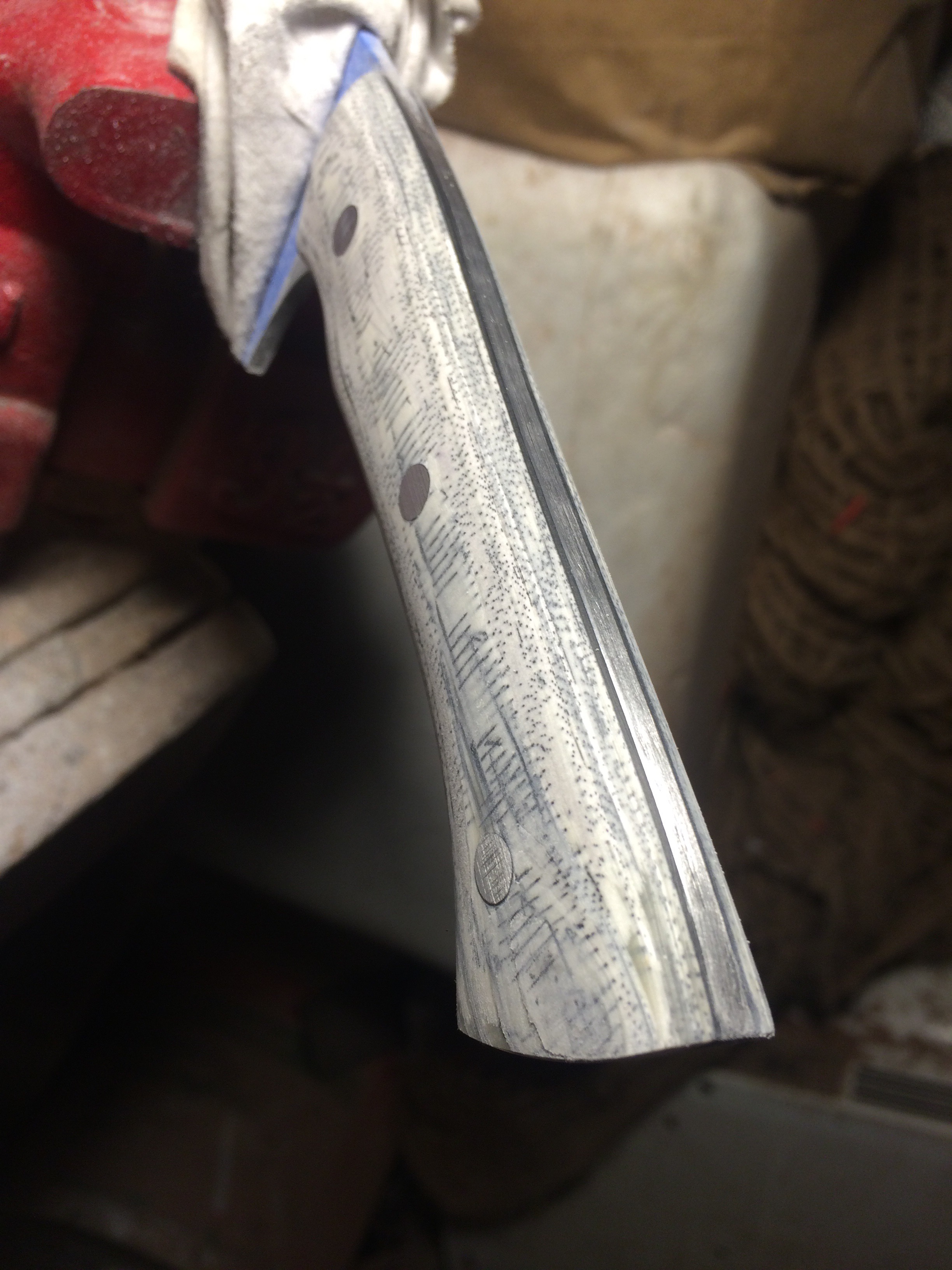
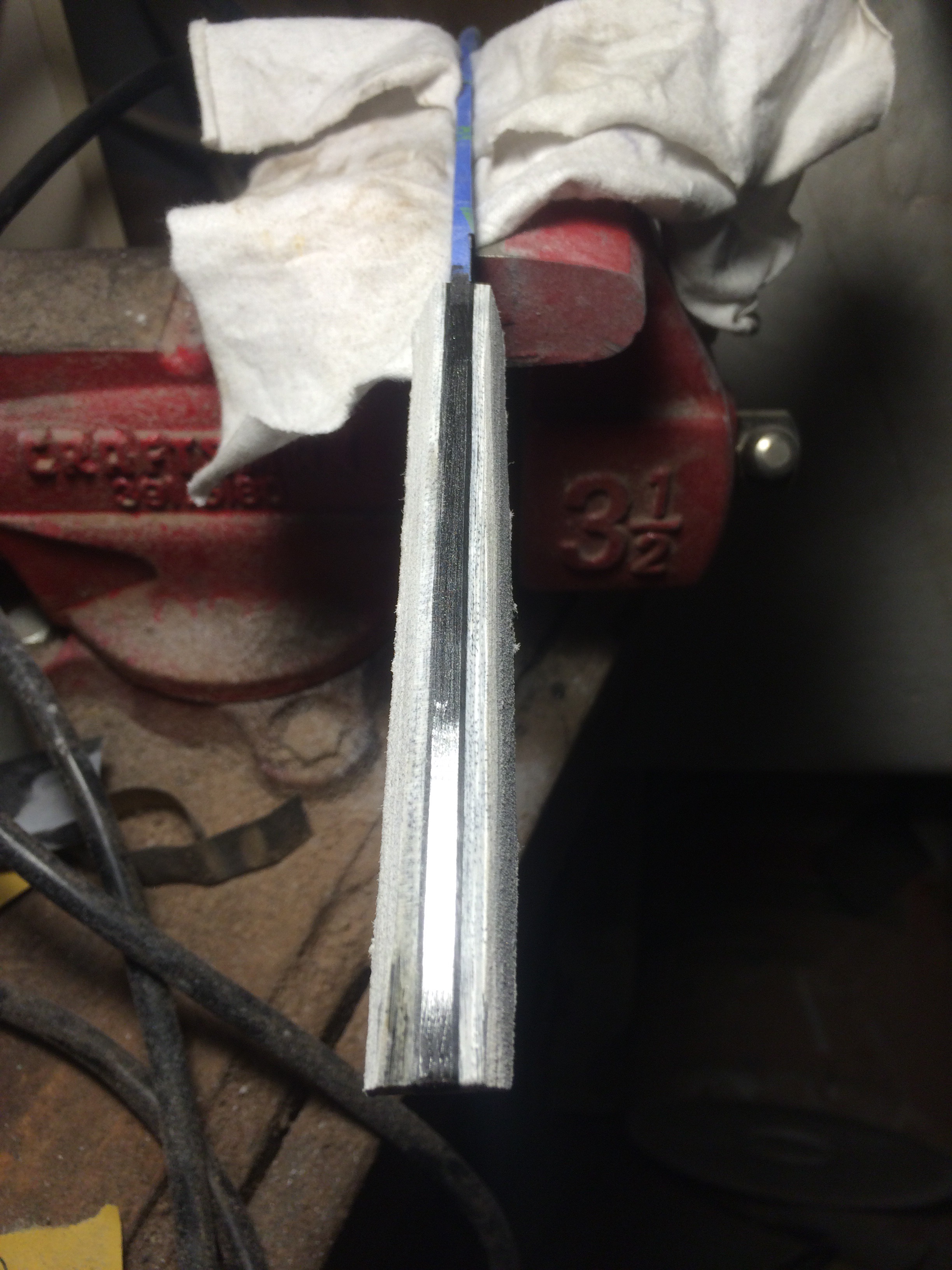
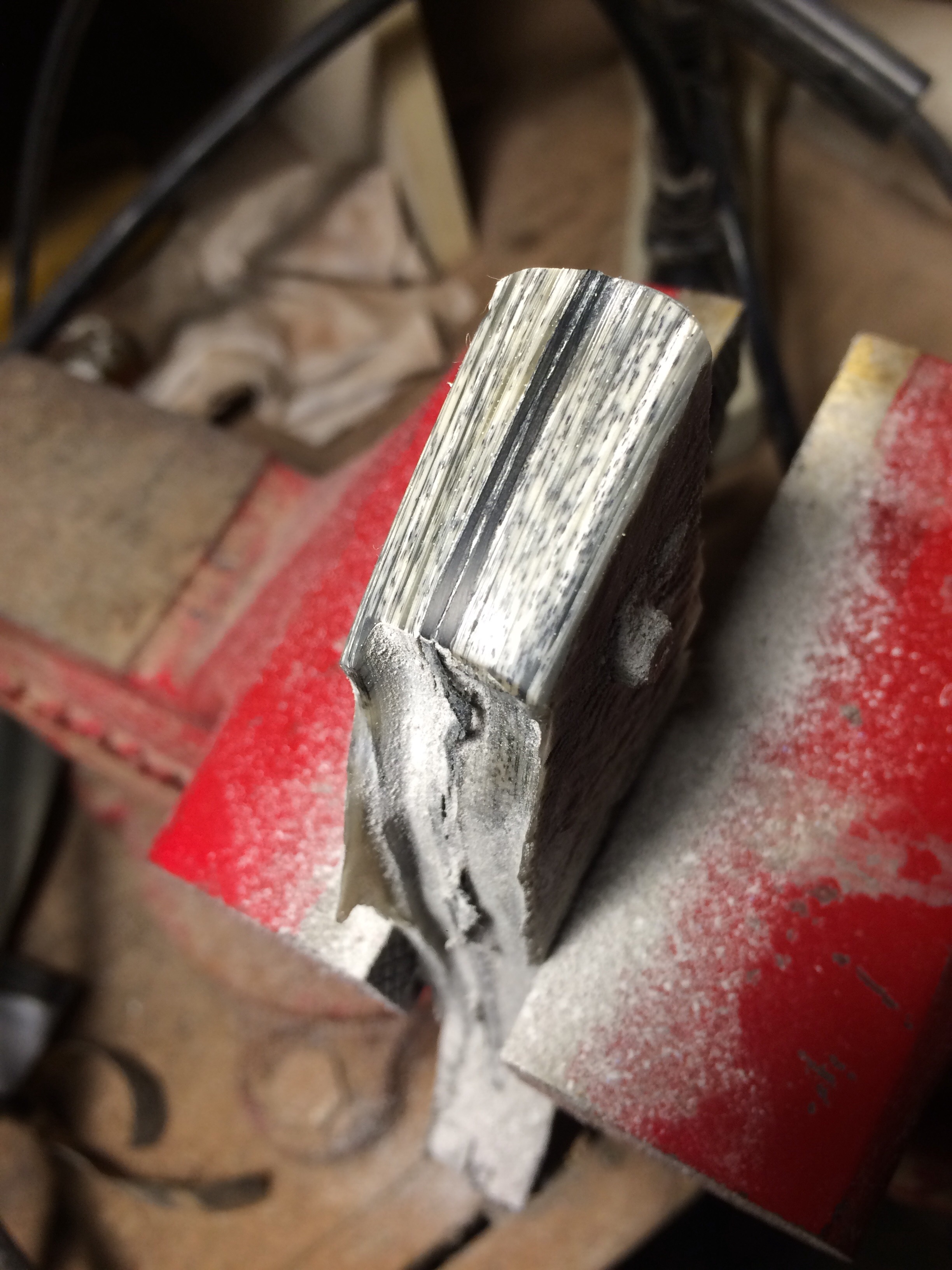
As an adult I remember all the lessons from this man.  I always try to remember craft, and to practice it.  Like a good meal, or good music, or good love, craft is not something that is easily bullshitted.  In a world where quality is often compromised for time and quantity, craft stands out.  This is the lesson of the Maestro.       

The stories of this man are legendary.  Here are a few:

-Most of us had heard of Doug doing one-handed pushups before rehearsals back in the day.  Somebody mentioned it to him one day before a rehearsal and he dropped down and did 17.  None of us could do any…

-When we were rushing the tempo on a piece of music in rehearsal, Doug told us to slow down or we would get a reputation with the ladies.

-There was a limited edition of a recording re-released and Doug told me that I needed to have it.  When I told him I didn’t have the money he suggested I get a paper route…

– Before one performance, Doug made an announcement: “Ladies and Gentleman, please take your cell phones, pagers, and all of your other electronic jive out into the lobby, throw them onto the ground and step on them because I don’t want to hear any of them during this performance.  Thank you.”


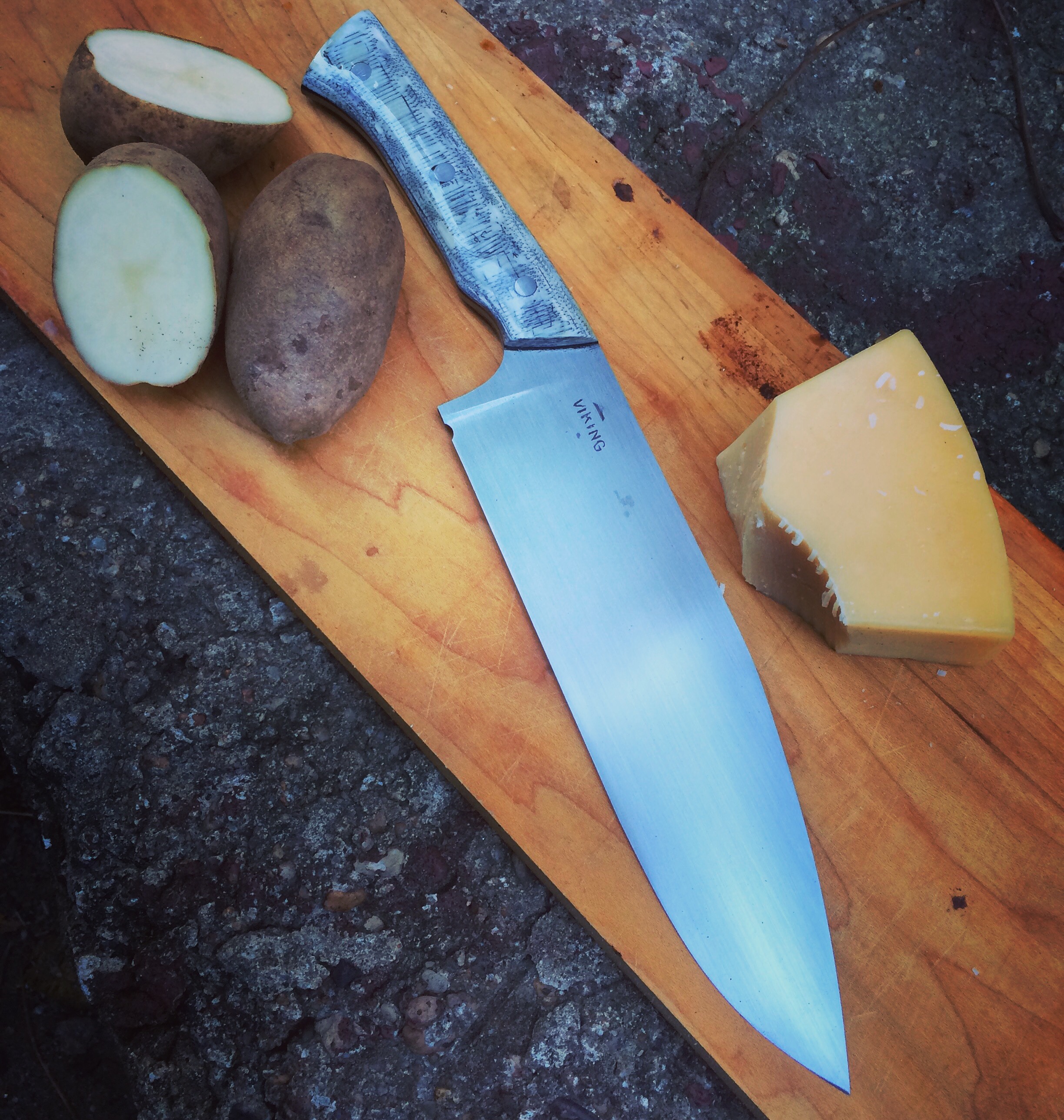
Doug asked for a chef’s knife, for the kitchen.  I started with a piece of thin stock O1 tool steel:

Hardened:

Grinding:

More grinding:

That’s about right…off the grinder at 40 grit:

Hand sanding station:

handwork starts at 80 grit:

120 grit:

220 grit:

Hours later at 320 grit….

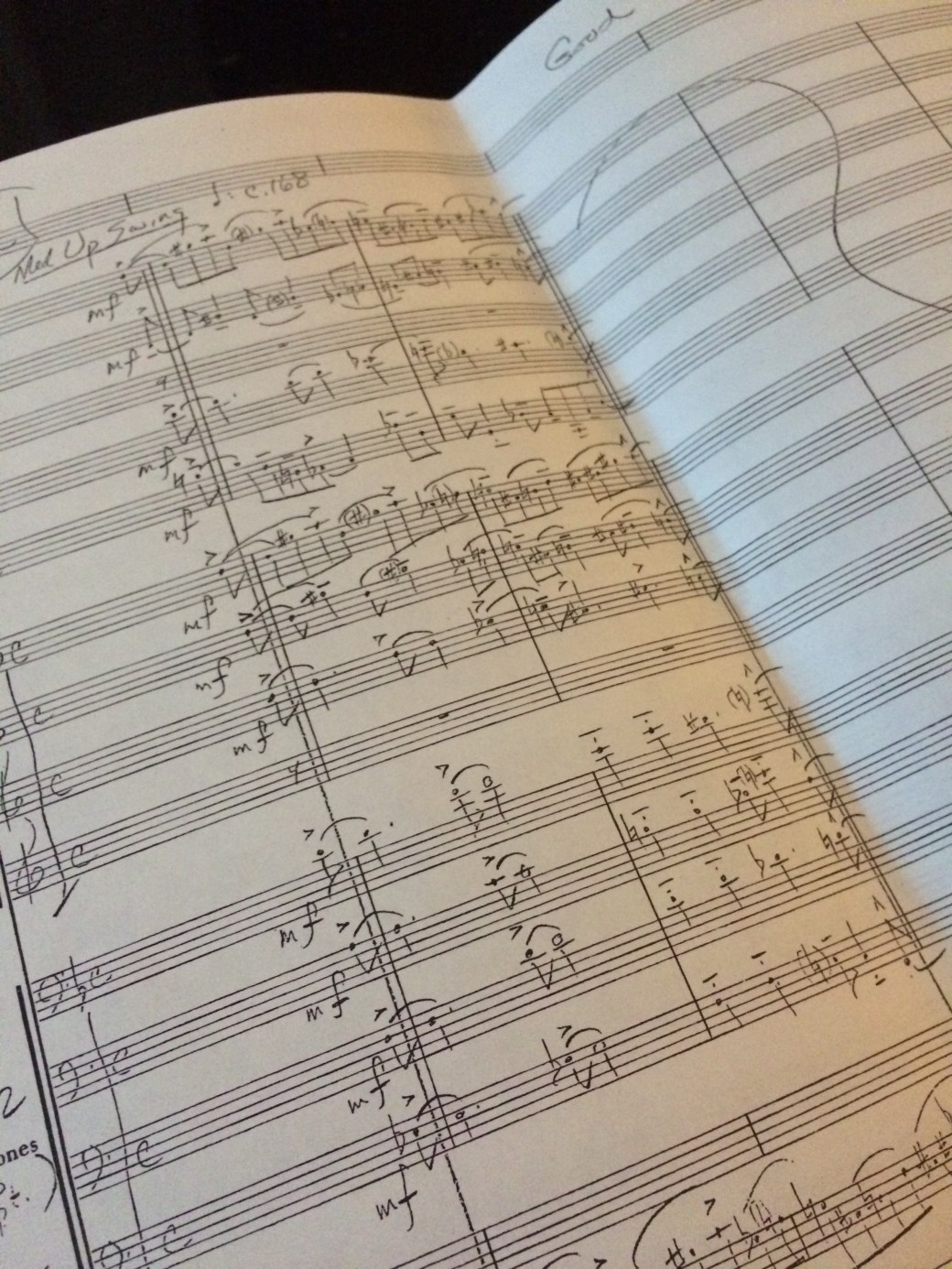
This is a score of Doug’s, meticulously handwritten and every note exactly where it should be, articulated just so…

…so of course I cut it up…

Ready to be made into a handle:

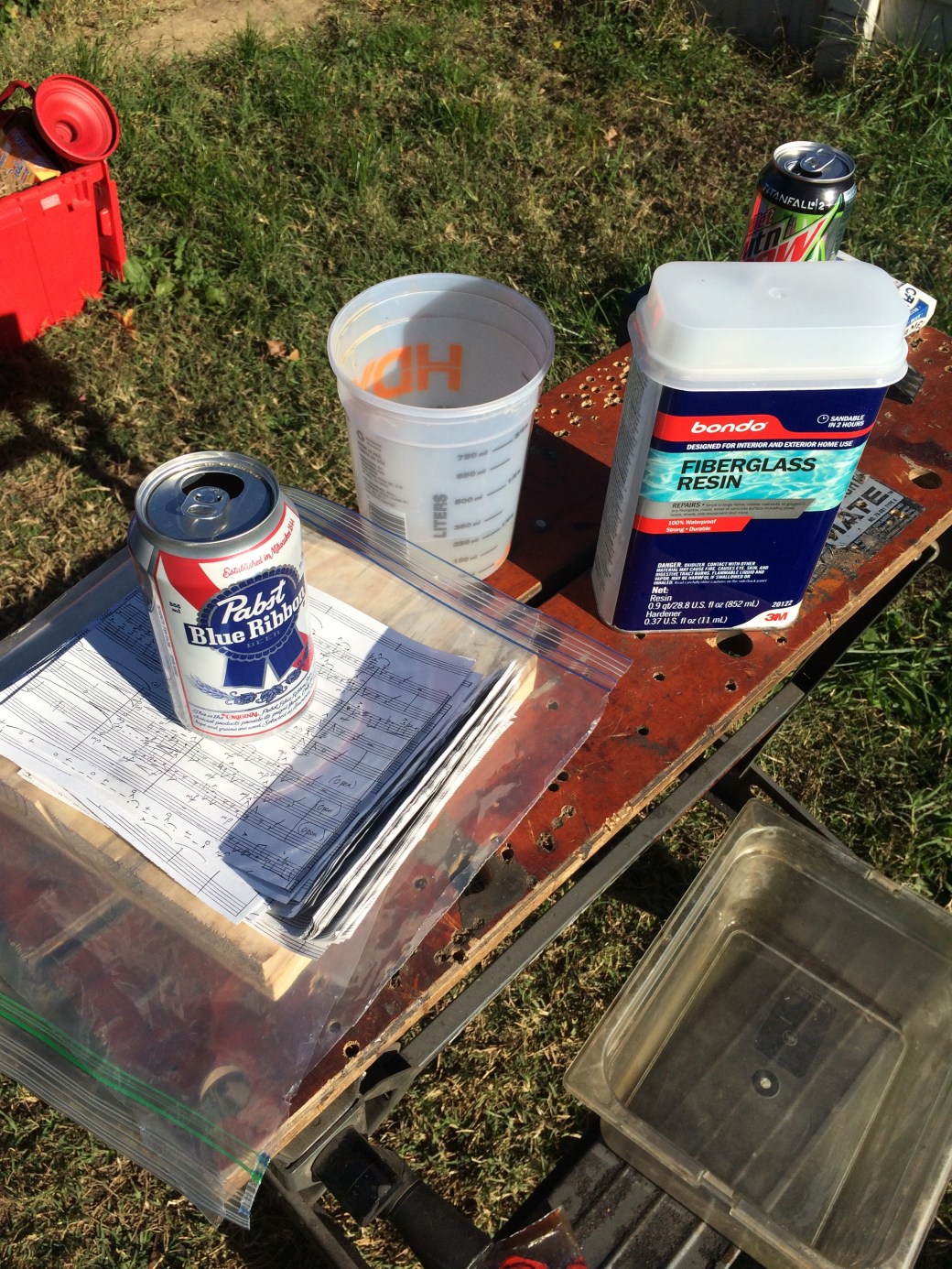
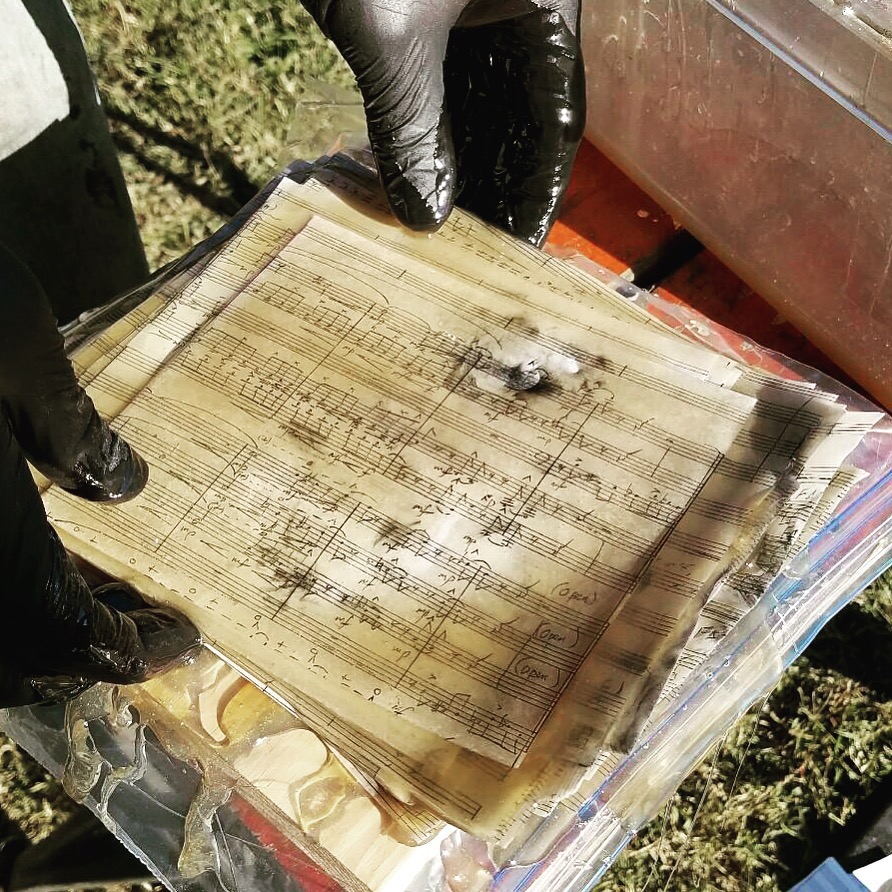
Soaked in fiberglass resin:

I think I can work with this…

Be sure to learn your craft.

Also be sure to check out Doug’s record– it’s really fantastic.