“…also he had learned that a person could be happy with having done the best they could under the circumstances. It didn’t always have to be bright and shiny and impressive to the outside observer.”
― South of Superior
When I was twenty-two I took a summer job at the the university I was attending. The School of the Arts at the university put together a three week summer residential program for high school kids. For three weeks in July, roughly a hundred and twenty teenagers would come to the university, live in the dorms, eat in the dining hall, and take classes in their respective art disciplines taught by real college professors. This was a way to give kids a little taste of what art school was like, and hopefully to get them to apply to the university when they graduated. I did this for eight summers and it was one of the best jobs I ever had.
High school kids who were interested had to submit portfolios and go through an application process. There were disciplines for sculpture, photography, dance, theatre, fashion design and merchandising, filmmaking, digital animation, and drawing and painting. Some of the applications were pretty hysterical.
The University hired forty other college students like me to be counselors in the program. We were there to keep the students safe. Students were divided up amongst us. We would stay in the dorms with them, take them to their classes and meals, make sure they were in bed when they were supposed to be, and come up with activities for them to do. Our presence was designed to keep bad behavior to a minimum. We had a week of training to go over protocols and procedures. There were university policies that handled underage alcohol in the dorms, as well as drugs, and what to do when students went missing or fell ill. There were a group of grad students who were our bosses and handled disciplinary issues. Nearly everyone at the program was between the age of fourteen and seventeen, not legally adults, so these policies and procedures were important.
The kids moved in and for three weeks we were their caretakers. We took them to class, ate dining hall food with them, and came up with evening activities for them to do as only art school kids can do. We made themed dances- my personal favorite was “Merry Christmas Taylor Swift: Live from the Galapagos Islands”, and everyone dressed accordingly. There was “Dress Your Counselor Night”, where one of the more attractive male counselors wound up shirtless and in a dress. On the weekends we took kids to museums, and to some of the nearby restaurants. Counselors took some of the kids on morning runs. One time I bought my kids a bunch of Nerf guns and we went to an unoccupied floor of the dorms and had a giant battle. Kids were always working on their art and we helped and encouraged them. I scored the music for a film one of the kids was working on for class. We kept everyone occupied and mostly out of trouble. Mostly.
Every year there was pretty predictable behavior. With a little bit a freedom the kids would start to push boundaries- they were teenagers after all. Some kids would go vegan during the program and then get sick because all they were eating were french fries and Captain Crunch. Other kids would dye their hair or cut it all off, and then we would have to explain to a parent why their little Jessica had a purple buzzcut. The lactose intolerant kid would order a large cheese pizza and fart up the dorm. Some kids were figuring out their sexuality and we delicately did our best to be supportive and help them along their path.
We had a lot of kids with…peculiarities? One kid with irritable bowel syndrome had to get his mom to overnight him his homeopathic diarrhea medicine from New York because he had left it at home. There was a Saudi Arabian boy with Aspergers Syndrome who terrified all of the girls because they thought he was yelling at them when he tried to talk to them. One year we had a kid from the Make-A-Wish foundation come who was on kidney dialysis- his dorm room looked like a medical lab. Another year there was a girl acting out horribly the whole time and we couldn’t figure out why until we called her mother. Turns out her father had left the family six months before to live as a woman, and this little girl was pissed about it. I worked with a team of really awesome people and and no matter the situation or issue, nobody ever had to shoulder anything by themselves.
Every so often there were really awful kids that we had to send home. We called one kid’s father at midnight on a weekday because he was smoking pot in his room. That kid was gone by morning. Another kid decided to throw a frozen water bottle out of his 14th floor dorm window at ten o’clock at night. It smashed the windshield of a car driving on the street below. The police came and woke up everyone on three of the floors to find out who did it. That kid ended up getting sent home and having to pay for the guy’s windshield, but he did avoid a felony charge.
By the end of my tenure at this summer gig I was supervising all of the counselors and everything that went on in the dorms. I had graduated but it looked good for the program when Alumni were involved. The money was good and it fit into my schedule. The only person I reported to was a tenured professor who was the program director, and she trusted everyone to do their jobs. I was on the hiring team and doing all of the scheduling for the counselors’ shifts. I ran a lot of the training, wrote policies for the program to help it run better, and wrote itineraries for staff meetings. I handled disciplinary issues and procedures and when kids fucked up, they dealt with me. I made changes as I saw fit. For example, in the earlier years the other counselors and I would all go out and get hammered after we put the kids to bed, and then stumble back to the dorms wasted. No longer. Funny how things change when it’s your ass on the line.
I’ve never really considered myself a very good manager or administrator. I’ve also never been great at following the rules or being a team player, and I’ve always struggled to fit into corporate and traditional workplace scenarios. In the instance of this job I just tried to make sure everybody was safe and all the institutional ‘t’s and ‘i’s that kept everyone safe were crossed and dotted. It wasn’t always cheeky and fun. There were two separate summers where I was going through really awful breakups, and another summer where there was a death in my family. I would still DJ dance parties and take sick kids to the Urgent Care facility and make sure everyone was ok. The responsibility and sometimes difficult tasks were worth it.
Because in spite of all the shenanigans, and the calling of parents, and confused teenage sexualities, and homeopathic diarrhea medicine, the vast majority of these kids left our little three week program at our state university really inspired and ready to do kick ass things, and a lot of them have. That felt really good and was what kept me there all those years. I grew a lot. I made lifelong friends. I met my girlfriend, though I didn’t know it at the time. I learned what it was to run something and to have people back you up.
I’ve worked for a lot of crummy managers, people who are ready to throw you under the bus and only care about how they look to the company they are supposed to represent. A real manager is someone who knows how to steer their organization toward its goals while inspiring their people and navigating through all the stupid things that get in the way. This is the lesson of the Directeur.
The Directeur was a commission for a lady who has been running restaurants and events in Washington DC for the past decade. It’s probably similar to working at an Art School summer program but I’m sure the stories are much better, as only Washington DC can provide.
A quick design for an 8″ chef’s knife, in the German style:

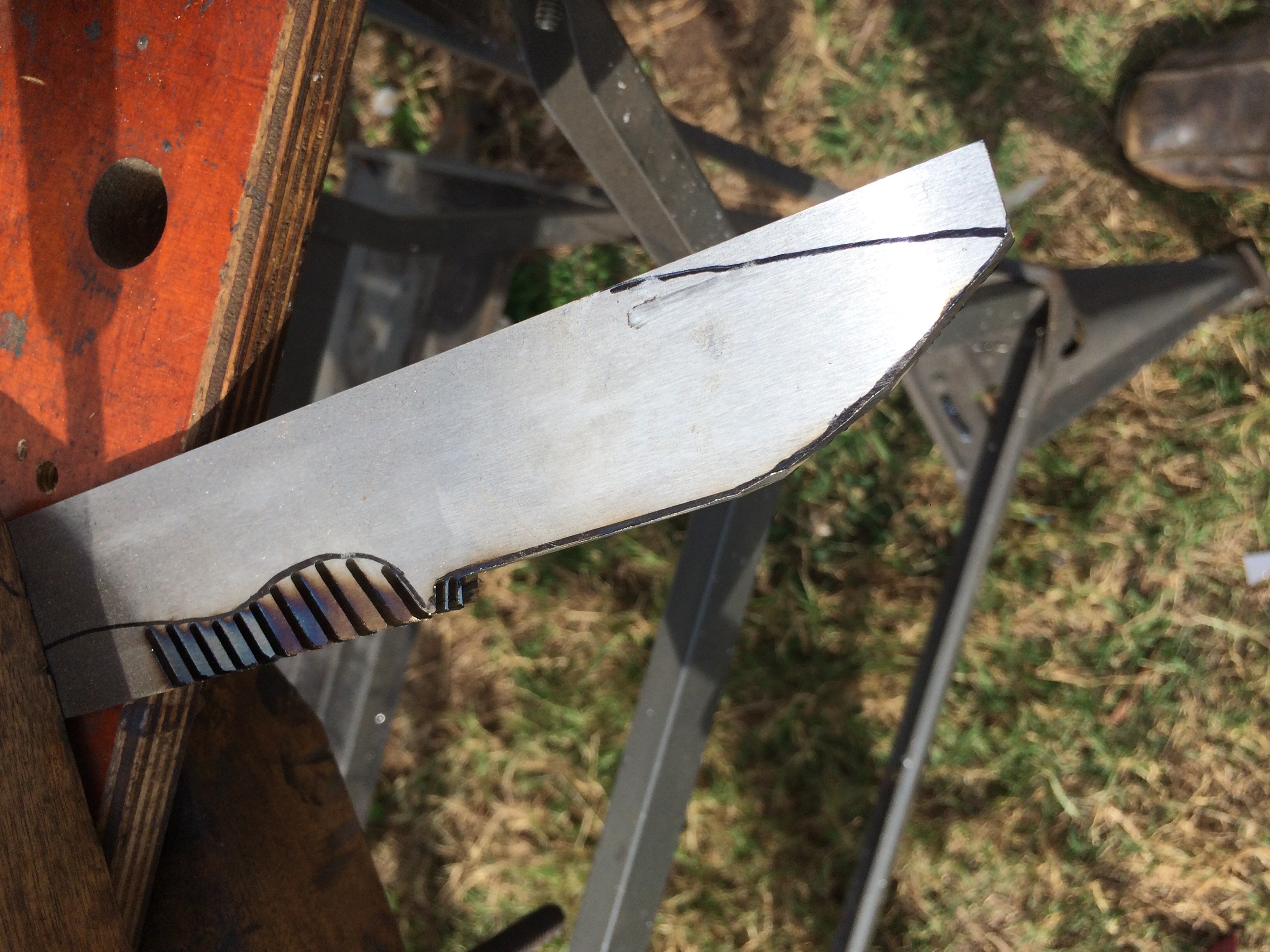
Profiling the blade:
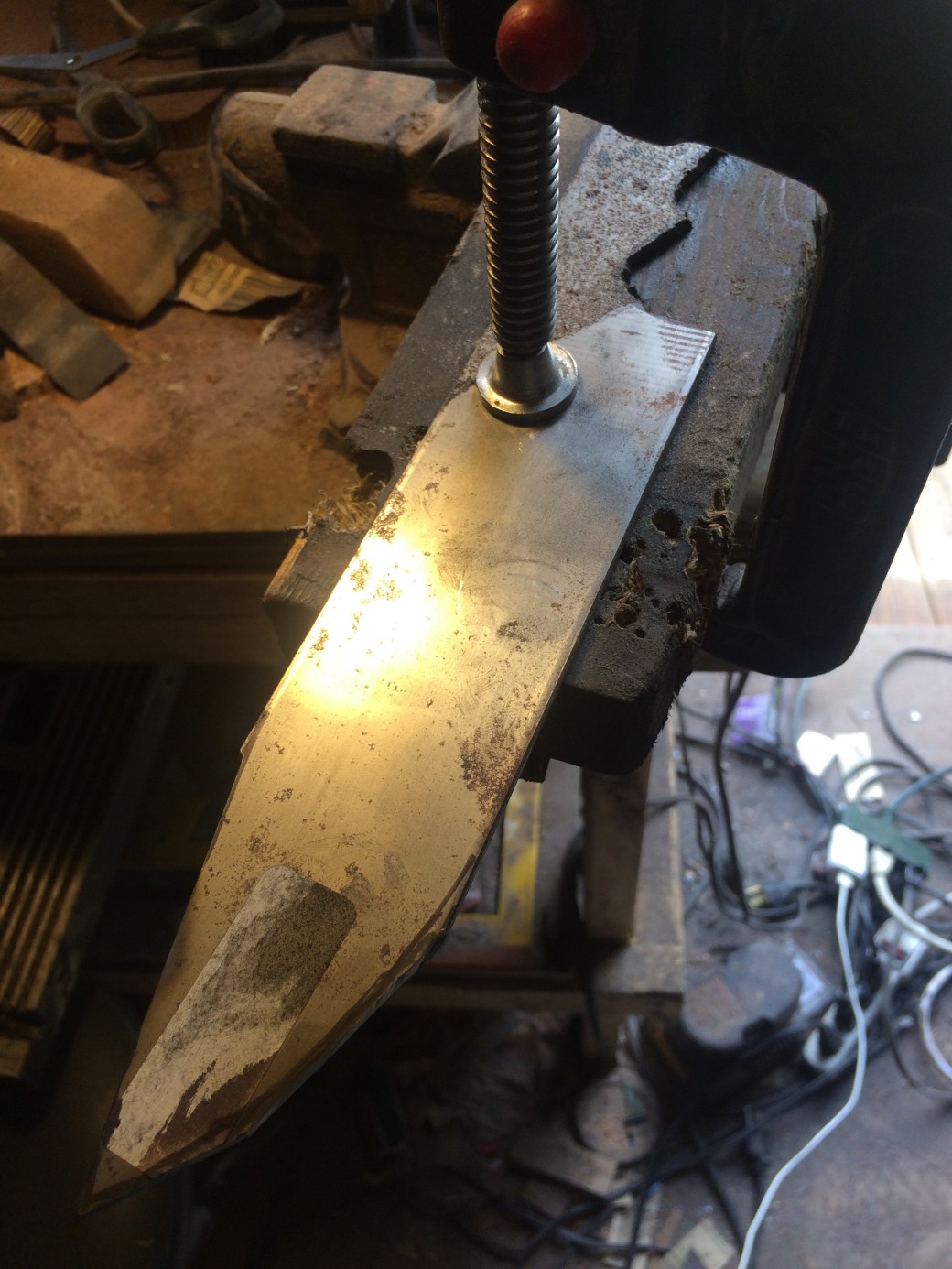
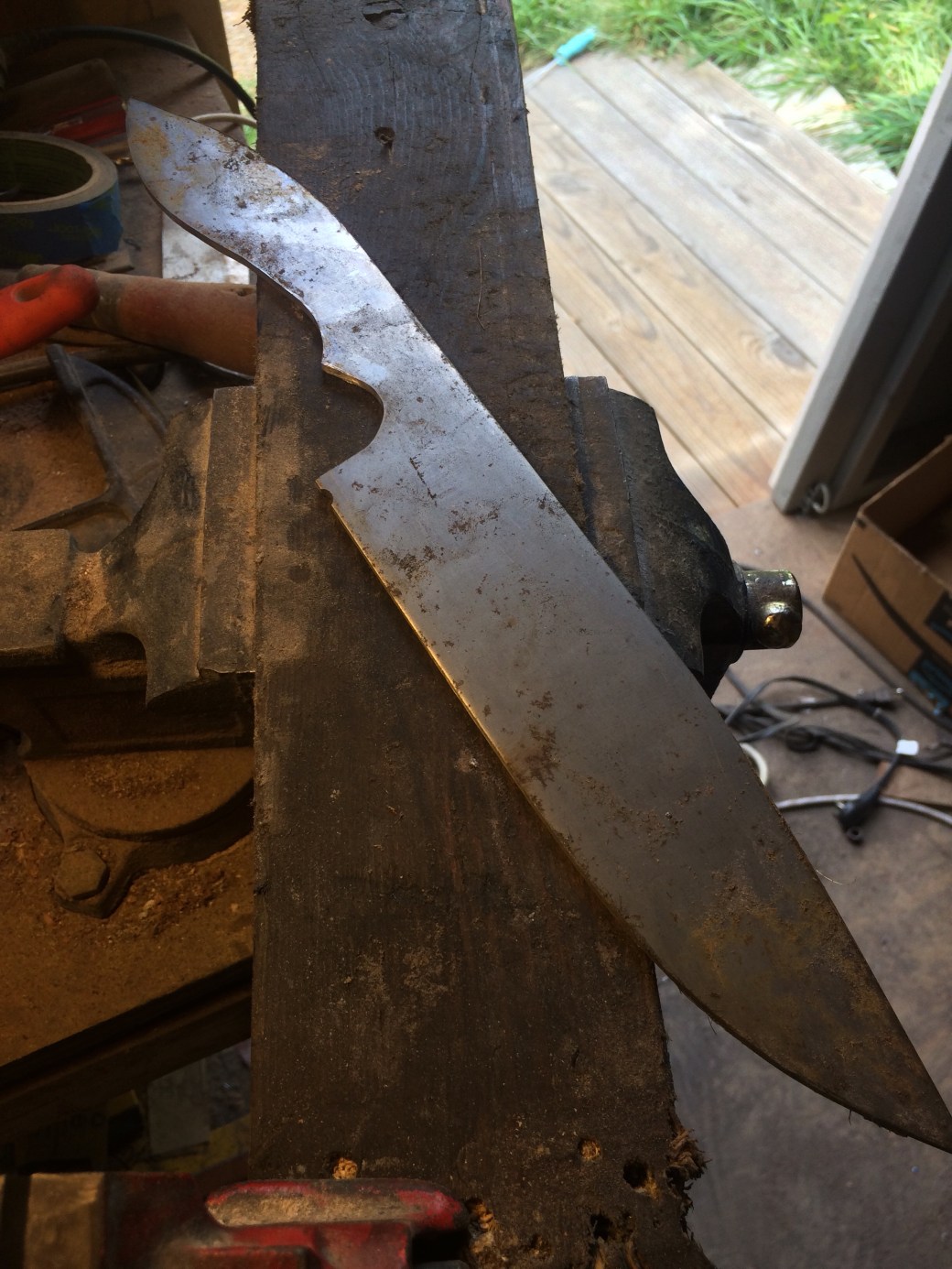
Hardening the steel…

…and oil quenched.
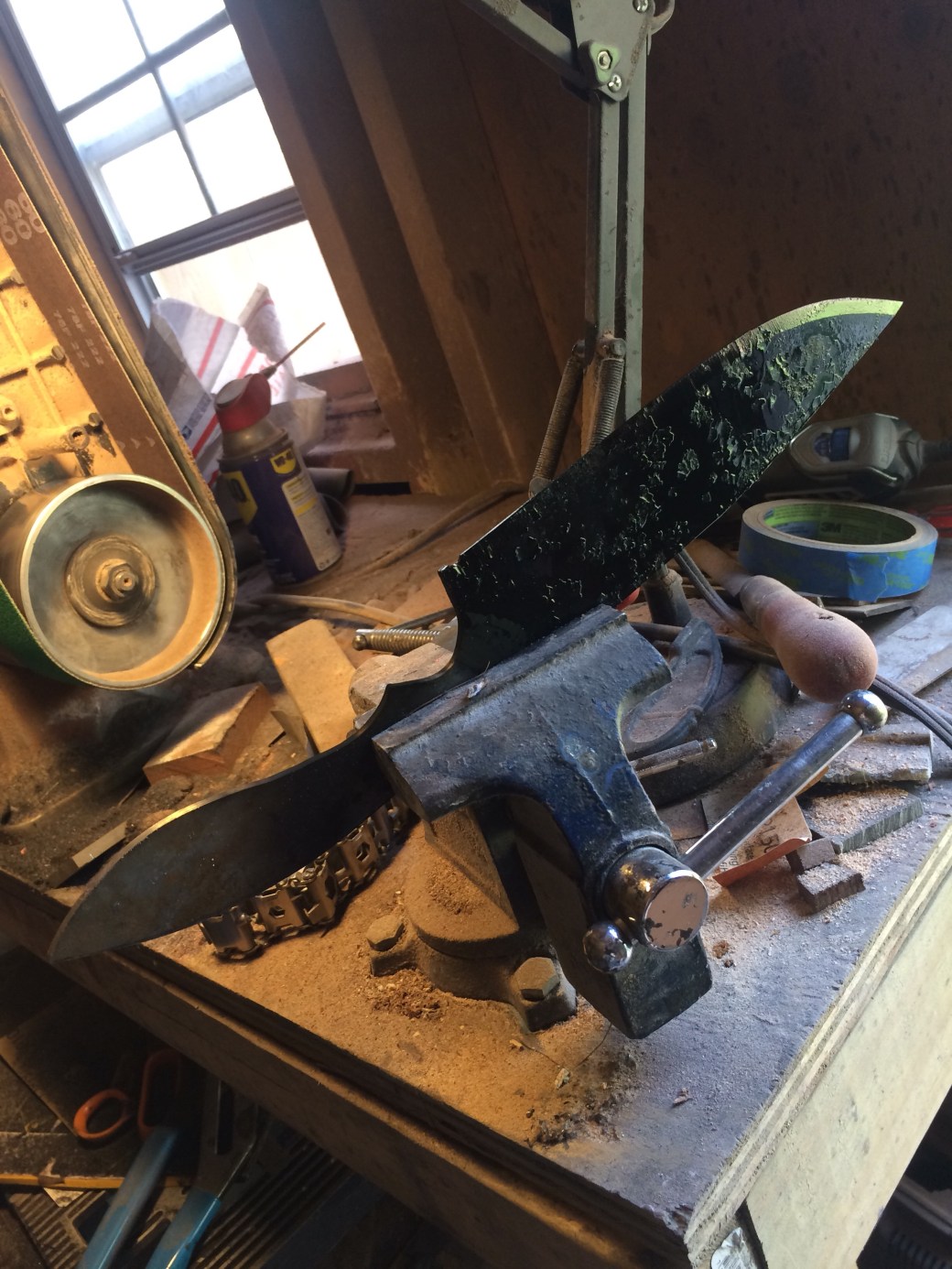
Grinding the bevels:

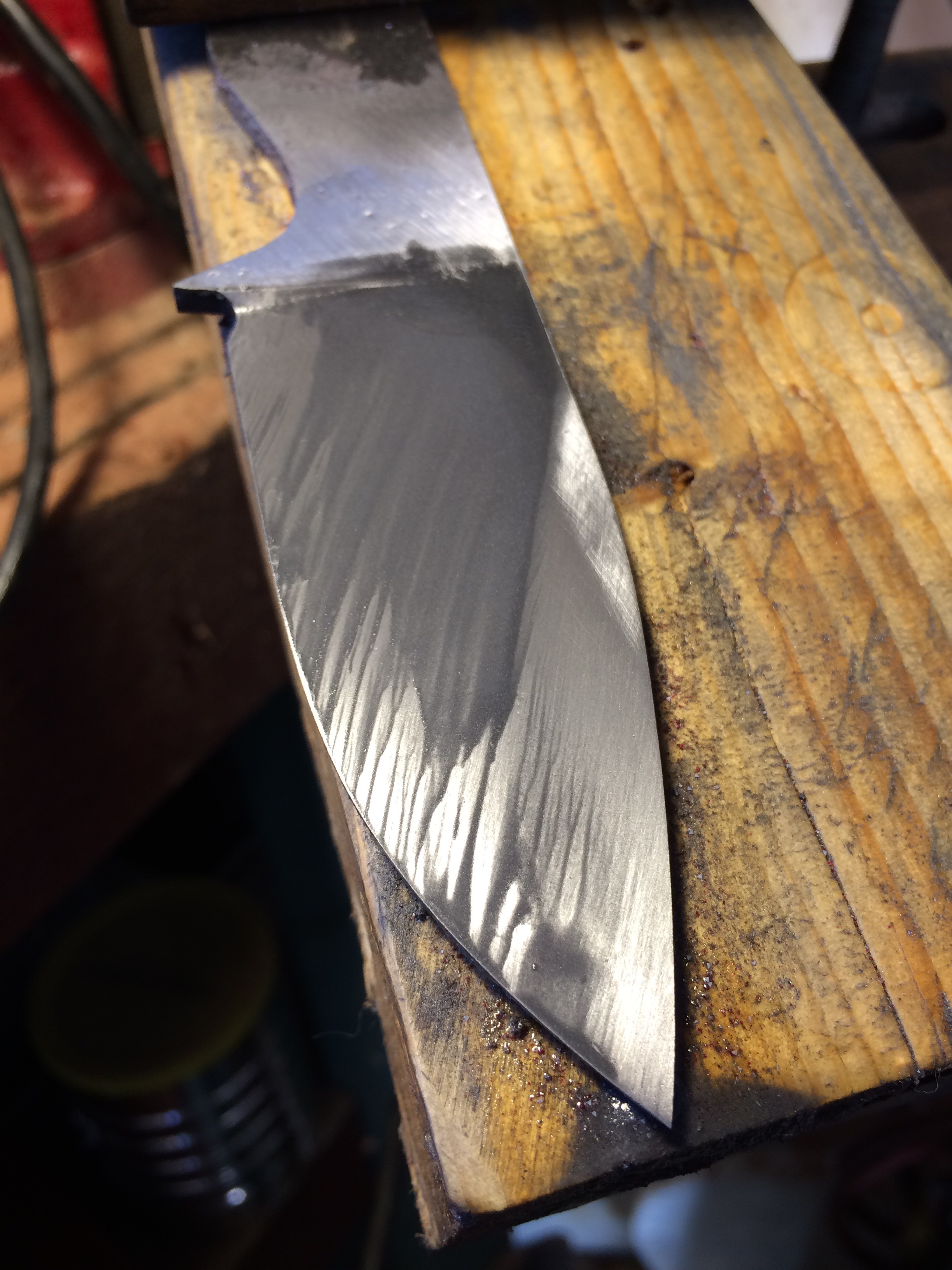
Hand Sanding:

The blade is then soaked in acid to etch the steel. This knife has a Hamon line, meaning the cutting edge is at full hardness while the spine is a touch softer. This gives the blade durability. You can start to see the line forming:

For the handle, I started with a computer board blank for spacing material:
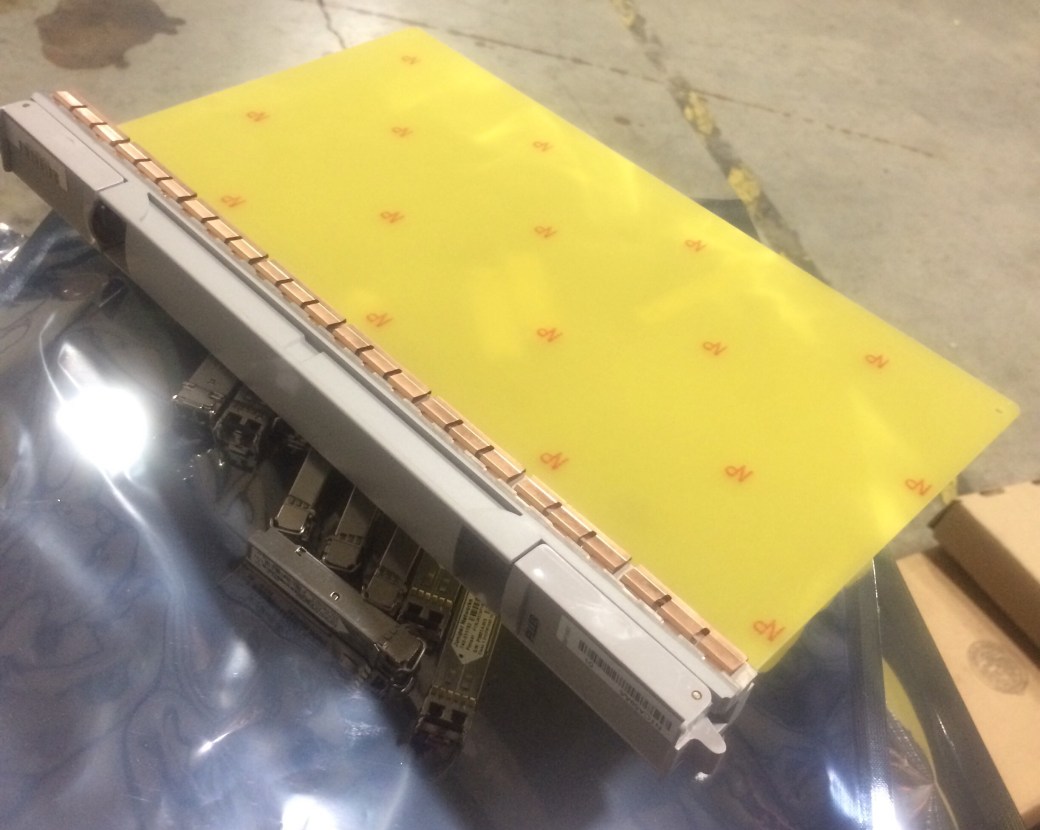
Cut, drilled, and pinned:

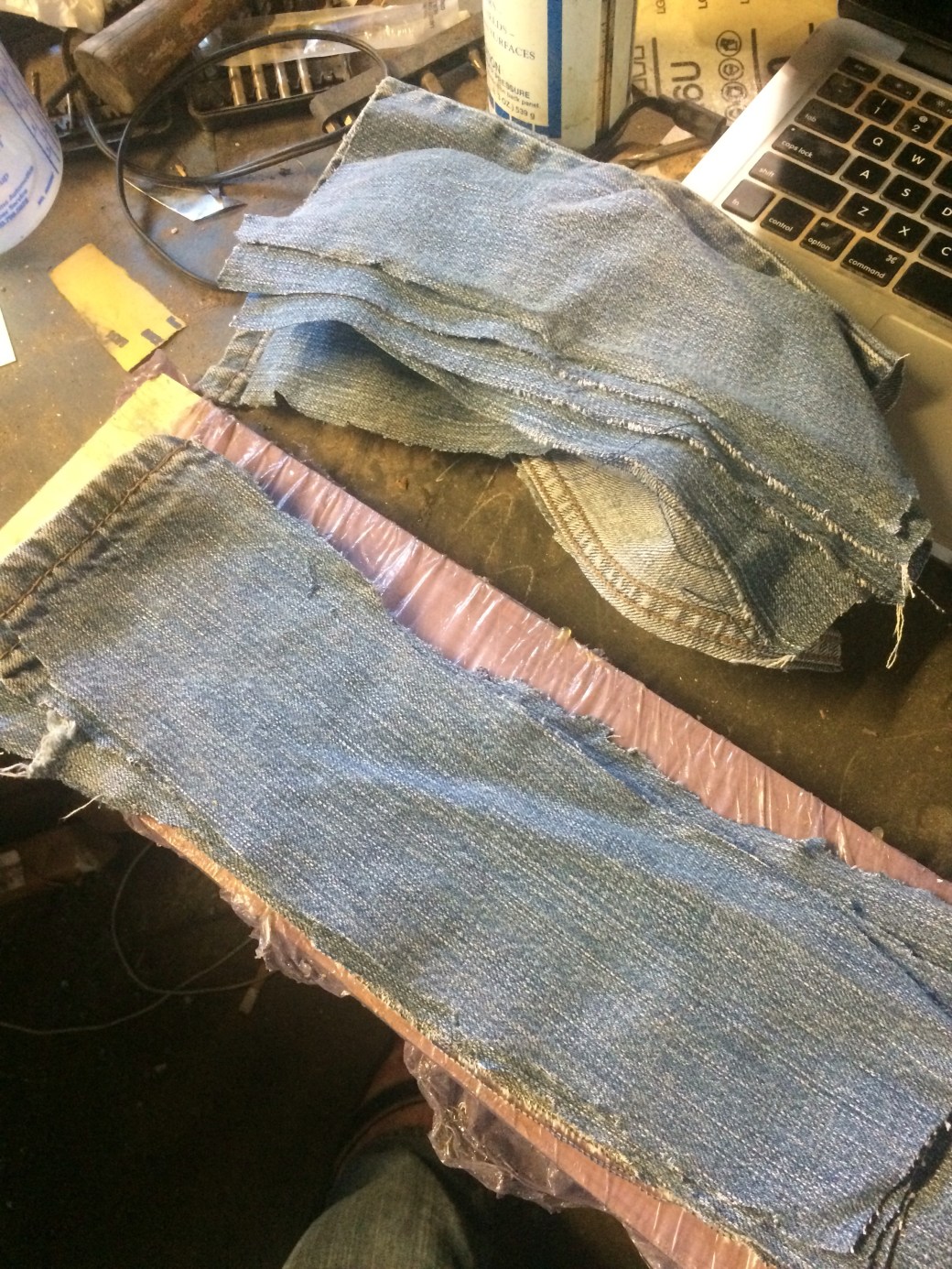
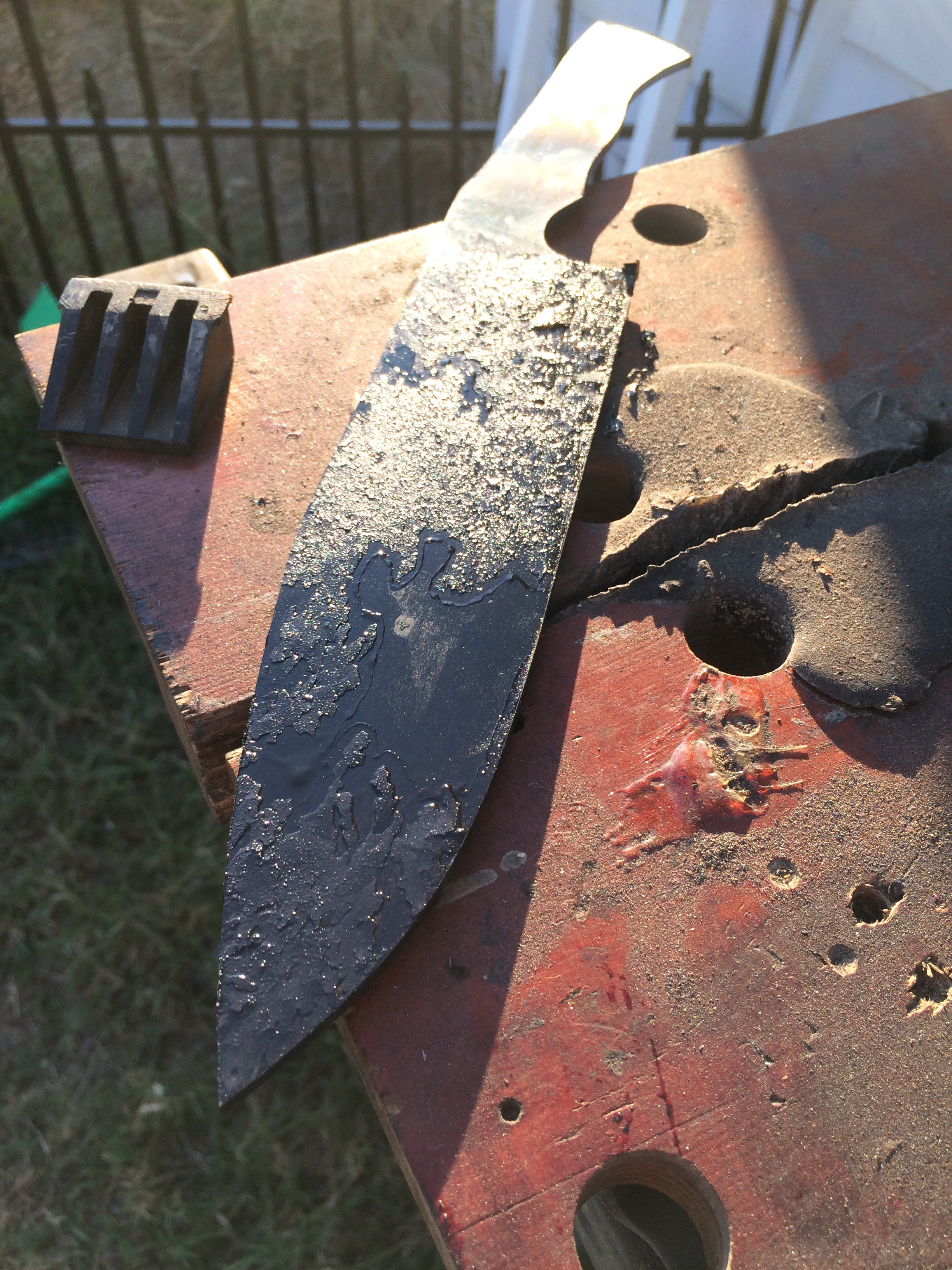
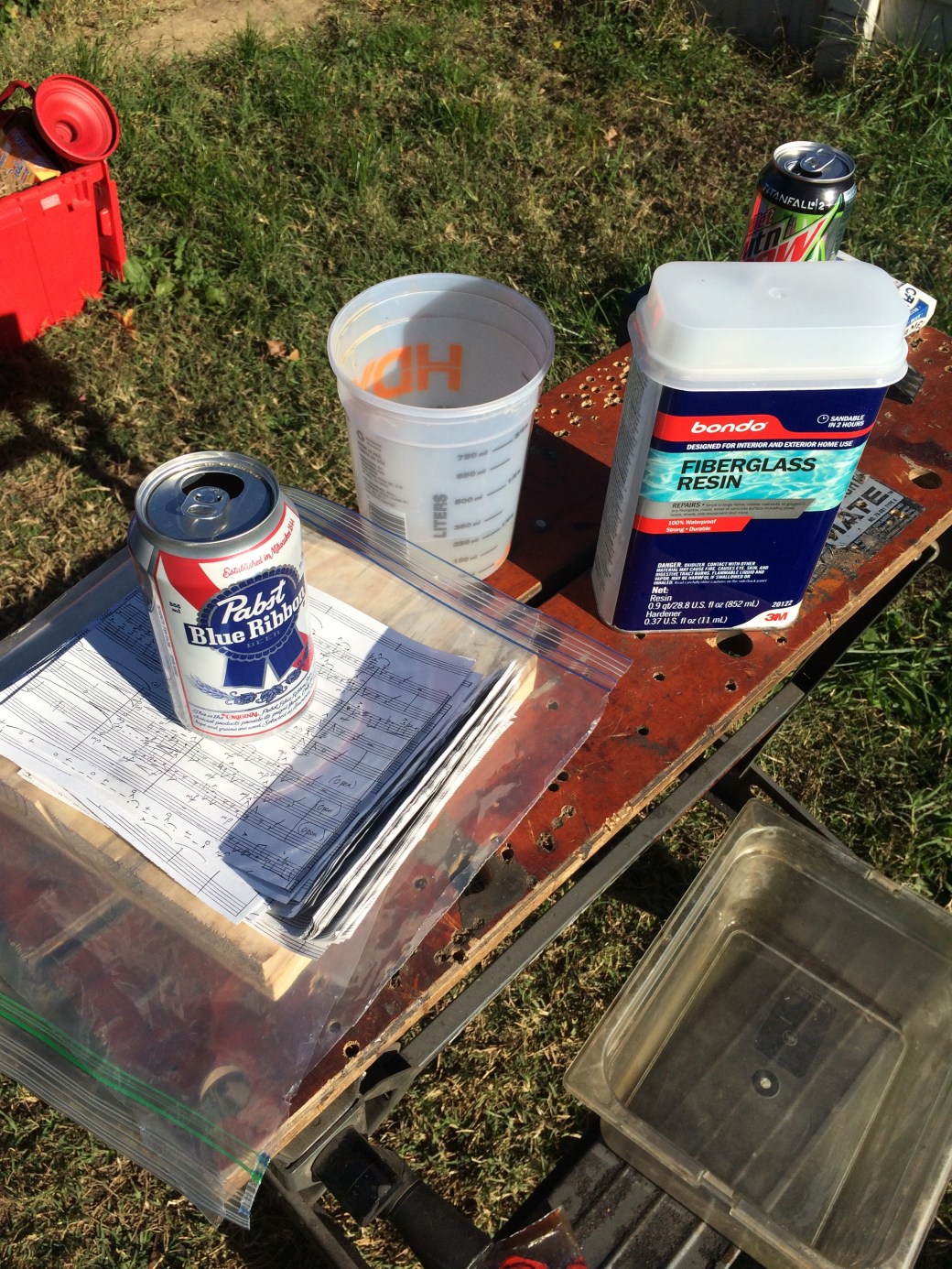
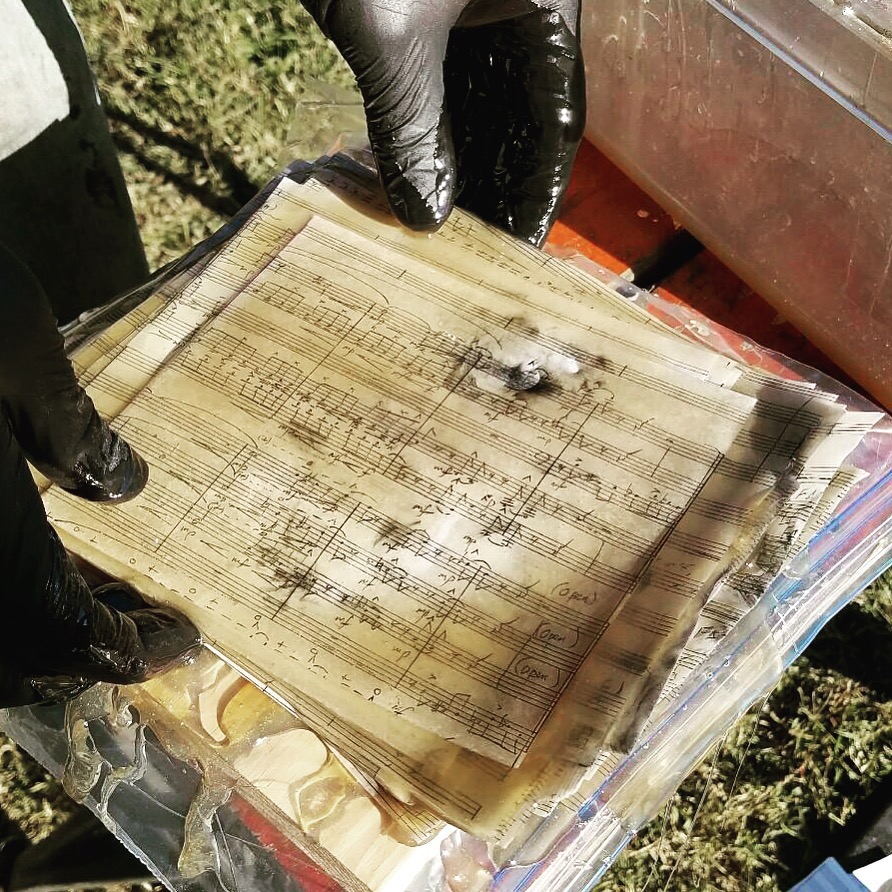
It’s important to remember to keep it casual. Blue jeans layered in fiberglass resin should be a good reminder:

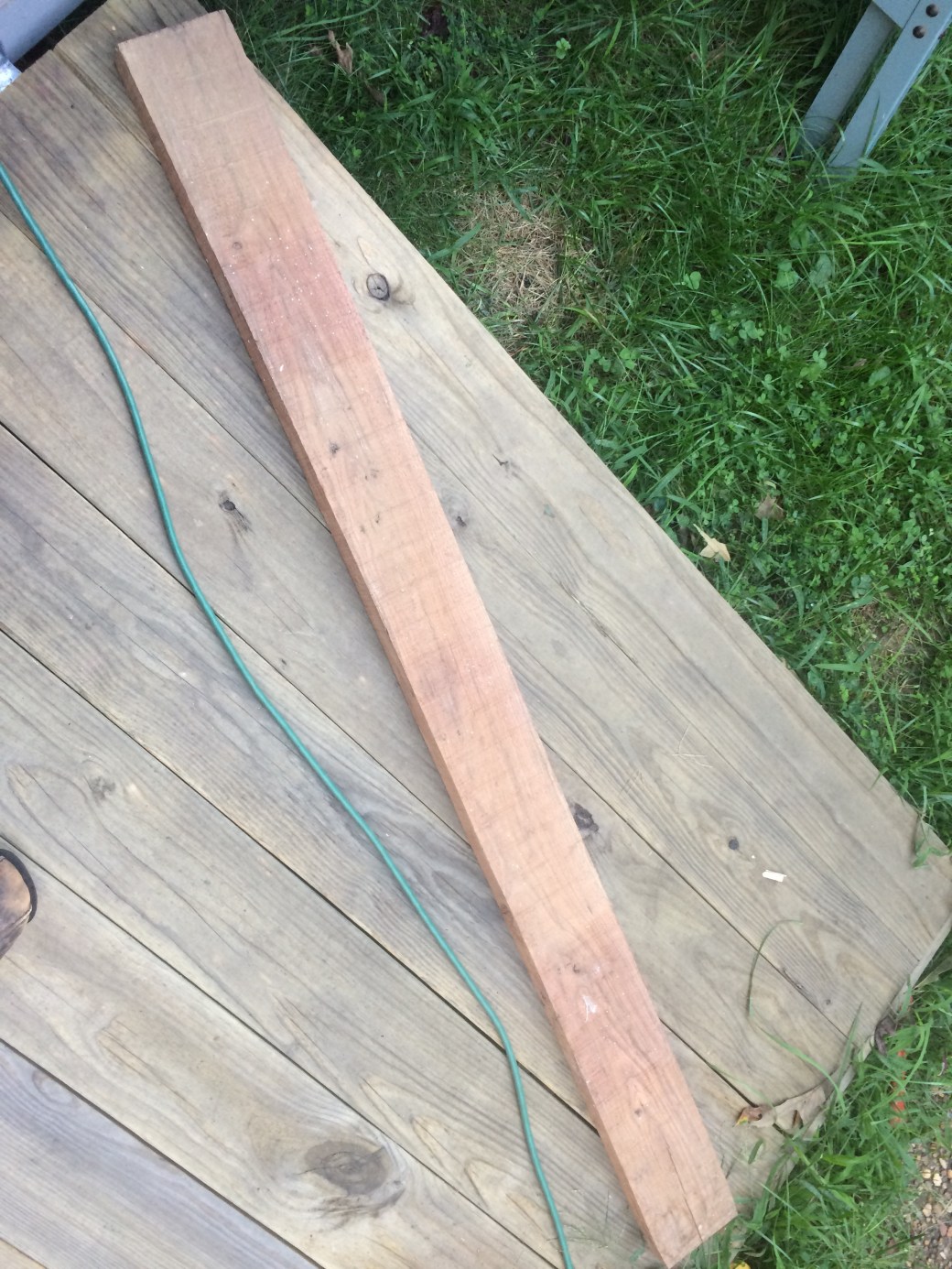
Black Walnut, milled by a man of the cloth from rural Virginia:
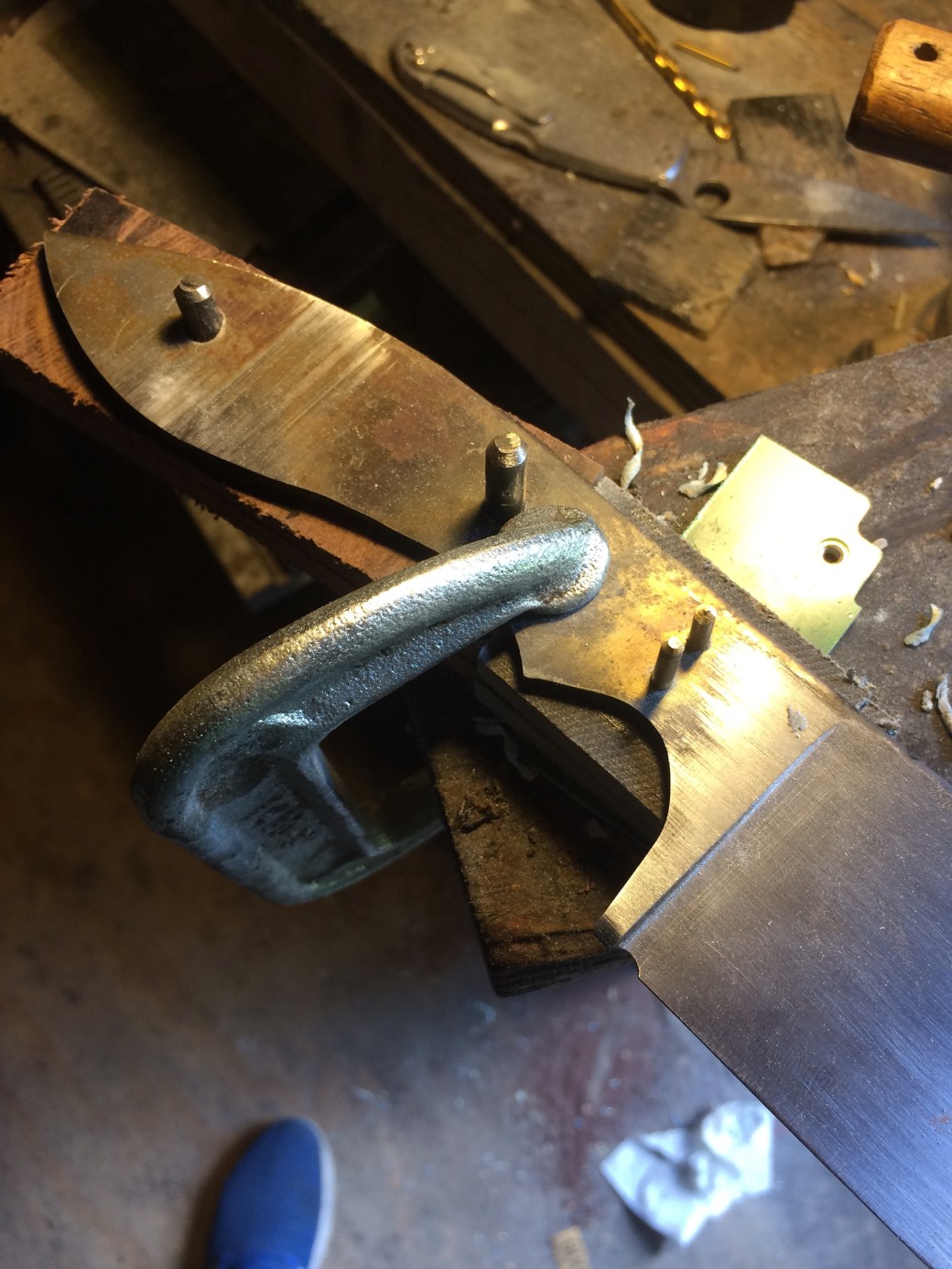
Piecing it together:

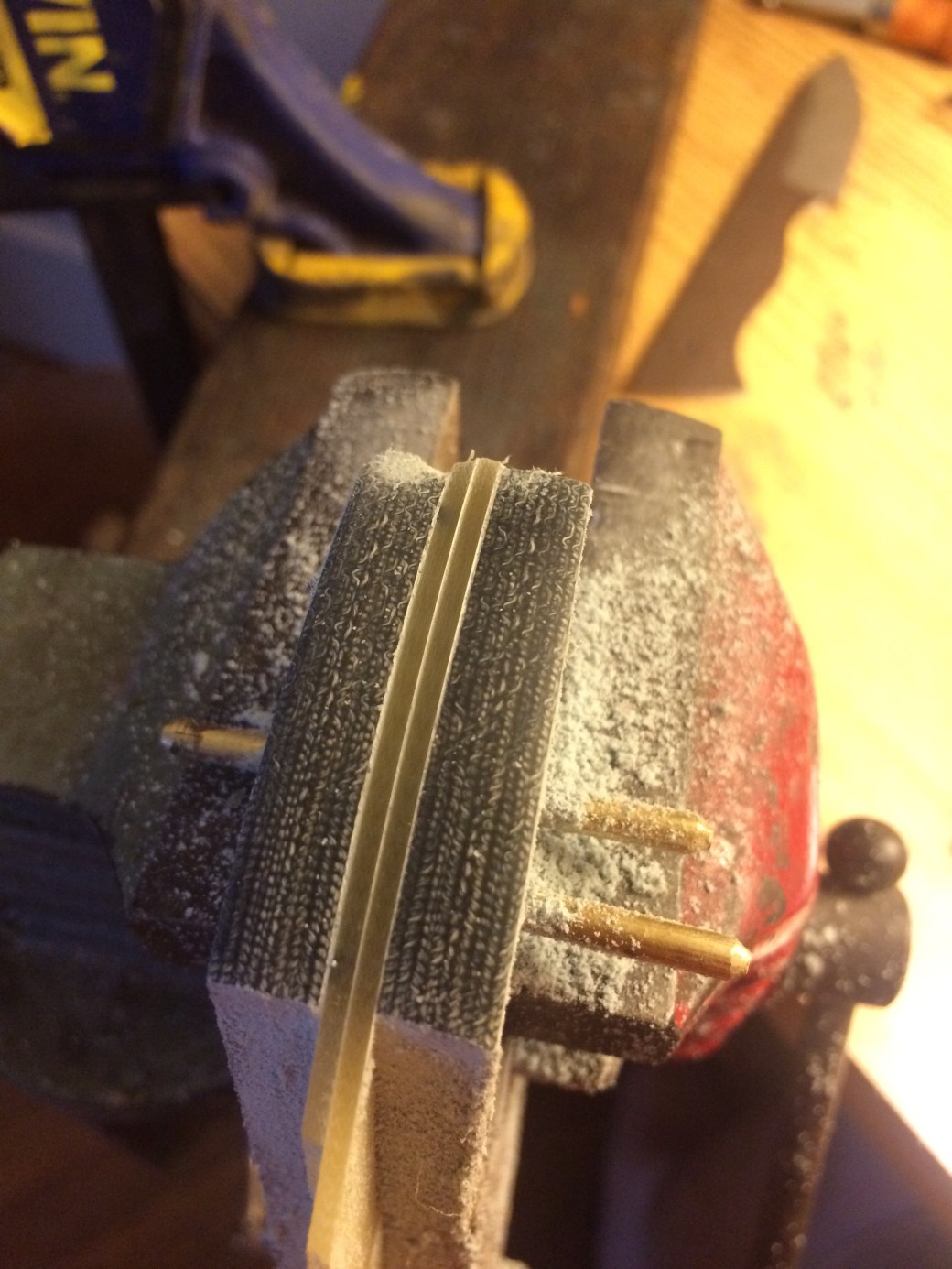

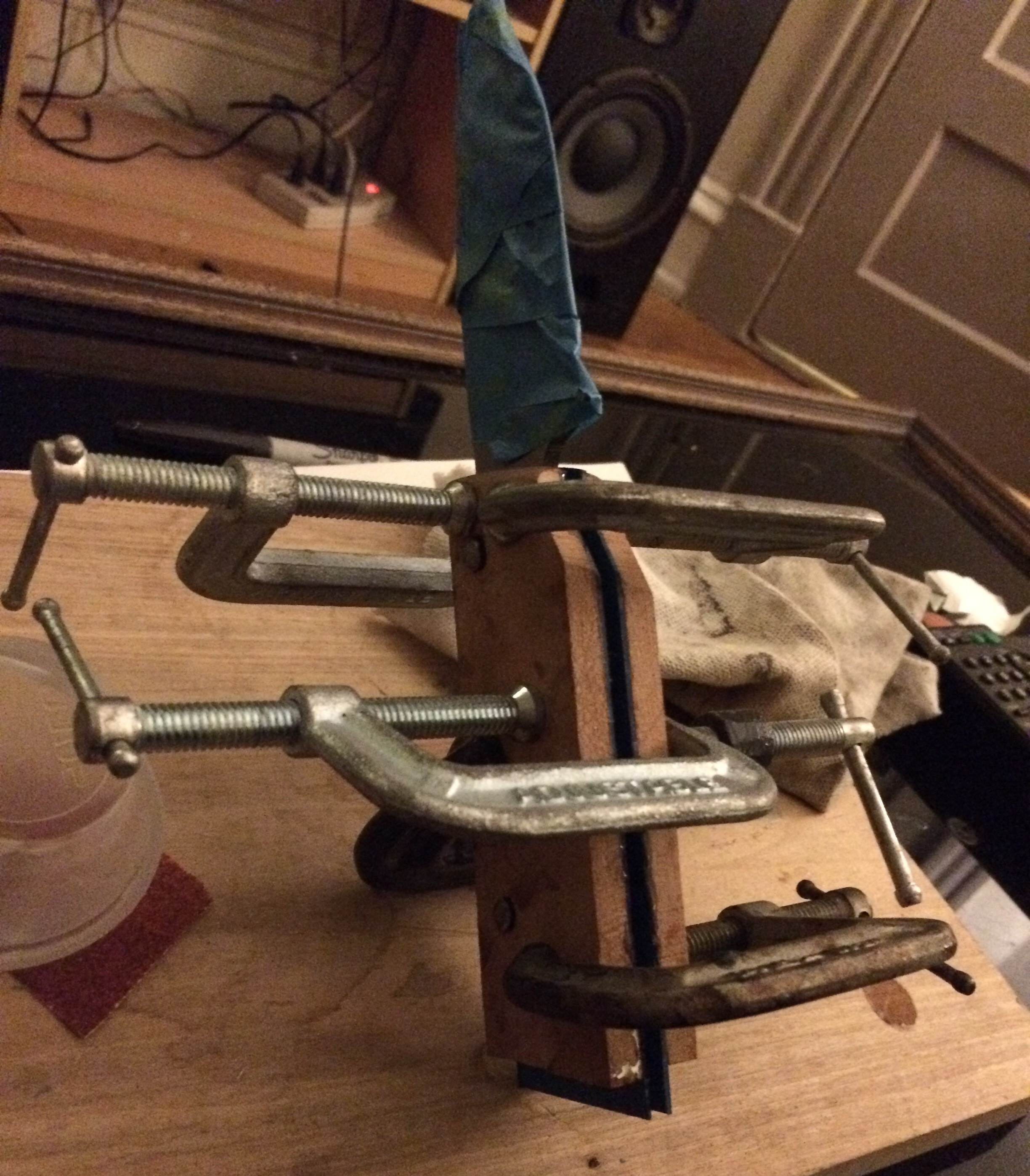
Clamped. You can see that lovely Hamon on the blade:

All glued up:

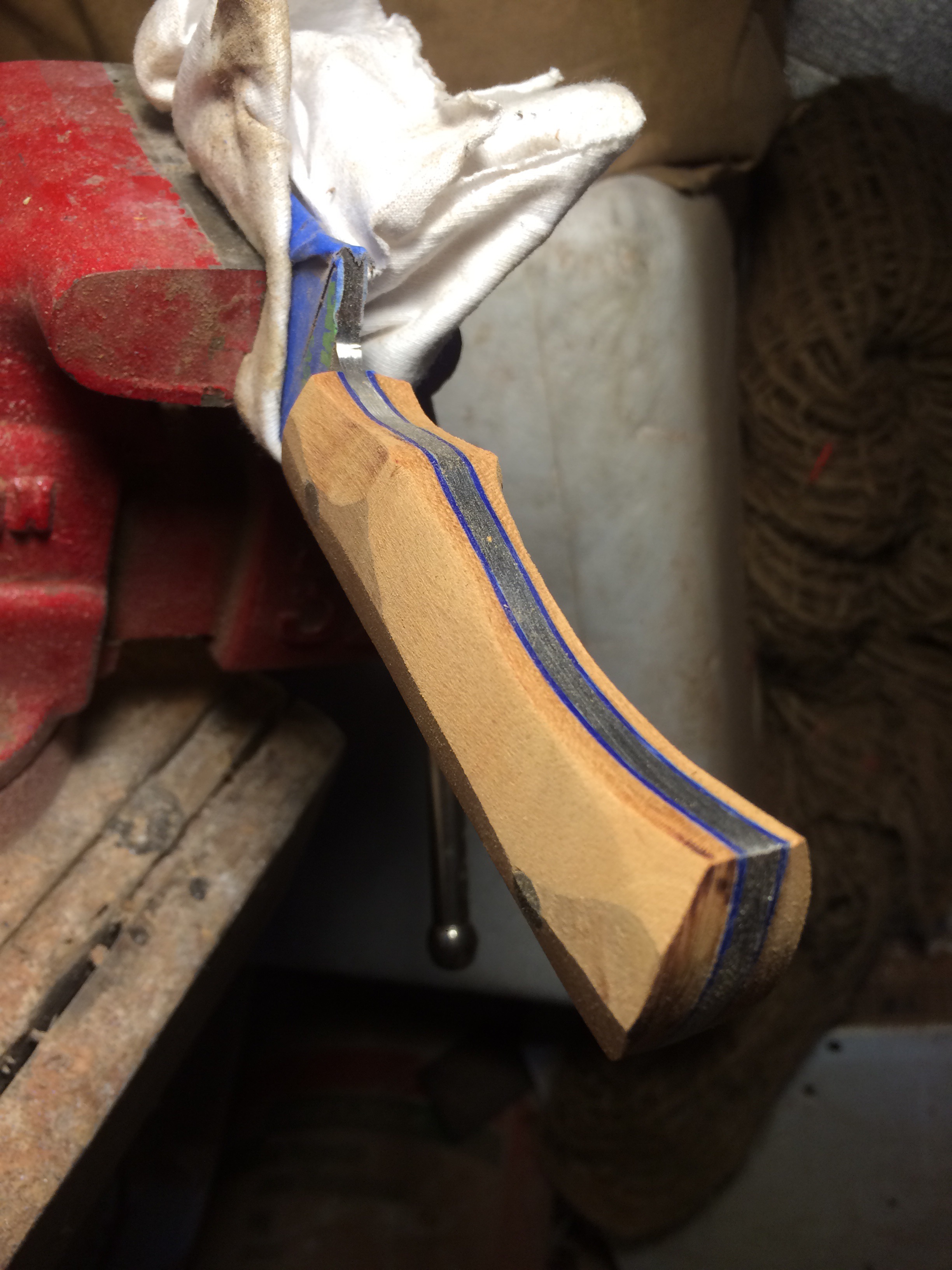
Shaped:
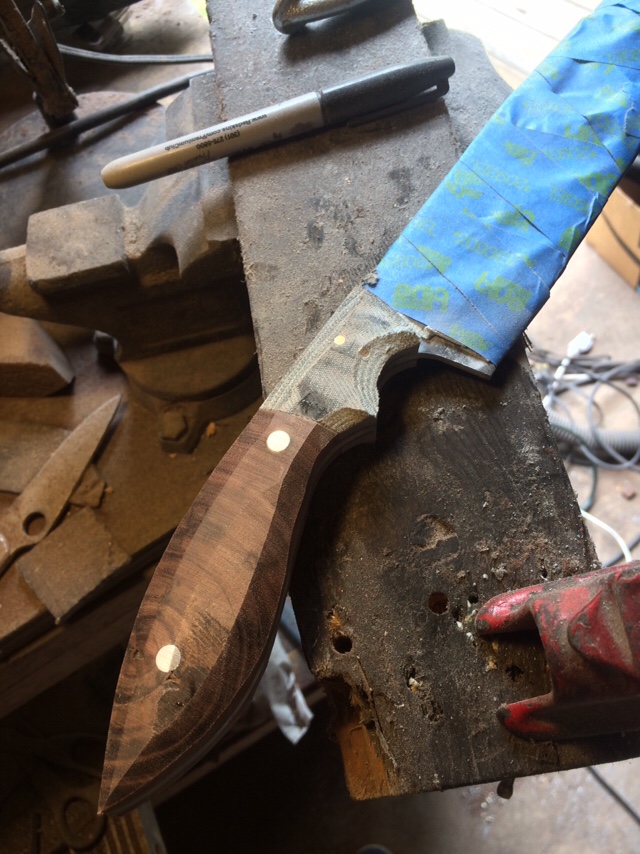
Helping the grain to speak:

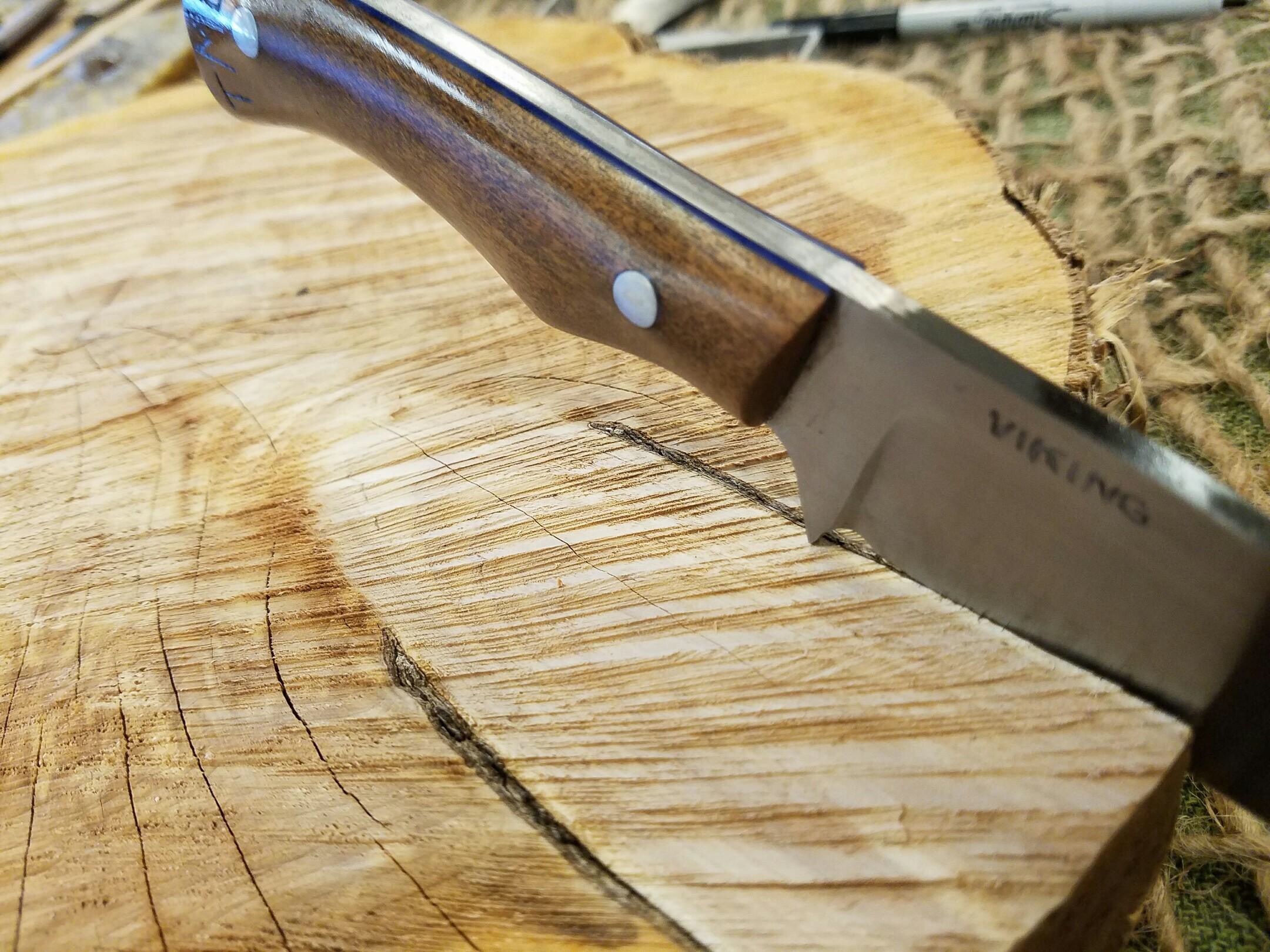
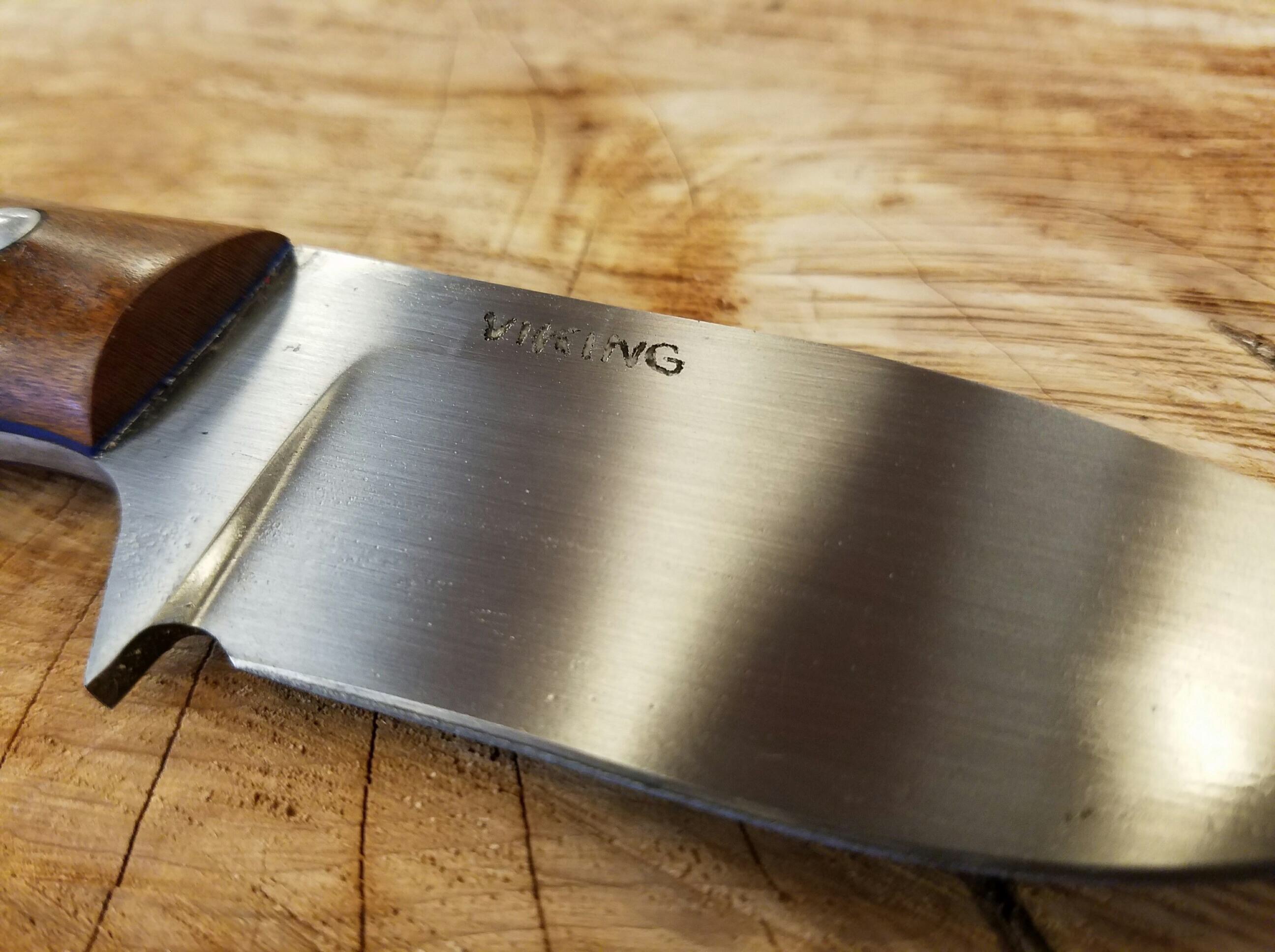
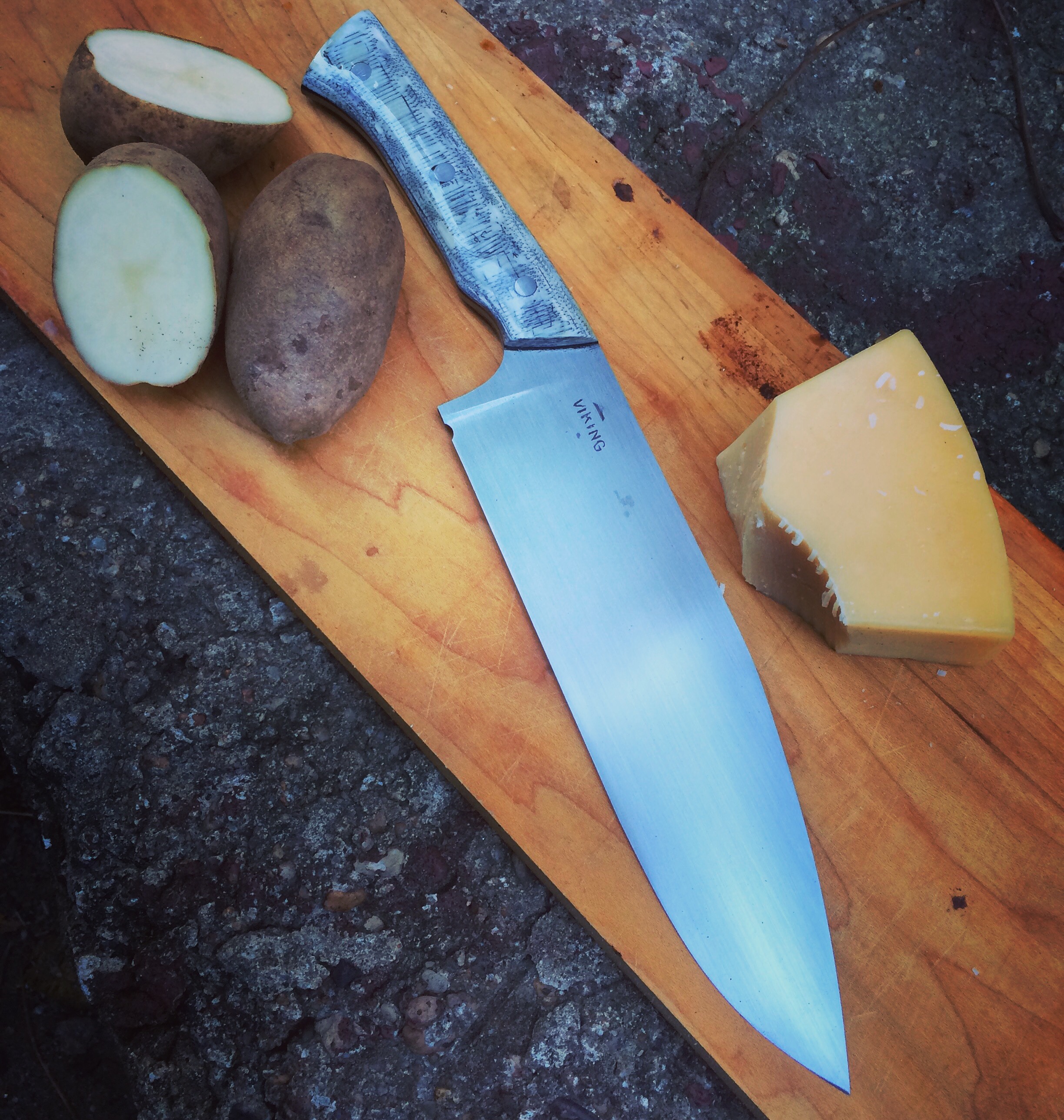
The Directeur:

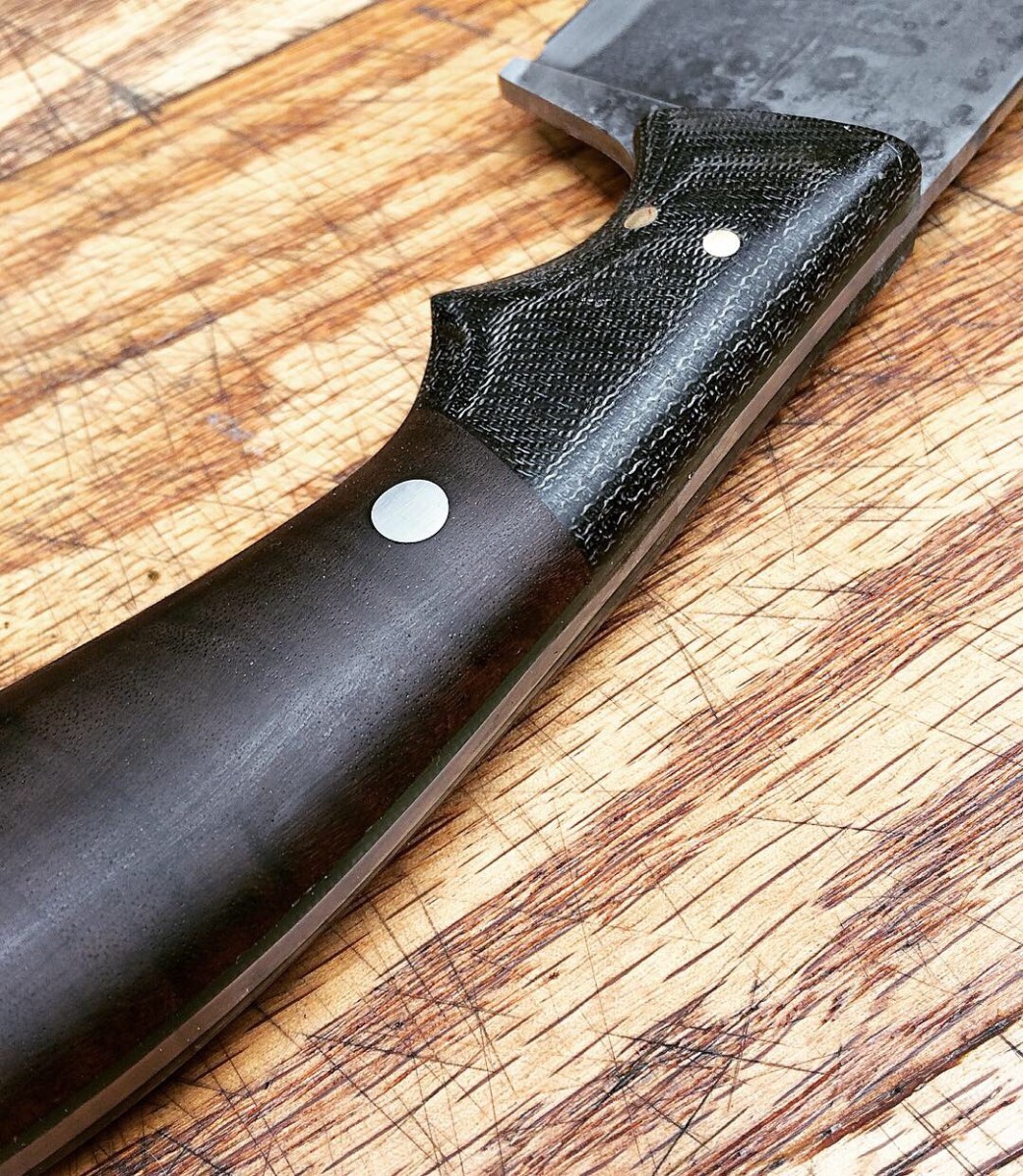

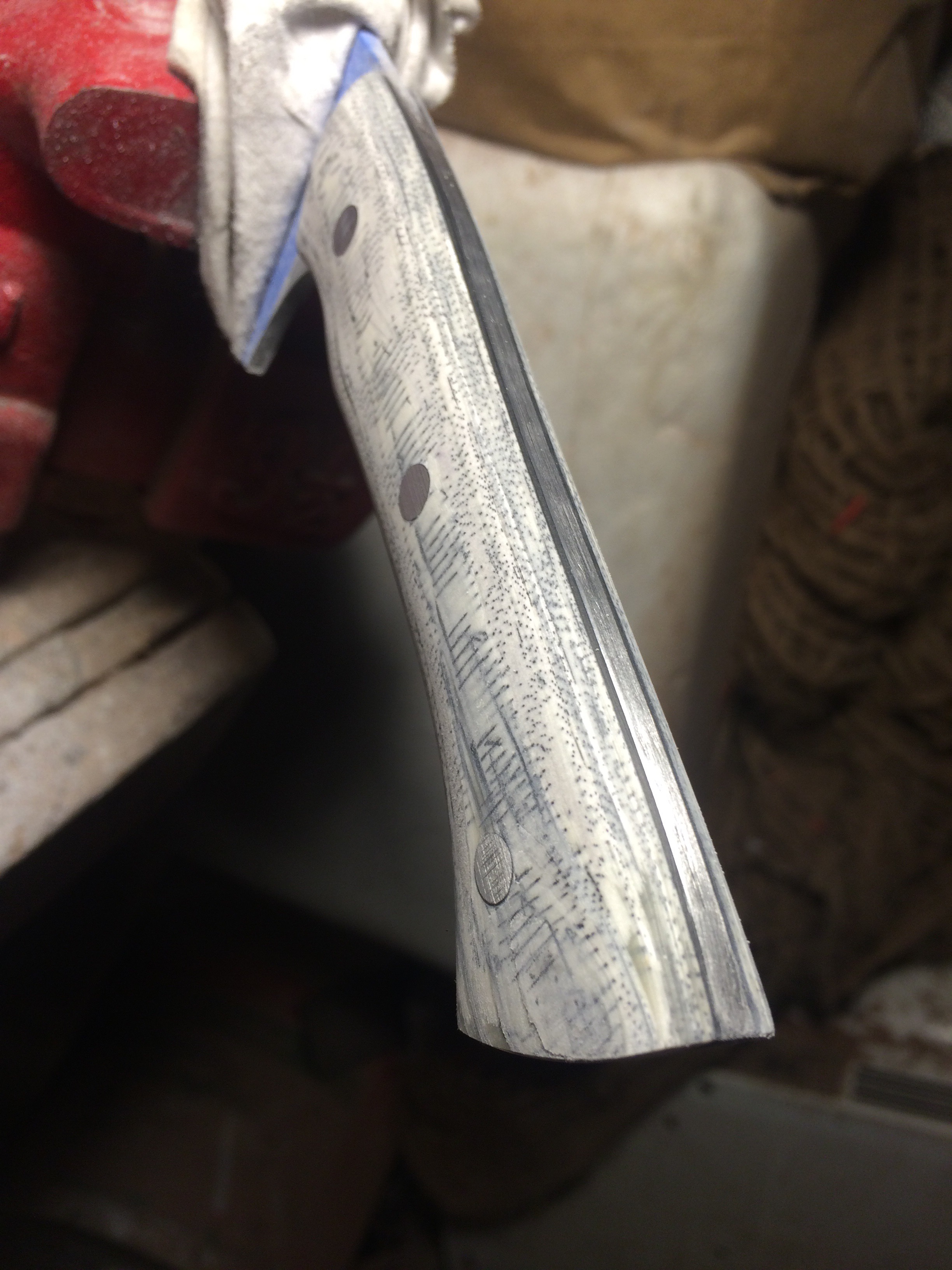
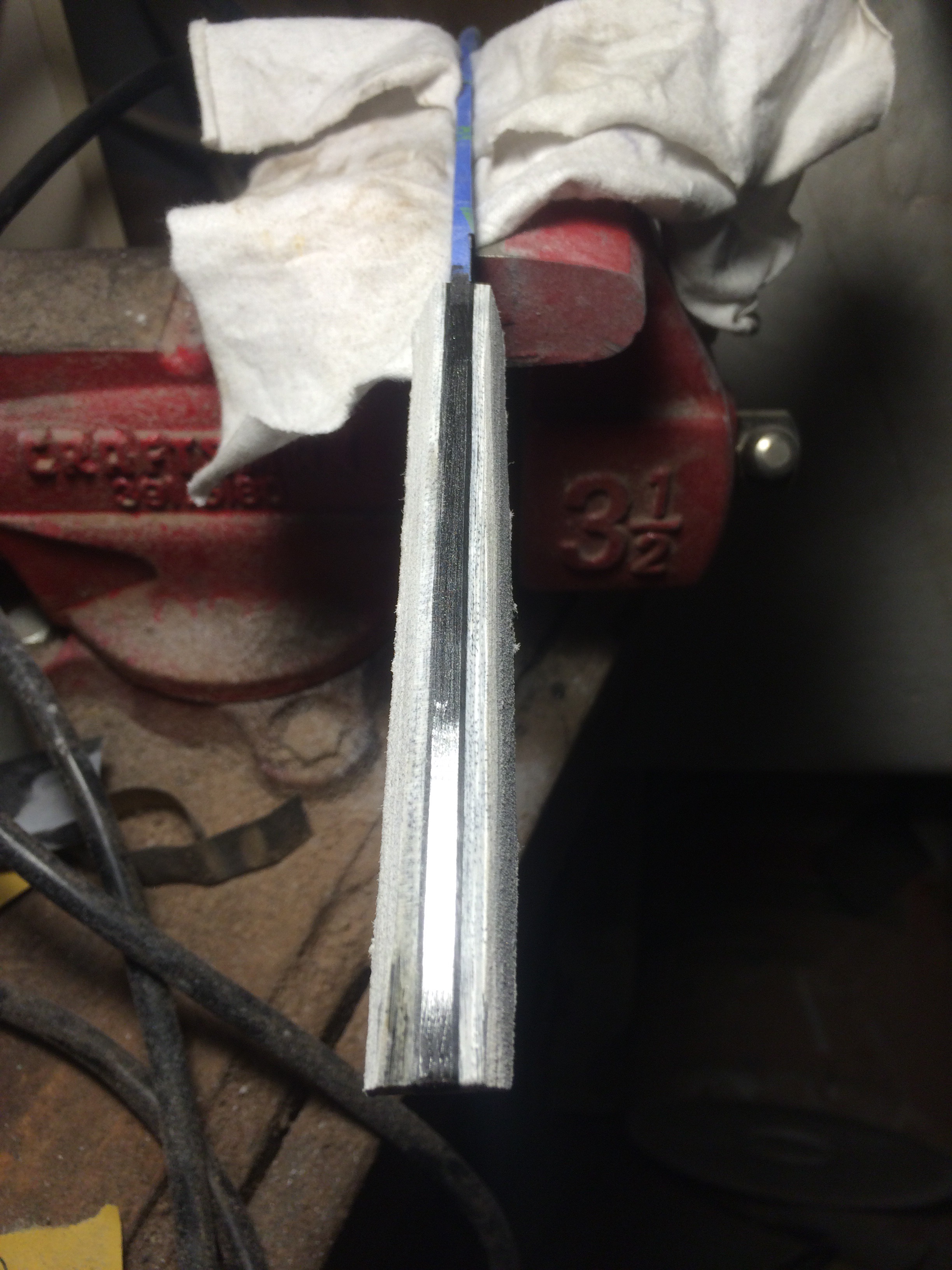
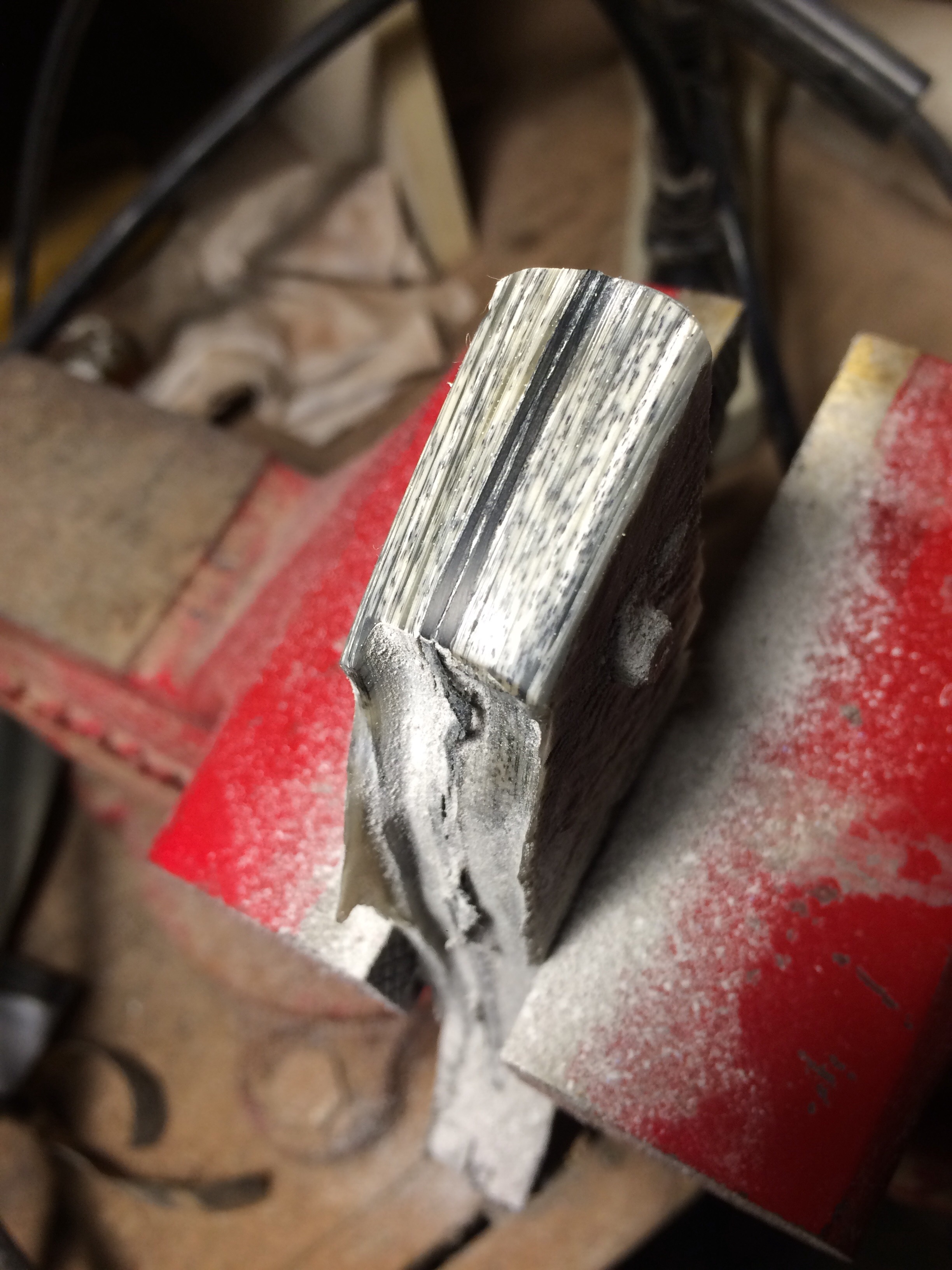
….this knife came back to me with a cracked handle, which can happen with natural materials. I removed the old handle and put a new one on it:


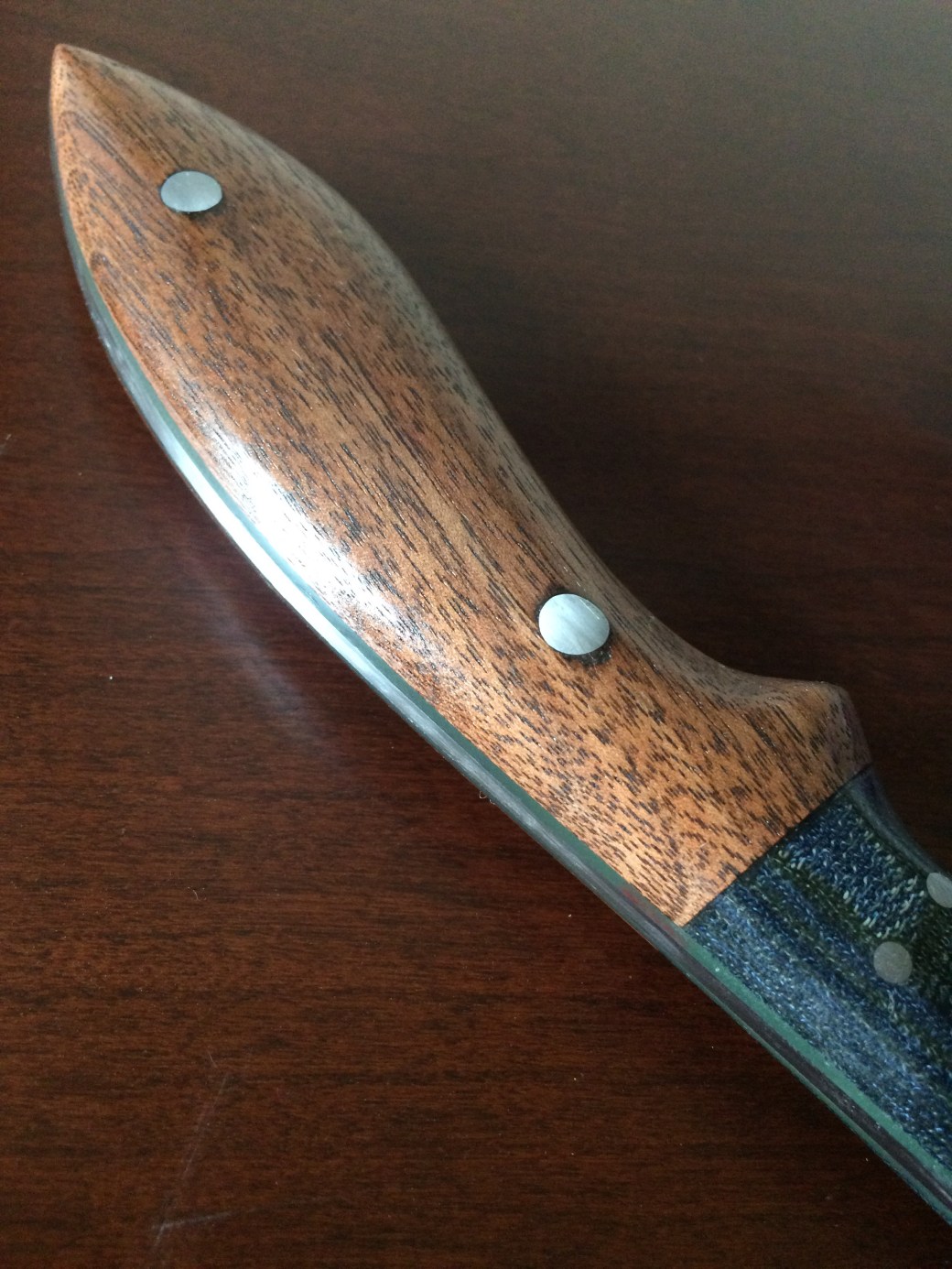

May you manage your circumstances to the best of you abilities. The outcomes and experiences are absolutely worth it.















 groundedinfire