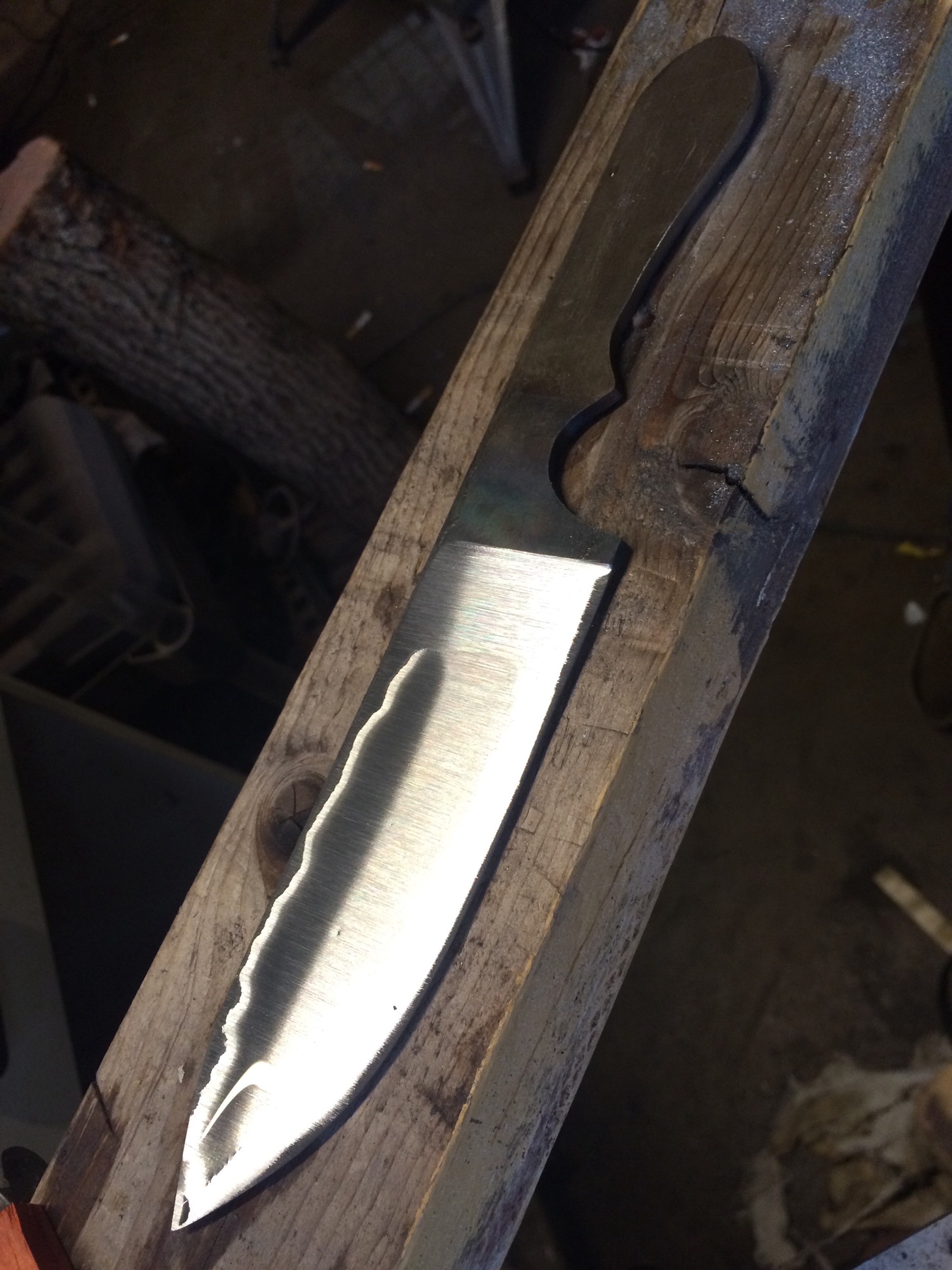
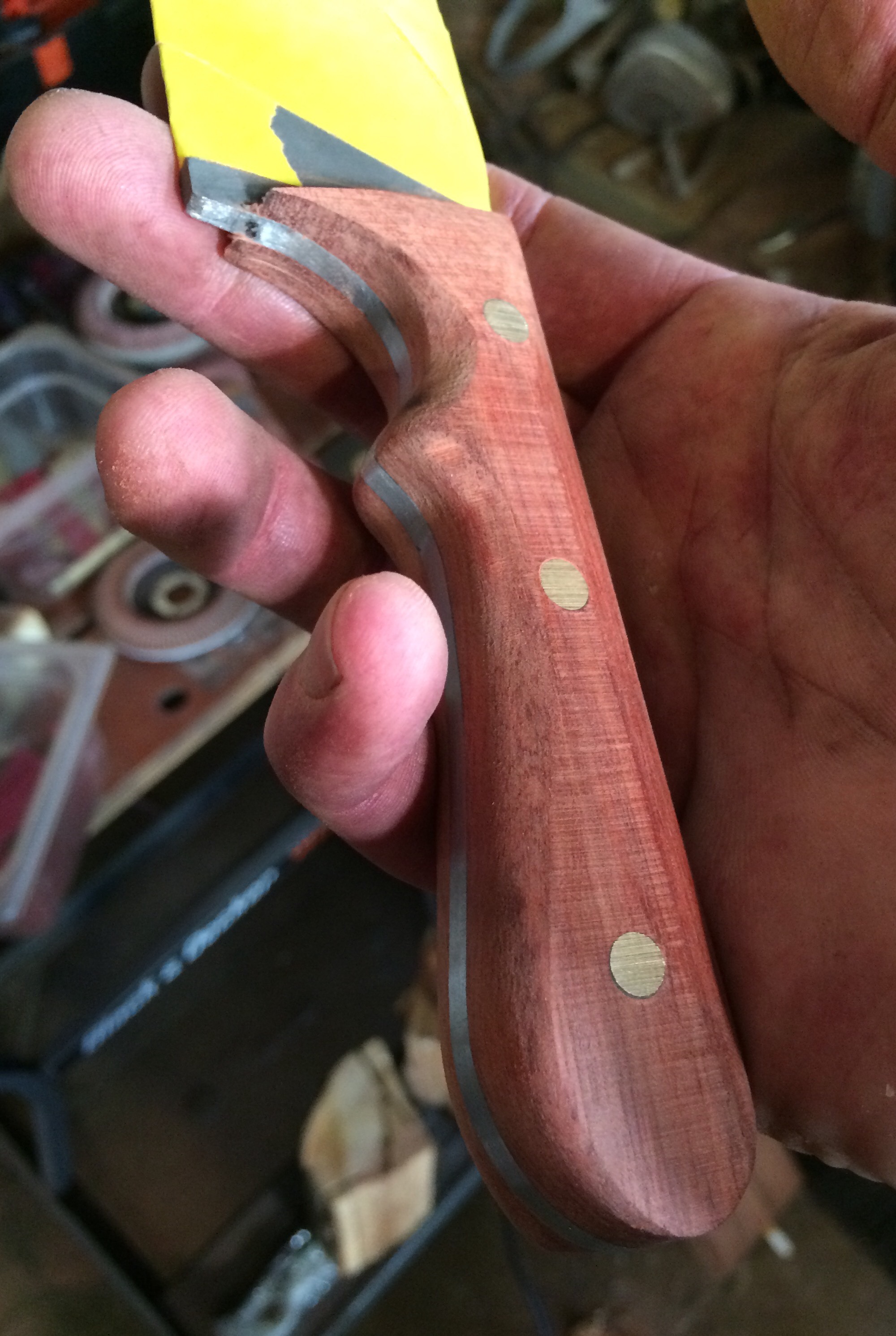
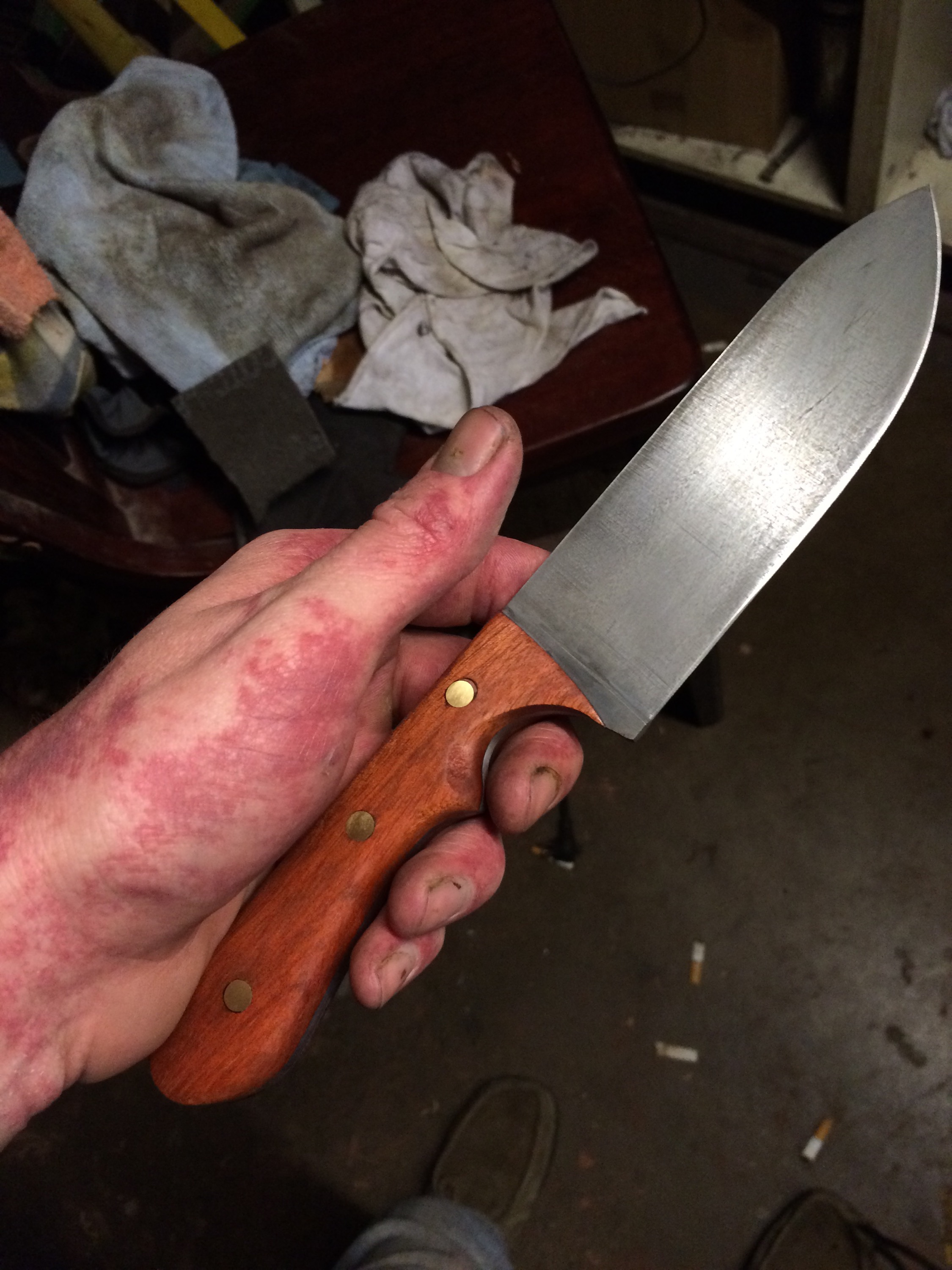
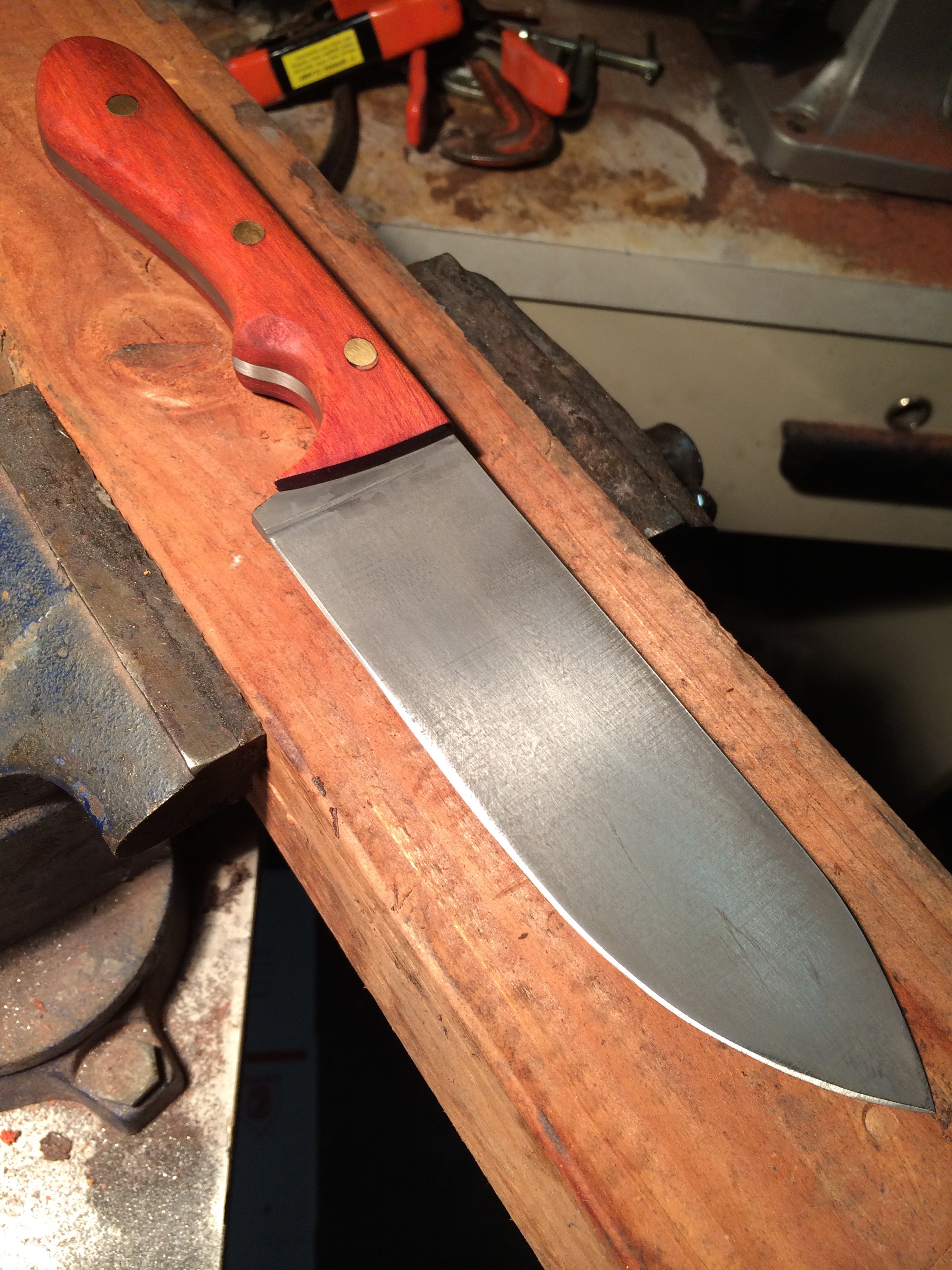
Knifemaking: going deep and the Kingfisher

When a needle falls into a deep well, many people will look into the well, but few will be ready to go down after it”

-African Proverb

I went to music school.  I was shown many ways to teach myself to be good at things.  I spent many hours in a practice room by myself, many more hours in front of a piano composing and arranging, and even more time listening.  To everything.  The education I got reached far beyond any classroom or practice space.  Life becomes those spaces.

Learning how to listen to things was the biggest lesson I learned.  When you listen, really listen, not just hear, your world opens up.  You notice all the nuanced bits of wonder.  As life gets busier and more complicated I still have to remind myself that it’s all still there, that it hasn’t and won’t go anywhere.  That within a world that holds a good deal of pain and sorrow for everyone there are also things that move and stir the soul, but they don’t always sit on the surface of our awareness…

There was one class that really opened things up and is sort of the inspiration for this writing.  It was called World Music, which is a rather vapid title for an experience that was so much more that.  It was taught by a very wonderful and kind man, one of the more enlightened people I’ve ever met.  Classes started off in silence and darkness, with the ringing of chimes.  Sometimes ambient music was played, or Tuvan throat singing, or guitar players from West Africa with rhythms I had never heard before.  There were many books to read, records to check out, and some of the most real discussions on being and the human condition that I have ever experienced.

It was during one of these discussions that something came up, and I don’t quite remember the context but it has stuck with me.  In the course of the discussion, it came up that our professor’s spirit animal was a dolphin.  He said that he was at the beach surfing when he was sixteen and nearly drowned and shortly thereafter found he related deeply with the dolphin.  The dolphin is able to dive very deep but always returns to the surface to breathe.  He told us he built his whole philosophy of teaching on that premise.

This is something that has been with me for awhile.  Sometimes you have to take a deep breath and go deep.  When you are exhausted, when it feels like life is more than you can handle, when you need to heal.  You can handle a lot more than you think you can but the tools and nourishment you need don’t always sit at the surface.  That doesn’t mean the process of finding these things doesn’t hurt like hell or isn’t terrifying at times.

Take the Kingfisher bird, for example.  To get the food it needs to sustain itself, it has to dive far beneath it’s comfort zone.  They sit on their perch overhanging the water and when they see their prey they dive, eyes closed, into the deep.  I think about this and wonder what is going through his little bird brain before he hits the water…

kingfisher

This is the lesson of the Kingfisher.  You close your eyes, you dive deep, and you come up with something nourishing.  Repeat as necessary, adding faith and a bit of courage as required.

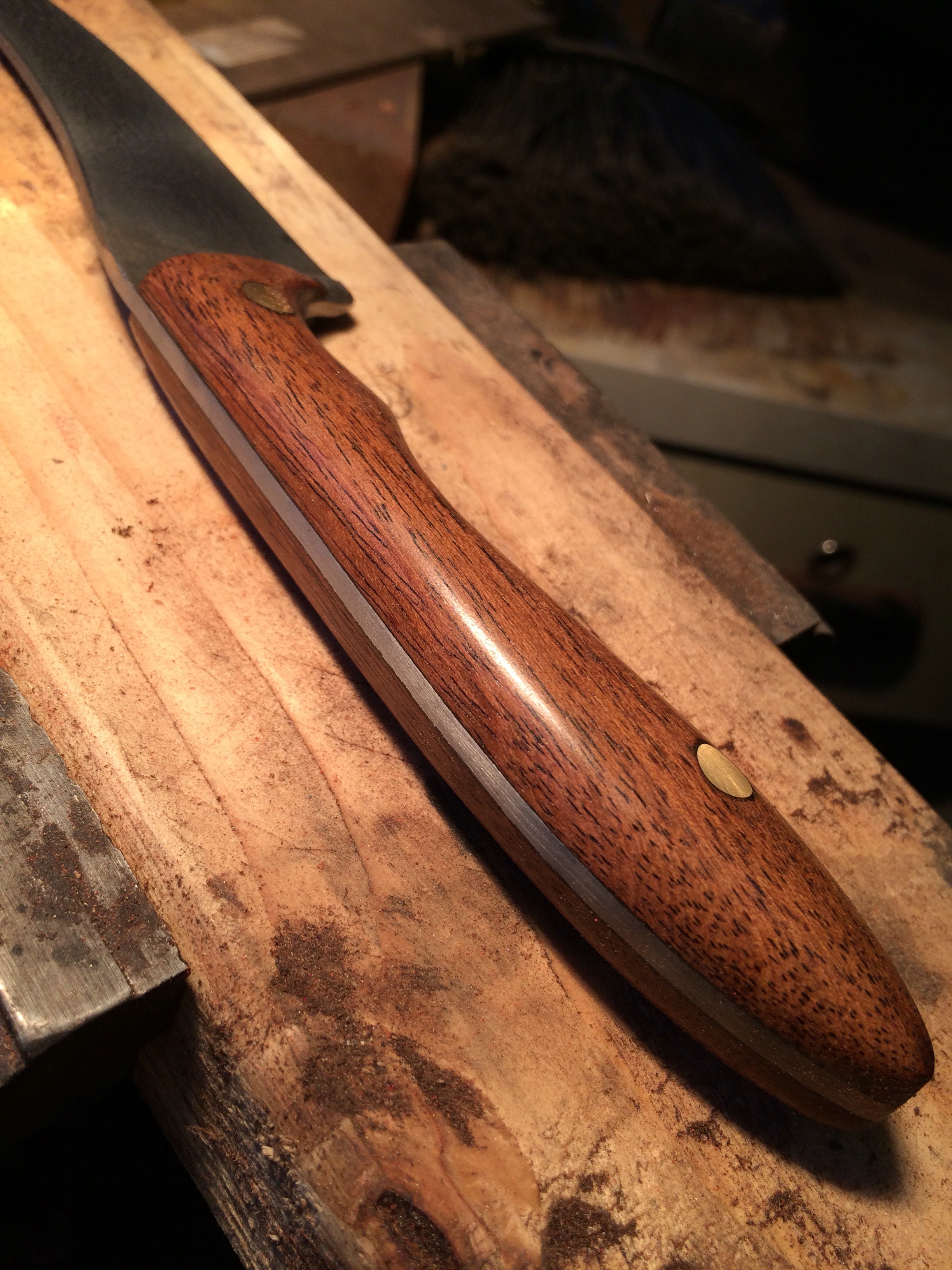
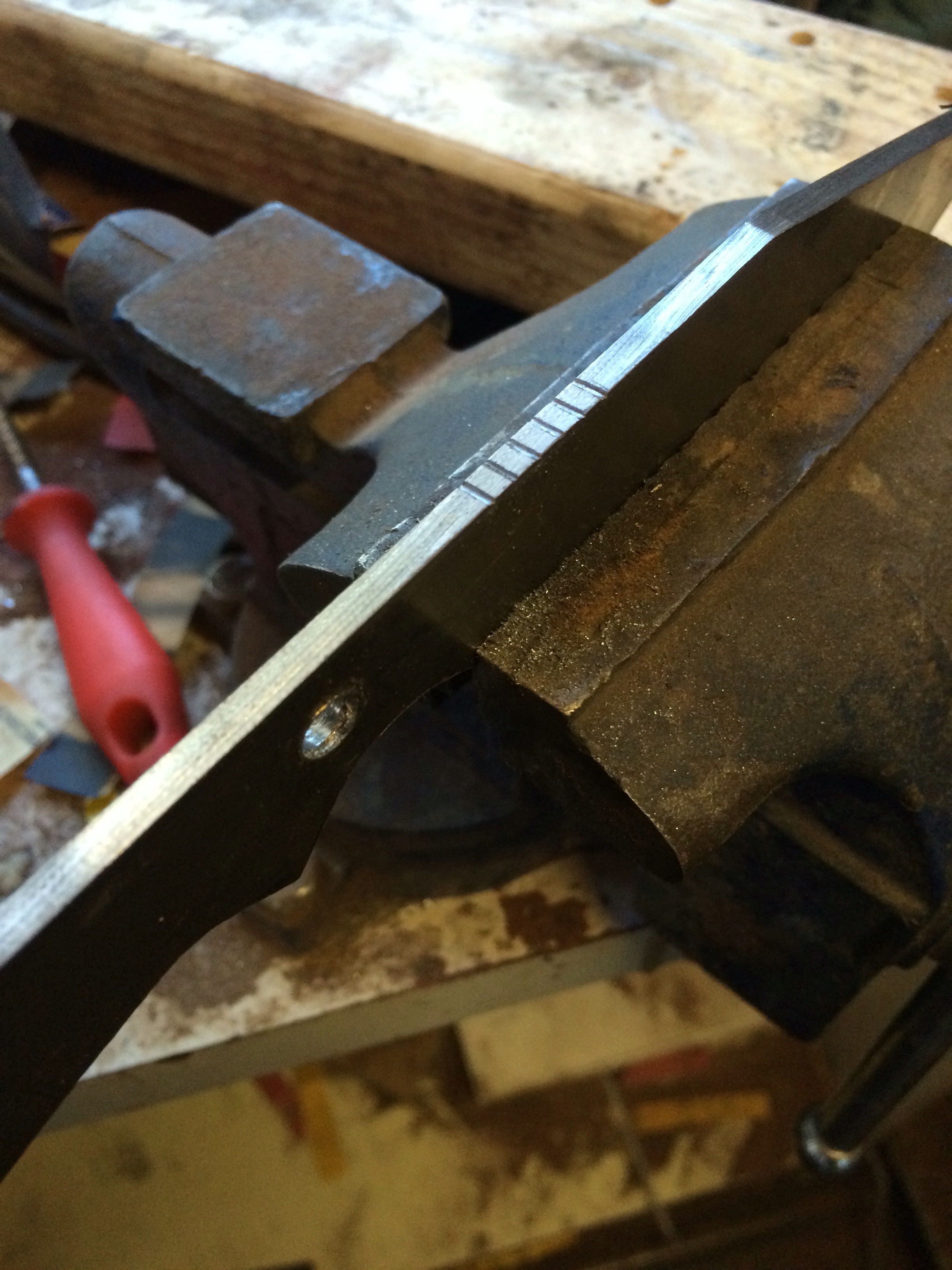
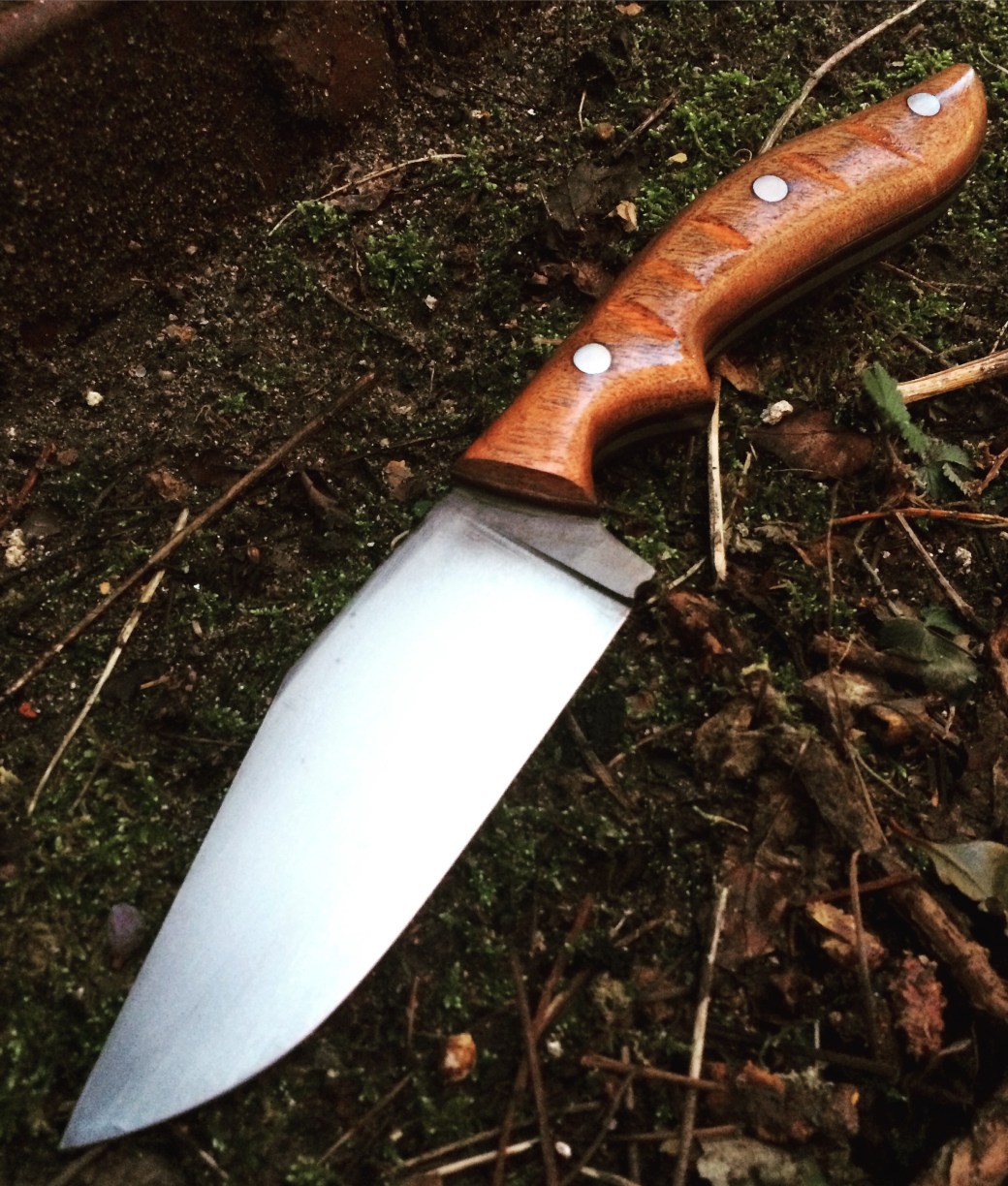
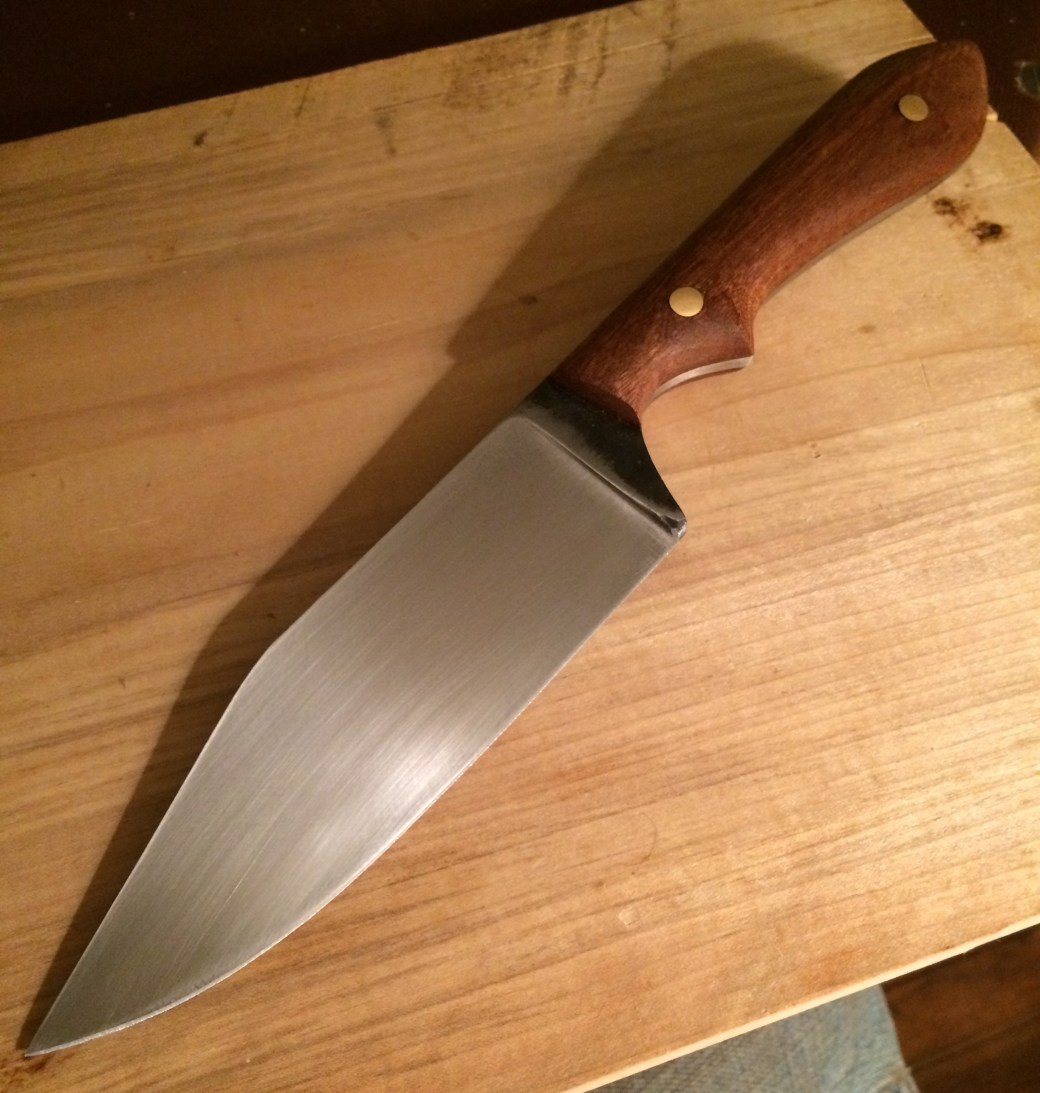
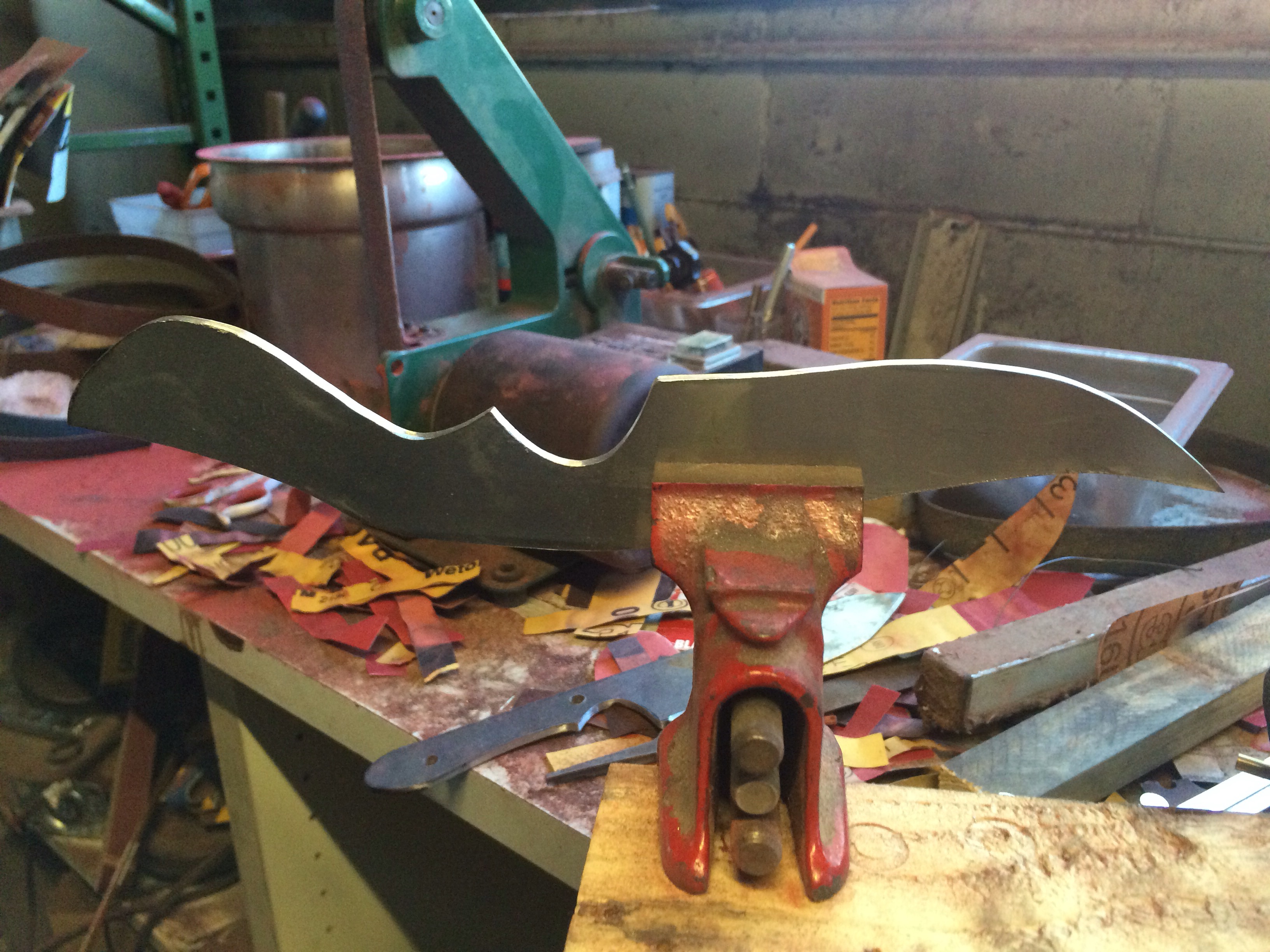
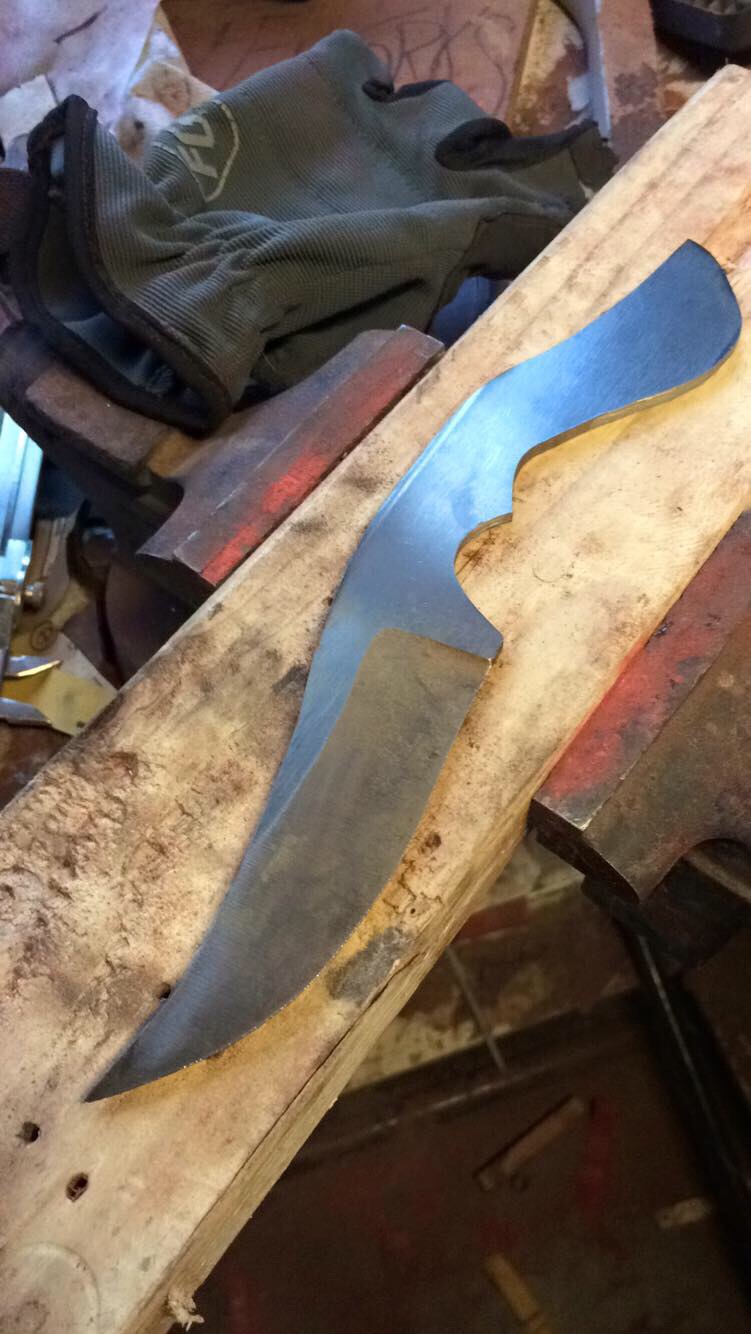
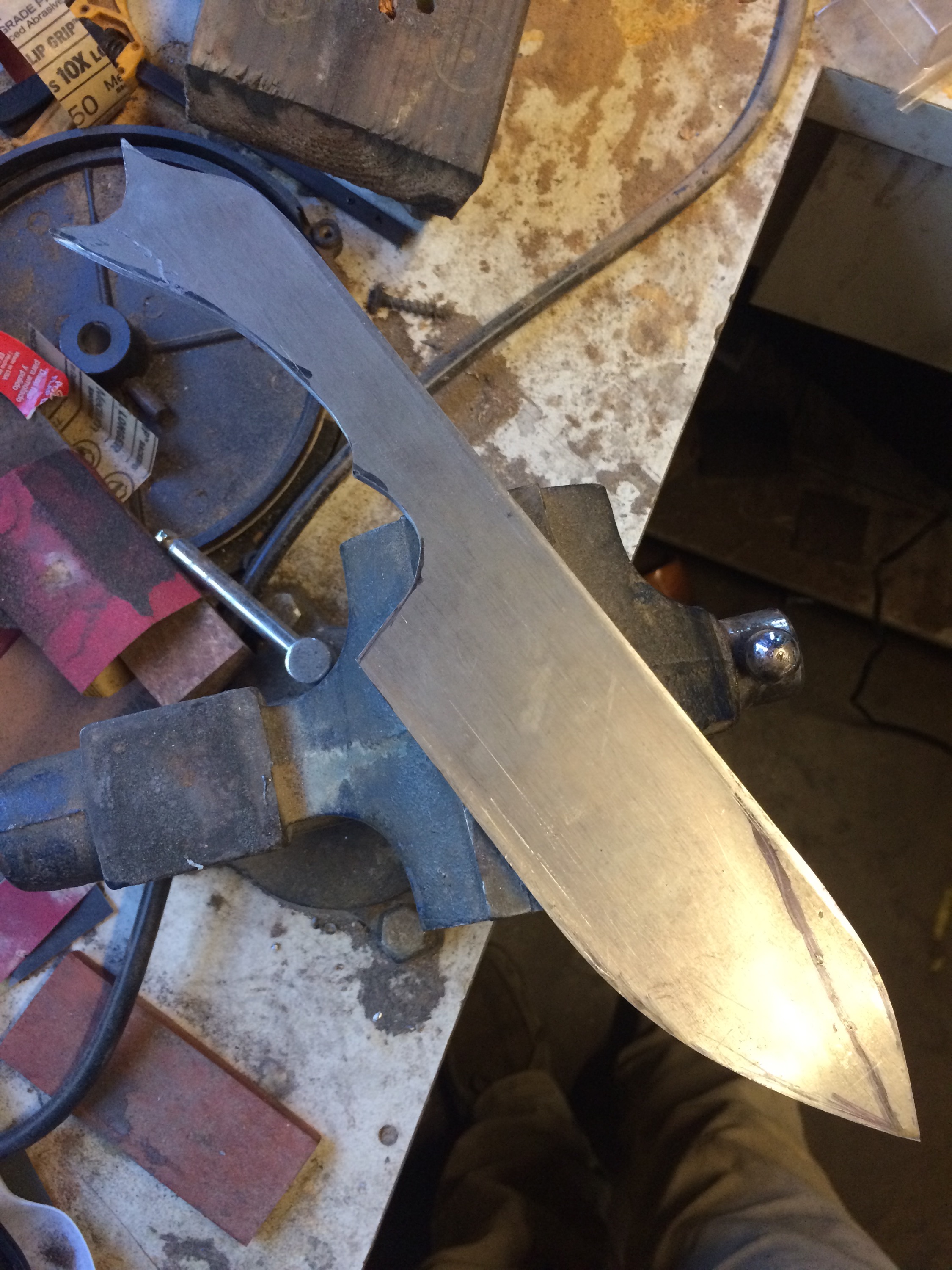
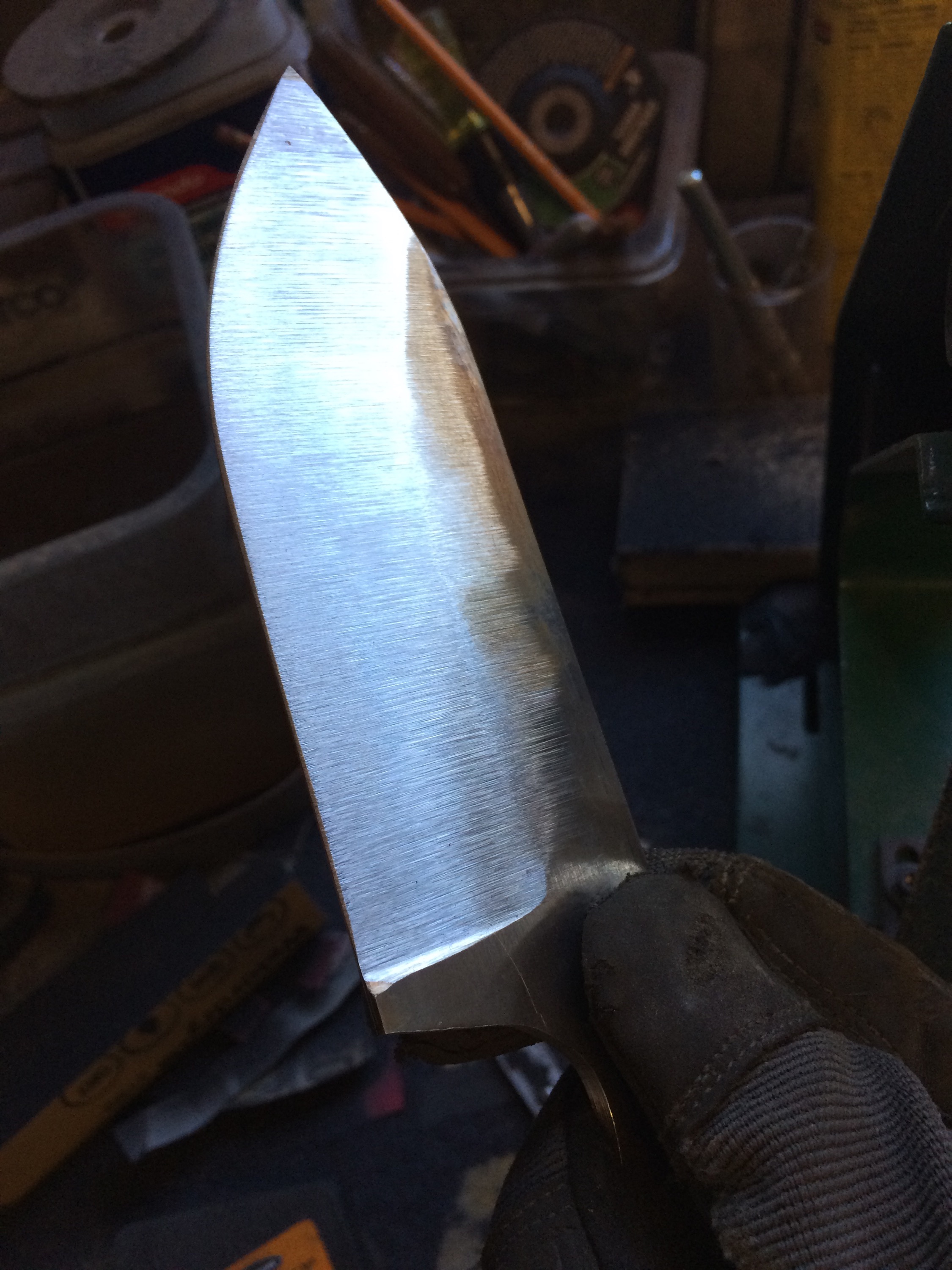
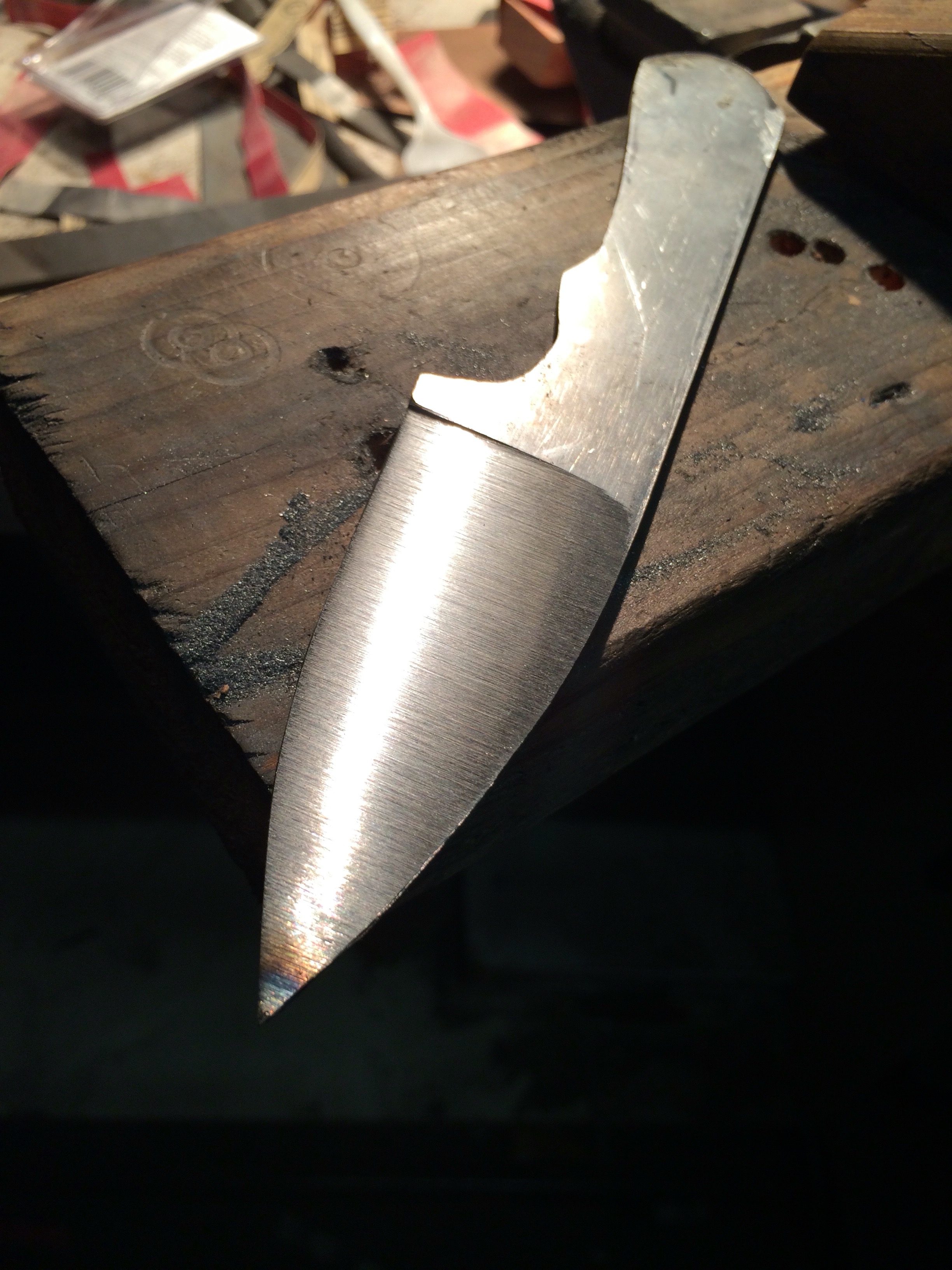
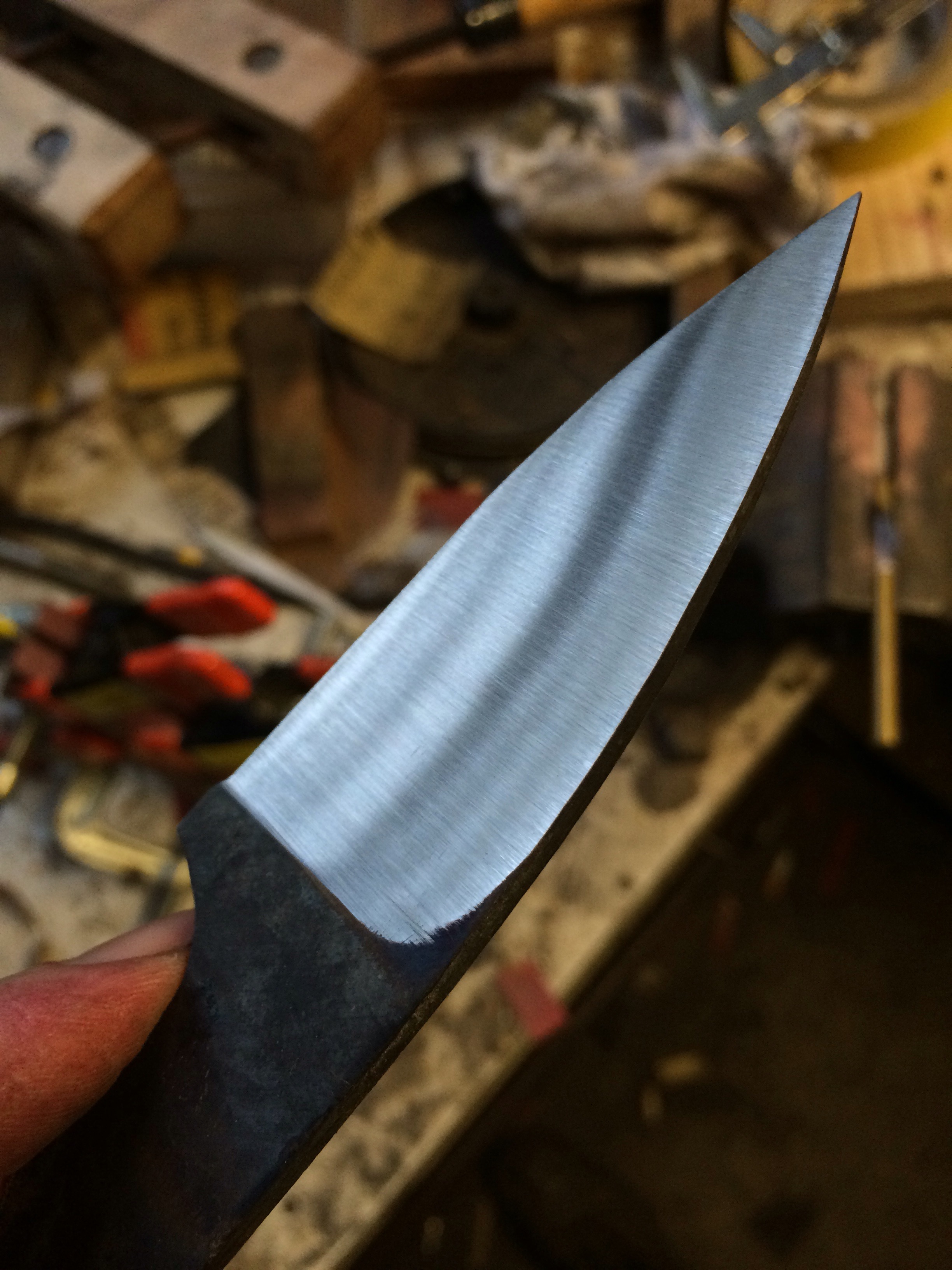
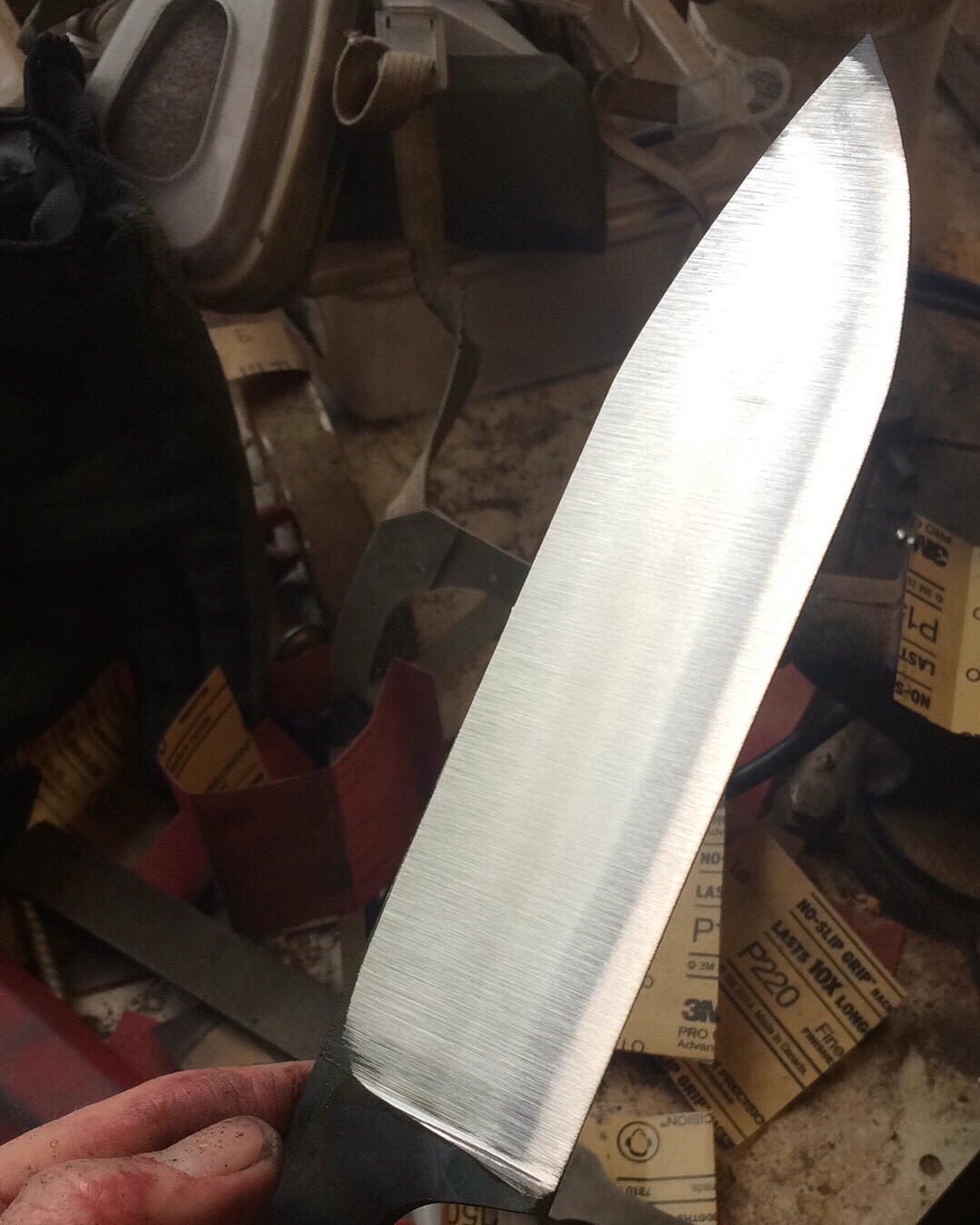
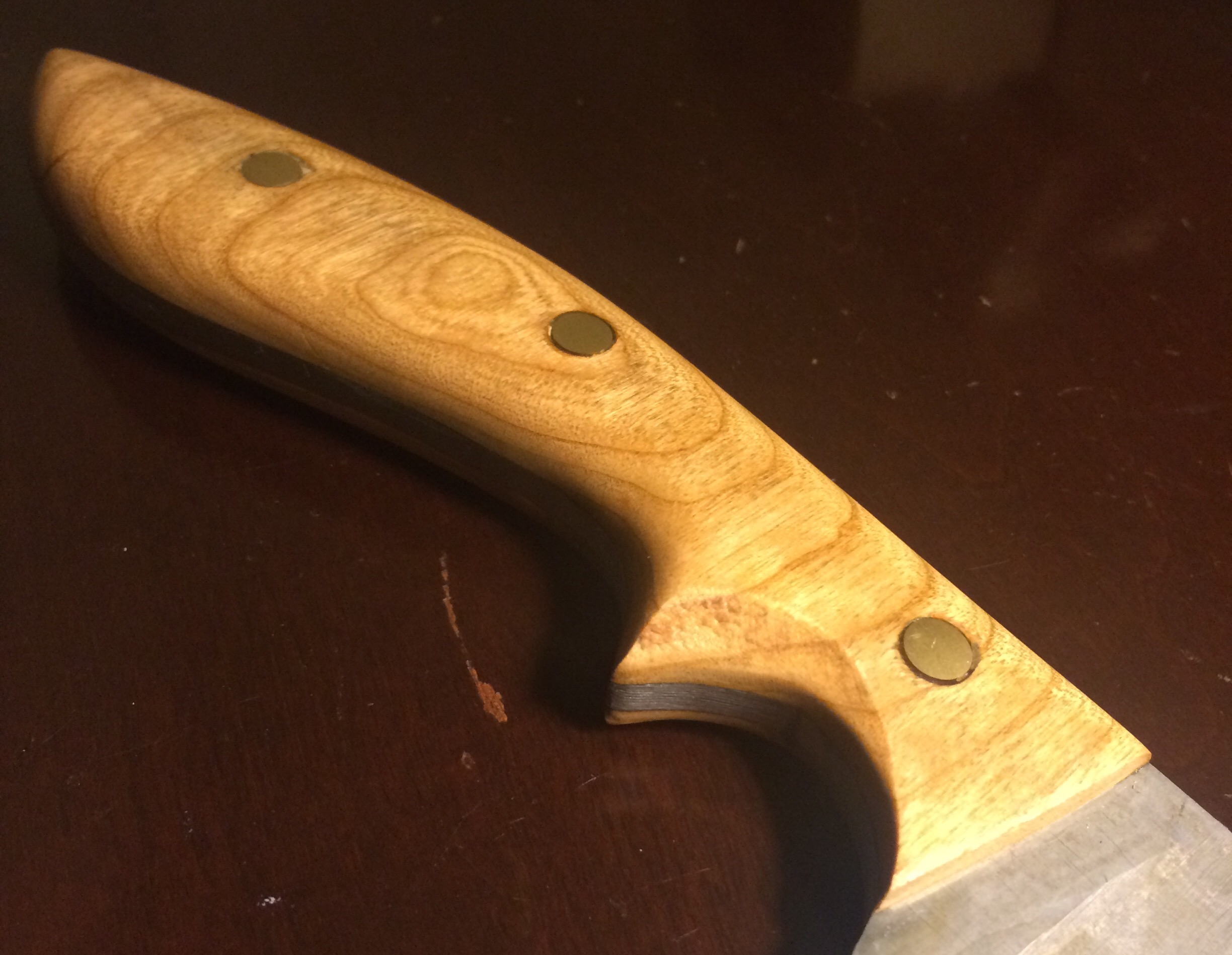
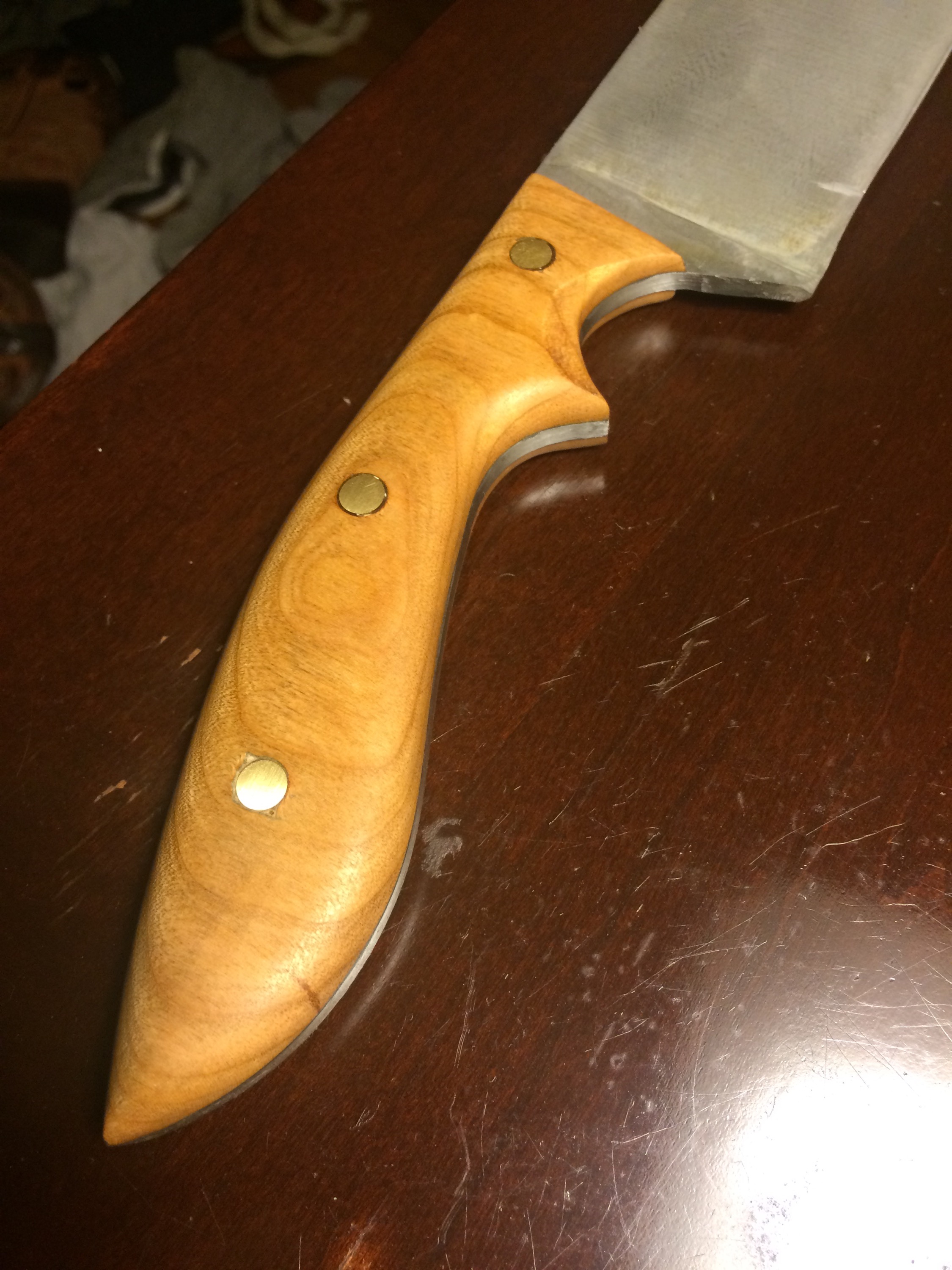
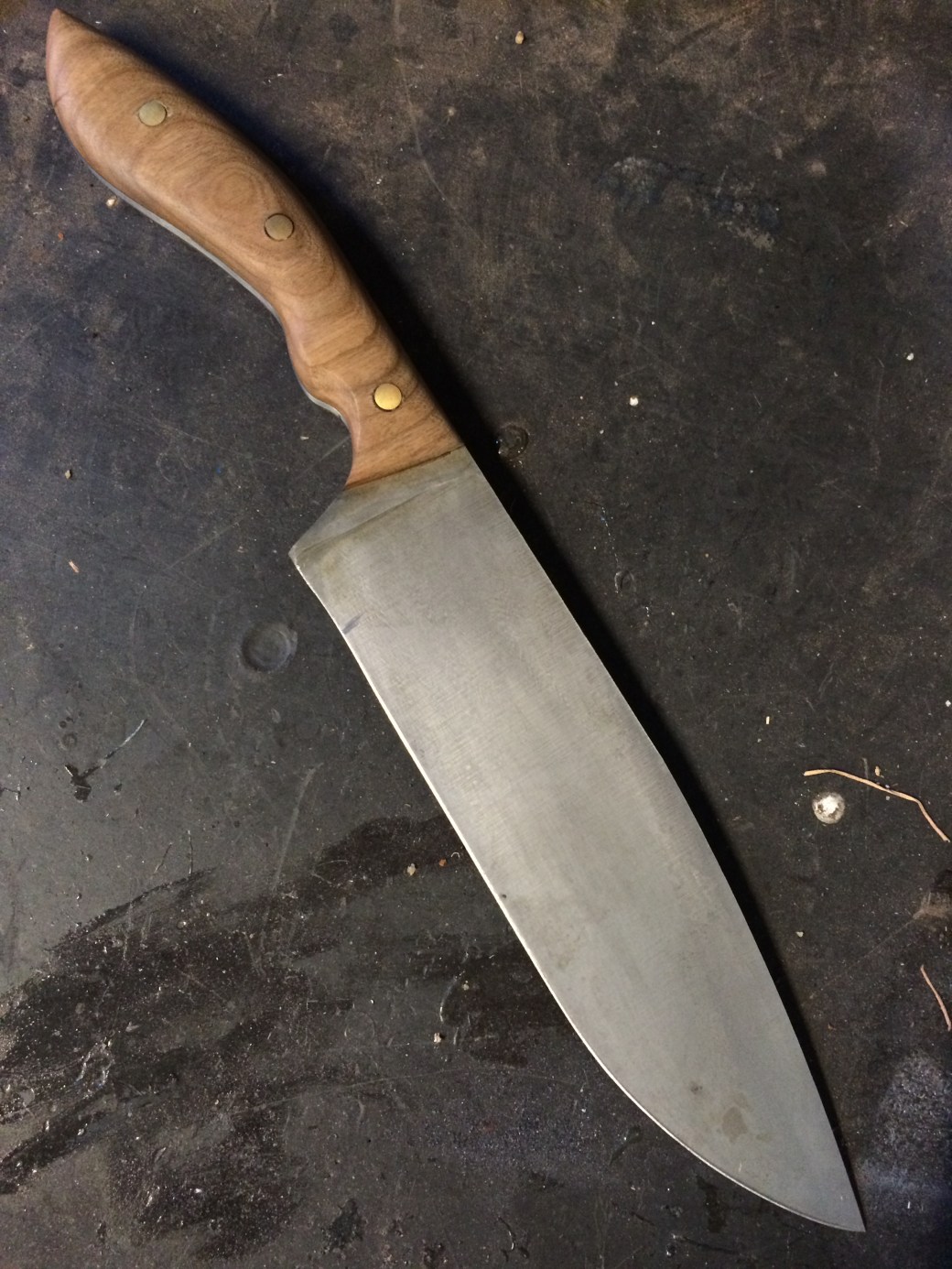
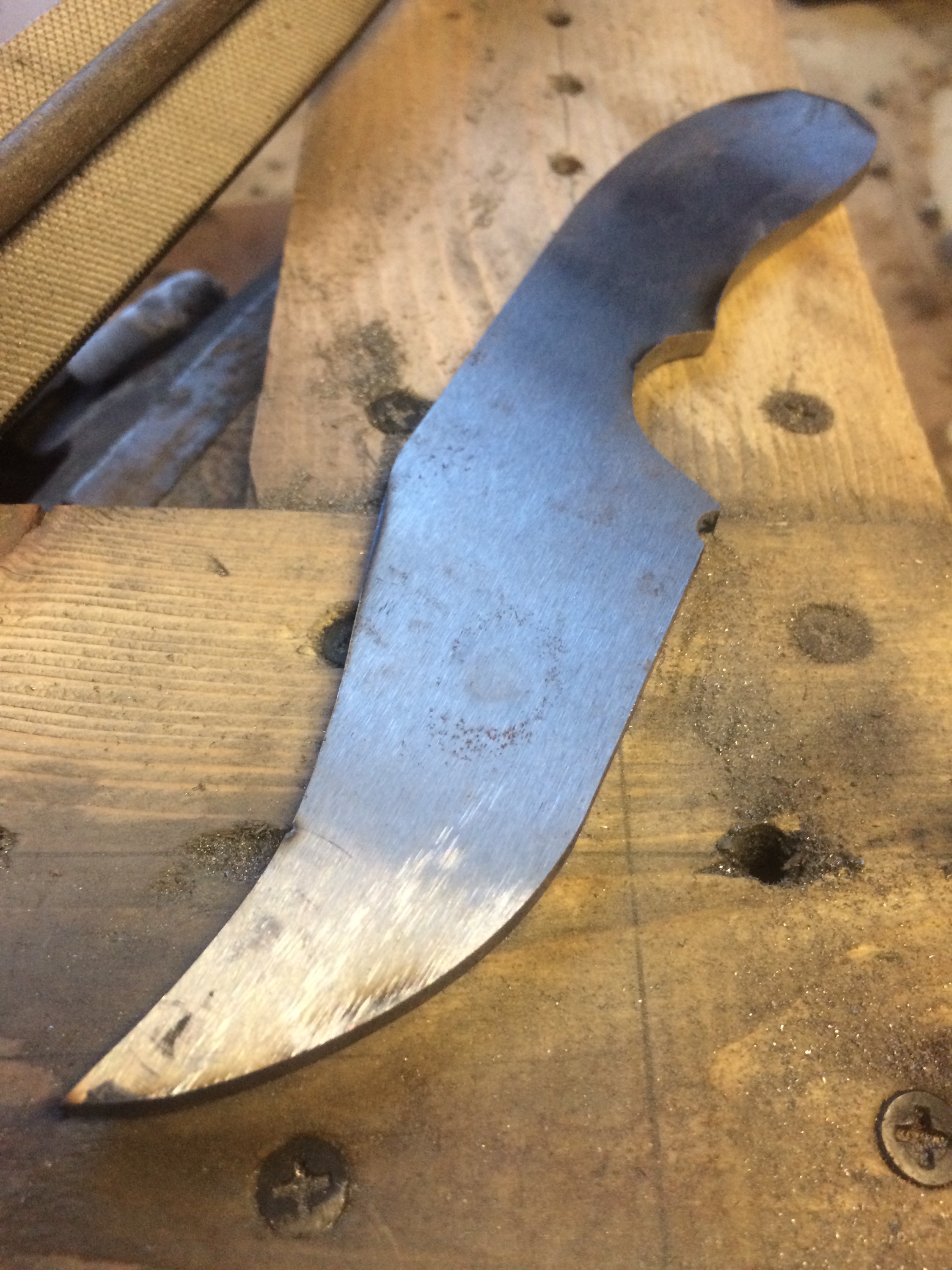
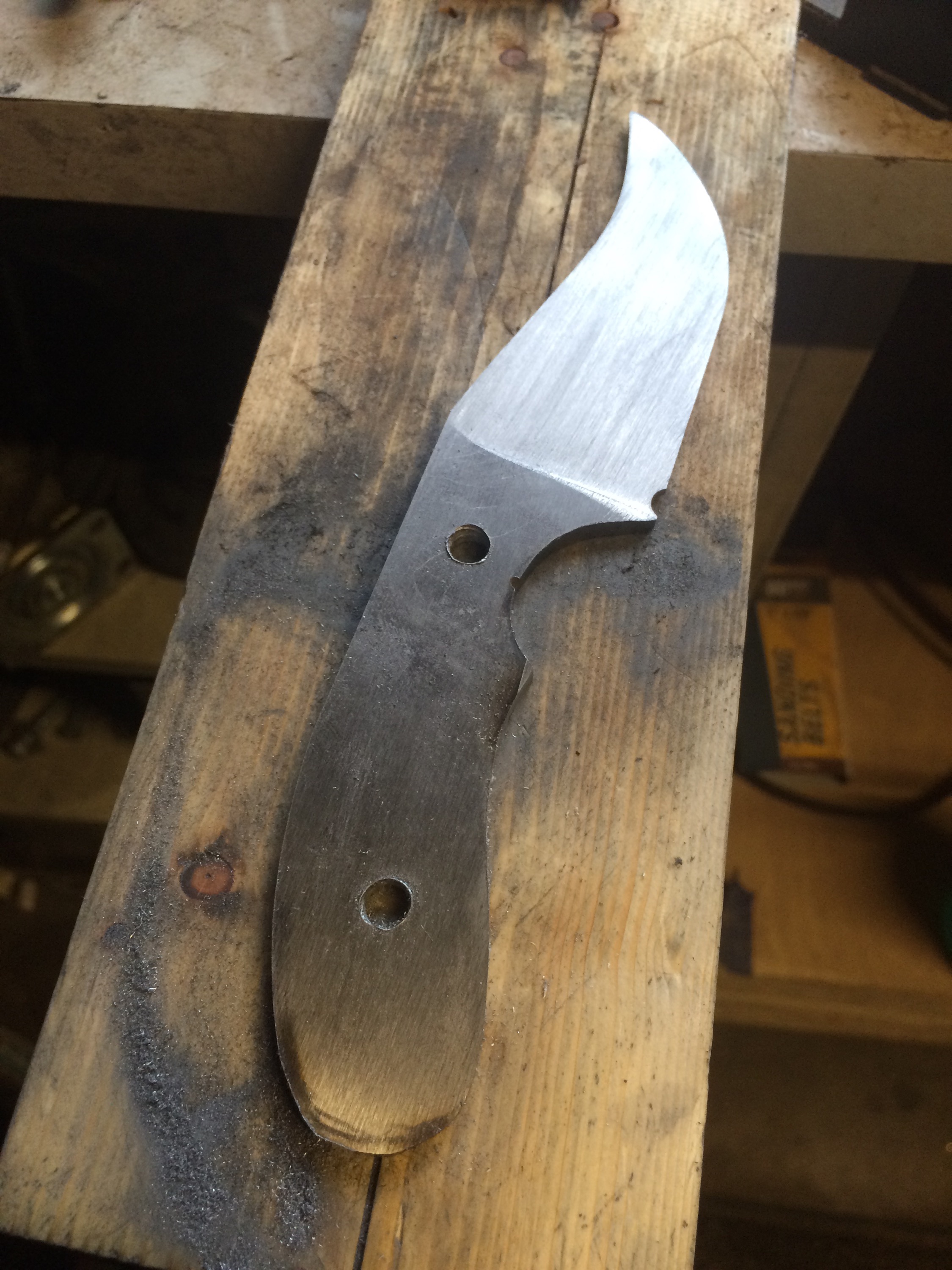
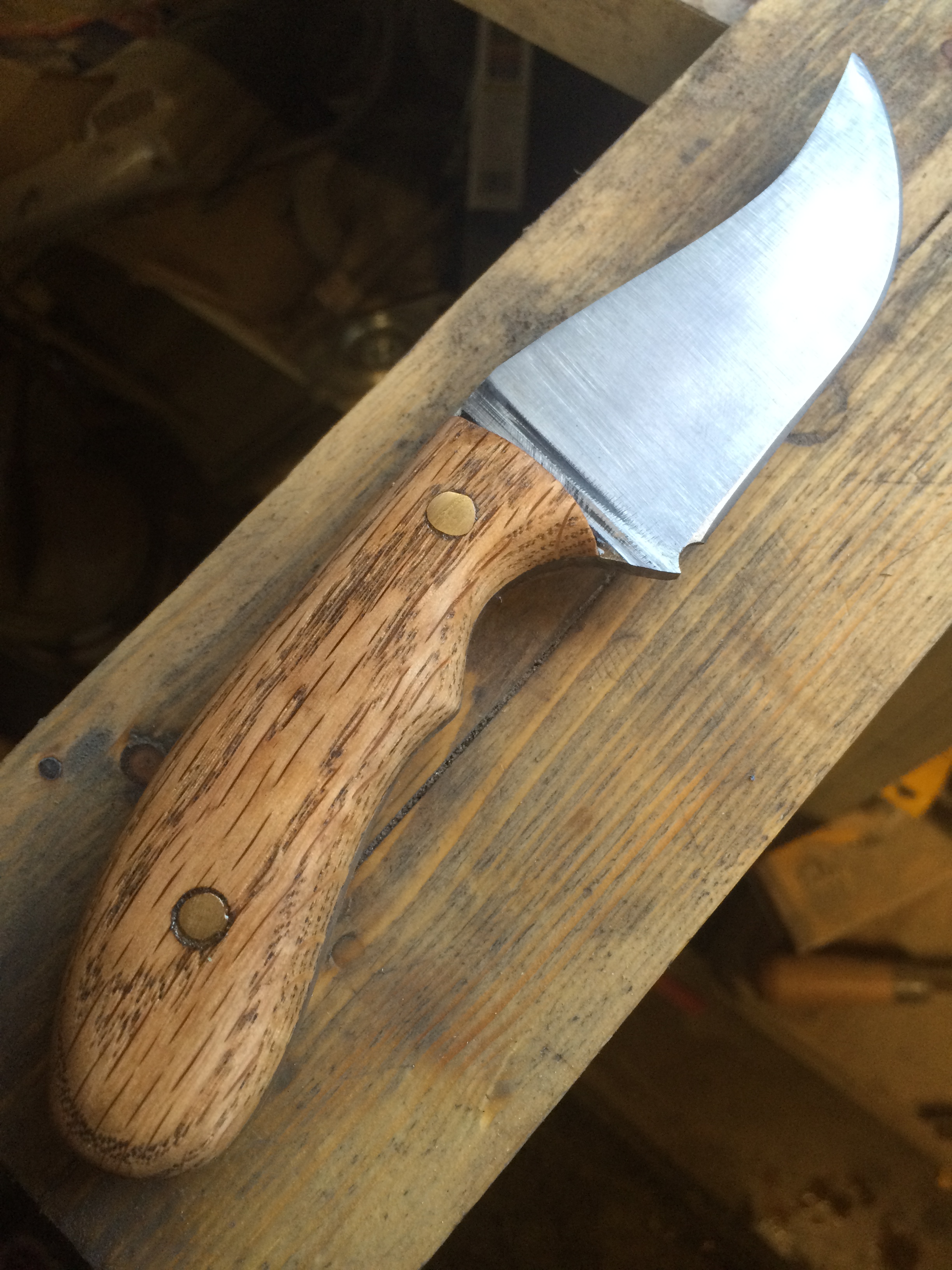
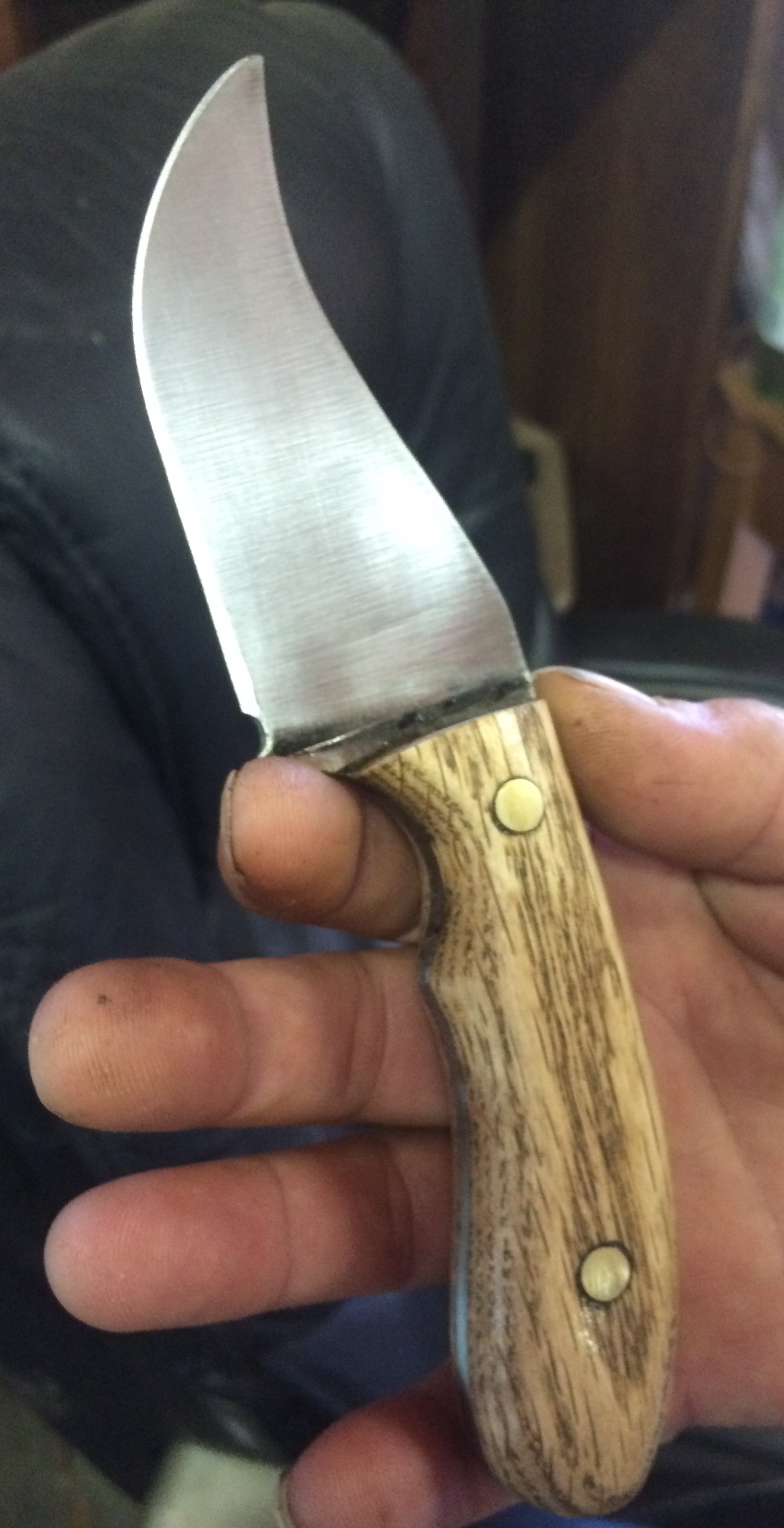
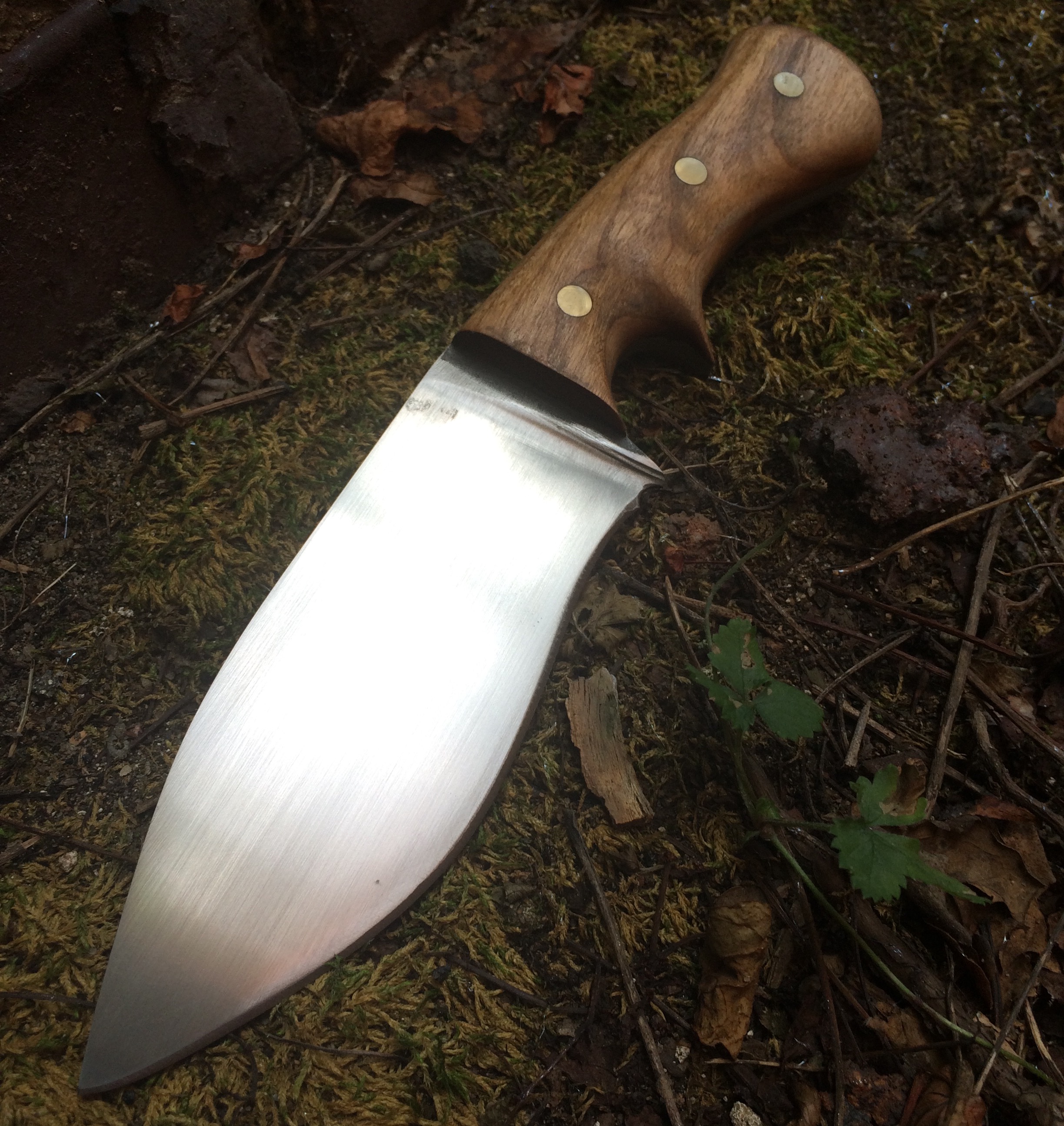
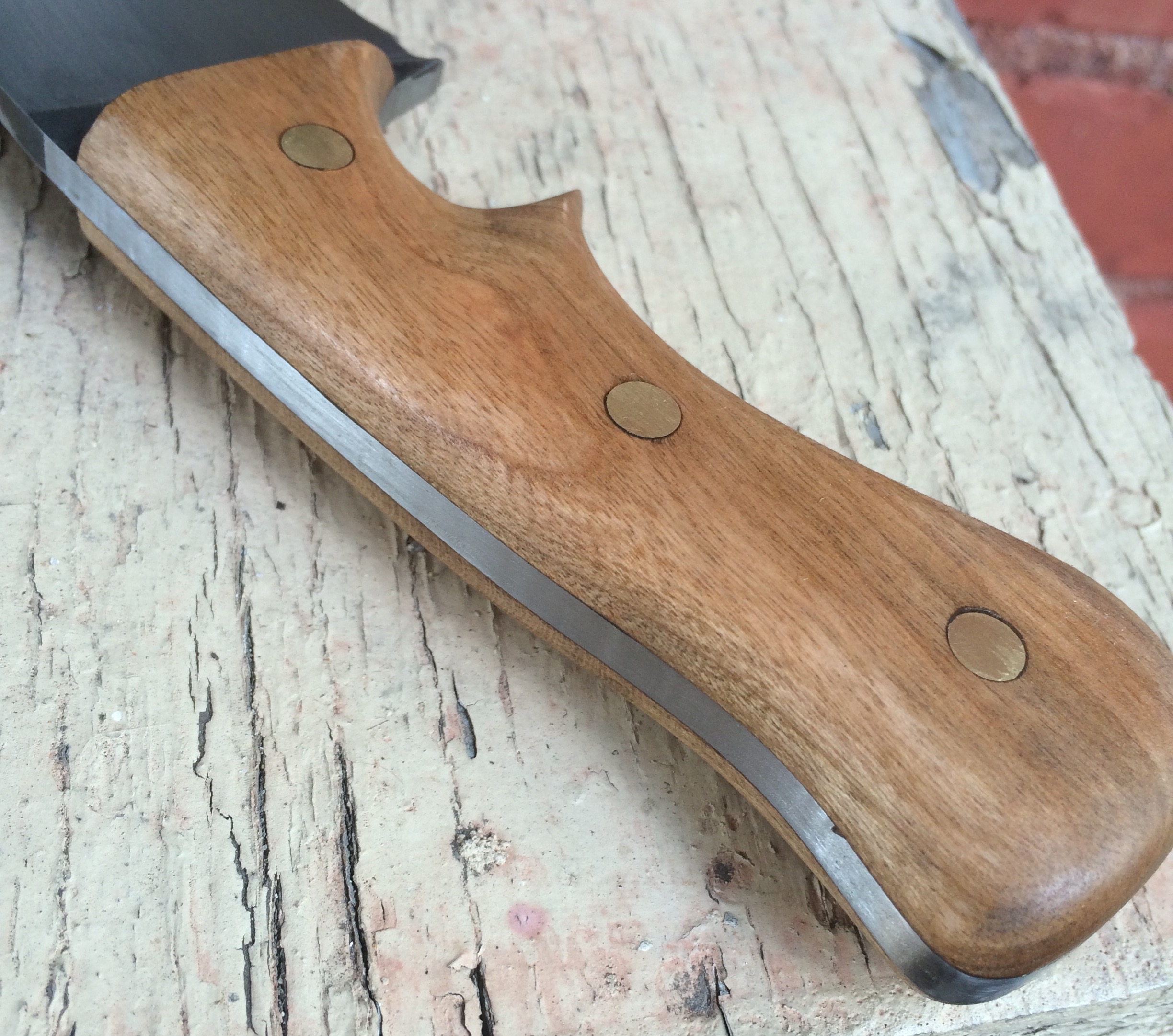
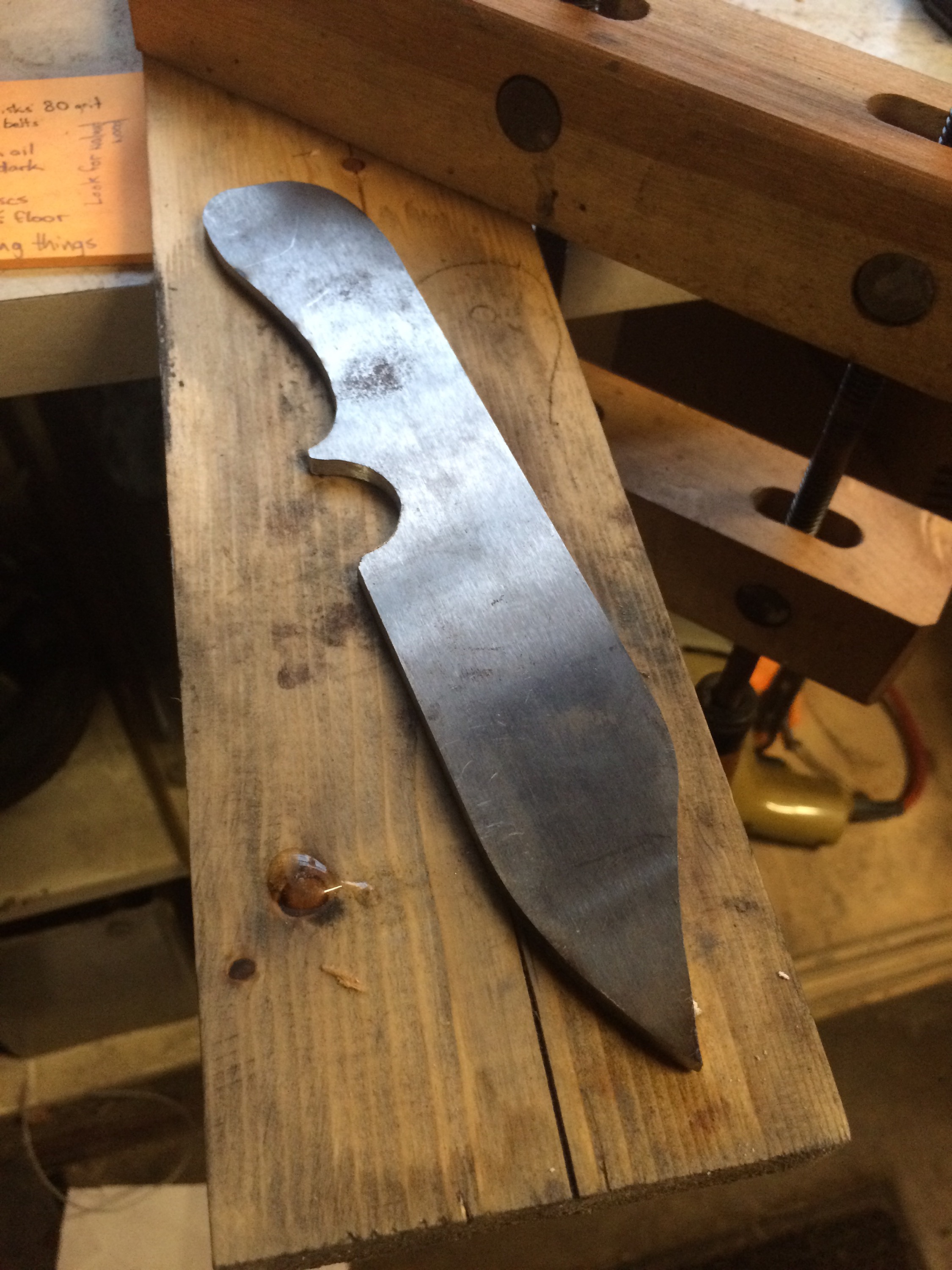
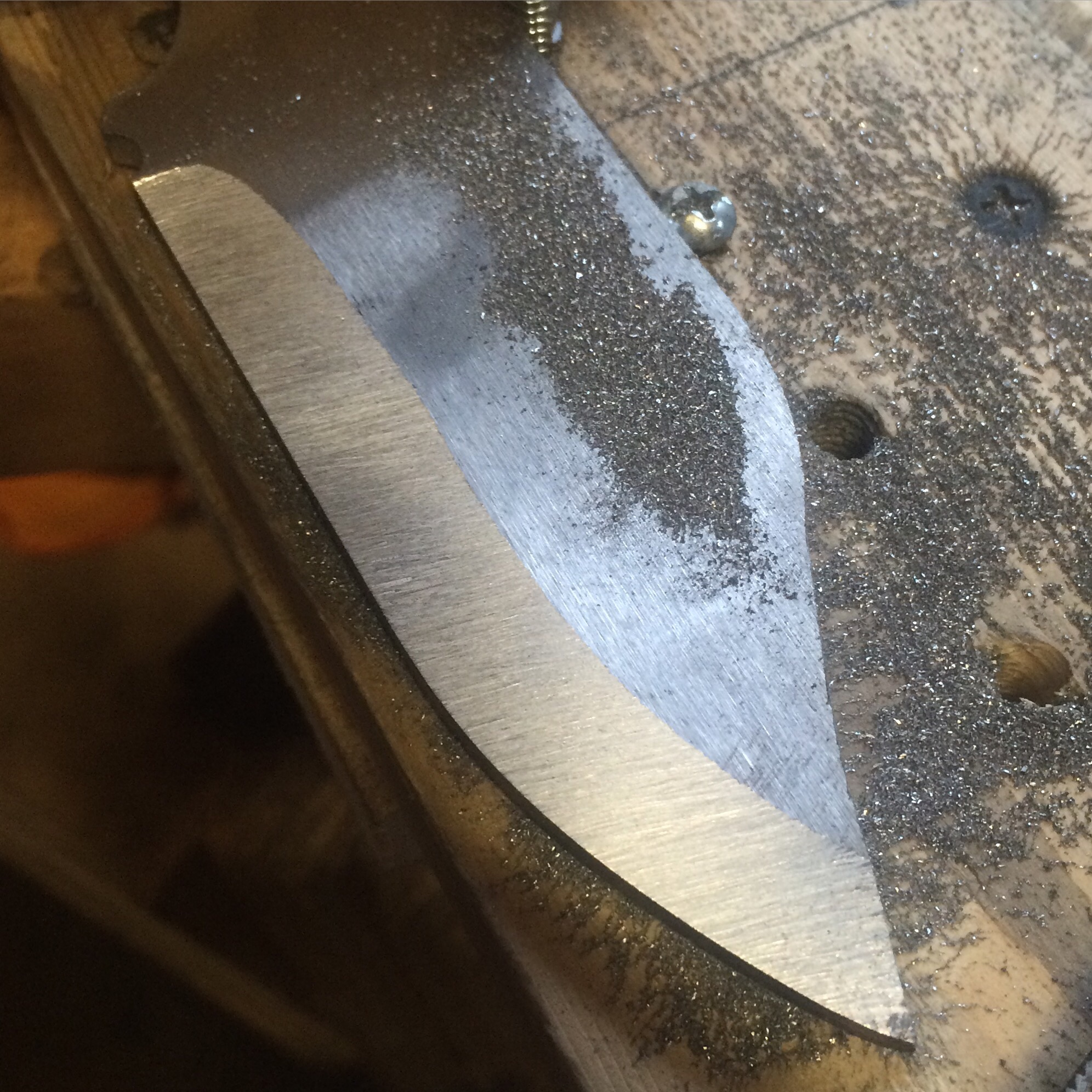
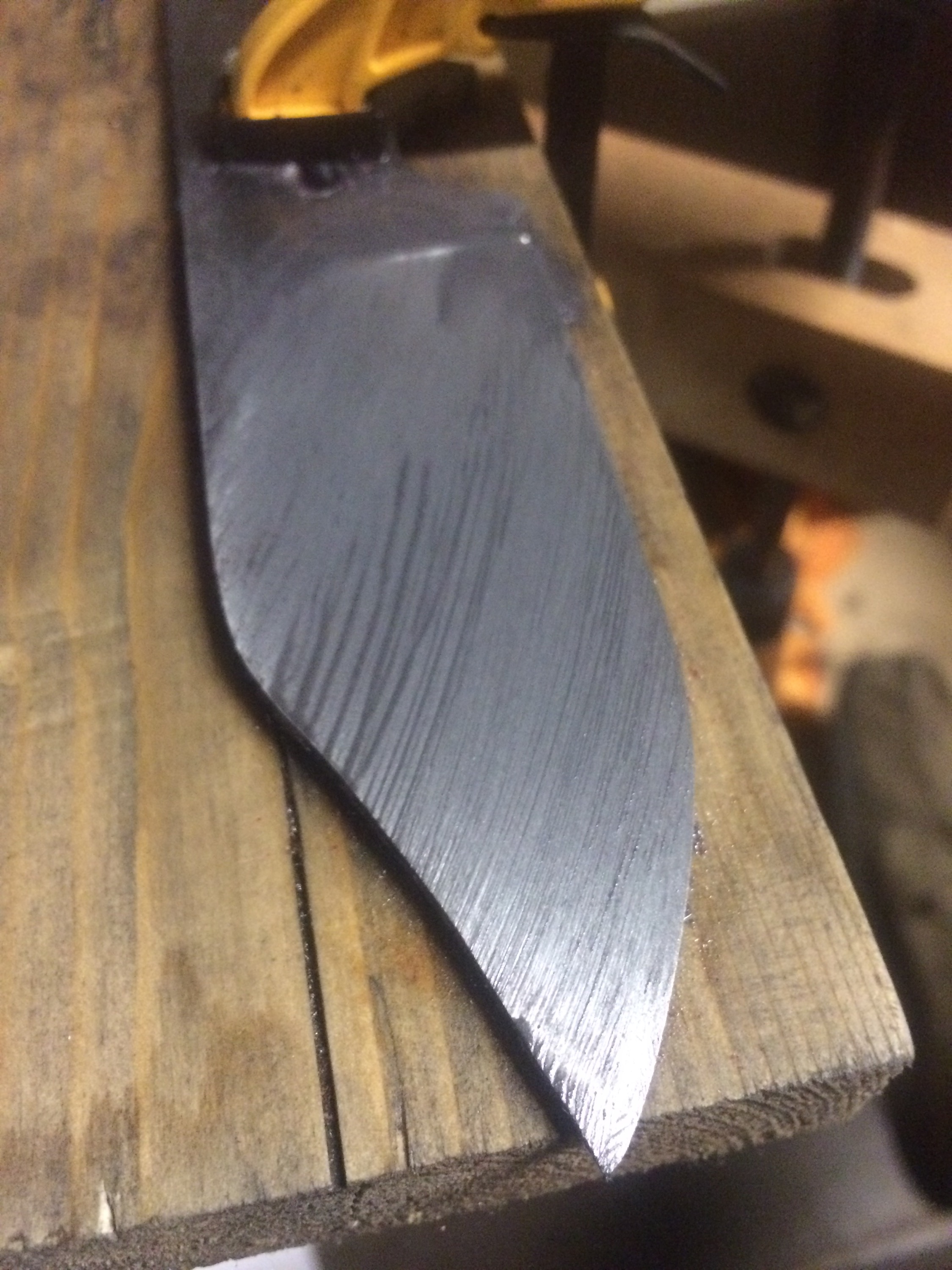
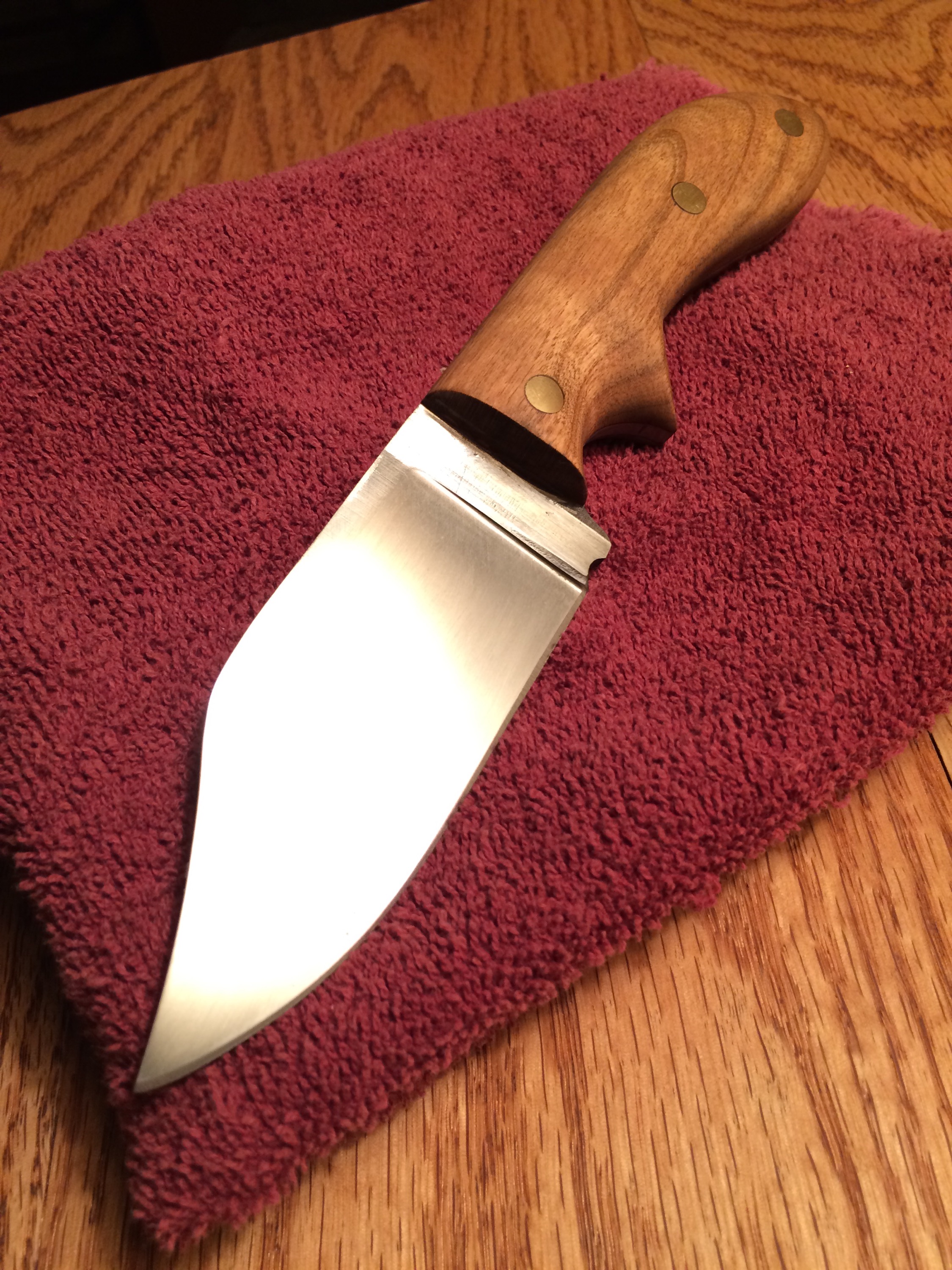
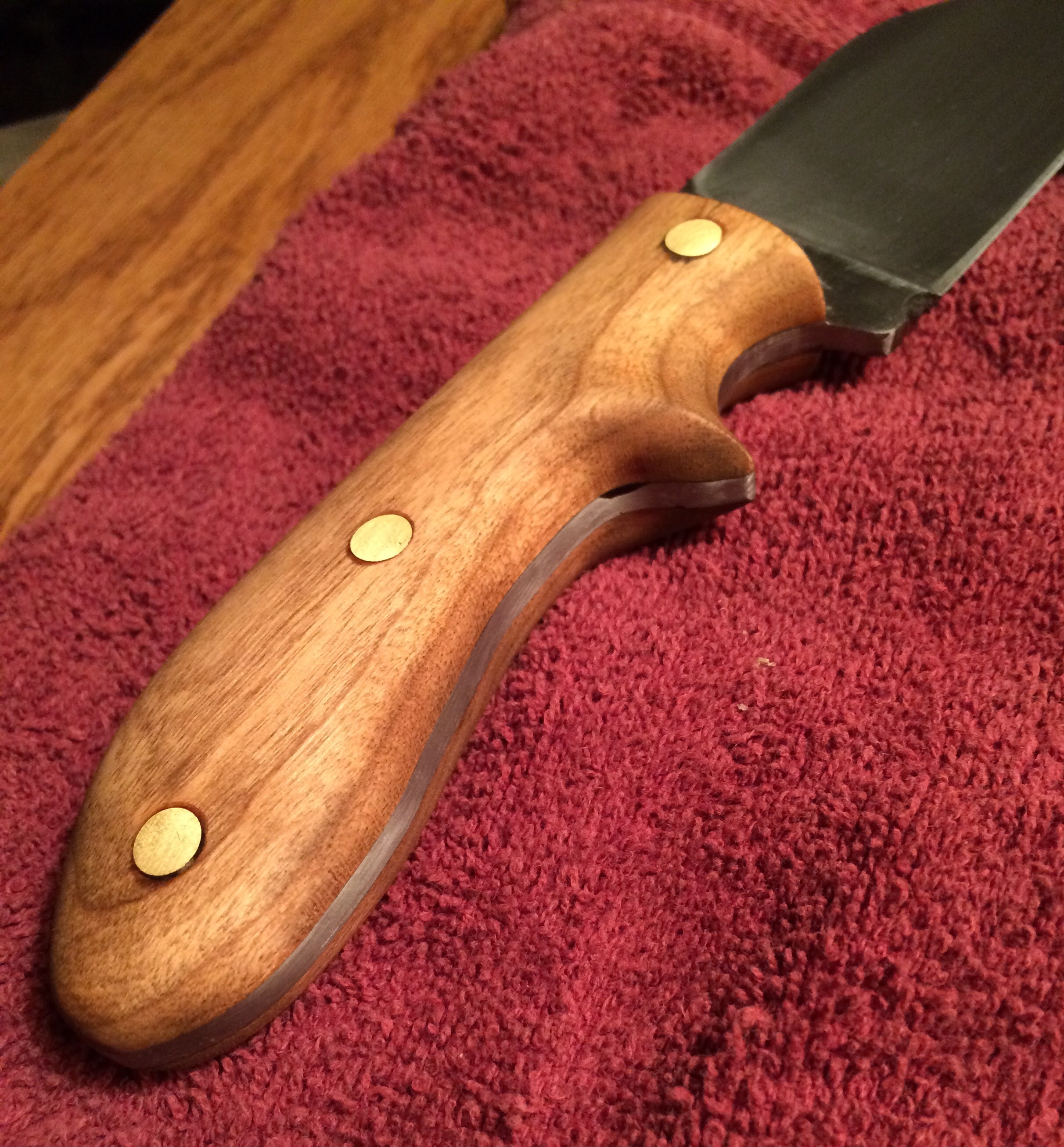
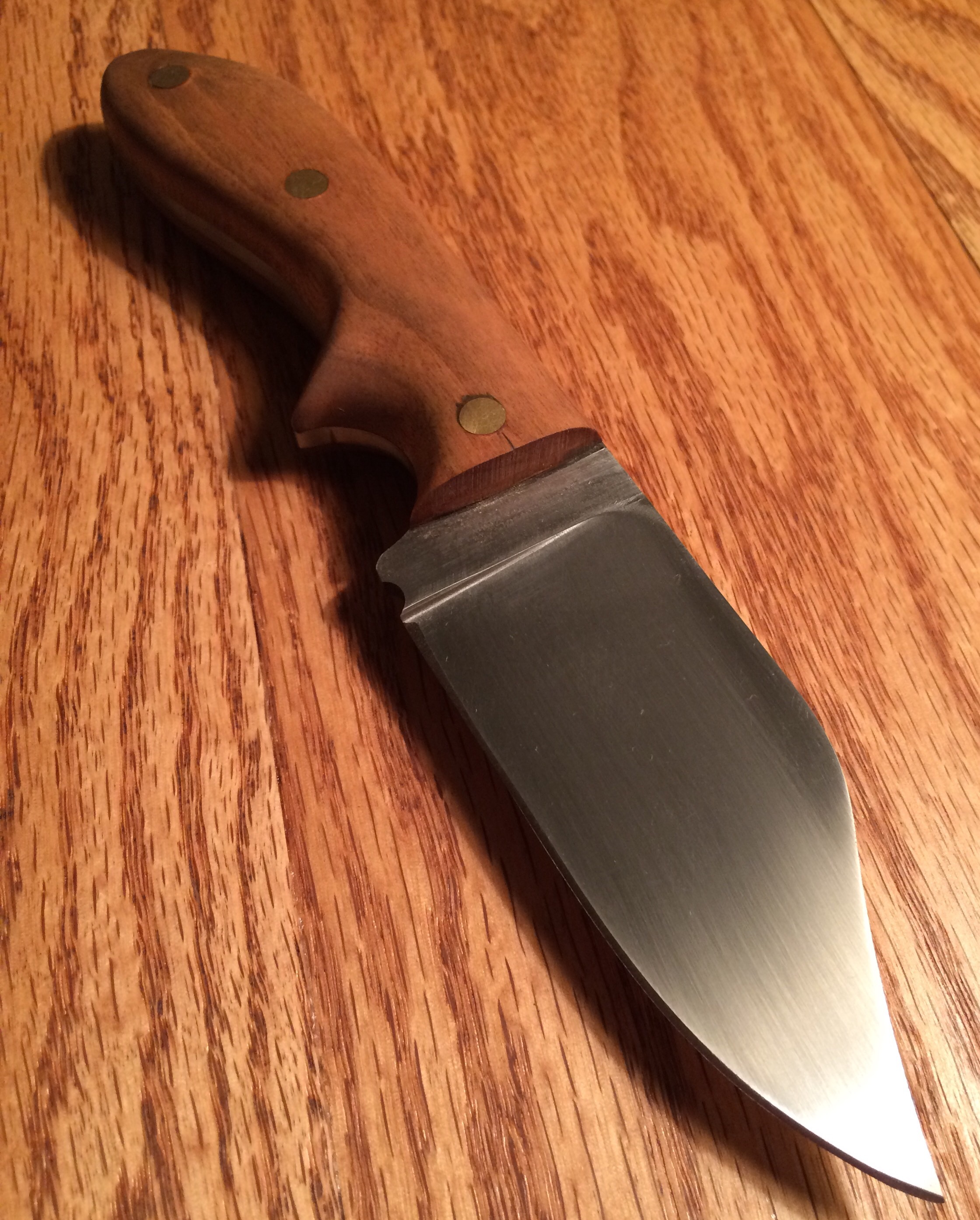
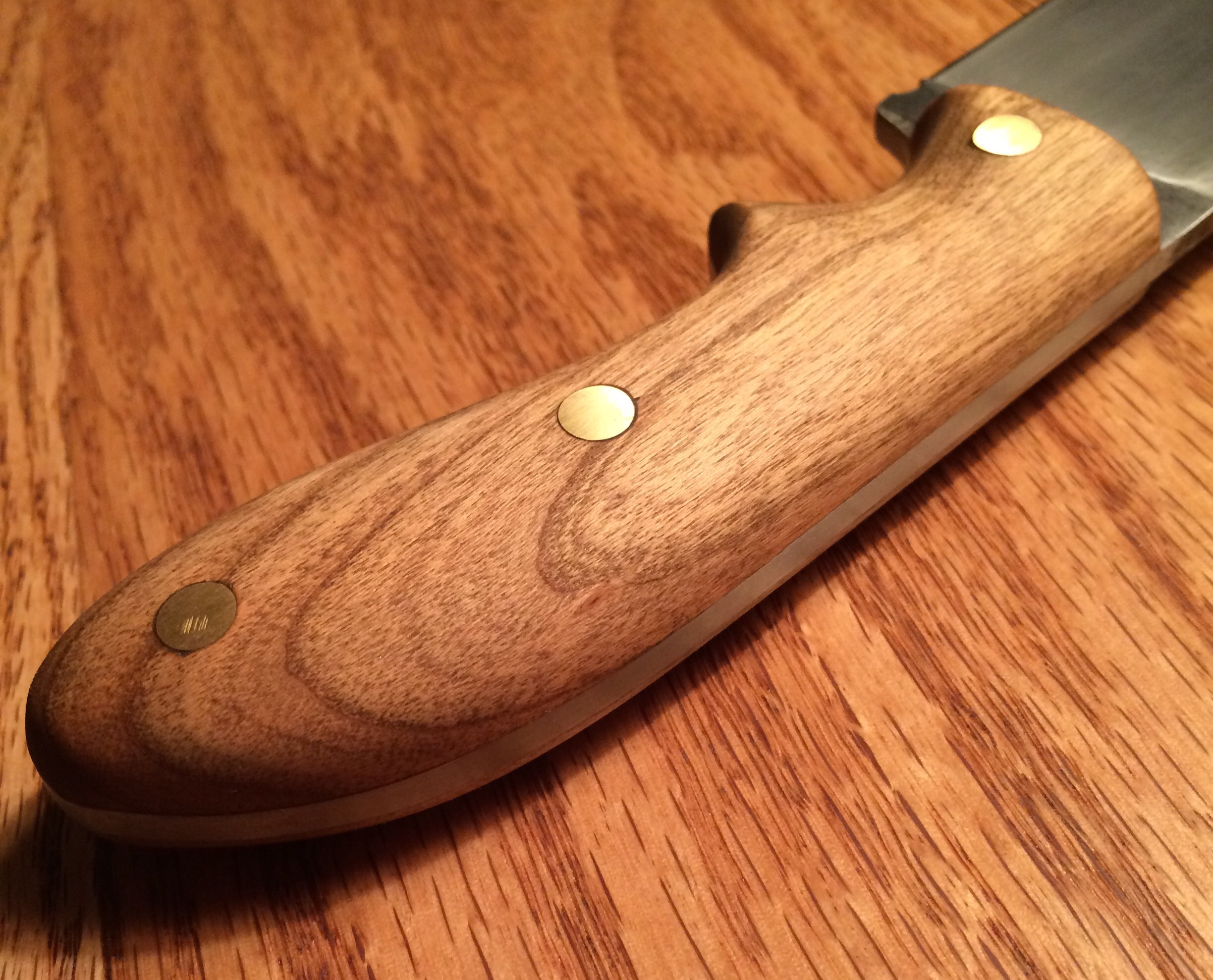
I wanted to make a filet knife, something to help me dive.  I made her out of a thin piece of bedframe steel.  She has a 6in blade.

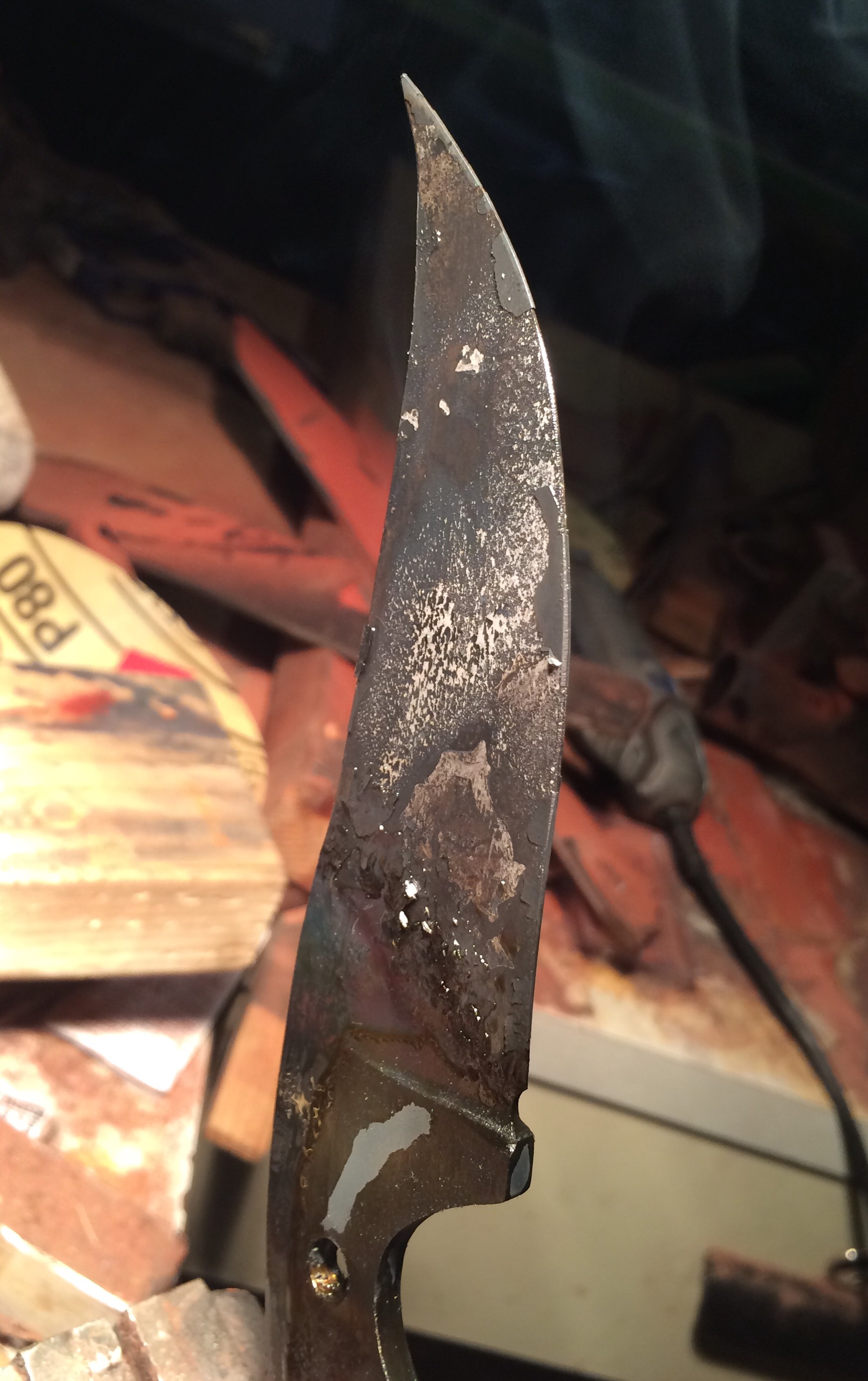
I initially ground two of these, but one didn’t turn out.  I left it soaking in the acid too long (for a deep etch) and there wasn’t much blade left….

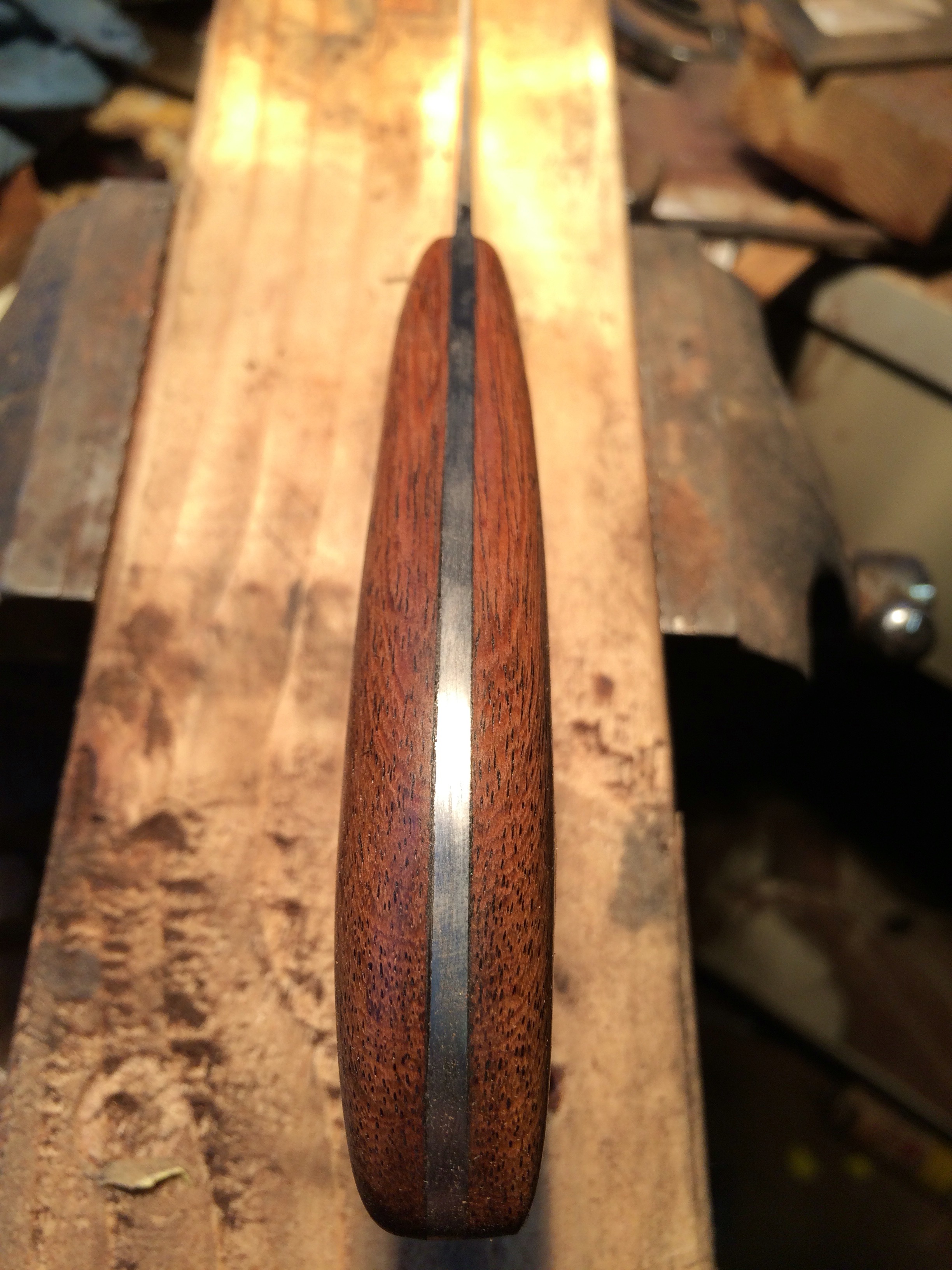
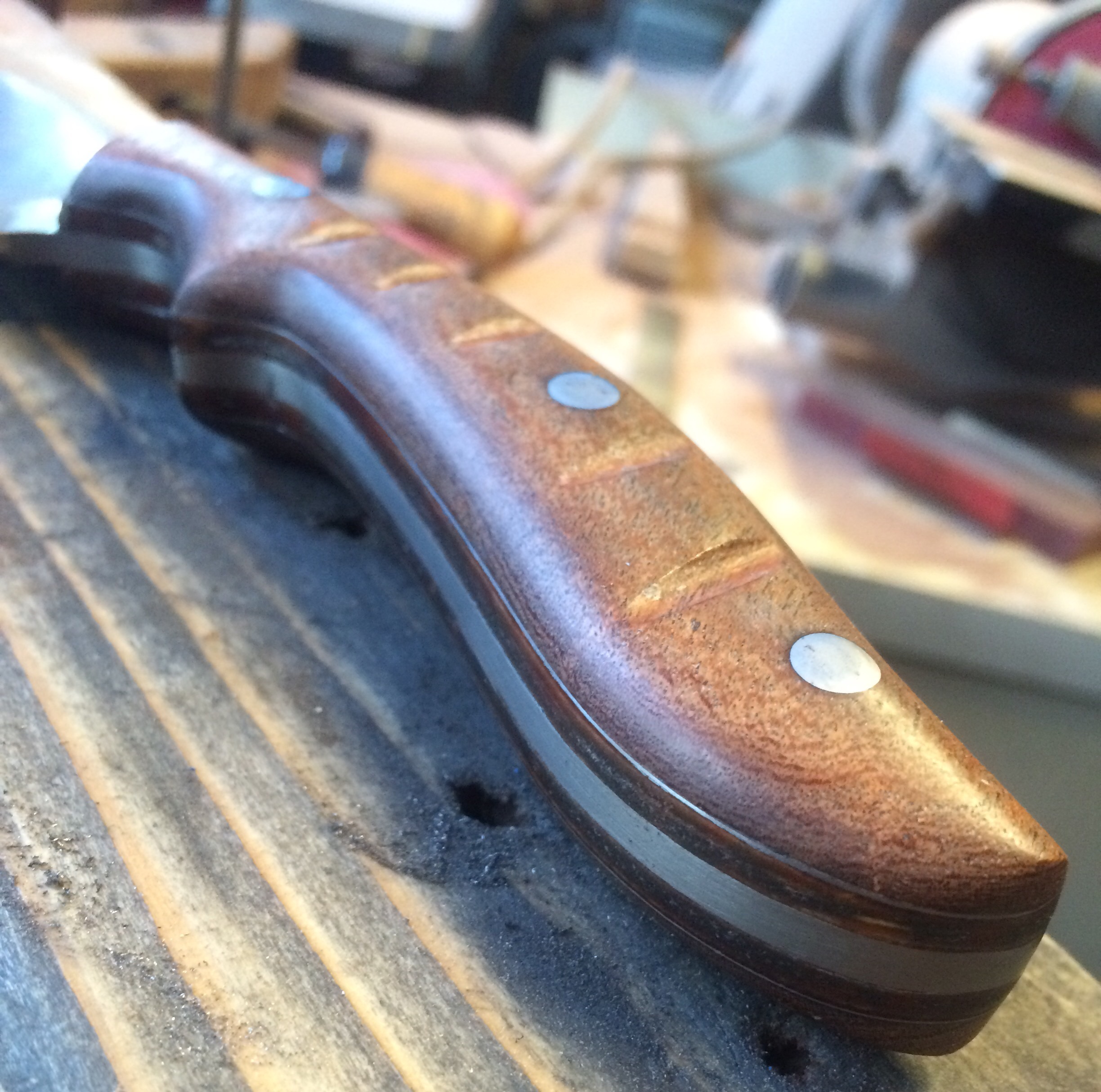
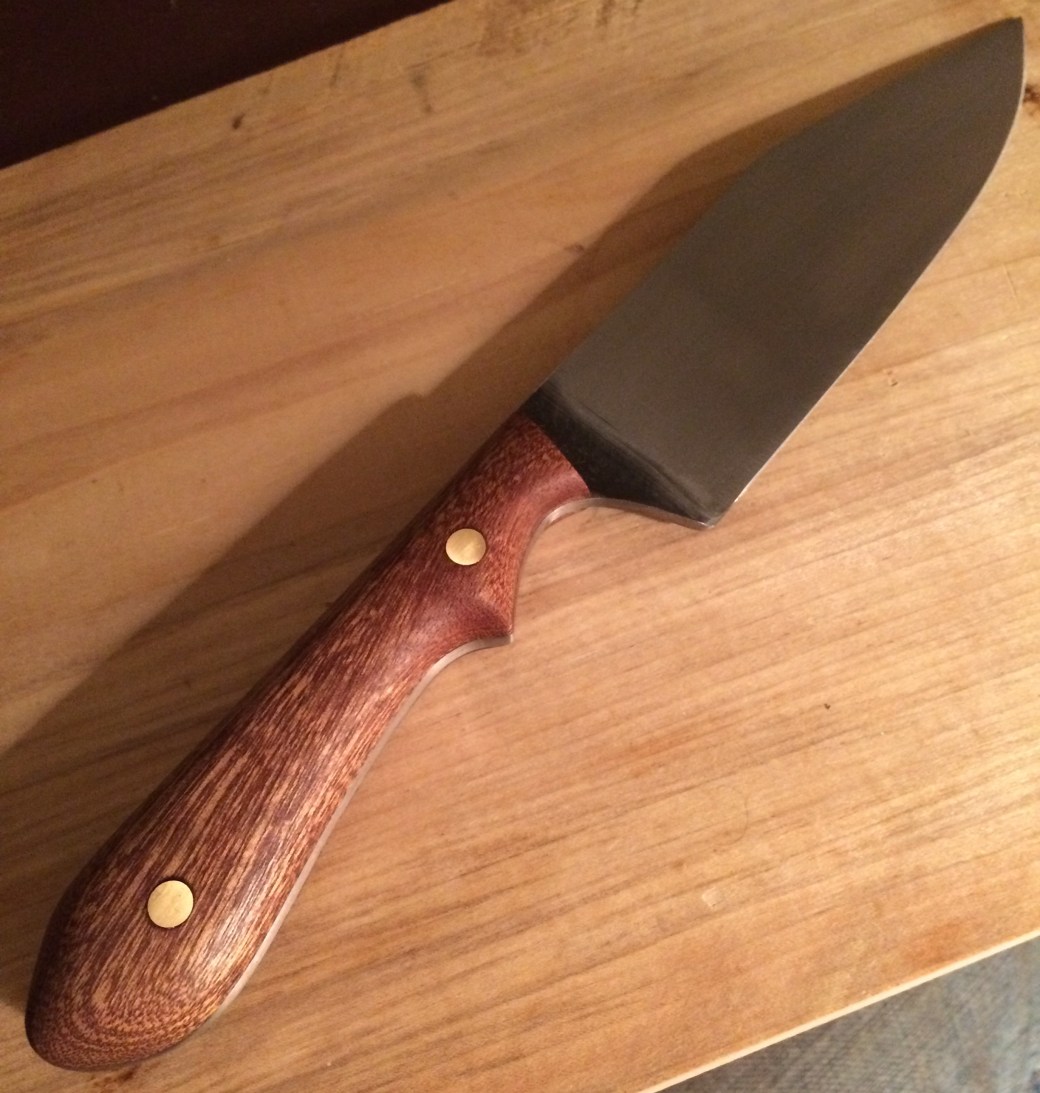
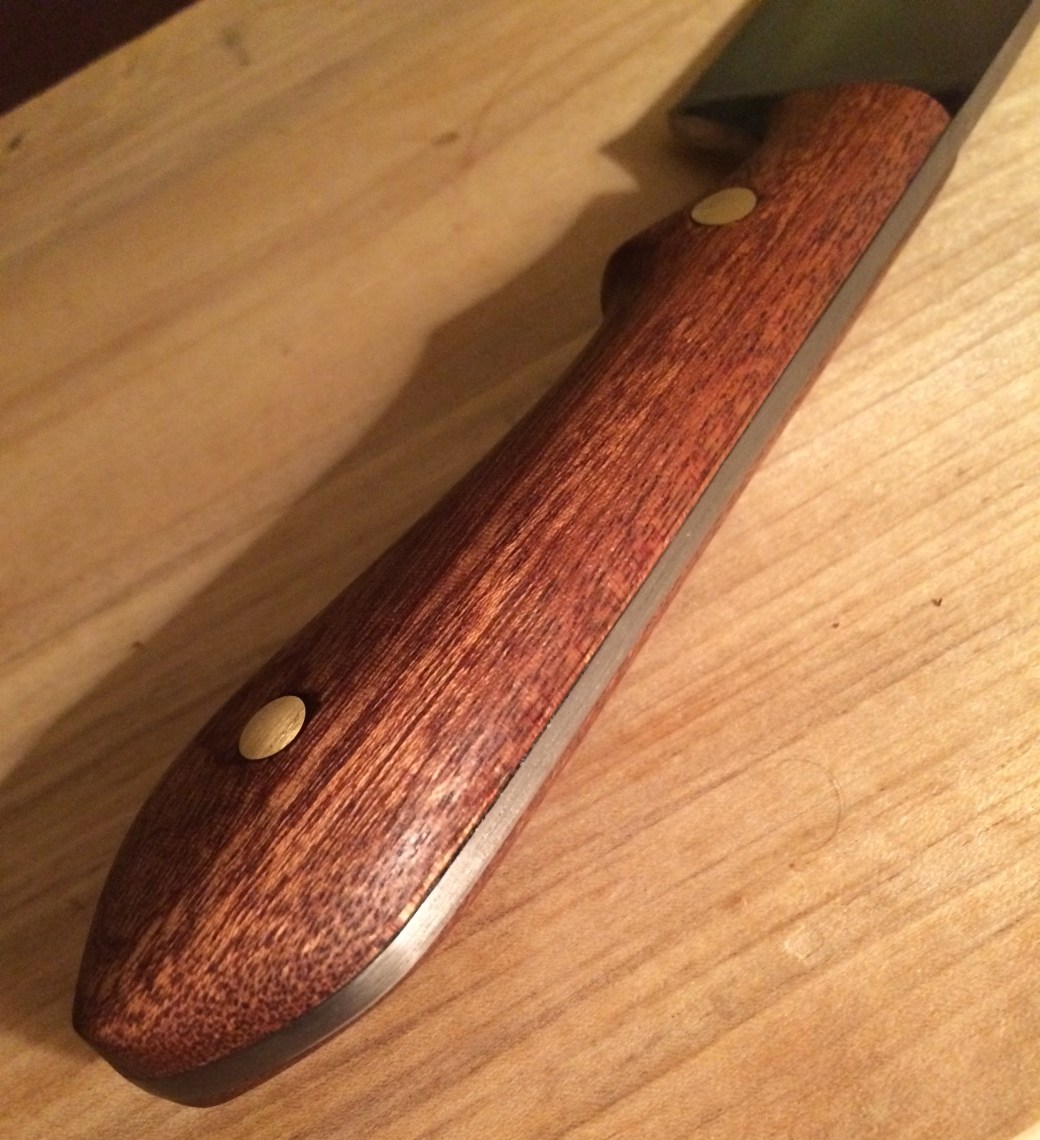
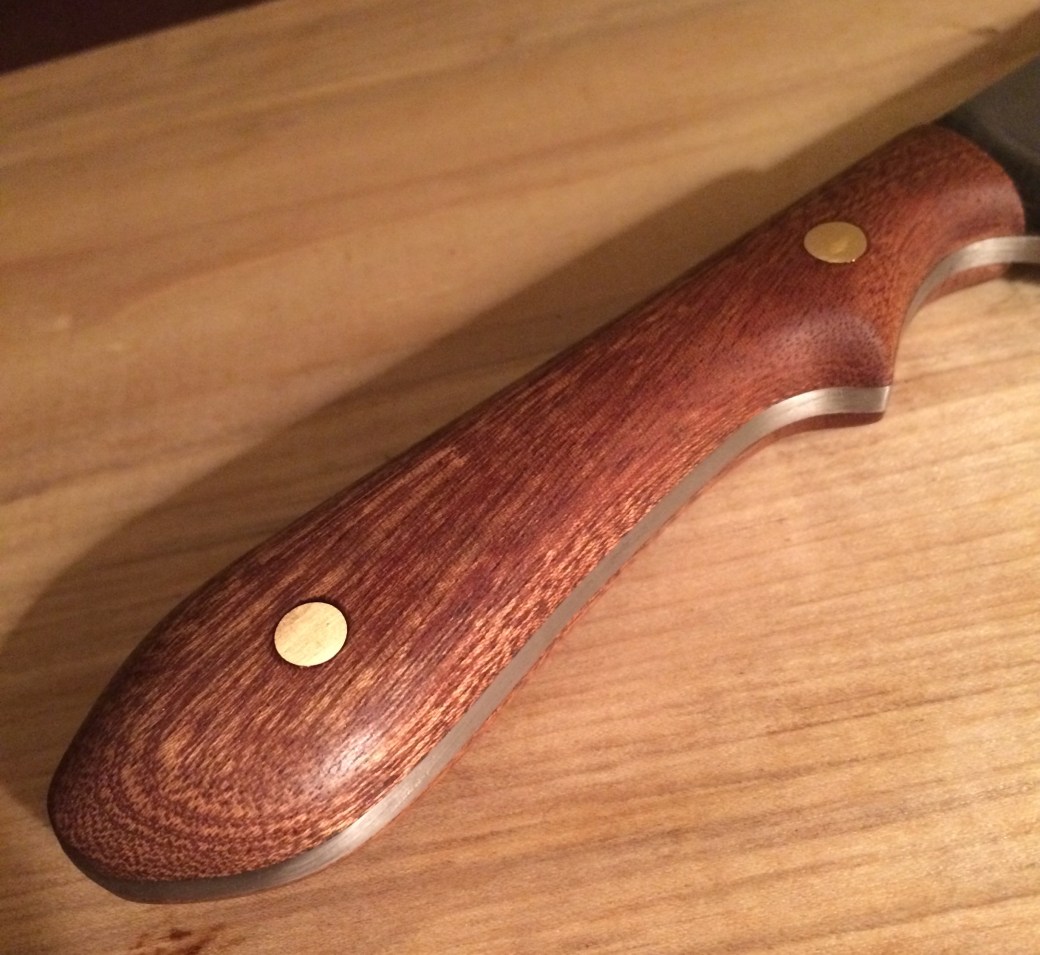
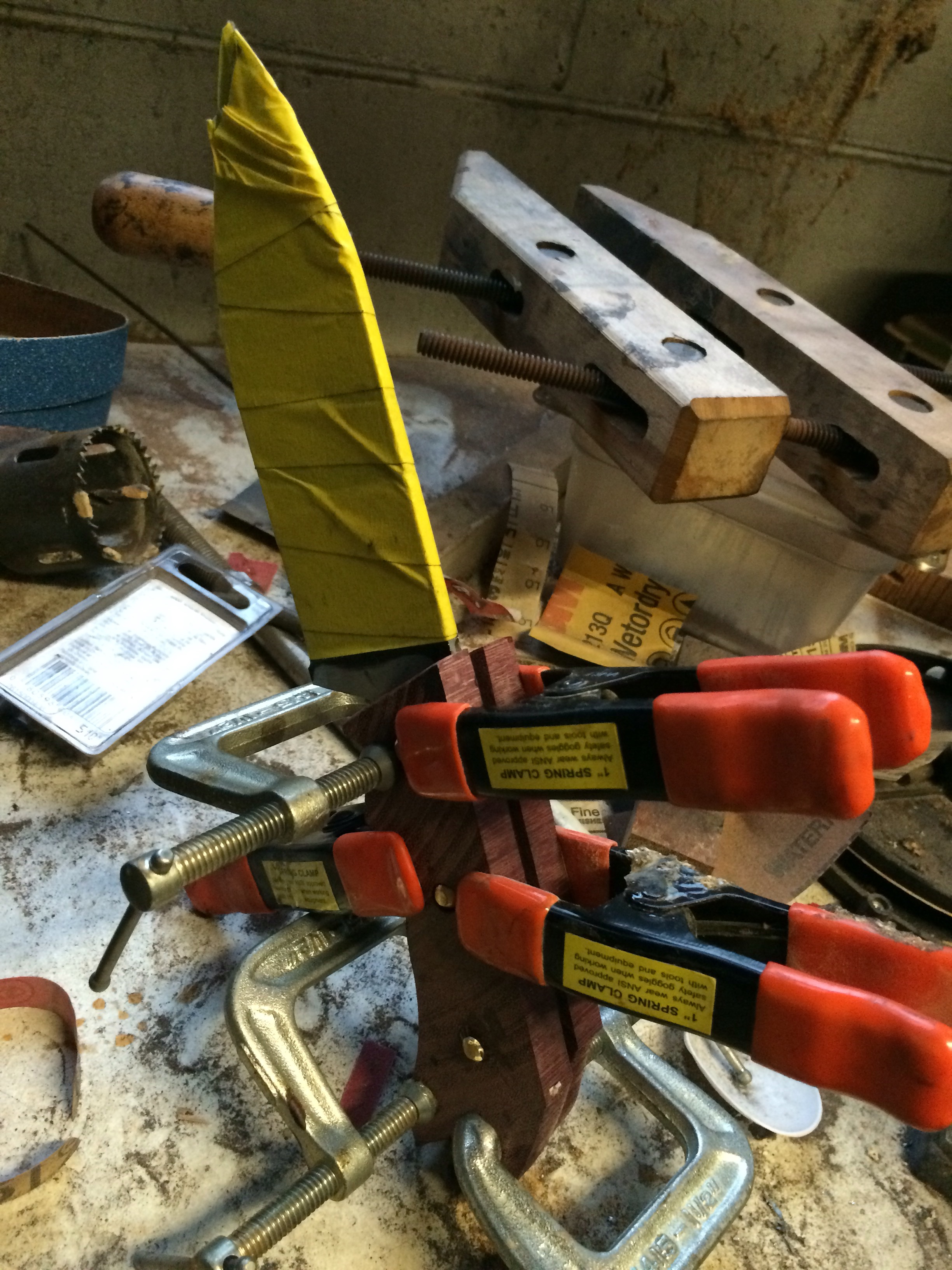
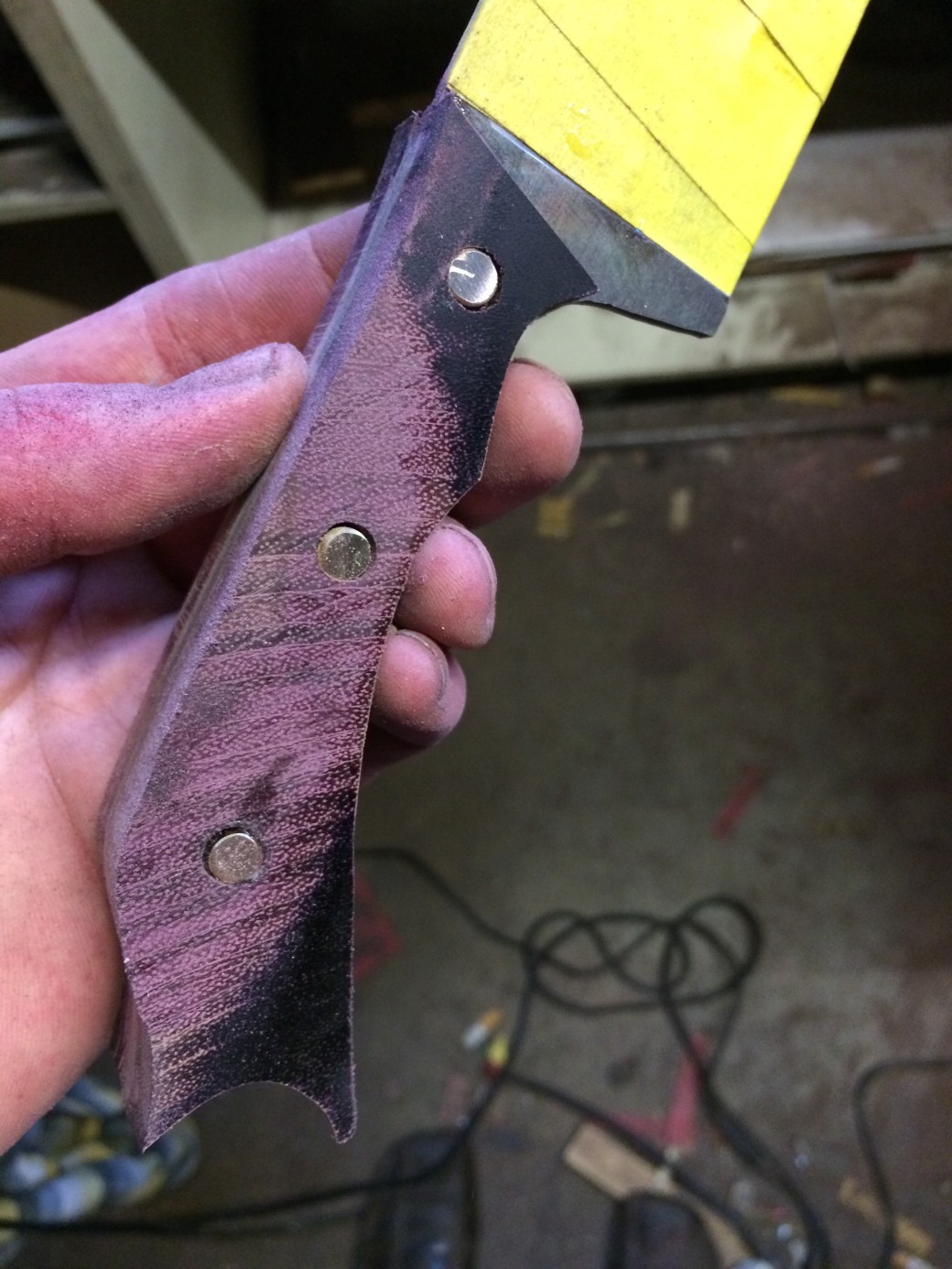
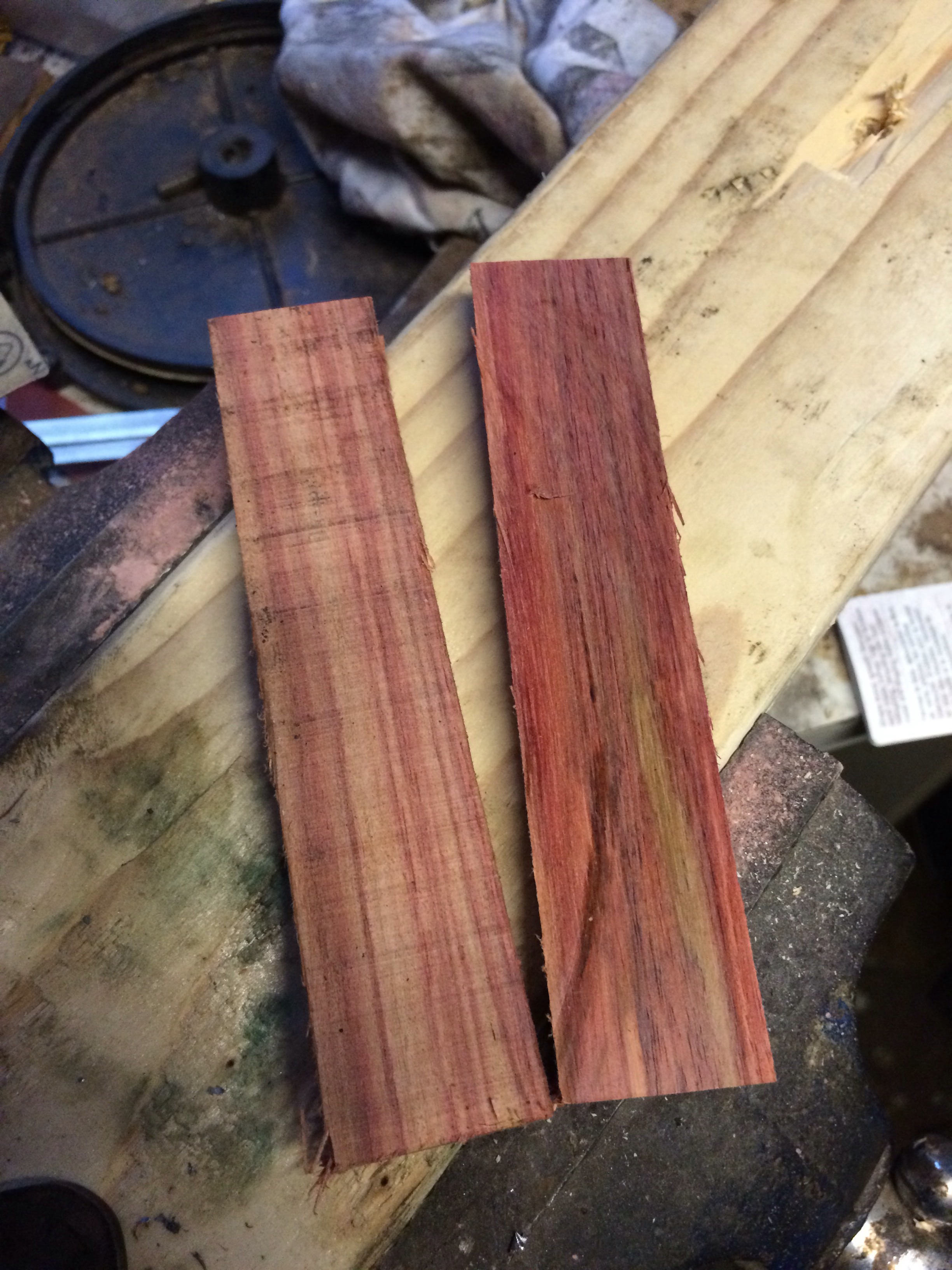
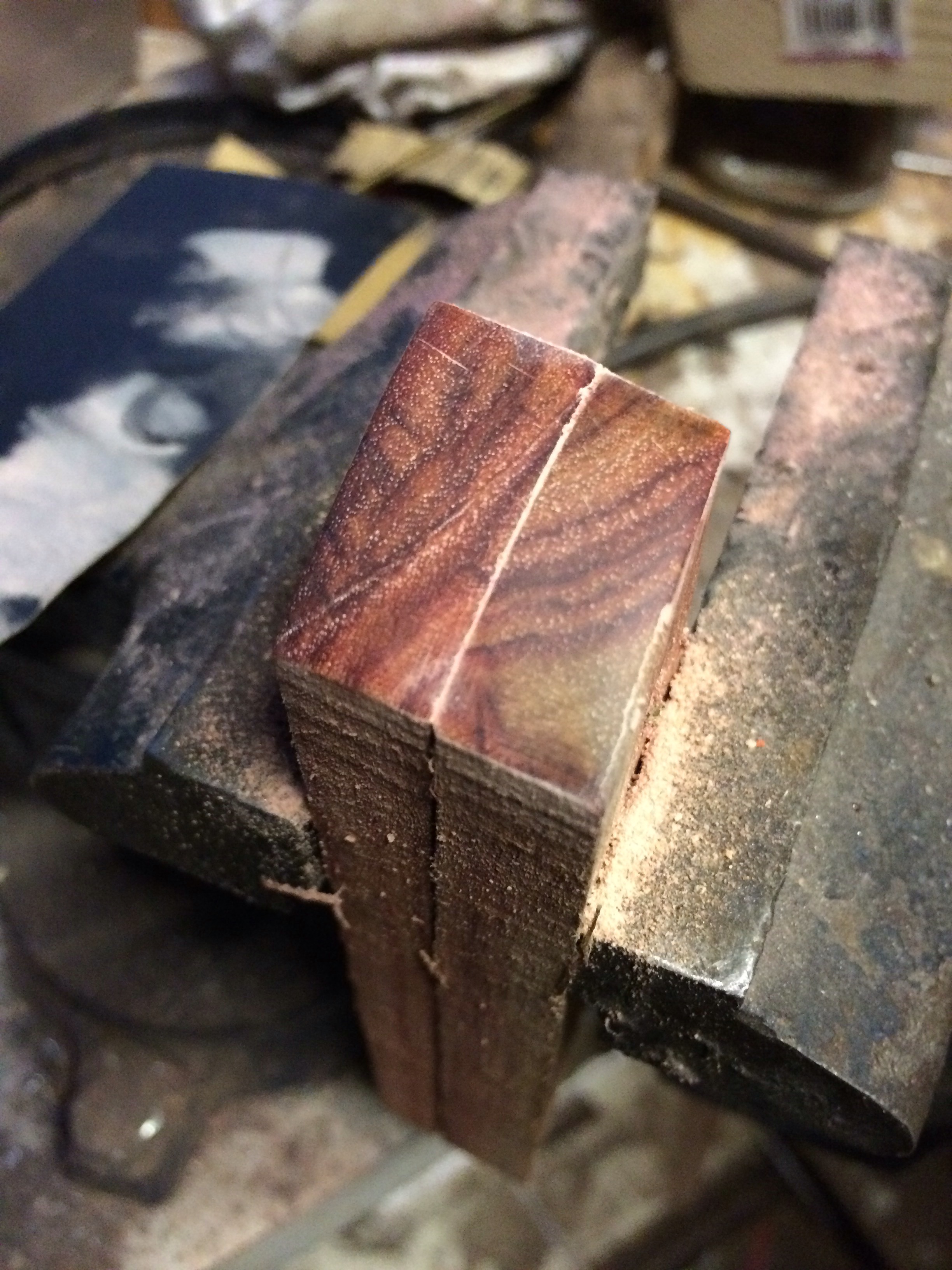
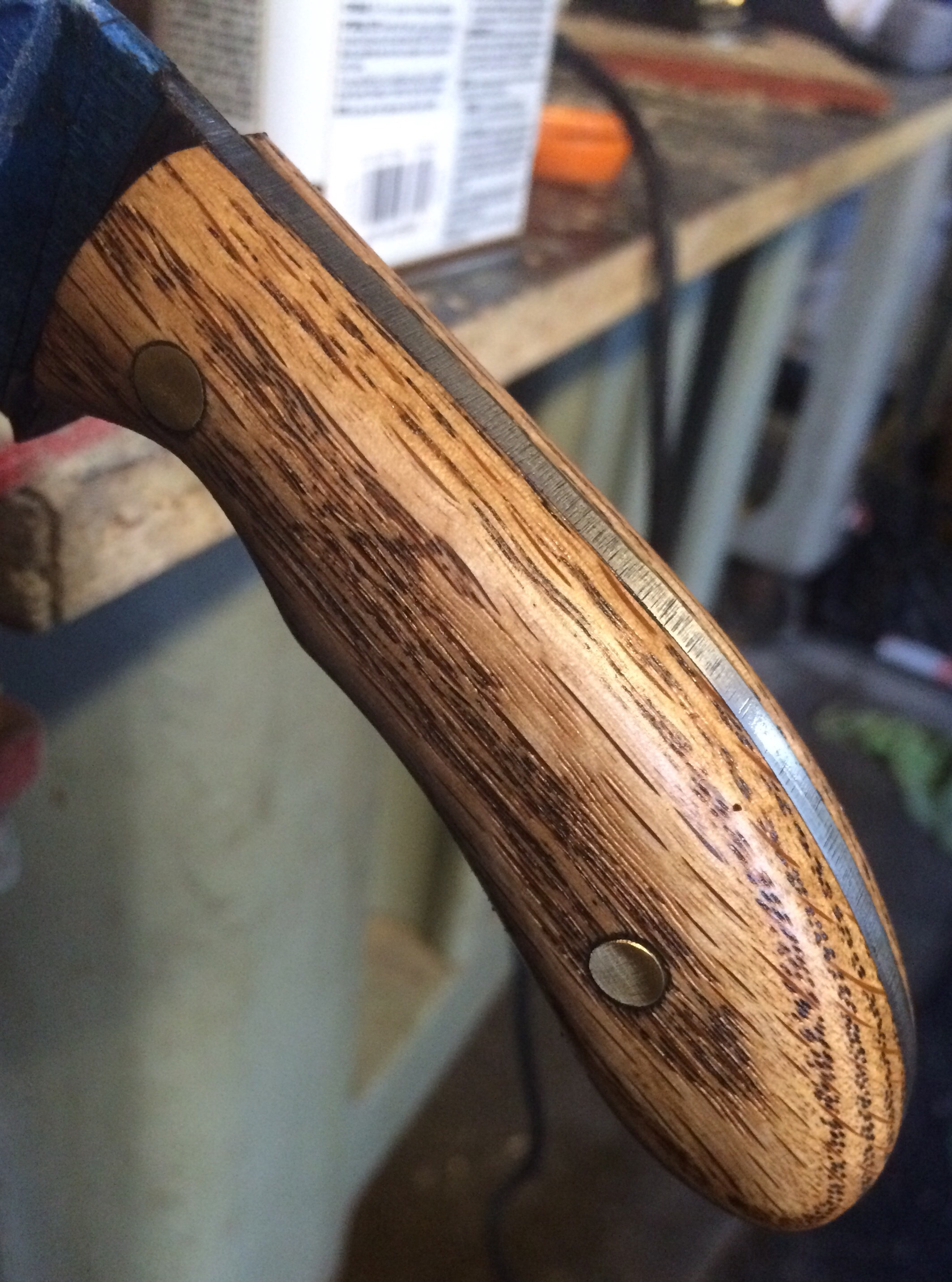
My very dear friend James did the handle on this one.  She has Mora wood scales and brass hardware.


My good friends Mike and Jen using the Kingfisher to de-bone a goose… 

Sometimes you have go below the surface of things to find what you need.  This is the lesson of the Kingfisher.

Knifemaking: soldiering on and the Rio Bravo

“Tomorrow is the most important thing in life. Comes into us at midnight very clean. It’s perfect when it arrives and it puts itself in our hands. It hopes we’ve learned something from yesterday.”

― John Wayne

soldier on: phrasal verb with soldier. to continue doing something although it is difficult

  • Cambridge Advanced Learner’s Dictionary and Thesaurus

This blade was a commission for the father of a gentleman who is a professional videographer.   I came to know this gentleman after building a knife for him.  He called and asked if I could make a blade for a very special person- his father.

When I first met with the client, we talked for about an hour.  He showed me a short film he had made about his father, his father’s deep love of football, and how it brought the two of them closer as adults.  The film was quite stunning.  The NFL thought so too- it won their family tickets to the Super Bowl.

In the film, he told his father’s story of how he lost a chance to play for the Baltimore Colts, losing out to Johnny Unitas.  What followed was a strained relationship where the client really didn’t get a chance to know his father.  The film documented how football brought bonding and healing.  He asked if I could make a blade with an element of the game that his father loves.

I felt quite a bit of anxiety in making this blade.  I had to design it and give it a life for somebody’s loved one whom I had never met before.  It took a very long time because I really wanted to make the right statement.  The recipient of this blade is a man’s man, stoic, and has taken his licks.  He has a bit of cowboy in him- John Wayne was mentioned during our talk.  I named it the Rio Bravo after the John Wayne film.  Wayne was 51 when he starred in the film but still kicks a lot of ass.

I write this from a man’s perspective.  As a man I have a hard time dealing with difficult emotions and I think most men would agree that it is a bitch coming to terms with them.  They don’t go away, they just sit and fester if not dealt with.  In dealing with them we often fall apart, have meltdowns, withdraw, avoid, and sometimes leave a path of destruction.  You want to succeed, to have a purpose, to leave your mark on the world, and make things right.  When that doesn’t happen you can find yourself questioning your self-worth.  I don’t have children but when there are little ones looking up to you and watching you I imagine it adds that much more pressure.

The lesson of the Rio Bravo is that no matter what you soldier on.  The only way out is through.  You show up, you do the work, you laugh, you cry, and you take the bitter with the sweet.   I crafted this blade for a man who has done all of that and serves as an inspiration of what soldiering on earns you.

The beautiful part of this commission has been seeing how inspiring the healing can be.  A son did this for a father where there was pain on both ends.  The client showed me, a stranger, this incredibly vulnerable and moving film.  It’s hard to imagine the courage it took to make that film and to put an intimate story out into the world.

I loved working with this client.  There were multiple conversations about designs and materials.  He is an artist and we can talk about concrete things in abstract and obtuse ways.  At the end of it he always told me to do what I thought and that he trusted me.   This is where I started:


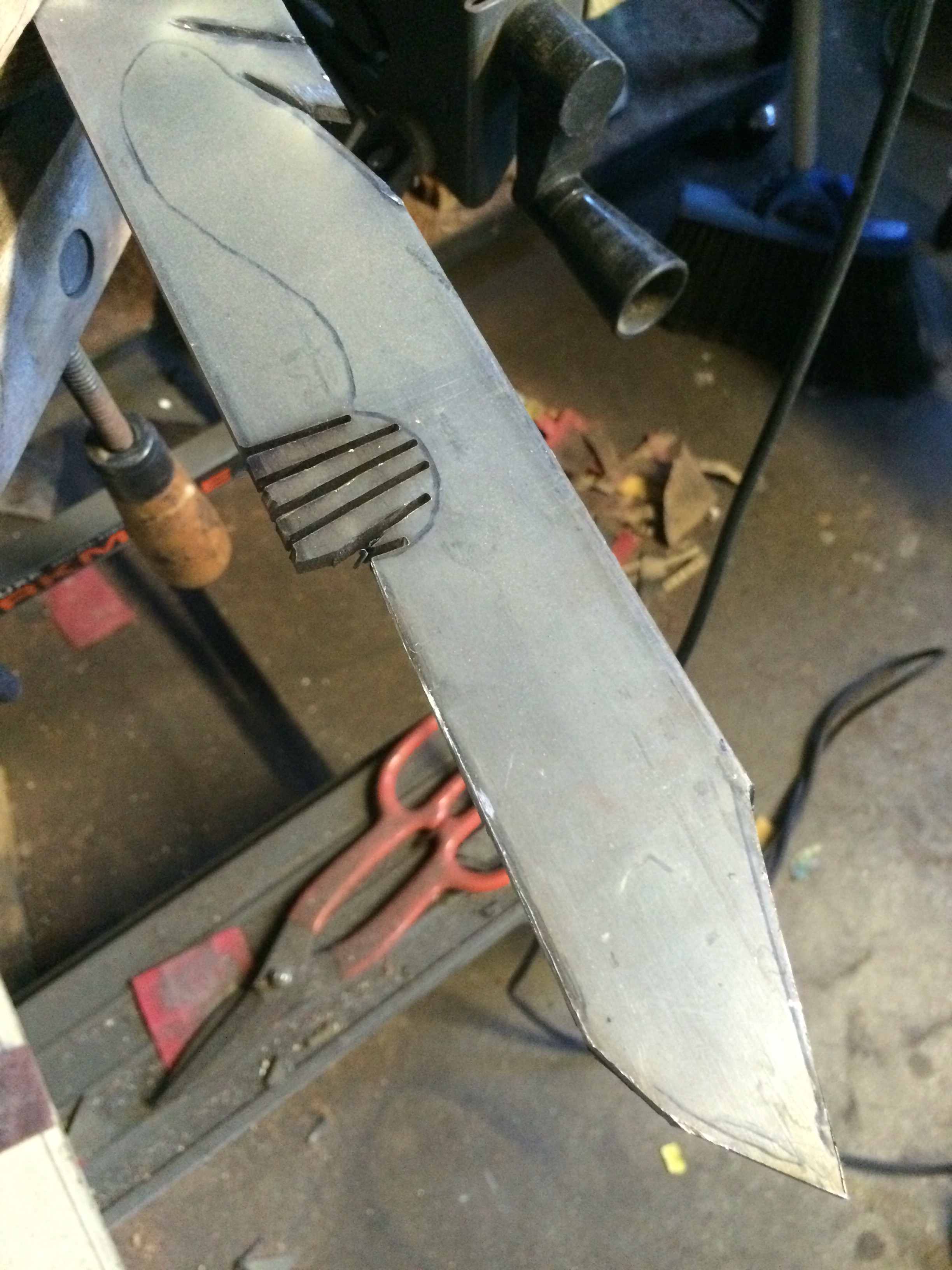
Some jimping for grip, and a nod to the laces of a football. 

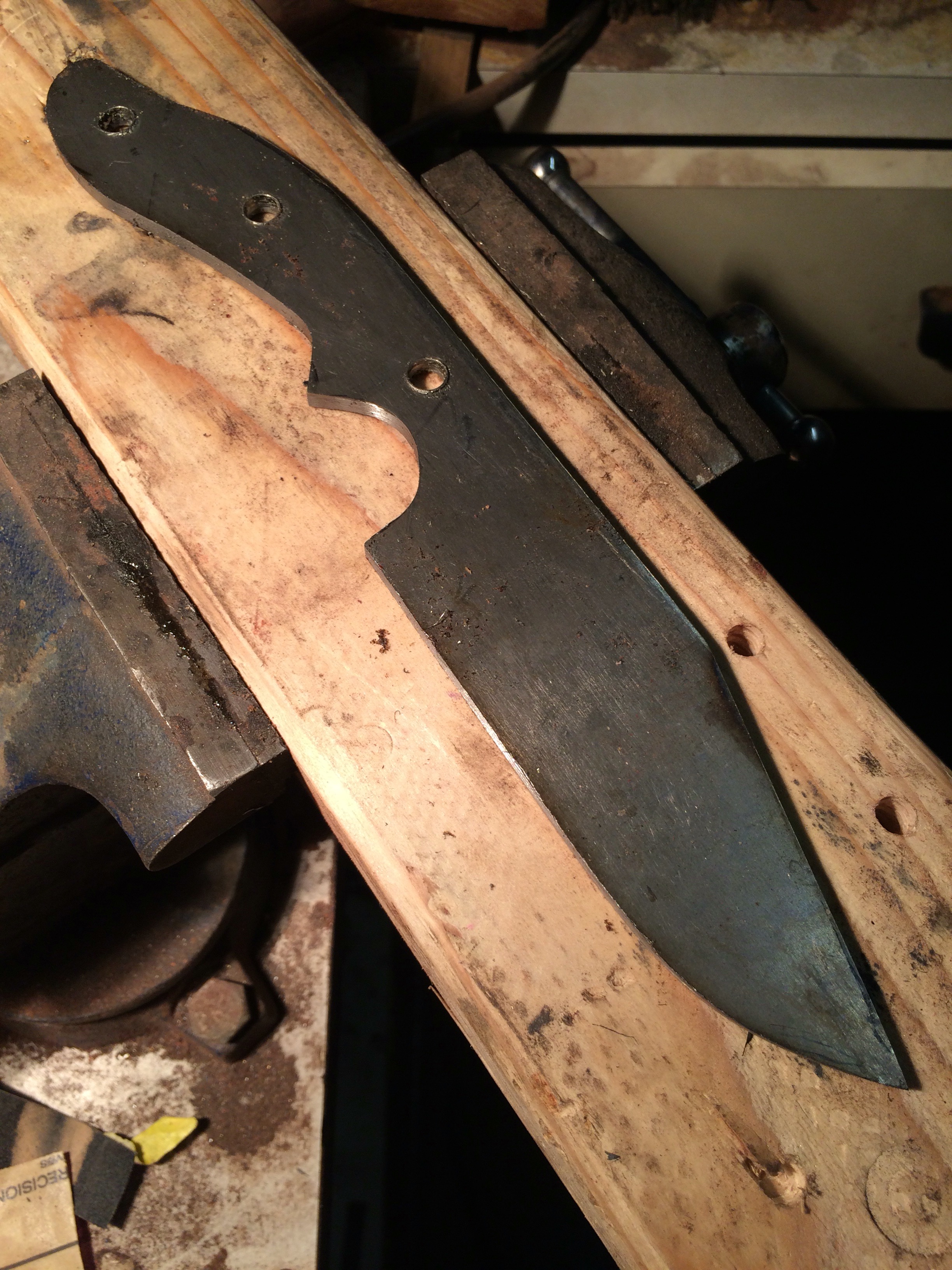
Rough Grind

Hardened…

….and tempered

I wanted something with the feel of a football…

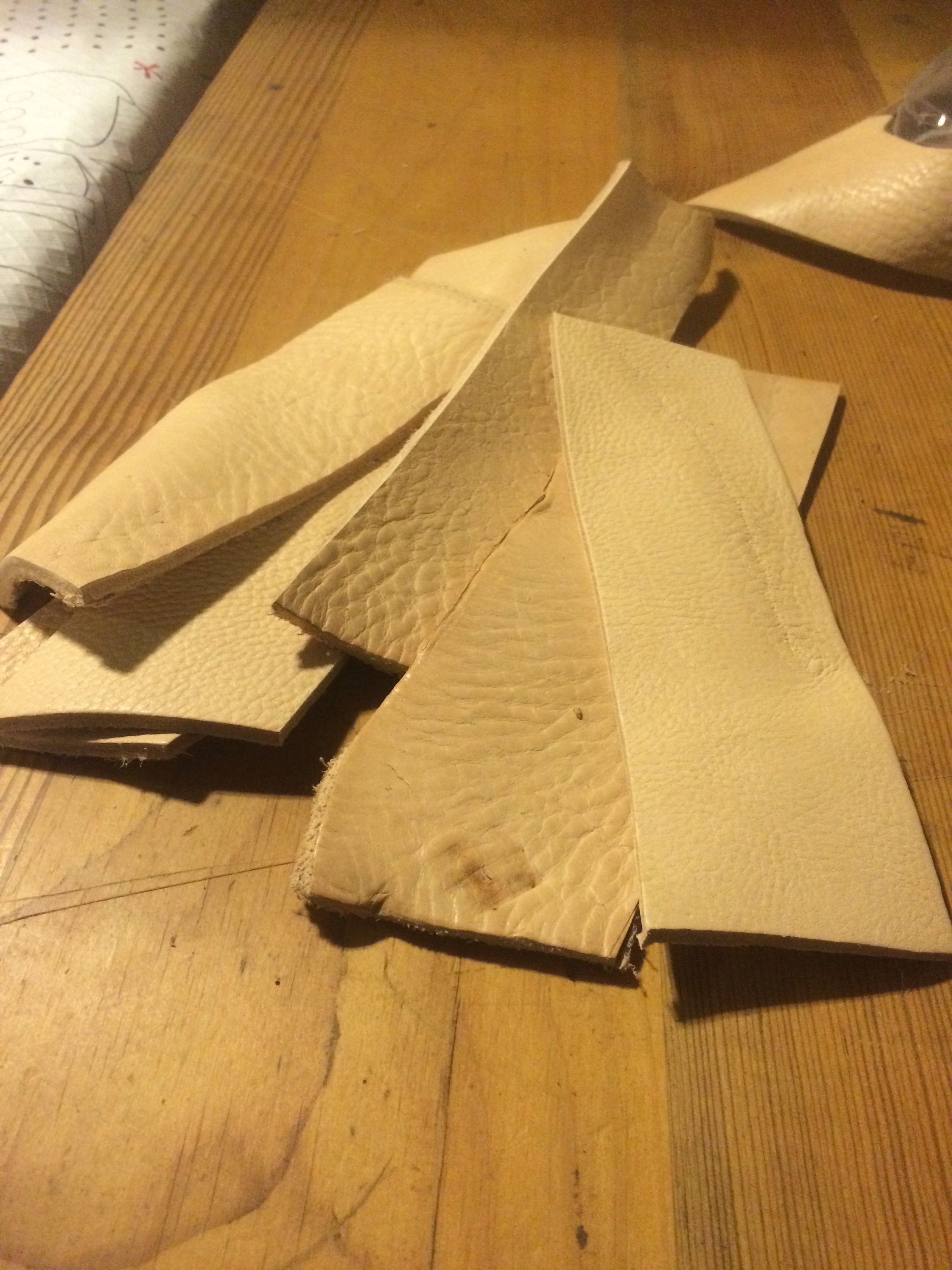
I cut it into strips and glued it together….

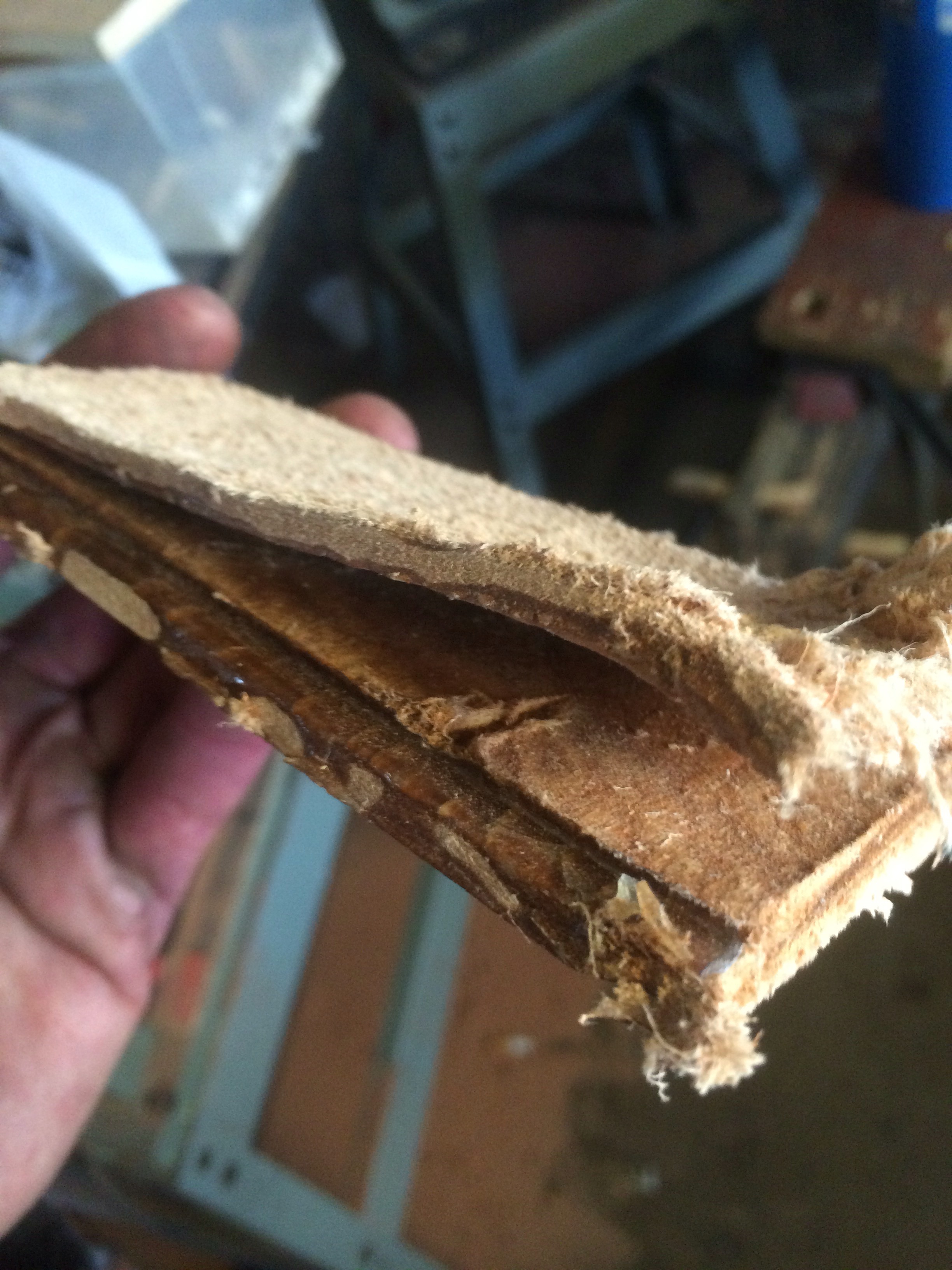
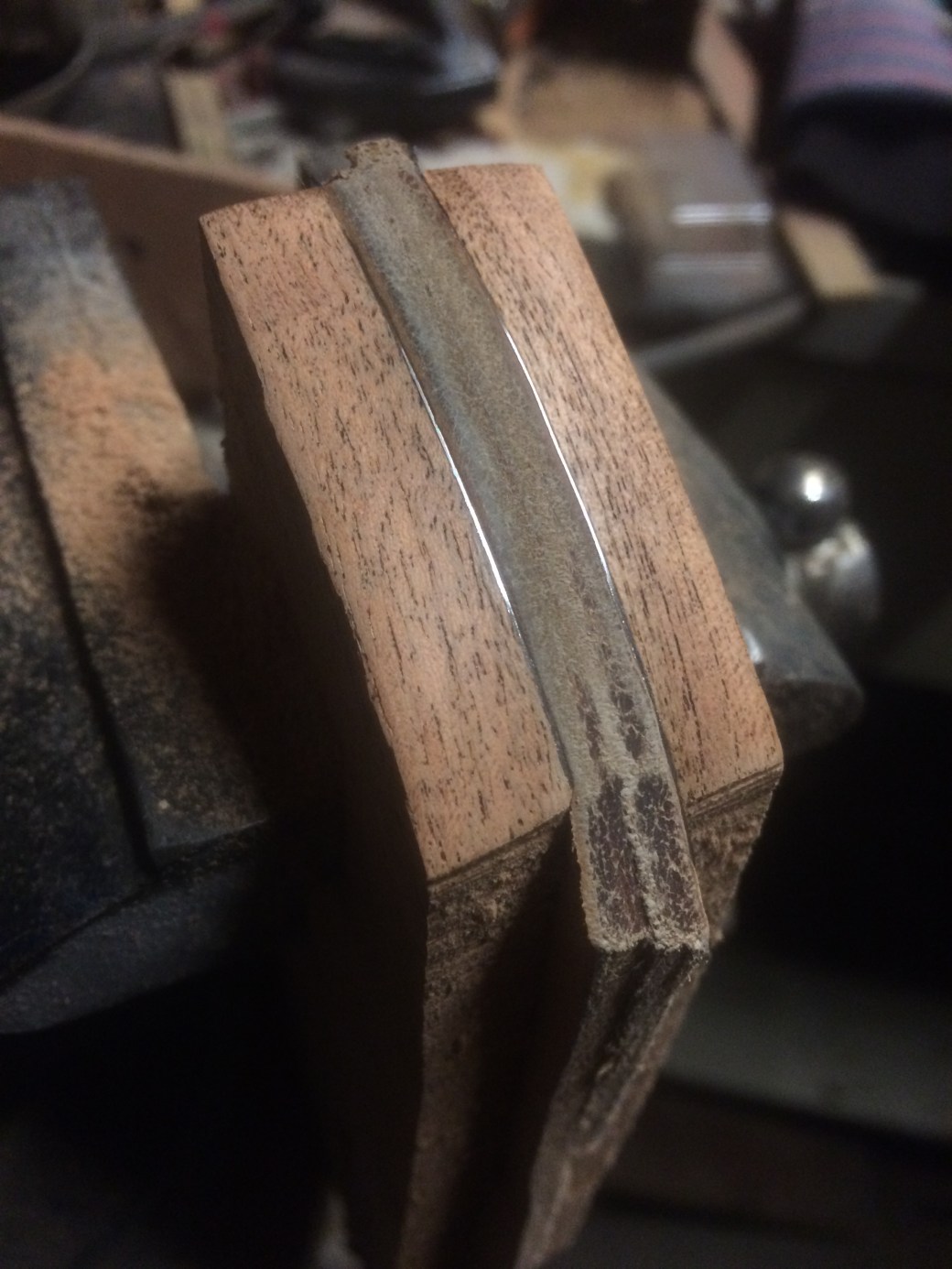
…and it failed miserably.  Still, I really wanted to work the leather in.  That’s the spirit of football even though it isn’t pigskin.  I was also really into the idea of having a part of something that once walked the earth be a part of this blade.  I wanted this to be a very masculine blade, with a southwestern theme.  For me it doesn’t get much more manly than the combination of Texas Mesquite, leather, and steel.  I put in some thin tin spacers for a bit of sparkle.
IMG_3086

I have a cousin in Texas who is a woodturner with a sawmill.  He handpicks cutoffs with the most gorgeous figures and sends them to me.  When I’m using his wood for a handle it’s like Christmas morning- think of opening your favorite Christmas present, only you get to do it for two and a half hours.  Thank you Bill Cockrell.  You are a very good man.

IMG_3091


The Rio Bravo: etched 1095 spring steel, Texas Mesquite handle, leather and tin spacers, with steel hardware.  
    I carved in some laces:
   

Soldier on, cowboy.  You never know what tomorrow may bring.

Knifemaking: armor, mobility, and the Archer II

“ARMOR, n. The kind of clothing worn by a man whose tailor is a blacksmith.”

― Ambrose Bierce, The Unabridged Devil’s Dictionary

(you can read about the crafting of the original Archer here)

We all put on armor everyday.  Some of us put on more than others.  Sometimes it physically manifests.  Hard hats, steel toes, wingtips, neckties.  Some ladies refer to their makeup as war paint, another type of armor.  Other times it’s more subtle and subdued- the way we carry ourselves, our use of vernacular in particular situations, and the image of ourselves that we present to the world.  All these are things we do to protect ourselves.

A few years ago I had a temp job working construction over the summer.  The company I worked for had a contract to build all of the temporary structures for the Boy Scout National Jamboree.  I spent almost four months driving to a military base in the middle of nowhere.  I use the term base loosely.  It was really just a giant campground guarded by military police, and all of the campers carried semiautomatic weapons.  In four months I used a flushable toilet maybe three times.  The cast of characters I worked with were a colorful lot.

My boss was a Brazilian Jui Jitsu master.  He got to work before everyone else and ran five miles on base.  Some people have coffee before they start work.  Our mornings with him consisted of tapping out of sleeper holds, arm bars, half nelsons, and doling out mollywhops of a variety I’ve yet to experience again.

One of the other gentleman did a ten stretch for first degree murder, which nobody found out till the work contract was almost up.  The base knew he had a twenty year-old felony and vetted him for a base pass.  I’m not exactly sure what this means, but military bases generally don’t mess around.  He did good work and kept to himself.  He was married to a florist and had a house in the country.

Then there was the gentleman who had just gotten out of jail for beating the the hell out of a guy with a tire iron.  He was drunk and thought the guy was stealing his car.  He was there trying to pay off the lawsuit and lawyer’s fees.

Another gentleman I worked with had severe anger management issues and was there because he was dating the company owner’s daughter.  He had a degree in English and was trying to get into law school.

There was Jose from El Salvador who had four children and was still madly in love with his wife.  He taught me filthy things to say in Spanish.

There were two football players on break from a small conservative college.  They said they were there earning beer money.

Then there was me.  My car had died and I needed to buy a new one.

I spent four months with these guys, riding around in the back of a decommissioned deuce-and-a-half, building things, and hearing stories that I’m still not sure if I believe or not.  In these sorts of work environments a decent amount of posturing and exaggeration is to be expected from almost everyone.  Despite their checkered backgrounds, these guys were not terrible to work with.  Nothing felt unsafe except for the blistering heat, the bird-size mosquitos and the morning mollywhops to which I became adept at parrying.

Just to be safe I would put on some armor everyday- a bit of bravado, a bit of flash, a bit of the grandiose.  My nicknames reflected that.  The Viking.  Sledgehammer.  Red Devil.  I was lifting a lot of weights and I was not a small man.  It helped enforce some social boundaries.  At the end of the day I could usually take it off, or so I thought.

The type of armor a lot of these guys wore- they couldn’t take it off.  This was how they lived and you could feel that they had worn this armor for a very long time, so much so that it became a part of their being.   There were scuffles, gruff talking, machismo.  Everything was laced with an extra scoop of testosterone.

When you wear heavy armor you are shielded from many things that can hurt you.  The drawback is that you shield yourself from the things that help you as well.  You block out grief but you also block out the serenity that in time comes with it.  You block out pain but you are also blocking the healing that follows.  You can become a shell of yourself.  The armor becomes limiting.  You can’t move and you become horribly stuck.

What happens when you do decide to take the armor off?  When you aren’t hiding behind any sort of bravado or grandiosity or gestures or facades?  There comes a point where it becomes more painful to live with the armor on than off.  You take the armor off and let the world in.  All of it.  The world becomes overwhelming.  You’ve put on a different set of armor, something that allows you to breathe and move and serves you in a much deeper capacity.

This is the lesson of the Archer.  To lightly armor yourself so that you are protected, yet you can still hit your marks with a deadly precision.  You can move farther and faster and feel much more deeply.  You become more aware and but find that you require a different sort of care for yourself and this may feel foreign.  You feel pain more acutely but the healing becomes more available to you.  The things you put out into the world feel more genuine.

For this blade I wanted something long, sharp, and elegant.  I designed her for the kitchen.  She is ground thin and a bit more fragile- at one point I dropped her on the concrete floor and the tip blunted a bit.  After a bit of grinding she was alright.

FullSizeRender 7

The Archer, Mark II: 1095 spring steel, Sapele handle, brass hardware

FullSizeRender 5

FullSizeRender 4

FullSizeRender 6

FullSizeRender 3

FullSizeRender 8

Take your time and adjust to this new armor as the world opens up to something beyond posturing and mollywhops.  This is the deeper lesson of the Archer.

Knifemaking: magic, noticing, and the Conjurer

The world is full of magic things, patiently waiting for our senses to grow sharper.”

― W.B. Yeats

With most things in the world, there are many behind-the-scenes forces that help things to happen.  Take a blossoming flower.  Beautiful, fragrant, and simple.  But behind all of that is a team of unseen helpers going about their existences- honeybee’s to pollinate, an ecosystem of soil for roots to take hold, and a concoction of nutrients within that for nourishment.  There is rain, meteorological patterns to govern the rain, and atmospheric conditions to govern those.  The beautiful blossoming flower couldn’t do what it does without these things, but that doesn’t make it any less magical, or detract from it’s wonder.

Life is a microcosm of this.  For everything in our lives, magical or otherwise, there is a team going about busy existences to make those things happen.  It’s important to notice these things.

A few years ago I started getting calls to work big shows.  Rock concerts, comedians, people of Youtube fame: acts big enough to fill coliseums and large concert halls.  My job title in these instances is Production Runner, a gofer, someone who knows where to find things and can make problems go away.  I’m the guy who gets someone coffee, or picks up prescription strength fungicide for professional wrestlers, or buys lumber for stage carpenters.  I’ve worked for a huge number of these acts.  Sarah Bareilles is very sweet, Taylor Swift’s bodyguards are terrifying, and Bill Cosby told me I was a connoisseur of elongated bullshit.

These performers are like the flower.  Most of them are who they are because they do something special that resonates with people, something fragrant and colorful and moving- magical even.  But like the flower there is also an army of forces working very hard so that these performers can do what they do.  There are truck and bus drivers, lighting designers, electricians, sound technicians, board operators, music directors and musicians and a slew of pencil-pushers and smooth-talkers to bring the flowers to the masses.  There is even magic in what all of these forces are.

One of the first shows I worked was on the set of a two day DVD filming at a local concert hall.  It was for a well known ventriloquist and was to be shown on a national TV network.  It was exciting.  After it was all over there was a director who needed a ride to DC to visit his brother before he flew back to Los Angeles.  Being ever the cash opportunist I offered to assist.

In the I-95 traffic we had deep conversations of politics, sex, and music.  He was telling me about a production he was watching from backstage in LA.  It was a Stevie Wonder performance being filmed live for television and there was a performance of “My Cherie Amor.  He had heard this song hundreds of times before but this performance of “My Cherie Amor” moved him to tears.  He couldn’t explain it.  Why was that one time so moving and special?

I told him that it was probably because he hadn’t really stopped to listen before, or maybe not in a very long time.  There wasn’t anything else to do at that moment and he was able to hear a legend do what made him famous, to hear this beautiful man conjure deep things through his very simple gift.

This is the lesson of the Conjurer.  To see the magic in the simple things.  To conjure your own magic through the simple things you do in your life, because that is where the magic really lives.  The flipside is to notice that the magic is there.  It’s what puts the color in this world.

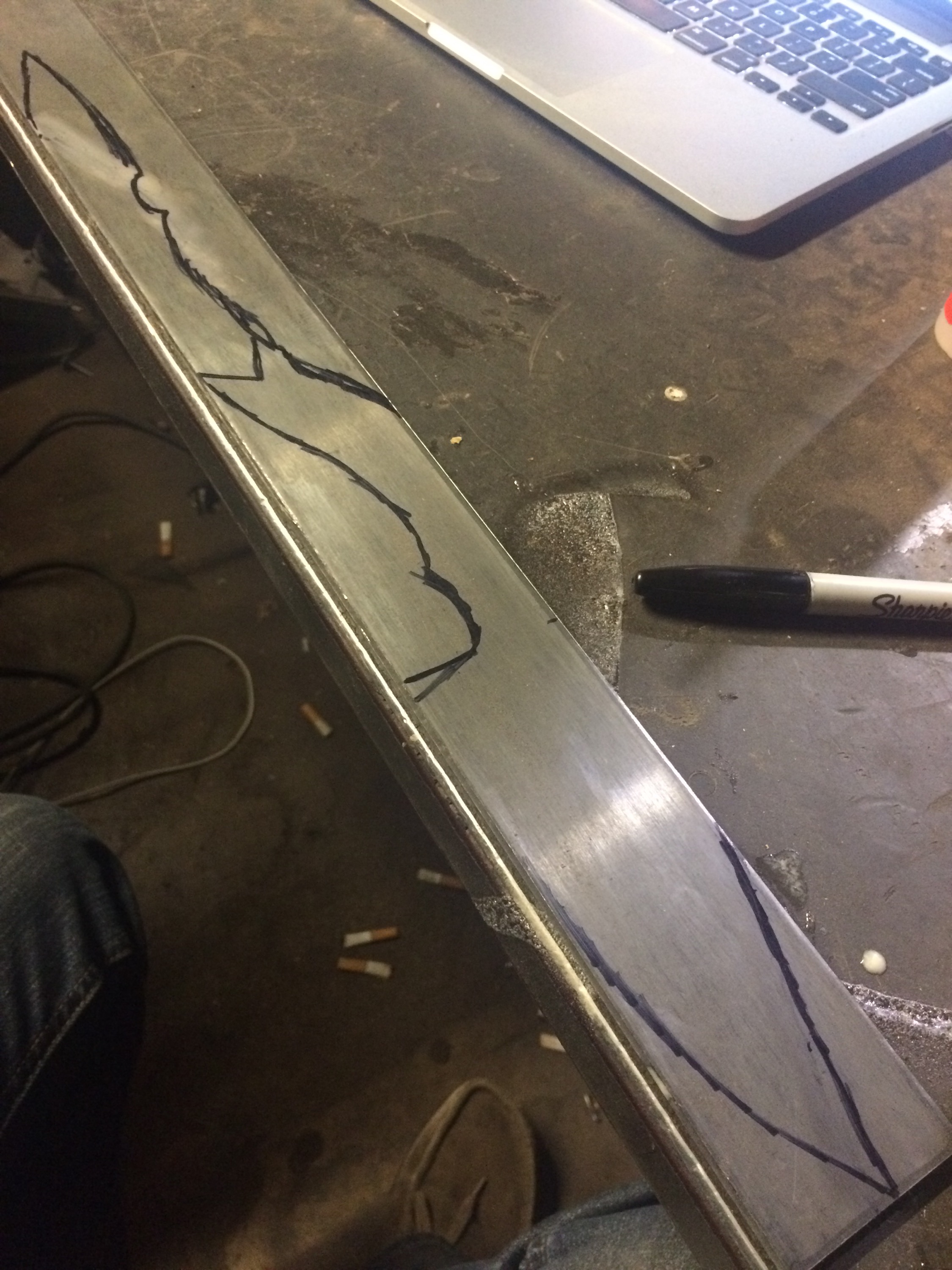
She is made from a bar of 1095 spring steel
Rough grinding  

Ready for hardening

Hardened and scaly

  Tempered

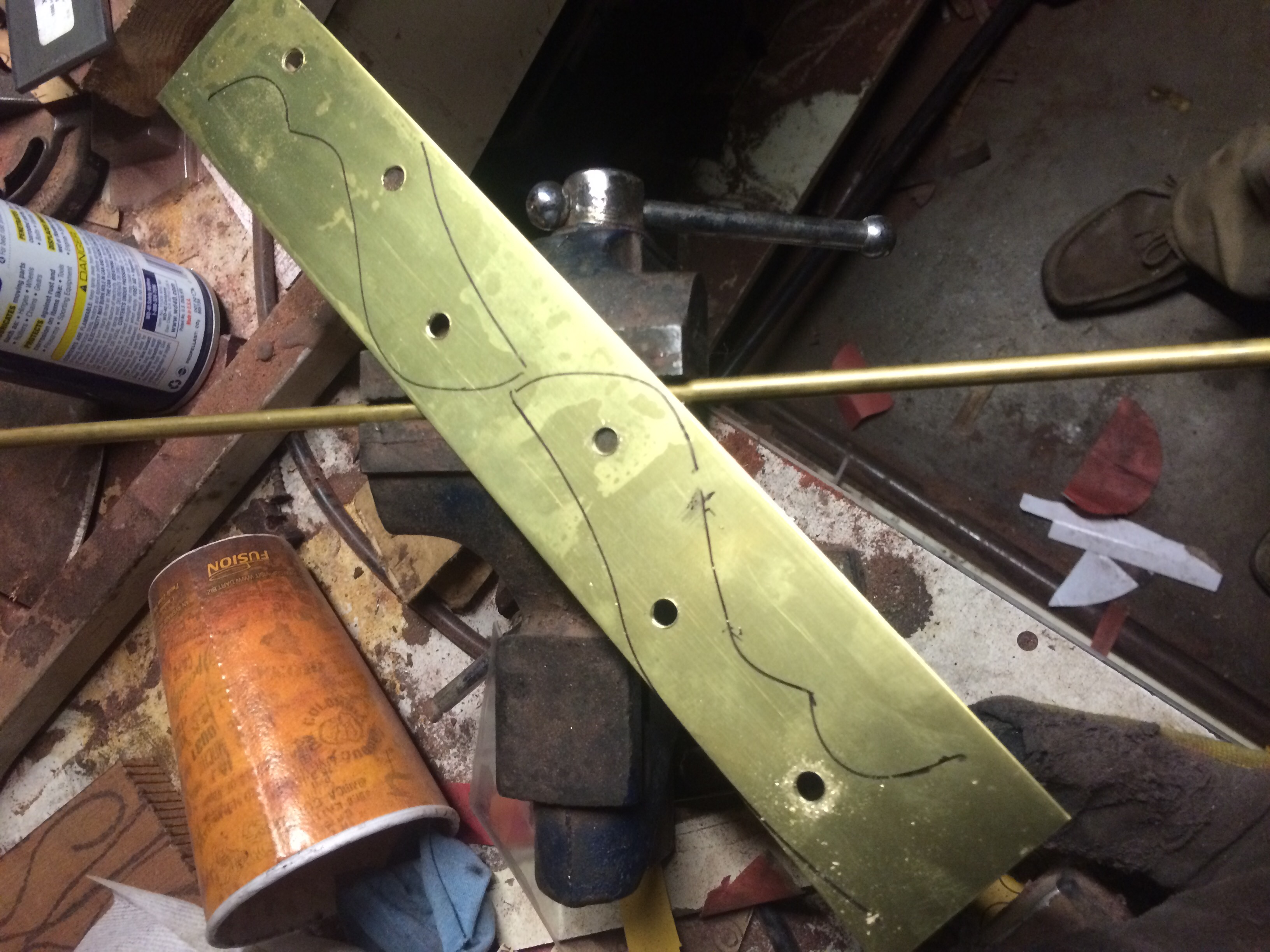
Brass for the liners 
  
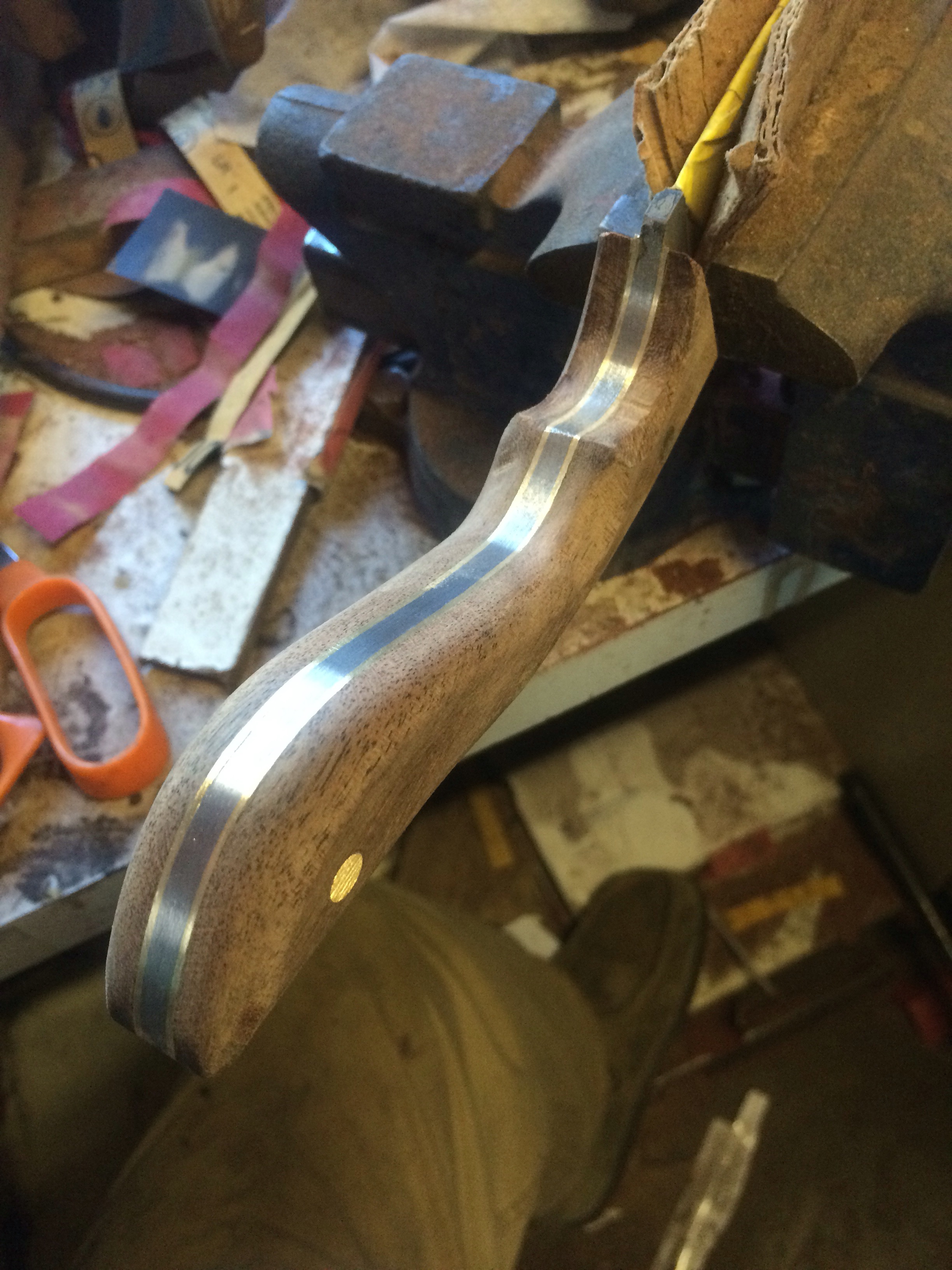
The Conjurer: 1095 spring steel, Mora handles, and brass liners and hardware  


When the director gentleman and I got to DC he gave me his card.  I went home and googled him.  This man was responsible for many magical musical productions and television shows and his name was shown prominently on each of them. Turns out he is quite the celebrity in that world and for good reason.  If I hadn’t taken the time to notice I could have missed a special experience and the simple but beautiful conjuring that this man did.  He helped me to see my own conjuring and magic.  This is the deeper lesson of the Conjurer.

Knifemaking: creating space and the Pas de Deux

“You want to make two knives that become one.  Or perhaps one knife that becomes two.”

Igor Antonov


Over the years I’ve quite a bit of production work for the ballet company in town.  Building things, running a shuttle, being part of a crew that makes something special happen.  My most favorite part of the work I’ve done is a program called Lecture Demonstrations.  This is a fancy name for kiddie shows; in-school performances, where the company puts on performances for the children.  The company manager would line up shows at elementary schools and take care of all the administrative details.  I would show up to the ballet, load up sound equipment, props, costumes, and half a dozen dancers into a minivan and go to an elementary school, chat with school administrators, set up the sound system, wire up the lead ballerina, start the show, and punch the mic and music cues.  After the show everything would get torn down, packed up, and loaded into the minivan along with myself and the dancers.  Then we went to the next one.

The performance was an adaptation of “Coppelia”, made easily digestible for second graders, complete with talky bits and a question and answer.  The kids enjoyed it.

I feel most people who have seen any sort of ballet video or performance have seen the lady in the tutu dancing with the man in tights.  This is called pas de deux- French for “step of two”.  Man and lady dancing together.  Very simple on the surface.

Over the course of a month and a half we did two of these a day, four days a week, plus rehearsals.  After watching about 60 of these shows, I found that I really looked forward to the two sections of pas de deux in the program.  I loved the balance of the masculine and the feminine.  I loved the interdependence of the dance- they are both separate entities.  The beauty comes when the feminine surrenders to the masculine.  The masculine leaves a certain space for her to shine, for her to be what she is.  In doing what she does, the feminine leaves space for the masculine to be what he is.  Trust permeates throughout.  They both have their own identity but together they do things that individually they could not.

I had an idea for a knife.  There is a wonderful Ukrainian gentleman on the artistic staff who would come to these performances and give notes and critiques to the dancers on how the performance could be better.  He also gave me critiques on the the technical side of things.  After one of these critiques I told him what I do and how to work the pas de deux into it.  “Ah,” he says, “You want to make two knives that become one.  Or perhaps one knife that becomes two.”  I had to think about that for a couple of months.

To flow seamlessly between separate and together- this is the lesson of the Pas de Deux.  To leave space for things to be what they are while maintaining one’s own identity.  It is in this space that intimacy exists and blossoms.  To be so secure in oneself that submission requires small effort.  Sometimes we hold on to things so tightly that there isn’t any space for the things we need.  Sometimes there is a great amount of space and everything may seem  to sprawl and lose form.   Always, at the end of it all, everything ends up where it is supposed to be.

I chose to make one knife that became two.

First the feminine…
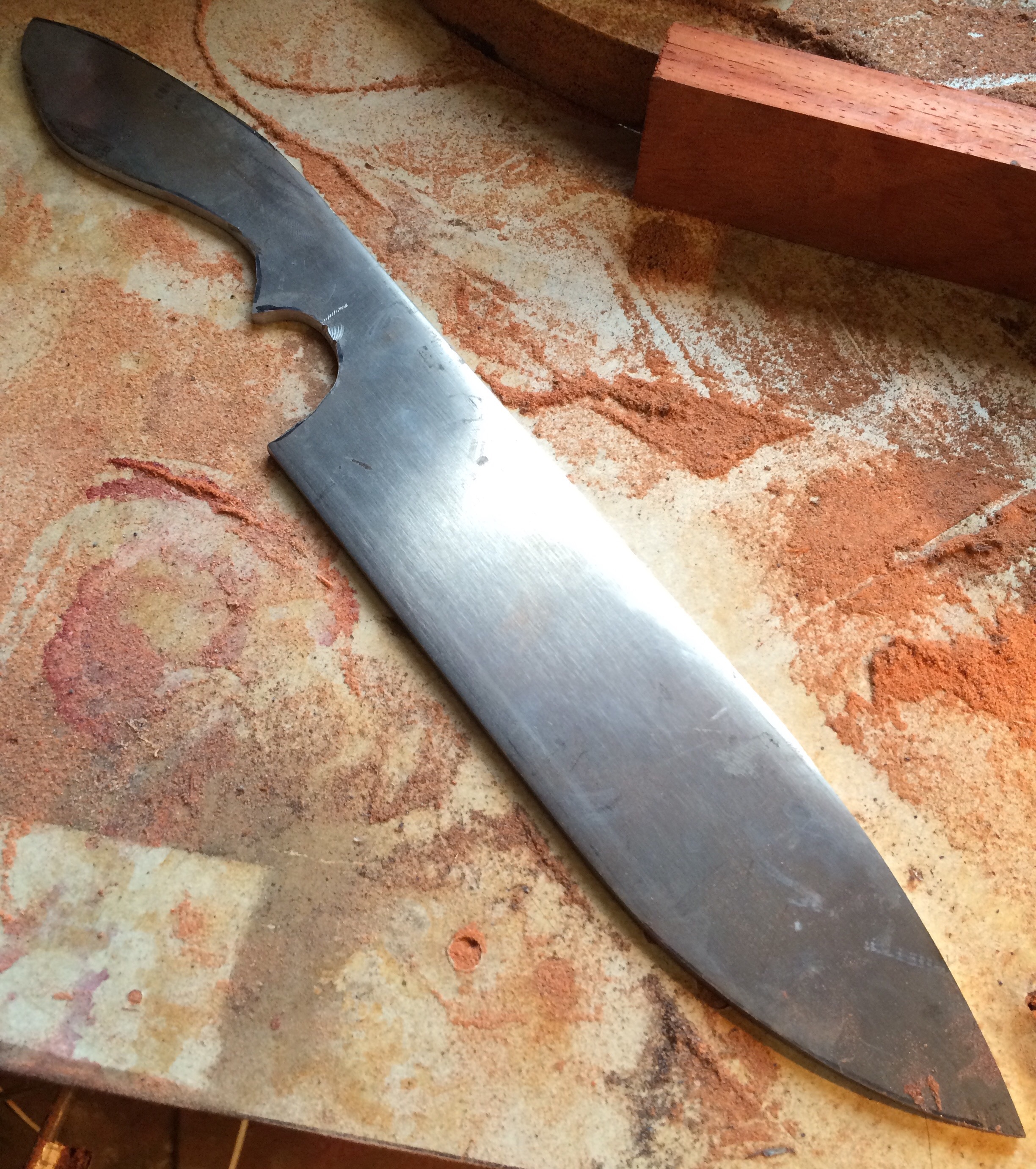
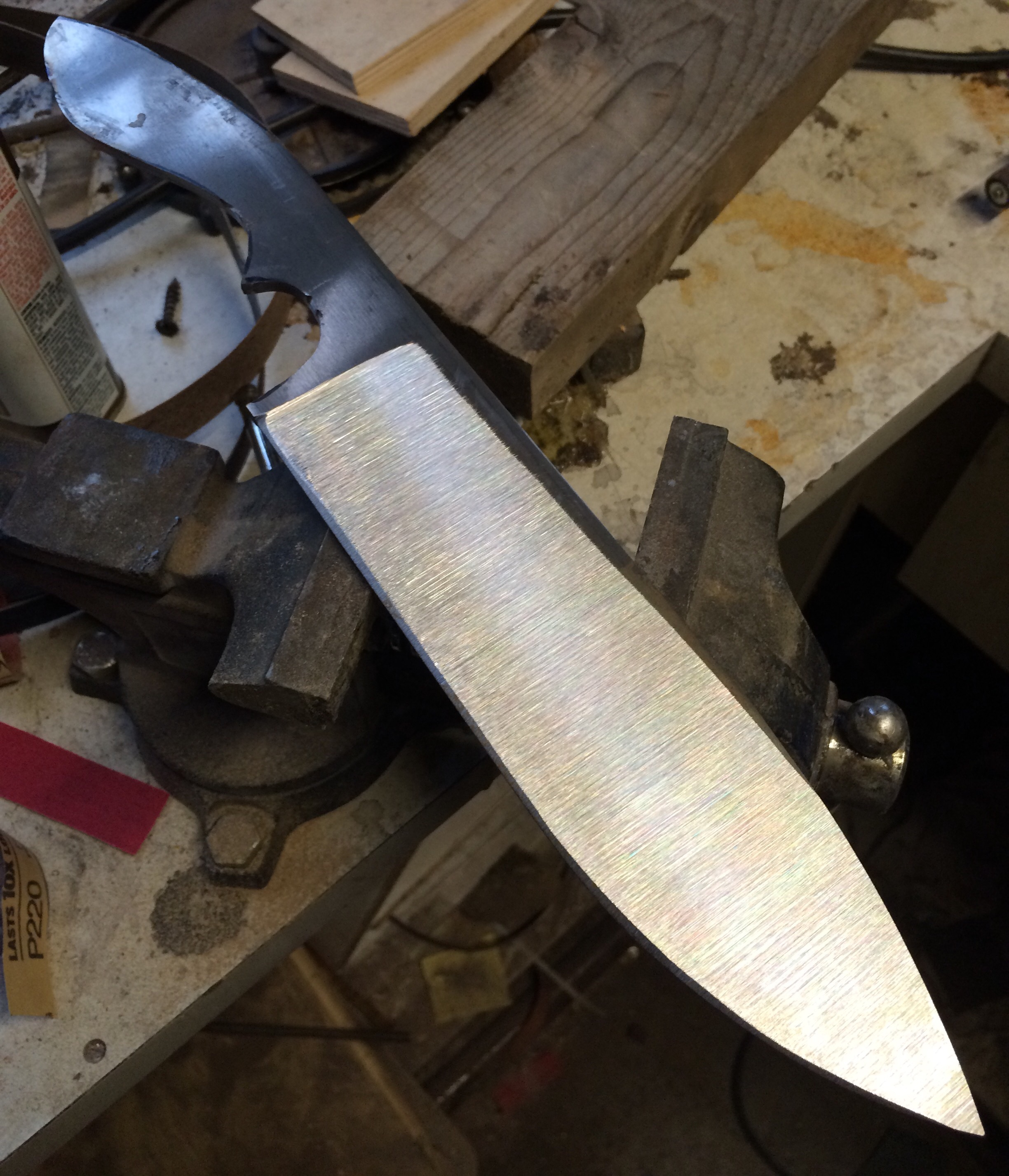
Rough grind  Hardened 

Purple Heartwood  


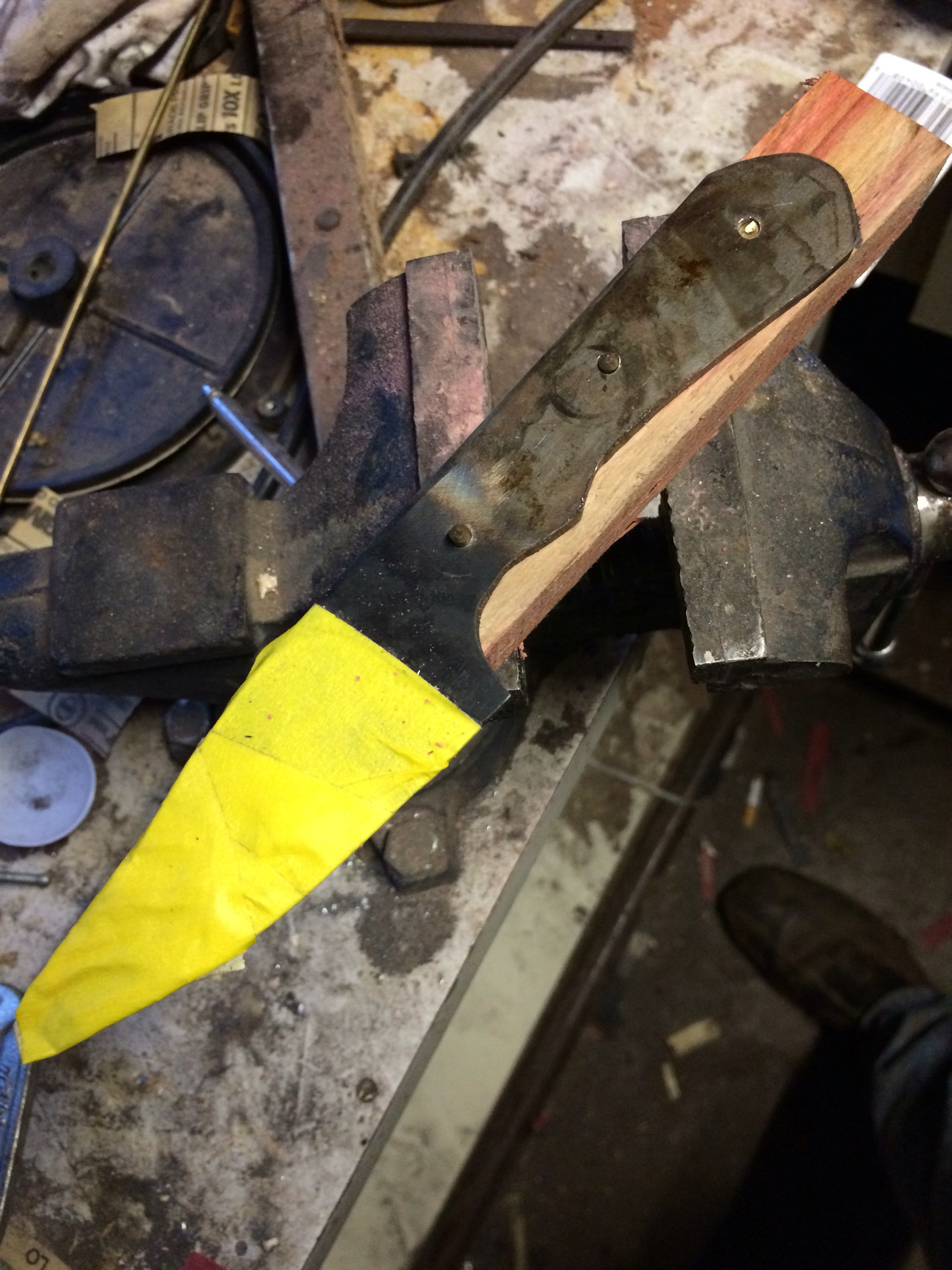
Here is where I had to take the handle off and put a new one on.  I couldn’t quite get that little tail to bond to the tail of the tang.  In the next picture you see the new handle with two little brass rivets.
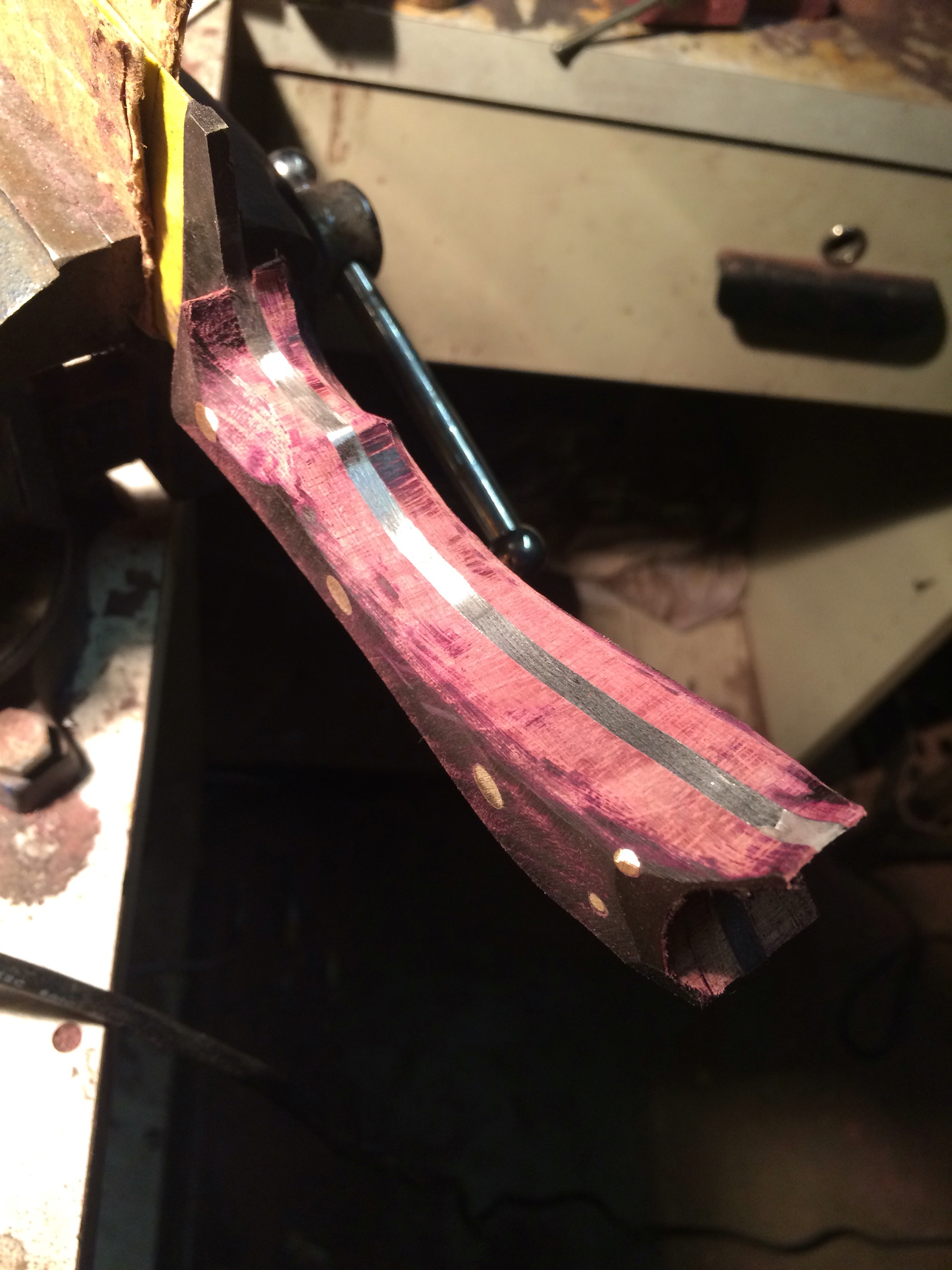
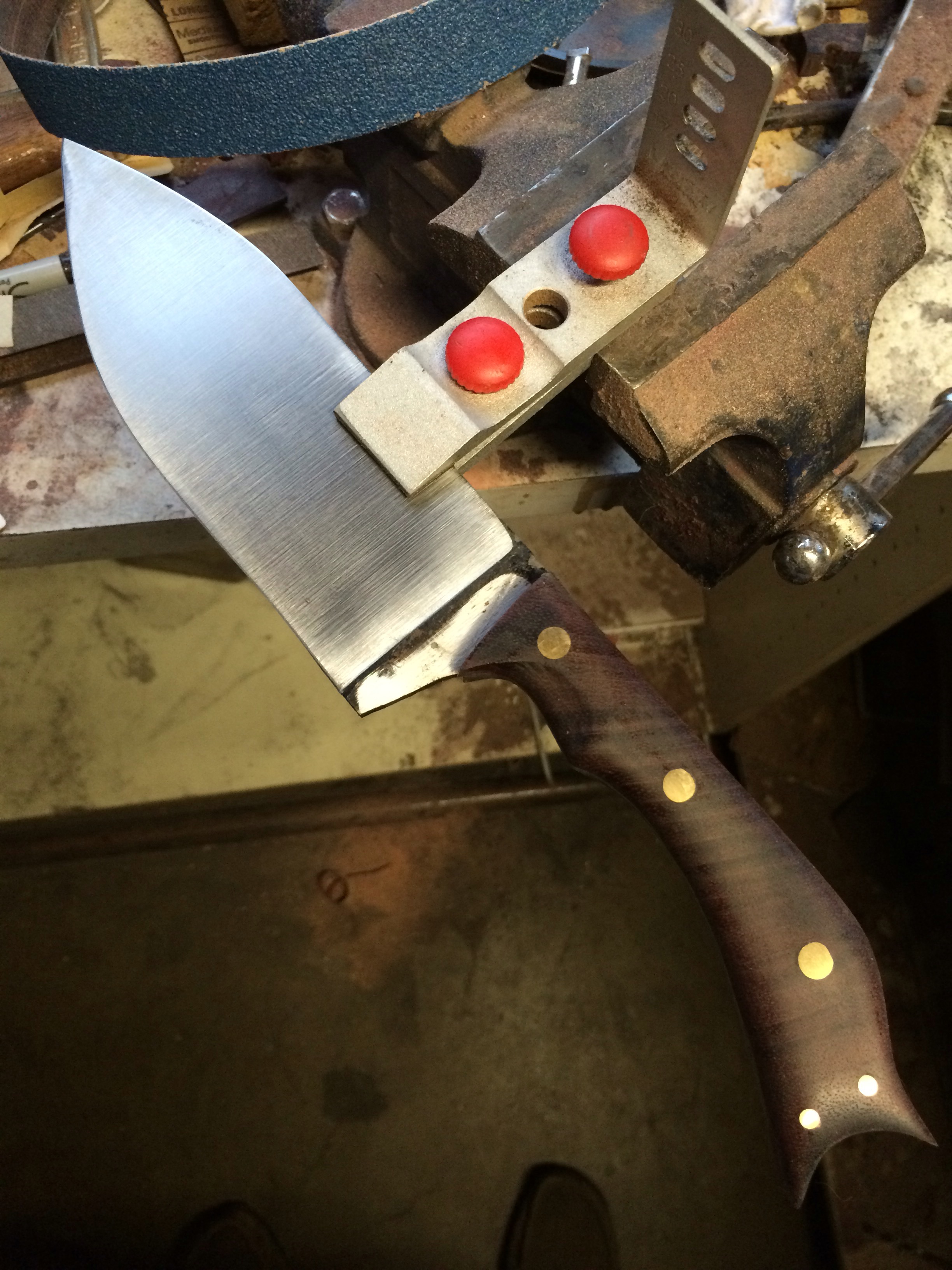
 Now the masculine…

Hardened

Tempered
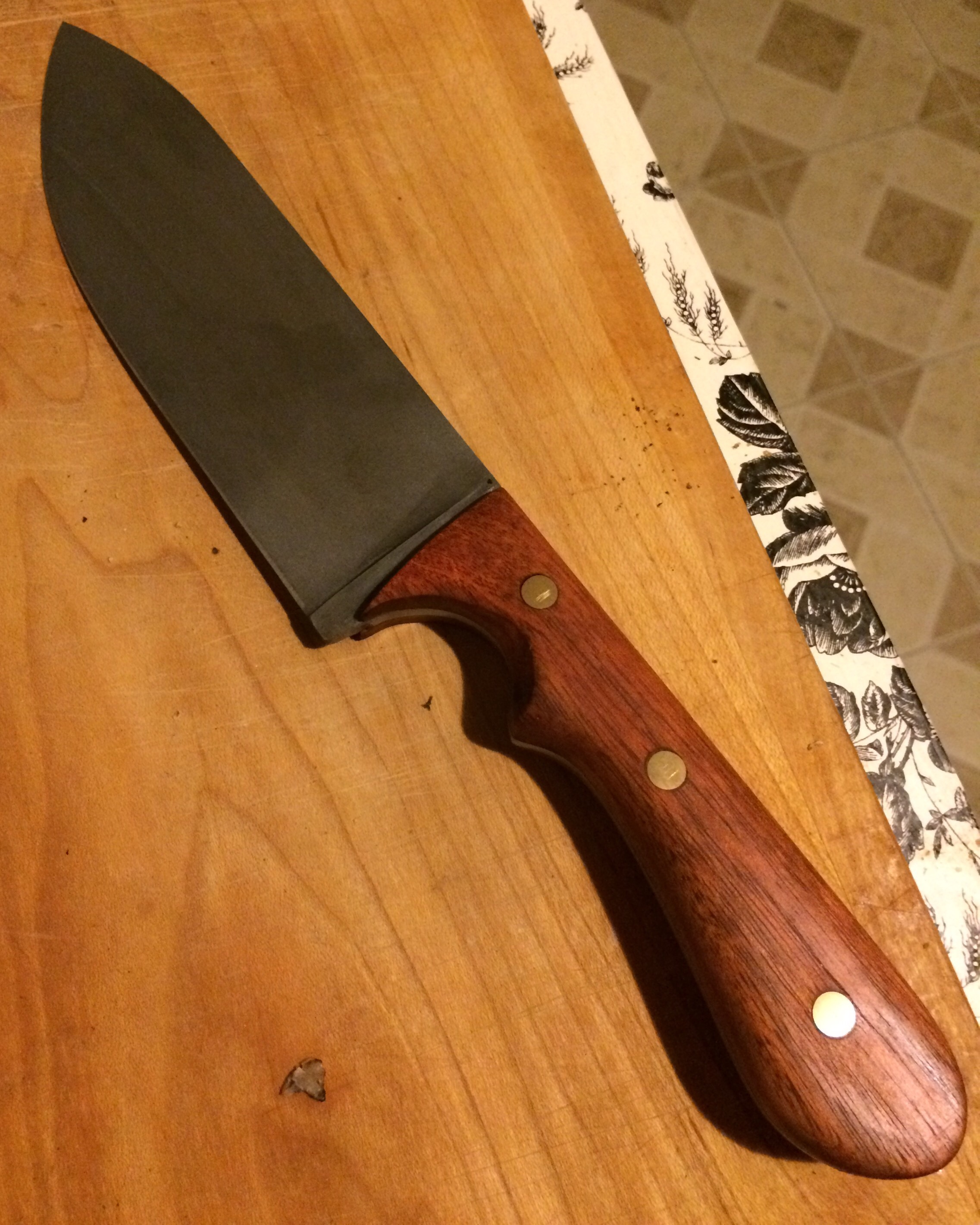

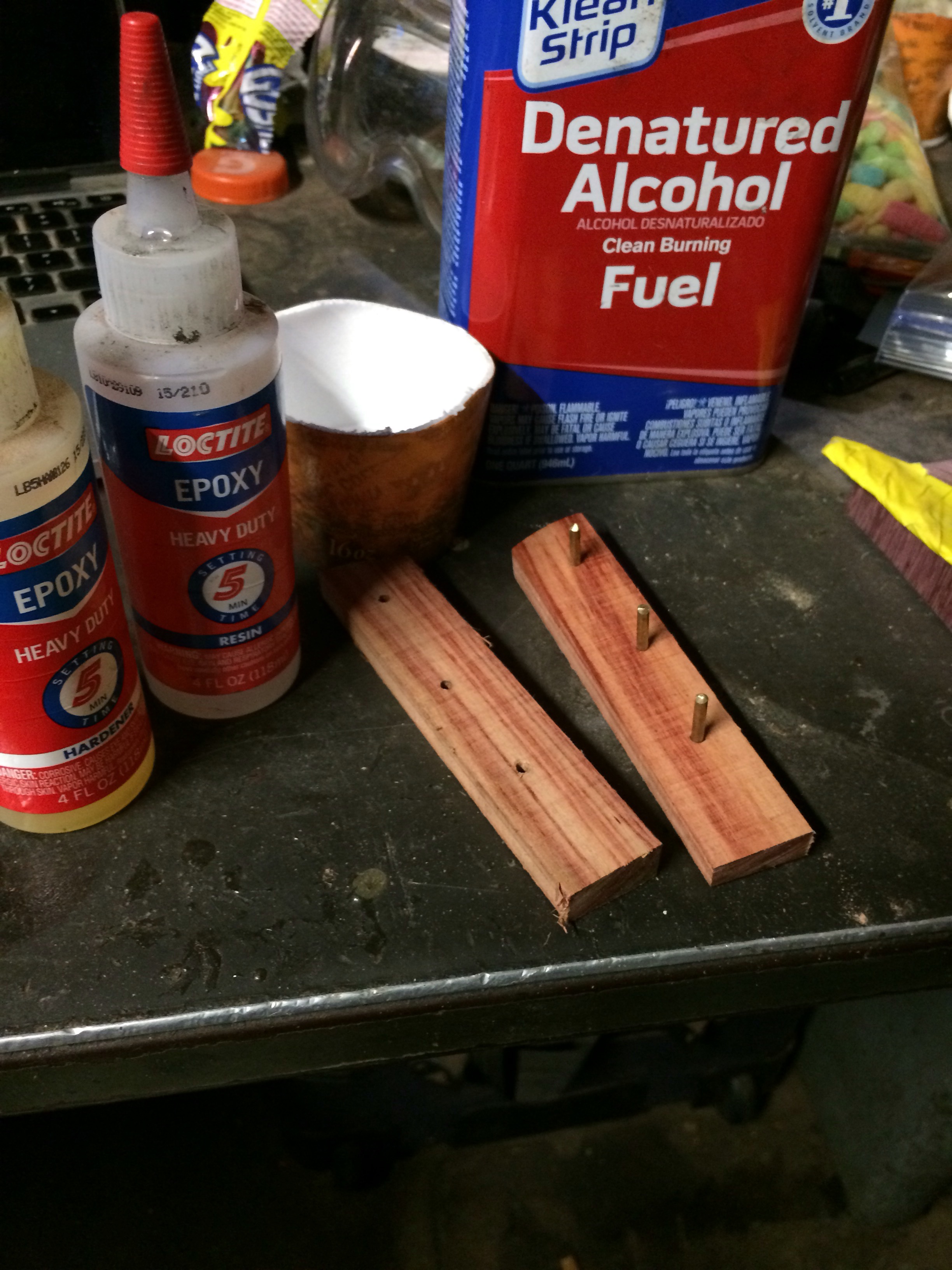
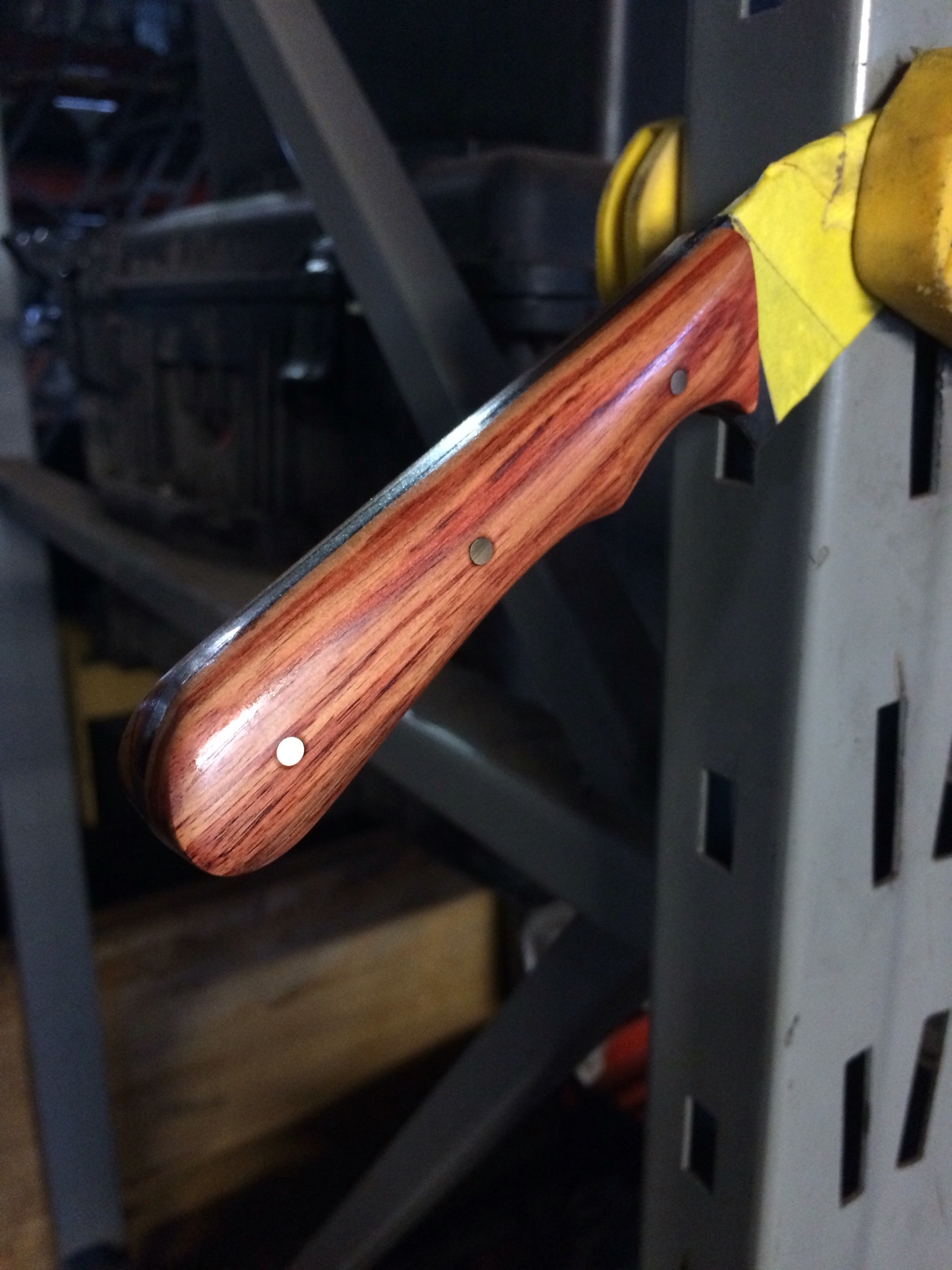
Tulipwood for him

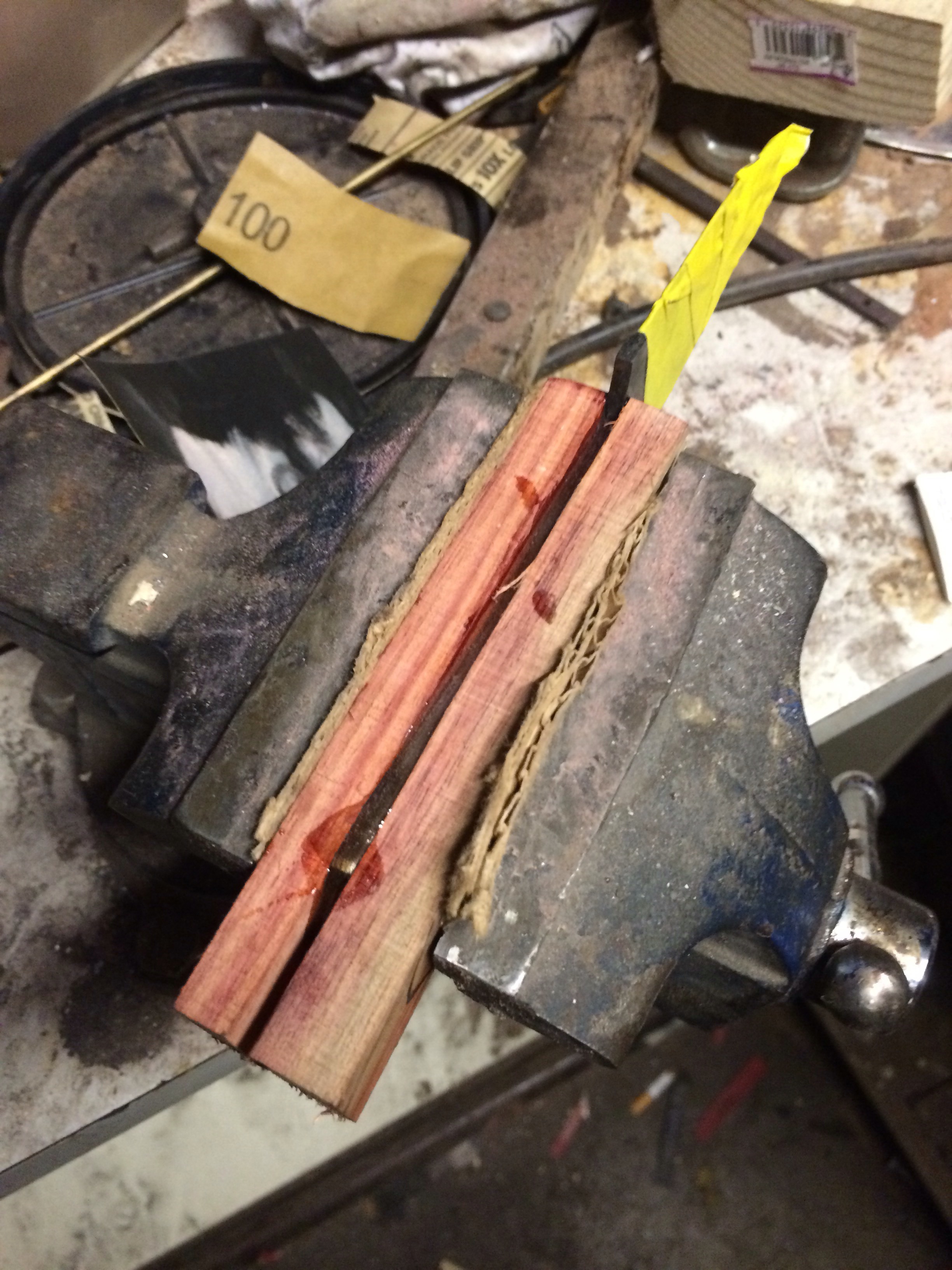
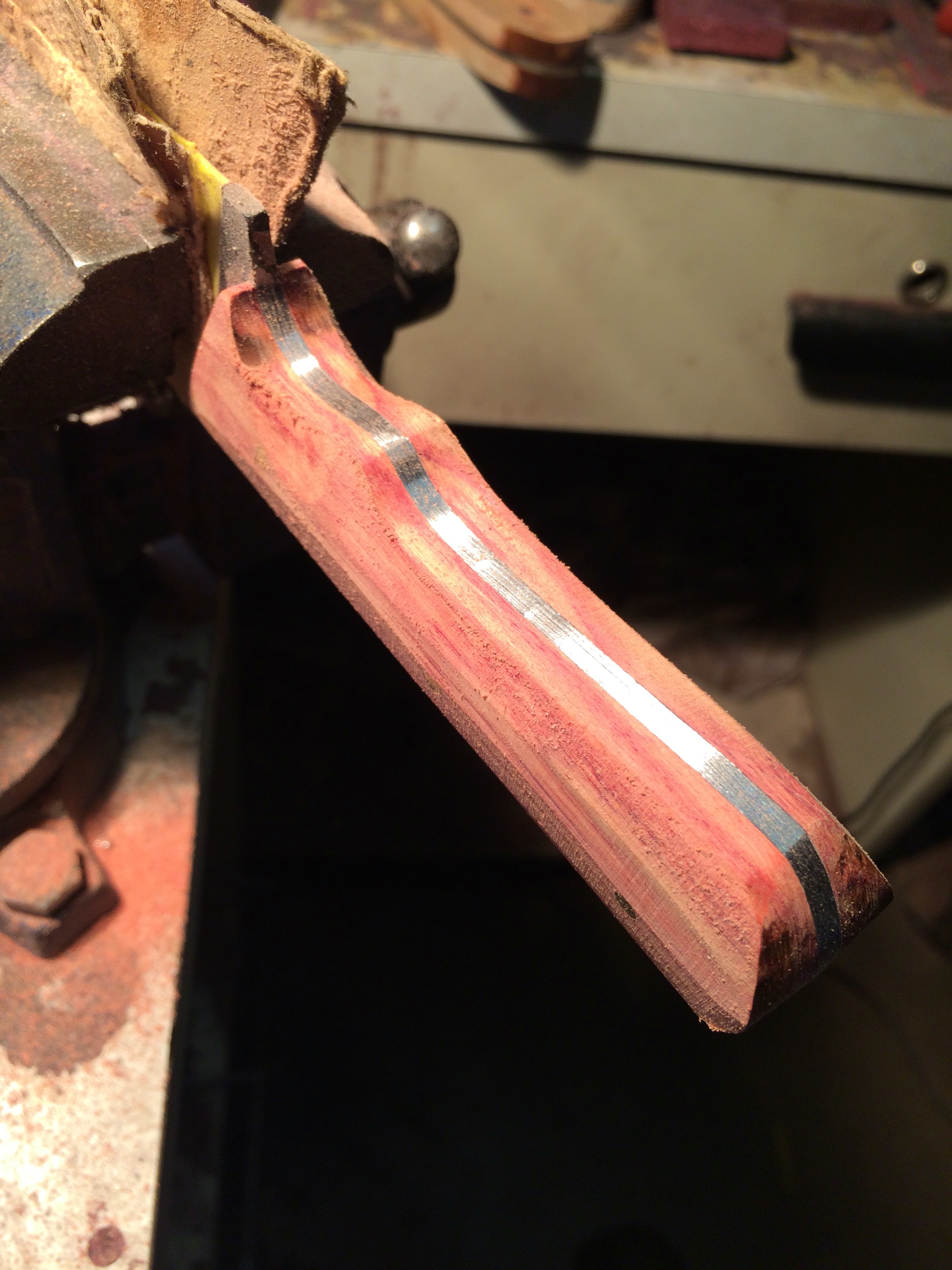
Now the stinky part… 


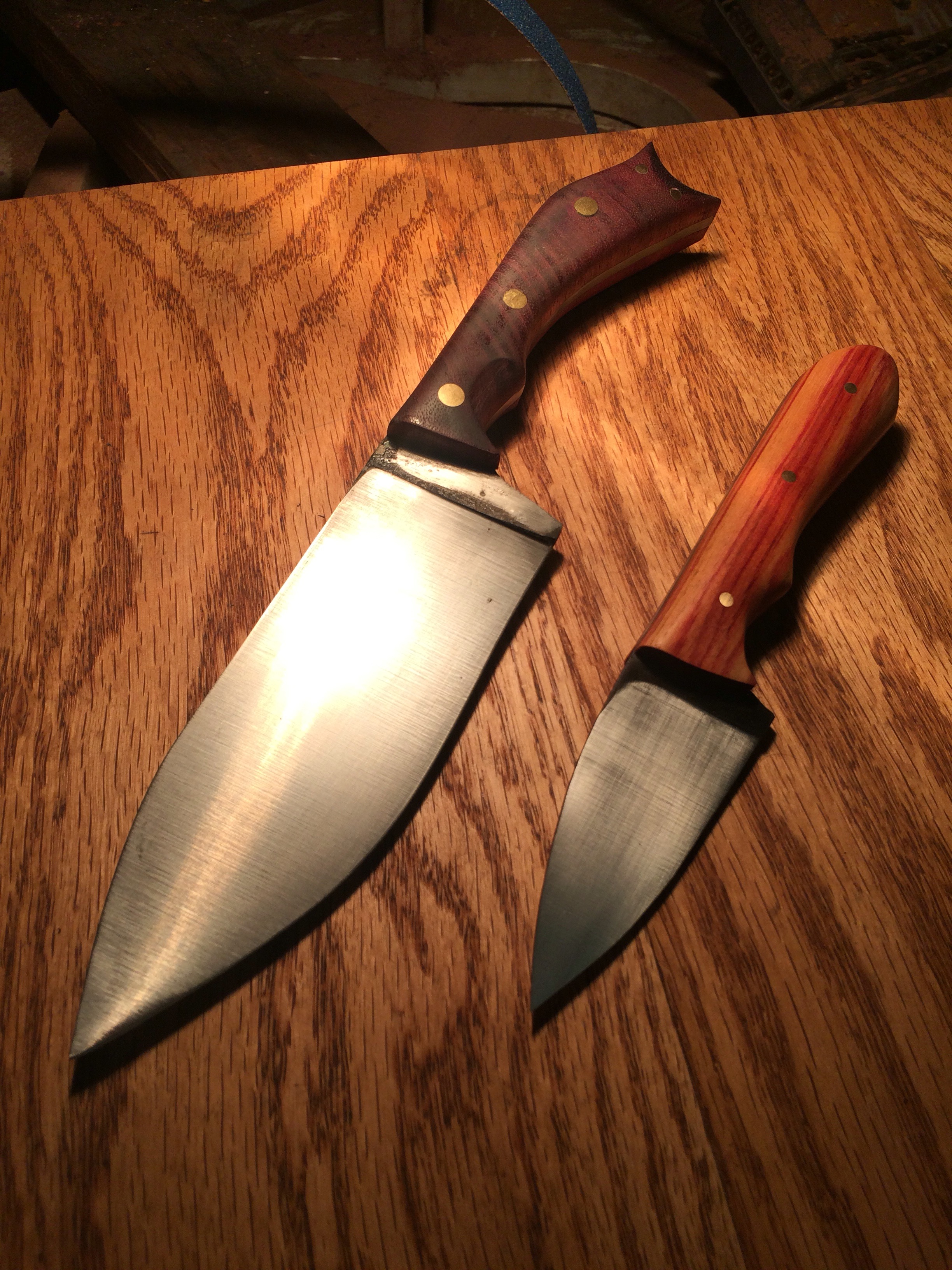
The Pas de Deux, a kitchen pair: 1095 spring steel

The feminine is Purple Heartwood with brass hardware

The masculine is Tulipwood with brass hardware


Embrace the space.  You and your partner, in whatever form they may take, will both shine.

Knifemaking: mistakes, tedium, pizza ovens, and the Cynewulf

“I’m not exactly sure what we’re doing here, so we’re going to figure this out by denial and error”

Frederick Pritchett, Jr.

I spent two years working in the warehouse of an auction company.  They specialize in used restaurant equipment.  All aspects, from tables and chair, mixers, slicers, refrigeration, the whole lot.  I kind of fell into this job and ended up managing the inventory and auctions.  But before that there was a lot of grease, dirt, rust, and burnt pizza…

A couple years ago I was in a tough place and I needed money.  A good friend of mine said I could come work for his auction company.  One of the first things they put me on was cleaning three commercial smokers.  They had spent three months festering in a hot warehouse and smelled of what I believe a sauna full of garbage trucks eating month old Vietnamese food would resemble.

It was here that I met Fred.  As I stood there with three stinking smokers, pondering my life’s decisions, the service tech came by and told me the best way to get those clean was to mix some bleach and ammonia together in a spray bottle and shake it till it got hot (“But don’t hold on to it for too long or it’s liable to explode”).  Then I was to saturate the interior, let it sit in the sun, and then hit it with the pressure washer that got up to two hundred degrees.  All while not breathing in the fumes.

I did all of these things and sure enough they got clean.  I hated myself a little bit.

The main thing I learned working here was that there are many ways to get things done.  Some ways are less insane than others, but then sometimes life calls for the insane.  Sometimes the insanity is all relative.

I also learned that in any sort of business one has to adapt to what makes money.  If that doesn’t happen then you’re dead.

One of the owners is second generation Italian and as it would follow many of the company’s customers were Italian.  They liked to support one of their own.  For awhile there were a lot of Italian restaurants opening up and these gentleman required pizza ovens.  Pizza ovens are heavy, expensive, and take up a lot of space.  Pizza stones for a double deck oven will set you back at least $600 and if not properly seasoned will crack or break.  It was decided that we would rebuild used ovens.

Here is where the adaptation of making a profit and the insane got together for a tumultuous marriage.  At first.  After awhile things settled in.  Fred was at the helm of this operation and we all moved bravely forward.

The first step was obtaining a used pizza oven.  We travelled far and wide.  One time Fred and I did a marathon drive to a closed restaurant in Florida, extracted a 3,000lb set of Baker’s Pride ovens, threw them on a trailer, and drove back.  Fred is really good at moving heavy things and makes it look effortless:  I’m pretty sure his ancestors built Stonehenge using nothing but Druid redneck ingenuity and several barrels of barley wine.

We would then strip it down to nothing.  Exterior paint was taken off and everything was sanded.  Everything.  For a solid month we cleaned out every Home Depot within a 20 mile radius of most of their abrasives.  Figuring out how to get the exterior paint off was tricky at first. Stripping the paint off the first oven we did was a bitch.  First we tried a blowtorch.  A pretty big one.  It didn’t work that well and made everyone smell of burnt pizza.  Then we tried every sort of angle grinder attachment known to the universe.  There was no quick way to do it.  All of the inner structural pieces had to be sanded as well.  Somebody would have to put on a paper suit and climb into the behemoth and sandblast it.

In the process of anything worth doing you encounter tedium at some point.  When tedium mixes with not knowing exactly what you are doing, self-doubt can settle in.  It becomes hard to focus and in this lapse of focus mistakes happen.  This is where many people either give up or figure it out.  We couldn’t give up because then nobody got paid.  Fred kept us all on task, for better or worse.

It is also in this tedium that you can find out a lot about yourself.  How you operate and what lies at the bottom of that self-doubt.  If you can be with that long enough you can start to blossom.  The things that used to hurt you start to help you.  I found myself making these really kick-ass playlists and began to appreciate the nuance of Barry Manilow.  When I got home completely covered in shit I would take a viking shower and cook myself something special.  All of the other side jobs I had became a pleasure.  I would see myself as a warrior, bravely defending the honor of the Oven of Pizza, and all of those who came before her.

I would go in and stare these things down everyday.  Sometimes it was overwhelming, sometimes time flew by.  Days of sanding, painting, polishing, going to the metal shop to have a piece refabricated, or having a special tap set ordered.  It was an adventure.  I’m glad Fred was in charge because I would have told the Italians to figure something else out.

Another area of tedium was polishing.  I spent many hours with a Scotch brite pad and 000 steel wool trying to make these things shine.  This was about the time Mr. Al joined us and as fate would reveal he is actually the Stainless Steel Whisperer….

10168183_783824618296889_6605906676728570069_n

After Fred put new burners and controls in they would be ready for delivery.  It was a sprawling process.  At the time I stopped working there, the process was down to a week and a half to two weeks, start to finish.  They ship them all over the country now.

 This is the lesson of the Cynewulf.  Life can be a sprawling, tedious process.  It can be hard to stick with something and not being able to see where it is taking you can make it harder.  Instead of seeing yourself as the warrior you start to see yourself as the oppressed.  Momentum can turn to stagnation and focus can lapse.  You begin to question your life decisions and maybe sometimes you hate yourself a little bit.

I find myself in these places more often than I’d like.  And what I’ve found is that it’s not necessarily a bad thing.

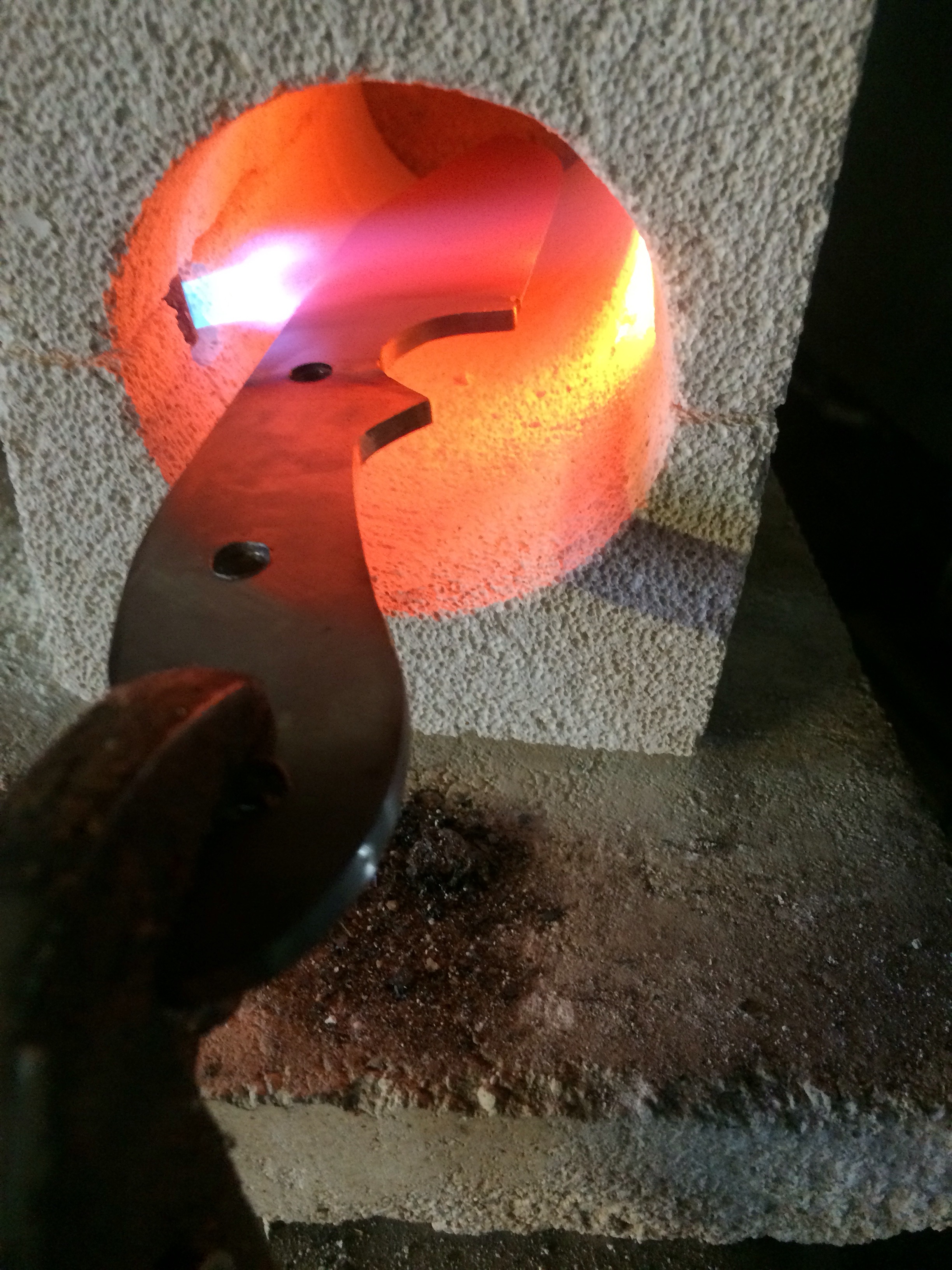
This blade took me on a journey.  I had to start over after I had spent quite a bit of time on it and I got really frustrated.  The name Cynewulf means “Royal Wolf”, which relates to the regal bearing and balance of this blade but also to the ability to not get stuck in one’s mistakes or complacent with one’s successes.  It’s quite large at 8 inches and 13 inches overall.  It was really tricky to heat treat in my little forge.  I hammered it through some 2×4’s just to make sure she was ready for the world.

1095 spring steel

A rough grind
Ready for the forge

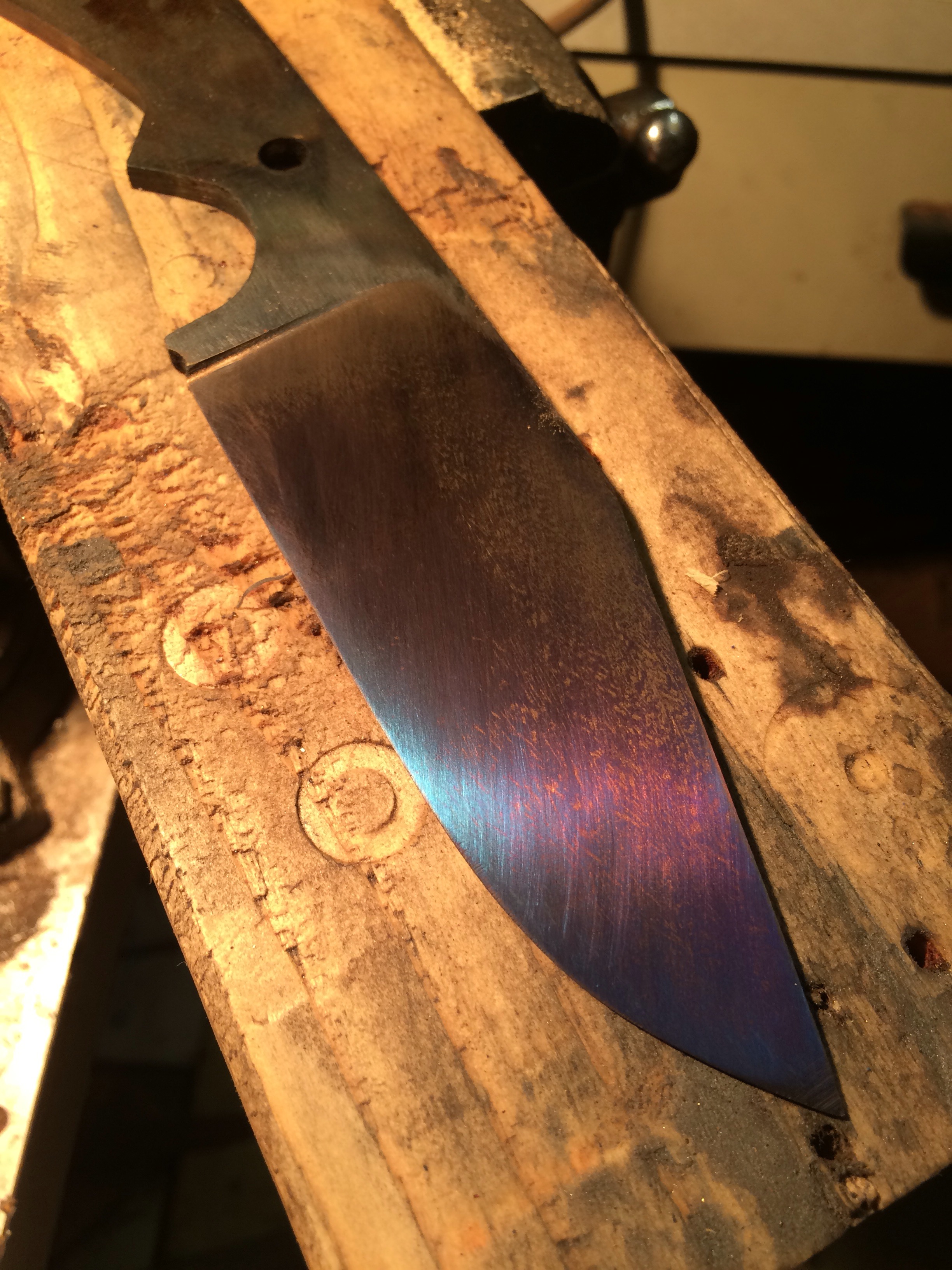
Phosphoric acid etch…

 The Cynewulf: 1095 spring steel with an acid etch, Cherry handle, and brass hardware. 


  The Cynewulf, with her fallen sister…

I gave this to my chef friend to try out and he ended up buying it on the condition that I customize it to his specifications, which I did.  You can already see the patina starting to reveal itself from the potatoes he sliced…

IMG_2887

Work through the tedium and pay attention your mistakes.  Even the kingliest and queenliest people make them and there are many possibilities in them.  There may be some pizza in it at the end…

Knifemaking: power in the small things and the Petit Poucet

“It has long been an axiom of mine that the little things are infinitely the most important.”

― Arthur Conan Doyle, The Memoirs of Sherlock Holmes


When I was twenty-one I took a summer job in a cabinet shop.  I was in between semesters of school and had made some pretty significant life changes, at least for a twenty-one year old.  I had transferred colleges and I decided I wanted a summer job where I would learn something useful.

This particular cabinet shop did custom work.  Everything was built to order.  The owner was a friend of my family’s.  On my first day I was introduced to everyone in the shop.  It was noisy in there, with all the fans and sawdust collection systems, and everyone heard my name as “Bernard” instead of “Ballard”.

I didn’t find this out until later, after everyone had been addressing me as Bernie for at least two weeks.  I was just happy to not be called college boy.

I was hired to sweep floors, which I did for approximately one hour on my first day.  After that hour I was handed a reciprocating saw and told to cut up a stack of pallets.  When they found I still had all of my fingers, they gave me other things to do not involving sweeping the floor.  From then on I did whatever was asked of me, still happier to be called Bernie than college boy.

I built drawers for desks to go in lawyers’ offices.  I would be on a crew of four guys to build an army of receptionist desks for a medical complex.  I built a mile of L-bracket to mount cabinets in an insurance building.  When you work in a shop with over a million dollars worth of tools and machinery there isn’t a whole lot that you can’t build.  The owner liked to make money and I can count the number of times he subcontracted jobs out on one hand.

This was one of the best summers of my life.  I didn’t hang out with anybody.  I didn’t go on any dates.  I got to work at 7:30a and left at 4:45p.  When I got home I would practice my horn for four hours in my parents’ basement and then go to sleep.  Then I would get up and do it all over again.

I found myself spending full days on a panel saw, a massive contraption designed to rip and crosscut full sheets of plywood.  It cut everything perfectly square.  You see these at Lowes and Home Depot but this machine made those look like Tinker Toys.  This particular one was made by a Nordic company that specialized in making badass cutting tools.  It cost about thirty grand and when it broke down they had to pay a company service tech from Pennsylvania $600 an hour to fix it, which included drive time.  Clearly we were all in the wrong business.

I was given a cut list for each job.  Some of these lists would be casework for an entire building, others just one or two pieces.  I cut all the cabinet pieces by hand, within a 1/64th of an inch, which by industry standards is a pretty large margin.  The real tricky bit was cutting cabinet doors and drawer fronts.  These cuts had to be cut short to accommodate for the laminate that would cover the side edges of the door.  This was to allow the doors to fully close once the edge had been covered in laminate and for the drawer fronts to have the proper reveals once installed.  When I would get to the doors and drawers on the cut list I would know to cut them between 1/16th and 1/32nd of an inch shorter than what was written, depending on the type of laminate being used.

I cut hundreds of these things without incident.  Then one day I screwed up.

The boss called me over.  Shit.

I had sent over four doors that I hadn’t cut short, in this instance it was 3/32nds.  They had been laminated, drilled, installed with ungodly priced hinges, cleaned and finished.

“Bernie, you fucked up.  Let me explain to you the depth of your fuckup.”

He proceeded to tell me that not only had I wasted my time, but I had also wasted the time of everyone involved in those doors, plus materials, wear and tear on machinery, saw blades, electricity, and by default, company time that we weren’t ever going to see again.  With everything involved those doors came to about $240.  A piece.  He instructed me to take them and throw them in the dumpster, but to do it one at a time, and to use that time to reflect on the breadth of my folly.

Four long trips to the dumpster.  I was mortified.  Everyone else thought this whole ordeal was hysterical.  I made sure to not overlook the doors and drawers in the future.

The summer came to an end.  I went back to school with a deeper appreciation for both higher education and the people who build the things that make life possible.

There is much power in the small things and sometimes you only find this when you overlook them.  Sometimes they are absolutely necessary.  Sometimes they make the world a bit sweeter.  Small acts of kindness to yourself and others, small acts of gratitude and compassion- these are the stuffs that can give the world its particular hue.

This is where the Petit Poucet comes in.  I have been designing kitchen knives and also watching Jacques Pepin cooking videos.  There was one of these that struck me where he had all these beautiful knives at his disposal, some quite large and impressive, but he prepared a gorgeous meal using only a six inch utility knife.  Petit Poucet roughly translates roughly to Tom Thumb, a very small person who was able to accomplish large things.  It’s important to not overlook the small things.  This is the lesson of the Petit Poucet, a small but mighty kitchen blade.

I started with a bar of 1095 spring steel

After rough grinding and heat treat.  Thankfully he didn’t warp.

Keeping it cool during finish grinding…

 I had some Bloodwood that I found to be striking the Petit Poucet: Acid etched 1095 spring steel, Bloodwood handle, and brass hardware.


Mind the small things- the big things will turn out that much better…and you will save four trips to the dumpster.

P.S.- the man I worked for was possibly the best boss I’ve ever had, and one of the most decent men I’ve ever known.  We still talk from time to time.  He keeps saying he has a place for me in his business and asks me how I am with finance.  If he only knew…

Knifemaking: presence, vulnerability, and the Forester

“Take the time to know
How alone you are in this world
Just to find
Death is on your mind
As you stand still, you realize where you are
In her world
Aged and bright
My moon after the tide”

Craft Spells- Komorebi

(you can read about the initial inspiration for the Forester here)

I love the forest.  I’m fortunate to live in a larger city that is in close proximity to the woods.  I have good friends who live on farms in rural wooded areas.  I occasionally house-sit for one of my good friends who lives out in the sticks and I will tell you that as a city person there isn’t anything much better than being able to wake up to a place like this:

IMG_2509

I think what makes the forest such a special place these days is that it gently brings you into the moment.  Not all at once, and not all of the time.  Sometimes I go into the woods and all I can think about is how I am going to get my health insurance paid or why I didn’t wash my dishes before I came.  Both of these are valid concerns and also a prime example of not being with yourself, or being present- how am I supposed to experience the here and now when I am consumed with shit that will be dealt with later?  It’s a thing: once you start noticing that you aren’t being present with yourself you can start to work on it.

When the presence does happen it’s quite wonderful.  It’s as if you can see what you are doing and where you are going without any judgement.  I try to capture those moments.  There’s a vulnerability in the forest because you are so open.  Everything is.  And it’s empowering and humbling.  There is no posturing and no bravado.  You can feel your place in things and it feels so safe.  At least for me.  These are the places where you can really feel your being: There’s a word in Japanese called komorebi.  Literally translated it means “sunshine filtering through the trees”.  This page explains komorebi a bit better than my understanding of the depth of it permits me.  What I do know is that it conveys a sense of wonder at something that would be there whether we are present to observe it or not.  It just is.  I dig that.

The seasons of the woods: summer…
IMG_1849 And autumn when the leaves fall:IMG_1591And winter:IMG_1615And spring: IMG_1788

This is where the Forester comes in.  Something that that looks like it just stepped out of the woods, without pretension or affectation.  Something to help you be present with yourself and to find the power and connectedness in being vulnerable.


I found a green cutting board that I thought would be interesting to work with.  I liked the idea of being able to take something green with me when I couldn’t get to the woods.

…and I hated it.  I though it was ugly and it wouldn’t sand up or polish the way I wanted it to.  So I cut it off and put an oak handle on instead.

IMG_2276

She is made with O1 tool steel, white Oak handle scales, and brass hardware.  She was bought by one of my good friend’s father, who is a bit of a Forester himself.

FullSizeRender 12
May wherever you are be where you are supposed to be.  This is the lesson of the Forester.

Knifemaking: the Lioness, revisited

“The stuff we make don’t go bad”

“The ugly dog barks the longest”

Tray Eppes: potter, musician, fully present citizen of the Universe

(you can find the initial crafting of the Lioness here)

So a number of years ago one of my best friends asked me if I wanted to play a gig with him and his godfather.  It was a Christmas parade in a small town about two hours away.  We were both in music school and played near any gig we could get.  Neither of had cars at the time and a big ass Dodge truck piloted by a gentleman with a large beard pulled up.  This was Tray.  On the way we stopped at a jazz club, had a few cold ones, and heard some badass tunes.  We got to Tray’s farm at around 2am and he showed me his guitar rig (at full blast).  I went to sleep to the sound of coyotes howling.  I got up and Tray’s wife had made us smoked venison with Hollandaise sauce on a lightly toasted English muffin.  We drove to town and played brass band versions of Christmas songs and it was a blast.

We played those parades for the next couple of years.  We spent a New Years out there.  As I recall we drank gin and sat in the outdoor hot tub in front of a fire the size of Rhode Island.  I make sure to keep in touch with Tray and his wife.

A couple months ago I was standing in the middle of a field working security for a country music concert, alone with my thoughts due to the fact that most of the audience was in the beer tent and there wasn’t much securing to do.  In those moments I often find myself thinking about places I’d rather be and in this case I would have rather been, well, almost anywhere else.  I decided I would call Tray and see how he made a living making the things he makes: killer pottery.

He told me about selling pottery to the Amish.  The Amish don’t have any possessions that are purely decorative. If there are pictures on the wall, it is most likely a Bible verse written in a modest calligraphy.  Likewise, nothing is frivolously decorated.  This particular group, Tray was telling me, used white dishes.  Tray also told me that white pottery is a bit more labor intensive than his normal work and the Amish are the only ones who ask for it.  So he can make a large batch of it and have it on hand and not have to fool with it for awhile.  He was explaining to the Amish man he can make it and sell it years later.

“Ahh”, said the Amish man.  “Not like spoilt cow’s milk.”

This was when he told me the stuff we make doesn’t spoil.  You can go back and rework things that you aren’t happy with.  I’ve had a few proverbial ugly dogs barking at me and recently I’ve been reworking those.   And it’s not limited to just pottery, or knives, or music…just because you were one way yesterday doesn’t mean that’s how you have to be today.

Tray also ordered a knife and a sheath.  I made him this:

11865294_1446420832353922_2449722474390312358_o

For the Lioness I found the blade to be too thick.  I went and ground down the bevel, which in turn improved the balance of the blade.  I wasn’t happy with the finish so I took care of that as well.  All of this came from a gentle place.  Nothing is going to spoil.

FullSizeRender 29

O1 tool steel, Cherrywood handle, and brass hardware

FullSizeRender 30

FullSizeRender 31

The nice thing about refinishing a wooden handle (or wooden anything) is that the grain is so much more prominent due to the permeation of the finishing oil.  The grain pops much more grandly than it did the first time around.  I see it as a little gift for going back and trying to make it better.

FullSizeRender 32

I also smoothed and polished up the tang.

Tray and a much younger me

Tray and a much younger me

Check out Tray’s site at here and drop him a line

Knifemaking: honor, integrity, and the Hound

Both sides of my family were landless sharecroppers and mountain people from as far back as I can remember…What did I receive from this lineage?  Things I believe to be very valuable: a good raw intellect and a good tough body…A sense of honor that results in a touchiness common to our people…When the only thing you own is your sense of personal honor, you tend to protect it at all costs.

Eric L. Haney, Inside Delta Force

This blade was initially a commission from another very dear friend of mine.  He asked for a knife that was based in a sort of old-world honor.  A sort of honor that is maybe not seen so much today, at least not on the surface of things.  Something that may get lost in performance reports and email threads.  Something that isn’t tied to how much money you do or do not make, what deity you do or do not pray to, what color your skin may or may not be, and completely independent of whatever gender with which you happen to identify.  A sort of goodness that comes from having a place in this world, of knowing deep within your being that you deserve to be here and that no one can take that away from you.  He asked that it be called the Hound and I got to work.

There are times in my life when I have felt empty and hollow, like something was missing.  I tried filling this with all sorts of things- material things, a busy schedule, pharmaceuticals, and overindulgences of food and drink.  What was actually missing at those times was a personal bearing.  In more difficult times I had traded my honor for things that were fleeting, for a sense of security, and for a feeling of belonging.  When you have something to ground yourself in and can carry yourself in esteem, the aforementioned things will find their way to you, though at times it may feel like you are a thousand miles away from any of them.  No one gives this feeling to you.  Some people have this from an early age, others have to find it, and still others go through hell and many trials by fire to figure out what it is for them.  Some people have been beaten down so far that they aren’t aware that it even exists- but still it can be theirs.

When you act and speak from this place it brings an integrity and truth to the things you do.  A resonance that permeates everything- like an orchestra, where a balance of intonation, volume, harmony, and depth of emotion makes a gorgeous sonic mass.  There may be chaos all around you but within you everything moves in synch, just like the bows of a symphony orchestra.

I “finished” this blade some months ago and was never quite happy with it.  I’ve since made a blade of the same bearing for my friend, the Hound Mark II (here is a picture).  I didn’t find the initial bevel work on this knife to be satisfactory and I didn’t come to this conclusion till after I had hardened the steel.  One has to be careful grinding on hardened steel: if it gets too hot the steel loses it’s temper.  So with a cup of ice water I took the bevel to where I was happy with it.

It’s important to not give away our honor, as it can be the thing that gets us through when there may not be anything else.  As it follows, I added a sturdy grip on the Hound.  I wanted it to melt into the hand and hold fast for times when holding anything may be challenging.  
  
Profiled, ground, and sanded  After hardening…
During tempering…    Roughing in contours…Cherrywood for balance….
Mostly sanded…  The Hound


The Hound was made from O1 tool steel with a Cherrywood handle and brass rivets.  Hold to your honor.

If you find you would like to purchase one of my blades or have me craft one for you, email me or check out my Etsy store.   It may end up on this blog…