Knifemaking: a little bit at a time and the Scout

“Ready or not
I hear a clock tock ticking away
Though I’d asked for those hands to stay in place”

Correatown- “Everything, All at Once”

I wake up most mornings and wonder how I am going to get everything done.  I think about all the things I need to do, the things I want to do, and feel a little bit of shame over the things I’ve been meaning to do but haven’t done yet.  There is this mental space where I run through my entire life- where I’m born, I live, and I die, all before I even get out of bed.

At the bottom of all of the mental chatter there is a gentle little voice that says to do it a little bit at a time.  It also says that there is plenty of time.  Sometimes it gets drowned out but I know it’s there if I listen for it.  This is what gets me going.

For the past ten or so years I’ve taken walks in the woods.  As things get busier I don’t get out there as often as I’d like.  It’s an exercise in not trying to do everything all at once.  You walk the woods a little bit at a time, and the notion of trying to do anything other than that feels rather asinine.  I try to approach the things I have to do in this fashion.  It doesn’t always work and I get frustrated a lot.  A lot.  Sometimes the feeling of there not being enough time screams at me so loudly that I have to go home and take a nap.  Most times I’m not able to do that, in which case I try to take it back to the forest.  In being with that feeling I find that there usually is enough time.  If not, I try to remember that I am human being and not a human doing.

Attempting to do everything all at once is a sort of self-defeating behavior.  This type of all-or-nothing thinking tends to overwhelm and makes the idea of quitting into a rather attractive proposition.  Buying into this thinking gets you regret and remorse, but only after it has robbed you of your precious moments and there literally isn’t enough time.

This is the lesson of the Scout.  To walk your forest one step at a time.  It’s easy to get pulled off your path.  There are a thousand things that demand our attention and can pull us off of our center.  We can’t always give what we love the attention and care we would like and sometimes it’s easier to give up.  Don’t give up.  Do it a little bit at a time and it will all get done.

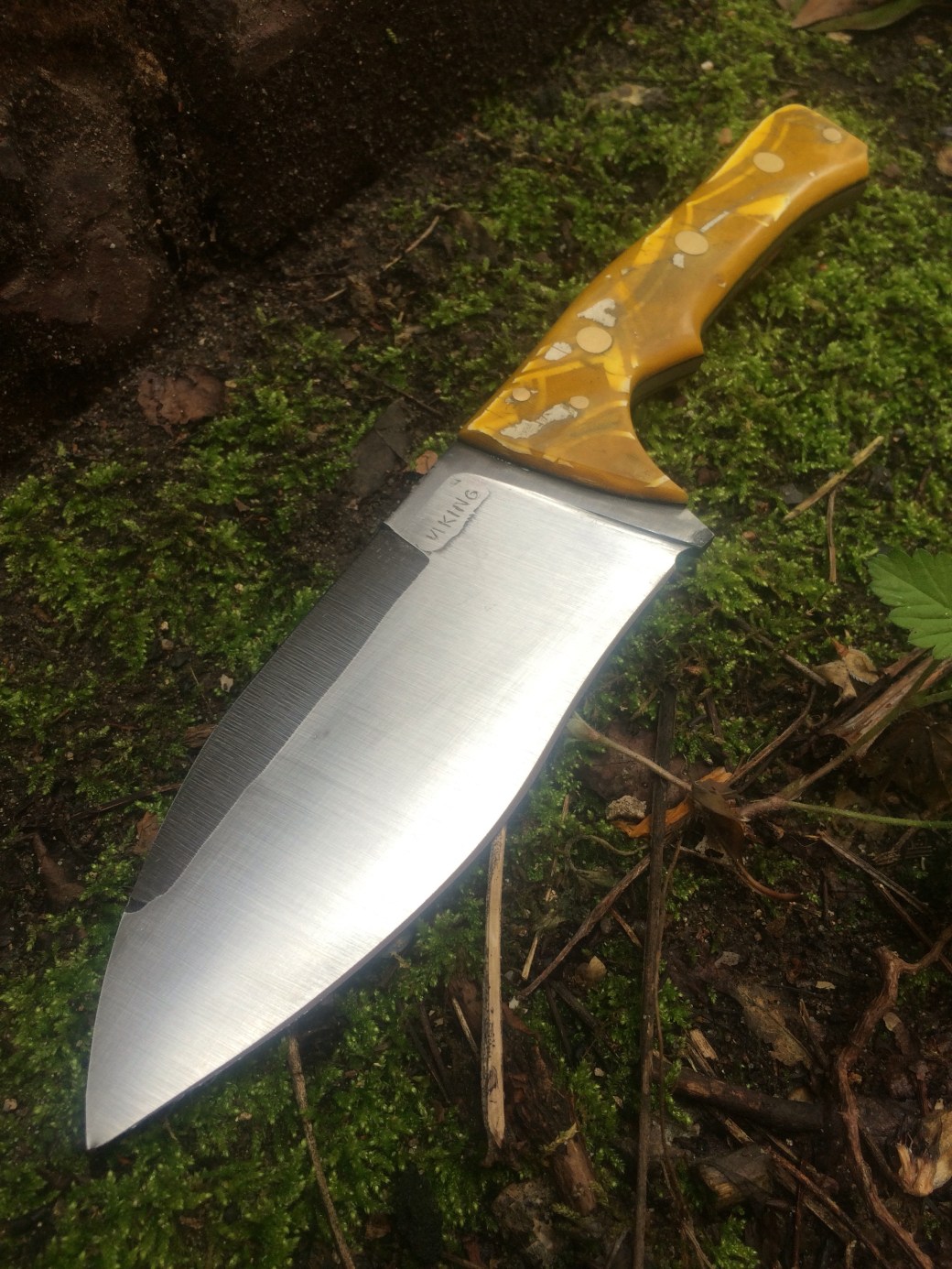
I wanted to make something that reminded me of this little area where I like to walk:

IMG_3400.JPG

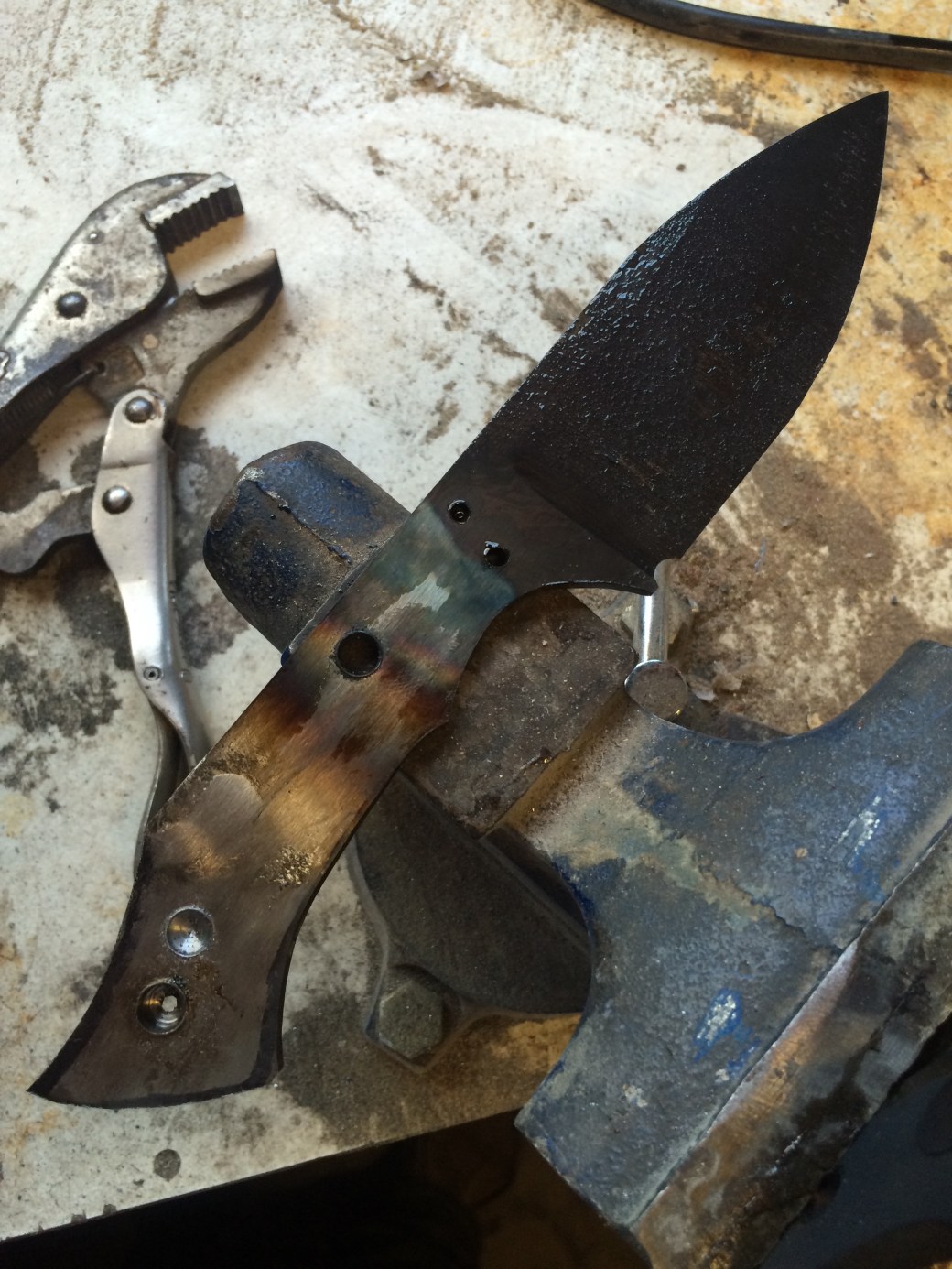
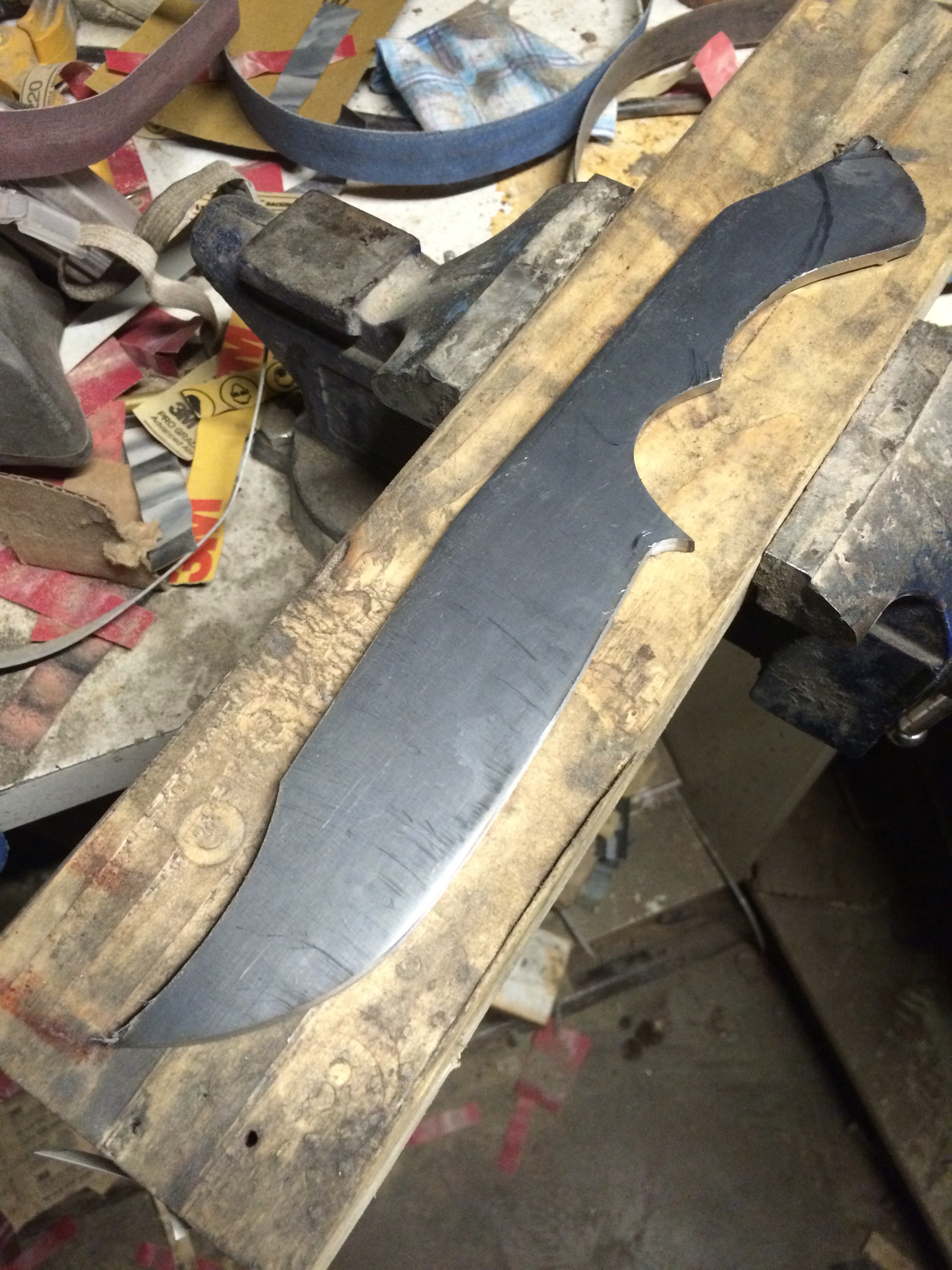
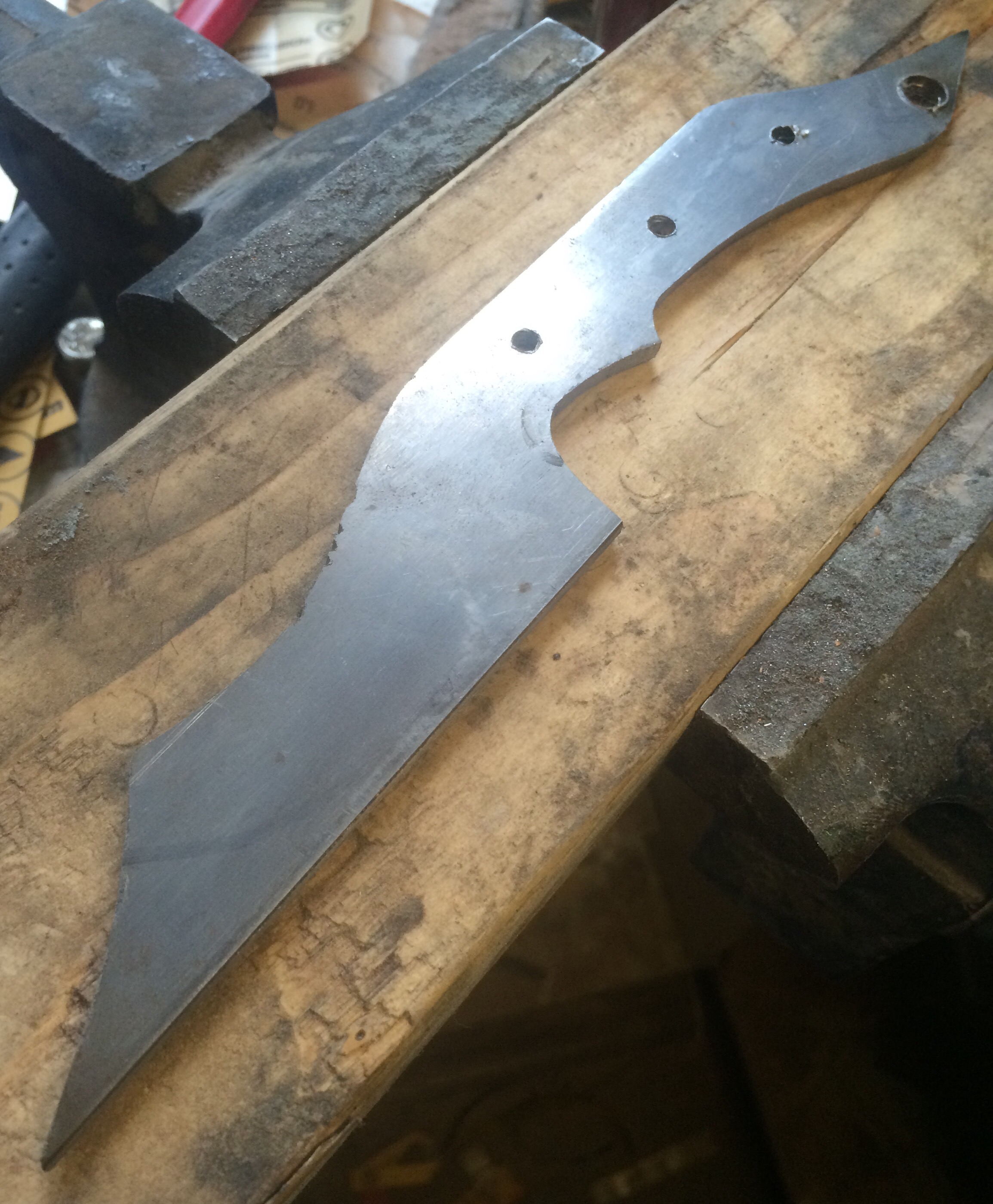
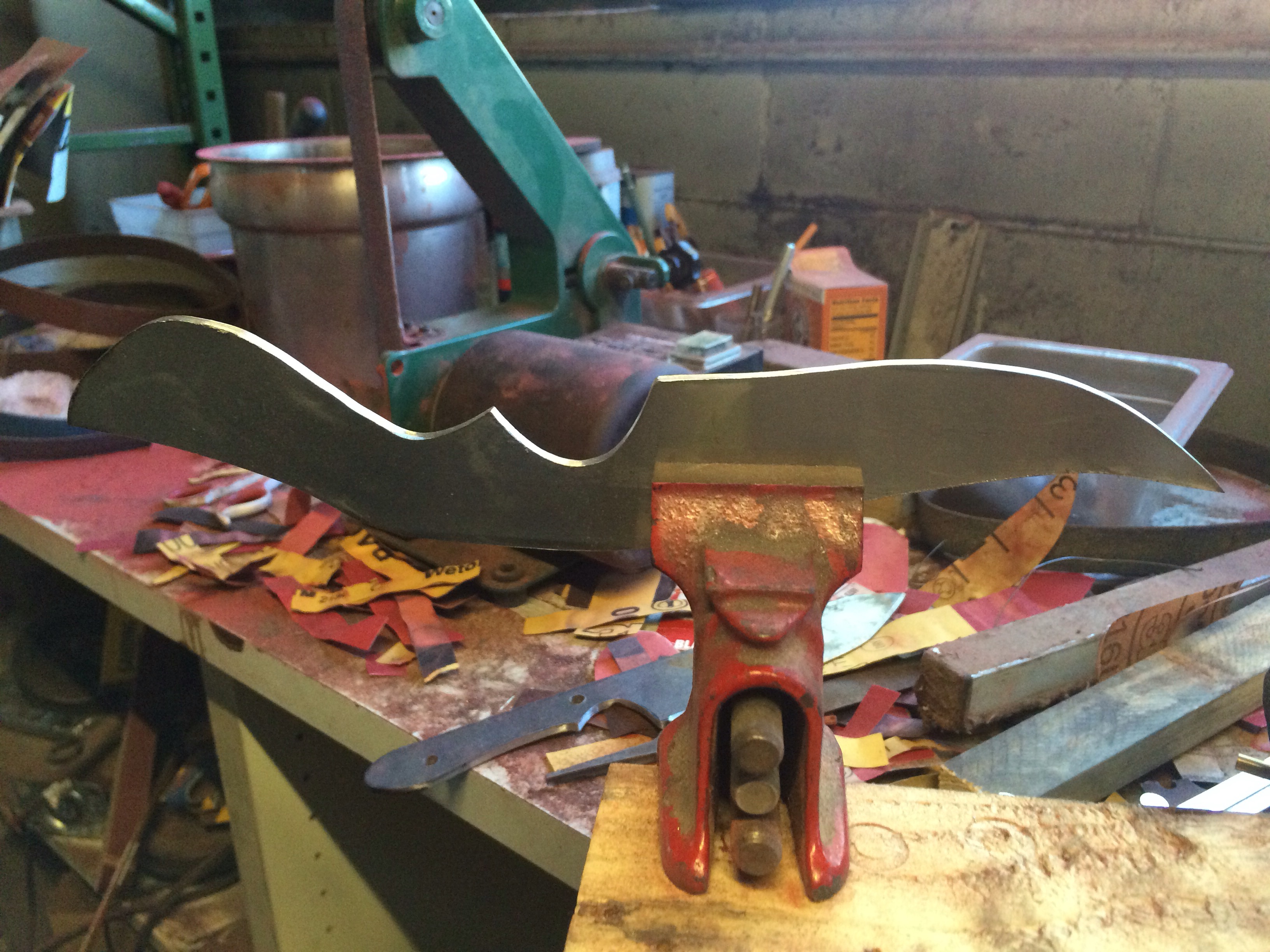
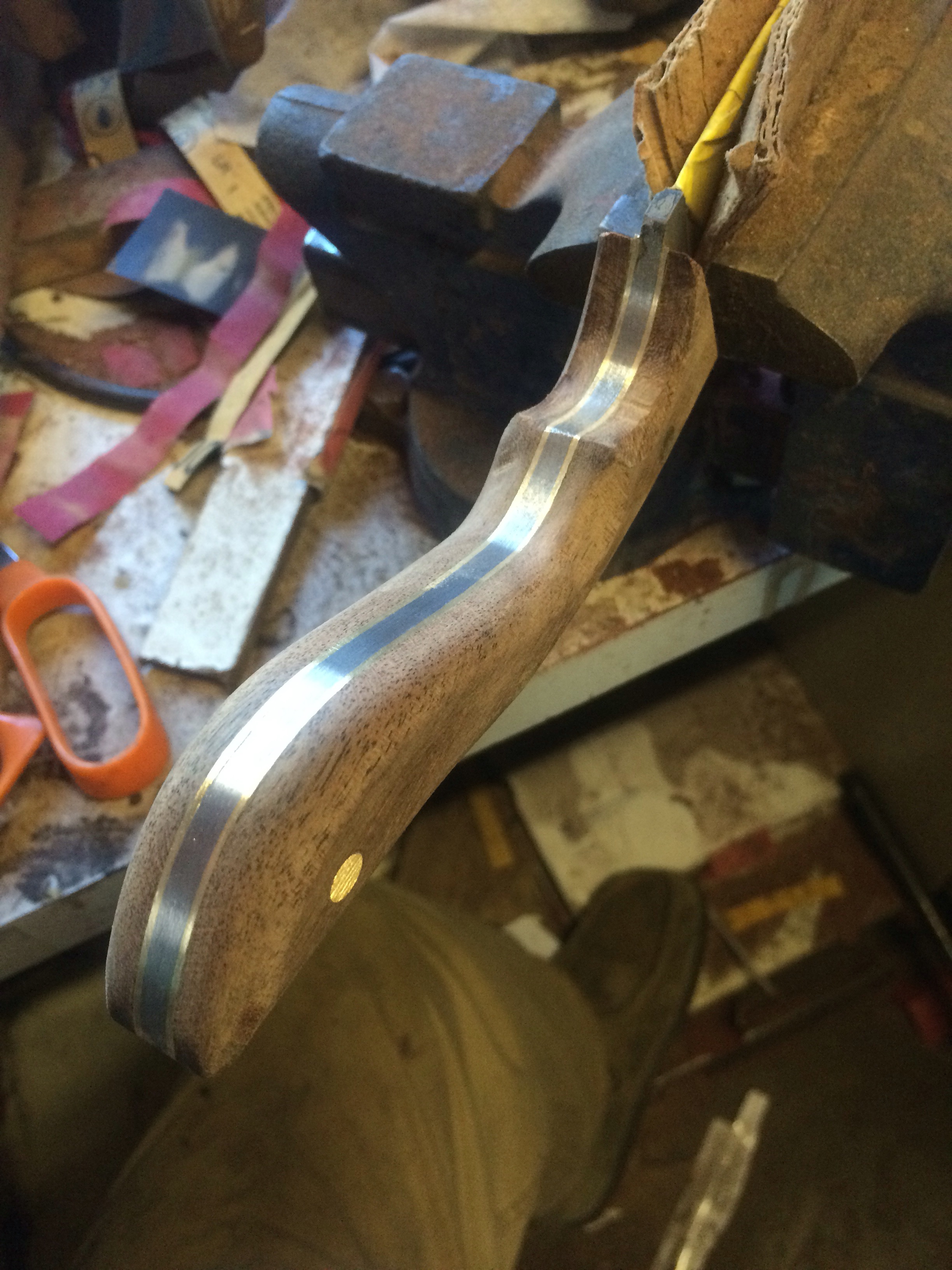
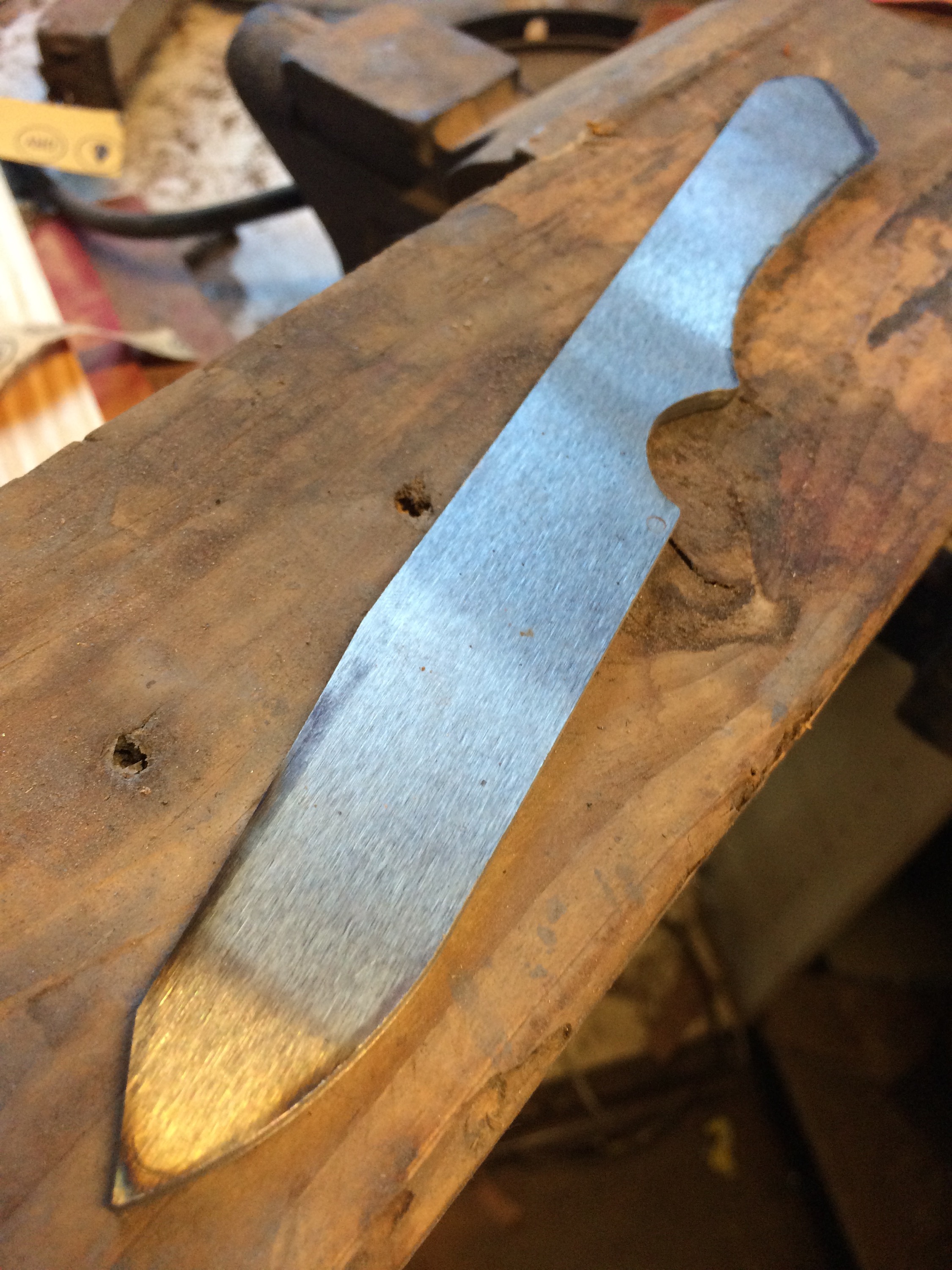
I started with O1 tool steel and bushcraft style design with a handle that winds like the stream above.  I usually use 1095 because it’s cheap and I have a lot of it but I like using O1 for the Chromium in it- it polishes up nicely

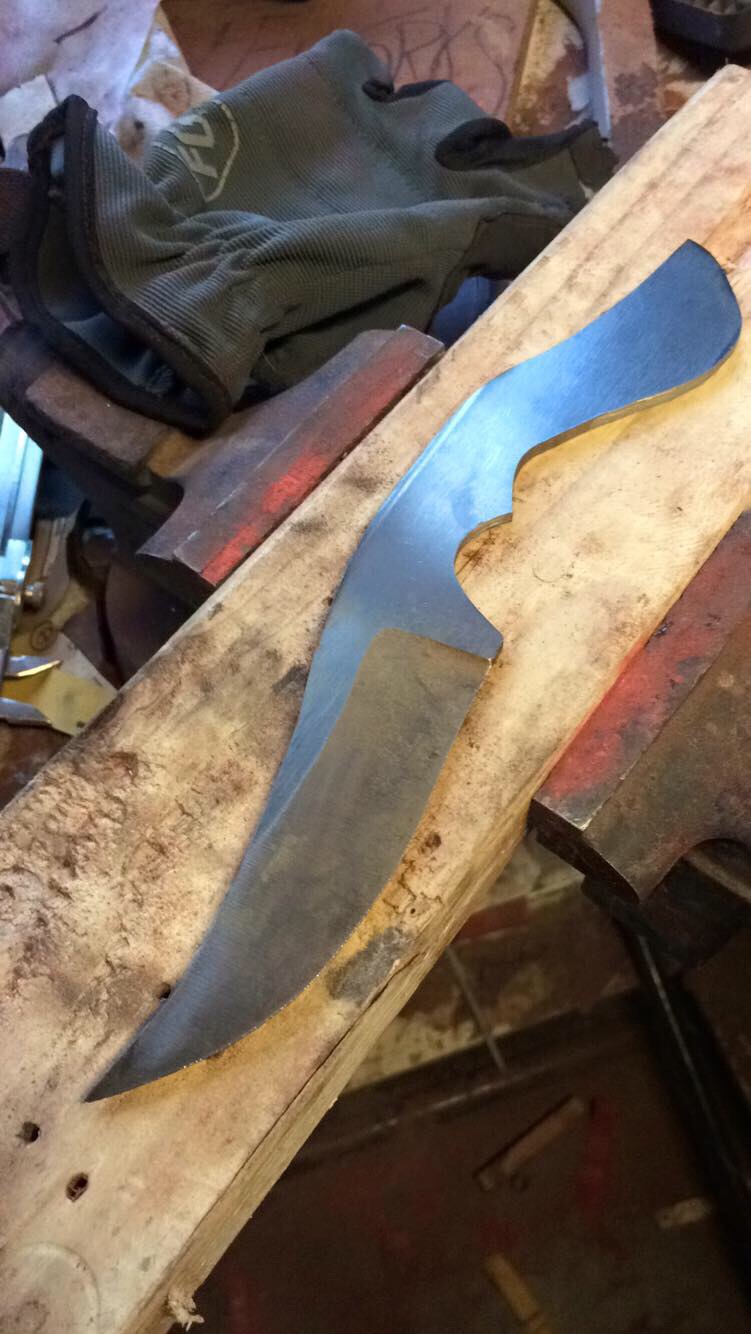
Hardened:

FullSizeRender 8

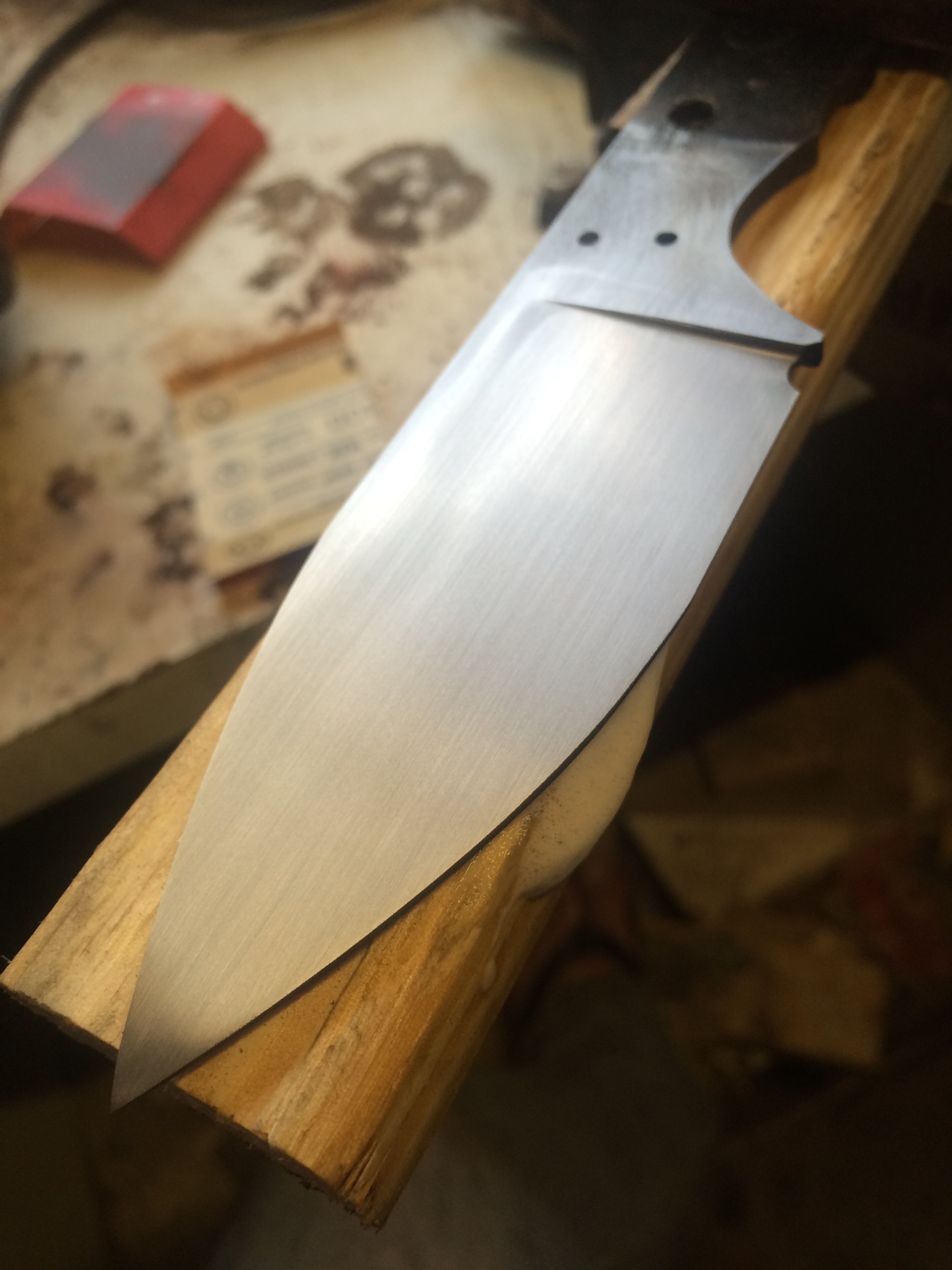
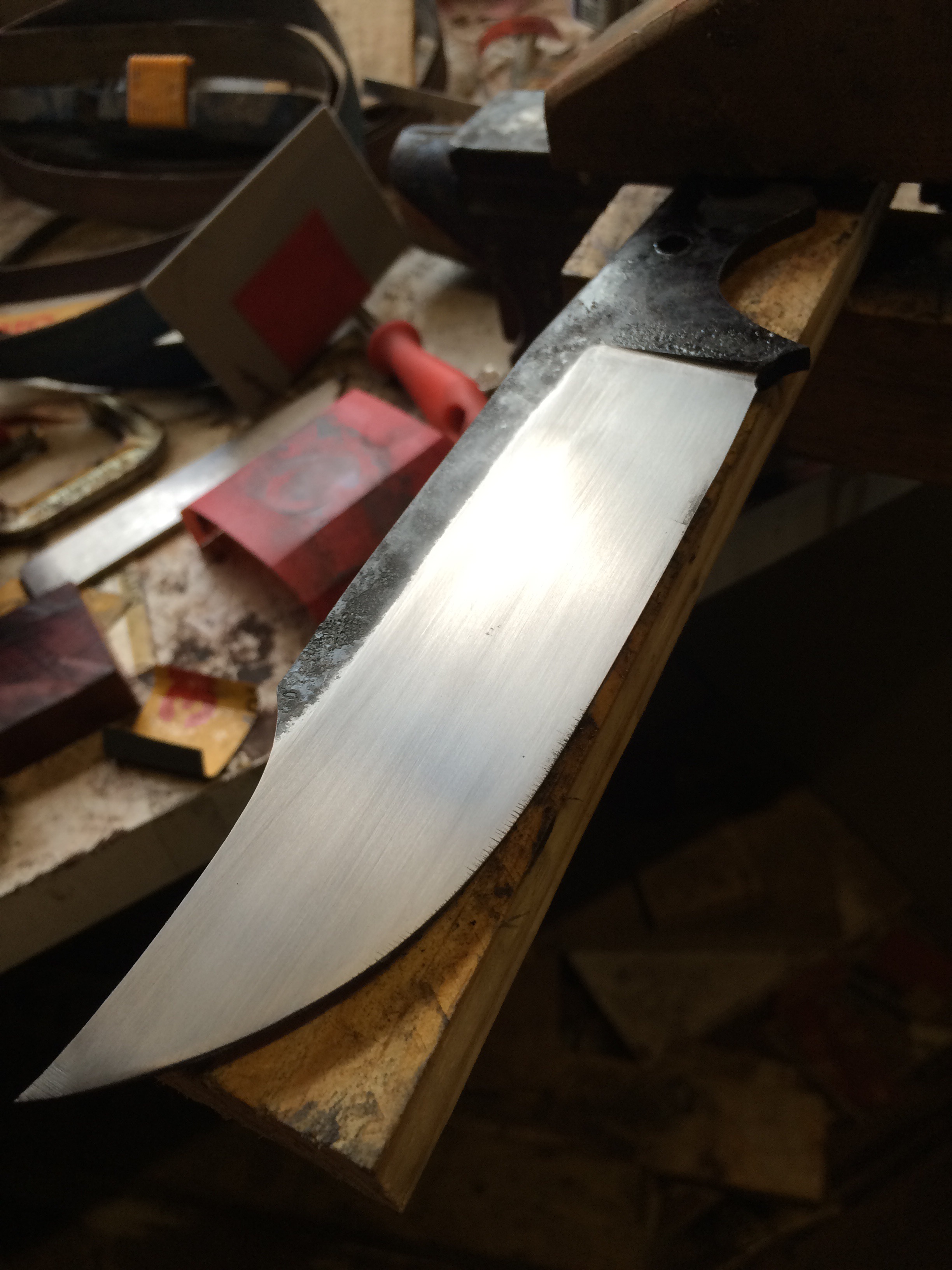
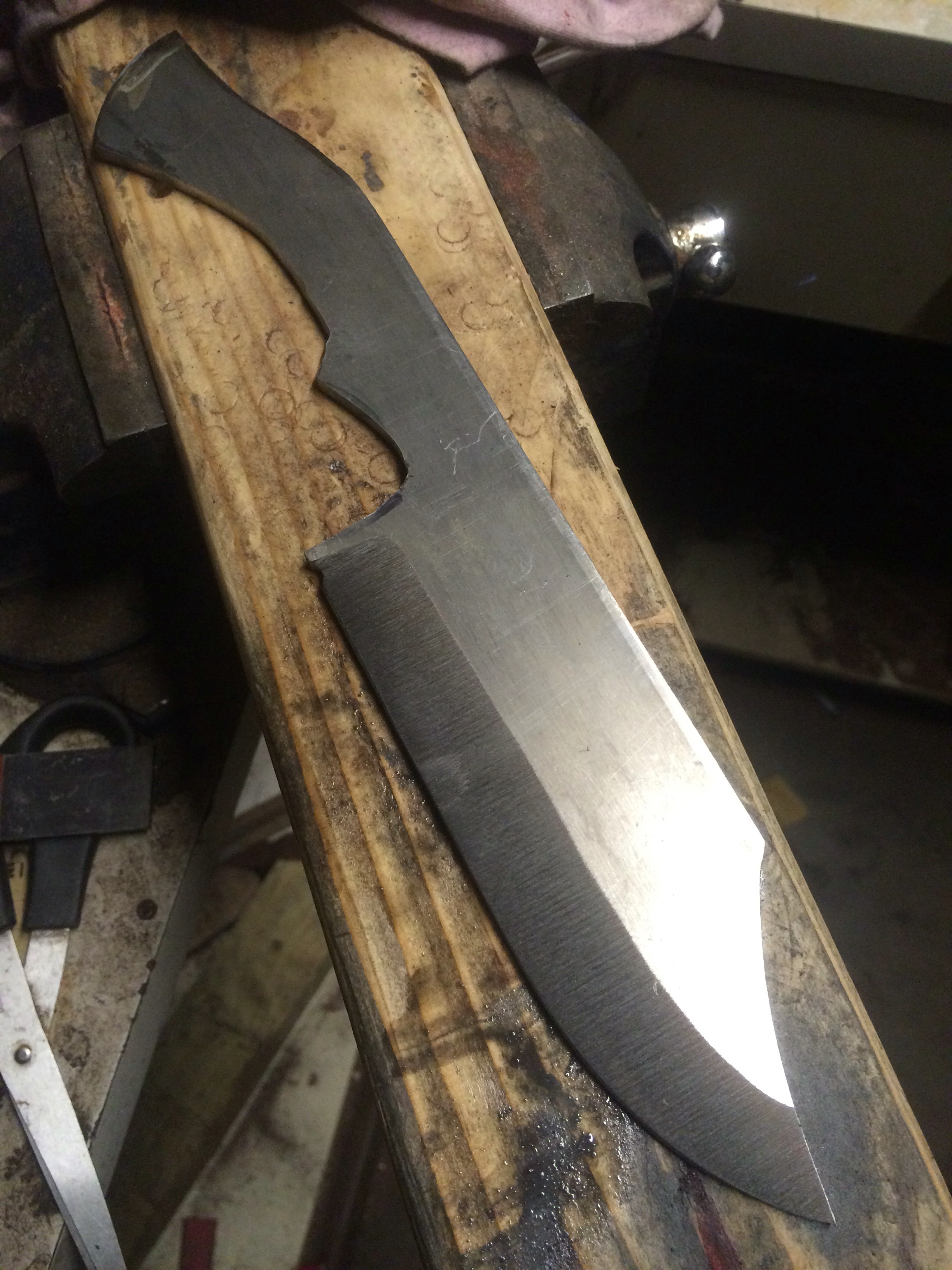
Sanded.  Not too shiny because he is built to be used:

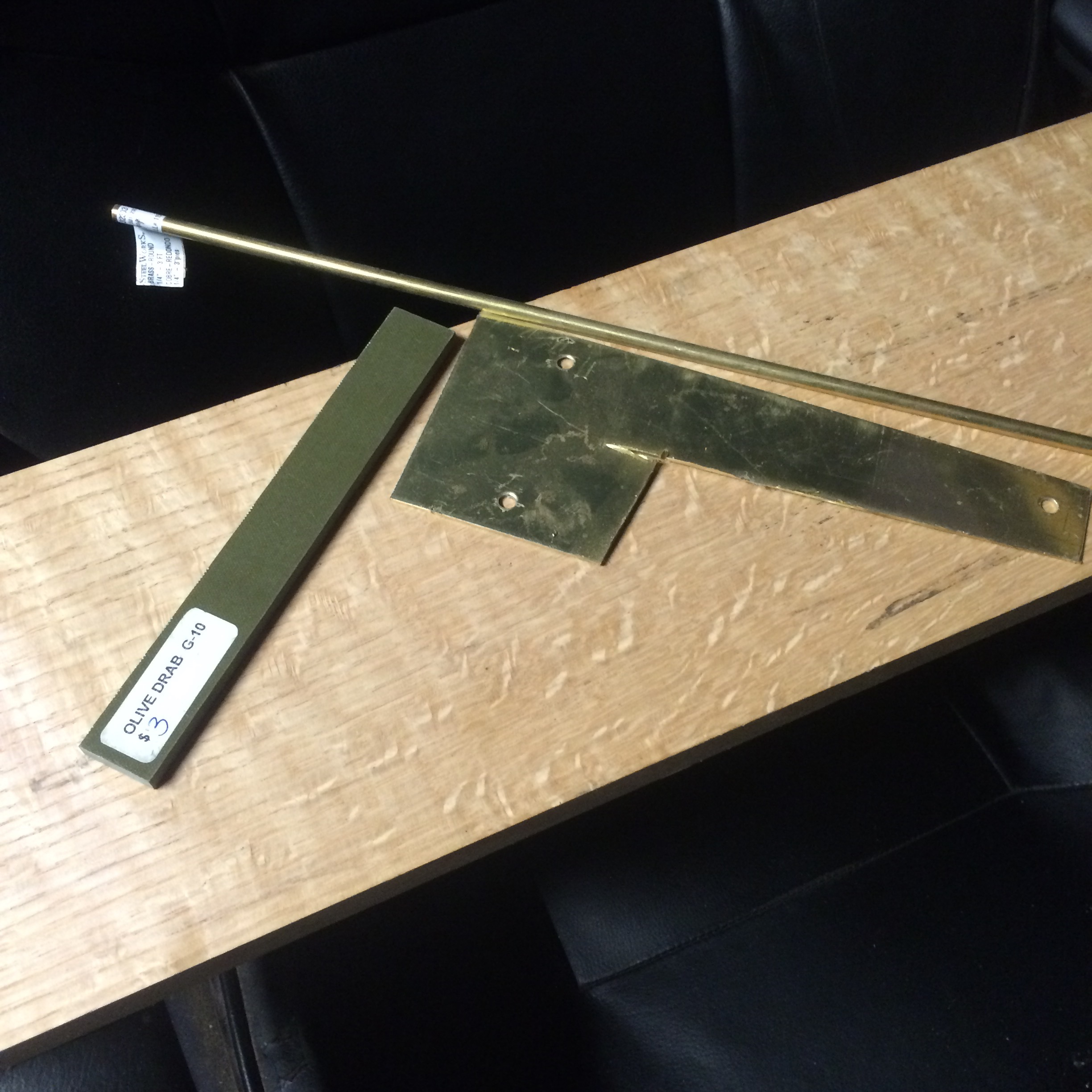
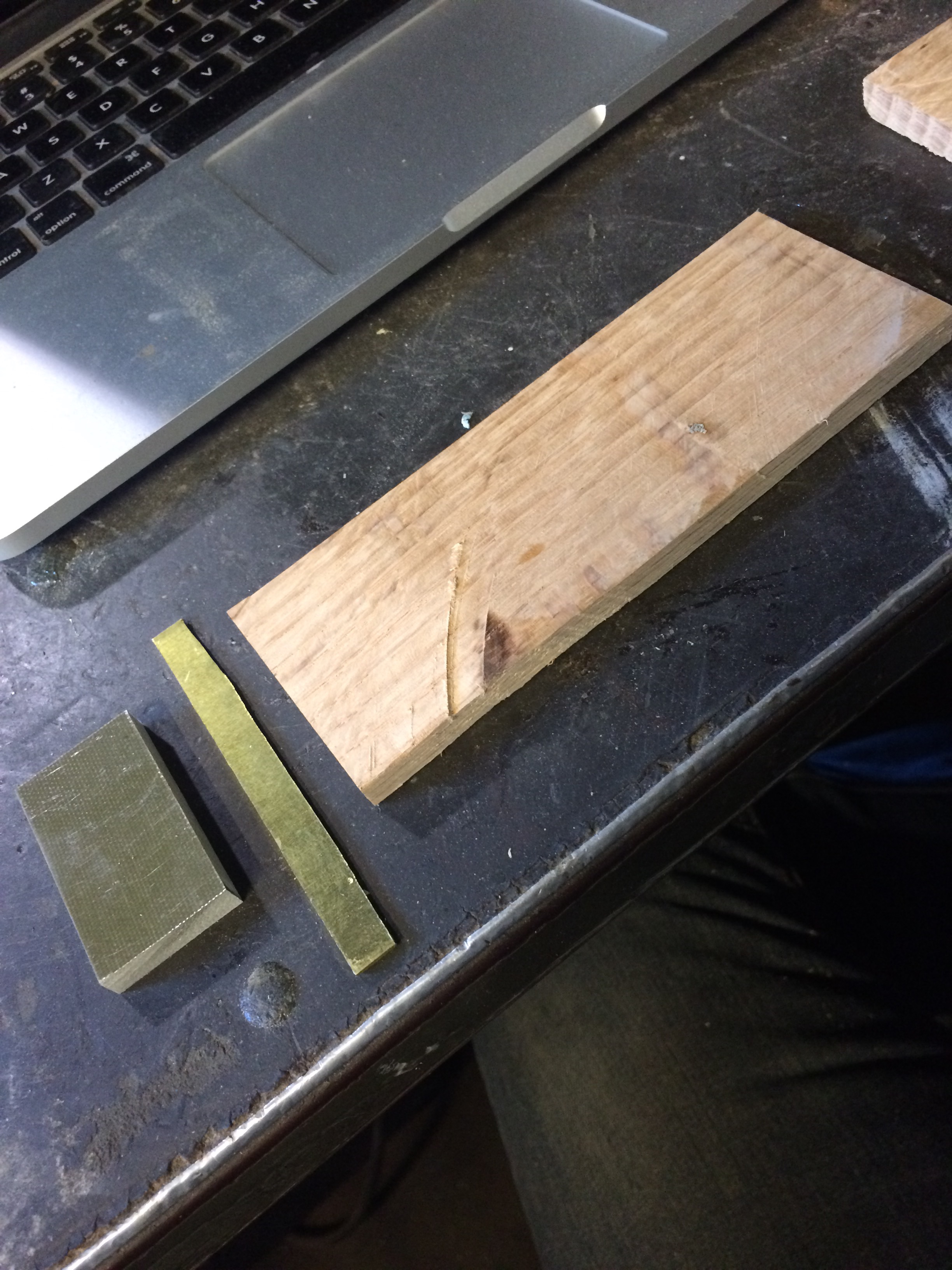
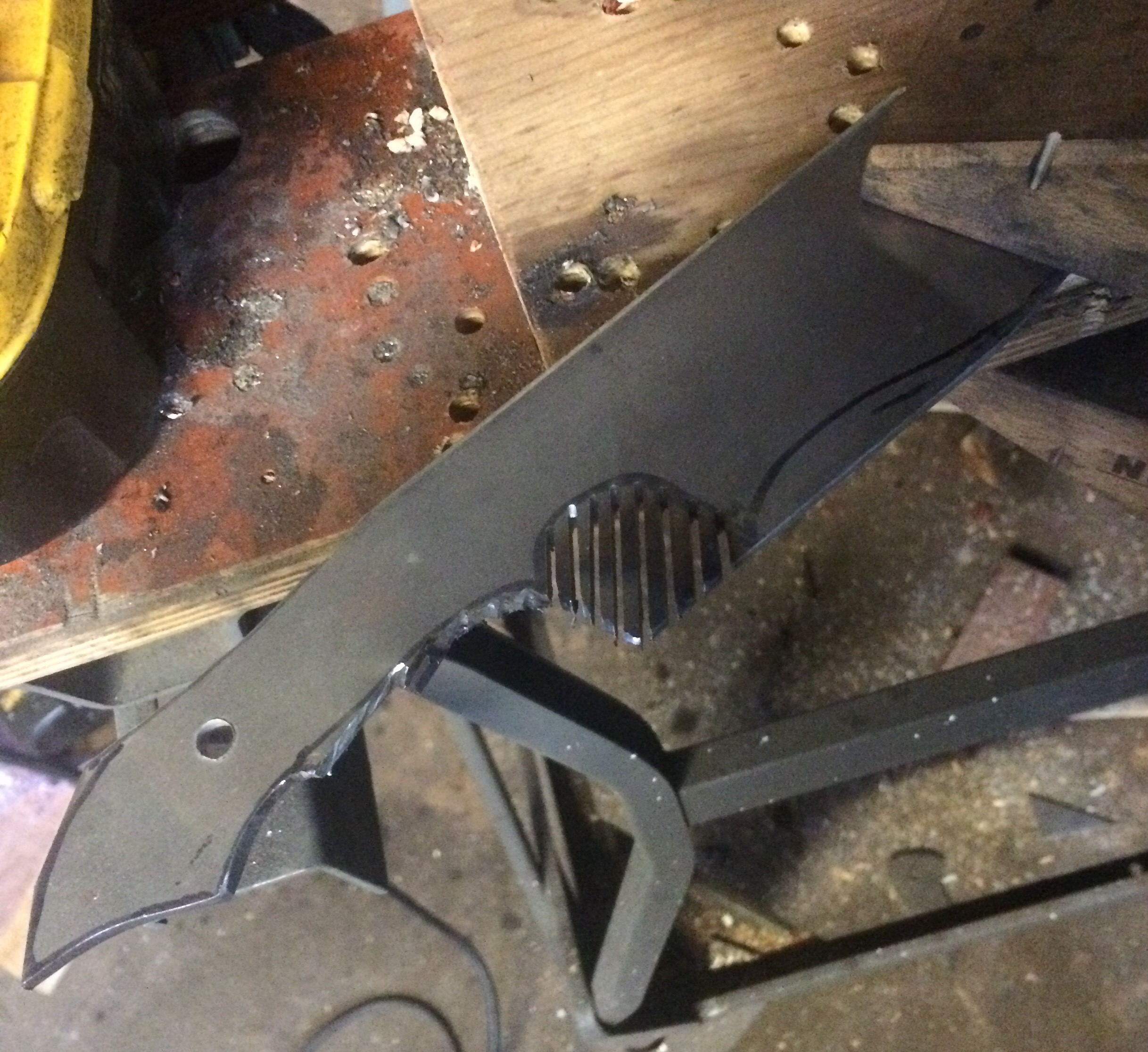
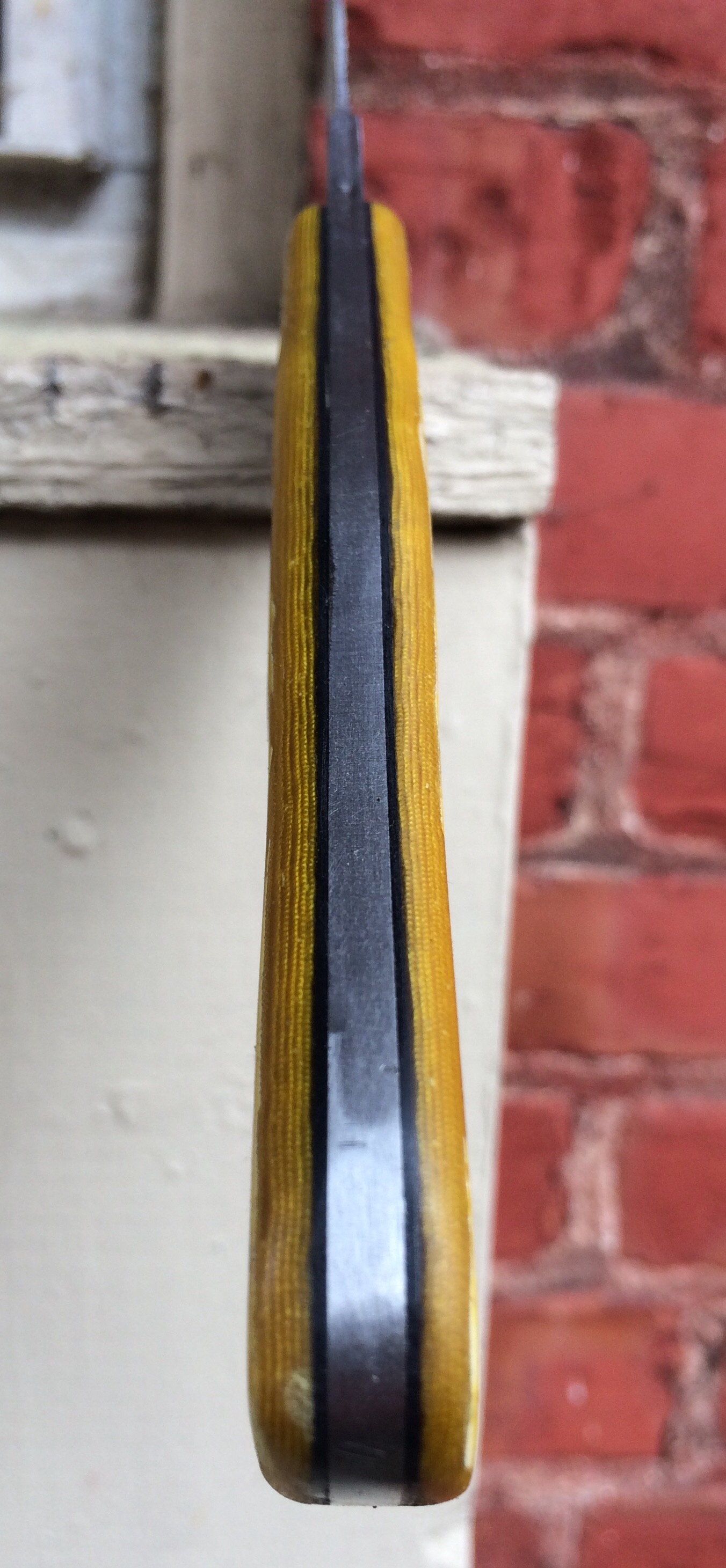
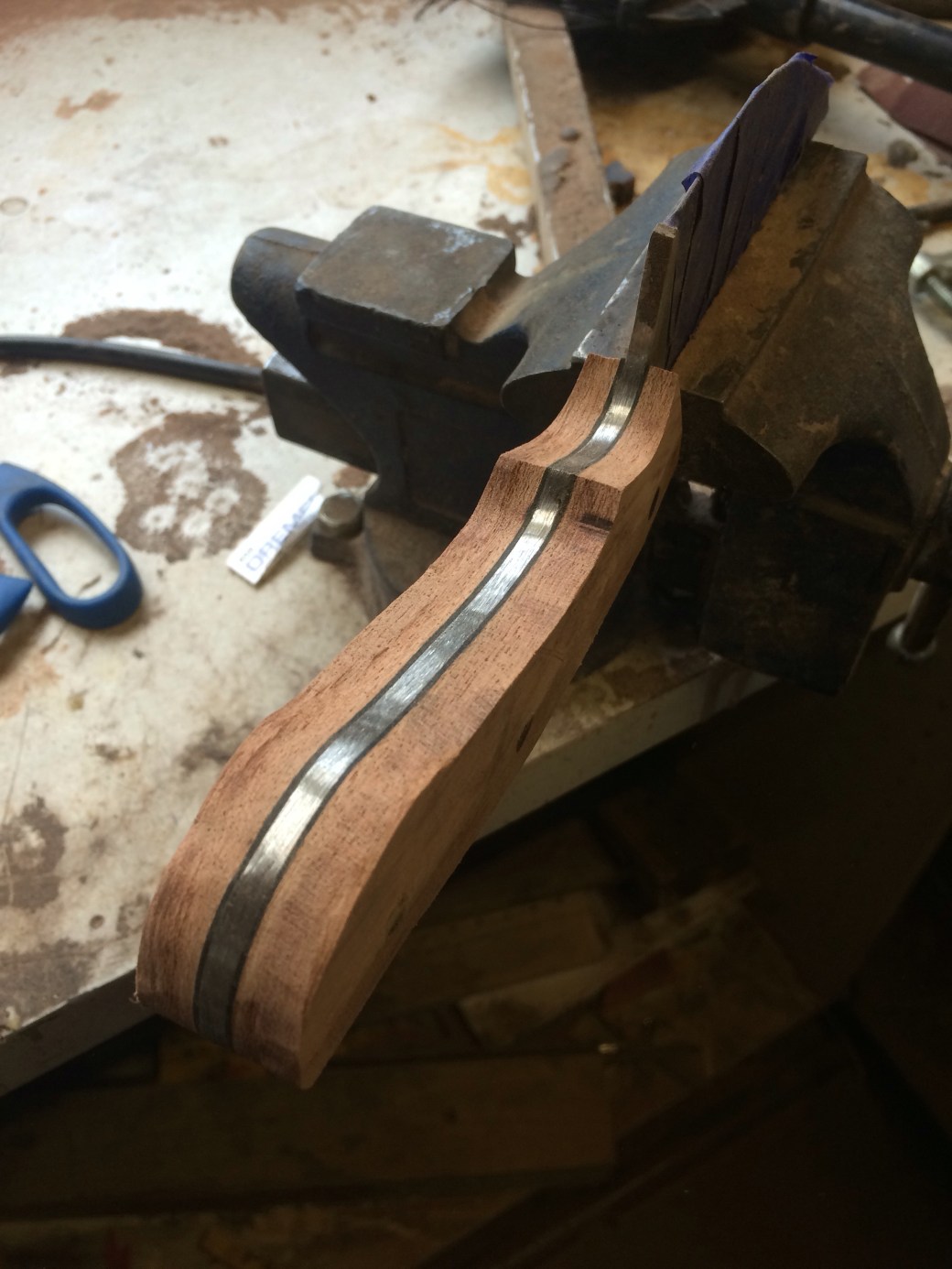
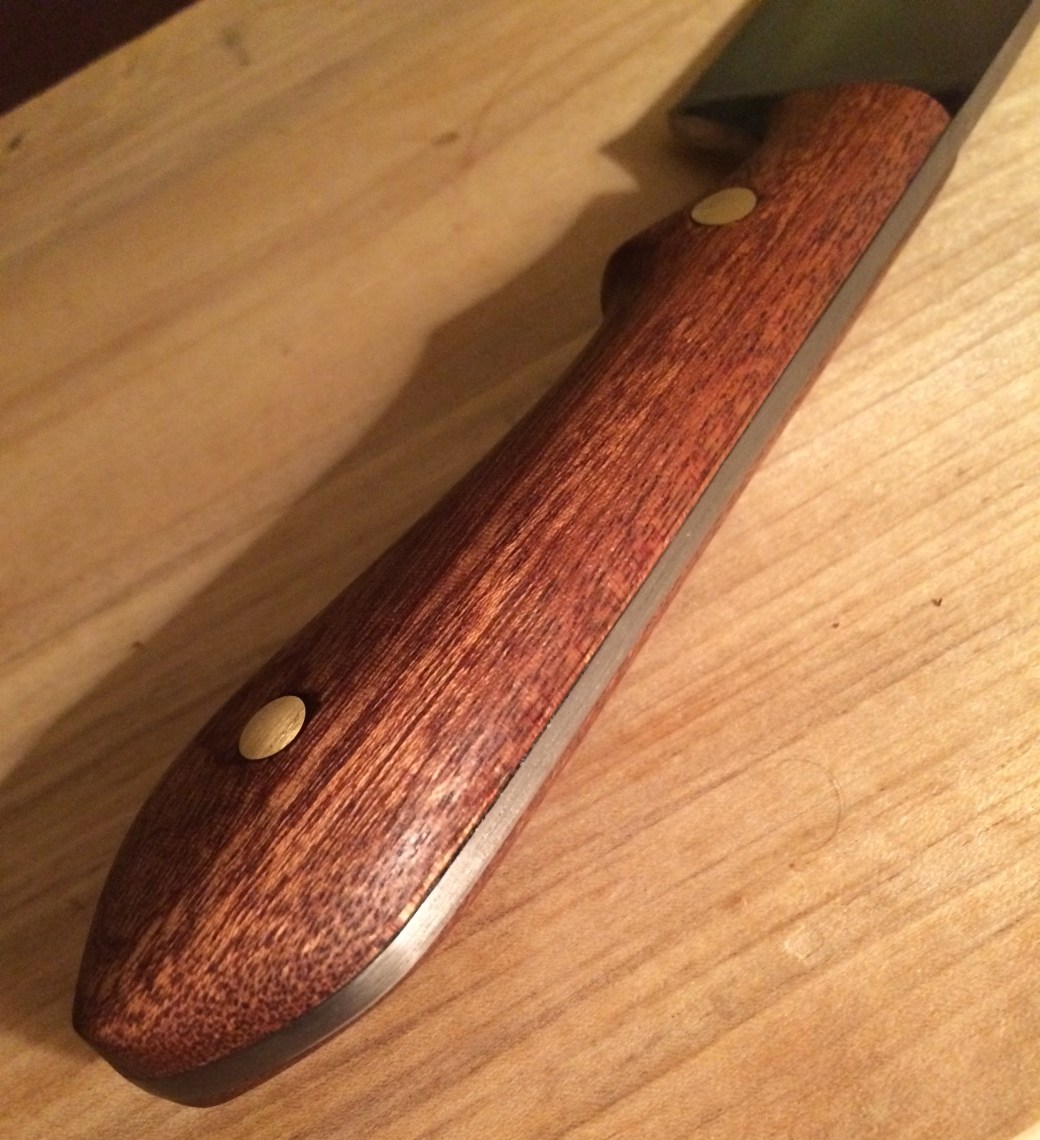
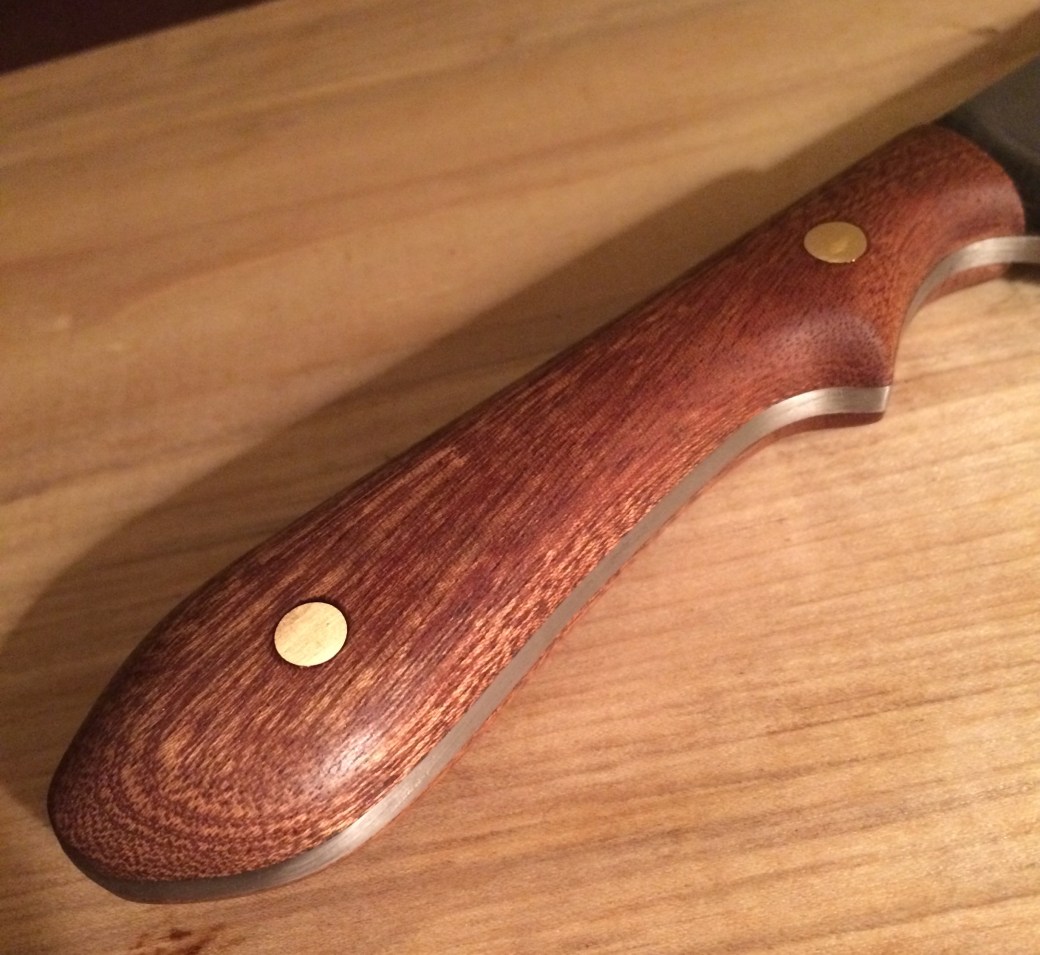
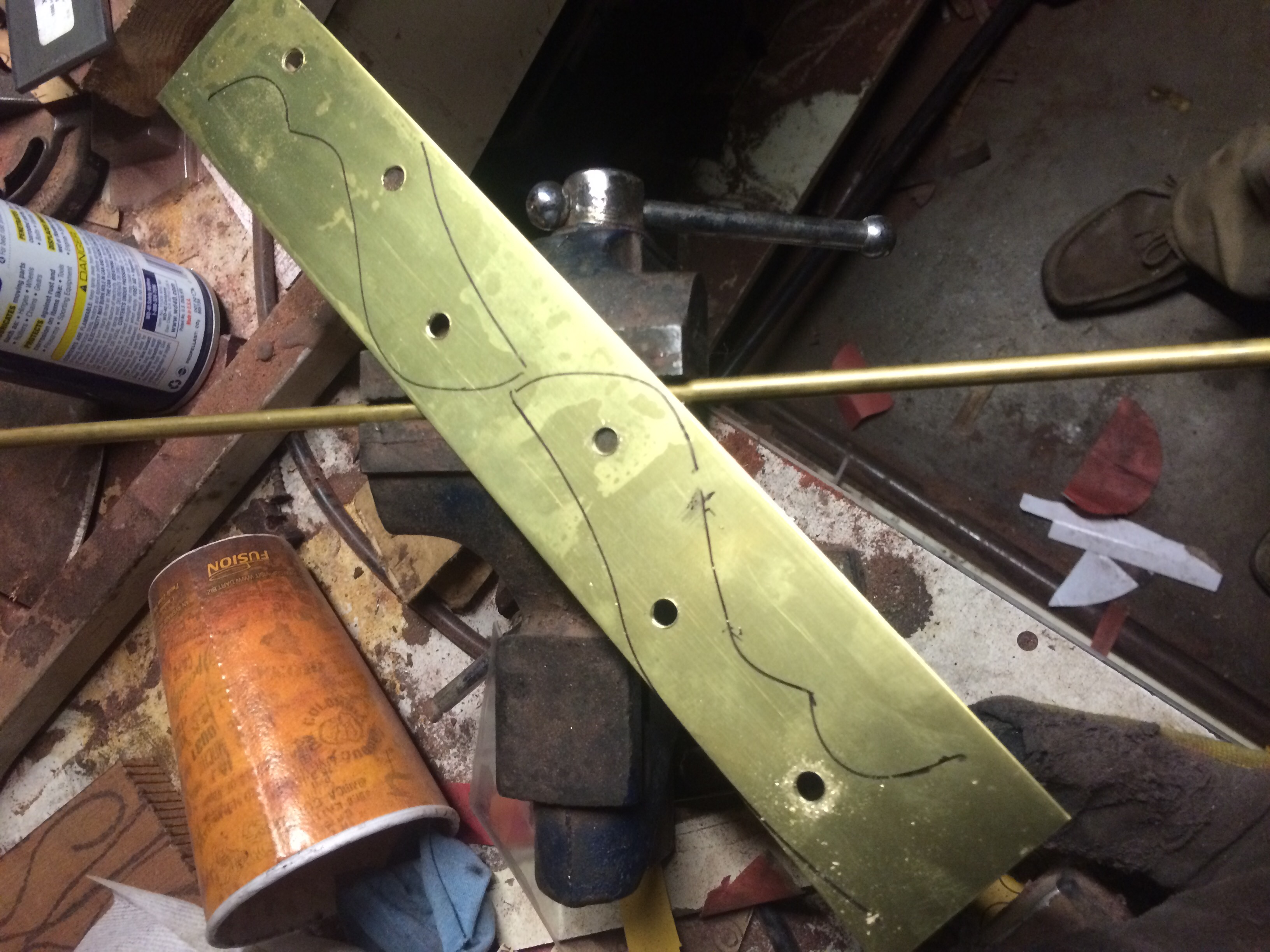
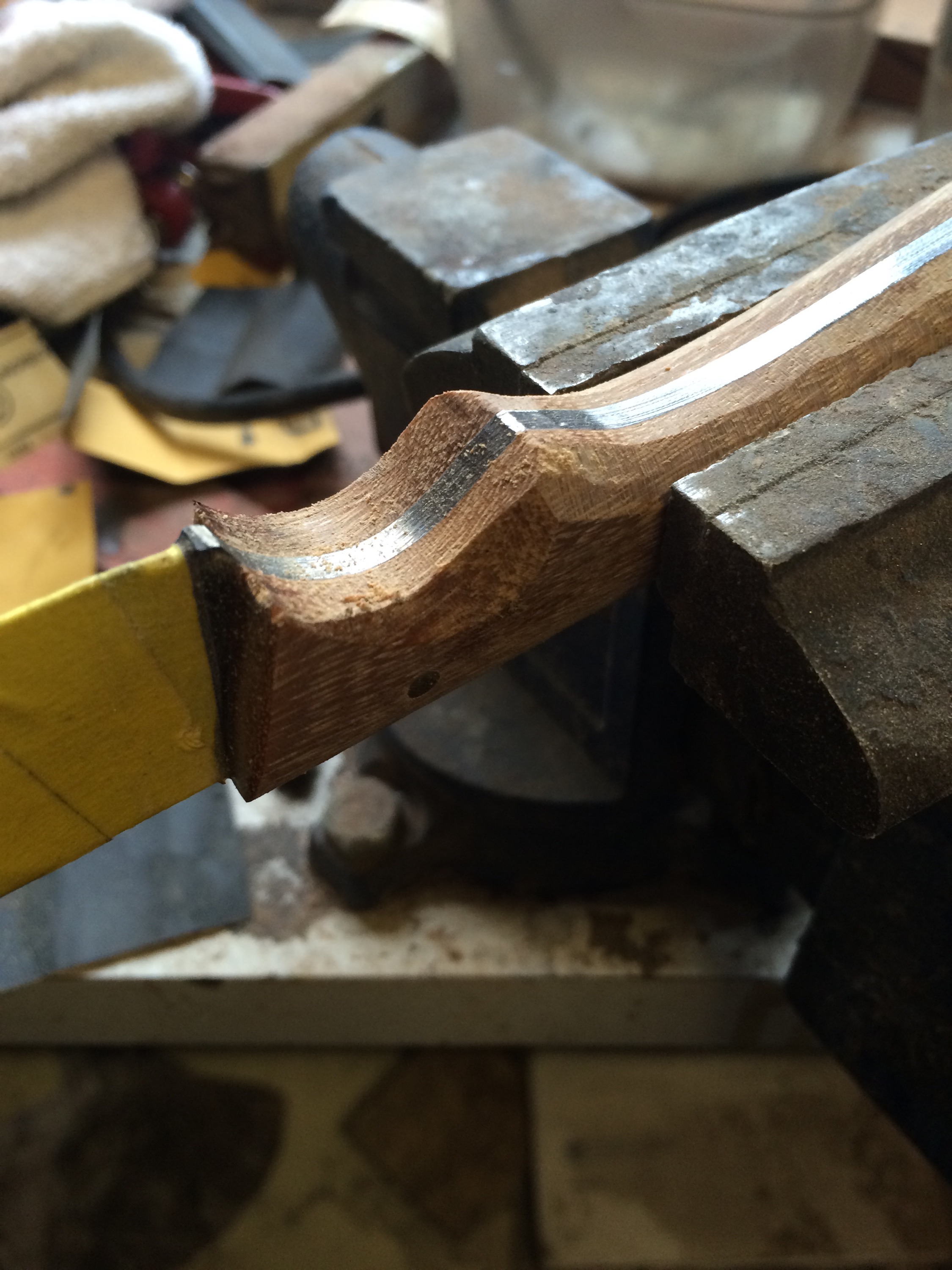
Here is what I used for the handle- quartersawn white oak, olive drab g-10, and brass.  It was a bit of an undertaking and there was some improvising because some things didn’t go as planned.  One step at a time…

Cut.

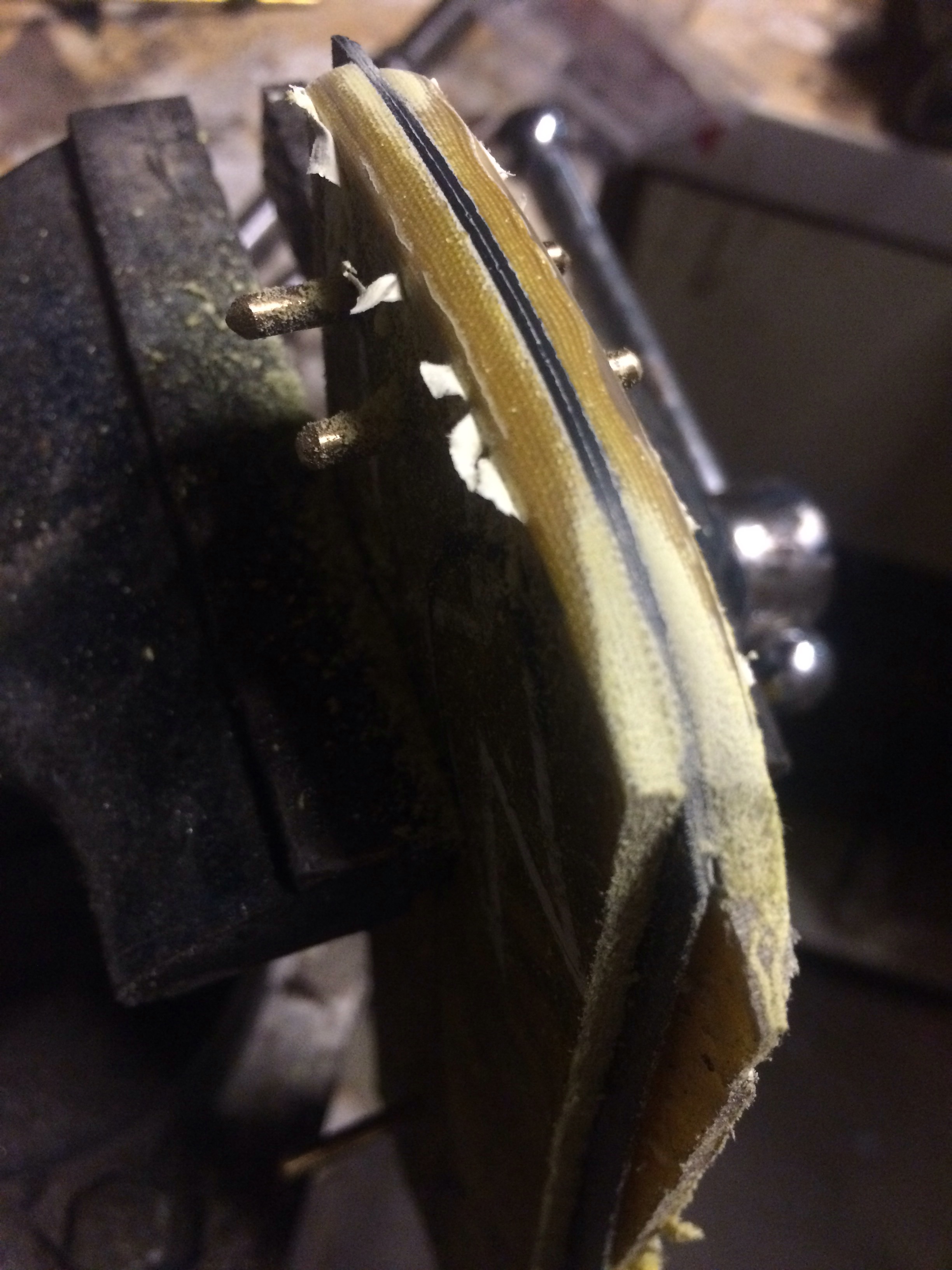
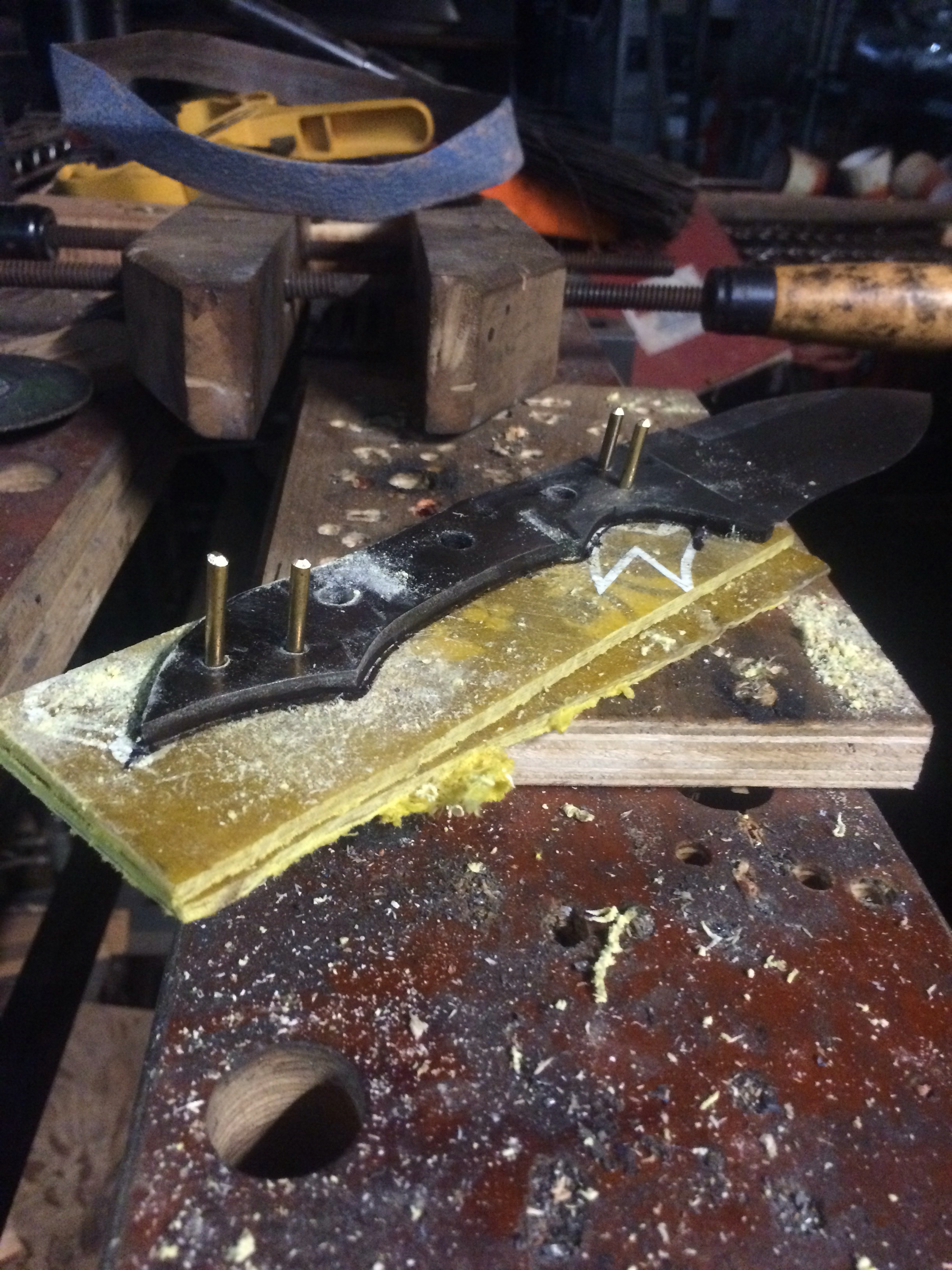
Glued.  This came apart soon after.  I tried to keep the brass cool when cutting it but it got too hot and melted the epoxy.  More steps, keep moving…

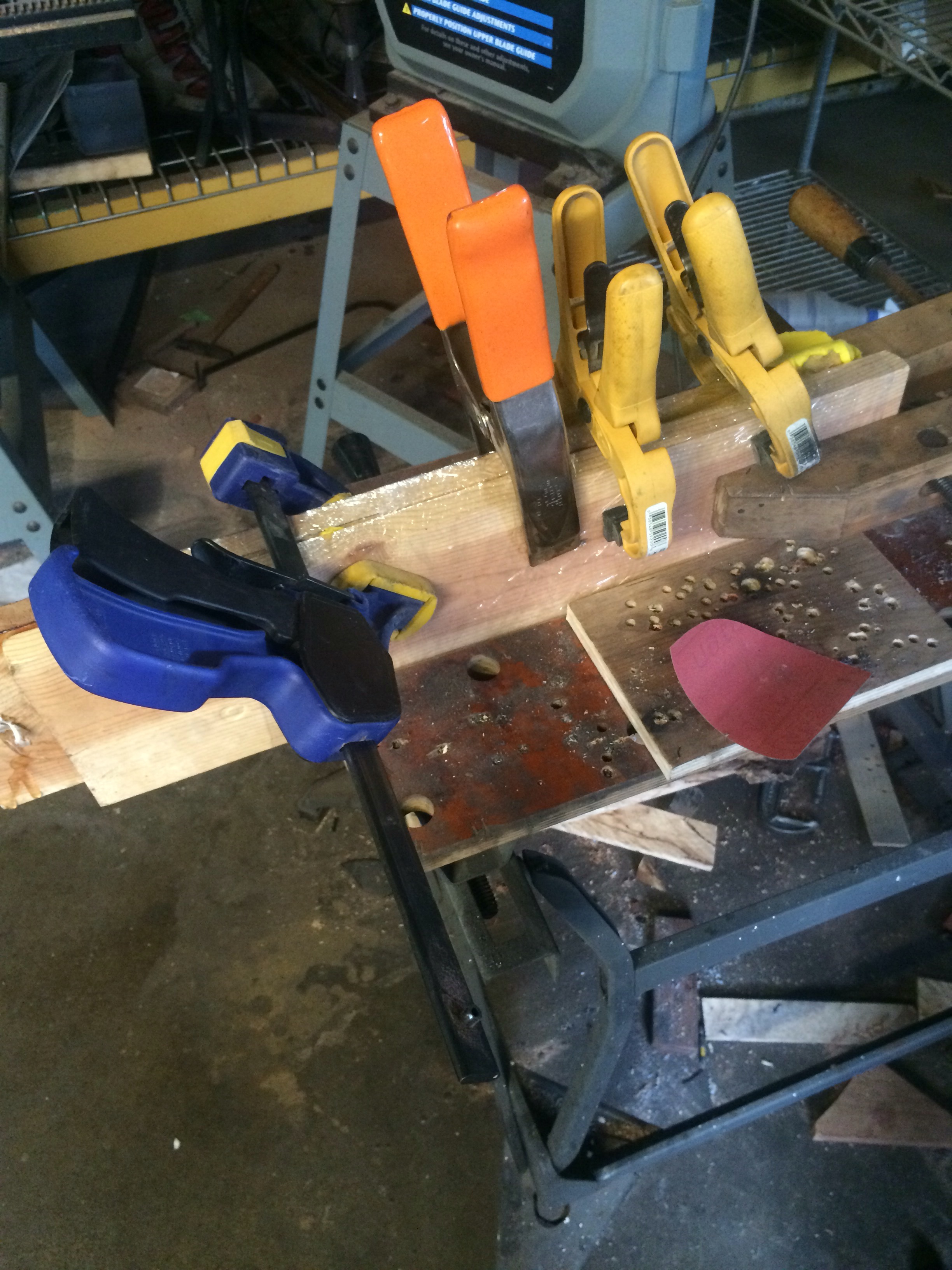
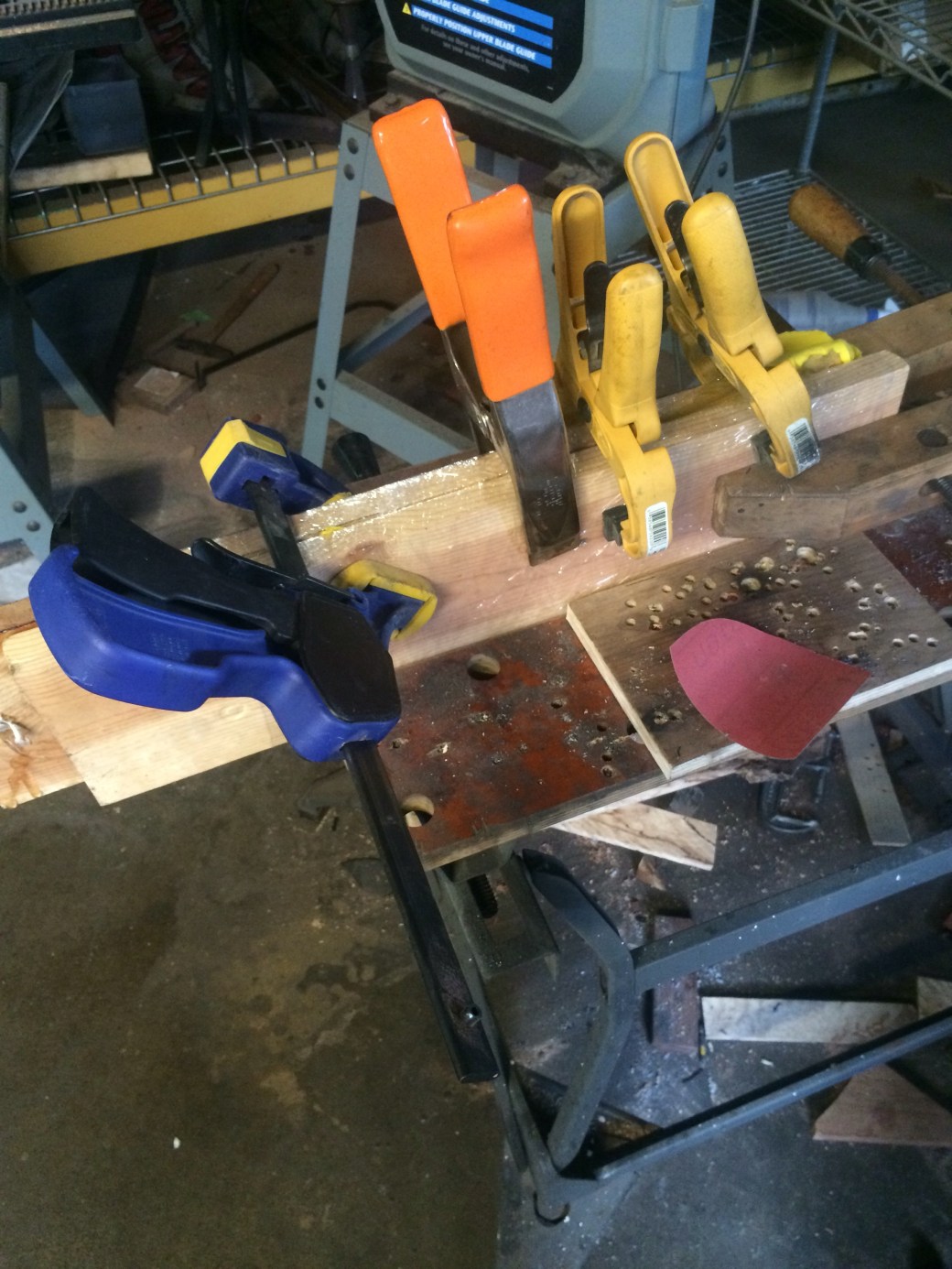
Clamped…finally

Glue is set.

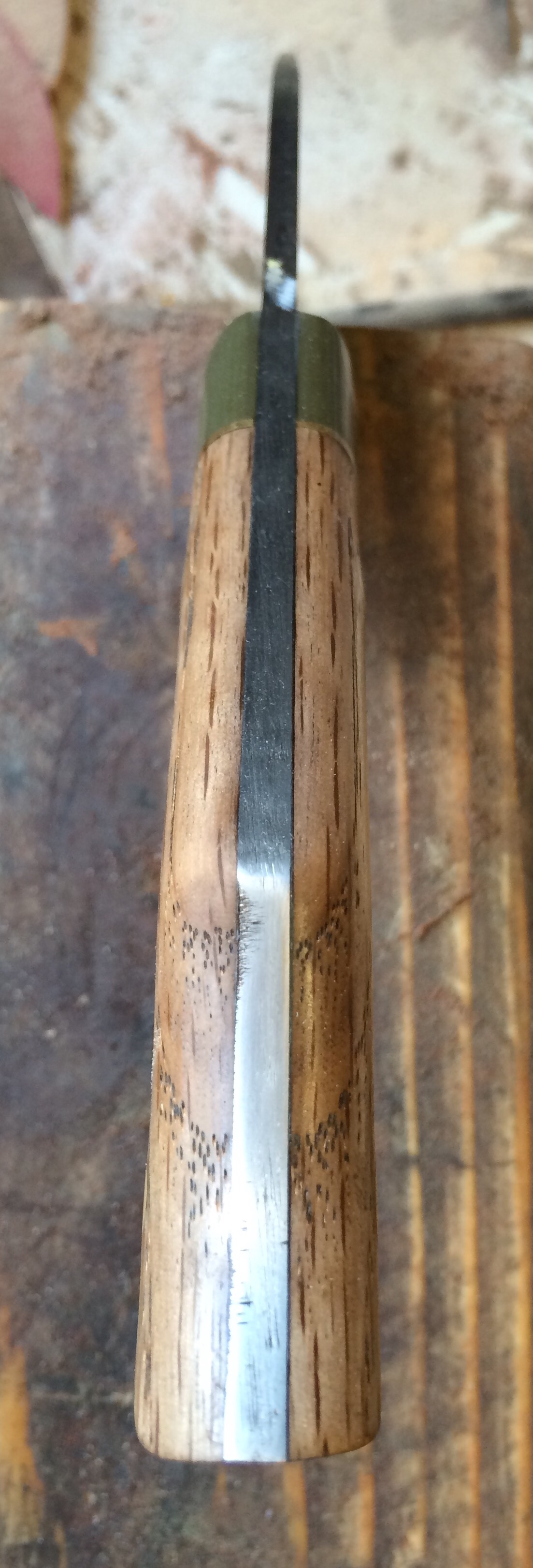
Rough shaping.

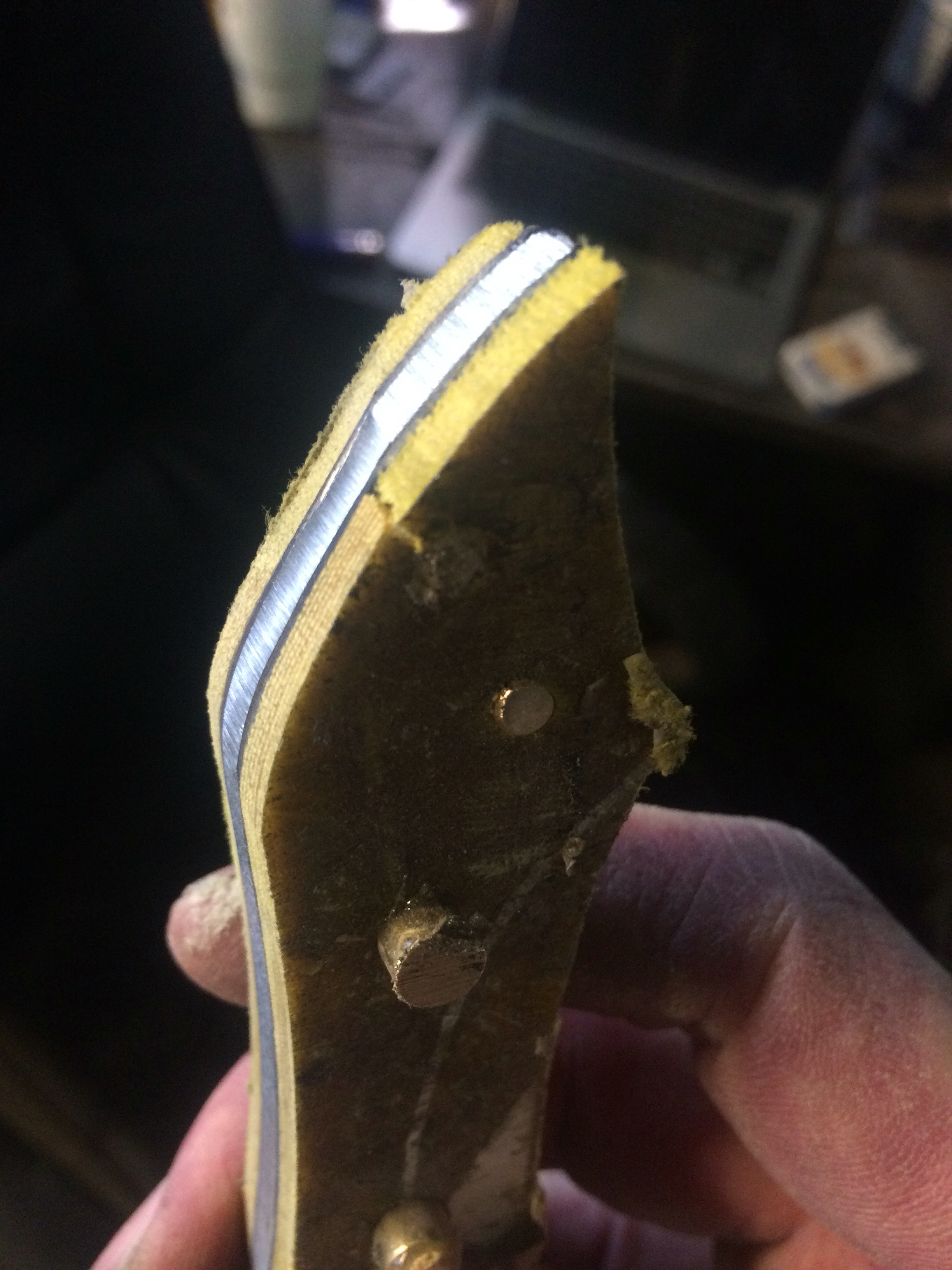
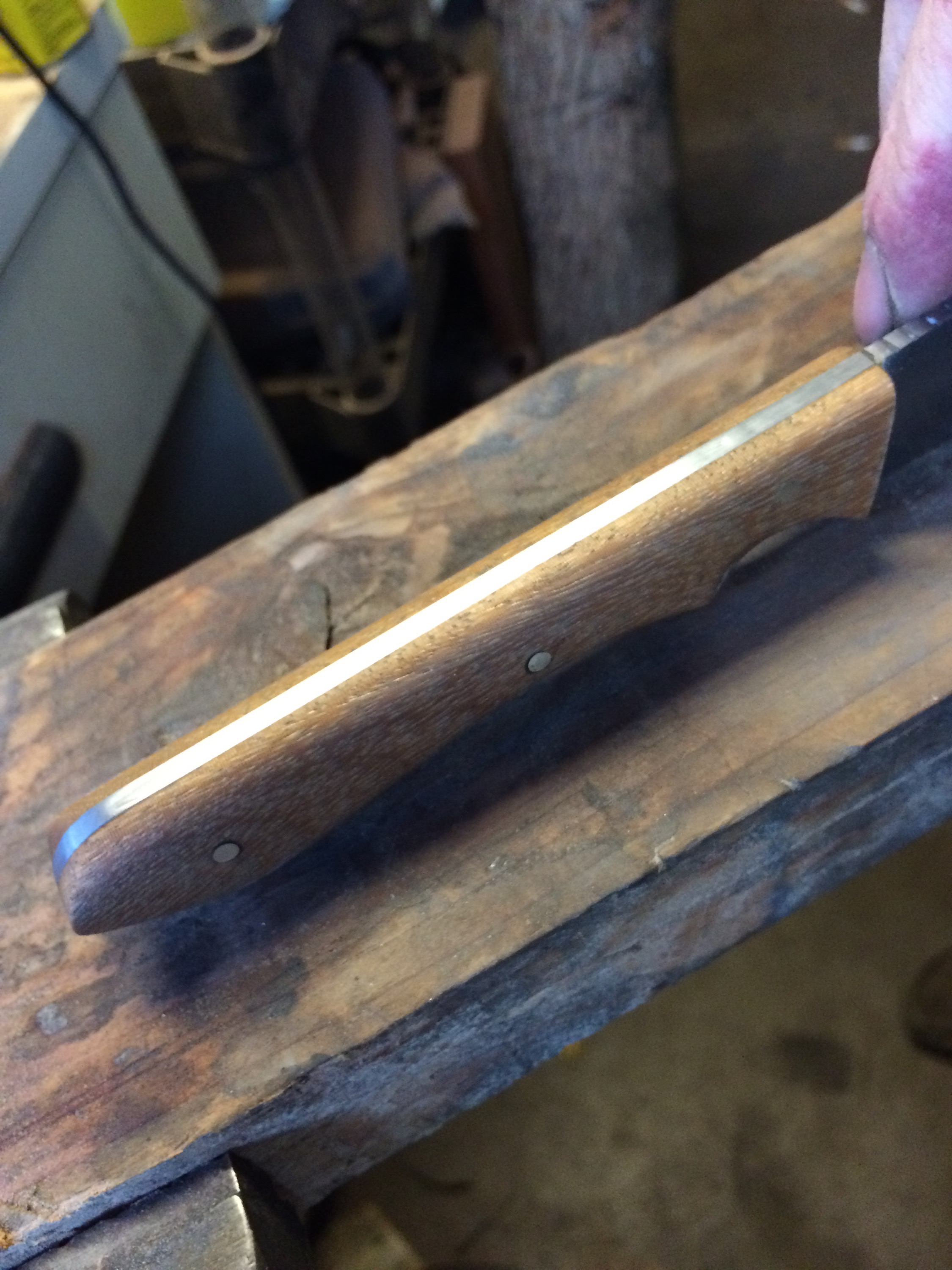
Cleaned up.  Now to sand…

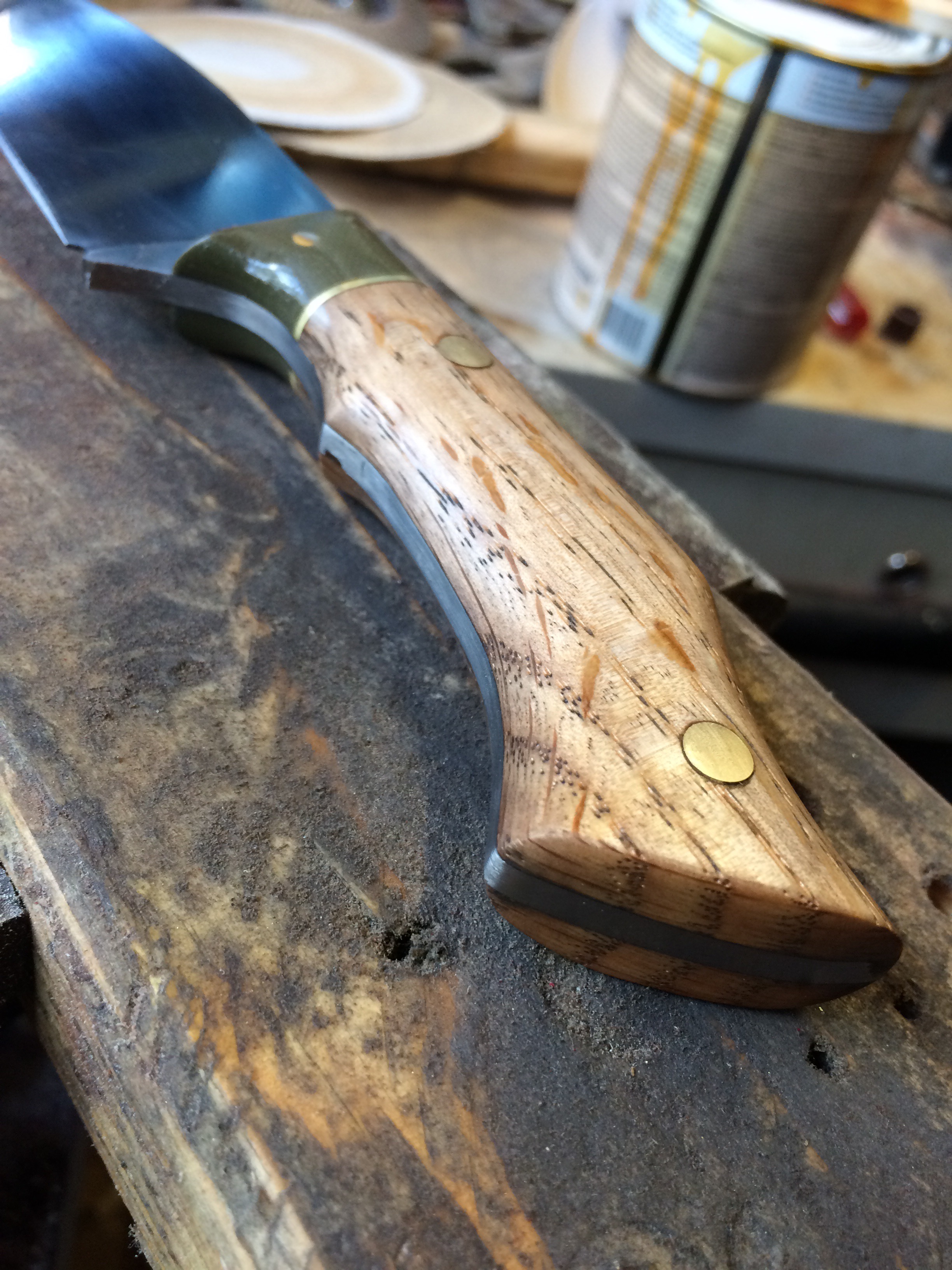
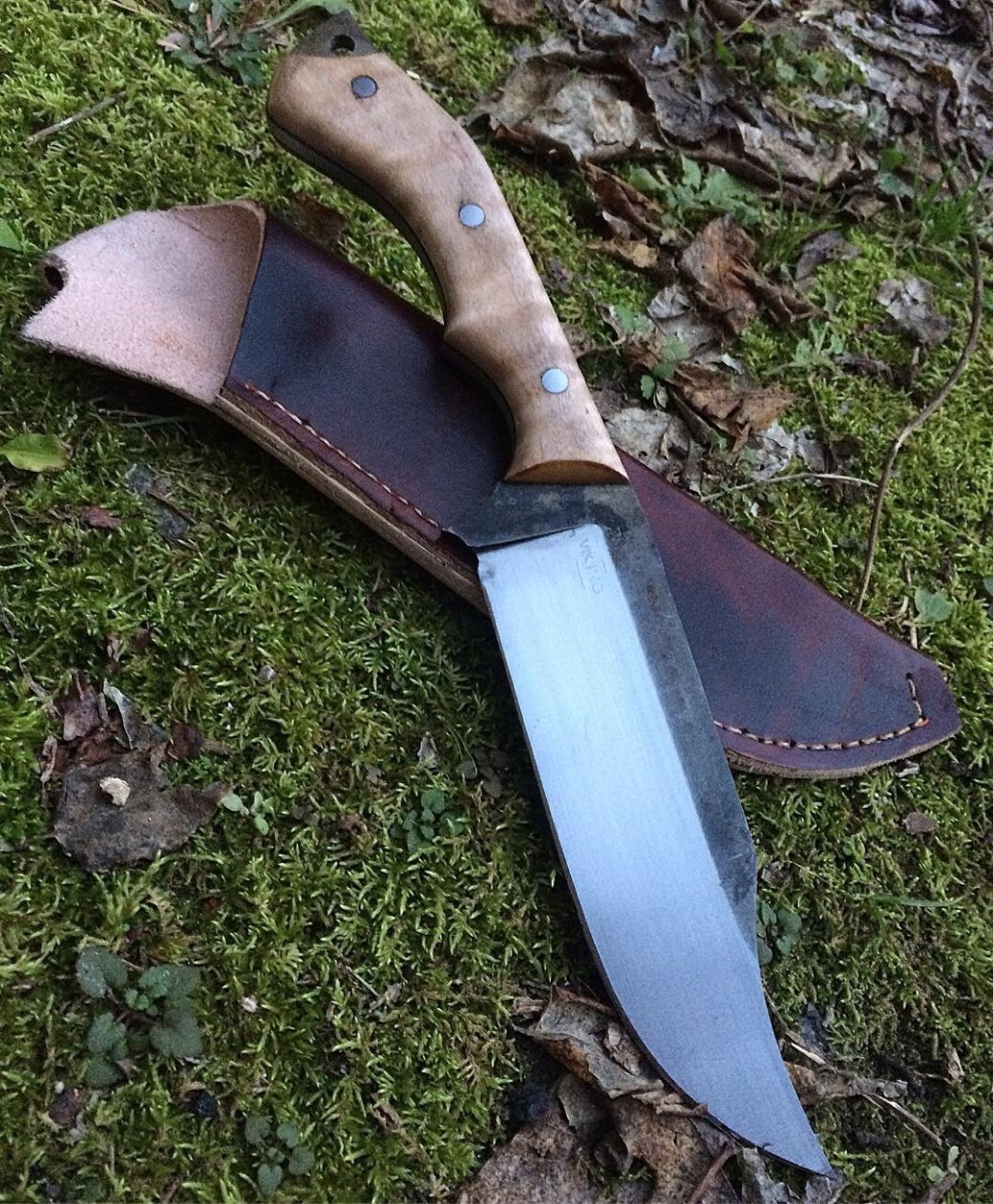
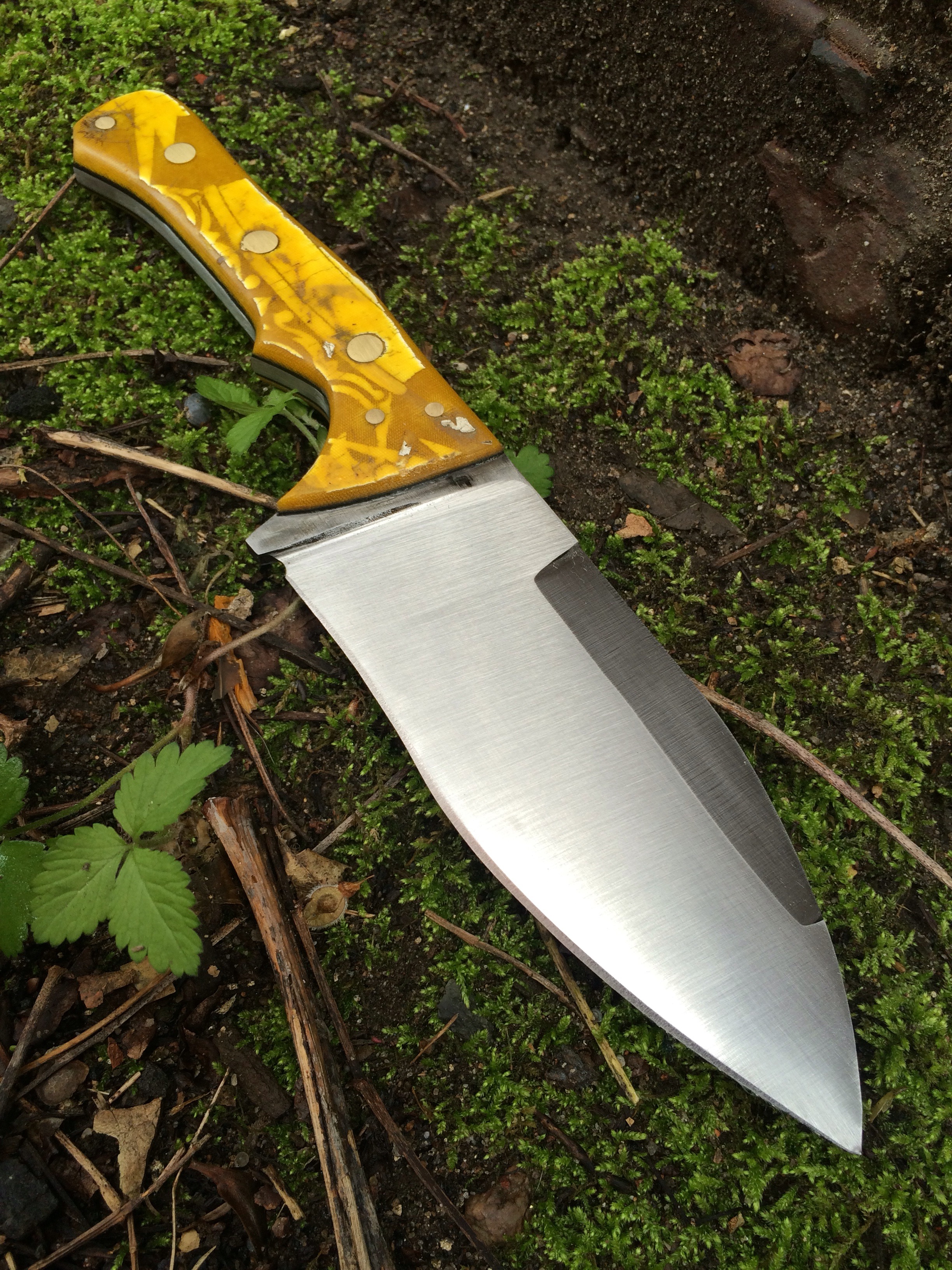
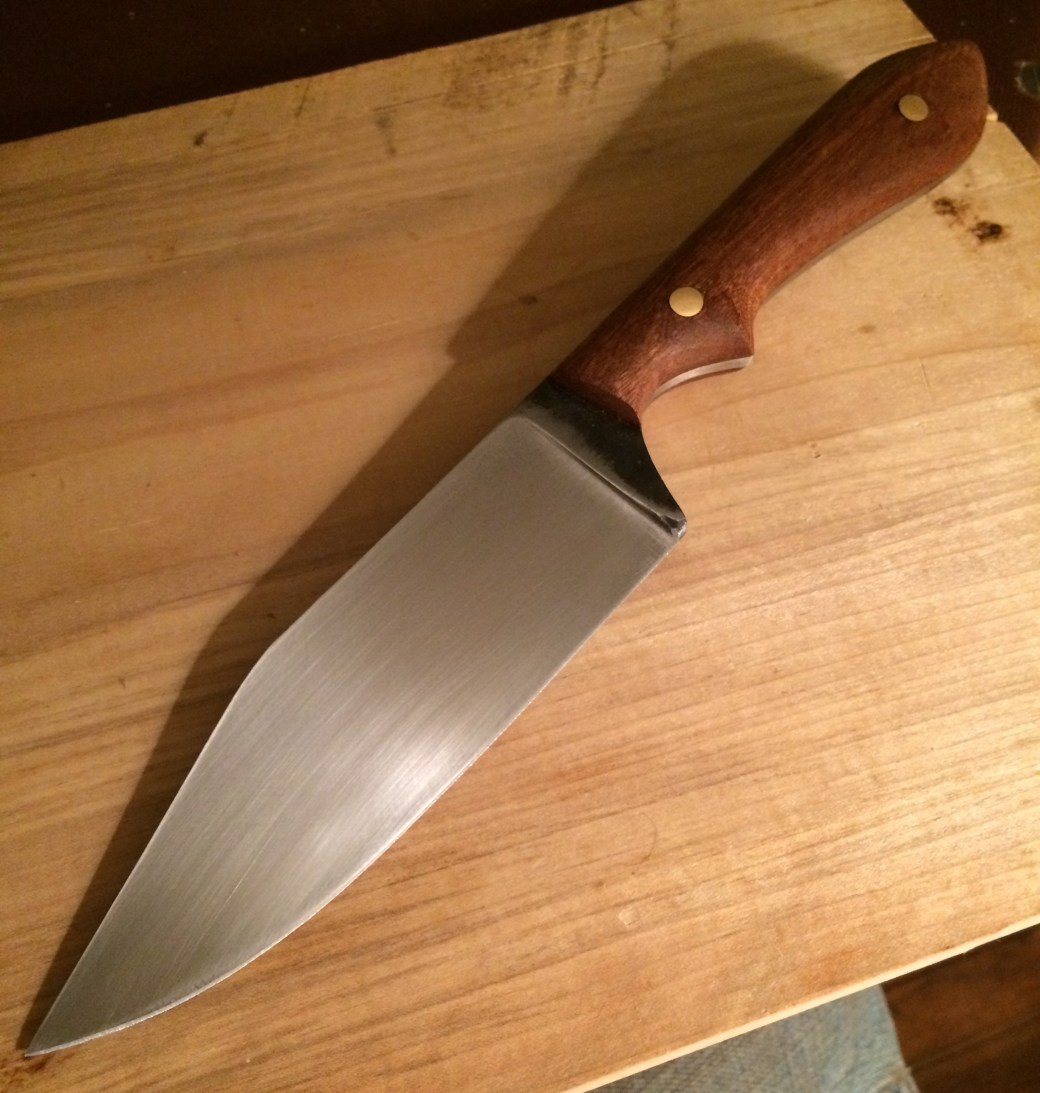
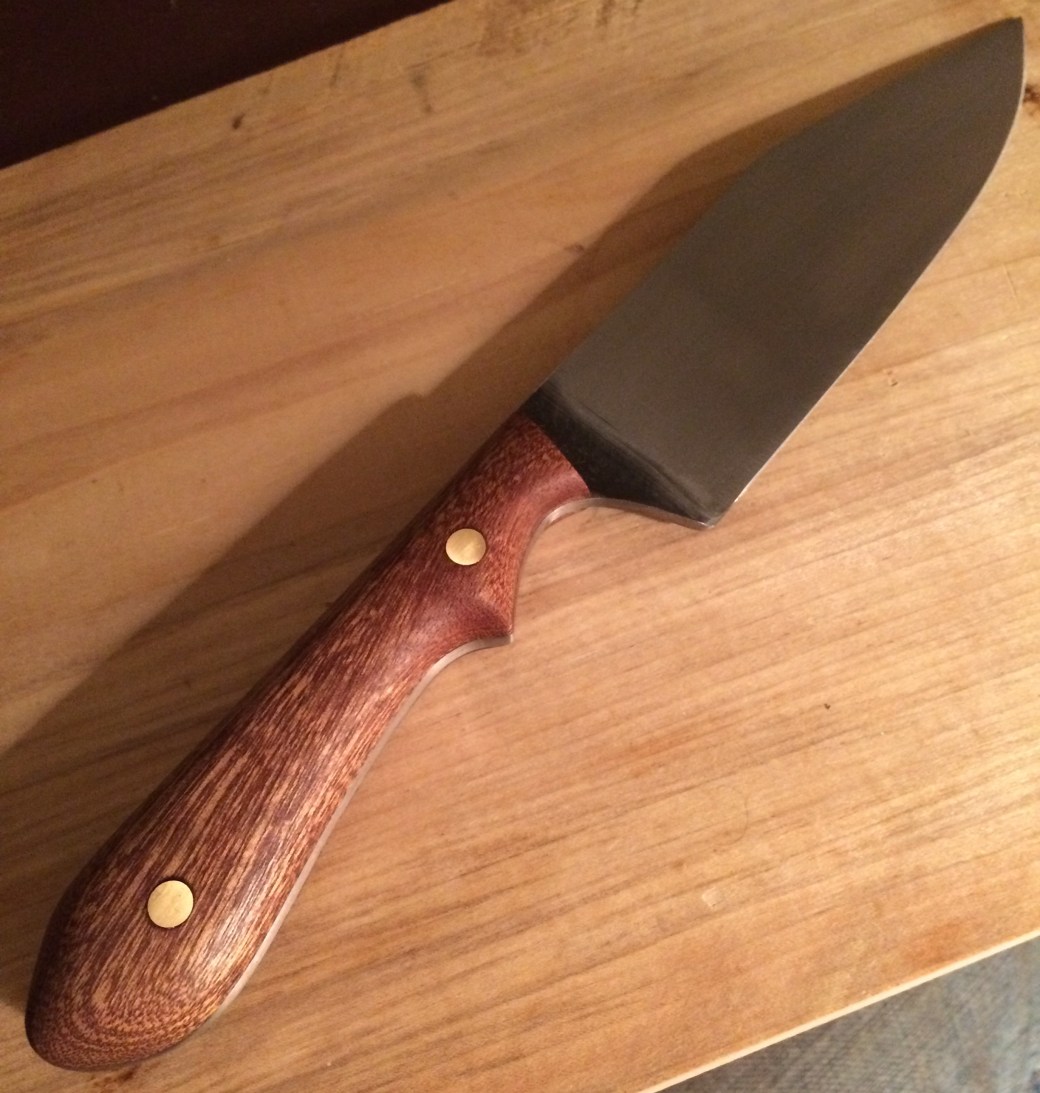
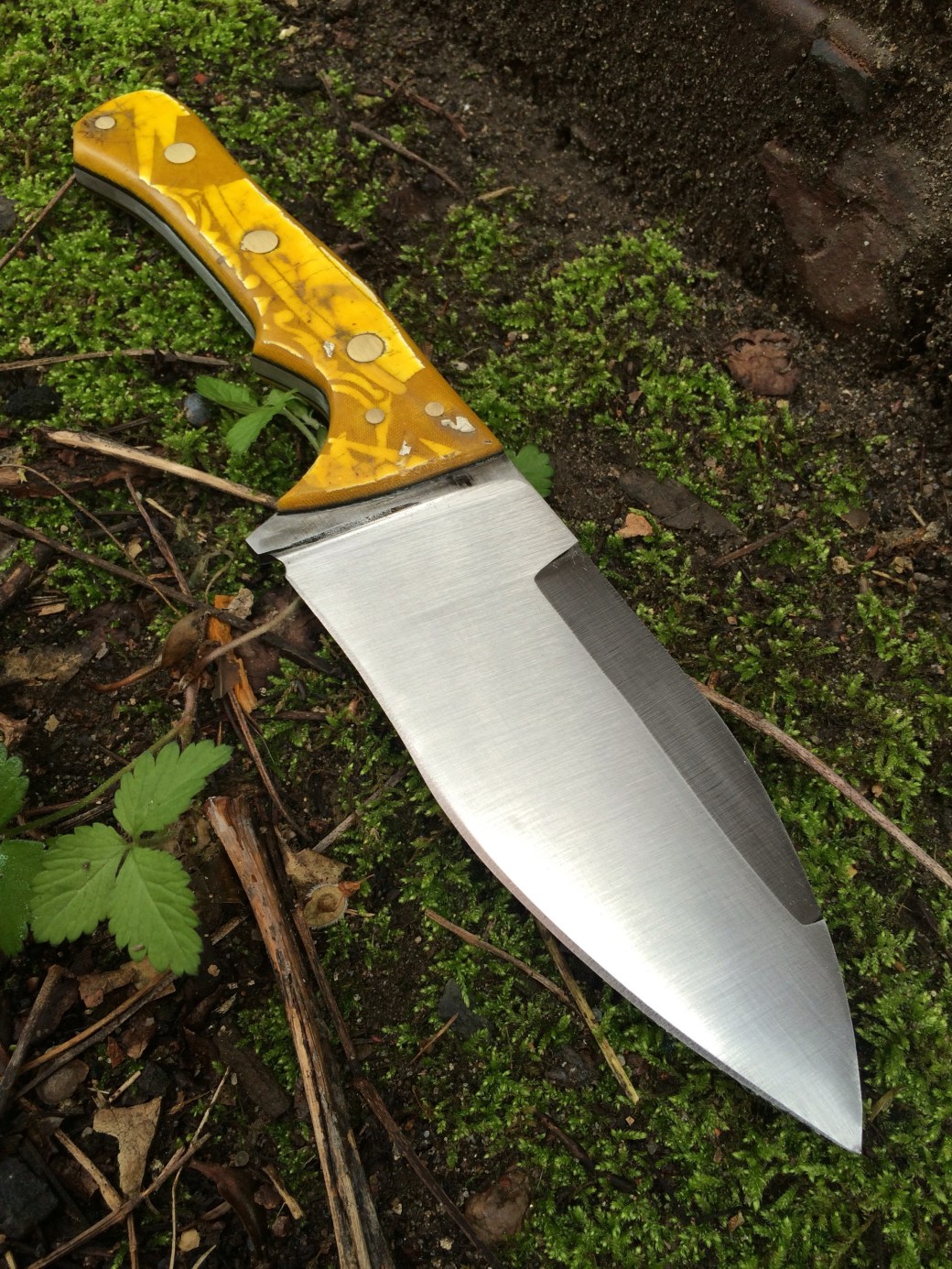
The Scout:


A little bit at a time.  Keep moving, even when it feels like everything is impossibly slow and it will never get done.  Challenge that, and walk your forest.  There’s plenty of time.

Knifemaking: playing your hand and The Wild Card

“Like I said, I’ve got mixed emotions about wild card games.  In one sense, they tend to bring out the gamble in your opponents.  They often create a carnival of excitement in which players give away a lot of money painlessly.  On the other hand, it’s hard to calculate a strategy for a game the dealer has just invented.”

Doyle Brunson- According to Doyle

I think the best definition of a wild card is something that can be what you need it to be, when you need it to be.  I have a friend like this- his name is Fred and I’ve written about him before.  I worked with Fred at the warehouse dealing with restaurant equipment.  During the tenure of our professional and personal relationship, Fred has set me on fire, twice, helped me fix my car, helped me fix my friends’ cars, helped me fix my girlfriend’s house, and showed me how to fix things I had no idea could be fixed.  The man has infuriated me beyond belief and has also made me laugh till I cried.  Fred is a wild card, a deus ex machina, the kind of person who can accomplish incredible things and can do it, most of the time, without having any sort of concrete plan.  Which makes it that much more infuriating to work with him and can also result in being set aflame…

I’ve always had this paradoxical sense of simultaneously feeling incredibly safe and slightly on edge whenever I worked with Fred.  We would go into jobs and everything that could go wrong would absolutely go wrong.  Somehow Fred would figure it out.  There was the time a one day job turned into three at a federal office building near downtown Washington DC.  A Japanese restaurant on the floor level of a building on Glebe Rd was going out of business and they had a very short amount of time to have everything removed.  The loading dock was in the basement and the bay door was two inches too short to get our tractor trailer in to load all the equipment out.  The only way to get everything out was through a single door at the front of the building onto the sidewalk.  We couldn’t get the truck there till two days later and we had to hot load it on the street, one of the busiest streets on the east coast.  The truck would be there at 3am.  In the mean time we had to dismantle everything in the restaurant, including a walk-in freezer, a walk-in cooler, fifty tables, and twenty hibachi grills.  I never want to move another hibachi table ever again.  Fred orchestrated the truck to get there half an hour after the door people removed the five thousand dollar custom glass door so we could get everything out of the building.  The truck was late and there was maybe two hours before the police would get there and make us move, but not before they asked up why we had a semi-truck, a forklift, and a truck with a tilt deck trailer in front of a government building with no permits.  Fortunately that didn’t happen and we got out of there in an hour and a half, smelling of old fish and rotten bok choy.

A lot of jobs happened this way.  None of this is an exact science.  On my better days I felt like a part of a black ops crack team.  On my not so better days I seriously questioned my life decisions.  None of it was ever boring, though.  Not with Fred.

There was an Italian man who had a few restaurants around town.  Crazy Frank we called him.  He had just opened up a new restaurant and had an emergency with his ice machine and a pizza oven we rebuilt for him.  Fred and I head over there at lunch.  The kitchen is insane.  I go over to the the oven and start to drill out holes on the door to put a handle on- bear in mind the oven is roaring at 600 degrees and has pizza in it.  Fred is reprogramming the thermostat on the ice machine.  It is the lunch rush and there are ten people running around, screaming in Italian.  Fred asked me if I had a ‘big ass college word’ to describe the situation.  I told him that I believed the word he was looking for was ‘asinine’.

“Right,” he says.  “This shit is asinine”

The most memorable job I was on with Fred was a three day bakery extraction.   Fred, myself, and our colleague and good friend Aaron were to fly to Nebraska, load an entire bakery into two tractor trailers, and then fly home.  Adventures started at the airport.  Fred and I are not fans of flying.  At the airport bar I had forty dollar margarita with a cornucopia of liquor in it and Fred had two double shots of Jack Daniels.  We got on the plane and promptly went to sleep.  We arrived in Nebraska that evening, picked up a swanky rental car and went to look at the job.

The first thing I noticed was that it was cold.  Like unbelievably cold.  It hadn’t really hit me at the airport.  This was January and I had never been anywhere that flat, windy, and cold before.  The second thing I noticed was a gigantic rotating bread oven.  Our client told us that it bakes 100 loaves an hour when loaded to capacity.  We would spend the majority of our time dismantling that hulking behemoth.  We got steaks for dinner, because that is what you do in Nebraska, and went to the hotel.

The next couple of days were stupidly cold.  The forklift we rented wouldn’t start most of the mornings until the sun came out.  We had to disconnect and extract the oven exhaust system, which meant going onto an icy sheet metal room.  We had to take that oven apart, which had nearly a thousand 3/4″ screws holding it together.  Fred was confident in his ability to get it all back together.

Everything went as it should, got loaded, and sent back to Virginia.  Our travels were slightly rockier.  There was an ice storm that closed the Chicago Midway Airport and we got diverted to Indianapolis where we sat on the tarmac for seven hours.  Seven hours of Fred without a cigarette.  Seven hours of Fred saying we should have rented a truck and driven to Nebraska.  Seven hours of Fred telling anyone who would listen that no one could keep him on that plane.  I was sitting next to a mother and her small child on their way to Disney World.  The husband and another little one were sitting behind me with Fred.  These little ones had a better grip on the situation than Fred.  Finally they let us off to catch a different flight, on a plane that wasn’t covered in ice.  It was all Aaron and I could do to keep Fred from using the company card to rent a truck and drive back to Virginia from Indianapolis.  Two double shots of Jack got Fred back on a plane.

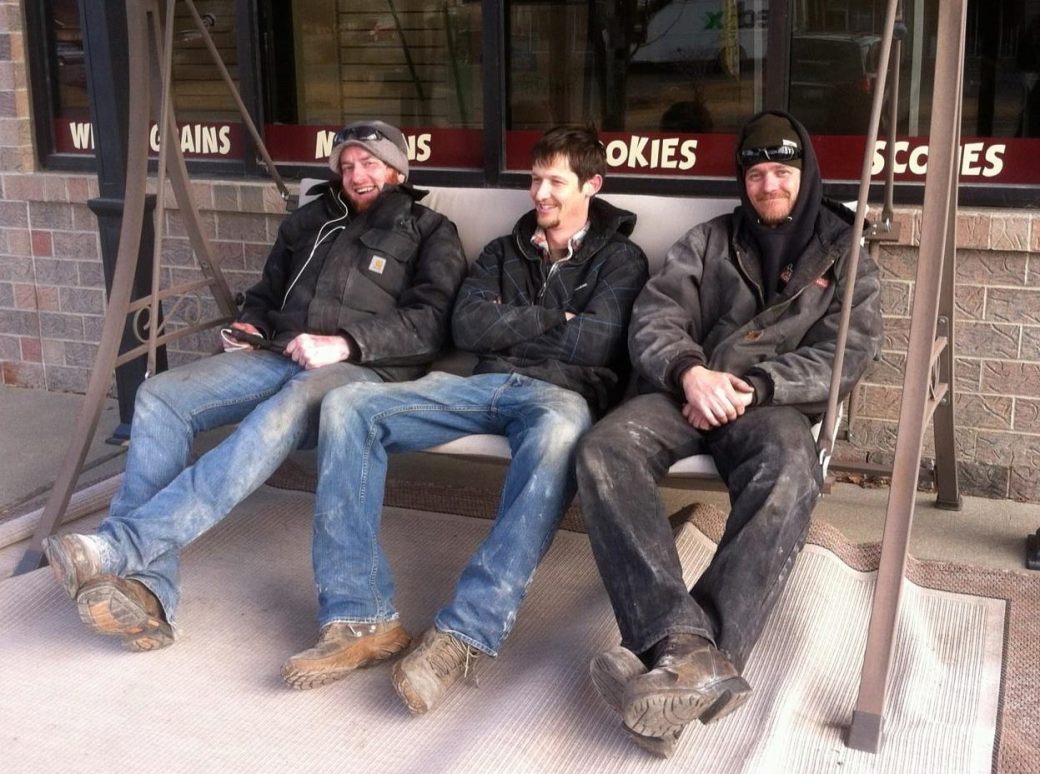
Left to right here is myself, Aaron, and Fred after three long, flour covered days in the cold.  Happy to be finished, thank you very much.

nebraska

Wild cards only work when you play them.  They do what you need them to do when you need them to be done.  This is Fred, and also the lesson of the Wild Card.  I wanted to build something to be sent in when the job needed to be done.

I started with a big hunk of 1095 spring steel- 3/16″ thick

The blade is close to 8 inches long…
 Rough grind:   

I used a clay hardening technique to create a Hamon

  Hardened…

…and tempered

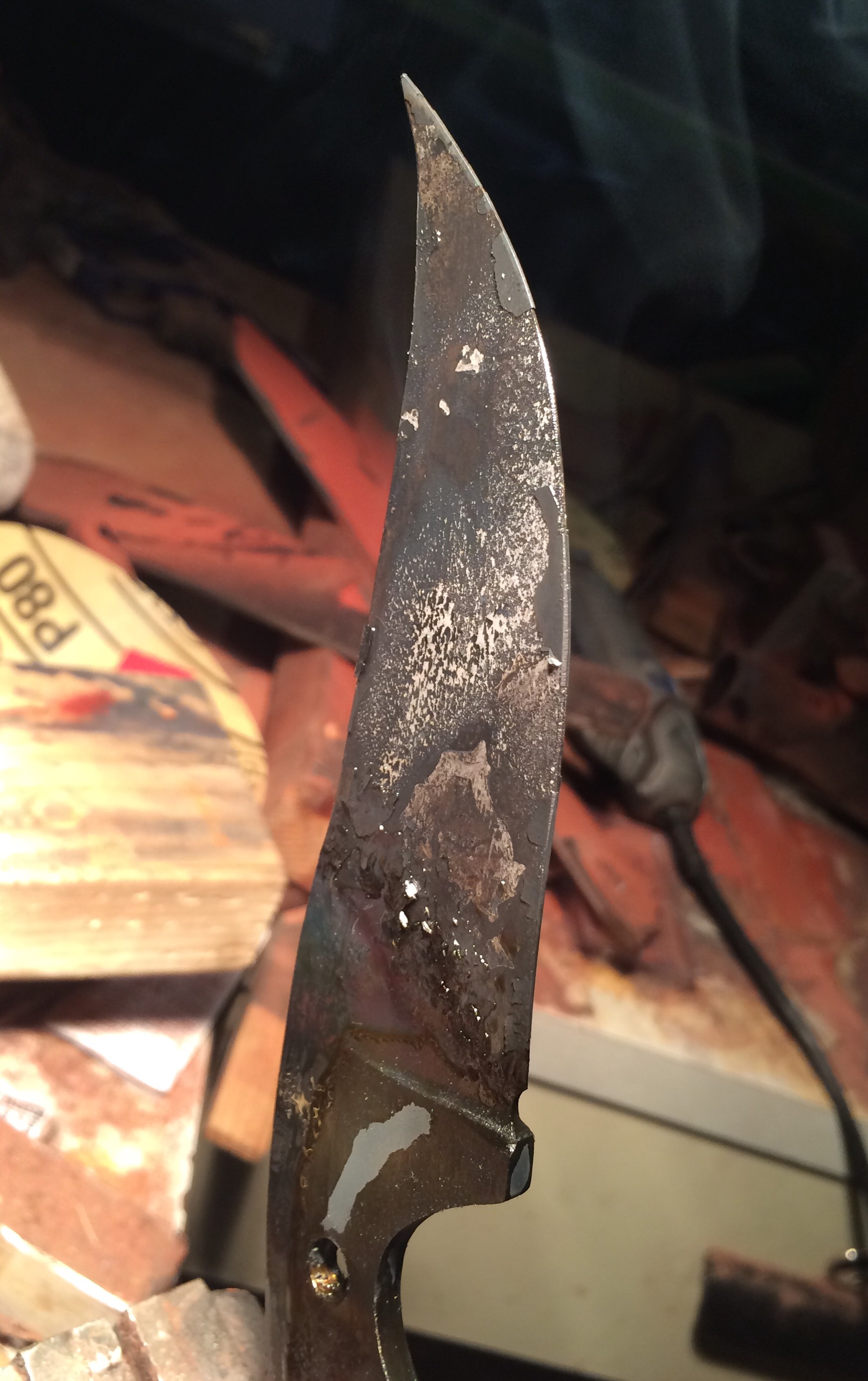
Sanded to about 600 grit and ready to for a dip in the acid….

Curly Maple.  You can faintly see the wavy bits of curl…

Clamped.

To get the curls to burst I had to go through many cycles of sanding and staining and sanding again.  With each cycle the stain becomes more stable and prominent.

I cooked up a concoction using various finishes I have…

You can start to see the curls as the grain becomes more stable.  This is after maybe two cycles of sanding and staining

This is after maybe 8…

The Wild Card:

It’s always good to have a Wild Card in your hand- even when you want to kill them sometimes.

Thanks for the lessons, Fred.

Knifemaking: light and dark, and the Guardian

 ‘Call them up and tell them they’re all full of shit’

Lt. Col. Daniel F. Gilbert (1925-1996)

My grandfather died when I was twelve.  People come and go quickly in this world and often their stories and the good things they do are lost and forgotten.  I wanted to tell his.

He and my grandmother moved down the street from us when I was five so they could watch my brothers and I grow up.  I would ride my bike over.  He had an attic workshop .  He liked to make jewelry and often I would find him flattening out nickels that he had been soaking in sulfuric acid.  He gave me hacksaw blades and sat me in front of a bench grinder and showed me how to make small knives.  He used one of his shotguns as a template and made me a wooden one that looked so real my mother made me take it back to him to paint orange so that I wouldn’t become a police statistic.  We watched cartoons.  We could both agree on Popeye and Tom and Jerry.

I remember my grandmother getting really angry at him for things that I thought were hysterical.  One time I went over there and he had hacked the head off of a snake with a shovel and hung it from a tree.  I remember my grandmother yelling at him and all he said was, very quietly, that the only good snake is a dead snake.  I have no idea why he hung it from a tree.

Often times during the summer in his back yard he would build a smudge fire if the mosquitos were bad, which they almost always were.  We would go in for dinner and my grandmother got pissed at him for making us all smell like a campsite.  He just laughed.

When I was seven he gave me a Swiss Army knife for my birthday.  I went back to my parents house that evening with bandaids on every finger.  When my mother called him and yelled at him for leaving a seven year-old alone with a knife he just laughed.  “Every boy should have a knife,” he would say.

He had the most elegant way with profanity- his inflection on a simple ‘goddamn’ could run the spectrum, from utter joy to total frustration.

Most of what I know of him before those times I learned from my grandmother after he passed.  He was born in Stephensville, Texas.  His father died when he was 5 years old and he immediately started helping to provide for the family.  Their family was dirt poor and then the Depression hit.  He set up a trap line that he would check everyday before school.  One time he caught a skunk and he got skunked so badly that the teachers sent him home.  Another time he slaughtered one of his chickens but didn’t clean the innards out before he put it in the oven and stunk up the entire house.

He joined the Navy at seventeen, lying about his age.  What would follow was a pretty incredible military career with so many brushes with death that he earned the name ‘Lucky Gilbert’.  While in the Navy during WWII he was a gunner on a warship, a position that carries a notoriously short lifespan.  Many of his fellow gunners didn’t make it but somehow he did.

After the war he joined the Air Force.  It was here that he met my grandmother, a young officer.  My grandmother said he was stubborn but persistent, and a terrible driver.  They got married and lived all over the world- Florence, Italy; Wiesbaden and Rammstein, Germany; and Casa Blanca, Morocco, where my mom was born.

He fought in the Korean conflict and was then stationed in Roswell, NM, where he witnessed the the UFO crash.  He told my grandmother he didn’t know what in the hell those things were but they weren’t of this Earth, and the whole thing gave him the heebie jeebies.

By the time the Cuban missile crisis came around he had a pretty high security clearance.  He was privy to information that many others weren’t.  At the height of tensions, he gave my grandmother a map marked with a safe location to go.  He said it was getting bad, and he would call her and tell her when to take the kids and go.  He handed her a pistol and told her to use it if anyone tried to stop her.

In the seventies he went to Vietnam where he should have been dead several times over.  The was an incident when a rogue Viet Cong rocket obliterated his barracks in the night.  The only reason he wasn’t there was because he had chosen to stay with his troops in the field.  Then there was another time when he was waiting on a bus to go to headquarters to do paperwork.  He waited and waited but the bus never came, so he walked.  When he got to the office four hours later, everyone looked at him as if they were seeing a dead man.  The bus had been hijacked at the stop before his, all the passengers executed and the bus blown up.  My grandmother said the man had a Guardian watching over him.

While he was in Vietnam, my grandmother went out for dinner with a friend of theirs, a general.  After dinner, and knowing that my grandfather was off at war, he tried to force himself on my grandmother while on their front porch.  Grandma had none of it.  She never told my grandfather, because he would have killed the man.  He always had a shotgun nearby.

The man was a warrior but even warriors have their faults and flaws.  My grandmother told me he was a difficult man to get close to and even more difficult to get to know.  He could be spiteful, and had a mean streak that didn’t come out too often (I never saw it), but it cost him several important promotions within the Air Force.  My grandmother told me that when she moved her dying mother into their house much later in life, my grandfather resented her for it, a resentment that she said burnt like a red hot rod of iron.

Still he loved deeply.  He liked to listen to Patsy Cline, The Beatles, and Tchaikovsky.  A quiet man, his actions generally spoke louder than words.  He brought my grandmother coffee every morning (Lady coffee he called it).  When chemotherapy for ovarian cancer left my grandmother with neuropathy in her hands and feet, he rubbed lotion on her feet most nights.  After he passed, my grandmother found an account he had never told her about and she never had access to, with $30,000 to be paid to her upon his death.  This is incredibly touching and rather impressive considering this was a man who was notoriously bad with money and grew up dirt poor during the Depression.

In his late sixties, doctors found an embolism in his heart.  The surgery was risky but the alternative was six months to live.  They performed open heart surgery and he survived but was never the same afterwards.  He had been dealing with early onset Parkinson’s symptoms and the surgery exacerbated all of that.  He couldn’t go up to his workshop, he couldn’t work with his hands, and my grandmother had to get a home health nurse.  He went downhill slowly over the next two years, never complaining about anything.  He died on Palm Sunday in a VA Hospice unit.

I remember sitting next to my grandmother at his funeral, which had full military honors.  As the officer presented her with the flag that had been draped over his casket, she told me that his Guardian was watching over me now.   I just nodded and smiled and didn’t pay much attention.  I figured it had something to do with being bereft with grief or the Xanax my mother had most likely slipped her.  Maybe a bit of both.

I have a few of his things: His Rolex, a bolo tie that he had fashioned and a belt buckle he made, set with a silver dollar:

I think on this Guardian that kept my grandfather safe and allowed him to live his life as he saw fit, even after all of the darkness of war and poverty that could have consumed him.  This blade is a nod to that Being and acts as a vessel to hold the darkness that inevitably penetrates all of our lives at some point or another.

1095 spring steel
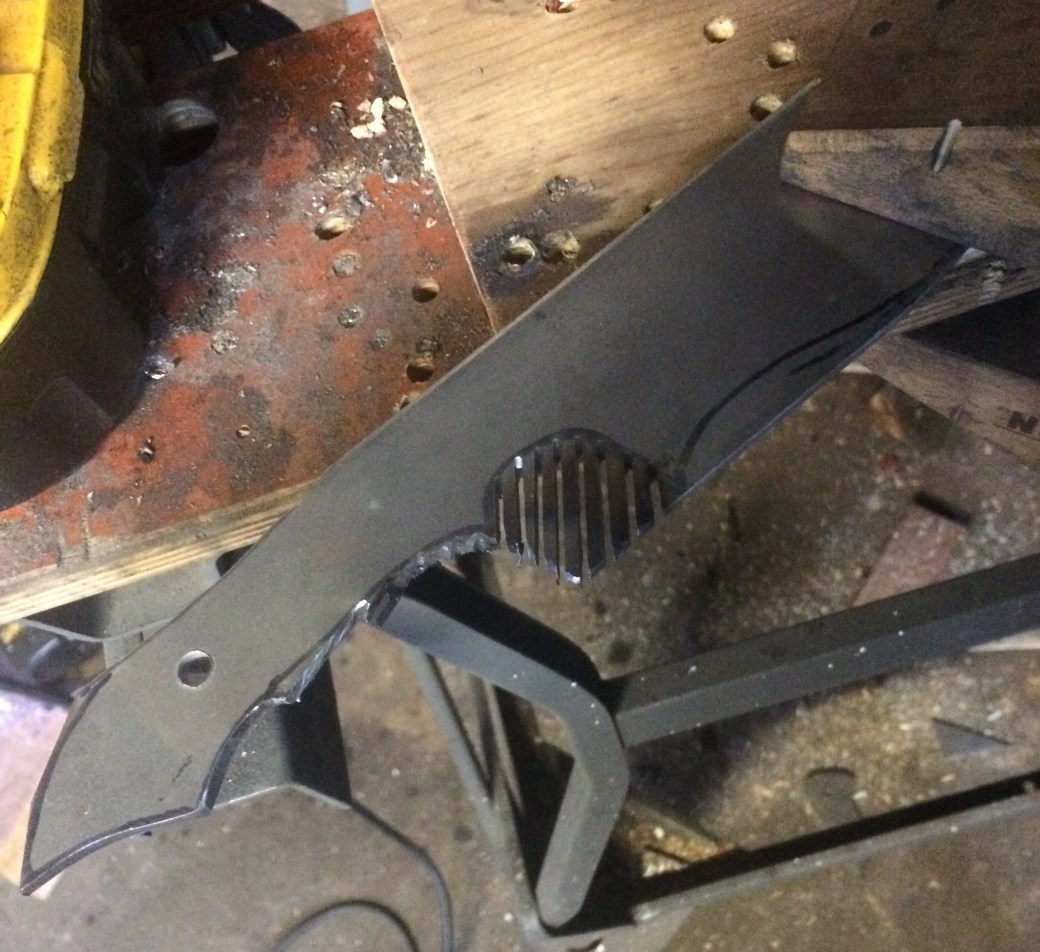
 

Hardened:
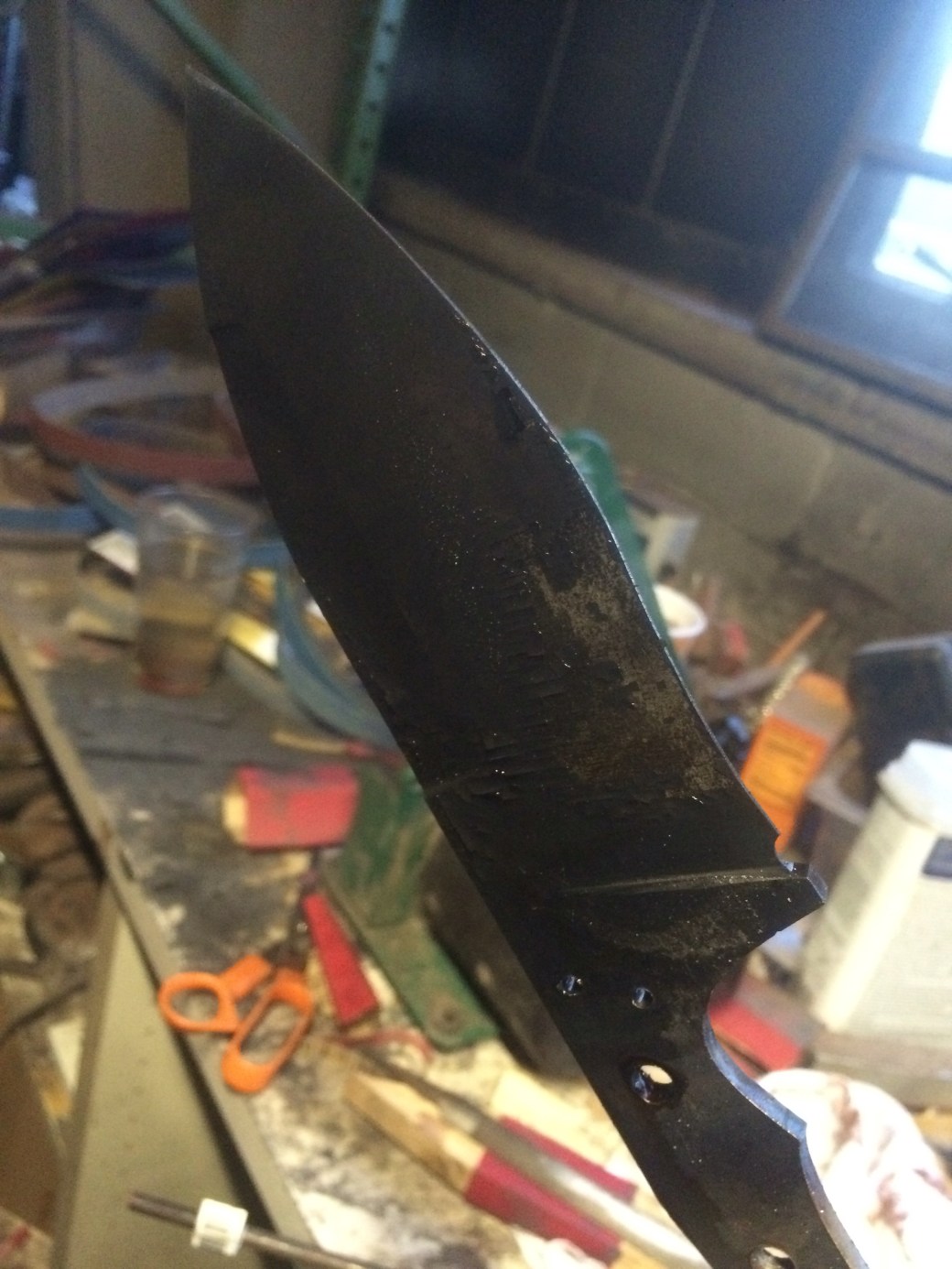
Tempered:
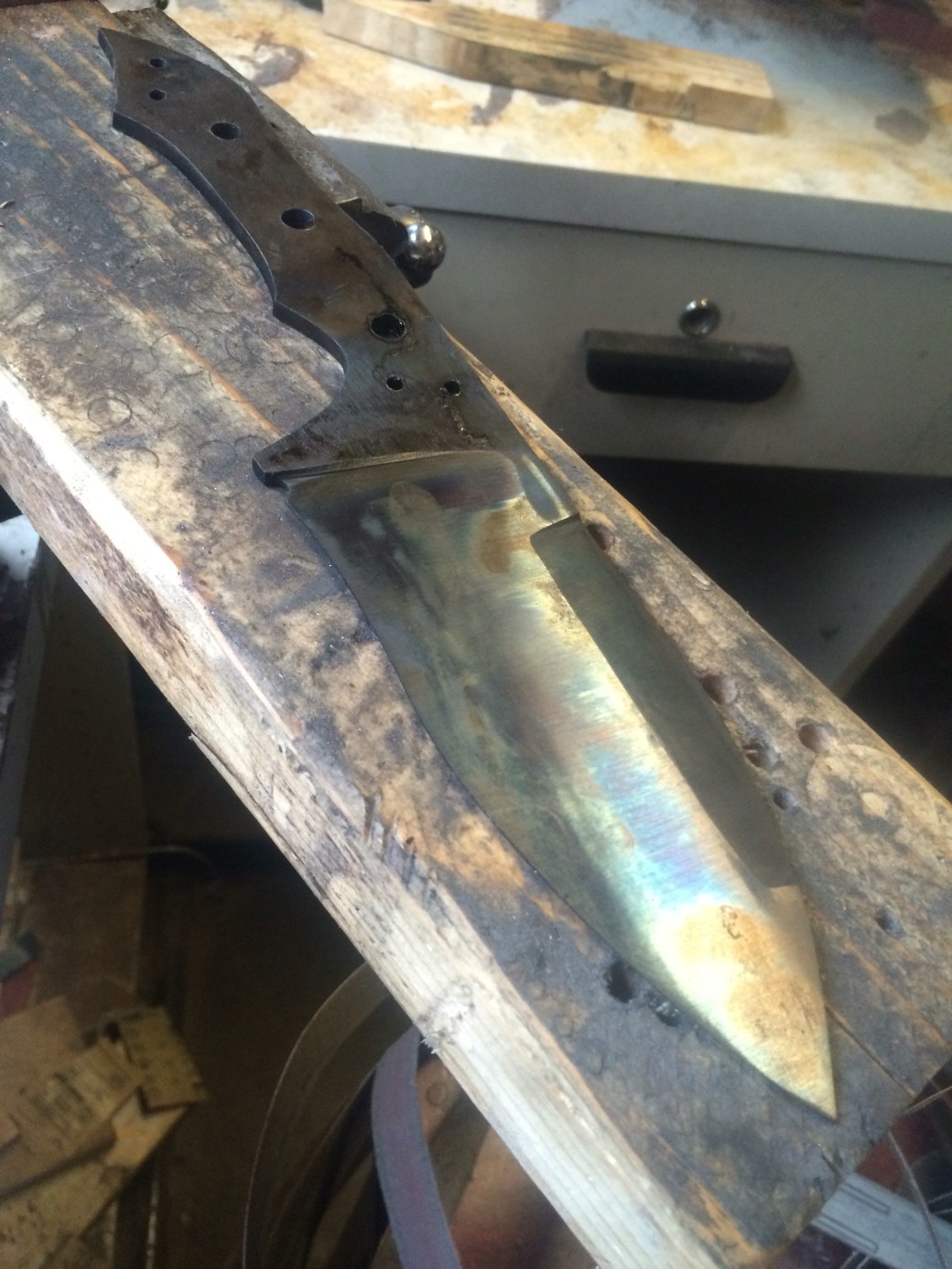
  This is the brightest article of clothing I own- and it’s too small…
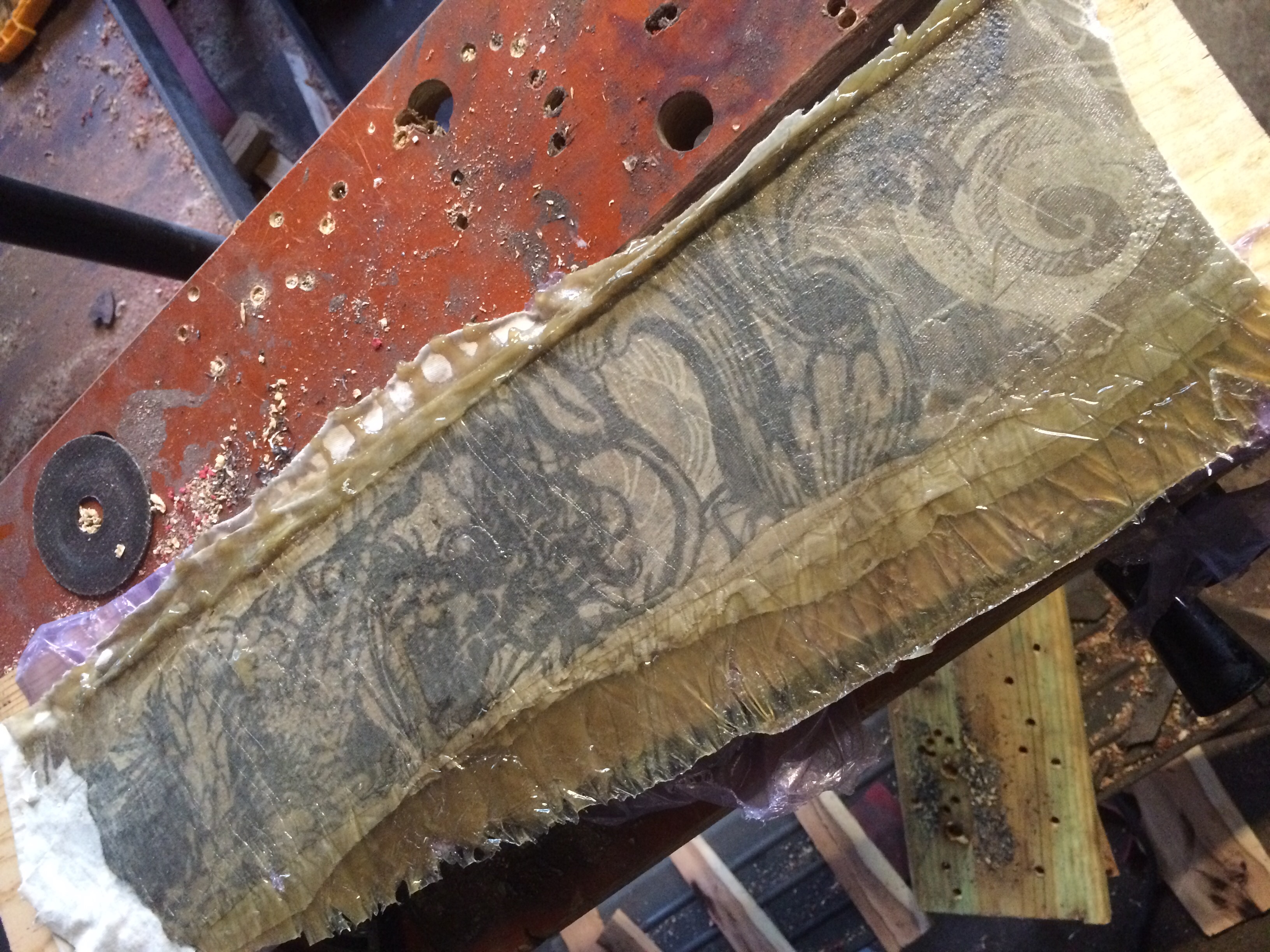
Soaked with fiberglass resin… 
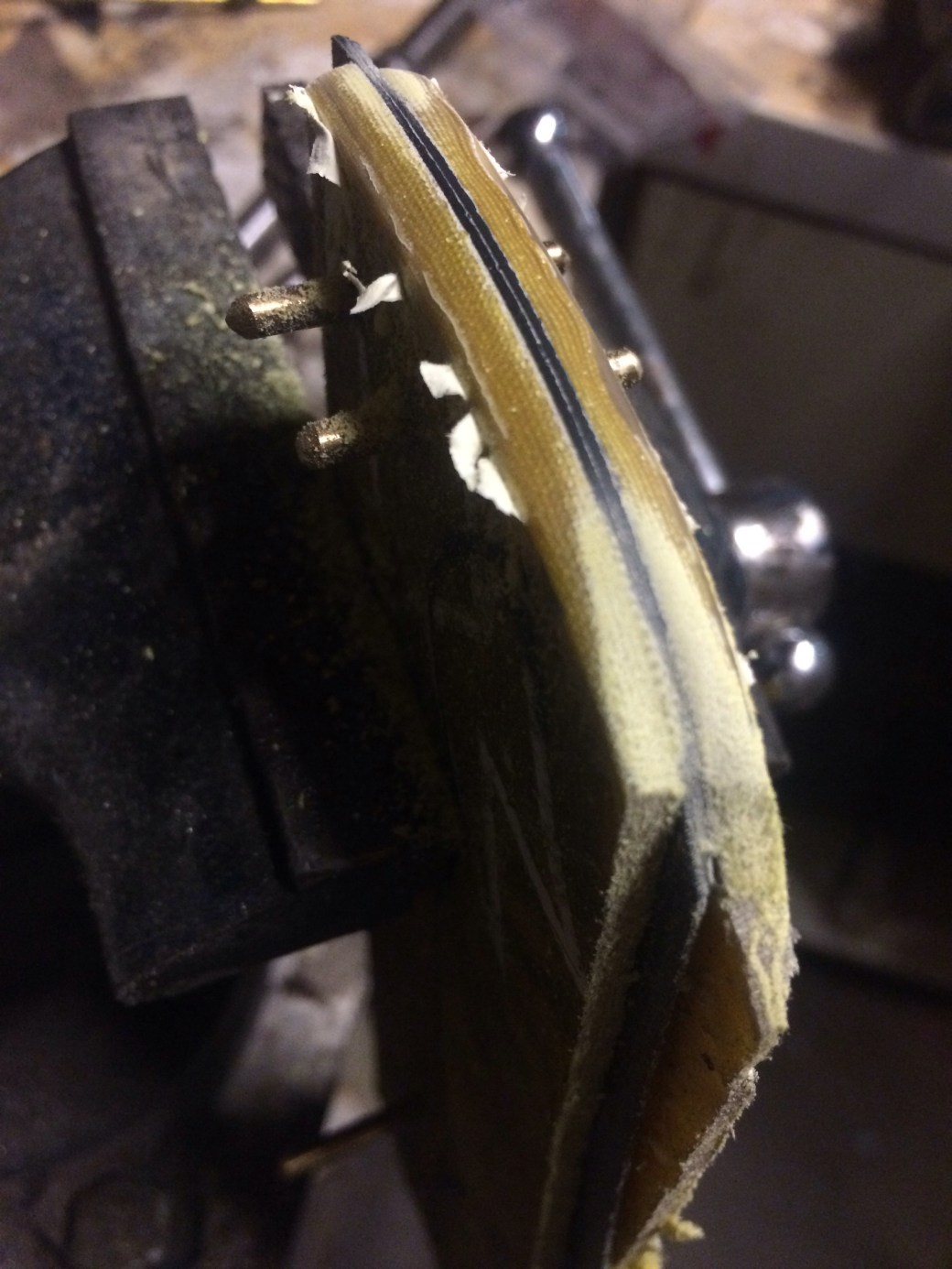
Kydex spacers.  The light contains the dark…   
    

Well shit…let’s clean it up on the grinder…  
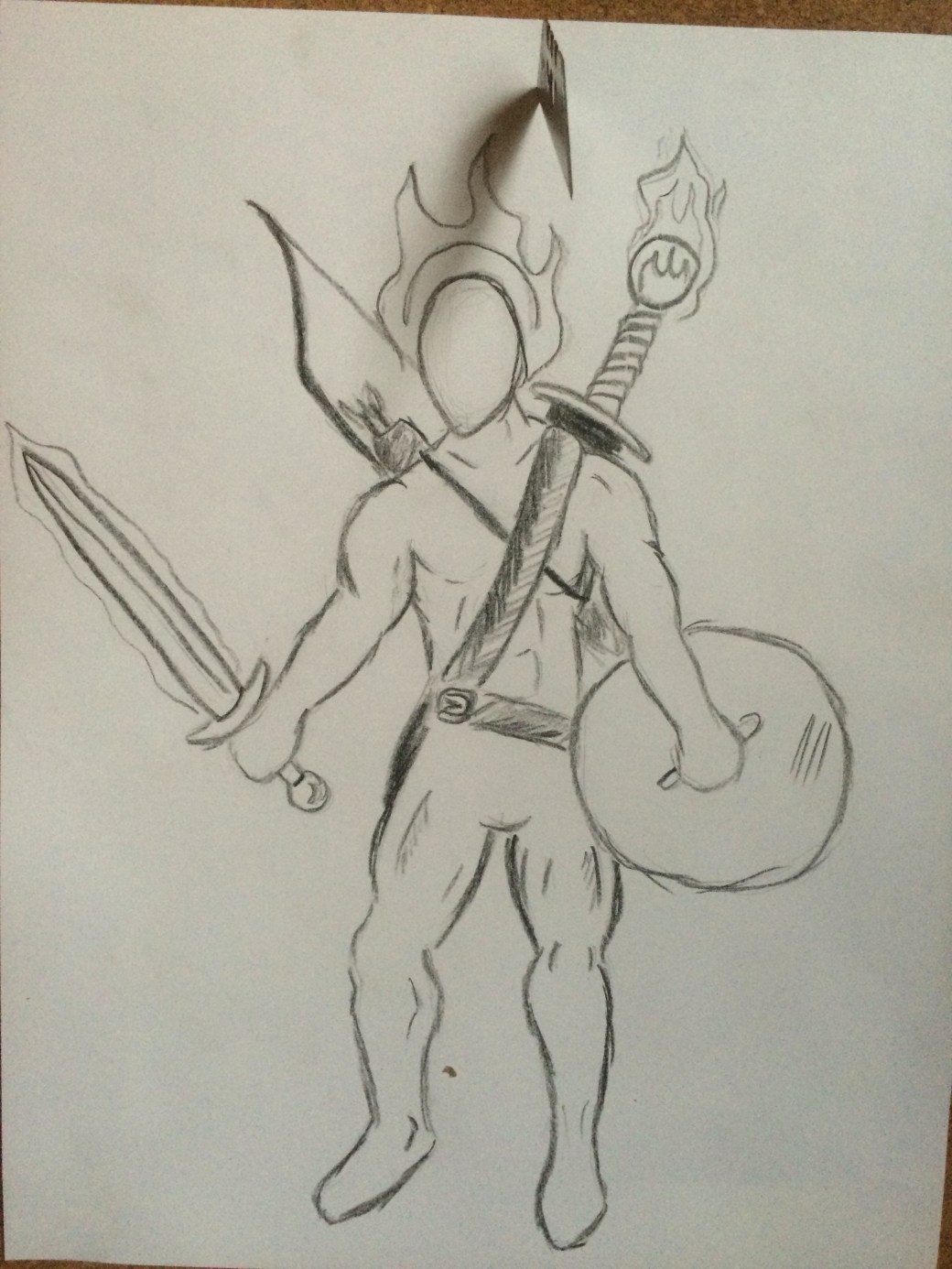
This blade is a nod to that Guardian that kept my grandfather safe and looked after.  A couple years ago, when I felt myself surrounded by darkness, I found myself thinking about this Guardian, whom I was told watches over me.  I drew a sketch of him.  It’s still hanging on my refrigerator.   Sometimes, when you find yourself in dark places, you can imagine that darkness being held by light.  Because there can’t be darkness without light.
The Guardian: 1095 spring steel, homebrewed cotton Micarta scales, Kydex spacers and brass hardware.
  
At the time of this writing it has been 20 years since he died.  Time is indeed a sly magician because it hardly feels like that.  I miss the man deeply and think about him just about every day, and always with fondness.  By the time I came to know him he was in the twilight of his years and had dealt with his darkness, and wanted to give his time and love to a curious little boy.  For this I’m grateful.

Knifemaking: appearances, politics, and the Buffoon

‘Mr. Croup smiled. “You find us funny, Messire Marquis, do you not? A source of amusement. Is that not so? With our pretty clothes, and our convoluted circumlocutions—“

Mr. Vandemar murmured, “I haven’t got a circumlo . . . “

“—and our little sillinesses of manner and behavior. And perhaps we are funny.”

Mr. Croup raised one finger then, and waggled it at de Carabas. “But you must never imagine,” he continued, “that just because something is funny, Messire Marquis, it is not also dangerous.”

And Mr. Vandemar threw his knife at the marquis, hard and accurately. It hit him, hilt first, on the temple. His eyes rolled up in his head, and his knees buckled. “Circumlocution,” said Mr. Croup to Mr. Vandemar. “It’s a way of speaking around something. A digression. Verbosity.” ‘

Mssrs. Croup and Vandermar- from Neil Gaiman’s Neverwhere

1095 spring steel

  
I hardened this after grinding about 2/3rds of the way through.  I planned on grinding him rather thin and didn’t want to risk warping during hardening…
Deepening the plunge…

I have this buffoonish shirt that I don’t think I’ve ever worn…

img_3342

img_3345-1

After the fiberglass resin…

img_3353-1

img_3354-1img_3355-1

img_3356

IMG_3357

The Buffoon:  1095 spring steel, homebrewed linen Micarta handle scales, Kydex spacers, and brass hardware

IMG_3370

IMG_3367

IMG_3366

IMG_3371

buffoon

Be mindful of how we present ourselves to the world, and be wary of what those presentations may conceal.  There could be something deadly underneath.  This is the lesson of the Buffoon.

Knifemaking: hardening and tempering and the Hound, Mark III

“Only people who are capable of loving strongly can also suffer great sorrow, but this same necessity of loving serves to counteract their grief and heals them.”

― Leo Tolstoy

One of the main things that drew me to the craft of bladesmithing is the process of heat treating- the process that hardens and strengthens the steel into something strong and functional.  I find it to be a reflection of the male psyche.  The steel comes to you soft and impressionable- just as we are when we are young.  It’s much easier to work the steel when it is soft, or annealed, than when it is hardened.  You then shape and grind the steel as you see fit- this is growing up and finding your place in the world.  Depending on how well you are or are not equipped, it could take a long time.  Through a process of slow heating and quick cooling the steel becomes hardened- our adult selves.  Though it is extremely hard, it also extremely brittle- it will shatter if dropped.  This is where the process stops for some people.  A brittle blade looks like a knife, feels like a knife, and will cut like a knife.  Appearances are deceiving and without proper tempering this piece of metal that resembles a knife will crumble under stress and will be unsalvageable.  So it is with some men.  When crafting a blade, you don’t let it crumble- it goes straight into low heat for several hours to draw out the stress from the hardening process and becomes flexible and durable.  In the male pysche, crumbling is part of the tempering process.  This is where our flex and bend comes from.  Like the tempering process of a blade it takes a long time.  This is the ethos behind my craft.

I also find it to be a reflection of the healing process from pain, trauma, and grief.  When any of these occur it is important to be with these things, and to be with those close to you who may be struggling to be with these things.  There is a really beautiful blog by Tim Lawrence.  He says these things are meant to be carried, and that this process of carrying our pain and trauma and grief can harden us.  I’ve experienced this in dealing with my own areas of grief, and trauma, and pain.  In this hardening it felt like I lost some things.  There were times when I couldn’t find my hope, or my light, or my path.  There were times when I couldn’t find my love, my self-worth, or my joy.  Everything was brittle.  Like the steel, these things you have experienced have hardened you, affecting you deep down into the molecules of your being.  This is where tempering can happen.  It takes time.  There was an awful bout of hardening I went through about a decade ago and I couldn’t get off the couch.  For about six months on that couch I watched nothing but the Food Network.  One day, after six months of Jamie Oliver, Curtis Stone, and Mario Batali, something made me get up and start cooking.  There were roux’s of many different varieties, soups, stews, crepes, and dim sum.  I started baking bread.  I invited friends over.  I worked more, found joy, and ways to laugh again.  Pain was still there, and would come again as it always does.  Hardness was still there but there was a bit more flex and bend and less brittleness.  Those things I thought were lost had never left, most especially not the love.

I still like to cook.

There can be many things that help to temper us after a hardening.

This is the lesson of this incarnation of the Hound.  The hardness doesn’t go away- but it can be tempered into something with the ability to bend without breaking.  This is the mark of a Warrior.  Be the Knife.

Shaping and rough grinding: To create a strong blade, I took a page from the Japanese swordsmiths who crafted the weapons and tools of the Samurai.  For these swordsmiths, the process was a spiritual experience.  Every authentic Japanese blade features a temper line, called a Hamon, which translated from Japanese means “blade pattern”.

The spine of the blade is covered in clay while the cutting edge is left bare.  The blade is then hardened.  When in the fire, the bare cutting edge will reach critical temperature for hardening while the clay coated spine does not.  What results is a differentially hardened blade.  The softer spine has more flex and bend while the blade edge is fully hardened.  This makes for an incredibly tough sword that is far less likely to break but just as deadly as a fully hardened blade.

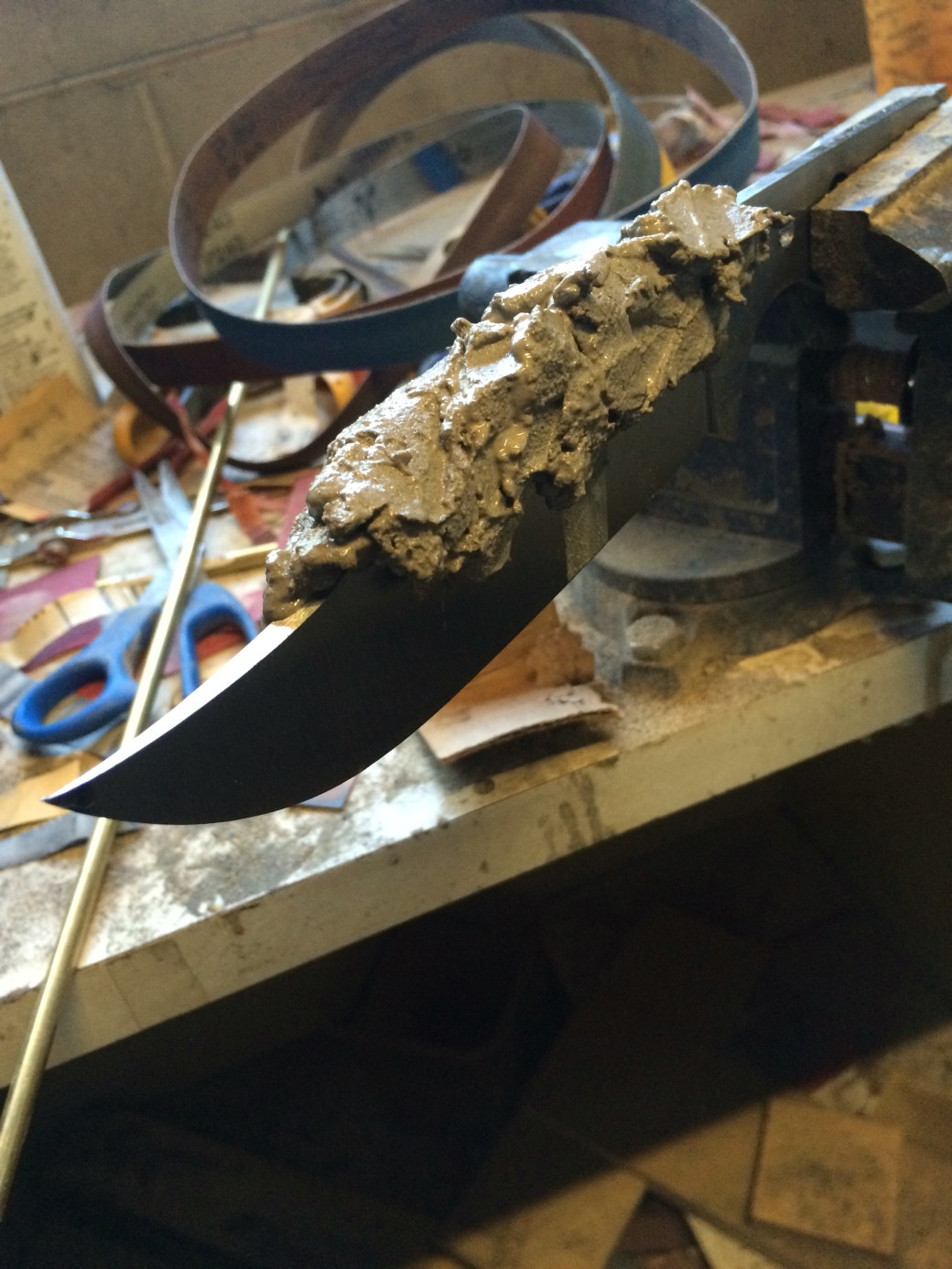
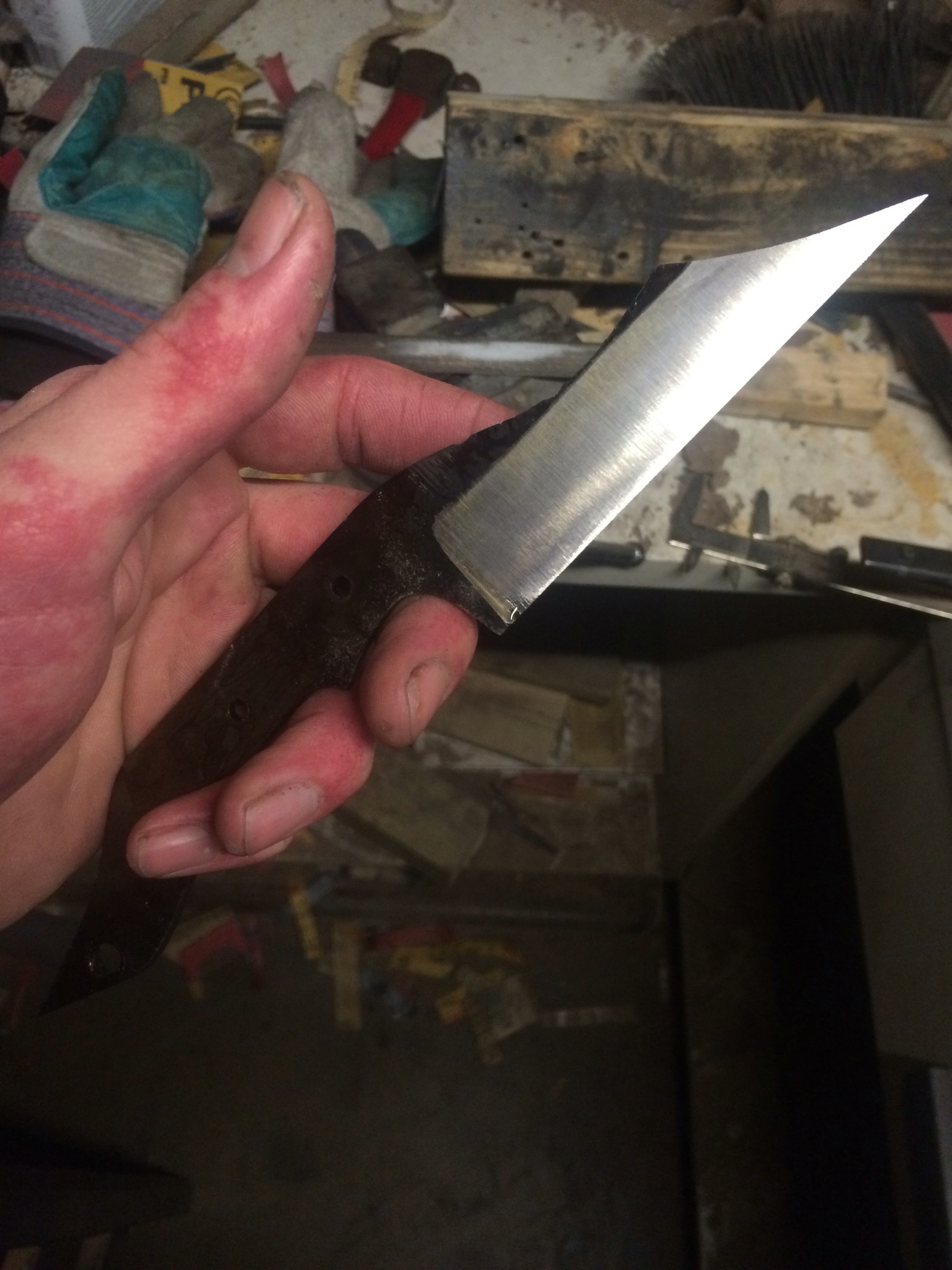
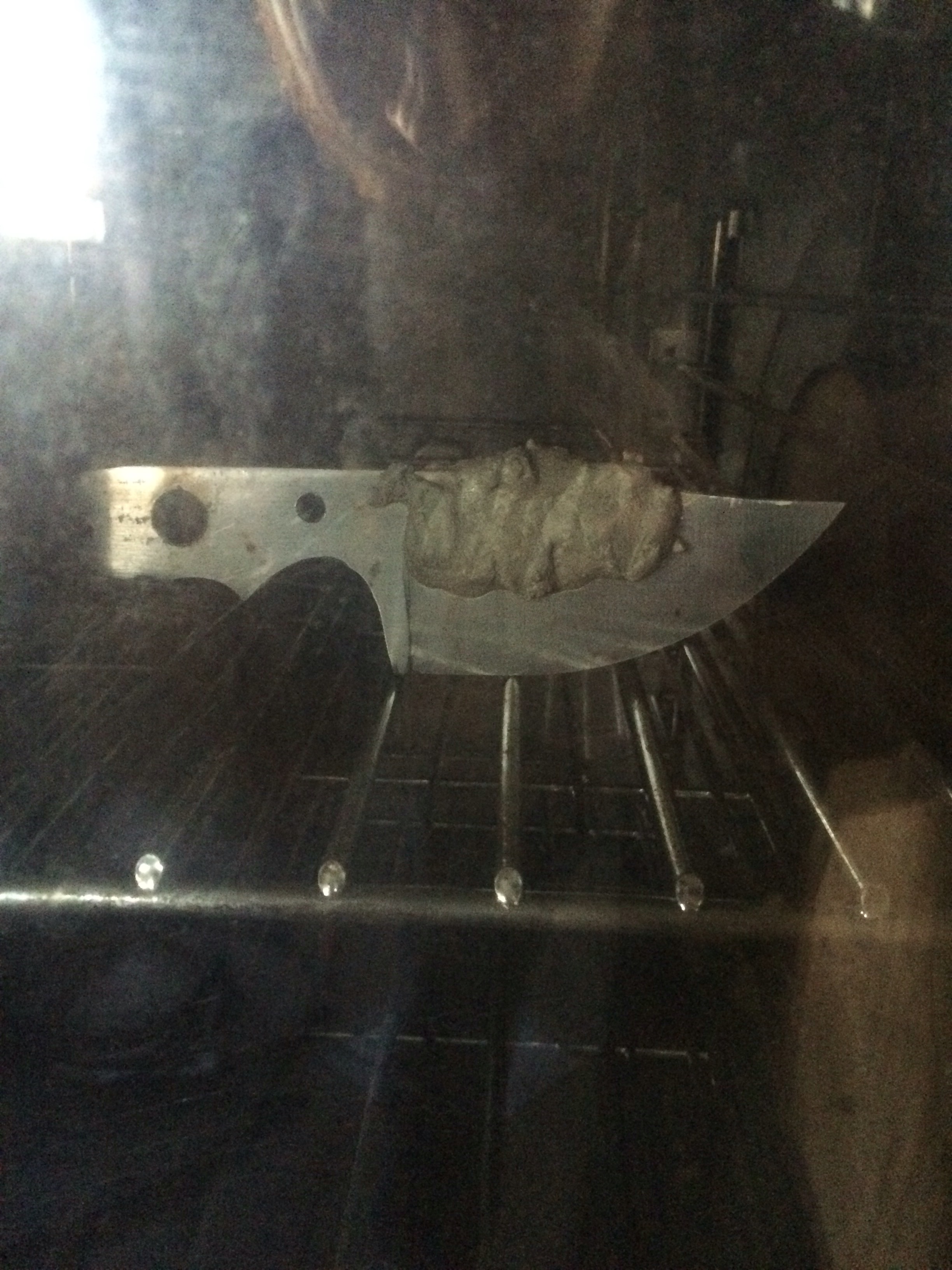
I cheated a bit and used furnace mortar instead of clay….

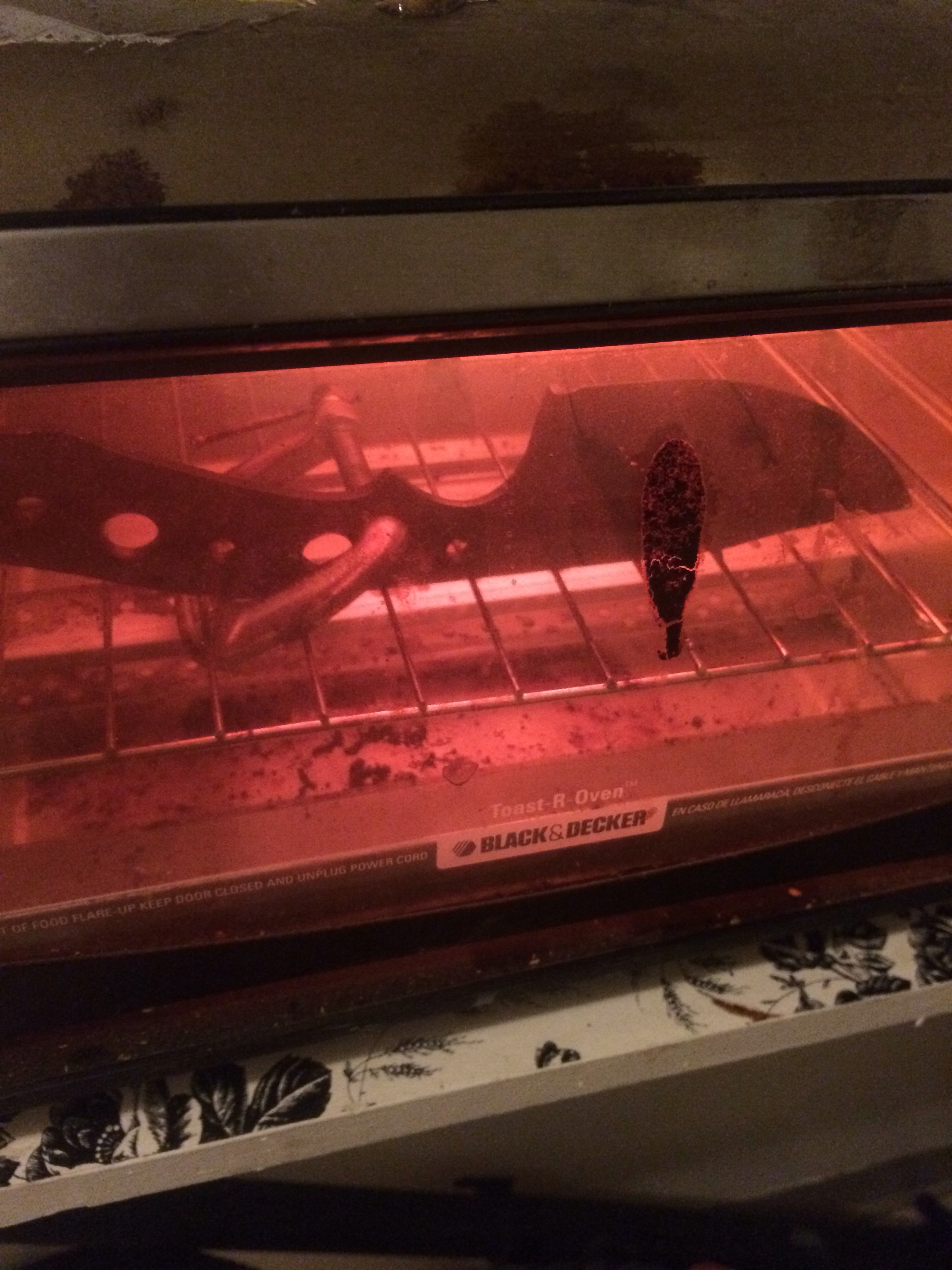
I gooped it onto the parts of the blade not crucial to slicing and stuck it in the oven to cure:

After the mortar is cured, she goes into the forge.

Hardened: 
  That tempering part, for flex and bend…

Thumb for scale….

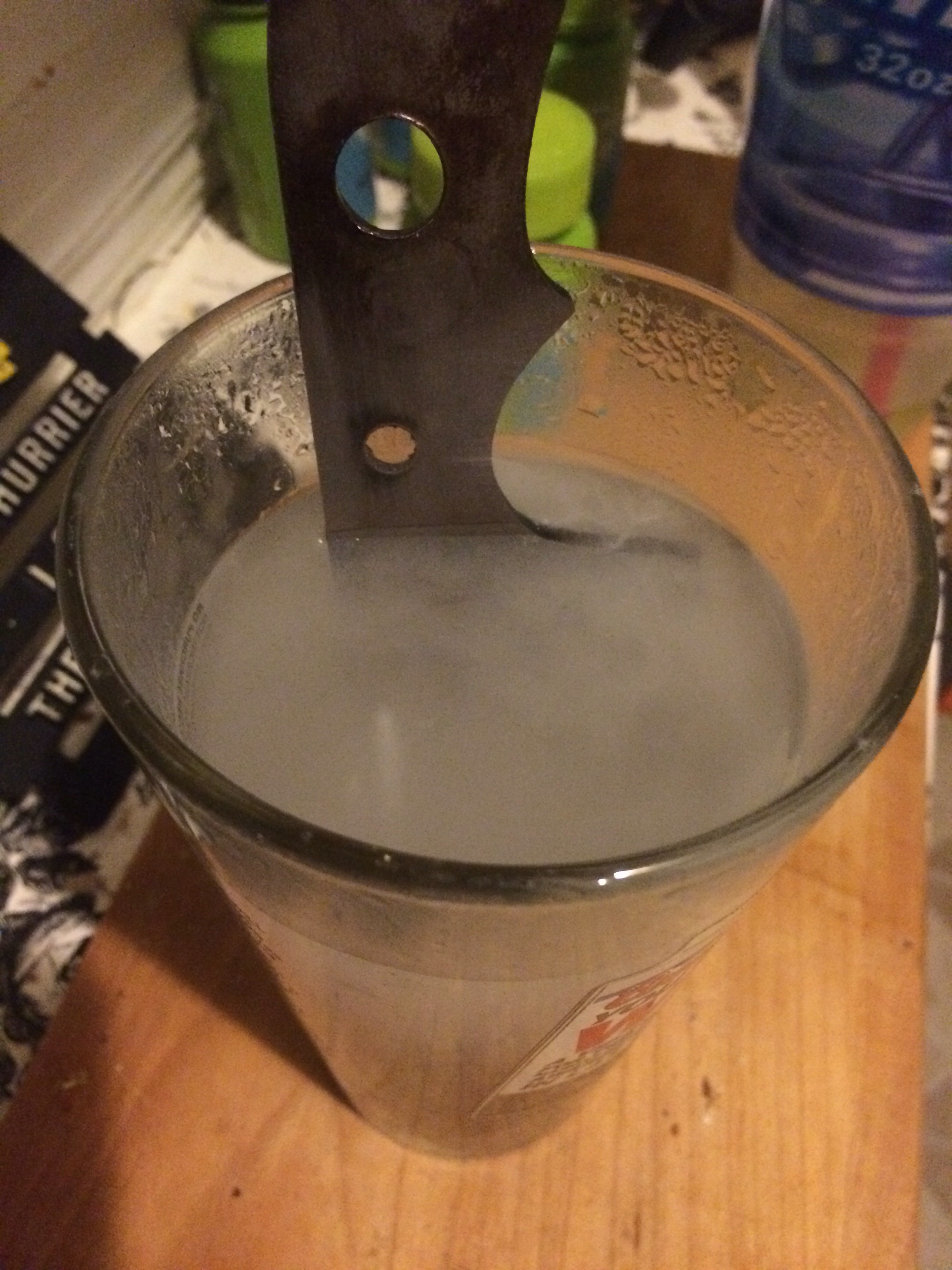
Into nearly boiling vinegar.  The vinegar eats away at the softer steel of the spine faster than it does the harder steel of the blade.  What results is a gorgeous line where the softer steel meets the harder…  Handle…


The Hound, Mark III.  Etched 1095 spring steel, Texas Mesquite handle, Kydex spacers, and brass hardware.

This blade was a commission for a very dear friend of mine who waited patiently for almost a year while I got my shit together.

Be the Knife

a2840520d4cba64df3cf736025cb084a

Knifemaking: being where you are and the Whiskey Jack

 ‘There are a lot of good places,’ said Whiskey Jack. ‘That’s kind of the point. Listen, gods die when they are forgotten. People too. But the land’s still here. The good places, and the bad. The land isn’t going anywhere.’ 

Neil Gaiman- American Gods

A couple months ago I was working a Christmas show for the Ballet in town.  About midway through the three week run they started planning for next years show.  They were redoing some of the backdrops, which are gorgeous, and they had flown in an artist who paints them.  I was the one to pick him up from the airport.

I didn’t know any of this.  I was told to go pick up a gentleman at the airport and given a phone number.  A large French gentleman got into my rental car.

He apologized for his delayed flight.  I’ve heard that the French appreciate bluntness so I asked him what he was here for.

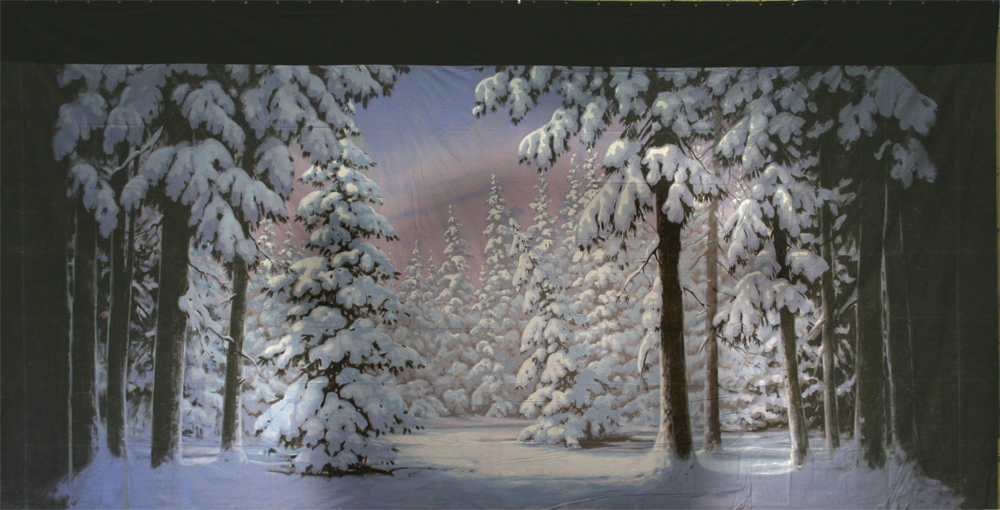
He told me he was a painter and that he was here to look at the scenery backdrops.  A backdrop is a large painted background that the dancers perform in front of.  They set the scene for the different locations in the ballet’s story.  Here is one from an opera rental company in Utah:

drop

The French gentleman said he sort of stumbled into this profession.  He was a painter living in France.  He fell in love with a ballerina and they married.  Sometime after this he was asked if he would paint for the scenery department.  Gradually this became his livelihood- painting settings for the theatre.  He now lives in New York.

He told me that it wasn’t always like this.  He said his passion was painting monsters- not the horror movie kind but something a bit more fantastical.  Since he was a child he said he’s always loved monsters.  He struggled to sell his work.  He went through a divorce.  He moved to a new country.  But he was always painting, be it monsters or backdrops.  He said that he went ten years without doing any scenic design, but he was always painting.

It’s these things that help keep us sane and help us to be where we are and to get through the hard things that we need to go through to grow as people.  They help us to remember that we don’t have to go anywhere or shy away from our experience as long as we have something to ground ourselves in.  This is what I got from that conversation with that gentleman.  This idea is also where the namesake of this blog comes from.

This is also the lesson of the Whiskey Jack.  ‘Whiskey Jack’ is an anglicized version of Wisakedjak, a trickster deity with a strong heart in Native American Folklore, specifically of the Cree tribe.  Whiskey Jack is a character in American Gods by Neil Gaiman, believing that no matter what happens the land is still there regardless of what we do to ourselves or others.  There are things we do and make and say and write that exist outside of the tedium and mental minutiae of our modern world.  Things that help us to keep our center when our hearts are breaking or it feels like everything is crumbling.  Things to help us be with our joy and to be with our grief.  They don’t go anywhere.  Remember these things, the beautiful things we do, when the world has made you weary.  I try to remember this when I am exhausted, when I don’t want to get out of bed, or if there are jobs or conversations that I really don’t want to do or have.

This large French gentleman’s name is Alain Vaes.  Please check out his work.

I started with 1095 steel and worked out a 6in bowie style blade:

 Full flat grind


HardenedLots of sanding… 

I like a heavy blade but I put these big holes in to lighten it just a bit.

This is one of my absolute favorite shirts.  I’ve worn it all over the country.  There are kind souls in my life that told me while the armpit stains are endearing, I probably shouldn’t where it out in public lest I scare small children….

….so I made it into handle material.  It’s not going anywhere either.

Clamped

The Whiskey Jack: etched 1095 spring steel, homebrewed Micarta scales, brass liners and hardware.  Shaving sharp, he is built to be used.


Be where you are, and keep doing whatever it is that helps you to stay there.  This is the lesson of the Whiskey Jack.

Knifemaking: going deep and the Kingfisher

When a needle falls into a deep well, many people will look into the well, but few will be ready to go down after it”

-African Proverb

I went to music school.  I was shown many ways to teach myself to be good at things.  I spent many hours in a practice room by myself, many more hours in front of a piano composing and arranging, and even more time listening.  To everything.  The education I got reached far beyond any classroom or practice space.  Life becomes those spaces.

Learning how to listen to things was the biggest lesson I learned.  When you listen, really listen, not just hear, your world opens up.  You notice all the nuanced bits of wonder.  As life gets busier and more complicated I still have to remind myself that it’s all still there, that it hasn’t and won’t go anywhere.  That within a world that holds a good deal of pain and sorrow for everyone there are also things that move and stir the soul, but they don’t always sit on the surface of our awareness…

There was one class that really opened things up and is sort of the inspiration for this writing.  It was called World Music, which is a rather vapid title for an experience that was so much more that.  It was taught by a very wonderful and kind man, one of the more enlightened people I’ve ever met.  Classes started off in silence and darkness, with the ringing of chimes.  Sometimes ambient music was played, or Tuvan throat singing, or guitar players from West Africa with rhythms I had never heard before.  There were many books to read, records to check out, and some of the most real discussions on being and the human condition that I have ever experienced.

It was during one of these discussions that something came up, and I don’t quite remember the context but it has stuck with me.  In the course of the discussion, it came up that our professor’s spirit animal was a dolphin.  He said that he was at the beach surfing when he was sixteen and nearly drowned and shortly thereafter found he related deeply with the dolphin.  The dolphin is able to dive very deep but always returns to the surface to breathe.  He told us he built his whole philosophy of teaching on that premise.

This is something that has been with me for awhile.  Sometimes you have to take a deep breath and go deep.  When you are exhausted, when it feels like life is more than you can handle, when you need to heal.  You can handle a lot more than you think you can but the tools and nourishment you need don’t always sit at the surface.  That doesn’t mean the process of finding these things doesn’t hurt like hell or isn’t terrifying at times.

Take the Kingfisher bird, for example.  To get the food it needs to sustain itself, it has to dive far beneath it’s comfort zone.  They sit on their perch overhanging the water and when they see their prey they dive, eyes closed, into the deep.  I think about this and wonder what is going through his little bird brain before he hits the water…

kingfisher

This is the lesson of the Kingfisher.  You close your eyes, you dive deep, and you come up with something nourishing.  Repeat as necessary, adding faith and a bit of courage as required.

I wanted to make a filet knife, something to help me dive.  I made her out of a thin piece of bedframe steel.  She has a 6in blade.

I initially ground two of these, but one didn’t turn out.  I left it soaking in the acid too long (for a deep etch) and there wasn’t much blade left….

My very dear friend James did the handle on this one.  She has Mora wood scales and brass hardware.


My good friends Mike and Jen using the Kingfisher to de-bone a goose… 

Sometimes you have go below the surface of things to find what you need.  This is the lesson of the Kingfisher.

Knifemaking: armor, mobility, and the Archer II

“ARMOR, n. The kind of clothing worn by a man whose tailor is a blacksmith.”

― Ambrose Bierce, The Unabridged Devil’s Dictionary

(you can read about the crafting of the original Archer here)

We all put on armor everyday.  Some of us put on more than others.  Sometimes it physically manifests.  Hard hats, steel toes, wingtips, neckties.  Some ladies refer to their makeup as war paint, another type of armor.  Other times it’s more subtle and subdued- the way we carry ourselves, our use of vernacular in particular situations, and the image of ourselves that we present to the world.  All these are things we do to protect ourselves.

A few years ago I had a temp job working construction over the summer.  The company I worked for had a contract to build all of the temporary structures for the Boy Scout National Jamboree.  I spent almost four months driving to a military base in the middle of nowhere.  I use the term base loosely.  It was really just a giant campground guarded by military police, and all of the campers carried semiautomatic weapons.  In four months I used a flushable toilet maybe three times.  The cast of characters I worked with were a colorful lot.

My boss was a Brazilian Jui Jitsu master.  He got to work before everyone else and ran five miles on base.  Some people have coffee before they start work.  Our mornings with him consisted of tapping out of sleeper holds, arm bars, half nelsons, and doling out mollywhops of a variety I’ve yet to experience again.

One of the other gentleman did a ten stretch for first degree murder, which nobody found out till the work contract was almost up.  The base knew he had a twenty year-old felony and vetted him for a base pass.  I’m not exactly sure what this means, but military bases generally don’t mess around.  He did good work and kept to himself.  He was married to a florist and had a house in the country.

Then there was the gentleman who had just gotten out of jail for beating the the hell out of a guy with a tire iron.  He was drunk and thought the guy was stealing his car.  He was there trying to pay off the lawsuit and lawyer’s fees.

Another gentleman I worked with had severe anger management issues and was there because he was dating the company owner’s daughter.  He had a degree in English and was trying to get into law school.

There was Jose from El Salvador who had four children and was still madly in love with his wife.  He taught me filthy things to say in Spanish.

There were two football players on break from a small conservative college.  They said they were there earning beer money.

Then there was me.  My car had died and I needed to buy a new one.

I spent four months with these guys, riding around in the back of a decommissioned deuce-and-a-half, building things, and hearing stories that I’m still not sure if I believe or not.  In these sorts of work environments a decent amount of posturing and exaggeration is to be expected from almost everyone.  Despite their checkered backgrounds, these guys were not terrible to work with.  Nothing felt unsafe except for the blistering heat, the bird-size mosquitos and the morning mollywhops to which I became adept at parrying.

Just to be safe I would put on some armor everyday- a bit of bravado, a bit of flash, a bit of the grandiose.  My nicknames reflected that.  The Viking.  Sledgehammer.  Red Devil.  I was lifting a lot of weights and I was not a small man.  It helped enforce some social boundaries.  At the end of the day I could usually take it off, or so I thought.

The type of armor a lot of these guys wore- they couldn’t take it off.  This was how they lived and you could feel that they had worn this armor for a very long time, so much so that it became a part of their being.   There were scuffles, gruff talking, machismo.  Everything was laced with an extra scoop of testosterone.

When you wear heavy armor you are shielded from many things that can hurt you.  The drawback is that you shield yourself from the things that help you as well.  You block out grief but you also block out the serenity that in time comes with it.  You block out pain but you are also blocking the healing that follows.  You can become a shell of yourself.  The armor becomes limiting.  You can’t move and you become horribly stuck.

What happens when you do decide to take the armor off?  When you aren’t hiding behind any sort of bravado or grandiosity or gestures or facades?  There comes a point where it becomes more painful to live with the armor on than off.  You take the armor off and let the world in.  All of it.  The world becomes overwhelming.  You’ve put on a different set of armor, something that allows you to breathe and move and serves you in a much deeper capacity.

This is the lesson of the Archer.  To lightly armor yourself so that you are protected, yet you can still hit your marks with a deadly precision.  You can move farther and faster and feel much more deeply.  You become more aware and but find that you require a different sort of care for yourself and this may feel foreign.  You feel pain more acutely but the healing becomes more available to you.  The things you put out into the world feel more genuine.

For this blade I wanted something long, sharp, and elegant.  I designed her for the kitchen.  She is ground thin and a bit more fragile- at one point I dropped her on the concrete floor and the tip blunted a bit.  After a bit of grinding she was alright.

FullSizeRender 7

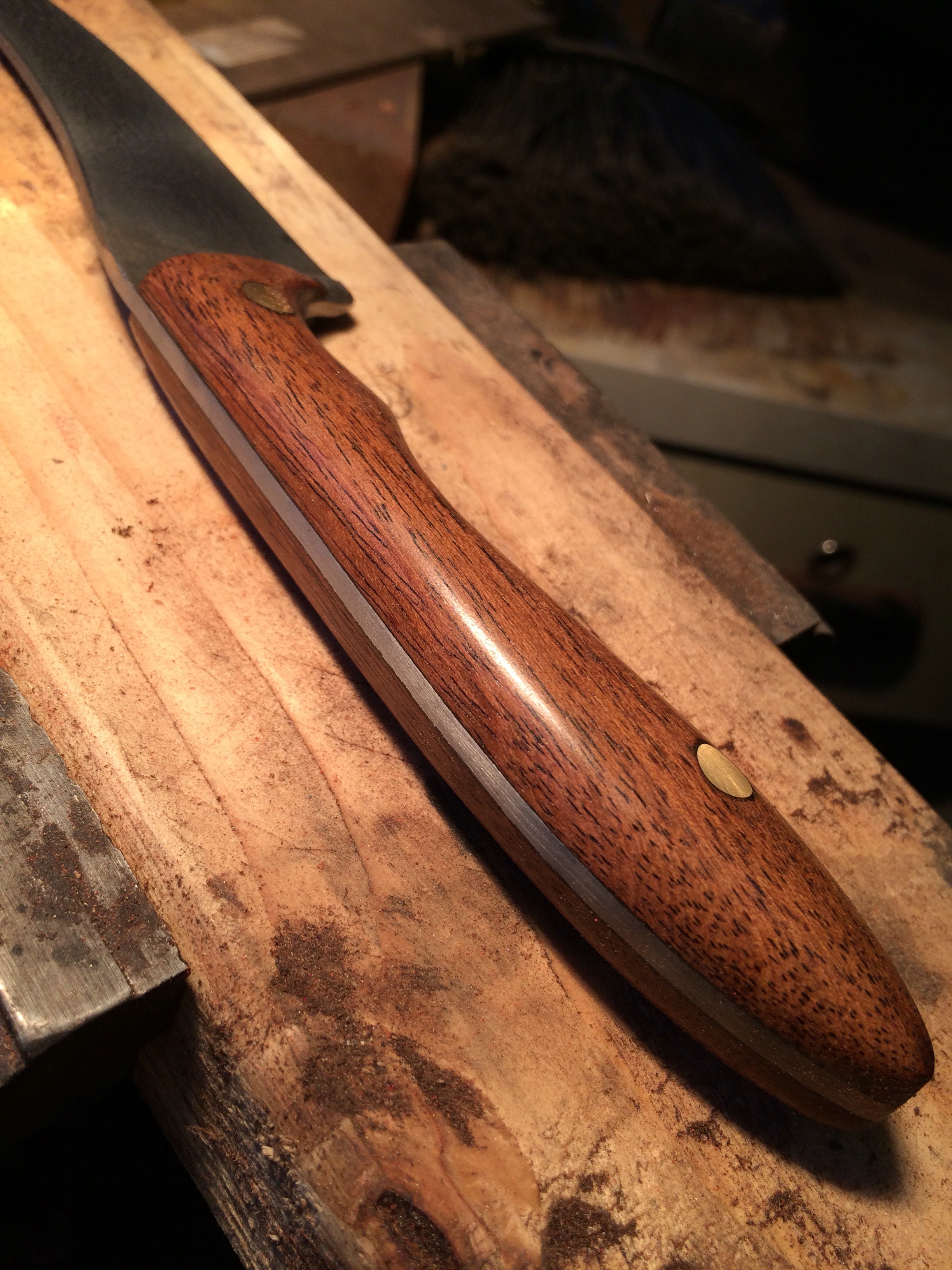
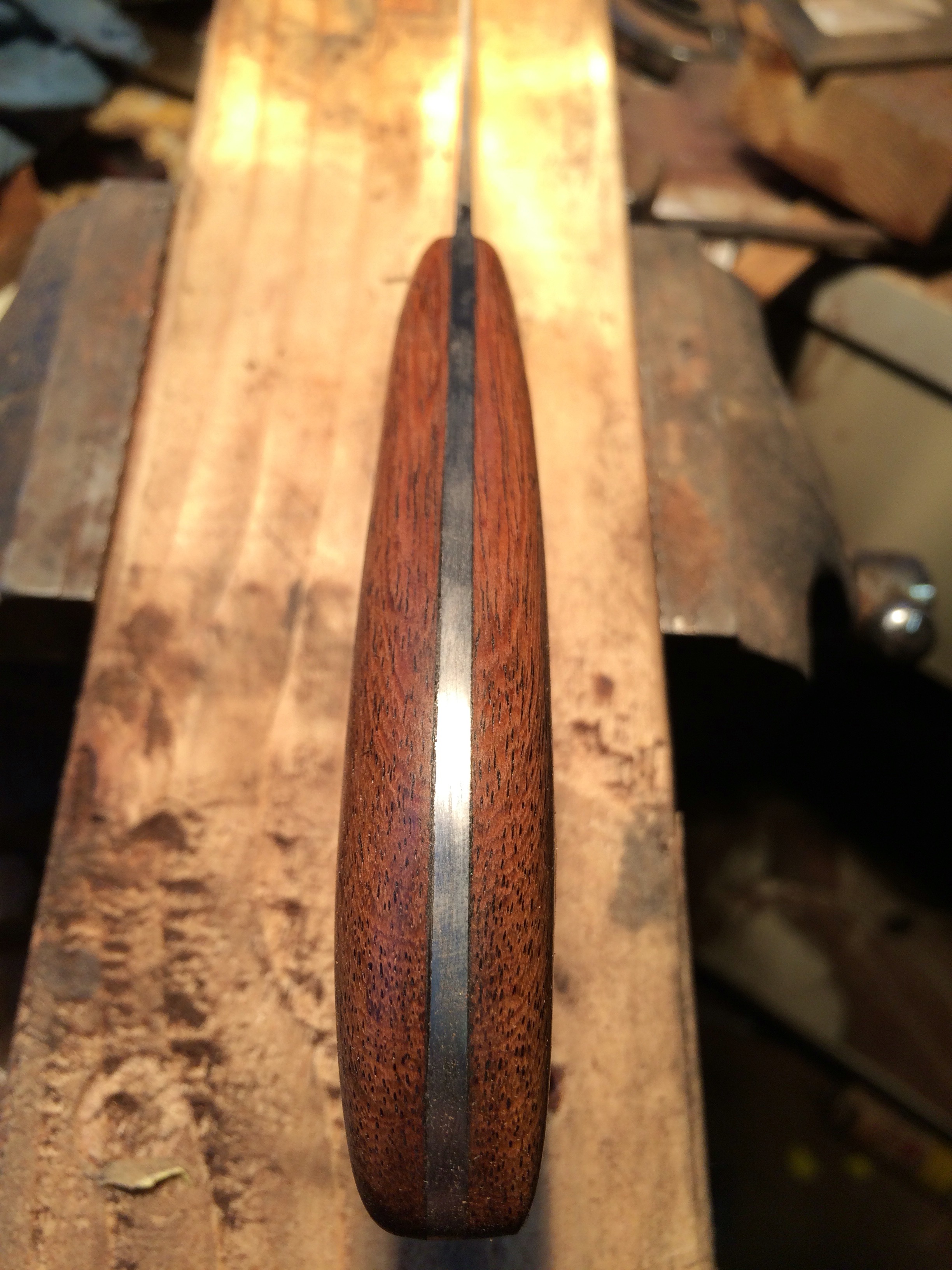
The Archer, Mark II: 1095 spring steel, Sapele handle, brass hardware

FullSizeRender 5

FullSizeRender 4

FullSizeRender 6

FullSizeRender 3

FullSizeRender 8

Take your time and adjust to this new armor as the world opens up to something beyond posturing and mollywhops.  This is the deeper lesson of the Archer.

Knifemaking: magic, noticing, and the Conjurer

The world is full of magic things, patiently waiting for our senses to grow sharper.”

― W.B. Yeats

With most things in the world, there are many behind-the-scenes forces that help things to happen.  Take a blossoming flower.  Beautiful, fragrant, and simple.  But behind all of that is a team of unseen helpers going about their existences- honeybee’s to pollinate, an ecosystem of soil for roots to take hold, and a concoction of nutrients within that for nourishment.  There is rain, meteorological patterns to govern the rain, and atmospheric conditions to govern those.  The beautiful blossoming flower couldn’t do what it does without these things, but that doesn’t make it any less magical, or detract from it’s wonder.

Life is a microcosm of this.  For everything in our lives, magical or otherwise, there is a team going about busy existences to make those things happen.  It’s important to notice these things.

A few years ago I started getting calls to work big shows.  Rock concerts, comedians, people of Youtube fame: acts big enough to fill coliseums and large concert halls.  My job title in these instances is Production Runner, a gofer, someone who knows where to find things and can make problems go away.  I’m the guy who gets someone coffee, or picks up prescription strength fungicide for professional wrestlers, or buys lumber for stage carpenters.  I’ve worked for a huge number of these acts.  Sarah Bareilles is very sweet, Taylor Swift’s bodyguards are terrifying, and Bill Cosby told me I was a connoisseur of elongated bullshit.

These performers are like the flower.  Most of them are who they are because they do something special that resonates with people, something fragrant and colorful and moving- magical even.  But like the flower there is also an army of forces working very hard so that these performers can do what they do.  There are truck and bus drivers, lighting designers, electricians, sound technicians, board operators, music directors and musicians and a slew of pencil-pushers and smooth-talkers to bring the flowers to the masses.  There is even magic in what all of these forces are.

One of the first shows I worked was on the set of a two day DVD filming at a local concert hall.  It was for a well known ventriloquist and was to be shown on a national TV network.  It was exciting.  After it was all over there was a director who needed a ride to DC to visit his brother before he flew back to Los Angeles.  Being ever the cash opportunist I offered to assist.

In the I-95 traffic we had deep conversations of politics, sex, and music.  He was telling me about a production he was watching from backstage in LA.  It was a Stevie Wonder performance being filmed live for television and there was a performance of “My Cherie Amor.  He had heard this song hundreds of times before but this performance of “My Cherie Amor” moved him to tears.  He couldn’t explain it.  Why was that one time so moving and special?

I told him that it was probably because he hadn’t really stopped to listen before, or maybe not in a very long time.  There wasn’t anything else to do at that moment and he was able to hear a legend do what made him famous, to hear this beautiful man conjure deep things through his very simple gift.

This is the lesson of the Conjurer.  To see the magic in the simple things.  To conjure your own magic through the simple things you do in your life, because that is where the magic really lives.  The flipside is to notice that the magic is there.  It’s what puts the color in this world.

She is made from a bar of 1095 spring steel
Rough grinding  

Ready for hardening

Hardened and scaly

  Tempered

Brass for the liners 
  
The Conjurer: 1095 spring steel, Mora handles, and brass liners and hardware  


When the director gentleman and I got to DC he gave me his card.  I went home and googled him.  This man was responsible for many magical musical productions and television shows and his name was shown prominently on each of them. Turns out he is quite the celebrity in that world and for good reason.  If I hadn’t taken the time to notice I could have missed a special experience and the simple but beautiful conjuring that this man did.  He helped me to see my own conjuring and magic.  This is the deeper lesson of the Conjurer.

Knifemaking: the courage to be and the Ace

“If you love something, you know what the best in the world actually looks like.”

James Altucher


This blade was a commission for a six-year old boy who lives on a farm.  His parents are close friends of mine.  They have several acres of property in Montpelier, which is about 40 minutes outside the city.

I go out there as often as I can, usually just to get away from the city.  They have goats, chickens, ducks, pigs, and other animals.  I keep turning down offers to hunt.  I’m not much for guns or shooting things but I have made knives for them to skin and clean with, and I will always eat whatever they brought back, provided it’s already dead.

I’ve known this little boy since he was about three.  He loves to play and is curious about almost everything.  He asks questions that I don’t really have the answers to but I always answer him as best I am able.   He is open and fearless and kind.  He loves his family and everyone close to him is a dear friend.  He sees the best in everyone and wants to help as much as he can.  I have to remember to watch my mouth when I spend time with him.

As an adult I see this as profound and courageous and often inspiring.  This what I would call the Courage to Be.  But as a little boy he is only doing what he knows how to do.  He just loves and in those moments I can feel that whatever he has going on is pretty much the best thing ever.  As a former little boy, I know this feeling well.

I was out there recently for dinner and he showed me where he had lost a tooth.  I asked him if the tooth fairy had visited him and he lost it and screamed “THERE IS NO TOOTH FAIRY” and ran out of the room.  Apparently, his mother explained, he had found out the tooth fairy does not exist.  She said he threw her two dollars at her and demanded his tooth back.

His little world was shaken and he wasn’t afraid to let the big people know how he felt.  Sometimes I wish I could get away with demanding my tooth back…

I was out there the other day and his father needed a hand installing a new washer and dryer.  I had this little boy help me while his father did chores.  He kept asking me when we were going to play and make things.  I couldn’t lie to him.  I told him I had to help his dad and I might not have time for play.  He wasn’t very fond of my games- break the water line with the channel locks, hold the door while I cart out the old dryer, hand me a screwdriver.  I thought we were having fun.  I like hanging out with this little being, even when there is much to do.

And then this little boy had a meltdown.  Tears and everything.  “All you do is work,” he says.  “Maybe you work and save some time for play and then maybe you won’t be so tired,” he says.

I asked him if he would like a hug, and he said yes.  I didn’t tell him I had come out there to have his mother help me with my resume.  I didn’t tell him that his parents work hard and sacrifice so he can play and learn and Be.  What I did do was put him on my shoulders and tell him to hold on tight.  He said he wasn’t scared.

This is the lesson of the Ace.  To find the Courage to Be, even when the grown-up world has dimmed your shine and made it painful to love without condition.  To know what the best in the world looks and feels like, even when you have trouble paying your bills, or sorrow makes you weary, or there are many moments when there isn’t enough of anything.  To know that while you are not going to get your tooth back, you don’t have to like it or settle for anything less than you believe you deserve.

I had traded a skinning knife and a small paring knife for some supplies from his parents.  This little boy found them and said he wanted one.  His parents found a two-foot machete in his play fort.  The little boy said it was for “keeping bad guys away.”  I have seen no bad guys in the vicinity so it must be working.  They asked me if I could make a small knife with a blunted edge for him to carry and learn with.  I then asked the little boy what kind of knife he would like.  I received a drawing and a strict set of parameters, the last of which required that it be a sword.  Right little man, I’ll get right on that…

This is what I came up with.  A blade for a smaller hand.  He’s an inch across at his widest point.  This is the smallest blade I’ve ever made.

full flat grind…

 …hardened and tempered…  

testing for handle fit…  

  The grip is a piece of Mahogany floorboard

The Ace: O1 tool steel with a satin finish, Mahogany handle and brass hardware.


I made a small leather sheath for him to carry it with.  The blade is blunted and I ground the tip down per his parents request.  He’ll grow into it and I’ll build him another one when he’s ready.

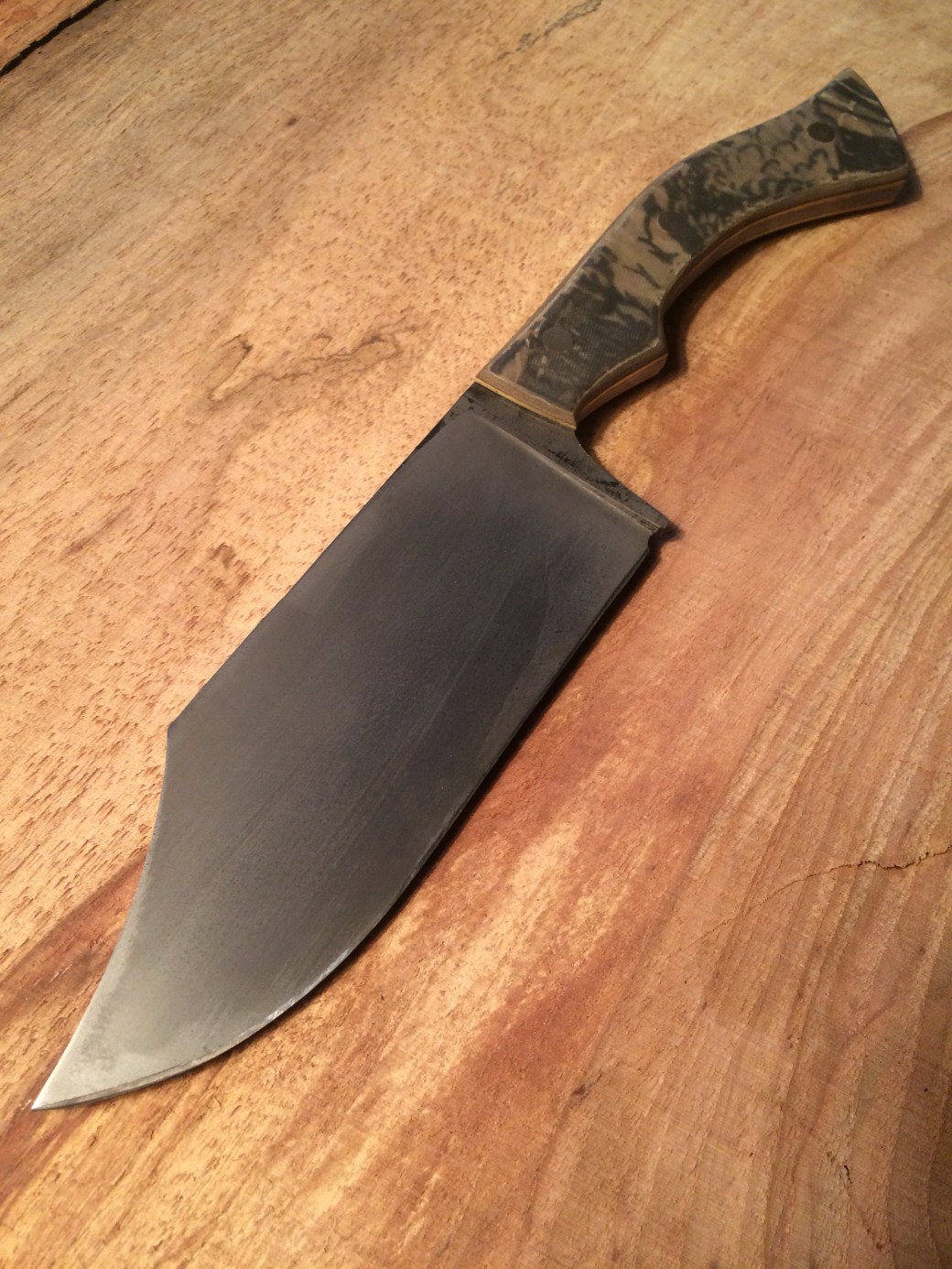
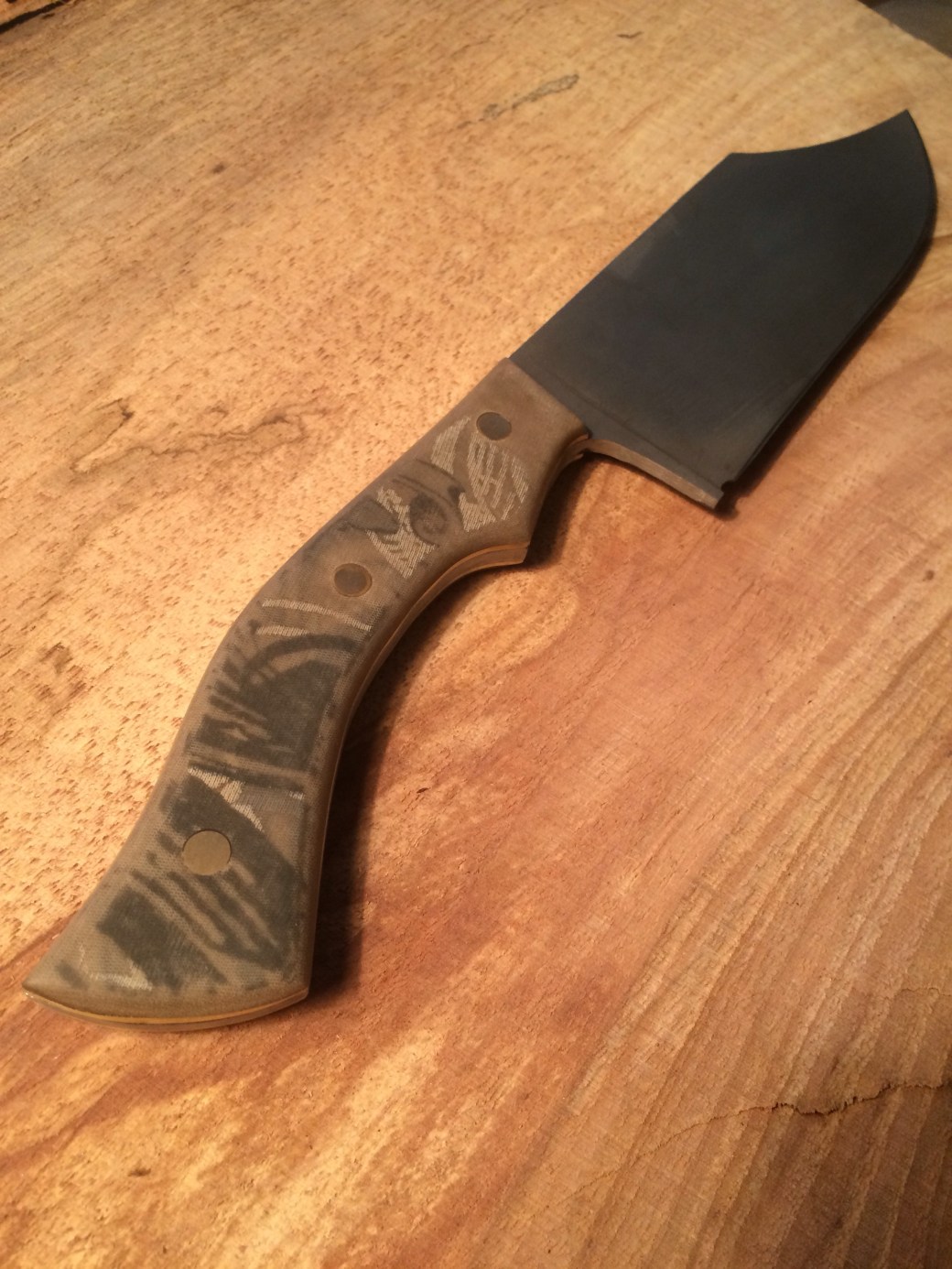
Take note of the little ones.  Try to find your Courage to Be.