Knifemaking: braving the storm and St. Elmo’s Fire

“I have seen many storms in my life. Most storms have caught me by surprise, so I had to learn very quickly to look further and understand that I am not capable of controlling the weather, to exercise the art of patience and to respect the fury of nature.”

Paulo Coelho

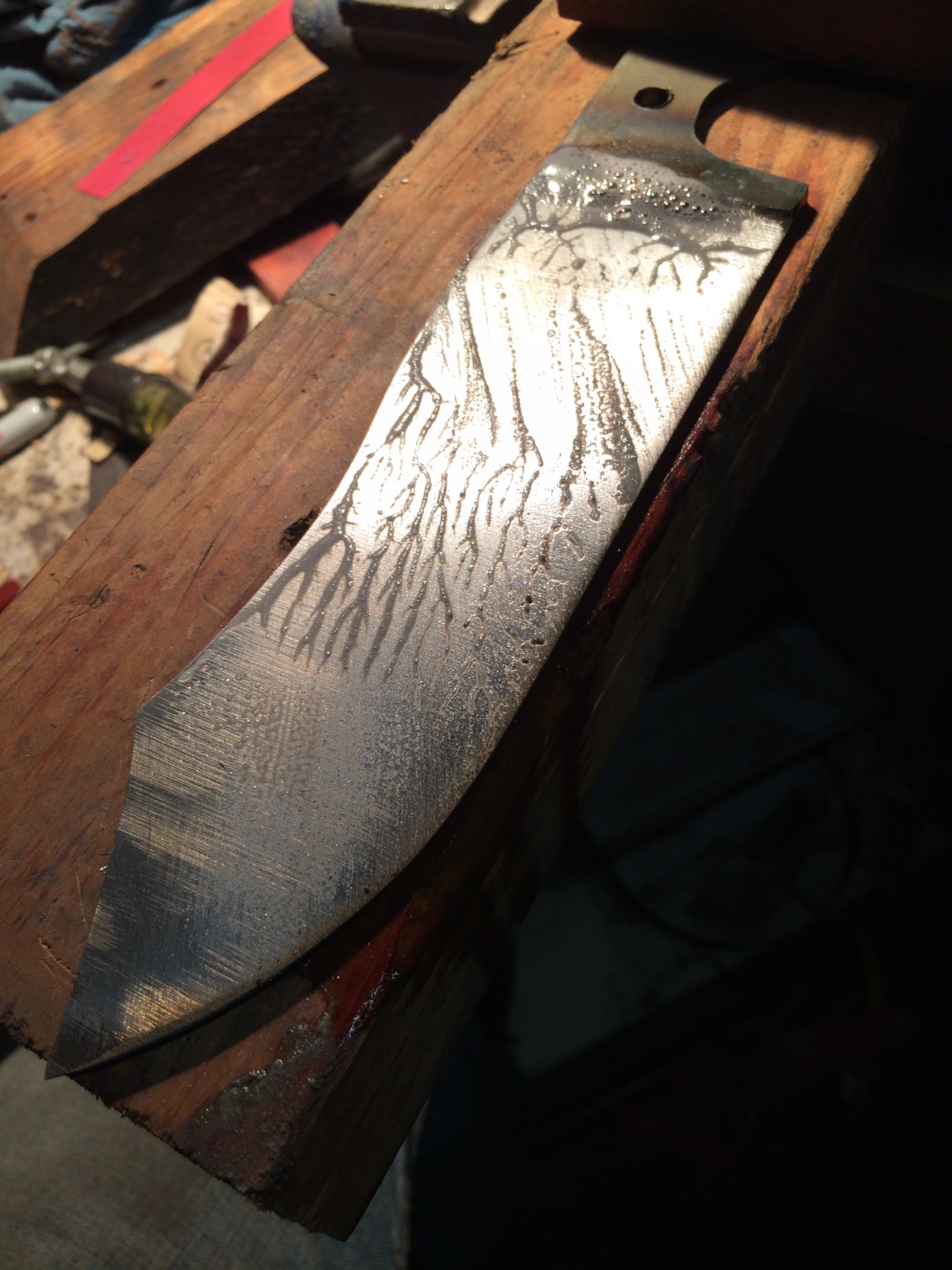
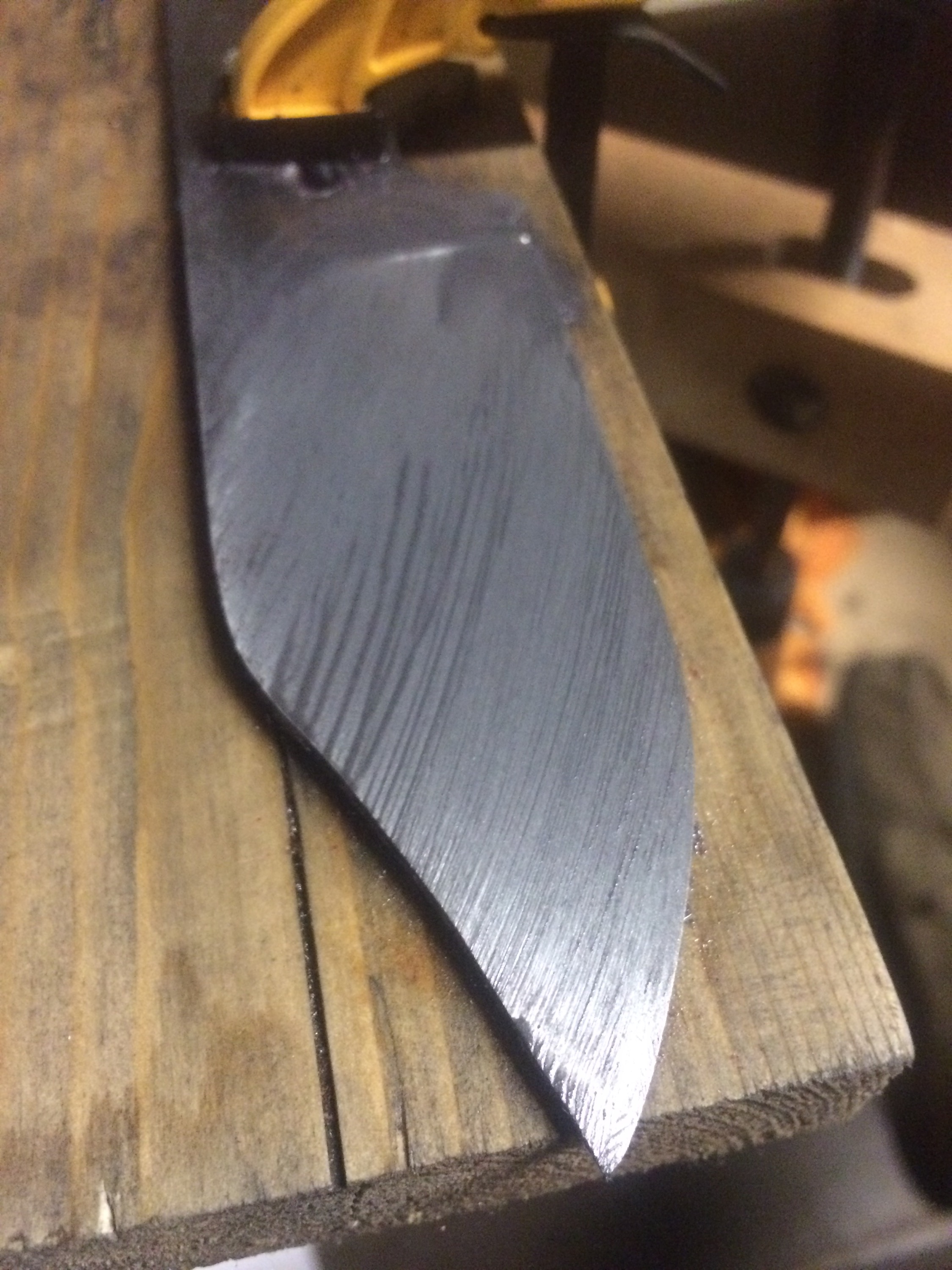
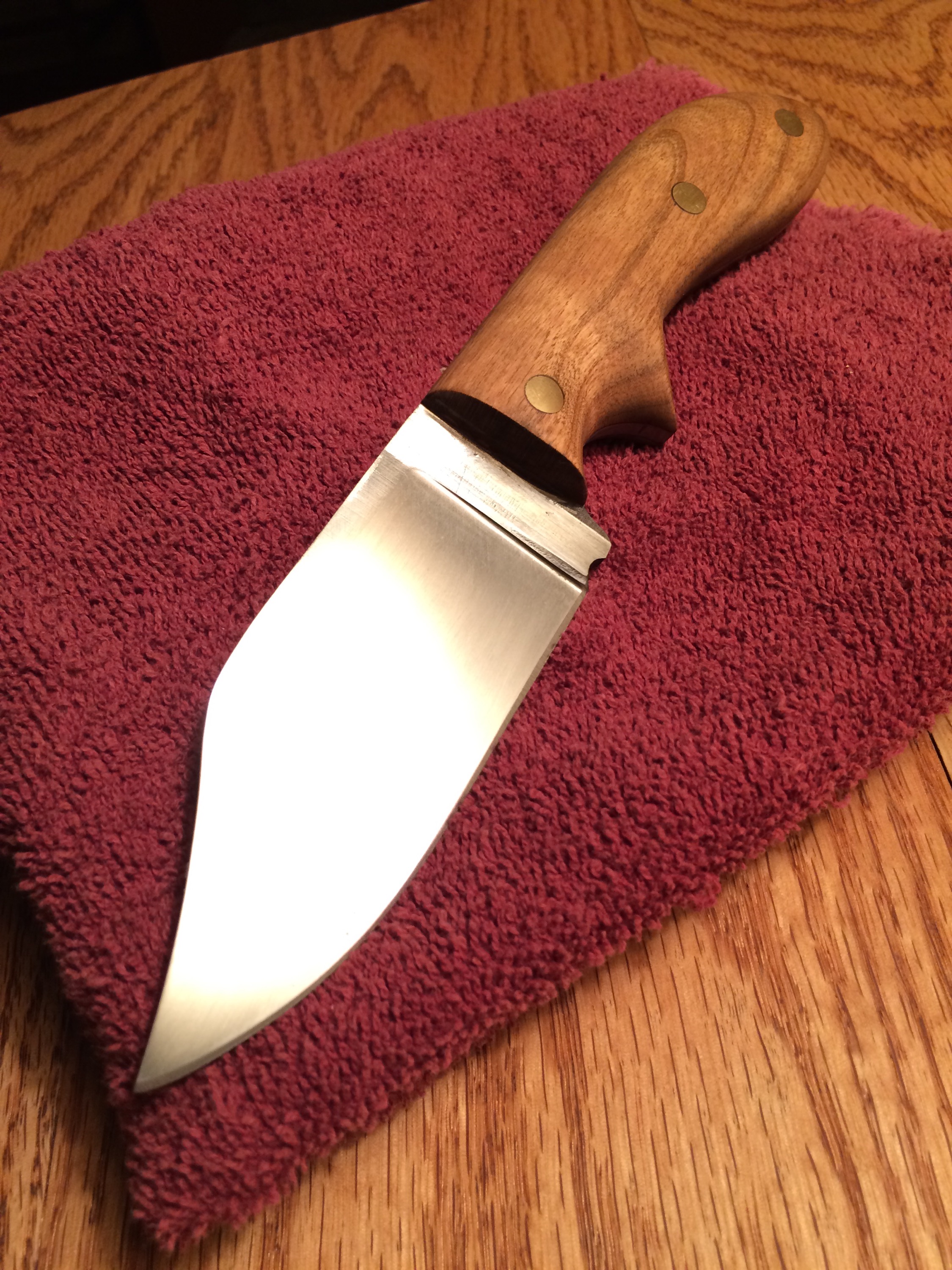
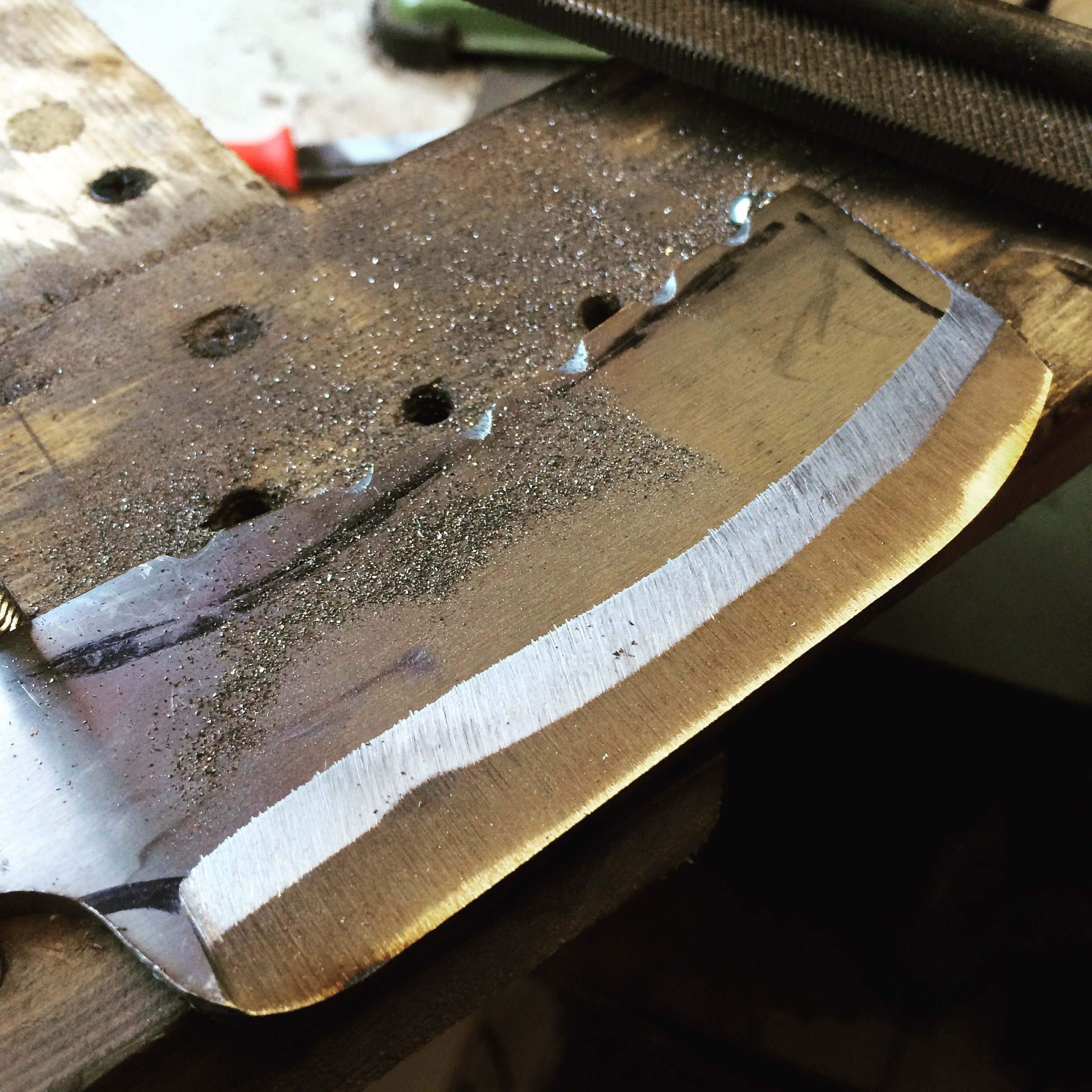
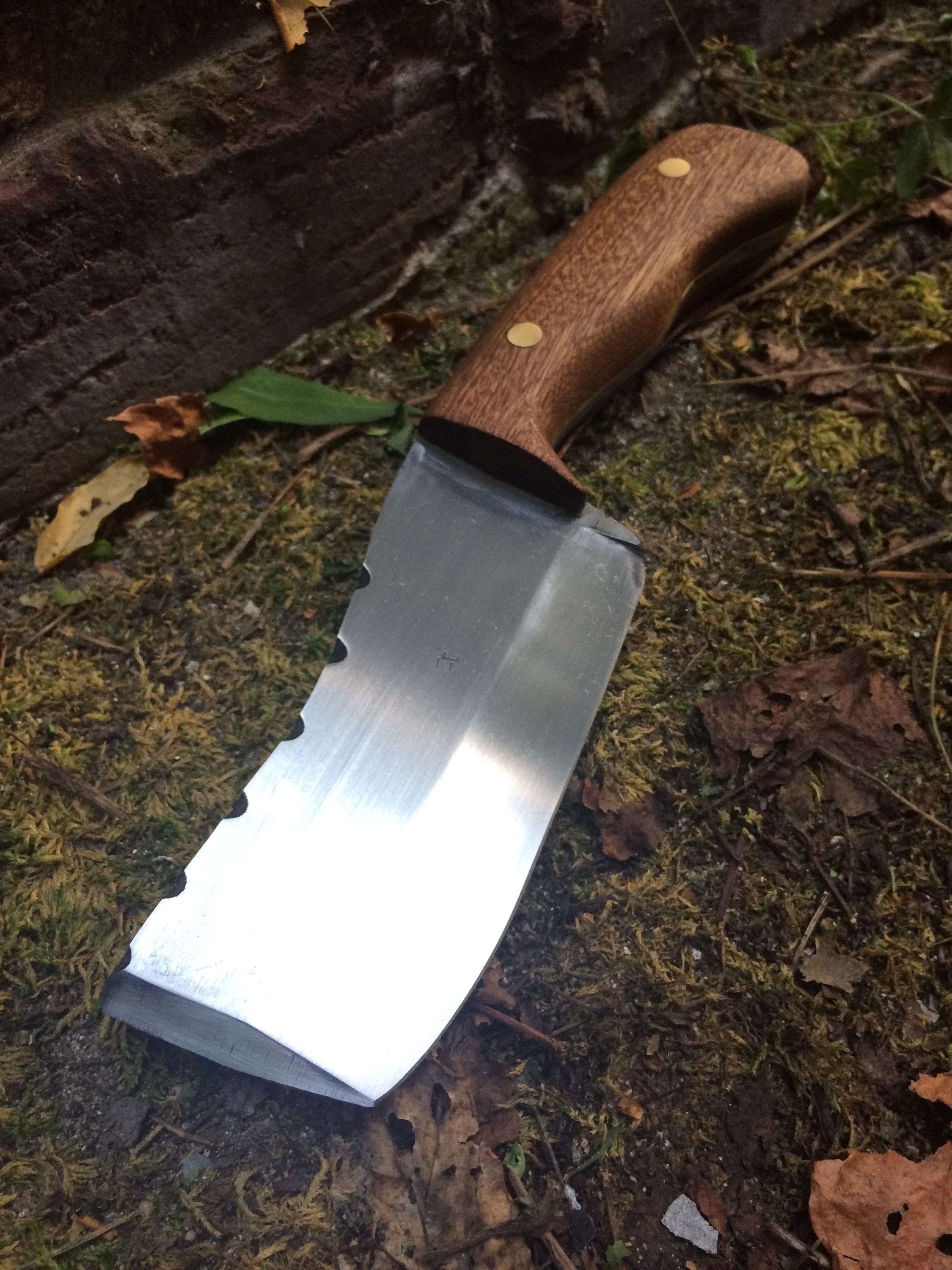
St. Erasmus, or St. Elmo, is known as the patron saint of sailors.   The namesake of this blade refers to a meteorological phenomenon that results from an electrically charged atmosphere that occurs during thunderstorms.  It manifests itself as a series of blue sparks, with the mast of the ship acting as a conductor.  During storms at sea, sailors would often observe St. Elmo’s Fire.  It has always been symbolized as a sign of the Divine, and sailors knew that they were looked after when it appeared.

stelmo

I made this blade with idea of it being a seaworthy vessel- something that has braved many storms and still has its spirit intact.  Sometimes we brave so many storms that we forget how to enjoy the calm.  Instead of having a life of calm punctuated by storms, it becomes a life of storms punctuated by calm.

The important thing to realize is that beneath the churning waves and far beneath the thunder, lightning and winds is an entire body of calm.  And that there was calm before the storm and there will be calm after.

This isn’t to say that storms aren’t dangerous but they do come with their lessons.  I’ve spent a good amount of life in a state of anxiety anticipating storms.  Some of us have been conditioned to live in constant turbulence, lest we not be prepared for the foul weather.  Over time, we stop differentiating between the calm and the turbulent seas and create a maelstrom where there is none because we haven’t ever known what that calm feels like.  Shifting this type of thinking takes time and a good deal of work.  To be perpetually worried of the storms robs you from fully enjoying the moment and the beautiful things that occupy the vast majority of time between.  Ultimately you can’t control the Nature but you can control yourself.

This the lesson of St. Elmo’s Fire.  To allow the storms to pass and to have faith that you will find safe passage through the rough waters.  To feel your own calm in the midst of chaos.  Oftentimes you can find out what you are really made of within that chaos.

This blade was a commission for a very old friend who did a lovely photoshoot for me.  We’ve often talked about storms and how to get through them.

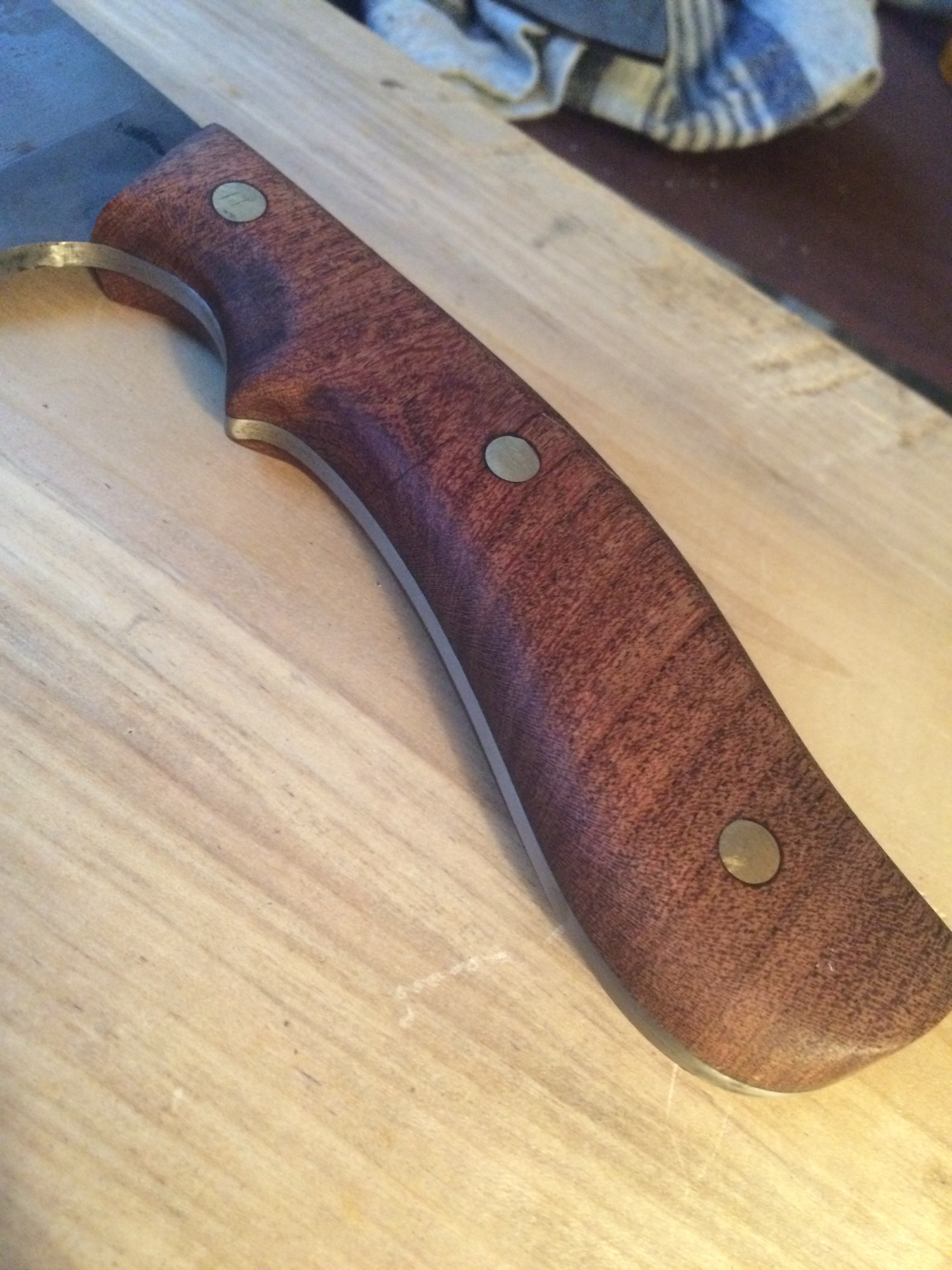
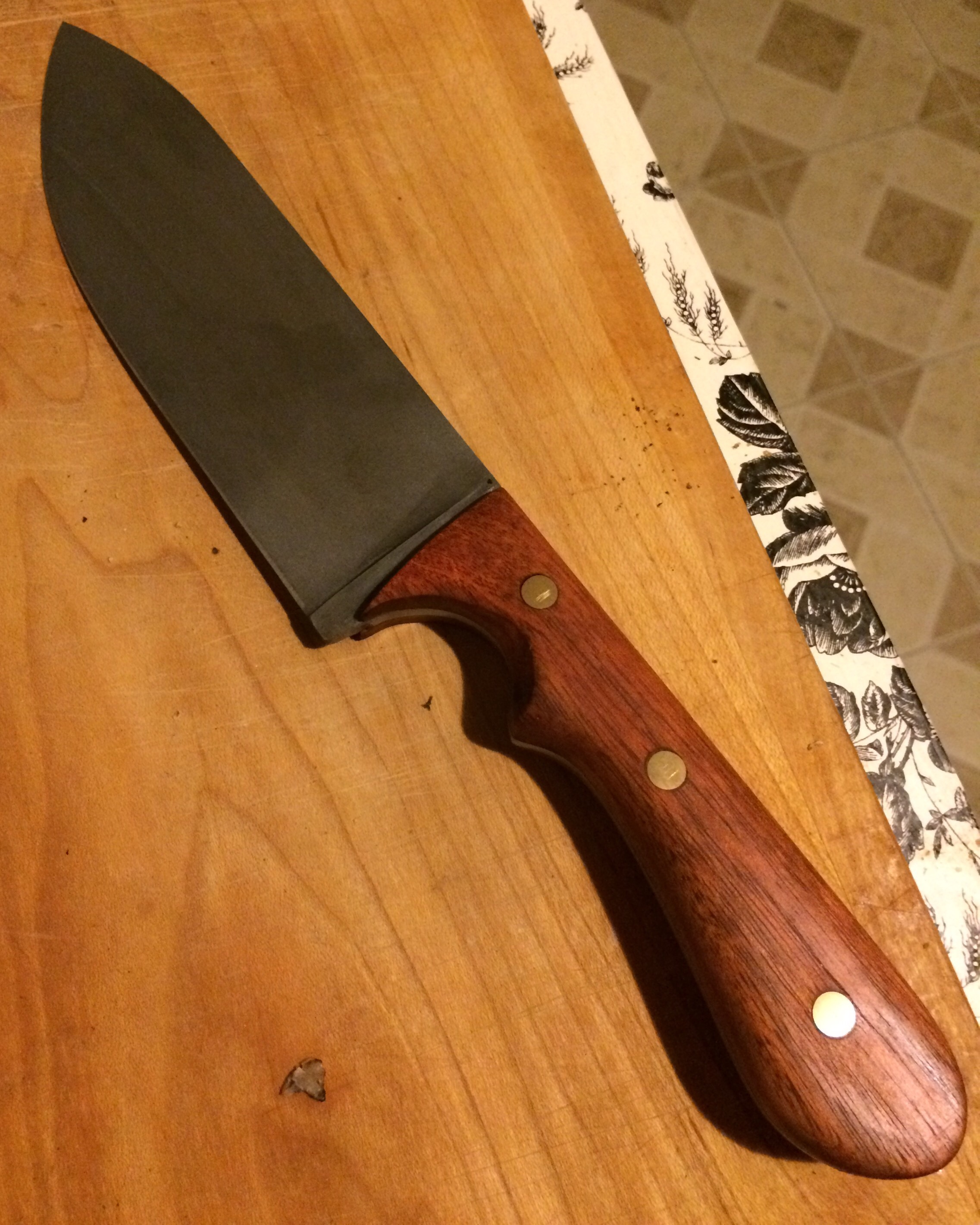
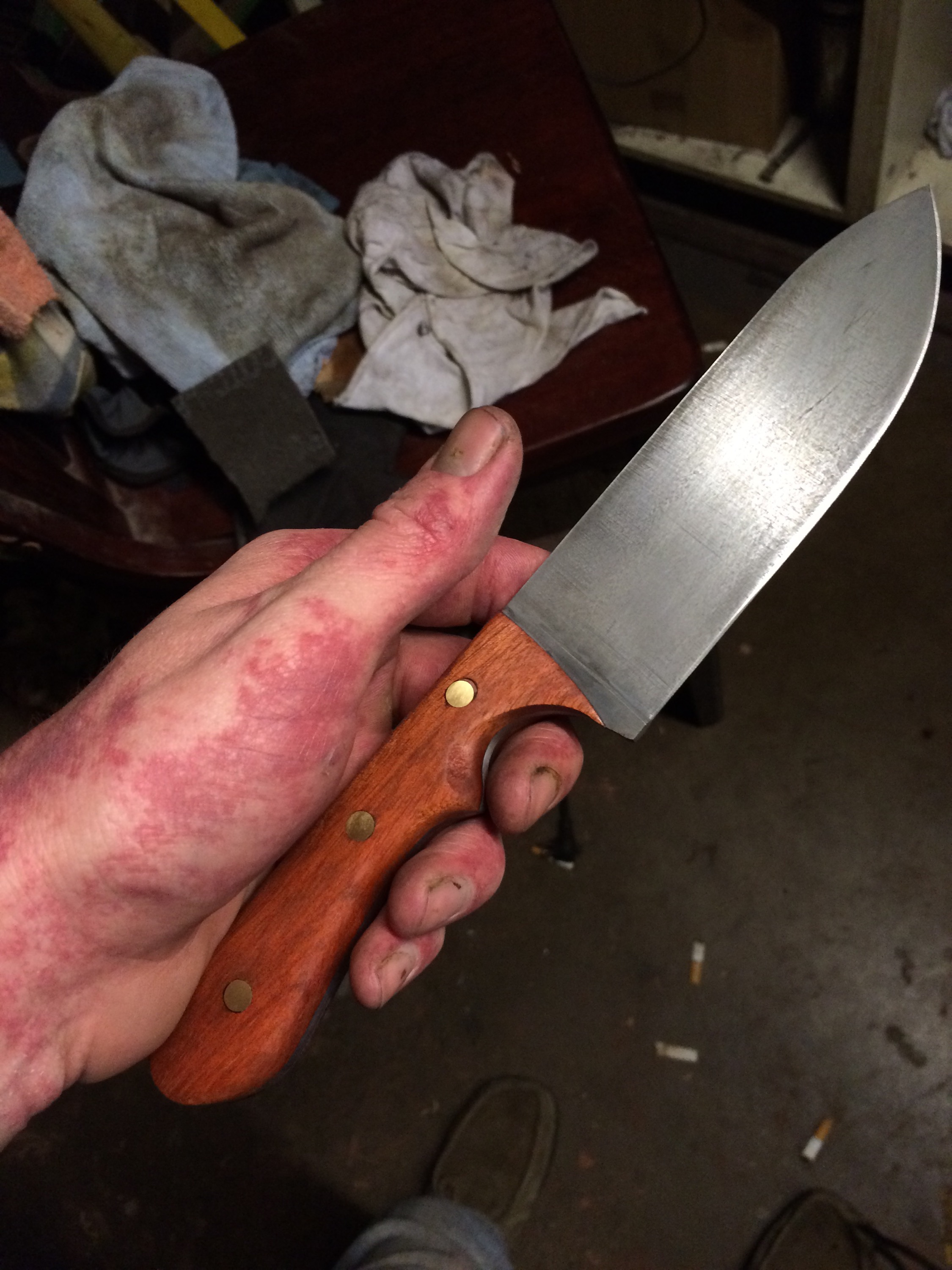
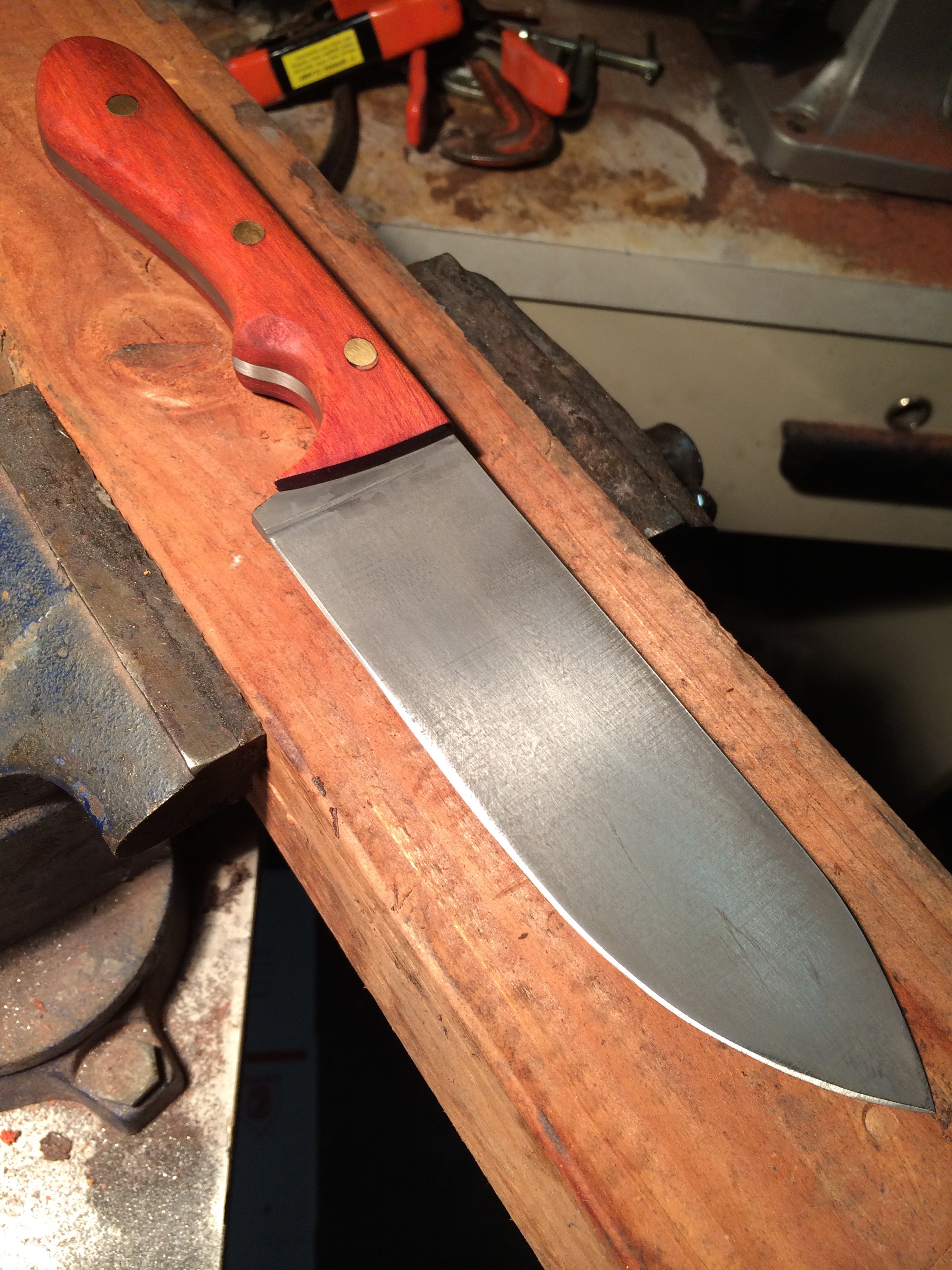
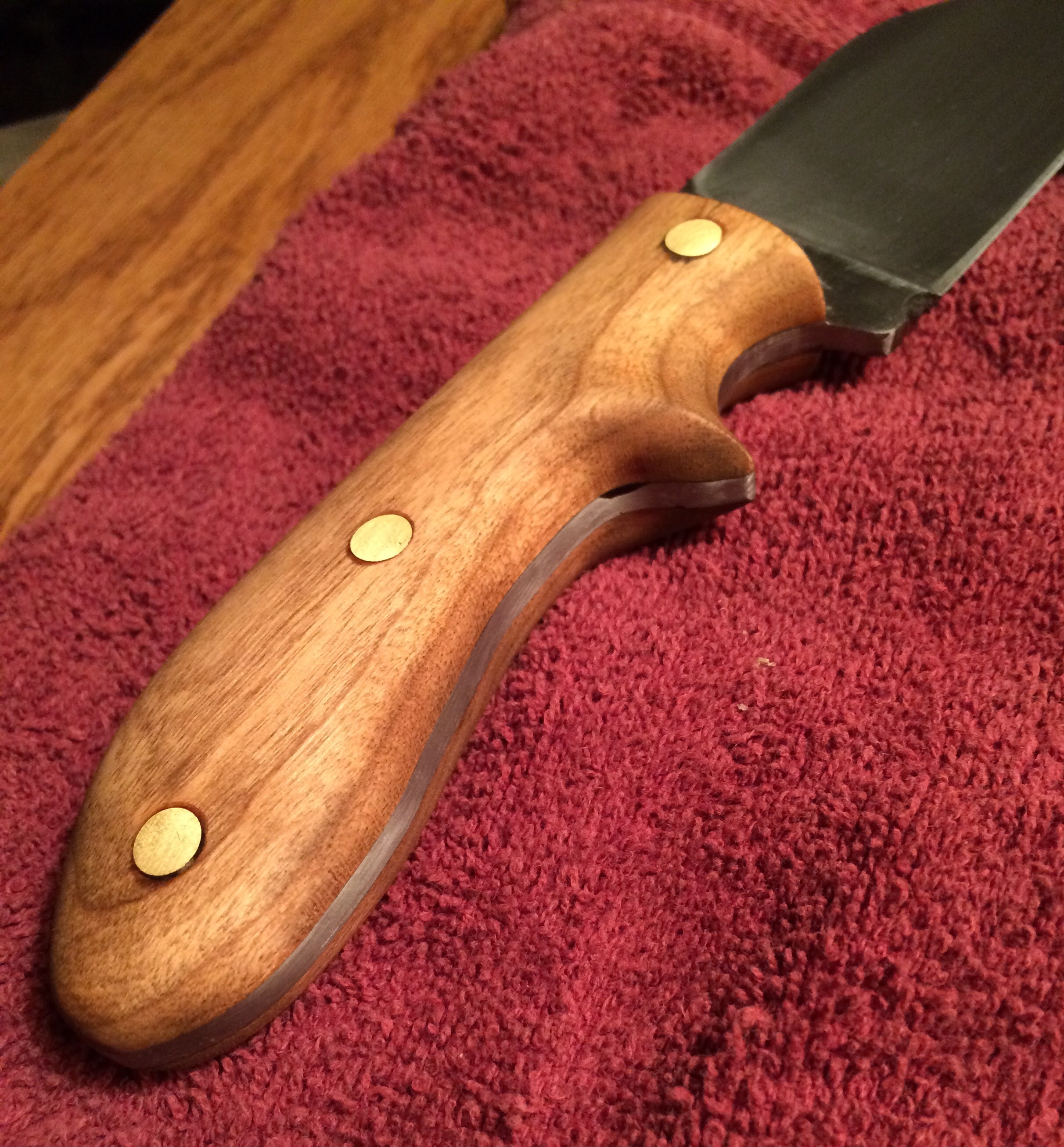
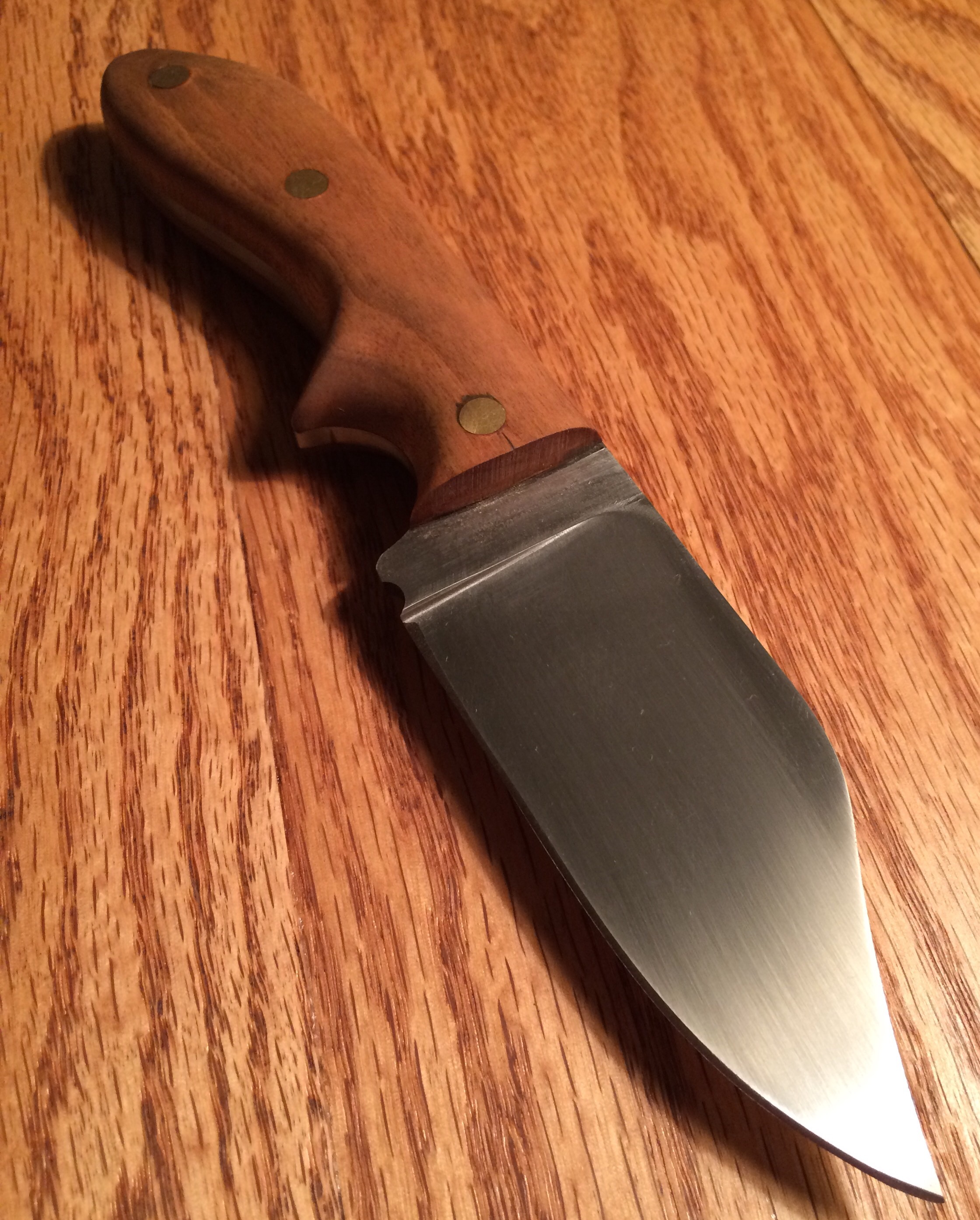
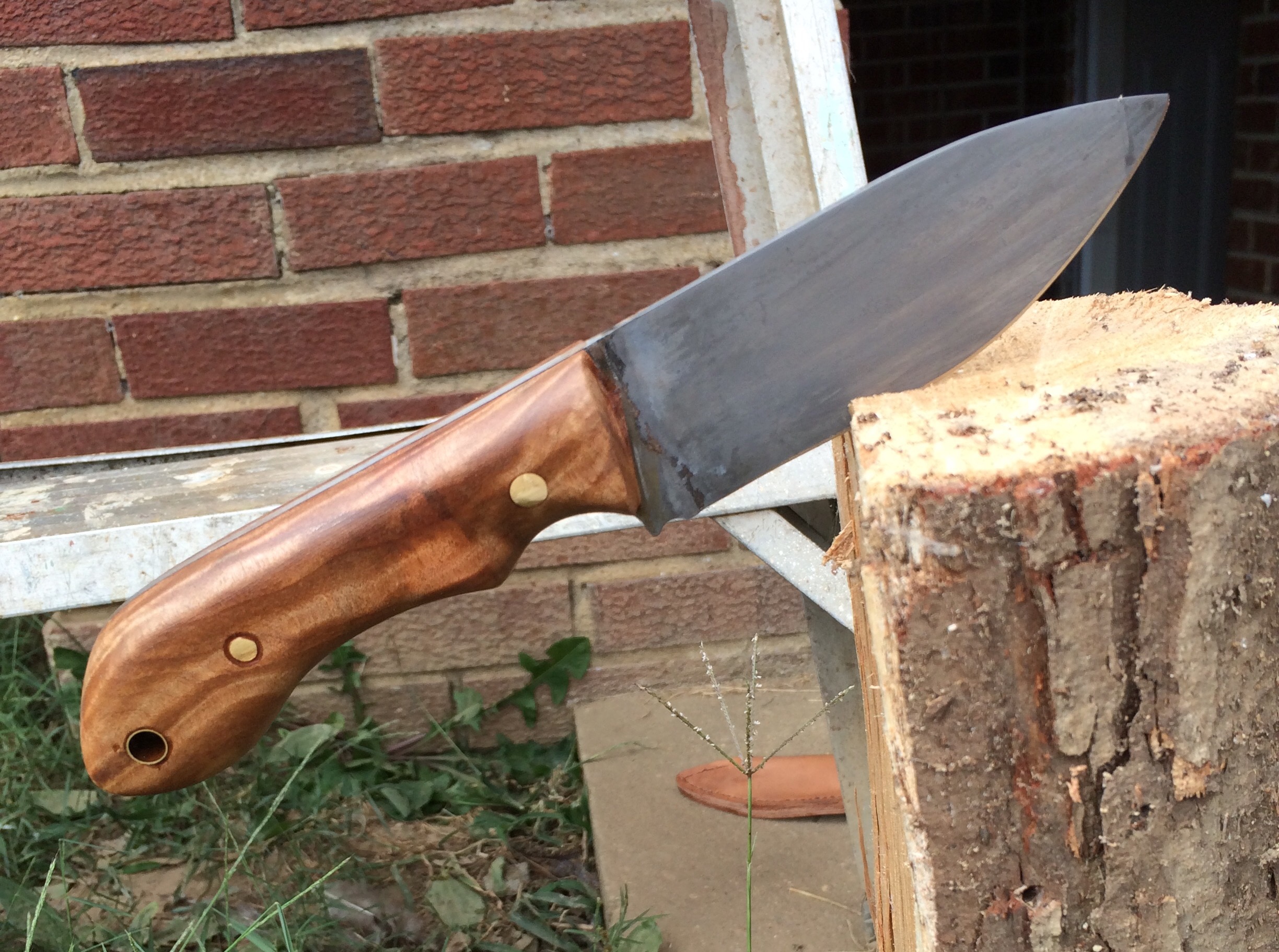
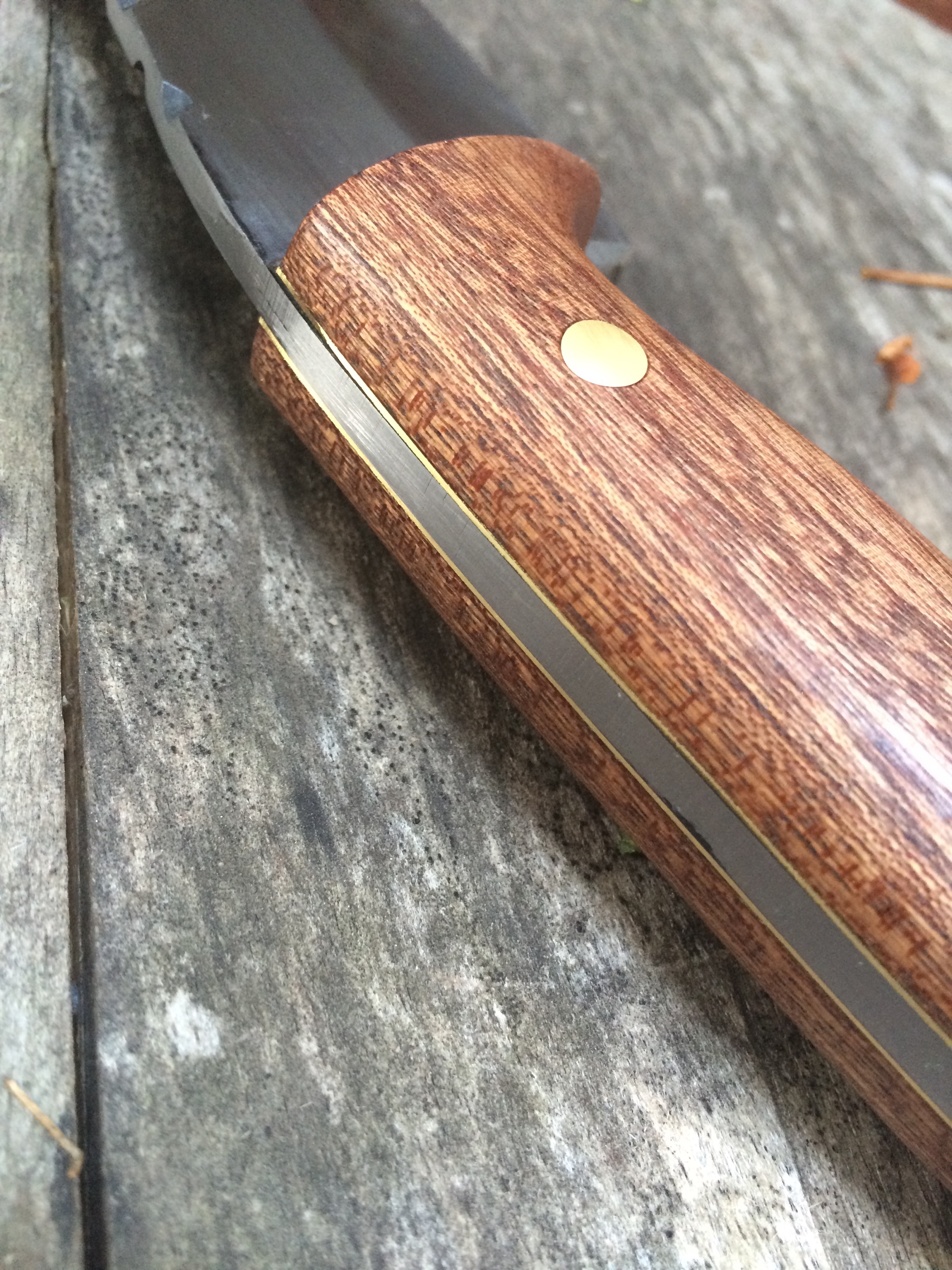
I did a series of kitchen knife designs and this one was sort of a wild card.  Functionally she is a German style chef’s knife.  The clip in the blade gives her some forward momentum.  The drop in the handle rests comfortably in the heel of the hand, and also follows the natural line of the forearm through the wrist.  The finger choil provides a comfortable resting place for the lower three fingers if a traditional chef’s grip is preferred.
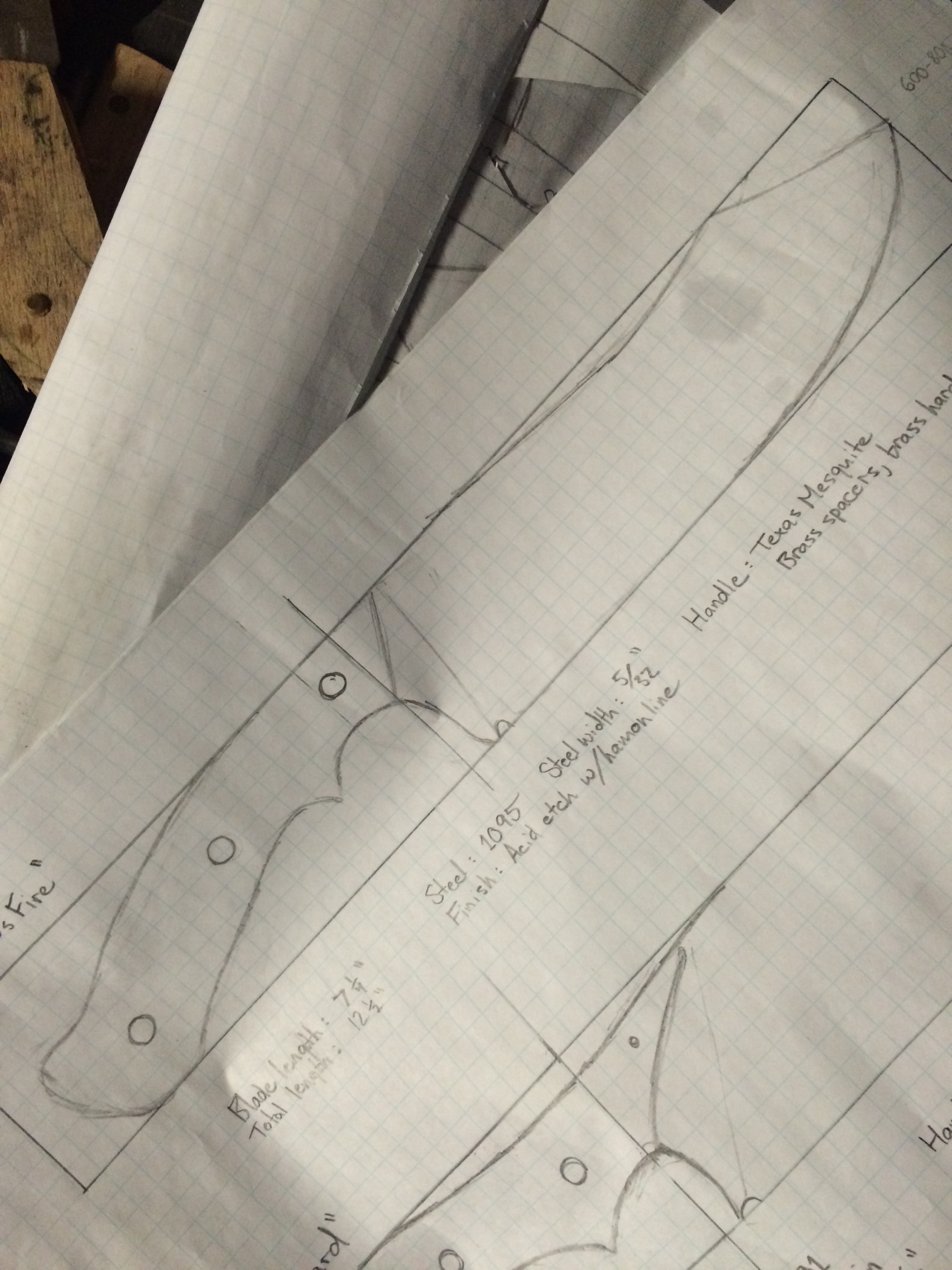
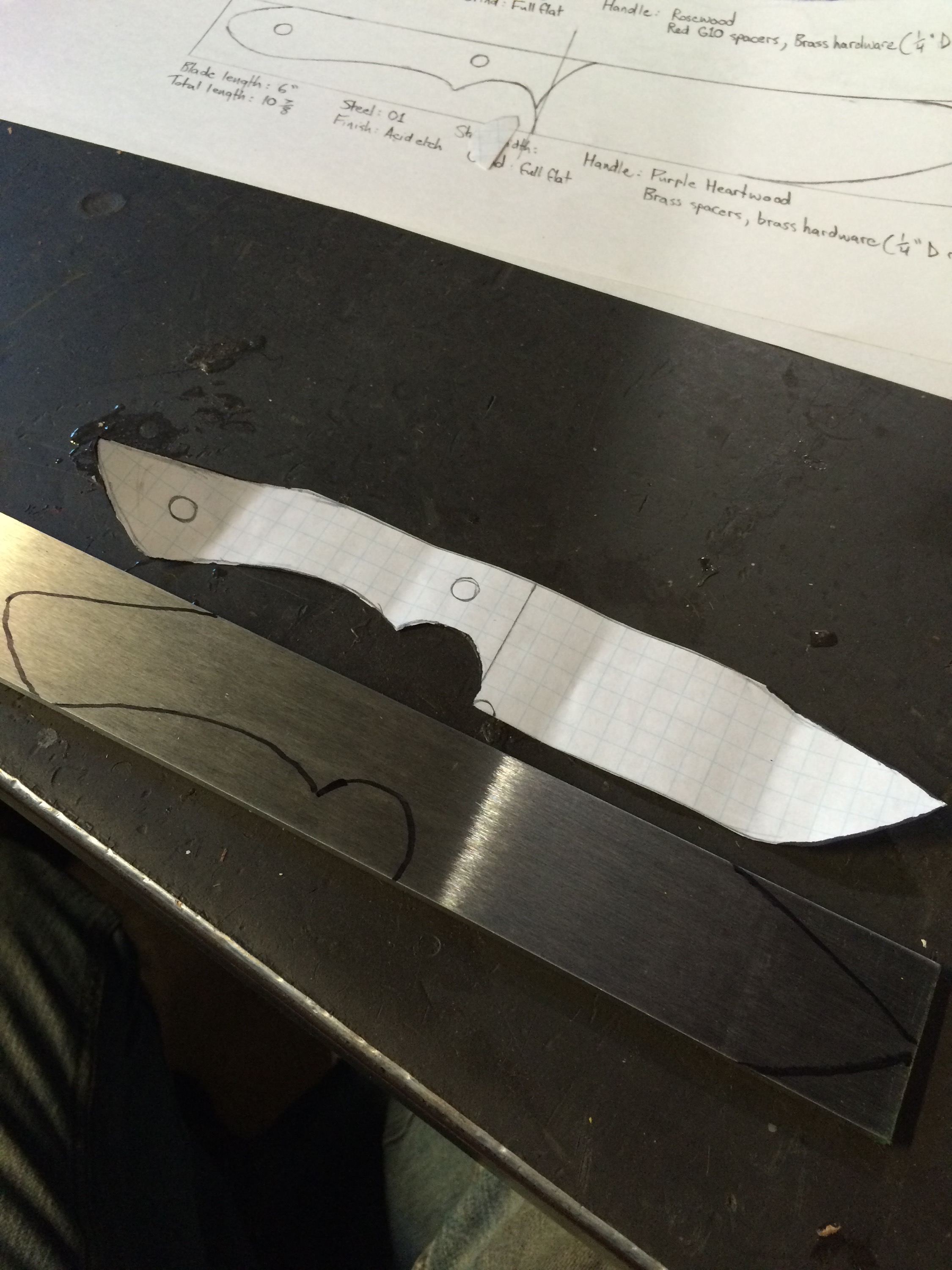
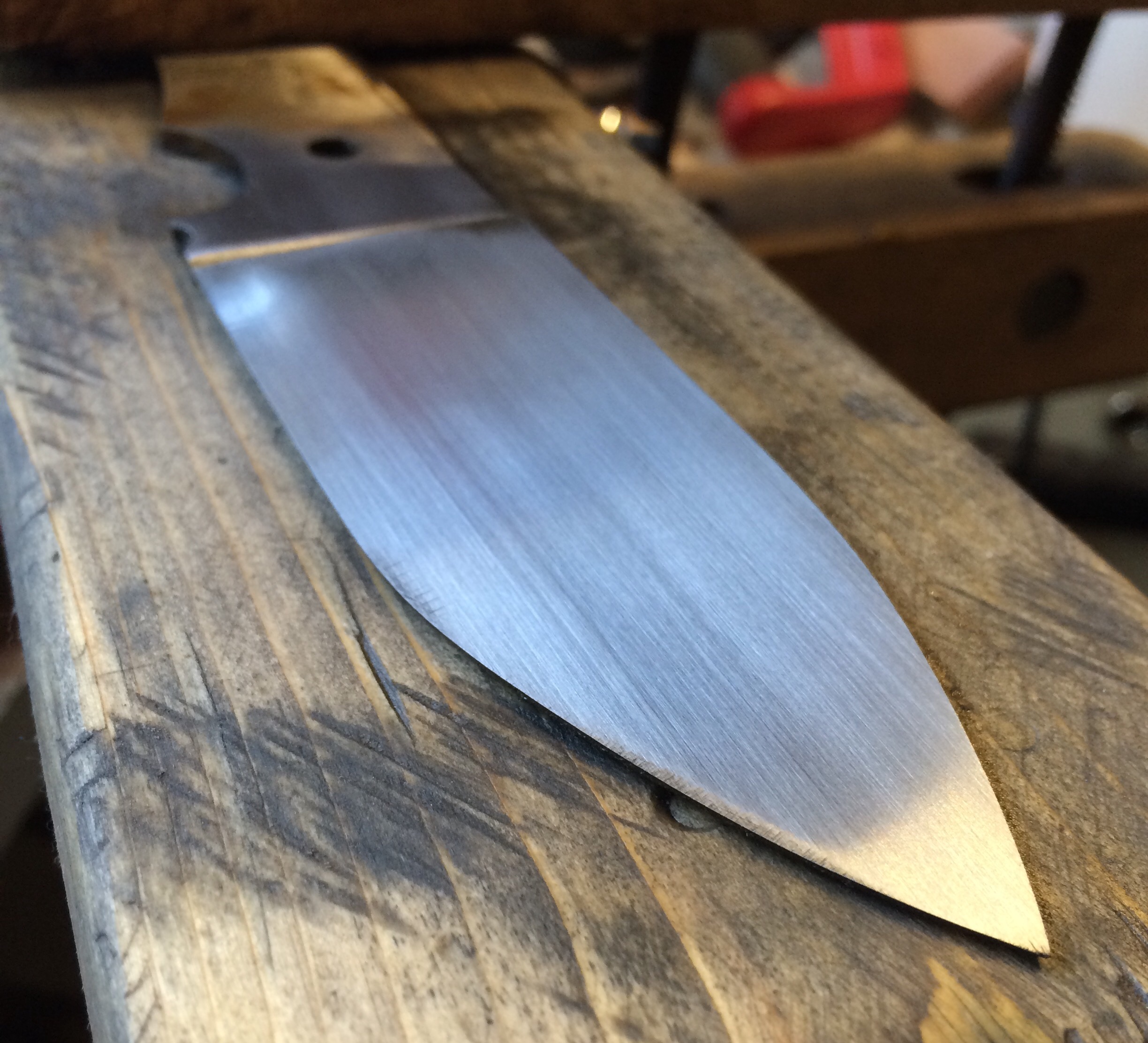
The blade is 7.25″ long.  Blades these long are a continual challenge for me to grind.  If ground too thin they will warp and possibly crack during heat treat.  On blades this large there is grinding before and after hardening and tempering.

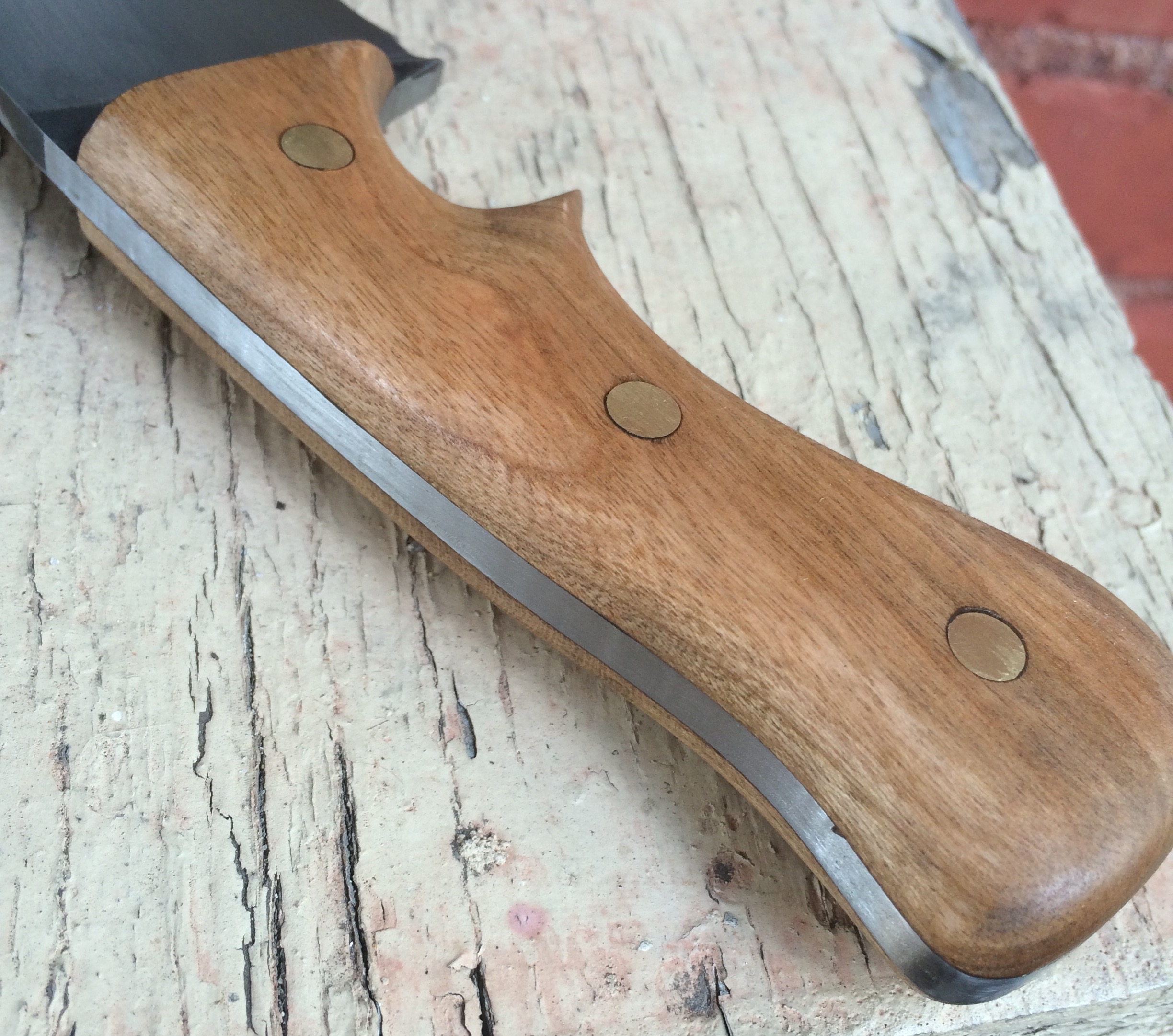
  I love working with Mesquite.  It has a fiery bouquet.
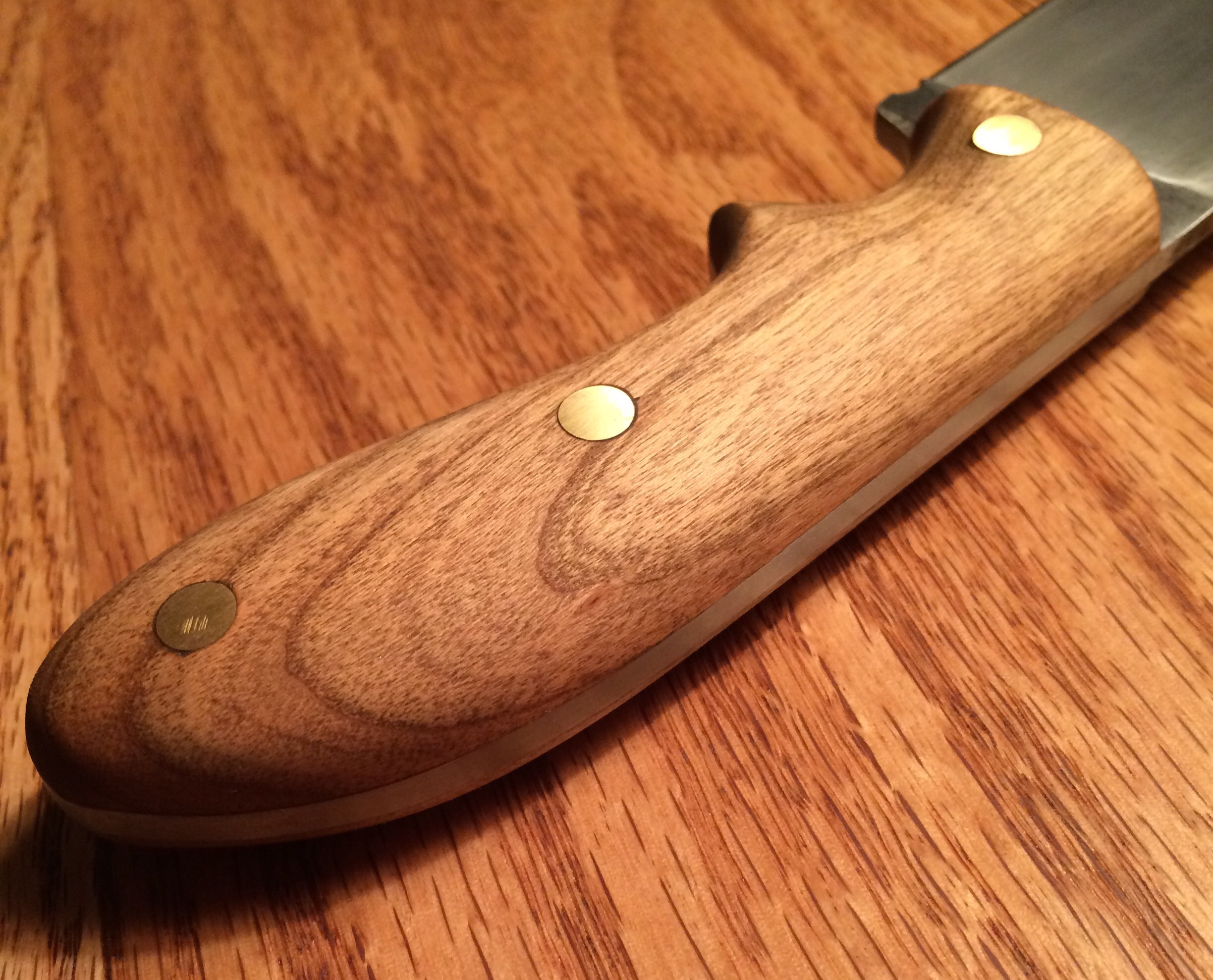
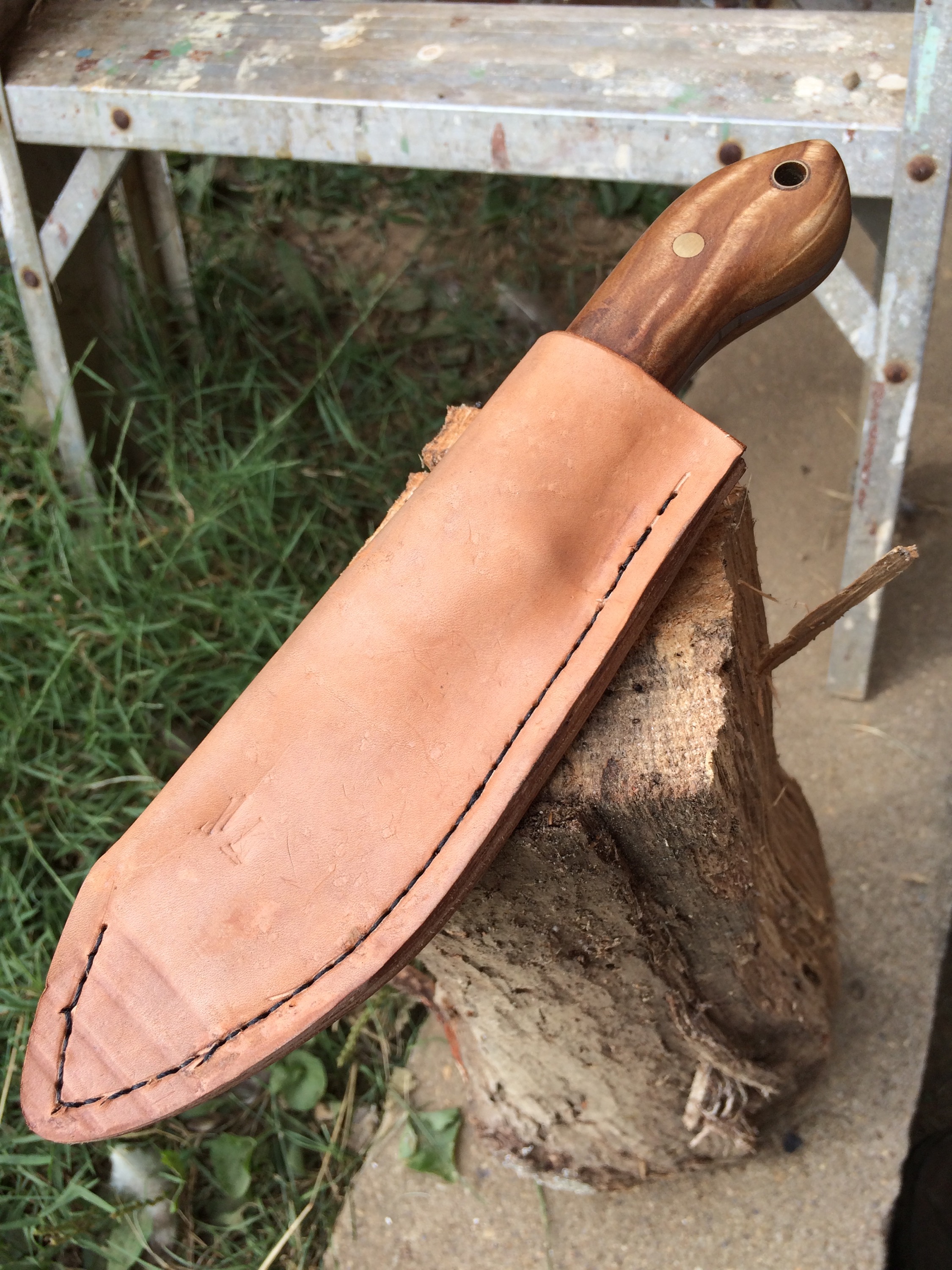
  St. Elmo’s Fire: 1095 spring steel with a phosphoric acid etch, Texas Mesquite handle and brass hardware.

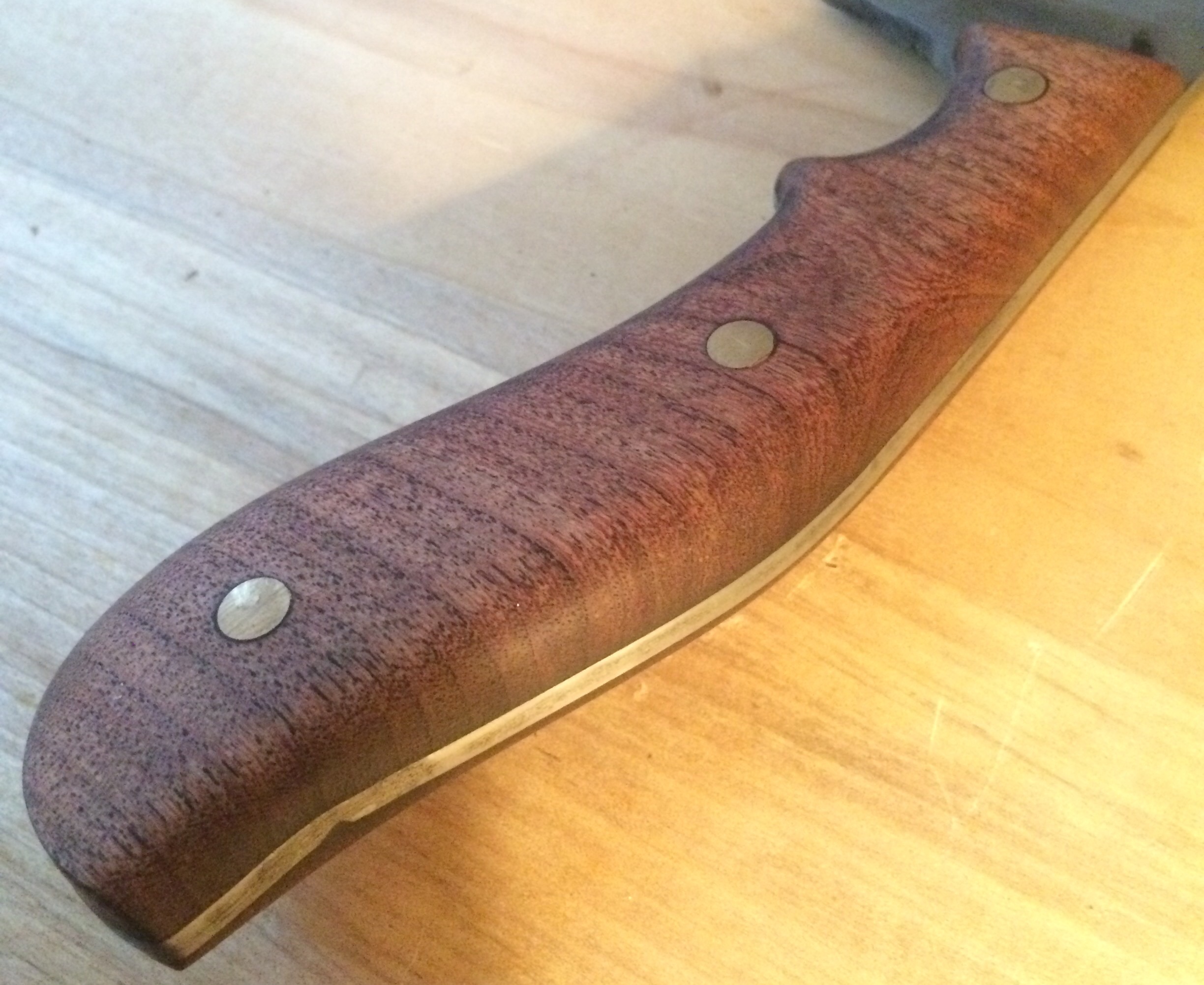
  
There was some turkey involved on this past Thursday  
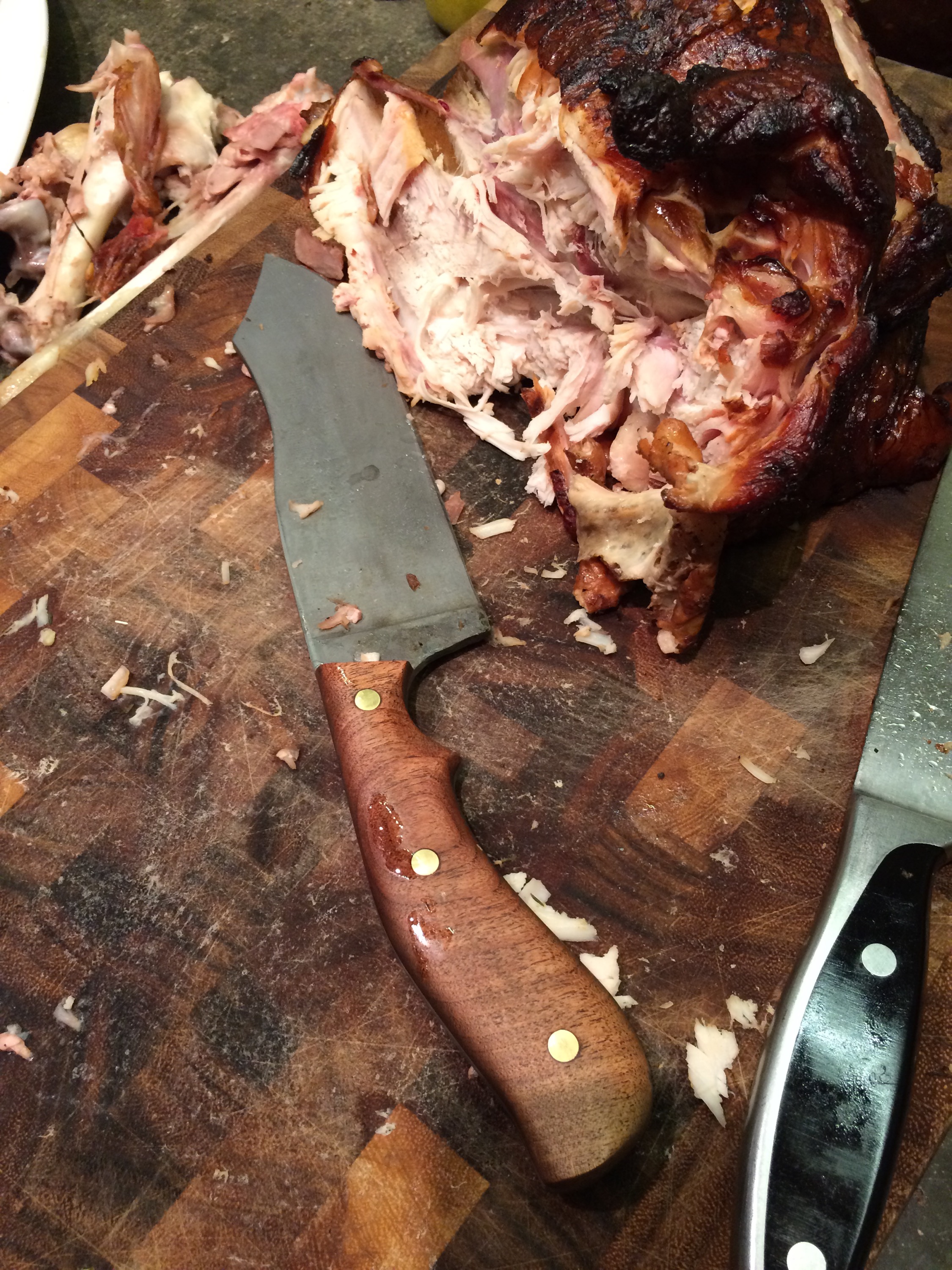
Trust that the storm will pass.

Be sure to check out Lauren Serpa and her beautiful work.

Knifemaking: power in the small things and the Petit Poucet

“It has long been an axiom of mine that the little things are infinitely the most important.”

― Arthur Conan Doyle, The Memoirs of Sherlock Holmes


When I was twenty-one I took a summer job in a cabinet shop.  I was in between semesters of school and had made some pretty significant life changes, at least for a twenty-one year old.  I had transferred colleges and I decided I wanted a summer job where I would learn something useful.

This particular cabinet shop did custom work.  Everything was built to order.  The owner was a friend of my family’s.  On my first day I was introduced to everyone in the shop.  It was noisy in there, with all the fans and sawdust collection systems, and everyone heard my name as “Bernard” instead of “Ballard”.
I didn’t find this out until later, after everyone had been addressing me as Bernie for at least two weeks.  I was just happy to not be called college boy.

I was hired to sweep floors, which I did for approximately one hour on my first day.  After that hour I was handed a reciprocating saw and told to cut up a stack of pallets.  When they found I still had all of my fingers, they gave me other things to do not involving sweeping the floor.  From then on I did whatever was asked of me, still happier to be called Bernie than college boy.

I built drawers for desks to go in lawyers’ offices.  I would be on a crew of four guys to build an army of receptionist desks for a medical complex.  I built a mile of L-bracket to mount cabinets in an insurance building.  When you work in a shop with over a million dollars worth of tools and machinery there isn’t a whole lot that you can’t build.  The owner liked to make money and I can count the number of times he subcontracted jobs out on one hand.

This was one of the best summers of my life.  I didn’t hang out with anybody.  I didn’t go on any dates.  I got to work at 7:30a and left at 4:45p.  When I got home I would practice my horn for four hours in my parents’ basement and then go to sleep.  Then I would get up and do it all over again.

I found myself spending full days on a panel saw, a massive contraption designed to rip and crosscut full sheets of plywood.  It cut everything perfectly square.  You see these at Lowes and Home Depot but this machine made those look like Tinker Toys.  This particular one was made by a Nordic company that specialized in making badass cutting tools.  It cost about thirty grand and when it broke down they had to pay a company service tech from Pennsylvania $600 an hour to fix it, which included drive time.  Clearly we were all in the wrong business.

I was given a cut list for each job.  Some of these lists would be casework for an entire building, others just one or two pieces.  I cut all the cabinet pieces by hand, within a 1/64th of an inch, which by industry standards is a pretty large margin.  The real tricky bit was cutting cabinet doors and drawer fronts.  These cuts had to be cut short to accommodate for the laminate that would cover the side edges of the door.  This was to allow the doors to fully close once the edge had been covered in laminate and for the drawer fronts to have the proper reveals once installed.  When I would get to the doors and drawers on the cut list I would know to cut them between 1/16th and 1/32nd of an inch shorter than what was written, depending on the type of laminate being used.

I cut hundreds of these things without incident.  Then one day I screwed up.

The boss called me over.  Shit.

I had sent over four doors that I hadn’t cut short, in this instance it was 3/32nds.  They had been laminated, drilled, installed with ungodly priced hinges, cleaned and finished.

“Bernie, you fucked up.  Let me explain to you the depth of your fuckup.”

He proceeded to tell me that not only had I wasted my time, but I had also wasted the time of everyone involved in those doors, plus materials, wear and tear on machinery, saw blades, electricity, and by default, company time that we weren’t ever going to see again.  With everything involved those doors came to about $240.  A piece.  He instructed me to take them and throw them in the dumpster, but to do it one at a time, and to use that time to reflect on the breadth of my folly.

Four long trips to the dumpster.  I was mortified.  Everyone else thought this whole ordeal was hysterical.  I made sure to not overlook the doors and drawers in the future.

The summer came to an end.  I went back to school with a deeper appreciation for both higher education and the people who build the things that make life possible.

There is much power in the small things and sometimes you only find this when you overlook them.  Sometimes they are absolutely necessary.  Sometimes they make the world a bit sweeter.  Small acts of kindness to yourself and others, small acts of gratitude and compassion- these are the stuffs that can give the world its particular hue.

This is where the Petit Poucet comes in.  I have been designing kitchen knives and also watching Jacques Pepin cooking videos.  There was one of these that struck me where he had all these beautiful knives at his disposal, some quite large and impressive, but he prepared a gorgeous meal using only a six inch utility knife.  Petit Poucet roughly translates roughly to Tom Thumb, a very small person who was able to accomplish large things.  It’s important to not overlook the small things.  This is the lesson of the Petit Poucet, a small but mighty kitchen blade.

I started with a bar of 1095 spring steel

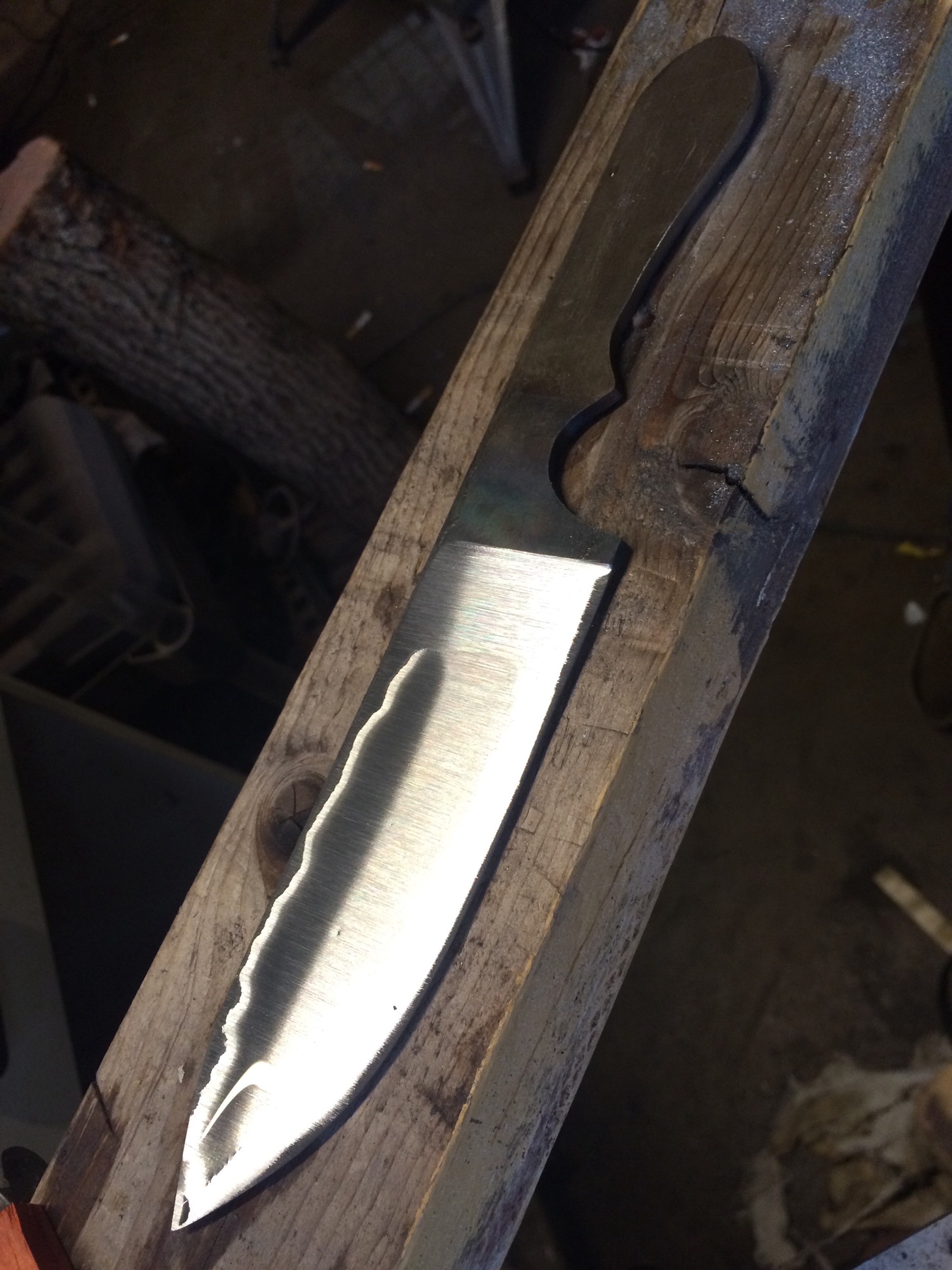
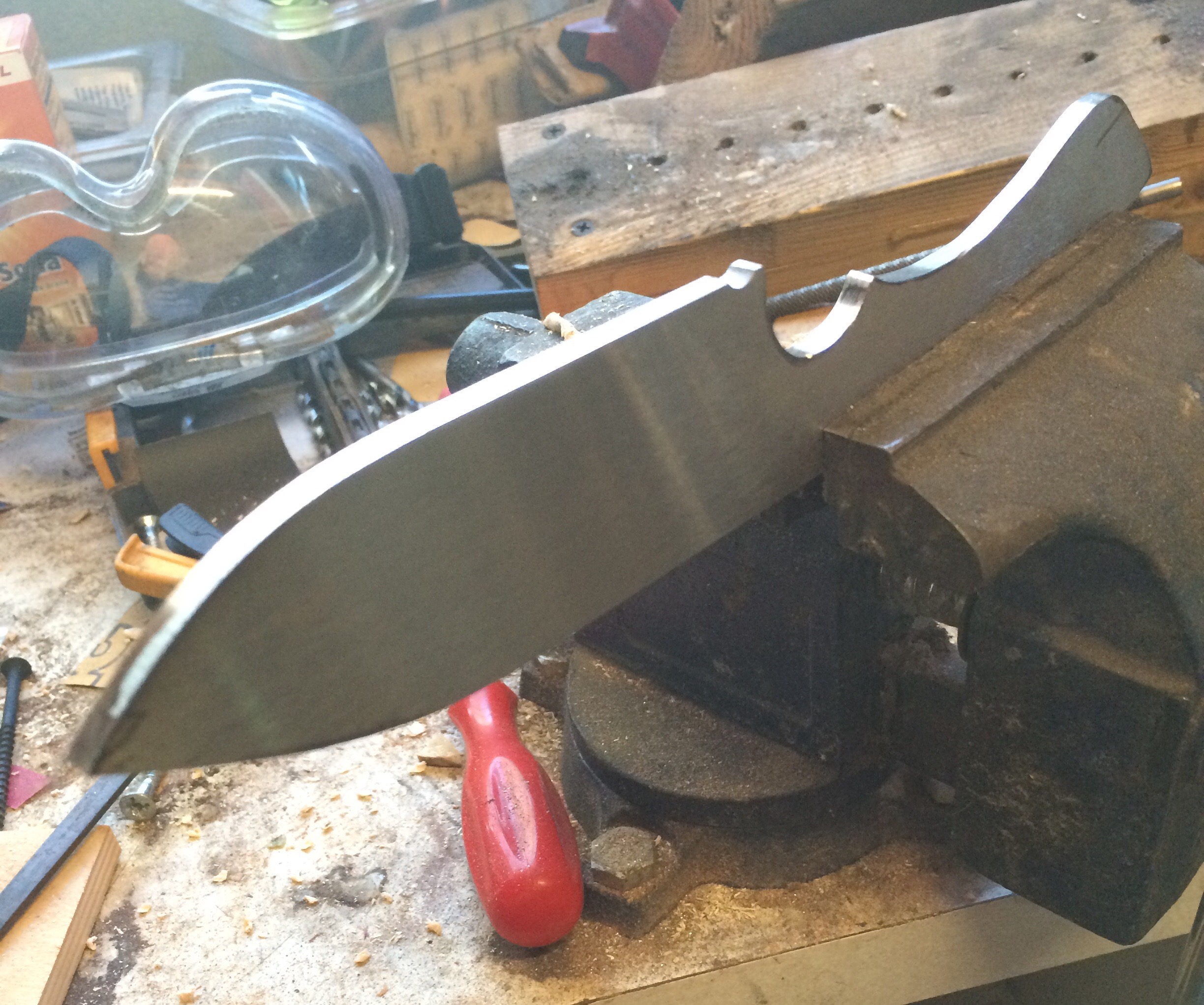
After rough grinding and heat treat.  Thankfully he didn’t warp.

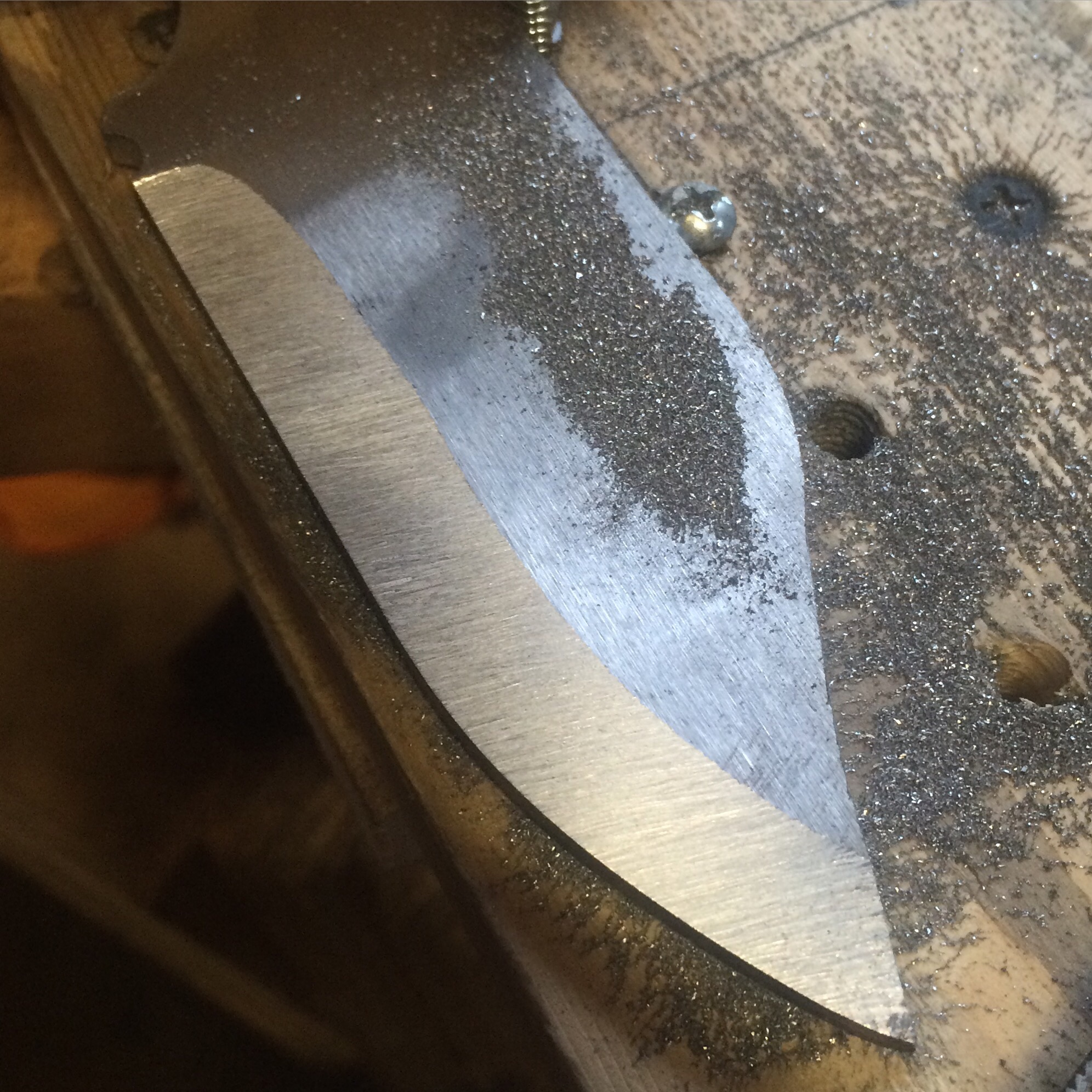
Keeping it cool during finish grinding…

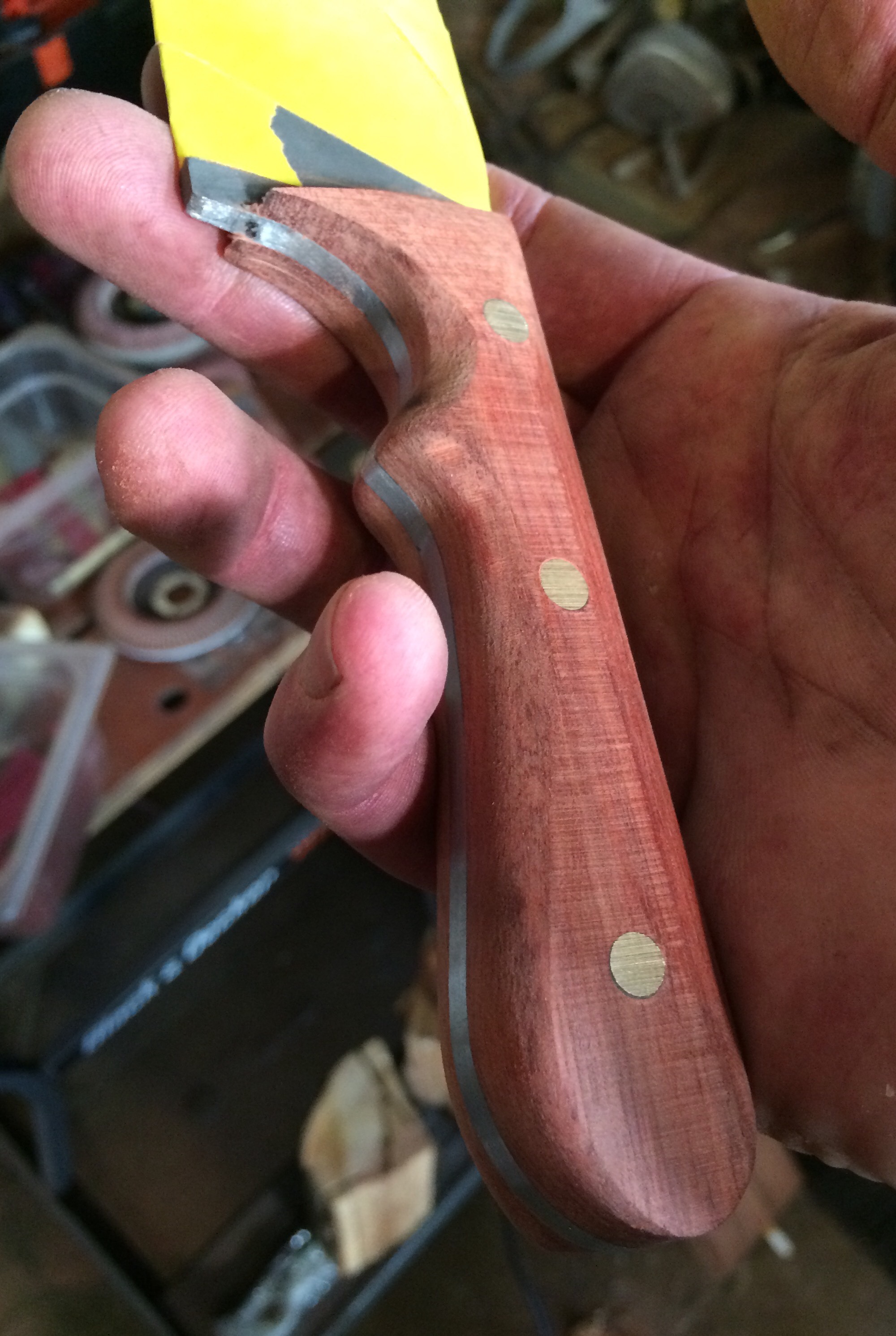
 I had some Bloodwood that I found to be striking the Petit Poucet: Acid etched 1095 spring steel, Bloodwood handle, and brass hardware.


Mind the small things- the big things will turn out that much better…and you will save four trips to the dumpster.

P.S.- the man I worked for was possibly the best boss I’ve ever had, and one of the most decent men I’ve ever known.  We still talk from time to time.  He keeps saying he has a place for me in his business and asks me how I am with finance.  If he only knew…

Knifemaking: discernment, judgement, and the Observer

“The alchemists spent years in their laboratories, observing the fire that purified the metals. They spent so much time close to the fire that gradually they gave up the vanities of the world. They discovered that the purification of the metals had led to a purification of themselves” 

Paulo Coelho, The Alchemist

This blade was a commission by a gentleman as a gift to a colleague, another gentleman who is a videographer.  One of the parameters was to work video camera parts into the handle.

I am not a student of film.  I don’t watch many movies or documentaries and when I do I find myself getting extremely upset, sad, or angry at something I most likely have little control over or isn’t even real.  There’s a balance between being informed/entertained and being consumed that I have yet to straddle.  Most of the time I watch things I find to be entertaining or inspiring and even then I get excited and have trouble concentrating or going to sleep.  The world can be a an overwhelming place and mediums such as music, art, and film have the ability to amplify it immensely. About ten years ago I saw Chick Corea perform and it was so badass I couldn’t go to sleep.

Going back to observing the fire that purified the metals: in observation you can be purified or you can be consumed- that is the nature of the flame.  Depending on how something is presented it isn’t difficult to find oneself consumed.  Sometimes that is the intent and is part of what gives life it’s lustre.

I was sent a bit of the gentleman’s work.  It was a brief snapshot of a community based non-profit and it was beautiful.  It was a simple observation of this organization’s past, where they are now, and where they want to be in the future.  From that place of observation a clear and wide view was provided.  Space was left for the audience to decide for themselves what this organization was all about.  That is discernment.  It is about separation- the good from the bad, the bitter from the sweet, the wicked from the just, the right from the wrong.  Because rarely is something completely one thing or the other.
When it becomes one thing or the other, we find ourselves in the realm of judgement.  Judgement is more about polarization- that things are either one way or the other.  This is where condemnation or condonation occurs.  Be mindful when you hear polarizing statements like this:

“If you are not part of the solution, then you are part of the problem”

“You are either with us or against us”

“The friend of my enemy is my friend”

Judgement can be tricky because rarely is it solely about the situation or instance that is being judged.  It is often a reflection of something in us that we don’t like, or might be causing us pain, or shines a light on a place of shame.  When I find myself casting judgement, I find it coming from one of these places.  Sometimes it’s difficult to find one’s way back to discernment from that realm.

I saw a profound maxim on the Facebook the other day: “Judge not, for thou hast fucked up in the past as well.”

There it is.  I fucked up in the past and I haven’t dealt with it so I will cast judgement on those in similar situations because it makes me feel better about the shit I haven’t dealt with.

Not proper observation at all.  You miss out on the nuanced bits of wonder that makes life sweet and also bitter.

This is the lesson of the Observer.  To see that things are rarely one thing or the other.  To look past yourself and your projections and to take things for their core value.  There is something cleansing in that.  It’s a bumpy journey, but a journey worth taking.

…….

For this blade I drew out several designs for the client to look at.  He selected this one, a drop point design and a very effective out-of-doors use knife.  It’s a departure from my normal “let the grinder design the blade” technique.

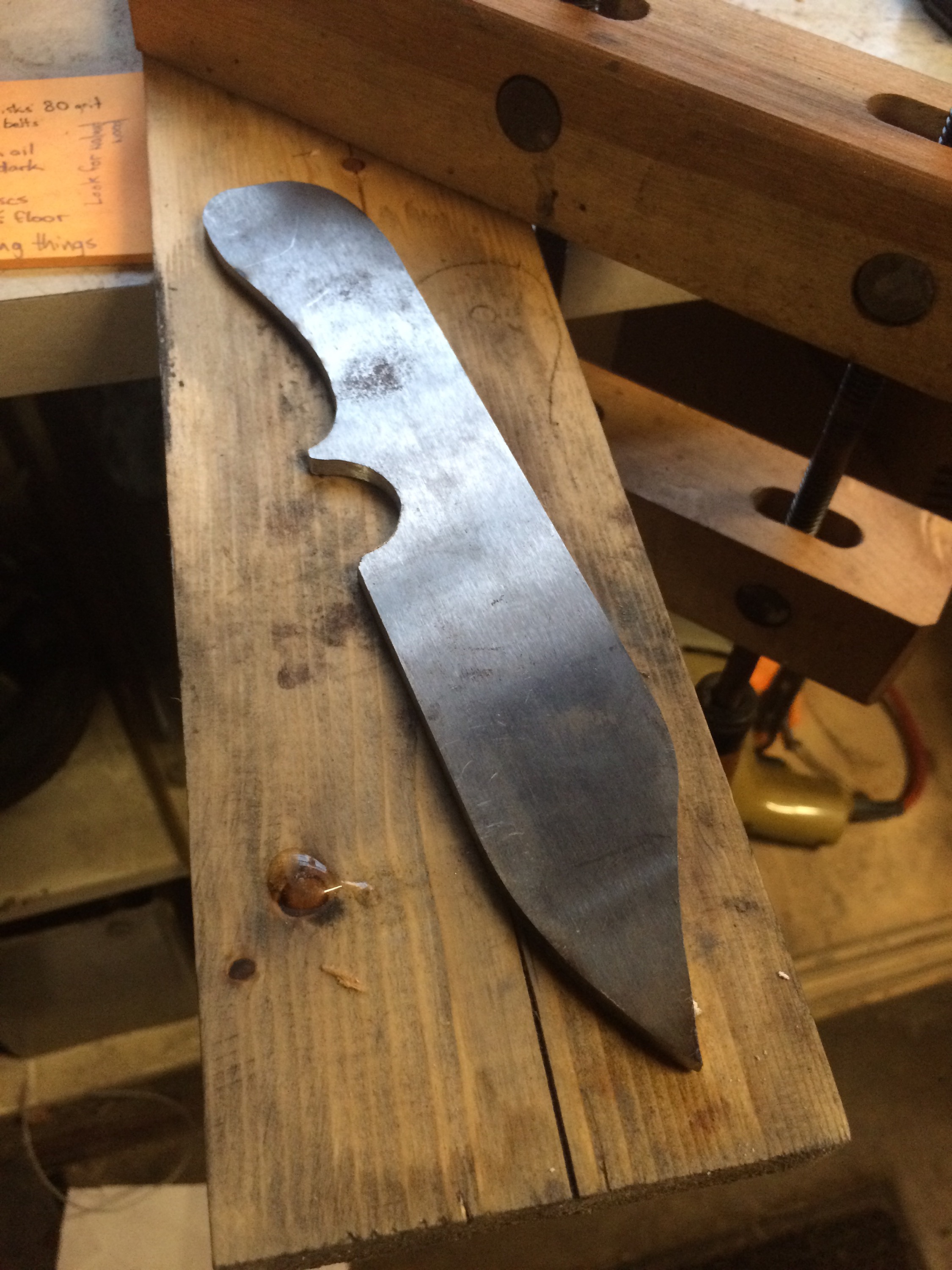
Profiled…

The runner up designs:

Centerline guide:


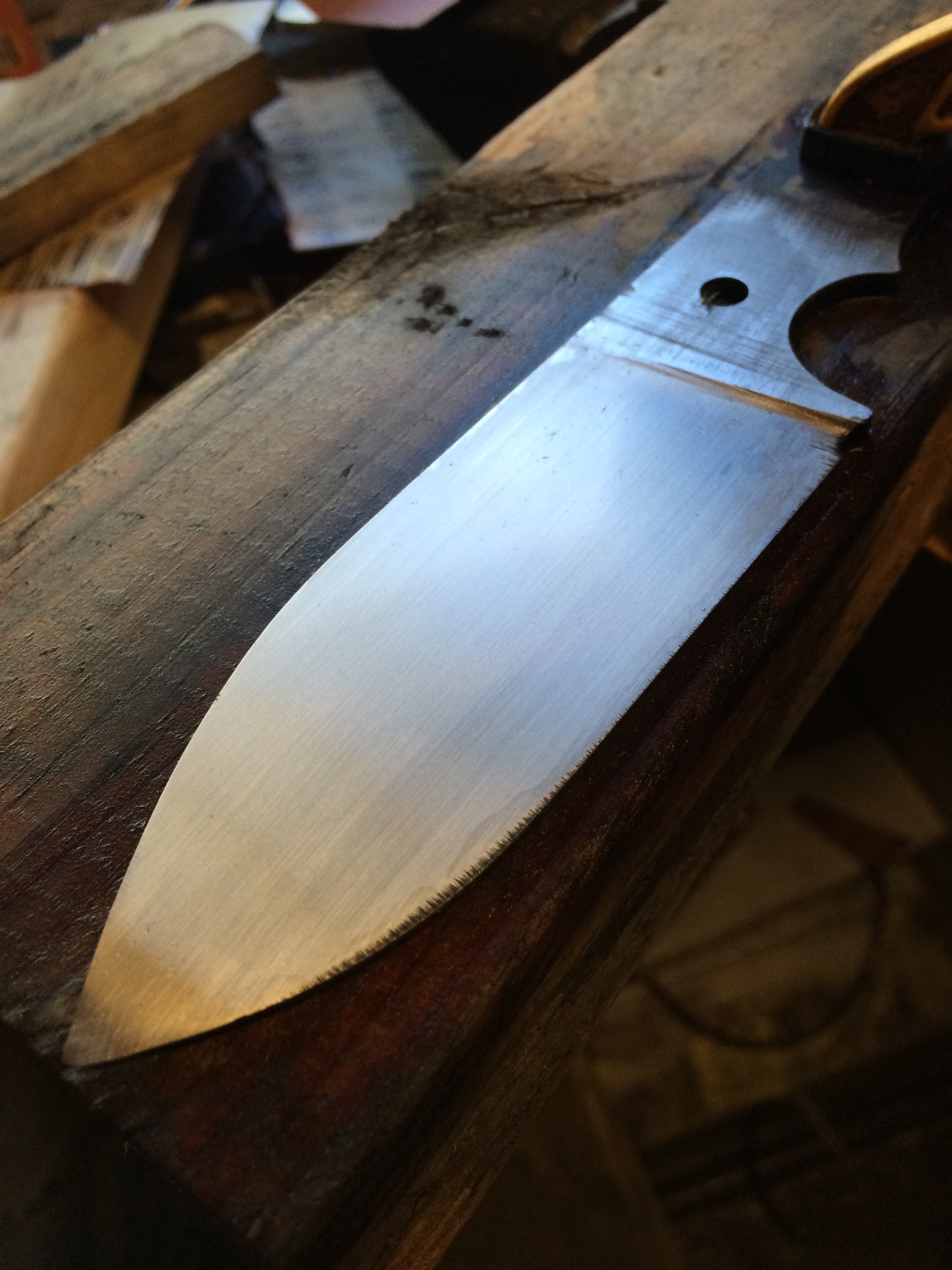
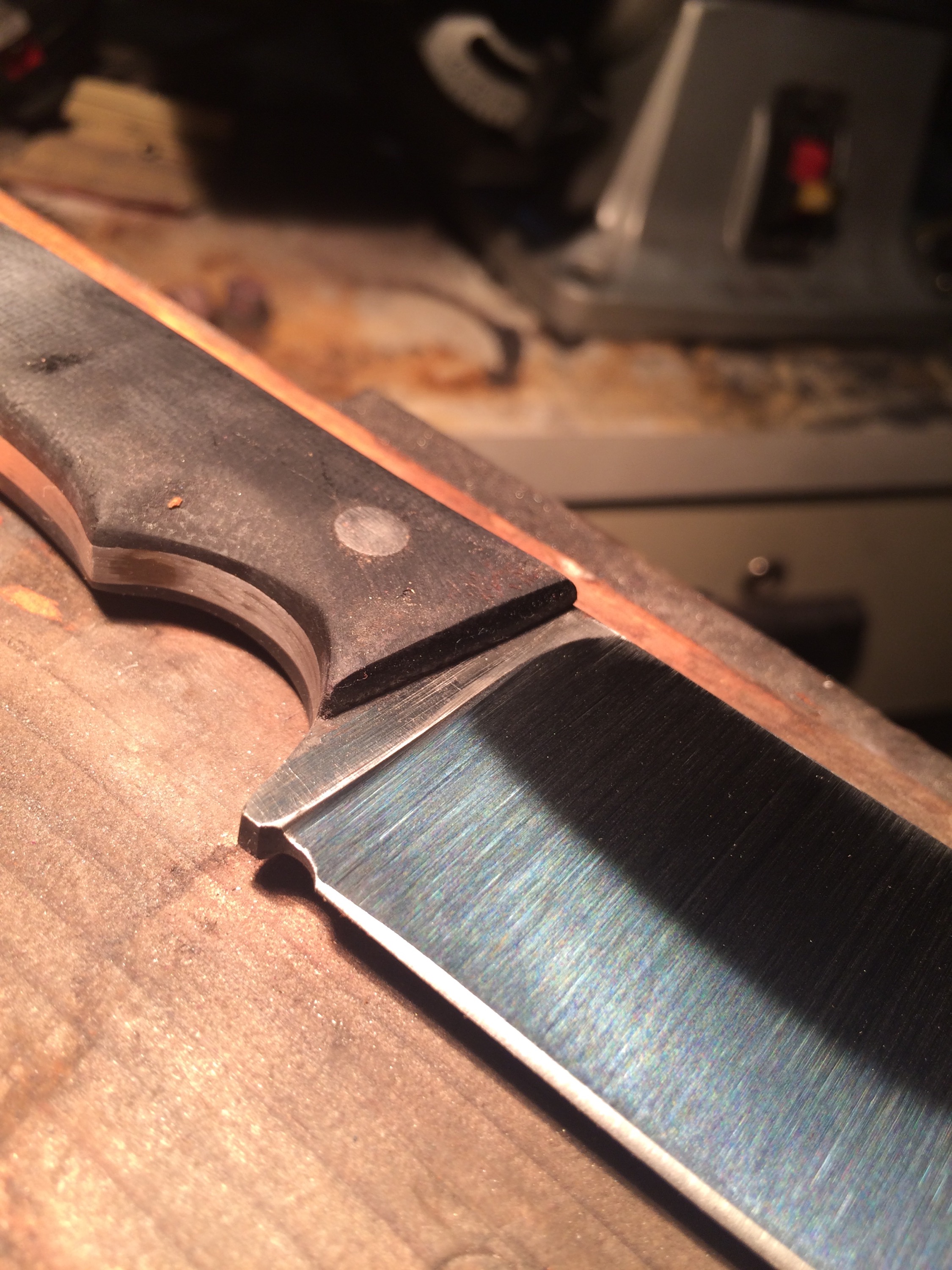
After heat treat I take the plunges to the spine…

The handle was going to be an extension of the recipient’s passion.  After a bit of thought on how to work video equipment into the handle, I took a trip to the local pro audio store.
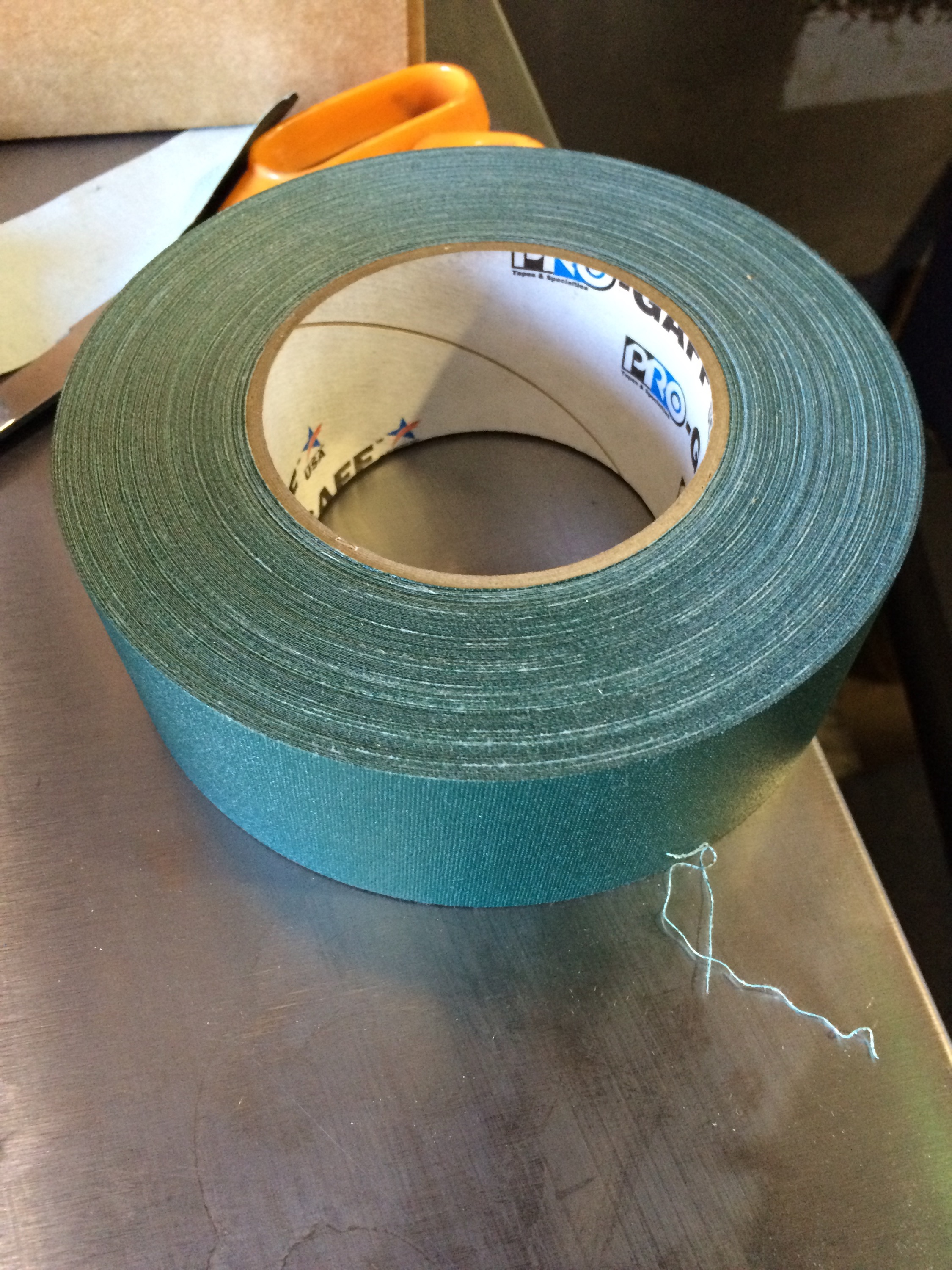
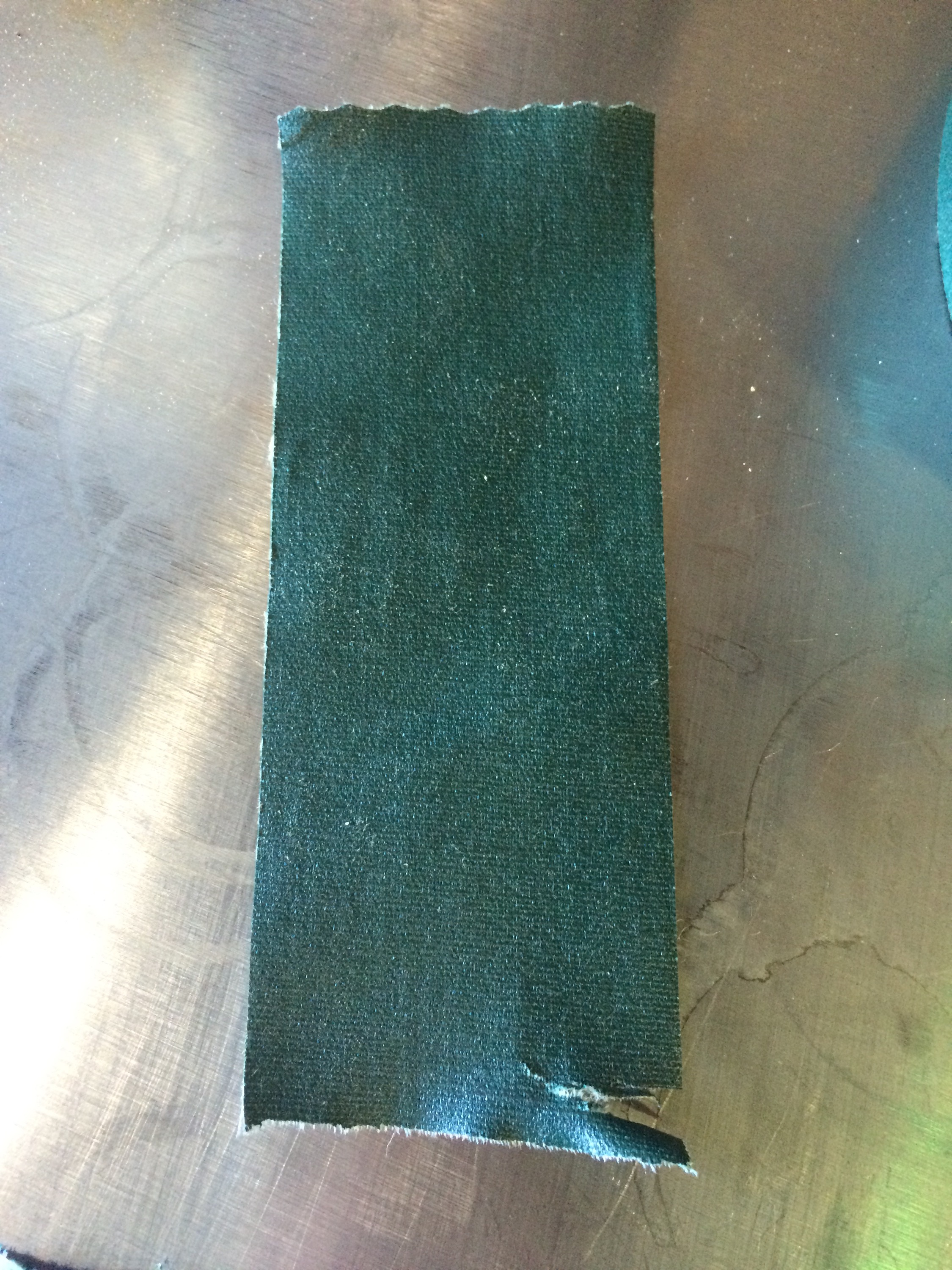
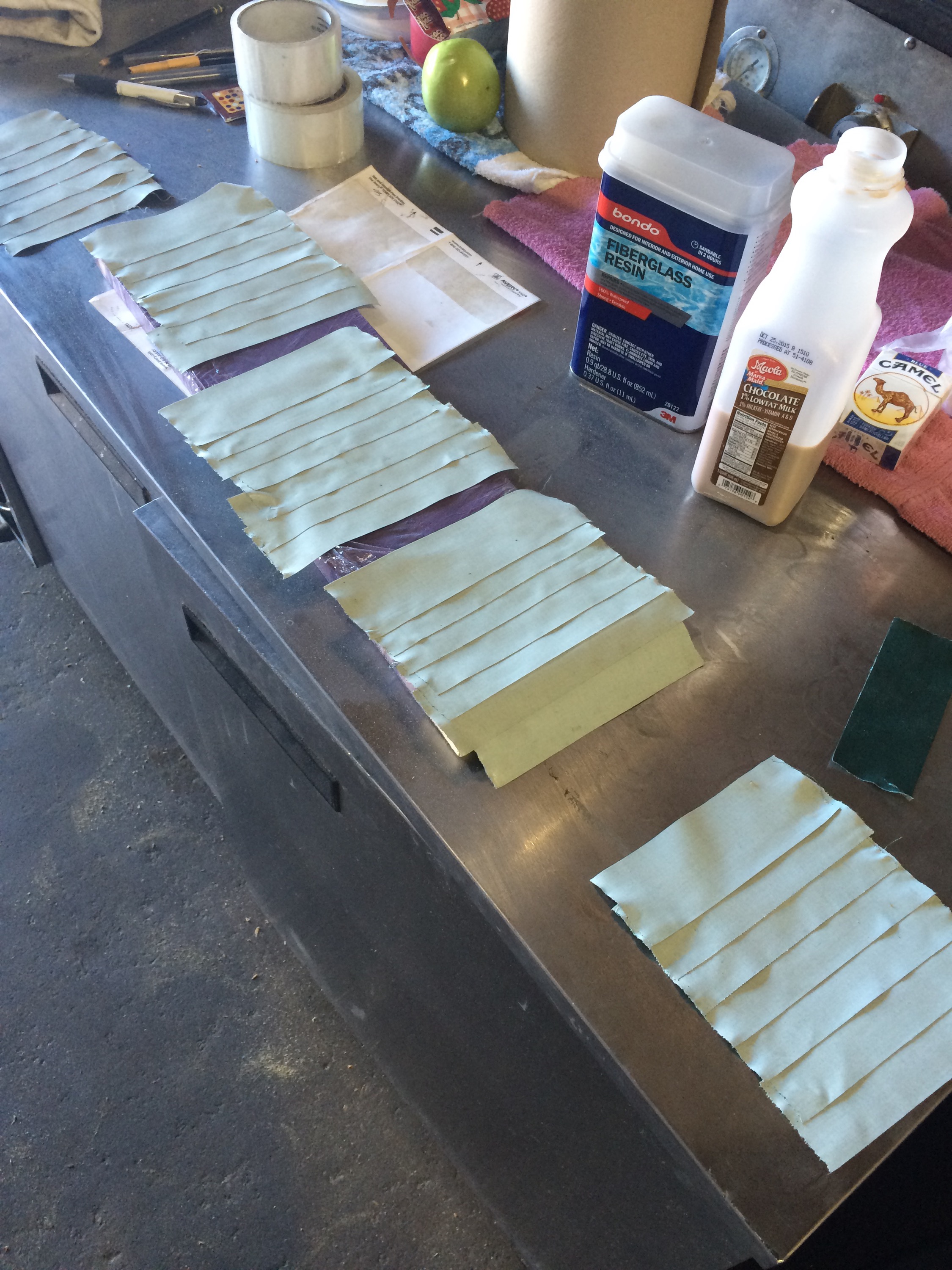
Gaffer’s tape.  Used across the board by almost everyone in arts/entertainment production and operations, be them prince or pauper.  

It’s a woven fabric tape.  It leaves no residue when pulled up.
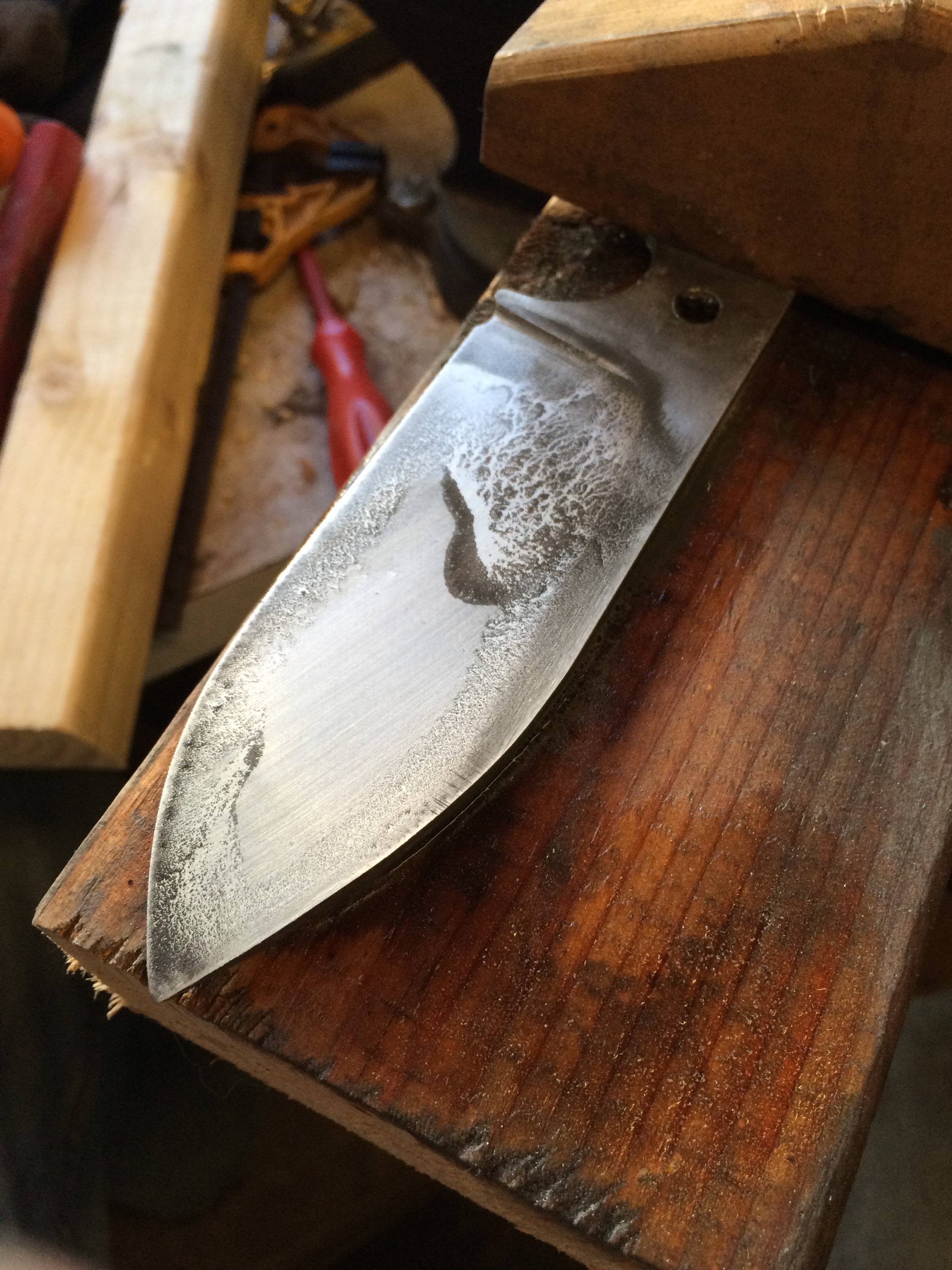
  The process of sandwiching layers of resin between tape begins…


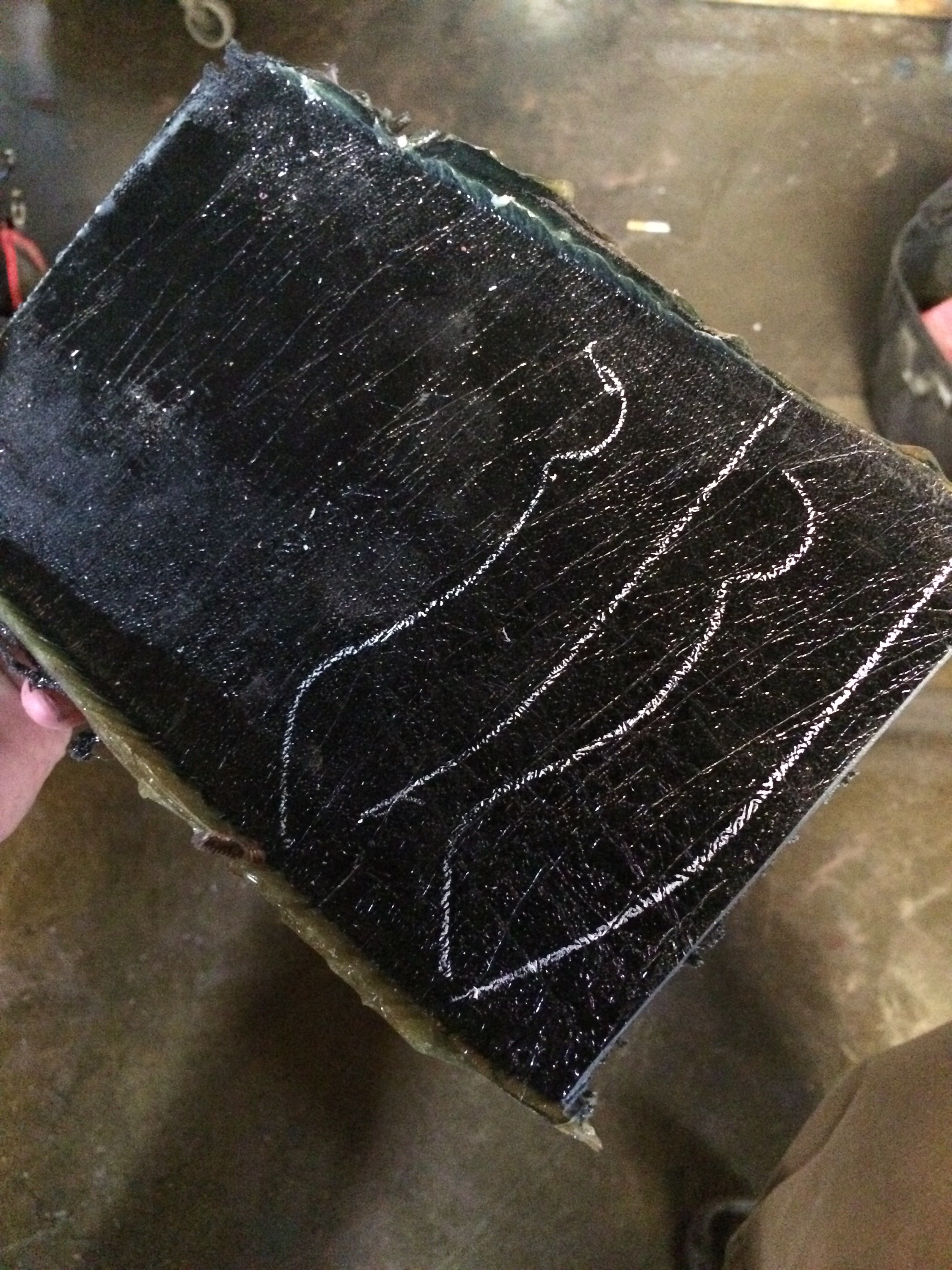
…and it just didn’t work.  The resin wouldn’t set up for some reason.  It was either due to the adhesive on the tape, the inability for the layers to breathe, the high humidity and low temps, or a combination of all three.  I went at it three times and went through nearly a quart of resin.  I pouted for a bit, and found myself in a funk of judgement.
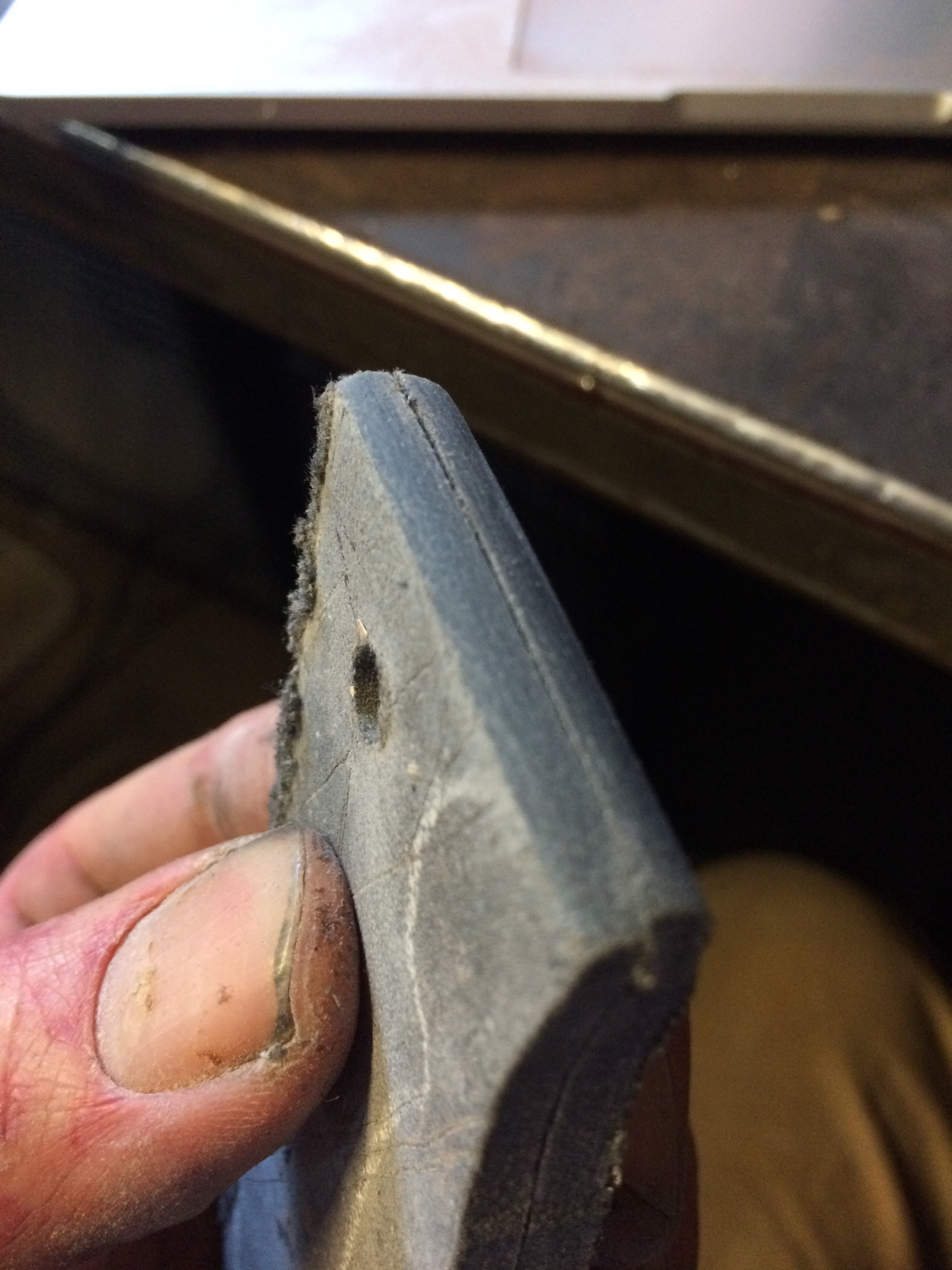
Once I got past that and explored a bit more, I found Duvetyne.  It’s a light-blocking cotton material used in the motion picture industry.  It’s also used in the fine arts world.  Sometimes stage side drops are made out of them as well.  I wanted to keep to the idea of a blade that is an extension of this particular gentleman’s passion.

By this point I was too preoccupied to take pictures.  This resin is an exothermic polymer and needs a bit of heat in the beginning.  It’s been a bit humid this October and my work area has no climate control so I put it under a heat lamp.  I had to babysit the setup for a bit because I had accidentally set the previous batch on fire by having it too close to the lamp….


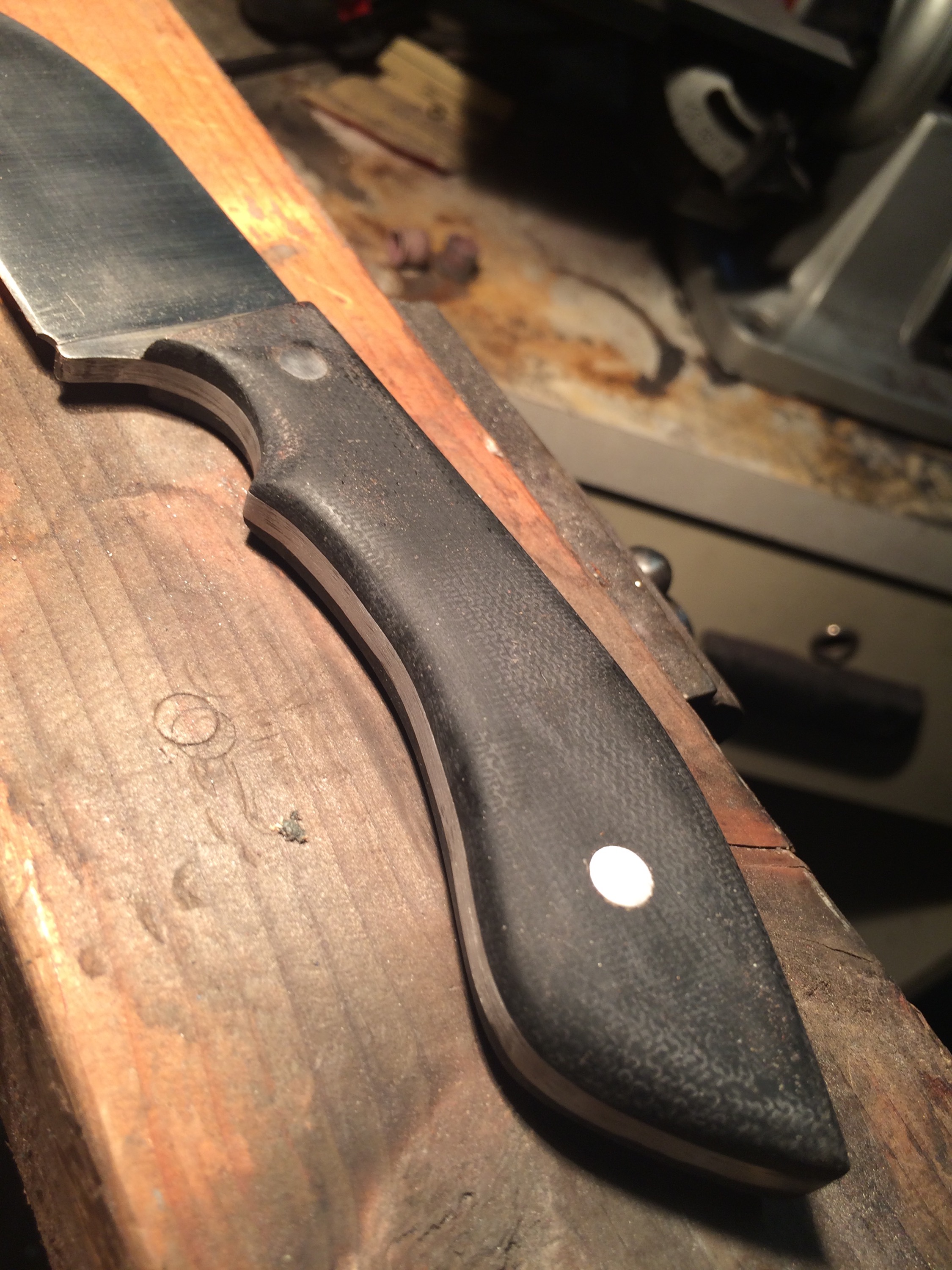
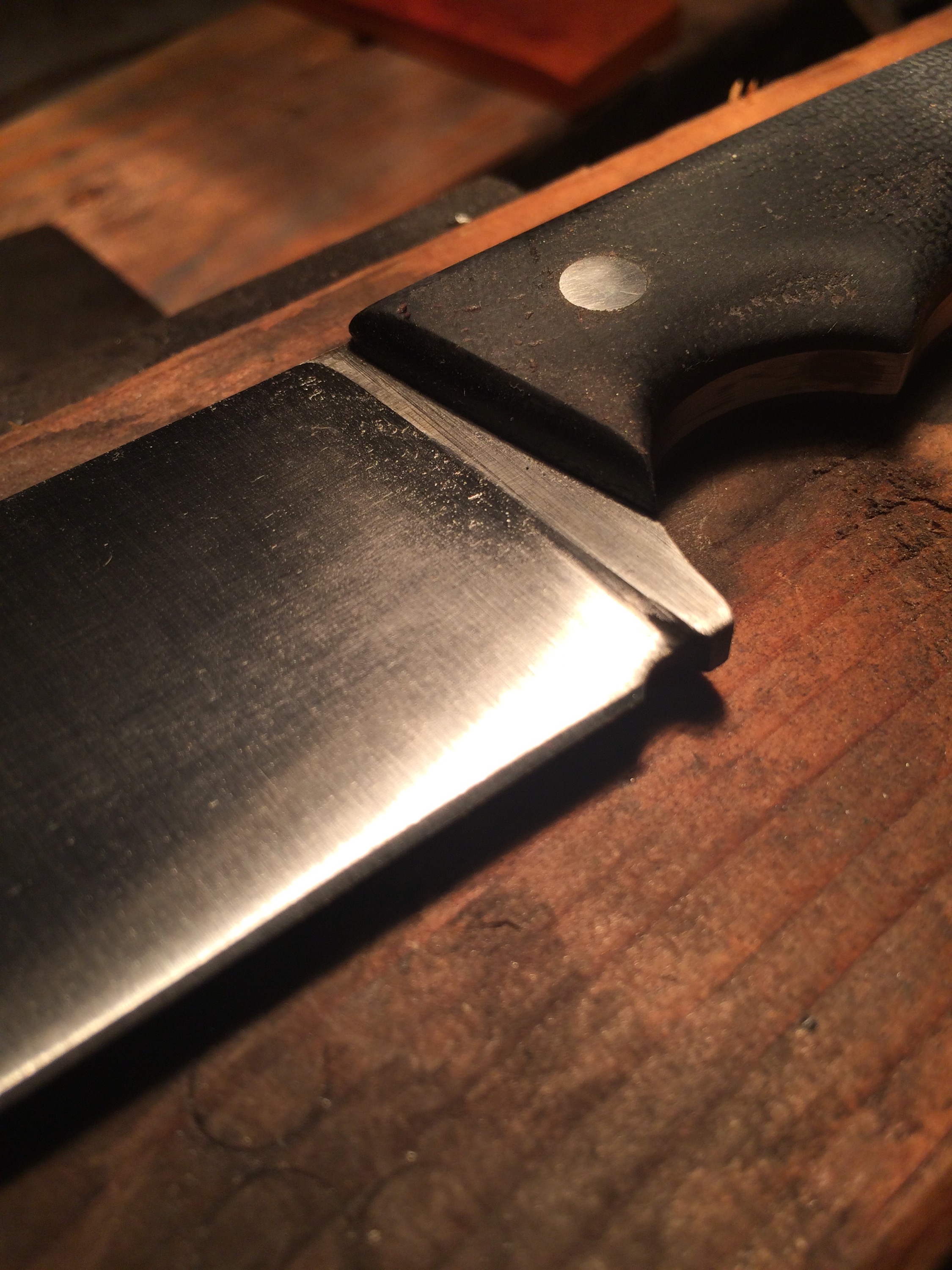
 The Observer.  I left the handle unfinished- it’s the backstage area.  She is O1 tool steel, homebrewed Duvetyne micarta, and steel hardware.


This was incredibly challenging and humbling but worth all the bumps and snags.  Look a little deeper: there are profound lessons to be seen.

Sheath coming (very) soon

Knifemaking: the Lioness, revisited

“The stuff we make don’t go bad”

“The ugly dog barks the longest”

Tray Eppes: potter, musician, fully present citizen of the Universe

(you can find the initial crafting of the Lioness here)

So a number of years ago one of my best friends asked me if I wanted to play a gig with him and his godfather.  It was a Christmas parade in a small town about two hours away.  We were both in music school and played near any gig we could get.  Neither of had cars at the time and a big ass Dodge truck piloted by a gentleman with a large beard pulled up.  This was Tray.  On the way we stopped at a jazz club, had a few cold ones, and heard some badass tunes.  We got to Tray’s farm at around 2am and he showed me his guitar rig (at full blast).  I went to sleep to the sound of coyotes howling.  I got up and Tray’s wife had made us smoked venison with Hollandaise sauce on a lightly toasted English muffin.  We drove to town and played brass band versions of Christmas songs and it was a blast.

We played those parades for the next couple of years.  We spent a New Years out there.  As I recall we drank gin and sat in the outdoor hot tub in front of a fire the size of Rhode Island.  I make sure to keep in touch with Tray and his wife.

A couple months ago I was standing in the middle of a field working security for a country music concert, alone with my thoughts due to the fact that most of the audience was in the beer tent and there wasn’t much securing to do.  In those moments I often find myself thinking about places I’d rather be and in this case I would have rather been, well, almost anywhere else.  I decided I would call Tray and see how he made a living making the things he makes: killer pottery.

He told me about selling pottery to the Amish.  The Amish don’t have any possessions that are purely decorative. If there are pictures on the wall, it is most likely a Bible verse written in a modest calligraphy.  Likewise, nothing is frivolously decorated.  This particular group, Tray was telling me, used white dishes.  Tray also told me that white pottery is a bit more labor intensive than his normal work and the Amish are the only ones who ask for it.  So he can make a large batch of it and have it on hand and not have to fool with it for awhile.  He was explaining to the Amish man he can make it and sell it years later.

“Ahh”, said the Amish man.  “Not like spoilt cow’s milk.”

This was when he told me the stuff we make doesn’t spoil.  You can go back and rework things that you aren’t happy with.  I’ve had a few proverbial ugly dogs barking at me and recently I’ve been reworking those.   And it’s not limited to just pottery, or knives, or music…just because you were one way yesterday doesn’t mean that’s how you have to be today.

Tray also ordered a knife and a sheath.  I made him this:

11865294_1446420832353922_2449722474390312358_o

For the Lioness I found the blade to be too thick.  I went and ground down the bevel, which in turn improved the balance of the blade.  I wasn’t happy with the finish so I took care of that as well.  All of this came from a gentle place.  Nothing is going to spoil.

FullSizeRender 29

O1 tool steel, Cherrywood handle, and brass hardware

FullSizeRender 30

FullSizeRender 31

The nice thing about refinishing a wooden handle (or wooden anything) is that the grain is so much more prominent due to the permeation of the finishing oil.  The grain pops much more grandly than it did the first time around.  I see it as a little gift for going back and trying to make it better.

FullSizeRender 32

I also smoothed and polished up the tang.

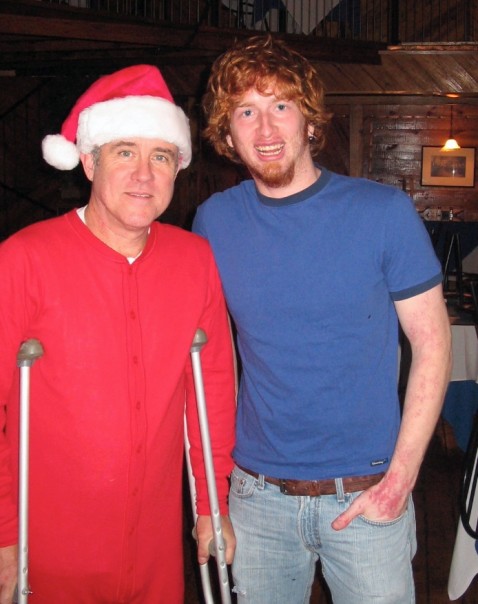
Tray and a much younger me

Tray and a much younger me

Check out Tray’s site at here and drop him a line

Knifemaking: honor, integrity, and the Hound

Both sides of my family were landless sharecroppers and mountain people from as far back as I can remember…What did I receive from this lineage?  Things I believe to be very valuable: a good raw intellect and a good tough body…A sense of honor that results in a touchiness common to our people…When the only thing you own is your sense of personal honor, you tend to protect it at all costs.

Eric L. Haney, Inside Delta Force

This blade was initially a commission from another very dear friend of mine.  He asked for a knife that was based in a sort of old-world honor.  A sort of honor that is maybe not seen so much today, at least not on the surface of things.  Something that may get lost in performance reports and email threads.  Something that isn’t tied to how much money you do or do not make, what deity you do or do not pray to, what color your skin may or may not be, and completely independent of whatever gender with which you happen to identify.  A sort of goodness that comes from having a place in this world, of knowing deep within your being that you deserve to be here and that no one can take that away from you.  He asked that it be called the Hound and I got to work.

There are times in my life when I have felt empty and hollow, like something was missing.  I tried filling this with all sorts of things- material things, a busy schedule, pharmaceuticals, and overindulgences of food and drink.  What was actually missing at those times was a personal bearing.  In more difficult times I had traded my honor for things that were fleeting, for a sense of security, and for a feeling of belonging.  When you have something to ground yourself in and can carry yourself in esteem, the aforementioned things will find their way to you, though at times it may feel like you are a thousand miles away from any of them.  No one gives this feeling to you.  Some people have this from an early age, others have to find it, and still others go through hell and many trials by fire to figure out what it is for them.  Some people have been beaten down so far that they aren’t aware that it even exists- but still it can be theirs.
When you act and speak from this place it brings an integrity and truth to the things you do.  A resonance that permeates everything- like an orchestra, where a balance of intonation, volume, harmony, and depth of emotion makes a gorgeous sonic mass.  There may be chaos all around you but within you everything moves in synch, just like the bows of a symphony orchestra.

I “finished” this blade some months ago and was never quite happy with it.  I’ve since made a blade of the same bearing for my friend, the Hound Mark II (here is a picture).  I didn’t find the initial bevel work on this knife to be satisfactory and I didn’t come to this conclusion till after I had hardened the steel.  One has to be careful grinding on hardened steel: if it gets too hot the steel loses it’s temper.  So with a cup of ice water I took the bevel to where I was happy with it.

It’s important to not give away our honor, as it can be the thing that gets us through when there may not be anything else.  As it follows, I added a sturdy grip on the Hound.  I wanted it to melt into the hand and hold fast for times when holding anything may be challenging.  
  
Profiled, ground, and sanded  After hardening…
During tempering…    Roughing in contours…Cherrywood for balance….
Mostly sanded…  The Hound


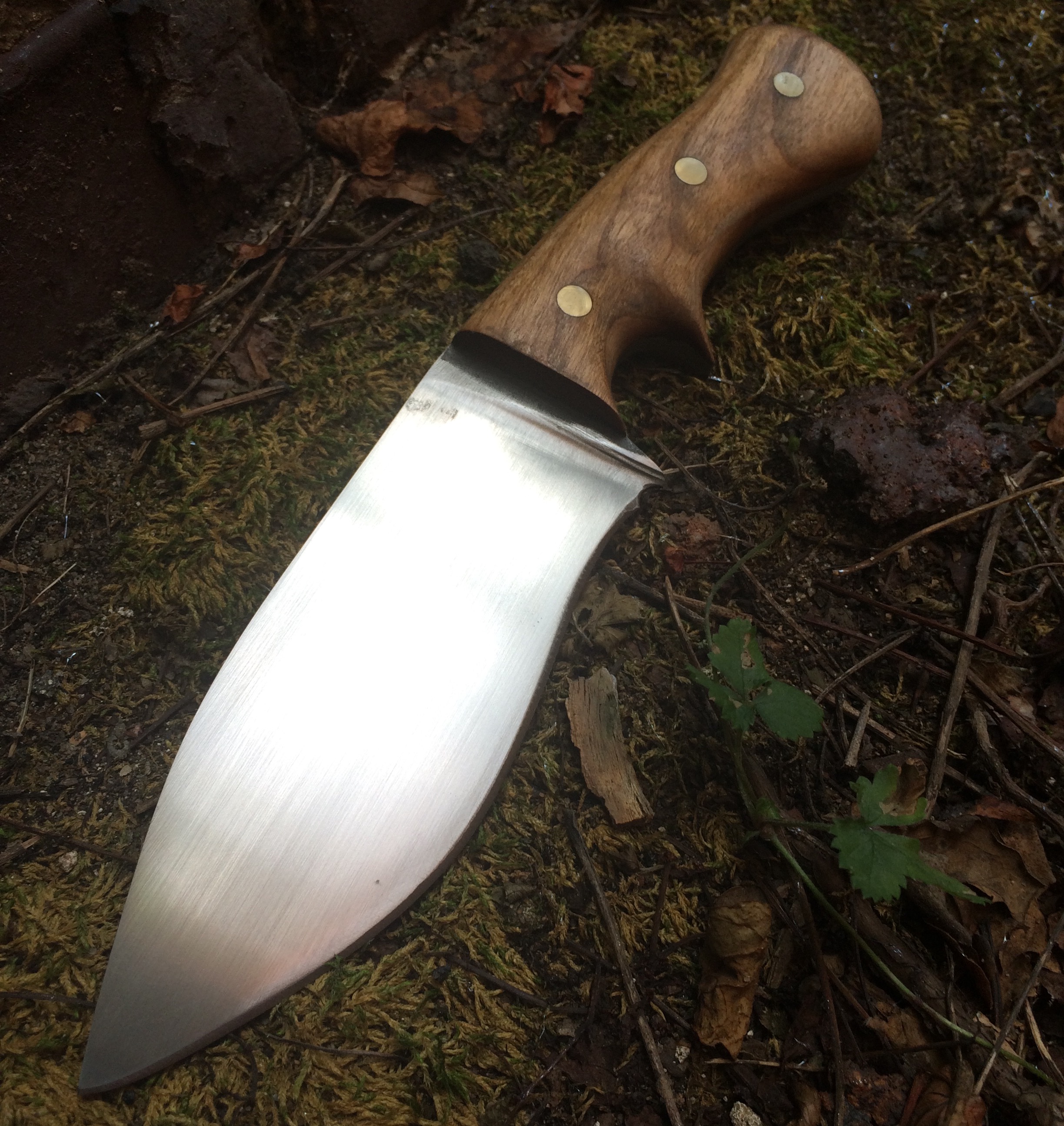
The Hound was made from O1 tool steel with a Cherrywood handle and brass rivets.  Hold to your honor.

If you find you would like to purchase one of my blades or have me craft one for you, email me or check out my Etsy store.   It may end up on this blog…

Knifemaking: gentleness, boundaries, and the Maiden

“I was only fifteen years old and full of fire
I was a half a pound of bacon and an egg on the side
She got all the good looks, and I got all the war
She was everything I asked for, and a little more”

Francis Dunnery, Give Up and Let it Go (The Gulley Flats Boys)

This blade was a commission from a very good friend of mine.  I’ve known him and his wife for quite a few years, worked for his company, and spent much time with his family.  He lives in Maidens, Virginia, so coming up with an idea for this blade sort of took care of itself.

The inspiration for the Maiden comes from most all of the women I am close to.  Elegant, beautiful, strong, full of love, and most definitely not having any of your shit.  Or put another way, immaculately clothed but with a sword hidden beneath beneath their cloak.  Or sun dress.  Or whatever houndstooth scarf or coat is in season.  You get the idea.

No man is an island.  Sometimes it’s really healthy to have someone to tell you “hey, see that stupid thing you’re about to do?  Maybe think twice about that- you don’t need to impress anyone.” Or,

“Hey, it’s time to stand on your own feet.  No, I’m not going to carry you through this.  Don’t worry, you’ve got this.”  Or even,

“Whether you fail or succeed, I love you.”

These are strong statements but they are held by a gentleness that we don’t often give ourselves, or at least I don’t.  I’ve been known to on occasion, when left to my own devices, done that stupid thing to impress someone insignificant and not stood on my own feet and felt like love was conditional on whether I failed or succeeded.  Because whether we like it or not, at some point or another we all have moments of neediness and insecurity, self-doubt and self-sabotage, and the story-hour from hell where we ruminate on our screw-ups.  As social creatures it’s important to hear these things from others close to us.  This doesn’t necessarily mean there are dependency issues at play.  It means that we are human.  And whether we are aware of it or not, we are often giving the same support to those who help support us.

To me, these statements also represent strong boundaries- saying what is felt without expectation or condition.  Without (or in spite of) fear of a negative reaction.  Spoken not to coerce or manipulate an outcome but to help us to be ourselves.

That is the lesson of the Maiden- an elegant tool that is close in good times and the rougher times, beautifully dressed with no fucks to give.  I’ll drink to that….

I designed four of these lovely ladies and had my friend pick which on he liked best.  These three didn’t quite make the cut and that’s ok.  I went with a drop point blade- the right balance of tip strength, belly, and piercing ability.  Good for farm work.

  finish sanding

The Maiden: 1095 spring steel with an acid etch, Curly Maple handle, and brass hardware.


I also made her a sheath.  Wet formed for a snug fit.


I actually made two of these- in case I screwed up the finish on the Curly Maple.  This is the first one, with a satin finish.

Knifemaking: not taking things personally and the Persuader

“A true warrior can only serve others, not himself…When you become a mercenary, you’re just a bully with a gun.”

Evan Wright, Generation Kill

In the last semester or so of college I got a job building stages for a small production company.  When I say small, it was one gentleman who kept everything in his garage and had a box truck older than I was with no air conditioning.  Everything was rough and tumble.  Most of the jobs were second-rate: fashion shows at dilapidated event halls, seedy parties, Cinco de Mayo celebrations, weddings out in the boondocks, and community events in some of the rougher parts of town (for these I was told to carry a ‘stunt wallet’- a cheap velcro wallet with nothing but my ID and 5 or 6 bucks in it, in case we got mugged)  The biggest job he had was once a year at a county fair.  We would build a large stage, maybe 60ft by 30ft.  Then we set up 40ft by 20ft event tent on top of it.  The headlining act was an Elvis impersonator from North Carolina and for a county fair he could really draw the crowds.

These particular tents are a bit tricky.  They require at least four fit people to set up.  They are the sort of contraptions where there is a one right way to set it up and a thousand stupid ways to set it up.  There’s no in between.  There are several dozen aluminum poles ranging from 8 to 20ft.  They connect to form the frame through a series of elbow joints secured in place with cotter pins.  After you put the frame together, you ‘skin’ it with a weather treated canvas.  It’s all heavy as shit.

Invariably when you are putting the frame together some of the cotter pins won’t go in because the rivet holes in the poles won’t line up with elbow joints, usually due to uneven ground.  This was to be expected.  On these occasions we would bring out the Persuader.

The Persuader was an aptly-named baby sledge hammer for helping those cotter pins to go through the holes.  We weren’t trying to beat anything into submission or make anything do something it wasn’t meant to do.  There was no intimidation, no malice, nothing like that.  Sometimes things don’t quite go together as they were designed and in those instances they might need a bit of persuasion…of the forceful variety.

I find this when I get to the end of a project where there is something I’ve built and it’s almost finished but something isn’t quite going together as I had planned.  Do I start over?  Do I give up?  What usually happens is I percolate a cranky funk and try to wish it into submission.  Alas, wishing does not make it so….

This is where the lesson of the Persuader comes in.  The idea of helping something to do what it does.  Of taking action, manifesting intention, of letting go of the idea that things have to be perfect.  Sometimes I find myself so wrapped up in a project that when something doesn’t work I take it personally.  When that happens the project becomes about me instead of the idea I am trying to honor and serve.  When the cotter pins of Life won’t go through the rivet holes for which they were designed…give them a tap with the Persuader.  Not out of anger or frustration, but love taps.

It is from this place that I designed the Persuader blade.  Something you can pull out when you know where you want to end up but have challenges in your way.  When frustrations and doubts may close your heart.  When the goddamn cotter pin won’t go through the stupid rivet hole and the Elvis impersonator won’t have his tent and the sun melts his pomade and he can’t sing….right, deep breaths…everything is there, it just needs a little persuasion.

This blade started with a bar of 1095 spring steel.  I wanted something utilitarian, yet elegant.  For maximum blade strength and cutting ability I ground a sabre grind on the cutting edge.  For extra cutting utility I made a chisel grind on the top of the blade.

  Sabre grinds are difficult to do well.  I used my cheap little Chinese belt grinder as much as I could and then I evened it out on my filing jig.

  After heat treat and tempering….After lots of cleaning up and finishing work…

  
Some ornamental filework..,

  brass spacers and Sapele Mahogany
    Chisel grind up front…

 When it gets tough, go ahead and get frustrated and take it personally.  When you’re through with that, grab the Persuader.

  …now to clean all of this up…