Knifemaking: a commencement address (of sorts), and the Masilda

Dear Younger Person Whom I’ve Never Met Before:

Some very dear friends of mine asked me to make a knife for you.  These friends of mine are wonderful people that I have known for quite some time, and shared many adventures. They told me they have known your parents for a long time as well, so I can infer that your parents are wonderful people too. They have also known you since you were born and, if I may be so bold, I can only assume that you are a wonderful person as well, and that we are well met.

I was also told you have completed your secondary studies and are going out into the world- congratulations! My very dear friends asked me to make you something special, but also something that was functional and practical.  Something that would serve you well on outdoor adventures; an elegant tool and faithful companion.  Something to remind you of where you have grown up.  A security blanket that doubles as a prayer rosary and, if I may say so, a bold fashion statement.

As you may have noticed, Younger-Person-Whom-I’ve-Never-Met-Before, the situation of the world is a bit spicier than usual.  To be honest, the only thing that has gotten me out of the house most days in this great year of 2020 is knowing that I will be coming back home as soon as possible.  In spite of my trepidations of late, I’ve found that time marches on and life stops for no one, and there’s no point in staying home and being afraid while life passes you by.  The world cares not for our anxieties, worries, or fears, Younger-Person-Whom-I’ve-Never-Met-Before, and the sooner this is understood the freer we become.  Be sure to wear a mask, practice social distancing, and listen to the experts.  That is what they are here for.

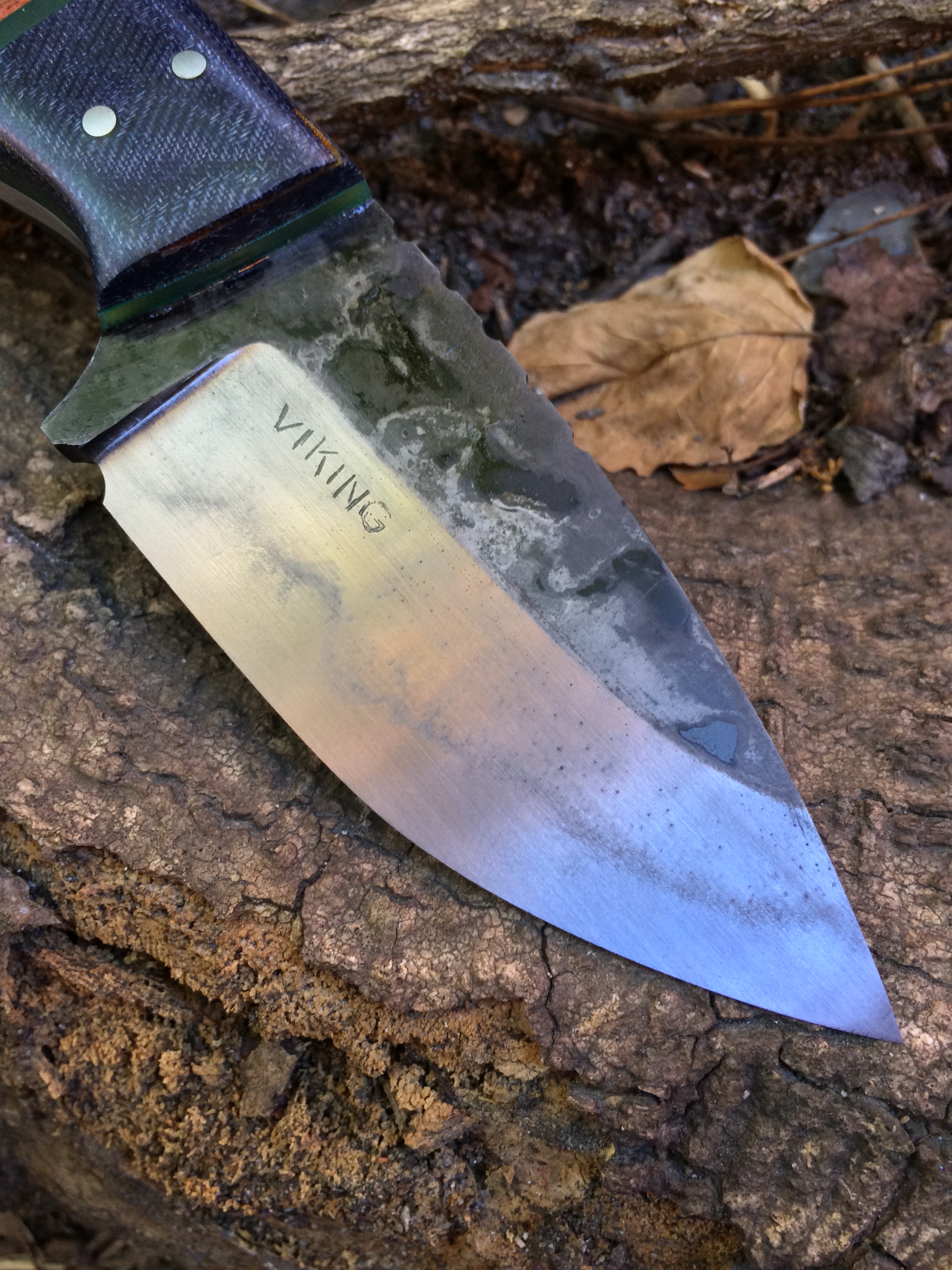
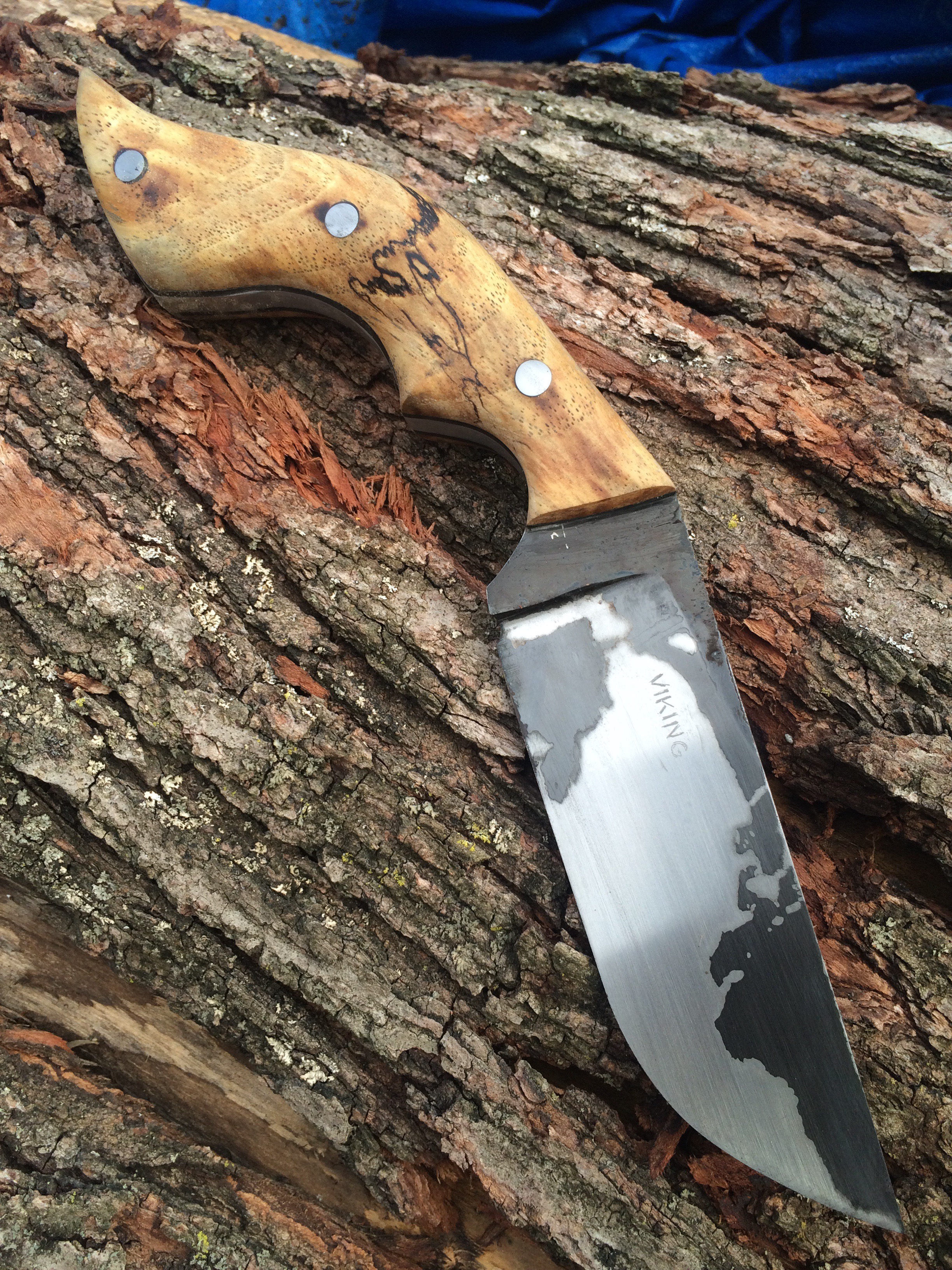
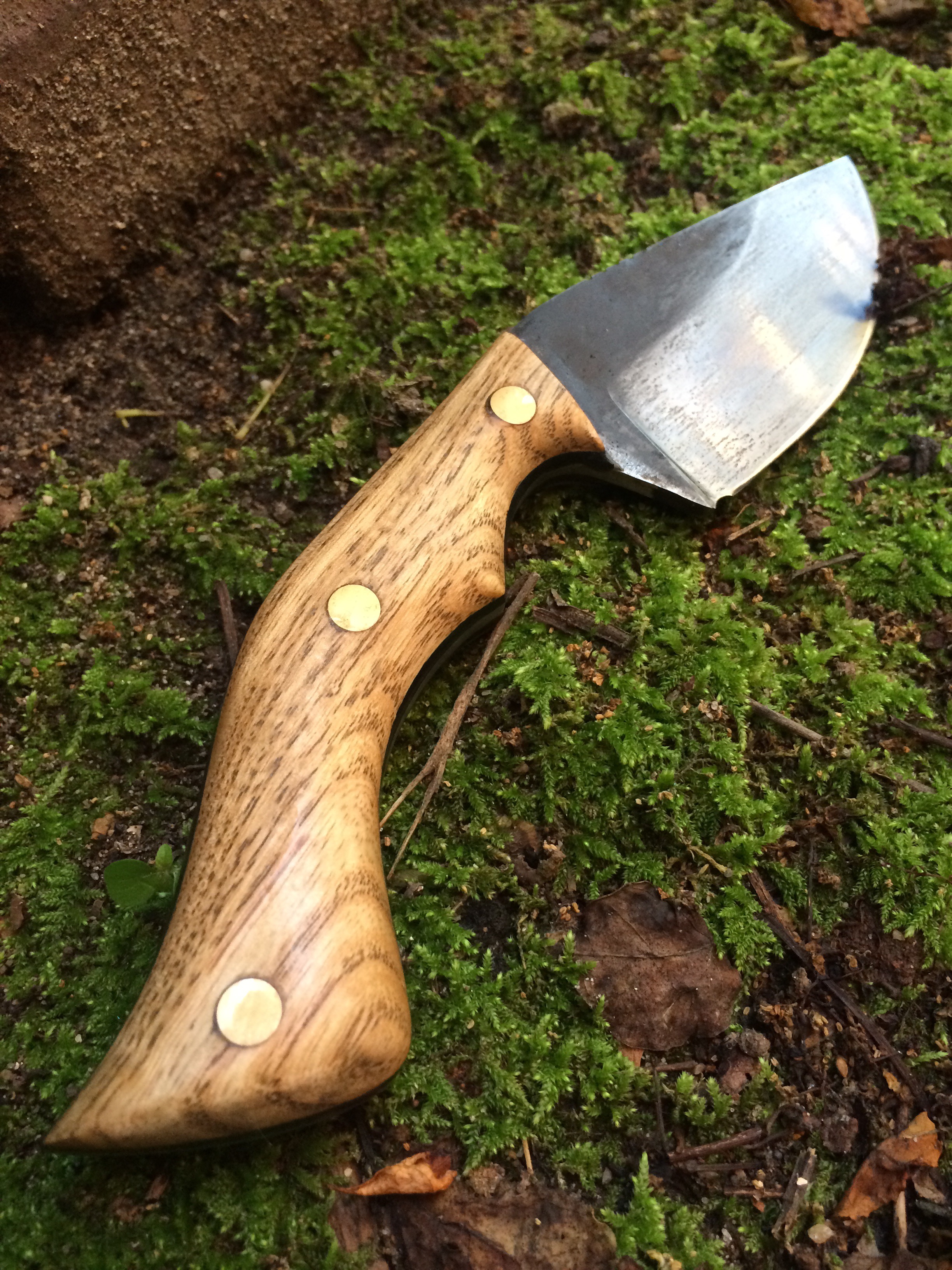
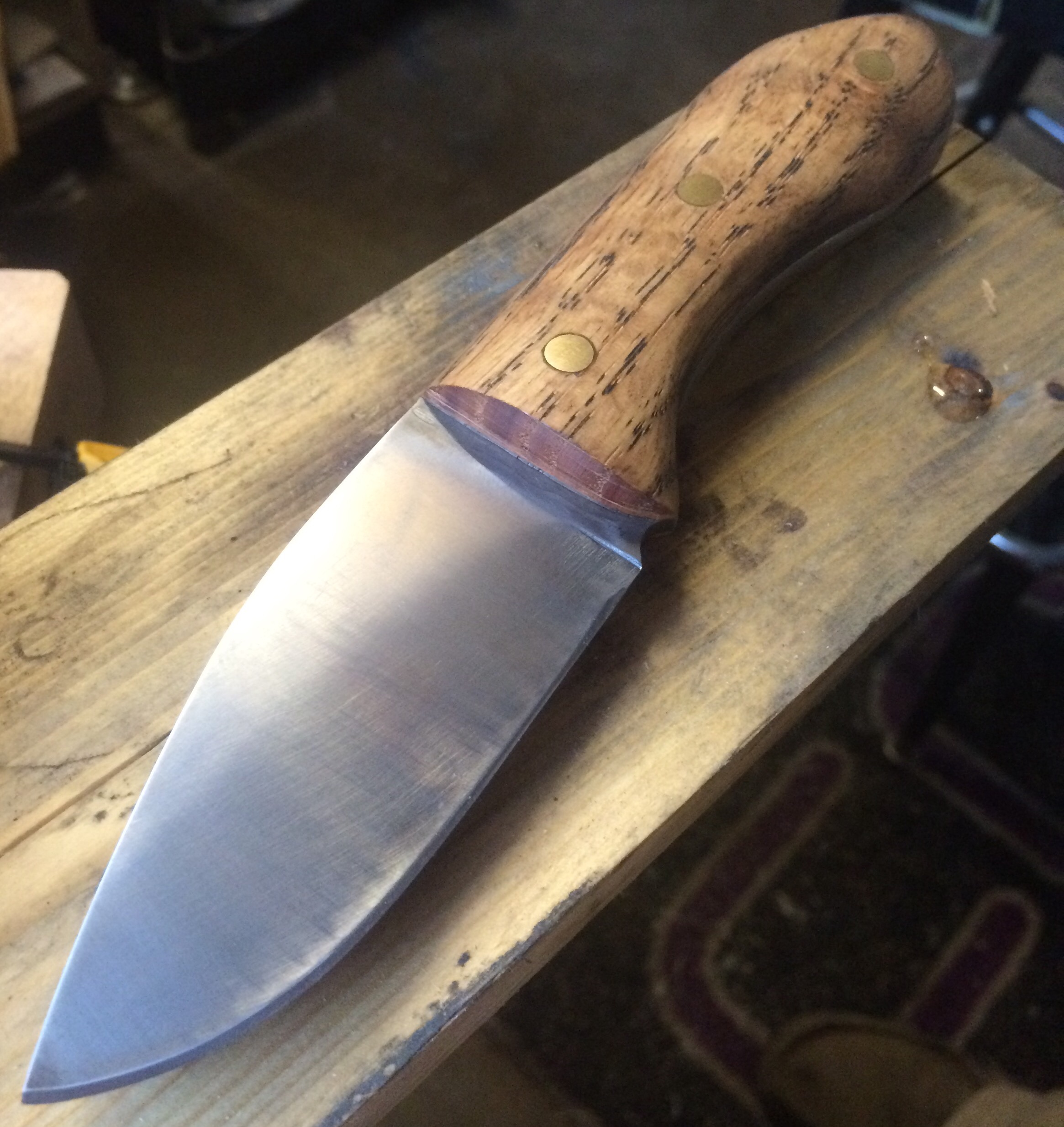
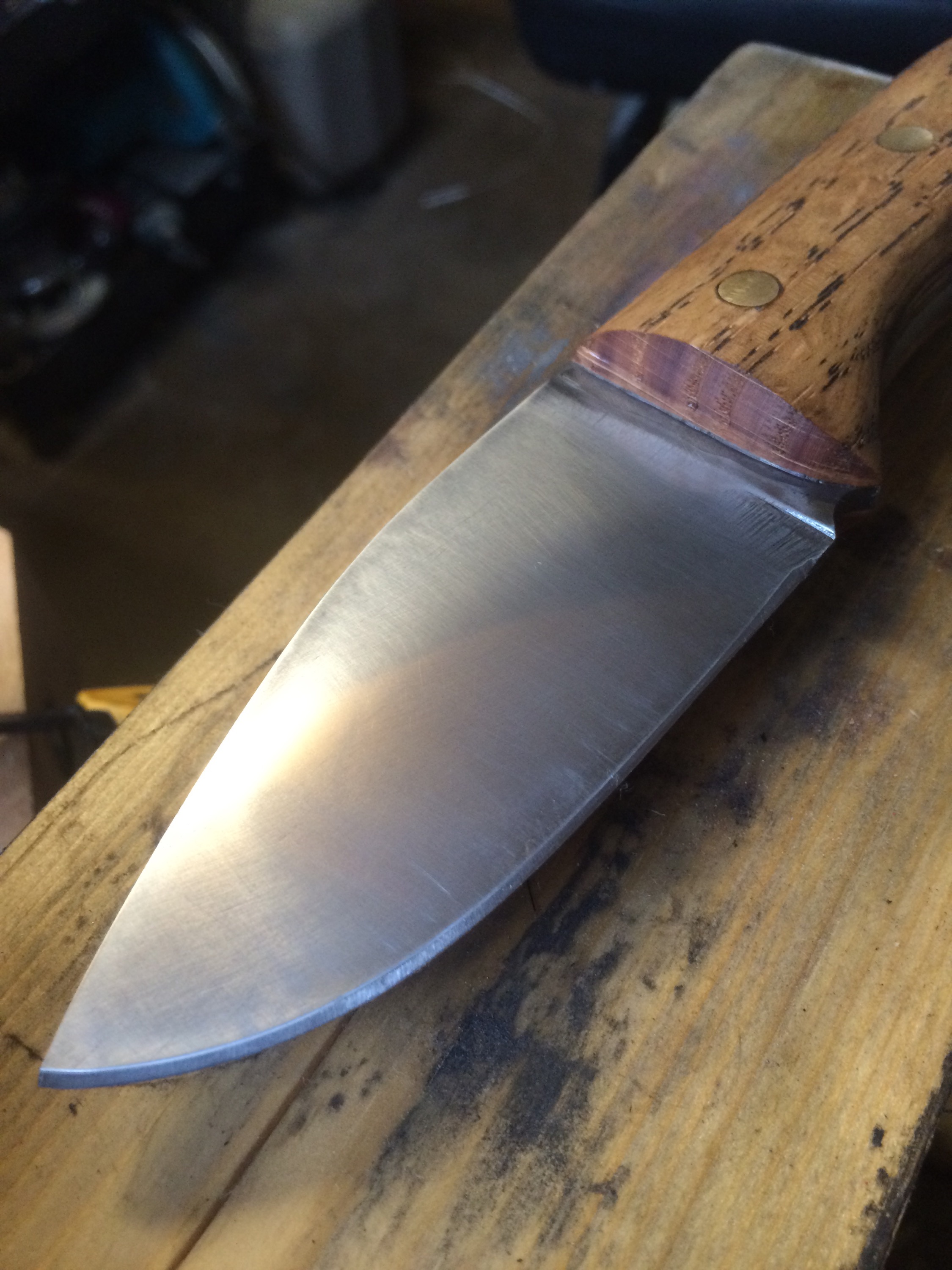
I have designed and built you a bushcraft knife.  She is made from 1095 hi-carbon steel, which has been differentially hardened.  What this means is, while the whole blade is hardened, the cutting edge is the only part of the blade at full hardness and the spine is just slightly softer.  This offers durability and a slight bit of give, like a samurai sword.  There is a smoky line along the edge of the blade and a slight color change where you can see the differences in hardness.

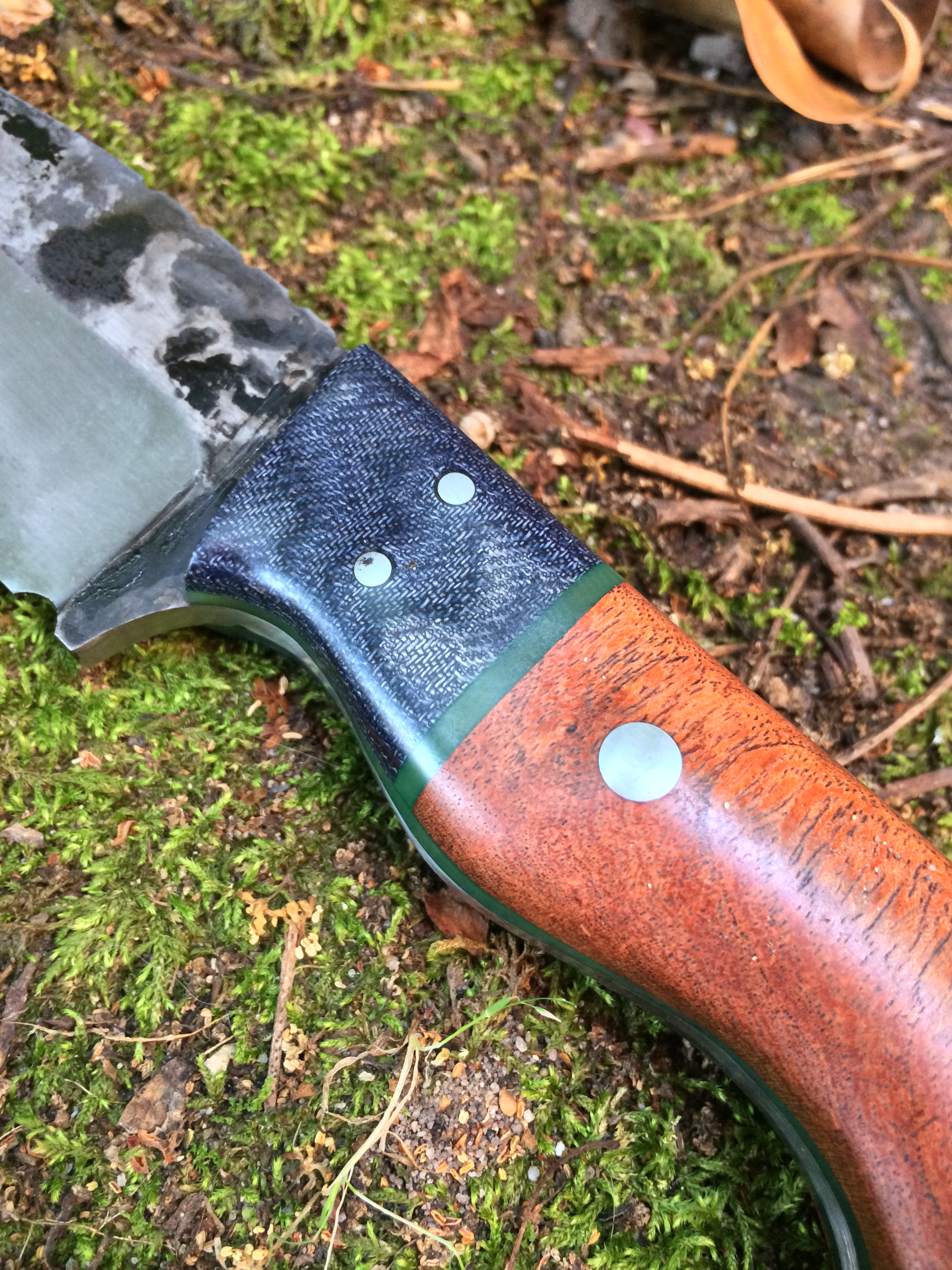
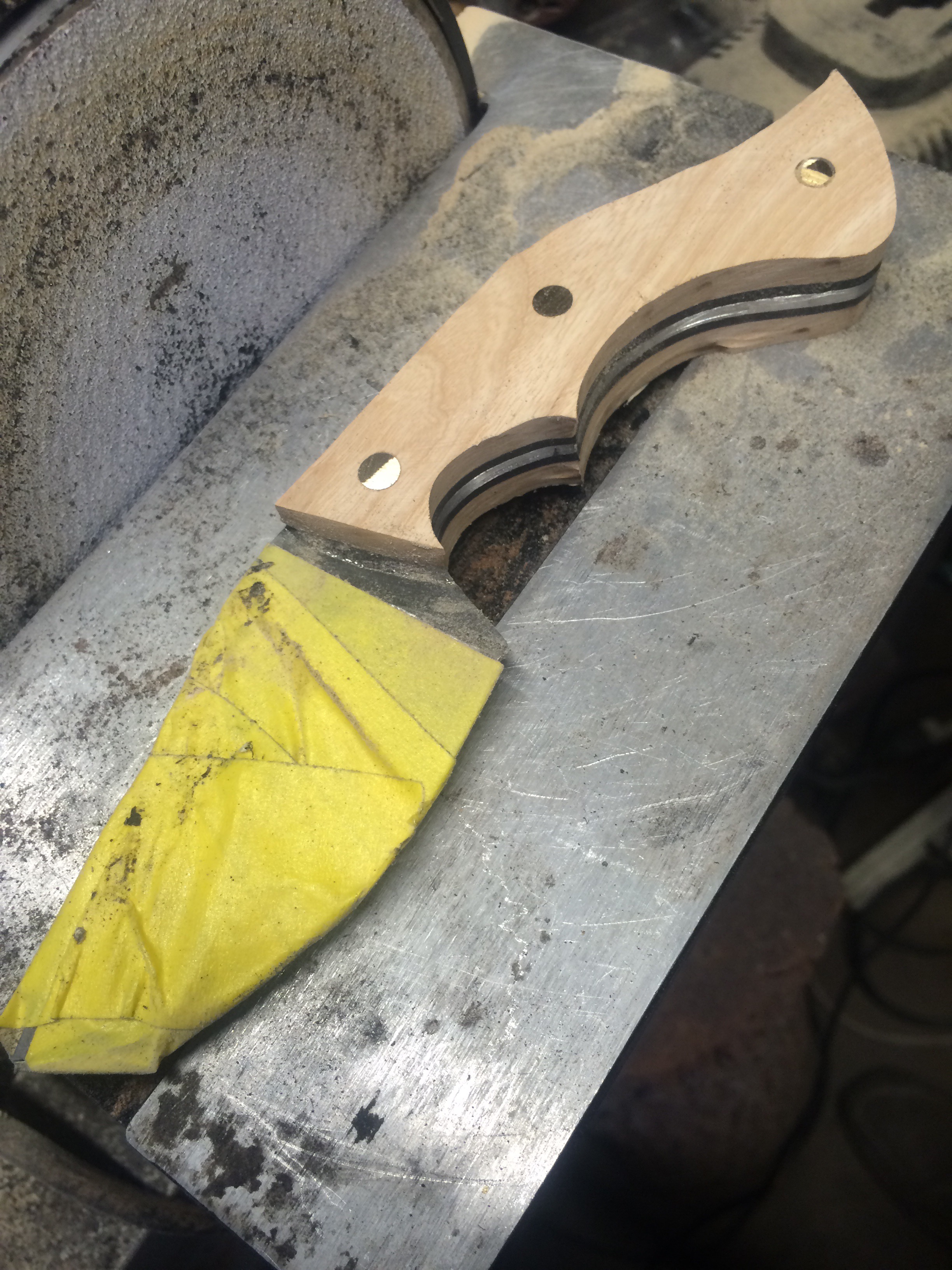
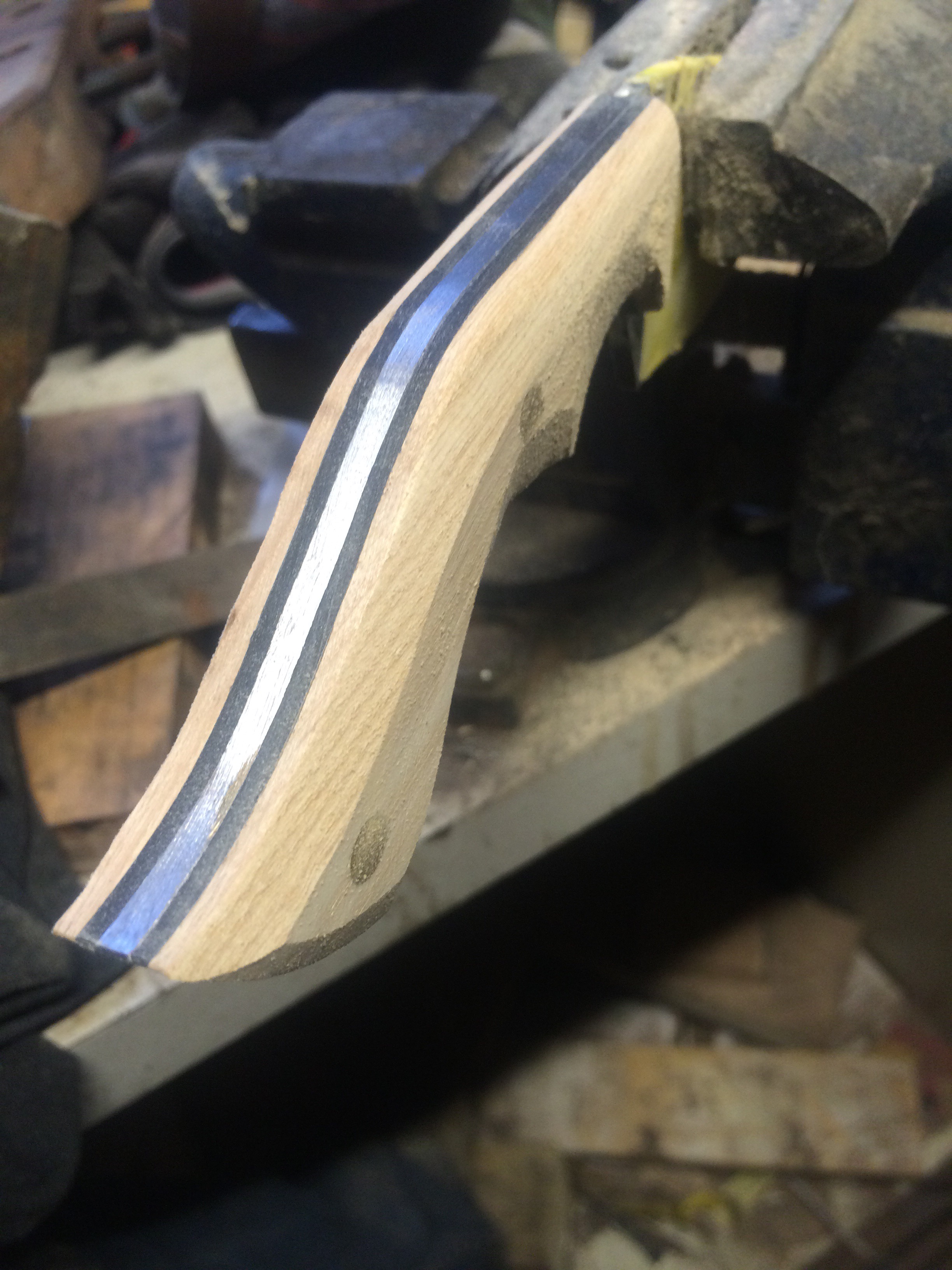
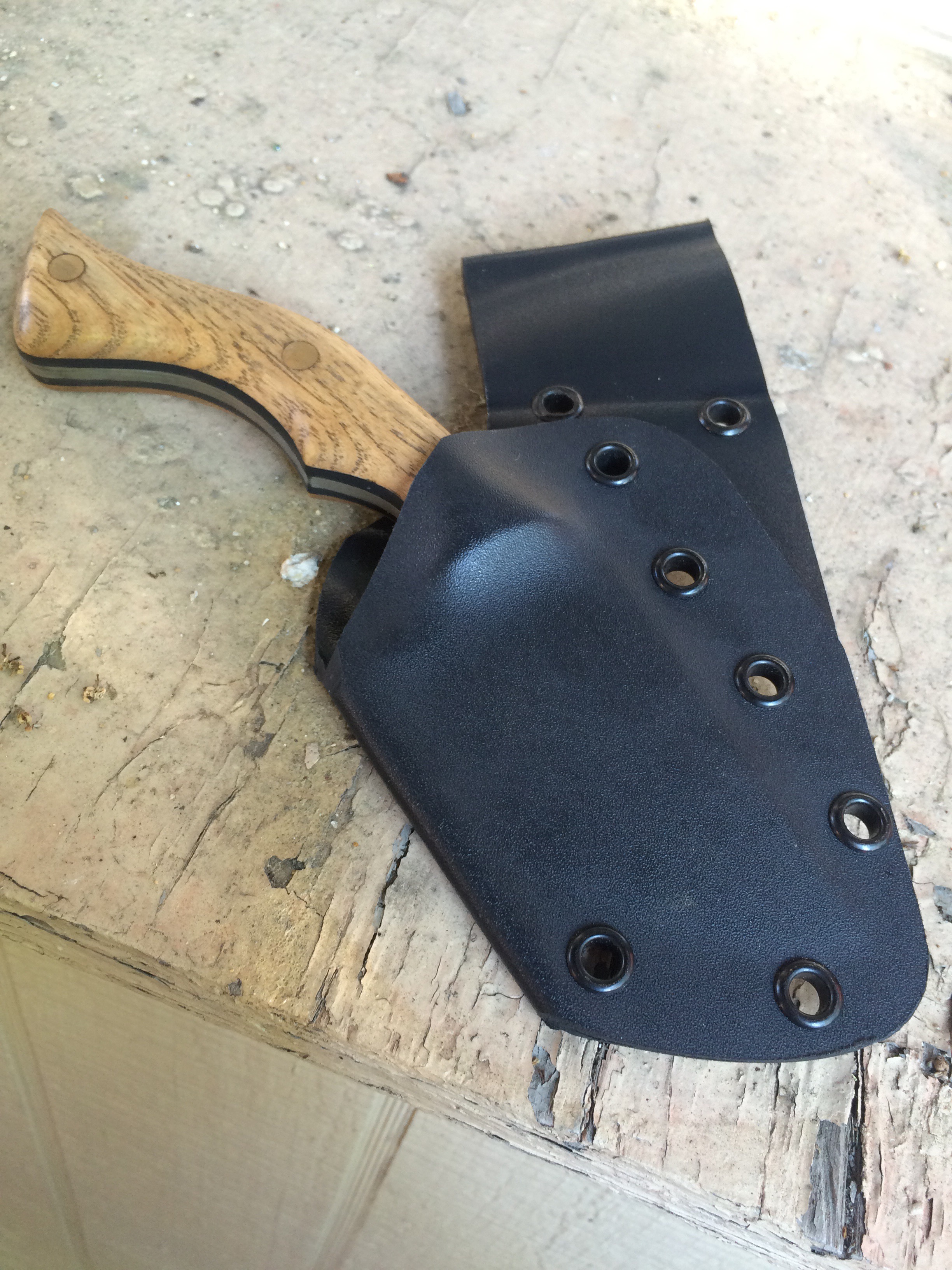
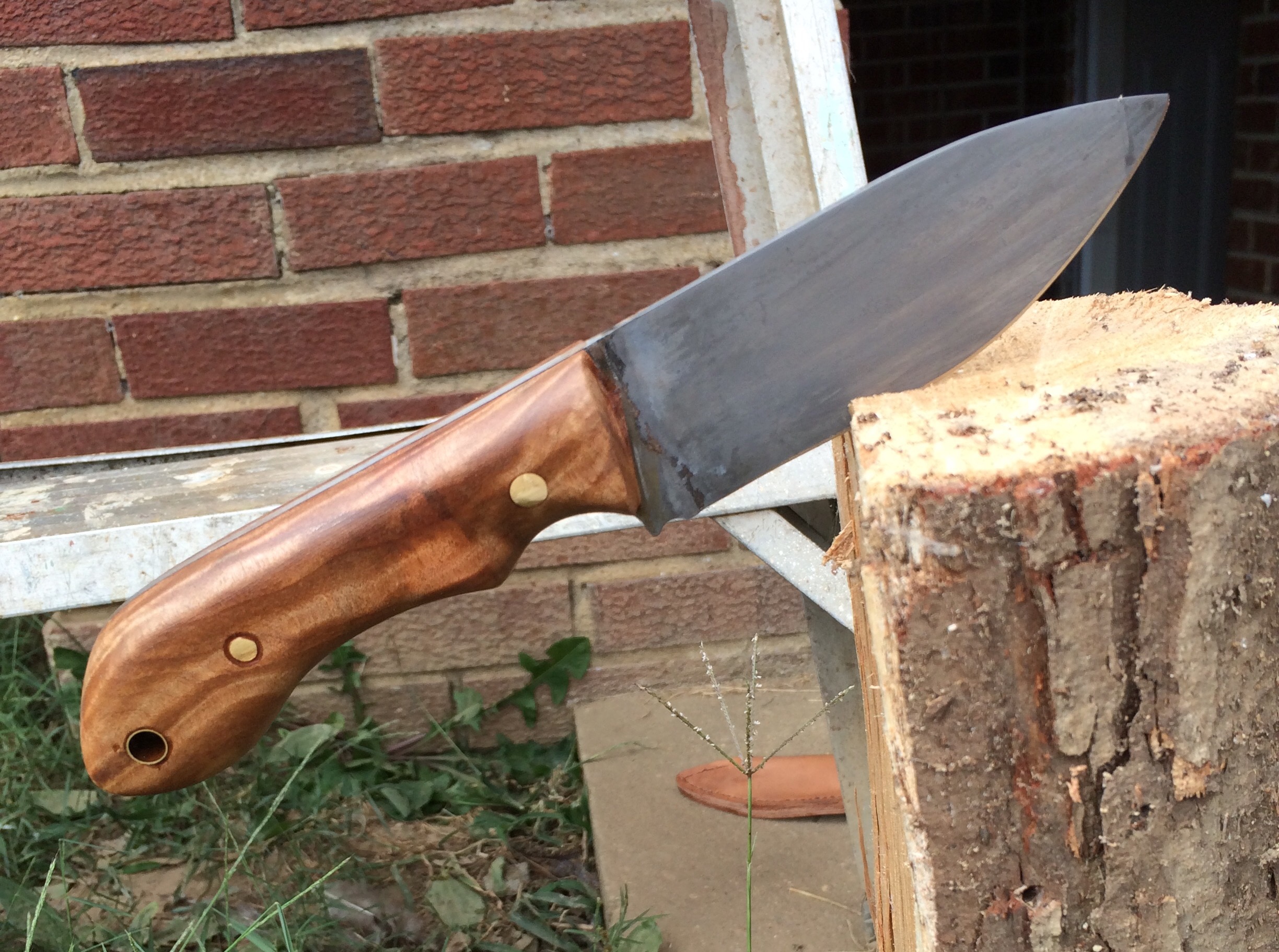
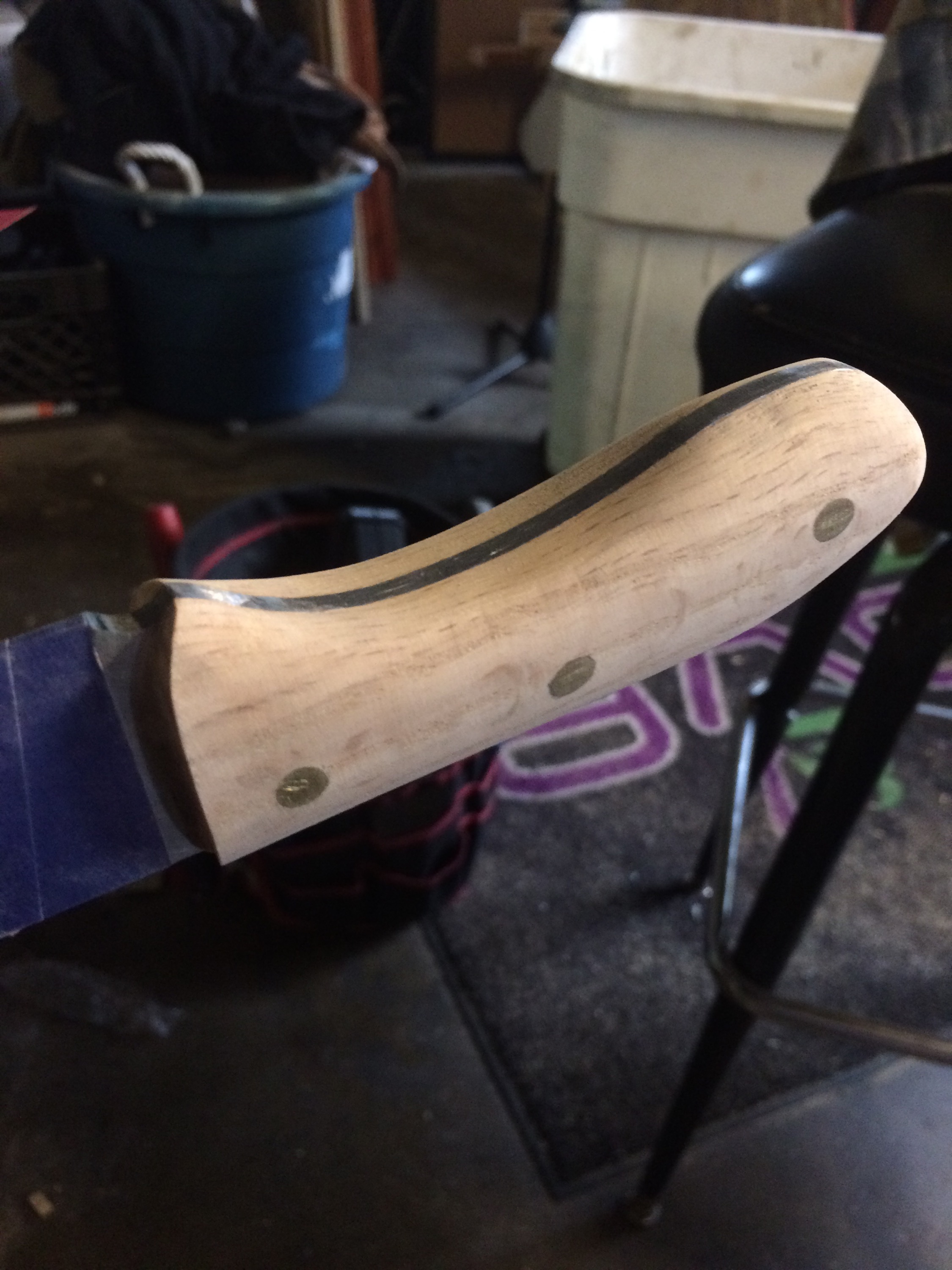
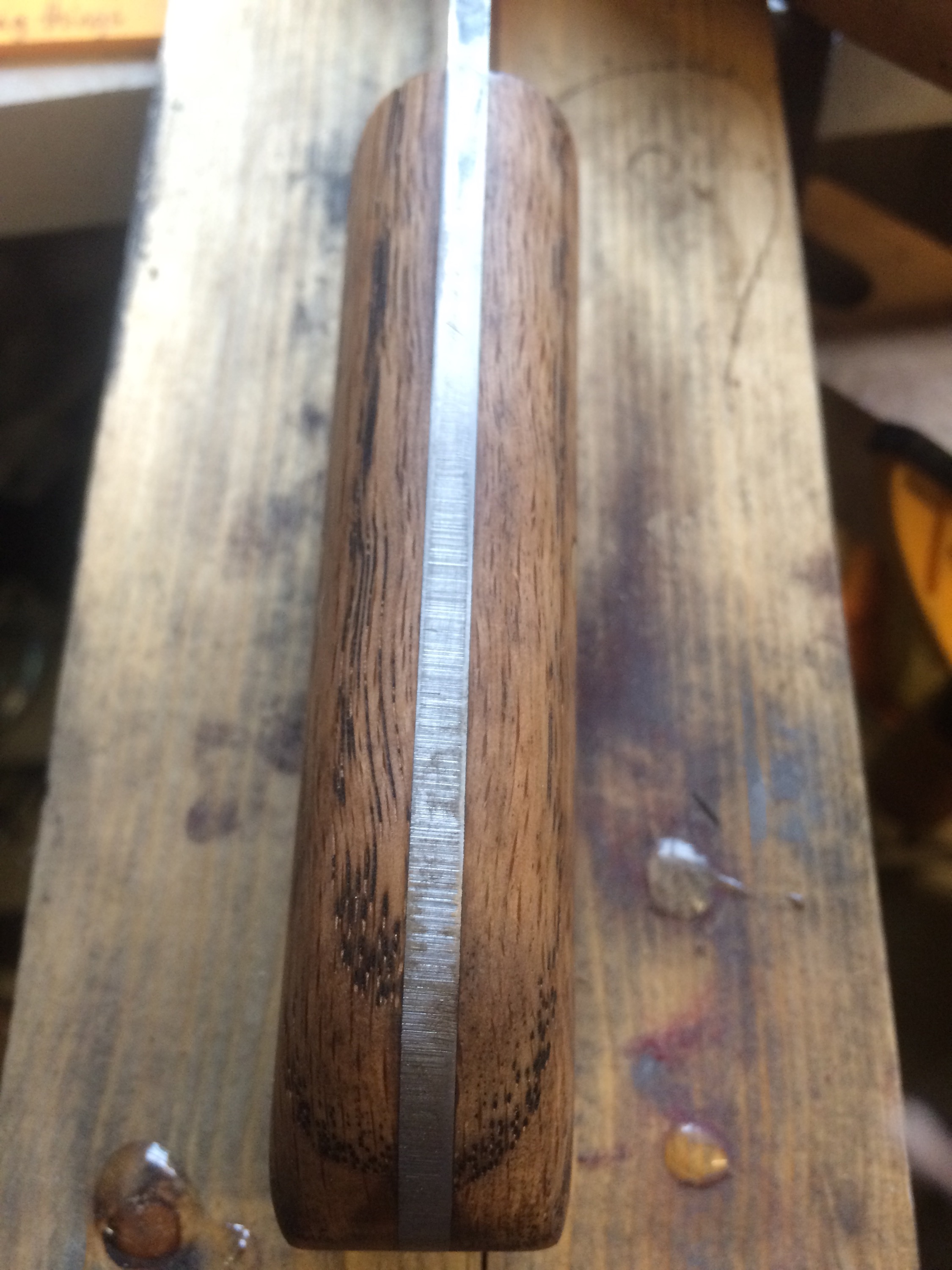
The handle contains a piece of bookmatched Texas Mesquite.  It comes from a cousin of mine near Big Springs, milled on his property.  The bolster is made from a pair of lady jeans that belonged to my girlfriend- vintage Levi’s 501’s, something strong and deeply feminine.  Your knife is stout and sturdy; strong enough to baton firewood but lithe enough to prepare dinner. 

I named her Masilda, which is an old Romany-Traveller name that means ‘battle-ready’.  And while I am no authority on anything, your knife does contain a few truths and values in which I strongly believe.  Having a knife named battle-ready is no empty moniker and I have consolidated a trifecta of practices and that you may find useful in navigating a complicated world.  When you use your knife I hope that you think of them:

-Speak your truth.  The media says that we are in the post-truth era, an age of alternative facts, and other dressed-up horseshit designed to keep you from critically analyzing what’s going on around you.   The reality is that the truth always matters, and always will.  Make sure you know your own truths- the things you know to be right and good about yourself and how you see yourself in the world.  Clothe yourself in them.  Should you ever feel lost you’ll know exactly where they are- they will help you find your bearings.

-You can always make more money, but you can’t make more time.  Time is the currency of our terminal human experience.  While making a living is necessary, be aware of how much of your time you sell to a job that only cares about profit margins and what they can squeeze out of you.  If you ever have any doubts about what you should be doing with the time you have been given, refer to the above bullet point.  You’ll know what to do and you’ll be able to hold yourself in esteem while doing it.

Be kind.  It’s sounds cliche, like something written on a shoddy mass-market pressboard wall decoration in the Housewares Section of Target, but do your best to be kind.  It’s the connective fiber of our collective human experience during our brief time on this lovely little world.  If you can, you will find that the world opens up to you a bit easier, and is perhaps a bit richer and more vibrant.  There may be situations you need to tell someone to eat a big bag of shit.  Only do so out of kindness.

Wishing you many happy years with the Masilda.

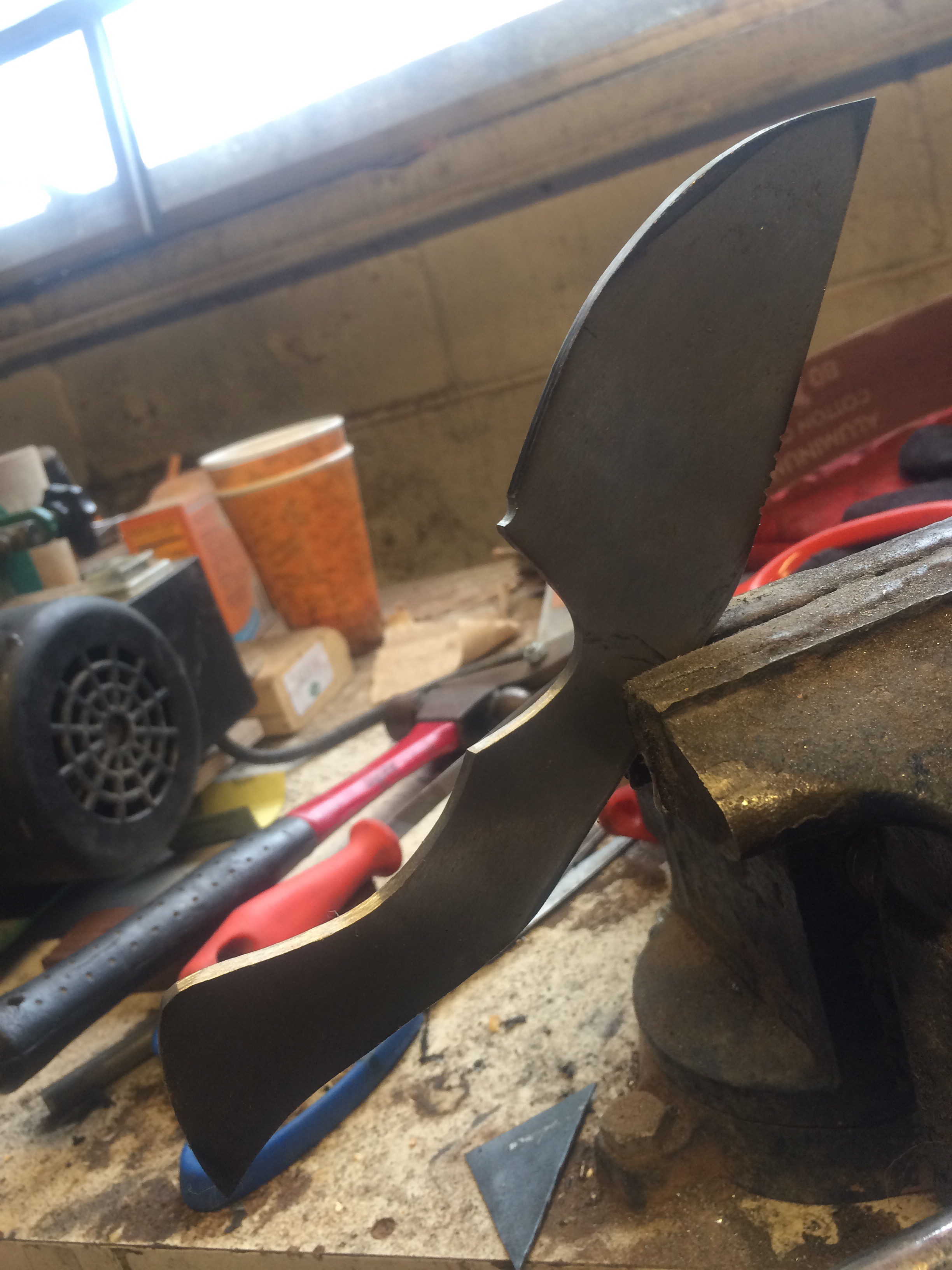
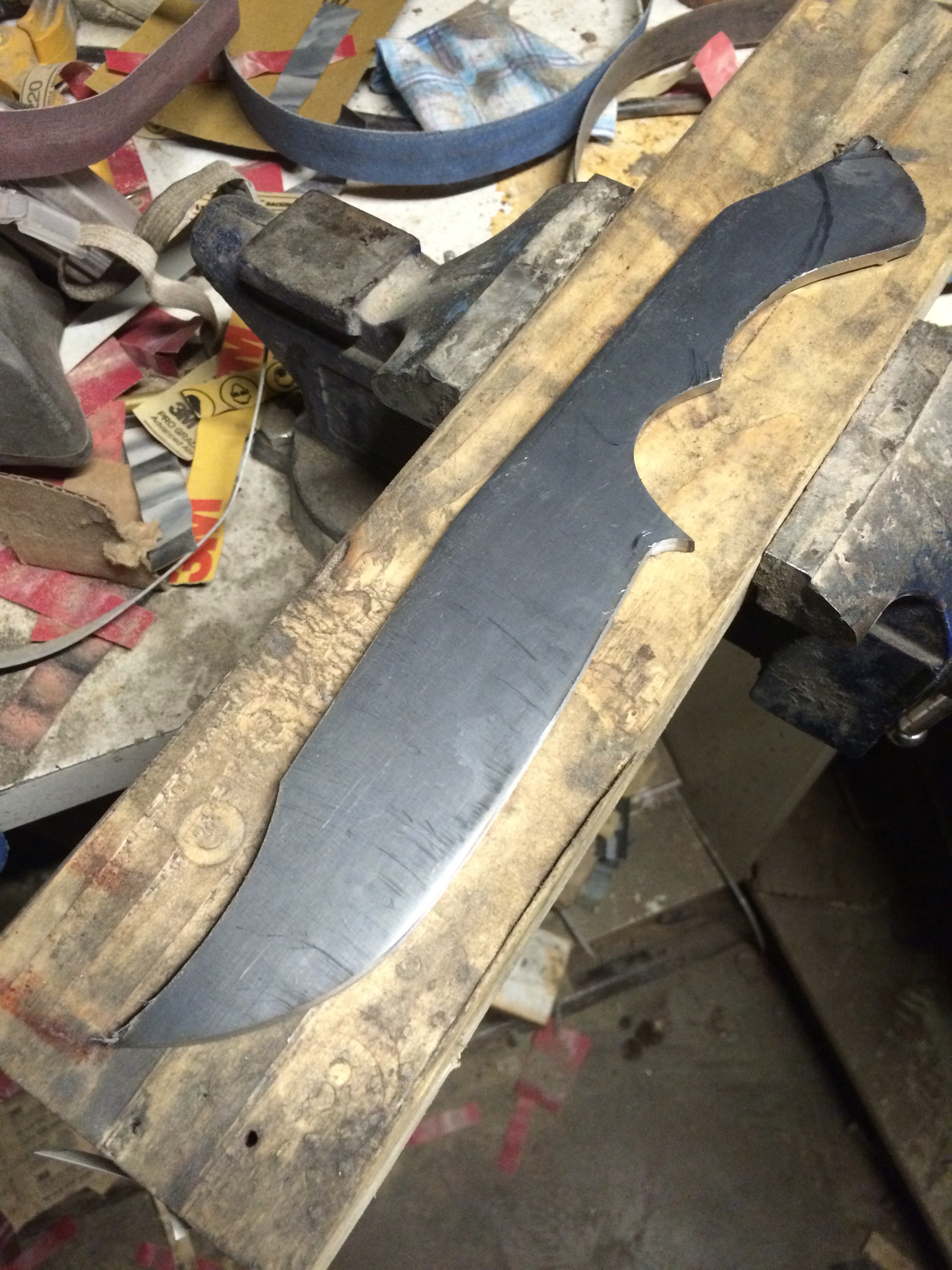
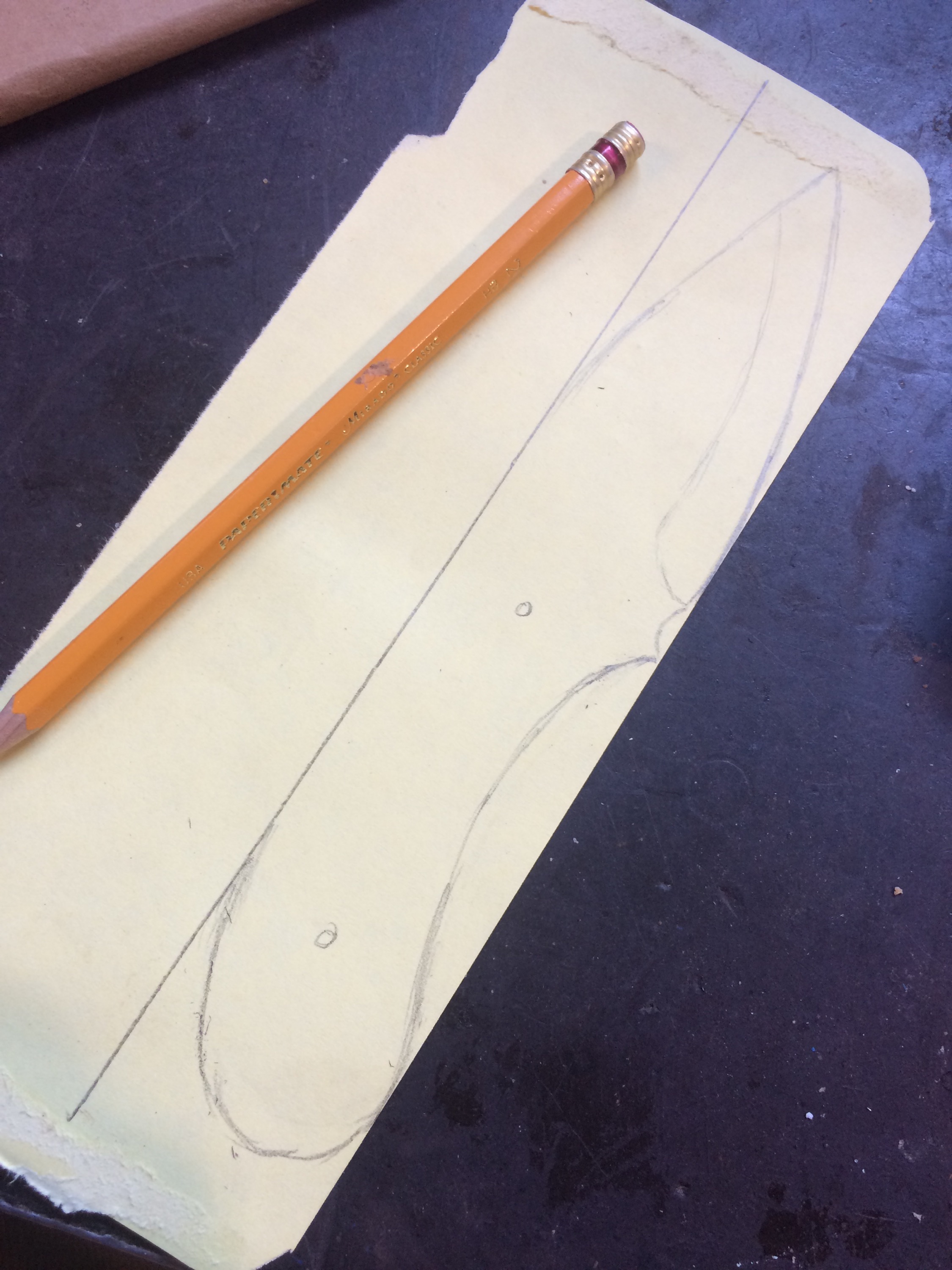
The Masilda started with a drawing, a drop point style:
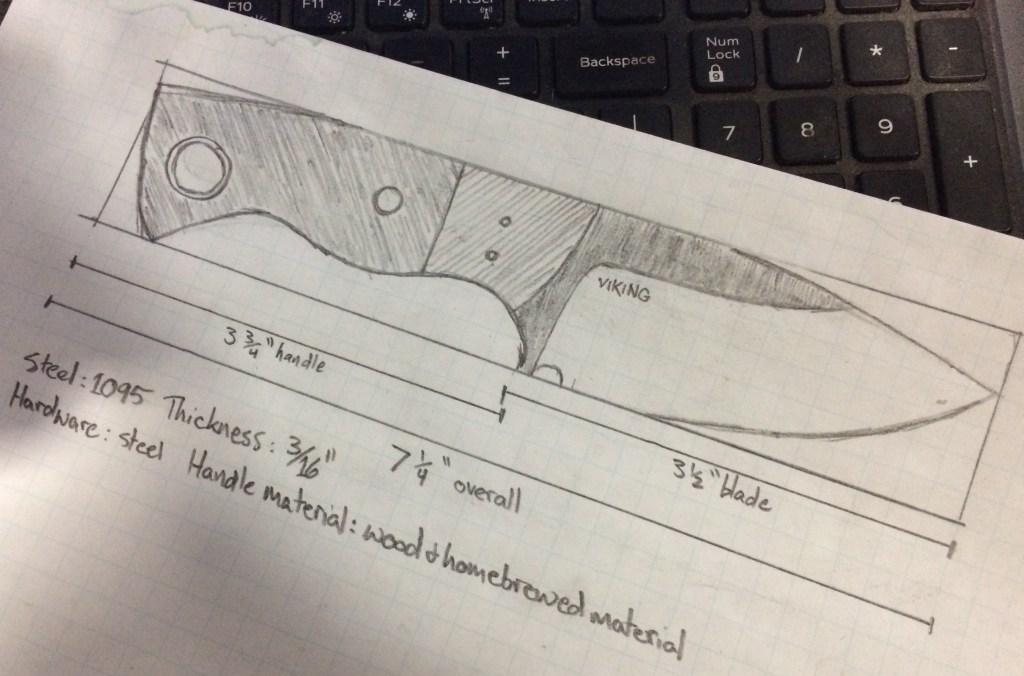
I had a bigger piece of steel than I thought, so the actual knife is a bit longer than the drawing:
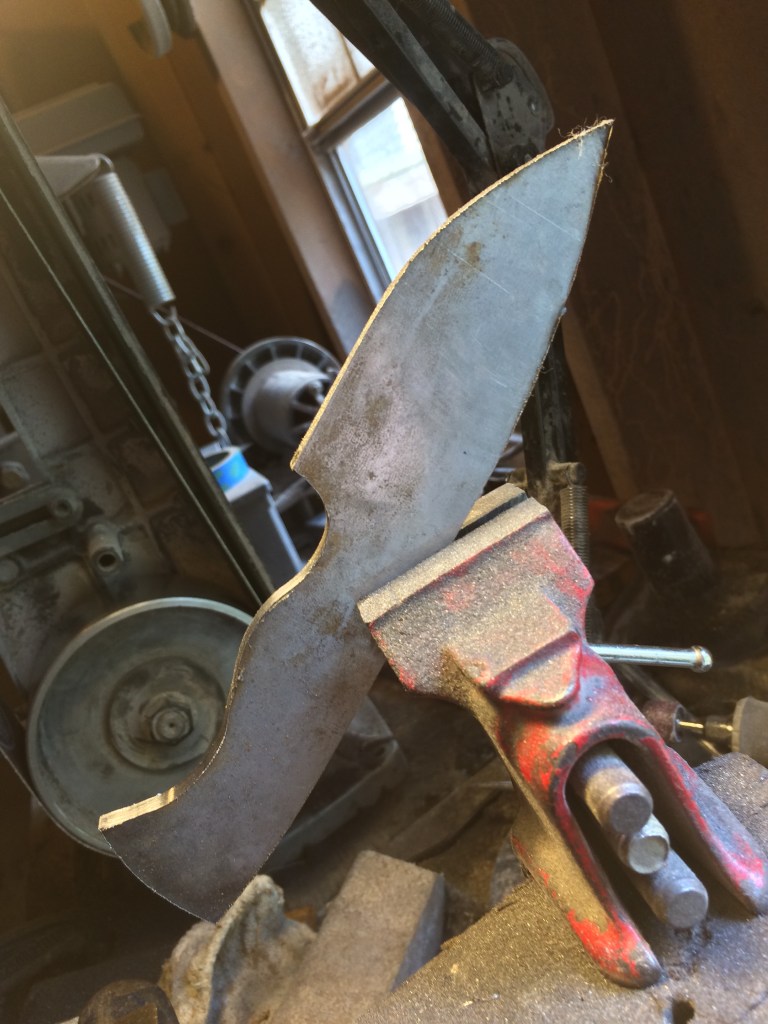
Jimping- to prevent slipping when choking up on the blade:

Rough grinds:
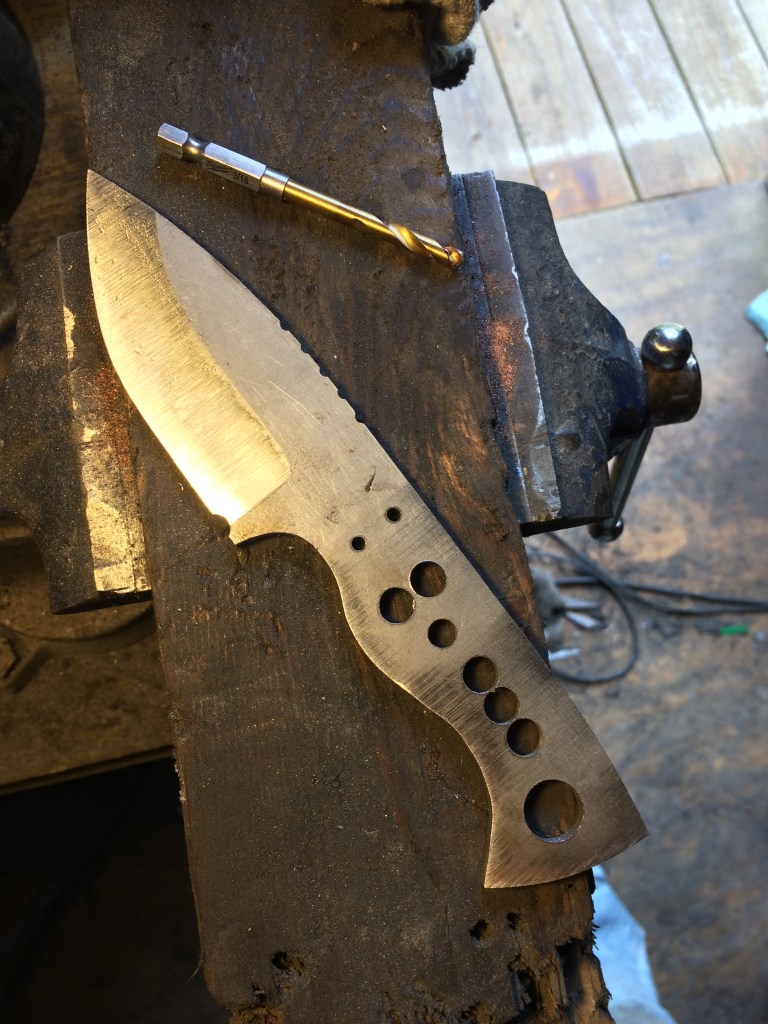
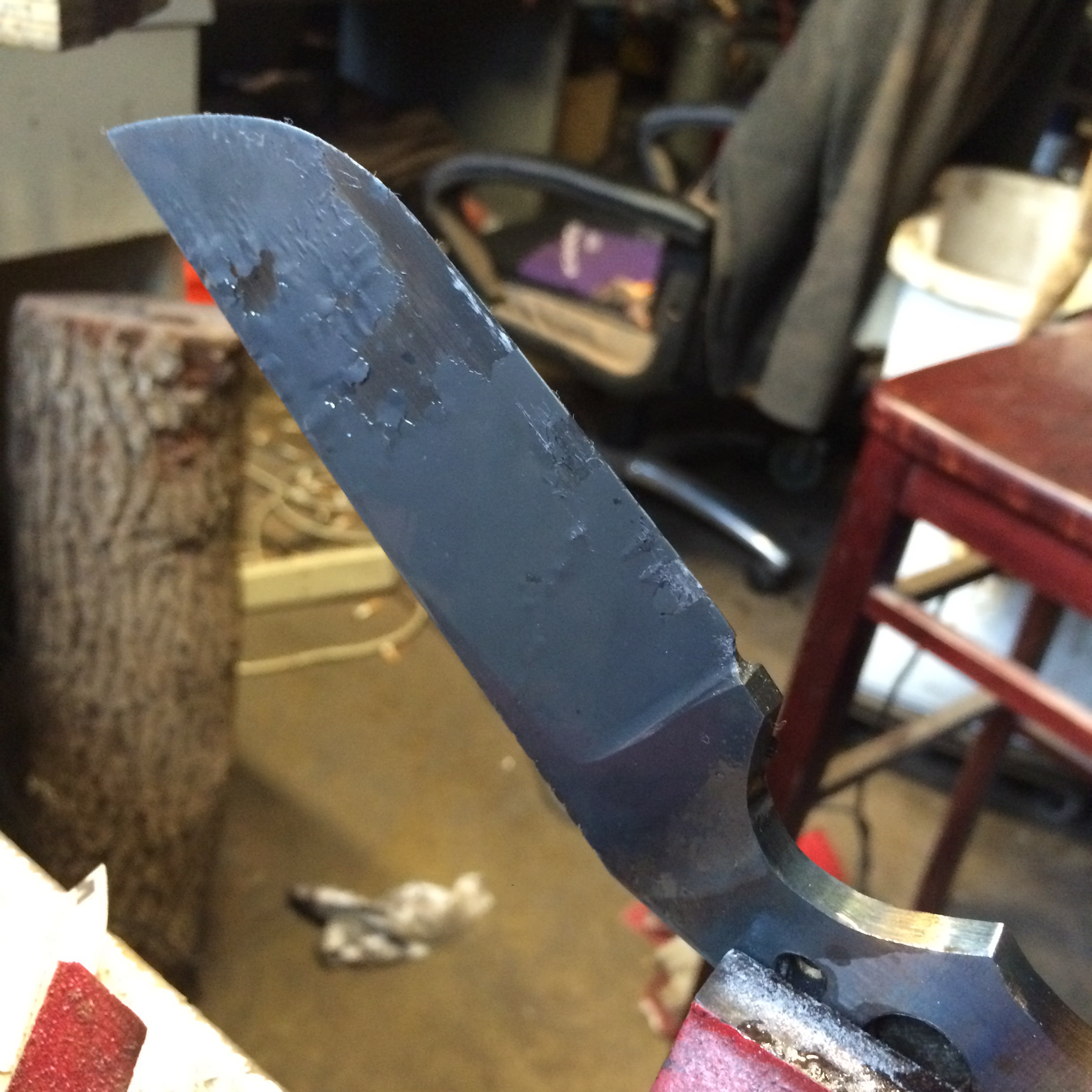
Wet-sanding out the machine marks:

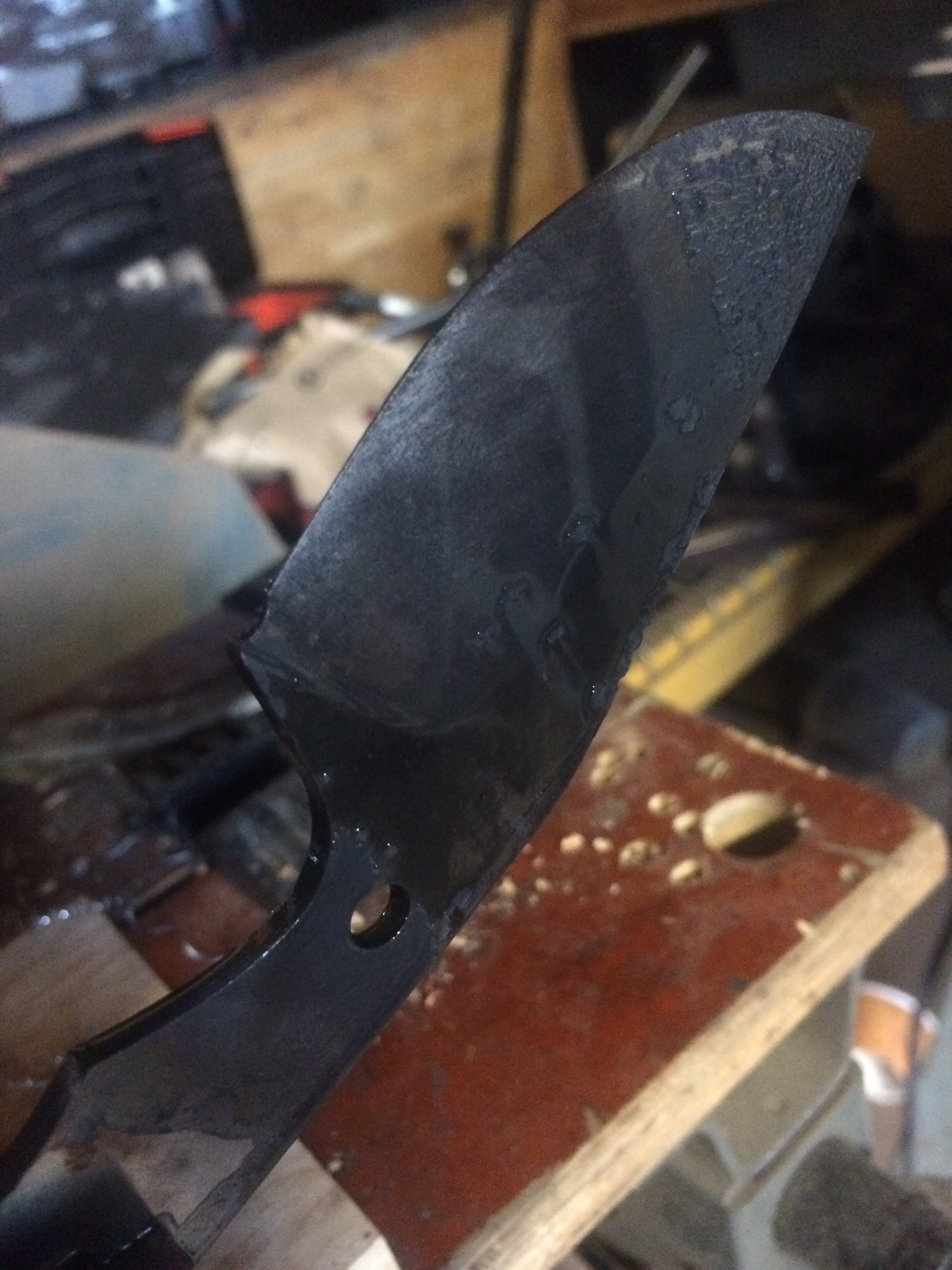
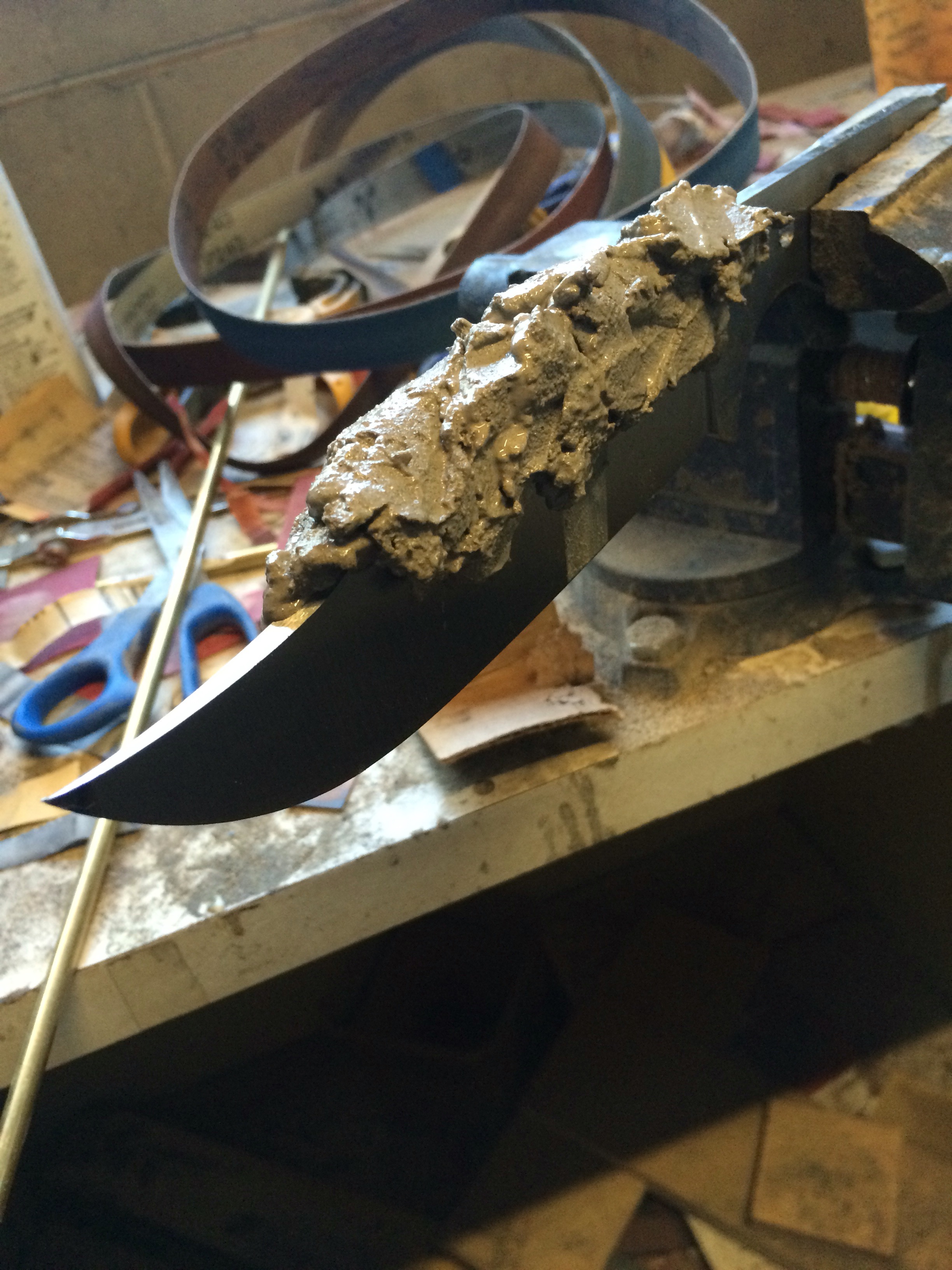
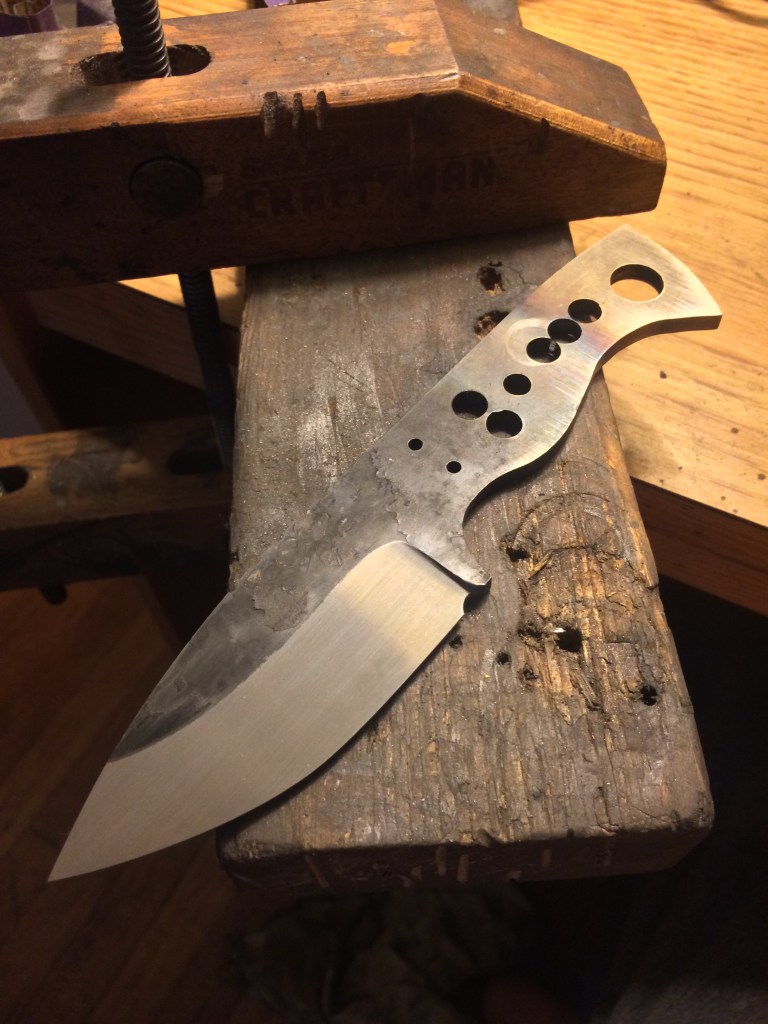
The hardening process:

After quench:

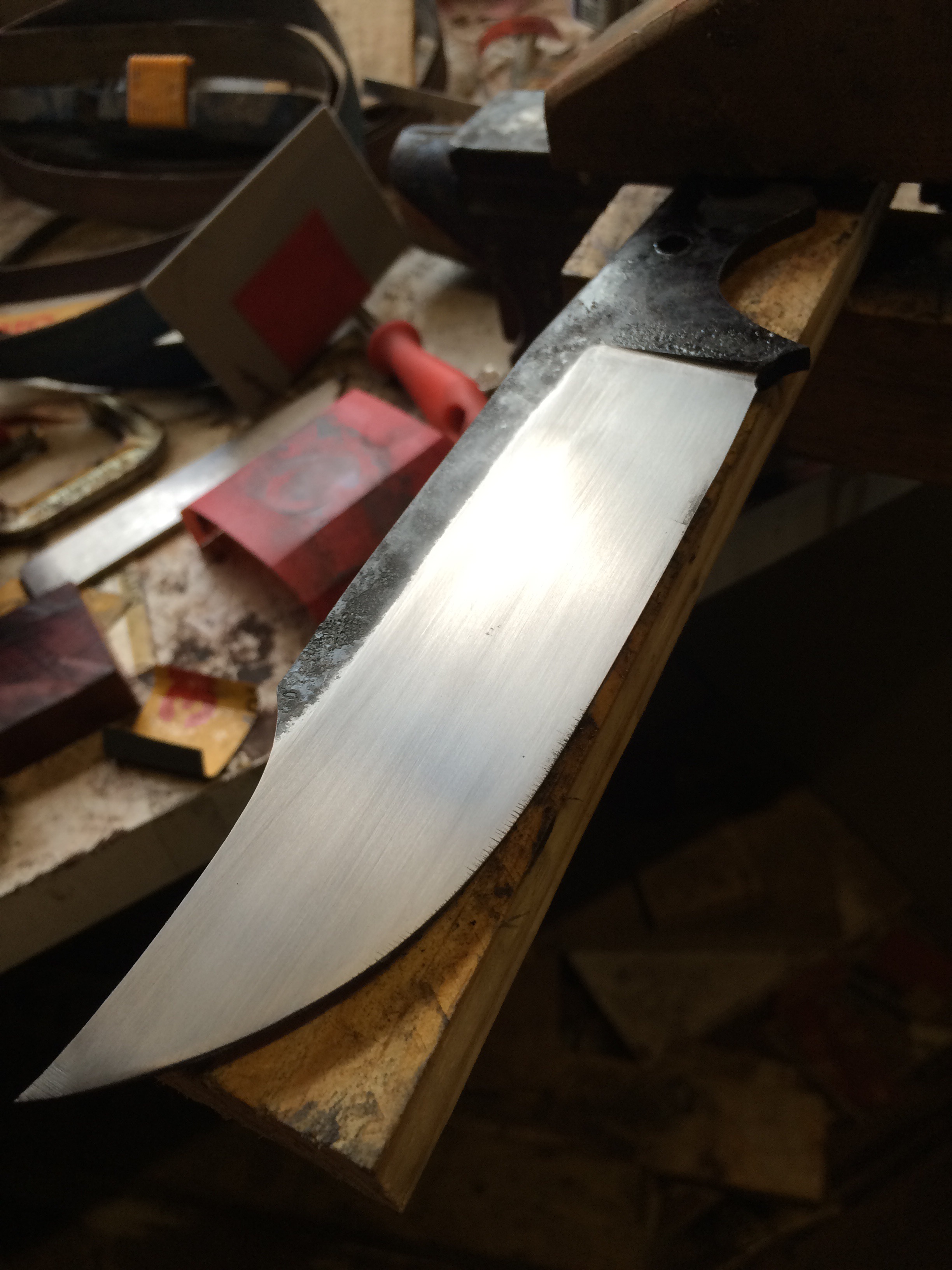
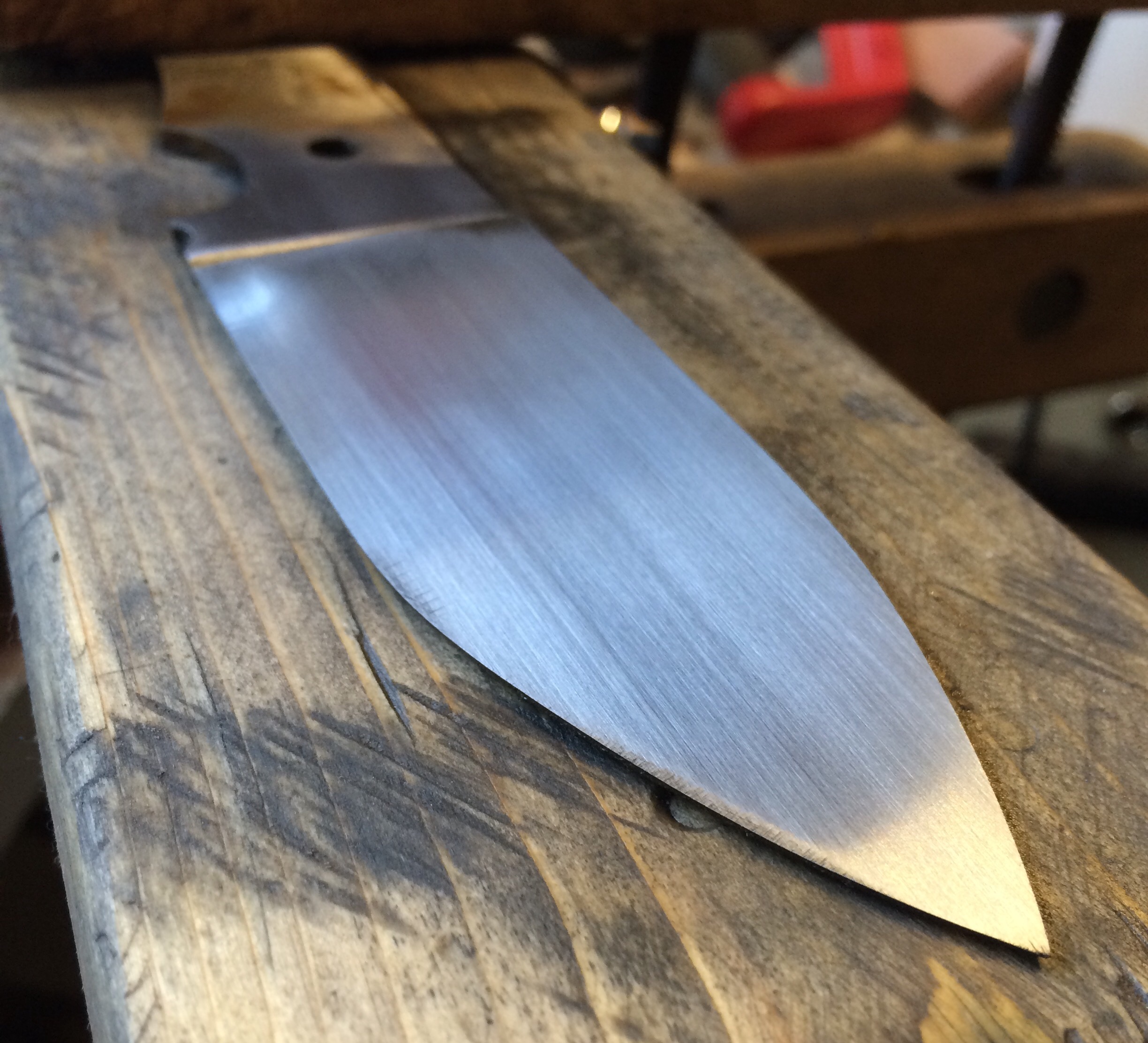
After tempering, a satin finish:
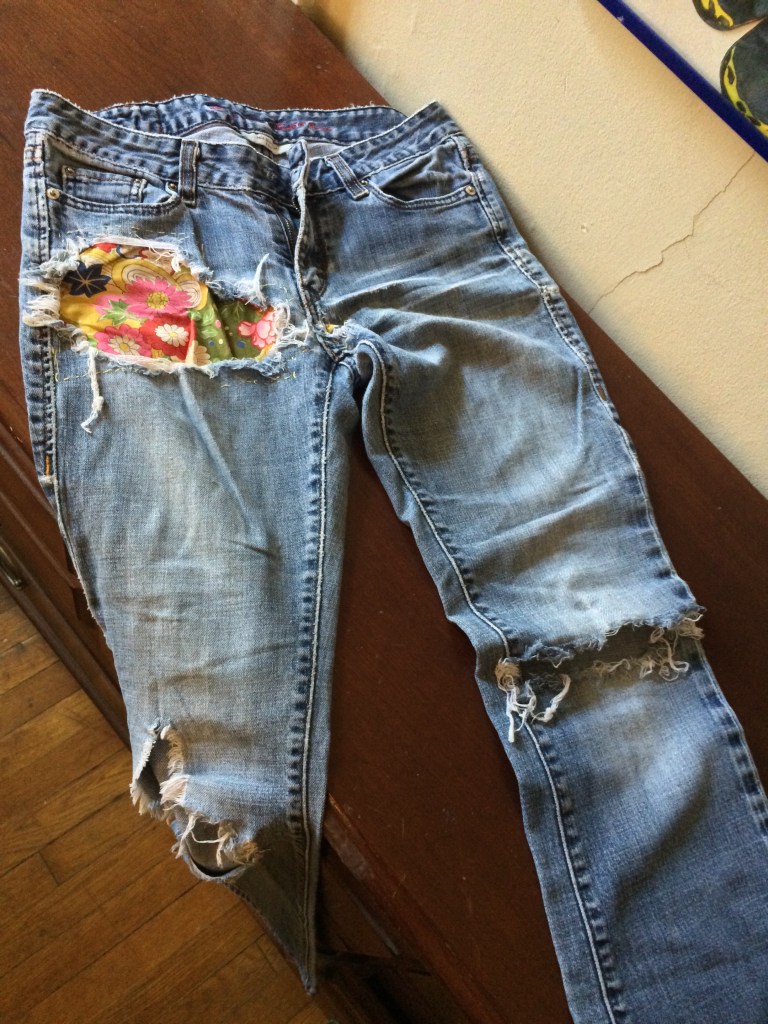
A pair of vintage lady jeans from my partner, deeply-loved and well-worn:
img_9238masildablog2

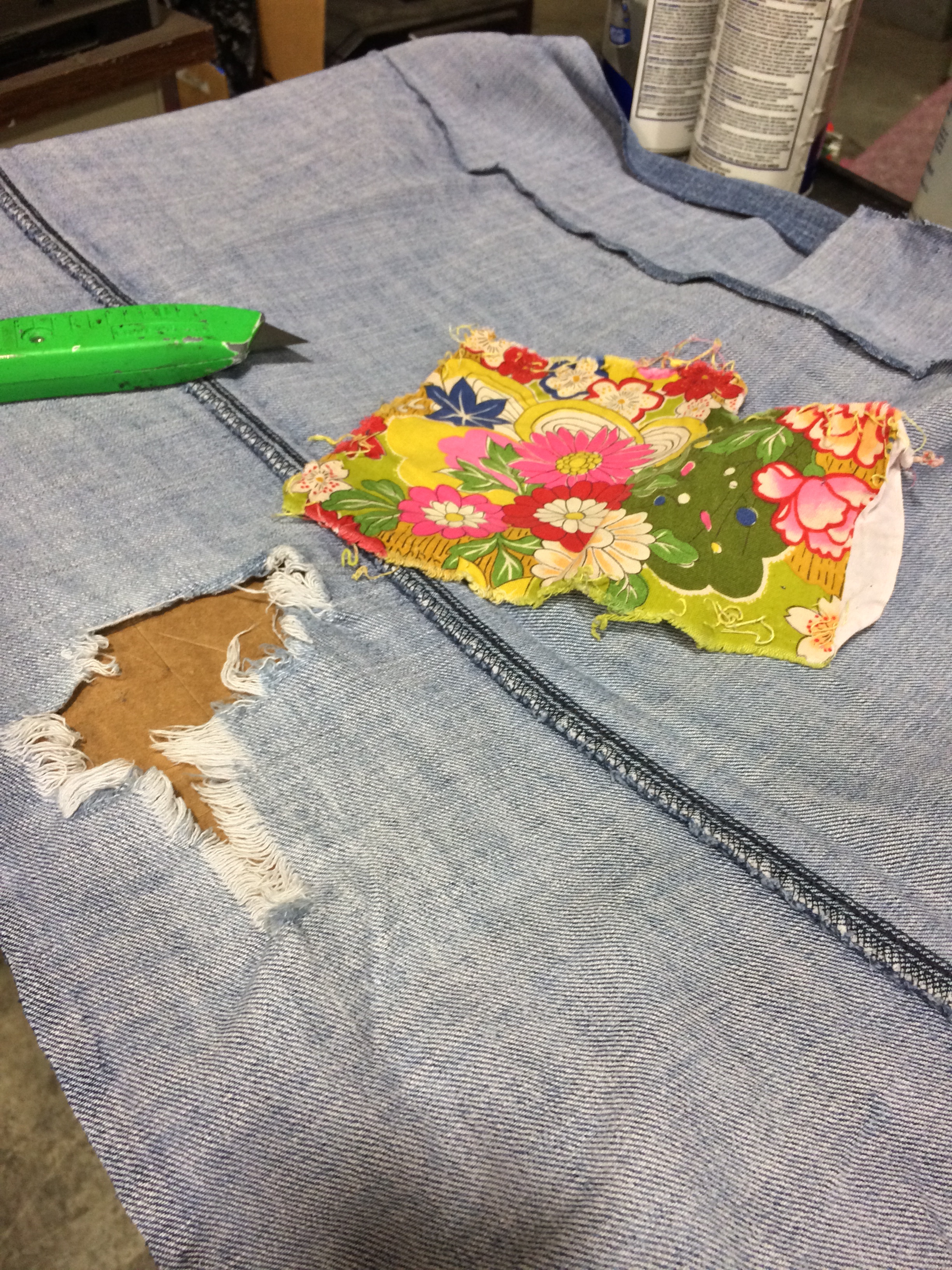
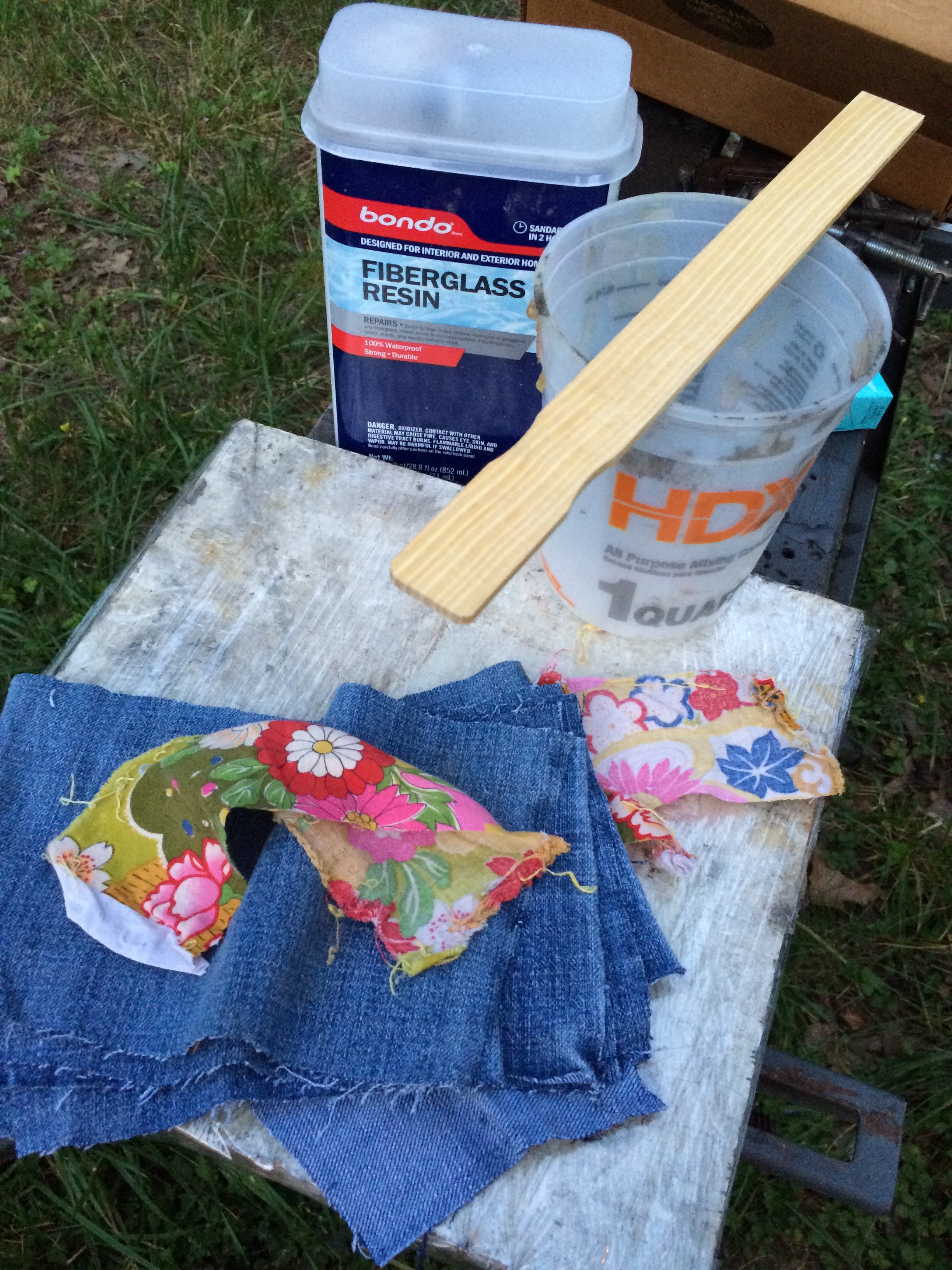
Fiberglass resin will be layered between pieces of denim, like a lasagna.  The pathc will go in as well:
blog1

Now smash the whole thing together:

blog2

The raw material:

blog3

Cut and drilled in, with the blade profile traced in so that i know where everything is:

blog4

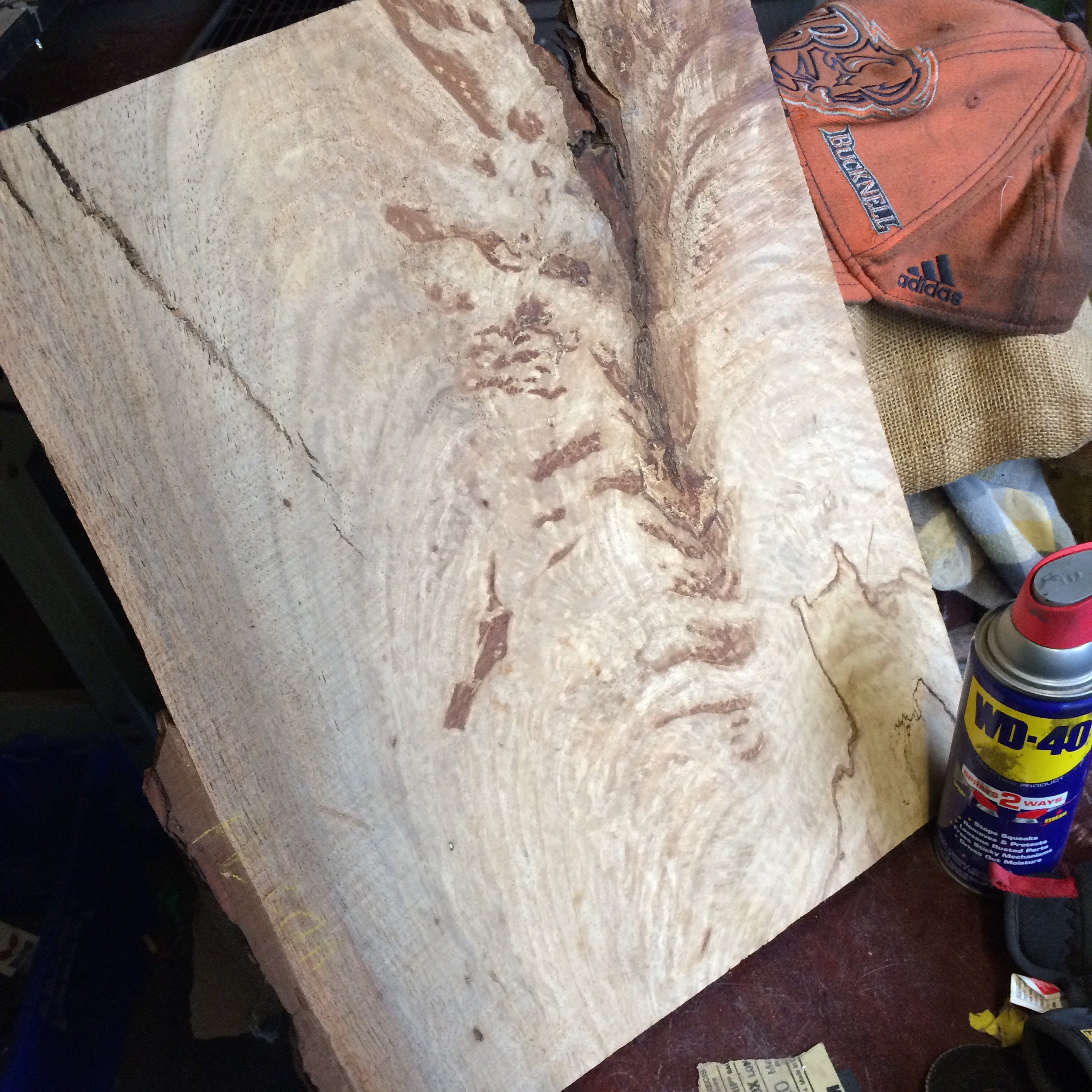
Texas Mesquite:

img_7566

It smells really good:

blog5

Computer board blank rescued from a dumpster.  It’s just a thin piece of fiberglass board:

img_8132

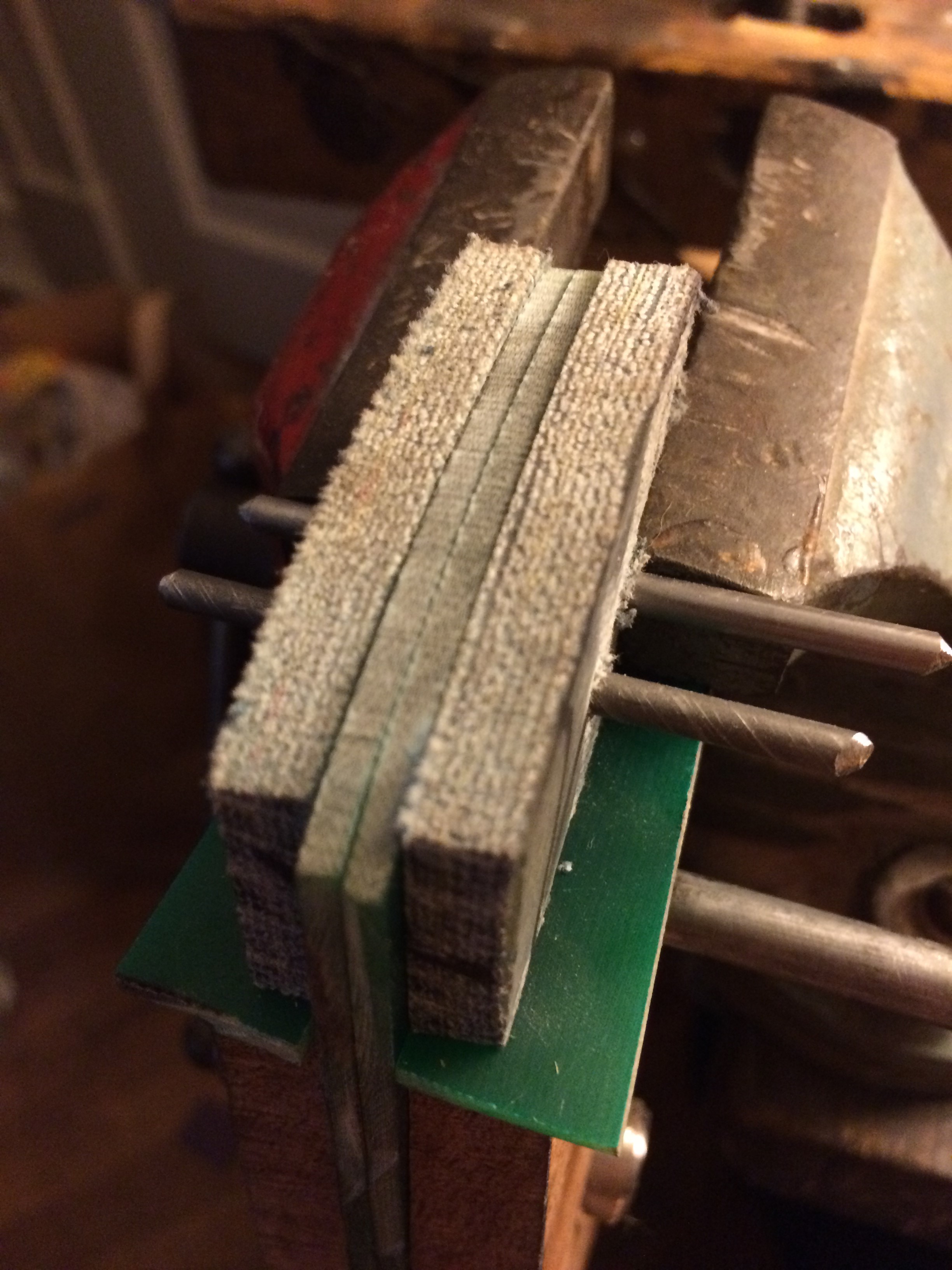
Denim and computer board at 60 grit:

blog6

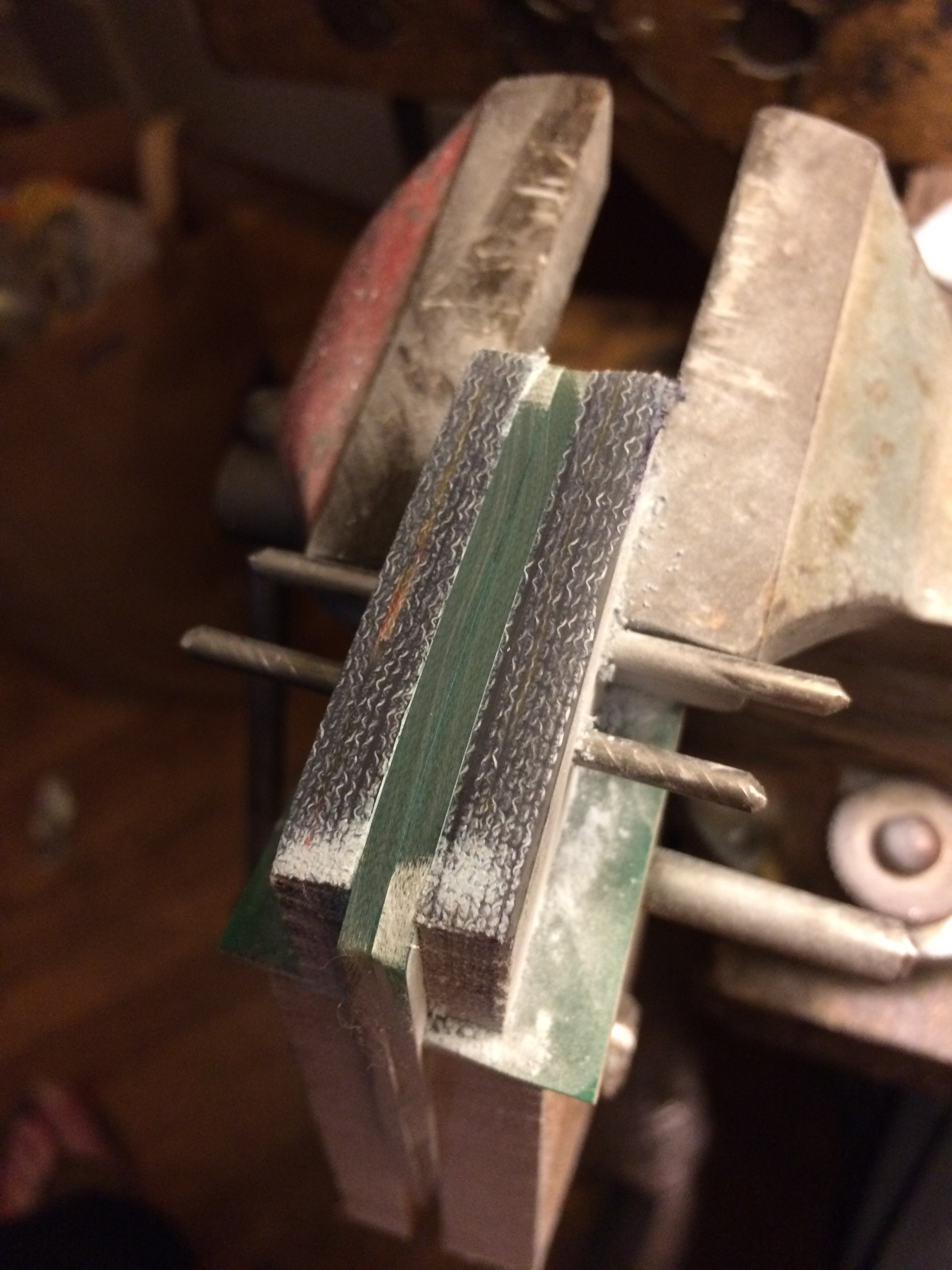
At 800:

blog7

All ready for glue up:

blog8

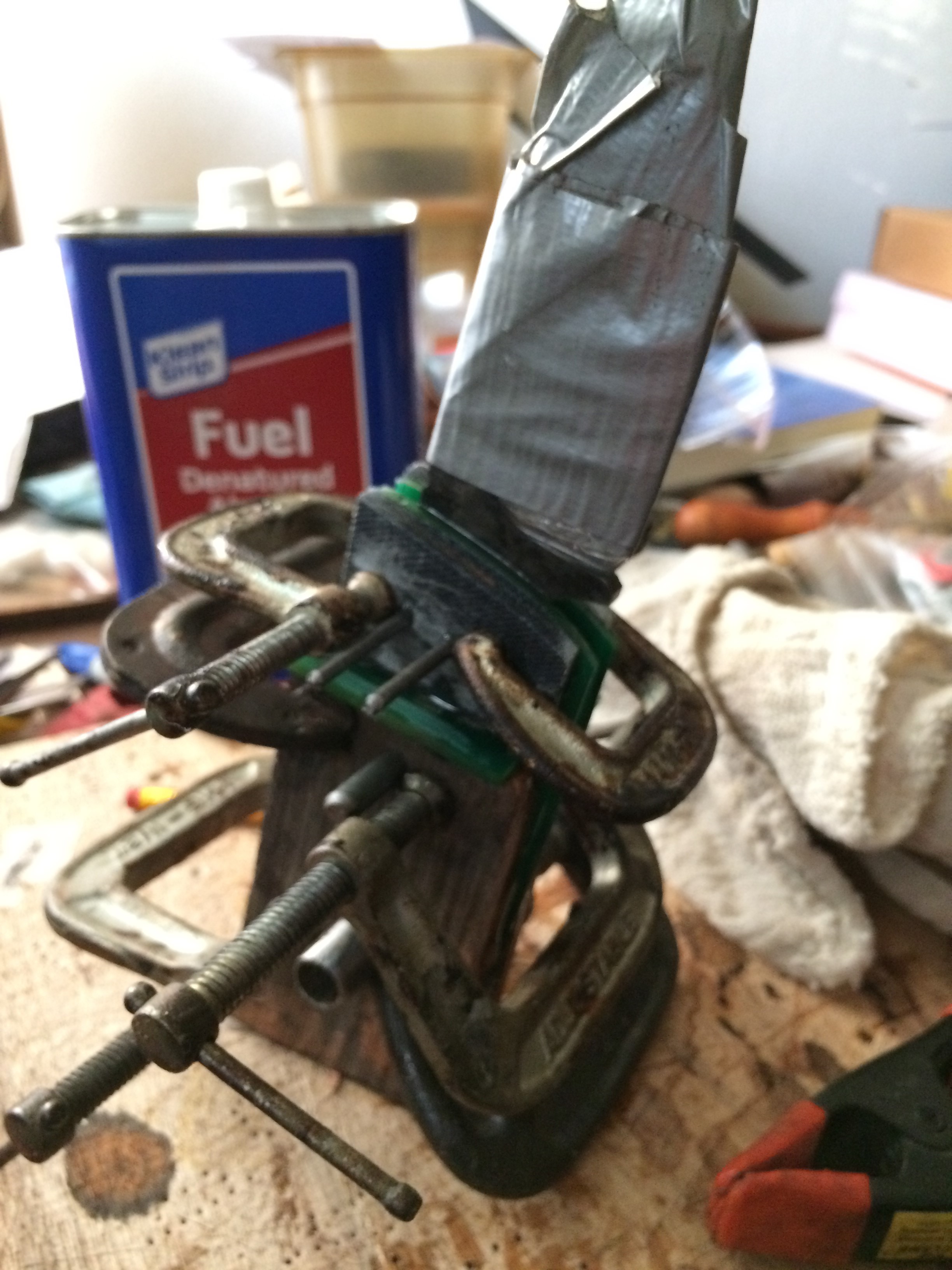
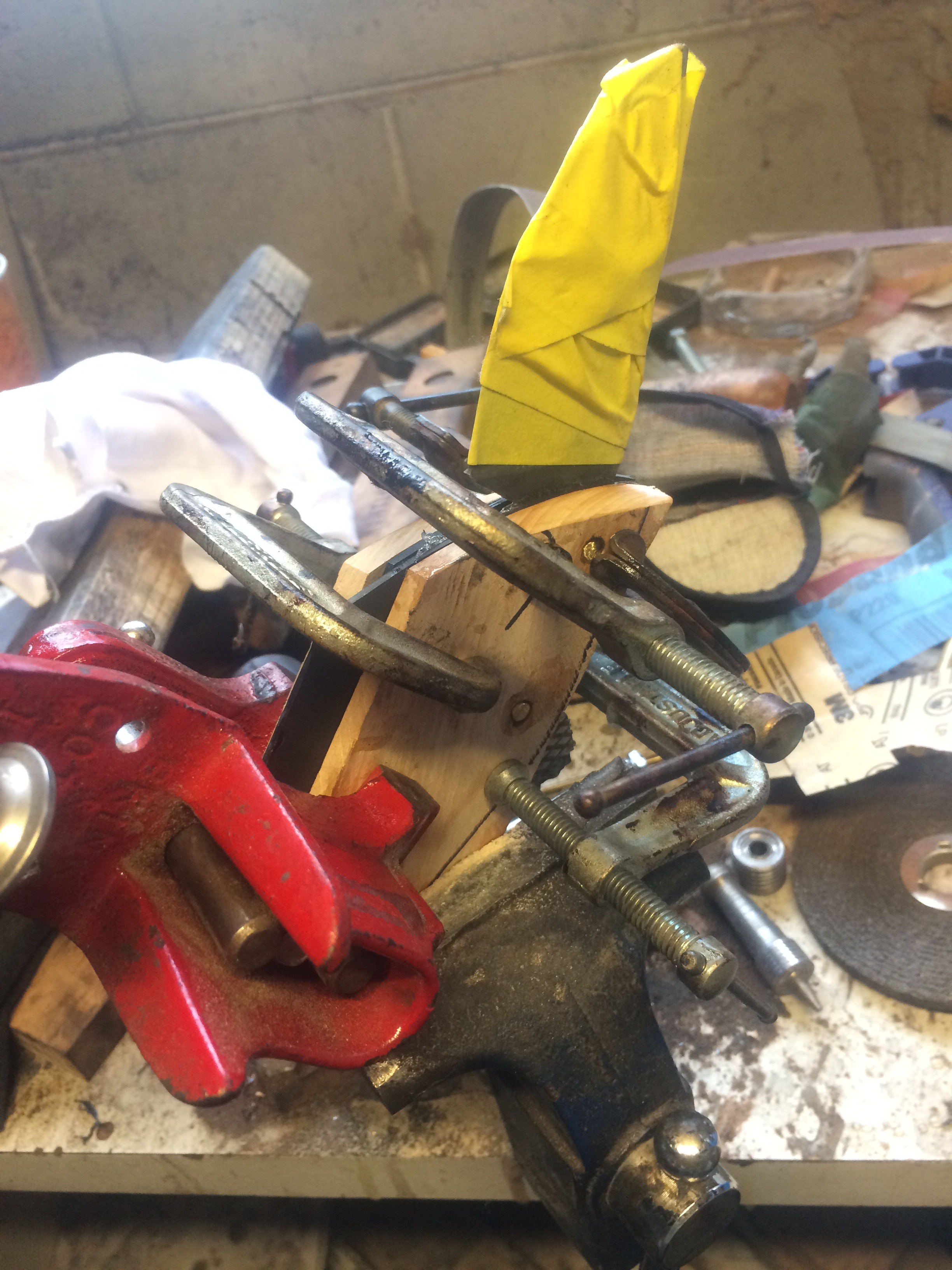
Glued and clamped

blog9

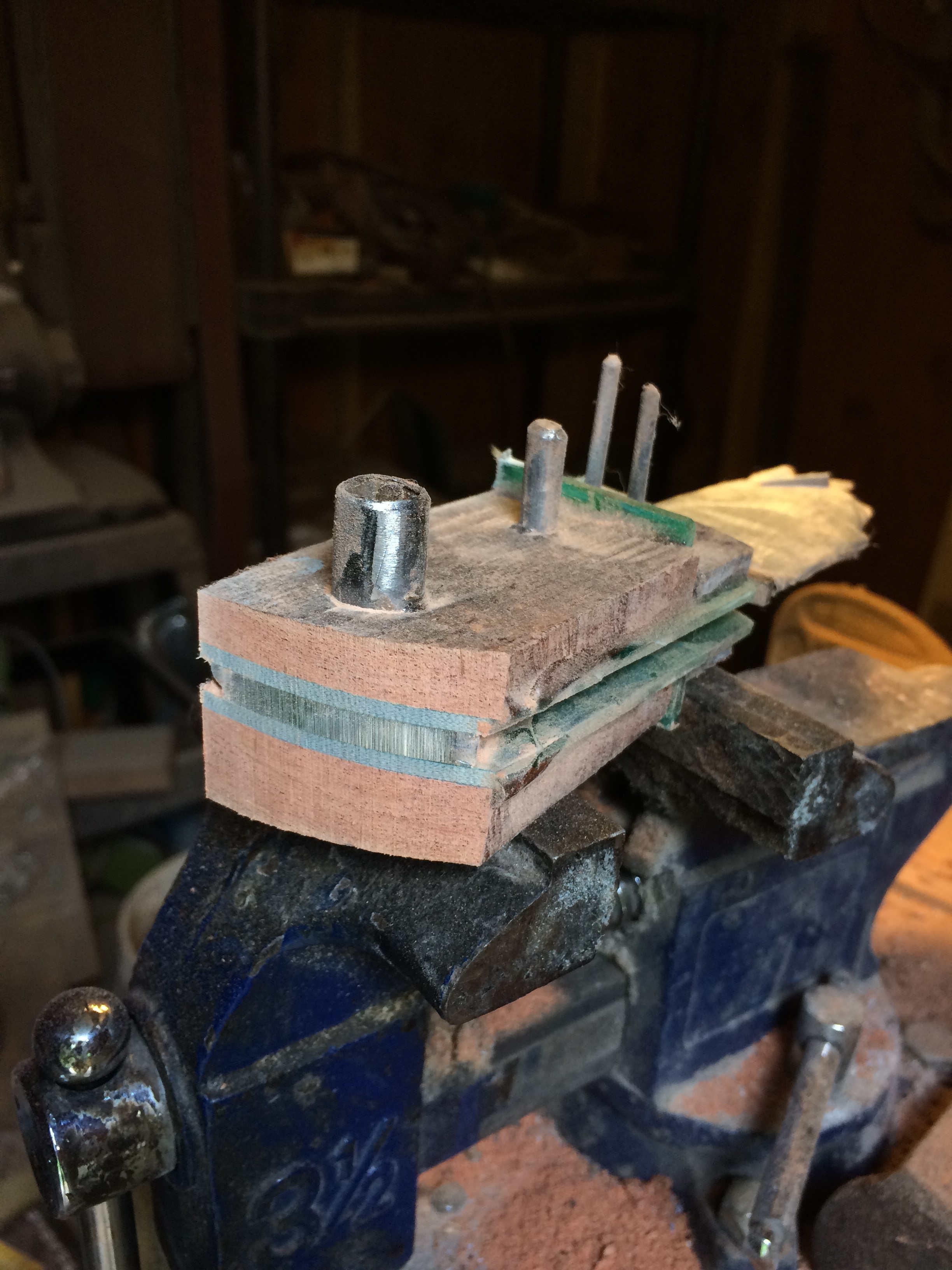
Shaping up:

blog10

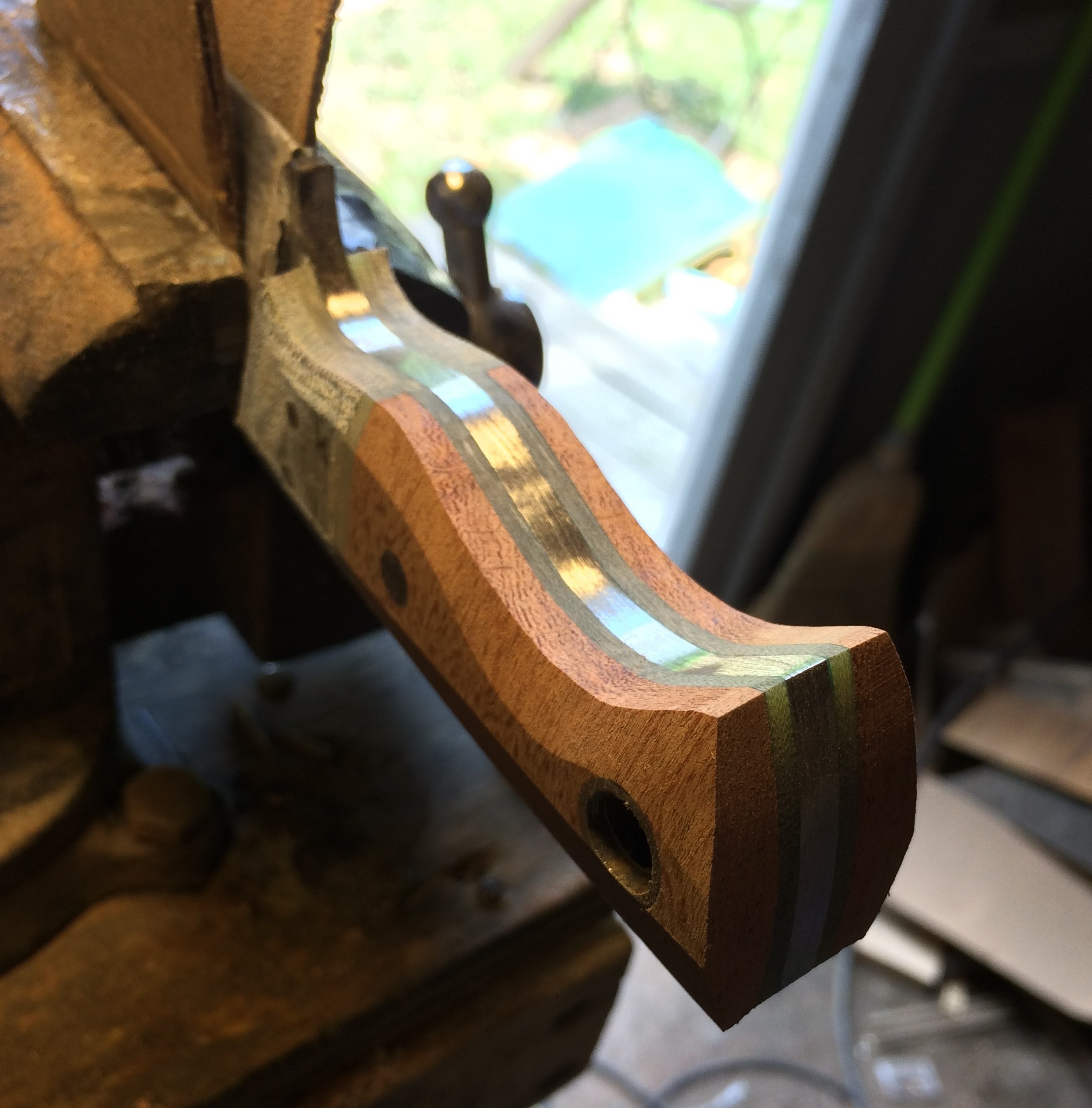
From here, all the sanding is done by hand:
blog11

The higher the grit you go, the more pronounced the grain and fiber:

blog12

The Masilda:

masilda1

masilda2

masilda3

masilda4

Instructions for Care:

 Your knife is made of high carbon steel, which means it will take a keen edge, hold it a good while, and will be easy to sharpen.  It will stain and patina and tell the stories of the places you’ve been.  Be sure to keep your knife clean and oiled when not in use.  Should you find any unpleasant surface oxidization you can remove it easily with a lightly oiled bit of 0000 steel wool, or a coarse rag with a bit vinegar on it.  She is built to be used, so don’t be shy about getting her dirty.

Knifemaking: finding your roots and the Treethrower

‘In their highest boughs the world rustles, their roots rest in infinity; but they do not lose themselves there, they struggle with all the force of their lives for one thing only: to fulfill themselves according to their own laws, to build up their own form, to represent themselves. Nothing is holier, nothing is more exemplary than a beautiful, strong tree.’

Hermann Hesse, Bäume. Betrachtungen und Gedichte

I have an old friend and his name is Joe.  Joe is a fascinating guy.  We went to music school together.  Joe is a killer rock musician, a badass chef, and is also really good at climbing trees.

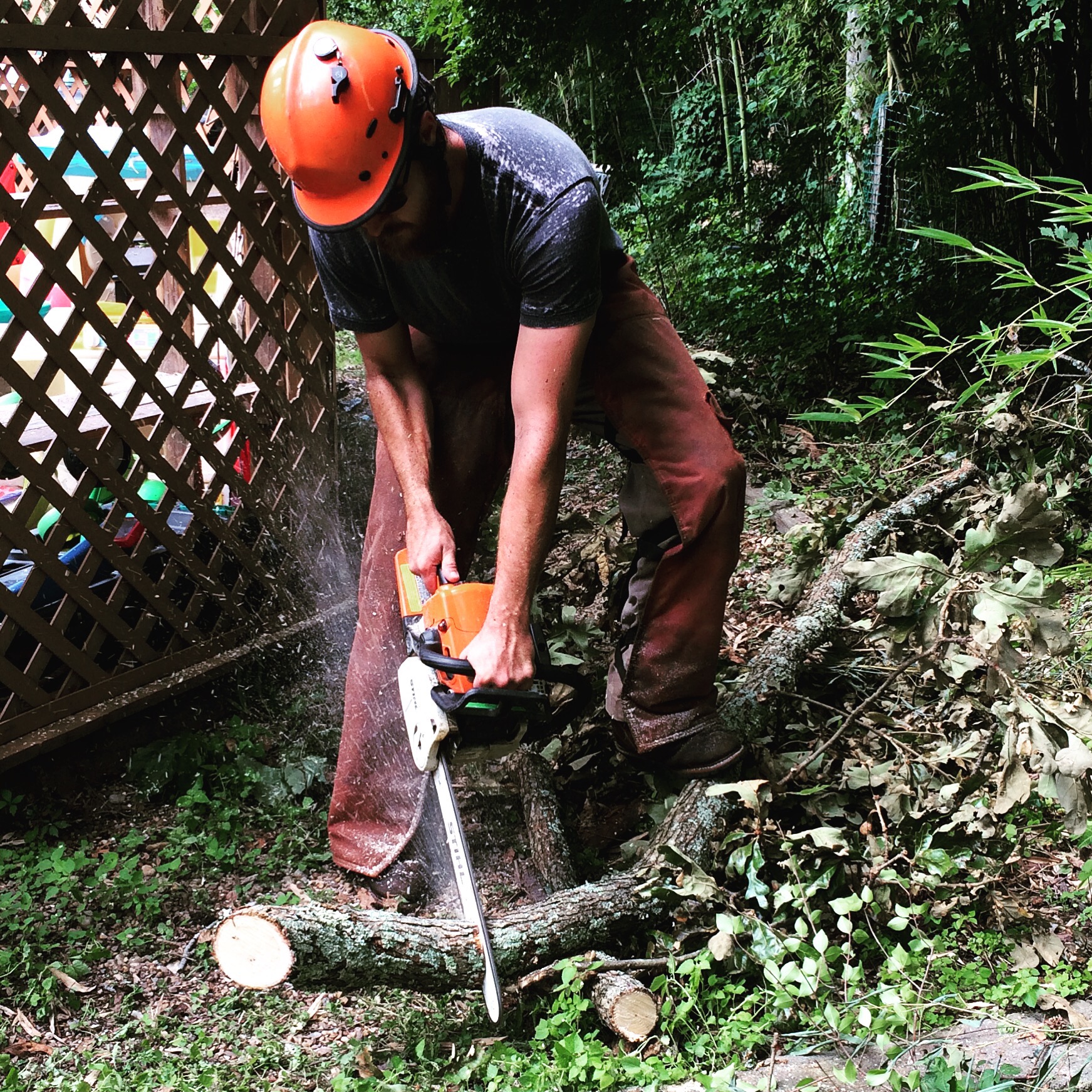
This is Joe:

12646998_10102981413934626_3333592218995759607_n

Joe does tree work full time at the moment.  On weekends and his off days he does side work for friends.  Sometimes he calls me to give him a hand.  Sometimes the money is good and sometimes it is not but it’s refreshing work to do and it’s nice to be along for the ride.  His clients are always happy with his work.

The work I did with Joe consisted of removing dead or sick branches and limbs, and removing branches or limbs in order to open up a client’s yard to sun.  Any part of the tree extruding over a client’s house was also removed, by way of a block and tackle pulley system rigged to the tree so the branch could be slowly and safely lowered to the ground.  All of this was done with regard for the tree, with chainsaw cuts executed in such a fashion so that limbs could healthily grow back.  Deadwood was removed and cut flush at the trunk.

There was a quiet and zen process to a lot of this.  It all started with laying all of our tools out.  Joe would put on his rigging gear and I would fuel up and oil the chainsaws.  He would then set a climb line high in the tree and start to ascend, lugging a chainsaw, some handsaws and some tools.  The zen in this work comes from ritual.  All ropes and lines are kept coiled and tidy.  All brush is cut, cleared and neatly piled as soon as it comes down from the tree.  If you are using a chainsaw then you are wearing kevlar chaps and the chainsaw stops as soon as you are through cutting and before you move to the next cut.  If you are using the chainsaw in a tree then you have set at least three independent safety points, in case you accidentally cut your support line.  These little rituals and protocols help to remove some of the thinking from the process.  It creates a sort of space to be present with yourself and really feel what you are doing.  In this space you can start to feel a grounding and calm in the process.  It also allows you to really focus on what you are doing and helps to keep you safe.  All these things gently coerce you into slowing down and this is a good thing.  Tree work is pretty dangerous after all.

This space that has been created allows more mental real estate for when things get a bit hairy.  There was a the time when a line came loose and giant log cut from a tree fell and put a giant hole in the client’s deck.  Or the ‘how the fuck are we going to get all of this done?’ moments.  Or it’s rainy or icy and you feel extra unsafe.

It’s really refreshing to feel this because it’s a microcosm of life I forget to feel at times.  In this season of life, for myself and many of those close to me, sometimes you forget to ground yourself and everything feels uncertain.  Life changes quickly, living gets more expensive, and what worked yesterday doesn’t necessarily work today.  Focus wanes, a feeling of security becomes a commodity, and one can find themselves feeling a bit daft and inadequate.  This can be remedied by practices and rituals.  Keeping your ropes and lines tidy, in a spiritual and emotional sense.  This can be a bit of a process, especially if you come from a place where roots were shallow and conditional on things outside of yourself.

This is the lesson of the Treethrower.  I came to this idea while tossing massive logs we had cut down into a firewood pile.  It’s important to find roots in what you are doing.  When this doesn’t happen everything can feel daunting.  Often times these rooting things are right beneath your nose and, paradoxically, the last place we tend to look.  Finding them, even for a moment each day, can make a world of difference in your life.

It starts with a massive bar of 1/4″ 1095 spring steel.  My good friend and partner picked this up at a steel mill in North Carolina.

The angle of the blade on this design allows for much more leverage during large cutting chores.

I burned through about 8 cut off discs cutting this out:

Some half inch holes to remove weight.

Several hours later…

There is a lot of material to remove…

Full flat grind

Hand sanding before heat treatment

Into the forge:

Tempering…

This is a large piece of spalted pecan, sent to me by my wonderful cousin in Texas.

Up to 2000 grit

The Treethrower:  1095 spring steel, spalted Pecan handle scales, kydex spacers and steel hardware.

Thanks for the lessons, Joe.

Knifemaking: when things break down and the Skin Yer Dinner

“The place to improve the world is first in one’s own heart and head and hands and then work outward from there”

Robert M. Persig- Zen and the Art of Motorcycle Maintenance

One of the major lessons of life is that things are going to break down.  It doesn’t matter how well the schedule of maintenance is managed, no matter how well oiled and lubricated all the moving parts are, or how diligently things are inspected.

At some point or another things just aren’t going to work the way that they are supposed to and sometimes it takes more than just ourselves to get them repaired.

As I’ve gotten older I’m a little more mindful of this.  Sort of.  It’s been a bit of a process actually.  I do my best to not let my things go to shit.  Some of those things are easier for me to do than others but it’s definitely better than it has been in the past.  Part of this tendency to let things go to shit comes from living in a consumer society.  Things aren’t necessarily built to be repaired.  They are meant to be consumed and thrown away.   If it breaks, buy something newer and shinier and better.  Fixing things takes time and often it is very appealing to go and buy a new one rather than repair what you have as best you are able.  This notion goes for more than just our material possessions.
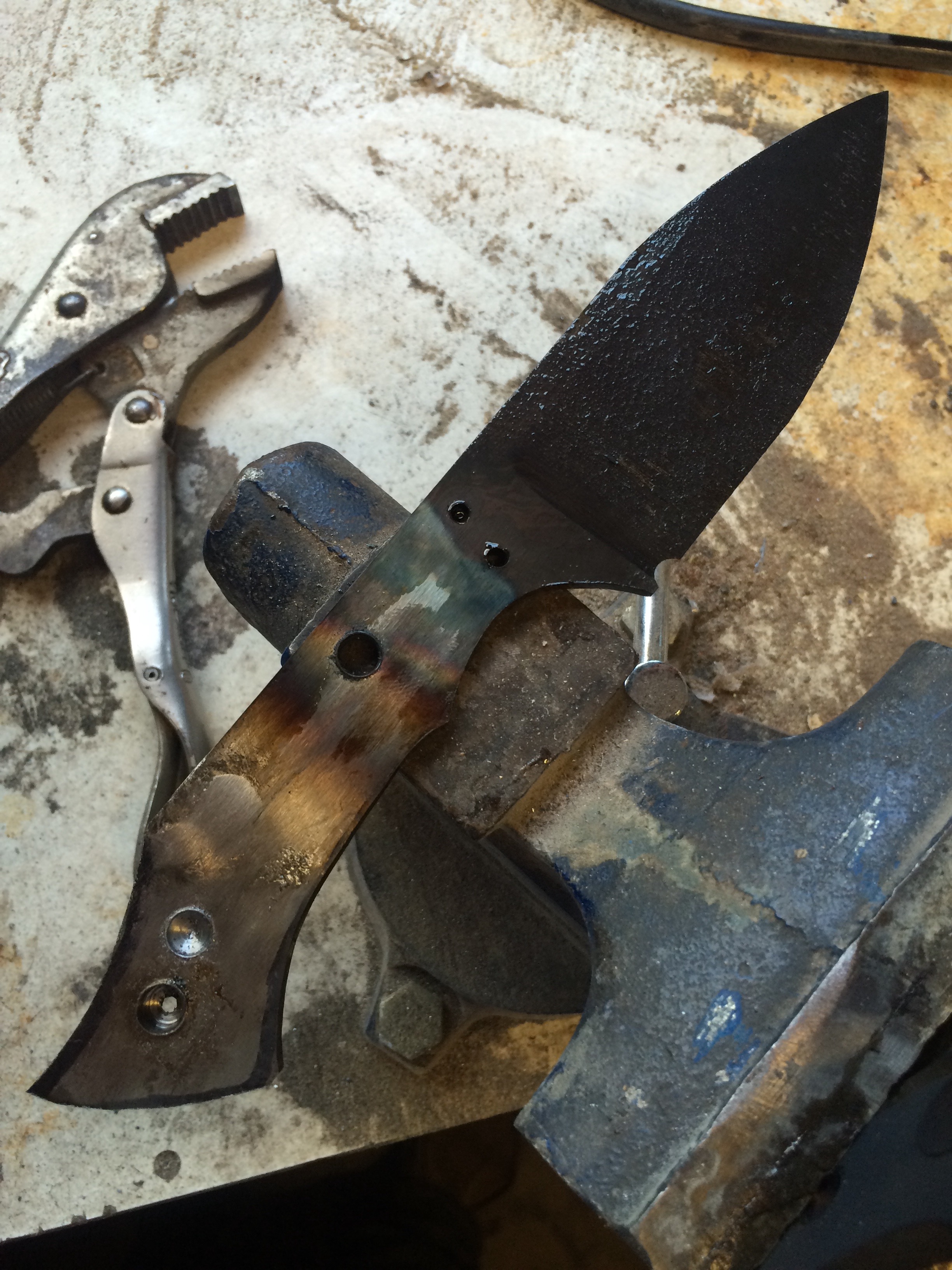
Sometimes I find myself having to repair things that I have let completely go to shit.  Sometimes it’s in my professional life, sometimes it’s in my relationships, sometimes it’s my truck.  It’s important to not beat yourself up (or anybody else) when something goes to shit, which it inevitably will.

My truck.  I like to drive mid to late ’90s Japanese midsize SUVs because they perform really well, are built on truck chassis, and are relatively easy to fix and find parts for.  Sometimes it’s a little stressful because I don’t always know what I am doing and turns into an exercise in not over-thinking.  It’s also an exercise in observing how you operate when things aren’t working as they should.  I did a brake job the other month.  I’ve never done my own brakes before but the idea of saving a couple hundred dollars sounded good.  The passenger side wheel took me two and a half hours- during which time I removed the entire brake caliper by mistake, and accidentally drained all of the brake fluid.  The driver side wheel took me 45 minutes.  After several attempts to bleed my brake lines of the air inside on my own, I had to take my truck to my mechanic who talks to me like I am ten years old (‘Son, why the hell did you disconnect the brake line?’).

In taking on these sorts of projects, I go through the entire spectrum of human emotion and always become more intimate with myself.  It’s important to trust yourself, and to let go of the fear that you will screw something up more than it already is.  To take that intention of helping something to do what it does and to manifest that into whatever you are working on.

The intimacy thing- it goes for more than knowing just yourself.  Sometimes I have help on these projects.  Sometimes I help those close to me on their things.  It’s good to have someone who can pick up on something you may have missed, who can help you laugh, and help ease your anxieties.  In these situations a lot of the masks come off and you can really get to know someone without pretense or pontification because there is a common goal.  It’s reassuring knowing that when something goes wrong you can help yourself, or help somebody else, or be helped.  The deeper lesson is that things will always break down, ourselves included, but they don’t have to stay that way.

This blade was a commission for a fourteen year-old boy, the son of a really wonderful friend of mine who is an HVAC technician, someone who in his professional life brings the broken and neglected into good working order.  The other week my girlfriend and I were working on her HVAC system which had gone out.  We put a new fan motor in and were a bit hesitant on the wiring.  I called my friend, who came over and wired up the motor and rewired the thermostat on pretty short notice.  His son was with him and asked me for a knife… and also asked that it be called the Skin Yer Dinner…

I started with a piece of 1095 spring steel…

Hardened

A bit of Texas River Ash…

The Skin Yer Dinner:  Etched 1095 spring steel, Texas River ash handle, Kydex spacers, and brass hardware.  I also threw in a custom Kydex sheath…


IMG_3617

IMG_3614

Things break down and it’s a part of life…but so is figuring out how to get them working again.

Knifemaking: a little bit at a time and the Scout

“Ready or not
I hear a clock tock ticking away
Though I’d asked for those hands to stay in place”

Correatown- “Everything, All at Once”

I wake up most mornings and wonder how I am going to get everything done.  I think about all the things I need to do, the things I want to do, and feel a little bit of shame over the things I’ve been meaning to do but haven’t done yet.  There is this mental space where I run through my entire life- where I’m born, I live, and I die, all before I even get out of bed.

At the bottom of all of the mental chatter there is a gentle little voice that says to do it a little bit at a time.  It also says that there is plenty of time.  Sometimes it gets drowned out but I know it’s there if I listen for it.  This is what gets me going.

For the past ten or so years I’ve taken walks in the woods.  As things get busier I don’t get out there as often as I’d like.  It’s an exercise in not trying to do everything all at once.  You walk the woods a little bit at a time, and the notion of trying to do anything other than that feels rather asinine.  I try to approach the things I have to do in this fashion.  It doesn’t always work and I get frustrated a lot.  A lot.  Sometimes the feeling of there not being enough time screams at me so loudly that I have to go home and take a nap.  Most times I’m not able to do that, in which case I try to take it back to the forest.  In being with that feeling I find that there usually is enough time.  If not, I try to remember that I am human being and not a human doing.

Attempting to do everything all at once is a sort of self-defeating behavior.  This type of all-or-nothing thinking tends to overwhelm and makes the idea of quitting into a rather attractive proposition.  Buying into this thinking gets you regret and remorse, but only after it has robbed you of your precious moments and there literally isn’t enough time.

This is the lesson of the Scout.  To walk your forest one step at a time.  It’s easy to get pulled off your path.  There are a thousand things that demand our attention and can pull us off of our center.  We can’t always give what we love the attention and care we would like and sometimes it’s easier to give up.  Don’t give up.  Do it a little bit at a time and it will all get done.

I wanted to make something that reminded me of this little area where I like to walk:

IMG_3400.JPG

I started with O1 tool steel and bushcraft style design with a handle that winds like the stream above.  I usually use 1095 because it’s cheap and I have a lot of it but I like using O1 for the Chromium in it- it polishes up nicely

Hardened:

FullSizeRender 8

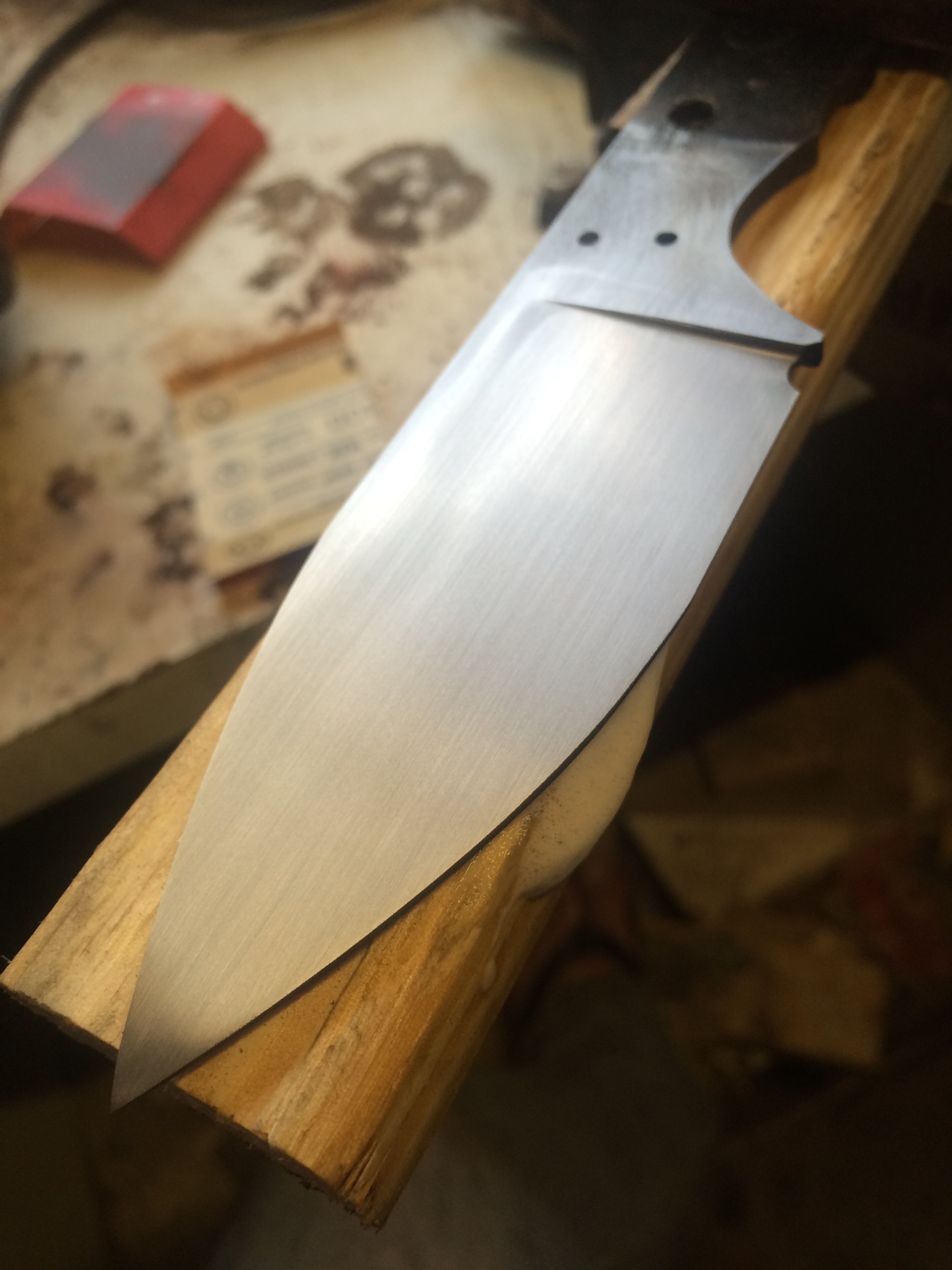
Sanded.  Not too shiny because he is built to be used:

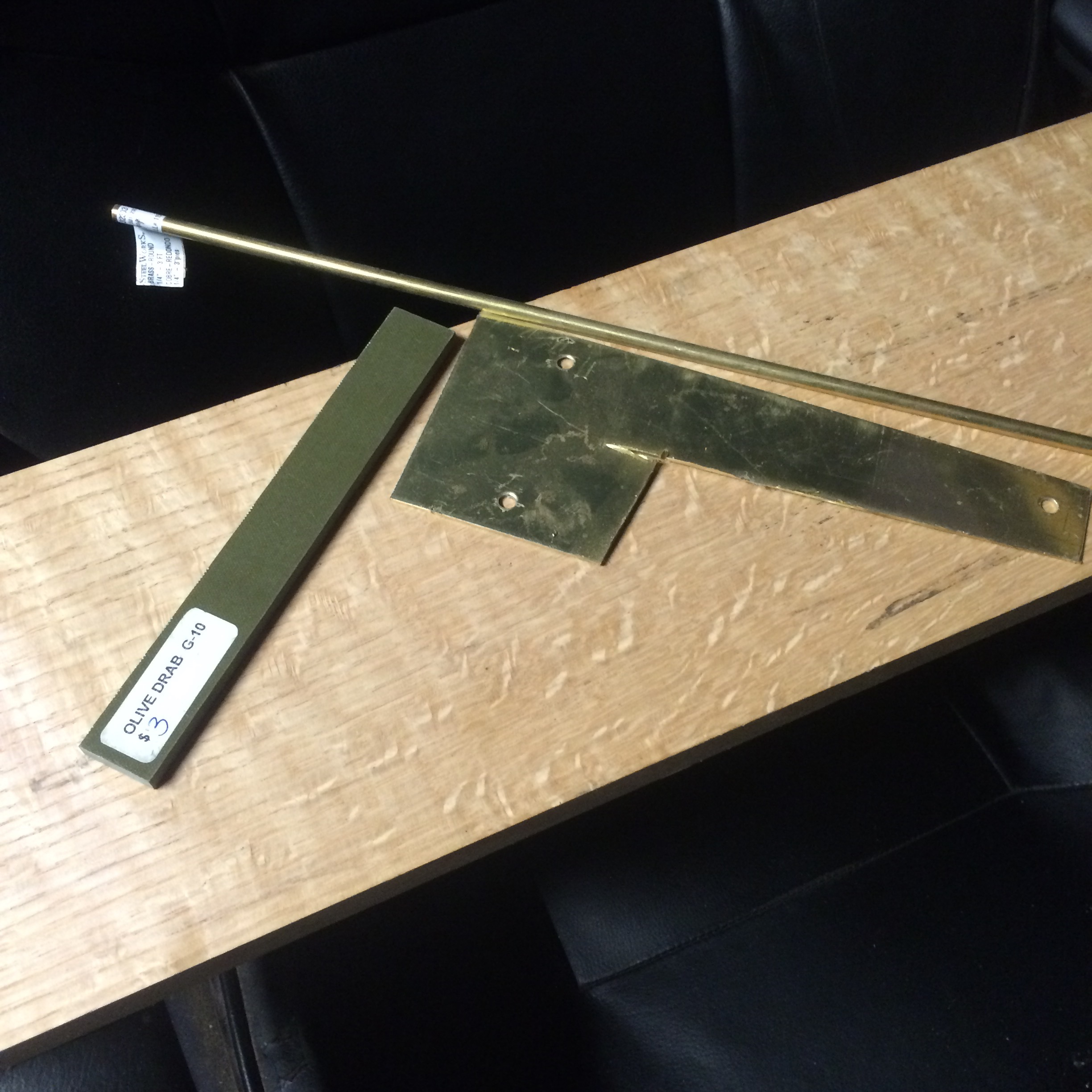
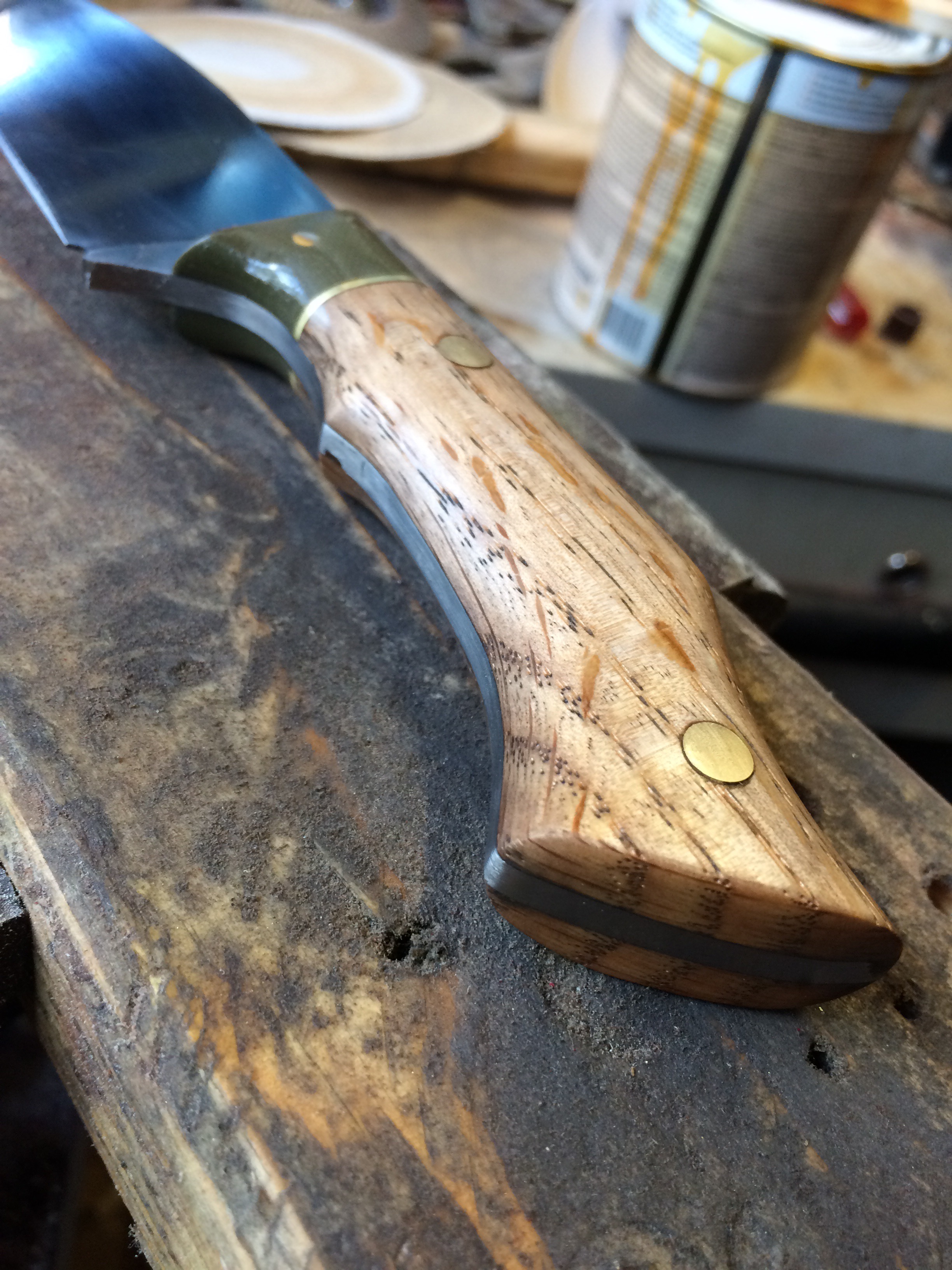
Here is what I used for the handle- quartersawn white oak, olive drab g-10, and brass.  It was a bit of an undertaking and there was some improvising because some things didn’t go as planned.  One step at a time…

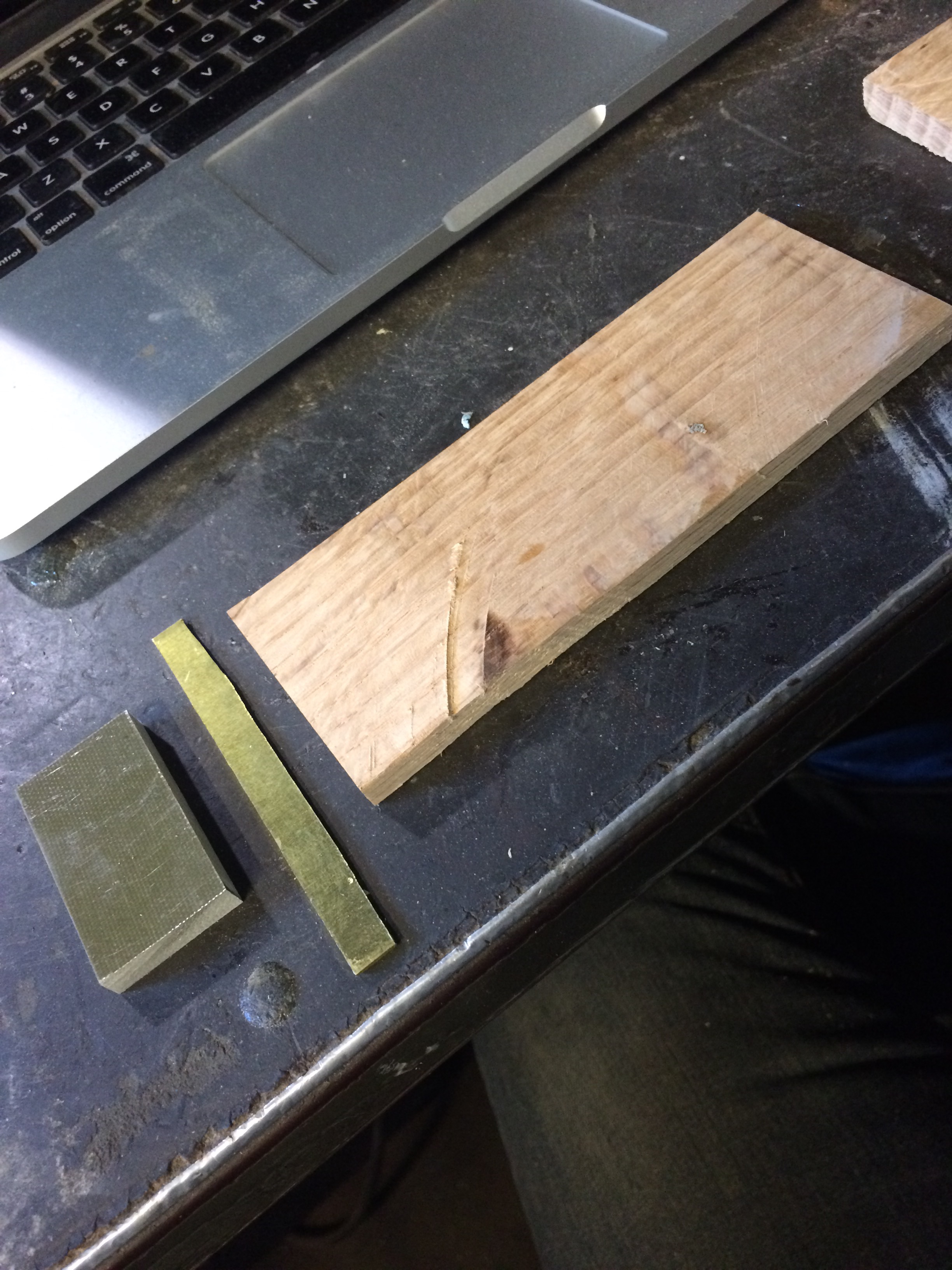
Cut.

Glued.  This came apart soon after.  I tried to keep the brass cool when cutting it but it got too hot and melted the epoxy.  More steps, keep moving…

Clamped…finally

Glue is set.

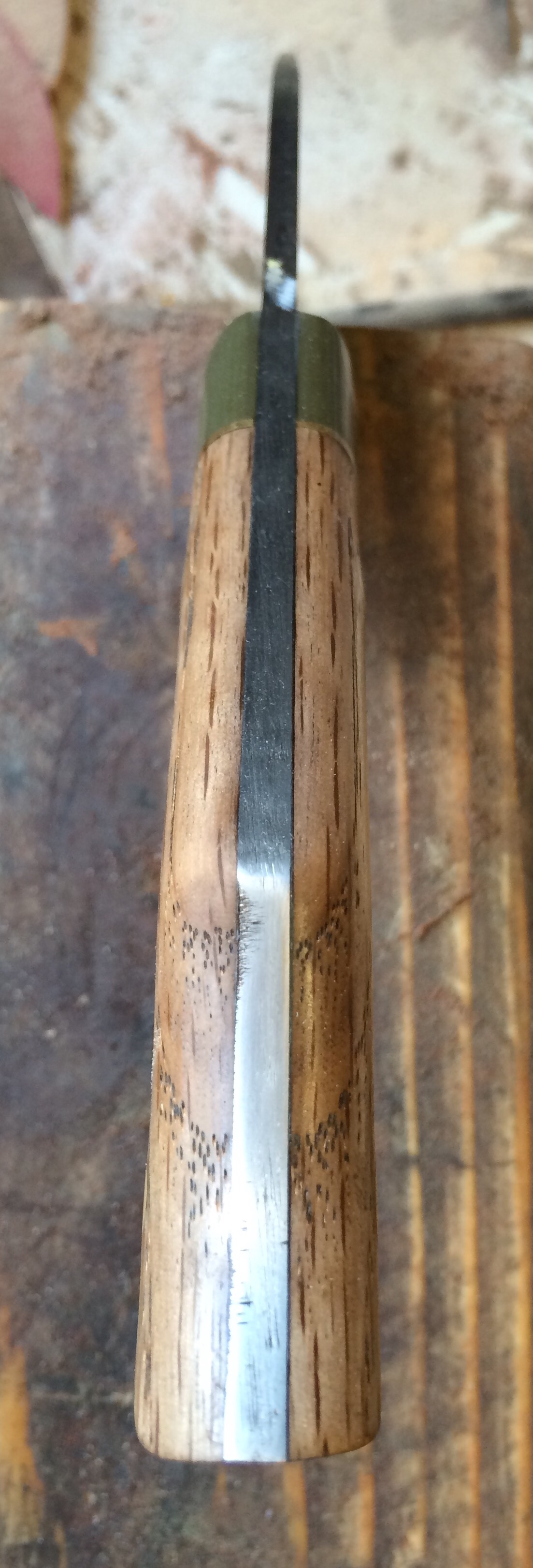
Rough shaping.

Cleaned up.  Now to sand…

The Scout:


A little bit at a time.  Keep moving, even when it feels like everything is impossibly slow and it will never get done.  Challenge that, and walk your forest.  There’s plenty of time.

Knifemaking: playing your hand and The Wild Card

“Like I said, I’ve got mixed emotions about wild card games.  In one sense, they tend to bring out the gamble in your opponents.  They often create a carnival of excitement in which players give away a lot of money painlessly.  On the other hand, it’s hard to calculate a strategy for a game the dealer has just invented.”

Doyle Brunson- According to Doyle

I think the best definition of a wild card is something that can be what you need it to be, when you need it to be.  I have a friend like this- his name is Fred and I’ve written about him before.  I worked with Fred at the warehouse dealing with restaurant equipment.  During the tenure of our professional and personal relationship, Fred has set me on fire, twice, helped me fix my car, helped me fix my friends’ cars, helped me fix my girlfriend’s house, and showed me how to fix things I had no idea could be fixed.  The man has infuriated me beyond belief and has also made me laugh till I cried.  Fred is a wild card, a deus ex machina, the kind of person who can accomplish incredible things and can do it, most of the time, without having any sort of concrete plan.  Which makes it that much more infuriating to work with him and can also result in being set aflame…

I’ve always had this paradoxical sense of simultaneously feeling incredibly safe and slightly on edge whenever I worked with Fred.  We would go into jobs and everything that could go wrong would absolutely go wrong.  Somehow Fred would figure it out.  There was the time a one day job turned into three at a federal office building near downtown Washington DC.  A Japanese restaurant on the floor level of a building on Glebe Rd was going out of business and they had a very short amount of time to have everything removed.  The loading dock was in the basement and the bay door was two inches too short to get our tractor trailer in to load all the equipment out.  The only way to get everything out was through a single door at the front of the building onto the sidewalk.  We couldn’t get the truck there till two days later and we had to hot load it on the street, one of the busiest streets on the east coast.  The truck would be there at 3am.  In the mean time we had to dismantle everything in the restaurant, including a walk-in freezer, a walk-in cooler, fifty tables, and twenty hibachi grills.  I never want to move another hibachi table ever again.  Fred orchestrated the truck to get there half an hour after the door people removed the five thousand dollar custom glass door so we could get everything out of the building.  The truck was late and there was maybe two hours before the police would get there and make us move, but not before they asked up why we had a semi-truck, a forklift, and a truck with a tilt deck trailer in front of a government building with no permits.  Fortunately that didn’t happen and we got out of there in an hour and a half, smelling of old fish and rotten bok choy.

A lot of jobs happened this way.  None of this is an exact science.  On my better days I felt like a part of a black ops crack team.  On my not so better days I seriously questioned my life decisions.  None of it was ever boring, though.  Not with Fred.

There was an Italian man who had a few restaurants around town.  Crazy Frank we called him.  He had just opened up a new restaurant and had an emergency with his ice machine and a pizza oven we rebuilt for him.  Fred and I head over there at lunch.  The kitchen is insane.  I go over to the the oven and start to drill out holes on the door to put a handle on- bear in mind the oven is roaring at 600 degrees and has pizza in it.  Fred is reprogramming the thermostat on the ice machine.  It is the lunch rush and there are ten people running around, screaming in Italian.  Fred asked me if I had a ‘big ass college word’ to describe the situation.  I told him that I believed the word he was looking for was ‘asinine’.

“Right,” he says.  “This shit is asinine”

The most memorable job I was on with Fred was a three day bakery extraction.   Fred, myself, and our colleague and good friend Aaron were to fly to Nebraska, load an entire bakery into two tractor trailers, and then fly home.  Adventures started at the airport.  Fred and I are not fans of flying.  At the airport bar I had forty dollar margarita with a cornucopia of liquor in it and Fred had two double shots of Jack Daniels.  We got on the plane and promptly went to sleep.  We arrived in Nebraska that evening, picked up a swanky rental car and went to look at the job.

The first thing I noticed was that it was cold.  Like unbelievably cold.  It hadn’t really hit me at the airport.  This was January and I had never been anywhere that flat, windy, and cold before.  The second thing I noticed was a gigantic rotating bread oven.  Our client told us that it bakes 100 loaves an hour when loaded to capacity.  We would spend the majority of our time dismantling that hulking behemoth.  We got steaks for dinner, because that is what you do in Nebraska, and went to the hotel.

The next couple of days were stupidly cold.  The forklift we rented wouldn’t start most of the mornings until the sun came out.  We had to disconnect and extract the oven exhaust system, which meant going onto an icy sheet metal room.  We had to take that oven apart, which had nearly a thousand 3/4″ screws holding it together.  Fred was confident in his ability to get it all back together.

Everything went as it should, got loaded, and sent back to Virginia.  Our travels were slightly rockier.  There was an ice storm that closed the Chicago Midway Airport and we got diverted to Indianapolis where we sat on the tarmac for seven hours.  Seven hours of Fred without a cigarette.  Seven hours of Fred saying we should have rented a truck and driven to Nebraska.  Seven hours of Fred telling anyone who would listen that no one could keep him on that plane.  I was sitting next to a mother and her small child on their way to Disney World.  The husband and another little one were sitting behind me with Fred.  These little ones had a better grip on the situation than Fred.  Finally they let us off to catch a different flight, on a plane that wasn’t covered in ice.  It was all Aaron and I could do to keep Fred from using the company card to rent a truck and drive back to Virginia from Indianapolis.  Two double shots of Jack got Fred back on a plane.

Left to right here is myself, Aaron, and Fred after three long, flour covered days in the cold.  Happy to be finished, thank you very much.

nebraska

Wild cards only work when you play them.  They do what you need them to do when you need them to be done.  This is Fred, and also the lesson of the Wild Card.  I wanted to build something to be sent in when the job needed to be done.

I started with a big hunk of 1095 spring steel- 3/16″ thick

The blade is close to 8 inches long…
 Rough grind:   

I used a clay hardening technique to create a Hamon

  Hardened…

…and tempered

Sanded to about 600 grit and ready to for a dip in the acid….

Curly Maple.  You can faintly see the wavy bits of curl…

Clamped.

To get the curls to burst I had to go through many cycles of sanding and staining and sanding again.  With each cycle the stain becomes more stable and prominent.

I cooked up a concoction using various finishes I have…

You can start to see the curls as the grain becomes more stable.  This is after maybe two cycles of sanding and staining

This is after maybe 8…

The Wild Card:

It’s always good to have a Wild Card in your hand- even when you want to kill them sometimes.

Thanks for the lessons, Fred.

Knifemaking: gentleness, boundaries, and the Maiden

“I was only fifteen years old and full of fire
I was a half a pound of bacon and an egg on the side
She got all the good looks, and I got all the war
She was everything I asked for, and a little more”

Francis Dunnery, Give Up and Let it Go (The Gulley Flats Boys)

This blade was a commission from a very good friend of mine.  I’ve known him and his wife for quite a few years, worked for his company, and spent much time with his family.  He lives in Maidens, Virginia, so coming up with an idea for this blade sort of took care of itself.

The inspiration for the Maiden comes from most all of the women I am close to.  Elegant, beautiful, strong, full of love, and most definitely not having any of your shit.  Or put another way, immaculately clothed but with a sword hidden beneath beneath their cloak.  Or sun dress.  Or whatever houndstooth scarf or coat is in season.  You get the idea.

No man is an island.  Sometimes it’s really healthy to have someone to tell you “hey, see that stupid thing you’re about to do?  Maybe think twice about that- you don’t need to impress anyone.” Or,

“Hey, it’s time to stand on your own feet.  No, I’m not going to carry you through this.  Don’t worry, you’ve got this.”  Or even,

“Whether you fail or succeed, I love you.”

These are strong statements but they are held by a gentleness that we don’t often give ourselves, or at least I don’t.  I’ve been known to on occasion, when left to my own devices, done that stupid thing to impress someone insignificant and not stood on my own feet and felt like love was conditional on whether I failed or succeeded.  Because whether we like it or not, at some point or another we all have moments of neediness and insecurity, self-doubt and self-sabotage, and the story-hour from hell where we ruminate on our screw-ups.  As social creatures it’s important to hear these things from others close to us.  This doesn’t necessarily mean there are dependency issues at play.  It means that we are human.  And whether we are aware of it or not, we are often giving the same support to those who help support us.

To me, these statements also represent strong boundaries- saying what is felt without expectation or condition.  Without (or in spite of) fear of a negative reaction.  Spoken not to coerce or manipulate an outcome but to help us to be ourselves.

That is the lesson of the Maiden- an elegant tool that is close in good times and the rougher times, beautifully dressed with no fucks to give.  I’ll drink to that….

I designed four of these lovely ladies and had my friend pick which on he liked best.  These three didn’t quite make the cut and that’s ok.  I went with a drop point blade- the right balance of tip strength, belly, and piercing ability.  Good for farm work.

  finish sanding

The Maiden: 1095 spring steel with an acid etch, Curly Maple handle, and brass hardware.


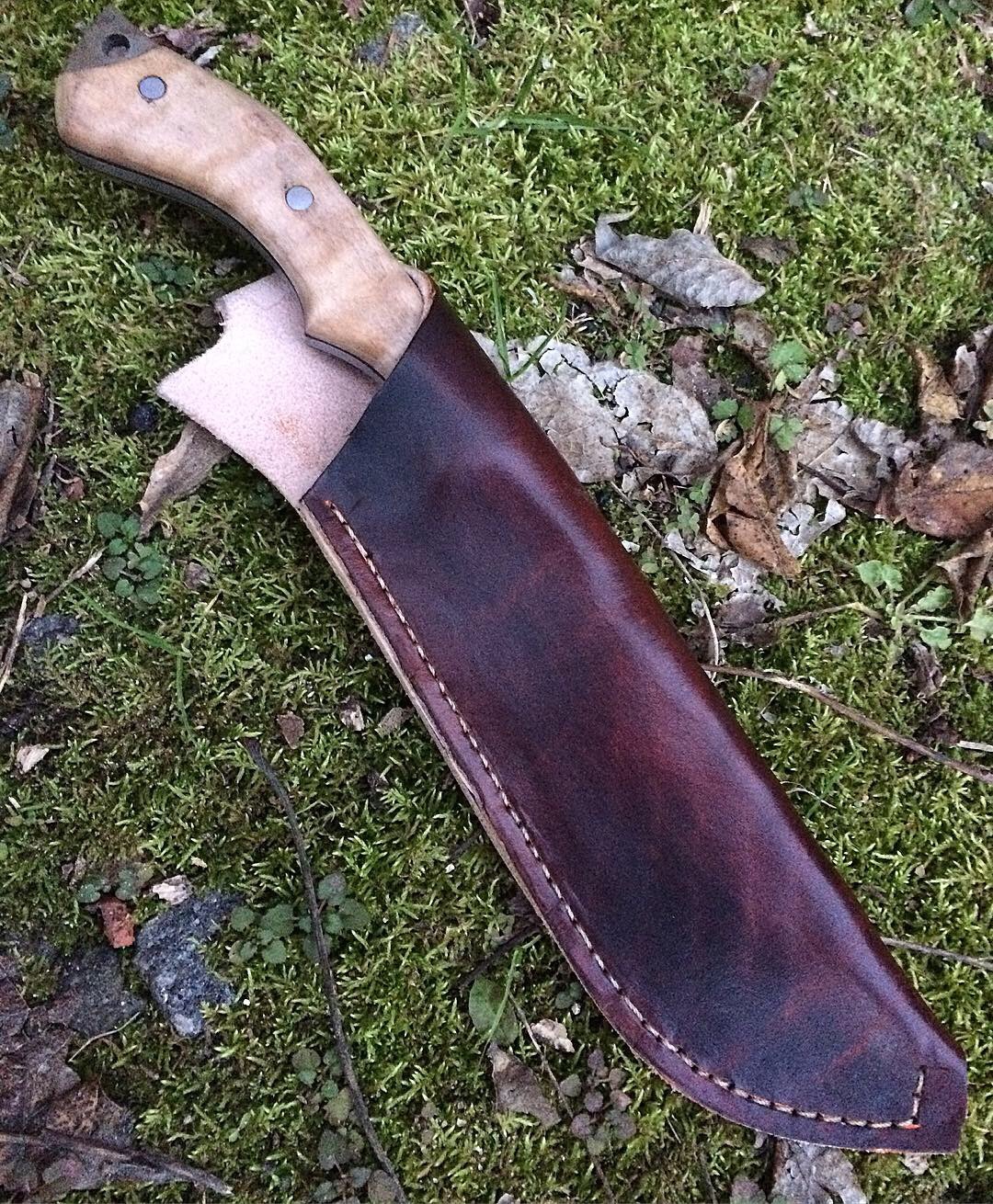
I also made her a sheath.  Wet formed for a snug fit.


I actually made two of these- in case I screwed up the finish on the Curly Maple.  This is the first one, with a satin finish.

Knifemaking: finding your home, braving the elements, and the Northerner

“A farm of your own is better, even if small. Everyone’s someone at home.”

Hávamálst. 36

Home is what you make it.  The first thing I do when I go into anybody’s home is notice how it smells.  There are many things that can be inferred this way.  It may smell of cooking and spices, a fireplace, clean linens, pets, Murphy’s oil soap, and the people who live there.  All these things are things of love, cultivated in a place where the person who lives there can just come and be.  It’s a safe place where we can take off whatever armor we may wear during the day.  It’s a refuge that shields us from the elements in our lives.

Some brave harsher elements than others.  And in the times we live in, the elements are no longer relegated to heavy rains, freezing blizzards, or lands parched with drought.  They are deadlines for work, the threat of unemployment, passive-aggressive emails, fruitless battles with the DMV, quarterly tax estimations, health insurance premiums, our police executing citizens without arrest or trial, politicians stripping us of our civil liberties and thousands of other things we have little control over.

This can send our stress through the roof and it’s a small wonder.  From an evolutionary standpoint our reactions to stressors were designed to help keep us safe and alive.  You see a bear, you react appropriately by stressing out hard and in turn releasing enough adrenaline to haul ass out of that situation. Then you calm down, throw some logs on the fire and snuggle up with the misses.  Or the mister.  But these days unrelenting stress can lead to unhealthy anxiety and this in turn often leads to depression, ultimately leading to feelings of being stuck and health issues.  Depression and anxiety have their evolutionary purposes but I feel their effects been blown way out of proportion by the amount stimulation and unnecessary stress in today’s world.

This is why it’s important to have a home.  A place where the elements won’t creep in.  This may take some work.  An inspiration for me is John Wemmick from Dickens’ Great Expectations.  He has an unpleasant job, deals with many stressors but goes home to his castle, a safe and gentle refuge he has built for himself.

Throughout history and literature the people from the northern areas are by nature a people more hardened to the elements.  They are a people capable of great acceptance, aware that they can’t change the elements but instead find a way to thrive within them.  That is the inspiration for this blade.

I had to do a bit of research on blade shapes and functions.  I wanted to make something that would aid a modern day Northerner in his outdoor tasks.  This blade is loosely based on a composite of bushcraft designs.  It is a drop point blade with a partial saber grind.  I tried to find a balance between having a deep enough belly for slicing and having enough of a point for effective piercing.  I am rather fond of the O1 tool steel.  It is relatively easy to work with and hardens up beautifully.  it takes a keen edge and is forgiving of my mistakes.

 Cut and profiled

And the grind.  A little bit at a time… 


Ground and sanded.  The larger holes help to lighten the blade. 

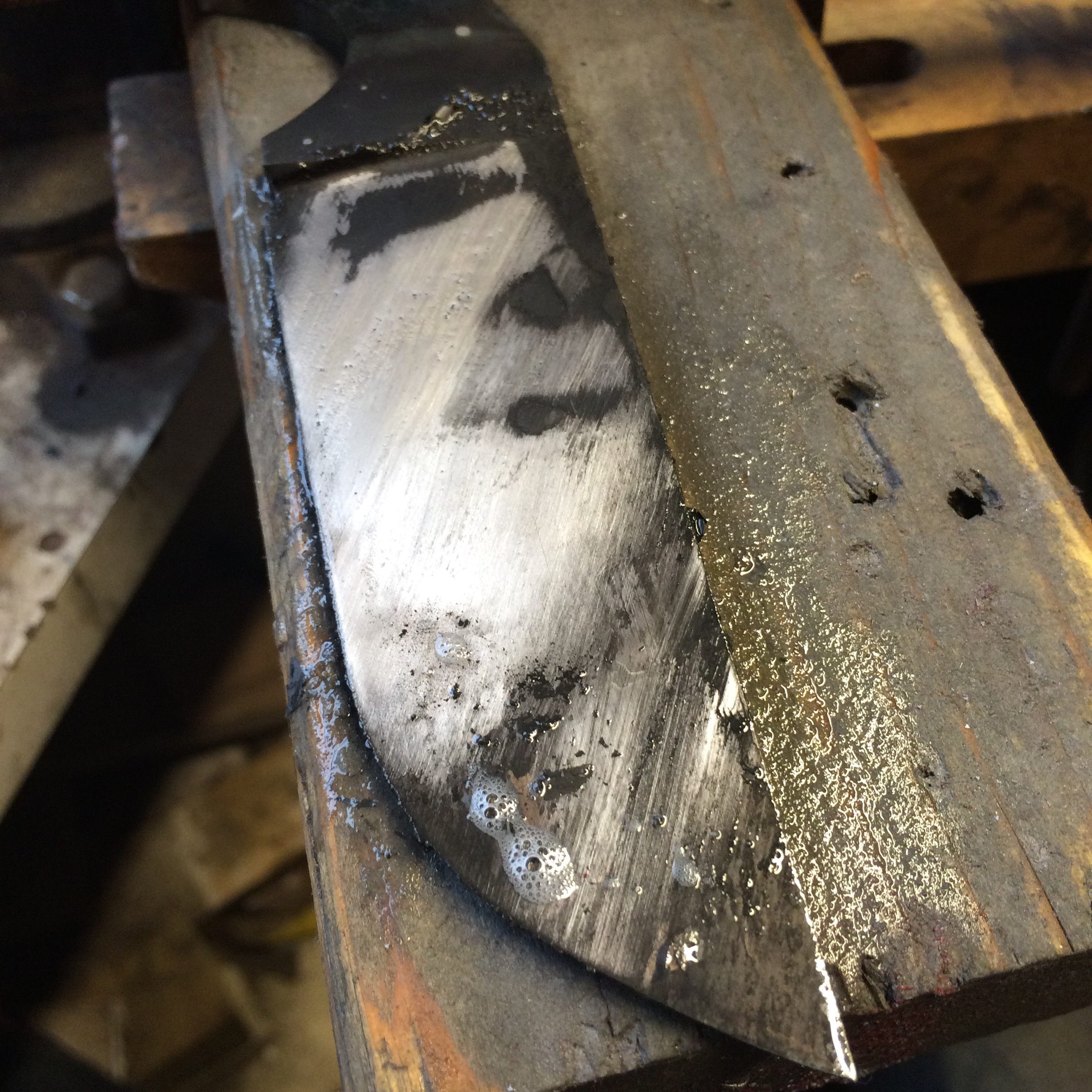
Wet sanding after heat treat.  I have been using WD-40.  It won’t rust and I find it gives a smoother finish. 

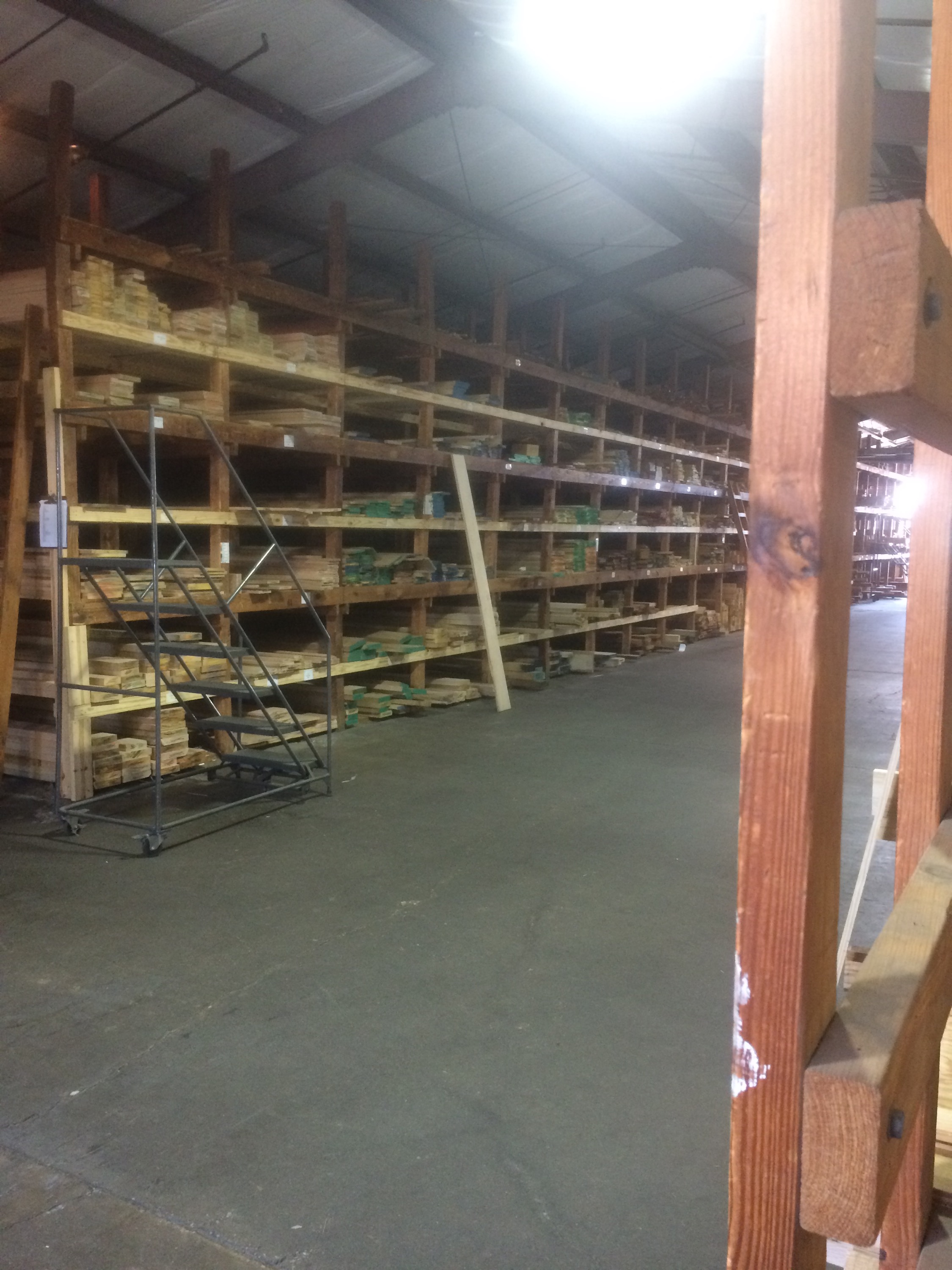
I went to a lumber mill to try to find some more exotic wood.  It was awesome. 

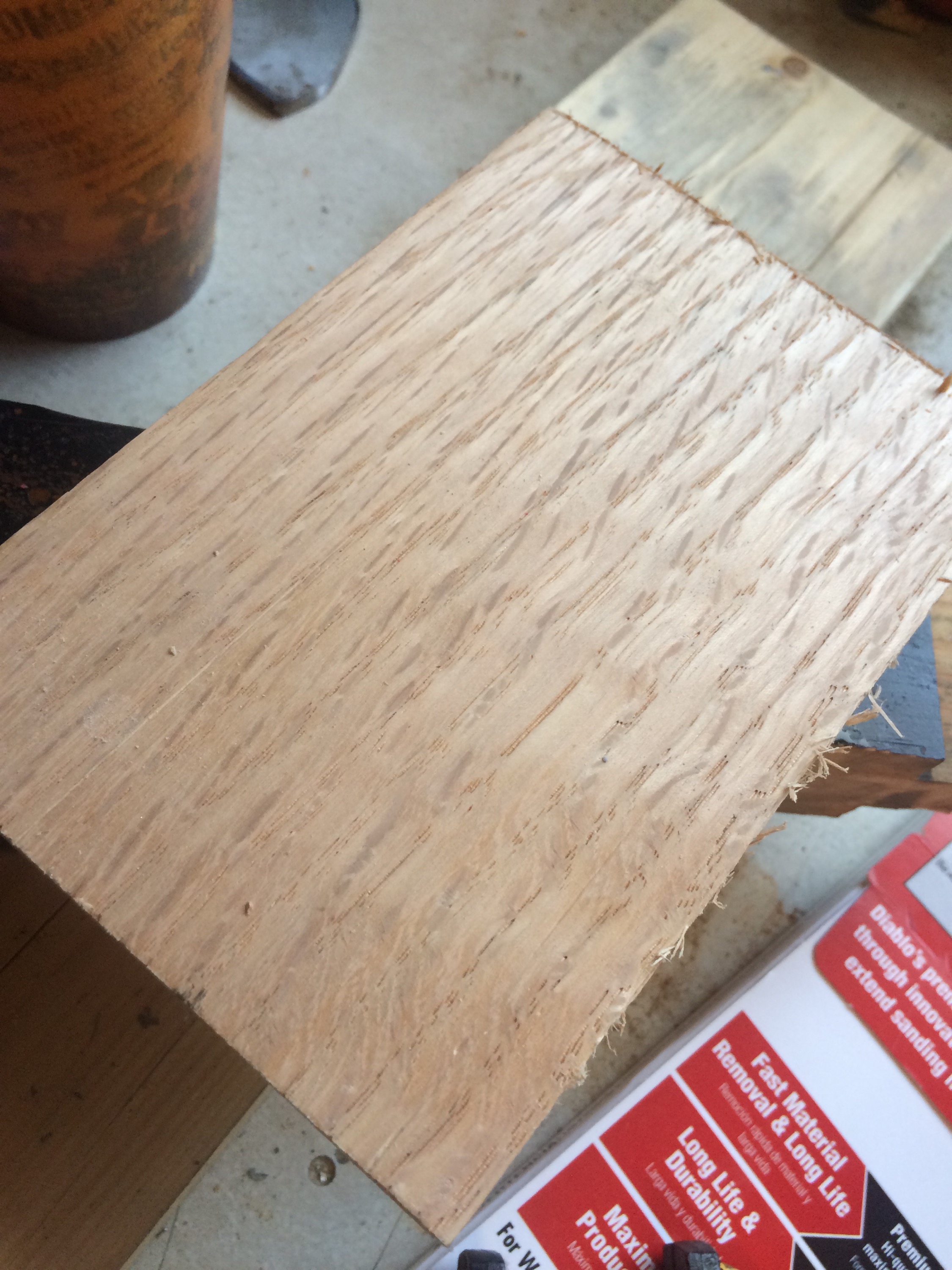
I found a beautiful piece of quarter sawn white oak.  It is sawn in such a way that gives it more stability and shows the grain more beautifully.  Here is a lovely video on the process and how it affects the grain.

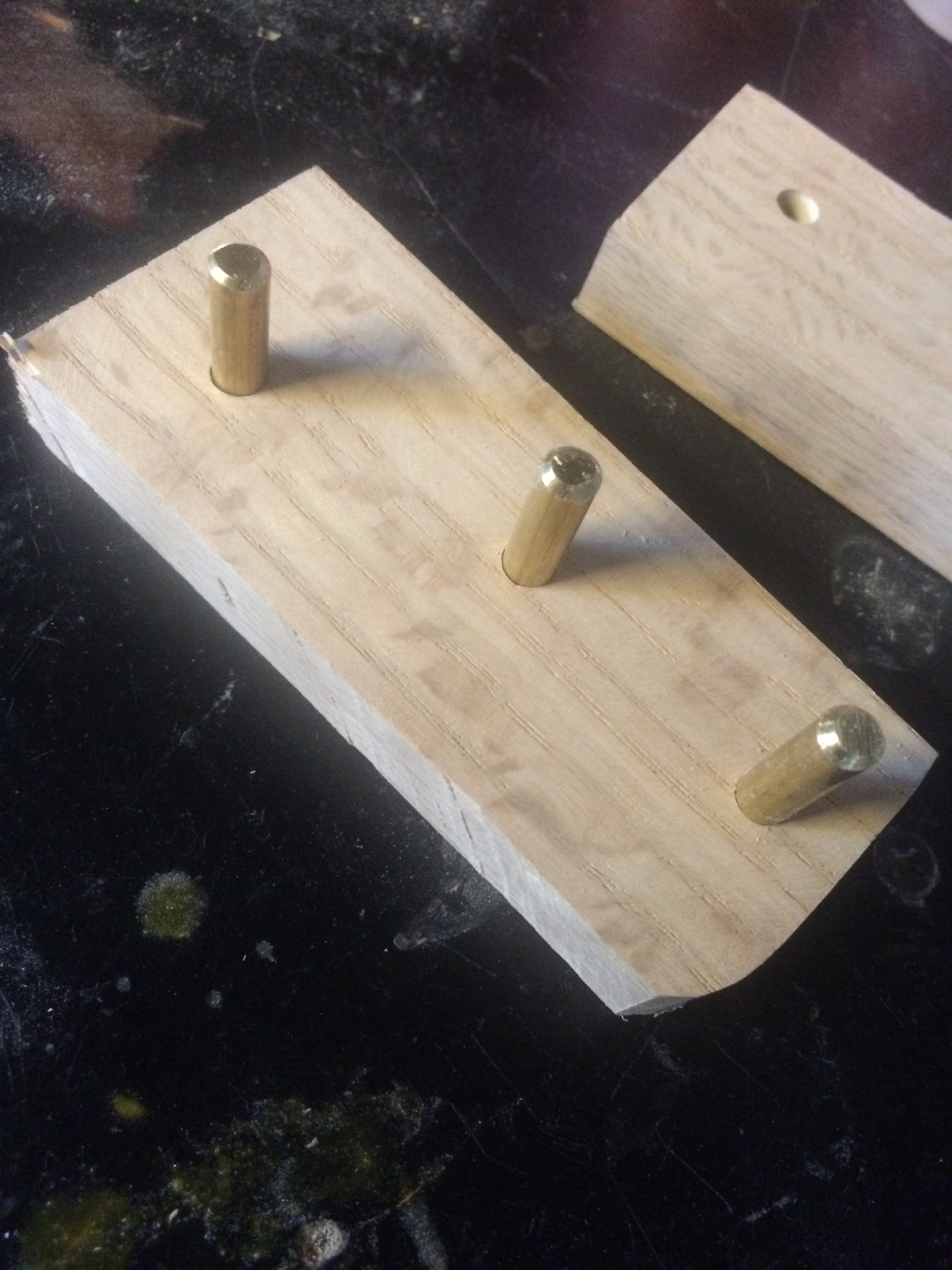
Handle work: brass rivets that I bevelled and the oak shaped and rough sanded.     After much more sanding….  A dark shade of Danish oil

  The Northerner

The grain is stunning.
  A fabulous backside is always a bonus….

Edge detail….

There will always be things in our life that will challenge us and create stress.  As long as we have a place we can go, whether bricks or mortar or built within ourselves, we will always be able to brave the elements.  This is the lesson of the Northerner.