Knifemaking: Chainsaws, Being Gentle of Spirit, and the Lionheart

‘Only the weak are cruel. Gentleness can only be expected from the strong.’

Leo Buscaglia

A couple of years ago I was out in the country with a good friend of mine, giving him a hand in clearing some trees on his property.  There was a ramshackle house on that piece of property that hadn’t been lived in for years.  We were clearing the trees to make a path for the demolition equipment to come in and tear what was left of this house down so a new one could be built.

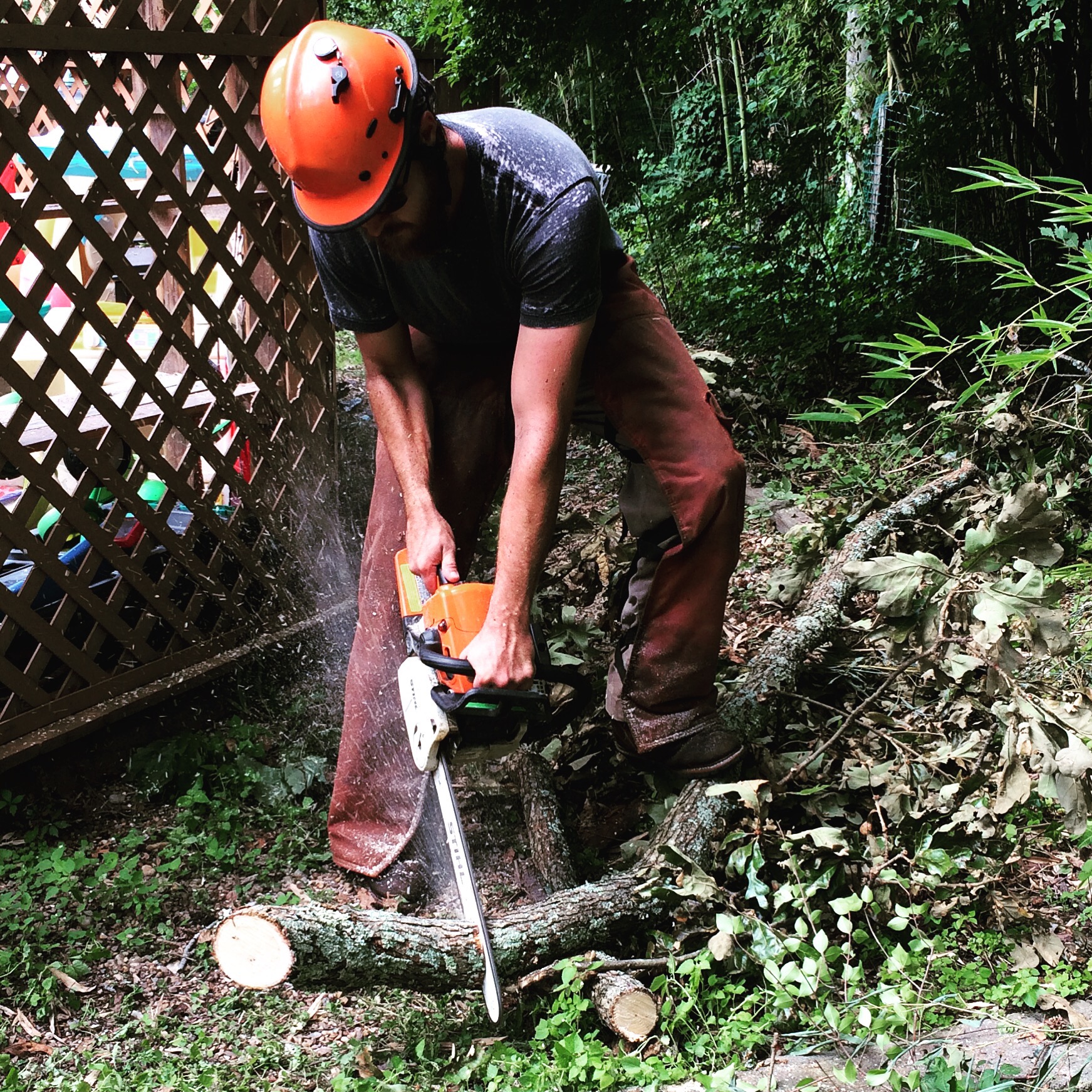
We hauled logs and trees that had already fallen.  This area had not been visited by anyone in quite some time and was quite overgrown.  We didn’t bother with any of the larger trees but anything under forty feet was fair game.  We were in the middle of the woods and it was just us.  My friend had two Stihl chainsaws and was cutting the trees down.  I was hauling the logs out out of the way and stacking them to be cut into firewood later.

We took a break- there were a lot of trees left to take down.  My friend had two chainsaws, one for each of us, so we decided to divide and conquer.   When we got started again I grabbed a saw and found that I could not get it running.  I yanked the pullcord.  Nothing.  To be safe I topped off the fuel and the chain oil.  I adjusted the choke.  I gave the pullcord another tug.  When it still wouldn’t start I assumed that I wasn’t pulling hard enough.  So I pulled harder.

My friend stopped me and told me to be gentle, otherwise I would rip the cord out.  I kindly let him know that I was an extremely gentle person.

He laughed.  ‘Maybe gentle of spirit,’ he said and gave the cord an easy tug.  The saw started right up.

That man, always with the truth.  I thought I was being gentle….

The truth of the matter, and what became clear that day, is that behind any kind of power is gentleness.  Not everything in this world can be beaten or bullied into submission, though there have been times in my life where I liked to think so.  As with the chainsaw, gentleness sometimes IS the power.  Out in the woods that day, the one who was gentle was the one who was cutting the trees down and that person was not me.

Gentleness is often seen as a sign of being weak.  This is not true, despite what has been demonstrated to us throughout our lives.  While brute and strength and force have their place, without something gentle behind them they serve only to divide and intimidate.  Gentleness serves as a means to connect.  It acts as a vessel for strength, holding it and giving it purpose.  Behind every great leader, parent, speaker, or creator of things there is something gentle.  Without that everything dissolves into fear and chaos.

This is the lesson of the Lionheart.  To find gentle is to find power.  The road to finding those is courage and bravery manifested, which are traits of someone who is Lionhearted.  It’s not an easy road for certain but the best ones never are.

This blade is a 6in filet/boning knife, built from 1/8″ O1 tool steel stock.  It was commissioned by a man who has quite a bit of Lionheart in him, and was the inspiration for the namesake of this knife:

Rough cut:

Filework on the blade choil.  This makes it easier to sharpen and provides a visual aid in creating symmetrical plunge lines:

Profiled:

Initial work on the bevels.  Removing too much steel will cause it to warp in the forge.  Ready for heat treat:

Hardened:
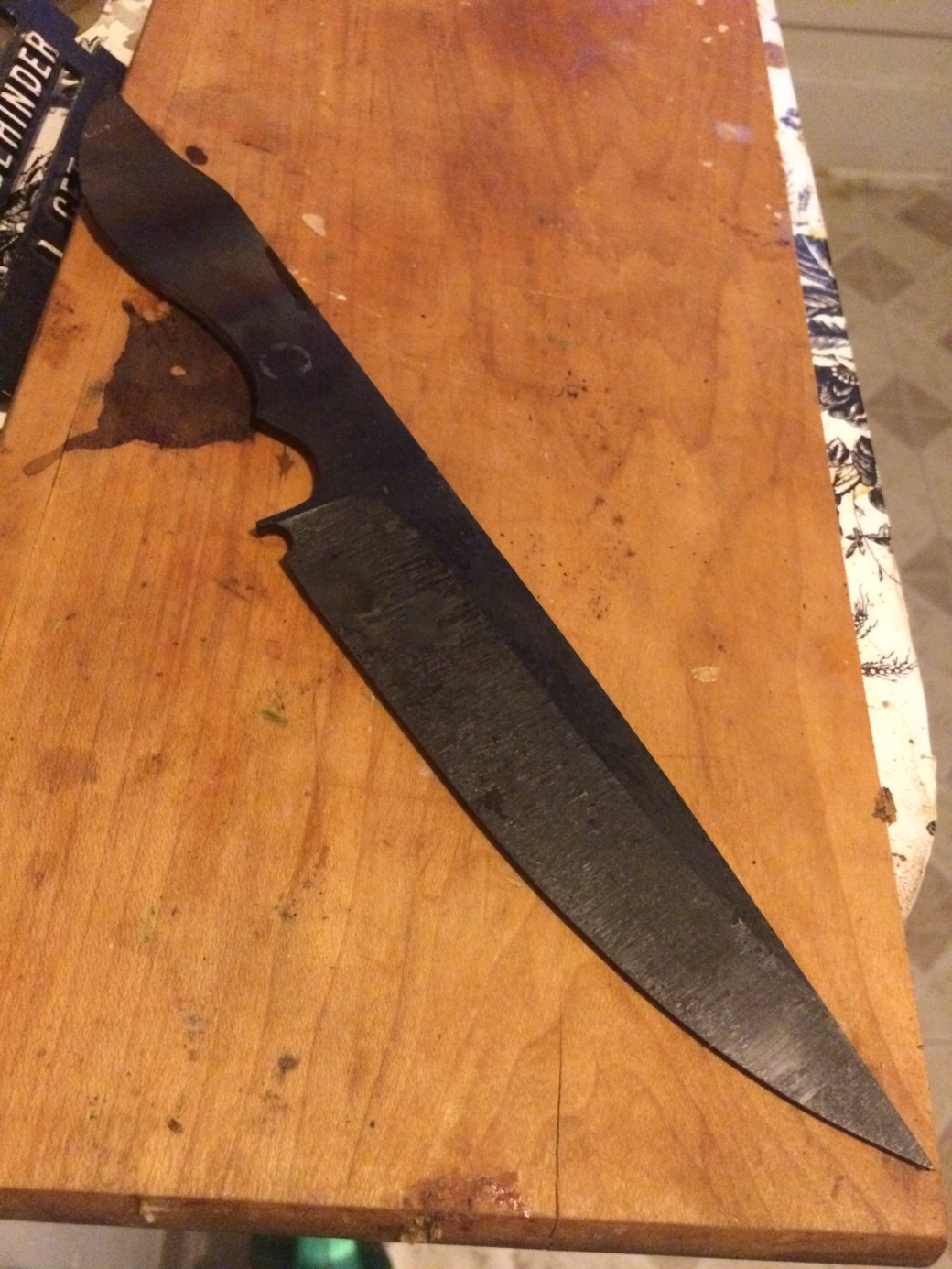
Removing more material after heat treat:

Hand sanding:

Satin finish:

I should have drilled these earlier, but here we are:
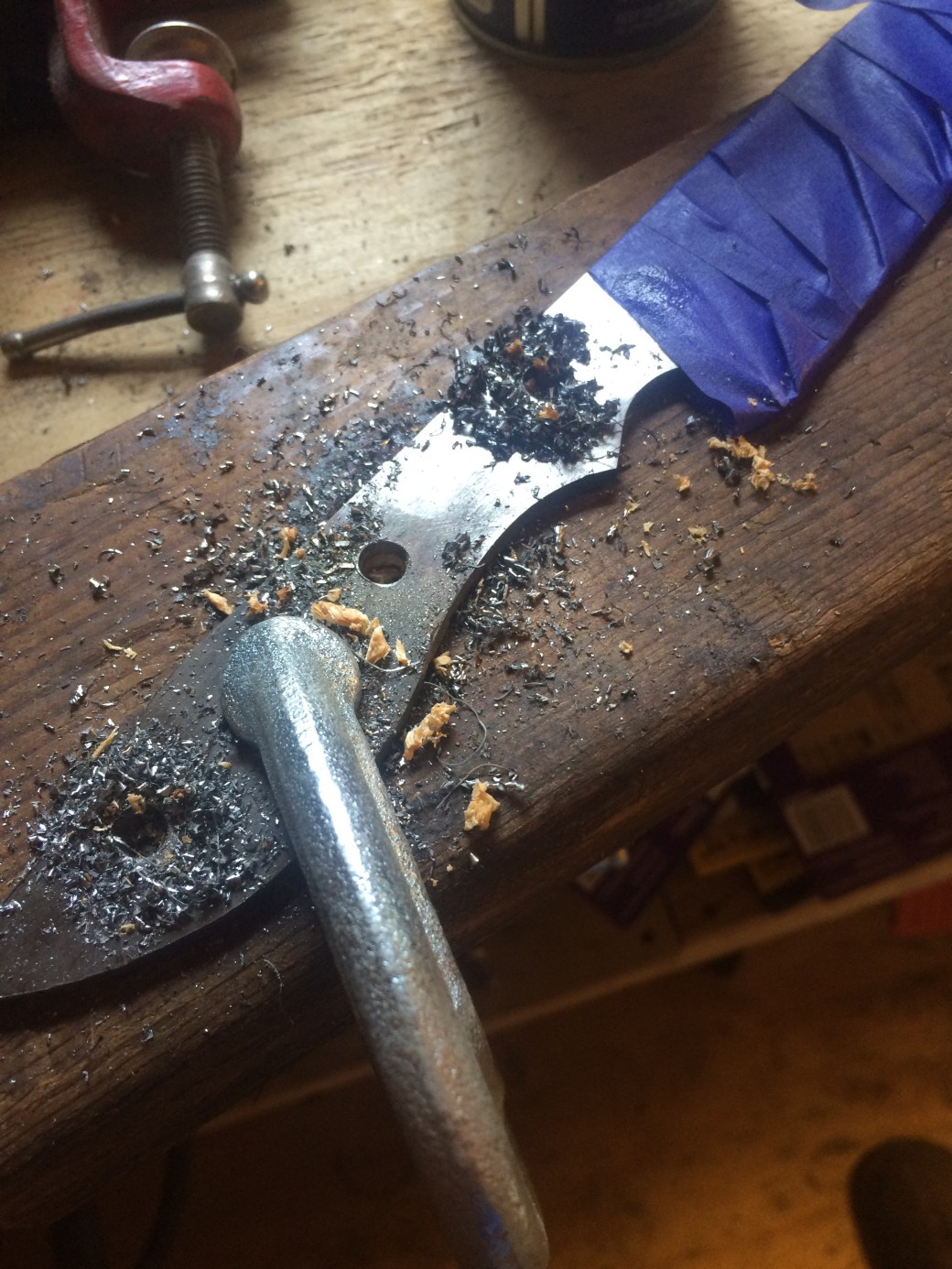
Rivet holes in the scales.  The wood is Redheart:
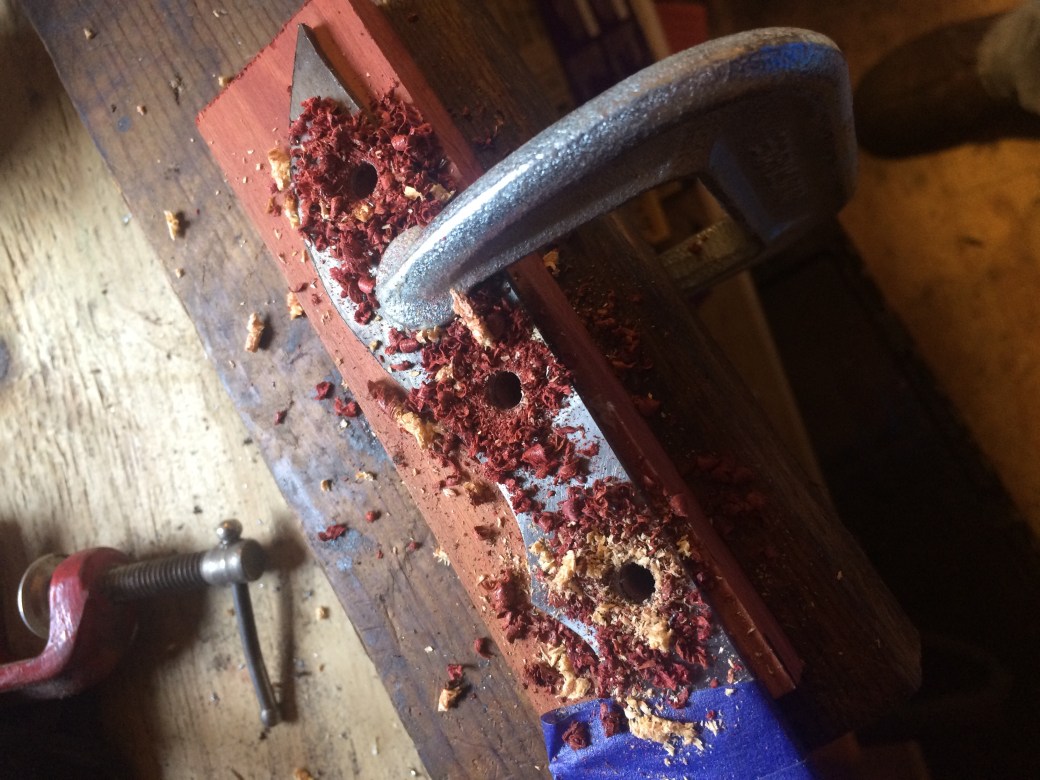
Ready for assembly:
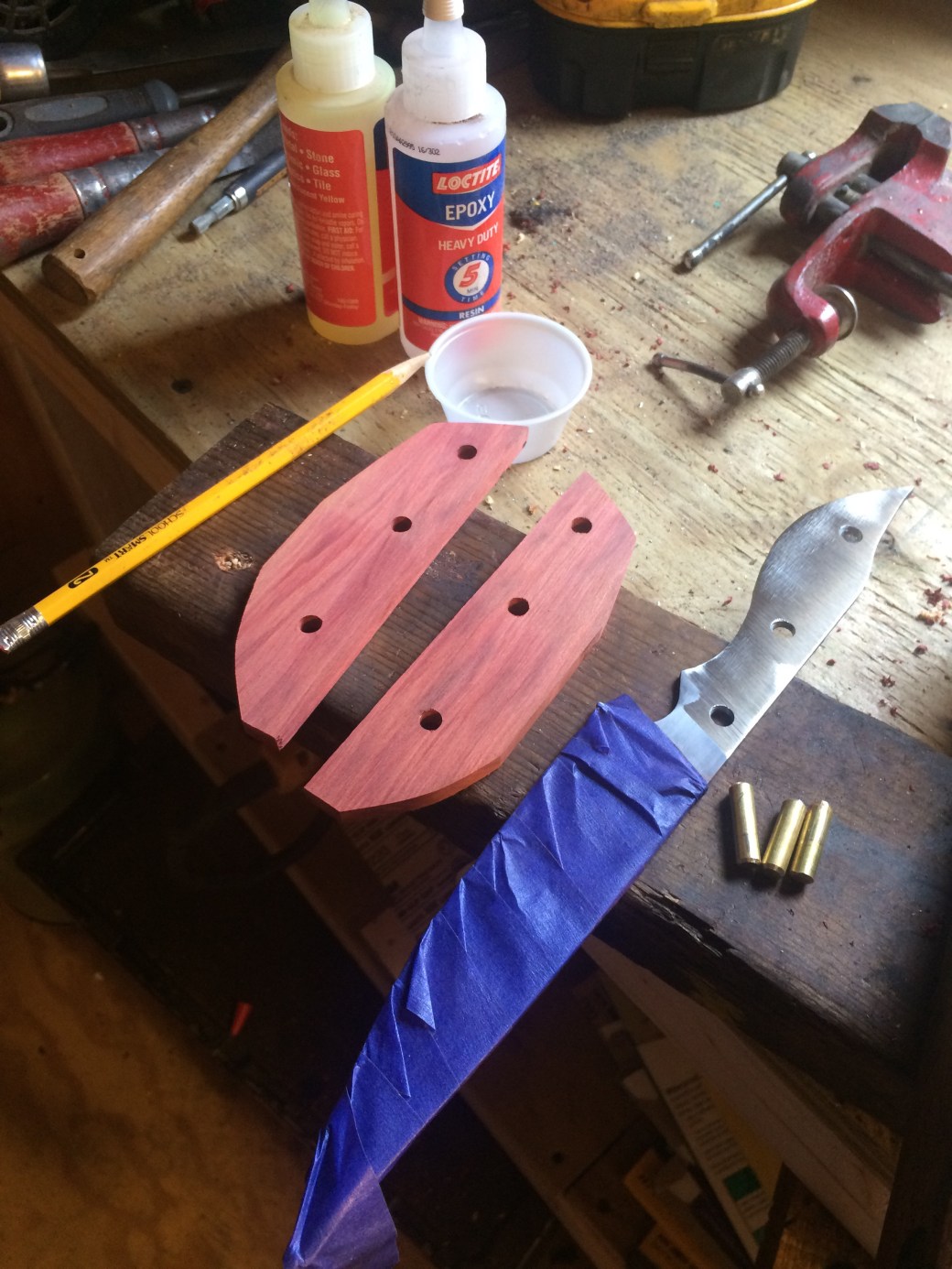
Profiled:
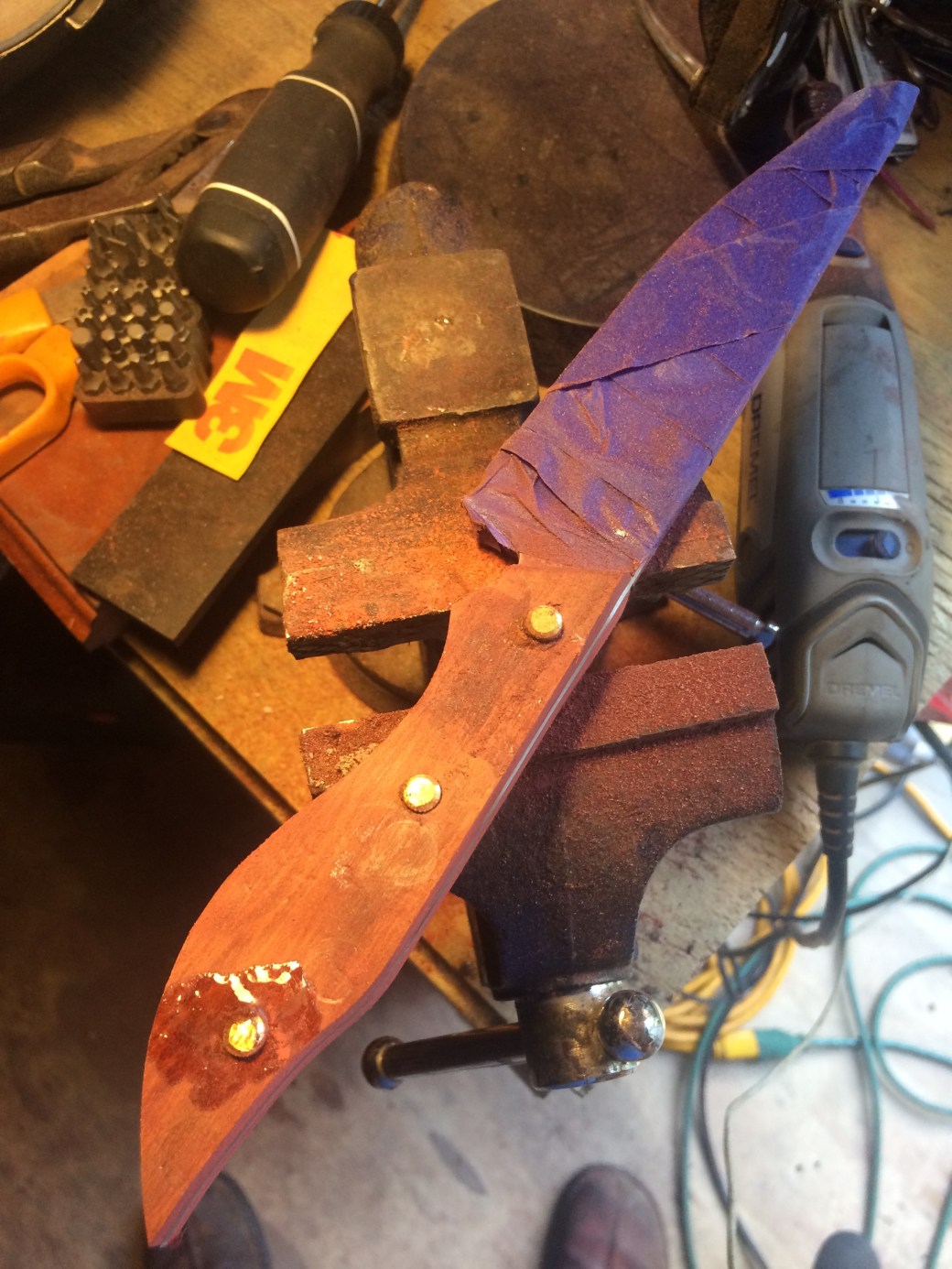
Shaped:
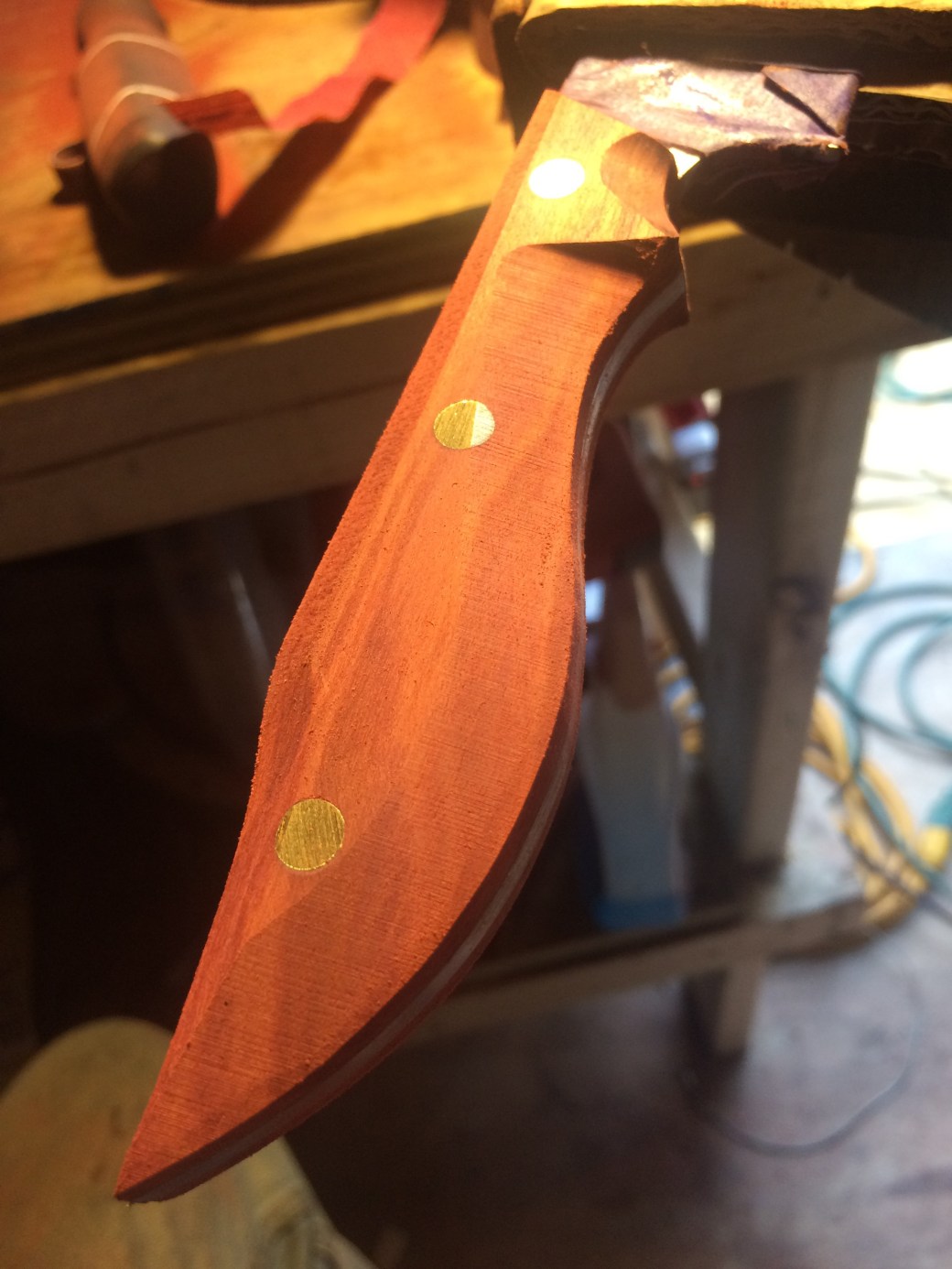
The Lionheart:

Be gentle with that chainsaw….
Knifemaking: finding your roots and the Treethrower

‘In their highest boughs the world rustles, their roots rest in infinity; but they do not lose themselves there, they struggle with all the force of their lives for one thing only: to fulfill themselves according to their own laws, to build up their own form, to represent themselves. Nothing is holier, nothing is more exemplary than a beautiful, strong tree.’

Hermann Hesse, Bäume. Betrachtungen und Gedichte

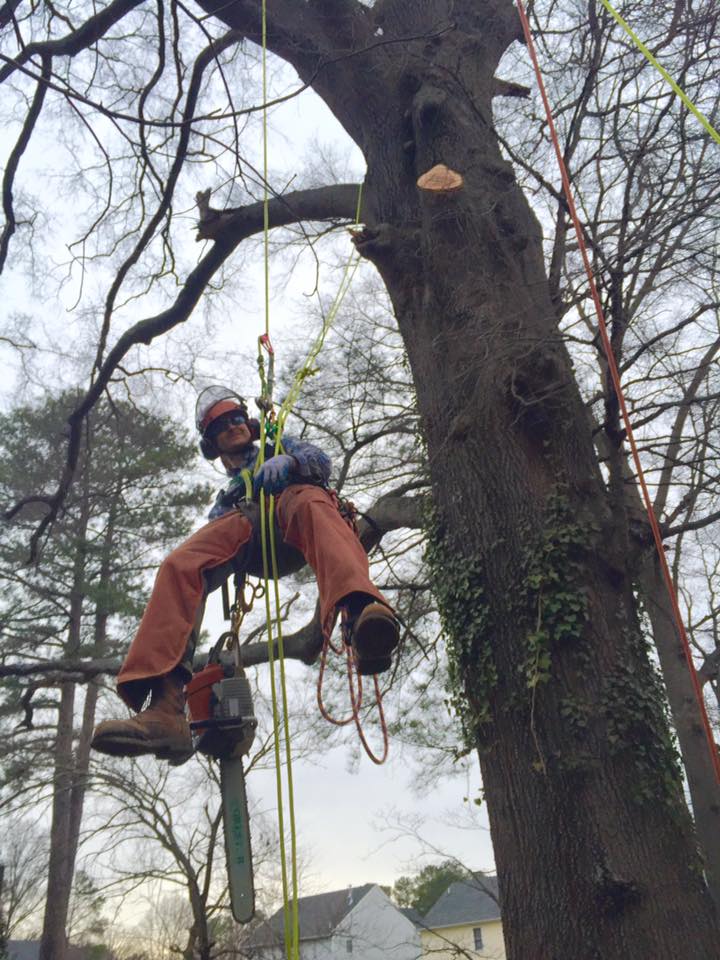
I have an old friend and his name is Joe.  Joe is a fascinating guy.  We went to music school together.  Joe is a killer rock musician, a badass chef, and is also really good at climbing trees.

This is Joe:

12646998_10102981413934626_3333592218995759607_n

Joe does tree work full time at the moment.  On weekends and his off days he does side work for friends.  Sometimes he calls me to give him a hand.  Sometimes the money is good and sometimes it is not but it’s refreshing work to do and it’s nice to be along for the ride.  His clients are always happy with his work.

The work I did with Joe consisted of removing dead or sick branches and limbs, and removing branches or limbs in order to open up a client’s yard to sun.  Any part of the tree extruding over a client’s house was also removed, by way of a block and tackle pulley system rigged to the tree so the branch could be slowly and safely lowered to the ground.  All of this was done with regard for the tree, with chainsaw cuts executed in such a fashion so that limbs could healthily grow back.  Deadwood was removed and cut flush at the trunk.

There was a quiet and zen process to a lot of this.  It all started with laying all of our tools out.  Joe would put on his rigging gear and I would fuel up and oil the chainsaws.  He would then set a climb line high in the tree and start to ascend, lugging a chainsaw, some handsaws and some tools.  The zen in this work comes from ritual.  All ropes and lines are kept coiled and tidy.  All brush is cut, cleared and neatly piled as soon as it comes down from the tree.  If you are using a chainsaw then you are wearing kevlar chaps and the chainsaw stops as soon as you are through cutting and before you move to the next cut.  If you are using the chainsaw in a tree then you have set at least three independent safety points, in case you accidentally cut your support line.  These little rituals and protocols help to remove some of the thinking from the process.  It creates a sort of space to be present with yourself and really feel what you are doing.  In this space you can start to feel a grounding and calm in the process.  It also allows you to really focus on what you are doing and helps to keep you safe.  All these things gently coerce you into slowing down and this is a good thing.  Tree work is pretty dangerous after all.

This space that has been created allows more mental real estate for when things get a bit hairy.  There was a the time when a line came loose and giant log cut from a tree fell and put a giant hole in the client’s deck.  Or the ‘how the fuck are we going to get all of this done?’ moments.  Or it’s rainy or icy and you feel extra unsafe.

It’s really refreshing to feel this because it’s a microcosm of life I forget to feel at times.  In this season of life, for myself and many of those close to me, sometimes you forget to ground yourself and everything feels uncertain.  Life changes quickly, living gets more expensive, and what worked yesterday doesn’t necessarily work today.  Focus wanes, a feeling of security becomes a commodity, and one can find themselves feeling a bit daft and inadequate.  This can be remedied by practices and rituals.  Keeping your ropes and lines tidy, in a spiritual and emotional sense.  This can be a bit of a process, especially if you come from a place where roots were shallow and conditional on things outside of yourself.

This is the lesson of the Treethrower.  I came to this idea while tossing massive logs we had cut down into a firewood pile.  It’s important to find roots in what you are doing.  When this doesn’t happen everything can feel daunting.  Often times these rooting things are right beneath your nose and, paradoxically, the last place we tend to look.  Finding them, even for a moment each day, can make a world of difference in your life.

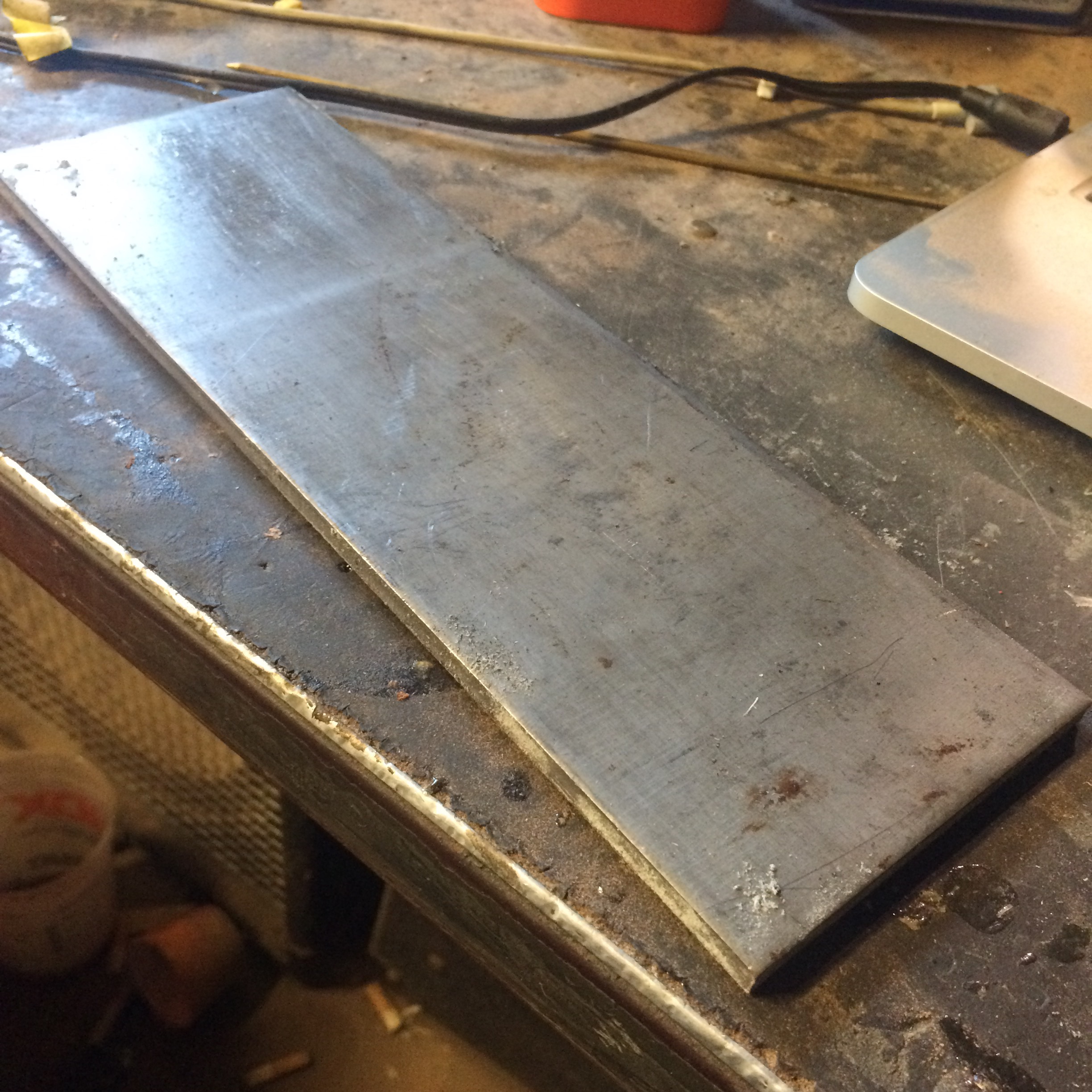
It starts with a massive bar of 1/4″ 1095 spring steel.  My good friend and partner picked this up at a steel mill in North Carolina.

The angle of the blade on this design allows for much more leverage during large cutting chores.

I burned through about 8 cut off discs cutting this out:

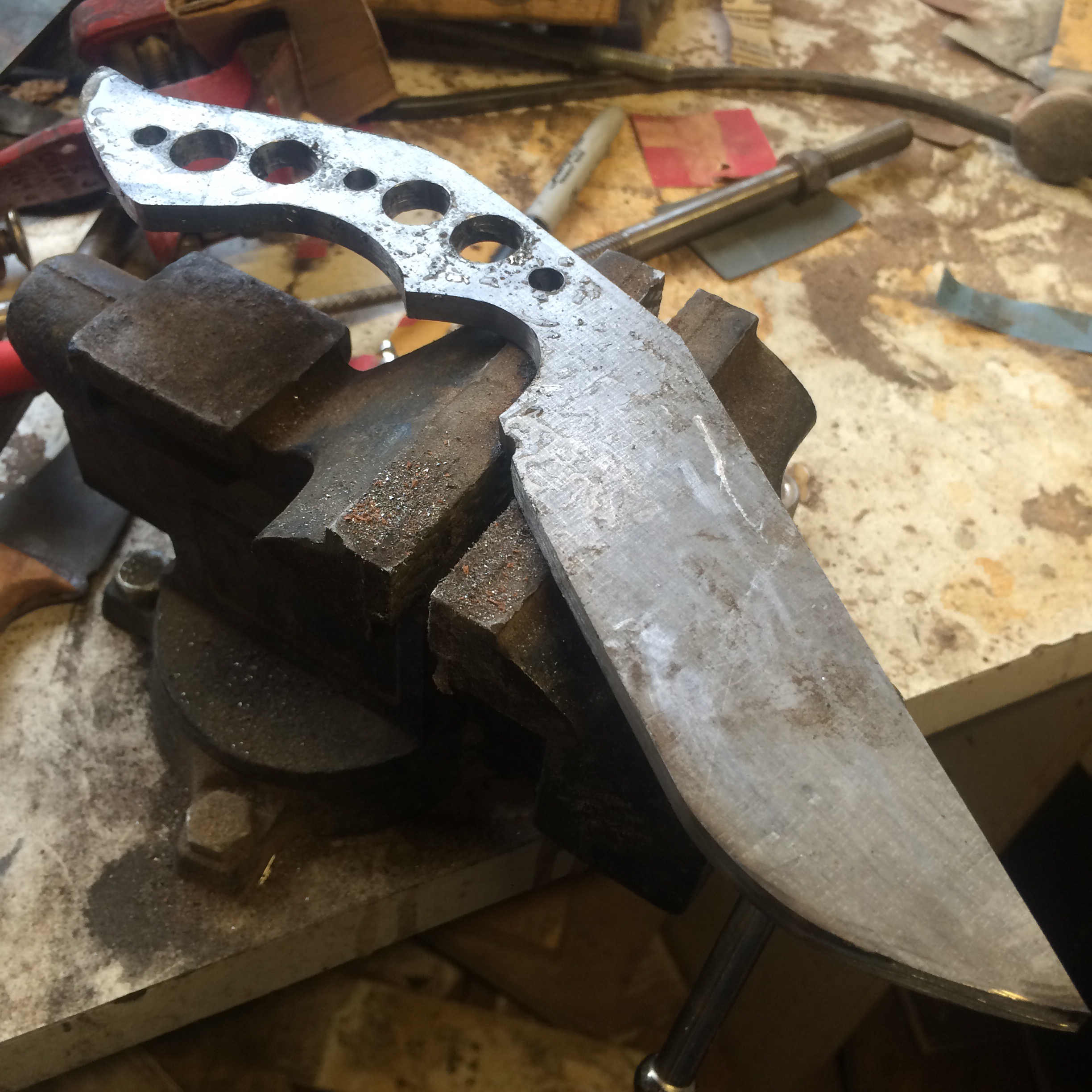
Some half inch holes to remove weight.

Several hours later…

There is a lot of material to remove…

Full flat grind

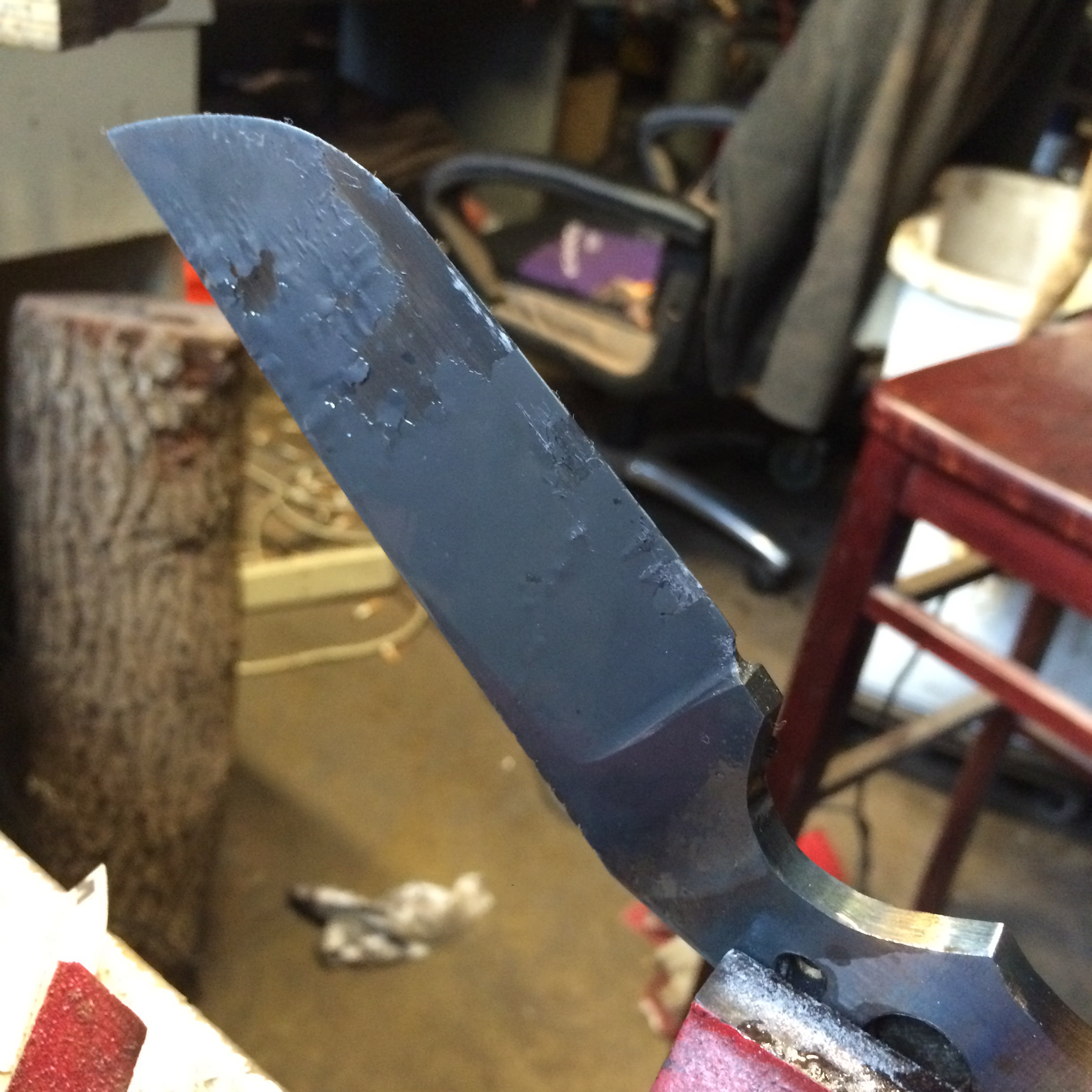
Hand sanding before heat treatment

Into the forge:

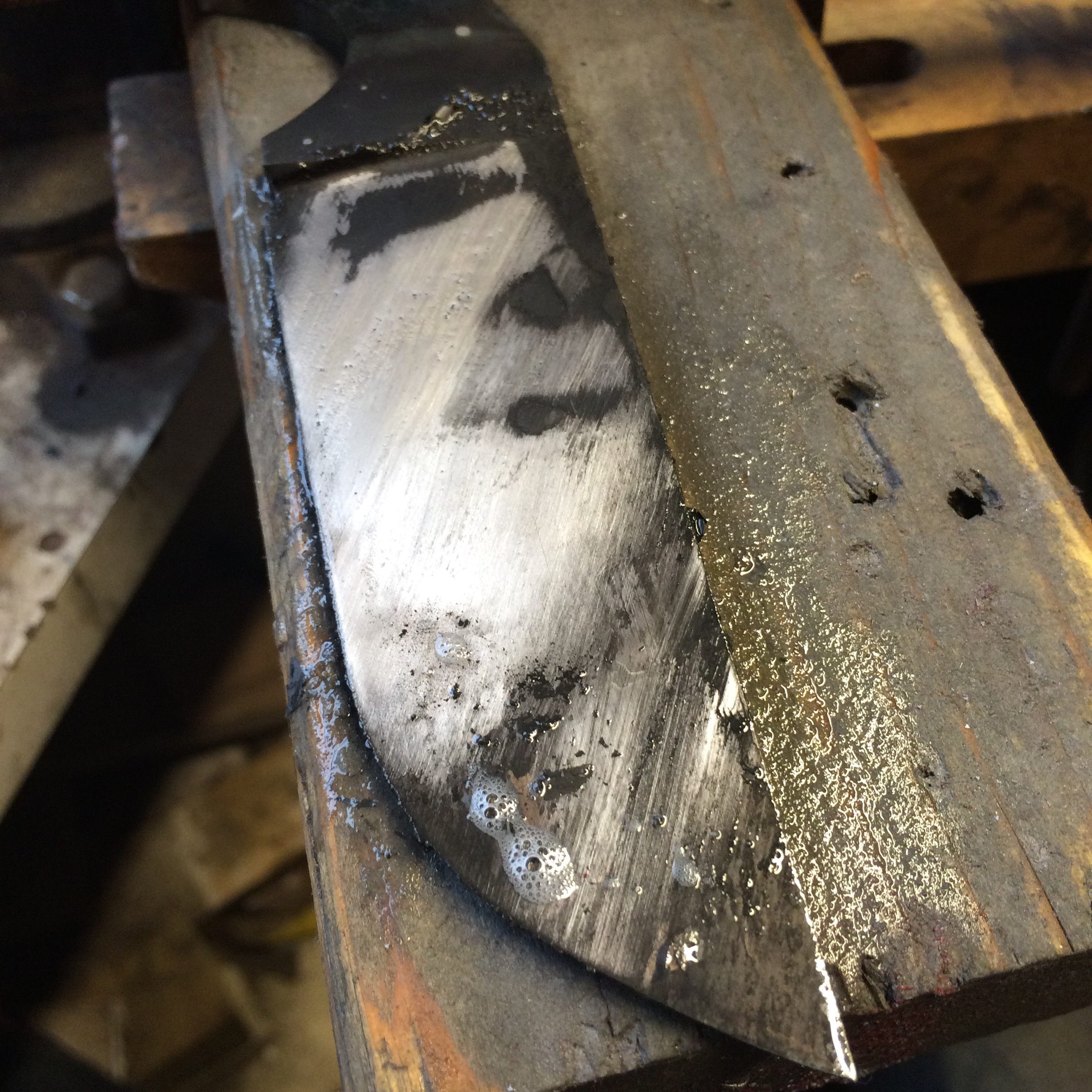
Tempering…

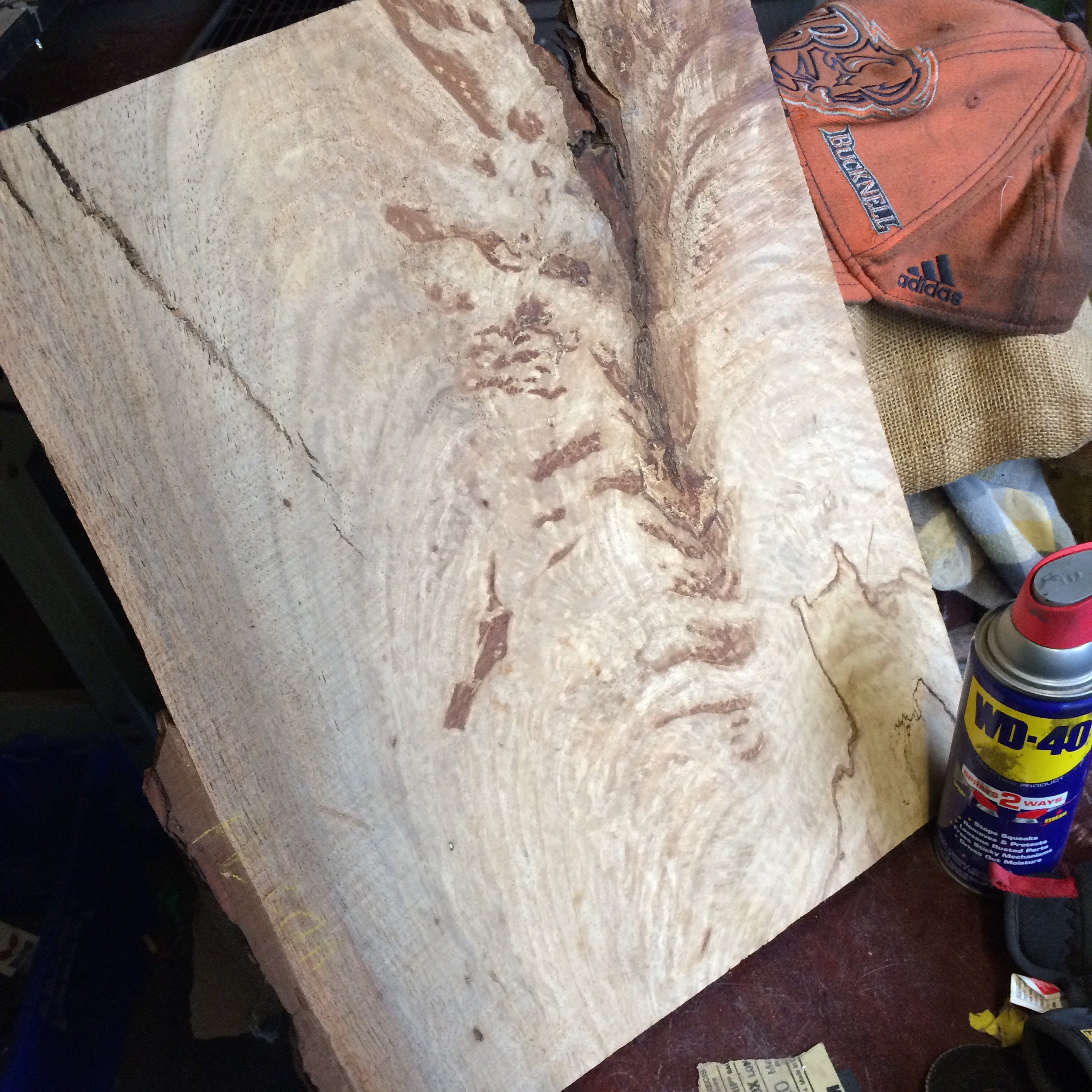
This is a large piece of spalted pecan, sent to me by my wonderful cousin in Texas.

Up to 2000 grit

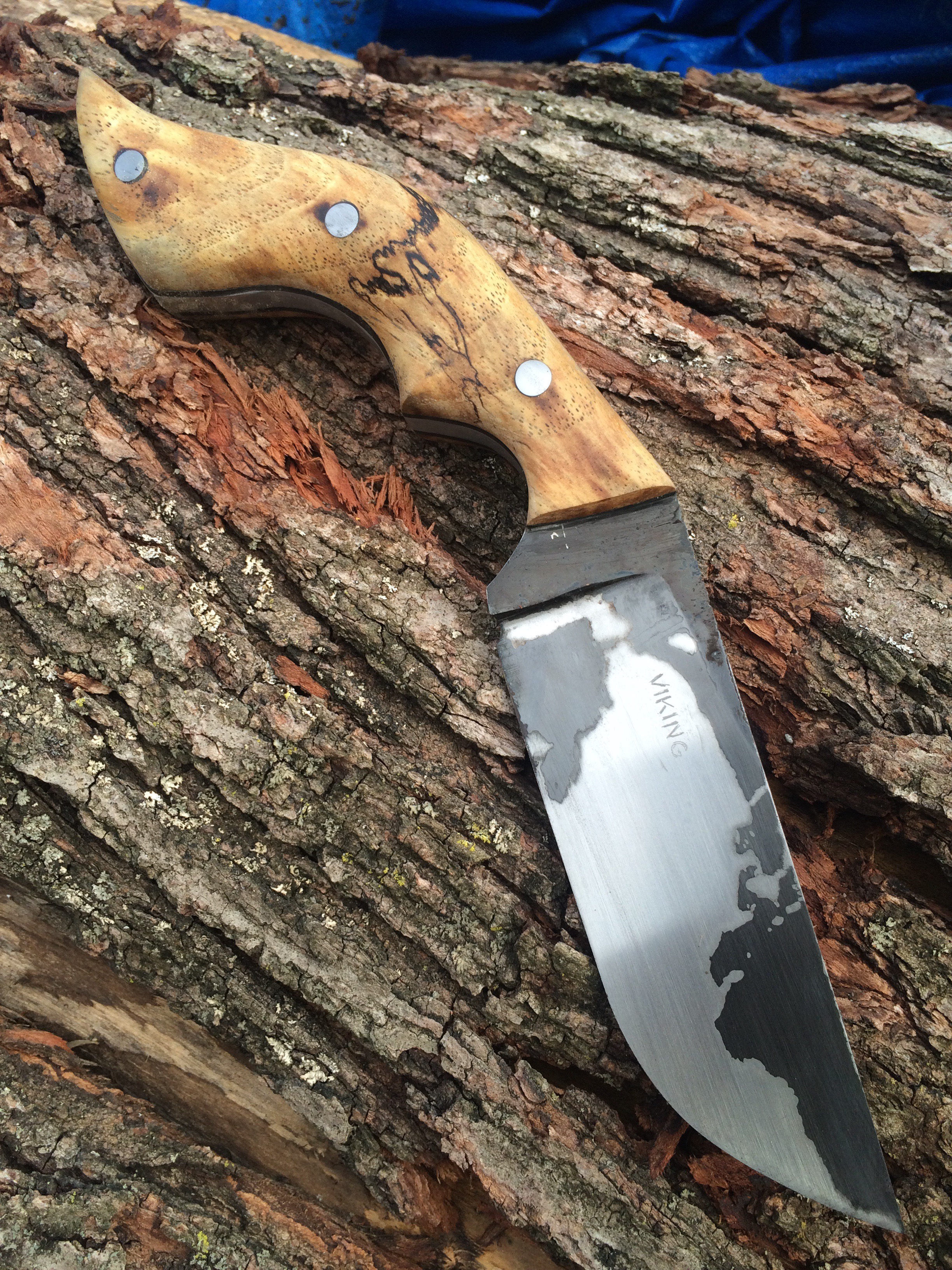
The Treethrower:  1095 spring steel, spalted Pecan handle scales, kydex spacers and steel hardware.

Thanks for the lessons, Joe.