“This is Mr. Beethoven. Do you hear that? You don’t? This doesn’t move you? Well that’s ok baby, you can always go sell shoes.”
-Doug Richards
This knife was a commission for one of my former teachers and good friends, Doug Richards. I first met Doug when I was fifteen. I had been accepted to a summer residential arts program and went to study music and trombone. I was there with about 50 other musicians and vocalists from across the state. One of the classes I took was run by a jazz saxophonist, who also played every wind instrument known to man. To help us learn about jazz he brought in a very passionate man to speak to us about Duke Ellington, one of the great American composers. This man was Doug.
This particular class was at 8am and we had all been up late doing God knows what, as teenagers away from home living on a college campus are wont to do. Doug noted this and suggested that if we were tired and didn’t have time for the Duke then we could leave and take a nap.
This took us all aback. We all paid attention as Doug put on an Ellington video and proceeded to dance around the room, deigning us with the story of the music and the man…and every member of the band. The man has an encyclopedic knowledge of music and the lore around it.
I ended up coming to university to study with him. He taught a two year course of study on how to write big band music. That was the course description anyway but it was so much more than that. In this class I learned how to listen, really listen, to music. I learned how to discern the masters from the dilettantes. I learned what moved me and the mechanisms of the sounds that held me in those places. Amidst all of this I learned how to compose and arrange music that sounded like me, and no one else.
What I learned most from Doug was the importance of craft. Craft encapsulates art. Without it, your art isn’t as articulate as it could be and your vocabulary to put what you want to say out into the world is stunted. I started to see this all over in my world- in the people I would work with, in the music I listened to, in the food I ate, and the films I would watch. I paid attention to the manner in which things were put together. I spent hours working on assignments from Doug, exercises in craft, to the point where I would seriously question my life decisions. Often times I felt that these exercises didn’t leave room for any emotion. Over and over I heard “Do not emote” when we approached these exercises, but then I would hear something that Doug had written and it dripped with emotion. Was this some cruel joke?
It was not. In time we were told to write things. I would think of what I wanted to say, write it down, and the craft I applied would make it blossom. Almost without even thinking about it. You just know what to do. The way that a warrior knows to make the kill, or a seventh grade guitar player knows to hit the distortion button. And so I started devouring the craft. I studied classical orchestration with Doug, orchestrating Ravel piano scores for wind ensembles. I played in a Stravinsky ensemble he ran and we worked through pieces the likes of which I’d never heard.
As an adult I remember all the lessons from this man. I always try to remember craft, and to practice it. Like a good meal, or good music, or good love, craft is not something that is easily bullshitted. In a world where quality is often compromised for time and quantity, craft stands out. This is the lesson of the Maestro.
The stories of this man are legendary. Here are a few:
-Most of us had heard of Doug doing one-handed pushups before rehearsals back in the day. Somebody mentioned it to him one day before a rehearsal and he dropped down and did 17. None of us could do any…
-When we were rushing the tempo on a piece of music in rehearsal, Doug told us to slow down or we would get a reputation with the ladies.
-There was a limited edition of a recording re-released and Doug told me that I needed to have it. When I told him I didn’t have the money he suggested I get a paper route…
– Before one performance, Doug made an announcement: “Ladies and Gentleman, please take your cell phones, pagers, and all of your other electronic jive out into the lobby, throw them onto the ground and step on them because I don’t want to hear any of them during this performance. Thank you.”
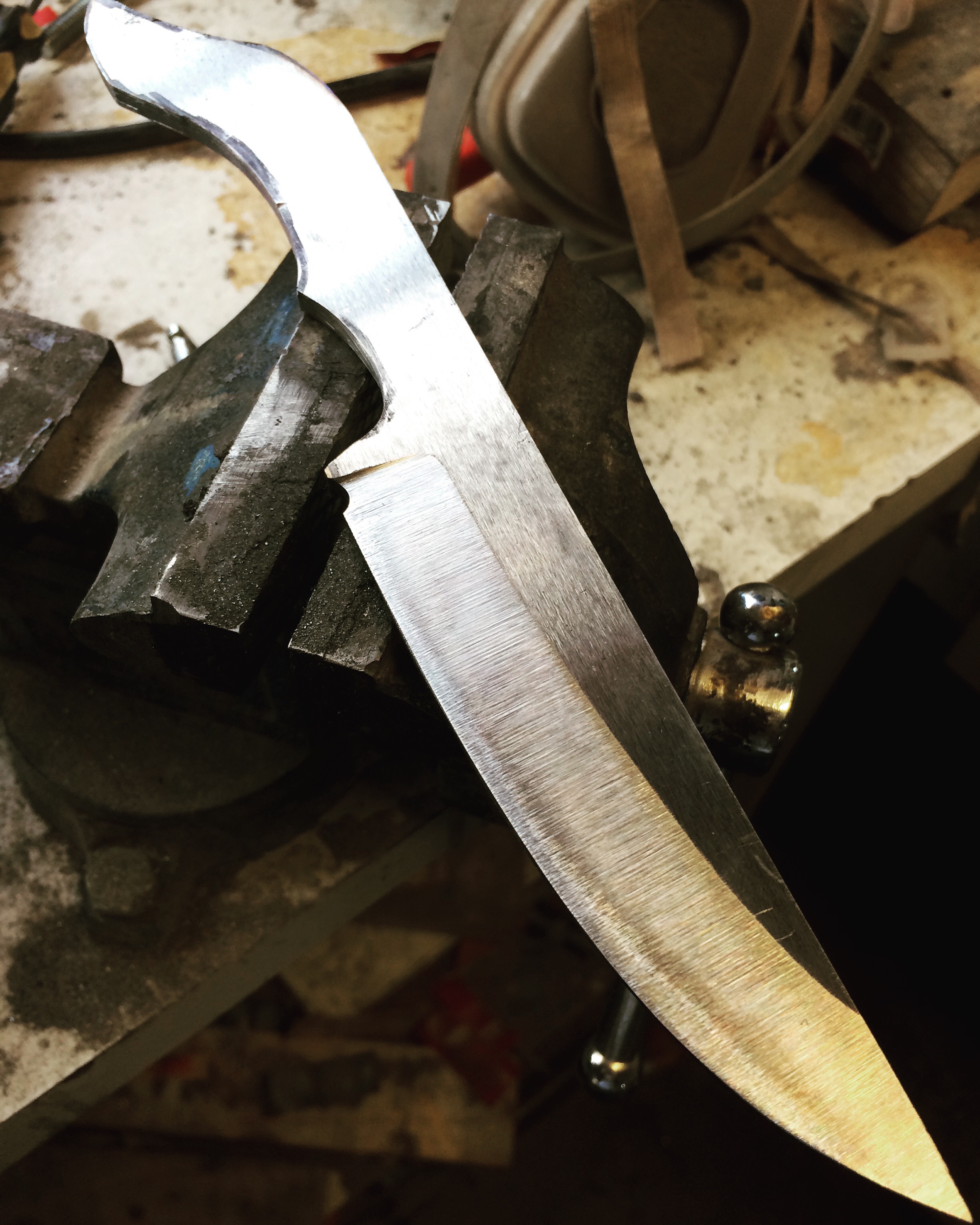
Doug asked for a chef’s knife, for the kitchen. I started with a piece of thin stock O1 tool steel:


Hardened:
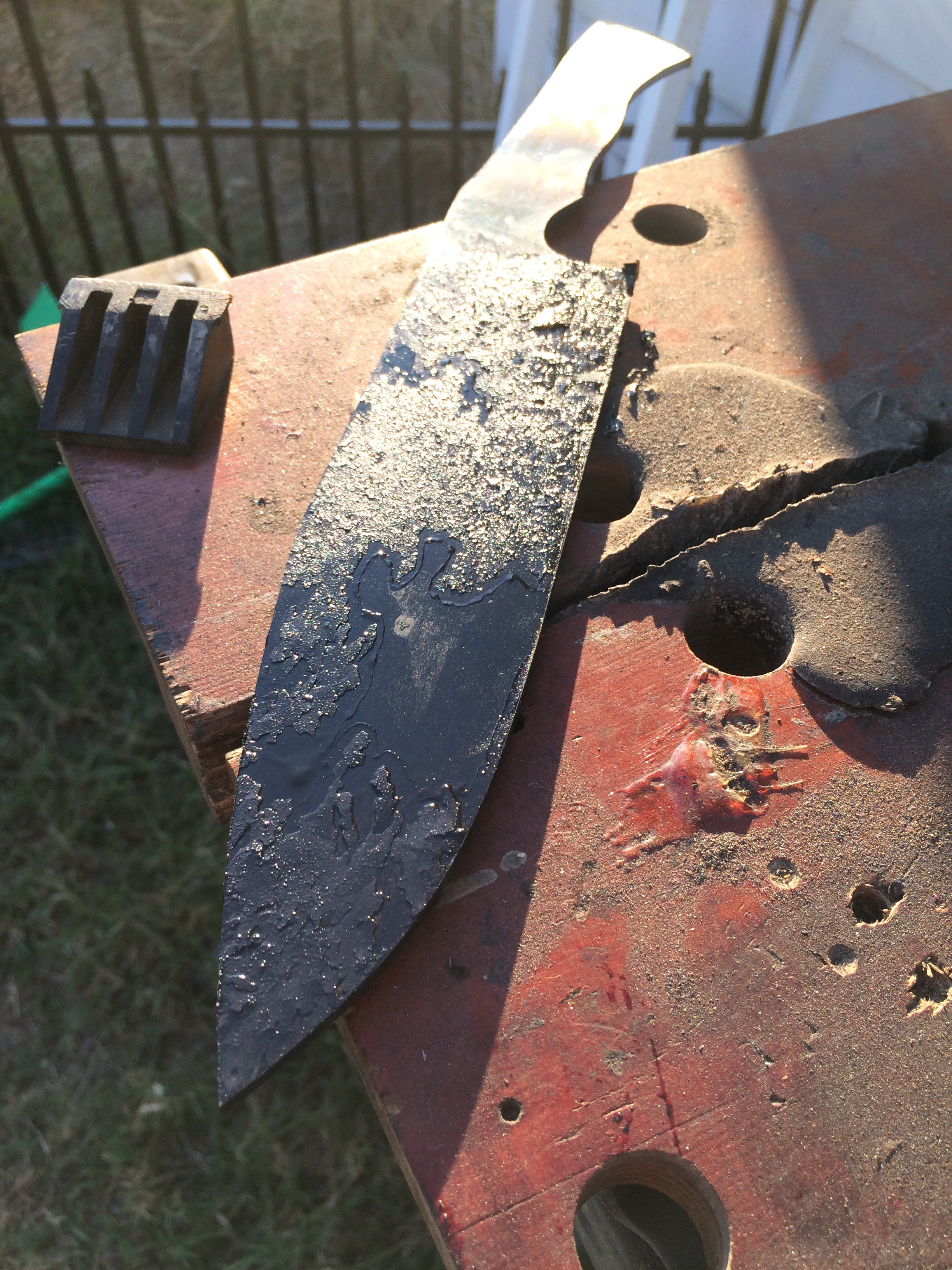
Grinding:

More grinding:

That’s about right…off the grinder at 40 grit:
Hand sanding station:
handwork starts at 80 grit:
120 grit:
220 grit:

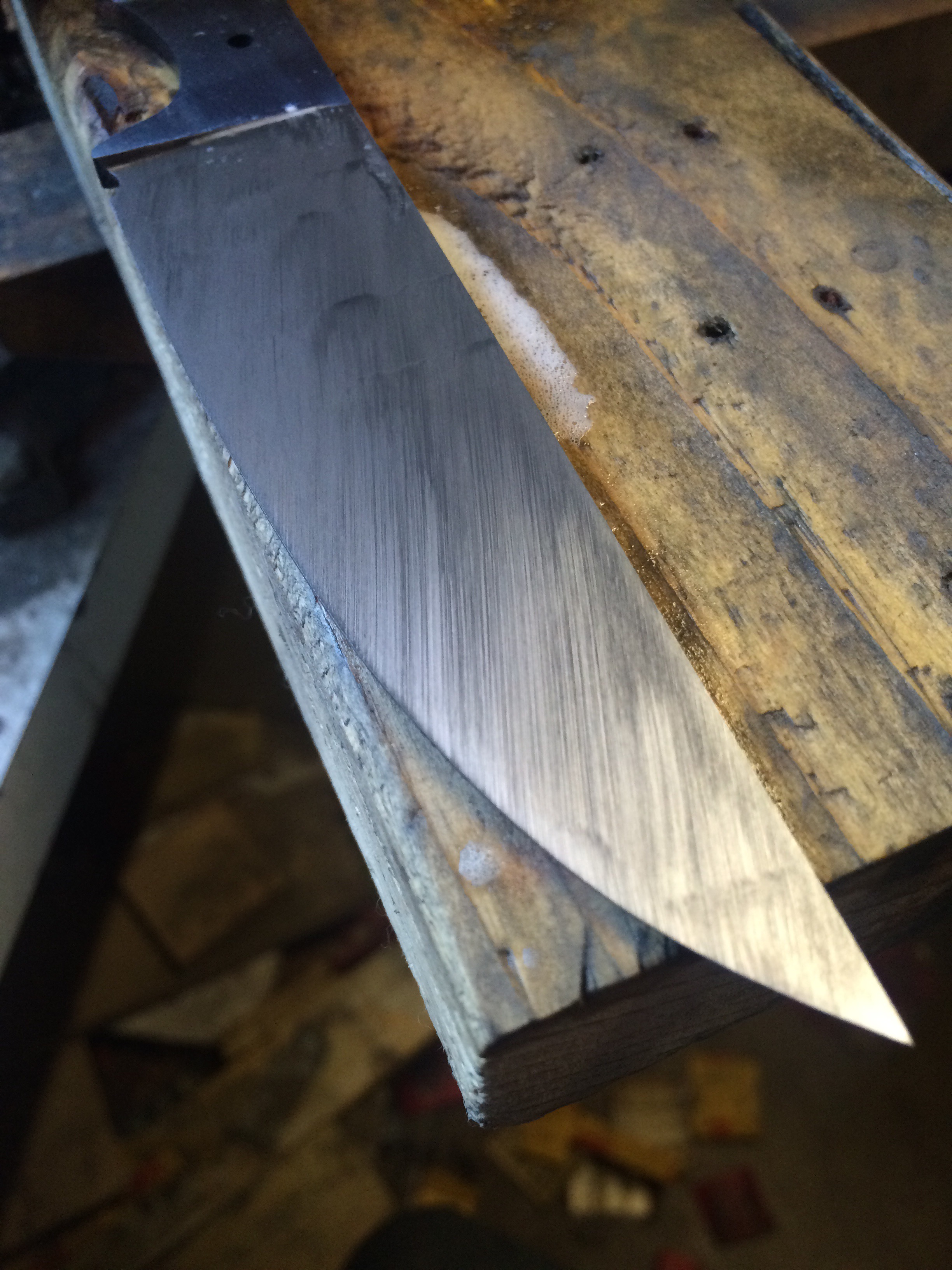
Hours later at 320 grit….
This is a score of Doug’s, meticulously handwritten and every note exactly where it should be, articulated just so…
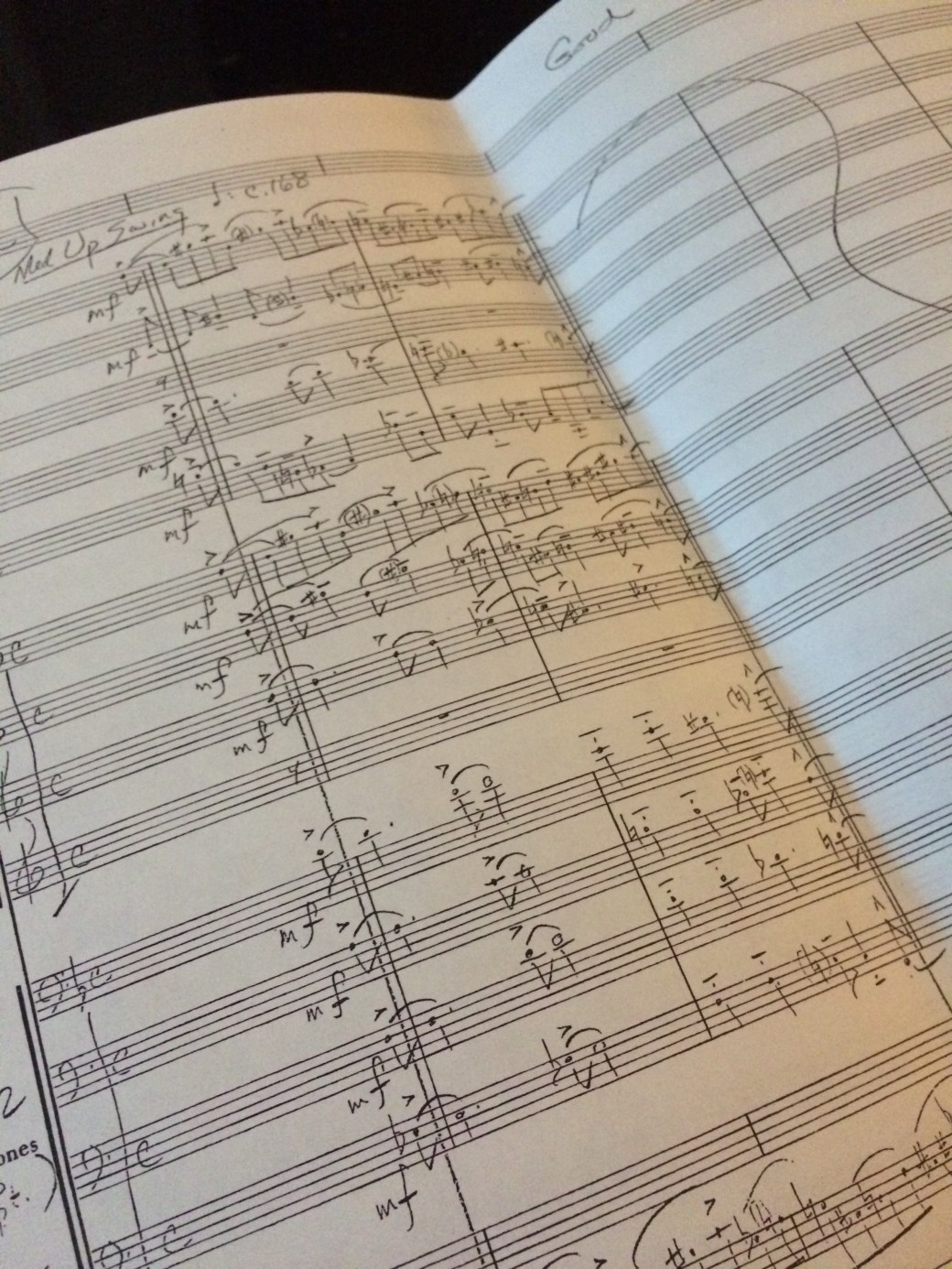
…so of course I cut it up…

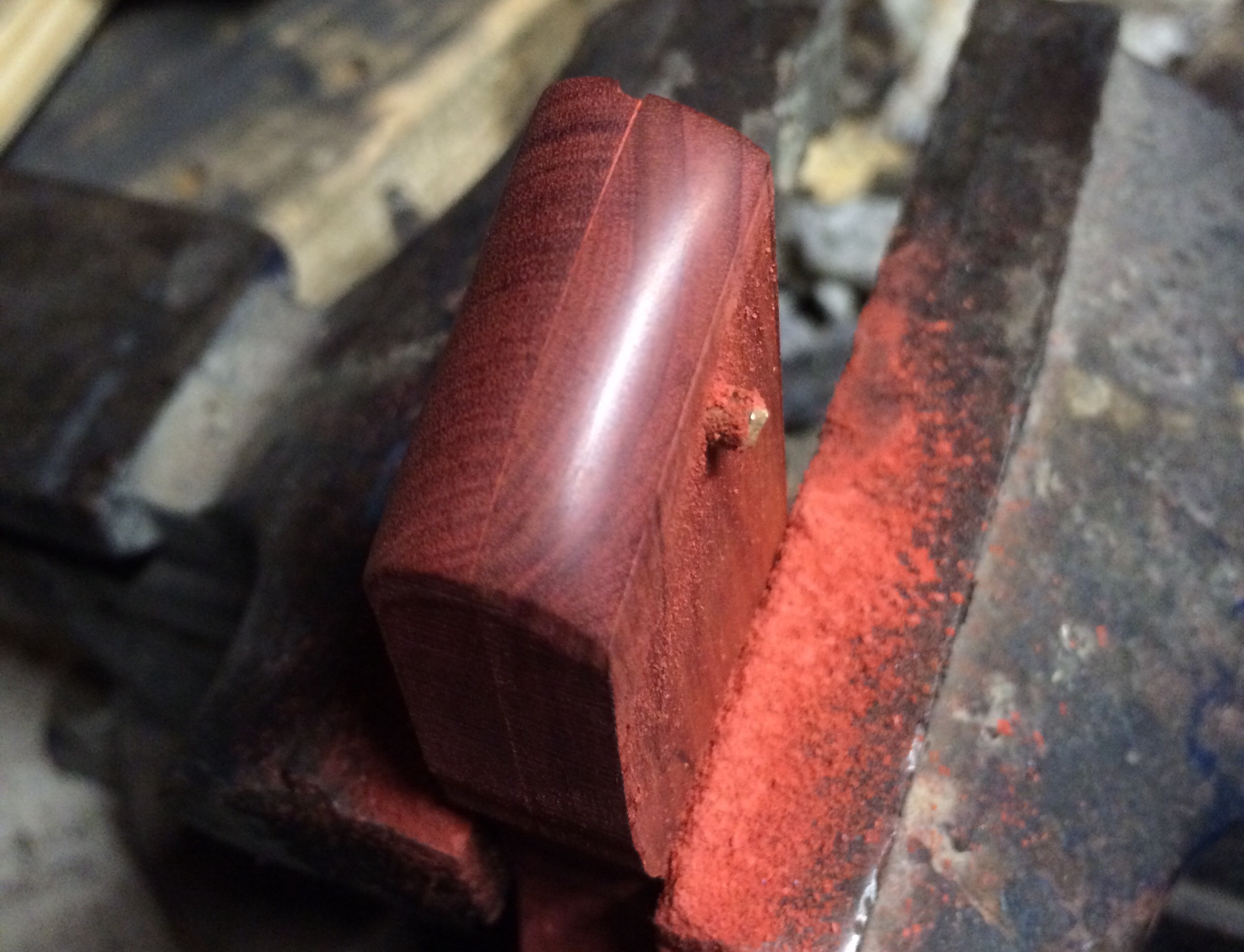
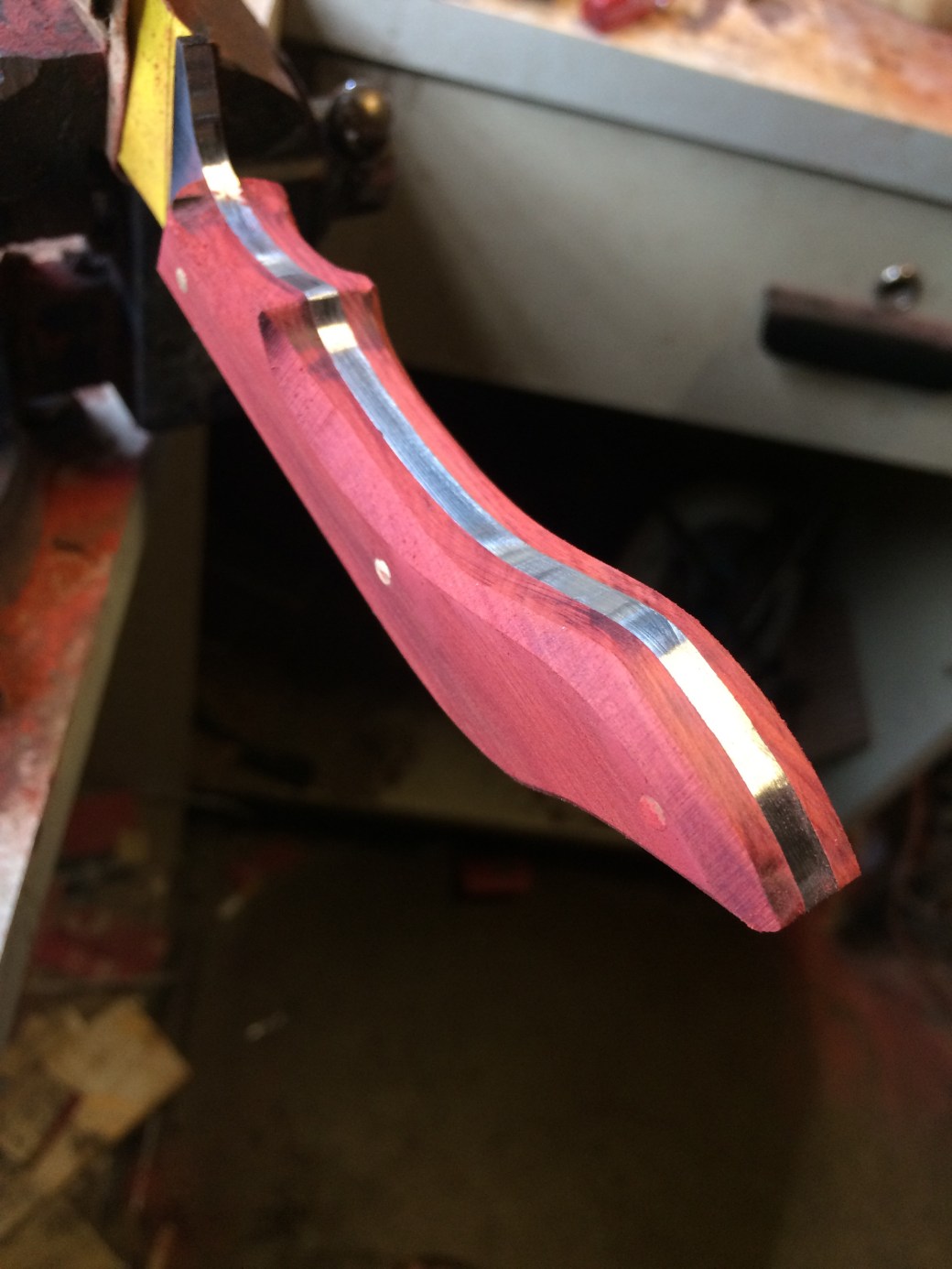
Ready to be made into a handle:
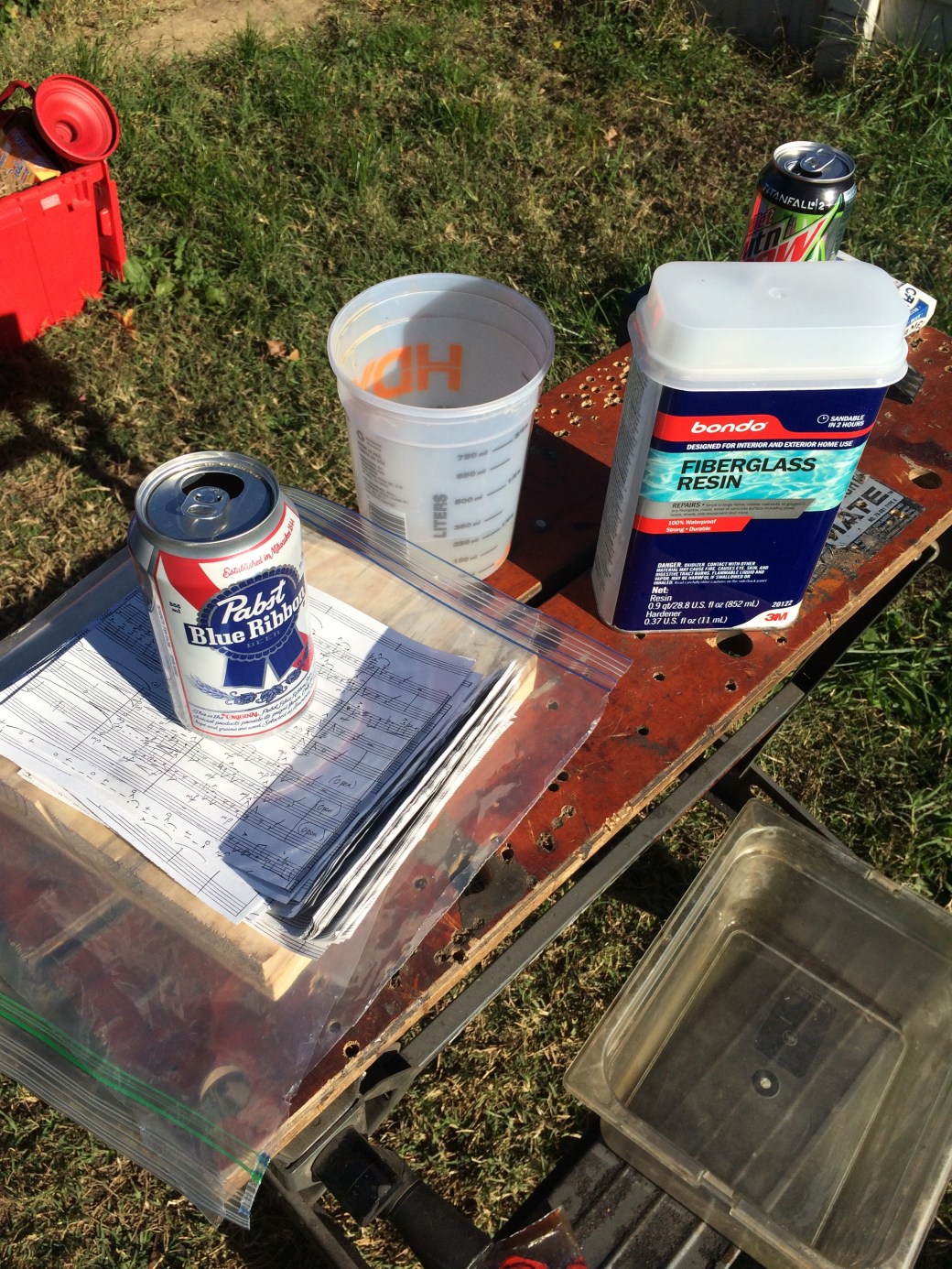
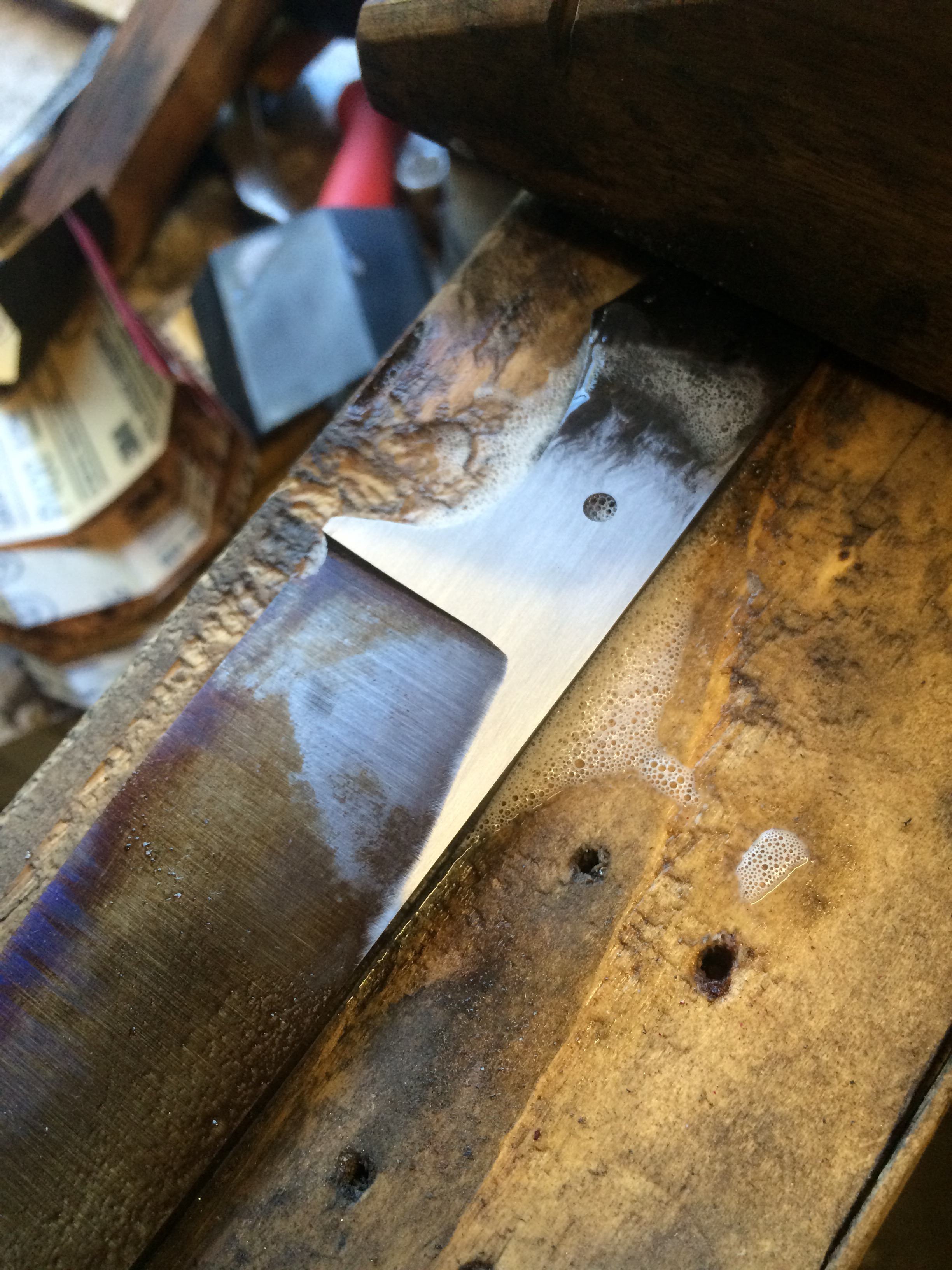
Soaked in fiberglass resin:
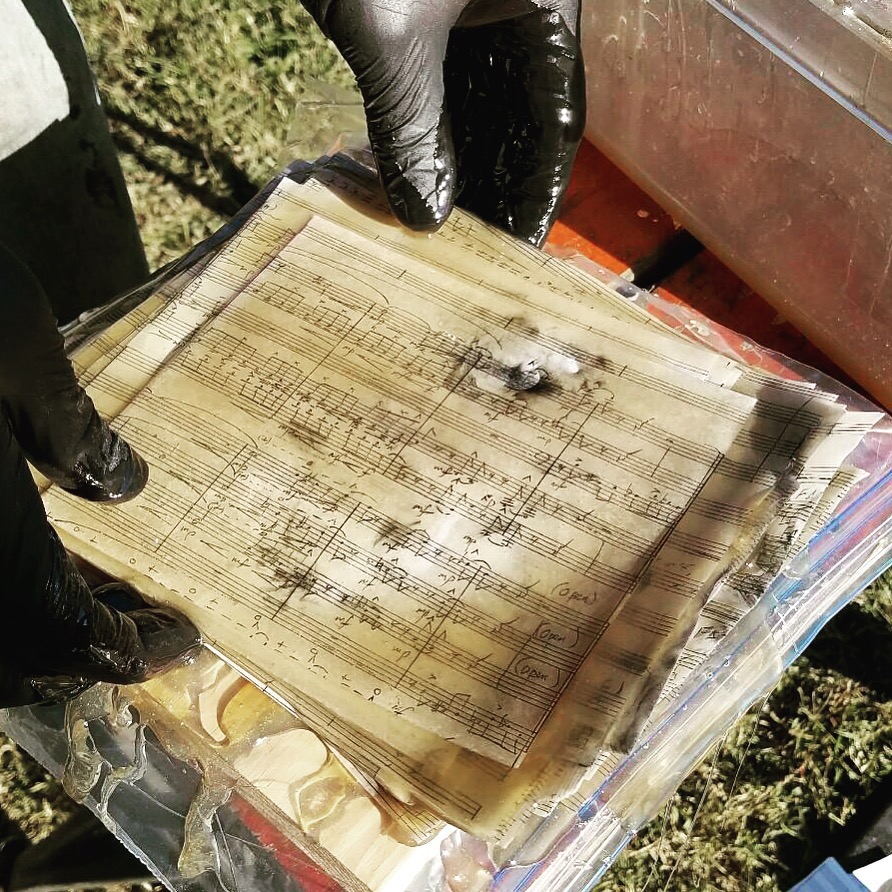

I think I can work with this…

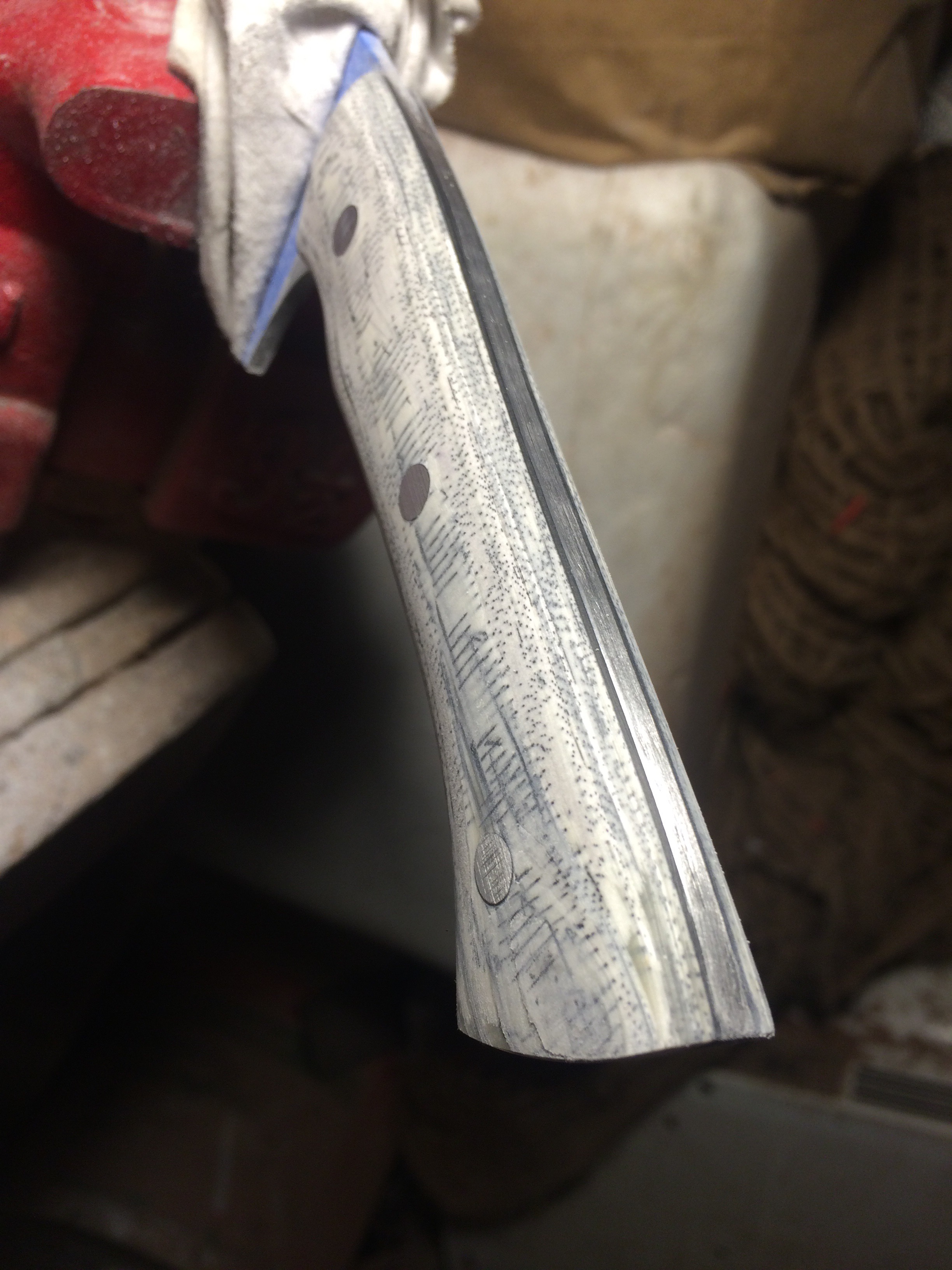
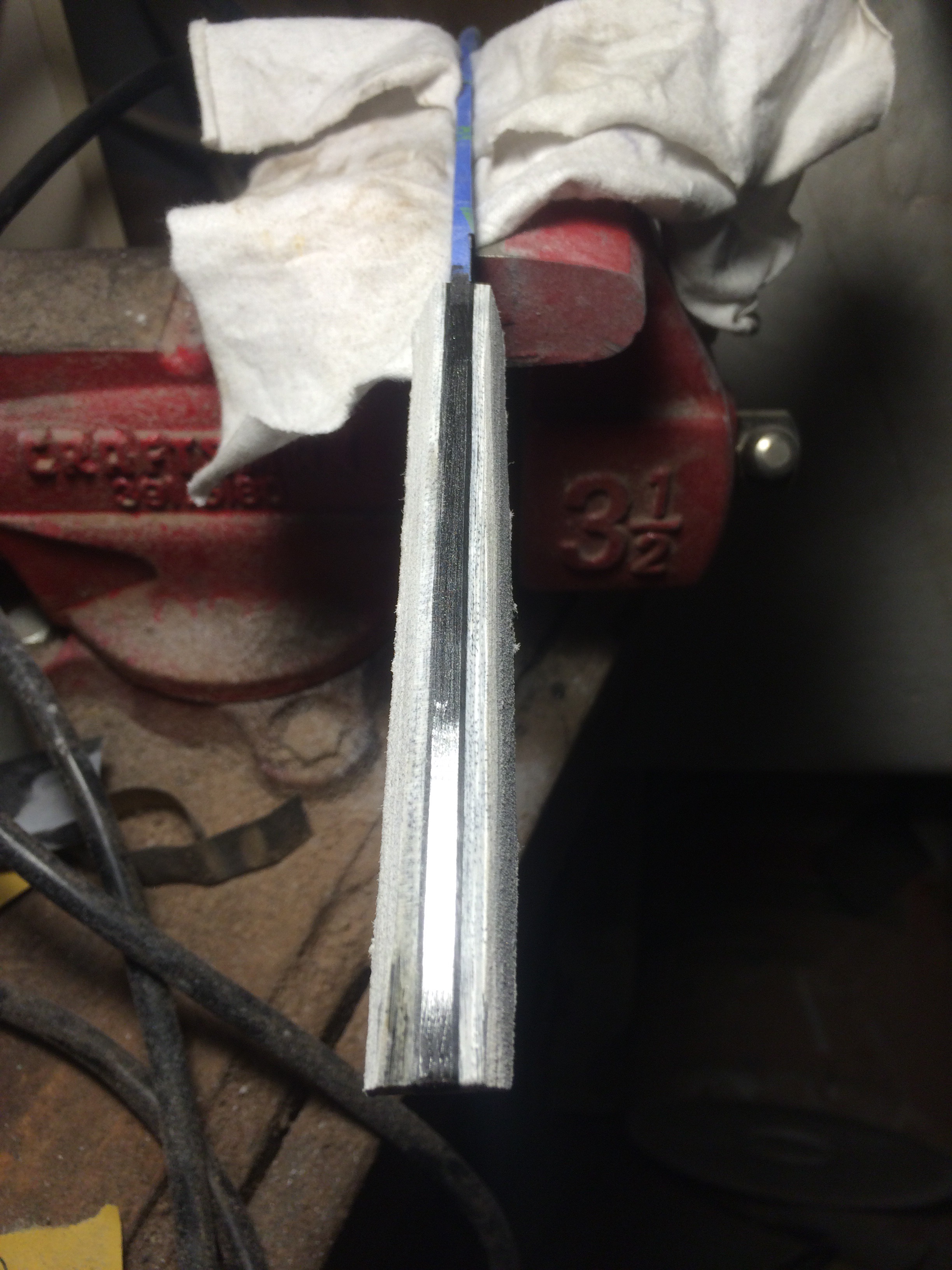
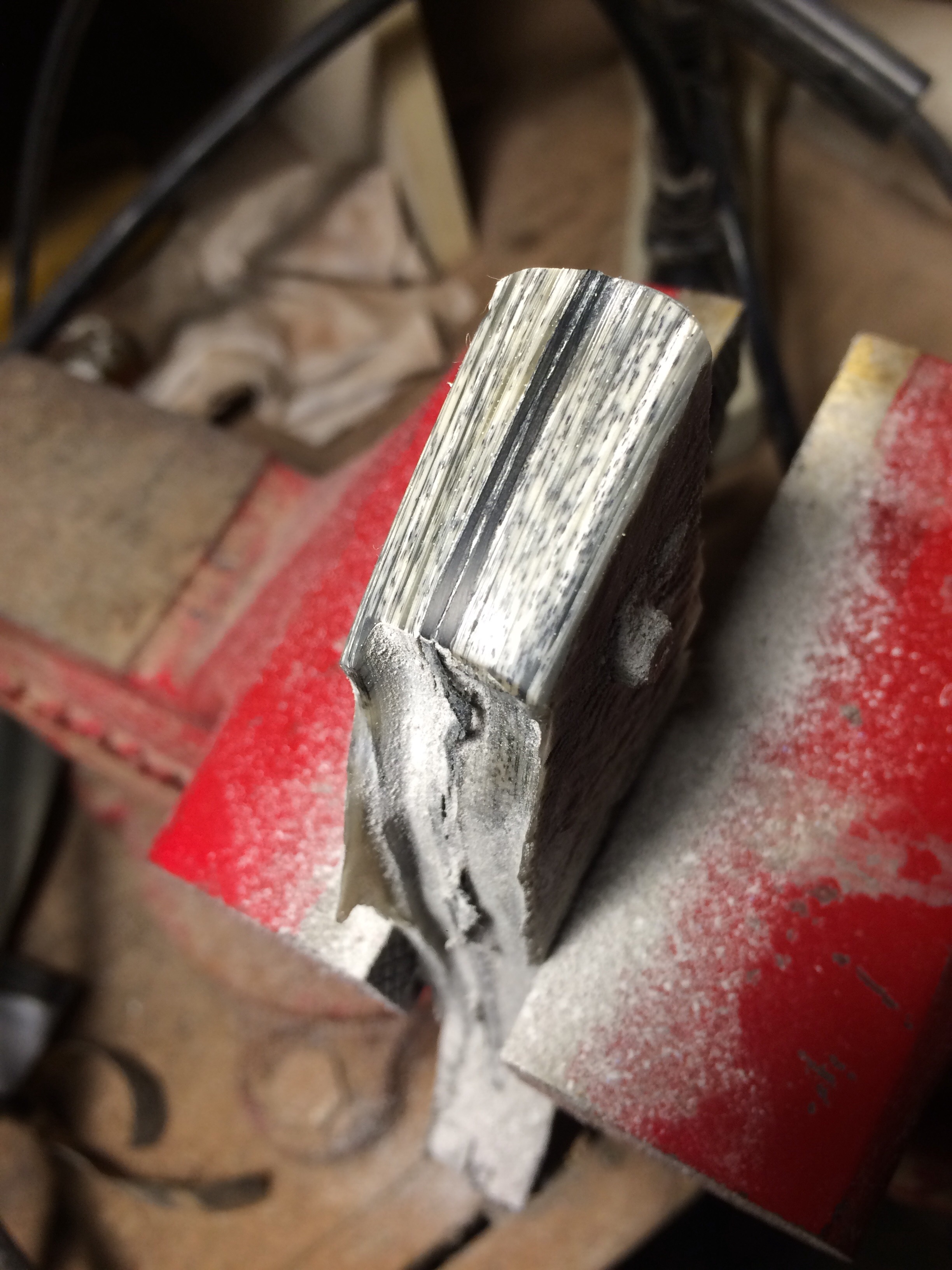
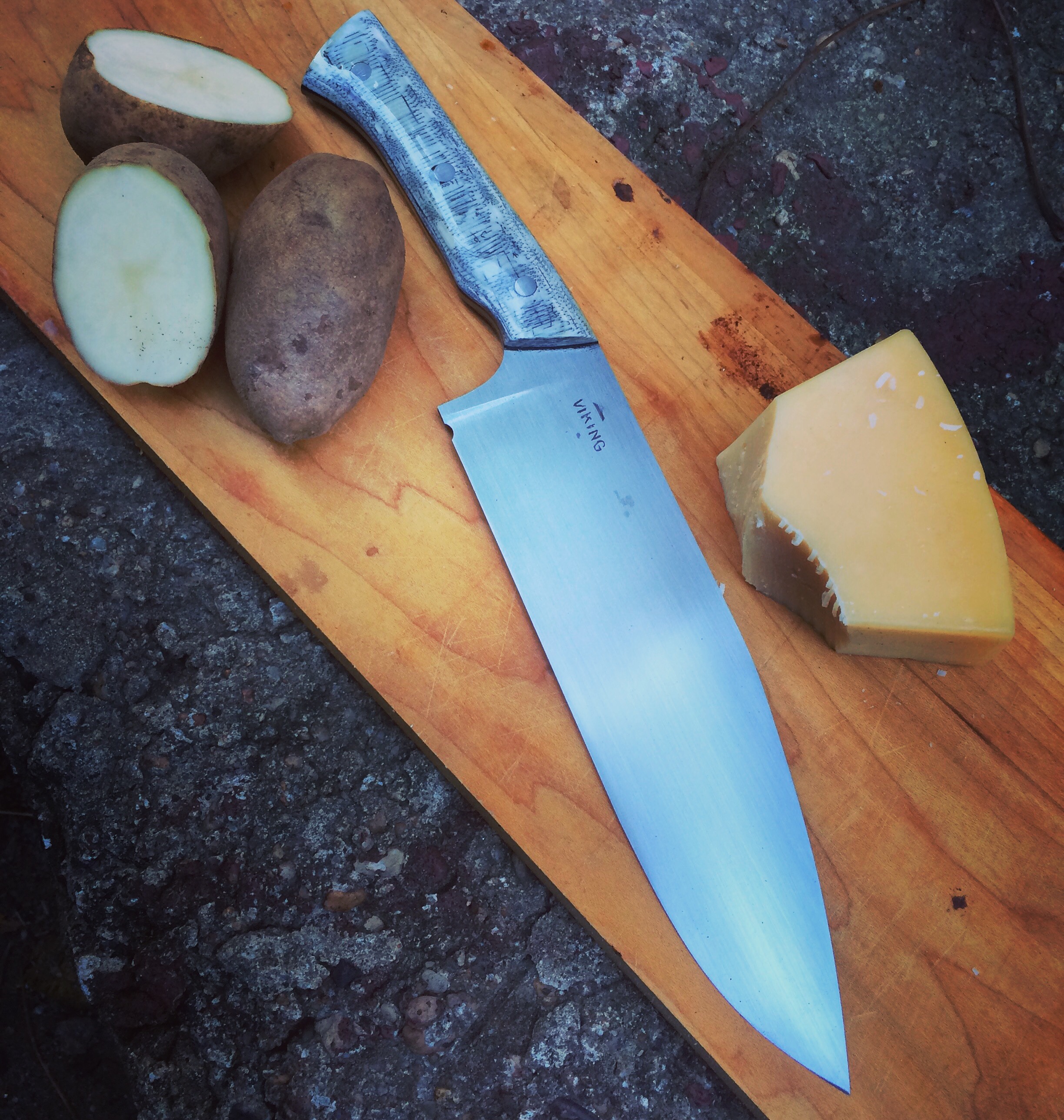
Be sure to learn your craft.
Also be sure to check out Doug’s record– it’s really fantastic.






 groundedinfire