Knifemaking: discernment, judgement, and the Observer

“The alchemists spent years in their laboratories, observing the fire that purified the metals. They spent so much time close to the fire that gradually they gave up the vanities of the world. They discovered that the purification of the metals had led to a purification of themselves” 

Paulo Coelho, The Alchemist

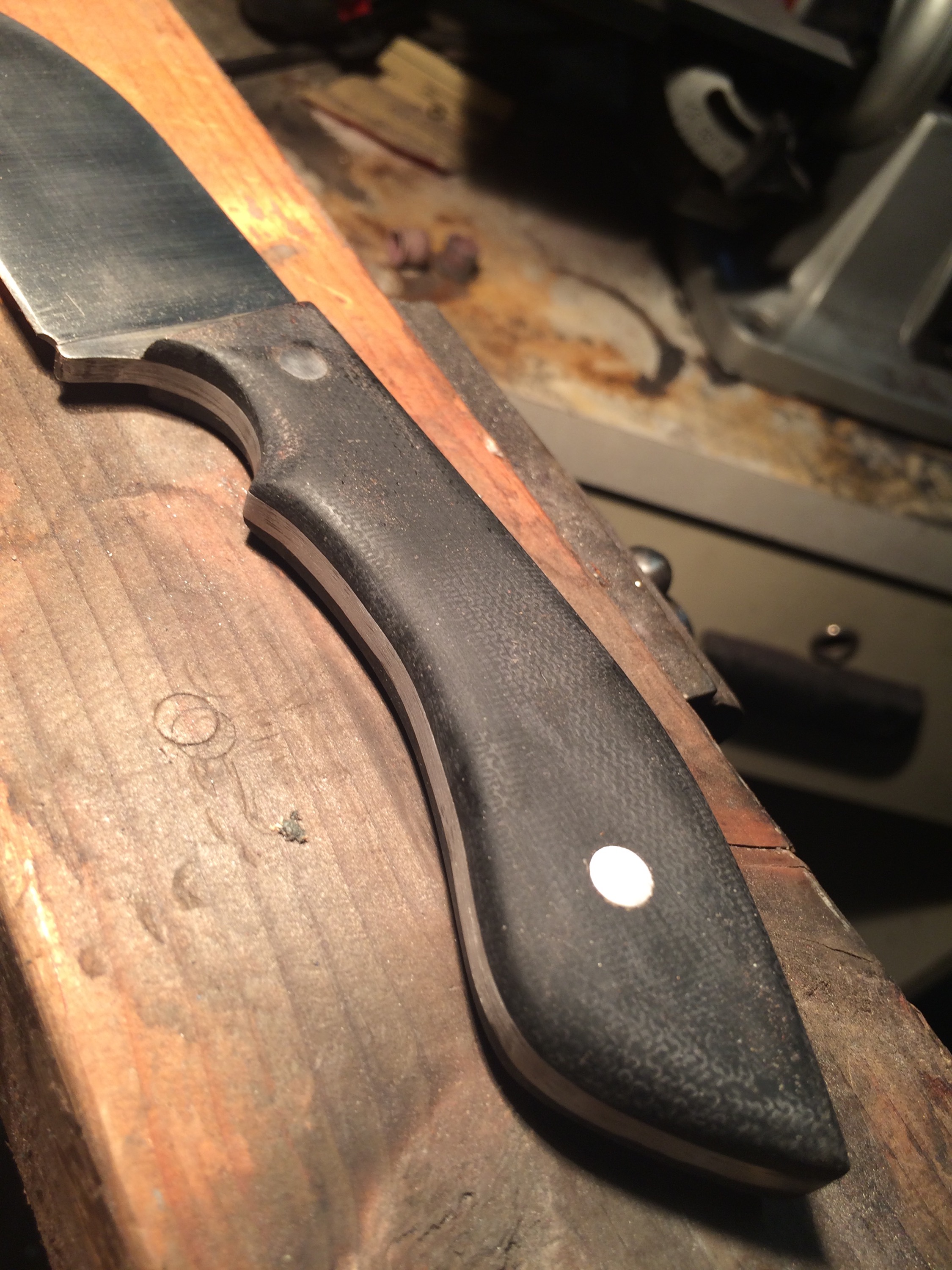
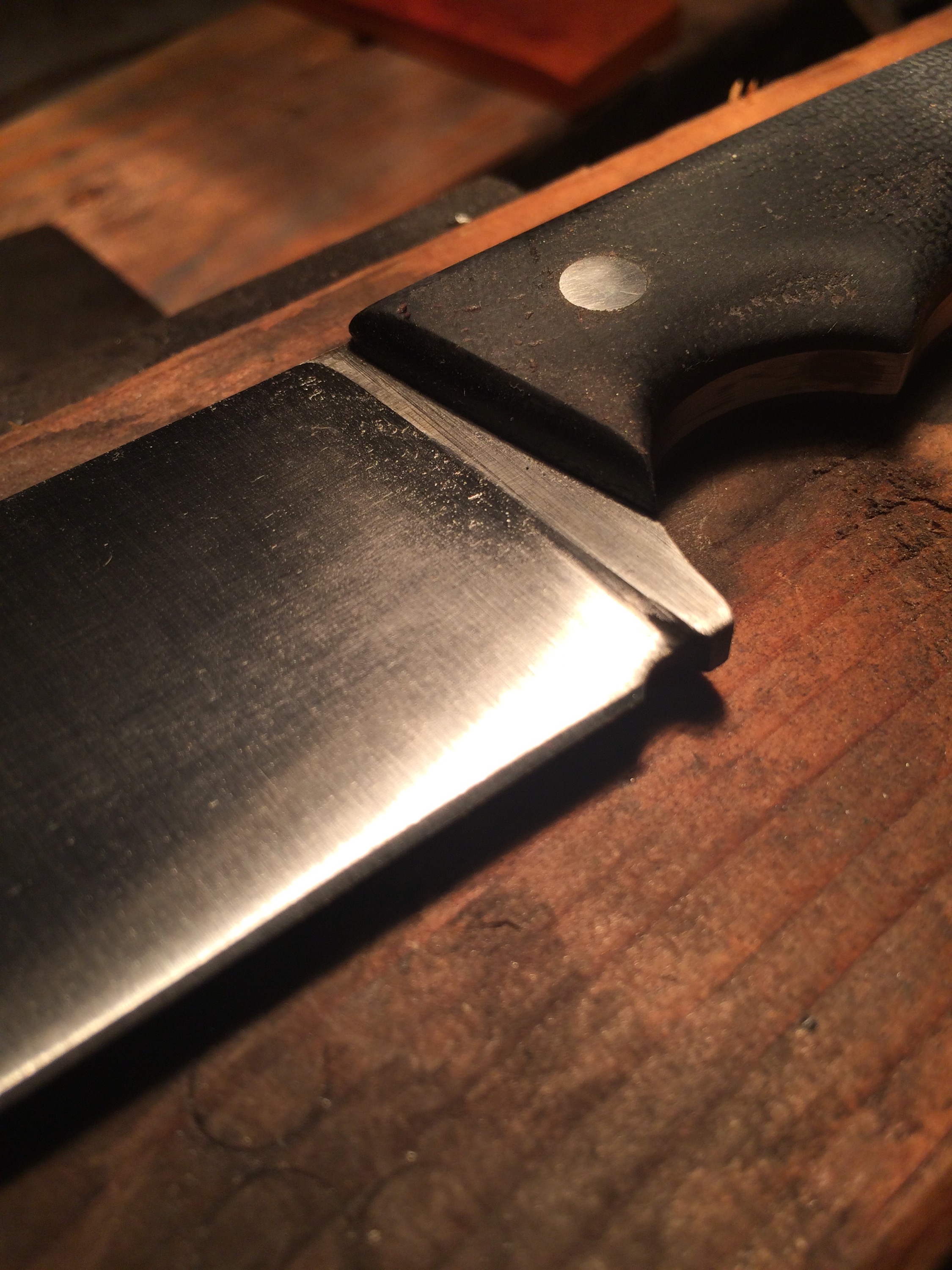
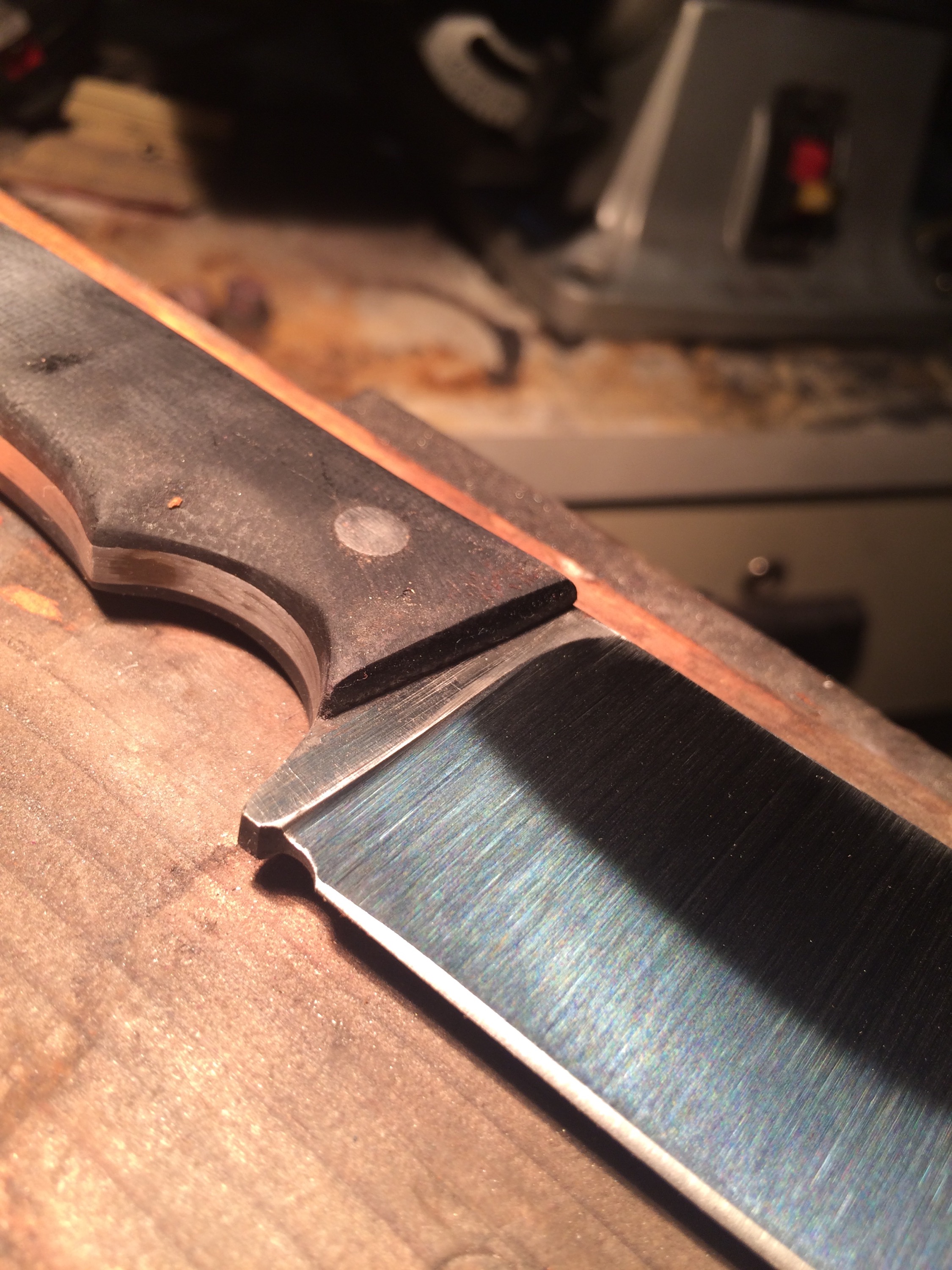
This blade was a commission by a gentleman as a gift to a colleague, another gentleman who is a videographer.  One of the parameters was to work video camera parts into the handle.

I am not a student of film.  I don’t watch many movies or documentaries and when I do I find myself getting extremely upset, sad, or angry at something I most likely have little control over or isn’t even real.  There’s a balance between being informed/entertained and being consumed that I have yet to straddle.  Most of the time I watch things I find to be entertaining or inspiring and even then I get excited and have trouble concentrating or going to sleep.  The world can be a an overwhelming place and mediums such as music, art, and film have the ability to amplify it immensely. About ten years ago I saw Chick Corea perform and it was so badass I couldn’t go to sleep.

Going back to observing the fire that purified the metals: in observation you can be purified or you can be consumed- that is the nature of the flame.  Depending on how something is presented it isn’t difficult to find oneself consumed.  Sometimes that is the intent and is part of what gives life it’s lustre.

I was sent a bit of the gentleman’s work.  It was a brief snapshot of a community based non-profit and it was beautiful.  It was a simple observation of this organization’s past, where they are now, and where they want to be in the future.  From that place of observation a clear and wide view was provided.  Space was left for the audience to decide for themselves what this organization was all about.  That is discernment.  It is about separation- the good from the bad, the bitter from the sweet, the wicked from the just, the right from the wrong.  Because rarely is something completely one thing or the other.

When it becomes one thing or the other, we find ourselves in the realm of judgement.  Judgement is more about polarization- that things are either one way or the other.  This is where condemnation or condonation occurs.  Be mindful when you hear polarizing statements like this:

“If you are not part of the solution, then you are part of the problem”

“You are either with us or against us”

“The friend of my enemy is my friend”

Judgement can be tricky because rarely is it solely about the situation or instance that is being judged.  It is often a reflection of something in us that we don’t like, or might be causing us pain, or shines a light on a place of shame.  When I find myself casting judgement, I find it coming from one of these places.  Sometimes it’s difficult to find one’s way back to discernment from that realm.

I saw a profound maxim on the Facebook the other day: “Judge not, for thou hast fucked up in the past as well.”

There it is.  I fucked up in the past and I haven’t dealt with it so I will cast judgement on those in similar situations because it makes me feel better about the shit I haven’t dealt with.

Not proper observation at all.  You miss out on the nuanced bits of wonder that makes life sweet and also bitter.

This is the lesson of the Observer.  To see that things are rarely one thing or the other.  To look past yourself and your projections and to take things for their core value.  There is something cleansing in that.  It’s a bumpy journey, but a journey worth taking.

…….

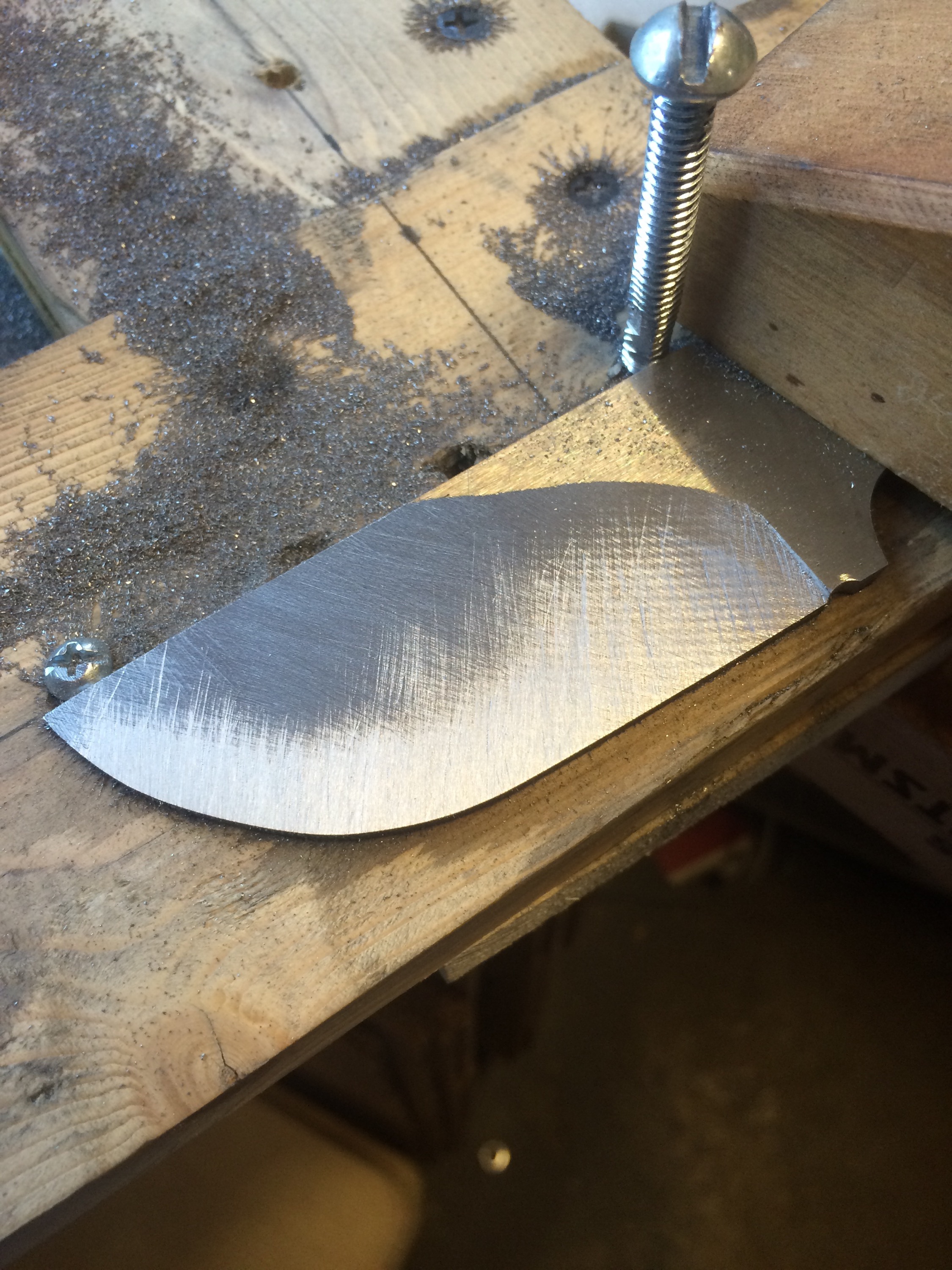
For this blade I drew out several designs for the client to look at.  He selected this one, a drop point design and a very effective out-of-doors use knife.  It’s a departure from my normal “let the grinder design the blade” technique.
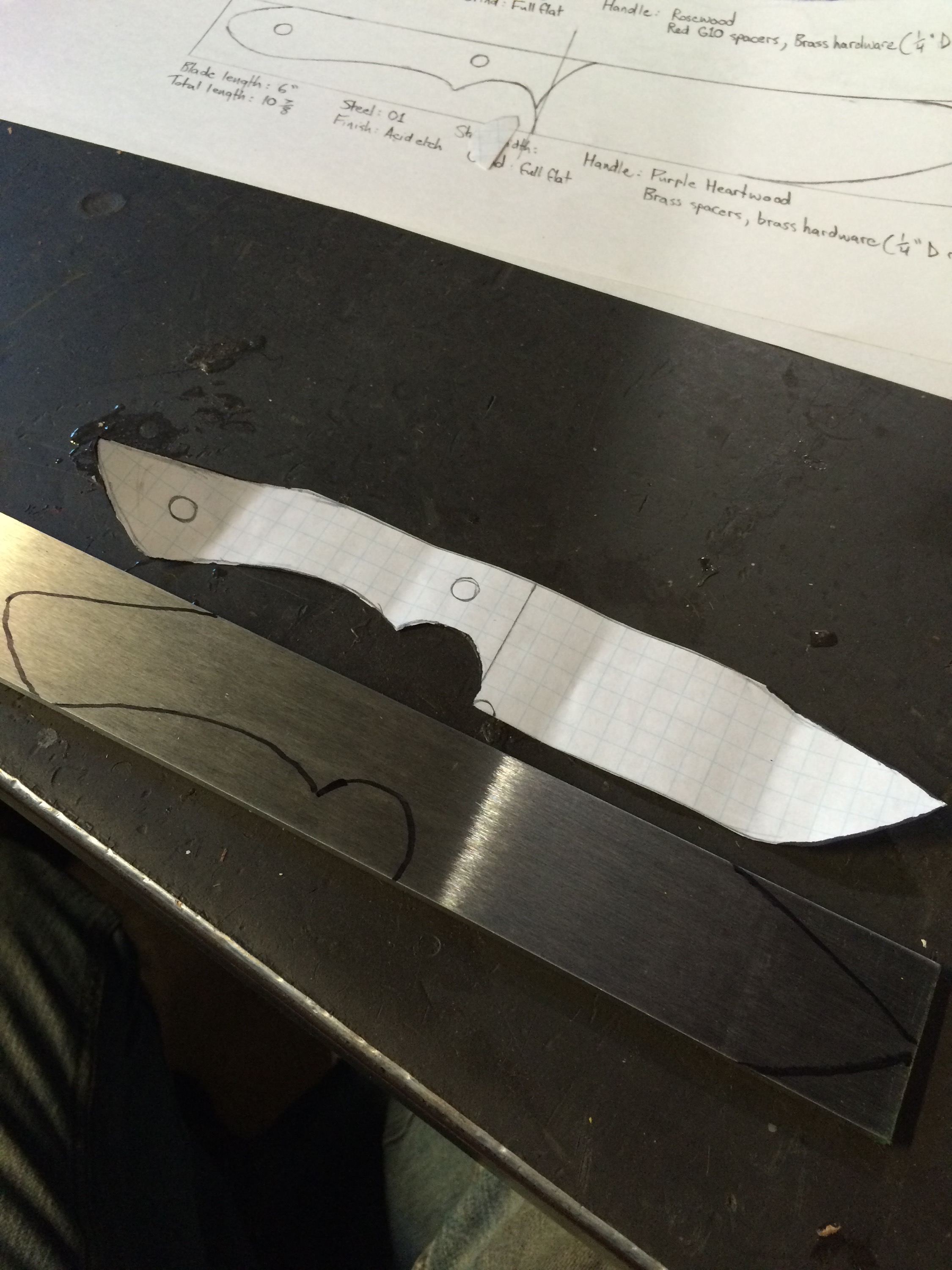
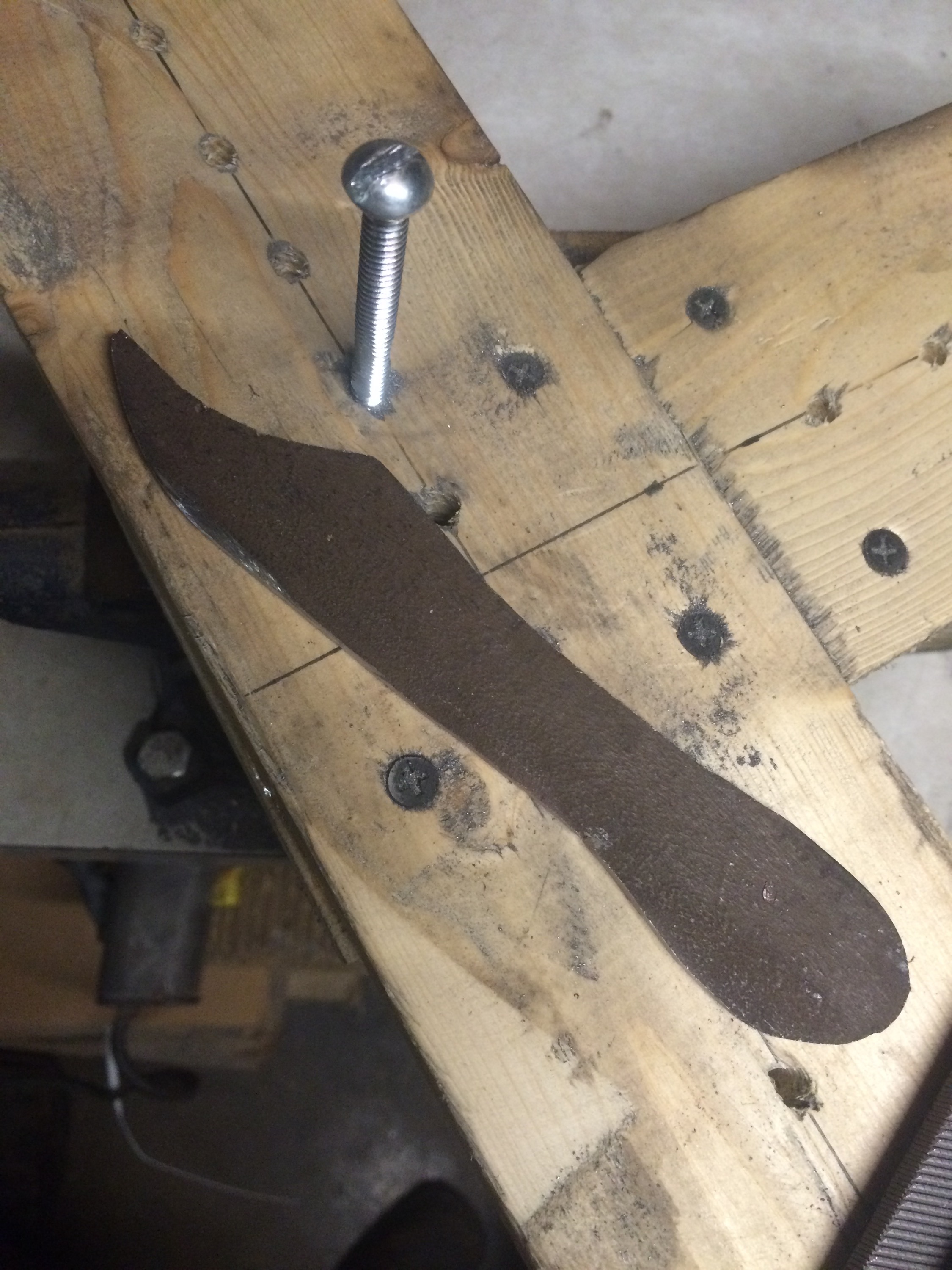
Profiled…
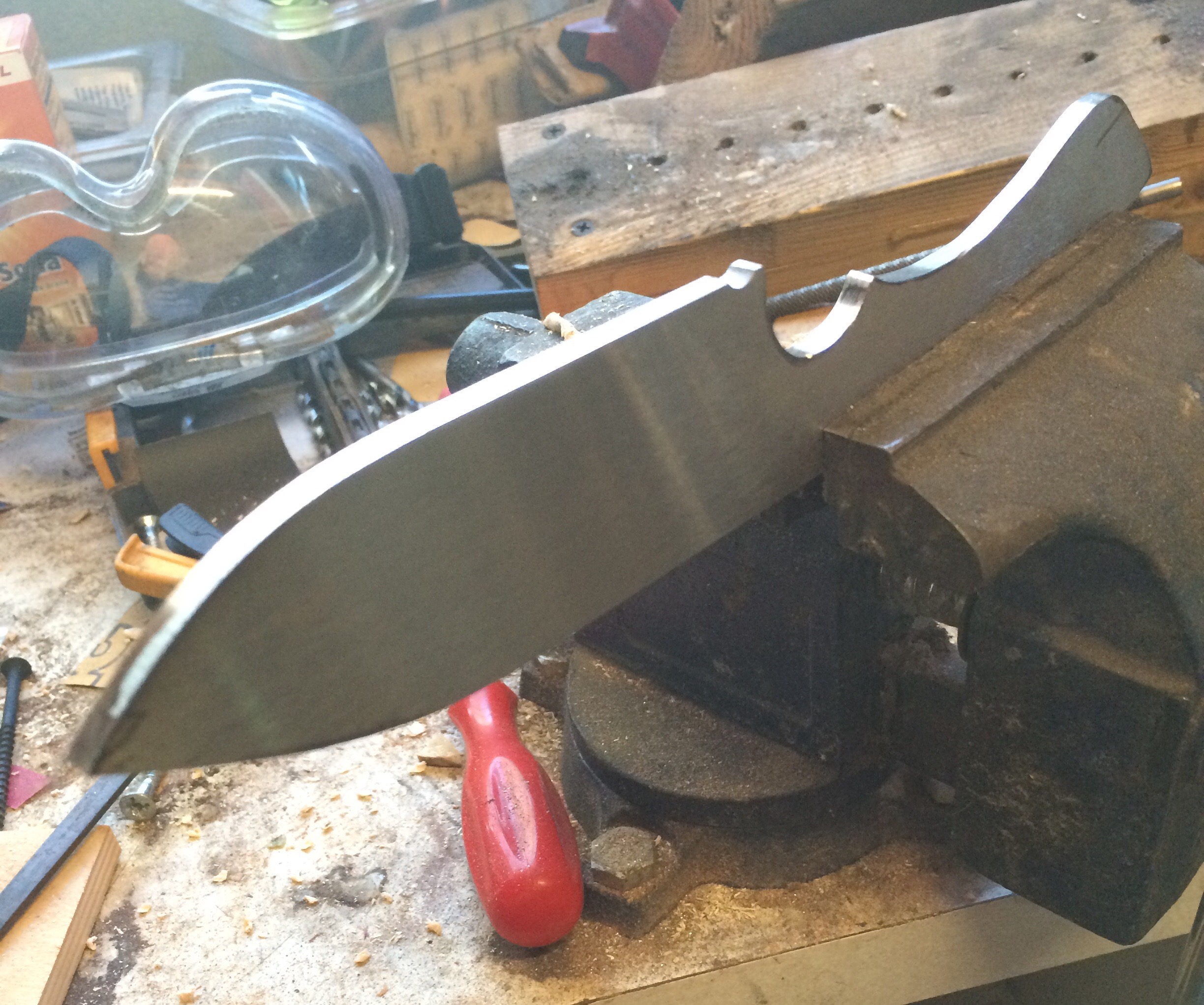
The runner up designs:

Centerline guide:

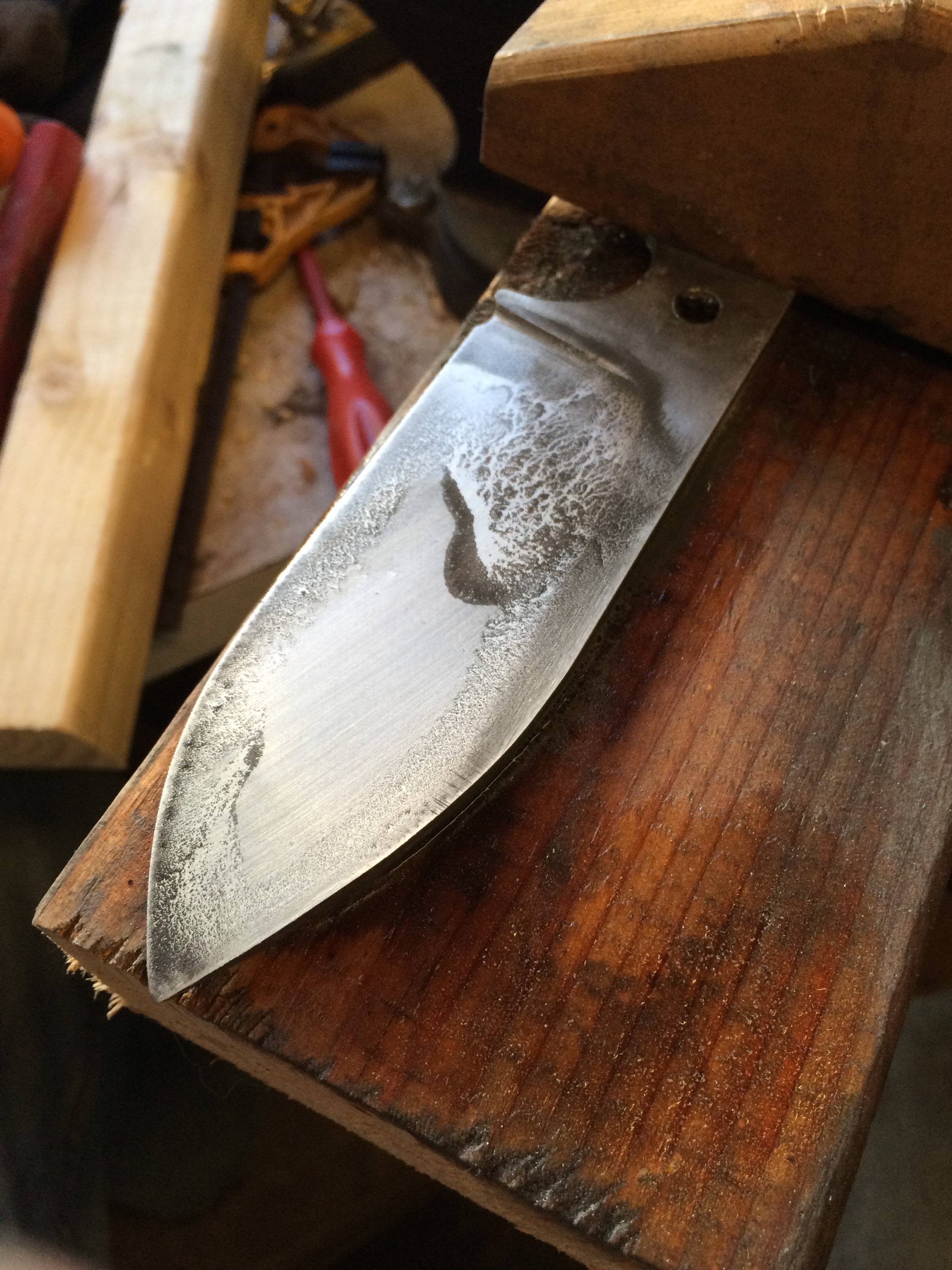
  

After heat treat I take the plunges to the spine…
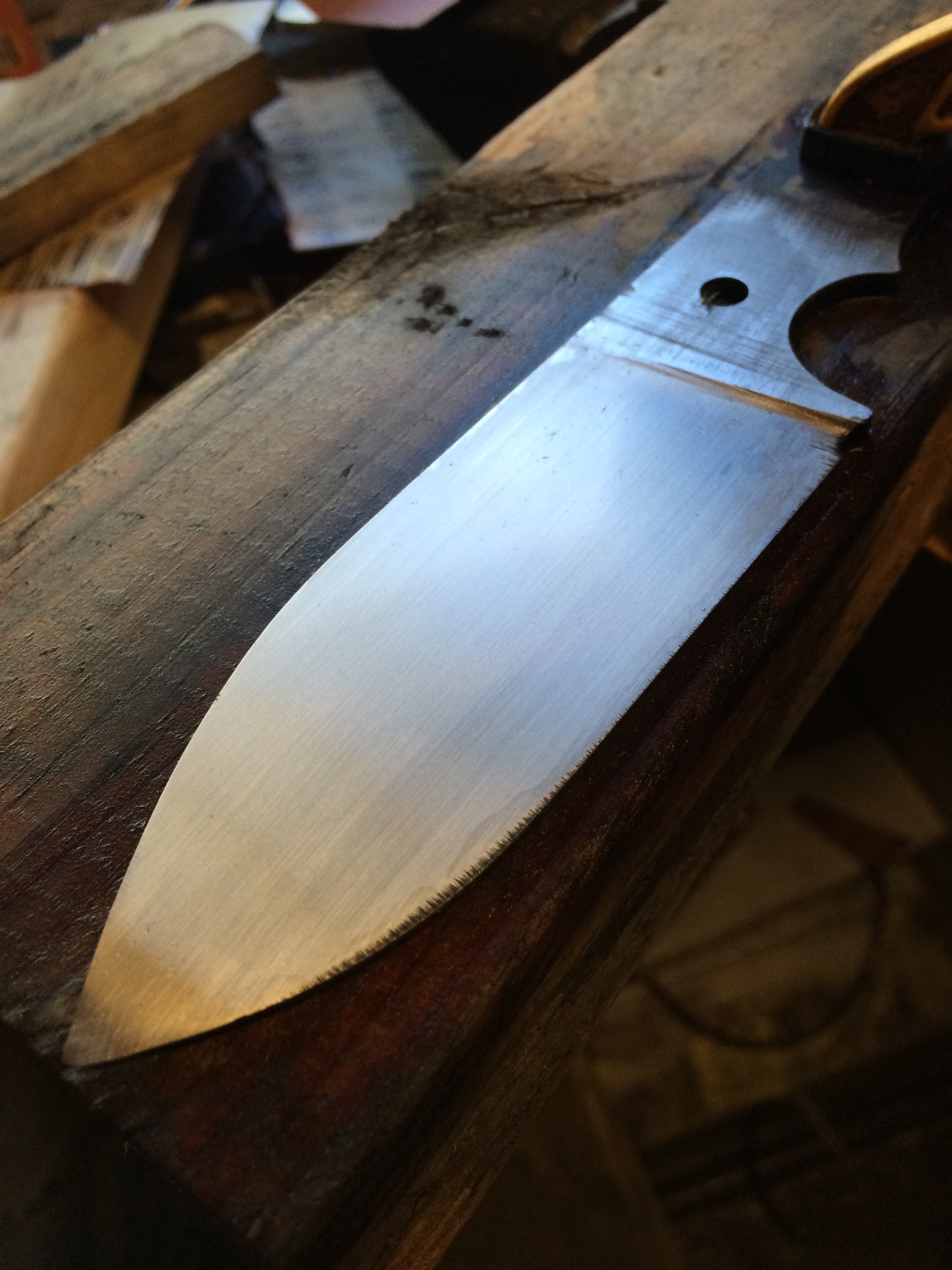
The handle was going to be an extension of the recipient’s passion.  After a bit of thought on how to work video equipment into the handle, I took a trip to the local pro audio store.
Gaffer’s tape.  Used across the board by almost everyone in arts/entertainment production and operations, be them prince or pauper.  
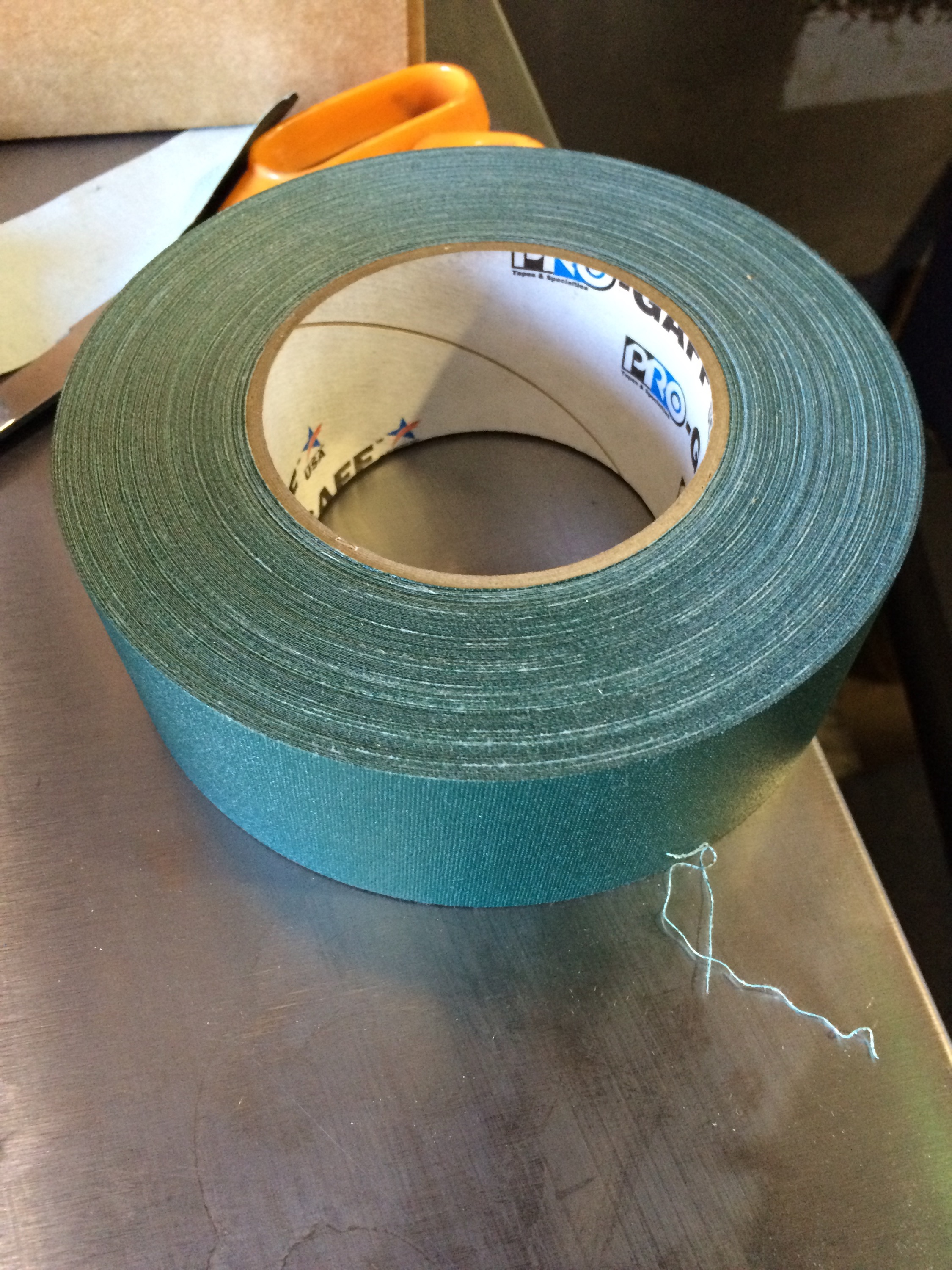
It’s a woven fabric tape.  It leaves no residue when pulled up.
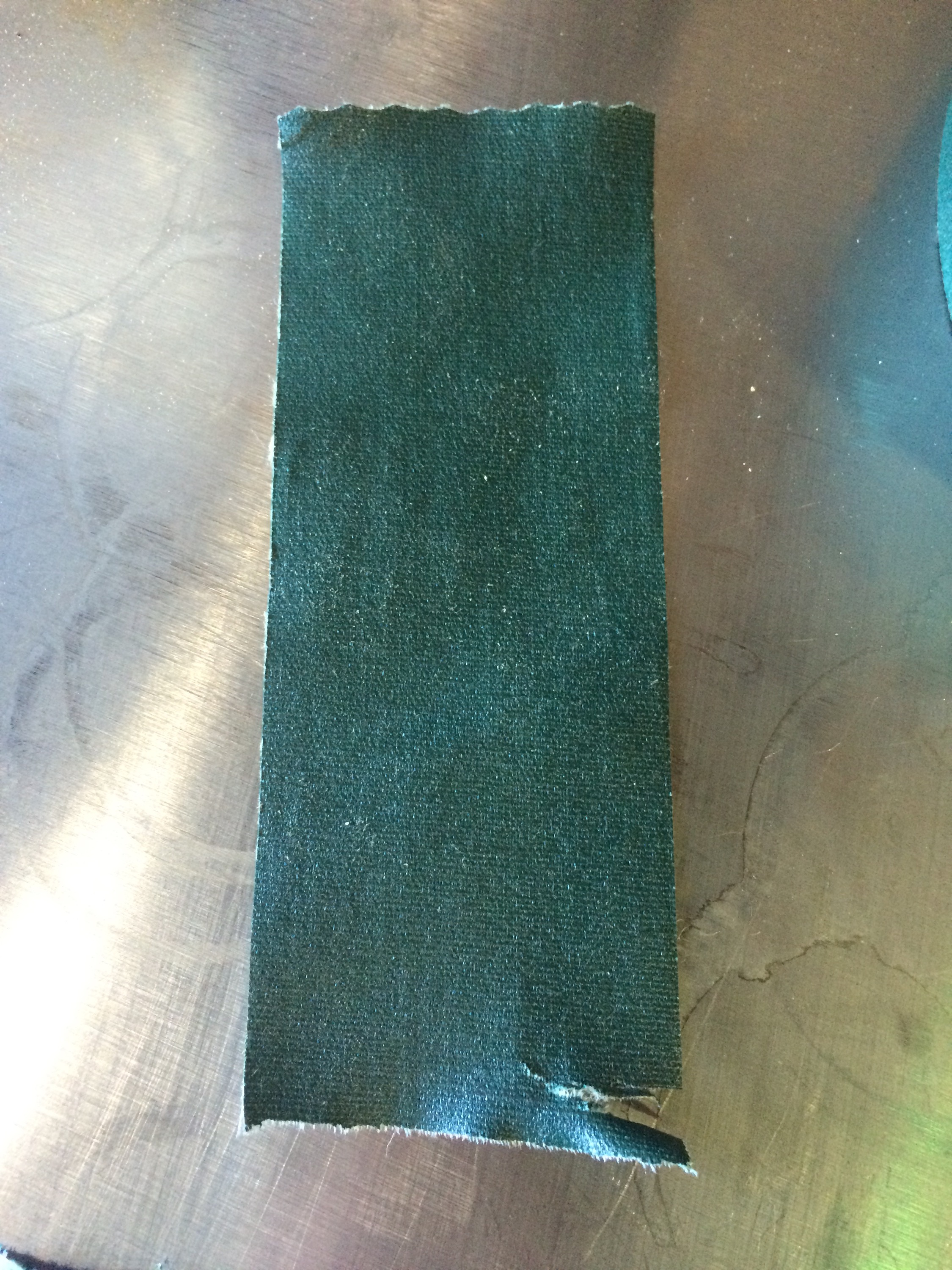
  The process of sandwiching layers of resin between tape begins…
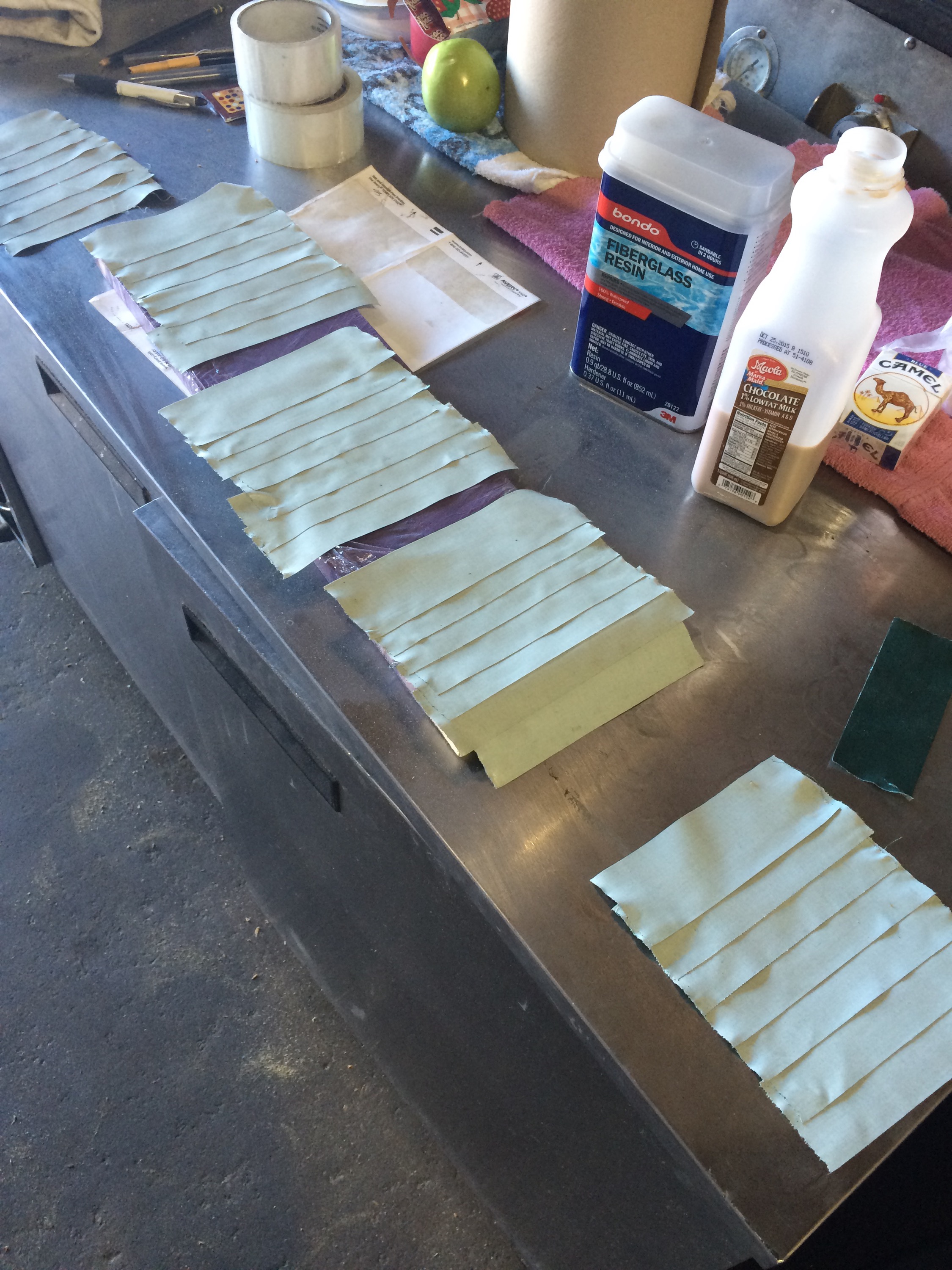
  

…and it just didn’t work.  The resin wouldn’t set up for some reason.  It was either due to the adhesive on the tape, the inability for the layers to breathe, the high humidity and low temps, or a combination of all three.  I went at it three times and went through nearly a quart of resin.  I pouted for a bit, and found myself in a funk of judgement.

Once I got past that and explored a bit more, I found Duvetyne.  It’s a light-blocking cotton material used in the motion picture industry.  It’s also used in the fine arts world.  Sometimes stage side drops are made out of them as well.  I wanted to keep to the idea of a blade that is an extension of this particular gentleman’s passion.

By this point I was too preoccupied to take pictures.  This resin is an exothermic polymer and needs a bit of heat in the beginning.  It’s been a bit humid this October and my work area has no climate control so I put it under a heat lamp.  I had to babysit the setup for a bit because I had accidentally set the previous batch on fire by having it too close to the lamp….
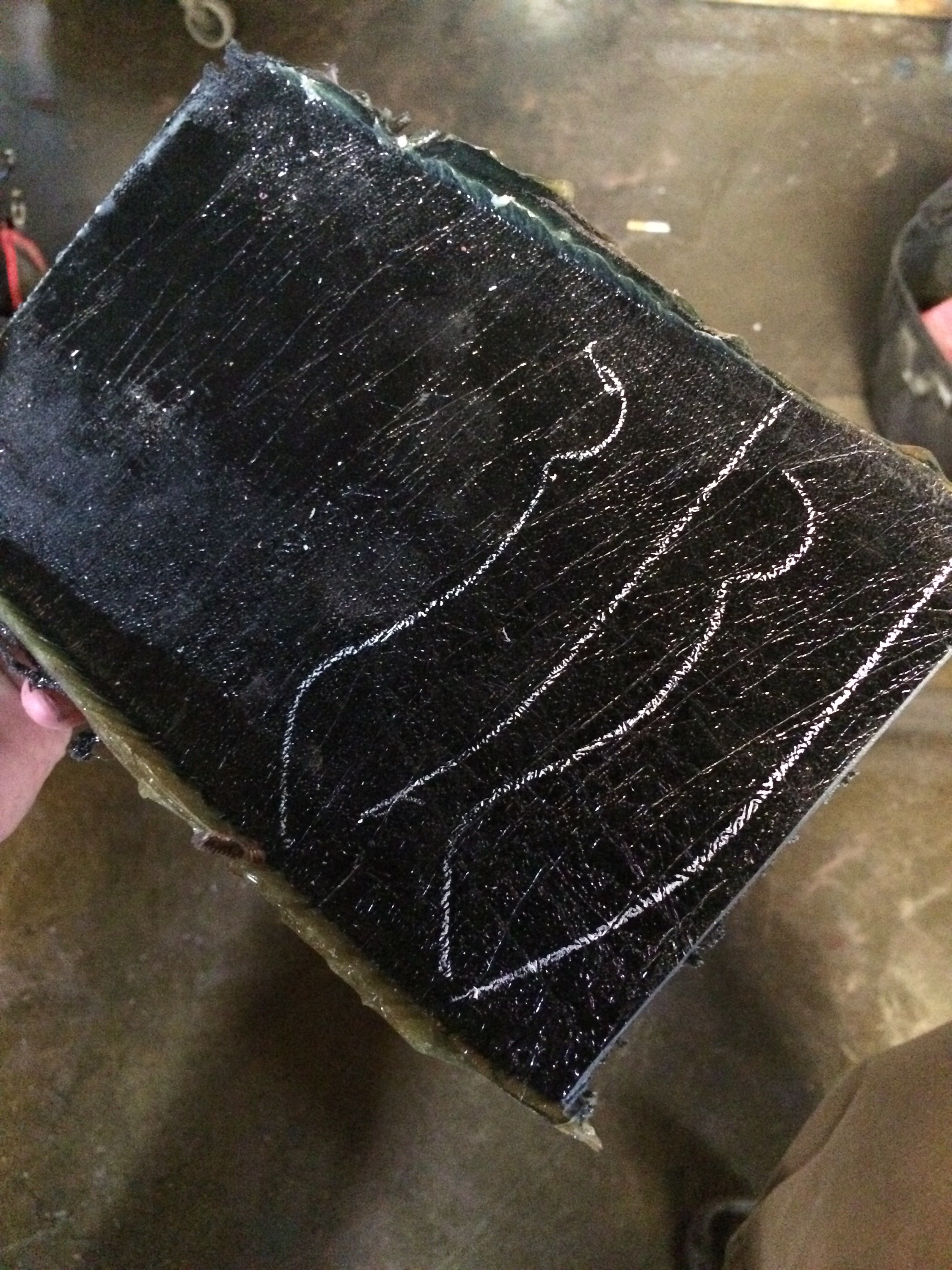
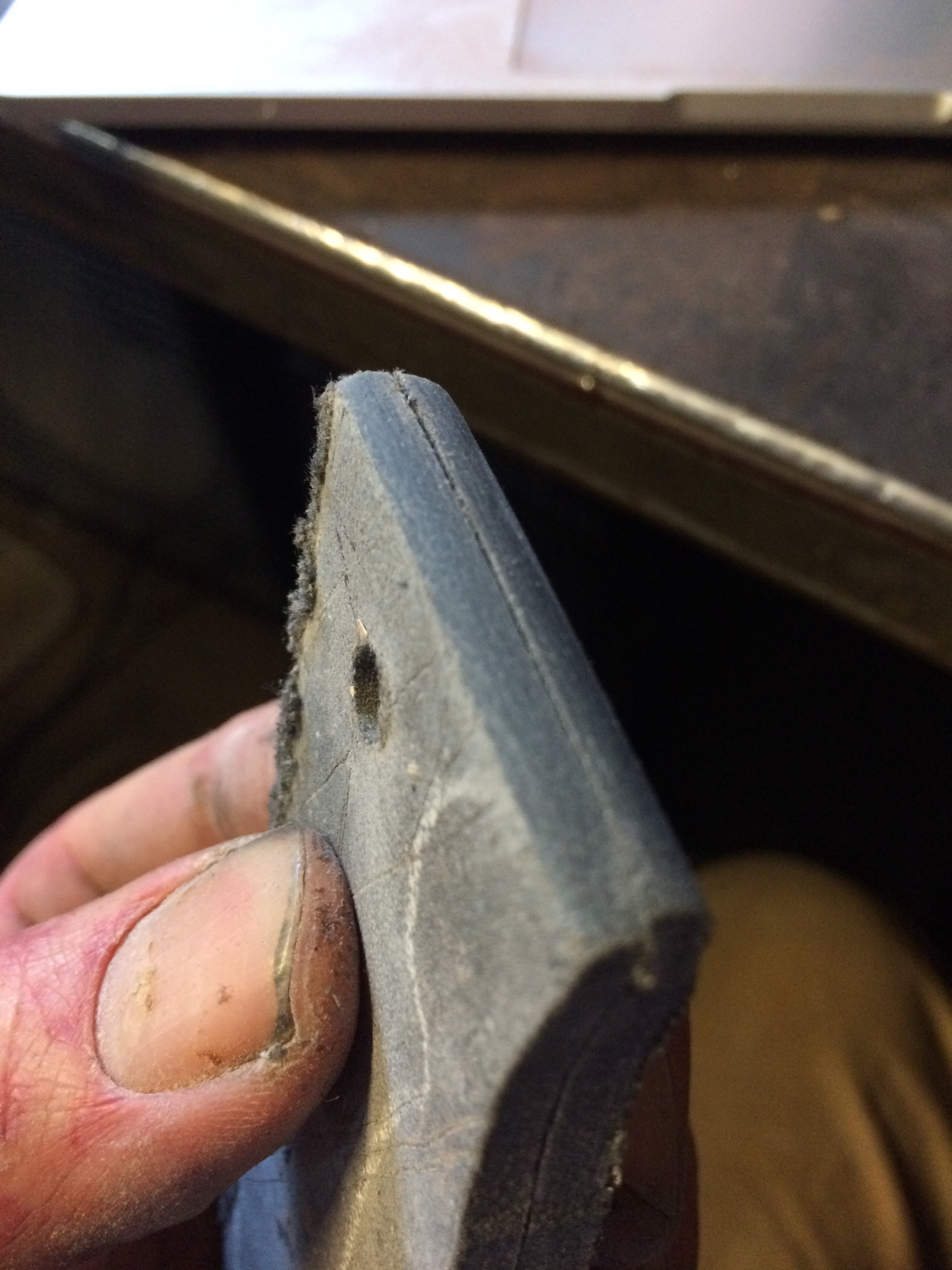


 The Observer.  I left the handle unfinished- it’s the backstage area.  She is O1 tool steel, homebrewed Duvetyne micarta, and steel hardware.


This was incredibly challenging and humbling but worth all the bumps and snags.  Look a little deeper: there are profound lessons to be seen.

Sheath coming (very) soon
Knifemaking: embracing your journey and the Spark

Watch my back and light my way 
Watch over all of those born St. Christopher’s Day”

James Taylor- “My Traveling Star”

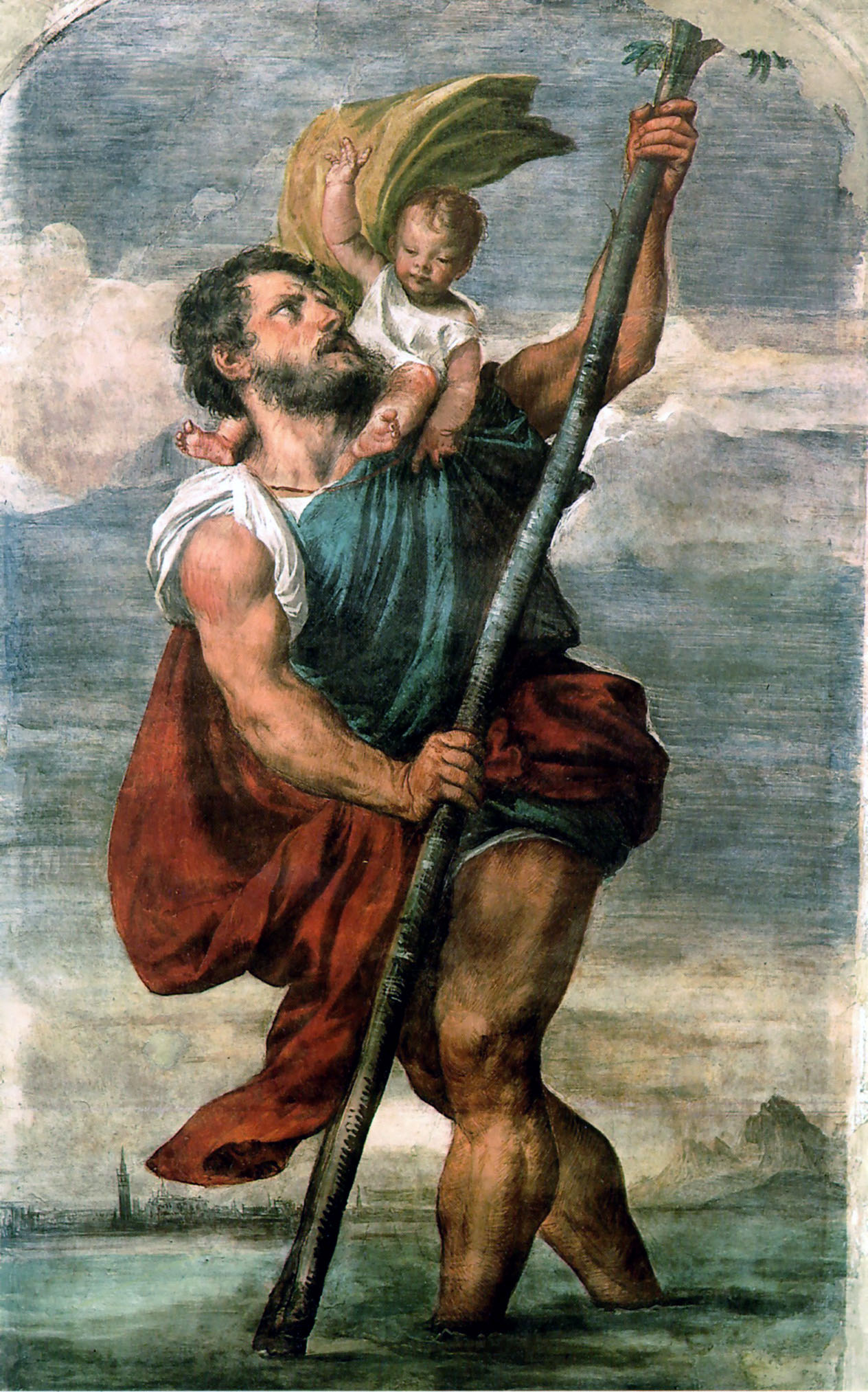
St. Christopher is known to be the patron saint of travelers.  There isn’t a whole lot outside of speculation on who he really was.  “The Passion of St. Christopher”, found in a manuscript called the Nowell Codex (most famous for containing Beowulf) speaks of how he is put to death while trying to convert the heathen king Dagnus to Christianity.  This may be based on the 6th century Greek legend of Offerus, who helped travelers cross a river with strong currents.  The name “Christopher” is of Greek origin and means Christ-bearer.

In 1969 there was a bit of reform to the Roman Calendar and St. Christopher’s Day didn’t make the cut.  The lack of unsubstantiated origins of St. Christopher, though not explicitly stated as the reason for the removal, didn’t help his cause.  On top of that he is not a formally canonized saint.  My Catholic friends may have something different to say and that’s cool.  I’m just an observer.

None of this detracts from the spiritual impact, or that we are looked after and cared for in our travels.

(I read quite a few journals, articles, and blogs.  I put links to the most significant ones at the end of this)

offero

“Saint Christopher”- Titian Vicilli

I have a chef friend, a very gentle man and kind man.  Under that cloak is a no-bullshit attitude that originates from growing up in Brooklyn in the late 1960’s.  He always told me that when travels are tough you should always pat yourself on the back and keep moving.  Sometimes the currents will pull you off your center and you need help.

I started this little knife quite a few months ago.  I was in a place where I felt my fire had gone out.  Travels were tough.  I wasn’t sure where I was going and I didn’t like where I had been.

Even though at that particular moment I couldn’t maintain a roaring fire of my being, I could at least carry a candle, a small flame, till I could get my fire going again.  So I made one.  Something to give me a bit of light, warmth, and comfort.  Something to watch over me when I was having a tough time watching over myself.  The blank for this knife sat on my bench for a long time.  I finished it a couple days ago.  My fire is stronger.  I like where I’m going and I’m not ashamed of where I’ve been.

The lesson here is to not forget where you came from and to not lose sight of where you are going.  Remember the brutal parts especially because those are the most sacred.


The Spark.  High-carbon steel, cherry handle and brass hardware


Wishing you the safest of travels

Anglo-Saxon Poetry: Saint Christopher

10 Beloved Saints The Church Just Made Up

A Catholic Citizen in America

Did the Church declare that St. Christopher is a myth?

Knifemaking: being content, releasing, and the Minimalist

“Elegance is achieved when all that is superfluous has been discarded and the human being discovers simplicity and concentration: the simpler and more sober the posture, the more beautiful it will be.”

Paulo Coelho, Manuscript Found in Accra

Originally, I wanted to call this blade The Monk.  When I see images or videos of Buddhist monks, or anyone living in a monastic setting, I used to wonder how they survive on so little.  Recently it was explained to me that they aren’t choosing a life of poverty.  They are choosing a life of contentment.  The idea as I’ve come to understand it is that they have enough and this brings contentment.  Enough, but in a gentle and satisfactory way.  This is pretty much counter to most of the ideas of what we are taught about being successful in Western society.

That was the inspiration for this blade.  Something simple.  Enough.  Content to just be.

There is an elegance in the simple.  Simple is difficult to pull off well.  Think of the best things.  Bach is simple but by no means easy to perform and certainly not lacking in beauty or depth.  Then there is steak- the best steak needs nothing but salt, pepper and a hot grill.  The list can go on.

This is where the beauty is.  An idea or tool or work of art or meal that has everything it needs and nothing it doesn’t.

There is a practice in many Buddhist temples that consists of tidying and cleaning.  It is believed that a tidy workspace helps with concentration.  There are books on the matter of getting rid of clutter.  Behind this is the idea that when we release the material things that are no longer serving us it will follow that we also release the emotional things that hold us back from being our naturally vibrant selves.

Ultimately I find this blade to be a reflection of how I desire to be.  In a way I am this blade.  As I was slowly removing the things that ultimately didn’t serve the purpose, function, being, beauty or existence of this knife I thought of the things that don’t serve me that I desire to release.  Like the grinding of this blade, release doesn’t happen all at once and if I tried to do it all at once I would be an overwhelmed, anxious, and contracted human being.  I’ve been there.  I think we all have.  Breathe deeply and appreciate how beautiful the simplicity of something can be.

I started this blade with a bit of O1 tool steel stock:

I wanted to make something simple and functional and beautiful.  This is what I came up with:


And a flat grind…


In keeping with the idea of not having anything unnecessary, I removed some of the stock in the handle.  It also makes it lighter.  Here he is after filing and sanding….


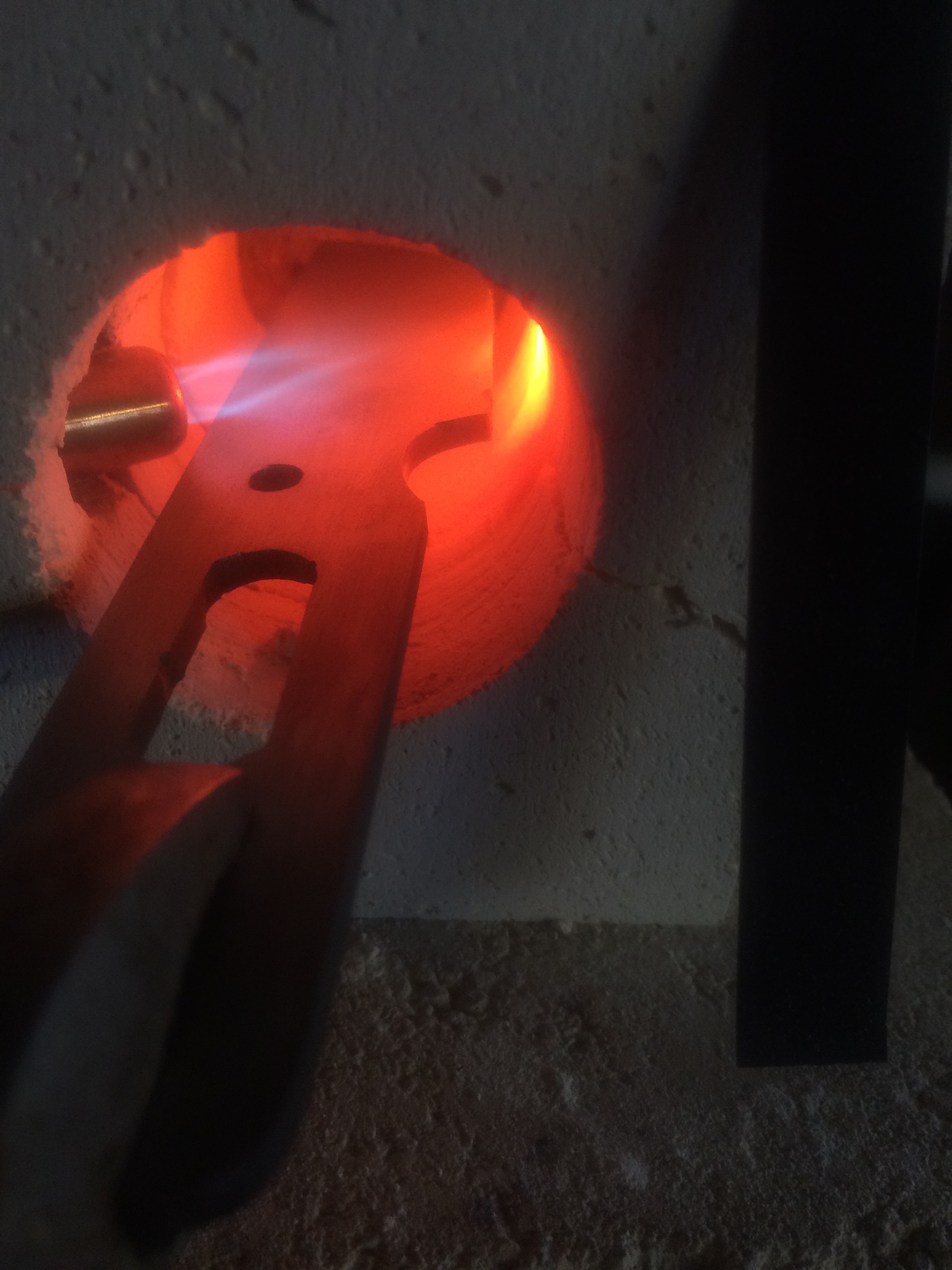
Hardening and tempering.  It took some tries but I got a forge built that gets plenty hot: the Brigid Marsal 3.0…


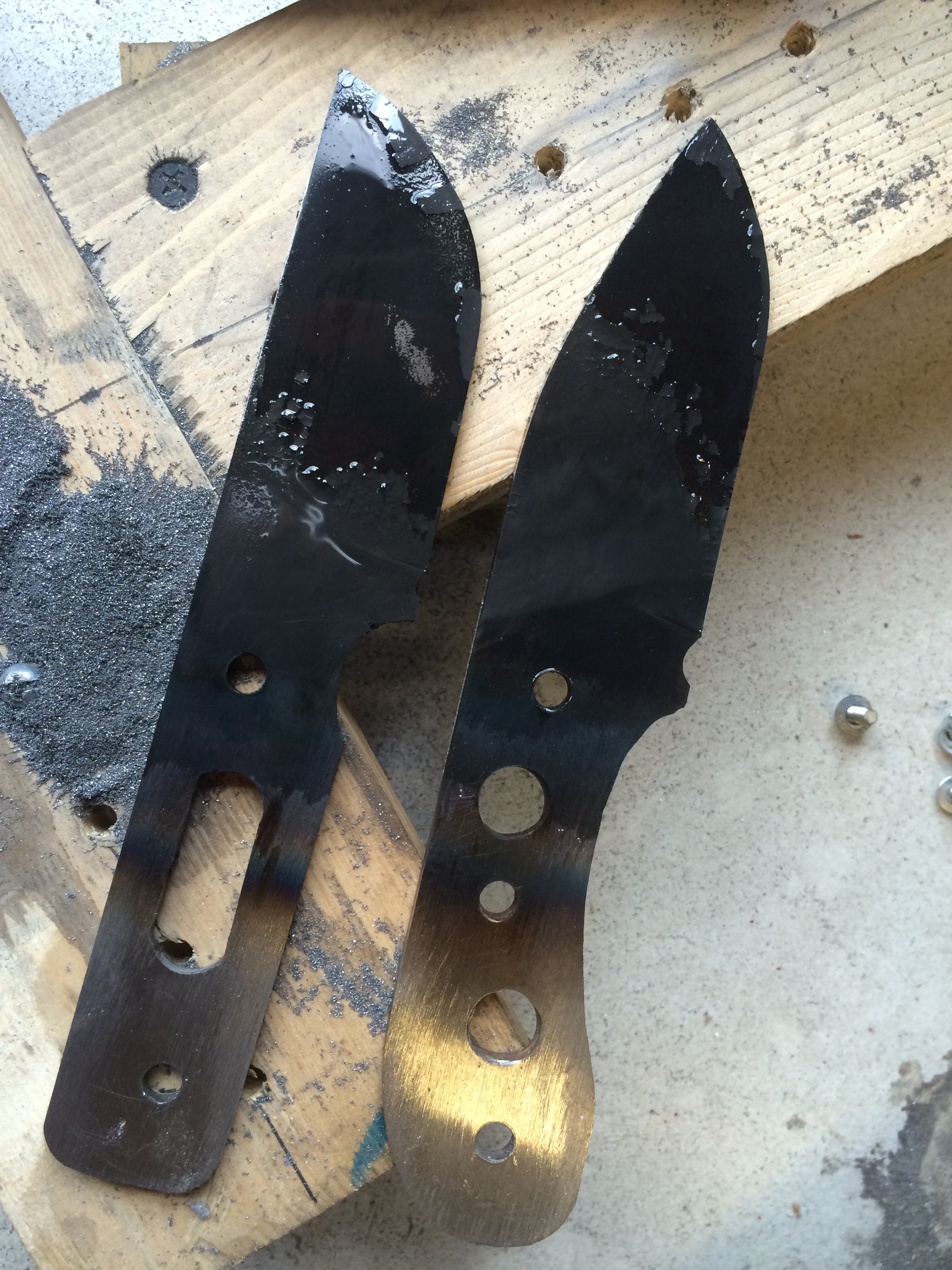
And after a dunk in some warm cooking oil…


He cleans up nice:


So for the handle I went back to the idea of the monk- enough clothes to keep you warm and decent, a safe place to sleep, and enough to eat.  Having just enough to help you really feel your inner being.  I found a dough proofing board used by bakers.  I made the handle out of that, one’s proverbial daily bread.  A simple coat of Danish Oil protects the handle and brings out it’s beauty.


 And the secondary bevel…

Handle detail.  So much love…. 

As I learn and grow, I find that some of the things I thought I needed aren’t serving me.  It’s ok to release these things.  This is the lesson of the Minimalist.

Knifemaking: befriending what tries to hurt you, process and mistakes, and Brigid Marsal

“I build the road and the road builds me”

-African Proverb

I think about this saying often.  Sometimes you work and it’s hard to see progress until you look back and see how much road you’ve built.  Maybe you think about giving up until you look back and realize the only way to go is forward.  Parts of the road may be shoddy or weak or bumpy but it came from you and that is a beautiful thing.  It’s a process and sometimes parts of the process are bumpy and shoddy.  I’ve found the bumpy parts are the most sacred because that’s where the deepest lessons are.  It’s important to not skip or ignore the bumpy parts and to be with them as fully as you are able.  This is sometimes difficult or even painful but it is often times the only way to move forward.

I started building a forge to harden my knives.  Her name is Brigid Marsal.  In Celtic folklore, Brigid is the goddess of fire and fertitlity among many other things.  Marsal is a make of pizza ovens.

This is not my first attempt at making a forge.  Brigid 1.0 was a woodstove at the warehouse that I fueled with charcoal and bellowed with a shop vac on reverse.  It was loads of fun but never quite did the job.

Funny story.  This summer I was on a pretty hellacious job with Fred and Mr. Al in a mall in Kensington, Maryland.  The mall was set to be demolished and we were there to extract some safe deposit boxes, some dental equipment, and a gigantic Marsal double stack pizza oven.  One of these stacks alone weighed about two thousand pounds and they were covered in a brick facade.  There really wasn’t a lot of room to work because the kitchen was built around the ovens.  So here are Fred, Mr. Al and I trying to wrestle this monstrosity onto our crank lift which is really only rated for maybe eight hundred pounds.  The lift breaks, the monster of an oven comes crashing down and I had to dive onto the counter to avoid being crushed.

We all collected ourselves and found that there wasn’t any way to move these ovens without help.  It took another trip up there to get the ovens and thankfully I was not invited to go.  The ovens came back, were rebuilt, and sold.  There were a few of the heat stones left over.  Fred gifted two of the unbroken stones to me to build a forge.  Turning something that nearly kills you into something that works for you- I like this idea.

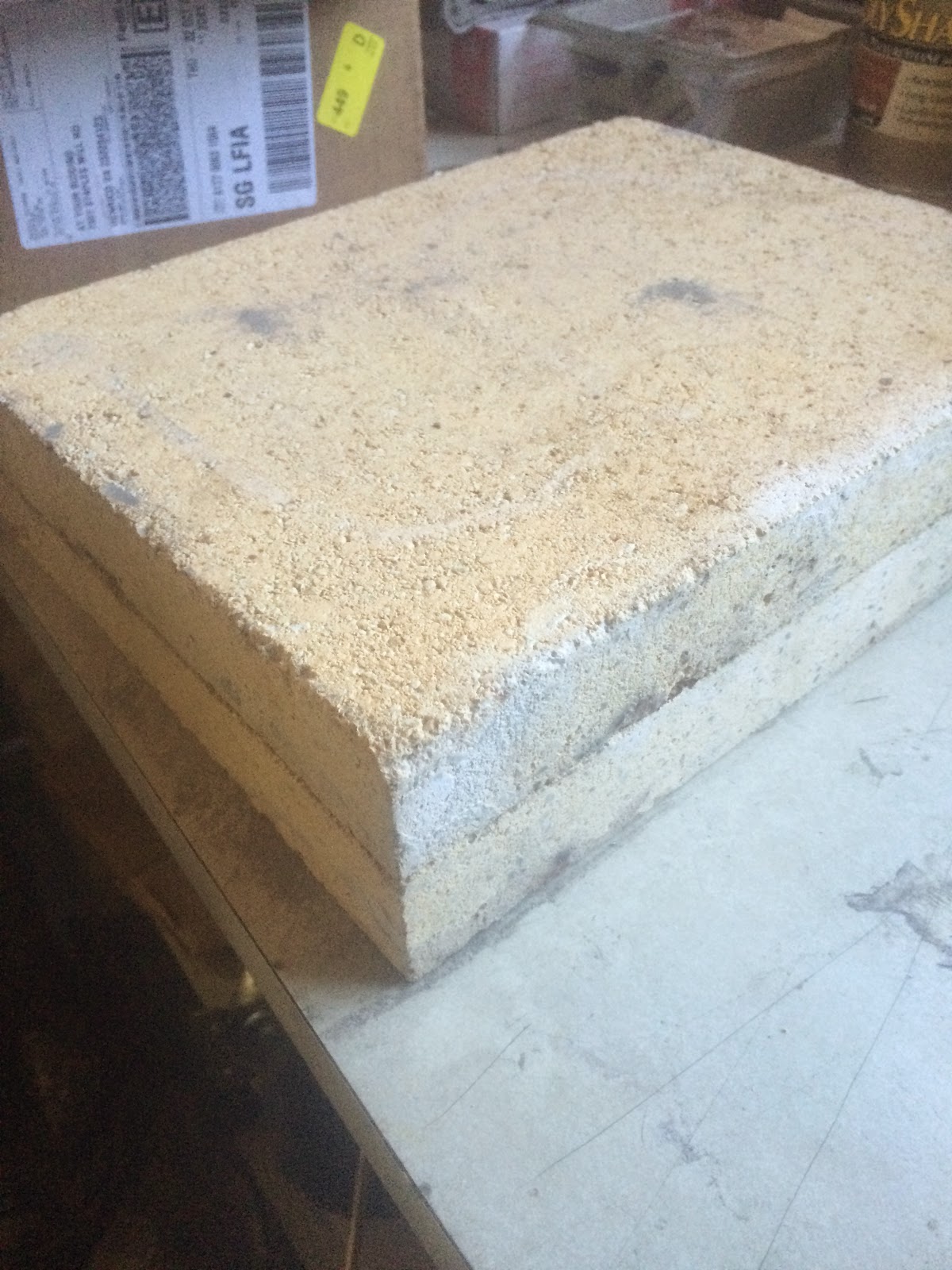
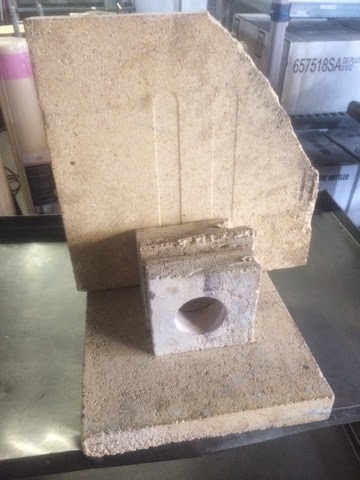
Here are the devil stones:

According to Fred they are liquid poured and can handle temperatures of up to “infinity degrees.”

They are also ridiculously difficult to cut.  They are dense and stubborn and have a tendency to crack if you don’t go slowly and patiently.  The satisfying part is to see how far you’ve come.

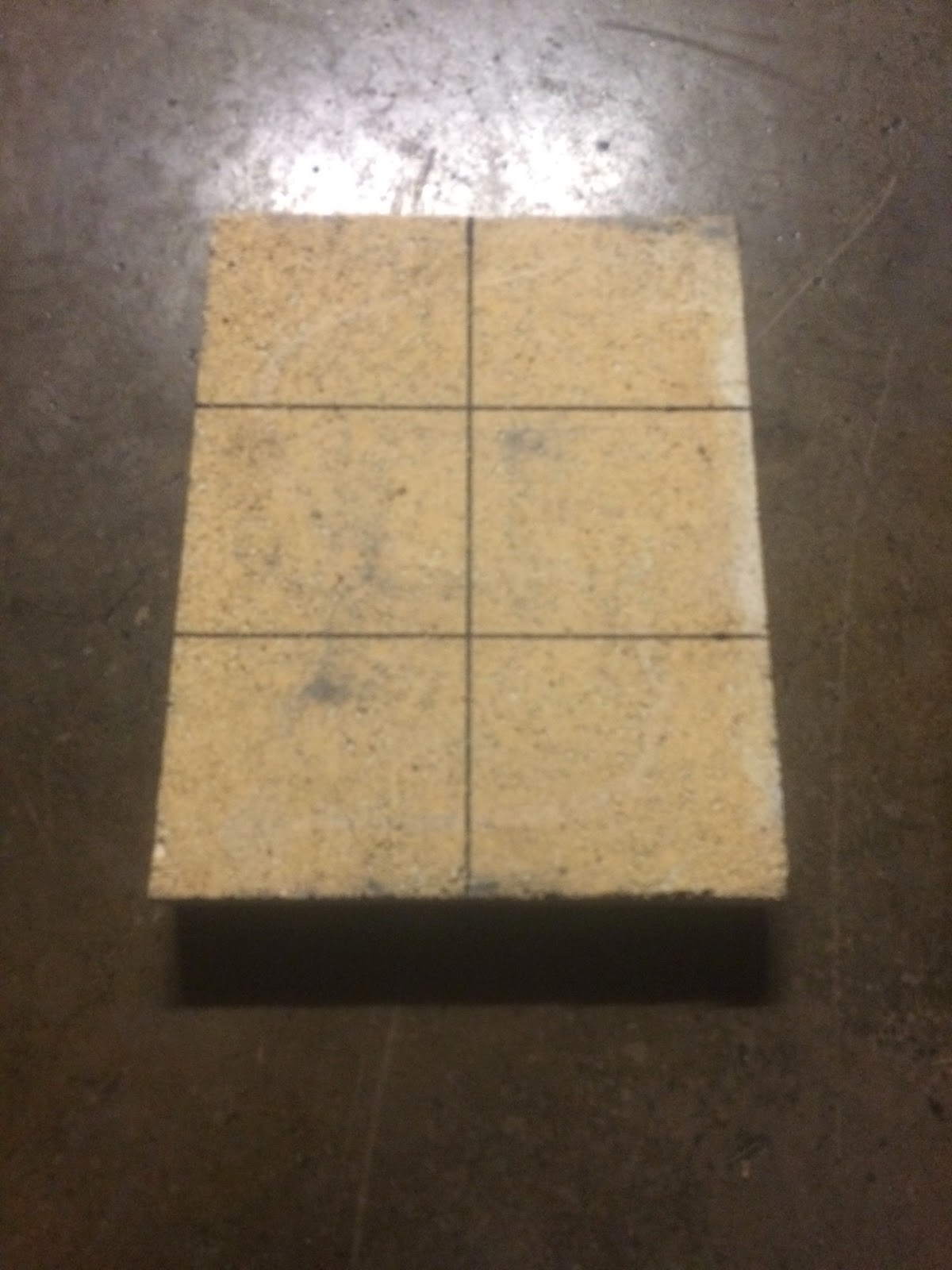
What starts as this:

Becomes slowly cut away into this:

And you have to do it one pass at a time, evenly.

The idea with this particular design is to create a vortex of heat to bring the knives evenly up to critical temperature- about 1500 degrees.  To do this I cut the stone into square- or as close to squares as I could get them.

many hours later…

I put a two inch hole into three of them.  There is no quick way with stone.

On one of the pieces I added a half inch hole in the side for the blow torch.

I lined the stones up to give it a go….

Pretty, but not quite vortexing the way I would like…

So the forge doesn’t work the way I had planned.  What I found was that the stones, which hold heat very well, are not so good at reflecting the heat, which is what I need.  There is still another forge to build but I am going to use the Marsal stones somehow- to remind them that I am not so easily crushed…reminders of bumps in the road you build and sacred lessons along the way.