Knifemaking: all the little pieces, and the Mood Ring

A few days after Christmas in 2018 I got a call from a buddy of mine. He was a producer for a company that put together wedding bands and he had to get a group together for a New Years Eve party. He really needed a trombone player for the horn section and gave me a call because I am a trombone player and he knew I probably didn’t have a gig. The problem was I had just had a bit of orthopedic surgery and wasn’t sure I was up for it. He then told me what it paid and said all I needed to be able to do was get a horn up to my face. I told him I was down like a clown, Charlie Brown.

Just doing that gig put me on a list of musicians and I started getting calls. Over the years I’ve been up and down the mid-Atlantic playing in horn sections of wedding bands at country clubs, theatres, mansions, and sometimes out in fields. These are good gigs because the job is to help people have a good time on what is probably one of the happiest days of their lives. With open bars, this is usually not hard at all. Sometimes the receptions are super simple. Others are more involved with lots of moving parts, including musical cues, choreography, and spectacle. One couple at a vineyard wedding were huge anime fans and our producer orchestrated an arrangement of the theme from ‘Cowboy Bebop.’ I played at a Persian wedding were the mother of the groom performed something they called ‘The Knife Dance’, which (as one may assume) involves dancing with the knife that cuts the cake, and passing it through all the women in the family while everyone tosses money at them. The knife finally ends up in the hands of the bride, who cuts the cake.

The band is just a small piece of all this but from the stage you can see all the little pieces of things coming together- the cooks working out of sight, the catering people running food, the sound guy handing out microphones, and event people making sure important people are where they’re supposed to be. All this adds up to something that the guests remember for for years. As one of those tiny little pieces, I’ve found some of my happiest professional moments at these jobs.

Sometime in January of this year a gentleman reached out about getting a knife made for his wedding, something special to cut the cake. After a bit of back and forth, he told me his fiancée was making their own wedding dress. I told him if he sent me some of the dress material I could work it into the handle material. This was all familiar territory, bringing a lot of little pieces together to make something special.

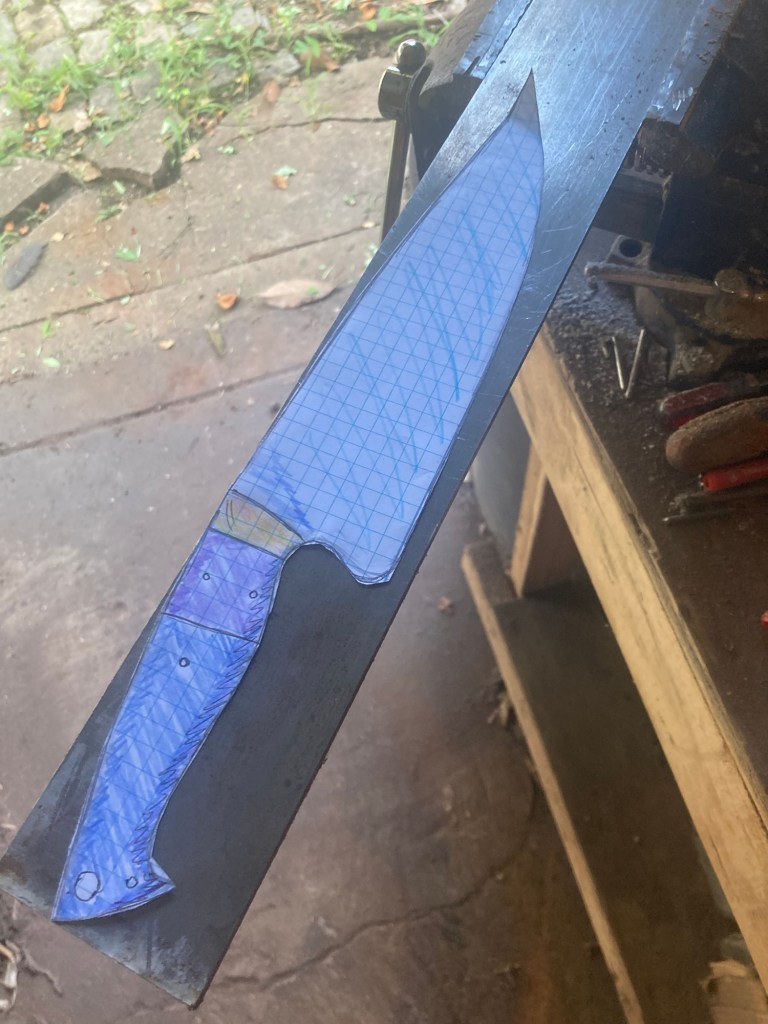
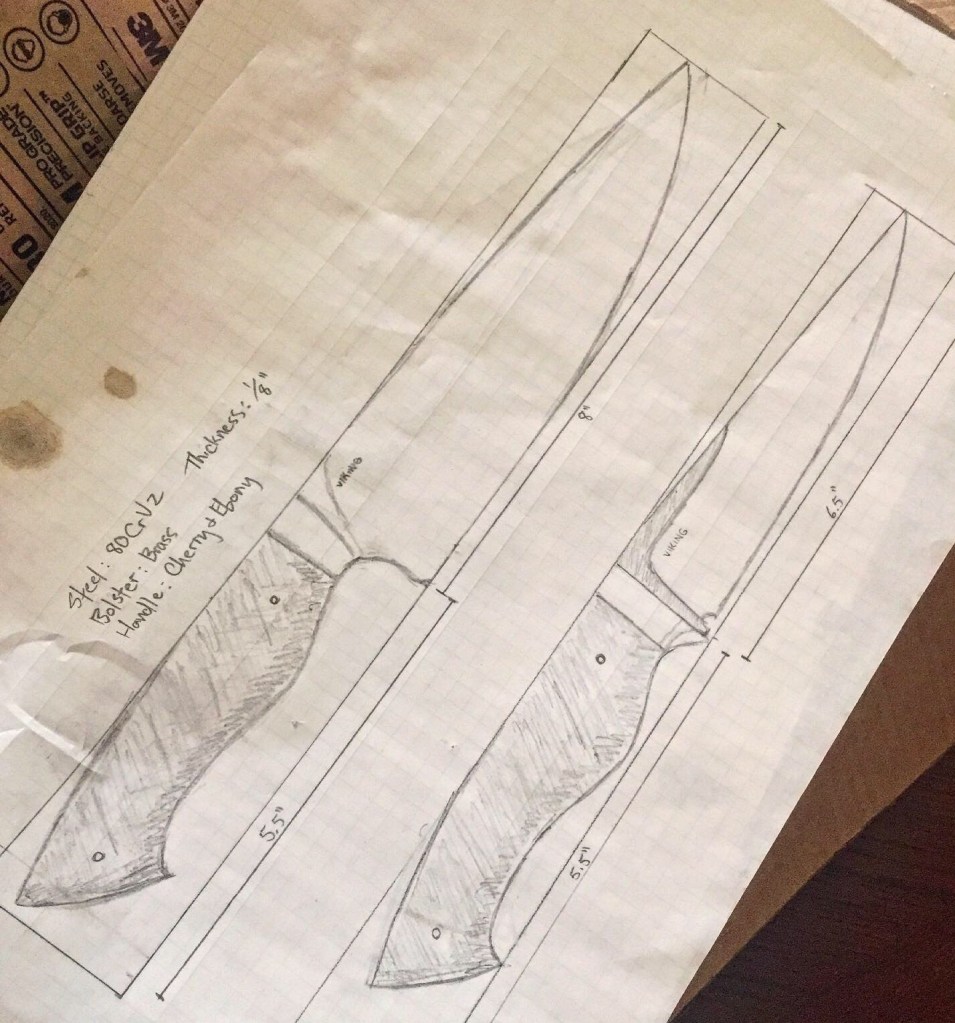
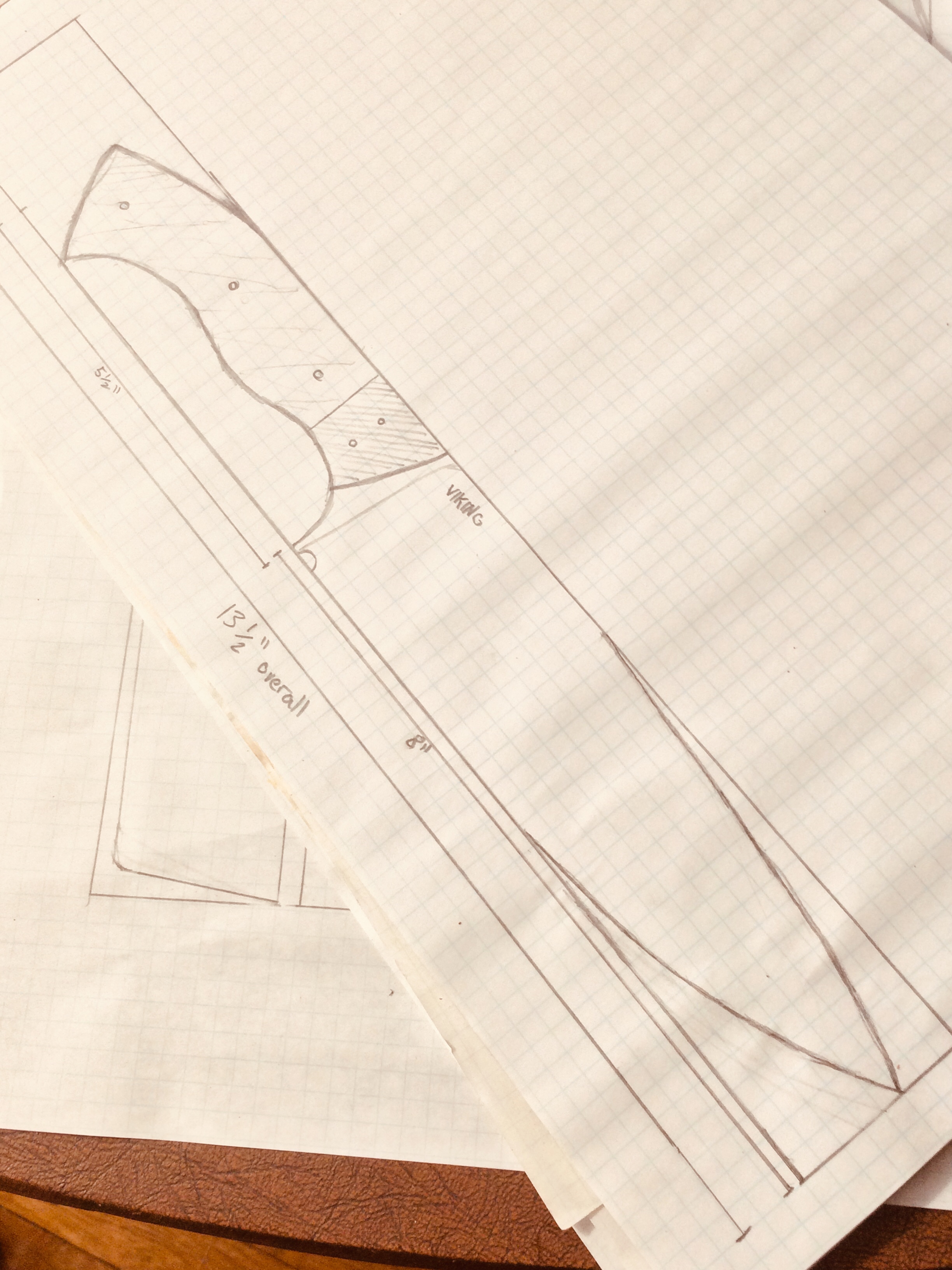
I got him some drawings together- The idea was that I would make send them a finished knife unsharpened for the cake, and after the wedding they send it back, I sharpen it, and they can then use it in their kitchen.

I used some contrasting colors to give an idea of what the knife handle COULD look like. I didn’t know what the dress material would look like.

Laying out the template

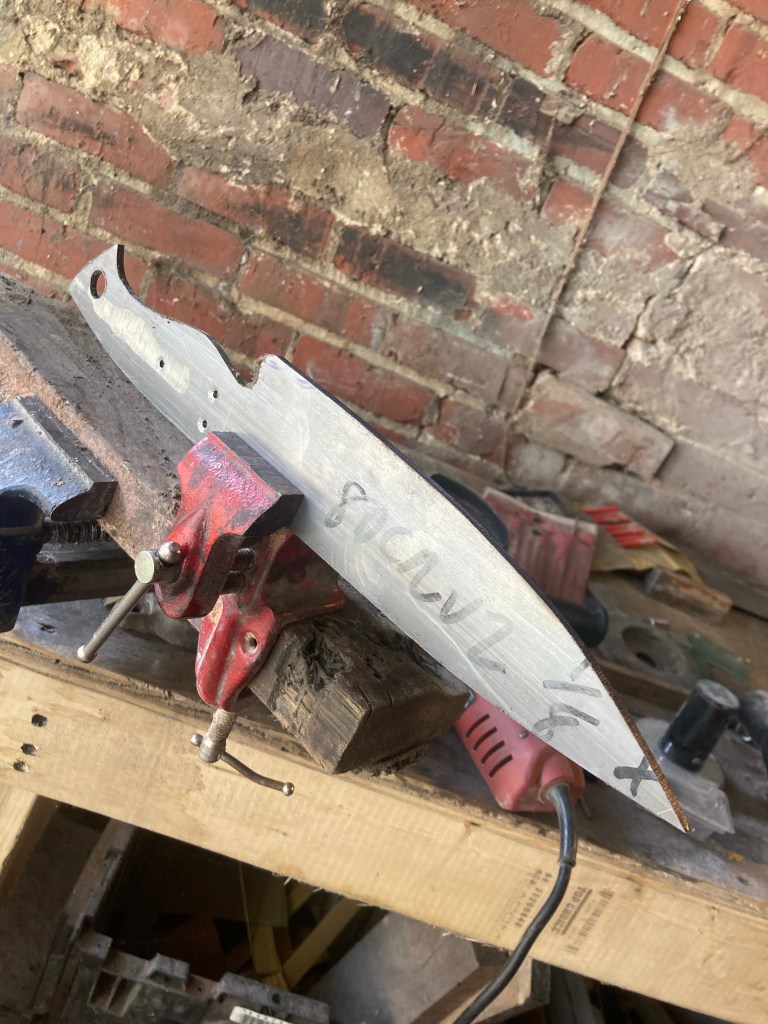
Copied on to the steel

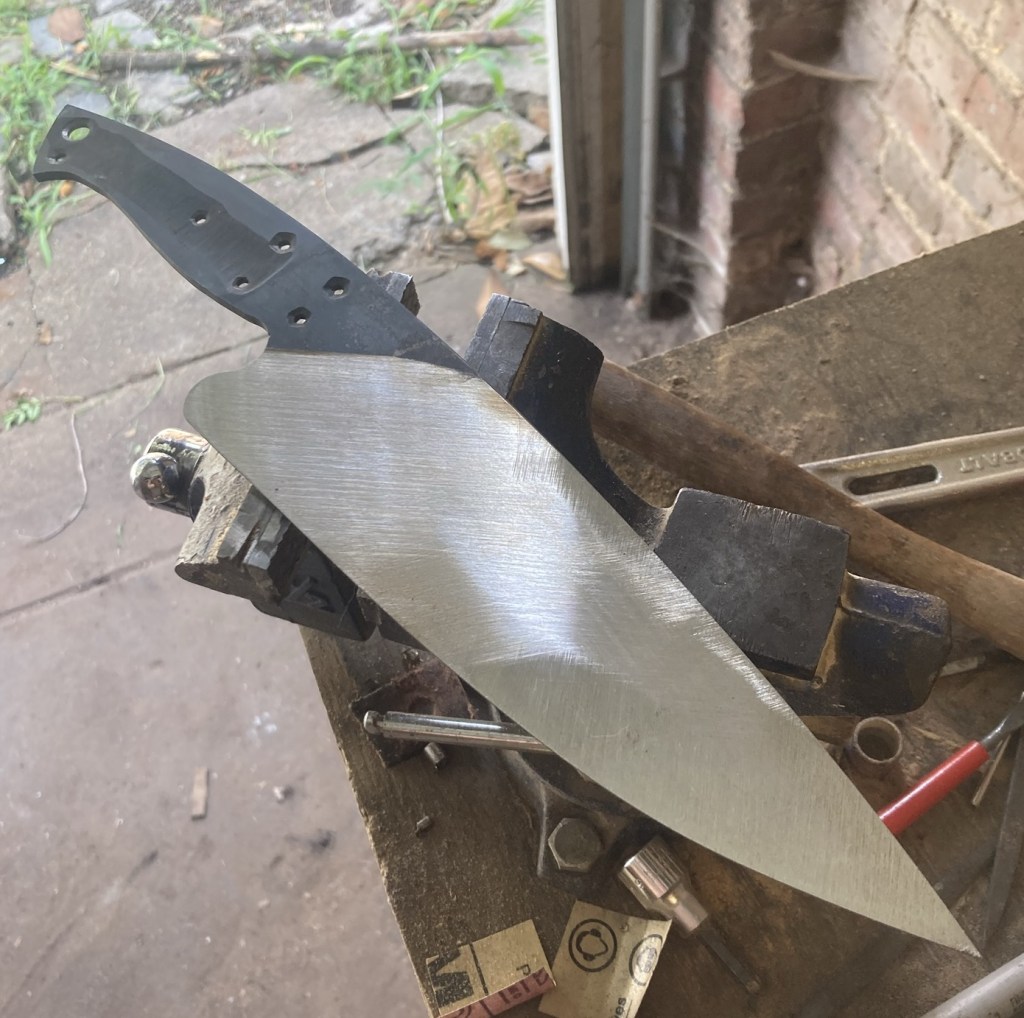
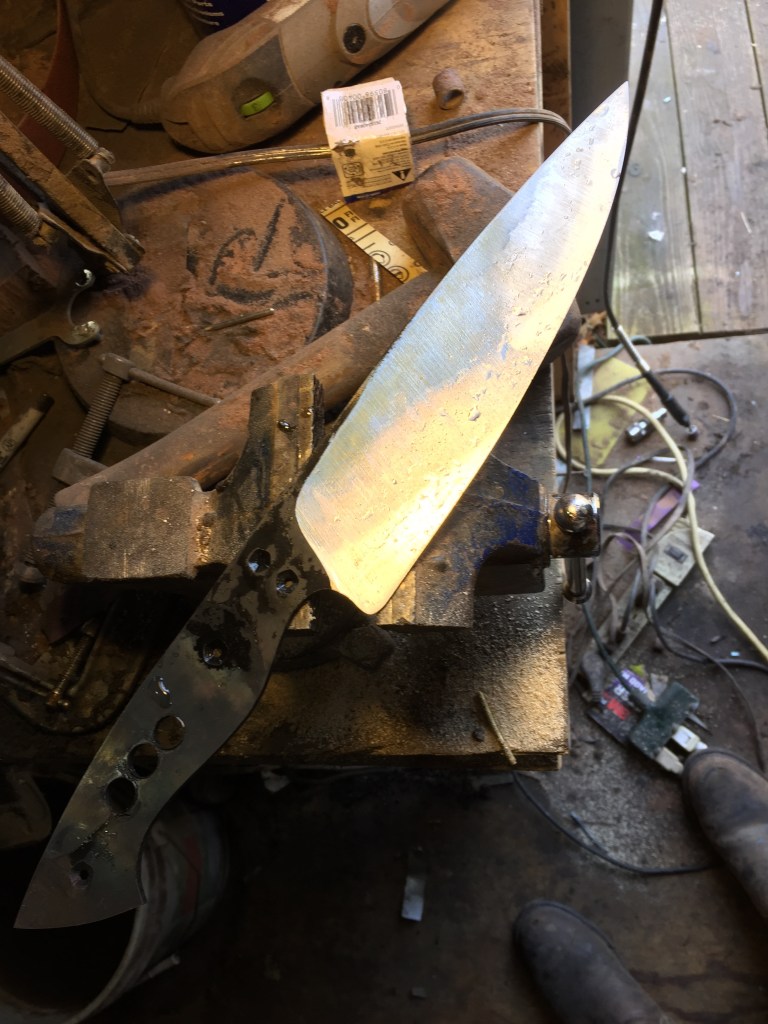
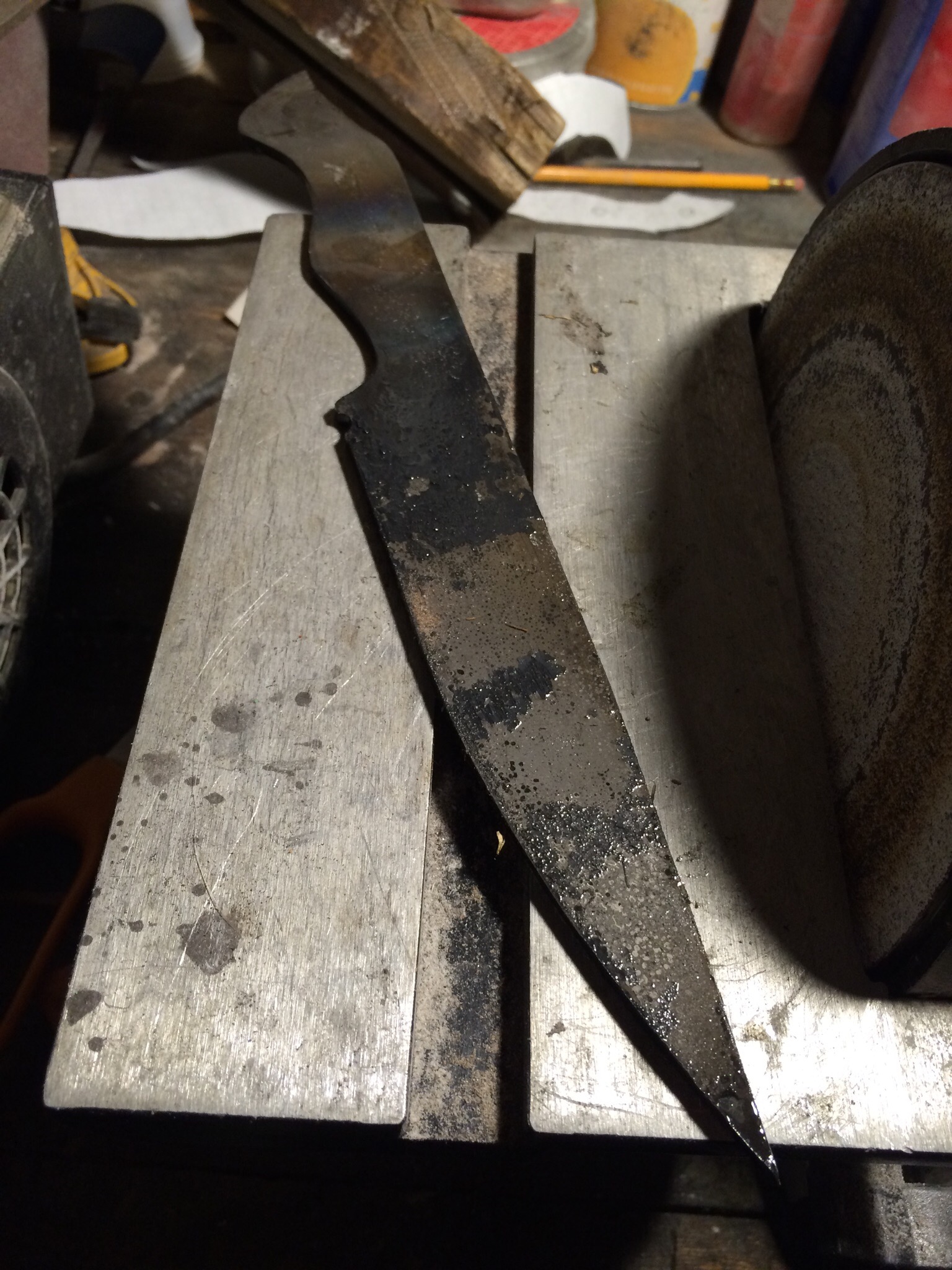
Profiled

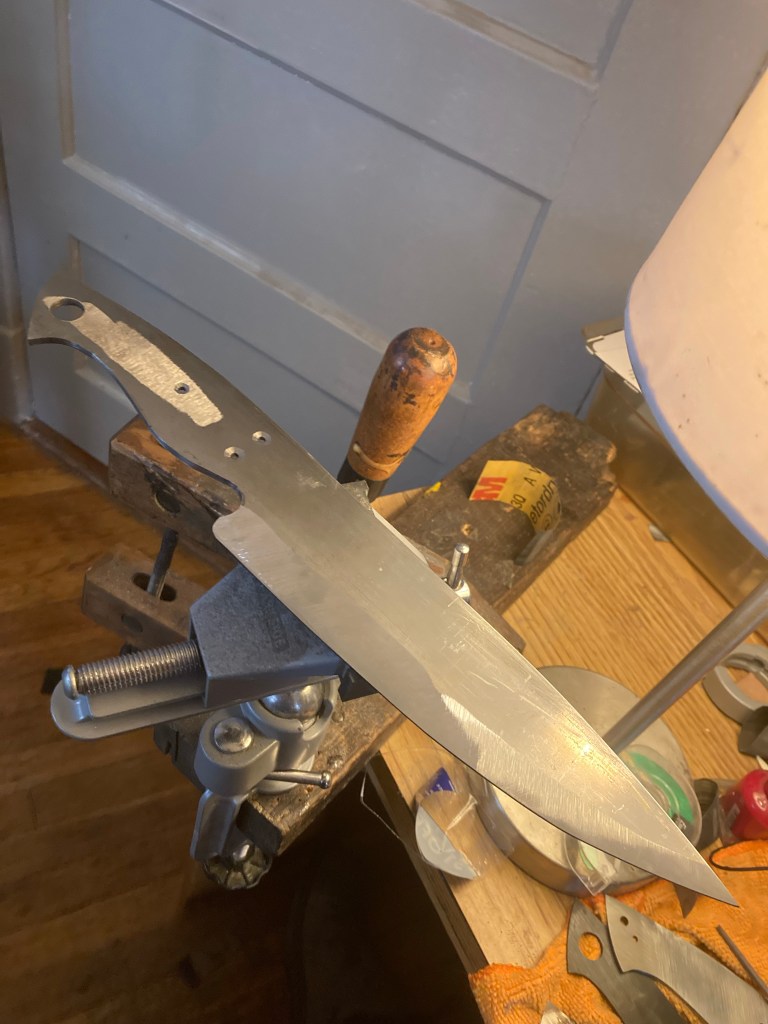
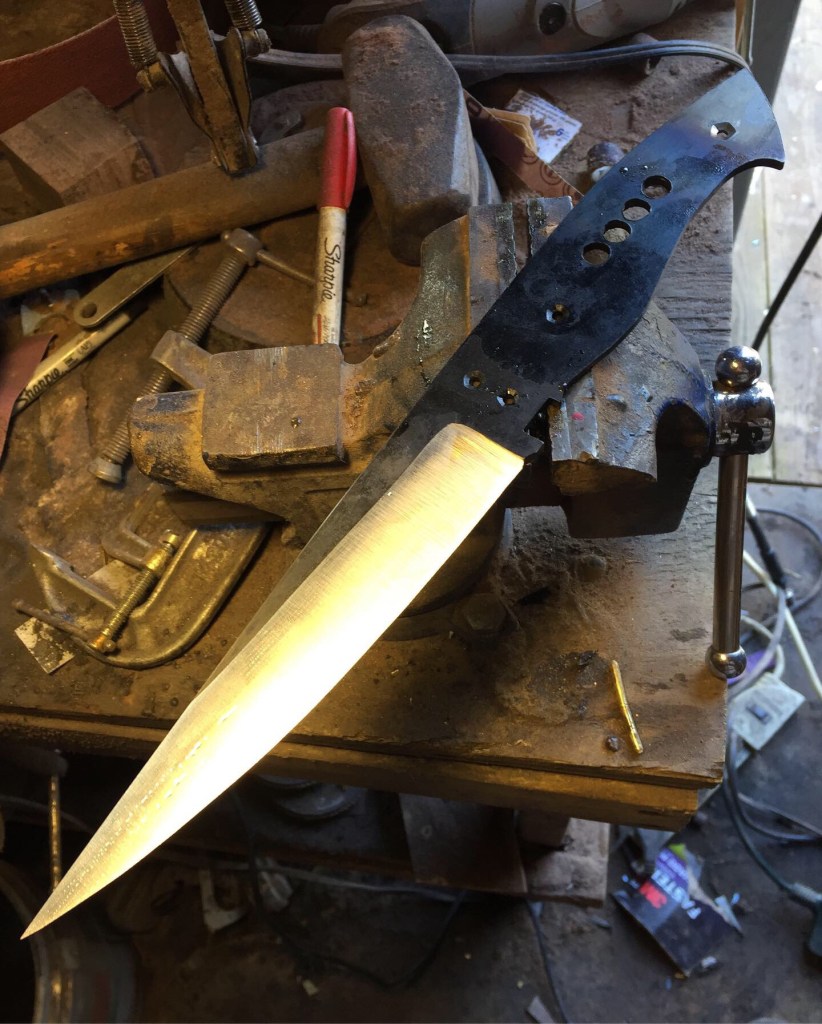
Removing some material before hardening

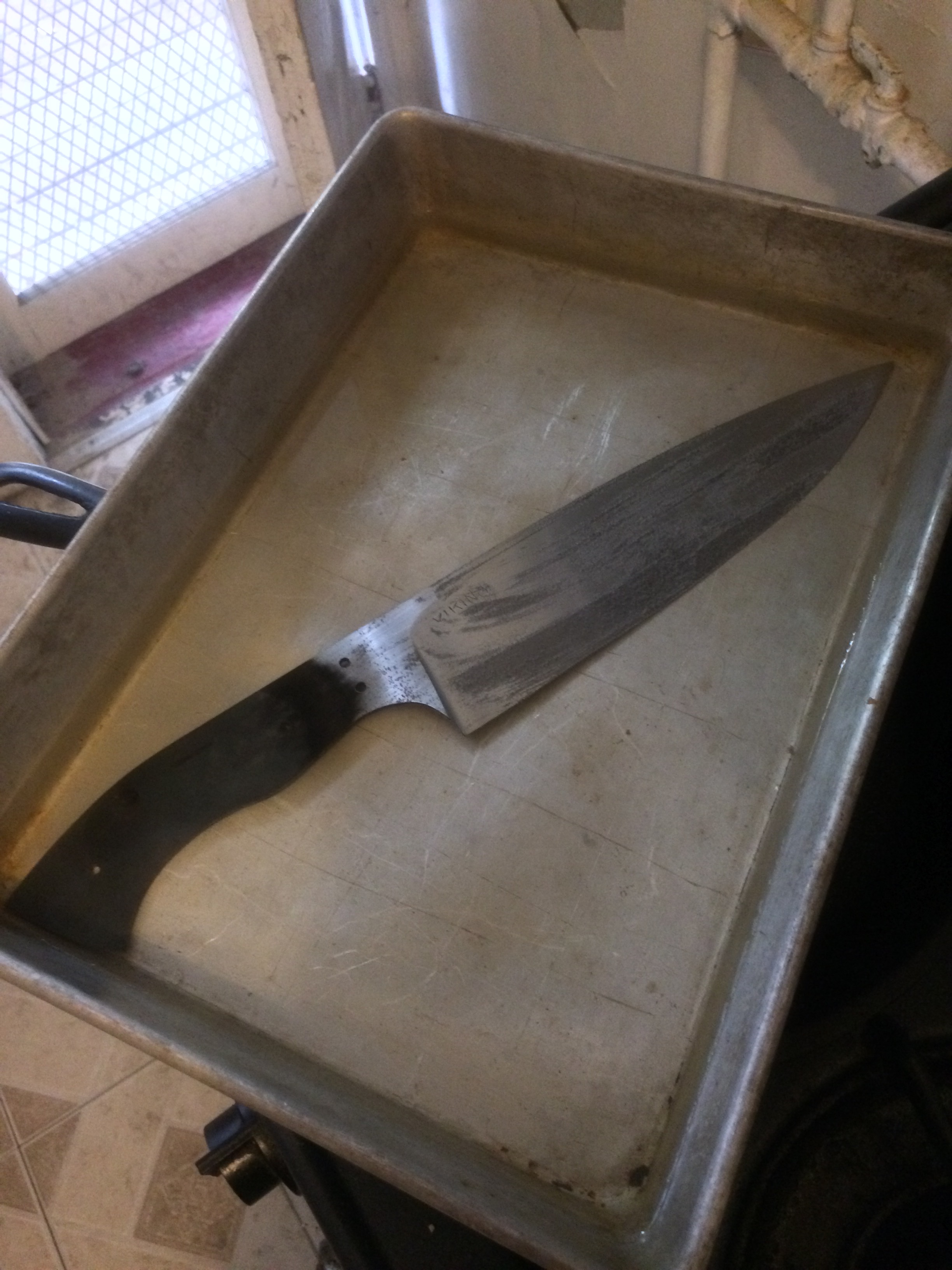
Into the forge

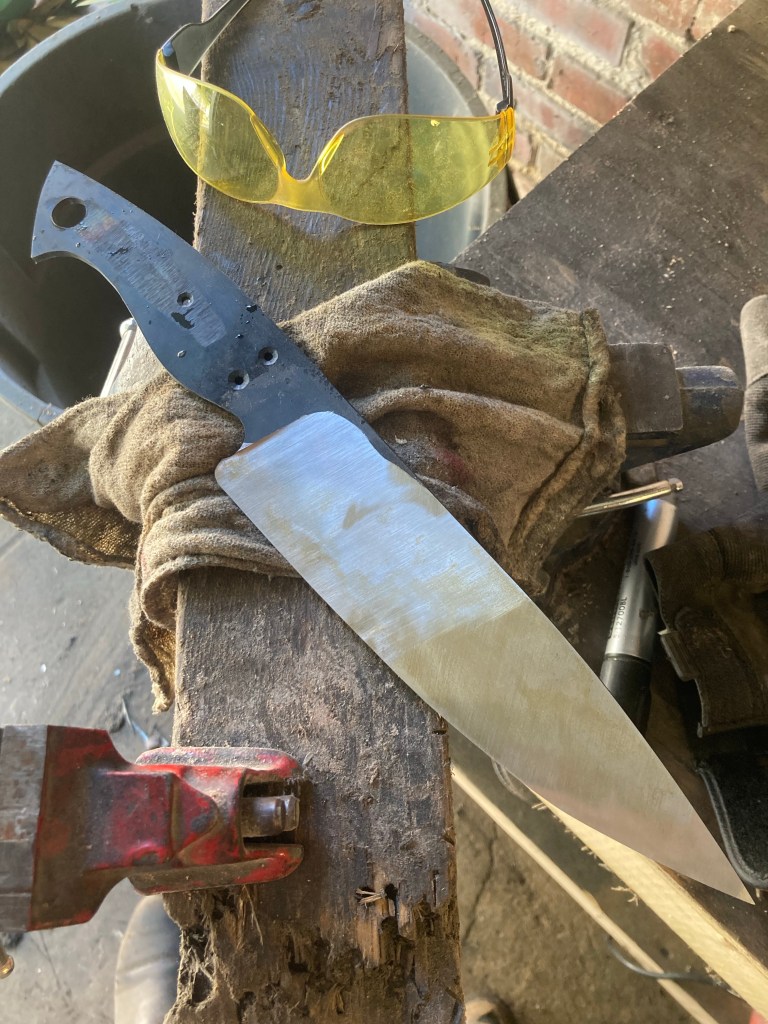
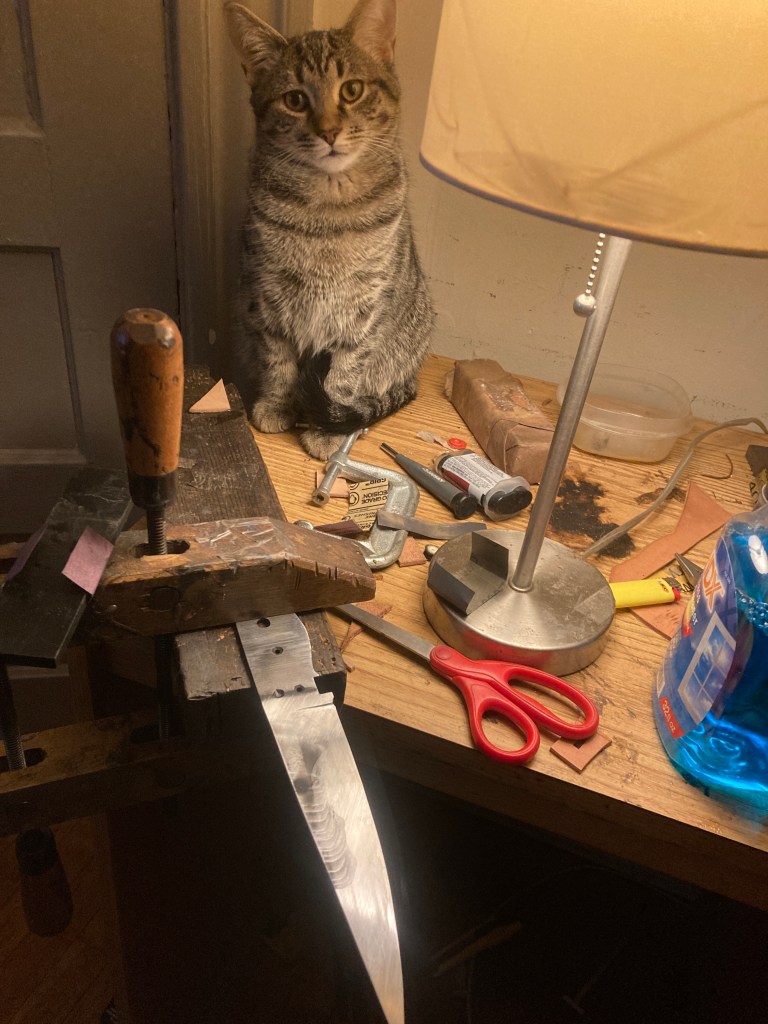
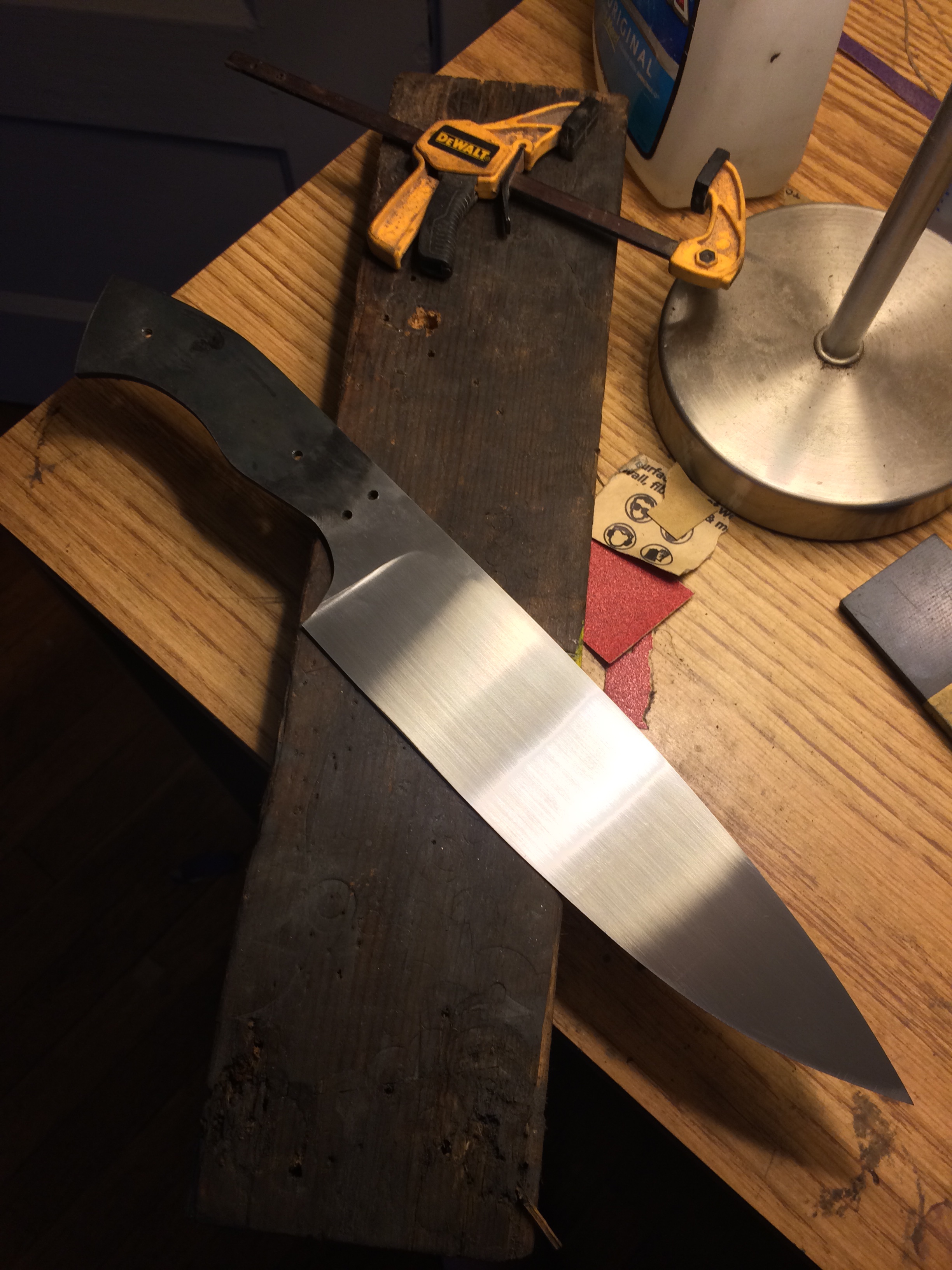
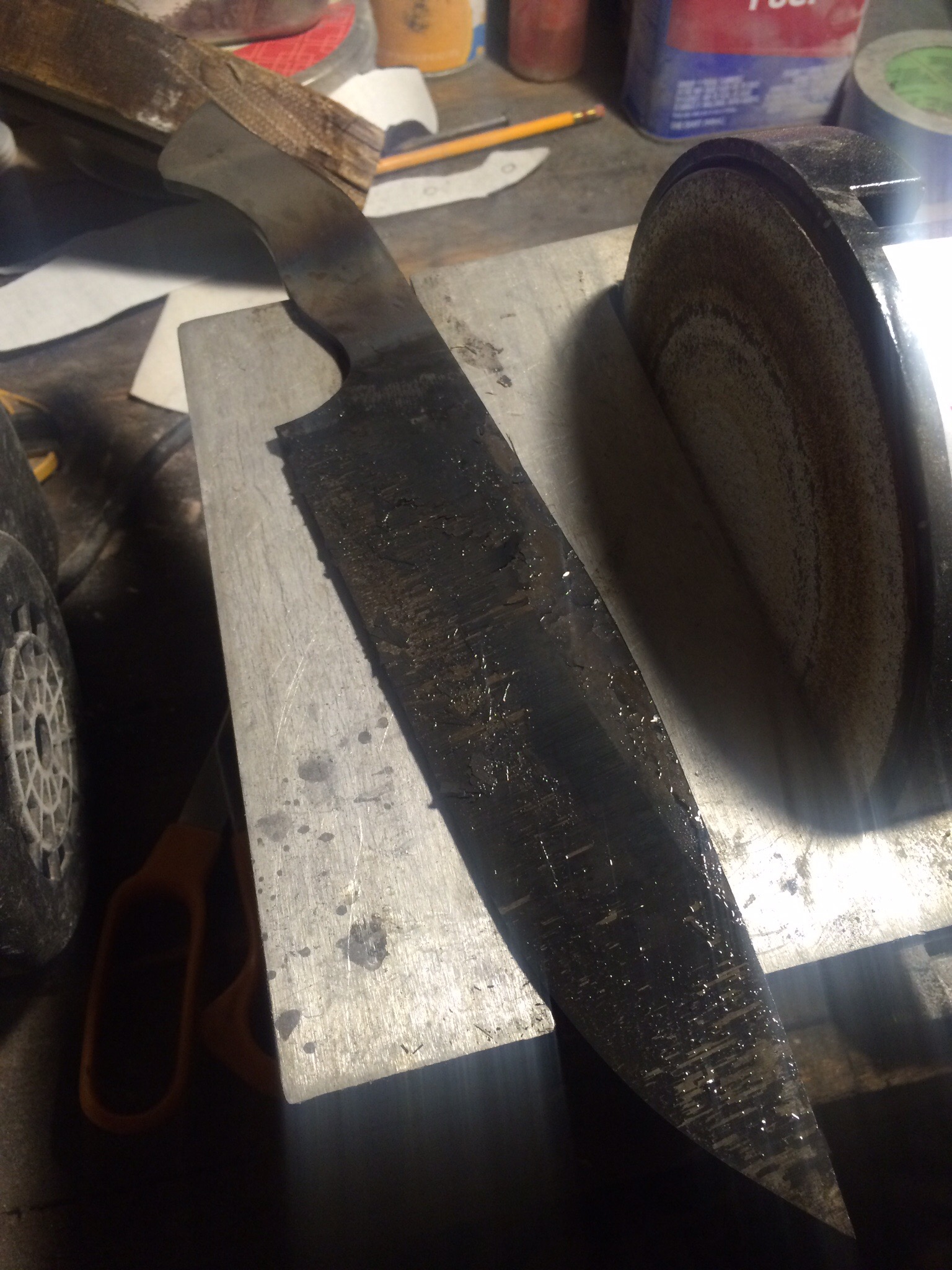
Grind some more

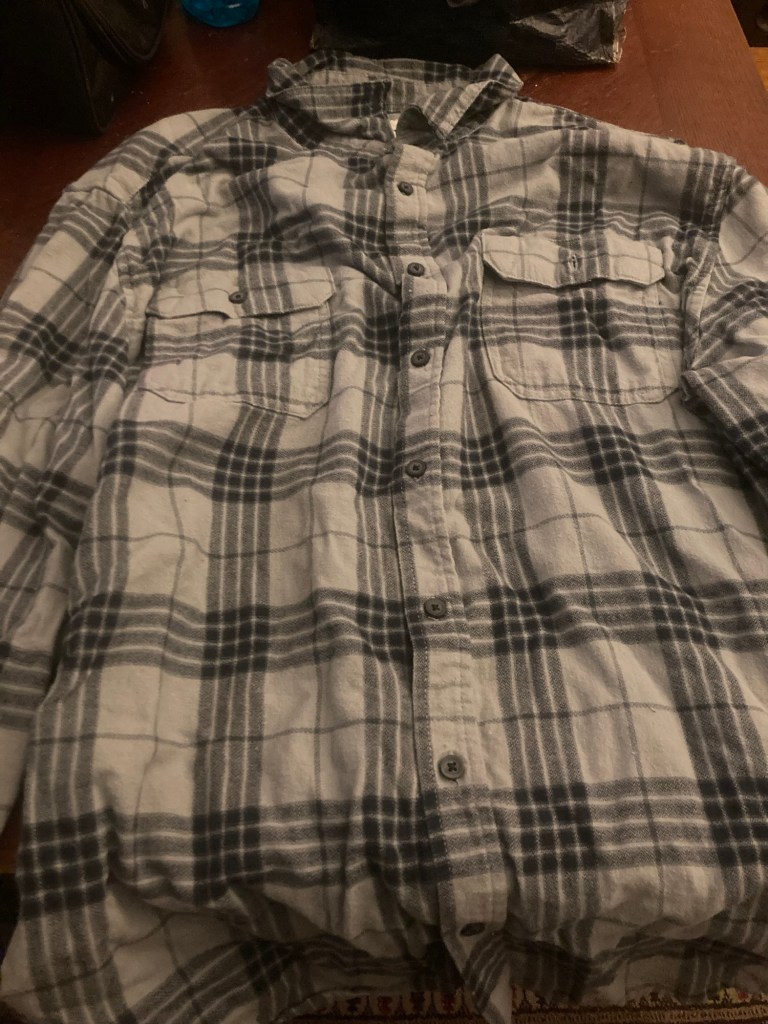
One of the clothing articles they sent me was the shirt the groom proposed in

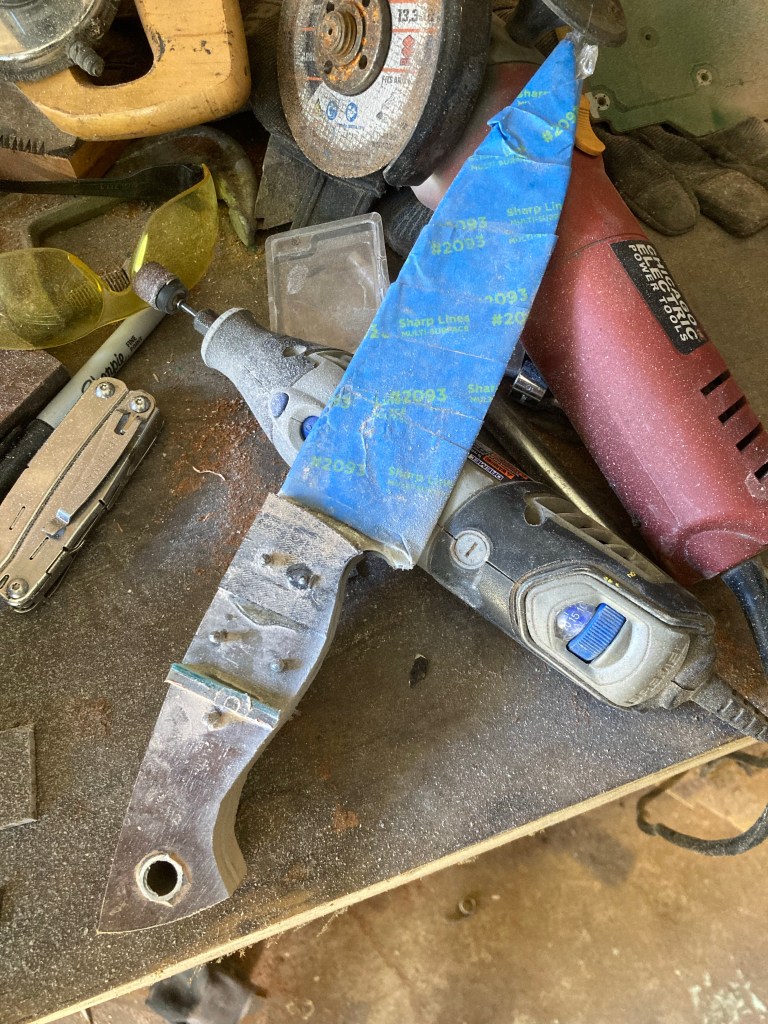
Some of the dress material, a shimmery chiffon mesh

There was also some black stretchy dress material

Layered together to create a pattern

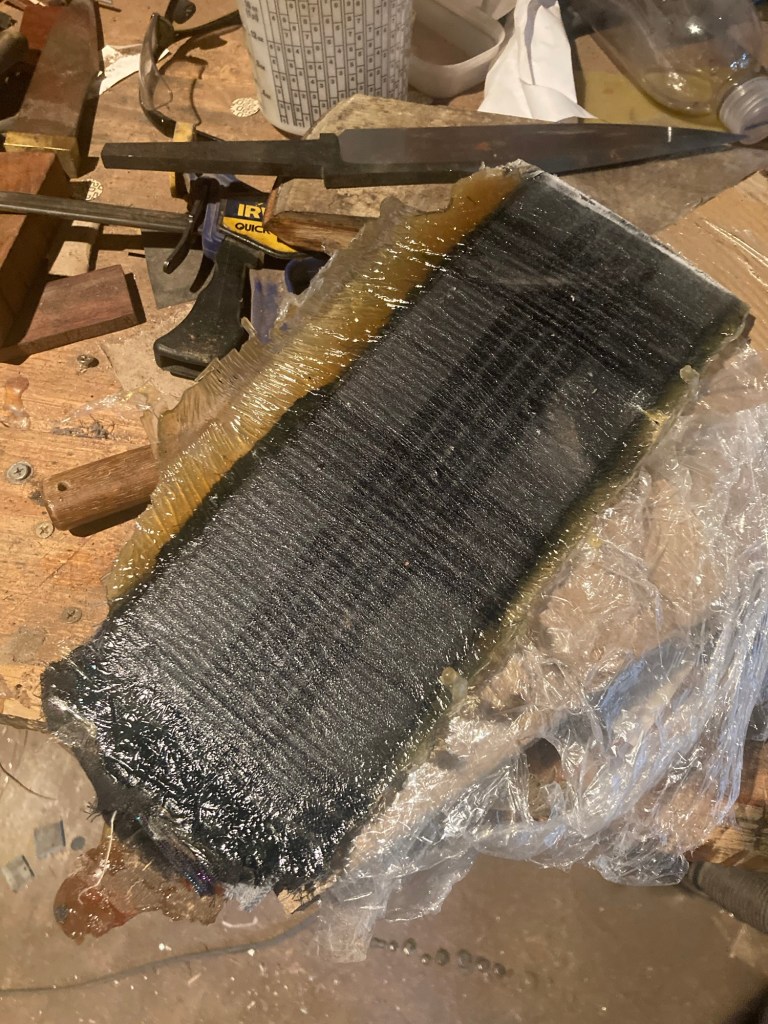
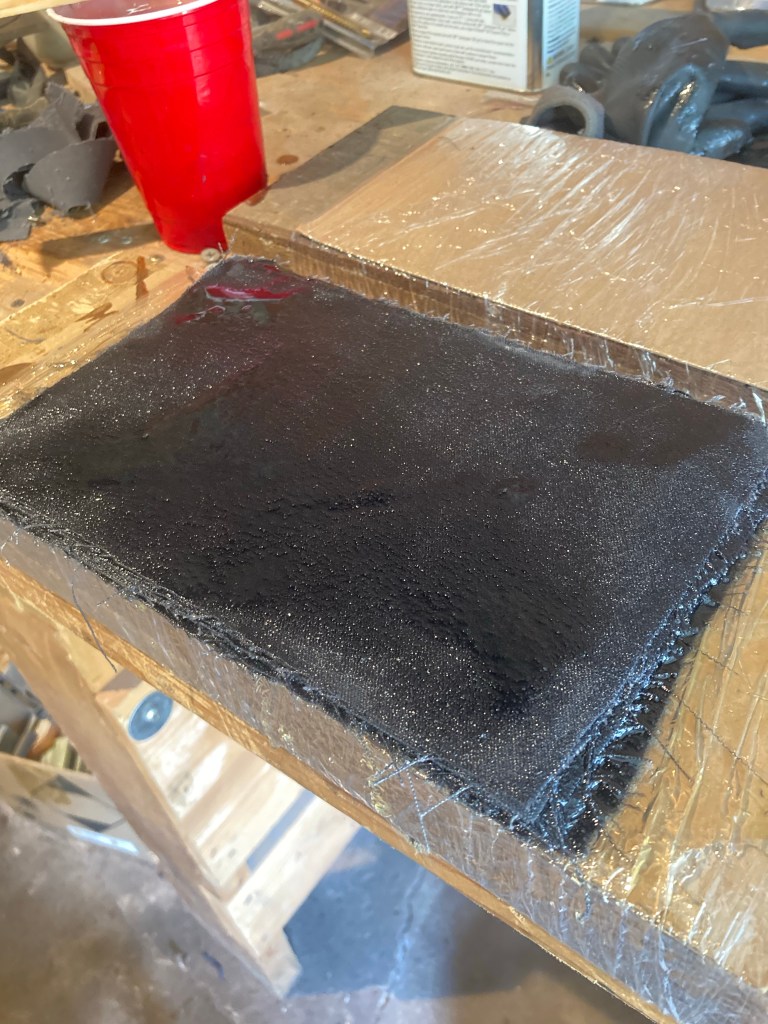
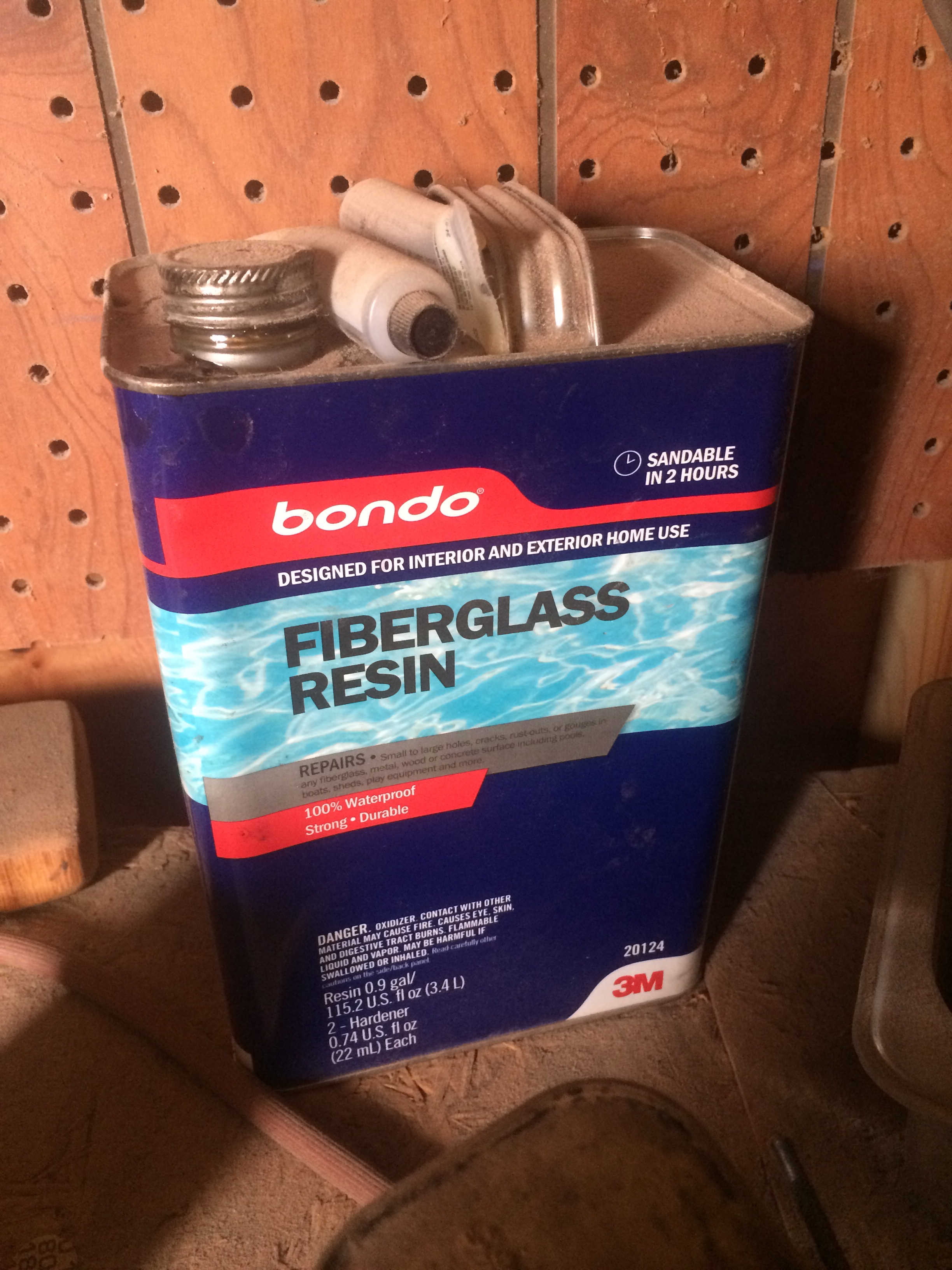
This will all get layered together with fiberglass resin

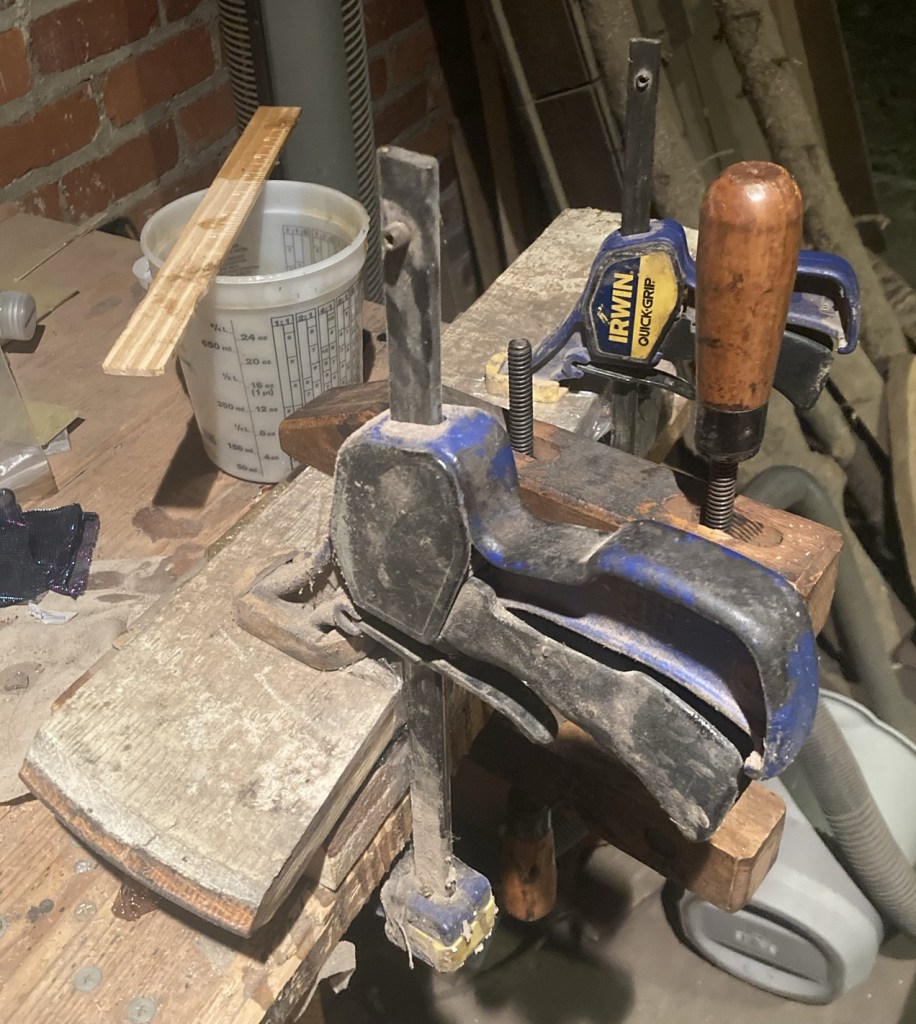
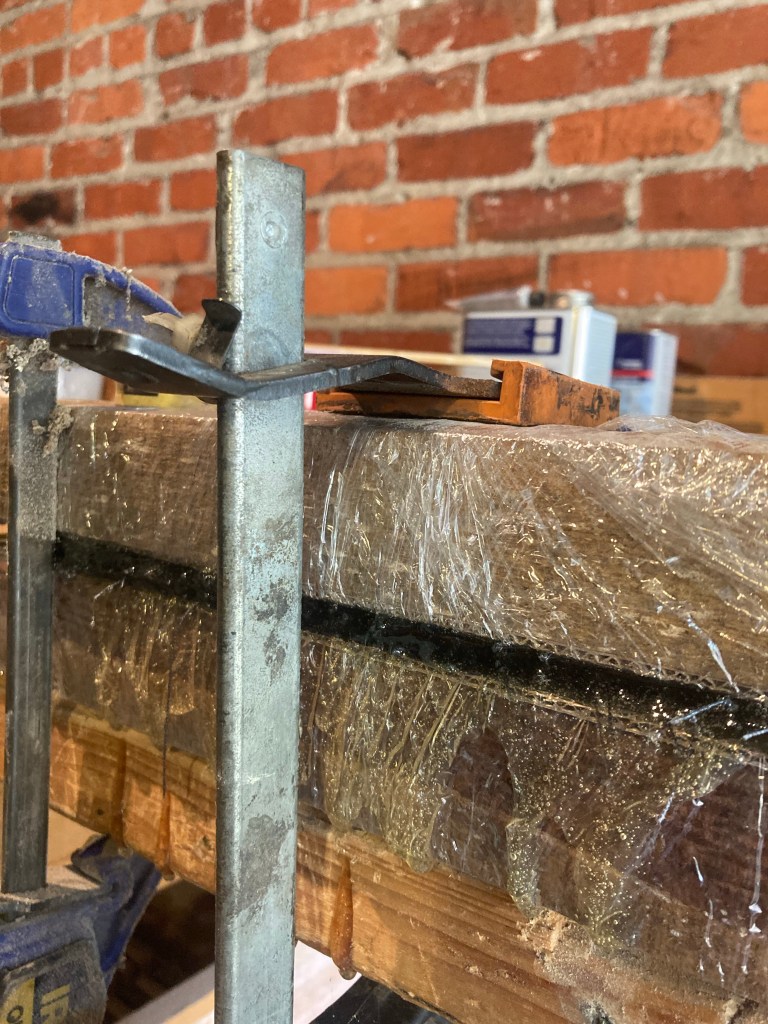
All smashed together

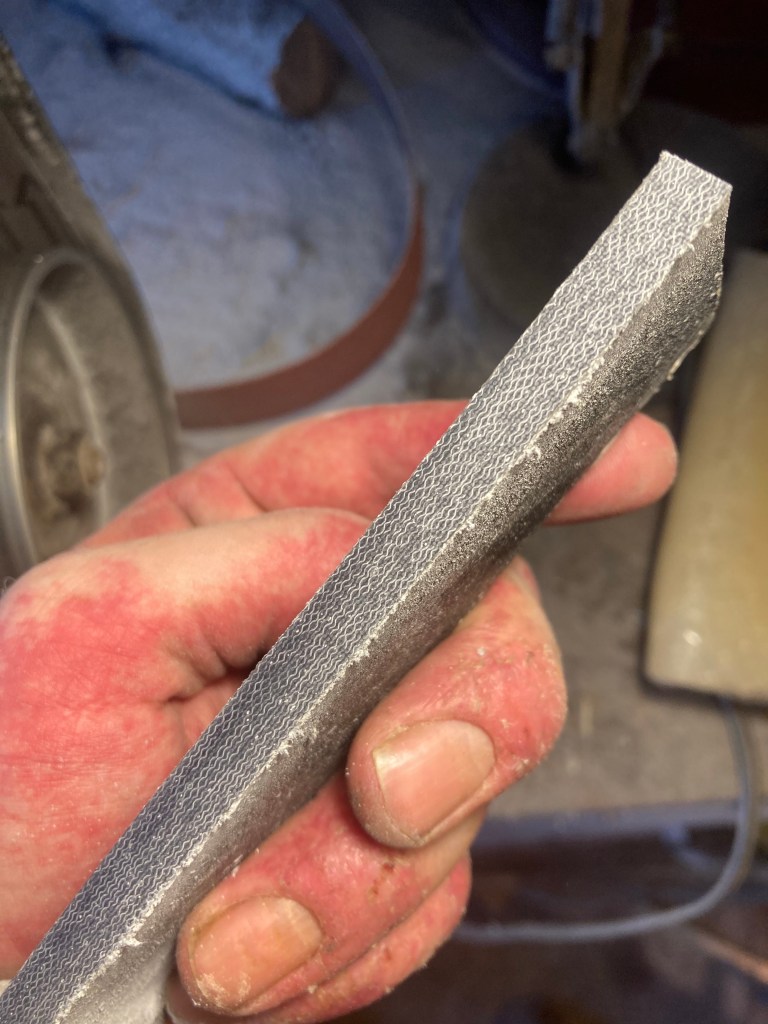
Cured

Everything properly smashed together

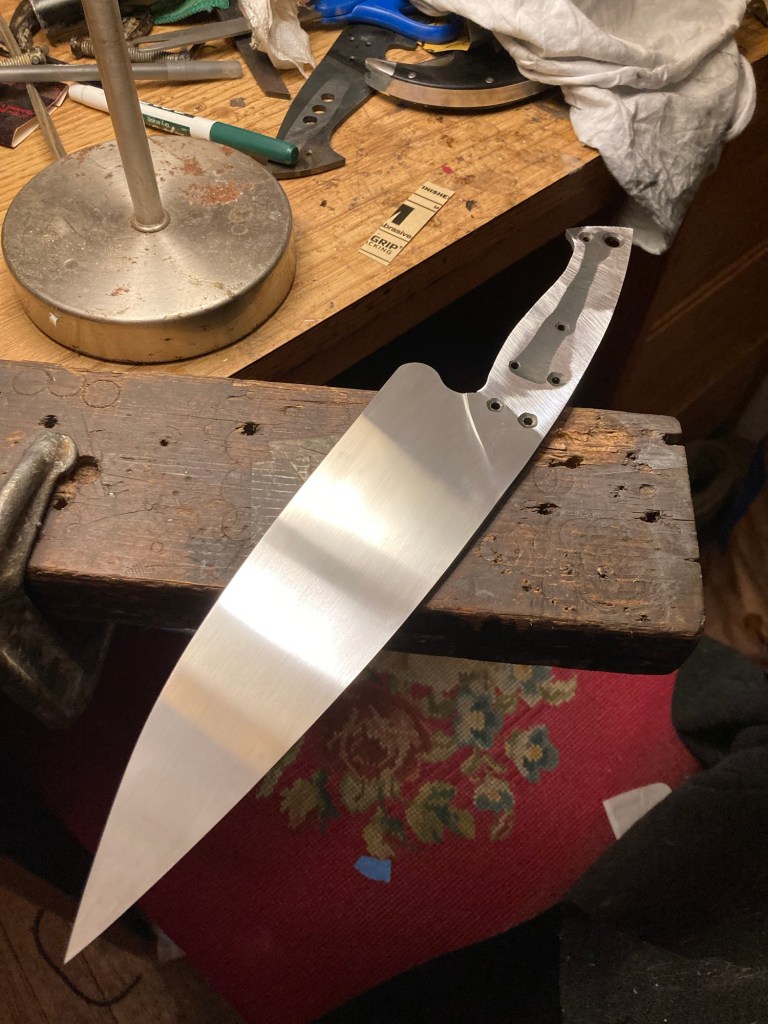
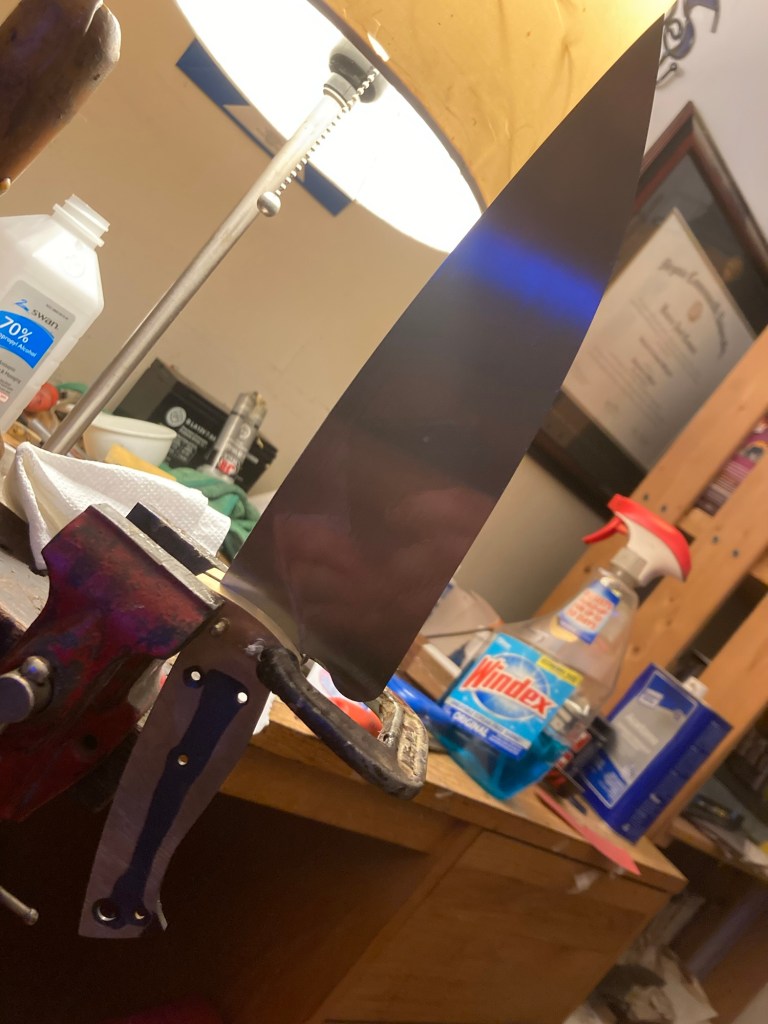
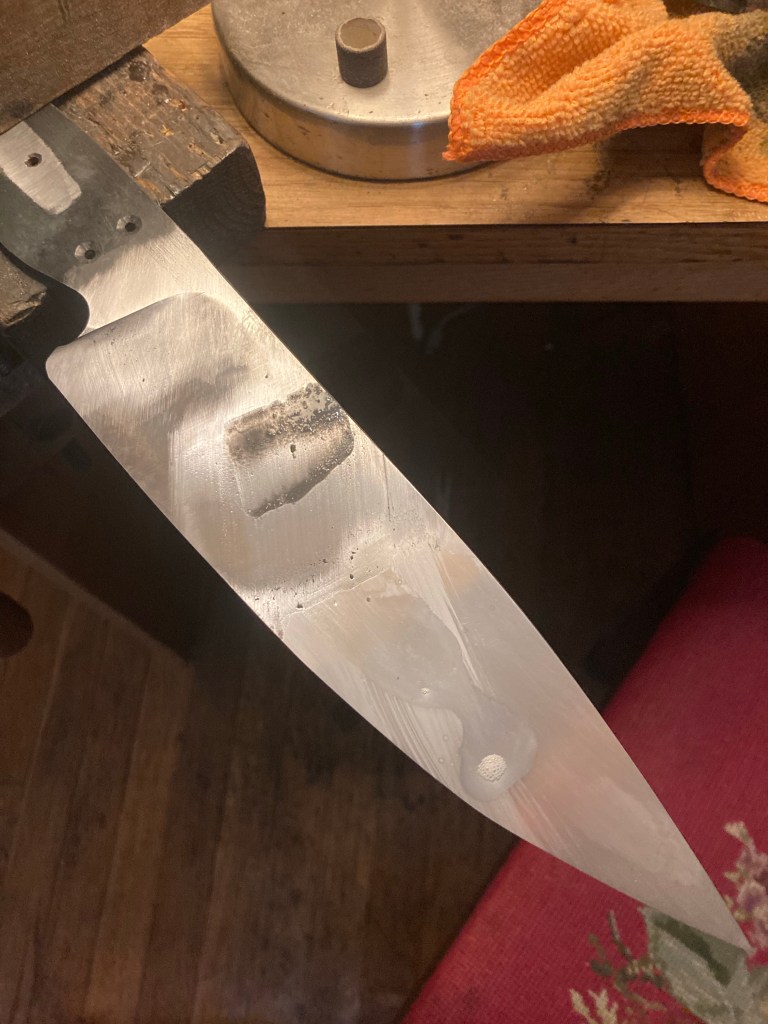
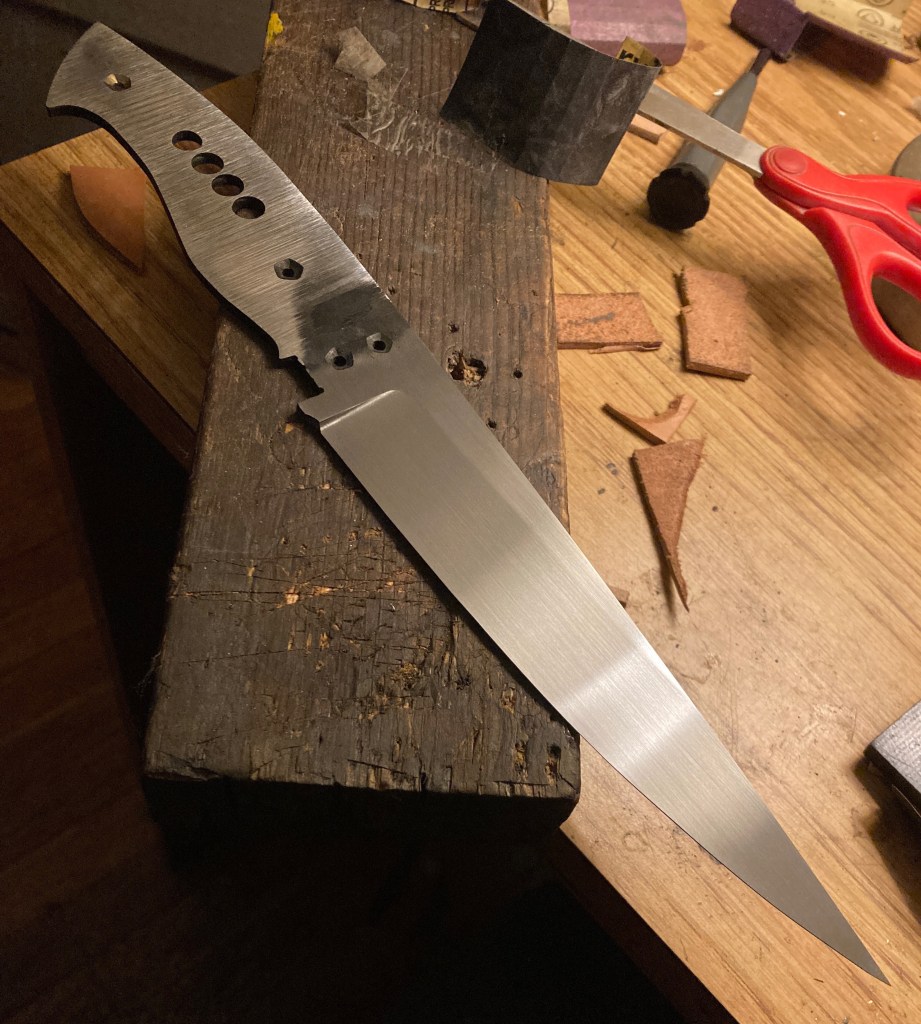
Back to the bladework, handsanding

Satin finish

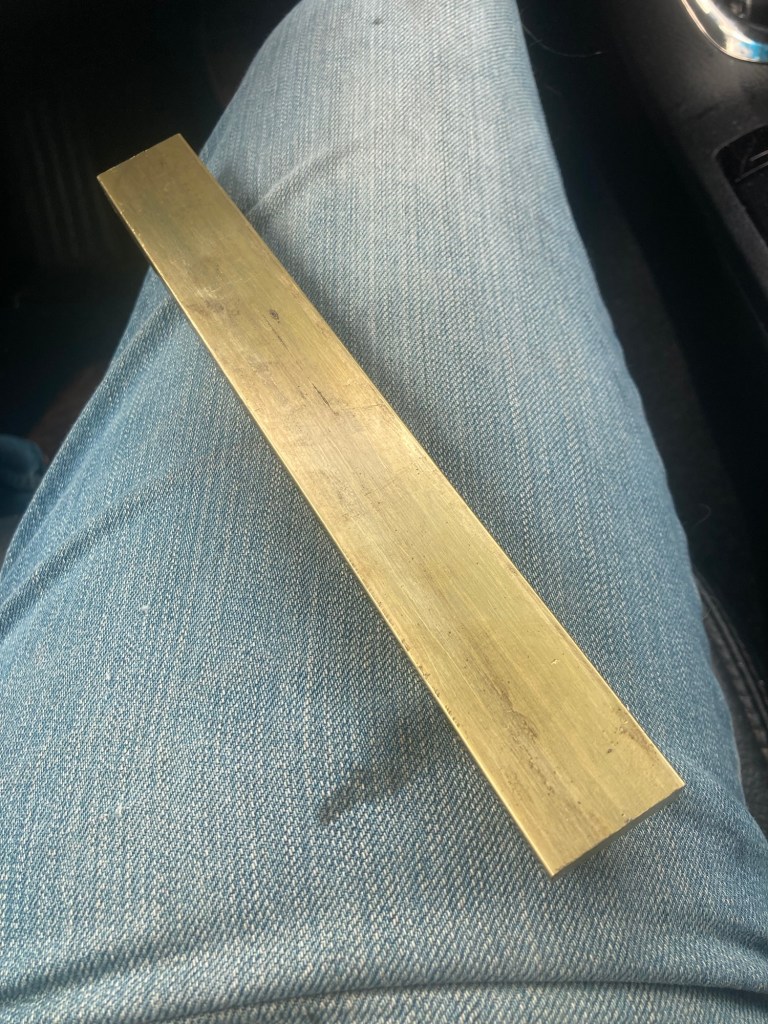
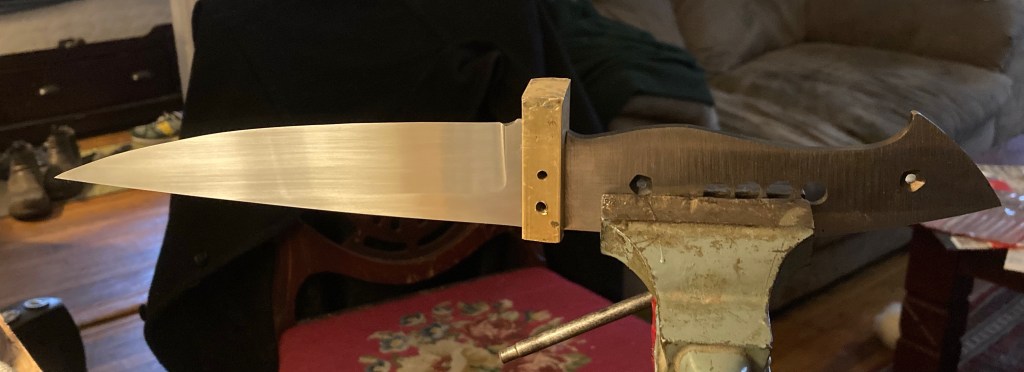
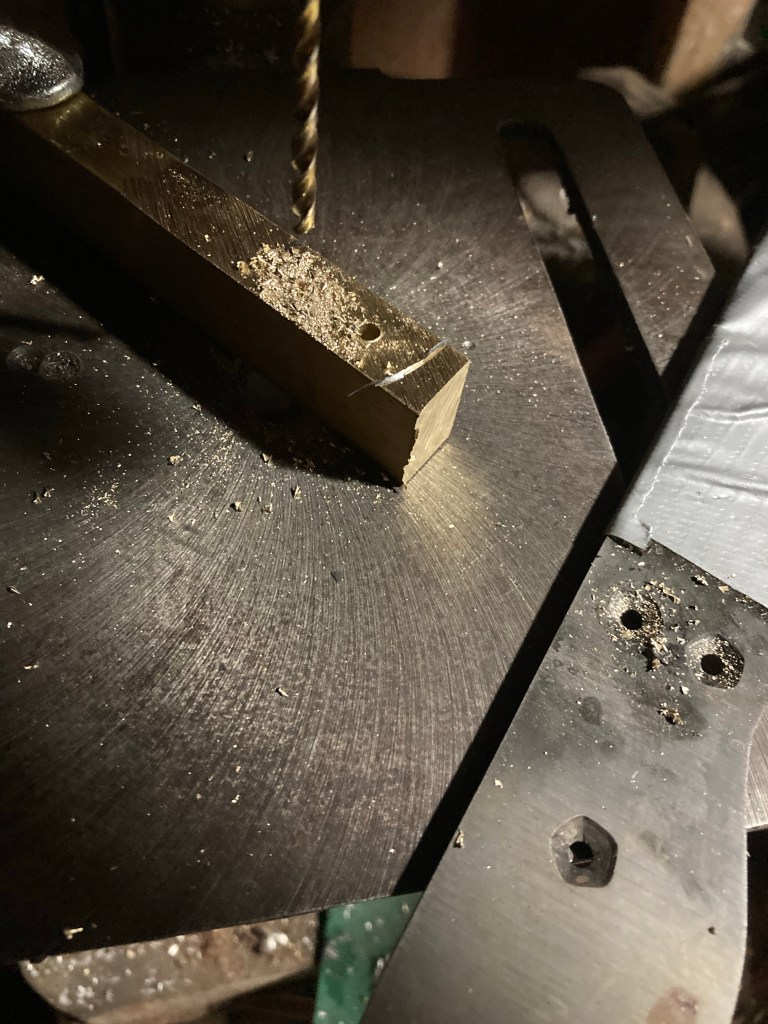
Bit of brass for the bloster

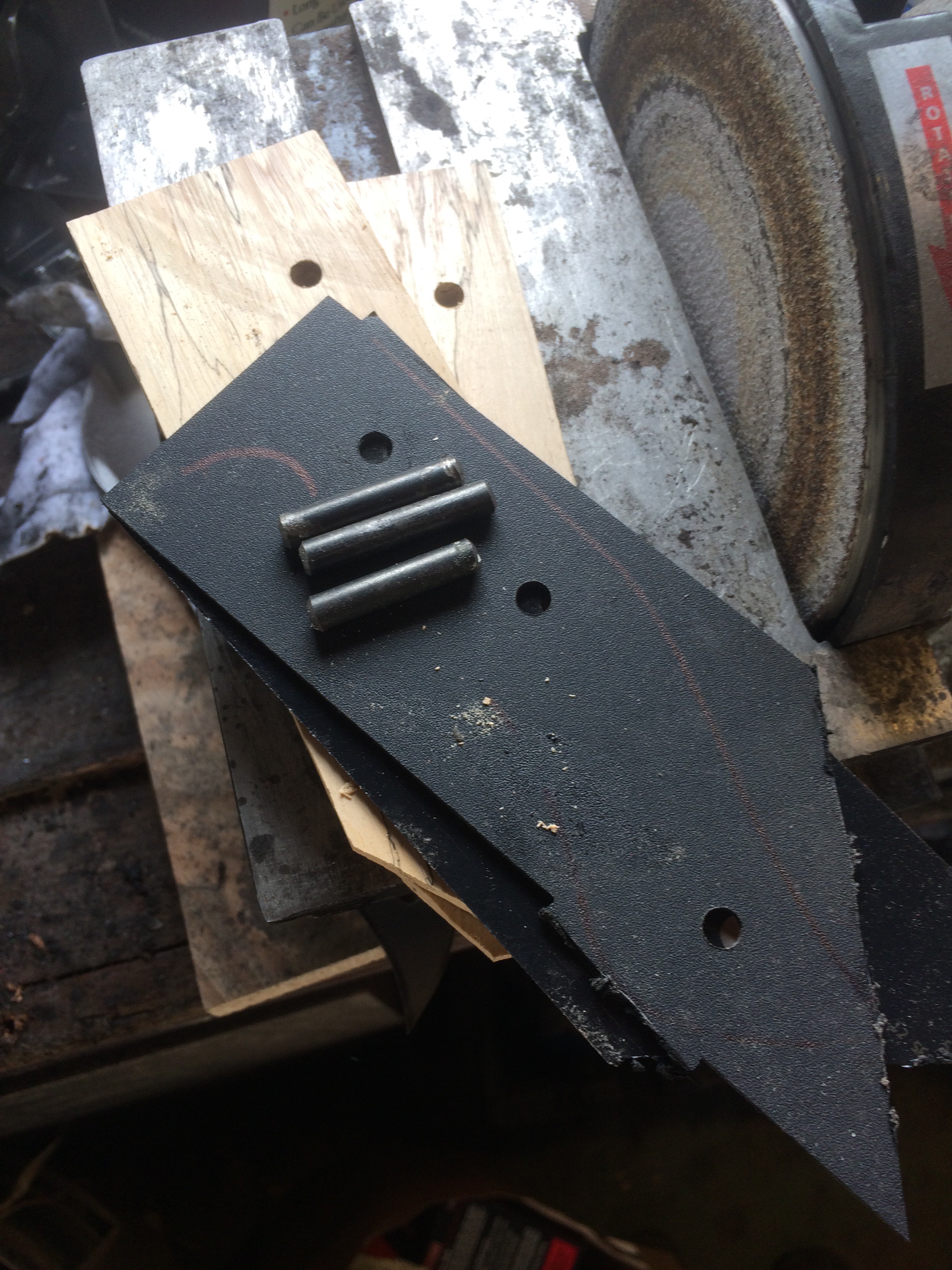
Drilling before shaping

Shaped

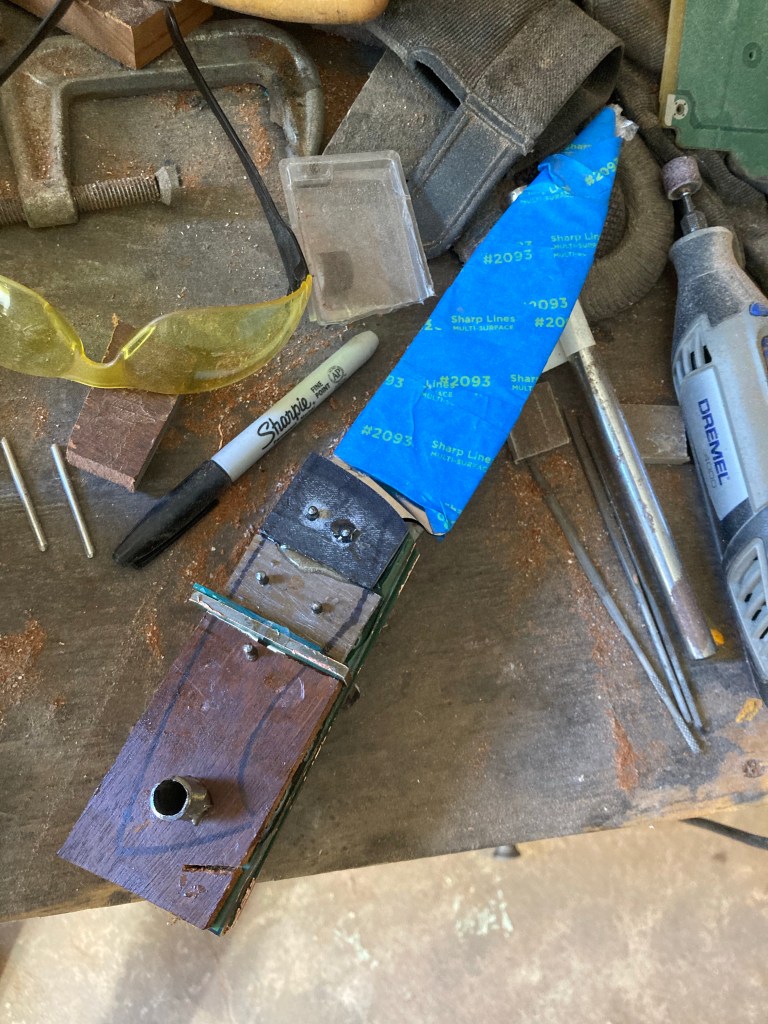
Fitted up and set with steel-reinforced JB Weld

Rivets are peened

Fitting up the handle material. The wood is Ebony

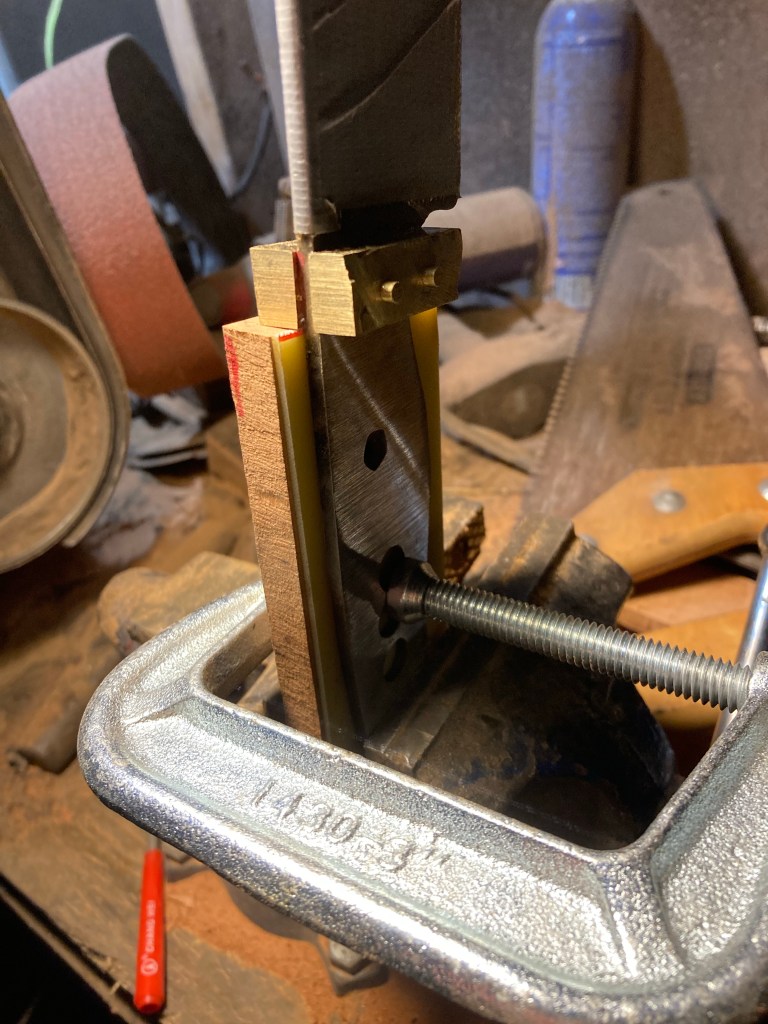
Ready for glue-up

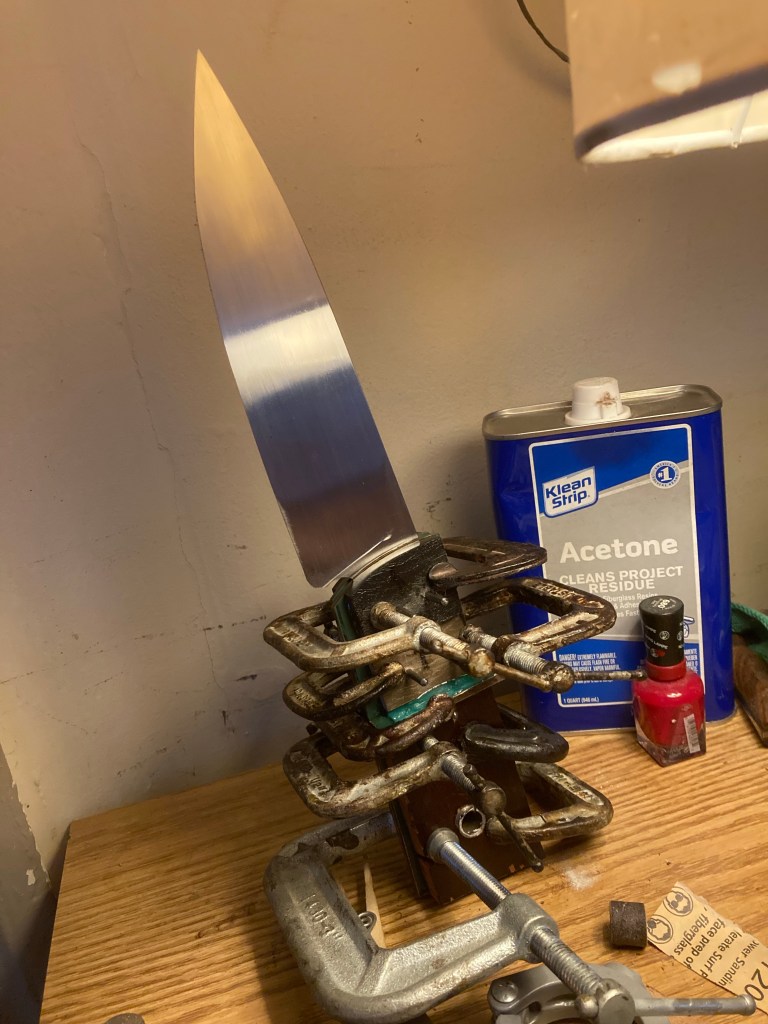
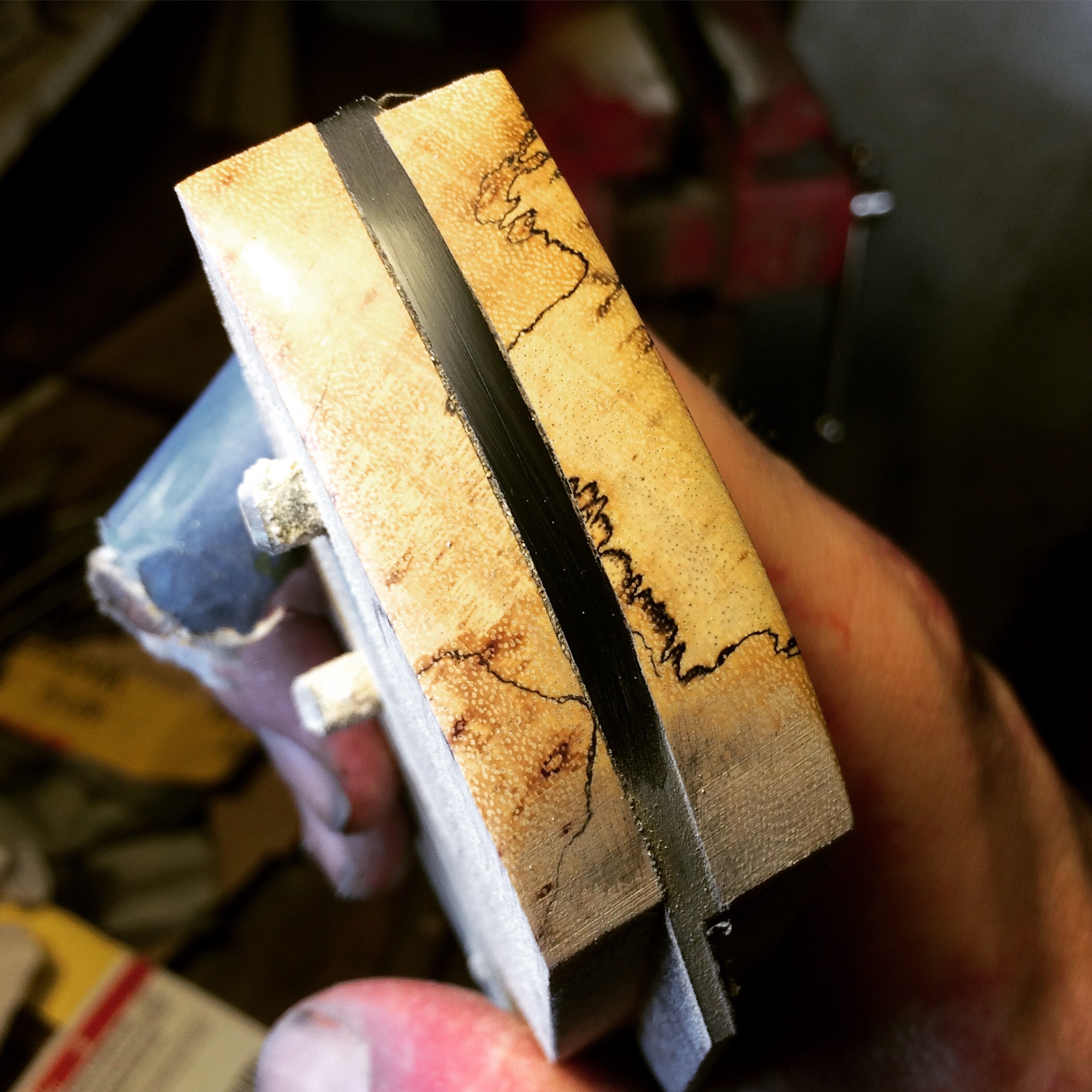
All glued up and clamped

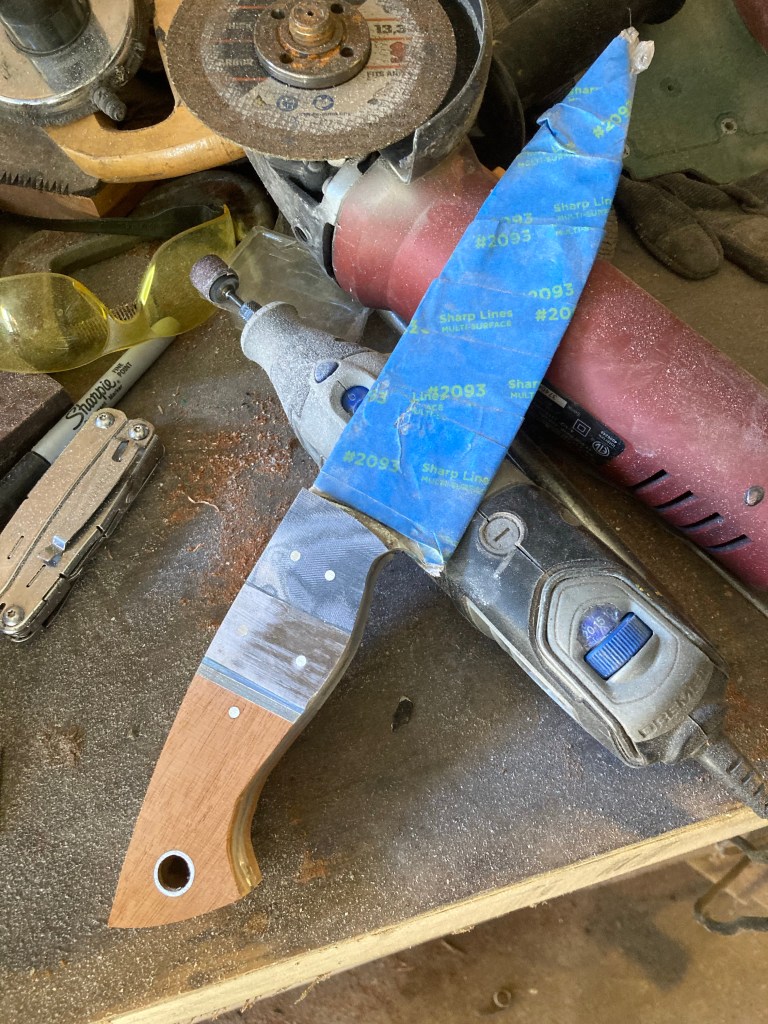
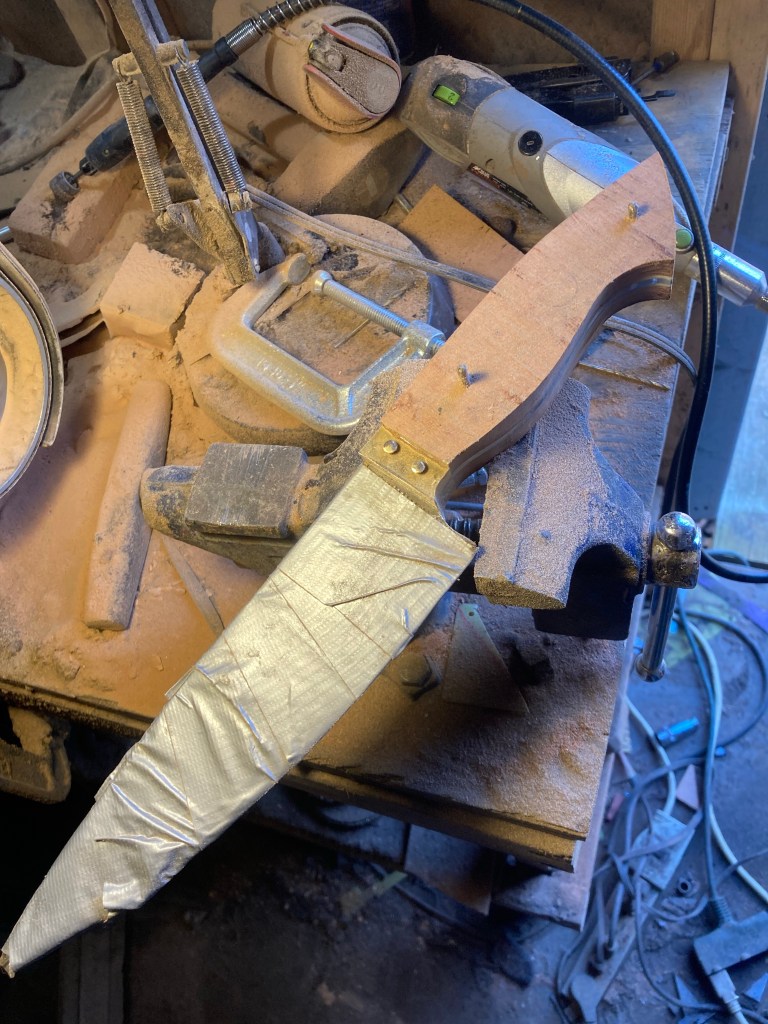
Profiled

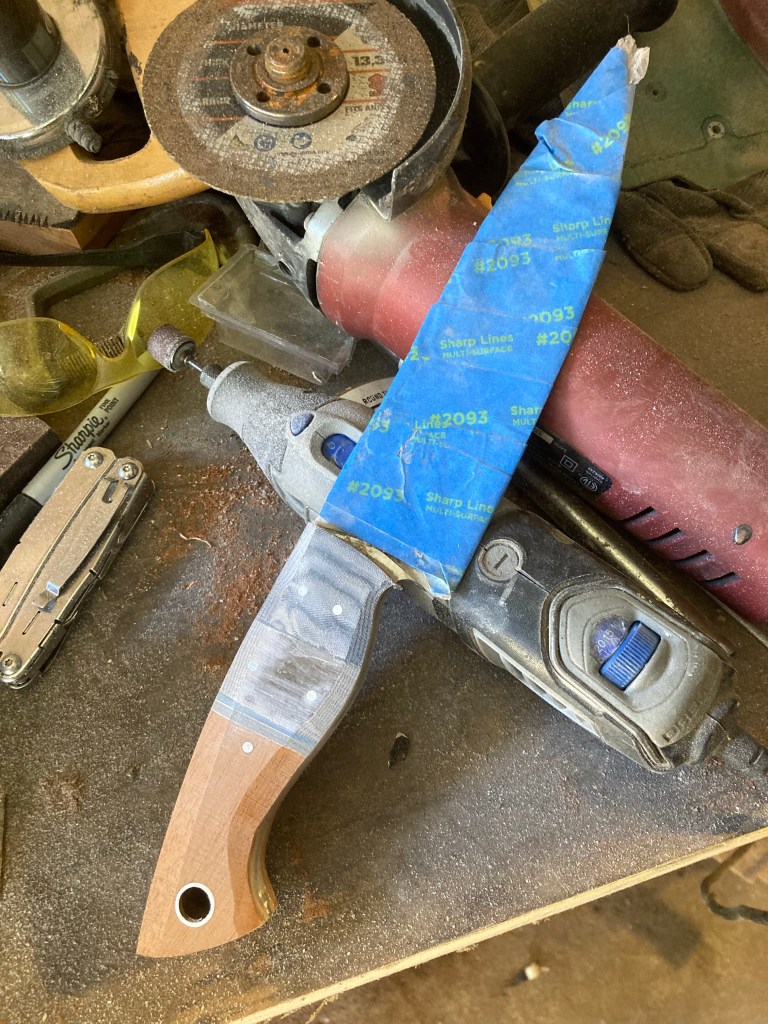
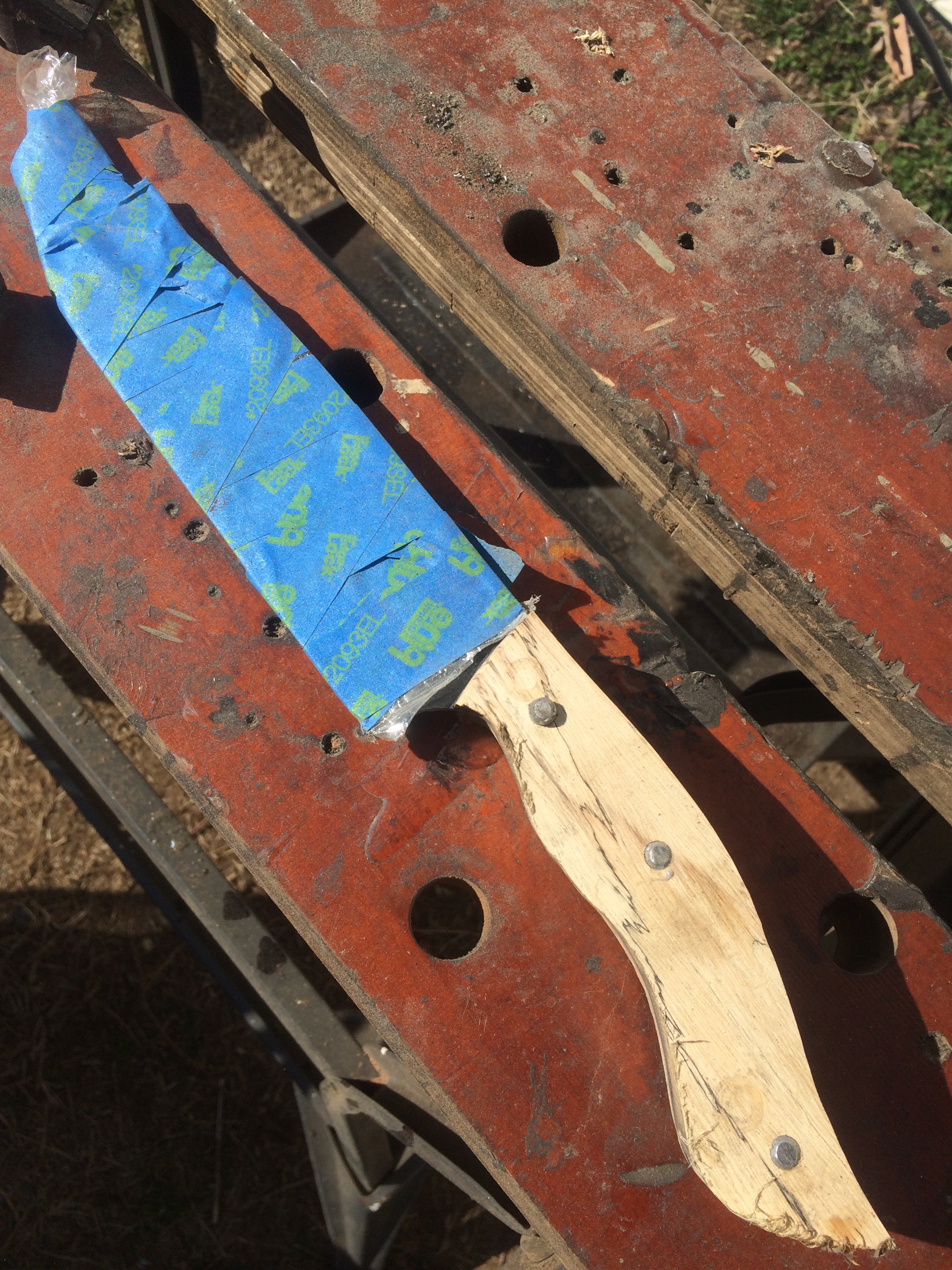
Shaped

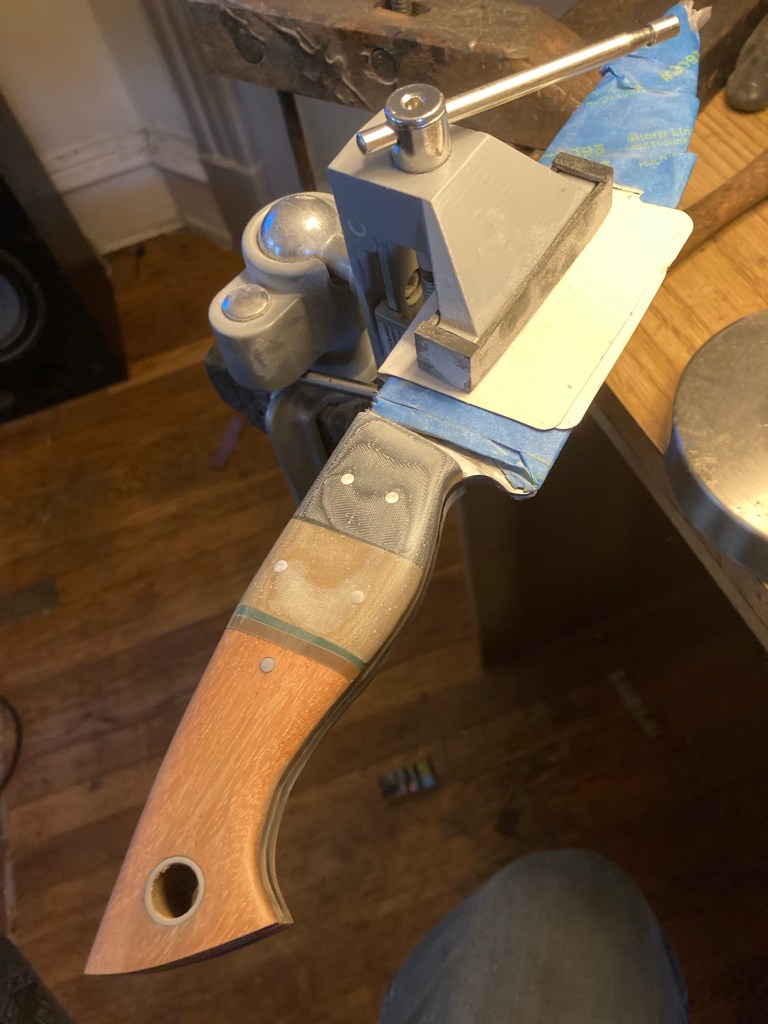
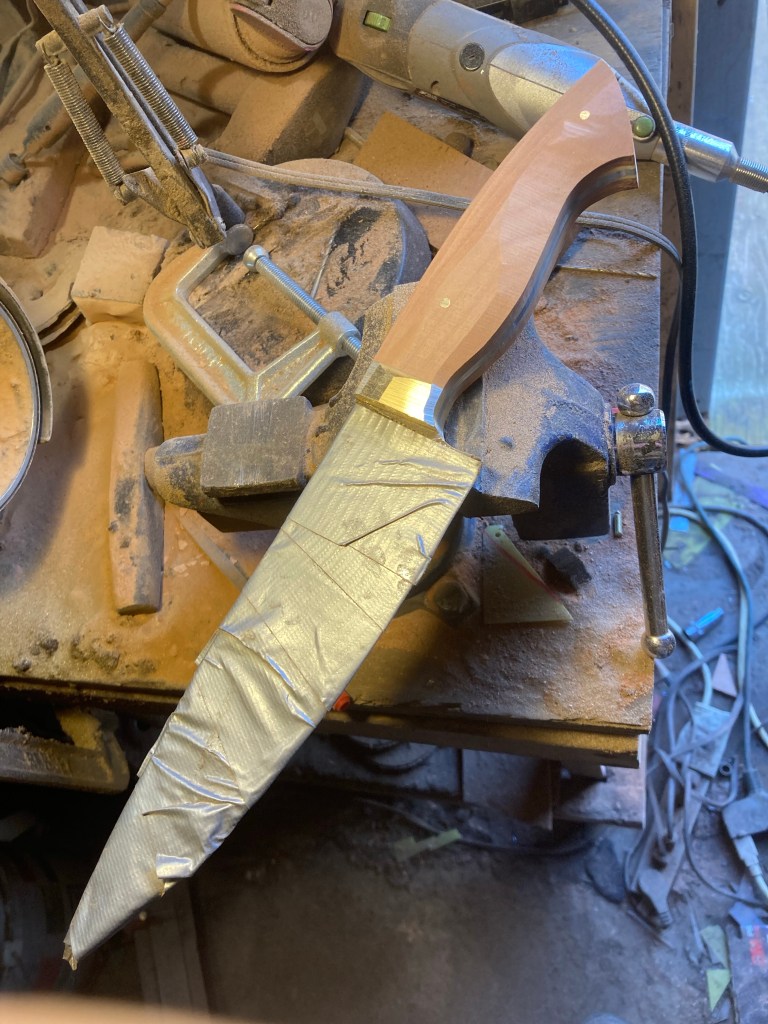
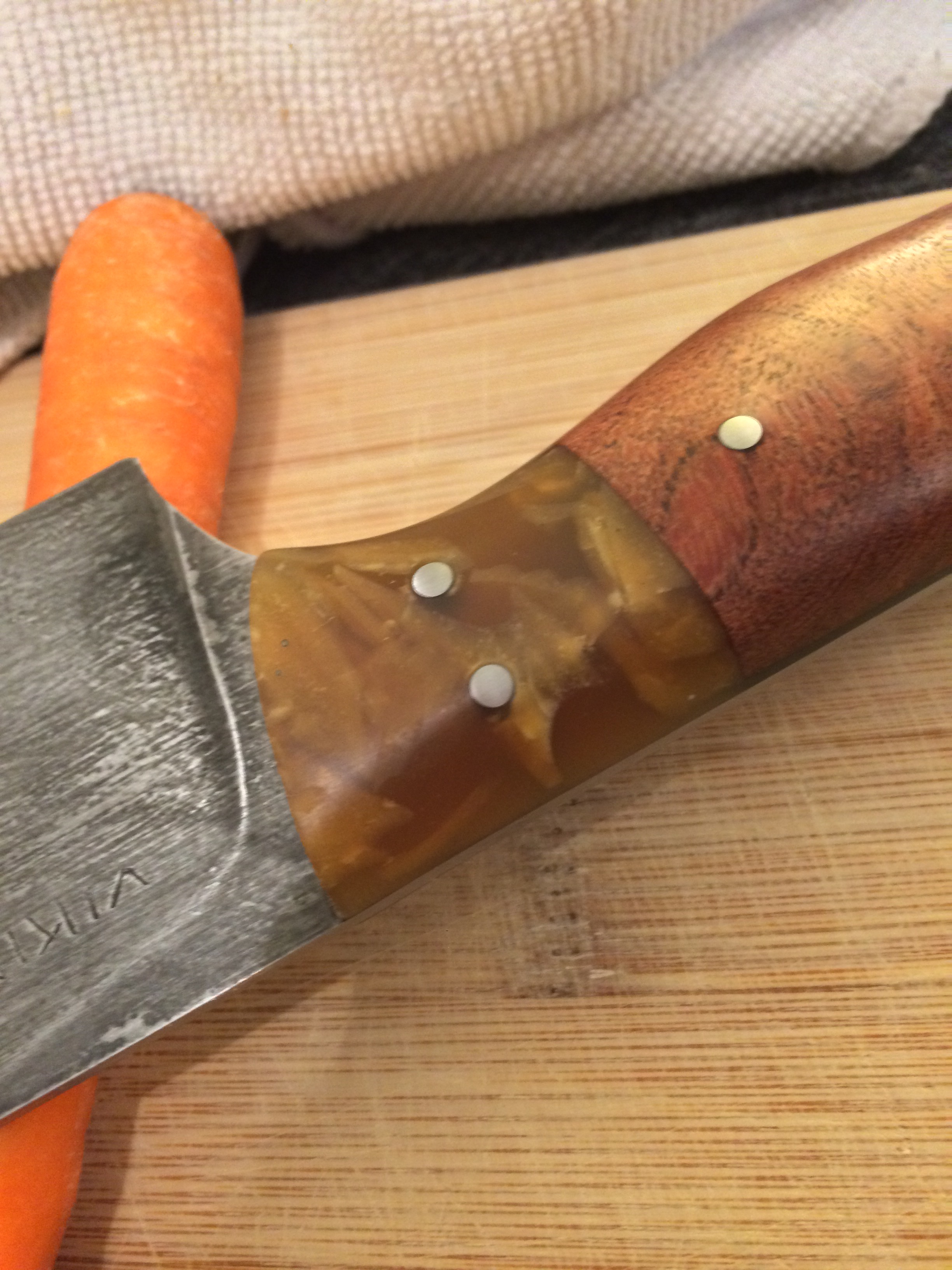
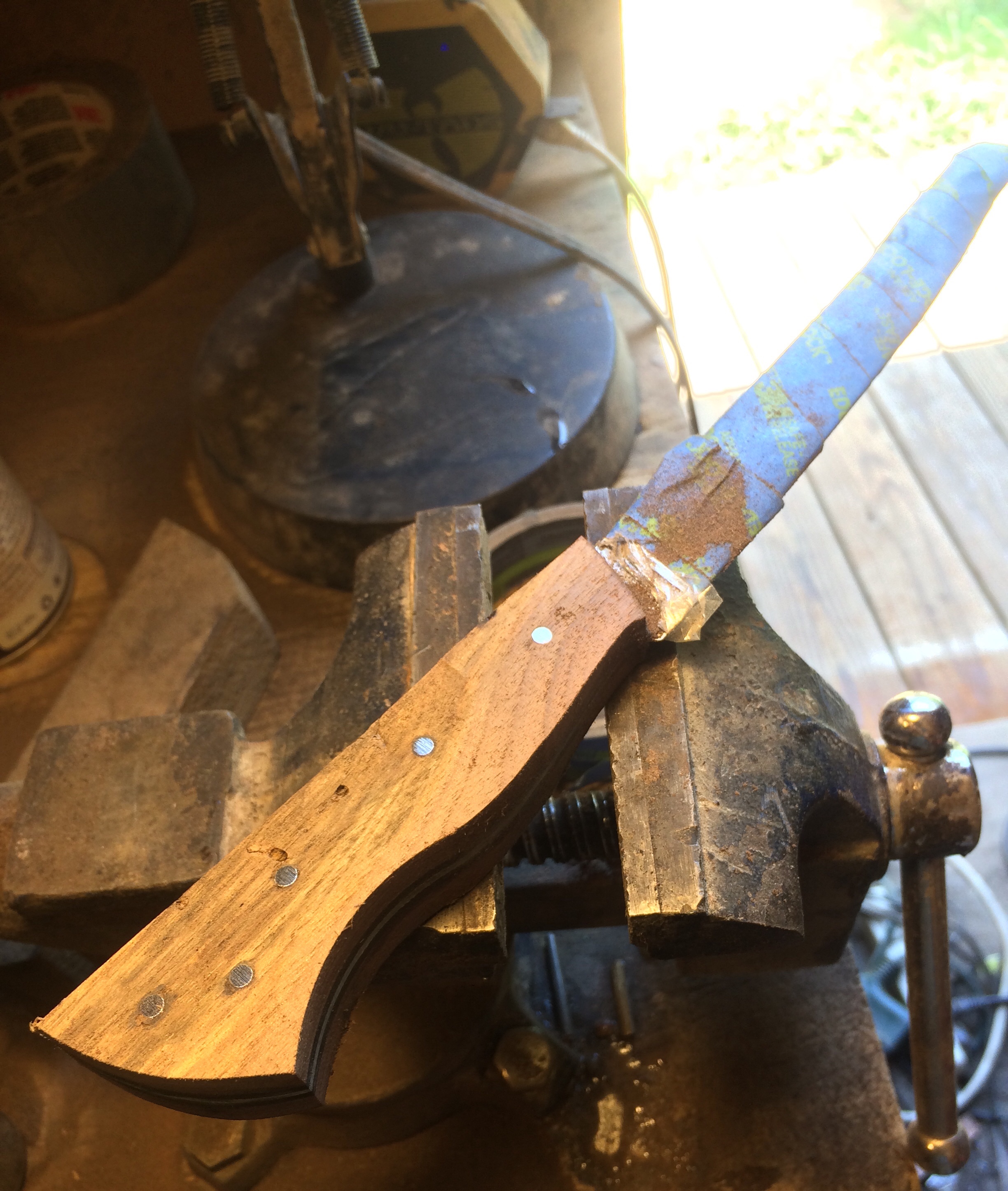
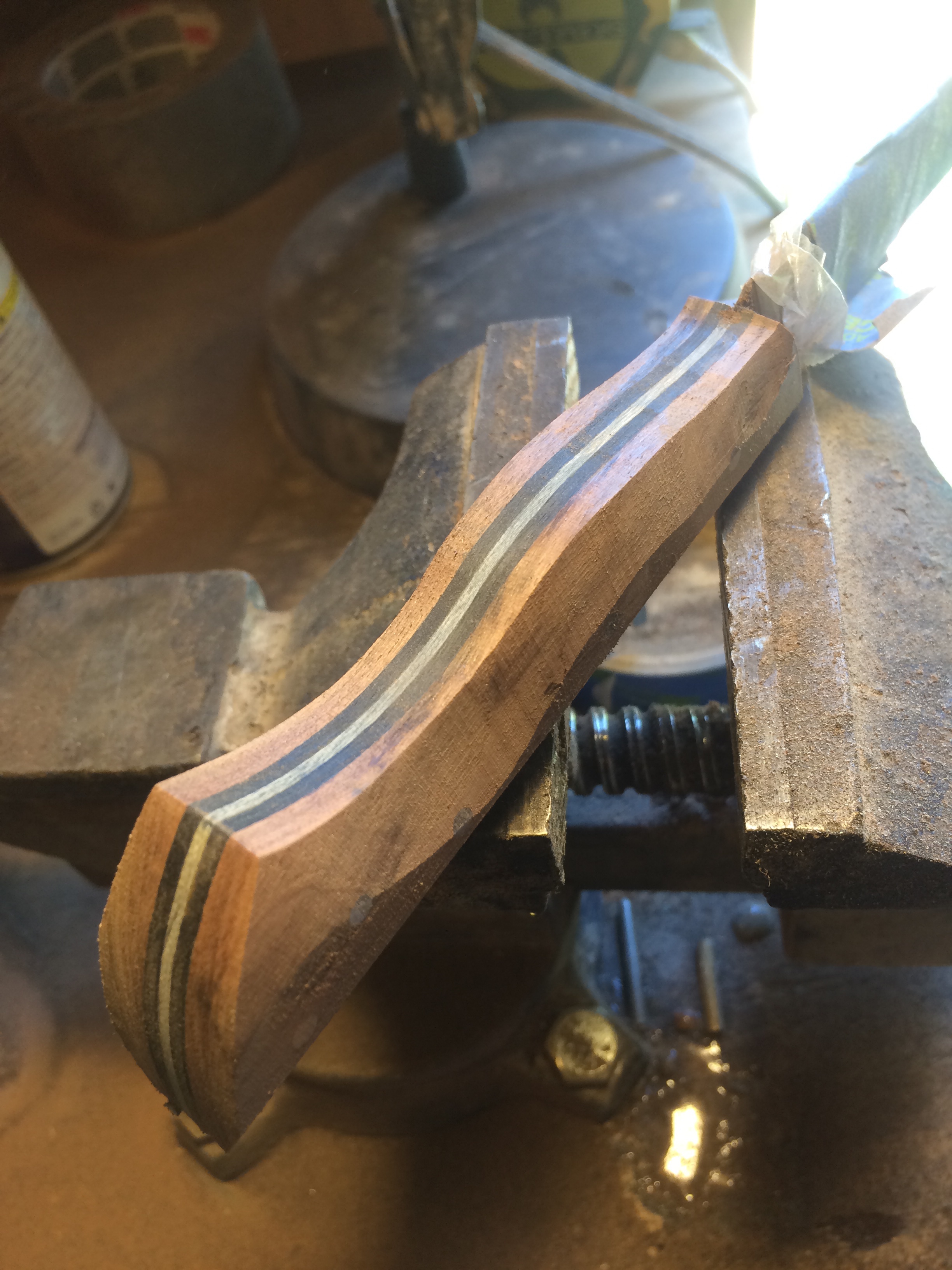
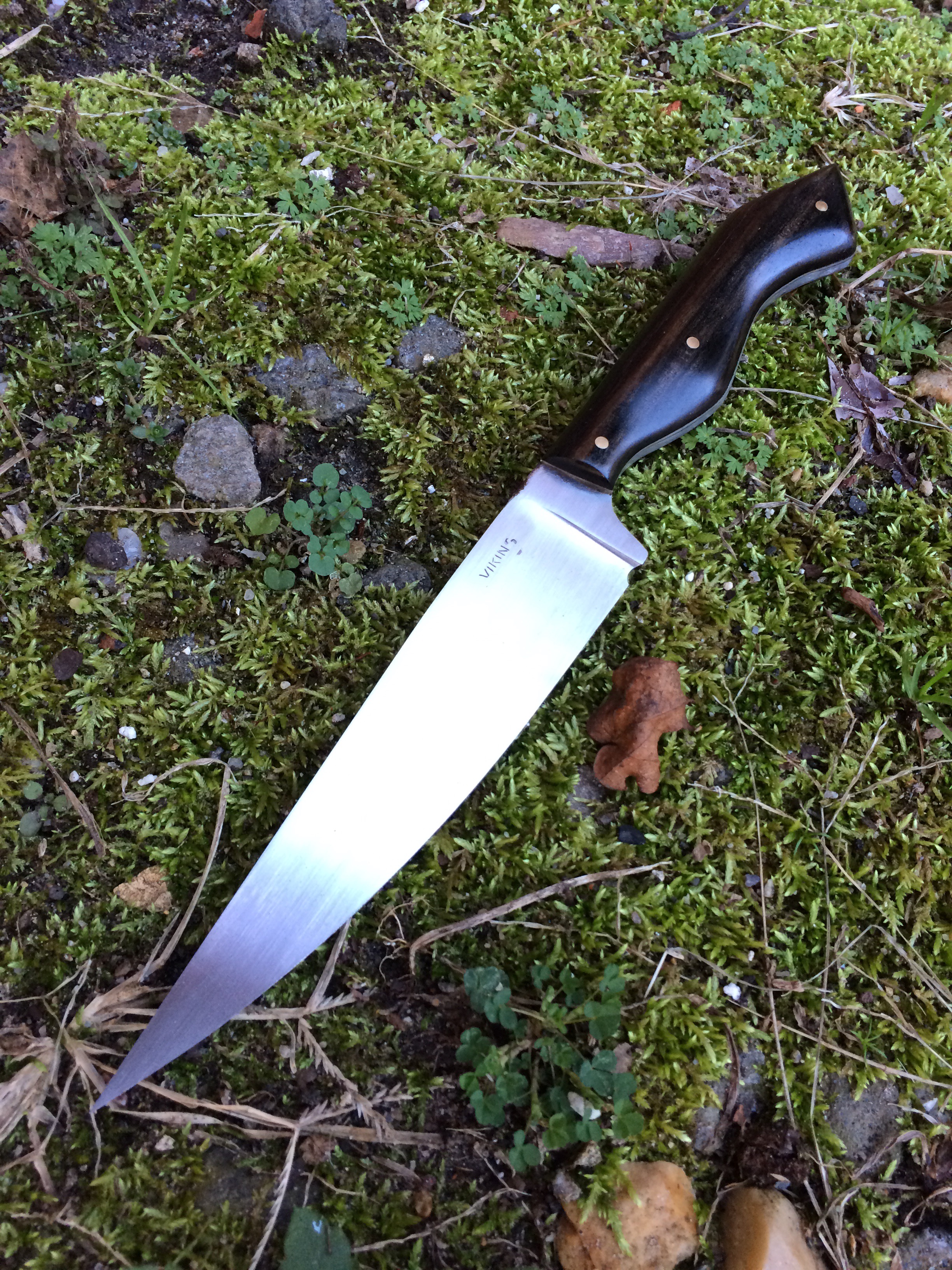
Finally started to see what this guy looks like

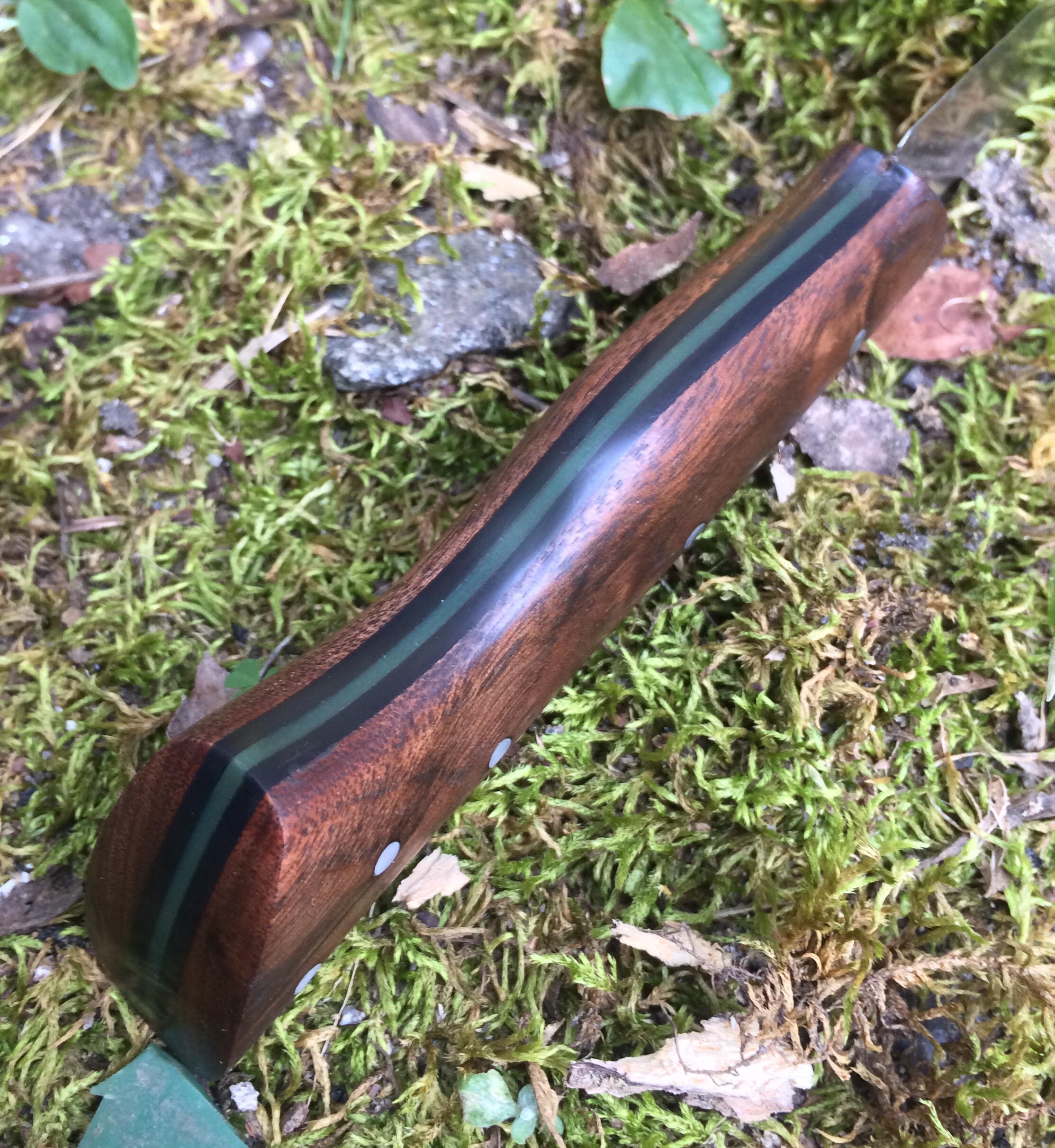
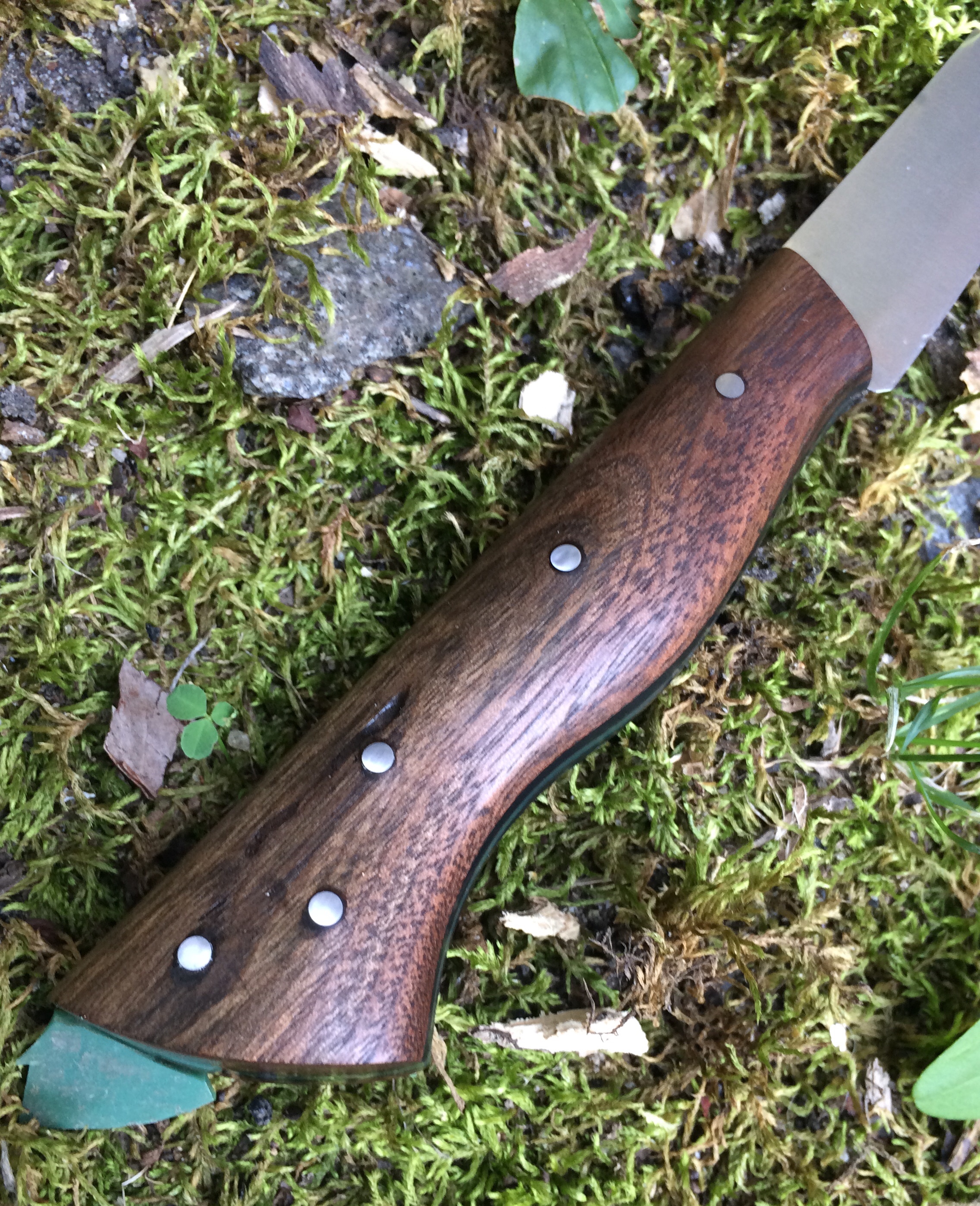
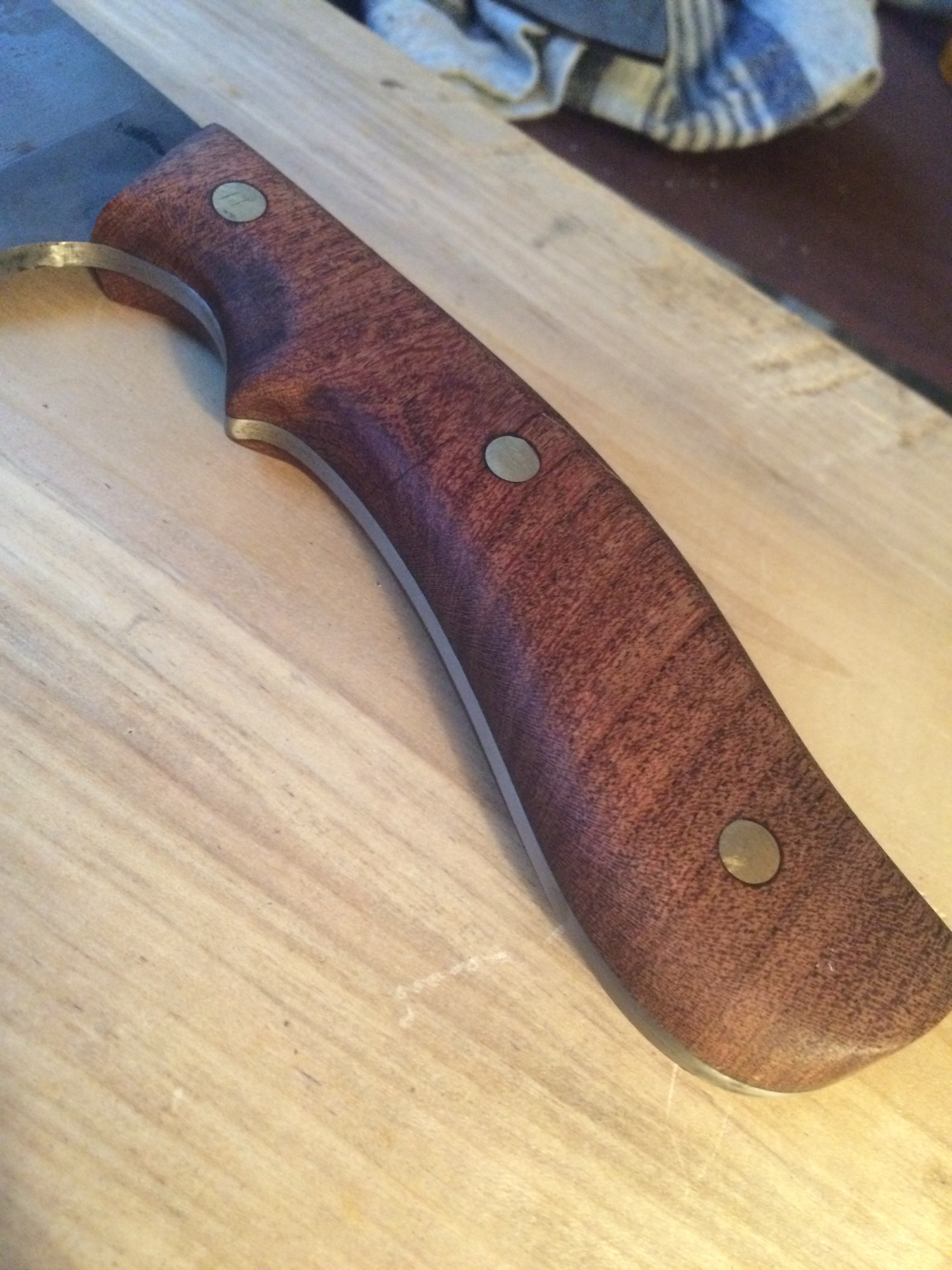
Depending on the light you can catch glittery bits of the chiffon

Knifemaking: on the people we hold dear, and the Bob

“I want to go back in time, because I’m a celebration in the making.”
― Francis Dunnery, “Autumn the Rainman

About eight years ago I really needed a job. I had been fired from my previous job and had been piecing everything together for about 6 months. It was not going great. I was barely getting rent and health insurance paid and my girlfriend was getting ready to leave me. A friend of mine told me to give this small company a call- they were always busy and always needed good help.

I called and spoke to the operations manager. I told the ops guy I was looking for a part time job- I had a small custom knife shop and I played music and I needed to have time to do these things. I think he probably thought I was a crazy person. He told me they didn’t do part time work but said I could send my resume and come in for an interview. Options were pretty limited at that point so that’s what I did.

I went in and did an interview. He told me this was a good place to work- the place did well. The gig looked insane. There was a warehouse slam full of skids of gear to be sold, and stuff everywhere. They looked super backed up. I don’t know if my resume was that impressive or I made an exceptional first impression or they just badly needed help, but I told him I could give him 3 days a week and he said OK.

So that’s what I did. I had two shop days a week and went in three days a week. I would build my schedule around getting into my shop, or doing crazy contractor gigs, or whatever I had to do to try and fill out my bank account. For the first two years I was afraid they were going to fire me but nobody ever gave me a hard time about it.

Within two months a being there they sent me to Atlanta to get some equipment for resale from a major client and make sure it all got loaded to get back to our warehouse. I hung out with a high level corporate engineer all day and we talked about knives and municipal engineering of their major corporate campus. Gear got back to our shop, and everyone was happy.

I did the part time thing for five years. Sometime during the pandemic everything started getting really expensive. My rent was going up about 30%, groceries were getting ridiculous, and I was seriously wondering how I was going to make ends meet. I was doing a lot of really interesting work but none of it was paying quite enough. 

About this time the ops guy asked to speak with me. The company was doing well, but a lot was in short supply, including finding help. He asked me what it would take to get me there more. No pressure he said, but take a few days and look at my numbers and let him know what my time would be worth to be there more.

There were some good paying gig that I really enjoyed doing that were sort of dried up from the pandemic. There were other things I had been doing for over a decade that I was just kind of tired of. Honestly I had been trying to figure out a way to get out of some of the things I had been doing. I was doing really good work in the shop and playing a lot of really good gigs on the weekend. It felt OK to let those other things go.

So I gave the ops guys a number. Nothing crazy but a number that would buy me out of most of the stupid shit I was doing to make ends meet. He said not a problem. I asked him if I needed to write up a CV of the stuff I had been doing around there. He said no need, it was already handled. And that was that. I told him I kind of suck at company culture, and I’m kind of a combative employee but this place had been a good place to work and always kept me safe. They did things for me that they didn’t have to do, especially during the pandemic, and when all my other stupid jobs told me tough shit, figure it out.

Within about 4 months of getting a raise my credit score went up 300 points. I didn’t have to do stupid contractor work, I could focus on doing good work on knives, and I could play killer gigs all over the mid-Atlantic coast. Looking back I wished I had figured all of this out a decade earlier, but these are the paths that make us who we are.

…..

Sometime in September of this year the ops guys asked me if I could do a kitchen knife for his wife. It would be a tribute to her father. The way he spoke of his father-in-law I thought he was still alive. It wasn’t until about 15 or 20 minutes into the conversation that I found out he had passed twenty years earlier. I thought that was really special the way he spoke of the man and the affection that was there.

‘We just talk about him all the time,’ said the ops guy.

The ops guy had said his father-in-law was the sort of guy who could do anything and was curious about everything. He told me all these stories about the man, who was a representation of a generation passed. In his later life he lived in a trailer in the woods with half a million dollars worth of tools, automatic weapons, electronics, and gadgets.

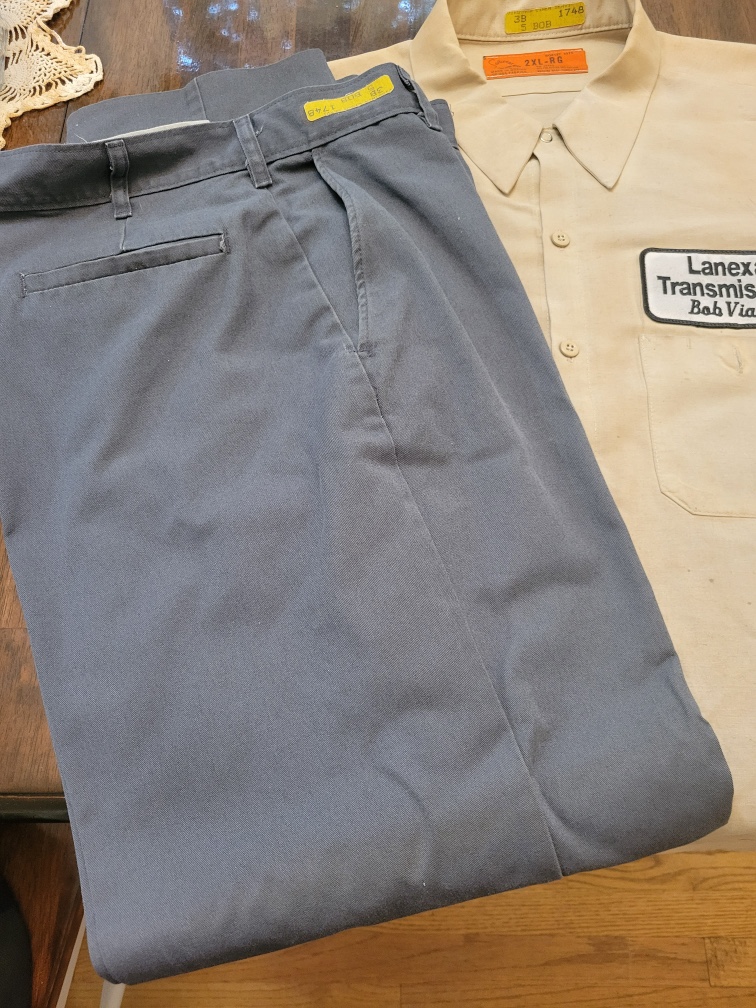
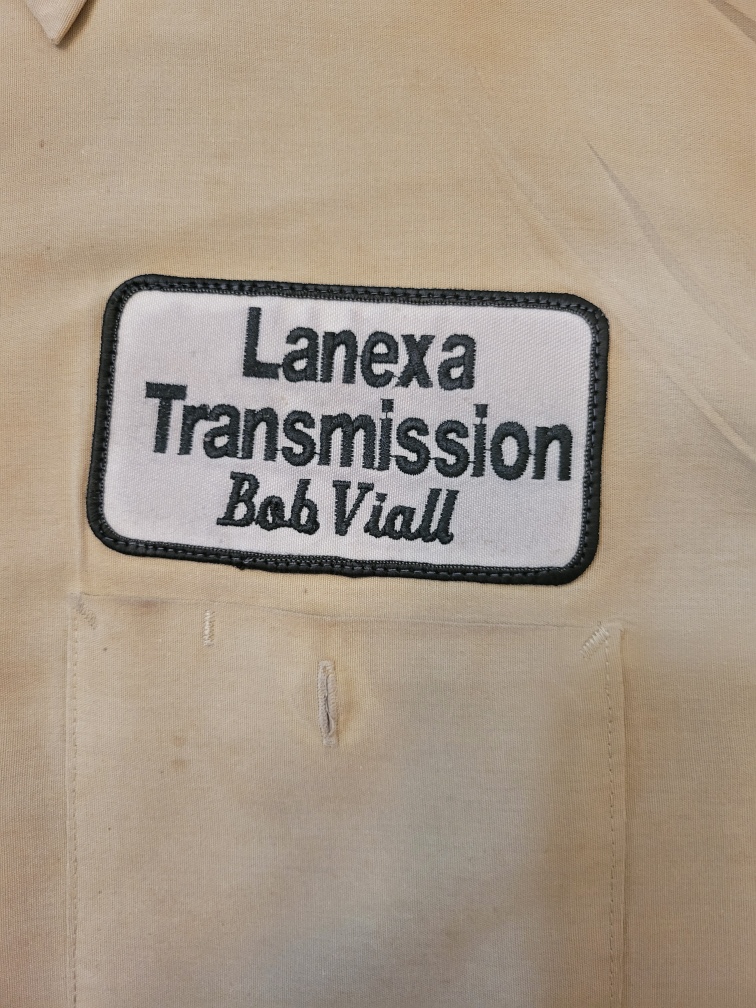
We were talking about what to call this knife. He had bought an old machine shop sometime in the 80’s, and there were all these old work uniforms left in there, which he started wearing. They had nametags stitched on the shirts, all of which said ‘Bob’. So even though his name was actually Roger, everyone called him Bob. I told the ops guy we absolutely have to call this knife ‘The Bob’. These are the sort of special builds that makes this craft worth doing.

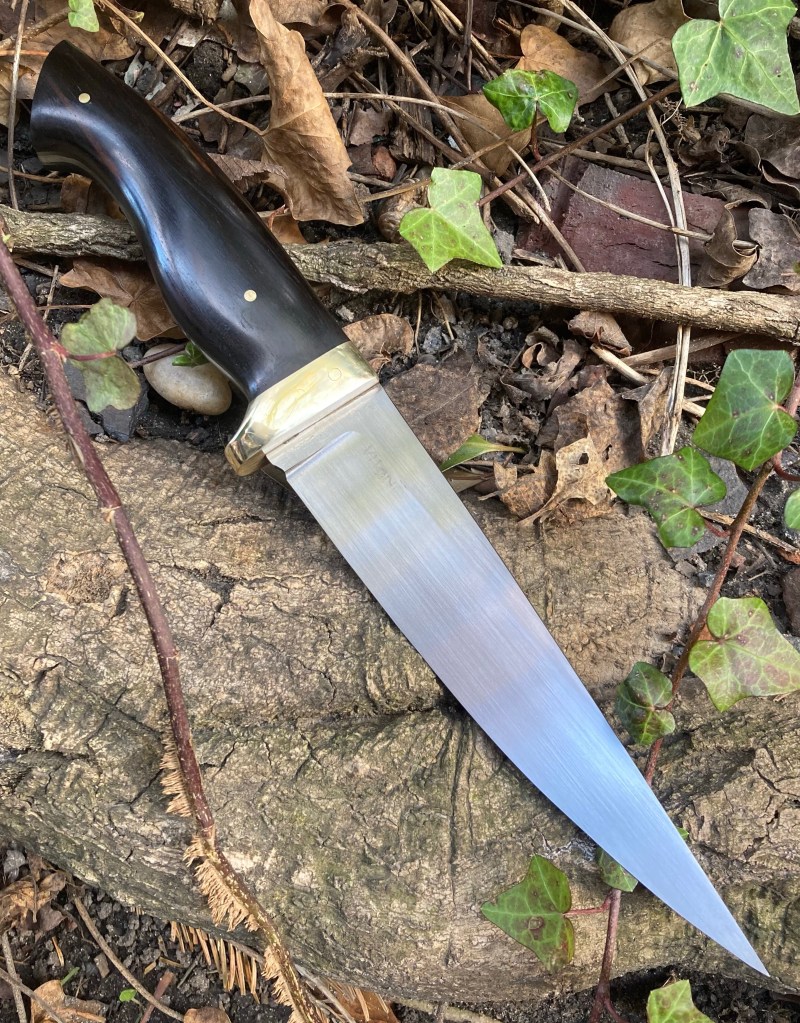
They still had Bob’s work clothes, and allowed me to make them into a handle material. Turning this man’s possessions into handmade kitchen tool to be used everyday seemed the best way to celebrate this man that everyone held dear. I started with a 8′ chef knife design:

Template is made

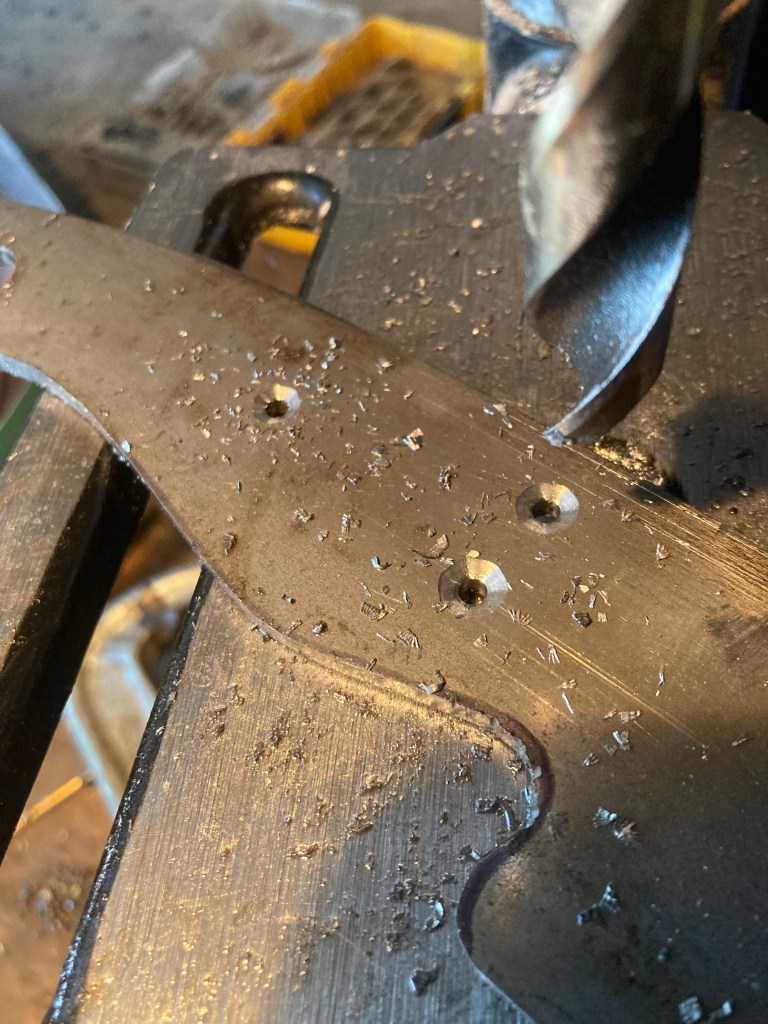
Drilling the rivet holes. I like to put a countersink in about a third of the way through the thickness of the steel on either side. This will allow for a bit of play during fit-up and ultimately makes for a tighter fitting handle.

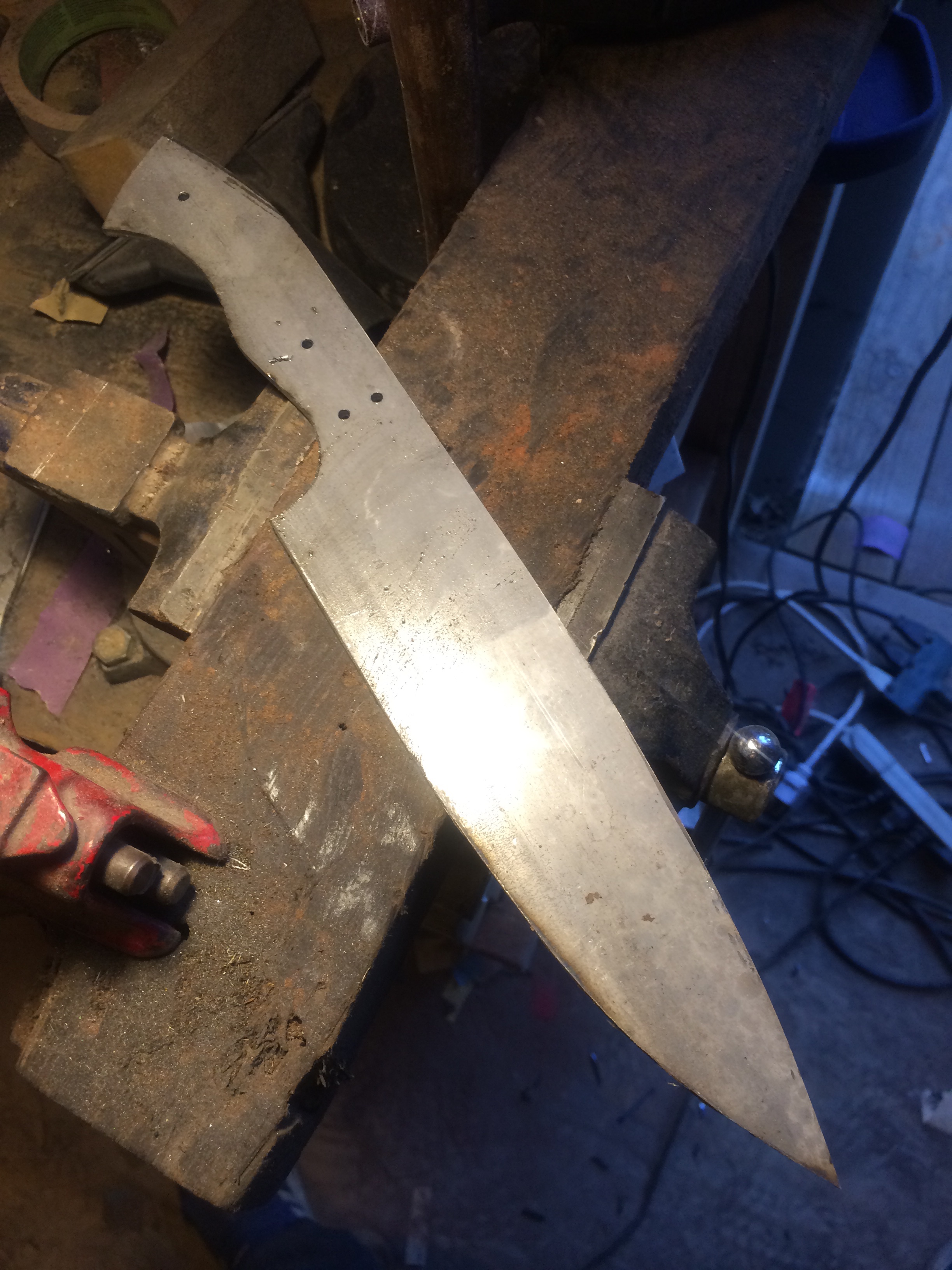
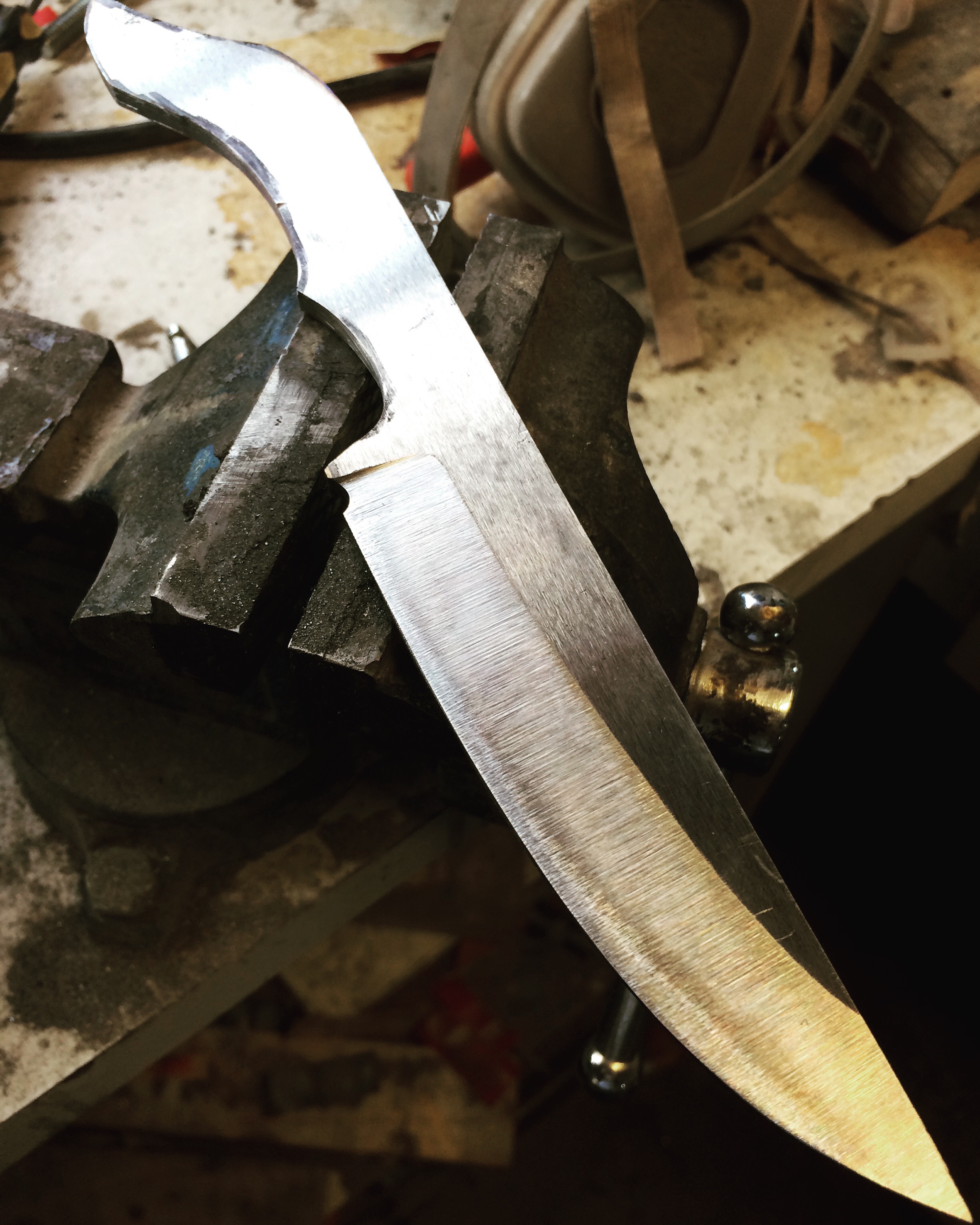
Blade profile is cut and smooth.

Centerline is scribed. The cutting edge is intentionally left thick and will be ground thin after heat treat.

A bit hard to see but I have put a radius on the spine. This will make for a more comfortable pinch grip. If you are a chef swinging one of these for 8 to 10 hours a day, a square edge can lead to bruising on the index finger.

Ready for the forge. I’ve removed a bit of material while the steel is soft to establish the bevel. It will make it easier to get an even grind once the steel is hard.

I harden the blade before it is fully ground because long and thin blades like to warp and crack when heated.

Quenched. She is nice and straight with no cracks.

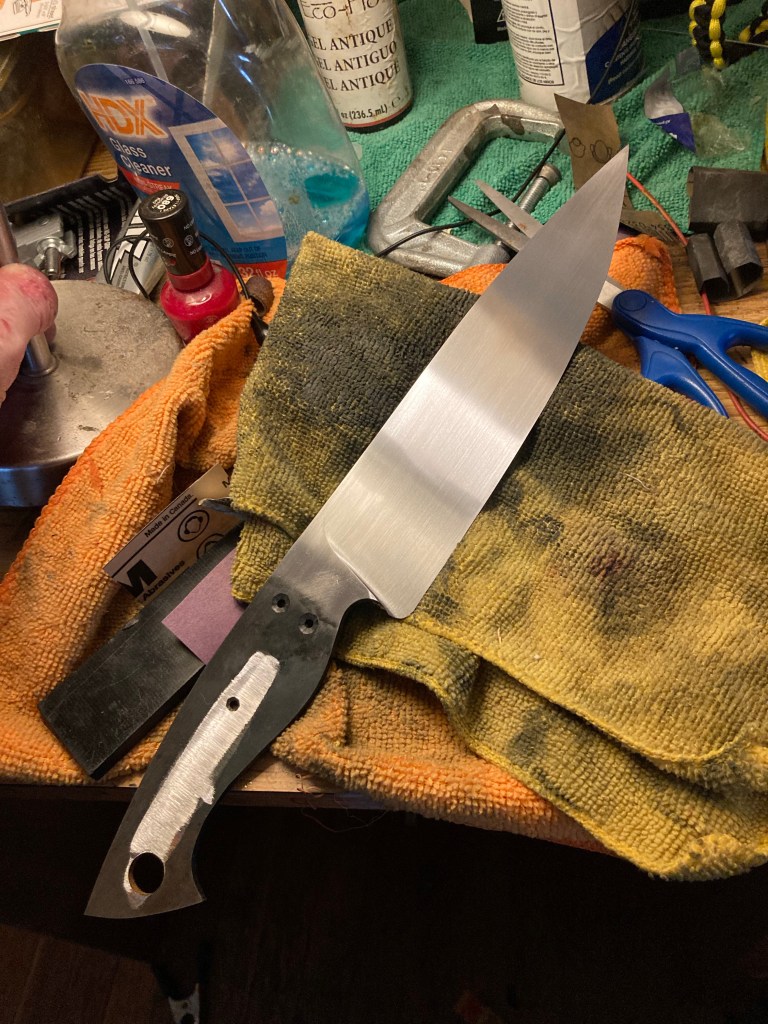
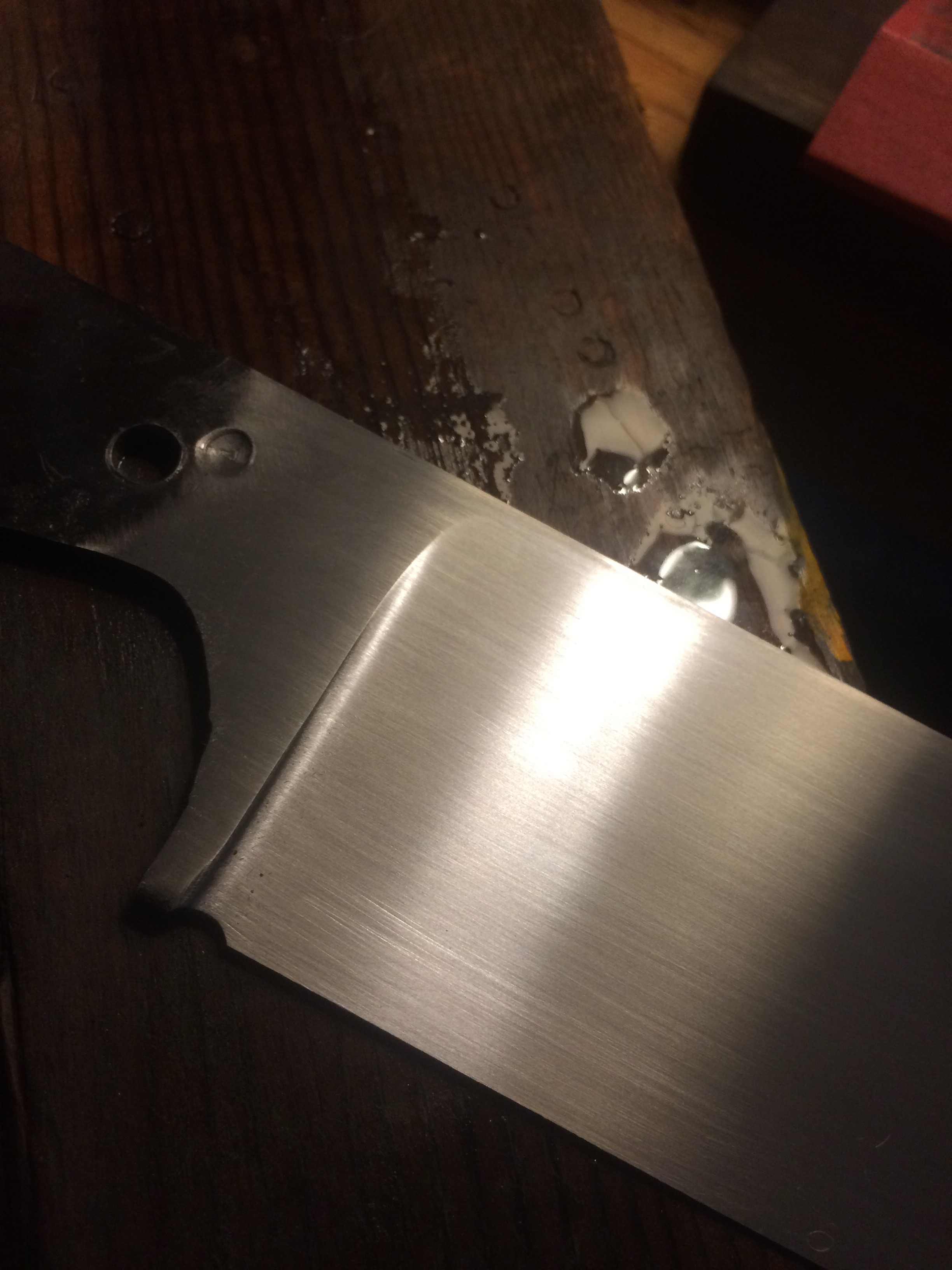
Full flat grind. This is off the grinder at 220 grit.

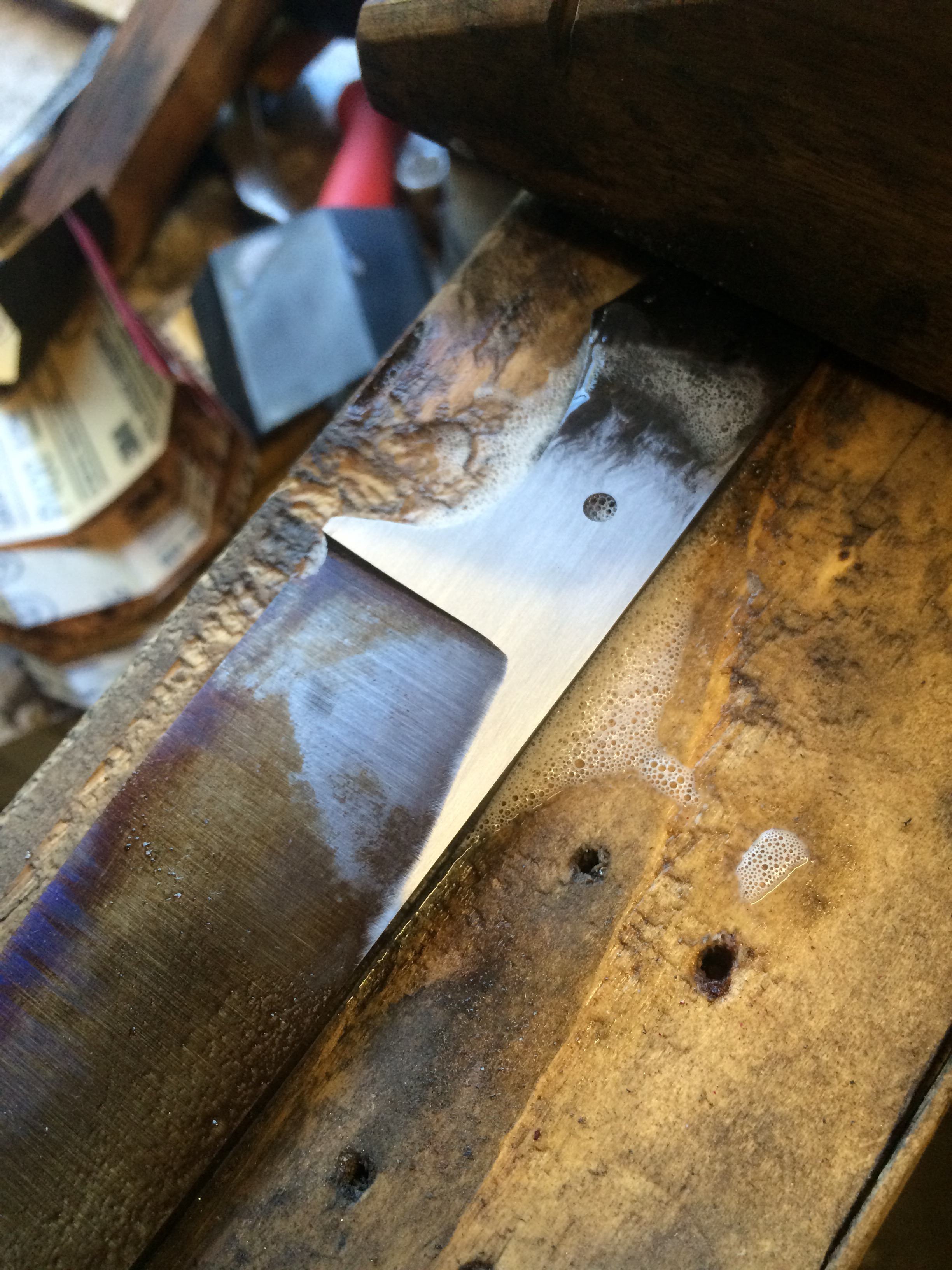
Hand sanding to remove the machine marks. Windex helps the sandpaper cut better.

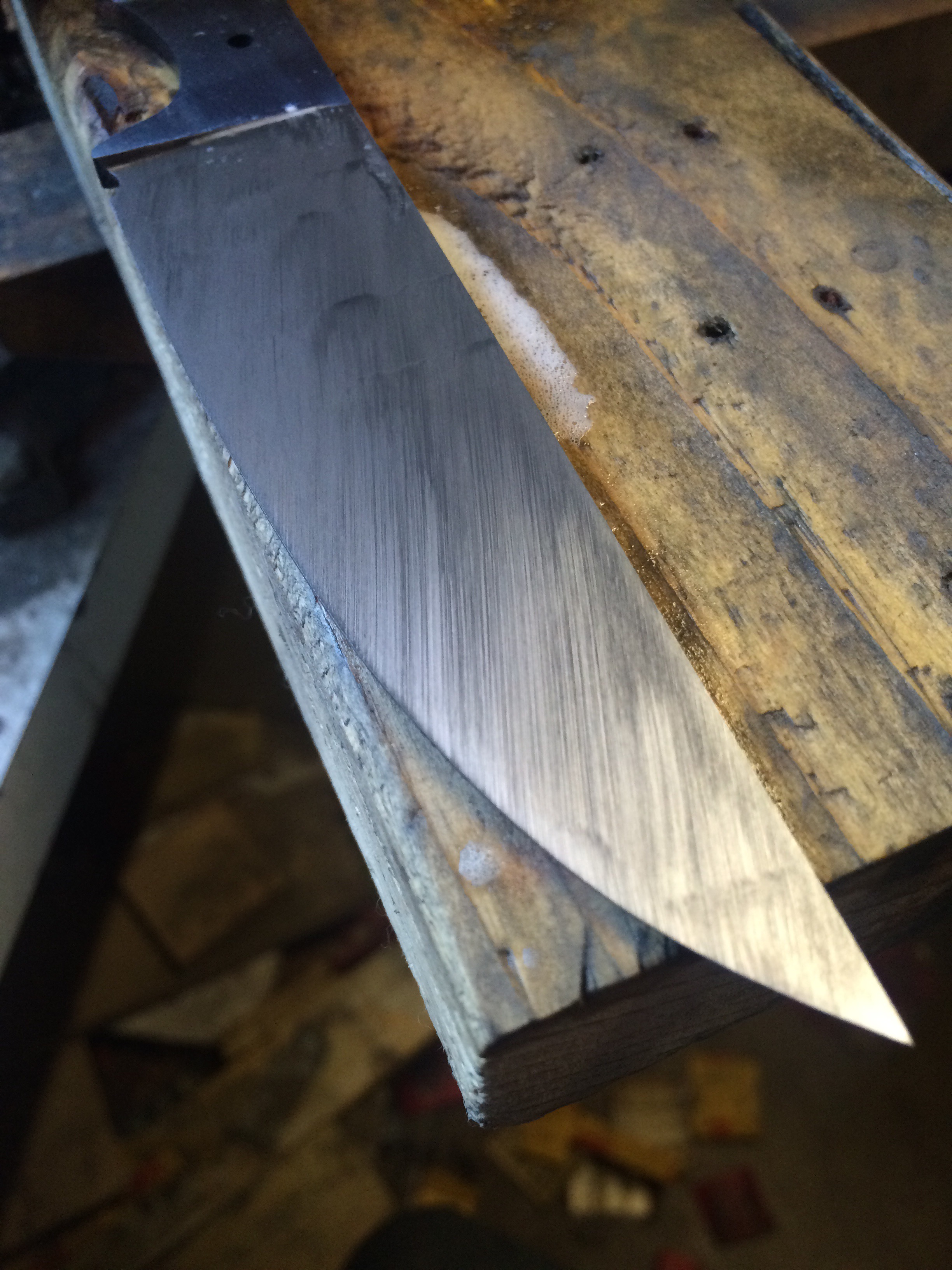
Satin at 400 grit. Ultimately this finish took about two hours per side.

Handle time. Bob’s work clothes. Mostly polyester, which will give a more defined ‘grain’ on the final product.

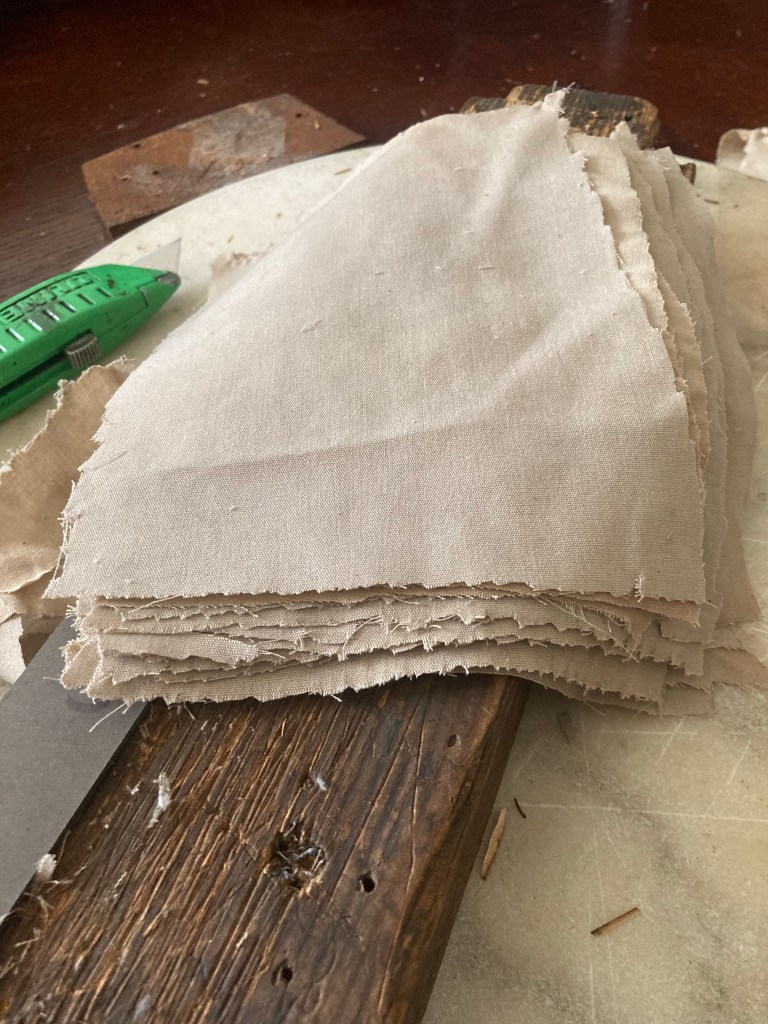
Getting everything cut up into uniform pieces. It’s impossible to find good help these days.

Mise en place

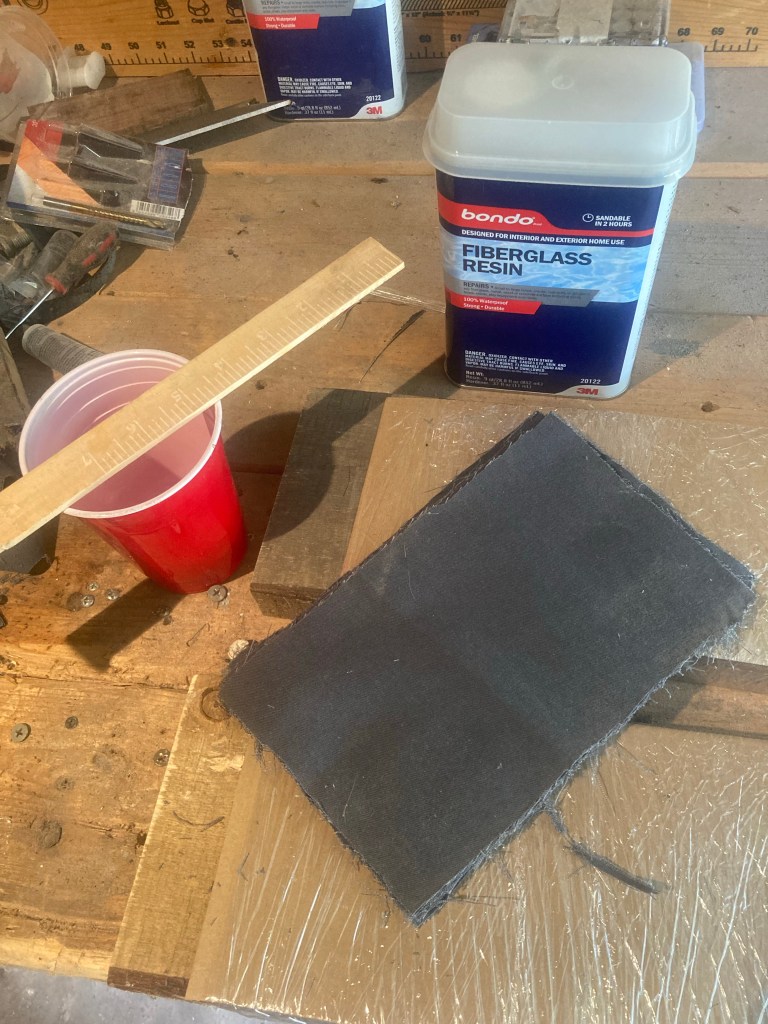
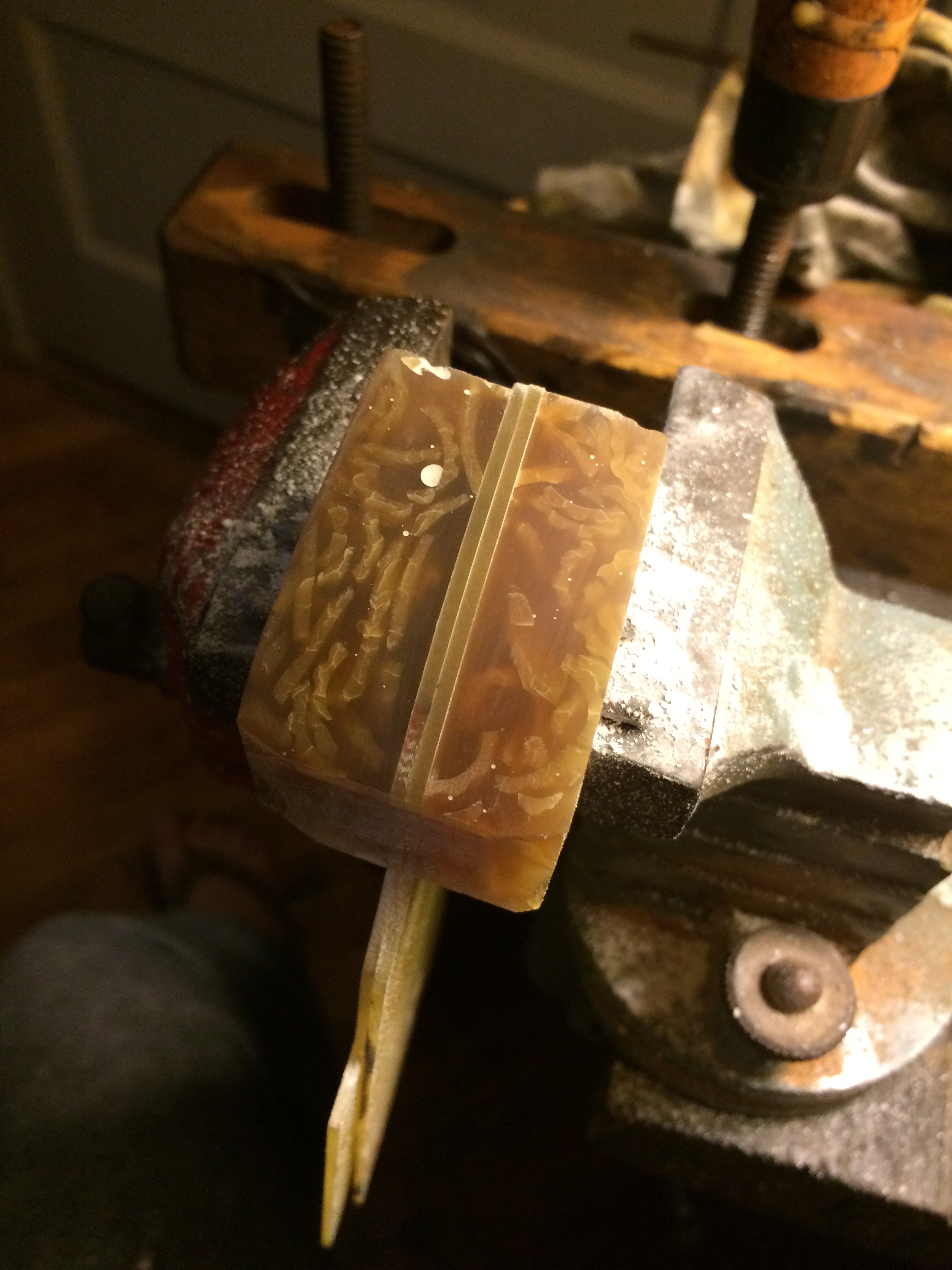
As each piece gets stacked, fiberglass resin gets spread. This will turn about 16 pieces of Bob’s pants into one solid slab that can be worked and polished.

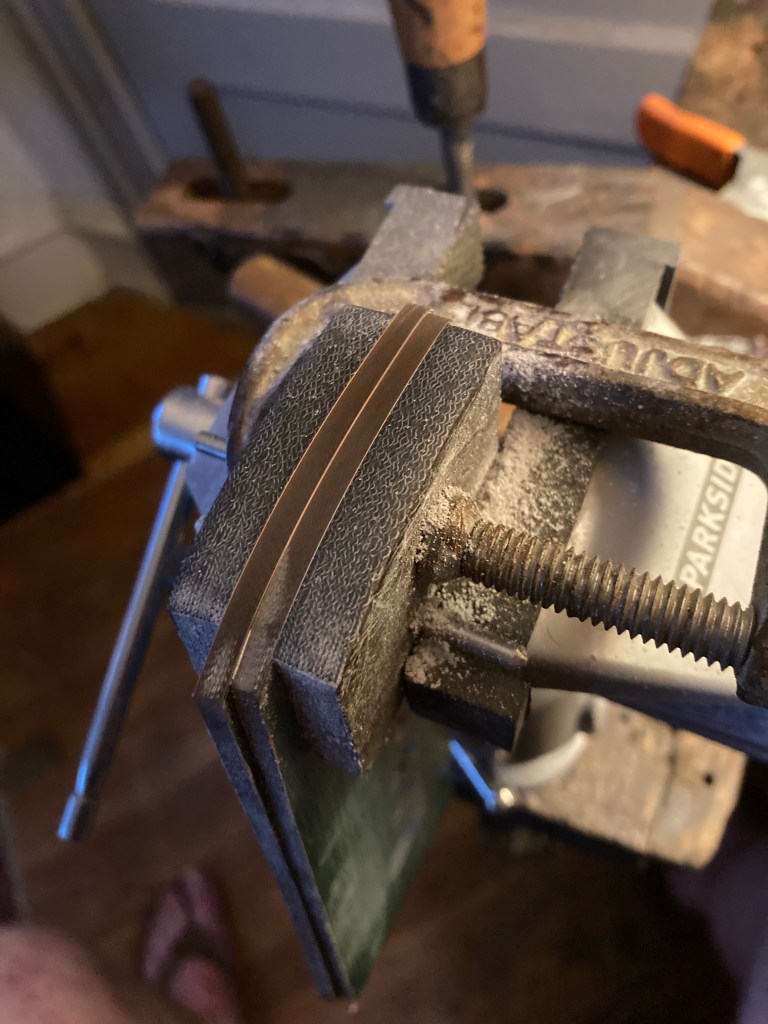
This gets clamped up. We want to smash everything as evenly together as possible. As the resin cures through the porous material everything will bond together.

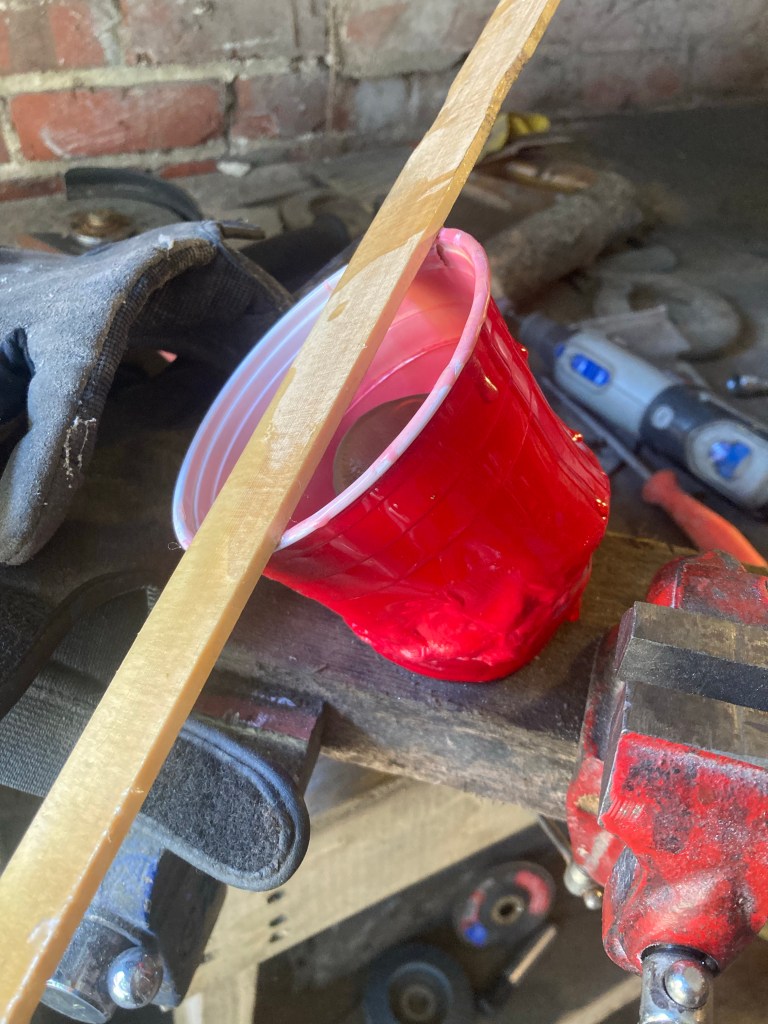
I always mix a little extra. Fiberglass resin is an exothermic polymer and will naturally heat up as everything starts to catalyse. The melted cup tells me the mixture is curing properly and I mixed everything correctly.

Turned out nicely with a tight grain.

We follow the same process for Bob’s work shirt.

This material is a little thinner, so we try to do more layers.

Everything did what it was supposed to.

This also turned out nicely.

A leaf from a dining room table. It was pulled out of a lawyers house during an estate sale. I believe it is walnut or cherry.

The pants will make the bolster part of the handle.

The lawyer’s table will be the butt of the handle. We want the grain to be parallel with the length of the knife.

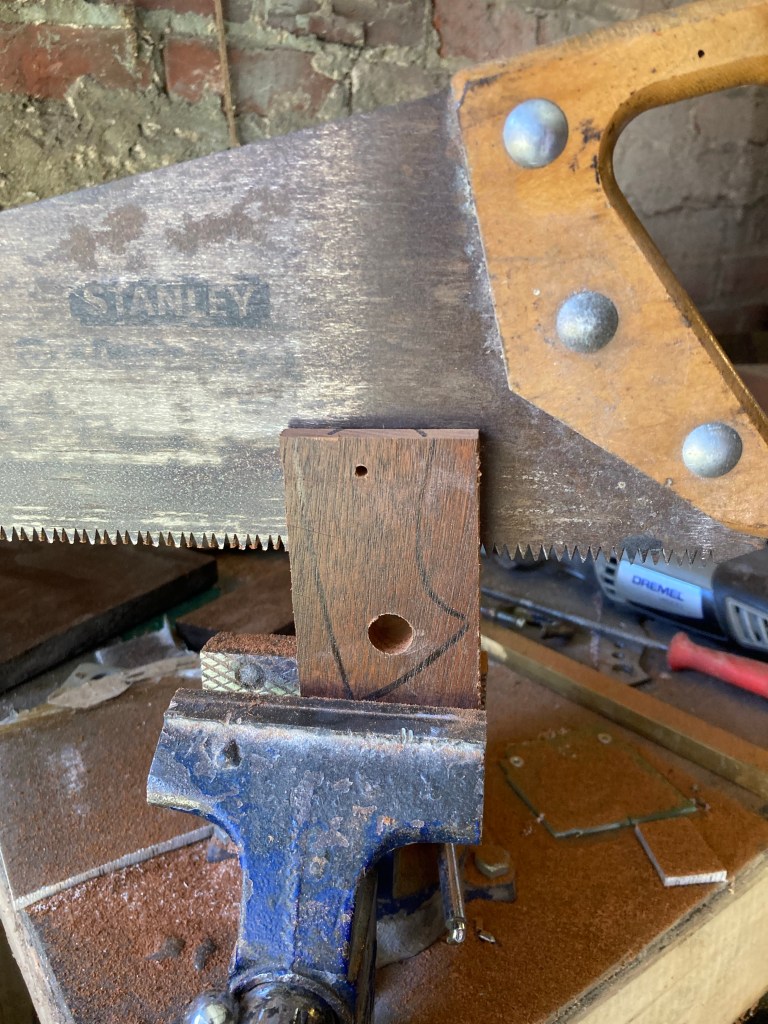
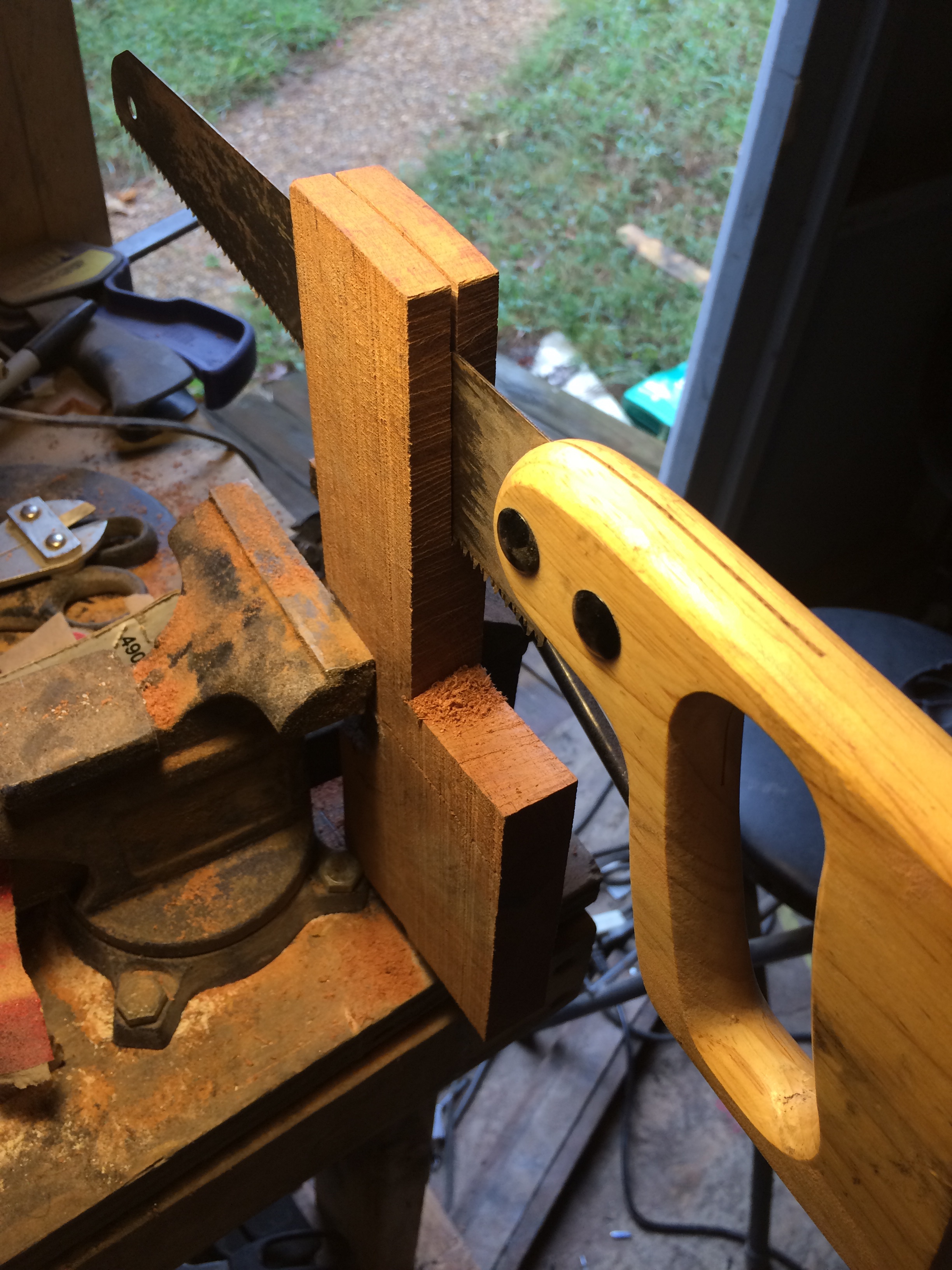
Everything will fit better if the rivet holes are drilled before it is cut in half. Because of the way this is made, the wood will be bookmatched.

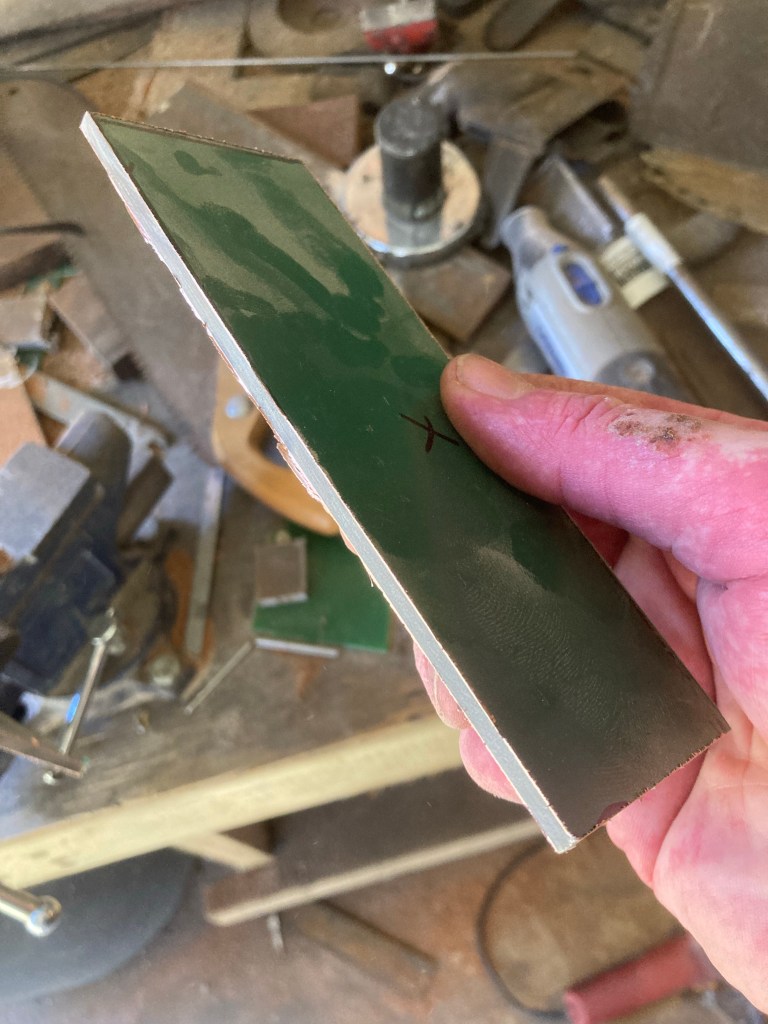
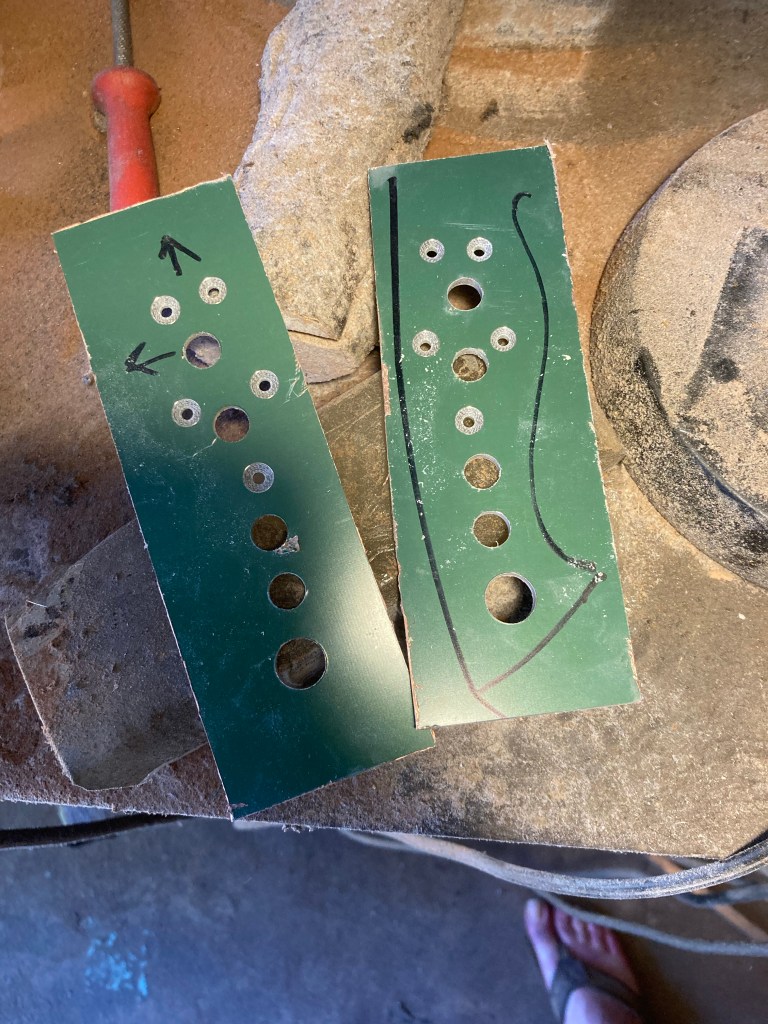
PCB board blank. These were scrapped at work a few years ago. It actually has two sheets of copper just underneath each side. I’m not sure if they were supposed to let me take them but nobody has missed them.

That little flash of copper will be a subtle pop.

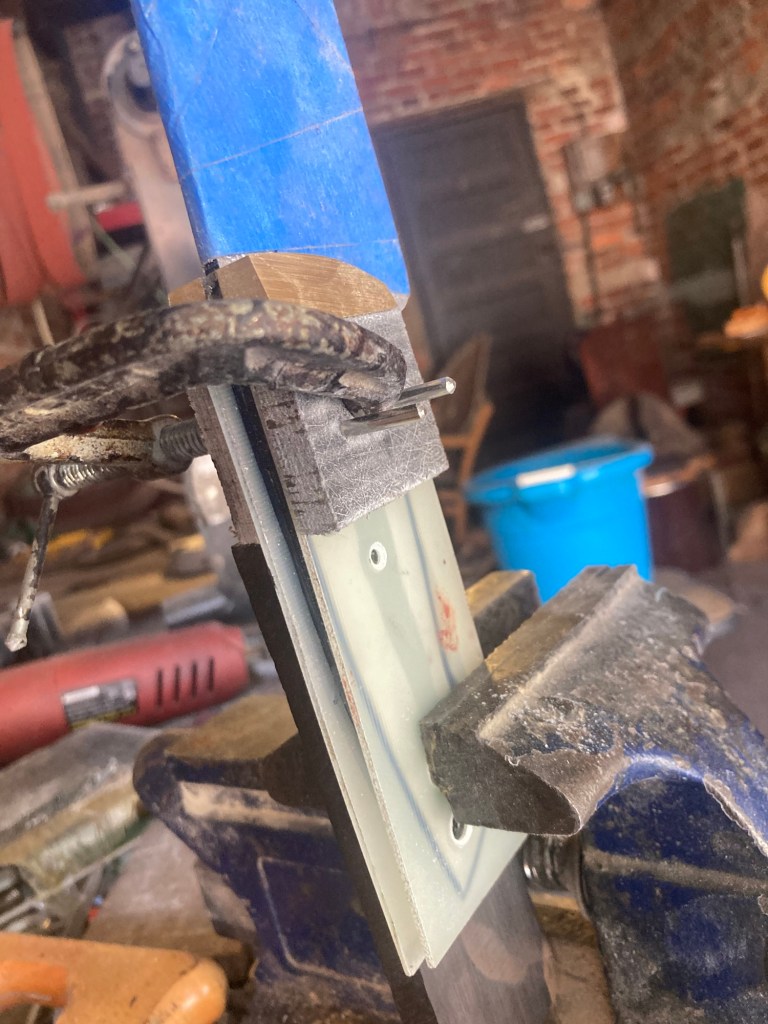
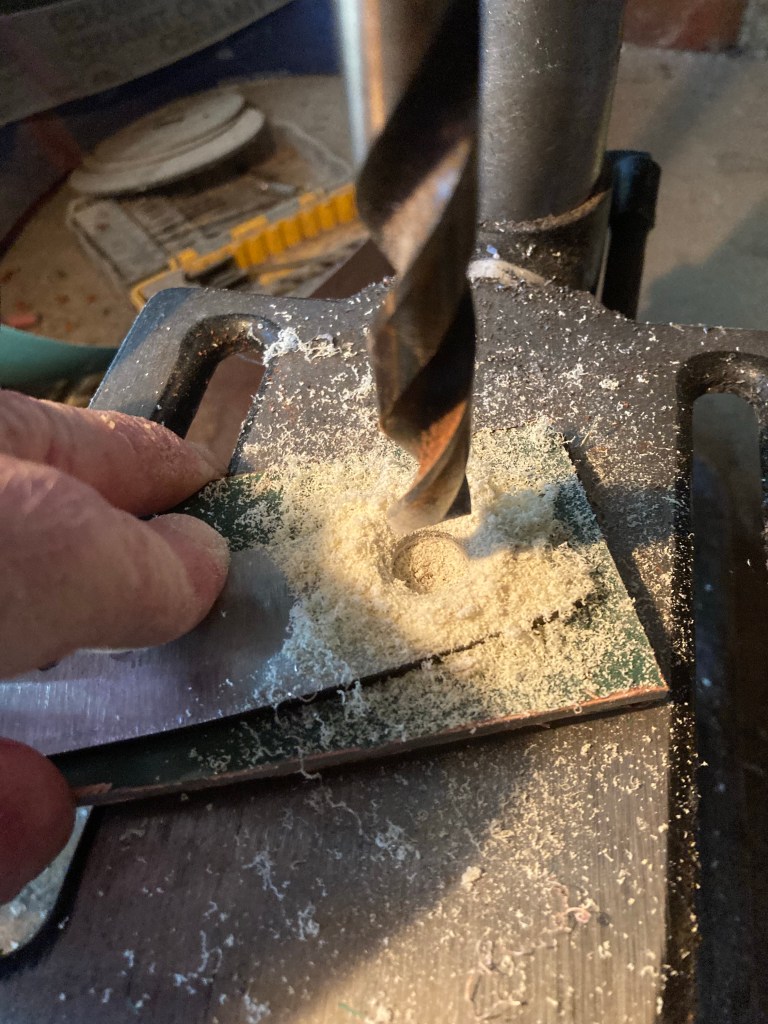
Countersinking the rivet holes will give a little play when fitting the handle. There are no precision tools in the shop and this will help negate any incongruencies I may make when trying to get this all together.

We need to polish this before fit up since we won’t be able to get at it once everything is fit up. 120 grit.

2000 grit.

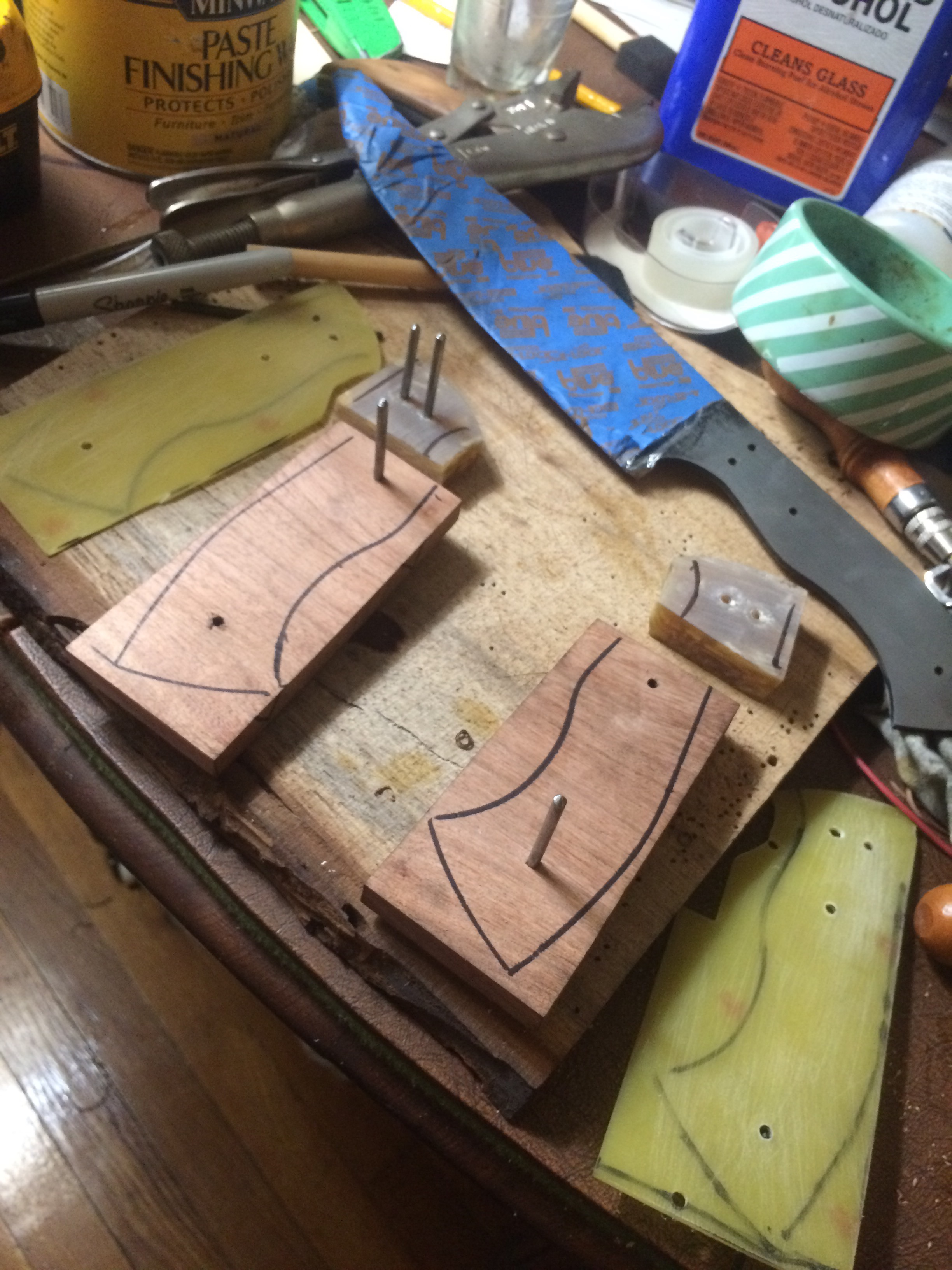
All the pieces parts.

All glued and clamped.

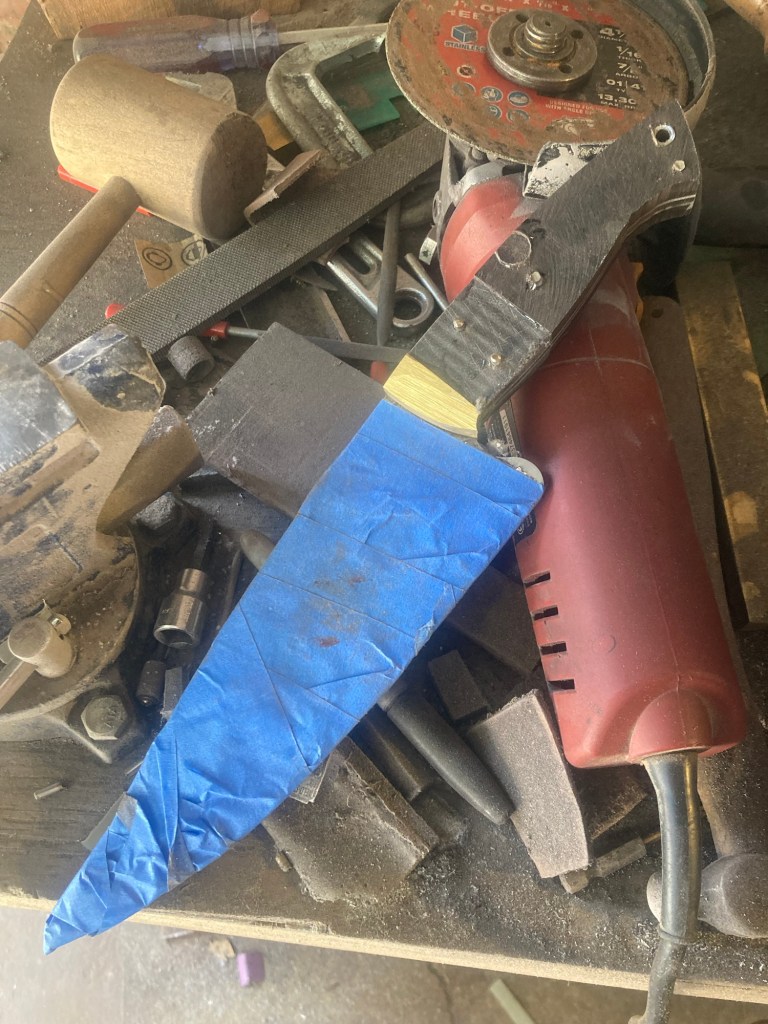
Time to take away the parts that can’t be held

Profiled.

Flushed up.

Contoured.

He’d have been fired long ago if he weren’t so cute.

This is what it looks like at 220vgrit. We will take it up to 2000 and then buff.

All said and done we will probably do five coats of this stuff

Adding our mark.

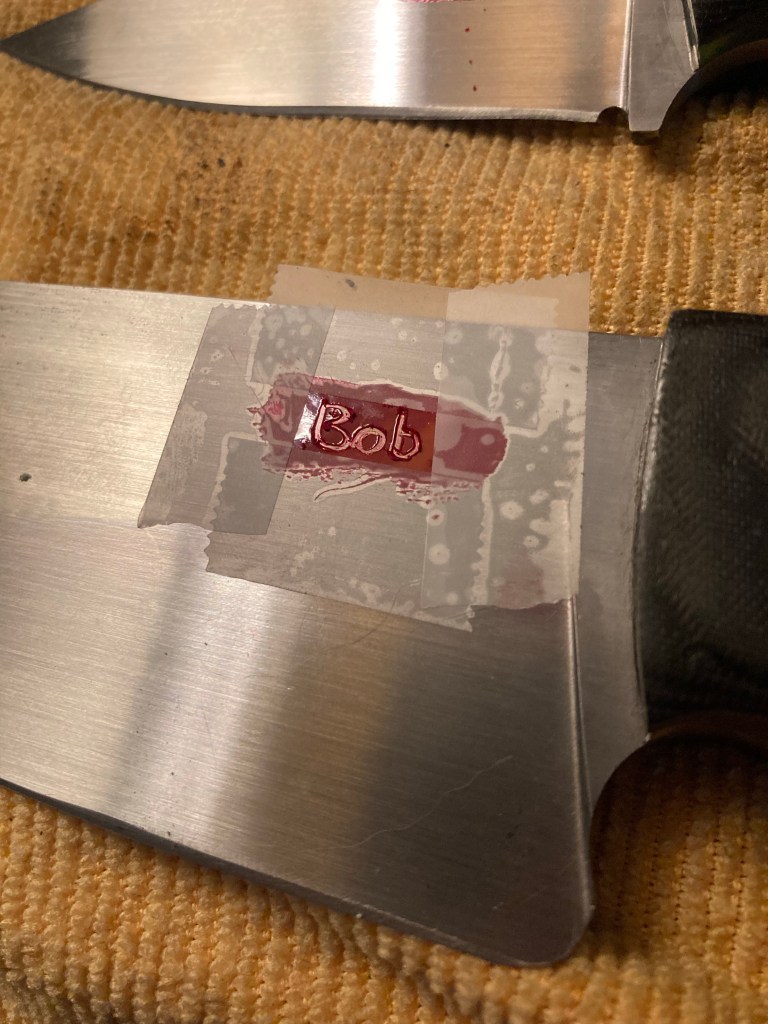
The alligator clips are attached to a 6V battery. The nail polish acts as a resistor and current is only run to the area I marked. Connecting the circuit with the positive end through our conductor (salted vinegar) will burn our mark onto the steel. You have to use iodized salt- that delicious pink Himalayan sea salt won’t work.

The namesake of the knife gets etched onto the other side.

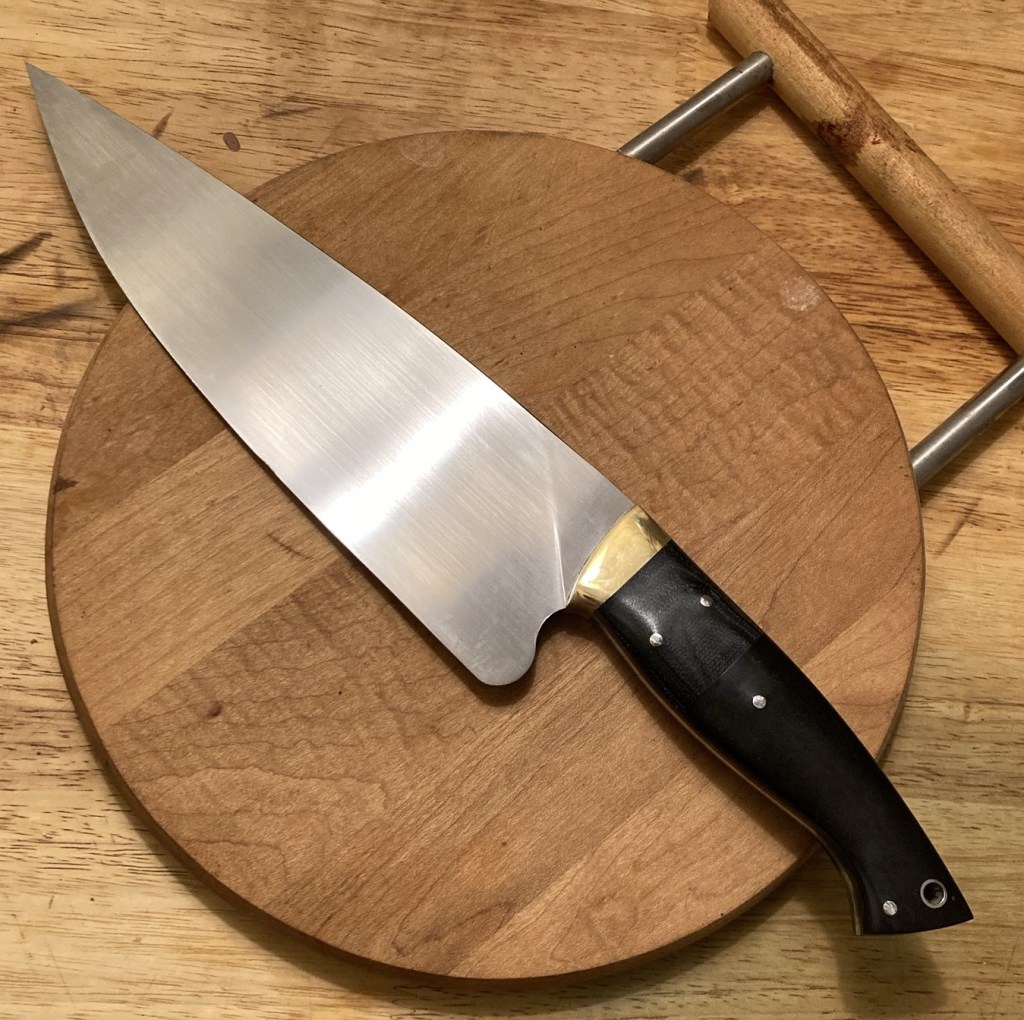
The Bob.

Knifemaking: courage in being gentle, and the Tennessee Gentlemen

Play that restless melody for me again
The one I’ve been so afraid of,
My sweet friend.
Maybe the little refrain will whisper inside the rain again
Play the one with all the changes
.”

Al Jarreau- “Something That You Said

Sometime in the beginning of the pandemic I started talking like Hulk Hogan. Just before everything got shut down I had been making combat daggers for spec ops guys. They had gotten in touch with me asking for “something that you can ram through somebody’s skull.” They all had a particular way of talking to me. The first time I talked to any of them they always addressed me as ‘sir’, and every interaction thereafter was ‘brother’. I really dug that. Even though they were paying me for a service, it made me feel like we were all on the same team and working together.
‘I APPRECIATE YOU, BROTHER!!!’

I found that to be immensely encouraging as I noticed it slipping into my vernacular. The irony of all this happening while I was building them tools of combat to rain down pain is not lost on me.

As Covid started shutting everything down and civil unrest led to riots, I found most of my means of livelihood shut down. Everything was a mess and I was broke trying to pay medical bills. The State Unemployment system was, and is still, a joke. With the murder of George Floyd, and everyone already agitated from lockdown, there was lots aggression and anger. Some of that aggression and anger manifested as marches through the streets, and some escalated to shopping centers being burned down. States of emergency were declared, riot police were dispatched, curfews were instilled, teargas was launched. Most all of this was happening less than a block from where I live, and occasionally it crossed over to the front yard of my building. There were nights where I was afraid someone was going to set my car on fire, which was how close this all was. My Buddhist vegetarian yoga teacher (who didn’t eat meat because it was unkind to animals) told me she was thinking about getting a gun and this did not seem unreasonable to me.

Everyone has the potential to fall prey to their baser of inclinations and move through life as a wrecking ball, especially when a private ambulance company is overdrawing your bank account because your livelihood is shut down like a high school keg party. It was my goal to not do that. During quiet moments at that time, I would check in with myself just to see what was hanging around. I found myself to be full primal rage, an ocean of grief, a profound sense of loss, and a hair-trigger response to any perceived threat. At such a reactive time as it was not too long ago, I found that it took a tremendous amount of courage to be kind and gentle.

During one such quiet moment I asked myself if we could break every interaction down to the very simplest parts of humanity and connection, and just not worry too much about the rest. Maybe we could find a way to let go of the weight of fear and uncertainty, and surrender to the simple joy of quietly going about one’s day. As a result of stripping everything down to the simplest parts of connection during a time of extreme duress, I found myself thinking of the Spec Ops guys for whom I was making daggers. I thought particularly of how in the course of our business I always felt seen and heard, and that my time and talents were respected and honored.

The crux of the Hulk Hogan technique is that it allows the people you interact with to also feel seen and heard. For me it was something that replaced a feeling of despair and hopelessness with a sense of community and belonging. It kept me safe and connected and prevented me from being a wrecking ball, which was what I felt like most of the time. In practice it started every morning with the gentleman selling me my coffee at the market down the street.

“IT’S GOOD TO SEE YOU, BROTHER!”

He got some encouragement and I got some coffee. Everybody feels better and has a bit more confidence for their day in a world that is on fire.

As I prepared for my days of shit work to keep myself from being sued by private medical companies, I did my best create disarming moments, as much for myself as the people I interacted with every day, starting with a cup of coffee. There is great power in gentleness, and after all the anger and violence I had experienced, I wanted to see what that practice looked like. Turns out it’s a bit like starting a chainsaw- a gentle but purposeful tug on the pulley cable gives you enough power to take a tree down. Pull too hard and you break the thing.

Ladies I talked to were always “Ma’am”, and anyone I believe to be identifying beyond the binary was always “Cousin”.

In focusing on my interactions with others, I found my crankiness and shit attitudes were curbed. They didn’t go away and I still found myself frustrated at the world, but those moments were much smaller and less consuming. It was much more than an affectation- I had absolutely fuck all going on and this was where I could direct my focus. After such a traumatizing time, this was a way that I could come back to myself and remember who I am and what I do.

Any sort of practice, when diligently observed and worked on, operates on a continuum. It meets you were you are and expands into everything. I was having a drink on my girlfriend’s porch one night when my girlfriend pointed out her neighbor struggling to get a washing machine off his pickup truck. Without thinking I got up and went over.

“BROTHER DO YOU NEED A HAND?!?”

…….

This two knife set was build for a good friend of mine in Tennessee. He got in touch needing something better for his kitchen. During hunting season he and his wife process a lot of deer. After field dressing, a good set of kitchen knives are good second-line tools.

When we spoke over the phone, he had said that while he had needed a set of knives, he had also wanted to throw me some business and help me to practice my craft. As a craftsman himself, he understood. He did to me what I had been doing to everybody else for the past two years, and this build was a lovely experience and testament to the courage of being gentle. I’ve detailed that experience below.

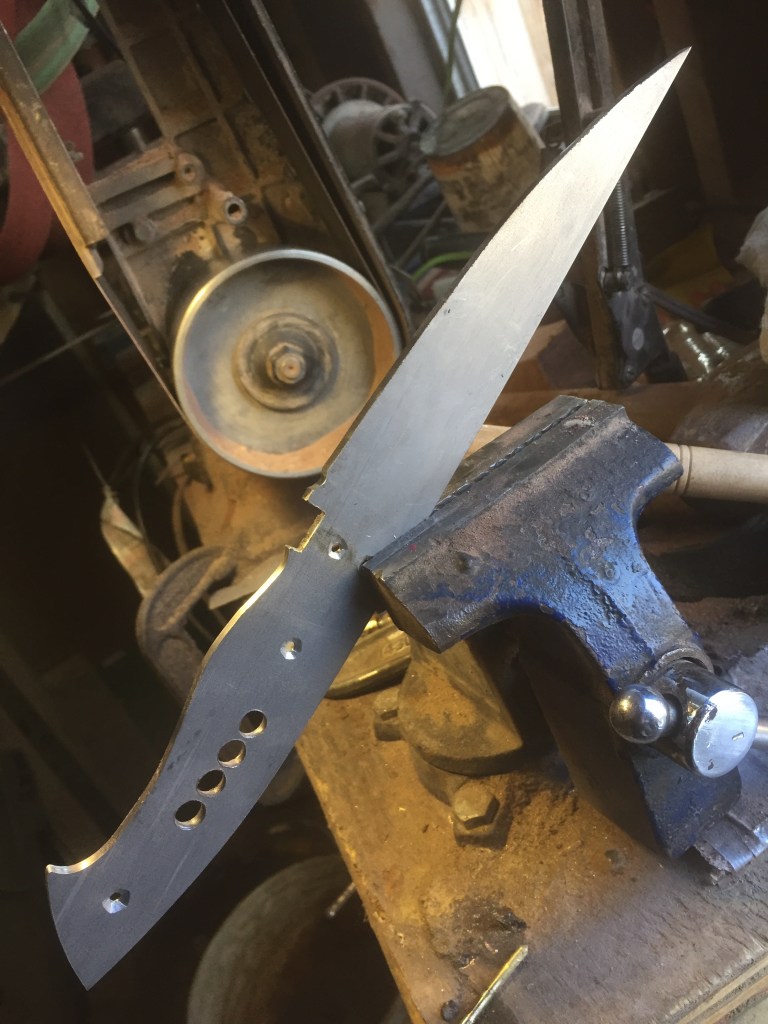
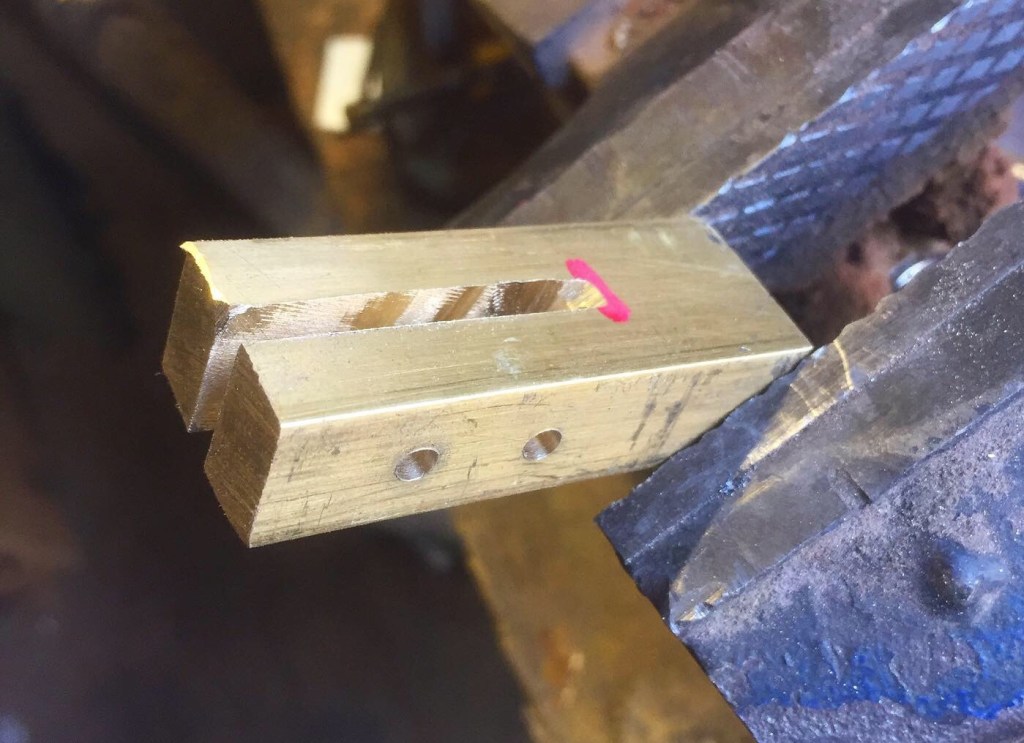
A critical mistake was made here. Rivet holes should always be drilled after the slot is cut and fitted. Lesson learned.
Fitted
Hardening the Chef.
Rough grinding.
Rough grinding on the Boning knife after hardening.
A nice radius put on the spine.
Laying down a hand rubbed satin finish.
600 grit.
Getting ready for fit up.
Sanding the Chef.
Satin.
Making sure everything lines up.
….and everything did not line up. I broke two drill bits trying to get everything lined up before epoxy cured. Epoxy cured and I have to rip everything apart and figure out what everything wasn’t lined up. This was the third attempt and everything finally went together.
Hnadled up with Ebony.
Shaped.
For the Chef we have reclaimed Cherry, recovered from an old mantlepiece.
Preparing the brass bolster.
Peened and fitted.

Knifemaking: the things that are ours and the Notre L’affaire

“But then I have always been somewhat of a square peg in a round hole.”

Cressida Cowell- How to Speak Dragonese


When I was five years old I had my first lesson in finding out that the world might not be built for me.  I was not in kindergarten yet because I had told my mother that numbers and letters had looked too hard for me.  Perhaps I really wasn’t ready, or perhaps I was just stubborn, but this would leave me a year older than all my classmates through my entire academic career.  So at five years old I was sitting with all the other five year old preschool kids who, for whatever reason, weren’t quite ready for kindergarten either.  It was around Thanksgiving time and we were making hand turkeys out of construction paper.  You are probably familiar with the process, where you trace your hand and your fingers become the tail feathers and your thumb becomes the head and then you cut the entire thing out and add all the plumage.   I was having an incredibly difficult time with it.  I couldn’t get my scissors to work and I had no idea why.

As it turns out I was, and still am, left-handed.  They had no left-handed scissors, and the poor ladies couldn’t explain why I was the only one who cut with my left hand.  The silver lining was that when I looked at the wall of hand turkeys for the next two weeks before we took them home I knew exactly which one was mine- the sort of mangled looking, Mattisse-inspired one with it’s shredded, soft edges and pastel color themes.  It might not have quite fit in, but that turkey belonged to me.

I think a major source of anxiety today comes from a pressure to fit in.  We are pack animals after all, social creatures, and there is a large degree of comfort and safety that comes with fitting in.  For whatever reason some of us just don’t fit.  Maybe our personal values don’t align with the metrics of what society calls success.  Maybe the things in the world that move us have been wrought and tempered in such a way that makes the mainstream feel incredibly dull and boring.  Maybe we were brought up in a fashion that causes us to question the rules and the people who make them.  Or perhaps our idiosyncrasies and the way we see the world simply makes others in the pack feel uncomfortable. 

Because the reality is that life is uncomfortable and existence is messy, and no amount of corporate team building exercises or ‘life is beautiful’ bumper stickers will change that fact.  The square pegs of the world know this, because things have probably always been uncomfortable.  The beauty of being a square peg that doesn’t fit into the circular opening of life is that you find a way of living that is unique and meaningful to you.  Usually that means crashing through more than a few romantic relationships, getting fired from a few jobs, making a whole lot of mistakes, and generally being a mess for awhile.

When you finally pop out on the other side of all that, you may find that what you’ve become is completely and totally your own, free of mimicry and imitation.   All those things that you’ve become- those belong to you and no one else.

(I taught myself to cut right-handed in elementary school to save myself and my teachers a lot of grief.  I cut better right-handed than I do left-handed.  You have to pick your battles.)

This knife was commissioned for a chef at a local restaurant by his girlfriend.  I love making knives for restaurant people- anyone who winds up in food service is totally a square peg.  In talking to the girlfriend, who works in hospitality, she told me that they were both a little crazy, which is part of what makes everything so interesting.  ‘Notre L’affaire’ roughly means ‘our thing’ in the sense of something intimate and personal, like a slightly rough-around-the-edges turkey made of construction paper hanging on a pre-school bulletin board.  You should always recognize and honor the things that are yours.


An 8″ chef in the German Style:

Hi-carbon American 1095 steel:

Profiled and drilled:

Into the forge:

Making sure everything is straight:

Grinding the bevels:

img_7555

a5882d54-3626-42c7-848a-b3b1a1c3a553

Hand sanding:

Satin finish:

An acid etch to help with corrosion resistance:

For the bolster we’ll make a material out of bow tie pasta:

After it gets smashed up and set in fiberglass resin…

…you get something like this:

img_7586-e1568582334258.jpg

Texas Mesquite:

Glued:

The Notre L’affaire:

Knifemaking: a restoration

“You didn’t get the quest you wanted, you got the one you could do.”
Lev Grossman, The Magician King

Every so often our shop will get calls to put a new handle on an old knife.  We always make every effort to do as many of these as we can.  

The ability to make something broken work in the way that it once did is a virtue.  This is especially true when the something that was broken is special to someone.  In most instances it’s pretty easy to replace what was broken, but the sentiment becomes lost.  Whenever possible I always try to fix what is broken, especially in the shop.

I treat these repair jobs as an exercise in incorporating as many broken or discarded things as possible into the finished product- it gives something totally unique back to the client.   Our jobs as craftsmen are to give a voice to our materials, allowing them to speak for themselves.  Many times we don’t choose what comes to us but nonetheless it is our job to turn what comes our way into something beautiful.  Making something better than it was before-this is the goal of a skilled craftsman.  For those in the know, these are the things that put the color in our world.

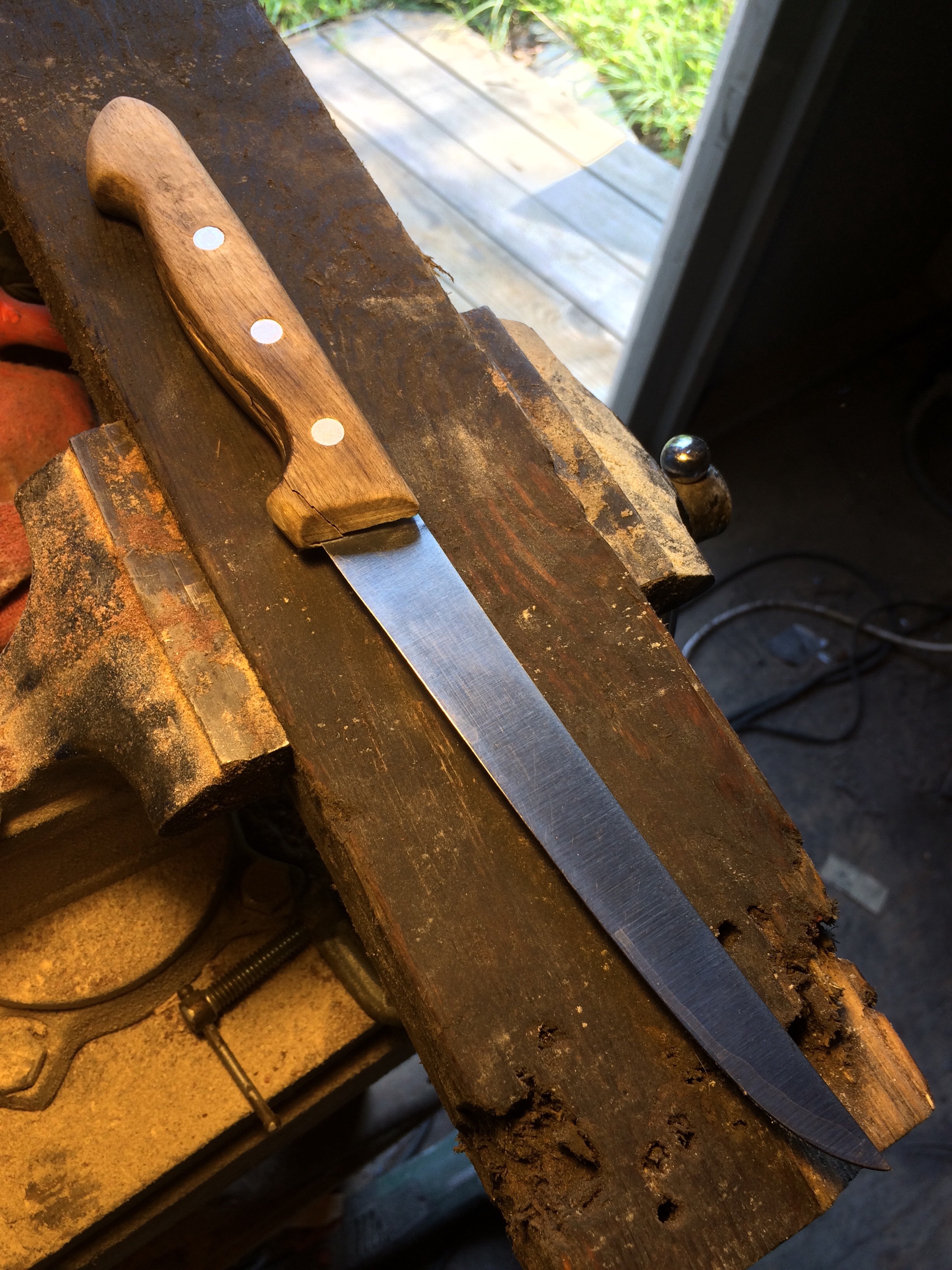
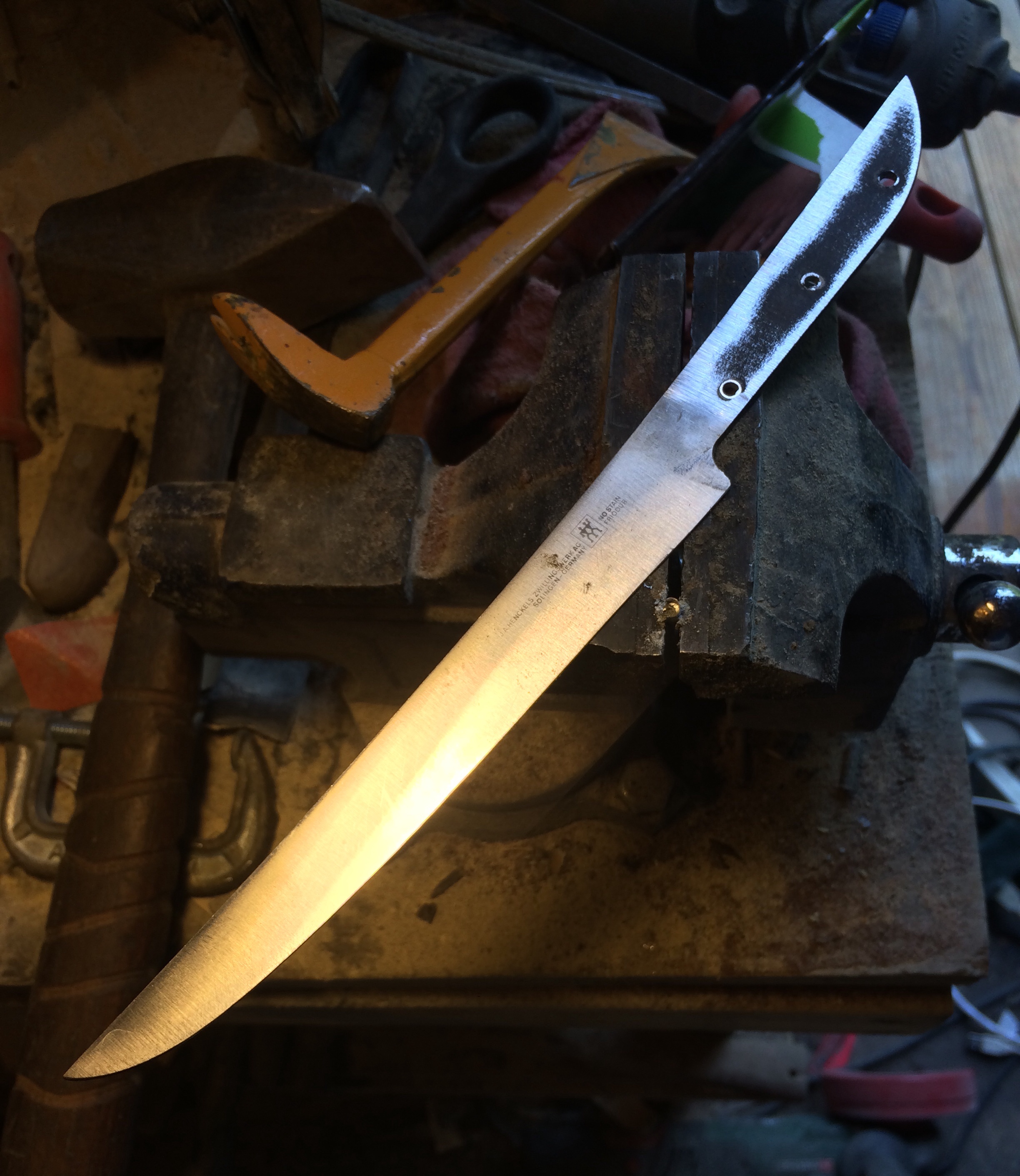
A gentlemen contacted us about re-handling an old boning knife he got in the 1970’s.  It was an old Zwilling knife, made from good Solingen steel, with Zwilling’s proprietary ‘Friodur’ subzero tempering process.  The handle had cracked, as natural materials tend to do over the years.

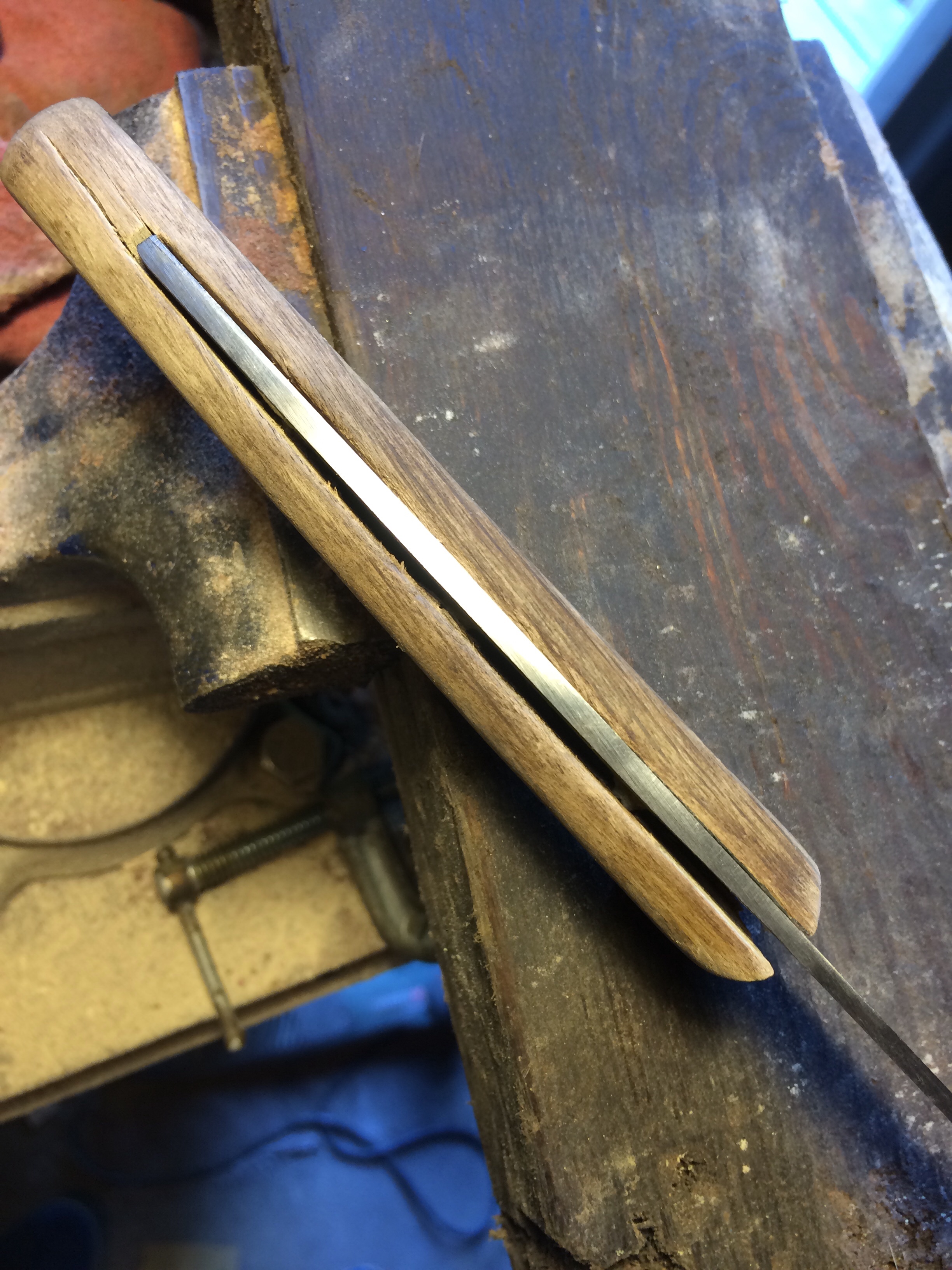
This one was partial tang, meaning the metal in the handle doesn’t run the complete length of the handle:

First, we remove the old handle and the rivets:

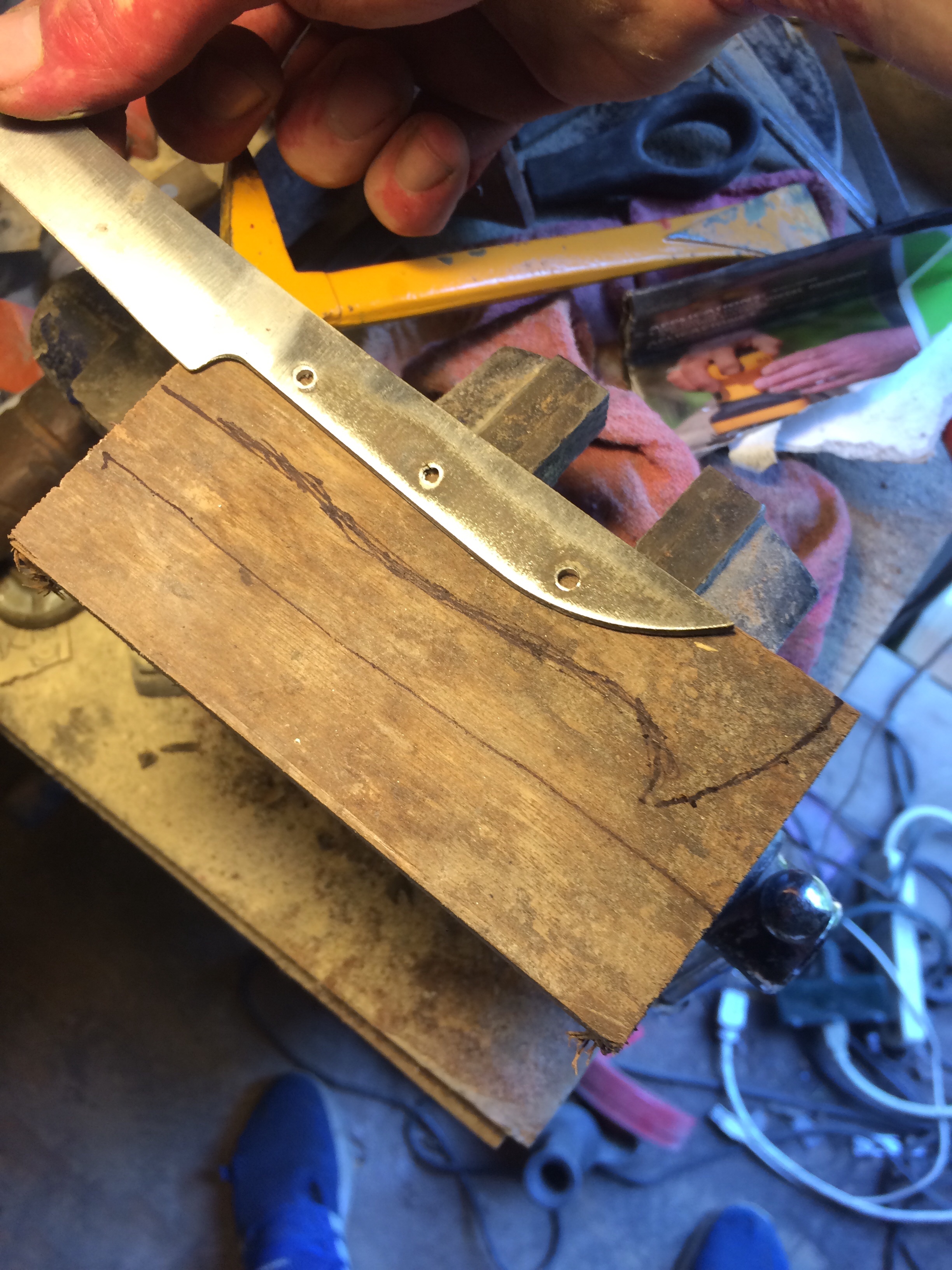
For the handle we’re going to use Black Walnut, which was formerly a baseboard salvaged from an abandoned house in North Carolina:

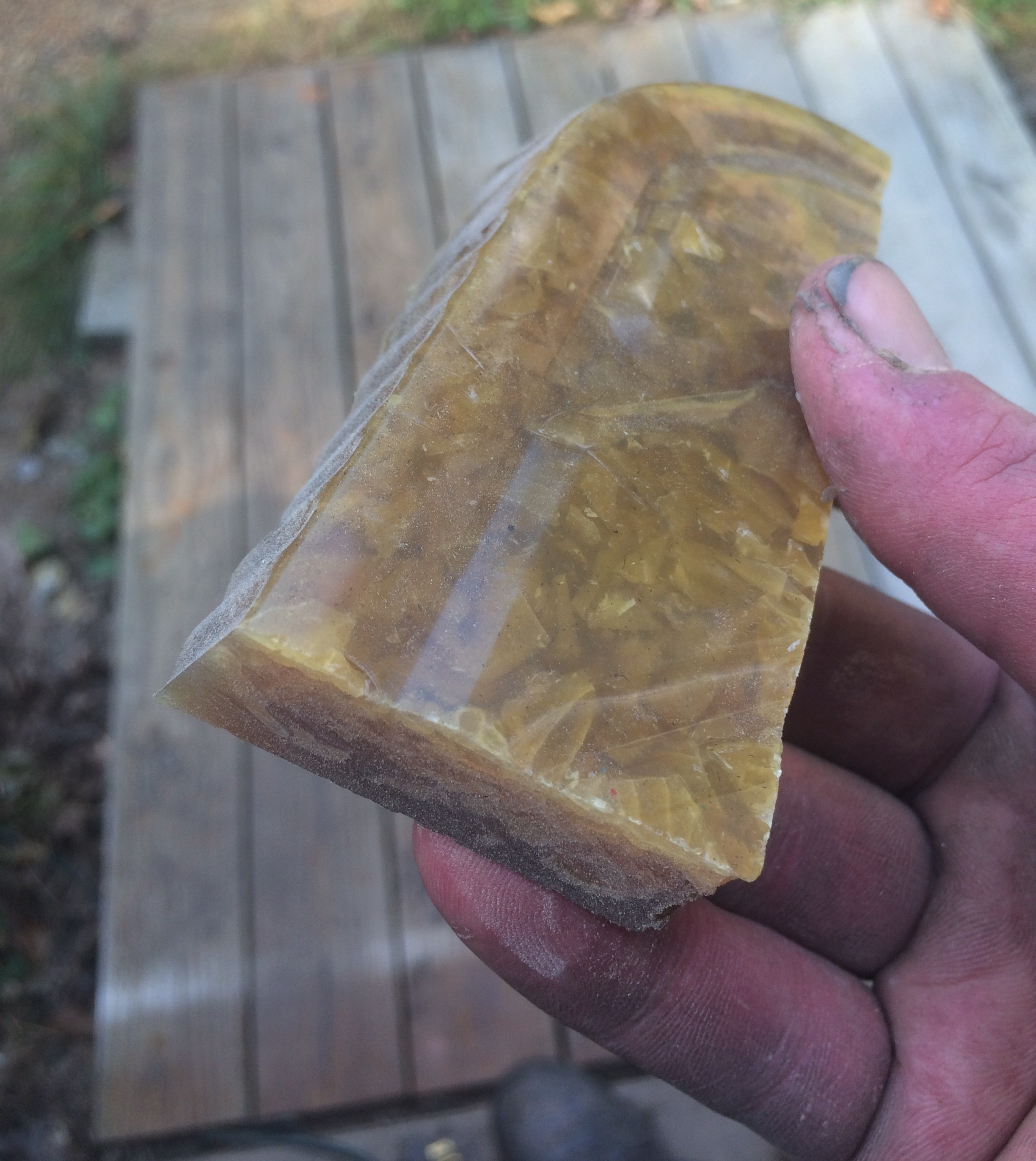
To extend the tang, we’re going to use a fiberglass computer board spacer which I dug out of a dumpster at one of my workplaces.  Though it looks yellow, it will turn green as it’s polished:

img_6337

Drilling the rivet holes.  The black spacing material is a heavy plastic that came from an office mail separator:

This is the top of the handle, closest to the ricasso of the blade, of the belt sander at 40 grit:

Sanded from 60 to 800 grit:

Ready for glue up:

Glued and clamped:

Roughly profiled:

Shaped to the desired shape.  The rest of the work will be done by hand, starting with 80 grit sandpaper and going up to 2000 grit.

Finished, sealed, and oiled:

Always take the opportunity to create something beautiful.

Knifemaking: yes and no; and Urim and Thummim

“Take these,” said the old man, holding out a white stone and a black stone that had been embedded at the center of the breastplate. “They are called Urim and Thummim.  The black signifies ‘yes,’ and the white ‘no.’  When you are unable to read the omens, they will help you to do so.  Always ask an objective question.”

Paulo Coelho- The Alchemist

I took a philosophy class in college.  The professor was an older gentleman, and a bit mysterious.  He had us buy a very expensive textbook which we never used.  He was the one asking the questions and it was mostly us, the class, that did the talking.  We never learned much about him other that that he had had a bit of celebrity on the academic circuit several decades prior. In his younger days he practiced judo.  Later in life he discovered Tai Chi, and taught that as well.  He never elaborated on any of this.

I don’t remember much of what we talked about.  I was twenty-two and liked to go to class stoned.  I do remember there was some Kant in there, and some St. Augustine, and probably some ideas on relative morality versus universal morality.  I also remember one lesson we had, one about truth, and how all matters can be broken down into a yes or a no.

He gave an example: all cellular communication can be broken down into ‘yes’ or ‘no’.  ‘Yes I will fuse with this protein,’ or ‘No I will not fuse with this protein.’  ‘Yes I will bind to this synapse,’ or ‘No, I will not bind to this synapse.’  Matters that are gray in appearance only remain so until one goes deep enough to find a ‘yes’ or a ‘no’- and in many instances in our personal lives we never get to that point.  Sometimes the truth contains many yes’s and no’s.  Sometimes the truth is much larger than our own individual internal agreement or disagreements.  This is part of what gives life it’s mystery and beauty.

There was one particular assignment, a large one, that came up.  We had to write a 10 page paper on a topic we chose.  The professor had a list of topics to choose from.  We were to choose a topic with which we most disagreed.  I had found mine:

‘True virtue requires true religion’

He then flipped it around and told us that our paper had to argue in agreement with our chosen topic.  I didn’t know where to start.  I didn’t agree with this statement at all and was a bit stumped.  After many starts and stops I found a legal dictionary and first looked up the definition of truth, then of virtue.  I found a way to manipulate those very clean and sterile definitions to find agreement with a statement I didn’t agree with.  I don’t remember exactly what I wrote and I’m not sure how I got ten pages out of that but I was pleased with myself.

I got my paper back.  There were no corrections or suggestions.  Written at the top of the page in red ink was a little note saying that I had made my argument using a clever lawyer’s trick.  I got a C.

Over the past dozen or so years I’ve thought a lot about this.  Truth is something that just is.  It is the yes or the no.  The point is that the truth of things can’t be manipulated.  There is discordance in the world because all of us are trying to manipulate the truth to serve our needs, to pacify our fears and insecurities, to indulge our convictions, and to fit into the way we believe things should be.  In spite of these dances we do, at some point everything will break down into yes or no.  When things appear to be both yes and no at the same time it only means that the truth isn’t fully visible at that point.

This doesn’t mean things are clear or easy.   Black for one person may be white for another, and vice versa.  It won’t always fit into nice agreeable little boxes.  I was working with teenagers and there was a young girl who was acting out horribly.  After speaking with her mother, I found out that her father had left the family to go live his life as a woman.  The young girl had a very strong ‘no’ to her father’s insurmountable ‘yes’.

At some point decisions have to be made and assistance may be needed when one can’t always read the signs of which path to take.  Sometimes we can bring an external influence in to help us to get to our truth, our own personal “yes’s” and “no’s”.  This is the where Urim and Thummim come in.

This two-knife kitchen set was a commission for a good friend and former teacher. He is a man who taught me how to look at matters deeply and to think about things critically.  We were on a farm for this past Thanksgiving and I noticed that he had been reading The Alchemist by Paulo Coelho.  This is a book that is special to me, and was given to me during a time when I was having trouble reading the omens.  It was the inspiration for this set, and an exercise of gratitude for this man, a sort of alchemist himself, who has helped me to find my own truths over the years:

We start with Urim, a six-inch boning/filet knife

Because the stock is so thin, I hardened the blade before grinding the bevels:

Rough grinding at 40 grit:


Full flat grind:

Laying down a hand finished satin:

Detail work on the plunge lines:

Ebony Gaboon: the black symbolizes the ‘yes’:

The bit near the ricasso; sanded to 2000 grit:

Profiling on the handle:

Rough-shaped:

Sanded to 220 grit and then oiled.  I let this sit for a day or so and then sand the entire handle up to 2000 grit.  This process helps to burst the grain:

Urim:

To start on Thummim we need things that cut:

Once again the whole bit is hardened:

Rough grinding:

Full flat grind and finished on the grinder to 120 grit:

A lot of material was removed:

Laying down a hand finish.  A smoother finish makes for less resistance when doing knifework in the kitchen:


She goes into hot acid for an etch.  The etch helps to prevent corrosion and also makes for a more pronounced patina as the knife is used.  It will also darken the blade:

Spalted Tamarind:  the light color represents the ‘no’

With black spacers for contrast:

Once again, sanded to 2000 grit:

Clamped:

Profiled:

Shaped:

Thummim; the no to the yes:

Urim and Thummim:


The name of the professor mentioned in this story is Jonathan Shear, Ph.D., and you can find links to his publications here.

Knifemaking: Conflict, Trust and the Vixen

Conflict is essential to evolution

-Paulo Coelho, Aleph

The thing is that love gives us a ringside seat on somebody else’s flaws, so of course you’re gonna spot some things that kinda need to be mentioned…

-Alain de Botton


Conflict is an inevitable part of life.  We find it in our professional and romantic relationships, in the work we do, in our places of joy and sorrow, and just about everywhere in between.  We even find it in ourselves. 

Merriam-Webster defines conflict as an “antagonistic state or action (as of divergent ideas, interests, or persons)”.  This sounds about right.

Depending on how we were raised, conflict can make us feel unsafe and insecure because we equated conflict to something being deeply wrong with us.  Often we’re raised to be agreeable, to not make a fuss, to put on a happy face, and to be seen and not heard.  Because of this there can be a tendency to submit to the incompatibles that arise and completely lose ourselves during moments of heated conflict.  We give away all of our power and ignore our needs for the sake of resolution.  There can also a tendency to run, to check out mentally and emotionally, and to avoid; all for the purpose of not having to deal with the conflict at all.  Ancient fears arise during conflict: fears of not having enough, fears of not being heard, fears of being seen as less than, fears of asking for help, or fears of our needs not being acknowledged or met.  Conflict can take us right back into the terror of our smaller selves.

Fear often makes us do the complete opposite of what is best for us.  But in a world of incompatibles, of yes’s and no’s that are always at odds with each other, conflict will always remain.  I’ve always wondered about this in the way I’ve wondered why deep sadness exists, and why pain and suffering are so prevalent.   

Conflict helps us to be active participants in our lives.  It seems counter-intuitive but conflict helps us to grow and be seen.  In the same way that deep sadness and pain can be teachers, conflict can take us to school on how to be a decent human being. 

Conflict in romantic relationships can be one of the more challenging arenas because it forces us to show and acknowledge things we may prefer to not acknowledge.  It occurs when any number of our maladjustments that we haven’t dealt with or are still processing rubs up against our partner’s.  Or when our partner’s maladjustments rub up against us.  In many instances things are simply going to rub us the wrong way and we may not be able to articulate exactly why.  

This is particularly unique to romantic conflict because there is nowhere to hide.  In other arenas we can veil ourselves with busy-ness and obligations.  We can keep our own counsel, hide our feelings, hold everything at a distance, and still uphold our responsibilities and navigate life somewhat successfully.  Doing this with someone whose heart you occupy is likely to be catastrophic.  The best thing to do is to let all of yourself be seen and work from there.

Though it may not feel like it, this is one of the healthiest things anyone can do.  We are built to be close to one another and we are all flawed.   To be able to say ‘I was only a jackass because I was deeply afraid and I’m working to be better because I care about this’ gains so much more mileage for trust and intimacy than pretending like nothing is wrong or powering through a conflict.   When someone you love knows where you are coming from it creates a sense of safety for that person, even though it may be uncomfortable for you.  Eventually you may find a sense of safety because in allowing all of yourself to be seen, it allows all of you to be loved.  Trust deepens on both ends and allows for everything to blossom.  This is something to stay on top of and it’s important to be ever mindful.

This blade was made after a conflict with someone I love.  It was a reminder to myself to lean into conflict.  Conflict is a Vixen, a lady in red, shining, beautiful, and also extremely sharp and ready to slice the hell out of you if you aren’t on top of it….

O1 tool steel, profiled:

Scribed for grinding the bevels, and a notched blade choil:

Rough grinding:

Full flat grind:

Hardened:

Sanding the ricasso after tempering:

Many hours later…

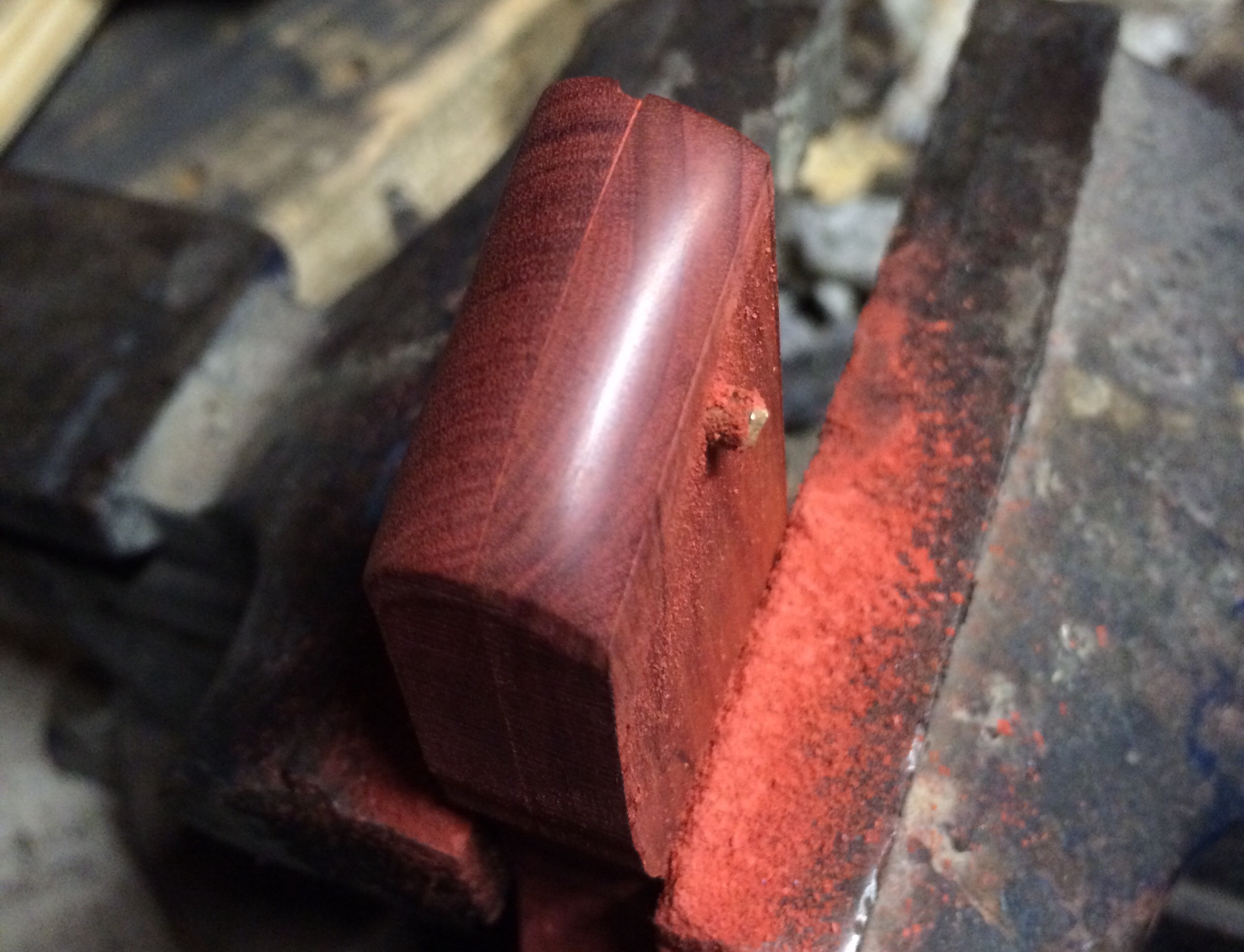
Redheart:

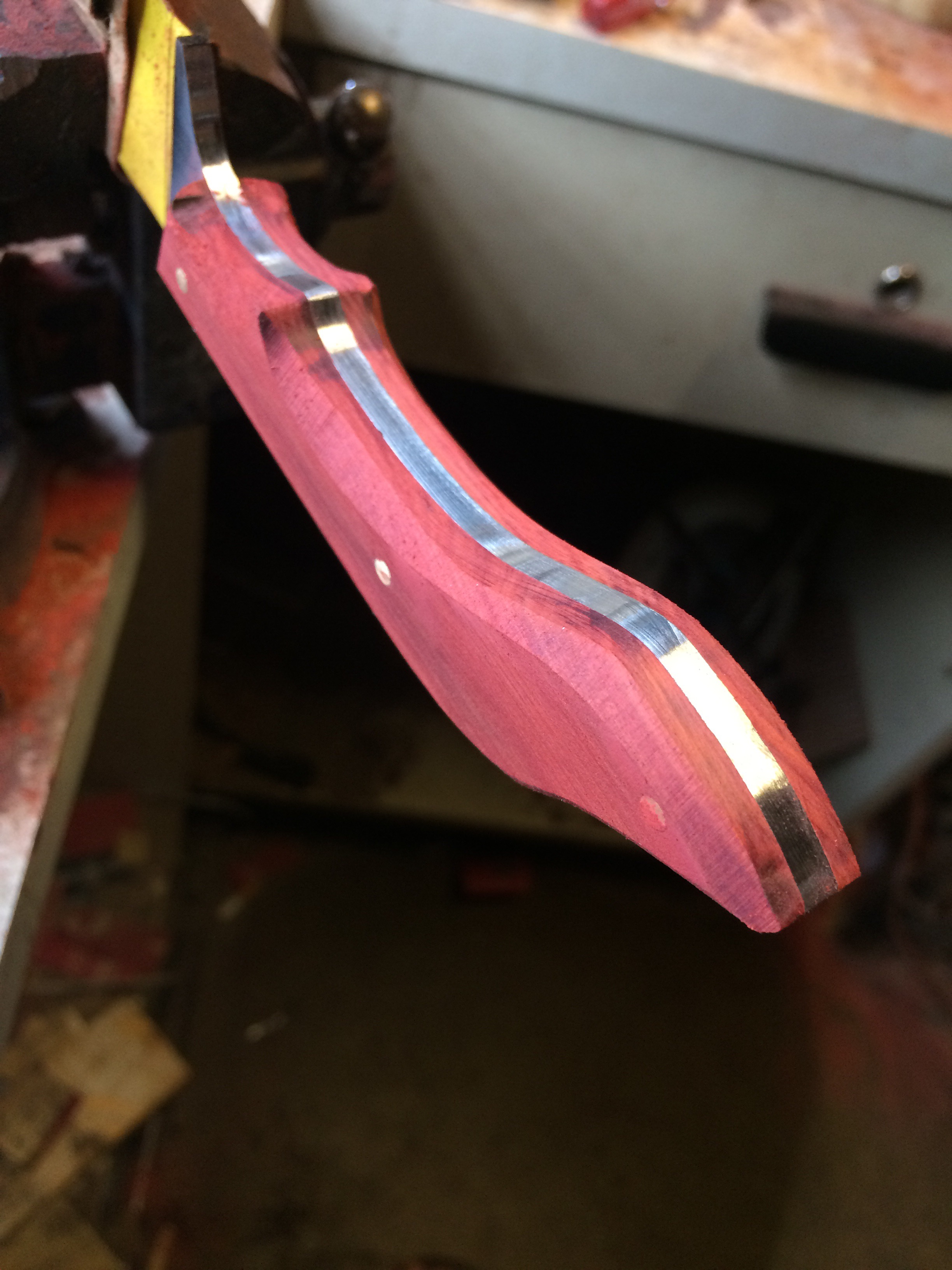
The Vixen:

IMG_3445_sRGB

Many things will often be at odds with each other but being able to be with all of them is at the heart of doing conflict well, and ultimately at navigating the world.  This is the lesson of the Vixen.

Knifemaking: braving the storm and St. Elmo’s Fire

“I have seen many storms in my life. Most storms have caught me by surprise, so I had to learn very quickly to look further and understand that I am not capable of controlling the weather, to exercise the art of patience and to respect the fury of nature.”

Paulo Coelho

St. Erasmus, or St. Elmo, is known as the patron saint of sailors.   The namesake of this blade refers to a meteorological phenomenon that results from an electrically charged atmosphere that occurs during thunderstorms.  It manifests itself as a series of blue sparks, with the mast of the ship acting as a conductor.  During storms at sea, sailors would often observe St. Elmo’s Fire.  It has always been symbolized as a sign of the Divine, and sailors knew that they were looked after when it appeared.

stelmo

I made this blade with idea of it being a seaworthy vessel- something that has braved many storms and still has its spirit intact.  Sometimes we brave so many storms that we forget how to enjoy the calm.  Instead of having a life of calm punctuated by storms, it becomes a life of storms punctuated by calm.

The important thing to realize is that beneath the churning waves and far beneath the thunder, lightning and winds is an entire body of calm.  And that there was calm before the storm and there will be calm after.

This isn’t to say that storms aren’t dangerous but they do come with their lessons.  I’ve spent a good amount of life in a state of anxiety anticipating storms.  Some of us have been conditioned to live in constant turbulence, lest we not be prepared for the foul weather.  Over time, we stop differentiating between the calm and the turbulent seas and create a maelstrom where there is none because we haven’t ever known what that calm feels like.  Shifting this type of thinking takes time and a good deal of work.  To be perpetually worried of the storms robs you from fully enjoying the moment and the beautiful things that occupy the vast majority of time between.  Ultimately you can’t control the Nature but you can control yourself.

This the lesson of St. Elmo’s Fire.  To allow the storms to pass and to have faith that you will find safe passage through the rough waters.  To feel your own calm in the midst of chaos.  Oftentimes you can find out what you are really made of within that chaos.

This blade was a commission for a very old friend who did a lovely photoshoot for me.  We’ve often talked about storms and how to get through them.

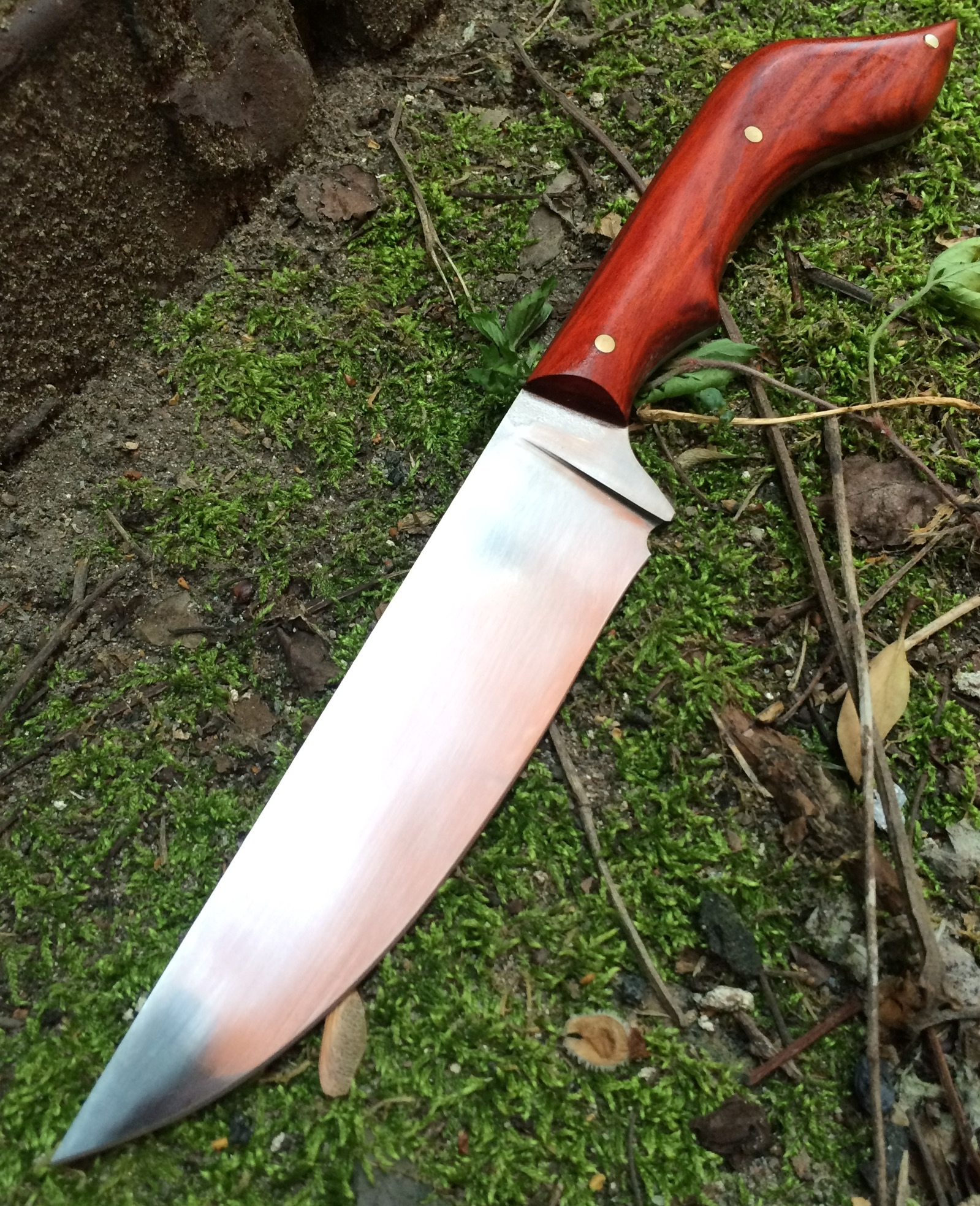
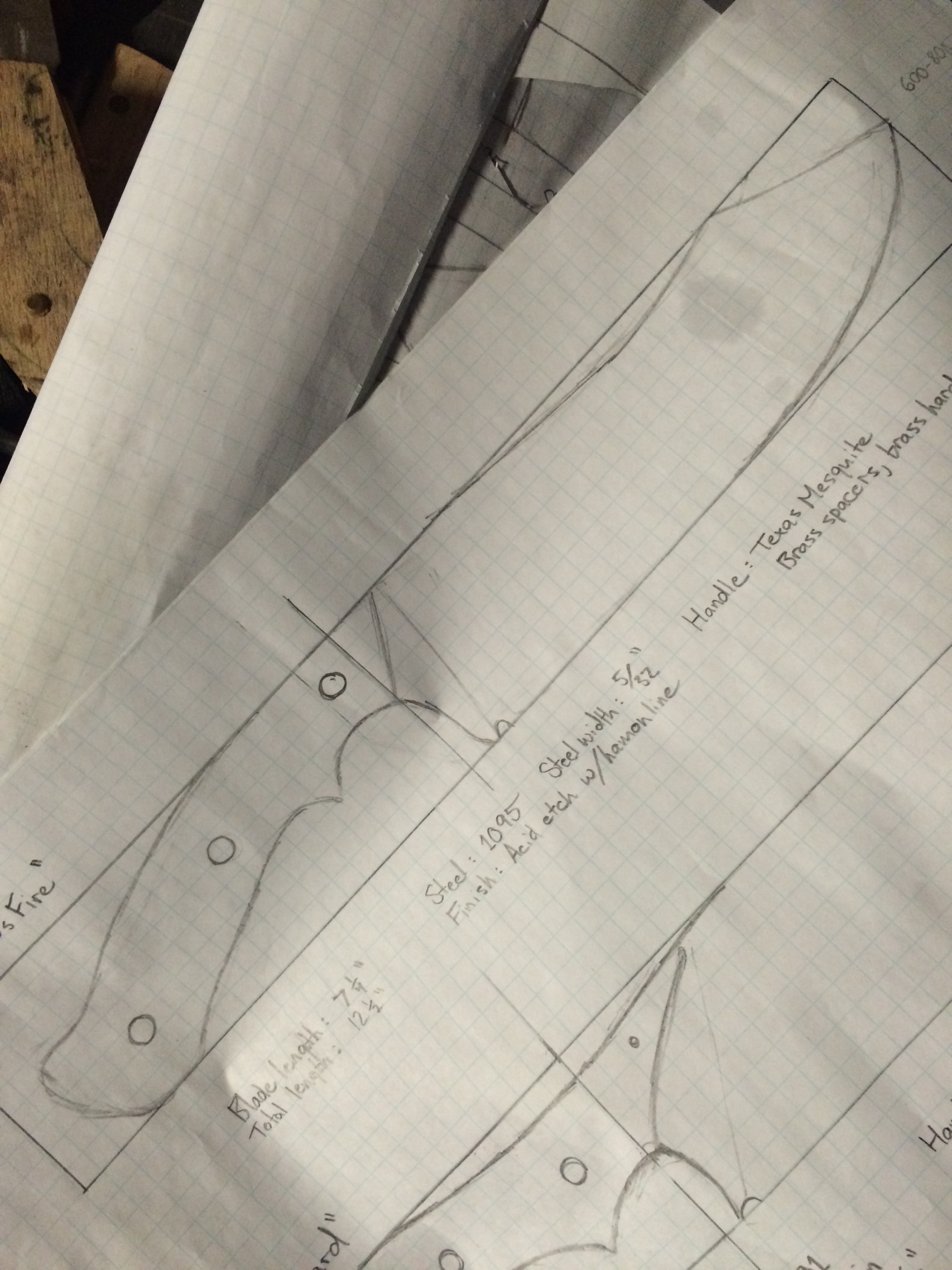
I did a series of kitchen knife designs and this one was sort of a wild card.  Functionally she is a German style chef’s knife.  The clip in the blade gives her some forward momentum.  The drop in the handle rests comfortably in the heel of the hand, and also follows the natural line of the forearm through the wrist.  The finger choil provides a comfortable resting place for the lower three fingers if a traditional chef’s grip is preferred.

The blade is 7.25″ long.  Blades these long are a continual challenge for me to grind.  If ground too thin they will warp and possibly crack during heat treat.  On blades this large there is grinding before and after hardening and tempering.

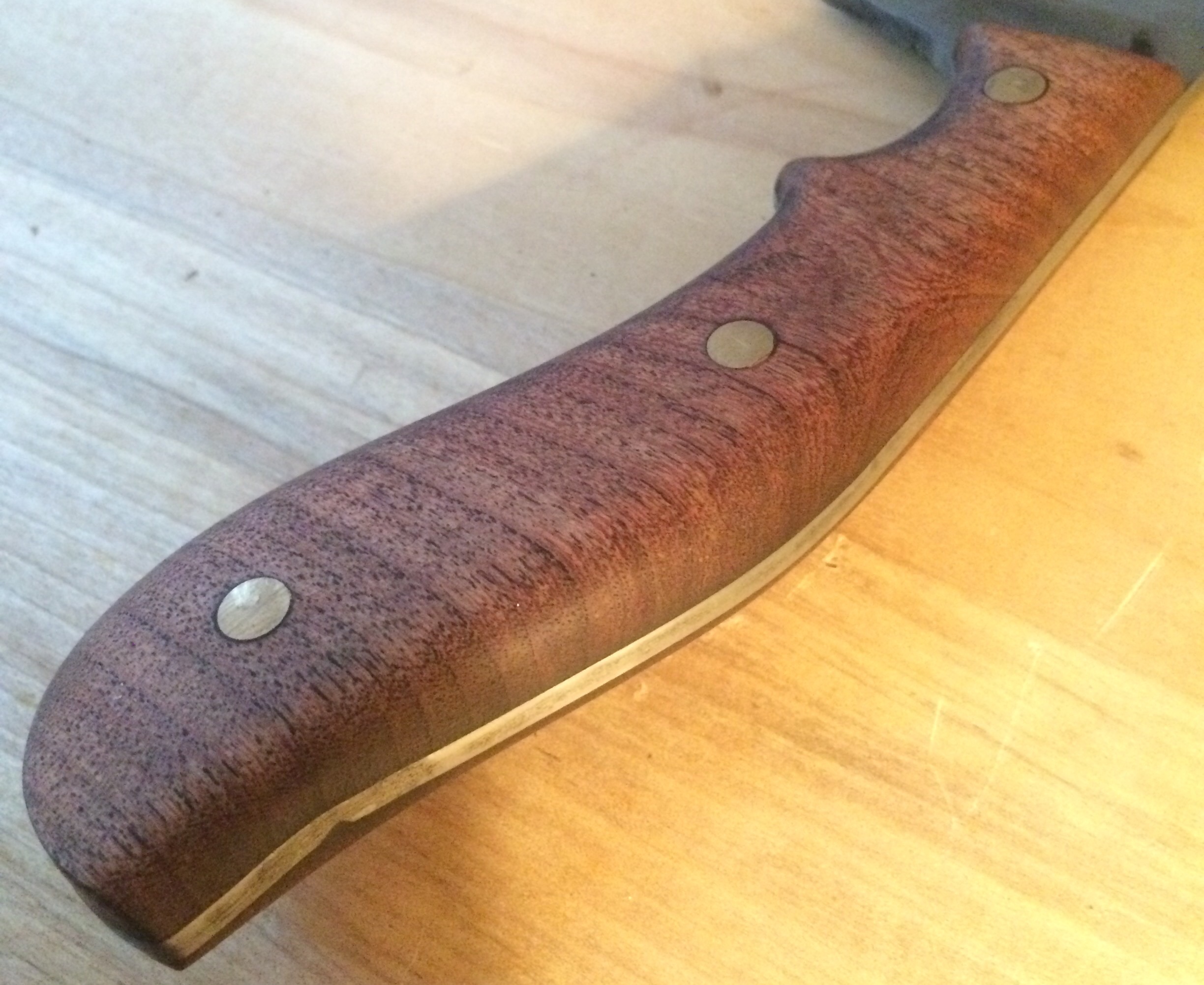
  I love working with Mesquite.  It has a fiery bouquet.
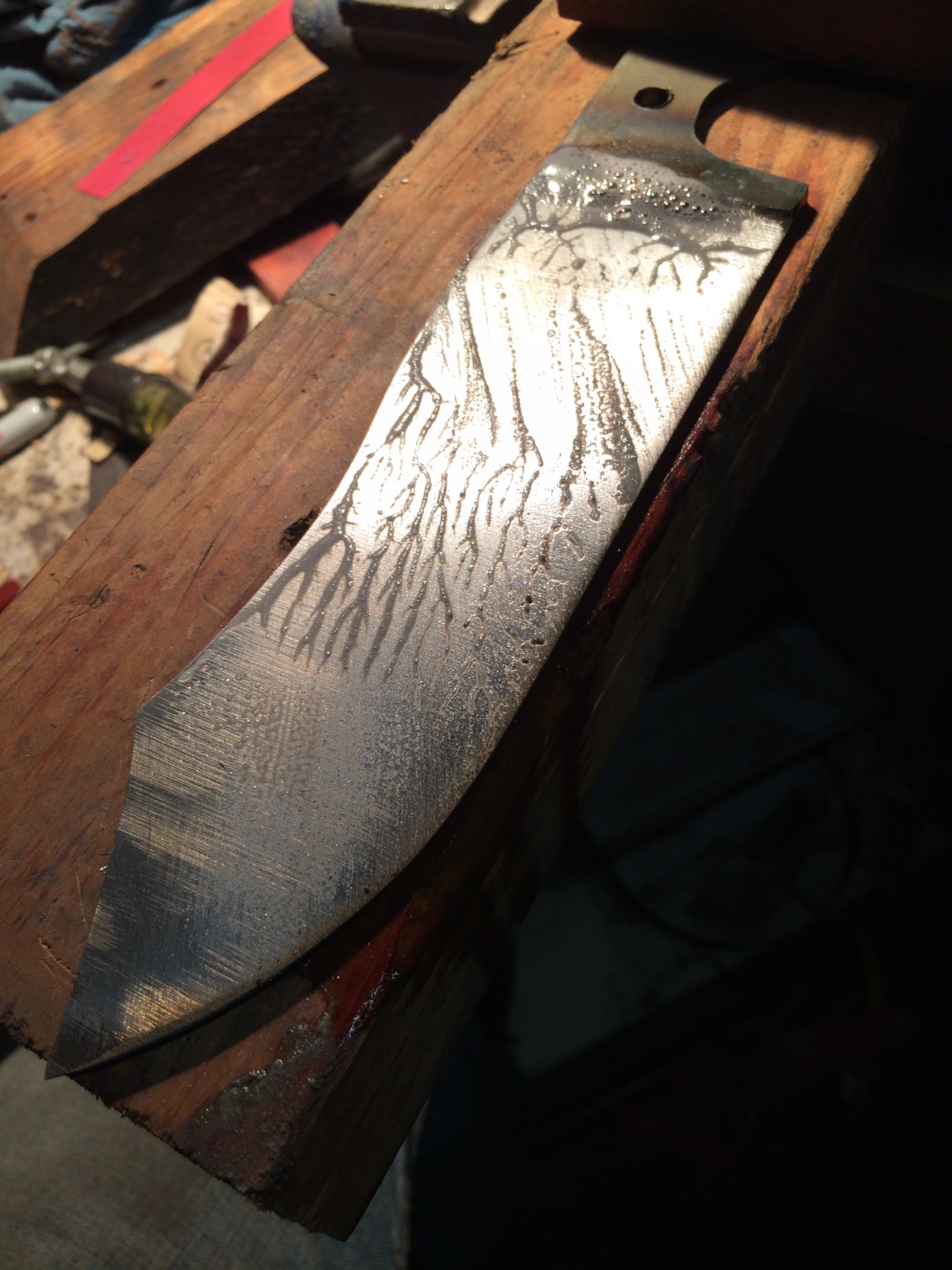
  St. Elmo’s Fire: 1095 spring steel with a phosphoric acid etch, Texas Mesquite handle and brass hardware.

  
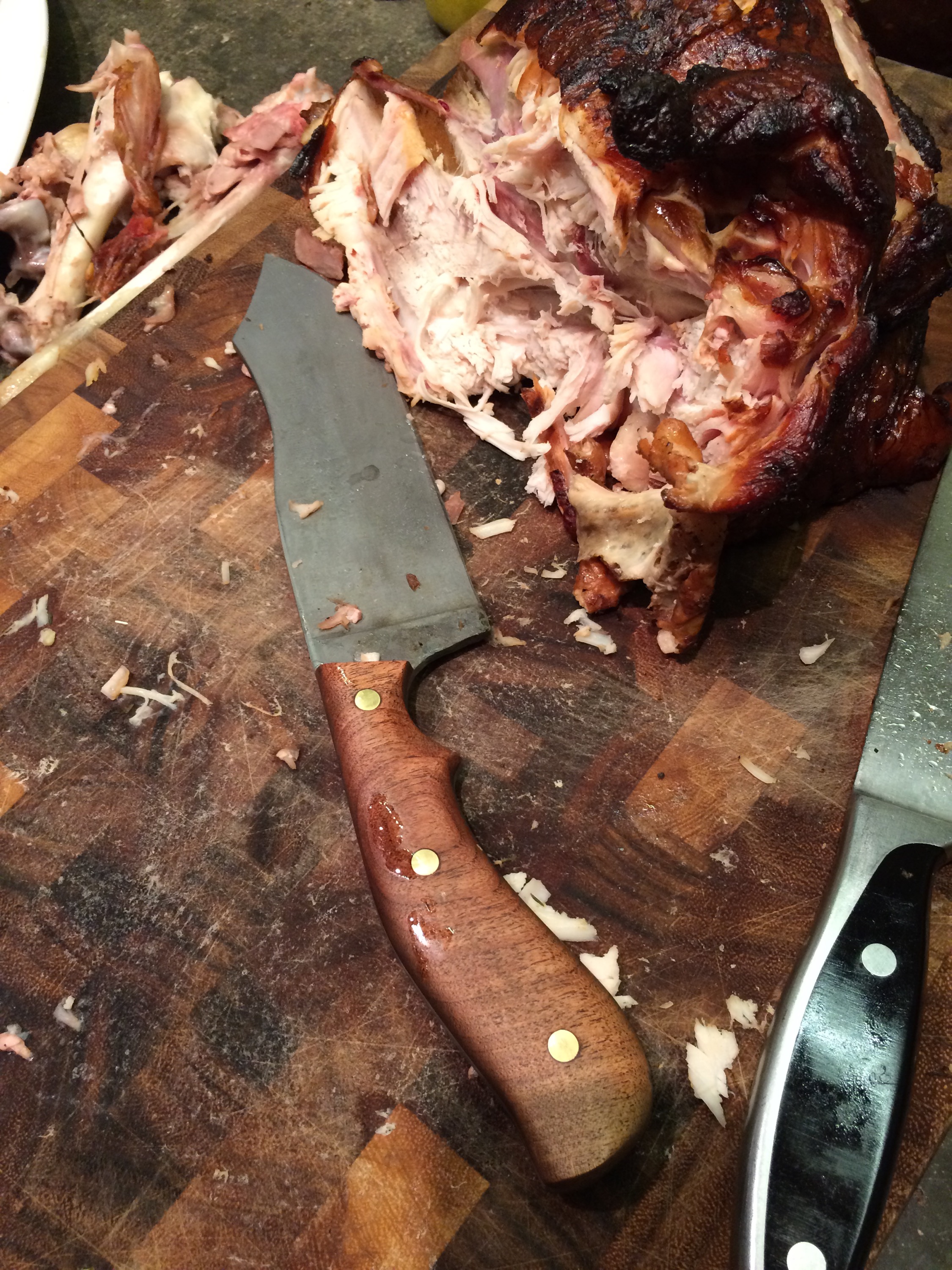
There was some turkey involved on this past Thursday  

Trust that the storm will pass.

Be sure to check out Lauren Serpa and her beautiful work.