Knifemaking: being in the know, Hobart mixers, and the Gunny

“If, then, I were asked for the most important advice I could give, that which I considered to be the most useful to the men of our century, I should simply say: in the name of God, stop a moment, cease your work, look around you.”
Leo Tolstoy 


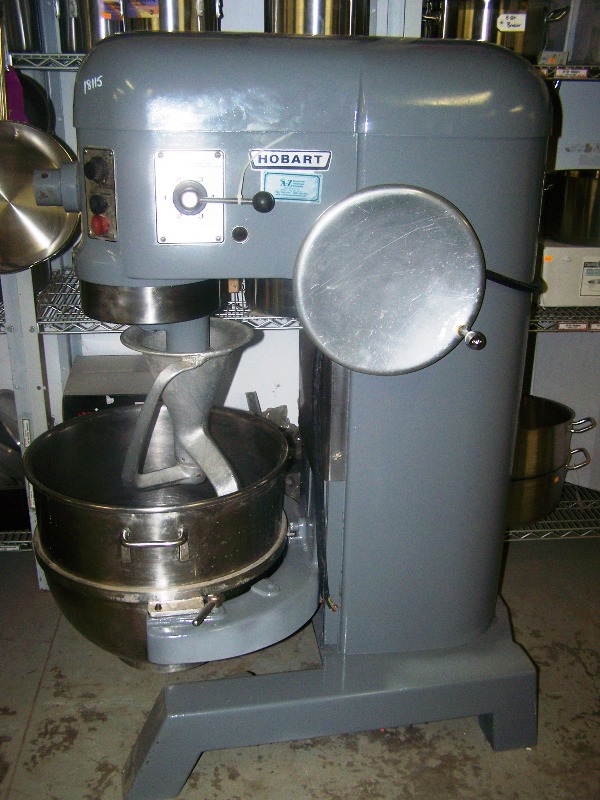
A few months ago I did a job for my friends who run an auction company.  There was an auction happening at a school out in the country and they needed someone to go out and bid on two gigantic dough mixers.  They weigh a little more than half a ton and are very expensive.

They  look like this:
18115

The only issue was that they didn’t know what voltage they were.  Sometimes these machines have a 460 voltage requirement.  These higher voltages exist to reduce wiring requirements and the need for additional electrical equipment facilities with large power requirements.  The facilities that have these requirements are usually nuclear submarines or large government or corporate campuses.  Most houses only go as high as 220 volts, and that’s only for the washer and dryer hook up.  Unless you are operating a nuclear submarine, anything running on 460 volt power is generally going to be used as a boat anchor or scrapped.

My job was to go out and look at the specs and see what voltage they were.  Anything under 460 voltage would be good to bid on and able to be resold for a profit.

I drove out to the school on an early November morning.  Everything was spread out in front of a storage shed across the street from the school, separated by a two lane highway.  What I saw when I got there was a cornucopia of ancient office equipment, school lockers, floor buffers, and cafeteria equipment from an era gone by.  A lot of the town folk came out to see the festivities and they looked as one would expect the residents of a peanut farming community to look.  I went and looked in the shed and there was even more junk- desks, old computer printers, and large pieces of cafeteria equipment designed to feed the hungry masses.  It was here I found my mixers, alone with no attention from the farming community (they were busy picking over everything outside).  Nobody knew there was a potentially profitable business endeavor here.  Nobody else was in the know.

I went over and found the spec label.  Under power requirements it said 460V.  Son of a bitch.

There were two other gentleman eyeing the mixers as well.  They did not look like members of the peanut farming community.  They arrived in a box truck and a dually pick-up with a trailer attached.  This was the competition and they meant business.  These gentleman were definitely in the know with these mixers.

We said formal hellos.  They asked what the voltage was and I told them, expecting them to pack up and leave.

I called Fred the service tech.  He told me that some of these particular models of mixer were dual voltage and I would need to remove the top cover and look at the motor.  I waited till nobody else was around, and had a peak at the motor.  They were indeed dual voltage- 220v/460V.  So they were worth money.  They were as good as mine.

The other gentlemen did not leave.  We stood off to the side waiting for the auctioneer to make his way to the shed.

When it came time to bid these gentlemen matched every bid I made.  It was just me and them.  We got up to 2000 dollars and the bidding slowed down a bit.  The farming community were both entertained and dumbfounded.  Everything else sold for next to nothing but here were these people who did not belong, wagering thousands of dollars on two hunks of metal.

As per my instructions, I stopped at 3,000 dollars.  The gentleman backed their box truck up and loaded up these two pieces of equipment.  They had been in the know the whole time and they came to win.

With a bit of awareness you can start to see that there is more going on in the world than you ever imagined.  This sort of awareness usually helps me to be a better citizen of the universe.

There is the gentleman you may work with who tries to be everything to everyone.  It is profoundly annoying.  Spend 18 hours with him on a business trip and you find his brother died of a heroin overdose.  All he is doing is trying to keep everyone safe in the only way he knows how.  Being in the know of this helps you to cultivate a bit of compassion toward this man.

Or there is the person who is raising hell in Starbucks.  You know for a fact that that person did not wake up with the sole intention of making an entire coffee shop miserable- possibly because you may have done the same thing at one point or another.  There is probably something else going on that is causing this person to act this way.  Being in the know helps create space for empathy for this person.

There are thousands of situations like the auction or the other two incidents.  Having a bit of knowledge of things can help to create a richer existence or at least help you to know what you are missing out on at a country auction.  Sometimes all this takes is slowing down and having a look around.

This is the lesson of the Gunny.  It gets its name from the Gunnery Sergeant, and NCO in the Marine Corps whose job is to be in the know.  Sometimes just being aware is enough to make a difference.

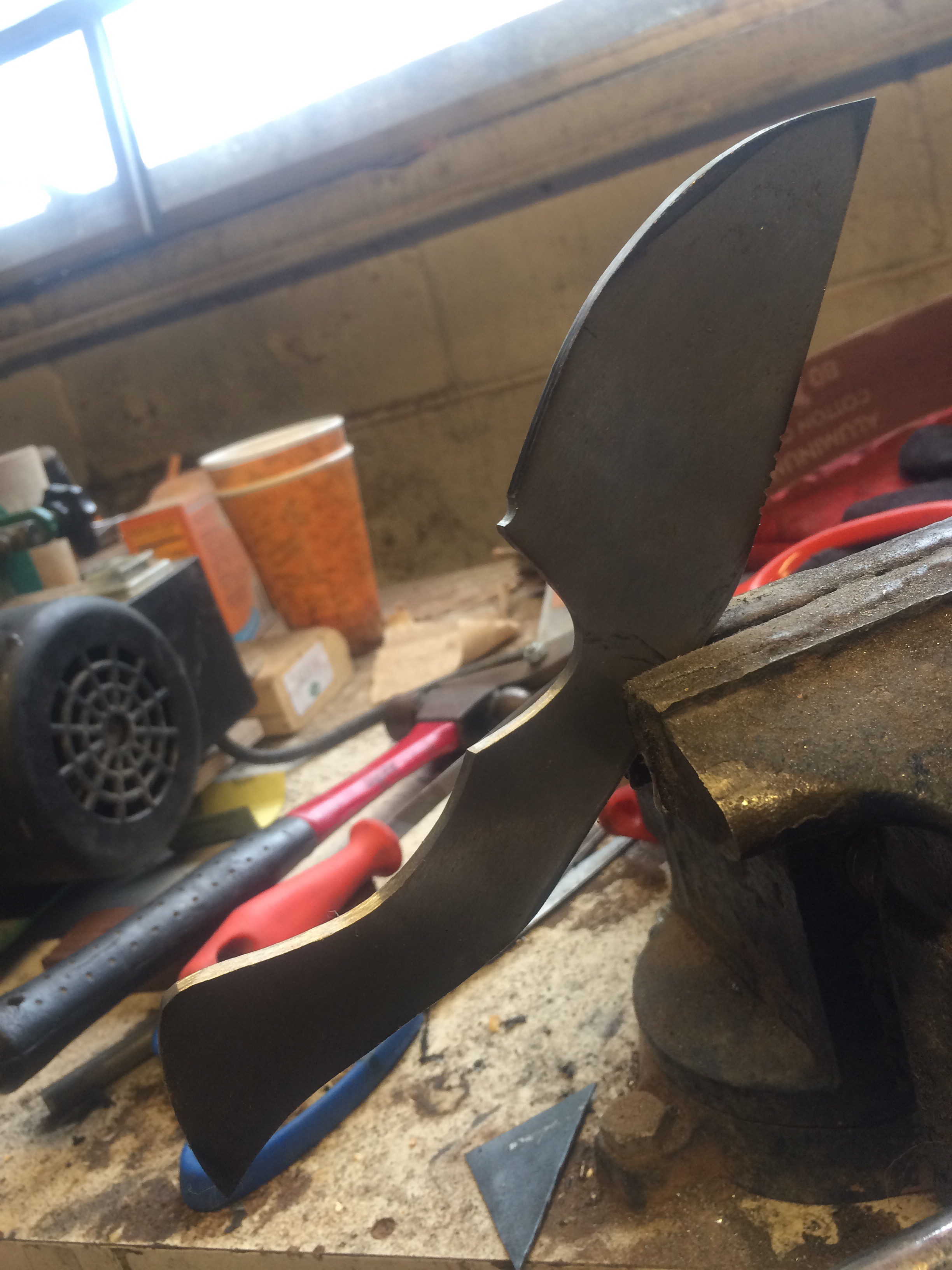
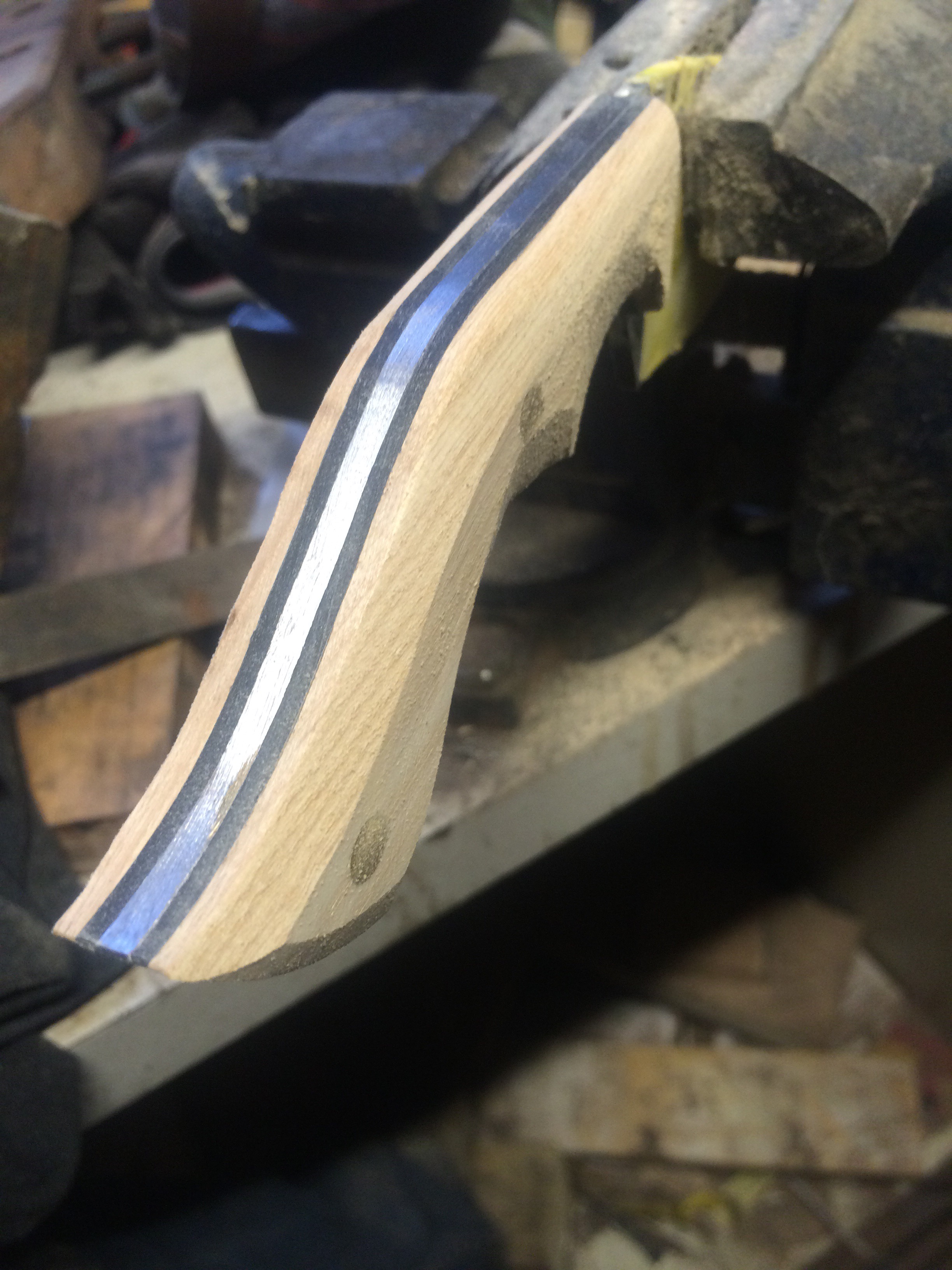
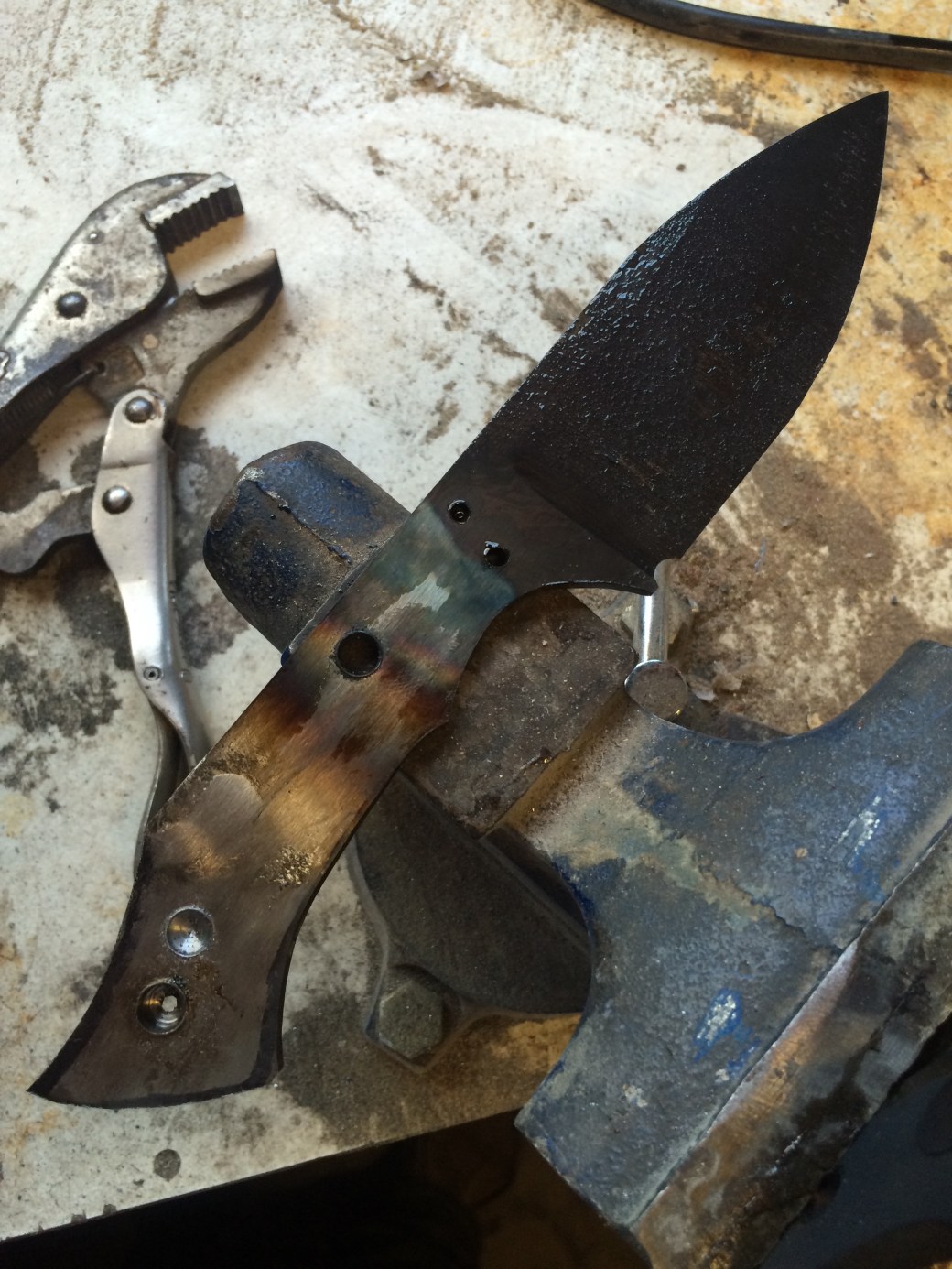
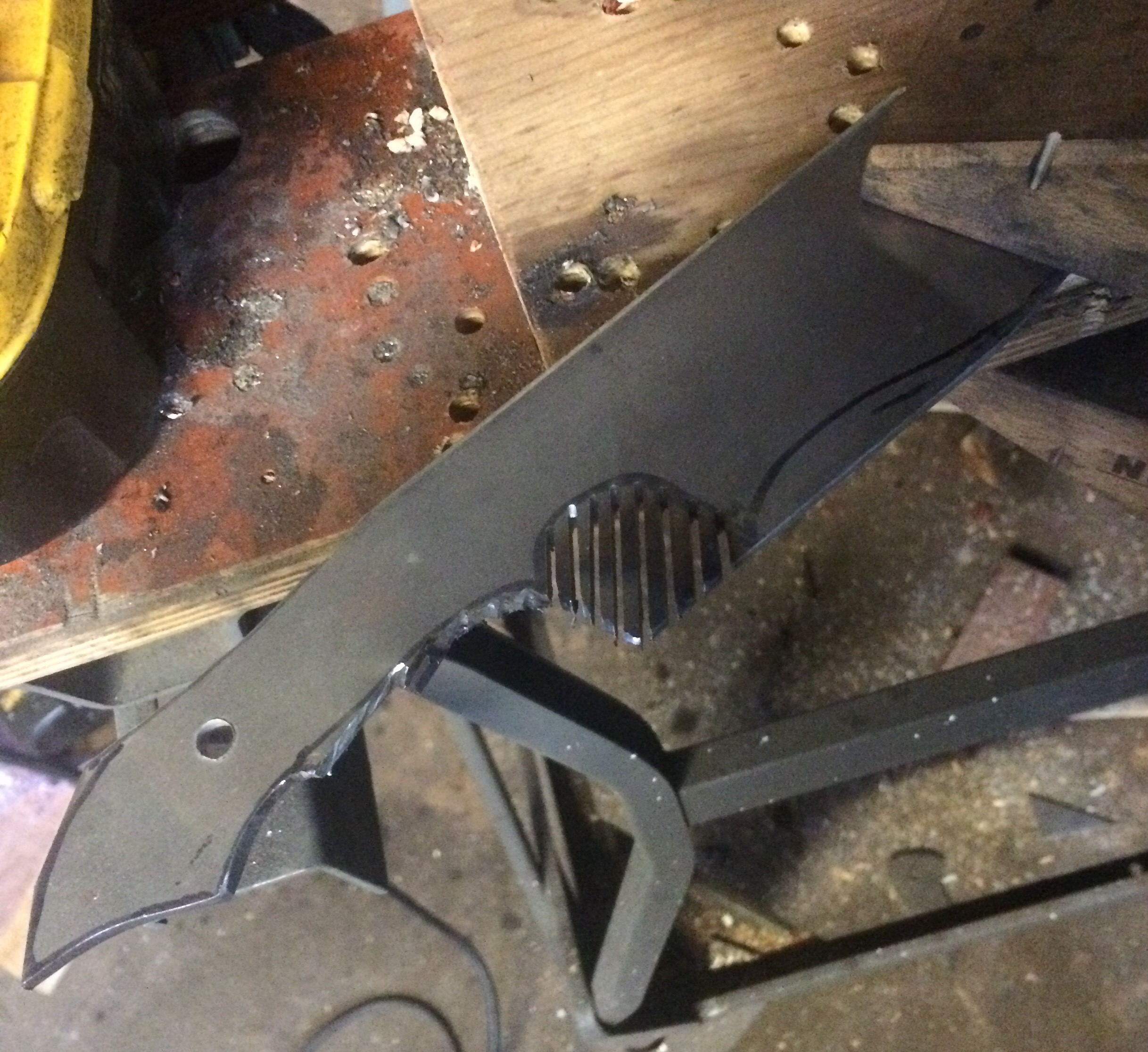
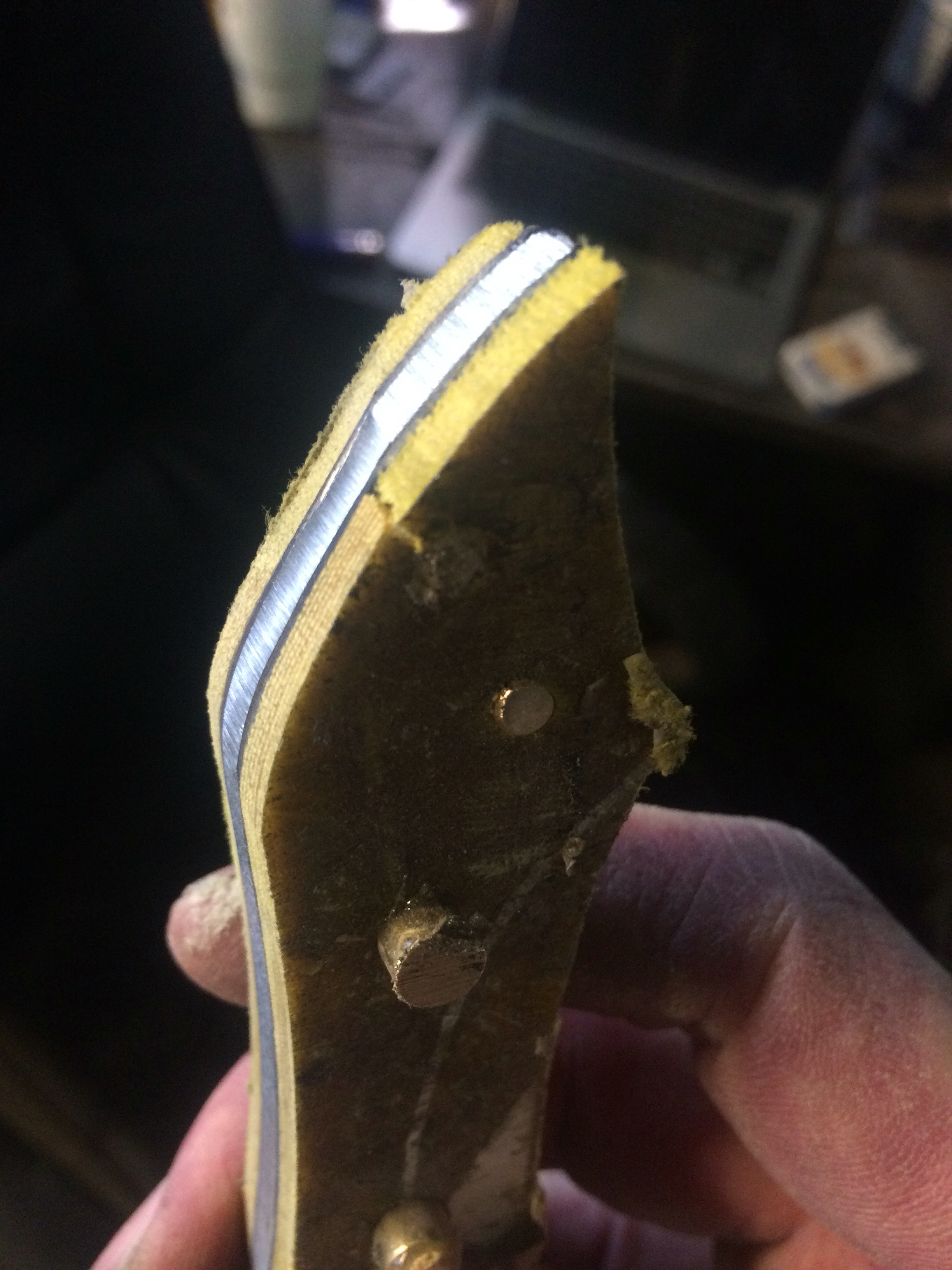
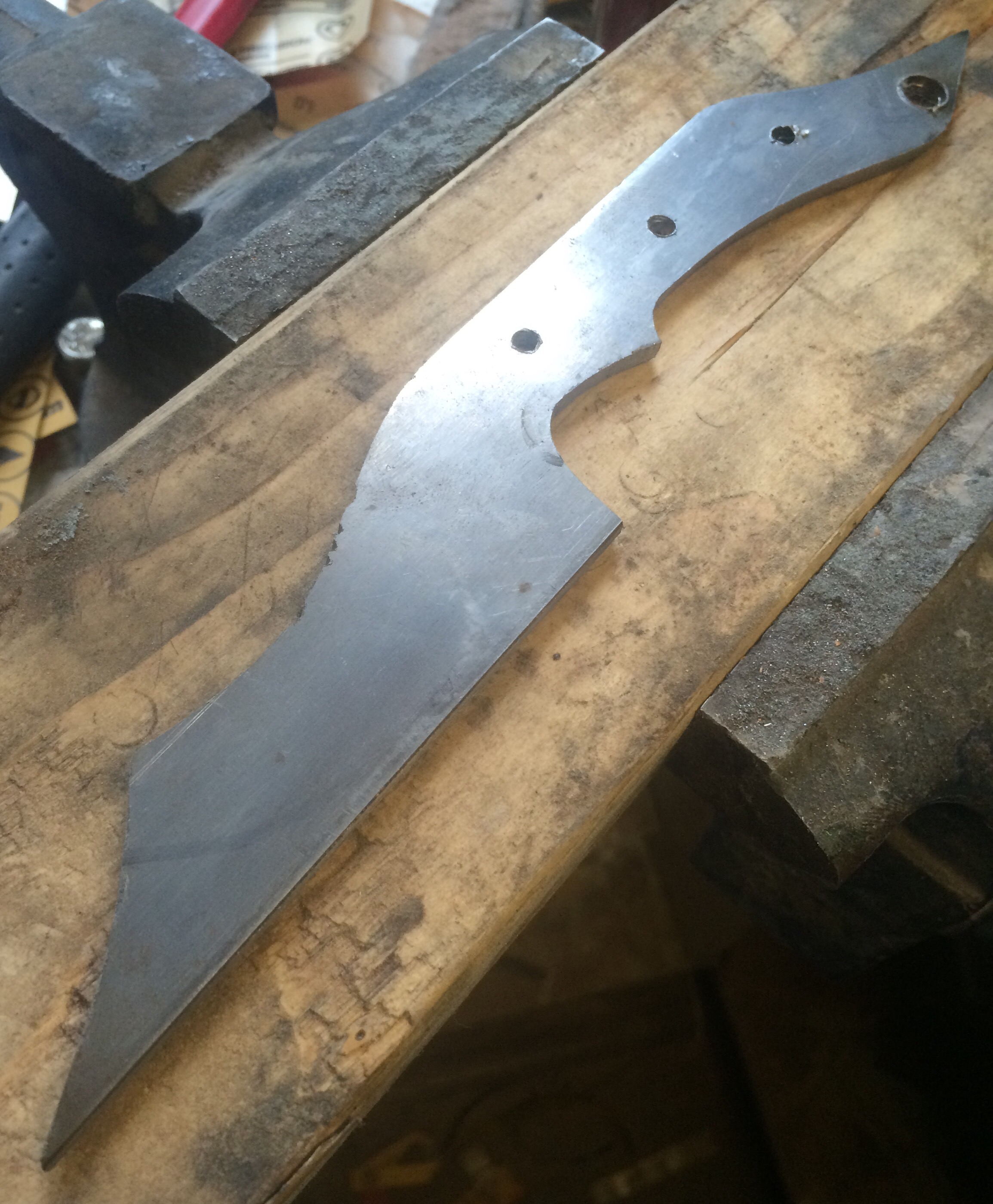
I started working on this knife as part of a demonstration at a show, and it was at this stage when I got back to the shop.  He is made from O1 tool steel.
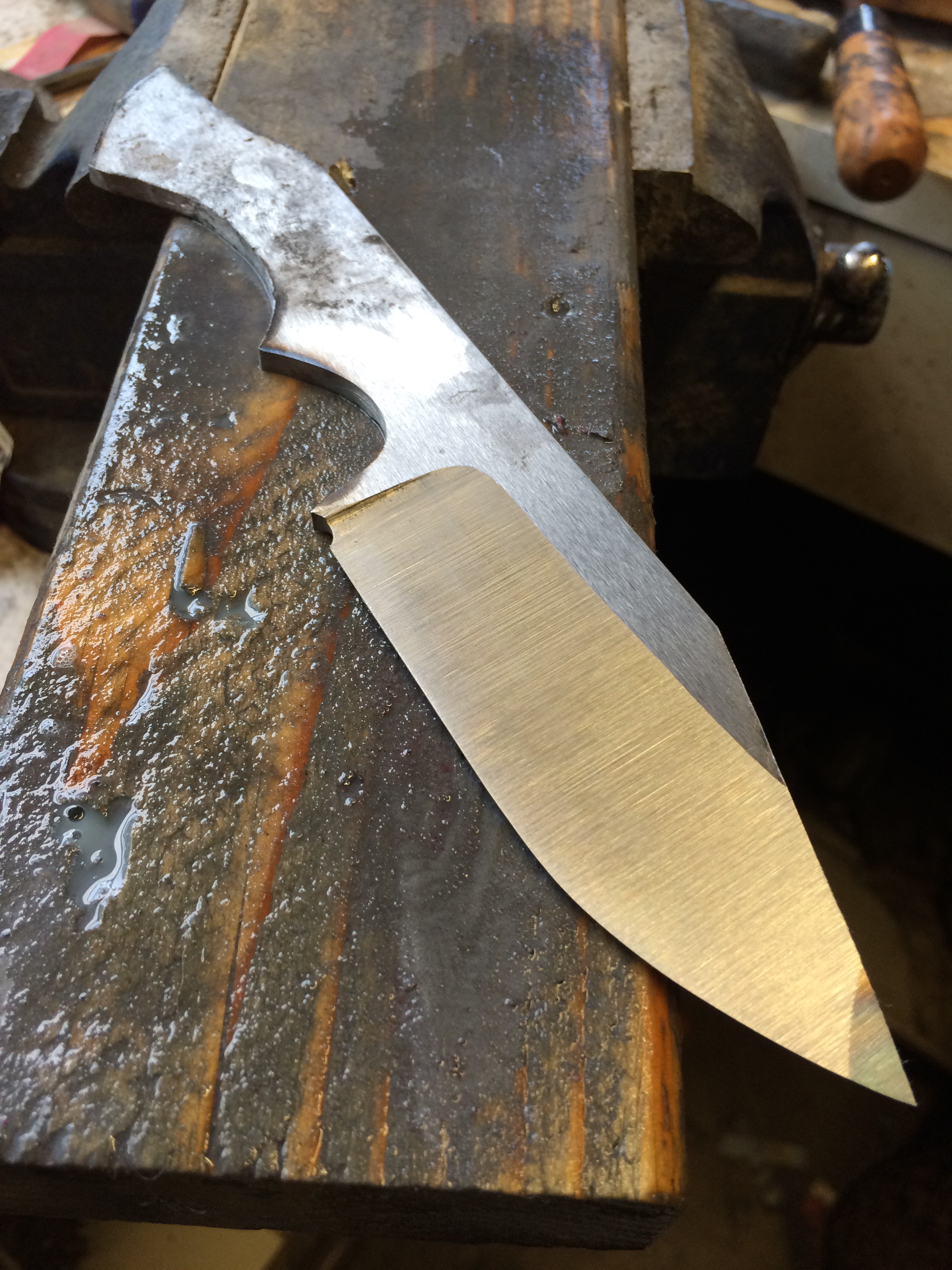
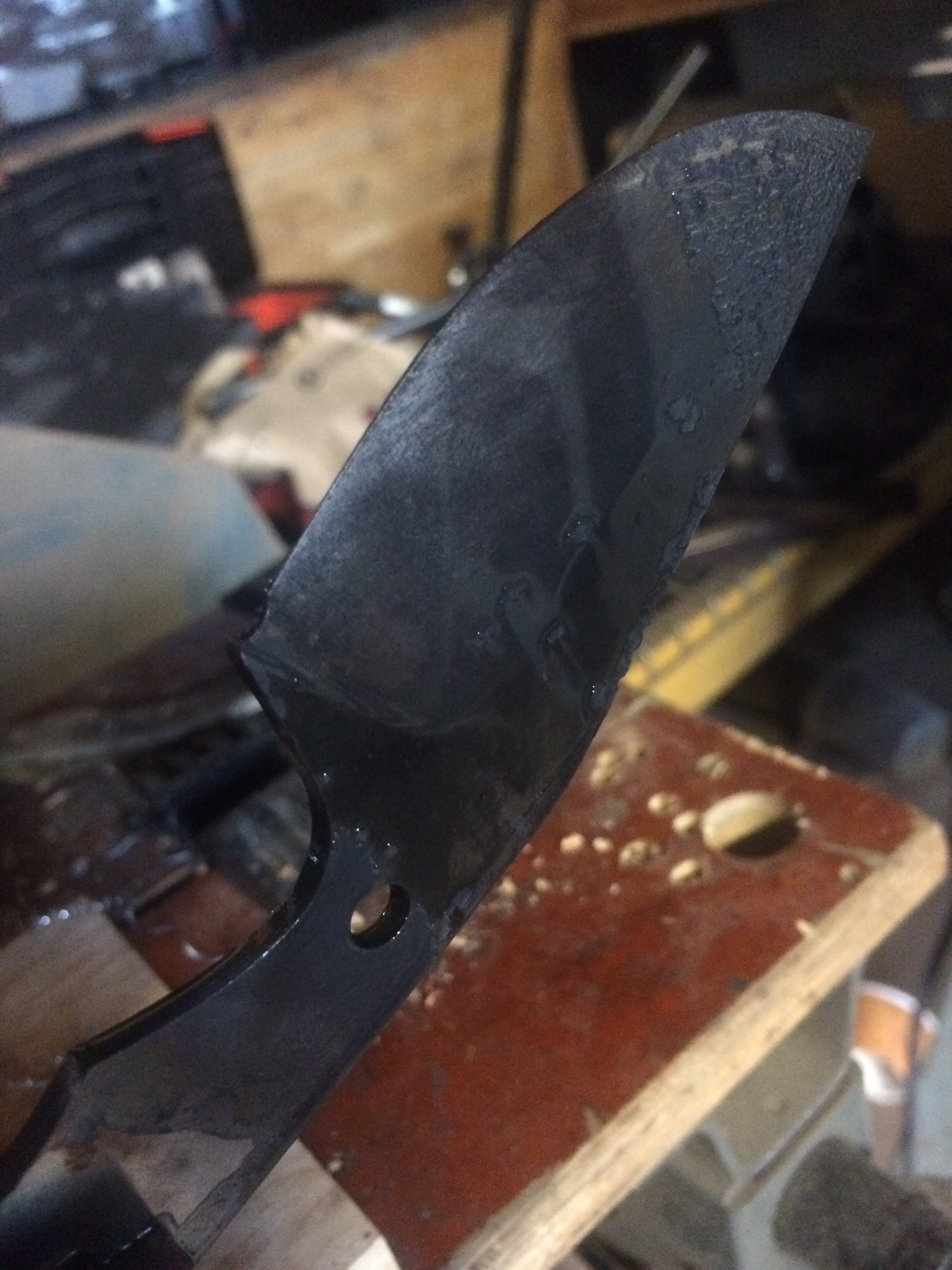
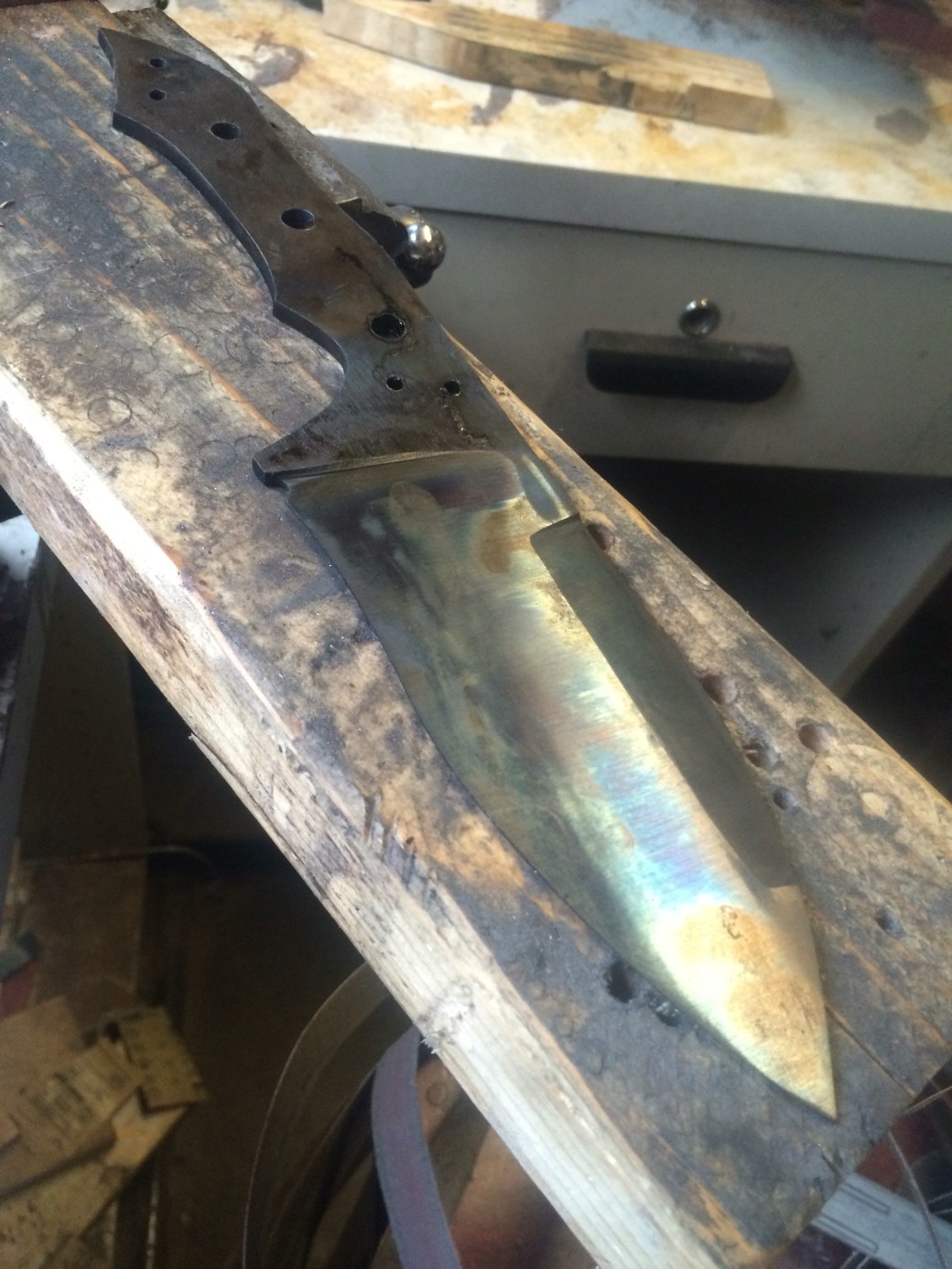
After hardening…
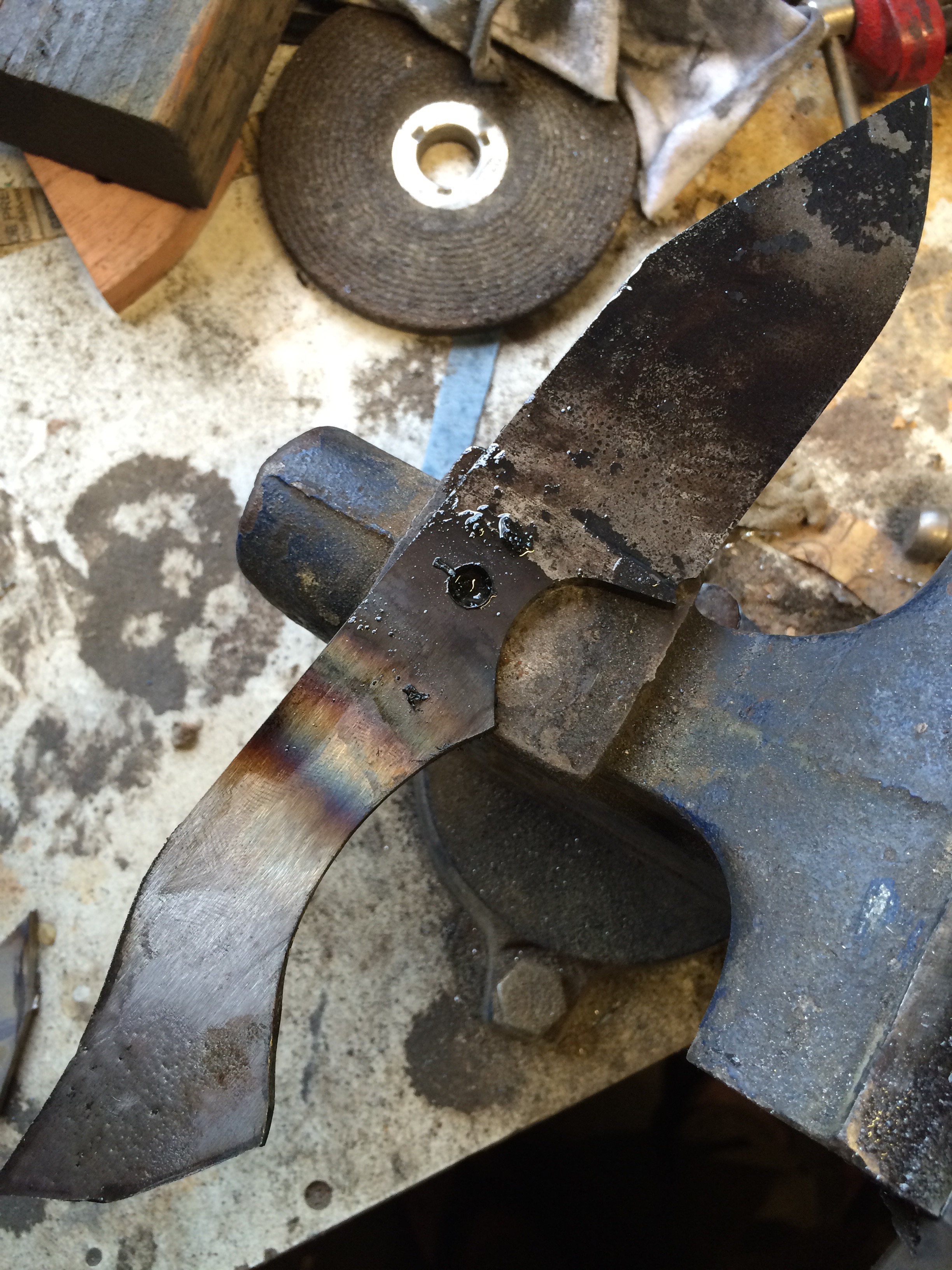
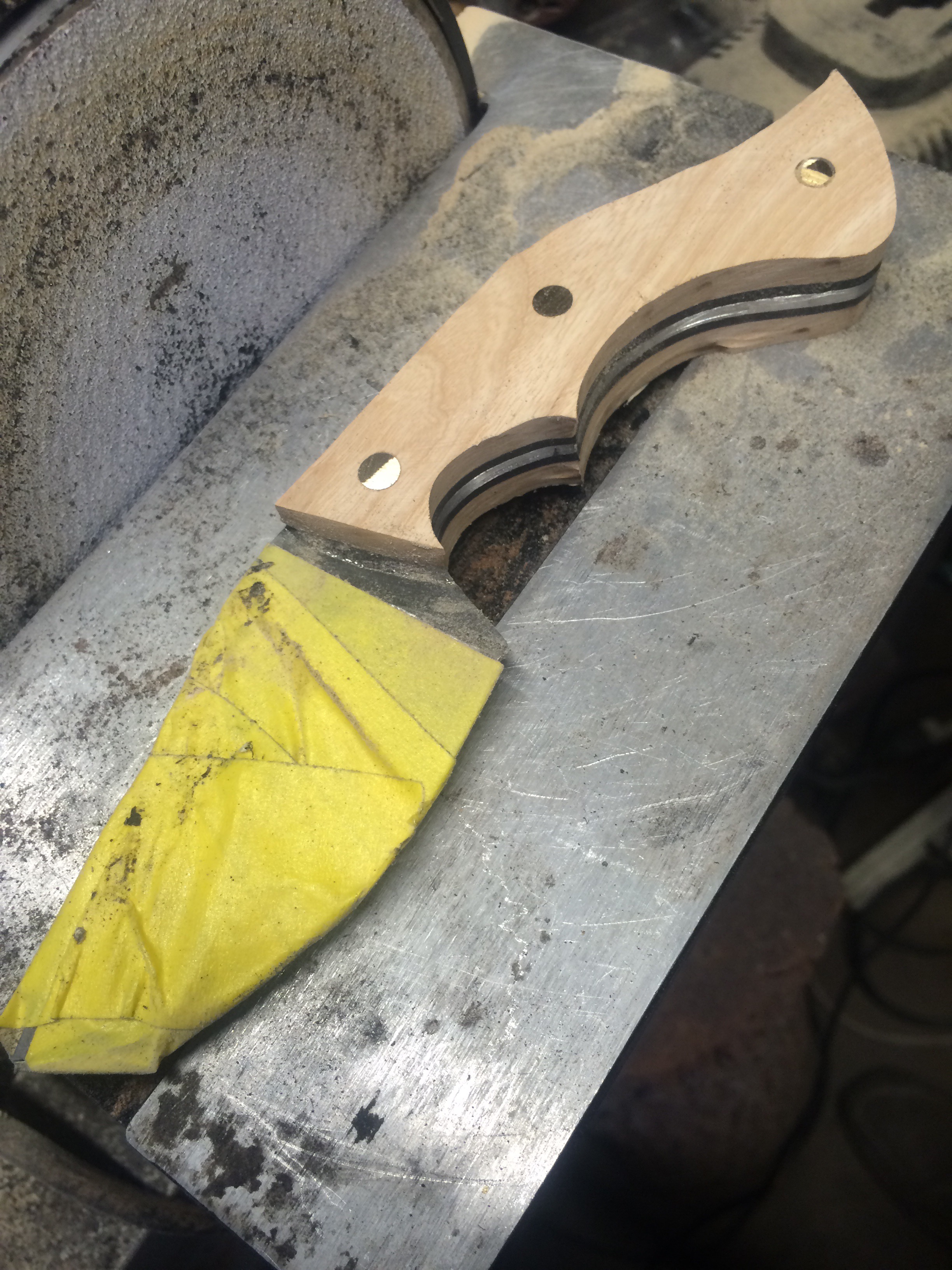
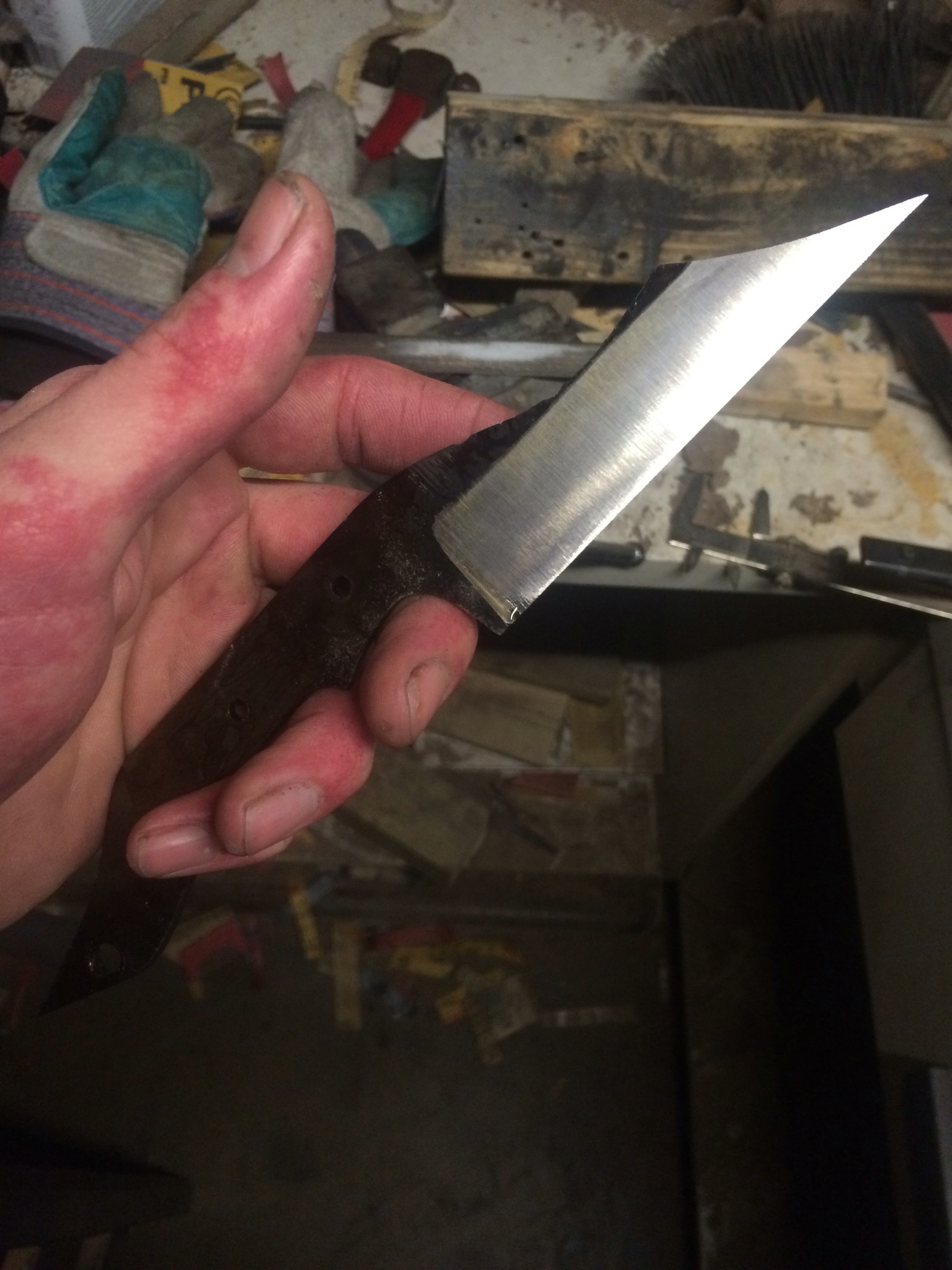
After hours of hand sanding…

Three shirts that no longer fit- in black, brown, and green

Cut into strips…

….and then pieces

Fiberglass resin…

….for a stinky salad

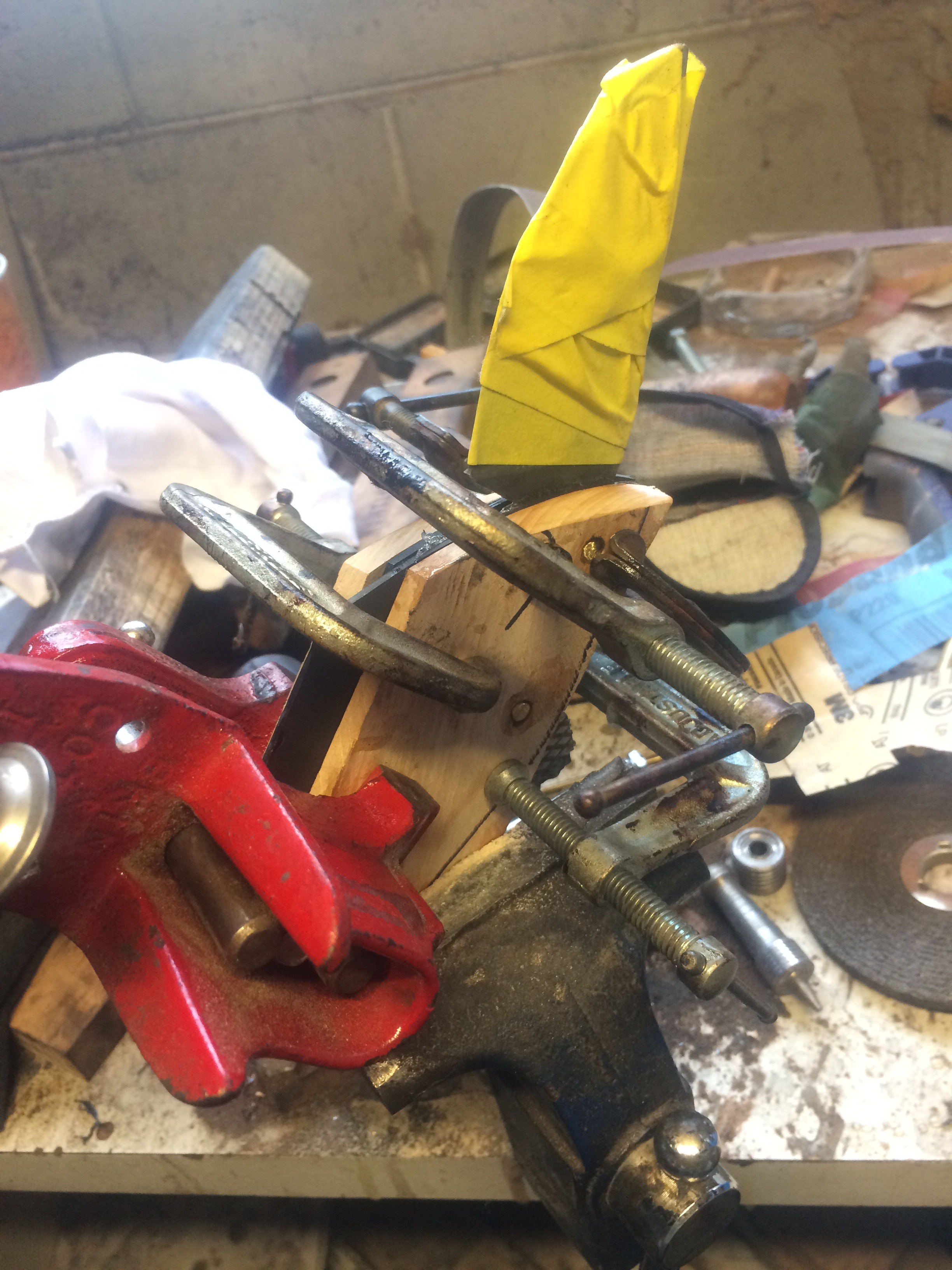
Put into a bag and clamped:
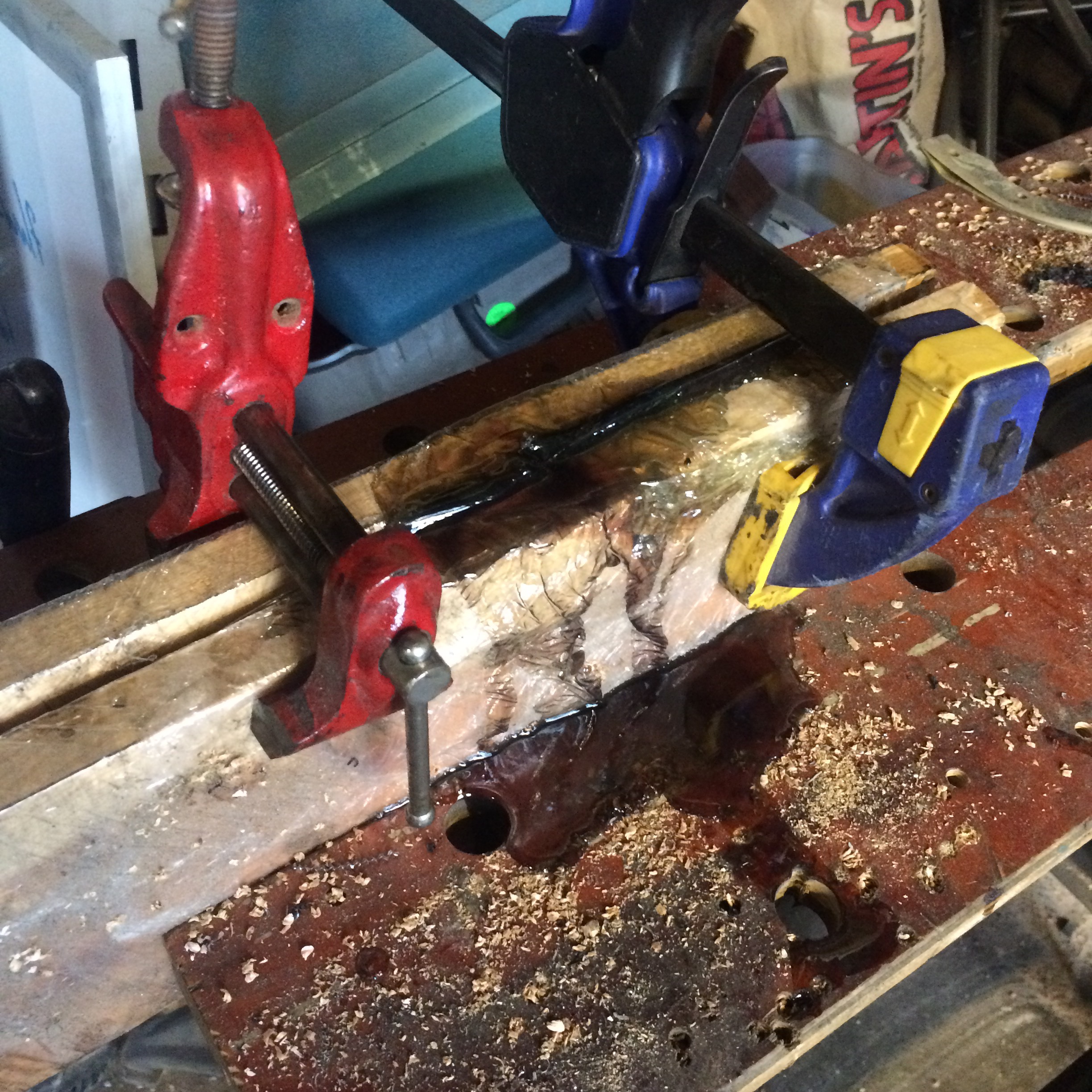
It comes out looking like this:

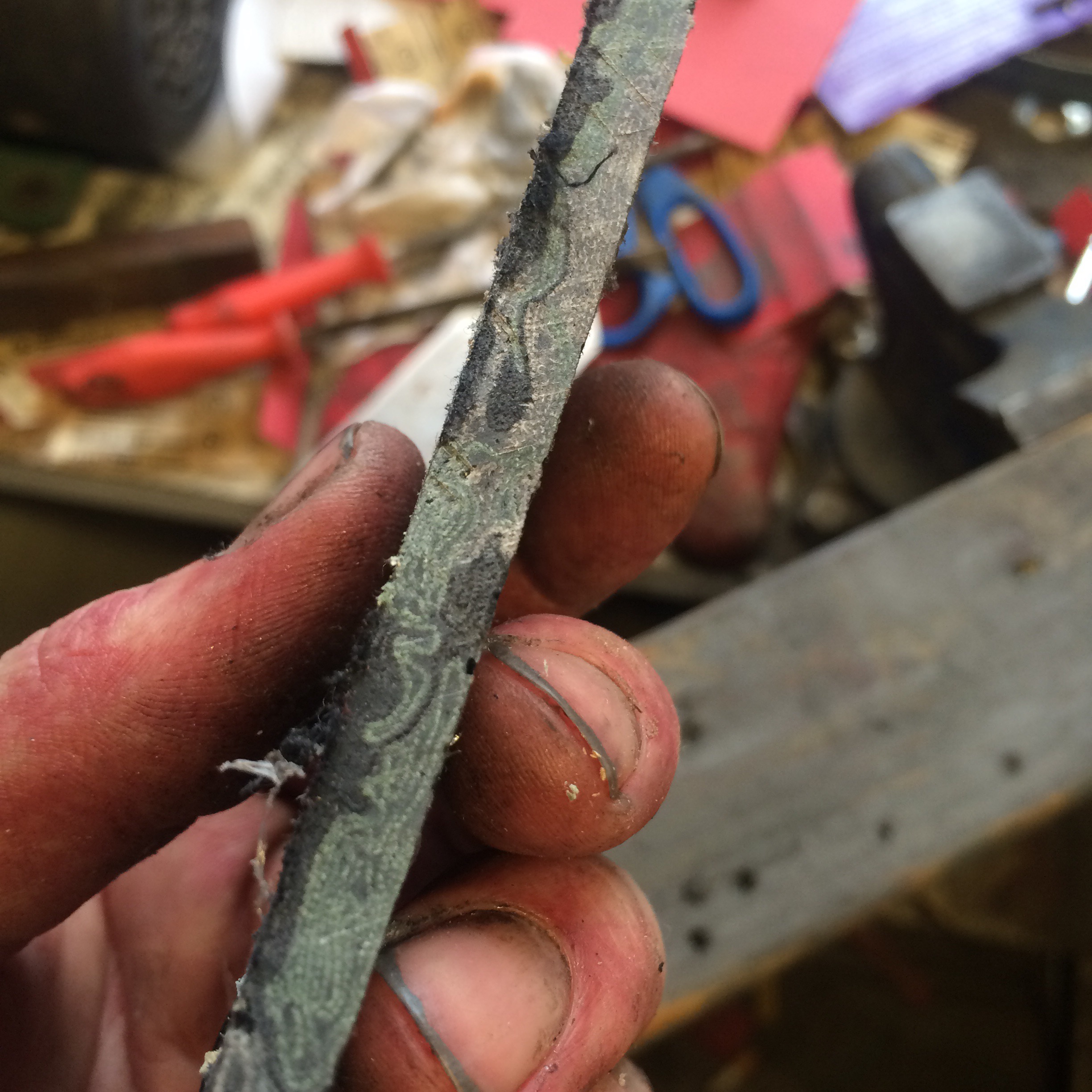
 

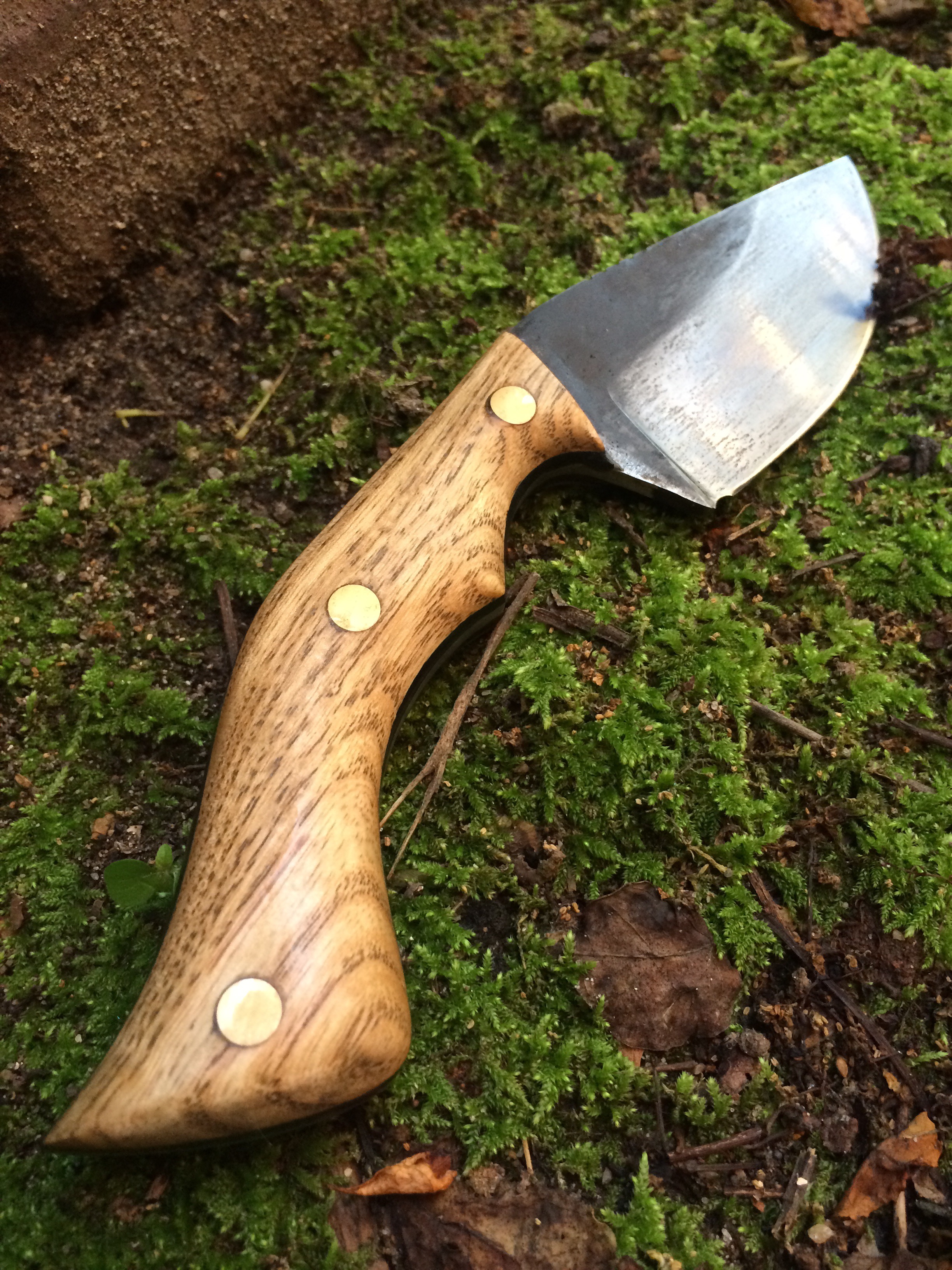
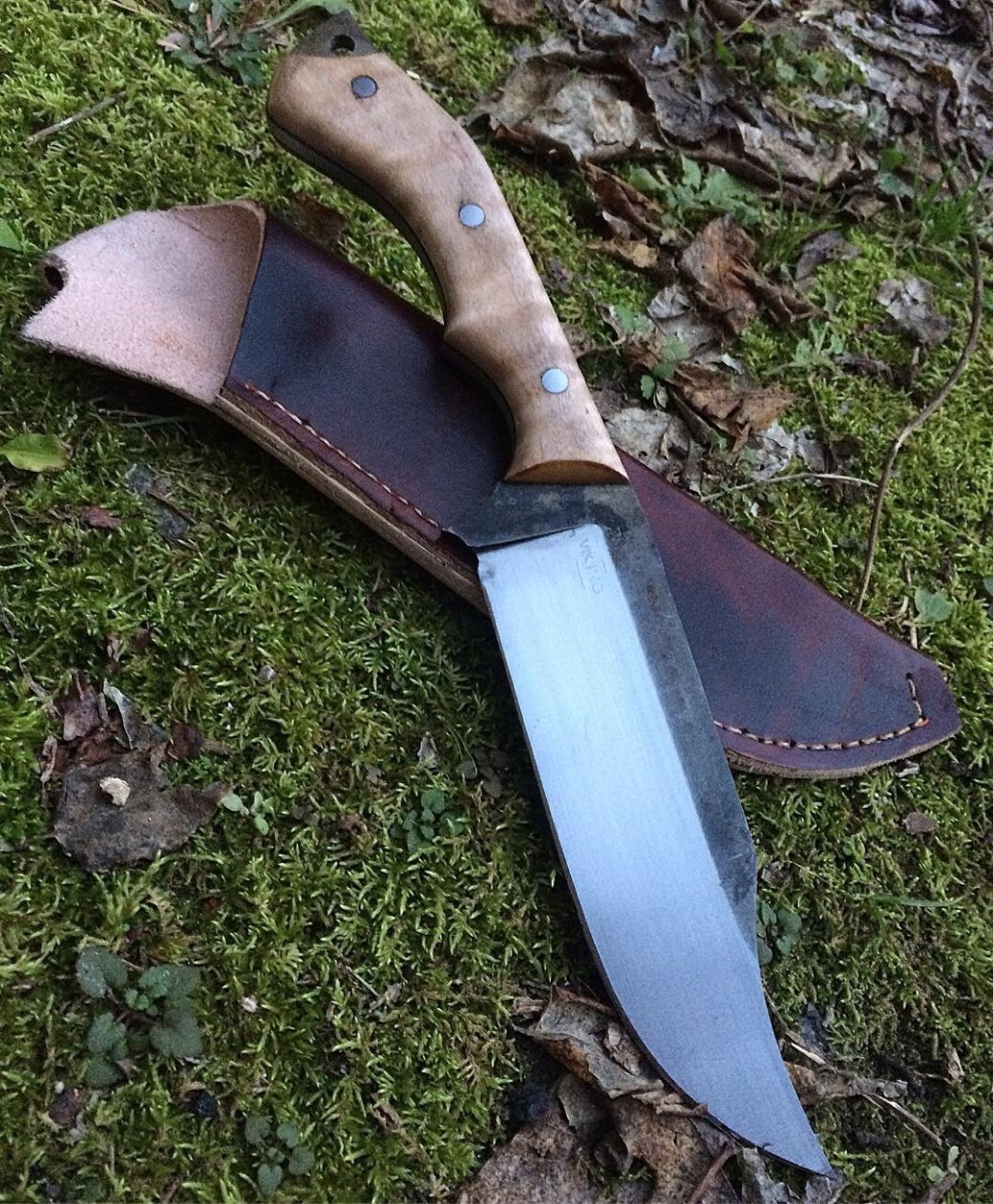
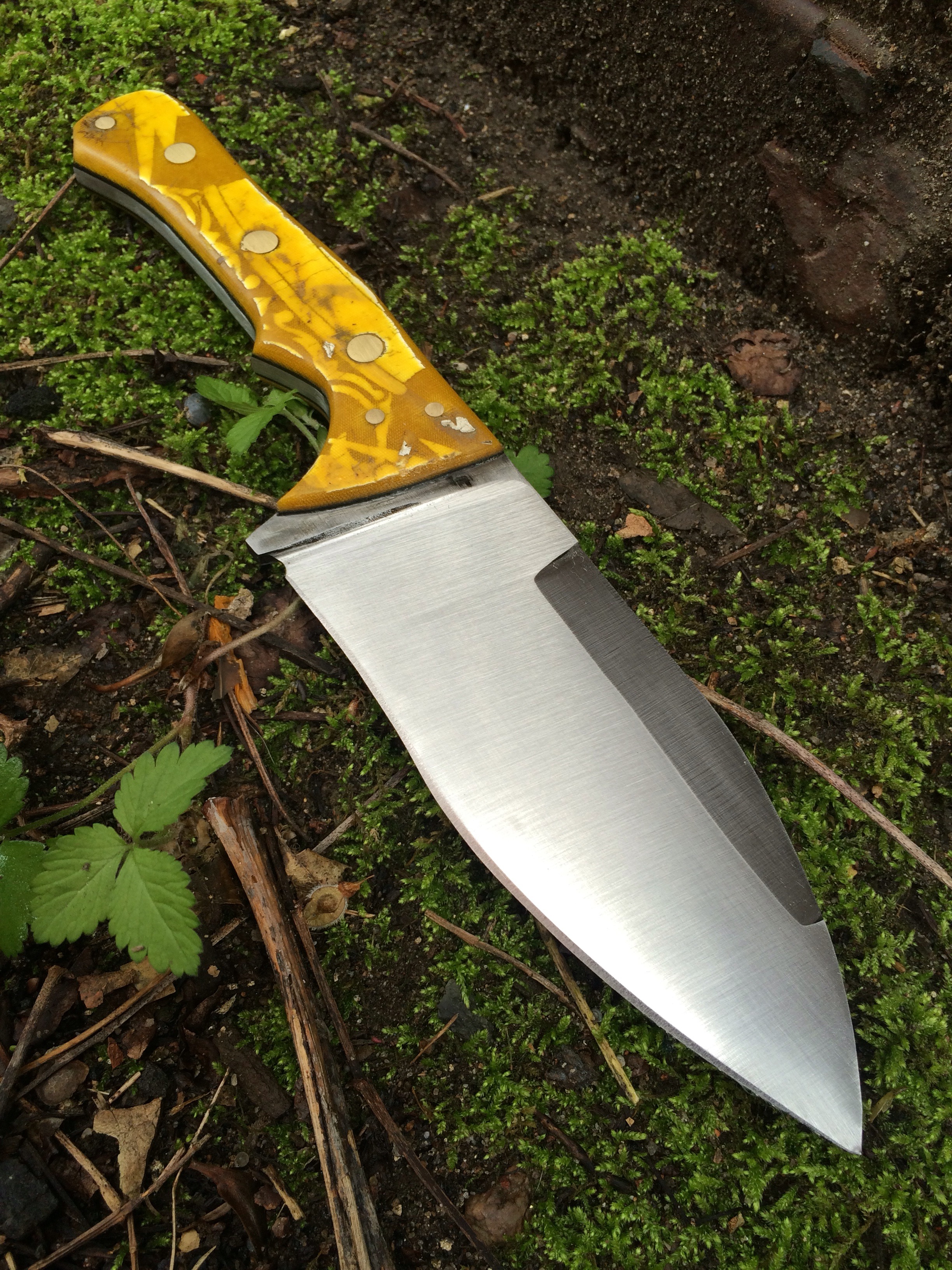
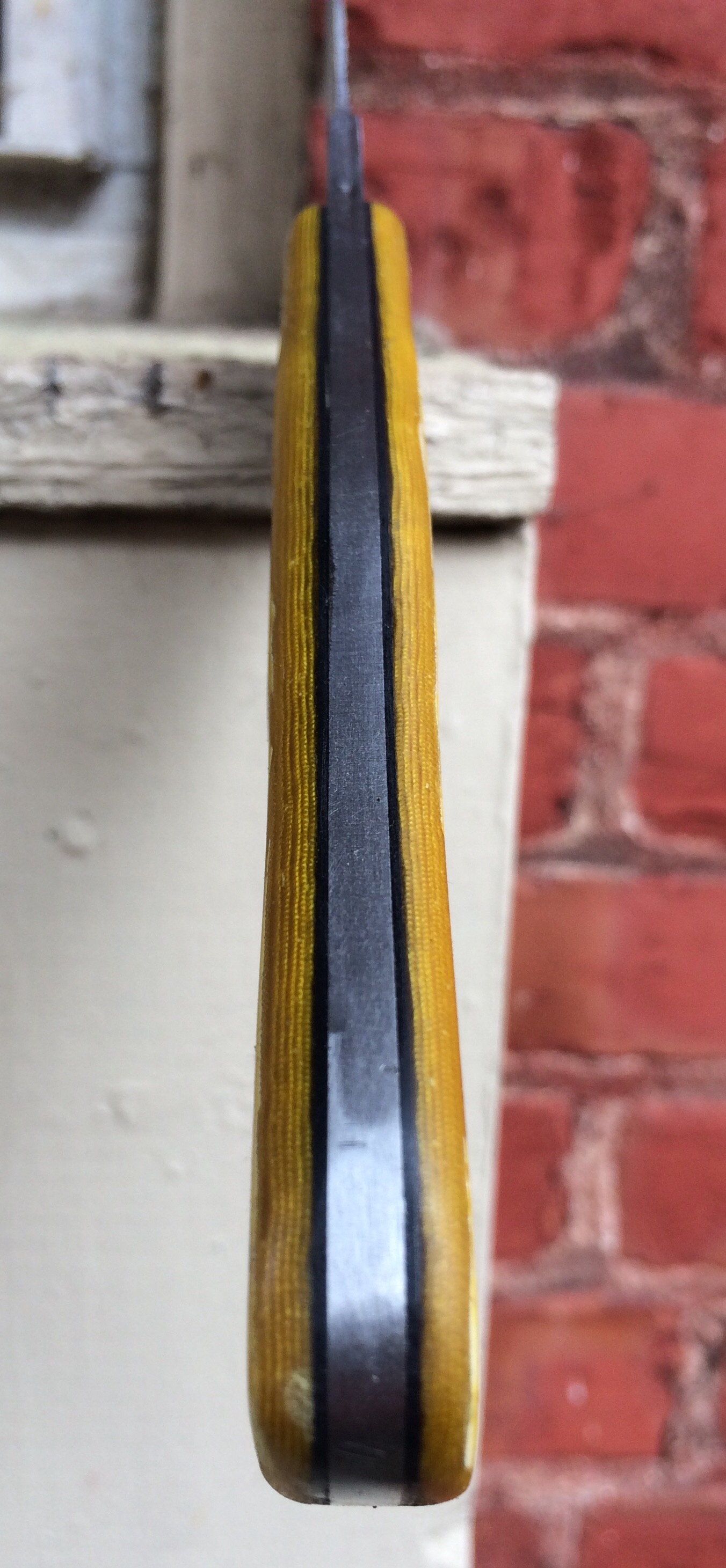
The Gunny: O1 tool steel, homebrewed camo micarta, kydex spacers, and steel hardware.
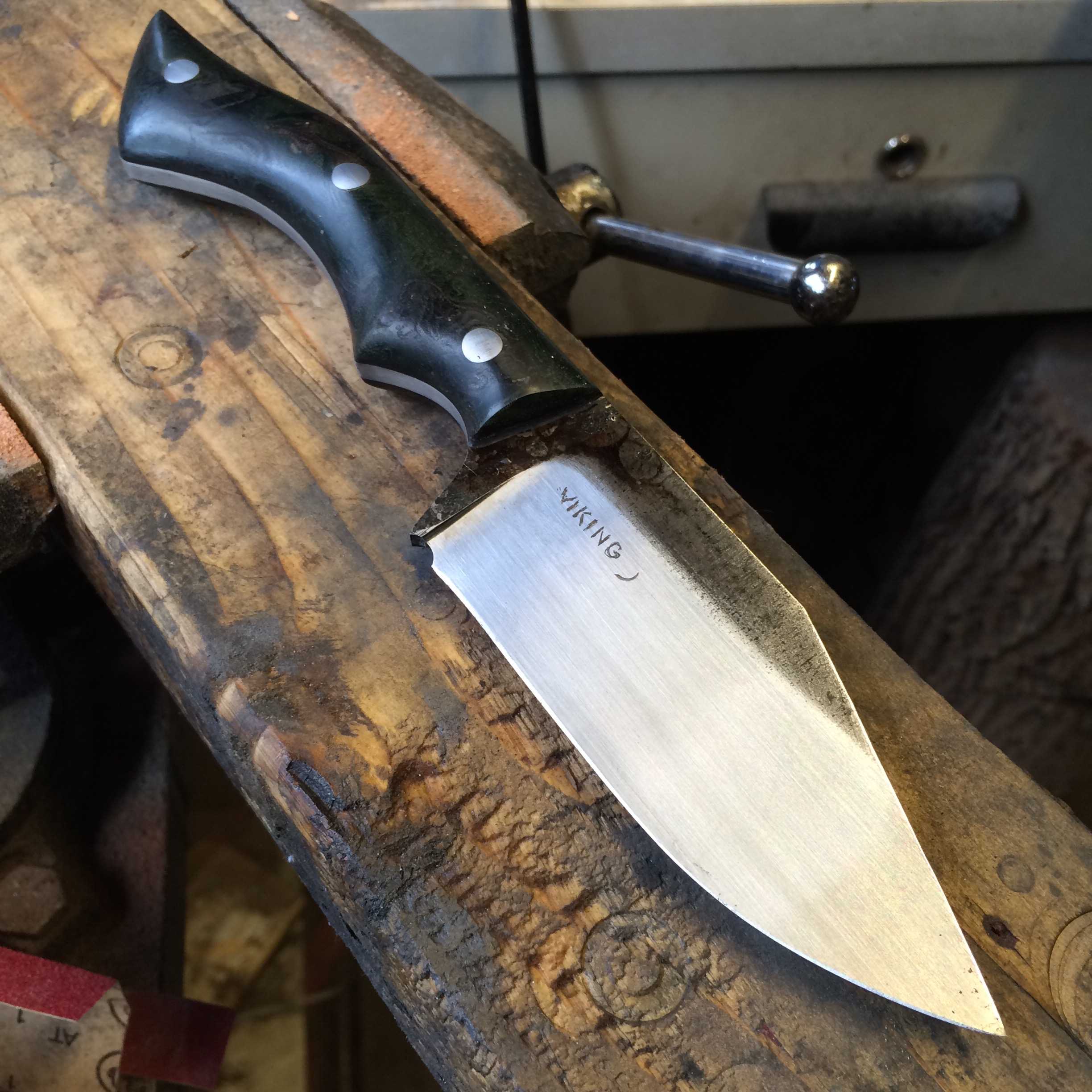

In finding a bit of awareness there can be a deeper connection to the world around us.  This is the lesson of the Gunny.

Knifemaking: when things break down and the Skin Yer Dinner

“The place to improve the world is first in one’s own heart and head and hands and then work outward from there”

Robert M. Persig- Zen and the Art of Motorcycle Maintenance

One of the major lessons of life is that things are going to break down.  It doesn’t matter how well the schedule of maintenance is managed, no matter how well oiled and lubricated all the moving parts are, or how diligently things are inspected.

At some point or another things just aren’t going to work the way that they are supposed to and sometimes it takes more than just ourselves to get them repaired.

As I’ve gotten older I’m a little more mindful of this.  Sort of.  It’s been a bit of a process actually.  I do my best to not let my things go to shit.  Some of those things are easier for me to do than others but it’s definitely better than it has been in the past.  Part of this tendency to let things go to shit comes from living in a consumer society.  Things aren’t necessarily built to be repaired.  They are meant to be consumed and thrown away.   If it breaks, buy something newer and shinier and better.  Fixing things takes time and often it is very appealing to go and buy a new one rather than repair what you have as best you are able.  This notion goes for more than just our material possessions.
Sometimes I find myself having to repair things that I have let completely go to shit.  Sometimes it’s in my professional life, sometimes it’s in my relationships, sometimes it’s my truck.  It’s important to not beat yourself up (or anybody else) when something goes to shit, which it inevitably will.

My truck.  I like to drive mid to late ’90s Japanese midsize SUVs because they perform really well, are built on truck chassis, and are relatively easy to fix and find parts for.  Sometimes it’s a little stressful because I don’t always know what I am doing and turns into an exercise in not over-thinking.  It’s also an exercise in observing how you operate when things aren’t working as they should.  I did a brake job the other month.  I’ve never done my own brakes before but the idea of saving a couple hundred dollars sounded good.  The passenger side wheel took me two and a half hours- during which time I removed the entire brake caliper by mistake, and accidentally drained all of the brake fluid.  The driver side wheel took me 45 minutes.  After several attempts to bleed my brake lines of the air inside on my own, I had to take my truck to my mechanic who talks to me like I am ten years old (‘Son, why the hell did you disconnect the brake line?’).

In taking on these sorts of projects, I go through the entire spectrum of human emotion and always become more intimate with myself.  It’s important to trust yourself, and to let go of the fear that you will screw something up more than it already is.  To take that intention of helping something to do what it does and to manifest that into whatever you are working on.

The intimacy thing- it goes for more than knowing just yourself.  Sometimes I have help on these projects.  Sometimes I help those close to me on their things.  It’s good to have someone who can pick up on something you may have missed, who can help you laugh, and help ease your anxieties.  In these situations a lot of the masks come off and you can really get to know someone without pretense or pontification because there is a common goal.  It’s reassuring knowing that when something goes wrong you can help yourself, or help somebody else, or be helped.  The deeper lesson is that things will always break down, ourselves included, but they don’t have to stay that way.

This blade was a commission for a fourteen year-old boy, the son of a really wonderful friend of mine who is an HVAC technician, someone who in his professional life brings the broken and neglected into good working order.  The other week my girlfriend and I were working on her HVAC system which had gone out.  We put a new fan motor in and were a bit hesitant on the wiring.  I called my friend, who came over and wired up the motor and rewired the thermostat on pretty short notice.  His son was with him and asked me for a knife… and also asked that it be called the Skin Yer Dinner…

I started with a piece of 1095 spring steel…

Hardened

A bit of Texas River Ash…

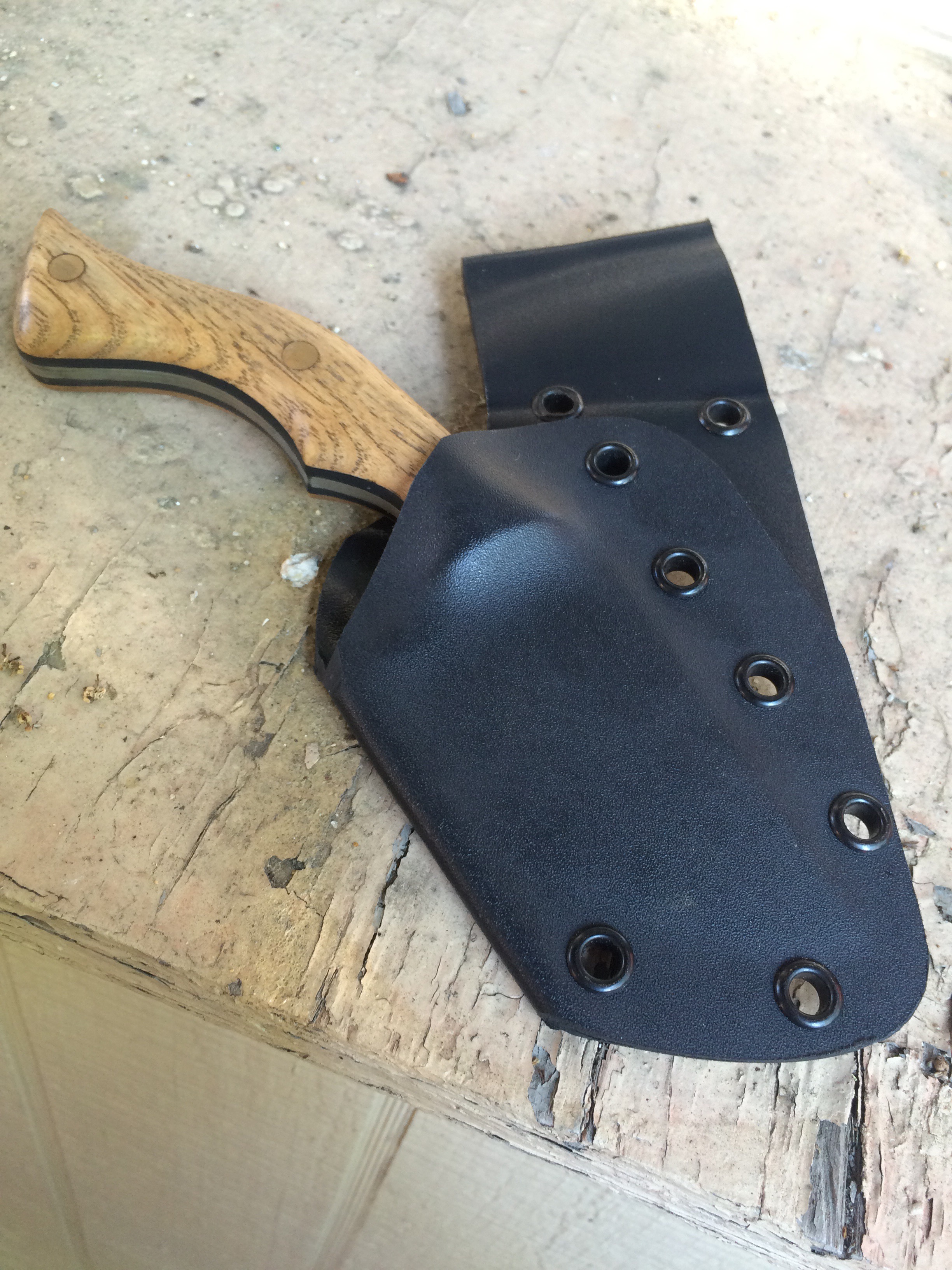
The Skin Yer Dinner:  Etched 1095 spring steel, Texas River ash handle, Kydex spacers, and brass hardware.  I also threw in a custom Kydex sheath…


IMG_3617

IMG_3614

Things break down and it’s a part of life…but so is figuring out how to get them working again.

Knifemaking: a little bit at a time and the Scout

“Ready or not
I hear a clock tock ticking away
Though I’d asked for those hands to stay in place”

Correatown- “Everything, All at Once”

I wake up most mornings and wonder how I am going to get everything done.  I think about all the things I need to do, the things I want to do, and feel a little bit of shame over the things I’ve been meaning to do but haven’t done yet.  There is this mental space where I run through my entire life- where I’m born, I live, and I die, all before I even get out of bed.

At the bottom of all of the mental chatter there is a gentle little voice that says to do it a little bit at a time.  It also says that there is plenty of time.  Sometimes it gets drowned out but I know it’s there if I listen for it.  This is what gets me going.

For the past ten or so years I’ve taken walks in the woods.  As things get busier I don’t get out there as often as I’d like.  It’s an exercise in not trying to do everything all at once.  You walk the woods a little bit at a time, and the notion of trying to do anything other than that feels rather asinine.  I try to approach the things I have to do in this fashion.  It doesn’t always work and I get frustrated a lot.  A lot.  Sometimes the feeling of there not being enough time screams at me so loudly that I have to go home and take a nap.  Most times I’m not able to do that, in which case I try to take it back to the forest.  In being with that feeling I find that there usually is enough time.  If not, I try to remember that I am human being and not a human doing.

Attempting to do everything all at once is a sort of self-defeating behavior.  This type of all-or-nothing thinking tends to overwhelm and makes the idea of quitting into a rather attractive proposition.  Buying into this thinking gets you regret and remorse, but only after it has robbed you of your precious moments and there literally isn’t enough time.

This is the lesson of the Scout.  To walk your forest one step at a time.  It’s easy to get pulled off your path.  There are a thousand things that demand our attention and can pull us off of our center.  We can’t always give what we love the attention and care we would like and sometimes it’s easier to give up.  Don’t give up.  Do it a little bit at a time and it will all get done.

I wanted to make something that reminded me of this little area where I like to walk:

IMG_3400.JPG

I started with O1 tool steel and bushcraft style design with a handle that winds like the stream above.  I usually use 1095 because it’s cheap and I have a lot of it but I like using O1 for the Chromium in it- it polishes up nicely

Hardened:

FullSizeRender 8

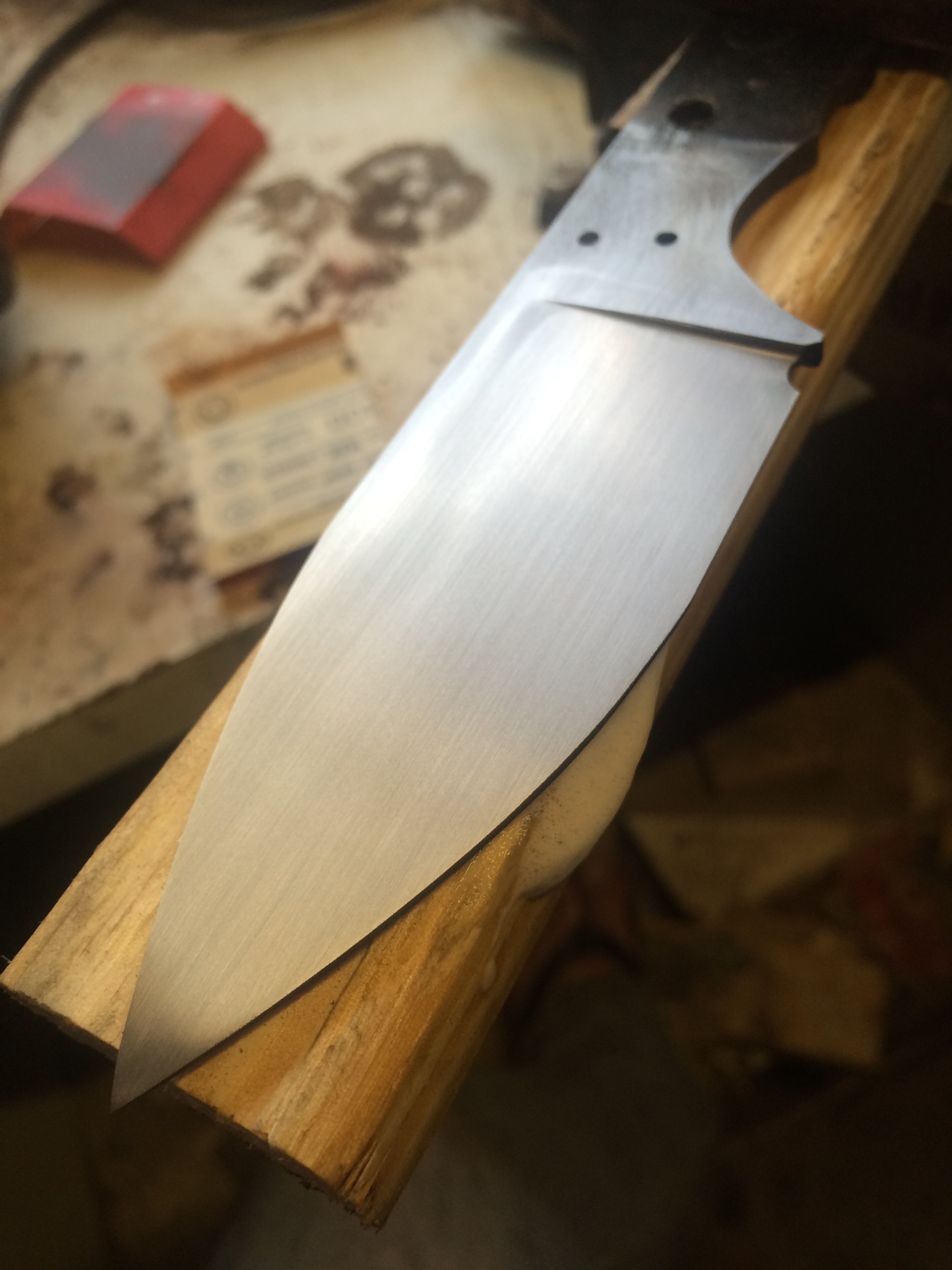
Sanded.  Not too shiny because he is built to be used:

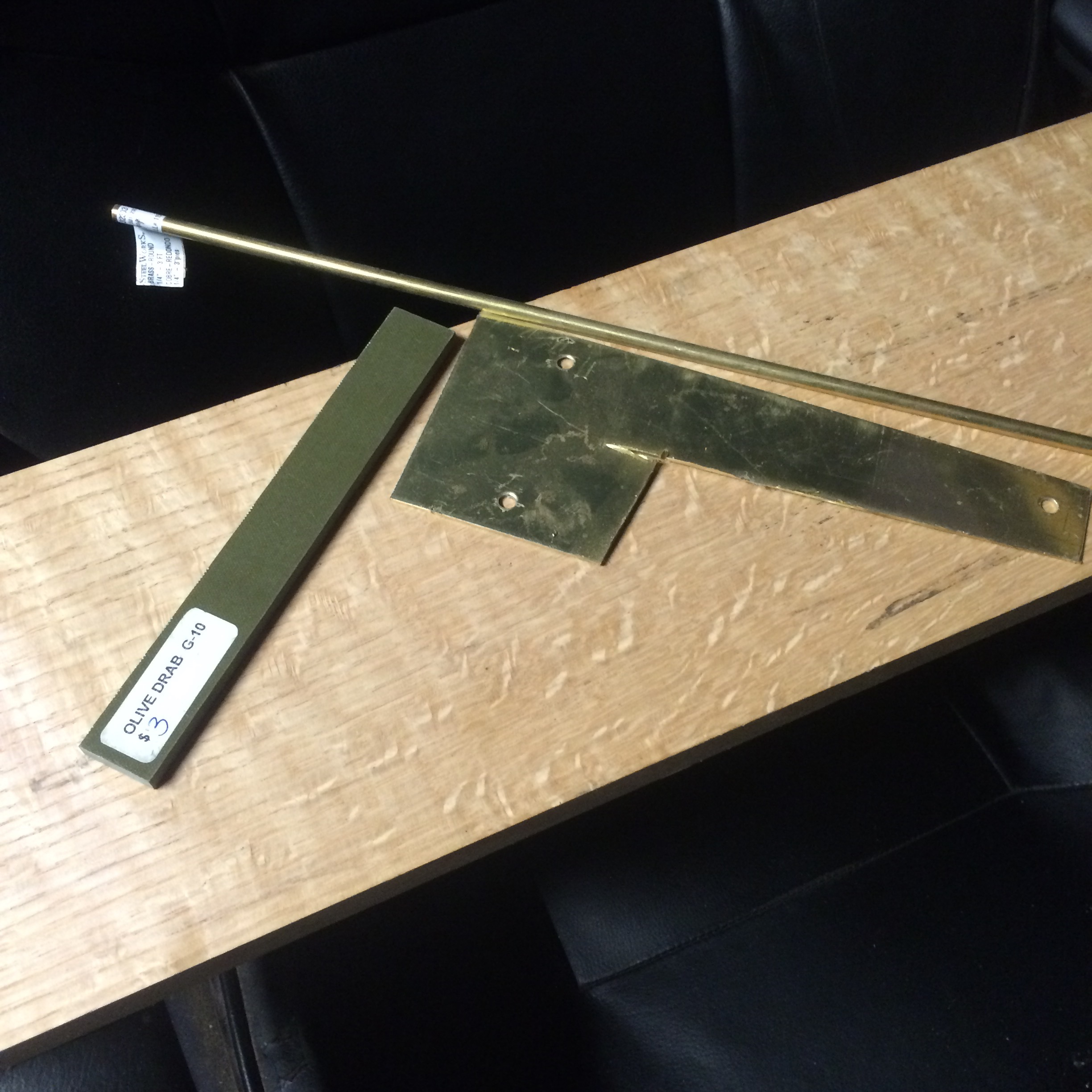
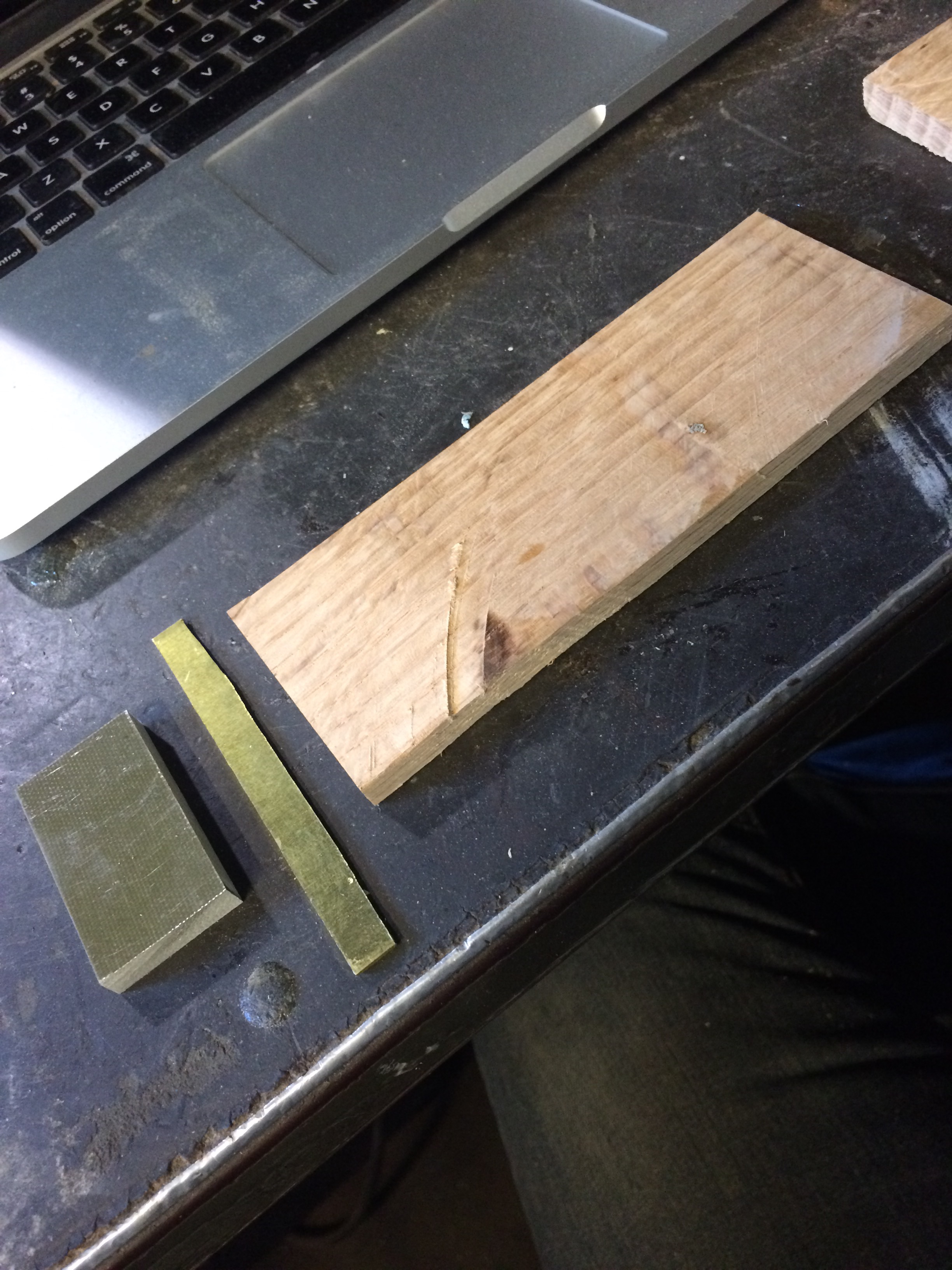
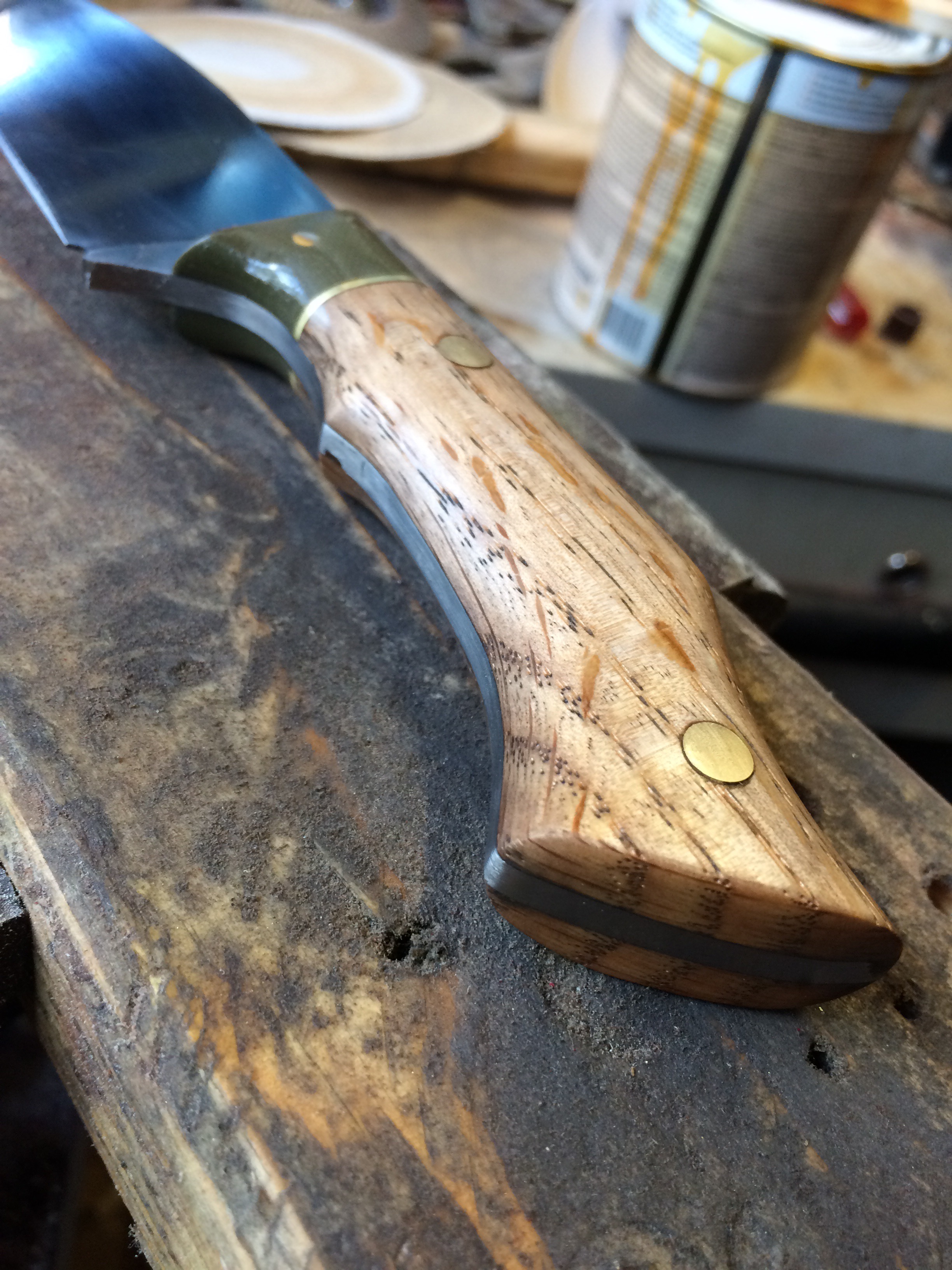
Here is what I used for the handle- quartersawn white oak, olive drab g-10, and brass.  It was a bit of an undertaking and there was some improvising because some things didn’t go as planned.  One step at a time…

Cut.

Glued.  This came apart soon after.  I tried to keep the brass cool when cutting it but it got too hot and melted the epoxy.  More steps, keep moving…

Clamped…finally

Glue is set.

Rough shaping.

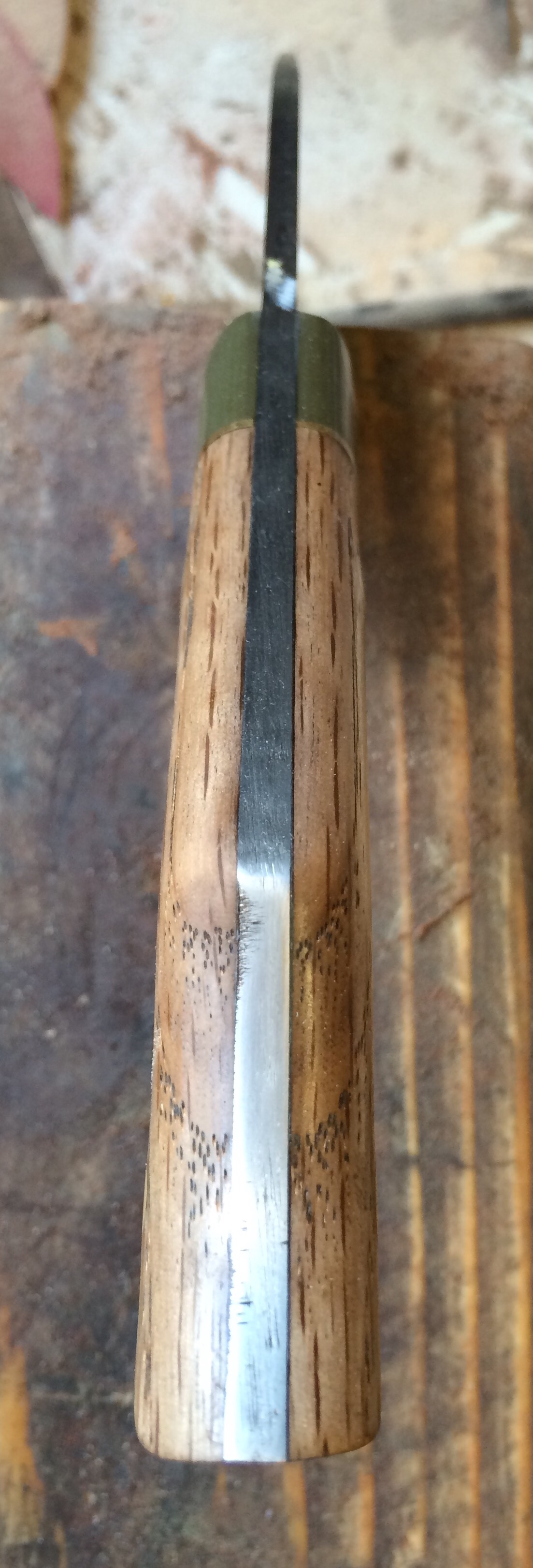
Cleaned up.  Now to sand…

The Scout:


A little bit at a time.  Keep moving, even when it feels like everything is impossibly slow and it will never get done.  Challenge that, and walk your forest.  There’s plenty of time.

Knifemaking: playing your hand and The Wild Card

“Like I said, I’ve got mixed emotions about wild card games.  In one sense, they tend to bring out the gamble in your opponents.  They often create a carnival of excitement in which players give away a lot of money painlessly.  On the other hand, it’s hard to calculate a strategy for a game the dealer has just invented.”

Doyle Brunson- According to Doyle

I think the best definition of a wild card is something that can be what you need it to be, when you need it to be.  I have a friend like this- his name is Fred and I’ve written about him before.  I worked with Fred at the warehouse dealing with restaurant equipment.  During the tenure of our professional and personal relationship, Fred has set me on fire, twice, helped me fix my car, helped me fix my friends’ cars, helped me fix my girlfriend’s house, and showed me how to fix things I had no idea could be fixed.  The man has infuriated me beyond belief and has also made me laugh till I cried.  Fred is a wild card, a deus ex machina, the kind of person who can accomplish incredible things and can do it, most of the time, without having any sort of concrete plan.  Which makes it that much more infuriating to work with him and can also result in being set aflame…

I’ve always had this paradoxical sense of simultaneously feeling incredibly safe and slightly on edge whenever I worked with Fred.  We would go into jobs and everything that could go wrong would absolutely go wrong.  Somehow Fred would figure it out.  There was the time a one day job turned into three at a federal office building near downtown Washington DC.  A Japanese restaurant on the floor level of a building on Glebe Rd was going out of business and they had a very short amount of time to have everything removed.  The loading dock was in the basement and the bay door was two inches too short to get our tractor trailer in to load all the equipment out.  The only way to get everything out was through a single door at the front of the building onto the sidewalk.  We couldn’t get the truck there till two days later and we had to hot load it on the street, one of the busiest streets on the east coast.  The truck would be there at 3am.  In the mean time we had to dismantle everything in the restaurant, including a walk-in freezer, a walk-in cooler, fifty tables, and twenty hibachi grills.  I never want to move another hibachi table ever again.  Fred orchestrated the truck to get there half an hour after the door people removed the five thousand dollar custom glass door so we could get everything out of the building.  The truck was late and there was maybe two hours before the police would get there and make us move, but not before they asked up why we had a semi-truck, a forklift, and a truck with a tilt deck trailer in front of a government building with no permits.  Fortunately that didn’t happen and we got out of there in an hour and a half, smelling of old fish and rotten bok choy.

A lot of jobs happened this way.  None of this is an exact science.  On my better days I felt like a part of a black ops crack team.  On my not so better days I seriously questioned my life decisions.  None of it was ever boring, though.  Not with Fred.

There was an Italian man who had a few restaurants around town.  Crazy Frank we called him.  He had just opened up a new restaurant and had an emergency with his ice machine and a pizza oven we rebuilt for him.  Fred and I head over there at lunch.  The kitchen is insane.  I go over to the the oven and start to drill out holes on the door to put a handle on- bear in mind the oven is roaring at 600 degrees and has pizza in it.  Fred is reprogramming the thermostat on the ice machine.  It is the lunch rush and there are ten people running around, screaming in Italian.  Fred asked me if I had a ‘big ass college word’ to describe the situation.  I told him that I believed the word he was looking for was ‘asinine’.

“Right,” he says.  “This shit is asinine”

The most memorable job I was on with Fred was a three day bakery extraction.   Fred, myself, and our colleague and good friend Aaron were to fly to Nebraska, load an entire bakery into two tractor trailers, and then fly home.  Adventures started at the airport.  Fred and I are not fans of flying.  At the airport bar I had forty dollar margarita with a cornucopia of liquor in it and Fred had two double shots of Jack Daniels.  We got on the plane and promptly went to sleep.  We arrived in Nebraska that evening, picked up a swanky rental car and went to look at the job.

The first thing I noticed was that it was cold.  Like unbelievably cold.  It hadn’t really hit me at the airport.  This was January and I had never been anywhere that flat, windy, and cold before.  The second thing I noticed was a gigantic rotating bread oven.  Our client told us that it bakes 100 loaves an hour when loaded to capacity.  We would spend the majority of our time dismantling that hulking behemoth.  We got steaks for dinner, because that is what you do in Nebraska, and went to the hotel.

The next couple of days were stupidly cold.  The forklift we rented wouldn’t start most of the mornings until the sun came out.  We had to disconnect and extract the oven exhaust system, which meant going onto an icy sheet metal room.  We had to take that oven apart, which had nearly a thousand 3/4″ screws holding it together.  Fred was confident in his ability to get it all back together.

Everything went as it should, got loaded, and sent back to Virginia.  Our travels were slightly rockier.  There was an ice storm that closed the Chicago Midway Airport and we got diverted to Indianapolis where we sat on the tarmac for seven hours.  Seven hours of Fred without a cigarette.  Seven hours of Fred saying we should have rented a truck and driven to Nebraska.  Seven hours of Fred telling anyone who would listen that no one could keep him on that plane.  I was sitting next to a mother and her small child on their way to Disney World.  The husband and another little one were sitting behind me with Fred.  These little ones had a better grip on the situation than Fred.  Finally they let us off to catch a different flight, on a plane that wasn’t covered in ice.  It was all Aaron and I could do to keep Fred from using the company card to rent a truck and drive back to Virginia from Indianapolis.  Two double shots of Jack got Fred back on a plane.

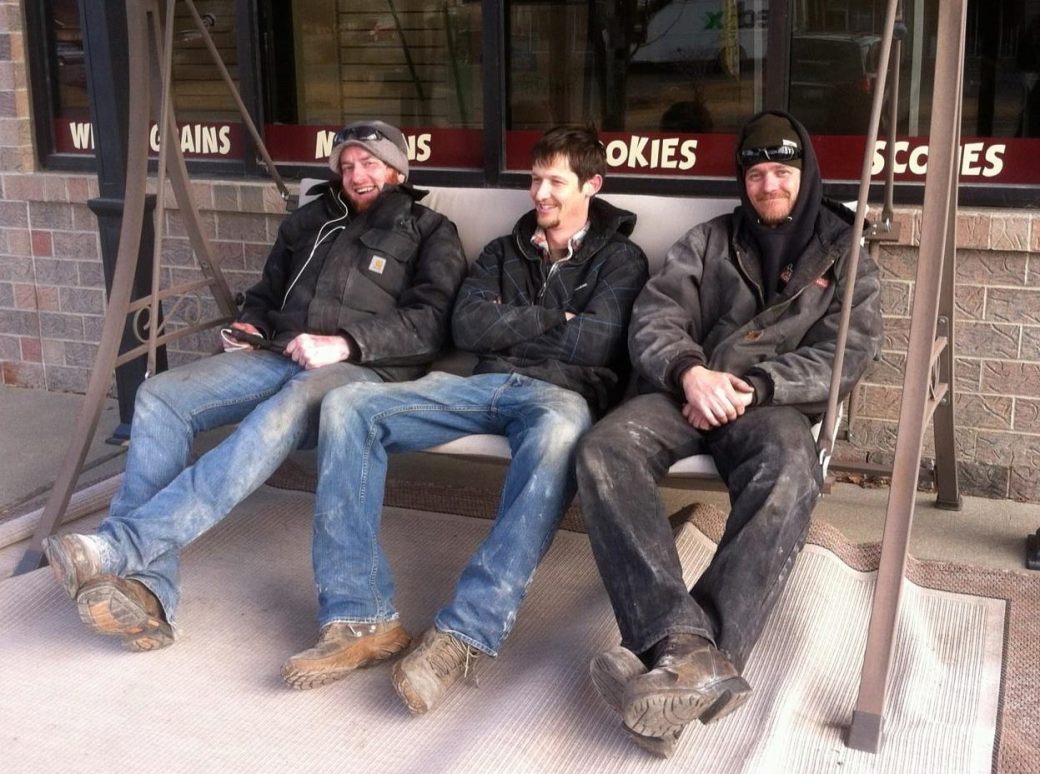
Left to right here is myself, Aaron, and Fred after three long, flour covered days in the cold.  Happy to be finished, thank you very much.

nebraska

Wild cards only work when you play them.  They do what you need them to do when you need them to be done.  This is Fred, and also the lesson of the Wild Card.  I wanted to build something to be sent in when the job needed to be done.

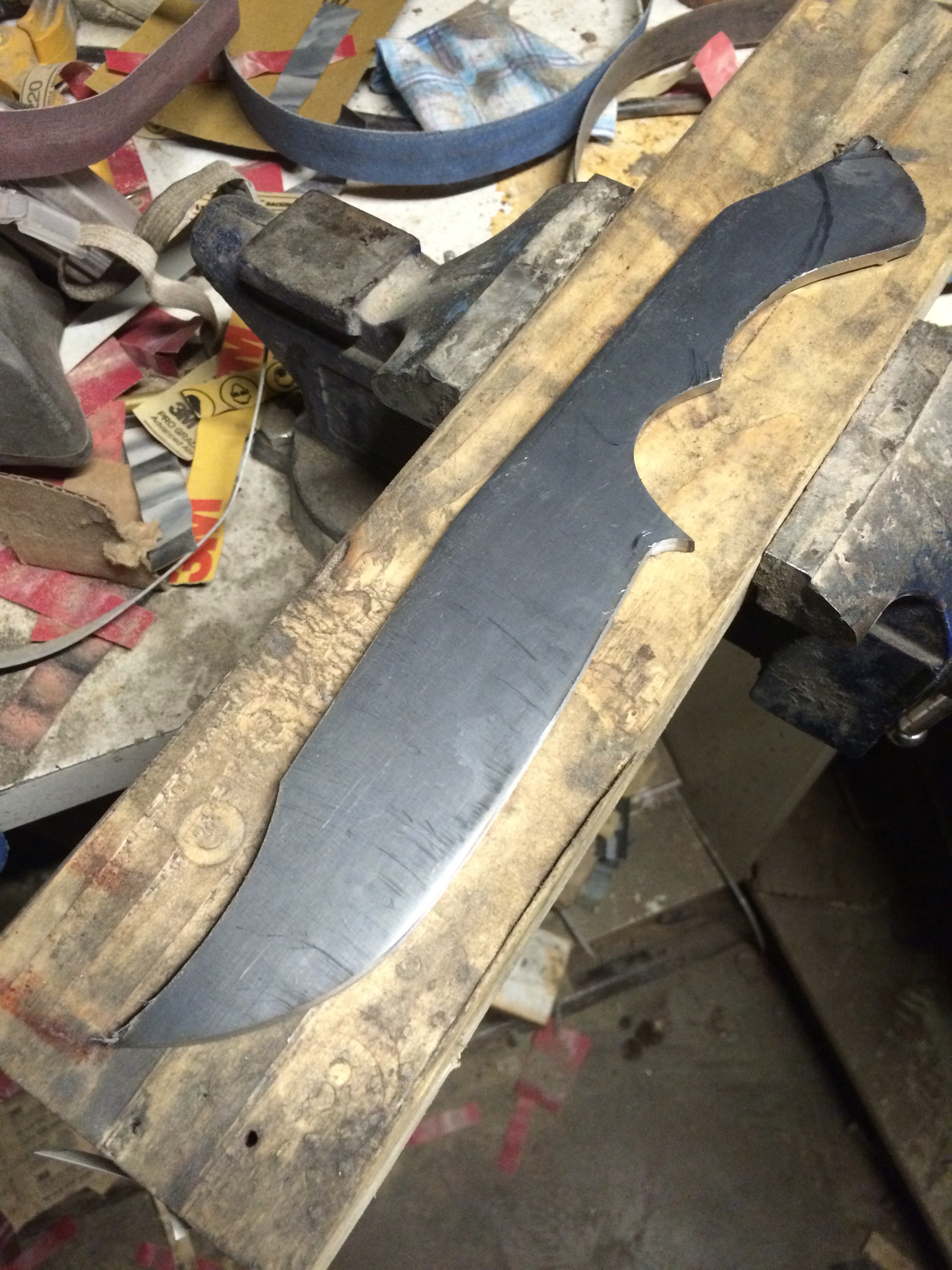
I started with a big hunk of 1095 spring steel- 3/16″ thick

The blade is close to 8 inches long…
 Rough grind:   

I used a clay hardening technique to create a Hamon

  Hardened…

…and tempered

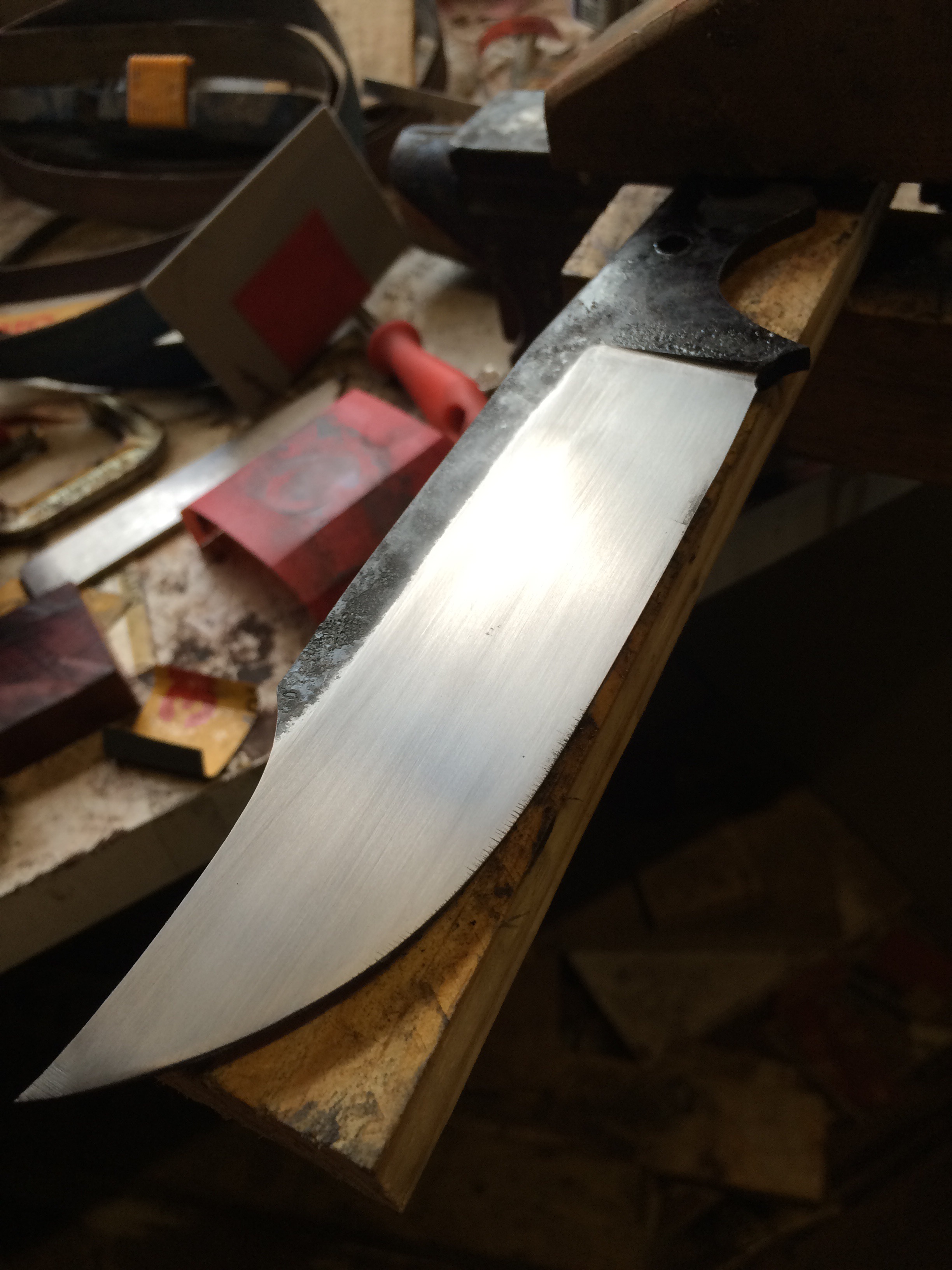
Sanded to about 600 grit and ready to for a dip in the acid….

Curly Maple.  You can faintly see the wavy bits of curl…

Clamped.

To get the curls to burst I had to go through many cycles of sanding and staining and sanding again.  With each cycle the stain becomes more stable and prominent.

I cooked up a concoction using various finishes I have…

You can start to see the curls as the grain becomes more stable.  This is after maybe two cycles of sanding and staining

This is after maybe 8…

The Wild Card:

It’s always good to have a Wild Card in your hand- even when you want to kill them sometimes.

Thanks for the lessons, Fred.

Knifemaking: light and dark, and the Guardian

 ‘Call them up and tell them they’re all full of shit’

Lt. Col. Daniel F. Gilbert (1925-1996)

My grandfather died when I was twelve.  People come and go quickly in this world and often their stories and the good things they do are lost and forgotten.  I wanted to tell his.

He and my grandmother moved down the street from us when I was five so they could watch my brothers and I grow up.  I would ride my bike over.  He had an attic workshop .  He liked to make jewelry and often I would find him flattening out nickels that he had been soaking in sulfuric acid.  He gave me hacksaw blades and sat me in front of a bench grinder and showed me how to make small knives.  He used one of his shotguns as a template and made me a wooden one that looked so real my mother made me take it back to him to paint orange so that I wouldn’t become a police statistic.  We watched cartoons.  We could both agree on Popeye and Tom and Jerry.

I remember my grandmother getting really angry at him for things that I thought were hysterical.  One time I went over there and he had hacked the head off of a snake with a shovel and hung it from a tree.  I remember my grandmother yelling at him and all he said was, very quietly, that the only good snake is a dead snake.  I have no idea why he hung it from a tree.

Often times during the summer in his back yard he would build a smudge fire if the mosquitos were bad, which they almost always were.  We would go in for dinner and my grandmother got pissed at him for making us all smell like a campsite.  He just laughed.

When I was seven he gave me a Swiss Army knife for my birthday.  I went back to my parents house that evening with bandaids on every finger.  When my mother called him and yelled at him for leaving a seven year-old alone with a knife he just laughed.  “Every boy should have a knife,” he would say.

He had the most elegant way with profanity- his inflection on a simple ‘goddamn’ could run the spectrum, from utter joy to total frustration.

Most of what I know of him before those times I learned from my grandmother after he passed.  He was born in Stephensville, Texas.  His father died when he was 5 years old and he immediately started helping to provide for the family.  Their family was dirt poor and then the Depression hit.  He set up a trap line that he would check everyday before school.  One time he caught a skunk and he got skunked so badly that the teachers sent him home.  Another time he slaughtered one of his chickens but didn’t clean the innards out before he put it in the oven and stunk up the entire house.

He joined the Navy at seventeen, lying about his age.  What would follow was a pretty incredible military career with so many brushes with death that he earned the name ‘Lucky Gilbert’.  While in the Navy during WWII he was a gunner on a warship, a position that carries a notoriously short lifespan.  Many of his fellow gunners didn’t make it but somehow he did.

After the war he joined the Air Force.  It was here that he met my grandmother, a young officer.  My grandmother said he was stubborn but persistent, and a terrible driver.  They got married and lived all over the world- Florence, Italy; Wiesbaden and Rammstein, Germany; and Casa Blanca, Morocco, where my mom was born.

He fought in the Korean conflict and was then stationed in Roswell, NM, where he witnessed the the UFO crash.  He told my grandmother he didn’t know what in the hell those things were but they weren’t of this Earth, and the whole thing gave him the heebie jeebies.

By the time the Cuban missile crisis came around he had a pretty high security clearance.  He was privy to information that many others weren’t.  At the height of tensions, he gave my grandmother a map marked with a safe location to go.  He said it was getting bad, and he would call her and tell her when to take the kids and go.  He handed her a pistol and told her to use it if anyone tried to stop her.

In the seventies he went to Vietnam where he should have been dead several times over.  The was an incident when a rogue Viet Cong rocket obliterated his barracks in the night.  The only reason he wasn’t there was because he had chosen to stay with his troops in the field.  Then there was another time when he was waiting on a bus to go to headquarters to do paperwork.  He waited and waited but the bus never came, so he walked.  When he got to the office four hours later, everyone looked at him as if they were seeing a dead man.  The bus had been hijacked at the stop before his, all the passengers executed and the bus blown up.  My grandmother said the man had a Guardian watching over him.

While he was in Vietnam, my grandmother went out for dinner with a friend of theirs, a general.  After dinner, and knowing that my grandfather was off at war, he tried to force himself on my grandmother while on their front porch.  Grandma had none of it.  She never told my grandfather, because he would have killed the man.  He always had a shotgun nearby.

The man was a warrior but even warriors have their faults and flaws.  My grandmother told me he was a difficult man to get close to and even more difficult to get to know.  He could be spiteful, and had a mean streak that didn’t come out too often (I never saw it), but it cost him several important promotions within the Air Force.  My grandmother told me that when she moved her dying mother into their house much later in life, my grandfather resented her for it, a resentment that she said burnt like a red hot rod of iron.

Still he loved deeply.  He liked to listen to Patsy Cline, The Beatles, and Tchaikovsky.  A quiet man, his actions generally spoke louder than words.  He brought my grandmother coffee every morning (Lady coffee he called it).  When chemotherapy for ovarian cancer left my grandmother with neuropathy in her hands and feet, he rubbed lotion on her feet most nights.  After he passed, my grandmother found an account he had never told her about and she never had access to, with $30,000 to be paid to her upon his death.  This is incredibly touching and rather impressive considering this was a man who was notoriously bad with money and grew up dirt poor during the Depression.

In his late sixties, doctors found an embolism in his heart.  The surgery was risky but the alternative was six months to live.  They performed open heart surgery and he survived but was never the same afterwards.  He had been dealing with early onset Parkinson’s symptoms and the surgery exacerbated all of that.  He couldn’t go up to his workshop, he couldn’t work with his hands, and my grandmother had to get a home health nurse.  He went downhill slowly over the next two years, never complaining about anything.  He died on Palm Sunday in a VA Hospice unit.

I remember sitting next to my grandmother at his funeral, which had full military honors.  As the officer presented her with the flag that had been draped over his casket, she told me that his Guardian was watching over me now.   I just nodded and smiled and didn’t pay much attention.  I figured it had something to do with being bereft with grief or the Xanax my mother had most likely slipped her.  Maybe a bit of both.

I have a few of his things: His Rolex, a bolo tie that he had fashioned and a belt buckle he made, set with a silver dollar:

I think on this Guardian that kept my grandfather safe and allowed him to live his life as he saw fit, even after all of the darkness of war and poverty that could have consumed him.  This blade is a nod to that Being and acts as a vessel to hold the darkness that inevitably penetrates all of our lives at some point or another.

1095 spring steel


Hardened:

Tempered:

  This is the brightest article of clothing I own- and it’s too small…
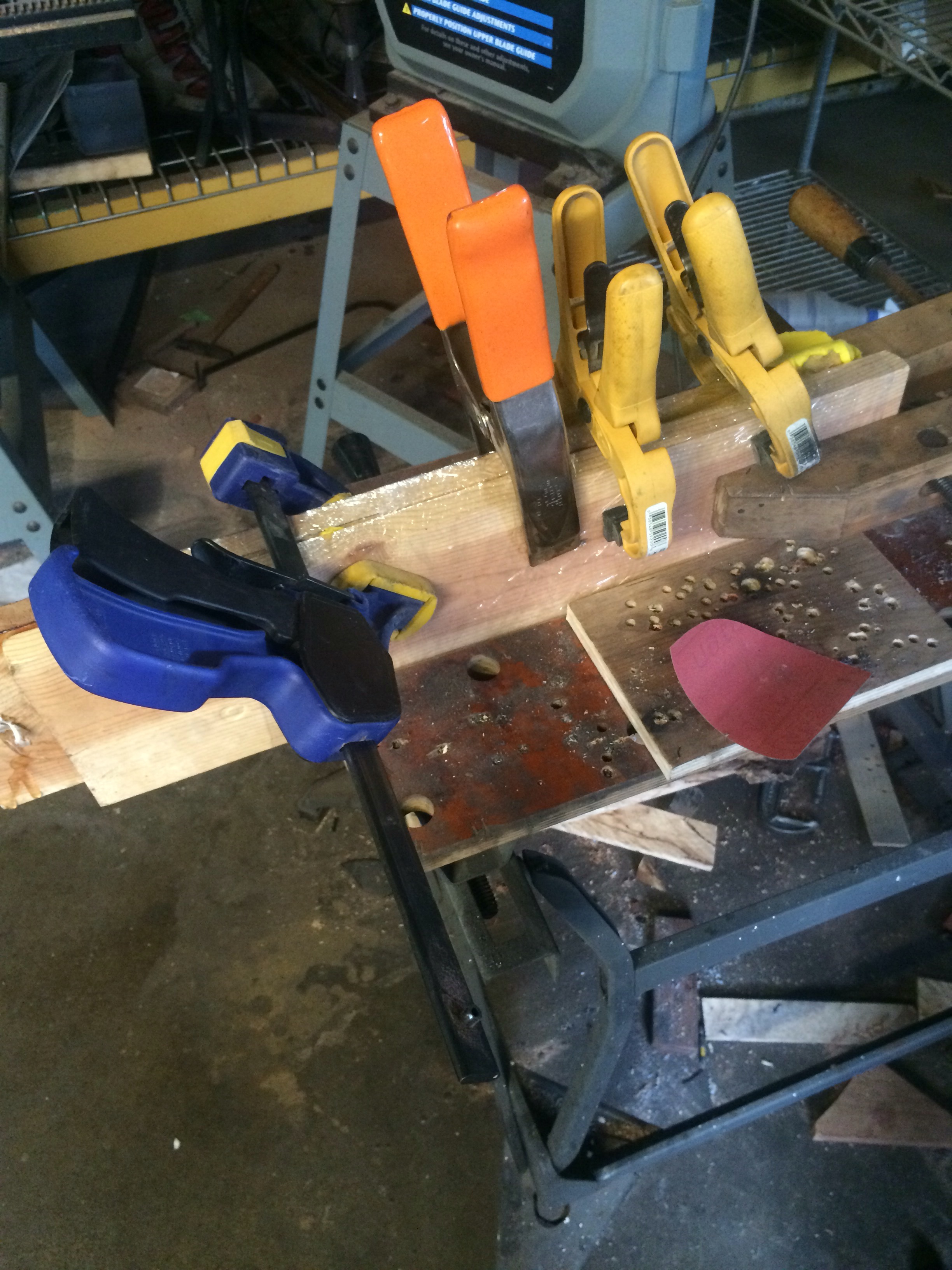
Soaked with fiberglass resin… 

Kydex spacers.  The light contains the dark…   
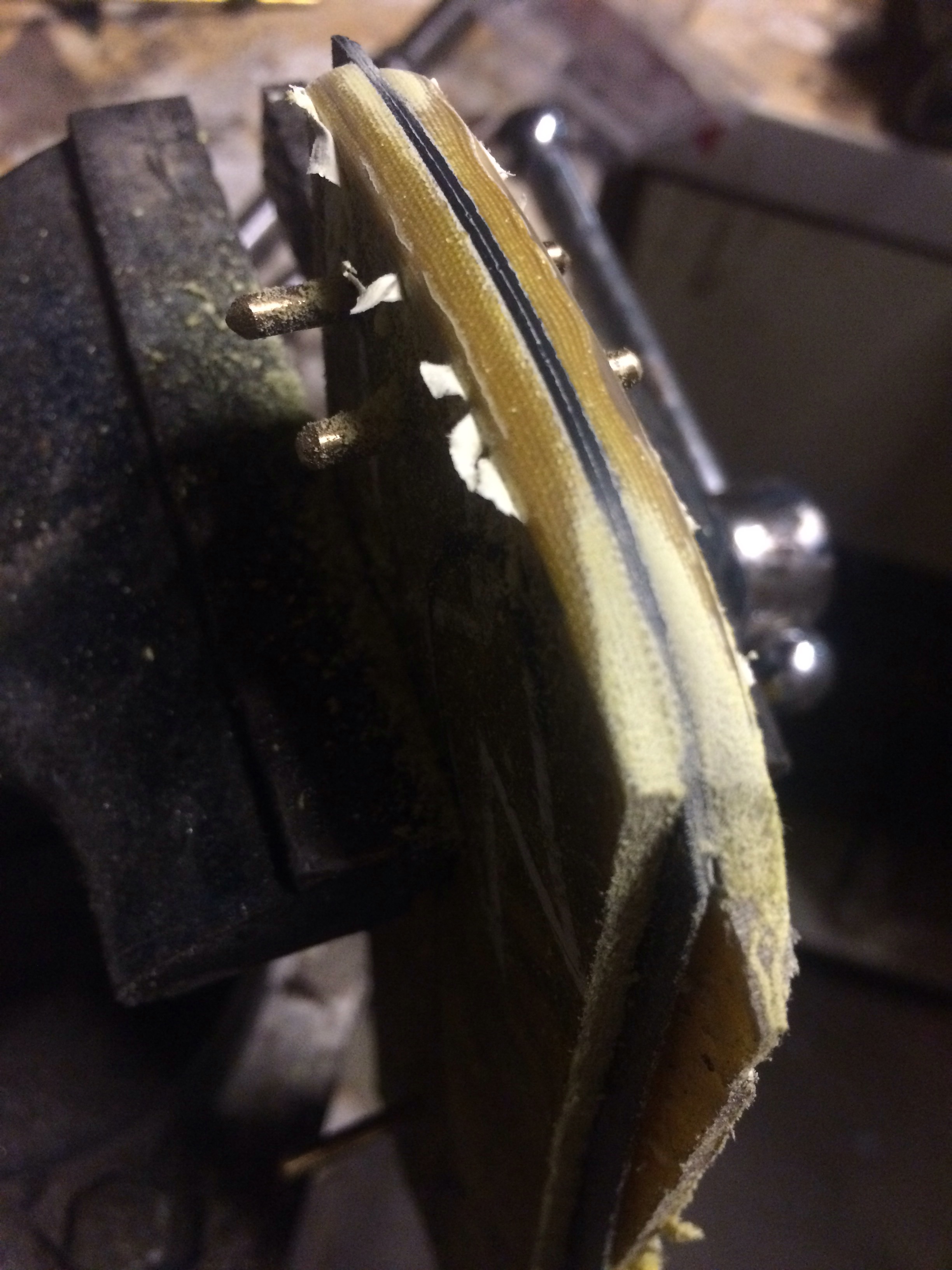
    

Well shit…let’s clean it up on the grinder…  
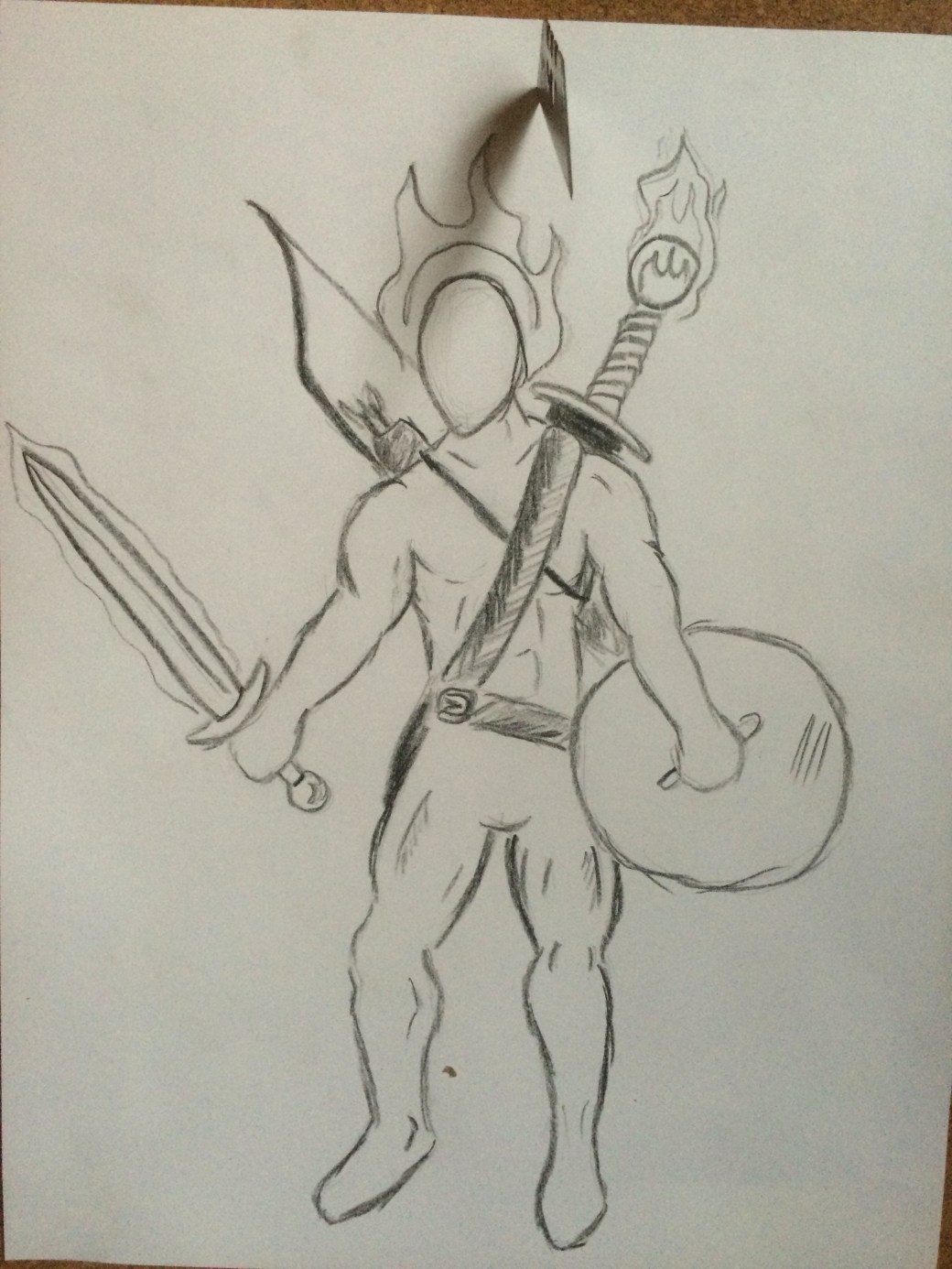
This blade is a nod to that Guardian that kept my grandfather safe and looked after.  A couple years ago, when I felt myself surrounded by darkness, I found myself thinking about this Guardian, whom I was told watches over me.  I drew a sketch of him.  It’s still hanging on my refrigerator.   Sometimes, when you find yourself in dark places, you can imagine that darkness being held by light.  Because there can’t be darkness without light.

The Guardian: 1095 spring steel, homebrewed cotton Micarta scales, Kydex spacers and brass hardware.
  
At the time of this writing it has been 20 years since he died.  Time is indeed a sly magician because it hardly feels like that.  I miss the man deeply and think about him just about every day, and always with fondness.  By the time I came to know him he was in the twilight of his years and had dealt with his darkness, and wanted to give his time and love to a curious little boy.  For this I’m grateful.

Knifemaking: appearances, politics, and the Buffoon

‘Mr. Croup smiled. “You find us funny, Messire Marquis, do you not? A source of amusement. Is that not so? With our pretty clothes, and our convoluted circumlocutions—“

Mr. Vandemar murmured, “I haven’t got a circumlo . . . “

“—and our little sillinesses of manner and behavior. And perhaps we are funny.”

Mr. Croup raised one finger then, and waggled it at de Carabas. “But you must never imagine,” he continued, “that just because something is funny, Messire Marquis, it is not also dangerous.”

And Mr. Vandemar threw his knife at the marquis, hard and accurately. It hit him, hilt first, on the temple. His eyes rolled up in his head, and his knees buckled. “Circumlocution,” said Mr. Croup to Mr. Vandemar. “It’s a way of speaking around something. A digression. Verbosity.” ‘

Mssrs. Croup and Vandermar- from Neil Gaiman’s Neverwhere

1095 spring steel

  
I hardened this after grinding about 2/3rds of the way through.  I planned on grinding him rather thin and didn’t want to risk warping during hardening…
Deepening the plunge…

I have this buffoonish shirt that I don’t think I’ve ever worn…

img_3342

img_3345-1

After the fiberglass resin…

img_3353-1

img_3354-1img_3355-1

img_3356

IMG_3357

The Buffoon:  1095 spring steel, homebrewed linen Micarta handle scales, Kydex spacers, and brass hardware

IMG_3370

IMG_3367

IMG_3366

IMG_3371

buffoon

Be mindful of how we present ourselves to the world, and be wary of what those presentations may conceal.  There could be something deadly underneath.  This is the lesson of the Buffoon.

Knifemaking: surprises, overthinking, and the Persuader, Mark II

“Don’t think of what you have to do, don’t consider how to carry it out!” he exclaimed. “The shot will only go smoothly when it takes the archer himself by surprise.”

Eugen Herrigel- Zen in the Art of Archery

(You can read about the crafting of the original Persuader here)

From the age of about ten to seventeen I went to boy scout camp every summer.  It was there I learned many skills crucial to developing into a balanced and well-rounded man.  Anything deemed flammable was generally set on fire.  Coffee cans were made to be hammered into camp stoves.  The person who showered the least won summer camp.  We put crawly things in each others sleeping bags.  We dealt with wolf spiders the size of small paper plates.  There was a Warhammer race every year.  Think of a track and field baton passing event, but substitute a baton for a 20lb ‘hammer’ built from logs by pubescent boys and humped around the five mile circumference of large lake.  We had a contest to see who could go the longest without using the latrine, which was all fun and games until one of the boys went to the hospital for a bowel obstruction.  Then the contest was to see who could use the latrine the most.

I learned firsthand that the boom of a sailboat mast was named so because when the wind changed direction it would swing around and boom, crack you on the head.

Then there was the summer I got dehydrated and learned that nobody is joking when they tell you to drink lots of water.

I snuck my Walkman with me.  At 12 years old there isn’t a whole lot better than being on your own in the woods with nothing but you, the trees, and your Tears for Fears cassette.

I took a rifle shooting class.  The counselor was one of only two women at camp.  They called her ‘Books’.  Or maybe it was “Boots”.  All the counselors had silly nicknames and any semblance of political correctness was blatantly disregarded.  Books had glasses.  To be fair, there was also a counselor with non-congenital dwarfism that everyone called “Oompa”.  He got fired for sneaking liquor on to camp…

So anyway, rifle shooting class with Books.  Turns out Books was a zen master.  For a class with a bunch of pre-hormonal boys, there weren’t many rules.  The only rule I can remember is never point your gun at anything you don’t intend to completely obliterate.

We were then given rifles.  Books sat us down at the rifle bench and showed us how to load and aim.  She told us to find our target in our sights and then, most importantly, to relax.  Inhale deeply, she said, and on the exhale squeeze the trigger.  This was also very important: squeeze don’t pull.  Slowly.  We were told that when the shot goes off it should surprise us.  If we missed our target, Books told us not to worry about it and just compensate for it on our next shot.

I wasn’t a very good shot and I haven’t shot a gun since then.  But I’ve been thinking about this a lot lately.

For one I am generally not fond of surprises.  I like to know what I’m going to have to do and how to best prepare for it.  Even at the age of 12 I was not fond of any surprises involving a death-dealing boom stick and shooting always made me kind of nervous.  As I’ve gotten older I’ve realized that life can be a death-dealing boom stick, for better or worse.  In trying to anticipate the shot, you are trying to control something outside of your control.  This results in you getting in your own way instead of letting things be what they are.

I think Books was trying to get us to let go and trust ourselves and to let the shot fall where it may.  This is the lesson of this incantation of the Persuader.

I made the original Persuader without thinking too much about it.  The main grind is a sabre grind.  I grind all of my blades freehand and as it turns out it is really difficult to get a uniform, symmetrical grind on a 2in wide piece of steel.  But I didn’t know this the first time round- I just did it.  When I tried to do it again I kept overthinking everything and ruining it.  There were two or three between the first one and this one that got scrapped.

When I think about the times I have been most successful in life I realize that those were the times when I wasn’t overly attached to specific outcomes or trying to manipulate the experience or anticipate every bump or snag.  In those times I was dog-ass tired or I was just enjoying myself.  I squeezed rather than pulled, I was surprised, and the shot ended up where I intended it to be.

1095 spring steel

Ready for the forge:
  Hardened:
  Chisel grind up top
  

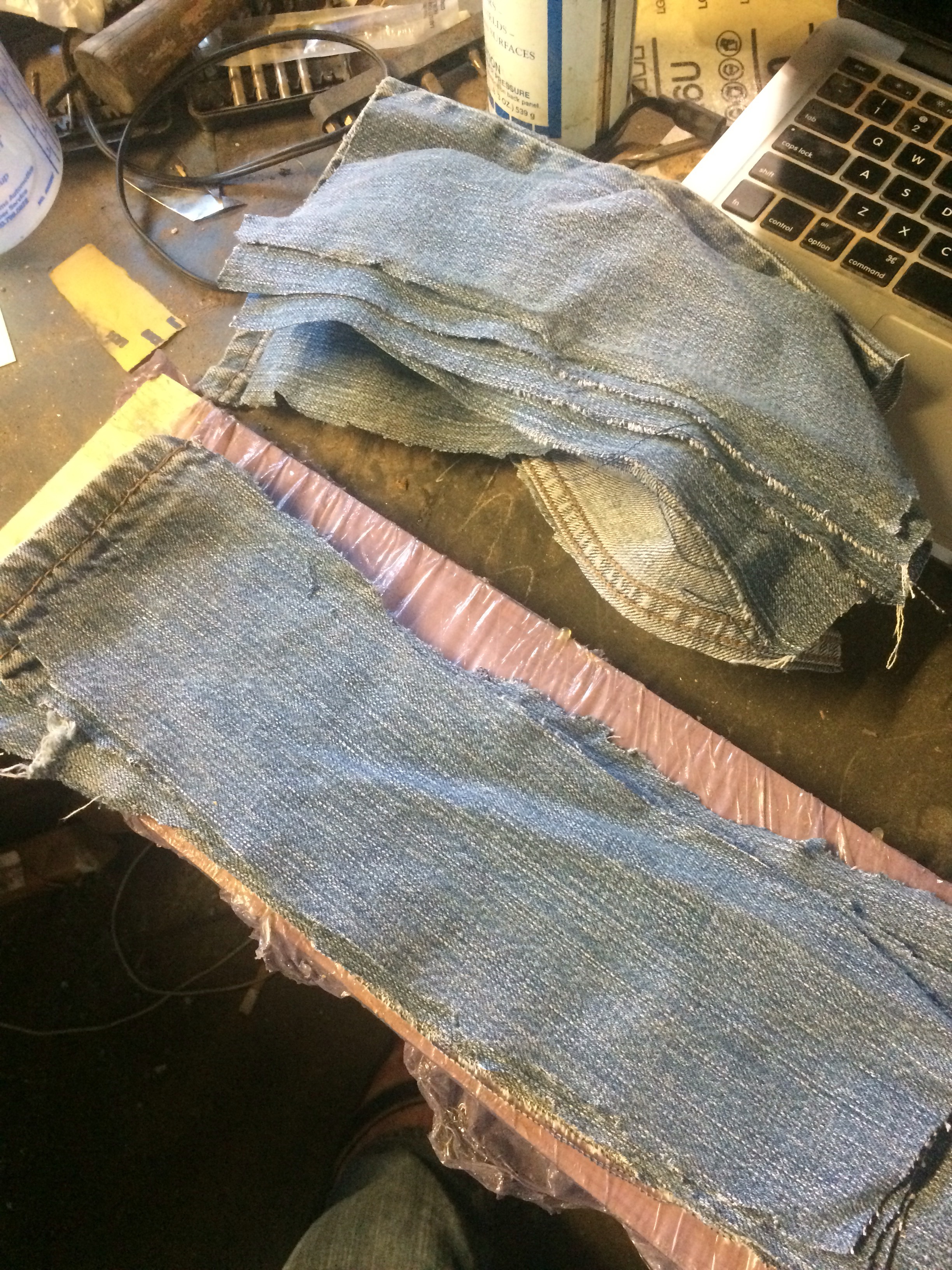
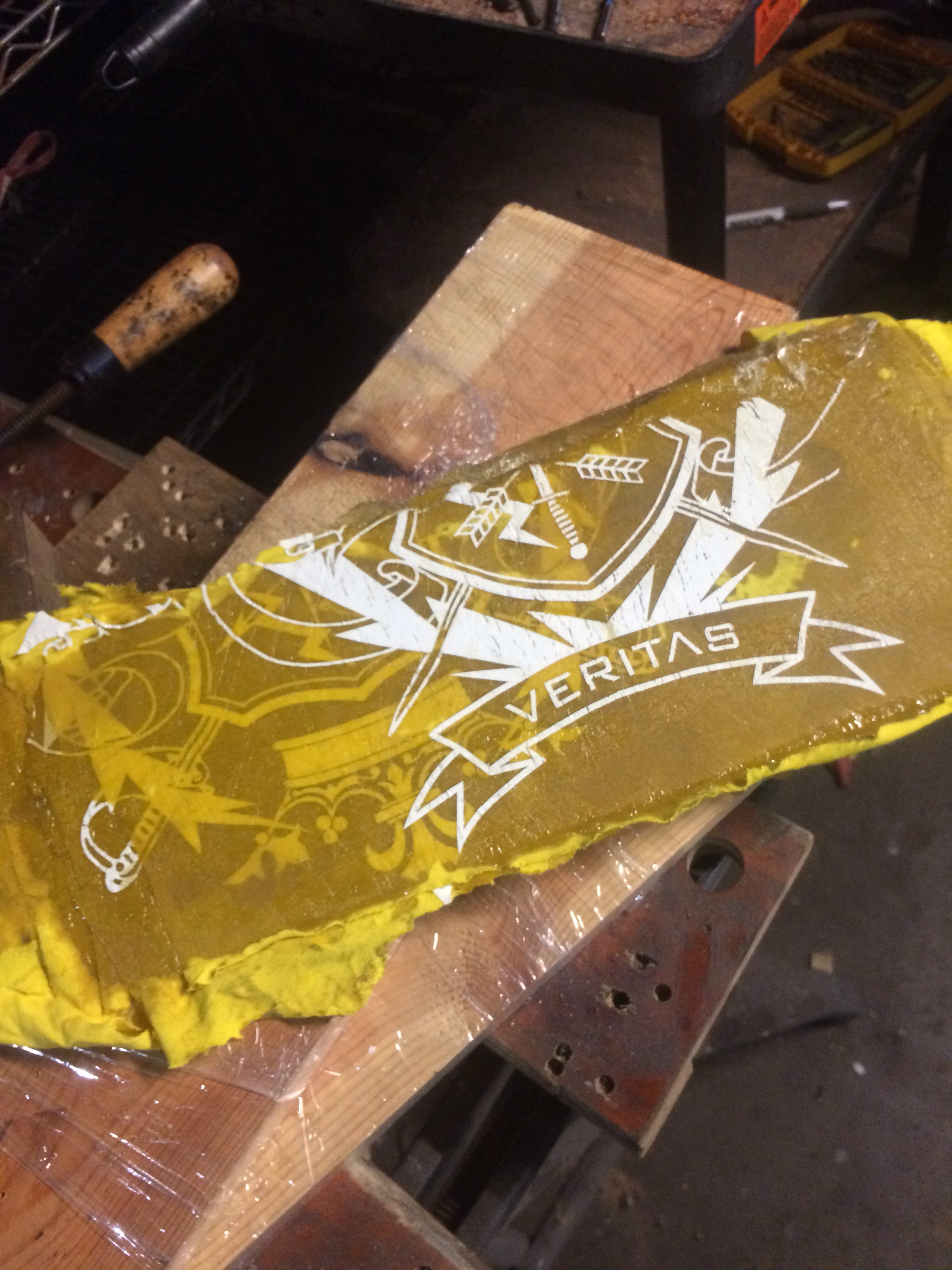
I made the handle material out of an old pair of jeans:

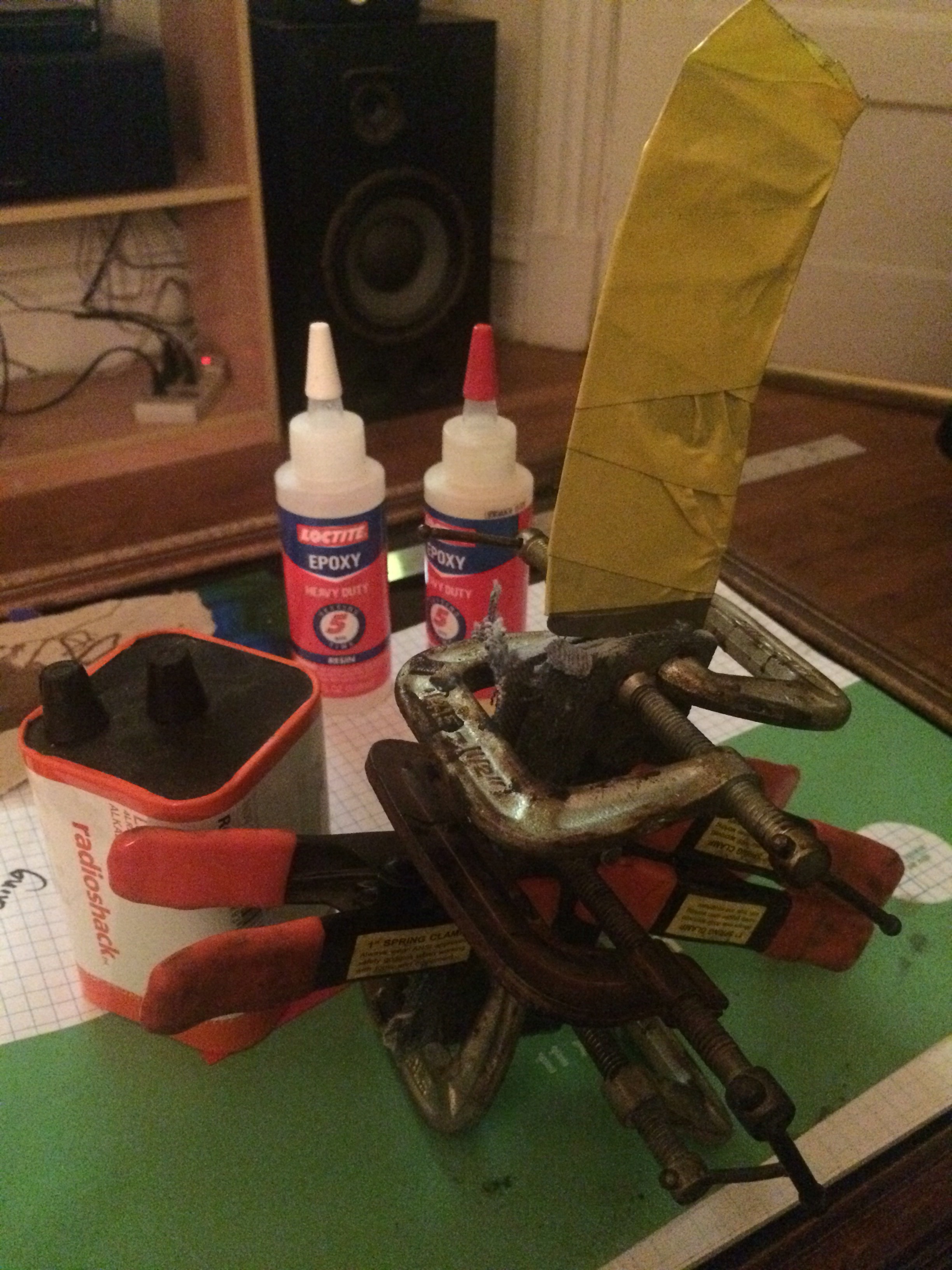
After a bit of time, pressure, and fiberglass resin…


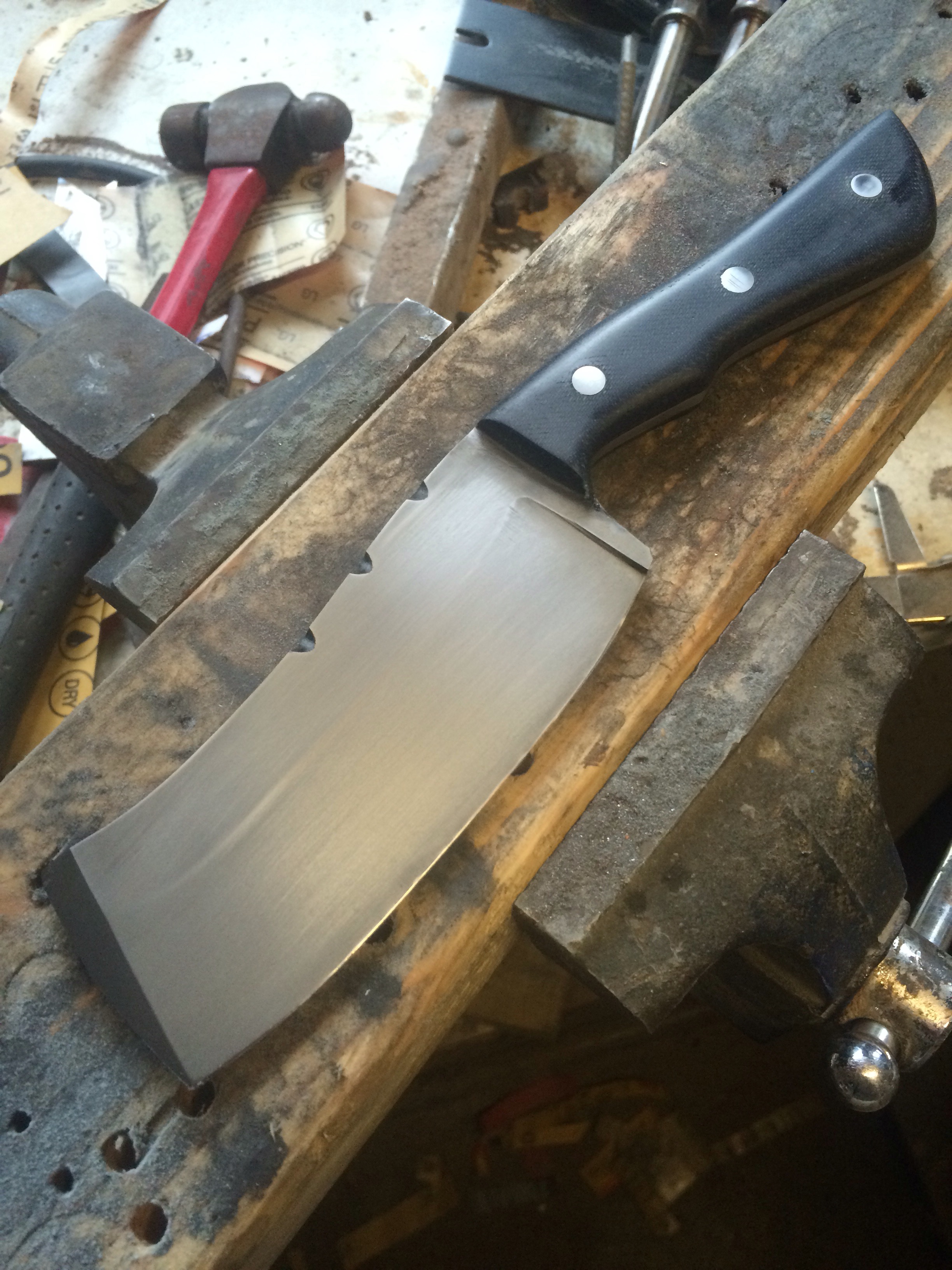
 At around 400 grit or so….

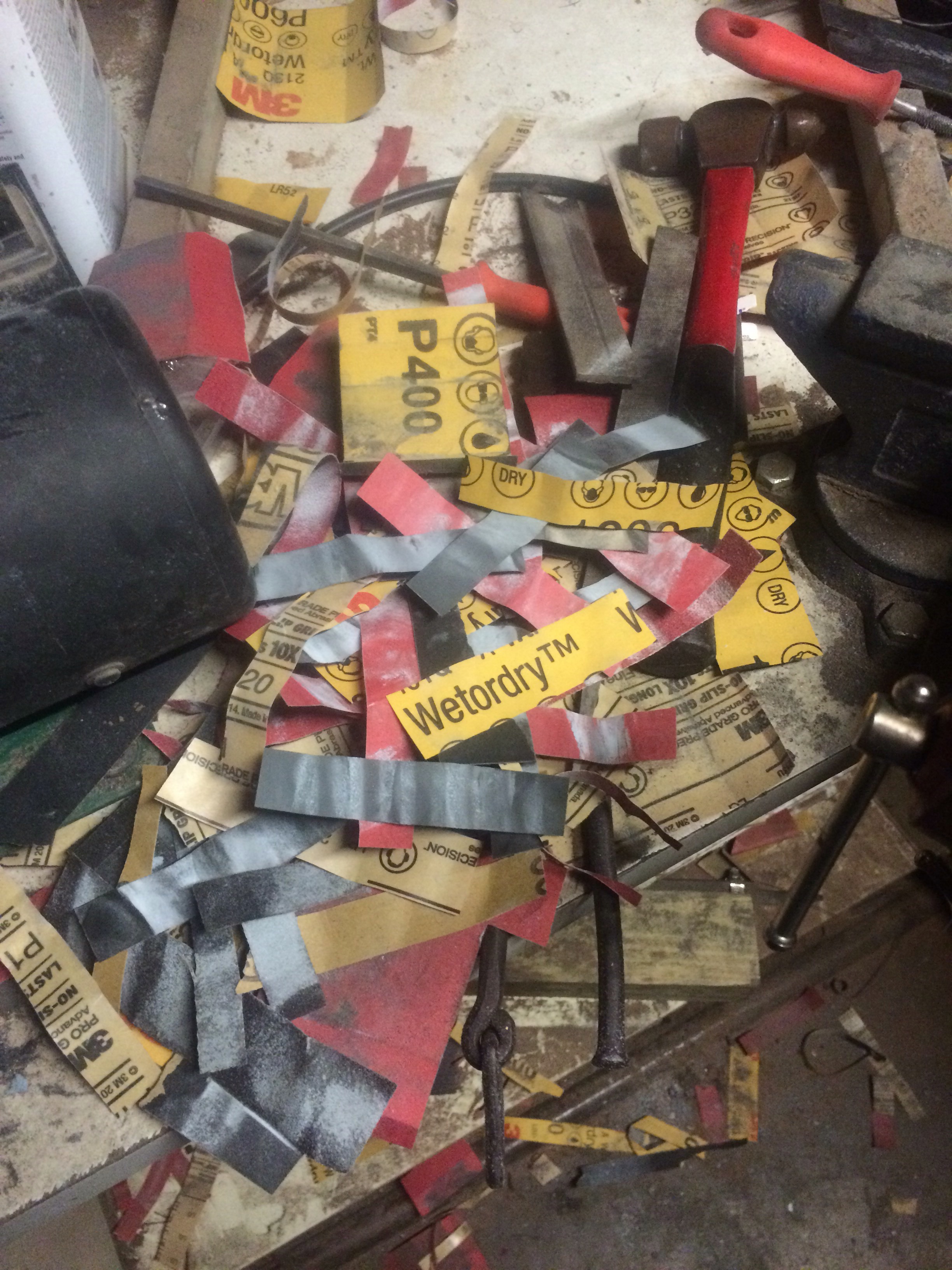
This stuff takes about twice as much sandpaper to polish than wood…

The Persuader, Mark II: Etched 1095 spring steel, homebrewed denim Micarta, and steel hardware


Relax.  Squeeze, don’t pull.  And it’s ok to be surprised.

Knifemaking: hardening and tempering and the Hound, Mark III

“Only people who are capable of loving strongly can also suffer great sorrow, but this same necessity of loving serves to counteract their grief and heals them.”

― Leo Tolstoy

One of the main things that drew me to the craft of bladesmithing is the process of heat treating- the process that hardens and strengthens the steel into something strong and functional.  I find it to be a reflection of the male psyche.  The steel comes to you soft and impressionable- just as we are when we are young.  It’s much easier to work the steel when it is soft, or annealed, than when it is hardened.  You then shape and grind the steel as you see fit- this is growing up and finding your place in the world.  Depending on how well you are or are not equipped, it could take a long time.  Through a process of slow heating and quick cooling the steel becomes hardened- our adult selves.  Though it is extremely hard, it also extremely brittle- it will shatter if dropped.  This is where the process stops for some people.  A brittle blade looks like a knife, feels like a knife, and will cut like a knife.  Appearances are deceiving and without proper tempering this piece of metal that resembles a knife will crumble under stress and will be unsalvageable.  So it is with some men.  When crafting a blade, you don’t let it crumble- it goes straight into low heat for several hours to draw out the stress from the hardening process and becomes flexible and durable.  In the male pysche, crumbling is part of the tempering process.  This is where our flex and bend comes from.  Like the tempering process of a blade it takes a long time.  This is the ethos behind my craft.

I also find it to be a reflection of the healing process from pain, trauma, and grief.  When any of these occur it is important to be with these things, and to be with those close to you who may be struggling to be with these things.  There is a really beautiful blog by Tim Lawrence.  He says these things are meant to be carried, and that this process of carrying our pain and trauma and grief can harden us.  I’ve experienced this in dealing with my own areas of grief, and trauma, and pain.  In this hardening it felt like I lost some things.  There were times when I couldn’t find my hope, or my light, or my path.  There were times when I couldn’t find my love, my self-worth, or my joy.  Everything was brittle.  Like the steel, these things you have experienced have hardened you, affecting you deep down into the molecules of your being.  This is where tempering can happen.  It takes time.  There was an awful bout of hardening I went through about a decade ago and I couldn’t get off the couch.  For about six months on that couch I watched nothing but the Food Network.  One day, after six months of Jamie Oliver, Curtis Stone, and Mario Batali, something made me get up and start cooking.  There were roux’s of many different varieties, soups, stews, crepes, and dim sum.  I started baking bread.  I invited friends over.  I worked more, found joy, and ways to laugh again.  Pain was still there, and would come again as it always does.  Hardness was still there but there was a bit more flex and bend and less brittleness.  Those things I thought were lost had never left, most especially not the love.

I still like to cook.

There can be many things that help to temper us after a hardening.

This is the lesson of this incarnation of the Hound.  The hardness doesn’t go away- but it can be tempered into something with the ability to bend without breaking.  This is the mark of a Warrior.  Be the Knife.

Shaping and rough grinding: To create a strong blade, I took a page from the Japanese swordsmiths who crafted the weapons and tools of the Samurai.  For these swordsmiths, the process was a spiritual experience.  Every authentic Japanese blade features a temper line, called a Hamon, which translated from Japanese means “blade pattern”.
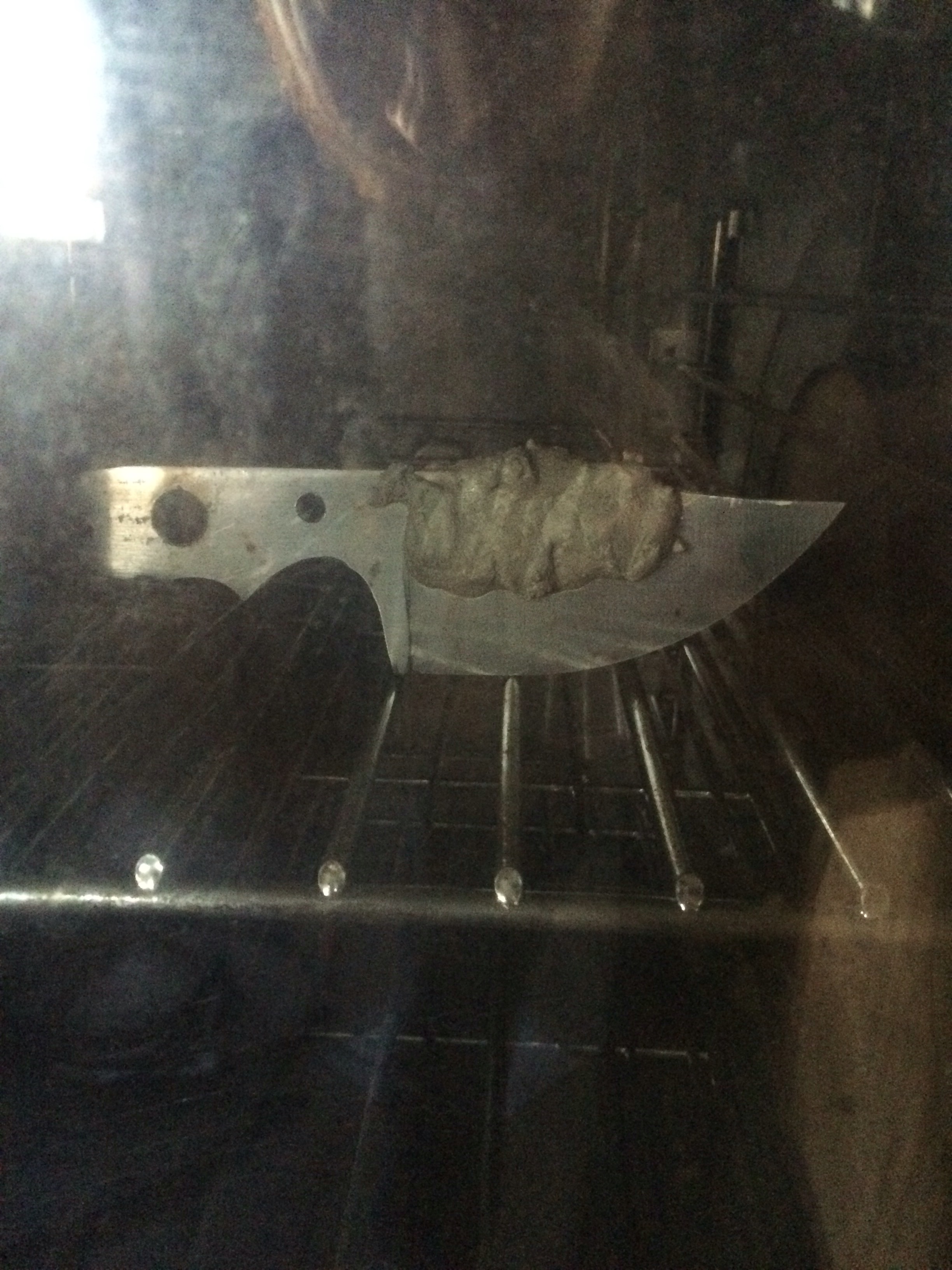
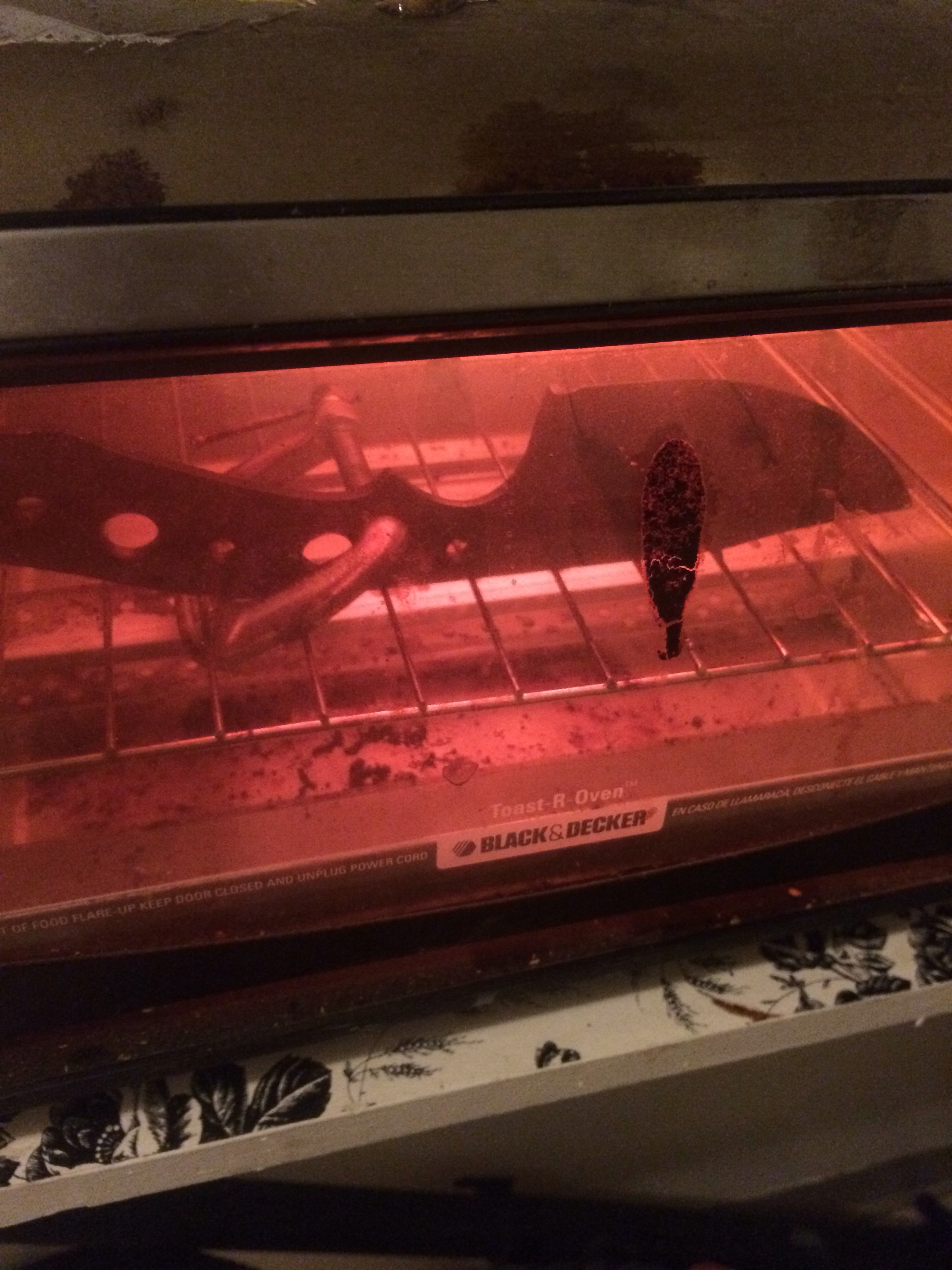
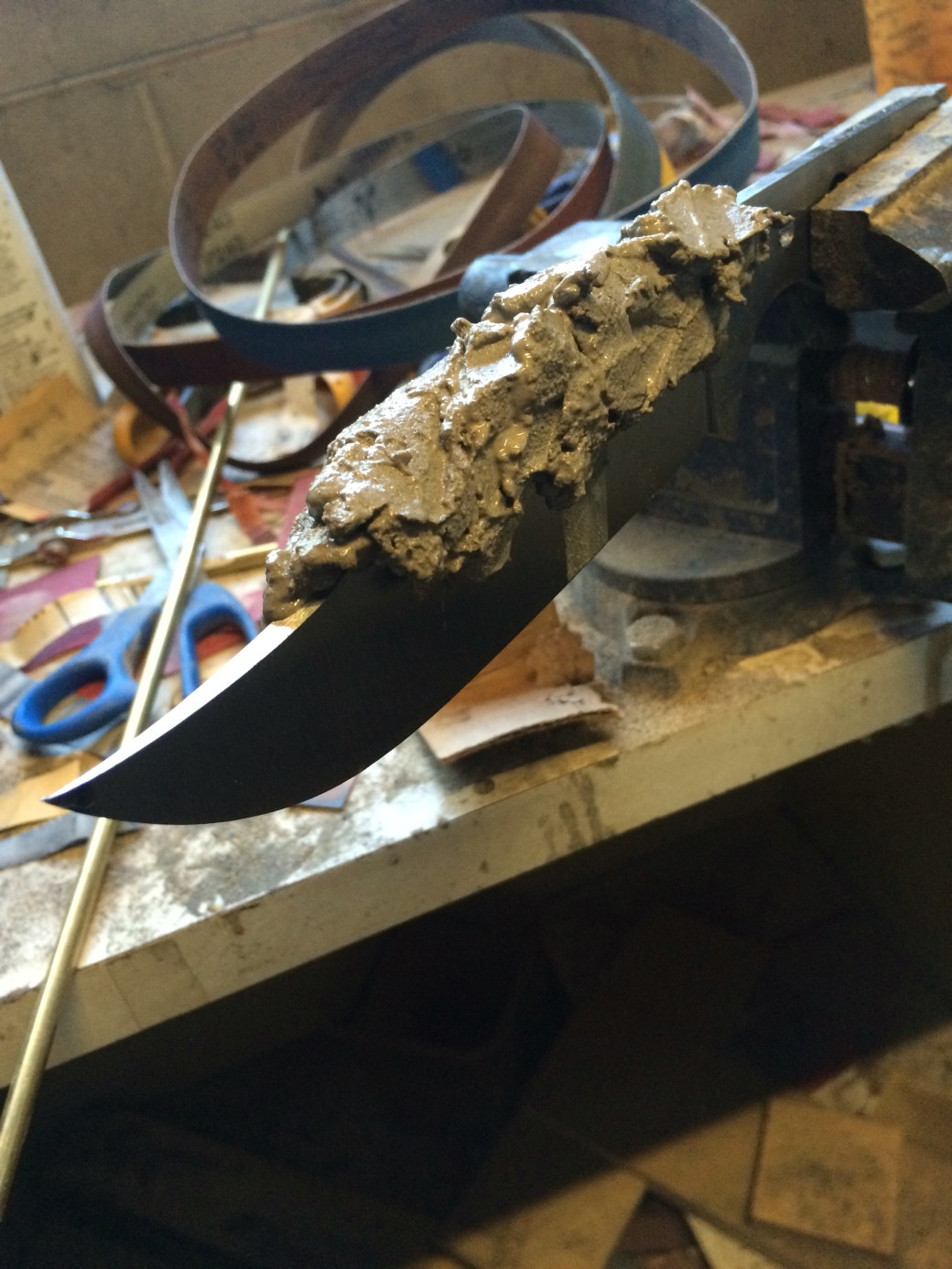
The spine of the blade is covered in clay while the cutting edge is left bare.  The blade is then hardened.  When in the fire, the bare cutting edge will reach critical temperature for hardening while the clay coated spine does not.  What results is a differentially hardened blade.  The softer spine has more flex and bend while the blade edge is fully hardened.  This makes for an incredibly tough sword that is far less likely to break but just as deadly as a fully hardened blade.

I cheated a bit and used furnace mortar instead of clay….

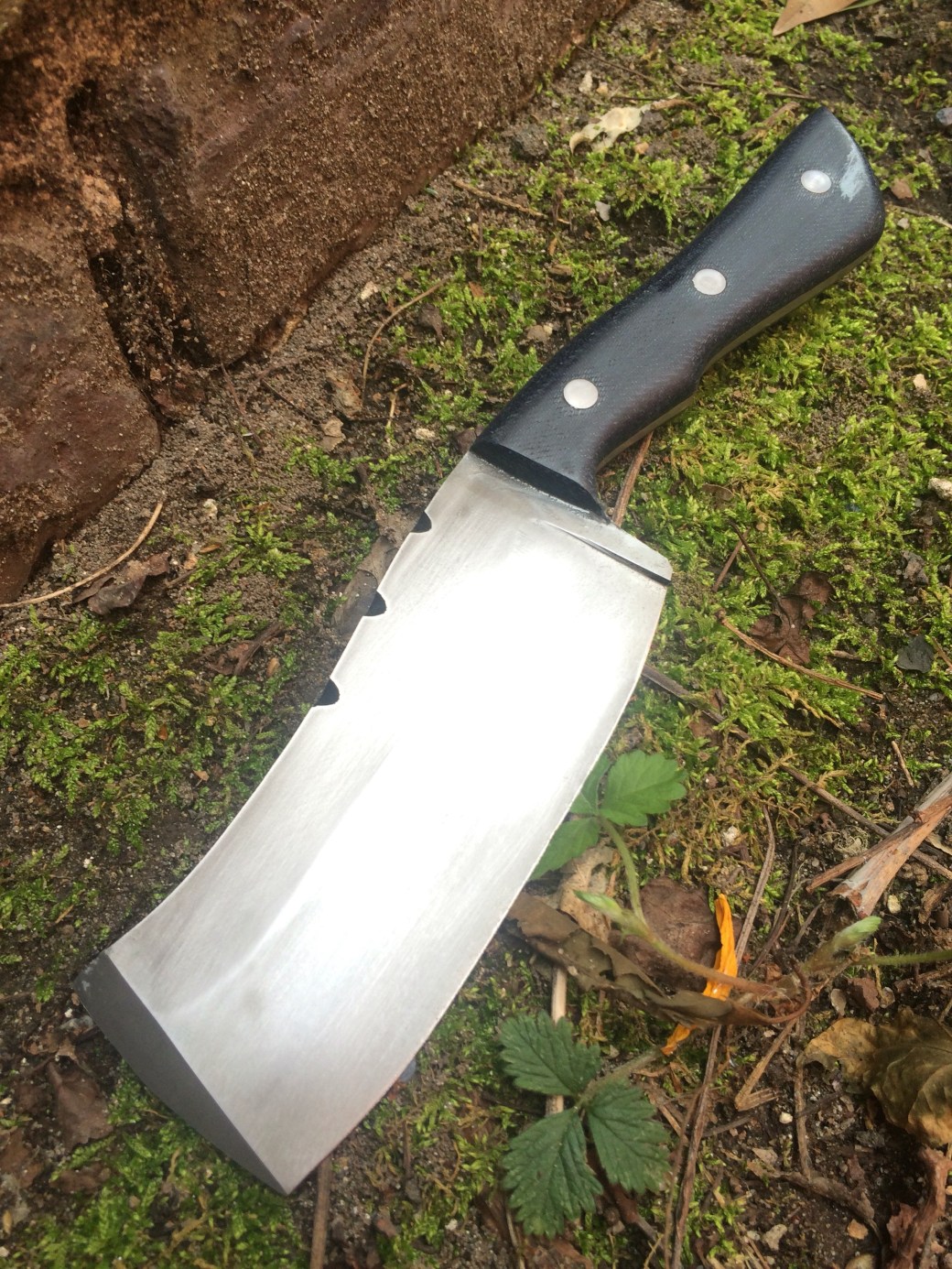
I gooped it onto the parts of the blade not crucial to slicing and stuck it in the oven to cure:

After the mortar is cured, she goes into the forge.

Hardened: 
  That tempering part, for flex and bend…

Thumb for scale….

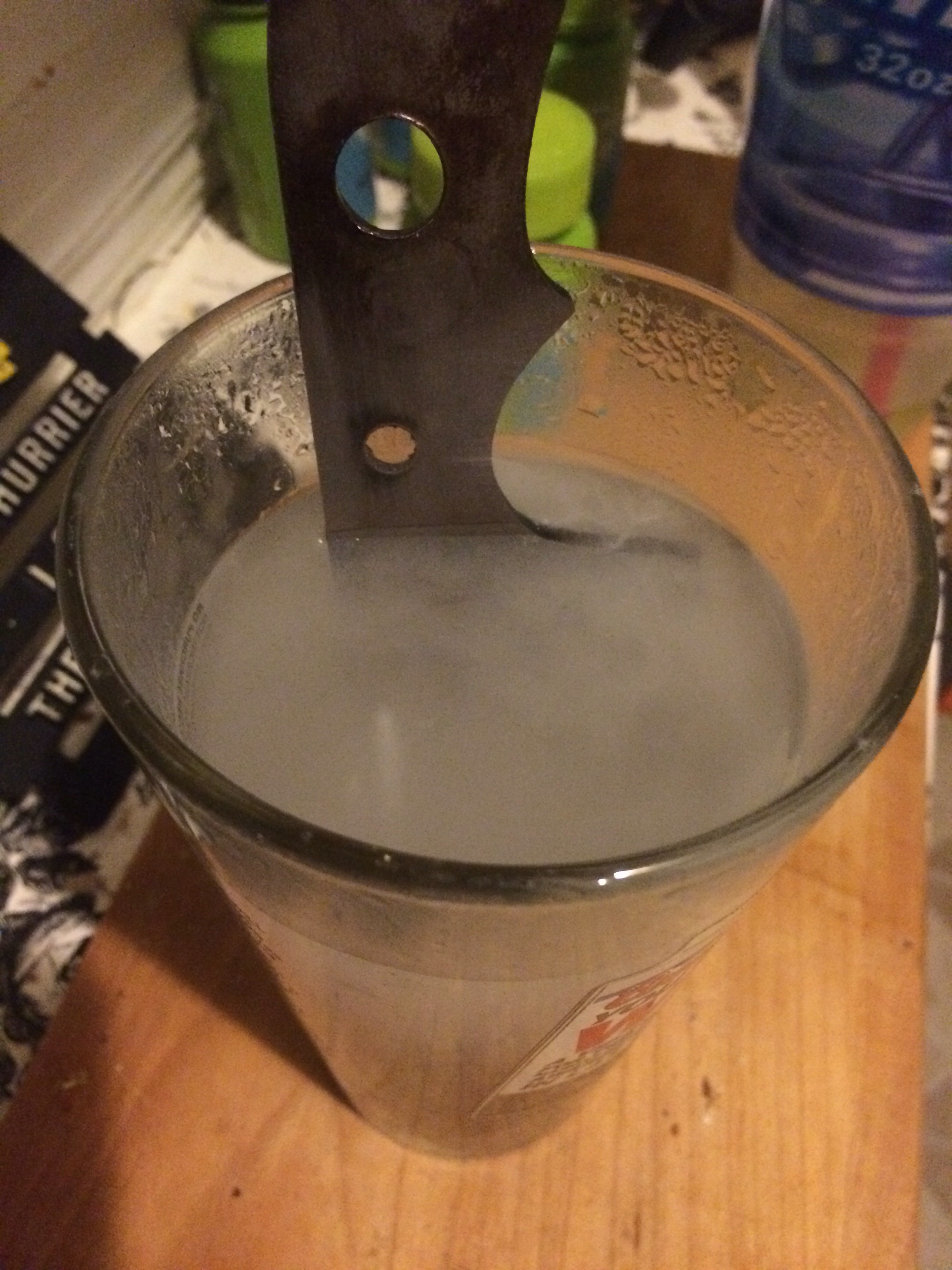
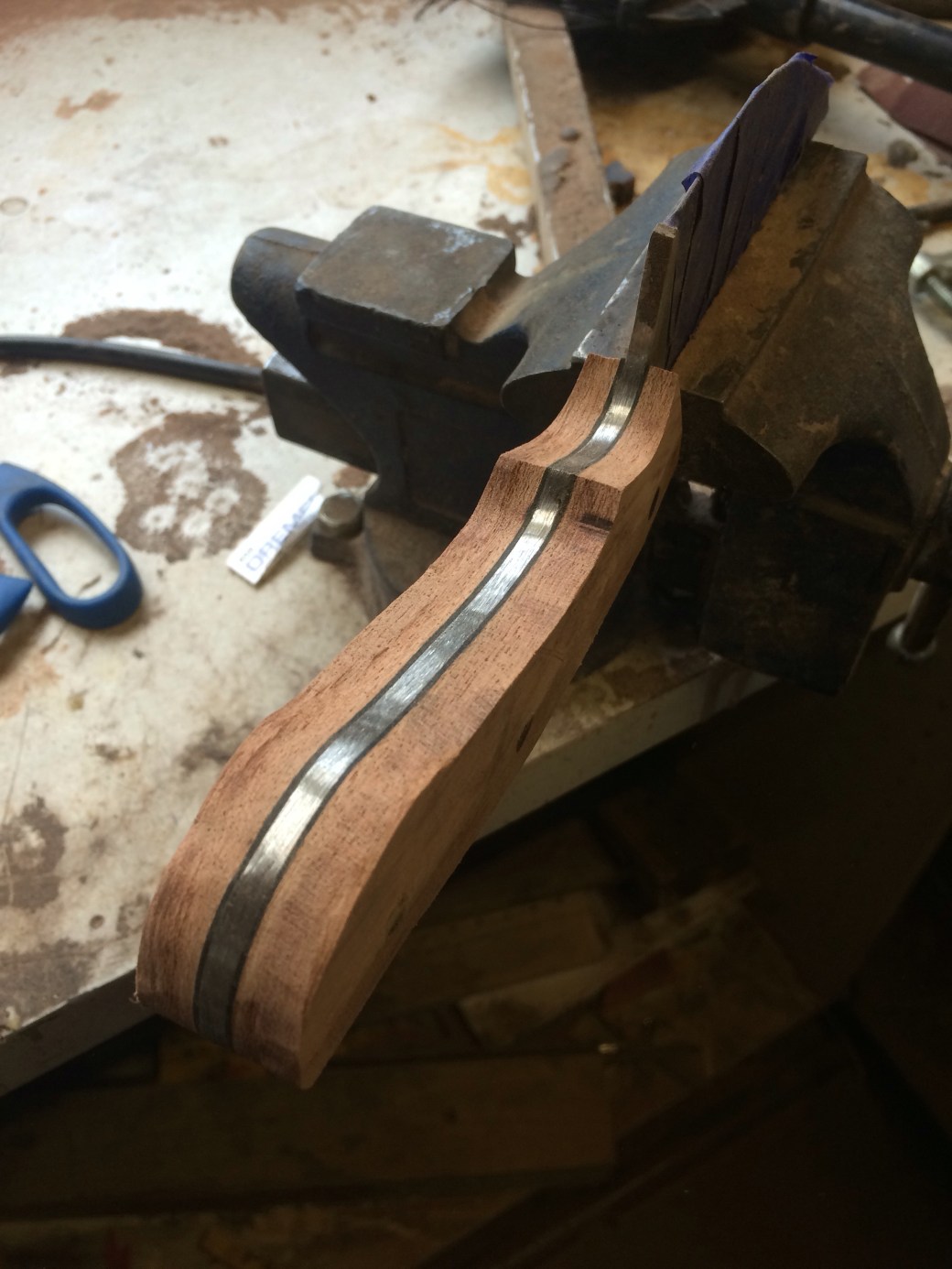
Into nearly boiling vinegar.  The vinegar eats away at the softer steel of the spine faster than it does the harder steel of the blade.  What results is a gorgeous line where the softer steel meets the harder…  Handle…


The Hound, Mark III.  Etched 1095 spring steel, Texas Mesquite handle, Kydex spacers, and brass hardware.

This blade was a commission for a very dear friend of mine who waited patiently for almost a year while I got my shit together.

Be the Knife

a2840520d4cba64df3cf736025cb084a

Knifemaking: the profound in the mundane and the Snow Fox

“There’s something admirable about finding satisfaction in the simple, everyday pleasures of life, and it’s becoming harder and harder to do. We’re bombarded every day: here’s the brave soldier who saved a school bus full of kids with nothing but a crowbar and fishing line; here’s the 30-something billionaire who is going to cure aging so we can all live forever; here’s the 12-year-old who can play Stravinksy’s Rite of Spring on seven different instruments with her feet. “

Mark Manson- Being Special Isn’t So Special

A few weeks ago I was talking to a production manager for a touring symphonic show.  She was telling me how she had always been a rocker chick and worked for rock bands.   This was a different thing for her- the glamour and indulgence had been stripped away.  But after weeks of hearing classical music the tour had really started to grow on her.  She said it sounds silly and that on the outside it might sound boring and repetitive and maybe it was.  But she said it didn’t feel like that.

I know this feeling.  I have a gig where I’ve played with the same people in the same place for almost nine years.  The music isn’t difficult, the other musicians are like my family.  Still, there are waves of time when I feel like I would rather go do something else.  Like any wave it passes, and I show up and do my job.  I’m always glad that I did.

Because buried in these normal, routine jobs are special things, provided you are paying attention.  In playing this gig I’ve ended up making very close friends, meeting lots of people, and learning about myself- mainly that I am capable of much more than I often give myself credit for.  All this comes from a job that, on the outside, may look routine, tedious, and repetitive.

There are people who get up everyday and spend their lives doing their work, not making much fuss and emanating a quiet satisfaction.  I know some of these people.  The man who worked in retail middle management for two decades has the most wicked sense of humor and powerful observational skills.  The service tech who has fixed restaurant equipment his whole life and can look at anything that is broken and immediately know what is wrong with it.  All these things take time.  We don’t see the work that these people have put in.  There isn’t a whole lot of flash or grandeur, and it’s not packed up in a tidy, three minute clickbait video.

I fall into the millennial generation.  The media likes to describe us as entitled, needy, whiny, afraid of work, and abhorrent of responsibility.  Many of us were told growing up that we were special, that some things were below us, that we didn’t want to end up flipping burgers or being construction workers.  You can blame baby-boomer parents for saying these things, or you can blame millennials for believing them.  Regardless of where the blame may lie it falls on us to make our experience.  Some of us developed self-worth issues when we found the world wasn’t as we were promised it was and that we weren’t so special.  Others of us did the shit that we were going to do anyway.  Once you let go of the idea that maybe you aren’t so special, it opens you up to seeing the value in the things that you are capable of, even when these things appear to be rather ordinary and mundane.

This is brings us to the Snow Fox, also called the Arctic Fox.  Just another warm-blooded mammal chilling in the tundra trying to survive.  To catch its dinner (which is often buried under up to three feet of snow) the snow fox makes these beautiful leaps headfirst into the earth:

Rather ordinary on the surface.  But according to studies there is something deeper going on.  In a study done in the Czech Republic, as researcher found that in nearly all cases of leaping, the Snow Fox does it in a north-easterly direction.  That would put them leaping toward magnetic north, which is some twenty degrees off of north as a compass would point.  By using the earth’s magnetic field and the sound of their prey beneath the snow, scientists believe this is how the foxes triangulate their prey’s location and compose their leap.

They aren’t always successful.  Sometimes they come up with a face full of snow and no dinner.

This is the lesson of the Snow Fox.  It’s knowing that beneath our silly jobs and the boring things we have to do come profound understandings and insights.  There is always something special to be found in making your dinner, or raising your children, or quietly putting something beautiful into the world.  There is something profound is these ordinary things.  Sometimes they feel like a burden and doing them comes with a lot of resistance but no one is perfect.

This blade started out as something else.  In making and fixing some mistakes early in the process, I ended up with something new.

For the handle I wanted to try out the spalted Pecan wood my Texas cousin had milled: 

Ripped down…   

Bookmatched: 

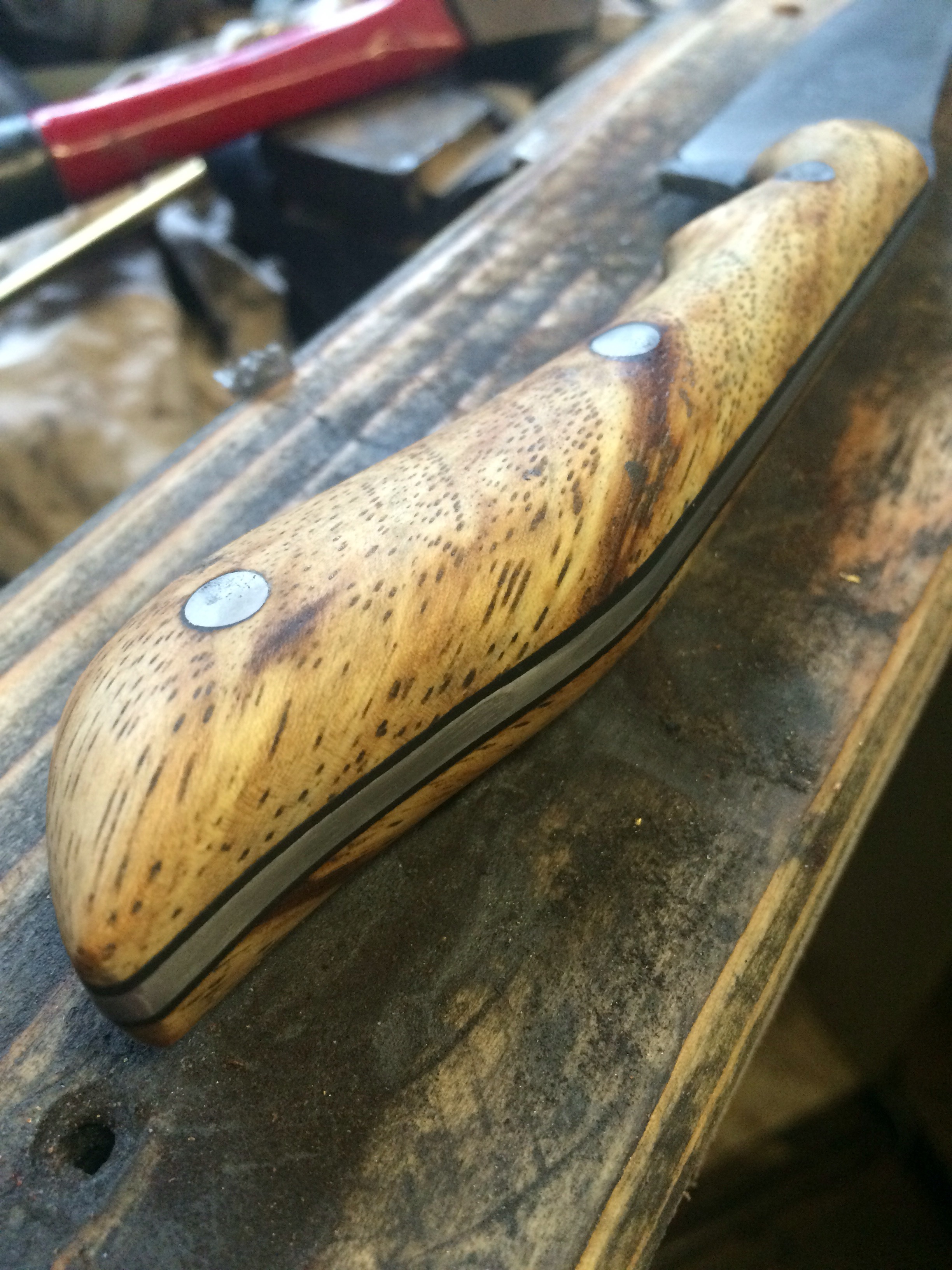
The Snow Fox:  etched 1095 spring steel, spalted Texas Pecan, Kydex spacers and steel hardware.     

Remember the special things that are going on under the surface of the ordinary.  It’s ok if you end up with a face full of snow.


fox_in_snow-1600x900