“No member of a crew is praised for the rugged individuality of his rowing.”
― Ralph Waldo Emerson
For the past thirteen years I’ve worked off and on in the operations department for the symphony orchestra we have in town. What many people may not be aware of is that there are a lot of logistical factors and people involved in getting an 80-person orchestra on stage to perform Beethoven: more so to perform Ravel. Risers need to be built and installed, specialized percussion needs to be rented or even custom made, guest artists need to be booked and accommodated. None of this even includes the years of training on the part of the musicians, or the planning and learning of the repertoire. Outside of this, there is a whole team of people running youth programs and community choruses, each with their own logistical needs. As one can imagine, it is tremendously expensive to run an orchestra and a great many people work very hard so that the classics can be heard as they were meant to be heard. In a complicated and difficult world, it’s deeply comforting to know that there are people working tirelessly with sole intent of putting good work out into the world.
In recent years, however, people haven’t been going to orchestra concerts as they have in the past. All over the country, symphonies have been closing down.
A few years ago a decision was made by the upper administration of the symphony in town to invest in a mobile tent big enough to put a stage and orchestra under. This would allow the orchestra to be mobile and to perform concerts anywhere. With the community just not going to the symphony as it once did, it was decided that the symphony would go to the community.
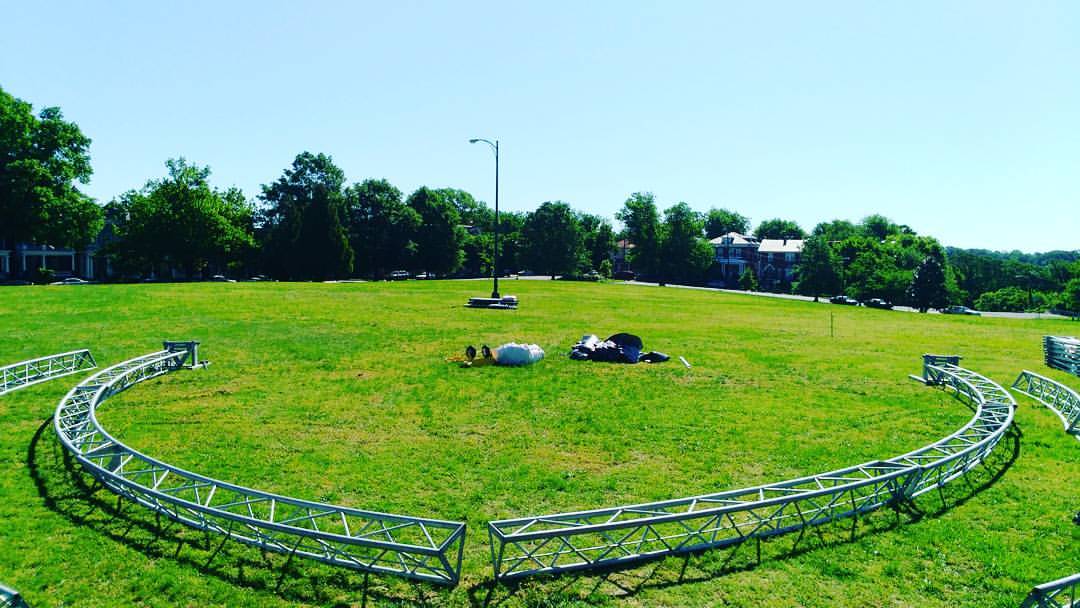
A large tent was purchased from a Canadian company and staging from a different company. Two 24-foot box trucks were purchased to carry around the tent and stage, as well as all the accoutrements necessary for construction: wrenches and sockets, a jackhammer named Petunia, stake pullers, sledgehammers, a laser leveling system, and several tons of trusses, scaffolding, and hardware.
A crack team of theatre and stage professionals was assembled for crew. At the helm of this endeavor was a husband-and-wife team, the Operations Manager and Production Manager of the Orchestra, who oversaw everything from site surveying to maintenance of the trucks to making sure everybody got paid. The assembled crew included a gentleman from the IATSE Local 87, who was an ace electrician, lighting operator, and rigger. There was also a gentleman who was the technical director of a university-run theatre and a deus ex machina of lighting design, sound, carpentry, and all aspects of building and running a production. Then there was a gentleman who did sound and logistical transport on motion picture and television sets for the Teamsters, and another gentleman, a math whiz working in IT and a veteran stagehand and crewperson. Finally there was me, a generally nice guy who always showed up on time and happened to be extremely proficient at moving heavy things. More people would come over the years but this is what it started with.
At some point or another I had worked with all of these people extensively, or helped them move, or gone to happy hour and had one or ten drinks with them. As this project was getting started, I found myself really happy to be working with proper criminals of the theatre and entertainment industry.
A weekend was booked for training on how to put the tent up. The owner of the tent company came down to train us on how to put it up and take it down. He was a Canadian septuagenarian, who was formally an engineer for a railroad company in Winnipeg. I’m not sure how much the tent cost but it must have been significant for the elderly owner to fly down from Canada. As it turns out he wasn’t as elderly as he looked. We set it up and took it down twice.
As with any large task, the crux of the build was built on many tiny steps. Permits for a temporary building structure are obtained for whatever county the performance is happening in. The site is scouted and surveyed, locating the flattest area possible. Locations for the load-bearing stakes are marked out according to the tent schematics. There is a single truck that contains all the parts and pieces for the tent- trusses, skins, poles, spansets, straps, stakes, the lot. Building it involved doing each of those tiny steps really well, and in the proper order. At first it was overwhelming.
What makes this job different from a theatre or arena is that everybody pretty much knows how to do everything. No job is more important than another and we were trained to be able to do it all. With the exception of driving the trucks, which requires a CDL due to weight, or operating the Lowell boom lift, which is an issue of insurance, anybody can jump on wherever there are tasks to be done. We all hang the lights and wire them up. We all move everything and everybody tightens bolts, hammers in stakes, and skins the frame. In the hierarchy of the job we always defer to the crew chief, but there is a level of trust that comes from having worked with everyone on a plethora of different jobs over many years. In this line of work there is an Esprit de Corps that is hard to explain to anyone who isn’t in the industry. We can put this thing up in our sleep and feel confident that the job was executed to the highest standards. If someone misses something there are at least three other guys (or gals) there to catch them.
While everyone can do everything, over the years we’ve all settled into leadership specialties within the scope of the job. There are two gentleman handle the business of getting the tent in the air, and everyone else knows to fall in to take orders. There are two other gentleman who take the helm of leveling the scaffolding for the massive stage that goes in the tent. I found myself managing the loading and unloading the stage truck which involves about fifteen tons of decking, railing and step units- everything having to be unloaded by hand. One gentleman is really good at getting the tension on the support lines really dialed in, giving the tent it’s sleek look.


It’s a good feeling to know that you were part of a crack team of professionals making something special happen. There aren’t any corporate teambuilding exercises or classes that comes anywhere close to making live entertainment productions happen.

Not everything goes according to plan and training isn’t going to prepare you for every contingency that is bound to happen. There was one time we had to drive all of the four foot stakes by hand when the hardened metal stake driver tip on Petunia the Jackhammer shattered. It took forever and put us behind. We have loaded everything wet in the pouring rain before and it is deeply miserable. Sometimes the industrial grade rental generator shows up late and we have no power till it gets there.
I was riding to an out of town tent gig with a couple of the guys. We were on the interstate and I saw the freshly-removed tread of a truck tire in the middle of the right-hand lane. “Somebody’s having a bad day,” I thought to myself. About three minutes later we passed one of our trucks on the side of the road, with our driver on his phone besides, and a bald rear exterior tire. Ahh, we were the ones having a bad day. So everybody gets on their phone to figure out who we can get out there to change the tire on a truck loaded with 20,000lbs of gear at 7am on a Saturday morning. We had to rent a Uhual to start getting tent trusses to the site so we could get started. We didn’t get our truck tire fixed till noon because the lugs were so rusted that they were frozen to the bolts.
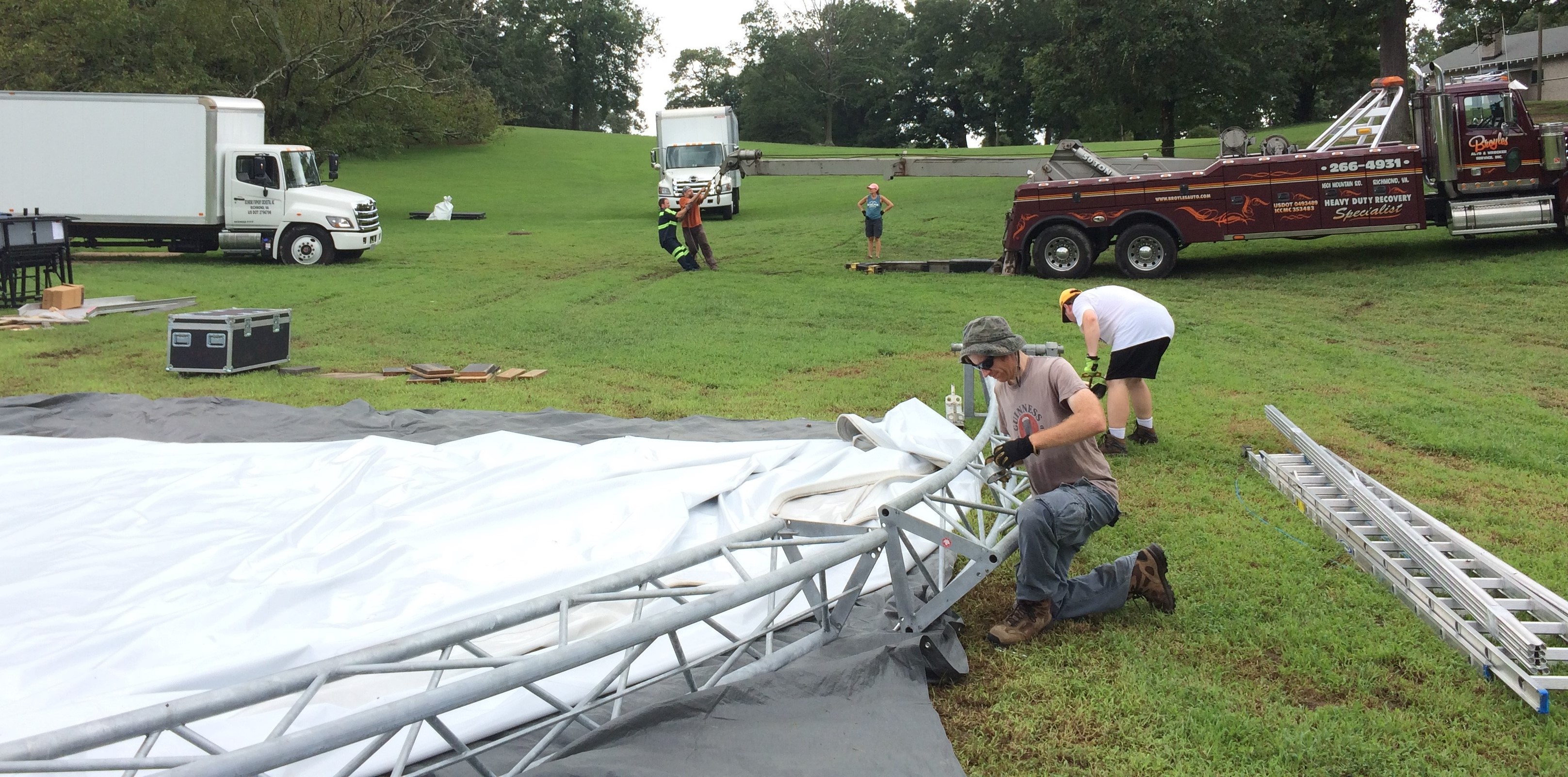
Blowing tires is a pain but it doesn’t happen too often. The biggest single pain is when the trucks get stuck and it happens all the time. Usually we know when the ground is saturated and we can lay out a track of plywood decking. We have to move them Egyptian-style as the truck moves and it is exhausting but a huge time saver. One time our stage truck got stuck so badly we had to call the biggest wrecker I have ever seen to pull it out. Then the wrecker got stuck. There was a season where the truck got stuck almost every other job and sometimes there just any other way around it.

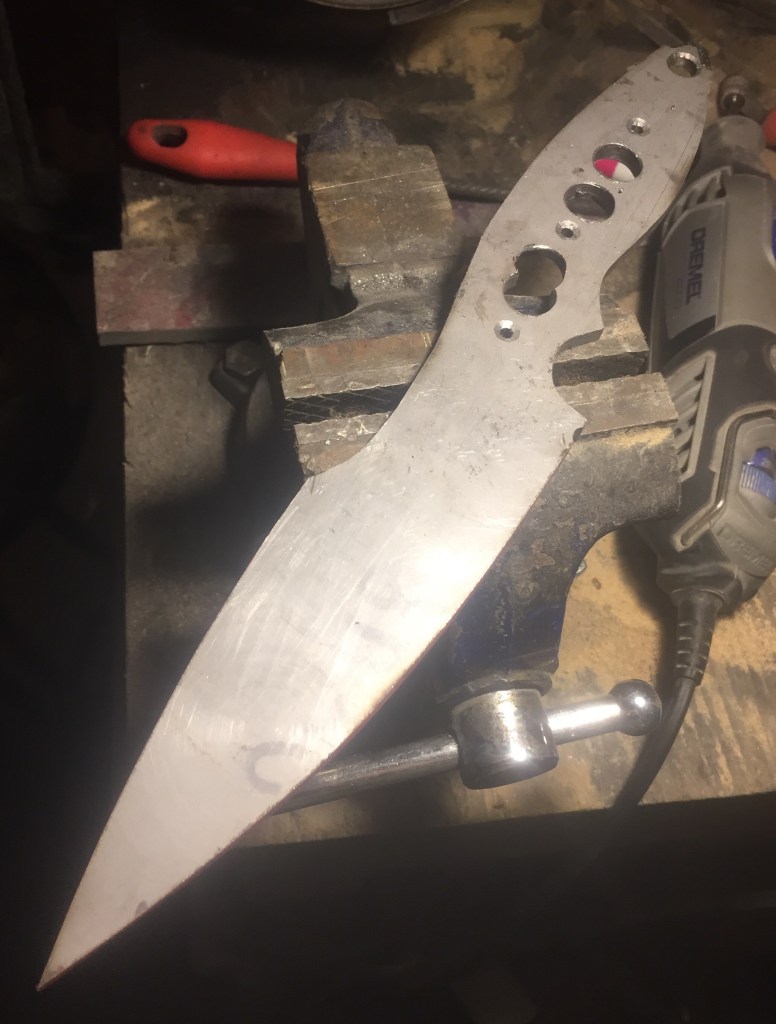
Puttin’ on the Fritz was commissioned by an old friend of mine that I went to music school with. It was built for his brother, a member of the Army Special Forces. My friend and I have worked in similar industries where teamwork at a high level is essential, and this is no doubt the case for his brother. I designed a beefy fighting/utility knife with a harpoon point and a hardened skullcrusher on the butt of the blade. “Puttin’ on the Fritz” is a nod to the things that go wrong, and how we respond to them. It’s not a matter of if but when. Having a really good team helps you to accomplish things bigger than yourself and move through the adversities.




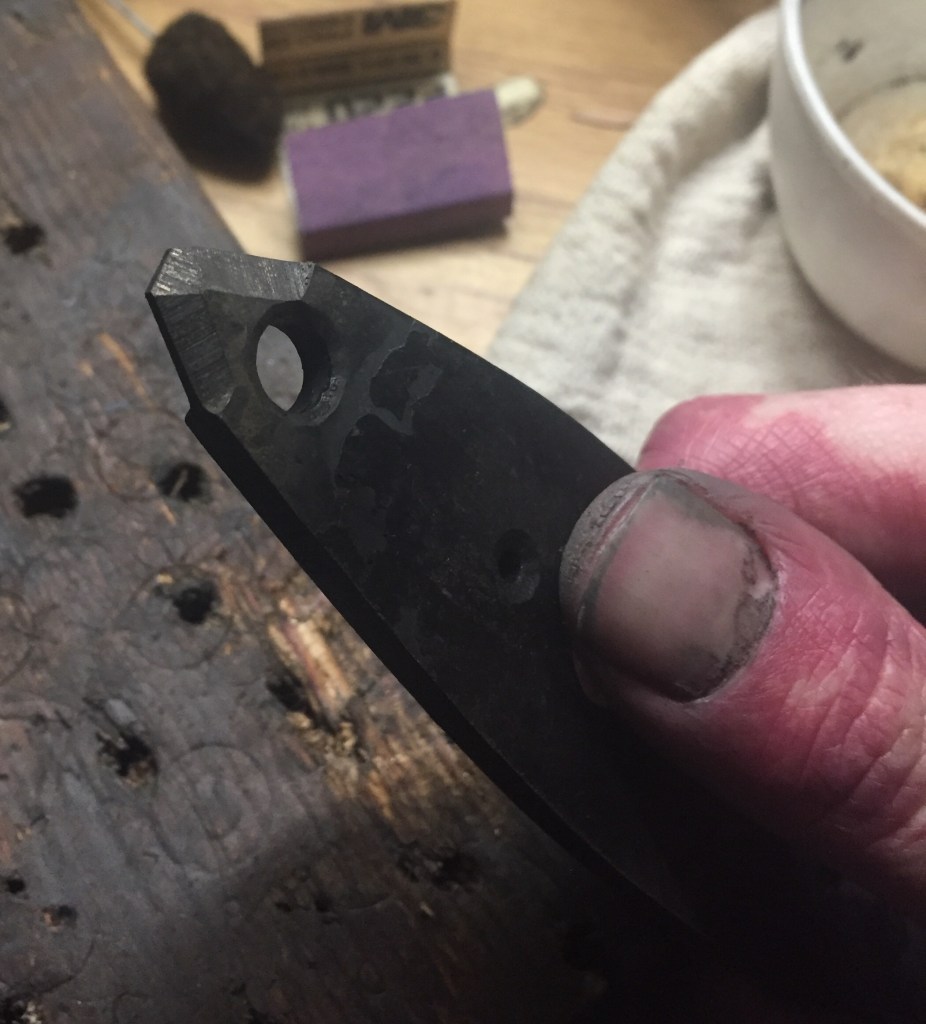


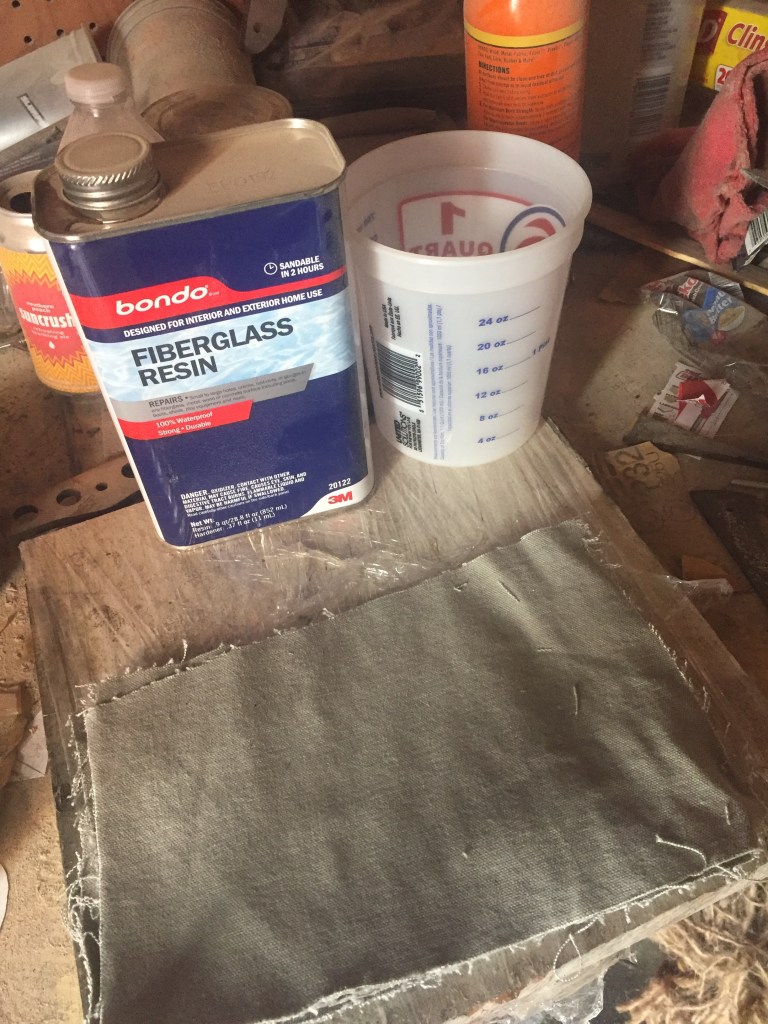


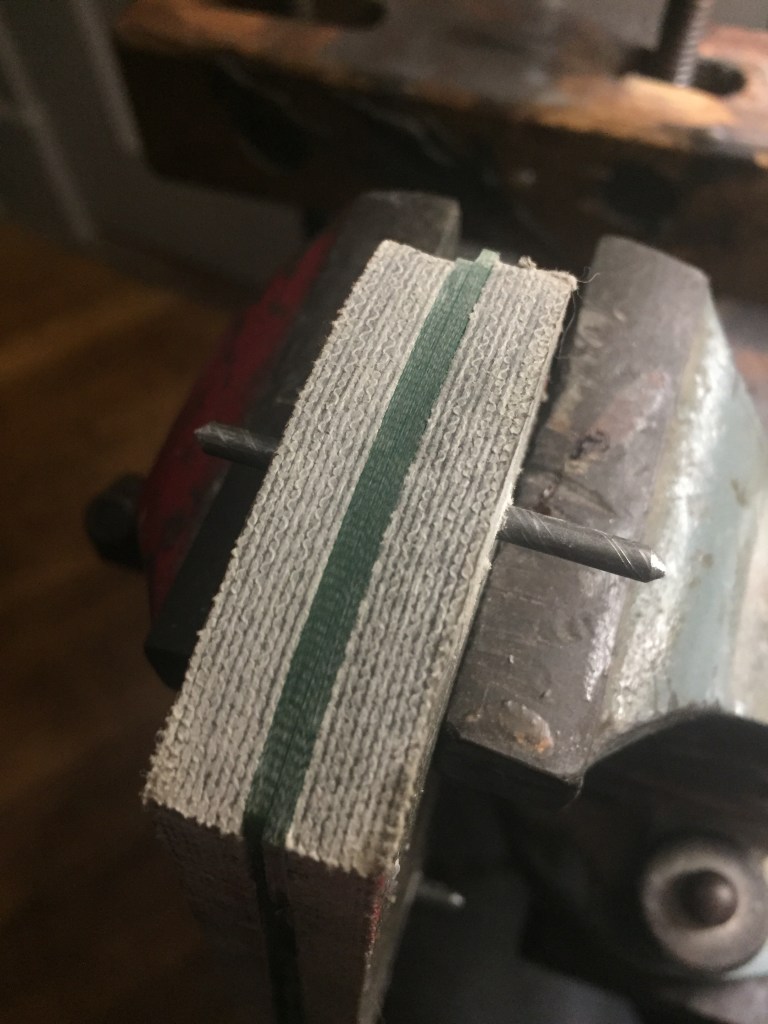
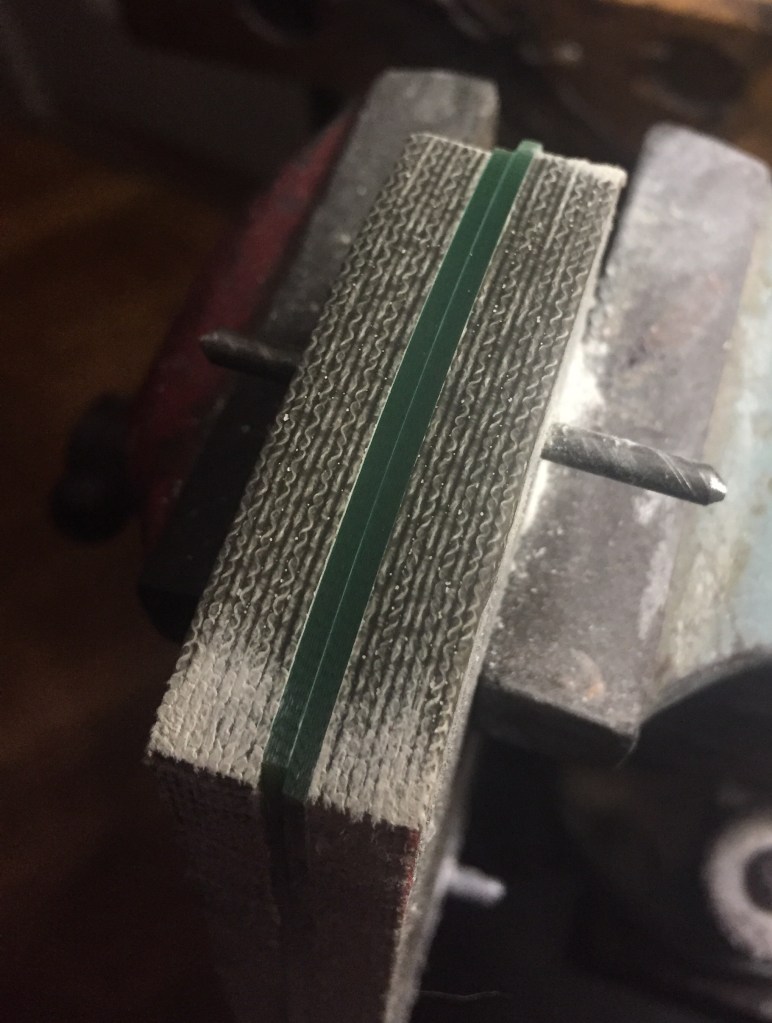


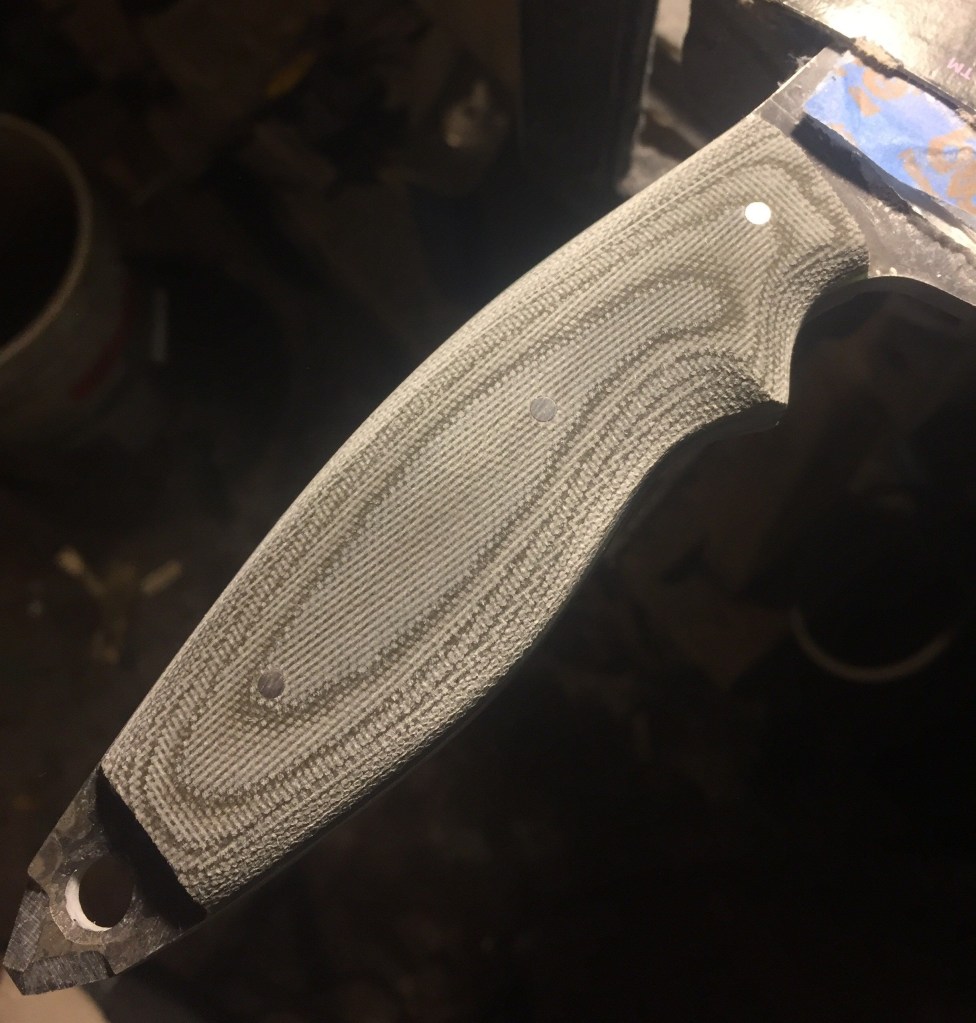


Puttin’ on the Fritz is made of high carbon steel, which means it will take a keen edge, hold it a good while, and will be easy to sharpen. It will stain and patina and tell the stories of the places you’ve been- this natural and characteristic of the steel. It came to you coated in EEZox gun oil, an oil based film that protects the finish. Your knife is made to be used so don’t be shy about getting it dirty. Be sure to keep your knife clean and oiled when not in use. Should you find any unpleasant surface oxidization you can remove it easily with a lightly oiled bit of 0000 steel wool, or a coarse rag with a bit vinegar on it.
 groundedinfire