A few days after Christmas in 2018 I got a call from a buddy of mine. He was a producer for a company that put together wedding bands and he had to get a group together for a New Years Eve party. He really needed a trombone player for the horn section and gave me a call because I am a trombone player and he knew I probably didn’t have a gig. The problem was I had just had a bit of orthopedic surgery and wasn’t sure I was up for it. He then told me what it paid and said all I needed to be able to do was get a horn up to my face. I told him I was down like a clown, Charlie Brown.
Just doing that gig put me on a list of musicians and I started getting calls. Over the years I’ve been up and down the mid-Atlantic playing in horn sections of wedding bands at country clubs, theatres, mansions, and sometimes out in fields. These are good gigs because the job is to help people have a good time on what is probably one of the happiest days of their lives. With open bars, this is usually not hard at all. Sometimes the receptions are super simple. Others are more involved with lots of moving parts, including musical cues, choreography, and spectacle. One couple at a vineyard wedding were huge anime fans and our producer orchestrated an arrangement of the theme from ‘Cowboy Bebop.’ I played at a Persian wedding were the mother of the groom performed something they called ‘The Knife Dance’, which (as one may assume) involves dancing with the knife that cuts the cake, and passing it through all the women in the family while everyone tosses money at them. The knife finally ends up in the hands of the bride, who cuts the cake.
The band is just a small piece of all this but from the stage you can see all the little pieces of things coming together- the cooks working out of sight, the catering people running food, the sound guy handing out microphones, and event people making sure important people are where they’re supposed to be. All this adds up to something that the guests remember for for years. As one of those tiny little pieces, I’ve found some of my happiest professional moments at these jobs.
Sometime in January of this year a gentleman reached out about getting a knife made for his wedding, something special to cut the cake. After a bit of back and forth, he told me his fiancée was making their own wedding dress. I told him if he sent me some of the dress material I could work it into the handle material. This was all familiar territory, bringing a lot of little pieces together to make something special.
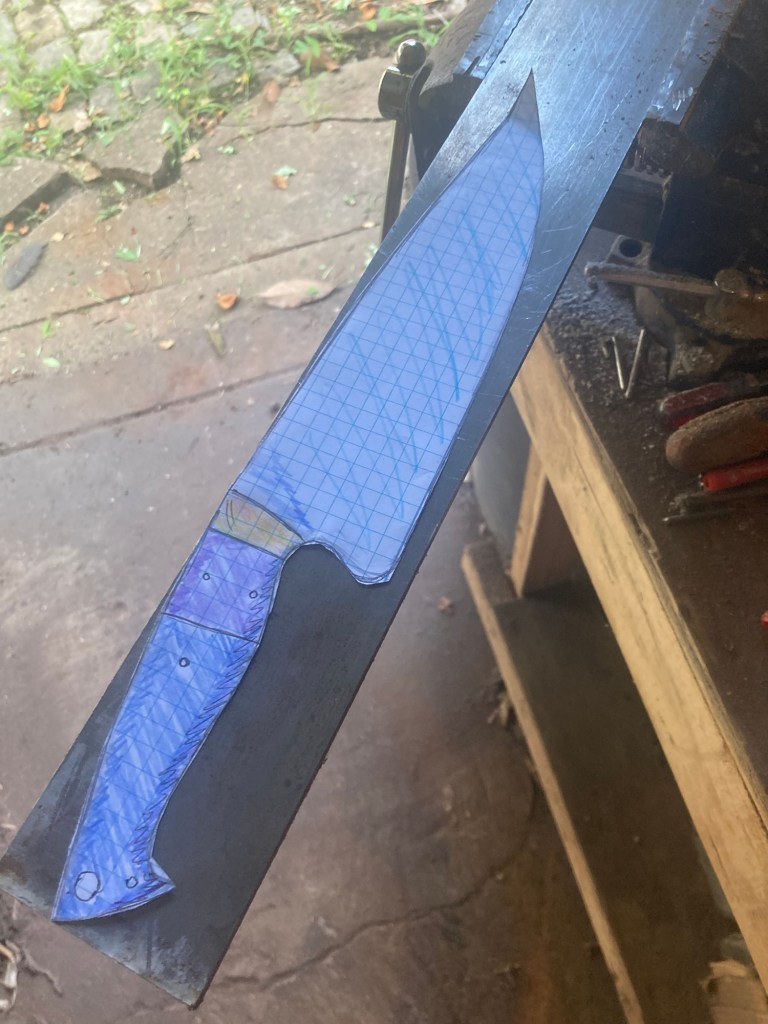
I got him some drawings together- The idea was that I would make send them a finished knife unsharpened for the cake, and after the wedding they send it back, I sharpen it, and they can then use it in their kitchen.
I used some contrasting colors to give an idea of what the knife handle COULD look like. I didn’t know what the dress material would look like.
Laying out the template
Copied on to the steel
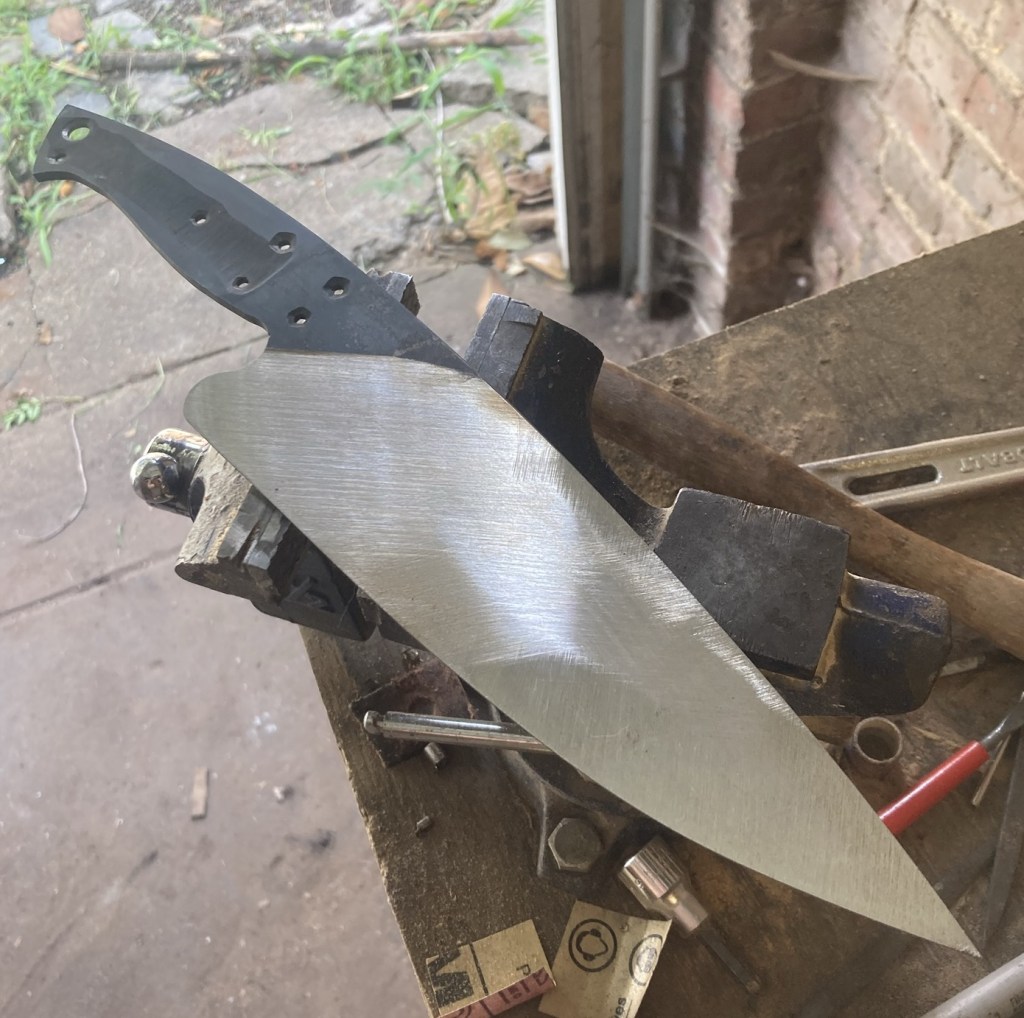
Profiled
Removing some material before hardening
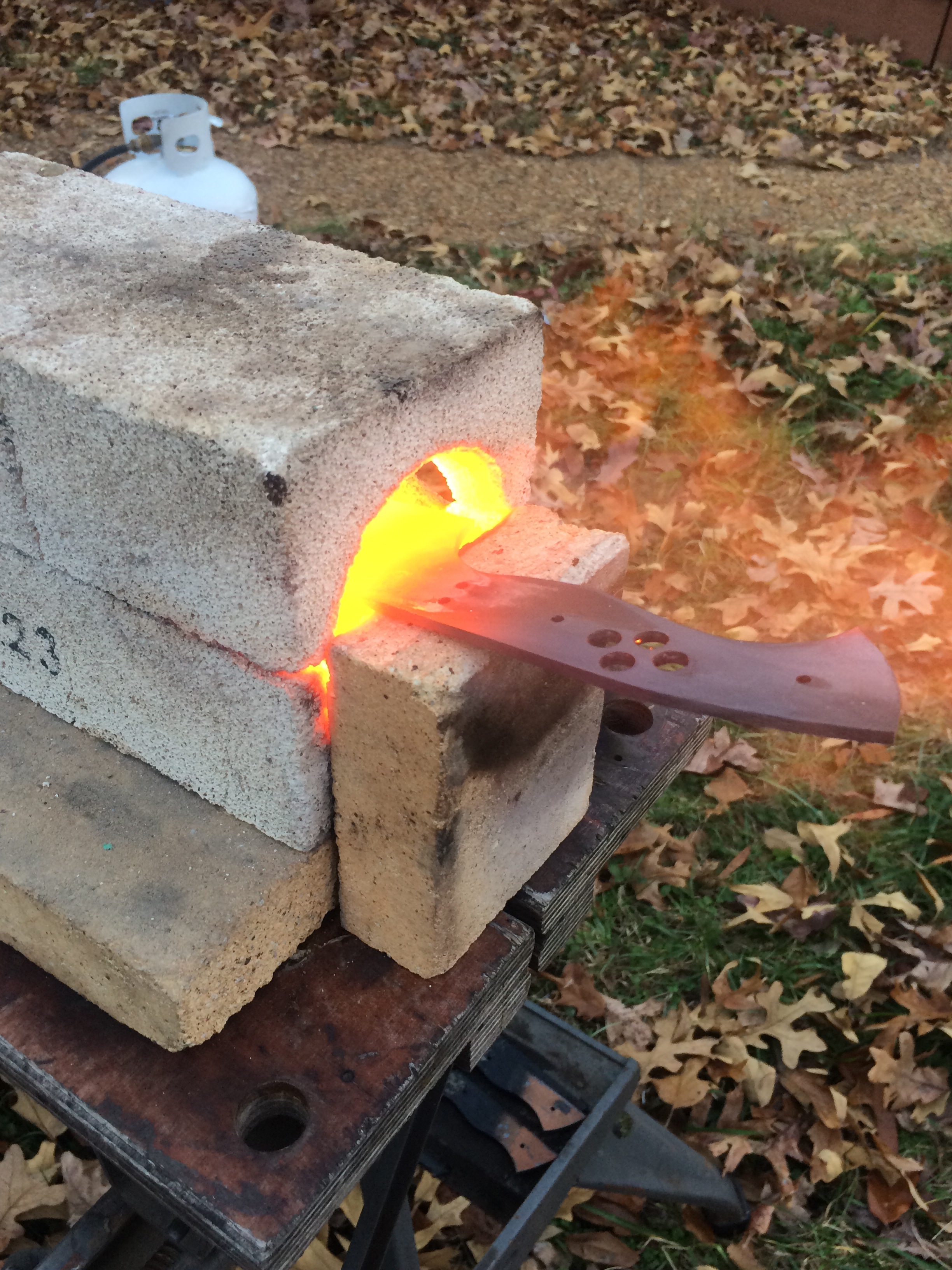
Into the forge
Grind some more
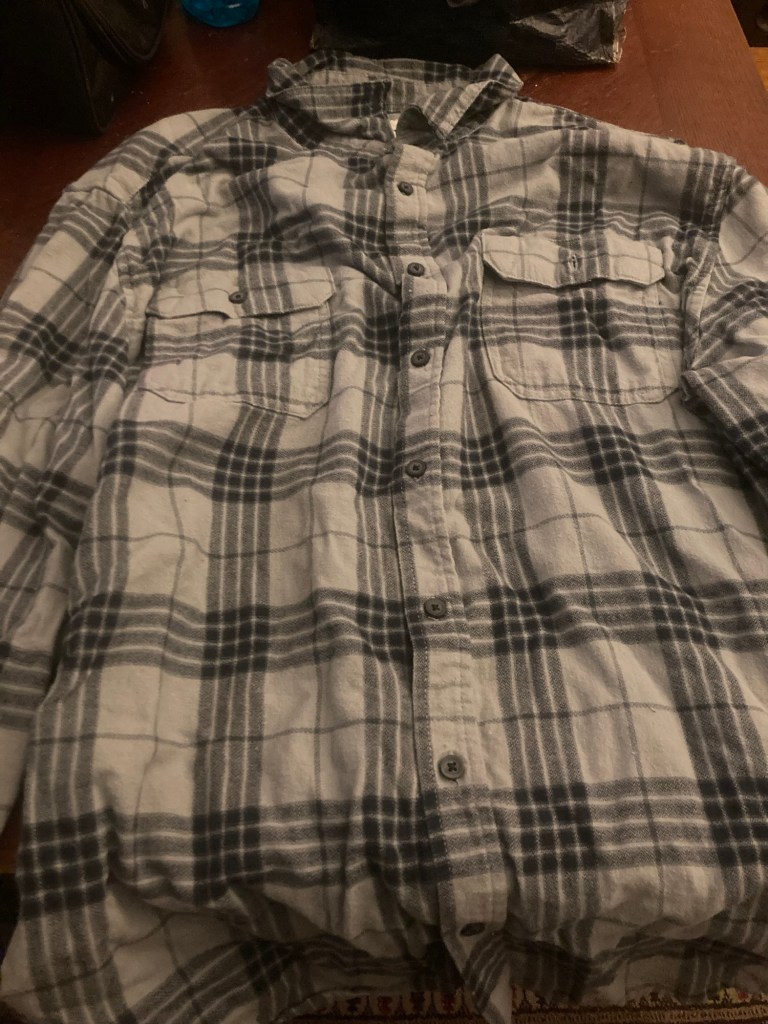
One of the clothing articles they sent me was the shirt the groom proposed in
Some of the dress material, a shimmery chiffon mesh
There was also some black stretchy dress material
Layered together to create a pattern
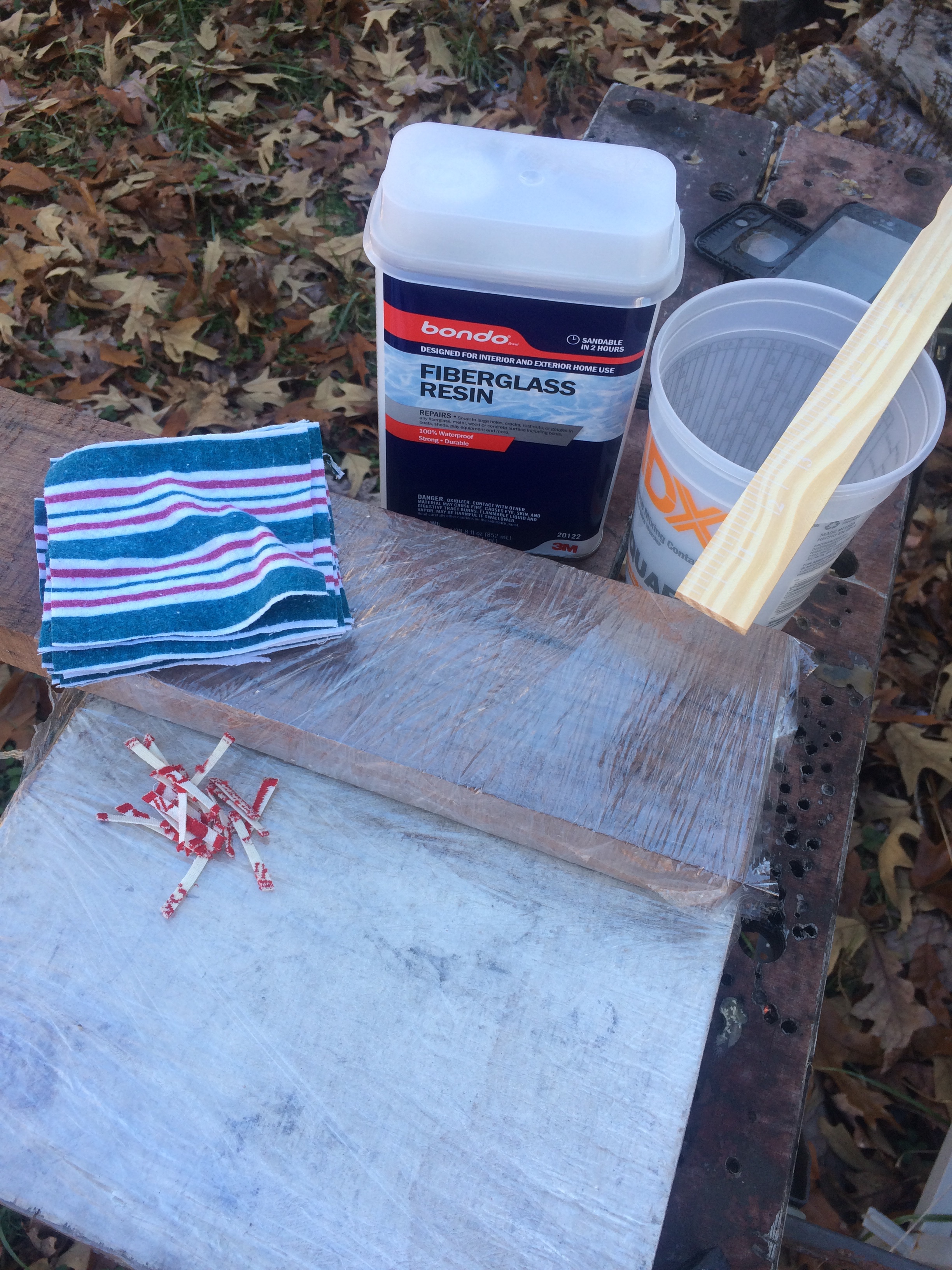
This will all get layered together with fiberglass resin
All smashed together
Cured
Everything properly smashed together
Back to the bladework, handsanding
Satin finish
Bit of brass for the bloster
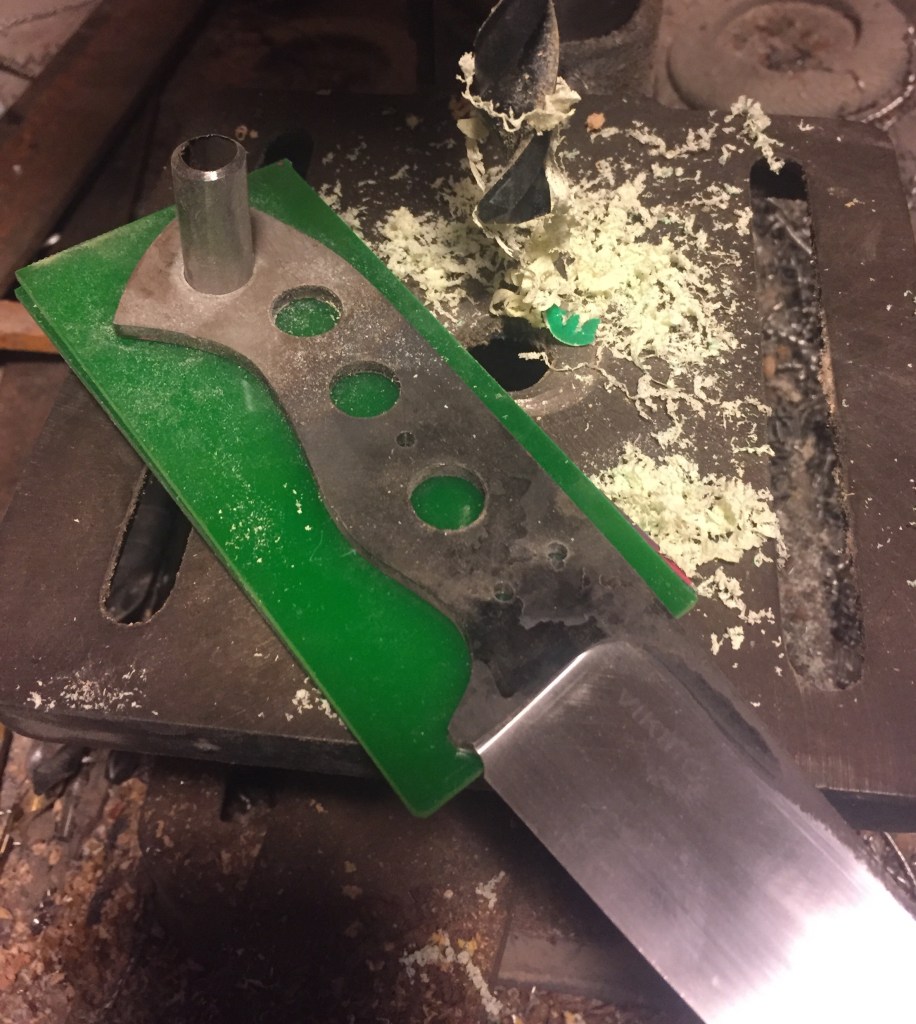
Drilling before shaping
Shaped
Fitted up and set with steel-reinforced JB Weld
Rivets are peened
Fitting up the handle material. The wood is Ebony
Ready for glue-up
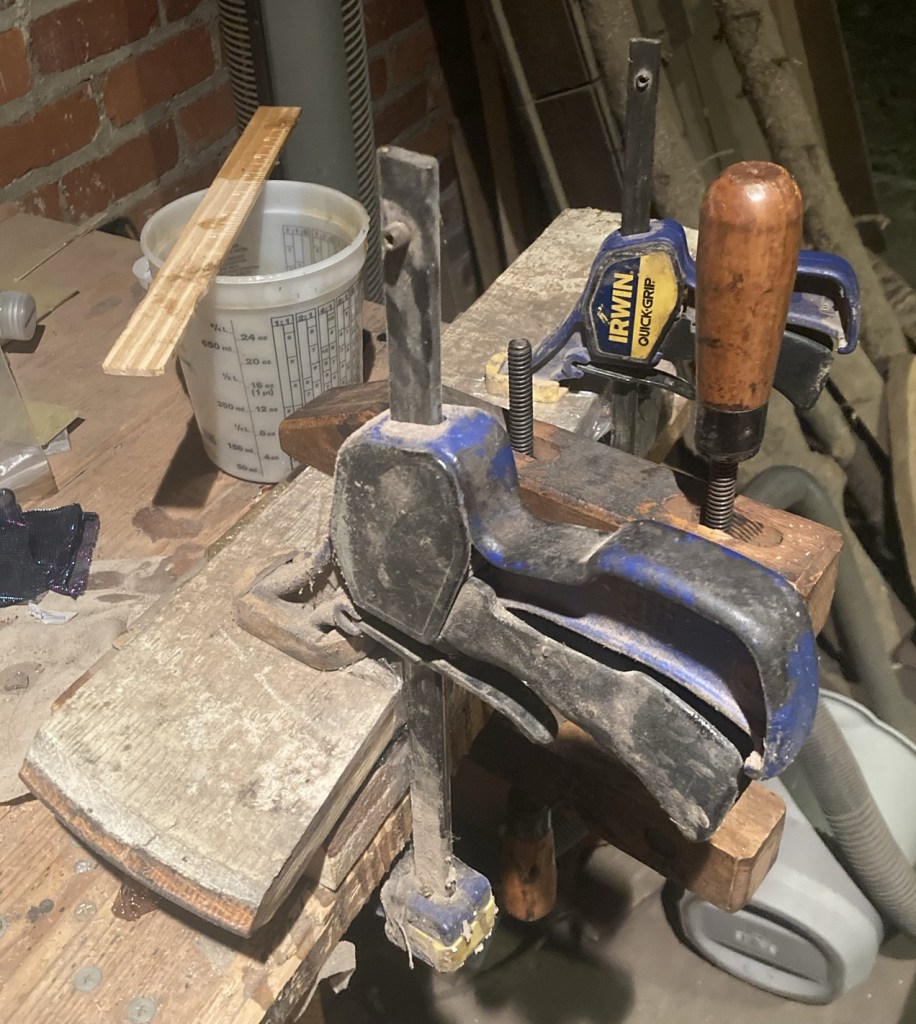
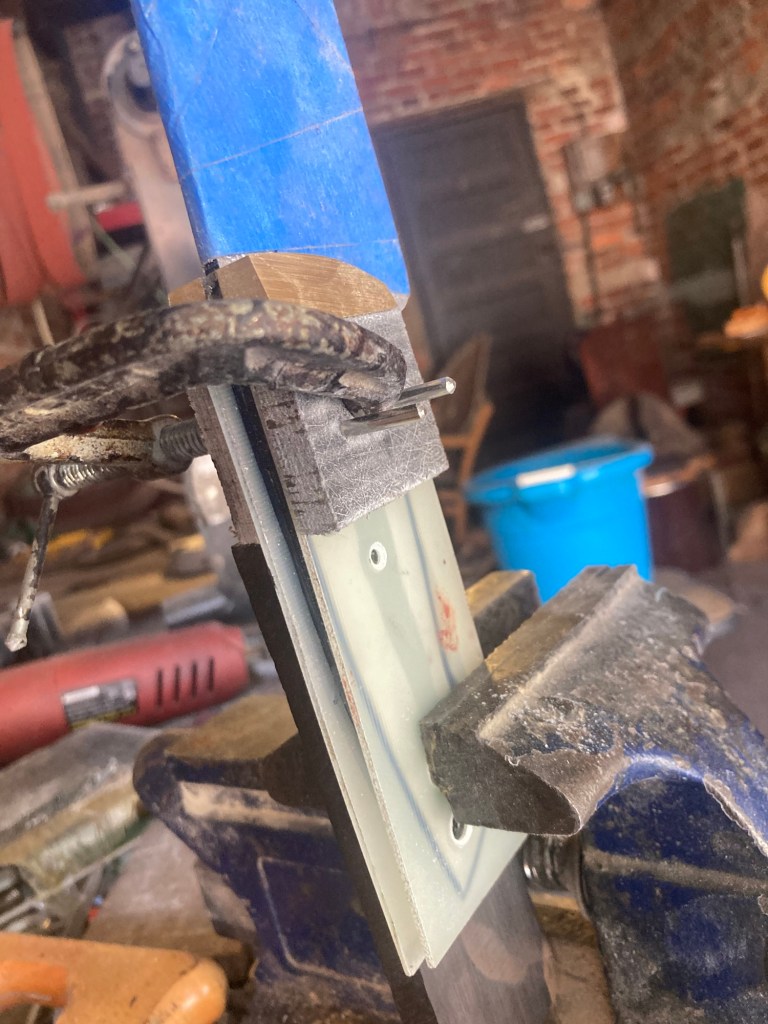
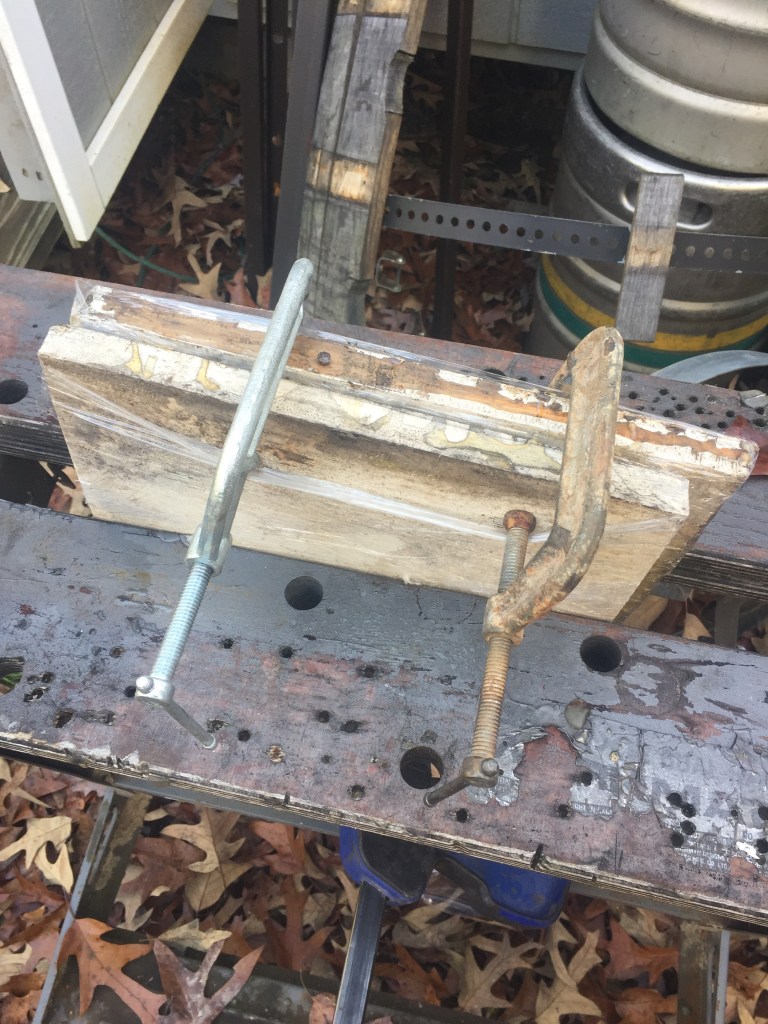
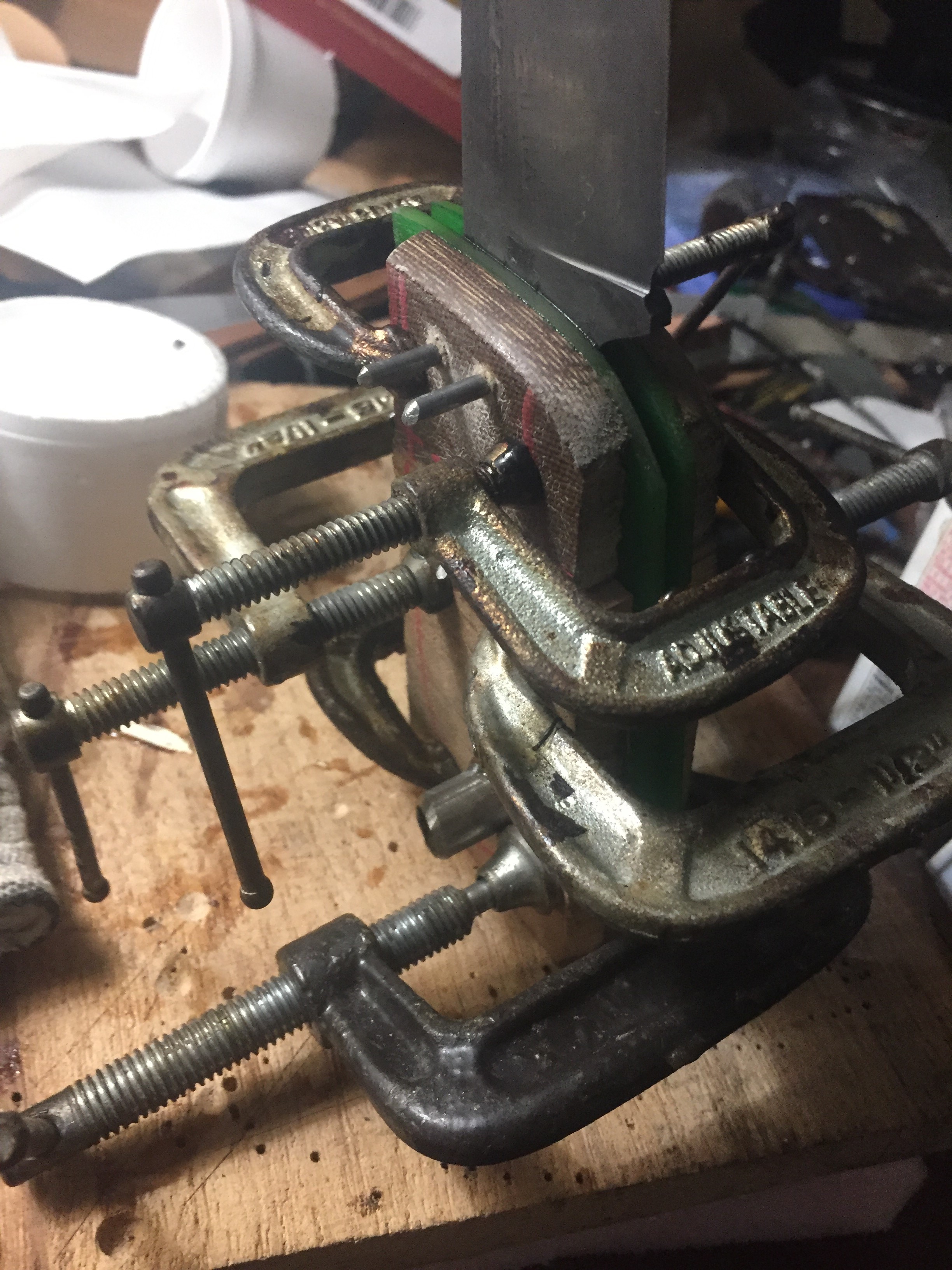
All glued up and clamped
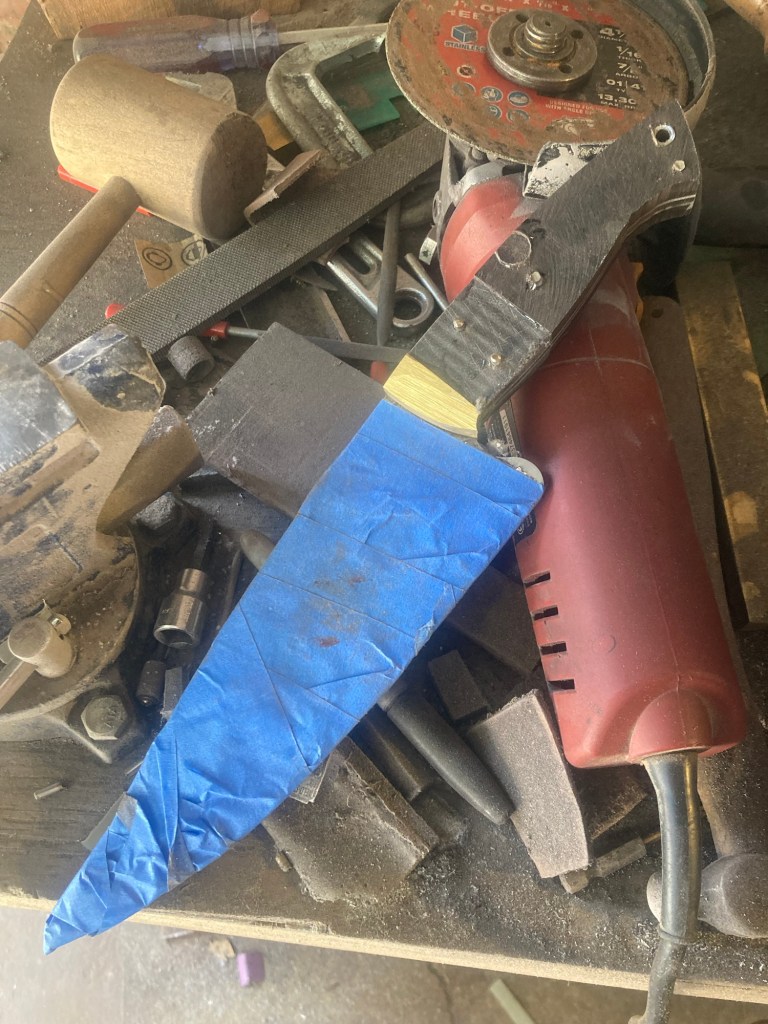
Profiled
Shaped
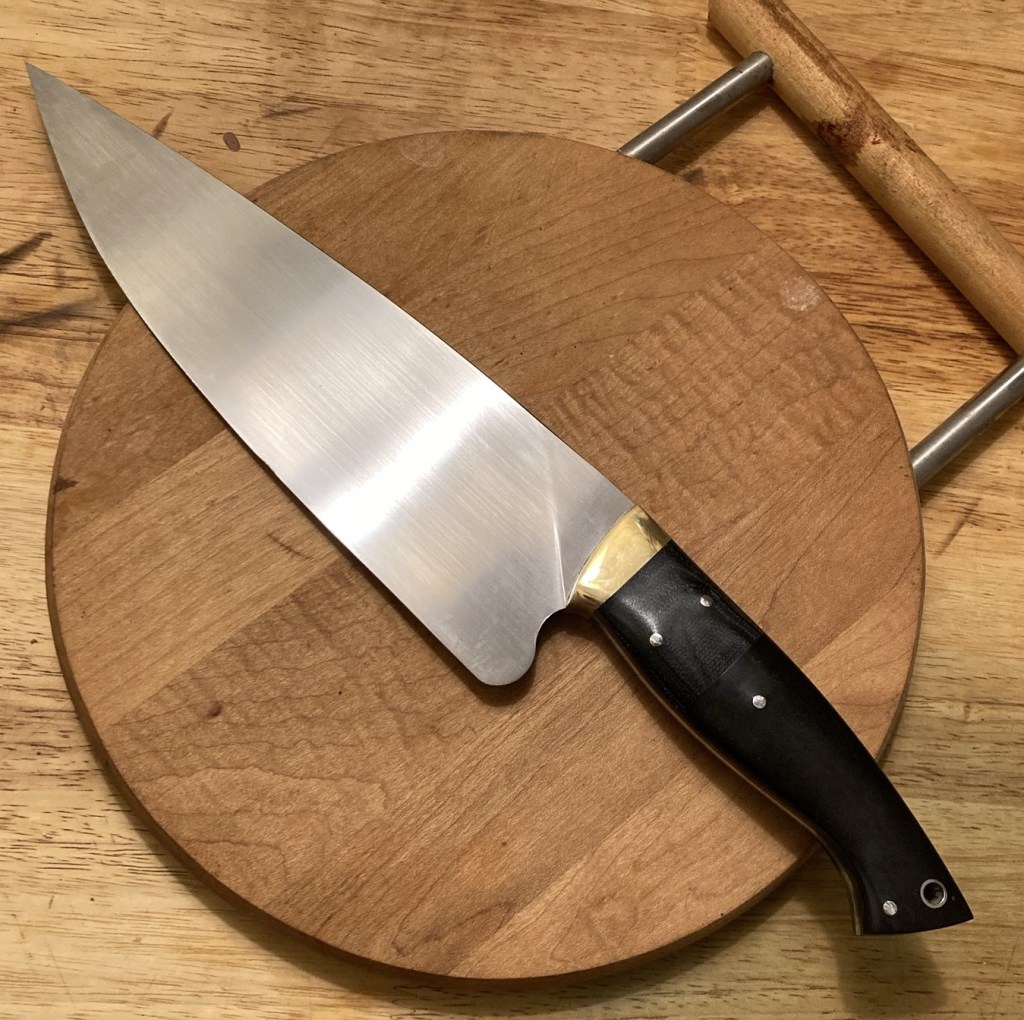
Finally started to see what this guy looks like
Depending on the light you can catch glittery bits of the chiffon
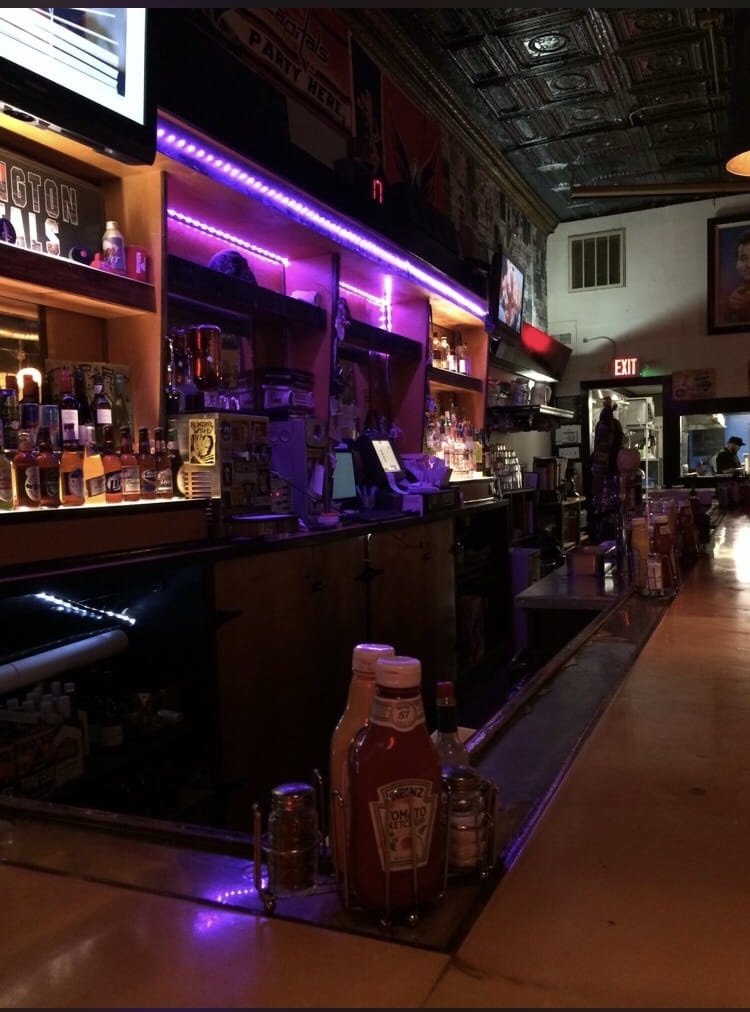
About a dozen or so years ago I found myself at a dive bar on a Friday night. Richmond used to have a handful of these types of establishments, adjacent to the hardcore and punk scenes, and personned by a crew of heavily tatted and pierced ladies and gentlemen. This particular establishment was called Empire, and it has long since closed and been replaced by some non-threatening eatery where the local college students can go with their parents and not have to worry about being vomitted on, kicked in a mosh pit, or getting a contact high. But back in the day this was a place to go for cheap PBR, colorful characters, hardcore shows and a sincere and unapologetic vibe. It was one of my favorite places.
Photo credit: Parker T. via YELP
I can’t remember exactly why I was at Empire, but as I was a single dude in my late 20’s there isn’t a very good reason to examine it too closely. Two good friends of mine ran a hip clothing store up the street where they had contracted me from time to time to do some building work. They had parties there regularly and they had cute friends and I’m pretty sure that’s why I was there.
I slid into a seat at the bar and started throwing back shots of Fireball. My friends have given me shit about it for years but Fireball is the light beer of whisky (I am using the term ‘whisky’ very loosely, but that’s what it says on the bottle and there are strict laws regulating these sorts of things). You can’t really drink six shots of Jameson in forty-five minutes and still be on your feet but you can with Fireball, though you might end up in jail. A few years ago, I was in New York for some gigs and we all went to this trendy little bar in Manhattan. After trying to order a shot of the Fireball I received a look of such sheer repulsion from the bartender that one might be led to believe I had horse genitalia growing out of my forehead. They didn’t even carry Fireball at this establishment, because why would a trendy little bar in Manhattan even consider Fireball, so I DID end up drinking Jameson but that is a story for another time.
Anyway, I was sitting in this packed bar on a Friday night, desperately trying to chat up this baddie sitting next to me. All I could get out of her was that she worked in banking. She probably saw all the Fireball I was drinking and decided I was one red flag too many, which I undoubtedly was. As that conversation was tanking, someone slid into the seat on the other side of me. She was an African-American lady, with dreads, tattoos, piercings, and a gold cap on her front tooth. She asked what I was drinking and I told her Fireball, of course. She ordered two and we drank them. Then she told me I looked like I needed a haircut and handed me her business card. Then she paid her tab, got up and left. Wait, what?
……
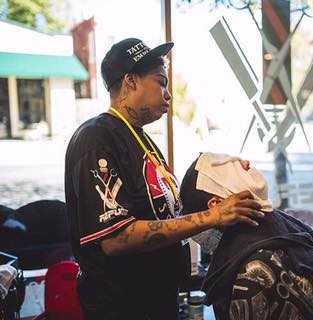
The next morning I showed up to the address on her card, a barber shop, around 11am. There was a pool table in the middle of the place and a couple big screen TV’s, a fish tank, and a French bulldog just walking around. The tatted, pierced, and dreaded lady’s name was Dot and this was her shop. I’d gotten decent haircuts over the years but I’d never been to a barber. I told her to make me look good. She sat me down and faded me out. I had a hot towel and straight razor shave. I walked out of there fresh as hell. I had no idea I needed that in my life.
Photo credit: Dot Reid
After that I got really curious about the nature of dressing well and looking your best. There are countless style guides, blogs, magazines, and tv shows on the subject and numerous little unspoken rules that come from several millennia of human existence. But rarely does anyone explicitly say why this is something one might want to pay attention to.
Presenting oneself well is a way of adding a bit of structure to a deeply unstructured world. There isn’t a whole lot one has control over in this dumpster fire of a world but a level of groomed-ness frees up some mental and emotional real estate to better handle whatever silliness gets thrown one’s way. It’s a whole lot easier to manage your life when you feel good about yourself.
And I had reason to give this a shot because there were some really rough years in there. There were the normal adult disappointments- being passed over for jobs, losing jobs, losing people, and the inevitable professional stagnation that comes somewhere between your post-college years and middle age. For many years my main goal was to be able to walk out the door in the morning feeling confident that I could weather whatever fresh hell the world was going to throw at me on any given day. I found the least I could do was have a decent haircut.
And to be perfectly honest that shit helped a lot. When I was working for rock and roll tours and I had to talk to important executives and celebrities and rock stars, I found my own individual style to be a sort of armor against the insane personalities and impossible tasks I had to deal with. I had one tour manager tell me that I did my job with grace, and that was one of the highest compliments I’ve ever received. A few years ago I found myself playing in horn sections for fancy wedding bands. I would go see Dot, put on my off-the-rack black suit from Target, and go to some country club outside of DC to play a wedding reception. The door would be opened for me- ‘right this way, sir’ the valet would say, and I would go do my job. I would wager that I was the brokest person on the premises at these functions.
On one hand maybe these are superficial and trifling things to consider in the grand scheme of it all. On the other hand, we live in a dynamic and physical world with millions of people with individual minds and individual biases all operating in a complex and volatile society. As a regular moron moving through said world, I find things go a bit easier when I can find a bit of terra firma in how I feel about myself.
So I go see Dot every couple of months. I never really tell her what to do: she just clips away the hair that doesn’t look like me and polishes up the rest. And I leave her shop feeling a little bit more like myself and a little less uncertain about everything.
Photo credit: Dot Reid
Recently she said she’d like a knife. I designed something slim and made a sheath that clips into the front pocket. I did a handful of them. I call them the Dot.
I like to cut a bit of jimping on the spine for some extra thumb grip:
Scribing where the cutting edge will ultimately be.
Grind the bevels, the swedge, taper the tangs, and drill the rivit holes:
Fire in the hole:
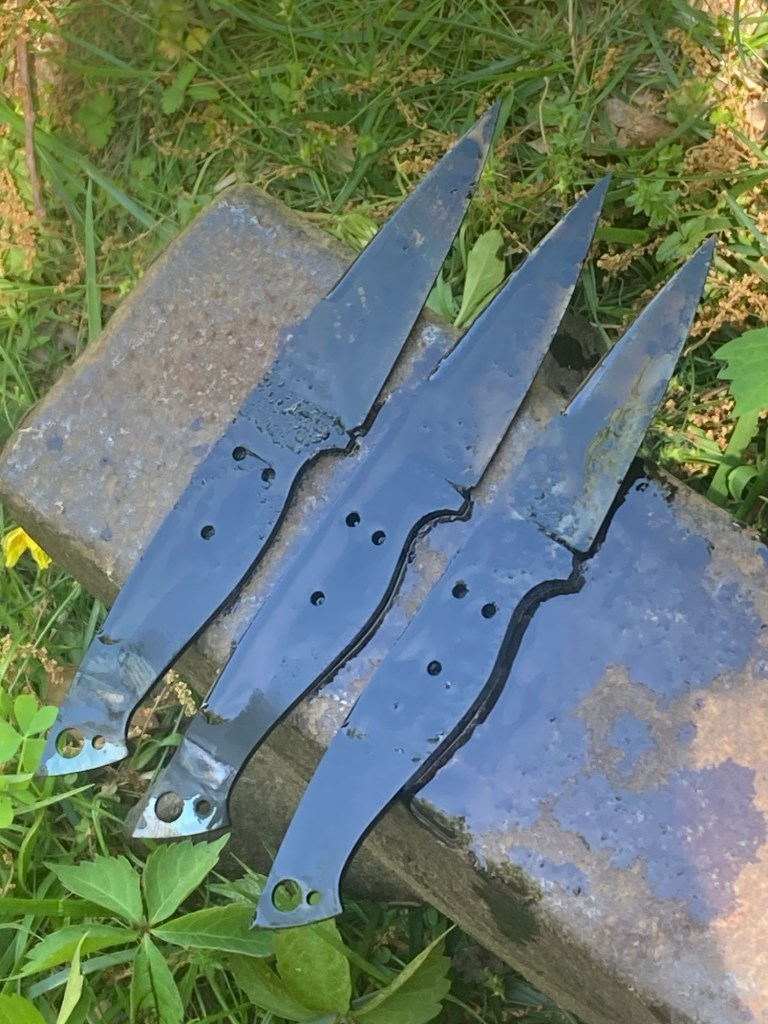
Quenched:
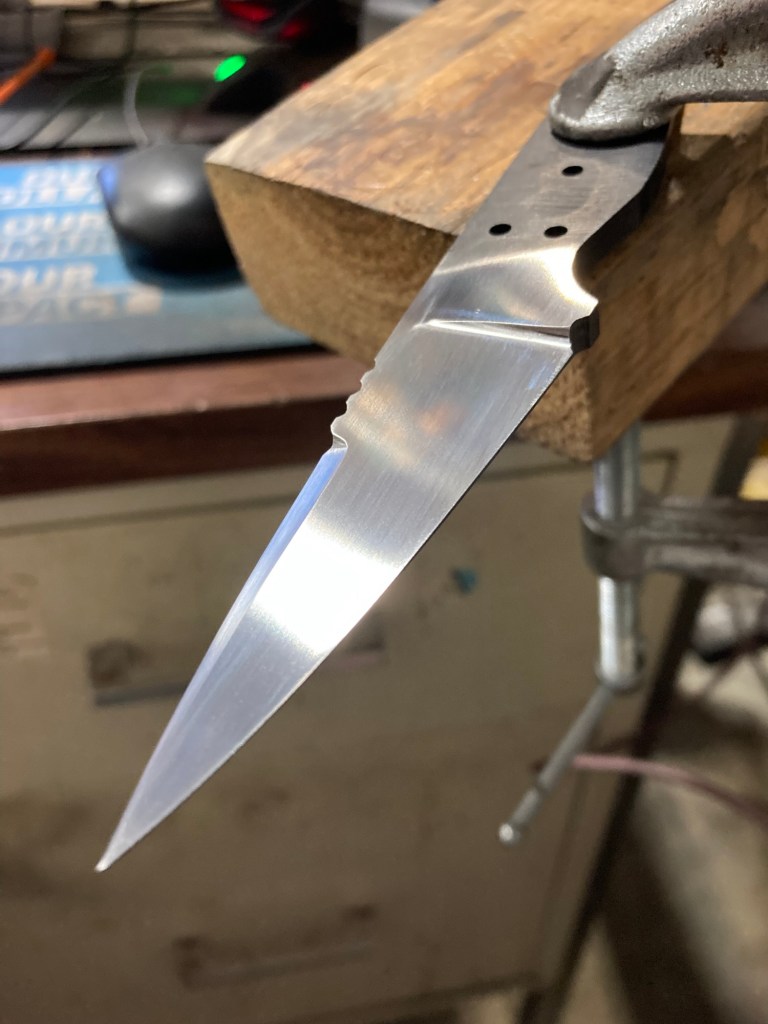
Polished:
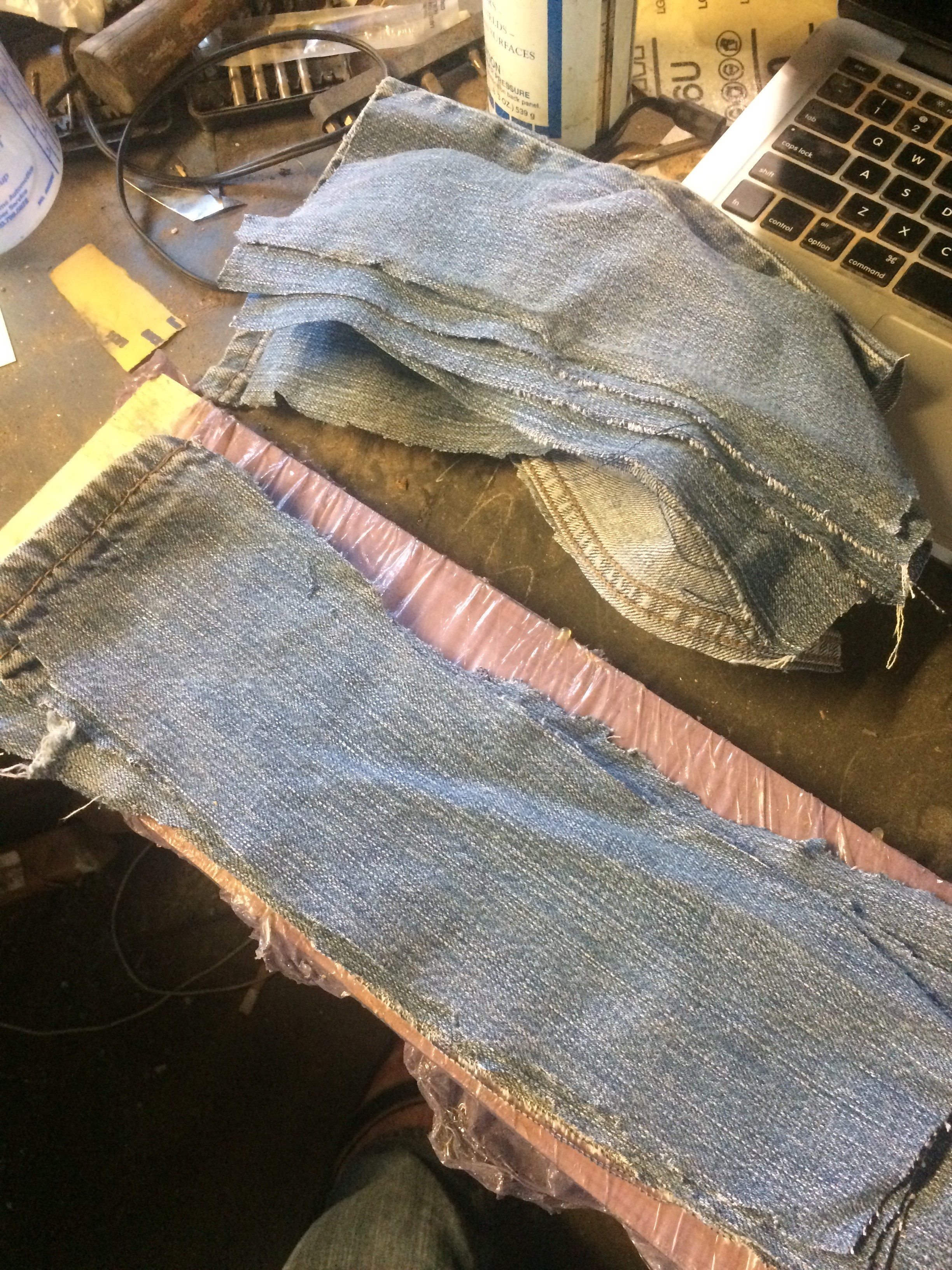
For the bolster of the handle, I made some material out of an old pair of blue jeans:
Trim to size:
Grain of the material looks good:
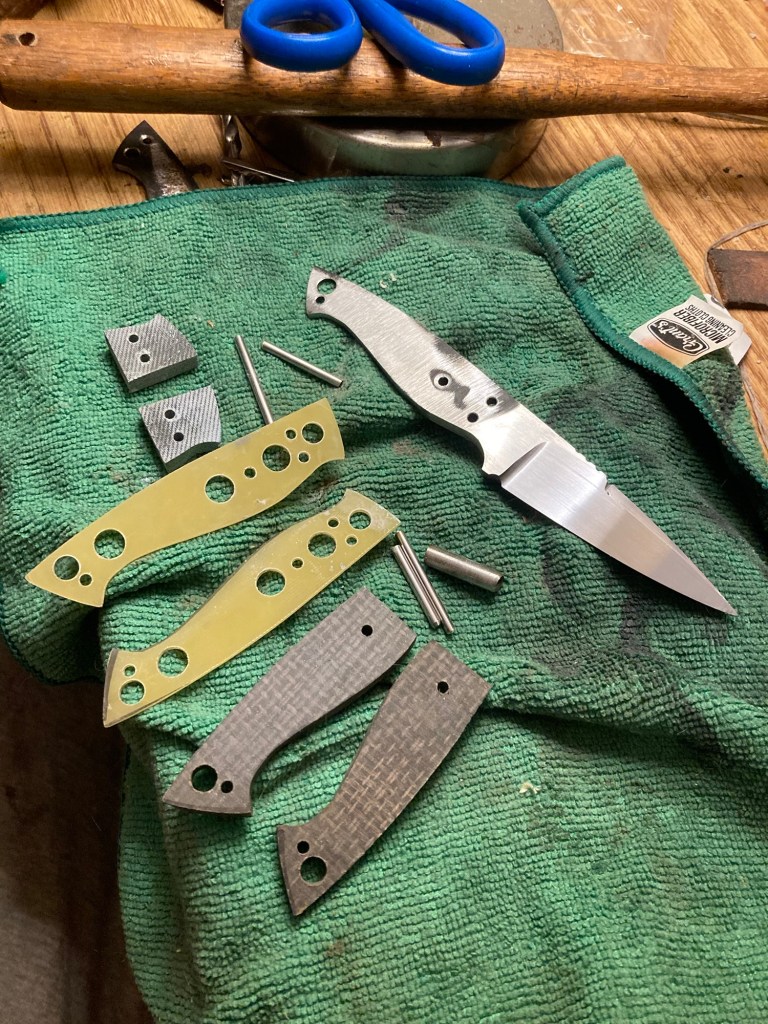
Getting all the handle pieces fit up and drilled. I had some burlap micarta lying around so I used that for the main handle:
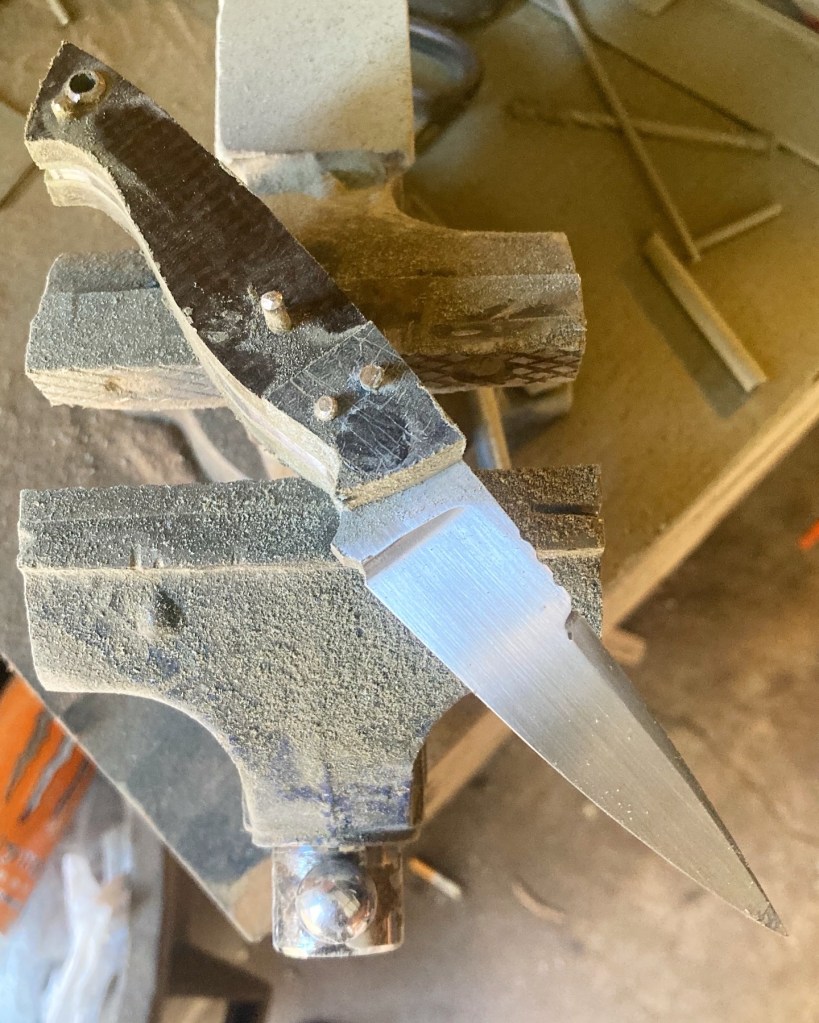
Remove parts you can’t hold:
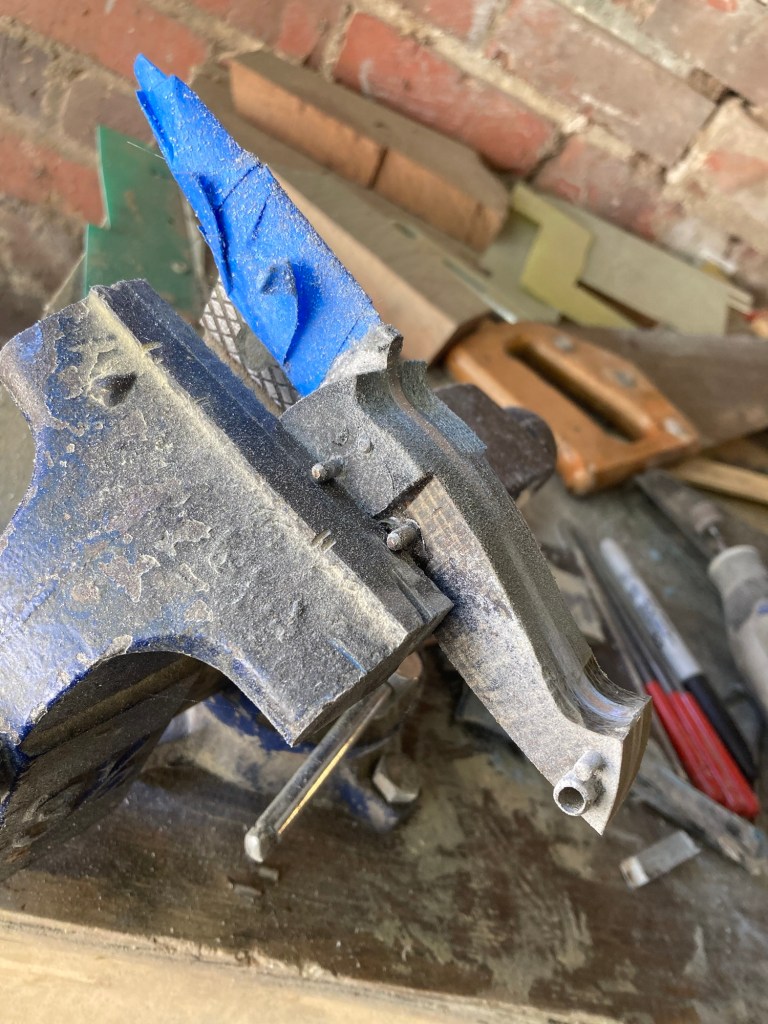
All fit up and shaped up, ready for epoxy:
Clean up after epoxy cures:
Sand forever, then polish. Here it is at about 220 grit. We will take it up to 2000 grit and then polish:
The leather work- you have to do all the stitching and shaping first, then you soak the whole thing overnight and wet form the knife in the sheath:
Sheath on left has been wet formed. It takes forever but it gives a good fit, plus it can hide unwanted blemishes in the leather you may have made in the previous steps.
The Dot:
Dot ended up liking her knife so much that she got it a tattoo of it on here face:
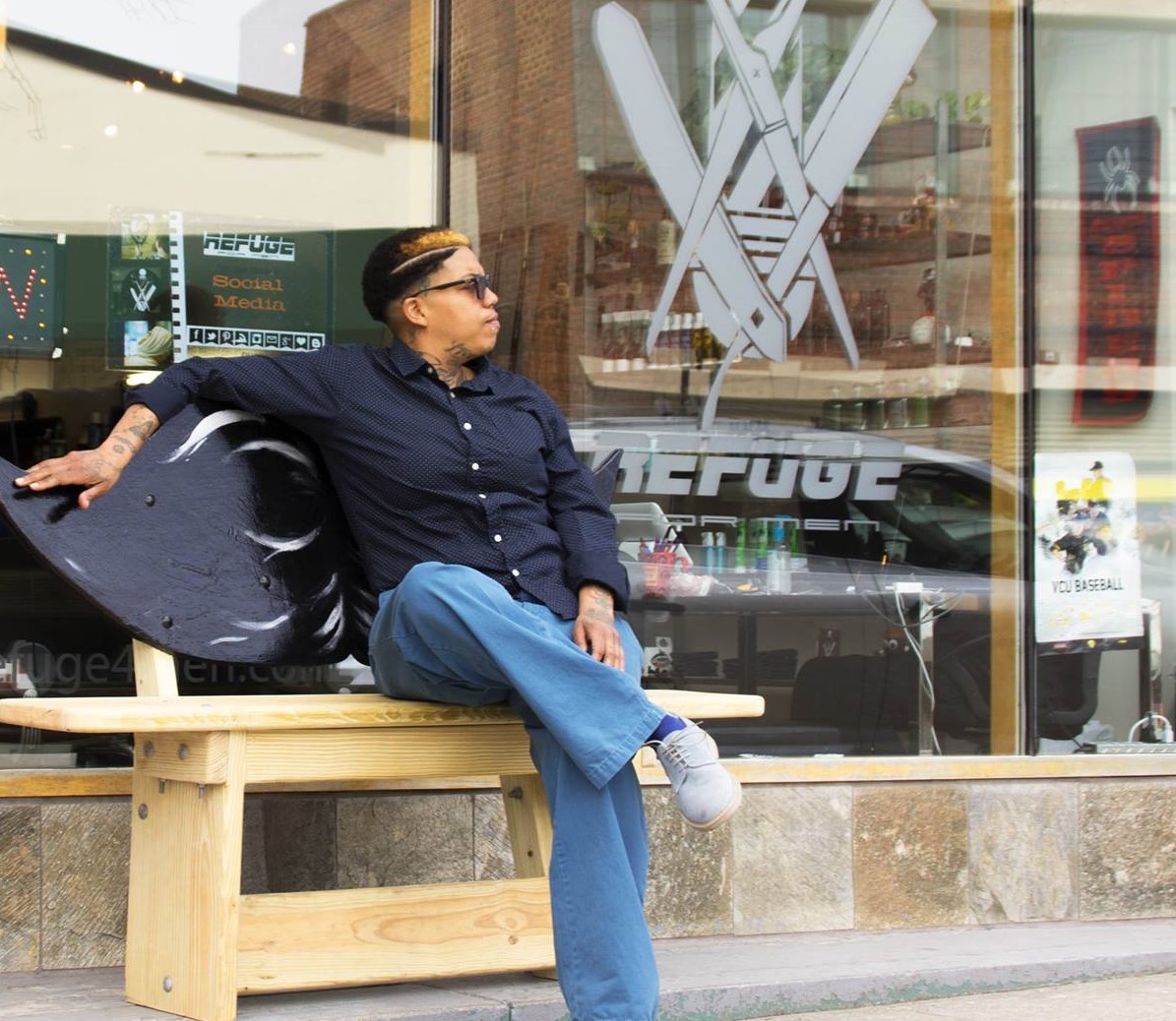
If you are in the Central Virginia area, you should go see Dot at Refuge For Men. Tell her the Viking sent you, she’ll get you sorted.
“How we fall into grace. You can’t work or earn your way into it. You just fall. It lies below, it lies beyond. It comes to you, unbidden.” ― Rick Bass, Colter: The True Story of the Best Dog I Ever Had
I wouldn’t have ever really considered myself a dog person, not really. There is an appreciation and respect for all animals, both wild and domesticated, and whatever creature I meet I try to let them know that I see them- a deep namaste and acknowledgement of being. But as far “being a dog person”… I’m just not sure I have whatever that is.
A couple of years ago my girlfriend said she was thinking about getting a dog. I told her don’t do it. My only reasoning was that we were all very busy doing interesting and challenging work, her kids were getting older and doing more things, and everyone was tired all the time. I figured it would probably be best if we held onto every ounce of emotional energy that we could.
In spite of my reasons, which themselves came from a lovingly practical and pragmatic place, she did not listen to me. This lady is one of the most unfailingly capable people I know, a wonderful mother, with the uncanny ability to make everything around her better than it was before, even on her worst days. It was no surprise when she brought home a several-month-old rescue puppy. This dog was a lemon drop beagle mix with the biggest ears I’d ever seen. She seemed to be equal parts fruit bat, luck dragon, and polar bear.
The local animal league had told my girlfriend that this dog and her sister had been found abandoned in a barn. The puppy’s sister had some sort of severe muscular dysplasia and had found a home. My girlfriend’s puppy had a little bit of this, but much less so. She moved around fine but a closer look showed her front half didn’t quite work together with her back half.
When I met her she was still adjusting to her new home. She was terrified of doorways and dinner plates. She didn’t want to leave whatever room she was in and when she did she scuttled through like something was going to get her. If you were to put down a plate of puppy chow in front of her she would back away as if it were going to bite her. In spite of all of this she was a deeply loving and affectionate dog which was amazing considering the shit sandwich of a beginning she had been given. At that moment, shortly after meeting this dog, I felt something soften toward this wonky little barn dog that was part fruit bat, luck dragon, and polar bear; this sweet little creature that I told my girlfriend not to get.
Over the next few years I would tell this dog that I was sorry I told her mom not to get her. She had grown into a rather stunning animal, and her front half worked together much better with her back half. Doorways weren’t too much of a problem though her old nemesis the dinner plate still gave her pause. I found myself very attached to her and, though she was very much a lady dog and a product of my girlfriend’s deep nurture, I would find her to be the loving presence that I didn’t know I needed. The dog just loved everybody.
A couple of years ago I had a table saw accident that left me needing reconstructive hand surgery. It was incredibly stressful and emotionally grueling. All of my work and projects and everything I was so busy with would come grinding to a halt for the next few months. My girlfriend moved me into her house for a week and took time off work- thankfully the kids were away at summer camp. My girlfriend’s dog never really left my side. I remember the dog licking my gimpy hand every so often and then pressing in to me and going to sleep, which prompted me go to sleep. I don’t remember much of that week, except my girlfriend smiling and her really sweet dog. It sounds really silly, and perhaps it was the massive amount of post-op hyrdromorphone I was prescribed, but I figured I should probably take the example of the dog that I told my girlfriend not to get and find a way to dig in a little deeper with her and the kids.
Connection can be a struggle and there’s no manual on the right way to go about it. Sometimes it takes a sweet dog after a traumatic event to help you see what you should be doing. Part fruit bat, part luck dragon, part polar bear (everybody is good and healthy, including my hand and the dog I told my girlfriend not to get). If a responsible adult in your life tells you they want a dog, you should tell them to go right ahead.
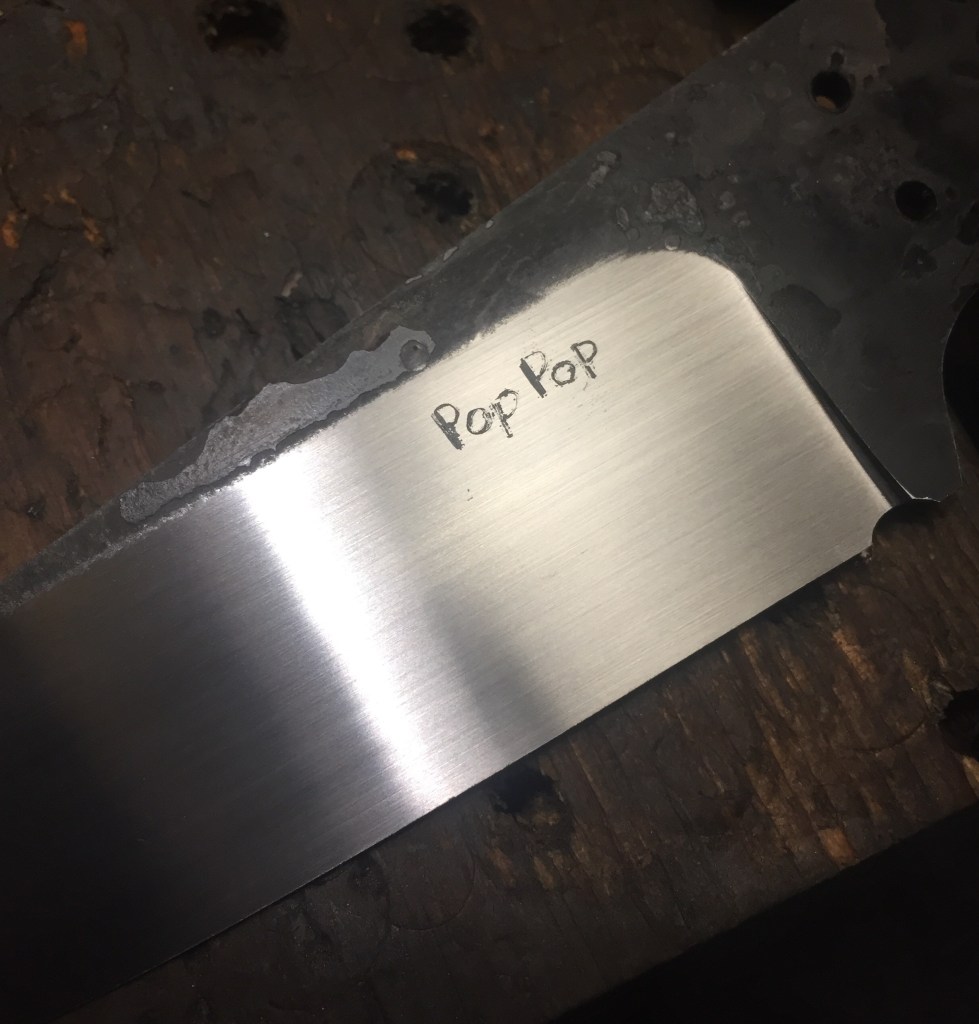
This knife was commissioned for a retired gentlemen who trains English Setters for hunting. Hunting Dogs, or Gun Dogs as they are called have been around for centuries. Particularly, the training of Setters can be traced back to Robert Dudley, the Earl of Leicester in the 1500’s. It was commissioned by a loving daughter, and has “Pop Pop” etched on the flat of the blade from his grandchildren.
A quick sketch.
Removing material in the handle make for a more balanced blade.
Everything profiled out. Being that it is made from thinner stock, it will go in the forge as is to prevent warping during hardening.
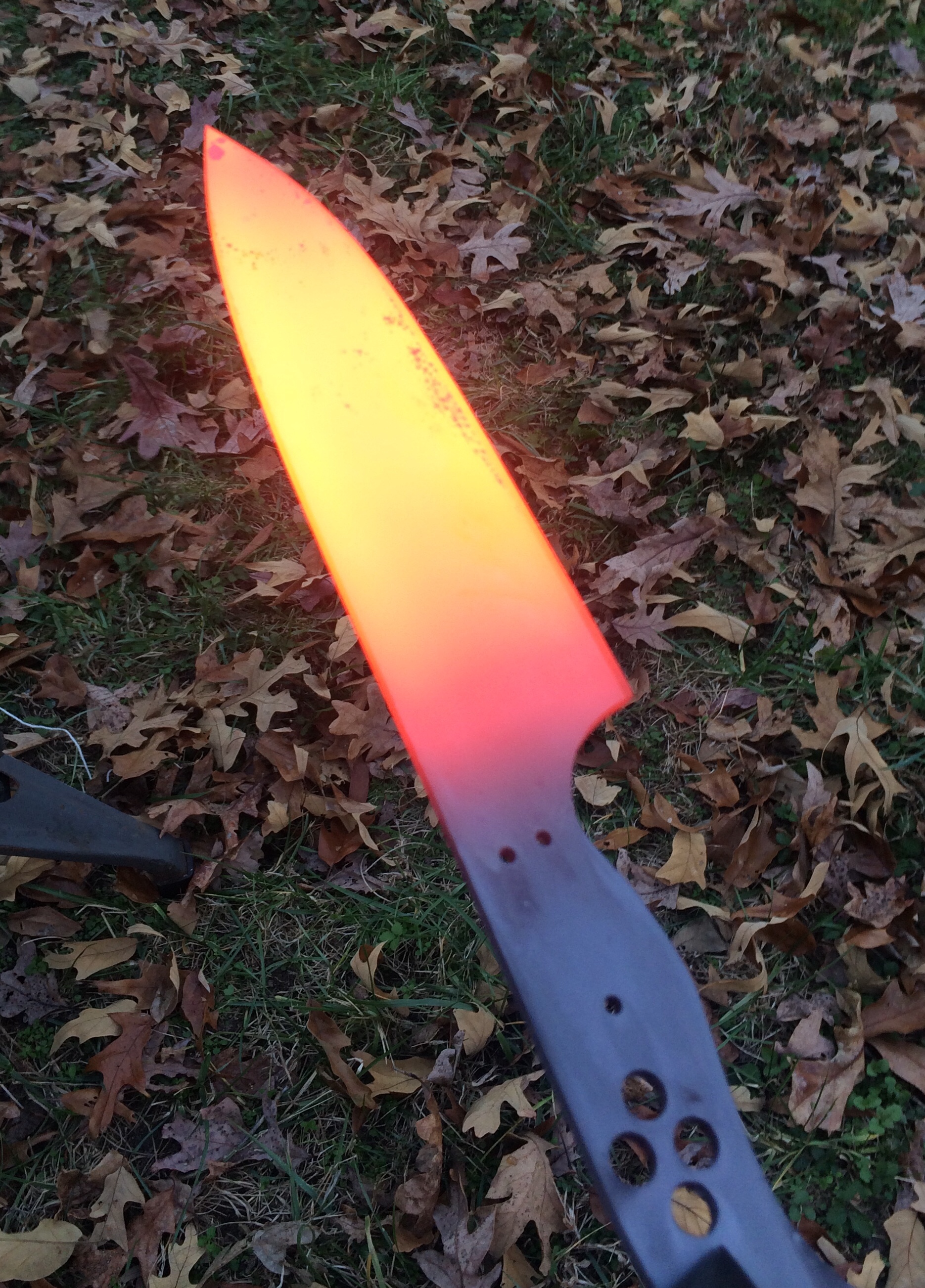
The blade needs to come to critical temperature, which is around 1500F. By the colors you can see that it is almost there.
After the quench. There wasn’t warpage but I still clamp it in the vise at the areas where it would typically bend. When it comes out of the oil it is around 300-400F, and during this time any major warps can be corrected before it cools.
The bevels have been ground in and machine finished to 120 grit.
This has been hand sanded up to 600 grit, finishing with vertical pulls. This will get etched in acid to provide a scaffold for the patina to build, and also give it a more rustic look.
Electro-chemical etching using nail polish, some salted vinegar and a nine volt battery with some alligator clips. This allows me to essentially burn text onto the steel.
A pair of Carthartt work dungarees, probably about 10 years old.
Instructions for Care:
Your knife is made of high carbon steel, which means it will take a keen edge, hold it a good while, and will be easy to sharpen. It has been etched in acid and shipped to you coated in food safe mineral oil. It will stain and patina and tell the stories of the places you’ve been. Be sure to keep your knife clean and oiled when not in use. Should you find any unpleasant surface oxidization you can remove it easily with a lightly oiled bit of 0000 steel wool, or a coarse rag with a bit vinegar on it. She is built to be used, so don’t be shy about getting her dirty.
You can read more about Gun Dogs here, as well as find more resources on this very old tradition
“What is success?” poses the Copt. “It is being able to go to bed each night with your soul at peace.” ― Paulo Coelho, Manuscript Found in Accra
As a grown person, you are rarely ever told that you’re doing a good job. Many times we don’t have a frame of reference for how we’re doing until we’ve screwed something up and gotten yelled at…or fired. Or dumped. Or sued. Or arrested.
As a result, most of us move through life feeling like we might not be doing such a great job. While uncomfortable, this is not entirely unhealthy because it helps to cultivate a growth mindset. If you are cognizant enough to know that you might not be doing so well at whatever it is you are doing, then you are probably aware that this means there is room to grow and get better.
Ironically, the people thinking this way are probably doing just fine. Self-doubt in large quantities can be debilitating, but small doses can be a great tool. In questioning what we are doing, we have a chance to grow.
After I got out of music school, I did my best to make a living as a musician. That lingering bit of self-doubt was fuel that helped keep me sharp and at my best. I wrote music for tiny indie films, did instrumental arrangements for church Christmas programs, played on recording sessions, and took any gig I could get. Many of the best paying jobs were church gigs, especially around Christmas and Easter. I am not religious, and probably an excellent candidate for bursting into flames upon crossing the threshold of any religious building. That being said, the people are always kind, the checks always clear, and there is about a thousand years of badass sacred music written by the rockstars of the classical music world. This is partly why big churches typically end up with killer instrumental and choir directors. They are usually competitive jobs.
One Easter I got a call for a job at a massive Baptist church about 20 miles outside of the city. On Easter Sunday I showed up for a small rehearsal before playing two services. I was the only hired musician- everyone else was from the congregation or community. Immediately it was not good. The instrument parts were in different keys and the director didn’t know the cues for the giant video projector and how our music was supposed to line up. Easter is the Woodstock of church music and this was a mish-mash of cacophony. As a professional, this situation feels like being on a burning ship with no way off. Two services and four hours of this for a congregation of a thousand and no way to fix it made me want to rip my hair out.
Nobody else seemed to notice or care- and ultimately that was ok. Because in the end, voices were raised, offerings were offered, tithes were tithed, and the faithful answered the call. I got paid and went home. The takeaway, besides being able to pay my health insurance, was that, while it’s important to do the best you can, sometimes the best thing you can do is let things be what they are and sleep well at night.
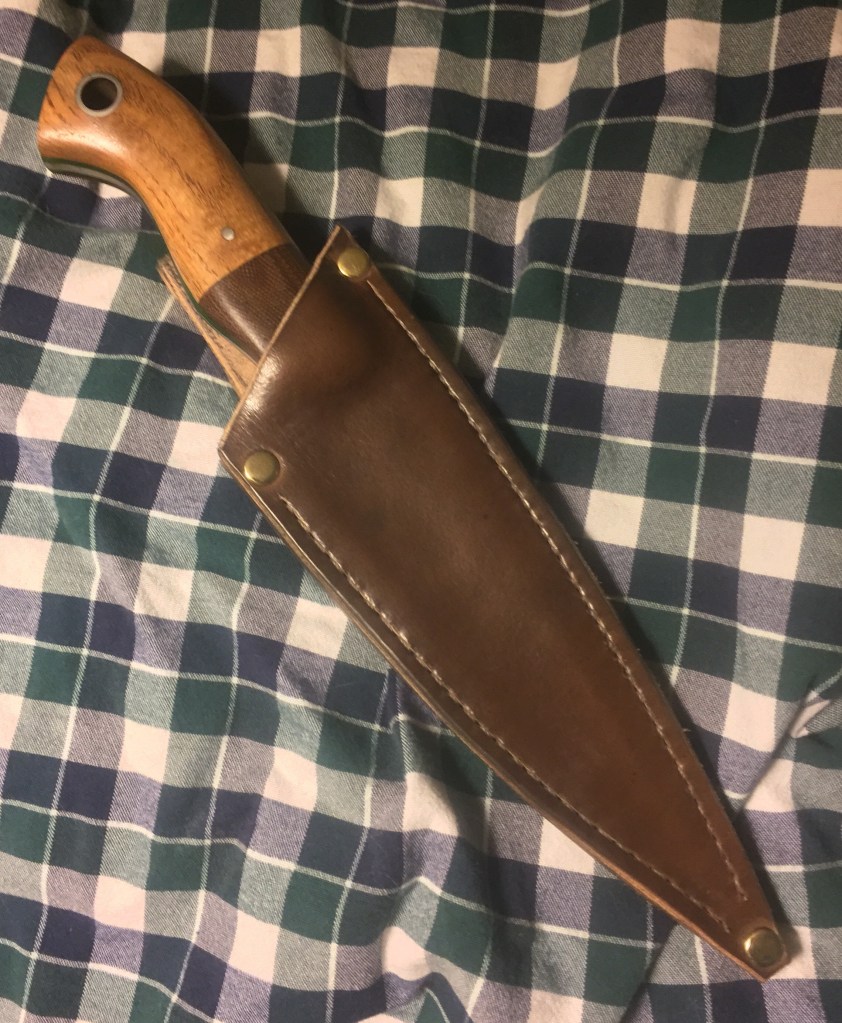
This knife was commissioned by a lady I went to college with for her husband, a former Cavalier Scout in the Army and a new father. I don’t have children but I imagine being a new father, where there are so many things out of your control, can be at odds with the capable nature of a military mindset. The intent of this knife, the Scout, is to put some of that at ease. I tried to capture that duality by marrying those two parts together. The handle was made from an old piece of Black Walnut trim molding- solid, seasoned, and strong. The bolster was made from their child’s blanket, which required a lot more care and work. The blanket contained a bit more uncertainty because I didn’t know how it would turn out till it was finished. Peppered in the blanket was one of the gentleman’s old Boy Scout badges to act as a guardian to that uncertainty.
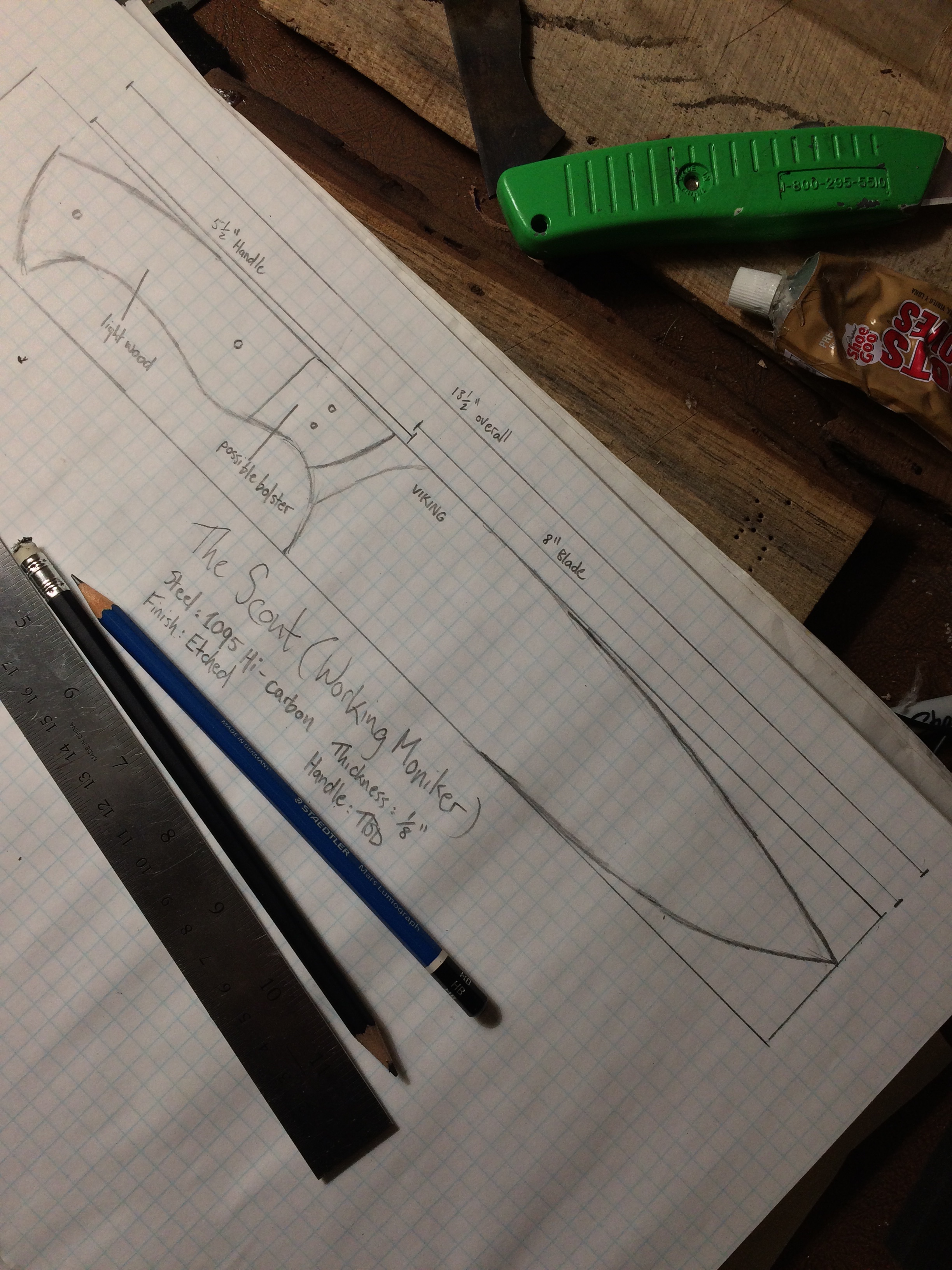
The Scout starts with a drawing:
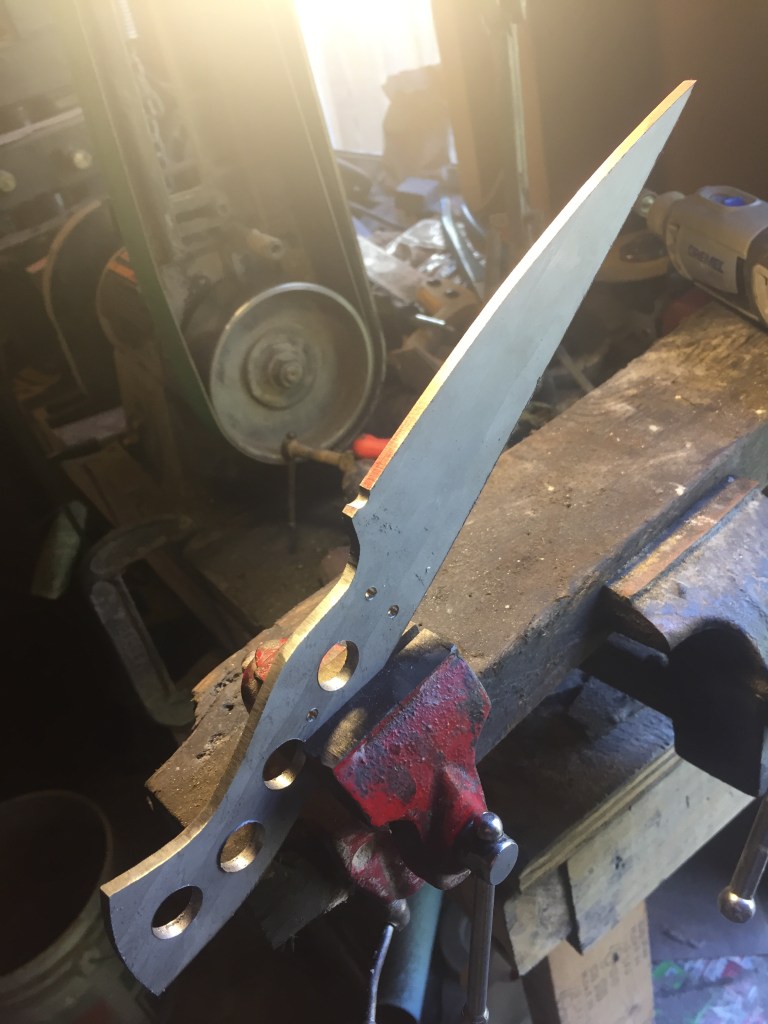
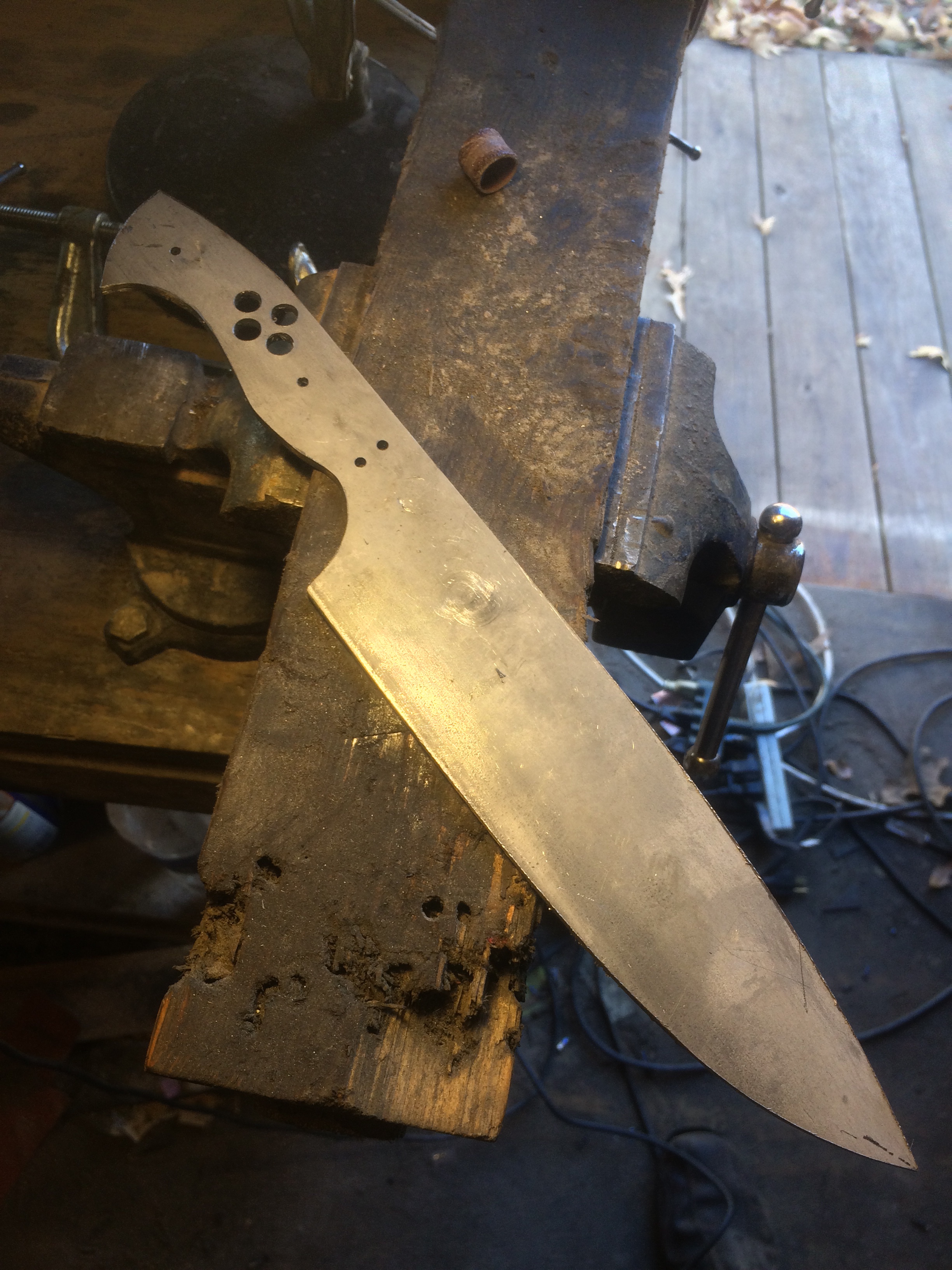
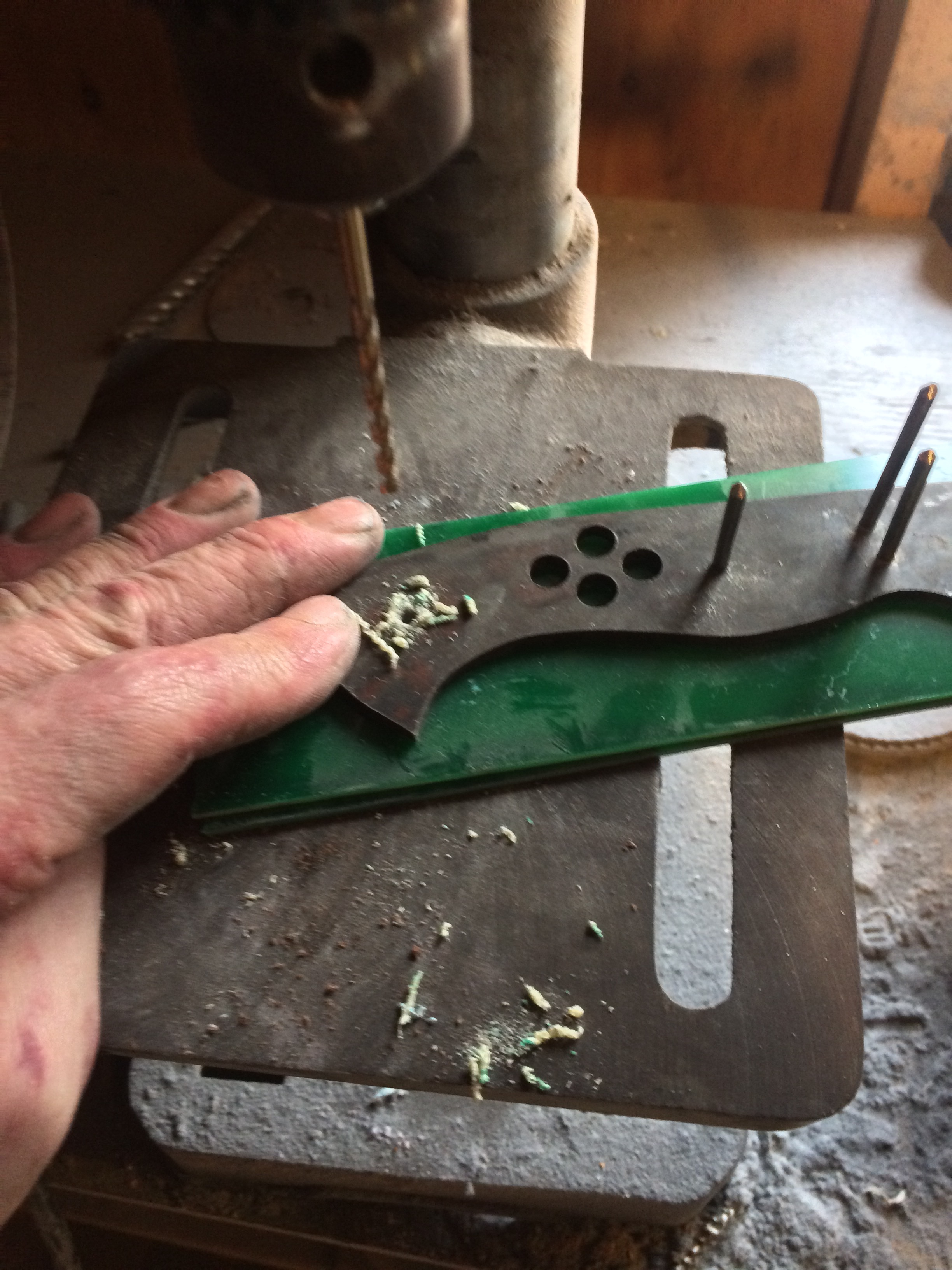
Profiled and drilled. The four larger holes reduce weight to improve balance:
Centerline scribed on the blade. This is where the cutting edge will be:
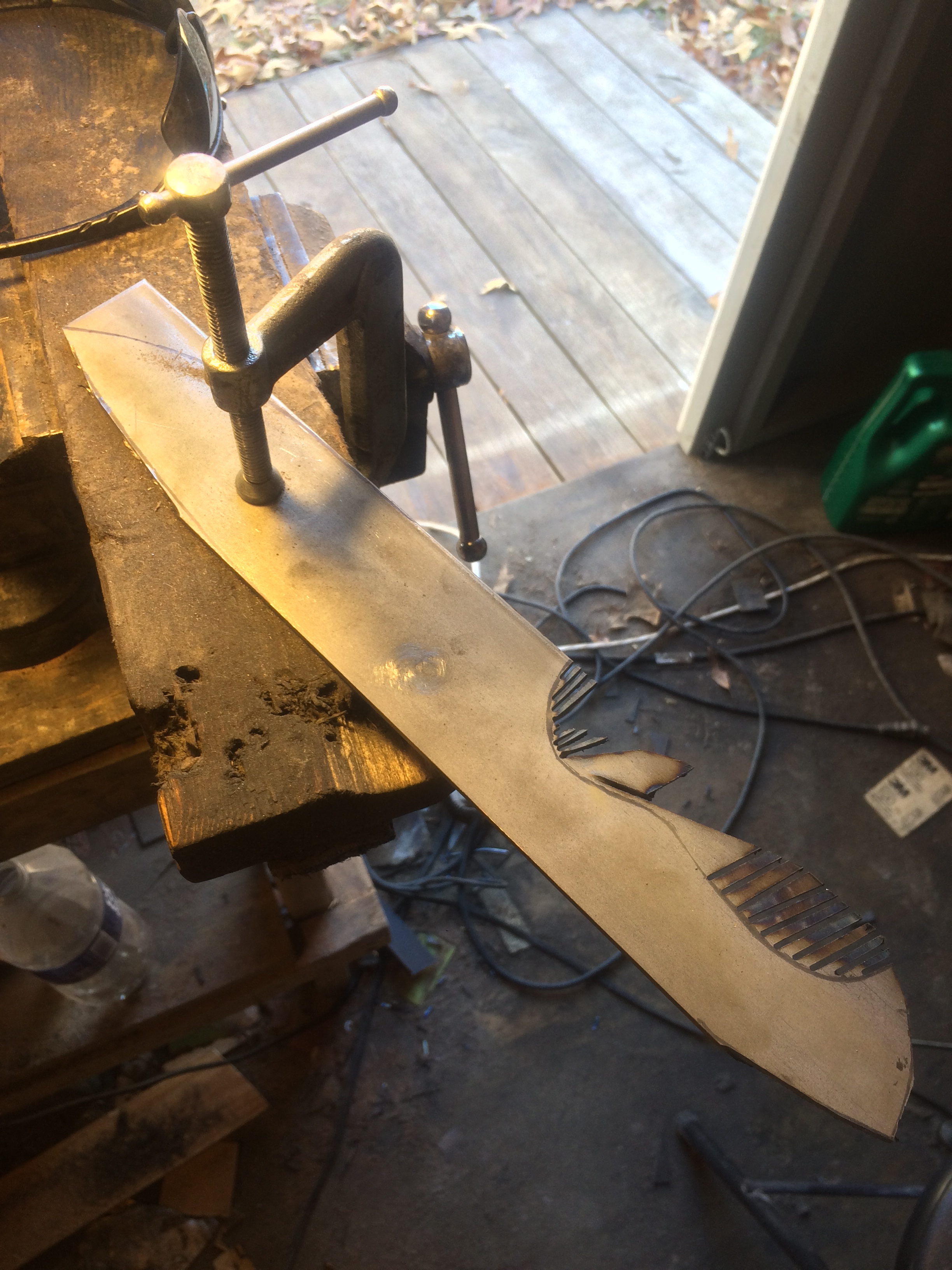
The whole thing gets hardened before grinding. This helps prevent warping:
….and despite our best efforts, warping does occur. Since the blade is still hot from the oil quench we have some time to correct it:
Tempering- this gives the blade flex and bend, while also relieving stress incurred during the quench:
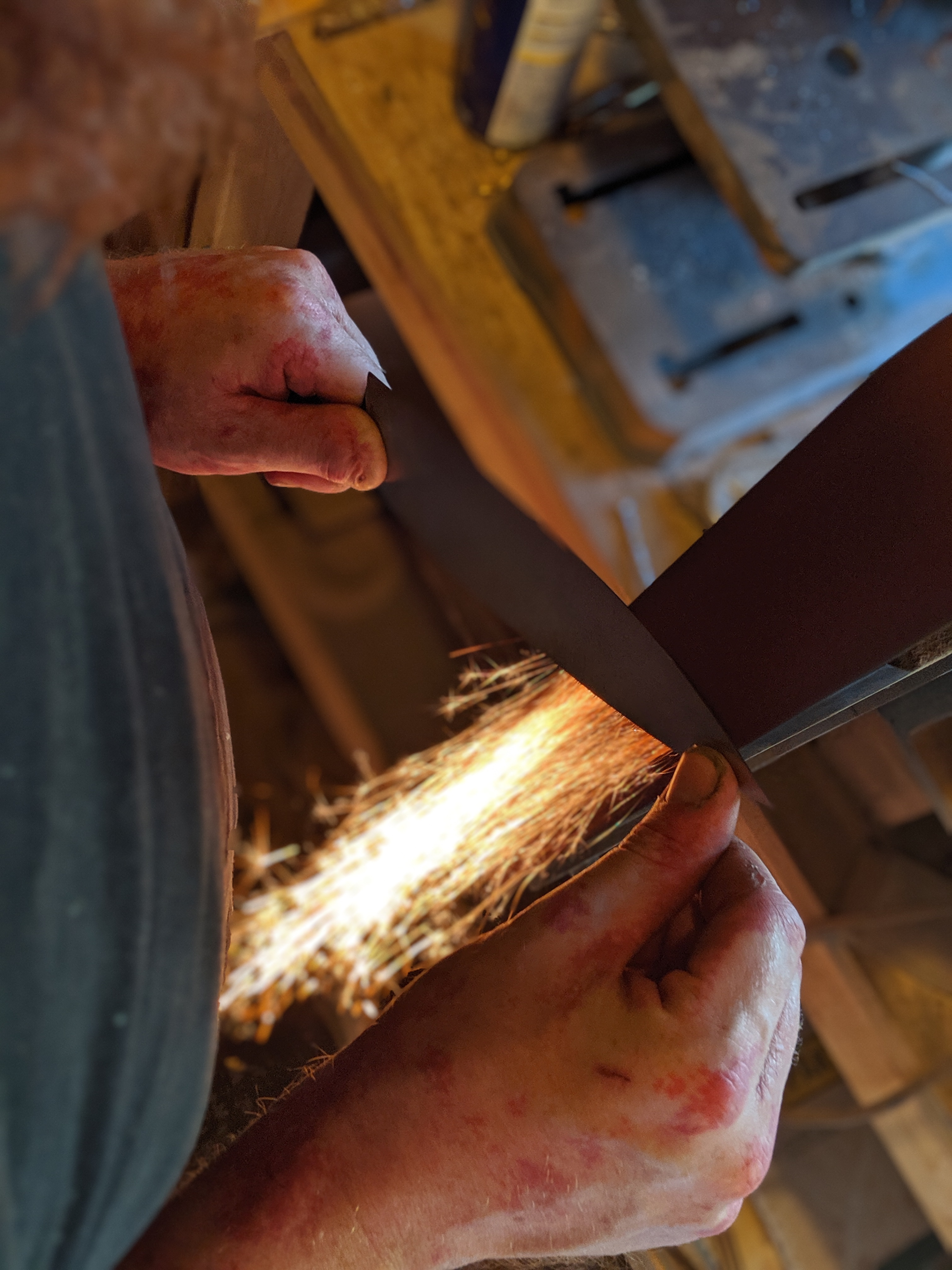
Grinding the bevels:
A full flat grind at 36 grit:
Removing the machine marks:
Satin at 320 grit. This took about three hours of handwork. Now on to the other side…
Electrochemical etching of the makers mark:
A baby blanket. I like the stripes. This will become the bolster.
It wouldn’t be a scout without a Boy Scout Badge. This particular badge shows that the younger scout has demonstrated proficiency with and is allowed to carry a knife:
The blanket is cut into equi-sized pieces and the badge into slivers. Everything will be layered with fiberglass resin and smashed together:
After the resin has cured:
A cross-section of the material and you can see the scout badge slivers. This has become one piece of material:
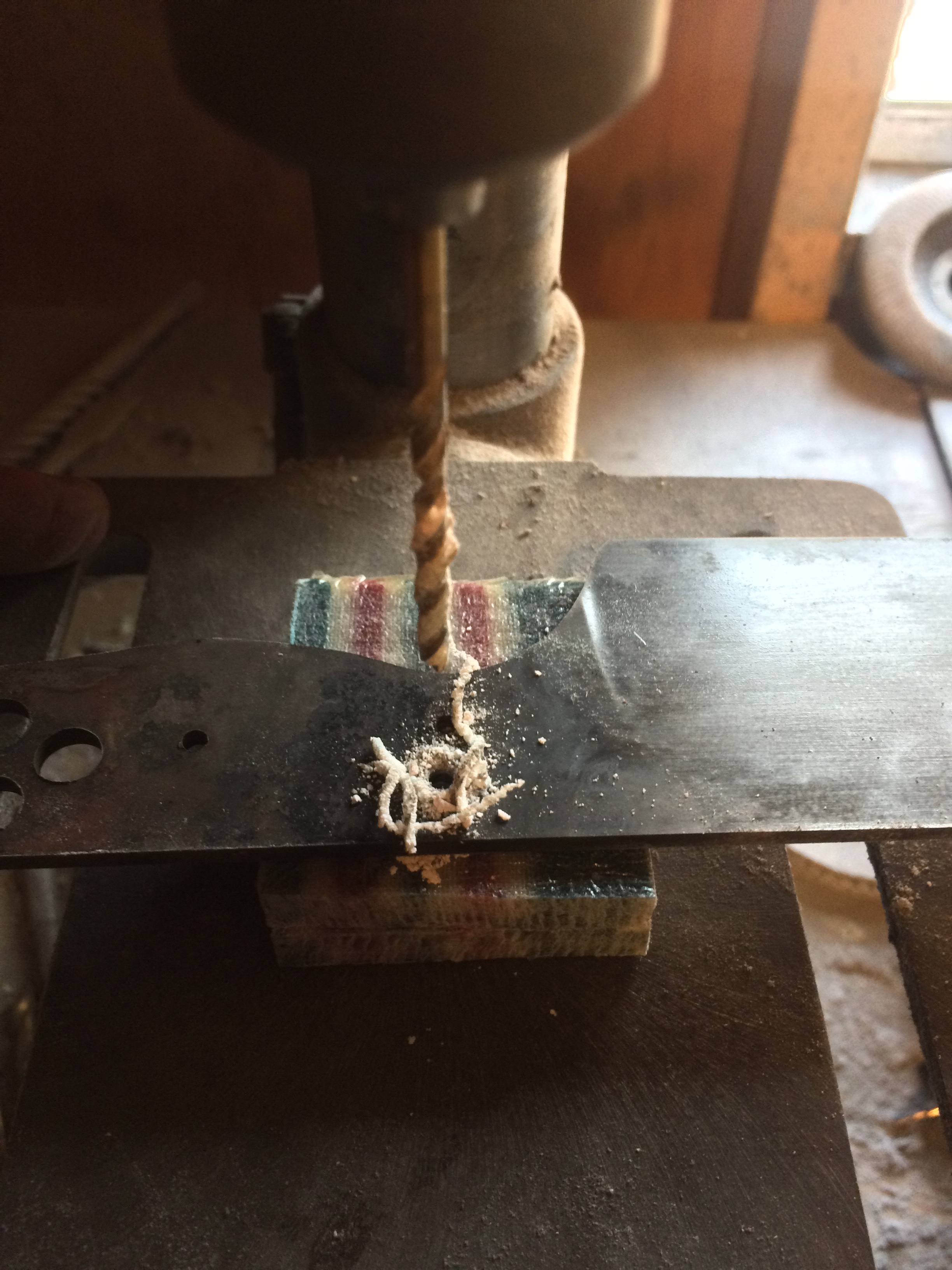
Drilling rivet holes after the bolsters are cut:
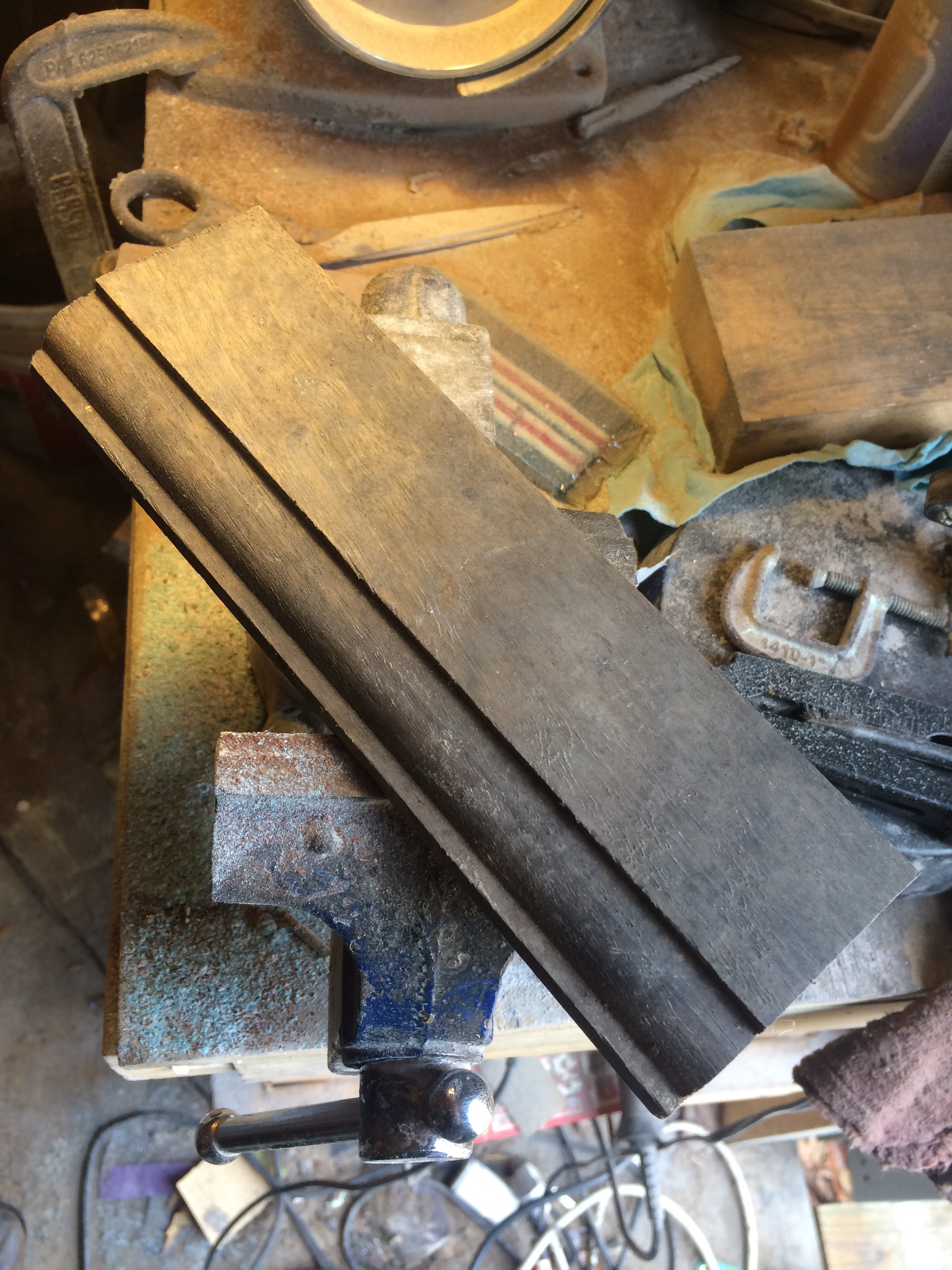
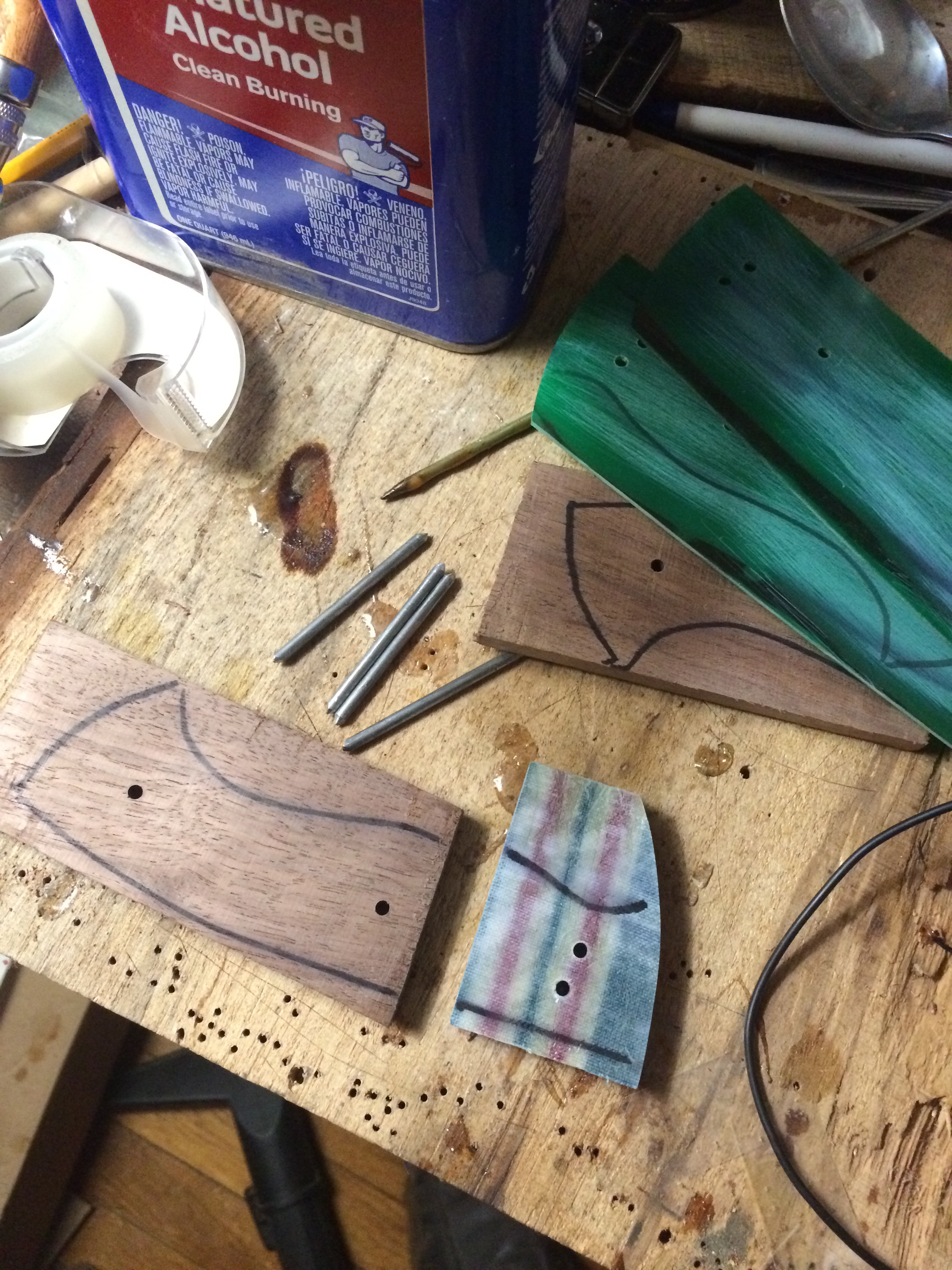
This piece of trim molding came from an abandoned house and is made of Black Walnut. It doesn’t look like much right now:
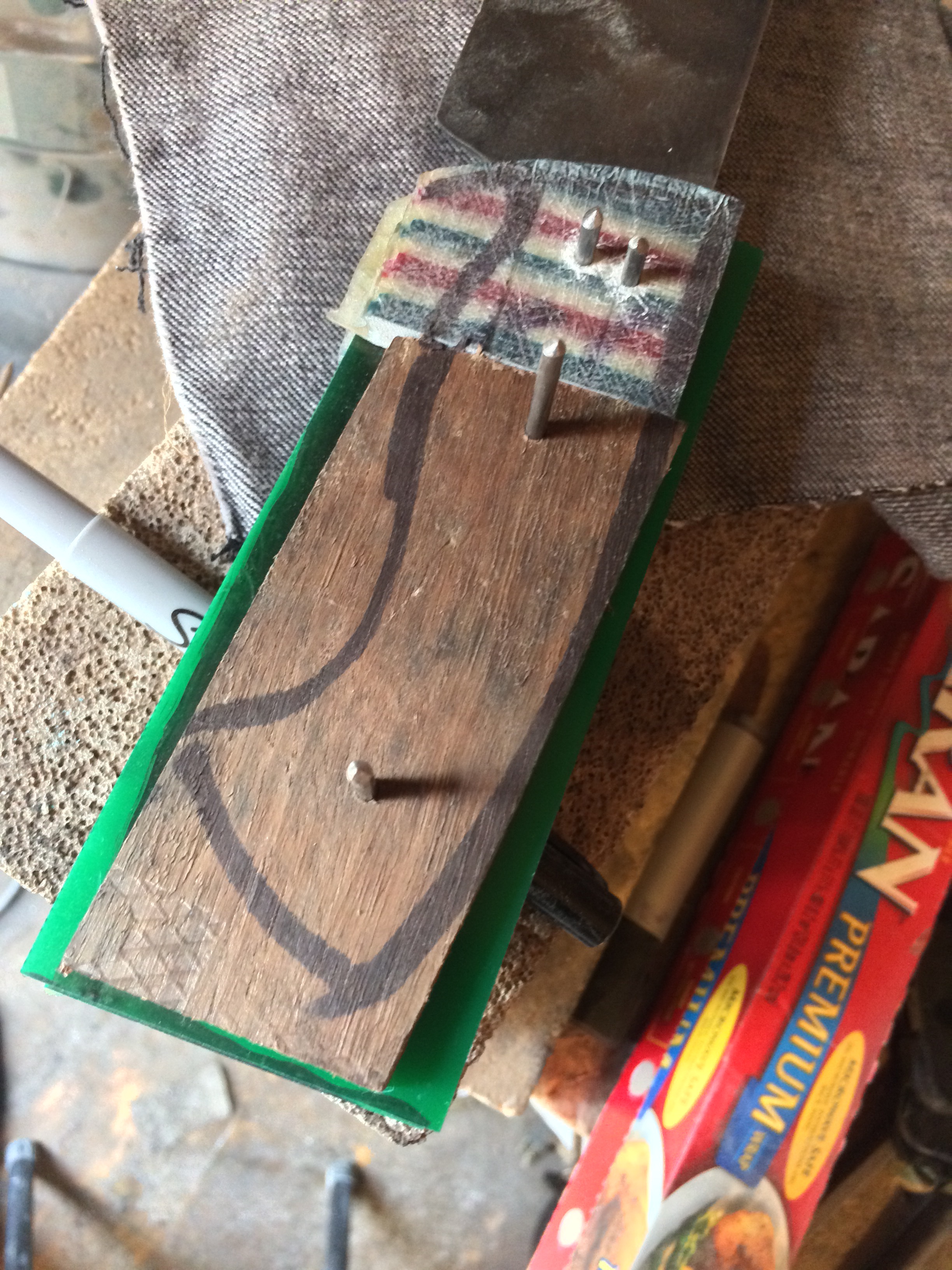
It makes for a better fit if the holes are drilled now before the scales are cut:
Circuit board blank for spacers:
Finally everything fits:
Prepping for glue-up:
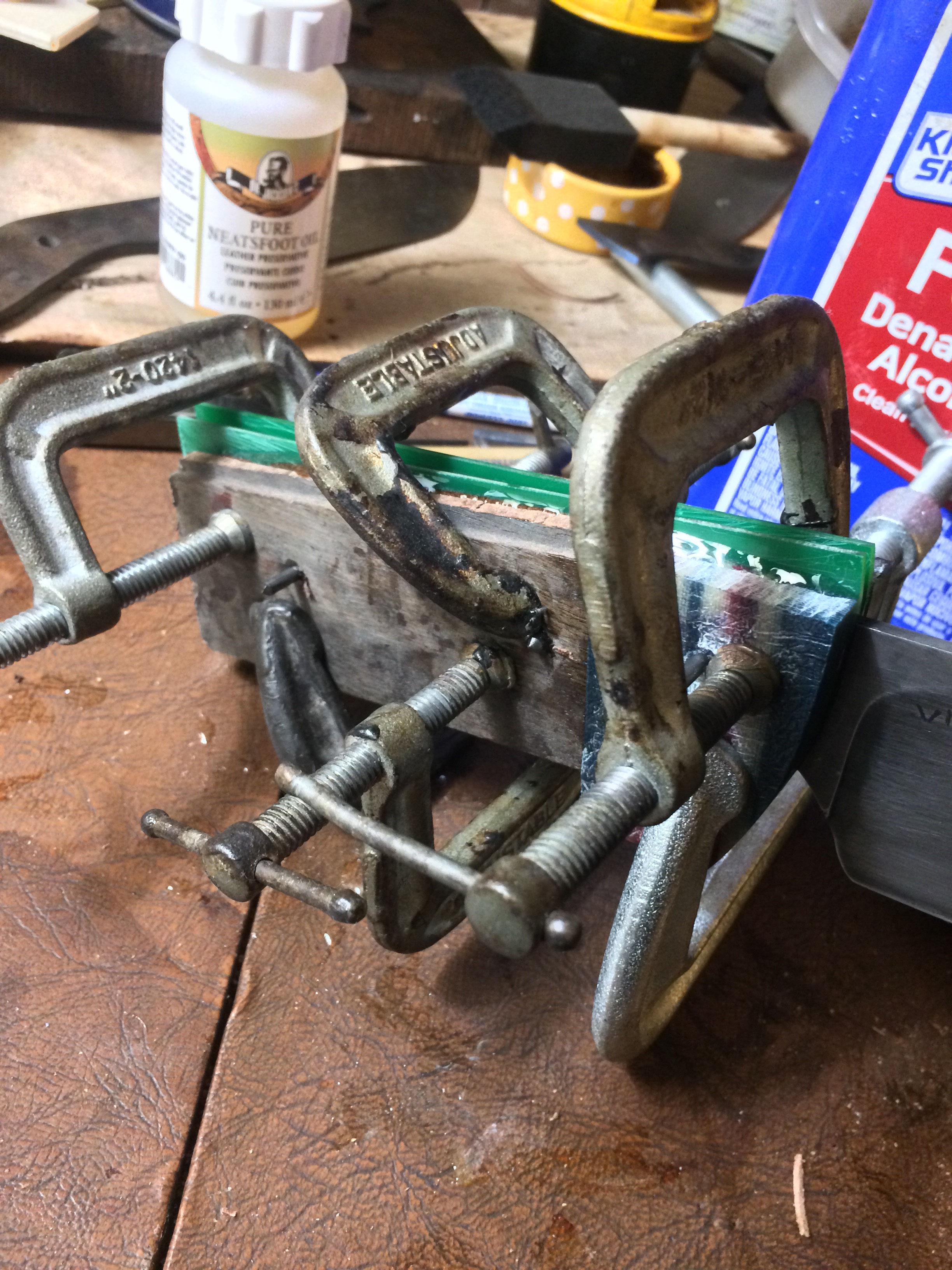
Glued and clamped:
Profiling the handle:
Contouring for a comfortable fit. All sanding after this is done by hand:
“i imagine that yes is the only living thing.”
― e.e. cummings
There are many things that come into our own personal worlds- children, possessions, problems, blessings and a myriad of others. It’s not so important how or why they enter our lives, but what we do with them. It expends a great amount of energy to ponder what we may have done to deserve the painful and traumatizing events that come to us, and an equal amount of energy is wasted when we wonder if we are worthy of the good things that are brought our way.
Because when we start dwelling on the why’s and how’s, we tend to become overwhelmed and lose sight of what best needs to be done with what comes into our lives.
And within that judgement of why and how, we start to say no to things. We become afraid we may be hurt, or that we may fail ourselves or those we care about. Perhaps we are afraid of making ourselves unsafe. Whatever the reason, in saying no we shut ourselves out of the blessing may be inside of a painful situation. We say no to what may be a path forward because it is dressed as something unpleasant. It is then that we become prisoners in our lives instead of seeing the ways we can be shaped and grow. We should say no to things that are harmful and do not better us, but it’s always good to say yes to what life brings us.
The summers are slow for me, and sometimes I have to get creative in the ways I support myself. I end up saying yes to many opportunities that under normal circumstances I would decline, usually due to time constraints, time away from loved ones, or a high probability of bodily endangerment (or a combination of all three). Over the years the things I’ve reluctantly said yes to have usually been the most rewarding.
One of the times I said yes this summer was to a tree job in rural Virginia. I was on a crew to cut down a huge dead tree. Removing dead trees can be dangerous. Rotting can occur in any number of unseen places of the tree, causing structural instability, and the tree may not fall where or when you desire it to fall. This particular tree, though dead as a doornail, fell exactly as it was supposed to.
The client was an artist, and brought us French-pressed coffee. We talked for a bit and I told him about making knives and how I got my materials. He told me that he had some slabs of black walnut and that I was welcome to them. They had been milled by a neighboring man who had run an abbey in South Korea, saying ‘yes’ to whatever fleeing defectors and dissidents from the North that the world brought their way. Later he sent me an article about the man who cut the wood, you can find it here. Black Walnut is expensive and isn’t something to normally fall into one’s path, so, in the practice of saying yes, I happily took some.
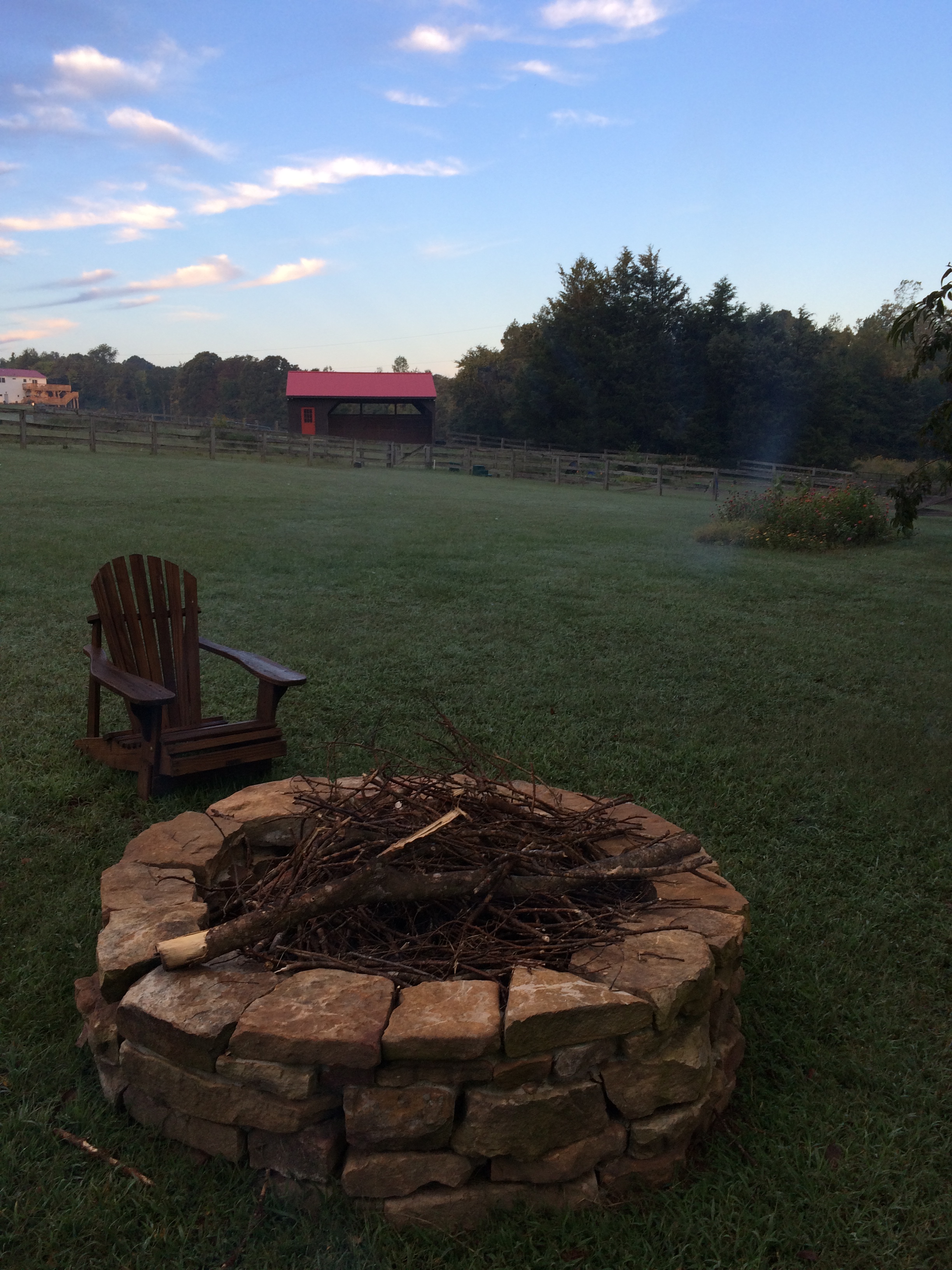
A week or so later I said yes to doing a bit of work on a good friend’s farm. My friend is a busy lady and sometimes needs a hand with the upkeep of her property. She and her family are good friends of mine. I worked for her son for several years and like to get out to their property as often as I can. It’s really beautiful:
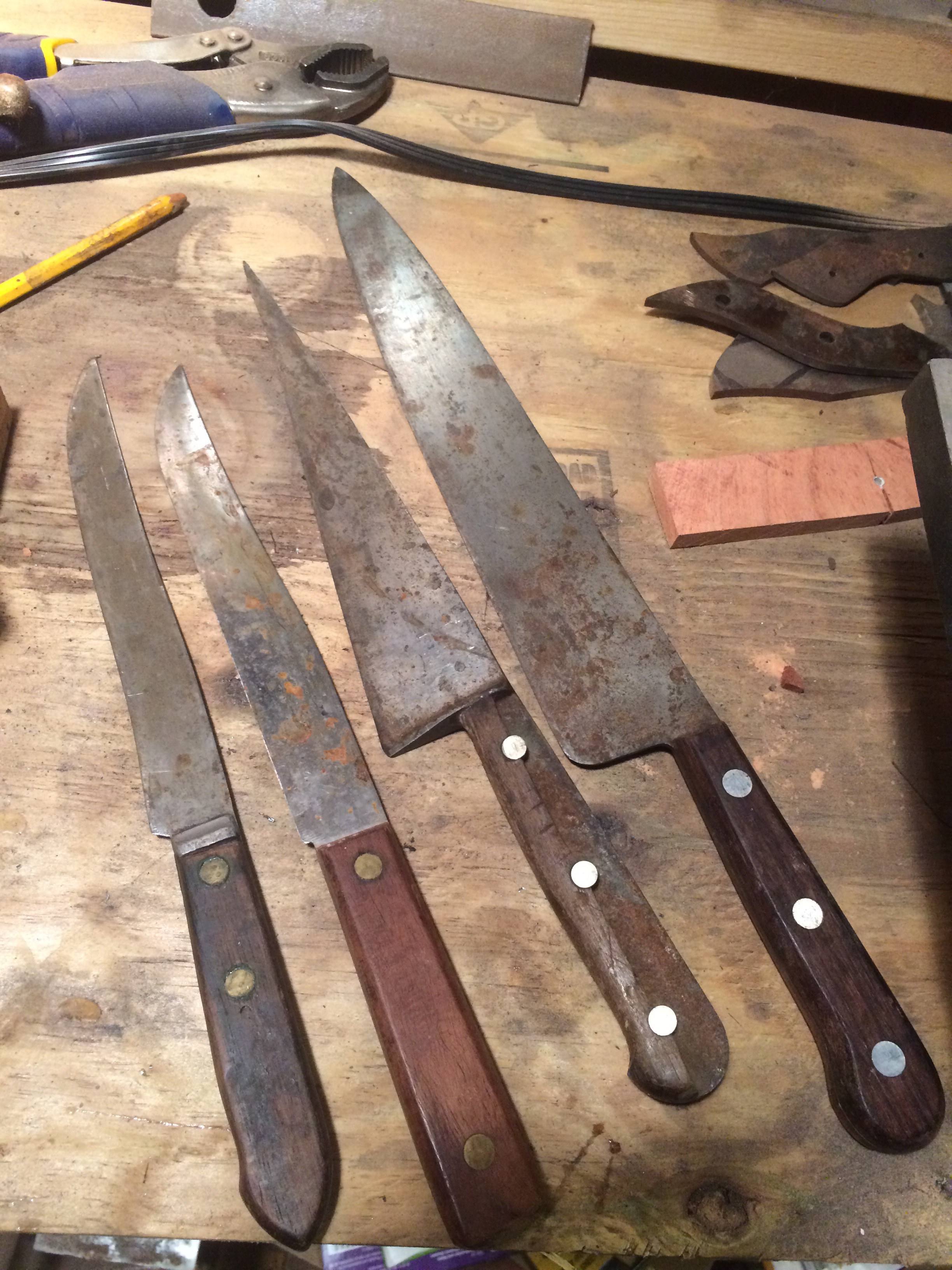
She had a set of knives she wasn’t sure what to do with. They belonged to her late husband, and came to him from his grandfather, who was an Austrian immigrant. He came to the United States in the early 1900’s and made his living as a chef, choosing to say yes to a new world and a new life. She told me she’d like to have them restored so they can go to her children and stepchildren to remember their father. I told her I would have a look at them and see what I could do.
Tools of the trade, from left to right: A carving knife; a fish knife; a French slicing knife; and a 12″ chef’s knife
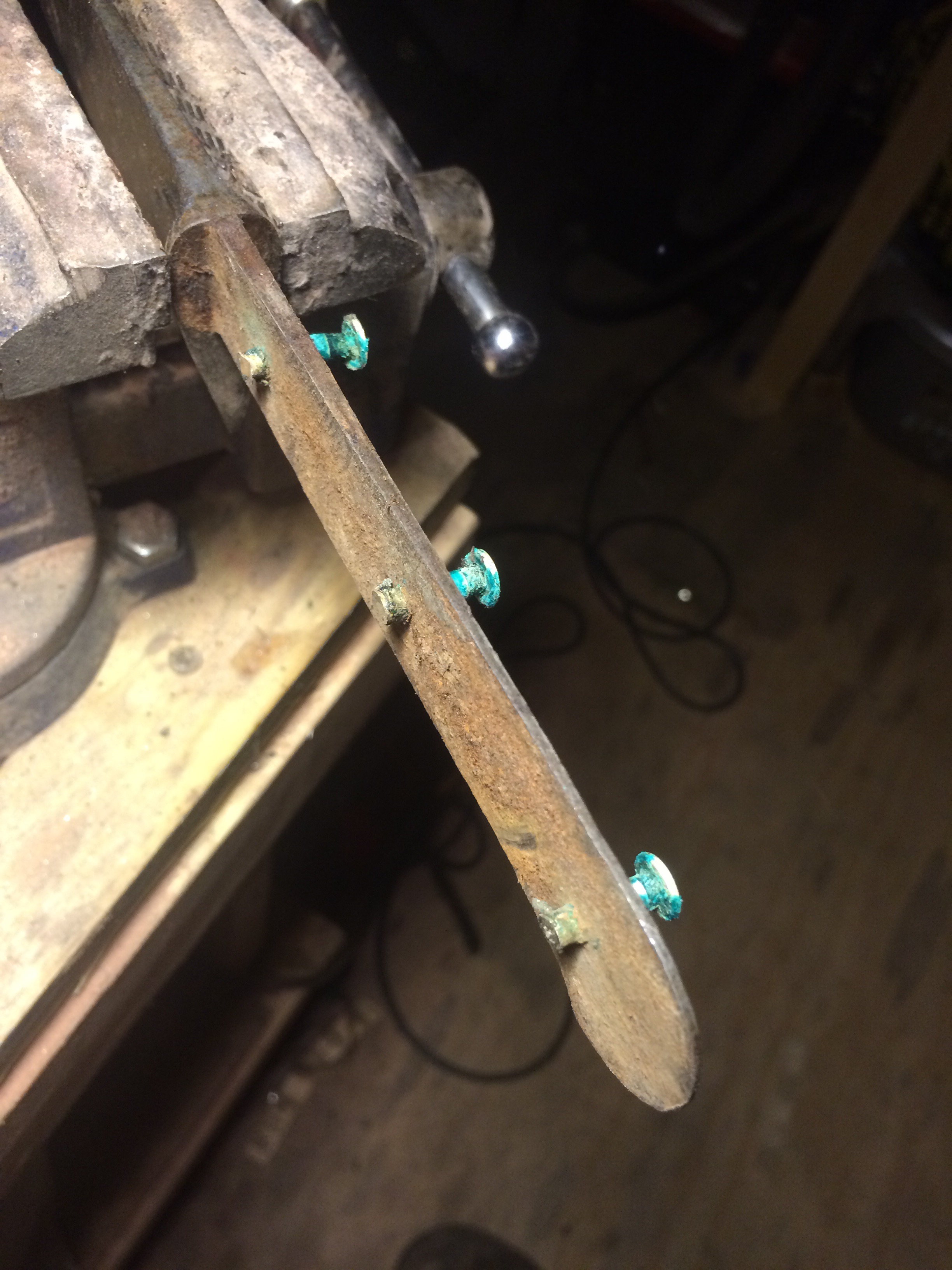
So these knives came to me, at least a hundred years old, and of deep sentimental value. I started by removing the cracked and broken handles.
I cleaned up the corrosion and oxidization from the blades, but left much of the etched patina from their years in the kitchen.
In a continued practice of saying ‘yes’ I chose to use some of the Black Walnut I got from the tree job for the handle material. It fit nicely into the story of these knives. This is what it looks like sanded and polished.
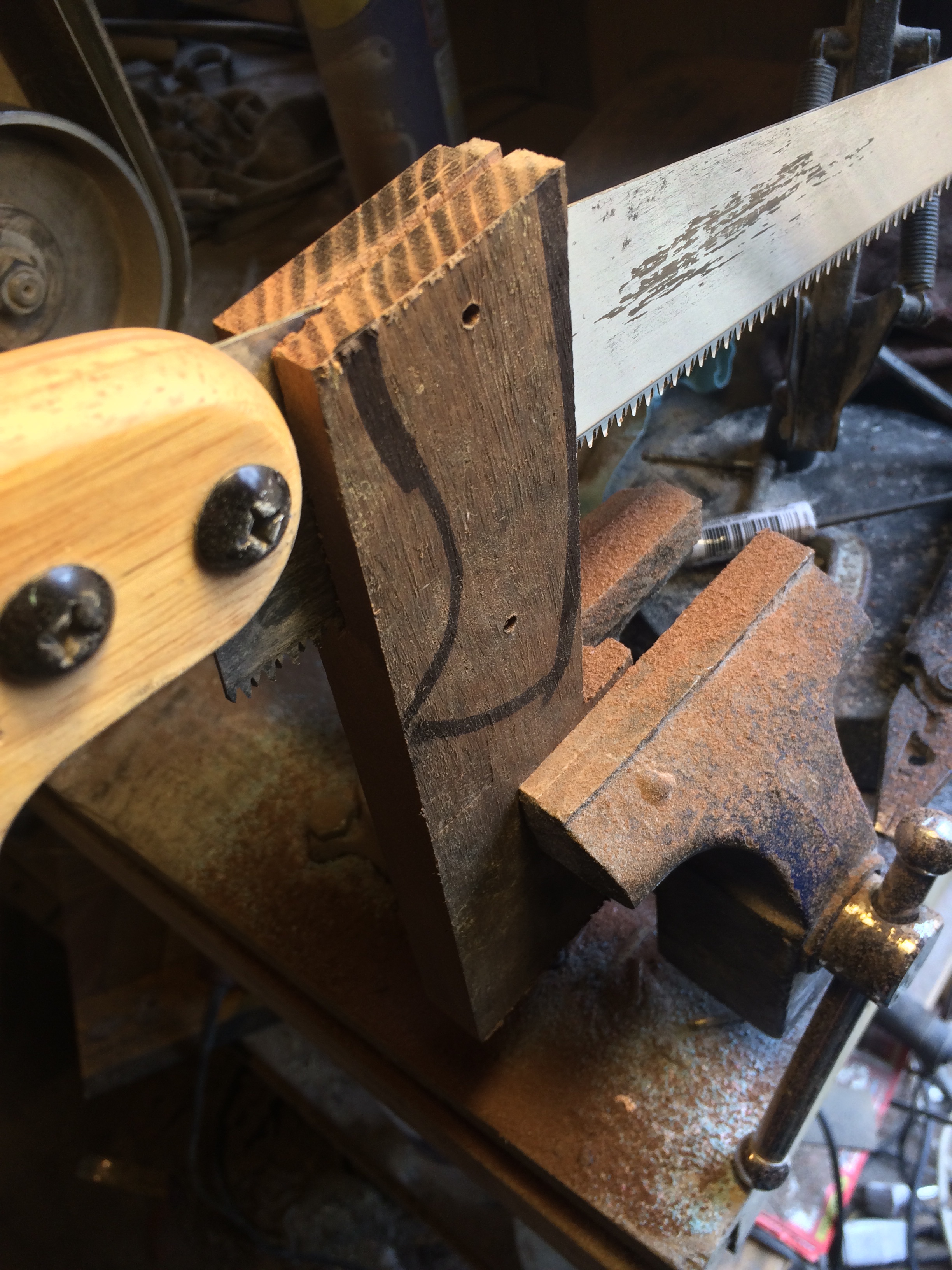
All of the handles started as thin blocks cut from the Black Walnut.
Shaping.
The filet knife was only half-tang, so I extended it with mild steel from a sheet.
I added a G10 bolster and spacer for a bit of contrast.
After glueing and sanding.
Getting the fish knife ready for glueing and shaping.
The French slicer was tricky….
…but also an elegant challenge, with its tapered tang and integral bolsters.
Finished, they came out rather beautifully:
Say yes to the things that come to you whenever possible. It’s always worth it on the other side.
“Control what you can control, maggot!Let everything else take a flying fuck at you and if you must go down, go down with your guns blazing.”
Cort the Gunslinger, from Stephen King’s The Drawing of the Three
The Gauchos were a group of cowboys who worked on the grasslands of South America during the 18th and 19th century. They were a people without boundaries, solitary, and existing on the Pampas of Argentina, Uruguay and Southern Brazil. The Gauchos were a pretty wild bunch and had a lifestyle that was similar to the gypsies and travelers of Europe.Always moving from place to place, job to job, and always on the hustle.Most were nomadic and had few possessions.
They were a solitary people, yes, but when they did run into other gauchos there was usually high-proof alcohol involved.Also gambling.And prostitutes.Those three things made for a trifecta of machismo, and that usually resulted in conflict which manifested as duels. Guns were expensive and hard to come by so the weapons of choice were usually knives.
When Gauchos dueled the objective was not to kill (although fatalities most definitely occurred); it was to leave a mark, preferably on the face.A gaucho with a scar on his face had lost a duel, and all the other Gauchos knew this.He would carry this scar for the rest of his life, but looking a little deeper one can find that scars are not always a badge of shame.
There is an inherent drive to leave your mark on the world but sometimes the world leaves its mark on you.Things aren’t always the way we think they should be and in taking a risk to make a difference we can fail spectacularly.We all lose duels everyday and some of us carry many scars, both seen and unseen.Some of the most powerful and profound people I know carry scars that are both large and deep, yet these people shine brightly and leave their mark on the world everyday.They are beautiful even though life has done its damnedest to leave its mark on them.How is this possible?
I had a teacher once tell me that no one is in control.This is something that is a bit of a struggle for me almost daily, even though I know that in the grand scheme of things my sphere of control is very small. It comes down to choosing how to react to the things in our lives.
So there is a choice. You can choose to not get pissy about the holiday Starbucks cup. You can choose to not to feel like a victim because your candidate didn’t win.You can choose connection over isolation. You can choose to do something about situations that don’t serve you. You can choose to wear your scars proudly because whatever left its mark on you wasn’t strong enough to take you down. You can choose to let the things beyond your control take a flying fuck at you and fall as they may. Though we can’t always control the circumstances in our lives, we can choose how we respond to them. This is where we make our mark and is also the lesson of the Cuchilla Pequita.
There are several types of knives carried by the Gauchos.The Cuchilla Pequita is loosely based on the Cuchilla.The Spanish word for knife is el cuchillo, a masculine noun in the vocabulary.The Gauchos feminized cuchillo and applied it to their particular style of knives, which had a ‘pregnant’ blade belly and a slightly dropped point.This design is based on that style and starts in 1095 spring steel:
After grinding and hardening:
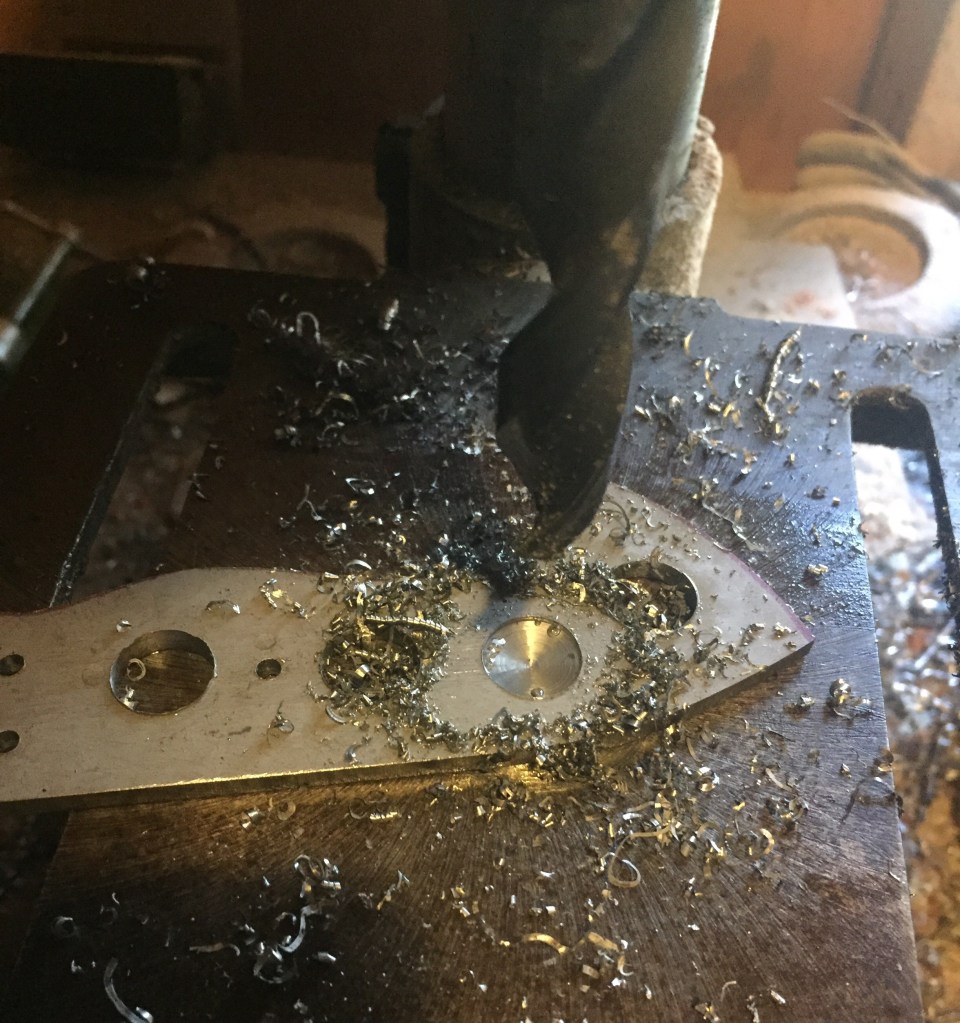
Drilling rivet holes:
Texas Mesquite:
Fitting the handle:
Fiber spacers for a splash of contrast:
Clamped:
Profiled:
Sanded up to 2000 grit:
The Cuchilla Pequita:
How we choose to react in our lives affects the impact we can make. This is the lesson of the Cuchilla Pequita
Here are some sources that were incredibly helpful:
“The thing is that love gives us a ringside seat on somebody else’s flaws, so of course you’re gonna spot some things that kinda need to be mentioned…“
-Alain de Botton
Conflict is an inevitable part of life.We find it in our professional and romantic relationships, in the work we do, in our places of joy and sorrow, and just about everywhere in between.We even find it in ourselves.
Merriam-Webster defines conflict as an “antagonistic state or action (as of divergent ideas, interests, or persons)”. This sounds about right.
Depending on how we were raised, conflict can make us feel unsafe and insecure because we equated conflict to something being deeply wrong with us. Often we’re raised to be agreeable, to not make a fuss, to put on a happy face, and to be seen and not heard.Because of this there can be a tendency to submit to the incompatibles that arise and completely lose ourselves during moments of heated conflict.We give away all of our power and ignore our needs for the sake of resolution.There can also a tendency to run, to check out mentally and emotionally, and to avoid; all for the purpose of not having to deal with the conflict at all.Ancient fears arise during conflict: fears of not having enough, fears of not being heard, fears of being seen as less than, fears of asking for help, or fears of our needs not being acknowledged or met. Conflict can take us right back into the terror of our smaller selves.
Fear often makes us do the complete opposite of what is best for us.But in a world of incompatibles, of yes’s and no’s that are always at odds with each other, conflict will always remain. I’ve always wondered about this in the way I’ve wondered why deep sadness exists, and why pain and suffering are so prevalent.
Conflict helps us to be active participants in our lives.It seems counter-intuitive but conflict helps us to grow and be seen. In the same way that deep sadness and pain can be teachers, conflict can take us to school on how to be a decent human being.
Conflict in romantic relationships can be one of the more challenging arenas because it forces us to show and acknowledge things we may prefer to not acknowledge.It occurs when any number of our maladjustments that we haven’t dealt with or are still processing rubs up against our partner’s.Or when our partner’s maladjustments rub up against us.In many instances things are simply going to rub us the wrong way and we may not be able to articulate exactly why.
This is particularly unique to romantic conflict because there is nowhere to hide. In other arenas we can veil ourselves with busy-ness and obligations. We can keep our own counsel, hide our feelings, hold everything at a distance, and still uphold our responsibilities and navigate life somewhat successfully. Doing this with someone whose heart you occupy is likely to be catastrophic. The best thing to do is to let all of yourself be seen and work from there.
Though it may not feel like it, this is one of the healthiest things anyone can do. We are built to be close to one another and we are all flawed. To be able to say ‘I was only a jackass because I was deeply afraid and I’m working to be better because I care about this’ gains so much more mileage for trust and intimacy than pretending like nothing is wrong or powering through a conflict. When someone you love knows where you are coming from it creates a sense of safety for that person, even though it may be uncomfortable for you. Eventually you may find a sense of safety because in allowing all of yourself to be seen, it allows all of you to be loved. Trust deepens on both ends and allows for everything to blossom. This is something to stay on top of and it’s important to be ever mindful.
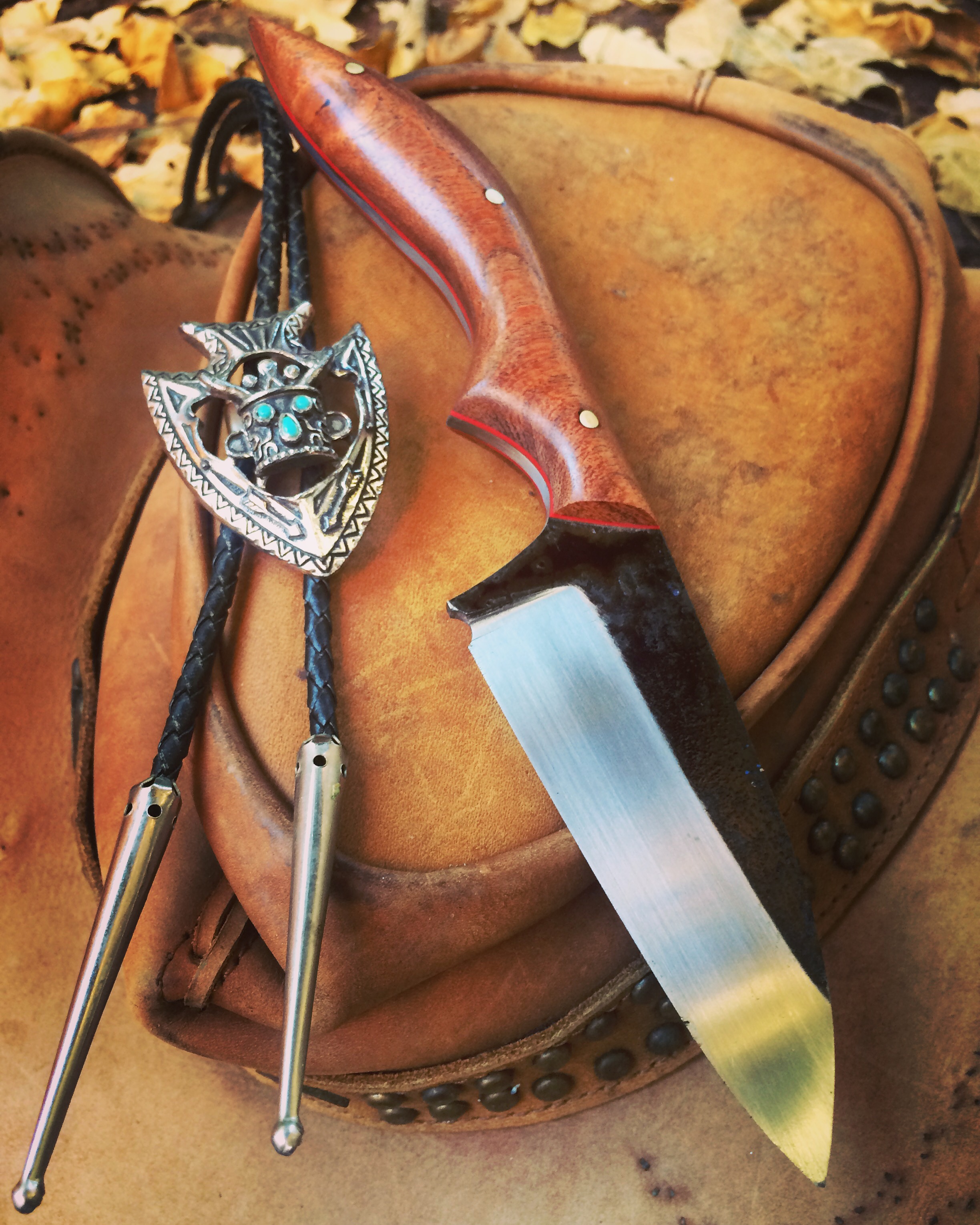
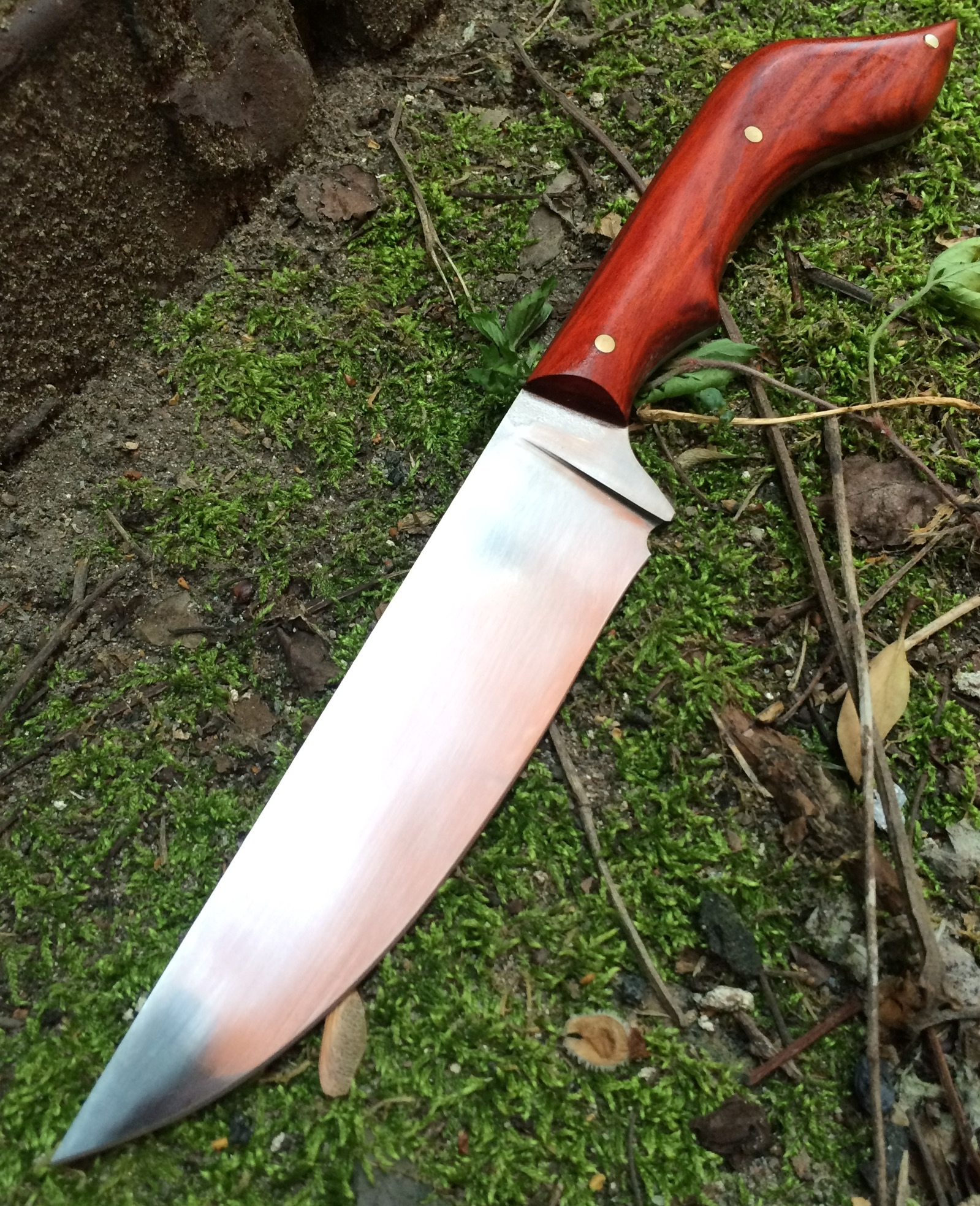
This blade was made after a conflict with someone I love. It was a reminder to myself to lean into conflict. Conflict is a Vixen, a lady in red, shining, beautiful, and also extremely sharp and ready to slice the hell out of you if you aren’t on top of it….
O1 tool steel, profiled:
Scribed for grinding the bevels, and a notched blade choil:
Rough grinding:
Full flat grind:
Hardened:
Sanding the ricasso after tempering:
Many hours later…
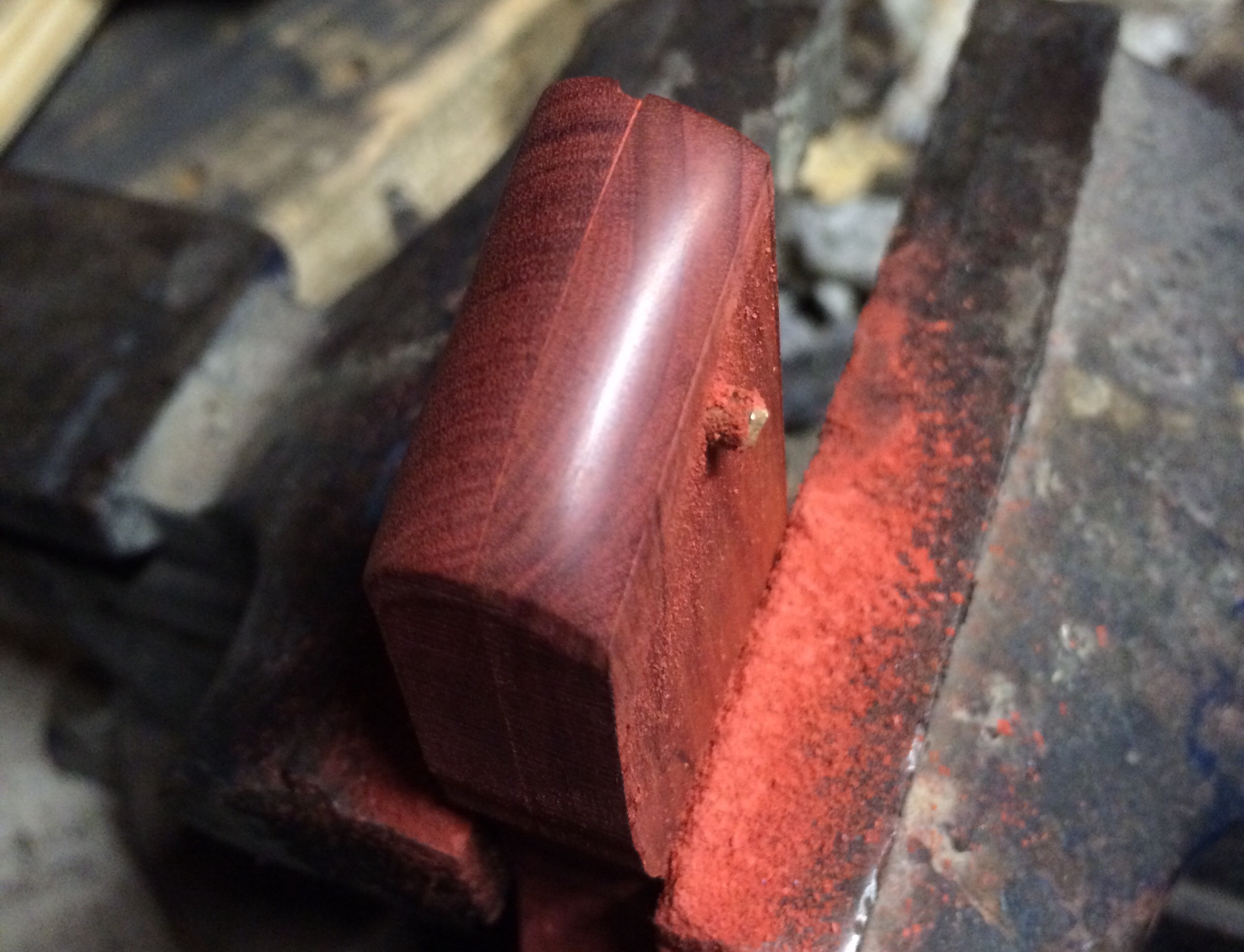
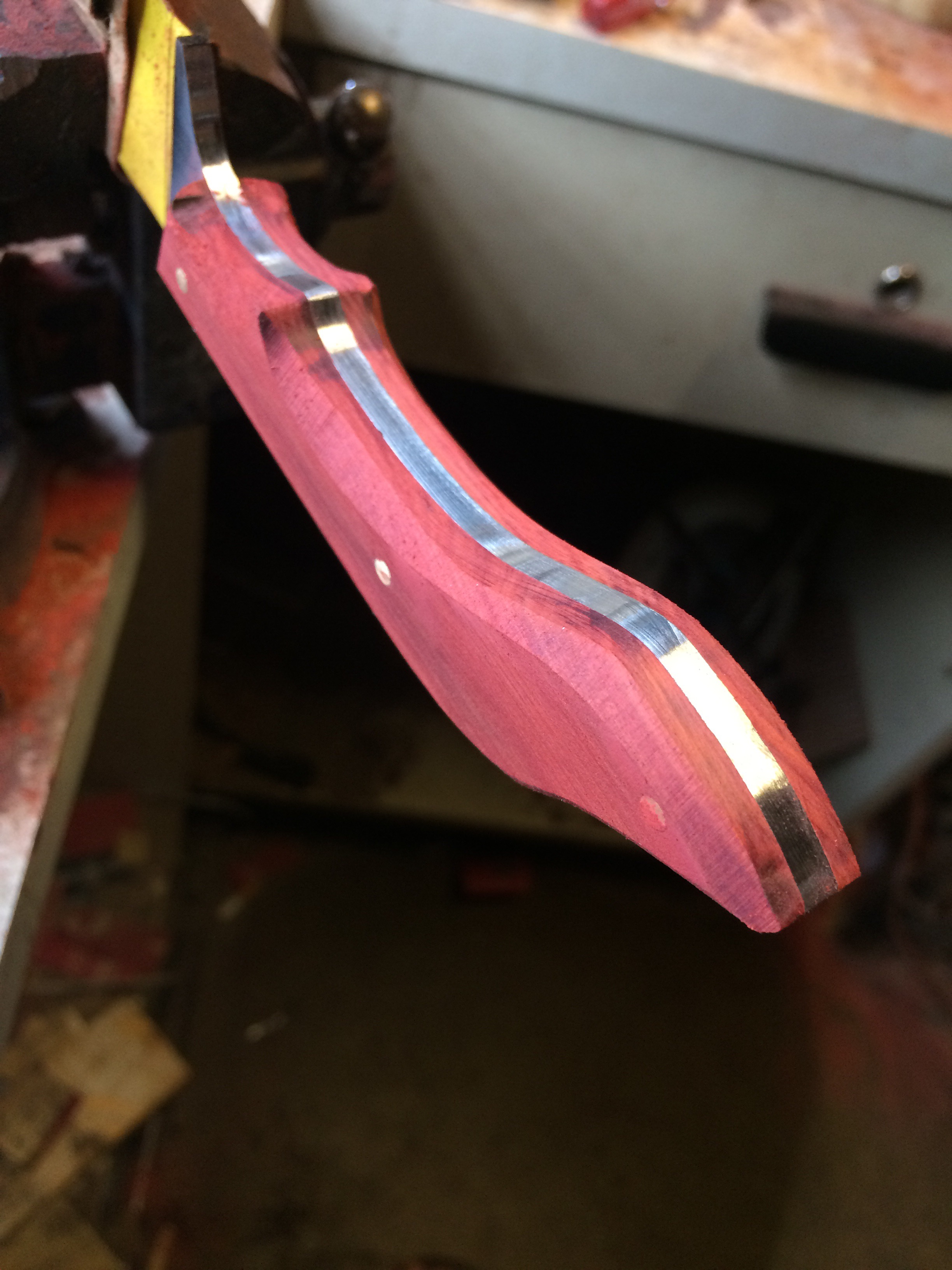
Redheart:
The Vixen:
Many things will often be at odds with each other but being able to be with all of them is at the heart of doing conflict well, and ultimately at navigating the world. This is the lesson of the Vixen.





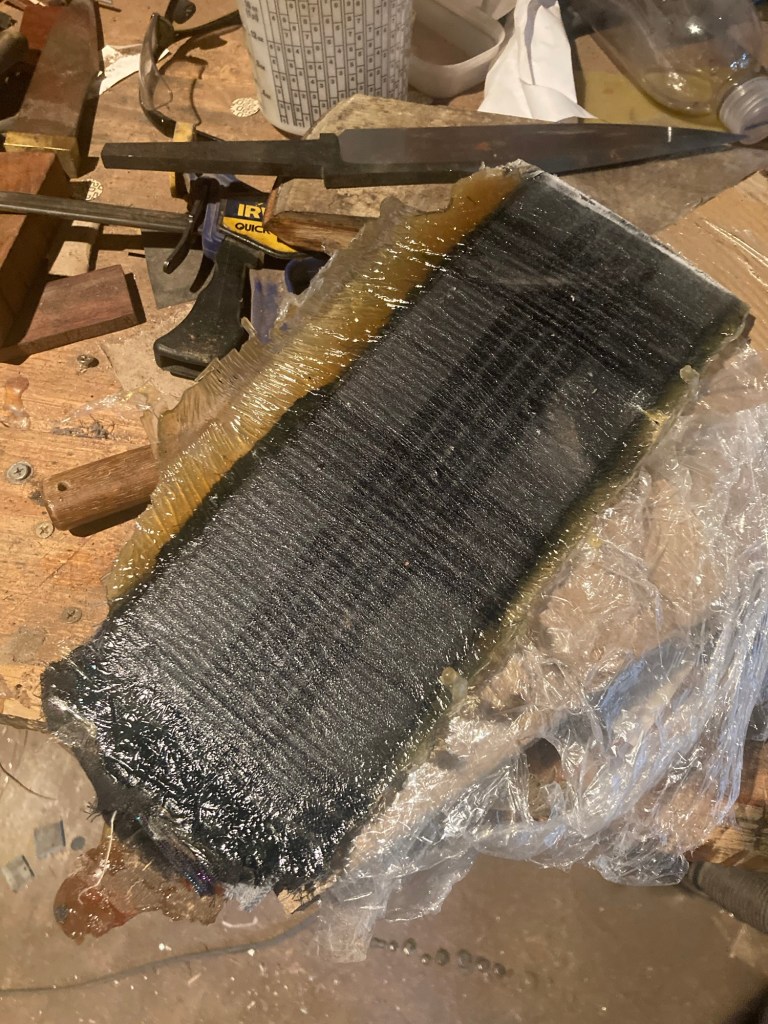


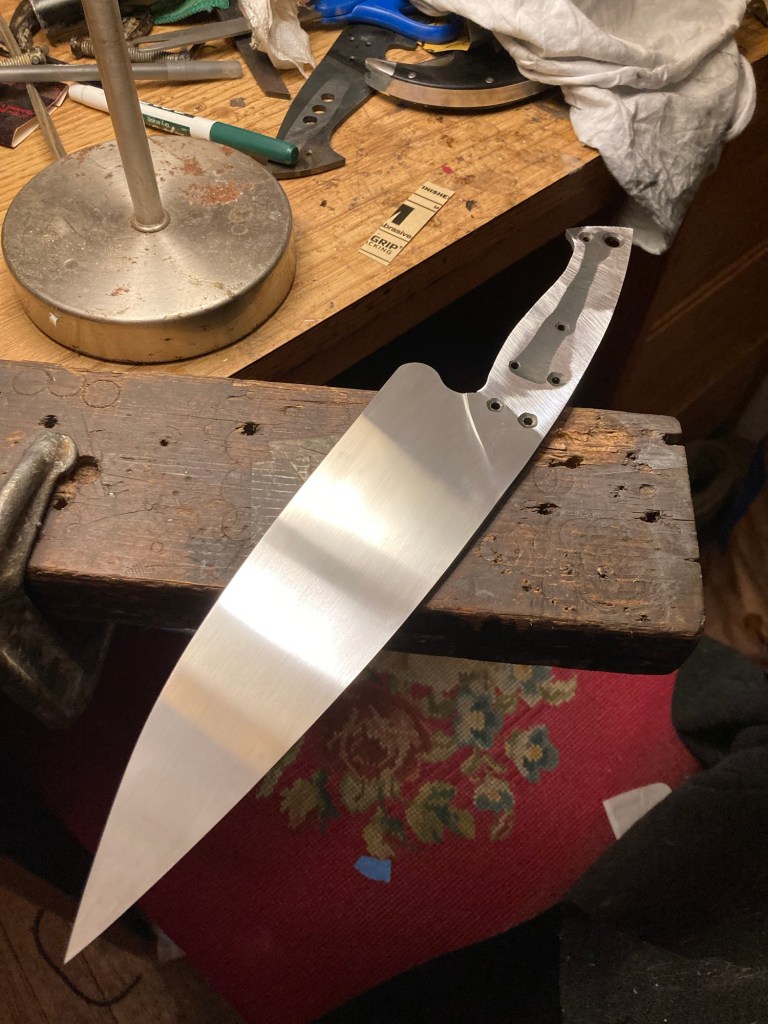
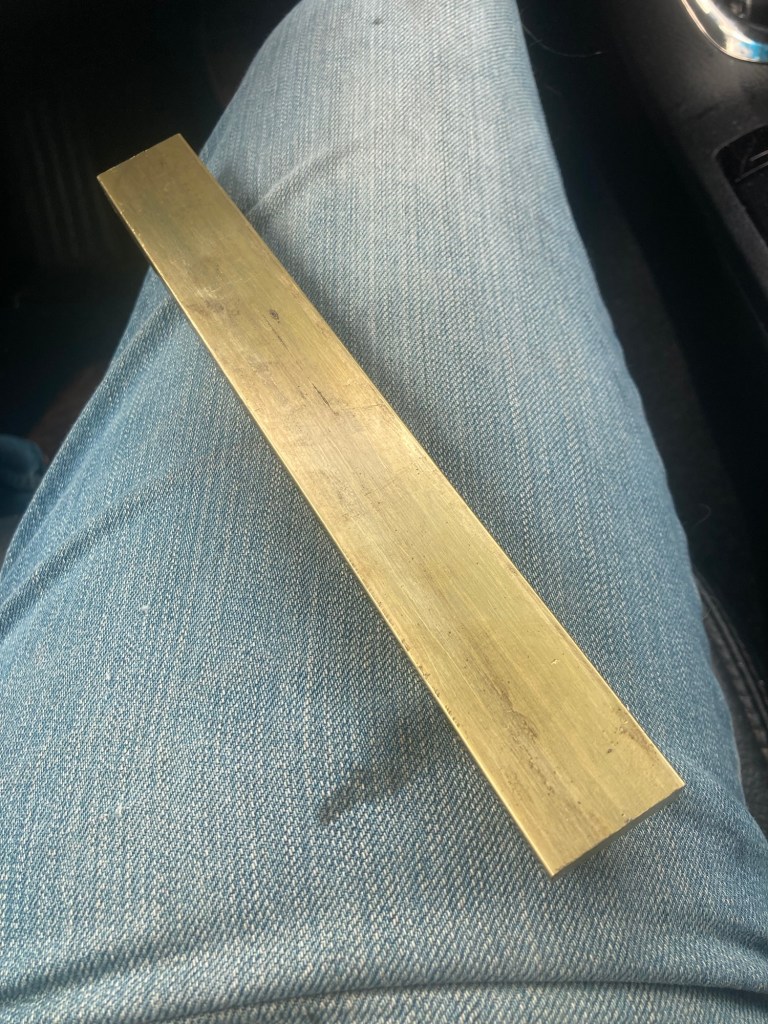


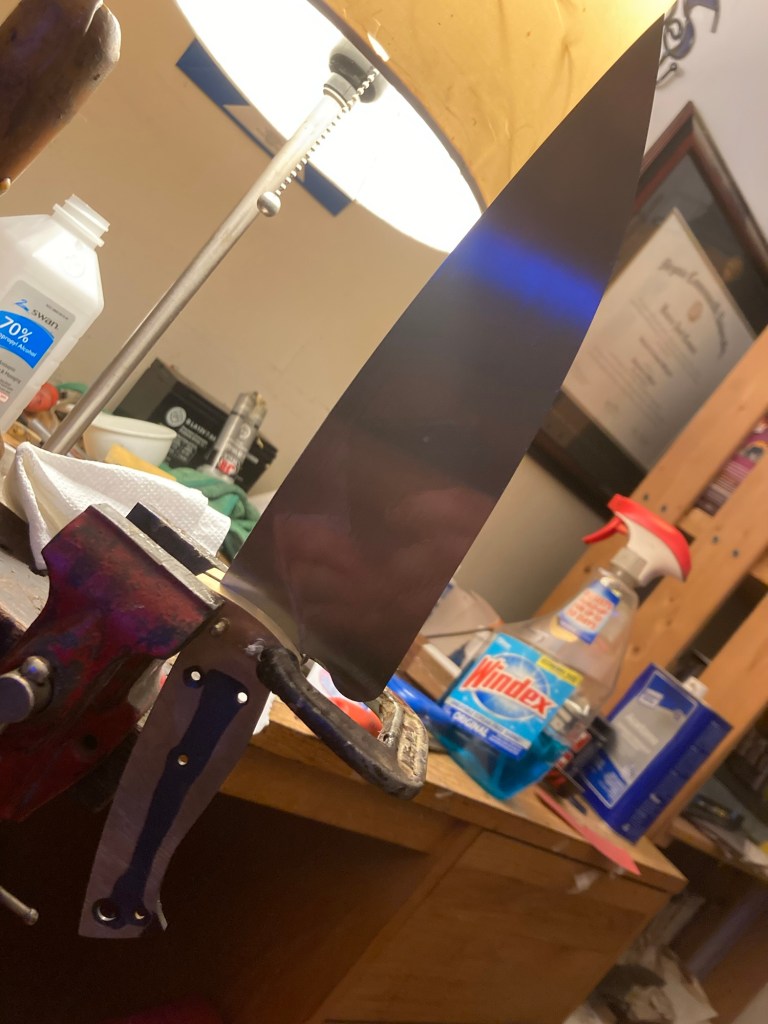























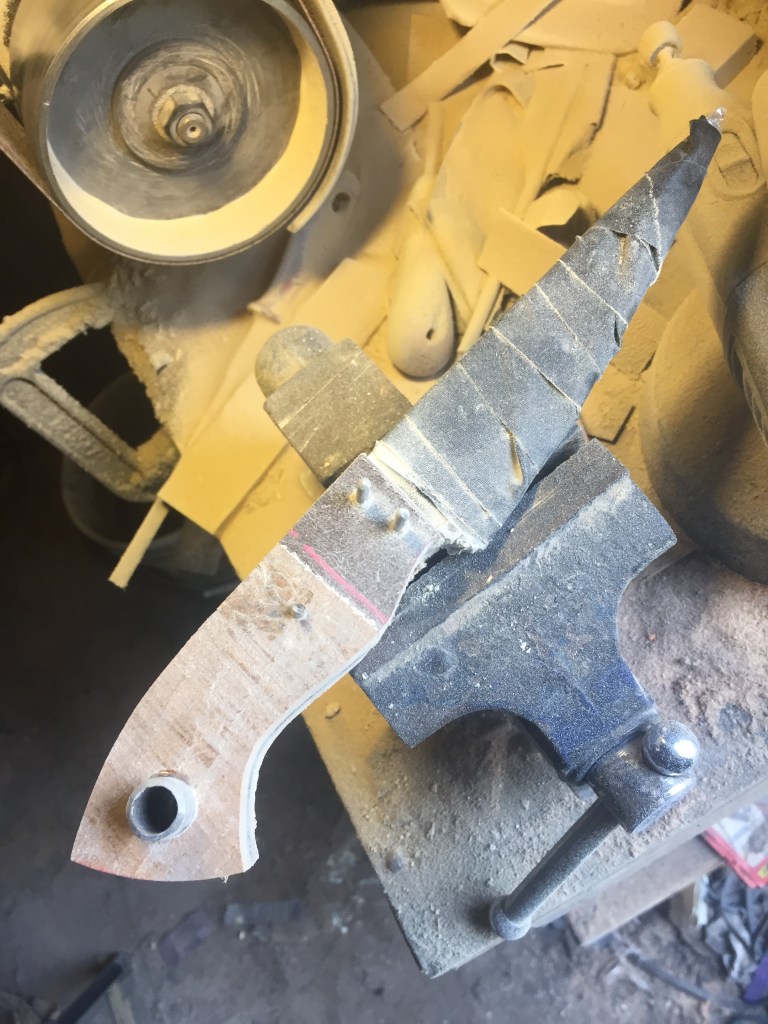
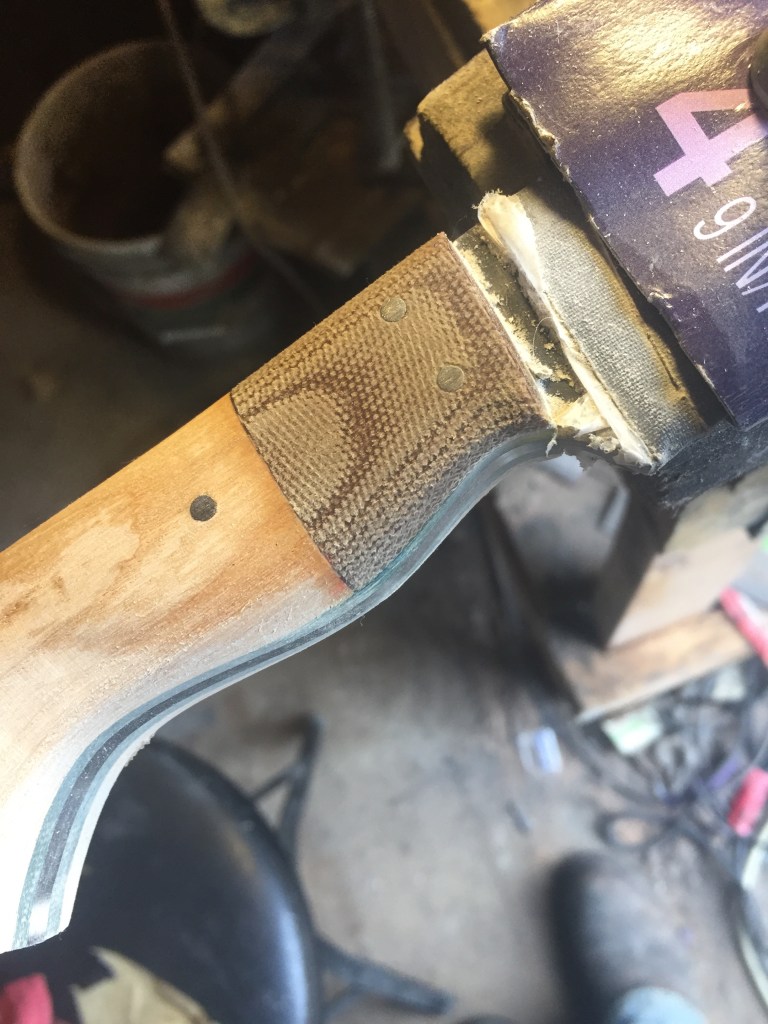
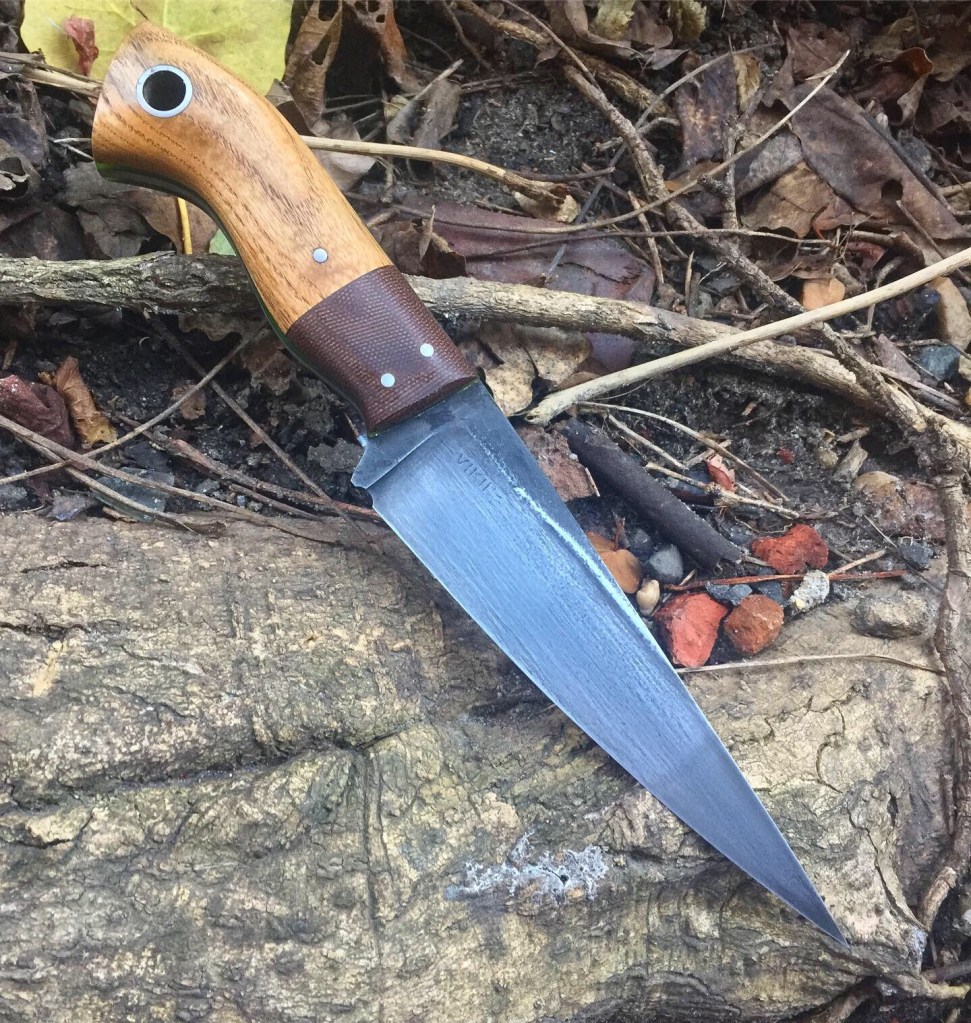
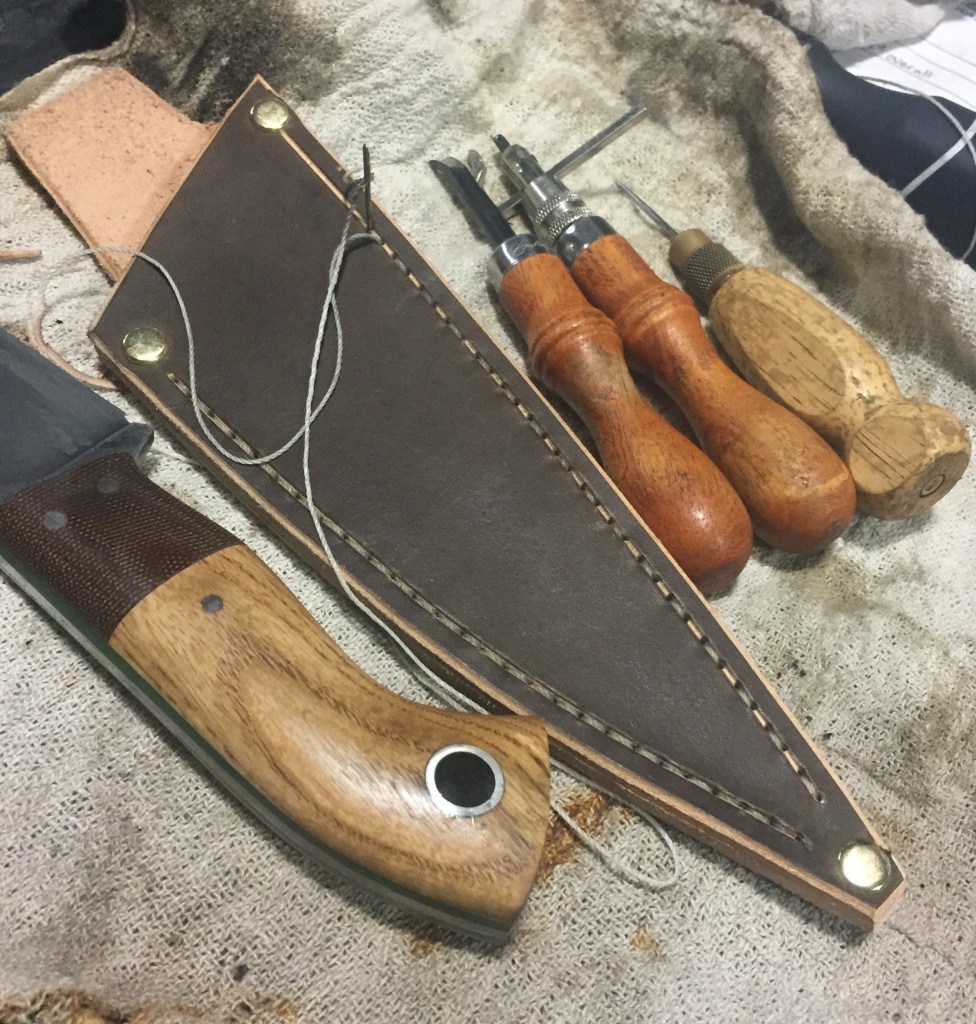











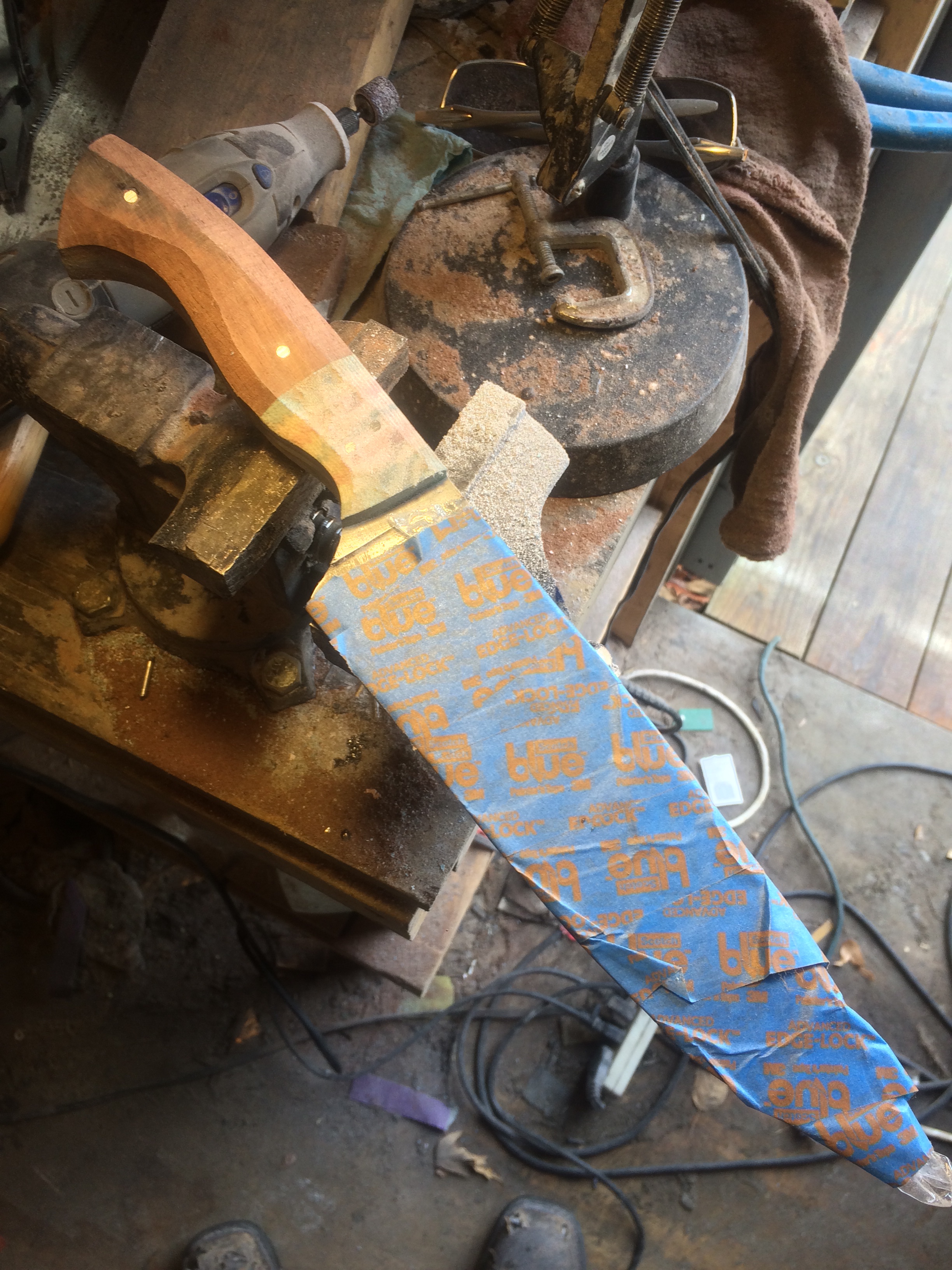


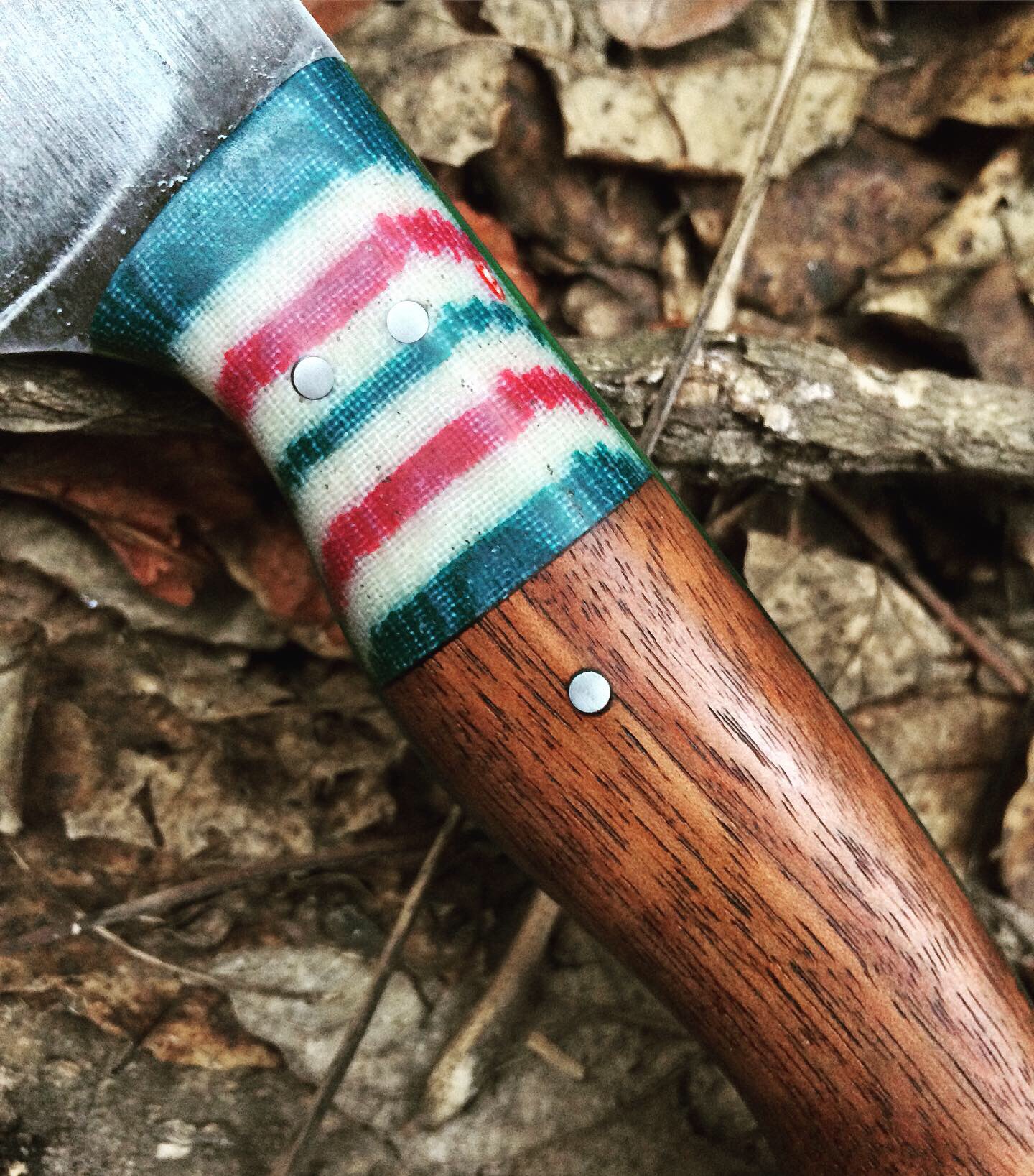
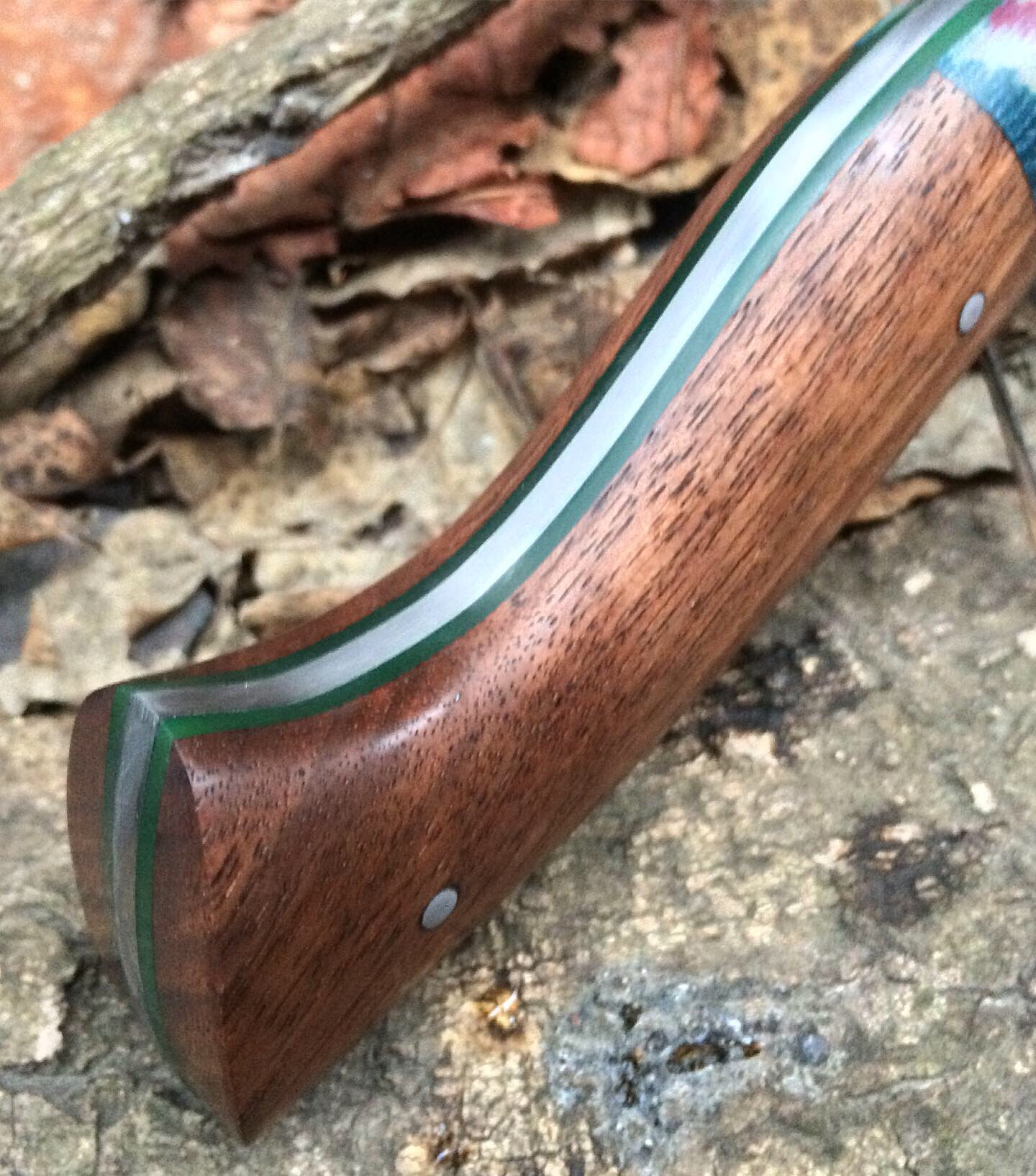
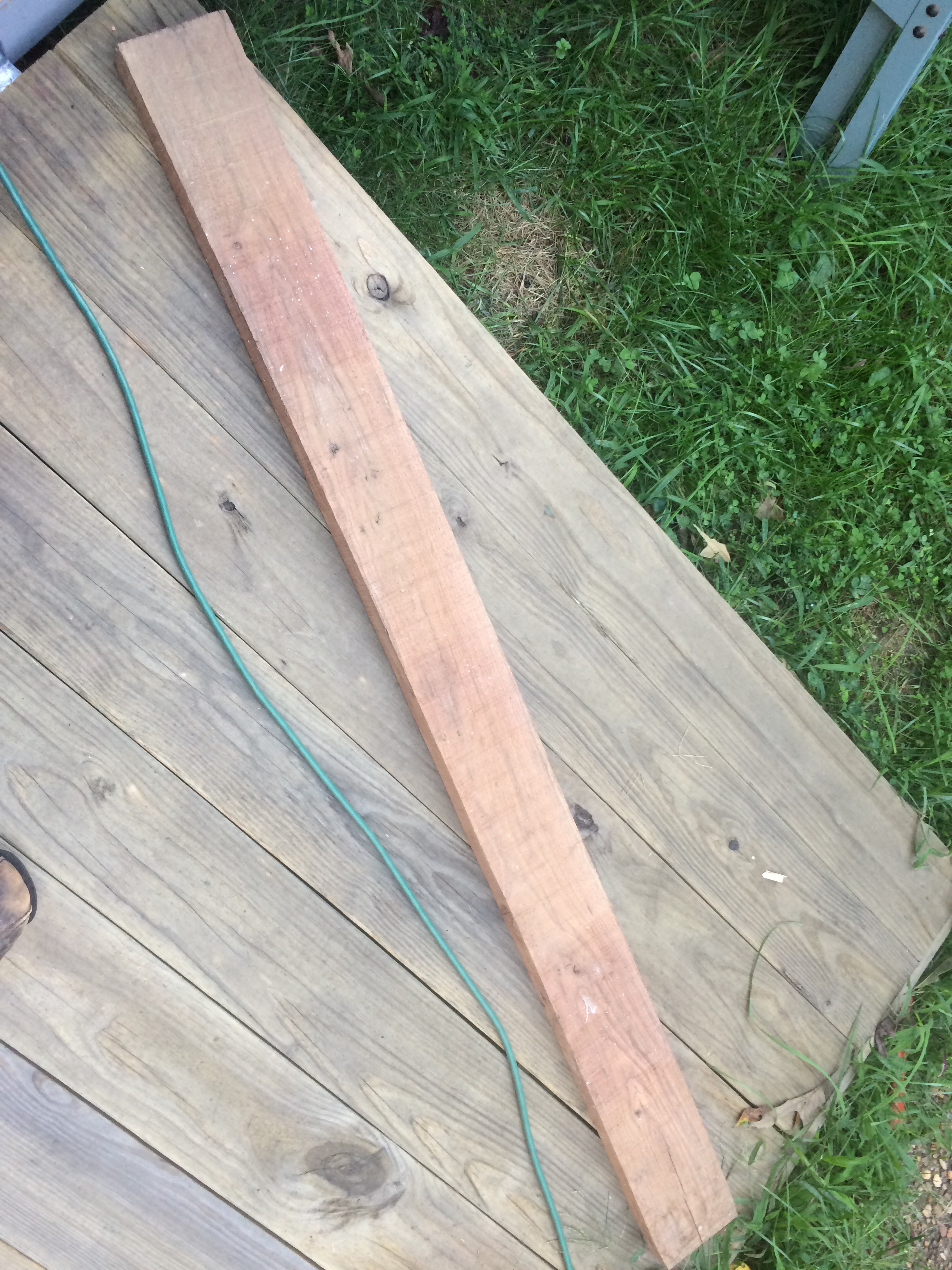

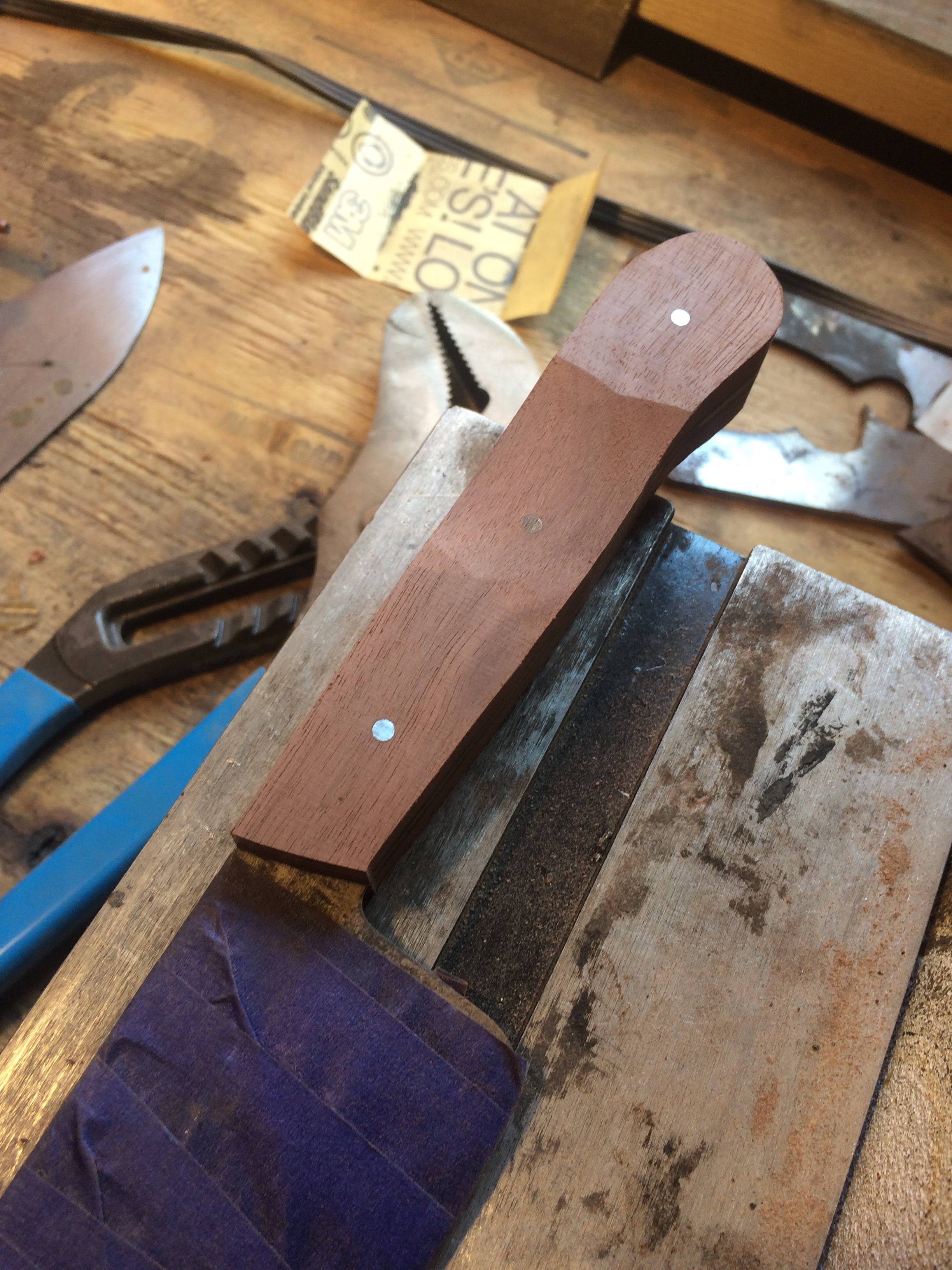
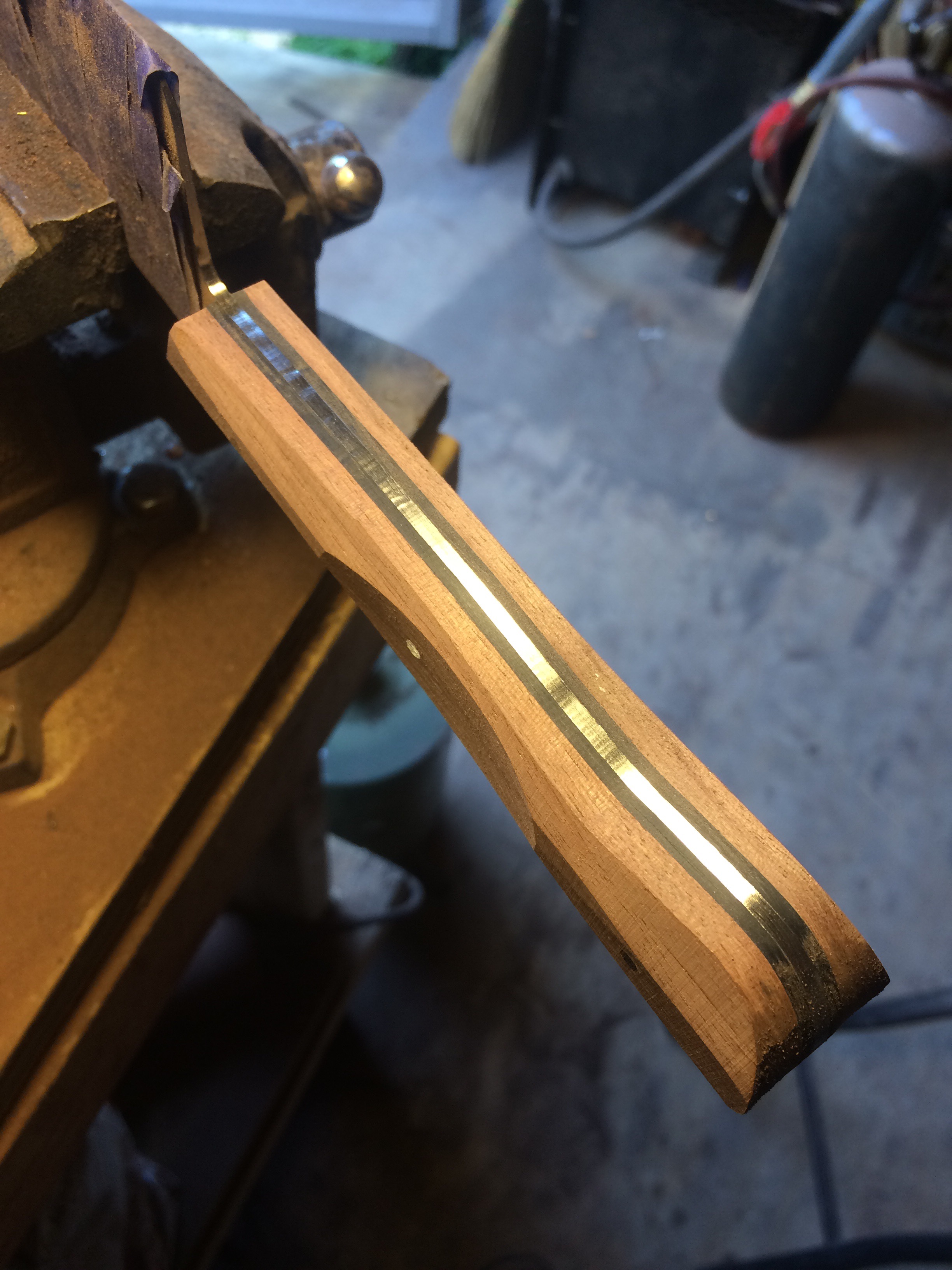
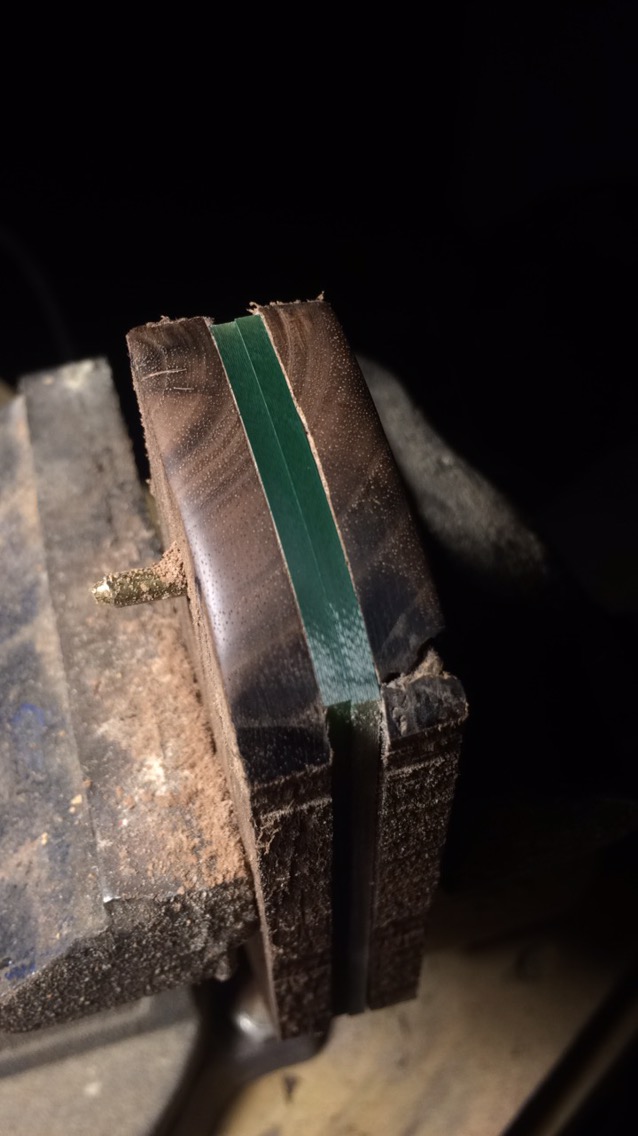 In a continued practice of saying ‘yes’ I chose to use some of the Black Walnut I got from the tree job for the handle material. It fit nicely into the story of these knives. This is what it looks like sanded and polished.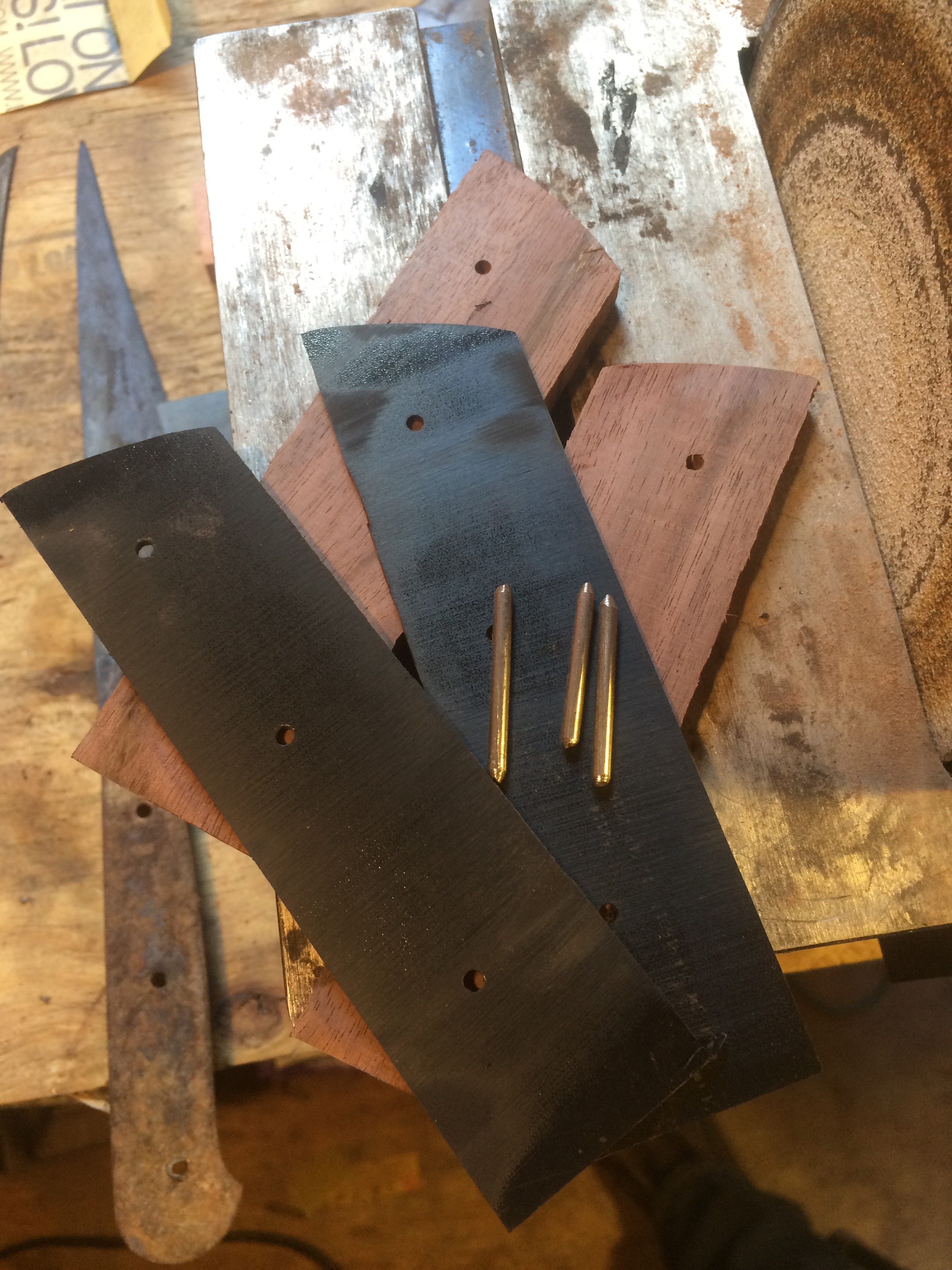










 groundedinfire