“Only people who are capable of loving strongly can also suffer great sorrow, but this same necessity of loving serves to counteract their grief and heals them.”
― Leo Tolstoy
One of the main things that drew me to the craft of bladesmithing is the process of heat treating- the process that hardens and strengthens the steel into something strong and functional. I find it to be a reflection of the male psyche. The steel comes to you soft and impressionable- just as we are when we are young. It’s much easier to work the steel when it is soft, or annealed, than when it is hardened. You then shape and grind the steel as you see fit- this is growing up and finding your place in the world. Depending on how well you are or are not equipped, it could take a long time. Through a process of slow heating and quick cooling the steel becomes hardened- our adult selves. Though it is extremely hard, it also extremely brittle- it will shatter if dropped. This is where the process stops for some people. A brittle blade looks like a knife, feels like a knife, and will cut like a knife. Appearances are deceiving and without proper tempering this piece of metal that resembles a knife will crumble under stress and will be unsalvageable. So it is with some men. When crafting a blade, you don’t let it crumble- it goes straight into low heat for several hours to draw out the stress from the hardening process and becomes flexible and durable. In the male pysche, crumbling is part of the tempering process. This is where our flex and bend comes from. Like the tempering process of a blade it takes a long time. This is the ethos behind my craft.
I also find it to be a reflection of the healing process from pain, trauma, and grief. When any of these occur it is important to be with these things, and to be with those close to you who may be struggling to be with these things. There is a really beautiful blog by Tim Lawrence. He says these things are meant to be carried, and that this process of carrying our pain and trauma and grief can harden us. I’ve experienced this in dealing with my own areas of grief, and trauma, and pain. In this hardening it felt like I lost some things. There were times when I couldn’t find my hope, or my light, or my path. There were times when I couldn’t find my love, my self-worth, or my joy. Everything was brittle. Like the steel, these things you have experienced have hardened you, affecting you deep down into the molecules of your being. This is where tempering can happen. It takes time. There was an awful bout of hardening I went through about a decade ago and I couldn’t get off the couch. For about six months on that couch I watched nothing but the Food Network. One day, after six months of Jamie Oliver, Curtis Stone, and Mario Batali, something made me get up and start cooking. There were roux’s of many different varieties, soups, stews, crepes, and dim sum. I started baking bread. I invited friends over. I worked more, found joy, and ways to laugh again. Pain was still there, and would come again as it always does. Hardness was still there but there was a bit more flex and bend and less brittleness. Those things I thought were lost had never left, most especially not the love.
I still like to cook.
There can be many things that help to temper us after a hardening.
This is the lesson of this incarnation of the Hound. The hardness doesn’t go away- but it can be tempered into something with the ability to bend without breaking. This is the mark of a Warrior. Be the Knife.
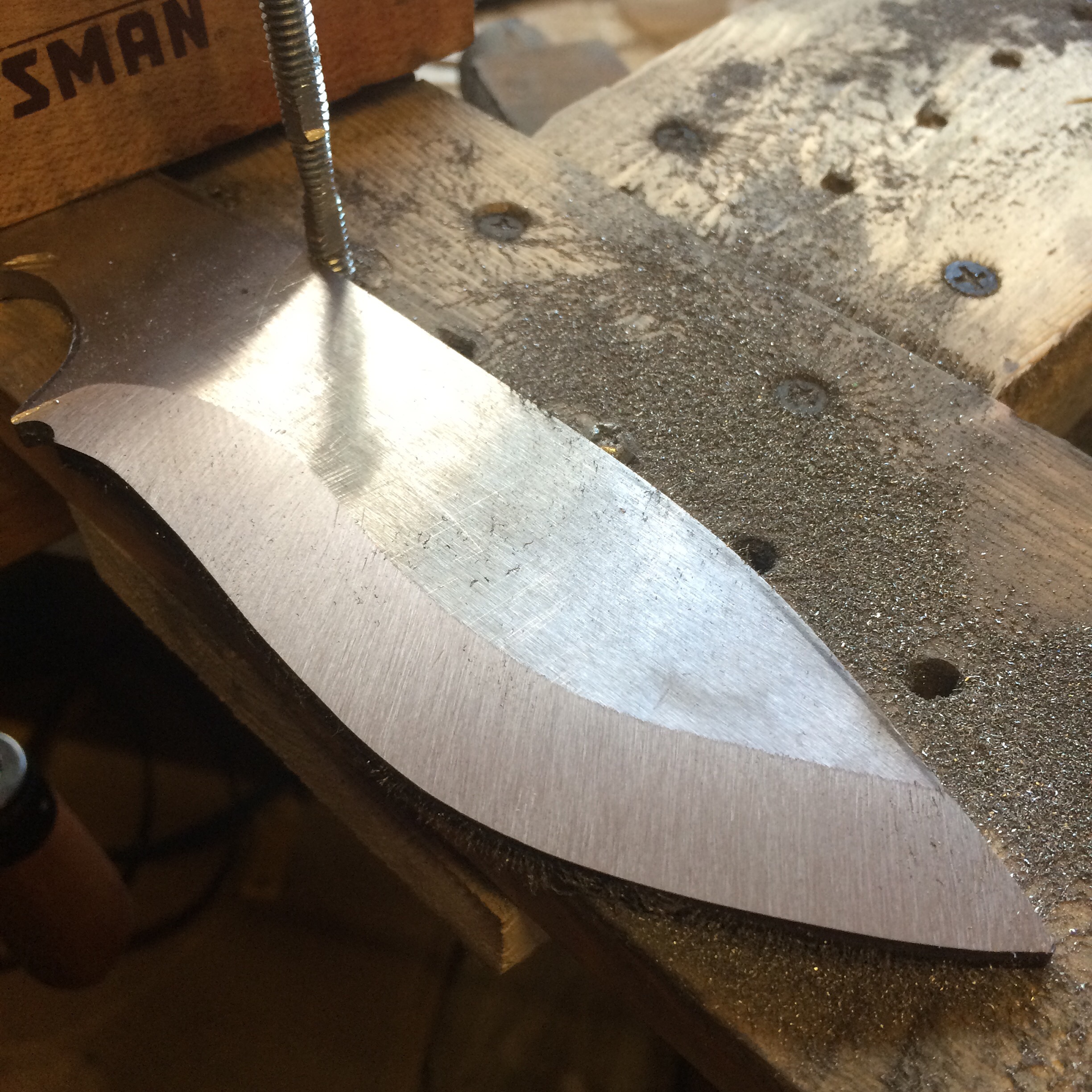
Shaping and rough grinding: To create a strong blade, I took a page from the Japanese swordsmiths who crafted the weapons and tools of the Samurai. For these swordsmiths, the process was a spiritual experience. Every authentic Japanese blade features a temper line, called a Hamon, which translated from Japanese means “blade pattern”.
The spine of the blade is covered in clay while the cutting edge is left bare. The blade is then hardened. When in the fire, the bare cutting edge will reach critical temperature for hardening while the clay coated spine does not. What results is a differentially hardened blade. The softer spine has more flex and bend while the blade edge is fully hardened. This makes for an incredibly tough sword that is far less likely to break but just as deadly as a fully hardened blade.
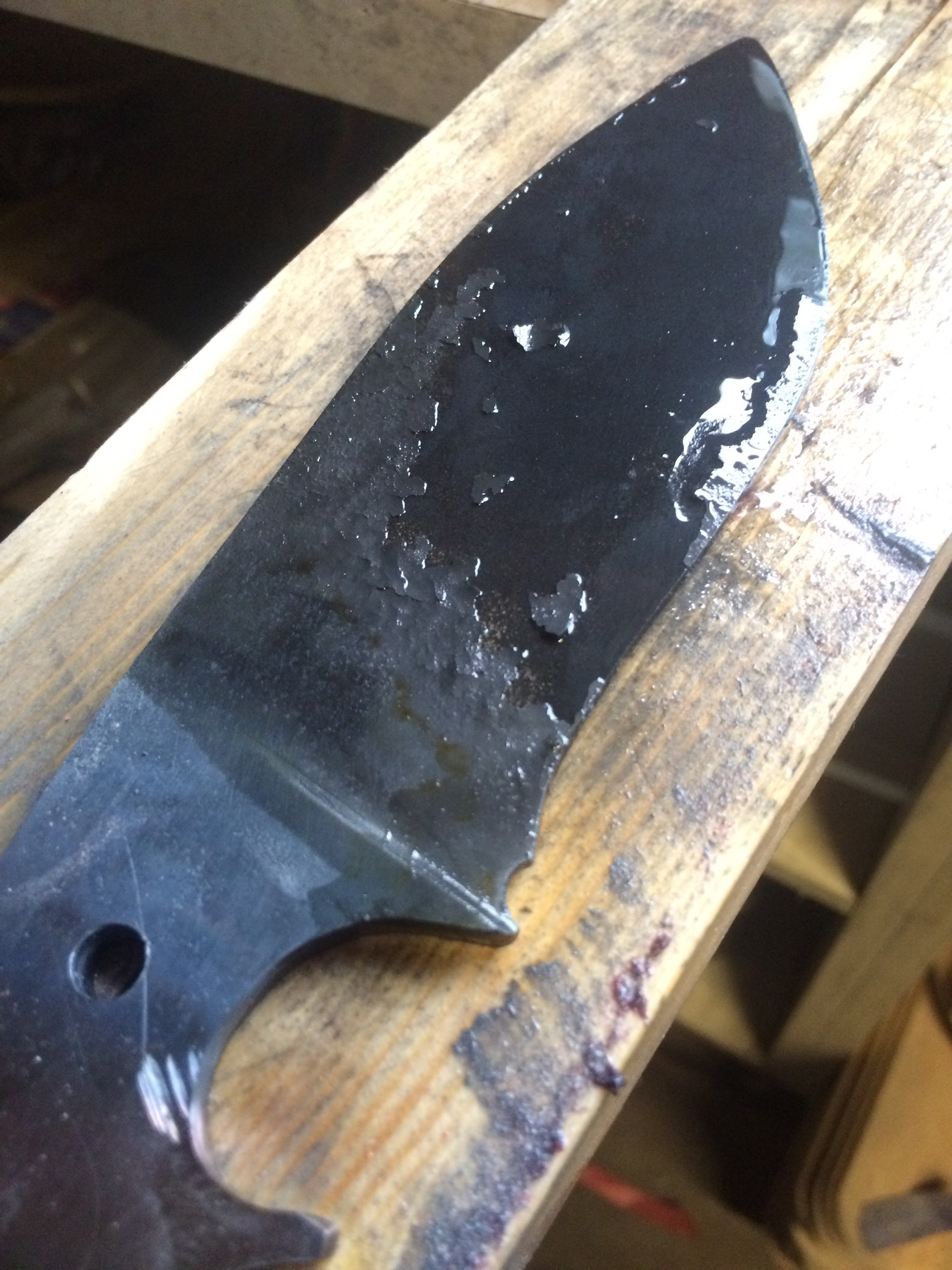
I cheated a bit and used furnace mortar instead of clay….
I gooped it onto the parts of the blade not crucial to slicing and stuck it in the oven to cure:
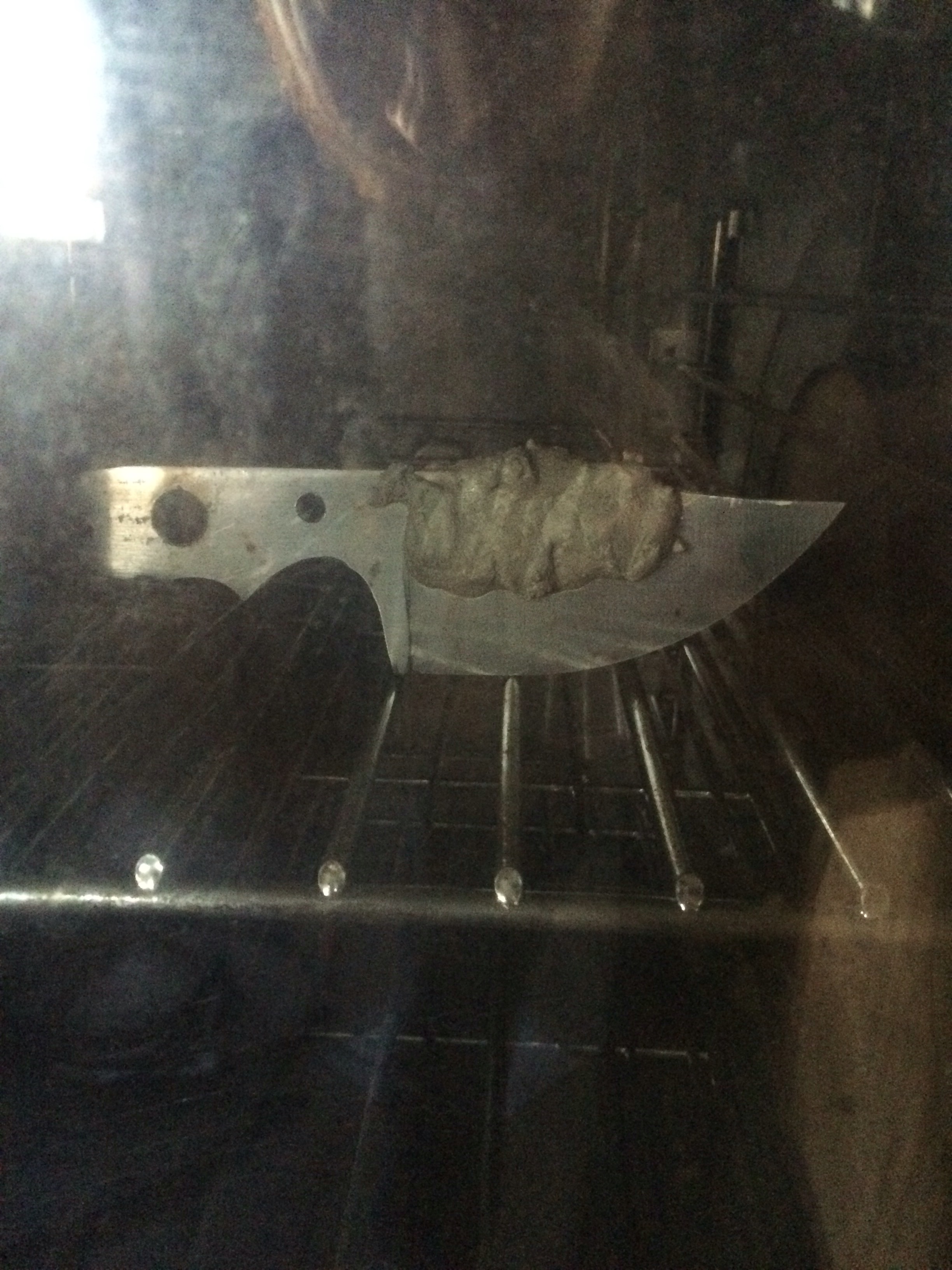
After the mortar is cured, she goes into the forge.
Hardened:
 That tempering part, for flex and bend…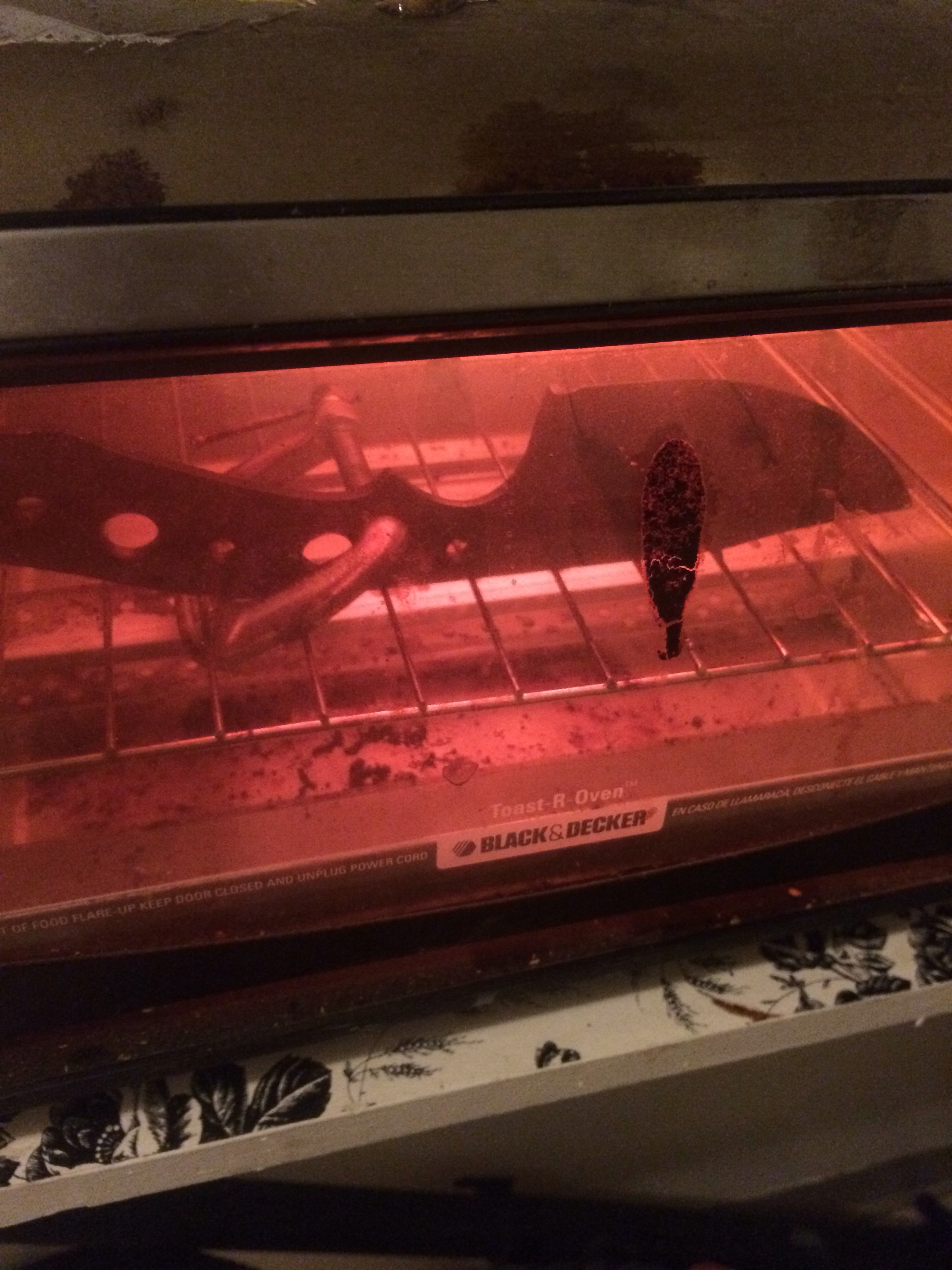
Thumb for scale….

Into nearly boiling vinegar. The vinegar eats away at the softer steel of the spine faster than it does the harder steel of the blade. What results is a gorgeous line where the softer steel meets the harder… 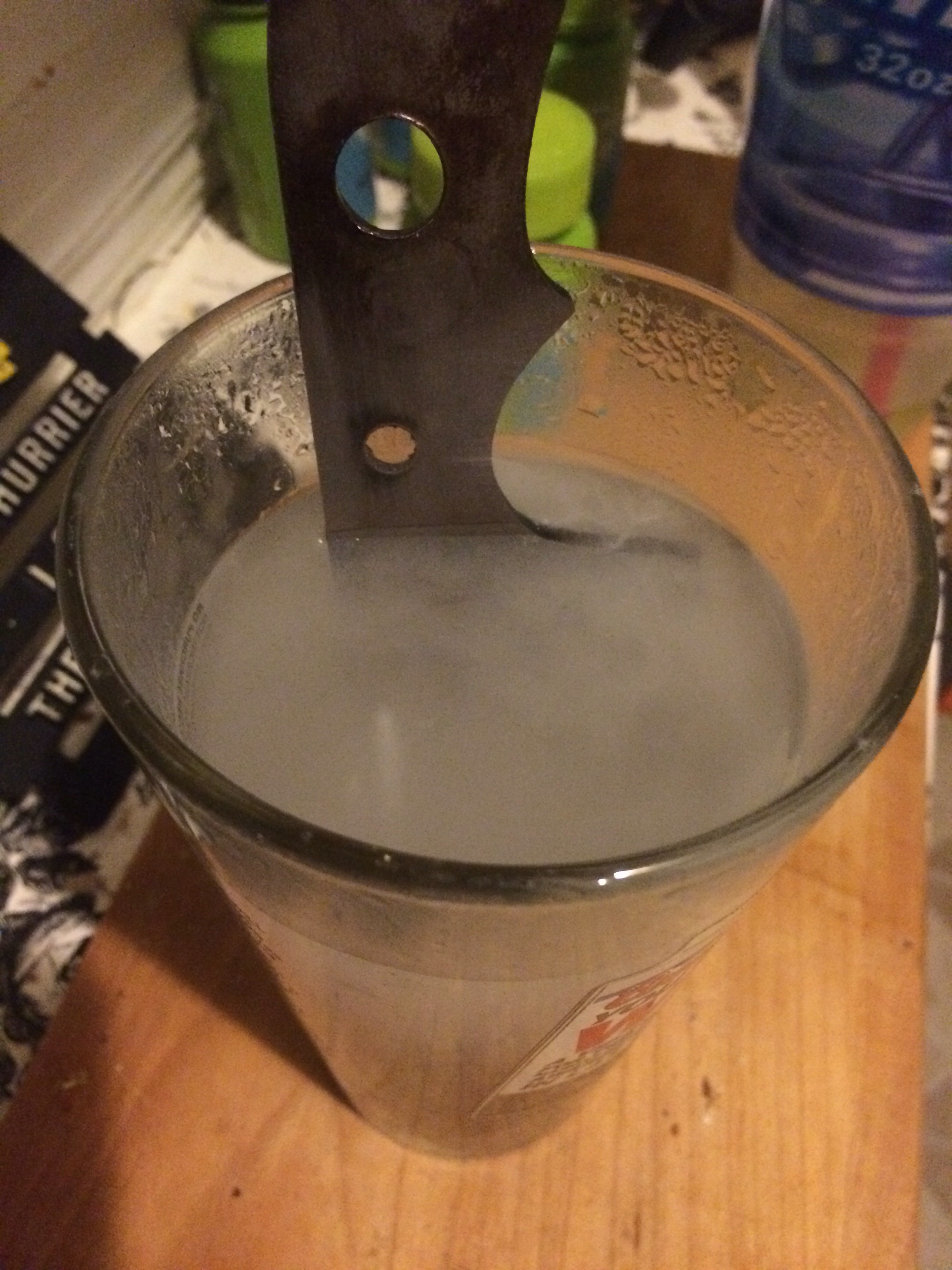 Handle…

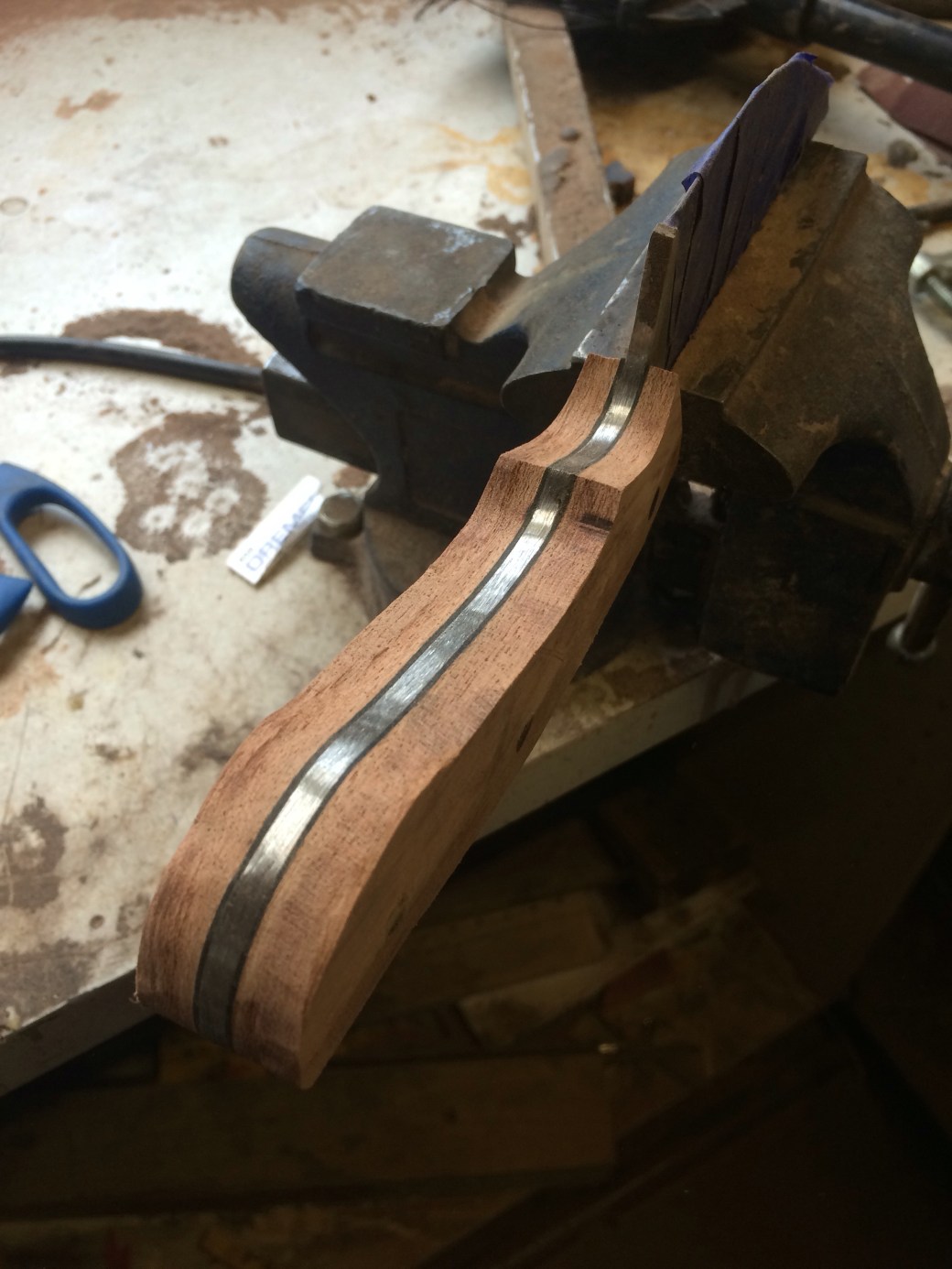


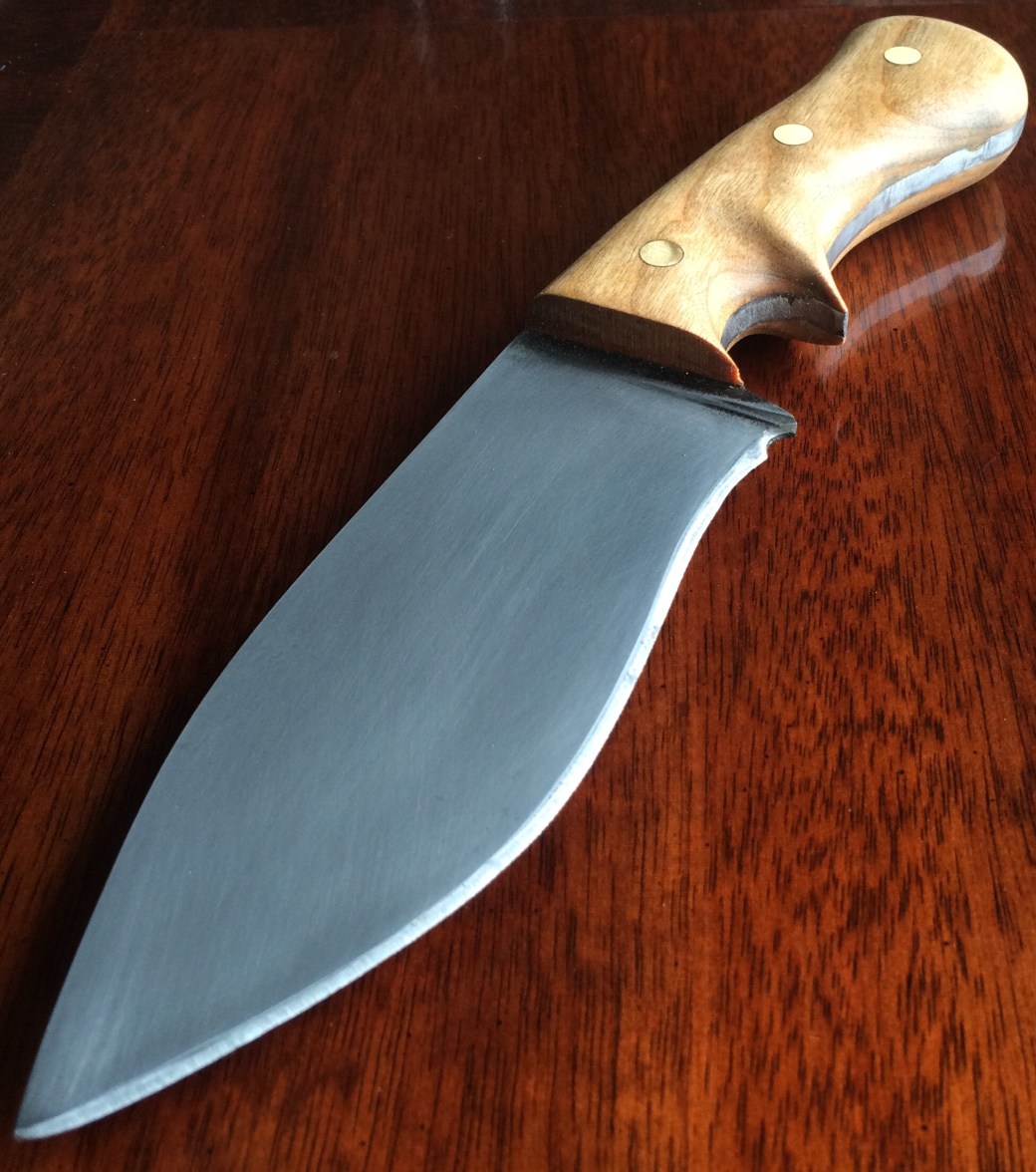
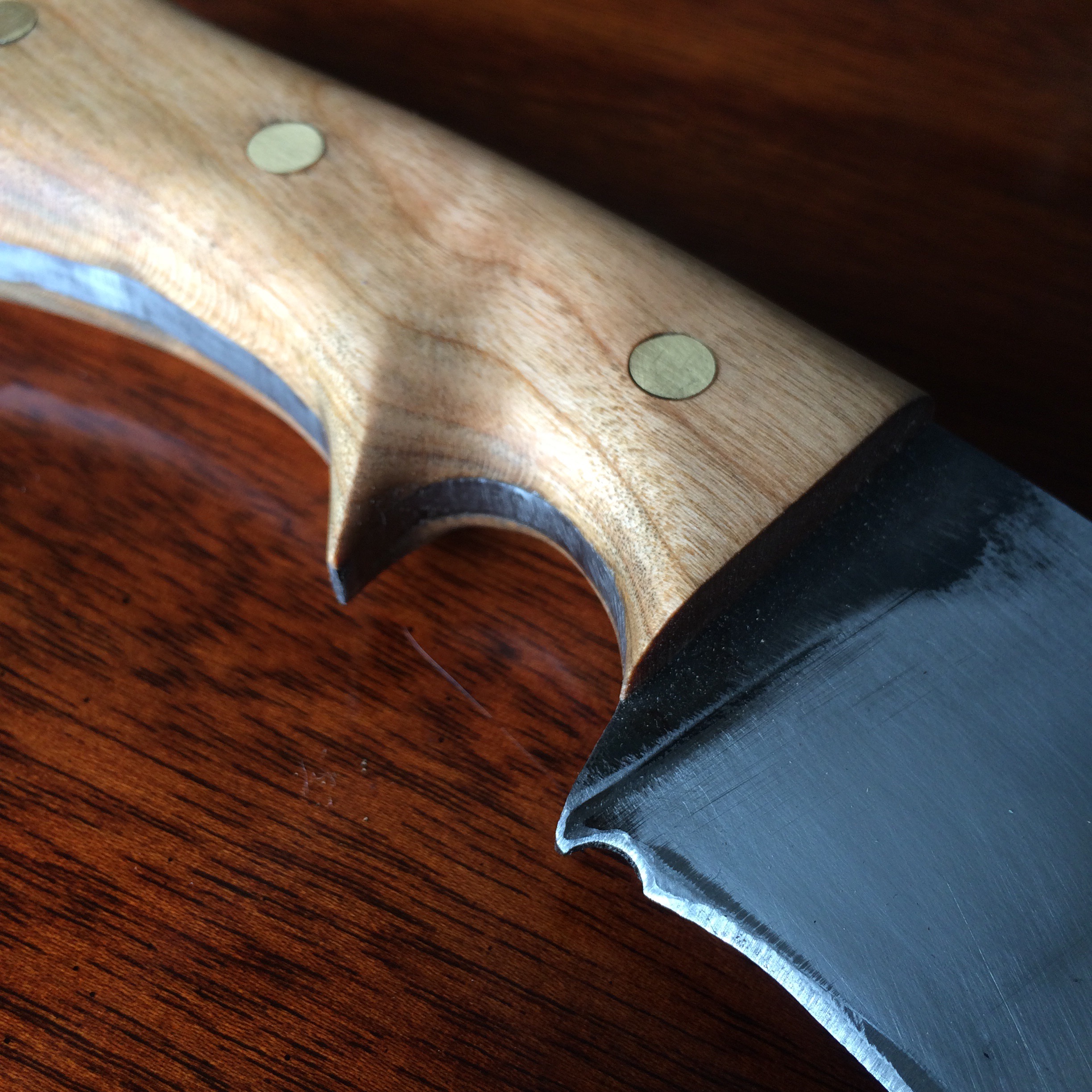
The Hound, Mark III. Etched 1095 spring steel, Texas Mesquite handle, Kydex spacers, and brass hardware.

This blade was a commission for a very dear friend of mine who waited patiently for almost a year while I got my shit together.

Be the Knife










 groundedinfire