Knifemaking: an unexpected party, and the Cowpoke

“There is nothing like looking, if you want to find something. You certainly usually find something, if you look, but it is not always quite the something you were after.”
― J.R.R. Tolkien, “The Hobbit, or There and Back Again

My Dearest Young Friend,

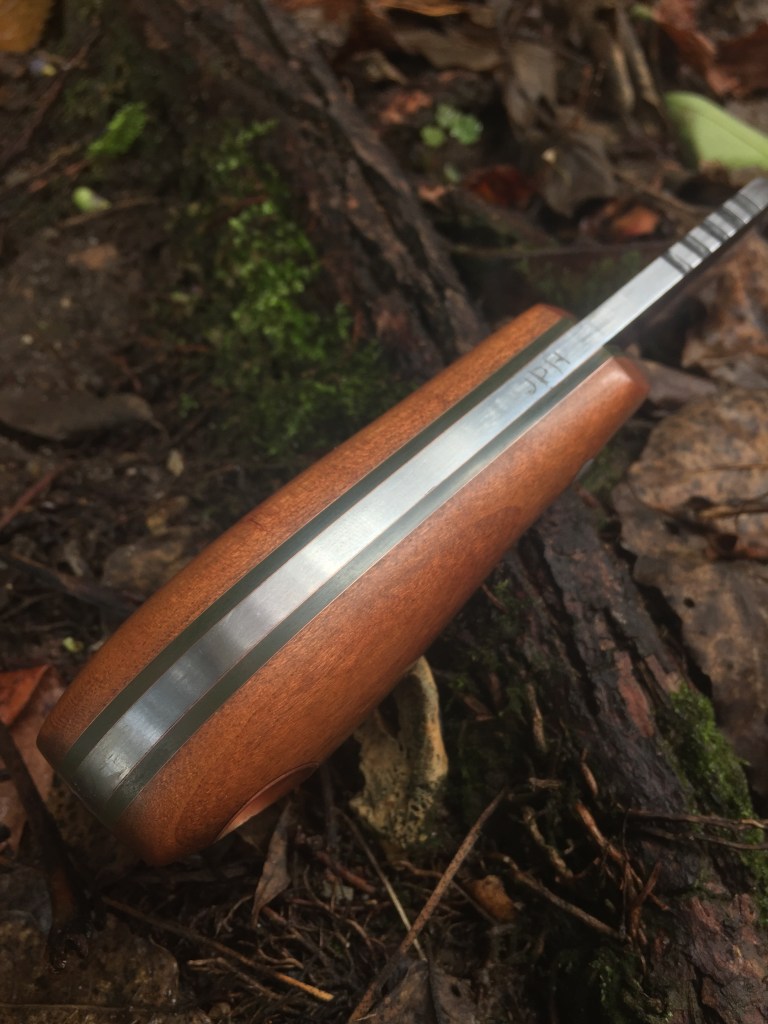
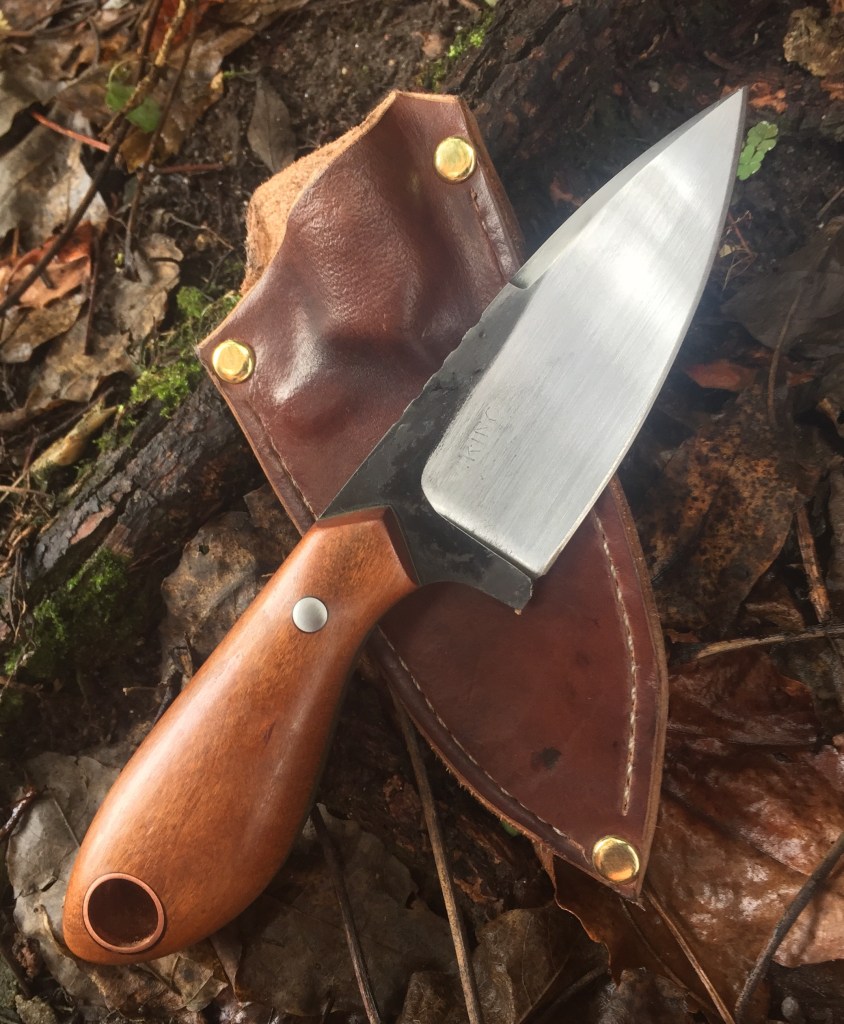
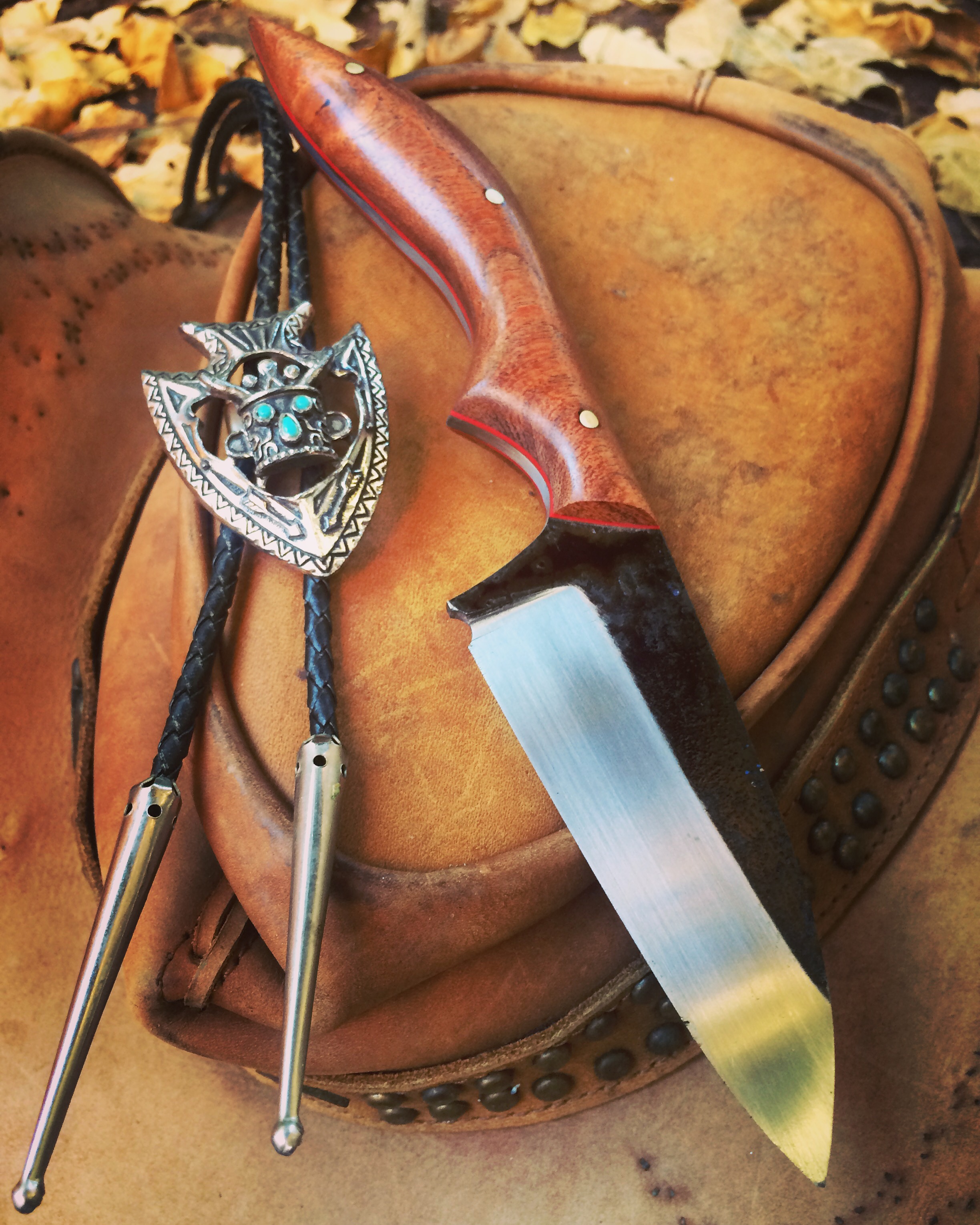
I was told you have made it eleven times around the sun this year. Eleven! In celebration of this, your dad commissioned me to make you a special knife, which was convenient because I prefer to make knives that are special regardless! I like to make them out of things I find- in fact, the knife I made you was made out of materials that I found in the garbage. The blade is made out of an old bedframe that I can harden and the handle is made from walnut pulled out of an abandoned house.

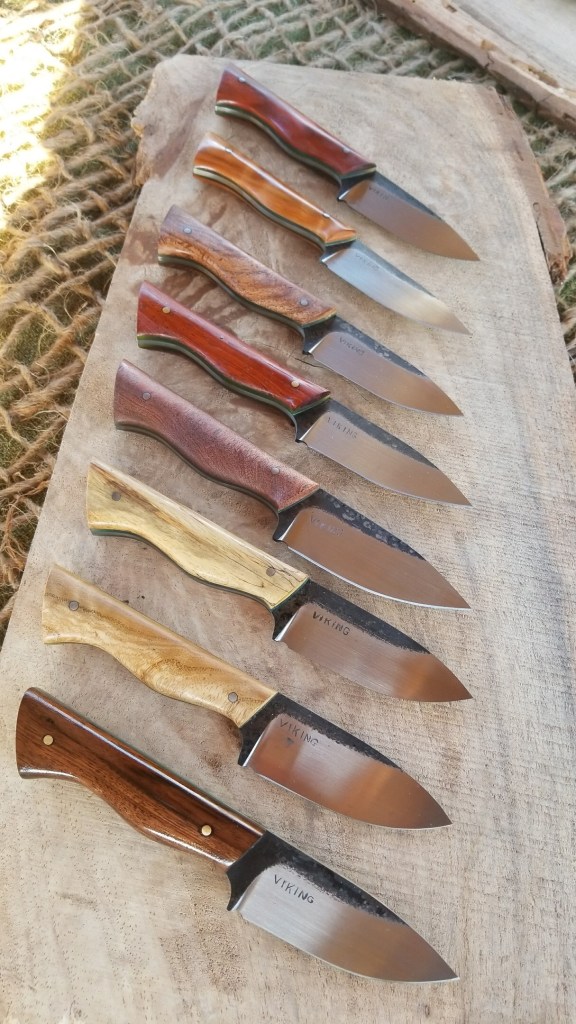
I make a lot of these particular knives. Anytime I see a bedframe in the trash, I pick it up and take it to my shop. Not all bedframes make good little knives but enough of them do so that it becomes worth my while to pick them up. It is through these little knives that I can explore and just be curious. I use whatever I have lying around the shop for the handles, or I try out ideas, or I just tinker around with no particular goal in mind to see what will happen. Sometimes nothing happens, but sometimes I can make something special that didn’t exist before I made it.

This creates a wonderful feeling that starts in my head, and goes through my arms and out my fingers, and keeps on going down my legs out my toes. I think you know this feeling. Perhaps you get this feeling when you read your books by Mr. Tolkien, or when you play Breath of the Wild. There’s always something good on the next page or just down the way- you only have to go looking for it. Even if you don’t find anything you might have made a new friend, or learned something about yourself, or your brothers and sisters. That is something special and should be celebrated- because sometimes the best party is the unexpected one.

As a grownup I sometimes forget that the unexpected and unknown can be good things- I started making knives to remind myself of this. It takes courage to be curious and explore and it’s important to remember that there’s a big world out there.

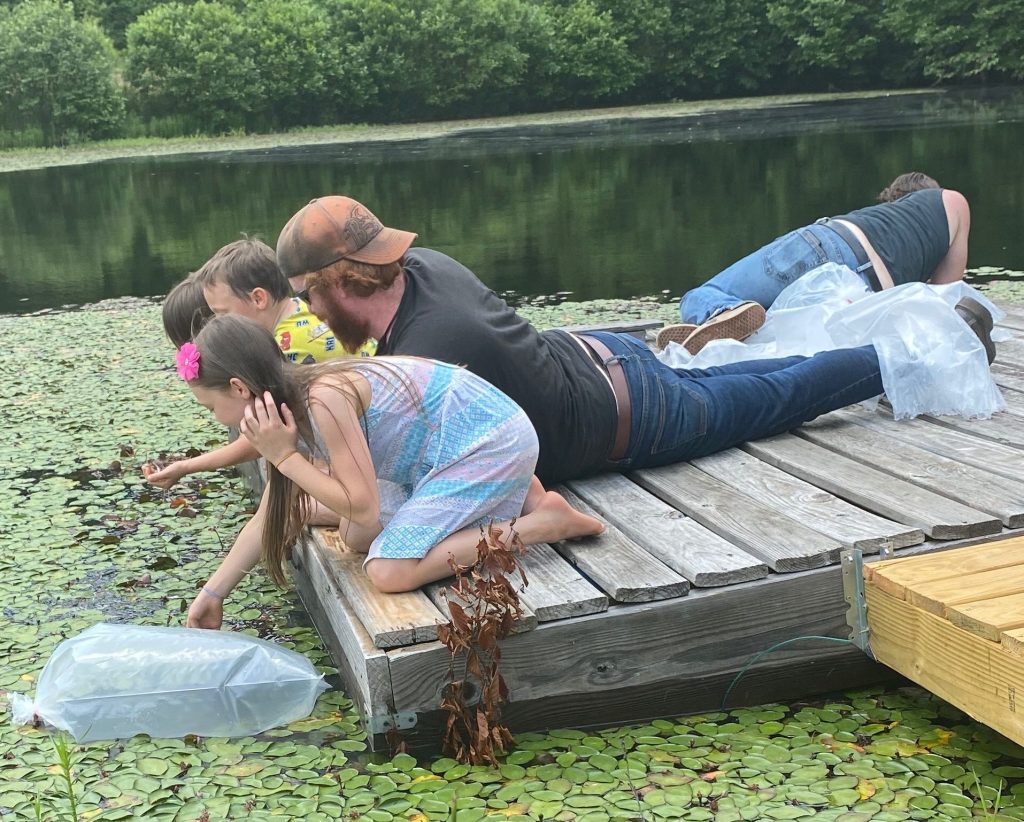
Some days I wake up and have no idea what the world will bring me so I try to approach most every day as an adventure. I spent a couple days each week of the past year helping your dad out at his work. One day I showed up and he told me we were going to stock the pond at your house with fish. We got in his truck and went to the farm supply store and your dad got something to the effect of a thousand minnows. That was a fun day, and you guys were all there. You never know what may happen if you don’t explore a bit. Thank you for sharing that adventure with me- your mom took this picture:

I hope you have a fantastic birthday and you keep reading and exploring!

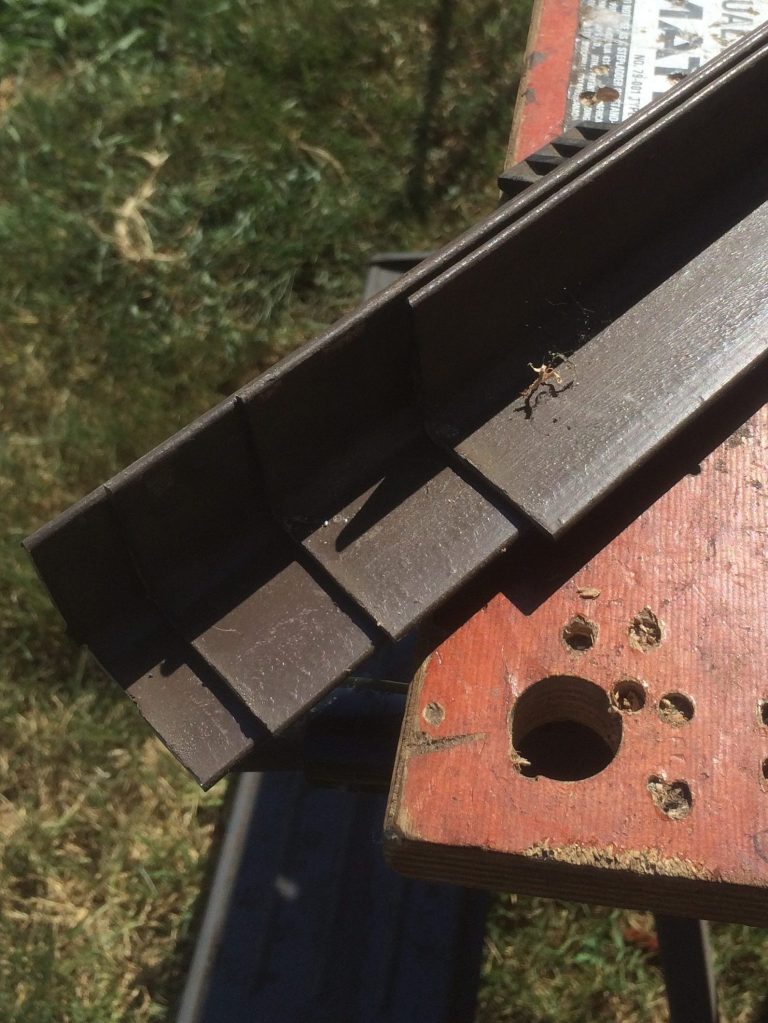
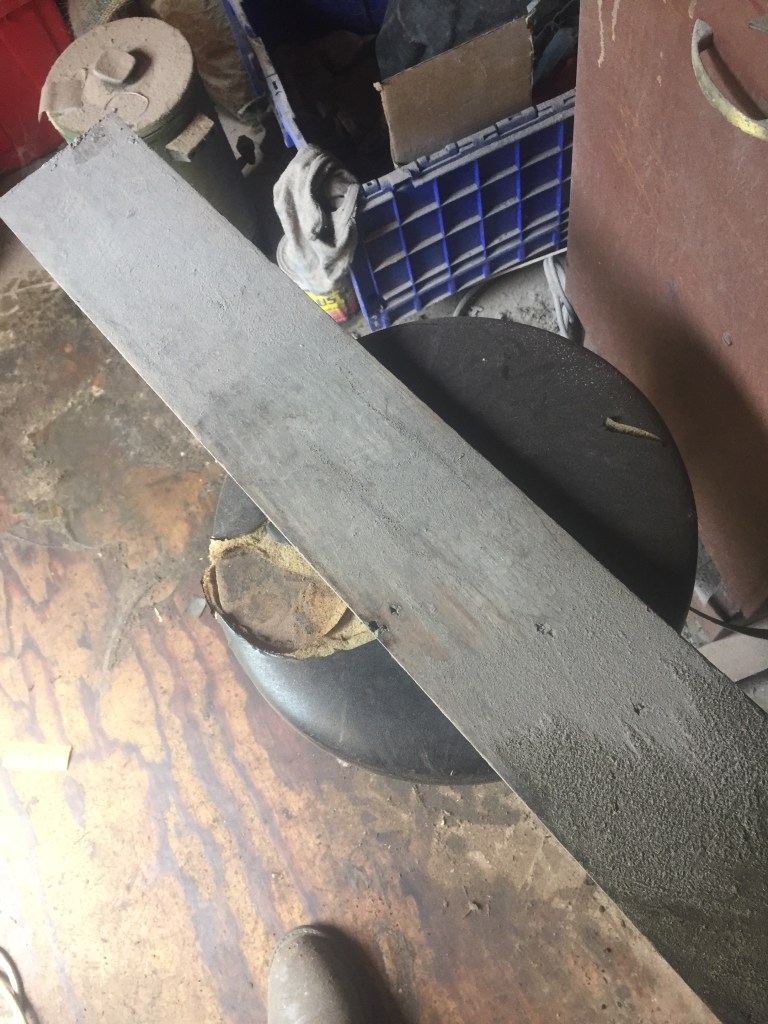
The knife I made you begins with a piece of bedframe that I cut into smaller pieces:

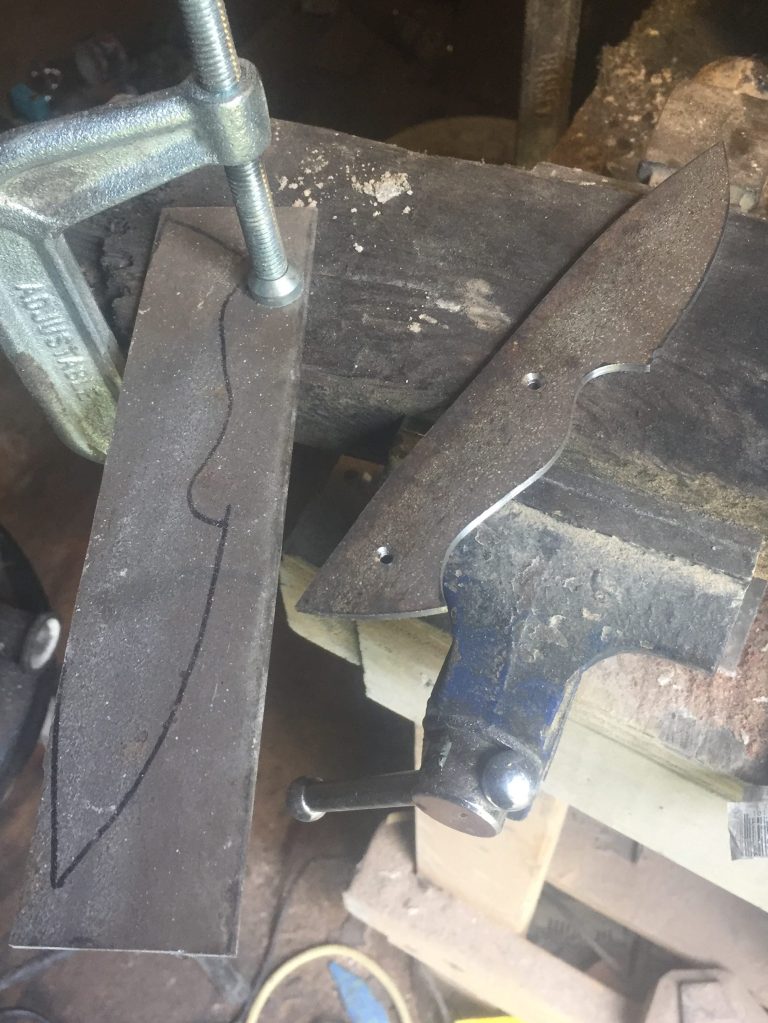
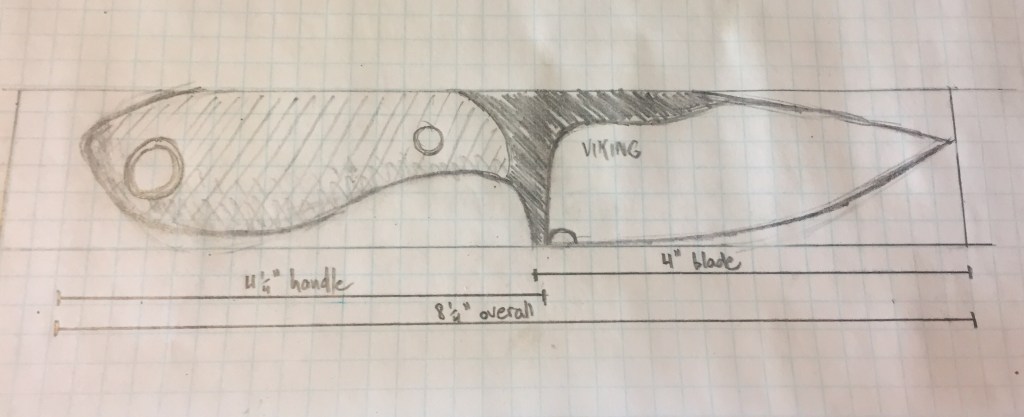
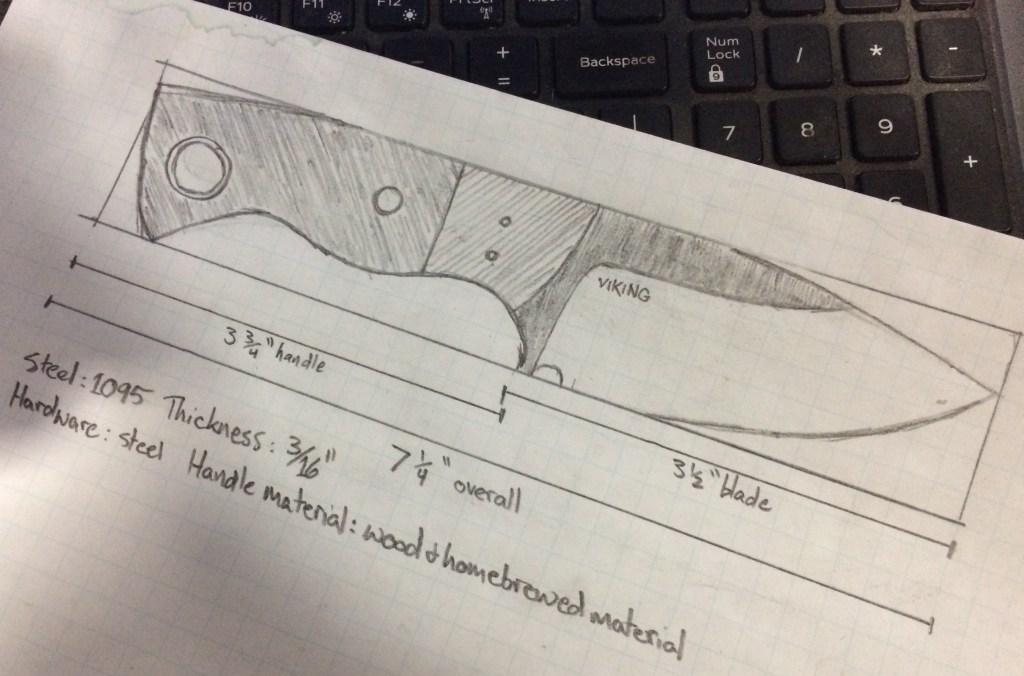
I trace my design onto the steel:

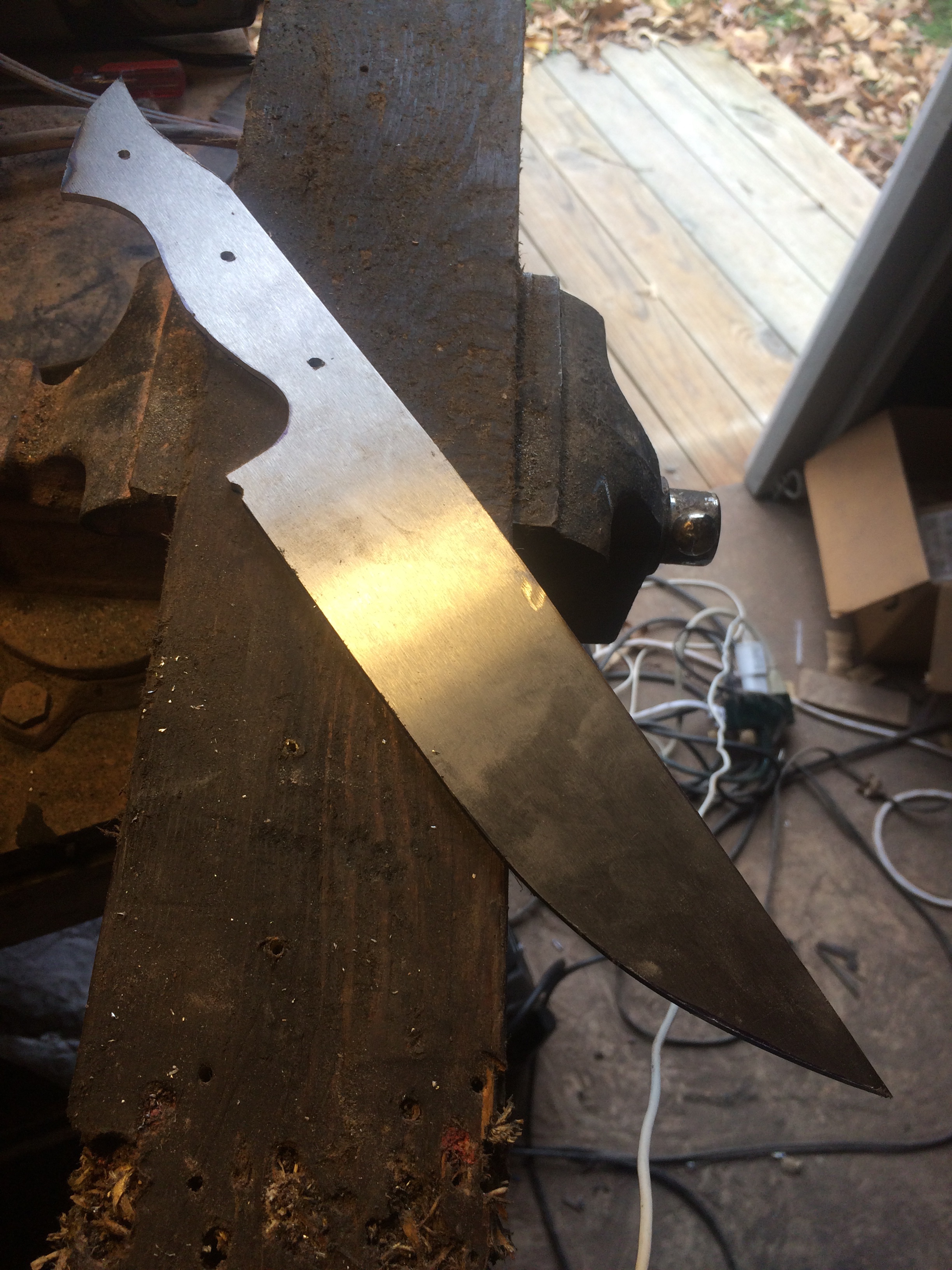
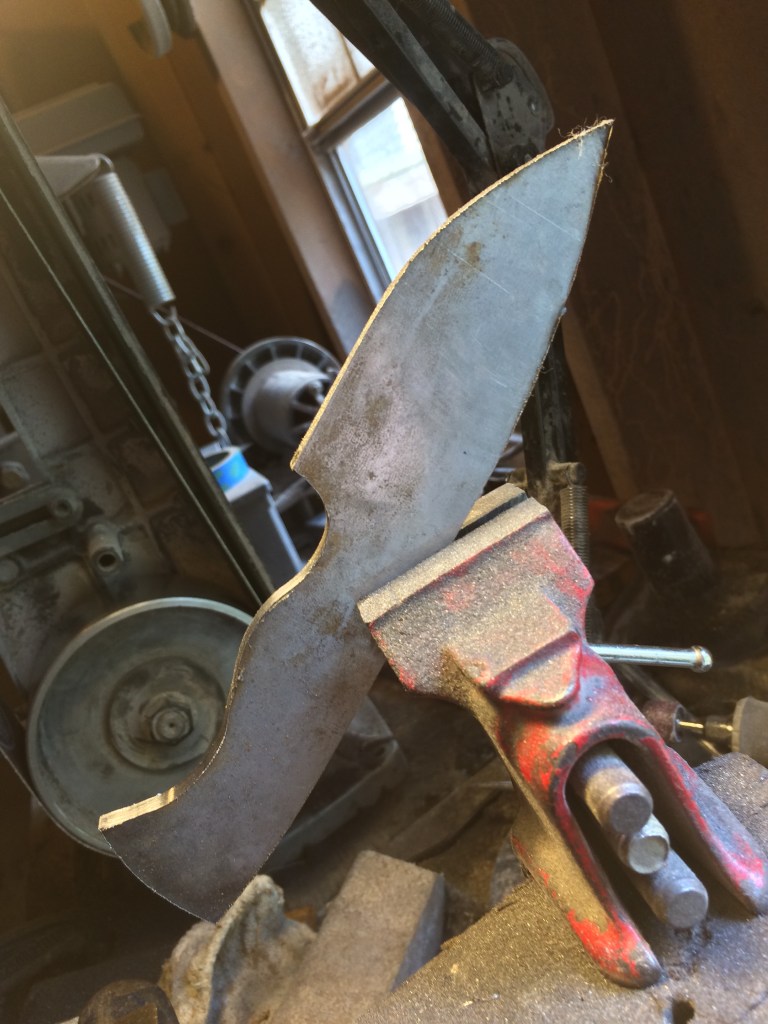
Then it’s just a process of cutting it out- I have special tools for this.

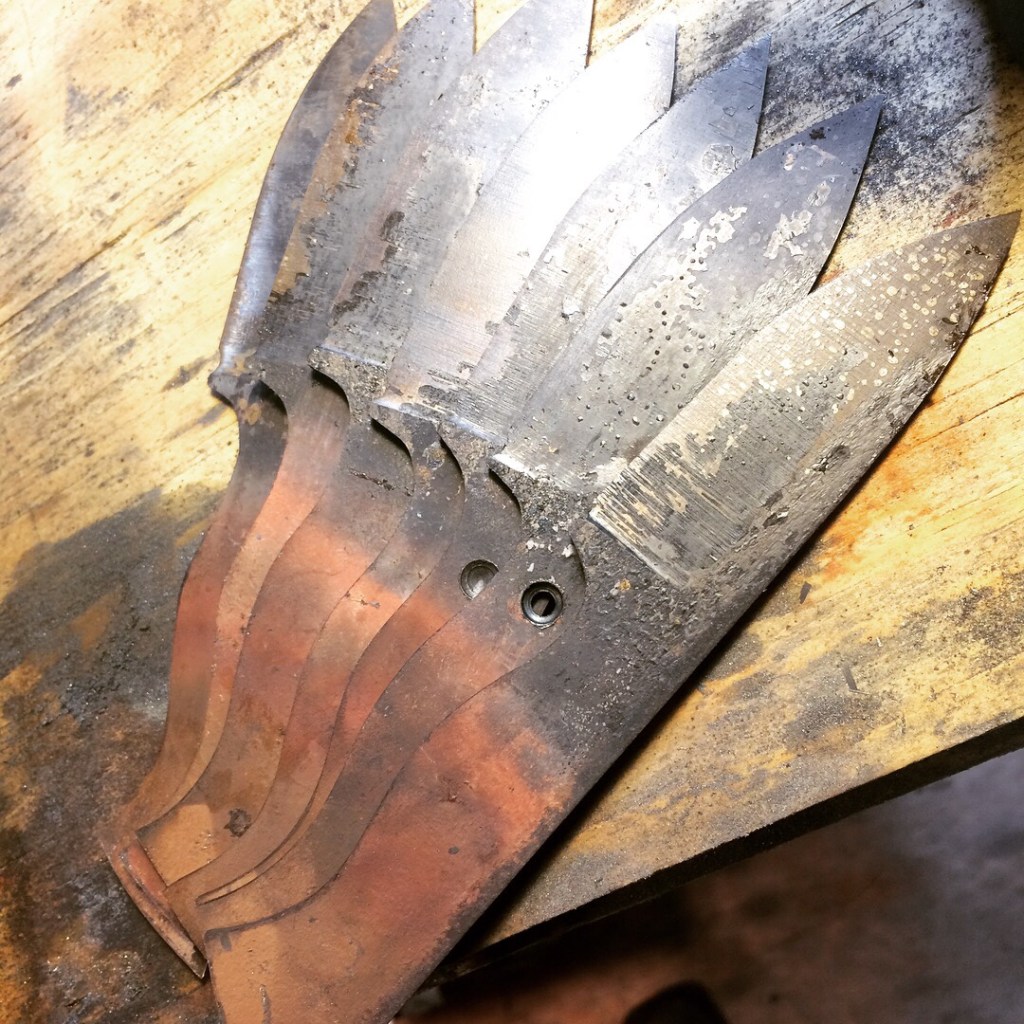
I always try to have a couple of these going and I’m usually working on more than one at once-

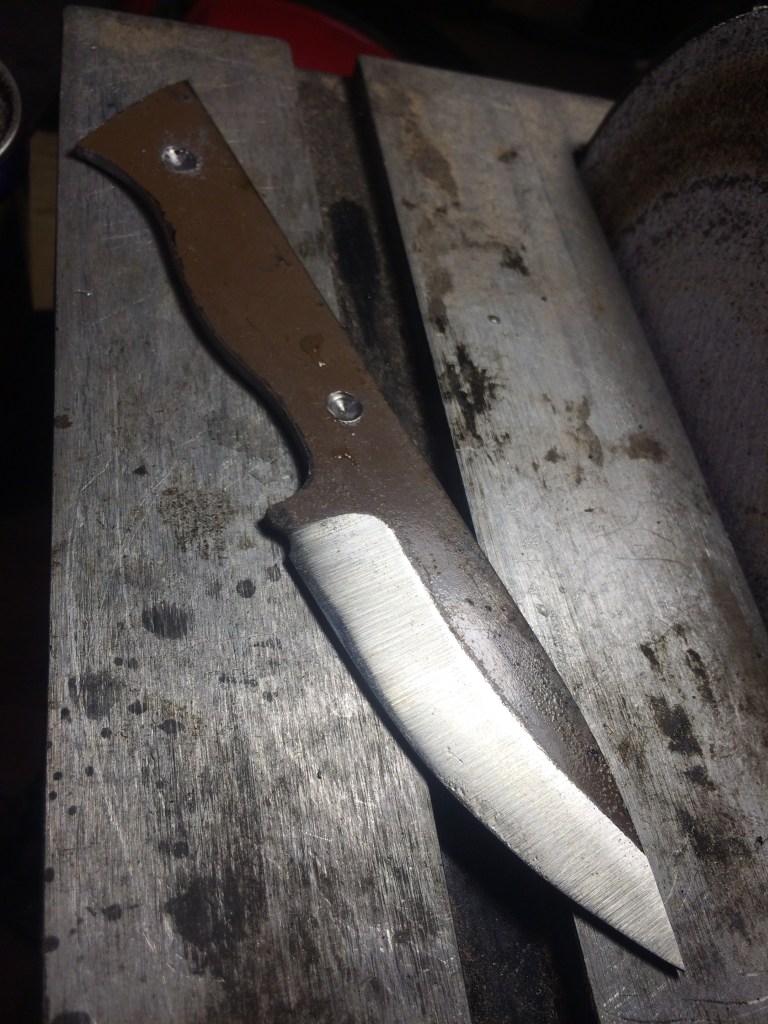
Once I get the shape right, I grind the bevel in-

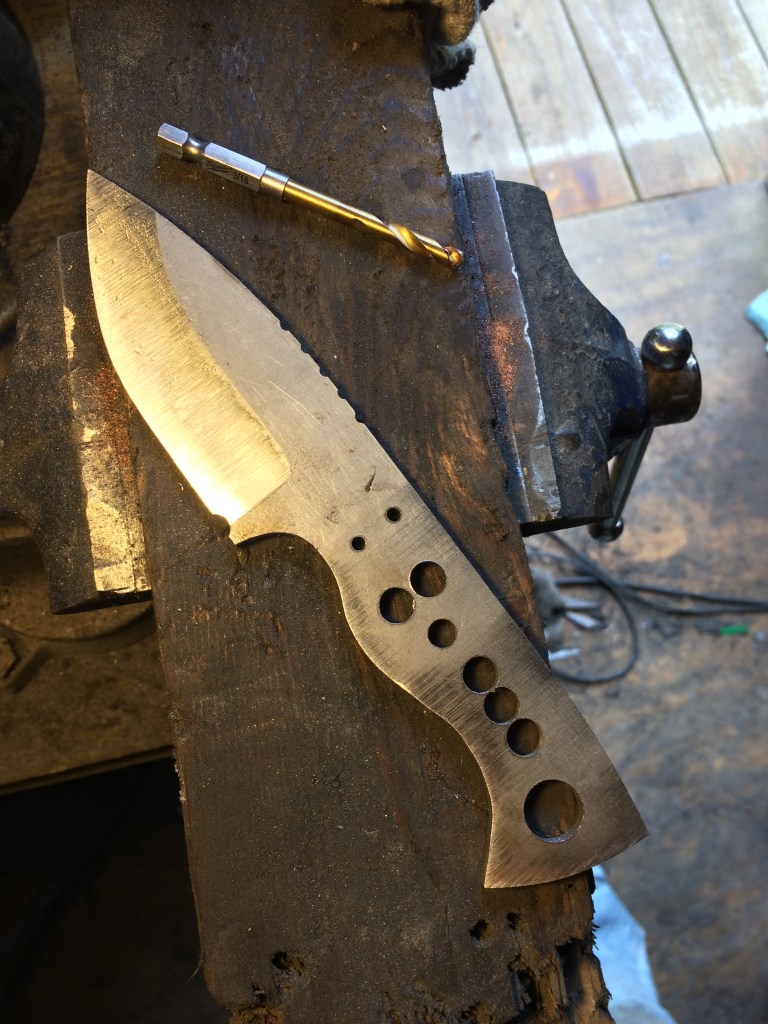
Then they go into the forge, a controlled fire that gets the steel very hot and hardens the blade. It gets so hard that sometimes it’s difficult to drill holes for the handle pins-

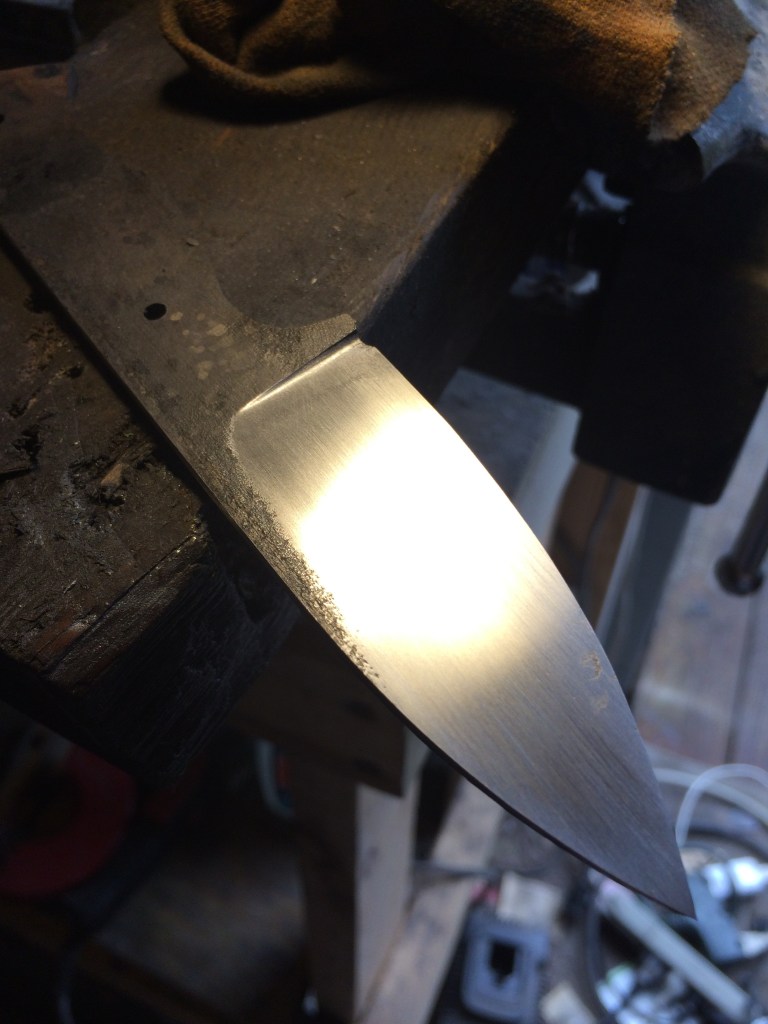
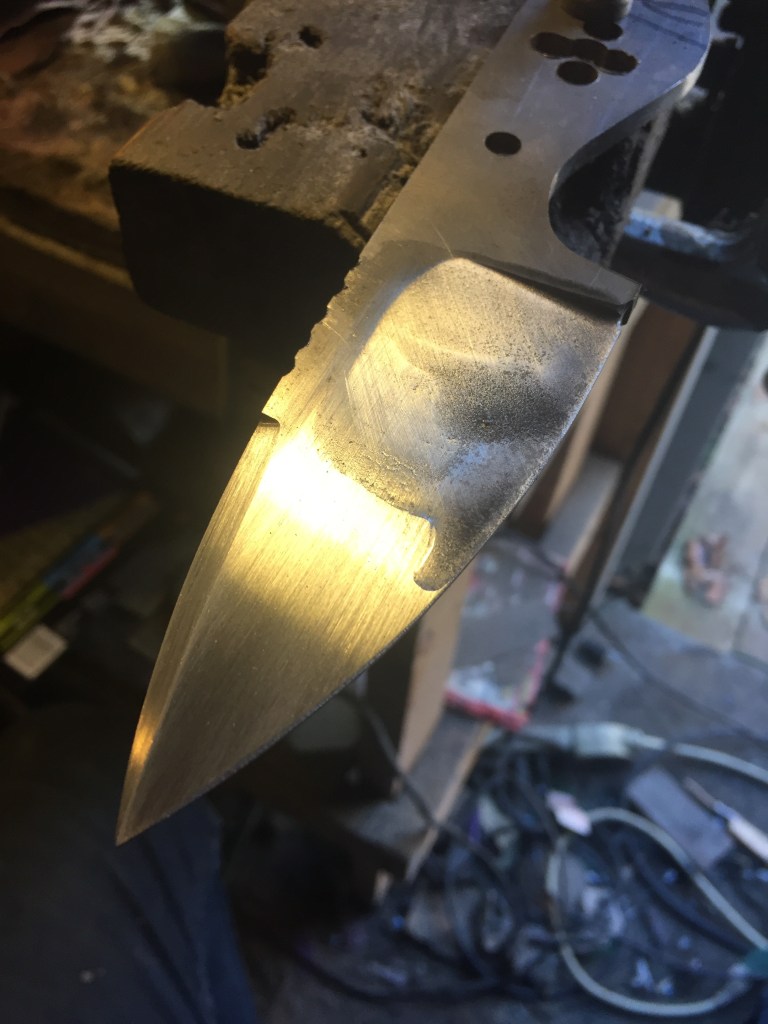
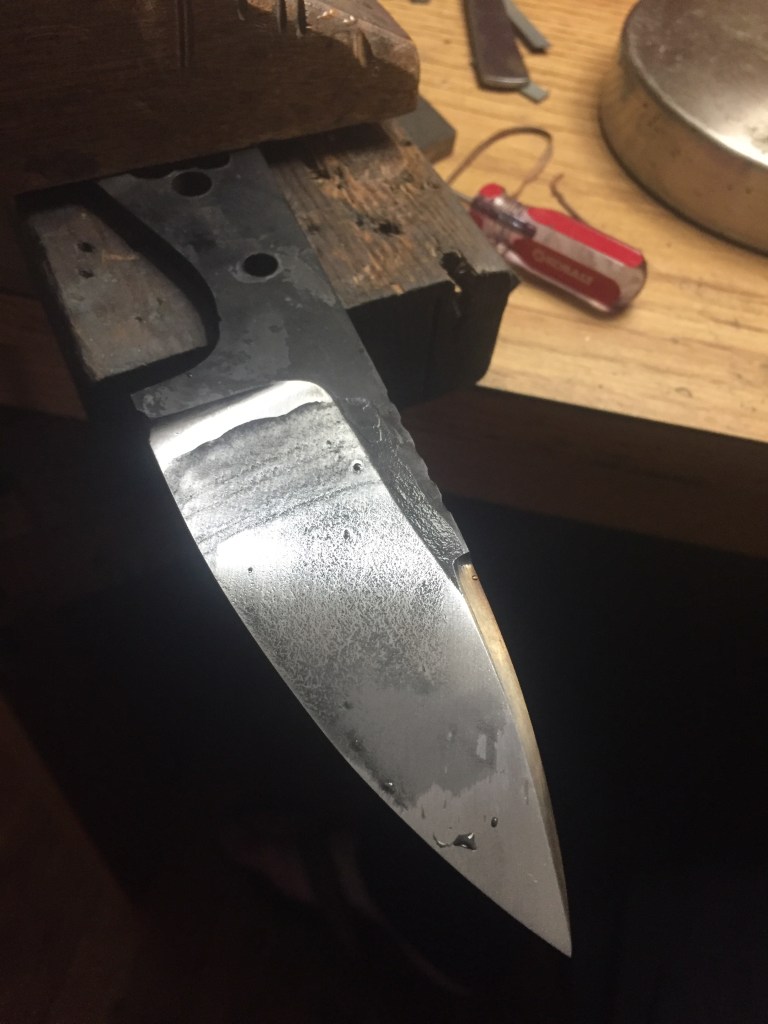
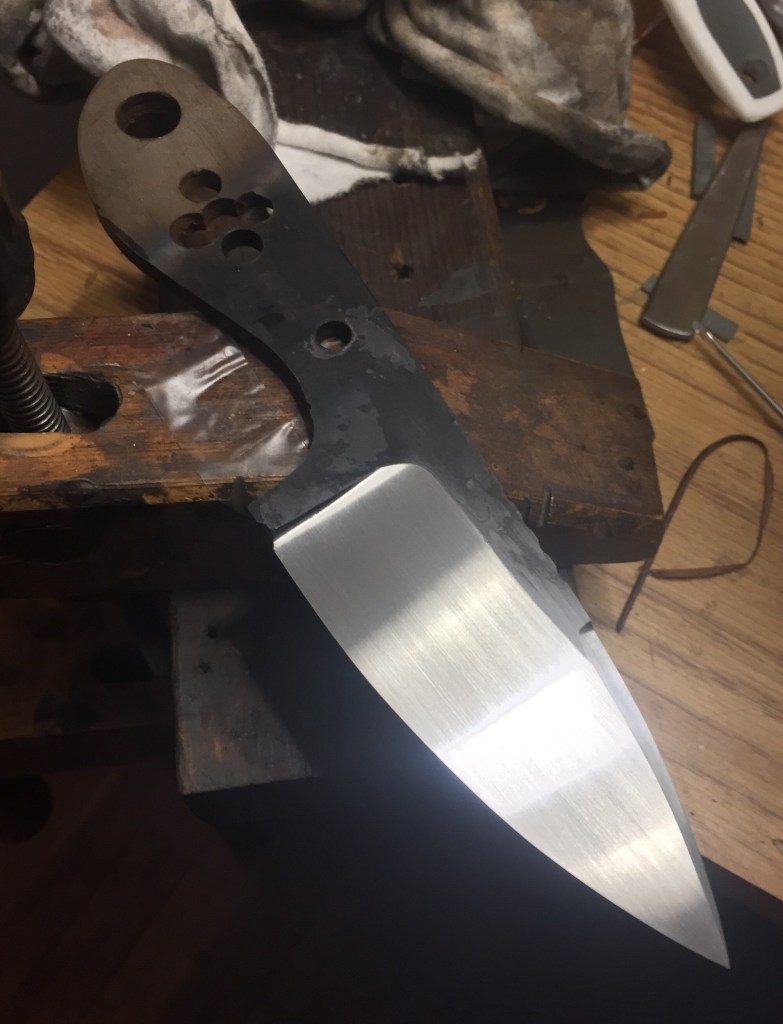
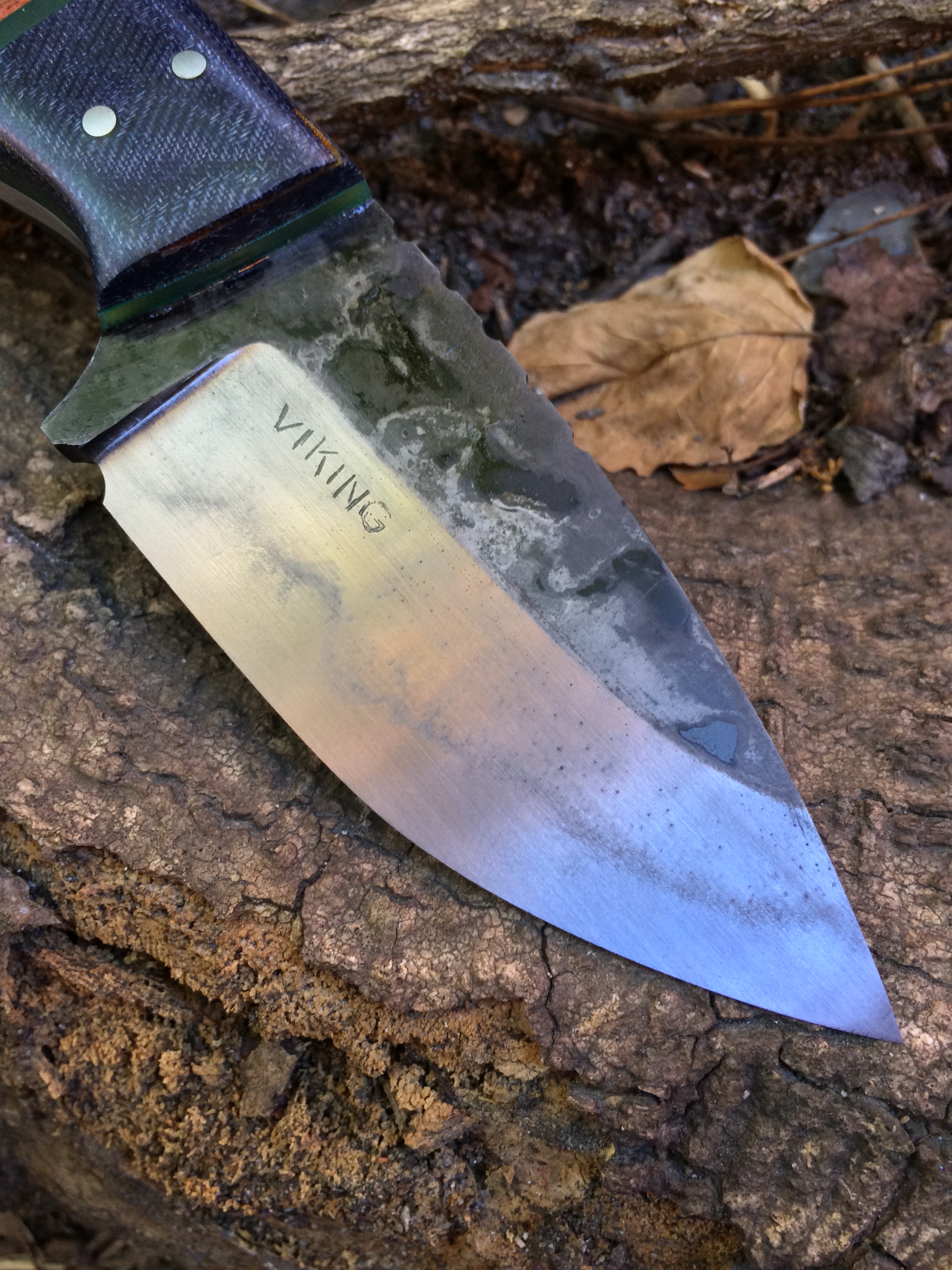
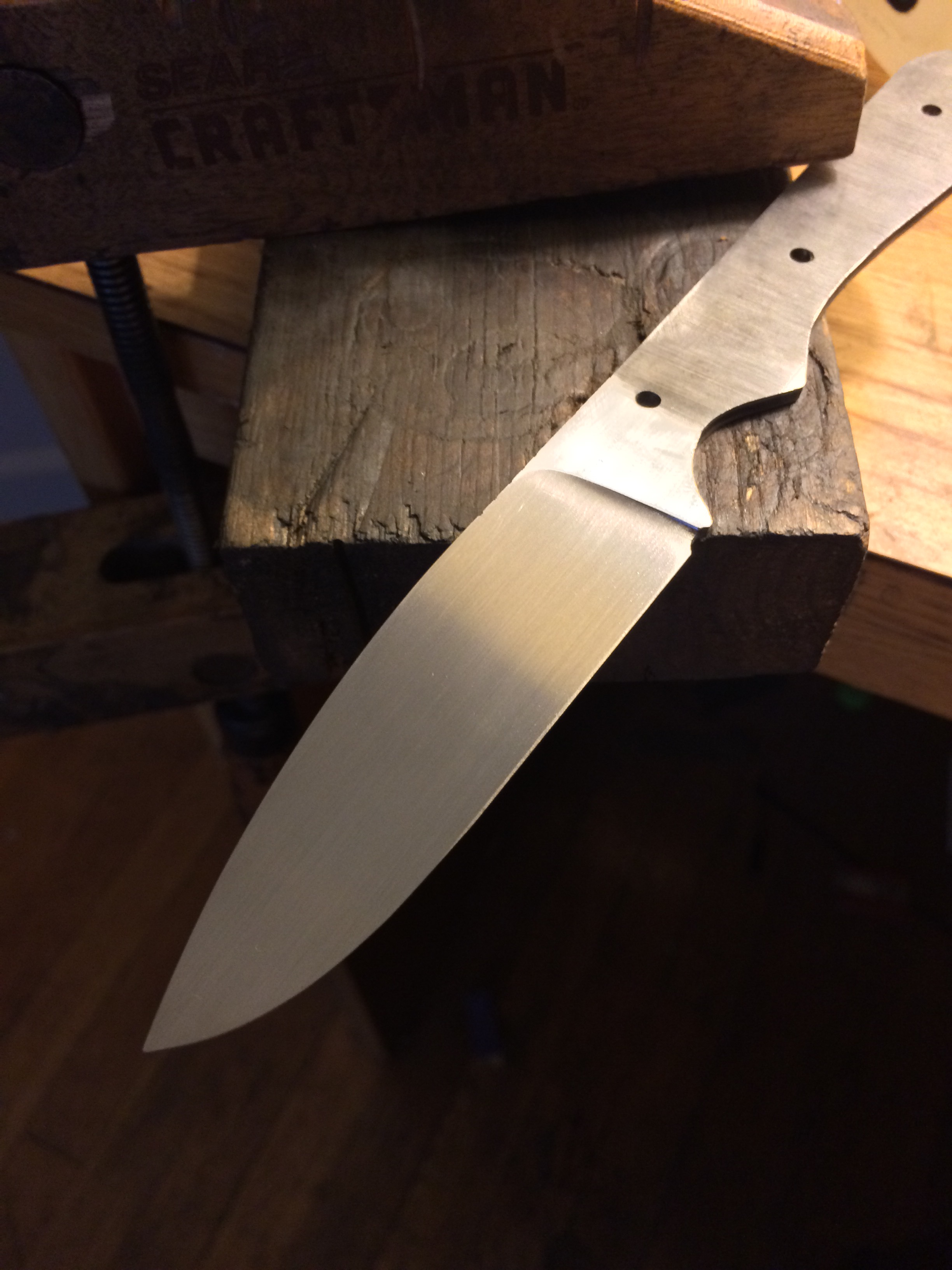
After that I use sandpaper to get the bevels nice and smooth. This helps the knife to cut better-

This one is blunted for you, so you can learn the feel and what it’s like to carry a knife-

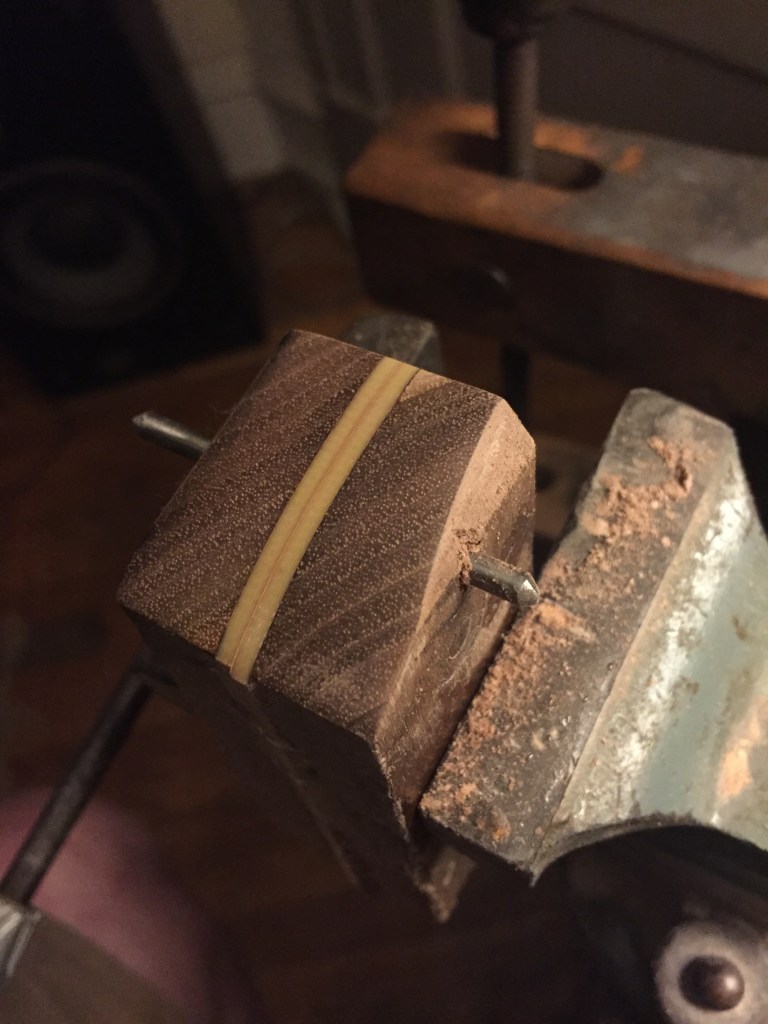
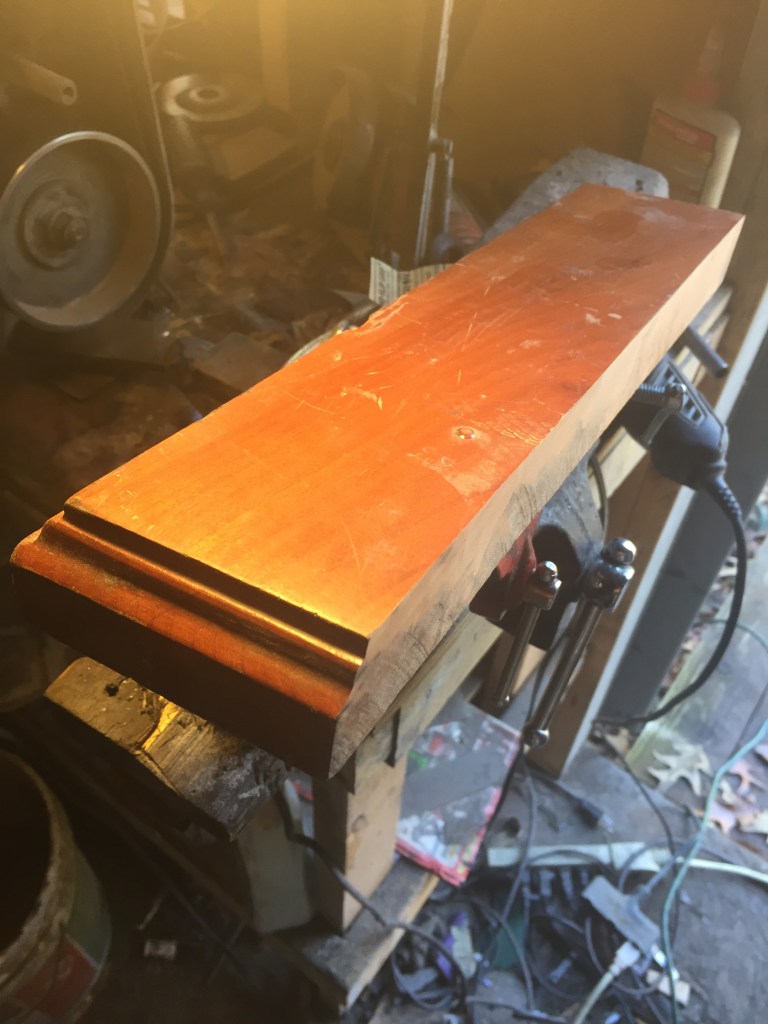
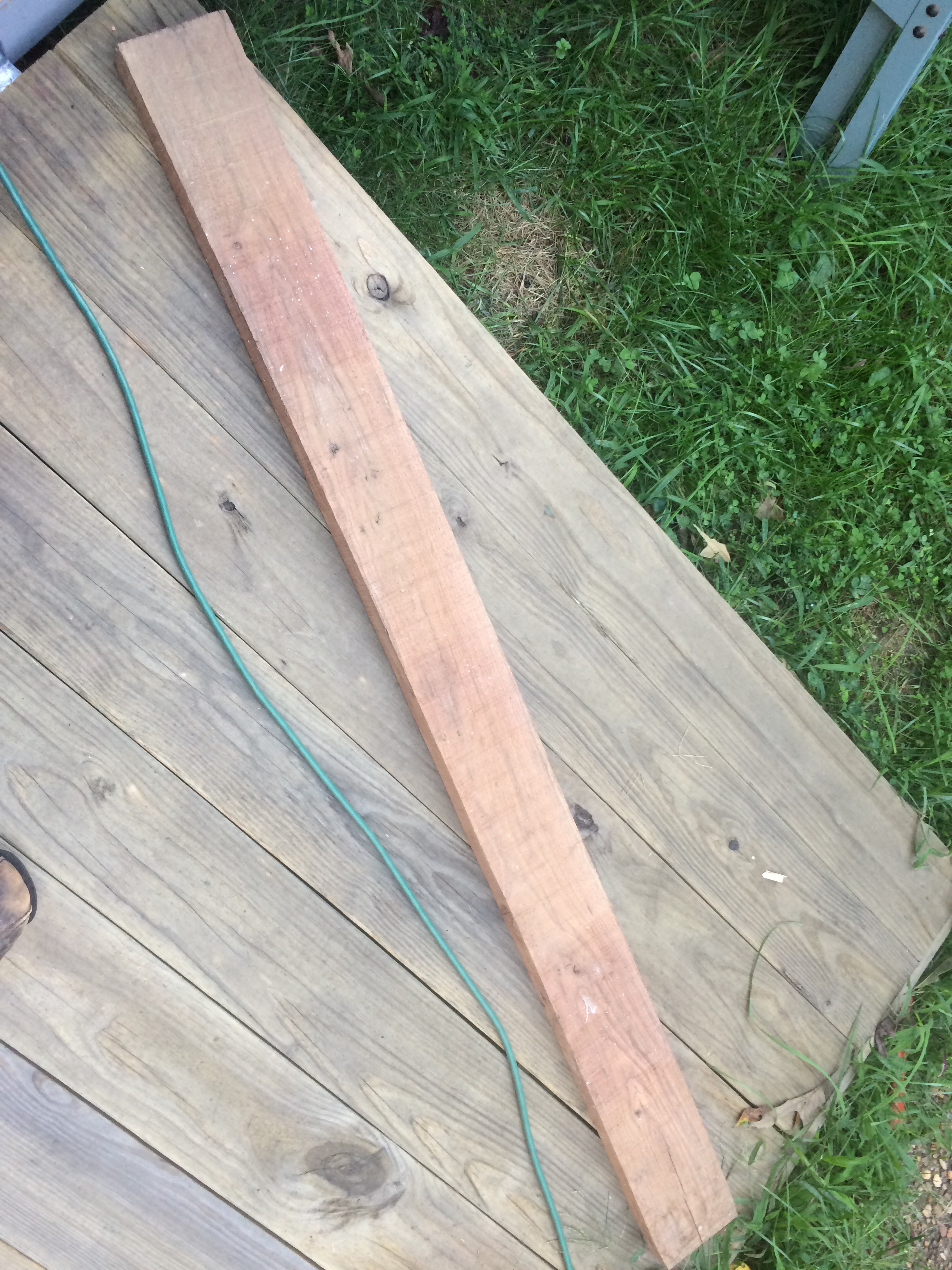
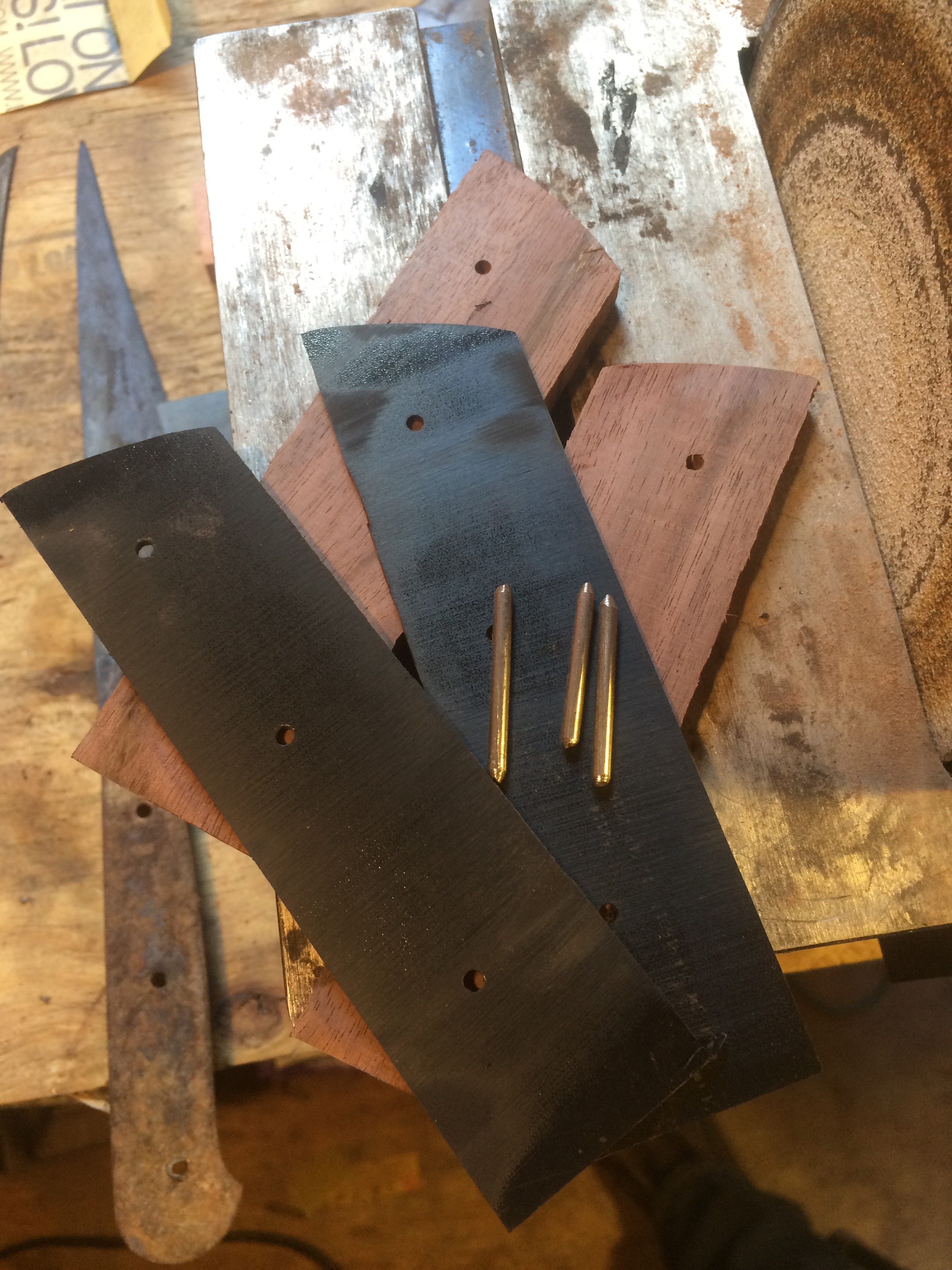
Here is a piece of Black Walnut. It was pulled out of an abandoned house in North Carolina-

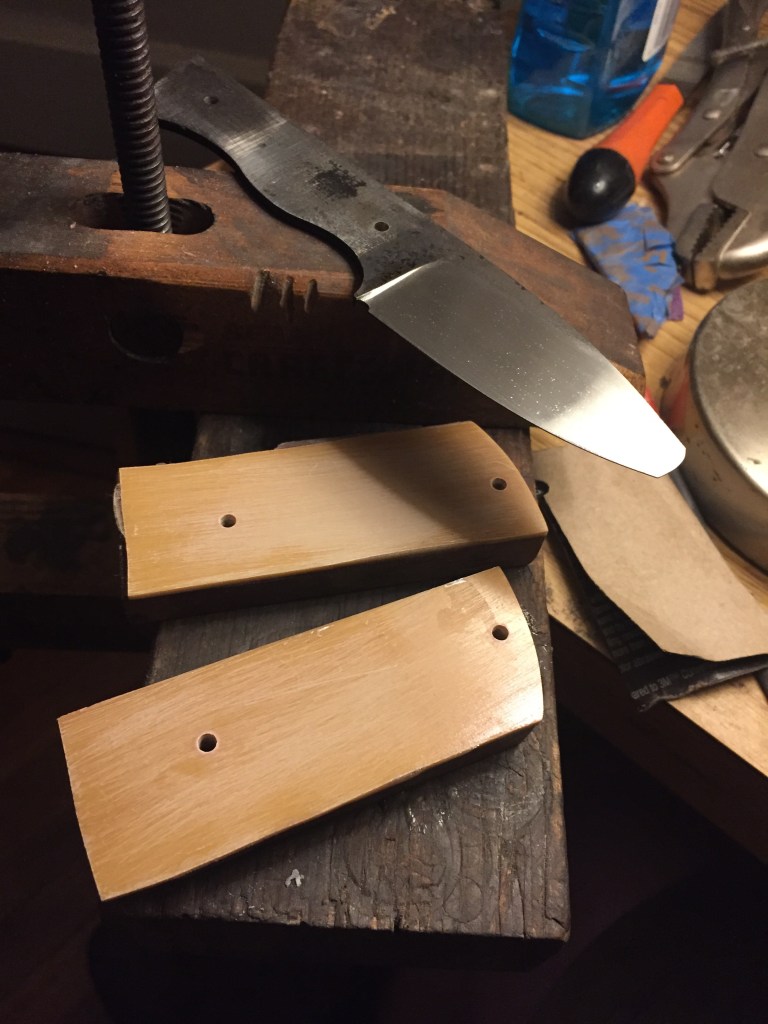
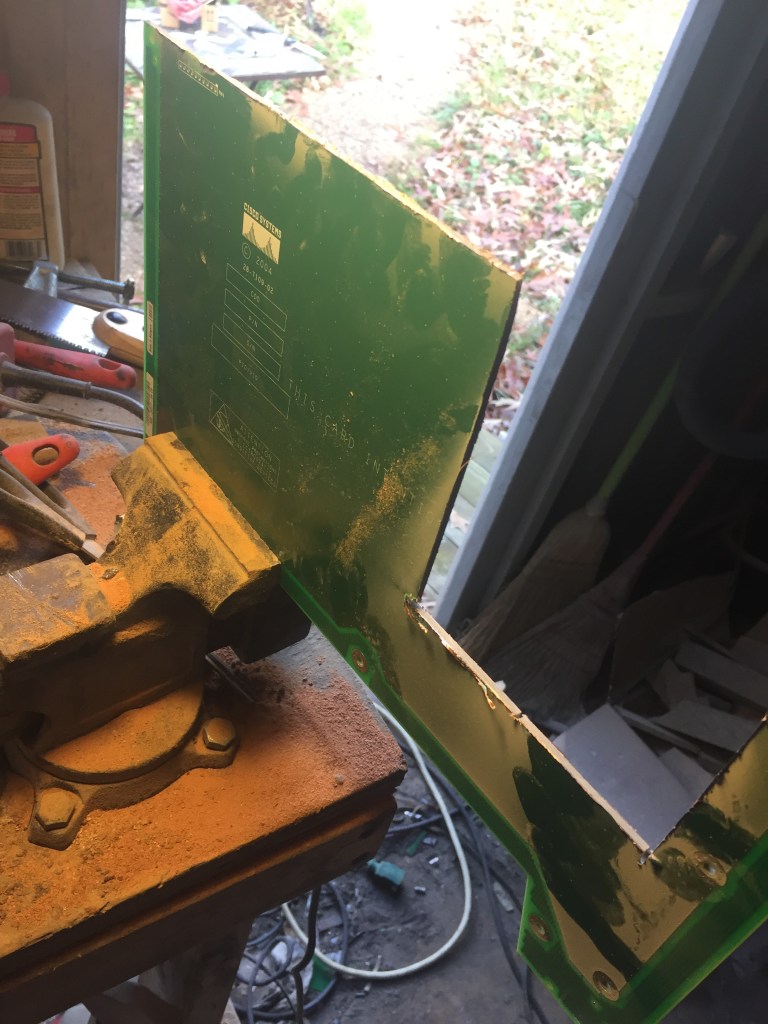
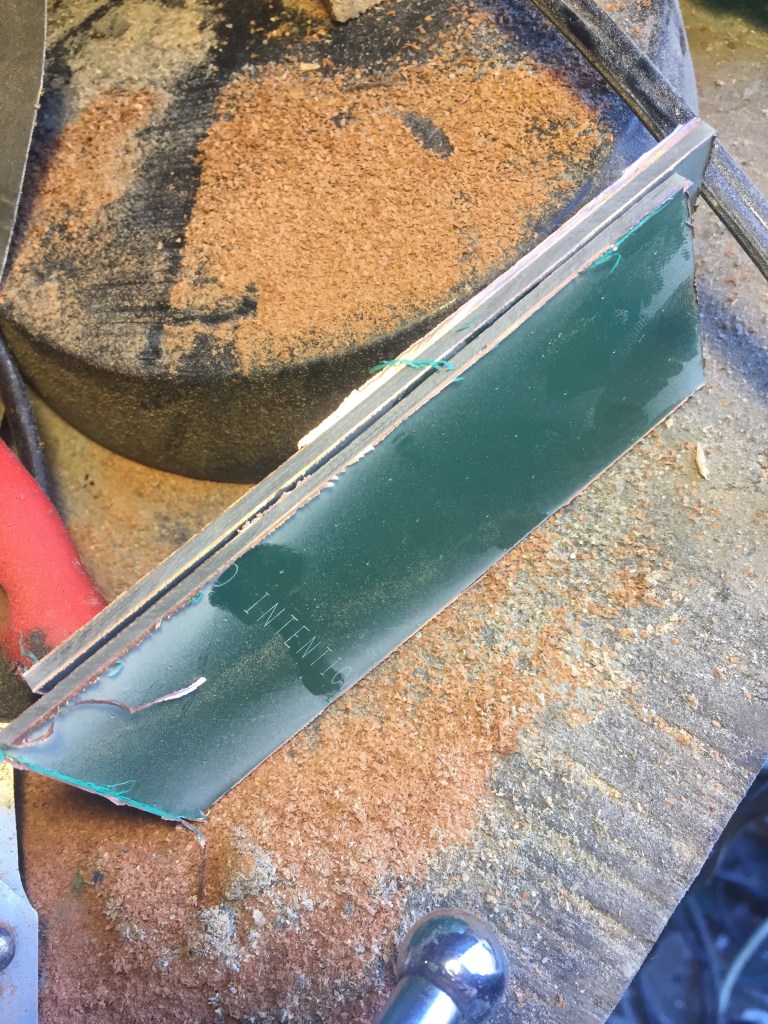
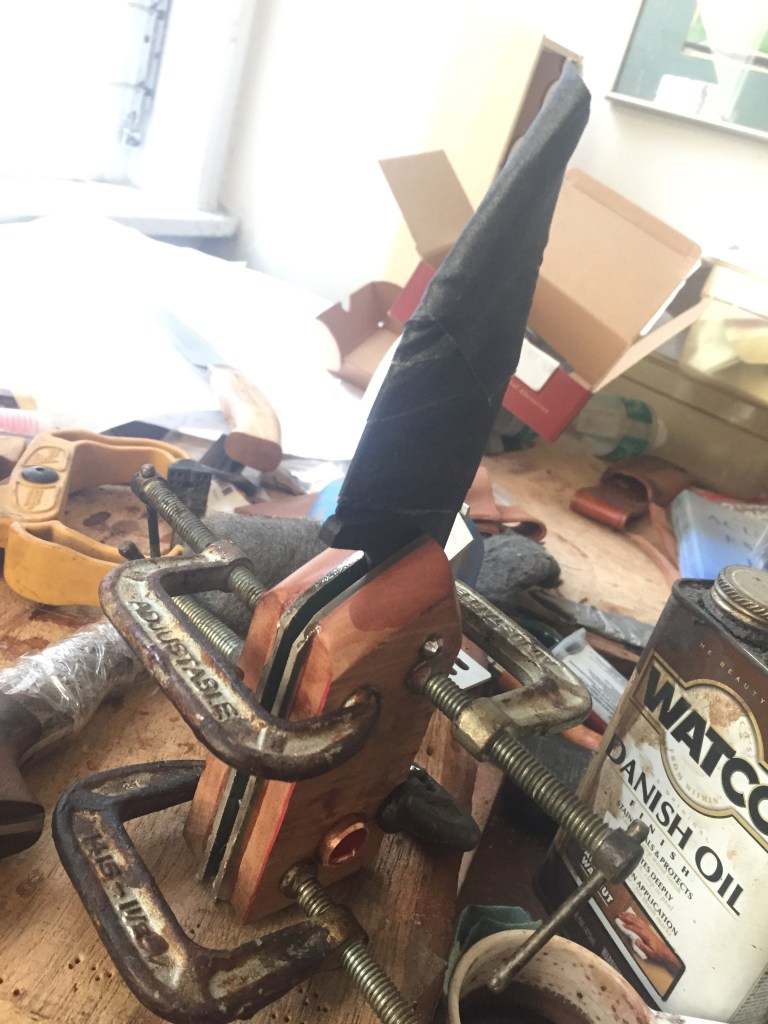
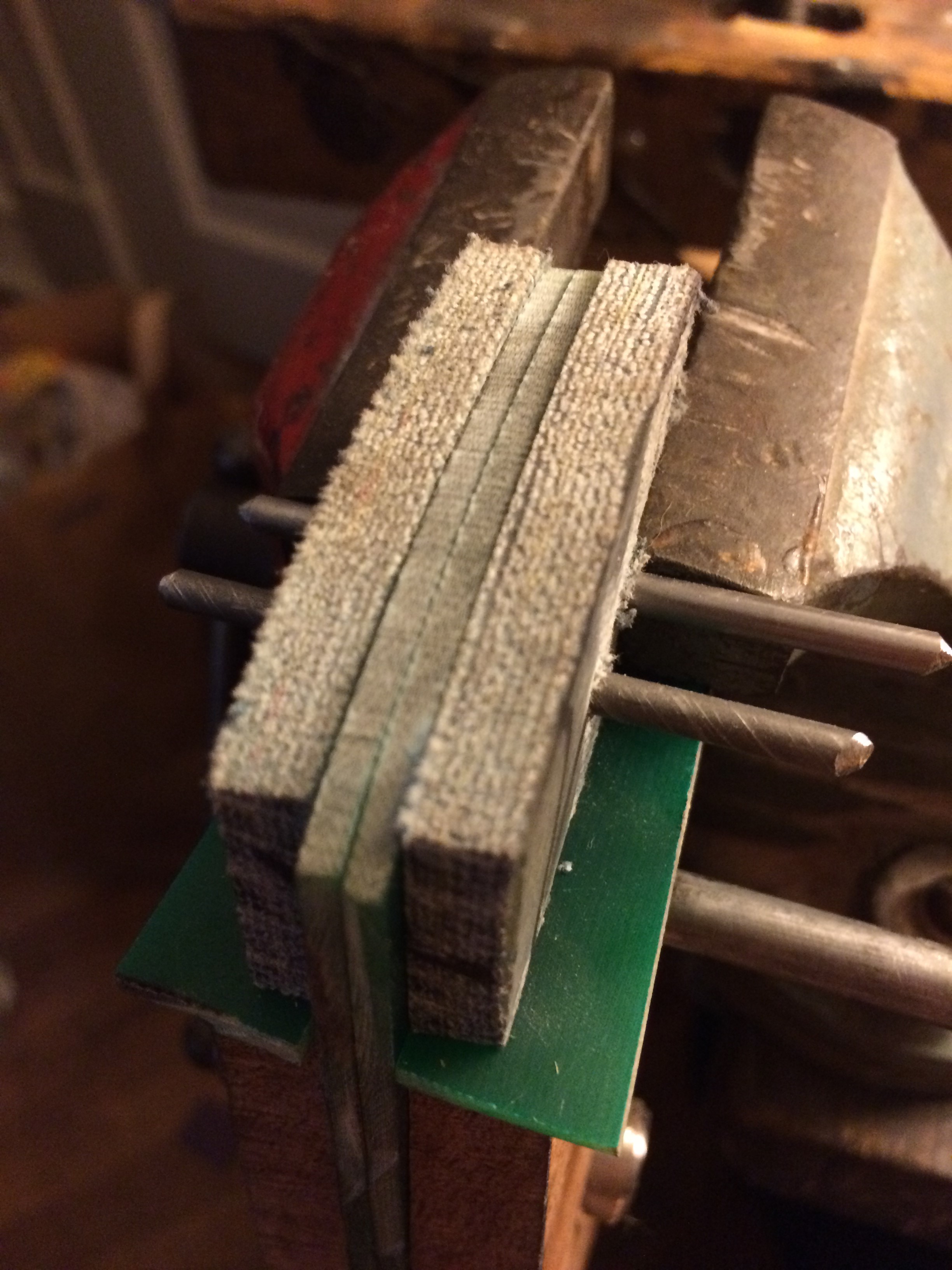
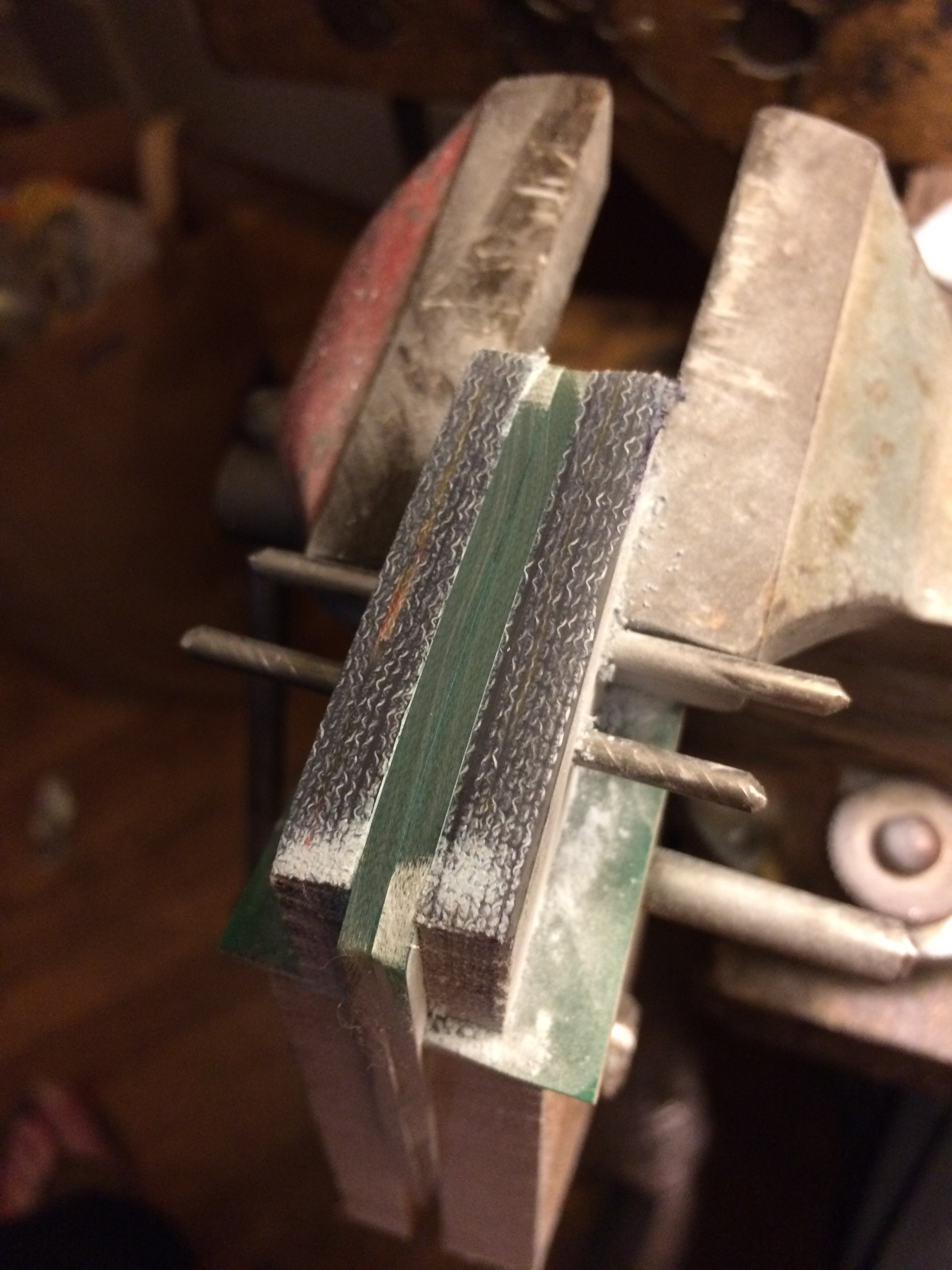
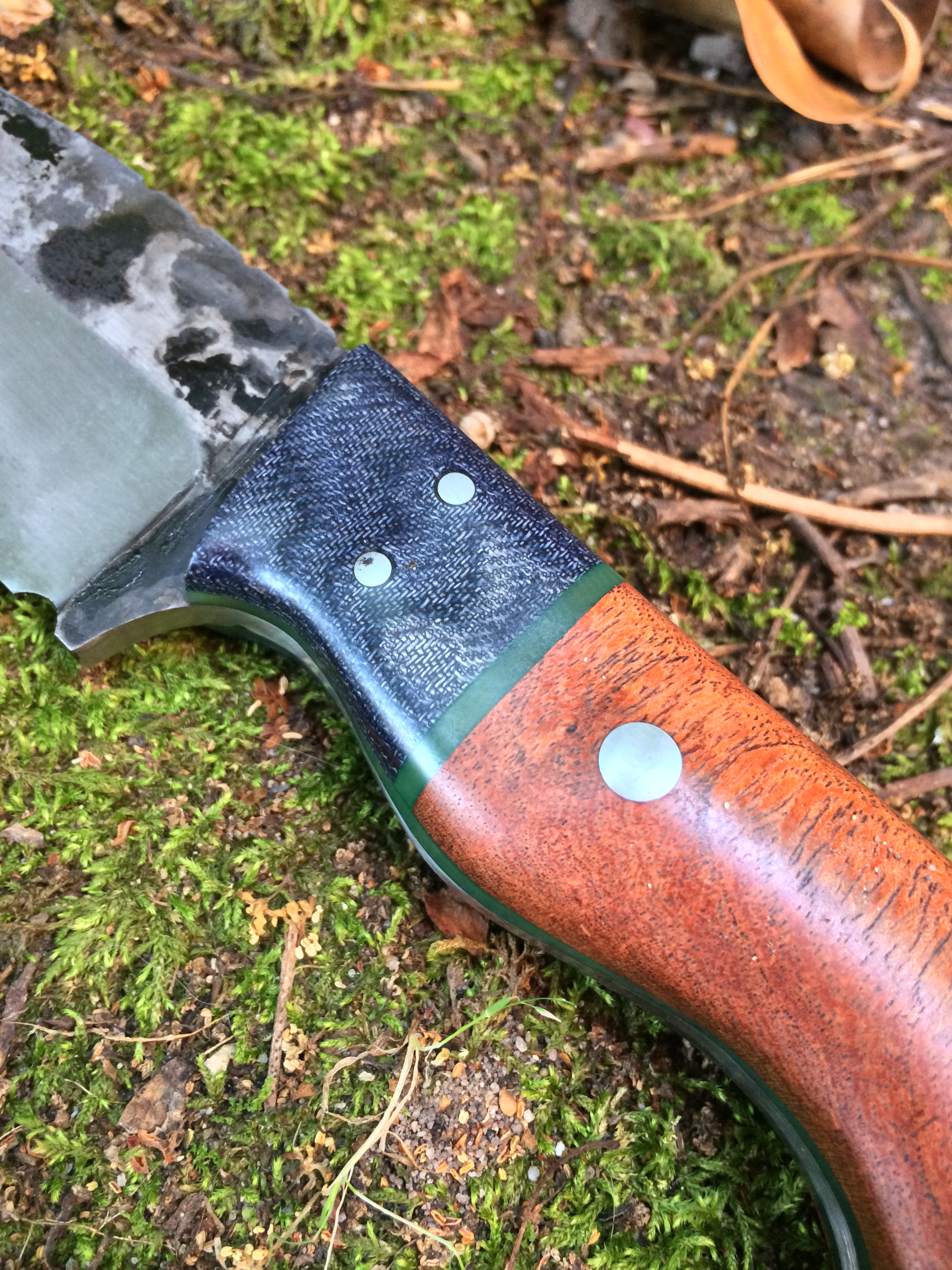
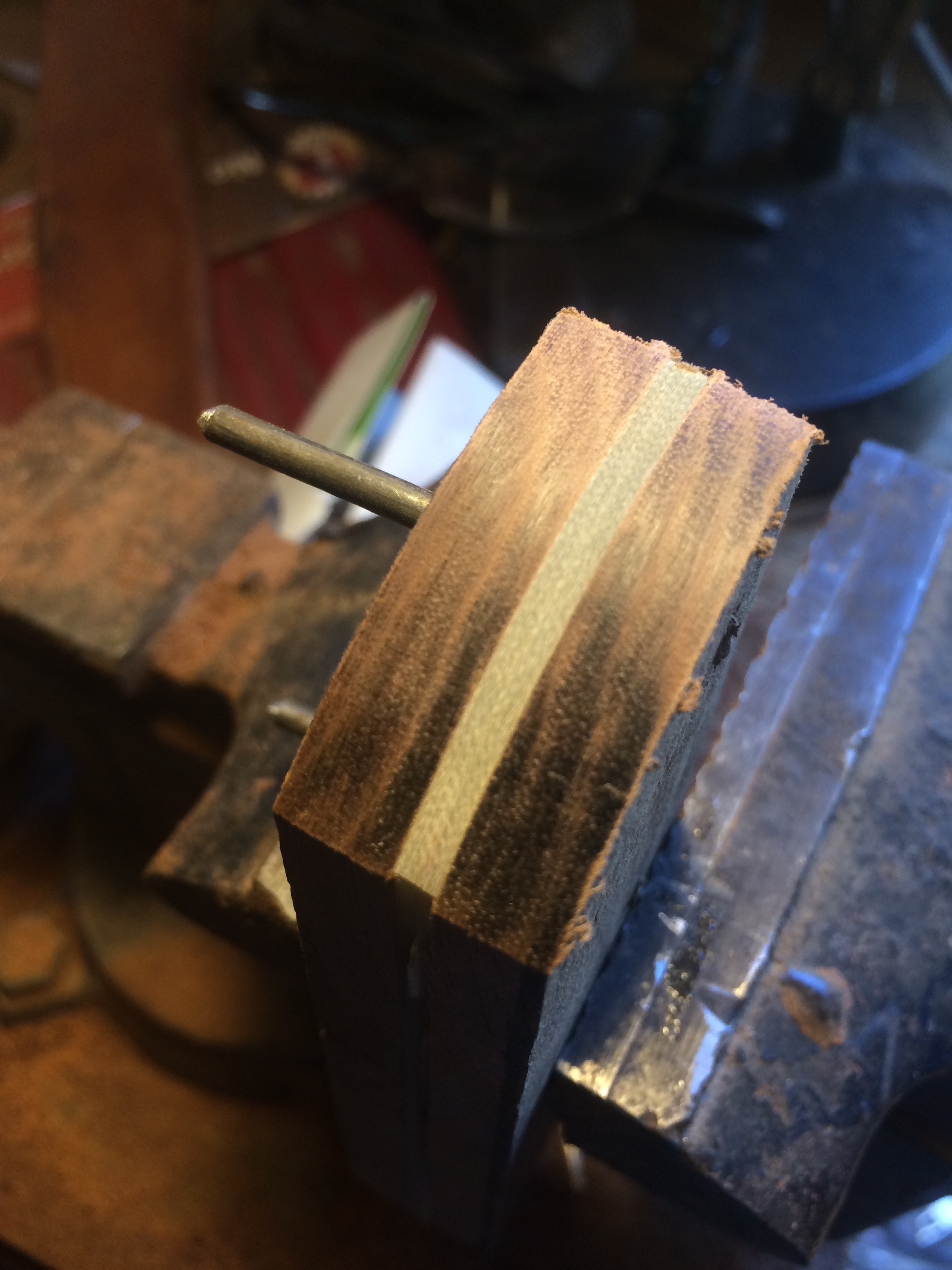
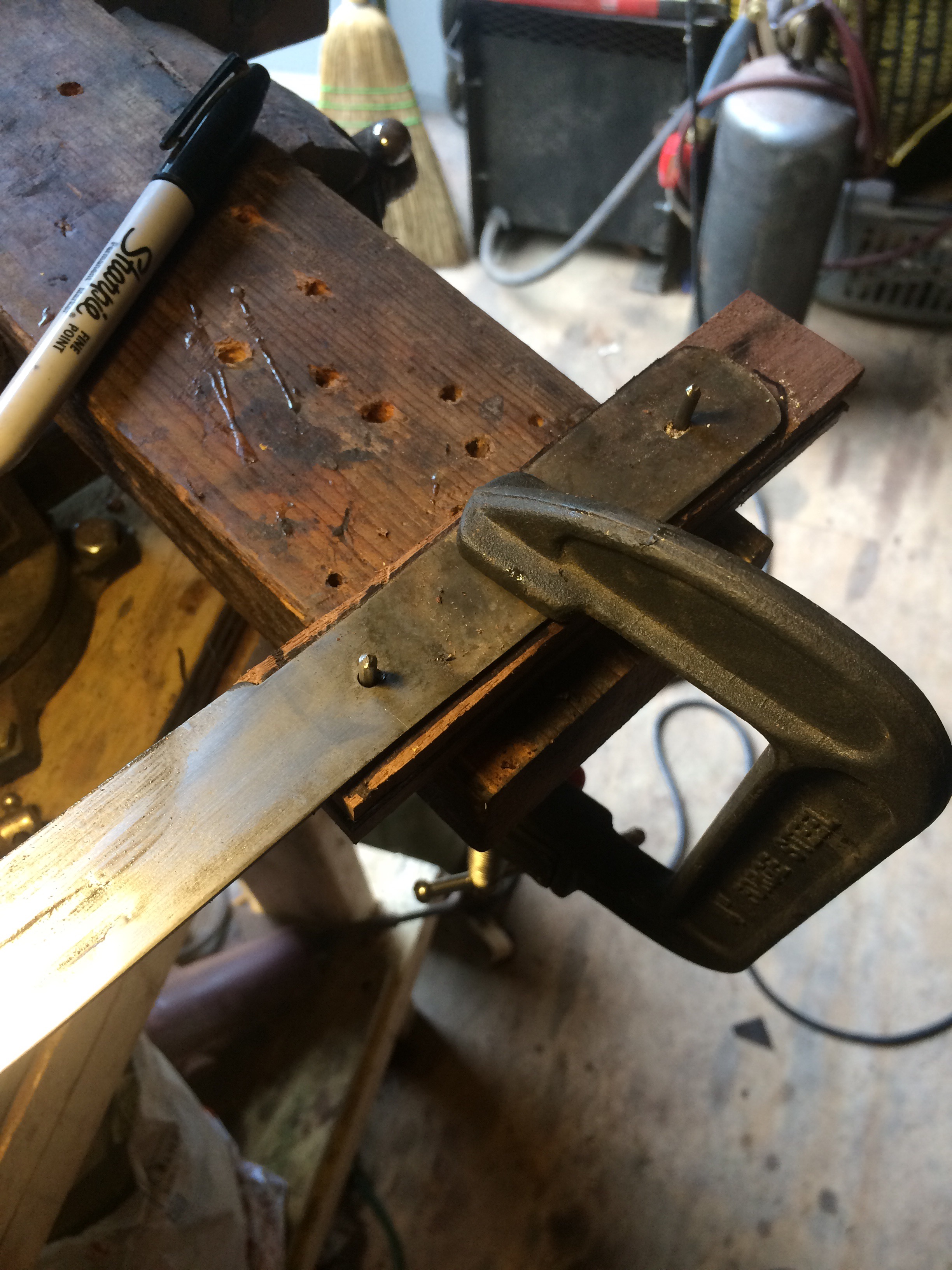
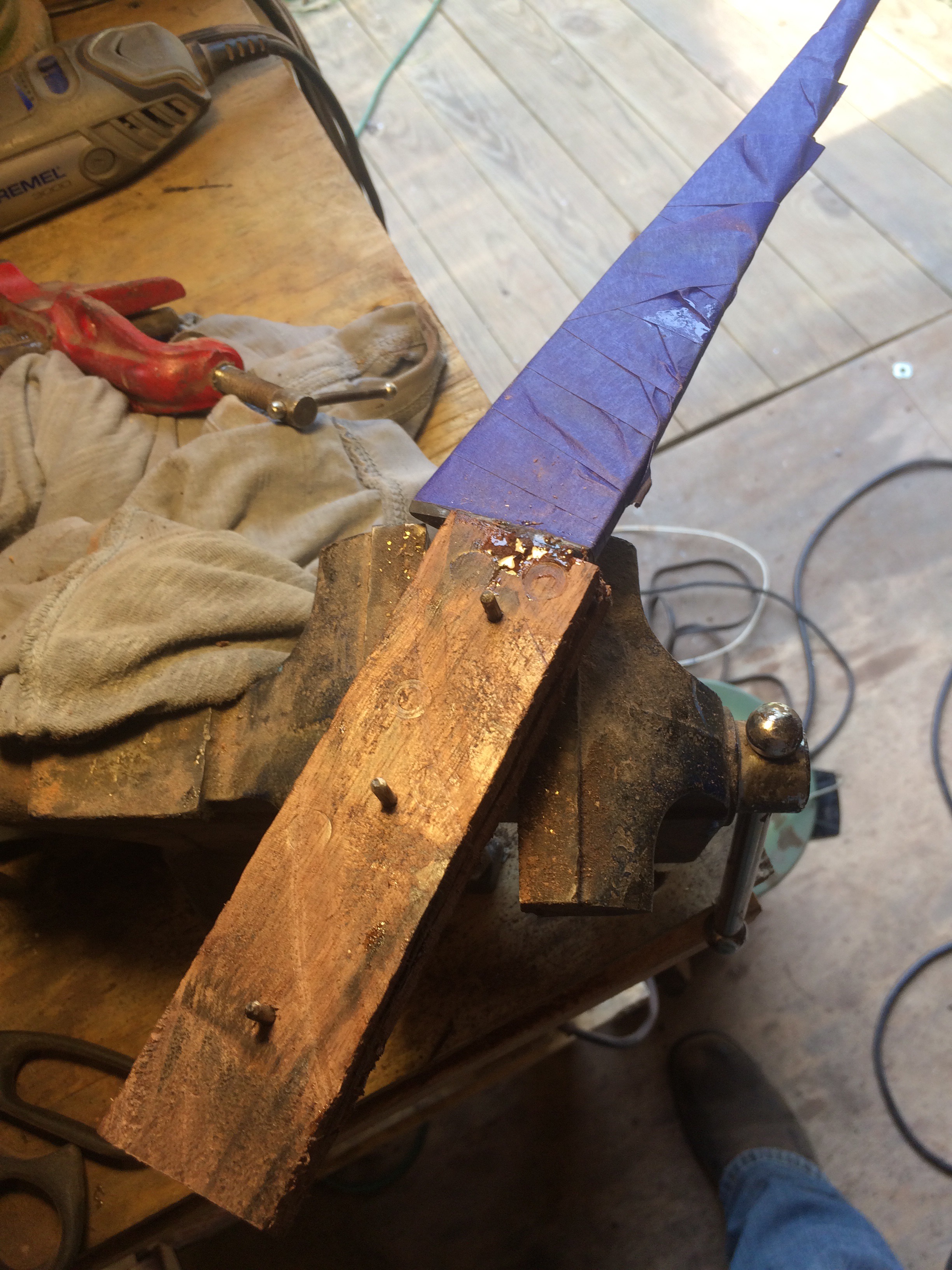
I cut two pieces of it and fit it to the knife. For a bit of color contrast, I use a bit of fiberglass computer board blanks that I rescued from a dumpster-

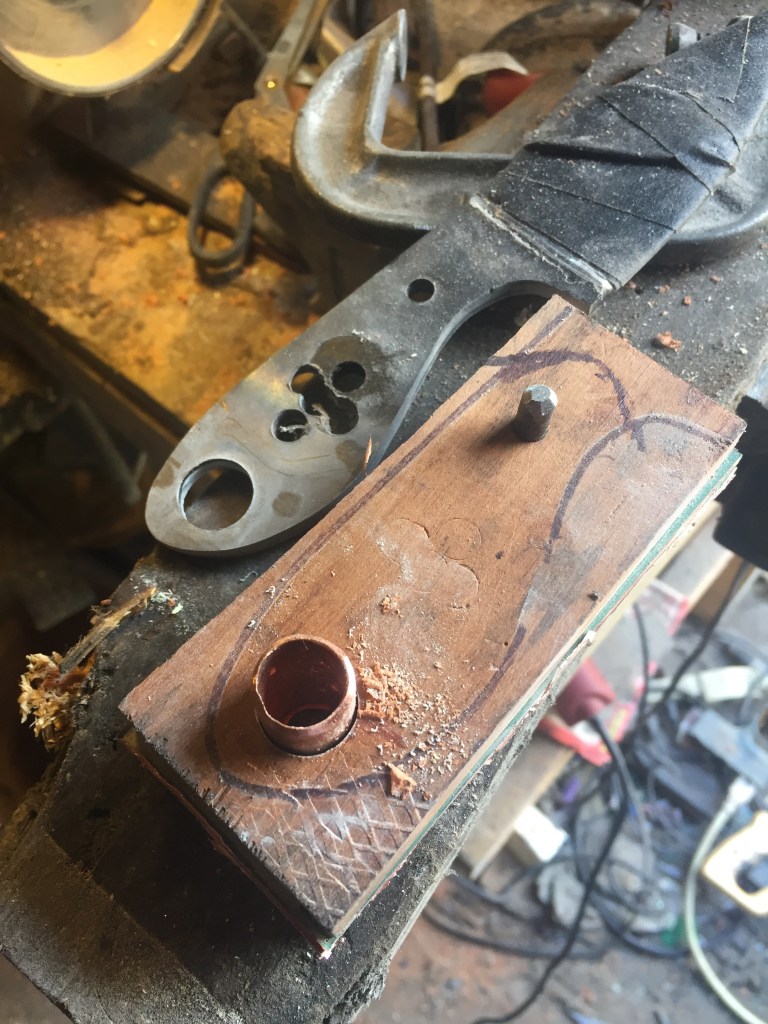
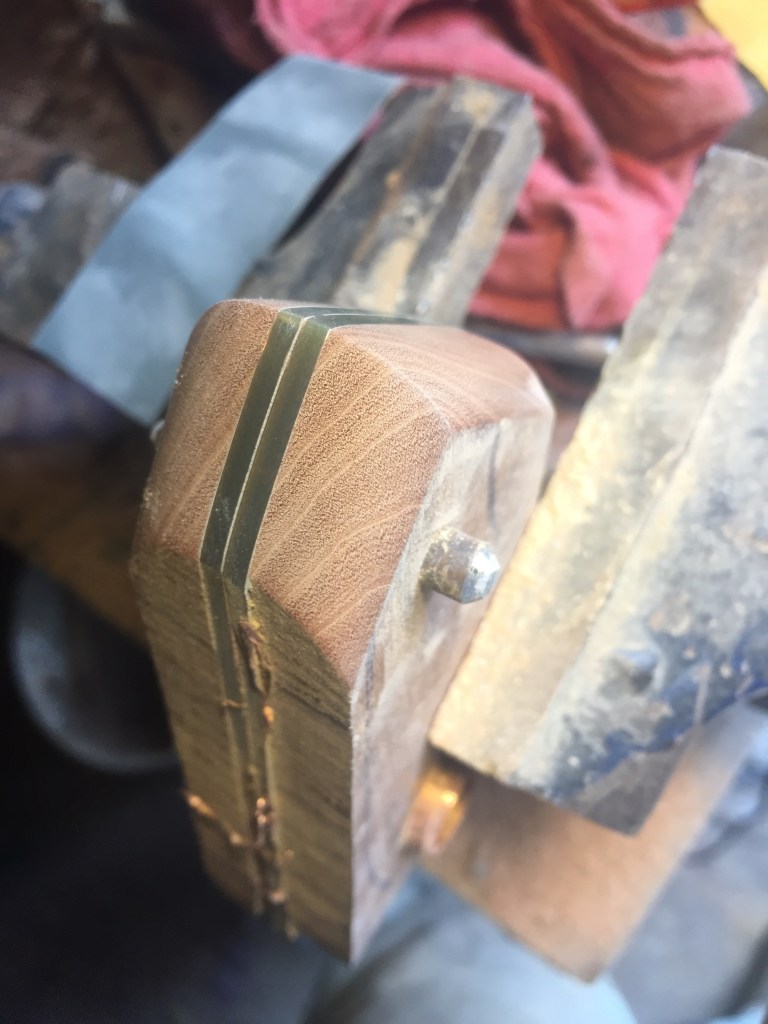
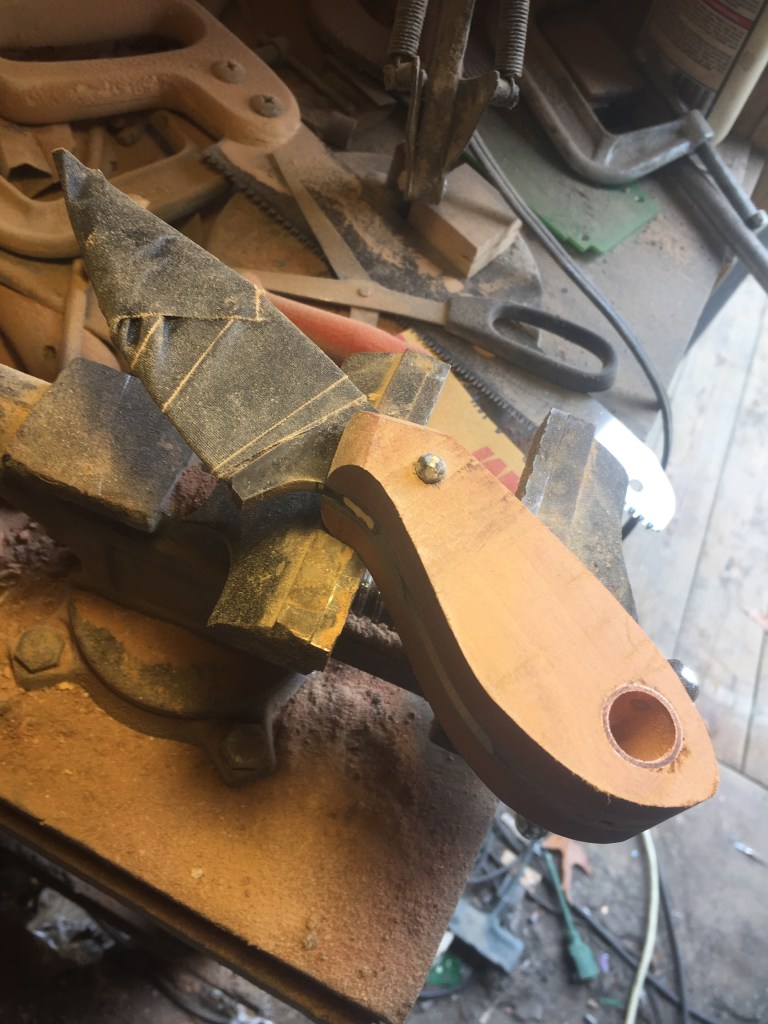
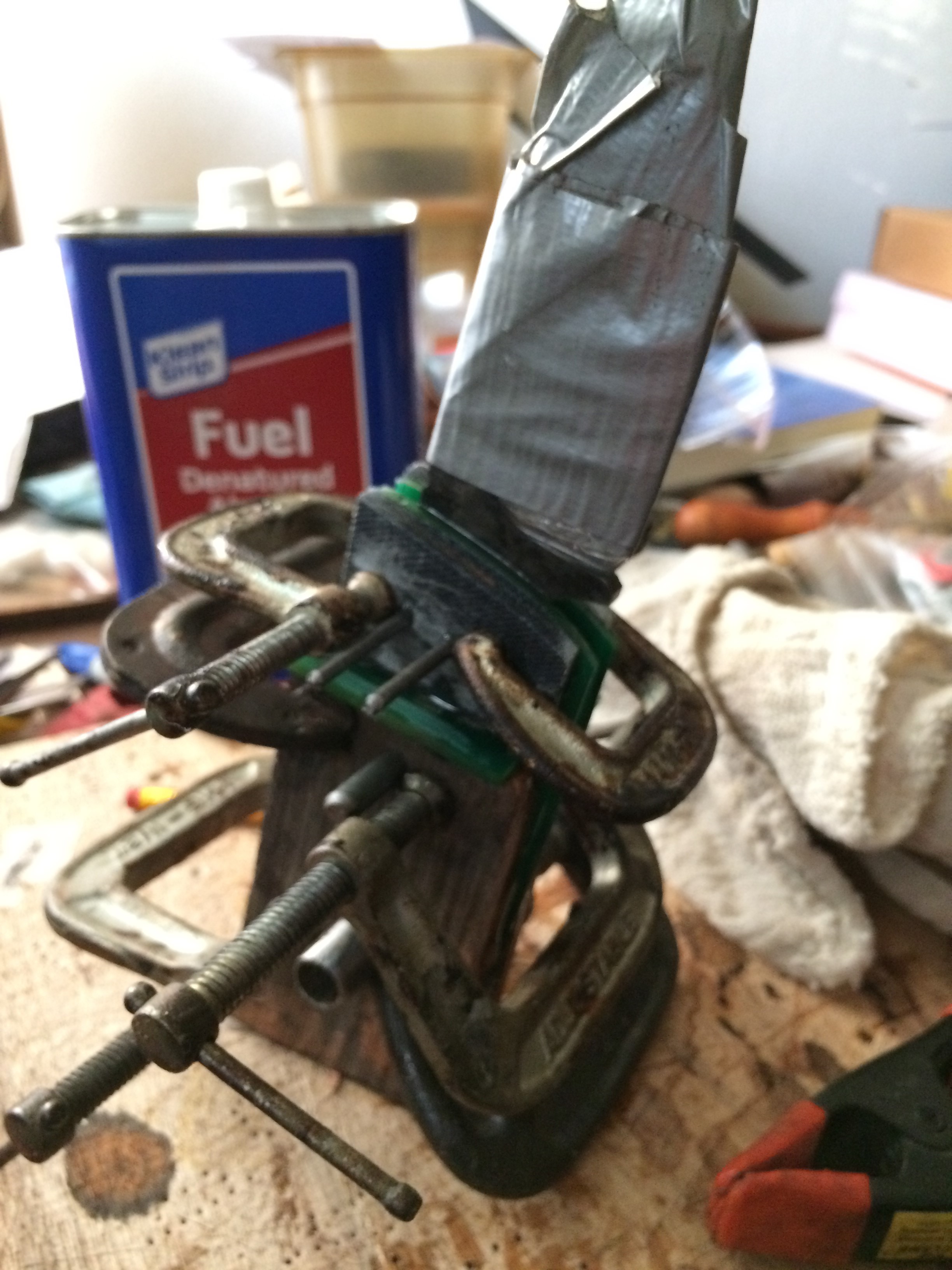
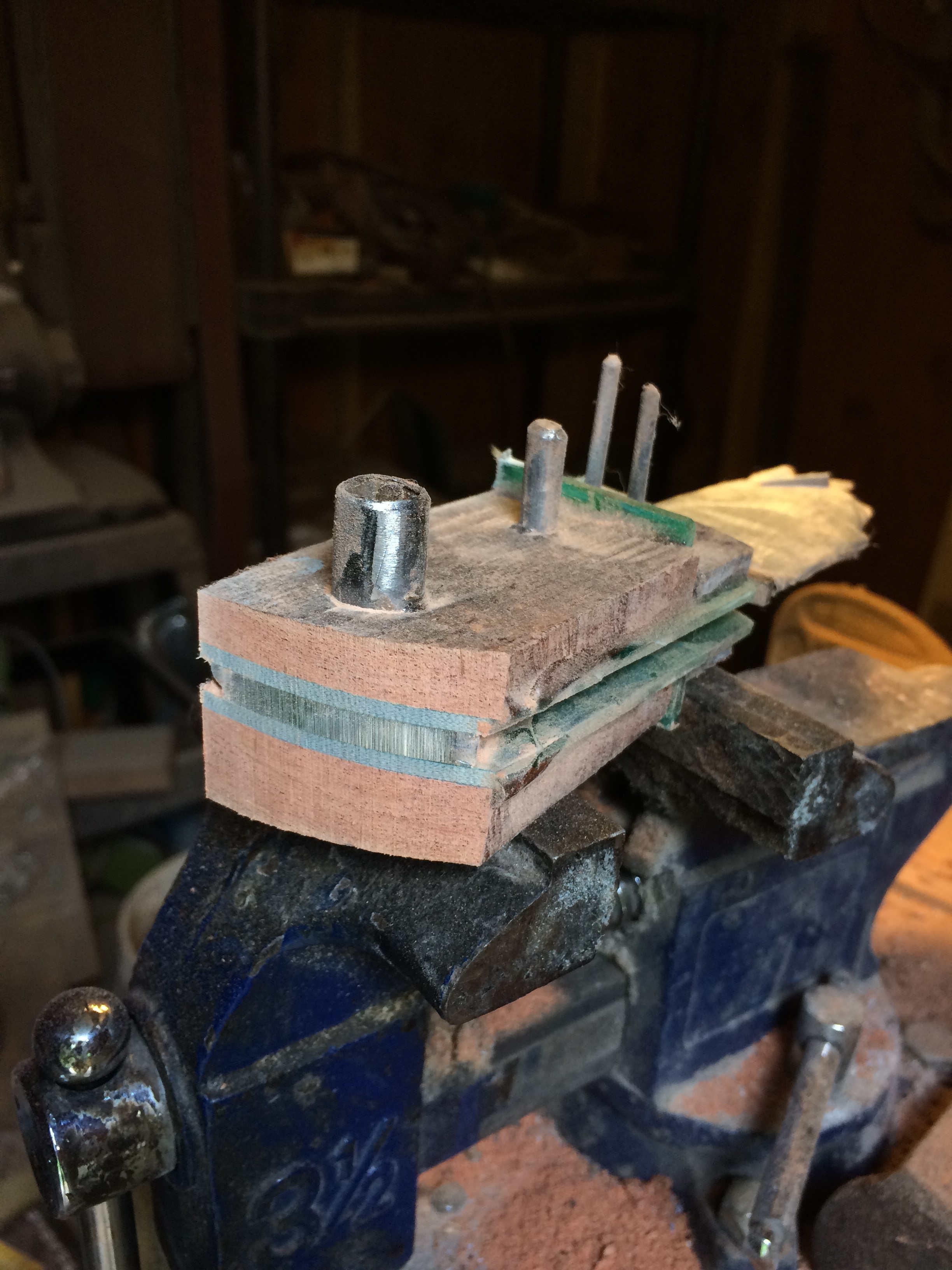
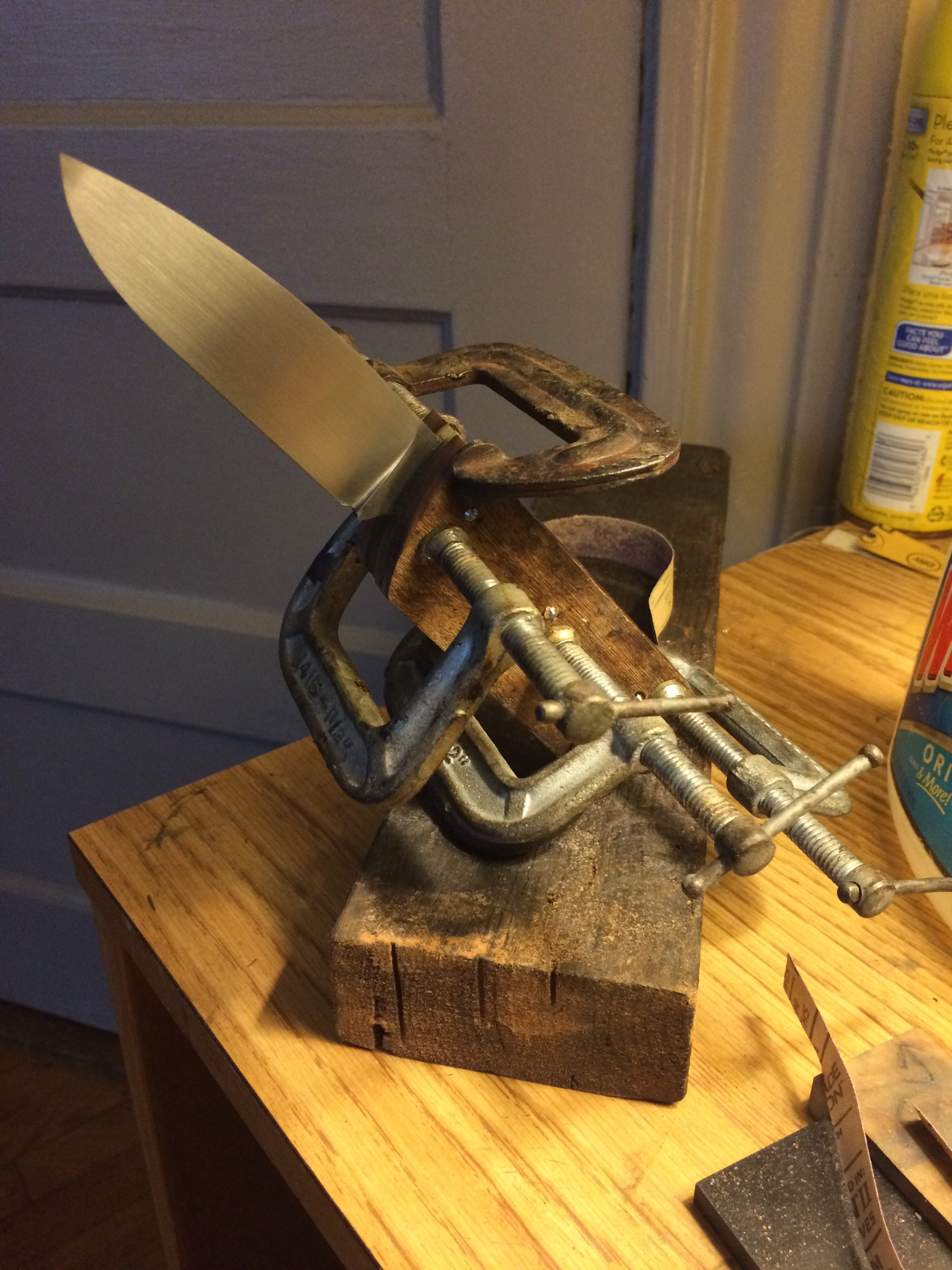
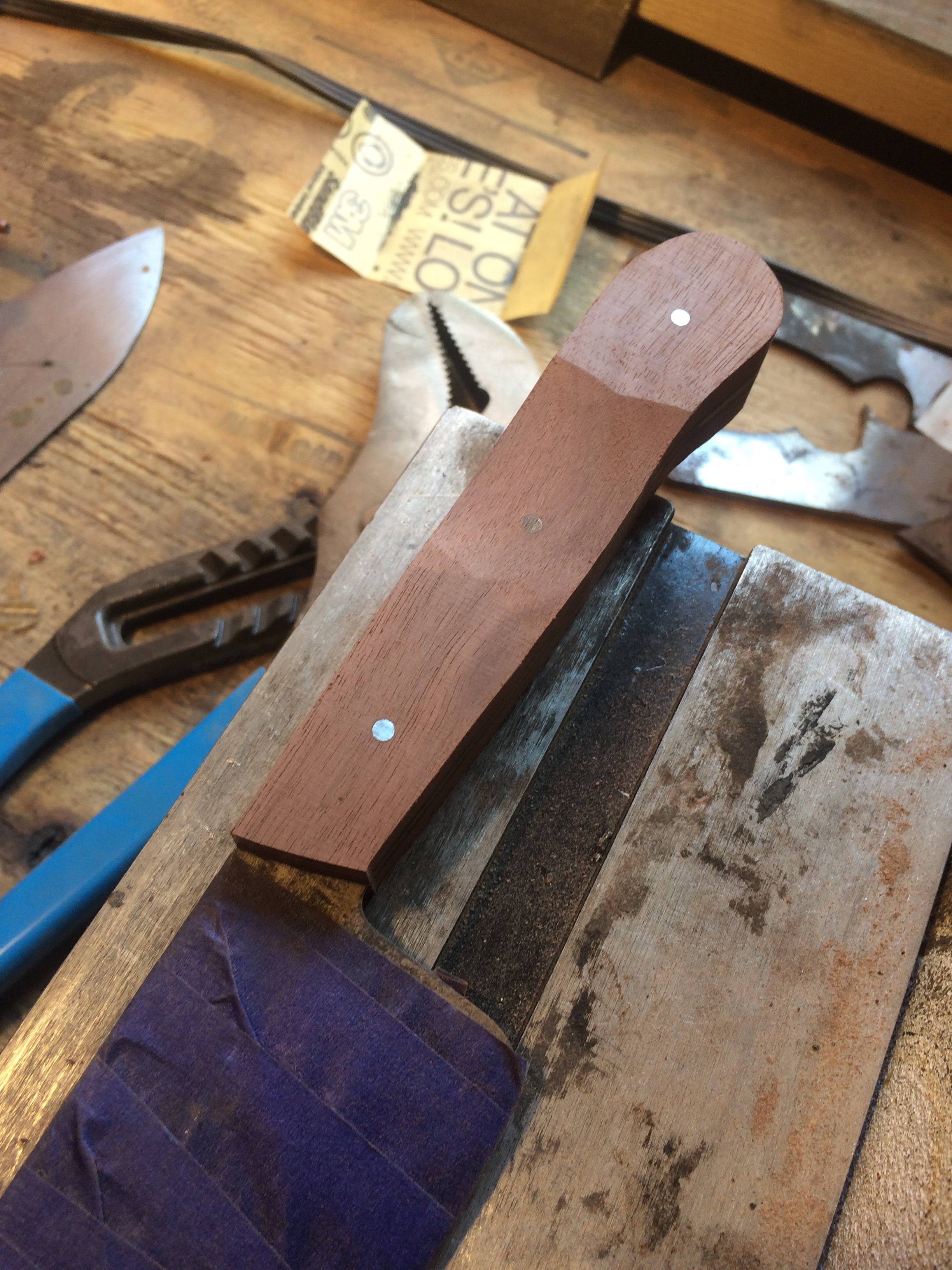
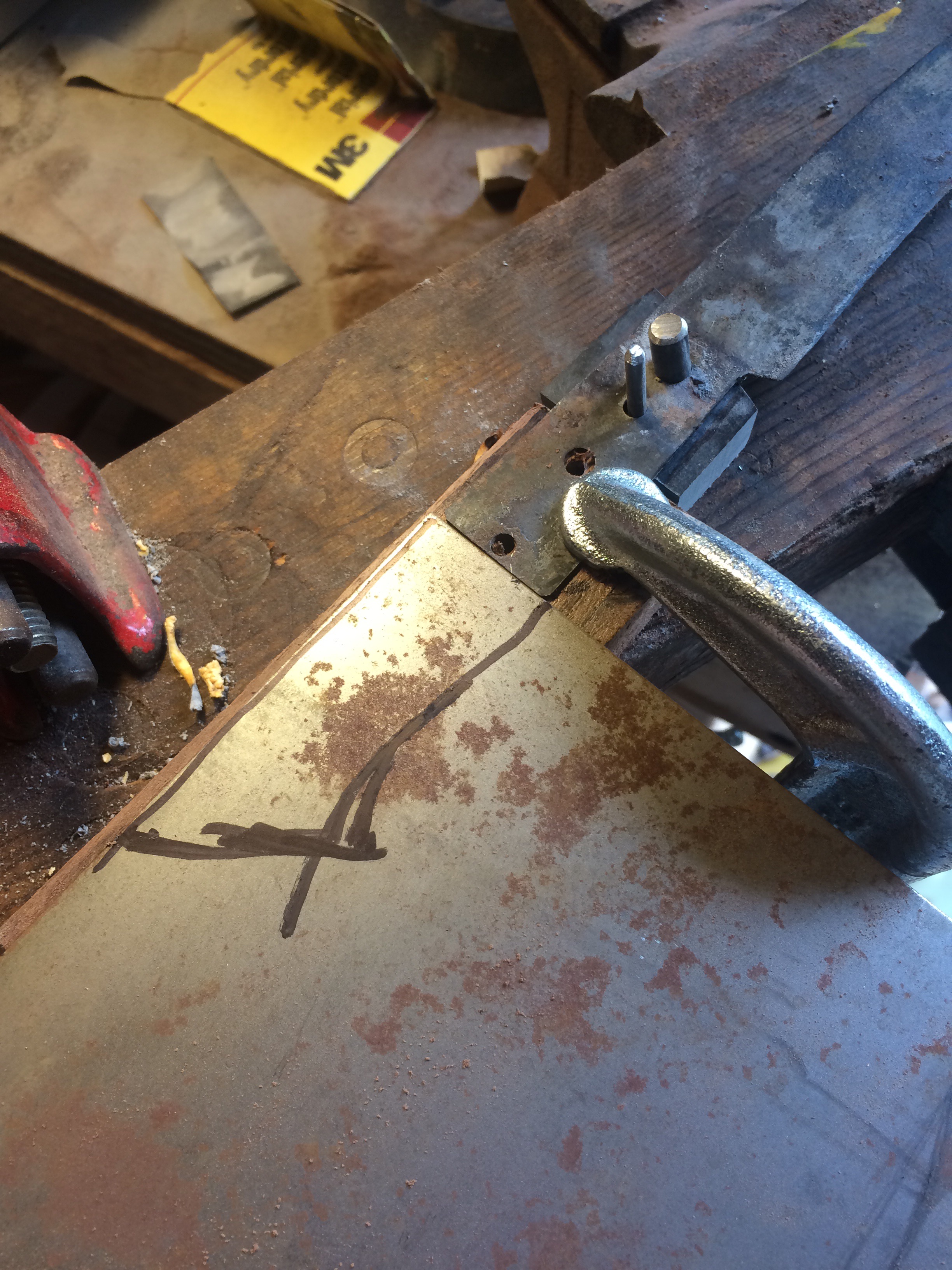
Now it is pinned and glued to the knife handle-

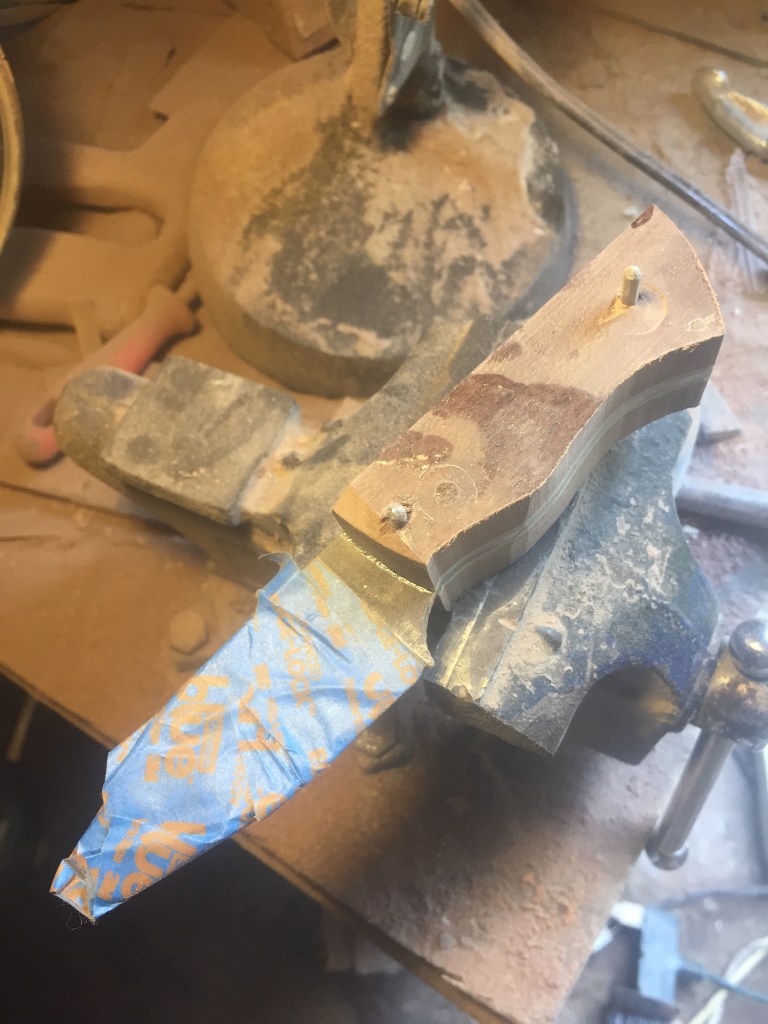
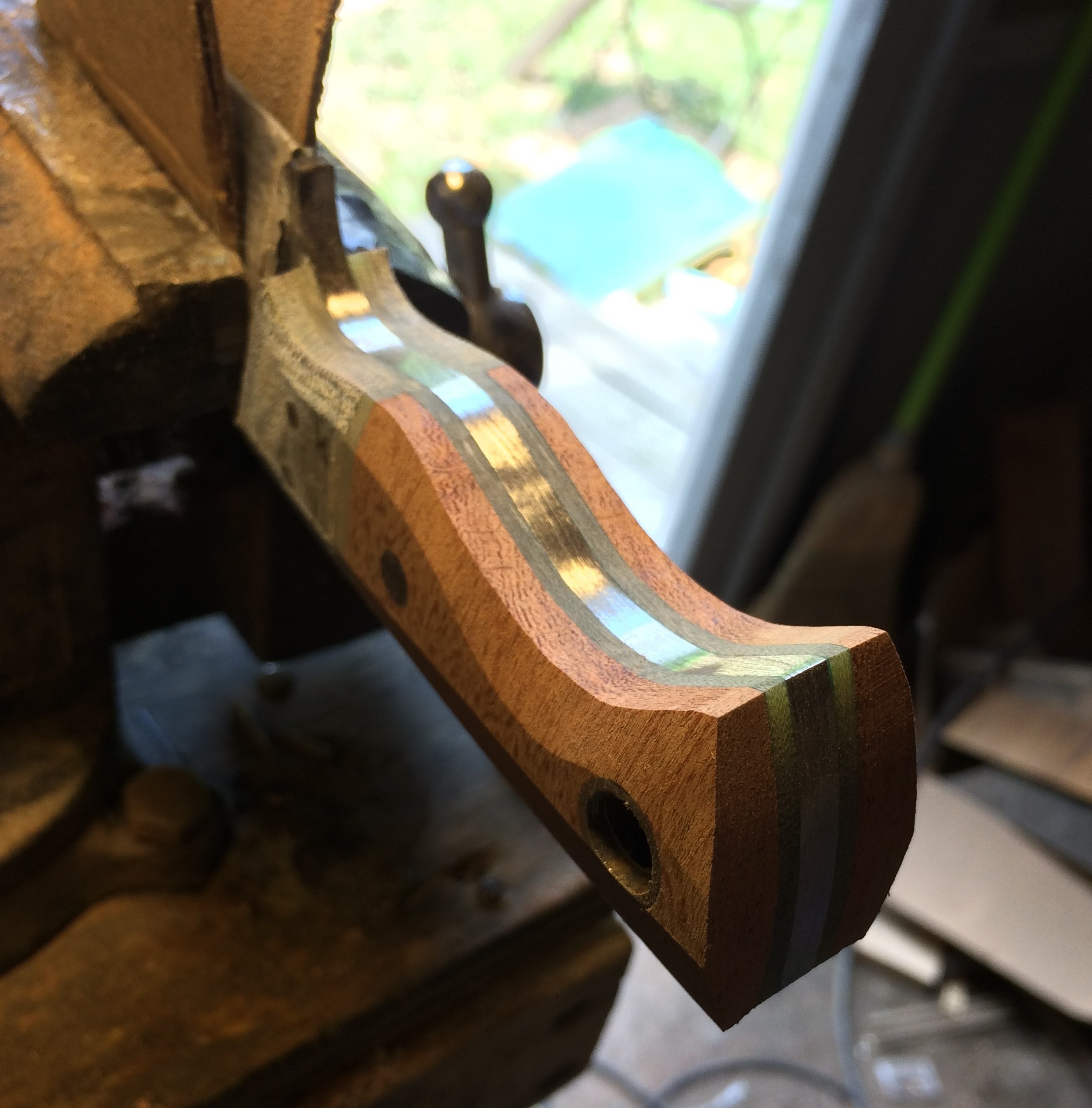
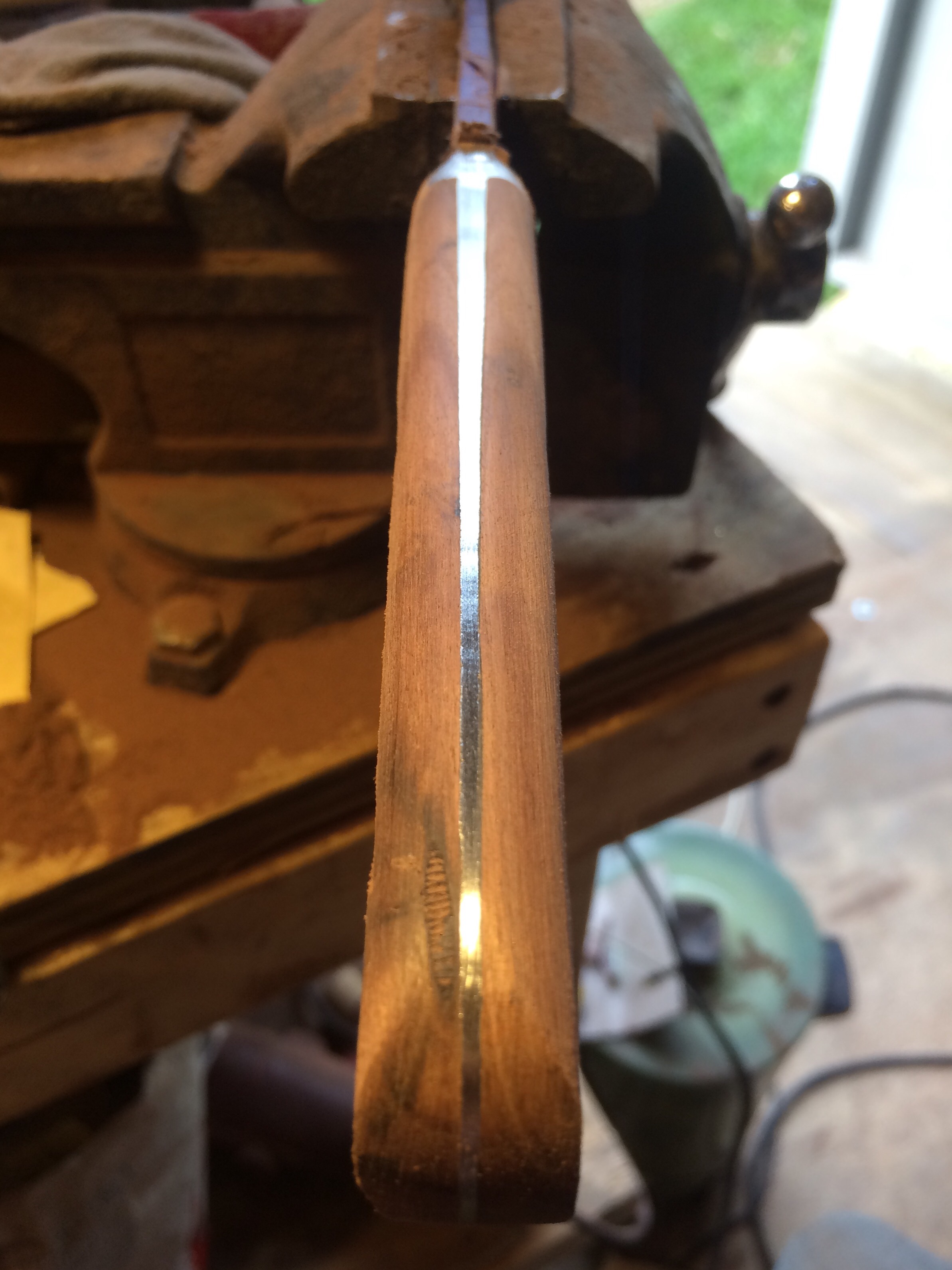
Here is where I shape it….

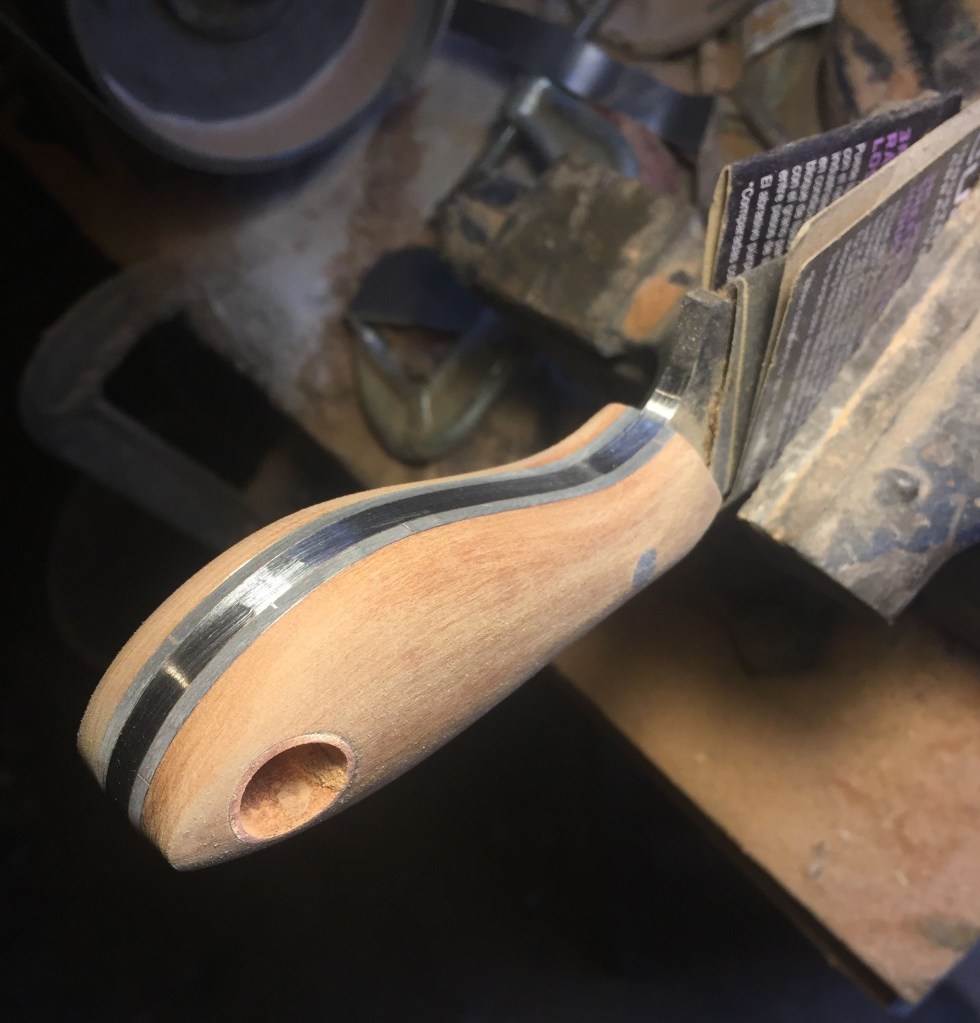
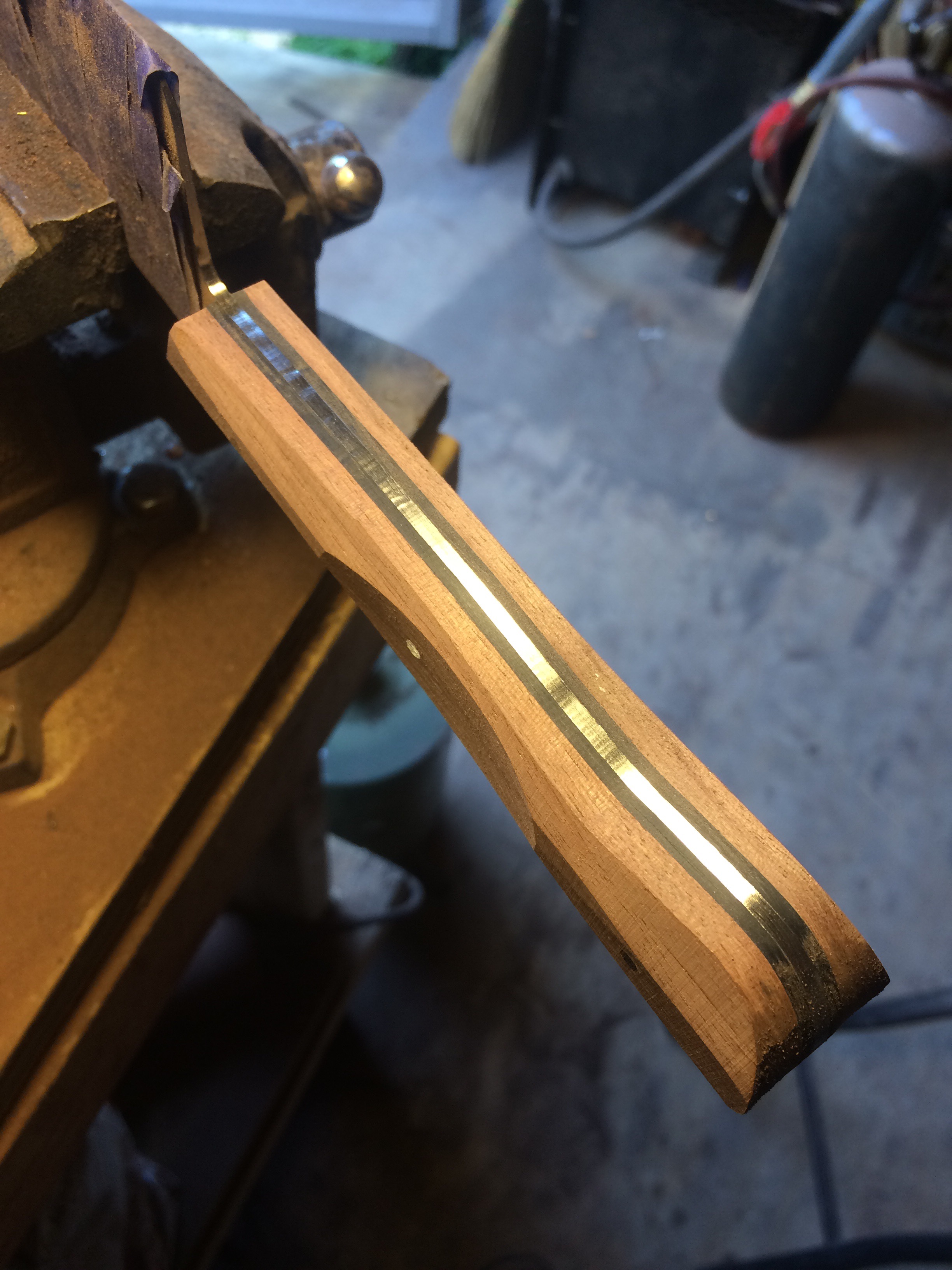
…..and shape it some more-

And now I sand it till it is shiny-

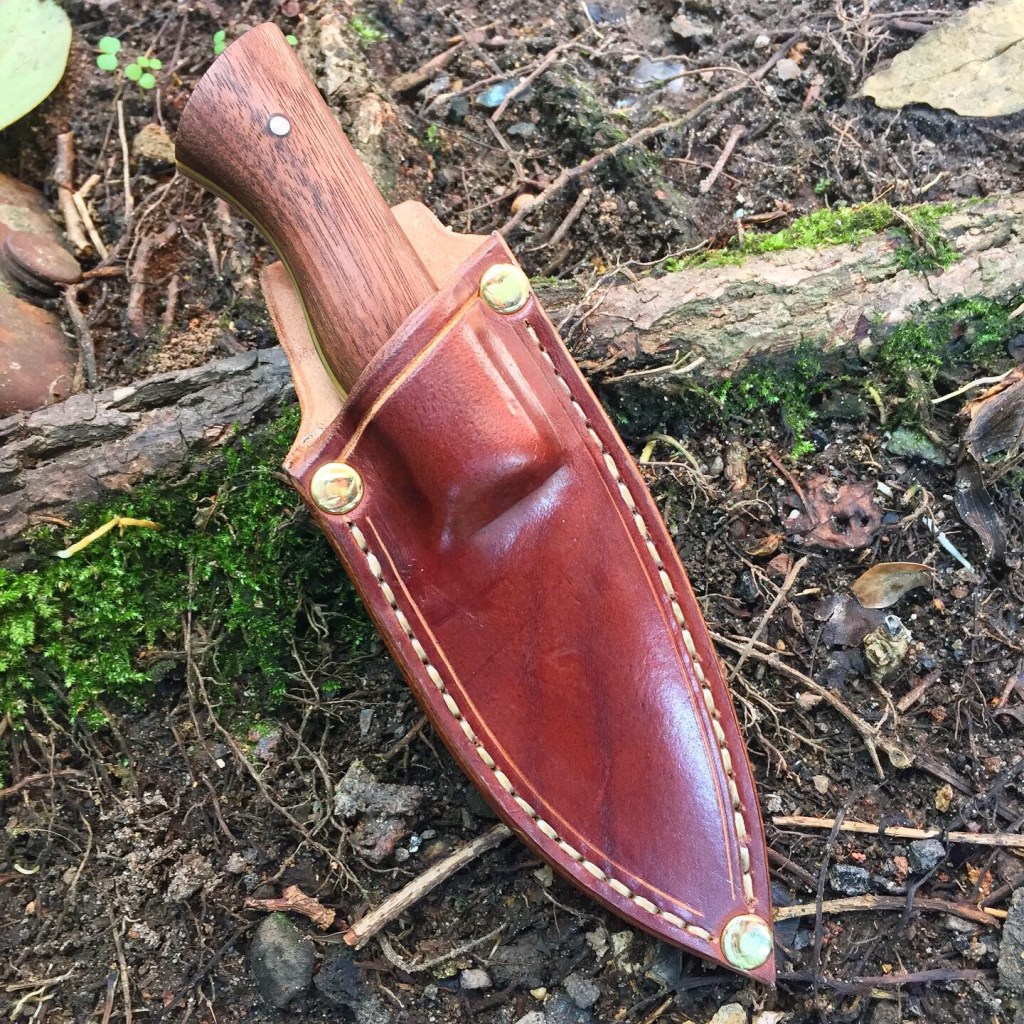
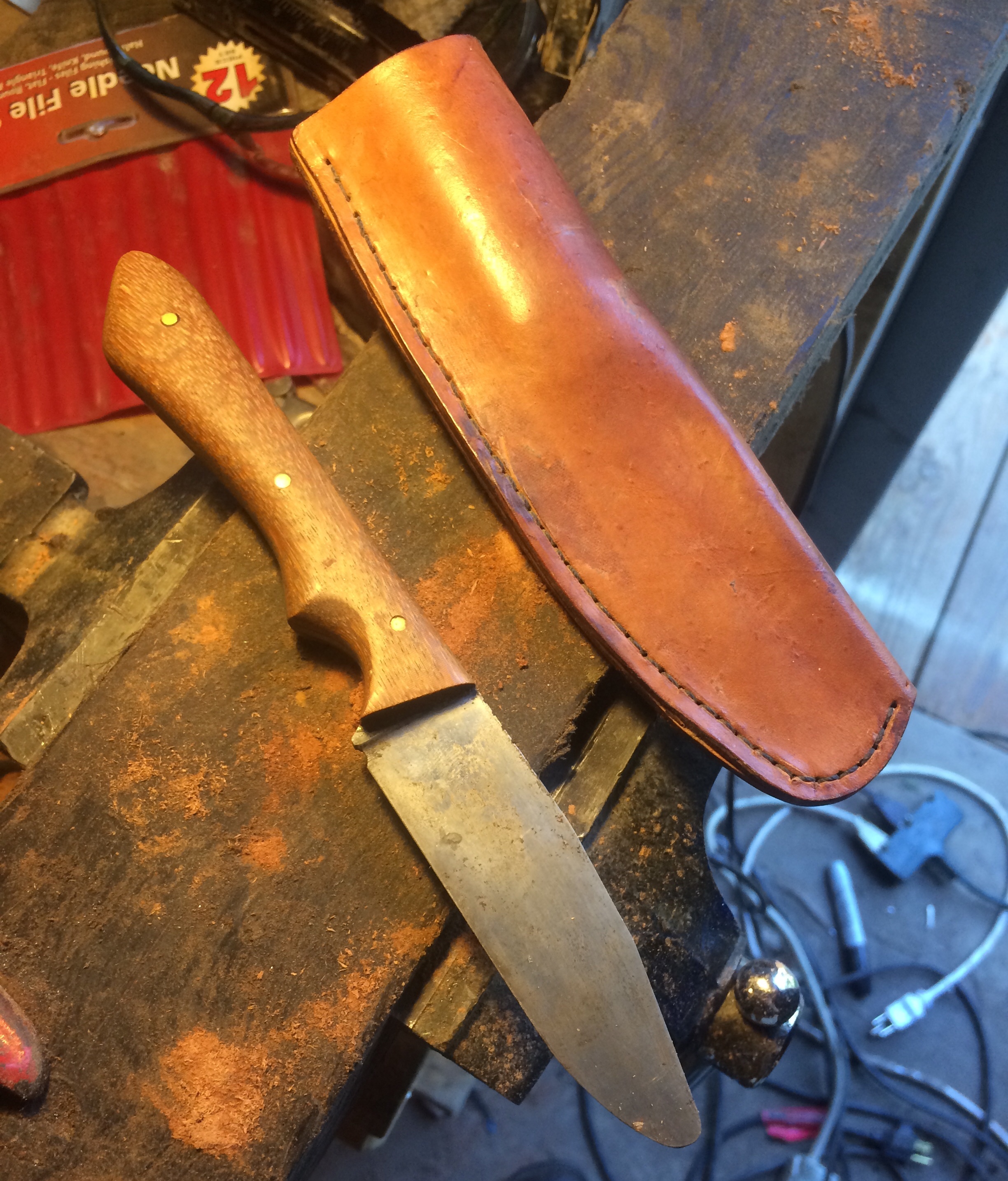
I made you a nice sheath for it so you can carry it around-

Knifemaking: what we do with the unexpected, and the Foundling

“I was once a Foundling.”

Din Djarin, from The Mandalorian

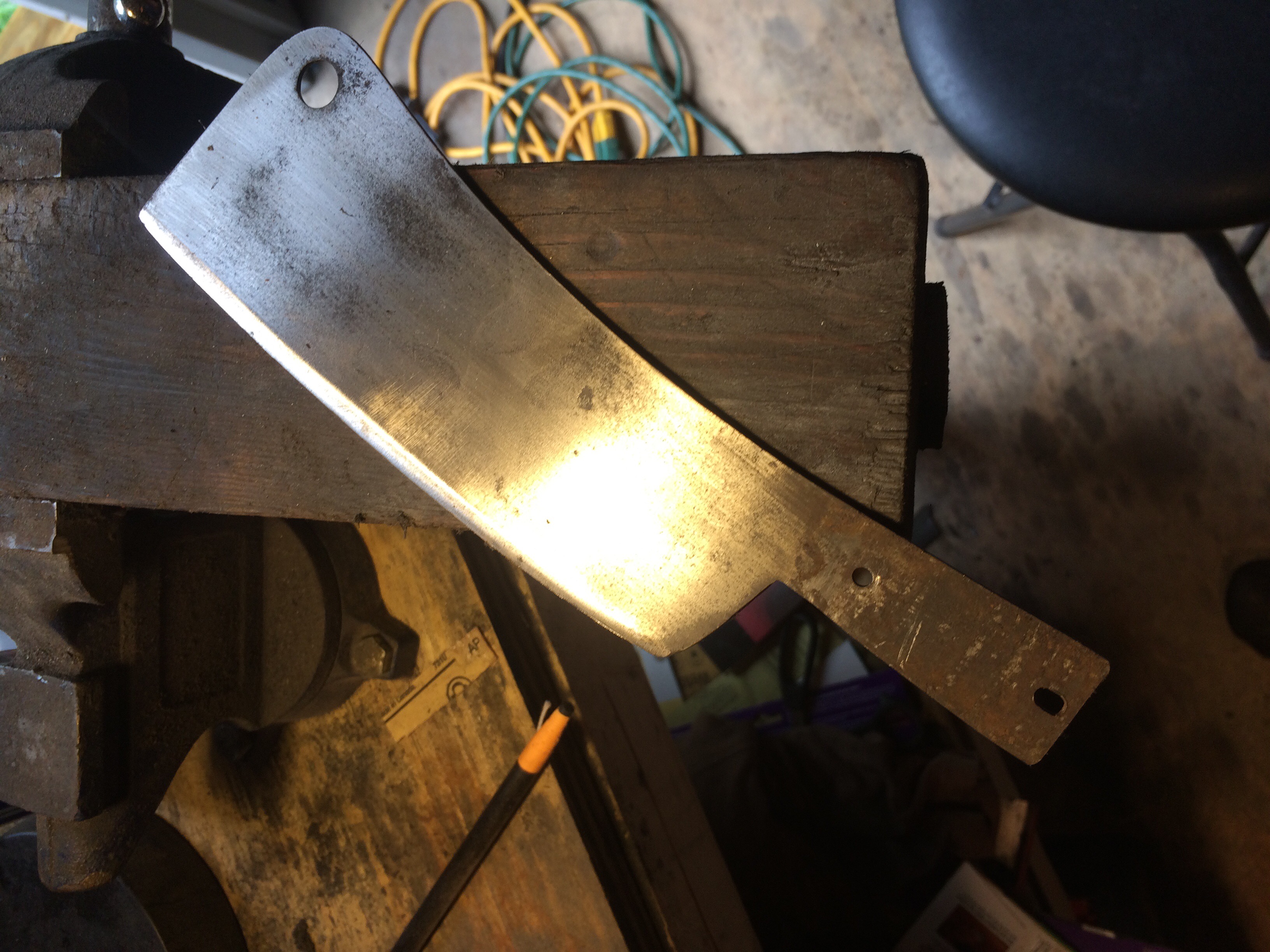
A few years ago I got a call from a gentleman about a knife that needed a new handle. He had a thick Australian accent and told me one of his friends was redoing some walls and ceilings in her house and had found an old cleaver behind the drywall. He asked if I would be able to put a new handle on it, and by the way it was also going to be a wedding present for his friend who found it.

A mysterious butcher’s tool in the walls? A wedding gift? Nuptials without knives are nuptials not worth having. Besides that, certain things in life have a habit of being found when we need them the most. This all sounded extraordinarily auspicious to me. Of course I took the job. I couldn’t have made this up if I tried.

I met my new Australian friend, who at the time was raising Alpacas (because of course he was), at a country bazaar just outside the city and picked up the cleaver. It was important to me to honor the found-nature of this deeply immodest blade of humble origins, so all the material save for the pin stock and adhesives came from refuse dumpsters or abandoned houses. I named the cleaver Wallace, and returned him to my Australian Alpaca friend. As with any other job I dropped the work off, made sure the person paying me was happy, and didn’t think much of it.

I did finally met the lady who found the cleaver at one of our shows, and she has bought a knife almost every year around Christmas time. She got in touch this year about having a knife made, and I realized that her and her husband had never seen how the cleaver was built.

I think the things that find their way into our lives are so much more interesting than the things we seek out. While it’s good to have a plan, it’s also important to acknowledge that plans fail, often spectacularly, and the best things happen to us while we’re planning something else. We stumble into to deep love, or fall into a career, and despite our best calculations, the special moments and deepest connections in our lives seem to occur solely at the whims of the universe. Very much like Wallace the Cleaver and his handle made from garbage that somehow found it’s way into our shop, it’s up to us to choose what to do with the things we find ourself with.

The Foundling was a commission for her husband, who was always stealing her knife, and was built using all sorts of materials that found their way to me.

The Foundling starts with a quick sketch
The scribe lines show where the final cutting edge will be
Jimping is filed in on the spine for grip
The grind at the top of the spine is called a swedge, and give the blade more of a point
Wet sanding before hardening
Into the forge
After the quench
…and after tempering
More polishing
A quick etch in acid
A piece of Cherry wood, which came off an old mantlepiece
A PCB blank, rescued from a dumpster
A piece of copper plumbing pipe

Knifemaking: a commencement address (of sorts), and the Masilda

Dear Younger Person Whom I’ve Never Met Before:

Some very dear friends of mine asked me to make a knife for you.  These friends of mine are wonderful people that I have known for quite some time, and shared many adventures. They told me they have known your parents for a long time as well, so I can infer that your parents are wonderful people too. They have also known you since you were born and, if I may be so bold, I can only assume that you are a wonderful person as well, and that we are well met.

I was also told you have completed your secondary studies and are going out into the world- congratulations! My very dear friends asked me to make you something special, but also something that was functional and practical.  Something that would serve you well on outdoor adventures; an elegant tool and faithful companion.  Something to remind you of where you have grown up.  A security blanket that doubles as a prayer rosary and, if I may say so, a bold fashion statement.

As you may have noticed, Younger-Person-Whom-I’ve-Never-Met-Before, the situation of the world is a bit spicier than usual.  To be honest, the only thing that has gotten me out of the house most days in this great year of 2020 is knowing that I will be coming back home as soon as possible.  In spite of my trepidations of late, I’ve found that time marches on and life stops for no one, and there’s no point in staying home and being afraid while life passes you by.  The world cares not for our anxieties, worries, or fears, Younger-Person-Whom-I’ve-Never-Met-Before, and the sooner this is understood the freer we become.  Be sure to wear a mask, practice social distancing, and listen to the experts.  That is what they are here for.

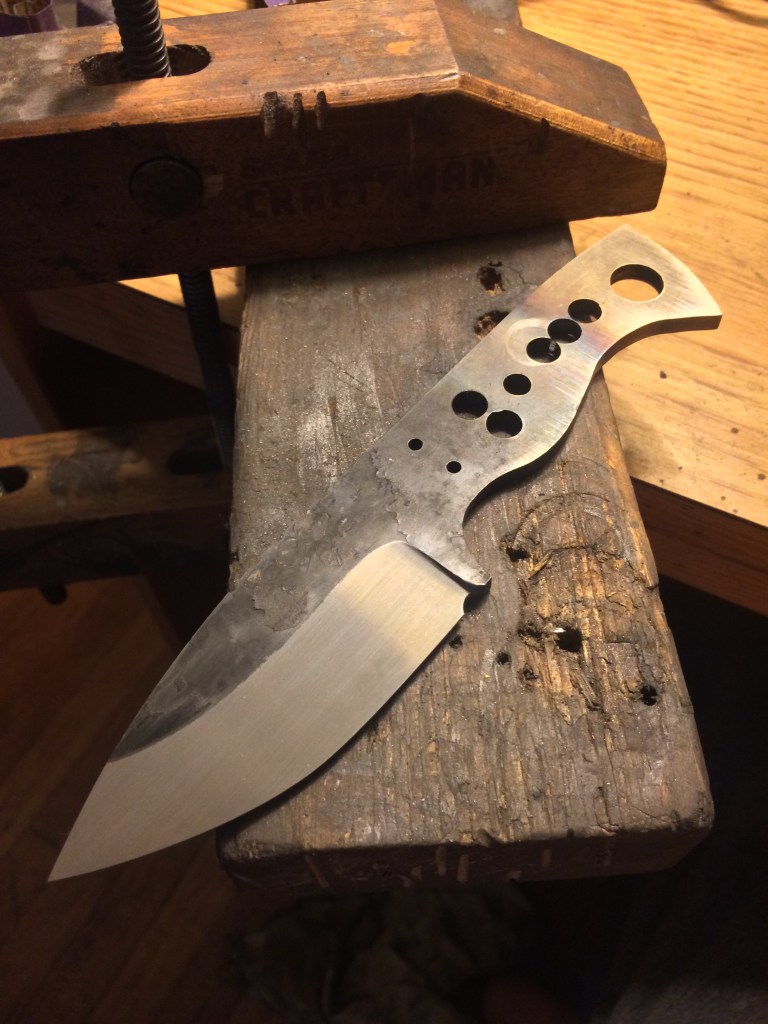
I have designed and built you a bushcraft knife.  She is made from 1095 hi-carbon steel, which has been differentially hardened.  What this means is, while the whole blade is hardened, the cutting edge is the only part of the blade at full hardness and the spine is just slightly softer.  This offers durability and a slight bit of give, like a samurai sword.  There is a smoky line along the edge of the blade and a slight color change where you can see the differences in hardness.

The handle contains a piece of bookmatched Texas Mesquite.  It comes from a cousin of mine near Big Springs, milled on his property.  The bolster is made from a pair of lady jeans that belonged to my girlfriend- vintage Levi’s 501’s, something strong and deeply feminine.  Your knife is stout and sturdy; strong enough to baton firewood but lithe enough to prepare dinner. 

I named her Masilda, which is an old Romany-Traveller name that means ‘battle-ready’.  And while I am no authority on anything, your knife does contain a few truths and values in which I strongly believe.  Having a knife named battle-ready is no empty moniker and I have consolidated a trifecta of practices and that you may find useful in navigating a complicated world.  When you use your knife I hope that you think of them:

-Speak your truth.  The media says that we are in the post-truth era, an age of alternative facts, and other dressed-up horseshit designed to keep you from critically analyzing what’s going on around you.   The reality is that the truth always matters, and always will.  Make sure you know your own truths- the things you know to be right and good about yourself and how you see yourself in the world.  Clothe yourself in them.  Should you ever feel lost you’ll know exactly where they are- they will help you find your bearings.

-You can always make more money, but you can’t make more time.  Time is the currency of our terminal human experience.  While making a living is necessary, be aware of how much of your time you sell to a job that only cares about profit margins and what they can squeeze out of you.  If you ever have any doubts about what you should be doing with the time you have been given, refer to the above bullet point.  You’ll know what to do and you’ll be able to hold yourself in esteem while doing it.

Be kind.  It’s sounds cliche, like something written on a shoddy mass-market pressboard wall decoration in the Housewares Section of Target, but do your best to be kind.  It’s the connective fiber of our collective human experience during our brief time on this lovely little world.  If you can, you will find that the world opens up to you a bit easier, and is perhaps a bit richer and more vibrant.  There may be situations you need to tell someone to eat a big bag of shit.  Only do so out of kindness.

Wishing you many happy years with the Masilda.

The Masilda started with a drawing, a drop point style:

I had a bigger piece of steel than I thought, so the actual knife is a bit longer than the drawing:

Jimping- to prevent slipping when choking up on the blade:

Rough grinds:

Wet-sanding out the machine marks:

The hardening process:

After quench:

After tempering, a satin finish:

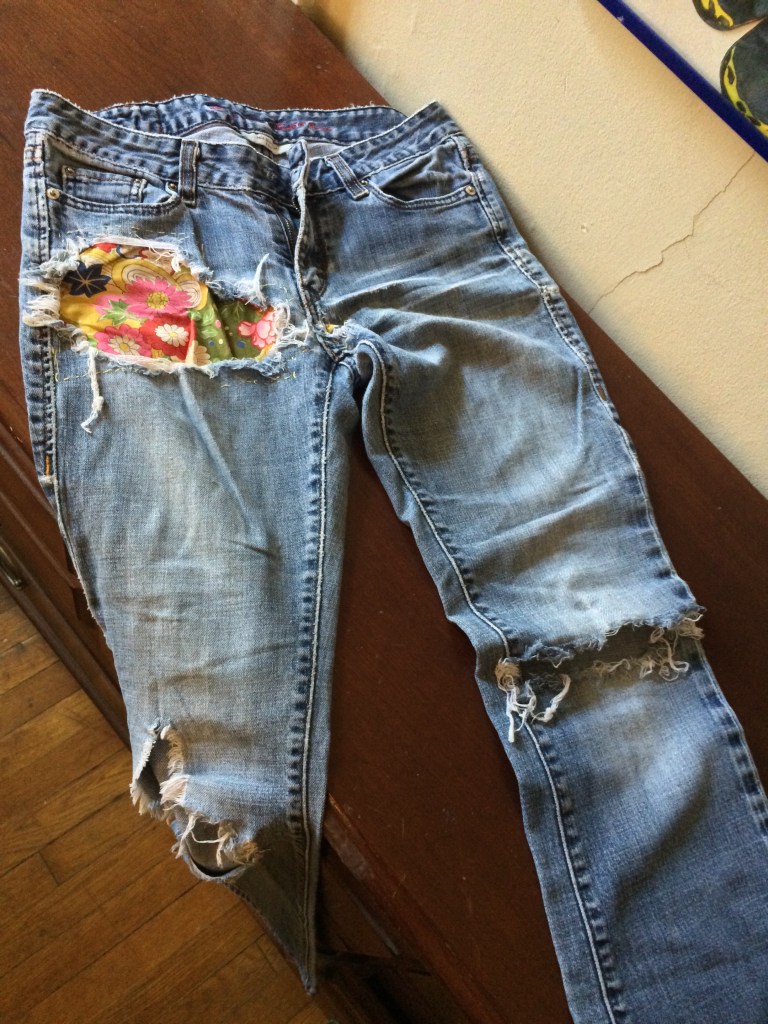
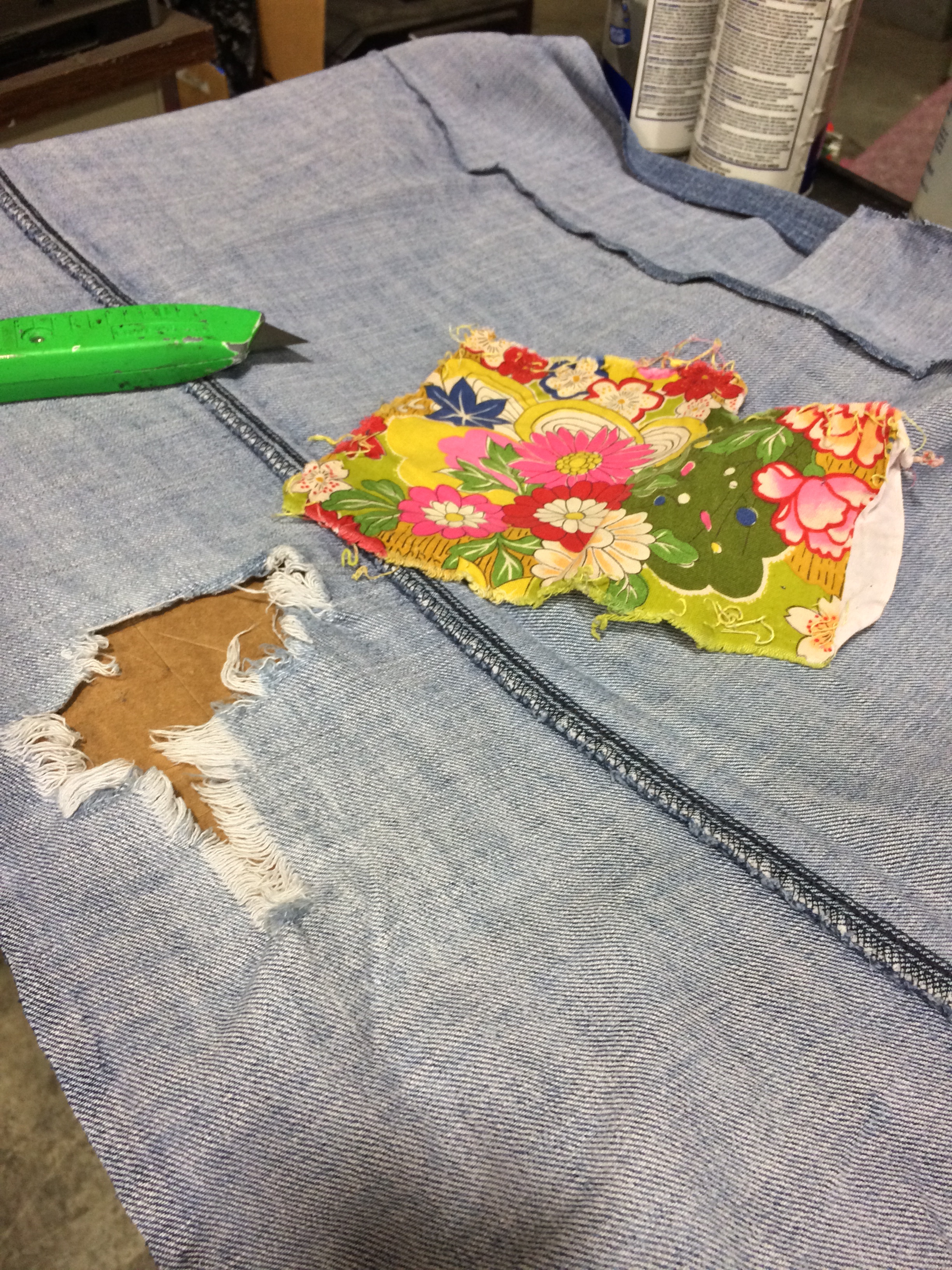
A pair of vintage lady jeans from my partner, deeply-loved and well-worn:

img_9238masildablog2

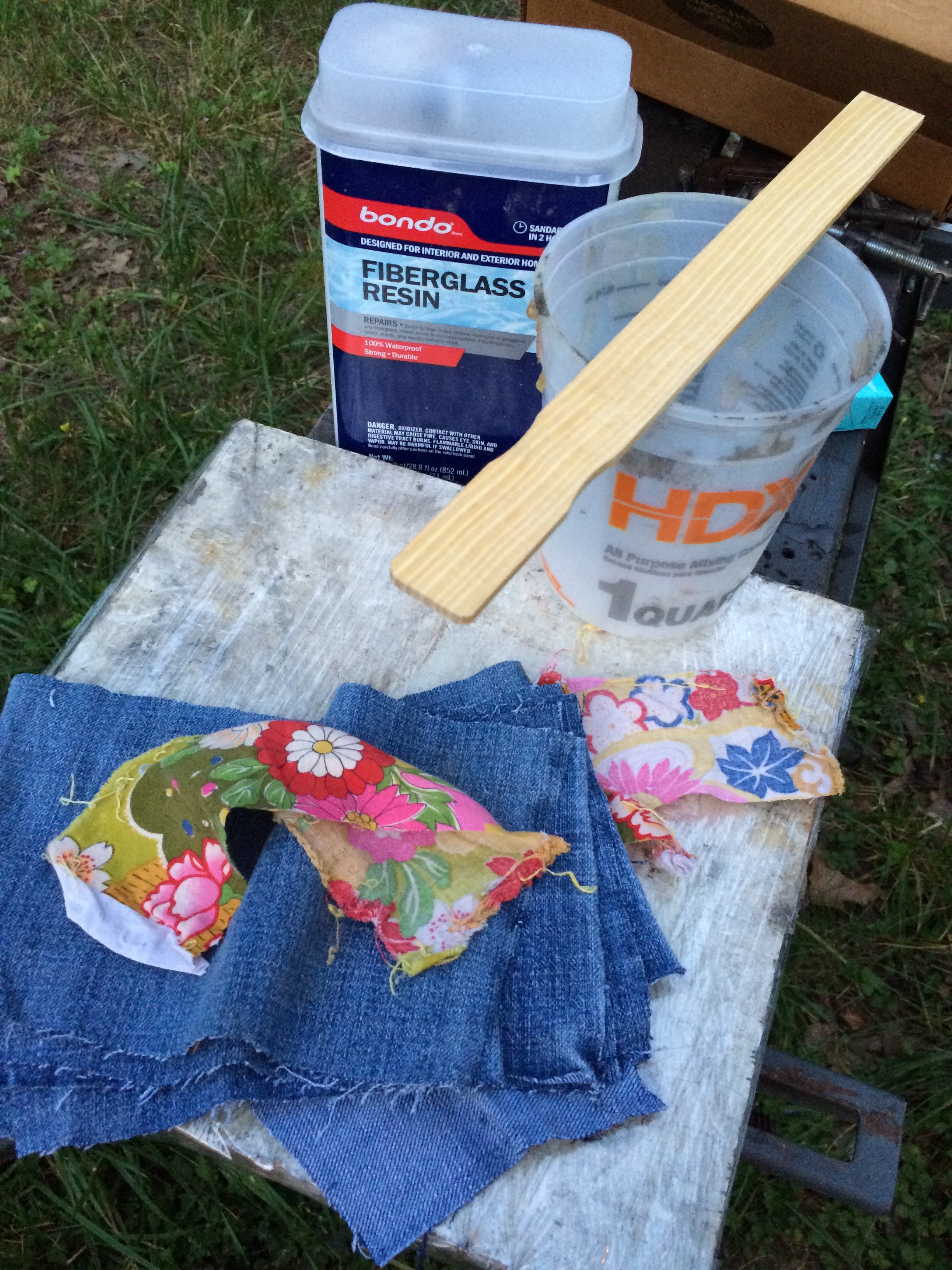
Fiberglass resin will be layered between pieces of denim, like a lasagna.  The pathc will go in as well:

blog1

Now smash the whole thing together:

blog2

The raw material:

blog3

Cut and drilled in, with the blade profile traced in so that i know where everything is:

blog4

Texas Mesquite:

img_7566

It smells really good:

blog5

Computer board blank rescued from a dumpster.  It’s just a thin piece of fiberglass board:

img_8132

Denim and computer board at 60 grit:

blog6

At 800:

blog7

All ready for glue up:

blog8

Glued and clamped

blog9

Shaping up:

blog10

From here, all the sanding is done by hand:

blog11

The higher the grit you go, the more pronounced the grain and fiber:

blog12

The Masilda:

masilda1

masilda2

masilda3

masilda4

Instructions for Care:

 Your knife is made of high carbon steel, which means it will take a keen edge, hold it a good while, and will be easy to sharpen.  It will stain and patina and tell the stories of the places you’ve been.  Be sure to keep your knife clean and oiled when not in use.  Should you find any unpleasant surface oxidization you can remove it easily with a lightly oiled bit of 0000 steel wool, or a coarse rag with a bit vinegar on it.  She is built to be used, so don’t be shy about getting her dirty.

Knifemaking: The Ace, revisited

“When we are children we seldom think of the future. This innocence leaves us free to enjoy ourselves as few adults can. The day we fret about the future is the day we leave our childhood behind.”

Patrick Rothfuss- The Name of the Wind

(you can read about the original crafting of this knife here)

As I approach early middle-age I find myself surrounded by the children of my close friends.  They are marvelous little beings, unfettered by the troubles of the world, and always see possibilities and wonder around every corner.  In watching many of them grow up I feel like I’m let in on a beautiful little secret as they walk, talk, and become more cognizant of everything going on around them.  Boldly pursuing their curiosities, there is a pronounced presence in their endeavors and the way they move through their little worlds.

This unfettered presence of being is a subtle reminder that as an adult I am always second-guessing myself.  “I wish I had done that better,” I will think to myself, or “I wish I had been kinder.”  Rumination at the end of a bad day can trouble my sleep, and the thought of facing the day the next morning can be daunting.  I will often judge harshly my perceived tumbling through the world and wonder if I am doing any of this right.  There are moments when I find it hard to get excited about anything.  Many of the adults I confide in are often thinking the same thing.  These are merely symptoms of being grown in an extremely complicated world, and as many therapists have assured me over the years, are completely normal feelings to have.

Much of this melts away when I spend time with the children of people I’m close to.  They don’t think about any of those things.  As someone crashing through adulthood, I find that to be deeply reassuring.  I am also reminded that I am in fact an adult- no, you can’t have cookies for dinner, you can’t use your Ipad in the bathtub, and yes I do have to leave (please don’t be sad, I’ll be back).  I’m not sure how such big feelings can be contained in such tiny people.

About four years ago I made a blunted knife for the oldest child of some good friends of mine.  They have a house on some property in the country about 45 minutes out of the city.  They grow mushrooms and berries and have animals and forests.  I know the place pretty well- I helped them move out there.

There are now four children at their home.  They are farm kids in the summer.  I saw all of them the other week when I was doing a side job delivering some water containers to his dad, who uses them to run his homestead.  While he was sorting out another visitor, I went in to say hello to the kids.  They were all confused, except for the oldest, and asked me who I was and why I was in their house.

I told them who I was and that I was there to help their dad.  I was then barraged with questions and chatter- the oldest shows me their puppy, the second oldest tells me she doesn’t remember me, the third oldest asked me why I was there a second time, the youngest doesn’t talk yet but eyes me suspiciously.  Dad comes in and clears everything up.  I don’t think there are too many visitors during a weekday, and I felt that my presence was a happy little gift.  I’ve found the most sincere thing a kid can do is talk to you.

Before their dad and I unload the truck I brought in the oldest, whom I’ve known since he was three, wants to show me his treasures.  He pulls a box out of his room and starts removing things- some small folding knives, a bit of paracord, and a compass.  He is immensely proud and can’t even contain it.  I’m a bit jealous.  As a large man when I get excited it usually scares people.  So I quietly and secretly took in his excitement with him. Whoever figures out how to concentrate little boy excitement and put it in supplement form will make a mint.

His dad and I went out back to unload the truck and this little boy received instructions to make lunch for his brothers and sisters.  A few minutes he comes out with a peanut butter and jelly sandwich for me.  His dad hands me his blunted knife I made a couple years ago and asked if I could make it into a real knife.   I tell him I sure can.

Because in the end, it’s not just a knife.

This little boy isn’t thinking about the bigger picture but I am.  In seeing his reworked knife, I hope this little boy will learn to see what it is to grow and improve as he figures things out.  I hope that he will learn to look back on where he’s been and feel satisfaction in seeing how far he’s come.  I hope he will see what it means to put beautiful work out into the world and the empowerment contained within speaking his truth.  Most of all I wish him to not fret about the future and to trust in his tireless human spirit.  This is the lesson of the Ace.

This was the knife I made him four years ago.  It is a hardened and tempered butter knife that allowed him to get comfortable with carrying a bladed tool. 

The handle was coming off- we’ll put a new one on.  Off with the old:

The blade is re-profiled so it has a point and will cut:

img_7485

Giving him a good polish:

IMG_2835

Satin:

Black Walnut:

img_7486

img_7487

Computer board blank for spacing material.  Though it looks yellow, it will be green when fully polished:

img_7488

Drilling the rivet holes:

img_7489

The part of the handle that meets the ricasso is shaped and polished before glue-up:

img_7490

Glued:

img_7497

Profiled:

img_7505

Shaped.  From here on out it’s all hand work:

img_7506

The Ace, revisited:

img_7509


img_7511


Knifemaking: therapy for large men, Buddhism with the boring parts left out, and the Rumfoord

“I was a victim of a series of
accidents, as are we all.”

Malachi Constant, from Kurt Vonnegut’s The Sirens of Titan


A few years ago I went to see a therapist.  I was stagnating.  I had lost my job and was doing all sorts of ridiculous things to make ends meet.  Over the course of about six months I floundered about.  I worked security for outdoor festivals, fixed toilets in a friend’s apartment buildings, and did tree work with another friend.

I remember being baffled by the whole situation, and feeling like a victim of unfortunate circumstance.  This wasn’t how any of this was supposed to happen.

Knives were not doing well.  As I was sitting there staring at my belly button and not doing anything about my situation, it was suggested by those close to me that I go talk to someone who could help me.  That was the last thing I wanted to do.

After some consideration, and a good amount of trepidation, I called a counseling office recommended by my insurance company and I went in for an appointment.

I remember sitting in a very Spartan office, with lamps suggesting a mood of emotional intimacy, and an institutional nightstand with a box of off-brand tissues sitting on top of it.   My therapist walked in.  He was a large African-American gentleman, crisply dressed, and carrying a folder.

He asked me the formal therapist/patient questions: what I hoped to accomplish in our sessions, and what it was I hoped to gain from our time together.  The truth was that I was a little stuck.  There were things about myself that I missed, a spontaneity and ease of being that I had lost.  I knew where I was and I knew where I wanted to be but I didn’t know how to get there.  Also there was a lot of emotional clutter and traumatic bullshit in the way.  I told him all of this.

‘I think I can help you with that’, he said.  ‘As for the emotional clutter and everything else in the way- I think it’s time to let that shit go’.

So we began.  Nearly every two weeks for about a year, and then maybe once a month for the year after that.  My therapist was technically a licensed clinical social worker who specialized in substance abuse counseling.  I didn’t have any substance abuse issues- I had simply told the administrative lady at the office that I was most comfortable talking to a middle-aged man, and this gentleman had an opening.  He didn’t wear a suit like all the other therapists.  His dealings with addicts, I found, left him with a particular knack for getting to the root of personal problems , and a no-bullshit way of going about it, like a sort of Krav Maga of psychotherapy.  I come from a place where you didn’t talk about how you felt so to voluntarily talk about things that were bothering me was, and is, something that is incredibly uncomfortable.  And honestly I wasn’t looking to talk about what was bothering me- I was looking for someone to tell me what to do.

Of course that isn’t how therapy works.  He didn’t tell me what to do.  He would ask how situations made me feel and then challenge me.  I came in one time really bothered about something and I remember him laughing at me.  ‘Welp, you’re in the shit now’ he said, ‘What do you intend to do about it?’

The bluntness was empowering and it didn’t come with any judgement.  This was simply how one large man was helping another large man.  I would go in and tell him that my shit was all fucked up that week.  And he would nonchalantly ask me if I had a plan for unfucking my shit, and that if I did not, perhaps there were some goddamn unresolved childhood issues being played out and my fucked up shit was just a manifestation of that.  Then we would unpack my goddamn issues so that I could start unfucking my shit.

I would tell him that I struggled with faith that everything would be ok.  He said everybody does.  I told him I had a hard time dealing with disappointment and uncomfortable feelings that came from harboring resentments.  I let him know I was ashamed about not being able to accept failure.  He told me that all these made me a completely normal human being.  Month after month he would talk me off of existential cliffs.  ‘Don’t be a victim’, he would say.  ‘Be a warrior.’

We talked a lot about transformation and how it can be difficult to change.  I would be frustrated about something that was so deeply innate to my being that I didn’t know where to start.  He would gently tell me that a person can only change so much, and some things simply can’t be changed.  And then he would say that some of the things I was trying to change weren’t bad things and I should reframe what it was I was trying to do.  It was a study in Buddhism, but with the boring parts left out, and a whole lot more expletives.  When a sculptor wants to make a statue of an elephant from a block of stone, he simply removes the parts that don’t look like an elephant.  There comes a point when you can’t remove anything else to make the stone look more like an elephant.  This was what we were doing- removing (or at least identifying) the parts that didn’t serve the whole, and accepting everything else with kindness and compassion.  Om Mani Padme Hum…

We laughed a lot.  Lots of sad things came up, and I would get really weepy and reach for the off-brand box of tissues in that intimately lit office.  We talked about music and books and art, and what it was to be a good man and what doing the right thing looked like.   We usually ran over our time limit.

After a while I started bringing in the knives I was making and talking through the stories.  It was like sculpting an elephant, or yourself, but I was taking away the parts that didn’t look like a knife.  I was afraid it might be weird bringing big knives into a shrink’s office week after week but he told me to keep bringing them and to keep telling him their stories.  So I did.  I told him they were guardians that helped me to write the ridiculous experience that life has been for me.  I’ve never done things the conventional way, or even the smart way, and bringing your handmade knives in to help you talk about your story with your large African American psychotherapist probably falls into at least one of those categories.  He was always kind to that part of me.  He told me to keep building little sharp guardians and to keep writing.  At the end of each session I would shake his hand and thank him.  ‘No, thank you,’ he would say.  He said he always looked forward to seeing me on his schedule and to what I would come in and tell him.  I think he dealt with people much more fucked up than I was.

I started seeing him less frequently.  I found, slowly and when not crippled by self doubt, that I was getting to where I wanted to be and was able to find what I needed in myself.  I was doing good things and feeling alright.  He told me that much, and that nobody really knows what they are doing anyway, and he was always there if I needed him.  He also told me to keep my knives sharp.

Every so often, when I’m about to do something dumb, I’ll hear that man’s voice telling me not to be a dumbass and I’ll think twice…

Sometimes one may know where they want to be but don’t always know how they’re going to get there.  The journey to that destination is often the most interesting part of making it in the world.  This blade gets it’s name from one of my favorite books, The Sirens of Titan, where the main character is at the mercy of the whims of chance and destiny (and also aliens), but through the grace of the almighty chonosynclastic infundibulum, ends up precisely at his foretold destiny.  Along the way all of his core beliefs are challenged and his world is completely upended, yet there he is at the end of it all.  This is the lesson of the Rumfoord.

This knife was built for a gentleman who was waiting a very long time for it:

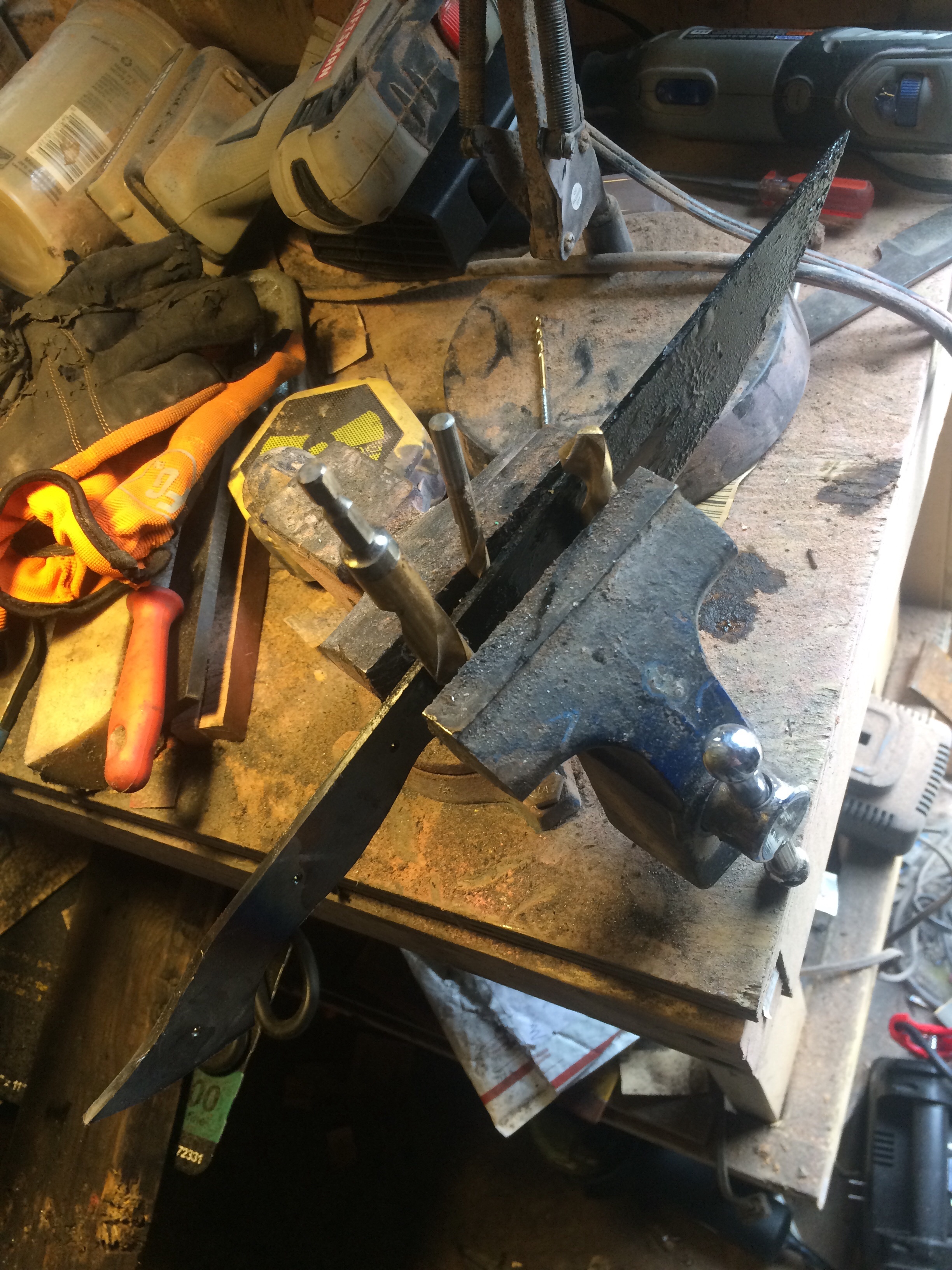
Heating can cause warping.  A sophisticated setup for straightening…
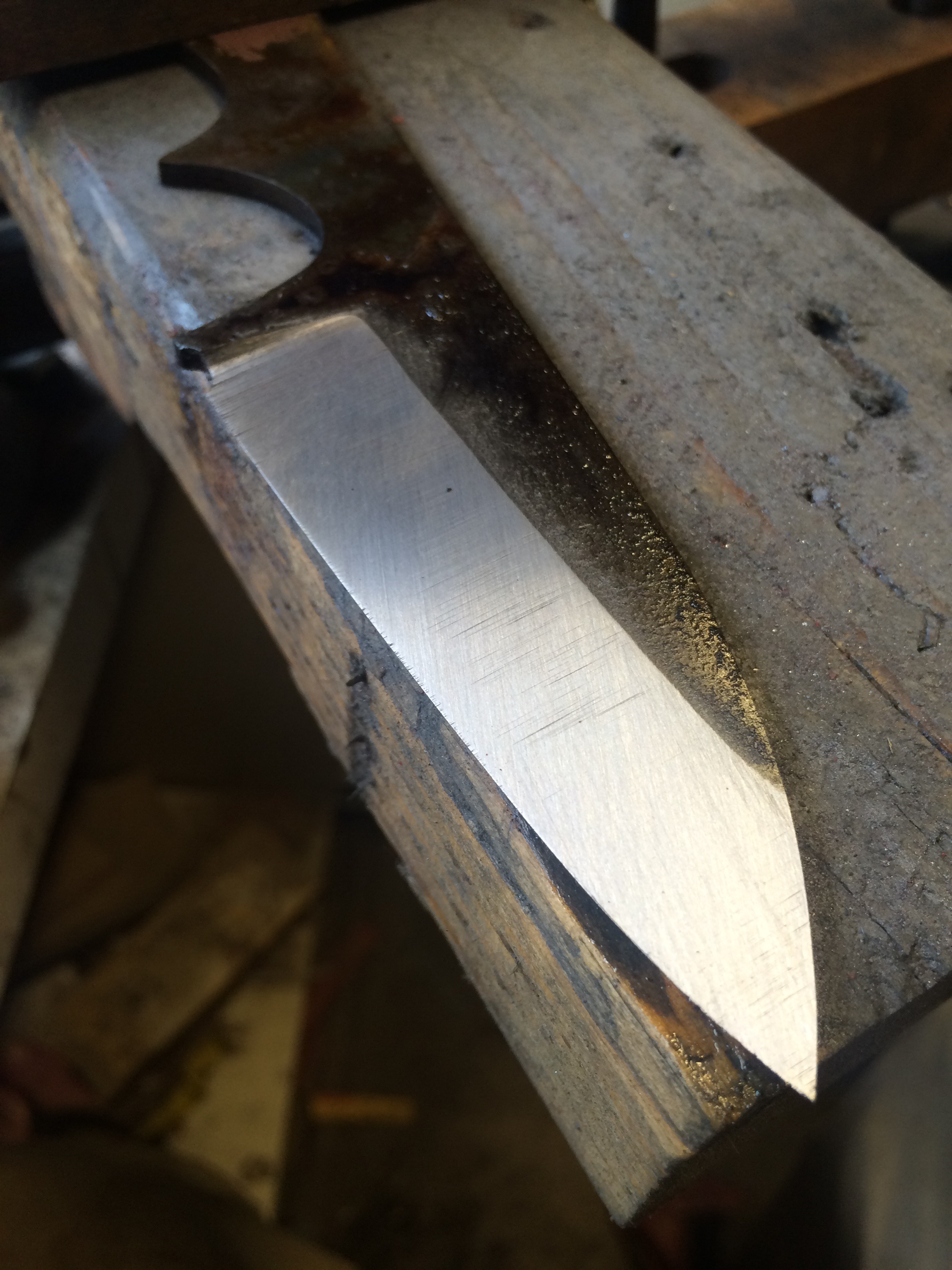
Roughing in a full flat grind:

Removing all the machine marks…
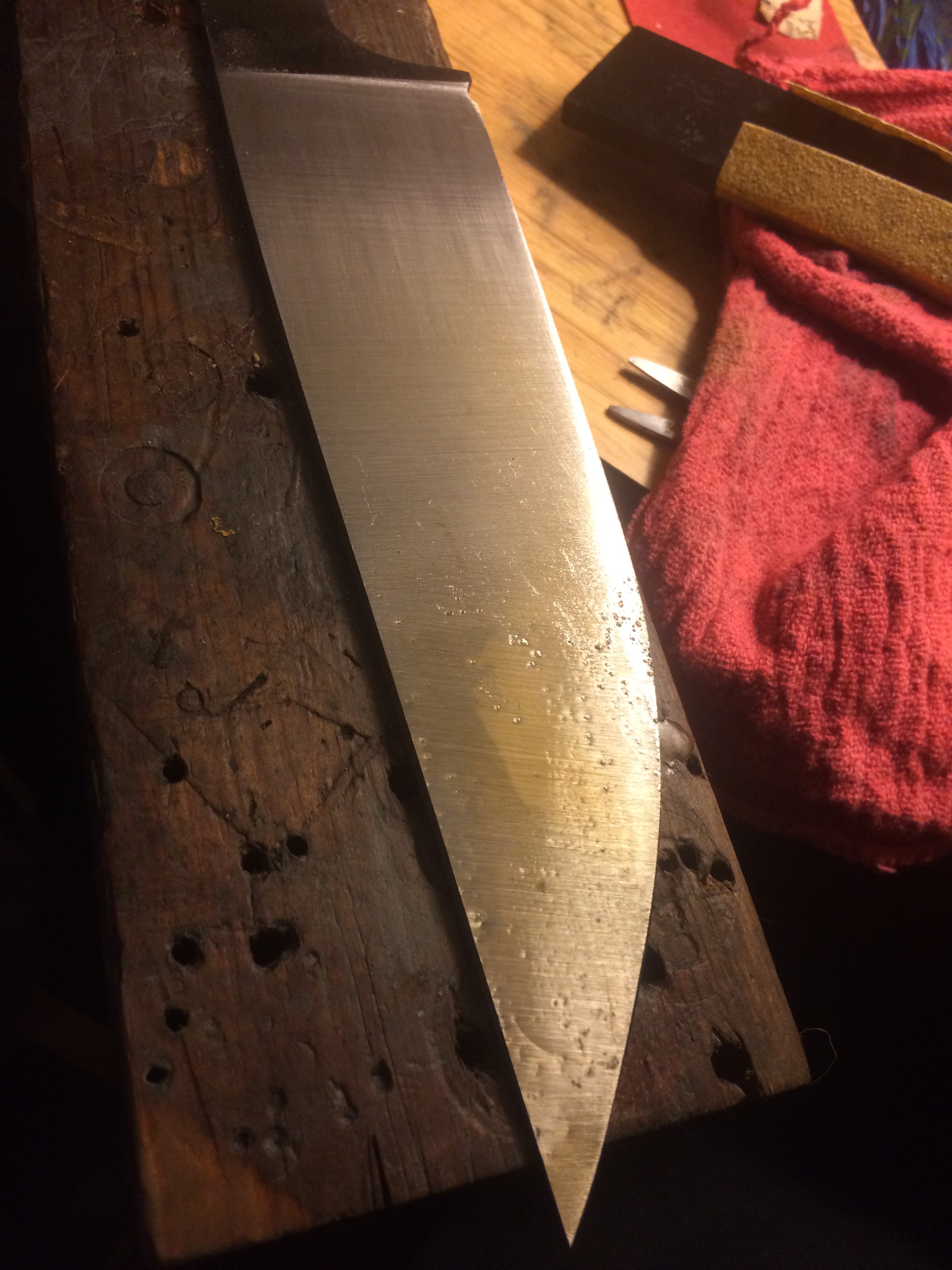
…to achieve something a bit more pleasing.  A smoother finish helps the blade to move through food better.
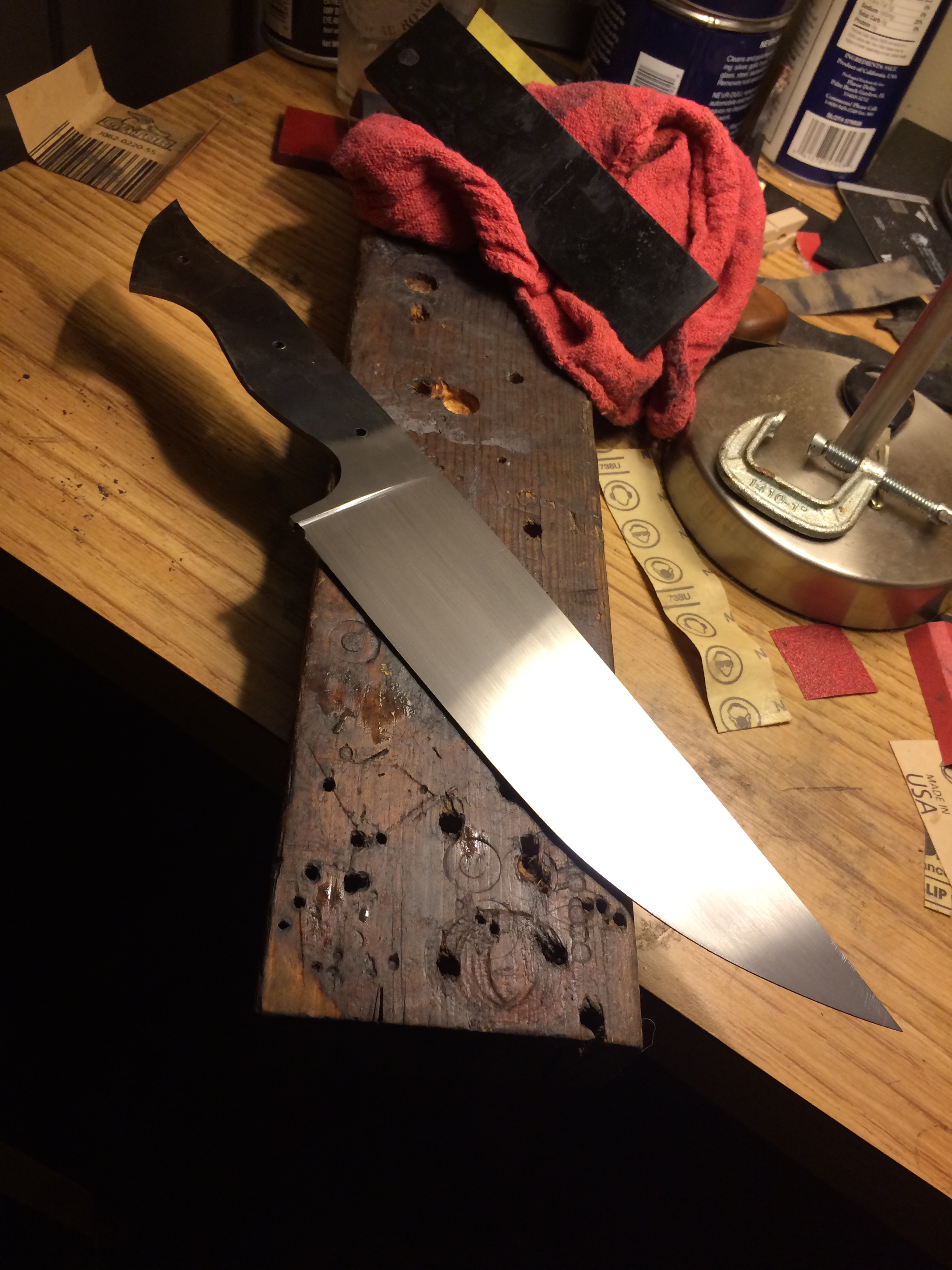
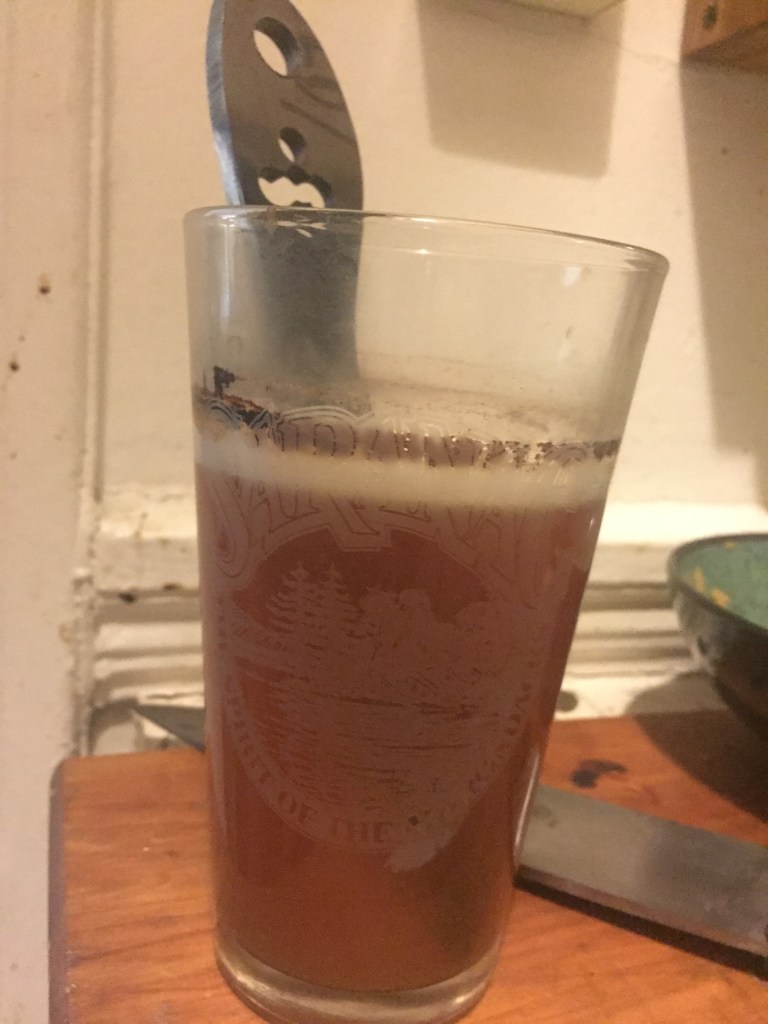
An acid etch to force a patina.  This helps with corrosion resistance on the high carbon steel.

A PCB board blank from a server chassis.  This will be spacing material for the handle:

Texas Pecan, from my cousin Bill:
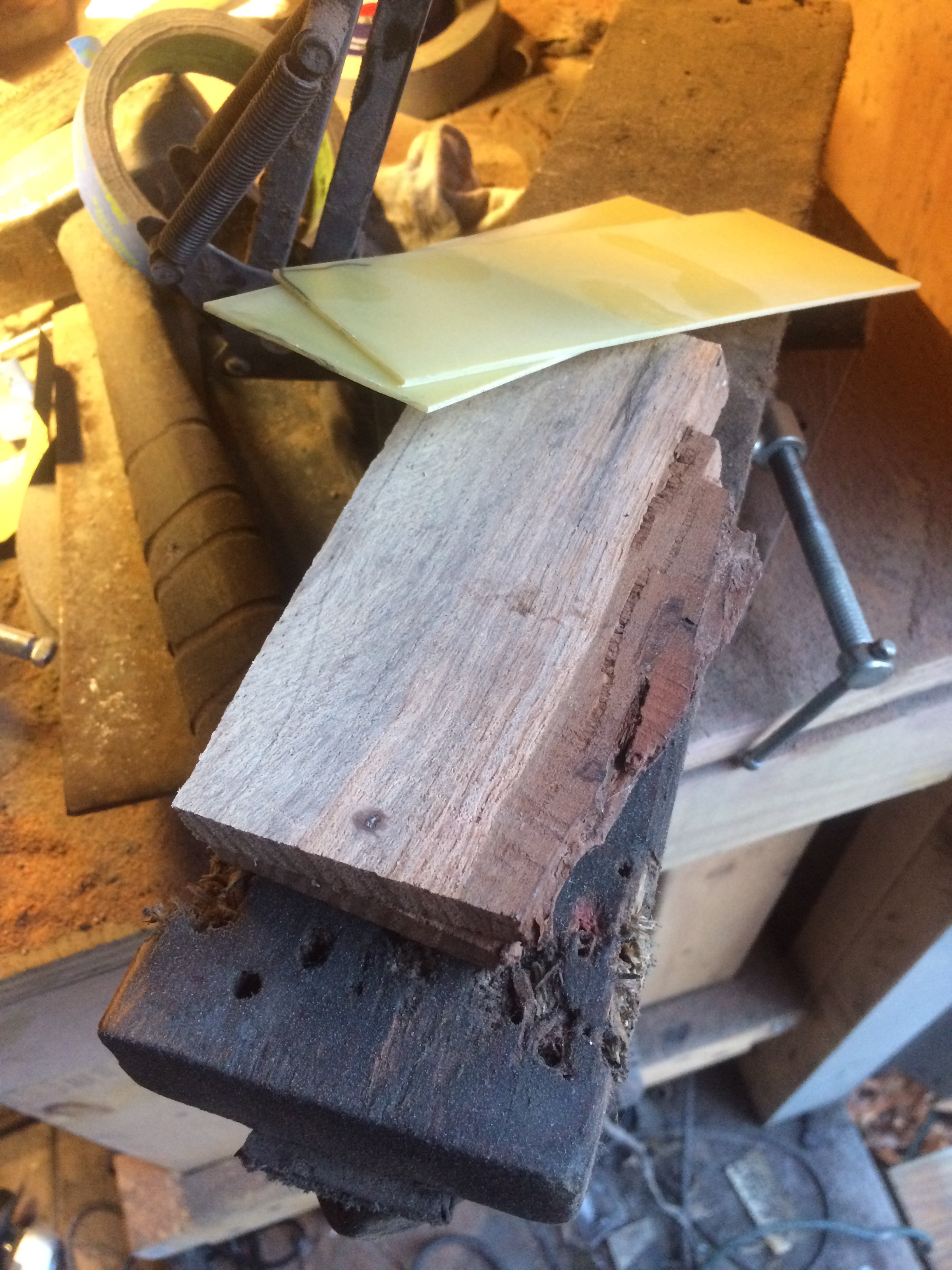
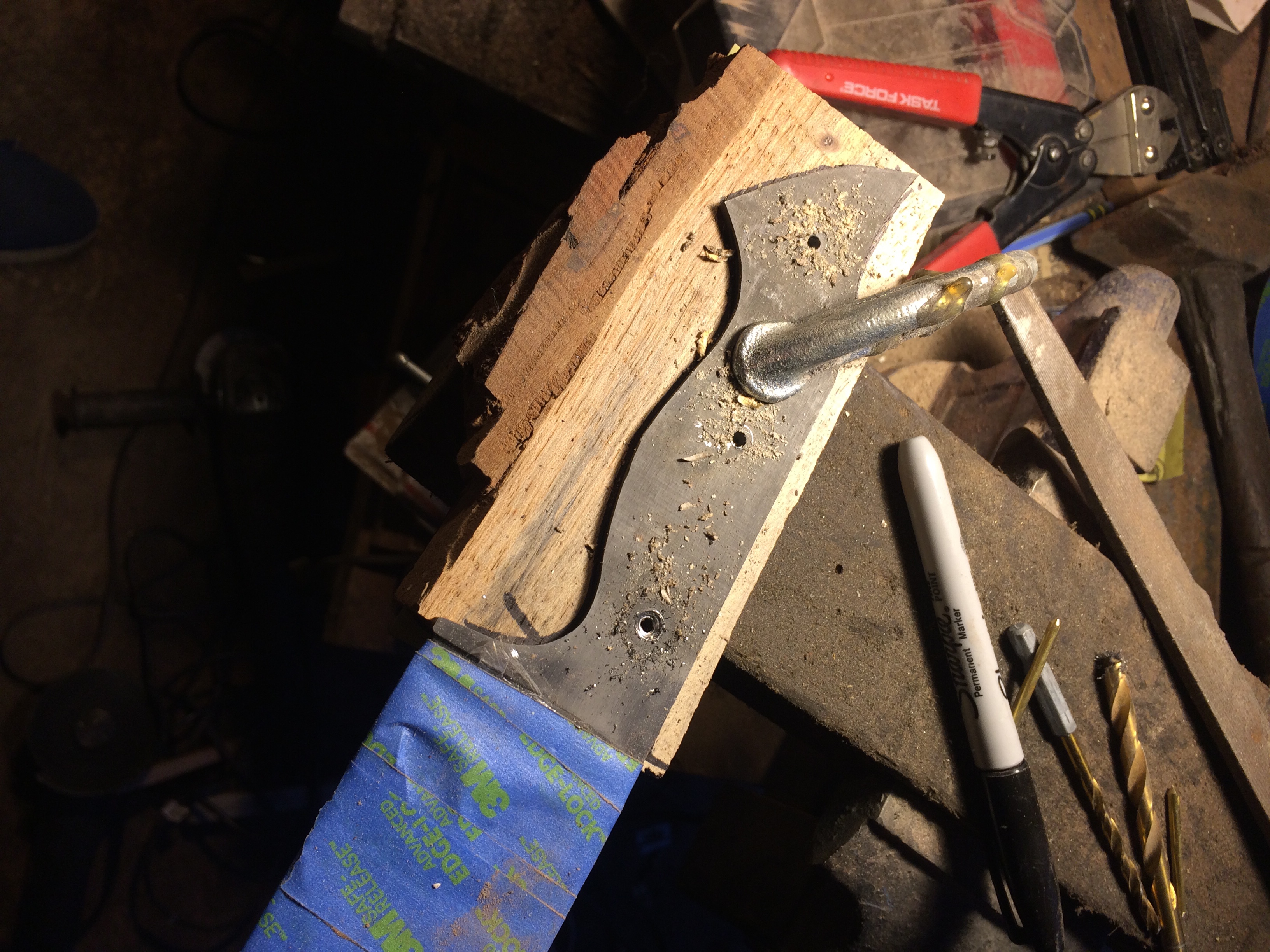
Drilling out the rivet holes:
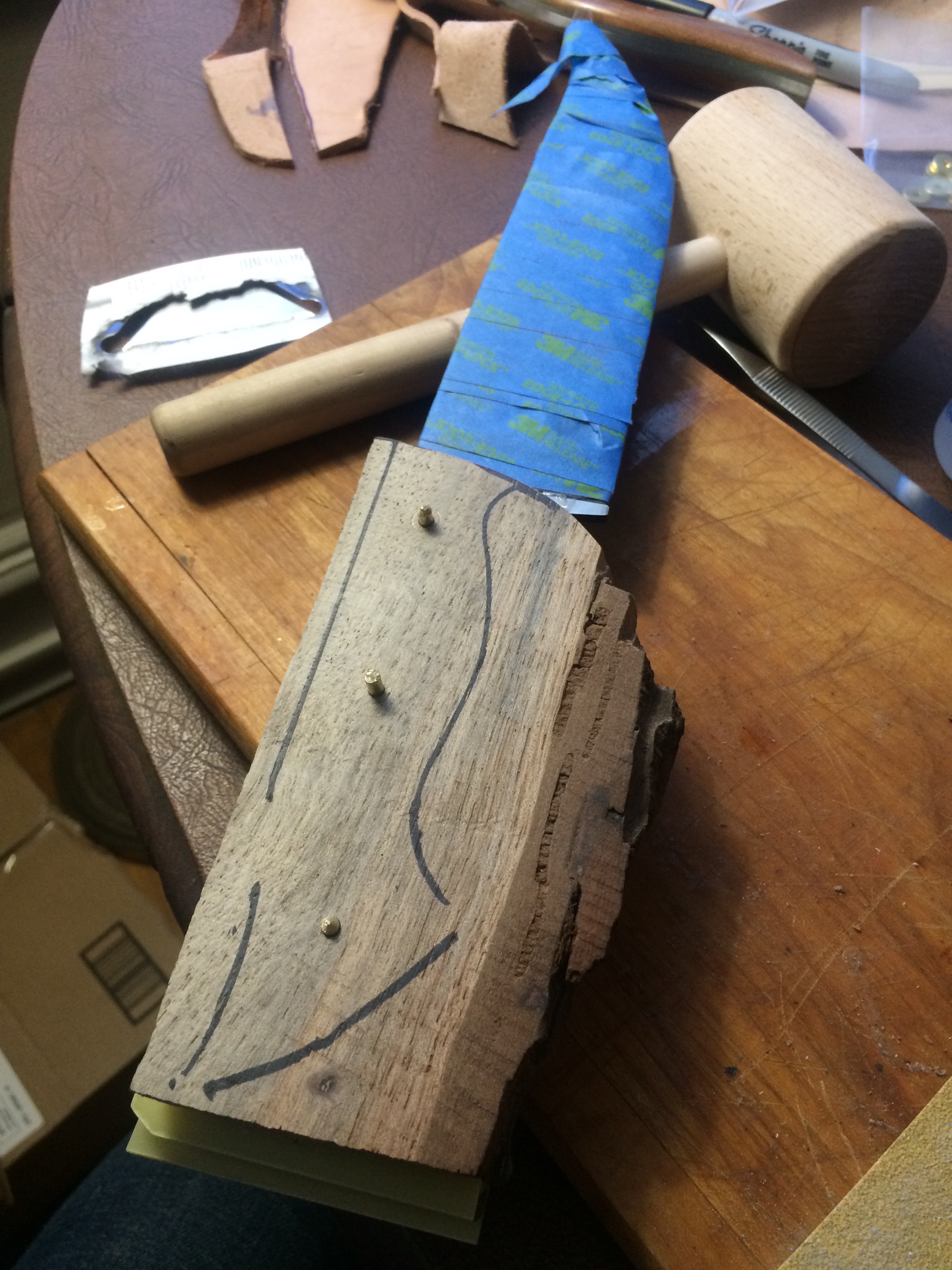
Laying out the handle profile:

The handle near the ricasso, at 40 grit:

The handle near the ricasso, at 1500 grit:

Glued up:
Profiled:
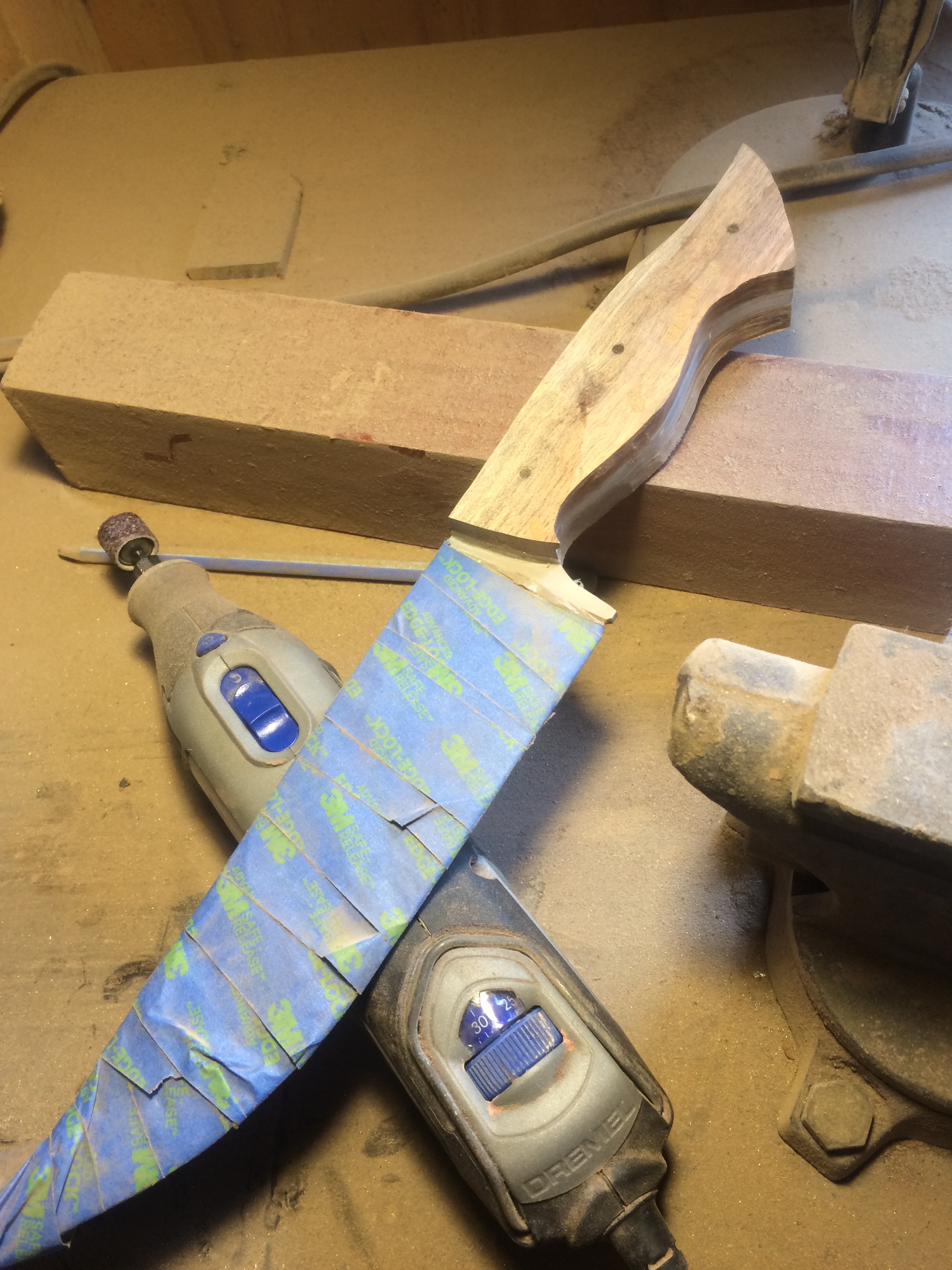
Shaped:
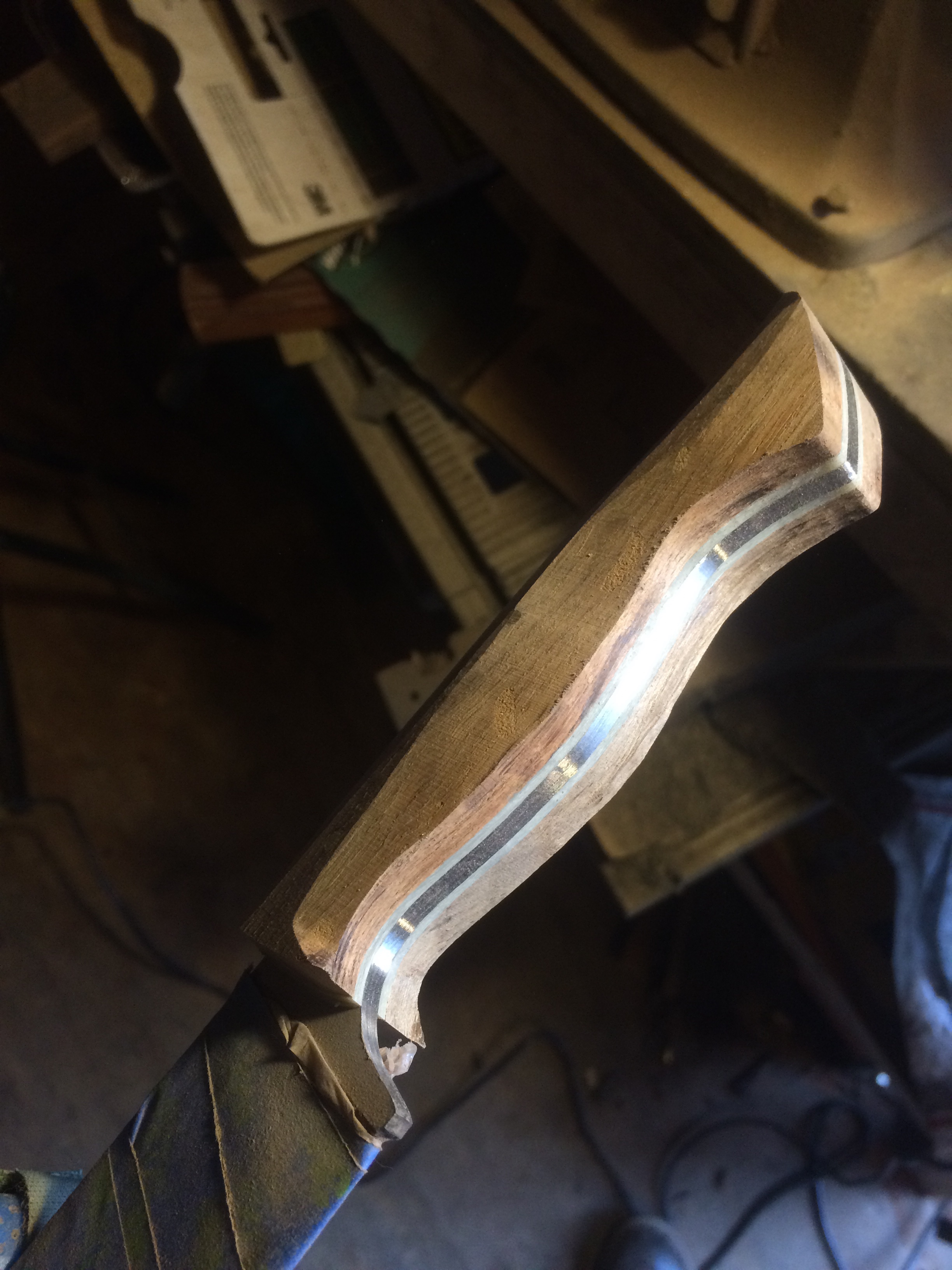
Smoothed:
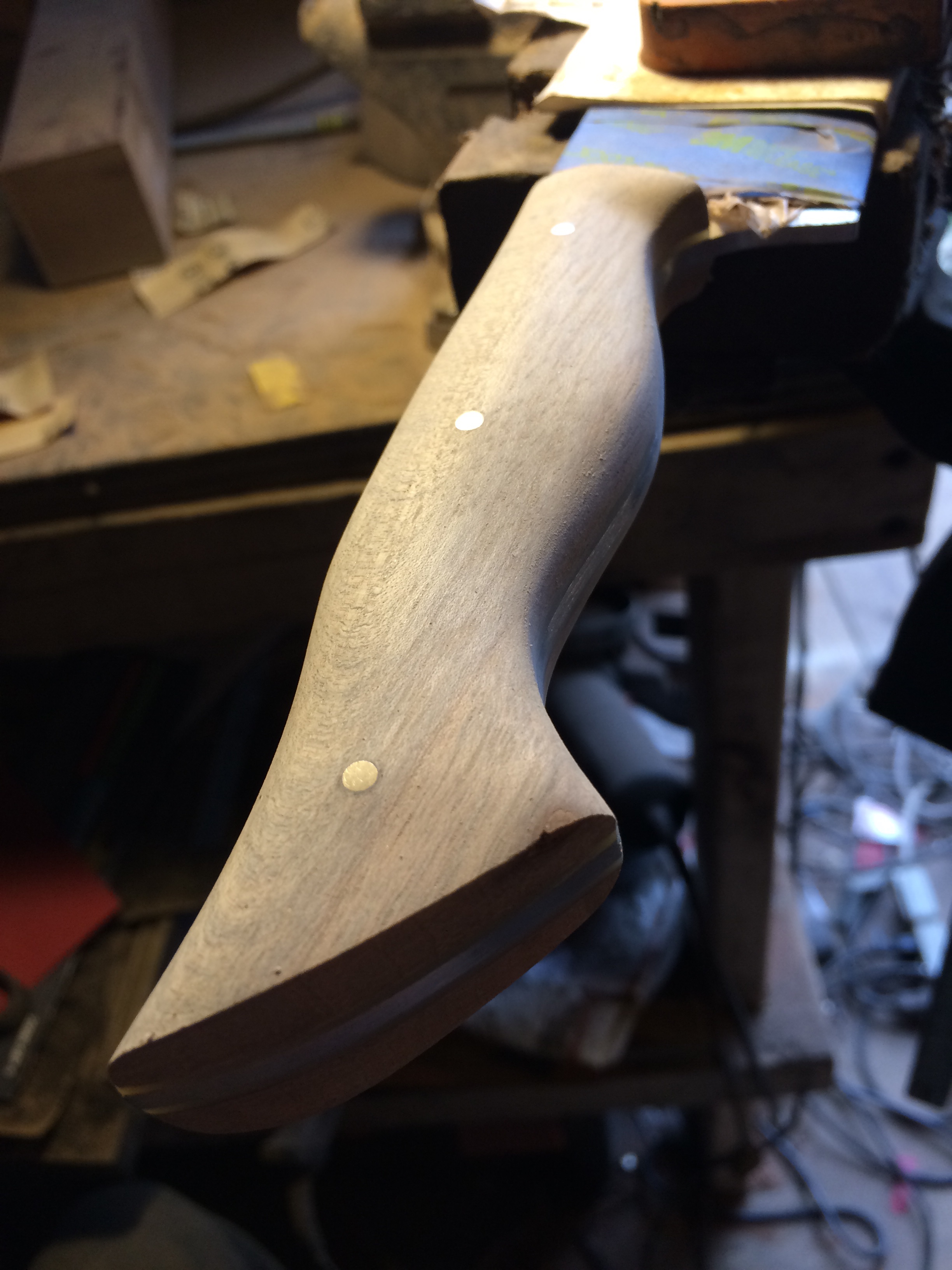
The Rumfoord:

Knifemaking: The Things That Come to Us- A Restoration

“i imagine that yes is the only living thing.”
― e.e. cummings


There are many things that come into our own personal worlds- children, possessions, problems, blessings and a myriad of others.  It’s not so important how or why they enter our lives, but what we do with them.  It expends a great amount of energy to ponder what we may have done to deserve the painful and traumatizing events that come to us, and an equal amount of energy is wasted when we wonder if we are worthy of the good things that are brought our way.

Because when we start dwelling on the why’s and how’s, we tend to become overwhelmed and lose sight of what best needs to be done with what comes into our lives.

And within that judgement of why and how, we start to say no to things.  We become afraid we may be hurt, or that we may fail ourselves or those we care about.  Perhaps we are afraid of making ourselves unsafe.  Whatever the reason, in saying no we shut ourselves out of the blessing may be inside of a painful situation.  We say no to what may be a path forward because it is dressed as something unpleasant.  It is then that we become prisoners in our lives instead of seeing the ways we can be shaped and grow.  We should say no to things that are harmful and do not better us, but it’s always good to say yes to what life brings us.

The summers are slow for me, and sometimes I have to get creative in the ways I support myself.  I end up saying yes to many opportunities that under normal circumstances I would decline, usually due to time constraints, time away from loved ones, or a high probability of bodily endangerment (or a combination of all three).  Over the years the things I’ve reluctantly said yes to have usually been the most rewarding.

One of the times I said yes this summer was to a tree job in rural Virginia.  I was on a crew to cut down a huge dead tree.  Removing dead trees can be dangerous.  Rotting can occur in any number of unseen places of the tree, causing structural instability, and the tree may not fall where or when you desire it to fall.  This particular tree, though dead as a doornail, fell exactly as it was supposed to.

The client was an artist, and brought us French-pressed coffee.  We talked for a bit and I told him about making knives and how I got my materials.  He told me that he had some slabs of black walnut and that I was welcome to them.  They had been milled by a neighboring man who had run an abbey in South Korea, saying ‘yes’ to whatever fleeing defectors and dissidents from the North that the world brought their way.  Later he sent me an article about the man who cut the wood, you can find it here.  Black Walnut is expensive and isn’t something to normally fall into one’s path, so, in the practice of saying yes, I happily took some.

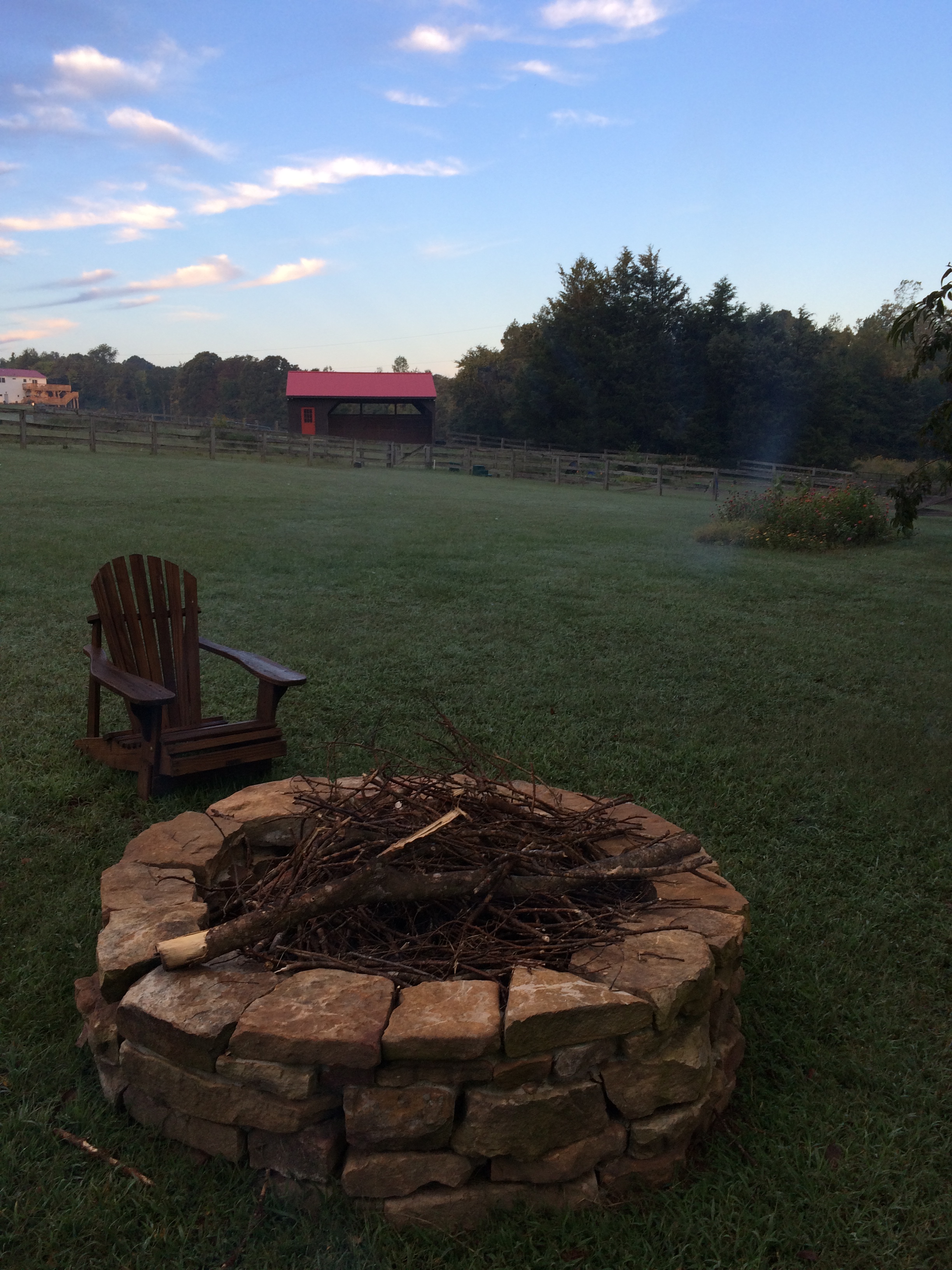
A week or so later I said yes to doing a bit of work on a good friend’s farm.  My friend is a busy lady and sometimes needs a hand with the upkeep of her property.  She and her family are good friends of mine.  I worked for her son for several years and like to get out to their property as often as I can.  It’s really beautiful:

IMG_2509

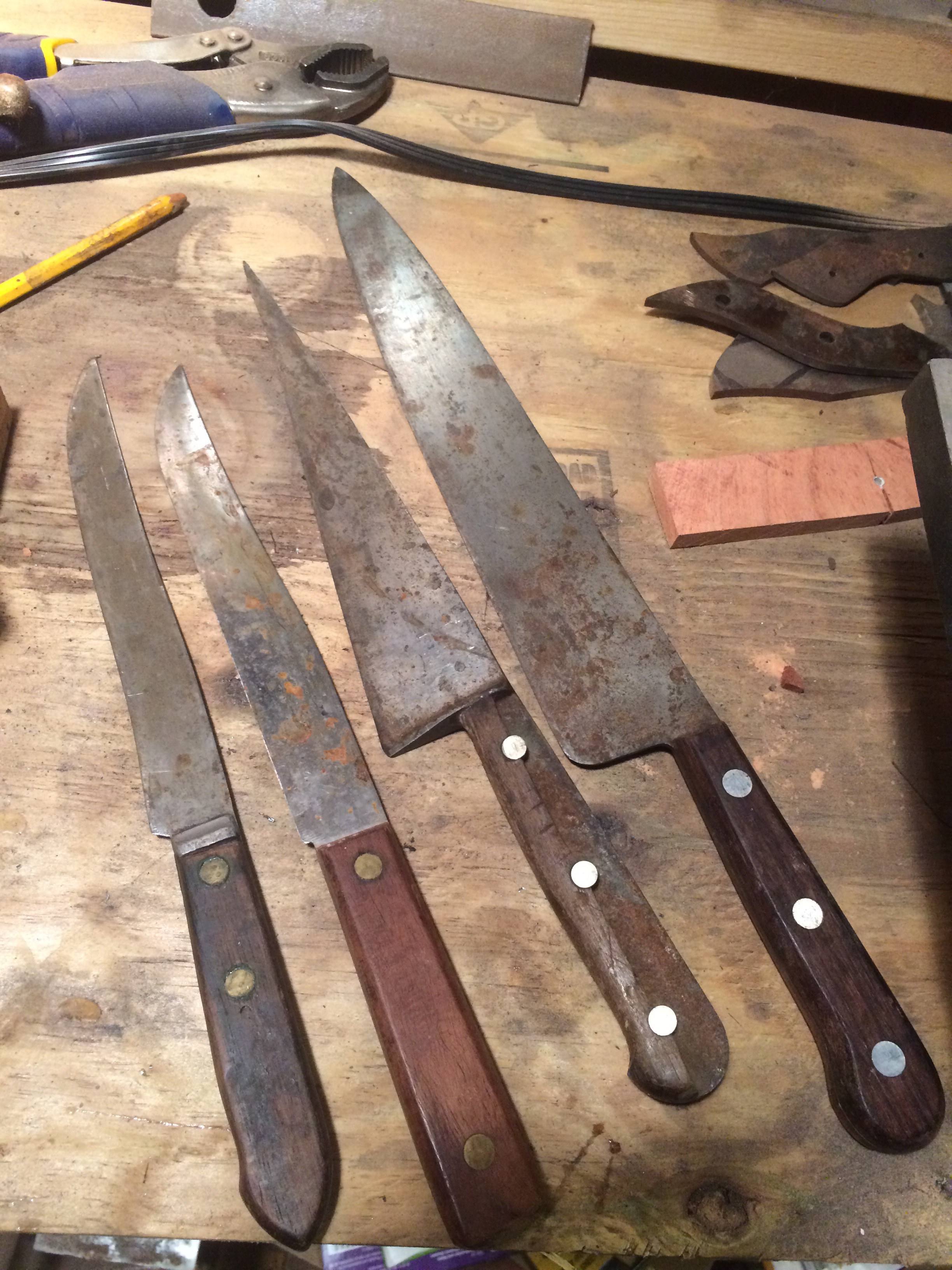
She had a set of knives she wasn’t sure what to do with.  They belonged to her late husband, and came to him from his grandfather, who was an Austrian immigrant.  He came to the United States in the early 1900’s and made his living as a chef, choosing to say yes to a new world and a new life.  She told me she’d like to have them restored so they can go to her children and stepchildren to remember their father.  I told her I would have a look at them and see what I could do.

Tools of the trade, from left to right:  A carving knife; a fish knife; a French slicing knife; and a 12″ chef’s knife

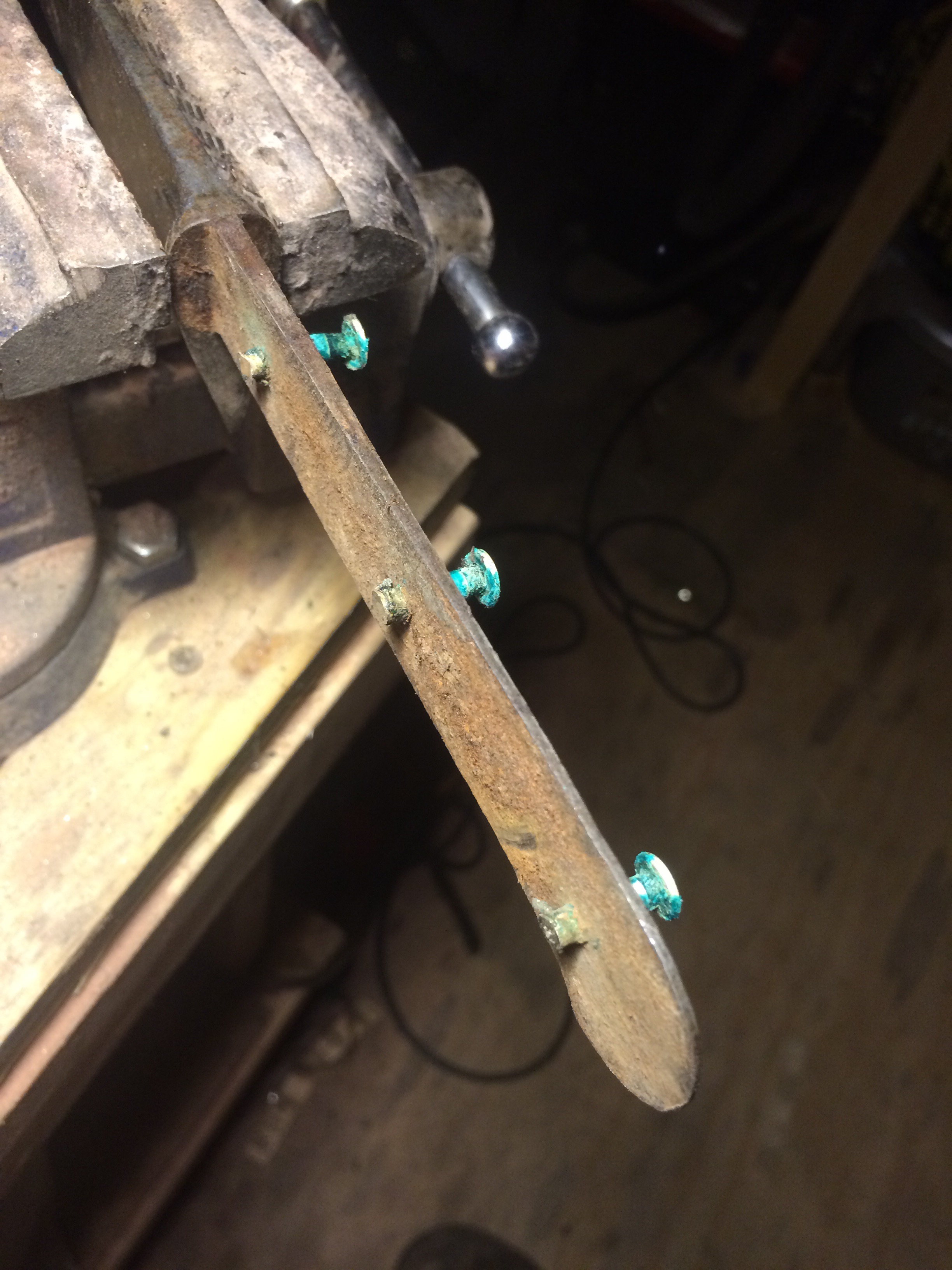
So these knives came to me, at least a hundred years old, and of deep sentimental value.   I started by removing the cracked and broken handles.

I cleaned up the corrosion and oxidization from the blades, but left much of the etched patina from their years in the kitchen.

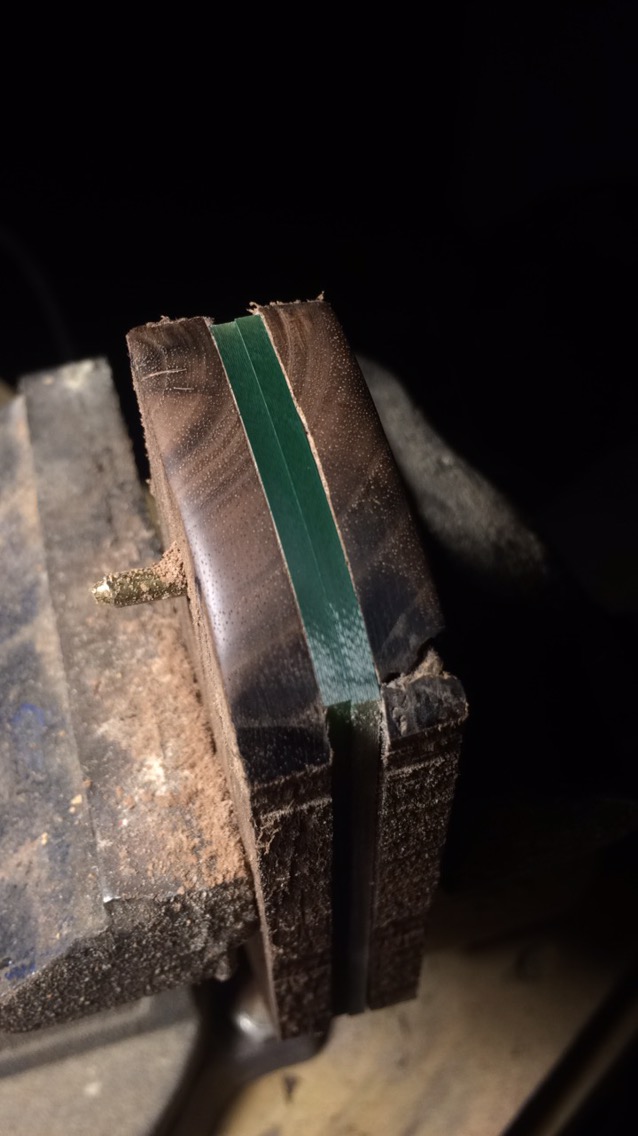
In a continued practice of saying ‘yes’ I chose to use some of the Black Walnut I got from the tree job for the handle material.  It fit nicely into the story of these knives.  This is what it looks like sanded and polished.

All of the handles started as thin blocks cut from the Black Walnut.

Shaping.


The filet knife was only half-tang, so I extended it with mild steel from a sheet.

I added a G10 bolster and spacer for a bit of contrast.

After glueing and sanding.

Getting the fish knife ready for glueing and shaping.

The French slicer was tricky….

…but also an elegant challenge, with its tapered tang and integral bolsters.


Finished, they came out rather beautifully:

Say yes to the things that come to you whenever possible.  It’s always worth it on the other side.

Knifemaking: making your mark and the Cuchilla Pequita

“Control what you can control, maggot!  Let everything else take a flying fuck at you and if you must go down, go down with your guns blazing.”

Cort the Gunslinger, from Stephen King’s The Drawing of the Three

The Gauchos were a group of cowboys who worked on the grasslands of South America during the 18th and 19th century. They were a people without boundaries, solitary, and existing on the Pampas of Argentina, Uruguay and Southern Brazil.  The Gauchos were a pretty wild bunch and had a lifestyle that was similar to the gypsies and travelers of Europe.  Always moving from place to place, job to job, and always on the hustle.  Most were nomadic and had few possessions. 

They were a solitary people, yes, but when they did run into other gauchos there was usually high-proof alcohol involved.  Also gambling.  And prostitutes.  Those three things made for a trifecta of machismo, and that usually resulted in conflict which manifested as duels.  Guns were expensive and hard to come by so the weapons of choice were usually knives.

When Gauchos dueled the objective was not to kill (although fatalities most definitely occurred); it was to leave a mark, preferably on the face.  A gaucho with a scar on his face had lost a duel, and all the other Gauchos knew this.  He would carry this scar for the rest of his life, but looking a little deeper one can find that scars are not always a badge of shame.

There is an inherent drive to leave your mark on the world but sometimes the world leaves its mark on you.  Things aren’t always the way we think they should be and in taking a risk to make a difference we can fail spectacularly.  We all lose duels everyday and some of us carry many scars, both seen and unseen.  Some of the most powerful and profound people I know carry scars that are both large and deep, yet these people shine brightly and leave their mark on the world everyday.  They are beautiful even though life has done its damnedest to leave its mark on them.  How is this possible?

I had a teacher once tell me that no one is in control.  This is something that is a bit of a struggle for me almost daily, even though I know that in the grand scheme of things my sphere of control is very small.  It comes down to choosing how to react to the things in our lives.

So there is a choice.  You can choose to not get pissy about the holiday Starbucks cup.  You can choose to not to feel like a victim because your candidate didn’t win.  You can choose connection over isolation.  You can choose to do something about situations that don’t serve you.  You can choose to wear your scars proudly because whatever left its mark on you wasn’t strong enough to take you down.  You can choose to let the things beyond your control take a flying fuck at you and fall as they may.  Though we can’t always control the circumstances in our lives, we can choose how we respond to them.  This is where we make our mark and is also the lesson of the Cuchilla Pequita.

There are several types of knives carried by the Gauchos.  The Cuchilla Pequita is loosely based on the Cuchilla.  The Spanish word for knife is el cuchillo, a masculine noun in the vocabulary.  The Gauchos feminized cuchillo and applied it to their particular style of knives, which had a ‘pregnant’ blade belly and a slightly dropped point.  This design is based on that style and starts in 1095 spring steel:

After grinding and hardening:

Drilling rivet holes:

Texas Mesquite:

Fitting the handle:

Fiber spacers for a splash of contrast:

Clamped:

Profiled:
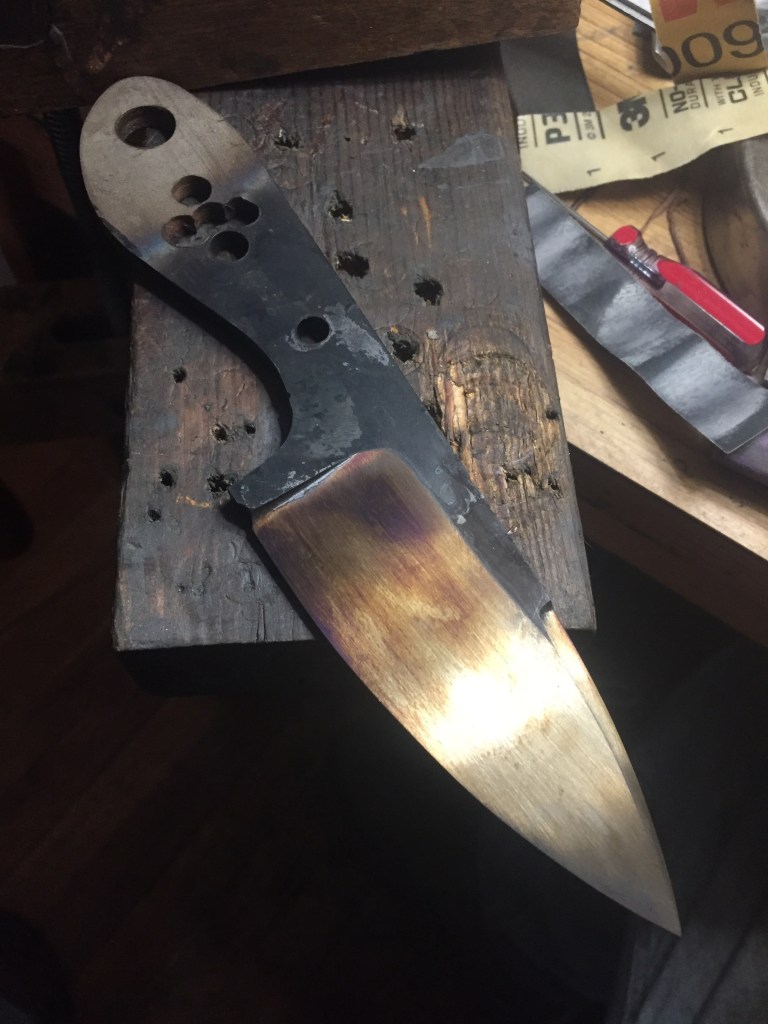
Sanded up to 2000 grit:
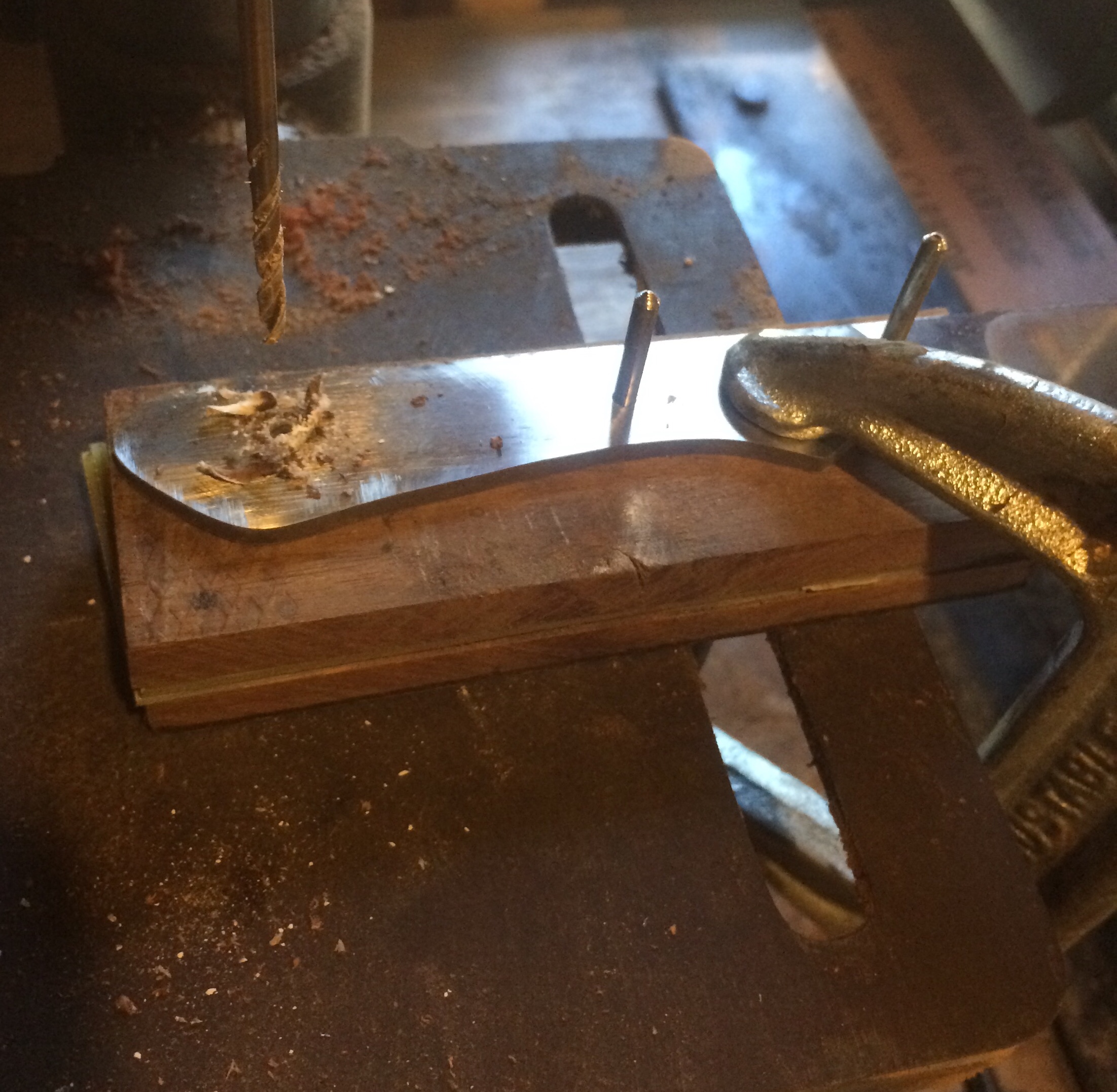
The Cuchilla Pequita:

How we choose to react in our lives affects the impact we can make.  This is the lesson of the Cuchilla Pequita

Here are some sources that were incredibly helpful:

A Short Essay About Gaucho Knives: Facón, Daga, Cuchilla and Puñal

Brittanica Online