Knifemaking: all the little pieces, and the Mood Ring

A few days after Christmas in 2018 I got a call from a buddy of mine. He was a producer for a company that put together wedding bands and he had to get a group together for a New Years Eve party. He really needed a trombone player for the horn section and gave me a call because I am a trombone player and he knew I probably didn’t have a gig. The problem was I had just had a bit of orthopedic surgery and wasn’t sure I was up for it. He then told me what it paid and said all I needed to be able to do was get a horn up to my face. I told him I was down like a clown, Charlie Brown.

Just doing that gig put me on a list of musicians and I started getting calls. Over the years I’ve been up and down the mid-Atlantic playing in horn sections of wedding bands at country clubs, theatres, mansions, and sometimes out in fields. These are good gigs because the job is to help people have a good time on what is probably one of the happiest days of their lives. With open bars, this is usually not hard at all. Sometimes the receptions are super simple. Others are more involved with lots of moving parts, including musical cues, choreography, and spectacle. One couple at a vineyard wedding were huge anime fans and our producer orchestrated an arrangement of the theme from ‘Cowboy Bebop.’ I played at a Persian wedding were the mother of the groom performed something they called ‘The Knife Dance’, which (as one may assume) involves dancing with the knife that cuts the cake, and passing it through all the women in the family while everyone tosses money at them. The knife finally ends up in the hands of the bride, who cuts the cake.

The band is just a small piece of all this but from the stage you can see all the little pieces of things coming together- the cooks working out of sight, the catering people running food, the sound guy handing out microphones, and event people making sure important people are where they’re supposed to be. All this adds up to something that the guests remember for for years. As one of those tiny little pieces, I’ve found some of my happiest professional moments at these jobs.

Sometime in January of this year a gentleman reached out about getting a knife made for his wedding, something special to cut the cake. After a bit of back and forth, he told me his fiancée was making their own wedding dress. I told him if he sent me some of the dress material I could work it into the handle material. This was all familiar territory, bringing a lot of little pieces together to make something special.

I got him some drawings together- The idea was that I would make send them a finished knife unsharpened for the cake, and after the wedding they send it back, I sharpen it, and they can then use it in their kitchen.

I used some contrasting colors to give an idea of what the knife handle COULD look like. I didn’t know what the dress material would look like.
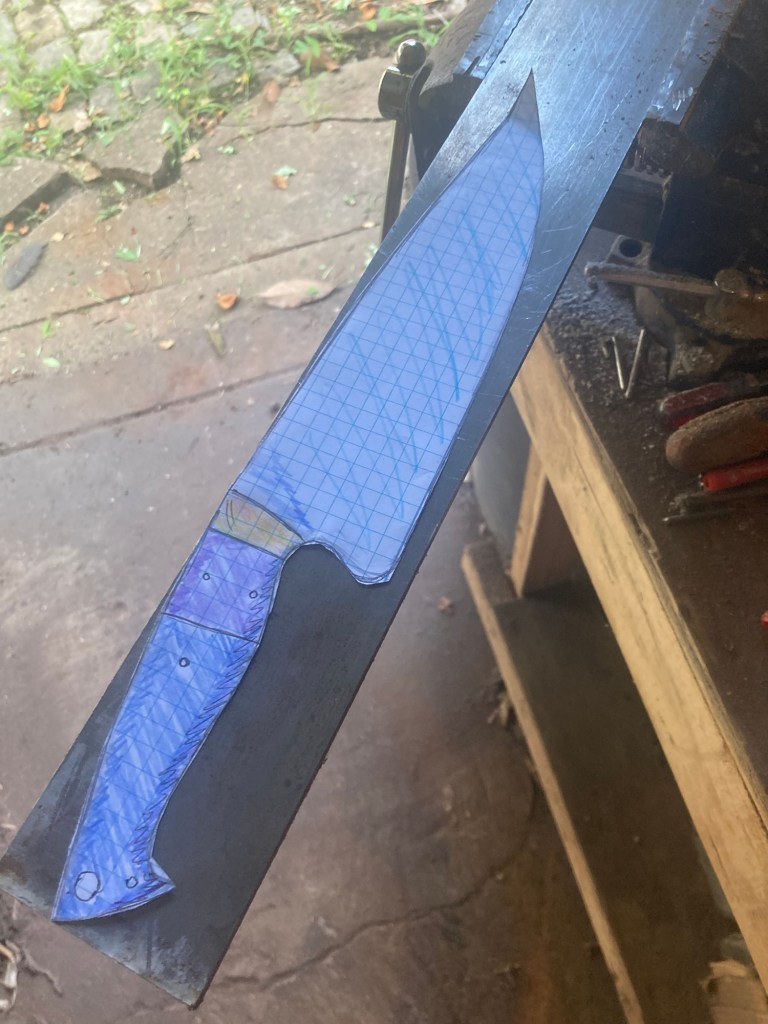
Laying out the template

Copied on to the steel

Profiled

Removing some material before hardening

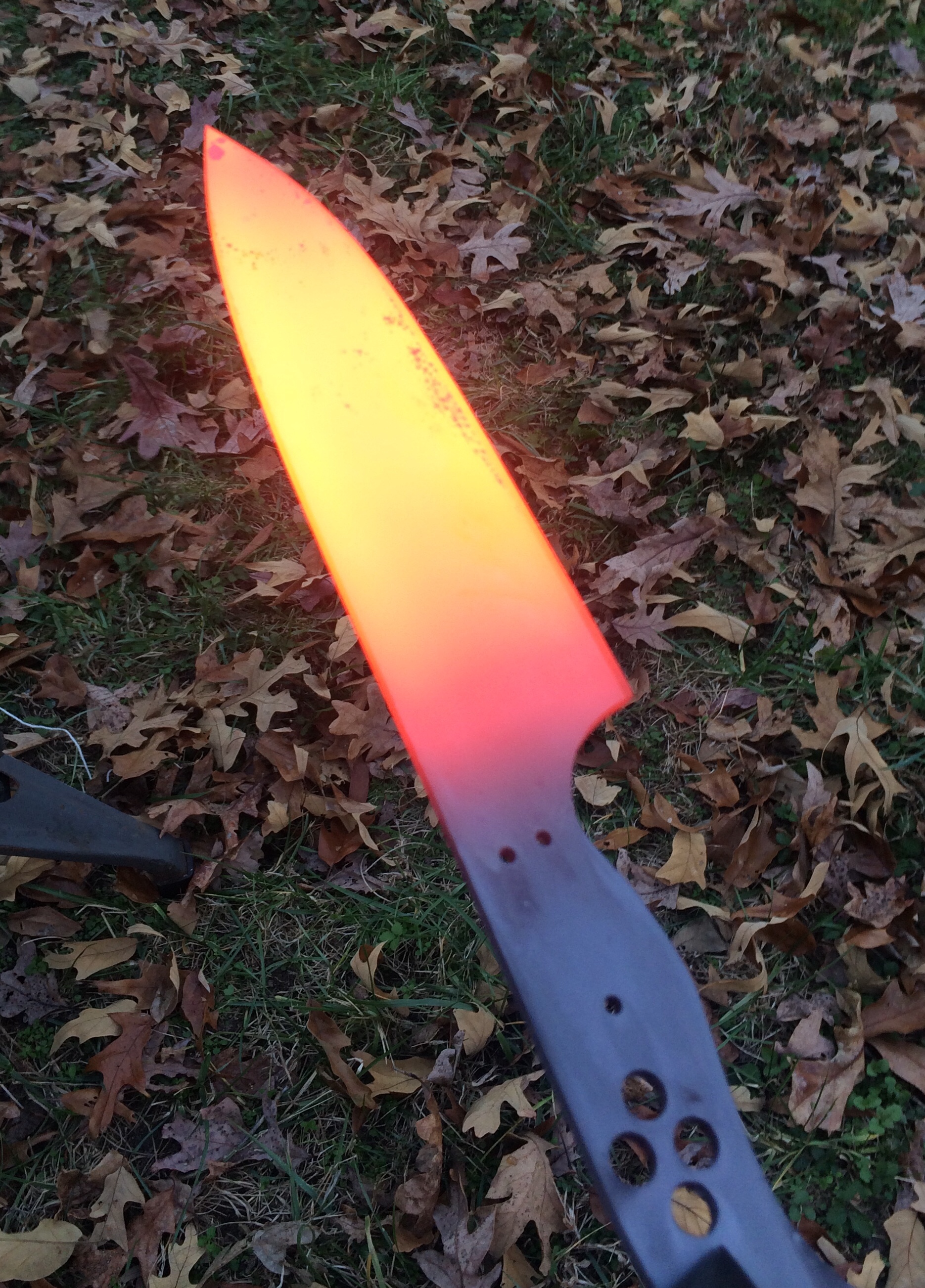
Into the forge
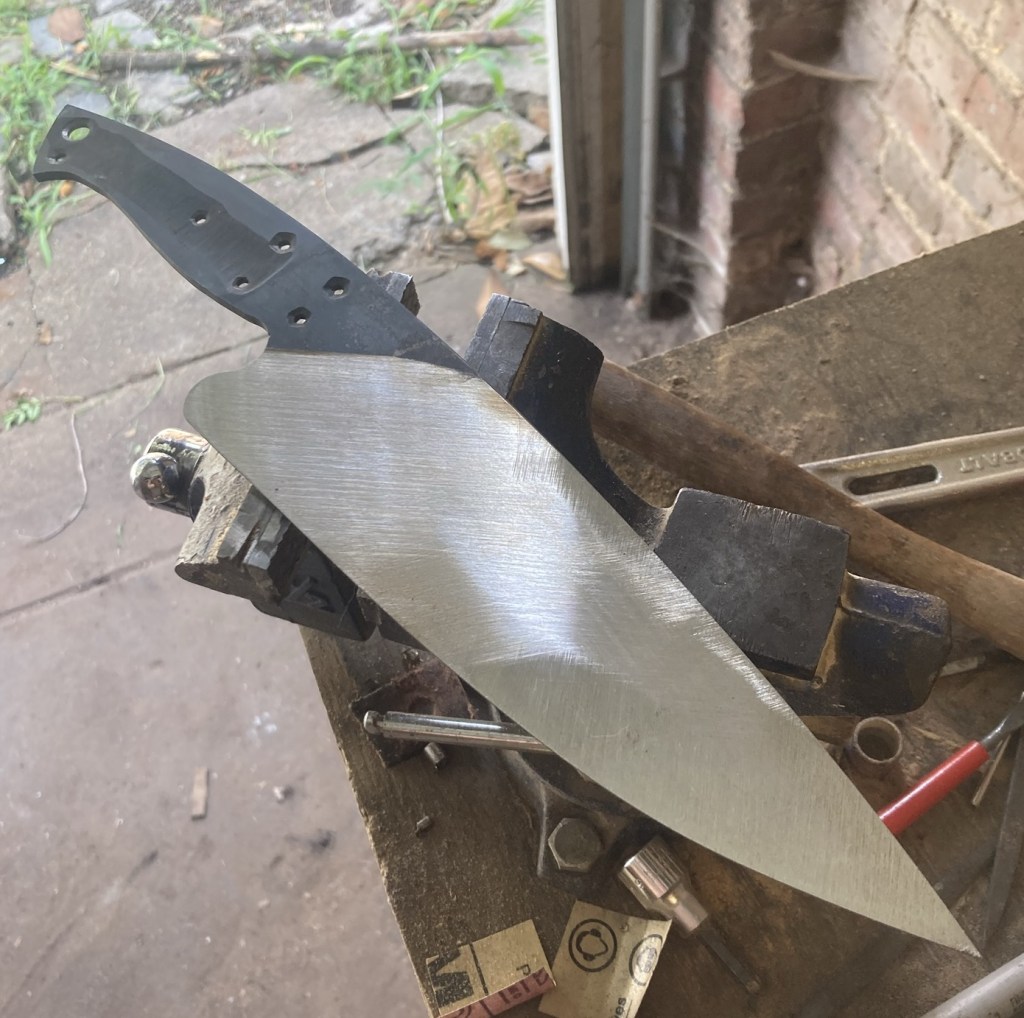
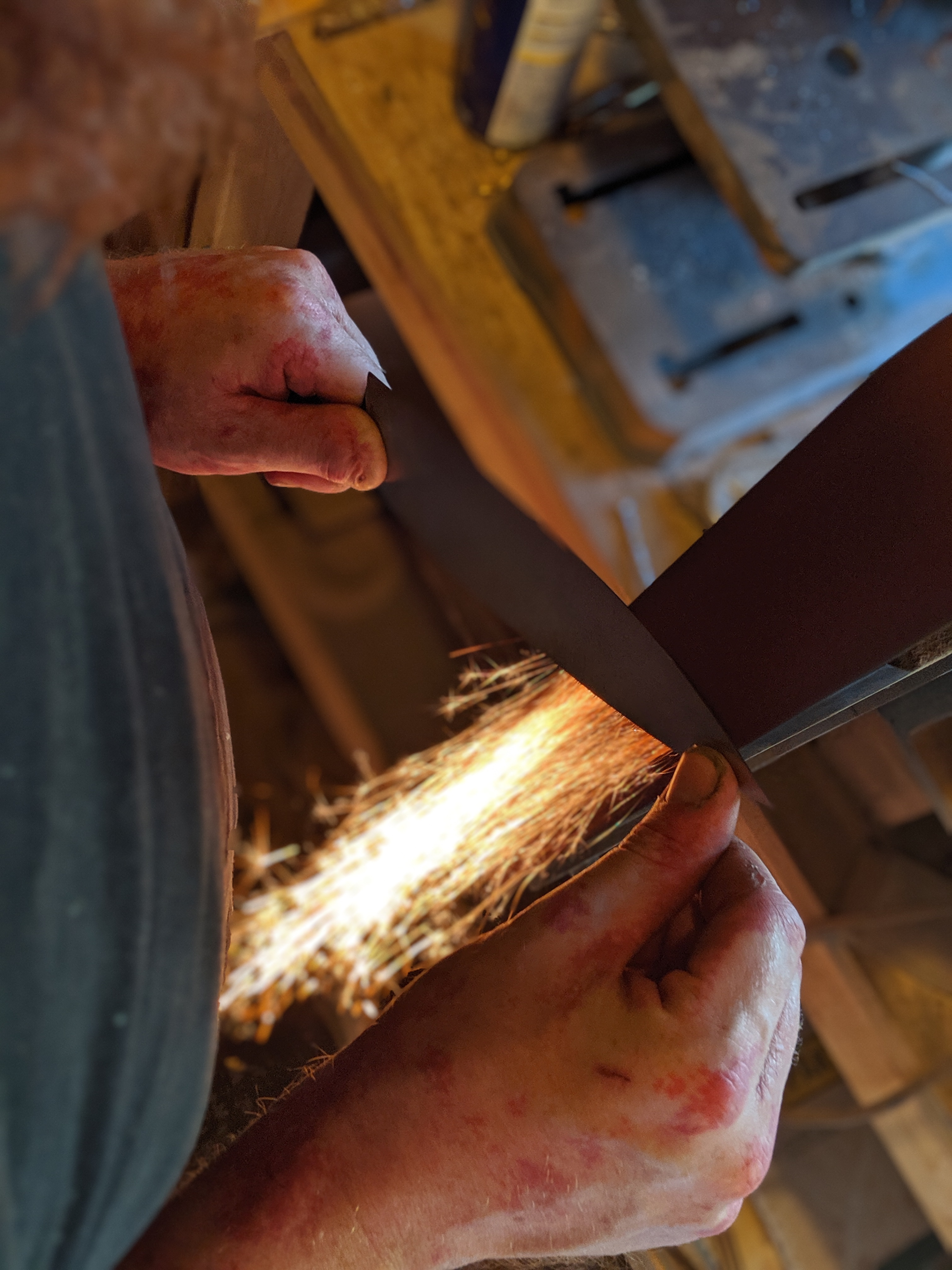
Grind some more
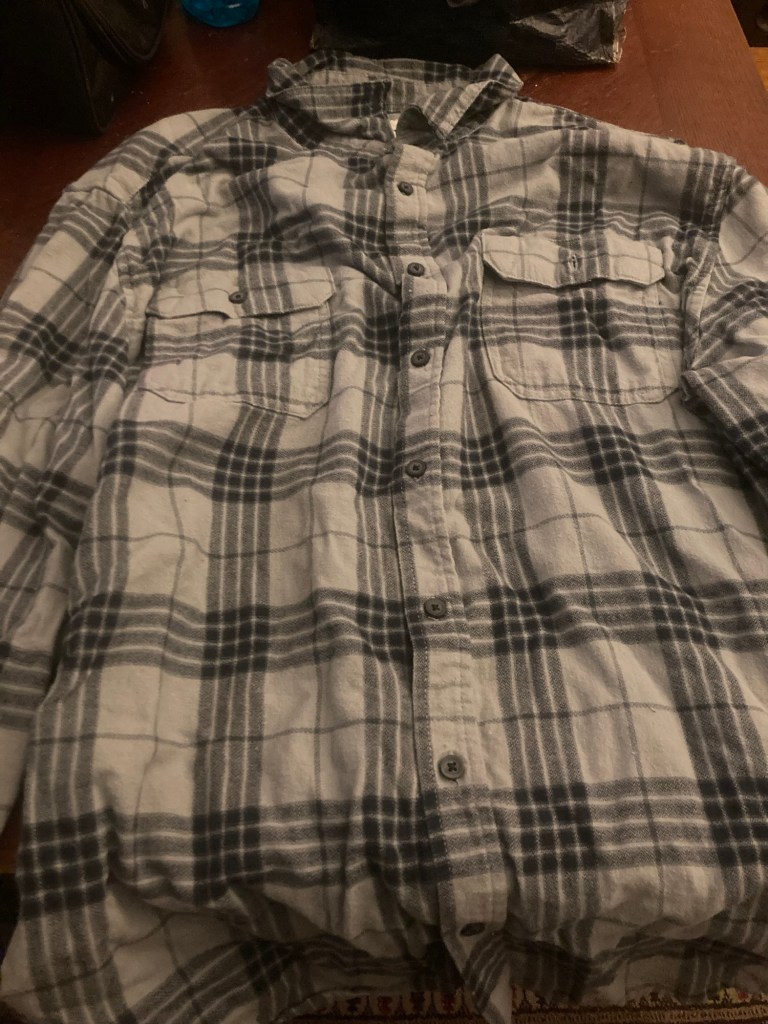
One of the clothing articles they sent me was the shirt the groom proposed in

Some of the dress material, a shimmery chiffon mesh

There was also some black stretchy dress material

Layered together to create a pattern

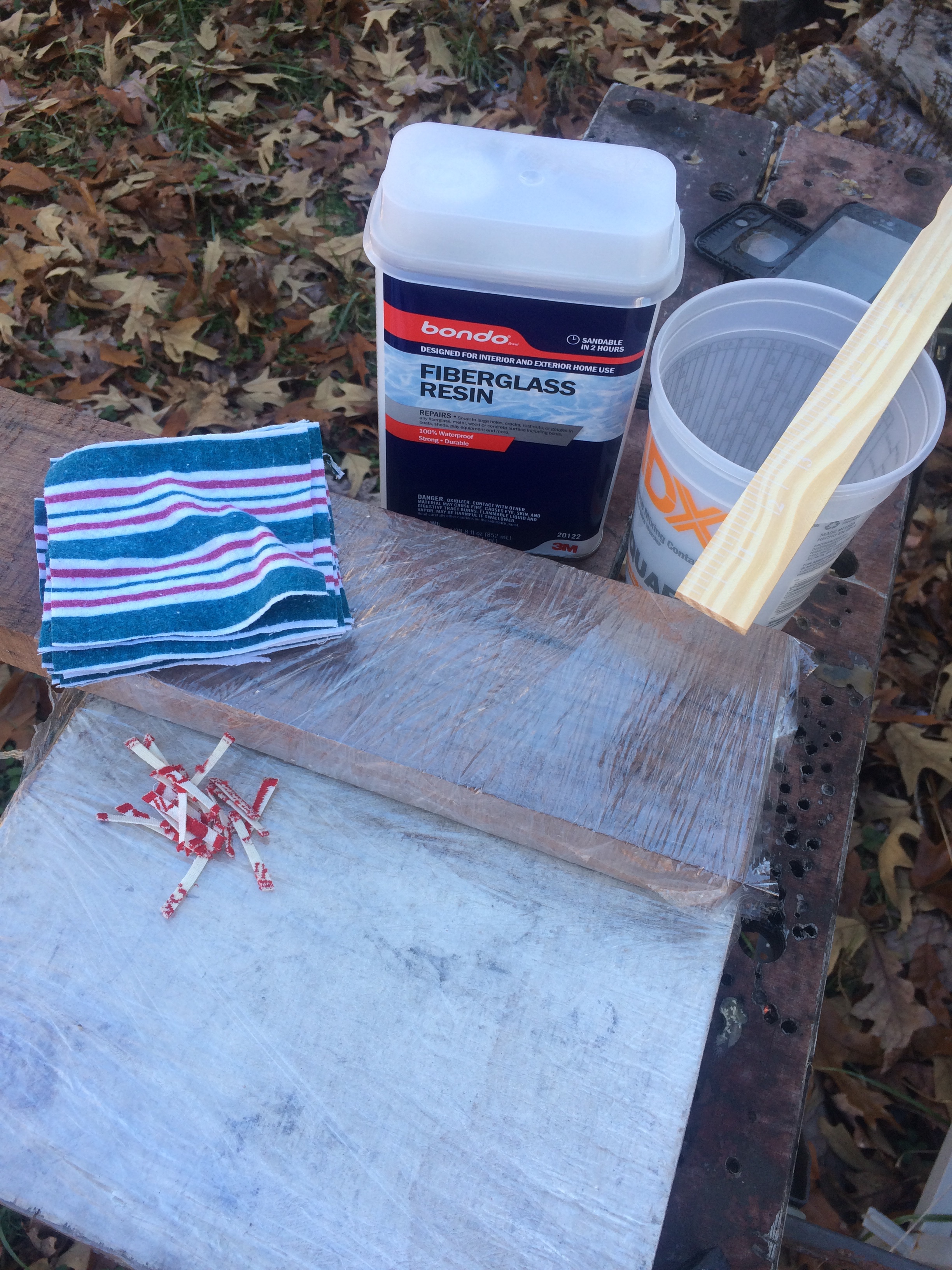
This will all get layered together with fiberglass resin
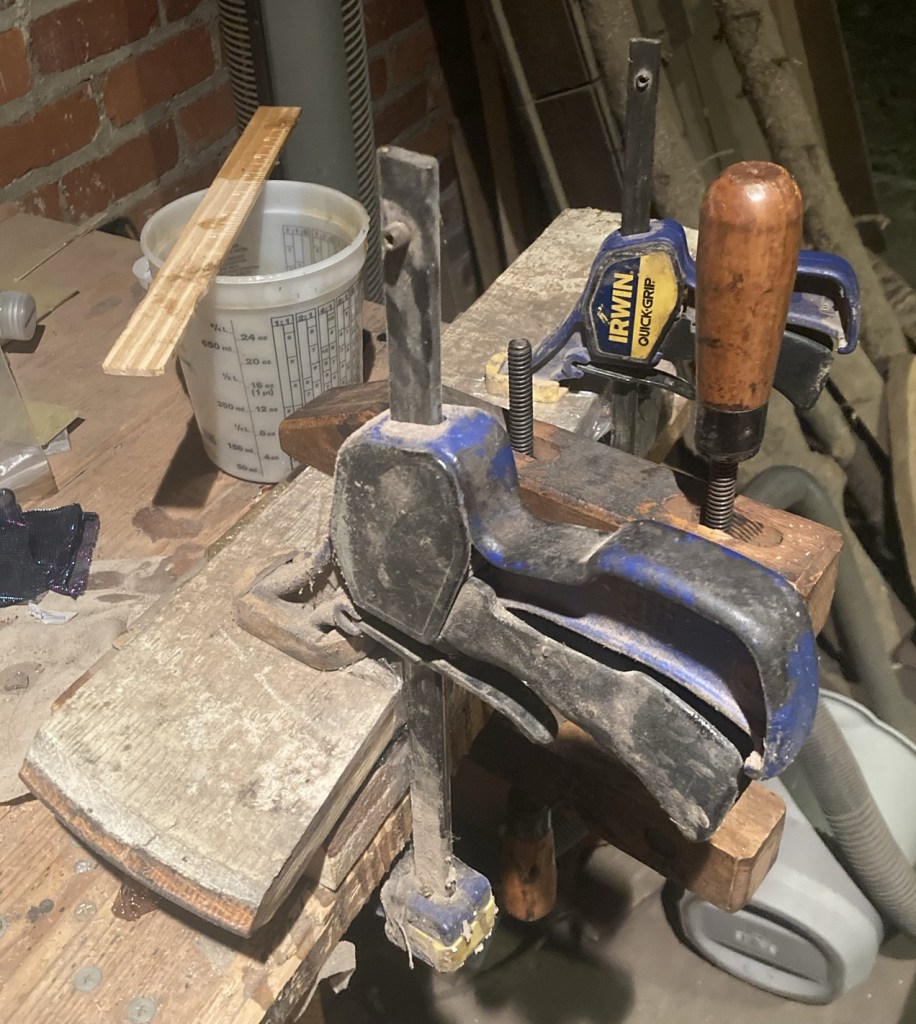
All smashed together
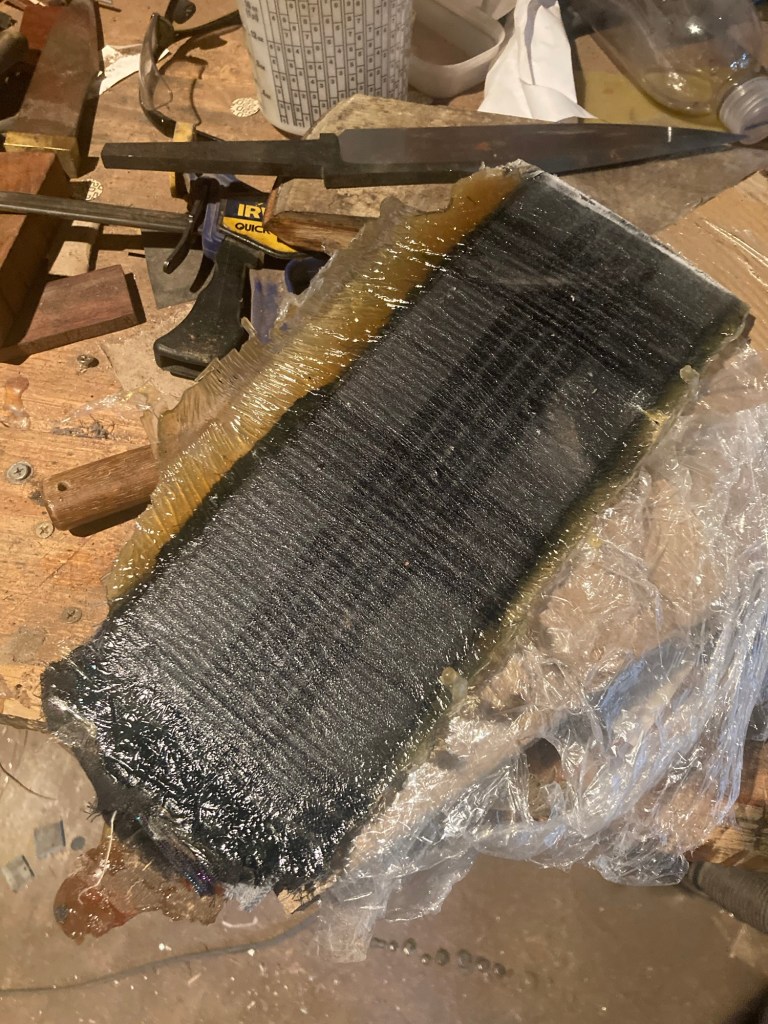
Cured

Everything properly smashed together

Back to the bladework, handsanding
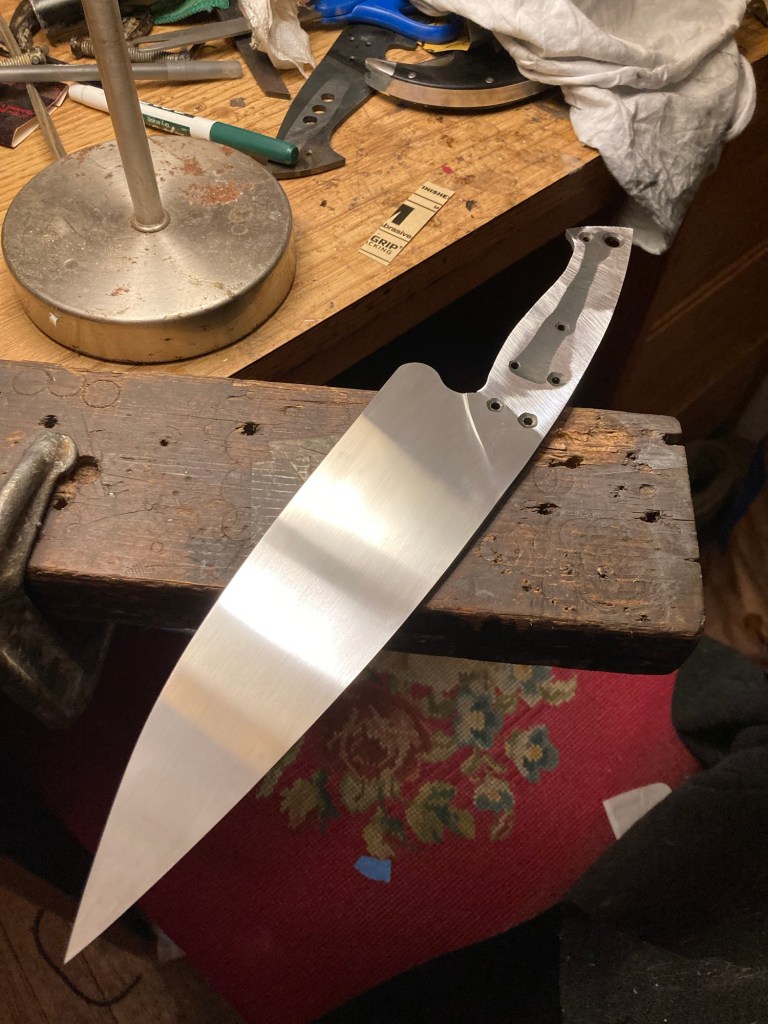
Satin finish
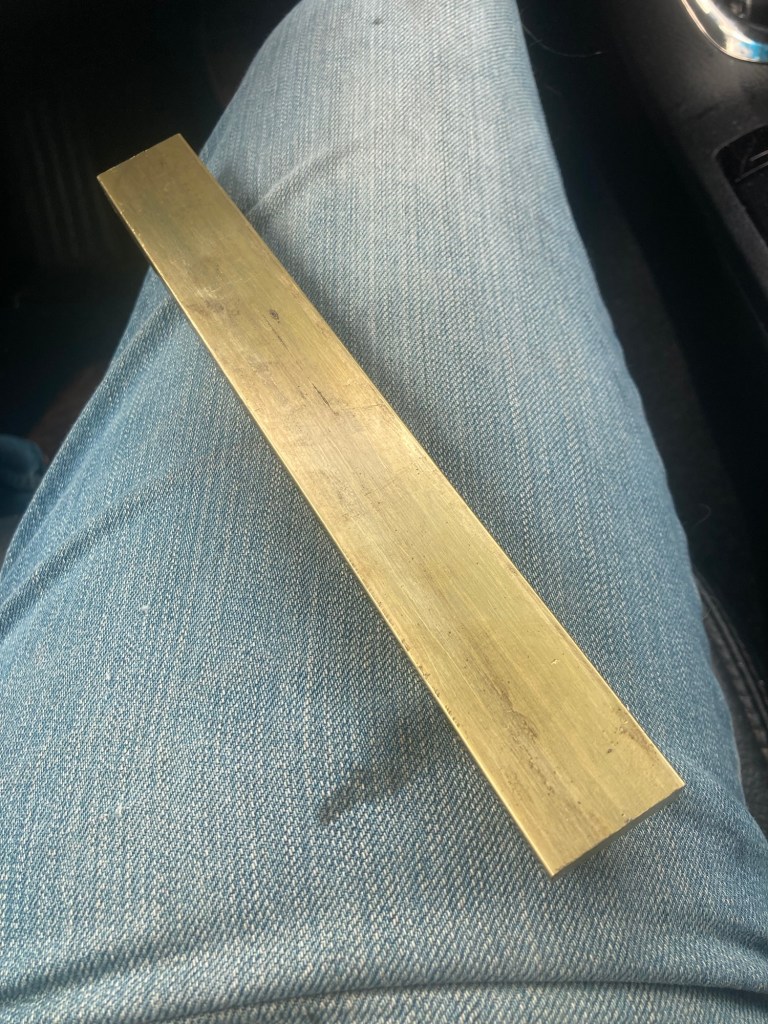
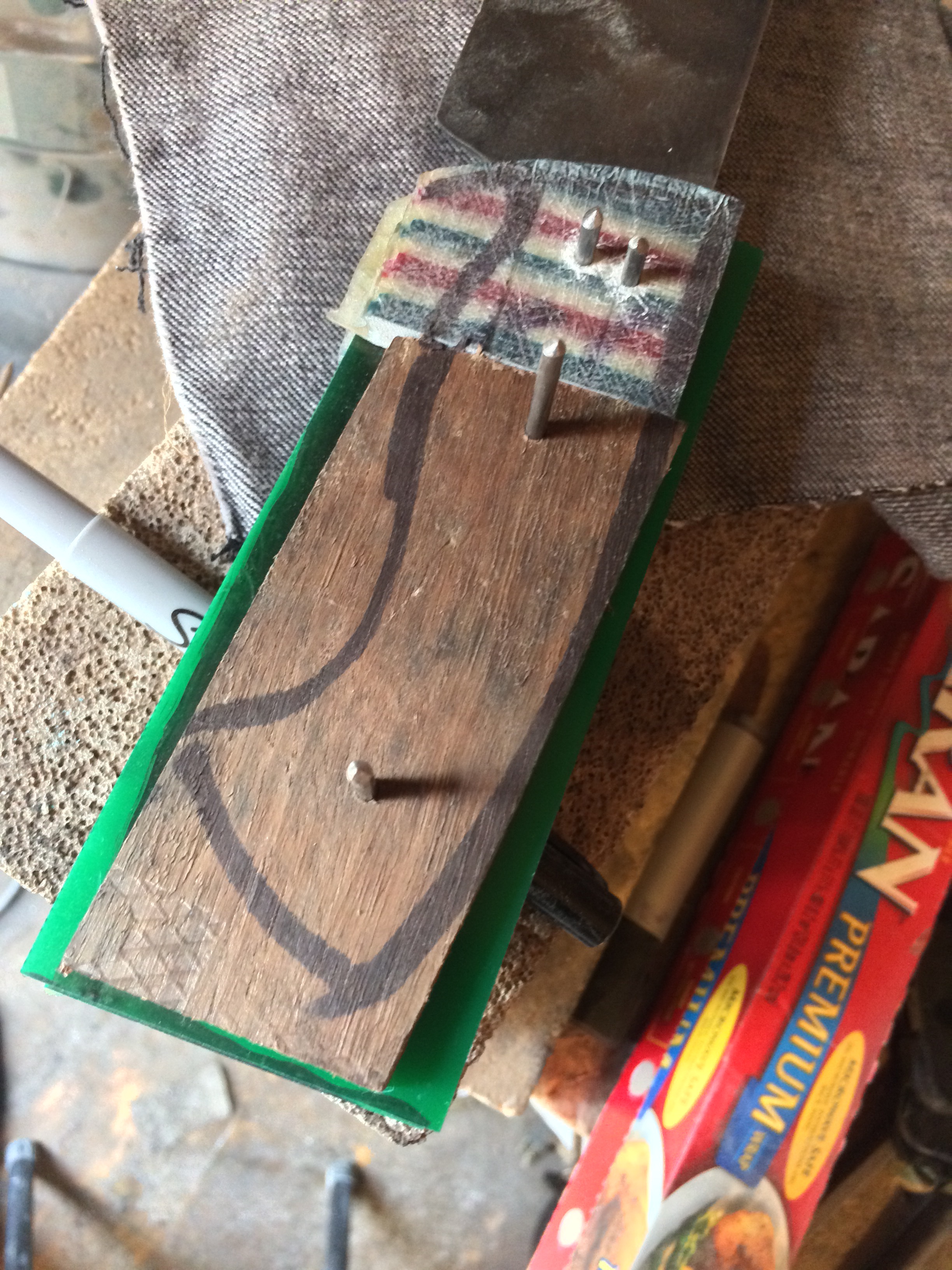
Bit of brass for the bloster

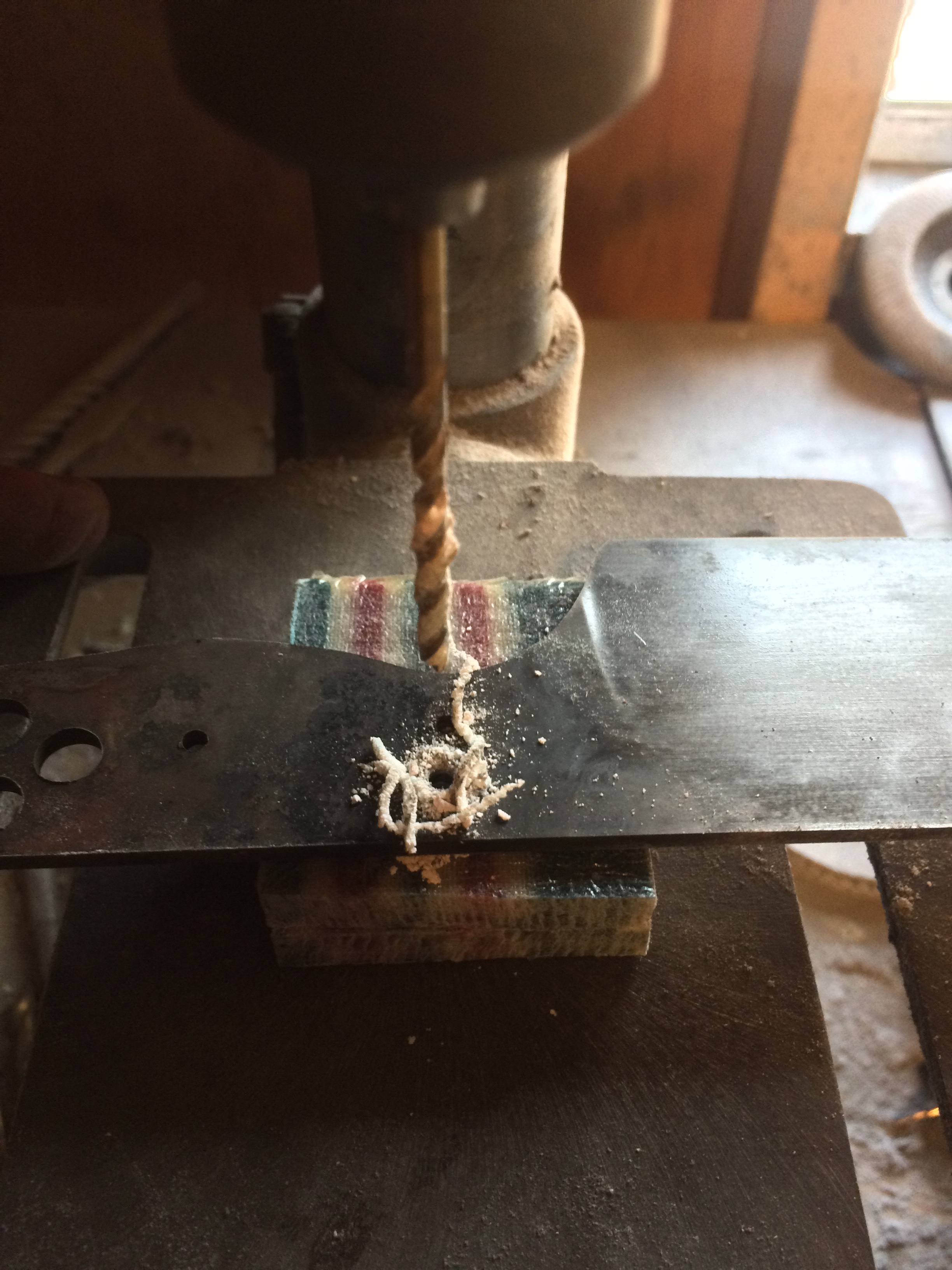
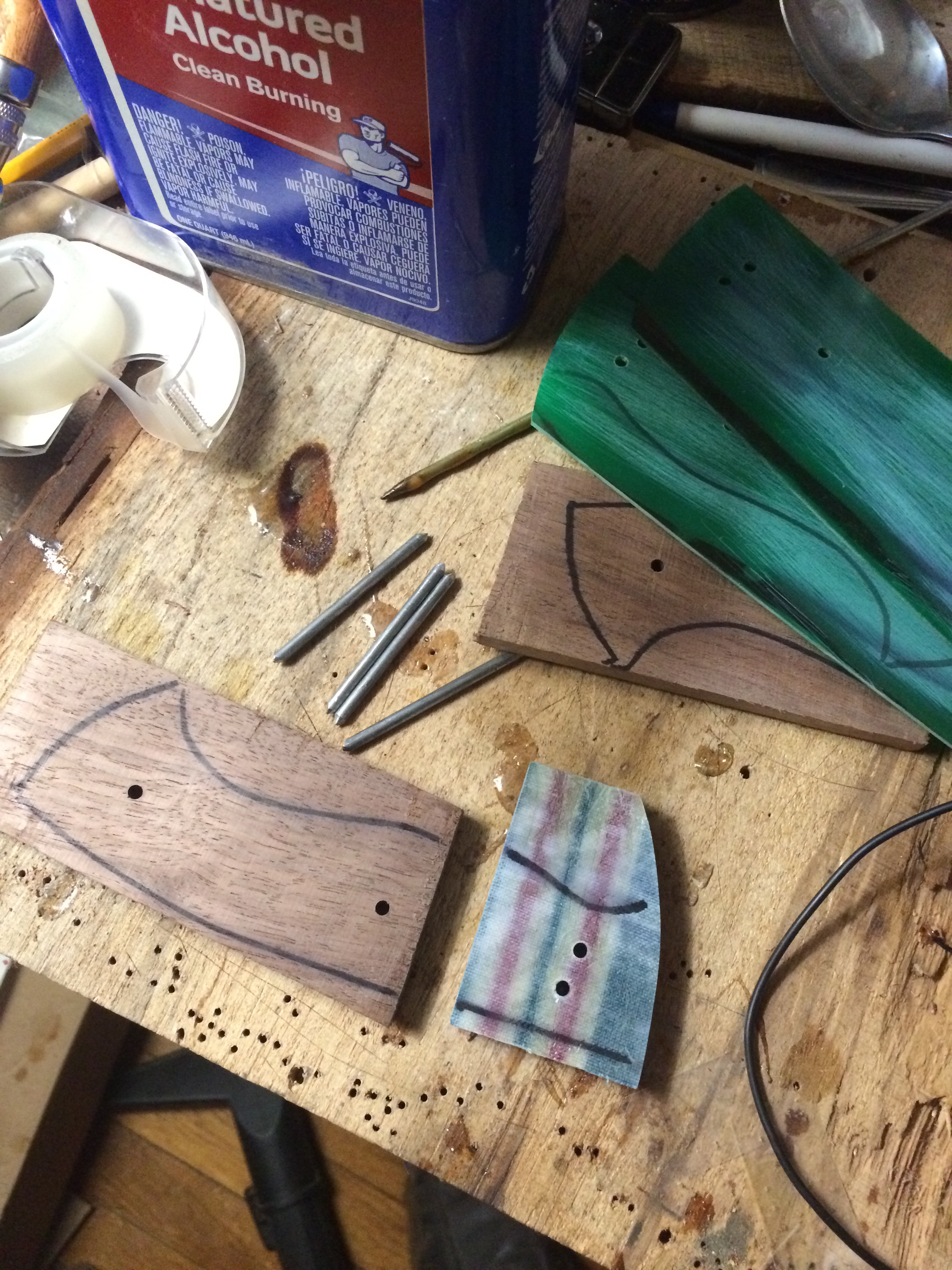
Drilling before shaping

Shaped
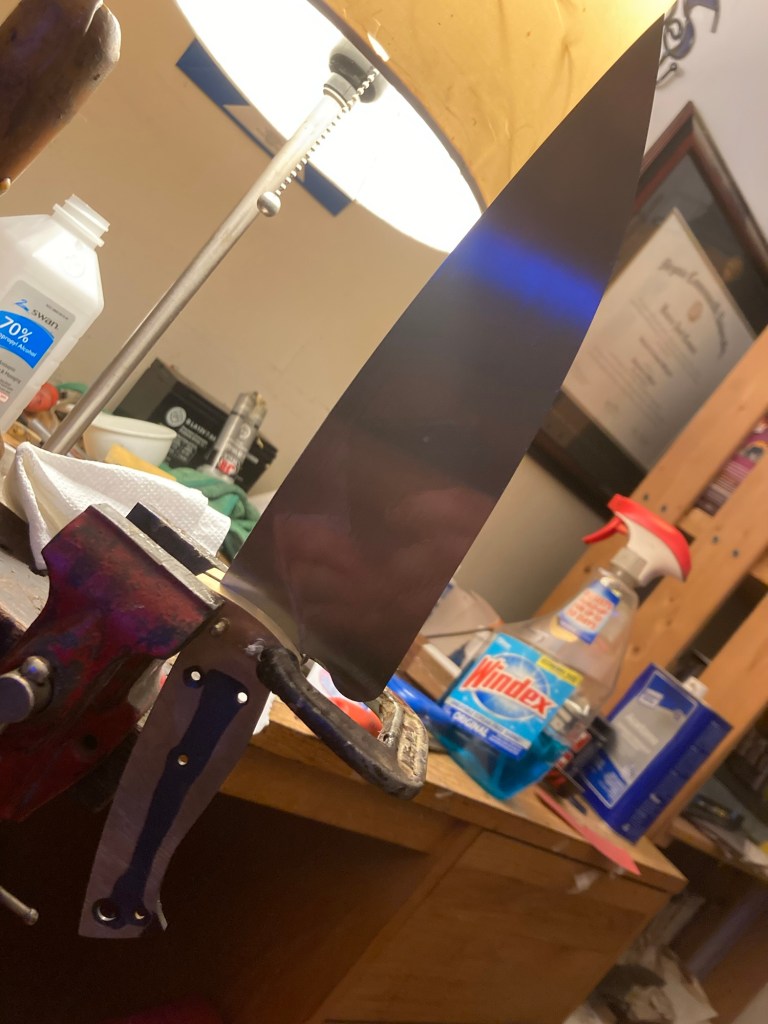
Fitted up and set with steel-reinforced JB Weld

Rivets are peened
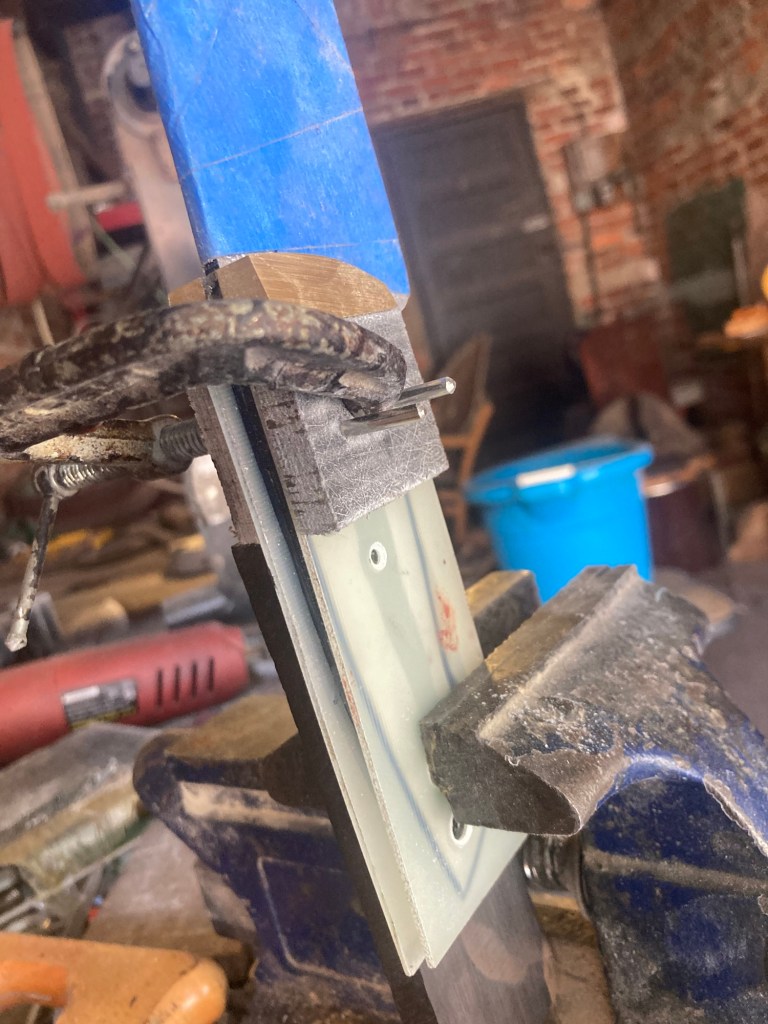
Fitting up the handle material. The wood is Ebony

Ready for glue-up

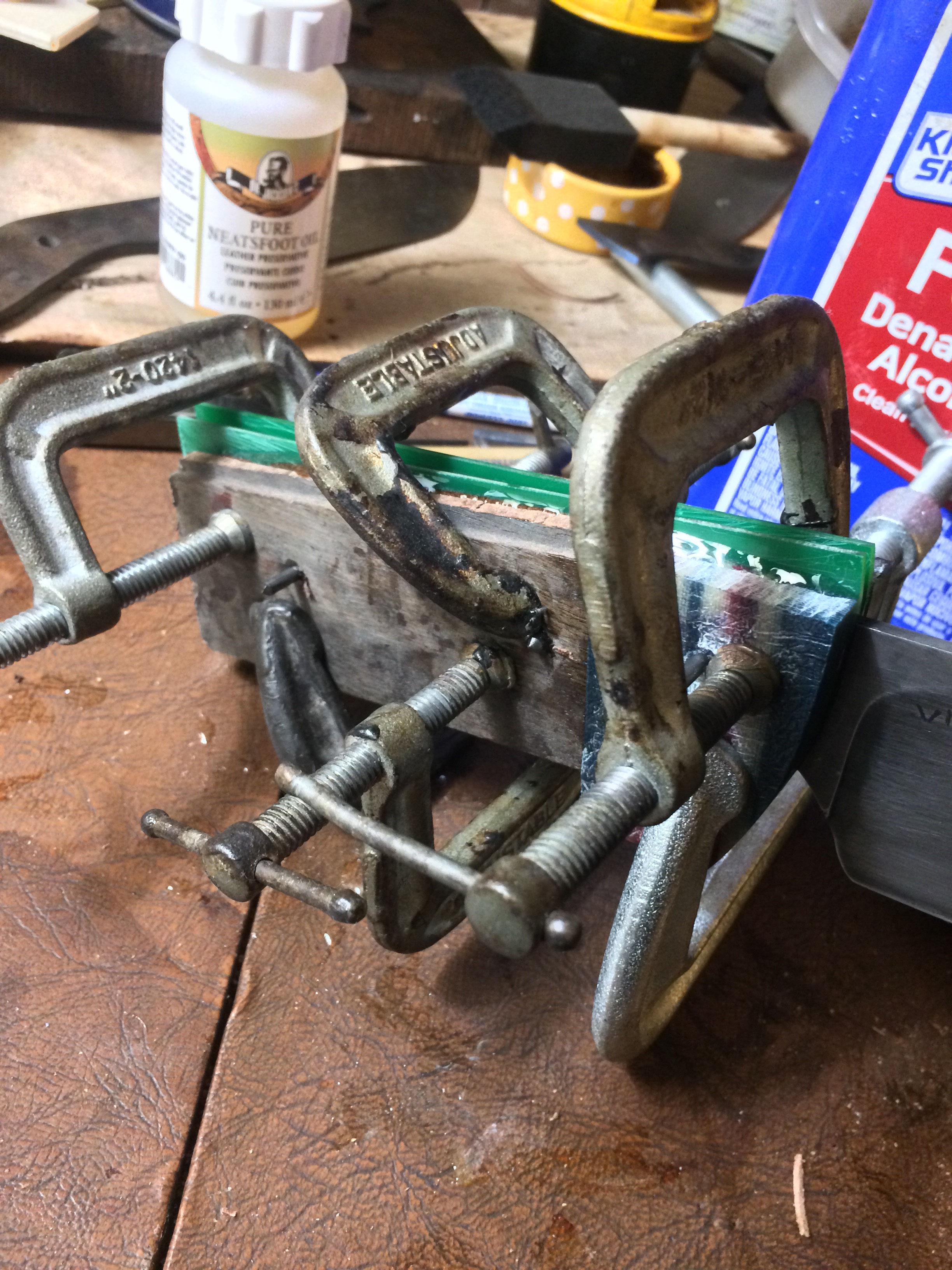
All glued up and clamped
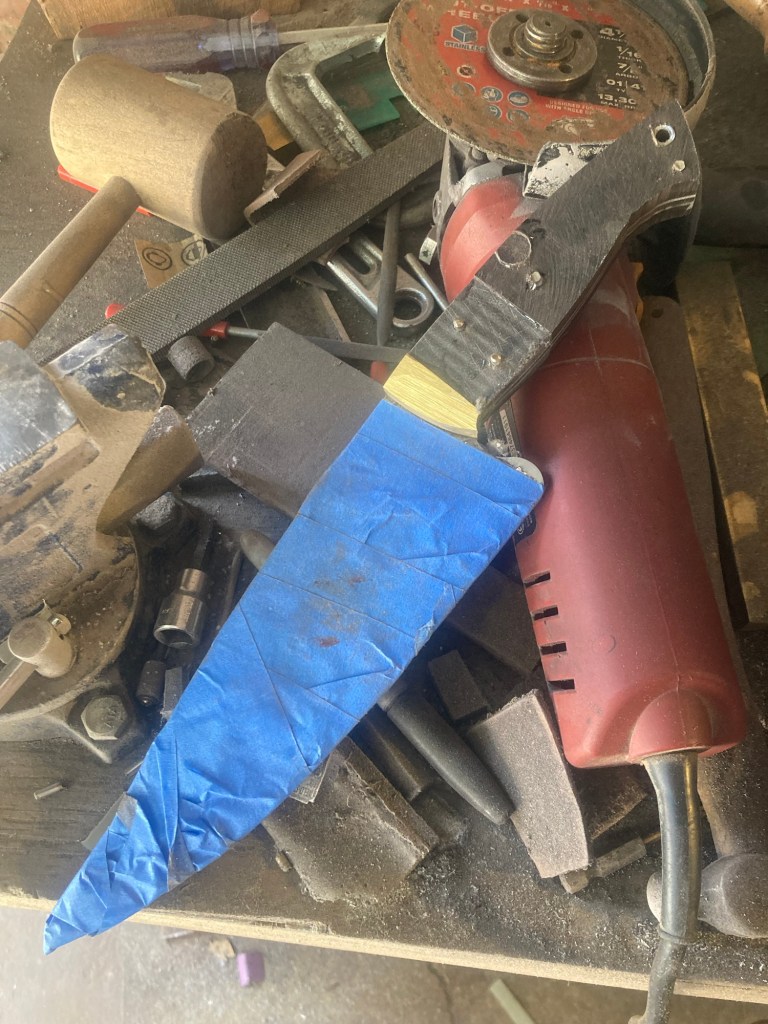
Profiled

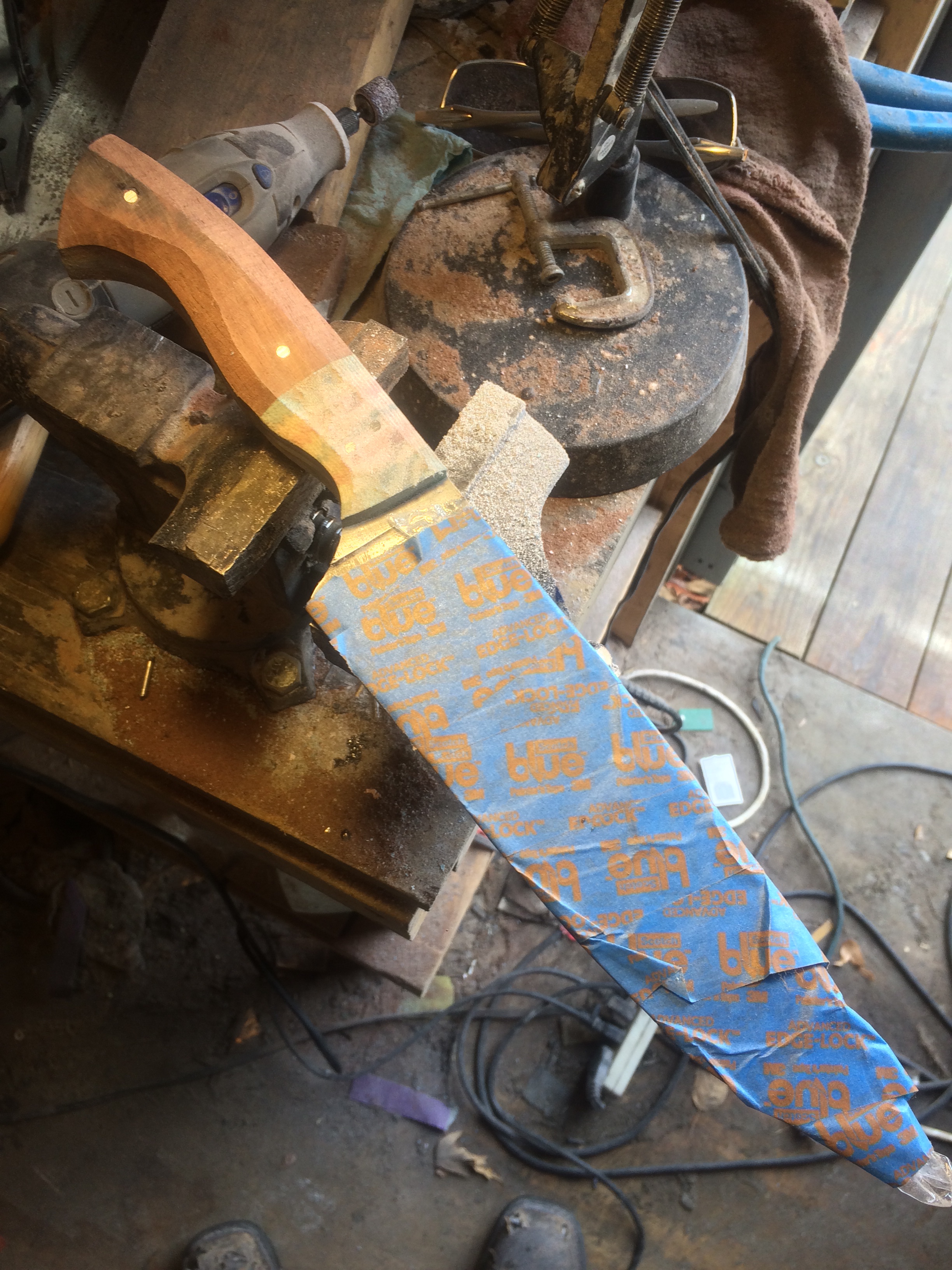
Shaped

Finally started to see what this guy looks like

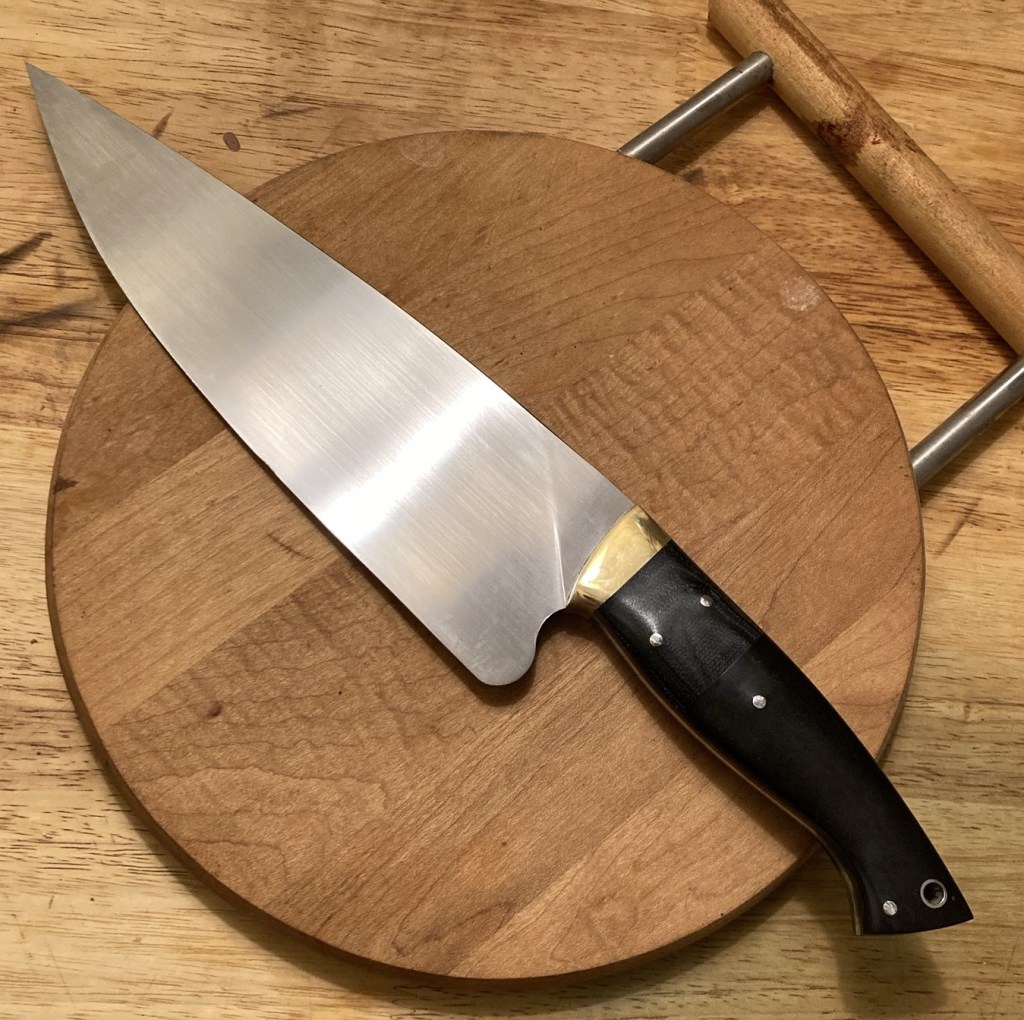
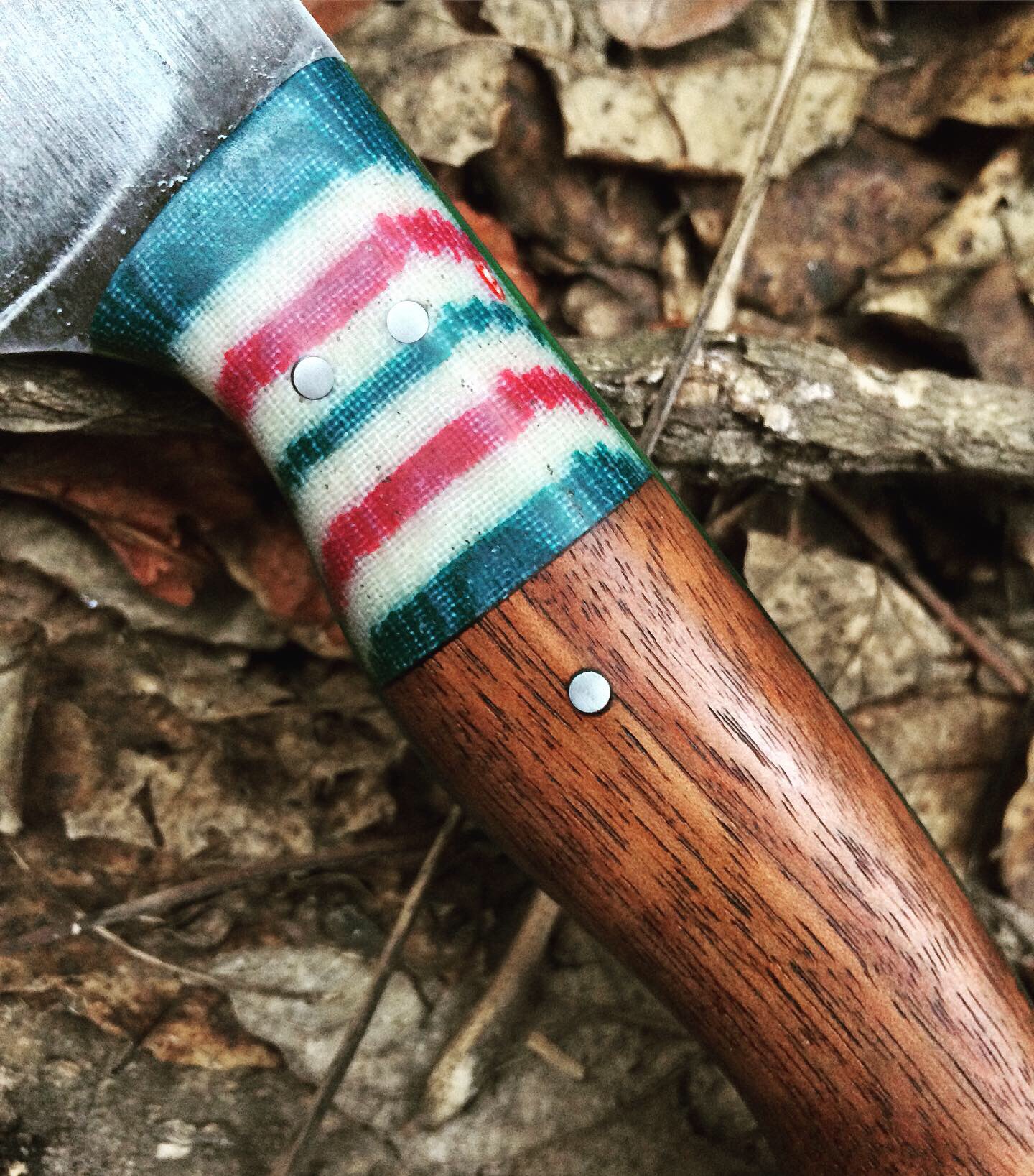
Depending on the light you can catch glittery bits of the chiffon

Knifemaking: on doing a good job, and the Scout

“What is success?” poses the Copt. “It is being able to go to bed each night with your soul at peace.”
Paulo Coelho, Manuscript Found in Accra


As a grown person, you are rarely ever told that you’re doing a good job.  Many times we don’t have a frame of reference for how we’re doing until we’ve screwed something up and gotten yelled at…or fired.  Or dumped.  Or sued.  Or arrested.

As a result, most of us move through life feeling like we might not be doing such a great job.  While uncomfortable, this is not entirely unhealthy because it helps to cultivate a growth mindset.  If you are cognizant enough to know that you might not be doing so well at whatever it is you are doing, then you are probably aware that this means there is room to grow and get better.

Ironically, the people thinking this way are probably doing just fine.  Self-doubt in large quantities can be debilitating, but small doses can be a great tool.  In questioning what we are doing, we have a chance to grow.

After I got out of music school, I did my best to make a living as a musician.  That lingering bit of self-doubt was fuel that helped keep me sharp and at my best.  I wrote music for tiny indie films, did instrumental arrangements for church Christmas programs, played on recording sessions, and took any gig I could get.  Many of the best paying jobs were church gigs, especially around Christmas and Easter.  I am not religious, and probably an excellent candidate for bursting into flames upon crossing the threshold of any religious building. That being said, the people are always kind, the checks always clear, and there is about a thousand years of badass sacred music written by the rockstars of the classical music world.  This is partly why big churches typically end up with killer instrumental and choir directors.  They are usually competitive jobs.

One Easter I got a call for a job at a massive Baptist church about 20 miles outside of the city.  On Easter Sunday I showed up for a small rehearsal before playing two services.  I was the only hired musician- everyone else was from the congregation or community.  Immediately it was not good.  The instrument parts were in different keys and the director didn’t know the cues for the giant video projector and how our music was supposed to line up.  Easter is the Woodstock of church music and this was a mish-mash of cacophony.  As a professional, this situation feels like being on a burning ship with no way off.  Two services and four hours of this for a congregation of a thousand and no way to fix it made me want to rip my hair out.

Nobody else seemed to notice or care- and ultimately that was ok.  Because in the end, voices were raised, offerings were offered, tithes were tithed, and the faithful answered the call.  I got paid and went home.  The takeaway, besides being able to pay my health insurance, was that, while it’s important to do the best you can, sometimes the best thing you can do is let things be what they are and sleep well at night.

This knife was commissioned by a lady I went to college with for her husband, a former Cavalier Scout in the Army and a new father.   I don’t have children but I imagine being a new father, where there are so many things out of your control, can be at odds with the capable nature of a military mindset.  The intent of this knife, the Scout, is to put some of that at ease.  I tried to capture that duality by marrying those two parts together.  The handle was made from an old piece of Black Walnut trim molding- solid, seasoned, and strong.  The bolster was made from their child’s blanket, which required a lot more care and work.  The blanket contained a bit more uncertainty because I didn’t know how it would turn out till it was finished.  Peppered in the blanket was one of the gentleman’s old Boy Scout badges to act as a guardian to that uncertainty.


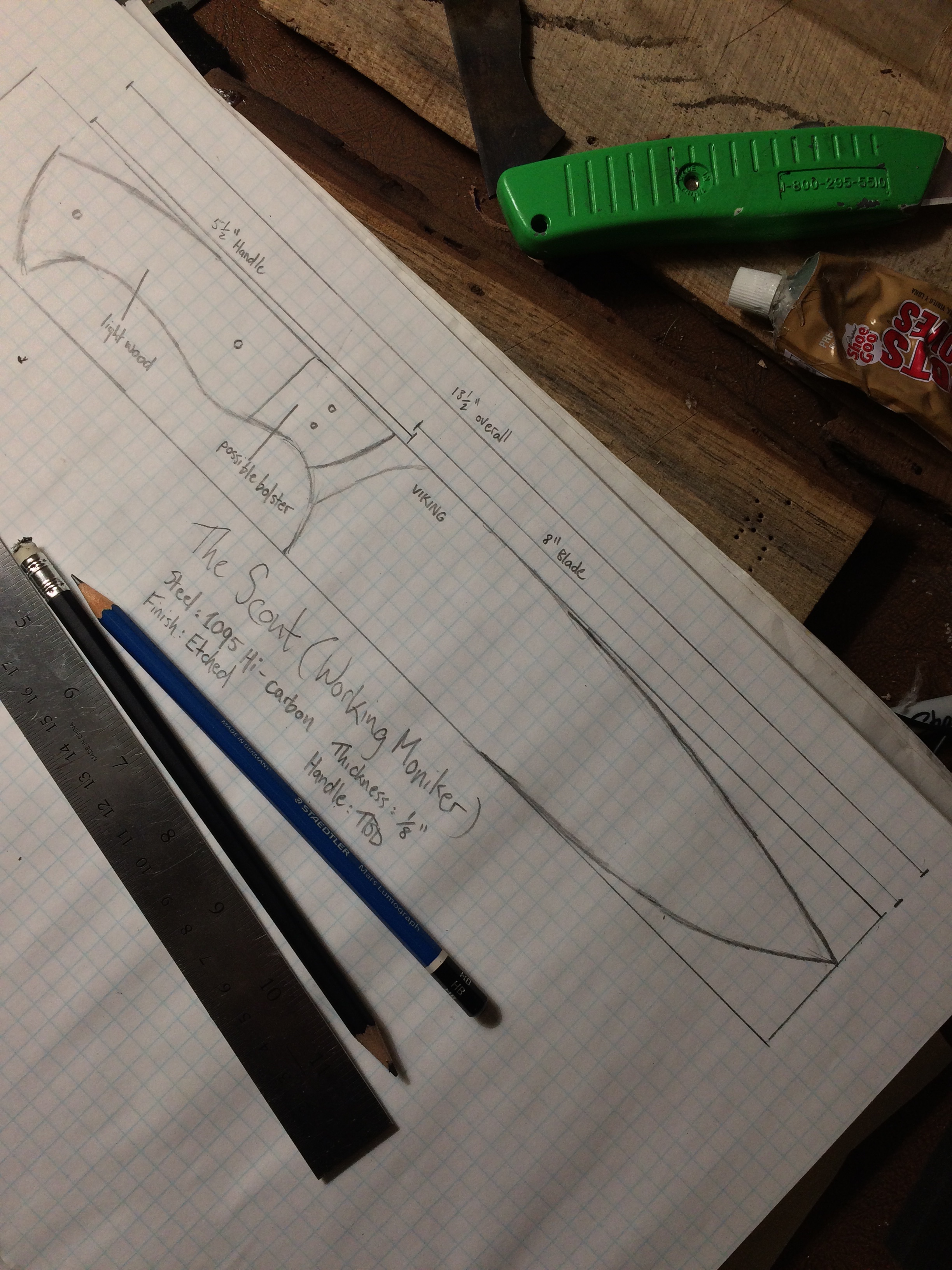
The Scout starts with a drawing:

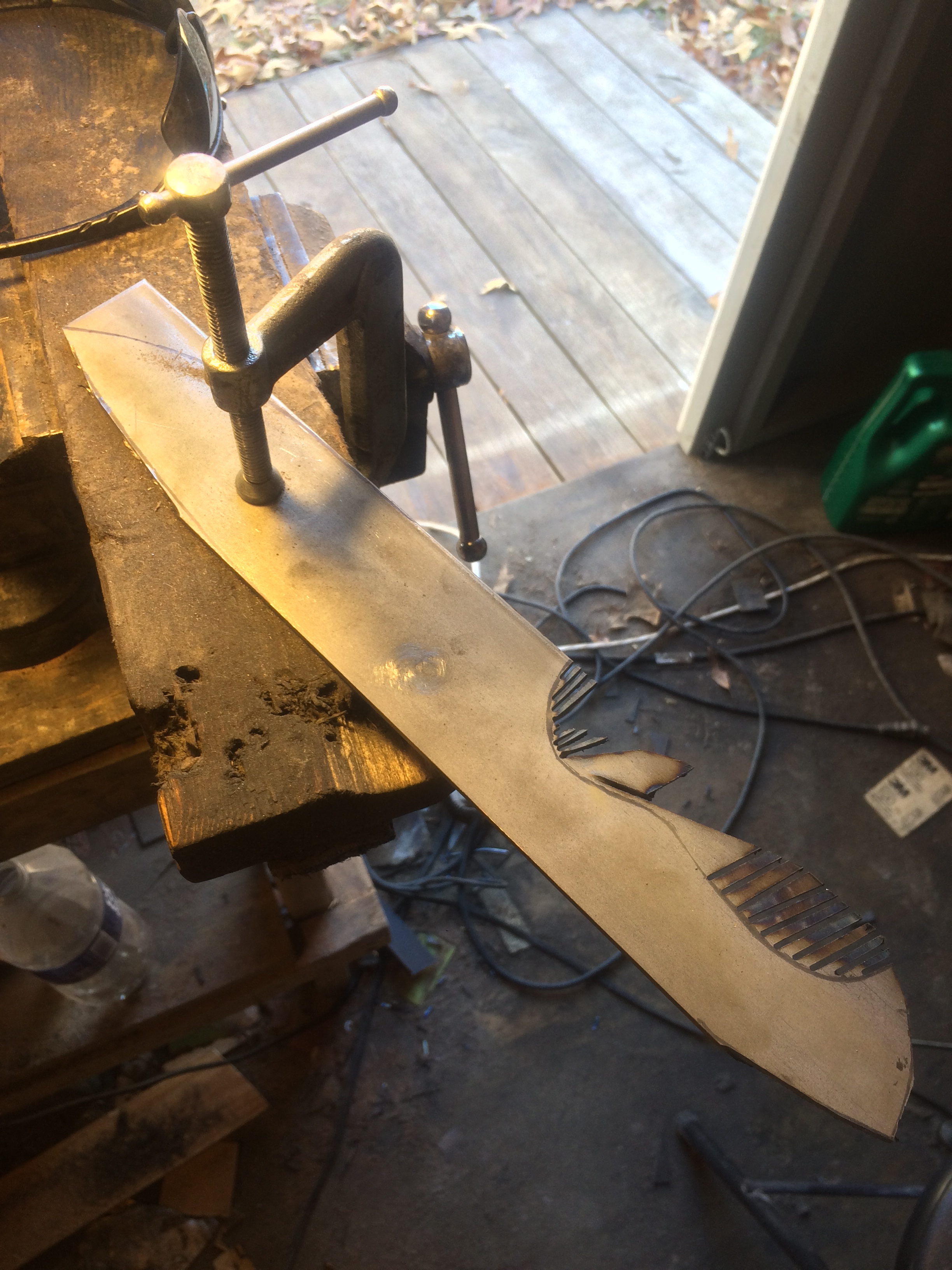
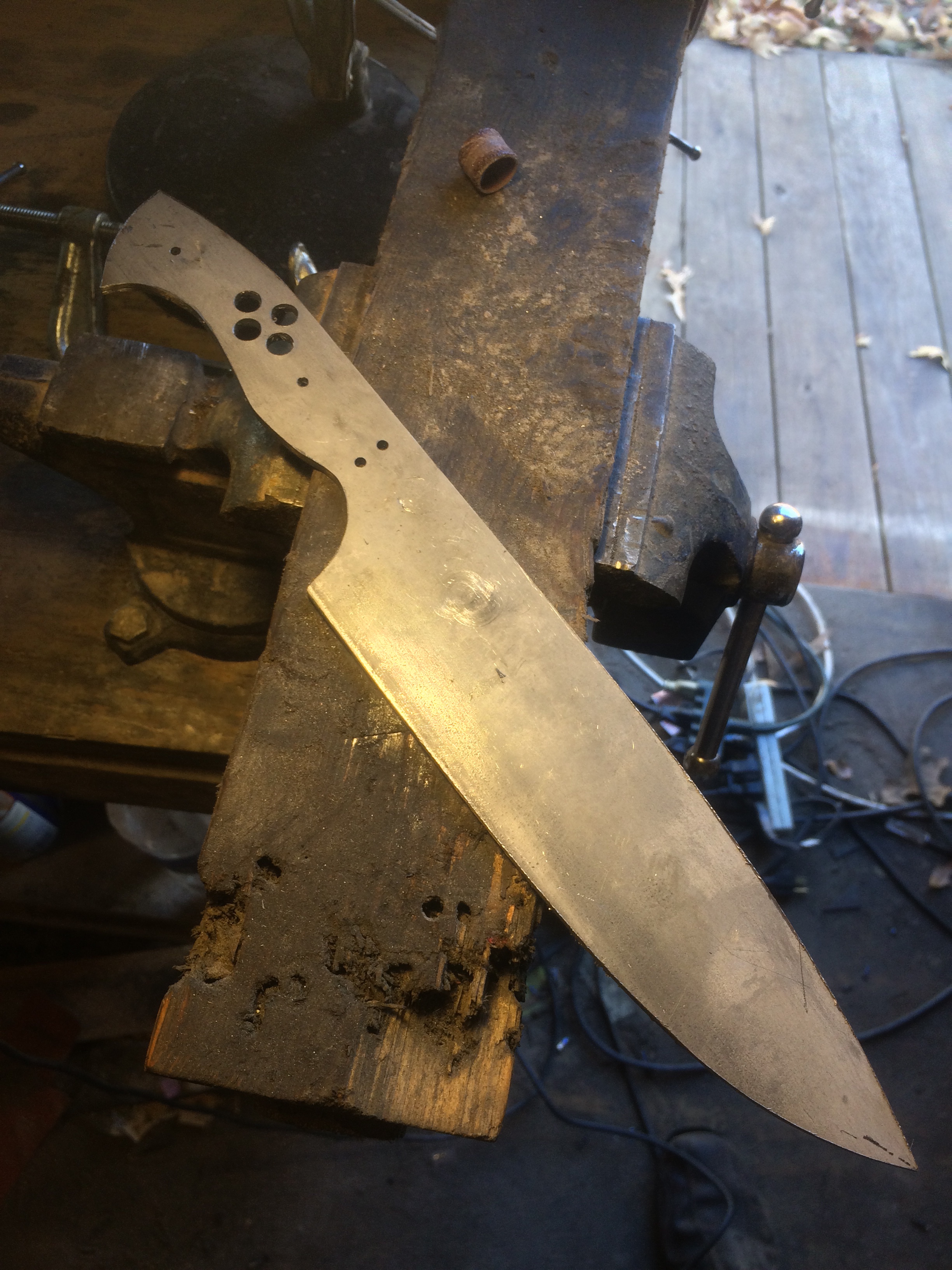
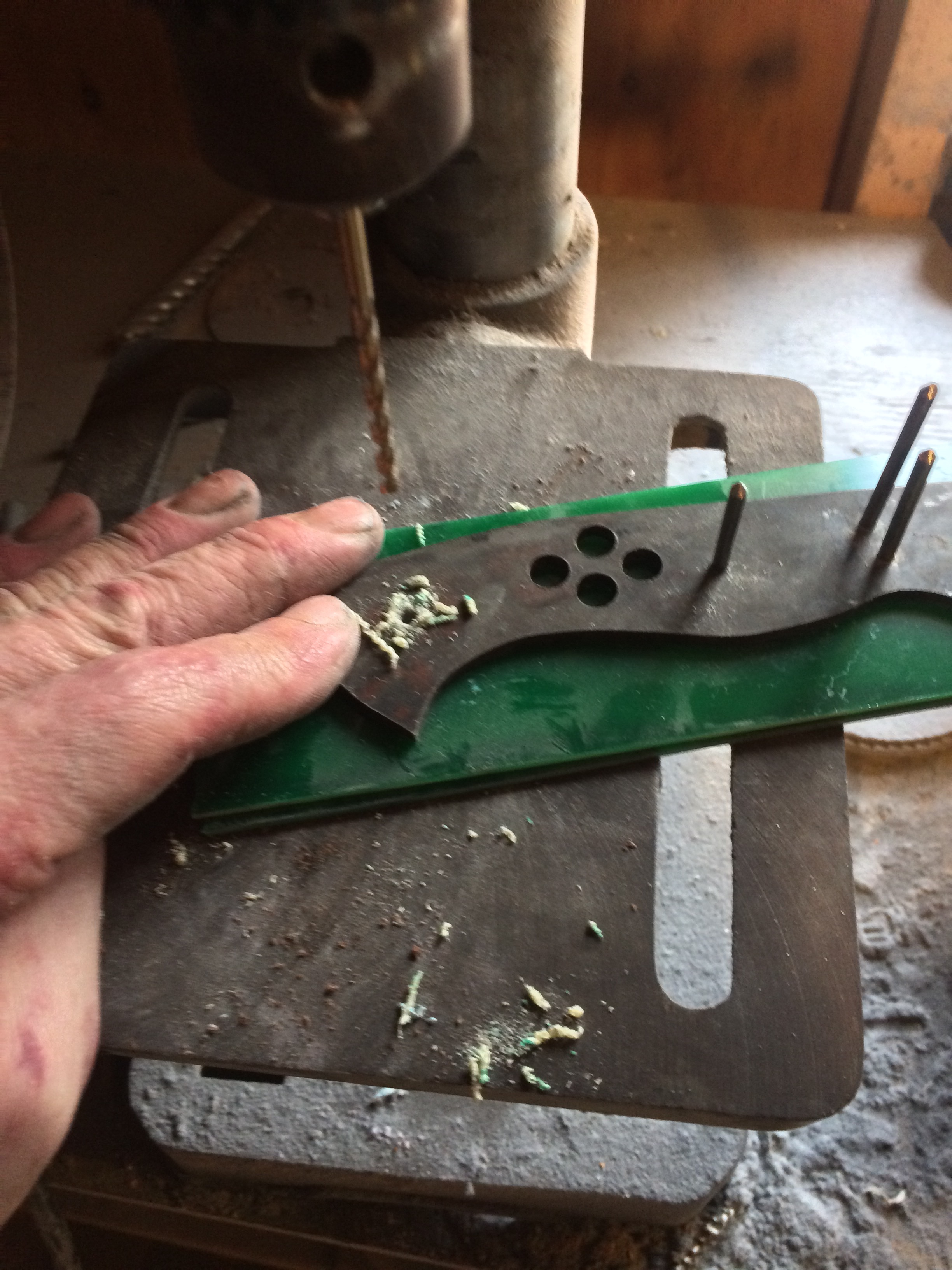
Profiled and drilled.  The four larger holes reduce weight to improve balance:

Centerline scribed on the blade.  This is where the cutting edge will be:

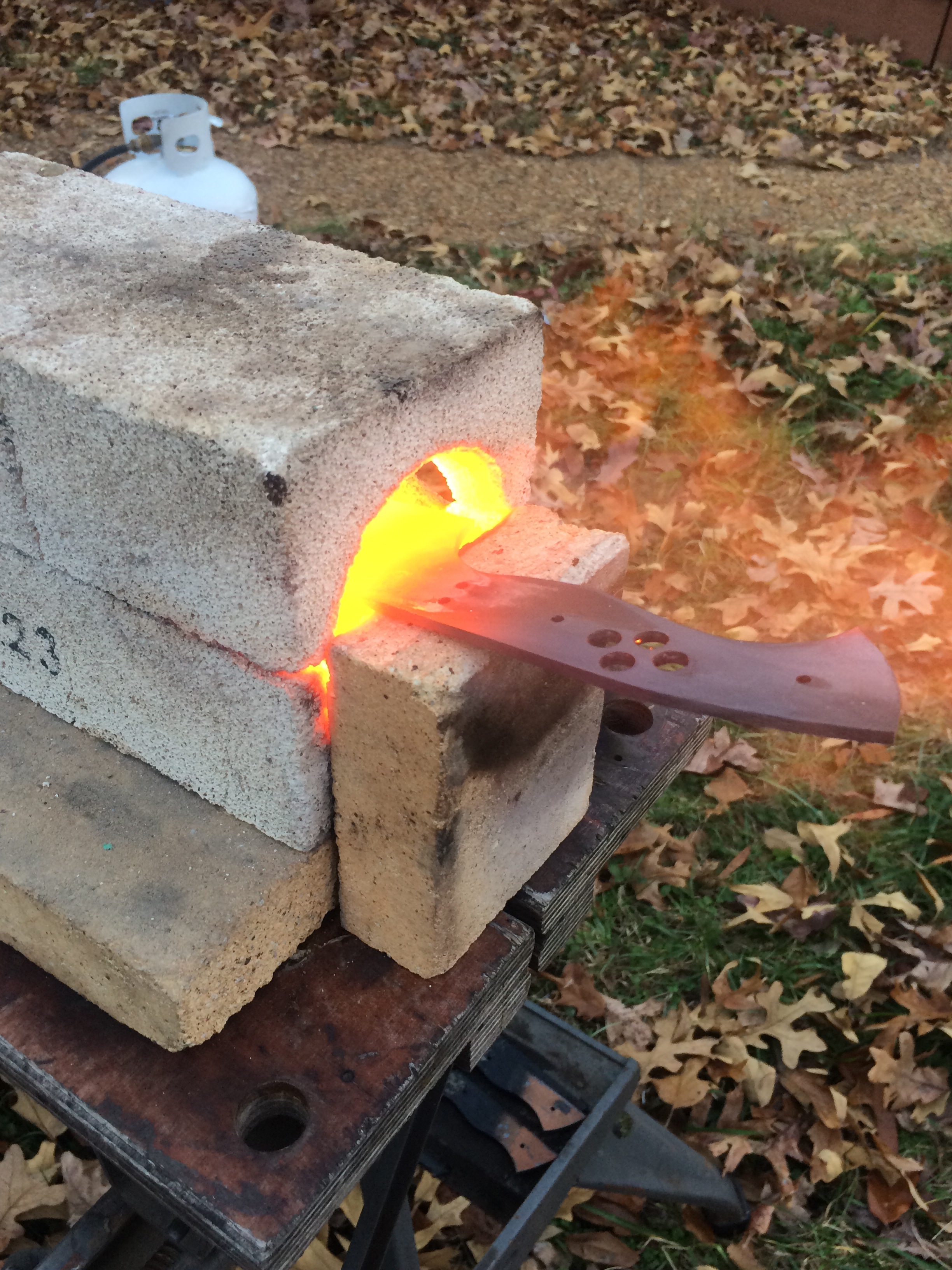
The whole thing gets hardened before grinding.  This helps prevent warping:

….and despite our best efforts, warping does occur.  Since the blade is still hot from the oil quench we have some time to correct it:

Tempering- this gives the blade flex and bend, while also relieving stress incurred during the quench:

Grinding the bevels:

A full flat grind at 36 grit:

Removing the machine marks:

Satin at 320 grit.  This took about three hours of handwork.  Now on to the other side…

Electrochemical etching of the makers mark:

A baby blanket.  I like the stripes.  This will become the bolster.

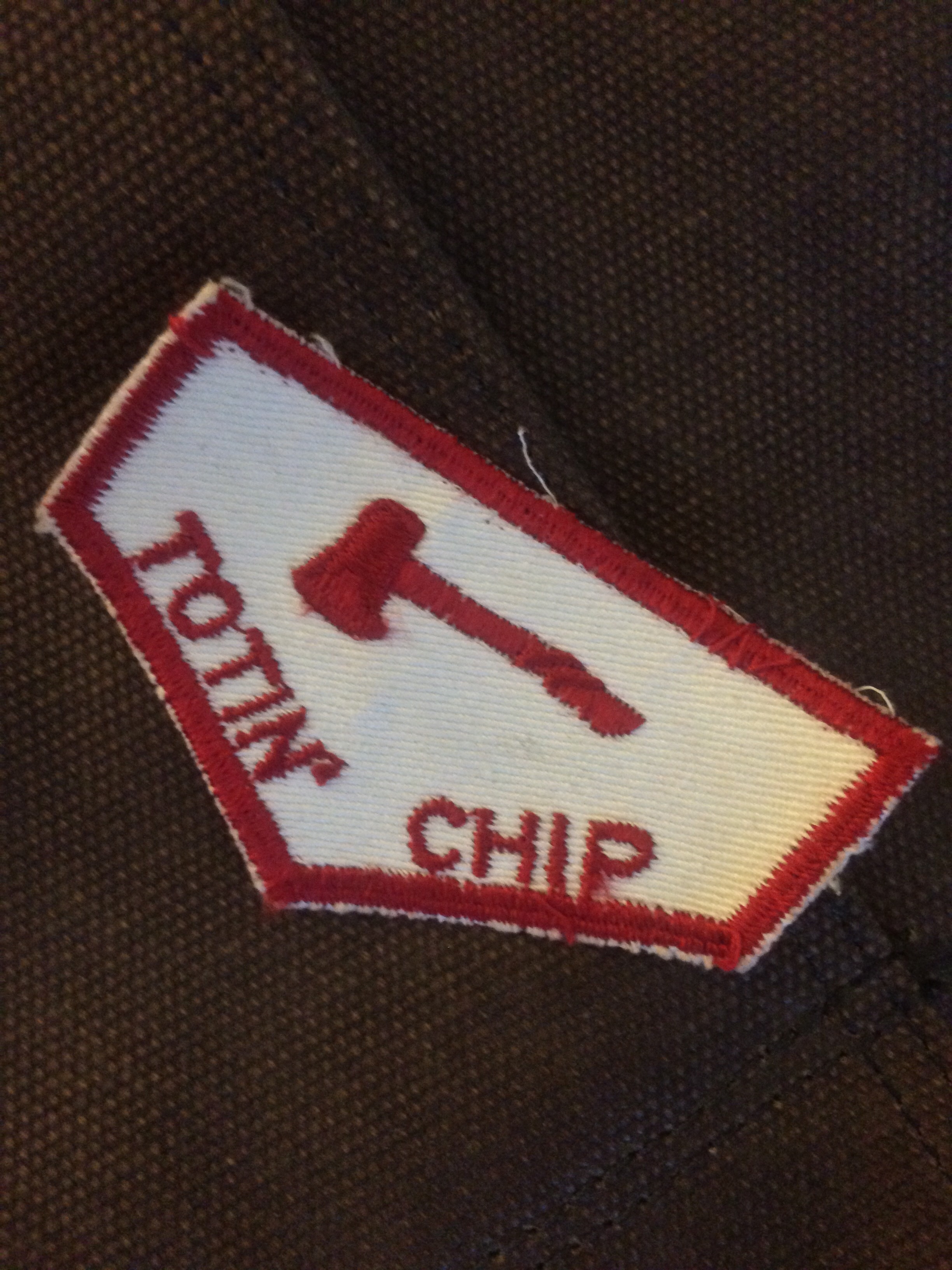
It wouldn’t be a scout without a Boy Scout Badge.  This particular badge shows that the younger scout has demonstrated proficiency with and is allowed to carry a knife:

The blanket is cut into equi-sized pieces and the badge into slivers.  Everything will be layered with fiberglass resin and smashed together:

After the resin has cured:

A cross-section of the material and you can see the scout badge slivers.  This has become one piece of material:

Drilling rivet holes after the bolsters are cut:

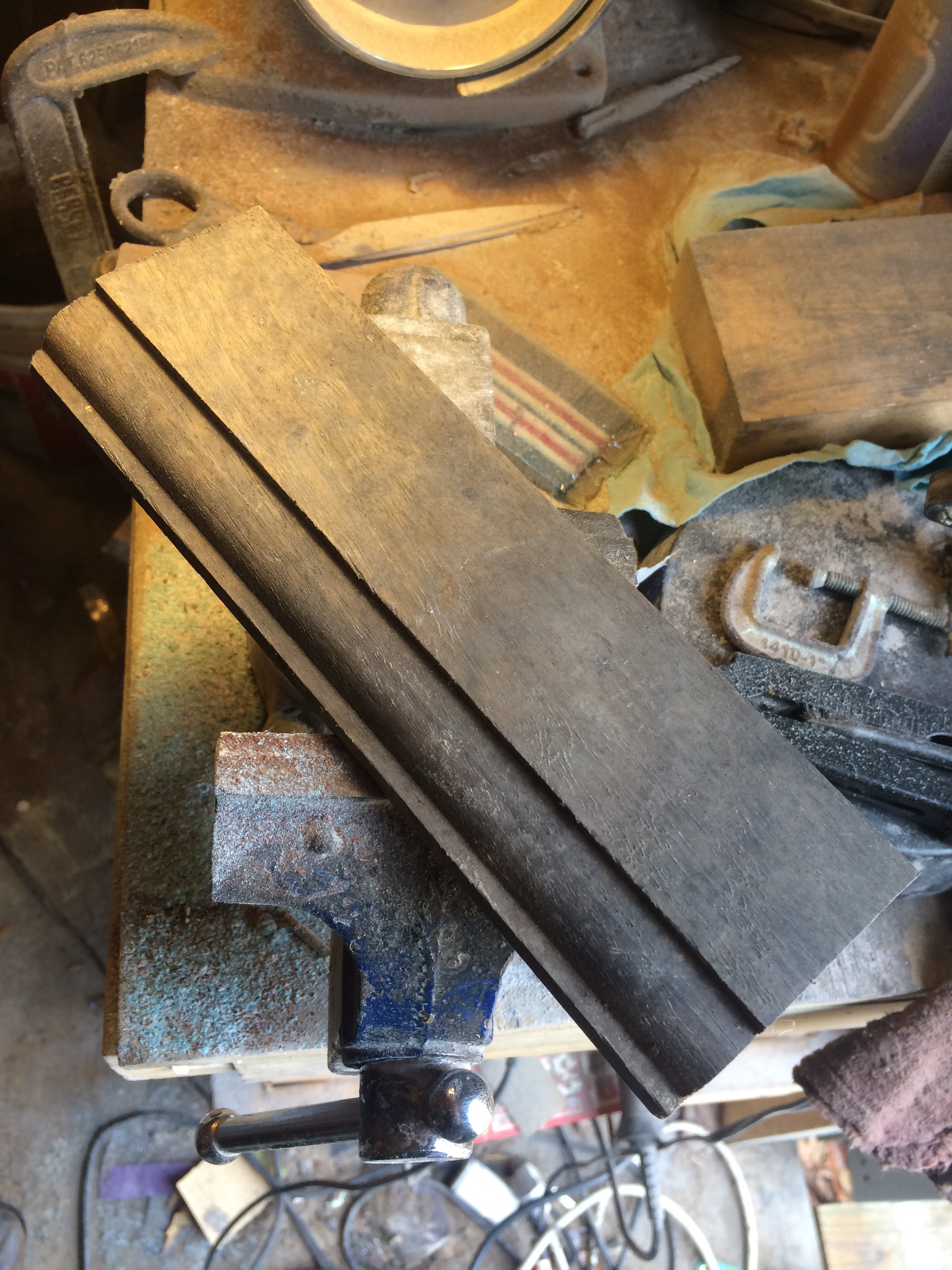
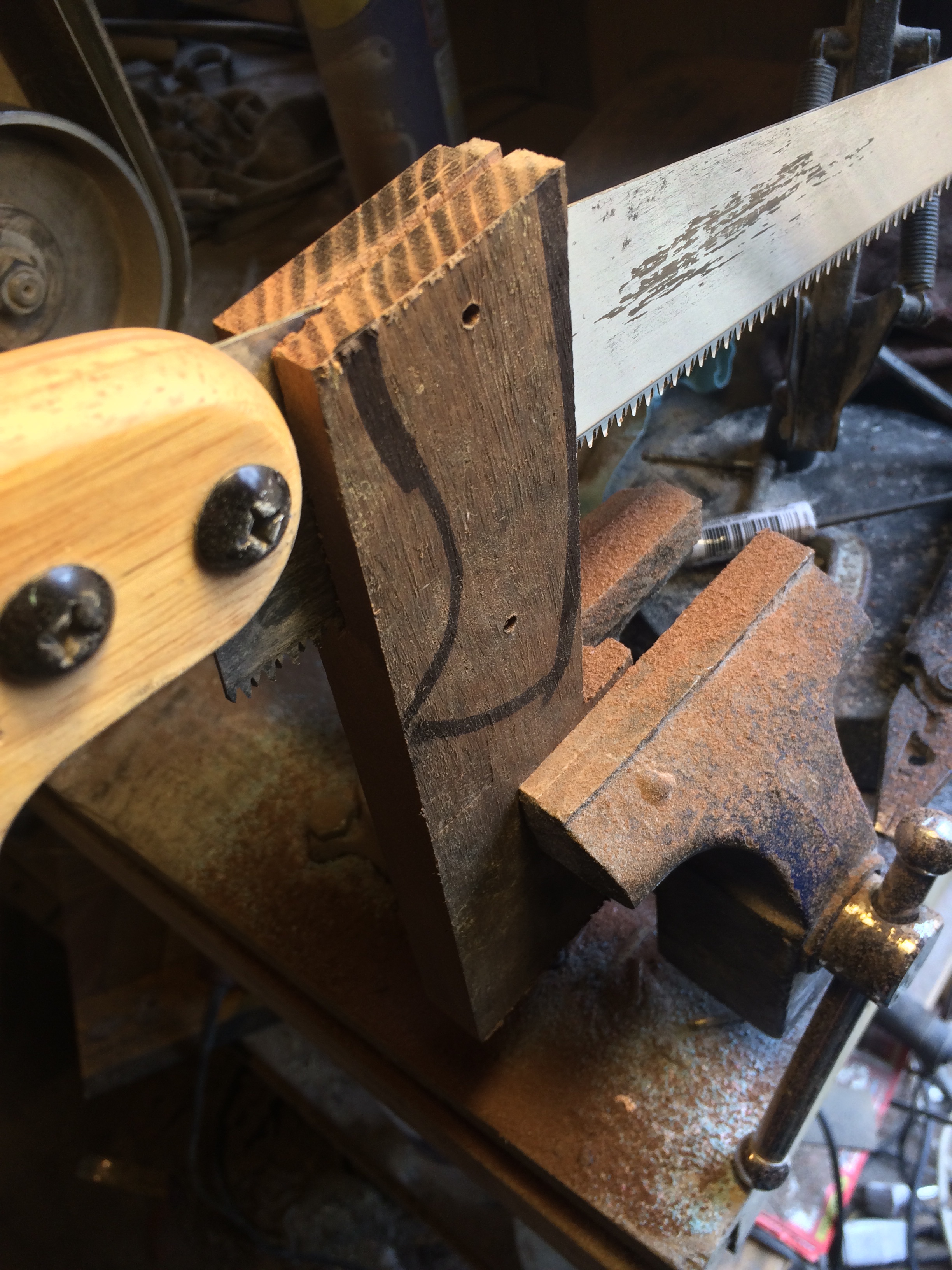
This piece of trim molding came from an abandoned house and is made of Black Walnut.  It doesn’t look like much right now:

It makes for a better fit if the holes are drilled now before the scales are cut:

Circuit board blank for spacers:

Finally everything fits:

Prepping for glue-up:

Glued and clamped:

Profiling the handle:

Contouring for a comfortable fit.  All sanding after this is done by hand:

The Scout:


Knifemaking: learning your craft and the Maestro

“This is Mr. Beethoven.  Do you hear that?  You don’t?  This doesn’t move you?  Well that’s ok baby, you can always go sell shoes.”

-Doug Richards

This knife was a commission for one of my former teachers and good friends, Doug Richards.  I first met Doug when I was fifteen.  I had been accepted to a summer residential arts program and went to study music and trombone.  I was there with about 50 other musicians and vocalists from across the state.  One of the classes I took was run by a jazz saxophonist, who also played every wind instrument known to man.  To help us learn about jazz he brought in a very passionate man to speak to us about Duke Ellington, one of the great American composers.  This man was Doug.

This particular class was at 8am and we had all been up late doing God knows what, as teenagers away from home living on a college campus are wont to do.  Doug noted this and suggested that if we were tired and didn’t have time for the Duke then we could leave and take a nap.

This took us all aback.  We all paid attention as Doug put on an Ellington video and proceeded to dance around the room, deigning us with the story of the music and the man…and every member of the band.  The man has an encyclopedic knowledge of music and the lore around it.

I ended up coming to university to study with him.  He taught a two year course of study on how to write big band music.  That was the course description anyway but it was so much more than that.  In this class I learned how to listen, really listen, to music.  I learned how to discern the masters from the dilettantes.  I learned what moved me and the mechanisms of the sounds that held me in those places.  Amidst all of this I learned how to compose and arrange music that sounded like me, and no one else.

What I learned most from Doug was the importance of craft.  Craft encapsulates art.  Without it, your art isn’t as articulate as it could be and your vocabulary to put what you want to say out into the world is stunted.  I started to see this all over in my world- in the people I would work with, in the music I listened to, in the food I ate, and the films I would watch.  I paid attention to the manner in which things were put together.  I spent hours working on assignments from Doug, exercises in craft, to the point where I would seriously question my life decisions.  Often times I felt that these exercises didn’t leave room for any emotion.  Over and over I heard “Do not emote” when we approached these exercises, but then I would hear something that Doug had written and it dripped with emotion.  Was this some cruel joke?

It was not.  In time we were told to write things.  I would think of what I wanted to say, write it down, and the craft I applied would make it blossom.  Almost without even thinking about it.  You just know what to do.  The way that a warrior knows to make the kill, or a seventh grade guitar player knows to hit the distortion button.  And so I started devouring the craft.  I studied classical orchestration with Doug, orchestrating Ravel piano scores for wind ensembles.  I played in a Stravinsky ensemble he ran and we worked through pieces the likes of which I’d never heard. 

As an adult I remember all the lessons from this man.  I always try to remember craft, and to practice it.  Like a good meal, or good music, or good love, craft is not something that is easily bullshitted.  In a world where quality is often compromised for time and quantity, craft stands out.  This is the lesson of the Maestro.       

The stories of this man are legendary.  Here are a few:

-Most of us had heard of Doug doing one-handed pushups before rehearsals back in the day.  Somebody mentioned it to him one day before a rehearsal and he dropped down and did 17.  None of us could do any…

-When we were rushing the tempo on a piece of music in rehearsal, Doug told us to slow down or we would get a reputation with the ladies.

-There was a limited edition of a recording re-released and Doug told me that I needed to have it.  When I told him I didn’t have the money he suggested I get a paper route…

– Before one performance, Doug made an announcement: “Ladies and Gentleman, please take your cell phones, pagers, and all of your other electronic jive out into the lobby, throw them onto the ground and step on them because I don’t want to hear any of them during this performance.  Thank you.”


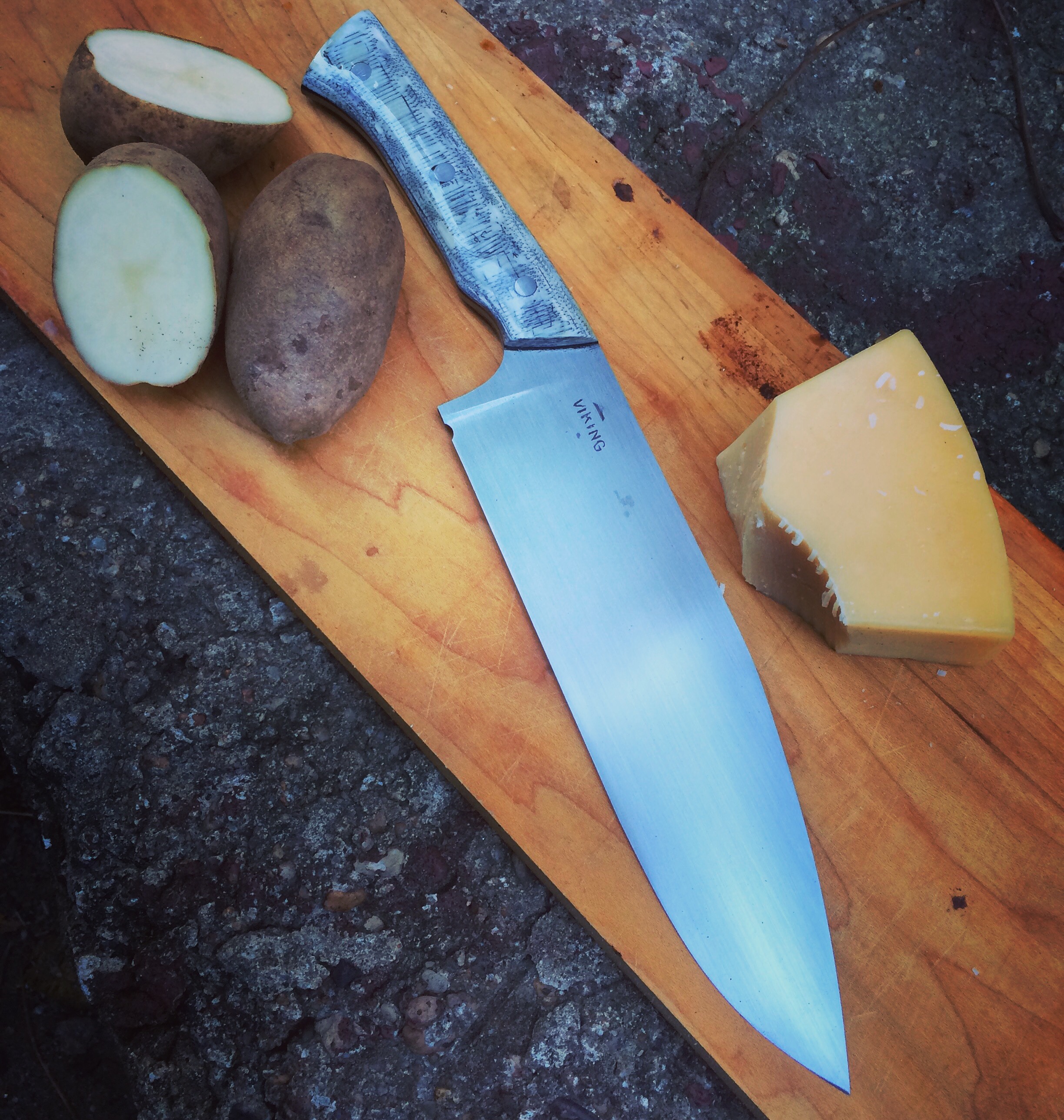
Doug asked for a chef’s knife, for the kitchen.  I started with a piece of thin stock O1 tool steel:

Hardened:

Grinding:

More grinding:

That’s about right…off the grinder at 40 grit:

Hand sanding station:

handwork starts at 80 grit:

120 grit:

220 grit:

Hours later at 320 grit….

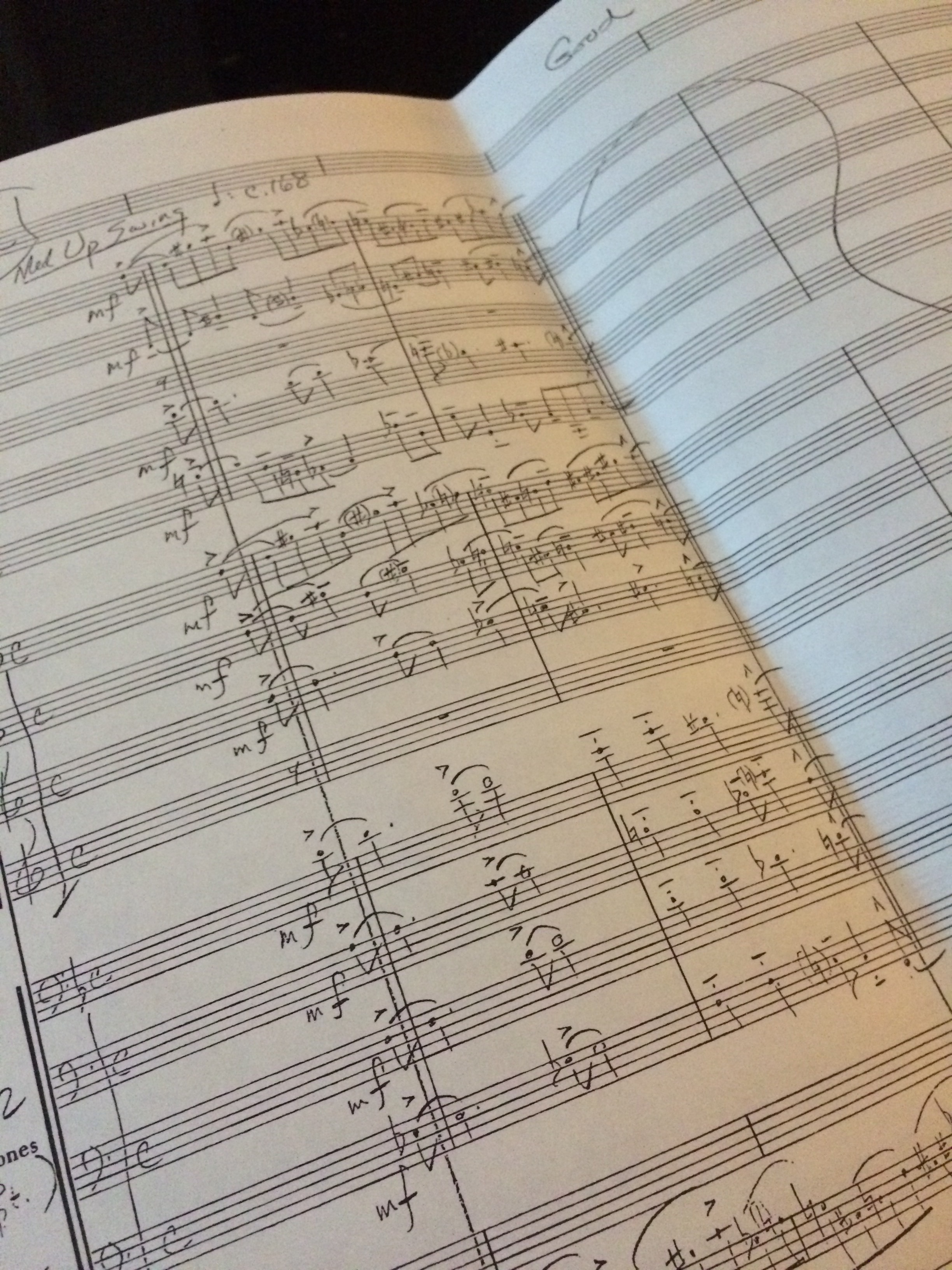
This is a score of Doug’s, meticulously handwritten and every note exactly where it should be, articulated just so…

…so of course I cut it up…

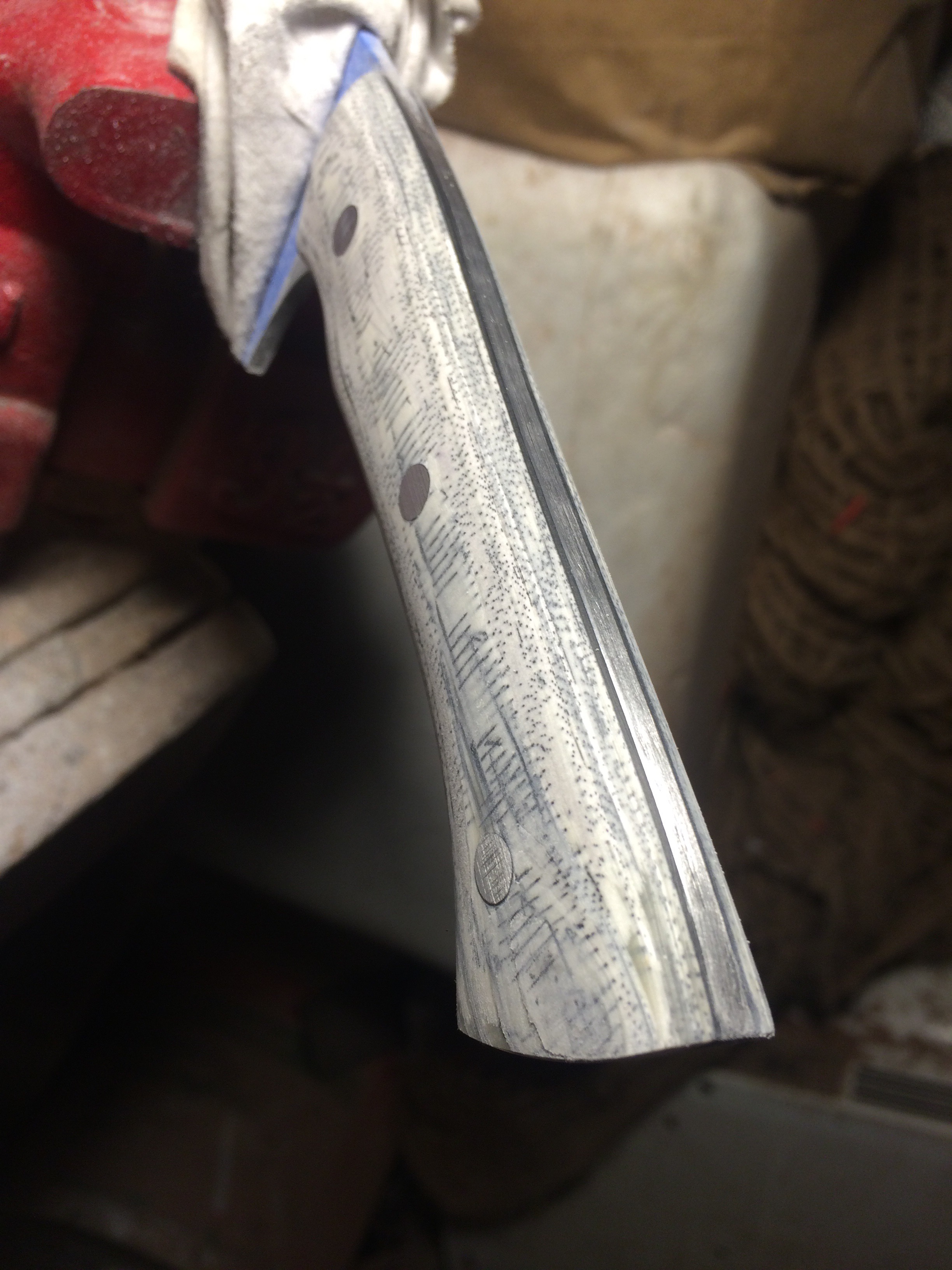
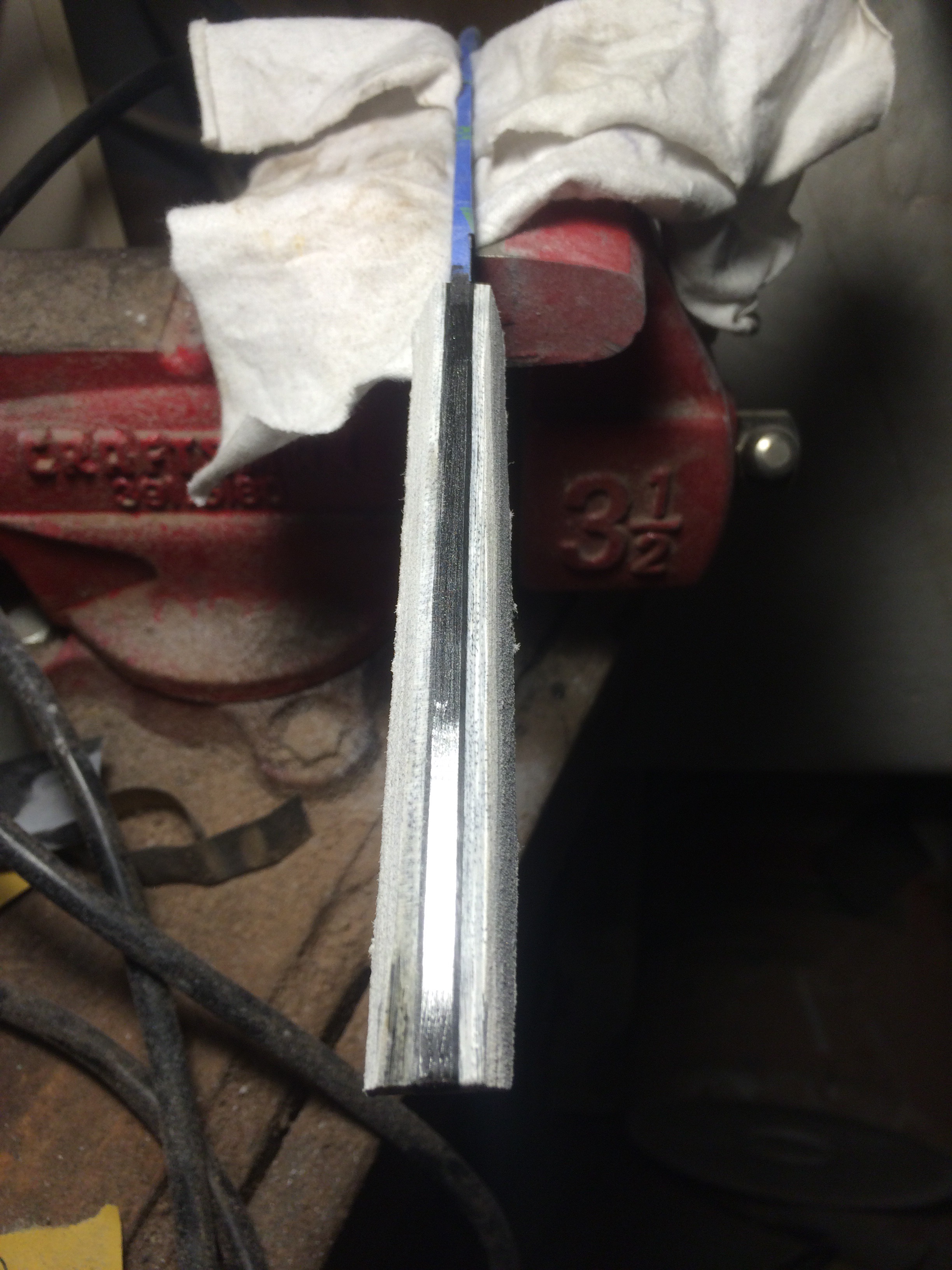
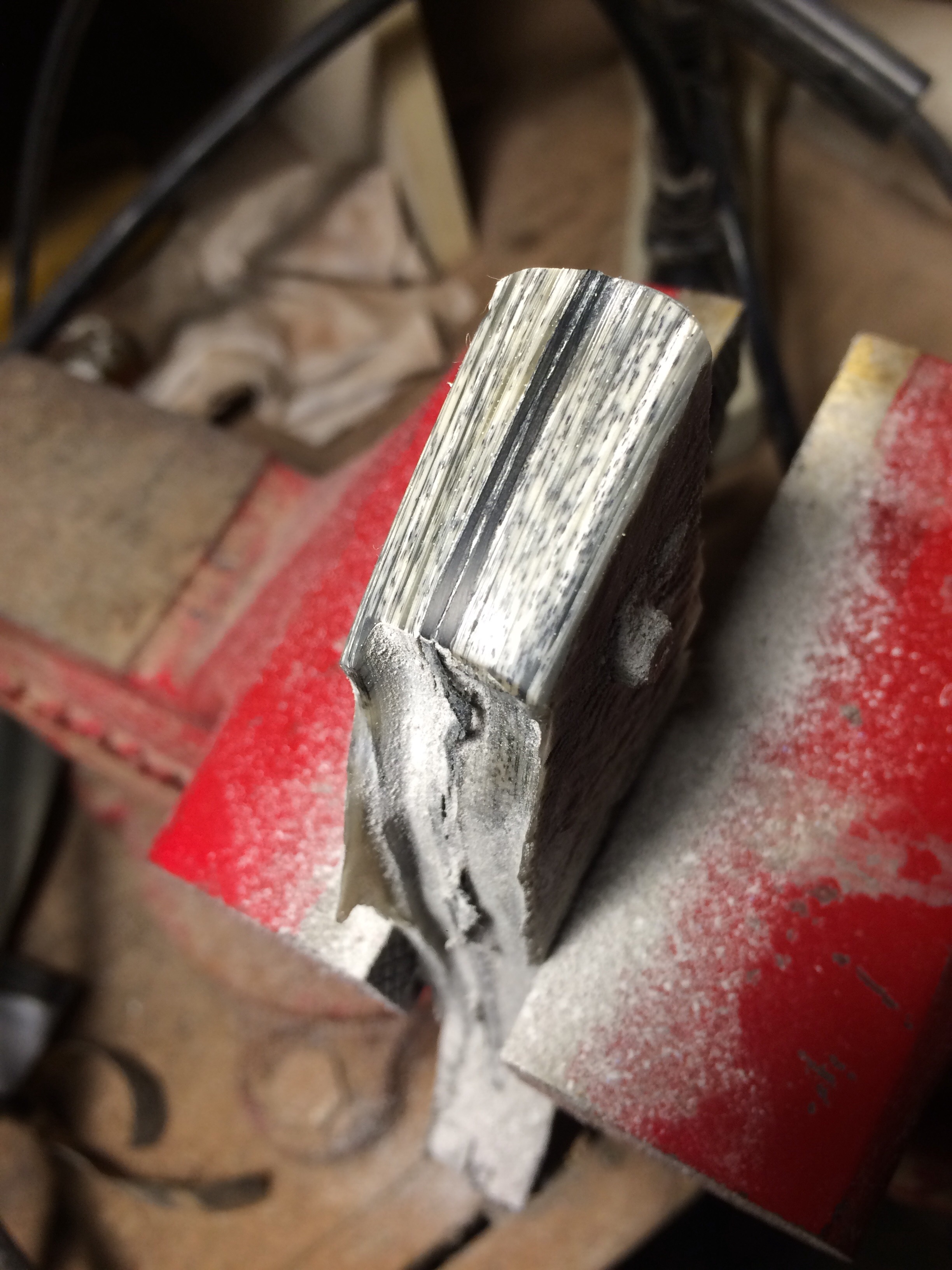
Ready to be made into a handle:

Soaked in fiberglass resin:

I think I can work with this…

Be sure to learn your craft.

Also be sure to check out Doug’s record– it’s really fantastic.