Knifemaking: Chainsaws, Being Gentle of Spirit, and the Lionheart

‘Only the weak are cruel. Gentleness can only be expected from the strong.’

Leo Buscaglia

A couple of years ago I was out in the country with a good friend of mine, giving him a hand in clearing some trees on his property.  There was a ramshackle house on that piece of property that hadn’t been lived in for years.  We were clearing the trees to make a path for the demolition equipment to come in and tear what was left of this house down so a new one could be built.

We hauled logs and trees that had already fallen.  This area had not been visited by anyone in quite some time and was quite overgrown.  We didn’t bother with any of the larger trees but anything under forty feet was fair game.  We were in the middle of the woods and it was just us.  My friend had two Stihl chainsaws and was cutting the trees down.  I was hauling the logs out out of the way and stacking them to be cut into firewood later.

We took a break- there were a lot of trees left to take down.  My friend had two chainsaws, one for each of us, so we decided to divide and conquer.   When we got started again I grabbed a saw and found that I could not get it running.  I yanked the pullcord.  Nothing.  To be safe I topped off the fuel and the chain oil.  I adjusted the choke.  I gave the pullcord another tug.  When it still wouldn’t start I assumed that I wasn’t pulling hard enough.  So I pulled harder.

My friend stopped me and told me to be gentle, otherwise I would rip the cord out.  I kindly let him know that I was an extremely gentle person.

He laughed.  ‘Maybe gentle of spirit,’ he said and gave the cord an easy tug.  The saw started right up.

That man, always with the truth.  I thought I was being gentle….

The truth of the matter, and what became clear that day, is that behind any kind of power is gentleness.  Not everything in this world can be beaten or bullied into submission, though there have been times in my life where I liked to think so.  As with the chainsaw, gentleness sometimes IS the power.  Out in the woods that day, the one who was gentle was the one who was cutting the trees down and that person was not me.

Gentleness is often seen as a sign of being weak.  This is not true, despite what has been demonstrated to us throughout our lives.  While brute and strength and force have their place, without something gentle behind them they serve only to divide and intimidate.  Gentleness serves as a means to connect.  It acts as a vessel for strength, holding it and giving it purpose.  Behind every great leader, parent, speaker, or creator of things there is something gentle.  Without that everything dissolves into fear and chaos.

This is the lesson of the Lionheart.  To find gentle is to find power.  The road to finding those is courage and bravery manifested, which are traits of someone who is Lionhearted.  It’s not an easy road for certain but the best ones never are.

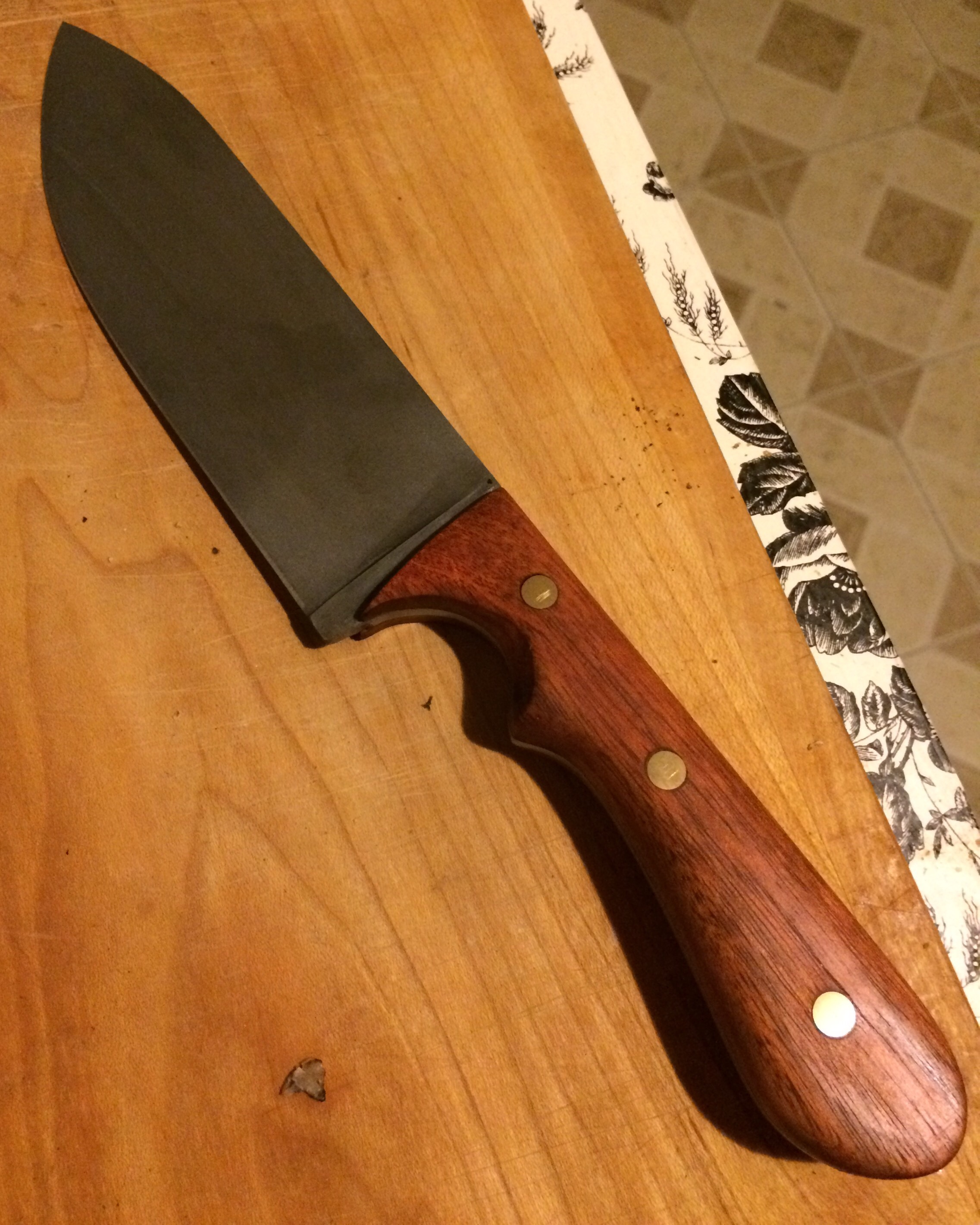
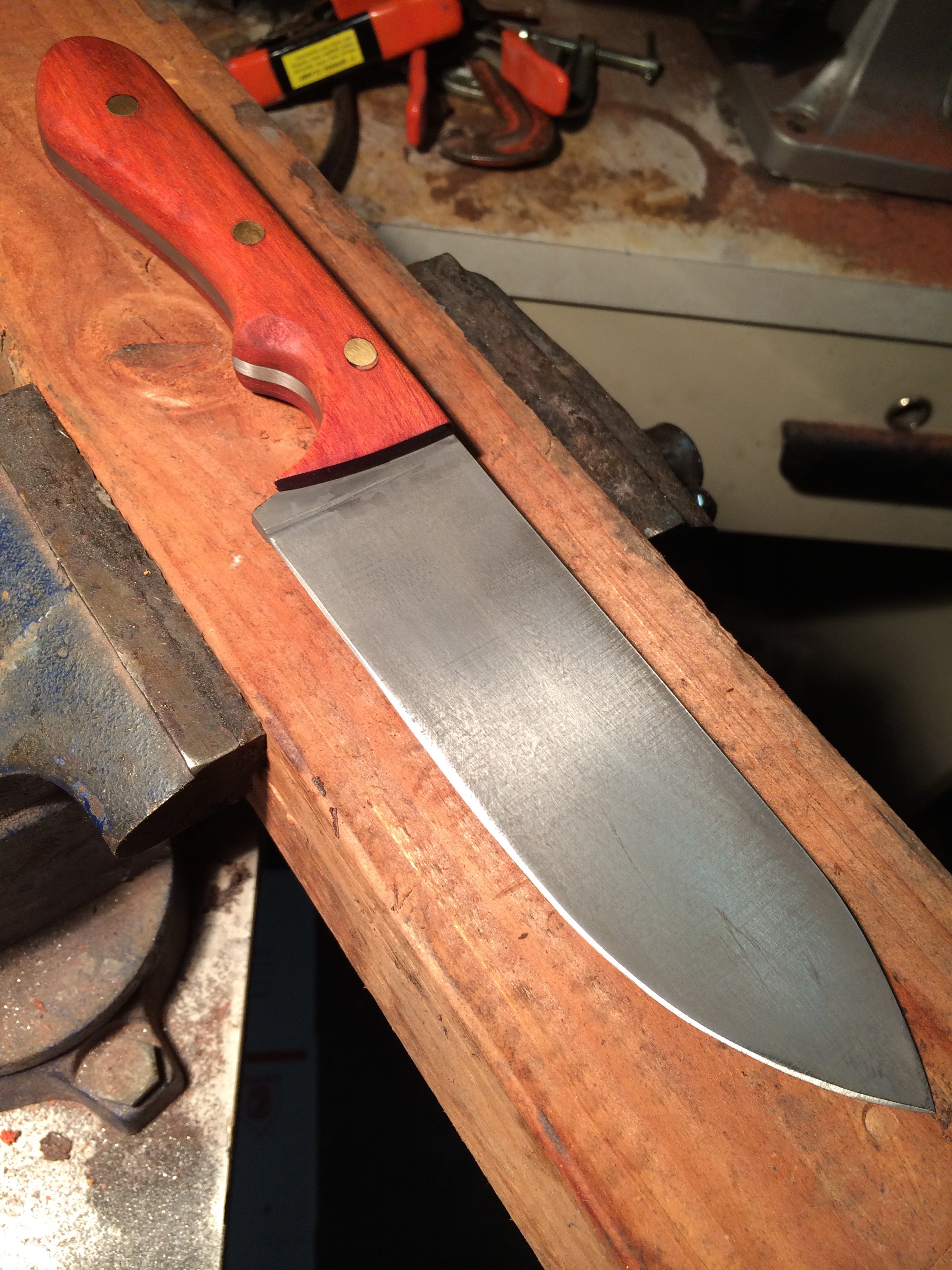
This blade is a 6in filet/boning knife, built from 1/8″ O1 tool steel stock.  It was commissioned by a man who has quite a bit of Lionheart in him, and was the inspiration for the namesake of this knife:

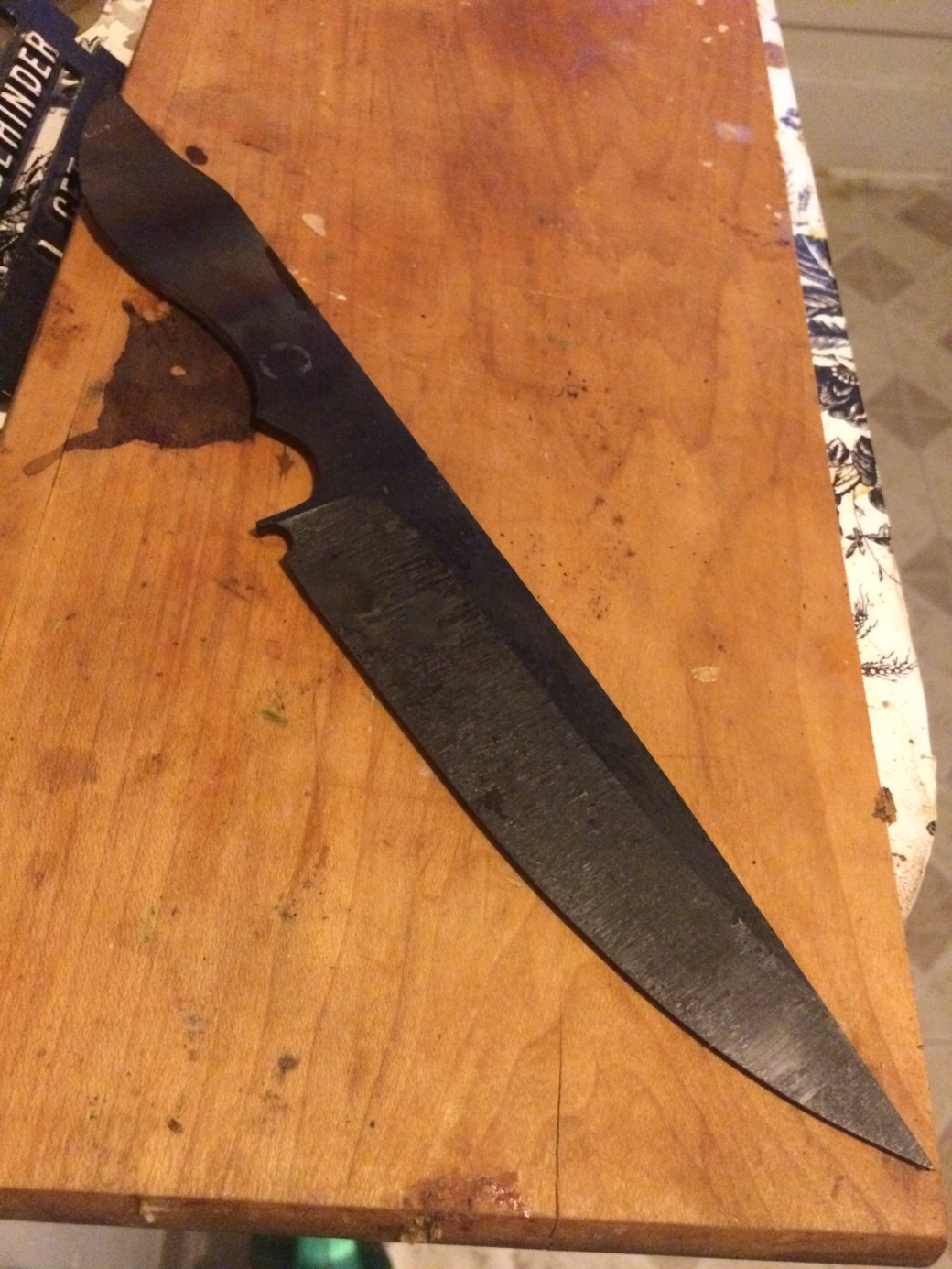
Rough cut:

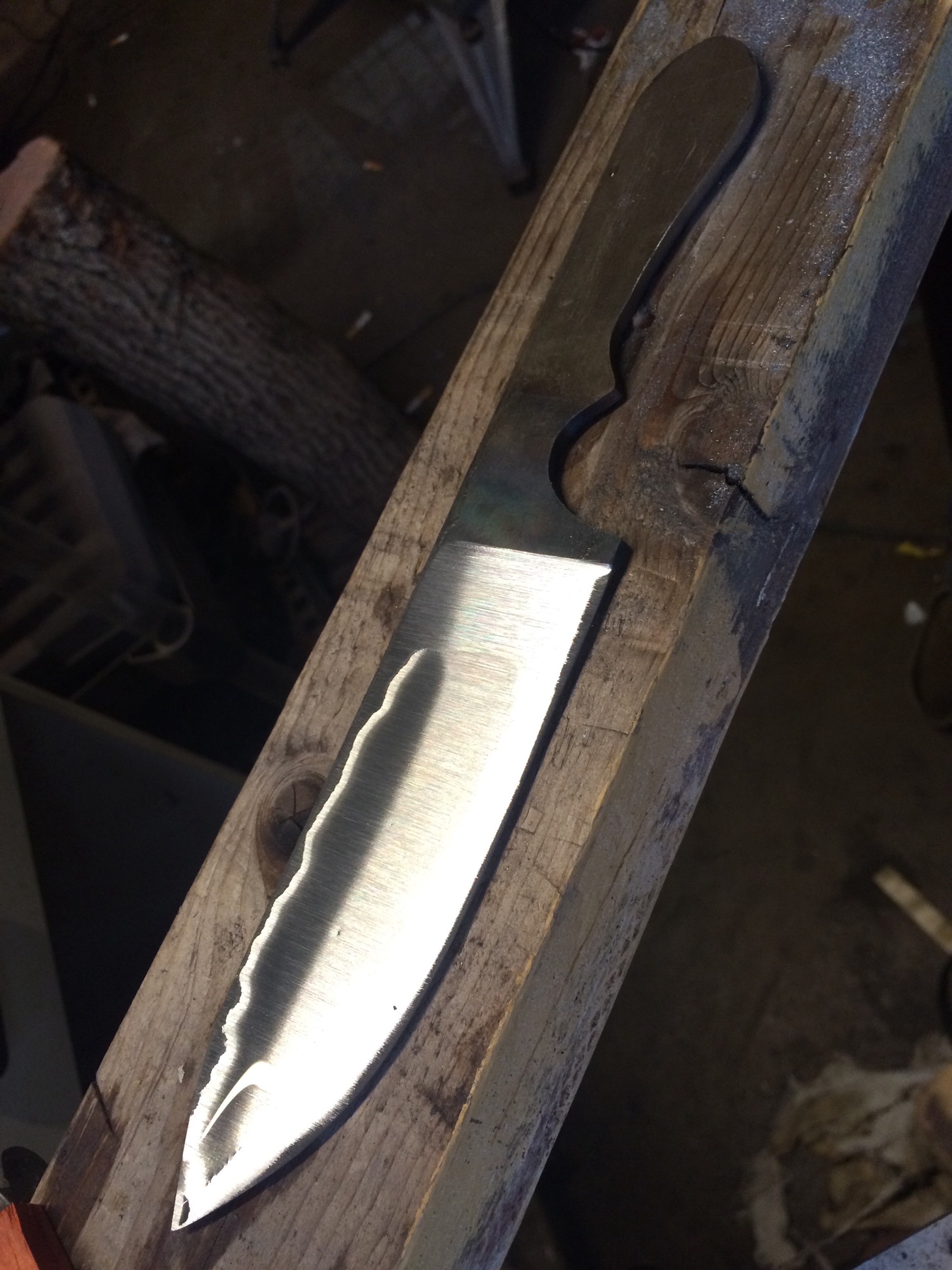
Filework on the blade choil.  This makes it easier to sharpen and provides a visual aid in creating symmetrical plunge lines:

Profiled:

Initial work on the bevels.  Removing too much steel will cause it to warp in the forge.  Ready for heat treat:

Hardened:
Removing more material after heat treat:

Hand sanding:

Satin finish:

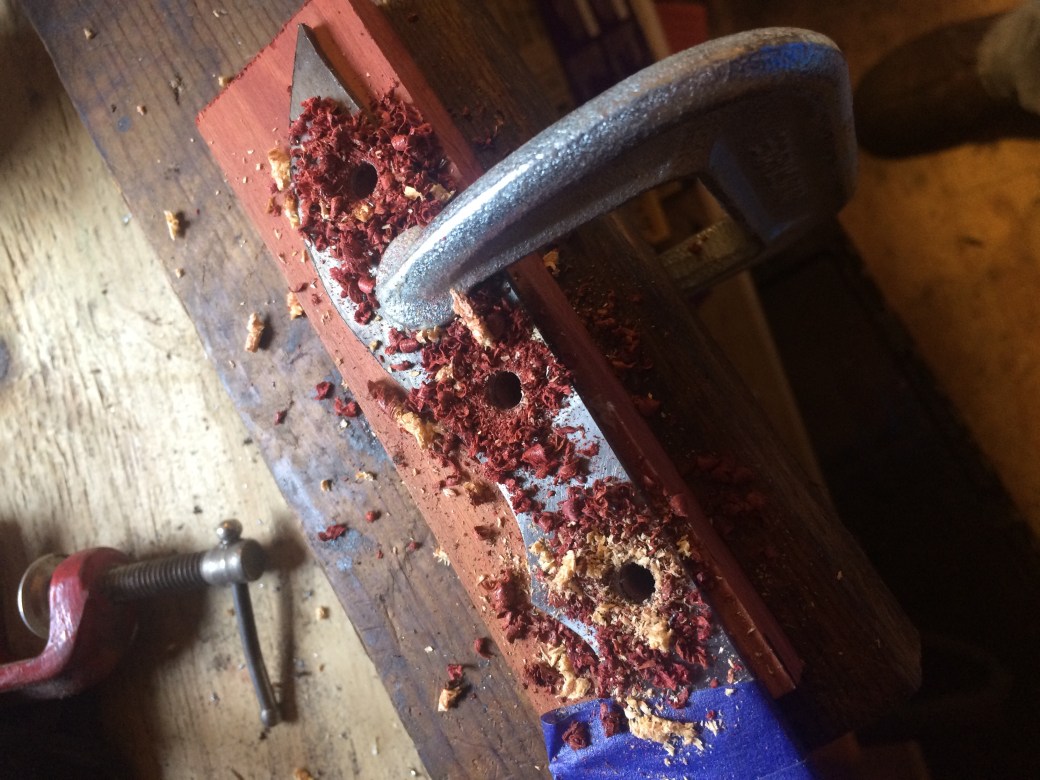
I should have drilled these earlier, but here we are:
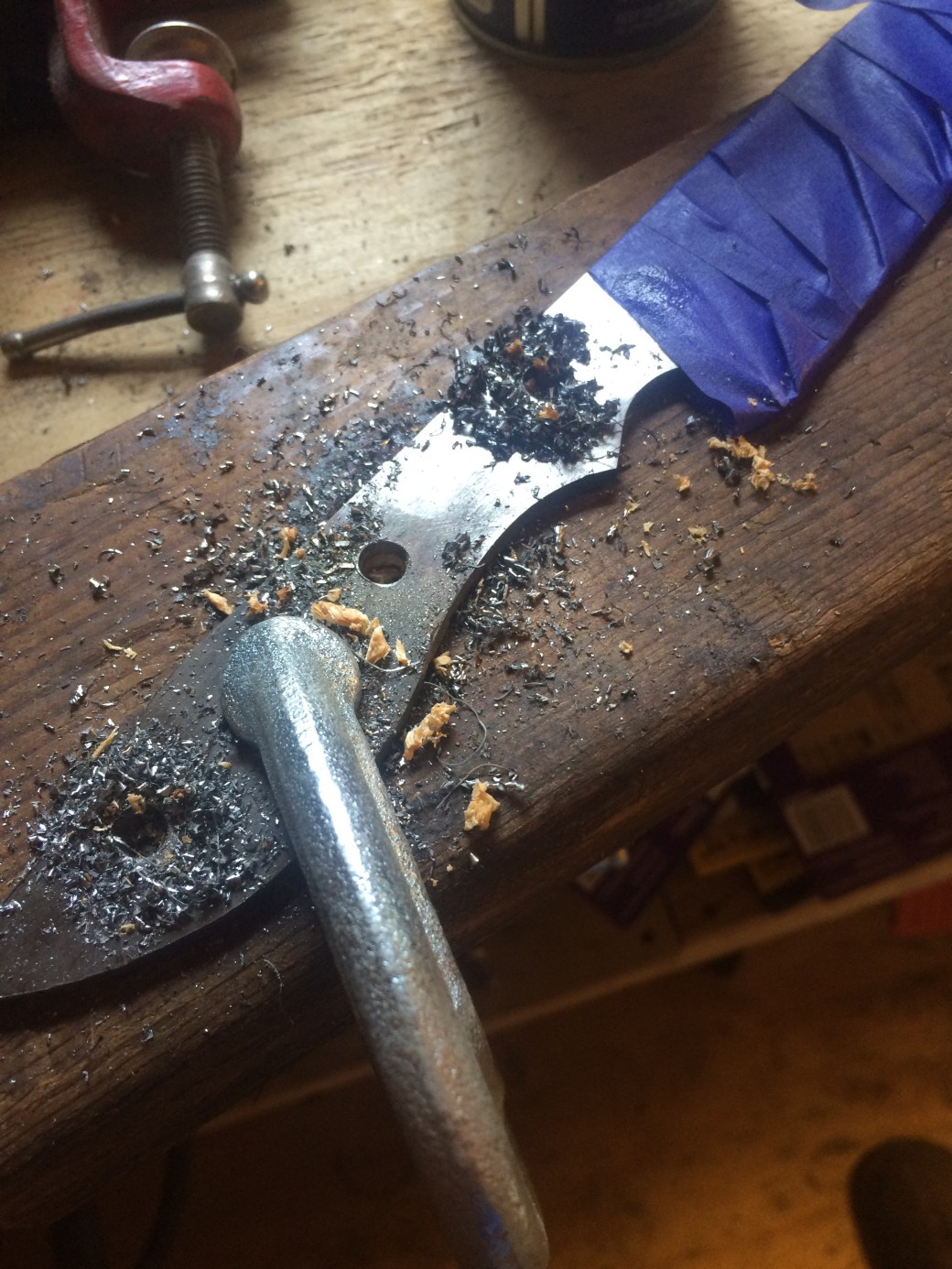
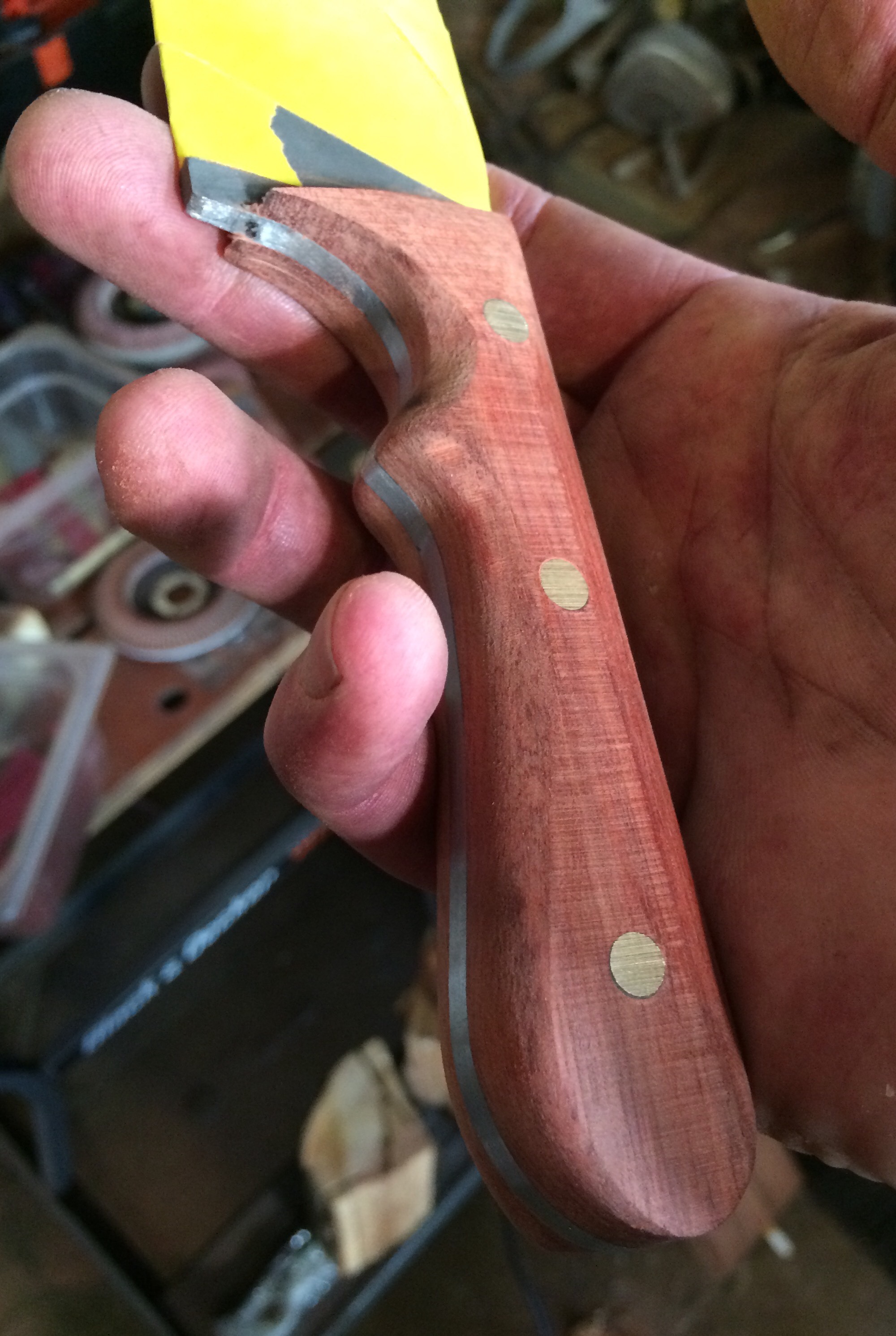
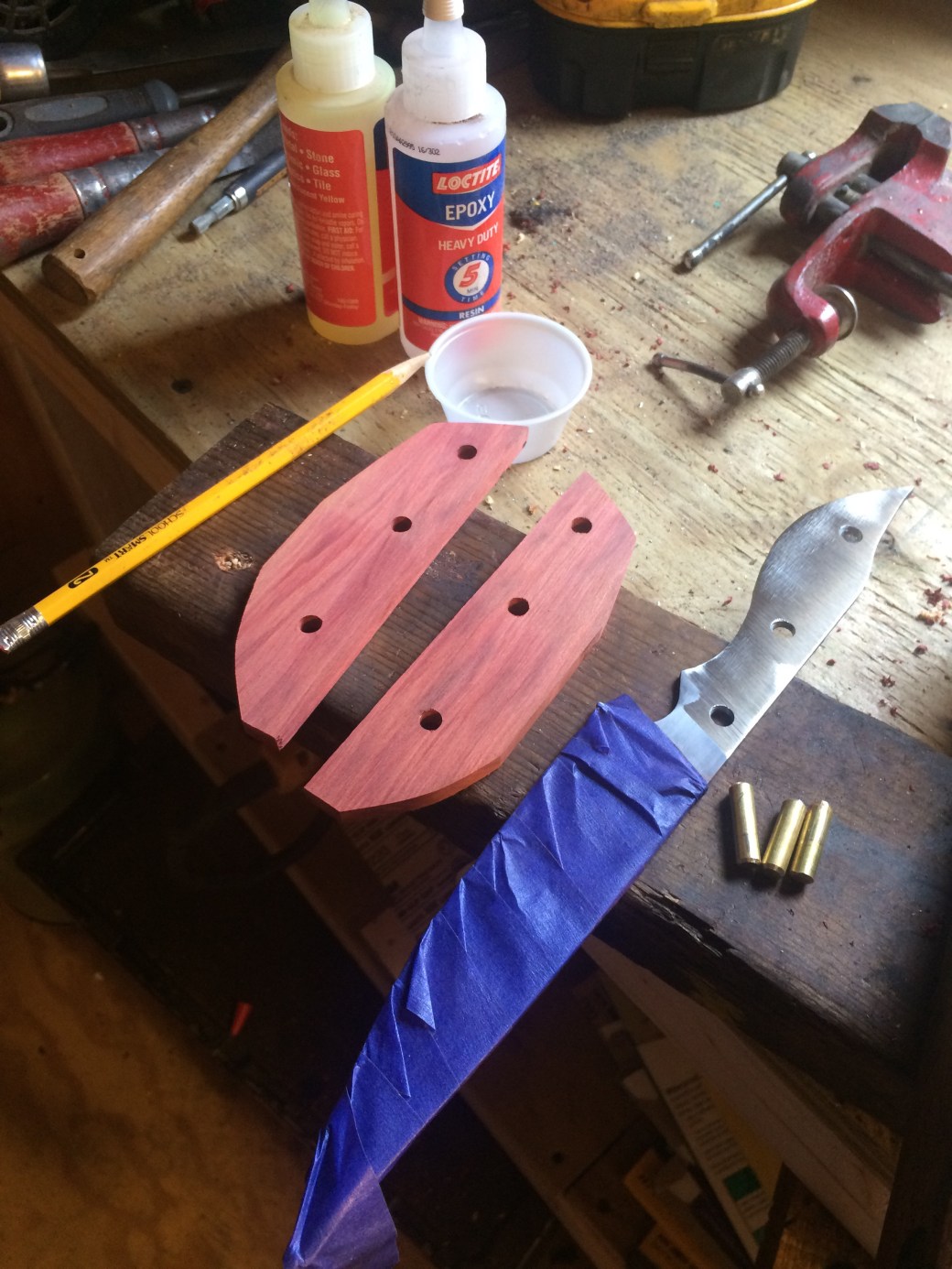
Rivet holes in the scales.  The wood is Redheart:
Ready for assembly:
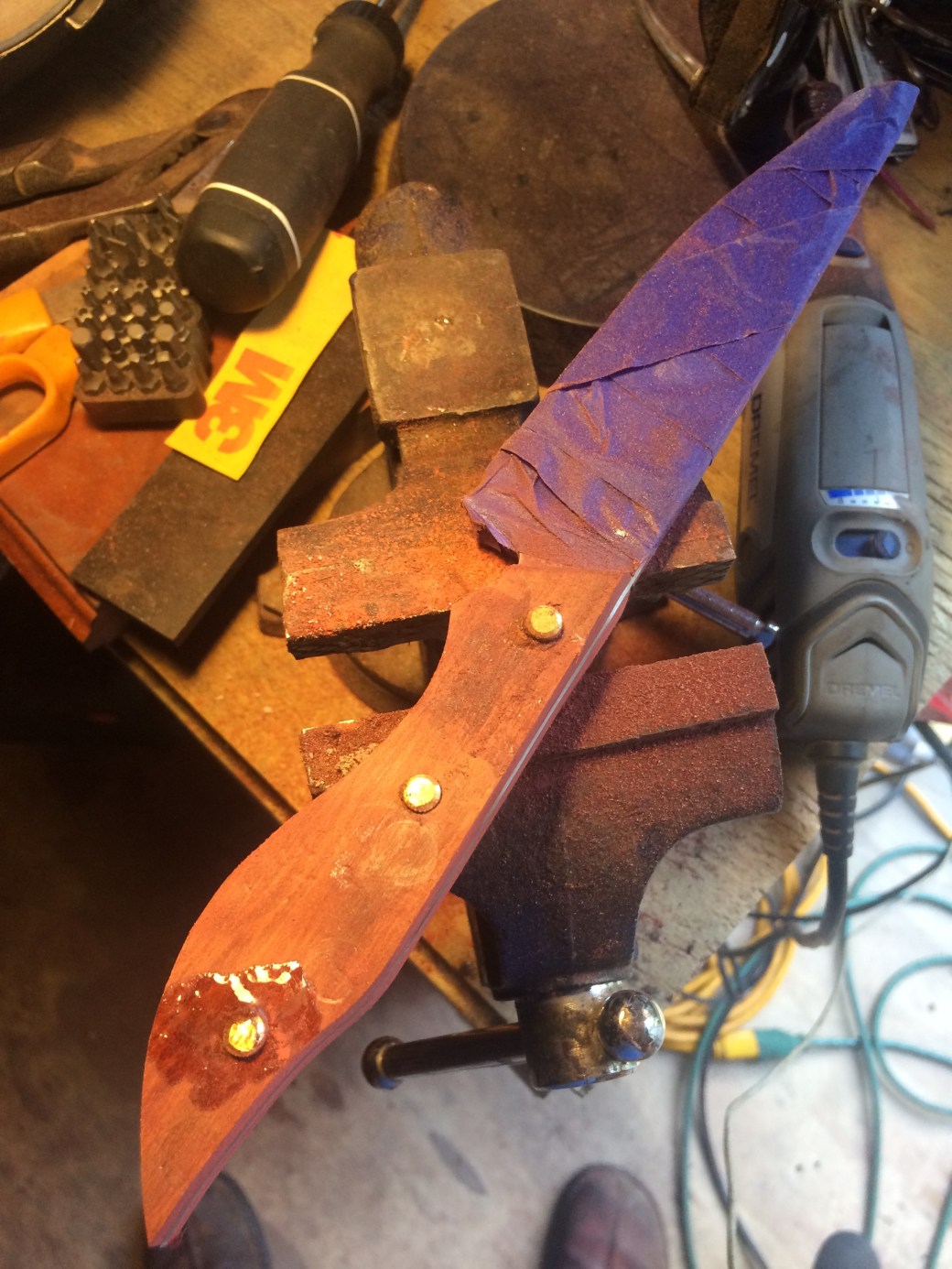
Profiled:
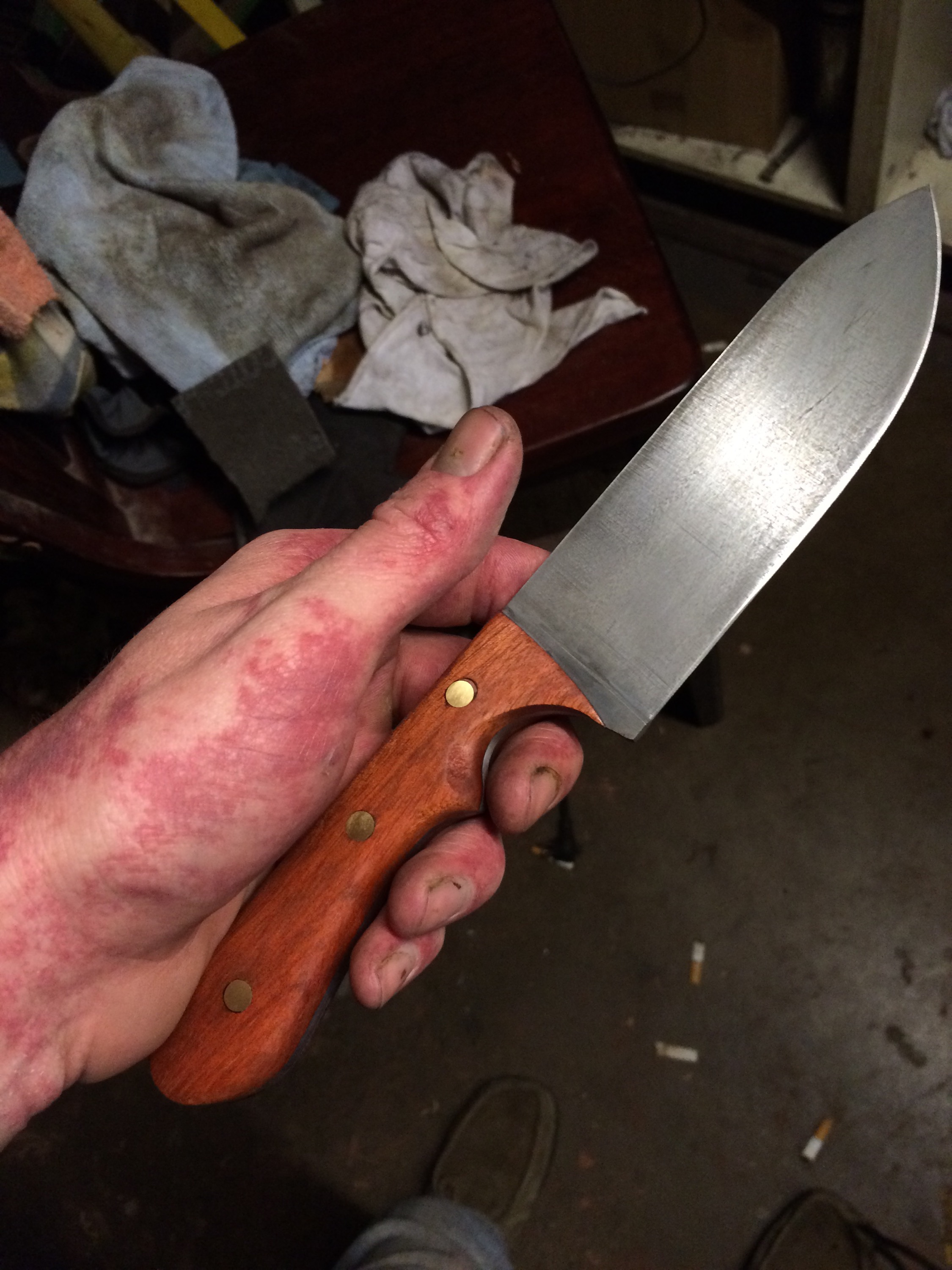
Shaped:
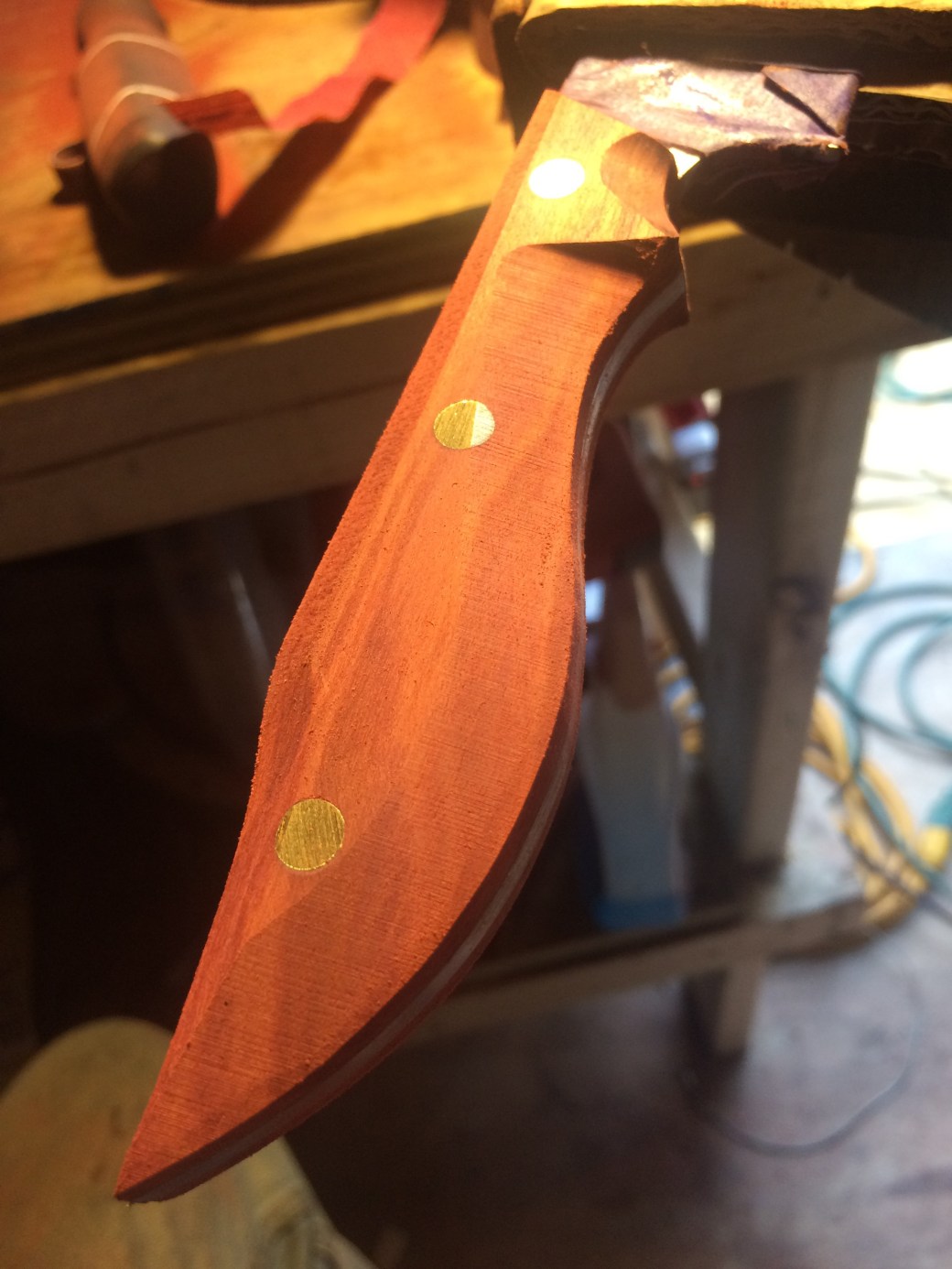
The Lionheart:

Be gentle with that chainsaw….

Knifemaking: power in the small things and the Petit Poucet

“It has long been an axiom of mine that the little things are infinitely the most important.”

― Arthur Conan Doyle, The Memoirs of Sherlock Holmes


When I was twenty-one I took a summer job in a cabinet shop.  I was in between semesters of school and had made some pretty significant life changes, at least for a twenty-one year old.  I had transferred colleges and I decided I wanted a summer job where I would learn something useful.

This particular cabinet shop did custom work.  Everything was built to order.  The owner was a friend of my family’s.  On my first day I was introduced to everyone in the shop.  It was noisy in there, with all the fans and sawdust collection systems, and everyone heard my name as “Bernard” instead of “Ballard”.

I didn’t find this out until later, after everyone had been addressing me as Bernie for at least two weeks.  I was just happy to not be called college boy.

I was hired to sweep floors, which I did for approximately one hour on my first day.  After that hour I was handed a reciprocating saw and told to cut up a stack of pallets.  When they found I still had all of my fingers, they gave me other things to do not involving sweeping the floor.  From then on I did whatever was asked of me, still happier to be called Bernie than college boy.

I built drawers for desks to go in lawyers’ offices.  I would be on a crew of four guys to build an army of receptionist desks for a medical complex.  I built a mile of L-bracket to mount cabinets in an insurance building.  When you work in a shop with over a million dollars worth of tools and machinery there isn’t a whole lot that you can’t build.  The owner liked to make money and I can count the number of times he subcontracted jobs out on one hand.

This was one of the best summers of my life.  I didn’t hang out with anybody.  I didn’t go on any dates.  I got to work at 7:30a and left at 4:45p.  When I got home I would practice my horn for four hours in my parents’ basement and then go to sleep.  Then I would get up and do it all over again.

I found myself spending full days on a panel saw, a massive contraption designed to rip and crosscut full sheets of plywood.  It cut everything perfectly square.  You see these at Lowes and Home Depot but this machine made those look like Tinker Toys.  This particular one was made by a Nordic company that specialized in making badass cutting tools.  It cost about thirty grand and when it broke down they had to pay a company service tech from Pennsylvania $600 an hour to fix it, which included drive time.  Clearly we were all in the wrong business.

I was given a cut list for each job.  Some of these lists would be casework for an entire building, others just one or two pieces.  I cut all the cabinet pieces by hand, within a 1/64th of an inch, which by industry standards is a pretty large margin.  The real tricky bit was cutting cabinet doors and drawer fronts.  These cuts had to be cut short to accommodate for the laminate that would cover the side edges of the door.  This was to allow the doors to fully close once the edge had been covered in laminate and for the drawer fronts to have the proper reveals once installed.  When I would get to the doors and drawers on the cut list I would know to cut them between 1/16th and 1/32nd of an inch shorter than what was written, depending on the type of laminate being used.

I cut hundreds of these things without incident.  Then one day I screwed up.

The boss called me over.  Shit.

I had sent over four doors that I hadn’t cut short, in this instance it was 3/32nds.  They had been laminated, drilled, installed with ungodly priced hinges, cleaned and finished.

“Bernie, you fucked up.  Let me explain to you the depth of your fuckup.”

He proceeded to tell me that not only had I wasted my time, but I had also wasted the time of everyone involved in those doors, plus materials, wear and tear on machinery, saw blades, electricity, and by default, company time that we weren’t ever going to see again.  With everything involved those doors came to about $240.  A piece.  He instructed me to take them and throw them in the dumpster, but to do it one at a time, and to use that time to reflect on the breadth of my folly.

Four long trips to the dumpster.  I was mortified.  Everyone else thought this whole ordeal was hysterical.  I made sure to not overlook the doors and drawers in the future.

The summer came to an end.  I went back to school with a deeper appreciation for both higher education and the people who build the things that make life possible.

There is much power in the small things and sometimes you only find this when you overlook them.  Sometimes they are absolutely necessary.  Sometimes they make the world a bit sweeter.  Small acts of kindness to yourself and others, small acts of gratitude and compassion- these are the stuffs that can give the world its particular hue.

This is where the Petit Poucet comes in.  I have been designing kitchen knives and also watching Jacques Pepin cooking videos.  There was one of these that struck me where he had all these beautiful knives at his disposal, some quite large and impressive, but he prepared a gorgeous meal using only a six inch utility knife.  Petit Poucet roughly translates roughly to Tom Thumb, a very small person who was able to accomplish large things.  It’s important to not overlook the small things.  This is the lesson of the Petit Poucet, a small but mighty kitchen blade.

I started with a bar of 1095 spring steel

After rough grinding and heat treat.  Thankfully he didn’t warp.

Keeping it cool during finish grinding…

 I had some Bloodwood that I found to be striking the Petit Poucet: Acid etched 1095 spring steel, Bloodwood handle, and brass hardware.


Mind the small things- the big things will turn out that much better…and you will save four trips to the dumpster.

P.S.- the man I worked for was possibly the best boss I’ve ever had, and one of the most decent men I’ve ever known.  We still talk from time to time.  He keeps saying he has a place for me in his business and asks me how I am with finance.  If he only knew…

Knifemaking: reaction, the sacred pause, and the Querencia

“In bullfighting there is an interesting parallel to what I call the art of pausing, as a place of refuge and renewal. It is believed that in the midst of a fight, a bull can find his own particular area of safety in the arena. There he can reclaim his strength and power. This place and inner state are called his querencia. As long as the bull remains enraged and reactive, the matador is in charge. Yet when he finds querencia, he gathers his strength and loses his fear. From the matador’s perspective, at this point the bull is truly dangerous, for he has tapped into his power.”

Tara Brach, Radical Acceptance


Up until this point I noticed my knives were relatively polite and concise.  Maybe there was a reaction to some imagined expectation of what this undertaking should be.  Sometimes we might restrain ourselves for fear of how others may react to us.  It could manifest itself in muting our truest selves or limiting our potential so we don’t have to deal with any unpleasantness that may arise from this.  We build ourselves around others’ expectations of us and brace ourselves for negative reactions when we inevitably fail to meet those expectations.  It continues in a cycle.  This is no way to live.

This is where the sacred pause comes in.  Where you are in a position to just observe everything you are doing to hold yourself back.  I like to think of this as creating some space- and this is what I’ve found meditation to be helpful with, however you choose to approach meditation.  You take a step back and survey everything.  At first it’s a bit painful and the tendency may be to freak out but once you get past those waves you can start to find yourself.

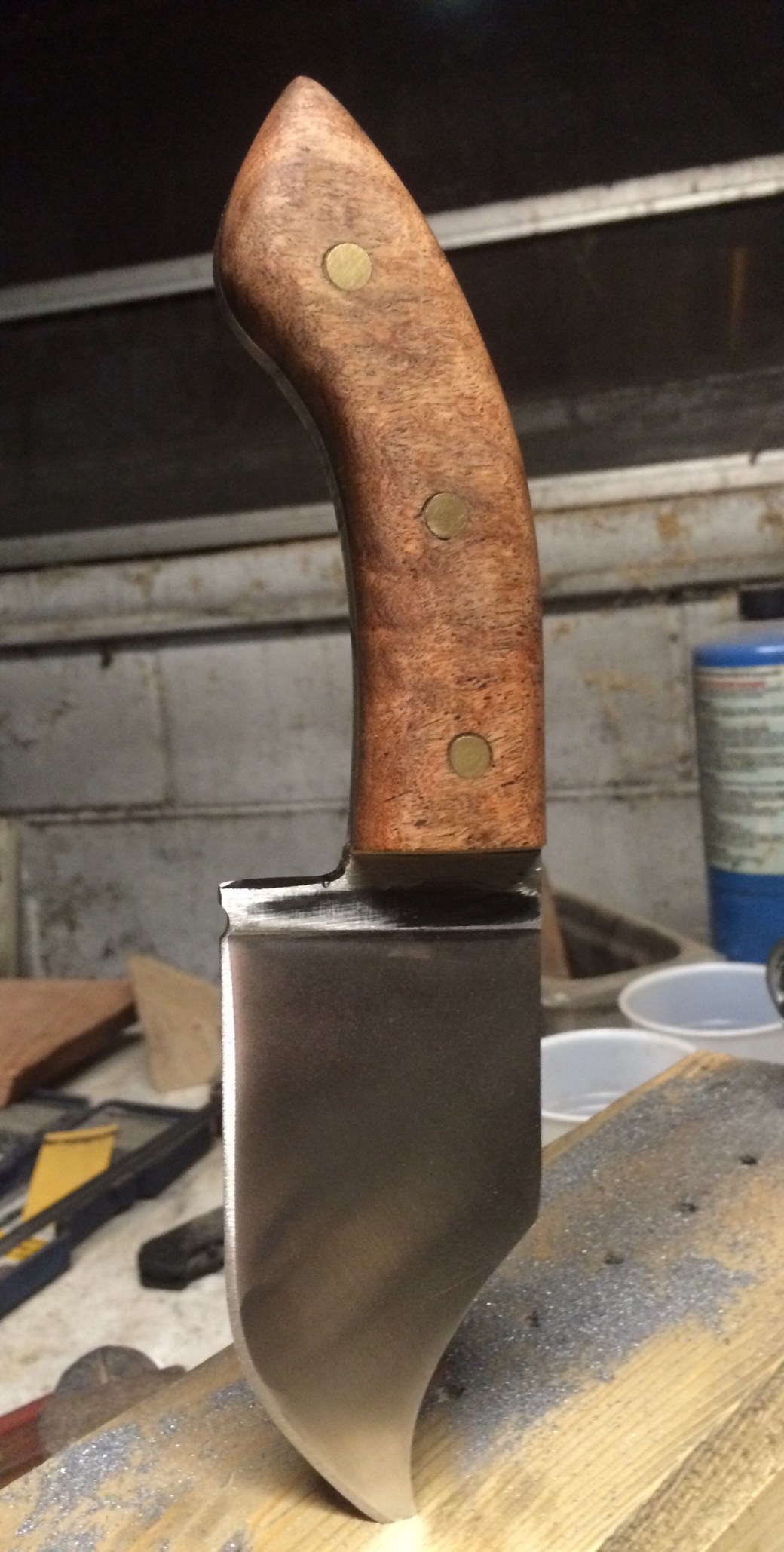
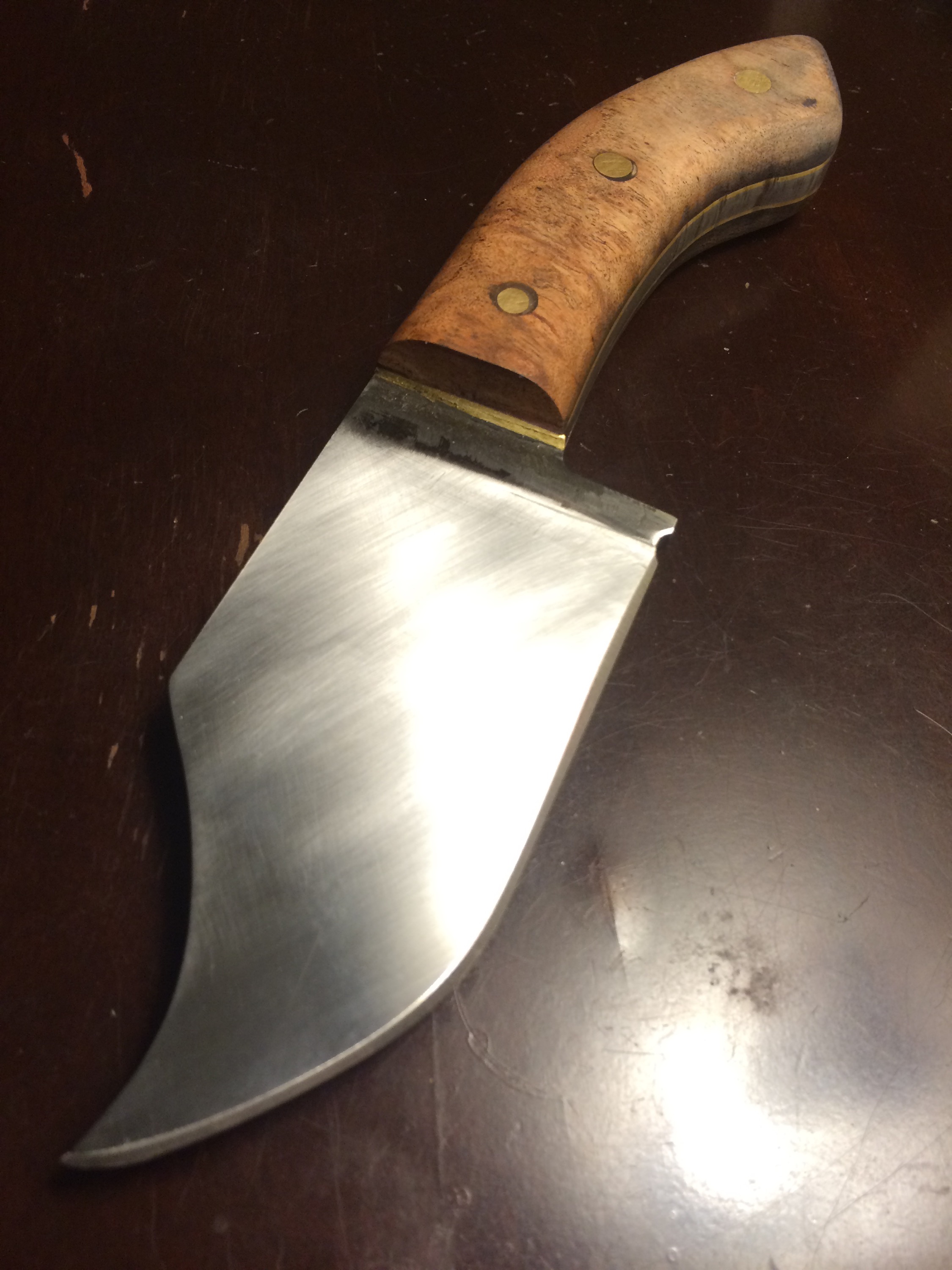
In this space I gave myself permission to be wild, large and maybe a bit scary.  In this blade I wanted something a bit more unbuttoned, unbridled.

With this blade I also wanted to capture the essence of a being that has come out of his reactionary rage, found his power, and become something shining and beautiful.  A being that is no longer dangerous and unpredictable but a force to be reckoned with.  These are things I’ve looked for in myself.  This is the lesson of the Querencia.

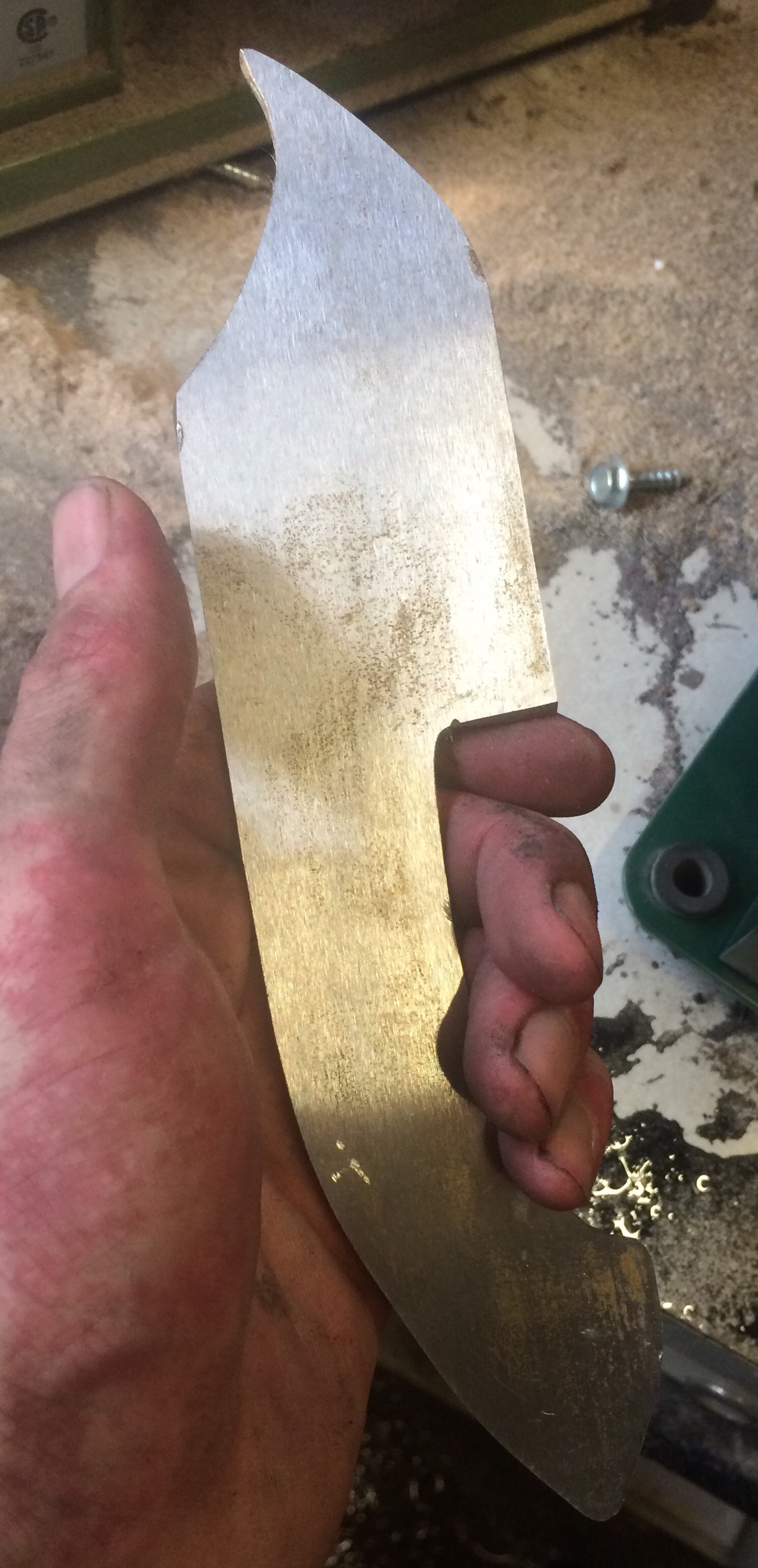
I ordered a thicker gauge of steel.  It’s much wider as well.

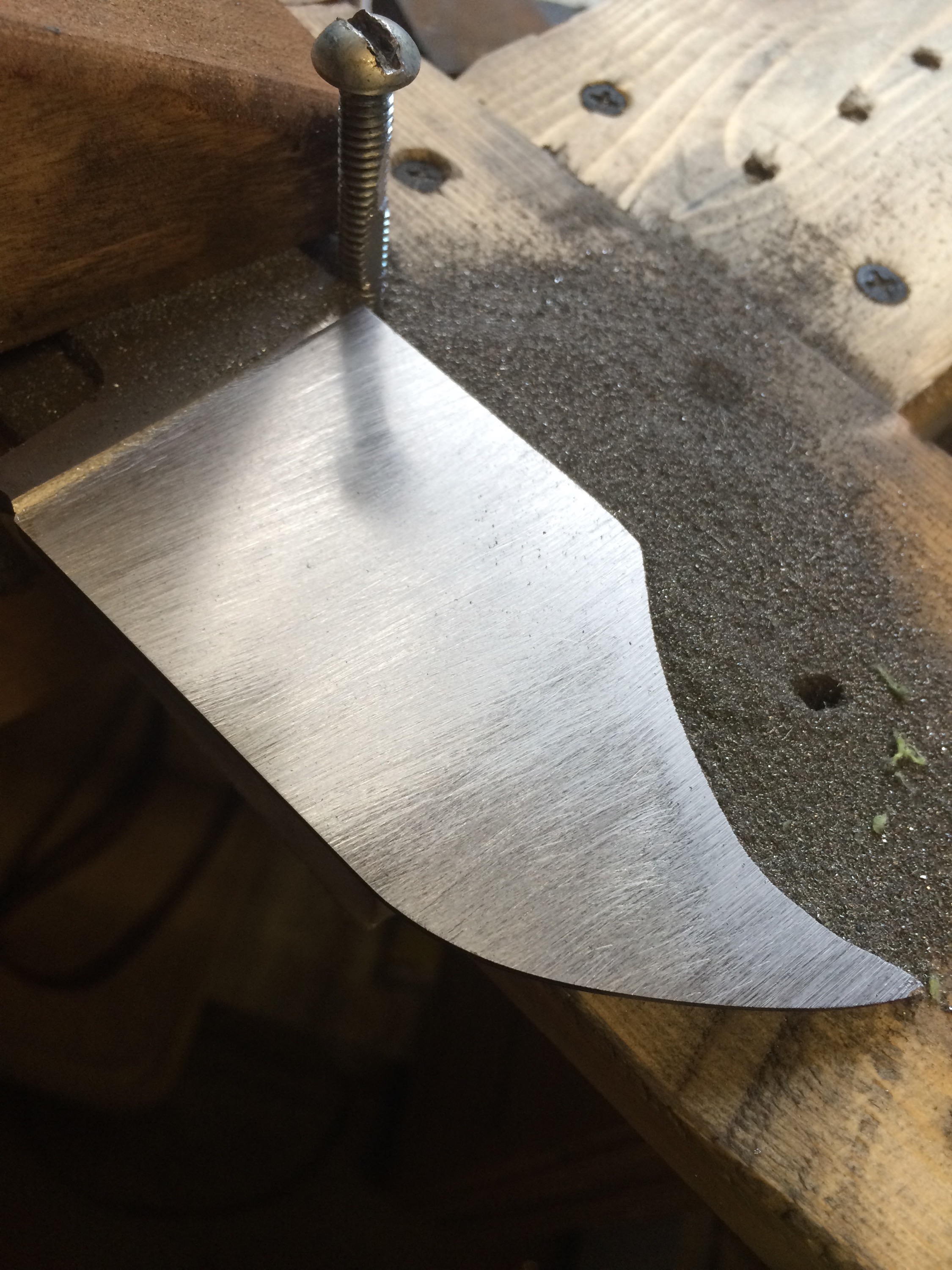
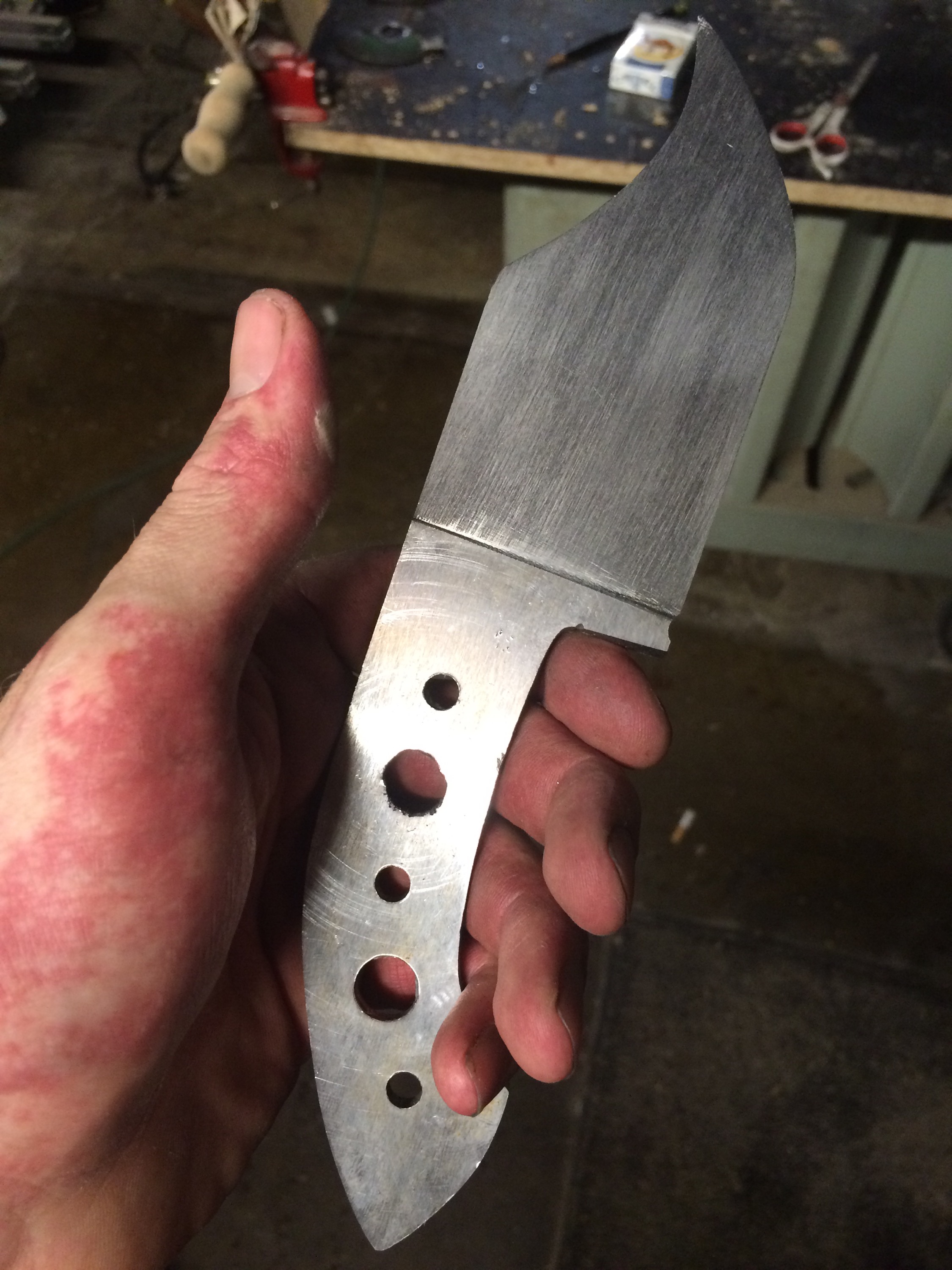
I wanted something bull-like with a forward momentum.  Muscle in the front end and a set of horns.  This is what I came up with:  

  Full flat grind and it took a long time…
  Flattening the blade with some draw filing

Heat treat…

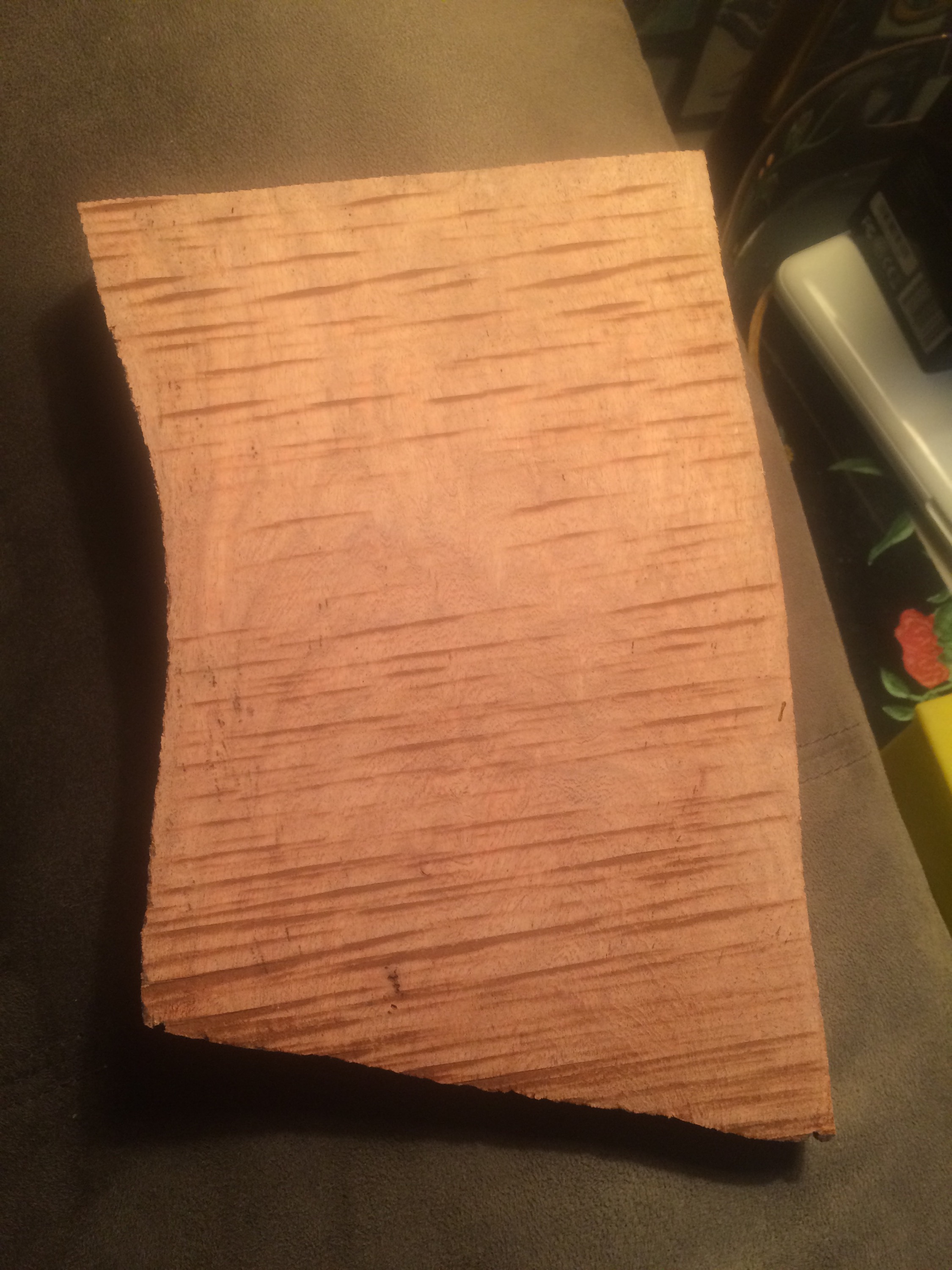
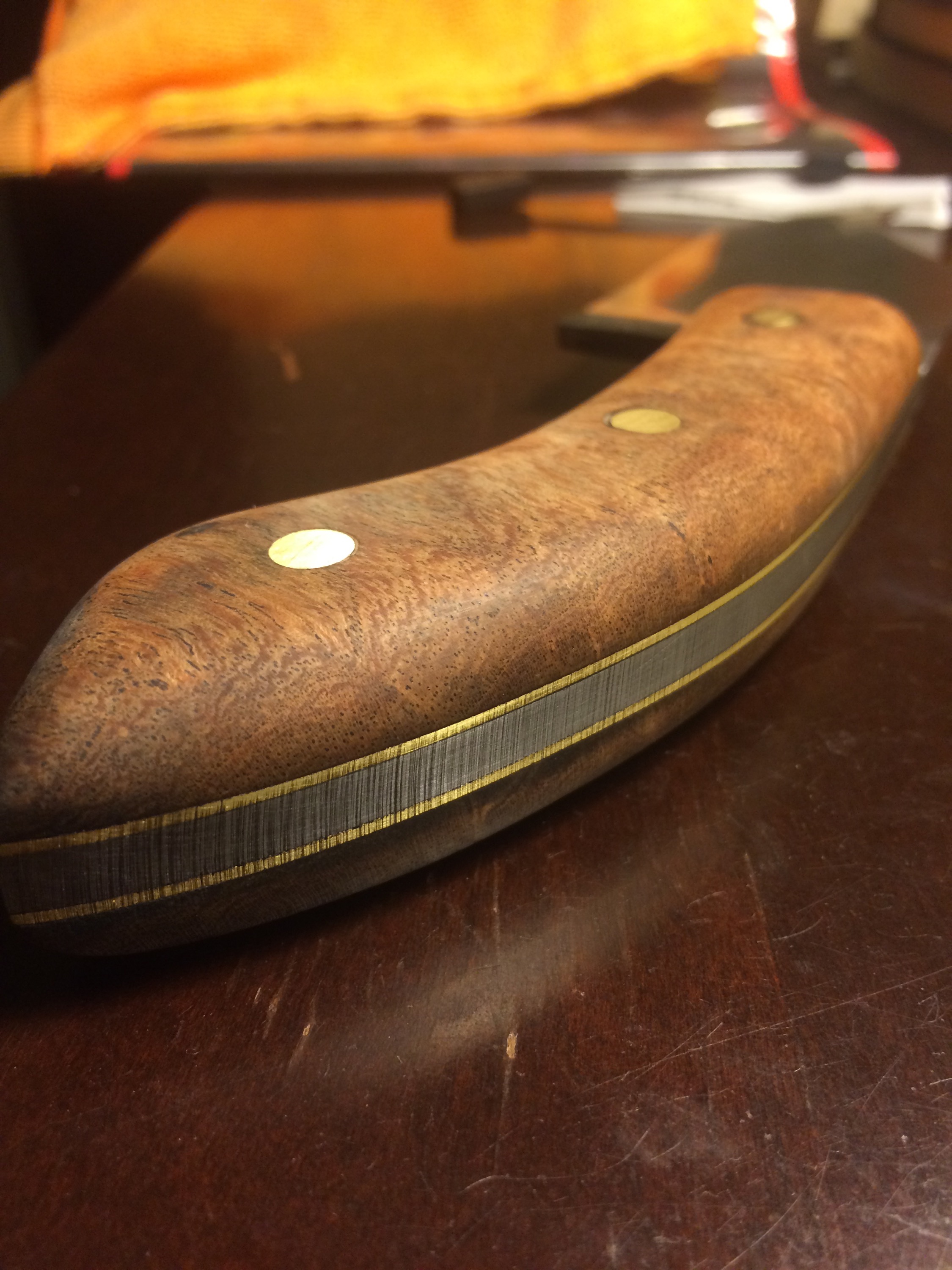
 Lovely mesquite wood, milled by my cousin from Texas…
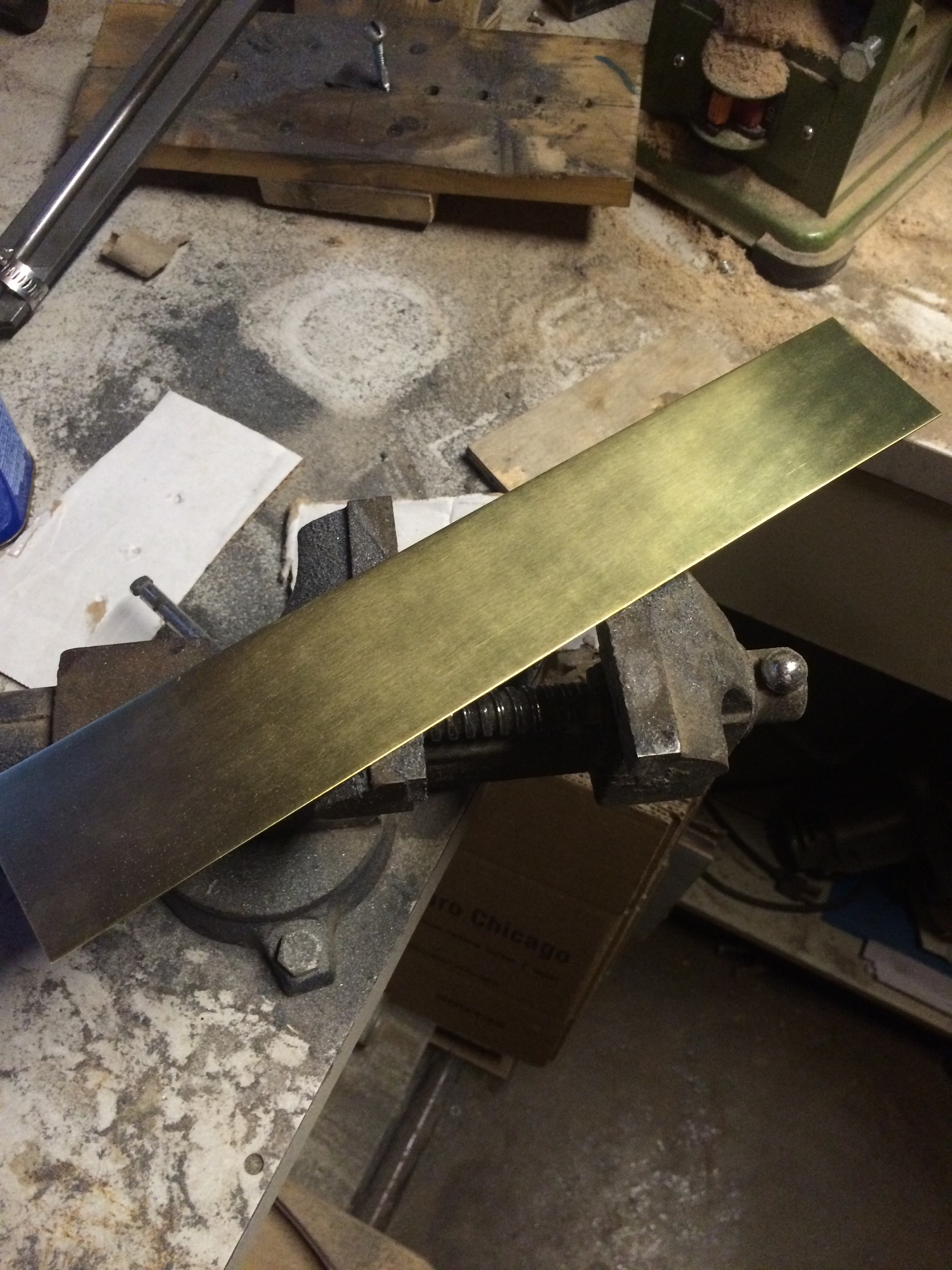
In keeping with the idea of letting oneself shine, I picked up some brass for a golden lining:

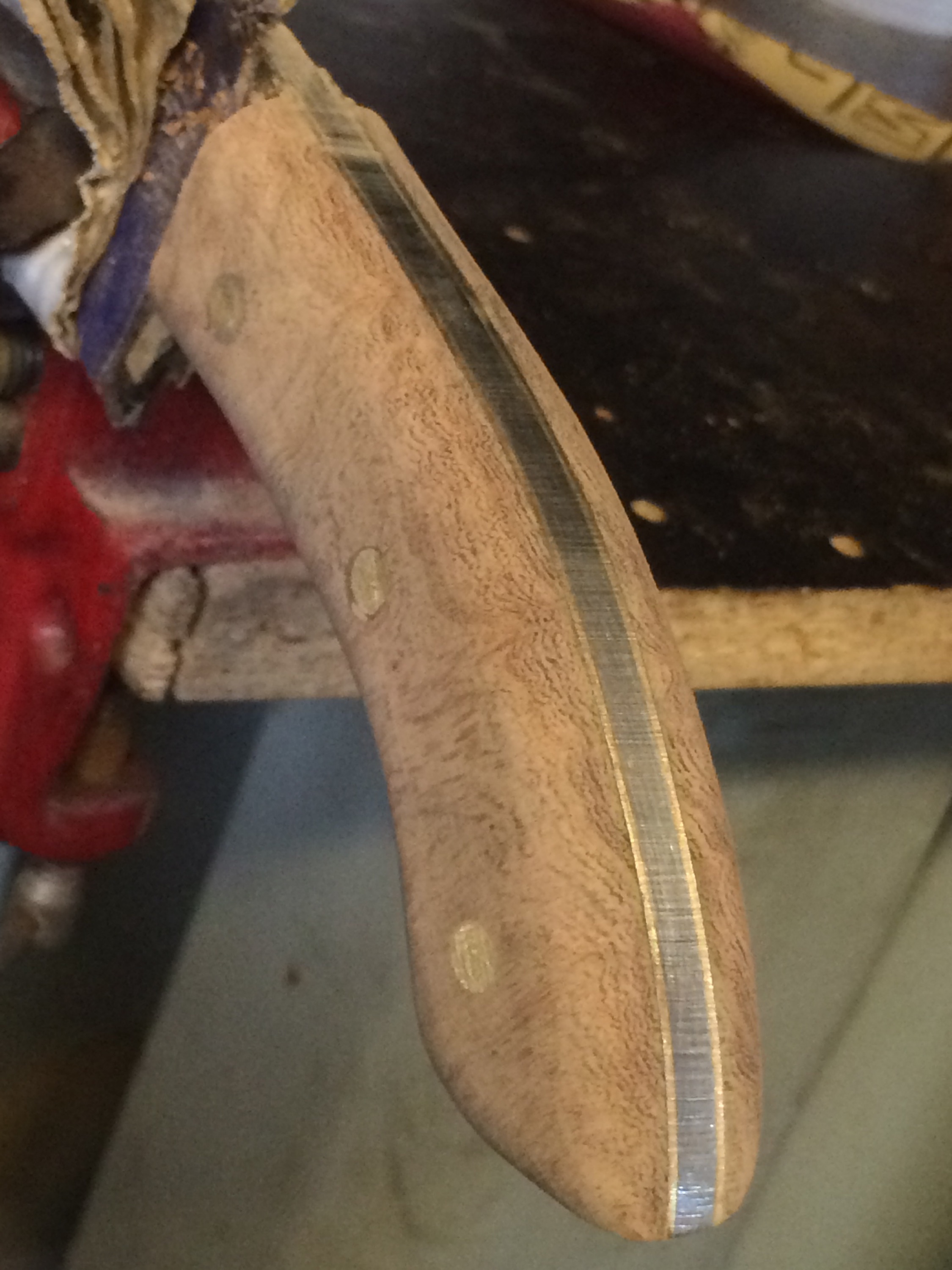
My lovely millwork…  After grinding off the excess, this was revealed:

  He got rather warm whilst trimming the brass and I was afraid the epoxy would lose it’s bond or worse, the blade would lose its temper.  So we took a sandwich break to cool off….


 Sometimes you have to take a break from everything before you can find yourself, your real self.  Take all the time you need.  This is the lesson of the Querencia.