Knifemaking: an unexpected party, and the Cowpoke

“There is nothing like looking, if you want to find something. You certainly usually find something, if you look, but it is not always quite the something you were after.”
― J.R.R. Tolkien, “The Hobbit, or There and Back Again

My Dearest Young Friend,

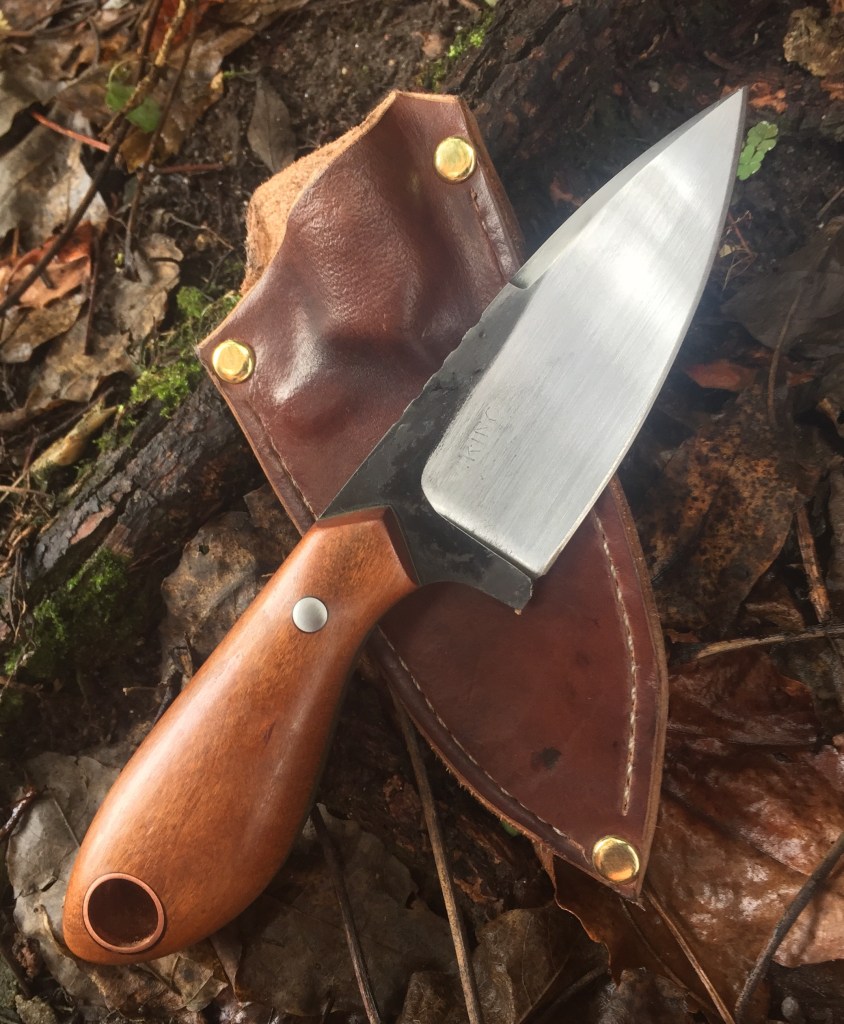
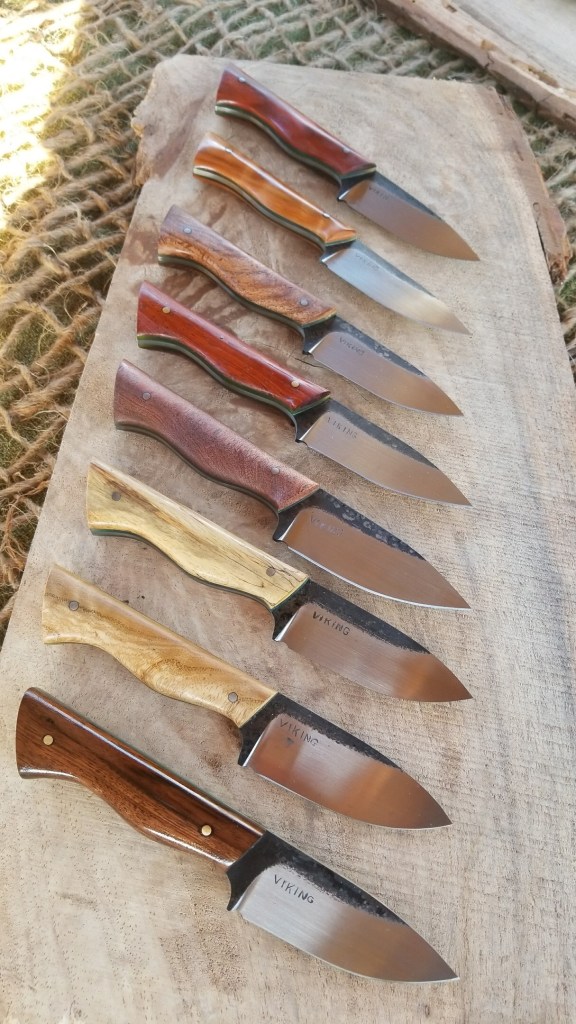
I was told you have made it eleven times around the sun this year. Eleven! In celebration of this, your dad commissioned me to make you a special knife, which was convenient because I prefer to make knives that are special regardless! I like to make them out of things I find- in fact, the knife I made you was made out of materials that I found in the garbage. The blade is made out of an old bedframe that I can harden and the handle is made from walnut pulled out of an abandoned house.

I make a lot of these particular knives. Anytime I see a bedframe in the trash, I pick it up and take it to my shop. Not all bedframes make good little knives but enough of them do so that it becomes worth my while to pick them up. It is through these little knives that I can explore and just be curious. I use whatever I have lying around the shop for the handles, or I try out ideas, or I just tinker around with no particular goal in mind to see what will happen. Sometimes nothing happens, but sometimes I can make something special that didn’t exist before I made it.
This creates a wonderful feeling that starts in my head, and goes through my arms and out my fingers, and keeps on going down my legs out my toes. I think you know this feeling. Perhaps you get this feeling when you read your books by Mr. Tolkien, or when you play Breath of the Wild. There’s always something good on the next page or just down the way- you only have to go looking for it. Even if you don’t find anything you might have made a new friend, or learned something about yourself, or your brothers and sisters. That is something special and should be celebrated- because sometimes the best party is the unexpected one.

As a grownup I sometimes forget that the unexpected and unknown can be good things- I started making knives to remind myself of this. It takes courage to be curious and explore and it’s important to remember that there’s a big world out there.

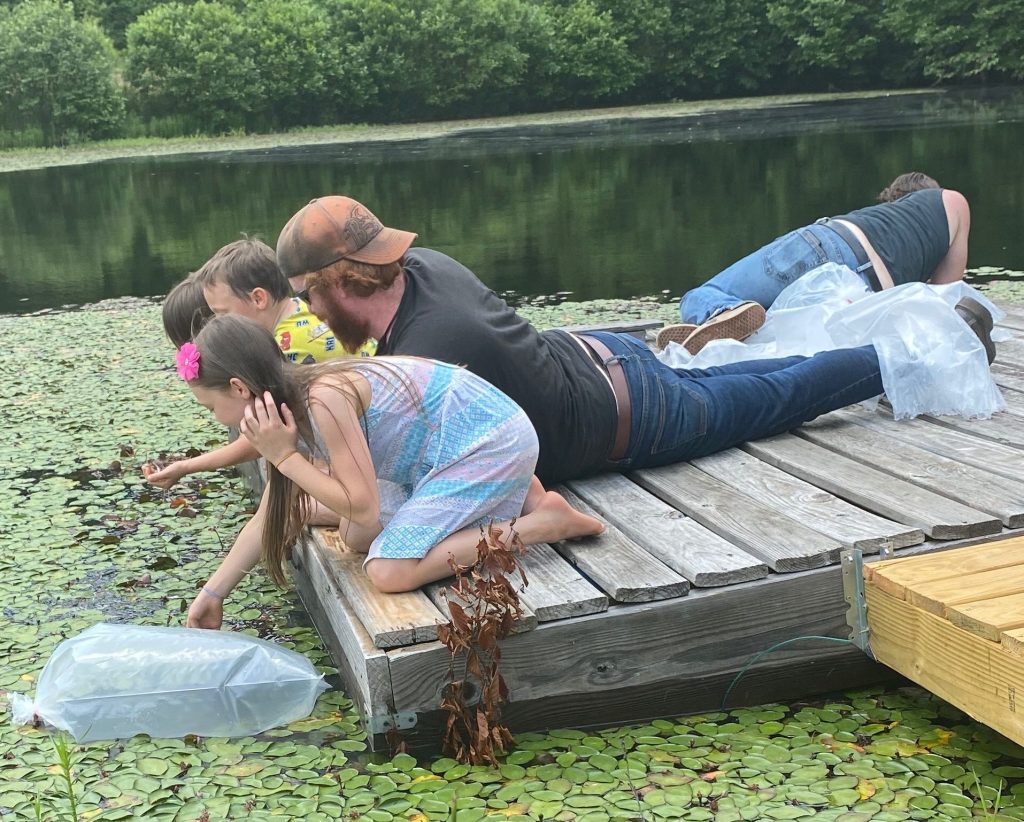
Some days I wake up and have no idea what the world will bring me so I try to approach most every day as an adventure. I spent a couple days each week of the past year helping your dad out at his work. One day I showed up and he told me we were going to stock the pond at your house with fish. We got in his truck and went to the farm supply store and your dad got something to the effect of a thousand minnows. That was a fun day, and you guys were all there. You never know what may happen if you don’t explore a bit. Thank you for sharing that adventure with me- your mom took this picture:
I hope you have a fantastic birthday and you keep reading and exploring!

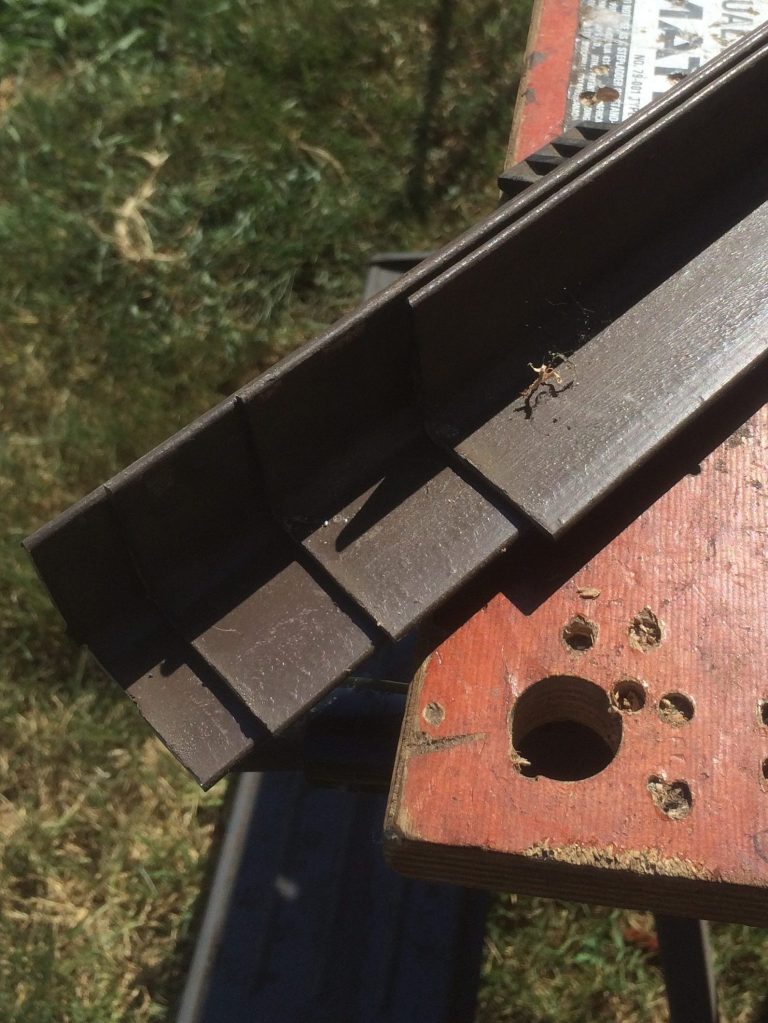
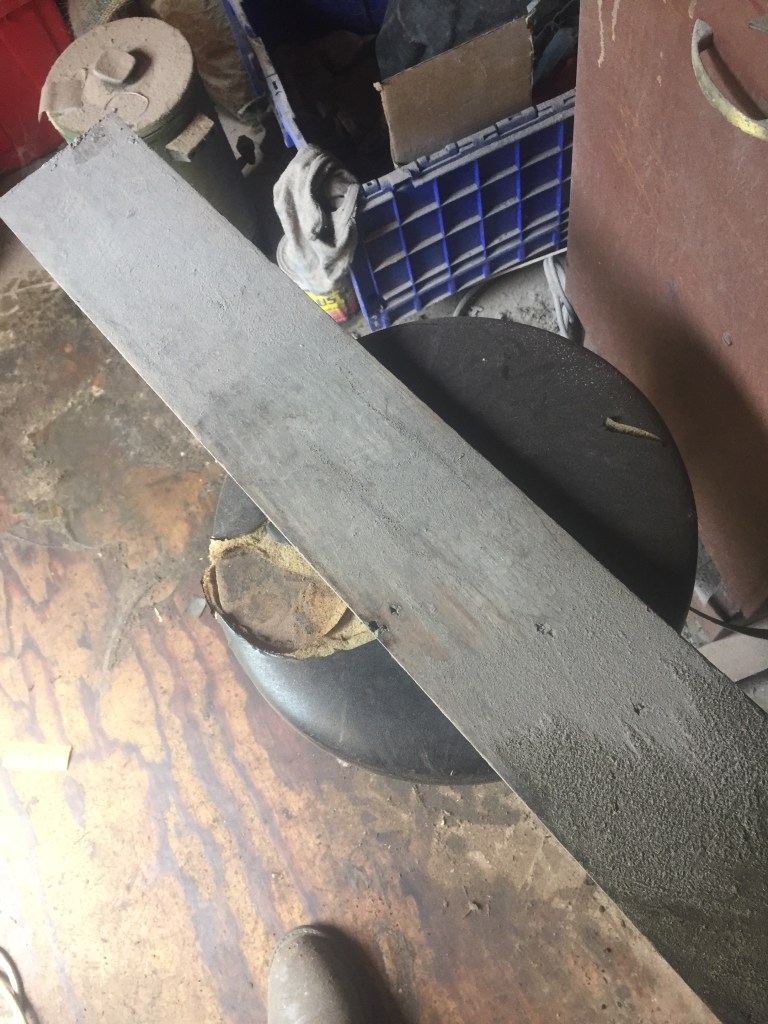
The knife I made you begins with a piece of bedframe that I cut into smaller pieces:
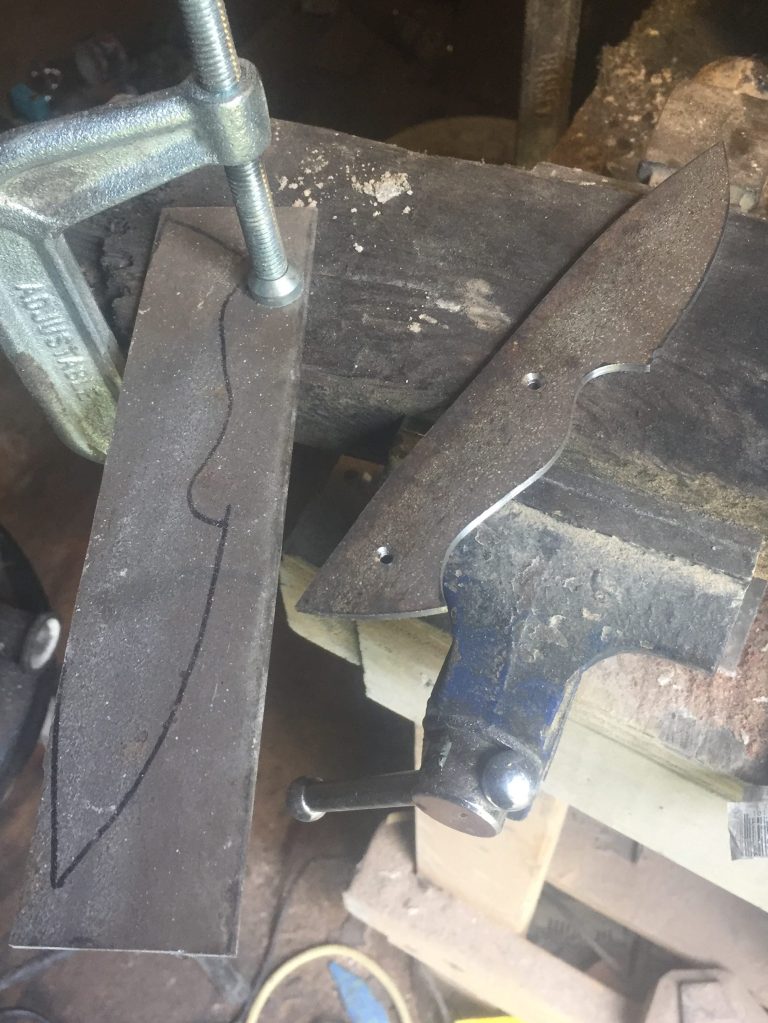
I trace my design onto the steel:

Then it’s just a process of cutting it out- I have special tools for this.

I always try to have a couple of these going and I’m usually working on more than one at once-
Once I get the shape right, I grind the bevel in-
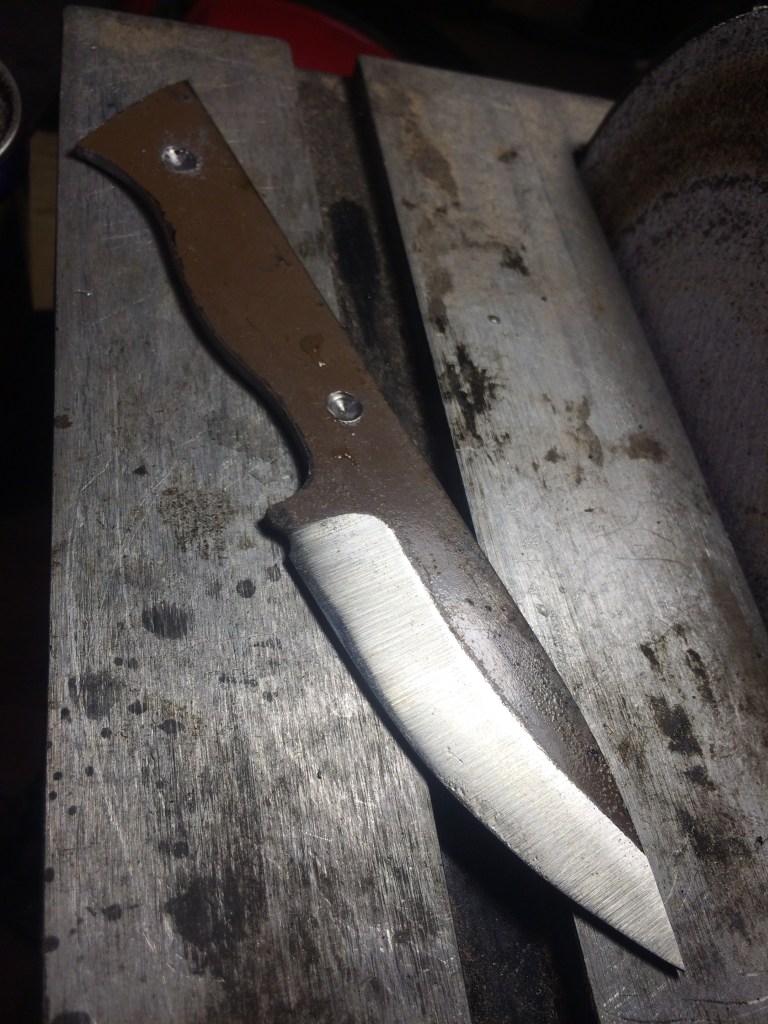
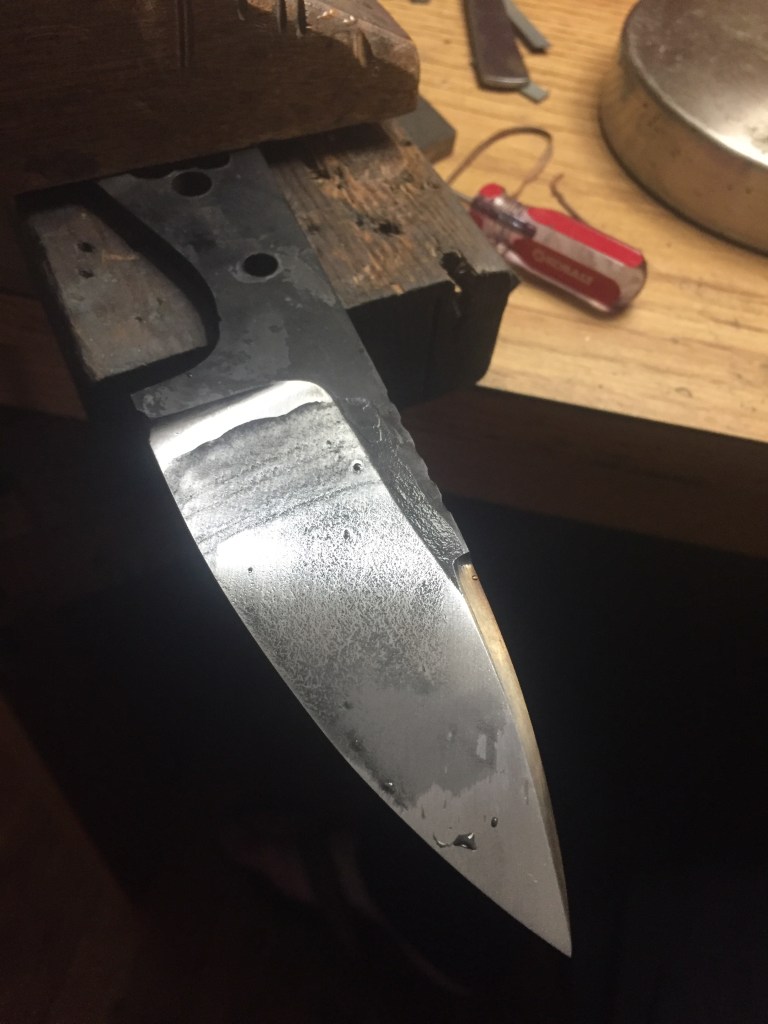
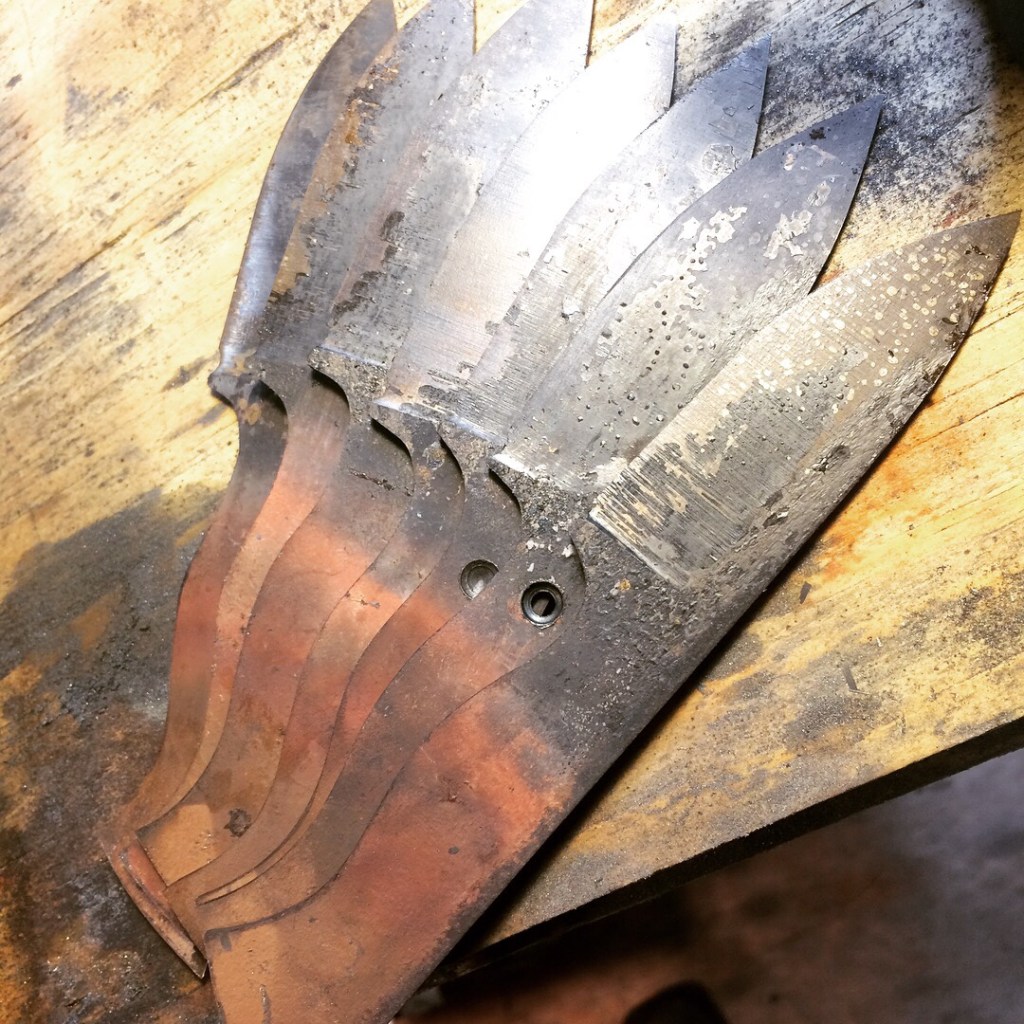
Then they go into the forge, a controlled fire that gets the steel very hot and hardens the blade. It gets so hard that sometimes it’s difficult to drill holes for the handle pins-
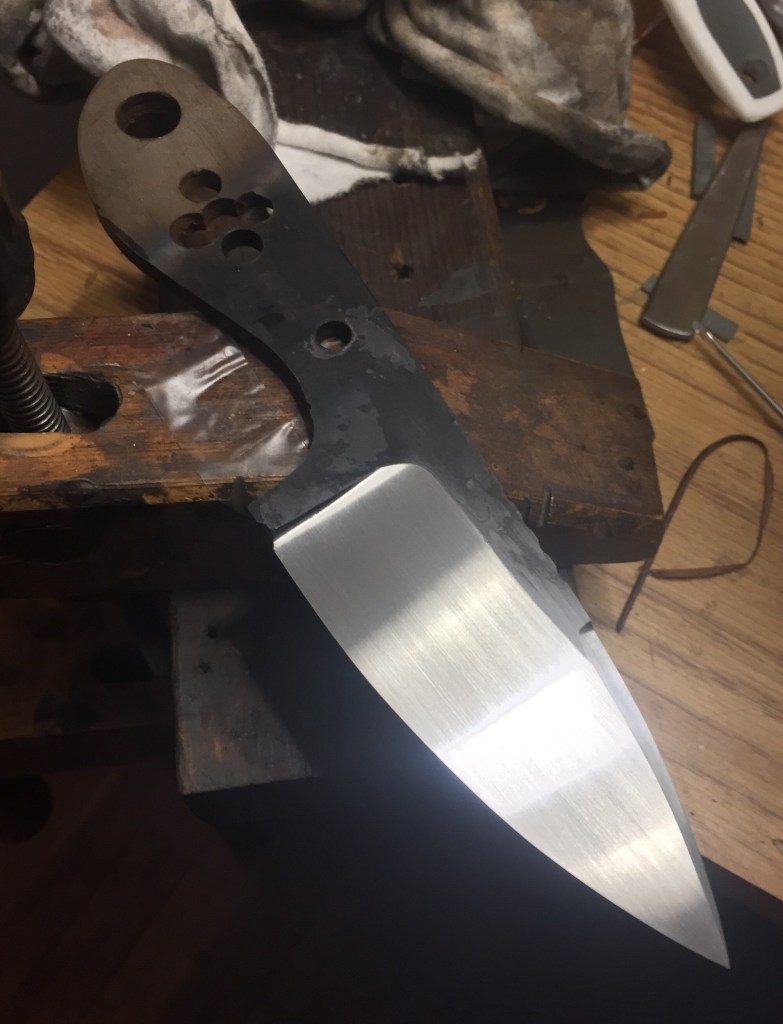
After that I use sandpaper to get the bevels nice and smooth. This helps the knife to cut better-
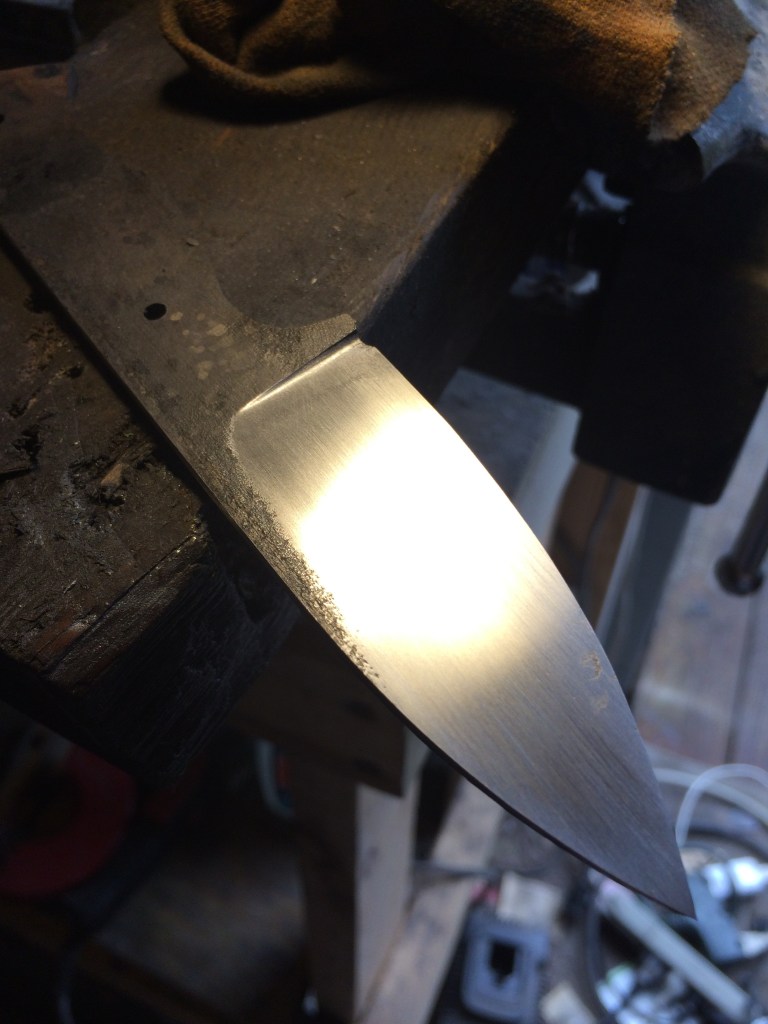
This one is blunted for you, so you can learn the feel and what it’s like to carry a knife-

Here is a piece of Black Walnut. It was pulled out of an abandoned house in North Carolina-
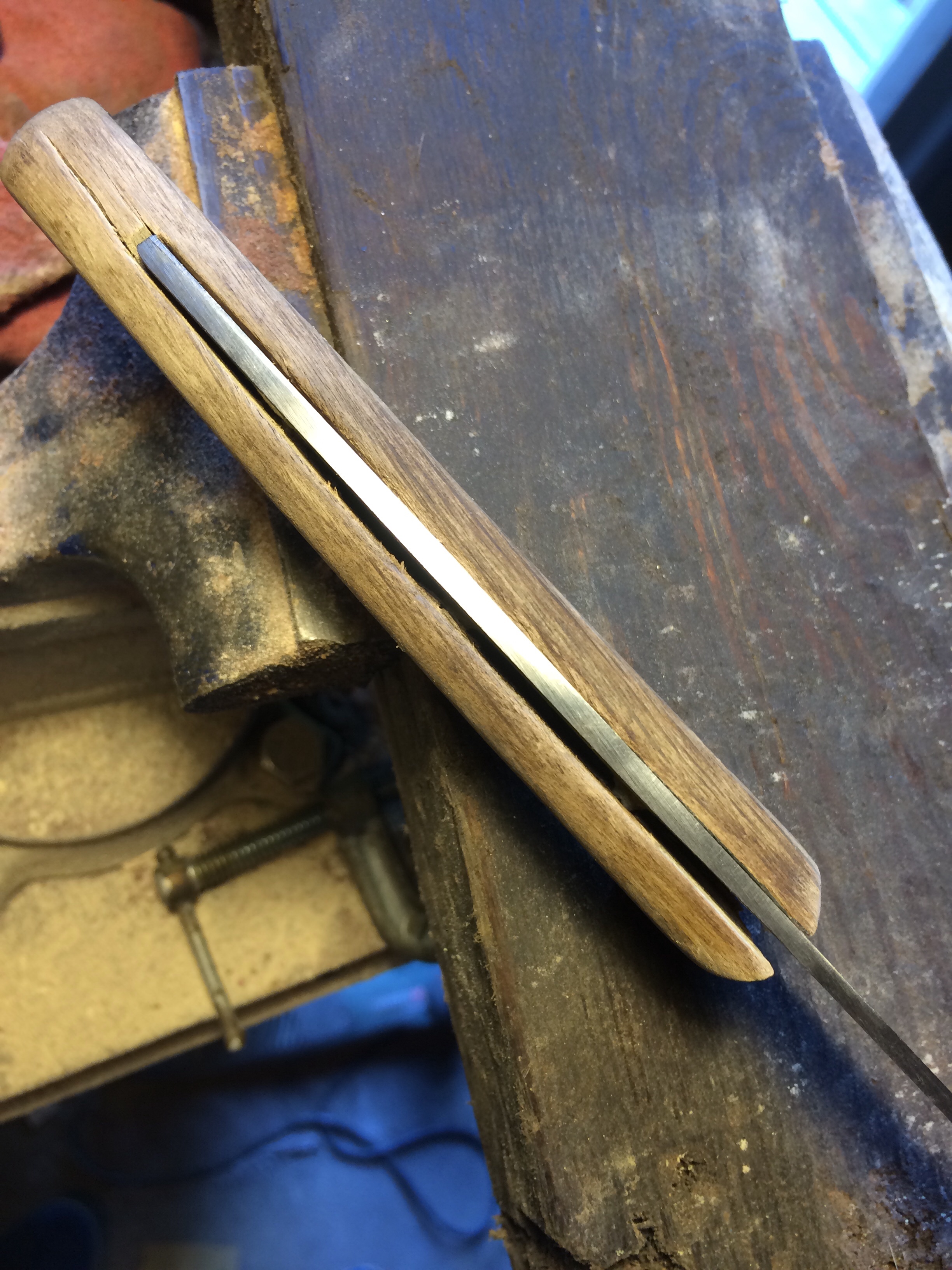
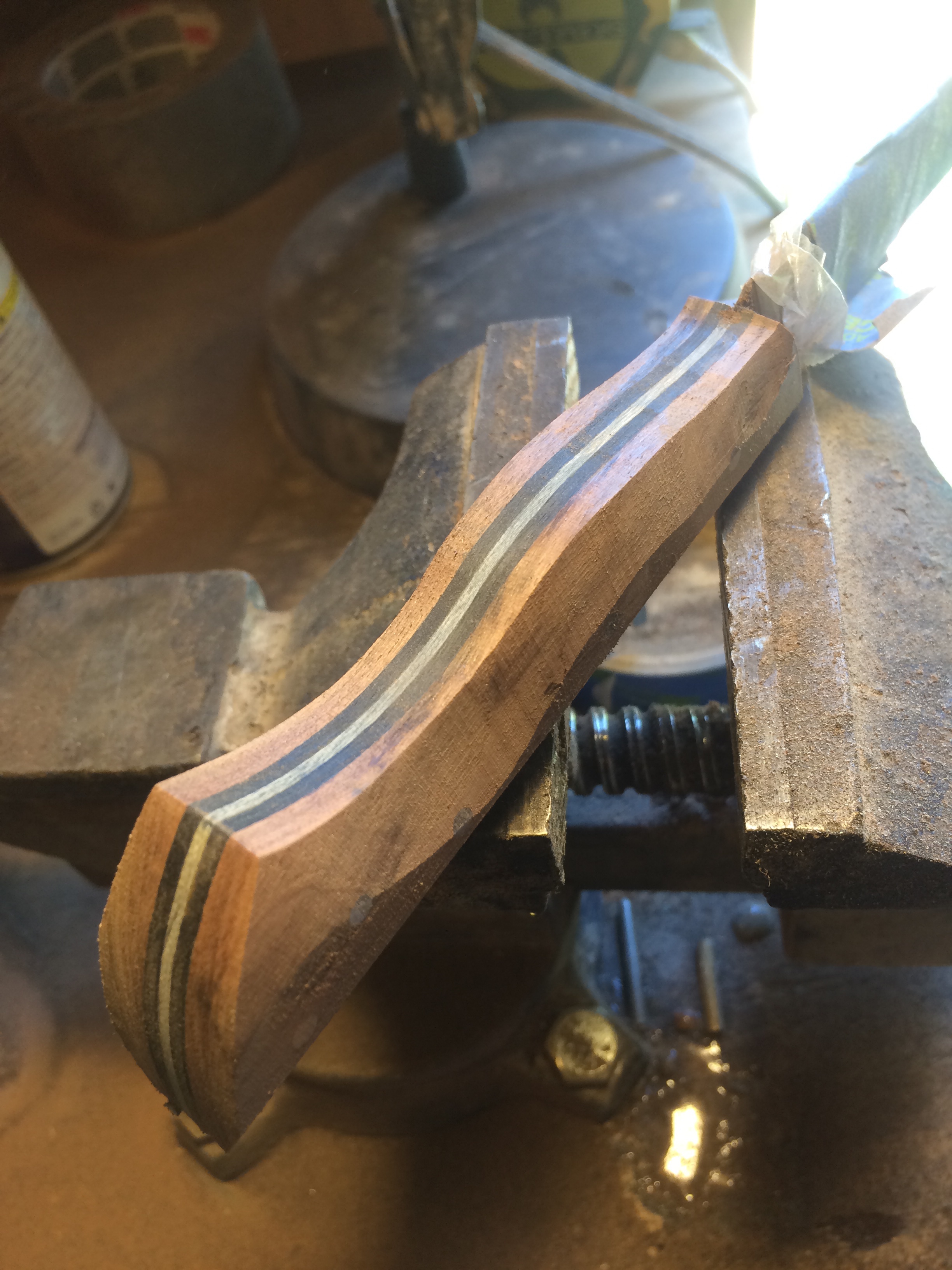
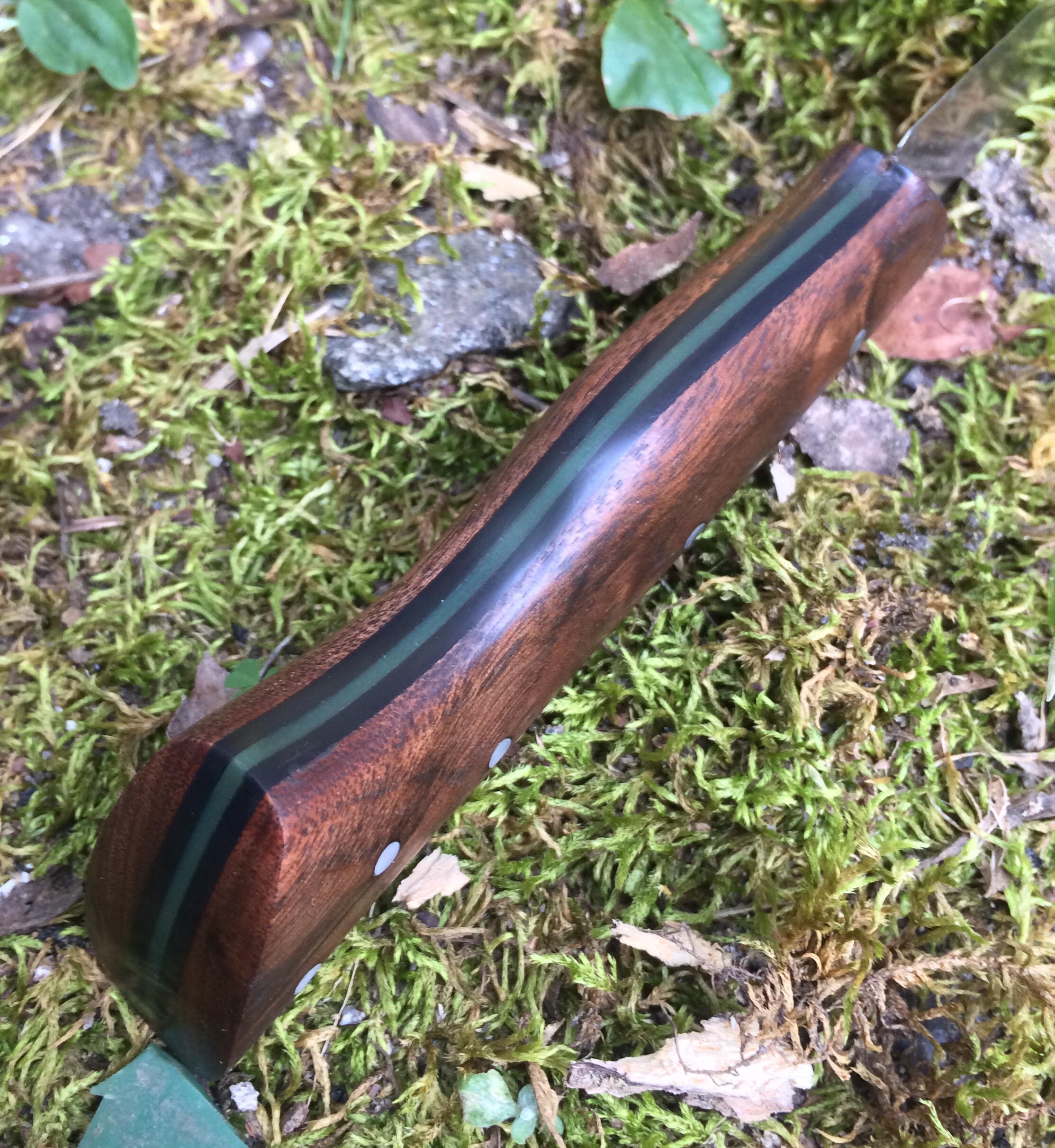
I cut two pieces of it and fit it to the knife. For a bit of color contrast, I use a bit of fiberglass computer board blanks that I rescued from a dumpster-
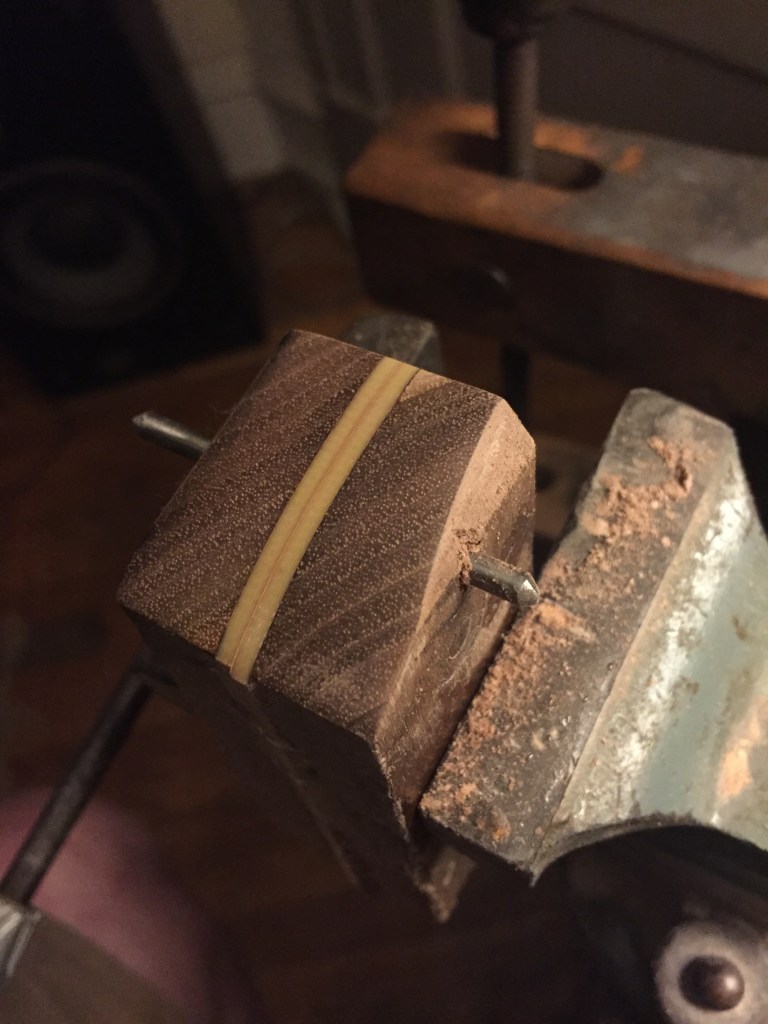
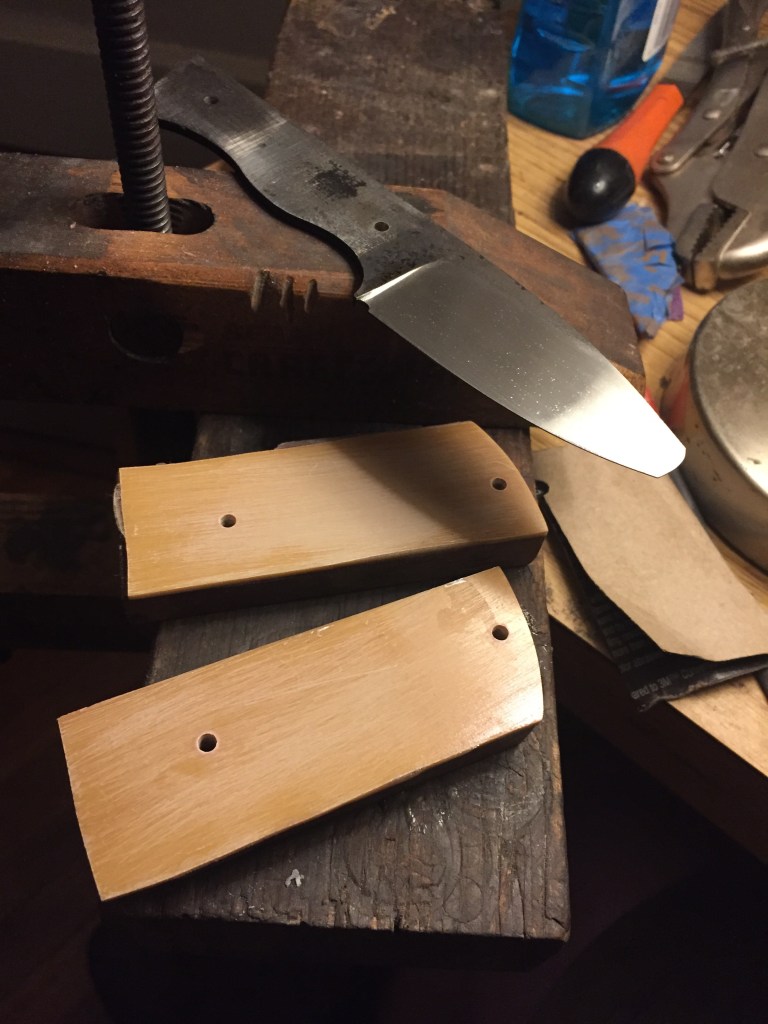
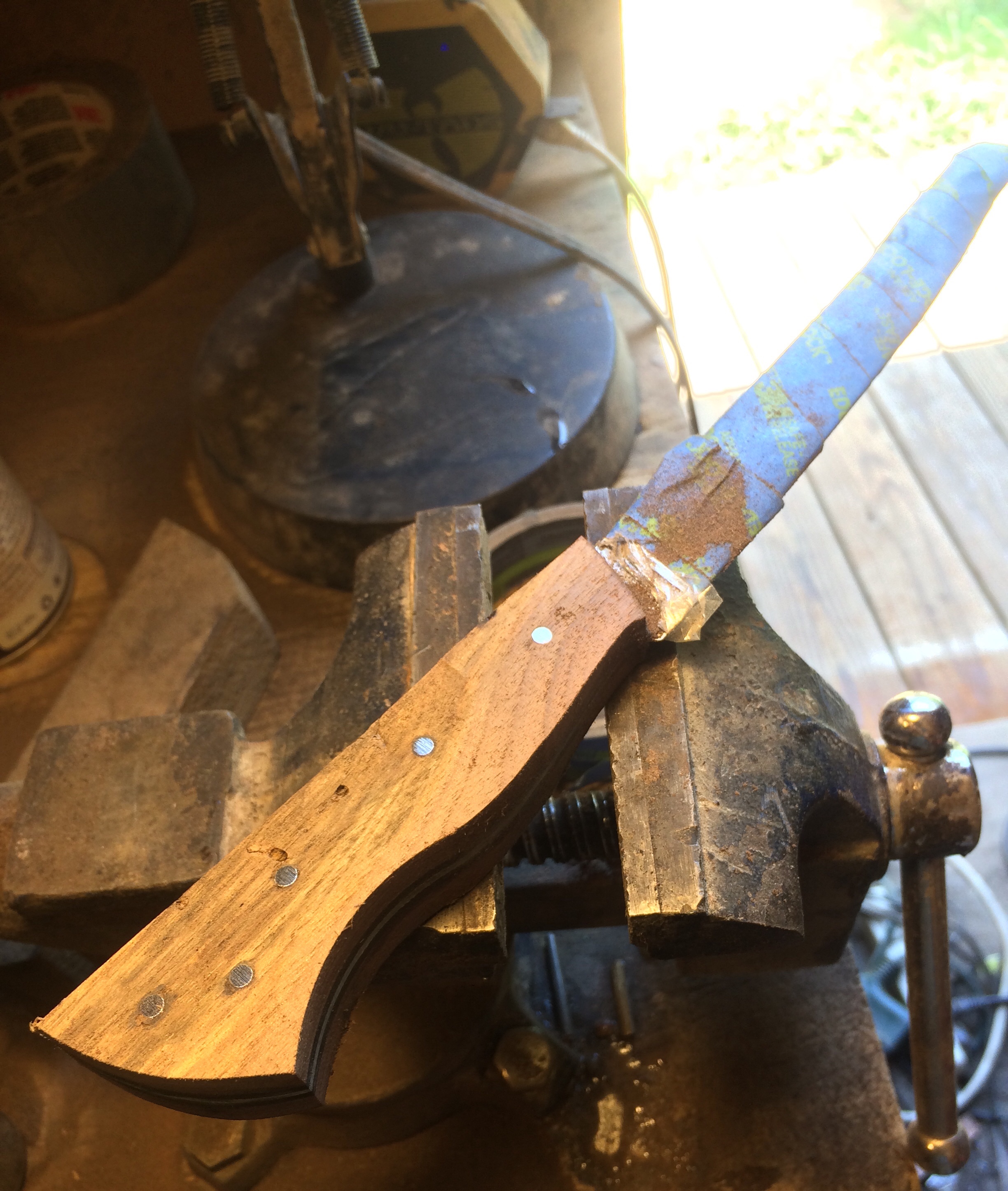
Now it is pinned and glued to the knife handle-

Here is where I shape it….
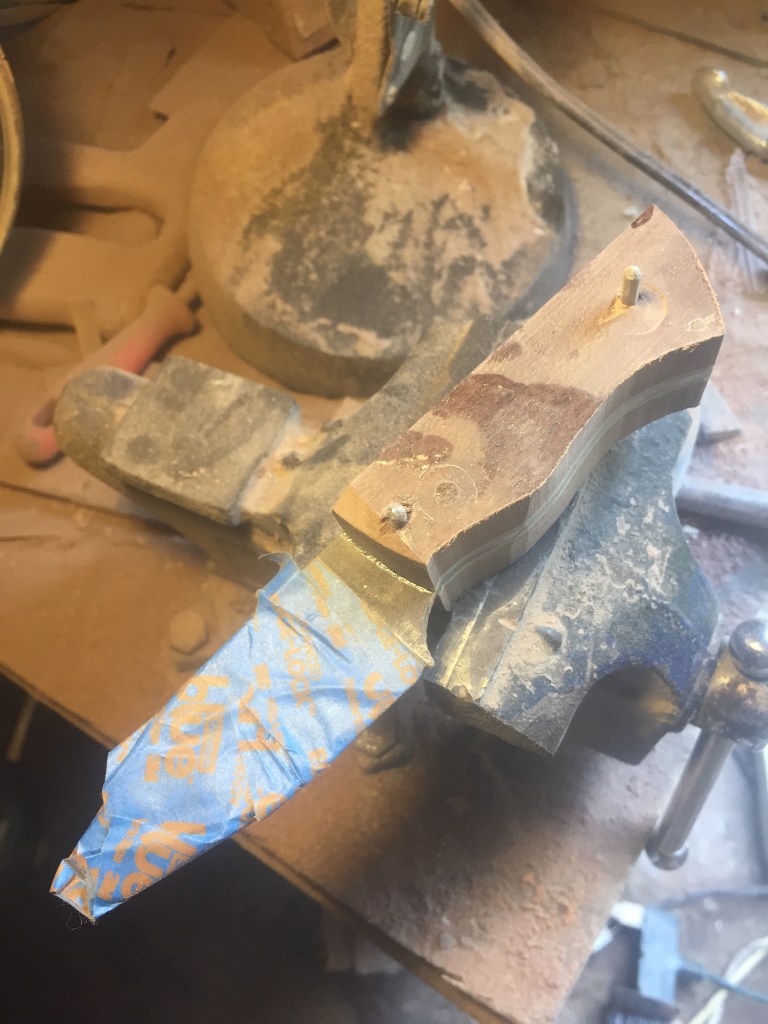
…..and shape it some more-

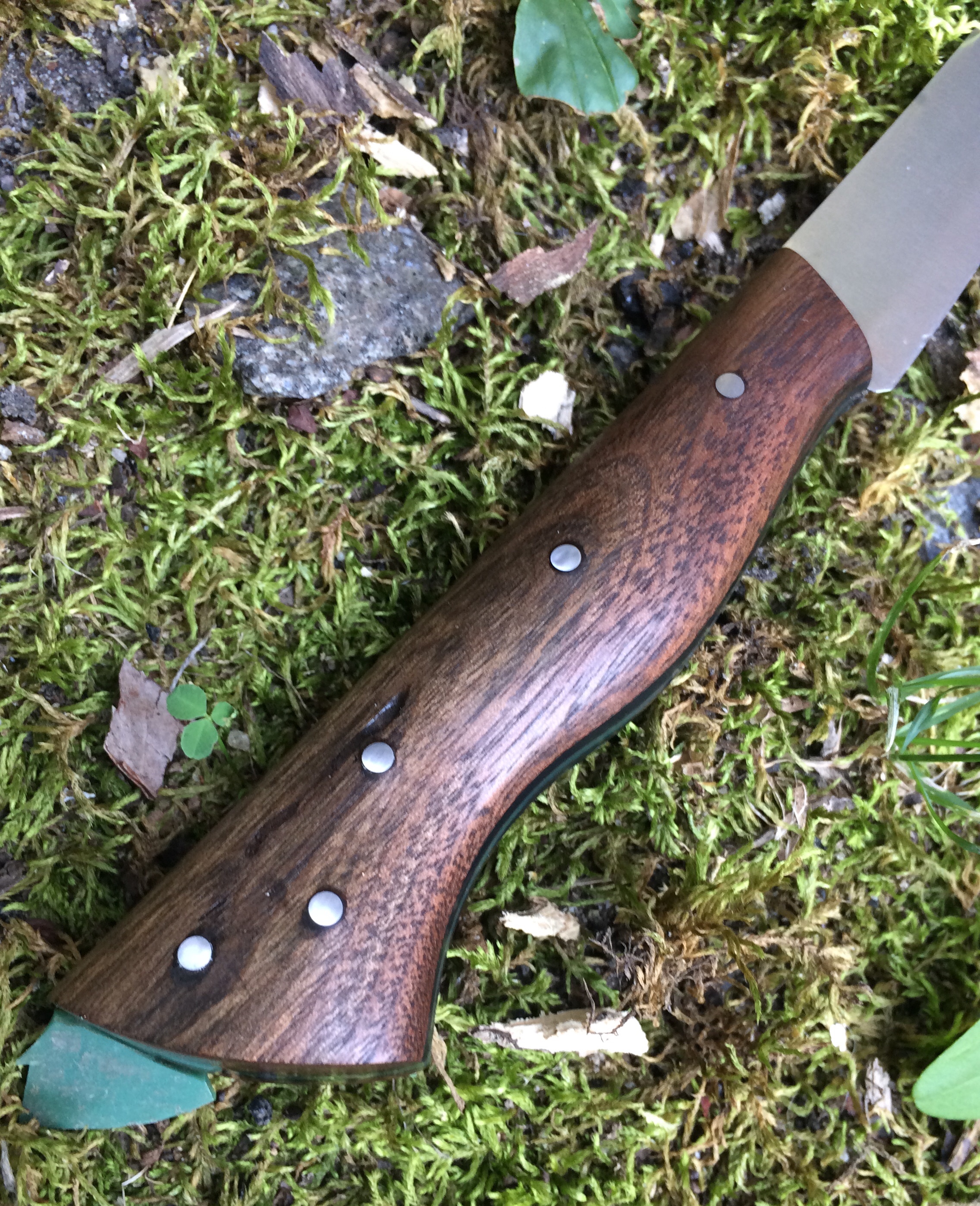
And now I sand it till it is shiny-

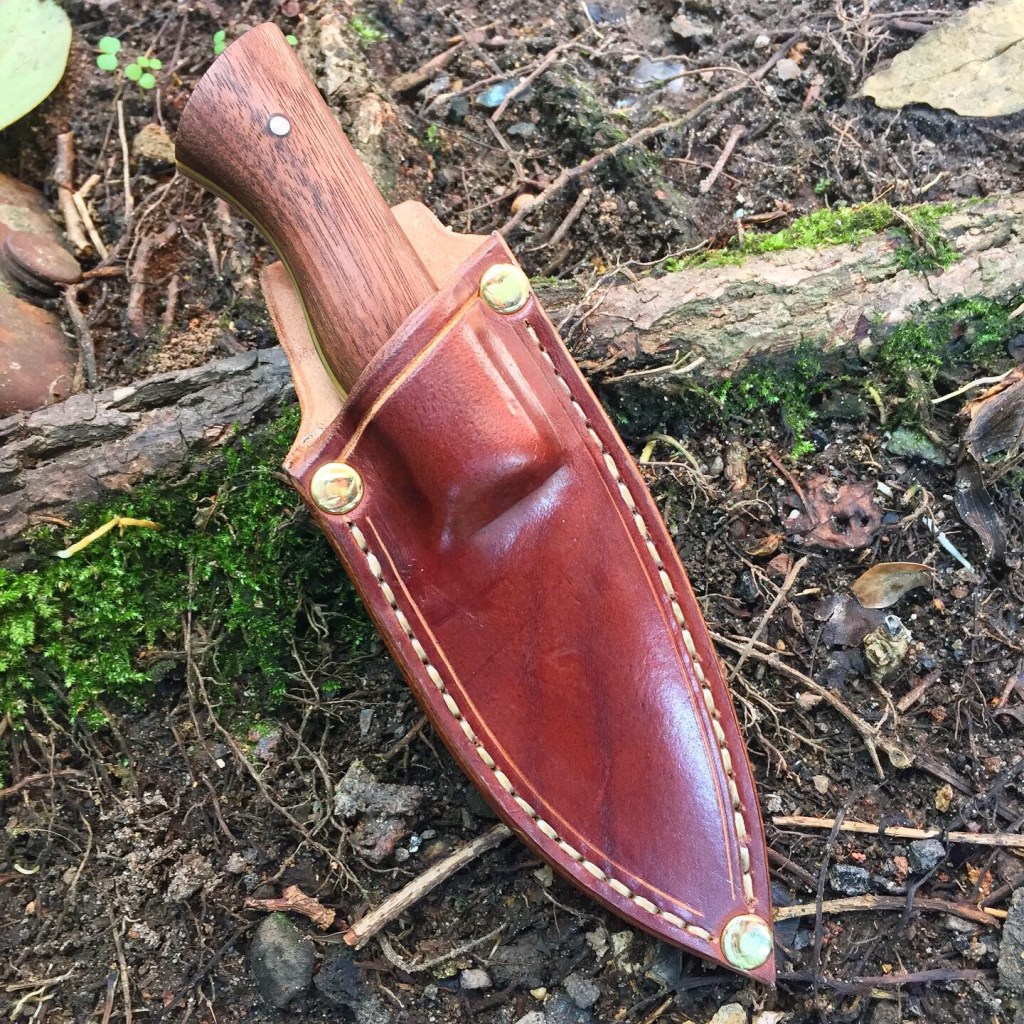
I made you a nice sheath for it so you can carry it around-

Knifemaking: what we do with the unexpected, and the Foundling

“I was once a Foundling.”

Din Djarin, from The Mandalorian

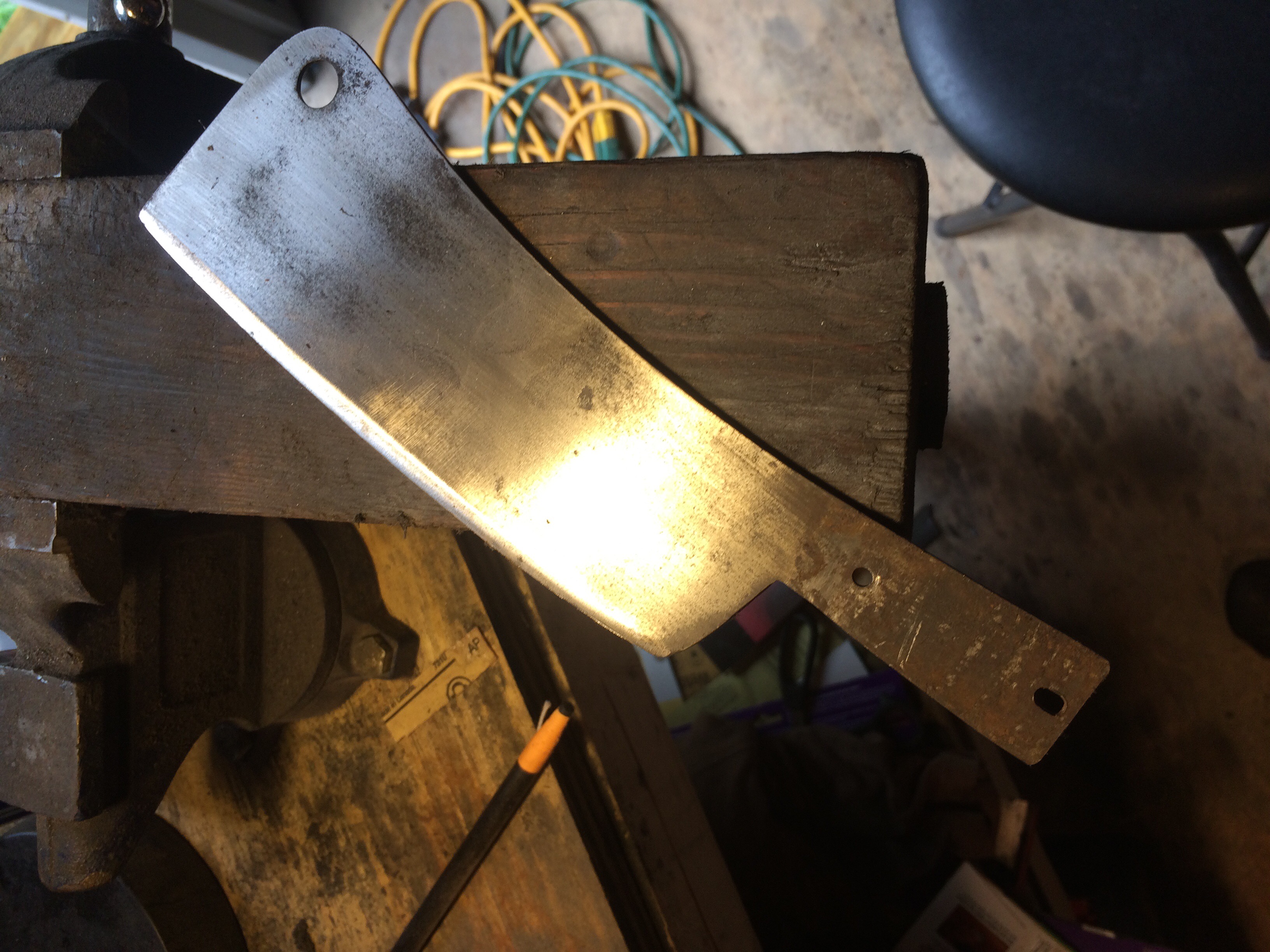
A few years ago I got a call from a gentleman about a knife that needed a new handle. He had a thick Australian accent and told me one of his friends was redoing some walls and ceilings in her house and had found an old cleaver behind the drywall. He asked if I would be able to put a new handle on it, and by the way it was also going to be a wedding present for his friend who found it.

A mysterious butcher’s tool in the walls? A wedding gift? Nuptials without knives are nuptials not worth having. Besides that, certain things in life have a habit of being found when we need them the most. This all sounded extraordinarily auspicious to me. Of course I took the job. I couldn’t have made this up if I tried.

I met my new Australian friend, who at the time was raising Alpacas (because of course he was), at a country bazaar just outside the city and picked up the cleaver. It was important to me to honor the found-nature of this deeply immodest blade of humble origins, so all the material save for the pin stock and adhesives came from refuse dumpsters or abandoned houses. I named the cleaver Wallace, and returned him to my Australian Alpaca friend. As with any other job I dropped the work off, made sure the person paying me was happy, and didn’t think much of it.

I did finally met the lady who found the cleaver at one of our shows, and she has bought a knife almost every year around Christmas time. She got in touch this year about having a knife made, and I realized that her and her husband had never seen how the cleaver was built.

I think the things that find their way into our lives are so much more interesting than the things we seek out. While it’s good to have a plan, it’s also important to acknowledge that plans fail, often spectacularly, and the best things happen to us while we’re planning something else. We stumble into to deep love, or fall into a career, and despite our best calculations, the special moments and deepest connections in our lives seem to occur solely at the whims of the universe. Very much like Wallace the Cleaver and his handle made from garbage that somehow found it’s way into our shop, it’s up to us to choose what to do with the things we find ourself with.

The Foundling was a commission for her husband, who was always stealing her knife, and was built using all sorts of materials that found their way to me.

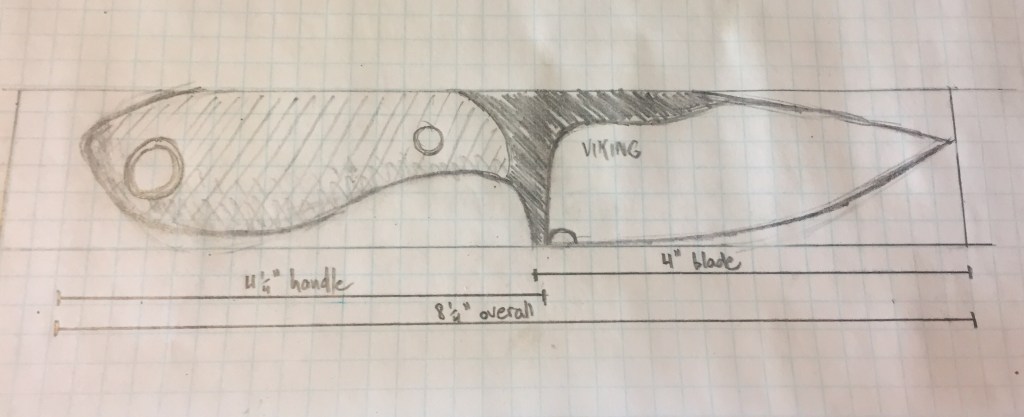
The Foundling starts with a quick sketch
The scribe lines show where the final cutting edge will be
Jimping is filed in on the spine for grip
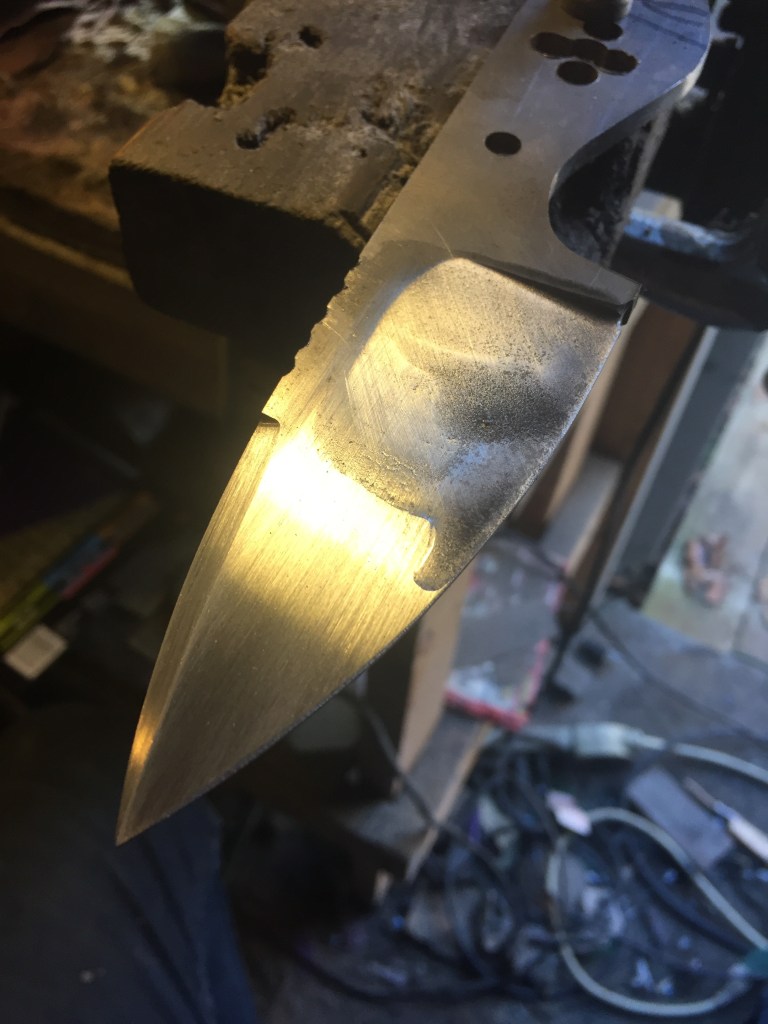
The grind at the top of the spine is called a swedge, and give the blade more of a point
Wet sanding before hardening
Into the forge
After the quench
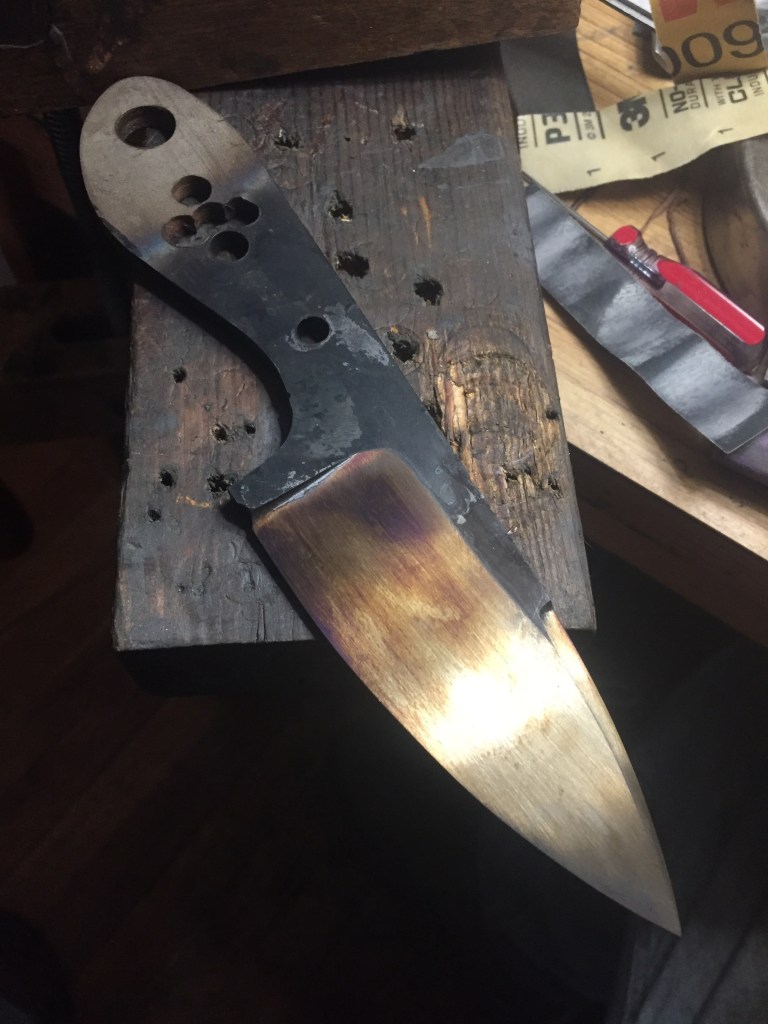
…and after tempering
More polishing
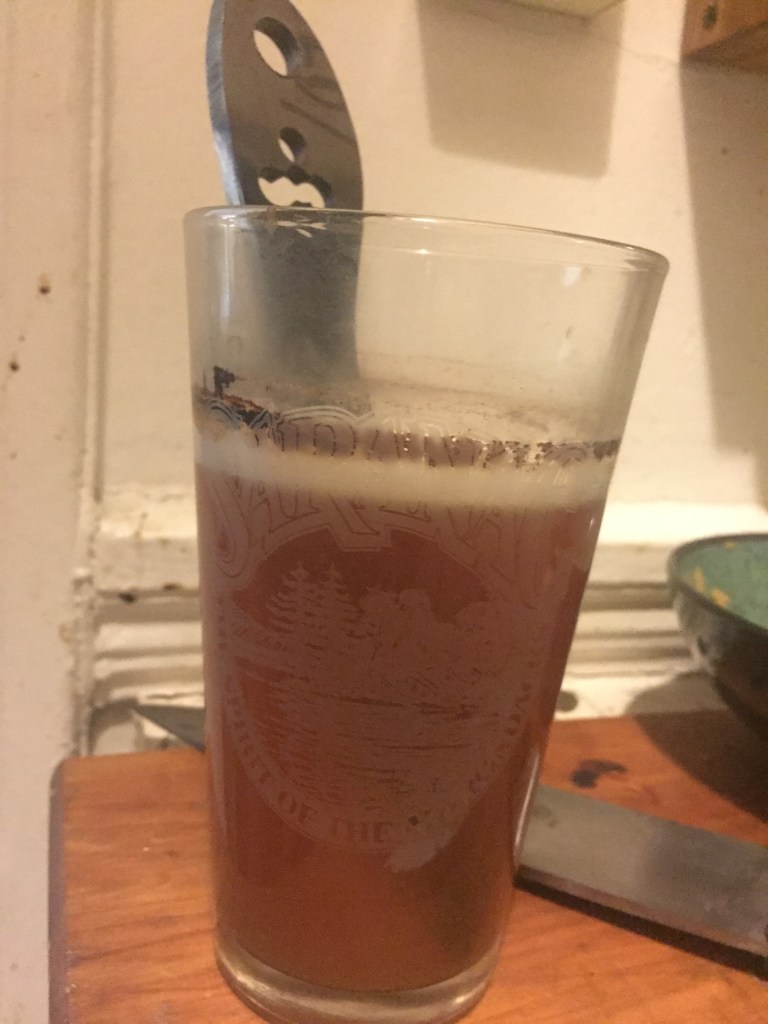
A quick etch in acid
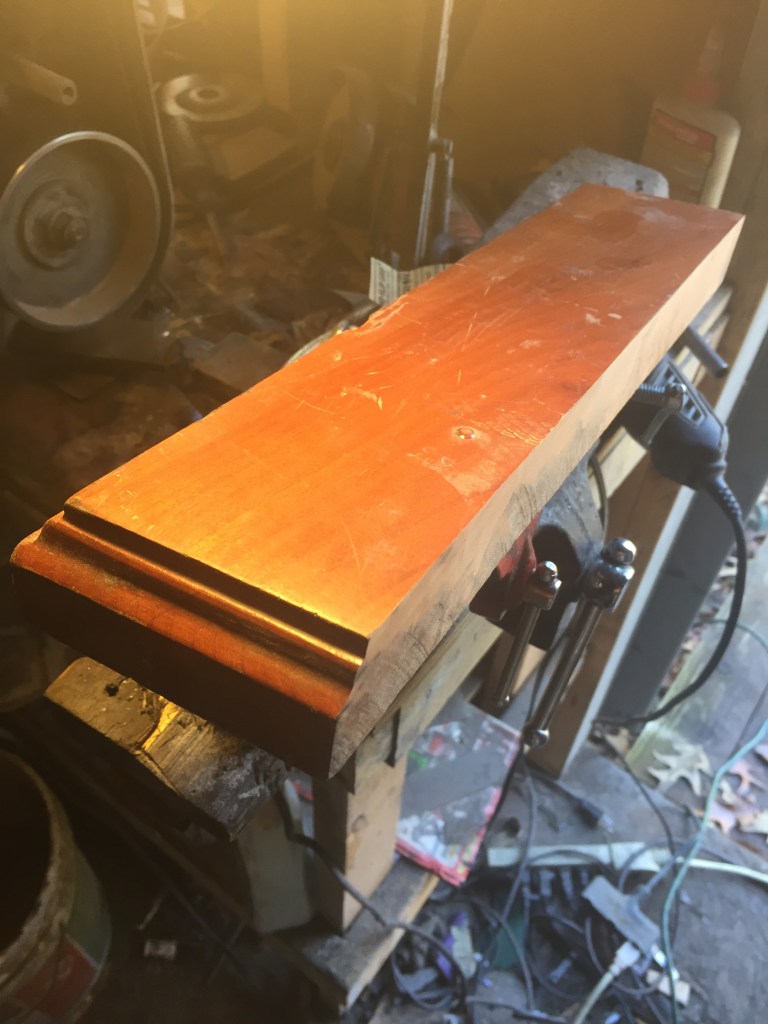
A piece of Cherry wood, which came off an old mantlepiece
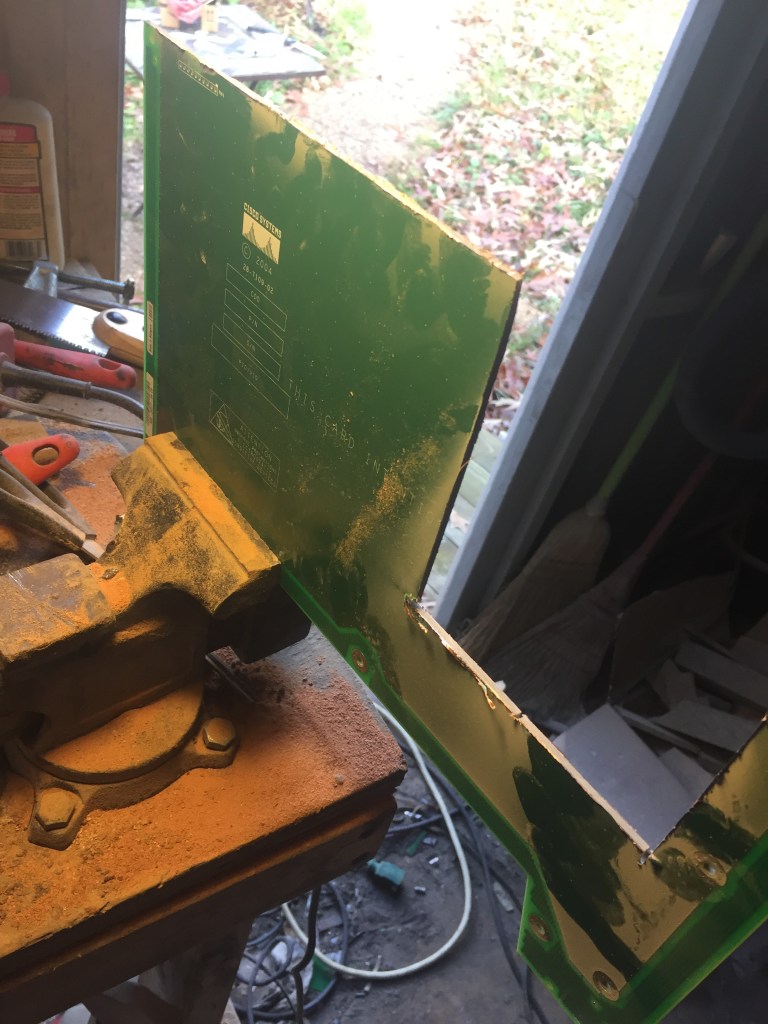
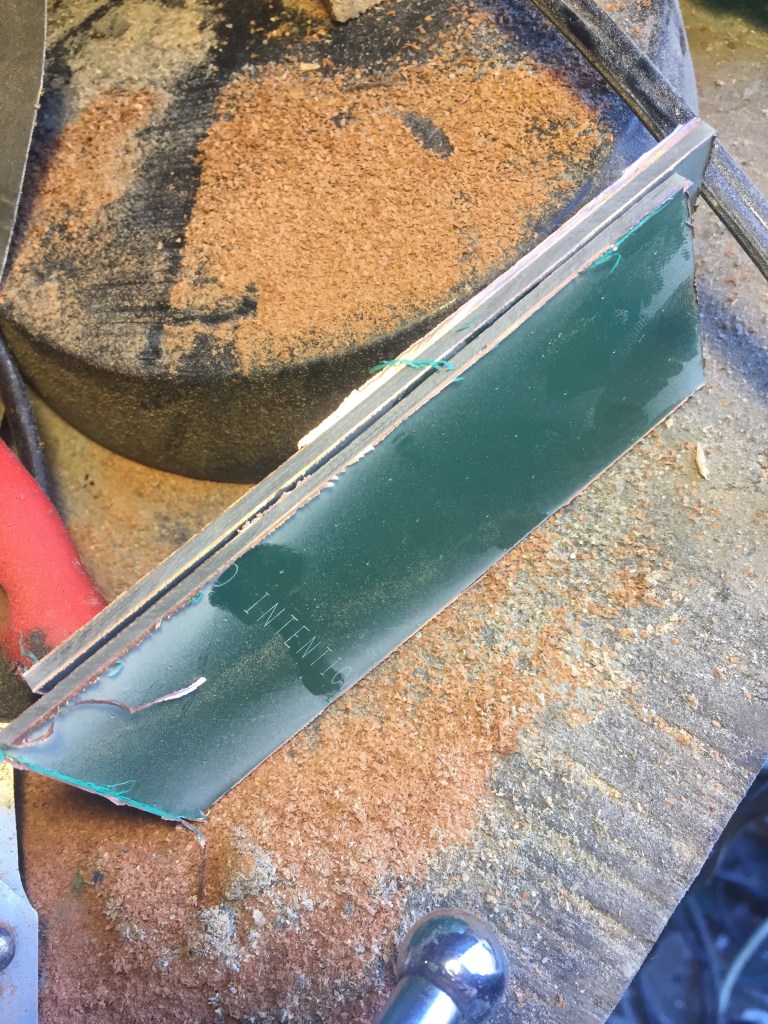
A PCB blank, rescued from a dumpster
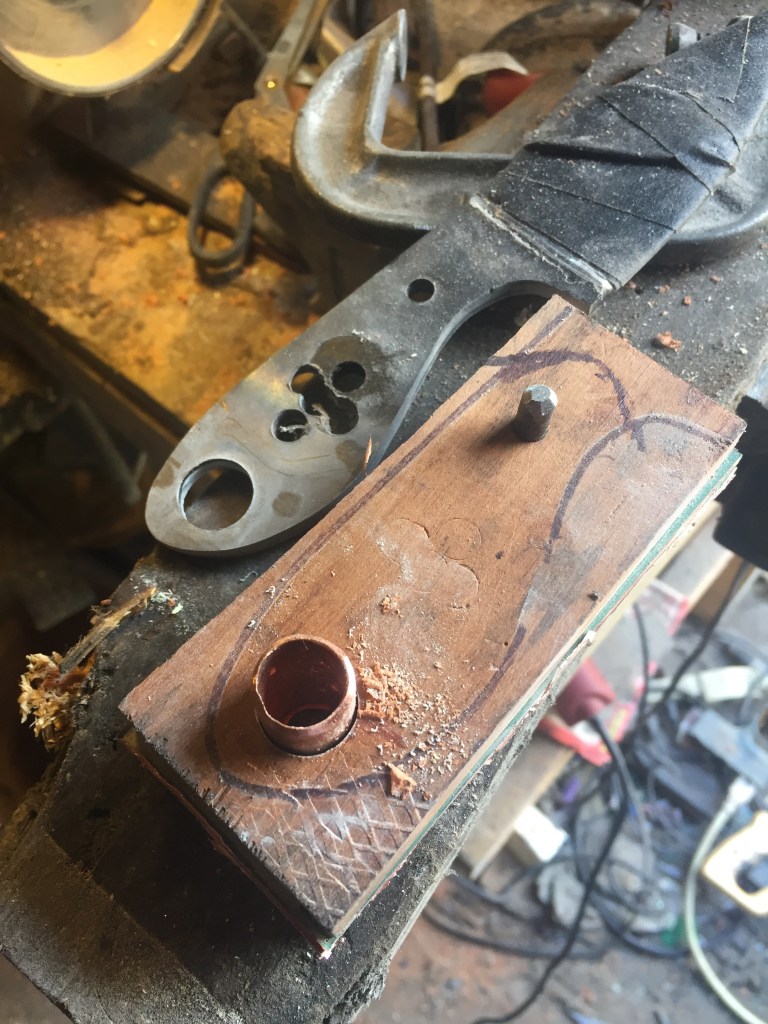
A piece of copper plumbing pipe

Knifemaking: a restoration

“You didn’t get the quest you wanted, you got the one you could do.”
Lev Grossman, The Magician King

Every so often our shop will get calls to put a new handle on an old knife.  We always make every effort to do as many of these as we can.  

The ability to make something broken work in the way that it once did is a virtue.  This is especially true when the something that was broken is special to someone.  In most instances it’s pretty easy to replace what was broken, but the sentiment becomes lost.  Whenever possible I always try to fix what is broken, especially in the shop.

I treat these repair jobs as an exercise in incorporating as many broken or discarded things as possible into the finished product- it gives something totally unique back to the client.   Our jobs as craftsmen are to give a voice to our materials, allowing them to speak for themselves.  Many times we don’t choose what comes to us but nonetheless it is our job to turn what comes our way into something beautiful.  Making something better than it was before-this is the goal of a skilled craftsman.  For those in the know, these are the things that put the color in our world.
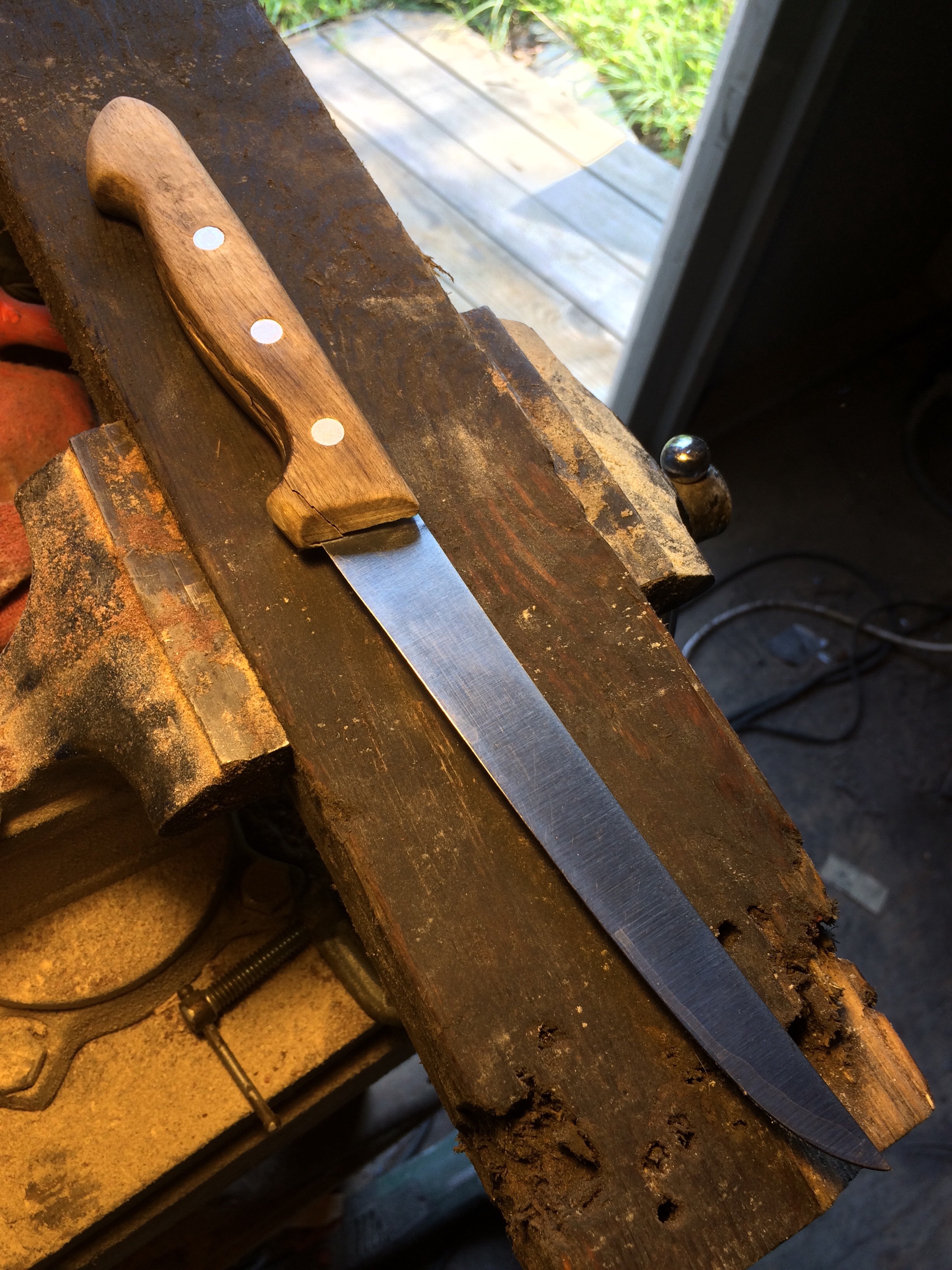
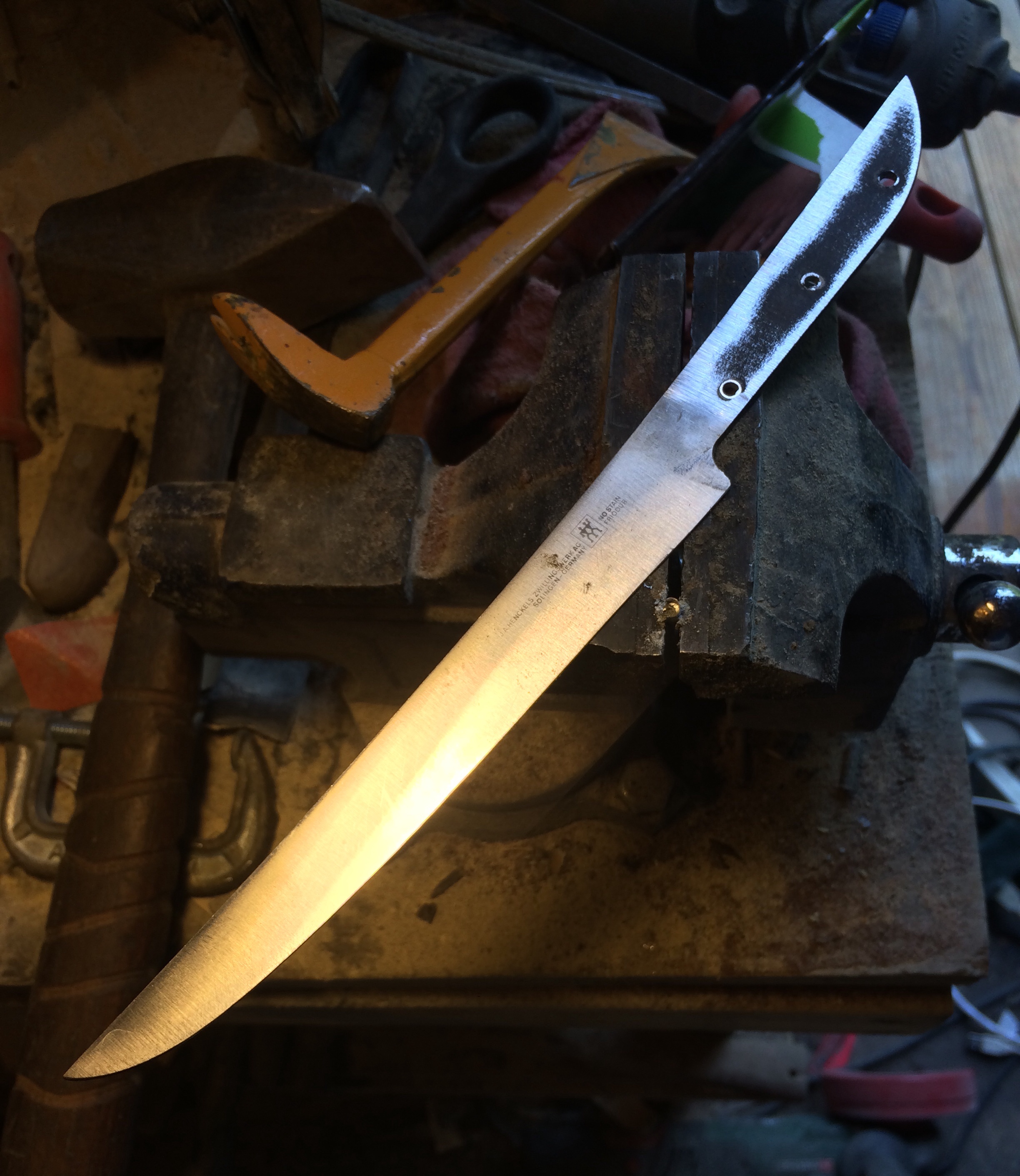
A gentlemen contacted us about re-handling an old boning knife he got in the 1970’s.  It was an old Zwilling knife, made from good Solingen steel, with Zwilling’s proprietary ‘Friodur’ subzero tempering process.  The handle had cracked, as natural materials tend to do over the years.

This one was partial tang, meaning the metal in the handle doesn’t run the complete length of the handle:

First, we remove the old handle and the rivets:

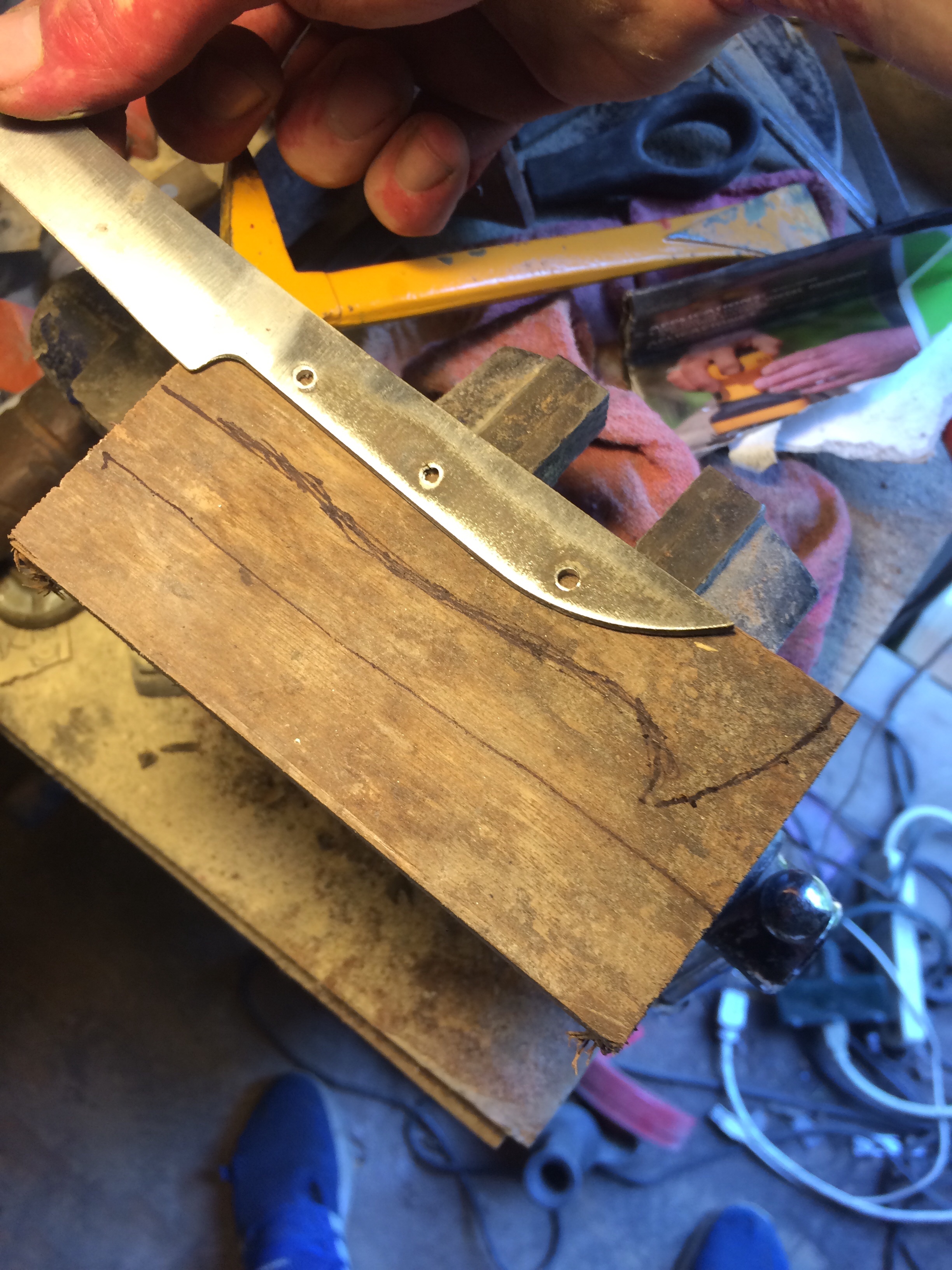
For the handle we’re going to use Black Walnut, which was formerly a baseboard salvaged from an abandoned house in North Carolina:

To extend the tang, we’re going to use a fiberglass computer board spacer which I dug out of a dumpster at one of my workplaces.  Though it looks yellow, it will turn green as it’s polished:

img_6337

Drilling the rivet holes.  The black spacing material is a heavy plastic that came from an office mail separator:

This is the top of the handle, closest to the ricasso of the blade, of the belt sander at 40 grit:

Sanded from 60 to 800 grit:

Ready for glue up:

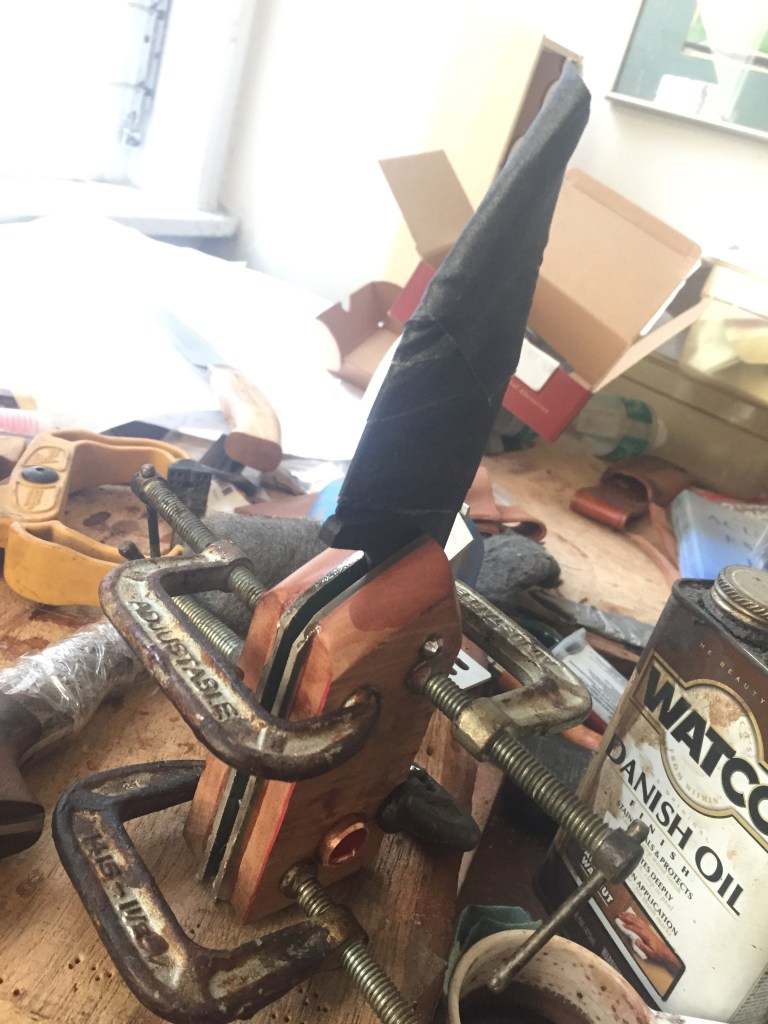
Glued and clamped:

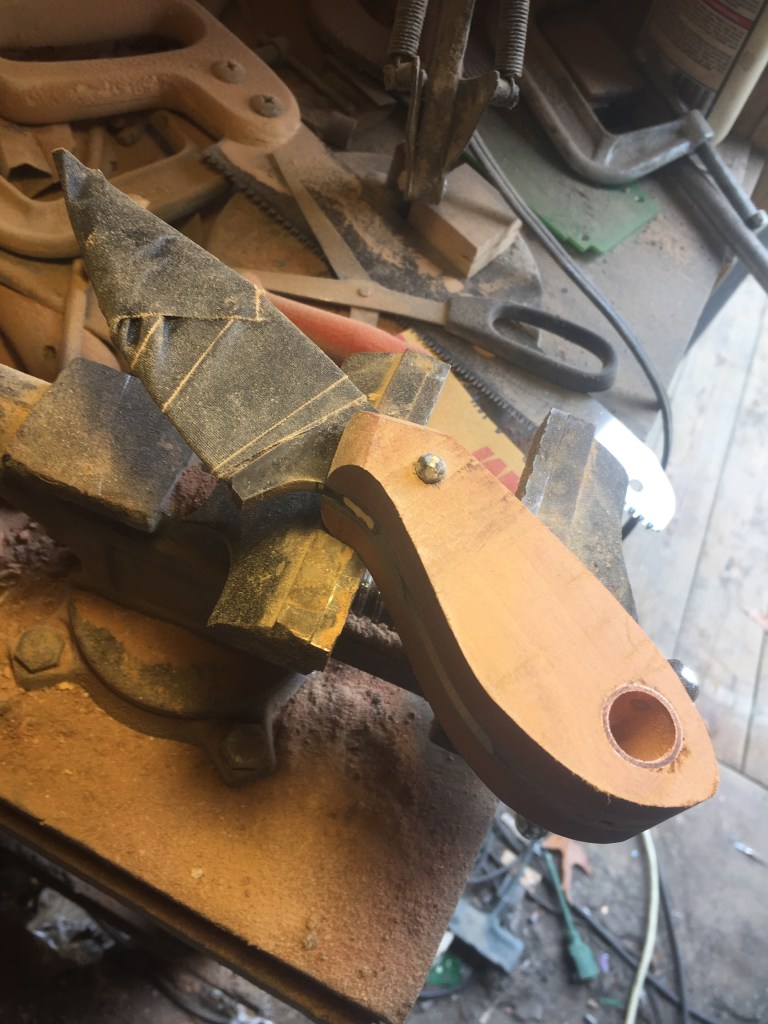
Roughly profiled:

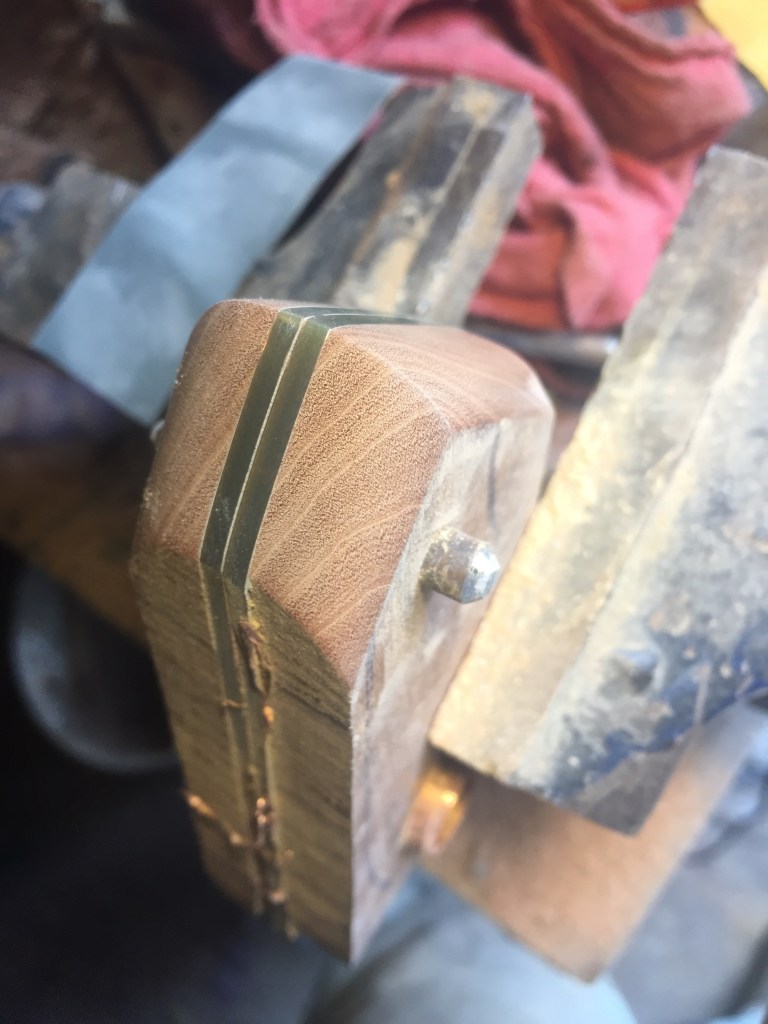
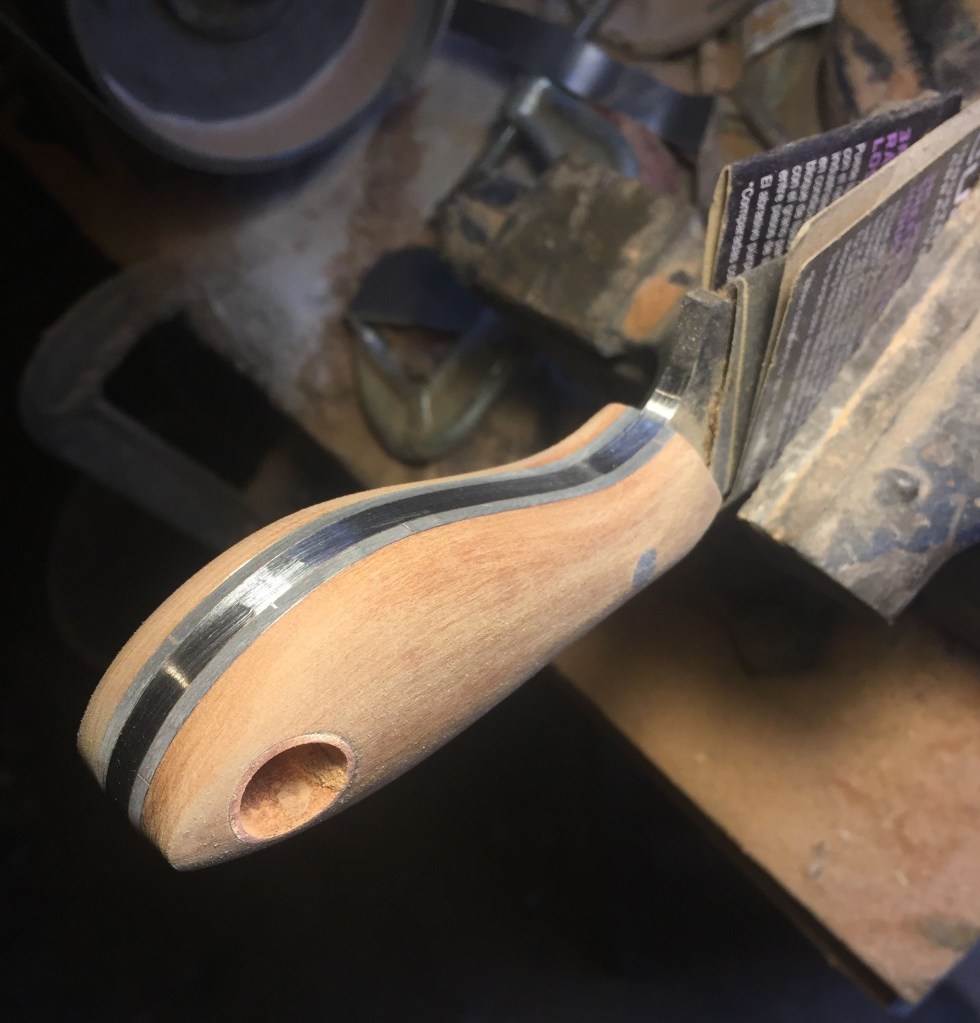
Shaped to the desired shape.  The rest of the work will be done by hand, starting with 80 grit sandpaper and going up to 2000 grit.

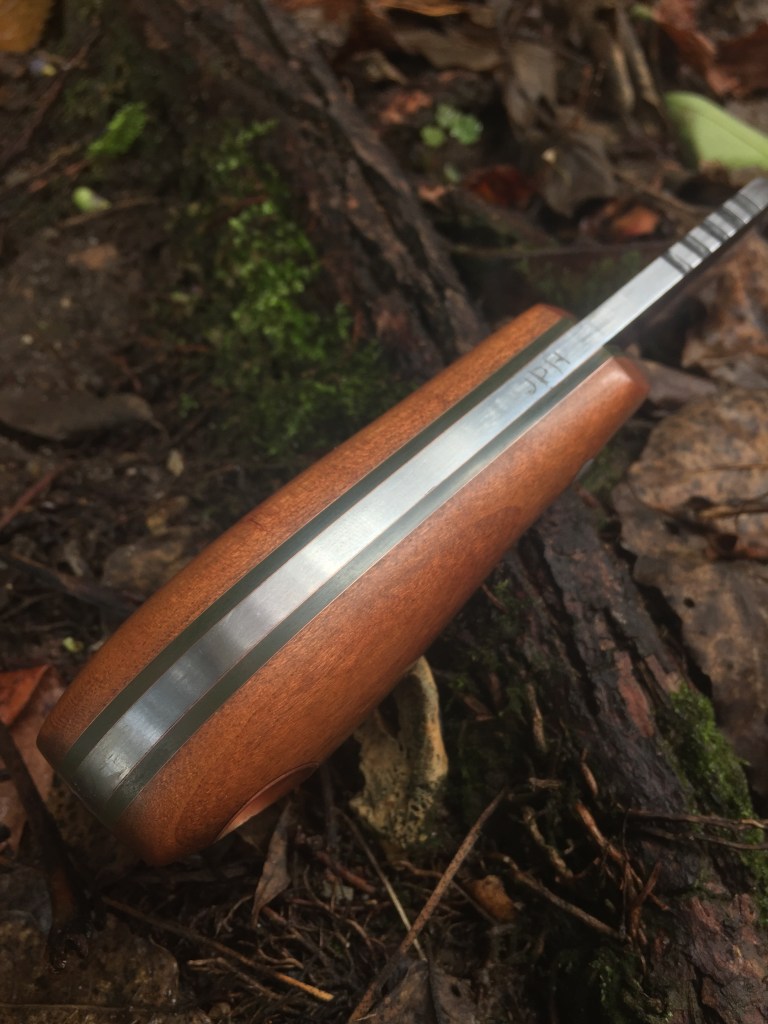
Finished, sealed, and oiled:

Always take the opportunity to create something beautiful.