‘Call them up and tell them they’re all full of shit’
Lt. Col. Daniel F. Gilbert (1925-1996)
My grandfather died when I was twelve. People come and go quickly in this world and often their stories and the good things they do are lost and forgotten. I wanted to tell his.
He and my grandmother moved down the street from us when I was five so they could watch my brothers and I grow up. I would ride my bike over. He had an attic workshop . He liked to make jewelry and often I would find him flattening out nickels that he had been soaking in sulfuric acid. He gave me hacksaw blades and sat me in front of a bench grinder and showed me how to make small knives. He used one of his shotguns as a template and made me a wooden one that looked so real my mother made me take it back to him to paint orange so that I wouldn’t become a police statistic. We watched cartoons. We could both agree on Popeye and Tom and Jerry.
I remember my grandmother getting really angry at him for things that I thought were hysterical. One time I went over there and he had hacked the head off of a snake with a shovel and hung it from a tree. I remember my grandmother yelling at him and all he said was, very quietly, that the only good snake is a dead snake. I have no idea why he hung it from a tree.
Often times during the summer in his back yard he would build a smudge fire if the mosquitos were bad, which they almost always were. We would go in for dinner and my grandmother got pissed at him for making us all smell like a campsite. He just laughed.
When I was seven he gave me a Swiss Army knife for my birthday. I went back to my parents house that evening with bandaids on every finger. When my mother called him and yelled at him for leaving a seven year-old alone with a knife he just laughed. “Every boy should have a knife,” he would say.
He had the most elegant way with profanity- his inflection on a simple ‘goddamn’ could run the spectrum, from utter joy to total frustration.
Most of what I know of him before those times I learned from my grandmother after he passed. He was born in Stephensville, Texas. His father died when he was 5 years old and he immediately started helping to provide for the family. Their family was dirt poor and then the Depression hit. He set up a trap line that he would check everyday before school. One time he caught a skunk and he got skunked so badly that the teachers sent him home. Another time he slaughtered one of his chickens but didn’t clean the innards out before he put it in the oven and stunk up the entire house.
He joined the Navy at seventeen, lying about his age. What would follow was a pretty incredible military career with so many brushes with death that he earned the name ‘Lucky Gilbert’. While in the Navy during WWII he was a gunner on a warship, a position that carries a notoriously short lifespan. Many of his fellow gunners didn’t make it but somehow he did.
After the war he joined the Air Force. It was here that he met my grandmother, a young officer. My grandmother said he was stubborn but persistent, and a terrible driver. They got married and lived all over the world- Florence, Italy; Wiesbaden and Rammstein, Germany; and Casa Blanca, Morocco, where my mom was born.
He fought in the Korean conflict and was then stationed in Roswell, NM, where he witnessed the the UFO crash. He told my grandmother he didn’t know what in the hell those things were but they weren’t of this Earth, and the whole thing gave him the heebie jeebies.
By the time the Cuban missile crisis came around he had a pretty high security clearance. He was privy to information that many others weren’t. At the height of tensions, he gave my grandmother a map marked with a safe location to go. He said it was getting bad, and he would call her and tell her when to take the kids and go. He handed her a pistol and told her to use it if anyone tried to stop her.
In the seventies he went to Vietnam where he should have been dead several times over. The was an incident when a rogue Viet Cong rocket obliterated his barracks in the night. The only reason he wasn’t there was because he had chosen to stay with his troops in the field. Then there was another time when he was waiting on a bus to go to headquarters to do paperwork. He waited and waited but the bus never came, so he walked. When he got to the office four hours later, everyone looked at him as if they were seeing a dead man. The bus had been hijacked at the stop before his, all the passengers executed and the bus blown up. My grandmother said the man had a Guardian watching over him.
While he was in Vietnam, my grandmother went out for dinner with a friend of theirs, a general. After dinner, and knowing that my grandfather was off at war, he tried to force himself on my grandmother while on their front porch. Grandma had none of it. She never told my grandfather, because he would have killed the man. He always had a shotgun nearby.
The man was a warrior but even warriors have their faults and flaws. My grandmother told me he was a difficult man to get close to and even more difficult to get to know. He could be spiteful, and had a mean streak that didn’t come out too often (I never saw it), but it cost him several important promotions within the Air Force. My grandmother told me that when she moved her dying mother into their house much later in life, my grandfather resented her for it, a resentment that she said burnt like a red hot rod of iron.
Still he loved deeply. He liked to listen to Patsy Cline, The Beatles, and Tchaikovsky. A quiet man, his actions generally spoke louder than words. He brought my grandmother coffee every morning (Lady coffee he called it). When chemotherapy for ovarian cancer left my grandmother with neuropathy in her hands and feet, he rubbed lotion on her feet most nights. After he passed, my grandmother found an account he had never told her about and she never had access to, with $30,000 to be paid to her upon his death. This is incredibly touching and rather impressive considering this was a man who was notoriously bad with money and grew up dirt poor during the Depression.
In his late sixties, doctors found an embolism in his heart. The surgery was risky but the alternative was six months to live. They performed open heart surgery and he survived but was never the same afterwards. He had been dealing with early onset Parkinson’s symptoms and the surgery exacerbated all of that. He couldn’t go up to his workshop, he couldn’t work with his hands, and my grandmother had to get a home health nurse. He went downhill slowly over the next two years, never complaining about anything. He died on Palm Sunday in a VA Hospice unit.
I remember sitting next to my grandmother at his funeral, which had full military honors. As the officer presented her with the flag that had been draped over his casket, she told me that his Guardian was watching over me now. I just nodded and smiled and didn’t pay much attention. I figured it had something to do with being bereft with grief or the Xanax my mother had most likely slipped her. Maybe a bit of both.
I have a few of his things: His Rolex, a bolo tie that he had fashioned and a belt buckle he made, set with a silver dollar:

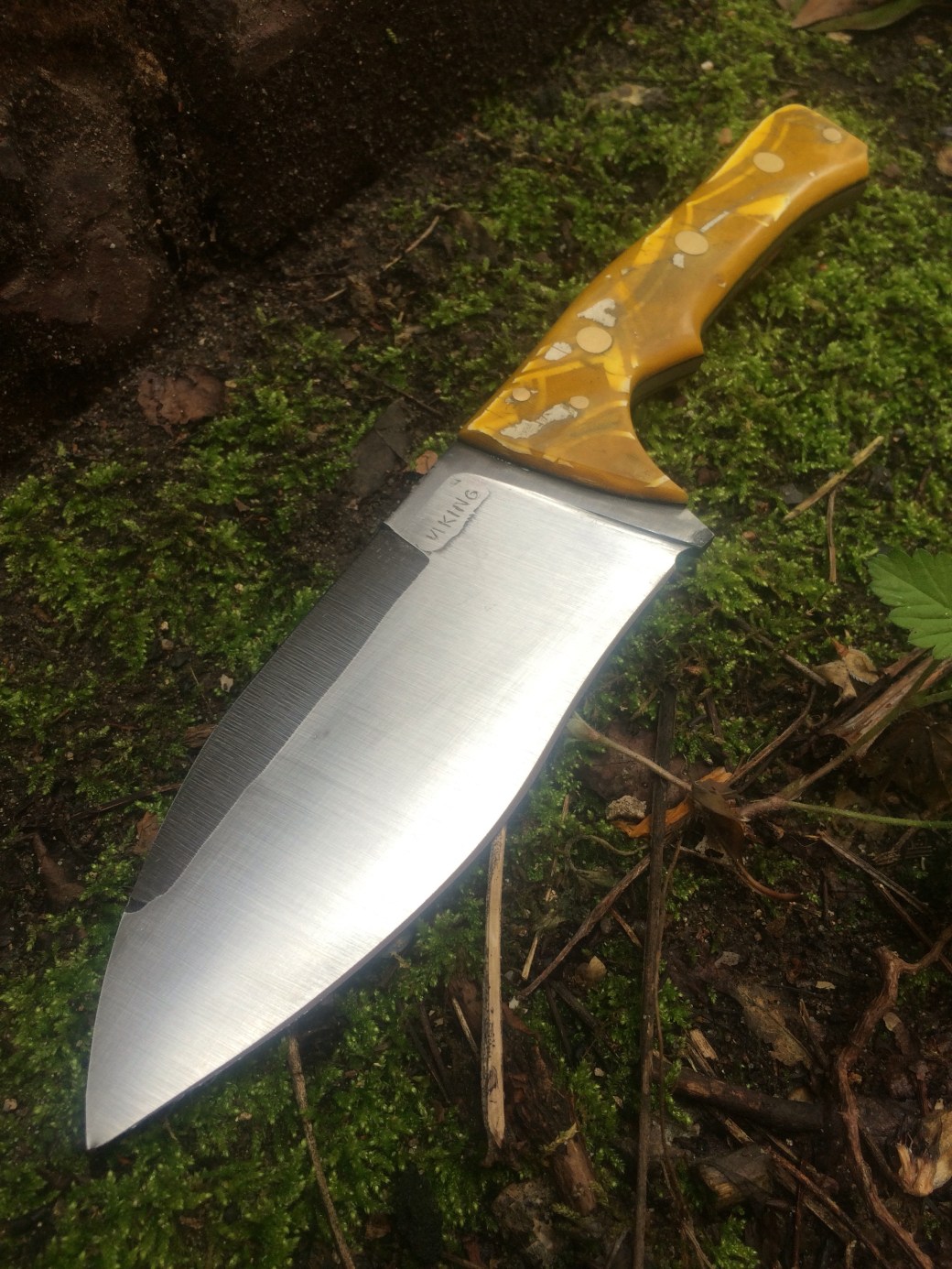
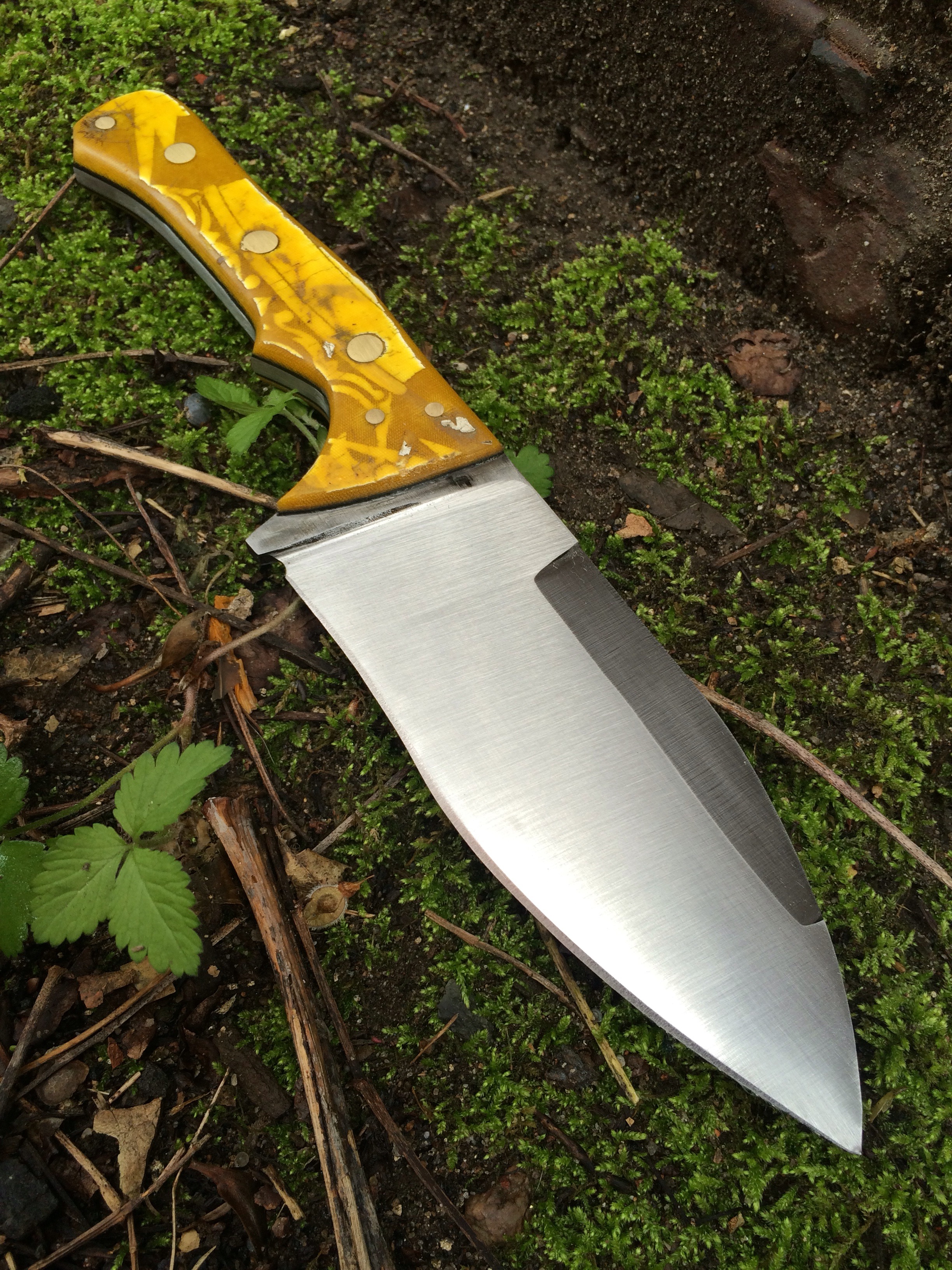
I think on this Guardian that kept my grandfather safe and allowed him to live his life as he saw fit, even after all of the darkness of war and poverty that could have consumed him. This blade is a nod to that Being and acts as a vessel to hold the darkness that inevitably penetrates all of our lives at some point or another.
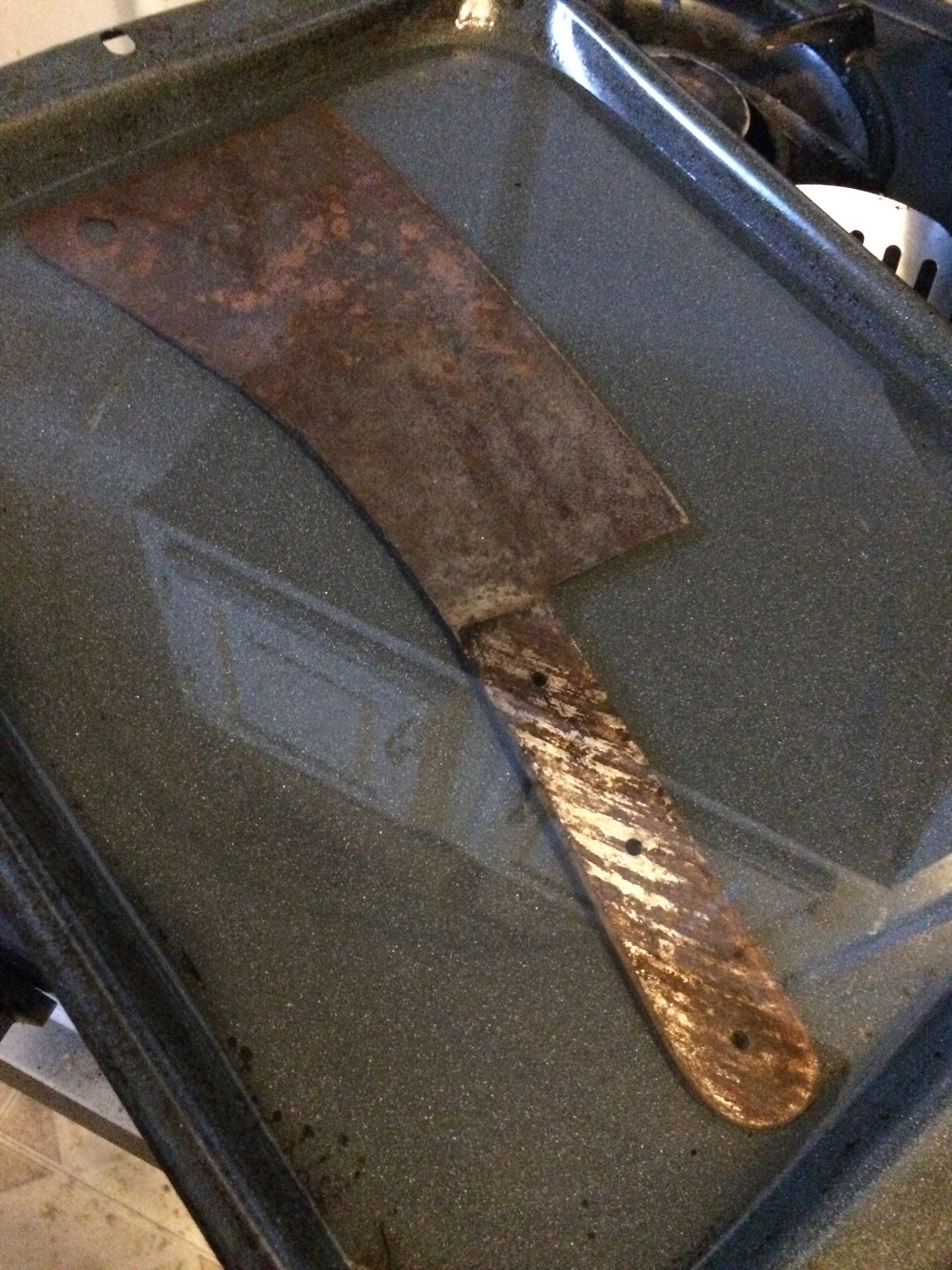
1095 spring steel
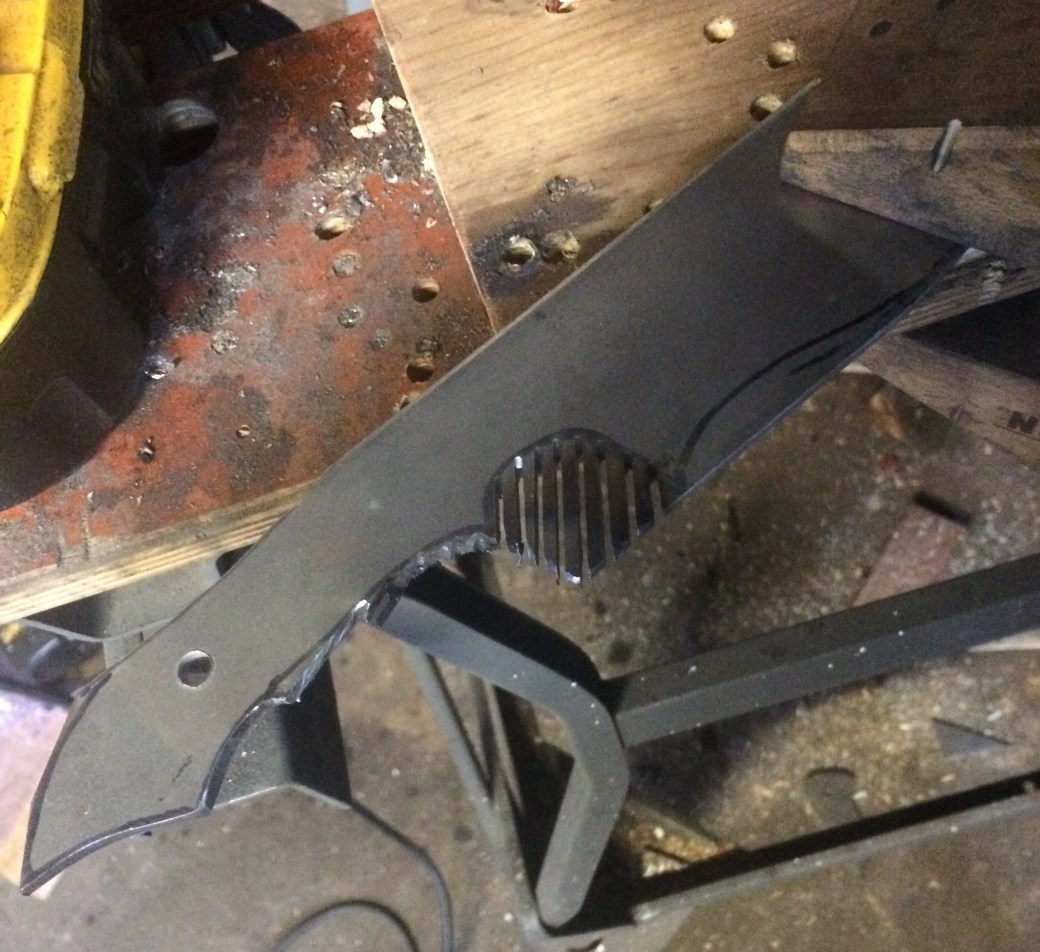


Hardened:
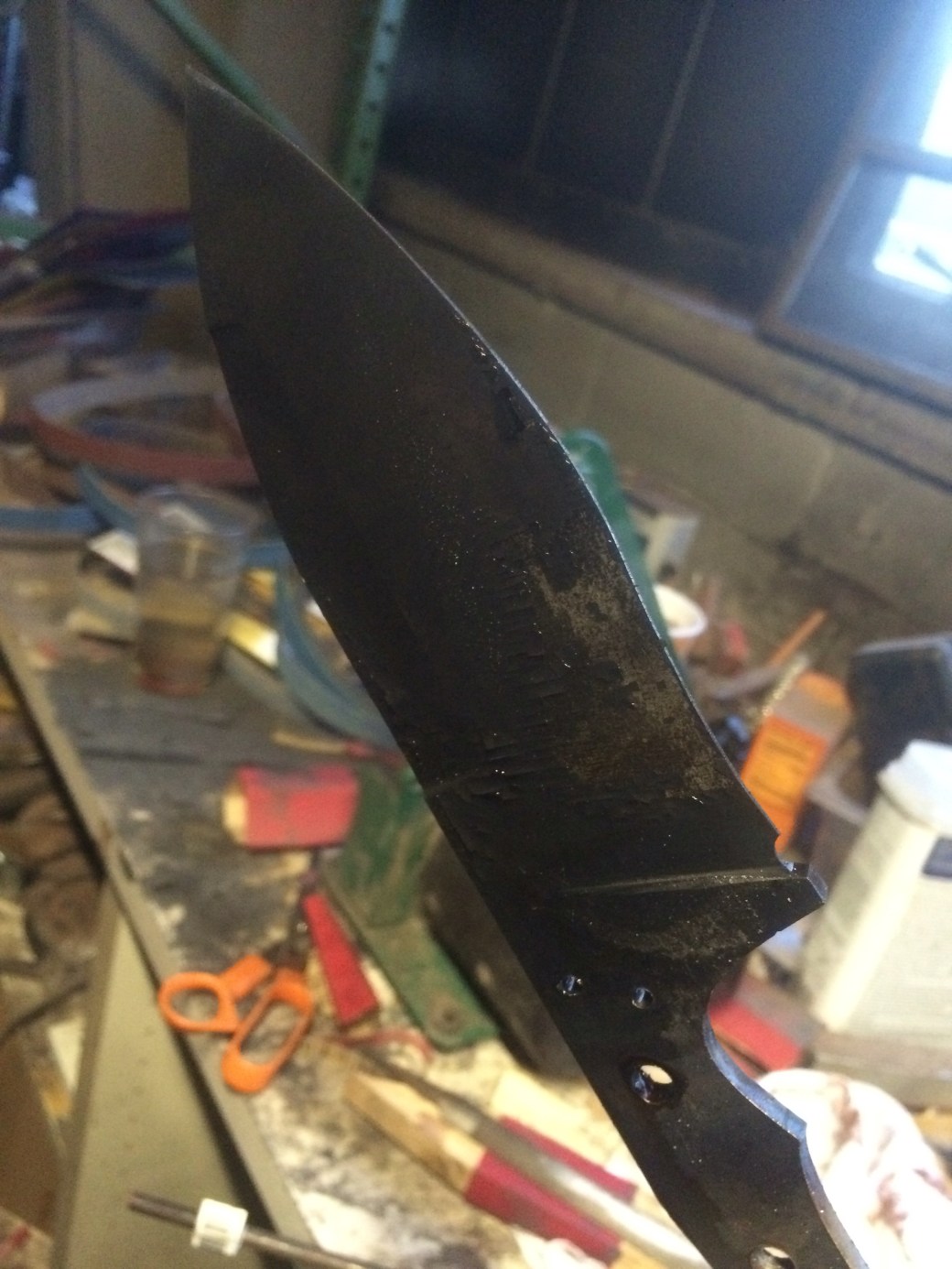
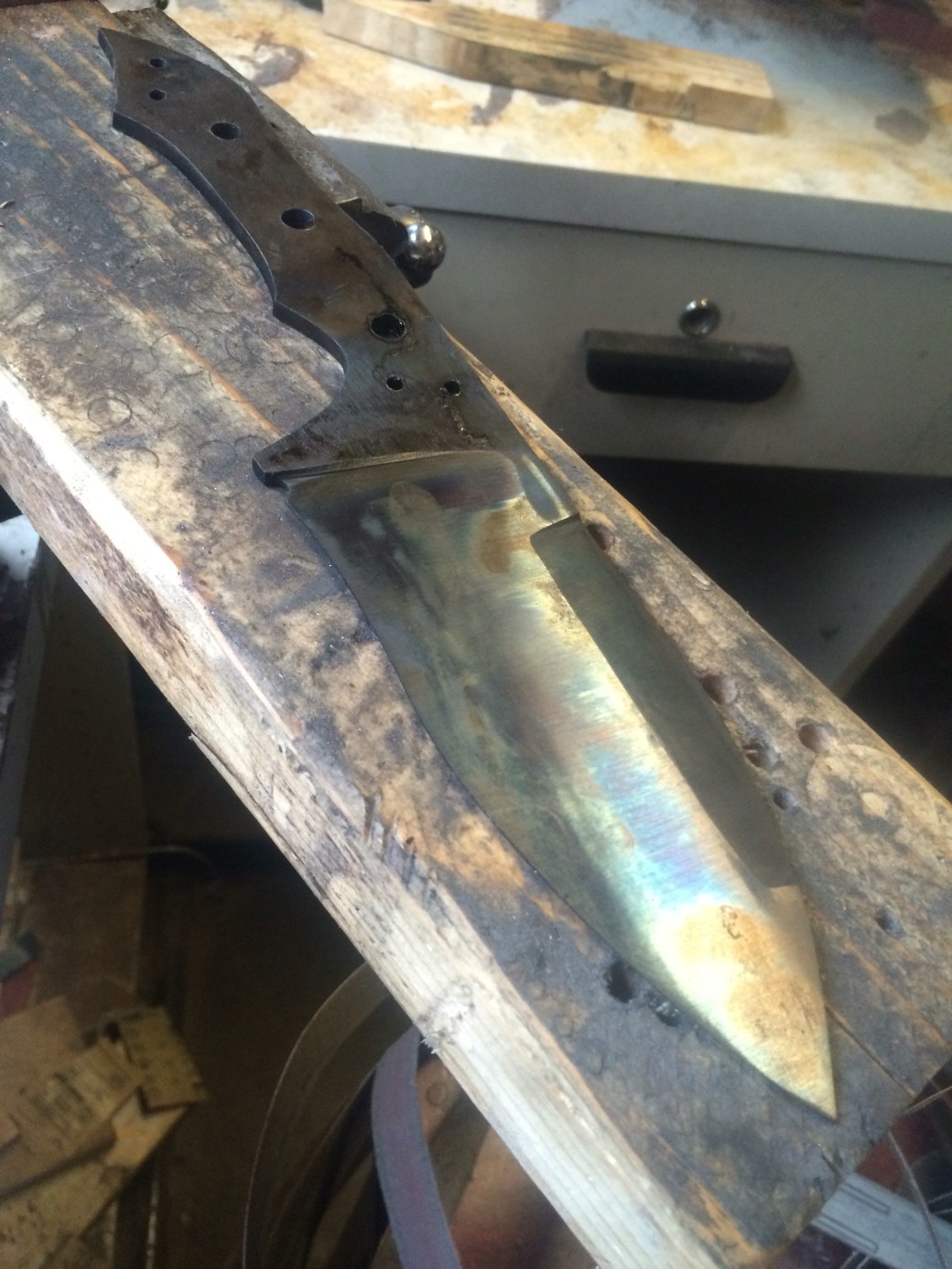
Tempered:
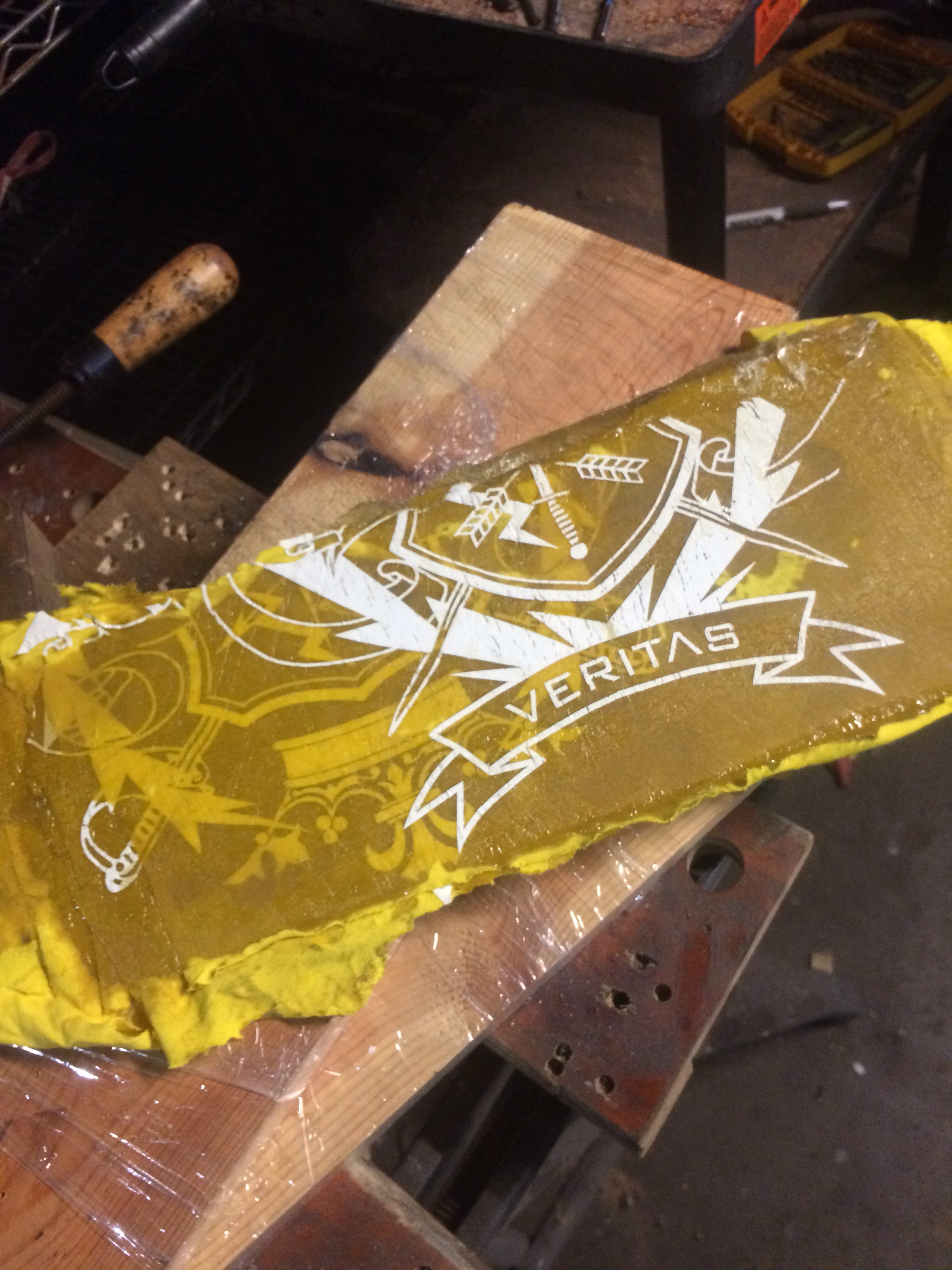
 This is the brightest article of clothing I own- and it’s too small…
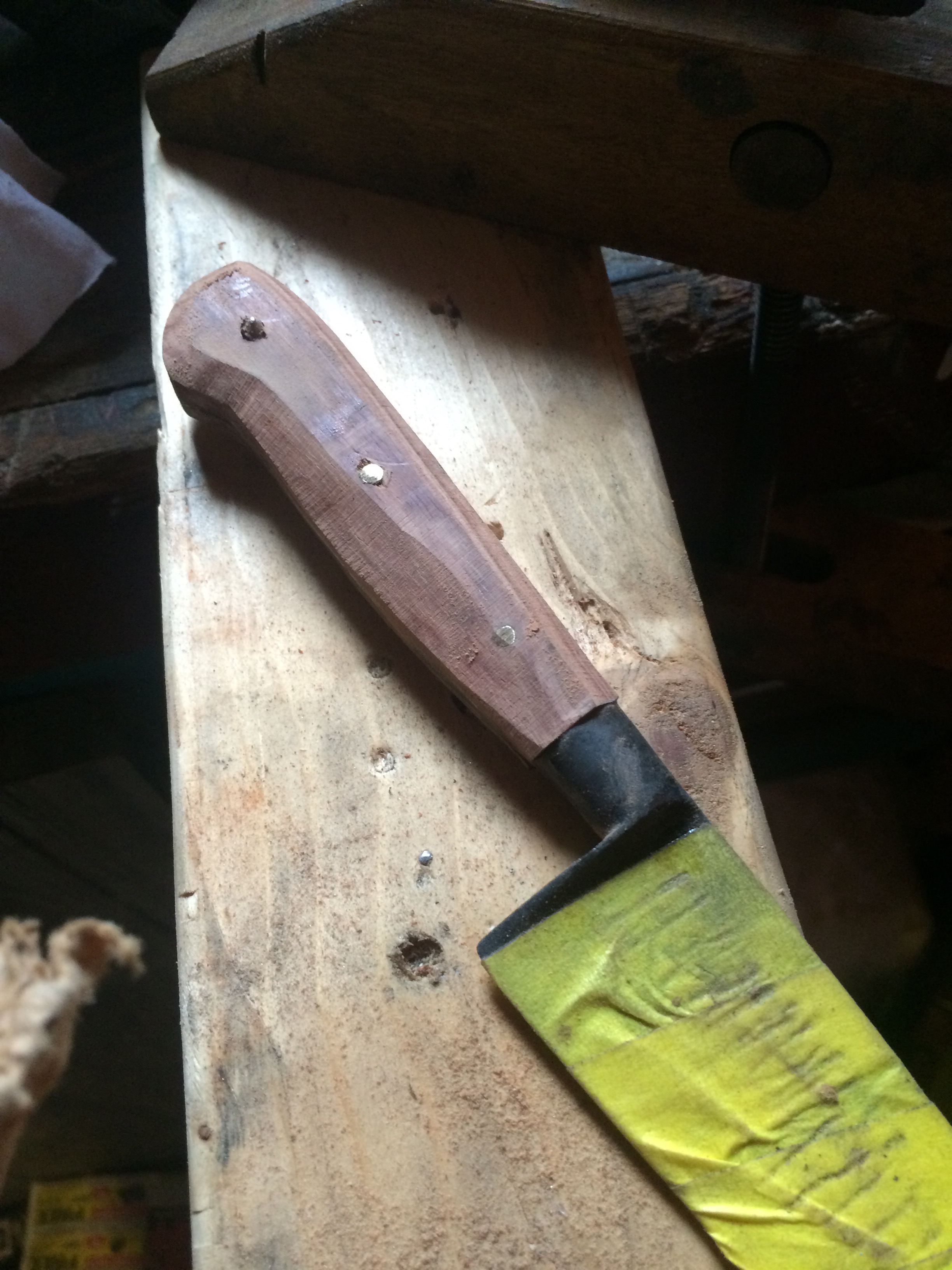
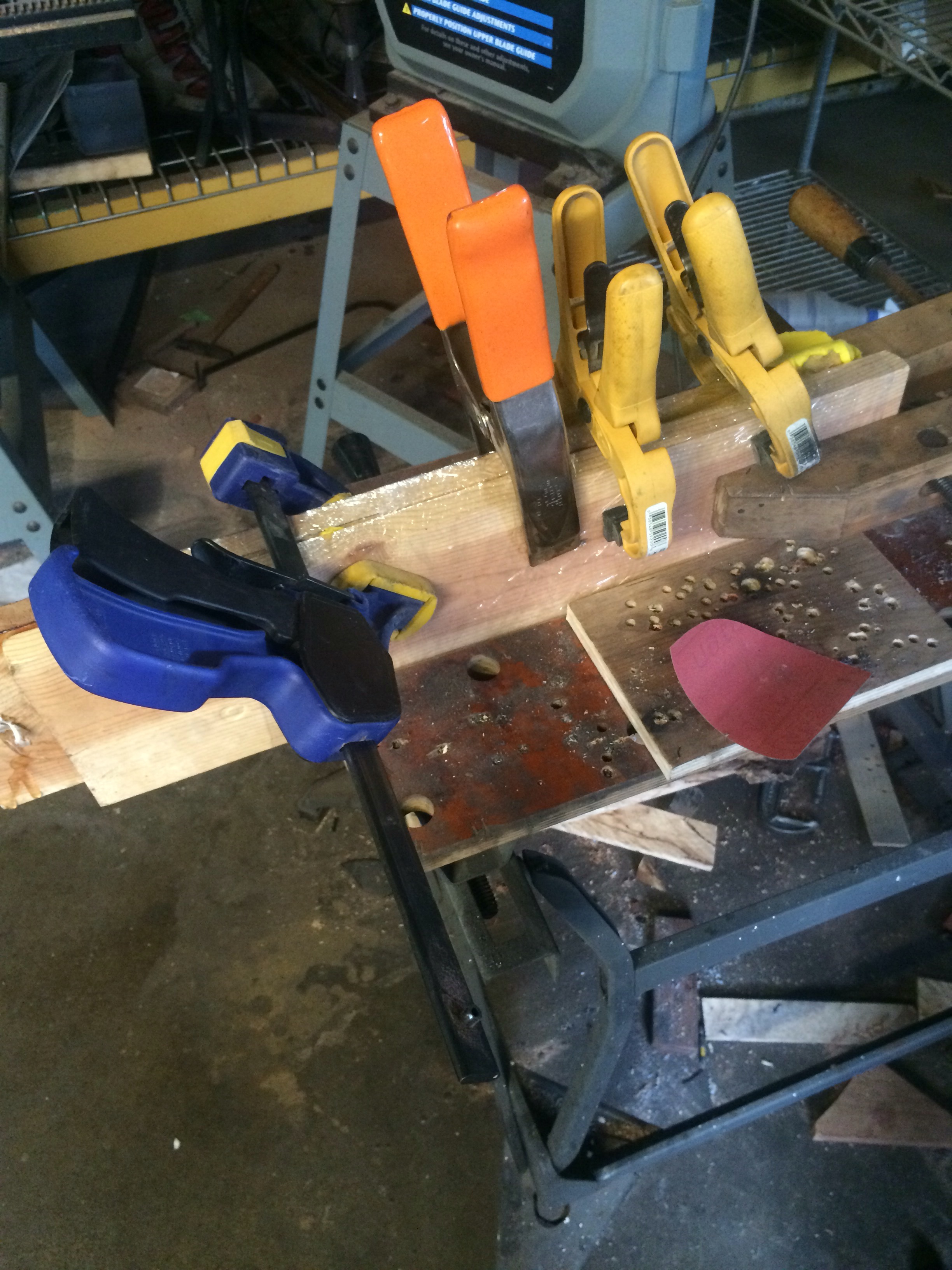
Soaked with fiberglass resin… 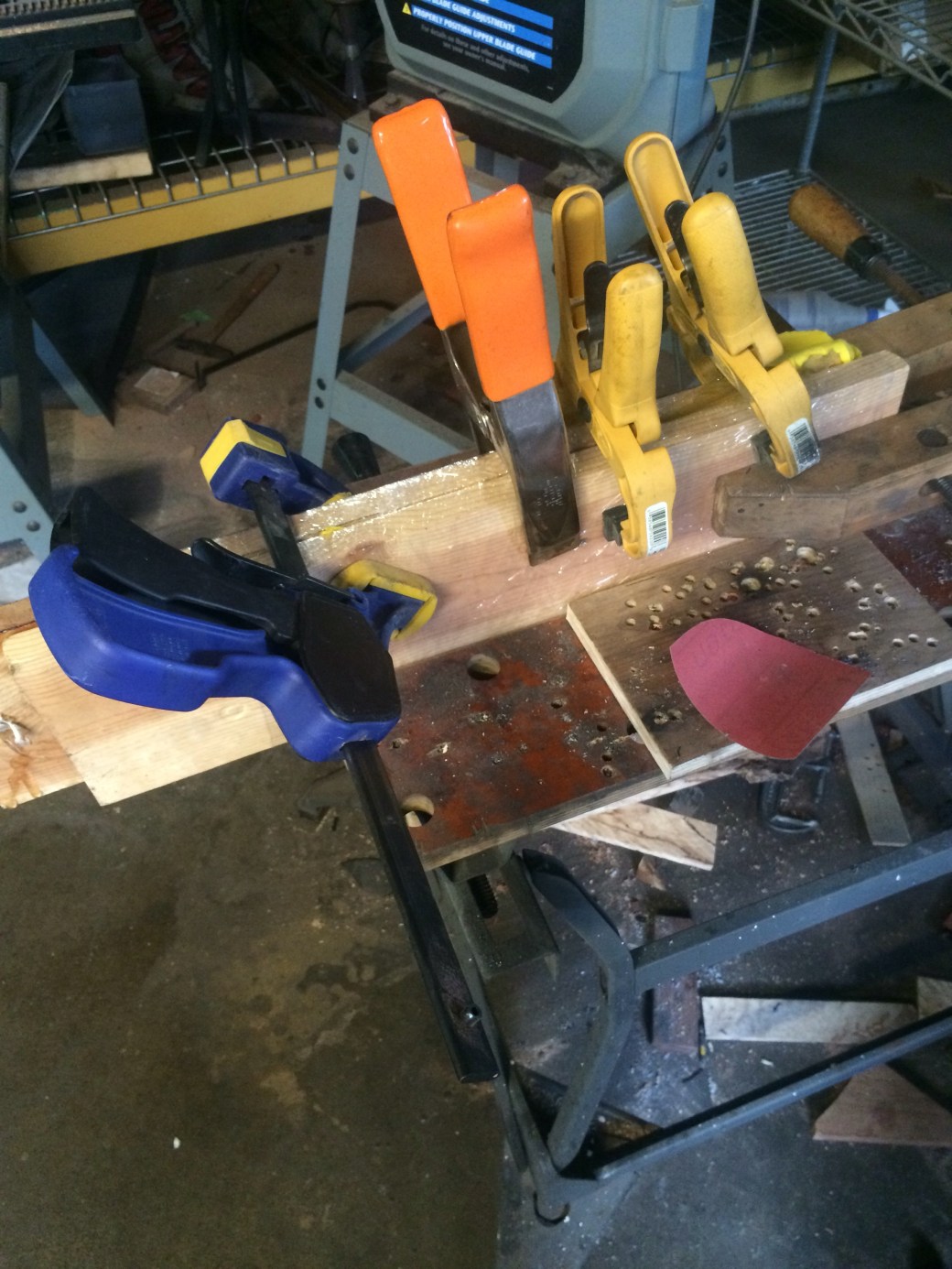
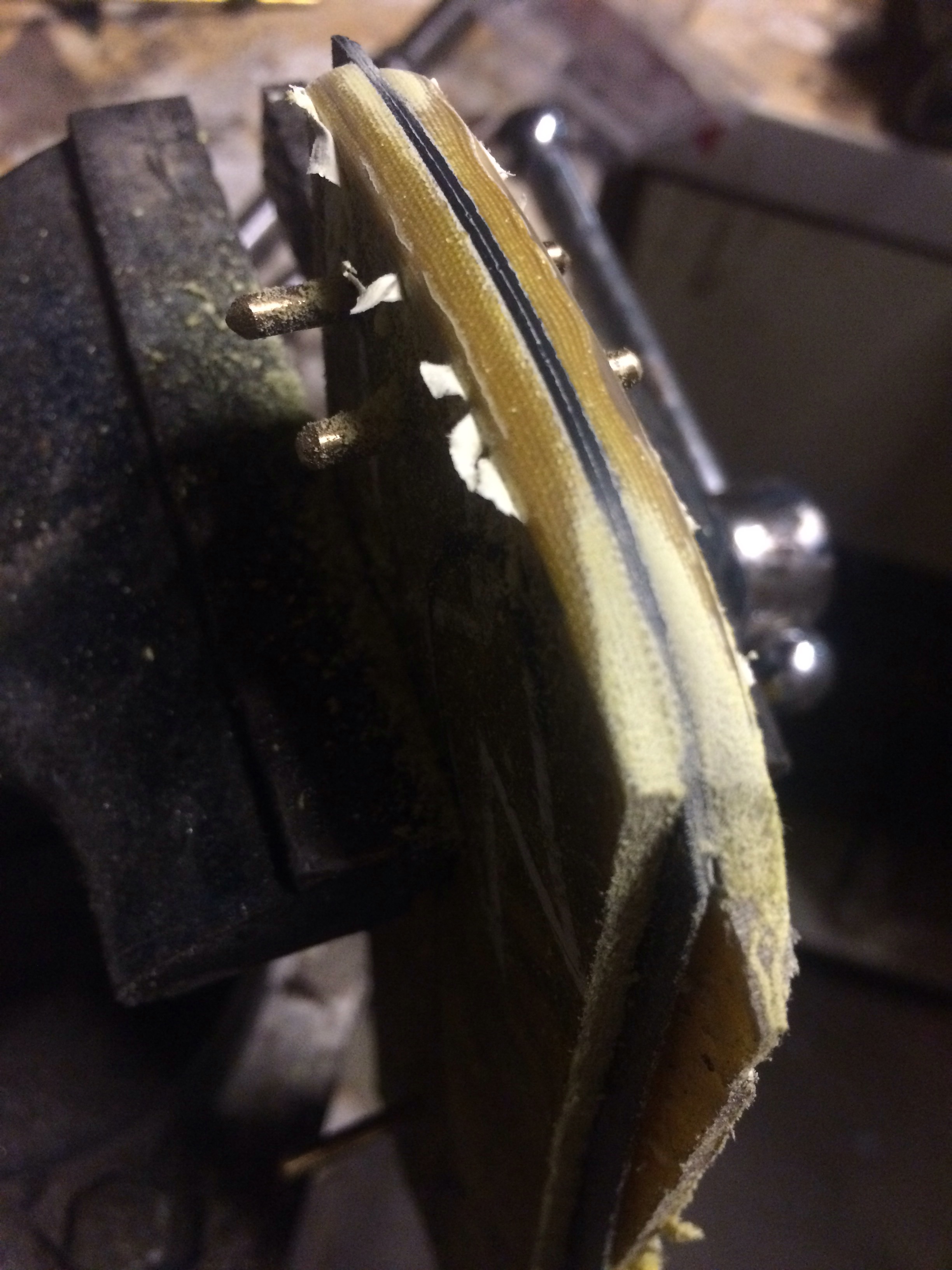
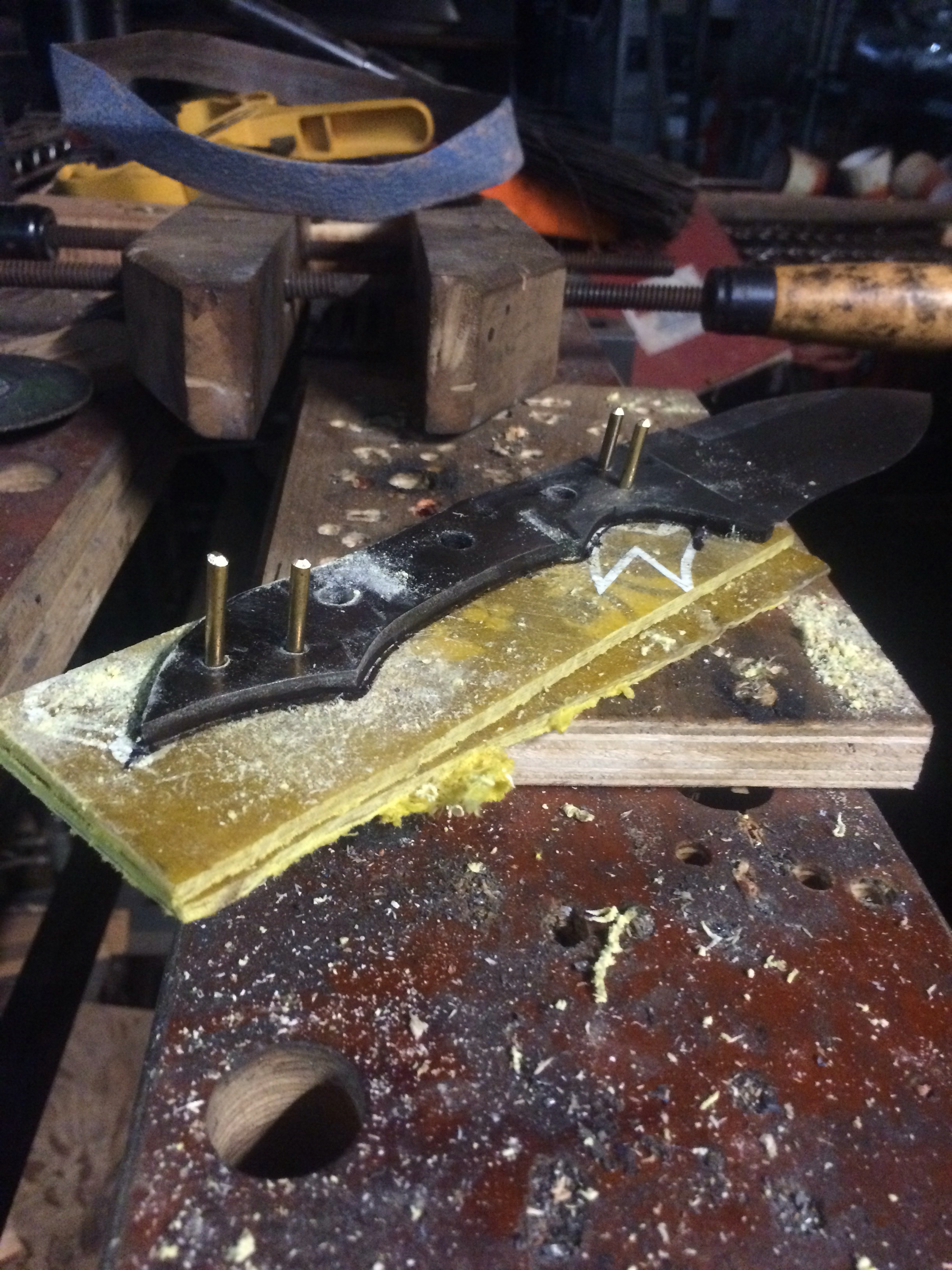
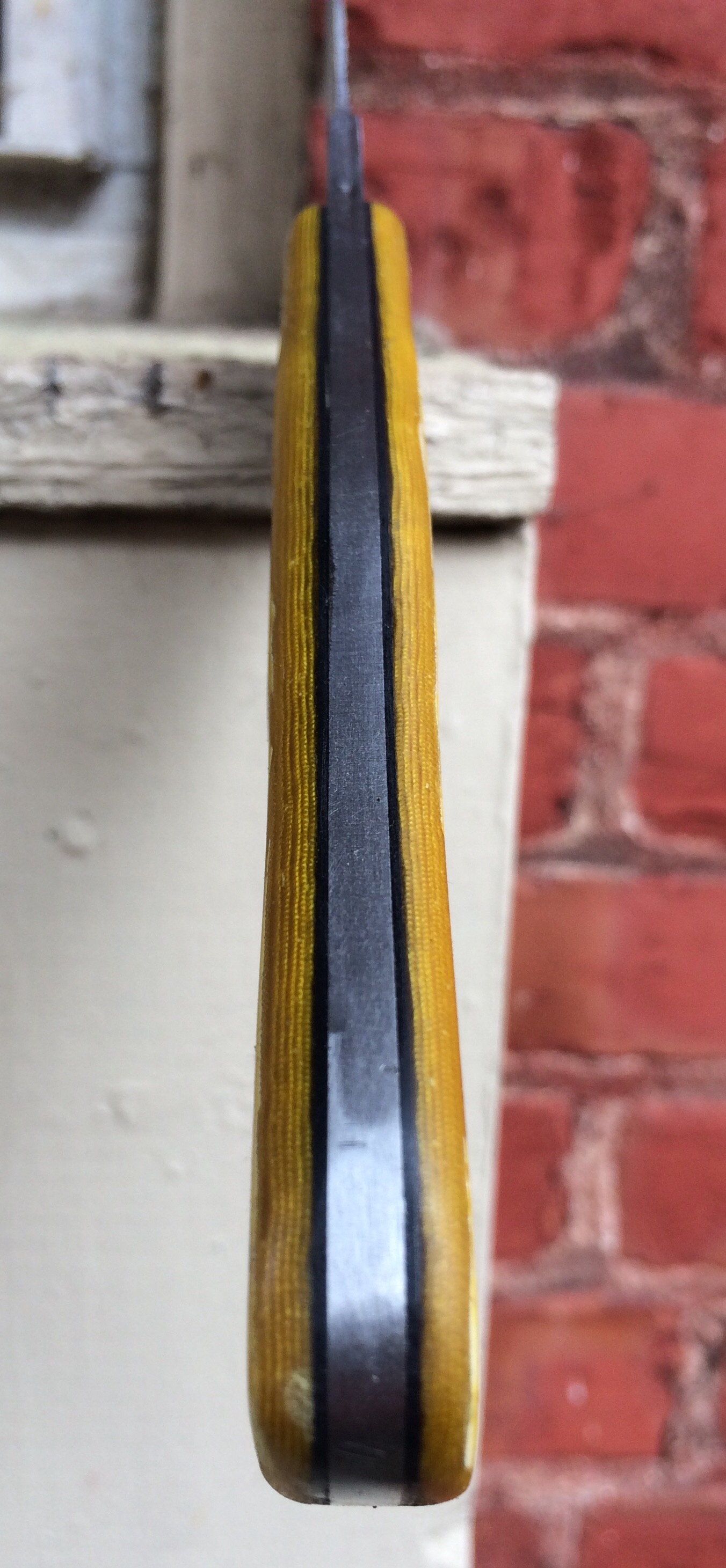
 Kydex spacers. The light contains the dark…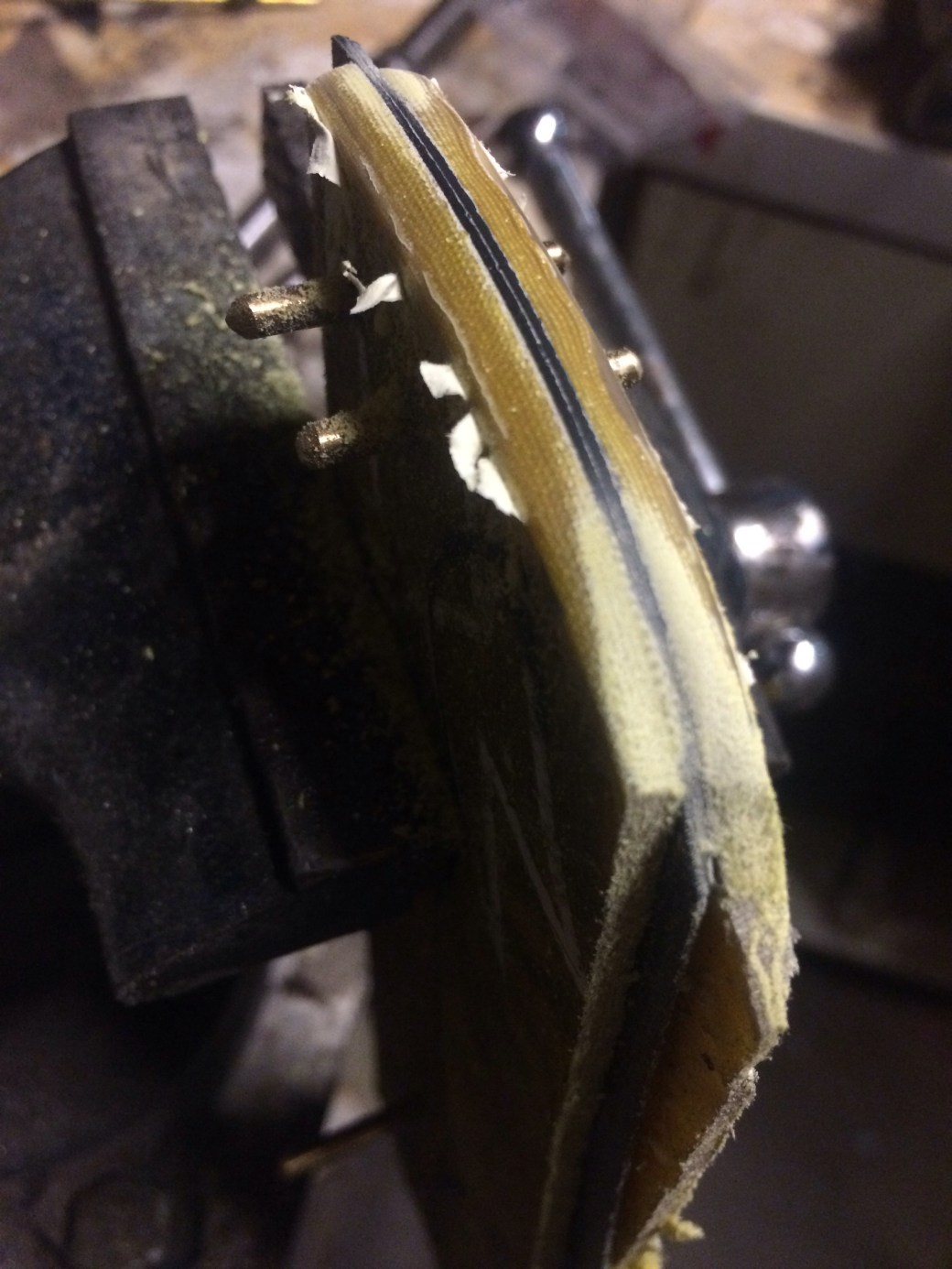


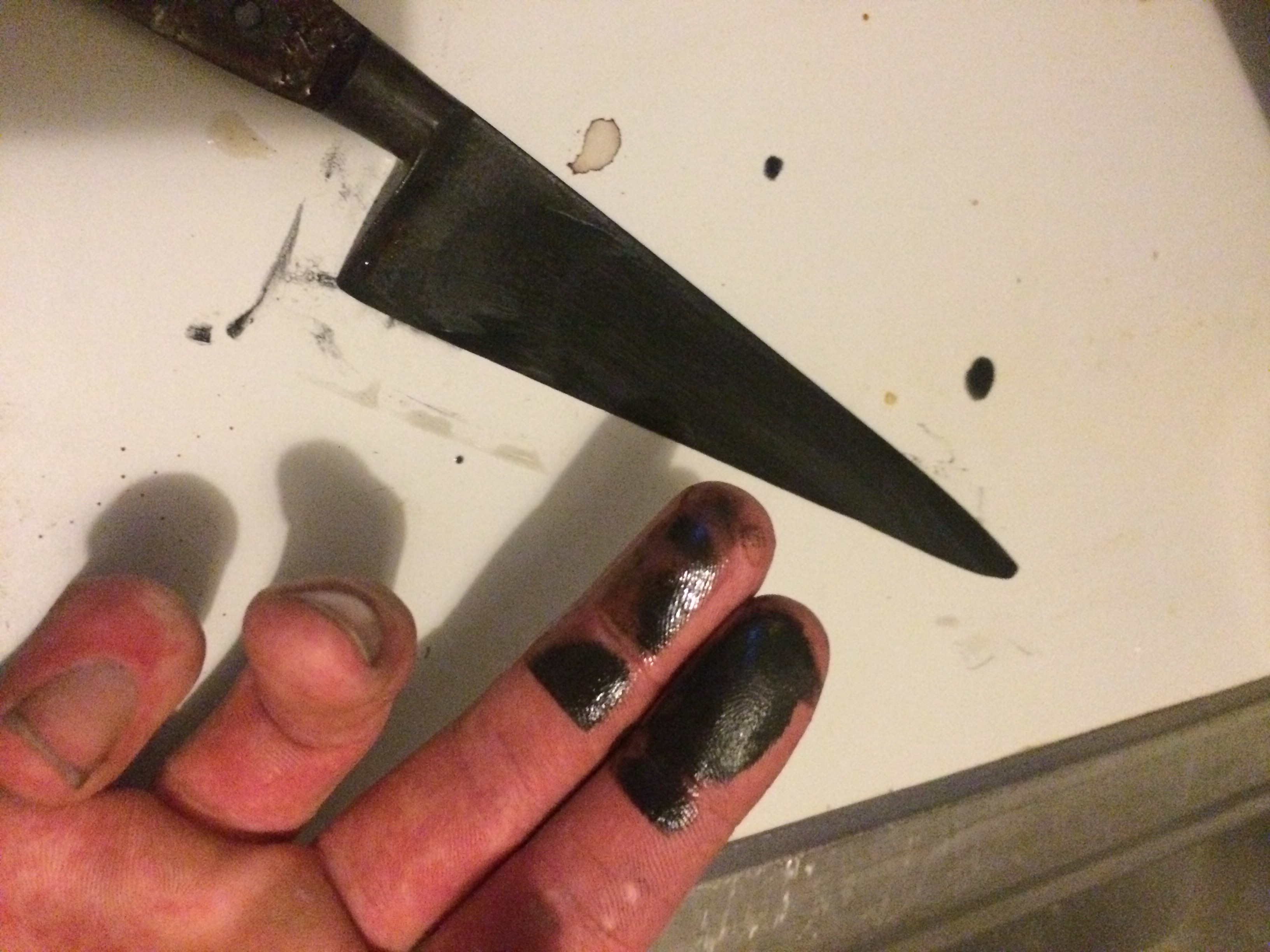
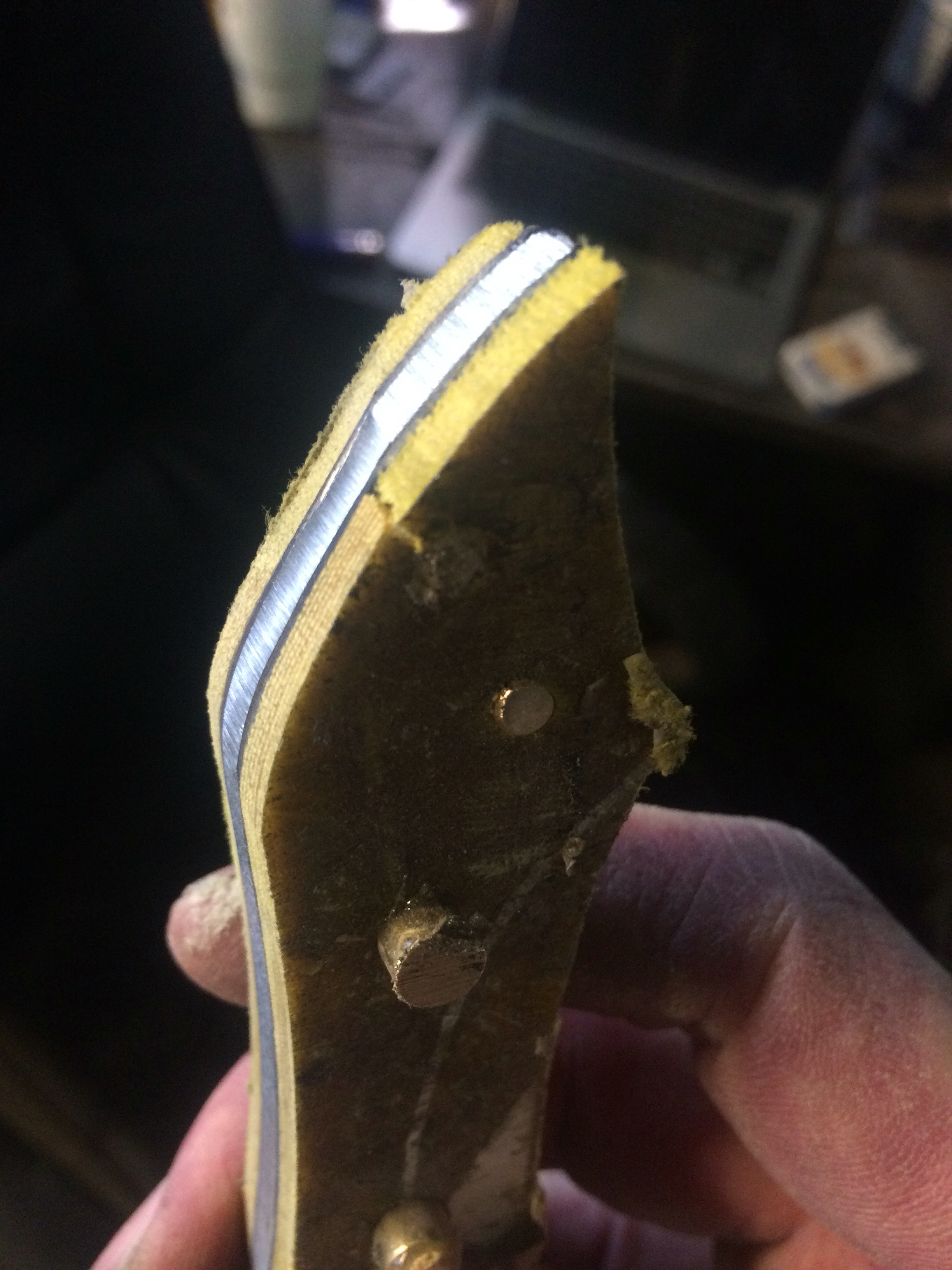
Well shit…let’s clean it up on the grinder… 
This blade is a nod to that Guardian that kept my grandfather safe and looked after. A couple years ago, when I felt myself surrounded by darkness, I found myself thinking about this Guardian, whom I was told watches over me. I drew a sketch of him. It’s still hanging on my refrigerator. Sometimes, when you find yourself in dark places, you can imagine that darkness being held by light. Because there can’t be darkness without light.
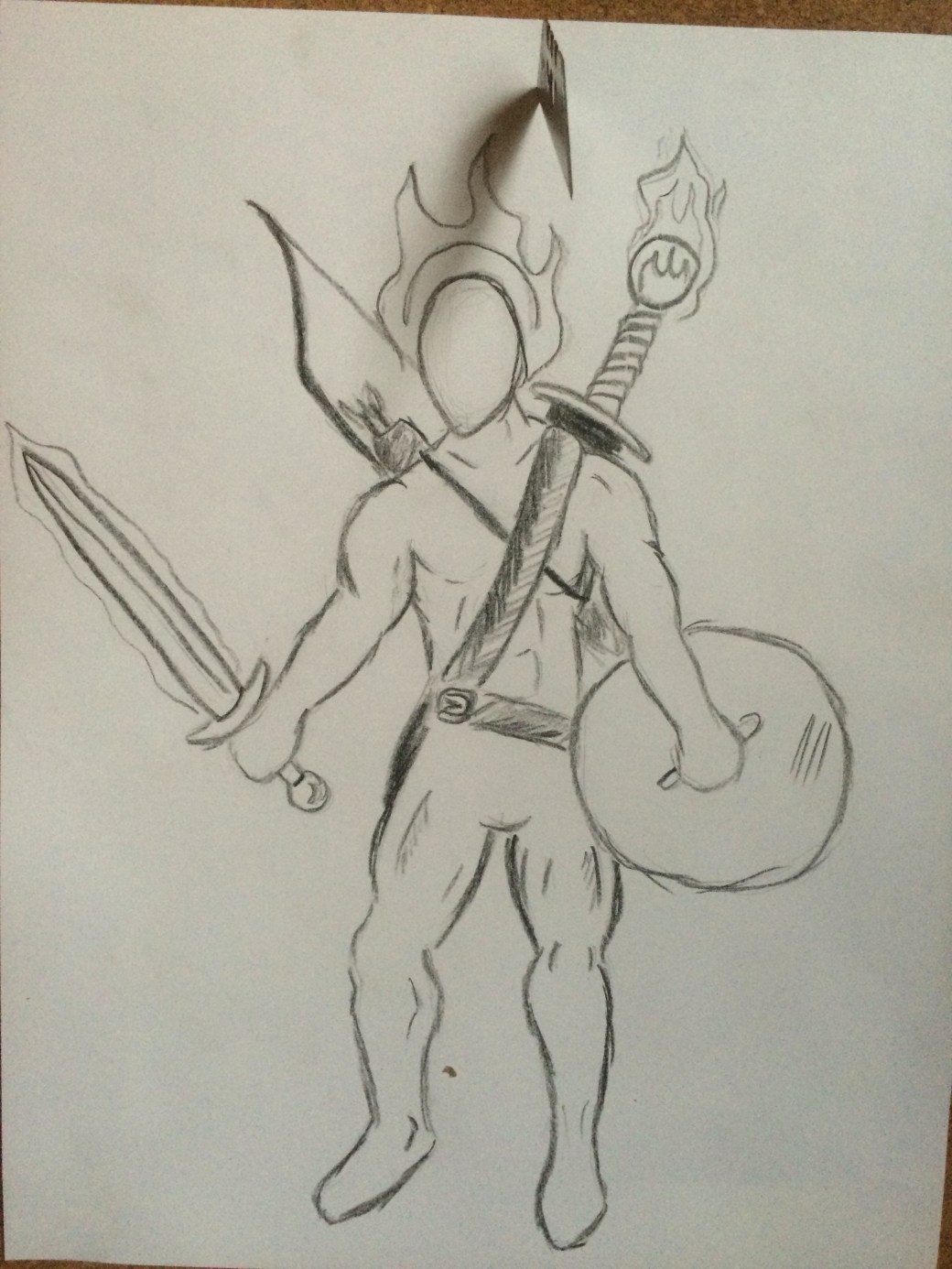
The Guardian: 1095 spring steel, homebrewed cotton Micarta scales, Kydex spacers and brass hardware.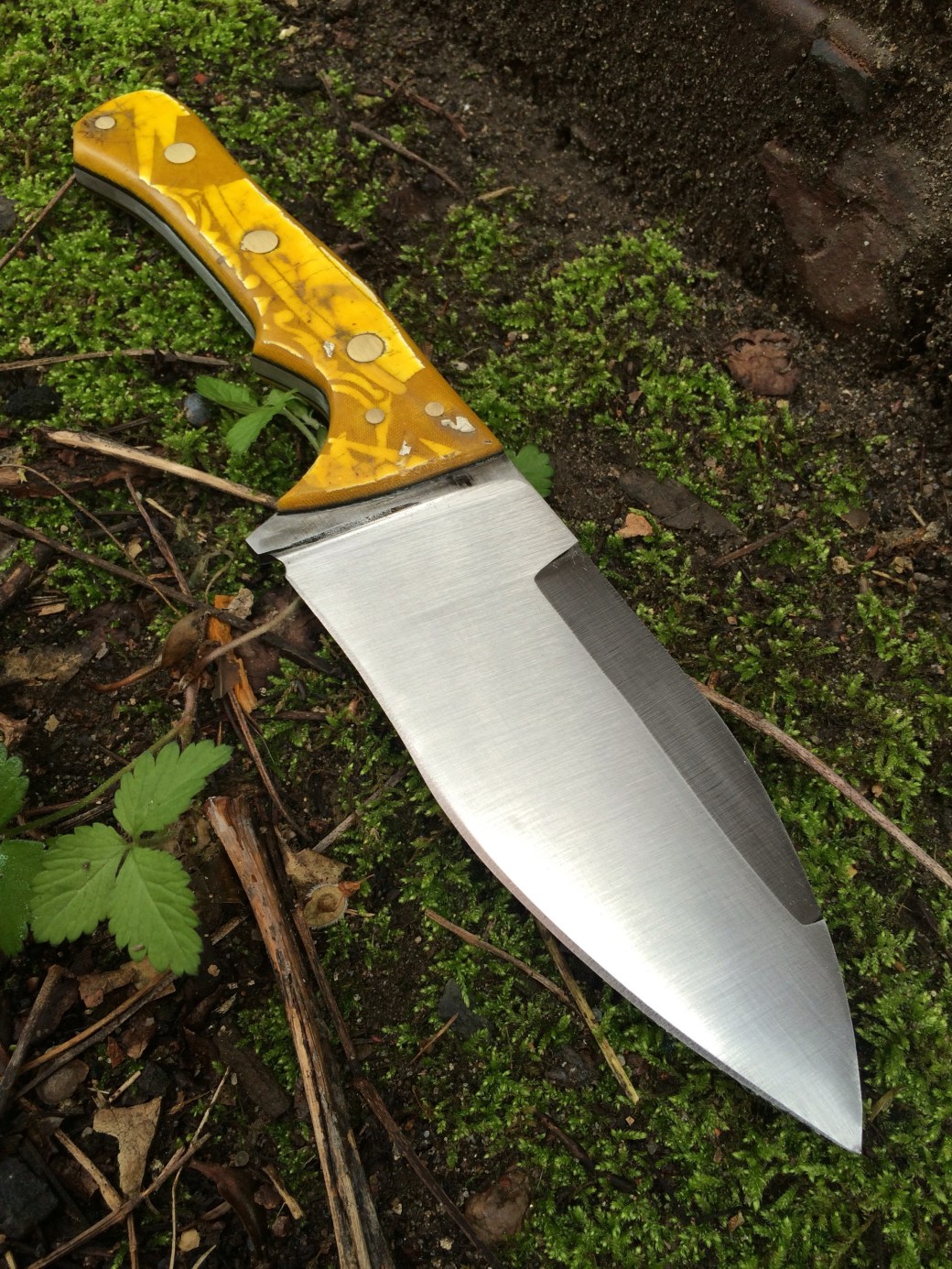

At the time of this writing it has been 20 years since he died. Time is indeed a sly magician because it hardly feels like that. I miss the man deeply and think about him just about every day, and always with fondness. By the time I came to know him he was in the twilight of his years and had dealt with his darkness, and wanted to give his time and love to a curious little boy. For this I’m grateful.













 groundedinfire