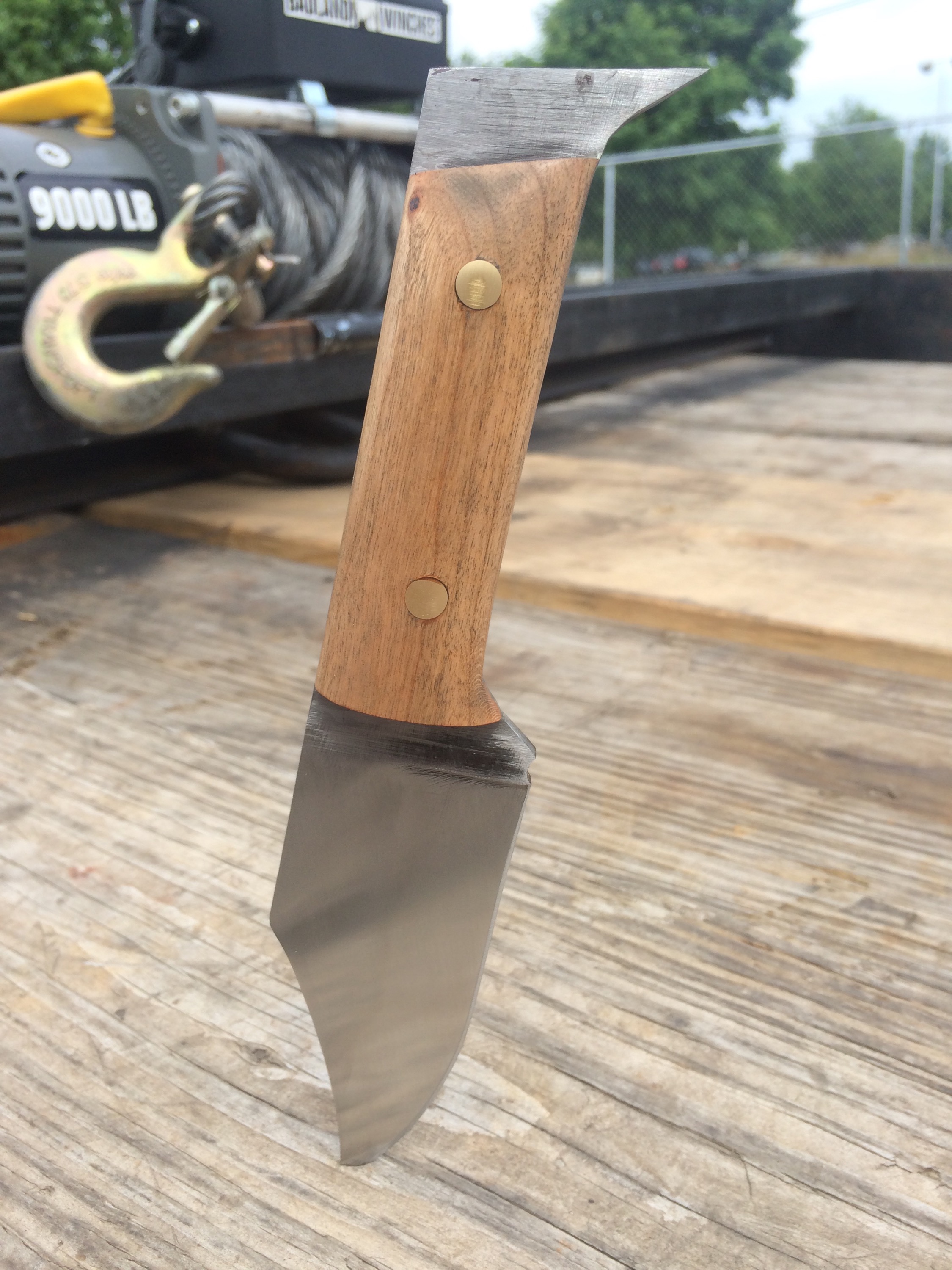
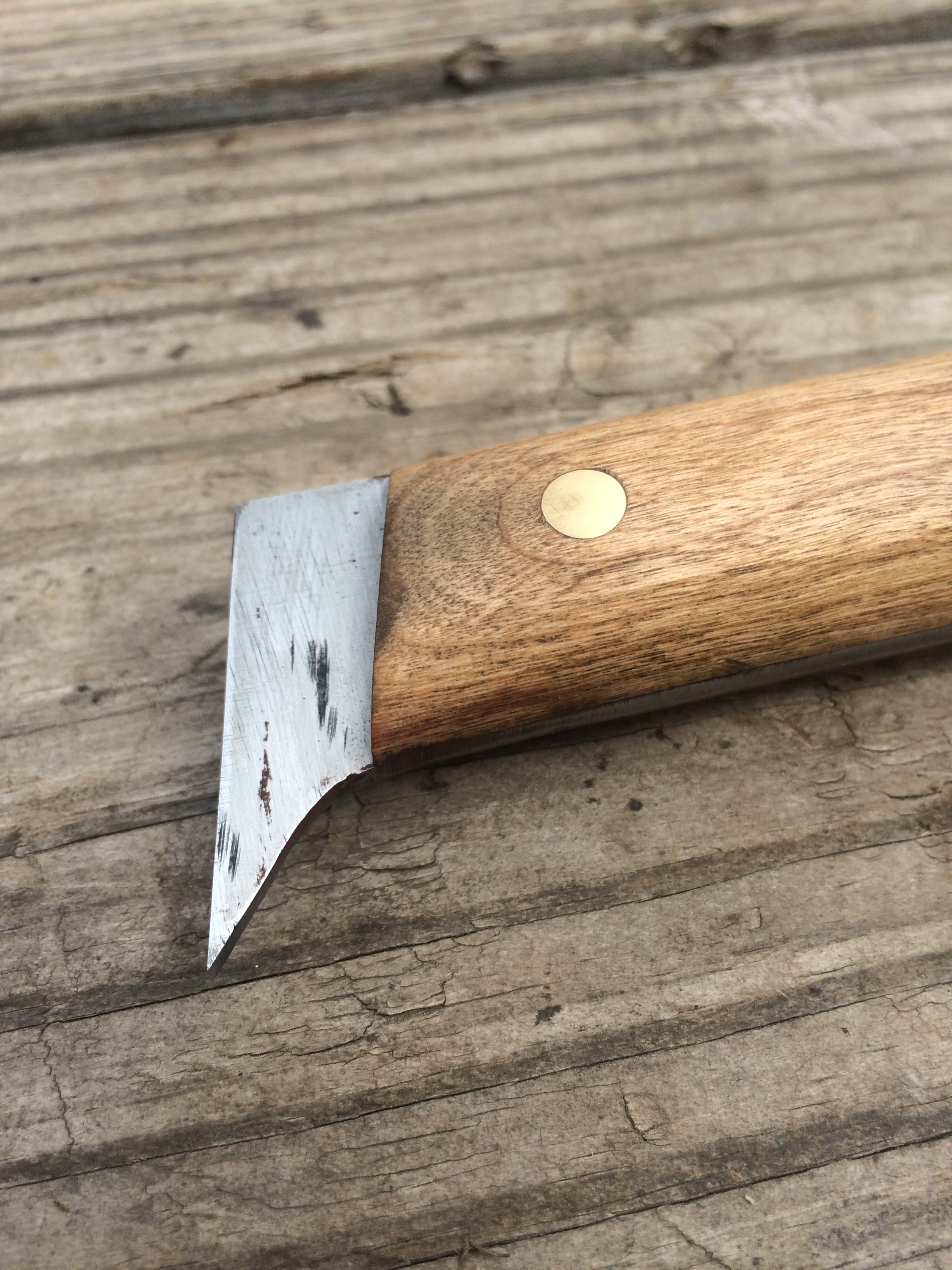
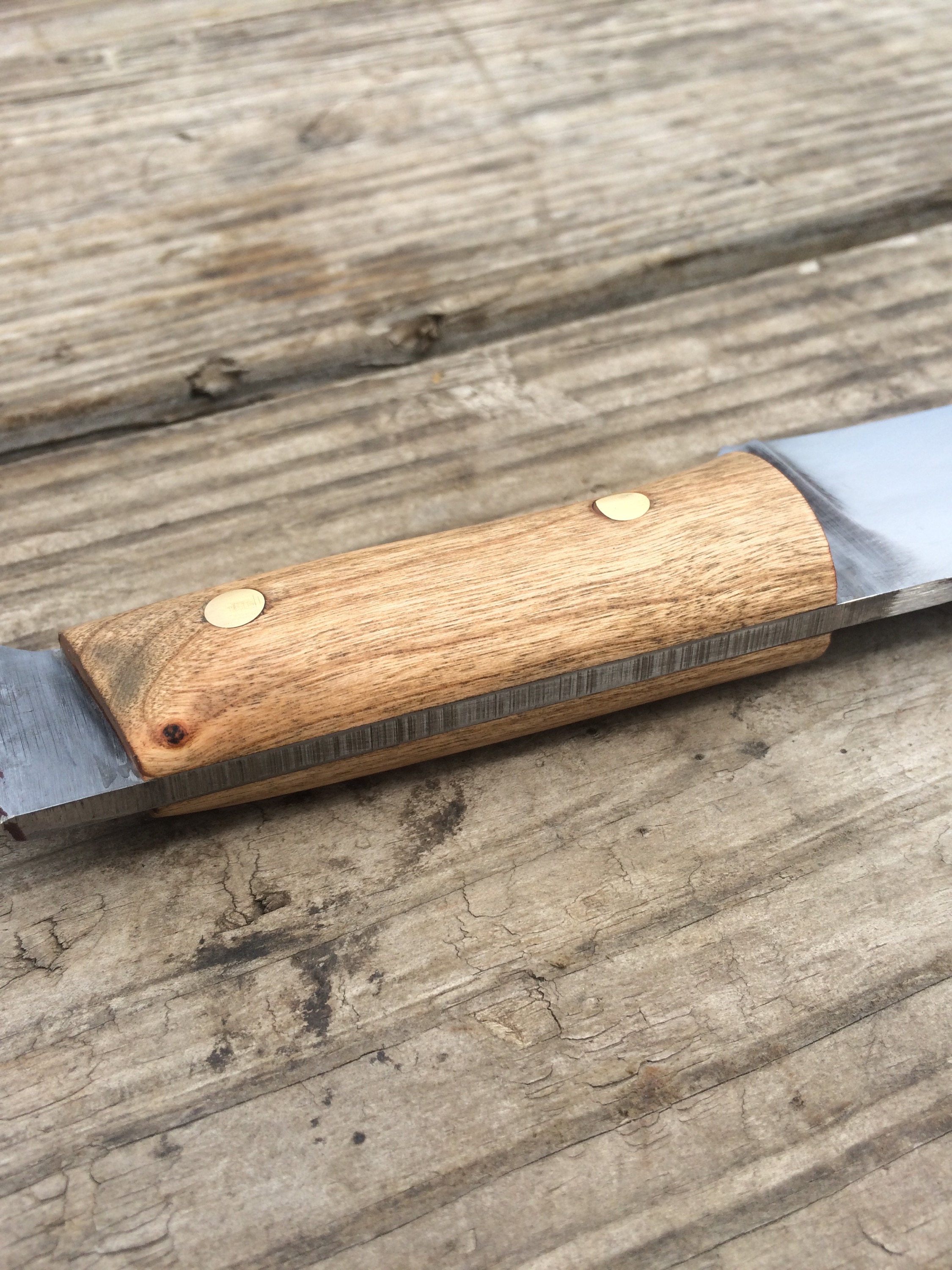
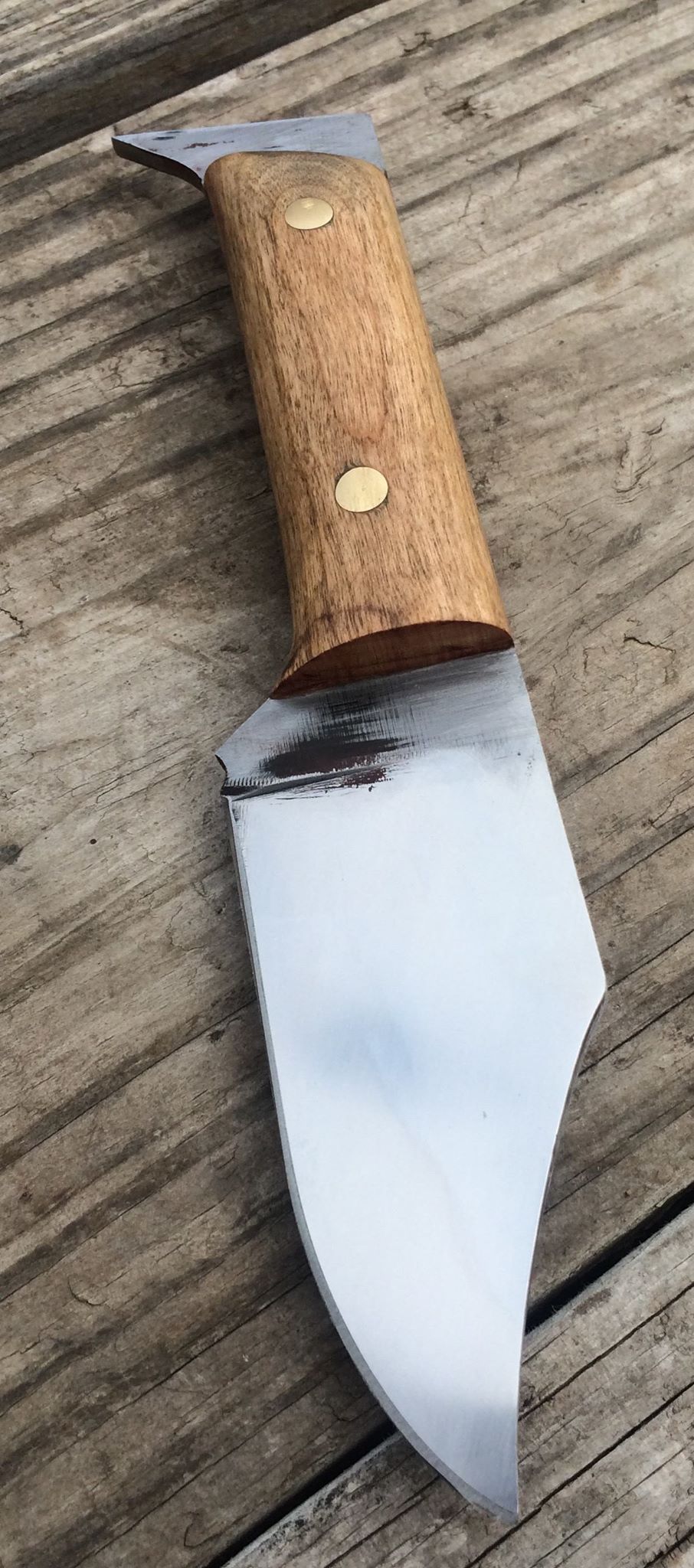
Knifemaking: expansion within limitations and the Operator

“When forced to work within a strict framework the imagination is taxed to its utmost and will produce its richest results.  Given total freedom the work is likely to sprawl.”

T.S. Eliot

I’ve found there are two types of people in the world: the Administrator and the Operator.  The Dispatcher and the Dispatched.  No person is completely one of the other.  Some people intermingle beautifully in both worlds.  Some people are better at delivering orders and others are better at executing them but no one is completely one or the other.

I find myself more in the realm of the Operator.  What needs to be done?  When does it need to be done?  Within these sorts of parameters I find that I laugh a bit easier, creativity is much more present, ideas flow better, and there is a general ease about me that might not be there if I am left totally to my own devices.  Within these sorts of parameters I am most productive.

Expansion within limitations.  We are all limited at some capacity.  Miles Davis was limited by the physical limitations of the trumpet, Mary Lou Retton by gravity, and Socrates by the political constraints of his time.  These limitations didn’t mean that they weren’t going to reach like hell for what they believed in.  No work is totally free because we are all coming from somewhere.  And it’s not about consciously limiting yourself or your potential; it’s about pushing through to find how far you can go with your craft before you hit a barrier that prevents you from going any further.  And honestly I don’t think there are many, if any, people who have hit that point.  The rub is getting through the limitations we put on ourselves.  Sometimes they sound like this:

“I’m not allowed to be this good”

“If I’m this good it might offend someone who has worked harder than I have”

“I don’t deserve to be this good”

“It’s too much work to be this good”

Those are unhealthy limitations.  Healthy limitations push us.  Money constraints, time constraints, resources, naysayers, things of that nature.  Nothing is totally free and this is a very beautiful thing: we are all coming from somewhere.  We have notions, perspectives, opinions, and options.  We all work within mediums.  Even accountants manage to be creative within what I consider to be a dry and sterile set of parameters.  Accountants might disagree and that is part of what makes the world go round.

This is how things get done and was the inspiration for the Operator.

The lesson of the Operator is to do your tasks beautifully and fully, to the best of your abilities, and within whatever parameters have been set for you or that you have set for yourself.  Whatever those tasks may be.

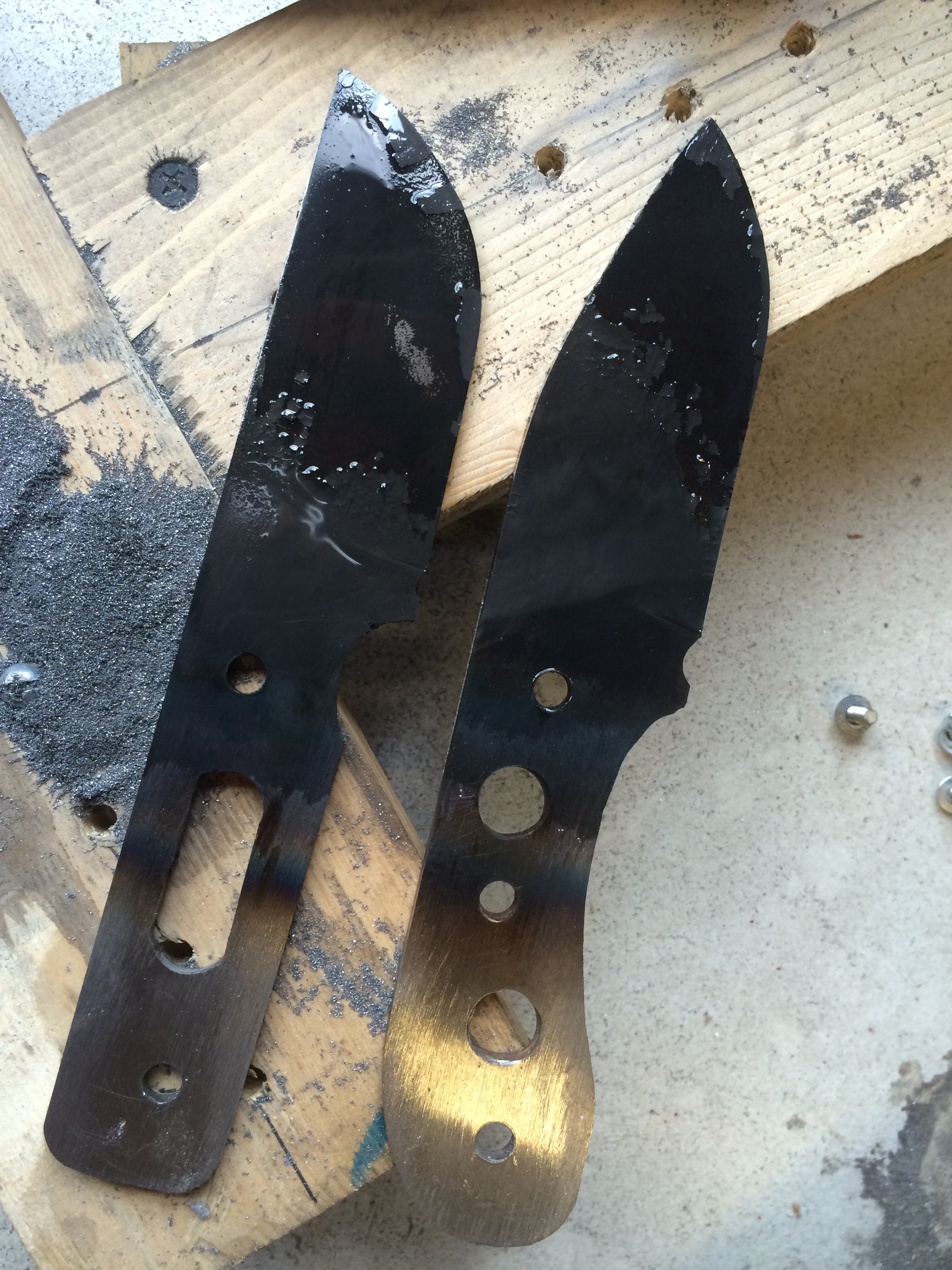
I felt I was limiting myself and wanted to use a different steel.  1095 steel is a tried and true material for knives and many other things.  Lawn mower blades, files, coil springs for suspension systems, and many other things.  It’s easy to work with, hardens up beautifully, and takes a razor’s edge.  It’s super tough.  And cheap.  I like all of these parameters…

FullSizeRender 7The Operator
IMG_2275

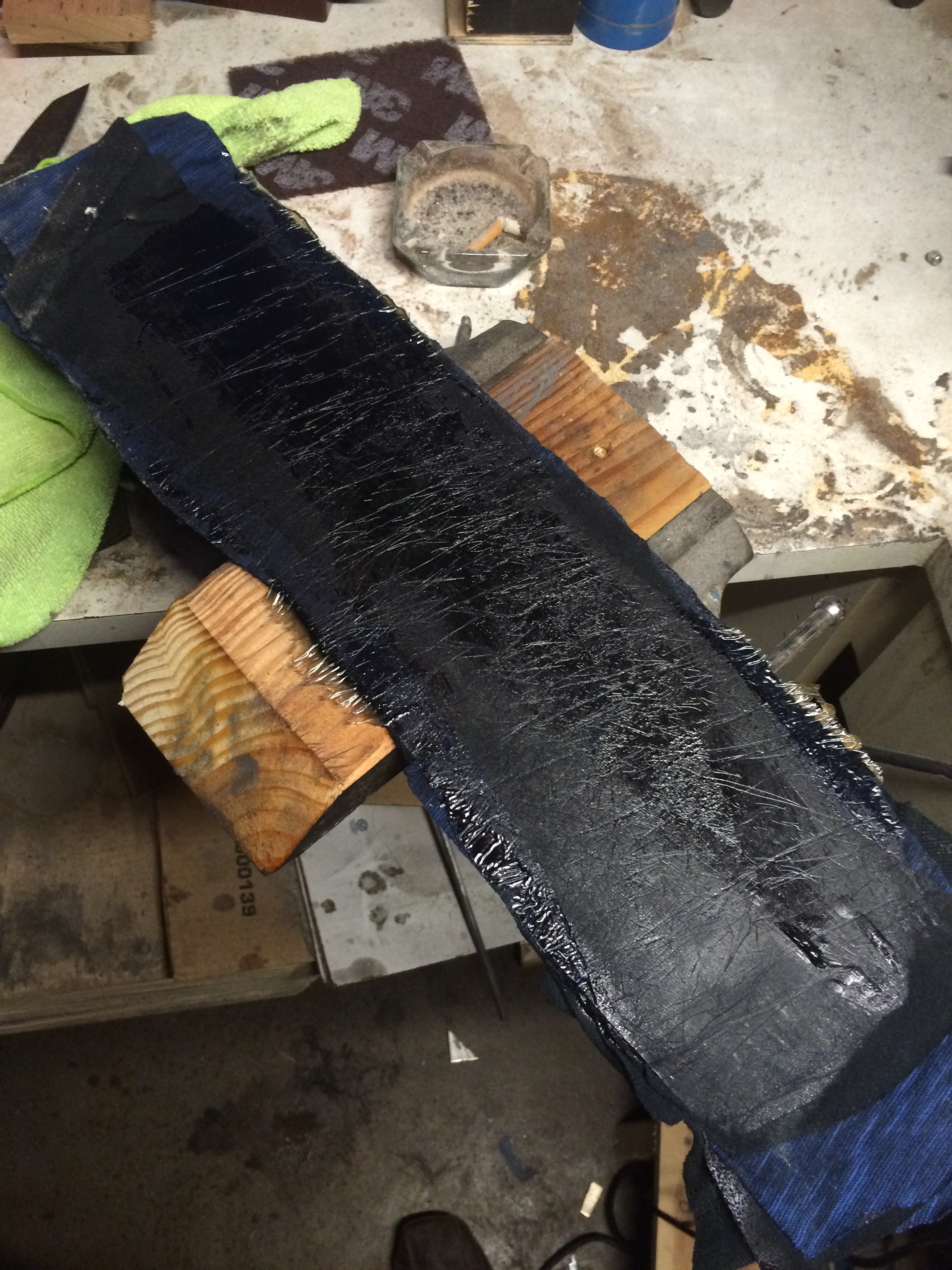
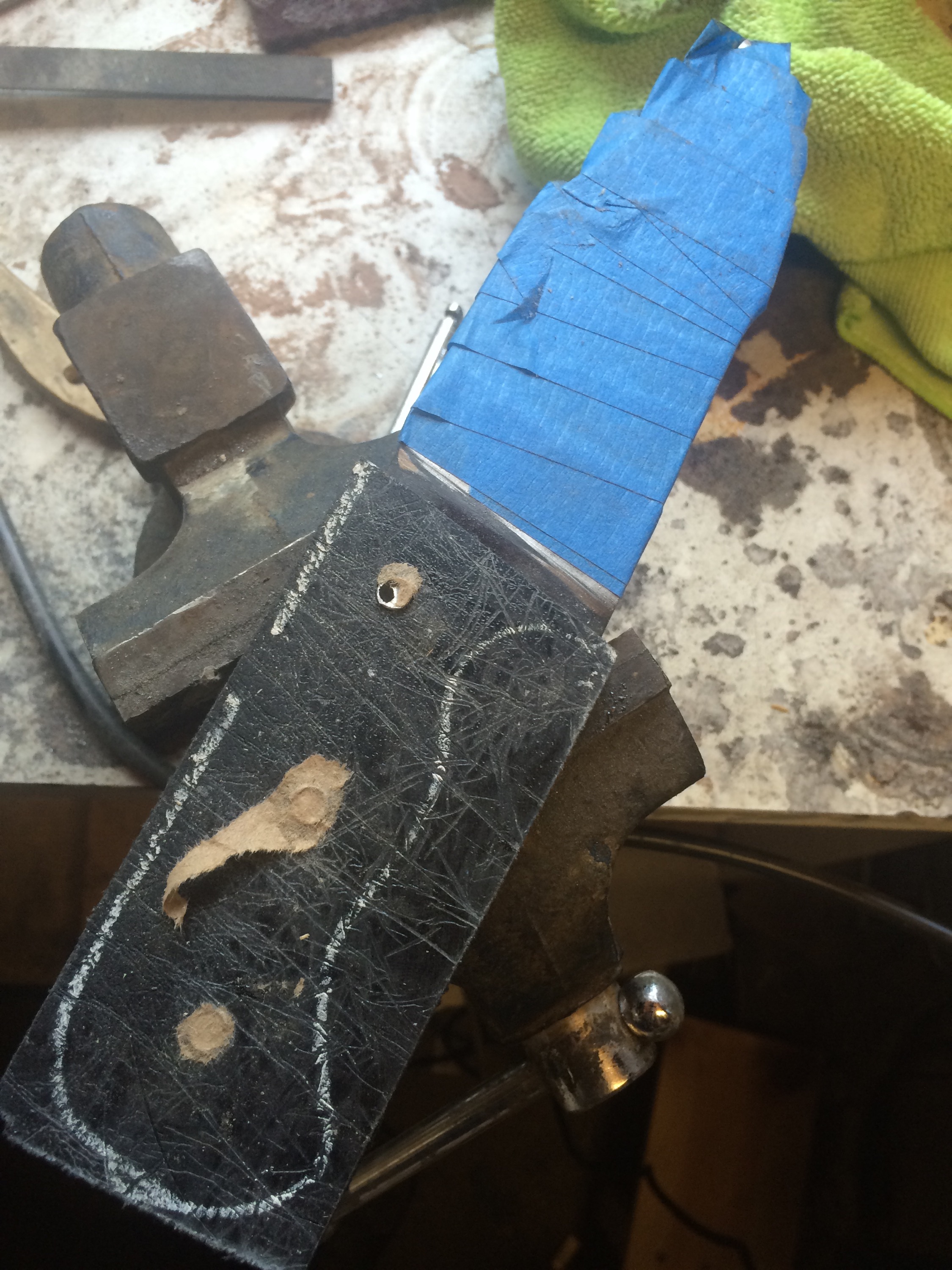
I ground this freehand on my cheap little belt grinder.  It’s a process. IMG_2289Here’s where I make the handle material.  I used fabric, fiberglass resin, pressure, time, and patience.  You can buy the stuff commercially (it’s primarily used in industrial electrical insulation practices) but it’s a lot more exciting to make your own.  I’ve done this several times and I’m never entirely sure if it will turn out as expected…This is a quick and interesting read on how this stuff works and why it’s ultimately great for knife handles. IMG_2291I used two of my favorite shirts- shirts I had worn up and down the East Coast and had adventures in.  It was time to retire them and this was a good way to honor their Operator spirit…
IMG_2292the raw material…IMG_2294 cut to shape…IMG_2296

 
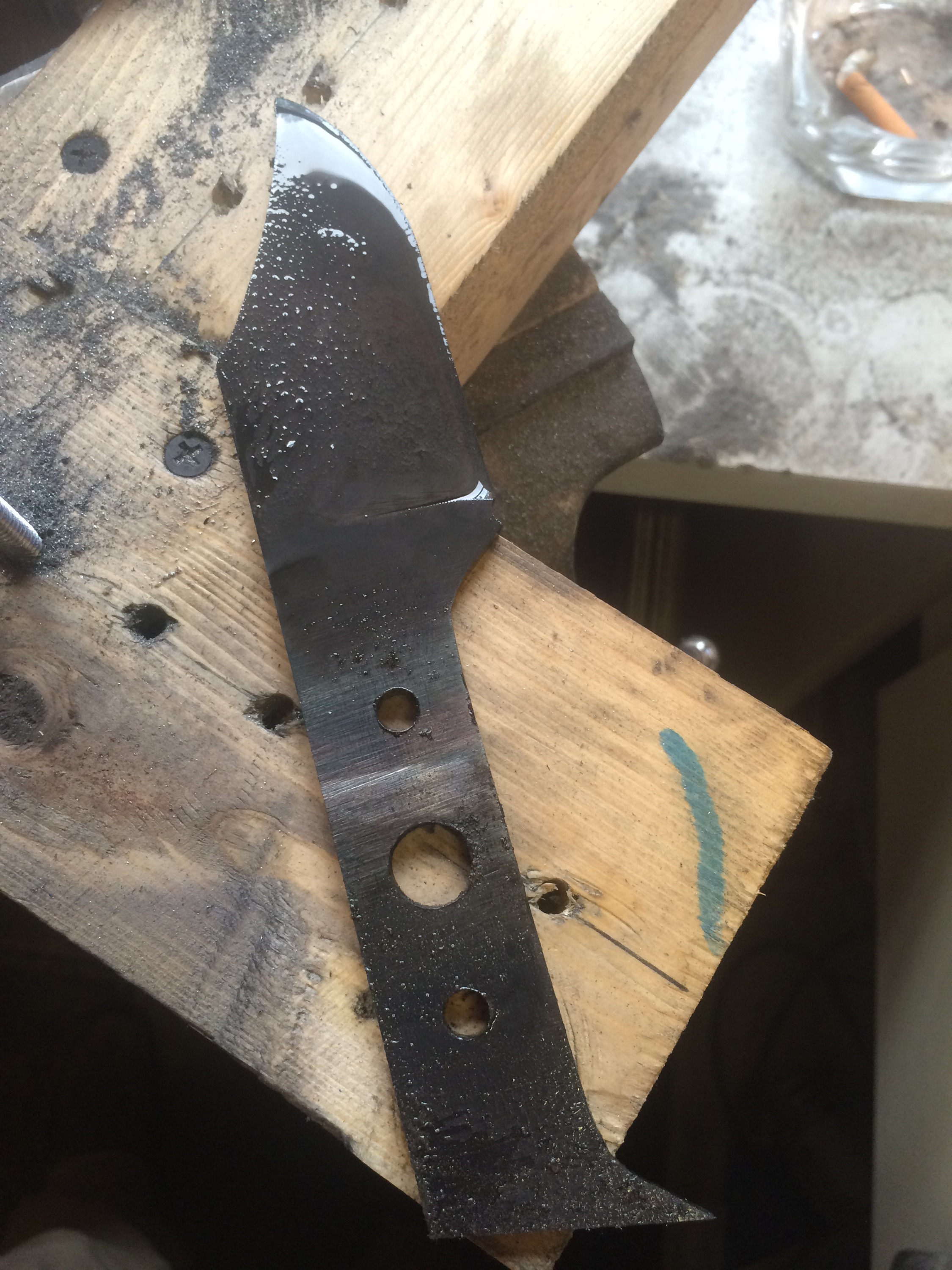
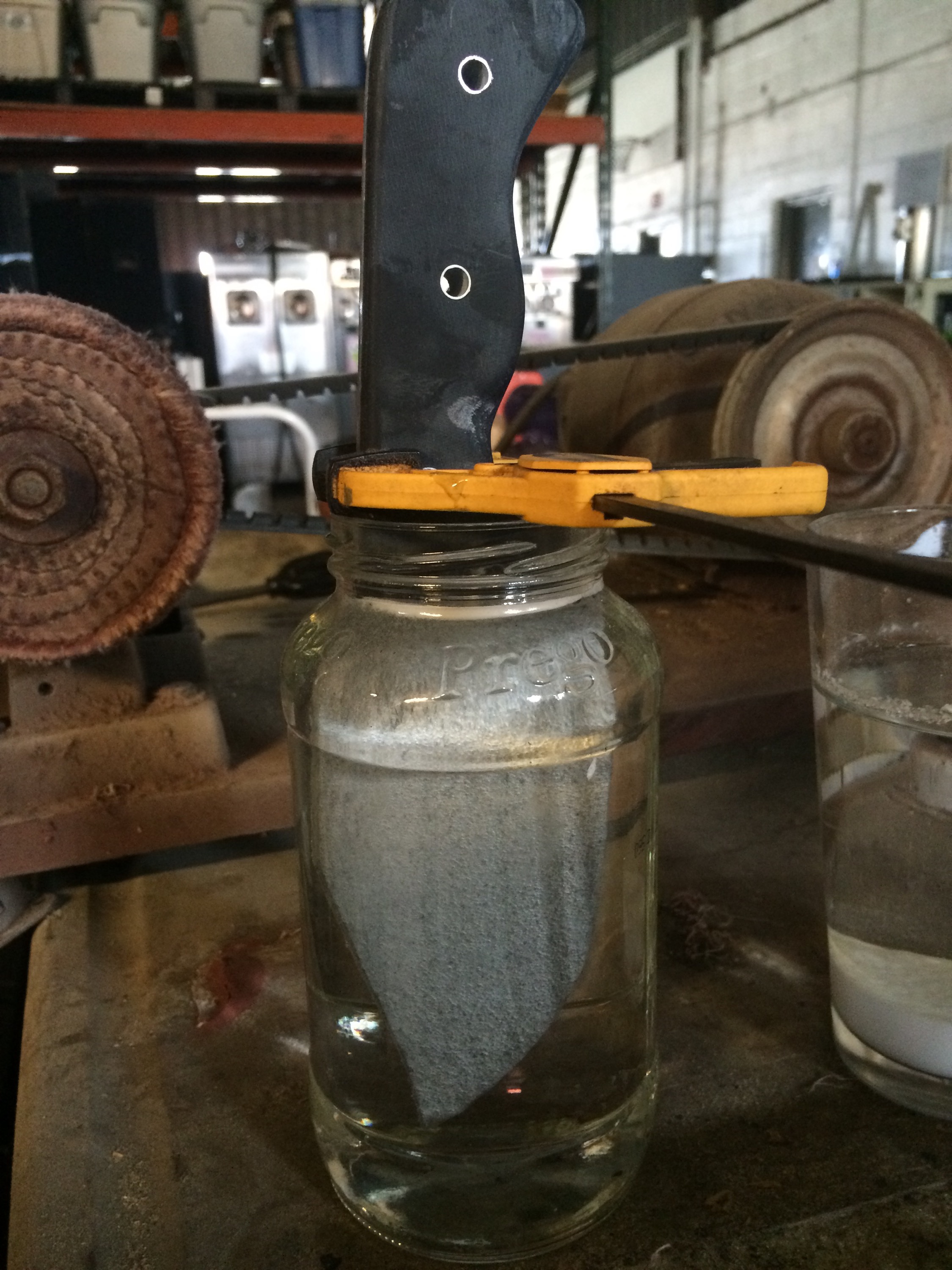
I probably spent three hours sanding the stuff…  Sanding is finished.  He goes into phosphoric acid.  This etches the surfaces of the steel and helps protect against rust.  It also makes the blade non-reflective, for those who may wish to operate clandestinely…I wish the blue material would have been more prominent but it turned out wonderfully nonetheless.  
Work within whatever parameters you may have but don’t limit yourself.  The Operator in action:
Knifemaking: stubborness, resistance, and The Mule

You know all that shit you don’t want to do?  That’s the shit you do first.”

-my very dear friend Mr. Alan Parrot on resistance

Slim, you stubborner than a motherfucker

-my very dear friend Mr. Alan Parrot on some of my finer traits

Stubborness.  Unyielding, refusing to change.  The ability to dig one’s heels in and not budge.  I think this may be a bit negative, although those things are not necessarily untrue.  I think it lends itself more to an earthiness or stoutness of heart although it’s probably pretty frustrating at times for those close to us stubborn people.  Hell, sometimes it’s frustrating to be close to myself.

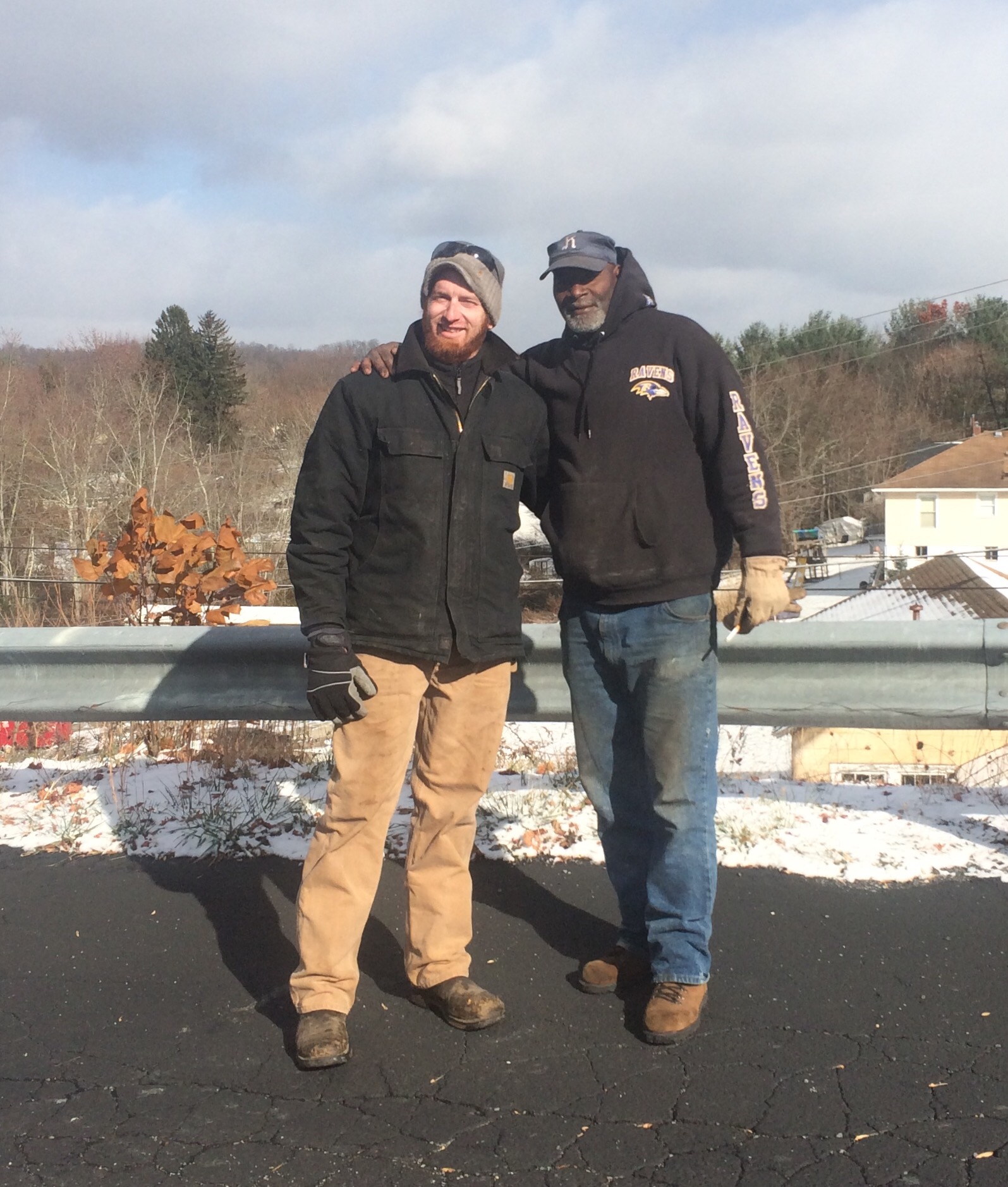
Alan is a gentleman I have worked with. I call him Mr. Al.  Here is a picture of us in West Virginia:

…it was cold…

He’s a fifty-five year-old African American man, ex-marine, and one of the most profound people I’ve met.  He’s fixed my car, dropped some serious lessons on me, and made me laugh till I cried.  He’s also stubborn as shit.  We did quite a few jobs together…and sometimes we would end up screaming at each other.  I couldn’t tell you what about.  Maybe it was my forklift driving or maybe he wasn’t moving fast enough for my liking or something else that really wasn’t all that important.

After we had screamed at each other and finished whatever nightmare job we were on, I’d usually buy him a cheeseburger.  Because I’m stubborn, even in my love for this man.

This is the lesson of the Mule.  Rooted, but in an earthy way and ultimately coming from a place of love.

I find resistance to be the negative side of things.  That thing you feel when you know what you need to do but don’t do it?  That is resistance and it can be sticky and awful.  To get through that I often need to look at what’s beneath that.  Oftentimes it may be fear of failure, feelings of not being good enough, or any number of things.  Things of the smaller self.  To get through this I usually imagine the small self being held by my larger self, usually a very large tree.  It doesn’t work all the time because life can be overwhelming.  When it does work it is quite liberating.

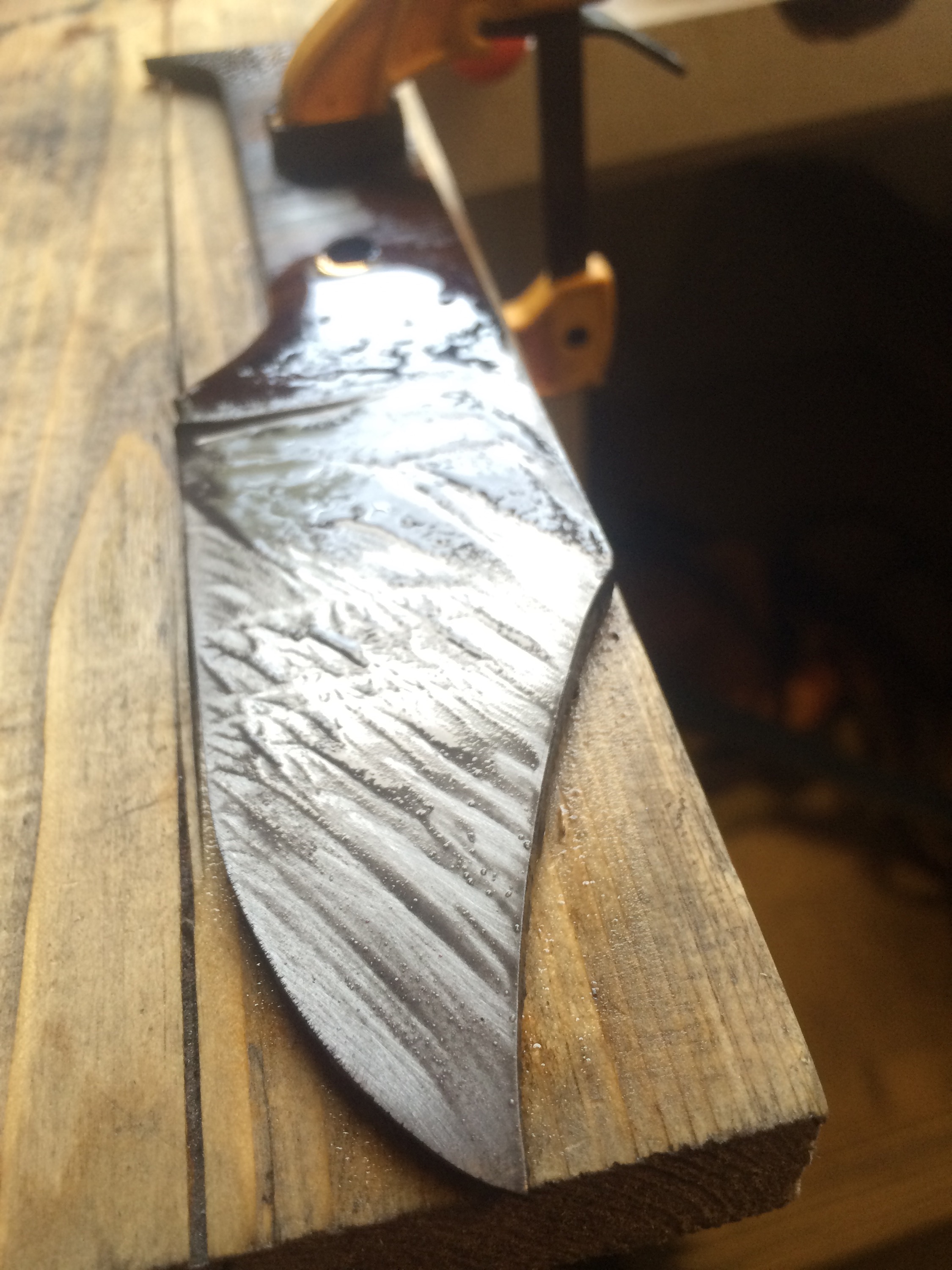
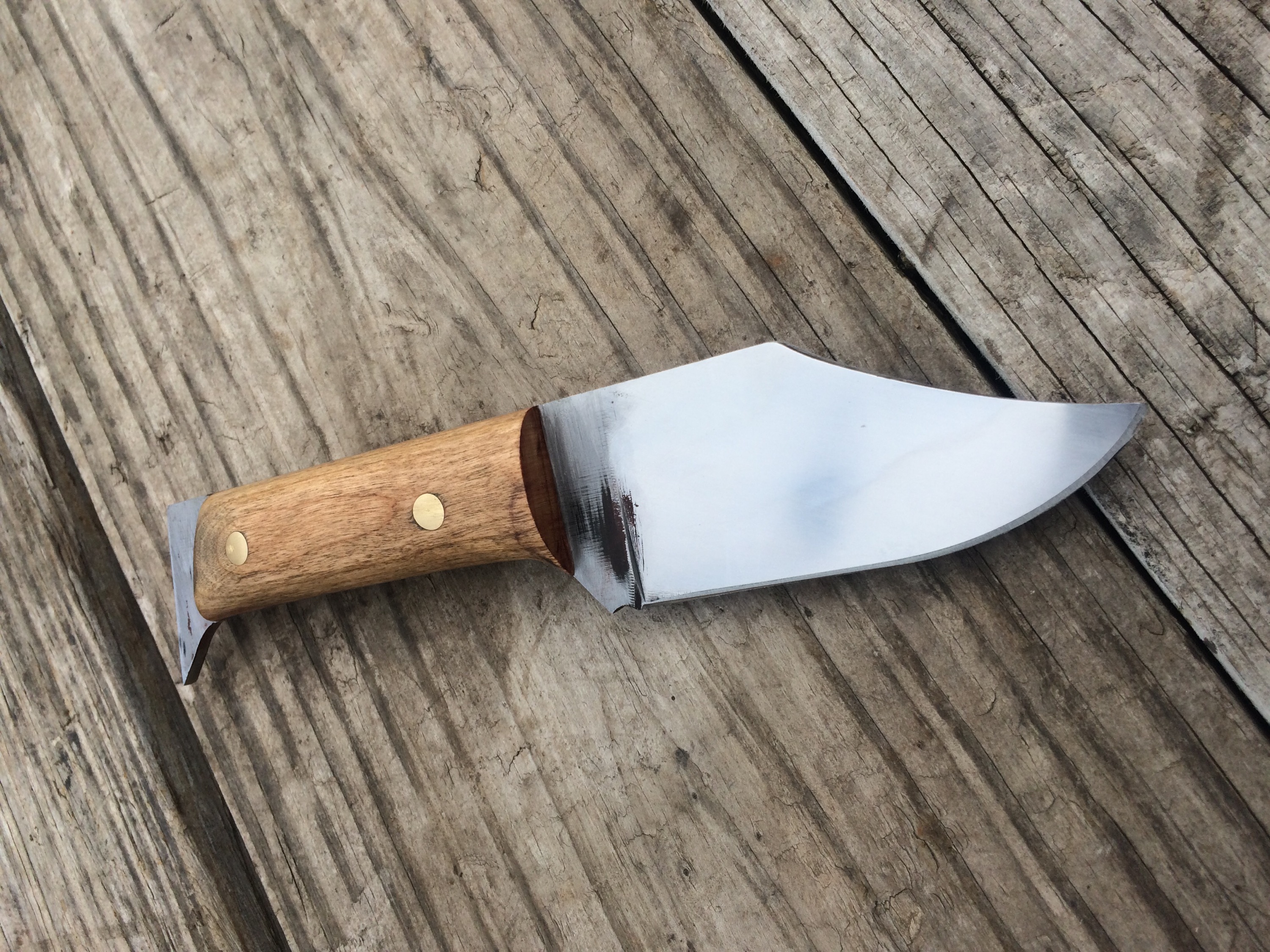
 Sometimes you need to dig into your being.  So I put a sharp foot on the profile of the Mule to do just that….Slowly to the left….    slowly to the right…  Hardening the foot as well as the blade  Hardened up nicely she did…  Wet sanding… For the handle I used Cherry wood.  In Celtic lore, Cherry is the Tree of the Heart. She sits and cures…  Brass rivets and a lovely grain…


I left some of the scuffing.  The stuff of character…  She’s been through a journey.  I fancy a bit of the singed oil smduge…  

10014928_10102577420615476_1305789096652702656_o

The lesson of the mule is to take heart in your stubbornness, and to let go of resistance.  Both of these things will always be continuing works in progress, at least for me.

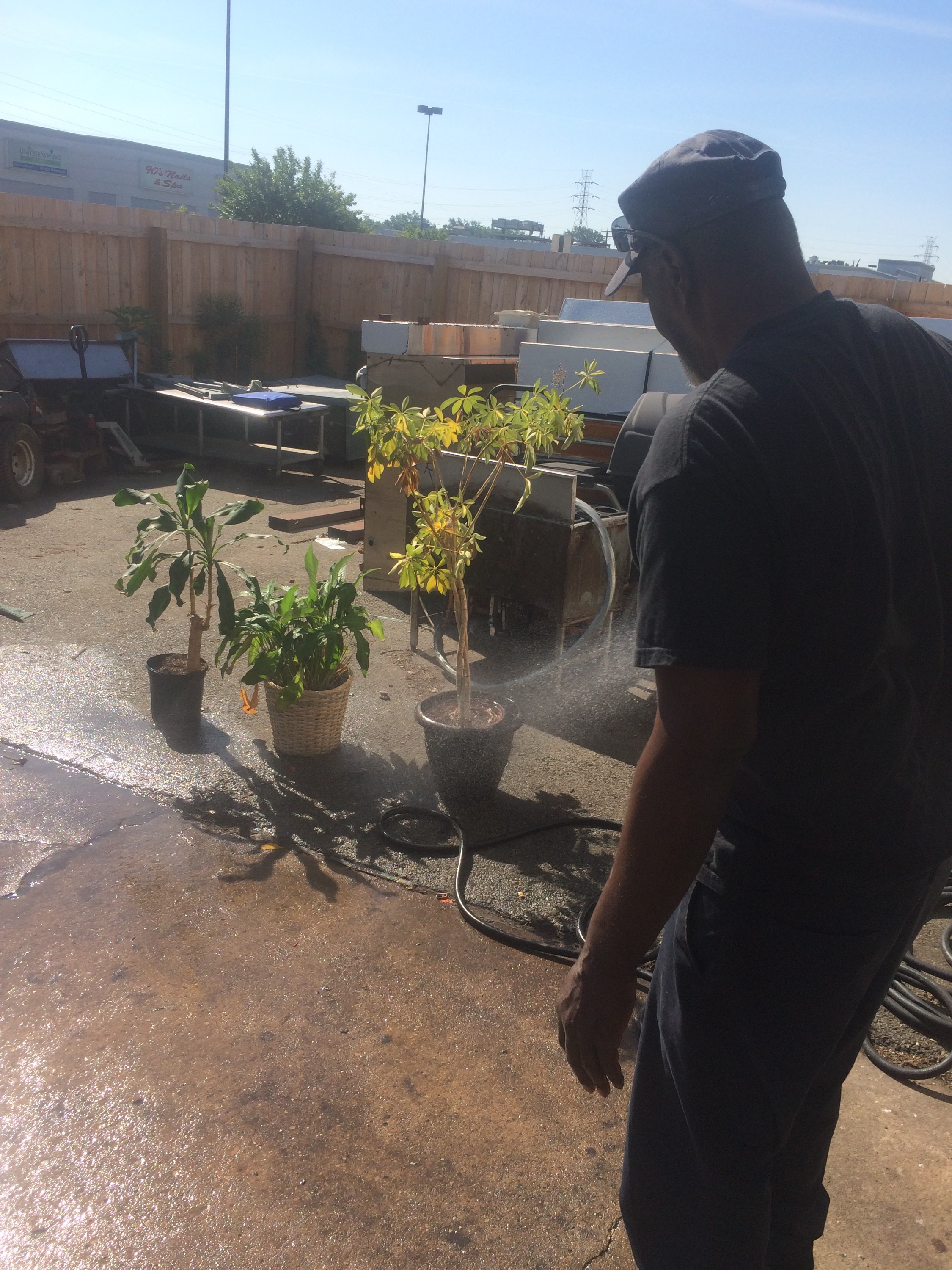
Here is a picture of Mr. Al watering his plants;


Knifemaking: The Spellcaster Epilogue

“Faithless is he that says farewell when the road darkens.”

J.R.R. Tolkien, The Fellowship of the Ring

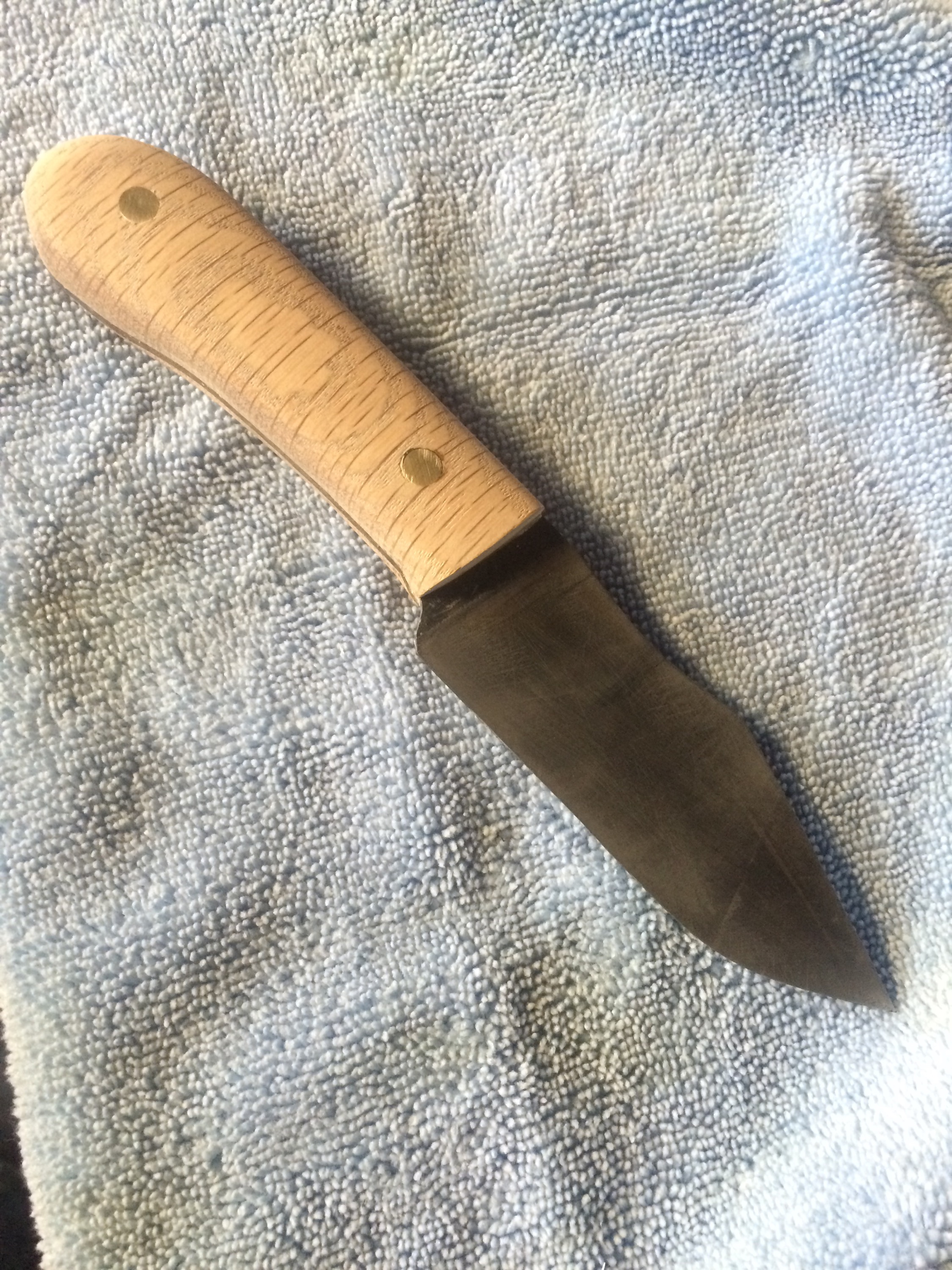
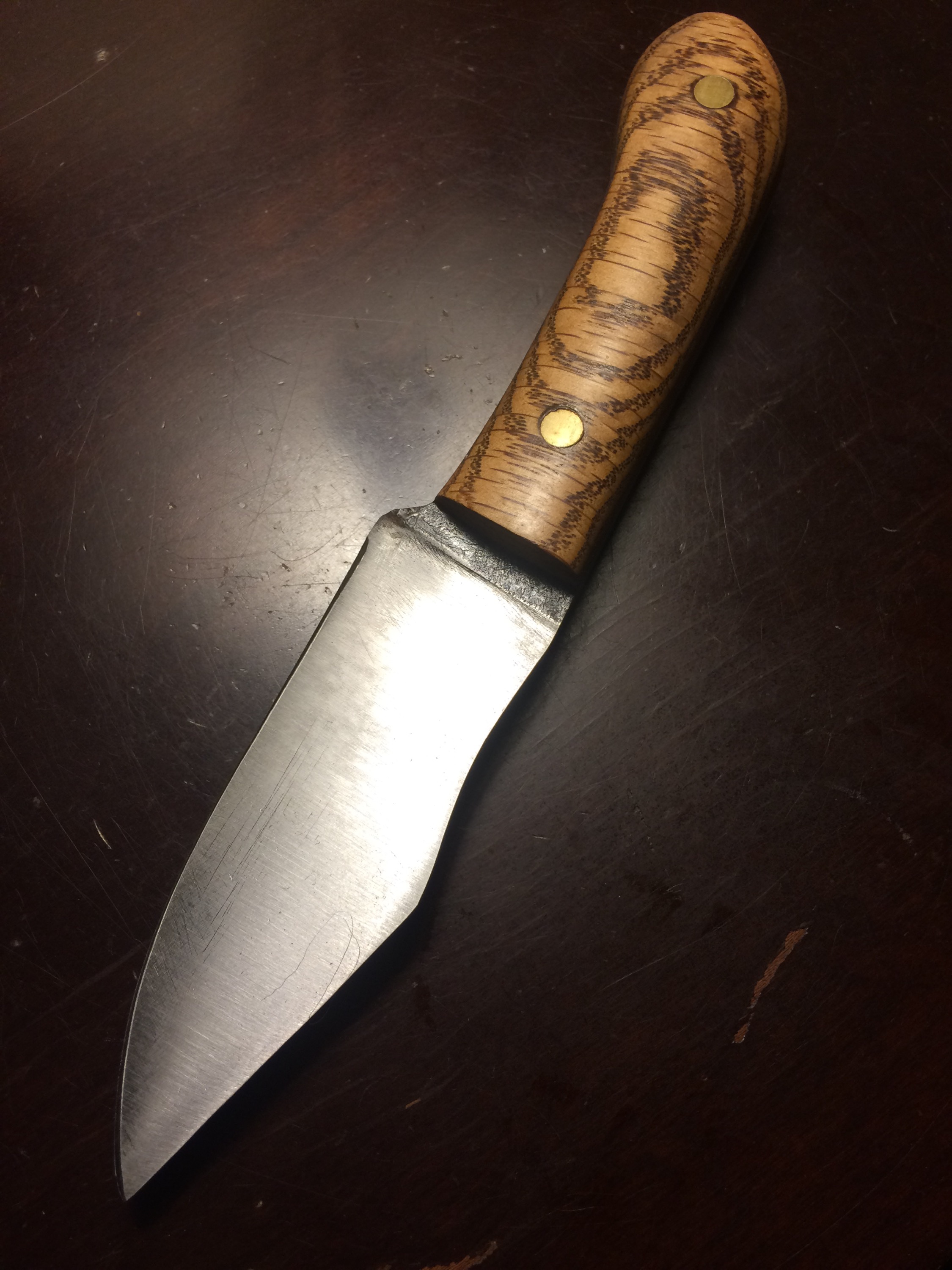
The Spellcaster was a lesson in faith- I wasn’t sure if it would even turn out.  I loved the idea that the steel came from a bedframe but I wouldn’t know if it would harden and temper properly till I had put in a lot of work on it.  It did.  I’ve been working on this blade a long time off and on and finally, like many things in life, I just had to take a leap and just go for it.  It is a thinner blade, very nimble and made for a smaller hand (well, smaller than mine….)

The lesson here is to trust that things will be ok, even if they aren’t the way you expected they would be.  Even if they aren’t the way you would like them to be.  This is something I struggle with- letting things be as they are.  In order to finish this blade I had to let it be as it was. Only then could I see how beautiful it really was.

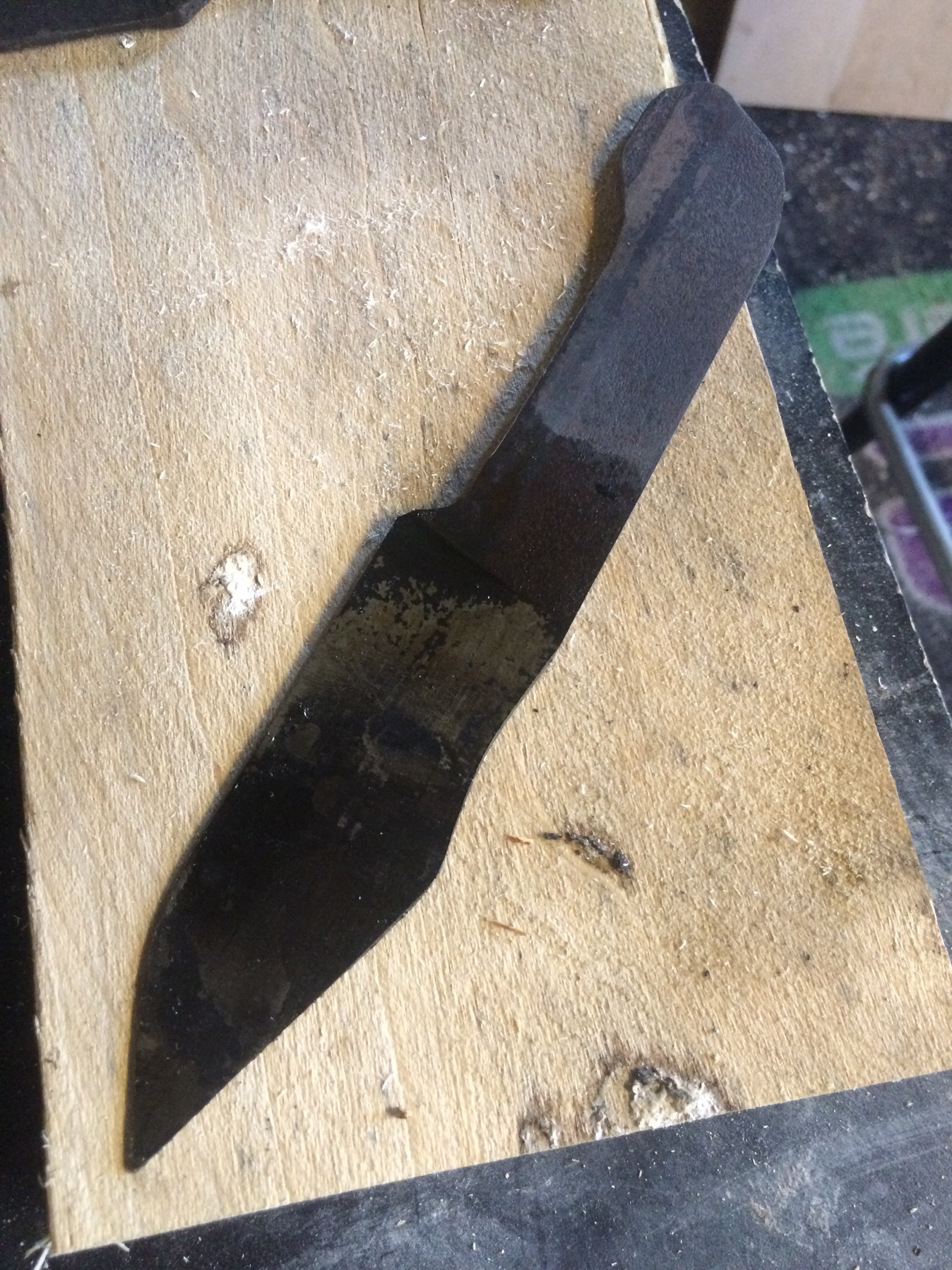
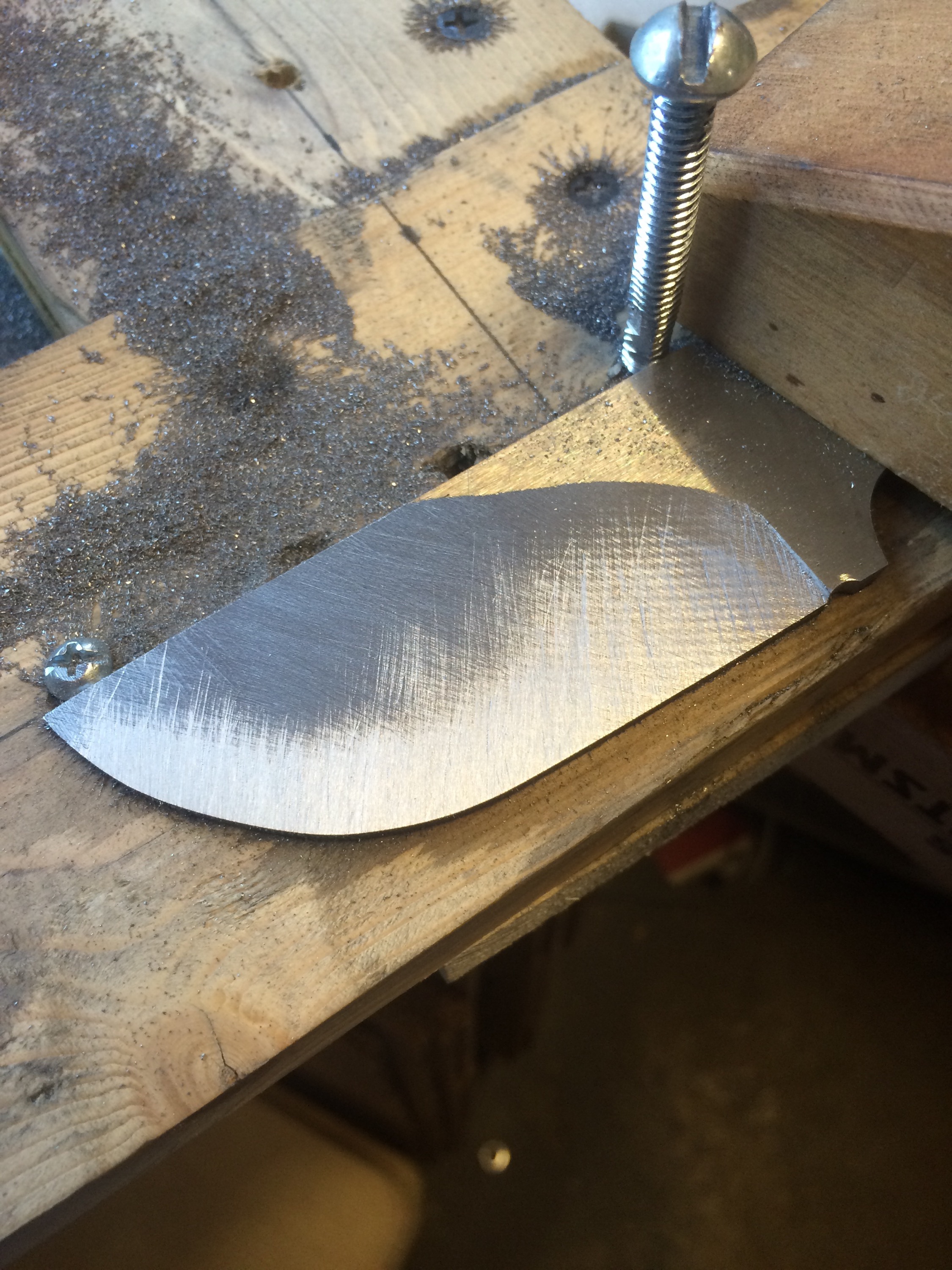
This is after heat treat.  A file couldn’t touch it.  The bedframe delivered…   

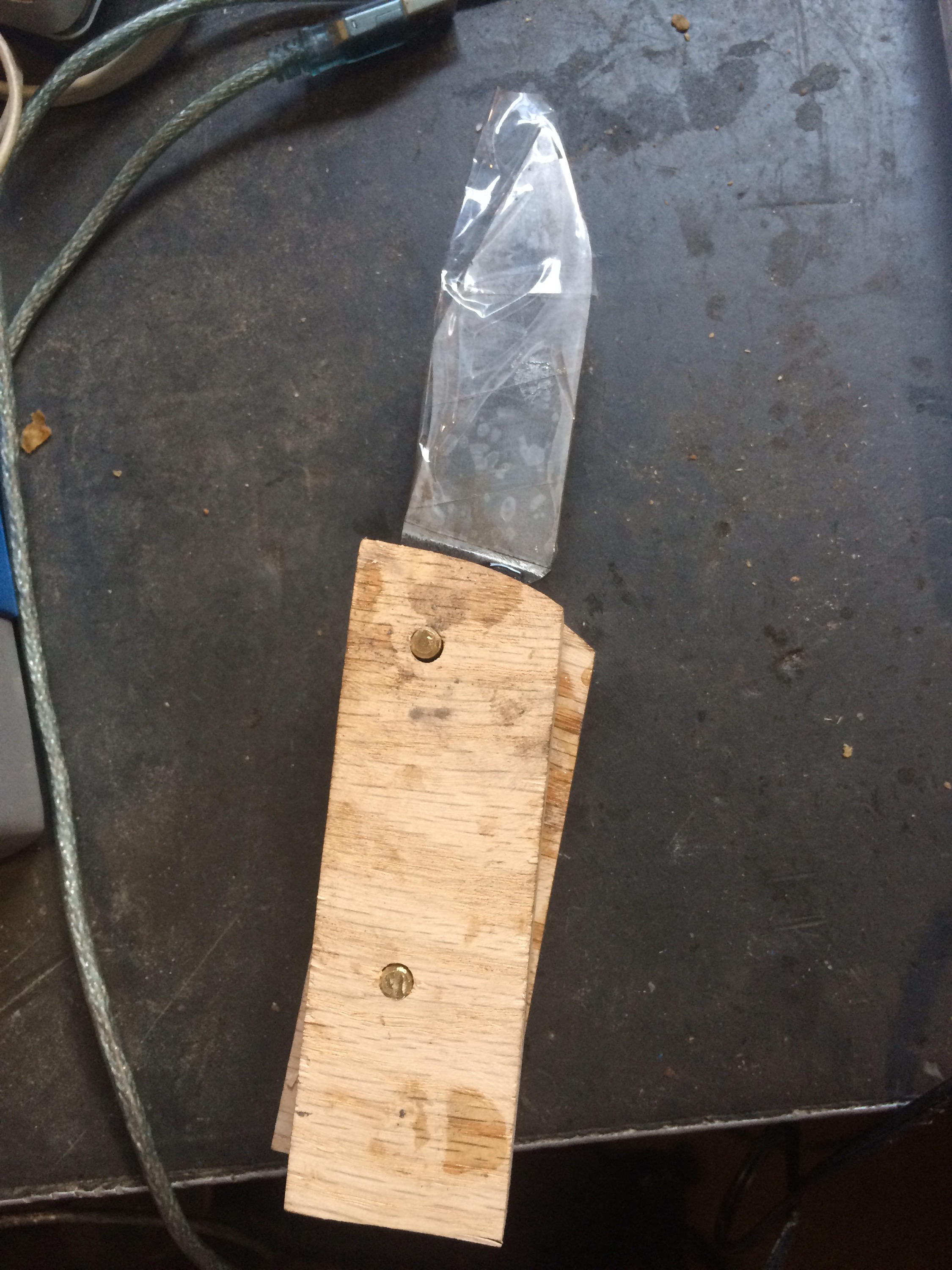
I used white oak for the handle.  I love oak.  It has mass and it’s heavy.  It takes up space and lets you know that it’s there.  In Celtic lore, oak is a protector, wise and strong and a bridge to otherworldly places.  I wanted that for this blade.

This is a beautiful process and one of my favorites: 

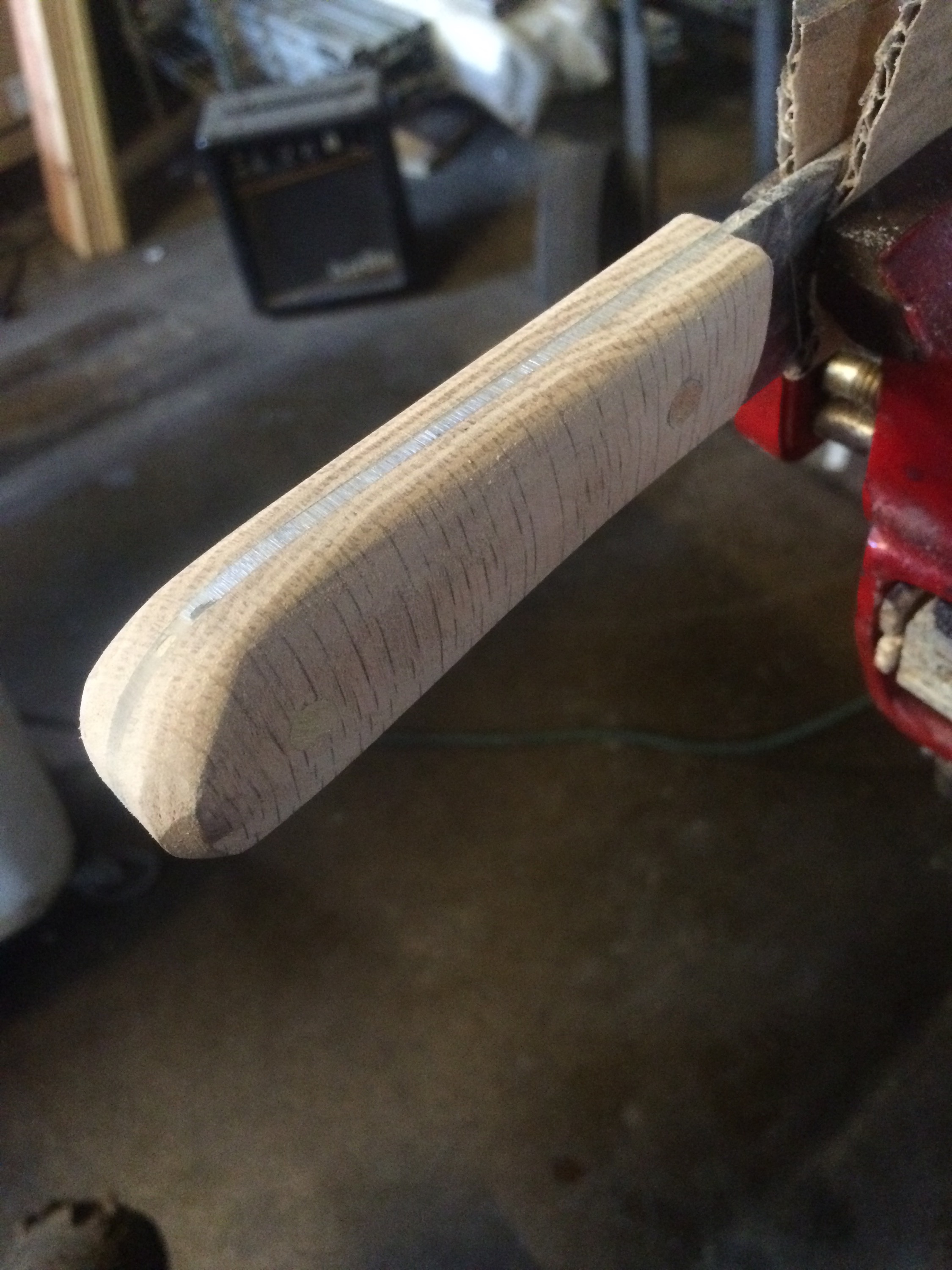
  Roughing it out…The grain is starting to come out…there is a woodworkers’ trick where the wood is rubbed down lightly with water and allowed to sit- this brings the grain to prominence.There she is….

Brass rivets with a walnut danish oil, finished with tung oil.       


Always keep your faith.  This is the lesson of the Spellcaster.

Knifemaking: being content, releasing, and the Minimalist

“Elegance is achieved when all that is superfluous has been discarded and the human being discovers simplicity and concentration: the simpler and more sober the posture, the more beautiful it will be.”

Paulo Coelho, Manuscript Found in Accra

Originally, I wanted to call this blade The Monk.  When I see images or videos of Buddhist monks, or anyone living in a monastic setting, I used to wonder how they survive on so little.  Recently it was explained to me that they aren’t choosing a life of poverty.  They are choosing a life of contentment.  The idea as I’ve come to understand it is that they have enough and this brings contentment.  Enough, but in a gentle and satisfactory way.  This is pretty much counter to most of the ideas of what we are taught about being successful in Western society.

That was the inspiration for this blade.  Something simple.  Enough.  Content to just be.

There is an elegance in the simple.  Simple is difficult to pull off well.  Think of the best things.  Bach is simple but by no means easy to perform and certainly not lacking in beauty or depth.  Then there is steak- the best steak needs nothing but salt, pepper and a hot grill.  The list can go on.

This is where the beauty is.  An idea or tool or work of art or meal that has everything it needs and nothing it doesn’t.

There is a practice in many Buddhist temples that consists of tidying and cleaning.  It is believed that a tidy workspace helps with concentration.  There are books on the matter of getting rid of clutter.  Behind this is the idea that when we release the material things that are no longer serving us it will follow that we also release the emotional things that hold us back from being our naturally vibrant selves.

Ultimately I find this blade to be a reflection of how I desire to be.  In a way I am this blade.  As I was slowly removing the things that ultimately didn’t serve the purpose, function, being, beauty or existence of this knife I thought of the things that don’t serve me that I desire to release.  Like the grinding of this blade, release doesn’t happen all at once and if I tried to do it all at once I would be an overwhelmed, anxious, and contracted human being.  I’ve been there.  I think we all have.  Breathe deeply and appreciate how beautiful the simplicity of something can be.

I started this blade with a bit of O1 tool steel stock:

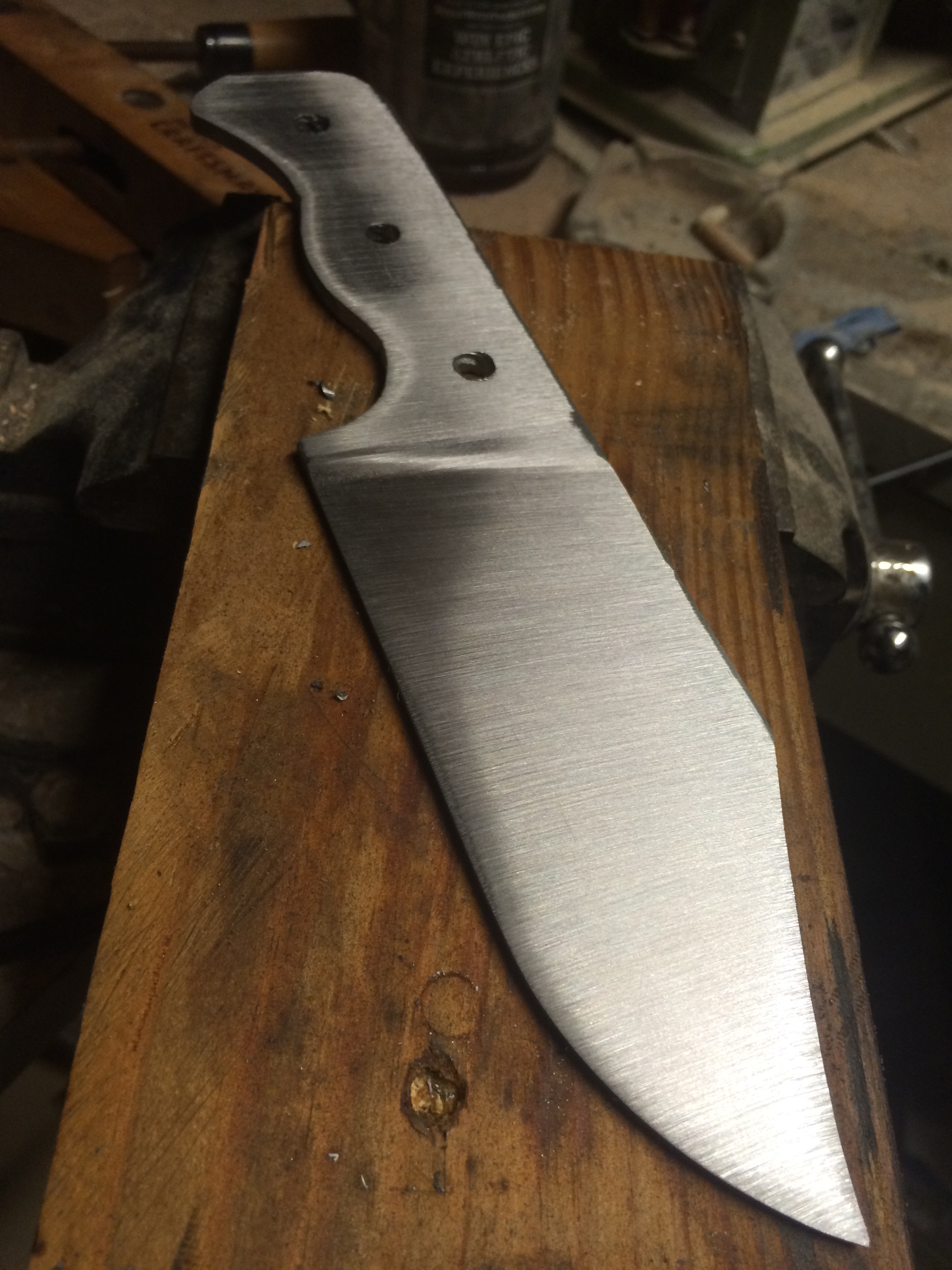
I wanted to make something simple and functional and beautiful.  This is what I came up with:


And a flat grind…


In keeping with the idea of not having anything unnecessary, I removed some of the stock in the handle.  It also makes it lighter.  Here he is after filing and sanding….


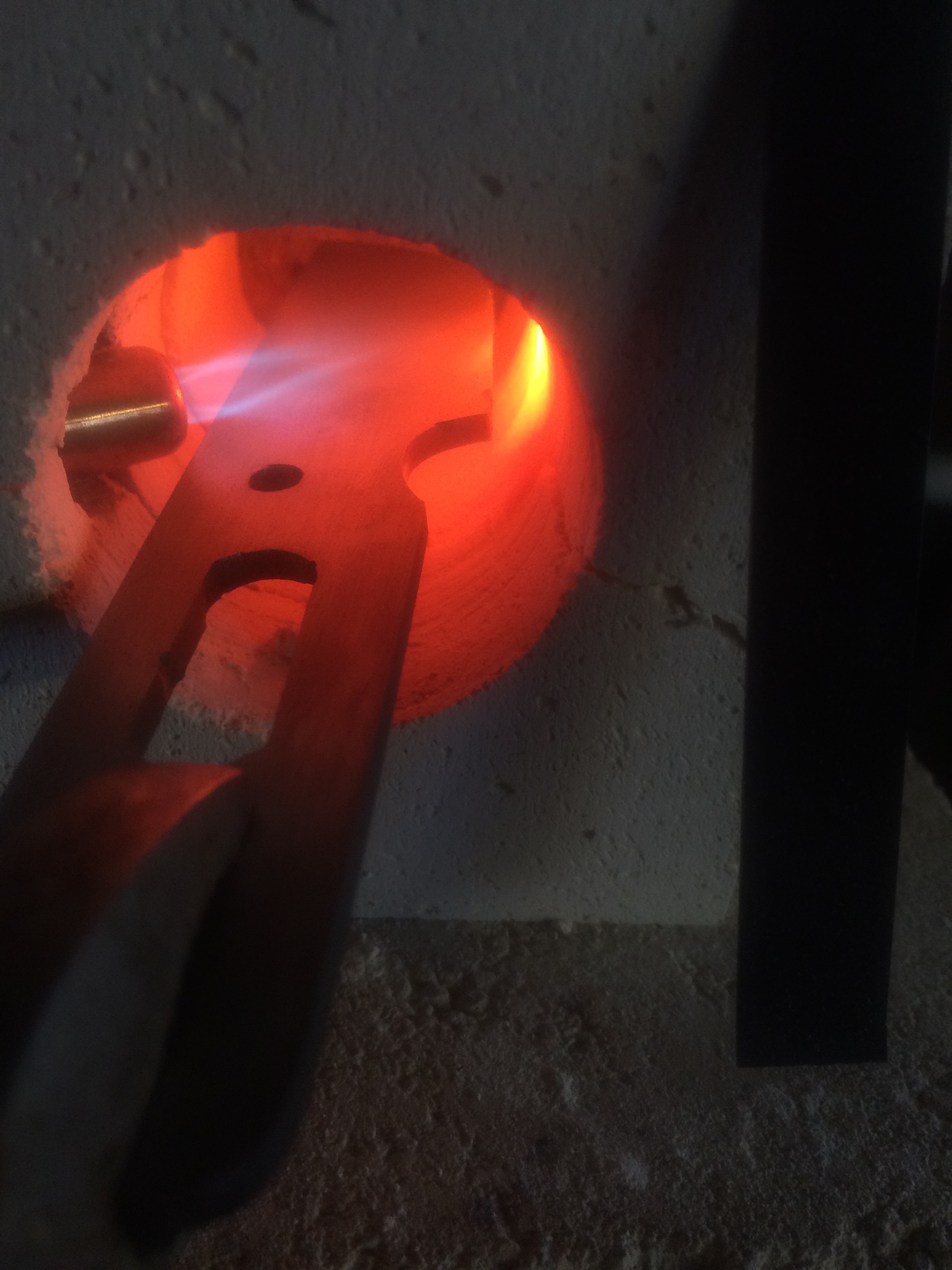
Hardening and tempering.  It took some tries but I got a forge built that gets plenty hot: the Brigid Marsal 3.0…


And after a dunk in some warm cooking oil…


He cleans up nice:


So for the handle I went back to the idea of the monk- enough clothes to keep you warm and decent, a safe place to sleep, and enough to eat.  Having just enough to help you really feel your inner being.  I found a dough proofing board used by bakers.  I made the handle out of that, one’s proverbial daily bread.  A simple coat of Danish Oil protects the handle and brings out it’s beauty.


 And the secondary bevel…

Handle detail.  So much love…. 

As I learn and grow, I find that some of the things I thought I needed aren’t serving me.  It’s ok to release these things.  This is the lesson of the Minimalist.