Knifemaking: the other side of things, and the Hippo

“Audi alteram partem.”

“Hear the other side.”

-St. Augustine of Hippo


The other side.  Sometime we’re so used to seeing everything from our own point of view that the other side can seem foreign, or even wrong.  But to truly live and to understand, sometimes we have to hear the other side, or even live over there for awhile. 

The “other side” can be just about anything.  St. Augustine’s quote can be applied to today’s politics- gun control, immigration, issues of gender identity- issues that are magnanimously polarizing and place many of us on one side or the other.  We simply don’t listen because we don’t think what the other side has to say has any use to us.

And it goes deeper.  We don’t hear the other side of what many parts of our life have to tell us.  Maybe they are unpleasant or painful, or we feel they don’t serve us, or they are extraneous and not needed, or they poke at a deep wound that we would rather leave alone.  So we go through our world pretending the other side doesn’t have anything to say to us.  This usually works until it doesn’t.  And then life will come and hand us a situation or circumstance that places us on precisely the other side of where we’d like to be.

Some of the happiest people I know have been through the greatest sorrow.  The most loving people I know have suffered losses so great that when I put myself in their shoes I’m not sure how I’d get out of bed in the morning.  But these are the people who have heard the other side, and know that the highs and lows are two sides of the same coin.  The other side of suffering is serenity; the other side of pain is pleasure; the other side of misery is joy; and the other side of grief is love.  In shutting ourself off from misery, we are effectively shutting ourself off from our greatest joy.

…….

It was the summer of 2004 and I had been invited to my first wedding.  A friend of mine was getting married.  We had grown up down the street from each other and had gone to high school together.  As an awkward and maladjusted teenager I had always been grateful that she had been such a good friend to me.  She had graduated a little before I did and liked to travel- she would send me postcards sometimes.  At this point I had been in college for a couple of years and had barely seen any of my friends I had grown up with, including her.  I was really happy for her and excited to see how she was doing, and glad she thought to invite me.  The service was going to be in a little chapel on her college campus, about four hours away. 

Then, about a week before I was going to head out, another friend I had grown up with died in an extremely traumatic car accident.  It was really bad.  It had been late at night and their car had crashed and caught fire.  There were three other passengers and no one could get out.  No one survived and they had to be identified by dental records.

The funeral was a day before I was headed out of town.  I took the day off of work from my summer job to go to the service.  I was much younger and pretty naive to a lot of the ways of the world but I noticed that nobody, not family or church clergy, had anything substantial to say to make any sense of it.  After a few years I would realize that this is the ultimate tragedy of a young person dying- there’s nothing anyone can say to make it better.  I grew up with this guy, we did church youth group together.  We weren’t particularly close but we had spent a lot of time together over the years.  Gradually I felt my emotions getting the better of me throughout the service.  I tried thinking about baseball, but during the eulogy it was all waterworks.  My father, who had come with me (and I was glad he did), handed me his handkerchief.

….

After the funeral, I packed a suitcase and drove four hours to attend a wedding the next day.  I remember that drive very clearly- blasting music and feeling a bit of grief but otherwise very happy to be alive.  I checked into my hotel and went out with a couple of friends that I hadn’t seen in forever.  Up to that point I don’t ever remember laughing so hard.  I stumbled back to my hotel room, which was a mile and a half away, and went to sleep, quite content with laughter and health.

The next day I went to the wedding service.  There was a string quartet playing processional music, I think it was Ravel, and lots of flowers.  It was a really happy and beautiful service, and I remember how incredible it was that one day you could go to a funeral and the next day a wedding, and that these were perfectly natural occurrences to have in one’s life.  I don’t know if I would have been nearly as grateful and present if I hadn’t had the previous day’s experience of being on the other side.

It’s a strange world we live in.  Be sure to hear what the other side has to say. 

…..

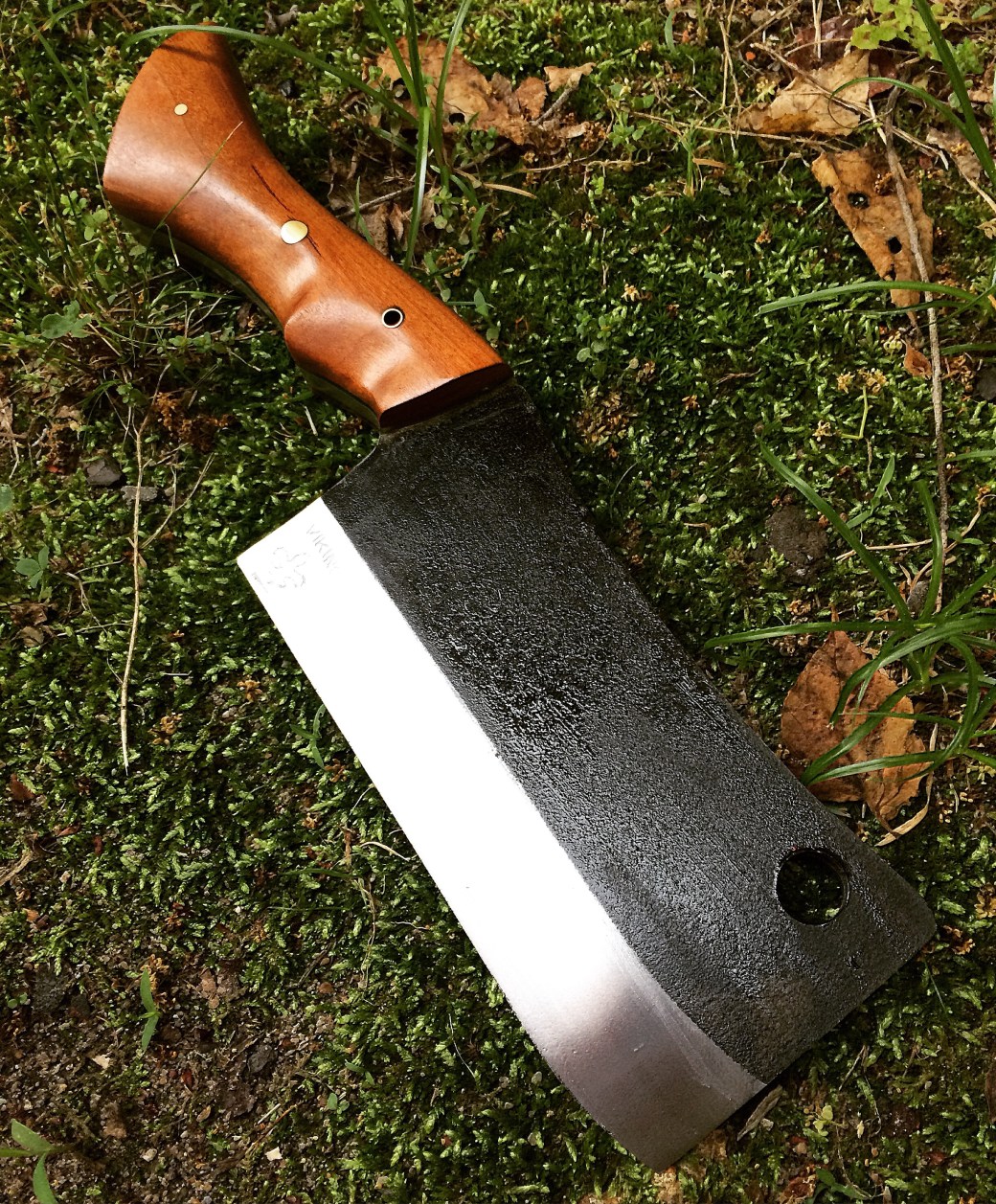
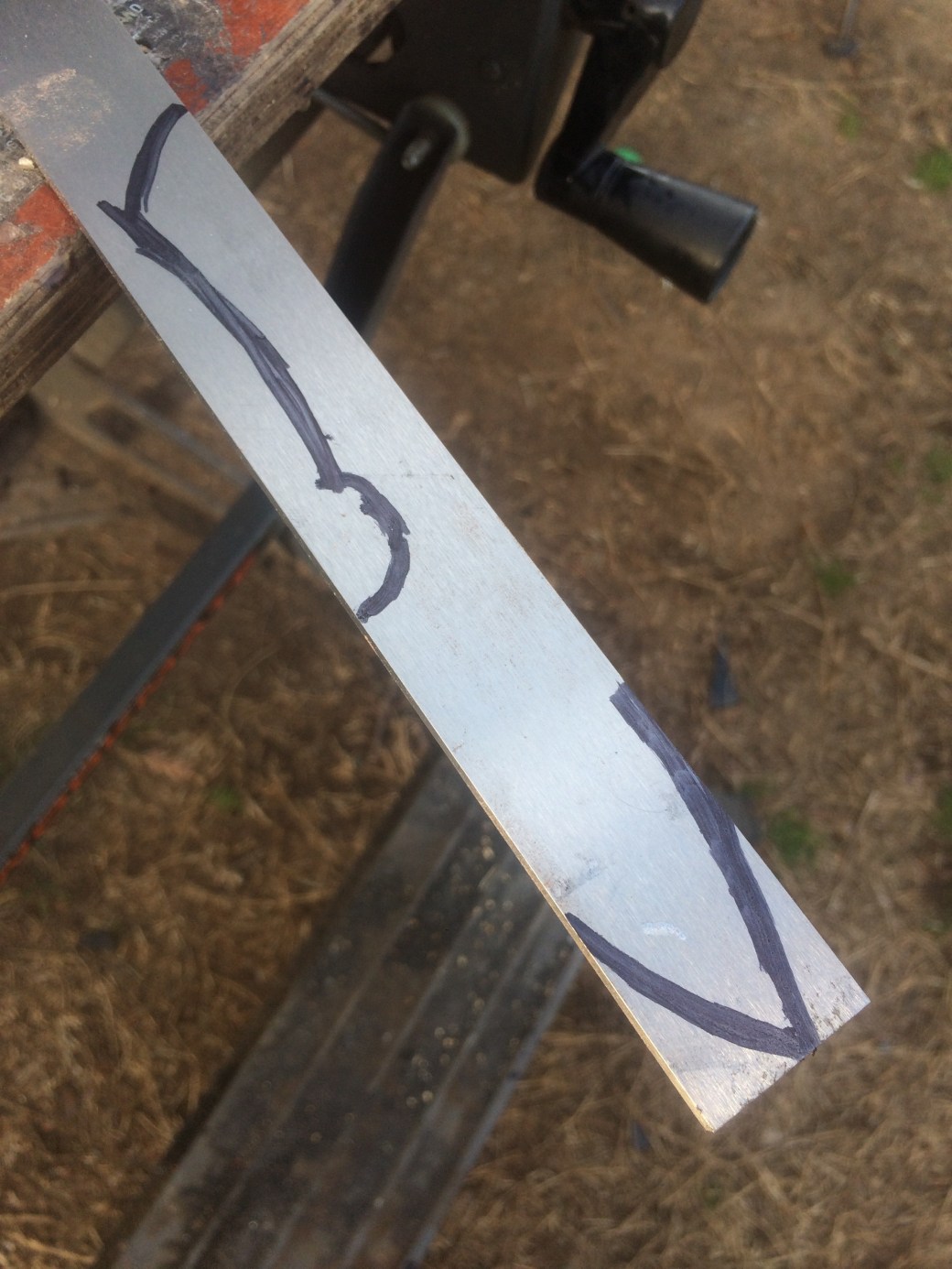
The Hippo was a commission from a gentleman for whom I often do contract work.  It was built for his wife, a lady who’s faith is extremely important to her.  She loves to cook and I was told the only kitchen tool she didn’t have was a cleaver, so I designed and built her one.  I named it the Hippo after St. Augustine, as a nod to the saint who’s writings influenced many subsequent saints, and because of it’s sheer size.  This thing is massive.
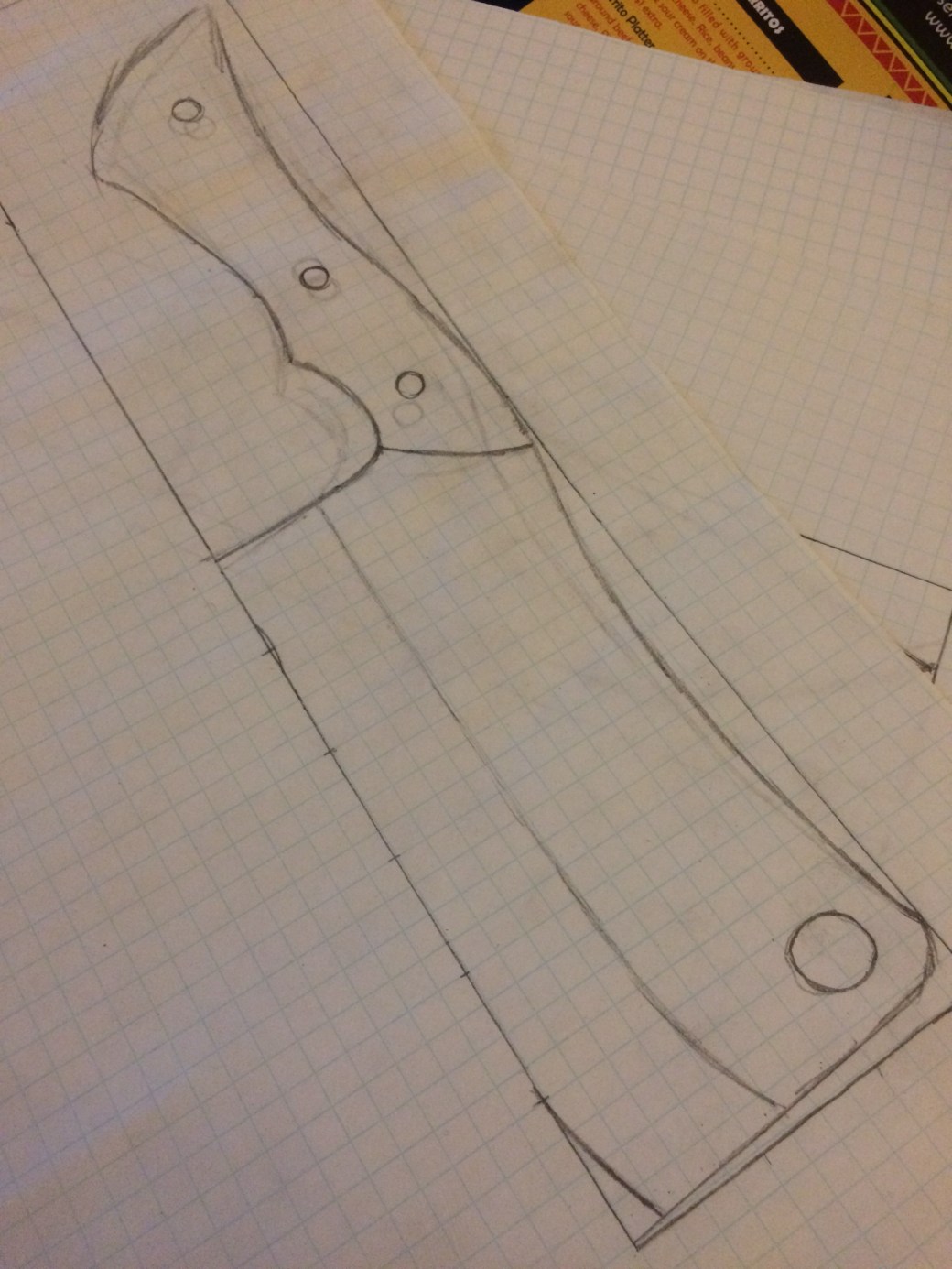
On 1/4″ stock, O1 tool steel:

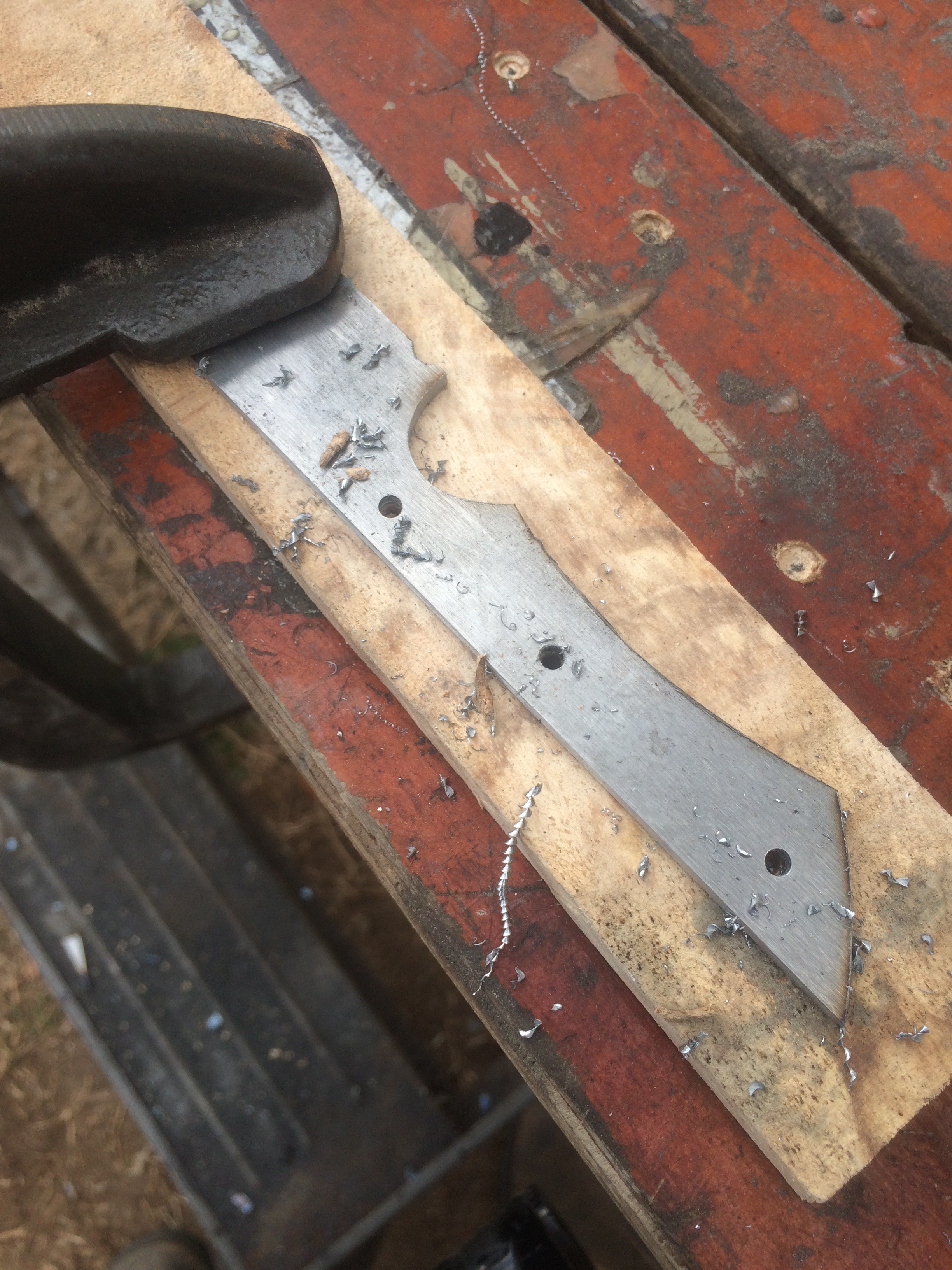
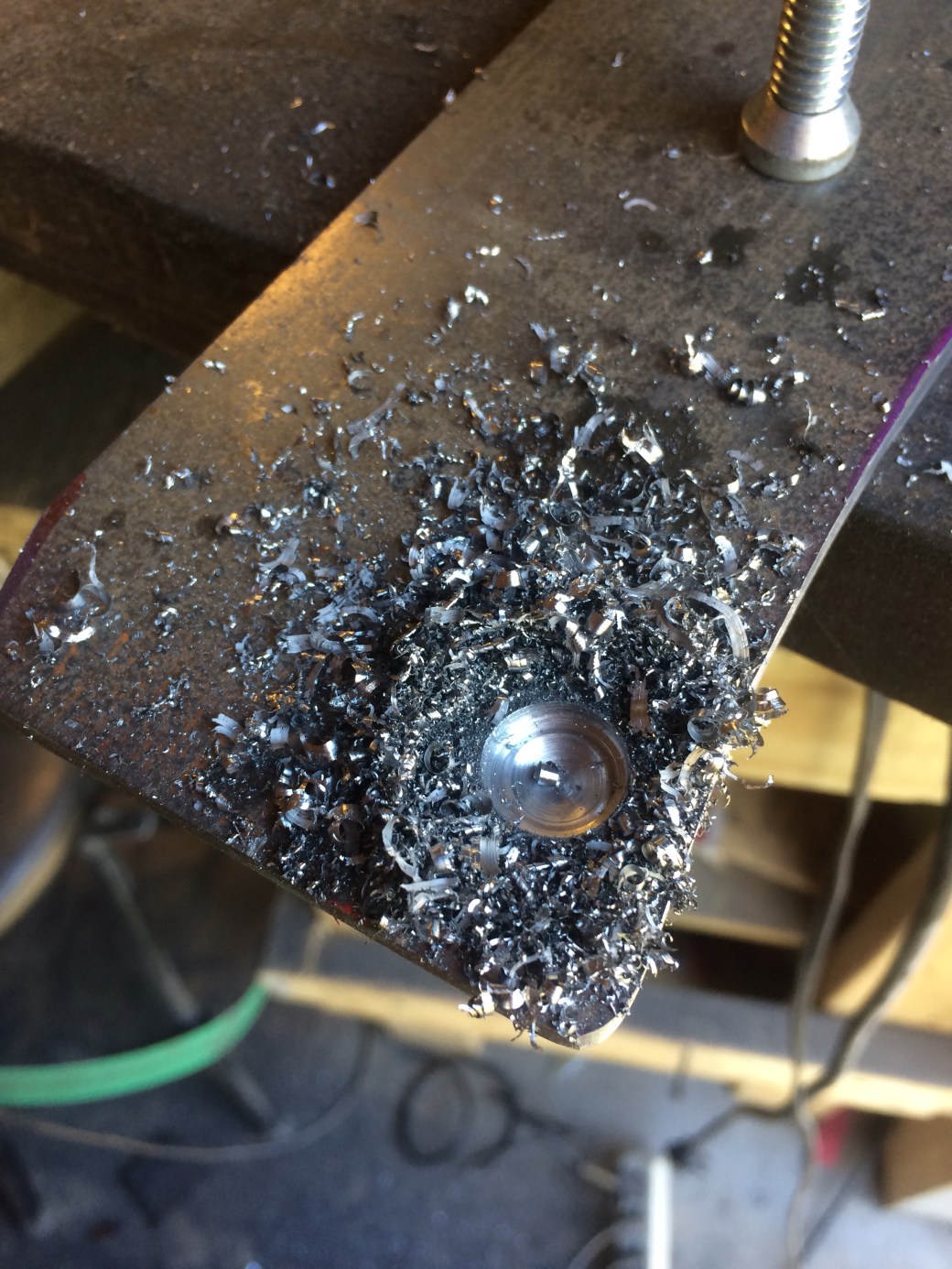
Boring out the hanger hole:
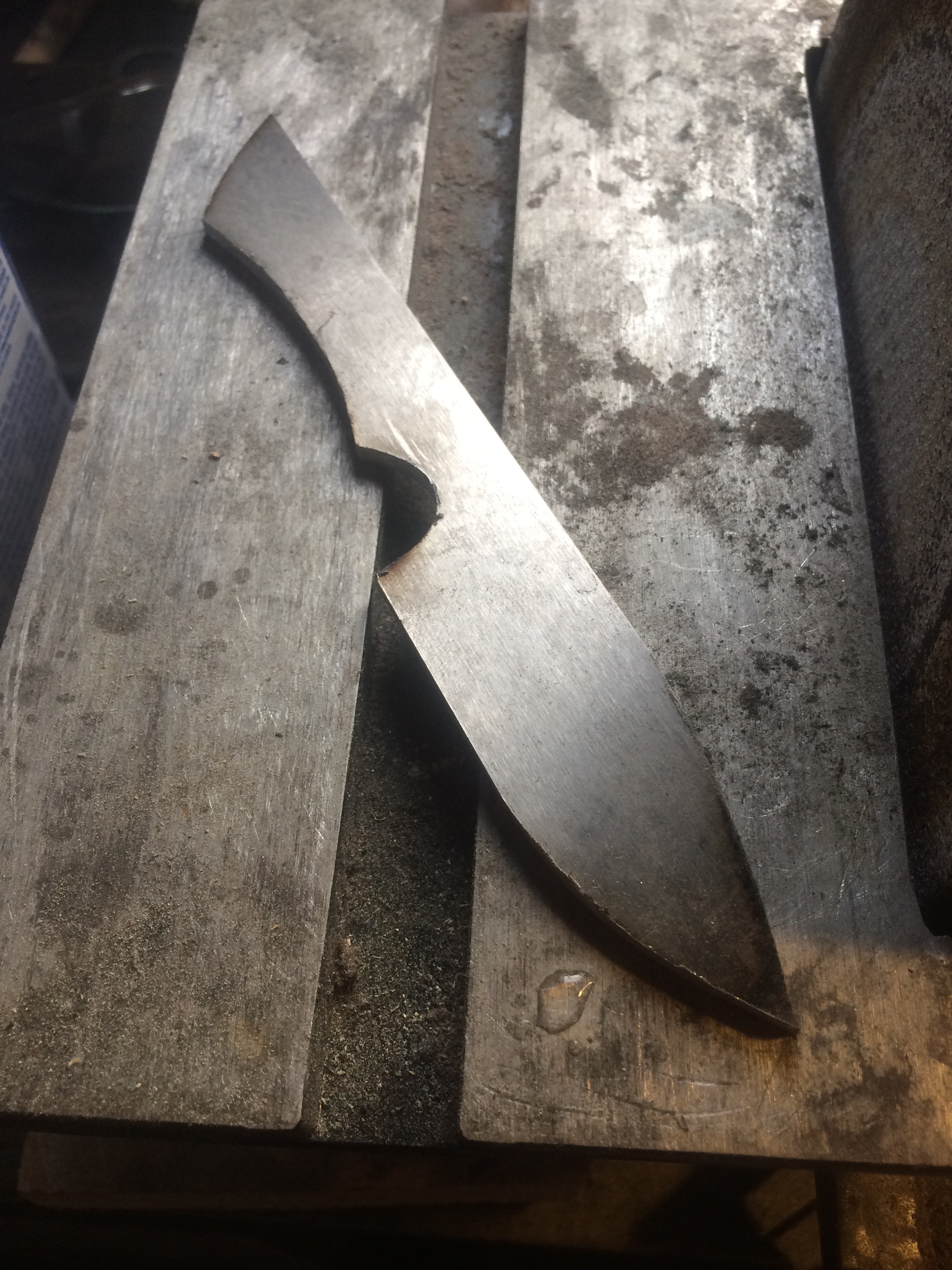
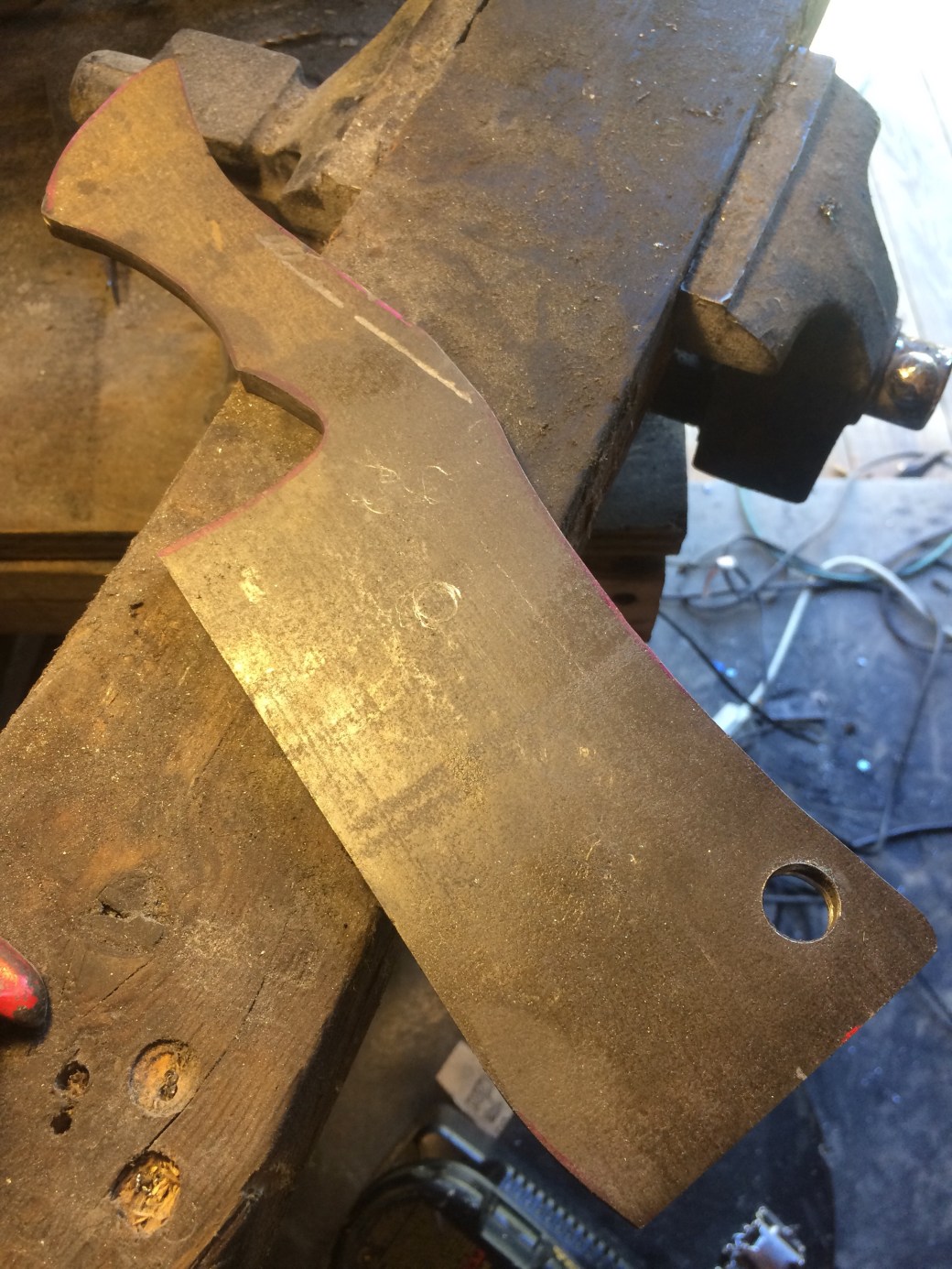
Profiled:
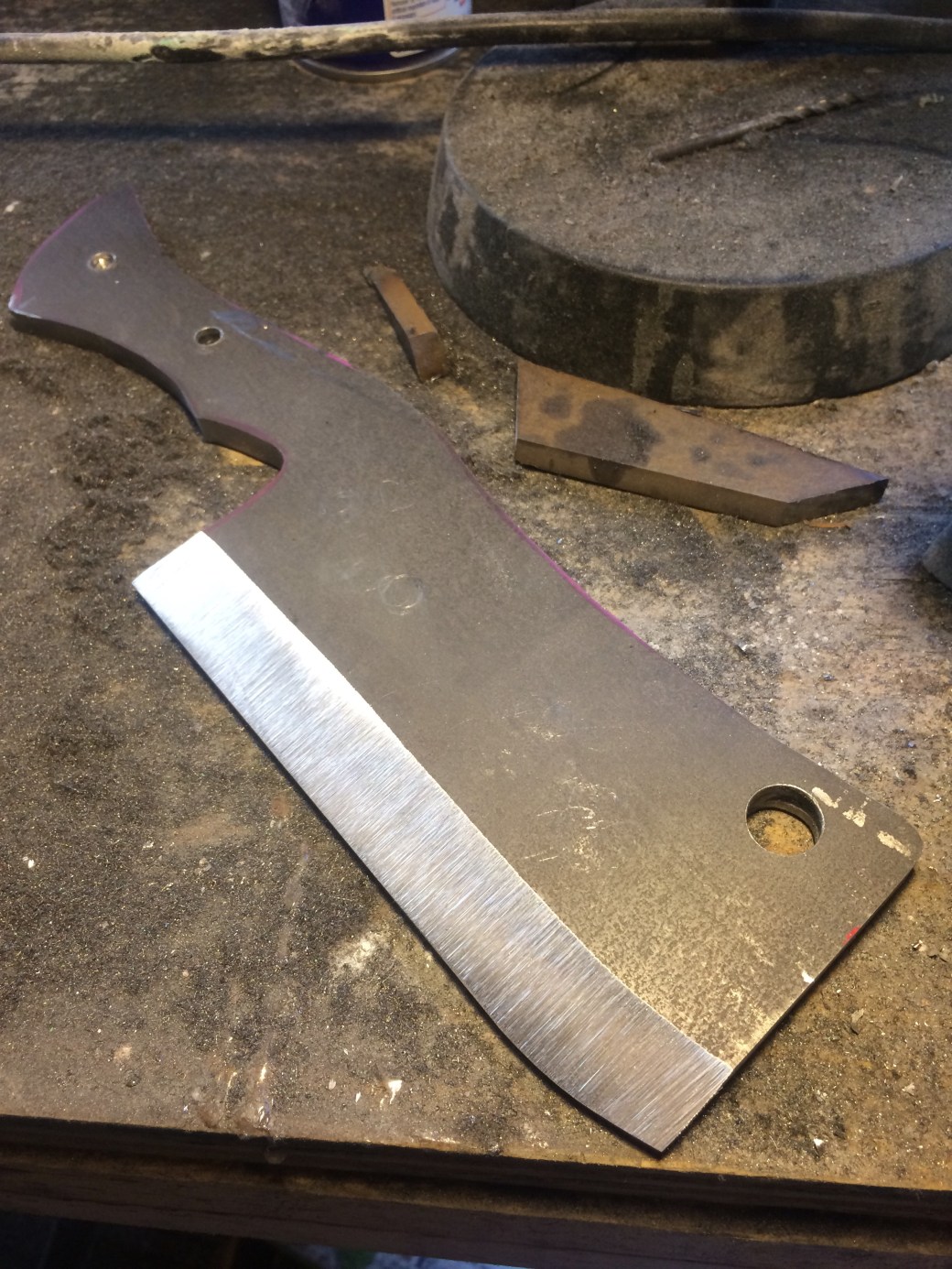
Bevelled:
img_5683-1

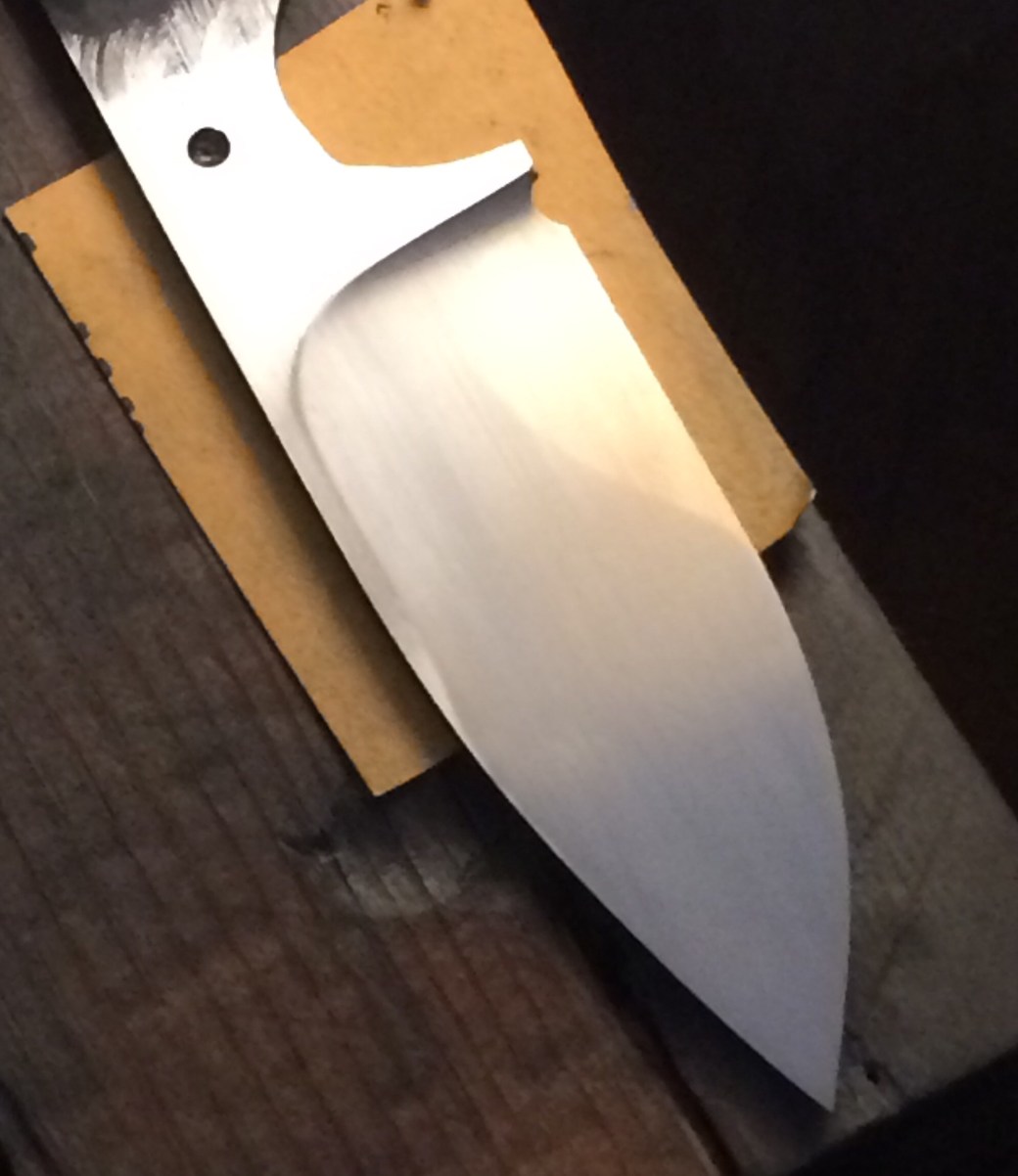
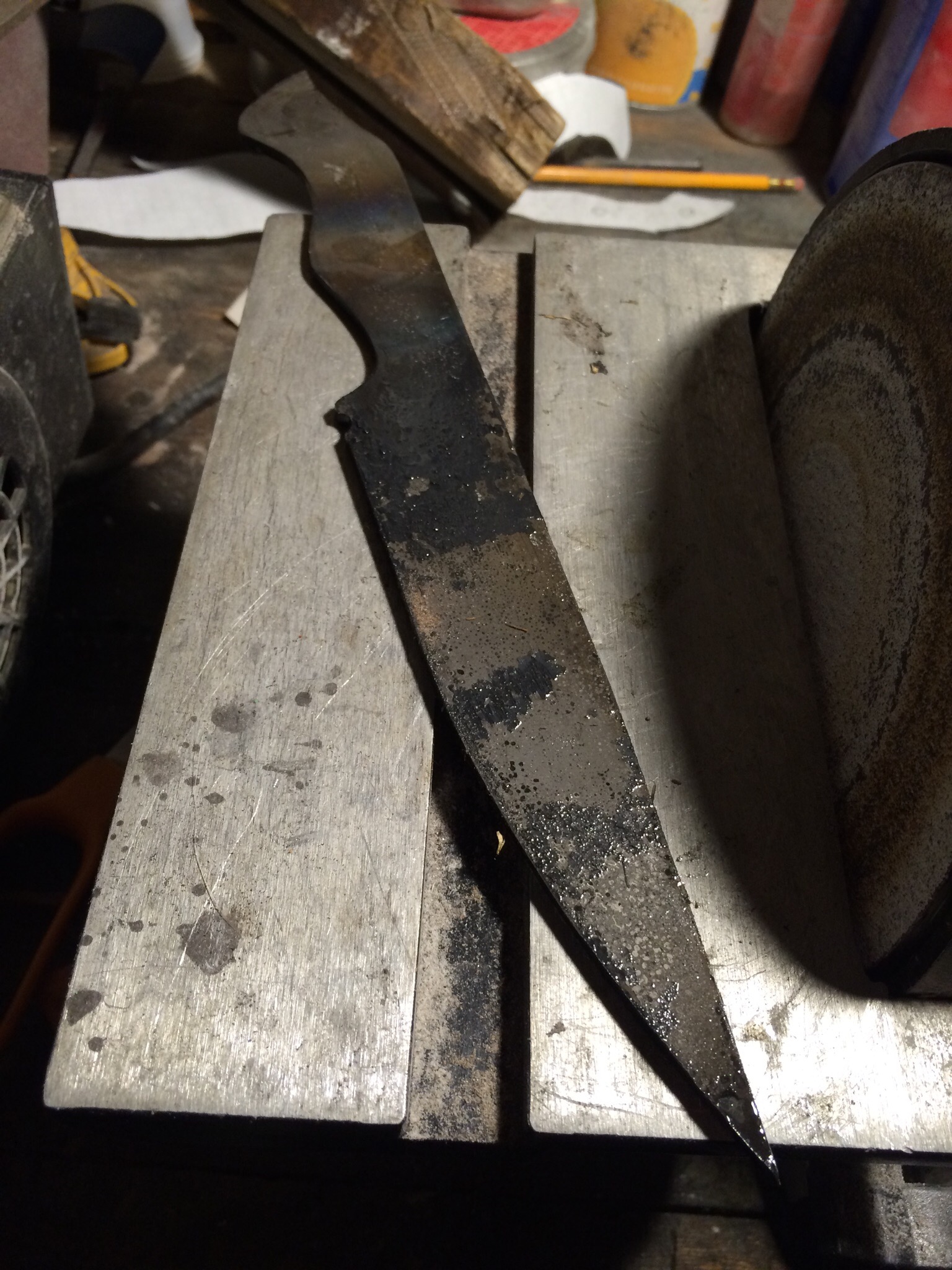
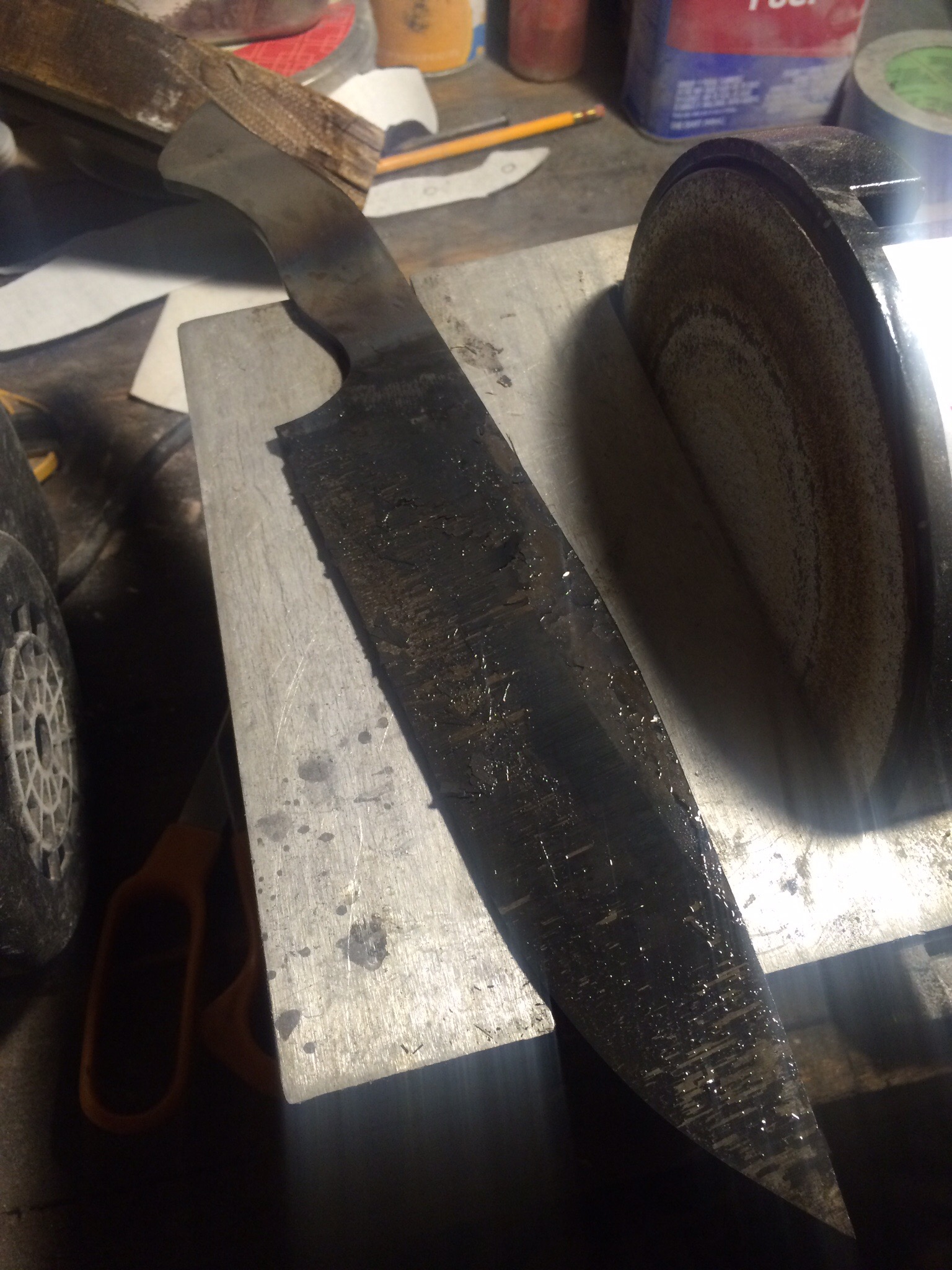
Polishing before heat treat.  Removing machine marks now will make polishing easier what this big boy has been hardened:

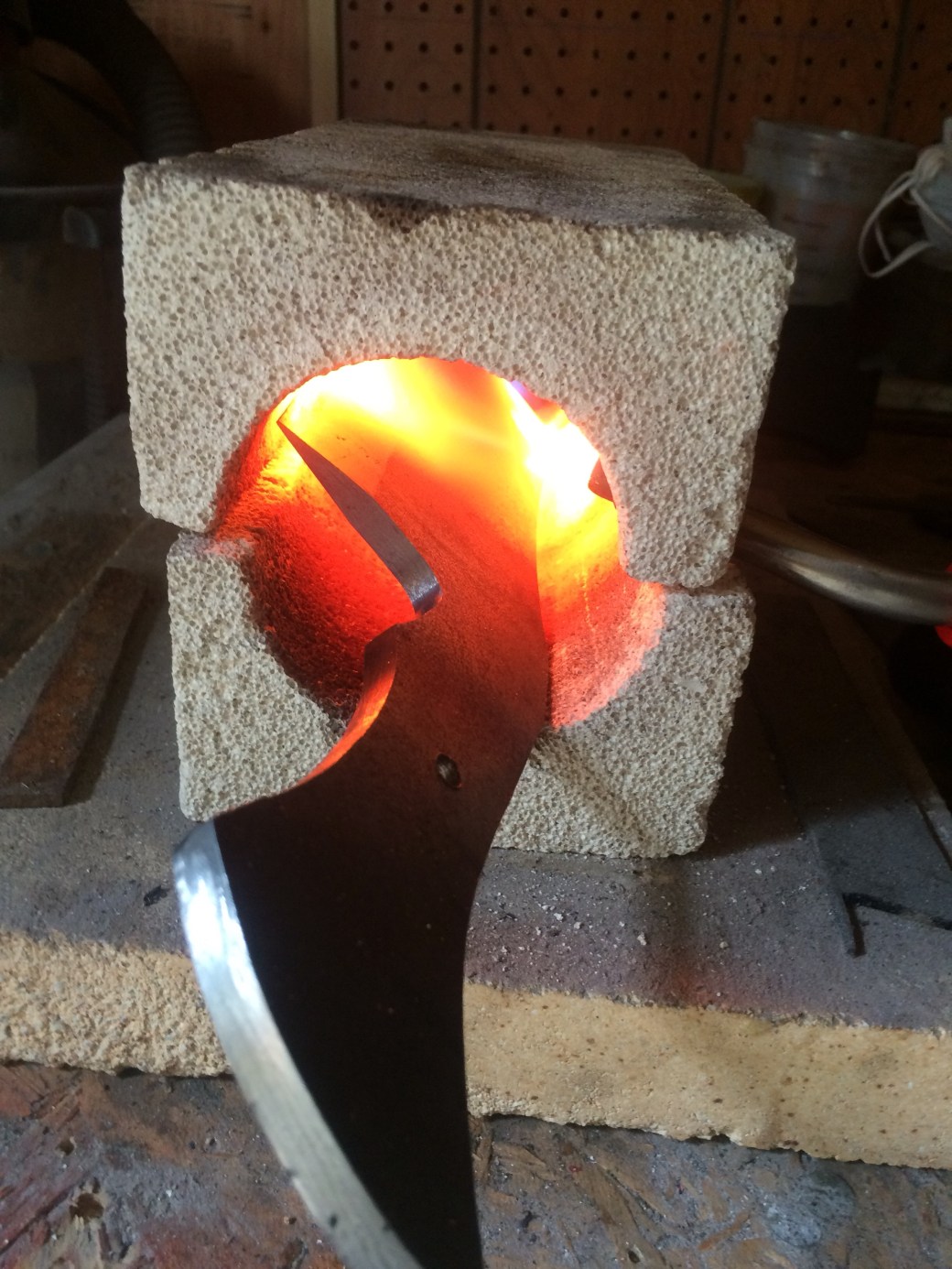
This thing barely fit in the forge:
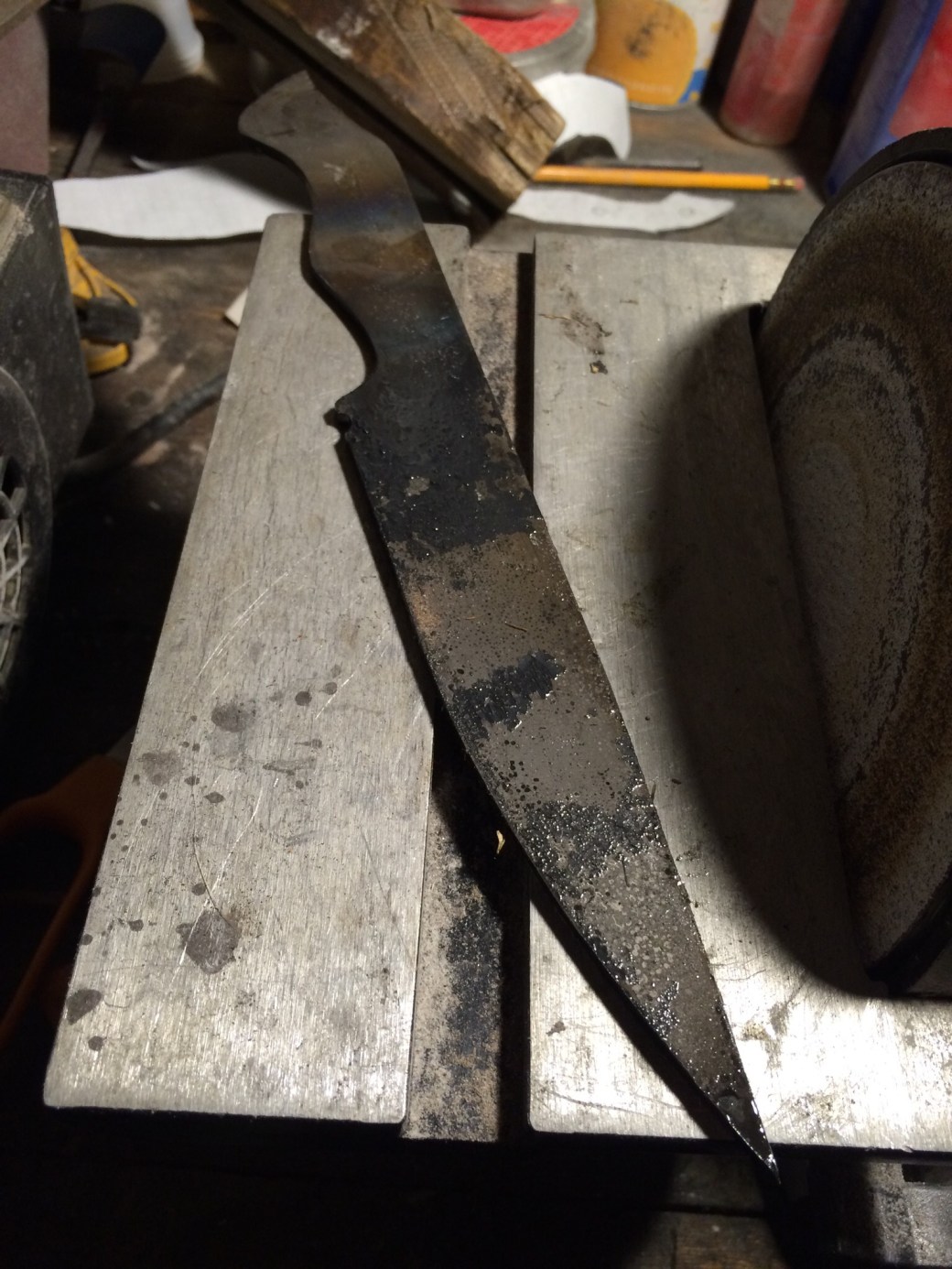
Removing some of the firescale:
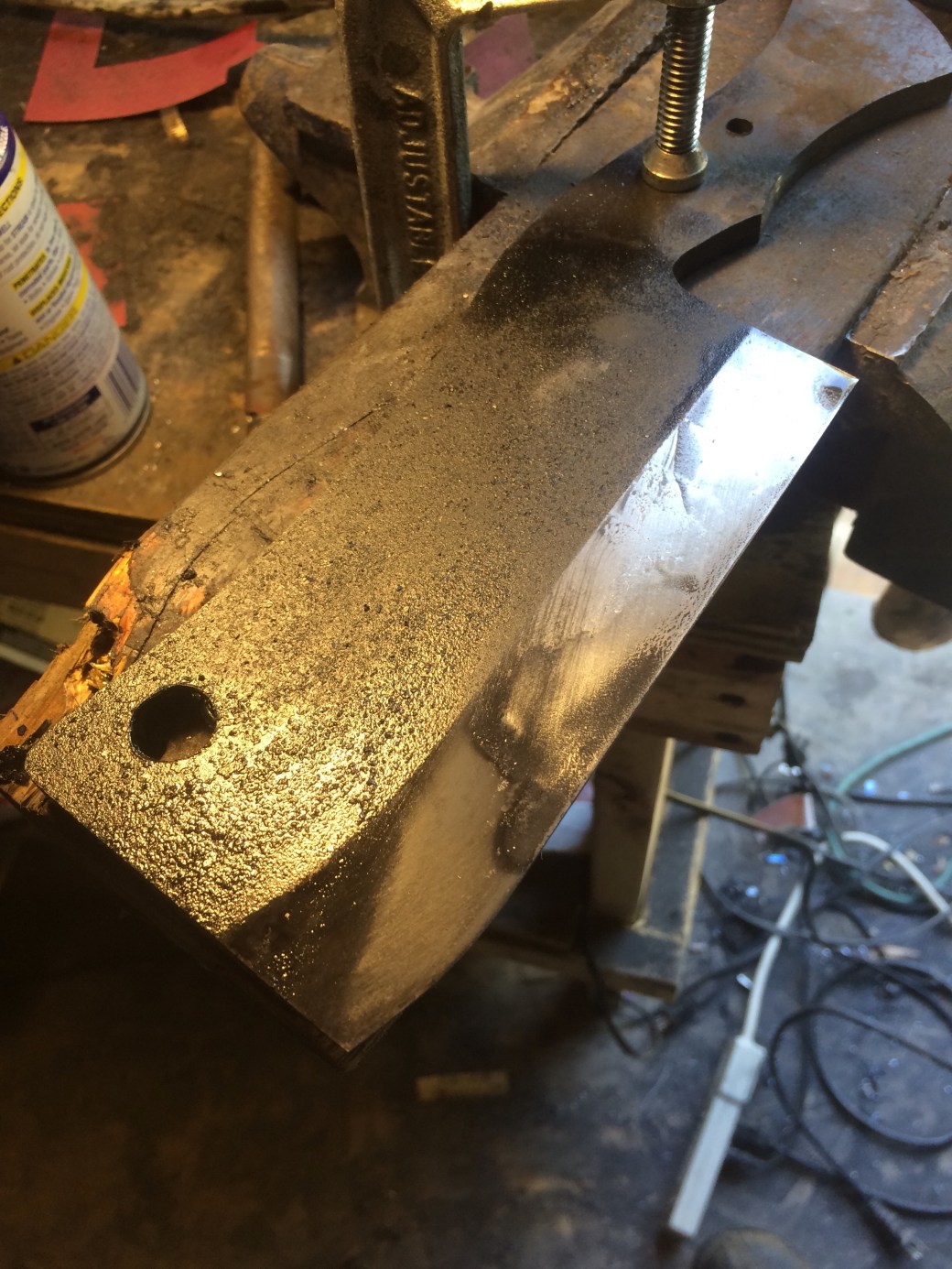
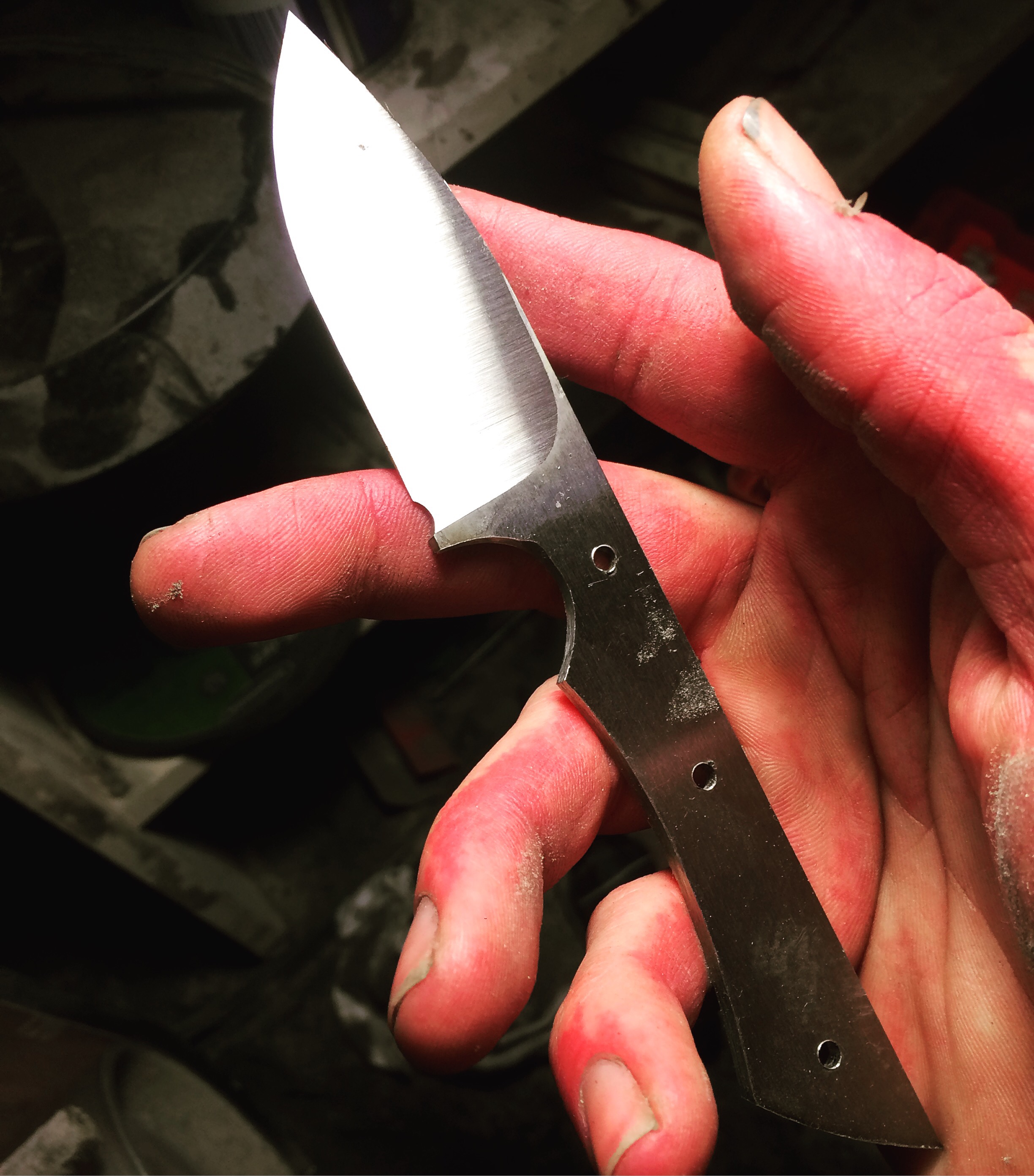
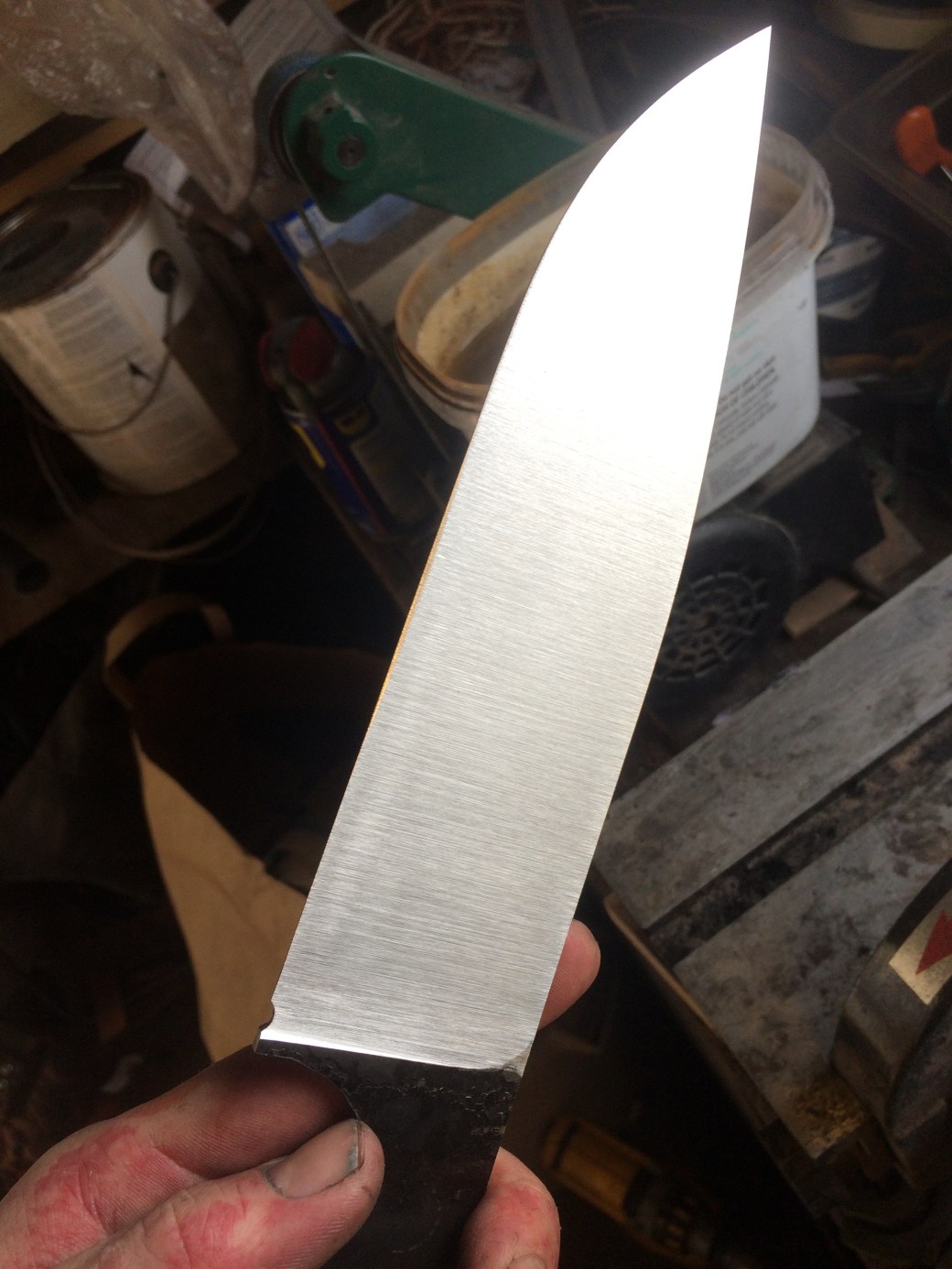
The business end is polished:
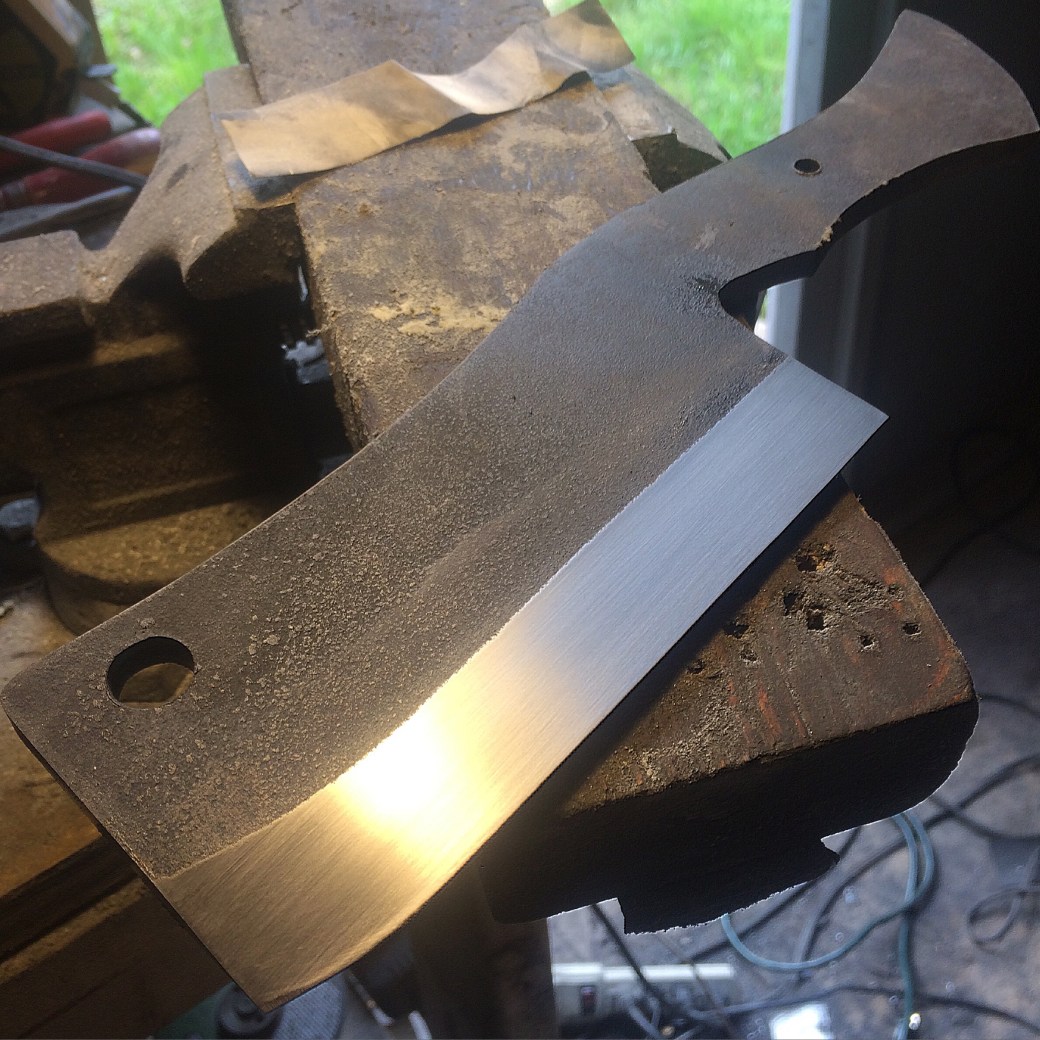
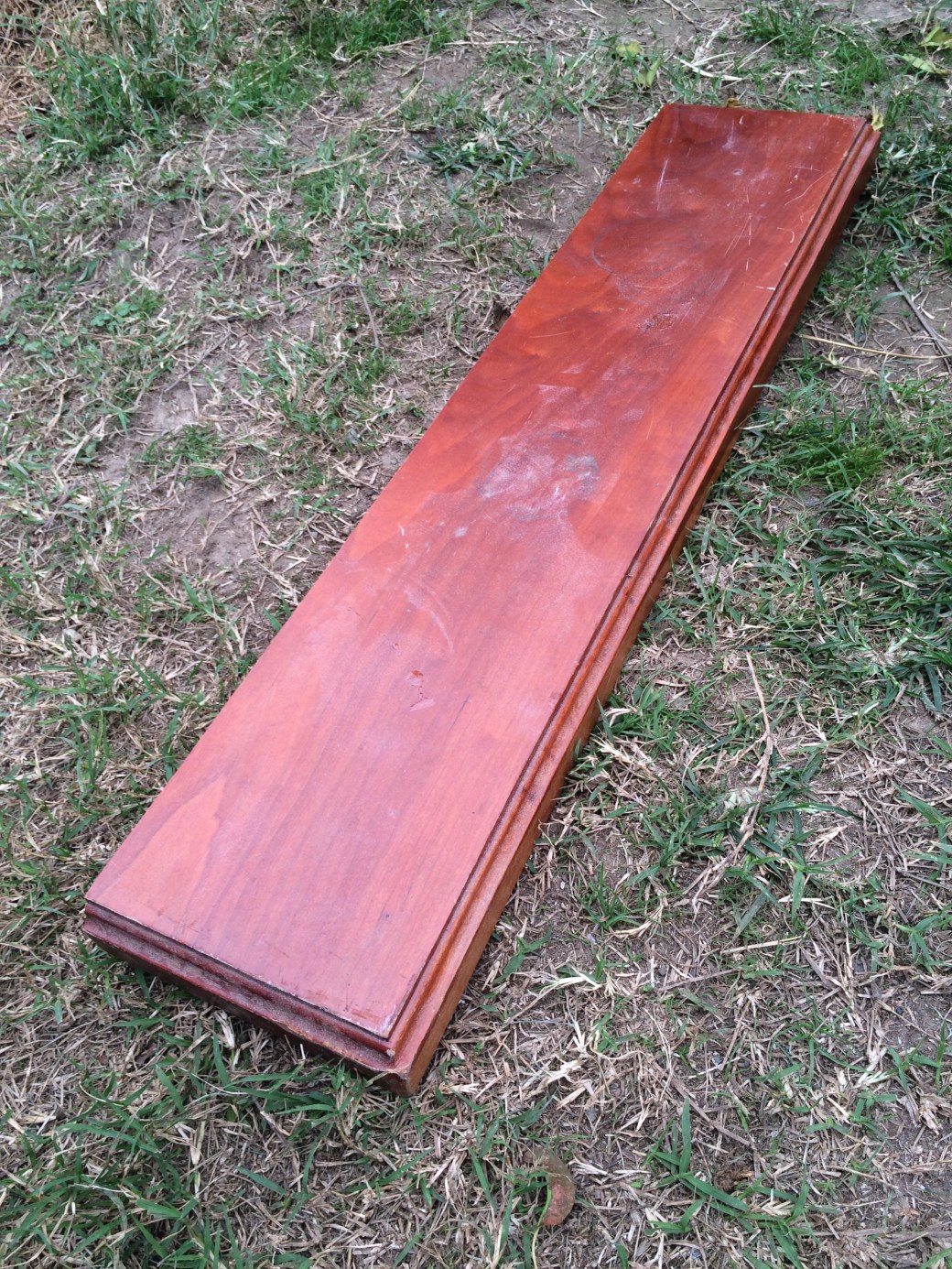
This is a piece of Cherry wood the came off the mantle of a fireplace:
img_4010

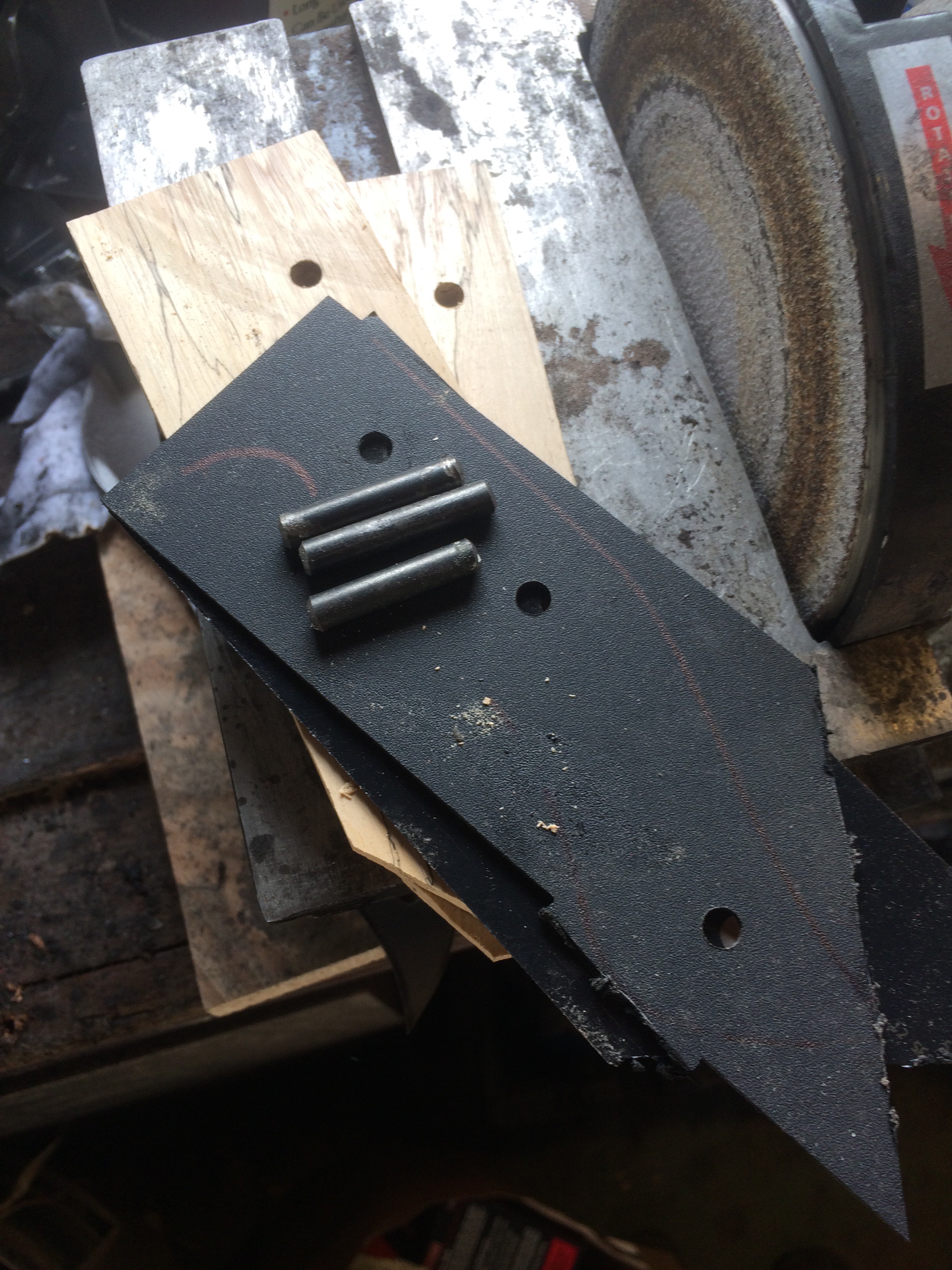
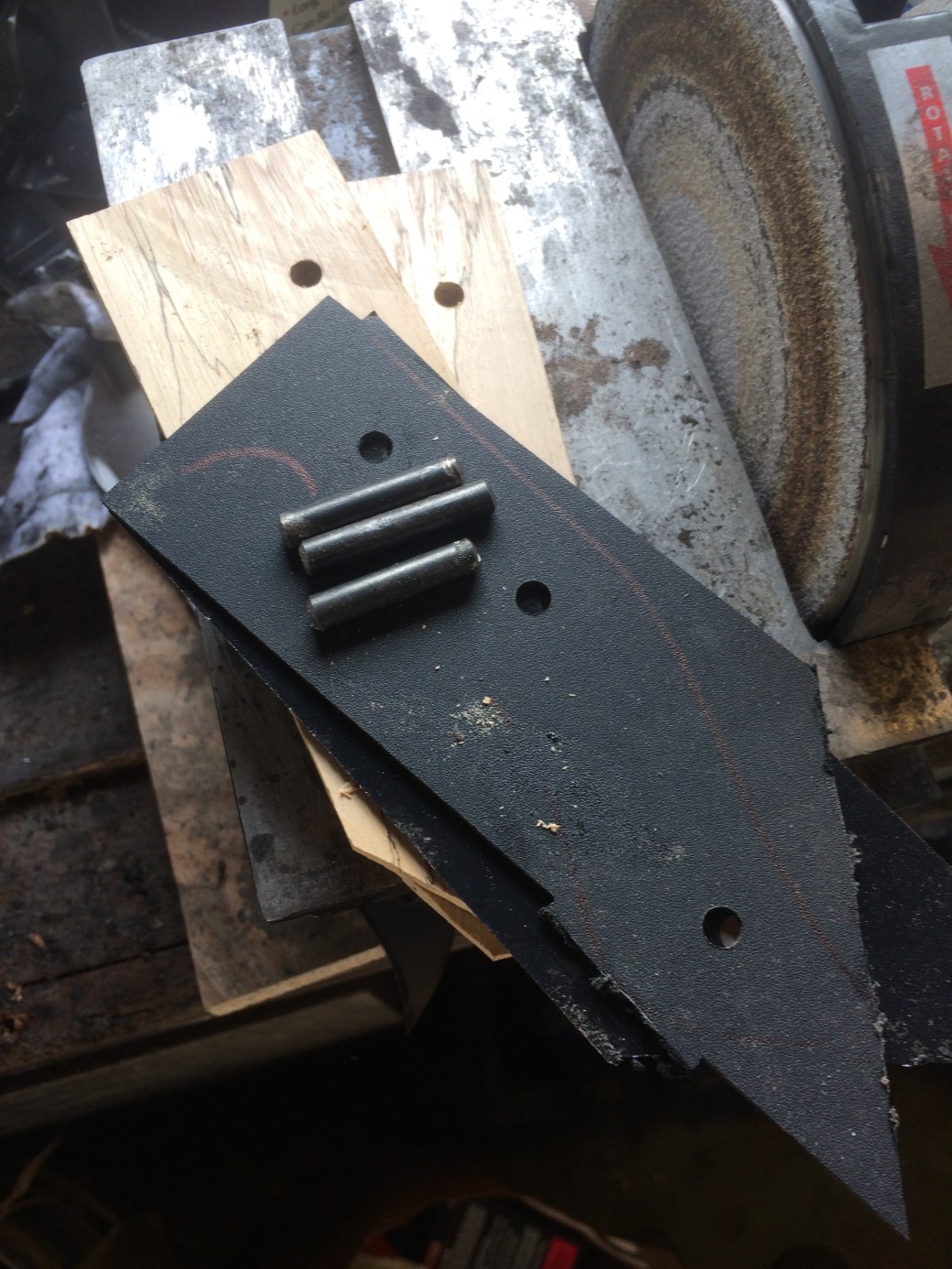
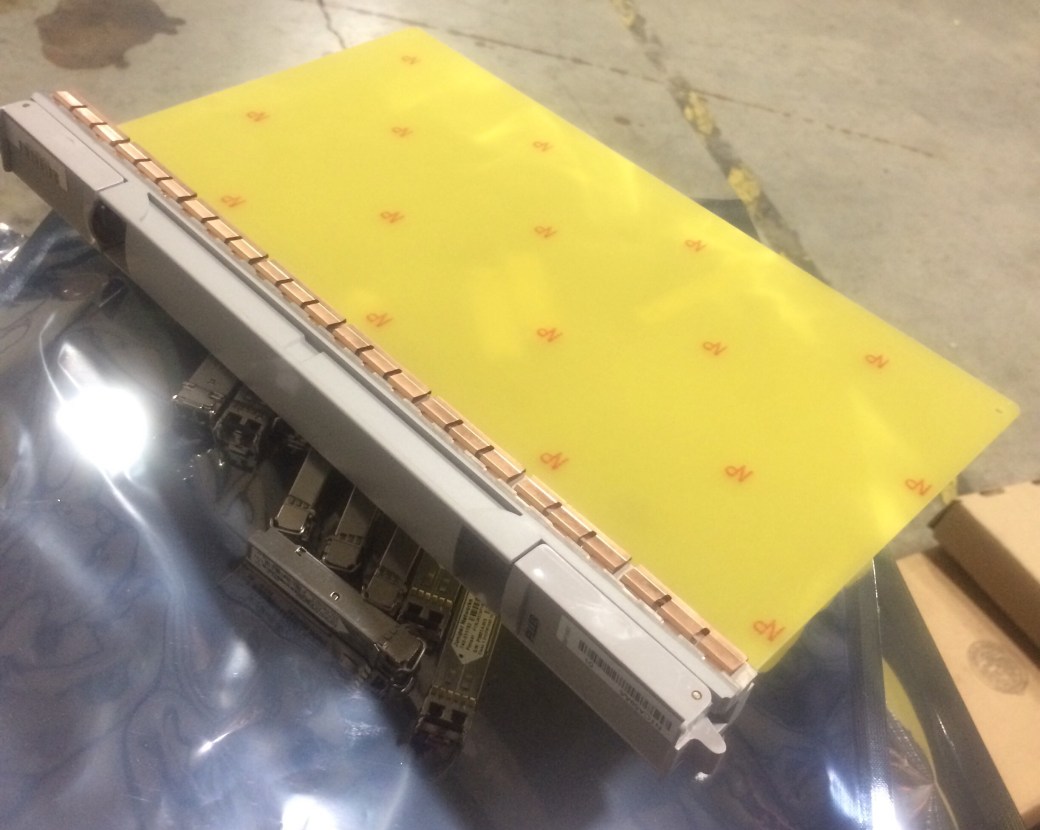
Computer board blank for spacing material:
img_4579-1

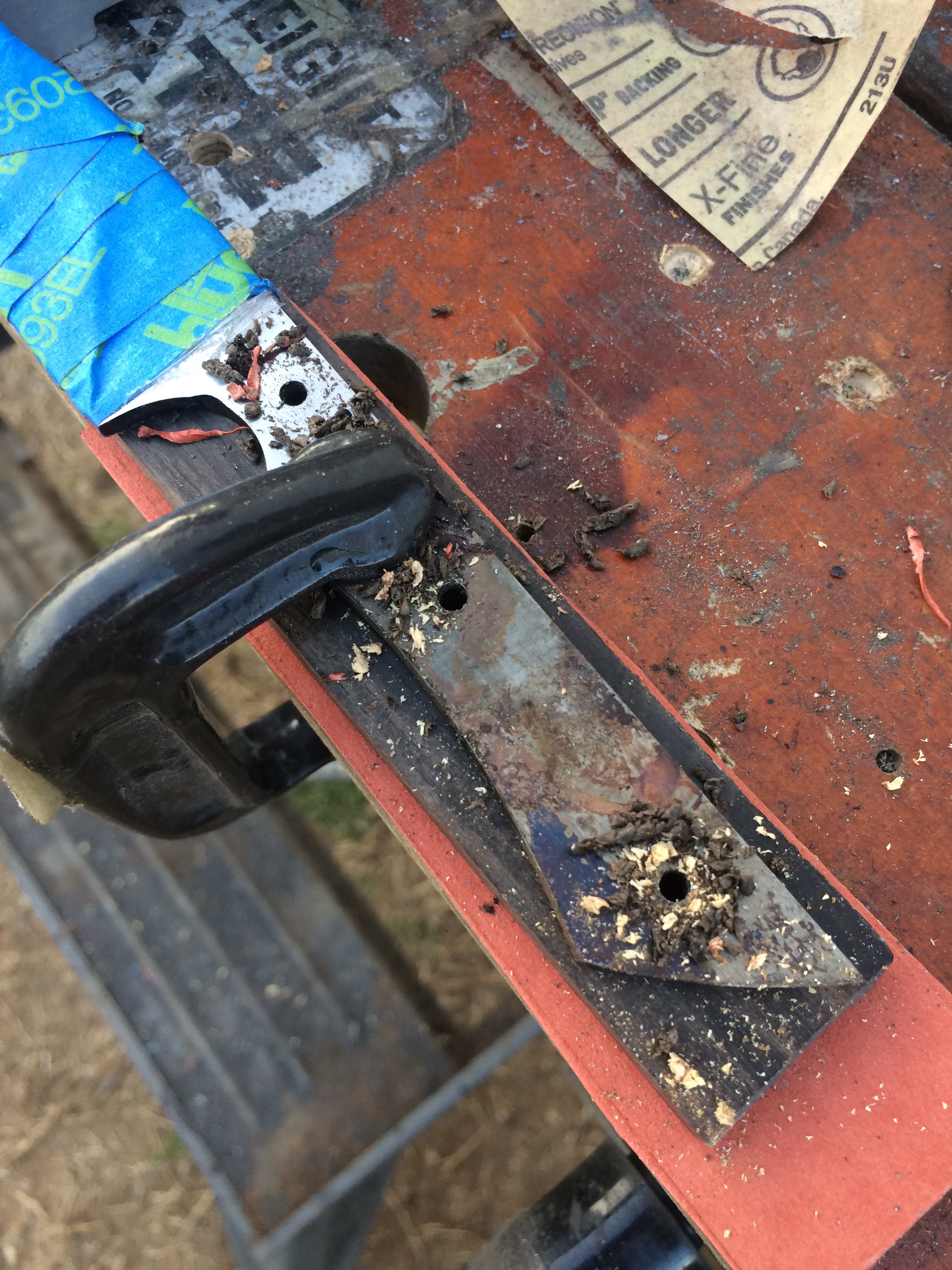
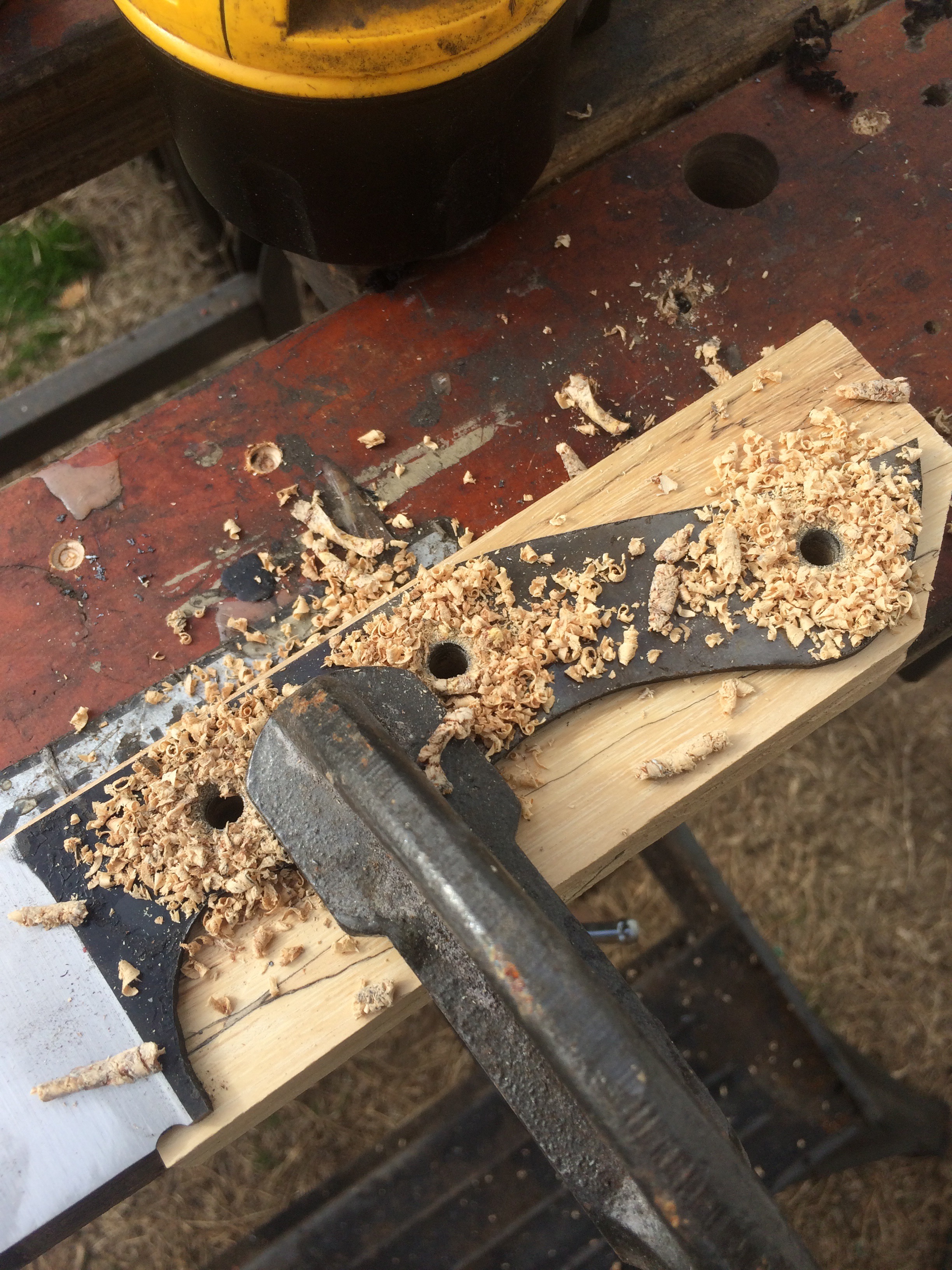
Drilling the rivet holes to attach to the tang:

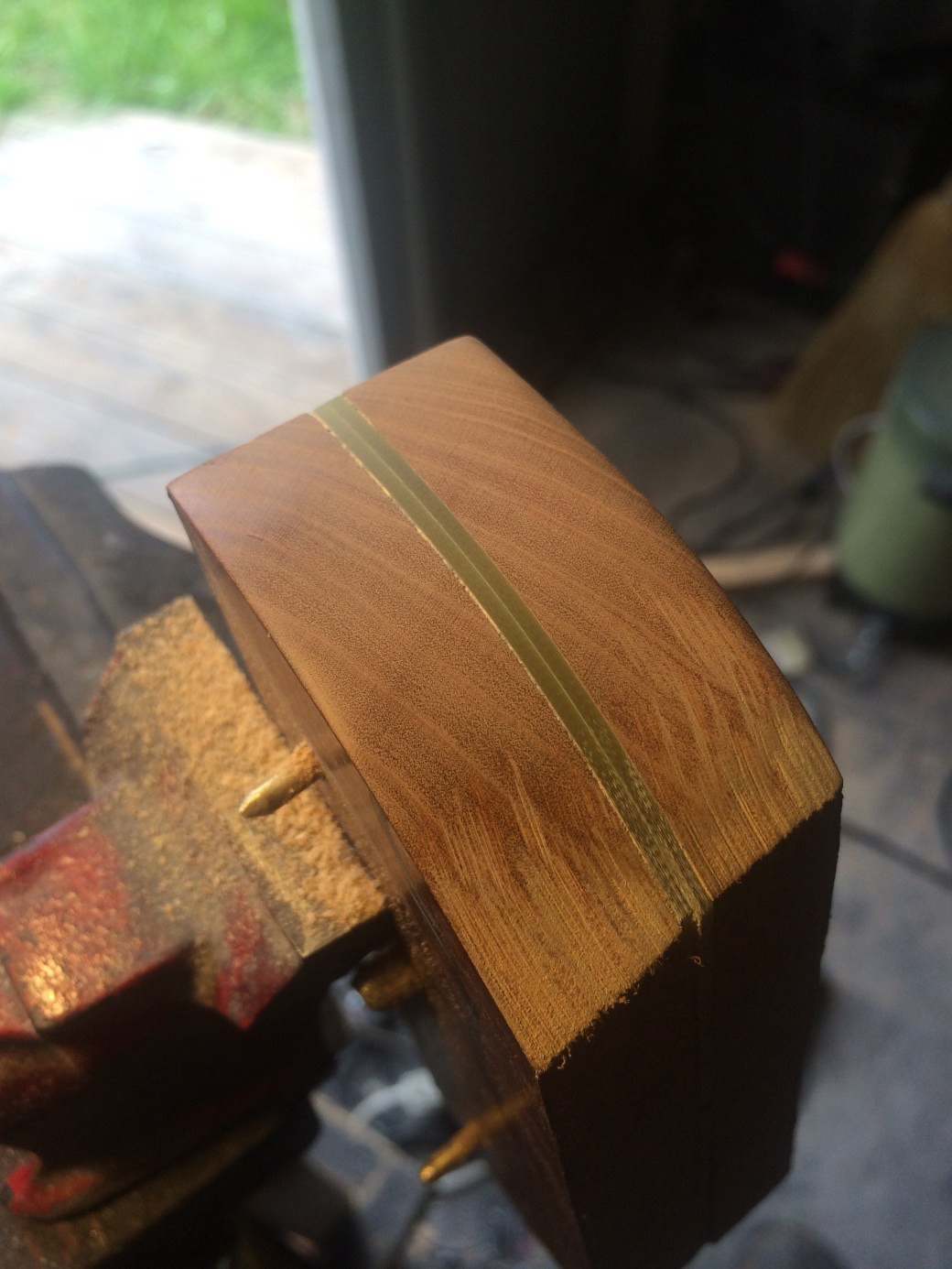
The grain is quite lovely:
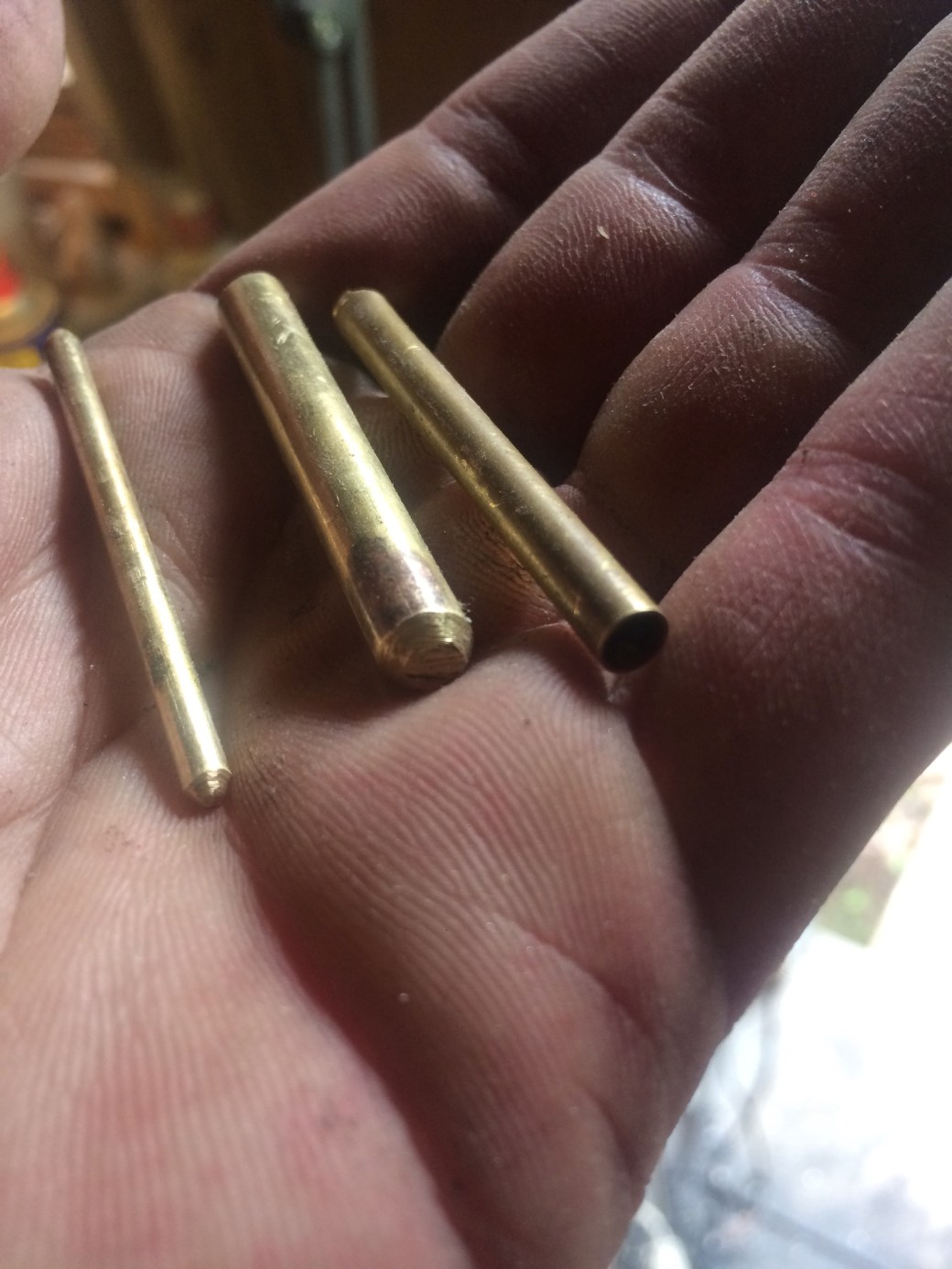
Brass rivets- the middle is the Father, the right is the Son, and the left is the Holy Ghost:
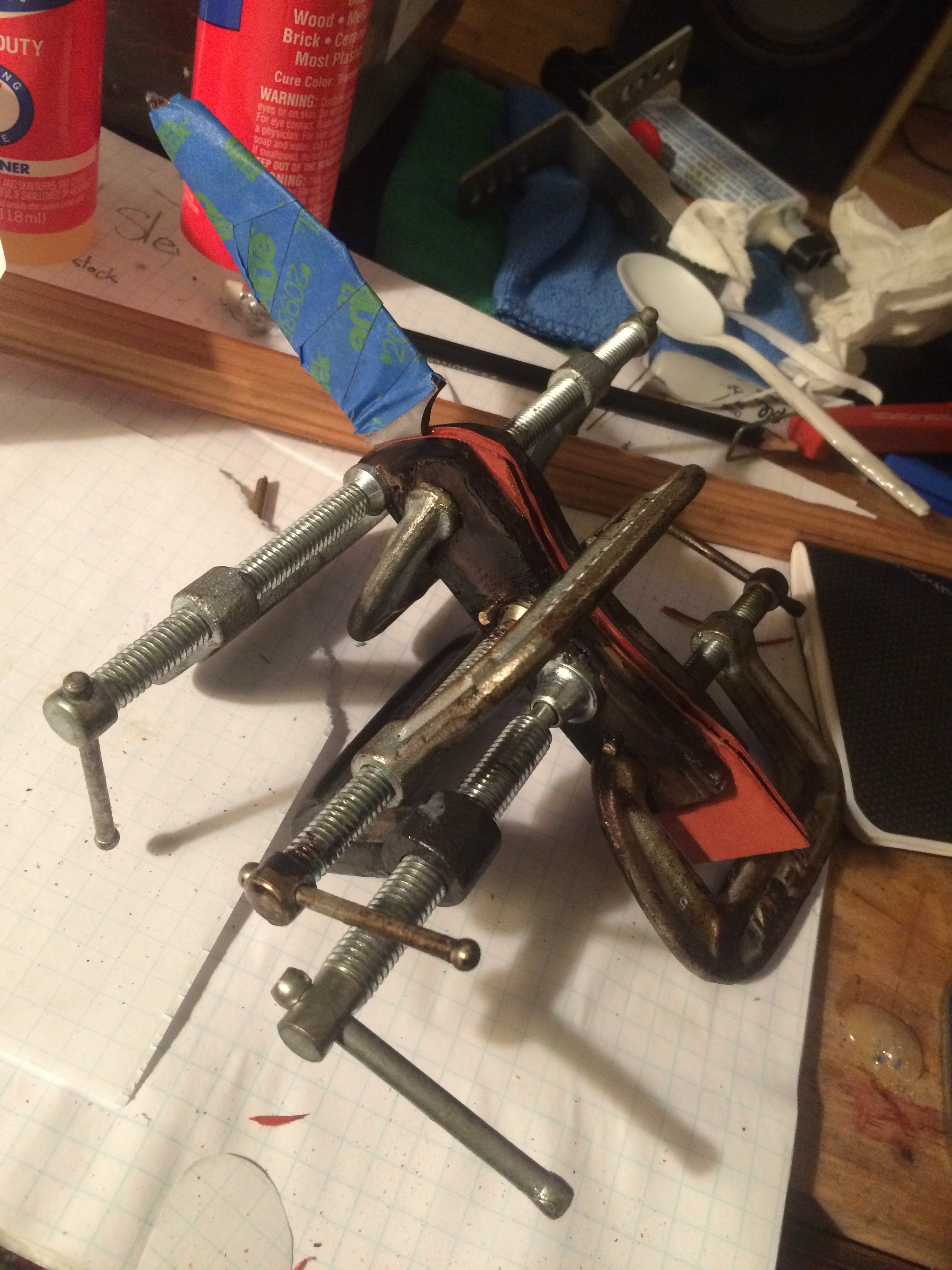
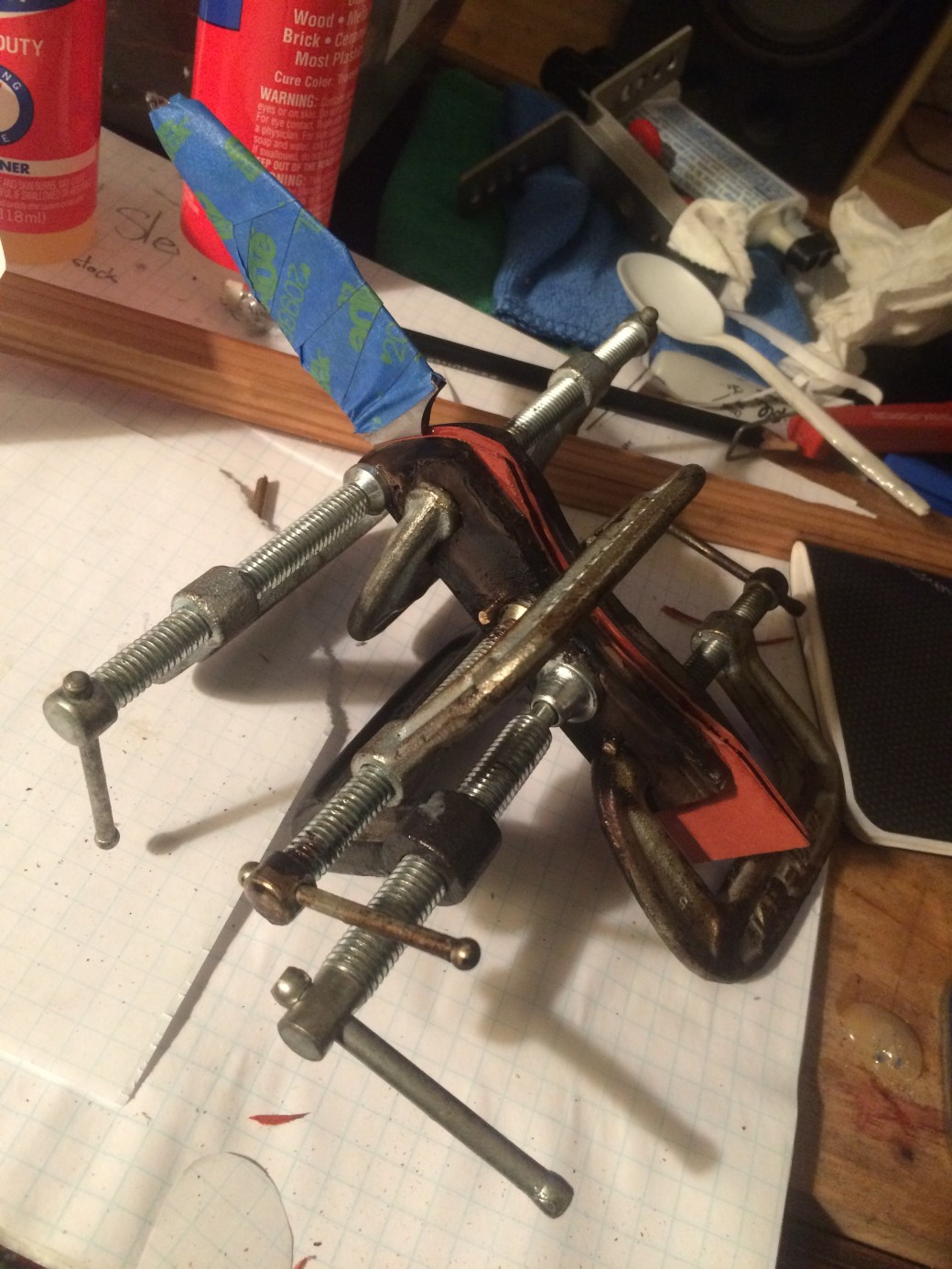
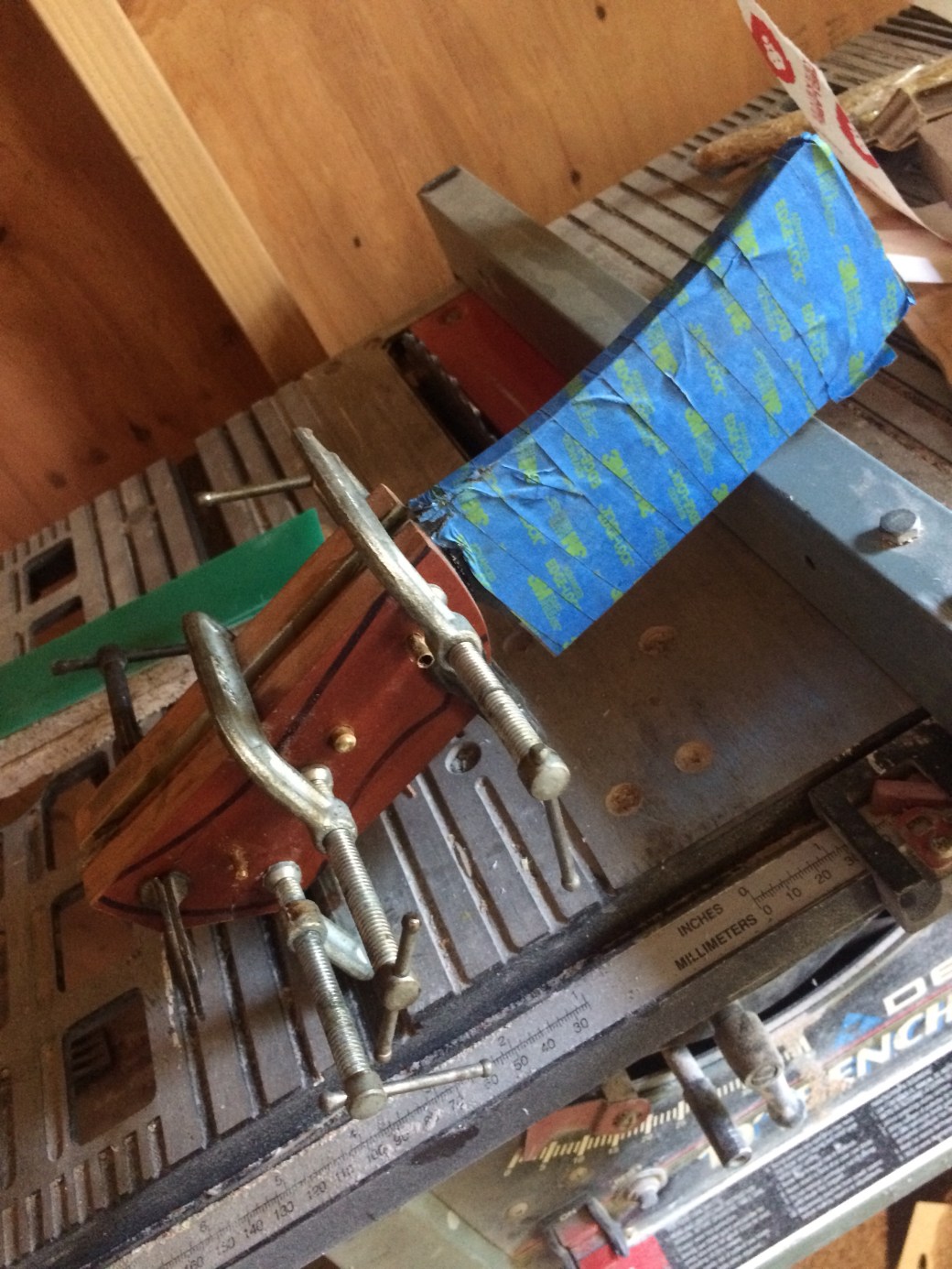
Clamped and glued up:
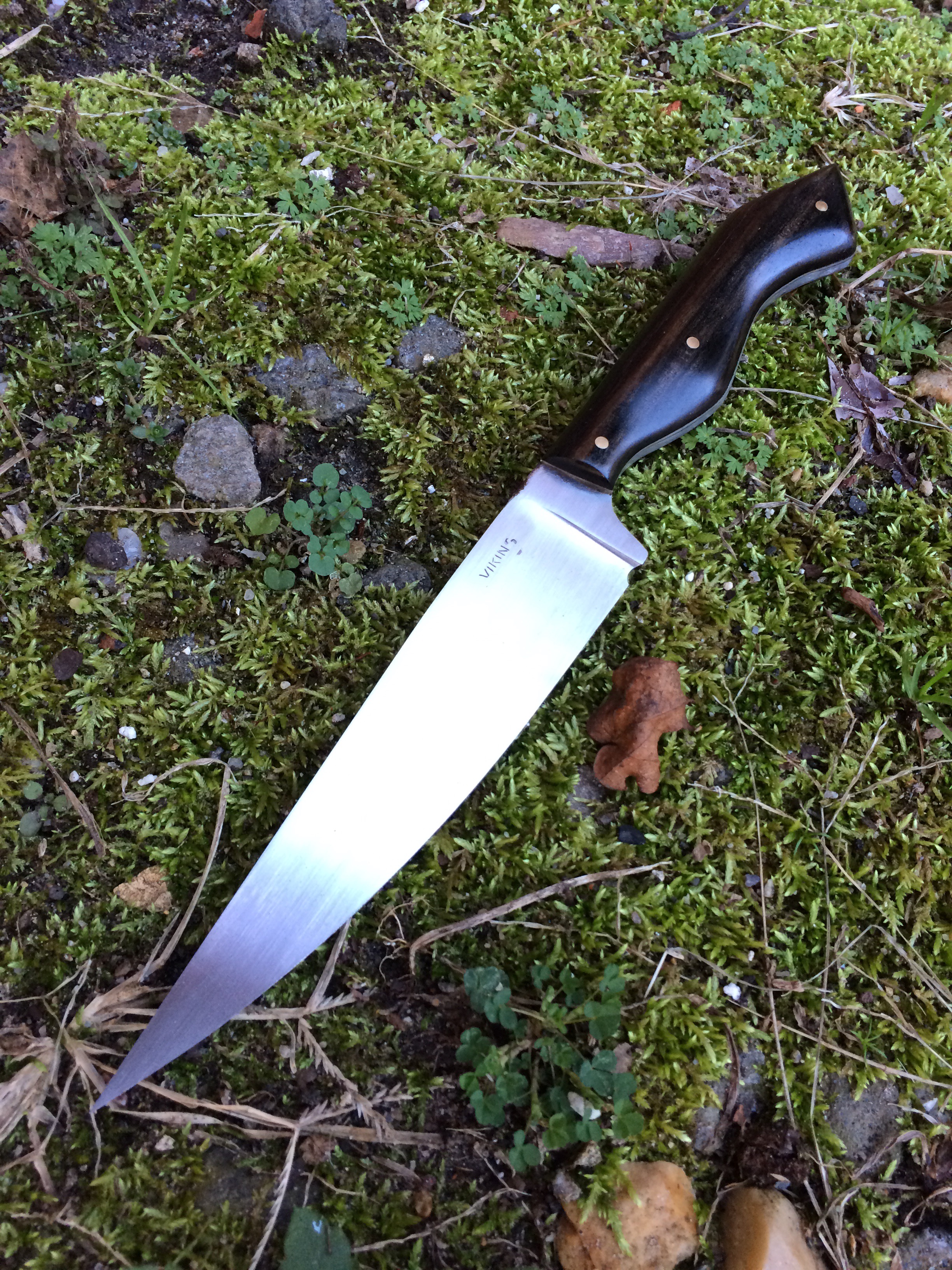
The Hippo:
Knifemaking: Rock and roll, privilege, and the Sir

“He who conquers himself is the mightiest warrior.”

-Confucious


Warrior, Merchant, Artisan, Farmer.  These are the four classical occupational archetypes of Feudal China.  These archetypes still ring true today.  There are variances and nuances but in the way we go through life, many of us find ourselves in all four of these occupations, even if only briefly:

-The Farmer understands the value of labor.  He is master of working within the seasons to sow his crop.

-The Artisan understands how different mediums and materials go together, and how to craft his goods within that understanding.  He is master of his tools.

-The Merchant understands business- buying low, selling high, and having a good product.  Business at it’s core level is the art of profit and the Merchant is master of this.

-The Warrior understands the above three archetypes.  He is master of himself and carries the weaponry of his choosing.  He serves society.

I have found myself, at various points in life, in all four occupations.  The Warrior intrigues me most.  Speaking as a man, I feel that most of us want to master ourselves, and the things that try to enslave us- our fears, our desires, and our insecurities.  In our occupations and work, obsessions and compulsions can develop, our fears can play out, and we can become consumed.  We can become obsessed with trying to squeeze the seasons dry, or maximizing profits, or with crafting a better and more beautiful mousetrap.  When these things become all that we see, we have failed to master ourselves and aren’t really serving anything except for what we are trying to achieve.  At this point, all the things that really matter get left in the dust.  We lose sight of the world we live in and are not present in our lives.

In order to master yourself you must know yourself.  Sometimes the best way to know yourself is to know others.  And sometimes the best way to do that is in service to others.

I was working a large arena rock and roll show, one of the largest I’ve ever worked.  The headliners had been around for decades, on the top of the charts, and darlings of video-era MTV.  They have recently been selling out arenas around the world.

I strolled into the production office to get my assignments for the day.  There was laundry, grocery shopping for the tour busses, FedEx and post office runs, prescriptions to be filled, and other bits of housekeeping errands that keep a massive touring operation on the road.  Not everything gets done.  Touring is a practice, not a science.  The most successful touring operations are predicated upon this notion.  My job is to take care of as many of these things as possible based on what the tour needs and the priorities of the show.  This doesn’t leave time for anything that may be superfluous or unnecessary.

After the day was laid out and I had my assignments, the tour manager asked if I could add another thing to my list.  There was a very large basket of toiletries- soaps, shampoos, and lotions- that had been collected from God knows how many swanky hotels.  The tour manager asked me if, time permitting, I could find a Women’s Shelter or a shelter for families in transition and drop them off there.  The band and the crew collect them from every place they stay for that explicit purpose.

I didn’t give it too much thought.  I had a lot of things to do and honestly this little task wasn’t real high on my list.  But the tour manager kept asking me about it and so I decided to make it a priority.  After all, I was in a position to take care of this.  I got on the internet and found a facility nearby.  It was a shelter for women leaving bad domestic situations- in many instances they showed up with nothing but the clothes on their back.

I called them and told them who I was and who I was with and asked if they accepted donations.  Yes we do, they said, please come by.

So I went by, even though I really didn’t have the time.  The people at this organization were really happy to get these things.  They wanted to take a picture for their social media page.  All smiles.  They thanked me for thinking of them and to remember them in the future because funding is always tight and every bit helps.

This was all really special to be a part of, even though it was a pretty small thing.  I wasn’t really expecting that and it was nice.  I don’t normally find myself in these sort of situations.  I’m usually wrapped up in my own affairs, serving the things I am trying to achieve rather than broadening my gaze.  I noticed a lightness in me and the rest of the day felt easier.

There’s a lot of talk about privilege- white privilege, gender privilege, and a myriad of others.  When all of the social justice orthodoxy is stripped away, I find privilege to be a form of power.  There’s nothing wrong with being privileged but it’s important to be aware of it.  Many of us aren’t aware that we have that power within ourselves.  It’s a noble thing to use that privilege, that power (which, honestly, many of us take for granted) to help those who may need it.  It’s a really special thing to give or share of your time and talents when it’s within you power to do so.  This type of service can help you to become more familiar and intimate with yourself, and also help to make the world around you a better place.  That is the mark of a Warrior, and the lesson of the Sir.

O1 tool steel, thin stock

Profiled:

Rough grinding:

This is how to heat up your quench oil on a cold day:

Hardened and tempered:

Handfinishing, at around 220 grit:

Hand finishing at around 320 grit:

Ebony wood:


img_4467

Clamped:

Shaped:

The Sir:

Don’t be afraid to look out for others every so often.  This is part of the path toward mastering oneself.

Just a Bunch of Roadies– This is an organization of Music Industry Professionals that use their time and talents to make a difference.  They facilitate larger operations, but also smaller projects, like the one written about in this story.  Be sure to check out their website if you would like to help.

Knifemaking: yes and no; and Urim and Thummim

“Take these,” said the old man, holding out a white stone and a black stone that had been embedded at the center of the breastplate. “They are called Urim and Thummim.  The black signifies ‘yes,’ and the white ‘no.’  When you are unable to read the omens, they will help you to do so.  Always ask an objective question.”

Paulo Coelho- The Alchemist

I took a philosophy class in college.  The professor was an older gentleman, and a bit mysterious.  He had us buy a very expensive textbook which we never used.  He was the one asking the questions and it was mostly us, the class, that did the talking.  We never learned much about him other that that he had had a bit of celebrity on the academic circuit several decades prior. In his younger days he practiced judo.  Later in life he discovered Tai Chi, and taught that as well.  He never elaborated on any of this.

I don’t remember much of what we talked about.  I was twenty-two and liked to go to class stoned.  I do remember there was some Kant in there, and some St. Augustine, and probably some ideas on relative morality versus universal morality.  I also remember one lesson we had, one about truth, and how all matters can be broken down into a yes or a no.

He gave an example: all cellular communication can be broken down into ‘yes’ or ‘no’.  ‘Yes I will fuse with this protein,’ or ‘No I will not fuse with this protein.’  ‘Yes I will bind to this synapse,’ or ‘No, I will not bind to this synapse.’  Matters that are gray in appearance only remain so until one goes deep enough to find a ‘yes’ or a ‘no’- and in many instances in our personal lives we never get to that point.  Sometimes the truth contains many yes’s and no’s.  Sometimes the truth is much larger than our own individual internal agreement or disagreements.  This is part of what gives life it’s mystery and beauty.

There was one particular assignment, a large one, that came up.  We had to write a 10 page paper on a topic we chose.  The professor had a list of topics to choose from.  We were to choose a topic with which we most disagreed.  I had found mine:

‘True virtue requires true religion’

He then flipped it around and told us that our paper had to argue in agreement with our chosen topic.  I didn’t know where to start.  I didn’t agree with this statement at all and was a bit stumped.  After many starts and stops I found a legal dictionary and first looked up the definition of truth, then of virtue.  I found a way to manipulate those very clean and sterile definitions to find agreement with a statement I didn’t agree with.  I don’t remember exactly what I wrote and I’m not sure how I got ten pages out of that but I was pleased with myself.

I got my paper back.  There were no corrections or suggestions.  Written at the top of the page in red ink was a little note saying that I had made my argument using a clever lawyer’s trick.  I got a C.

Over the past dozen or so years I’ve thought a lot about this.  Truth is something that just is.  It is the yes or the no.  The point is that the truth of things can’t be manipulated.  There is discordance in the world because all of us are trying to manipulate the truth to serve our needs, to pacify our fears and insecurities, to indulge our convictions, and to fit into the way we believe things should be.  In spite of these dances we do, at some point everything will break down into yes or no.  When things appear to be both yes and no at the same time it only means that the truth isn’t fully visible at that point.

This doesn’t mean things are clear or easy.   Black for one person may be white for another, and vice versa.  It won’t always fit into nice agreeable little boxes.  I was working with teenagers and there was a young girl who was acting out horribly.  After speaking with her mother, I found out that her father had left the family to go live his life as a woman.  The young girl had a very strong ‘no’ to her father’s insurmountable ‘yes’.

At some point decisions have to be made and assistance may be needed when one can’t always read the signs of which path to take.  Sometimes we can bring an external influence in to help us to get to our truth, our own personal “yes’s” and “no’s”.  This is the where Urim and Thummim come in.

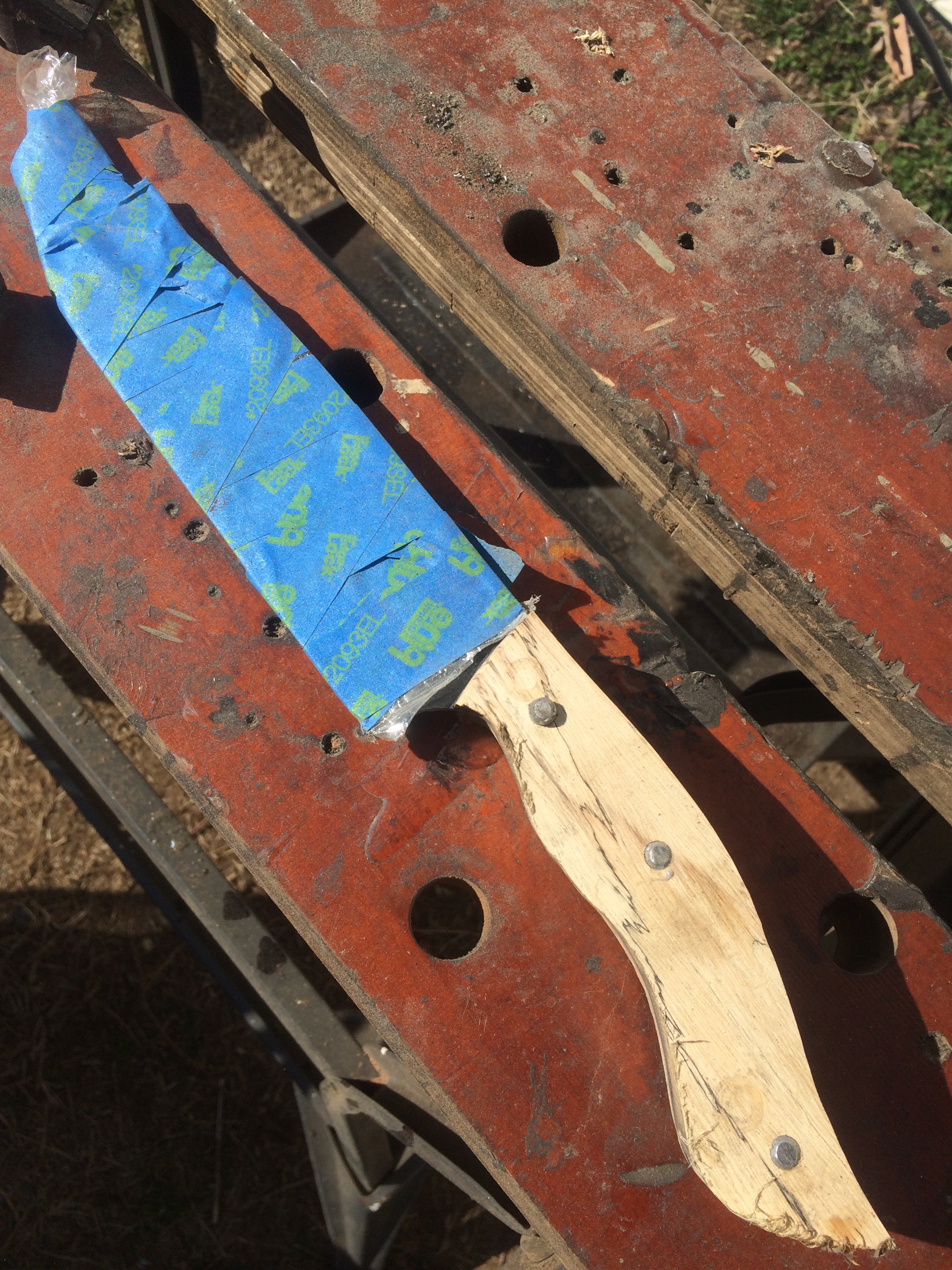
This two-knife kitchen set was a commission for a good friend and former teacher. He is a man who taught me how to look at matters deeply and to think about things critically.  We were on a farm for this past Thanksgiving and I noticed that he had been reading The Alchemist by Paulo Coelho.  This is a book that is special to me, and was given to me during a time when I was having trouble reading the omens.  It was the inspiration for this set, and an exercise of gratitude for this man, a sort of alchemist himself, who has helped me to find my own truths over the years:

We start with Urim, a six-inch boning/filet knife

Because the stock is so thin, I hardened the blade before grinding the bevels:

Rough grinding at 40 grit:


Full flat grind:

Laying down a hand finished satin:

Detail work on the plunge lines:

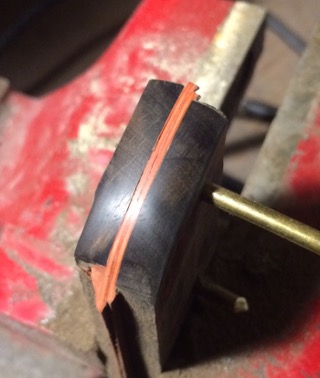
Ebony Gaboon: the black symbolizes the ‘yes’:

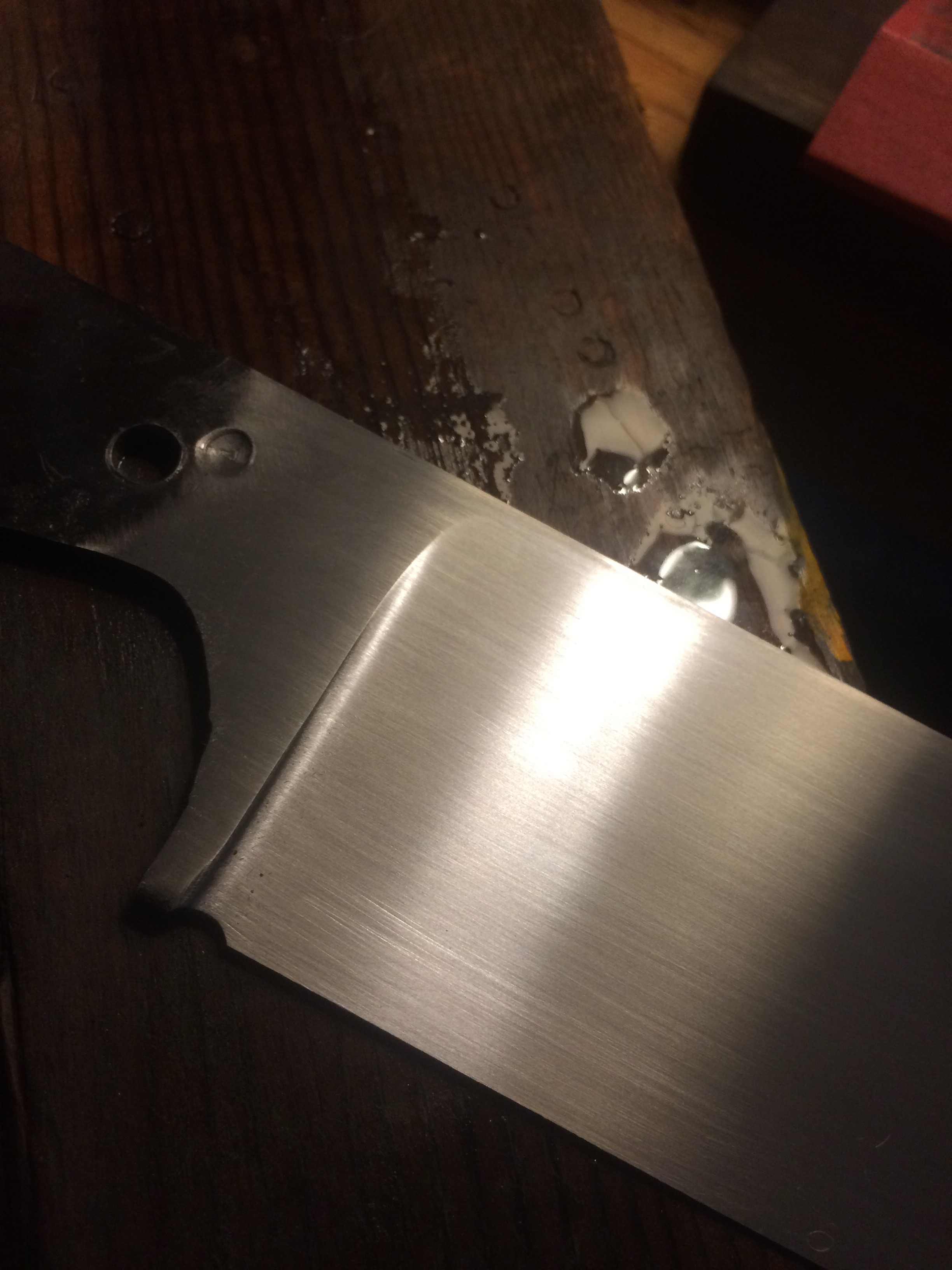
The bit near the ricasso; sanded to 2000 grit:

Profiling on the handle:

Rough-shaped:

Sanded to 220 grit and then oiled.  I let this sit for a day or so and then sand the entire handle up to 2000 grit.  This process helps to burst the grain:

Urim:

To start on Thummim we need things that cut:

Once again the whole bit is hardened:

Rough grinding:

Full flat grind and finished on the grinder to 120 grit:

A lot of material was removed:

Laying down a hand finish.  A smoother finish makes for less resistance when doing knifework in the kitchen:


She goes into hot acid for an etch.  The etch helps to prevent corrosion and also makes for a more pronounced patina as the knife is used.  It will also darken the blade:

Spalted Tamarind:  the light color represents the ‘no’

With black spacers for contrast:

Once again, sanded to 2000 grit:

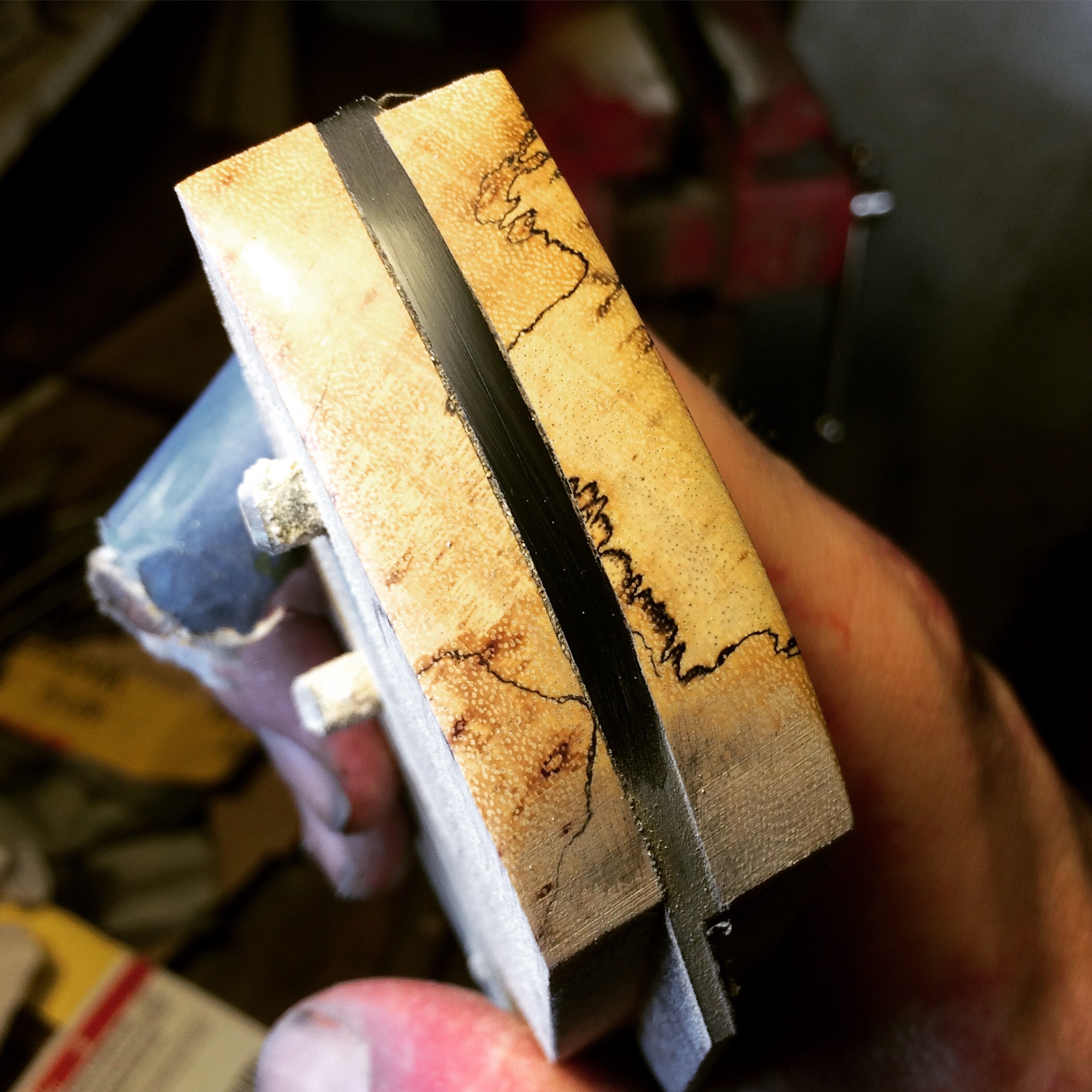
Clamped:

Profiled:

Shaped:

Thummim; the no to the yes:

Urim and Thummim:


The name of the professor mentioned in this story is Jonathan Shear, Ph.D., and you can find links to his publications here.