Knifemaking: The Things That Come to Us- A Restoration

“i imagine that yes is the only living thing.”
― e.e. cummings


There are many things that come into our own personal worlds- children, possessions, problems, blessings and a myriad of others.  It’s not so important how or why they enter our lives, but what we do with them.  It expends a great amount of energy to ponder what we may have done to deserve the painful and traumatizing events that come to us, and an equal amount of energy is wasted when we wonder if we are worthy of the good things that are brought our way.

Because when we start dwelling on the why’s and how’s, we tend to become overwhelmed and lose sight of what best needs to be done with what comes into our lives.

And within that judgement of why and how, we start to say no to things.  We become afraid we may be hurt, or that we may fail ourselves or those we care about.  Perhaps we are afraid of making ourselves unsafe.  Whatever the reason, in saying no we shut ourselves out of the blessing may be inside of a painful situation.  We say no to what may be a path forward because it is dressed as something unpleasant.  It is then that we become prisoners in our lives instead of seeing the ways we can be shaped and grow.  We should say no to things that are harmful and do not better us, but it’s always good to say yes to what life brings us.

The summers are slow for me, and sometimes I have to get creative in the ways I support myself.  I end up saying yes to many opportunities that under normal circumstances I would decline, usually due to time constraints, time away from loved ones, or a high probability of bodily endangerment (or a combination of all three).  Over the years the things I’ve reluctantly said yes to have usually been the most rewarding.

One of the times I said yes this summer was to a tree job in rural Virginia.  I was on a crew to cut down a huge dead tree.  Removing dead trees can be dangerous.  Rotting can occur in any number of unseen places of the tree, causing structural instability, and the tree may not fall where or when you desire it to fall.  This particular tree, though dead as a doornail, fell exactly as it was supposed to.

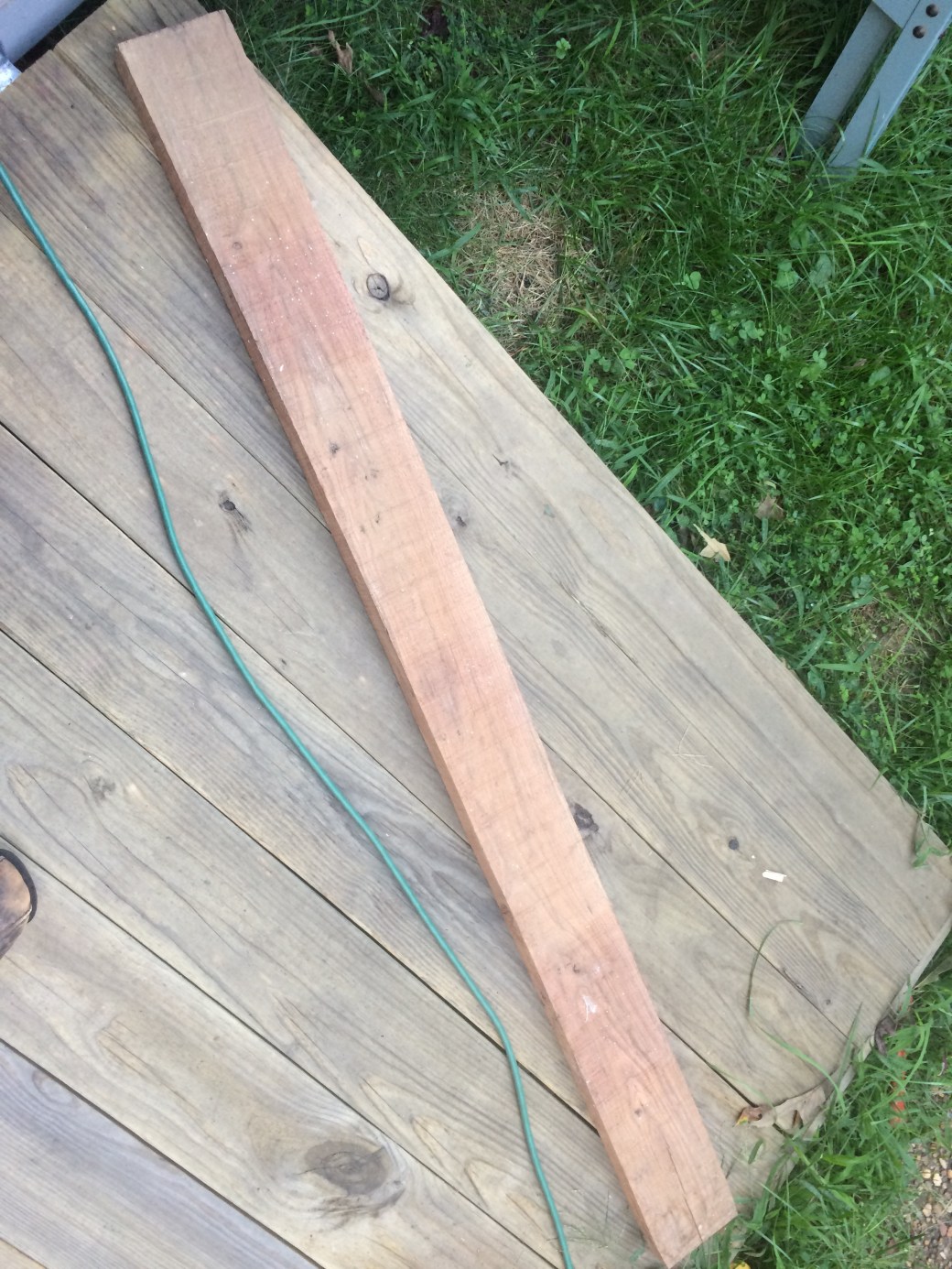
The client was an artist, and brought us French-pressed coffee.  We talked for a bit and I told him about making knives and how I got my materials.  He told me that he had some slabs of black walnut and that I was welcome to them.  They had been milled by a neighboring man who had run an abbey in South Korea, saying ‘yes’ to whatever fleeing defectors and dissidents from the North that the world brought their way.  Later he sent me an article about the man who cut the wood, you can find it here.  Black Walnut is expensive and isn’t something to normally fall into one’s path, so, in the practice of saying yes, I happily took some.
A week or so later I said yes to doing a bit of work on a good friend’s farm.  My friend is a busy lady and sometimes needs a hand with the upkeep of her property.  She and her family are good friends of mine.  I worked for her son for several years and like to get out to their property as often as I can.  It’s really beautiful:

IMG_2509

She had a set of knives she wasn’t sure what to do with.  They belonged to her late husband, and came to him from his grandfather, who was an Austrian immigrant.  He came to the United States in the early 1900’s and made his living as a chef, choosing to say yes to a new world and a new life.  She told me she’d like to have them restored so they can go to her children and stepchildren to remember their father.  I told her I would have a look at them and see what I could do.
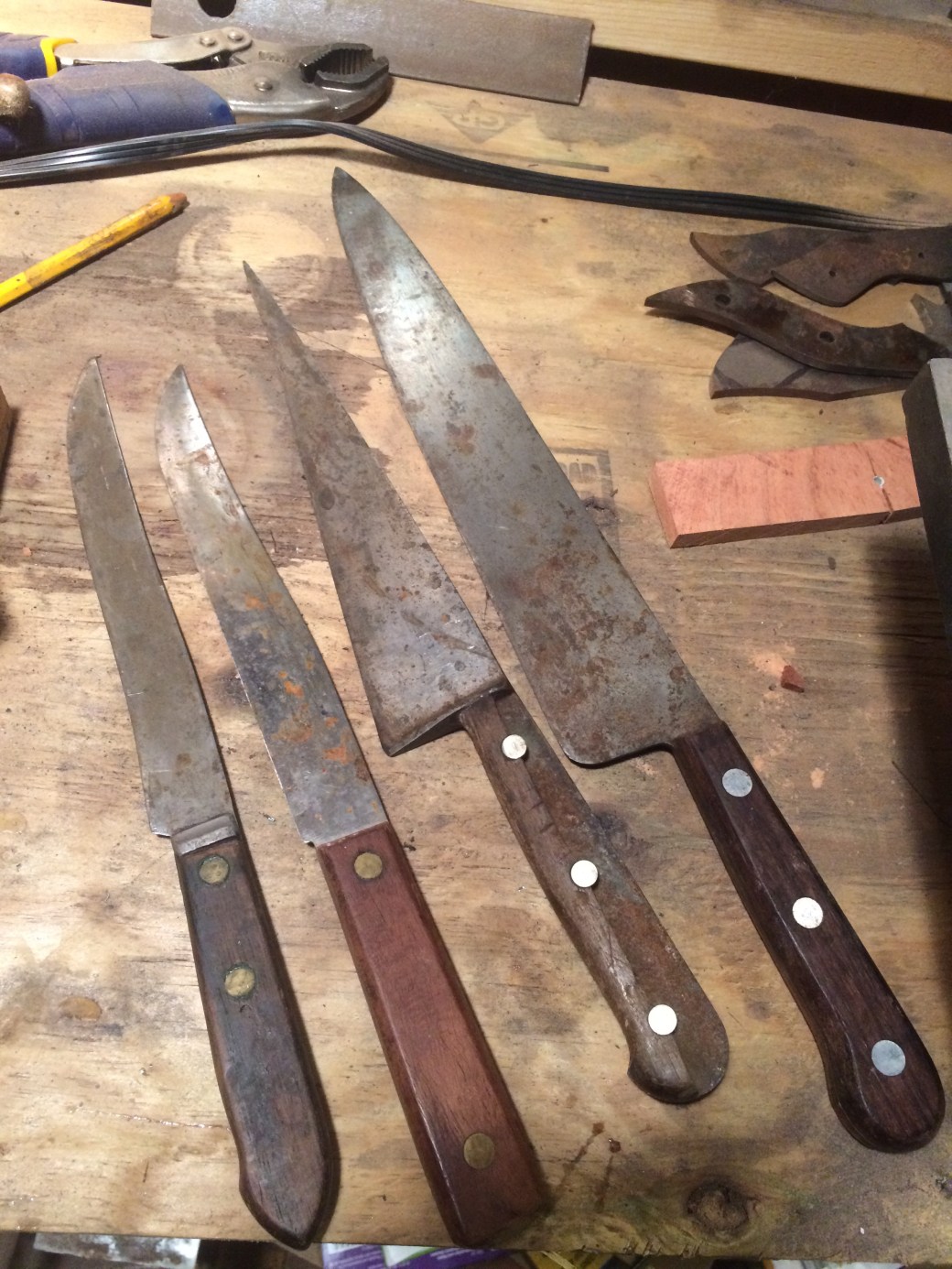
Tools of the trade, from left to right:  A carving knife; a fish knife; a French slicing knife; and a 12″ chef’s knife

So these knives came to me, at least a hundred years old, and of deep sentimental value.   I started by removing the cracked and broken handles.
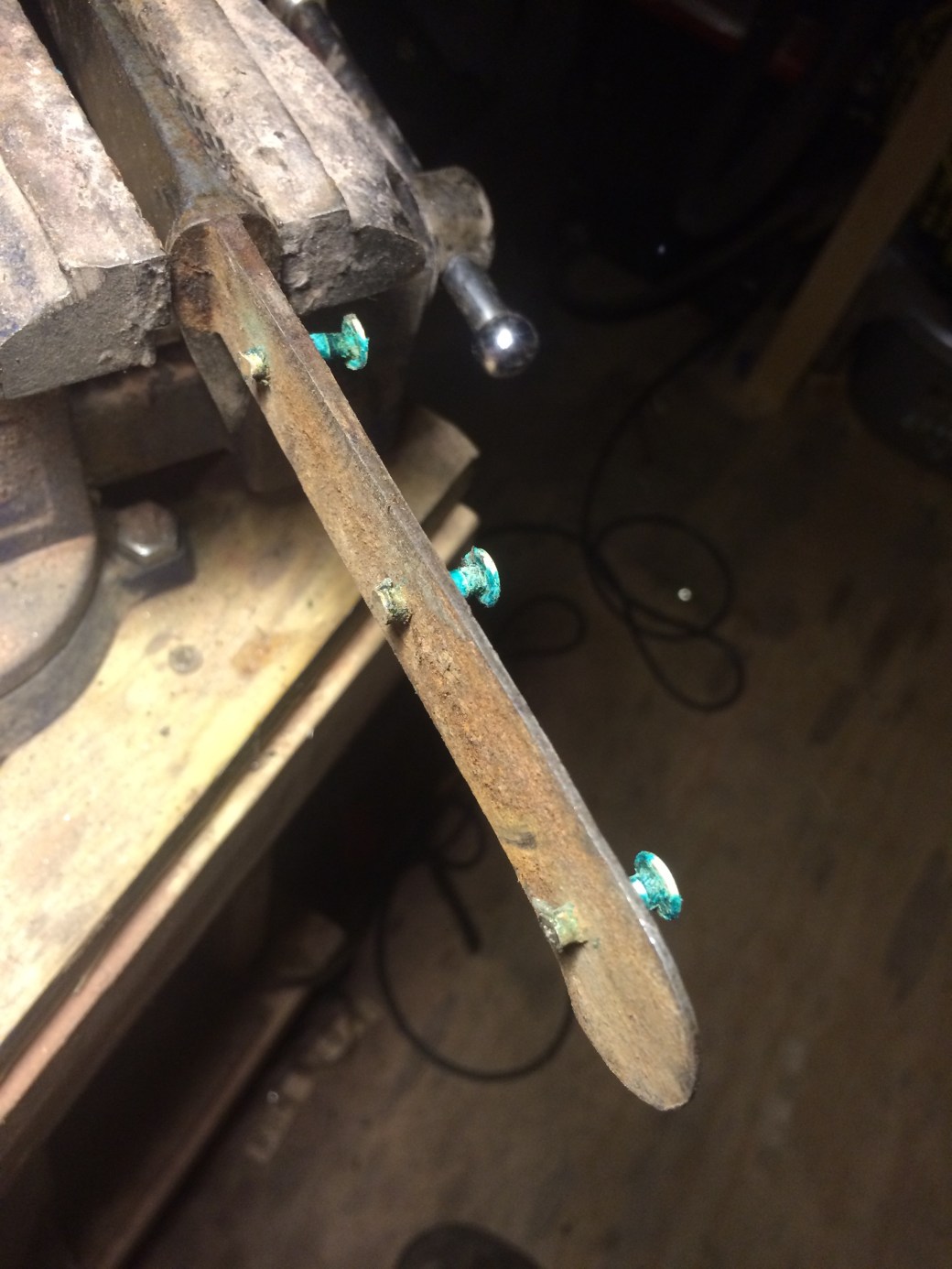
I cleaned up the corrosion and oxidization from the blades, but left much of the etched patina from their years in the kitchen.
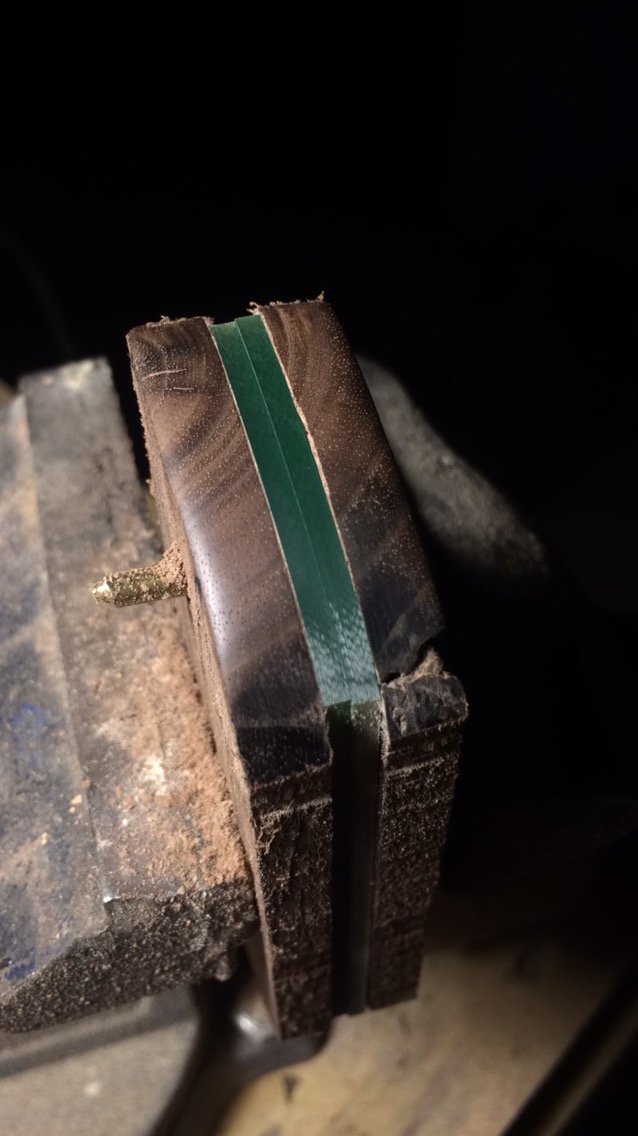
In a continued practice of saying ‘yes’ I chose to use some of the Black Walnut I got from the tree job for the handle material.  It fit nicely into the story of these knives.  This is what it looks like sanded and polished.
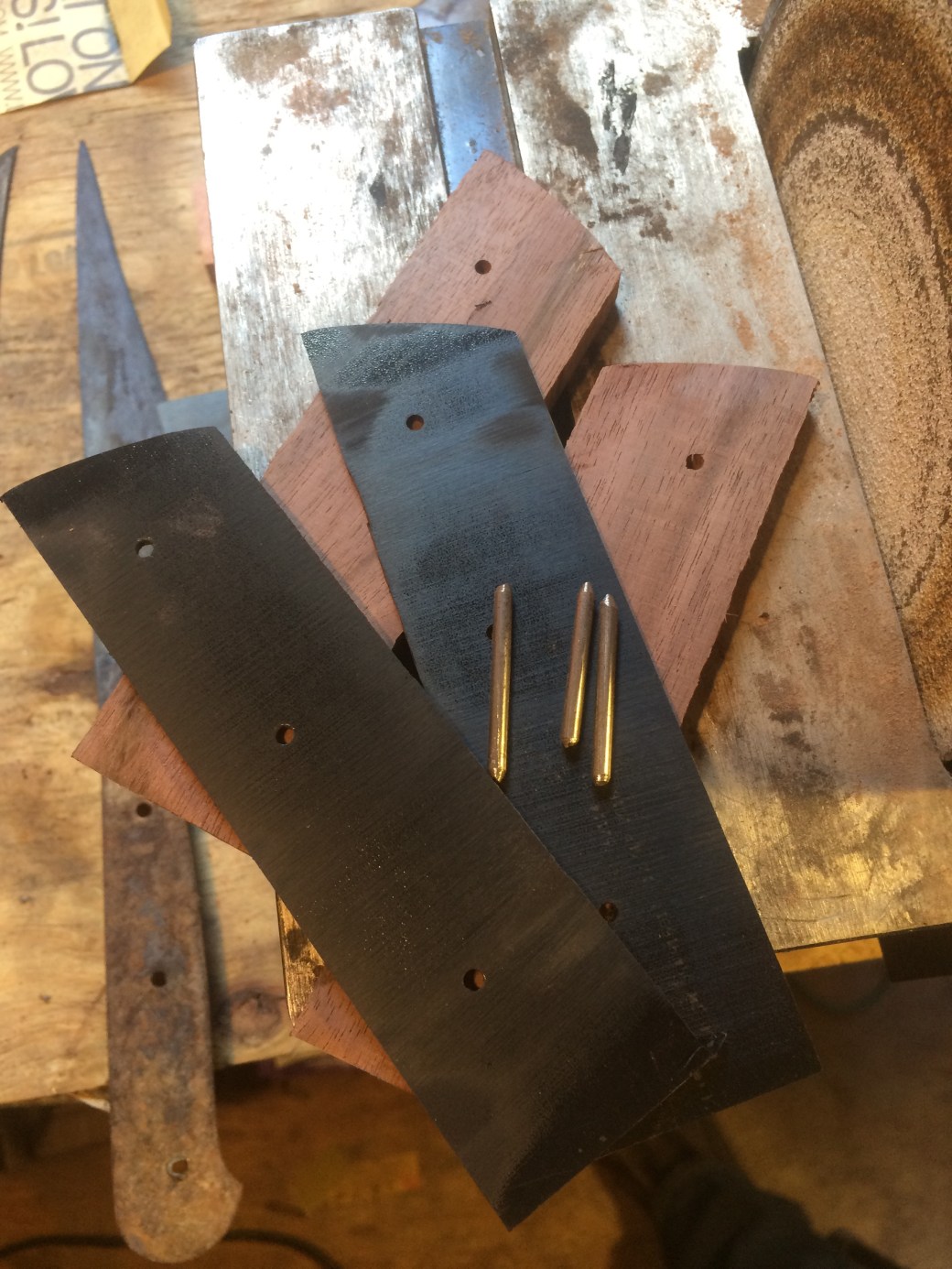
All of the handles started as thin blocks cut from the Black Walnut.

Shaping.
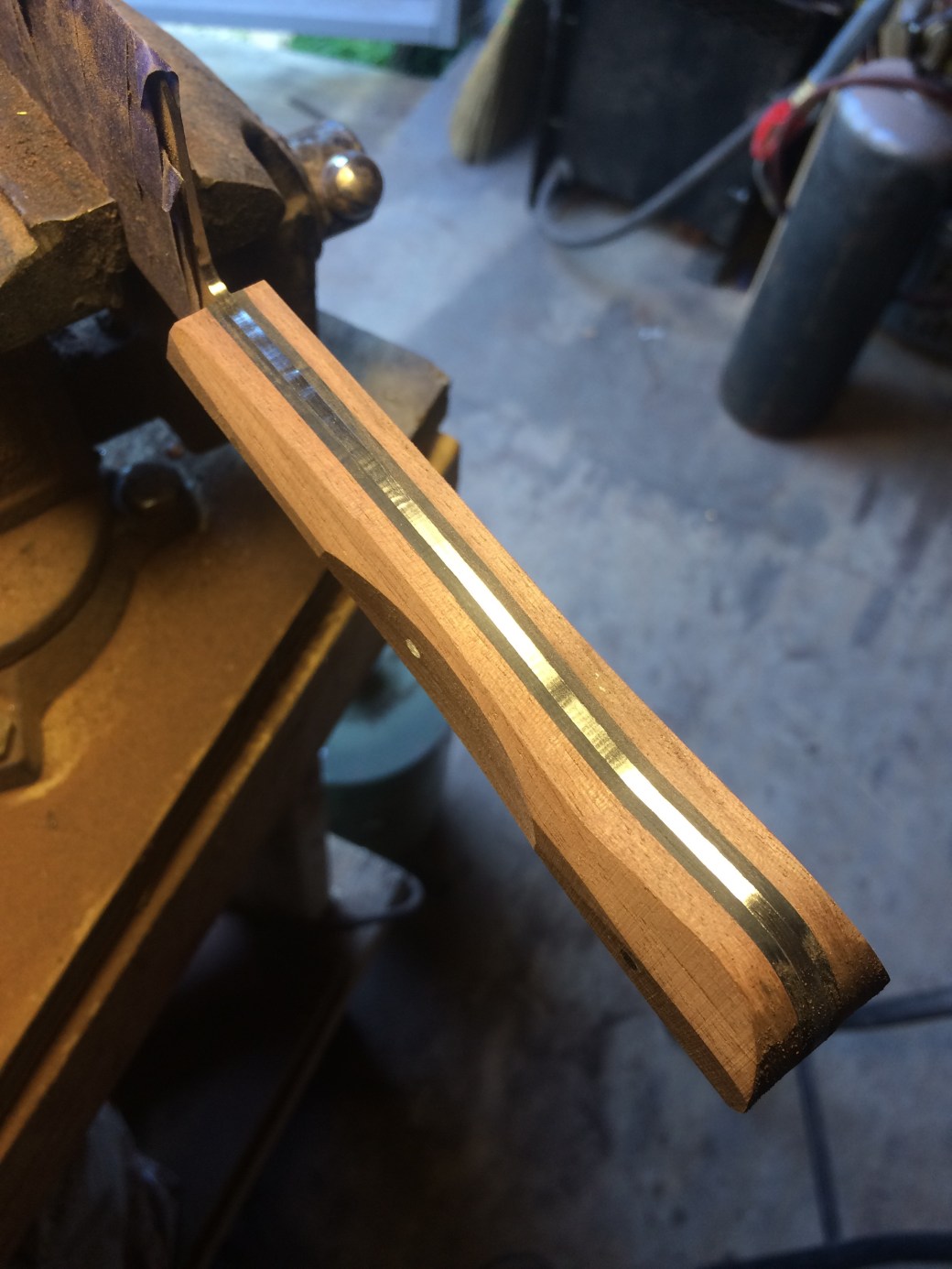
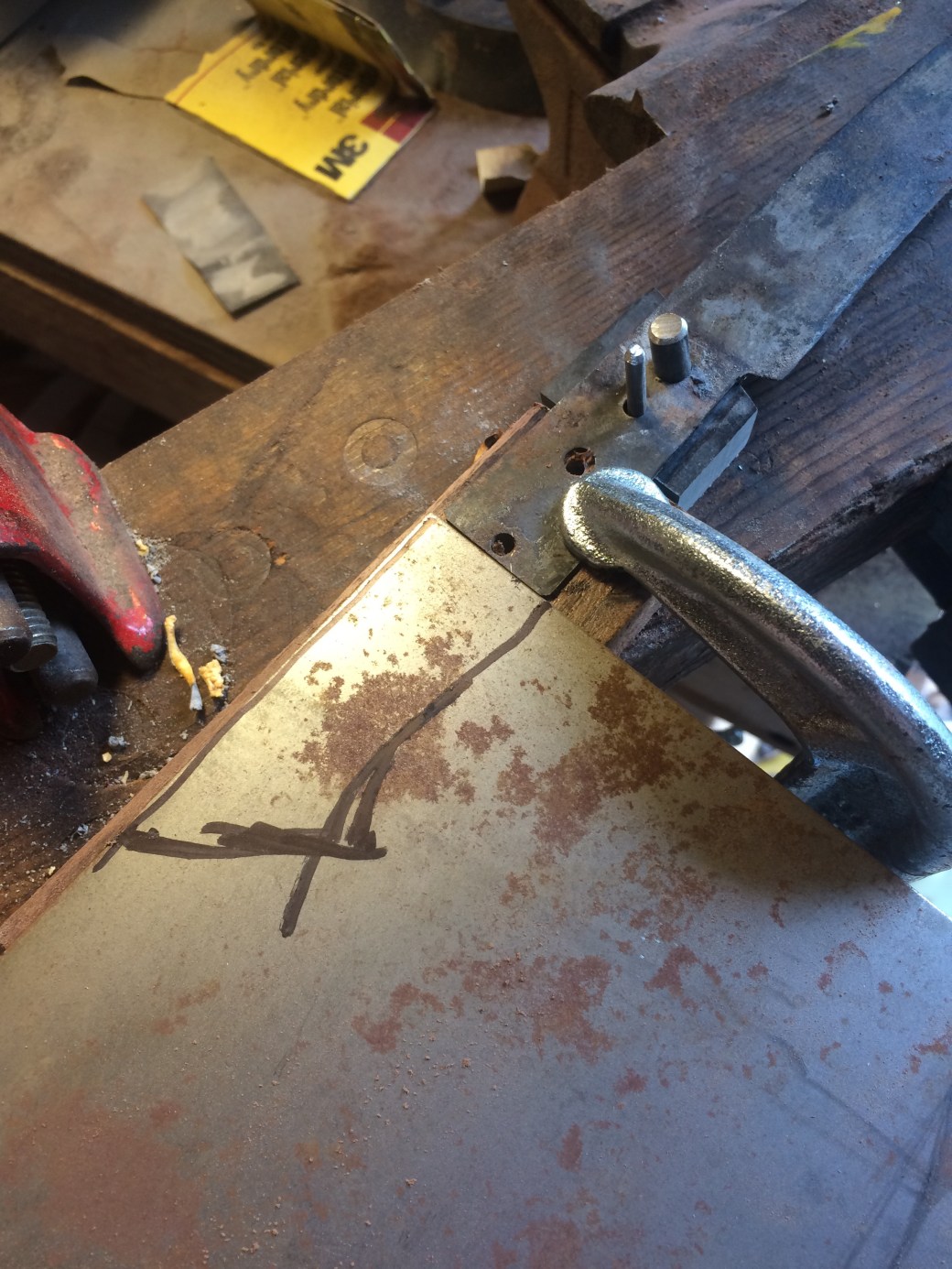
The filet knife was only half-tang, so I extended it with mild steel from a sheet.
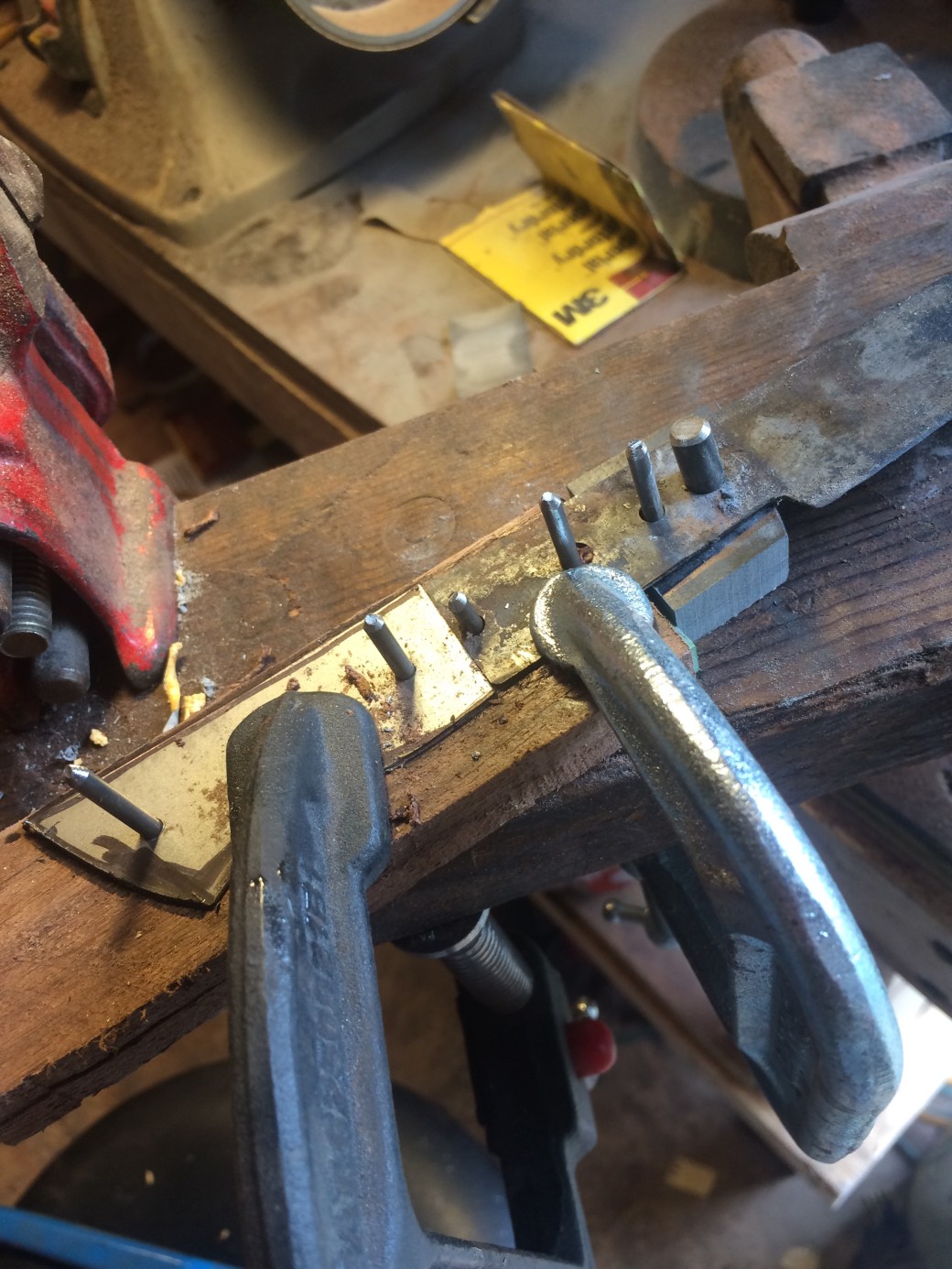
I added a G10 bolster and spacer for a bit of contrast.
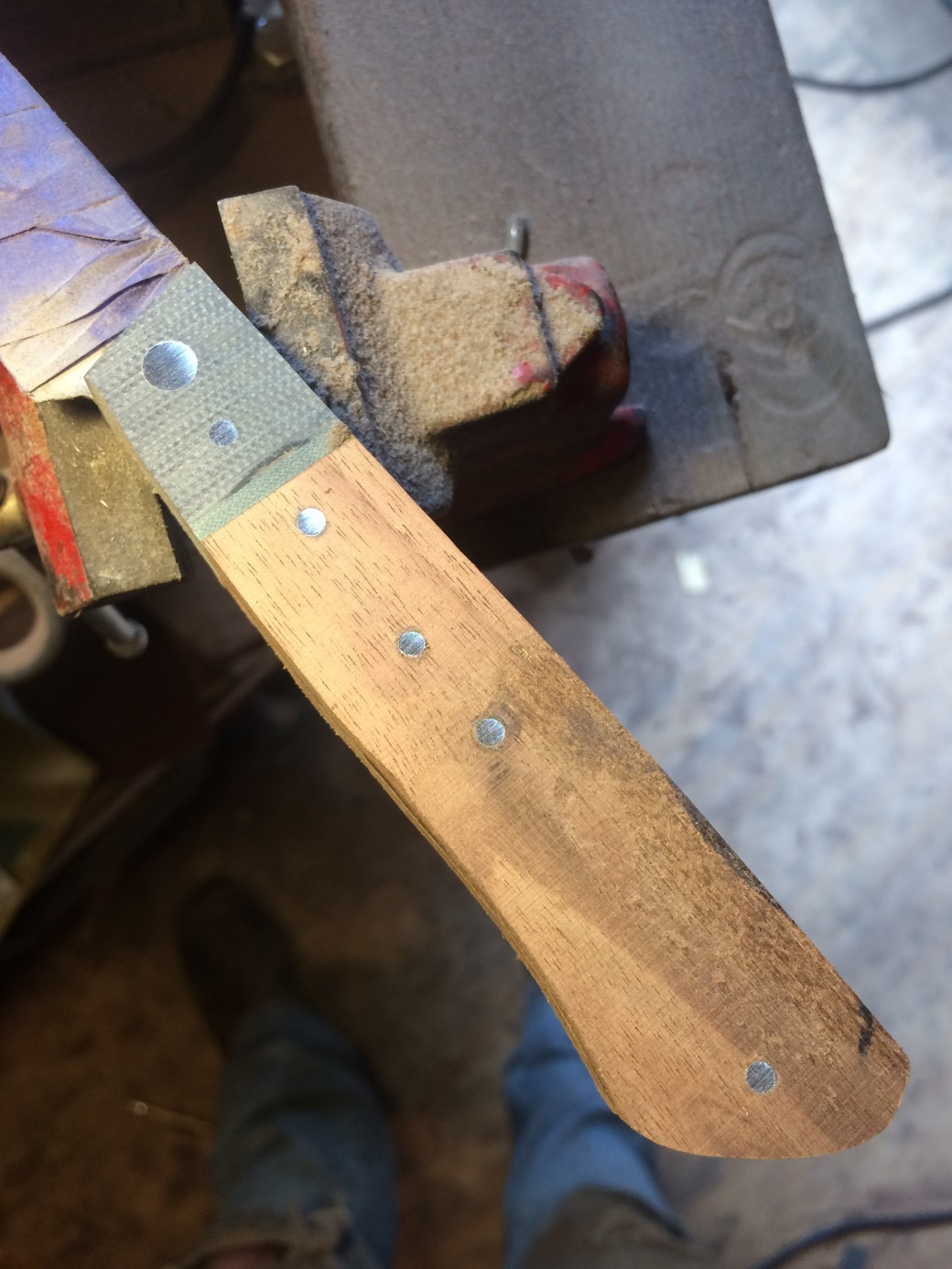
After glueing and sanding.

Getting the fish knife ready for glueing and shaping.

The French slicer was tricky….
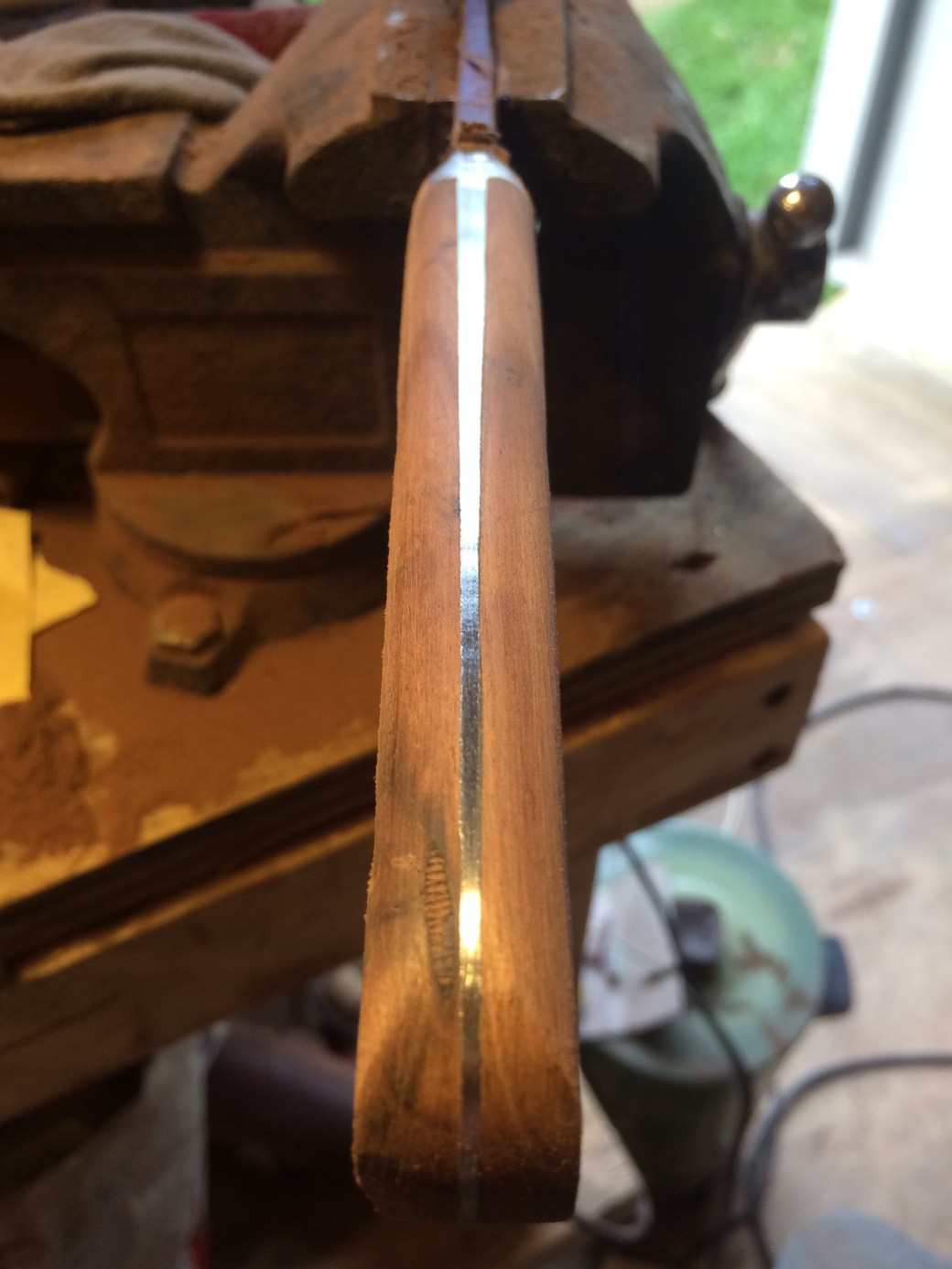
…but also an elegant challenge, with its tapered tang and integral bolsters.


Finished, they came out rather beautifully:

Say yes to the things that come to you whenever possible.  It’s always worth it on the other side.

Knifemaking: yes and no; and Urim and Thummim

“Take these,” said the old man, holding out a white stone and a black stone that had been embedded at the center of the breastplate. “They are called Urim and Thummim.  The black signifies ‘yes,’ and the white ‘no.’  When you are unable to read the omens, they will help you to do so.  Always ask an objective question.”

Paulo Coelho- The Alchemist

I took a philosophy class in college.  The professor was an older gentleman, and a bit mysterious.  He had us buy a very expensive textbook which we never used.  He was the one asking the questions and it was mostly us, the class, that did the talking.  We never learned much about him other that that he had had a bit of celebrity on the academic circuit several decades prior. In his younger days he practiced judo.  Later in life he discovered Tai Chi, and taught that as well.  He never elaborated on any of this.

I don’t remember much of what we talked about.  I was twenty-two and liked to go to class stoned.  I do remember there was some Kant in there, and some St. Augustine, and probably some ideas on relative morality versus universal morality.  I also remember one lesson we had, one about truth, and how all matters can be broken down into a yes or a no.

He gave an example: all cellular communication can be broken down into ‘yes’ or ‘no’.  ‘Yes I will fuse with this protein,’ or ‘No I will not fuse with this protein.’  ‘Yes I will bind to this synapse,’ or ‘No, I will not bind to this synapse.’  Matters that are gray in appearance only remain so until one goes deep enough to find a ‘yes’ or a ‘no’- and in many instances in our personal lives we never get to that point.  Sometimes the truth contains many yes’s and no’s.  Sometimes the truth is much larger than our own individual internal agreement or disagreements.  This is part of what gives life it’s mystery and beauty.

There was one particular assignment, a large one, that came up.  We had to write a 10 page paper on a topic we chose.  The professor had a list of topics to choose from.  We were to choose a topic with which we most disagreed.  I had found mine:

‘True virtue requires true religion’

He then flipped it around and told us that our paper had to argue in agreement with our chosen topic.  I didn’t know where to start.  I didn’t agree with this statement at all and was a bit stumped.  After many starts and stops I found a legal dictionary and first looked up the definition of truth, then of virtue.  I found a way to manipulate those very clean and sterile definitions to find agreement with a statement I didn’t agree with.  I don’t remember exactly what I wrote and I’m not sure how I got ten pages out of that but I was pleased with myself.

I got my paper back.  There were no corrections or suggestions.  Written at the top of the page in red ink was a little note saying that I had made my argument using a clever lawyer’s trick.  I got a C.

Over the past dozen or so years I’ve thought a lot about this.  Truth is something that just is.  It is the yes or the no.  The point is that the truth of things can’t be manipulated.  There is discordance in the world because all of us are trying to manipulate the truth to serve our needs, to pacify our fears and insecurities, to indulge our convictions, and to fit into the way we believe things should be.  In spite of these dances we do, at some point everything will break down into yes or no.  When things appear to be both yes and no at the same time it only means that the truth isn’t fully visible at that point.

This doesn’t mean things are clear or easy.   Black for one person may be white for another, and vice versa.  It won’t always fit into nice agreeable little boxes.  I was working with teenagers and there was a young girl who was acting out horribly.  After speaking with her mother, I found out that her father had left the family to go live his life as a woman.  The young girl had a very strong ‘no’ to her father’s insurmountable ‘yes’.

At some point decisions have to be made and assistance may be needed when one can’t always read the signs of which path to take.  Sometimes we can bring an external influence in to help us to get to our truth, our own personal “yes’s” and “no’s”.  This is the where Urim and Thummim come in.

This two-knife kitchen set was a commission for a good friend and former teacher. He is a man who taught me how to look at matters deeply and to think about things critically.  We were on a farm for this past Thanksgiving and I noticed that he had been reading The Alchemist by Paulo Coelho.  This is a book that is special to me, and was given to me during a time when I was having trouble reading the omens.  It was the inspiration for this set, and an exercise of gratitude for this man, a sort of alchemist himself, who has helped me to find my own truths over the years:

We start with Urim, a six-inch boning/filet knife

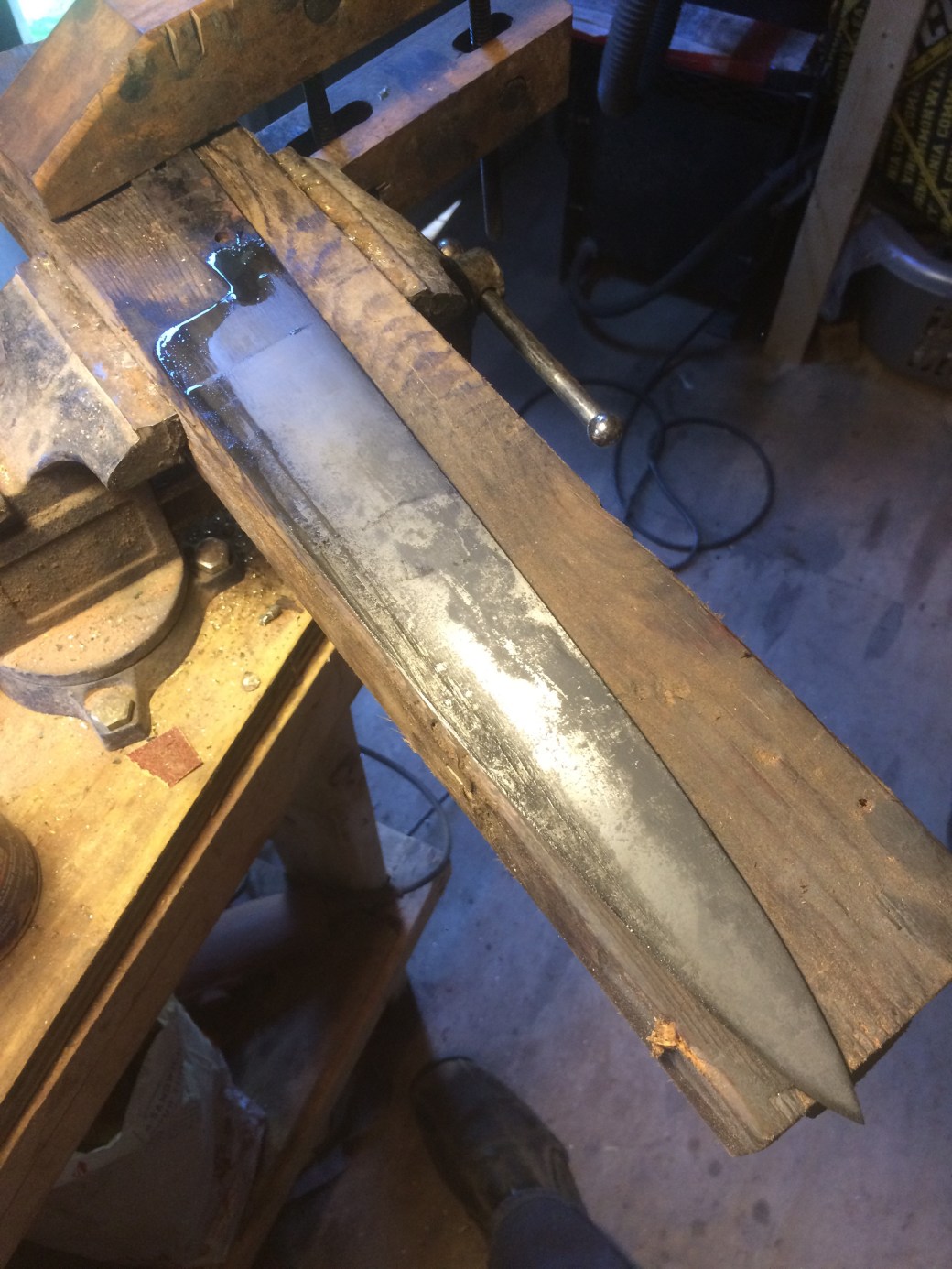
Because the stock is so thin, I hardened the blade before grinding the bevels:

Rough grinding at 40 grit:


Full flat grind:

Laying down a hand finished satin:

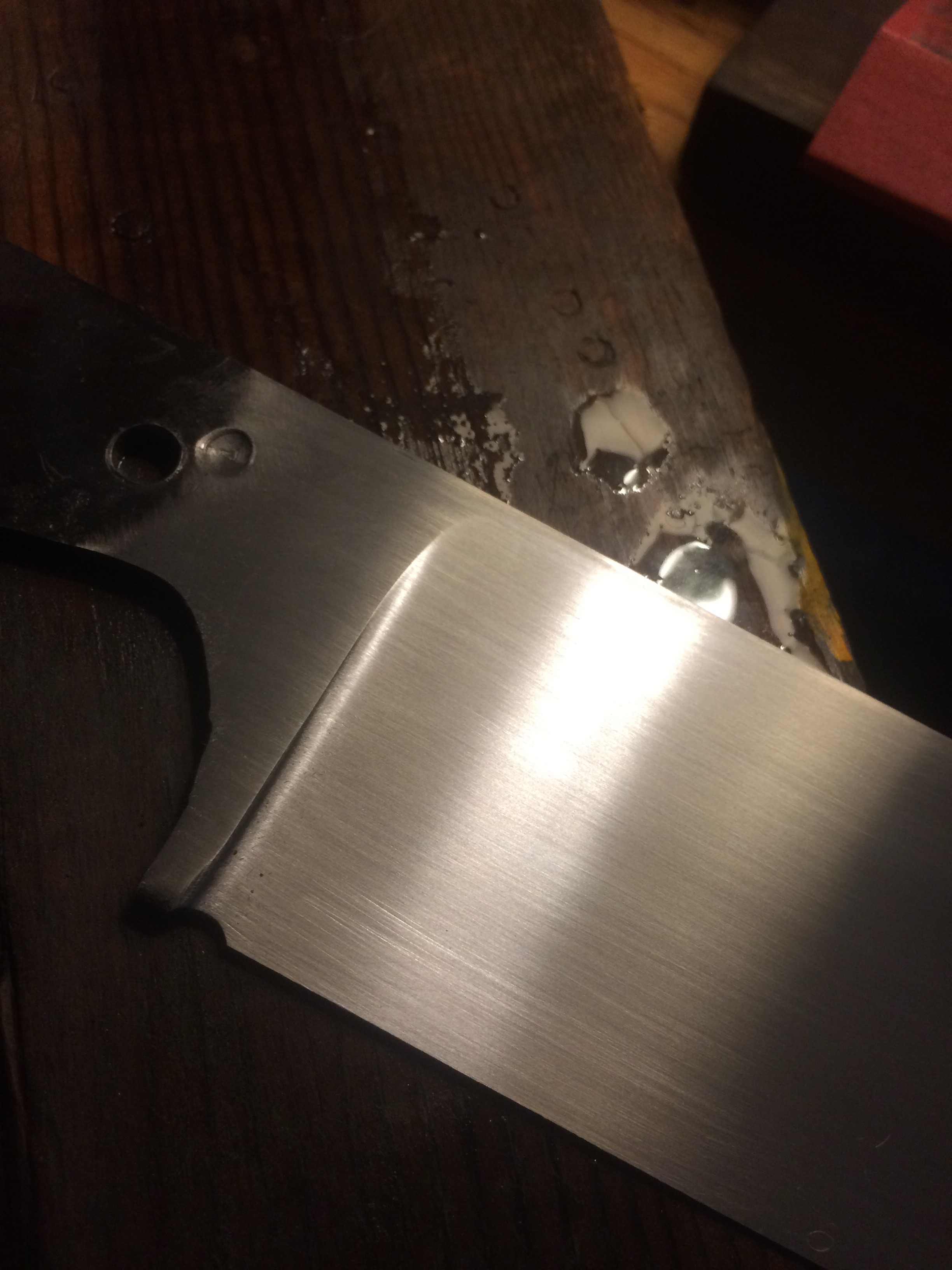
Detail work on the plunge lines:

Ebony Gaboon: the black symbolizes the ‘yes’:

The bit near the ricasso; sanded to 2000 grit:

Profiling on the handle:

Rough-shaped:

Sanded to 220 grit and then oiled.  I let this sit for a day or so and then sand the entire handle up to 2000 grit.  This process helps to burst the grain:

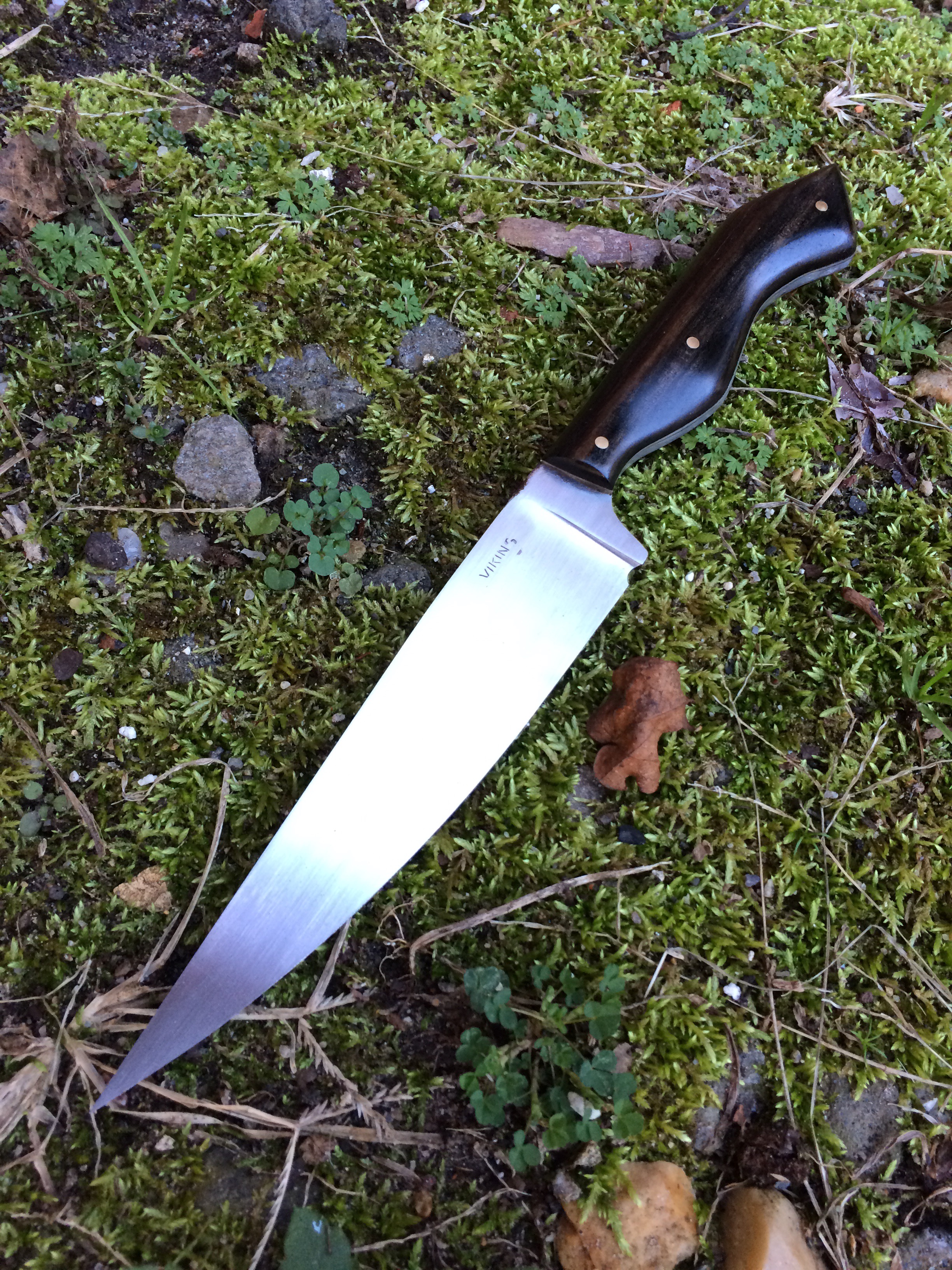
Urim:

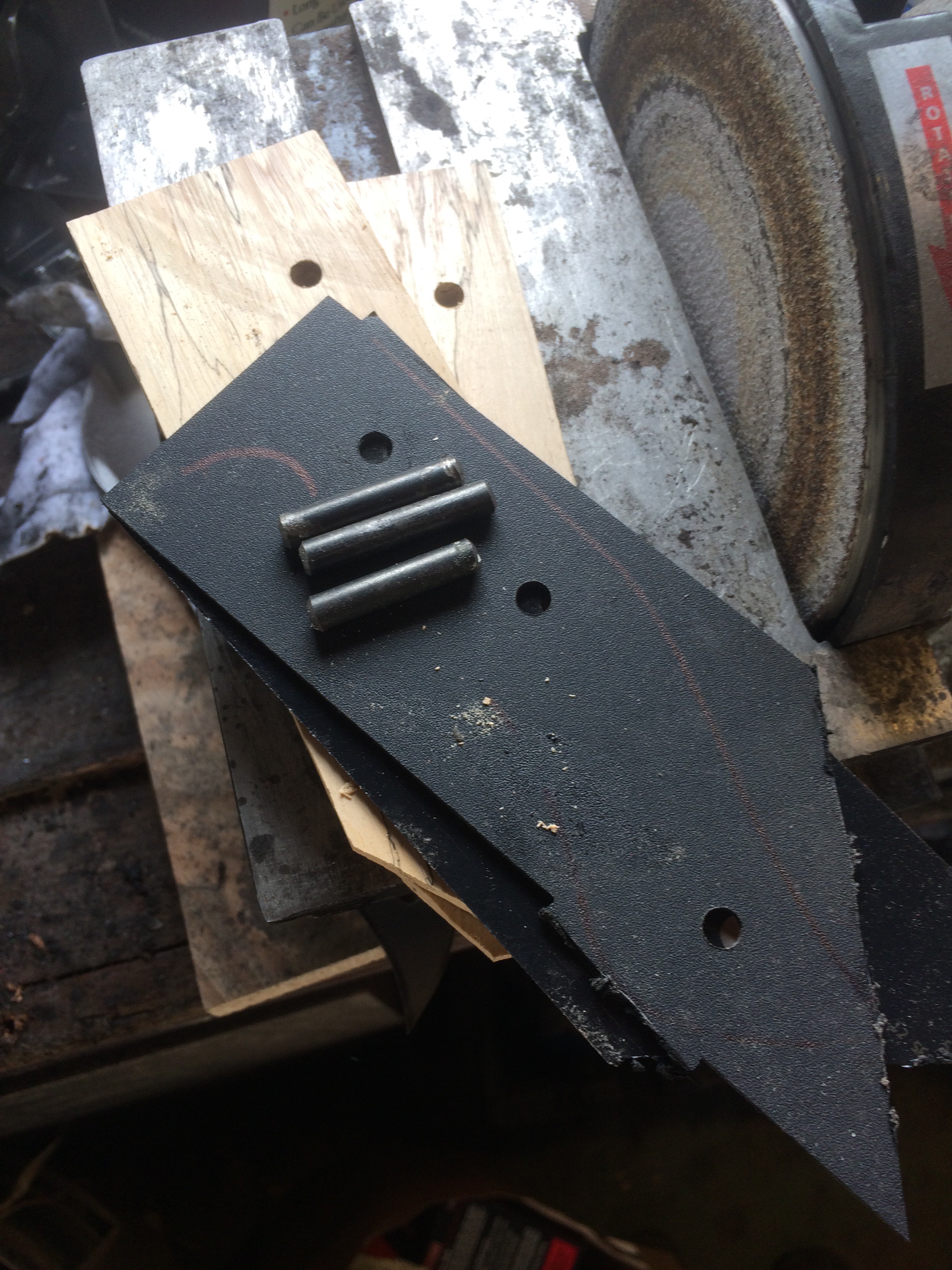
To start on Thummim we need things that cut:

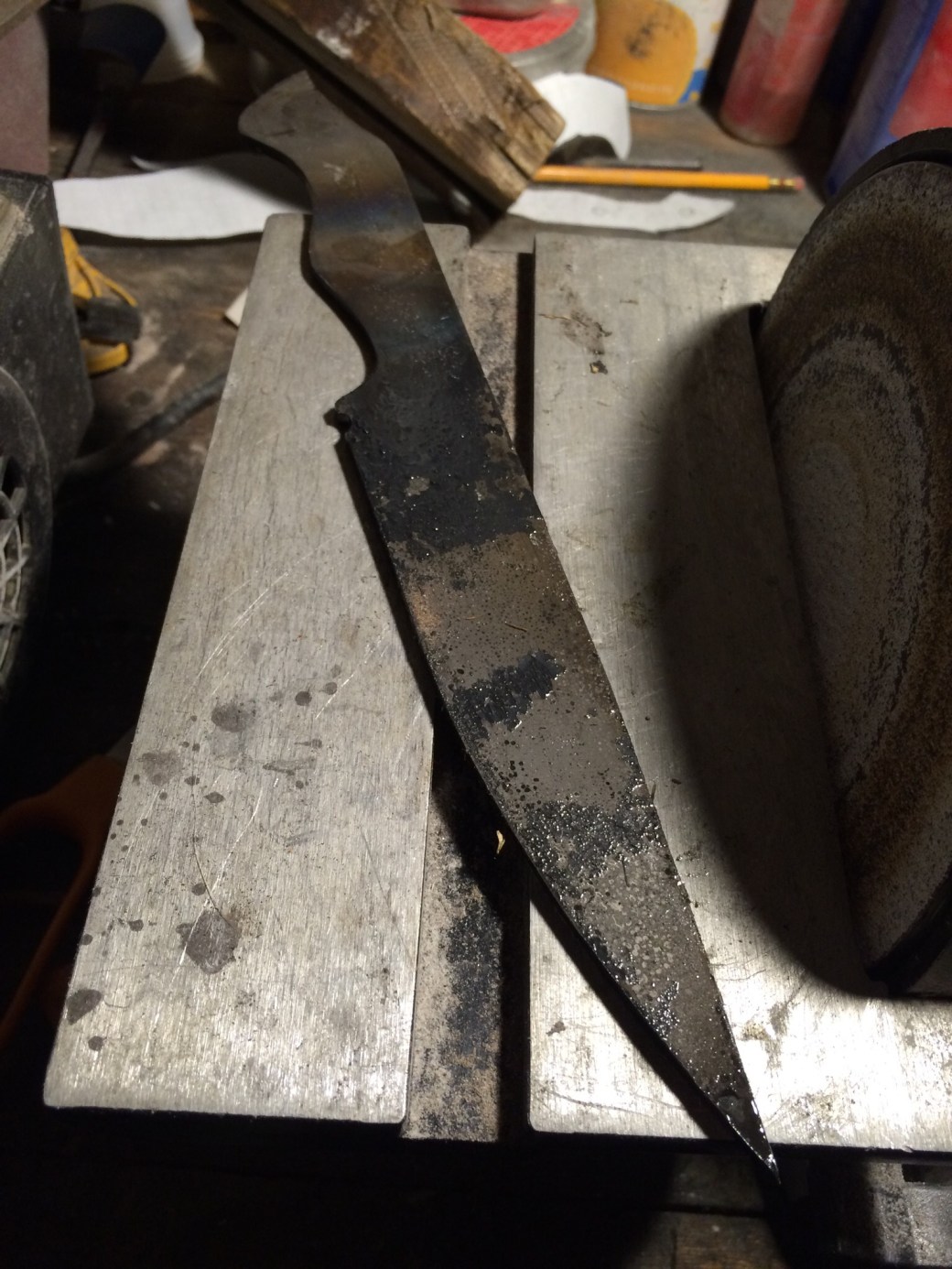
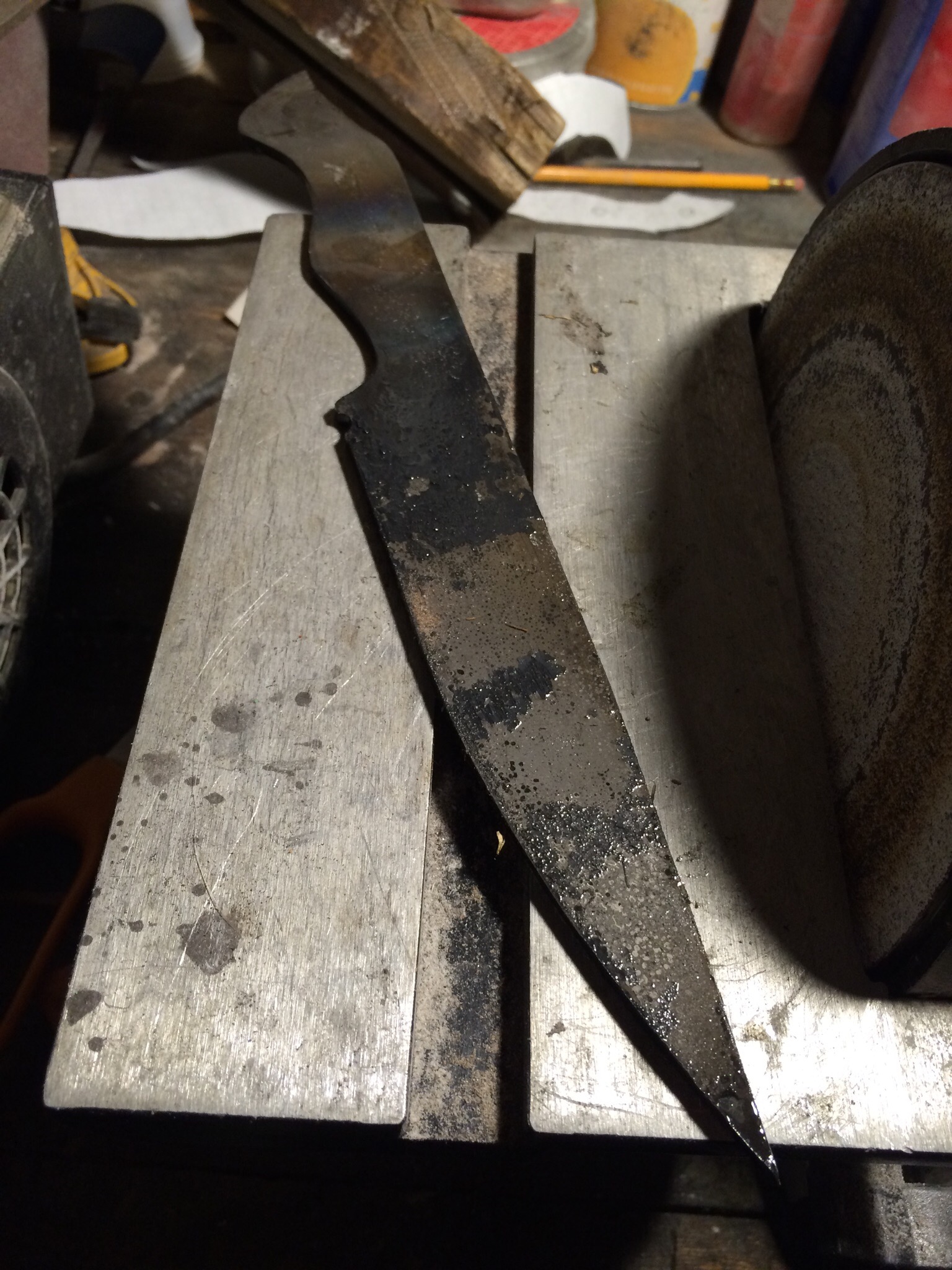
Once again the whole bit is hardened:

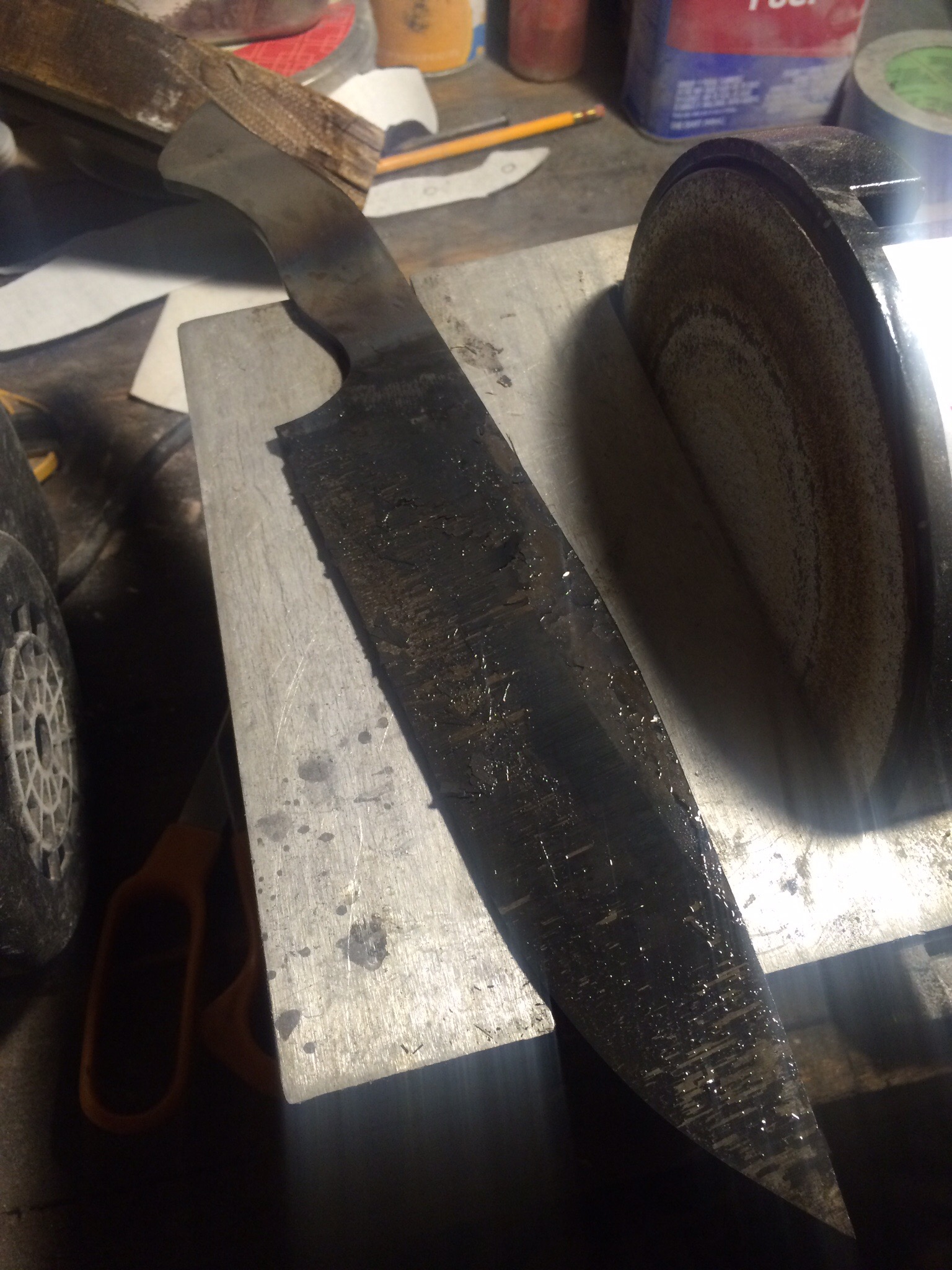
Rough grinding:

Full flat grind and finished on the grinder to 120 grit:

A lot of material was removed:

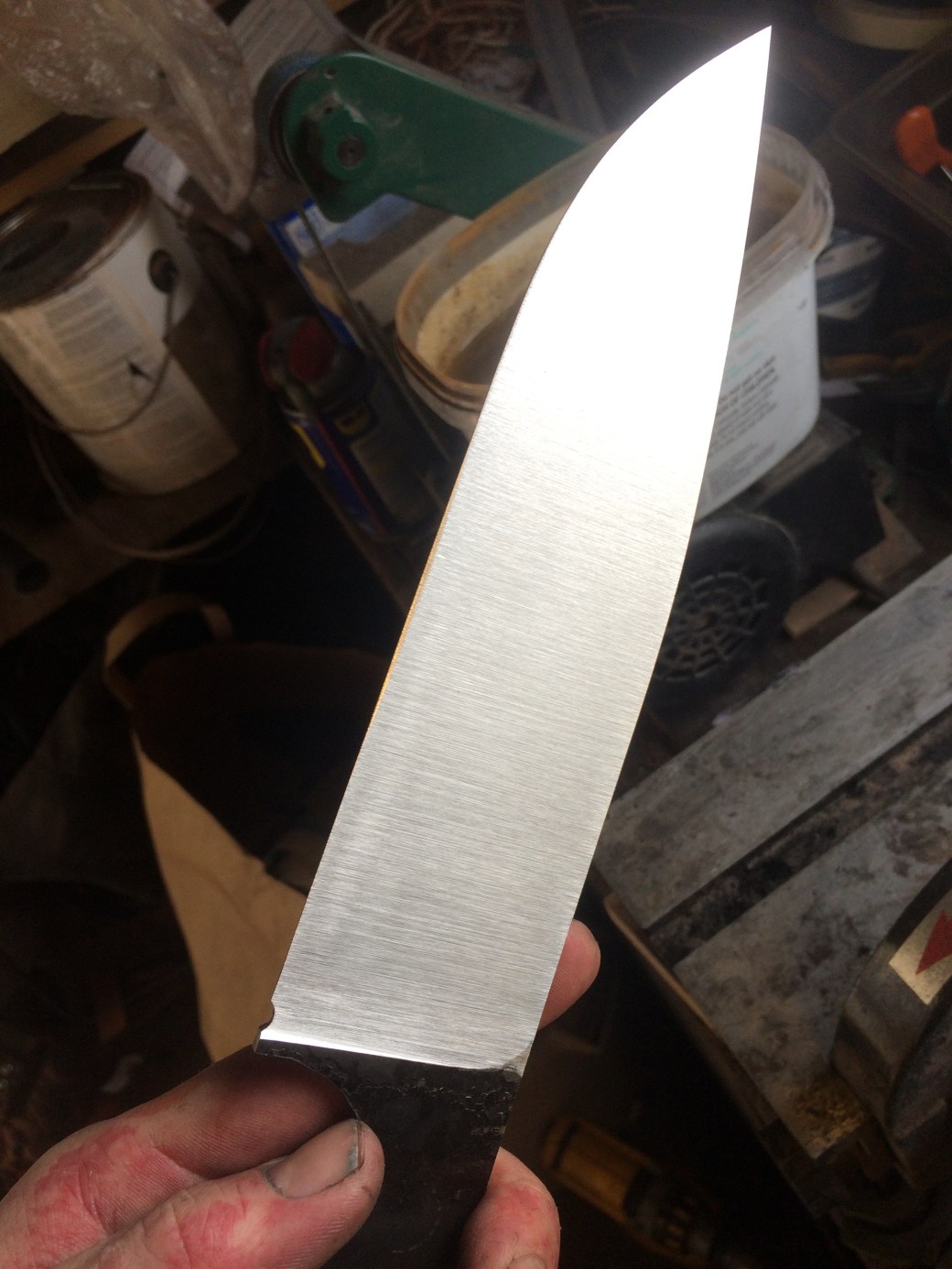
Laying down a hand finish.  A smoother finish makes for less resistance when doing knifework in the kitchen:


She goes into hot acid for an etch.  The etch helps to prevent corrosion and also makes for a more pronounced patina as the knife is used.  It will also darken the blade:

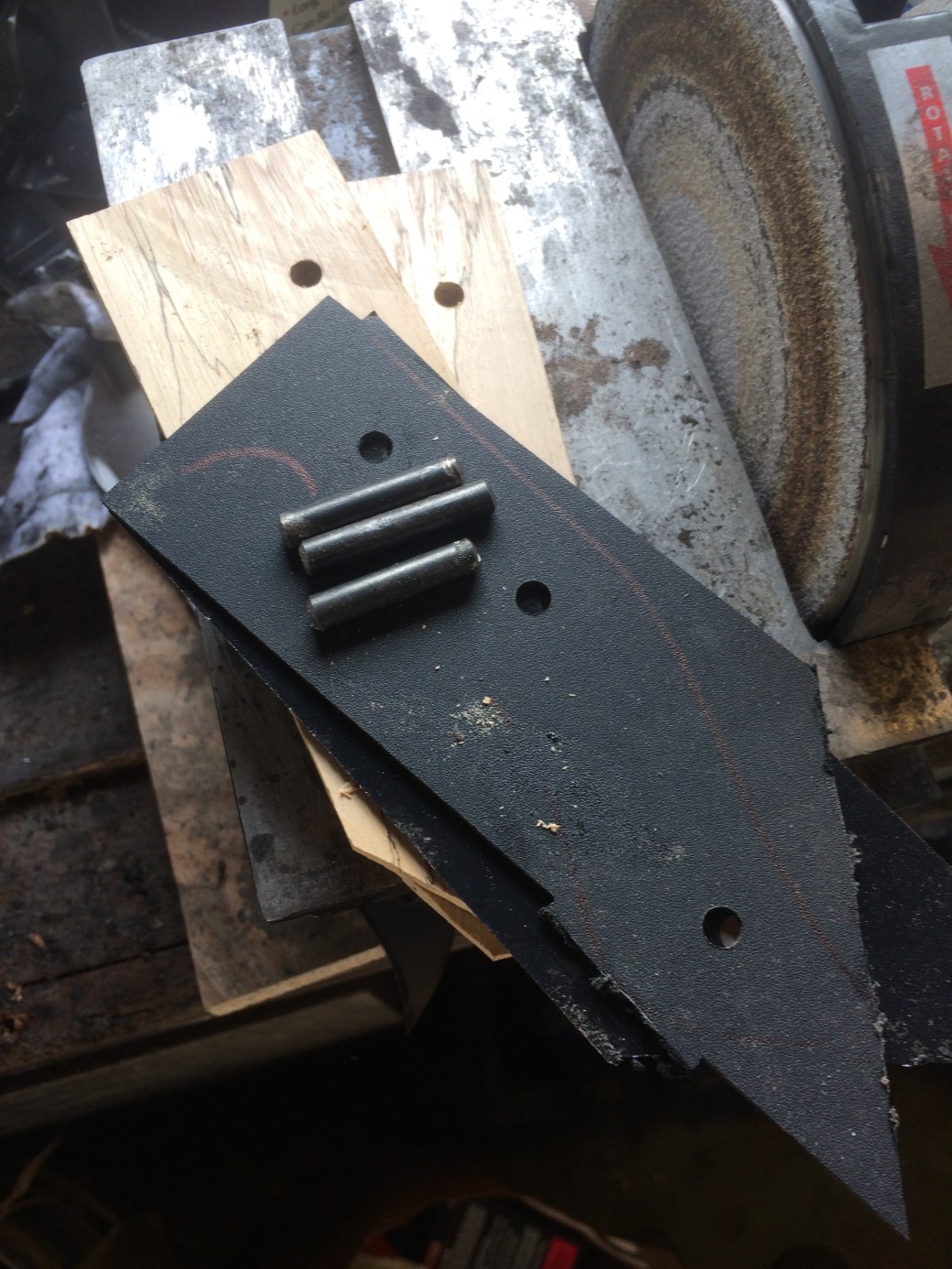
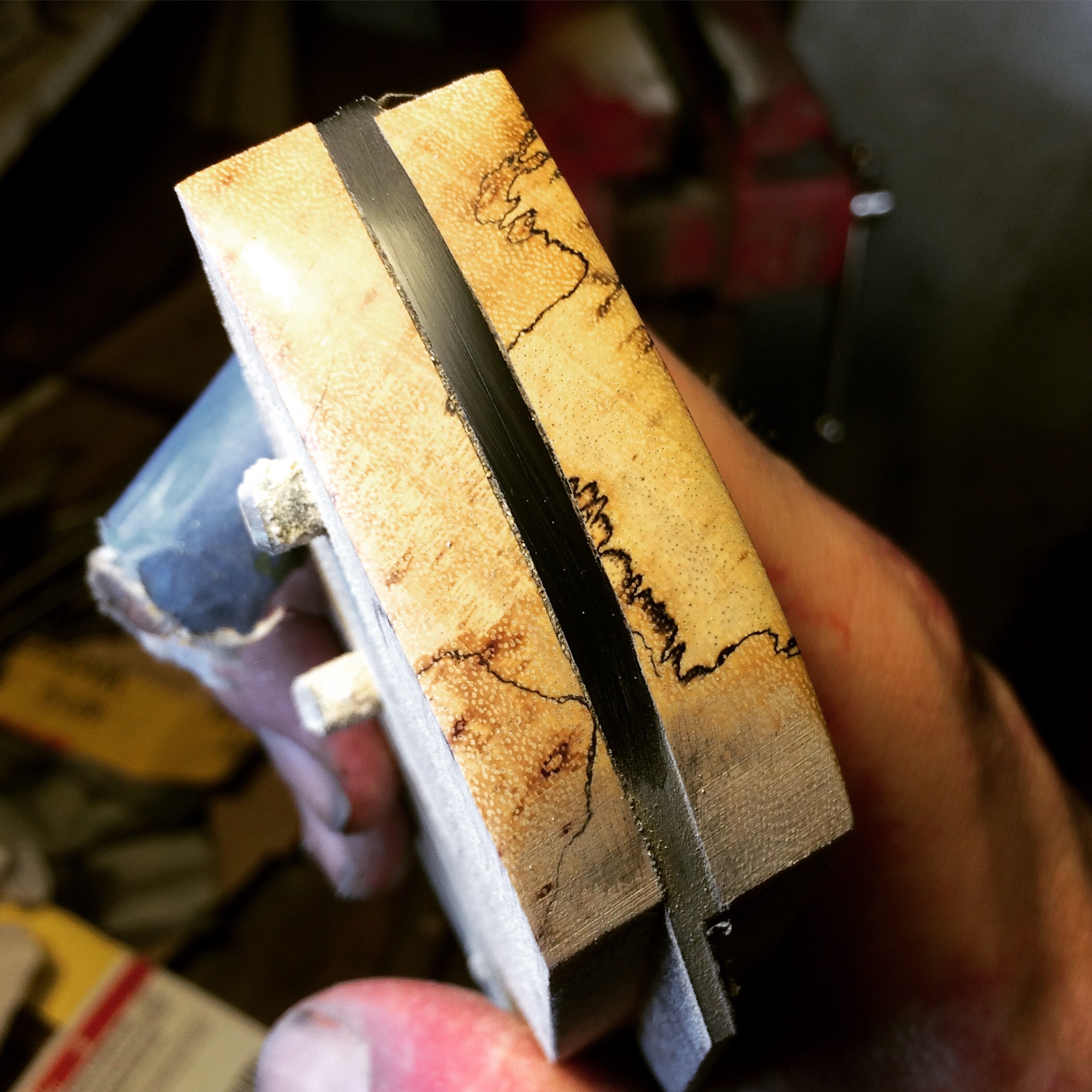
Spalted Tamarind:  the light color represents the ‘no’

With black spacers for contrast:

Once again, sanded to 2000 grit:

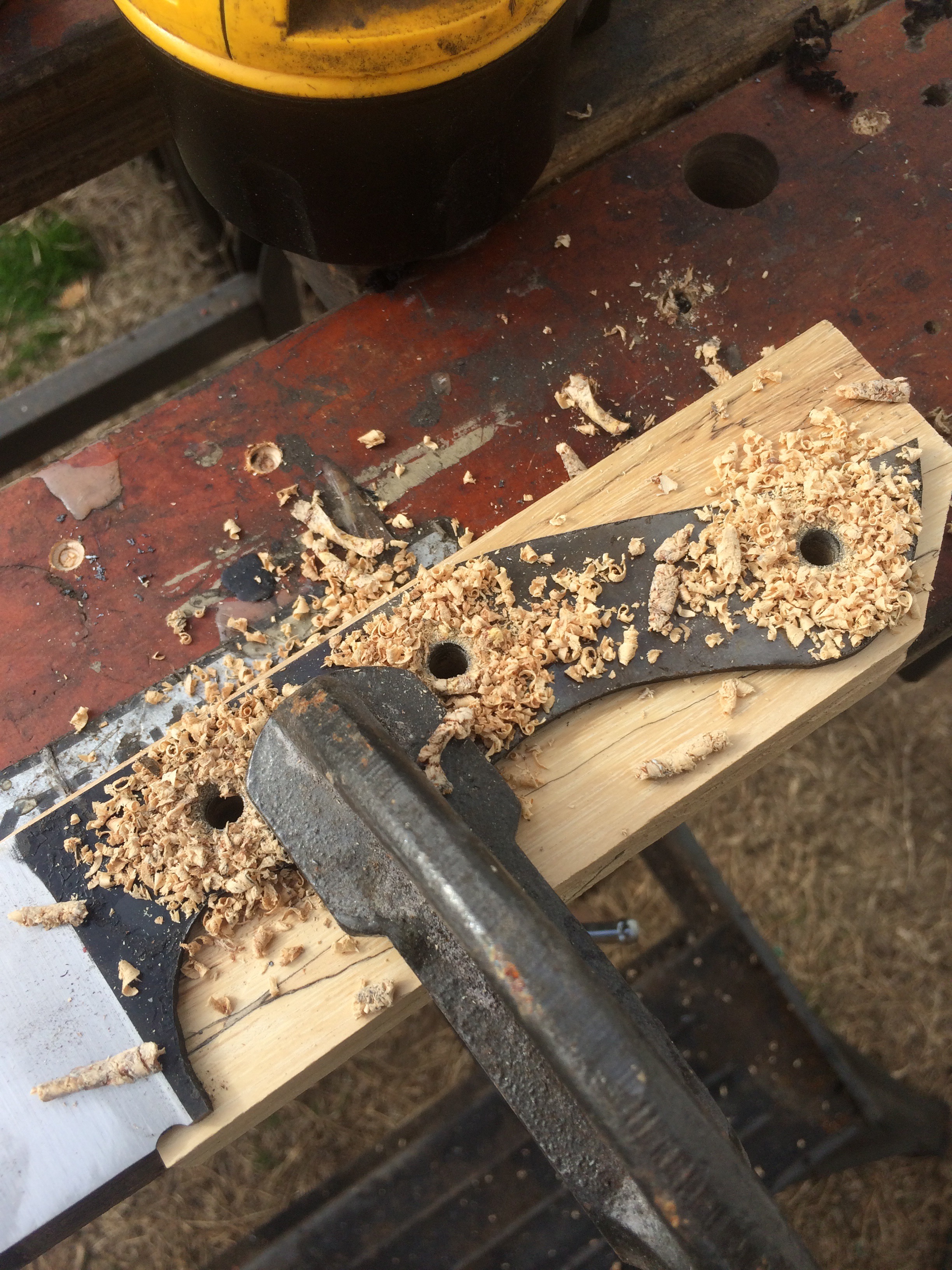
Clamped:

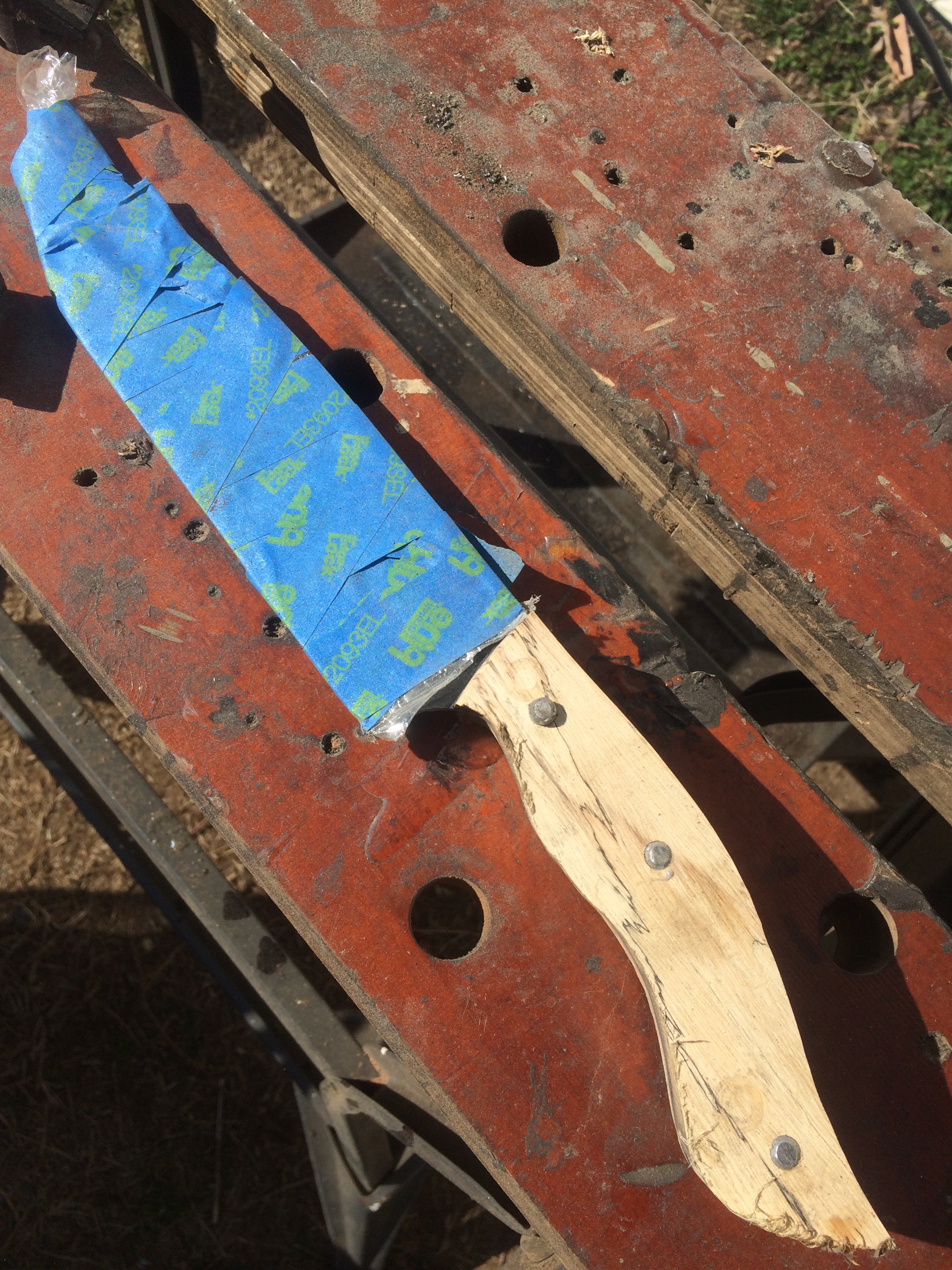
Profiled:

Shaped:

Thummim; the no to the yes:

Urim and Thummim:


The name of the professor mentioned in this story is Jonathan Shear, Ph.D., and you can find links to his publications here.